


Abstract
Sharm El-Luli, one of the most pristine embayments along Egypt’s Red Sea coast, is increasingly recognized as a sensitive sink for terrigenous inputs and emerging anthropogenic pressures. This study assesses the distribution, sources, and ecological and human health implications of heavy metals in bottom sediments collected throughout the lagoon. Concentrations of Fe, Mn, Zn, Cu, Pb, Ni, Cd, and Co were quantified and assessed using a suite of geochemical indicators and environmentally based indices. Sediment quality guidelines (SQGs; TEL–PEL and ERL–ERM) were applied to evaluate potential biological effects. Most metals exhibited background to minor enrichment, although localized elevations of Pb, Ni, and Zn suggest contributions from episodic wadi runoff and limited tourism-related inputs. Igeo and CF values generally indicated low to moderate contamination, while SQG comparisons showed that exceedances of TEL values occurred primarily for Ni and Pb, implying occasional risk for benthic organisms. Multivariate statistical analysis (PCA) separated metals into two principal components: a lithogenic component dominated by Fe, Mn, and Co, reflecting the influence of Precambrian source rocks; and an anthropogenic-mixed component (Pb, Zn, Cu, Ni) associated with terrigenous pulses and local human activity. Human health risk assessment (non-carcinogenic) showed hazard index (HI) values below unity for both adults and children, indicating negligible immediate health concerns, while potential carcinogenic risk raised in adults via ingestion for Cr followed by Cd and Ni than in children. The results highlight that while Sharm El-Luli remains relatively unimpacted, the lagoon’s geomorphology and low hydrodynamic energy promote metal retention, underscoring the need for continuous monitoring as coastal use intensifies.
1. Introduction
Heavy metals (HMs) are persistent, non-degradable contaminants that pose significant ecological threats due to their toxicity [1], bioaccumulative behavior [2], and susceptibility to biomagnification in marine ecosystems [3,4]. Their stability in sediments and biological tissues leads to long-term ecological and health risks [5]. Globally, coastal sediments accumulate these contaminants via industrial discharge, urban runoff, agricultural practices, and atmospheric deposition, making them significant indicators in environmental impact assessments (EIAs) [2,6,7]. Sediment-bound metals can have adverse effects on benthic organisms and higher trophic levels [8,9], disrupt ecosystem functions [10], and ultimately pose risks to human health [11,12,13].
Assessing and monitoring HMs in marine environments is critical for safeguarding biological communities, as these elements can exert toxic effects even at relatively low concentrations [14], disrupt physiological processes, and bioaccumulate within marine organisms [15], leading to biomagnification through the food web [15]. Accordingly, prolonged exposure to elevated HM levels can impair growth, reproduction, and survival rates in benthic invertebrates, fish, and higher trophic levels, ultimately altering community structure and ecosystem function [16,17]. Sediments, serving as both reservoirs and potential secondary sources of heavy metals (HMs), play a pivotal role in controlling metal bioavailability, particularly under changing redox conditions [9,18,19]. The re-mobilization of metals such as Cd, Pb, and Hg from sediments can be triggered by shifts in pH, organic matter degradation, and variations in redox potential, which increase their release into porewater and overlying water, thereby enhancing ecological risks to benthic and pelagic communities [20,21]. Regular assessment enables early detection of contamination hotspots, differentiation between natural and anthropogenic sources, and evaluation of ecological risks, thereby supporting targeted management and remediation strategies. Integrating HM monitoring into long-term marine environmental programs enables the prevention of irreversible ecological damage, the maintenance of biodiversity, and the enhancement of the resilience of sensitive habitats, such as coral reefs, seagrass beds, and mangroves. Therefore, continuous environmental monitoring is indispensable for detecting early sublethal exposures, preventing ecological degradation, and safeguarding seafood safety and ecosystem health [8,9,22].
In the Red Sea, studies have documented elevated heavy-metal concentrations in coral reef ecosystems, particularly near areas impacted by land-based runoff, shipping, port activities, tourism development, and oil-related pollution (e.g., Hurghada, Safaga, Sharm El-Sheikh, Dahab) [23,24,25,26,27,28]. Globally, comparable trends have also been observed in other semi-enclosed and industrialized coastal systems, such as the Arabian Gulf, where environmental indices reveal hotspots near industrial discharge zones [29,30,31]. These intensive assessments underscore the importance of integrating heavy-metal monitoring within marine environmental management frameworks.
Despite this, a paucity of baseline data remains for heavy-metal contamination in ecologically sensitive Red Sea regions, such as the Sharm El-Luli area, where protected coral and mangrove habitats intersect with episodic terrestrial inputs. Such baseline data are critical for disentangling natural geological background levels from anthropogenic enrichment and for informing environmental impact assessments in one of the world’s most biodiverse reef systems. This study is designed to address environmental assessment and management challenges by (1) establishing robust baseline data for heavy-metal concentrations in the Wadi El-Gemal coastline, particularly Sharm El-Luli, serving as a benchmark for future monitoring and impact detection; (2) employing multi-index contamination evaluation, to differentiate natural background inputs from anthropogenic enrichment in reef-adjacent ecosystems; (3) evaluating human health risks based on potential exposure pathways, particularly ingestion and dermal contact; (4) providing environmental managers with evidence-based recommendations for monitoring, conservation, and policy interventions, leveraging this baseline to safeguard coral reef health and associated ecosystem services in the Wadi El-Gemal national reserve.
2. Study Area Description
Sharm El-Luli lies along the southern Egyptian Red Sea coast, about 50 km south of Marsa Alam (Figure 1). It is a secluded coastal embayment on the Egyptian Red Sea coast, characterized by a shallow lagoon, fringe reefs, and a narrow, low-relief shoreline. Geologically, the catchment consists of arid Precambrian granites and gneisses that shed weathered mineral particles during episodic runoff events from the western flank, contributing to little terrigenous sediment input in the lagoon [32]. Hydrologically, the investigated area is characterized by an ephemeral drainage system that is activated during rare but intense rainfall events, transporting sediments and associated geochemical loads to the Red Sea [33]. The coastal zone includes extensive mangrove stands (Avicennia marina), seagrass meadows, which play a key role in trapping sediments and filtering contaminants [34,35,36], and fringing coral reefs that primarily attenuate waves and trap sediments but are vulnerable to the adverse effects of excess sediment and pollutant loads [37]. Sharm El-Luli is characterized by a semi-enclosed bay bordered by fringing coral reefs, extensive seagrass meadows, and shallow sandy lagoons, supporting high biodiversity, including reef-building corals, dugongs, green turtles, and a wide variety of reef-associated fish [38,39]. These geomorphic and ecological features underpin exceptional coral and fish diversity (≈450 coral spp., >1200 fish spp.) and create strong land–sea linkages that govern sediment and trace-metal delivery to reefal settings. This ecological richness makes the area particularly sensitive to contamination from anthropogenic and natural sources.
Figure 1.
(A) Regional map for the Egyptian Red Sea coastline. (B) Base map for the collected sediment samples from the Sharm El-Luli stations. (C) Boat activities and plastic debris accumulation along the shoreline. (D) Shipyard operations and coastal mangrove deterioration activities.
Notably, Sharm El-Luli is part of the Wadi El-Gemal–Hamata protected area (established in 2003), which covers approximately 7450 km2 of terrestrial habitats and 2000 km2 of marine environments [40]. The investigated site is located to the south of one of the largest and most important wadies, which drains into the Red Sea and encompasses both terrestrial and marine ecosystems of high ecological and economic value. These rock types act as natural sources of trace elements, while weathering and erosion contribute to the metal flux toward the coastal zone. In recent decades, increased tourism activities, fishing, small-scale mining, and shipping (Figure 1C,D) along the Red Sea coast, have raised concerns regarding heavy-metal accumulation in marine sediments and biota [41,42]. Given the environmental importance of Sharm El-Luli, assessing the distribution and ecological risks of toxic metals in its sediments is crucial for sustainable coastal management and conservation planning.
Although the site is regarded as one of the most pristine beaches in Egypt and is a popular eco-tourism destination, it faces growing pressures from unregulated snorkeling, diving activities, and boat anchoring, in addition to potential long-range inputs from maritime traffic along the Red Sea [43]. These stressors highlight the need to establish a robust baseline of sediment quality and heavy-metal concentrations to support effective conservation and management strategies for this ecologically sensitive area.
3. Materials and Methods
3.1. Sampling Strategy
Surface sediment samples were collected from 18 stations (W1–W18) along the Red Sea coast within the Wadi El-Gemal area, particularly Sharm El-Luli (Figure 1). The sampling stations were strategically distributed to encompass the nearshore shallow zones (dominated by muddy sand substrate and seagrass meadows) and the offshore reefal environments. This spatial coverage enables the assessment of potential gradients in HM accumulation between coastal inputs (wadi influx) and more offshore coral reef habitats. The samples were retrieved by SCUBA diving, and the shallower stations (<1 m) were collected using a hand-held plastic coring tube. All sediments were stored in clean, acid-washed containers, transported under refrigeration, freeze-dried, homogenized, and sieved over <63 µm. The grain-size distribution was determined using the dry-sieving method adopted by Folk and Ward [44]. Noteworthy that the grain-size fractions were classified following the Wentworth scale, with gravel (>2 mm), sand (2 mm–63 μm), silt, and clay (<63 μm). In this study, the term mud refers to the combined silt and clay fraction. The carbonate content was measured through the acid digestion method outlined by Gross [45]. Additionally, total organic matter (TOM) was estimated by loss-on-ignition (LOI) at 550 °C [46].
3.2. Geochemical Analysis of Sediments
Sample Preparation, Digestion, and Elemental Analysis
Approximately 0.2 g of the processed samples was powdered and subjected to 4-acid digestion (HCl-HNO3-HF-HClO4), following the Acme Analytical Laboratories Ltd. (Vancouver, BC, Canada) protocol. This digestion is designed to break down silicate minerals and release most trace and major elements under controlled temperature and sufficient digestion time, until complete dissolution is achieved, providing total recovery of metal content.
The digested samples were analyzed using Inductively Coupled Plasma–Mass Spectrometry (Agilent 7900 ICP-MS, Tokyo, Japan) for nine heavy metals (Cd, Co, Cr, Cu, Fe, Mn, Ni, Pb, Zn) (Table 1). Calibration curves were prepared using multi-element certified standards, and all analyses were performed in accordance with accredited laboratory procedures. A rigorous QA/QC protocol was followed to ensure the reliability and accuracy of the data. Accordingly, analytical blanks were run with each batch to detect any contamination that may have occurred during digestion and analysis. At least 1 in 20 samples was analyzed in duplicate to monitor analytical precision. Internal reference materials (CSC and DS11) were regularly included to validate accuracy and recovery. Multi-element standards were used for initial calibration, with drift correction verified every 10 samples. The detection limits for individual elements typically ranged from 0.01 to 1 ppm, depending on the element. The precision and accuracy, as known by the relative standard deviation (RSD) of duplicate samples, were generally <10%. Noteworthy that the method detection limits were as follows: Fe (0.01 wt%), Mn (1 ppm), Cr (1 ppm), Co (0.1 ppm), Zn (1 ppm), Cu (0.1 ppm), Pb (0.1 ppm), Ni (0.1 ppm), and Cd (0.01 ppm).
Table 1.
The measured heavy-metal concentrations (ppm) and the mean, minimum, and maximum at the Sharm El-Luli stations, as well as the background concentrations used in the present study.
3.3. Calculations and Data Analysis
Multiple geochemical indices were calculated to assess contamination levels, using Fe as a conservative normalizer and heavy-metal concentrations of Hanna [47] as a local background value. These indices include the enrichment factor (EF), the geoaccumulation index (Igeo), contamination factor (CF), pollution load index (PLI), toxic risk index (TRI), potential ecological risk index (RI), modified hazard quotient (mHQ), mean ERM quotient (MERMQ), and ecological risk factor (ER). Notably, the equations for the above-mentioned indices are tabulated in Table 2 along with their corresponding meaningful classes.
Table 2.
The formulas and classes of applied environmental indices in the area of study.
Furthermore, following standard USEPA guidelines, a human health risk assessment was conducted to evaluate carcinogenic and non-carcinogenic effects via ingestion and dermal contact pathways. The hazard quotient (HQ) was calculated for each metal as the ratio of average daily intake (ADI) to its reference dose (RfD), and the hazard index (HI) was derived as the sum of HQs to reflect cumulative non-carcinogenic risk. Carcinogenic risk (CR) was estimated by multiplying the CDI by the slope factor (SF), with lifetime cancer risk (LCR) values used to evaluate potential long-term hazards. This integrative approach enabled a comprehensive assessment of the contamination status, ecological impact, and human health implications of the Sharm El-Luli coastal environment.
Multivariate ordination techniques were applied to explore the dataset’s structure and identify underlying relationships among the analyzed heavy metals. Hierarchical cluster analysis (HCA) was performed using Ward’s linkage method and squared Euclidean distance as a similarity measure to group metals and sampling stations according to their geochemical similarities. This approach facilitates the identification of spatial patterns in sediment contamination and highlights potential common sources of metal enrichment. Notably, the degree of similarity has been measured using correlation coefficients between samples and heavy metals and visualized via a heatmap.
Additionally, principal component analysis (PCA) was performed to reduce dimensionality and extract the principal factors underlying metal variability. Eigenvalues, factor loadings, and component scores were examined to distinguish natural (lithogenic) and anthropogenic contributions. Metals with high positive loadings on the same component were considered to share common geochemical behavior or sources. The first few principal components, which explained most of the total variance, were used to interpret sediment inter-relationship, redox conditions, and possible human-induced inputs.
A Pearson correlation analysis has been performed using variables comprising the characteristics of the bottom sediments and their heavy-metal content to identify potential common sources, geochemical associations, and pathways of enrichment. A correlation heatmap was generated, with correlation coefficients represented by a color gradient (e.g., blue for positive correlations, red for negative correlations). The heatmap facilitates rapid identification of element clusters that may reflect lithogenic controls and anthropogenic inputs. The statistical significance of the correlations was tested at the 95% and 99% confidence levels (p < 0.05 and p < 0.01, respectively). The correlation analysis, HCA, and PCA were implemented using PAST software, version 5.2 [57].
4. Results
4.1. Bottom Sediments Characteristics
The sediment samples from Sharm El-Luli exhibited variable carbonate, TOM, and textural compositions across the investigated stations. Carbonate content ranged from 28.8% (W3) to 48.8% (W18), with notably higher values in the southernmost sites (e.g., W17 and W18; Figure 2), reflecting the influence of biogenic inputs from coral and shell debris. The TOM values were generally low to moderate (3.1–5.7%), indicating limited terrestrial organic input and a predominance of marine-derived material (Figure 2).
Figure 2.
Spatial distribution maps for the carbonate content (A) and the organic matter content (B), as inferred via loss on ignition for the Sharm El-Luli stations.
The bottom sediments of the study area are generally sand-dominated, with mean values of ~59.5% sand, ~36% mud, and ~4.5% gravel, reflecting a predominantly muddy sand substrate with minor gravel input (Figure 3). Gravel is the least represented fraction, ranging from 1.2% at W7 to 8.0% at W1, where it locally peaks. Sand constitutes the dominant fraction, reaching its highest percentage at W3 (71.2%), followed by W2 (68.5%), while the lowest sand content occurs at W10 (41%), where mud predominates. Mud, as the secondary fraction, ranges from 23.0% at W3 to 56.3% at W10, with a mean of 36%. These variations suggest that while most stations are characterized by sandy to sandy–muddy facies, localized enrichment in gravel (W1) and mud (W10) reflects differences in depositional energy and hydrodynamic conditions within the lagoon.
Figure 3.
Spatial distribution maps for the percentage of the granulometric fractions: (A) Gravel%, (B) Sand%, and (C) Mud% for the Sharm El-Luli stations.
4.2. Heavy-Metal Distributions
In general, most heavy metals displayed a general south-to-north decreasing trend, with stations W1, W3, and W11 consistently recording higher values, suggesting localized enrichment in these areas, while W18 consistently showed the lowest concentrations (Figure 4A–I). In this regard, the concentrations of heavy metals across the studied stations exhibited distinct spatial variations as illustrated in Figure 4. Iron (Fe) ranged from a minimum of 870 ppm at station W18 to a maximum of 1655 ppm at W1, with an average of 1460.9 ppm. Fe generally showed higher concentrations in the southern stations (W1–W3, W7) and decreased towards the northern stations, with a sharp drop at W16 and W18. Manganese (Mn) varied between 87 ppm (W18) and 323 ppm (W1), averaging at 220.2 ppm, displaying a south–north decreasing gradient with localized peaks at W3, W11, and W12. Chromium (Cr) recorded the lowest value of 3 ppm at W7 and the highest of 21 mg/kg at W1, with a mean of 13.4 mg/kg; the distribution showed high values at W1, W3, W11, W14, and W15, with low levels concentrated in the central to northern stations. Cobalt (Co) ranged from 1.3 ppm (W7) to 5.1 ppm (W11), averaging at 2.6 ppm, with elevated values at W1 and W11 and lower concentrations in the middle stations. Zinc (Zn) spanned from 11 ppm (W18) to 41 ppm (W1), with a mean of 28.9 ppm. Higher Zn levels were observed at W1, W3, W11, and W12, while northern stations generally showed reduced concentrations. Copper (Cu) varied between 11 ppm (W7) and 35.7 ppm (W1), averaging at 25.9 ppm, with a pattern similar to that of Zn, indicating possible common sources. Lead (Pb) ranged from 5 ppm (W7, W18) to 18 ppm (W1, W15), with an average of 12.7 ppm; high Pb values clustered in southern stations (Figure 4). Nickel (Ni) values ranged from 1.3 ppm (W7) to 5.9 ppm (W1), averaging at 2.8 ppm, with higher concentrations at the southern stations. Cadmium (Cd) concentrations were the lowest among the studied metals, ranging from 0.01 ppm (W7, W18) to 0.13 ppm (W1), with an average of 0.066 ppm; the pattern showed the highest Cd in the south, gradually decreasing towards the south (Figure 4).
Figure 4.
Spatial distribution maps for the measured heavy metals: (A) Fe; (B) Mn; (C) Cr; (D) Co; (E) Zn; (F) Cu; (G) Pb; (H) Ni; (I) Cd for the Sharm El-Luli stations.
4.3. Environmental Indices
4.3.1. Enrichment Factor (EF)
The EF patterns highlight that Pb, Mn, and Cu are the metals of most significant concern in terms of enrichment, with certain hotspots showing potential contamination risks. Thus, the EF values across the studied stations reveal distinct spatial variability among the analyzed metals (Figure 5A–G). The Mn values show low-to-moderate enrichment, ranging from 1.87 (W8) to 5.69 (W12), with the highest values recorded at W12, followed by W14, and W11, suggesting localized geochemical inputs or lithogenic influences. Cobalt enrichment spans from minimal values at W7 (0.81) and W4 (0.93) to a peak at W11 (3.25), whereas Zn enrichment is generally low to moderate (1.01–4.04), with W16 standing out for its elevated EF. The Cu is consistently moderate, peaking at W16 (4.96), indicating localized contamination. The Pb exhibits the highest enrichment factors of all studied metals, with significant enrichment values at W16 (18.33) and consistently elevated EFs (>10) in several stations, strongly implying anthropogenic loading, possibly from touristic boat activities. In contrast, Ni and Cd generally display low EFs (<1), suggesting mainly natural sources with negligible anthropogenic influence, except for moderate Cd enrichment at W1, W10, W11, and W16.
Figure 5.
Spatial distribution maps for the calculated enrichment factors (EFs) of the analyzed heavy metals: (A) Mn; (B) Cu; (C) Co; (D) Zn; (E) Ni; (F) Pb; (G) Cd at the Sharm El-Luli stations.
4.3.2. Geoaccumulation Index (Igeo)
The geoaccumulation values trend across the area follows the sequence: Pb > Mn > Cu > Co > Fe > Ni > Cd. The Pb stands out as the dominant contaminant, with multiple stations (notably W1, W11, W12, W13, W14, W15, and W16) reaching moderate contamination levels, while most other metals remain within the uncontaminated to moderately contaminated categories (Figure 6A–H). The Igeo values show notable variability across metals and stations, reflecting distinct contamination patterns. For Fe, Igeo values range from a minimum of –2.37 at station W18 to a maximum of –1.44 at W1, with an overall mean of –1.63, indicating that Fe is generally in the “uncontaminated” class. Mn exhibits the widest positive deviation, with a maximum of 0.89 at W1 and a minimum of –1.0 at W18, averaging at 0.26, suggesting moderate enrichment in certain stations. Co ranges from –1.79 at W7 to 0.181 at W11, with a mean of –0.90, mainly reflecting background to slightly contaminated levels. Zn values vary between –1.71 (W18) and 0.187 (W1), averaging at –0.39, indicating low contamination. Cu shows a maximum Igeo of 0.44 at W1 and a minimum of –1.26 at W7, with a mean of 0.014, reflecting near-background to slightly enriched conditions. Pb displays the highest contamination signals, with values ranging from 0.196 at W7 to 2.044 at W1 and W15, averaging at 1.47, classifying several stations in the “moderately to strongly contaminated” category. Ni shows exclusively negative values, from –4.21 at W7 to –2.02 at W1, with a mean of –3.24, indicating no contamination. Cd exhibits the most negative range, from –5.91 at W7 and W18 to –2.21 at W1, with a mean of –3.25, suggesting no enrichment.
Figure 6.
Spatial distribution maps for the calculated geoaccumulation index (Igeo) for the analyzed heavy metals: (A) Fe; (B) Mn; (C) Cu; (D) Ni; (E) Co; (F) Zn; (G) Pb; (H) Cd of the Sharm El-Luli stations.
4.3.3. Contamination Factor (CF)
The CF values reveal distinct variations in contamination intensity among metals and across stations (Figure 7A–H). The Fe values range from a minimum of 0.29 at W18 to a maximum of 0.55 at W1, with a mean of 0.48, indicating no contamination (CF < 1). Mn exhibits markedly higher enrichment in several sites, with values ranging from 0.75 at W18 to 2.78 at W1, averaging at 1.87, placing many stations in the “moderate to considerable contamination” range. Co shows values between 0.43 at W7 and 1.70 at W11, with a mean of 0.92, mostly indicating low to moderate contamination. Zn ranges from 0.46 at W18 to 1.71 at W1, averaging at 1.22, indicating low contamination in most stations but moderate in a few. Cu contamination is generally higher, with a maximum CF of 2.03 at W1 and a minimum of 0.63 at W7, averaging at 1.5101, indicating low to considerable contamination levels. Pb is by far the most enriched metal, ranging from 1.72 at W7 and W18 to 6.18 at W1 and W15, with a mean of 4.39, placing many stations in the “very high contamination” category (CF > 6 in some sites). Ni values are consistently low, ranging from 0.08 at W7 to 0.37 at W1, with a mean of 0.18, indicating no contamination. Cd shows the lowest range, from 0.025 at W7 and W18 to 0.32 at W1, averaging 0.17, indicating no contamination.
Figure 7.
Spatial distribution maps for the calculated contamination factor (CF) for the analyzed heavy metals: (A) Fe; (B) Mn; (C) Cu; (D) Ni; (E) Co; (F) Zn; (G) Pb; (H) Cd of the Sharm El-Luli stations.
4.3.4. PLI, Cdeg and NPI
The PLI ranges from a minimum of 0.33 at W18 to a maximum of 1.25 at W1, with a mean of 0.81. Only W1 (1.26), W11 (1.186), and W12 (1.04) exceed the threshold of PLI > 1, indicating overall pollution. The majority of stations (PLI < 1) remain within the low-pollution category, with W7 (0.37) and W18 (0.33) showing the least impact. Overall, the spatial contamination pattern indicates W1 > W11 > W12 > W13 ≈ W14 > W15 as the most impacted sites, likely reflecting localized pollution sources, while the lowest contamination levels are recorded at W18, W7, and W8 (Figure 8A).
Figure 8.
Spatial distribution maps for the calculated PLI (A), Cdeg (B), and NPI (C) for the analyzed heavy metals of the Sharm El-Luli stations.
The Cdeg values show a broad range from 4.63 at W18 to 15.52 at W1, with an overall mean of 10.07 (Figure 8B). Stations W1 (15.52), W11 (14.78), and W12 (13.31) record the highest Cdeg values, indicating notably higher cumulative contamination levels, whereas W18 (4.63), W7 (5.38), and W8 (5.69) display the lowest contamination intensities. The strong similarity in trends between Cdeg and PLI highlights Pb, Mn, and Cu as probable key contributors to the elevated contamination in hotspot areas.
The NPI ranges from a minimum of 0.389 at W7 to a maximum of 0.524 at W1, with a mean of 0.474 (Figure 8C). Stations W1 (0.524), W11 (0.512), and W12 (0.510) record the highest NPI values, reflecting relatively higher overall pollution levels; however, all stations remain below the NPI threshold of 1, indicating a low to moderate pollution status.
4.4. Sediment Quality Guidelines-Based Indices
4.4.1. TRI, RI, and MERMQ
The TRI shows values ranging from 0.74 at W7 to 2.78 at W1, with an average of 1.87. High TRI values are concentrated at W1 (2.78), W11 (2.52), and W12 (2.39), pointing to elevated ecological risks in these stations. In contrast, W7 (0.74), W18 (0.88), and W6 (1.02) display the lowest risk levels (Figure 9A). Overall, the spatial trends of TRI closely align, identifying W1 > W11 > W12 > W3 ≈ W13 as the primary pollution and risk hotspots, while W7, W18, and W6 stand out as the least-impacted areas. The results suggest that the same metals driving the PLI and Cdeg hotspots, particularly Pb, Mn, and Cu, are also the dominant contributors to elevated NPI and TRI values.
Figure 9.
Spatial distribution maps for the calculated TRI (A), RI (B), and MERMQ (C) for the analyzed heavy metals of the Sharm El-Luli stations.
The RI values for the investigated sediments varied considerably among the stations, ranging from 10.8 (W18) to 56.4 (W16), indicating spatial heterogeneity in contamination risk (Figure 9B). The mean RI value across all samples was 37.16, reflecting a generally low potential ecological risk. The highest RI value was recorded at station W16 (56.4), followed by W1 (54.6) and W15 (52.6), suggesting a localized hotspot of elevated contamination potential. Other relatively high RI values were also observed at W14 (51.2) and W17 (51), implying that these stations are particularly impacted. In contrast, the lowest RI values were observed at W18 (10.8), followed by W7 (11.1) and W8 (18.7), all of which fell significantly below the average, indicating a relatively low ecological risk at these sites. Consequently, the distribution pattern highlights that a few stations (W16, W1, W15) act as potential contamination hotspots, whereas others (W7, W8, W18) remain relatively unaffected.
The MERMQ values ranged from 0.022 at W7 to 0.083 at W1, with an overall mean of 0.05 (Figure 9C). All stations remain well below the sediment quality guideline threshold of 0.5, indicating low probability of adverse biological effects. The highest MERMQ values are observed at W1 (0.08), W11 (0.07), and W12 (0.069), while the lowest are at W7, W18 (0.024), and W8 (0.028). Accordingly, TRI, MERMQ, and RI highlight that W1 represents the alarming environmental risk hotspot, followed by W11 and W12, while W7 consistently emerges as the least-impacted station. The consistently low MERMQ values suggest that, despite localized contamination, the likelihood of severe biological effects remains low across the study area.
4.4.2. mHQ, and EiR
The mHQ values for individual metals show clear variability among stations, highlighting differing potential ecological and human health risks (Figure 10A–F). The Cu records some of the highest mHQ values in the dataset, ranging from 0.89 at W7 to 1.60 at W1, with a mean of 1.35 (Figure 10A), where stations W1, W2, W11, and W12 stand out as hotspots, all exceeding the moderate-risk threshold (mHQ > 1). For Cr, values ranged from 0.32 at W7 to 0.85 at W1, with a mean of 0.64 (Figure 10B), where the highest values are found at W1, W3, and W11, suggesting localized Cr enrichment. Zn varies between 0.38 at W18 and 0.73 at W1, with an average of 0.58, showing slightly elevated values at W1, W11, and W12, while Ni values vary from 0.36 at W7 to 0.77 at W1, with an average of 0.52, suggesting generally low to moderate risk. The Pb values ranged from 0.48 at W7 and W18 to 0.91 at W1 and W15, averaging at 0.74, with the highest risks concentrated in W1, W15, W16, and W14. Similarly, Cd shows the lowest range, from 0.13 at W7 and W18 to 0.48 at W1, with a mean of 0.32, indicating minimal hazard potential in most stations. Overall, the mHQ spatial risk pattern follows the sequence Cu > Pb > Cr > Zn > Ni > Cd, with Cu posing the most consistent potential hazard across the study area, particularly in W1, W2, W11, and W12. Notably, W1 emerges as the most impacted station for nearly all metals, while W7 and W18 consistently record the lowest mHQ values.
Figure 10.
Spatial distribution maps for the calculated mHQ for the analyzed heavy metals: (A) Cu; (B) Cr; (C) Zn; (D) Ni; (E) Pb; (F) Cd of the Sharm El-Luli stations.
The ER values for individual metals show clear spatial variability, reflecting localized differences in ecological threat levels (Figure 11A–E). The ER value of Cu exhibits the widest spread among metals, ranging from 3.13 at W7 to 10.14 at W1, with a mean of 7.09 (Figure 11A), where stations W1, W2, W11, and W12 show the highest contributions to ecological risk. In contrast, Zn values ranged from 0.46 at W18 to 1.71 at W1, with a mean of 1.16, indicating negligible ecological risk across all sites. The Ni consistently shows low values, ranging from 0.41 at W7 to 1.84 at W1, with an average of 0.88, indicating minimal risk. The Pb records the highest ER values in the dataset, ranging from 8.59 at W7 and W18 to 30.93 at W1 and W15, with a mean of 20.65 (Figure 11D). Pb-related risk hotspots are concentrated at W1, W15, W16, W11, and W14, where ER values exceed 25. The Cd value shows one of the lowest magnitudes overall, ranging from 0.75 at W7 and W18 to 9.75 at W1, with an average of 5.125, confirming a negligible risk. Accordingly, the spatial ecological risk pattern across metals follows the order Pb > Cu > Cd > Ni > Zn, coupled by Stations W1, W11, W12, and W15, which emerge as the primary ecological risk hotspots, driven mainly by Pb and Cu contributions, while W7 and W18 consistently record the lowest ER values for all metals (Figure 11).
Figure 11.
Spatial distribution maps for the calculated ecological risk factor (ER) for the analyzed heavy metals: (A) Cu; (B) Zn; (C) Ni; (D) Pb; (E) Cd of the Sharm El-Luli stations.
4.5. Sediment Quality Guidelines (SQGs)
The SQGs, such as LEL, TEL, ERL, PEL, SEL, and ERM, represent different international benchmarks used to assess the ecological risk of heavy metals in the sediments investigated (Table 3). The lowest effect level (LEL) is the threshold value below which adverse effects on aquatic organisms are not expected. For the studied dataset, the mean concentrations of the analyzed metals are below the LEL threshold values except for Cu (24.96 ppm). Similarly, the threshold effect level (TEL) represents the concentration below which adverse biological effects are expected to occur rarely in benthic organisms. Accordingly, the TEL values for the analyzed metals fall consistently below the permissible TEL values, except for Cu, indicating a very low ecological risk. In contrast, the mean concentrations for the investigated heavy metals are all below the threshold values of the effects range low (ERL), indicating the lower range of pollutant concentrations at which occasional biological effects may begin to occur. However, station W1 shows a Cu (36 ppm) value higher than the ERL value (34 ppm), which reflects the early warning threshold. Notably, the probable effect level (PEL) represents the level above which adverse effects are expected to occur frequently, the severe effect level (SEL) indicates a concentration at which severe biological effects are likely to occur in sediments, and the effects range median (ERM) is the median value within which adverse biological effects occur frequently. The mean concentrations of all metals are overall below their corresponding PEL, SEL, and ERM values, indicating low ecological risk.
Table 3.
The average heavy-metal contents (ppm) in sediments of Sharm El-Luli in comparison to the SQGs (LEL, ERL, ERM, TEL, PEL, and SEL) [56,58,59].
Additionally, the site-based ecological status for Cr, Zn, Pb, Ni, and Cd, shows that 100% of the samples are below ERL and TEL, confirming minimal contamination (Table 3). The Cu is unique, with concentrations falling between TEL and PEL in 100% of samples, suggesting possible but infrequent biological effects. Across all metals, no sample exceeded ERM or PEL, confirming a negligible probability of severe ecological impact. Consequently, the sediment quality guideline comparison reveals that the studied sediments are generally unpolluted with respect to trace metals, whereas Cu requires some attention due to its intermediate position between TEL and PEL categories.
4.6. Human Health Risk Assessment
Human health risk assessment indices were derived using established exposure and risk models recommended by the USEPA [60] and widely applied in previous studies [61,62]. The assessment was based on the average daily intake (ADI) of heavy metals associated with the studied sediments to evaluate potential human health hazards. The ADI values were estimated for three exposure pathways, ingestion, inhalation, and dermal contact, and were calculated separately for adults and children.
4.6.1. Non-Carcinogenic Risk
The human health risk assessment results reveal distinct variations in HQ and HI for both children and adults, across the three exposure routes—ingestion, inhalation, and dermal contact (Table 4). For children, ingestion is generally the dominant pathway for all metals, with Pb (HQing = 1.10 × 10⁻¹) and Cr (HQing = 5.49 × 10⁻²) showing the highest ingestion risks. Dermal contact follows as the second most important route for Pb (6.16 × 10⁻³) and Cd (7.34 × 10⁻⁴), while inhalation exhibits negligible contributions, with HQ values mostly in the 1.0 × 10⁻⁶–1.0 × 10⁻⁸ range. The calculated HI values indicate that Pb (1.16 × 10⁻¹) and Cr (5.63 × 10⁻²) pose the highest cumulative non-carcinogenic risks for children. However, all HI values remain below the safety threshold of 1, suggesting no immediate non-carcinogenic concern. For adults, the same trend persists, with ingestion as the predominant route, again led by Pb (HQing = 1.18 × 10⁻²) and Cr (5.89 × 10⁻³). Dermal contact shows a secondary role, especially for Pb (1.28 × 10⁻³) and Cd (1.52 × 10⁻⁴), whereas inhalation risks are negligible (≤1 × 10⁻⁷ for most metals). Corresponding HI values are markedly lower than those for children, with Pb (1.30 × 10⁻²) and Cr (6.22 × 10⁻³) remaining the top contributors. Consequently, children show significantly higher HQ and HI values across all metals and pathways, highlighting their greater vulnerability. Both Pb and Cr are consistently the primary contributors to potential non-carcinogenic risks, driven largely by ingestion exposure. Despite this, all HI values for both groups (children/adults) are far below unity, indicating that under current exposure conditions, there is no significant non-carcinogenic health risk from these metals.
Table 4.
The calculated hazard quotient and hazard index via ingestion, inhalation, and dermal effect for children and adults with respect to the analyzed heavy metals in Sharm El-Luli stations. Note: the bold values denote probable cancer influence on human health.
4.6.2. Carcinogenic Risk (CR)
The CR assessment of the analyzed heavy metals in sediments from the Sharm El-Luli area reveals considerable variability among metals and exposure pathways, as well as between child and adult receptors (Table 5). According to the USEPA guidelines, a CR value exceeding 1 × 10⁻⁴ indicates a potential carcinogenic concern [63]. The Cr presented low CR values via ingestion, recorded at 3.30 × 10⁻⁴ in children, whereas adults showed a moderate value of 1.18 × 10⁻², surpassing the acceptable limit and suggesting a potential health impact. Nickel also exhibited CR values above the threshold, particularly through ingestion for adults (1.13 × 10⁻⁴). Cadmium showed lower CR values; however, adult ingestion (1.87 × 10⁻⁴) still exceeded the safe benchmark. In contrast, neither Cu nor Zn was assigned a carcinogenic risk value in our assessment, as their established toxicological profiles do not classify them as carcinogens under current USEPA criteria.
Table 5.
The carcinogenic risks via ingestion, inhalation, and dermal exposure for adults and children, as well as their lifetime carcinogenic risk (LCR). Note: the bold values are above the threshold values.
Similarly, lifetime carcinogenic risk (LCR) values closely mirrored the CR results, with moderate Cr values followed by Cd and Ni for adults, while only Cr is slightly above the threshold for children. The elevated ingestion-related CR and LCR values, particularly for Cr, suggest that indirect exposure pathways of sediment ingestion, particularly through the transfer of sediment-bound metals to benthic organisms and subsequently to higher trophic levels, including seafood consumed by humans, constitute the primary route of concern for human exposure.
4.7. Statistical Analysis
4.7.1. Cluster Analysis
The cluster analysis of heavy-metal concentrations in the surface sediments delineated the sampled stations into three groups, reflecting differences in their geochemical signatures (Figure 12). Cluster 1 comprises stations with generally elevated metal contents, particularly Fe, Mn, Zn, Cu, and Pb, alongside moderate to high Cr and Co values. This group includes stations such as W1, W3, W11, and W12, which are likely to represent areas under stronger anthropogenic influence or naturally enriched sedimentary environments. Cluster 2 comprises stations with intermediate concentrations of most metals, including Fe, Mn, Zn, and Cu, as well as moderate levels of Pb and Ni. Representative members include W4, W5, W10, W13, W14, W15, and W17, suggesting transitional conditions between high and low contamination zones. Cluster 3 encompasses stations with the lowest recorded concentrations of nearly all analyzed metals, particularly Cr, Co, Ni, and Cd, with Fe, Mn, and Zn levels also significantly reduced. This group includes W6, W7, W8, W9, and W18, reflecting relatively unimpacted or background geochemical conditions. The clustering pattern is consistent with the separation observed in PCA, indicating that the grouping reflects real spatial variability in sediment chemistry across the study area.
Figure 12.
Heatmap cluster dendrograms via Q and R modes using the Bray–Curtis similarity index method for the analyzed heavy metals at the investigated stations.
4.7.2. Principal Component Analysis (PCA)
The PCA of metals, environmental quality indices, and sediment properties revealed that the first two components together accounted for 77.65% of the total variance, with PCA1 (eigenvalue = 12.62) explaining 66.42% and PCA2 (eigenvalue = 2.13) explaining 11.23% (Figure 13). The PCA1 is regarded as a contamination–risk intensity axis, being overwhelmingly driven by composite indices such as MERMQ (loading = 0.99) and RI (0.95), with additional strong contributions from TRI, PLI, contamination degree, and NPI (≈0.27 each), as well as from the metal suite Cu, Cr, Zn, Cd, Pb, and Mn (≈0.25–0.27). Textural variables also co-varied along this axis, with gravel (0.26) and sand (0.10) loading positively, while depth (−0.26), carbonate (−0.18), mud (−0.17), and LOI550 (−0.05) showed negative associations. Minor contributions from textural parameters (e.g., positive loading for gravel, 0.259) suggest that coarser sediment fractions may be associated with higher contamination levels in certain settings. Accordingly, higher PCA1 scores correspond to stations with elevated metal concentrations and higher contamination/risk indices, typically shallower and coarser in texture, while lower scores indicate deeper, finer-grained, carbonate-rich sites with lower risk signals. Accordingly, higher PCA1 scores mark stations with higher metal levels and higher PLI, TRI, NPI, and Cdeg, which are tightly aligned with MERMQ and RI. These tend to be shallower, coarser (gravel/sand-influenced) sites with relatively lower carbonate/mud. In contrast, the PCA2 primarily reflects sediment texture and fine-fraction metal affinity, opposing sand (−0.59) against mud (0.52). Metals such as Co (0.38) and Ni (0.33), and to a lesser extent, Pb and Cd, align positively with PCA2, while Fe (−0.20), Mn (−0.15), and Cu/Cr (≈−0.04) load negatively. This axis thus differentiates sand-rich from mud-rich sites and highlights the preferential association of certain metals with fine-grained sediments. This suggests that PCA2 reflects a sediment texture-controlled metal association, where finer sediments (higher mud) tend to host higher concentrations of some metals independent of the broader contamination signal captured by PCA1.
Figure 13.
The principal component analysis (PCA) biplot chart illustrates the relationship between environmental factors and stations along the first two components (PCA1 and PCA2).
Station scores illustrate these patterns: high PCA1 values characterize W1, W11–W15, W2–W3 (high contamination/risk), whereas W18, W7–W9, and W6 are plotted at the opposite end, reflecting low contamination. On PCA2, W10 emerges as a strong positive outlier, together with W1, W13–W14, and W18, marking mud-enriched fine-fraction, while W2–W5 and W7 are strongly negative, representing sandier settings. Together (1&2 components), the PCA cleanly separates stations along a dominant contamination gradient (PCA1) while simultaneously distinguishing between muddy, fine-fraction environments enriched in Co and Ni (positive PCA2) and sandier sites where these metals are less prominent (negative PCA2).
The correlation matrix (Figure 14) highlights distinct associations between sediment properties and heavy-metal concentrations along the Sharm El-Luli. The CaCO3 exhibited strong negative correlations with gravel (r = −0.59), Fe (−0.52), Mn (−0.52), and trace metals such as Cd (−0.65), Cu (−0.48), Zn (−0.51), and Cr (−0.52), suggesting a dilution effect of biogenic carbonates on metal accumulation. Similarly, CaCO3 was negatively correlated with Co (−0.38), Pb (−0.34), and Ni (−0.43), reflecting its limited role as a metal carrier phase. In contrast, mud content showed strong negative correlations with sand (r = −0.96) and gravel (r = −0.62), while displaying moderate negative correlations with most metals (r = −0.36 to −0.61), indicating that the fine fraction does not exclusively control metal enrichment. Gravel was positively correlated with almost all metals (r = 0.64–0.94), especially Cr (r = 0.94), Cu (r = 0.90), Zn (r = 0.85), and Cd (r = 0.78), reflecting its association with coarse detrital phases enriched in trace elements. Among the metals, strong inter-elemental correlations were observed, with Cu, Cr, and Zn forming a highly coherent group (r = 0.91–0.95). These metals also showed strong correlations with Pb (r = 0.78–0.85) and Cd (r = 0.79–0.85). Mn showed significant correlations with Cr (0.90), Zn (0.81), Cu (0.88), and Cd (0.75), supporting its role as a scavenger and co-precipitant in redox-sensitive phases. Ni was most strongly correlated with Co (r = 0.95), followed by Cd (r = 0.79) and Pb (r = 0.50), suggesting a common source or geochemical affinity. Overall, these correlations indicate that the distribution of trace metals in the studied sediments is largely controlled by detrital inputs (Cr, Cu, Zn, Pb, Cd), Mn-oxyhydroxide phases (Mn, Co, Ni), and, to a lesser extent, carbonate dilution, with sediment texture exerting a secondary but recognizable influence.
Figure 14.
The heatmap correlation matrix shows the interrelationship among heavy metals and bottom sediment characteristics. Note: The boxed values are significant at p < 0.01.
5. Discussion
The bottom sediments of Sharm El-Luli are characterized by a dominance of lithogenic elements (e.g., Fe, Mn), reflecting strong control by weathering of the parent rock and terrigenous input from the adjacent Red Sea mountains. Similar elemental abundance patterns have been reported from other Egyptian Red Sea coastal sectors, where natural inputs largely control baseline metal levels [64]. The spatial distribution of heavy metals shows higher concentrations in nearshore stations compared to offshore ones. Comparable nearshore enrichment trends have been documented along the Red Sea coast of Egypt and Saudi Arabia, where shallow embayments act as effective sinks for trace metals [65,66,67]. Furthermore, the geomorphological features of Sharm El-Luli, including shallow banks, lagoons, and fringing reefs, facilitated the trapping of sediments and associated contaminants. Restricted water circulation within such coastal settings enhances metal retention and limits dispersal, as observed in similar Red Sea lagoons and coral-associated environments [68].
The geochemical composition of the bottom sediments in Sharm El-Luli lagoon is strongly influenced by the regional geological framework of the southern Egyptian Red Sea coast. The hinterland is dominated by Precambrian crystalline basement rocks of the Arabian–Nubian Shield, composed mainly of granites, granodiorites, metavolcanics, and associated ophiolitic assemblages [69,70]. These lithologies generally contain moderate to low concentrations of certain trace metals compared to global upper continental crust averages, and their weathering products are typically quartz- and feldspar-rich with limited clay development under arid climatic conditions [71,72]. In addition, the coastal zone is bordered by uplifted Miocene–Quaternary carbonate platforms and reefal limestones, which contribute predominantly biogenic carbonate detritus to nearshore sediments [73]. The combined effects of limited chemical weathering, minimal fluvial transport, and the dominance of carbonate in sediments hinder the hosting of trace metals. Consequently, the trace metal signatures observed in the Sharm El-Luli sediments primarily reflect dilution by biogenic carbonates and the relatively low metal endowment of the surrounding basement lithologies rather than anthropogenic enrichment. This lithological control is consistent with geochemical patterns reported from other Red Sea coastal settings influenced by Arabian–Nubian Shield source rocks [74].
Furthermore, the bottom sediments, particularly coarse-grained sediments (sand fractions), exhibit higher metal concentrations as observed by strong correlation coefficients (Figure 14). Notably, the correlation matrix reveals significant relationships among sedimentological parameters and trace-metal concentrations, reflecting the combined influence of grain size, carbonate content, and detrital inputs on sediment geochemistry. Strong negative correlations between sand and mud fractions (r = −0.96), as well as between gravel and mud (r = −0.62). However, the grain-size fractions exert a strong control on trace-metal behavior, with gravel particularly displaying strong positive correlations with Cr (r = 0.94), Cu (r = 0.90), Zn (r = 0.85), Mn (r = 0.85), and Cd (r = 0.78), whereas mud shows moderate to strong negative correlations with these elements (ranging from r = −0.36 to −0.61; see Figure 14). This pattern suggests that trace metals are preferentially associated with coarser sediment fractions, likely through incorporation with detrital minerals or adsorption onto Fe–Mn oxide coatings [75], rather than being dominantly controlled by fine-grained or organic-rich sediments. Fe and Mn show moderate positive correlations with most trace metals, particularly with Mn, Cr (r = 0.90), Zn (r = 0.81), and Cu (r = 0.88), highlighting the vital role of Fe–Mn oxyhydroxides as scavengers and carriers of trace metals in the sedimentary environment.
Remarkably, although Mn is commonly associated with Fe oxyhydroxides, the correlation between Fe and Mn in the present study is moderate (r = 0.45), suggesting partial geochemical decoupling. This behavior is consistent with fluctuating redox conditions in shallow lagoonal sediments, where Mn oxyhydroxides undergo more rapid dissolution–precipitation cycles than Fe phases. Consequently, Mn acts as a more effective scavenger for Co and Ni, while Fe may be retained within detrital silicates, organic complexes, or early diagenetic sulfide phases. The Mn–Co–Ni association therefore reflects redox-driven trace metal sequestration rather than uniform Fe–Mn co-precipitation. Such partial Fe–Mn decoupling under fluctuating redox conditions is well documented in marine and lagoonal sediments, where Mn oxyhydroxides exhibit higher redox sensitivity and trace-metal scavenging efficiency than Fe phases [76,77,78].
Strong inter-element correlations among Cr, Zn, Cu, Pb, and Cd (r > 0.75) indicate shared geochemical behavior and suggest common sources and transport pathways. Such associations are typically interpreted as reflecting potential contributions of lithogenic inputs. Notably, Ni exhibits an exceptionally strong correlation with Co (r = 0.95), indicating a distinct geochemical affinity and possibly a specific mineralogical association or source independent from other trace metals.
Calcium carbonate (CaCO3) exhibits moderate to strong negative correlations with gravel (r = −0.59), Fe (r = −0.52), Mn (r = −0.52), Cr (r = −0.52), Zn (r = −0.51), and Cd (r = −0.65), indicating a pronounced dilution effect of carbonate-rich sediments on terrigenous and metal-bearing phases. The positive correlation between CaCO3 and mud (r = 0.38) suggests preferential accumulation of carbonate material within finer-sediment fractions, consistent with depositional conditions typical of shallow marine carbonate-dominated environments. On the other hand, the LOI550 shows generally weak correlations with both grain-size fractions and trace metals, implying that organic matter plays a subordinate role in controlling metal distribution compared to mineralogical and textural factors.
5.1. Sources, Assessment, and Ecological Risk Implications of Heavy Metals
The very low concentrations of several trace metals (e.g., Ni, Cr, Co, and Fe) observed in the bottom sediments of Sharm El-Luli are noteworthy when compared with average upper continental crust values. For example, mean Ni (2.81 ppm) and Cr (12.9 ppm) concentrations are more than an order of magnitude lower than their respective crustal averages (Ni ≈ 47 ppm; Cr ≈ 92 ppm) [71,72,79]. This pronounced depletion primarily reflects the carbonate-rich nature of the lagoonal sediments and the scarcity of fine-grained siliciclastic material, which commonly acts as an important carrier phase for trace metals [80]. Carbonate sediments typically exhibit reduced trace metal adsorption due to their low clay and organic matter content, resulting in limited metal retention compared to siliciclastic-dominated sediments [81]. Moreover, Sharm El-Luli is a semi-enclosed, protected lagoon with negligible riverine inflow and limited terrestrial runoff, thereby constraining the supply of lithogenic metals. The absence of significant industrial activity, urban development, and intensive maritime traffic in the region further supports that the measured metal concentrations represent natural marine background levels rather than anthropogenic contamination. Comparable studies from the Egyptian Red Sea coast and adjacent mangrove settings have similarly reported relatively low heavy-metal contents in marine sediments under minimal anthropogenic influence, reflected by low contamination and ecological risk indices [82,83]. These findings reinforce the interpretation that the lagoon is currently subject to minimal geochemical stress from metal inputs.
The combined interpretation of grain-size relationships, inter-metal correlations, and carbonate dilution effects suggests that the distribution of heavy metals in the Sharm El-Luli area is primarily controlled by sedimentological and mineralogical factors, with localized anthropogenic enhancement. The strong positive correlations among Cr, Zn, Cu, Pb, Cd, and Mn, together with their preferential association with gravel and sand fractions, suggest a dominant lithogenic source related to detrital input from the Red Sea Mountains, where metal-bearing minerals and Fe–Mn oxide coatings on coarse particles act as key metal hosts. This behavior is consistent with the conceptual framework of Kersten and Förstner [75], who demonstrated that trace metals may be significantly concentrated in coarser sediment fractions when associated with reactive mineral phases, thereby challenging the traditional fine-fraction paradigm. The negative correlations between CaCO3 and most trace metals further indicate a dilution effect exerted by biogenic carbonate sediments, a feature widely documented in coral reef–dominated Red Sea environments [64].
The strong inter-element affinities and oxide-related controls support the calculated geochemical and ecological-based indices results of Sharm El-Luli sediments, which indicate low contamination levels, with localized hotspots likely reflecting secondary anthropogenic inputs, such as domestic wastewater discharge, boating activity, fuel combustion, and antifouling paints, as well as limited coastal runoff [84]. These sources have been repeatedly identified as major contributors to trace-metal contamination in tourist-intensive Red Sea coastal zones [85,86]. Similarly, the enrichment factor and normalization approaches suggest that Fe is predominantly of natural origin, whereas Pb, Cu, and Zn exhibit signs of anthropogenic influence. Comparable source differentiation has been reported for other Red Sea coastal regions influenced by tourism and shipping activities [27,64]. Furthermore, the PLI results identify discrete contamination hotspots rather than widespread pollution, a pattern consistent with localized human activities rather than basin-scale contamination. The potential ecological risk factor suggests an overall low to moderate ecological risk, with Pb and Cu contributing significantly to the calculated risk values, as confirmed by many scholars [87,88].
Human exposure in Sharm El-Luli is primarily indirect, through recreational contact and entering the food web via benthic organisms and seafood consumption. Accordingly, low ecological risk is imposed by heavy metals’ enrichment on human health; however, Cr is of particular concern due to its persistence and potential toxicity [2,60]. Similarly, Salem et al. [88] reported a low risk of heavy-metal contamination in the analyzed sediments of the Marsa Alam area, whereas El Nemr et al. [87] identified moderate human health risks posed by heavy metals, especially after analyzing mussels for selected gastropod and bivalve species.
5.2. Comparison with Other Red Sea and Global Coastal Ecosystems
The mean heavy-metal concentrations in surface sediments from Sharm El-Luli (this study) are generally low compared to other sites along the Egyptian and Saudi Arabian Red Sea coasts and several global coastal environments (Table 6), indicating minimal anthropogenic influence. Remarkably low values of Cd (0.07 ppm) and Ni (2.8 ppm) place Sharm El-Luli among the least contaminated Red Sea localities, comparable to relatively pristine settings such as Abu Minqar Island, East Hurghada area [89]. In contrast, markedly higher Cd and Pb concentrations reported from Makadi Bay, Mabahiss Bay, and the Jeddah coast reflect the influence of urbanization, tourism, port activities, and industrial discharge in those areas [23,90,91]. The Pb values at Sharm El-Luli (12 ppm) remain well below values observed in these impacted Red Sea settings. In comparison, Cu (24.9 ppm) and Zn (27.8 ppm) display moderate levels, consistent with predominantly lithogenic control rather than direct contamination. Manganese (213.8 ppm) is moderately enriched relative to some Red Sea sites. Still, it is substantially lower than concentrations reported from river-dominated and industrialized coastal systems worldwide, such as the Amazon region and the East and South China coasts [92,93,94]. Consequently, the comparative dataset indicates that trace-metal distributions at Sharm El-Luli are largely governed by natural sediment composition and regional geological inputs, underscoring its suitability as a baseline reference area for environmental monitoring along the Red Sea coast.
Table 6.
The mean concentration of the analyzed heavy metals in some published works along the Egyptian and Saudi Arabian Red Sea coasts, as well as globally.
6. Recommendations
Integrated regulatory enforcement and community engagement are crucial to conserve relatively unpolluted coastal environments, such as Sharm El-Luli, and to ensure the long-term sustainability of Red Sea ecosystems. Strategies and plans should follow priority actions, including 1—strengthening enforcement of coastal protection laws through regular inspections and penalties; 2—establishing baseline and long-term monitoring programs for sediments and seawater using trace-metals indicator; 3—regulating coastal development and tourism via mandatory environmental impact assessments that explicitly address sediment contamination and runoff pathways. In parallel, controlling land-based pollution sources through improved wastewater treatment and effective management of stormwater and wadi inputs inevitably raises issues. Complementary community-focused measures such as environmental awareness programs, community-based monitoring involving academic and local stakeholders, and the adoption of sustainable tourism practices minimize disturbances to sediments and coral reef systems.
7. Limitations and Future Directions
The present study lacks a sampling approach accounting for seasonal variability, and episodic events may influence metal distributions. Consequently, the urgent need for upcoming studies to encompass a broad spectrum of seasons is an inevitable aspect. Furthermore, integrated studies coupling sediment geochemistry with biological indicators are also recommended to better assess bioavailability and ecological risk, and they will add value to coastal monitoring of marine ecosystems.
8. Conclusions
This study presents a comprehensive assessment of heavy-metal contamination, ecological risk, and human health implications in the sediments of Sharm El-Luli. The geochemical indices (EF, Igeo, CF, PLI, Cdeg, NPI, mHQ, TRI, MERMQ, RI, ER) consistently indicate that the lagoon is primarily within the natural background range for most metals, with only localized zones exhibiting moderate enrichment associated with wadi-derived terrigenous inputs and limited anthropogenic influence. SQG-based evaluations reveal that while most metals fall below biological-effect thresholds, exceedances of TEL values for Ni and Pb at some stations point to potential sublethal stress for benthic fauna under episodic conditions. The PCA results underscore the dual origin of sediment-bound metals: a dominant lithogenic signature derived from the surrounding Precambrian terrain and a secondary component influenced by human activities and runoff events. Human health risk assessments confirm that exposure via sediment ingestion poses minimal risk at present, particularly for Cr, emphasizing that the site remains environmentally secure from a public health perspective. As tourism, marine access, and coastal development expand, continued monitoring of sediment chemistry and ecological indicators is essential to maintain the lagoon’s ecological integrity and safeguard both human and ecosystem health. The findings of this work establish a robust baseline for long-term management and conservation planning in one of the Red Sea’s most valuable coastal habitats.
Author Contributions
Conceptualization, R.M.E.-K.; methodology, M.H.A. and R.M.E.-K.; validation, M.W., P.H., and R.M.E.-K.; formal analysis, M.M.S. and R.M.E.-K.; investigation, M.M.S. and R.M.E.-K.; data curation, R.M.E.-K. and P.H.; writing—original draft preparation, R.M.E.-K., M.M.S., and P.H.; writing—review and editing, R.M.E.-K., M.M.S., P.H., M.W., and M.H.A.; visualization, R.M.E.-K., P.H., M.H.A., M.M.S., and M.W. All authors have read and agreed to the published version of the manuscript.
Funding
This work has no funding source.
Institutional Review Board Statement
Not applicable.
Informed Consent Statement
Not applicable.
Data Availability Statement
All data are available in the manuscript.
Acknowledgments
The authors wish to thank Sobhi Helal for his guidance and help in accomplishing this work. Open Access Funding by the University of Vienna.
Conflicts of Interest
The authors declare no conflicts of interest.
References
- Masindi, V.; Mkhonza, P.; Tekere, M. Sources of heavy metals pollution. In Remediation of Heavy Metals; Springer: Berlin/Heidelberg, Germany, 2021; pp. 419–454. [Google Scholar]
- El-Sharkawy, M.; Alotaibi, M.O.; Li, J.; Du, D.; Mahmoud, E. Heavy metal pollution in coastal environments: Ecological implications and management strategies: A review. Sustainability 2025, 17, 701. [Google Scholar] [CrossRef] [Scilit]
- Dagdag, O.; Quadri, T.W.; Haldhar, R.; Kim, S.-C.; Daoudi, W.; Berdimurodov, E.; Akpan, E.D.; Ebenso, E.E. An overview of heavy metal pollution and control. In Heavy Metals in the Environment: Management Strategies for Global Pollution; ACS Publications: Washington, DC, USA, 2023; pp. 3–24. [Google Scholar]
- Gnanasekaran, S.; Raj, S.A. Heavy metal bioaccumulation in sediment and benthic biota. In Heavy Metals-Recent Advances; IntechOpen: London, UK, 2023. [Google Scholar]
- Kumar, M.; Kumar, S. Statistical and geospatial assessment of trace and toxic elements distribution in ground and surface water of northern parts of the Indo-Gangetic plains: Source identification and health risk assessment. Chemosphere 2024, 364, 142990. [Google Scholar] [CrossRef] [Scilit] [PubMed]
- Thabet, W.M.; Moneer, A.A.; Abdelwahab, O.; Ahdy, H.H.; Khedawy, M.; Shabaan, N.A. Ecological risk assessment of metal pollution in the surface sediments of delta region, Egypt. Environ. Monit. Assess. 2024, 196, 351. [Google Scholar] [CrossRef] [Scilit] [PubMed]
- Zhang, X.; Liu, H.; Li, X.; Zhang, Z.; Chen, Z.; Ren, D.; Zhang, S. Ecological and health risk assessments of heavy metals and their accumulation in a peanut-soil system. Environ. Res. 2024, 252, 118946. [Google Scholar] [CrossRef] [Scilit]
- Brandão, D.O.; Arieira, J.; Nobre, C.A. Threats and sustainability of Brazil nut (Bertholletia excelsa Bonpl.) pre-industrialization in the Amazon Region. In Land-Use Management-Recent Advances, New Perspectives, and Applications; IntechOpen: London, UK, 2023. [Google Scholar]
- Du Laing, G.; Meers, E.; Dewispelaere, M.; Vandecasteele, B.; Rinklebe, J.; Tack, F.M.; Verloo, M.G. Heavy metal mobility in intertidal sediments of the Scheldt estuary: Field monitoring. Sci. Total Environ. 2009, 407, 2919–2930. [Google Scholar] [CrossRef] [Scilit]
- Jaishankar, M.; Tseten, T.; Anbalagan, N.; Mathew, B.B.; Beeregowda, K.N. Toxicity, mechanism and health effects of some heavy metals. Interdiscip. Toxicol. 2014, 7, 60. [Google Scholar] [CrossRef] [Scilit]
- Ezemonye, L.I.; Adebayo, P.O.; Enuneku, A.A.; Tongo, I.; Ogbomida, E. Potential health risk consequences of heavy metal concentrations in surface water, shrimp (Macrobrachium macrobrachion) and fish (Brycinus longipinnis) from Benin River, Nigeria. Toxicol. Rep. 2019, 6, 1–9. [Google Scholar] [CrossRef] [Scilit]
- Lawal, K.K.; Ekeleme, I.K.; Onuigbo, C.M.; Ikpeazu, V.O.; Obiekezie, S.O. A review on the public health implications of heavy metals. World J. Adv. Res. Rev. 2021, 10, 255–265. [Google Scholar] [CrossRef] [Scilit]
- Morais, S.; Costa, F.G.; Pereira, M.d.L. Heavy metals and human health. Environ. Health–Emerg. Issues Pract. 2012, 10, 227–245. [Google Scholar]
- Shahjahan, M.; Taslima, K.; Rahman, M.S.; Al-Emran, M.; Alam, S.I.; Faggio, C. Effects of heavy metals on fish physiology—A review. Chemosphere 2022, 300, 134519. [Google Scholar] [CrossRef] [Scilit]
- Oros, A.; Marin, D.; Reiz, G.; Nenita, R.D. Tracing Heavy Metal Pollution in the Romanian Black Sea: A Multi-Matrix Study of Contaminant Profiles and Ecological Risk Across the Continental Shelf and Beyond. Water 2025, 17, 2406. [Google Scholar] [CrossRef] [Scilit]
- Amiard-Triquet, C.; Amiard, J.-C.; Mouneyrac, C. Aquatic Ecotoxicology: Advancing Tools for Dealing with Emerging Risks; Academic Press: Cambridge, MA, USA, 2015. [Google Scholar]
- El-Kahawy, R.M.; Heinz, P.; Mannaa, A.; Sayed, M.M.; Haredy, R.A.; Sayed, D.M. Environmental Controls on Benthic Ostracod Assemblages in a Mangrove-Fringed Lagoon: Insights from Sharm El-Luli, Red Sea Coast, Egypt. Diversity 2026, 18, 130. [Google Scholar] [CrossRef] [Scilit]
- Eggleton, J.; Thomas, K.V. A review of factors affecting the release and bioavailability of contaminants during sediment disturbance events. Environ. Int. 2004, 30, 973–980. [Google Scholar] [CrossRef] [Scilit] [PubMed]
- Förstner, U.; Wittmann, G.T. Metal Pollution in the Aquatic Environment; Springer Science & Business Media: Berlin/Heidelberg, Germany, 2012. [Google Scholar]
- Chapman, E.E.V.; Dave, G.; Murimboh, J.D. A review of metal (Pb and Zn) sensitive and pH tolerant bioassay organisms for risk screening of metal-contaminated acidic soils. Environ. Pollut. 2013, 179, 326–342. [Google Scholar] [CrossRef] [Scilit] [PubMed]
- Simpson, S.L.; Batley, G.E.; Chariton, A.A.; Stauber, J.L.; King, C.K.; Chapman, J.C.; Hyne, R.V.; Gale, S.A.; Roach, A.C.; Maher, W.A. Handbook for Sediment Quality Assessment; Centre for Environmental Contaminants Research Bangor: Bangor, NSW, Australia, 2005. [Google Scholar]
- Aljahdali, M.H.; El-Kahawy, R.M.; Ghandour, I.M.; Jones, B.G.; Quicksall, A.N.; Bantan, R.A.; Abu-Zied, R.H.; Mabrouk, M. Heavy metals in bottom sediments of Qarun Lake, Faiyum, egypt: Spatial Distribution, sources and ecological risk assessment. Earth Syst. Environ. 2026, 10, 907–936. [Google Scholar] [CrossRef] [Scilit]
- Attia, O.E.; Ghrefat, H. Assessing heavy metal pollution in the recent bottom sediments of Mabahiss Bay, North Hurghada, Red Sea, Egypt. Environ. Monit. Assess. 2013, 185, 9925–9934. [Google Scholar] [CrossRef] [Scilit]
- Dar, M.A.; Madkour, A.G.; Elgendy, A.R.; Zaghloul, G.Y.; ElDaba, A.S. Risk assessment of heavy metals in coastal sediments of the Red Sea in Egypt. Sci. Rep. 2025, 15, 20330. [Google Scholar] [CrossRef] [Scilit]
- El Nemr, A.; El-Said, G.F.; Khaled, A.; Ragab, S. Distribution and ecological risk assessment of some heavy metals in coastal surface sediments along the Red Sea, Egypt. Int. J. Sediment. Res. 2016, 31, 164–172. [Google Scholar] [CrossRef] [Scilit]
- El-Kahawy, R.M.; Mabrouk, M.S. Benthic foraminifera as bioindicators for the heavy metals in the severely polluted Hurghada Bay, Red Sea coast, Egypt. Environ. Sci. Pollut. Res. 2023, 30, 70437–70457. [Google Scholar] [CrossRef] [Scilit]
- El-Metwally, M.; Othman, A.; El-Moselhy, K.M. Distribution and assessment of heavy metals in the coastal area of the Red Sea, Egypt. Egypt. J. Aquat. Biol. Fish. 2019, 23, 1–13. [Google Scholar] [CrossRef] [Scilit]
- El-Kahawy, R.M.; Heinz, P.; Sayed, M.M.; Mannaa, A.; Haredy, R.A.; Wagreich, M. Benthic Ostracods as Indicators of Nearshore Pollution: An Example from Hurghada Bay, Red Sea Coast, Egypt. J. Mar. Sci. Eng. 2025, 13, 1555. [Google Scholar] [CrossRef] [Scilit]
- Alzahrani, Y.; Alshehri, F.; El-Sorogy, A.S.; Alzahrani, H. Environmental assessment of heavy metals in soils around Al-Janabeen Dam, southwest Saudi Arabia. J. King Saud. Univ. Sci. 2023, 35, 102503. [Google Scholar] [CrossRef] [Scilit]
- De Mora, S.; Sheikholeslami, M.R.; Wyse, E.; Azemard, S.; Cassi, R. An assessment of metal contamination in coastal sediments of the Caspian Sea. Mar. Pollut. Bull. 2004, 48, 61–77. [Google Scholar] [CrossRef] [Scilit] [PubMed]
- Pourang, N.; Dennis, J.; Ghourchian, H. Distribution of heavy metals in Penaeus semisulcatus from Persian Gulf and possible role of metallothionein in their redistribution during storage. Environ. Monit. Assess. 2005, 100, 71–88. [Google Scholar] [CrossRef] [Scilit]
- Said, R. The Geology of Egypt; A.A. Balkem: Rotterdam, The Netherlands, 1990. [Google Scholar]
- Madkour, H.A. Geochemical and environmental studies of recent marine sediments and some hard corals of Wadi El-Gemal area of the Red Sea, Egypt. Egypt. J. Aquat. Res. 2005, 31, 69–91. [Google Scholar]
- Caviglia, L. The Role of Seagrass Meadows as Blue Carbon Ecosystems and Nutrient and Pollutant Traps: Supporting Factors and Threats. Ph.D. Thesis, Università degli Studi di Palermo, Palermo, Italy, 2024. [Google Scholar]
- Hasim, H. Mangrove ecosystem, seagrass, coral reef: Its role in self-purification and carrying capacity in coastal areas. Int. J. Pap. Adv. Sci. Rev. 2021, 2, 37–49. [Google Scholar] [CrossRef] [Scilit]
- Usman, A.R.; Alkredaa, R.S.; Al-Wabel, M. Heavy metal contamination in sediments and mangroves from the coast of Red Sea: Avicennia marina as potential metal bioaccumulator. Ecotoxicol. Environ. Saf. 2013, 97, 263–270. [Google Scholar] [CrossRef] [Scilit]
- Risk, M.J. Assessing the effects of sediments and nutrients on coral reefs. Curr. Opin. Environ. Sustain. 2014, 7, 108–117. [Google Scholar] [CrossRef] [Scilit]
- Attalla, T.; Kotb, M.; Hanafy, M.; Mohammed, S. Status of the fringing coral reefs in the southern Egyptian coast of the red sea. Egypt. J. Aquat. Biol. Fish. 2015, 19, 51–67. [Google Scholar] [CrossRef] [Scilit]
- Gladstone, W. Fisheries of the Farasan Islands (Red Sea). Naga WorldFish Cent. Q. 2002, 25, 30–34. [Google Scholar]
- EEAA. Egypt State of the Environment Report; EEAA: Cairo, Egypt, 2006. [Google Scholar]
- Al-Mur, B.A.; Gad, A. Radiation hazard from natural radioactivity in the marine sediment of Jeddah Coast, Red Sea, Saudi Arabia. J. Mar. Sci. Eng. 2022, 10, 1145. [Google Scholar] [CrossRef] [Scilit]
- El-Taher, A.; Madkour, H. Distribution and environmental impacts of metals and natural radionuclides in marine sediments in-front of different wadies mouth along the Egyptian Red Sea Coast. Appl. Radiat. Isot. 2011, 69, 550–558. [Google Scholar] [CrossRef] [Scilit] [PubMed]
- Hanafy, M. Effects of recreational scuba diving and snorkeling on coral reefs of the sheltered bays of the Red Sea, Egypt. Egypt. J. Aquat. Biol. Fish. 2012, 16, 43–56. [Google Scholar] [CrossRef] [Scilit]
- Folk, R.L.; Ward, W.C. Brazos River bar [Texas]; a study in the significance of grain size parameters. J. Sediment. Res. 1957, 27, 3–26. [Google Scholar] [CrossRef] [Scilit]
- Gross, M.G. Carbon determination. In Procedures in Sedimentary Petrology; Carver, R.E., Ed.; John Wiley and Sons: New York, NY, USA, 1971; pp. 573–596. [Google Scholar]
- Dean, W.E. Determination of carbonate and organic matter in calcareous sediments and sedimentary rocks by loss on ignition; comparison with other methods. J. Sediment. Res. 1974, 44, 242–248. [Google Scholar] [CrossRef] [Scilit]
- Kowalska, J.; Mazurek, R.; Gąsiorek, M.; Setlak, M.; Zaleski, T.; Waroszewski, J. Soil pollution indices conditioned by medieval metallurgical activity–A case study from Krakow (Poland). Environ. Pollut. 2016, 218, 1023–1036. [Google Scholar] [CrossRef] [Scilit]
- Müller, G. Index of geo accumulation in sediments of the Rhine River. Geol. J. 1969, 2, 108–118. [Google Scholar]
- Håkanson, L. An ecological risk index for aquatic pollution control. A sedimentological approach. Water Res. 1980, 14, 975–1001. [Google Scholar] [CrossRef] [Scilit]
- Benson, N.U.; Adedapo, A.E.; Fred-Ahmadu, O.H.; Williams, A.B.; Udosen, E.D.; Ayejuyo, O.O.; Olajire, A.A. New ecological risk indices for evaluating heavy metals contamination in aquatic sediment: A case study of the Gulf of Guinea. Reg. Stud. Mar. Sci. 2018, 18, 44–56. [Google Scholar] [CrossRef] [Scilit]
- Tomlinson, D.L.; Wilson, J.G.; Harris, C.; Jeffrey, D. Problems in the assessment of heavy-metal levels in estuaries and the formation of a pollution index. Helgoländer Meeresunters. 1980, 33, 566–575. [Google Scholar] [CrossRef] [Scilit]
- Nemerow, N.L. Stream, Lake, Estuary, and Ocean Pollution; Van. Nostrand Reinhold: New York, NY, USA, 1985; 450p. [Google Scholar]
- Zhang, G.; Bai, J.; Zhao, Q.; Lu, Q.; Jia, J.; Wen, X. Heavy metals in wetland soils along a wetland-forming chronosequence in the Yellow River Delta of China: Levels, sources and toxic risks. Ecol. Indic. 2016, 69, 331–339. [Google Scholar] [CrossRef] [Scilit]
- Violintzis, C.; Arditsoglou, A.; Voutsa, D. Elemental composition of suspended particulate matter and sediments in the coastal environment of Thermaikos Bay, Greece: Delineating the impact of inland waters and wastewaters. J. Hazard. Mater. 2009, 166, 1250–1260. [Google Scholar] [CrossRef] [Scilit] [PubMed]
- Long, E.R.; Macdonald, D.D.; Smith, S.L.; Calder, F.D. Incidence of adverse biological effects within ranges of chemical concentrations in marine and estuarine sediments. Environ. Manag. 1995, 19, 81–97. [Google Scholar] [CrossRef] [Scilit]
- Hanna, R.G. The level of heavy metals in the the Red Sea after 50 years. Sci. Total Environ. 1992, 125, 417–448. [Google Scholar] [CrossRef] [Scilit]
- Hammer, Ø.; Harper, D.A.; Paul, R.D. Past: Paleontological statistics software package for educaton and data anlysis. Palaeontol. Electron. 2001, 4, 1. [Google Scholar]
- Macdonald, D.D.; Carr, R.S.; Calder, F.D.; Long, E.R.; Ingersoll, C.G. Development and evaluation of sediment quality guidelines for Florida coastal waters. Ecotoxicology 1996, 5, 253–278. [Google Scholar] [CrossRef] [Scilit]
- Persaud, D.; Jaagumagi, R.; Hayton, A. Guidelines for the Protection and Management of Aquatic Sediment Quality in Ontario; Ministry of Environment and Energy: Toronto, ON, Canada, 1993; pp. 1–39. [Google Scholar]
- USEPA. Exposure Factors Handbook; Exposure Assessment Group, Office of Health and Environmental Assessment: Research Triangle Park, NC, USA, 2011. [Google Scholar]
- Aendo, P.; Netvichian, R.; Thiendedsakul, P.; Khaodhiar, S. Carcinogenic risk of Pb, Cd, Ni, and Cr and critical ecological risk of Cd and Cu in soil and groundwater around the municipal solid waste open dump in central Thailand. J. Environ. Public Health 2022, 2022, 3062215. [Google Scholar] [CrossRef] [Scilit]
- Luo, X.-S.; Ding, J.; Xu, B.; Wang, Y.-J.; Li, H.-B.; Yu, S. Incorporating bioaccessibility into human health risk assessments of heavy metals in urban park soils. Sci. Total Environ. 2012, 424, 88–96. [Google Scholar] [CrossRef] [Scilit]
- US Environmental Protection Agency. Risk Assessment Guidance for Superfund: Pt. A. Human Health Evaluation Manual; Office of Emergency and Remedial Response, US Environmental Protection Agency: Washington, DC, USA, 1989; Volume 1. [Google Scholar]
- Madkour, H.A.; Dar, M.A. The anthropogenic effluents of the human activities on the Red Sea coast at Hurghada harbour (case study). Egypt. J. Aquat. Res. 2007, 33, 43–58. [Google Scholar]
- Botsou, F.; Karageorgis, A.P.; Paraskevopoulou, V.; Dassenakis, M.; Scoullos, M. Critical processes of trace metals mobility in transitional waters: Implications from the remote, Antinioti Lagoon, Corfu Island, Greece. J. Mar. Sci. Eng. 2019, 7, 307. [Google Scholar] [CrossRef] [Scilit]
- Dar, M.A. Distribution patterns of some heavy metals in the surface sediment fractions at northern Safaga Bay, Red Sea, Egypt. Arab. J. Geosci. 2014, 7, 55–67. [Google Scholar] [CrossRef] [Scilit]
- Dar, M.A.; El-Metwally, M.E.; El-Moselhy, K.M. Distribution patterns of mobile heavy metals in the inshore sediments of the Red Sea. Arab. J. Geosci. 2016, 9, 221. [Google Scholar] [CrossRef] [Scilit]
- Madkour, H.A.; El-Taher, A.; Ahmed, A.E.-H.N.; Mohamed, A.W.; El-Erin, T.M. Contamination of coastal sediments in El-Hamrawein harbour, Red Sea, Egypt. J. Environ. Sci. Technol. 2012, 5, 210–221. [Google Scholar] [CrossRef] [Scilit]
- Johnson, P.; Andresen, A.; Collins, A.; Fowler, A.; Fritz, H.; Ghebreab, W.; Kusky, T.; Stern, R. Late Cryogenian–Ediacaran history of the Arabian–Nubian Shield: A review of depositional, plutonic, structural, and tectonic events in the closing stages of the northern East African Orogen. J. Afr. Earth Sci. 2011, 61, 167–232. [Google Scholar] [CrossRef] [Scilit]
- Stern, R.J. Arc assembly and continental collision in the Neoproterozoic African Orogen: Implications for the consolidation of Gondwanaland. Annu. Rev. Earth Planet. Sci. 1994, 22, 319–351. [Google Scholar] [CrossRef]
- Rudnick, R.L.; Gao, S. Composition of the Continental Crust; Pergamon: Oxford, UK, 2003; Volume 3. [Google Scholar]
- Taylor, S.R.; McLennan, S.M. The Continental Crust: Its Composition and Evolution; Blackwell Scientific: Oxford, UK, 1985. [Google Scholar]
- Rasul, N.M. Lagoon sediments of the Eastern Red Sea: Distribution processes, pathways and patterns. In The Red Sea: The Formation, Morphology, Oceanography and Environment of a Young Ocean Basin; Springer: Berlin/Heidelberg, Germany, 2015; pp. 281–316. [Google Scholar]
- Bantan, R.A.; Ghandour, I.M.; Al-Zubieri, A.G. Mineralogical and geochemical composition of the subsurface sediments at the mouth of Wadi Al-Hamd, Red Sea coast, Saudi Arabia: Implication for provenance and climate. Environ. Earth Sci. 2020, 79, 57. [Google Scholar] [CrossRef] [Scilit]
- Kersten, M.; Forstner, U. Speciation of trace elements in sediments. In Trace Element Speciation: Analytical Methods Problems; CRC Press: Boca Raton, FL, USA, 1989; pp. 245–317. [Google Scholar]
- Calvert, S.; Pedersen, T. Geochemistry of recent oxic and anoxic marine sediments: Implications for the geological record. Mar. Geol. 1993, 113, 67–88. [Google Scholar] [CrossRef] [Scilit]
- Raiswell, R.; Canfield, D.E. The iron biogeochemical cycle past and present. Geochem. Perspect. 2012, 1, 1–220. [Google Scholar] [CrossRef] [Scilit]
- Tribovillard, N.; Algeo, T.J.; Lyons, T.; Riboulleau, A. Trace metals as paleoredox and paleoproductivity proxies: An update. Chem. Geol. 2006, 232, 12–32. [Google Scholar] [CrossRef] [Scilit]
- Chen, K.; Han, P.-Y.; Rudnick, R.L.; Hu, Z.-C. Average major element composition of the upper continental crust derived from an integrated study of sedimentary and igneous rocks. Geochim. Cosmochim. Acta, 2025; in press. [CrossRef] [Scilit]
- Turekian, K.K.; Wedepohl, K.H. Distribution of the elements in some major units of the earth’s crust. Geol. Soc. Am. Bull. 1961, 72, 175–192. [Google Scholar] [CrossRef] [Scilit]
- Fang, T.-H.; Chang, J.-R. The geochemical and environmental characteristics of trace metals in coastal sediment discharge off the mailiao industrial zone of Central Western Taiwan. Water 2023, 15, 250. [Google Scholar] [CrossRef] [Scilit]
- Badawy, W.M.; Dmitriev, A.Y.; El Samman, H.; El-Taher, A.; Blokhin, M.G.; Rammah, Y.S.; Madkour, H.A.; Salama, S.; Budnitskiy, S.Y. Elemental composition and metal pollution in Egyptian Red Sea mangrove sediments: Characterization and origin. Mar. Pollut. Bull. 2024, 198, 115830. [Google Scholar] [CrossRef] [Scilit] [PubMed]
- Soliman, N.F.; Younis, A.M.; Elkady, E. Chemical speciation and comprehensive risk assessment of metals in sediments from Nabq protectorate, the Red Sea using individual and synergistic indices. Mar. Pollut. Bull. 2024, 201, 116219. [Google Scholar] [CrossRef] [Scilit] [PubMed]
- Saleh, G.M.; Lasheen, E.S.R.; Foi, M.; Abdalla, F.; Abdelaal, A. Assessment of Radioactivity and Heavy Metal Pollution Levels in the Coastal Sediments in the Red Sea Region of Sharm El Luli, Egypt. Water Air Soil. Pollut. 2025, 236, 319. [Google Scholar] [CrossRef] [Scilit]
- Al-Mutairi, K.A.; Yap, C.K. A review of heavy metals in coastal surface sediments from the Red Sea: Health-ecological risk assessments. Int. J. Environ. Res. Public Health 2021, 18, 2798. [Google Scholar] [CrossRef] [Scilit]
- El-Sawy, M.A.; Moawad, M.N.; Elgendy, A.R.; Hassan, A.R.; Ibrahim, A.M. Environmental Risk Assessment for Heavy Metals Contamination in Seawater and Sediments from the Western Coast of Suez Gulf, Egypt. Egypt. J. Aquat. Biol. Fish. 2023, 27, 653. [Google Scholar] [CrossRef] [Scilit]
- El Nemr, A.; El-Said, G.F.; Ragab, S.; Khaled, A.; El-Sikaily, A. The distribution, contamination and risk assessment of heavy metals in sediment and shellfish from the Red Sea coast, Egypt. Chemosphere 2016, 165, 369–380. [Google Scholar] [CrossRef] [Scilit]
- Salem, D.M.A.; Khaled, A.; El Nemr, A.; El-Sikaily, A. Comprehensive risk assessment of heavy metals in surface sediments along the Egyptian Red Sea coast. Egypt. J. Aquat. Res. 2014, 40, 349–362. [Google Scholar] [CrossRef] [Scilit]
- Abdelaal, A.; El Saeed, R.L.; Mansour, A.M.; Mohamed, A.W.; Osman, M.R.; Khaleal, F.M.; Tahoon, M.A.; Al-Mur, B.A. Assessing the ecological and health risks associated with heavy metal pollution levels in sediments of Big Giftun and Abu Minqar Islands, East Hurghada, Red Sea, Egypt. Mar. Pollut. Bull. 2024, 198, 115930. [Google Scholar] [CrossRef] [Scilit]
- Abu-Zied, R.H.; Al-Dubai, T.A.; Bantan, R.A. Environmental conditions of shallow waters alongside the southern Corniche of Jeddah based on benthic foraminifera, physico-chemical parameters and heavy metals. J. Foraminifer. Res. 2016, 46, 149–170. [Google Scholar] [CrossRef] [Scilit]
- Youssef, M.; Madkour, H.; El Attar, R.; Mansour, A.; Badawi, A. Assessment of metal contamination in coastal marine sediments of Makadi Bay on the Red Sea, Egypt. Mar. Freshw. Res. 2020, 71, 1241–1251. [Google Scholar] [CrossRef] [Scilit]
- Carrillo, K.C.; Rodríguez-Romero, A.; Tovar-Sánchez, A.; Ruiz-Gutiérrez, G.; Fuente, J.R.V. Geochemical baseline establishment, contamination level and ecological risk assessment of metals and As in the Limoncocha lagoon sediments, Ecuadorian Amazon region. J. Soils Sediments 2022, 22, 293–315. [Google Scholar] [CrossRef] [Scilit]
- Shen, F.; Mao, L.; Sun, R.; Du, J.; Tan, Z.; Ding, M. Contamination evaluation and source identification of heavy metals in the sediments from the Lishui River Watershed, Southern China. Int. J. Environ. Res. Public Health 2019, 16, 336. [Google Scholar] [CrossRef] [Scilit]
- Zhao, Z.; Liu, Q.; Liao, Y.; Yu, P.; Tang, Y.; Liu, Q.; Shi, X.; Shou, L.; Zeng, J.; Chen, Q. Ecological risk assessment of trace metals in sediments and their effect on benthic organisms from the south coast of Zhejiang province, China. Mar. Pollut. Bull. 2023, 187, 114529. [Google Scholar] [CrossRef] [Scilit]
- Farhat, H.I.; Gad, A.; Saleh, A.; Abd El Bakey, S.M. Risks assessment of potentially toxic elements’ contamination in the Egyptian Red Sea surficial sediments. Land 2022, 11, 1560. [Google Scholar] [CrossRef] [Scilit]
- Abdelkader, A.; Abuelregal, M.; El-Metwally, M.; Hassaan, M.; Sanad, E. Ecological risk assessment of heavy metals in Hurghada coastal sediment, Red Sea, Egypt. Pollution 2018, 4, 759–774. [Google Scholar]
- Aljahdali, M.H.; El-Kahawy, R.M.; Elhag, M.; Al-Mur, B.A.; Quicksall, A.N.; Alsaaq, F.; Ghandour, I.M. Benthic ostracods as pollution indicator: A case study from Sharm Obhur, red sea Coast, Saudi Arabia. Earth Syst. Environ. 2024, 8, 1615–1637. [Google Scholar] [CrossRef] [Scilit]
- Amin, B.; Nurrachmi, I.; Setyani, R. Spatial distribution and potential ecological risk assessment of heavy metals in the North-West Coast of Kundur Island, Kepulauan Riau Province, Indonesia. In Proceedings of the IOP Conference Series: Earth and Environmental Science; IOP Publishing: Bristol, UK, 2018; p. 012015. [Google Scholar]
- Ardila, P.A.R.; Alonso, R.Á.; Valsero, J.J.D.; García, R.M.; Cabrera, F.Á.; Cosío, E.L.; Laforet, S.D. Assessment of heavy metal pollution in marine sediments from southwest of Mallorca island, Spain. Environ. Sci. Pollut. Res. 2023, 30, 16852–16866. [Google Scholar] [CrossRef] [Scilit]
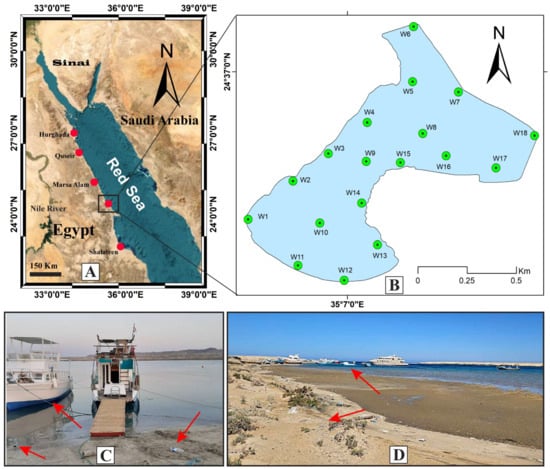
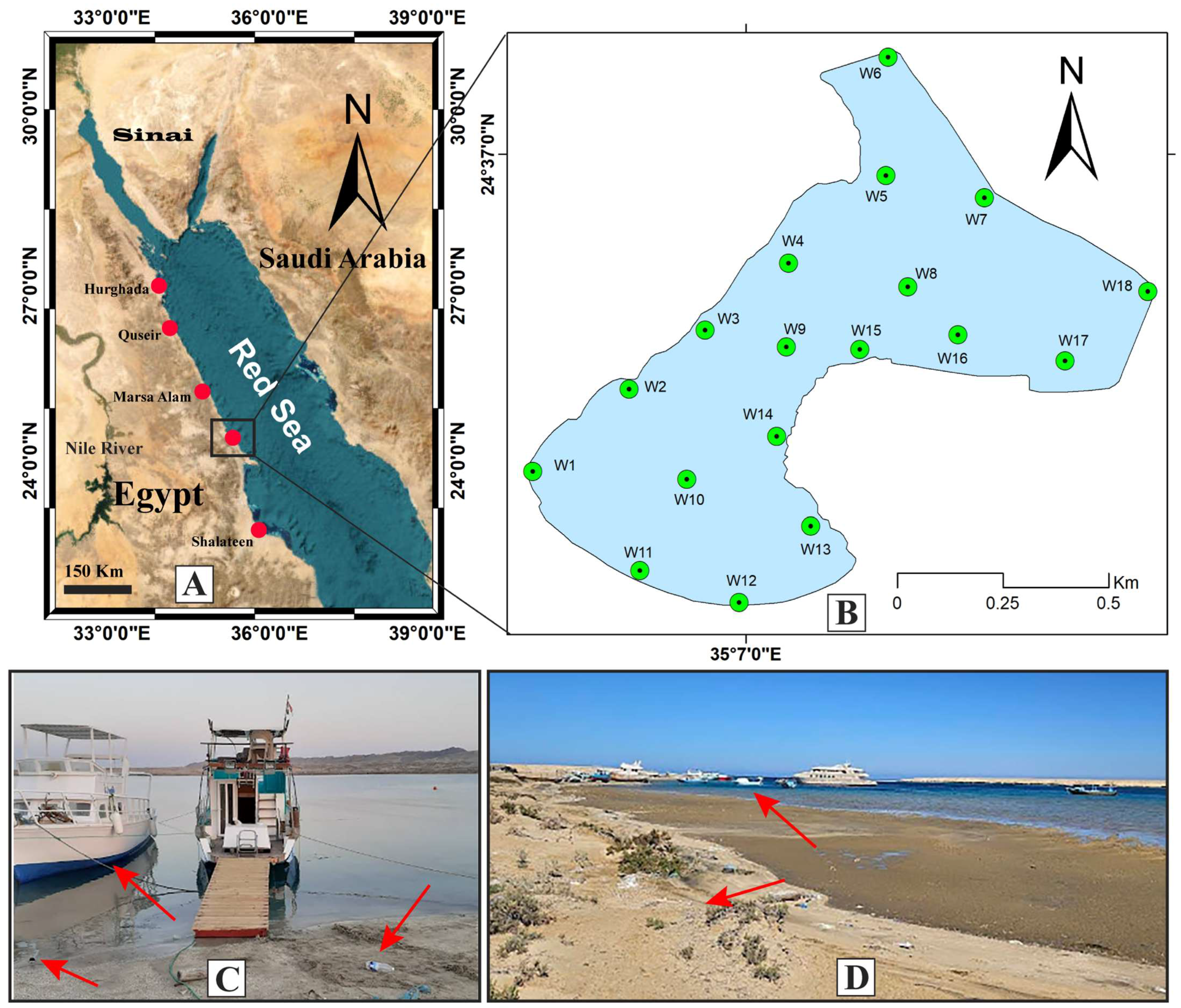
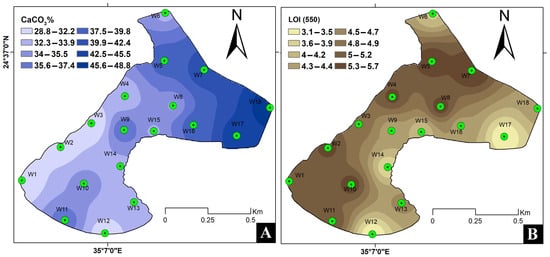
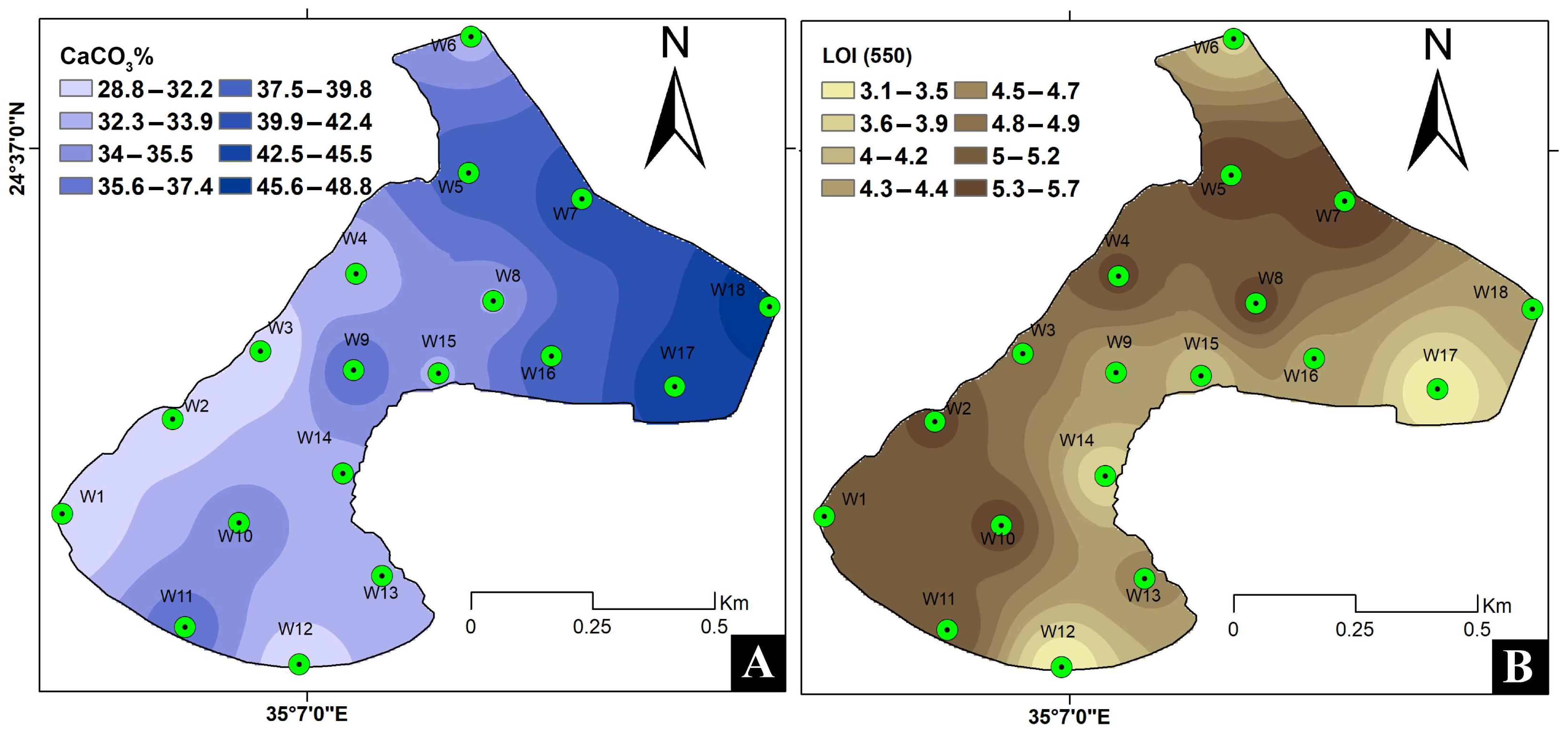
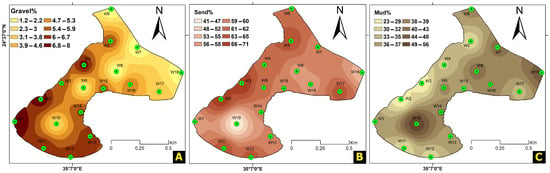
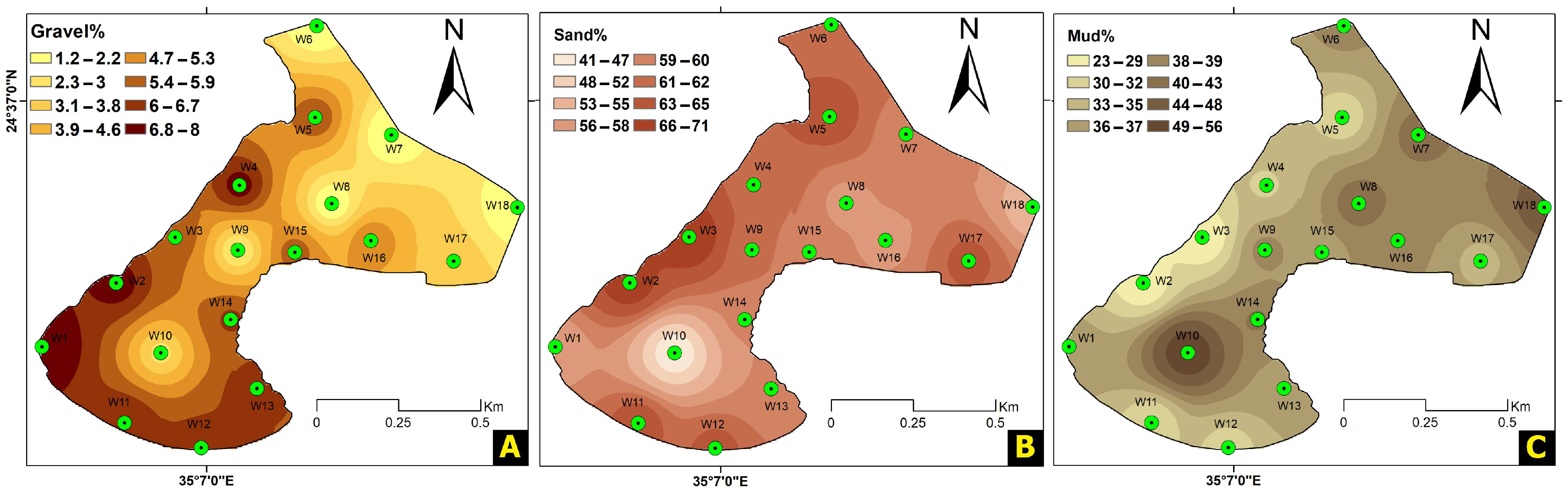
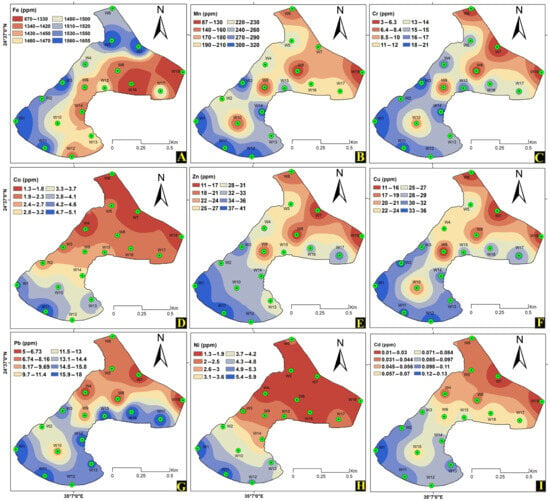
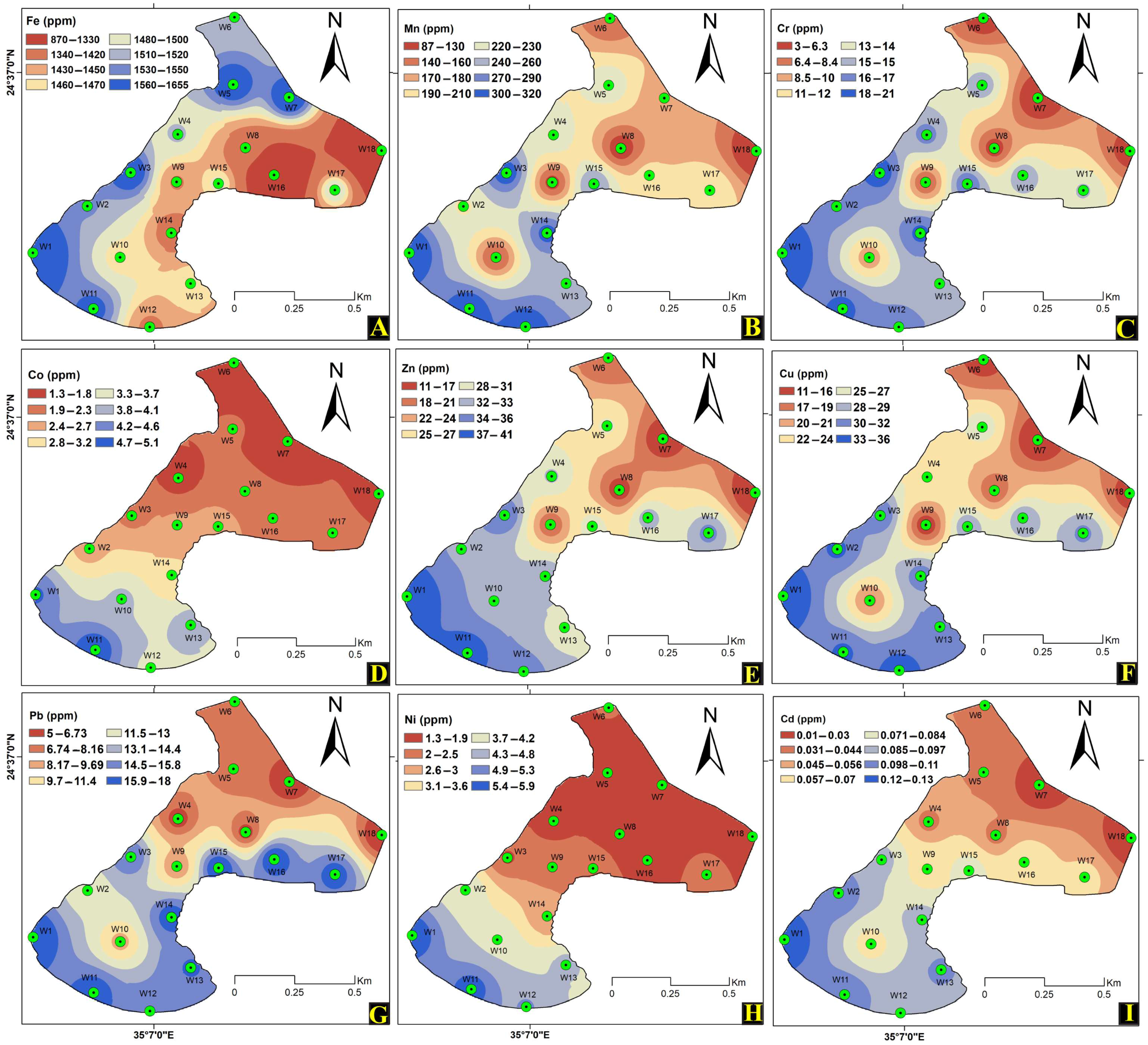
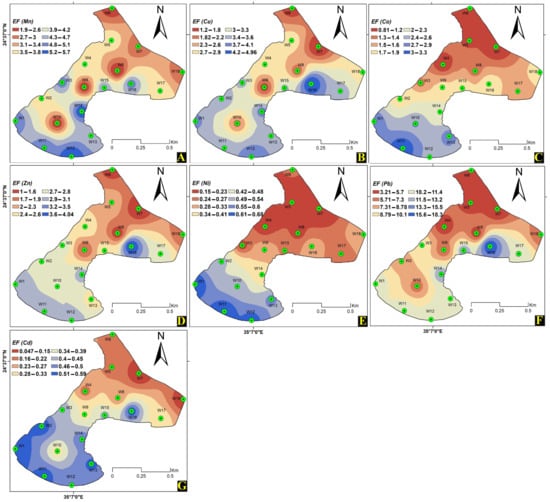
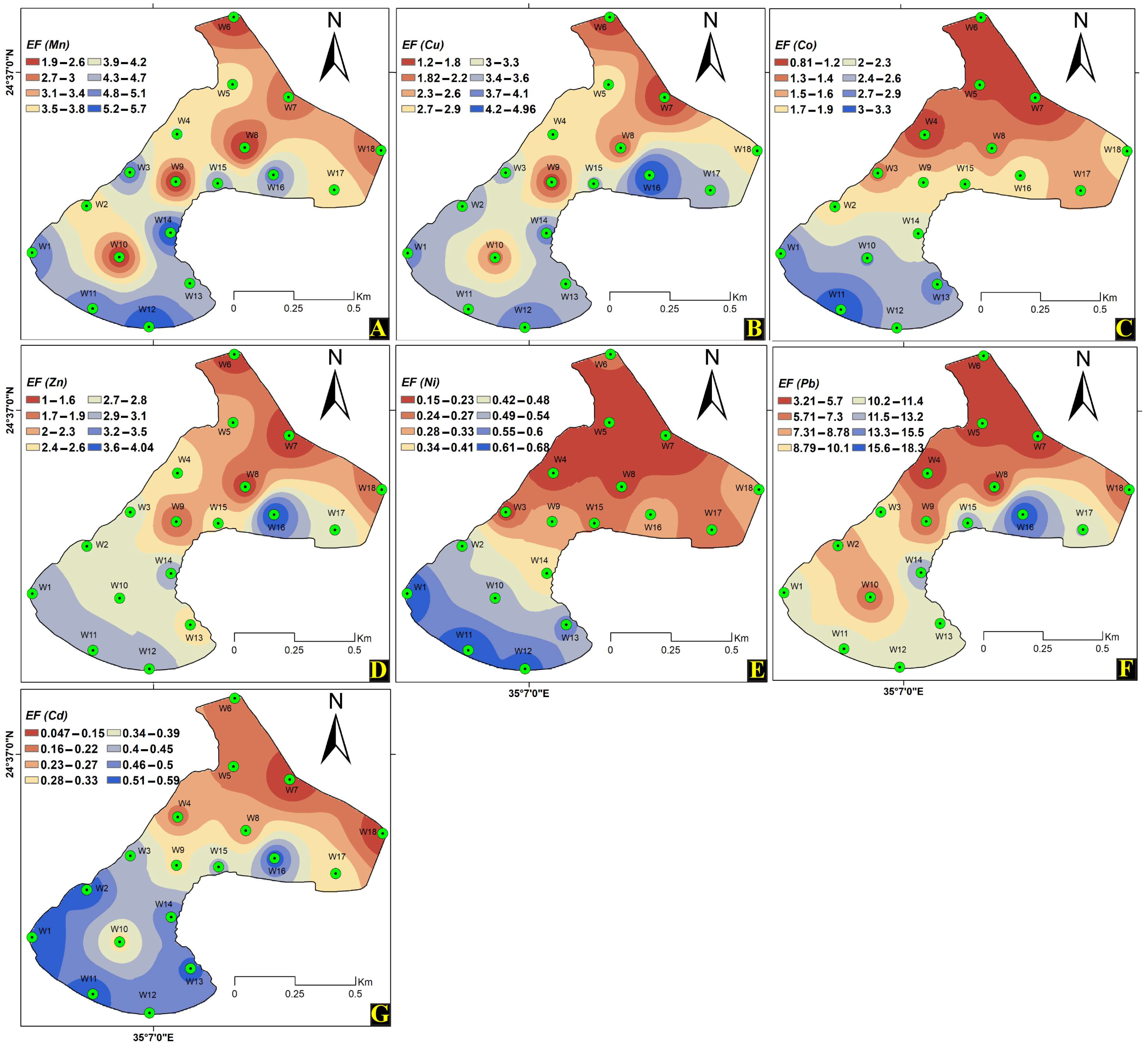
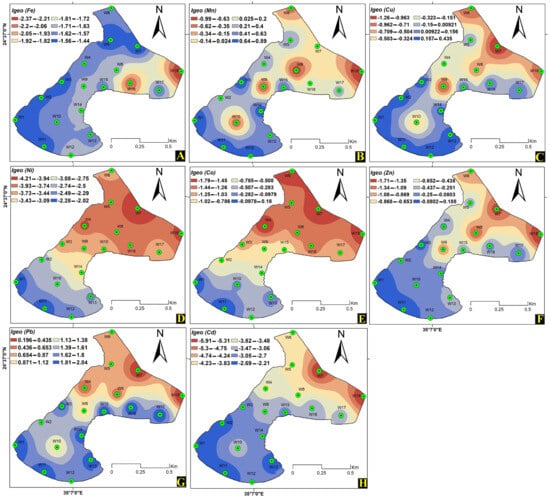
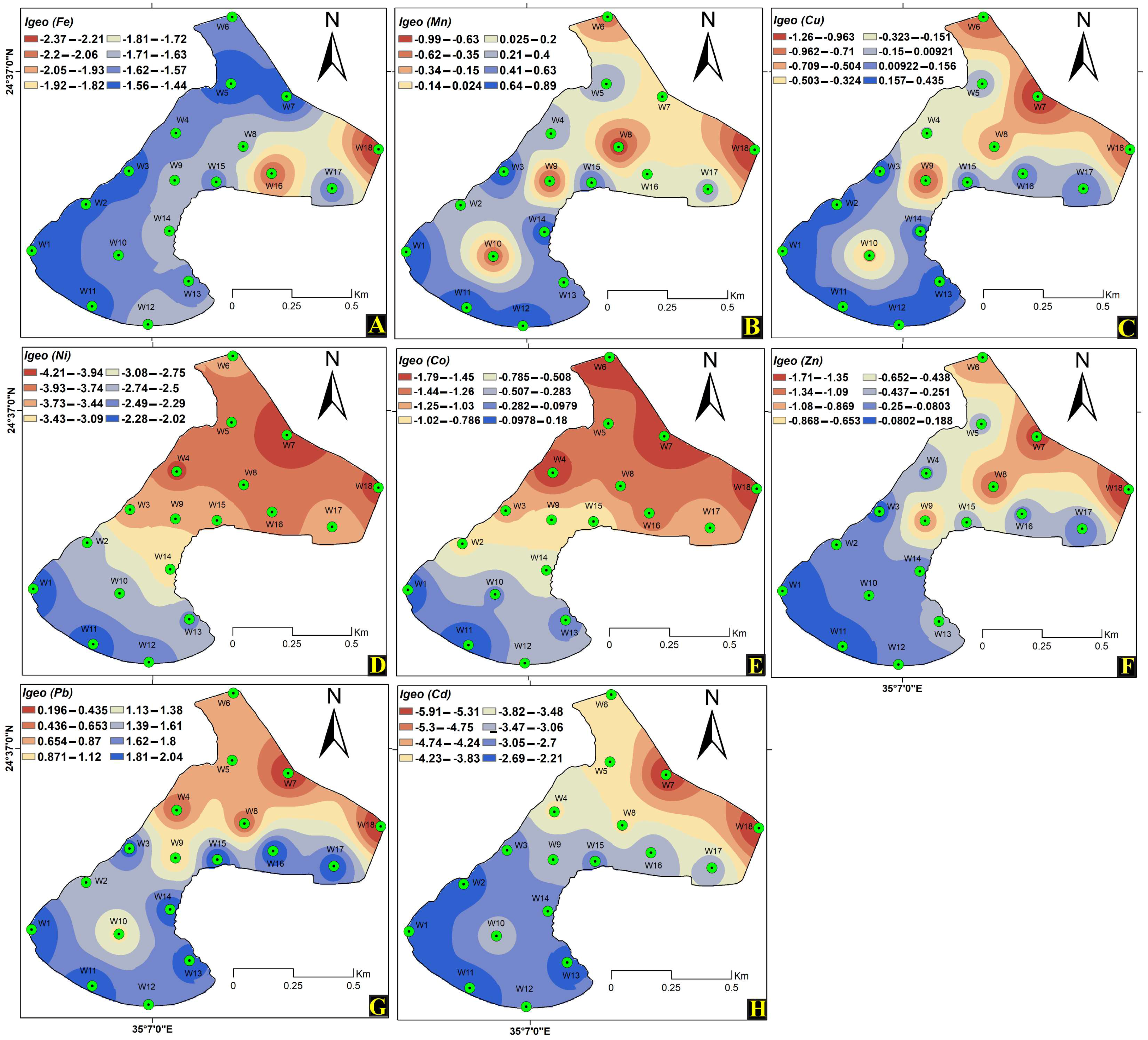
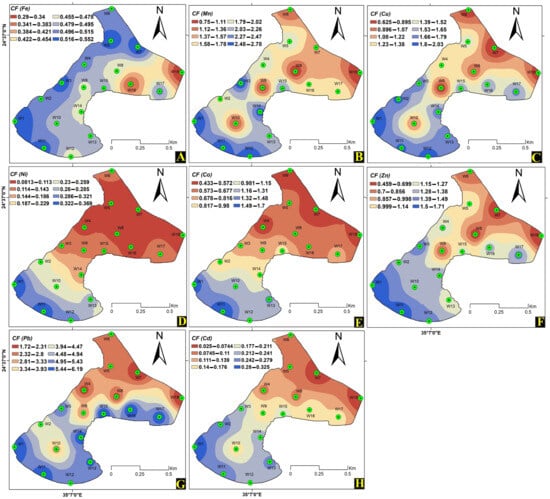
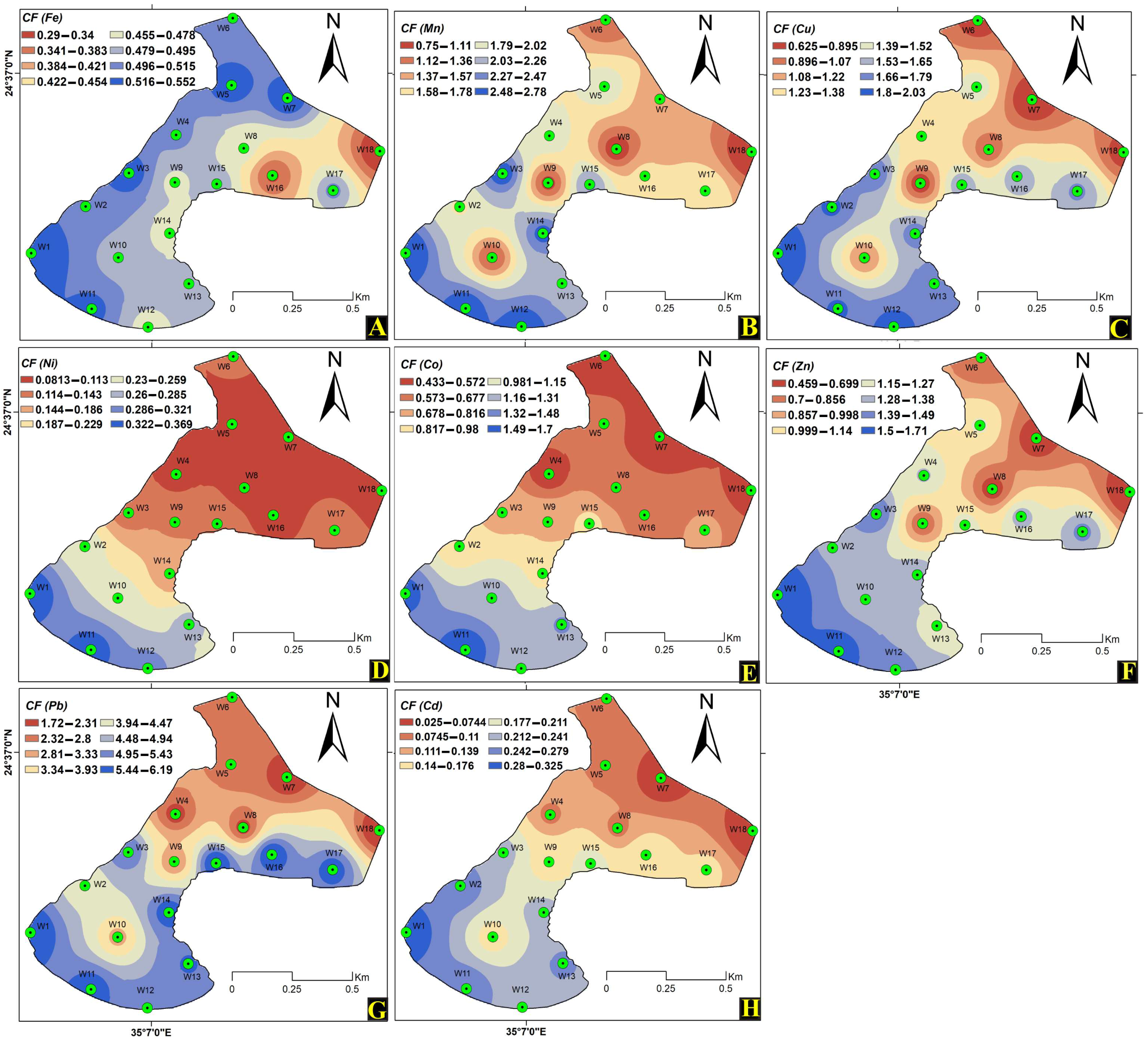
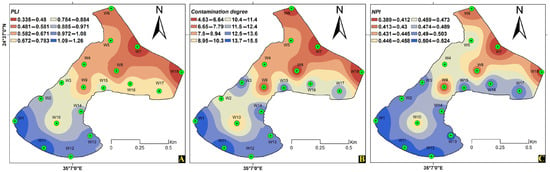
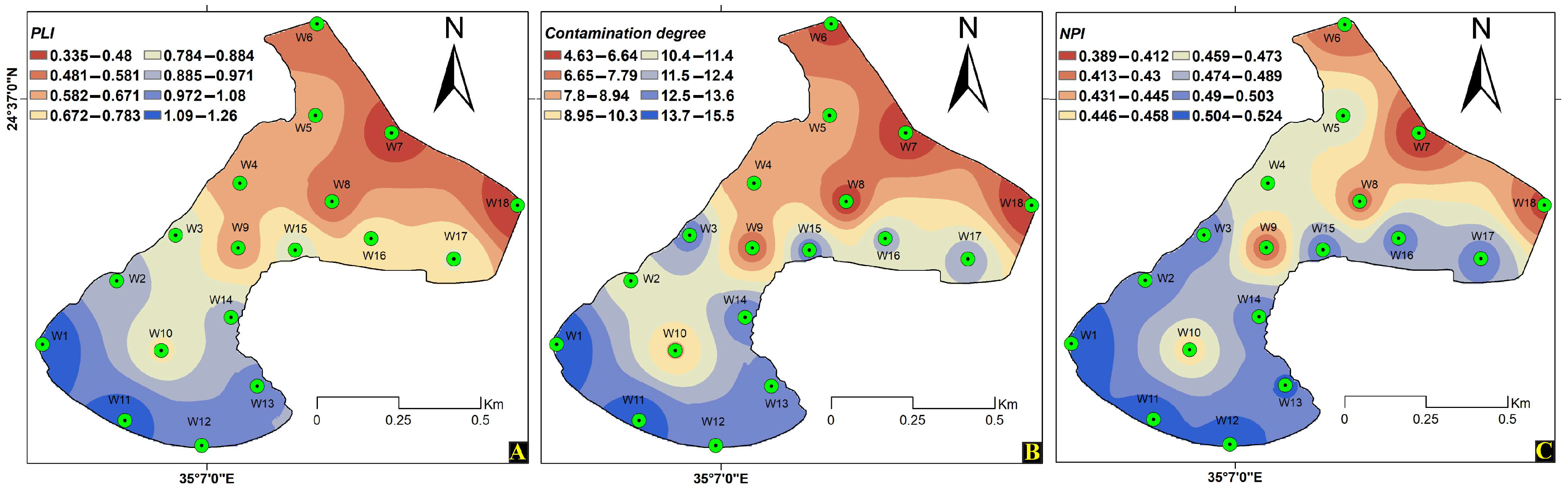
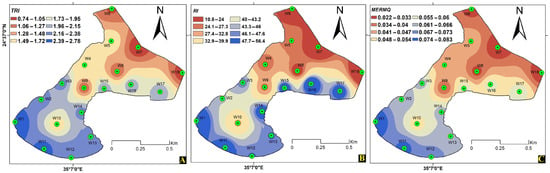
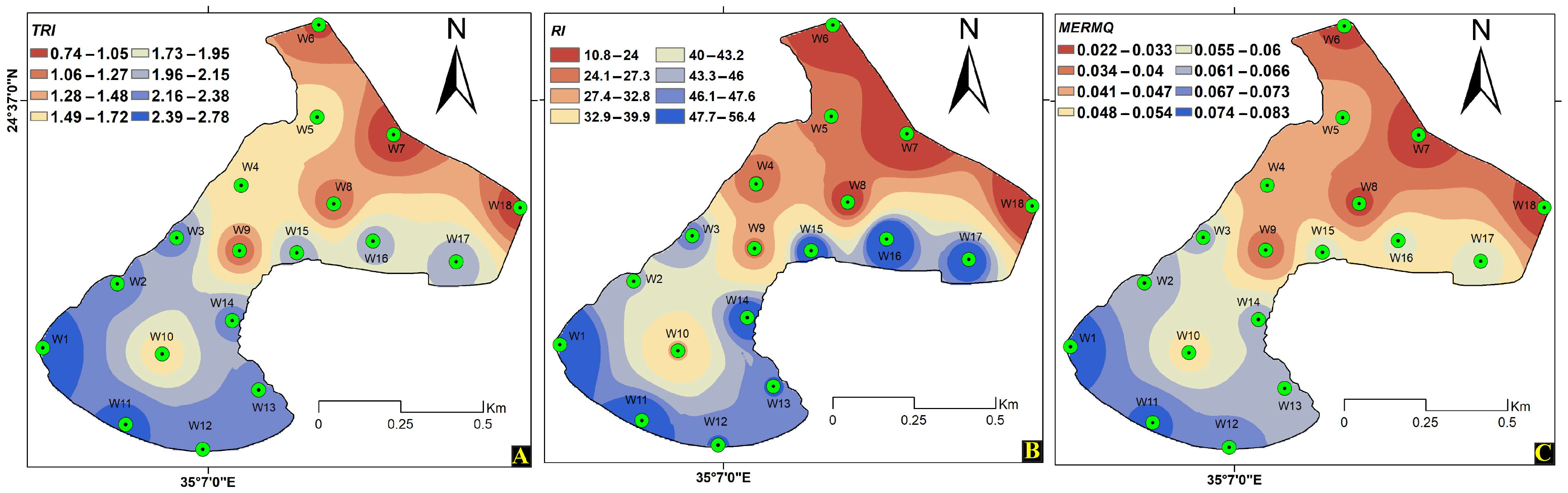
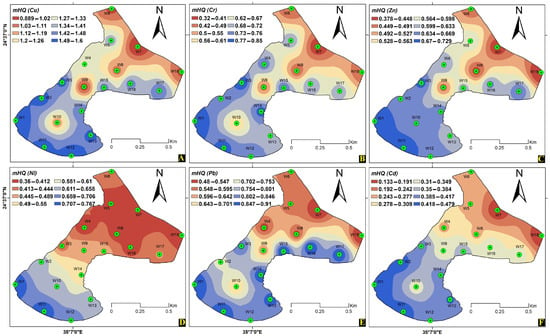
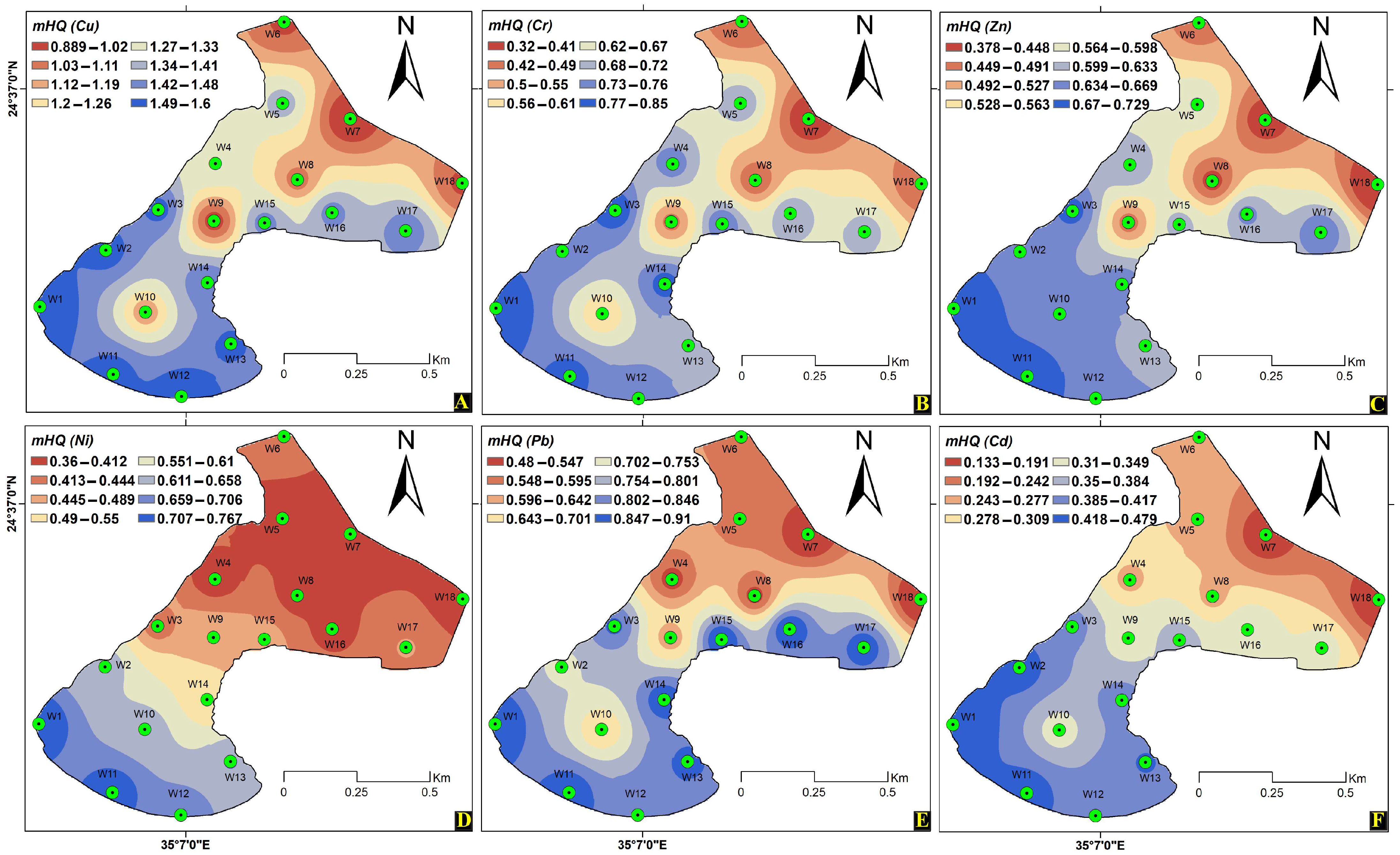
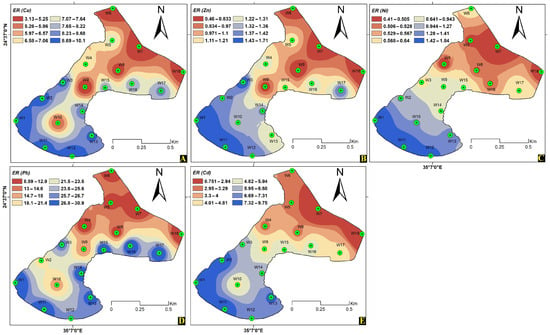
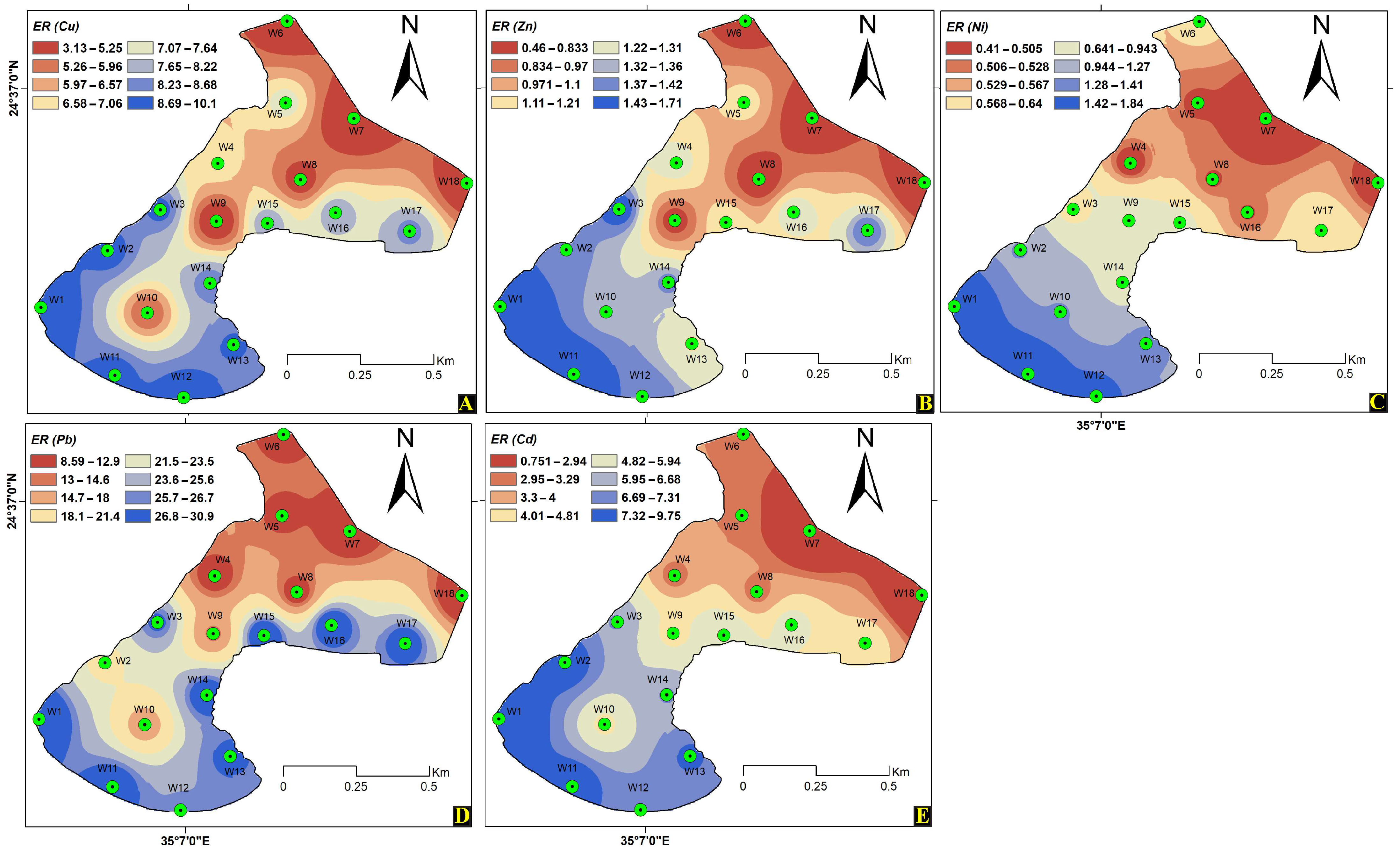
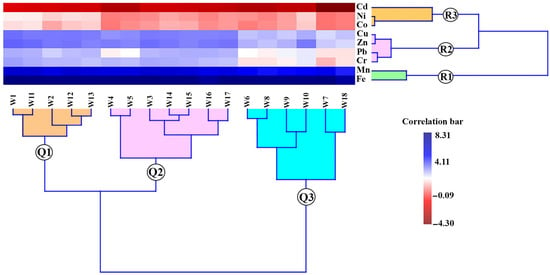
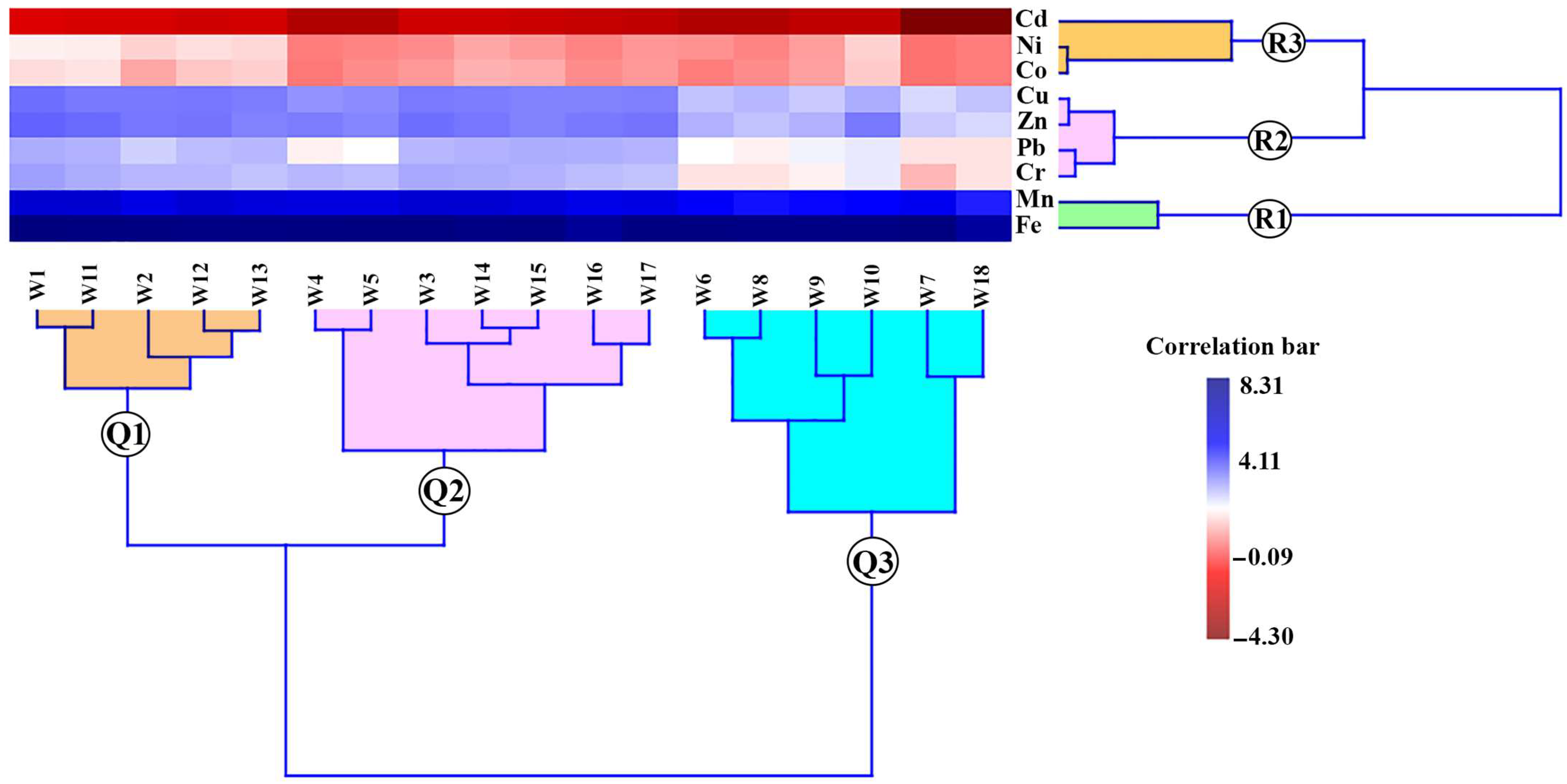
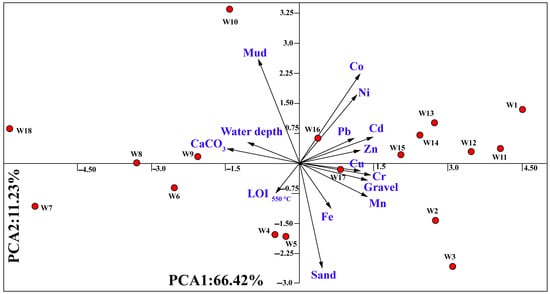
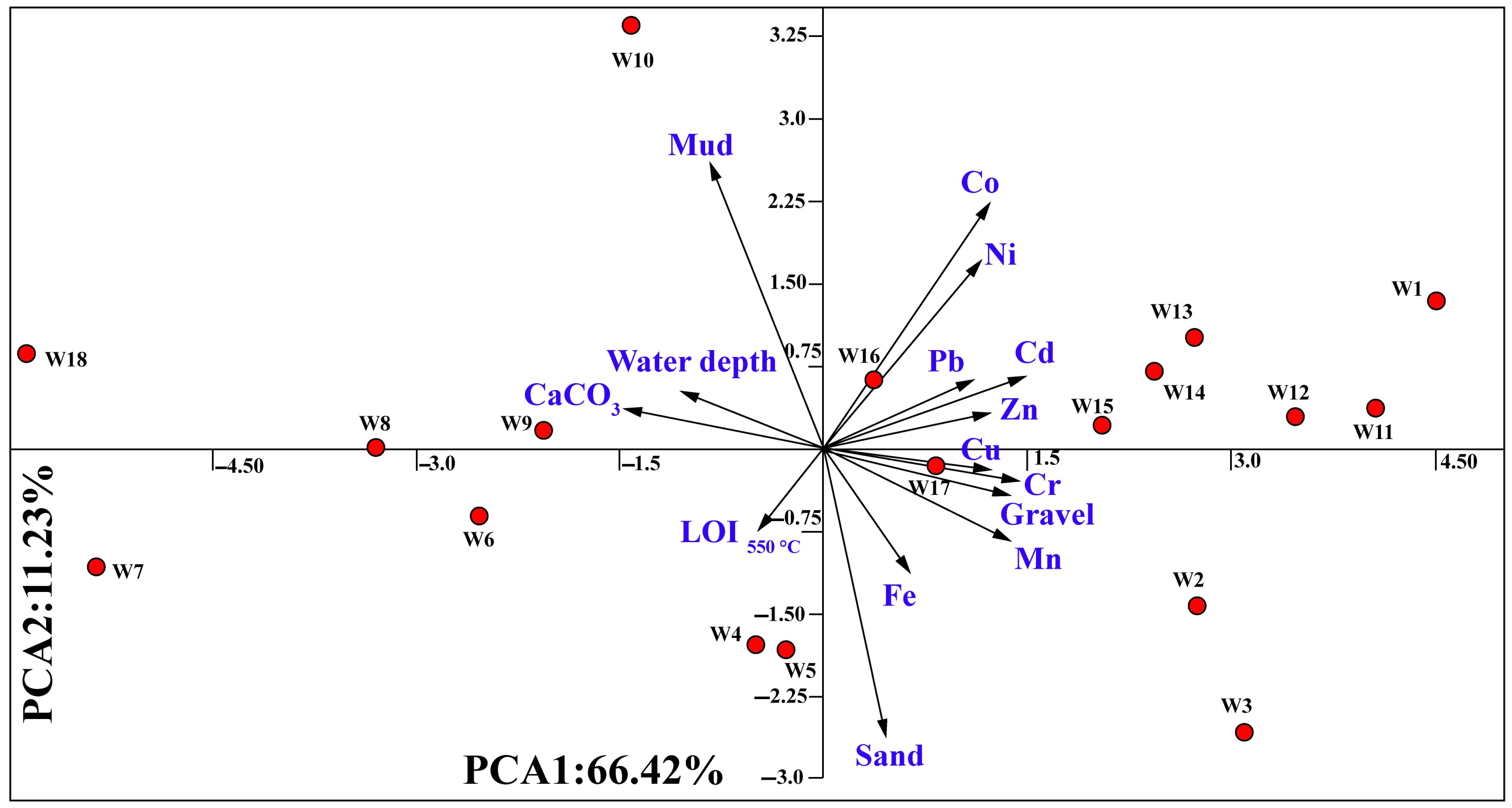
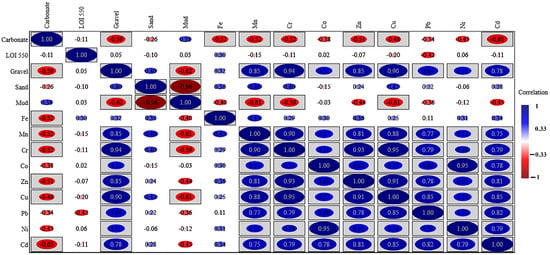
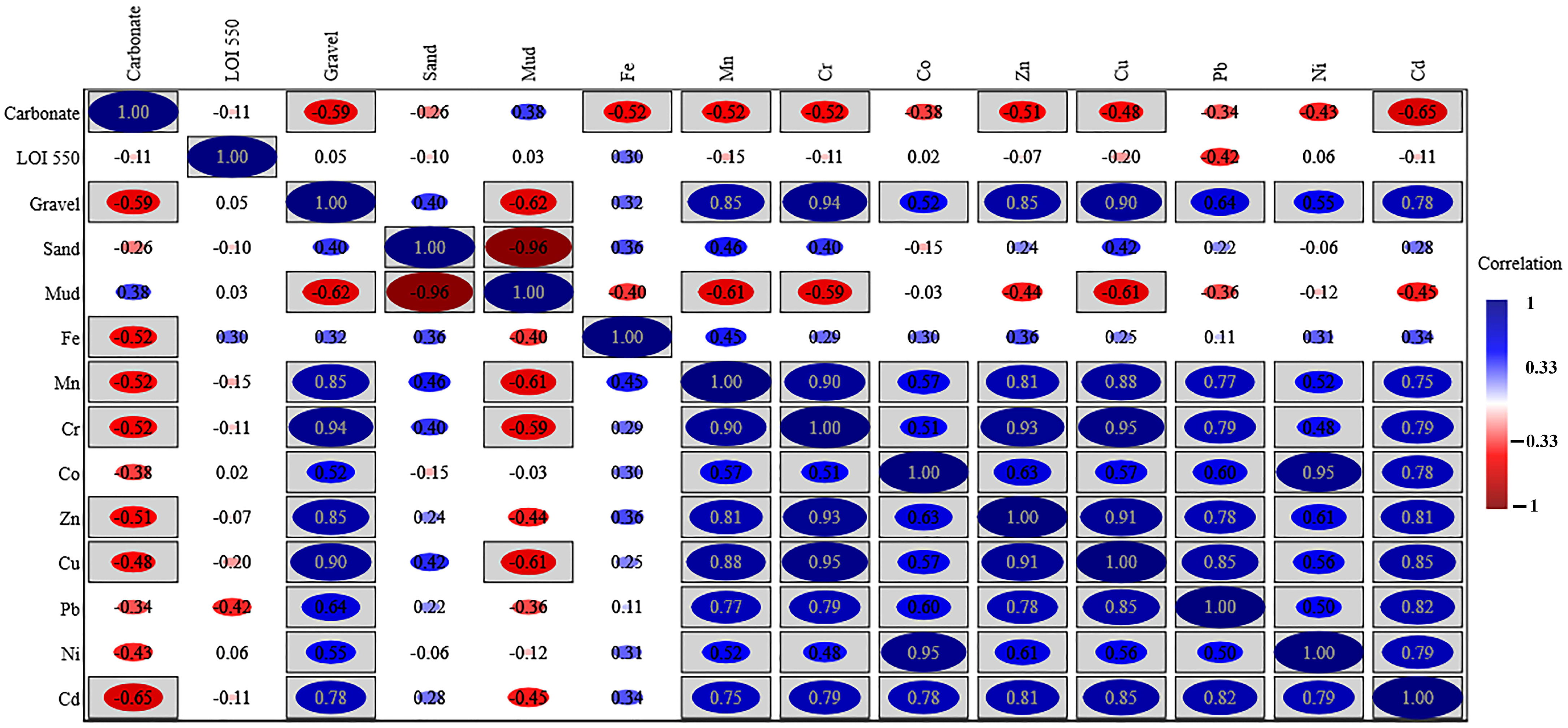

Disclaimer/Publisher’s Note: The statements, opinions and data contained in all publications are solely those of the individual author(s) and contributor(s) and not of MDPI and/or the editor(s). MDPI and/or the editor(s) disclaim responsibility for any injury to people or property resulting from any ideas, methods, instructions or products referred to in the content. |
© 2026 by the authors. Licensee MDPI, Basel, Switzerland. This article is an open access article distributed under the terms and conditions of the Creative Commons Attribution (CC BY) license.