Article

Study on the Joint Probability Distribution of Hydrodynamic Conditions in Xiamen Bay Based on Copula Functions

1
Fujian Communications Construction Quality and Safety Center, Fuzhou 350300, China
2
Xiamen Road & Bridge Engineering Investment and Development Co., Ltd., Xiamen 361000, China
3
Key Laboratory of Ministry of Education for Coastal Disaster and Protection, Hohai University, Nanjing 210098, China
4
College of Harbour, Coastal and Offshore Engineering, Hohai University, Nanjing 210098, China
*
Author to whom correspondence should be addressed.
J. Mar. Sci. Eng. 2026, 14(4), 404; https://doi.org/10.3390/jmse14040404
Submission received: 9 January 2026 / Revised: 13 February 2026 / Accepted: 17 February 2026 / Published: 23 February 2026
(This article belongs to the Section Ocean Engineering)

Abstract

The Xiamen Bay area is frequently impacted by typhoons and is characterized by a complex hydrodynamic environment. The combined action of waves, currents, and storm surges threatens the construction of the Third Eastern Link. Traditional design methods often overlook the correlations among hydrological variables, potentially leading to overestimated design standards. To address this issue, we developed a high-accuracy multi-driver hydrodynamic numerical model for Xiamen Bay. A high-resolution dataset of waves, currents, and storm surges spanning nearly 20 years was established. Based on the Copula function, a trivariate joint probability distribution of wave–current–storm surge was constructed. The results indicate that the Gamma distribution is the most suitable marginal distribution for the individual variables, and the Clayton Copula function best captures the dependence structure among the three variables. For the same return period, the design values of wave height, current velocity, and water level obtained using the Copula method are lower than those derived using traditional standard methods. The research findings can provide a more scientific and economical design basis for the Third Eastern Link project and serve as a reference for multivariate joint probability modeling in similar sea areas.

1. Introduction

Xiamen is one of China’s major international transport hub cities. Currently, Xiamen Xiang’an International Airport is planned for construction in the waters around Dadeng Island. With the opening of the new airport, the existing road network alone will be insufficient to meet the future urban transportation demands of Xiamen, necessitating the development of the Third Eastern Link as a new transportation corridor connecting Xiamen Island with the eastern Dadeng Island and Dajinmen Island. Notably, however, the project area is frequently affected by typhoons and features complex marine wave–current dynamics. Under the combined influence of multiple disaster-causing factors, typhoons often lead to extreme sea conditions by affecting waves, tides, and currents in the sea area. During storm surges, the combination of strong tidal currents and large waves not only poses a serious threat to the structural safety of marine engineering structures but also endangers the lives and property of coastal residents, in addition to local economic development [1]. Therefore, investigating the hydrodynamic conditions within Xiamen Bay and determining the extreme wave, current, and water level conditions are crucial for the construction of this new link.
In recent years, numerous scholars have investigated the design values of key environmental parameters in coastal and offshore areas. For instance, Lin et al. [2] conducted refined numerical simulations of the ordinary wind–wave fields in Xiamen Bay using the SWAN model, determining the extreme values of significant wave height in this area under northeasterly wind conditions. Liu et al. [3] proposed a multidimensional composite extreme value distribution model that simultaneously considers typhoon frequency and intensity to improve the accuracy of wave height design values, providing a more scientific probabilistic analysis framework for marine engineering disaster prevention. Yao et al. [4] analyzed the characteristics of surface tidal currents in the waters near Dadeng Island in Xiamen Bay based on observation data from integrated monitoring buoys deployed during the smart transformation of navigation aids in the southern region of Dadeng Island. Zhu [5] established a computational method based on an improved joint probability model and the ADCIRC-SWAN model to simulate and predict extreme storm surge water levels induced by typhoons under different tidal level boundary conditions in the coastal study area of Xiamen. These studies provide an important basis for understanding the statistical characteristics of individual environmental elements.
Despite the above developments, traditional engineering design methods often treat elements such as waves, current velocities, and water levels as independent variables, applying their extreme values separately in design. This approach ignores the potential simultaneity or nonlinear interactions among these factors during actual typhoon events. Such simplification may lead to an overestimation of the actual environmental load, impacting project economics, or fail to capture extreme conditions arising from multi-factor coupling, thereby introducing potential risks. The joint return period can better reflect the correlation among multiple variables and can also be used to calculate design values for multiple related marine environmental factors such as wave height and current velocity [6]. From a methodological perspective, there are many statistical models for multivariate joint probability analysis, including Copula functions, empirical frequency methods, Bayesian networks, correlation index methods, physical models, complex network analysis, multivariate linear regression, the FEI method, the Moran method with normal transformation, and nonparametric methods [7]. Among these, Copula functions are a flexible tool for constructing multivariate joint distributions, capable of more reasonably describing the dependency structures among multiple variables. They have been widely applied in recent years in multivariate joint probability analysis in hydrometeorology and related fields. Xu et al. [8] found that frequency analysis based on a single disaster-causing factor tends to underestimate the impact of compound disasters, and using Copula to calculate the return periods of multiple disaster-causing factors aligns better with actual conditions. Li and Liu [9] constructed bivariate joint distributions for wave height, swell height, and wind speed using the Copula function based on extreme marine environmental data from the western Guangdong sea area, demonstrating that joint return periods provide a more accurate frequency characterization and can lead to more economical design values while ensuring structural safety. Latif et al. [10] emphasized the importance of considering trivariate joint return periods for precise compound flood risk assessment on Canada’s west coast using Copula functions. Yaddanapudi et al. [11] demonstrated that strong interactions between storm tide and precipitation increase compound flood likelihood in the Southeastern US, with varied joint return periods underscoring the need to integrate these drivers into coastal planning. Li et al. [12] proposed a novel transition framework integrating the Copula function and improved Markov chain for the Pearl River Estuary, identifying amplification patterns between storm surge and river floods and attenuation patterns between river and urban floods to support early warning systems. Dina et al. [13] examined the influence of model selection on the estimation of joint events and the selection of representative design conditions through a six-dimensional case study in the Santoña estuary, comparing different copula families to evaluate their suitability for compound flood (CF) hazard analysis, thereby providing physically interpretable and statistically consistent multivariate design events for compound hazard analysis in coastal regions. The results of these studies collectively indicate that, compared to assuming variables are independent, designs based on joint probabilities can more accurately reflect the statistical characteristics of natural disasters, thereby optimizing engineering design solutions while ensuring safety.
Constructing a joint probability model using Copula functions requires a certain computational sample size. The sample size of extreme events from historical storm surge records in Xiamen is limited and insufficient to meet computational demands. By performing numerical simulations of the study area using hydrodynamic models, the large volume of sample data needed to construct the joint probability model can be obtained. Compared to relying on limited historical storm surge records, using simulated data with high spatiotemporal resolution based on hydrodynamic models can significantly improve the accuracy of Copula function modeling [14]. MIKE21, developed by the Danish Hydraulic Institute (DHI), can simulate flows, waves, sediment transport, and ecological interactions in rivers, lakes, estuaries, bays, coastal areas, and oceans [15]. The simulated time series can be used for subsequent statistical analysis. For example, Wang et al. [16] used MIKE21 to analyze the impacts of sea-level rise, land subsidence, and typhoon storm surge interactions on seawalls and floodwalls in Shanghai.
Given that design methods considering environmental variables may independently lead to overestimated standards, this study aims to address this gap. A high-accuracy multi-driver (typhoon storm surge, astronomical tide, and waves) hydrodynamic numerical model for Xiamen Bay is developed and validated. Subsequently, a high-resolution dataset of waves, currents, and storm surges spanning nearly 20 years for the project area is established. Based on this dataset, the Copula function is employed to construct a trivariate joint probability distribution of waves, currents, and storm surges. The findings of this research are intended to provide a more scientific and economical design basis for the Third Eastern Link project and serve as a reference for multivariate joint probability modeling in similar marine environments.

2. Study Area and Data

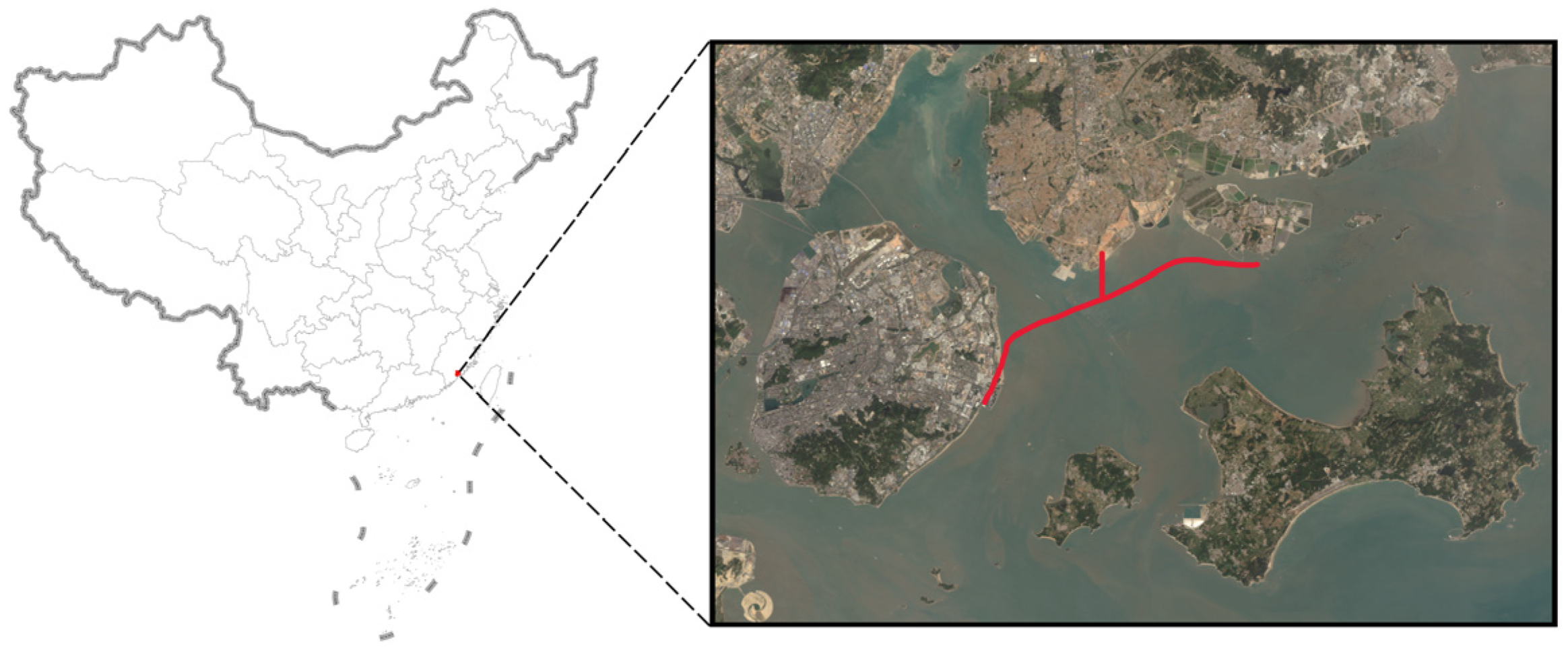
Xiamen Bay, as shown in Figure 1, is an estuarine harbor along the southeast coast of China, located in Xiamen City, Fujian Province [17]. The Xiamen Bay waters are primarily influenced by regular semi-diurnal tidal dynamics, with tidal waves generally taking the form of standing waves. The coastal shoreline of the area is highly irregular, and water depths vary significantly. The currents in Xiamen Bay are predominantly tidal, with minimal influence from runoff. Sheltered by the Dajinmen Islands and Xiaojinmen Island, the engineering zone is less directly affected by open-sea waves. The area is mainly influenced by wind-generated waves from limited fetch areas. Under normal weather conditions, wind waves in the area are moderate, with larger waves generally occurring during typhoons.

3. Materials and Methods

3.1. Governing Equations

The model is built upon the depth-integrated, two-dimensional, incompressible Reynolds-averaged Navier–Stokes (RANS) equations. This formulation incorporates the Boussinesq assumption and the hypothesis of hydrostatic pressure, enabling more accurate simulation and calculation of tidal level curves and tidal currents [18]. By integrating the horizontal momentum equations and the continuity equation over the entire water depth, the following set of two-dimensional depth-averaged shallow water equations is obtained:
h t + h u ¯ x + h v ¯ y = h S
h u ¯ t + h u ¯ 2 x + h v ¯ u ¯ y = f v ¯ h g h η x h ρ 0 p a x g h 2 2 ρ 0 ρ x + τ S x ρ 0 τ h x ρ 0 1 ρ 0 S x x x + S x y y + x ( h T x x ) + y ( h T x y ) + h u s S
h v ¯ t + h u ¯ v ¯ x + h v ¯ 2 y = f u ¯ h g h η y h ρ 0 p a y g h 2 2 ρ 0 ρ y + τ s y ρ 0 τ h y ρ 0 1 ρ 0 S y x x + S y y y + x ( h T x y ) + y ( h T y y ) + h v s S
where h is the total water depth; t is time; x and y are the Cartesian coordinates; u ¯ and v ¯ are depth averages of velocity components in the x and y direction; S is the magnitude of the discharge because of point sources; f is the Coriolis parameter; g is gravitational acceleration; η is surface elevation; ρ 0 is the reference density of water; τ S x , τ h x , τ S y , τ h y are the components of bottom stress, u s ; v s is the velocity at which the water is discharged into the ambient water; and T x y , T x x , T y y are the lateral stresses.

3.2. Statistical Method

The mathematical properties of the Copula function are closely related to the hydrodynamic physical processes. During typhoons, wave height, water level setup, and tidal current are all driven by strong winds. These three variables exhibit extreme values simultaneously under severe conditions, demonstrating statistical “upper-tail dependence”. The Copula function can effectively capture the upper-tail dependence between variables, making it suitable for describing “low-probability, high-hazard” extreme compound events. This behavior is highly consistent with the physical process where all three variables increase sharply simultaneously during typhoons.
The Copula function is constructed through marginal density functions. To apply this model to the joint probability of wave, current, and storm surge, the first step is to determine the marginal distribution functions of the three characteristic values. The Lognormal, Gamma, Weibull, and Generalized Extreme Value (GEV) marginal distribution functions (Table 1) are employed to fit the marginal distributions of annual typhoon-induced extreme water levels, maximum wave heights, and maximum current velocities. Three Archimedean Copula functions (Clayton Copula, Gumbel Copula, and Frank Copula) are then used to construct the joint distribution among wave, current, and storm surge. The expressions of these three Copula joint distribution functions are presented in Table 2.
The goodness-of-fit of the distribution functions is evaluated using the Kolmogorov–Smirnov (K-S) test, the Akaike Information Criterion (AIC), and the Bayesian Information Criterion (BIC). For the tests, the null hypothesis is accepted if the p-value of the K-S test exceeds the significance level (0.05); in comparison, smaller values of AIC and BIC indicate a better fit [19]. Parameters are estimated using the method of L-moments, which enables unbiased parameter estimation and maintains robustness for extreme values. This approach has been widely applied in hydrological frequency studies concerning flood peaks, extreme rainfall, and similar problems.

3.3. Scenario Setting

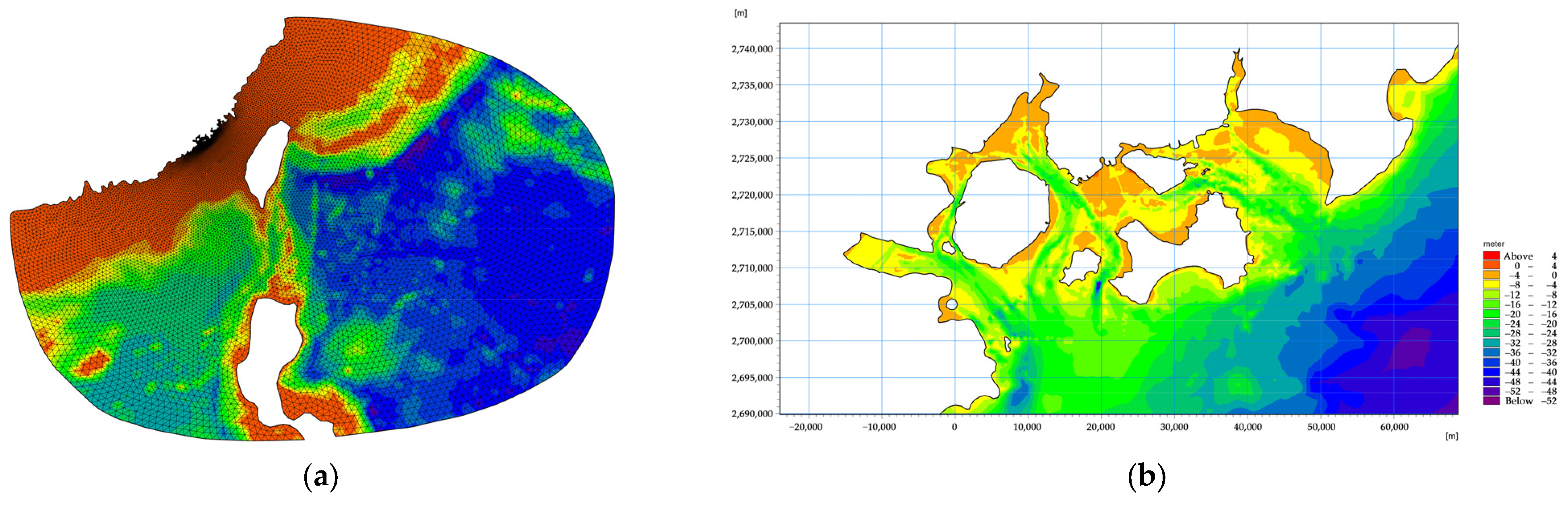
The model’s computational domain covers the Taiwan Strait and the East China Sea and extends from the South China Sea to the Western Pacific. To accurately simulate the entire process of typhoon storm surges moving from the deep sea to the nearshore area, the computational grid in the waters near the project area is further refined. The grid consists of 282,075 computational nodes and 139,479 elements. The grid resolution transitions from 500 m in the open sea to 30,000 m; by comparison, within the bay, the resolution primarily ranges between 20 and 500 m. The grid resolution in the project waters ranges from 20 to 50 m. The computational domain grid division and water depths of the model are shown in Figure 2.
The tidal forcing for the model’s open boundary is provided by the Nao.99b model developed by the National Astronomical Observatory of Japan and has been appropriately adjusted according to the characteristics of tidal wave propagation in China’s coastal seas: z boundary = ζ ( t ) , where ζ ( t ) is the tide level.
Xiamen Bay has a relatively large average tidal range, approximately 4 m, classifying it as a macro-tidal bay. To avoid computational instability in the model, a moving boundary controlled by the dry–wet method is applied at the tidal model boundary. In the model, the dry water depth, the flooding depth, and the wet water depth are set as h d r y = 0.005 m, h f l o o d = 0.05 m, and h w e t = 0.1 m, respectively.

3.4. Validation of the Numerical Model

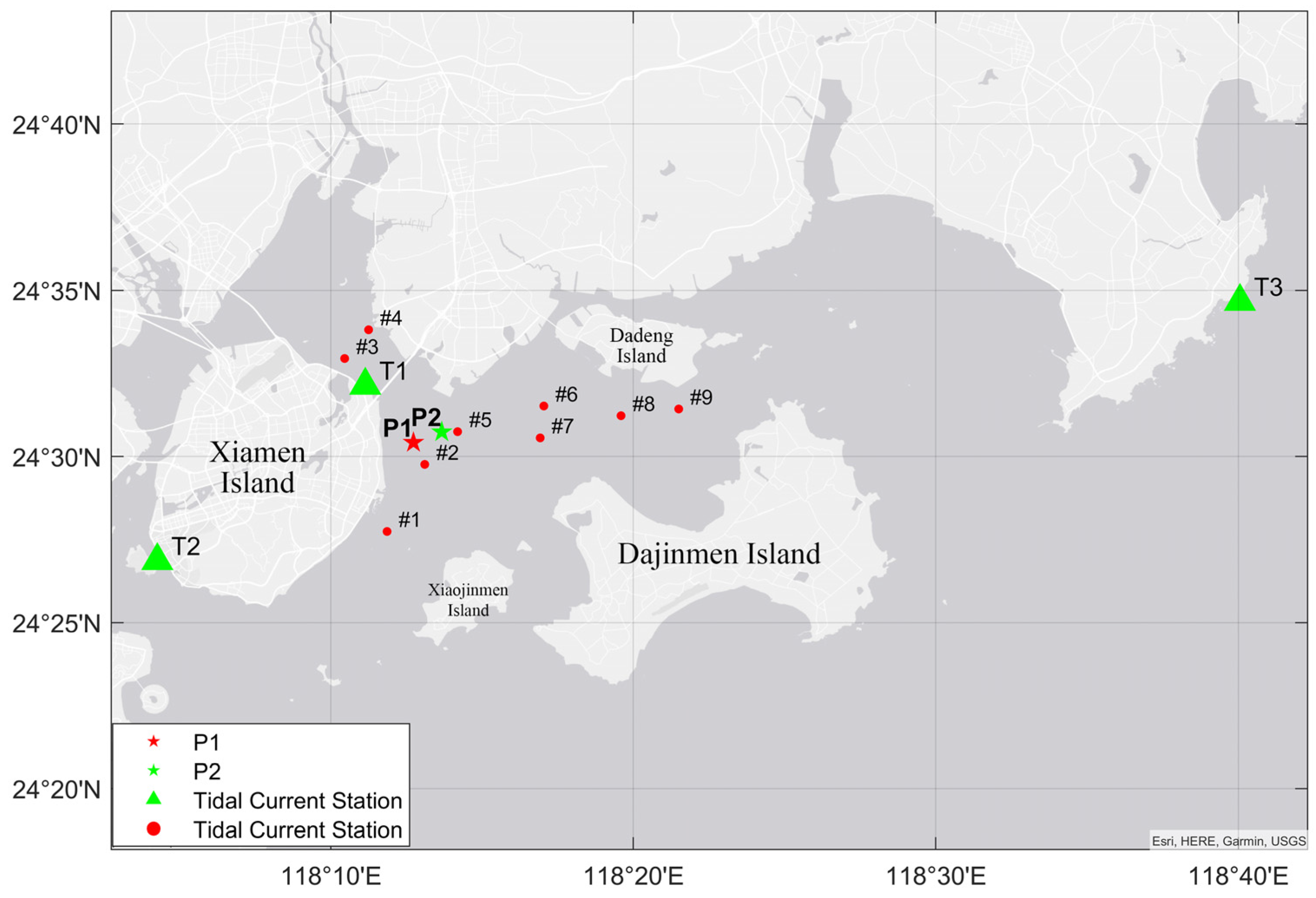
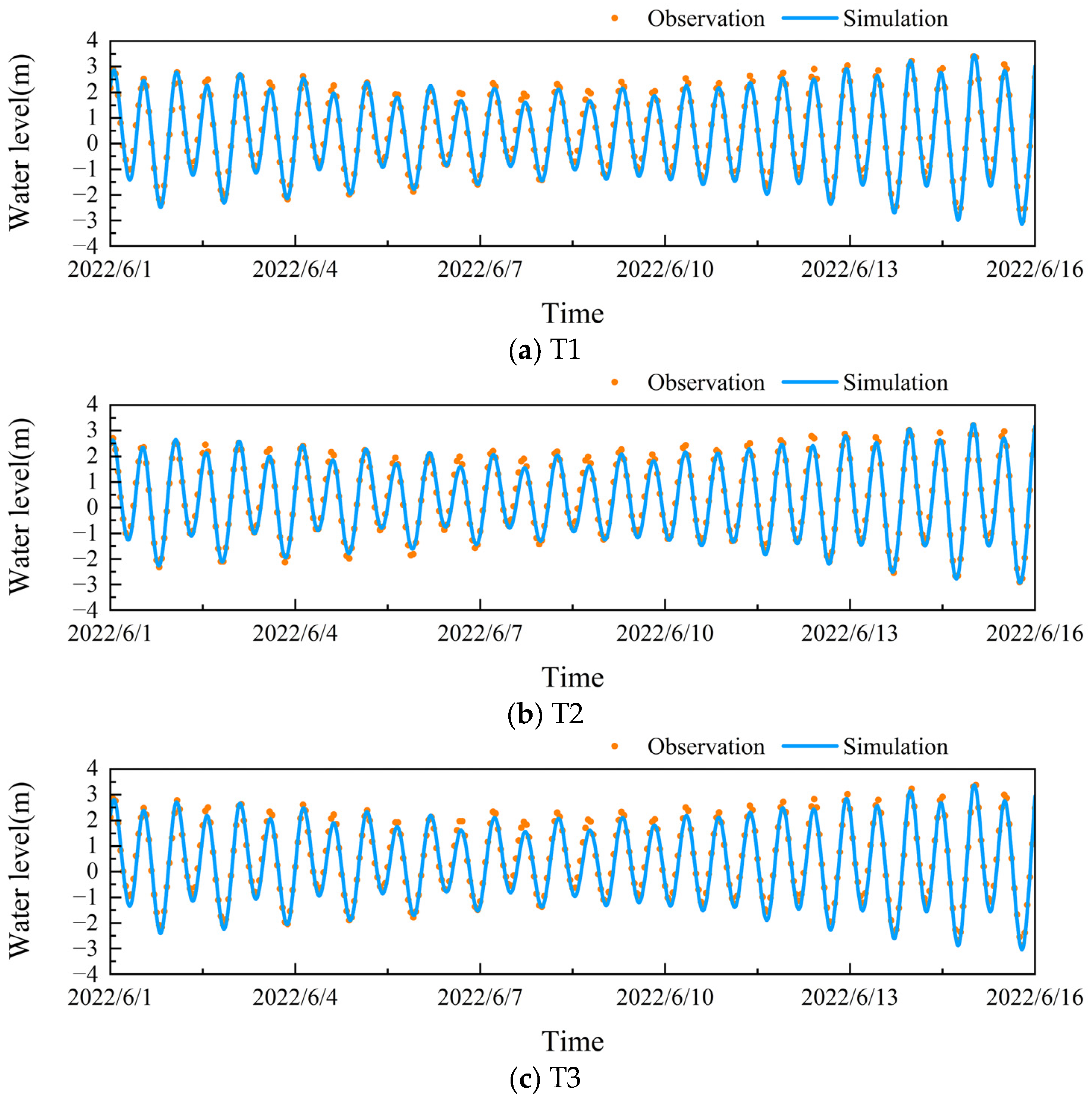
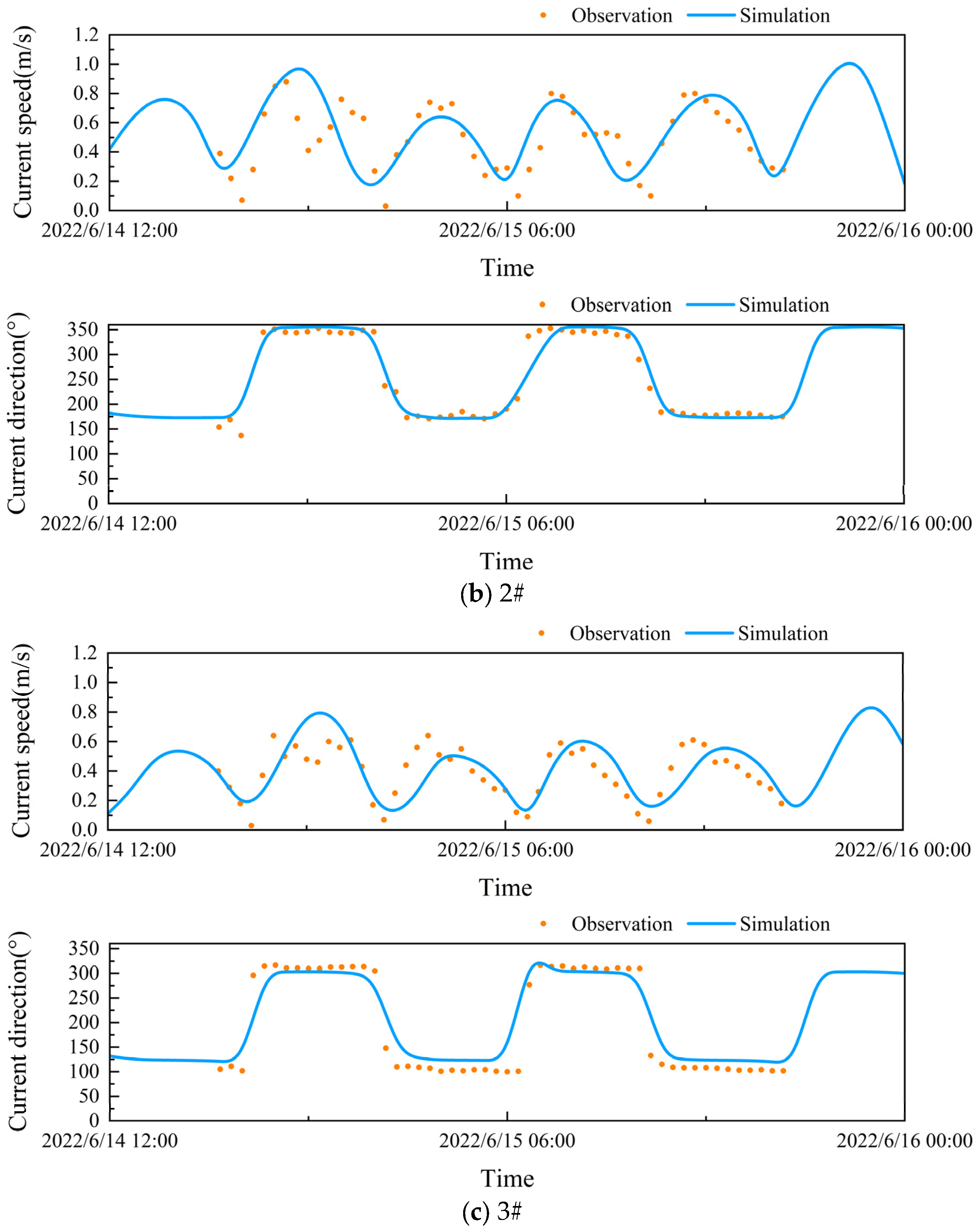
The mathematical model was validated for tidal levels, tidal currents, and waves to verify its reliability. The validation involved comparing the model-computed values against measured tidal current data from nine current stations within the study area and tidal level data encompassing complete tidal cycles from stations T1, T2, and T3, obtained during the summer–spring tide observation period in 2022 (the locations are illustrated in Figure 3). Furthermore, the model’s simulated tidal level results under extreme typhoon conditions were validated using Typhoon Hagupit (200814).
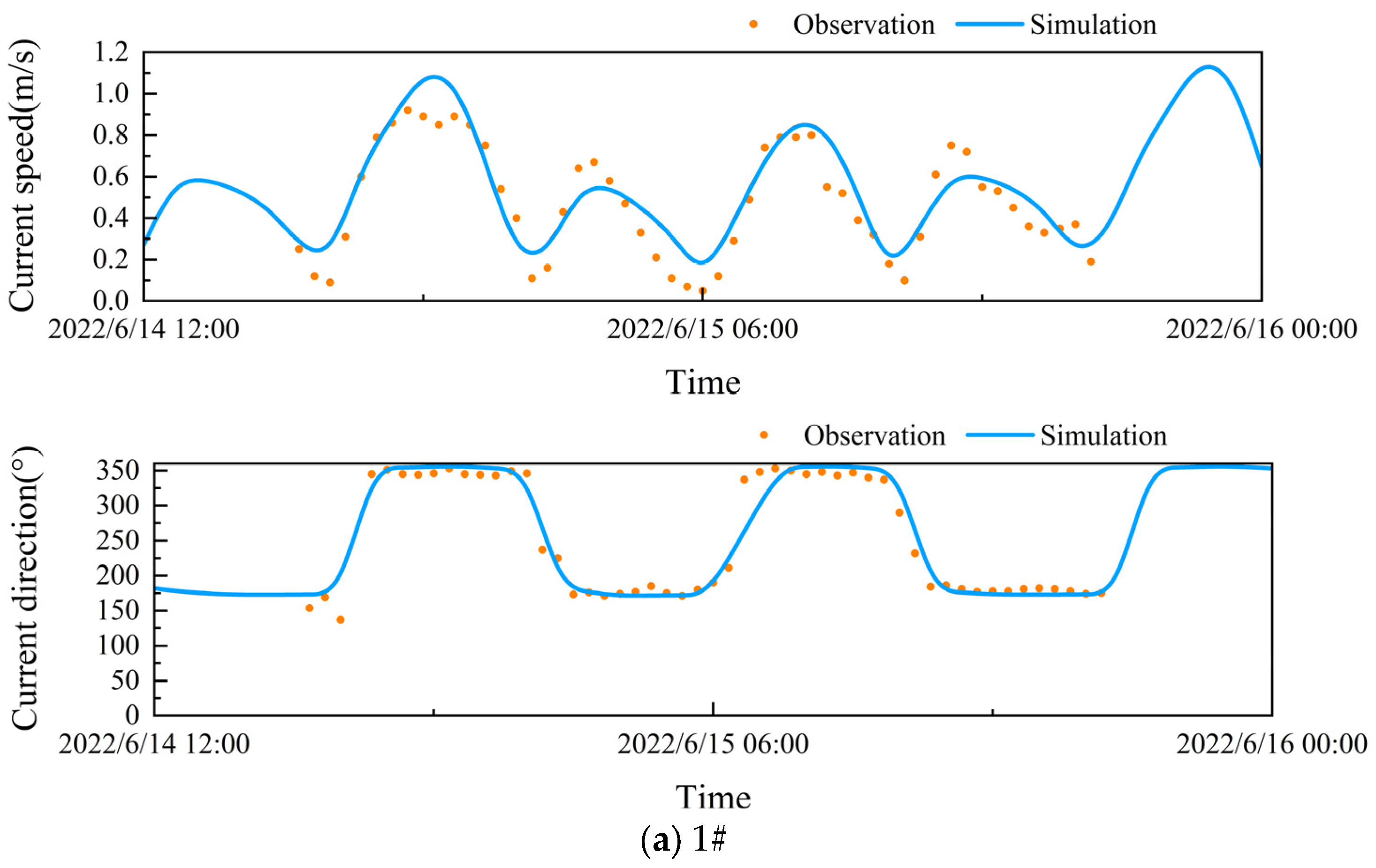
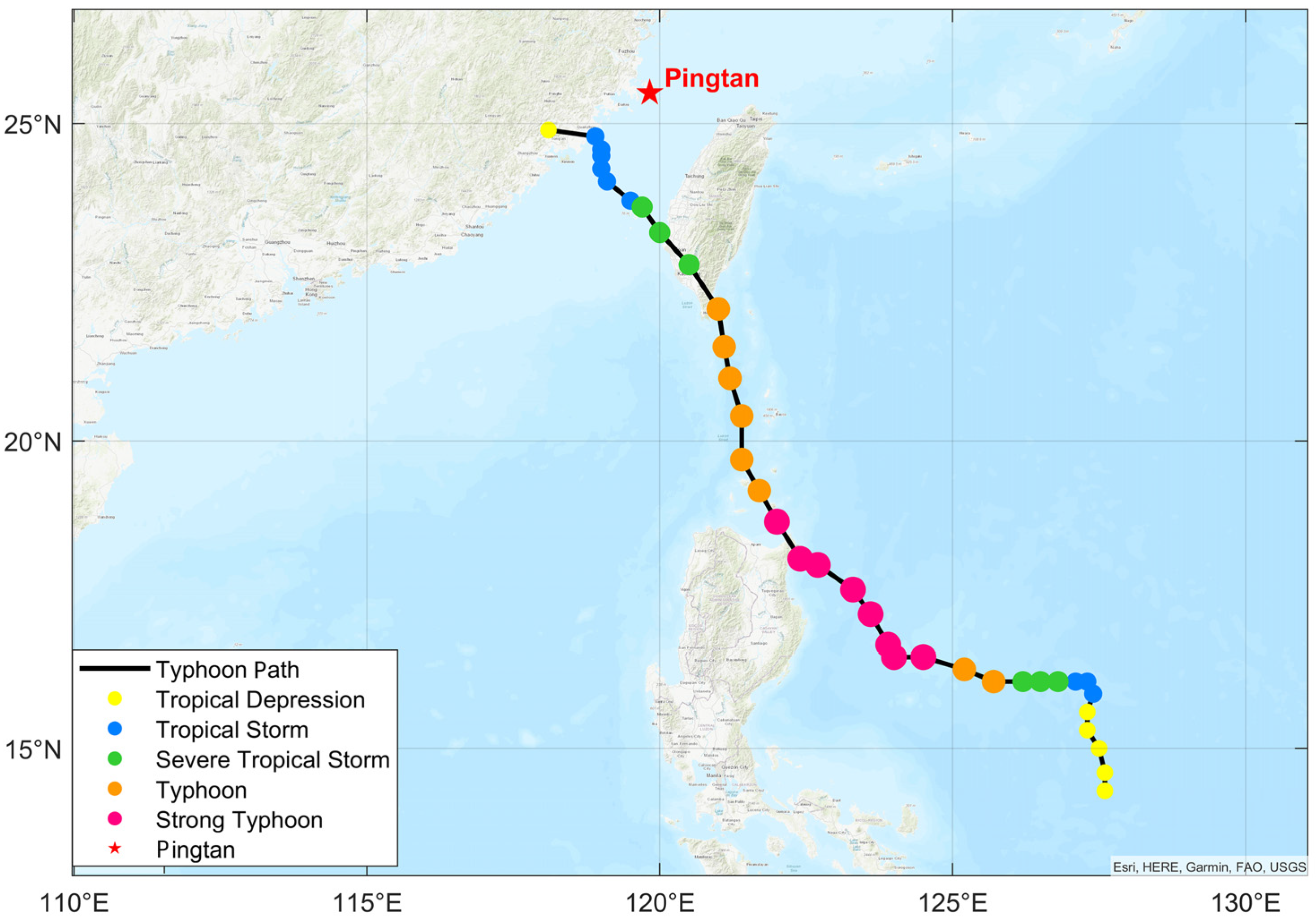
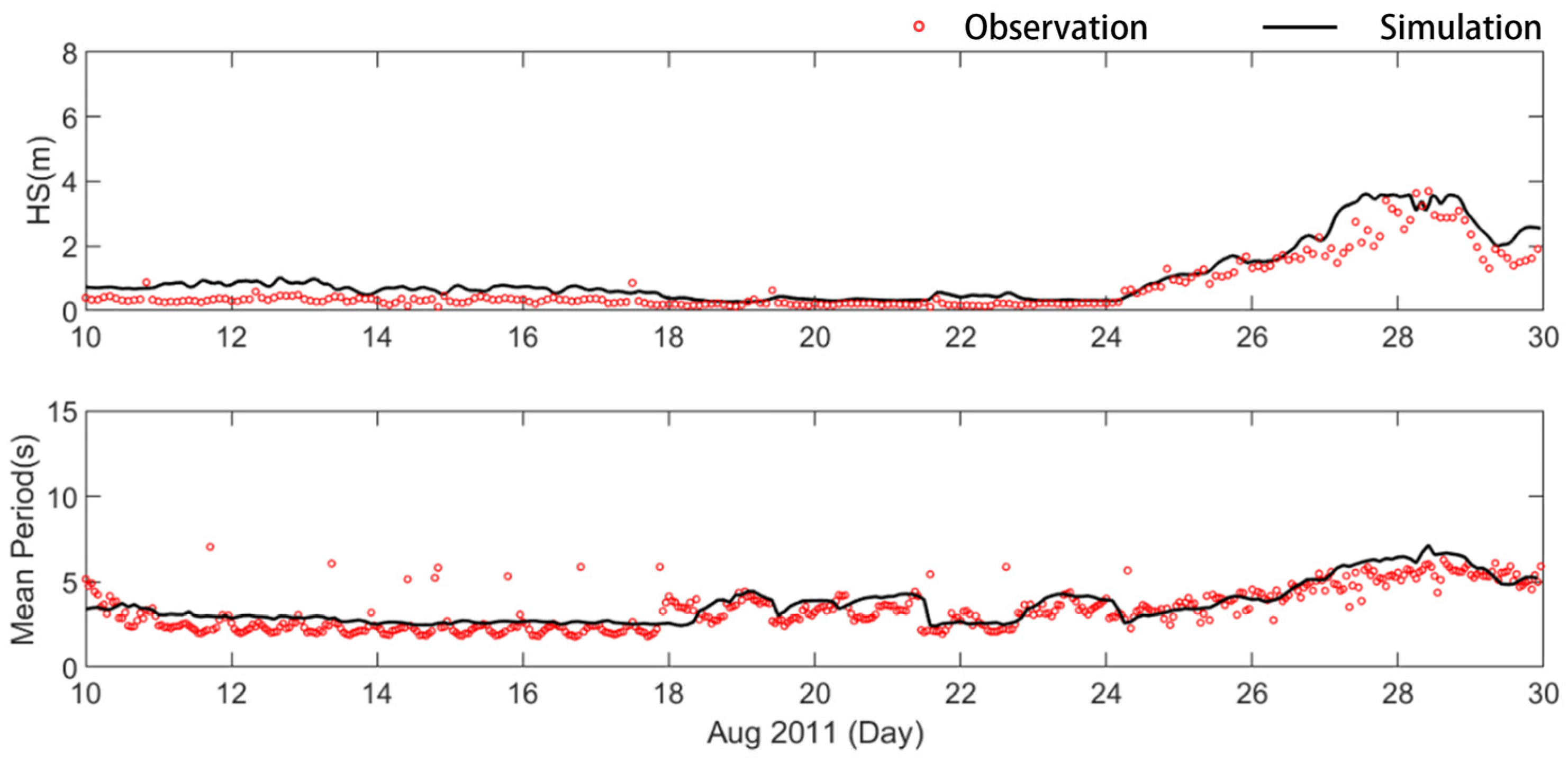
Figure 4 shows the validation process for the measured tidal levels in the summer of 2022. The deviations for high tidal levels at stations T1, T2, and T3 were −0.083 m, −0.078 m, and −0.085 m. The results indicate that the tidal levels, both high and low, calculated by the model agree well with the measurements, showing good consistency. The validation plots for current velocity and direction are shown in Figure 5. The average velocity errors at points 1#, 2#, and 3# were 8.1%, 5.3%, and 1.8%, respectively; in comparison, the average direction errors were −9.3%, −0.6%, and 3.7%, respectively. The comparisons between the model-computed significant wave height and average period and the measured values at the Pingtan station (25°28′ N, 119°50′ E) under the influence of Typhoon Nanmadol (No. 1111) as in Figure 6 are shown in Figure 7. Statistical analysis results show that the model’s average significant wave height deviation is −0.14 m, and the average period deviation is 0.23 s. It can be observed that the model reasonably simulated the trends of wave height and period variation at the Pingtan station, and some extremely significant wave height values also showed good agreement.
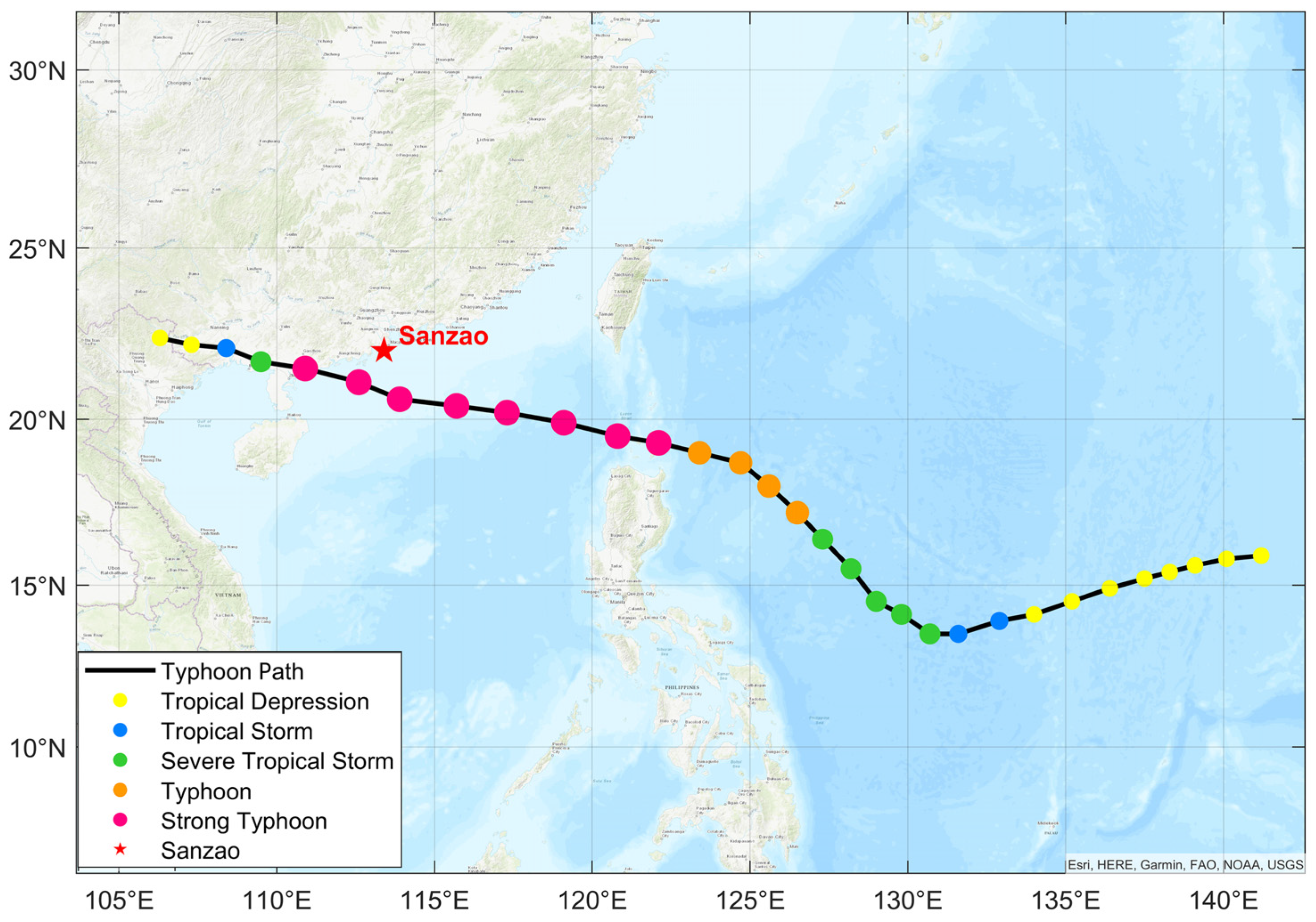
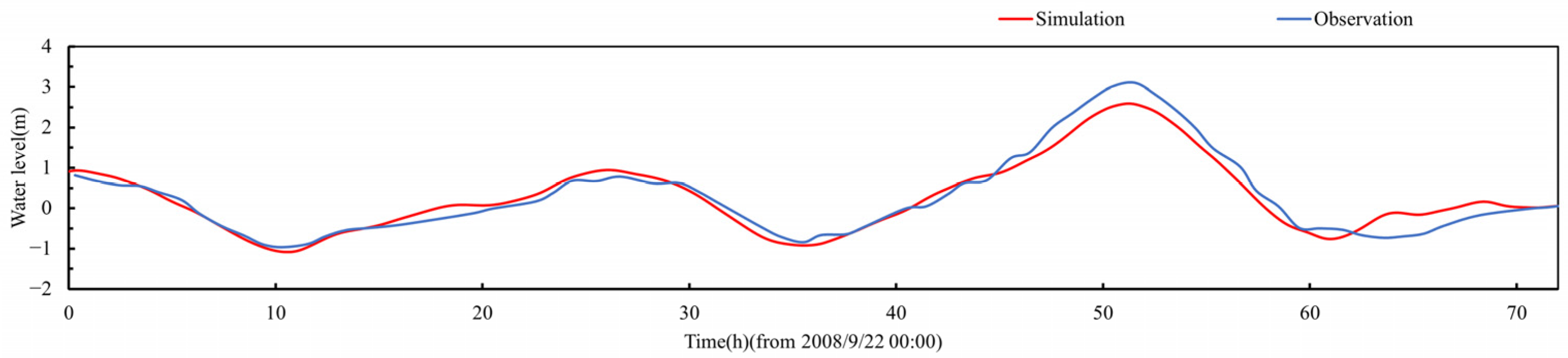
Typhoon Hagupit (No. 0814) made landfall along the coast of Chencun Town, Dianbai City, in western Guangdong on 24 September 2008, with its path shown in Figure 8. The tidal level validation period was set from 00:00 on 22 September to 00:00 on 25 September 2008. The comparison of water levels at the Sanzao Station (113°24′ E, 22°2′ N) is shown in Figure 9. The maximum computed and measured water levels were 2.6 m and 3.1 m, respectively, with a relative error of 16.1%, indicating that the model results can reflect the extreme water level conditions.

4. Joint Probability Distribution of Waves, Currents, and Storm Surges

Based on the validated model, we simulated tides, currents, and waves in Xiamen Bay from 2005 to 2024, resulting in a 20-year database of tidal currents, waves, and storm surges.

4.1. Construction of Marginal Distribution Functions

Two characteristic points (P1 and P2) at the engineering anchor foundation locations were selected, as shown in Figure 3.
The annual maximum significant wave height at these two characteristic points was used as the quantitative indicator for wave impact. After conducting a sensitivity analysis of extreme current velocities and water levels across different time windows (as shown in Table 3), a 3-day window was selected. The maximum current velocity on the day of the maximum significant wave height and the three days before and after were used to represent the current’s influence. Similarly, the maximum water level (storm surge) on the day of the maximum significant wave height and the three days before and after were used to characterize storm surge impact.
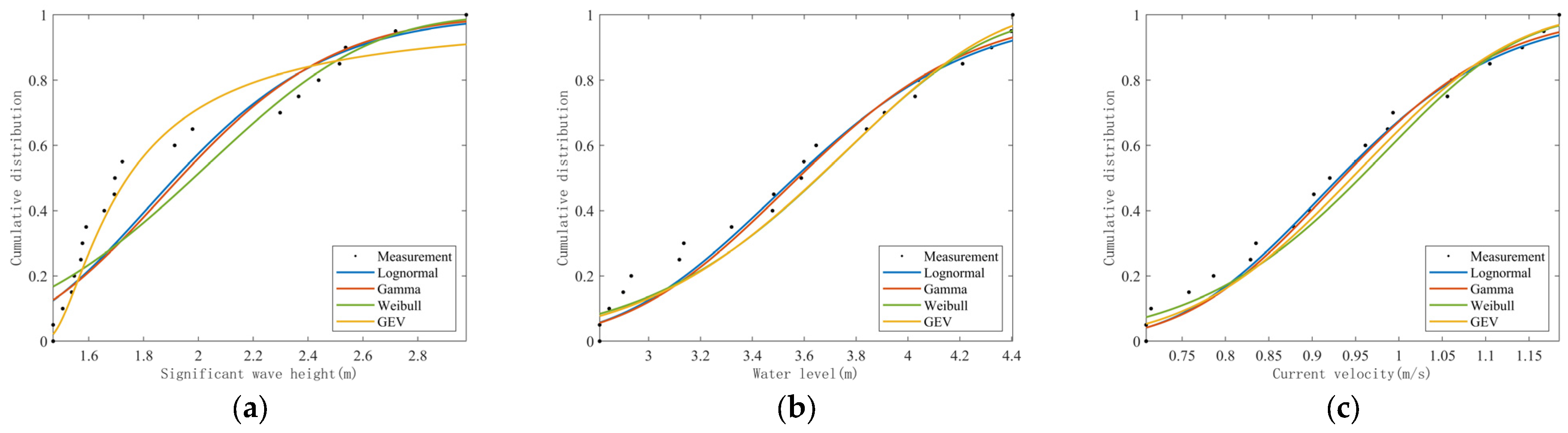
The Lognormal, Gamma, Weibull, and GEV distributions were fitted to the wave, current, and water level data using the maximum likelihood method for parameter estimation. To select the optimal marginal distribution, the K-S test, AIC, and BIC were further applied for goodness-of-fit statistics. The calculation results are shown in Table 4, Table 5 and Table 6. The fitted marginal distribution functions for significant wave height, current velocity, and water level at point P1 are compared in Figure 10.
The results presented in Figure 10 indicate that the Lognormal and Gamma distributions provide better fits; in comparison, the Weibull and GEV distributions show greater deviations, with most data points lying above their theoretical frequency curves. Based on the goodness-of-fit statistics presented in Table 4, Table 5 and Table 6, the p-values of the K-S test for the latter two distributions are also smaller, indicating poorer fits. Furthermore, based on the AIC and BIC values presented in Table 4, Table 5 and Table 6, both the Lognormal and Gamma distributions exhibit smaller values. Therefore, the tail-focused goodness-of-fit metric was additionally calculated for these two distributions. We calculated the weighted root mean square error between the empirical and theoretical CDFs for the upper 10% tail of the data, termed the tail probability deviation (TPD), with smaller values indicating a better fit in the tail region. As shown in Table 7, the TPD values for the Gamma distribution are all smaller than those for the Lognormal distribution, demonstrating that the Gamma distribution provides a superior fit. Therefore, the Gamma distribution is selected as the marginal distribution function in this study.

4.2. Joint Probability Distribution

After identifying the optimal marginal distribution functions (Gamma) for significant wave height, current velocity, and water level, three Archimedean Copula functions—Frank Copula, Gumbel Copula, and Clayton Copula—were employed to construct the trivariate joint probability distribution model. Physically, tail dependence implies that extreme values of different hydrological variables tend to occur simultaneously during severe storm events, reflecting shared driving mechanisms.
Goodness-of-fit tests were conducted for the three functions. The test metrics for the joint probability distribution at point P2 are presented in Table 8. As presented in Table 8, the Clayton copula yields a root mean square error (RMSE) of 0.4978, which is lower than that of the Gumbel copula (RMSE = 0.5214) and the Frank copula (RMSE = 0.4867), indicating that the Clayton copula achieves higher local fitting accuracy in capturing data fluctuations. Moreover, it exhibits the lowest Akaike Information Criterion (AIC) and Bayesian Information Criterion (BIC) values, demonstrating a distinct advantage in terms of information criteria. While maintaining high fitting precision, the Clayton copula strikes a superior balance between model parsimony and overall goodness-of-fit, thereby exhibiting enhanced comprehensive performance. It is capable of more accurately capturing the multivariate dependence structure inherent in compound flood hazards. Consequently, the Clayton copula with parameter θ = 0.2578 is selected as the optimal joint distribution function.
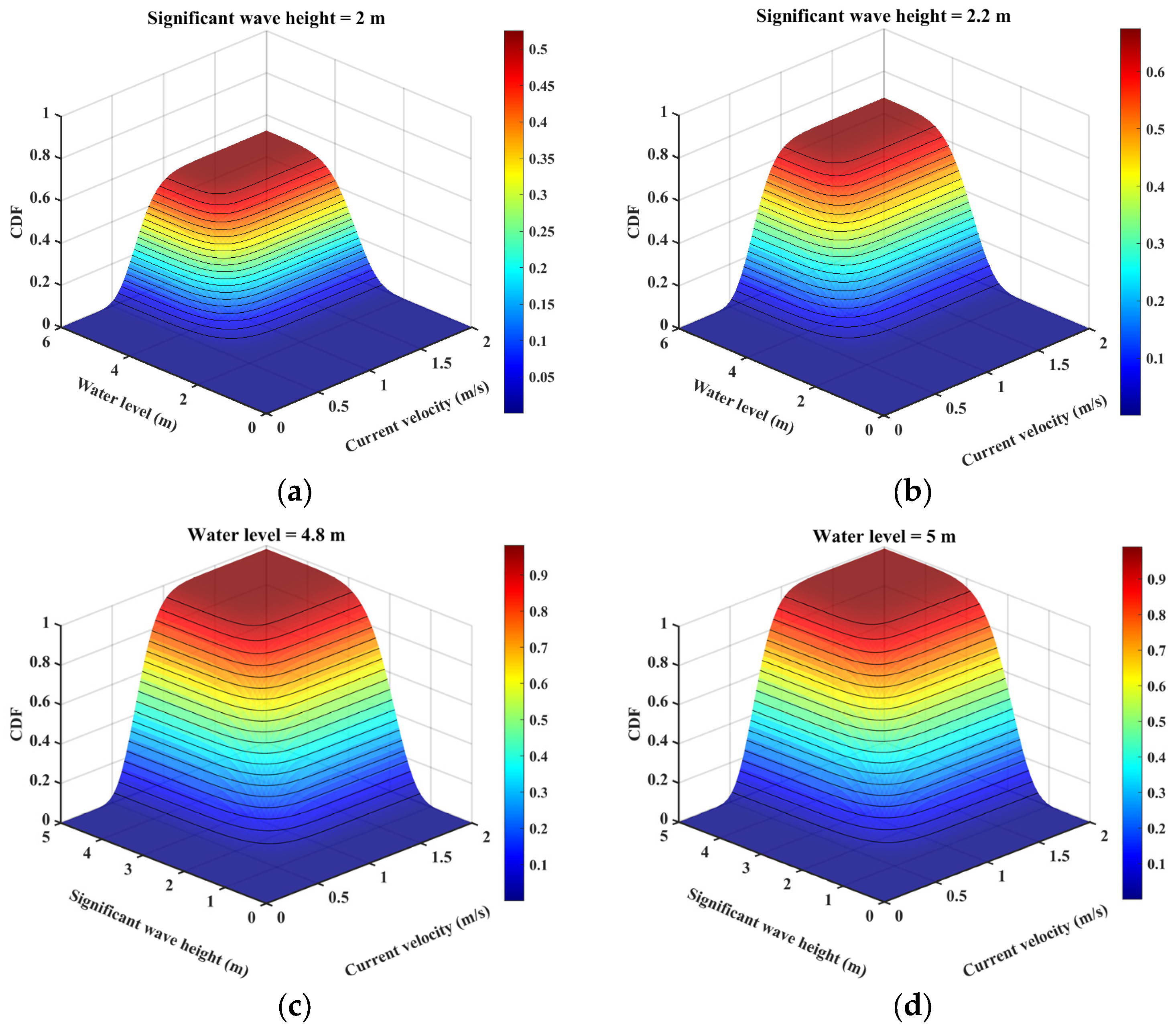
Using the Gamma distribution as the marginal distribution function and the Clayton Copula function with θ = 0.2578 as the optimal joint distribution function, a joint probability model was constructed. Taking point P2 as an example, the joint probabilities and joint return periods for the three variables under different combined return period scenarios were systematically calculated, as shown in Table 9. In addition, we performed a sensitivity analysis by varying the estimated Clayton copula parameter θ([0.1640, 0.3765]) within its bootstrap confidence bounds and re-computing the corresponding design values. The results indicate that the design values are moderately sensitive to θ, with a relative change of about ±8% for the 100-year event. This highlights the need for robust parameter estimation, which we already ensured via maximum likelihood with uncertainty bounds. The conditional probability surface plots for three variables under typical threshold combinations are shown in Figure 11. Specifically, the figure shows the conditional probability surface of water level and current velocity when the significant wave height is 2.0/2.2 m and the conditional probability surface of significant wave height and current velocity when the water level is 4.8/5.0 m. The x and y axes represent the factors contributing to hazards, whereas the z axis indicates the corresponding joint probability value under the given conditions.
Table 10 presents the joint design values derived from the trivariate same-frequency distribution; i.e., for a given joint return period, the design value for each variable is inferred from the joint distribution function and its marginal distribution function. The design values calculated separately according to the design code (JST 145-2015) are presented in Table 11. The design water levels and current velocities for different return periods in the code were calculated using the Generalized Extreme Value Type I distribution, while the design wave heights were derived based on the Poisson–Gumbel compound extreme value distribution. For return periods of 150 years and 300 years, the required coefficients are not directly provided in the coefficient selection tables given in the code; therefore, they must be obtained through proportional interpolation. The data show that, excluding the 20-year maximum significant wave height design value, the design values for maximum significant wave height, current velocity, and water level calculated based on joint probability under the same return period are all lower than those obtained from the code. This finding indicates that independently considering each variable leads to an overestimation of the engineering design standard. Calculating design values based on the joint probability distribution addresses the issue of inaccurate risk assessment caused by neglecting inter-variable correlations, thereby enhancing both the safety and economic efficiency of the engineering design. It should be emphasized that merely comparing the absolute magnitudes of design values is not the ultimate objective. From a risk-based design perspective, the selection of any design value must correspond to a well-defined acceptable risk level, typically embodied as a target return period or a target failure probability. The engineering significance of the lower joint design values demonstrated in this study is that once a decision-maker establishes a specific risk tolerance criterion, the application of the method proposed herein may yield more economical design parameters compared to conventional approaches, thereby achieving a more optimal balance between safety and economy. For practical application, it is recommended to integrate the present methodology with specific engineering risk acceptance criteria to fully realize its decision-support value.

5. Conclusions

In this study, we developed a multi-driver hydrodynamic numerical model for Xiamen Bay and established a high-resolution dataset of waves, currents, and storm surges over the past 20 years for the Third Eastern Crossing project area. Based on this foundation, the joint probability distribution of the three factors—waves, currents, and storm surges—at the anchor points within the project area was analyzed using Copula functions.
The K-S test, AIC, and BIC were employed to evaluate the fitted curves of the annual maximum significant wave height, current velocity, and water level using Gamma, Lognormal, GEV, and Weibull distributions. The results indicate that the Gamma distribution is suitable for fitting the significant wave height, current velocity, and water level at the characteristic points. The joint distribution of significant wave height, current velocity, and water level was constructed using trivariate Copula functions. It was found that the Clayton Copula function is the optimal joint distribution function for building the joint probability model.
Based on the optimal marginal distribution function (Gamma) and the optimal joint distribution function (Clayton Copula), the joint probabilities of waves, currents, and storm surges at the anchor points under different joint return periods were quantitatively assessed. The engineering design values calculated for these joint return periods were compared with those obtained from the design code. It was found that for return periods greater than 50 years, the design values for significant wave height, current velocity, and water level derived from the joint probability method are all lower than those calculated according to the code. For instance, at a 200-year return period, the maximum significant wave height, water level, and current velocity calculated using the code are 4.3107 m, 6.1142 m, and 1.4623 m/s, respectively. In contrast, the corresponding design values derived from the joint probability method are 3.7792 m, 5.4037 m, and 1.2872 m/s. These findings demonstrate that the traditional code-based approach leads to an overestimation of design values. Determining design values based on joint probability can enhance the economic efficiency of the project while simultaneously ensuring safety. Framing the results within a risk-based design context and explicitly evaluating the acceptable risk levels represent important future research directions.
The 20-year dataset employed in this study, while of considerable length, is limited to estimating design values corresponding to very long return periods and may raise concerns regarding statistical robustness. Furthermore, despite the contemporary climatic context featuring sea-level rise and more frequent typhoons, the analysis assumes stationarity within the 20-year research period and does not address the potential long-term trends in sea level and typhoon characteristics.


Author Contributions

Conceptualization, X.L. and Y.S.; Model validation, Z.W. and Y.S.; Writing—review and editing, X.L., Z.W., Y.S., C.Z. (Chunyan Zhou) and C.Z. (Changcun Zhou); Supervision, C.Z. (Chunyan Zhou); Funding acquisition, X.L. All authors have read and agreed to the published version of the manuscript.

Funding

This work has been supported by the 2024 Annual Fujian Province Transportation Science and Technology Plan Project (Grant No. YB202418).

Data Availability Statement

The original contributions presented in this study are included in the article. Further inquiries can be directed to the corresponding author.

Conflicts of Interest

Author Zheng Wang was employed by the company Xiamen Road & Bridge Engineering Investment and Development Co., Ltd. The remaining authors declare that the research was conducted in the absence of any commercial or financial relationships that could be construed as a potential conflict of interest.

Abbreviations

The following abbreviations are used in this manuscript:
AICAkaike Information Criterion
BICBayesian Information Criterion
CDFCumulative Distribution Function
KSKolmogorov–Smirnov
TPDTail Probability Deviation

References

  1. Chen, B.; Zhang, K.; Wang, L.; Jiang, S.; Liu, G. Engineering—Ocean Engineering; Reports Summarize Ocean Engineering Study Results from Ocean University of China (Generalized Extreme Value-pareto Distribution Function and Its Applications in Ocean Engineering). J. Eng. 2019, 33, 127–136. [Google Scholar]
  2. Lin, Y.; Pan, W.; Zhang, G.; Ma, T. The Numerical Simulation of Wind Waves in Xiamen Bay. J. Xiamen Univ. (Nat. Sci.) 2009, 48, 298–301. [Google Scholar]
  3. Liu, G.; Yang, B.; Yu, Z.; Jin, G. Analysis of wave height return period based on joint probability analysis of different typhoon disaster factors. Appl. Ocean Res. 2025, 158, 104584. [Google Scholar] [CrossRef]
  4. Yao, H.; Du, Q.; Liu, S.; Hong, J.; Chen, K. Analysis of Surface Currents in the Waters of Dadeng Island, Xiamen Based on Smart Navigation Beacons. China Water Transp. 2024, 24, 70–72. [Google Scholar]
  5. Zhu, X. Estimating Extreme Water Levels with Joint Probability Optimal Sampling Method in Xiamen Islang; Southeast University: Nanjing, China, 2018. [Google Scholar]
  6. Gräler, B.; van den Berg, M.; Vandenberghe, S.; Petroselli, A.; Grimaldi, S.; De Baets, B.; Verhoest, N. Multivariate return periods in hydrology: A critical and practical review focusing on synthetic design hydrograph estimation. Hydrol. Earth Syst. Sci. 2013, 17, 1281–1296. [Google Scholar] [CrossRef]
  7. Song, S.; Wang, X. Probability distribution calculation of the sum of hydrological random variables based on Copula function approach. J. Hydraul. Eng. 2018, 49, 687–693. [Google Scholar]
  8. Xu, H.; Lian, J.; Bin, L.; Xu, K. Joint Distribution of Multiple Typhoon Hazard Factors. Sci. Geogr. Sin. 2018, 38, 2118–2124. [Google Scholar]
  9. Li, Y.; Liu, G. Risk Analysis of Marine Environmental Elements Based on Kendall Return Period. J. Mar. Sci. Eng. 2020, 8, 393. [Google Scholar] [CrossRef]
  10. Latif, S.; Simonovic, S.P. Compounding joint impact of rainfall, storm surge and river discharge on coastal flood risk: An approach based on 3D fully nested Archimedean copulas. Environ. Earth Sci. 2023, 82, 63. [Google Scholar] [CrossRef]
  11. Yaddanapudi, R.; Mishra, K.; Khedun, R. Compound Flooding from Cyclones in Coastal Regions of the Southeastern United States. J. Hydrol. Eng. 2025, 30, 63. [Google Scholar] [CrossRef]
  12. Li, X.; Zhong, M.; Li, X.; Wang, J.; Zhuo, L.; Ling, F.; Song, L.; Wang, X.; Li, J.; Chen, X. Identifying Risk Transition Pattern of Compound Flooding Using the Copula Integrated Markov Chain. Water Resour. Manag. 2025, 39, 7727–7748. [Google Scholar] [CrossRef]
  13. Dina, V.; Diego, U.; Manuel, J. Multivariate design events for compound flooding analysis in estuaries. Coast. Eng. 2025, 202, 104850. [Google Scholar] [CrossRef]
  14. Fang, J.; Wahl, T.; Fang, J.; Fang, J.; Sun, X.; Kong, F.; Liu, M. Compound flood potential from storm surge and heavy precipitation in coastal China: Dependence, drivers, and impacts. Hydrol. Earth Syst. Sci. 2021, 25, 4403–4416. [Google Scholar] [CrossRef]
  15. Warren, I.; Bach, H. MIKE 21: A modelling system for estuaries, coastal waters and seas. Environ. Softw. 1992, 7, 229–240. [Google Scholar] [CrossRef]
  16. Wang, J.; Gao, W.; Xu, S.; Yu, L. Evaluation of the combined risk of sea level rise, land subsidence, and storm surges on the coastal areas of Shanghai, China. Clim. Change 2012, 115, 537–558. [Google Scholar] [CrossRef]
  17. Qian, L.; Wang, F.; Cao, W.; Ding, S.; Cao, W. Ecological health assessment and sustainability prediction in coastal area: A case study in Xiamen Bay, China. Ecol. Indic. 2023, 148, 110047. [Google Scholar] [CrossRef]
  18. Xu, T. Calculation Principle and Application Example of a Two-dimensional Flow Model-MIKE21 HD. Water Conserv. Sci. Technol. Econ. 2010, 16, 867–869. [Google Scholar]
  19. Akaike, H. A new look at the statistical model identification. IEEE Trans. Autom. Control. 1974, 19, 716–723. [Google Scholar] [CrossRef]
Figure 1. The location of the project area.
Jmse 14 00404 g001
Figure 2. Model mesh of Xiamen Bay. (a) The computational domain grid division. (b) Water depth topography of the construction area.
Jmse 14 00404 g002
Figure 3. The locations of current stations, water level observation stations, and characteristic points.
Jmse 14 00404 g003
Figure 4. Simulated and observed tide levels at three stations for June 2022.
Jmse 14 00404 g004
Figure 5. Simulated and observed current speed at three stations for June 2022.
Jmse 14 00404 g005aJmse 14 00404 g005b
Figure 6. The path of Typhoon Nanmadol (No. 1111) and the location of the Pingtan station.
Jmse 14 00404 g006
Figure 7. Simulated and observed wave height and wave period during Typhoon Nanmadol (No. 1111). Red circle is measured data and black line is simulated data.
Jmse 14 00404 g007
Figure 8. The path of Typhoon Hagupit (No. 0814) and the location of the Sanzao station.
Jmse 14 00404 g008
Figure 9. Simulated and observed tide level at the Sanzao station during Typhoon Hagupit (No. 0814).
Jmse 14 00404 g009
Figure 10. Marginal distribution functions of significant wave height, current velocity, and water level at point P1. (a) Significant wave height. (b) Water level. (c) Current velocity.
Jmse 14 00404 g010
Figure 11. Conditional probability surface plot. (a) Significant wave height = 2 m. (b) Significant wave height = 2.2 m. (c) Water level = 4.8 m. (d) Water level = 5.0 m.
Jmse 14 00404 g011
Table 1. Introduction of the marginal distribution functions.
DistributionParameterProbability Distribution Function
LognormalLocation: μ , Scale: σ f ( x ; μ , σ ) = 1 x σ 2 π exp ( ln x μ 2 2 σ 2 )
GammaShape: α , Scale: β f ( x ; α , β ) = x α 1 e x β β α Γ ( α )
WeibullShape: k, Scale: λ f ( x ; λ , k ) = k λ ( x λ ) k 1 e ( x λ ) k
GEVShape: σ , Scale: ξ f ( x ; σ , ξ ) = 1 σ t ( x ) ξ + 1 e t ( x )
Table 2. Introduction of one-parameter trivariate Archimedean Copulas.
Copula FamilyGenerating
Function
C ( u , v , w ) Parameter
Gumbel φ ( t ) = ( ln t ) 1 / θ exp { [ ( ln u ) θ + ( ln v ) θ + ( ln w ) θ ] 1 / θ } θ ( 1 , )
Clayton φ ( t ) = t θ 1 u θ + v θ + w θ 1 1 / θ θ ( 0 , )
Frank φ ( t ) = ln e θ t 1 e θ 1 1 θ ln [ 1 + ( e θ u 1 ) ( e θ v 1 ) ( e θ w 1 ) ( e θ 1 ) 2 ] θ R \ { 0 }
Table 3. The sensitivity analysis of different temporal windows.
Temporal WindowK-S p-ValueAICBIC
0.5d0.596135.849537.8410
1d0.771639.160841.1522
3d0.738737.428339.4197
4d0.674329.543831.5353
Table 4. Marginal distributions of significant wave height.
DistributionK-S p-ValueAICBIC
Lognormal0.440331.695333.6868
Gamma0.366831.924833.9162
Weibull0.314033.029935.0213
Generalized0.291731.514434.5016
Table 5. Marginal distributions of current velocity.
DistributionK-S p-ValueAICBIC
Lognormal0.7774−14.5710−12.5795
Gamma0.7109−14.6174−12.6259
Weibull0.6565−13.9129−11.9215
Generalized0.6781−13.0029−10.0157
Table 6. Marginal distributions of water level.
DistributionK-S p-ValueAICBIC
Lognormal0.811237.436539.4280
Gamma0.738737.428339.4197
Weibull0.645438.318140.3095
Generalized0.658038.881141.8683
Table 7. The TPD values for the Gamma and Lognormal distributions.
DistributionTPD
Significant Wave HeightCurrent VelocityWater Level
Gamma0.22060.15550.1712
Lognormal0.25010.19330.2027
Table 8. Performance measures of the estimated copula functions.
CopulaRMSEAICBICθ
Gumbel Copula0.521448.847849.84351.0146
Clayton Copula0.4978−19.4040−18.40830.2578
Frank Copula0.486728.188329.18401.5429
Table 9. Joint probability and joint return period corresponding to identical return periods for the three variables.
20-Year50-Year100-Year150-Year200-Year300-Year
Joint Probability0.14210.05870.02970.01990.01490.0100
Joint Return Period (years)7.040017.030033.690050.360067.0300100.4200
Table 10. Design values of maximum significant wave height, current velocity, and water level under different return periods, calculated based on joint probability.
Design ValueJoint Return Period
20-Year50-Year100-Year150-Year200-Year300-Year
Max. Significant
wave height (m)
3.19593.44133.61413.71153.77923.8728
Max. Water level (m)4.81465.06475.23885.33625.40375.4966
Max. Current
velocity (m/s)
1.11591.18831.23901.26741.28721.3144
Table 11. Design values of maximum significant wave height, current velocity, and water level under different return periods, calculated according to the design code (JST 145-2015).
Design ValueJoint Return Period
20-Year50-Year100-Year150-Year200-Year300-Year
Max. Significant
wave height (m)
3.18923.63873.74484.12214.31074.5567
Max. Water level (m)4.85145.35765.47705.90186.11426.3913
Max. Current
velocity (m/s)
1.11761.25571.28831.40431.46231.5379
Disclaimer/Publisher’s Note: The statements, opinions and data contained in all publications are solely those of the individual author(s) and contributor(s) and not of MDPI and/or the editor(s). MDPI and/or the editor(s) disclaim responsibility for any injury to people or property resulting from any ideas, methods, instructions or products referred to in the content.