1. Introduction
In recent years, the development of marine resources has been gradually emphasised. In this process, acquiring navigational information, safeguarding maritime security, and developing marine resources are all critical components of national marine development strategies. On the one hand, traditional ships find it challenging to protect maritime rights and interests in high-frequency and high-density mode due to their low covertness and high cost. On the other hand, AUVs are highly intelligent and stealthy, and their systems have a unique advantage in maintaining maritime rights and interests and acquiring marine information. However, AUVs are mainly used to receive ocean information below the surface. As a result, AUVs have a poorer ability to develop and perceive information at sea level. Moreover, autonomous underwater vehicles (AUVs) face significant challenges in data storage due to the inherent limitations of underwater information transmission in underwater resource exploration and seabed topographic surveying. Therefore, aerial platforms can be leveraged to acquire information above the water surface and to relay underwater data. To leverage these characteristics, the concept of using an AUV as a stealthy carrier platform to launch an Unmanned Aerial Vehicle (UAV) has been proposed. This approach combines the endurance and concealment of AUVs with the rapid deployment and broad situational awareness of UAVs. Nevertheless, the AUV-based launch scenario introduces additional layers of complexity. The launched vehicle, during its egress from the launch tube and its ascent to the surface, operates within the influential flow field generated by the carrier AUV itself. This includes the AUV’s boundary layer and near-wake effects, which can significantly impact the launch dynamics and stability of the vehicle, issues that are not present in stationary platform launches. Currently, a comprehensive understanding of the hydrodynamic interactions throughout this specific launch process—from tube egress to water-exit in the presence of the carrier’s flow field—remains limited.
Early studies of transmedia motion simplified structures into wedges or simple structures for water entry studies by Baarholmr et al. [
1] and Hayatdavoodi et al. [
2]. However, the wedge structure is relatively simple and cannot accurately simulate the hydrodynamic performance characteristics of complex vehicles during trans-media navigation. In recent years, more and more researchers have studied quadrotor or fixed-wing UAVs. William et al. [
3] and Weisler et al. [
4] developed a fixed-wing aircraft with a water-jet-assisted takeoff navigator to enable surface takeoff and diving navigation. Lu et al. [
5] designed the “Nezha” amphibious vehicle by integrating concepts from underwater gliders and water drones. It can navigate underwater gliders and control quadrotor flight. At the same time, it can take off and land vertically, hover, fly horizontally, and glide underwater. In conclusion, although the fixed-wing and quadrotor types of transmedia navigators have become a development hotspot in recent years. However, due to the complexity and asymmetry of their structural configurations, “Nezha” exhibits serious instability when moving across the medium. In this regard, more researchers have begun to focus on research hotspots in the field of bionic transmedia UAVs. By simulating the fluid linearity of animals in nature, the bionic transmedia travelling vehicle can greatly increase its stability out of the water and reduce drag. Gao et al. [
6] developed a transmedia UAV that mimics the characteristics of a flying fish. The UAV is small and lightweight and has achieved transmedia flight over shorter distances. Siddall et al. [
7] investigated a bionic gannet-like vehicle that was catapult-launched from underwater and fitted with folding wings to enter the water. It is worth noting that bionic transmedia vehicles can solve the problems of high drag and unstable motion in and out of water. However, its configuration and layout space are narrow, which determines its short endurance, inability to hover at a fixed point, and other issues. Rodriguez et al. [
8] reported that the U.S. Navy developed the “Cormorant” underwater transmedia UAV, which was launched via a submarine-launched rocket launcher. After completing the mission, the UAV will be recovered on the surface by an unmanned aerial vehicle (UAV) through free-fall by parachute. Bodily et al. [
9] conducted vertical and inclined impact water entry tests on projectiles with different surface treatments using three warhead shapes (conical, elliptical, and flat). They also analysed velocities and the effects of forces during water entry.
In recent years, research into cross-media vehicles has proliferated. Liu et al. [
10,
11] and Luo et al. [
12] investigated the effectiveness of AUV drag and launch/emergence processes. Their advantage lies in providing mechanistic insights through detailed flow field visualisation (e.g., pressure, vortex structures) that are difficult to obtain through traditional experiments. However, limitations often arise from simplifications in computational models, such as rigid-body assumptions that neglect structural elastic deformation or insufficiently comprehensive simulations of complex sea conditions. During cross-medium transitions, precise tracking of the evolving interface between the AUV and surrounding multiphase media (air/water) is essential. This represents a significant leap beyond traditional experimental techniques such as high-speed imaging and tank testing by Feng et al. [
13] and Huang et al. [
14], which are constrained in capturing fine flow structures and are often costly to set up, limiting their application in parametric studies and rapid engineering evaluations.
Although the above-mentioned article can reveal the influence of the flow field on the hydrodynamic performance of the AUV during its movement process, its simplified model and high cost remain insurmountable obstacles. Nevertheless, the new foldable quadcopter UAV can be regarded as a rotorcraft AUV structure during its underwater launch phase. This study employs an AUV-carried UAV approach for underwater deployment, which fundamentally differs in motion, deployment methodology, and quantity. Furthermore, the substantial size disparity between AUVs and UAVs means AUVs significantly influence the flow field within the launch environment. Consequently, this research holds considerable significance for elucidating the hydrodynamic performance of deploying underwater foldable quadcopter UAVs and understanding the associated underwater flow field environment.
It is noteworthy that this study focuses on analysing the transient fluid dynamic characteristics experienced by the UAV under a typical launch trajectory. To this end, we employed a CFD method involving a ‘specified motion trajectory’, wherein the UAV undergoes uniformly decelerated motion along the vertical axis, rather than conducting a full two-way fluid–structure interaction simulation. This approach enables us to efficiently and precisely elucidate the influence patterns of key design parameters—such as initial launch velocity—on fluid loads, including drag, lift, and pressure distribution. These patterns and load data form a crucial foundation for subsequent launch stability control and trajectory optimisation design.
2. Materials and Methods
To systematically investigate the fluid dynamics during underwater deployment, this section outlines the computational framework employed in this study. Firstly, the new foldable quadcopter UAV and its underwater vehicle carrier are detailed, covering their geometric configurations and key parameters. Subsequently, the numerical methodology is described, encompassing the governing equations, turbulence models, and boundary conditions. Finally, the meshing strategy is introduced, and its credibility is demonstrated through rigorous validation activities against benchmark experimental data, thereby establishing the reliability of the current computational fluid dynamics methodology for subsequent analyses.
2.1. The UAV and AUV Structures
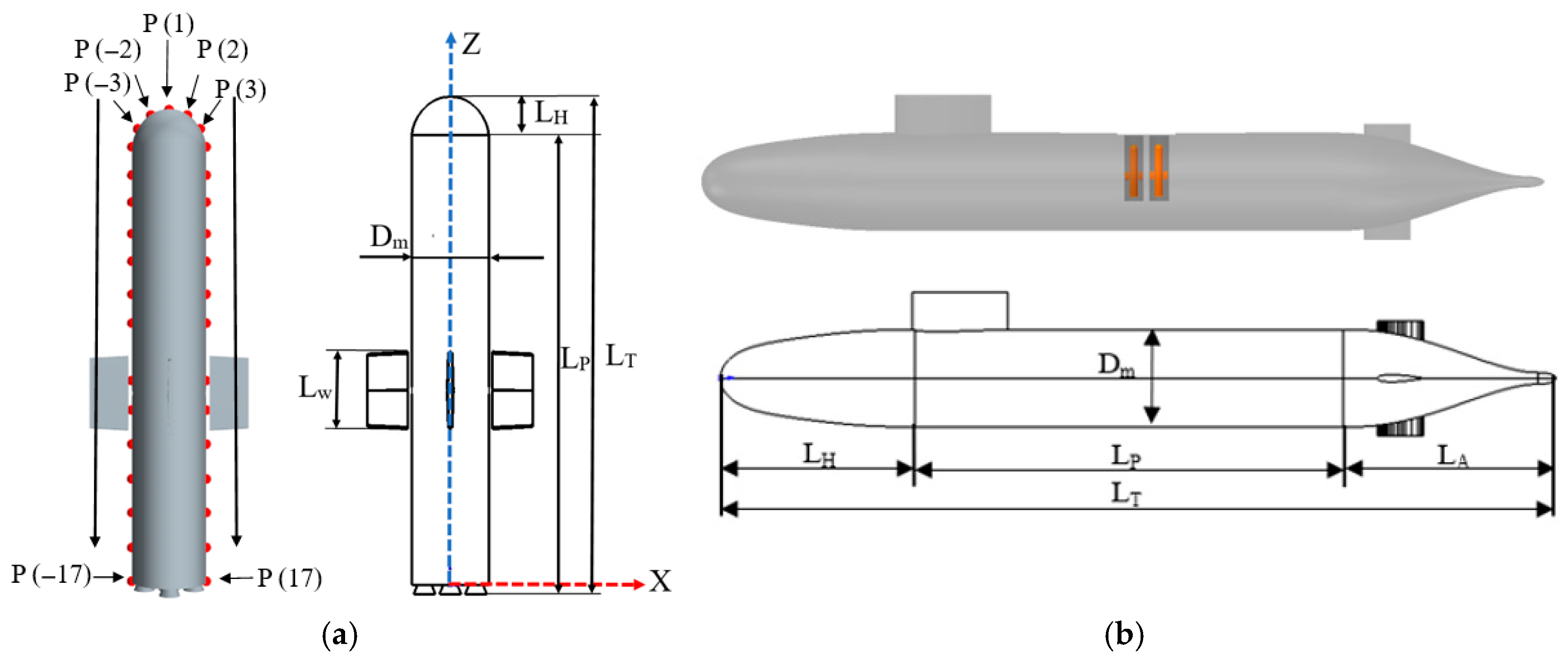
Usually, a cone-shaped unmanned aerial vehicle cannot exhibit good stability when moving through water. The conventional method is to add a section of truncated cone behind the fairing, which increases the stability of the rocket-based vehicle in the water. Moreover, the different densities of the medium will lead to a sudden change in the drag force, leading to instability during the movement across the medium. For the above reasons, this paper’s head configuration of the new foldable quadrotor unmanned aerial vehicle is designed as a blunt head structure. A larger volume of water can be lifted up during the underwater launching process. A larger air chamber will be created at the top; hence, there will be a similar environment for aquatic and water movement, ensuring movement stability. The structure of the UAV and AUV are shown in
Figure 1. The red dots in
Figure 1a represent the force monitoring points. The structure for carrying the AUV is shown in
Figure 1b. Its main structural parameters are shown in
Table 1.
2.2. Underwater Launch Tube Configurations
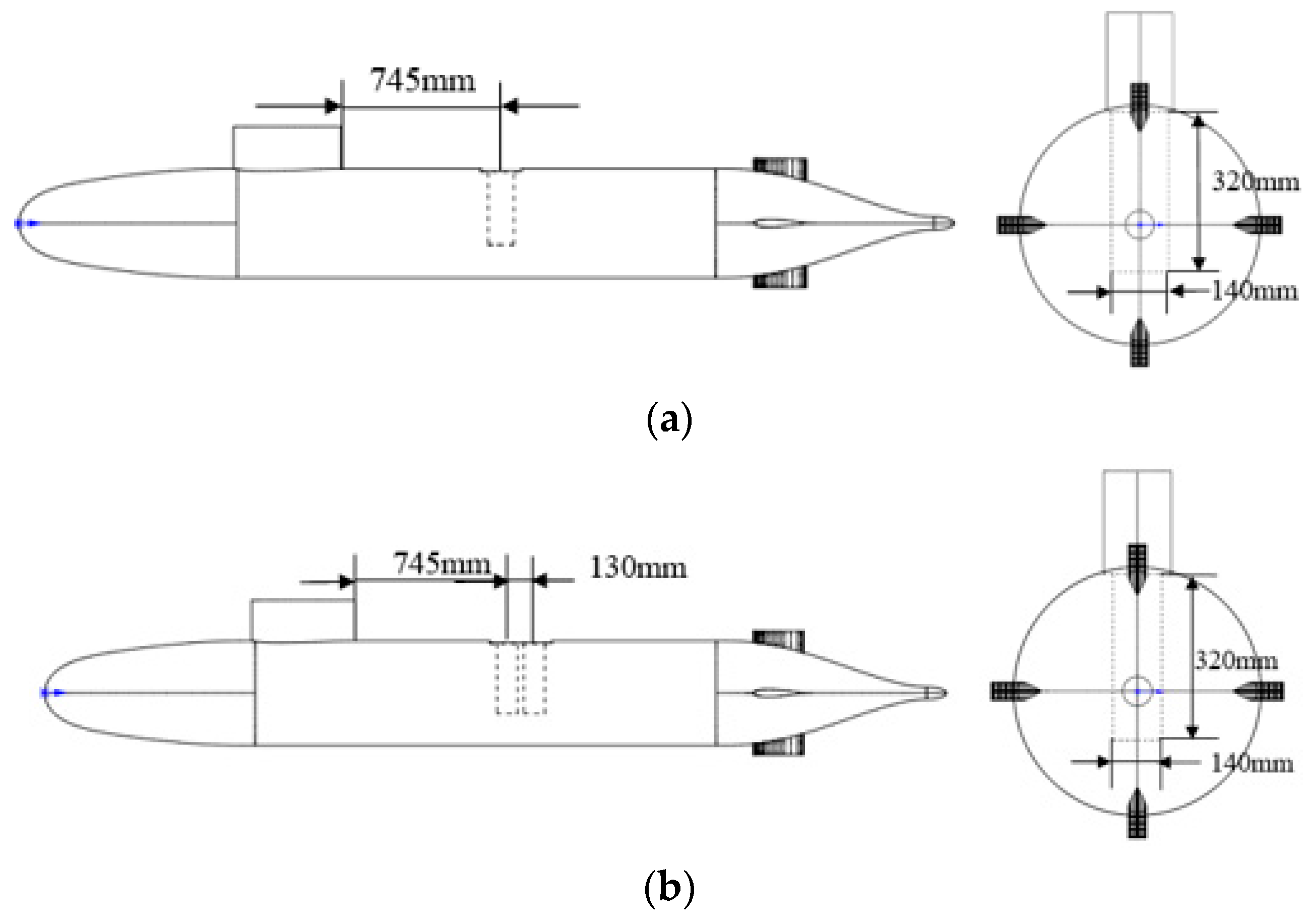
This study investigated two typical launch tube configurations: single-tube and dual-tube systems. Their specific dimensions and mounting positions on the carrier AUV are illustrated in
Figure 2. As depicted in
Figure 2a, the single-launch tube configuration features a simple structure with an internal diameter of 140 mm, sufficiently accommodating the folded UAV (maximum diameter 42 mm, see
Table 1). This configuration offers the advantages of compactness, minimal disruption to the carrier AUV’s original hull structure, and low fluid resistance, rendering it suitable for single-launch missions requiring high stealth.
In contrast, the dual-launch tube configuration (
Figure 2b) employs a parallel layout. The centre-to-centre distance between the two tubes is 130 mm, a critical design parameter requiring a balance between preventing collisions between the two UAVs during launch and minimising the impact on the AUV carrier’s hydrodynamic performance. The core advantage of the dual-tube configuration lies in enhanced mission efficiency, permitting rapid sequential or simultaneous deployment of two UAVs.
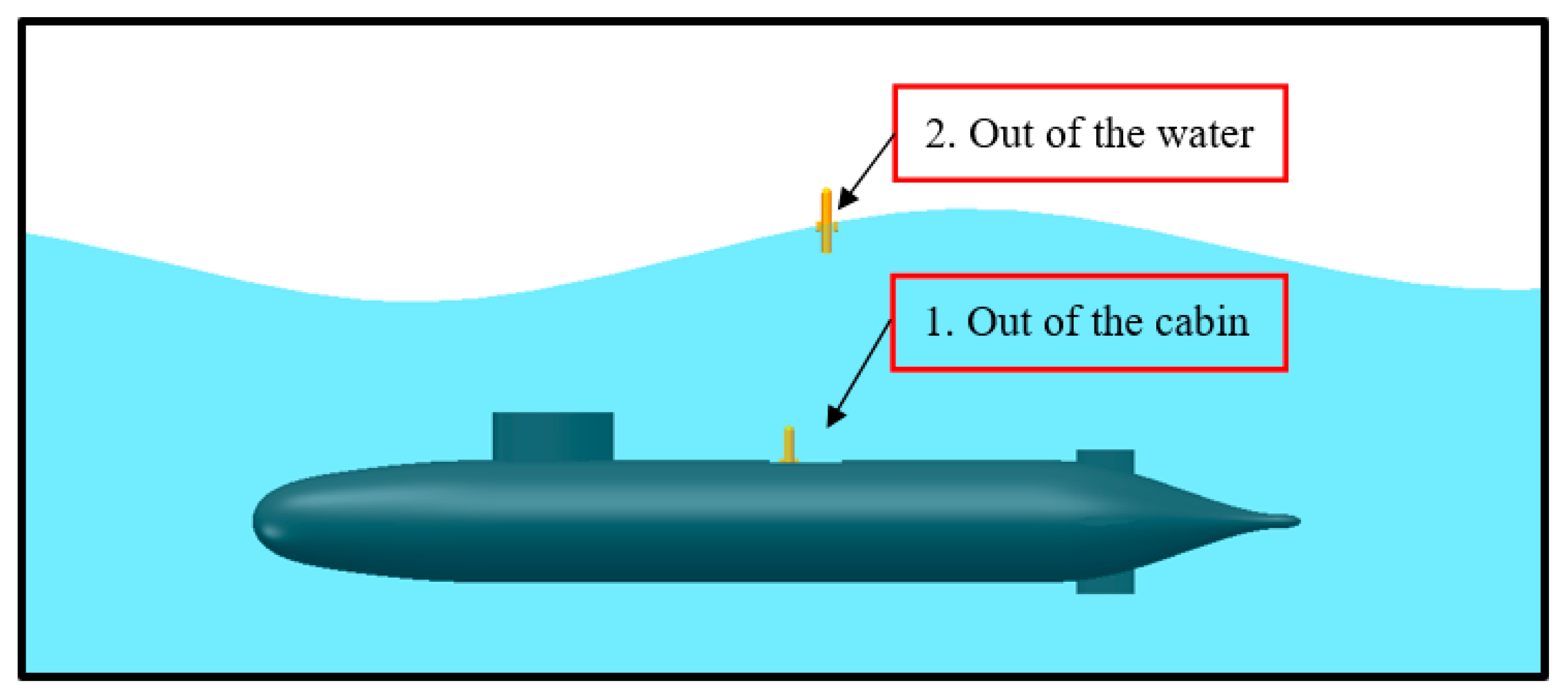
The fundamental distinction between the two configurations lies in their markedly different hydrodynamic interference effects. During a single-tube launch, the flow field exhibits relative simplicity and symmetry. Conversely, during synchronous dual-tube launch as illustrated in
Figure 3, the two UAVs (UAV-1# and UAV-2#) generate complex fluid-dynamic interactions during their exit from the launch tube and emergence phase. The surrounding flow fields—including pressure waves and vortex streets—mutually interfere, potentially exerting significant effects on the launch trajectory, attitude stability, and fluid loads experienced by the UAVs (this constitutes the core focus of
Section 4.3). By comparing these configurations, this study aims to reveal unique hydrodynamic phenomena under multi-body launch conditions and provide theoretical foundations for optimising future multi-tube launch systems.
The coordinate axis (oxy) of the UAV was set at the position shown in
Figure 1. The centre of the axis was set at the middle of the bottom of the parallel midbody. As shown in
Figure 3, this paper investigates two important phases of a UAV during transmedia motion: out of the cabin and out of the water.
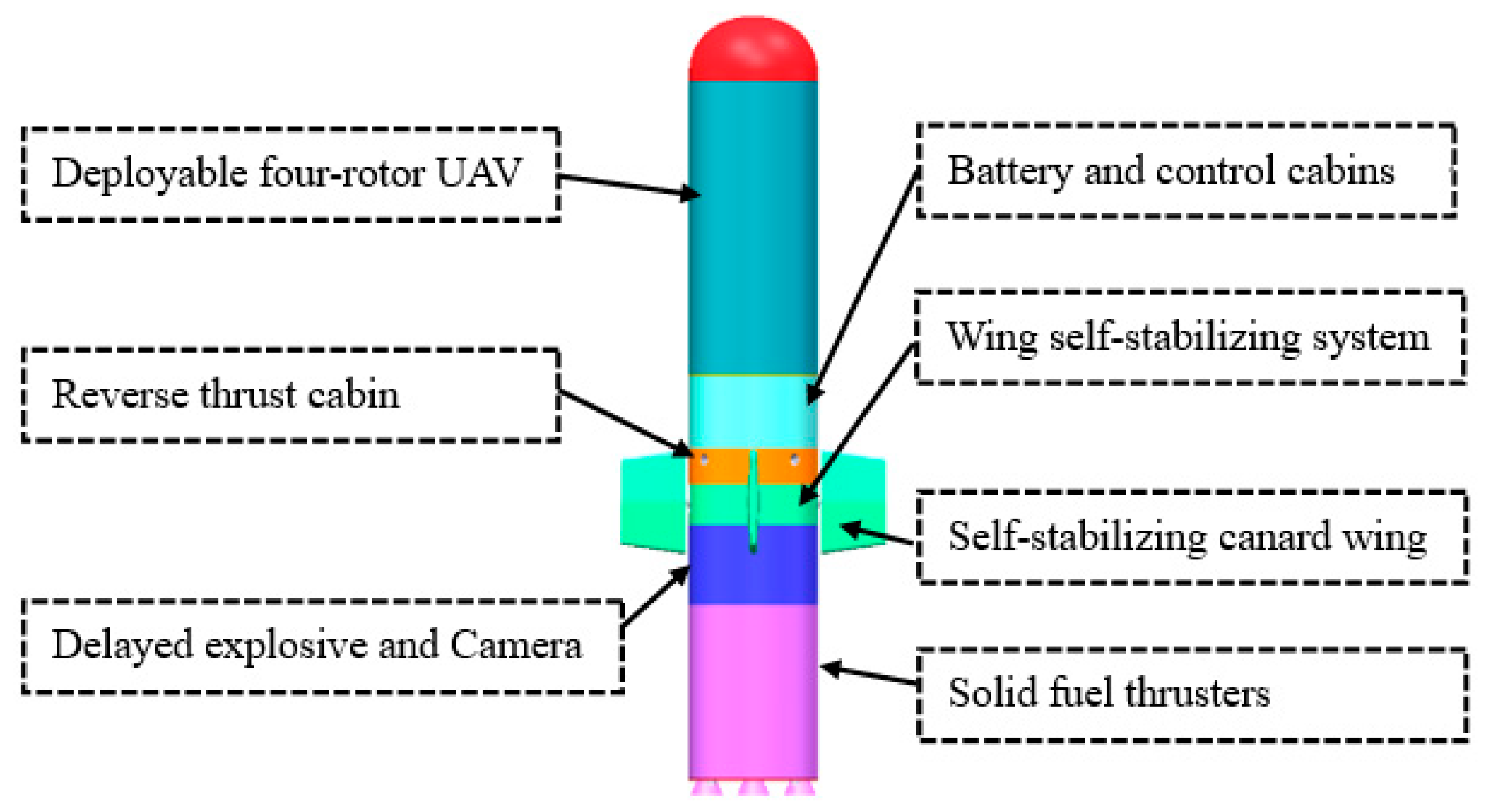
Figure 4 shows the detailed layout of the main structure of the unmanned aerial vehicle. This is the actual geometry used in all CFD simulations presented in this paper. The main components include the blunt head for stability, the parallel middle body, and the stowed rotors. The configuration parameters are detailed in
Table 1.
2.3. Numerical Method and Turbulence Models
The finite volume method is used to solve the RANS equations. Numerical simulations reveal the hydrodynamic performance of a rocket-based transmedia UAV at different launch speeds and flow velocities, and the effect of waves on its performance. Meanwhile, the hydrodynamic performance of multiple UAV launches interacting with each other is investigated. This study makes the following flow assumptions: (1) The fluids (water and air) are incompressible; (2) The flow is turbulent. To close the URANS equations, the SST k-ω turbulence model is selected to calculate the Reynolds stress. This model can accurately predict near-wall-region flow and is suitable for complex external flow fields involving flow separation, which are crucial to the water-exit process of the unmanned aerial vehicle in this study.
CFD numerical simulation requires precise mathematical computational modelling that accurately reflects the relationship between the physical quantities of the governing equations and the fixed solution conditions. This study focuses on the transient motion process of an unmanned aerial vehicle (UAV) during underwater launch and employs the Unsteady Reynolds-Averaged Navier–Stokes (URANS) method for numerical simulation. The governing equations include the continuity equation and momentum equation for incompressible fluids, and their tensor forms are as follows:
where
is the component time-averaged velocity vector,
is the Reynolds components,
ρ is the fluid density,
i and
j are taken in the range of (1, 2, 3), p is the mean-averaged pressure, and
is the mean viscous stress tensor components. μ is the dynamic viscosity coefficient, and k is the turbulent flow energy.
In this paper, the standard k-ε model and the SST k-ω model are selected to numerically simulate the drag of the submarine. The drag is validated with experimental values, which are shown in
Table 2. Comparative results demonstrate that the SST k-ω model exhibits high agreement with experimental data across all operating conditions, with maximum deviations below 1.52%. This fully validates the accuracy and reliability of the CFD methodology, turbulence model, and meshing strategy employed herein for predicting the hydrodynamics of such submerged vehicles. Consequently, the SST k-ω model is applied to subsequent, more complex unsteady simulations of the UAV traversing multiple media. This indicates the precision and accuracy of the model calculations, which is consistent with the results of Yu et al. [
15].
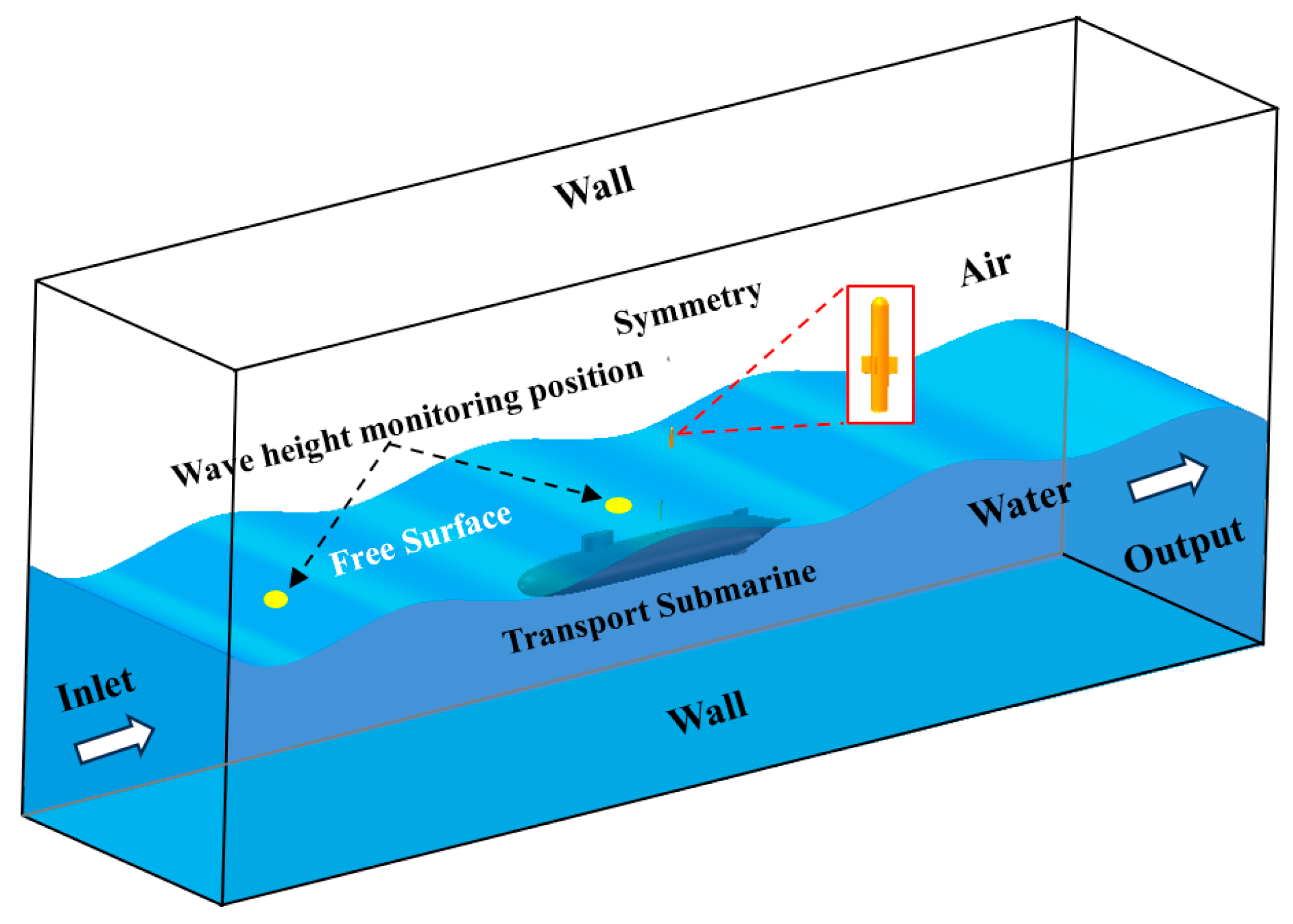
Figure 5 shows the numerical tank boundary settings and the location of the wave monitoring points. The positioning of wave gauge monitoring points is critical for accurately assessing the performance of numerical wave tanks. Monitoring points are arranged at the midpoint of the computational domain and at positions approximately 1.0 times the AUV length from the midpoint. The dimensions of the computational tank are 18 m * 6.5 m * 12 m (L * W * H). The upstream area is the velocity inlet of the numerical tank, and the distance between the velocity inlet of the computational tank and SUBOFF is 1.5 LT (LT is the overall length of the transporting submarine). As the pressure outlet of the computational area, the length of the downstream area is 2.5 LT; hence, the velocity in the mainstream area is not disturbed by the external field conditions. Symmetry boundary conditions are applied to the side and top boundaries, effectively simulating infinite far-field conditions and further reducing domain size requirements. The hull surface is set as a rigid wall for submarines and AUVs. This sizing is based on the following considerations: it complies with the
ITTC recommended practice [
16] for ship CFD simulations.
This study focuses on the hydrodynamic characteristics of the UAV as it approaches the AUV carrier, rather than the precise details of the AUV’s far-field wake. Consequently, ensuring accurate capture of the near-field flow—particularly near the hull surface and the emergence path—is paramount. The current domain size fully encompasses the critical motion region where the UAV exits the carrier and emerges from the water, guaranteeing that the flow field within this region remains unaffected by boundary conditions. Although larger domain sizes were not tested, the rigorous design approach based on industry guidelines and literature precedents, coupled with the high agreement between numerical results and experimental data in
Section 2.5 (see
Table 2, error < 1.5%), collectively demonstrated that the current computational domain size is both sufficient and reliable for achieving the objectives of this study.
In this paper, the finite volume method is used to discretize the governing equations. The fluid was treated as incompressible, and the flow was turbulent. A three-dimensional implicit invariant solver and an Eulerian separated flow model are chosen to compute the convective terms in second-order windward format. The diffusion term is in centre difference format. Calculations continued until the monitored drag coefficient exhibited less than 0.1% variation over 1000 time steps, signifying steady-state convergence. In addition, a multiphase-separated flow solver based on the SIMPLE algorithm Wu et al. [
17] and STARCCM+ [
18] is used to solve the flow equations by coupling the pressure and velocity components.
2.4. Mesh Strategy
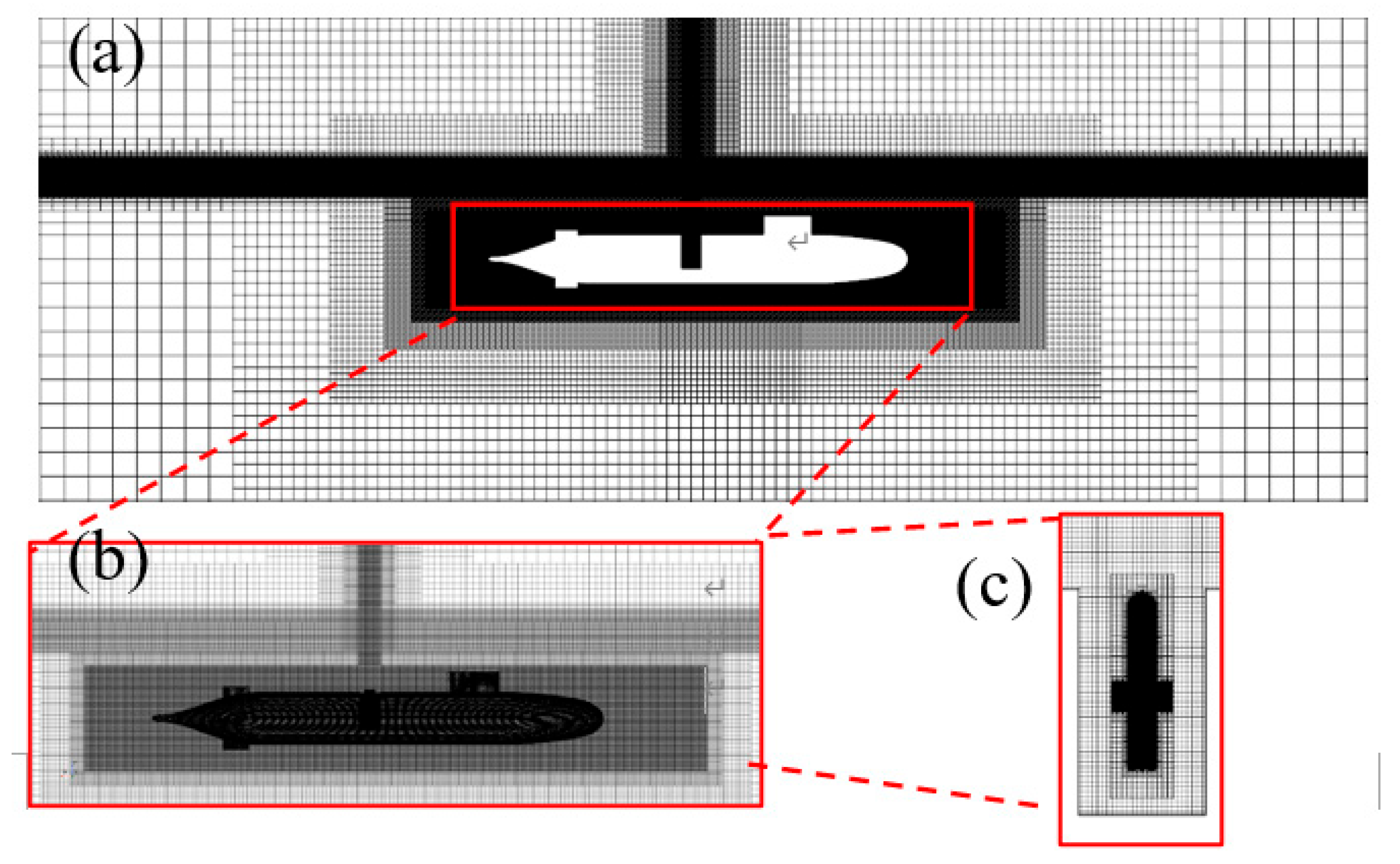
The rigid-body motion of the UAV is solved using a six-degree-of-freedom (6-DOF) model, which calculates the translational equations of the centre of mass and the rotational equations about the centre of mass to simulate the UAV’s actual motion under fluid forces. To achieve substantial motion of the UAV relative to the computational domain, this study employs overset mesh technology. This method decouples the mesh surrounding the UAV (termed the ‘component mesh’) from the background fluid mesh, permitting the component mesh to move freely within the background mesh. Flow field information is exchanged via interpolation in regions where the meshes overlap. The overall grid configuration is shown in
Figure 6. The mesh of the computational tank is shown in
Figure 6a, and its internal mesh regions are created using a hybrid mesh.
Figure 6b,c show the prismatic layer grid cells set up on the surface of the AUV and UAV. According to the traditional mesh design experience, this paper predetermines a base grid whose base grid size is 1 m (1.5% of the ship’s length), and the minimum grid size is 0.0032 m. According to the
ITTC (International Towing Trough Conference) standard by
ITTC [
16], two layers of grid encryption region are set on the wave face. The number of grids per unit length of the wave is set to 40–60, the first grid encryption length is 0.06 m, and the second grid encryption length is 0.09 m. For the wave height direction, it is guaranteed that there are 15–20 grids for one wave height, the first grid encryption height is 0.01 m, and the second grid encryption height is 0.013. The arrangement of prismatic layer grids improves the overall mesh quality of the AUV and improves the accuracy of capturing the boundary layer flow. Because the fluid has a considerable gradient near the wall, the wall is the main source of vortex and turbulence generation. The surface roughness of the navigator increases with decreasing boundary layer thickness and increases the degree of flow turbulence. Turbulence leads to an increase in turbulent stresses, wall shear, and friction. The flow at different distances normal to the wall can be divided into near-wall and turbulent core regions. The turbulent core region is dominated by a logarithmic rate layer with an uncaused velocity
U+ expressed as.
where
k is the von Kármán constant (0.4187), y
+ is the dimensionless normal distance.
yb is the distance from point b to the side wall.
b and e are constants related to surface roughness.
μ is the dynamic viscosity of the flow.
kb is the turbulent kinetic energy at point
b.
The unmanned aerial vehicle commences its launch sequence precisely within this non-uniform flow field environment, as predetermined by the AUV’s motion. Consequently, accurately simulating the flow field surrounding the AUV carrier—encompassing the hull boundary layer, wake region, and surface wave field—is a prerequisite for precisely evaluating the fluid loads and dynamic stability experienced during the initial stages of the UAV launch. To this end, we implemented mesh refinement in the vicinity of the AUV to ensure capture of the critical flow structures influencing the UAV’s exit from the launch bay. Three types of mesh generators are used in this paper, namely: cut body mesh, prismatic layer mesh, and surface reconstruction mesh generator. The regions around the submarine and the UAV are encrypted with a cut-body mesh as shown in
Figure 6. The regions around the bow and stern of the body are encrypted with a surface reconstruction mesh. The near-wall surface of the hull is treated with a prismatic layer mesh. The standard wall function is used in conjunction with the SST model. Therefore, the first layer of the underlying mesh falls within the logarithmic region of the boundary layer, which corresponds to y
+ values of 30–200. Particularly for the critical prediction of surface forces, the UAV model similarly employs a multi-layer prismatic mesh to ensure y
+ values fall within the logarithmic regime (30–200), consistent with the SUBOFF validation setup. This consistency maximises the accuracy of momentum transport and shear stress calculations within the drone’s surface boundary layer, forming the foundation for reliable prediction of the drag and torque experienced by the UAV.
To further resolve the turbulent flow structures within the turbulent core region and the viscous sublayer, alternative modelling approaches such as Low-Reynolds Number (LRN) k-ε models or the use of Enhanced Wall Treatment (EWT) with fine near-wall mesh (y+ ≈ 1) could be considered. These methods allow for direct resolution of the velocity profile from the wall through the buffer layer to the turbulent core. However, such approaches require significantly finer mesh resolution in the near-wall region, leading to substantial increases in computational cost. Given the large-scale computational domain and the focus on the overall hydrodynamic performance of the UAV during its dynamic launching process, the standard wall function approach with y+ between 30 and 200 represents a balanced compromise between computational accuracy and efficiency for the current study. Future work focusing on detailed boundary layer phenomena might benefit from implementing these alternative models.
2.5. Drone Motion Modelling and Fluid–Structure Interaction Strategies
The core objective of this study is to quantitatively analyse the influence of parameters such as initial launch velocity and incident flow on the hydrodynamic characteristics of folding-wing unmanned aerial vehicles, whilst controlling for variables. To this end, we employ a unidirectional fluid–structure interaction strategy coupled with a specified motion trajectory methodology.
The UAV’s motion is preset as uniformly decelerated linear motion along the vertical direction (z-axis). Its displacement
s(
t), velocity
v(
t), and acceleration a are defined by the following equations:
where
v0 denotes the preset initial launch velocity,
a represents the constant deceleration (negative value), and
s0 is the initial position. This trajectory simulates the scenario in which the UAV exits the water via inertia after a brief period of propeller operation.
At each time step, the CFD solver (STAR-CCM+) calculates the hydrodynamic loads (resultant force and moment) acting on the drone’s surface based on the current flow field information. A critical modelling choice is that these loads are used solely for subsequent analysis. The UAV’s pose is updated at each time step strictly according to the aforementioned kinematic model. This unidirectional ‘force-motion’ transmission strategy constitutes the ‘specified trajectory’ method.
During initial launch, the UAV remains mechanically constrained within the launch tube; Upon ejection, its significant inertia dominates its trajectory during the brief emergence phase, governed primarily by initial conditions and self-inertia. Hydrodynamic forces act as disturbance forces, exerting only minor corrections to its path within a limited range. Consequently, employing a predefined uniform deceleration motion represents a reasonable simplification. This study aims primarily to systematically reveal the evolution patterns of fluid loads, rather than predict trajectories. The preset trajectory serves as a ‘comparison benchmark’, enabling clear separation of the influence of different parameters on the load.
Full two-way fluid–structure interaction calculations are extremely costly and prone to divergence due to violent transient flows. The strategy adopted in this study, while ensuring physical validity, significantly enhances computational efficiency and numerical stability. This facilitates large-scale parametric investigations, such as varying initial velocities, inflow velocities, and multi-machine interference.
2.6. Independence Verification
To ensure the reliability of the CFD method selected in this paper for calculating the fluid dynamics of underwater vehicles, numerical simulations of the drag of the internationally recognised standard submarine model SUBOFF were conducted, and the results were compared and verified with authoritative experimental data. The goal of this verification is to confirm that the selected turbulence model, grid strategy, and numerical settings can accurately predict the drag characteristics of slender bodies similar to the UAV shape under water as studied in this paper. The experimental values cited in
Table 2 originate from the towing tank test report by Groves et al. [
18]. This experiment employed a SUBOFF full-body model with precisely defined geometric proportions. The model’s total drag was measured directly in the towing tank via a high-precision drag sensor mounted between the model and the towing vehicle. The experiment was conducted at a steady towing speed to obtain steady-state drag values. The primary focus was on total drag; measurements of other force components (such as lift) were not reported in [
19]. Furthermore, the experiment was performed in still water, ensuring that drag measurements were unaffected by free-surface waves.
As shown in
Table 3, three different grid sizes are selected while keeping the same grid structure and boundary layer structure; the minimum size definition varies between 0.006 and 0.012 by a constant factor of 1.2. Meanwhile, the GCI (Grid Convergence Index) proposed by Richardson [
20] is used to calculate the discretization error to verify the convergence. As noted by Amiri et al. [
21], the time step was modified in response to spatial discretization refinement to address simulation instability. Revenna et al. [
22] demonstrated that the Grid Convergence Index (GCI) can be expressed as Equation (7)
where
Fs is the factor of safety, generally taken as 1.25–3. For a sample size of 3, the value is taken as 1.25.
and
is given by
and
,
N1,
N2 and
N3 is the fine, medium and coarse grid numbers.
is the relative error between the simulation results
φ1,
φ2, and
φ3. The drag coefficient is chosen as the comparison parameter, where the relative error between the coefficients
φ1 and
φ2 can be expressed as follows:
where
,
. The key parameters chosen are defined as Equations (11) and (12):
Table 4 lists the relevant parameters describing the spatial grid uncertainty. A grid convergence index GCI of 0.21% is obtained, indicating that the heterogeneous distribution of grid roughness is accurate for the study of model drag.
As shown in
Table 3, the entries in the “Time Step (s)” and “Grid Size (m)” columns follow the format base value × refinement factor. This approach was used to systematically vary the spatial and temporal resolution for the grid convergence study. The actual time step (Δt) applied in the simulations is the product of the base value (0.003 s) and the factor. Similarly, the minimum grid size in the domain is derived from the base size of 0.005 m multiplied by the corresponding factor.
3. Numerical Result Validation
Prior to conducting cross-medium fluid dynamics analysis on novel folding drones, establishing numerical methods is crucial for reliably capturing key characteristics of the flow field around underwater vehicles, such as boundary layer development, flow separation, and surface pressure distribution. The SUBOFF model serves as the internationally recognised benchmark for submerged bodies, supported by a comprehensive experimental database. It is particularly well-suited for validating the accuracy of CFD methods in predicting surface friction drag, pressure distributions, and three-dimensional flow separation—physical phenomena that are also central to determining the hydrodynamic characteristics during the underwater launch phase of UAVs. Consequently, this study first undertakes numerical validation of the SUBOFF model. Its primary objective is not direct simulation of the UAV, but rather to confirm that the adopted SST k-ω turbulence model, near-wall treatment (y+ strategy), and mesh generation scheme possess sufficient accuracy for such slender body flow problems. This validation step provides methodological confidence for subsequent simulations of the UAV launch process, which involves more complex geometries and transient flows.
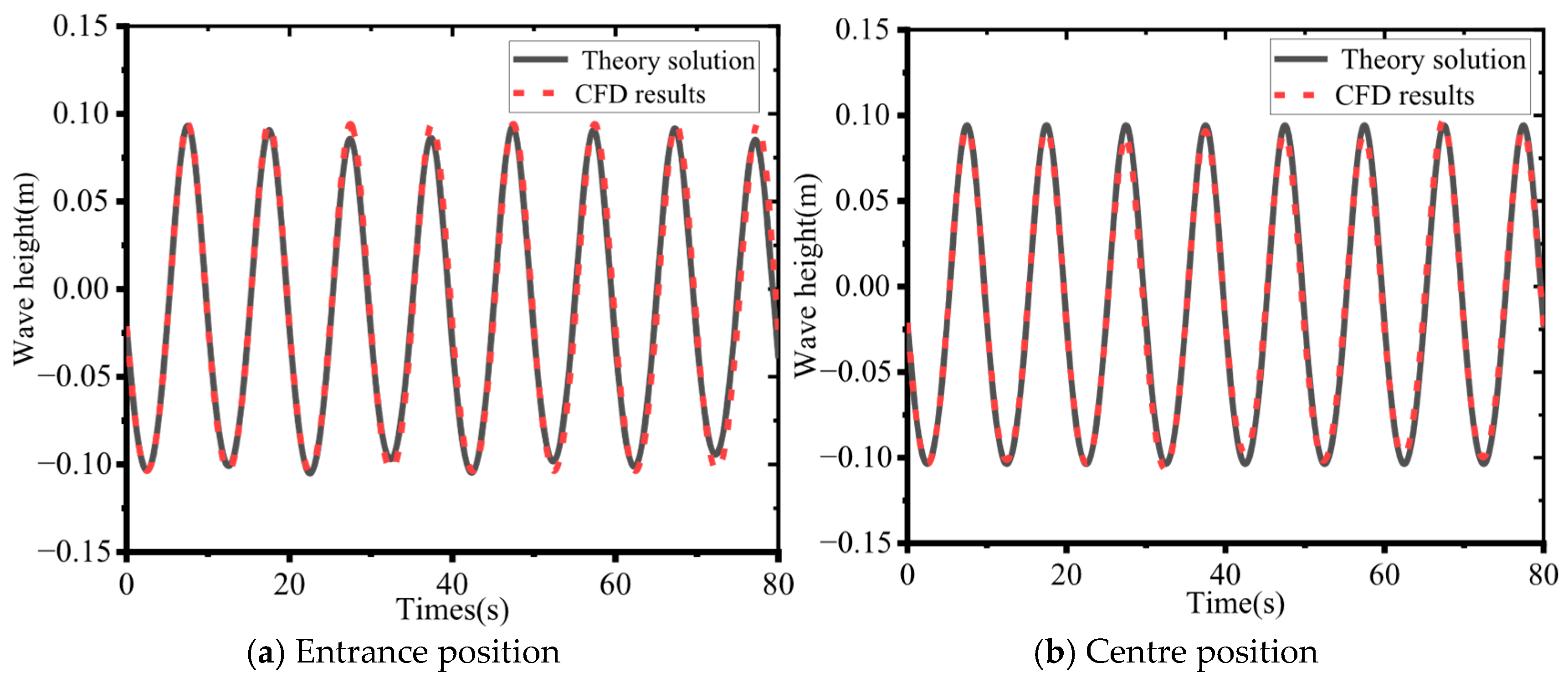
The numerical simulation wave heights depicted in
Figure 7 align closely with those predicted by linear wave theory (wave height of 0.2 m, period of 1.56 s). This convergence stems partly from the low wave steepness characteristic of this case study, which perfectly satisfies the core assumptions of linear theory. It is further facilitated by the low-dissipation VOF model employed, which accurately reproduces the wave propagation mechanism of an ideal fluid. This consistency robustly validates the benchmark reliability of this numerical wave tank for simulating linear waves and realising wave-object interactions, establishing a credible baseline for subsequent studies simulating the complex nonlinear interactions between drones—as strong disturbance bodies—and intricate wave conditions. Notably, the subtle nonlinear features captured by the CFD results at wave troughs underscore their unique value in transcending linear theory to reveal richer physical details.
Given that this study involves unsteady flows (such as waves), all force, torque, and coefficient curves used for comparison with experimental data have undergone time-averaging processing. Specifically, for each operating condition examined, after the flow field reached statistical steady-state, we performed time-averaged calculations of the physical quantities over at least three characteristic wave periods to ensure statistical stability of the results. The CFD results presented in
Figure 8 and
Figure 9 are thus the time-averaged values obtained. All simulations ensured sampling frequencies satisfied the Nyquist sampling theorem to accurately capture the flow’s primary frequency characteristics.
The hydrodynamic performance of underwater transmedia vehicles is the key to the design and control analysis of underwater structures. In this paper, the SUBOFF submarine model is used to validate the numerical simulation method. The basic parameters of the AUV model are shown in
Table 1. Meanwhile, the definition of each parameter under study is shown as follows, according to Dai et al. [
23].
where
Fd is the resistance of the AUV,
τ is the shear force of the AUV,
A is the maximum cross-sectional area of the AUV,
U is the current velocity; ρ is the fluid density (998 kg/m
3),
Cd,
Cf, and
Cl are the resistance coefficient, the surface friction coefficient, and the lift coefficient, respectively,
υ is the dynamic viscosity of the seawater,
μ is the kinematic viscosity of the seawater.
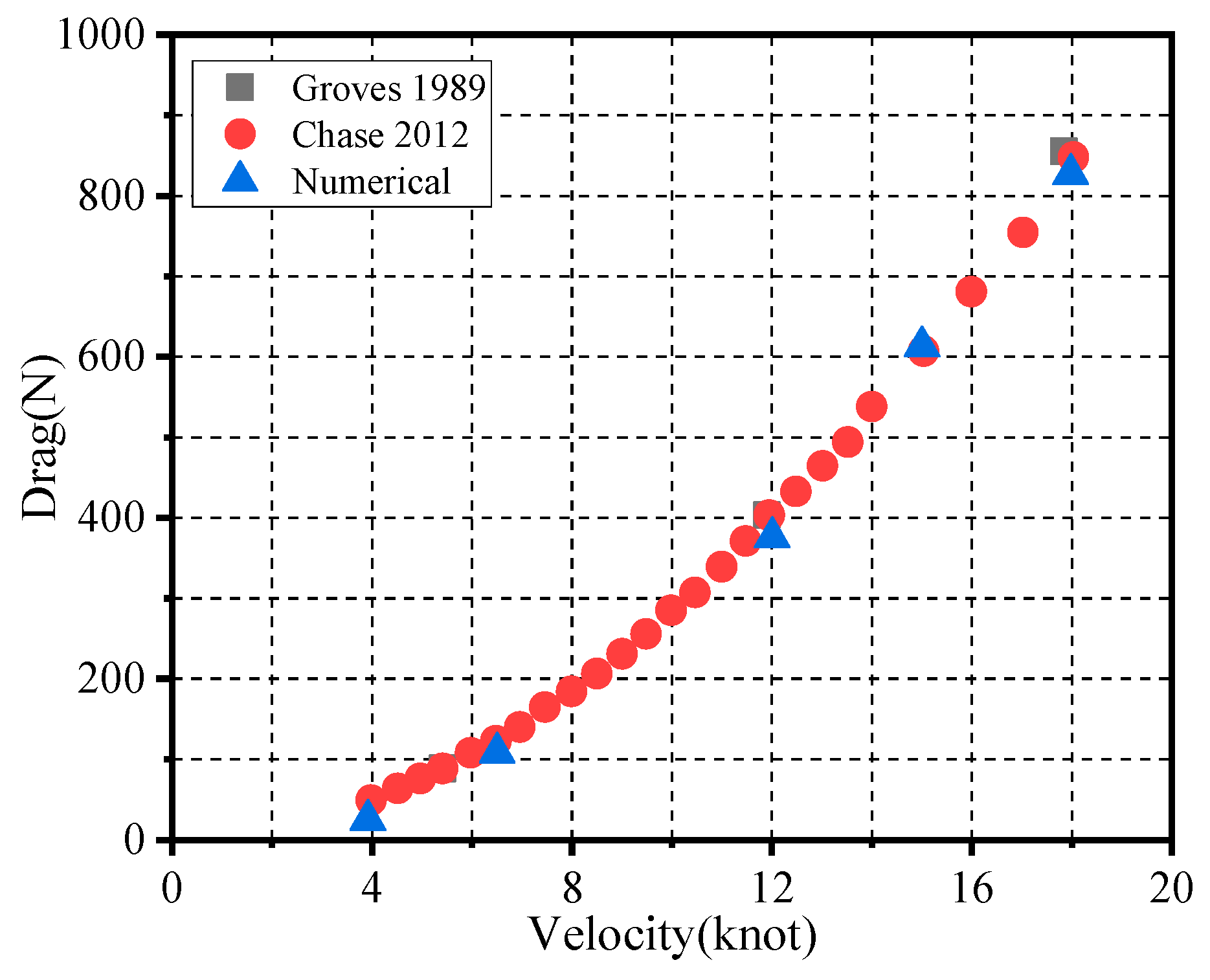
To verify the reliability of the numerical calculation method in this paper, the drag of an auv fully attached submarine model was calculated for a given speed and compared with the experimental results of Groves et al. [
19] and Chase et al. [
24]. The results of the drag calculation are shown in
Figure 8. From
Figure 8, it can be seen that the numerical simulation results of the drag force match the experimental values. Meanwhile,
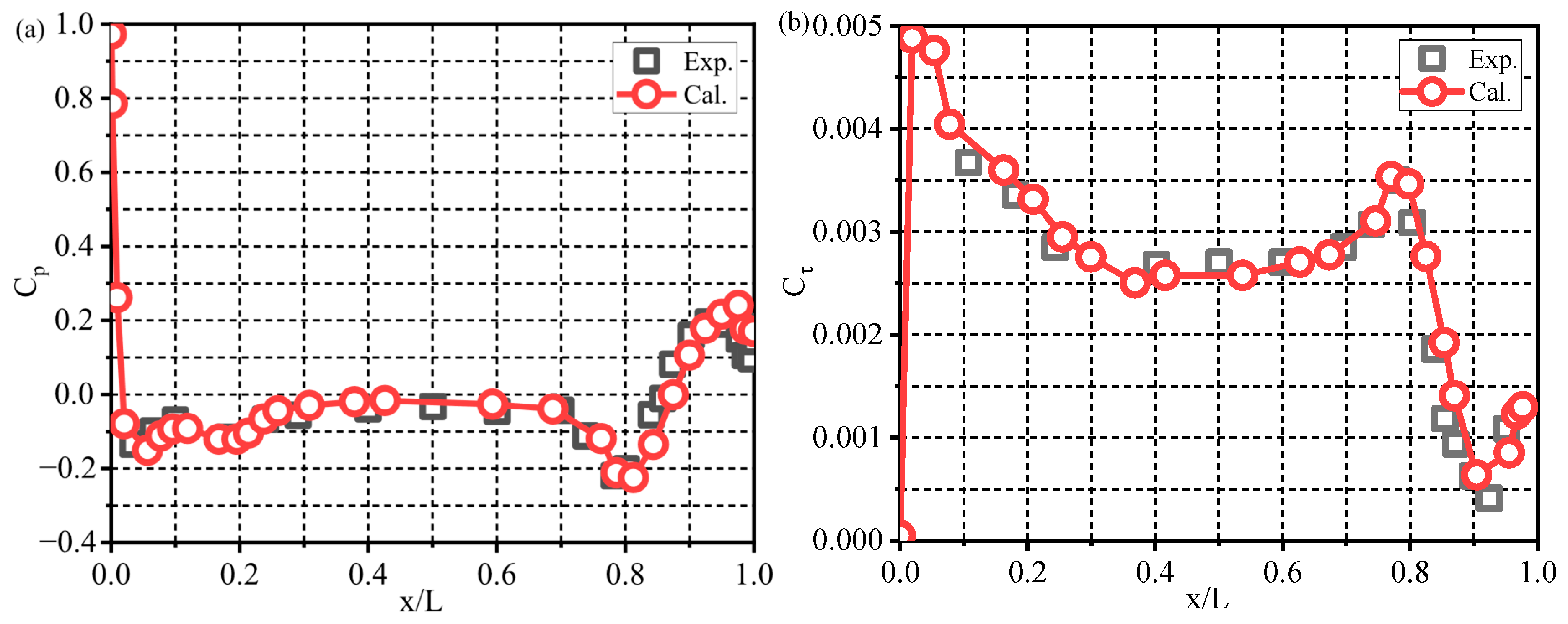
Figure 9 shows the pressure and shear coefficients in the upper part of the meridian in the longitudinal section of the submarine compared with the experimental results.
Figure 9a,b shows the pressure and shear coefficients of auv compared with the experimental results. It can be seen that the pressure and shear coefficients of the numerical simulation are in good agreement with the experimental results. This validation demonstrates that the CFD methodology, meshing strategy, and turbulence model employed can accurately predict the flow field around the AUV carrier. This establishes a robust foundation for subsequent simulations of unmanned aerial vehicle (UAV) unsteady motion within the actual launch environment—namely, the flow field generated by the AUV’s navigation—thereby ensuring the credibility of fluid load calculations during the UAV launch process.
Figure 8.
Comparison of numerical and experimental values of drag at different velocities [
19,
24].
Figure 8.
Comparison of numerical and experimental values of drag at different velocities [
19,
24].
Figure 9.
Comparison of force coefficients in the longitudinal section of the auv with experimental results: (a) pressure coefficient; (b) shear coefficient.
Figure 9.
Comparison of force coefficients in the longitudinal section of the auv with experimental results: (a) pressure coefficient; (b) shear coefficient.
Based on grid convergence studies (GCI < 0.21%) and validation of the SUBOFF standard model (deviation from experimental values < 1.5%), all numerical results presented in the subsequent sections of this study exhibit a relative numerical uncertainty controllable within 3%. This uncertainty range provides reliable precision assurance for the quantitative analysis of hydraulic load patterns conducted in this research.
4. Results
This section presents a comprehensive analysis of the hydrodynamic characteristics governing the underwater launch phase of the foldable UAV. The discussion is structured around three primary influencing factors: the initial launch velocity, the ambient current velocity, and the hydrodynamic interference during multi-UAV operations. For each factor, the analysis focuses on the resultant forces, moments, and the underlying flow field structures to elucidate the mechanisms impacting launch stability.
4.1. The Effects of Different Initial Velocities on the Hydrodynamic Characteristics of UAV
The initial launch velocity of the UAV directly affects the hydrodynamic performance and stability during the cross-media process. The wave height is set to H = 0.2 m, and the wave period is 1.5 s. The launching process of the UAV is a uniformly decelerating upward motion from underwater to the air. Its acceleration is set to be −1.5 m/s
2 (−z position), and its initial velocities are 2 m/s, 2.5 m/s, 3 m/s, and 3.5 m/s (+z position), respectively. In this case, it is stipulated that the origin position of the UAV is at its bottom. The arrangement of the force points on the surface of the UAV is shown in
Figure 1. In addition,
Figure 3 shows both the underwater (out-of-cabin) and over-water (out-of-water) processes of a vertical launch of a UAV. It should be emphasised that the results presented in
Figure 10,
Figure 11,
Figure 12,
Figure 13,
Figure 14,
Figure 15,
Figure 16,
Figure 17,
Figure 18,
Figure 19,
Figure 20 and
Figure 21 of this paper are all based on CFD numerical simulations.
As illustrated in
Figure 10 and
Figure 11, the pressure and shear stress distributions across the UAV surface exhibit continuous, physically intuitive variations. This indirectly demonstrates that the current simulation scheme accurately reflects the flow field structure, correlating with the SUBOFF validation’s demonstrated capability for precise surface pressure prediction.
Figure 10 shows the variation in shear along the length of the left and right lines of the longitudinal section in the UAV. Arranged in descending order of initial velocity, the UAVs emerged from the water at times t = 0.49 s, 0.38 s, 0.26 s, and 0.15 s, respectively. The shear stress distribution in
Figure 10 indicates that higher initial velocities not only linearly increase surface friction but also induce a qualitative change in the boundary layer flow regime. At low speeds (V
0 = 2.0 m/s), the shear stress curve remains relatively flat. However, when V
0 increases to 3.5 m/s, a characteristic V-shaped trough appears behind the stable wing (at approximately 0.08 m in
Figure 10). This unequivocally indicates the shift in the flow separation point and a dramatic intensification of separation severity. Fluid separates behind the wing, forming a low-velocity recirculation zone (low shear stress), before reattaching to the airframe (shear stress recovery). This phenomenon confirms that high kinetic energy launch induces locally stronger nonlinear, unsteady flow conditions, significantly increasing the challenges of motion control.
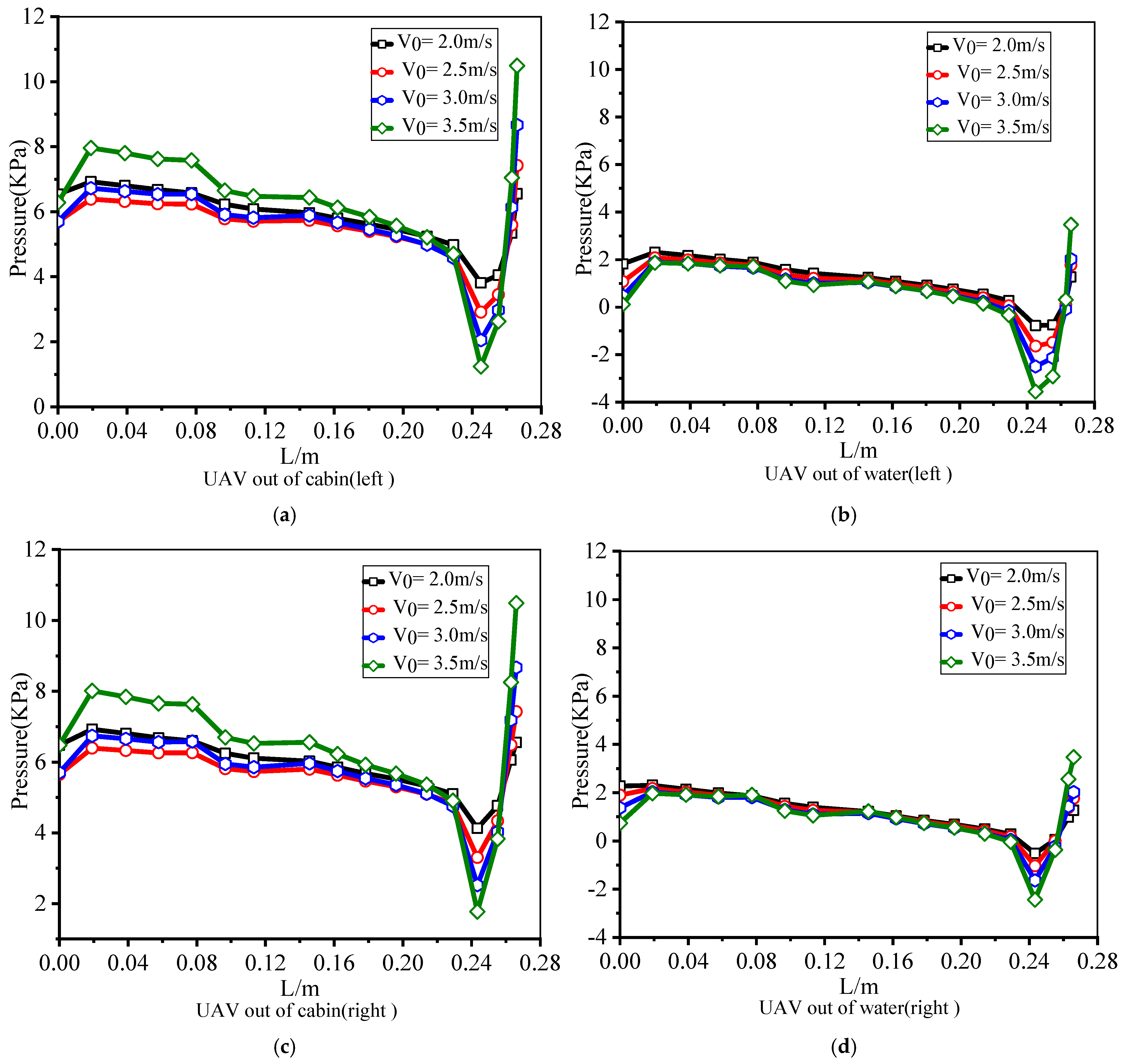
The pressure distribution in
Figure 11 demonstrates a nonlinear surge in pressure with increasing initial velocity. This signifies that under high-energy impact, the structure no longer bears a uniformly distributed load but rather a highly localised ‘impact point’ load. This shift in load distribution demands far greater localised strength and fatigue resistance than designs based on uniform load assumptions. Consequently,
Figure 11 provides not merely load magnitude but also the spatial location of the structure’s weakest points, offering indispensable data for lightweight yet highly reliable structural design. Additionally, as shown in
Figure 11, the UAV detected a significant localised low-pressure zone with a minimum gauge pressure of approximately −4 kPa. Whilst this value exceeds the saturated vapour pressure of water, thereby preventing definitive bulk cavitation, this pressure level indicates that the risk of localised cavitation initiation cannot be entirely disregarded in the presence of microscopic gas nuclei or flow disturbances. Nevertheless, it must be emphasised that under the sub-cavitation conditions and conventional launch velocities investigated herein, flow visualisation revealed no evidence of extensive cavitation bubble cloud development. This indicates that even if cavitation occurred, it remained confined to an incipient or transient phase, failing to evolve into a governing factor influencing the dominant flow structure or global hydrodynamic loads. Consequently, this study focuses on the hydrodynamic characteristics arising from the dominant physical mechanisms that have been clearly observed. These mechanisms constitute the primary determinants of stability under the current launch parameters.
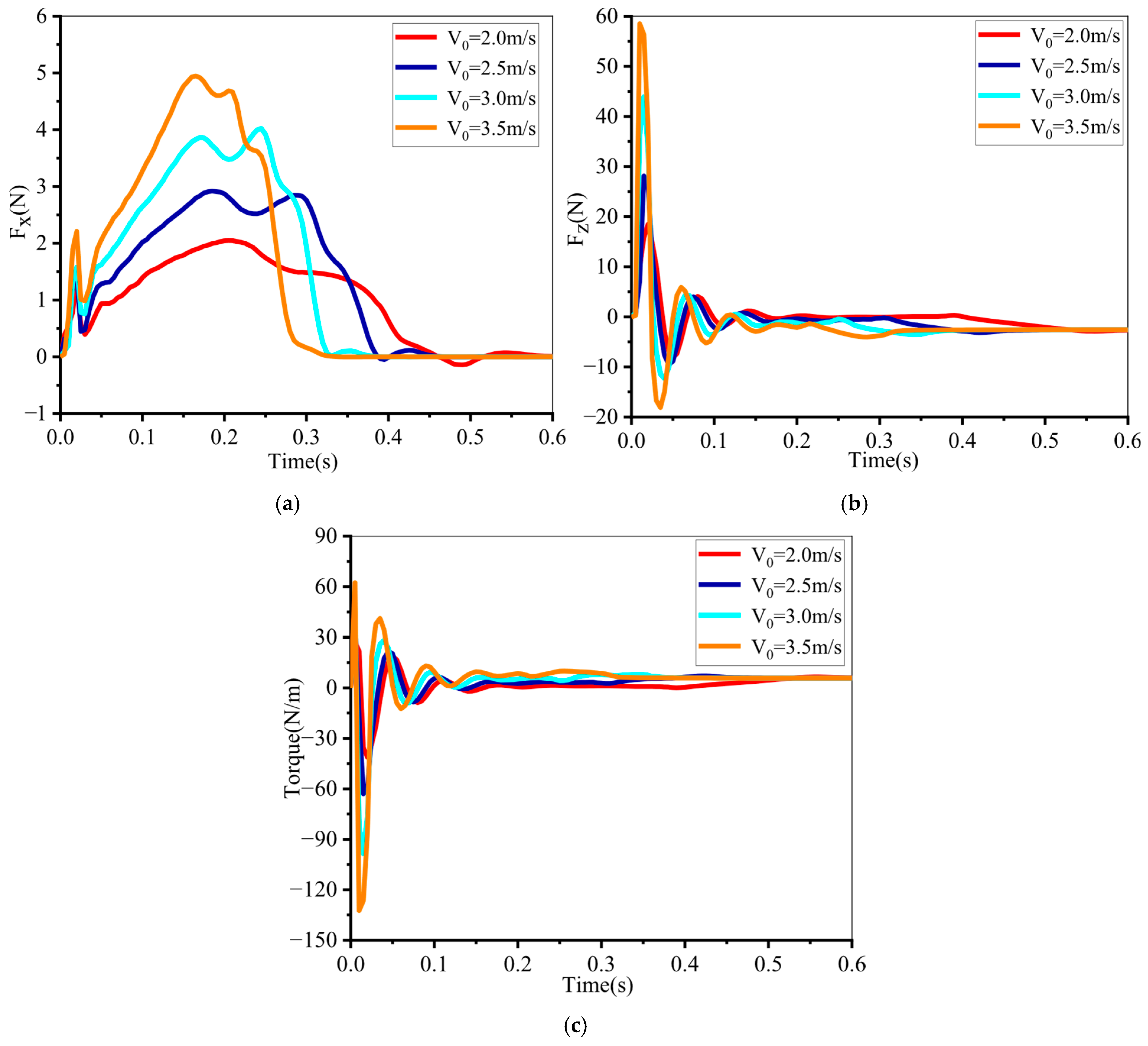
Figure 12 displays the forces acting on the UAV in the X and Z directions, as well as the rotational torque My, during the water exit process under the influence of initial launch velocity. As illustrated in
Figure 12a, the drag force Fx increases significantly with initial velocity, intuitively demonstrating the fluid inertia effect.
Figure 12b shows the time history curve of the Z-direction drag force (Fz)on the UAV. As shown in
Figure 12b, when the initial launch velocity increased from 2.5 m/s to 3.5 m/s, the peak drag force rose from 28.39 N to 58.86 N, representing an absolute increment of 30.47 N. This increment far exceeds the numerical uncertainty (0.21%) confirmed by this method by an order of magnitude. This indicates that the dominant influence of launch velocity on drag is highly significant and not attributable to numerical noise. However, the true challenge to stability lies in lateral dynamics.
Figure 12b,c reveal a critical phenomenon: the peak values of the lateral force Fz and yaw torque M
y exhibit superlinear growth with launch velocity. For instance, when the initial velocity increases from 2.5 m/s to 3.5 m/s (an approximate 40% increase), the peak value of Fz rises by approximately 120%. This nonlinear amplification effect constitutes a clear indicator of heightened risk. It signifies that attempts to achieve faster water exit by simply increasing launch velocity disproportionately introduce substantial lateral disturbances, making the UAV highly susceptible to uncontrollable lateral drift and steering deviations.
It is noteworthy that the yaw torque (My) curves for different initial launch velocities exhibit a critical convergence phenomenon (Coincidence) near t = 0.6 s. At this point, despite differing initial velocities, the moment values acting on the drone’s Y-axis all approach zero. This is not coincidental but determined by the drone’s unique hydrodynamic state at the moment of water exit (Water-Exit Moment). At approximately t = 0.6 s, the drone’s nose has fully exited the water surface while its tail remains submerged. The airframe thus occupies a critical inter-medium state. The density and inertial forces surrounding the nose undergo abrupt changes (from water to air), causing a sharp decline in its capacity to generate restoring torque. Simultaneously, hydrodynamic forces acting on the tail rapidly diminish due to reduced immersion depth. Consequently, although the time to reach this critical attitude varies slightly with initial velocity, the unbalanced moment about the Y-axis reaches a minimum at this instant across all initial velocities. This manifests as an intersection point on the curve, revealing that the moment of emergence constitutes a critical transition point for motion instability.
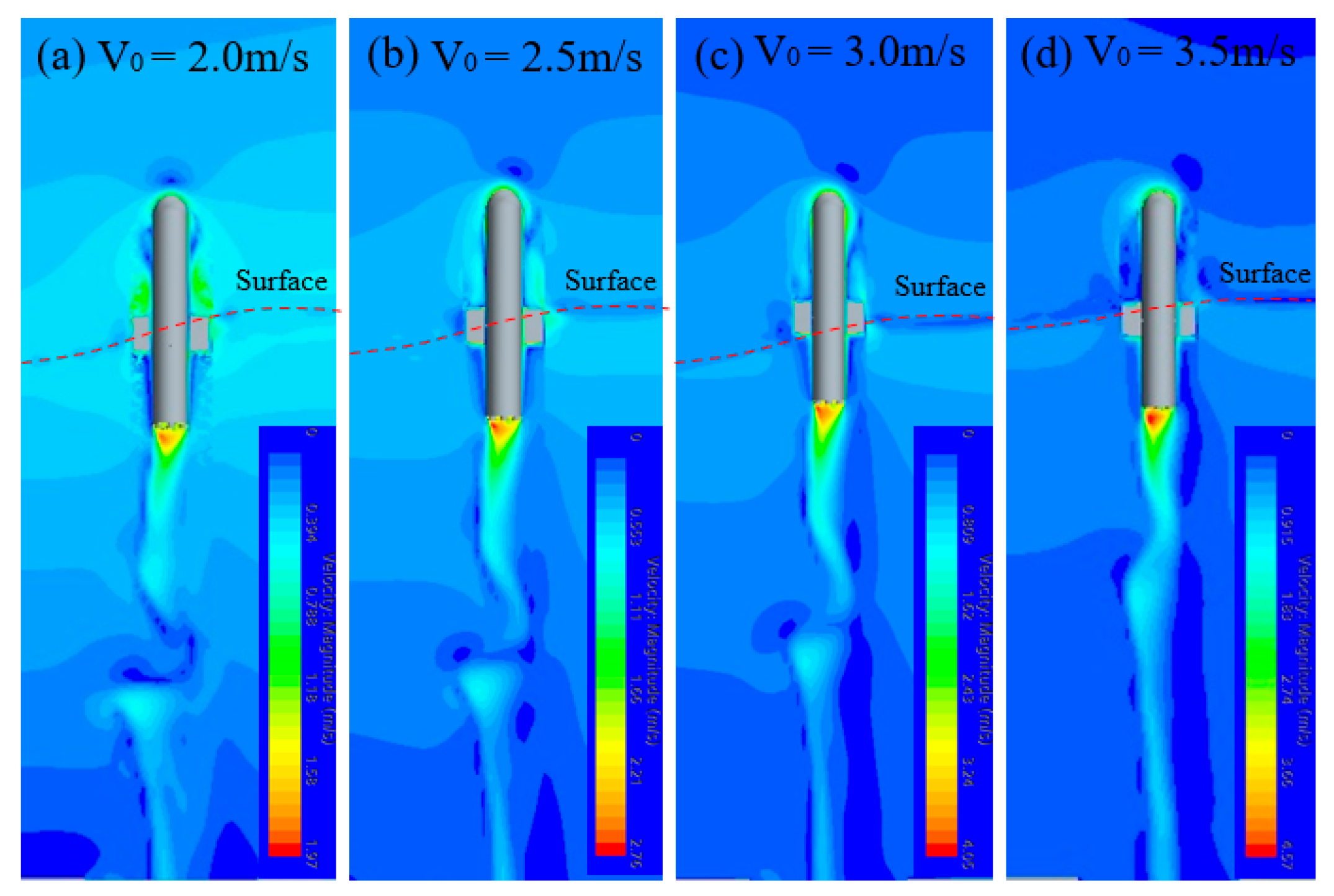
The evolution of the flow field structure provides an intuitive explanation for the aforementioned patterns of force and moment variation. As illustrated in
Figure 13, by comparing flow field contour plots at different initial launch velocities (
Figure 13a–d), one can clearly observe that the asymmetry of the velocity field intensifies with increasing initial velocity. At lower initial velocities (
Figure 13a, V
0 = 2.0 m/s), the flow field remains relatively simple. However, as the initial velocity increases to 3.5 m/s (
Figure 13d), the impact effect of the drone’s nose on the water surface intensifies dramatically. This leads to a significant increase in flow velocity and pressure on the upstream side (left), while flow separation on the downstream side (right) worsens, resulting in larger and more intense vortices. This asymmetry in the flow field, intensified by the increased initial velocity, constitutes the direct flow-physical mechanism responsible for the significant increase in lateral forces and yawing moments experienced by the UAV. This qualitatively validates the trend observed in the force and moment curves depicted in
Figure 12.
4.2. The Effects of Different Current Velocities on the Hydrodynamic Characteristics of UAV
The effect of the incoming current on the kinematic performance of the UAV is critical when the UAV is moving vertically across the medium. The velocity of the UAV is set to be a uniformly decelerated linear motion with v = (2.5–1.5 t) m/s. Its current velocity is 0 m/s, 0.5 m/s, 1 m/s and 1.5 m/s, respectively. The emergence times ranged from 0.285 to 0.355 s.
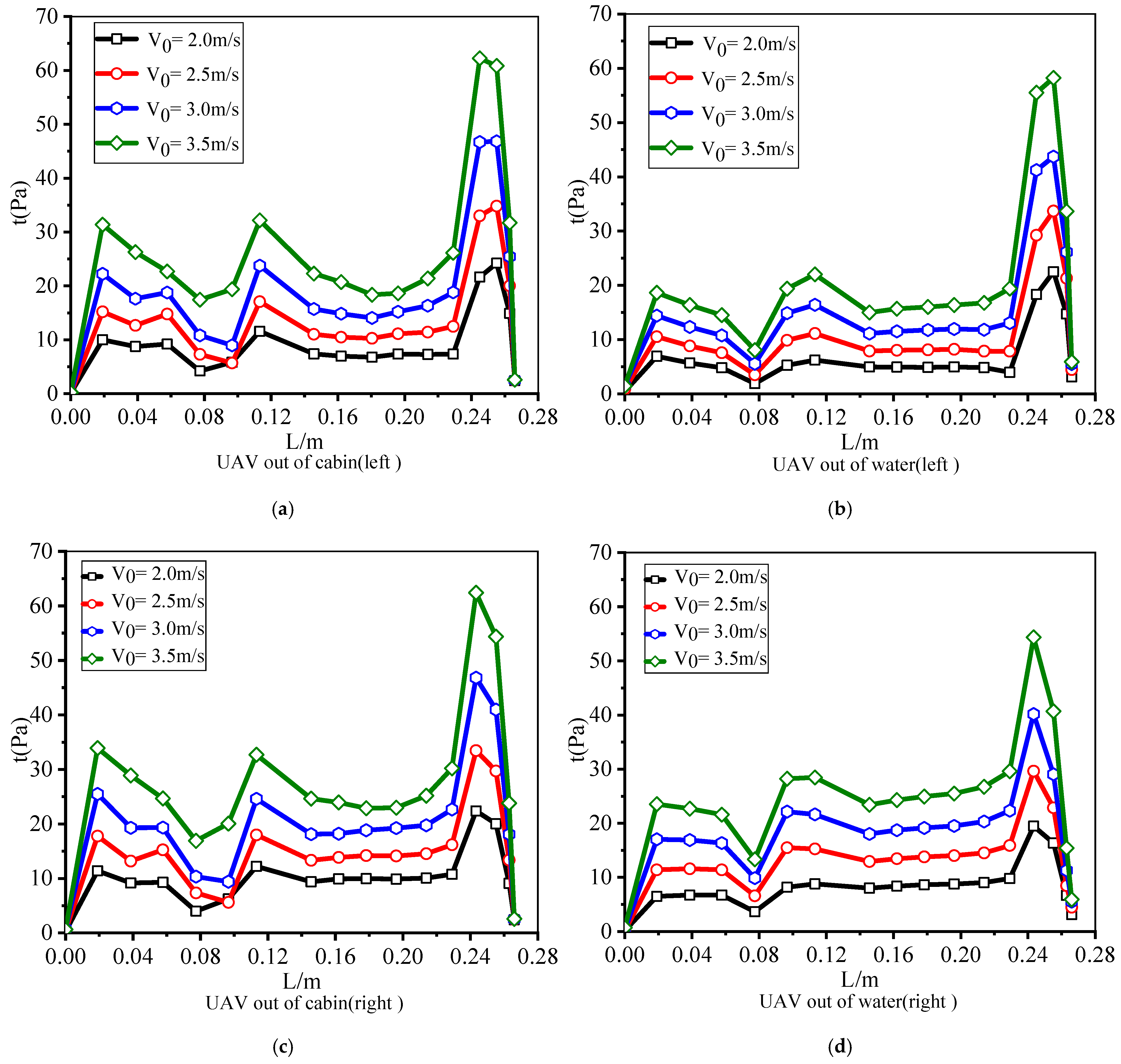
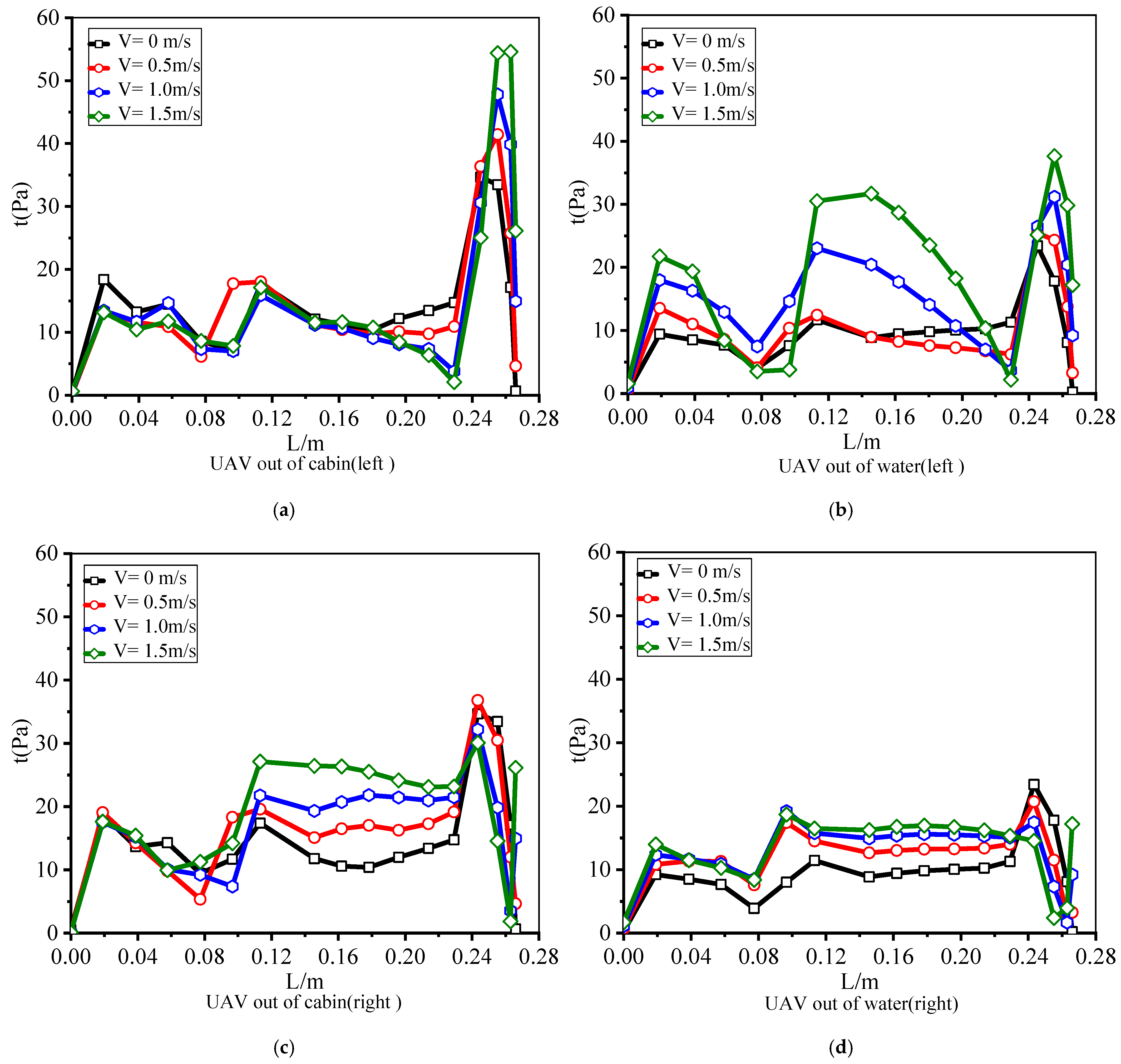
Figure 14 shows the effect of current velocity at different stages on the shear force at the longitudinal section of the unmanned aerial vehicle. The shear stress distribution in
Figure 14 reflects the profound influence of cross-flow on boundary layer dynamics. On the upstream surface (as shown in
Figure 14a), the incoming flow accelerates the boundary layer, leading to an overall increase in shear stress, indicating heightened surface friction drag. However, on the trailing surface (as shown in
Figure 14b), the shear stress exhibits pronounced oscillations and spikes in the mid-to-rear section of the airframe. This is not numerical noise but a characteristic numerical feature indicative of flow separation and periodic vortex shedding. It signifies that the flow field on the trailing surface has transitioned from a relatively stable attached flow to a highly unsteady separated flow.
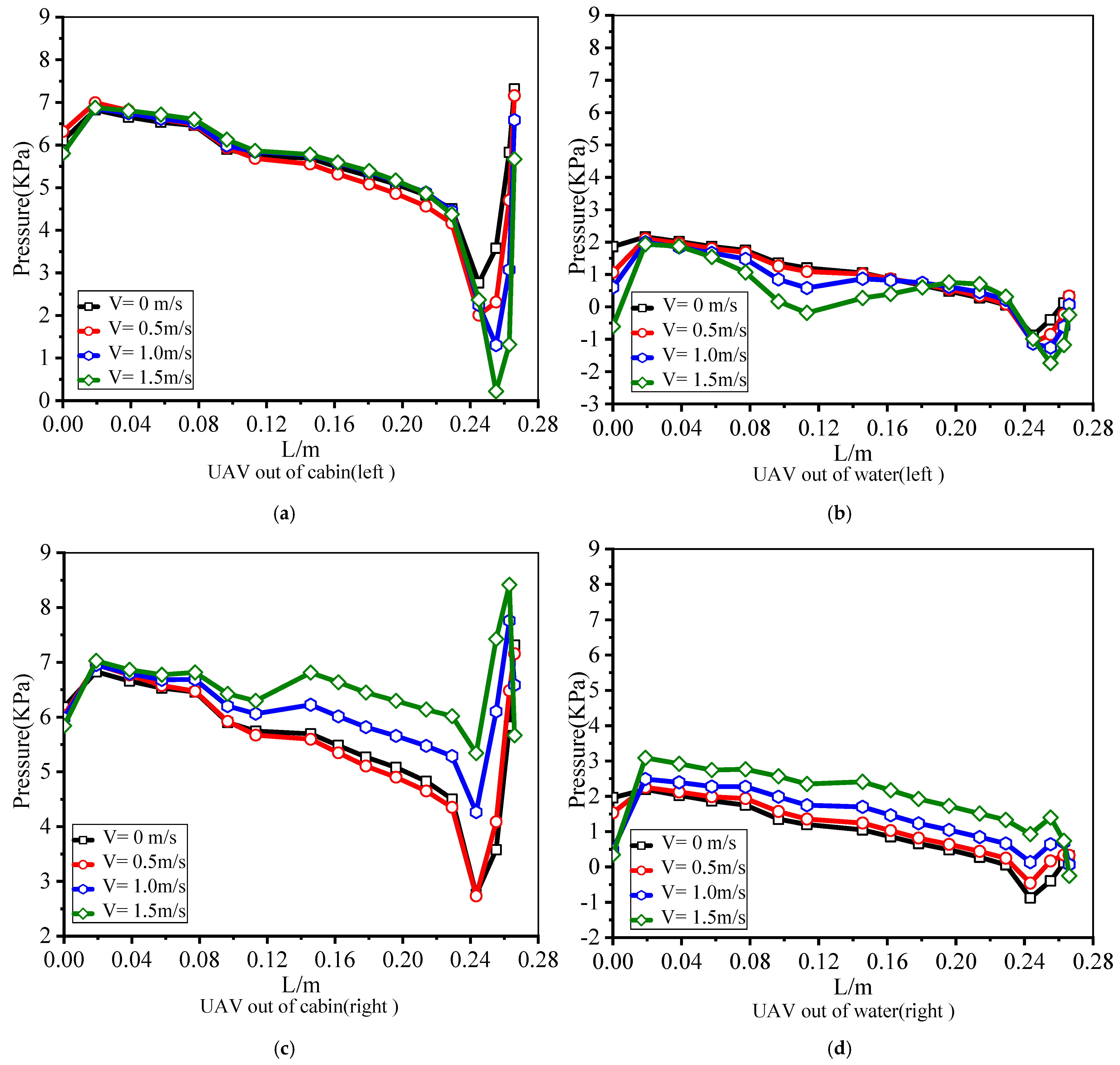
Figure 15 illustrates the effect of flow velocity at different stages on pressure at the longitudinal section of an unmanned aerial vehicle. The pressure distribution revealed in
Figure 15a–d directly explains lateral force generation. Simulation results clearly demonstrate that even at moderate flow velocities, a stable and significant pressure difference is established on both sides of the UAV (high pressure on the leading edge, low pressure on the trailing edge).
Figure 14.
Effect of current velocity on shear forces along the longitudinal cross-section of the unmanned aerial vehicle: (a) out of cabin: the left shear force; (b) out of water: the left shear force; (c) out of cabin: the right shear force; (d) out of water: the right shear force.
Figure 14.
Effect of current velocity on shear forces along the longitudinal cross-section of the unmanned aerial vehicle: (a) out of cabin: the left shear force; (b) out of water: the left shear force; (c) out of cabin: the right shear force; (d) out of water: the right shear force.
As in
Section 4.1, although a localised low-pressure zone (minimum gauge pressure approximately −2.2 kPa) emerged at the moment of emergence, and this pressure level indicated a risk of localised cavitation initiation, flow visualisation confirmed that cavitation did not develop into a dominant factor. Consequently, the hydrodynamic characteristics revealed in this work precisely describe the stability mechanisms under non-cavitation-dominated flow conditions, while also delineating the parameter boundaries where cavitation effects must be considered when advancing towards higher-performance designs.
Figure 15.
Effect of current velocity on pressure forces along the longitudinal cross-section of the unmanned aerial vehicle: (a) out of cabin: the left pressure force; (b) out of water: the left pressure force; (c) out of cabin: the right pressure force; (d) out of water: the right pressure force.
Figure 15.
Effect of current velocity on pressure forces along the longitudinal cross-section of the unmanned aerial vehicle: (a) out of cabin: the left pressure force; (b) out of water: the left pressure force; (c) out of cabin: the right pressure force; (d) out of water: the right pressure force.
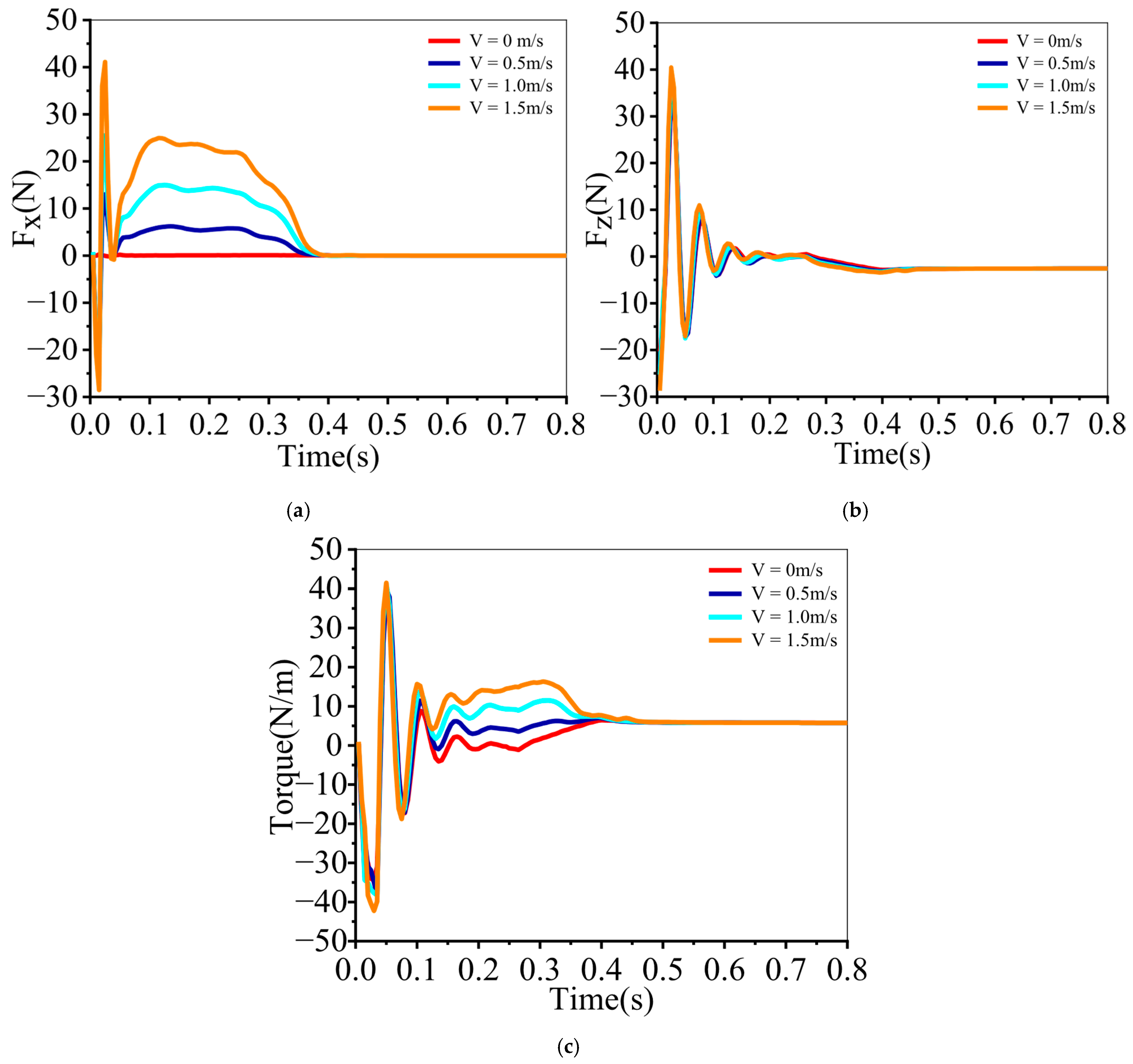
Figure 16 represents the forces acting on the UAV in the X and Z directions, as well as the rotational torque My, during the water exit process under the influence of current velocity. As shown in
Figure 16, with the incoming flow velocity increasing from 0 m/s to 1.5 m/s, the lateral force (Fx, as in
Figure 16a) experienced by the unmanned aerial vehicle (UAV) significantly intensify. But in
Figure 16b, the lateral force (Fz) remains consistently negative, indicating its direction points towards the downwind side (right side), which fully aligns with the ‘left-side high pressure, right-side low pressure’ distribution depicted in
Figure 15. With in
Figure 16c, the positive value of the yaw torque (My) signifies that the incoming flow attempts to deflect the nose to the right (downwind side). The macroscopic force history curve in
Figure 16 represents the integrated outcome and ultimate manifestation of the microscopic asymmetric load distribution revealed in
Figure 14 and
Figure 15.
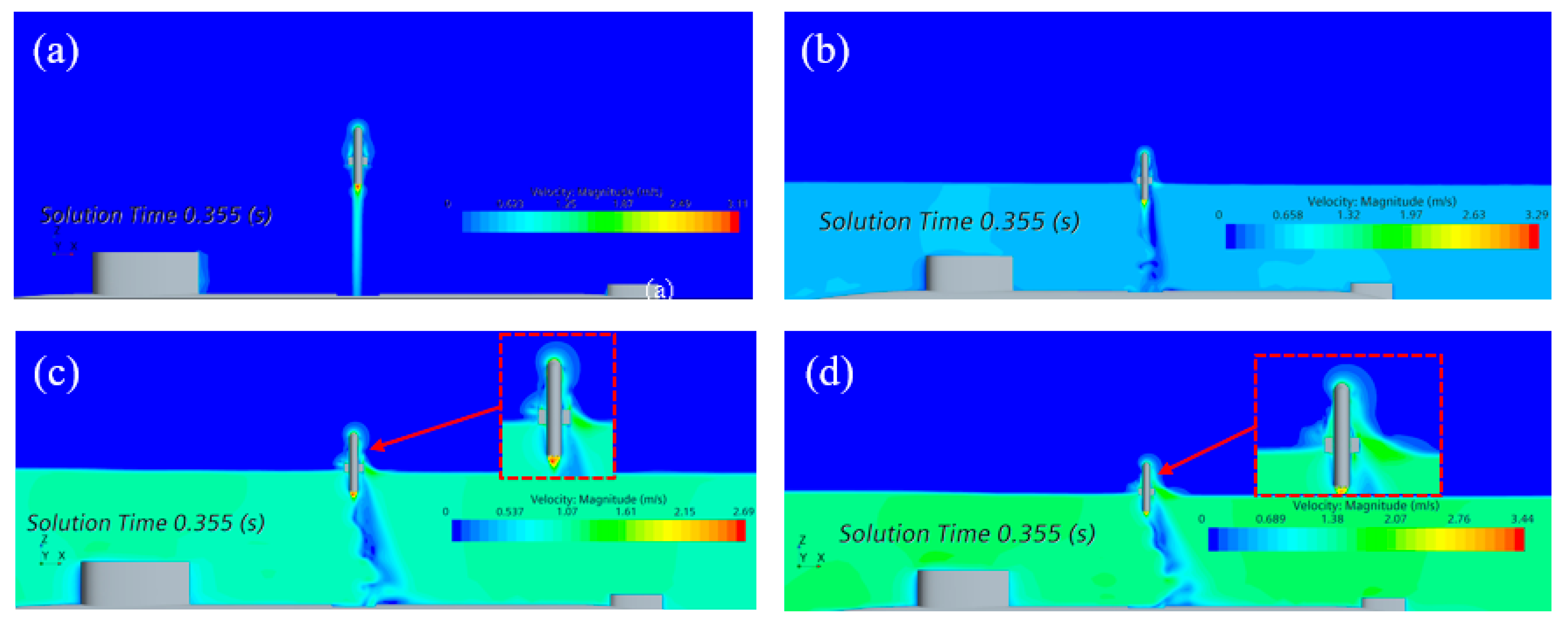
To visually demonstrate the quantitative influence of inflow velocity on the flow field structure at the moment of drone emergence,
Figure 17 presents velocity contour plots under four distinct inflow velocities (ranging from still water to 1.5 m/s). The flow direction is set from left to right (+X direction). Comparing
Figure 17a–d yields two key findings: firstly, under still water conditions (
Figure 17a), the flow field remains largely symmetric. Secondly, and more significantly, once a transverse flow is present (
Figure 17b–d), the symmetry of the flow field is completely disrupted. The incoming flow generates a high-velocity, high-pressure zone on the drone’s left side (leading edge), whilst inducing a progressively larger, unsteady separation vortex structure on the right side (trailing edge). This asymmetric pressure distribution (high pressure on the left, low pressure on the right) is the fundamental cause of the lateral force directed towards the downwind side (i.e., the right side) and the torque about the Z-axis (yaw) experienced by the UAV. This directly explains the dynamic instability described in
Section 4.2.
Figure 16.
Effect of Current Velocity on UAVs: (a) Forces in the X-direction; (b) Forces in the Z-direction; (c) My torque in the Y-direction.
Figure 16.
Effect of Current Velocity on UAVs: (a) Forces in the X-direction; (b) Forces in the Z-direction; (c) My torque in the Y-direction.
Figure 17.
The distribution of the flow field around the UAV at different current velocities out of the water. (a) V = 0 m/s, (b) V = 0.5 m/s, (c) V = 1.0 m/s, (d) V = 1.5 m/s.
Figure 17.
The distribution of the flow field around the UAV at different current velocities out of the water. (a) V = 0 m/s, (b) V = 0.5 m/s, (c) V = 1.0 m/s, (d) V = 1.5 m/s.
4.3. Hydrodynamic Interactions of Multiple UAV Cross-Media Launches
In practical mission scenarios, the sequential or synchronised launch of multiple unmanned aerial vehicles is key to enhancing mission efficiency. However, complex hydrodynamic interference exists between multiple bodies, with insufficient experimental data and theoretical models currently available. This section aims to conduct exploratory research on the typical scenario of dual-aircraft synchronous launch through numerical simulation. The focus lies on qualitatively revealing the structural characteristics of the interference flow field, quantitatively analysing the trends of interference effects on hydrodynamics, and preliminarily investigating potential underlying physical mechanisms. It should be explicitly noted that the conclusions drawn herein stem from the extrapolated application of validated CFD methodologies (as detailed in
Section 2) to complex operational scenarios. The findings primarily serve to elucidate phenomena and offer explanatory frameworks, thereby providing foundational reference for the design of future high-fidelity experiments and the development of theoretical models.
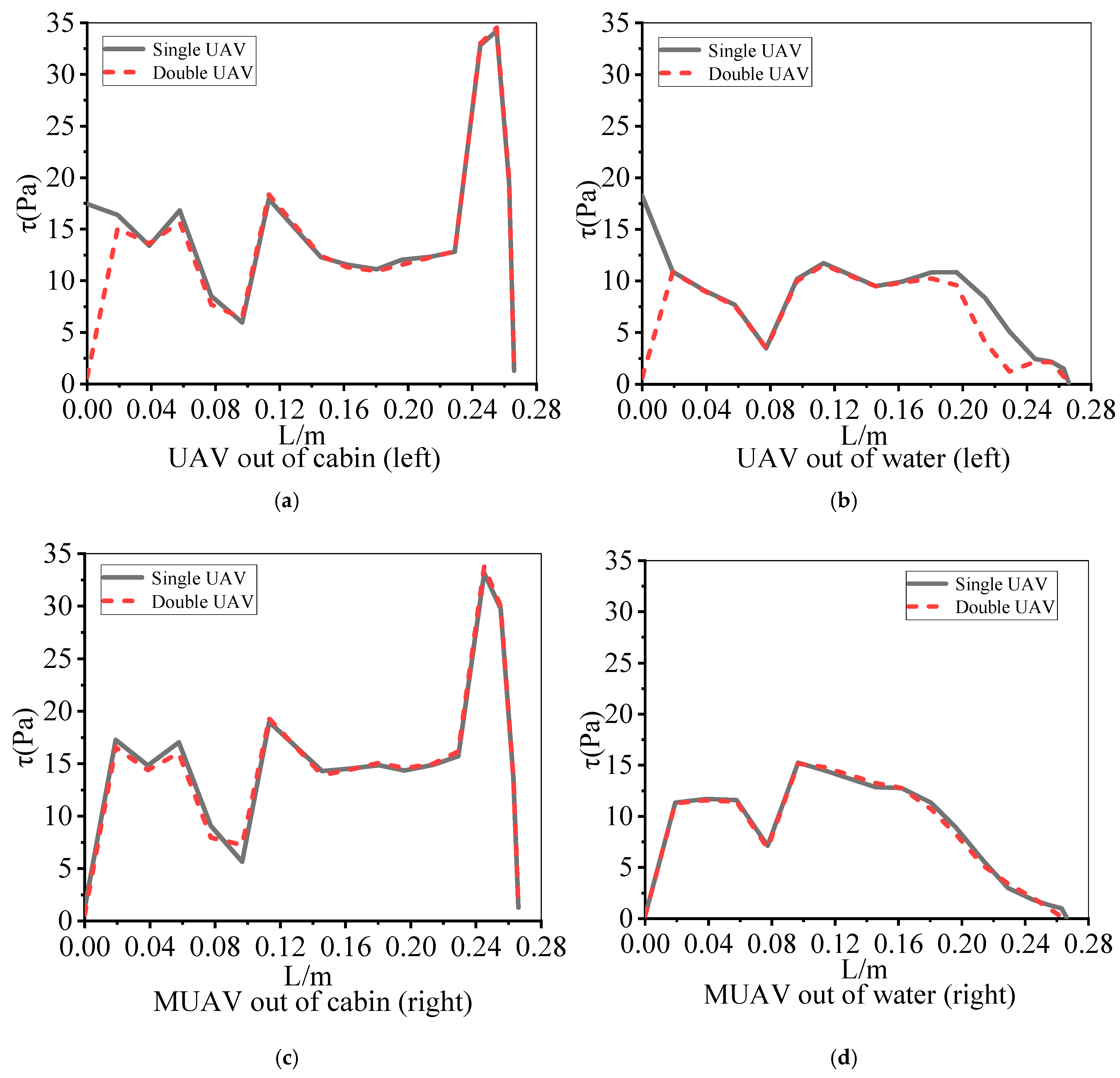
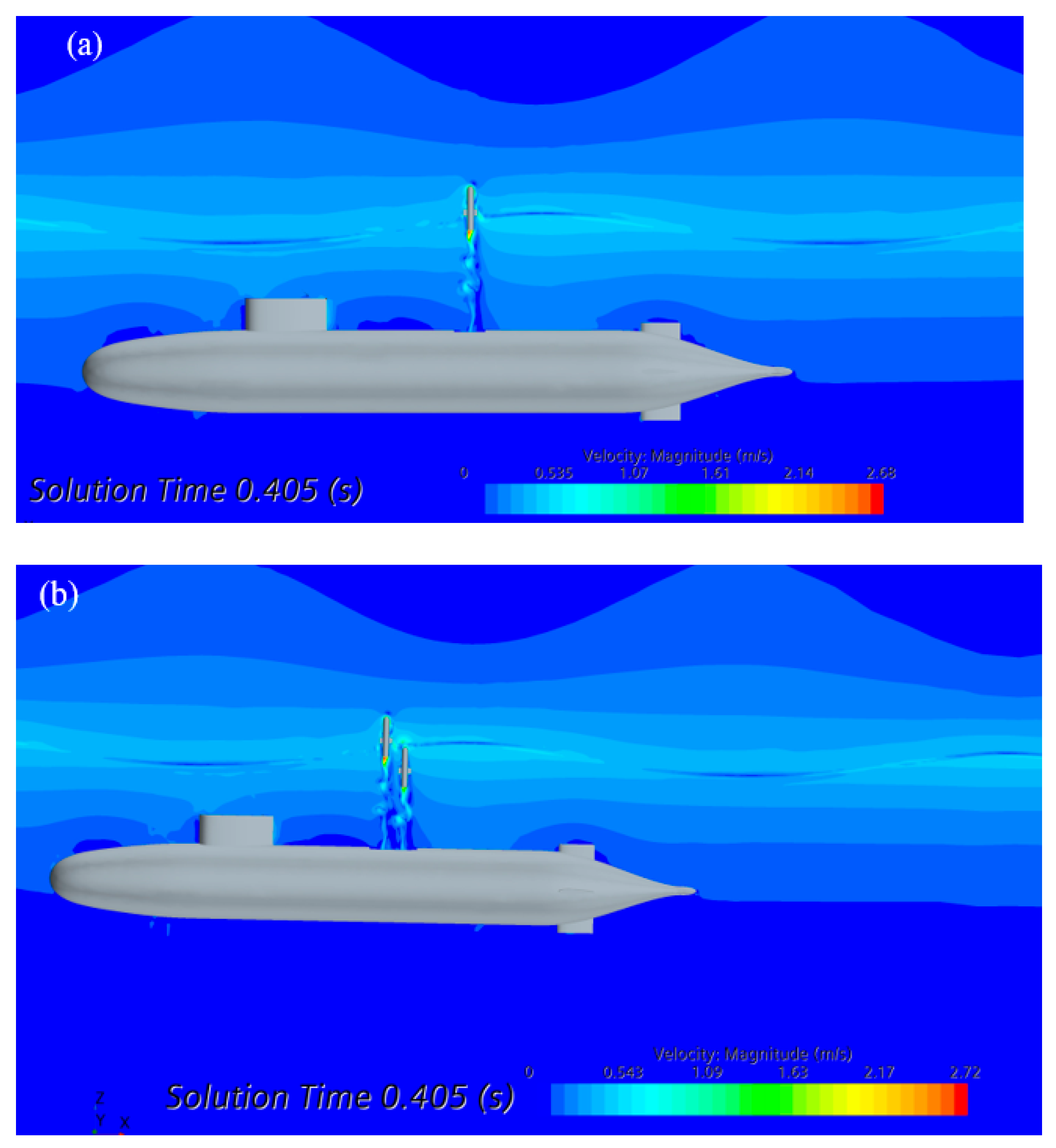
Two UAVs are set to launch underwater with different initial velocities. The motions of UAV-1# and UAV-2# are determined to be uniformly decelerated linear motions with v1 = (3–1.5 t) m/s and v2 = (2.5–1.5 t) m/s, respectively. The emergence times ranged from 0.405 to 0.515 s. For two rocket-based drone launches, the silo of the transport submarine is changed from a single-tube type to a double-tube type. For two UAV launches, UAV-2# is selected as the study target. The effect of UAV-1# on the hydrodynamics of UAV-2# during launch is investigated.
To investigate the physical nature of interference during dual-aircraft launch,
Figure 18 and
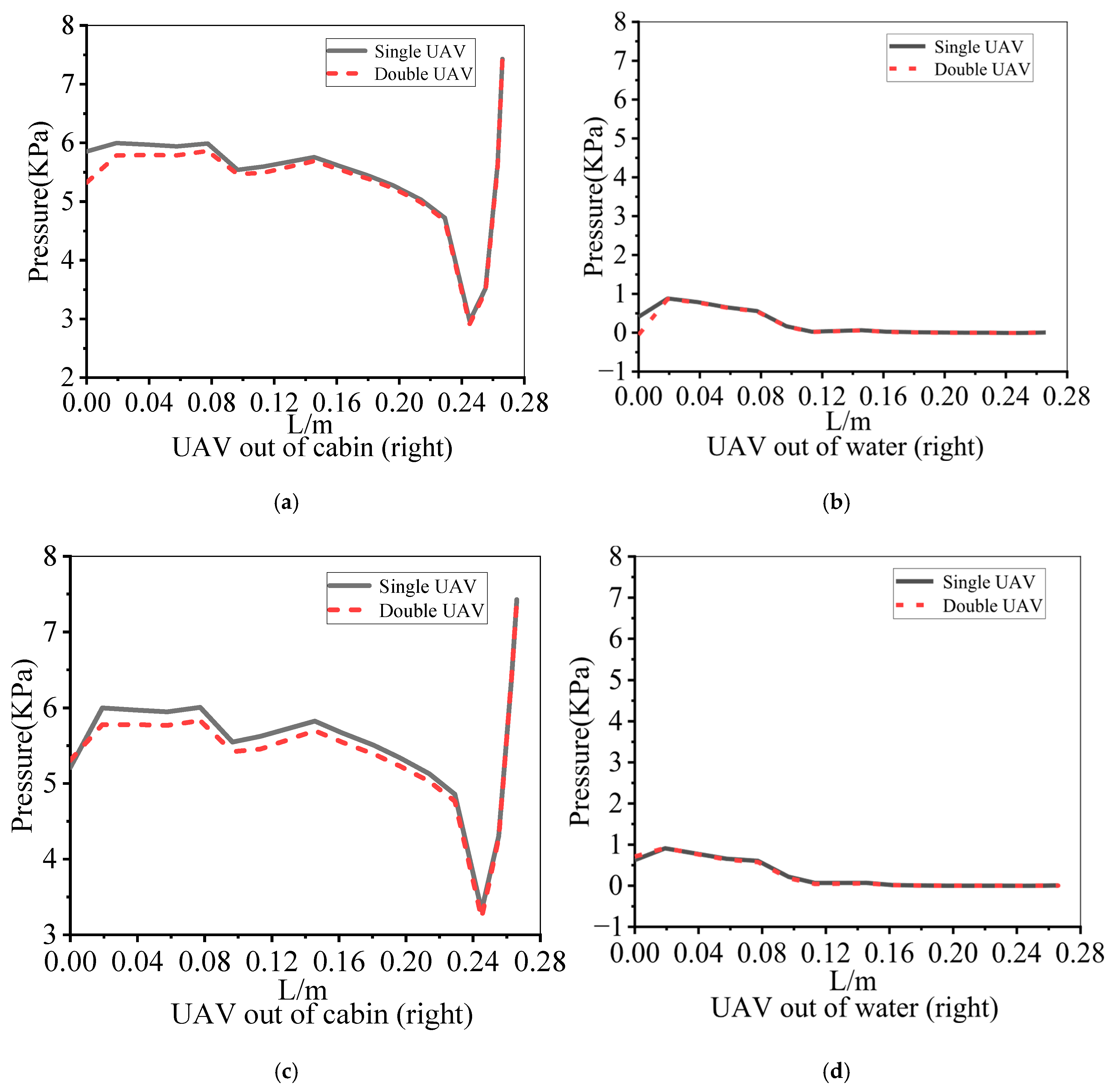
Figure 19 provide mechanistic insights from the perspectives of shear stress and pressure distribution, respectively. It should be emphasised that the following analysis aims to qualitatively reveal the physical mechanisms of interference, with its value lying in interpreting trends rather than the absolute precision of specific numerical values. The comparison in
Figure 18 reveals a key phenomenon: during dual-aircraft launch, the shear stress on the left surface of UAV-2# significantly increases within a specific region (0.16 L–0.28 L). This phenomenon is a hallmark characteristic of the flow acceleration effect. It indicates that the presence of UAV-1# alters the flow field over the left side of UAV-2#, increasing its velocity and consequently amplifying the velocity gradient (i.e., shear stress) within the boundary layer. This clear qualitative trend, though currently difficult to validate directly through experimental measurement, possesses a well-defined physical mechanism consistent with fluid dynamics theory.
The pressure distribution results in
Figure 19 directly elucidate the origin of the disturbance force. Under dual-aircraft launch conditions, the pressure on the right surface of UAV-2# exhibits a distinct, relatively low-pressure zone, whereas the pressure variation on the left side adjacent to UAV-1# is comparatively minor. This asymmetric pressure distribution is the direct cause of the net lateral force directed towards the right (corroborated by the resultant force shown in
Figure 20). The advantage of CFD simulation lies in its ability to visualise the formation process of this ‘pressure differential’, tracing the macroscopic disturbance force back to its microscopic surface pressure sources—an achievement difficult to realise through traditional experimentation.
Figure 18.
Effect of different launch quantities on shear forces along the longitudinal cross-section of the unmanned aerial vehicle: (a) out of cabin: the left shear force; (b) out of water: the left shear force; (c) out of cabin: the right shear force; (d) out of water: the right shear force.
Figure 18.
Effect of different launch quantities on shear forces along the longitudinal cross-section of the unmanned aerial vehicle: (a) out of cabin: the left shear force; (b) out of water: the left shear force; (c) out of cabin: the right shear force; (d) out of water: the right shear force.
Figure 19.
Effect of different launch quantities on pressure forces along the longitudinal cross-section of the unmanned aerial vehicle: (a) out of cabin: the left pressure force; (b) out of water: the left pressure force; (c) out of cabin: the right pressure force; (d) out of water: the right pressure force.
Figure 19.
Effect of different launch quantities on pressure forces along the longitudinal cross-section of the unmanned aerial vehicle: (a) out of cabin: the left pressure force; (b) out of water: the left pressure force; (c) out of cabin: the right pressure force; (d) out of water: the right pressure force.
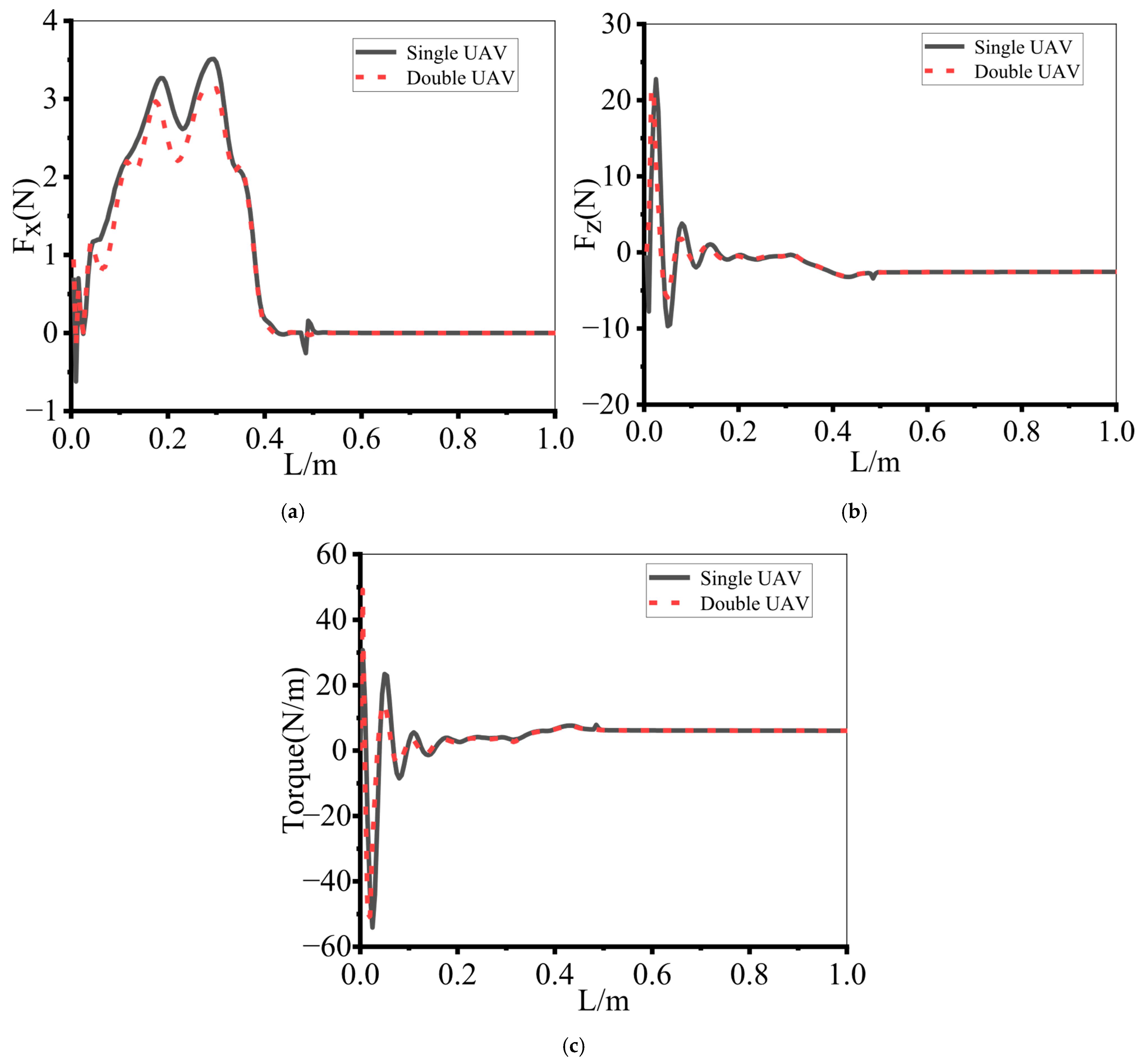
Figure 20 quantifies the macroscopic mechanical effects of twin-aircraft interference at the level of resultant forces, forming a complete chain of evidence alongside the microscopic mechanisms revealed in
Figure 18 and
Figure 19.
Figure 20 demonstrates that during dual-aircraft launch, UAV-2# experienced a peak Fz disturbance force of 27.21 N. This disturbance force value itself (27.21 N) substantially exceeds the numerical uncertainty (approximately 0.21%), far surpassing the uncertainty range. This statistically confirms the physical authenticity and intensity of the multi-aircraft disturbance effect. The most pronounced interference manifests as lateral forces and yaw moments. Throughout the entire launch phase, UAV-2# continuously experiences a positive F
x (i.e., a force directed towards the low-pressure side as revealed in
Figure 19) and a positive My (i.e., a moment causing the nose to turn towards the low-pressure side). This force-torque combination perfectly corroborates the asymmetric pressure distribution theory illustrated in
Figure 19, indicating that UAV-1#’s wake induced a persistent low-pressure zone on UAV-2#’s right side, thereby generating a net ‘suction force’. The longitudinal force Fx exhibits complex modulation during the initial phase of dual-aircraft launch. This likely stems from competing effects: UAV-1#’s wake simultaneously produces a shielding effect (potentially reducing drag) on UAV-2# while increasing its local flow velocity (potentially increasing drag) due to channel acceleration. This indicates that interference effects are non-steady in the time domain. The results in
Figure 20 indicate that the primary challenges introduced by multi-UAV launches are controllable lateral motion and unintended yaw, rather than simple increases or decreases in drag. This provides clear input for the design of a cooperative launch controller: the controller must be equipped with sufficiently large lateral force/moment tolerances and incorporate decoupling or feedforward compensation strategies to counteract these predictable disturbance patterns.
Figure 20.
Effect of different numbers on UAV: (a) Forces in the X-direction; (b) Forces in the Z-direction; (c) My torque in the Y-direction.
Figure 20.
Effect of different numbers on UAV: (a) Forces in the X-direction; (b) Forces in the Z-direction; (c) My torque in the Y-direction.
Figure 21 reveals this interference mechanism through velocity and vorticity fields, respectively. The velocity contour plot (
Figure 21a) shows a distinct flow channel between the AUV and UAV, exhibiting higher velocities than surrounding regions, indicating flow compression and acceleration at this location. More critically, the vorticity field (
Figure 21b) clearly demonstrates that the vortex street generated at the tail of UAV-1# (left) directly impacts and alters the original vortex shedding pattern on the right side of UAV-2# (right). This mutual interference in vortex dynamics disrupts the relatively stable wake structure of an individual UAV during solo launch. Consequently, the fluid loads (especially the lateral forces) experienced by the two aircraft have undergone significant changes compared to those of a single aircraft during launch (as shown in
Figure 20). This outcome confirms that in multi-aircraft coordinated launch missions, such close-proximity fluid interference effects must be fully accounted for and compensated.
Figure 21.
The distribution of the flow field around the UAV out of the water: (a) one UAV; (b) two UAVs.
Figure 21.
The distribution of the flow field around the UAV out of the water: (a) one UAV; (b) two UAVs.
Although precise quantification of multi-emitter interference awaits future validation through more complex experiments, this section has successfully revealed key physical mechanisms through the presented CFD analysis: 1. Adjacent emitters significantly alter the shear stress distribution on each other’s surfaces via flow acceleration effects; 2. The resulting asymmetric pressure field constitutes the direct source of interference forces. The validated CFD methodology employed herein, coupled with mesh-independent analysis, underpins the reliability of these qualitative trends. This research paradigm—interpreting force phenomena through flow-field mechanisms—substantially deepens our understanding of complex multi-body interference problems, providing crucial physical insights for subsequent controller design (e.g., lateral force compensation). Future endeavours should focus on developing advanced measurement techniques to experimentally validate these mechanistic discoveries.
5. Conclusions
This study employs high-fidelity computational fluid dynamics (CFD) methods to systematically analyse the hydrodynamic characteristics of a novel foldable quadcopter unmanned aerial vehicle (UAV) during launch from an autonomous underwater vehicle (AUV). Findings indicate that launch initial velocity, inflow velocity, and multi-aircraft interference are critical factors influencing the UAV’s hydrodynamic performance. Peak pressure and shear stress concentrations are concentrated at the UAV’s nose, rendering this region structurally critical. Transverse inflow significantly disrupts flow field symmetry, generating lateral forces and yaw moments that challenge motion stability. Concurrent launches induce complex fluid-fluid interactions, producing pronounced fluid shadowing effects on subsequent UAVs. This study systematically reveals all key findings, such as the amplification effect of launch velocity on drag, the influence of inflow on lateral stability, and the multi-aircraft interference mechanism. The variation in key parameters for these phenomena is significantly greater than the numerical simulation uncertainty, ensuring the robustness and reliability of our conclusions. It should be emphasised that the core advantage of the predefined uniform deceleration trajectory method employed in this study lies in its ability to efficiently and controllably isolate and quantify the influence of key parameters on fluid loads, thereby establishing a high-precision ‘load database’. However, this method cannot simulate the actual trajectory of the UAV under fluid dynamic feedback. This represents both a necessary simplification to focus on load mechanism analysis and a primary limitation of this study. Consequently, the results should be regarded as critical inputs for subsequent fully coupled dynamic simulations rather than definitive predictions.
The core contribution of this research lies in establishing, for the first time, a high-fidelity numerical simulation framework for the cross-medium launch process of this folding-wing UAV. It reveals several key mechanisms: the study finds that surface shear stress distribution not only reflects frictional drag but also serves as a leading indicator for flow separation and boundary layer evolution, with its abrupt changes providing early warning of UAV motion instability; Furthermore, the study quantifies for the first time the complex hydrodynamic interference effects during synchronous launch of two UAVs, clarifying the fluid origins of lateral loads generated. This new knowledge provides direct theoretical foundations for optimising future UAV launch systems: load distribution data can guide structural reinforcement at critical locations; the quantified relationship between loads and launch parameters can supply feedforward compensation inputs for controller design; while insights into multi-aircraft interference can establish guidelines for determining safe launch sequencing and spacing. Future work will leverage the load database derived from this study to focus on predicting and controlling UAV dynamic trajectories under fluid–structure interaction, validated through scaled model experiments, ultimately achieving a transition from ‘static load analysis’ to ‘dynamic process control’.
6. Future Work Prospects
The most significant simplification in our current model is the use of a predefined, uniformly decelerated trajectory for the UAV. While this approach was essential to isolate and meticulously quantify the hydrodynamic loads in a controlled manner (which was a primary goal of this study), it inherently neglects the two-way fluid–structure interaction. Consequently, the model cannot predict the actual trajectory deviation or attitude evolution resulting from the fluid forces and moments it computes. The immediate extension is the development of a fully coupled 6-DOF fluid–structure interaction model. The hydrodynamic loads database provided herein will serve as the critical input for this model. The future framework will integrate computational fluid dynamics with multi-body dynamics and flight control systems to predict the actual launch trajectoryand enable the design of stability augmentation systems.
The computational framework employs a VOF model that excellently captures large interface deformations (e.g., water exit and ventilation) but does not include a mass transfer model for cavitation. Although our analysis of the pressure fields (e.g.,
Section 4.1) indicates that the minimum pressures observed under the studied conditions were above the threshold for sustained cavitation, we explicitly state that the model cannot simulate the occurrence of cavitation should it initiate. This limits the predictive capability of the method for regimes involving higher launch speeds or sharper geometries where cavitation is likely. Future studies will incorporate more sophisticated physical models, including cavitation models for high-speed launch regimes and high-fidelity turbulence methods (e.g., Hybrid RANS-LES) for better resolution of vortex-dominated flows during water exit. The impact of structural flexibility and the dynamics of wing deployment on the hydrodynamic loads will also be investigated.