1. Introduction
There are few ways to dock a vessel or cargo from sea to vessel or to launch from vessel to sea. The operation may use cranes or a docking vessel of variable draft. The last technique applies the method of a floating dock with the ability to sail at sea. Docking vessels are used to transport and launch offshore platforms or landing crafts and for other marine operations. Floating cranes (see [
1,
2]) play a vital role in offshore operations, such as transportation, assembling structures, and conducting salvage operations. Challenges arise due to difficulties in accurately positioning the payload, which can lead to collisions. Even minor disturbances, such as passing ship waves, pose collision risks. Additionally, maintaining small motion amplitudes of the hulls is necessary to achieve the required positioning accuracy. The limiting conditions of crane vessel operations, with special emphasis on large semisubmersibles [
1], are affected by the mass of the suspended load, the crane’s sling length and sea conditions. Analyzing and controlling the motions of crane payloads are critical for successful operations [
2,
3]. Challenges related to seakeeping and wave loads are addressed in other studies [
4]. These challenges primarily concern vertical accelerations, impacting cargo, equipment, and seasickness. Additionally, relative vertical motions, leading to slamming, pose a significant threat to both cargo and personnel [
5].
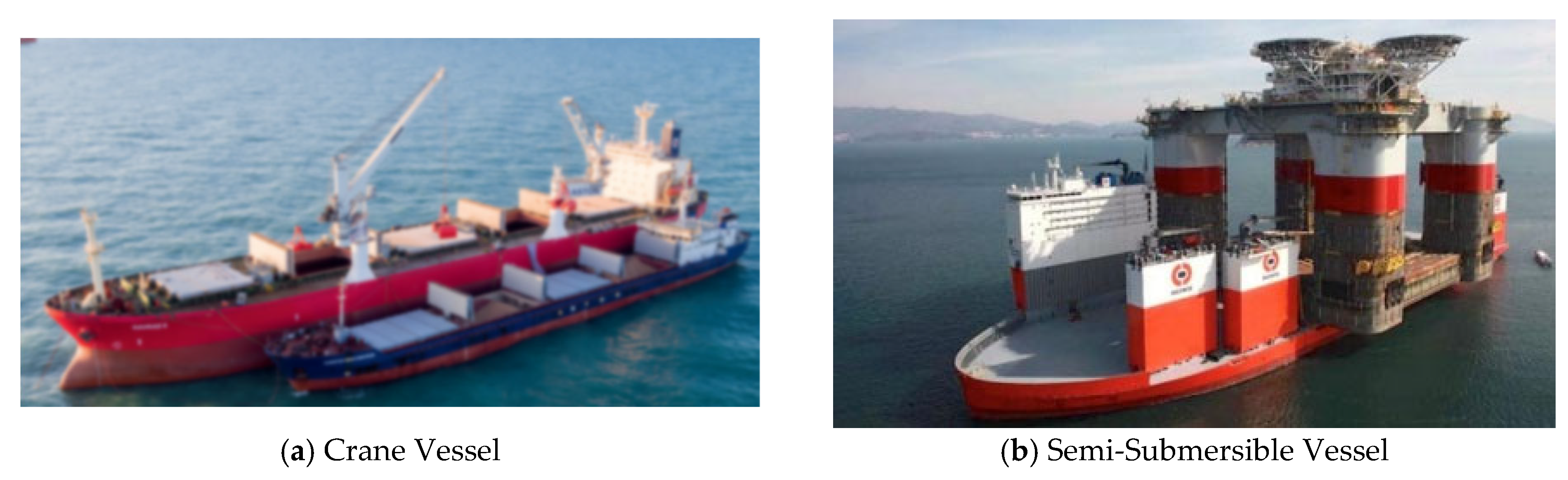
Figure 1 presents examples of a crane vessel and a docking platform.
The concept of the SWATH (Small Water-Plane Area Twin Hull) is well known to provide comfort and to be able to cope with the mid-tough sea. The comfort is related to the geometry of the vessel [
8]. The small water-plane area reduces the vertical ship motion, improves the seakeeping and minimizes speed loss in heavy seas. The SWATH concept was interrogated extensively in the 1980s and many conclusions were reported [
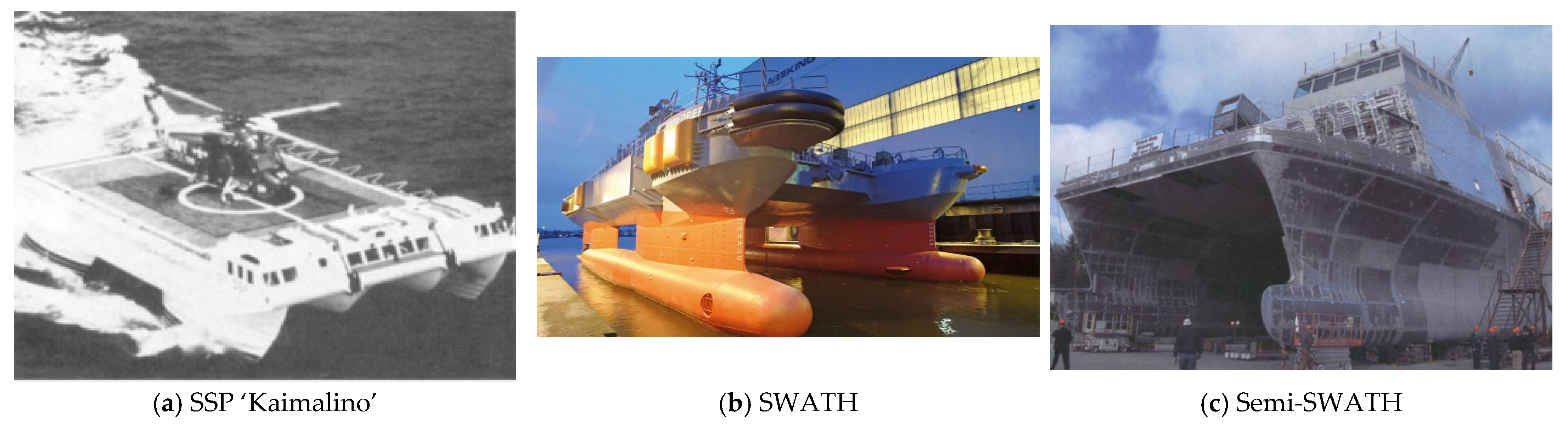
9]. The first two SWATH ships in the US navy were TRISEC (a Litton development), which refers to underwater, above water and connecting, and the SSP ‘Kaimalino’, weighing 2000 t (NAVY laboratory development), with a semi-submerged platform (designed in 1971 and launched in 1973).
The Semi-SWATH configuration also maintains good seakeeping, while it is intended to prevent the bow immersing phenomena at high speeds. The Semi-SWATH concept may improve some drawbacks of catamarans and SWATHs.
Figure 2 presents examples of the SSP vessel, a SWATH and a Semi-SWATH.
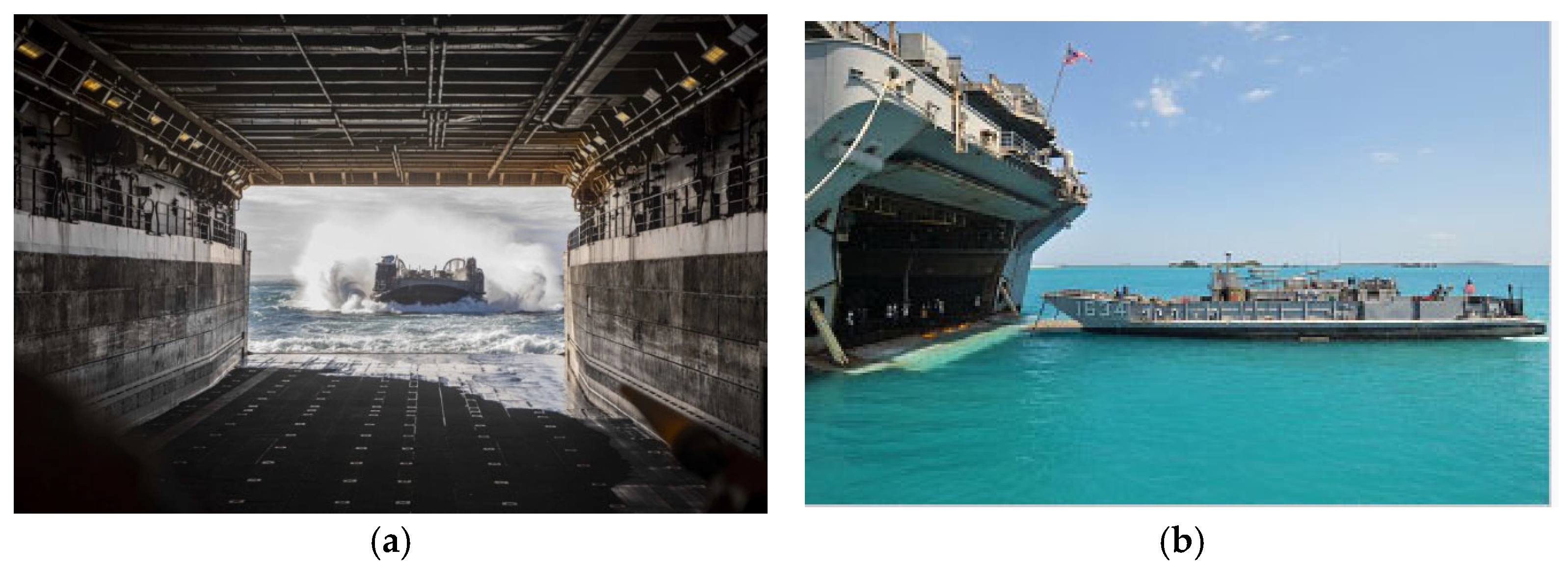
The semi-submersible docking concept for small landing craft employs the controlled ballasting of a mother vessel to flood an internal stern well deck, allowing the craft to sail directly into a partially submerged compartment while offshore. Docking is performed at very low relative speeds, with geometric confinement and ballast-induced motion reduction mitigating wave-induced relative motions. Once secured, the vessel can deballast to protect the landing craft during transit, enabling repeatable offshore docking and launching without reliance on port infrastructure.
Semi-submersible vessels are one of the solutions for transporting offshore drilling platforms and mega equipment efficiently and safely [
12].
Figure 3 presents examples of a semi-submersible docking concept for small landing craft.
Recent advancements in offshore installation systems have focused on enhancing the operability, stability, and precision of floating wind turbine deployment and vessel docking operations. A novel large floating dock was shown to reduce pitch motions during spar turbine installation, though with some compromise in heave response under swell conditions [
15]. Complementing this, a SWATH-type vessel demonstrated favorable hydrodynamic performance for mating pre-assembled turbines onto spars, supporting the viability of motion-controlled multi-body installation platforms [
16]. In parallel, a validated quasi-static numerical model of vessel-docking operations achieved good agreement with experimental results [
17].
The LASH (lighter aboard ship) system [
18] represents an early intermodal maritime transport concept, enabling ocean-going vessels to carry pre-loaded barges and serve inland and shallow-water terminals. While the system reduces port handling and infrastructure requirements, its operational complexity and high costs limited scalability. The widespread adoption of standardized container shipping ultimately rendered the LASH system obsolete, despite its historical significance in maritime logistics innovation. However, the study of a LASH system to improve cargo distribution among small islands with limited port infrastructure [
19] indicates that the LASH concept can enhance transport efficiency, reduce port dependency, and support reliable goods distribution in remote island networks.
Landing craft carriers have a long history of use in both military operations and civilian applications [
20] and are currently the most common type of vessels to deliver troops and equipment for the U.S. military forces [
21,
22]. Landing craft are considered to be a future force multiplier whenever access is required for presence operations or contested landing ashore [
23].
While existing solutions seem adequate, this research seeks to pioneer a novel concept of a docking vessel design, with the aim of providing superior transit and landing capabilities, while optimizing the launching and docking operations. The proposed innovation suggests a division of the transit and landing functions between two distinct vessels, with the docking vessel serving as the transporter of the lander. The docking vessel is a Semi-SWATH, renowned for its ability to maintain comfort. The landing vessel has a simple shallow draft design and superior shallow water maneuverability. These features generally conflict with cruising performance factors, such as speed and seakeeping; however, these features are supported due to the minor sailing range left for the lander. This study presents the design concept of two integrated vessels: a fast transporter with good seakeeping and a lender with superior landing capabilities. It focuses on the practical ability to separate and integrate the vessels to perform missions of cargo delivery to shores with challenging landing profiles.
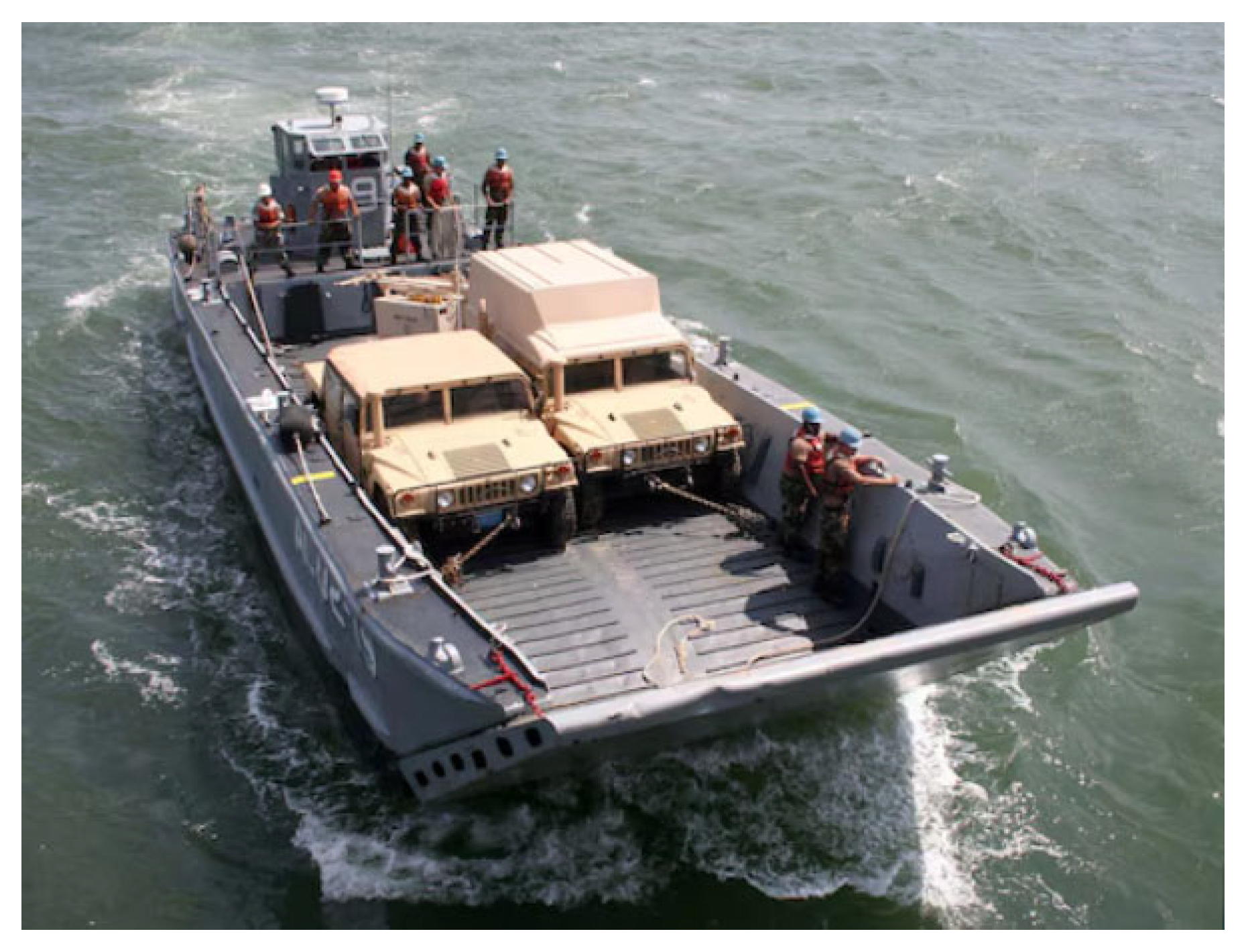
To emphasize the advantages that our concept presents, we qualitatively compare it with a typical landing vessel of similar size. The LCM-8 class [
24] has been in service with the U.S. Navy since World War II and has undergone multiple modifications. The LCM-8 has a size comparable to the proposed concept. As it is a single vessel, and not an integrated transporter and a lander, it has the advantages of transporting a higher payload and the saving of launching and docking operations at sea. However, while our transporter cruises 300 nautical miles at 20 knots in 15 h, the LCM-8 will need 33 h in 9 knots. The seakeeping performances of the LCM-8 are inferior due to poor hull hydrodynamics. Furthermore, the draft of the LCM-8 is between 1.2 m (light) and 1.6 m (loaded), while our lander has a loaded draft of 0.36 m. Our lander also presents superior maneuverability due to its four vector thrusters. These two properties critically improve the accessibility to shores with worse landing profiles.
Figure 4 presents the LCM-8 class carrying two Hummer vehicles.
The study [
25] investigates the launch and recovery of a remotely operated vehicle (ROV) from an unmanned surface vessel (USV), with emphasis on the coupled dynamics of vessel motions, control systems, and the launch-and-recovery mechanism. The USV, which is of a similar size to the transporter, is used in the mission to launch and recover a 2000 kg ROV; it uses a DP system to maintain its position and reduce wave-induced motion.
This research conceptualizes and validates this approach through design and analysis. We present the concept design, technical particulars and general arrangement for completeness; however, we focus on the method of launching and docking at open sea and the analysis of the movements of the interacting vessels. By establishing the integration of a transporting vessel with a landing vessel, we conceptualize a hybrid form that exhibits a superior ability to deliver cargo to shores with challenging landing profiles.
2. Concept and Innovation
Our concept involves separating the functions of transit and landing into two different vessels, integrated such that they can unite, cruise and separate. To demonstrate the feasibility of the concept, we preliminarily design each of the vessels according to its mission, to obtain good assembly for the cruising, launching and docking. The study focuses on the critical design aspect of the hydrodynamic interaction at the critical stage of launching and docking, where the vessels are floating after release at launch or before fastening at docking.
The mission of the Transporter is to transport the Lander to the landing site at the specified cruising speed and range, with good seakeeping. The mission of the Lander is to efficiently transport the cargo to a shore without port or berthing facilities, but for very short range. As the characteristics of good seakeeping and speed are in conflict with good landing abilities (the flat bottom shape of a very low draft), separating the functions of transit and landing into two different vessels allows us to design each to be ideal for its purpose: the transporter with fast and comfort cruising properties and the lander with very low draft and superior shallow water maneuverability.
2.1. The Transporter Vessel
The Transporter vessel is a docking Semi-SWATH vessel that is designed for fast, stable and comfort cruising, while carrying the lander. The designed docking bay and hydrostatic operational states allow it to dock, transport and launch the lander at open sea (to specified sea state limitations). One of the advantages of a SWATH or Semi-SWATH, with respect to docking operations, is the ability to vary the draft with relatively small ballasting, due to the small water-plane area, while maintaining sufficient stability, due to the twin hull. The transporter is equipped with a special interface system for the docking and launching operations.
Table 1 presents the technical particulars of the transporter, following a complete cycle in that design spiral, which we performed.
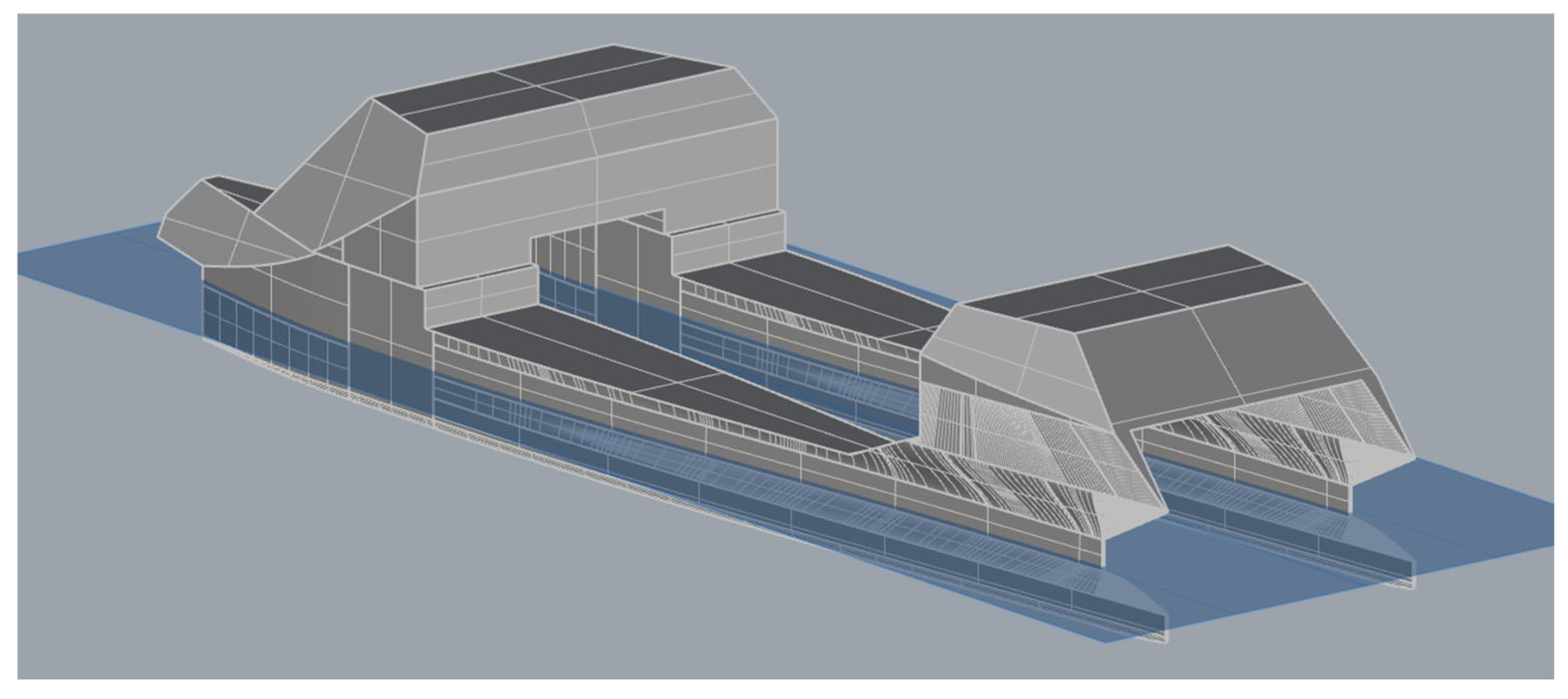
Figure 5 illustrates the transporter, and
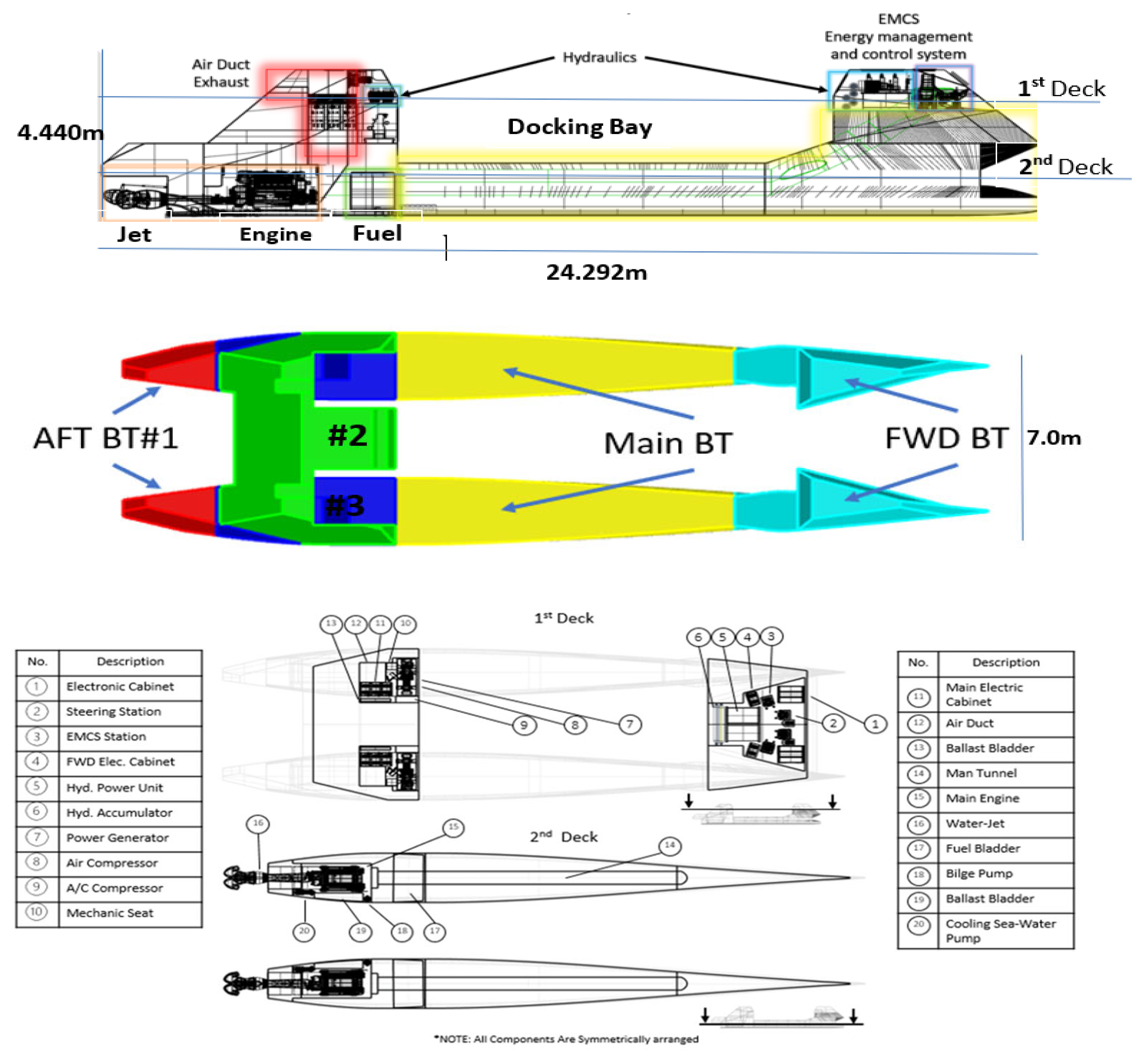
Figure 6 presents its general arrangement.
2.2. The Lander Vessel
Designed with superior maneuverability, achieved by four vector jets, and very low draft (large water-plane area), the lander is able to cope with challenging navigation hazards and shallow water.
Table 2 and
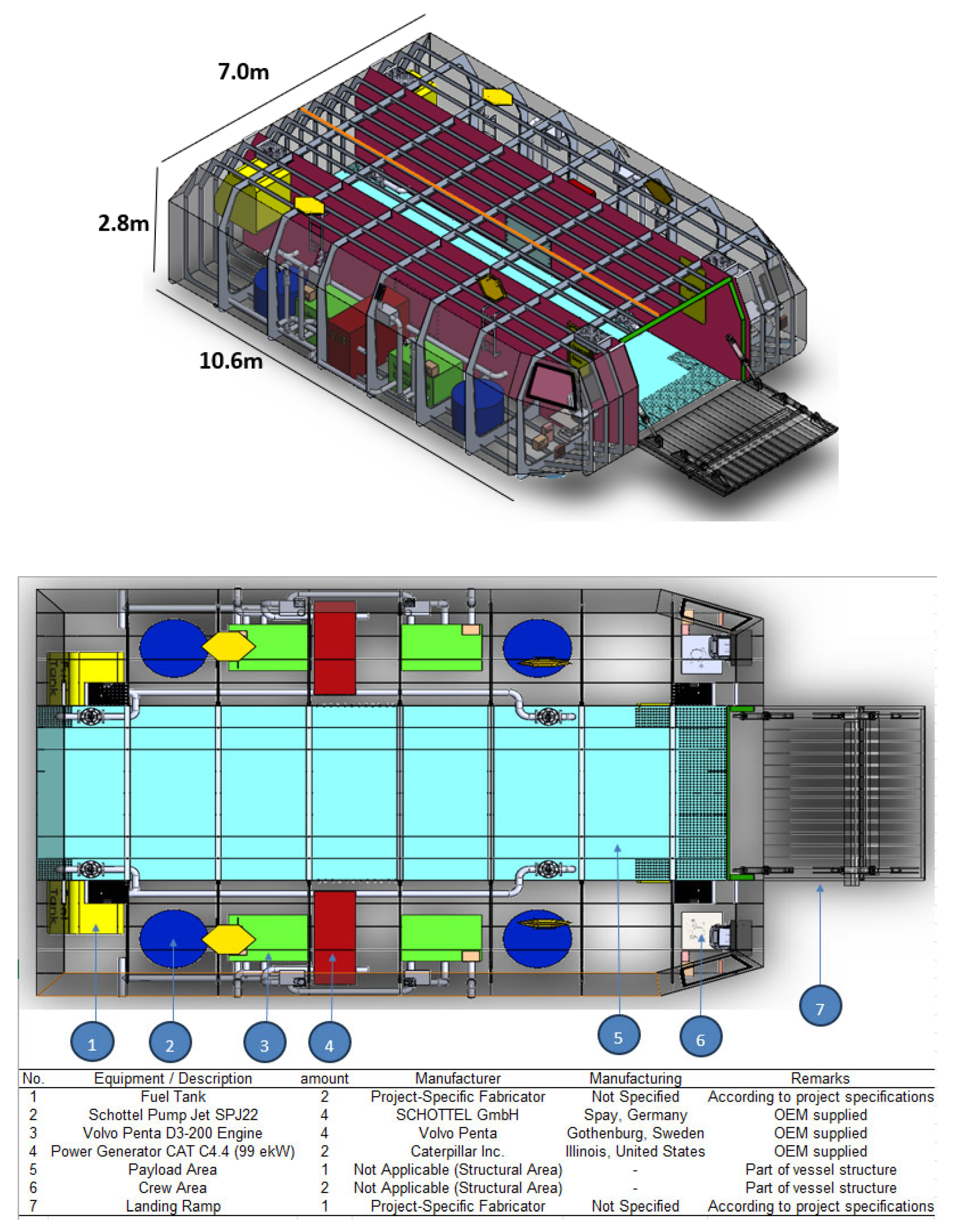
Figure 7 present the technical particulars and the general arrangement of the Lander, respectively.
2.3. Integration of the Lander Vessel with the Transporter Vessel: Launching and Docking
The technology used to integrate the lander with the transporter represents a pivotal and intricate aspect of the proposed concept. At its core, the integration relies on a safe procedure to facilitate the approach of the lander to the transporter, the docking or launching at open sea, and fastening for safe sailing. A reliable and easy-to-operate connection is paramount to the success of this integration.
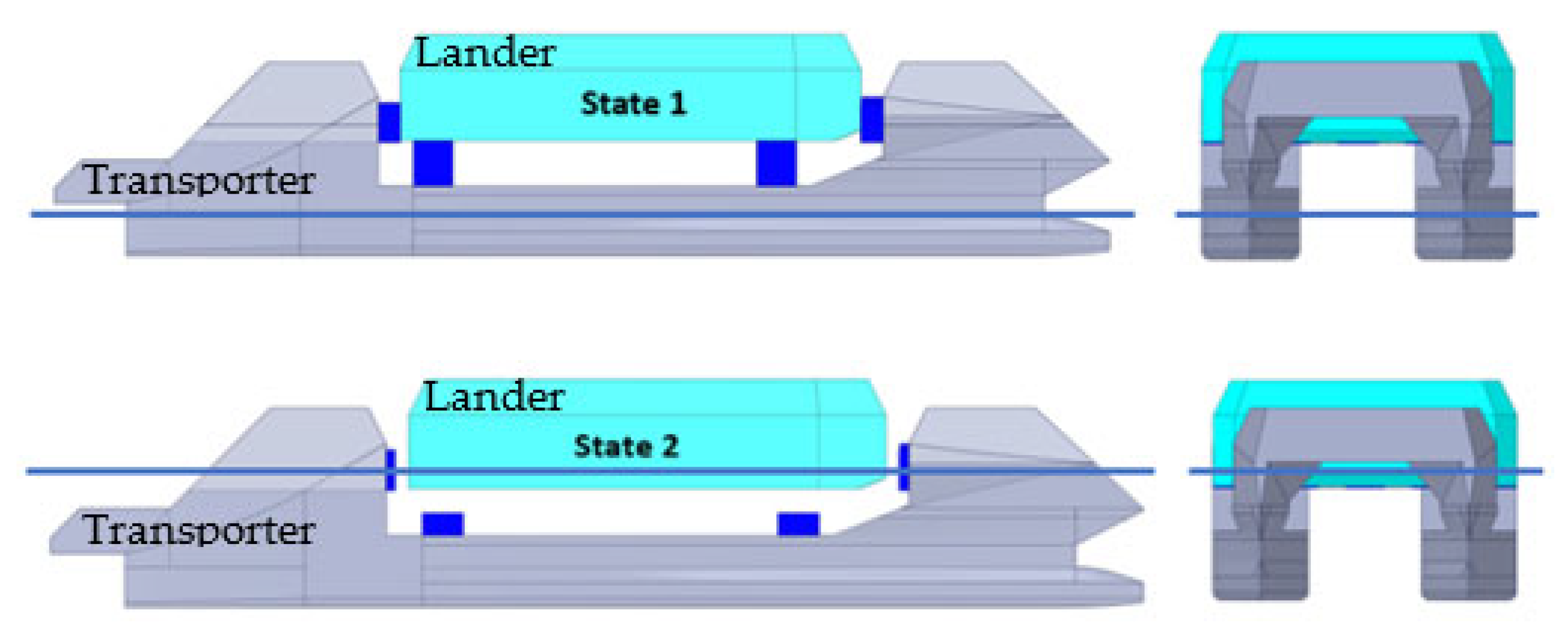
Figure 8 depicts two hydrostatic states of the transporter, first at cruising, where the transporter transports the lander, and, second, the ballasting of the transporter to a water level where the lander is freely floating with sufficient clearance of the docking bay.
The integration of the lander with the transporter encompasses two states of floatation, each designed to specific operational requirements:
State 1: Transportation (fast cruising)
In this state, the lander is carried at an upper position above the slamming waves, enabling fast and comfort cruising. The transporter is in its design state for cruising, while the lander is the cargo of the transporter.
State 2: Submerging the Transportation to a Docking/Launching operation
In this state, the transporter is ballasted to submerge and achieve a state of free-floating of the lander, with a safe gap allowing for the docking/launching of the lander. Both vessels are designed for the challenges associated with docking at open sea (to a specified limited sea state, 3 in our design). The feasibility of the concept is underscored by the synchronized coordination of the lander’s approach of the transporter. The principal approaching concept is presented step by step in
Section 2.5. The presented operation is enabled by the superior maneuverability of the lander and the proper clearance.
2.4. Principles of the Docking Method and Accessories
The docking concept relies on designing an adaptive system for the secured integration of the two vessels, comprised of the following components and principles:
2.4.1. Inflation and Contraction of Pneumatic Lifting Cushions
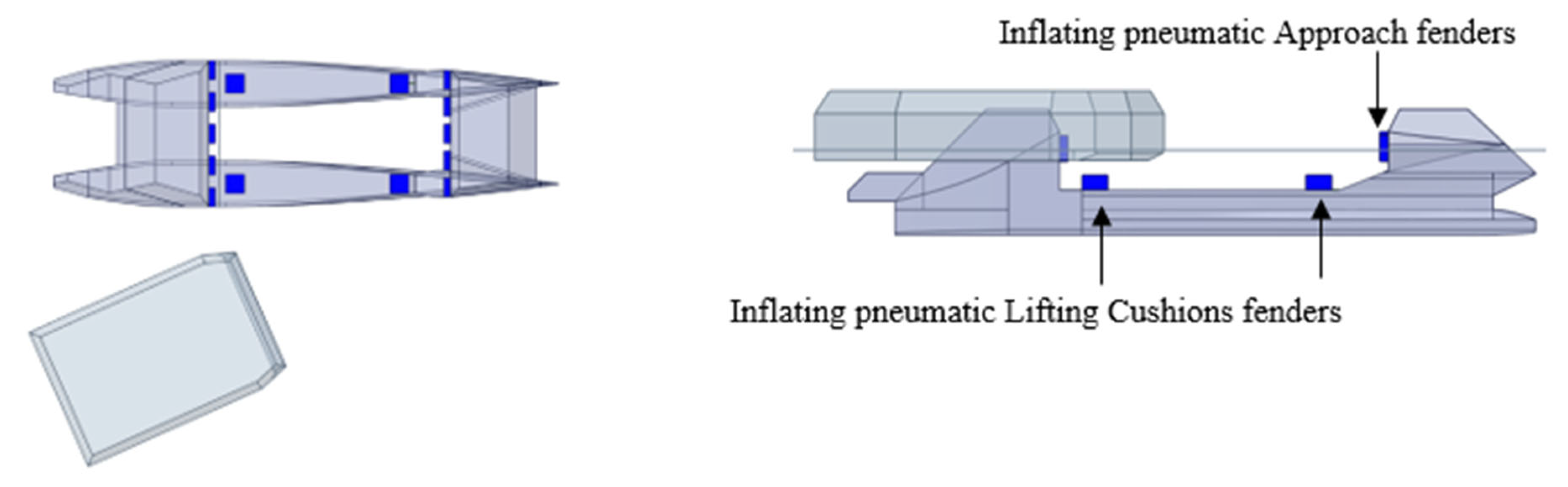
The docking mechanism applies a system of pneumatic lifting cushions installed on the transporter. These cushions play versatile roles in ensuring a seamless integration process.
Adaptive Fenders
Inflated cushions serve as protective adaptive fenders, absorbing possible impacts during the docking process.
Centering System
The inflated cushions are actively involved in centering the lander to the shipping position, while safeguarding it against damage.
Lifting System
The cushions provide a lifting capacity to lift the lander, facilitating efficient launching and docking operations. Two options may be applied to lift the lander to its cruising level on the transporter: hydrostatic operations or lifting cushions.
Securing System
The inflatable and contractible nature of the cushions allows for the Lander to be effectively secured to the transporter at intermediate positions. This adaptability ensures a joint voyage under varying sea conditions.
Vessel Maneuvers and Superior Lander Mobility
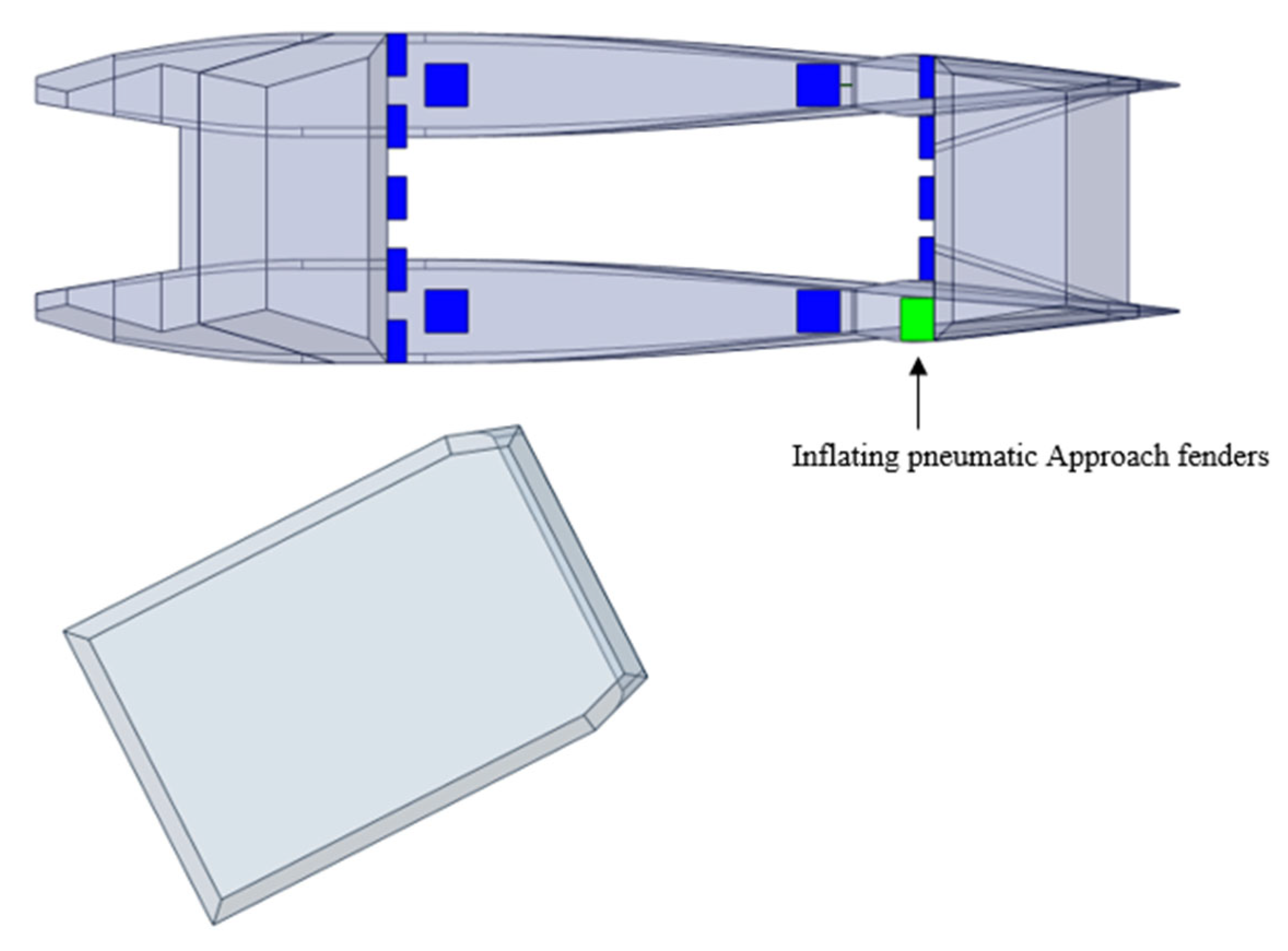
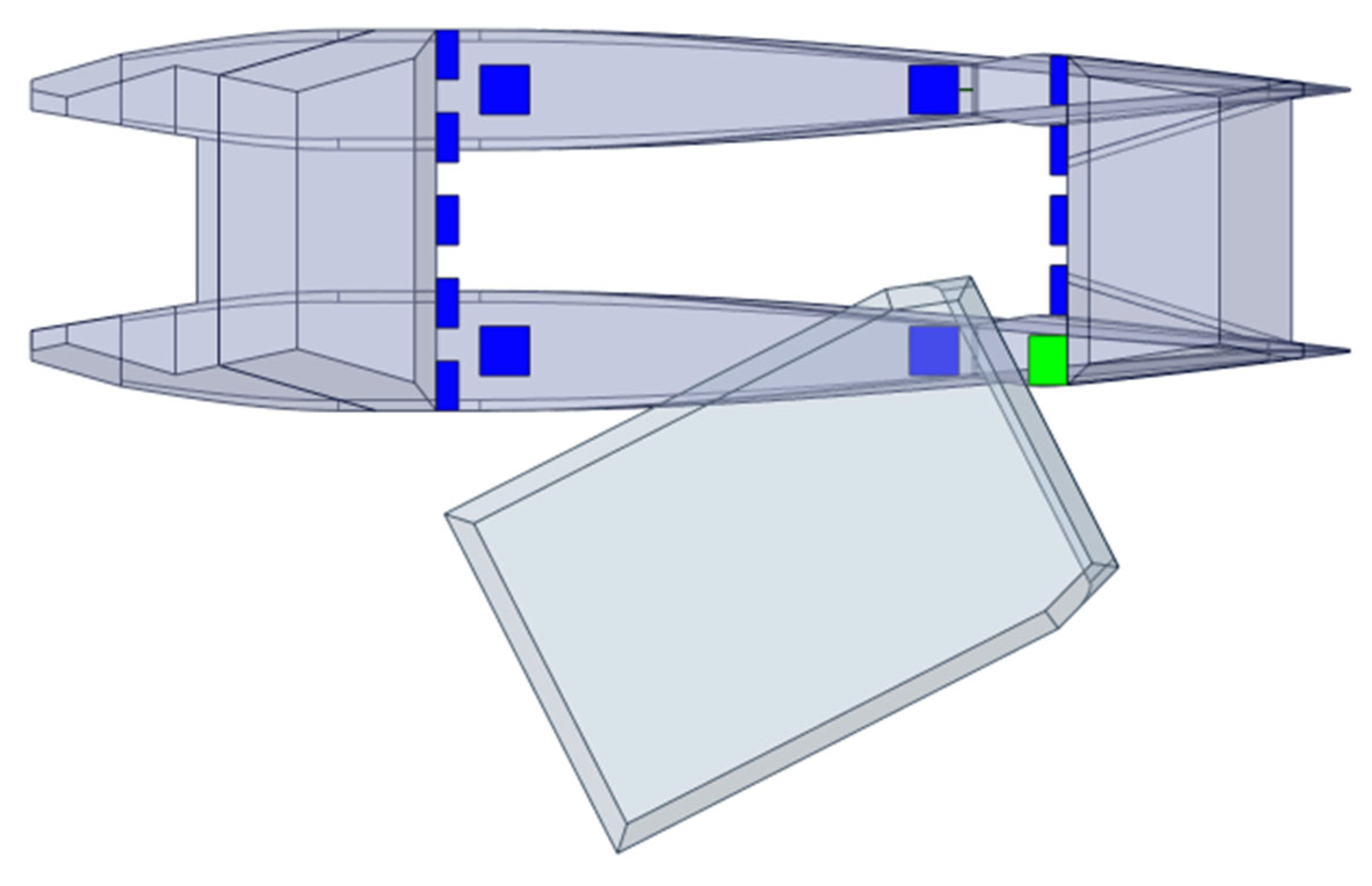
The lander approaches the docking bay on the transporter, targeting the front closer fender (lifting bag) of the transporter. Equipped with four jets capable of vector thrust at 360 degrees, the Lander has excellent approach and positioning abilities. While the lander executes precise maneuvers, the transporter maintains a fairly stationary position at a favorable angle to the waves. Although the maneuvering is mostly achieved by the lander, it is possible to add bow thrusters to the transporter to maintain the position and heading to the sea.
2.5. Docking Procedure: Step-by-Step Process
2.5.1. Approaching: Initial State
Transporter draft: 3000 mm.
Lander draft: 360 mm
Docking clearance: 1040 mm.
The transporter is positioned head to wind and waves.
2.5.2. Preparedness and Approach of the Lander to the Transporter
Preparation for the approach of the lander at relative angle to the heading of the transporter of about 30° (a common practice in seamanship) toward the approach fender in the transporter.
During the preparations: inflation of the approach fender to 500 mm, gripping fender at the bow to 100 mm and at the stern to 200 mm, lifting cushions to 500 mm. These magnitudes of inflation consider three factors: sufficient clearance for docking, sufficient space for the lander to maneuver and preventing contact between vessels. The specified values are our recommendations following the hydrodynamic analyses (presented in
Section 3). Practically, these values may be modified following sea trials.
Slow speed of approach (up to 2 knots when approaching and slowing to 1 knot before contacting to the fender).
2.5.3. Contacting the Approach Fender at Relatively Low Speeds and with the Touch Increasing Thrust to Maintain Steady Contact
- 2.
Equipping the lander for the entrance to the docking position, with a nominal gap of about 300 mm at the bow and at the stern. The bottom clearance (for lifting cushions inflated to 500 mm) is 540 mm.
- 3.
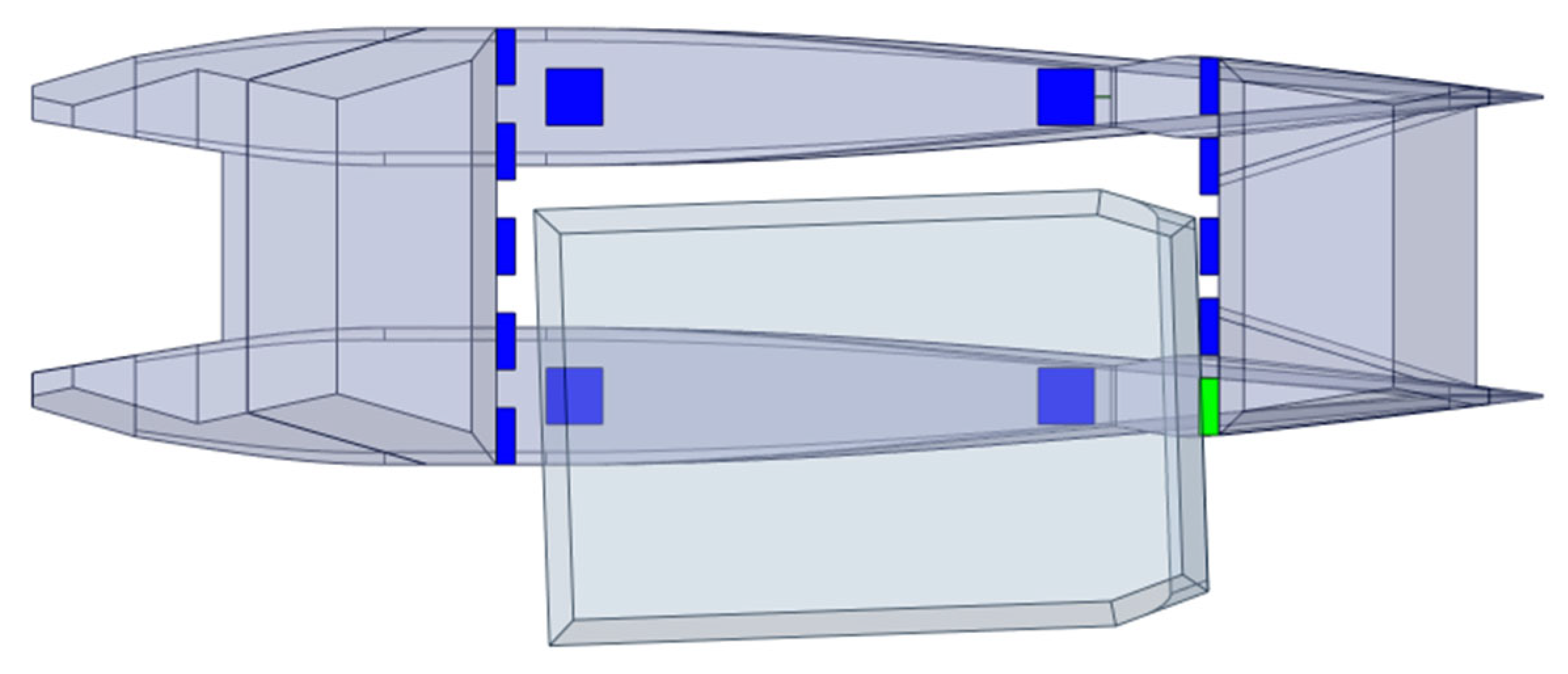
The lander is located at the docking position inside the transporter docking bay.
2.5.4. Gripping to Restrain Relative Motion
Modes of vessels:
Transporter draft: 3000 mm.
Lander draft: 360 mm.
Docking clearance: 540 mm.
Gaps for gripping: at the bow 200 mm, at the stern 200 mm.
Inflating all the gripping fenders: 5 at the bow to 500 mm, 5 at the stern to 500 mm.
Inflating the cushions beyond this point will start fastening.
Lifting and docking the lander at an upper position and securing for sailing.
Inflating the lifting cushions until contact with the lander to restrain relative movement.
Flooding the transporter to the cruising draft of 1000 mm.
Securing for cruising by inflating the gripping fenders to a total fastening force of about 24 t.
2.6. Securing the Lander Vessel with the Transporter Vessel: Lashing
To ensure safety in joint voyage, a thorough examination of the lashing system is imperative. The following section outlines the design considerations undertaken for the lashing procedure. The loads acting on the lashing system during the voyage are imposed by waves that induce accelerations as well as wind loads. For this design aspect, we adopted DNV-GL classification rules [
26]. The design of the lashing components included a safety factor of 1.5, aligning with the IMO [
27] recommendations.
Figure 18 presents the lashing drawing.
3. Analyses Methods and Results
The hydrodynamic analysis of waves with interacting structures was conducted using ANSYS-AQWA 2021 software. The mathematical formulation of the wave–body interaction theory, for a single body as well as for several interacting bodies, in the frequency domain and in the time domain, is well established and verified to be practical and applied for design. For the hydrodynamic analyses in this study, we apply AQWA; as such, we recommend the AQWA Theory Manual [
28] as a comprehensive reference for a complete formulation of the theory as well as the numerical formulation. The objective of our hydrodynamic analysis is to validate the applicability of launching or docking, as well as assessing the limit sea state. This critical design aspect is analyzed in the frequency domain (
Section 3.1) and in the time domain (
Section 3.2). Two wave directions (0° and 90°) and three wave heights (0.5 m, 1.0 m, 1.5 m) are analyzed to assess the applicability of the launching or docking operations under varying sea conditions. Practically, in terms of seamanship, it is expected that, in oblique seas, it will be more difficult to perform the operation. Therefore, we checked heading seas and beam seas. The wave heights are increased at reasonable steps to find the operability limit sea state. The resulting time series of position and compression-force present the system’s capacity to maintain structural integrity and minimize excessive loading during docking, launching or operations.
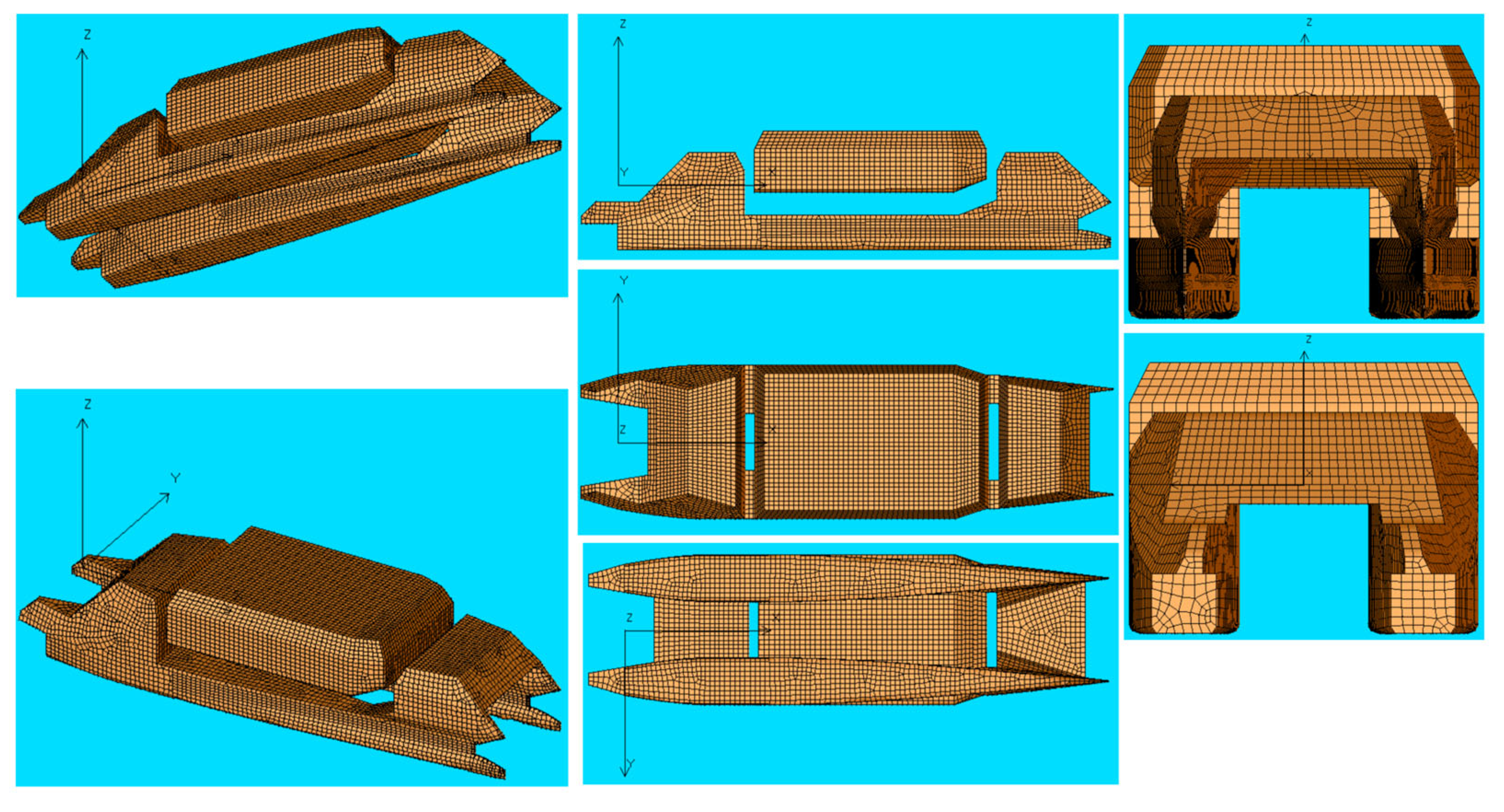
To run AQWA, we need to specify the geometry of the wetted surface of the vessels, properly meshed to diffracted panel elements. Additionally, all the properties to formulate the equations of motion are required. The geometry and these properties are obtained using our preliminary design.
Table 3 represents the floating conditions and the mass properties of the interacting vessels.
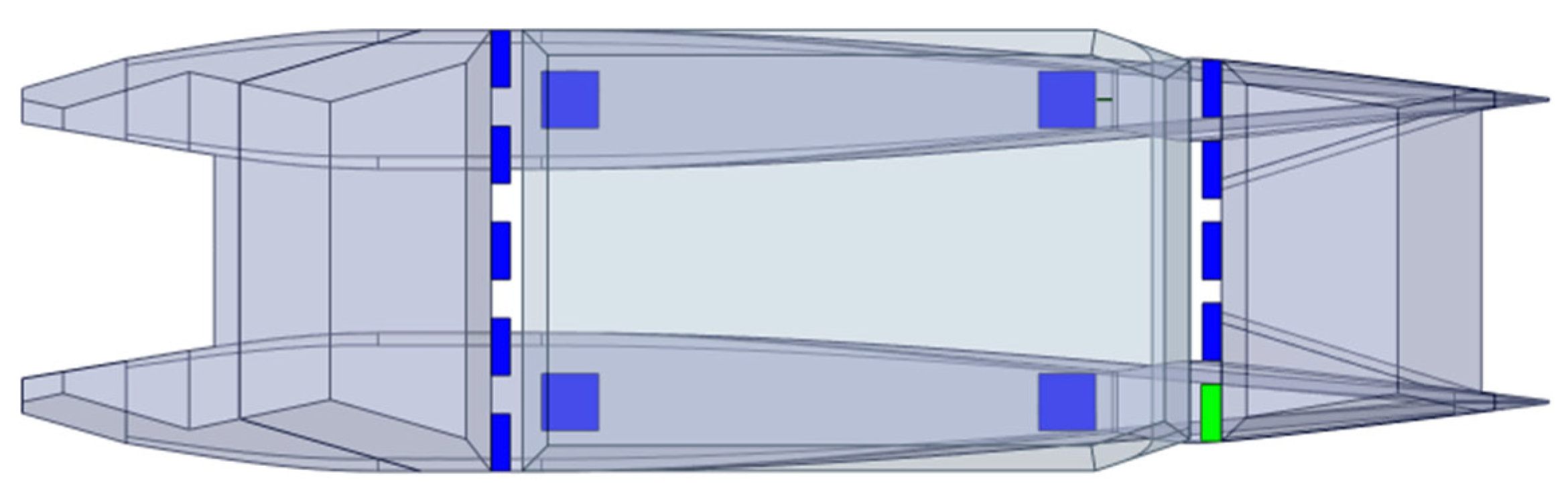
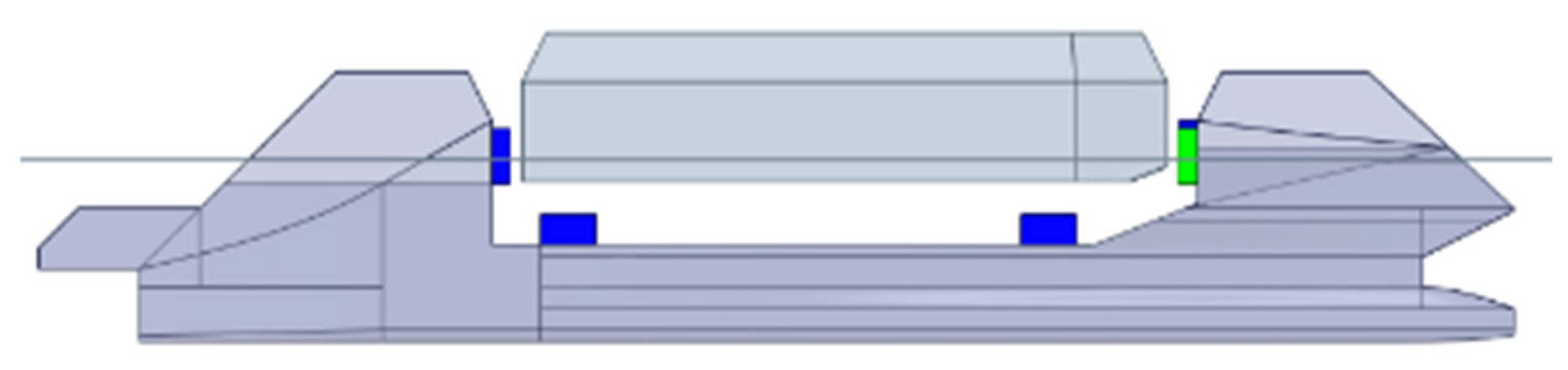
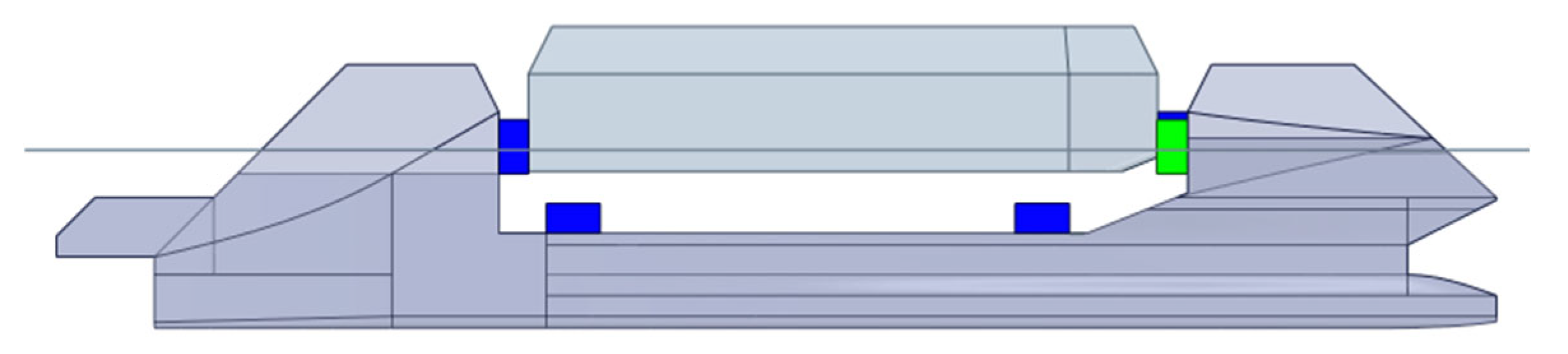
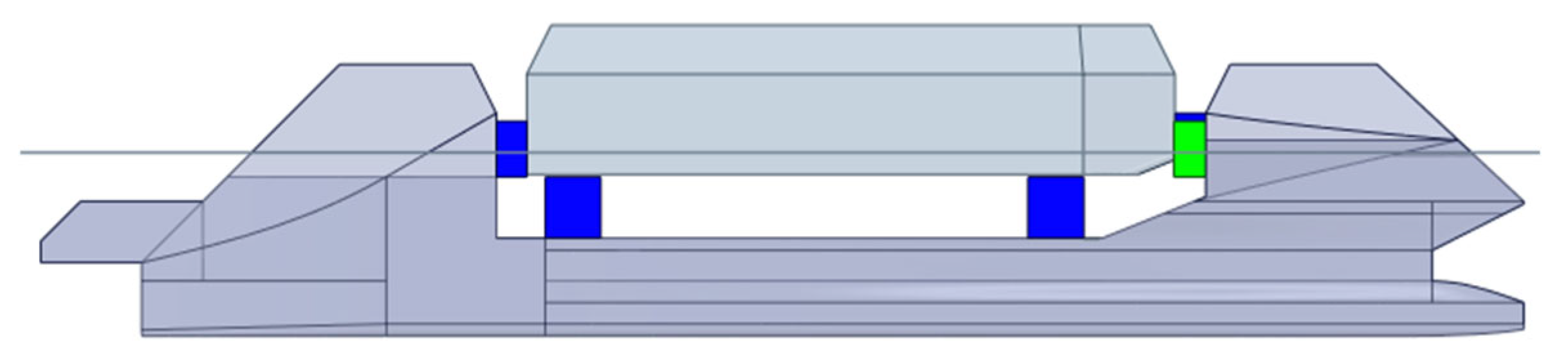
Figure 19 presents views of the AQWA model with the mesh. The direction of each view is clear according to the global system of coordinates of AQWA, with x on the still water plane along centerline, y positive to port, and z vertical positive upward, with zero at the still water plane.
3.1. Frequency Domain Analysis
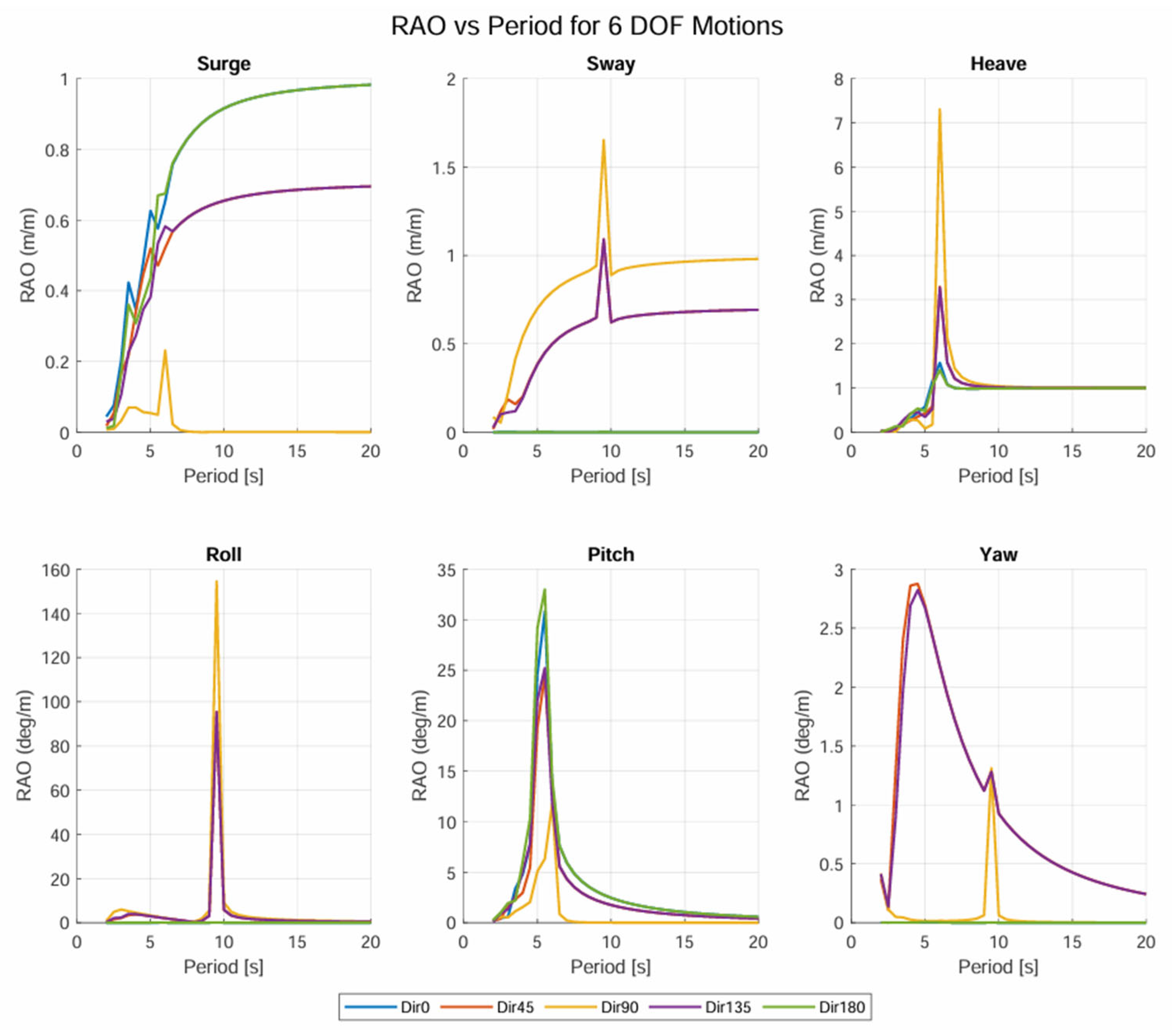
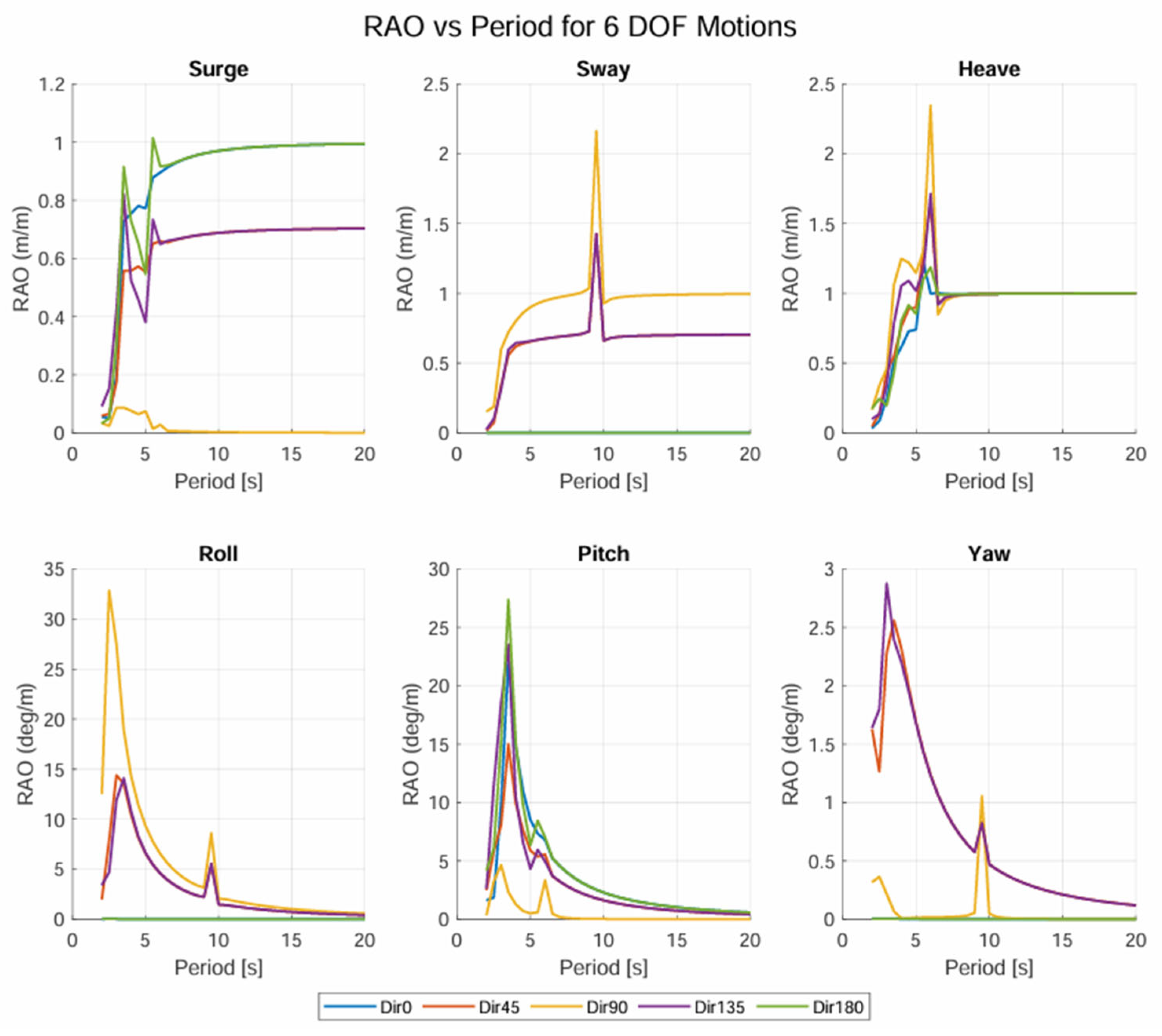
The frequency domain analysis determines the motion of the two interacting vessels in regular (monochromatic) waves, in terms of RAOs (response amplitude operators). The RAOs present the motion response amplitudes of the structure, in six DOF (degrees of freedom), per unit wave amplitude, for a practical range of input wave directions and frequencies. The RAOs characterize the dynamic behavior of each of the two interacting vessels in regular waves. The RAOs are the fundamental input for the relative motion calculations, time-domain analysis, and the design envelope of sea conditions enabling safe operation.
Figure 20 and
Figure 21 present the RAOs of the transporter and the lander, respectively. Each of the figures presents RAOs in six DOF for the range of input wave periods and the five input wave directions under loaded conditions. The input wave directions for the RAOs are 0° (head seas), 45°, 90° (beam seas), 135° and 180° (following seas). The wave periods are equally spaced at intervals of 0.5 s, from 20 s down to 2 s, for a total of 37 periods. Since the DOF of vertical motion (heave, roll and pitch) has hydrostatic restoring forces (represented as spring coefficients), these DOFs presents sharp resonance periods.
3.2. Time Domain Analysis
To further validate the dynamic behavior of the proposed concept and docking system, a time domain analysis is conducted with irregular wave excitation. This method accounts for the hydrodynamic interaction between the floating structures, including nonlinear elements, such as fenders, thereby providing a more realistic representation of operational scenarios. The sea states are characterized by significant wave heights and spectral peak periods representing the real sea, applying the JONSWAP spectrum. The response of the two vessels is monitored, with particular focus on relative displacements at the contact points.
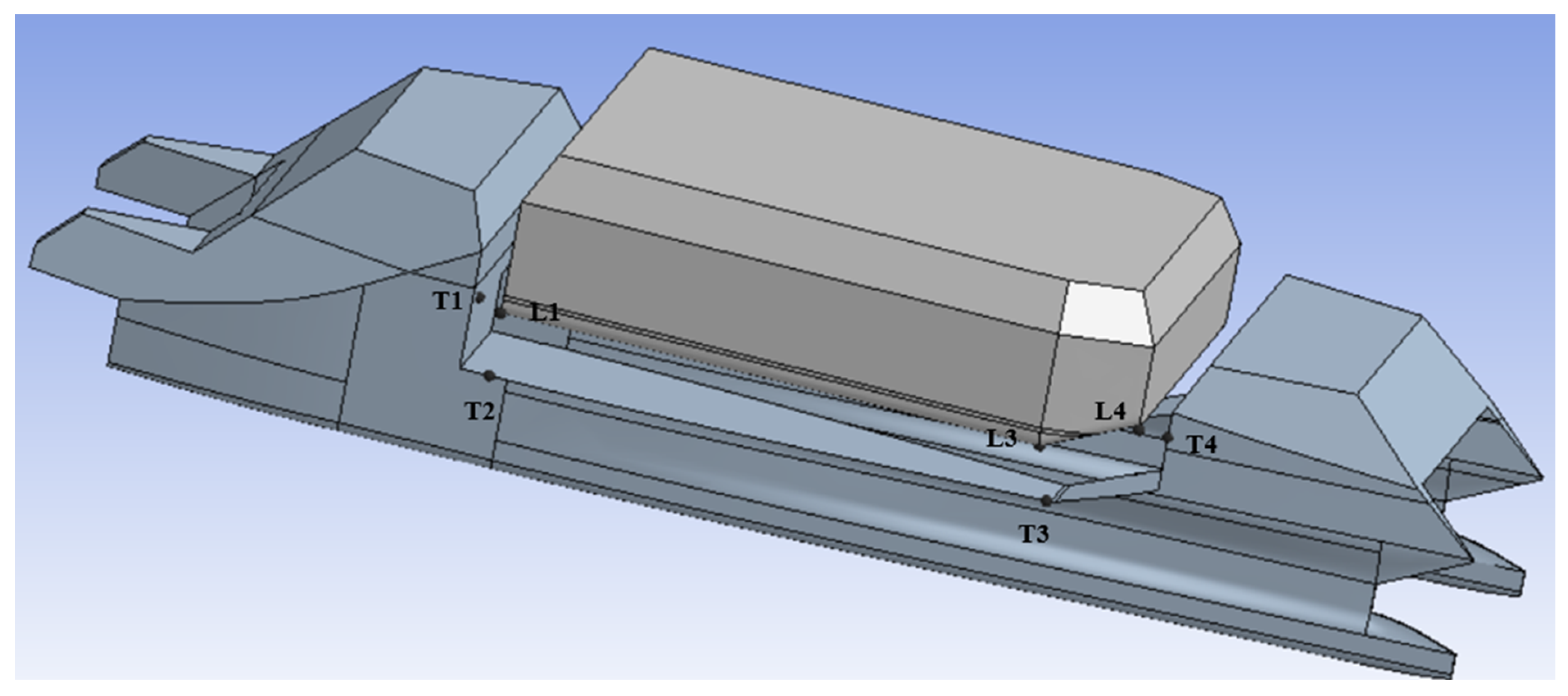
Table 4 summarizes the selected points of interest (POIs) and their locations. L and T indicate lander and transporter, respectively.
Figure 22 shows the selected points of interest on the Transporter and Lander.
3.2.1. Fender System and Its Representation in the Model
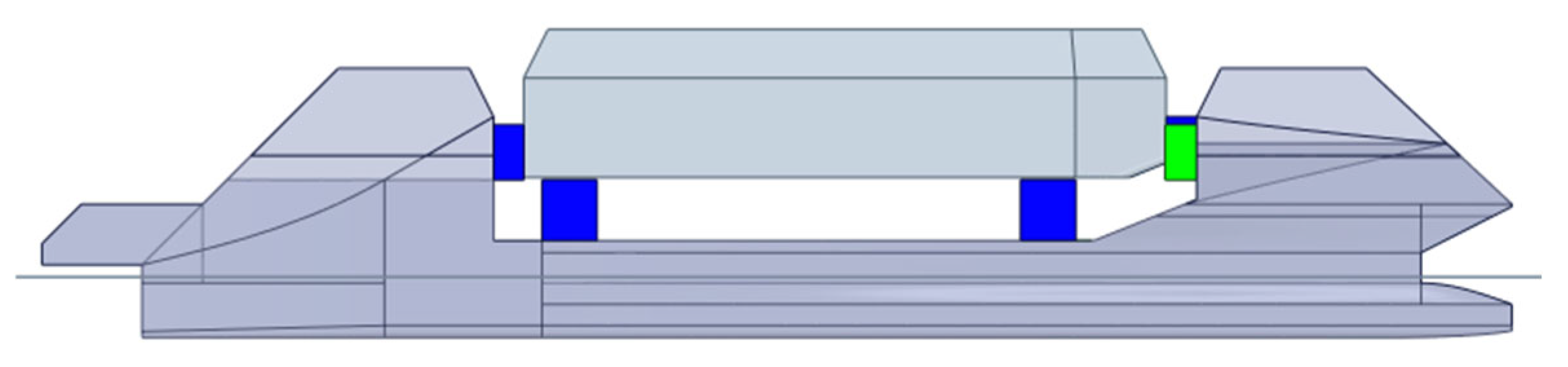
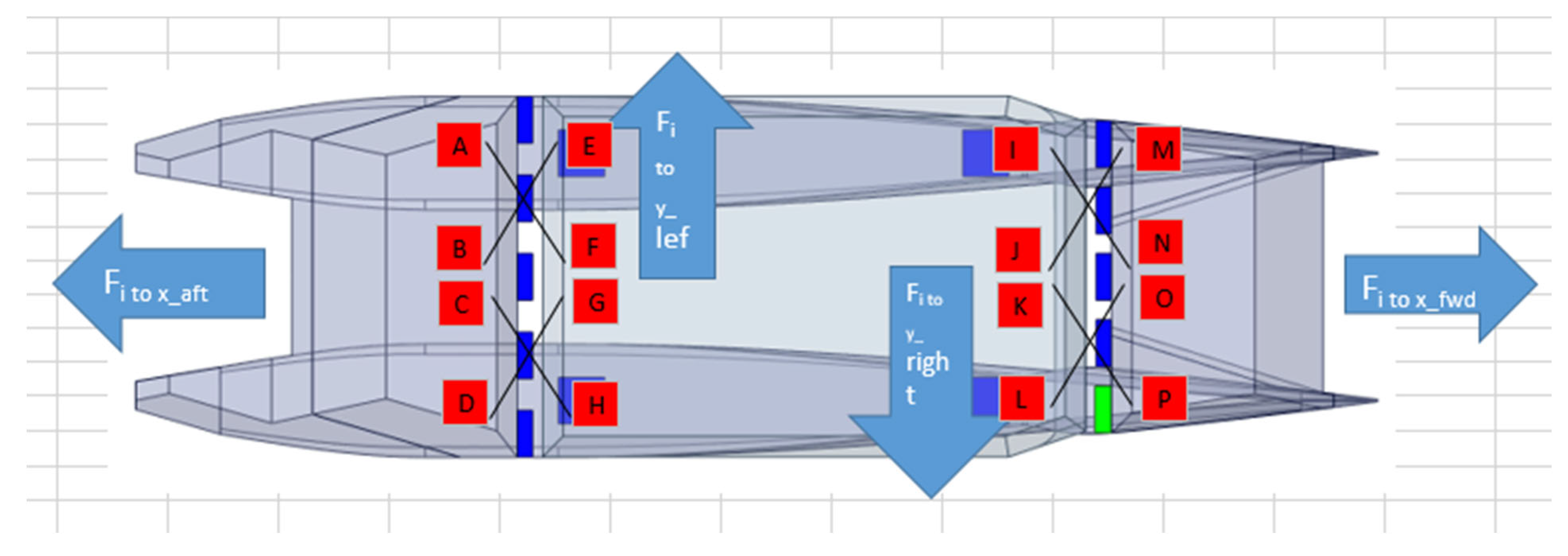
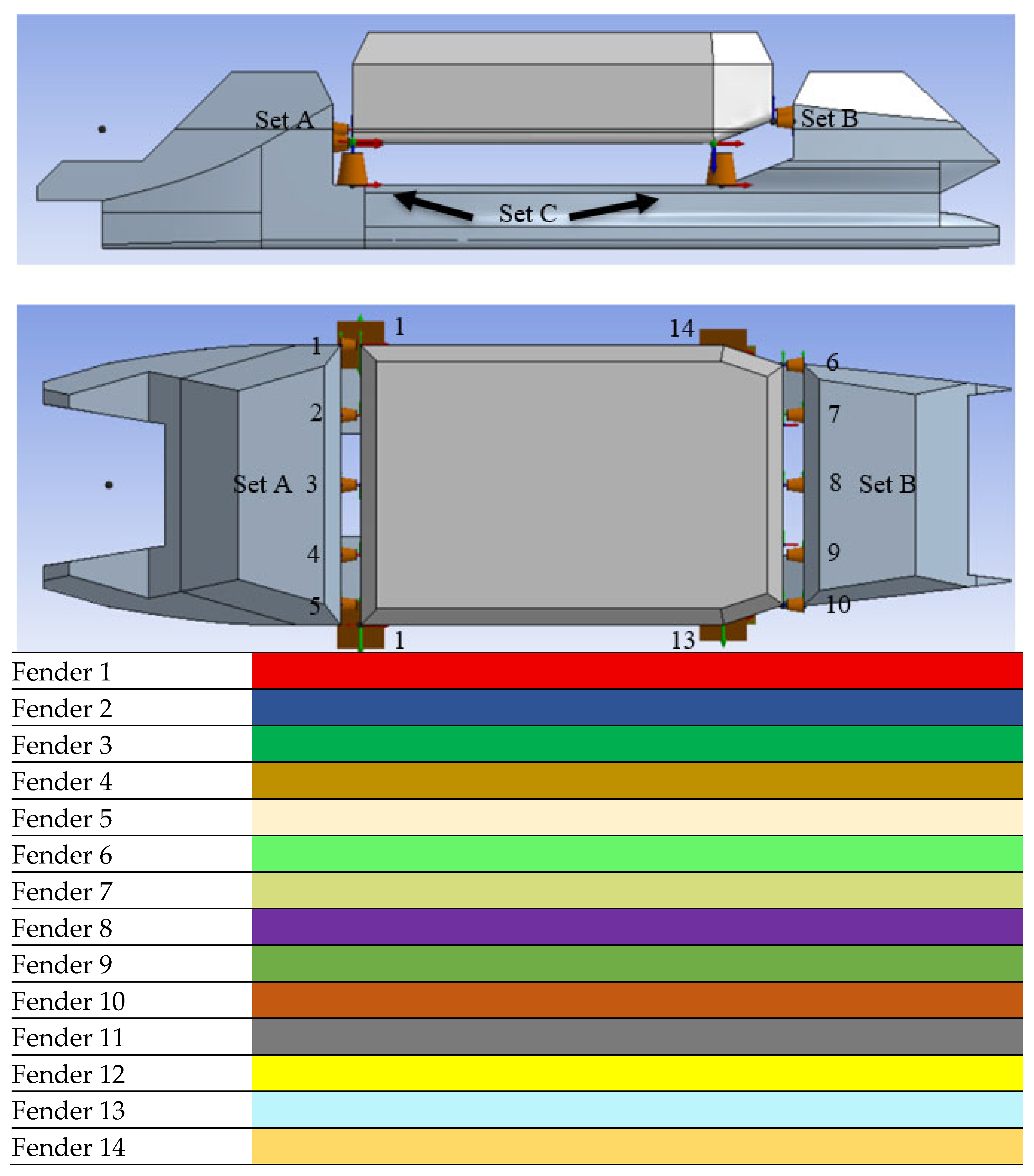
The system of fenders is installed at the docking bay of the Transporter and includes the following: Set A—five fenders at the aft wall, Set B—five fenders at the fore wall and Set C—four fenders at the deck (shown in
Figure 23). It also presents the color map for the graphical results of displacements and compression loads, for each fender, where each color represents a fender located on the transporter vessel. The system ensures adequate energy absorption to prevent direct contact between the vessels within the allowable compression loads. It accommodates the relative motions in surge, heave and pitch.
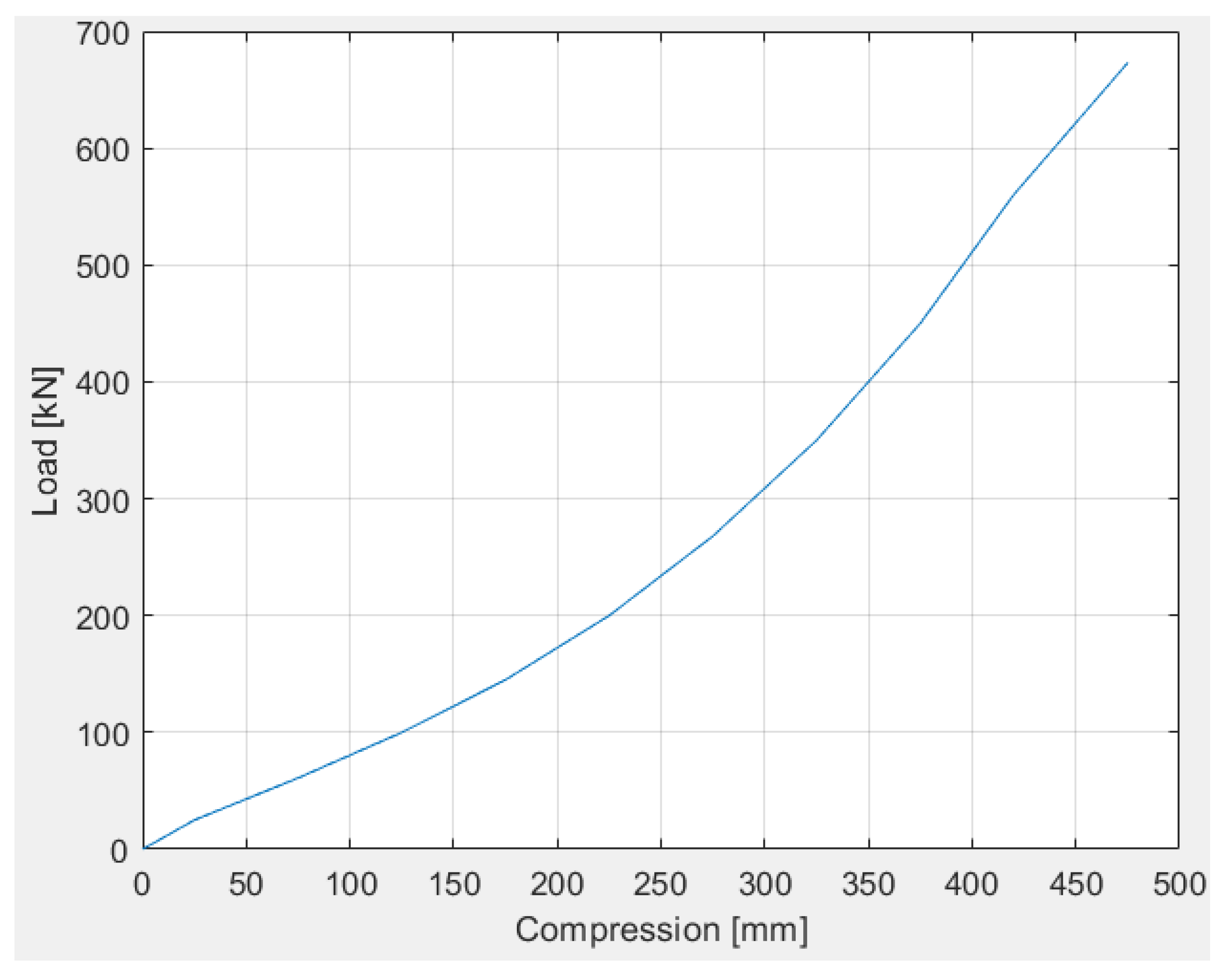
The Trelleborg pneumatic fender TLB 76 [
29] is selected due to its suitability for dynamic vessel-to-vessel interactions.
Table 5 summarizes the key properties of the fender, while
Figure 24 shows the load compression diagram.
3.2.2. Detailed Results of Time Domain Analysis
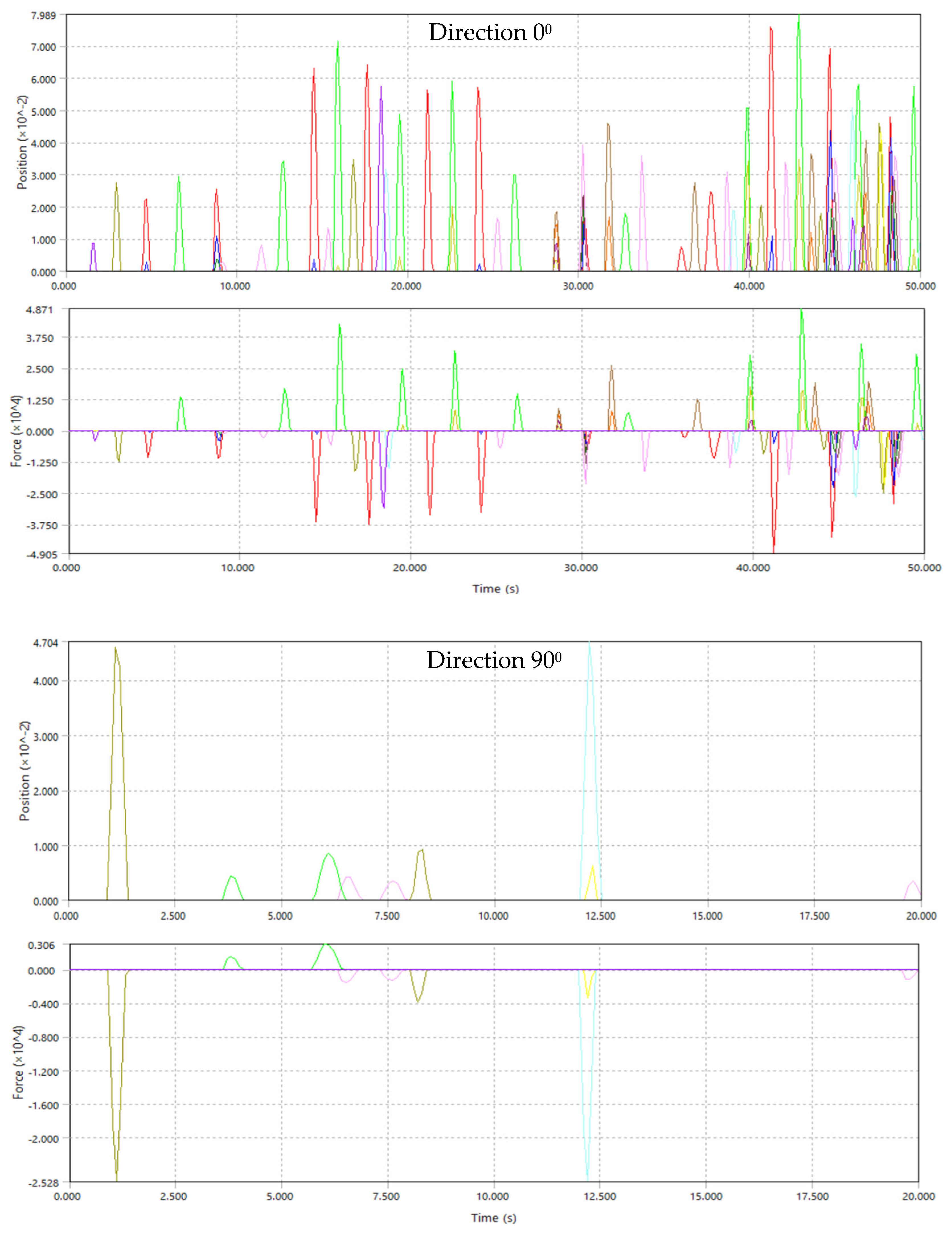
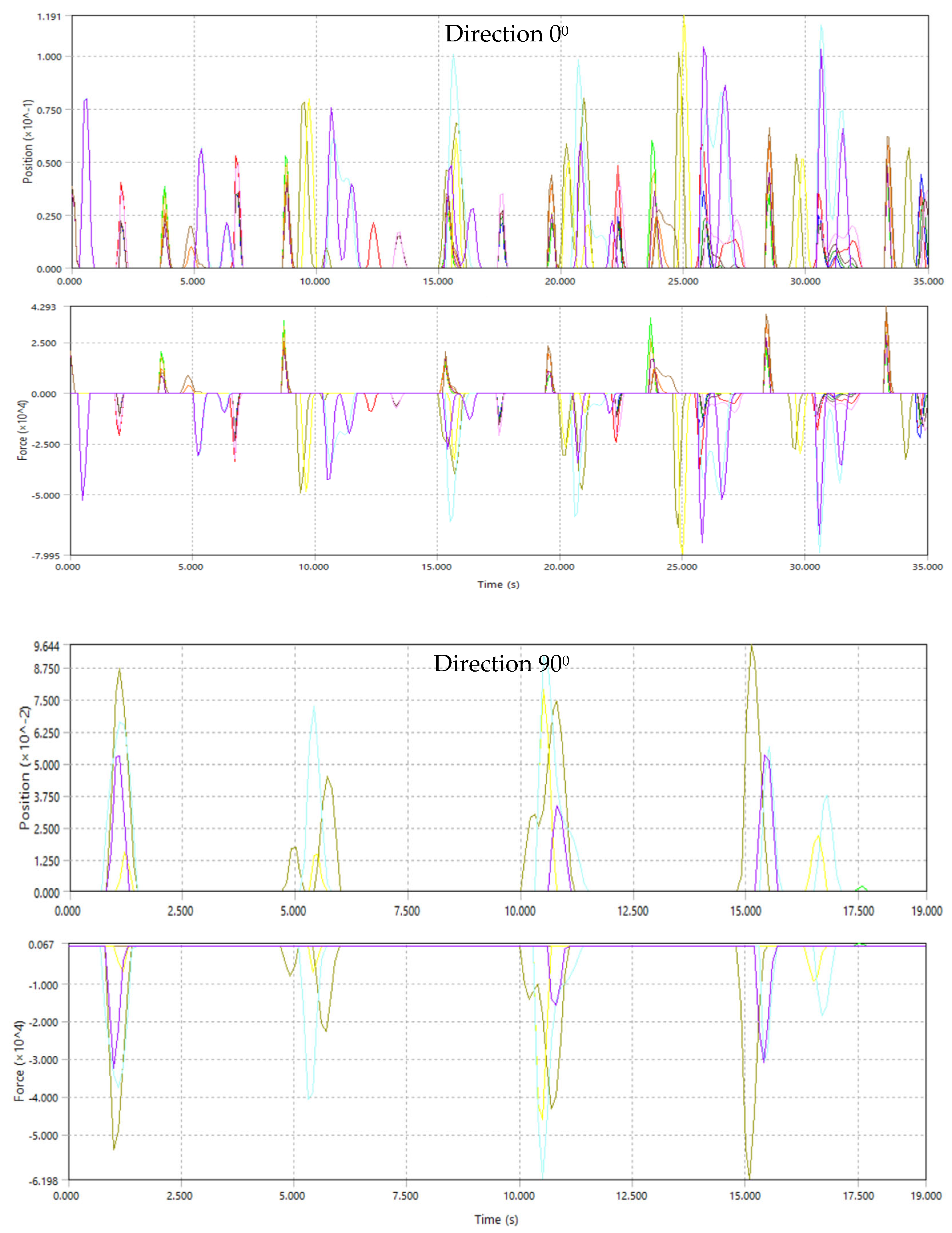
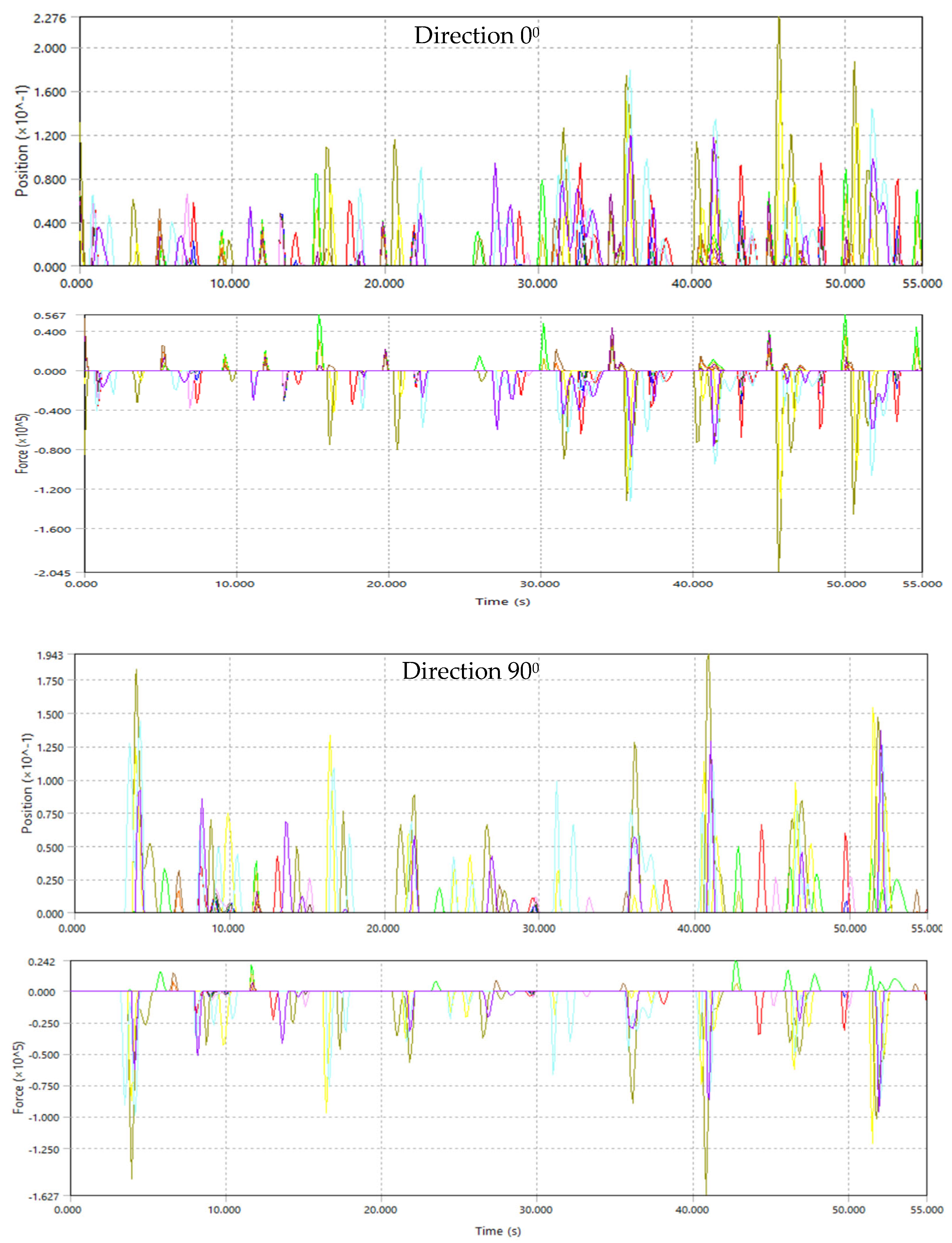
To demonstrate the applicability of launching or docking in open sea, we present results for wave directions of 0° and 90° at significant wave heights of 0.5, 1.0 and 1.5 m.
Figure 25,
Figure 26 and
Figure 27 present the compression displacement of the fenders and the compression forces for these sea conditions. The location of each fender and the associated color for these plots are shown in
Figure 23.
Each colored line represents the response at a different fender positioned along the docking bay (see
Figure 23). Compression displacements reach a maximum of approximately 0.227 m. Compression forces reach 204 kN, which is only 30% of the fender capacity of 670 kN. Fenders 6 to 10 present positive loads in the x direction. These are not tension loads. The positive sign means that the compressed fender pushes the base point on the transporter to the positive x direction.
Table 6 and
Table 7 present the highest usage factor for each fender, for wave directions 0° and 90°, respectively. the usage factor is the maximum load divided by the CLC (compression load capacity). The tables also indicate the time of occurrence of the maximum for each fender.
Table 8 summarizes the highest load effects (displacement, load, usage factor) for the most loaded fender in each sea condition (direction and Hs).
Overall, the results confirm that the designed fender system is effective in mitigating excessive forces and maintaining safe separation throughout the interaction. The results validate the suitability of this docking application up to a significant wave height of 1.5 m (sea state 3 has values up to 1.4 m).
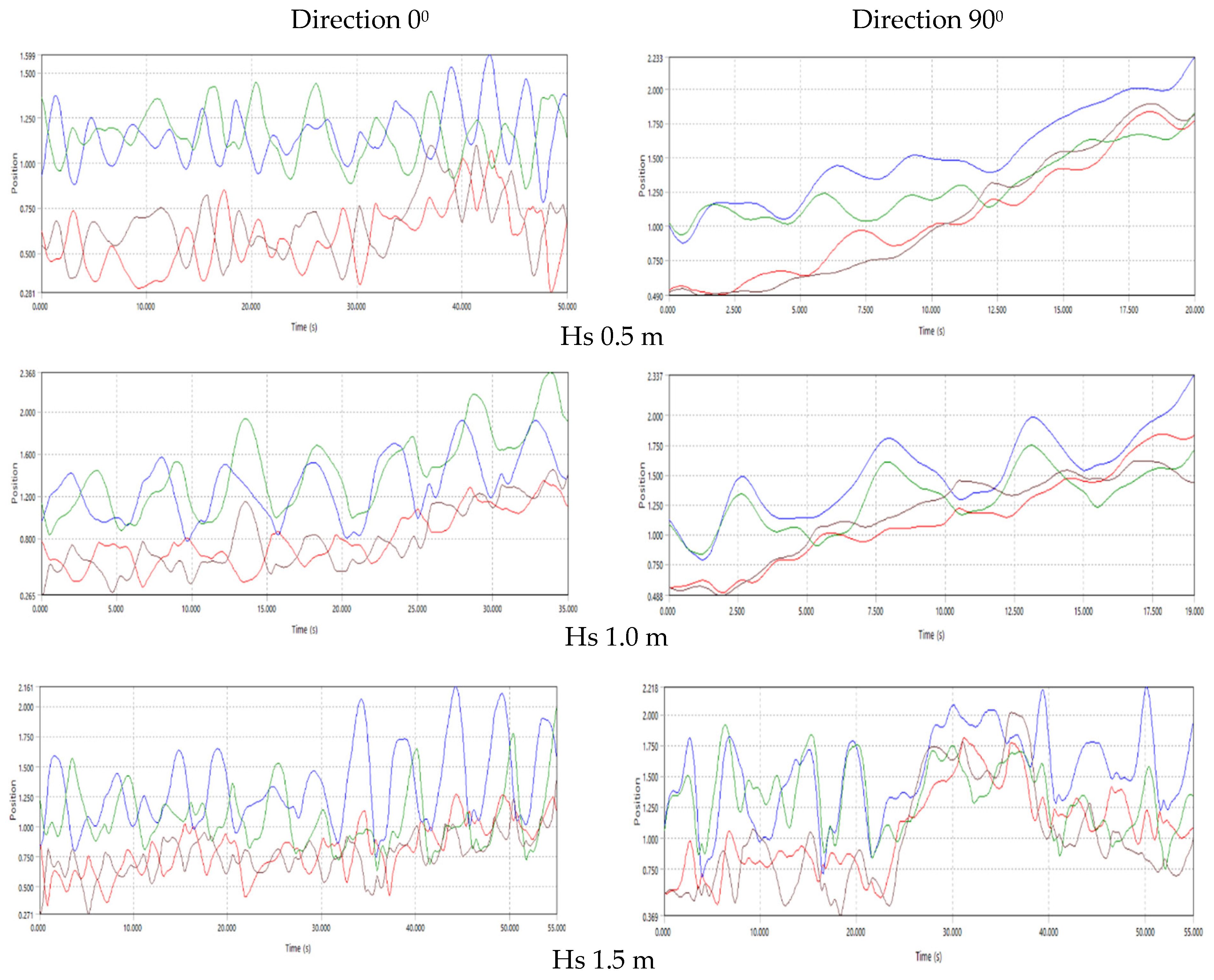
Figure 28 presents the time history of distances between the selected POIs (points of interest, see
Figure 22) on the two interacting structures.
The blue and green lines represent the vertical (Z) relative motion between L1-T2 and L3-T3, respectively, while the red and brown lines correspond to horizontal (X) displacements L1-T1 and L4-T4, respectively. The initial (mean) clearance is approximately 1000 mm for heave (
Z-axis) and 500 mm for surge (
X-axis). Since fenders 11–14 are inflated to 800 mm and fenders 1–10 are inflated to 300 mm for the docking procedure, the clearance reduces to 240 mm and 200 mm, respectively. About 60% fender deflection is considered reasonable by ISO [
30], i.e., when the blue and green lines are lower than 320 mm and the red and brown lines are lower than 120 mm, fender collapse can occur. The results confirm that the designed fender system is suitable for safe operation with acceptable clearance and loads.
3.2.3. Illustration of the Relative Motion of the Interacting Vessels
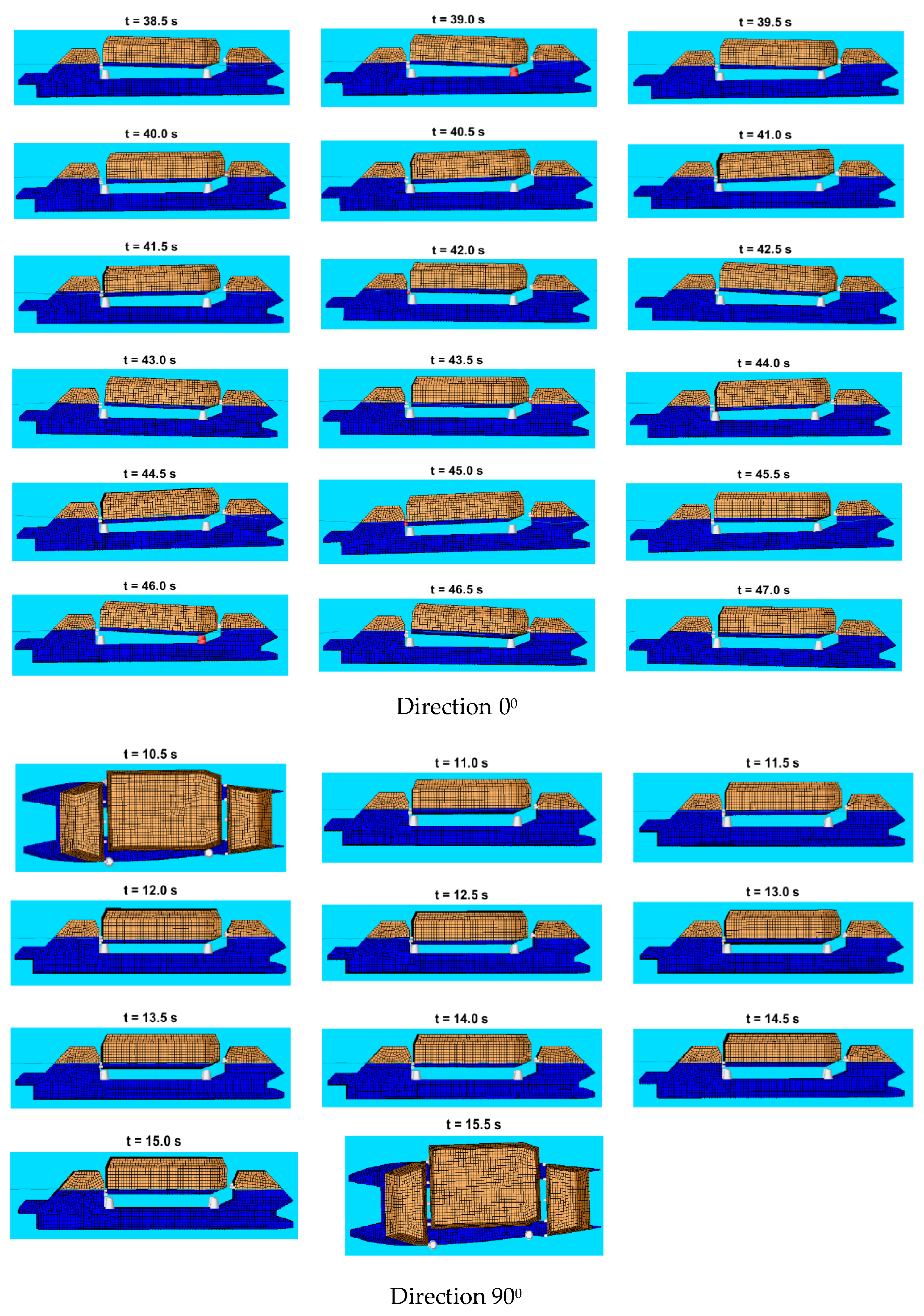
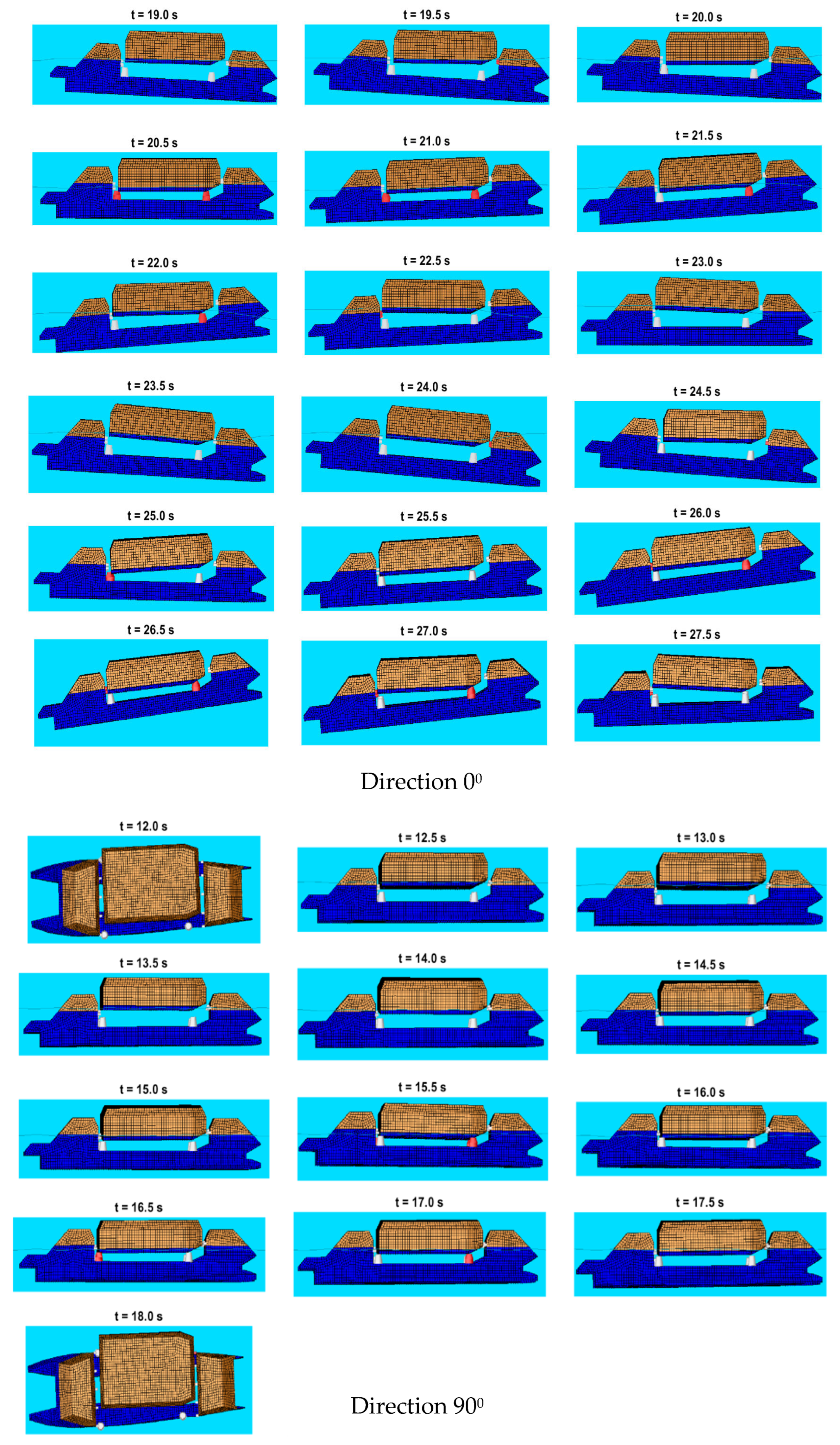
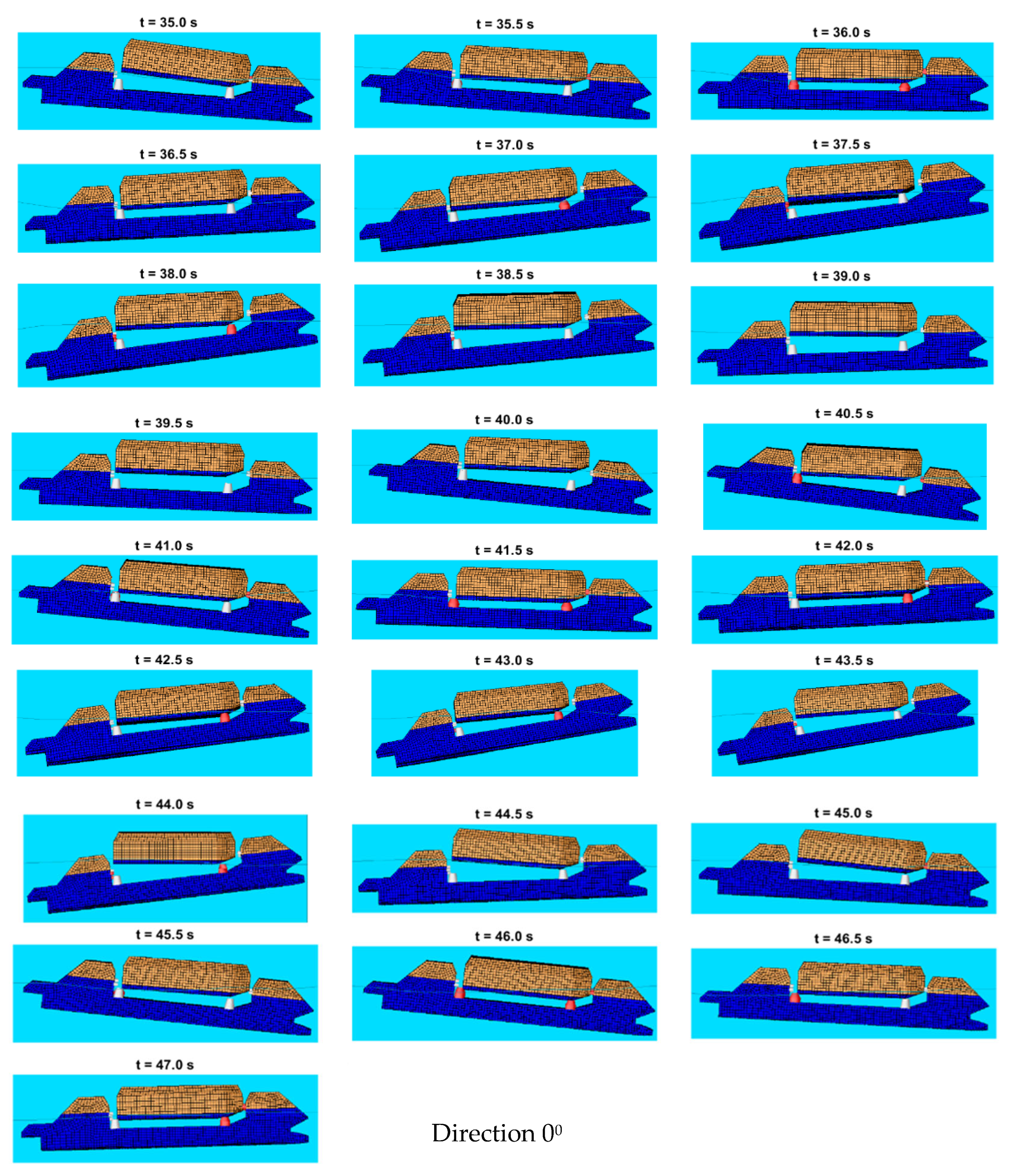
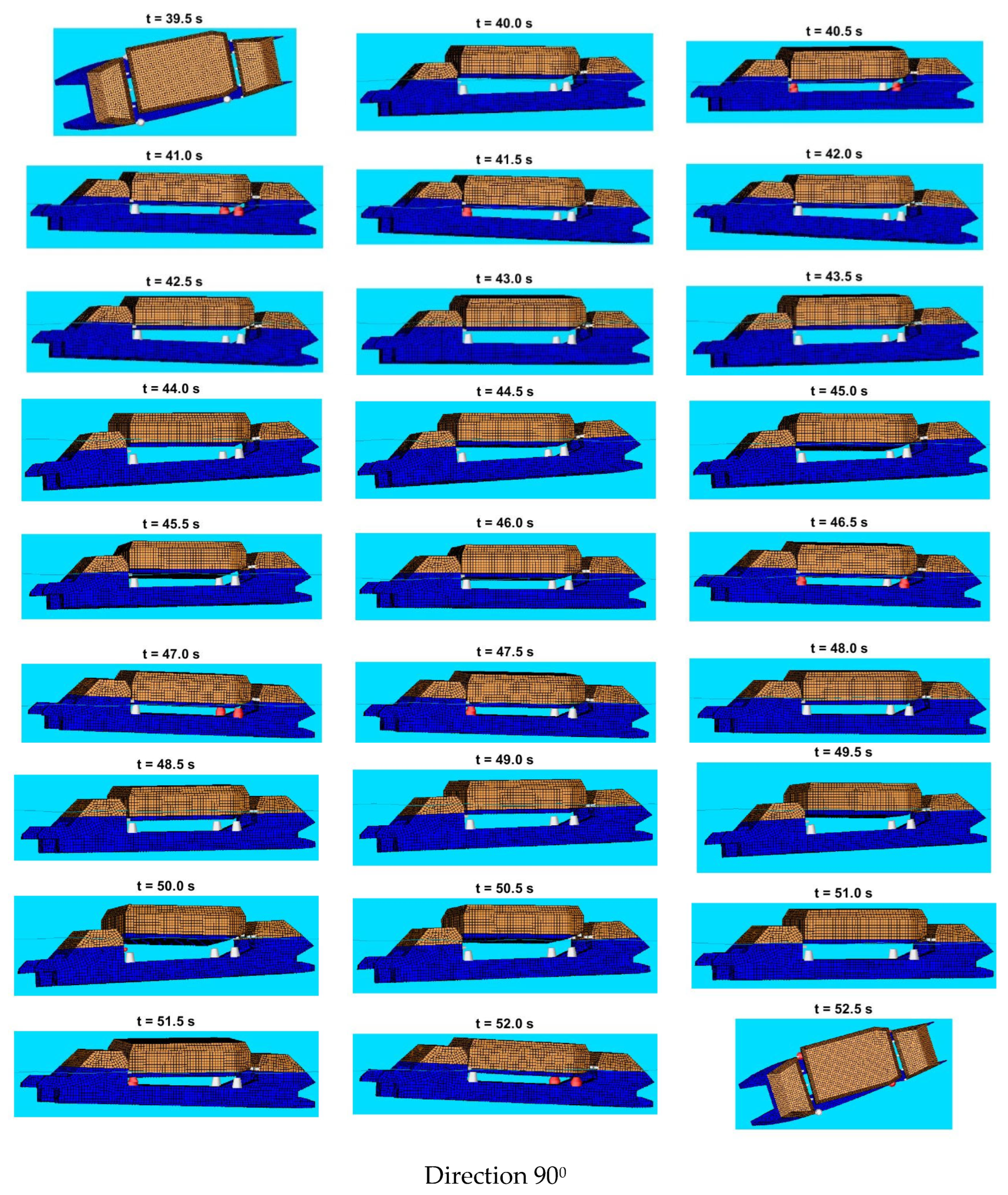
To illustrate the dynamic interaction between the transporter and the lander, status frames are extracted every 0.5 s at representative time intervals for each situation of the simulation. This interval captures key phases of the docking process. The plots also present the wave profile (waterline) and highlight the status of engagement for each fender, where red indicates active contact and white denotes no contact. The time-sequenced frames offer qualitative insights that complement the quantitative results.
Figure 29,
Figure 30 and
Figure 31 illustrate the docking procedure for each situation, where blue presents diffraction panels and brown presents panels above water. While
Section 3.2.2. quentitively confirmed that no collisions took place, this section shows qualitively and visually that the operations are possible for the specified sea states. The vessels maintain acceptable clearances under very stringent analysis conditions, as no maneuvering reactions are performed by the crew nor by control systems.
4. Conclusions
This study presented a novel docking vessel for landing operations, focusing on the offshore docking process involving two complementary vessels: a fast transporter and a shallow draft lander.
This concept suggests that a key advantage lies in the decoupling of transit and landing functions, enabling the mission-specific optimization of vessel geometry, propulsion, and naval architecture. The transporter is designed for efficient transport and seakeeping performance, while the lander is tailored for shallow-draft operations and precise maneuvering.
Hydrodynamic analysis, of the two interacting vessels, demonstrated the feasibility of the proposed docking concept. The characteristics of the relative motion between the two vessels support the possibility of safe operation at sea states up to 3.
The simulations show the responses to wave loads with no maneuvering and control. In fact, the operators reduce the relative motions and loads using the four vector thrusters of the lander and possibly the main jets and bow thrusters of the transporter—for example, holding the forward thrust of the lander against the front fenders.
To simplify the analyses, while obtaining a practical and prudent design, we did not consider wind and current. As both vessels have superior maneuverability, good operation practice will react to the steadier loads according to wind and current.
The rate of floating the transporter by pumping out water ballast is designed to be 24 m3/min. By simultaneously pumping out water ballast and inflating the lifting bags, the lifting bags will touch the bottom of the lander in 30 s and start attenuating the relative movements until capture.
An important innovation in this concept is the application of inflatable pneumatic lifting cushions. These cushions perform multiple roles, fendering, centering, lifting, and securing, thus enabling a controlled and adaptable docking sequence. The side-approach maneuver by the lander, enabled by four jets of vector thrust, further enhances the docking precision and reduces reliance on external infrastructure.
The findings support the technical and operational viability of the concept and highlight its potential application in regions lacking port facilities.
This study contributes to the broader development of modular docking systems and underscores the value of combining advanced hull forms with adaptive interface technologies for marine operations.
Based on the present results, further development will require model experiments performed in a wave pool.