Strength Characteristics and Micro-Mechanism of Coral Sand Reinforced by EICP Combined with Aluminum Ions

Abstract
1. Introduction
2. Materials and Methods
2.1. Testing Material
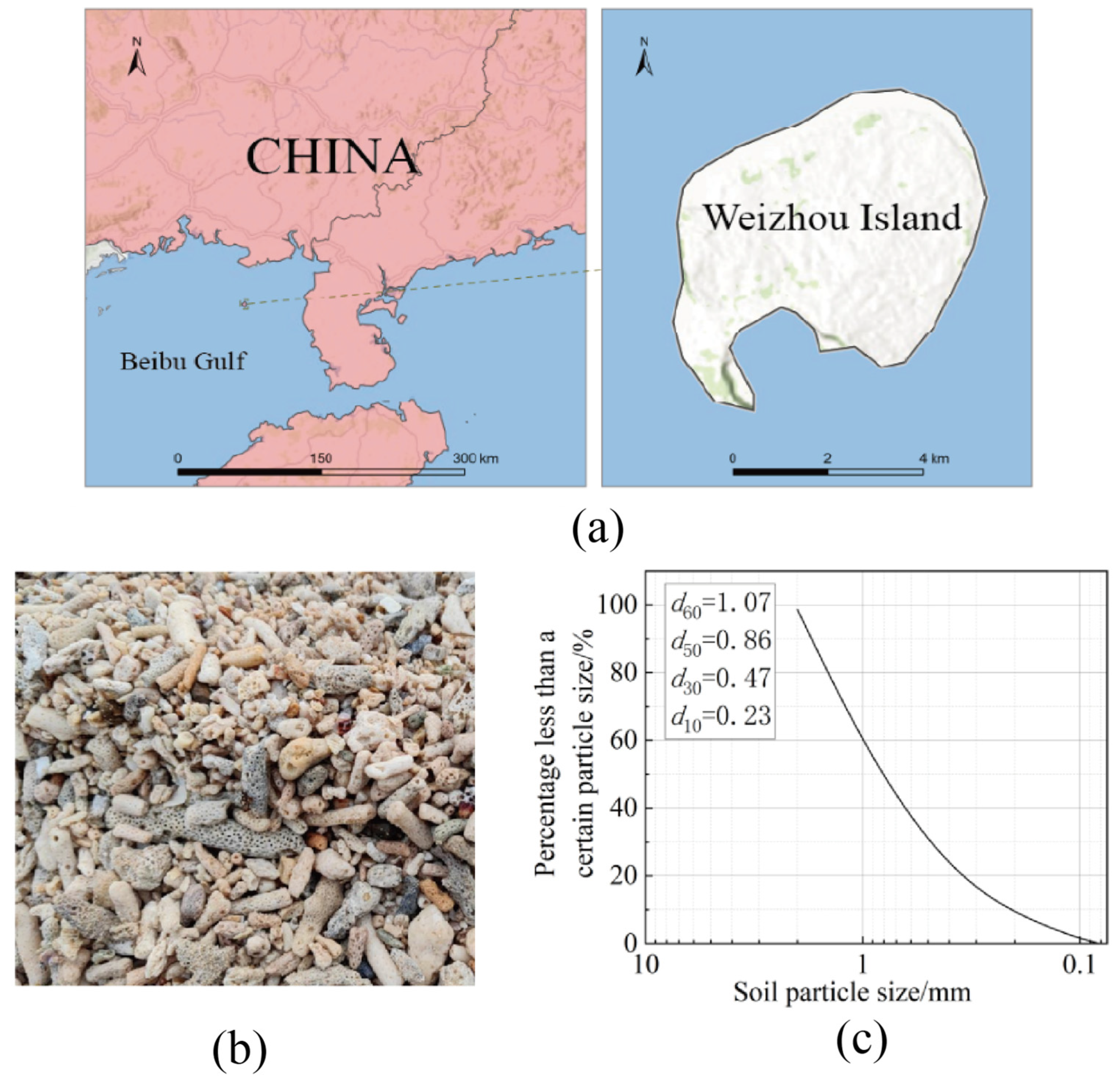
2.1.1. Test Sand
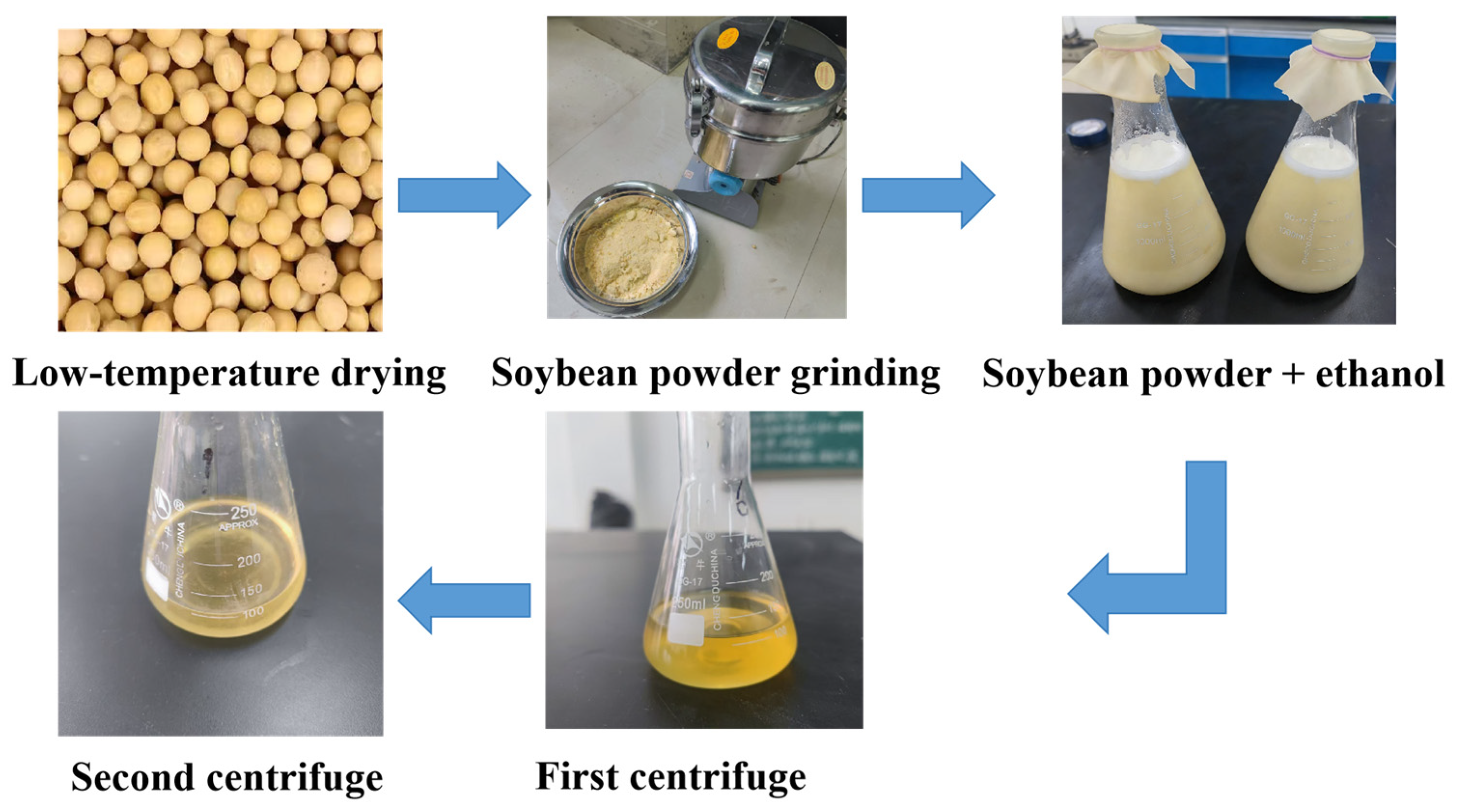
2.1.2. Soybean Urease Solution Extraction
2.1.3. Determination Method of Soybean Urease Activity
2.1.4. Cementing Liquid and Aluminum Ion Flocculant
2.2. Specimen Method
2.2.1. Aqueous Solution Test
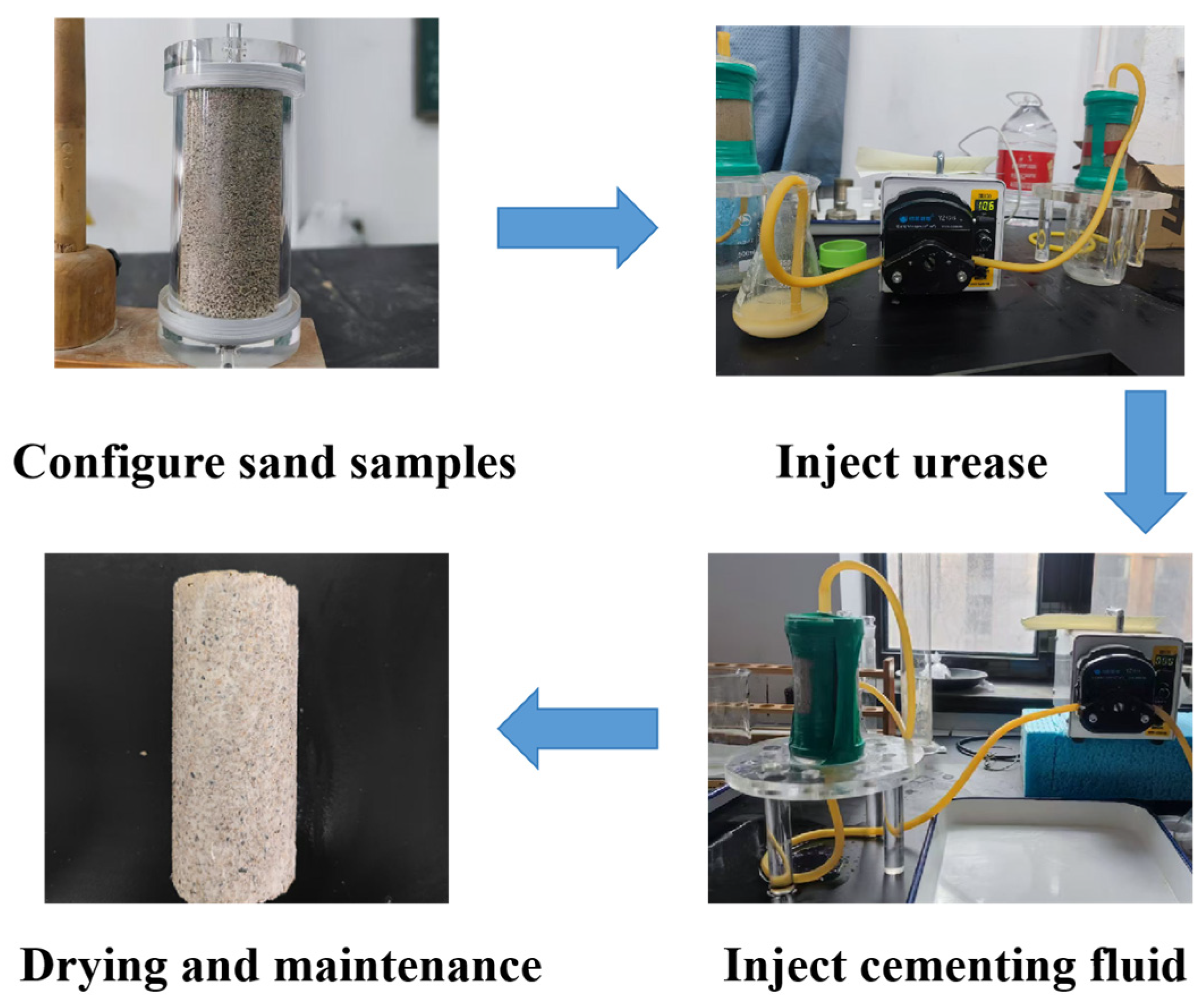
2.2.2. Sand Column Experiment
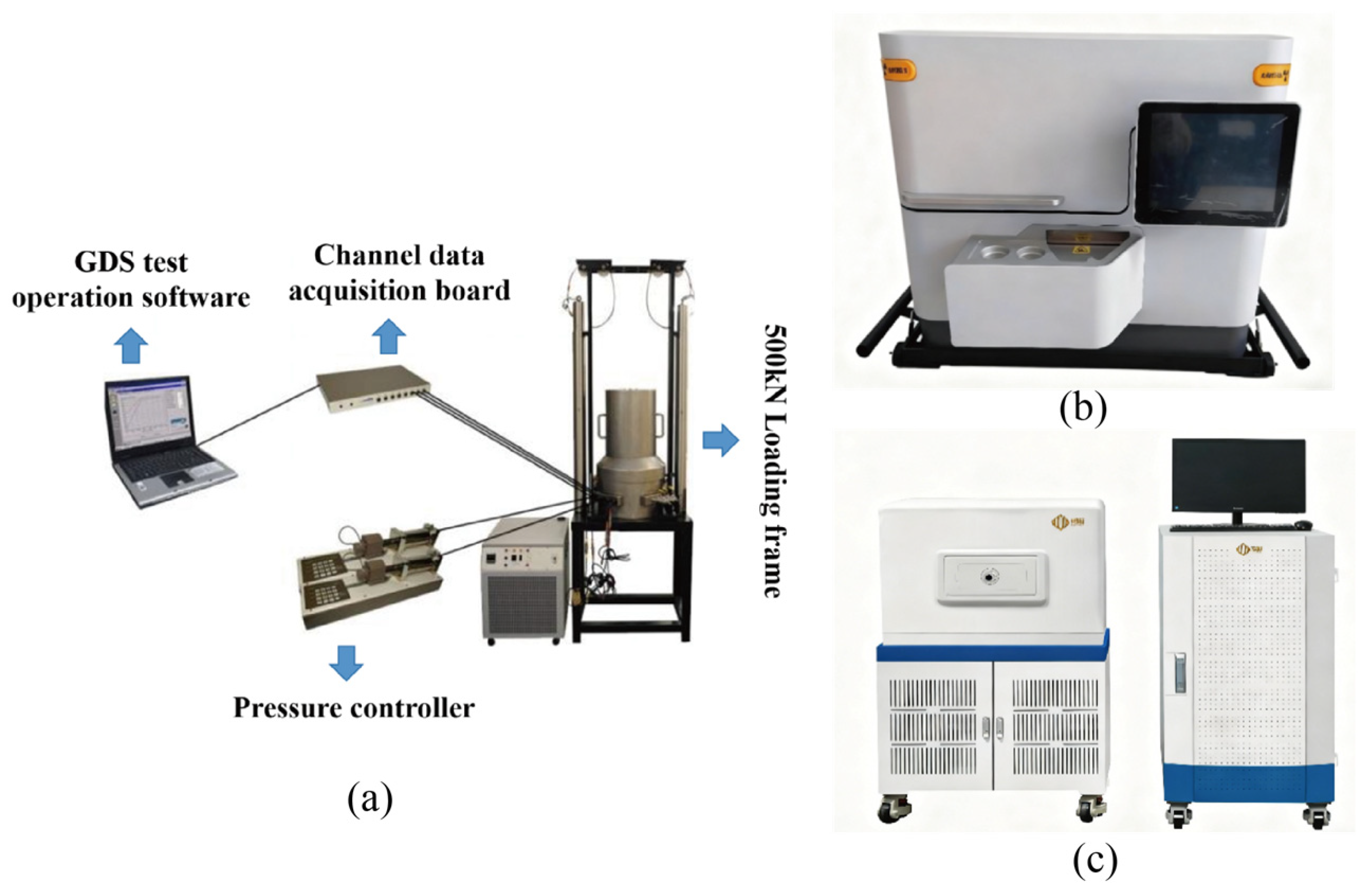
2.2.3. Unconfined Compressive Strength Test
2.2.4. Penetrating Quality
2.2.5. Microscopic Test
3. Experiment Results and Analysis
3.1. Effects of Different Factors on Urease Activity and Calcium Carbonate Production
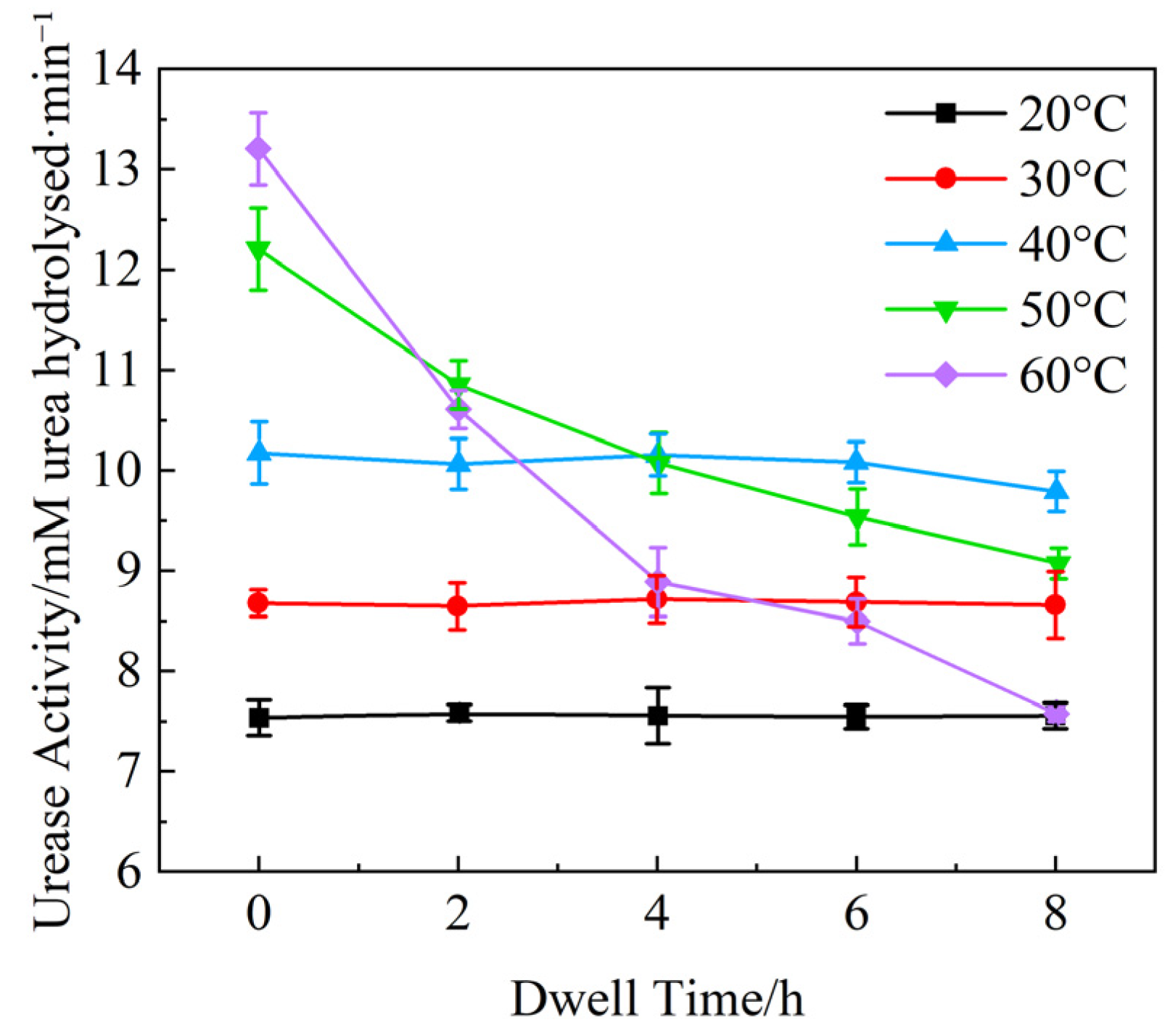
3.1.1. Effect of Temperature on Urease Activity
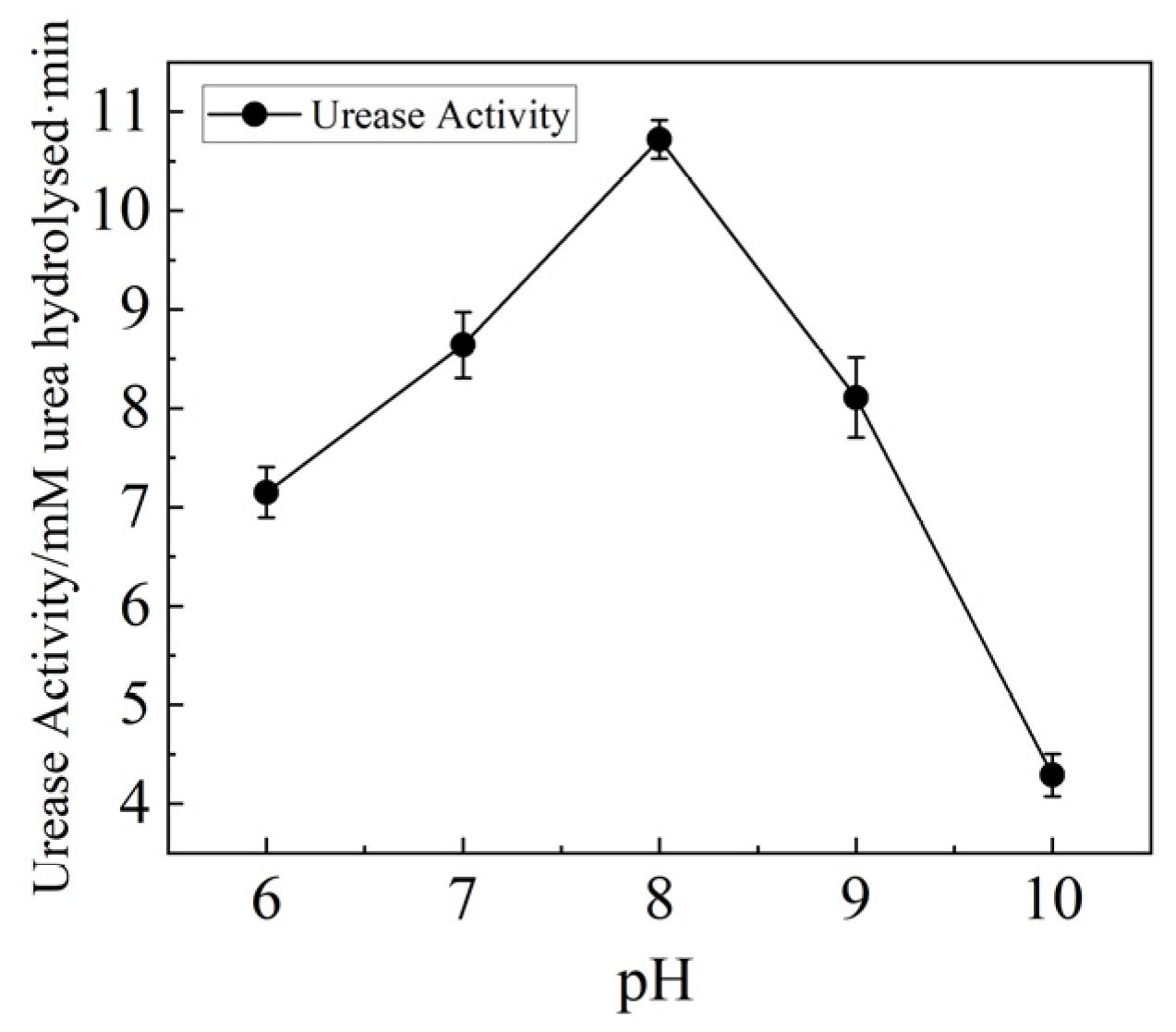
3.1.2. Effect of pH on Urease Activity
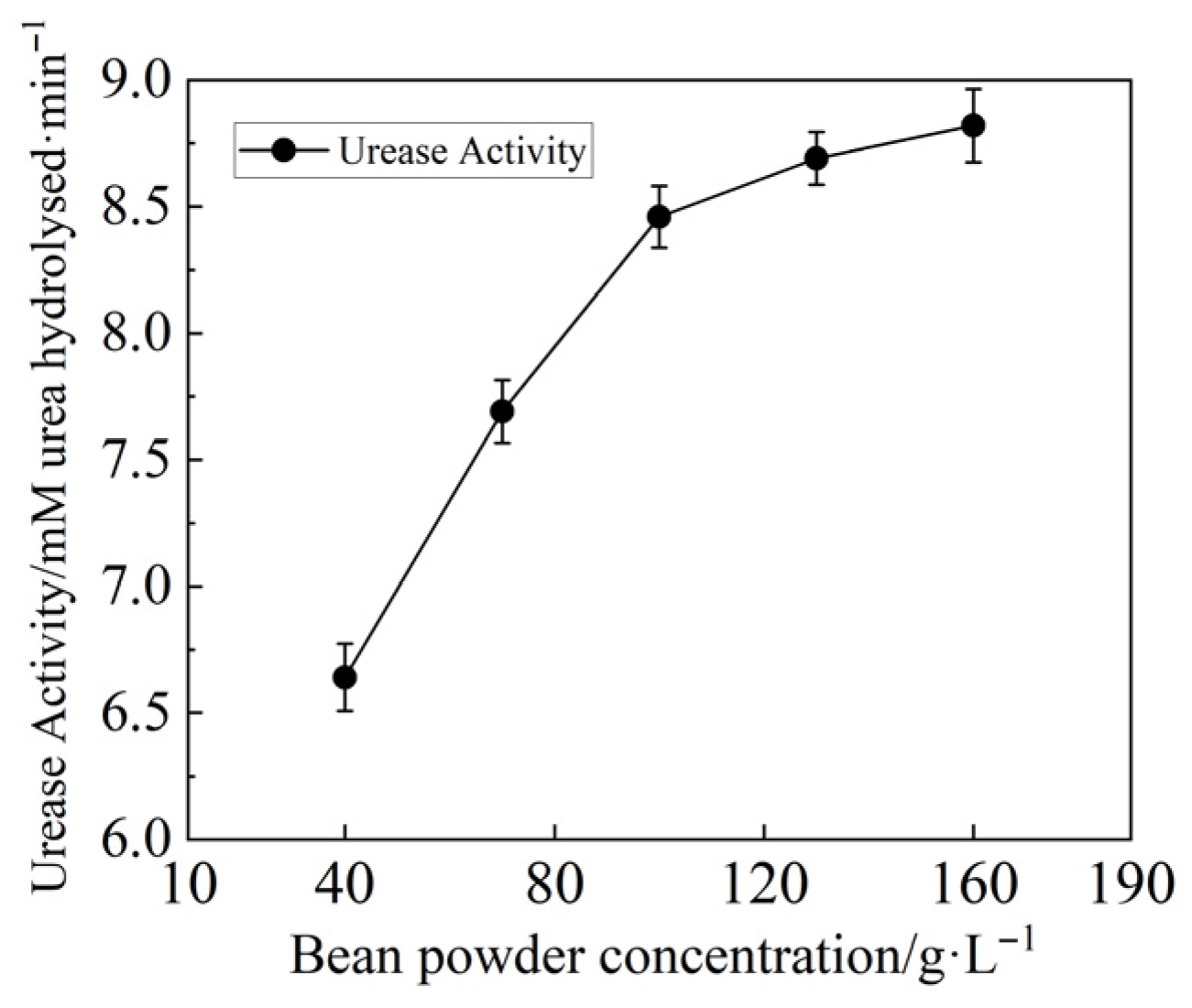
3.1.3. Effect of Soybean Powder Concentration on Urease Activity
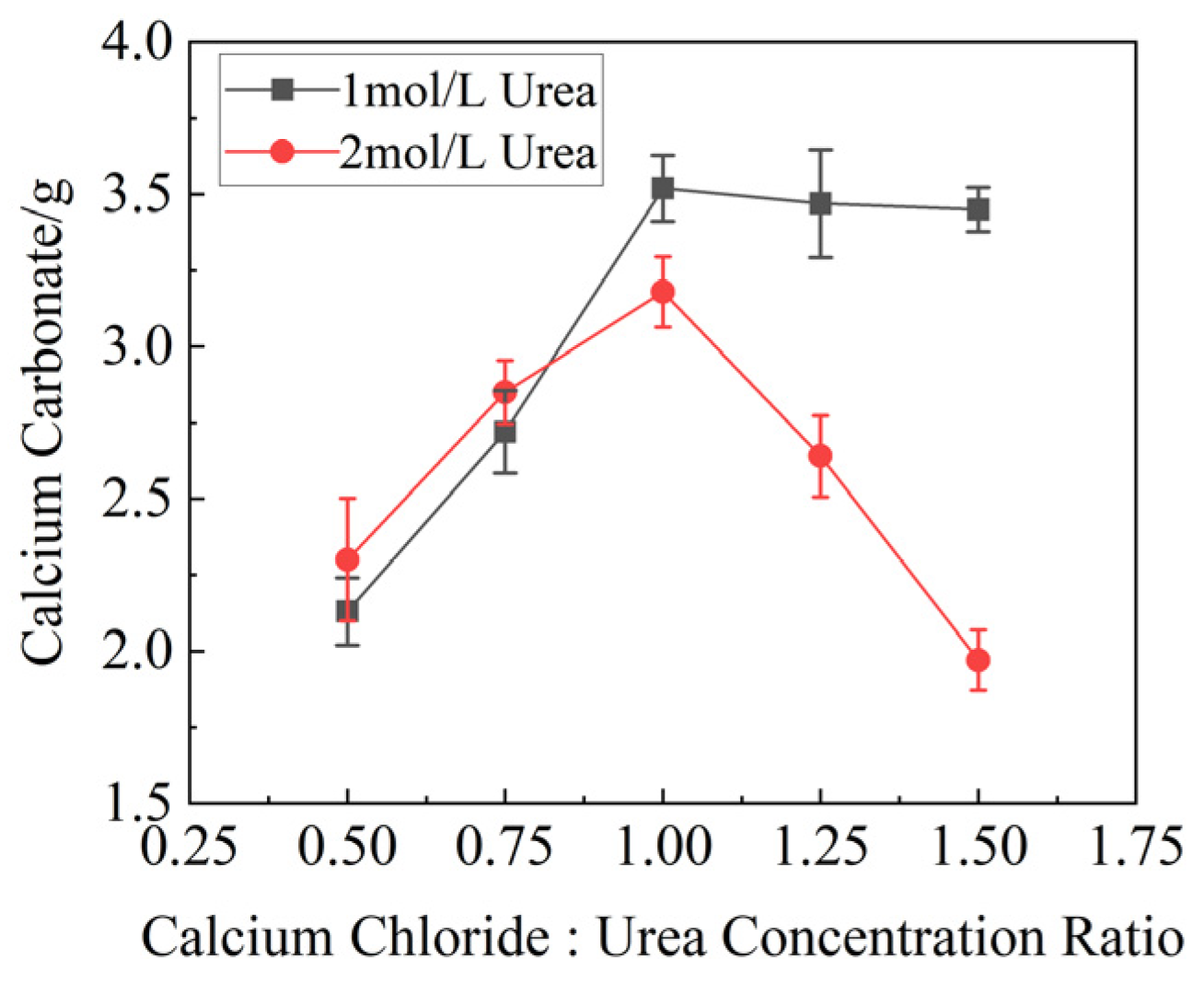
3.1.4. The Influence of the Proportion of Cementation Liquid on the Content of Calcium Carbonate Produced by EICP
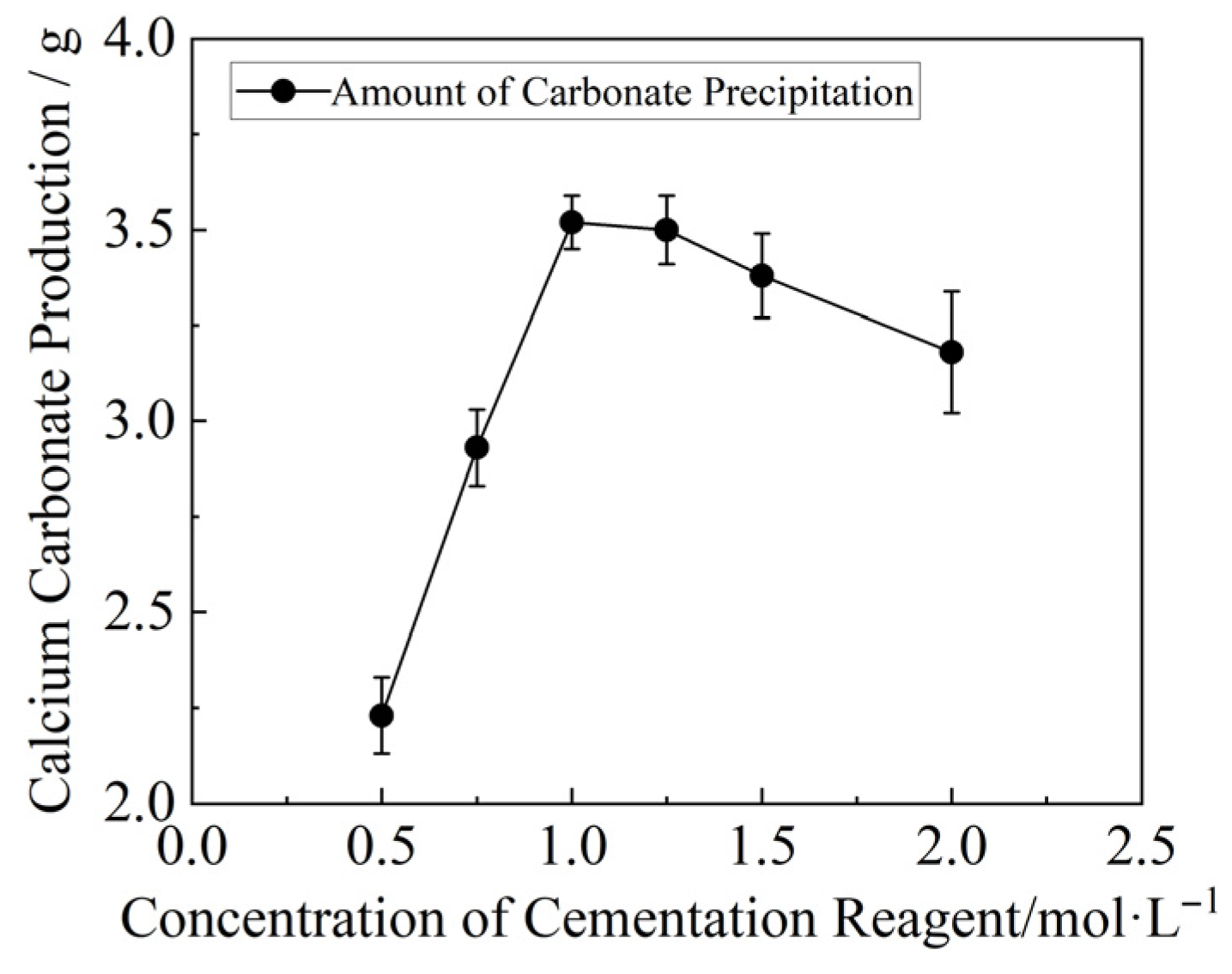
3.1.5. The Effect of Cementing Solution Concentration on the Formation of EICP Calcium Carbonate
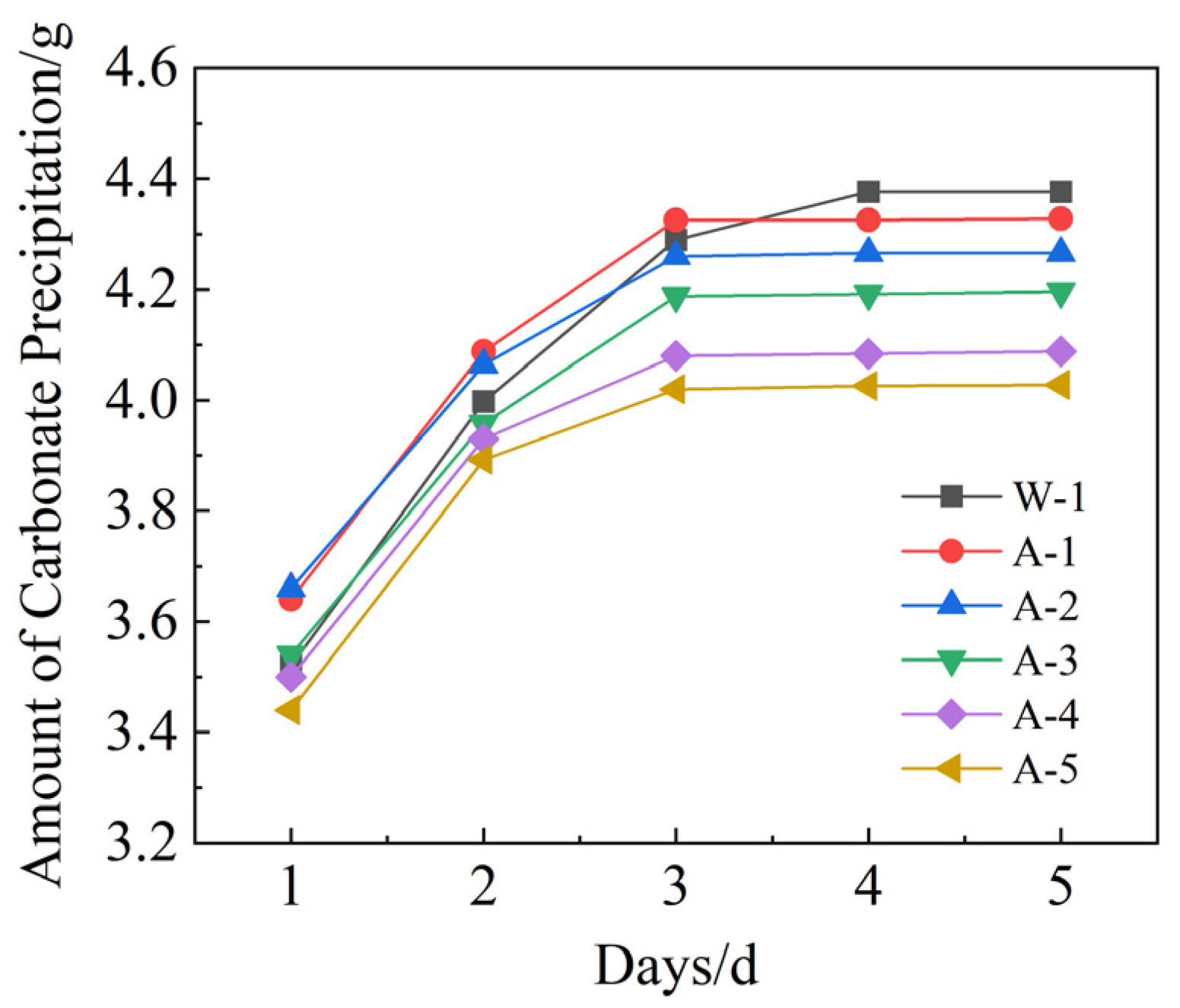
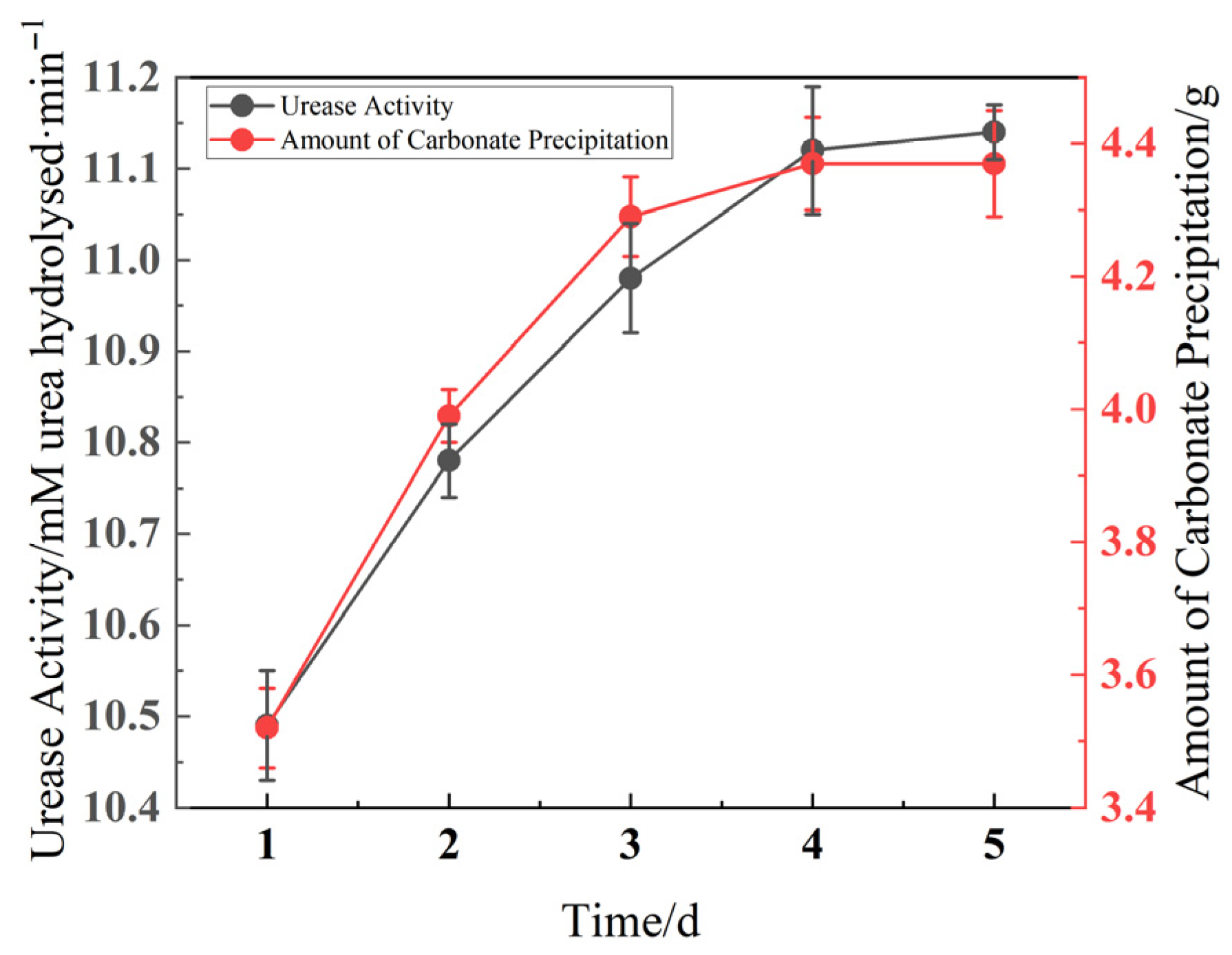
3.1.6. Effect of Reaction Time on the Amount of Calcium Carbonate Produced
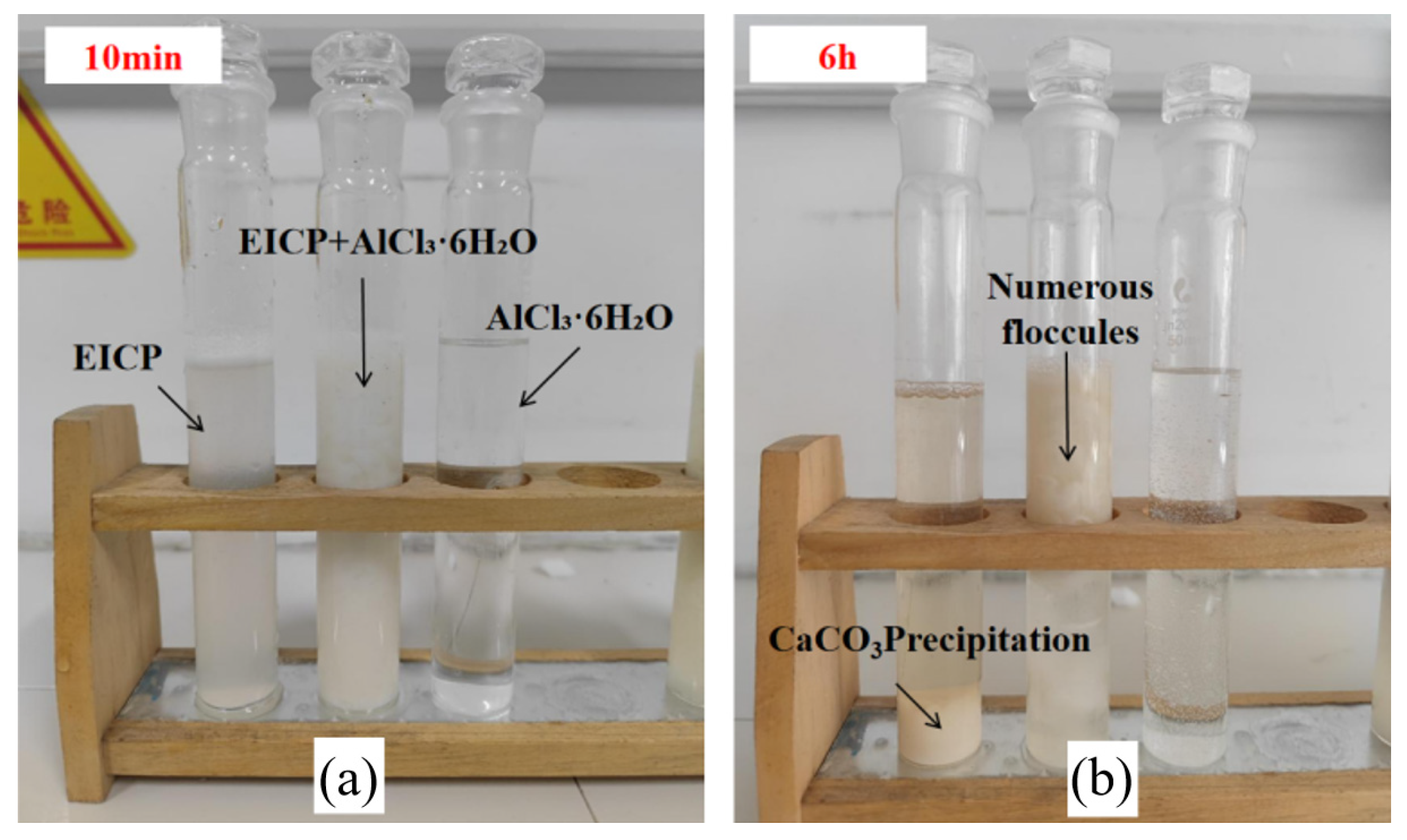
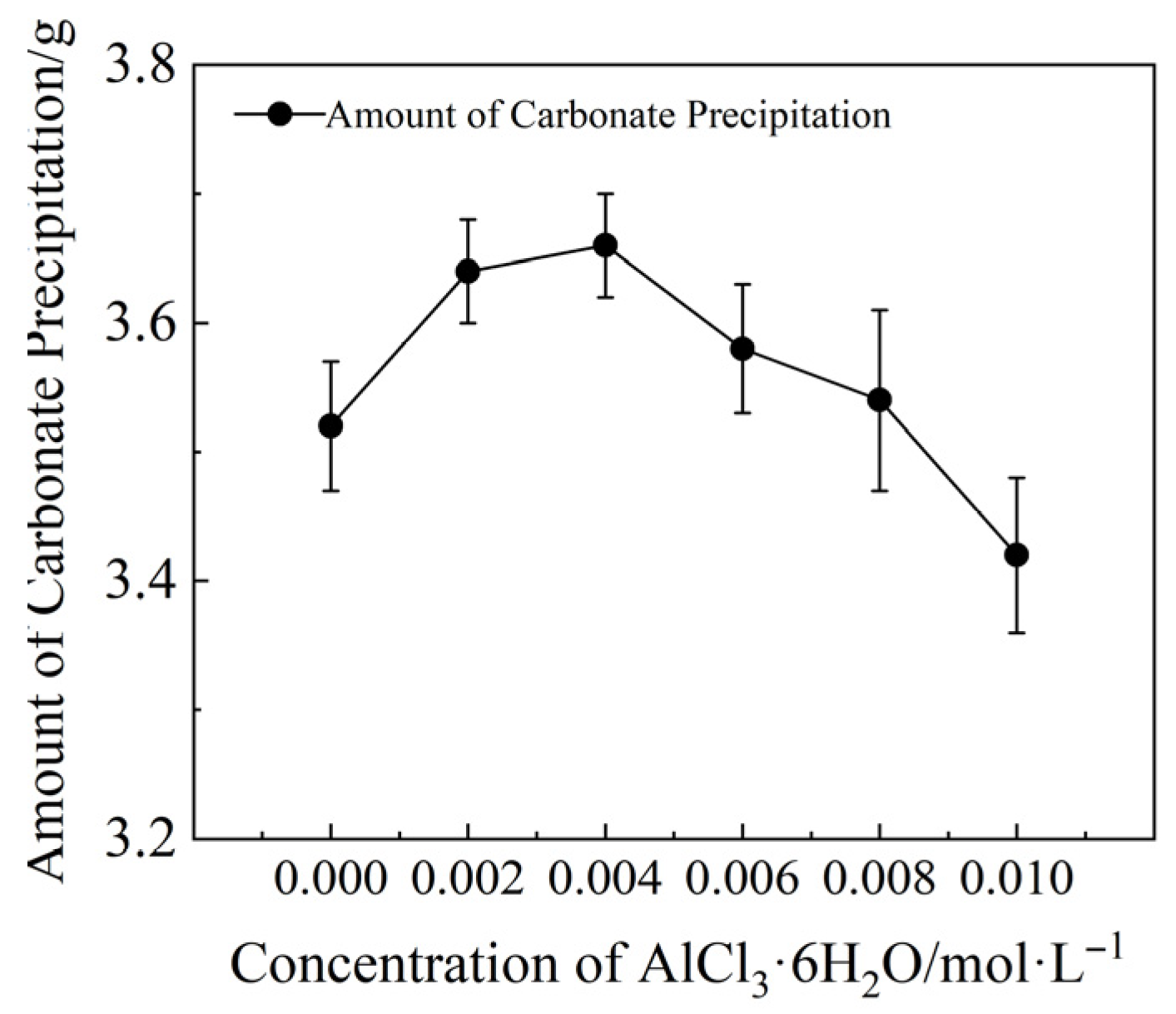
3.1.7. Effect of Aluminum Ion Flocculant on Calcium Carbonate Production
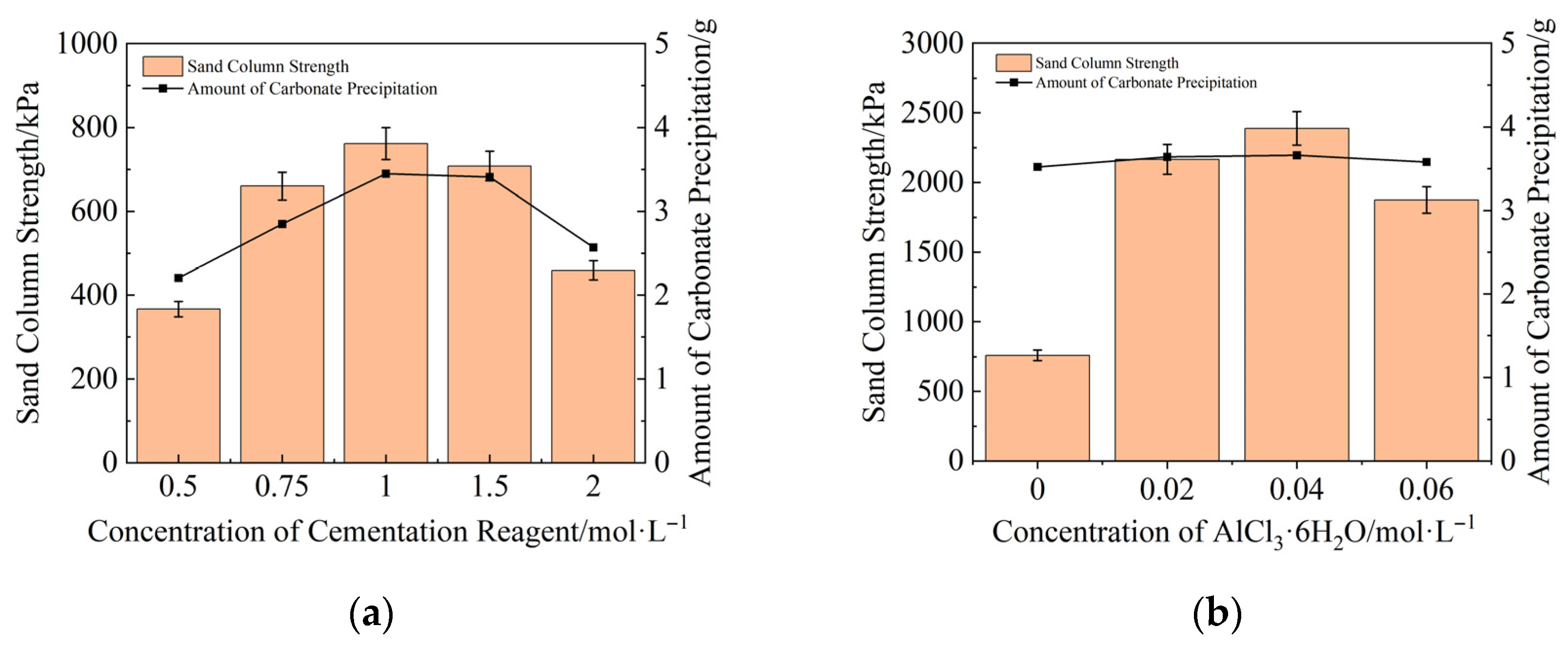
3.2. Analysis of Unconfined Compressive Strength Test
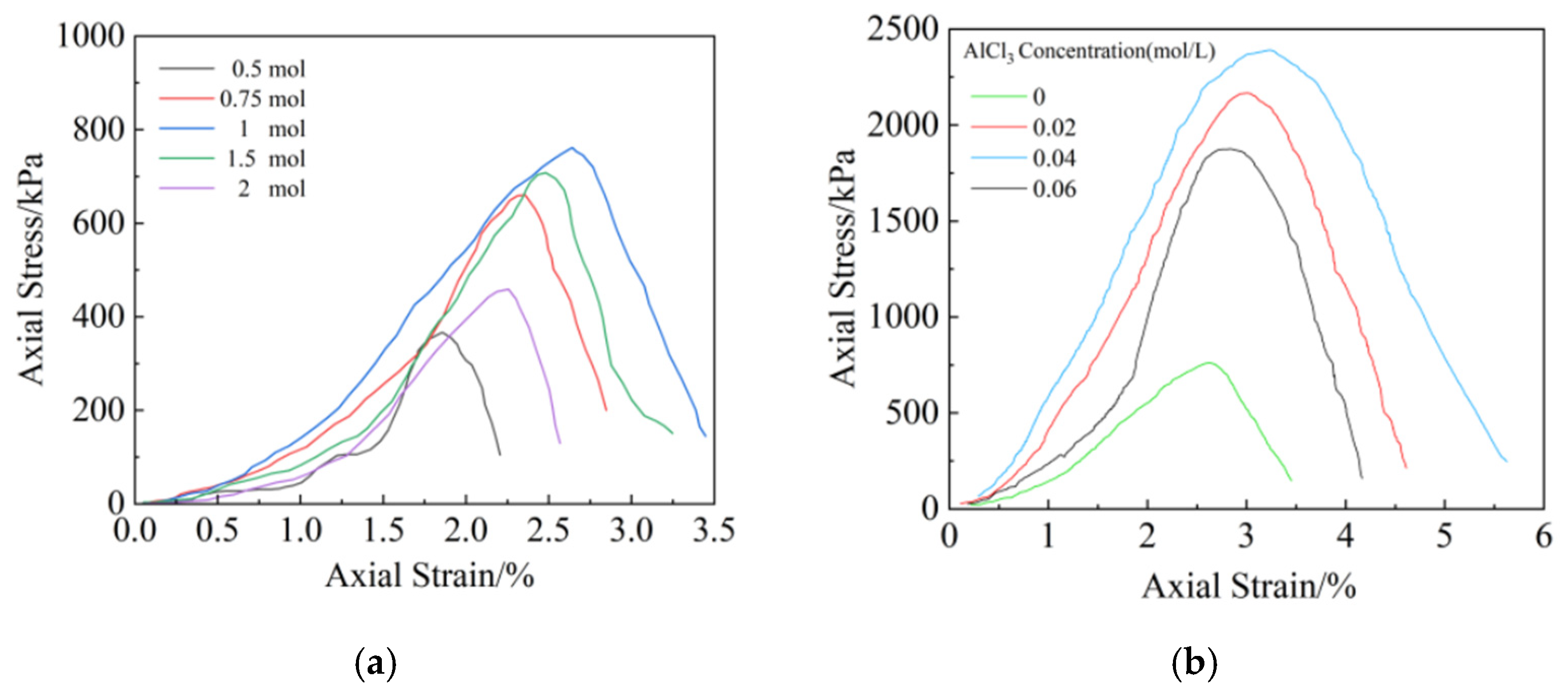
3.3. Axial Stress–Strain Curve
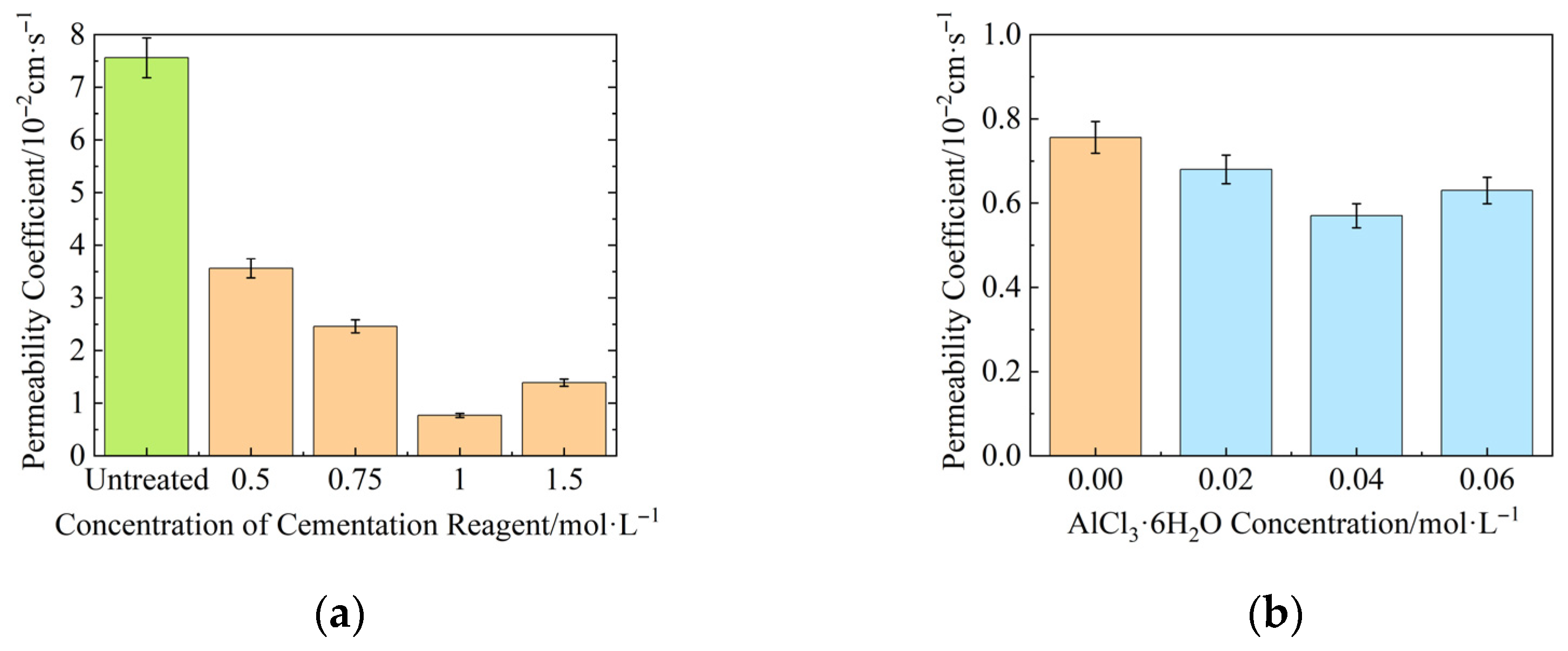
3.4. Permeability
3.5. Micro-Analysis
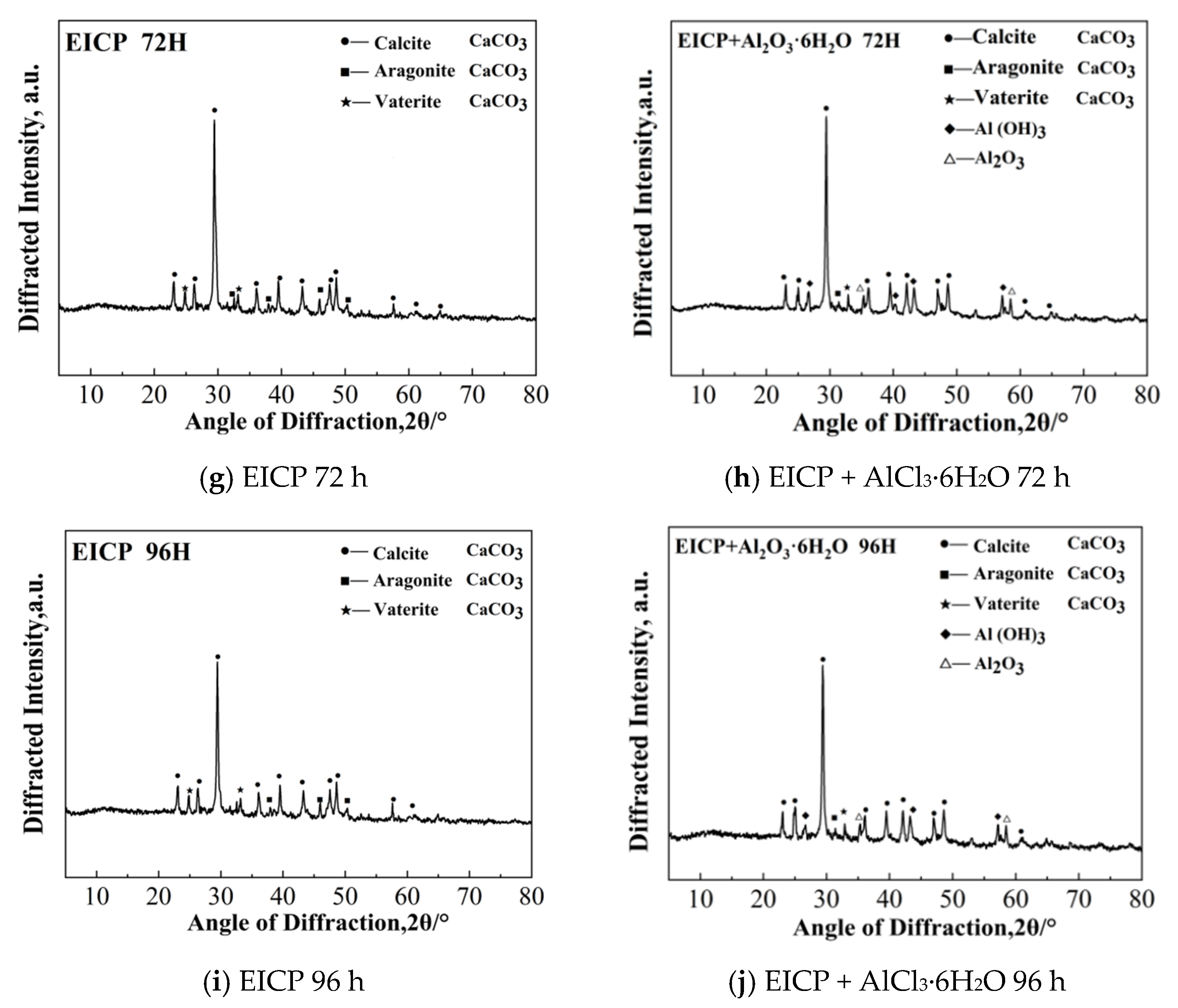
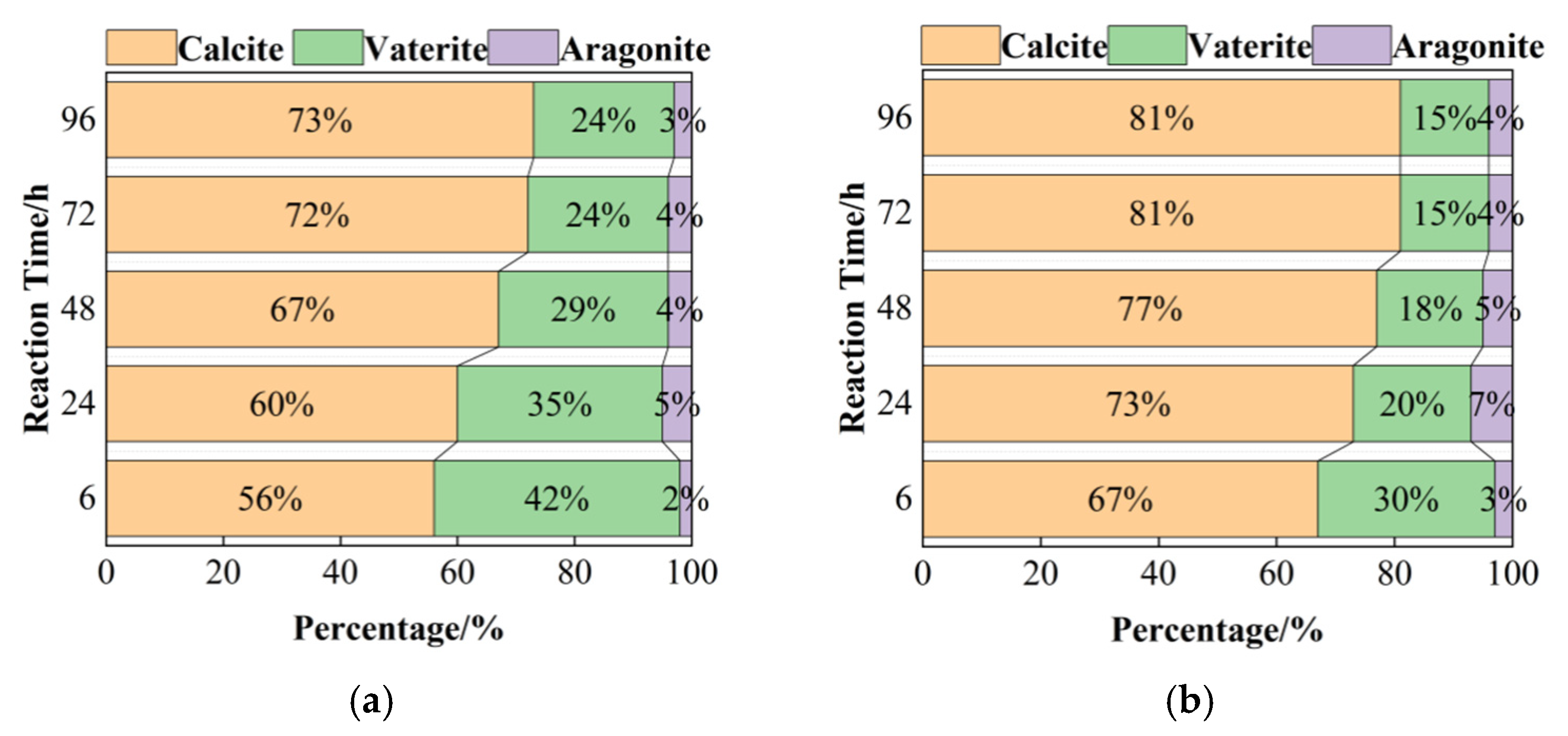
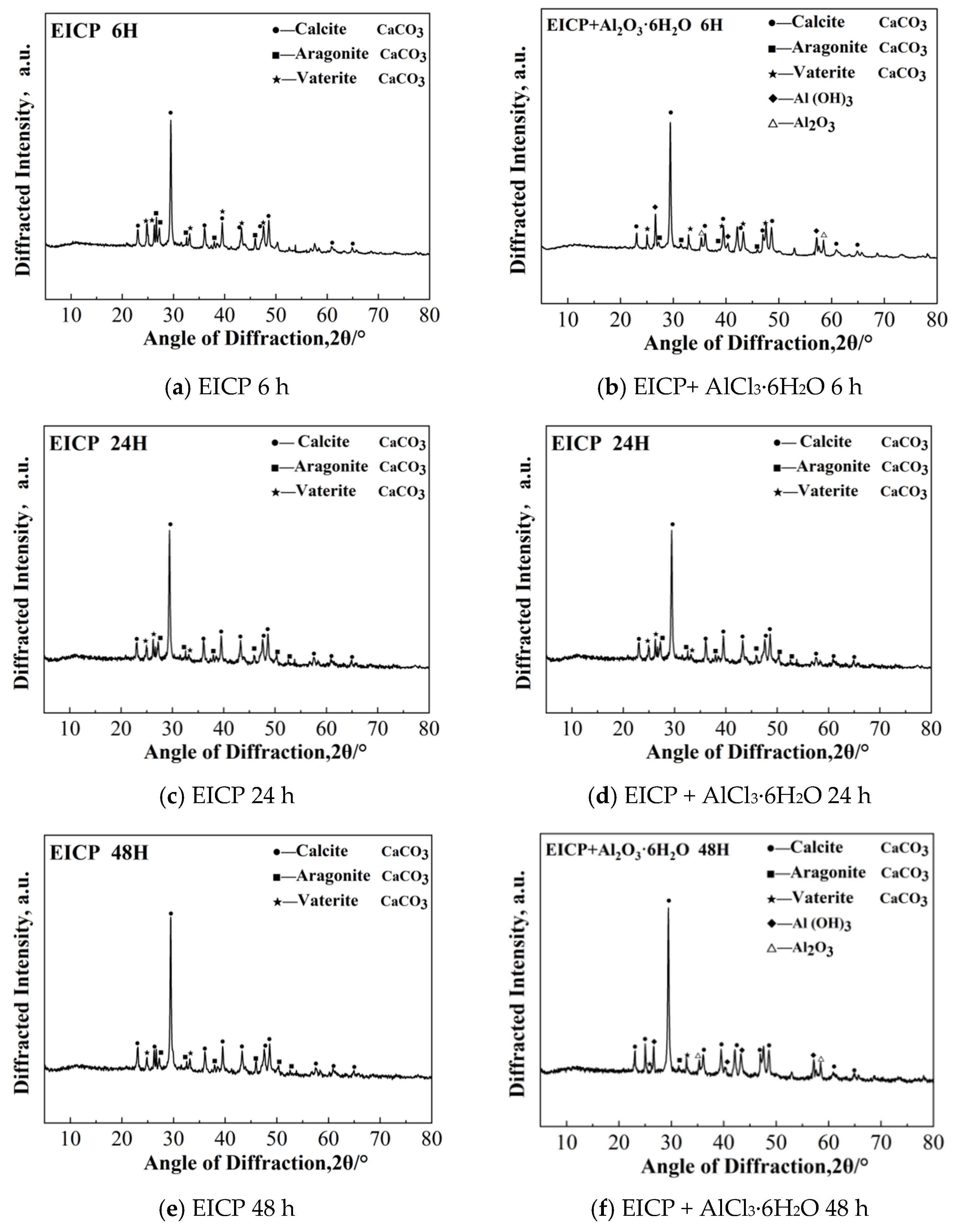
3.5.1. XRD Results
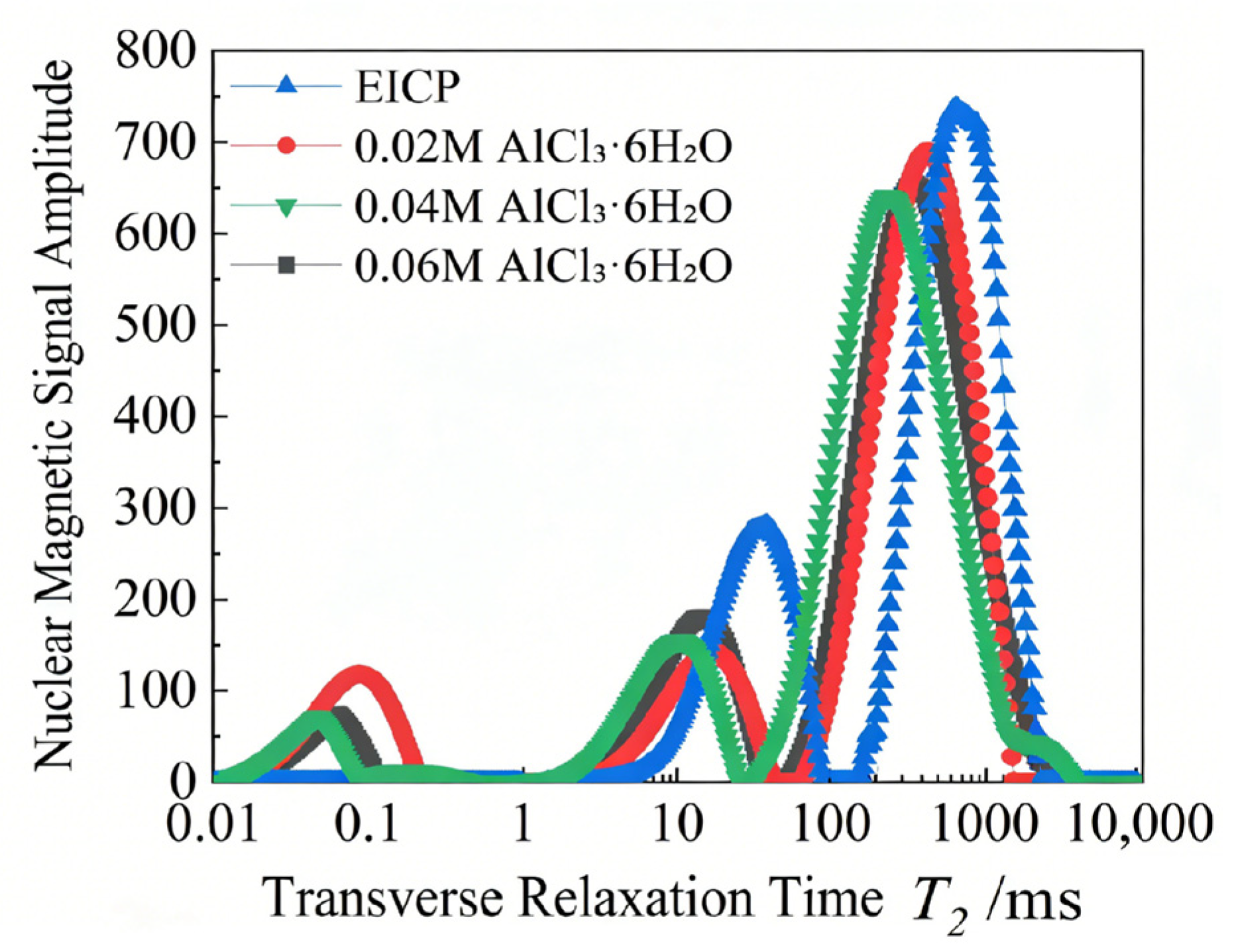
3.5.2. Nuclear Magnetic Resonance Test
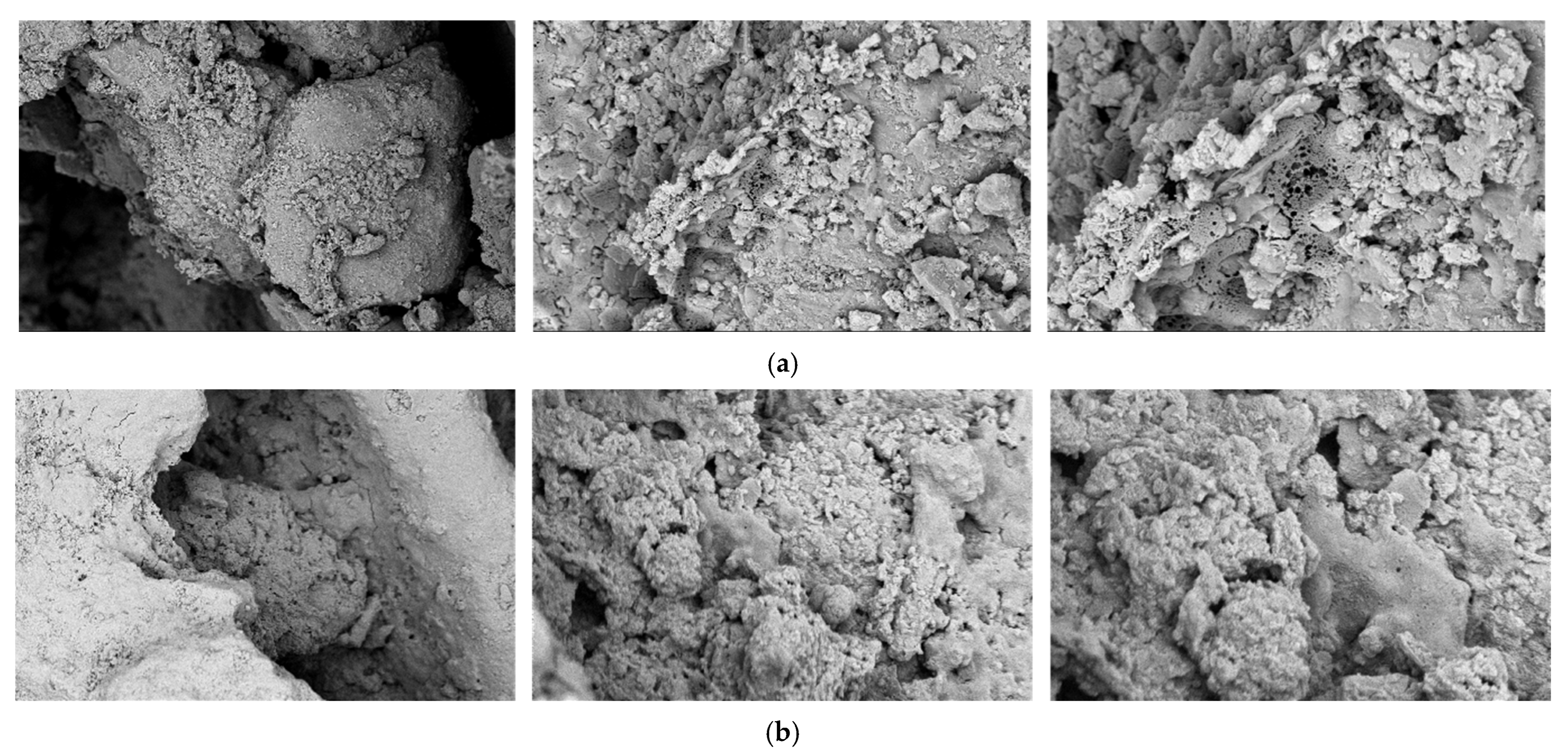
3.5.3. SEM Test Analysis
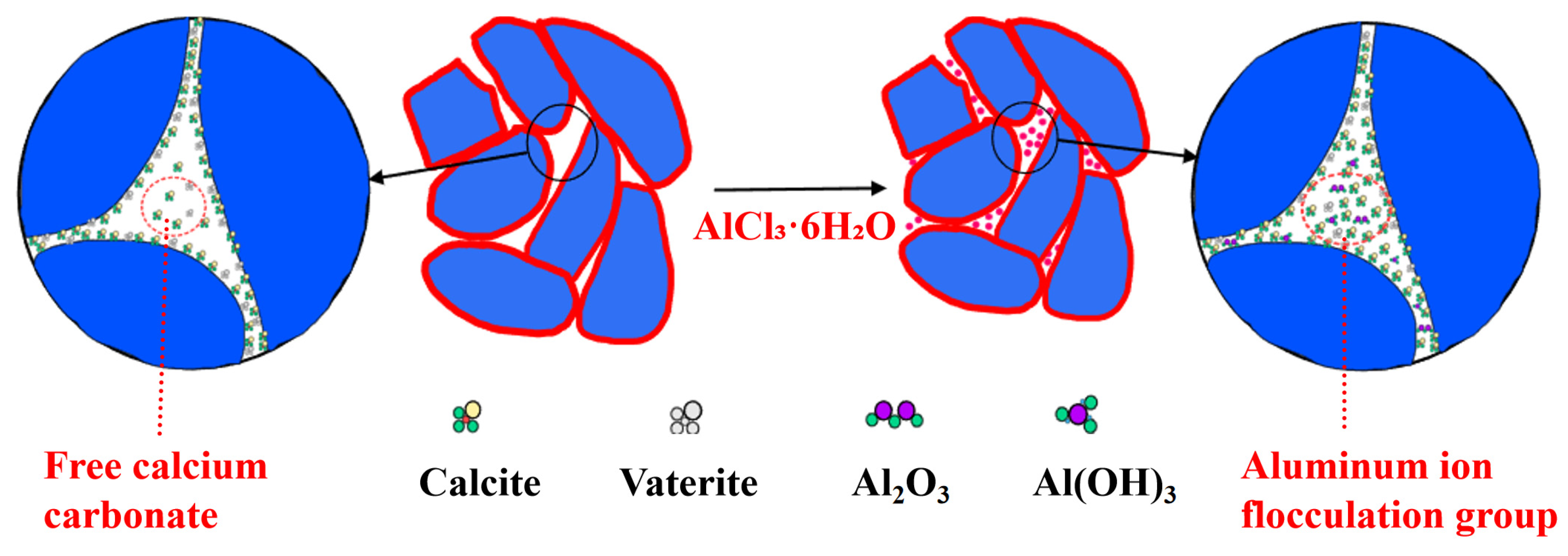
3.5.4. Mechanism Analysis of EICP and Aluminum Ion Flocculant-Reinforced Sand Soil
4. Discussion
4.1. The Feasibility and Potential Challenges of Field Application of EICP Technology
4.2. Ecological Security and Sustainability Assessment
5. Conclusions
- The curing effect of EICP and AlCl3·6H2O was greatly affected by the environment. The urease activity increased with the increase in temperature, but the activity decreased significantly when the temperature exceeded 50 °C. The optimum pH was 8. When the concentration of cementation solution was 1 mol/L, the reinforcement effect of EICP was the best. The addition of AlCl3·6H2O at a concentration of 0.004 mol/L had the best synergistic effect on EICP.
- EICP can significantly improve the unconfined compressive strength and impermeability of coral sand. When the concentration of the cementing solution is 1 mol/L, the unconfined compressive strength can reach 761.6 kPa, and the permeability coefficient can be reduced by approximately one order of magnitude compared with the uncured sand sample. On this basis, AlCl3·6H2O at a concentration of 0.004 mol/L was added. The unconfined compressive strength can be increased to 2389.1 kPa, which is 3.14 times that of the conventional group, and the permeability is further reduced by 26%.
- The X-ray diffraction test and nuclear magnetic resonance test reveal the mechanism of EICP technology and EICP-AlCl3·6H2O optimization. The mechanism of EICP is to generate calcium carbonate, with the main component of calcite and a small amount of aragonite and vaterite, gather and fill the pores of the sand column, and improve the strength and impermeability of the sand column. It can be seen from the microscopic analysis that the optimization mechanism of AlCl3·6H2O is to improve the overall stability of calcium carbonate by limiting the formation of aragonite and vaterite. At the same time, Al(OH)3 and other insoluble substances are formed to produce flocculation. The flocculation precipitates are adsorbed on the surface of sand particles and can adsorb the free calcium carbonate precipitation in the pores, so that the free calcium carbonate in the pores can be converted into ‘effective’ calcium carbonate with cementation. Therefore, the unconfined compressive strength of the sand column is significantly improved when the calcium carbonate content is slightly lower. This also explains why the amount of calcium carbonate produced after the addition of AlCl3·6H2O in the sand column experiment does not match the trend of compressive strength.
Author Contributions
Funding
Data Availability Statement
Conflicts of Interest
References
- Tong, Z.; Wang, Z.; Chen, X. Study on the Elemental and Mineral Composition of Carbonate Sediments in the South China Sea of China: Taking Shells, Calcium Carbonate Sand, and Coral Reefs as Examples. In Proceedings of the 8th International Conference on Mineral Resources, Geotechnology and Geological Exploration (MRGGE 2024), Shijiazhuang, China, 14–16 June 2024; Springer Series in Geomechanics and Geoengineering; Springer: Berlin/Heidelberg, Germany, 2024; pp. 363–370. [Google Scholar] [CrossRef]
- Jin, F.; Yao, Z.; Chen, Z. Development characteristics and construction prospects for an integrated economic zone in the South China Sea Region. Dili Xuebao/Acta Geogr. Sin. 2021, 76, 428–443. [Google Scholar] [CrossRef]
- Li, X.; Zhou, W.-H.; Liu, J.; Wang, C. Elastic-plastic response and particle breakage in marine coral sand: Roles of fines and density state. Ocean. Eng. 2025, 323, 120499. [Google Scholar] [CrossRef]
- Zhang, Z.; Chen, S.; Wang, Y.; Li, X. Comparative study on seismic response of a shallow buried underground structure in coral sand and coral gravelly sand by centrifuge modeling. Tunn. Undergr. Space Technol. 2025, 157, 106318. [Google Scholar] [CrossRef]
- Lai, M.-H.; Lu, R.; Ho, J.C.M.; Ren, F.-M. Compressive Behavior of FRP–Confined Seawater Sea-Sand Coral Aggregate Concrete (SSCAC). In Proceedings of the ICES 2024, Guangzhou, China, 8–11 November 2024; Lecture Notes in Civil Engineering. Volume 599, pp. 403–410. [Google Scholar] [CrossRef]
- Zhu, T.; Ju, Y.; Wei, L.; Ma, Q. Problems Existing in The Beach Environment of Weizhou Island and Its Protection Suggestions. In Proceedings of the 10th Academic Conference of Geology Resource Management and Sustainable Development, Beijing, China, 17–18 December 2022; Volume 1, pp. 186–192. [Google Scholar] [CrossRef]
- Zhou, L.; Sun, R.; Chen, J.-F.; Xia, C.-Z.; Wang, H.-N. Effect of geosynthetics reinforcement on seismic behavior of coral sand revetment breakwater subjected to mainshock-aftershock sequences. Soil Dyn. Earthq. Eng. 2025, 190, 109190. [Google Scholar] [CrossRef]
- Luo, Z.; Ding, X.; Ou, Q.; Zhang, T.; Zhang, X. Bearing capacity and deformation behavior of shallow footing loads on geogrid reinforced marine coral sand. Eng. Geol. 2025, 352, 108069. [Google Scholar] [CrossRef]
- Yadav, S.; Rout, S.; Pulhani, V. Microplastic Pollution in the Marine Environment: Sources, Distribution, and Ecological Impact. In Handbook of Microplastic Pollution in the Environment: Microplastic Pollution in Aquatic Environments; CRC Press: Boca Raton, FL, USA, 2025; pp. 741–771. [Google Scholar] [CrossRef]
- Cai, L.; Liang, J.; Guo, Z.; Ouyang, Y.; Yang, M.; Dai, J. Evaluation of the coordination between marine ecological environment protection and marine economic development in China. Environ. Sci. Pollut. Res. 2023, 30, 31524–31532. [Google Scholar] [CrossRef]
- Liu, M.; Wang, J.; Luo, H.; Chen, X. Microstructurally uniform, high-strength bio-cementation via synergistic microbial- and enzyme-induced calcium carbonate precipitation. Chem. Eng. J. 2025, 524, 169343. [Google Scholar] [CrossRef]
- Zheng, J.; Wu, C.; Song, Y.; Cui, M. Study of the strength test and strength dispersion of MICP-treated calcareous sand. J. Harbin Eng. Univ. 2020, 41, 250–256. [Google Scholar] [CrossRef]
- Liu, H.; Ma, G.; Zhao, C.; Zhao, J.; He, X.; Xiao, Y. Macro- and micro-mechanical regime of biotreated calcareous sand. J. Civ. Environ. Eng. 2020, 42, 205–206. [Google Scholar] [CrossRef]
- Wu, L.; Miao, L.; Sun, X.; Wang, H. Effect of calcium sources on enzyme-induced carbonate precipitation to solidify desert aeolian sand. J. Environ. Manag. 2024, 366, 121687. [Google Scholar] [CrossRef]
- Sun, X.; Miao, L.; Wu, L. Applicability and Theoretical Calculation of Enzymatic Calcium Carbonate Precipitation for Sand Improvement. Geomicrobiol. J. 2020, 37, 389–399. [Google Scholar] [CrossRef]
- Saif, A.; Cuccurullo, A.; Gallipoli, D.; Perlot, C.; Bruno, A.W. Advances in Enzyme Induced Carbonate Precipitation and Application to Soil Improvement: A Review. Materials 2022, 15, 950. [Google Scholar] [CrossRef] [PubMed]
- Wang, Y.; Sun, X.; Miao, L.; Wang, H.; Wu, L.; Shi, W.; Kawasaki, S. State-of-the-art review of soil erosion control by MICP and EICP techniques: Problems, applications, and prospects. Sci. Total Environ. 2024, 912, 169016. [Google Scholar] [CrossRef] [PubMed]
- Zhou, G.; Zhao, Z.; Zhang, G.; Gao, X.; Wang, M.; Wei, B.; Chen, X.; Li, J.; Li, L. Enhanced mineralization and dust suppression mechanism of Bacillus pasteurii synergized with Bacillus mucilaginosus capable of CO2+ capture effect. Chem. Eng. J. 2025, 520, 166156. [Google Scholar] [CrossRef]
- Hobbenaghi, M.; Baghbanan, A.; Hashemolhoseini, H.; Hosseini, M.R.; Ghazijahani, T.G. Mechanical and microstructural properties of biogenic CaCO3 deposition (MICP) on a specific volcanic sediment (unwelded Tuffs) by Bacillus pasteurii and Bacillus subtilis. Structures 2024, 67, 106915. [Google Scholar] [CrossRef]
- Liu, L.; Gao, Y.; Cao, X.; Meng, H.; Wang, Z.; Qi, Y.; Li, R.; He, J. A comparative study of low-cost crude ureases extracted from multi-species of natural plant sources in enzyme-induced carbonate precipitation. J. Environ. Chem. Eng. 2024, 12, 114824. [Google Scholar] [CrossRef]
- Gao, Y.; He, J.; Tang, X.; Chu, J. Calcium carbonate precipitation catalyzed by soybean urease as an improvement method for fine-grained soil. Soils Found. 2019, 59, 1631–1637. [Google Scholar] [CrossRef]
- Liu, M.; Zhang, H.; Zhai, K.; Liu, L. Experimental Study on the Anti-wind Erosion and Dust Raising Performance of Xanthan Gum Combined with EICP Technology Curing Bare soil. J. Water Resour. Archit. Eng. 2025, 23, 155–160. [Google Scholar] [CrossRef]
- Tian, W.; Li, L.; He, W.; Yun, W.; Zhao, H.; Yi, G. Experimental Study on the Anti-wind Erosion Performance and Mechanism Research of Biopolymer Synergistic EICP Ecological Curing of Bare Soil Dust. Adv. Eng. Sci. 2025, 1–16. Available online: https://link.cnki.net/urlid/51.1773.TB.20251119.1717.002 (accessed on 10 January 2026).
- Lai, H.; Luo, K.; Cui, M.; Liu, H.; Shi, J.; Zhong, Y.; Lin, C. Effect of alum content on soybean urease solution and its biocementation. J. Civ. Environ. Eng. 2025, 1–7. Available online: https://link.cnki.net/urlid/50.1218.TU.20250213.1047.006 (accessed on 10 January 2026).
- Hou, Z.; Duan, S.; Wang, Z.; Zhang, Y.; Zhang, J. Study on the effect of chitosan on the deposition of MICP calcium carbonate and the mechanical properties of mix-cured red clay. Mater. Sci. Technol. 2025, 1–12. Available online: https://link.cnki.net/urlid/23.1345.tb.20250221.0905.002 (accessed on 10 January 2026).
- Wei, R.; Peng, J.; Li, L.; Jiang, Z.; Tang, J. Accelerated Reinforcement of Calcareous sand via Biomineralization with Aluminum Ion Flocculant. Appl. Biochem. Biotechnol. 2023, 195, 7197–7213. [Google Scholar] [CrossRef]
- GB/T 50123-2019; Standard for Geotechnical Testing Methods. China Planning Press: Beijing, China, 2019.
- Whiffin, V. Microbial CaCO3 Precipitation for the Production of Biocement. Ph.D. Thesis, Murdoch University, Perth, Australia, 2004. [Google Scholar]
- Neupane, D.; Yasuhara, H.; Kinoshita, N.; Unno, T. Applicability of enzymatic calcium carbonate precipitation as a soil-strengthening technique. J. Geotech. Geoenviron. Eng. 2013, 139, 2201–2211. [Google Scholar] [CrossRef]
- Zhang, Q.; Ye, W.; Liu, Z.; Wang, Q.; Chen, Y. Advances in soil cementation by biologically induced calcium carbonate precipitation. Rock Soil Mech. 2022, 43, 345–357. [Google Scholar] [CrossRef]










| Property | Value |
|---|---|
| Specific gravity, GS | 2.75 |
| Average grain size, d50: mm | 0.86 |
| Coefficient of uniformity, Cu | 4.65 |
| Curvature coefficient, Cc | 0.89 |
| Maximum void ratio, emax | 1.43 |
| Minimum void ratio, emin | 0.94 |
| Particle size range, mm | 0.1–2 |
| Sample Number | Soybean Powder Concentration (g/L) | Urea Concentrations (mol/L) | Calcium Chloride Concentration (mol/L) | Amount of Carbonate Precipitation (g) | Theoretical Calcium Carbonate (g) | Calcium Carbonate Precipitation Ratio (-) |
|---|---|---|---|---|---|---|
| S-1 | 130 | 1 | 0.5 | 2.13 | 2.5 | 0.85 |
| S-2 | 130 | 1 | 0.75 | 2.72 | 3.75 | 0.73 |
| S-3 | 130 | 1 | 1 | 3.52 | 5 | 0.7 |
| S-4 | 130 | 1 | 1.25 | 3.47 | 5 | 0.69 |
| S-5 | 130 | 1 | 1.5 | 3.45 | 5 | 0.69 |
| S-6 | 130 | 2 | 1 | 2.3 | 5 | 0.46 |
| S-7 | 130 | 2 | 1.5 | 2.85 | 7.5 | 0.38 |
| S-8 | 130 | 2 | 2 | 3.18 | 10 | 0.32 |
| S-9 | 130 | 2 | 2.5 | 2.64 | 10 | 0.26 |
| S-10 | 130 | 2 | 3 | 1.97 | 10 | 0.2 |
| S-11 | 130 | 0.5 | 0.5 | 2.23 | 2.5 | 0.89 |
| S-12 | 130 | 0.75 | 0.75 | 2.93 | 3.75 | 0.78 |
| S-13 | 130 | 1.25 | 1.25 | 3.5 | 6.25 | 0.56 |
| S-14 | 130 | 1.5 | 1.5 | 3.38 | 7.5 | 0.45 |
Disclaimer/Publisher’s Note: The statements, opinions and data contained in all publications are solely those of the individual author(s) and contributor(s) and not of MDPI and/or the editor(s). MDPI and/or the editor(s) disclaim responsibility for any injury to people or property resulting from any ideas, methods, instructions or products referred to in the content. |
© 2026 by the authors. Licensee MDPI, Basel, Switzerland. This article is an open access article distributed under the terms and conditions of the Creative Commons Attribution (CC BY) license.
Share and Cite
Chen, R.; Yang, Y.; Hao, D.; Wang, Z.; Fang, B. Strength Characteristics and Micro-Mechanism of Coral Sand Reinforced by EICP Combined with Aluminum Ions. J. Mar. Sci. Eng. 2026, 14, 286. https://doi.org/10.3390/jmse14030286
Chen R, Yang Y, Hao D, Wang Z, Fang B. Strength Characteristics and Micro-Mechanism of Coral Sand Reinforced by EICP Combined with Aluminum Ions. Journal of Marine Science and Engineering. 2026; 14(3):286. https://doi.org/10.3390/jmse14030286
Chicago/Turabian StyleChen, Rong, Yirou Yang, Dongxue Hao, Zhaoping Wang, and Bingxi Fang. 2026. "Strength Characteristics and Micro-Mechanism of Coral Sand Reinforced by EICP Combined with Aluminum Ions" Journal of Marine Science and Engineering 14, no. 3: 286. https://doi.org/10.3390/jmse14030286
APA StyleChen, R., Yang, Y., Hao, D., Wang, Z., & Fang, B. (2026). Strength Characteristics and Micro-Mechanism of Coral Sand Reinforced by EICP Combined with Aluminum Ions. Journal of Marine Science and Engineering, 14(3), 286. https://doi.org/10.3390/jmse14030286