Article

Tidal Dynamics Shaped the Dissolved Organic Carbon Fate and Exchange Flux Across Estuary-Coastal Water Continuum in Zhanjiang Bay, China


College of Chemistry and Environmental Science, Guangdong Ocean University, Zhanjiang 524088, China
*
Author to whom correspondence should be addressed.
J. Mar. Sci. Eng. 2026, 14(2), 123; https://doi.org/10.3390/jmse14020123
Submission received: 12 December 2025 / Revised: 2 January 2026 / Accepted: 5 January 2026 / Published: 7 January 2026
(This article belongs to the Special Issue Selected Feature Papers in Marine Environmental Science)

Abstract

Dissolved organic matter (DOM) is central to biogeochemical cycles in estuarine-coastal zones, with its source-sink dynamics linking regional ecological functions to global carbon budgets. As a typical semi-enclosed bay in southern China, Zhanjiang Bay (ZJB) features intense tidal mixing and significant seasonal runoff variations, making it a representative system for understanding DOM dynamics in complex land–sea interaction zones. The migration of dissolved organic carbon (DOC) is crucial for bay carbon budgets, yet its estimation is constrained by land–water interface dynamics and in situ observation limitations. To clarify the regulation of DOM’s fate and exchange flux in ZJB, this study integrated in situ observations, ultraviolet spectroscopy, and three-dimensional fluorescence techniques to analyze DOM tidal dynamics and net DOC exchange flux. Results indicated terrestrial runoff dominated rainy-season DOC sources, resulting in slightly higher concentrations (1.86 ± 0.46 mg·L−1) compared to the dry season (1.82 ± 0.20 mg·L−1). Terrestrial inputs endowed rainy-season DOM with high molecular weight and aromaticity, with microbial humic substances (C2) accounting for 36%. Tidal fluctuations affected DOC via water exchange: ebb tides diluted concentrations with low-DOC open-ocean seawater, while flood tides increased them through high-DOC bay water discharge. Dry-season DOM relied on in situ biotransformation, characterized by low molecular weight and aromaticity, with the protein-like fraction (C4) accounting for 24.3%. Fluorescence index (FI = 1.77–1.79) confirmed DOM as a mixture of allochthonous and autochthonous sources, with significant in situ contributions and weak humification. Net DOC exchange flux, regulated by terrestrial runoff, was 3.6–4.6 times higher in the rainy season, decreasing from the estuary to the coast. In conclusion, the joint regulation of terrestrial runoff-driven seasonal dynamics and tidal water exchange governs ZJB’s DOM dynamics, providing valuable insights for biogeochemical research in semi-enclosed bays.

1. Introduction

Dissolved organic matter (DOM) in the oceans is the most important reservoir of organic carbon and organic nitrogen on Earth [1,2,3]. DOM plays a crucial role in geochemical processes in marine and aquatic environments [4]. It plays a key role in climate-related biogeochemical processes in aquatic ecosystems, influencing aspects of dynamic nutrient uptake of carbon, trace metal cycling, phytoplankton and microbial community structure and function, and ecosystem metabolism [5]. The optical properties of dissolved organic matter play a crucial role in determining the forms of trace metals in estuarine rivers [6].
A small fraction of the DOM is colored and exhibits absorptive and fluorescent properties [7], which regulates underwater light and climate, and subsequently influences photosynthetic processes such as primary productivity and bacterial activity [8], which were referred to as colored dissolved organic matter (CDOM). The absorption properties and fluorescence characteristics of CDOM at specific wavelengths can be studied using a UV-visible spectrophotometer. This provides qualitative or quantitative information on the absolute content, composition, molecular weight, and aromaticity of CDOM. This, in turn, provides an important basis for studying its source and degradation degree, and for tracing dissolved organic carbon (DOC) migration and transformation in the process of mixing and transporting different water masses. The major fraction of DOM that absorbs ultraviolet (UV) and visible radiation and emits fluorescence is called fluorescent dissolved organic matter (FDOM) [9], which is highly photoreactive and plays an important role in carbon cycling, nutrients, and trace gases that are important for biological activity and global climate [10,11,12]. DOC, as the most dominant component in DOM, its significance was further underscored by its intricate relationship with biological processes, such as the photosynthesis of phytoplankton and the metabolic activities of heterotrophic bacteria in water ecosystems. Consequently, DOC emerges as a crucial parameter in the assessment of the content of organic matter and the level of biological activities in water.
Pressures exerted by climatic, anthropogenic, and tidal disturbances accelerate DOM production and degradation in coastal waters [13,14]. Water mixing due to flooding and tides, and biological and photochemical degradation of DOM in coastal waters, can also contribute to Greenhouse gas emissions, thereby influencing global climate change [15]. Tides influence the water environment, DOM content, and stability, mainly through the physical process of mixing between river and seawater [16]. Flood and ebb tides control the mixing of riverine freshwater and back-propagating saltwater, dramatically altering the size of estuarine and coastal environments [17], and thus potentially affecting the biogeochemical processes of DOM.
Previous studies show that tidal oscillations affect water level, flow, suspended particulate matter (SPM) concentration, and silica residence time [17,18]. For instance, in the Yangtze River estuary, tidal fluctuations significantly affected the concentrations of DOC, particulate organic carbon (POC), and sediment total organic carbon (TOC) (p < 0.001), with DOC concentrations higher in wet seasons, POC higher in dry seasons, and TOC increasing notably at neap tides [19]. In mangrove wetlands, tidal cycles drive seawater-groundwater interactions, shaping the hydrogeochemical profile of aquifers and further affecting DOM distribution. Shallow layers of dense mangrove areas were enriched with DOC and high molecular weight DOM components, which decreased with depth [20]. However, the impact of tidal oscillations on the compositional dynamics of DOM in the highly urbanized bay has not yet been fully understood. Consequently, the integration of spectroscopic methodologies and hydro-environmental assessments is particularly well-suited to elucidate the tidal variations and moderators of the source composition of DOM in estuarine coastal waters.
The estuarine-coastal system is mainly affected by hydrodynamic changes and the driving effects of dissolved and suspended matter. During the transport of organic carbon from rivers to coastal areas, its concentration and chemical properties are significantly altered by carbon input, deposition, and decomposition [21], and the nature of organic carbon in estuarine-coastal systems is very important for the carbon cycle of coastal ecosystems because the source-sink effect of carbon in these ecosystems is still controversial and has attracted the attention of many scholars [22]. Among them, hydrodynamic processes are one of the key factors regulating the distribution of DOC [23], especially the effects of temperature, salinity, and water exchange fluxes are the most significant. Previous studies have elucidated the sources and fate of DOM in tidal marshes and adjacent estuarine areas by integrating chemical and spectroscopic characterization methods. These investigations explore seasonal variations in marsh DOM, and tidal dynamics of DOM [19,24,25], as well as the sources and fate of DOM in marsh-estuarine systems [26]. For example, in the Changjiang Estuary and adjacent East China Sea, DOC and nutrient concentrations fluctuated notably with tidal phases and cycles, and physical mixing driven by tides was identified as a key factor influencing their variations, while DOC and carbohydrates showed more complex tidal behaviors due to specific physical and biological characteristics [27]. In a North Carolina tidal marsh, rainfall-induced river discharge, coupled with tidal inundation, drove DOC mobilization that was exported from the marsh in February and March after peak rainfall, and the marsh acted as a net DOC sink during early spring [28]. Over the past two decades, such research has revealed the chemical composition of DOM and CDOM, while identifying key mechanisms governing DOM biogeochemical processes within marsh-estuarine systems. However, due to significant heterogeneity among coastal systems, critical questions remain unanswered regarding estuary-coastal ecosystems, particularly concerning their variability across temporal scales (tidal, seasonal, interannual) [29]. For example, at the marsh-estuarine interface of Taskinas Creek (VA, USA), CDOM absorbance was highest at low tides and in summer, with terrestrial humic-like components dominating, but the compositional variability of marsh-exported CDOM was relatively low across seasons, highlighting the need for system-specific studies [29].
Zhanjiang Bay (ZJB) is an irregular semi-diurnal weak tidal bay with an average tidal volume that reaches 4.85 × 10⁸ cubic meters, with active water exchange and low sand content [30]. Tidal dynamics have a significant regulatory effect on processes such as groundwater exchange and material transport at the sediment-water interface [31]. This unique hydrodynamic condition makes the organic matter biogeochemical processes in ZJB an important subject for coastal ecological research. Existing studies on ZJB have laid the foundation for subsequent research from multiple perspectives: Liu et al. explored the seasonal dynamics of DOM distribution, transformation, and flux in the estuary-coastal bay continuum, providing a baseline understanding of DOM spatial-temporal patterns [32]; Wang et al. focused on the human-driven spatial and temporal contrasts in DOM from submarine groundwater discharge and river runoff, highlighting anthropogenic impacts on DOM sources [33]; Yu et al. developed a remote sensing retrieval method for CDOM in the coastal area of ZJB, offering technical support for large-scale DOM monitoring [34]; Wang et al. analyzed the spatial and seasonal variations in chlorophyll a and their controlling factors, indirectly reflecting the linkage between autochthonous DOM production and phytoplankton activities [35]; Lu et al. investigated the impact of typhoons on DOM biogeochemistry in eutrophic bays of the northwestern South China Sea, including ZJB, revealing the response of DOM to extreme weather events [36]. Collectively, these studies have preliminarily clarified DOM’s output, transformation patterns, and impacts on the regional carbon budget in ZJB. However, existing research on DOC in the ZJB region suffered from two critical gaps that this study aims to address. Firstly, these studies focused on the planar distribution of DOC concentrations while neglecting the estuary-coastal water continuum, failing to elucidate differences in DOC sources and migration pathways under hydrodynamic gradients. For instance, in many estuarine systems, salinity gradients drive conservative or non-conservative mixing of DOC, like in the Dagu River estuary. Flood events altered DOM molecular properties (higher aromaticity, molecular weight) by enhancing terrestrial inputs, which varied spatially from river to sea [37], a pattern unaddressed in ZJB. Secondly, studies had described only static concentrations without linking DOC distribution to fluctuations in core hydrodynamic processes. Furthermore, research on tidal-driven DOC concentration dynamics, molecular composition (CDOM/FDOM), and net exchange fluxes remains scarce, leaving the hydrodynamic regulation mechanisms of DOC unclear. This study employs a tidal-driven sampling design and integrates spectral techniques to analyze relevant indicators, bridging the cognitive gap between hydrological and biogeochemical processes. It revealed the DOC regulation mechanisms in semi-enclosed bays, providing a regional case study for global bay carbon cycle research.
To address these knowledge gaps, this study investigated how tidal dynamics shaped the fate and exchange fluxes of DOC within the estuarine-coastal continuum of ZJB. The specific objectives were to: (1) investigate the variation patterns of hydrological parameters and DOC concentrations during flood and ebb tides; (2) analyze the characteristics and influencing factors of tidal hydrological phenomena on the concentration variations in CDOM and FDOM; (3) estimate the characteristics of tidal dynamics on the seasonal variations in net DOC exchange fluxes during the wet and dry seasons at various profiles in ZJB.

2. Materials and Methods

2.1. Study Areas

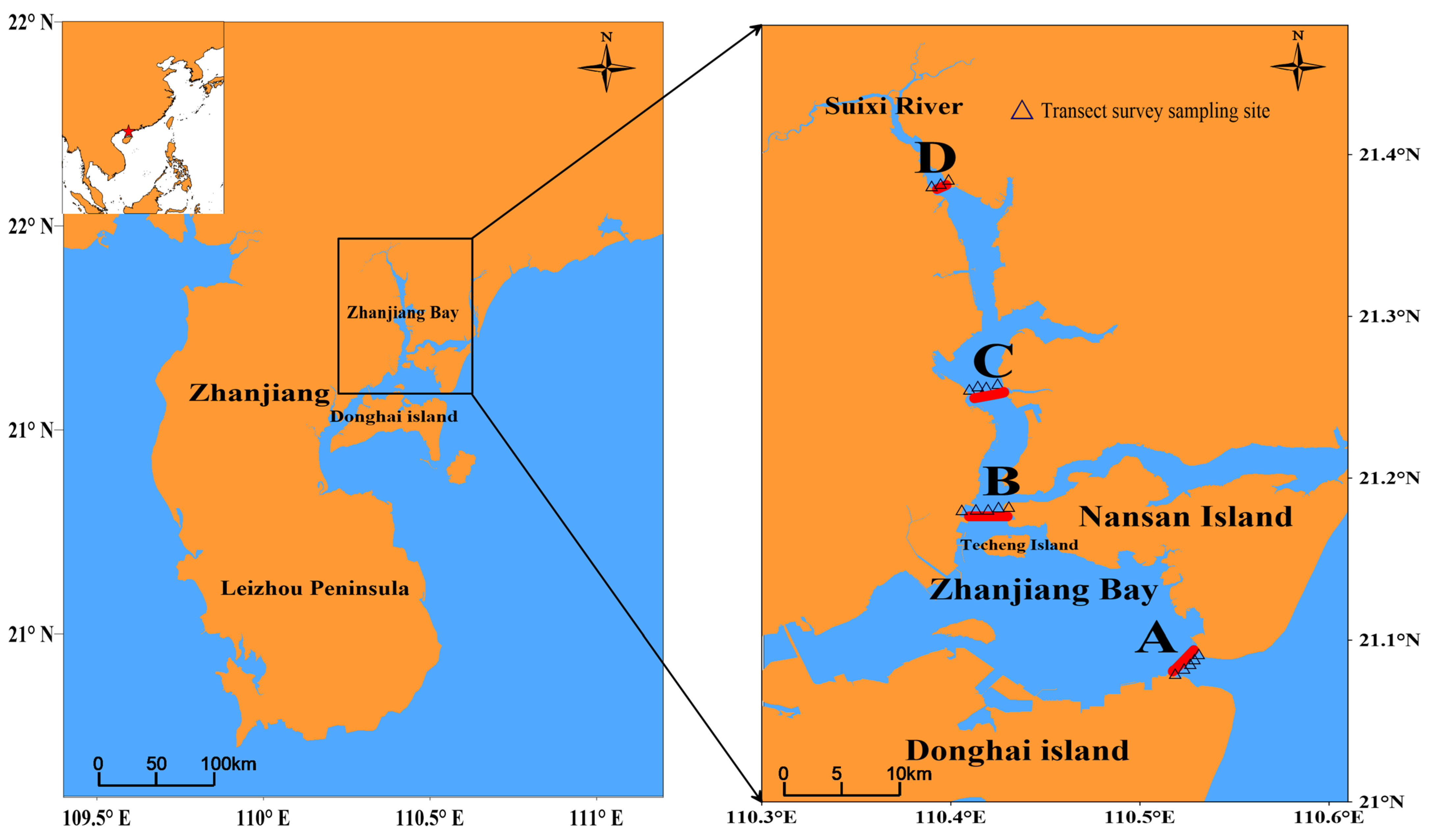
ZJB is an almost enclosed bay on the coast of western Guangdong, with only a 2 km-wide outlet at its mouth connected to the South China Sea (SCS) in the outer bay. The tidal type is an irregular semi-diurnal tide, with two flood and ebb tides occurring in a day, with an average tidal difference of 2.17 m and a maximum tidal difference of 5.45 m, and its current power is dominated by tidal water [38]. The tidal current is reciprocating and significantly affected by the terrain; the flood tide is mainly westward (WSW-WNW) while the ebb tide is mainly in the ESE direction, and the ebb-tide speed is generally greater than the flood-tide speed [39,40]. Influenced by the monsoon climate, ZJB had obvious dry and wet seasons [35]. During the wet season (May to September), heavy rainfall occurs frequently and accounts for 80% of the total precipitation. While only 15% occurs during the dry season (November to March) [41]. Two of these water sources affect the seawater in ZJB. The first is the Suixi River at the top of the bay. The Suixi River is about 80 km long and has an average annual flow of 10.4 × 10⁸ m3 [42]. There is seawater intrusion from the outer bay during the wet season [43]. The other is the West Guangdong Coastal Current (WGCC) located in the northwestern part of the South China Sea, where the salinity of the outer bay is high. This study set up four transects for investigation during both the wet season and the dry season (Figure 1).

2.2. Field Observation and Sample Collection

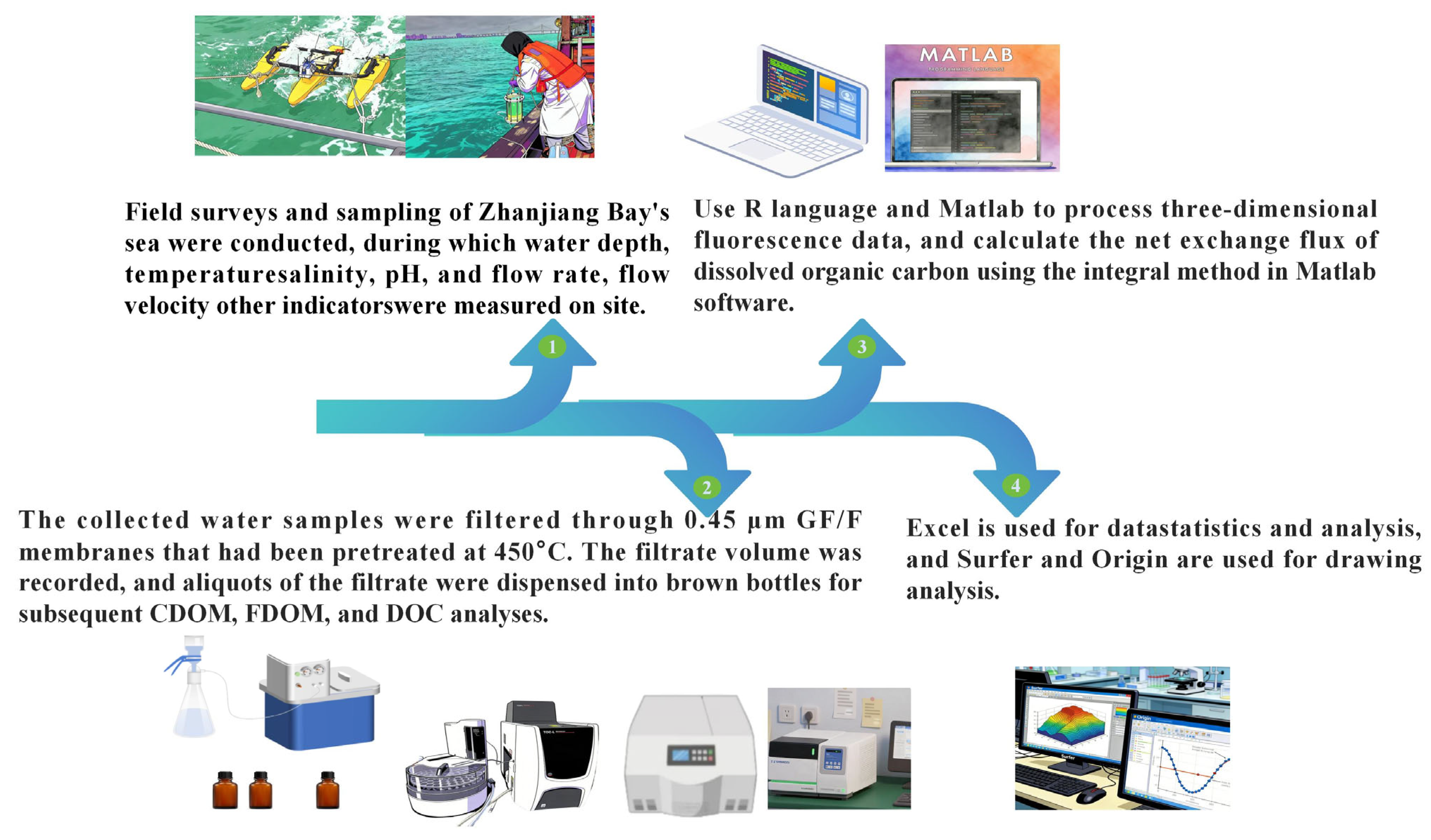
DOC in aquatic environments was influenced by numerous factors, but tidal dynamics played a pivotal role in its fate. To address this, this study conducted tidal current surveys in ZJB during both the wet season and dry season. The two surveys were conducted during the low-water period (December 2023) and the high-water period (September 2024), respectively. Four key cross-transetcs were established, extending from the mouth of ZJB to the Shimen Bridge at the Suixi River estuary, ensuring comprehensive coverage of the ZJB. Sampling was conducted simultaneously by four vessels. The RIVRAY 600 Acoustic Doppler Current Profiler (ADCP) (Teledyne RD Instruments, San Diego, CA, USA) was deployed in the shipborne navigation mode. For each survey transect (A, B, C, D), the research vessel used the ADCP to tow back and forth across the line during four key tidal phases (high tide peak, the ebb phase with maximum flow velocity, low tide phase, and the ebb phase with maximum flow velocity). To address the bidirectional flow issue caused by the salt wedge dynamics, we decomposed the velocity vector into the direction along the river channel (upstream/downstream) and the transverse component. This study focused on the hydrological characteristics of different areas of ZJB and set up 4 sampling transect and conducted stratified station placement. Transect A was located at the mouth of the bay, with an average water depth of 25 m. Therefore, 5 surface stations, 1 middle layer station, and 3 bottom layer stations were set up to cover the vertical stratification driven by the salt wedge; transect B and transect C had an average water depth of 15 m. Considering the spatial scale of the water area and the potential heterogeneity of the DOM vertical distribution, transect B was set up with 5 surface stations, 1 middle layer station, and 3 bottom layer stations, while transect C was set up with 4 surface stations, 1 middle layer station, and 2 bottom layer stations; transect D is located south of Shimen Bridge, with an average water depth of only 7 m, so only 3 surface stations and 1 bottom layer station were set up, and no middle layer stations were placed. This placement method took into account the water depth differences and the spatial distribution characteristics of DOM, ensuring the representativeness of the sampling data. Furthermore, during the transect sampling process, the ADCP was used to simultaneously scan and obtain the physical indicator data, such as transetc area, flow velocity, and flow direction, at each transect. The steps of water sample collection and analysis were shown in Figure 2.
Water samples were collected, transported, preserved, and prepped in accordance with the guidelines outlined in the Marine Survey Specification (GB 12763-2007) and the Marine Monitoring Specification (GB 17378-2007) [44,45]. The sampling tools used in the collection of water samples were cleaned with deionized water and dried. After sample collection, salinity, temperature, and pH data were immediately measured and recorded on-site using a DZB-712 portable multiparameter water quality meter (Leici, Shanghai, China). Flow velocity and discharge were measured using an ADCP. Tidal height data were sourced from Big Fish Tide Table (https://www.chaoxibiao.net). All samples were collected using a 5 L Niskin water sampler, and water samples were collected in 3 L brown HDPE sample bottles (pre-soaked in 1 mol hydrochloric acid for more than 24 h and then cleaned) and placed in an insulated box for refrigeration. After the samples were brought back to the laboratory, they were immediately filtered by a GF/F filter membrane with a pore size of 0.45 μm (burned at 450 °C for more than 4 h in a muffle furnace), and the volume of the filtered water samples (V0) was recorded. Approximately 500 mL of seawater was filtered through pre-acid-washed and pre-assembled (held at 450 °C for 4 h) 45 mm diameter Whatman GF/F glass fiber filters. Filtrate samples for FDOM and CDOM determination were collected in acid-washed HDPE bottles and stored at −20 °C until laboratory analysis. The DOC samples were collected in 50 mL brown glass bottles and acidified by adding 80 mL of phosphoric acid (85%, excellent purity) to a pH < 2, and then stored under refrigeration and light protection for the determination of DOC. All the glass bottles were soaked in 1 mol·L−1 HCl solution, cleaned, and then burned in a muffle furnace at 450 °C for more than 4 h. SPM was measured using the gravimetric method. Chlorophyll a was determined via the spectrophotometric method [46]. Monthly average rainfall characteristics from 2023 to 2024 data for the study region were obtained from the Copernicus Climate Change Service, C3S (https://cds.climate.copernicus.eu).

2.3. Measurements of DOC

DOC concentrations were measured using a TOC-LCPH analyzer (Shimadzu corporation, Kyoto, Japan) operating in high-temperature catalytic oxidation mode (680 °C). Standard curves were constructed using a phthalic acid standard solution. DOC concentrations were determined using a TOC-LCPH analyzer operating in high-temperature catalytic oxidation mode. A five-point standard curve was established using potassium hydrogen phthalate standards. DOC concentrations were calculated by first subtracting the running blank, determined as the average peak area of Milli-Q water acidified with HCl, from the average peak area of the samples (injected 2–3 times) and then dividing by the slope of the standard curve. The precision of the DOC analysis was maintained at ±1.0 μmol·L−1, as validated by DOC Consensus Reference Material (CRM) provided by D.A. Hansell from the University of Miami (https://hansell-lab.earth.miami.edu/consensus-reference-material/index.html, accessed on 15 March 2024). The coefficient of variation for DOC analysis, based on replicate measurements, was approximately 2%.

2.4. CDOM and FDOM Analyses

The absorption spectra of CODM were determined by a UV-2600i (Shimadzu corporation, Kyoto, Japan) UV-visible spectrophotometer with the wavelength range set between 200 and 800 nm and the scanning interval of 1 nm. Mill-Q water was selected as a blank control group, and a 1 cm quartz cuvette was selected for the detection of absorbance, and the value of absorbance was taken [13]. The relative concentration of dissolved organic matter was expressed by the absorption coefficients a254 and a355 [47], which were calculated as follows:
a λ = 2.303 × A ( λ ) L
where L is the optical path length (m) and a (λ) is in units (m−1).
The specific UV absorption value at 254 nm (SUVA254, m2g−1C) was calculated by dividing the absorbance of the sample at 254 nm (a254) by the optical range, L, to obtain A/L (m−1), and dividing the A/L value by the DOC concentration (mg·L−1). The absorption coefficient a355 at 355 nm correlates well with the amount of CDOM, and a355 is commonly used as an indicator of CDOM in water environment studies [48]. The relative concentration of CDOM was represented by a254 and a355, with higher values indicating greater CDOM concentrations [47]. The spectral slope (S275–295, nm−1) was determined by linear regression of the natural logarithm of the light absorption coefficients in the wavelength range of 275–295 nm against the corresponding wavelength range to assess the molecular characterization of CDOM through the relationship between CDOM absorbance and wavelength. S275–295 values indicate a smaller DOM molecular weight and lower humification [49]. The spectral slope ratio (SR) was the ratio of the spectral slopes in the wavelength interval of 275–295 nm and in the interval segment of 350–400 nm.
Excitation-emission matrices (EEMs) were determined by scanning the fluorescence spectra of the samples using an RF-6000 fluorescence spectrophotometer (Shimadzu, Japan). The containers used for the test samples were 1 cm quartz cuvettes with four-sided transmittance, and Milli-Q water was used as a blank. After deducting the blank from the measured EEMs, the fluorescence intensity was divided by the Raman peak of Milli-Q water (instrumental parameter settings: excitation wavelength 200–400 nm, data interval 5 nm; emission wavelength 250–550 nm, data interval 5 nm; scanning speed 2000 nm/min; excitation and emission bandwidths of 10 nm), and the integral value was converted into a Raman unit (R.U.) as the fluorescence spectrum [50]. Inner filter effects were corrected using an absorbance-based method [51]. After obtaining the three-dimensional fluorescence spectra of dissolved organic matter, the EEMs were modeled using the Parallel factor analysis (PARAFAC) method, based on the analysis approach by Stedmon and Bro, to determine the fluorescent components of DOM [52].
Three qualitative fluorescence indexes were calculated based on the corrected EEMs. The humification index (HIX), which indicates the degree of DOM humification, was determined from the ratio of integrated emission spectra from 435 to 480 nm to 300–345 nm under 254 nm excitation [53]. The magnitude of HIX can indicate the degree of humification of CDOM [54], and the greater the value of HIX, the higher the stability, indicating that its source is influenced by anthropogenic activities and inputs from terrestrial sources. The biological index (BIX), providing insights into the presence of fresh biological compounds in DOM, was computed as the ratio of fluorescence intensity emitted at 380 nm to that at 430 nm upon excitation at 310 nm. Fluorescence index (FI), reflecting the relative contribution of terrestrial and microbial sources to the DOM pool, was calculated as the ratio of emission intensities at 470 nm–520 nm under an excitation of 370 nm [55].

2.5. Determination of DOC Net Exchange Fluxes

Due to the limitations of the actual sampling conditions, what was calculated in this paper was the net exchange flux for a complete tidal cycle. The net exchange flux for 24 h was estimated by multiplying the net exchange flux for approximately a complete tidal cycle by 2. This approach assumes that tidal conditions are similar in complete tidal cycle periods and that the tidal fluxes were approximately consistent. This topography buffered irregular fluctuations in open-ocean tides, stabilizing tidal cycles within the bay during spring tides. This further reduced flux variations between two consecutive semi-diurnal tidal cycles, providing regional-scale support for the applicability of the single tidal cycle flux by 2 estimation method. Although ZJB experienced irregular semi-diurnal tides, which may lead to some differences in tidal fluxes between the two complete tidal cycles, this method provided a feasible and simplified approach for preliminary estimation of the approximately 24 h tidal flux in the absence of detailed tidal observation data. In this survey, a tidal cycle integral flux of DOC into the ocean from ZJB was calculated as follows. A tidal cycle integral flux of DOC to ZJB was estimated based on the survey data of flood and ebb tide at the transect of the mouth of ZJB, combined with the DOC concentrations analyzed and tested in the laboratory. The formula for calculating the tidal flux used here was as follows:
F 24 h = 2 × 10 9 0 T i = 1 n f i t d t = 2 × 10 9 0 T i = 1 n C i t × Q i t
f i = C i t × Q i t
where F was the transport flux of DOC (tons), F 24 h = 2 × 10 9 0 T i = 1 n f i t d t indicated the integral of the function from time t = 0 to t = T, which sought to find the cumulative amount of fluxes during this time. The instantaneous flux fi was the product of DOC concentration Ci(t) and flow rate Qi(t). n = number of water layers (e.g., 3 layers for deep transects, 2 layers for shallow transects); Ci(t) = DOM concentration of layer i at time t (units: mg·L−1); Qi(t) = flow velocity of layer i at time t (units: m3·s−1); T = duration of one tidal cycle.

2.6. Statistical Analyses

All experimental results were organized and analyzed using Excel. Correlation analysis was performed using SPSS Statistics 26 software. Significant differences in the data were assessed using the Mann–Whitney U test. For all statistical analyses, a p-value of 0.05 was considered statistically significant. Three-dimensional fluorescence spectra were analyzed and processed in MATLAB R2020a. All graphs were generated using Origin 2021b and Surfer 11.

3. Results

3.1. Characteristics of Hydrological Parameters Under Tidal Dynamic Changes

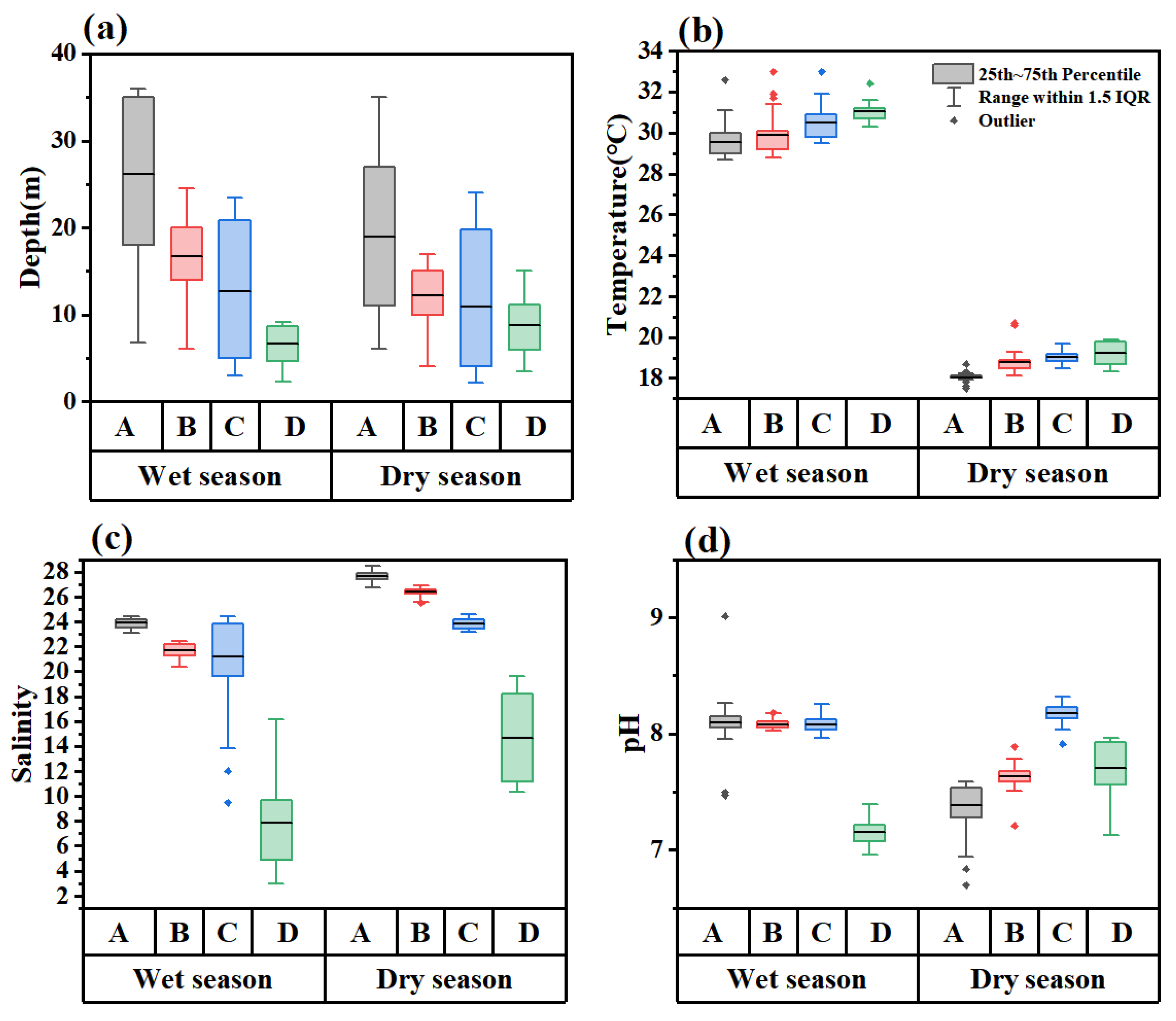
The seawater temperature, salinity, pH, and depth exhibited significant differences between wet and dry seasons across various transects in ZJB (Table 1, Figure 3). The overall temperature in the wet season was 30.23 ± 0.57 °C, compared to 18.77 ± 0.46 °C in the dry season. Wet season salinity was 18.69 ± 6.32, while dry season salinity was 23.12 ± 5.11. The pH in the wet season was 7.85 ± 0.40, compared to 7.73 ± 0.29 in the dry season. The depth in the wet season was 15.53 ± 7.08 m, while in the dry season it was 12.71 ± 3.80 m. The water temperature in the wet season was significantly higher than in the dry season. In contrast, salinity showed an opposite trend, decreasing from transect A to transect D. The pH values were generally higher in the wet season than in the dry season. In terms of depth, except for transect D, the depths in other transects were generally greater in the wet season than in the dry season.

3.2. Characteristics of DOC Under Tidal Dynamic Changes

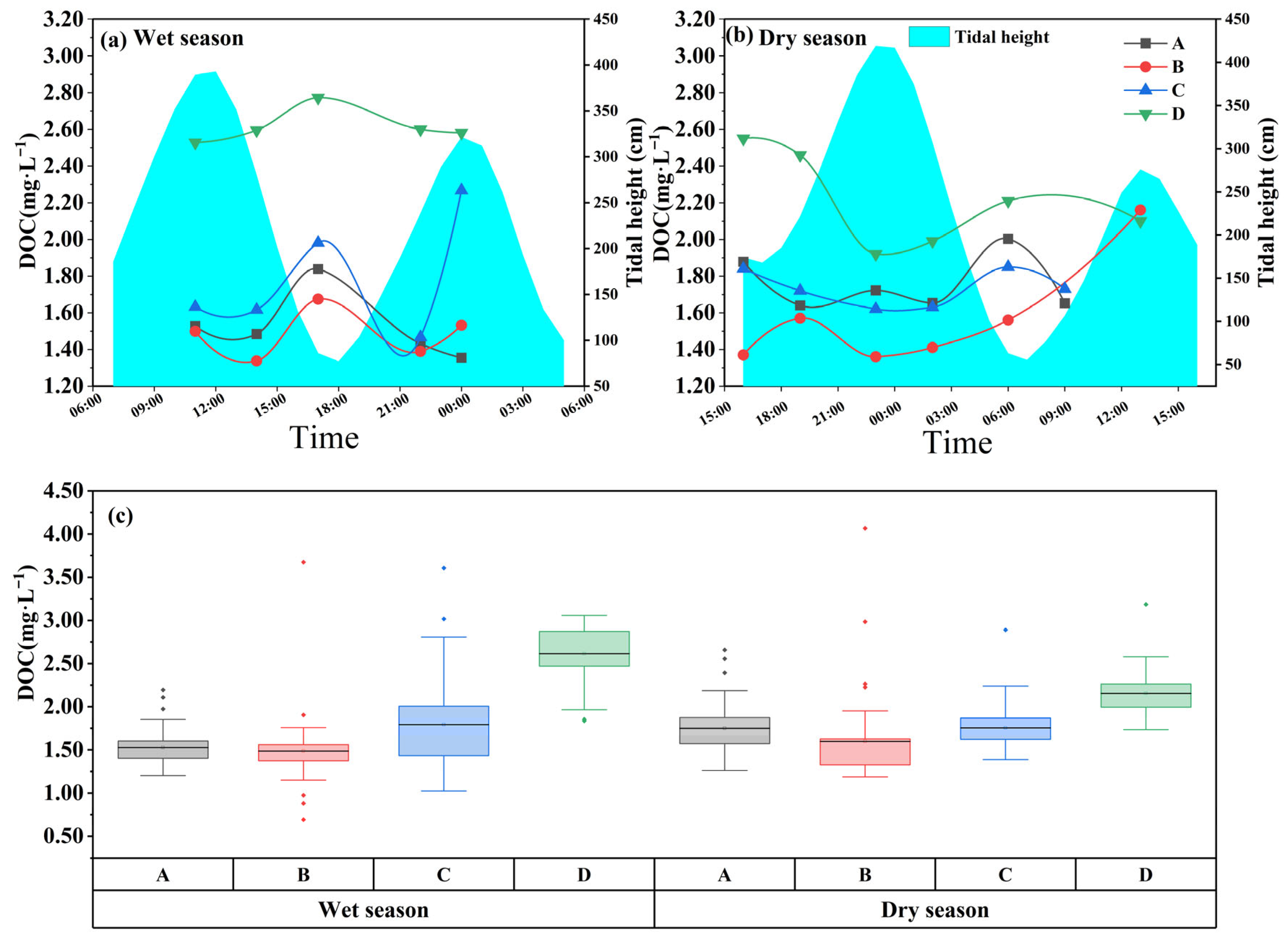
There was a significant difference in the distribution of DOC concentrations between the wet season and the dry season (p < 0.05, Mann–Whitney U test). Meanwhile, the results indicated a significant difference in the distribution of DOC concentrations between the flood tide and ebb tide periods (p < 0.05, Mann–Whitney U test). Spatially, the DOC concentration gradually decreased from transect D to transect A, indicating that terrestrial inputs from the estuary play a crucial role in DOC distribution (Figure 4). In the wet season, the DOC concentration at transect D was significantly higher than at other transects, reaching a maximum of 2.77 mg·L−1, while the lowest concentration of 1.35 mg·L−1 was observed at transect A. In the dry season, the overall DOC concentration was slightly lower than in the wet season, with the highest value of 2.55 mg·L−1 at transect D and the lowest value of 1.75 mg·L−1 at transect A.

3.3. Characteristics of CDOM Under Tidal Dynamic Changes

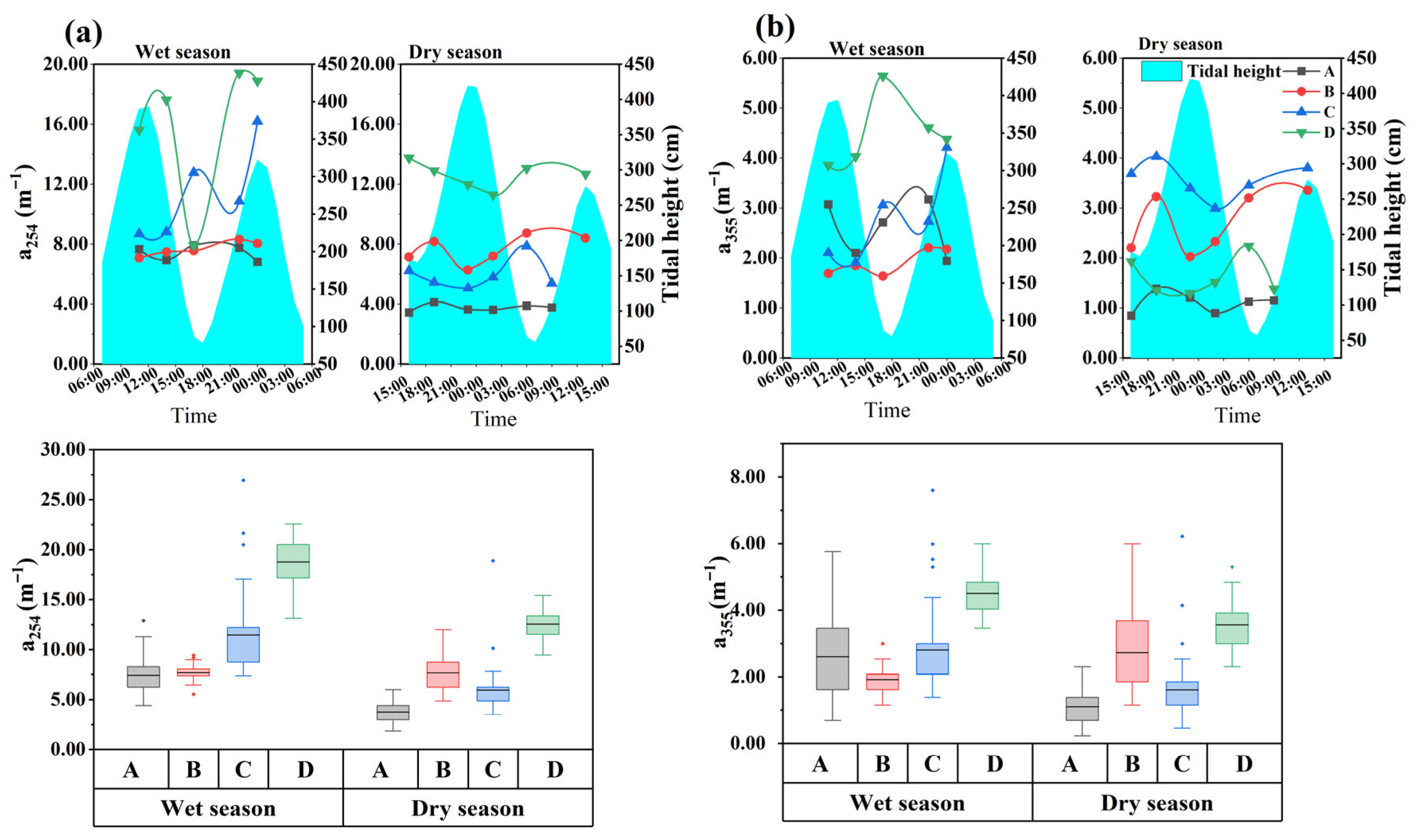
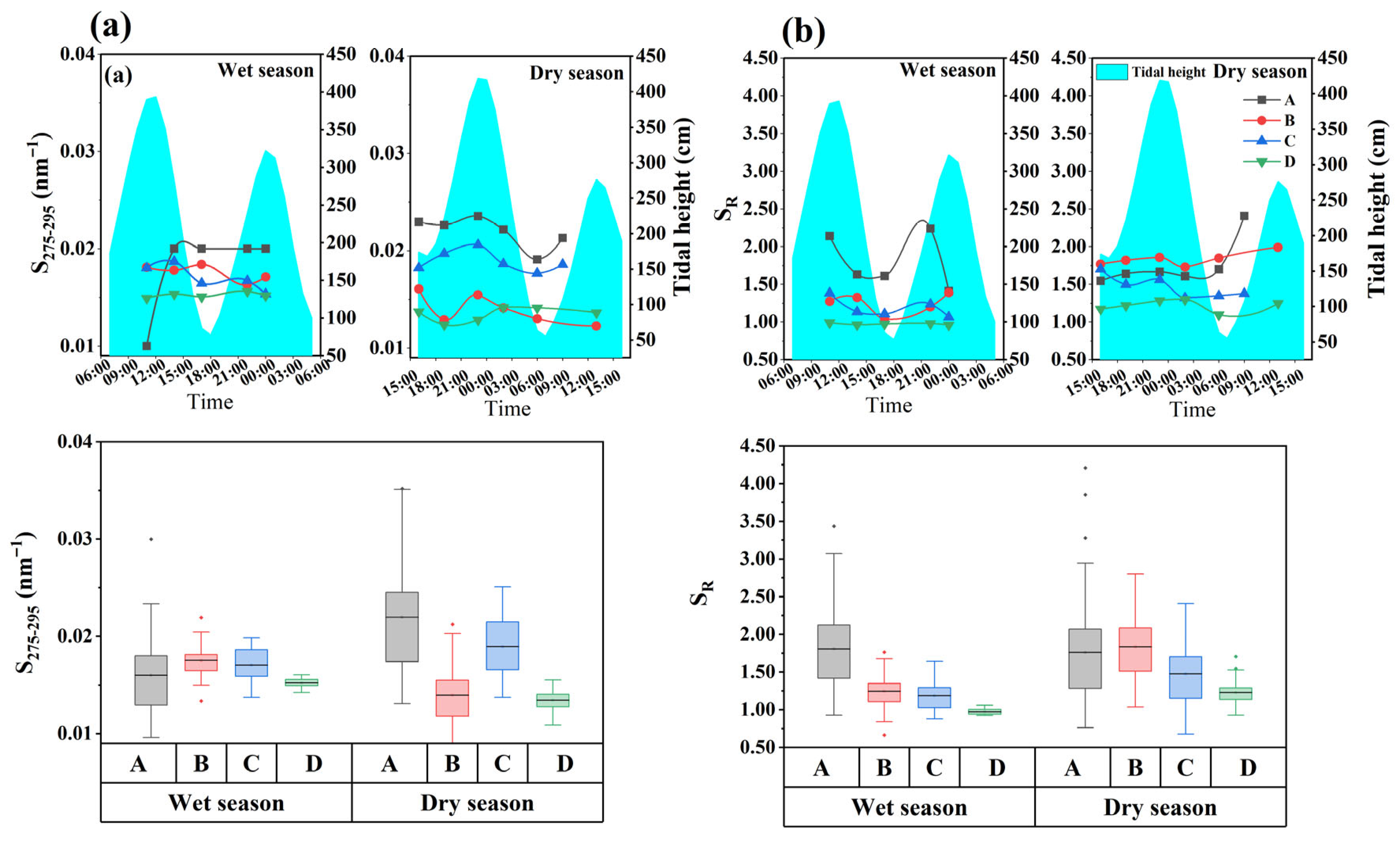
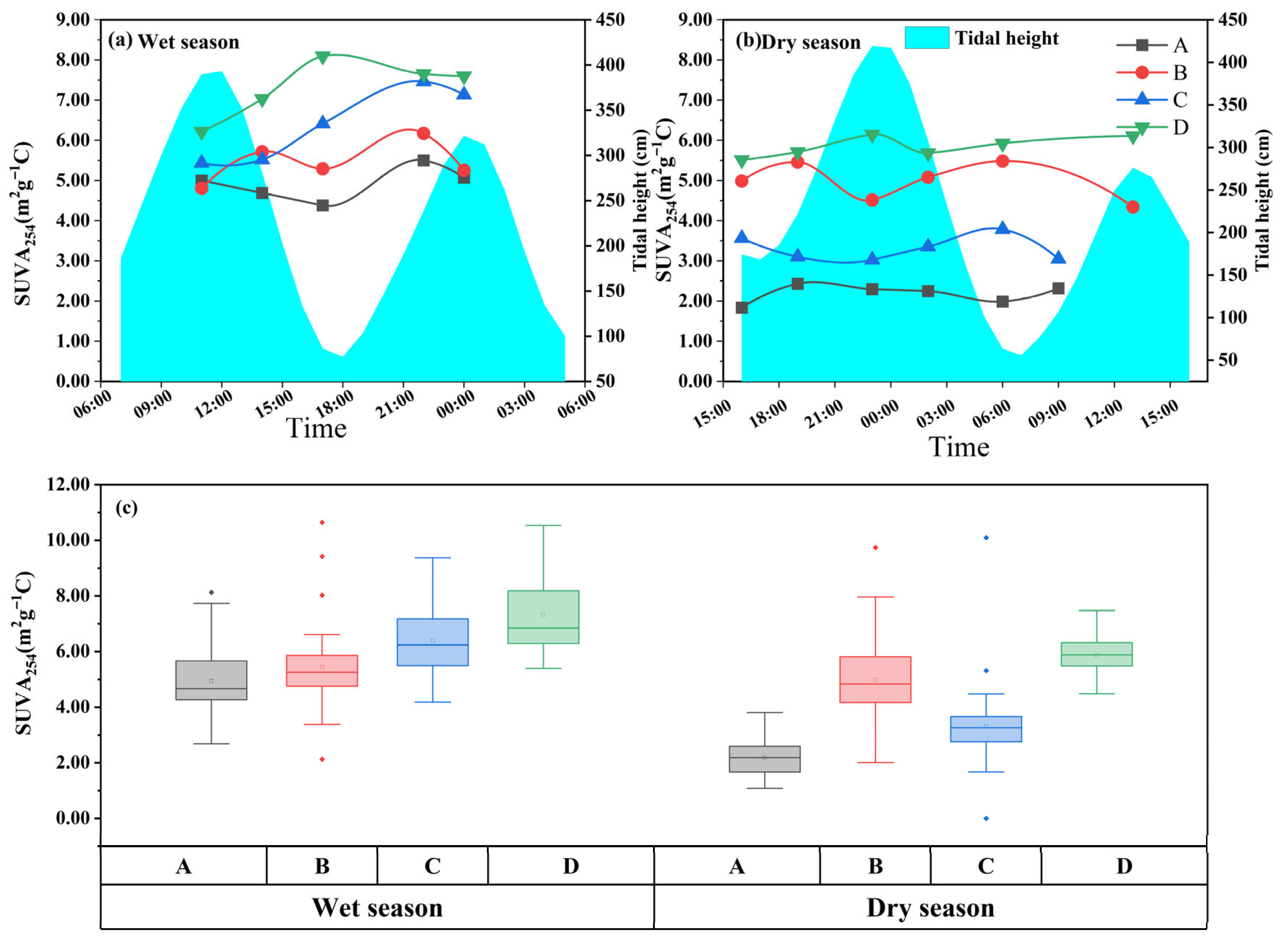
This study investigated the spatiotemporal variation characteristics of CDOM in ZJB. Results showed that during both wet and dry seasons, a254 and a355 decreased from the estuary toward the outer bay (Figure 5). a254 exhibited significant fluctuations at transect C and D during the wet season (especially during spring tides), influenced by enhanced terrestrial inputs and tidal mixing. while exhibiting smaller fluctuations and a smoother decline during the dry season (with weaker tidal influence on CDOM concentrations). Similar patterns were observed for a355, confirming the spatial gradient of CDOM concentrations. SUVA254 was significantly higher during the wet season than the dry season, and CDOM aromaticity increased with rising water levels (Figure 6). Meanwhile, the results indicated a significant difference in the distribution of SUVA254 concentrations between the flood tide and ebb tide periods (p < 0.05, Mann–Whitney U test). S275–295 decreases from the outer bay toward the estuary (Figure 7). High values in the outer bay reflect the influence of low-molecular-weight DOM from offshore areas, while low values in the estuary indicate dominance by terrestrial high-molecular-weight organic matter. Terrestrial sources exert a more pronounced effect on DOM molecular weight during the wet season. SR increases from the estuary toward the outer bay. During the wet season, SR at Transetc A exhibits large fluctuations due to tidal effects and overall high variability. In the dry season, SR at all transetcs shows smaller fluctuations and greater stability, with wet-season SR averages lower than dry-season values. In summary, wet-season DOM in the ZJB exhibits high molecular weight and high aromaticity, influenced by multiple factors. Dry season DOM is characterized by low molecular weight and low aromaticity with a more stable composition. These parameters reveal the dynamic characteristics of the DOM under seasonal and tidal influences.

3.4. Characteristics of HIX, BIX, and FI Under Tidal Dynamic Changes

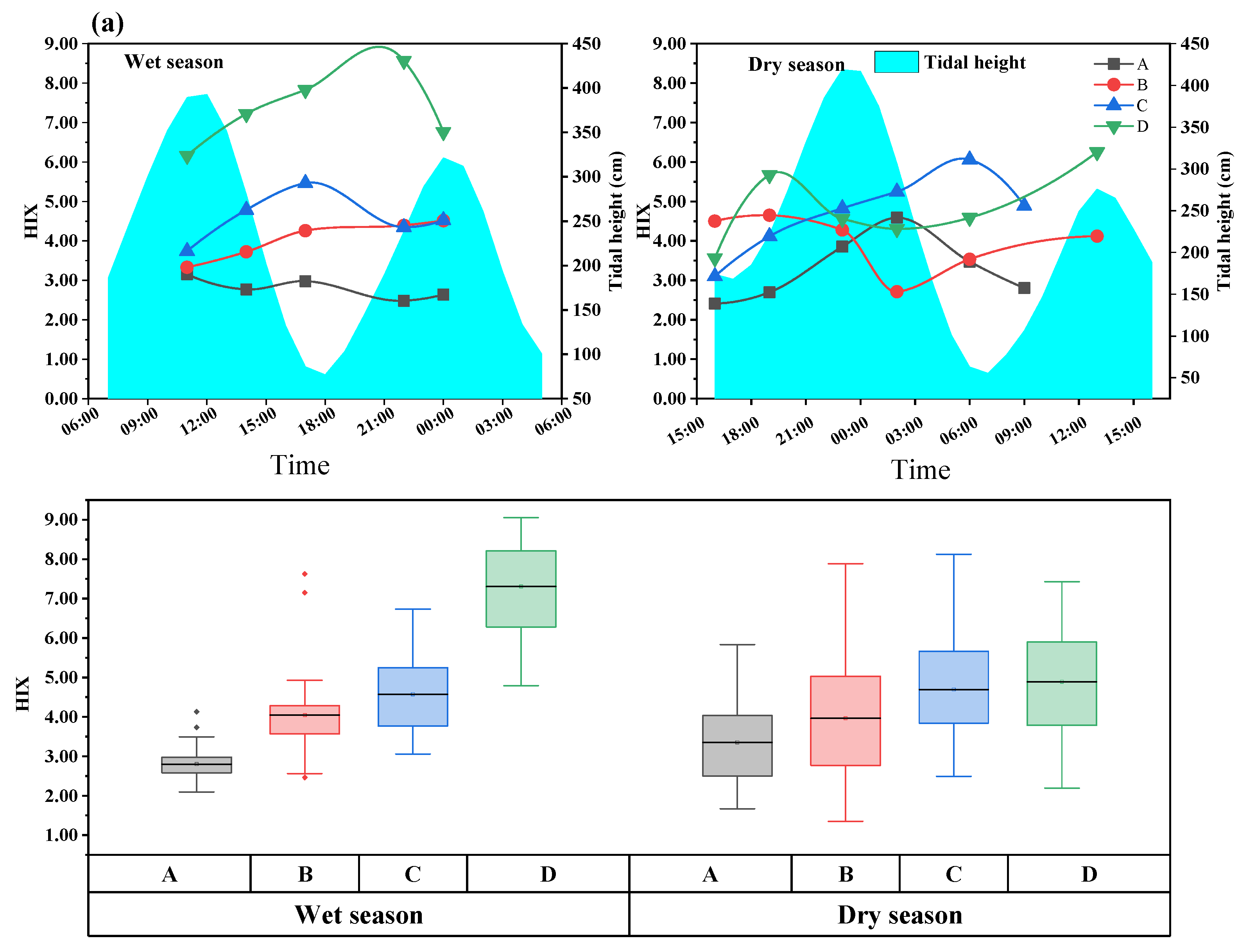
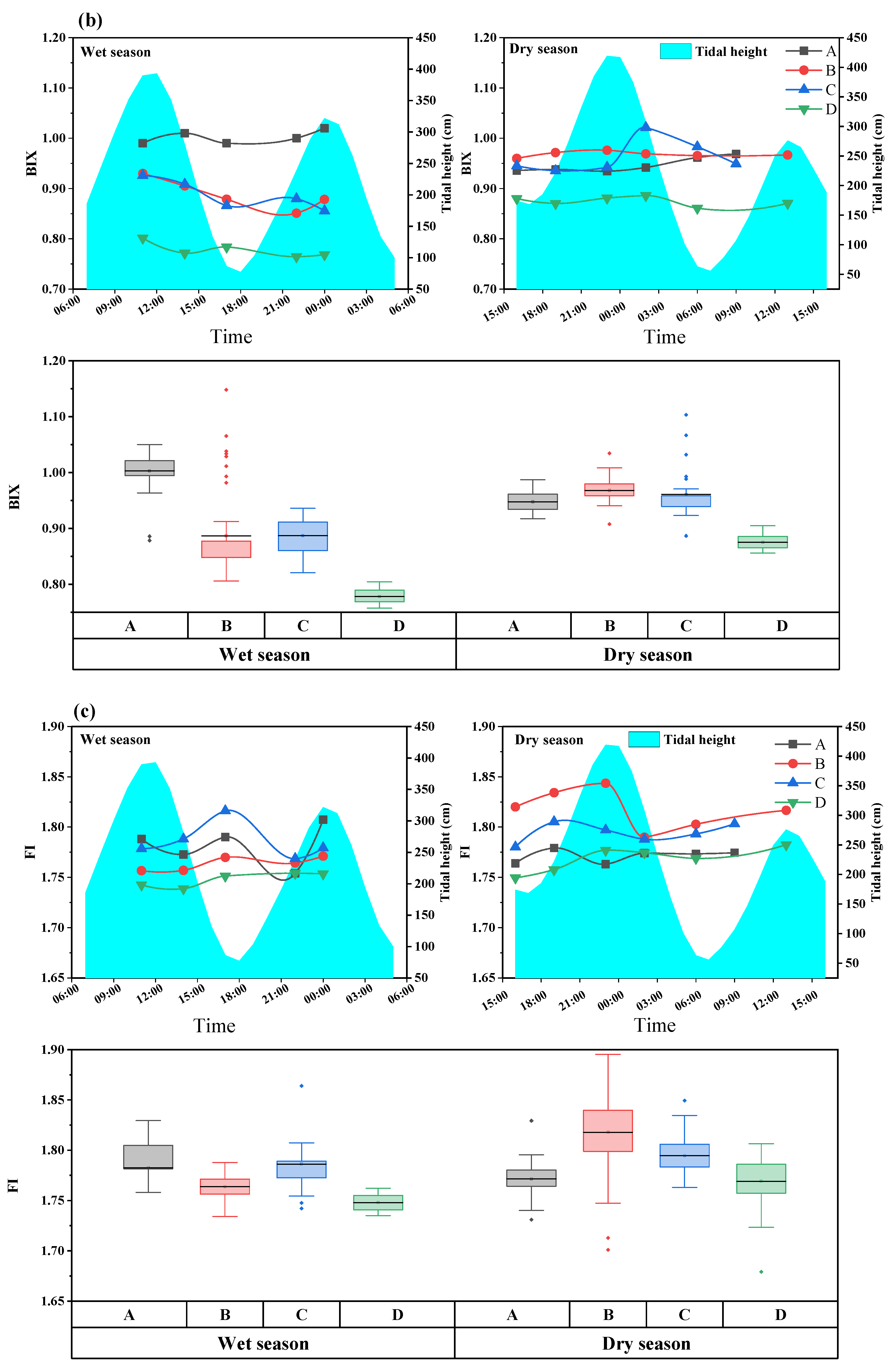
The study found that HIX values in ZJB exhibited an increasing trend from the outer bay to the estuary in both wet and dry seasons (Figure 8). Higher HIX values were observed in the estuary area transect D, indicating a significant influence of terrestrial humic substances in this region. HIX values were generally higher in the wet season than in the dry season, suggesting a greater degree of DOM humification during the wet season. The study found that BIX values were close to 1.0 in both wet and dry seasons in ZJB, highlighting the significant contribution of autochthonous components to DOM. BIX values were slightly higher in the outer bay area transect A than in the estuary area transect D, suggesting a greater influence of autochthonous DOM in the outer bay region. The study found that FI values ranged between 1.4 and 1.9 in both wet and dry seasons in ZJB, suggesting a mixed origin of DOM. Based on in the Supplementary Materials Table S3, the average value of HIX in the wet season was higher than that in the dry season. The average value of BIX in the wet season was lower than that in the dry season. The average value of FI was not much different.

3.5. Contribution Characteristics of Fluorescent Components

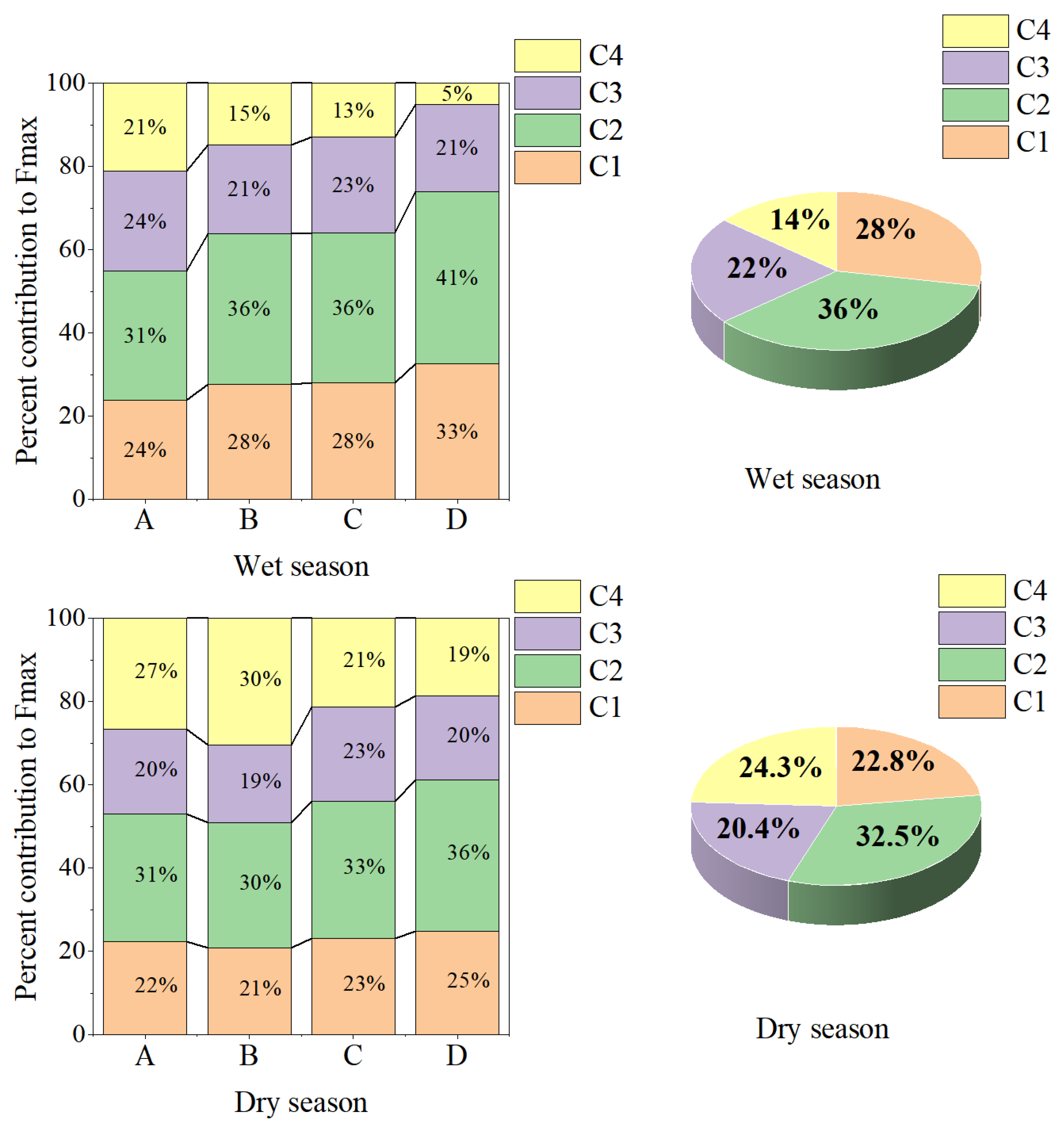
PARAFAC identified four major fluorescent components (Table 2), including three humic-like components (C1, C2, C3) and one protein-like component (C4). As illustrated in Figure 9, the fluorescence components exhibit distinct seasonal and spatial distribution patterns in ZJB. During the wet season, microbially derived C2 dominated, accounting for 36% of the total fluorescence, reflecting vigorous microbial activity that strongly drives the production of these components. Terrestrial/anthropogenic C1 ranked second 28%, indicating significant influences from terrestrial inputs or anthropogenic activities on DOM composition during this period.
Table 2. Characteristics of fluorescence components during wet and dry seasons.
ComponentMax. Wavelength
(Ex/Em, Unit: nm)
DescriptionPrevious Studies
C1365/470UV/visible terrestrial humic-likeC2 [56]
Humic-like with either terrestrial or anthropogenic origin, a Mixture of A and C peaksC2 [57]
C2335/415Microbial humic-likeC1 [58]
C3315/365Marine humic-like microbial productionC4 [59]
C4280/310Protein-likeC4 [60]

3.6. Dynamics of DOC Net Exchange Fluxes

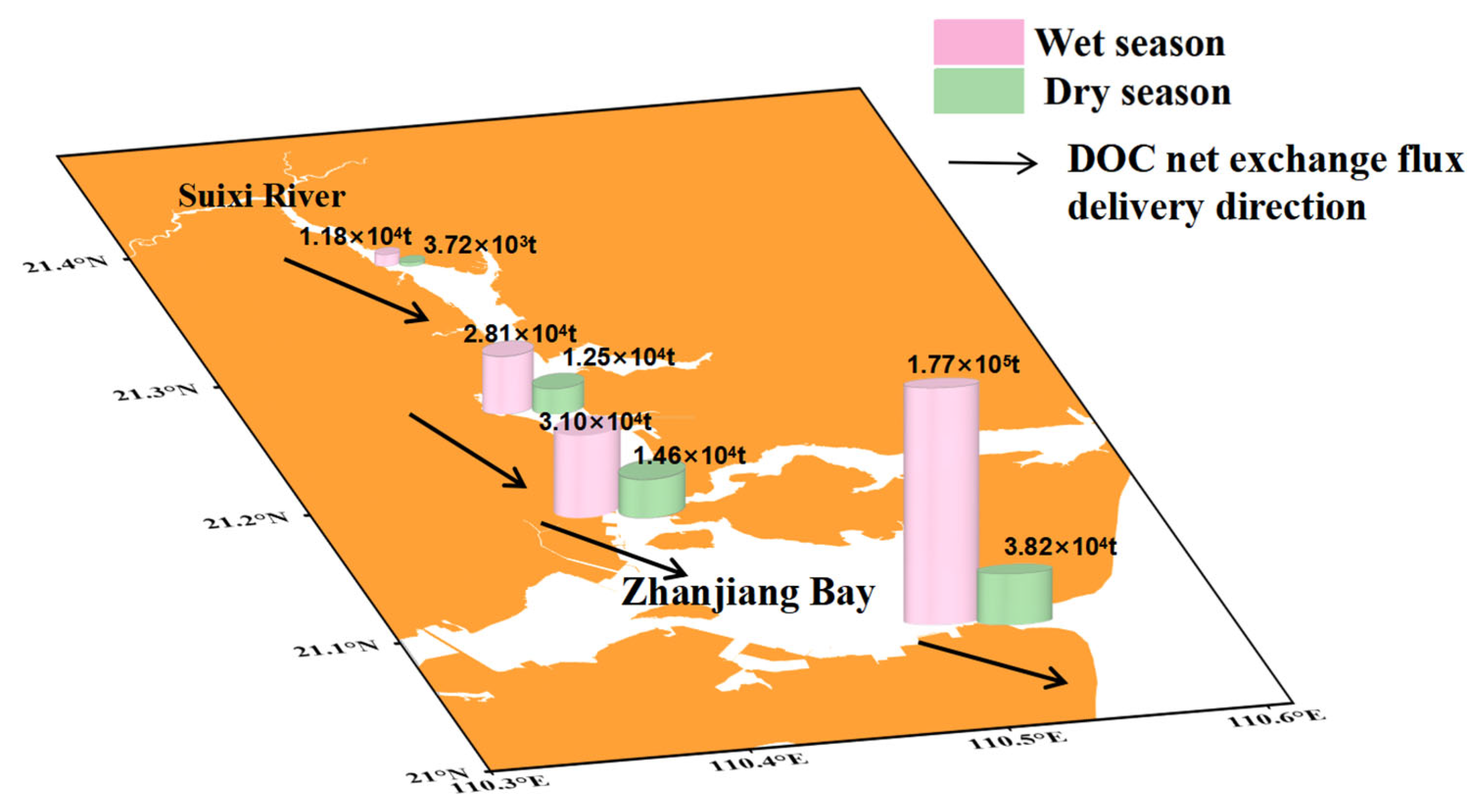
This study quantified net DOC fluxes during both the wet and dry seasons (Figure 10). Net DOC fluxes exhibited a flow direction from terrestrial sources into the ZJB and from the estuary bay into the SCS. Transetc B and C showed a downward flow trend. During the wet season, net DOC fluxes at each profile were 1.77 × 10⁵ t, 3.10 × 10⁴ t, 2.81 × 10⁴ t, and 1.18 × 10⁴ t; while dry season values decreased to 3.82 × 10⁴ t, 1.46 × 10⁴ t, 1.25 × 10⁴ t, and 3.72 × 10³ t. During both hydrological seasons, consistent upwelling gradients of net DOC flux were observed from the estuary toward the outer bay. Wet season flux values at different transects were 3.6 to 4.6 times higher than dry season values.

4. Discussion

4.1. Analysis of the Spatiotemporal Variation Patterns and Influencing Factors of DOC Under Tidal Dynamics

Comparison of DOC content and other domestic and foreign sea areas in ZJB (Table 3). The distribution and concentration of DOC were governed by the combined effects of tidal dynamics, seasonal variations, and terrestrial inputs, resulting in distinct spatiotemporal patterns in ZJB. Tidal action served as the primary driver of short-term DOC variations. The study found that DOC concentrations during flood tides were consistently and significantly lower than during ebb tides in both dry and wet seasons. The decrease in DOC concentration during flood tides was mainly driven by physical mixing processes in ZJB. The inflow of low DOC seawater from the open ocean during flood tides significantly diluted the bay’s water [19]. There was an observation in a subtropical estuary showed that seawater input during flood tides could reduce DOC concentrations [61], which was completely consistent with the observations in ZJB. The limited terrestrial input in this semi-enclosed bay made this physical dilution effect particularly pronounced. During ebb tides, the increase in DOC concentration was primarily attributed to water retention and accumulation caused by topographic obstacles. The meandering coastline and shoals slowed ebb-tide flow velocities, prolonged water residence time, and led to DOC accumulation [62]. In a tributary of the Yangtze River, it was observed that due to the complex terrain, the water flow stagnated during the ebb tide, resulting in a 15% to 25% increase in DOC concentration compared to the ebb tide [27]. The semi-enclosed morphology of ZJB caused ebb-tide flows to be blocked by headlands and shoals, preventing efficient discharge of DOC, while sediment resuspension may have supplemented some DOC, collectively leading to increased concentrations during ebb tides. This tidal regulation pattern aligned with observations in other systems, such as the Altamaha River estuary [63,64].
Spatially, DOC concentrations gradually decreased from the estuarine transect D toward the offshore area, highlighting the combined influence of terrestrial inputs and seawater dilution at the estuary as a critical land–sea interface. Superimposed on tidal dynamics, seasonal factors further modulated DOC distribution: increased runoff during the wet season introduced more terrestrial organic matter, while lower temperatures during the dry season likely slowed DOC degradation rates [65]. This spatial pattern was consistent with the DOC distribution observed in the coastal Bohai Sea [66]. Comparative analysis revealed significant spatial heterogeneity in DOC concentrations within ZJB. Estuarine transects C and D showed higher DOC during the wet season, reflecting strong terrestrial influence, consistent with findings from the Pearl River and Yangtze River estuaries [19,67,68]. In contrast, outer bay transects A and B exhibited lower DOC during the wet season, a pattern also observed in Xiangshan Bay and the Jiulong River [69,70], attributed to precipitation dilution and strong tidal mixing that shortened water residence time [71]. Notably, the DOC concentration at the Suixi River estuary (transect D) was lower than in many global estuaries such as Maryland’s Coastal Bays, the Schelde Estuary, the Pearl River, and the Dagu River tidal reach [67]. This lower baseline was attributed to: (1) the Suixi River basin being dominated by agriculture and natural wetlands with limited industry, resulting in lower terrestrial DOC inputs compared to highly urbanized or intensively agricultural catchments; and (2) the crucial role of mangrove wetlands (e.g., the Gaoqiao Reserve) in intercepting and retaining terrestrial DOC through root exudates and sediment adsorption [41,43]. This retention mechanism was analogous to that in the Altamaha River estuary marshes [12], but the concentrated distribution of mangroves likely conferred higher retention efficiency in ZJB. In summary, the DOC characteristics revealed a unique carbon cycling pattern in a semi-enclosed bay under land–sea interactions in ZJB. The low background concentrations reflected the synergistic effects of moderate terrestrial inputs, efficient tidal mixing, and the significant carbon interception capacity of mangrove ecosystems, providing important insights for estuarine ecological management.
Table 3. Comparison of the DOC (mg·L−1) with other regions.
Research AreaTimeWet SeasonDry SeasonAverage ValueReference
Maryland’s Coastal Bays South, United States2011–2013//3.80–4.71[72]
Mississippi River Plume, United States2002–2004//1.83–5.51[73]
The Schelde estuary, FranceJanuary 2003–December 2003//4.60[74]
Tidal reach of the Dagu River, ChinaMay 2022; October 20224.90 ± 0.613.22–4.382.36–5.84[67]
Altamaha River, United States2015–2016//7.96[75]
North of Bohai Bay, ChinaAugust 20203.4 ± 0.41//[66]
Liusha Bay, ChinaFebruary 2008; August 20083.151.222.19[76]
Xiangshan Bay, ChinaMay 2019; December 20191.30 ± 0.201.70 ± 0.401.50 ± 0.30[69]
The Pearl River, ChinaAugust 2020; December 20207.86 ± 2.935.21 ± 0.717.33[77]
the Northern South China Sea, ChinaNovember 2008–December 20081.08–1.120.790.95[78]
Yangtze Estuary’s Chongming Dongtan, ChinaJuly 2017; January 20182.98 ± 0.791.87 ± 0.772.43 ± 0.78[68]
Ria de Aveiro coastal lagoon, Portugal2002//1.00–2.20[79]
Yangtze River Estuary, China2022–20231.70–9.50<1.70/[19]
Shark River estuary, United StatesMay 2000–September 2014//13.20 ± 2.80[61]
Jiaozhou Bay, ChinaApril 2016–February 2017//5.04 (0.98–32.75)[80]
Jiulong River, ChinaJuly 2017; January 20181.042.341.69[70]
Zhanjiang bay (ZJB), ChinaDecember 2023; September 20241.86 ± 0.461.82 ± 0.201.84 ± 0.35This study

4.2. Analysis of the Correlation Between Response Characteristics of Spectral Parameters and Driving Factors Under Tidal Dynamics

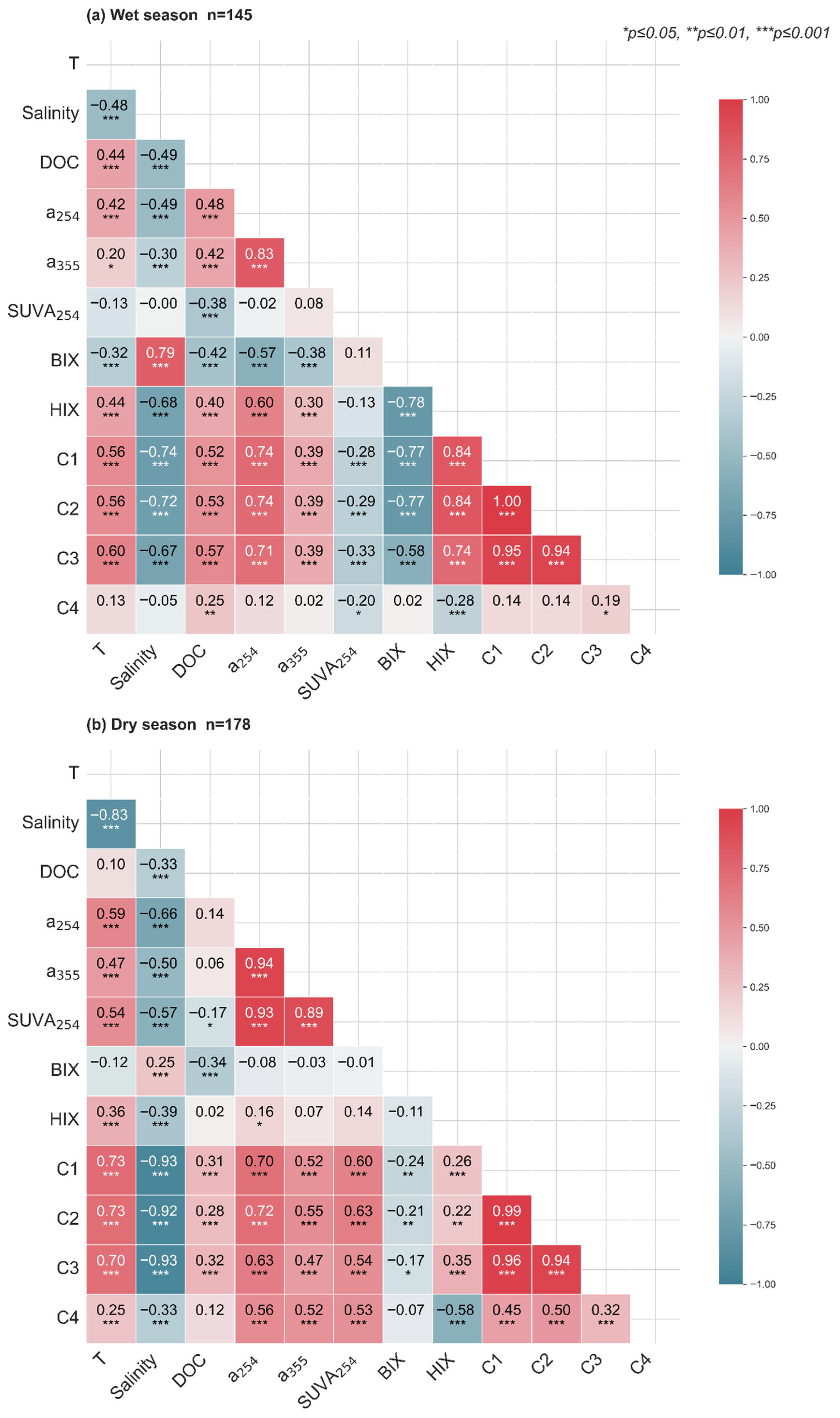
This study analyzed the optical properties and fluorescence components of DOC, CDOM, and FDOM across different hydrological periods to elucidate the biogeochemical processes of DOM under tidal forcing (Figure 11). Tidal action served as the core physical driver, dominantly regulating the source-to-sink processes and distribution patterns of DOM by periodically altering salinity distribution and water mixing conditions. During the wet season, DOC showed a significantly positive correlation with temperature (p < 0.01), accompanied by high SUVA254 (Supplementary Materials Table S3). This indicated that terrestrially derived DOM (e.g., from mangrove litter, river humic acids) was characterized by high aromaticity and recalcitrance [81]. This phenomenon was consistent with the mechanism where high temperatures in the wet season promote the dissolution and fluvial transport of soil organic matter [82]. In contrast, during the dry season, no significant correlation was found between DOC and temperature, and BIX values were slightly higher, suggesting that DOM primarily originated from autochthonous sources [83]. This aligned with the characteristics of reduced terrestrial input and relatively stable biological activities within the bay during the dry season [84].
Tidal regulation of DOM distribution was primarily achieved through its modification of the salinity field. DOC, CDOM (a254, a355), and FDOM (HIX, C1–C3) exhibited significantly negative correlations with salinity in both dry and wet seasons, a pattern consistent with observations in the Yangtze River Estuary [85]. This negative correlation essentially resulted from the conservative mixing between high DOC, low salinity terrestrial freshwater, and low-DOC, high-salinity seawater under tidal influence [86]. Research by Regier and Jaffé (2016) in a subtropical estuary confirmed that seawater intrusion during flood tides could reduce DOC concentration [61], a mechanism that was also significant in ZJB. As a physical mixing index, the regulatory role of salinity has been validated at both global and seasonal scales [87], indicating that DOM distribution conformed to the classic theory of freshwater-seawater mixing dominance in ZJB. Spatial differences further reflected the interaction between tidal dynamics and terrestrial input. DOC and CDOM absorption coefficients (a254, a355) in the coastal waters of ZJB were lower than those in the estuarine area, consistent with patterns observed in the Pearl River Estuary, Yangtze River Estuary, and the Baltic Sea [88,89,90], demonstrating the dilution effect of CDOM during tidal mixing. The variability of DOC and a355 in the inner estuary was significantly higher than in the coastal zone, mainly attributed to inputs from multiple tributaries of the Suixi River carrying substantial anthropogenic pollutants, which intensified fluctuations in DOM concentration and composition under the influence of tidal pumping [65]. Furthermore, DOM was characterized by a smaller molecular weight and lower humification [86]. The mean HIX values were 4.24 (wet season) and 4.10 (dry season), indicating a moderate humification level of DOM in ZJB. Notably, HIX values in the estuarine zone were significantly higher than in the outer bay, further highlighting the accumulation effect of terrestrial humic substances under the reciprocating action of tides.
Tides also indirectly influence DOM transformation through their coupling with the temperature field. Vertical mixing induced by tides altered the temperature distribution pattern, thereby affecting the biogeochemical processes of DOM. In some estuarine areas, significant vertical mixing of seawater during flood tides led to a decrease in surface water temperature [62]. The influence of temperature on DOM was manifested as follows: elevated temperatures in the wet season promoted the dissolution and riverine transport of soil organic matter, increasing terrestrial DOM input; whereas relatively stable temperatures in the dry season corresponded to more consistent DOM sources and composition. Research in a tributary of the Yangtze River Estuary found that stagnant flow caused by complex topography during ebb tides could result in DOC concentrations higher than during flood tides [27]. This phenomenon was also presented in ZJB. Temperature changes induced by tides might further alter the bioavailability and degradation rates of DOM, consequently affecting its distribution and transformation processes. In summary, tidal dynamics, by directly regulating salinity distribution and indirectly influencing the temperature field, collectively shaped the spatiotemporal distribution pattern of DOM in ZJB. Seawater dilution during flood tides and water retention during ebb tides constituted two critical phases for DOM consumption and accumulation, respectively. The interaction between tides and terrestrial inputs, and biological activities, further enriched the biogeochemical implications of DOM.

4.3. Analysis of the Regulatory Effect of Tidal Action on the Temporal and Spatial Variations of DOC Exchange Fluxes

This study found that the DOC flux exhibited a spatial distribution feature of decreasing along the route from the inner bay (transect D) to the bay mouth (transect A) in ZJB, and the flux in the wet season was significantly higher than that in the dry season, being 3.6 to 4.6 times that of the dry season. This temporal and spatial distribution pattern was mainly regulated by tidal dynamic processes. Specifically, the tidal cycle derived the bidirectional transport process of DOC. During the ebb tide, the high-salinity water of the SCS carries marine source DOC into the bay, while during the flood tide, it promoted the outflow of inland source DOC to the open sea. This was consistent with the research conclusion that the high-salinity flood tide at the Yangtze River estuary enhanced the input of marine DOC and the fall tide accelerates the output of terrestrial DOC [19]; the synergistic effect of tidal and runoff further amplifies the seasonal differences in DOC flux. The runoff input in the wet season significantly increased, providing abundant terrestrial DOC to the bay, while the tidal dynamics enhanced the vertical mixing and material transport efficiency of the water, thereby increasing the DOC flux. This pattern was consistent with the research results that the DOC flux at the Taigou River estuary during the flood season is 3 to 5 times that of the dry season and the DOC flux in the tidal marshes of North Carolina was significantly higher during the wet season [28,37], reflecting the universality of the tidal-river runoff co-regulation of the seasonal variation in DOC flux at estuaries; moreover, the tidal spatial heterogeneity led to the decreasing flux along the route. The DOC flux at transects B and C was between the terrestrial-dominated transetc D and the significantly oceanic-influenced transetc A, demonstrating the spatial regulatory role of the attenuation of tidal energy along the route and the changes in water mixing characteristics on the DOC transport process.
Three main uncertainties exist in this study. First, ADCP velocity measurements and DOC concentration analysis had inherent errors. Second, sampling biases arose from DOC spatiotemporal heterogeneity, tidal fluctuations, and salt wedge stratification. Third, daily DOC flux estimation relied on simplified assumptions of consistent tidal conditions and uniform layer-wise DOC concentrations/velocities, which may not align with ZJB’s actual hydrological characteristics. Notably, these uncertainties do not alter the core conclusion that wet-season DOC flux was significantly higher than dry-season flux, with the magnitude of seasonal differences far exceeding uncertainty impacts, enabling valid comparisons with similar estuarine studies. Future research should optimize high-precision measurements, conduct 24 h continuous sampling, and refine calculation methods to reduce uncertainties. Integrating stable isotope and molecular biology techniques can further clarify DOC source composition and transformation processes, enhancing understanding of tidal regulation mechanisms and supporting estuarine carbon cycle research.

5. Conclusions

Based on integrated field observations and spectroscopic analyses, this study systematically elucidated the mechanisms by which tidal dynamics and seasonal runoff jointly regulated the fate of DOC and its exchange fluxes in the estuarine-coastal continuum of ZJB. The main conclusions were as follows: DOC concentrations and DOM composition were regulated by both seasonal and tidal forcings. Spatially, DOC concentrations decreased from the estuarine transect D (maximum of 2.77 mg·L−1) towards the outer bay transect A (minimum of 1.35 mg·L−1), clearly reflecting the dominant influence of terrestrial input. Temporally, the average DOC concentration in the wet season (1.86 ± 0.46 mg·L−1) was slightly higher than in the dry season (1.82 ± 0.20 mg·L−1). More pronounced were the seasonal differences in DOM composition: wet season DOM exhibited higher aromaticity (SUVA254 = 4.49 ± 1.95 m2g−1C) and molecular weight (SR = 1.37 ± 0.48), and was dominated by microbial humic-like substances (C2, 36%). In contrast, dry season DOM showed stronger autochthonous characteristics, with a significantly increased proportion of protein-like components (C4, 24.3%). Fluorescence parameters (FI = 1.77–1.79, BIX = 0.91–0.95, HIX = 4.10–4.24) collectively confirmed that DOM was a mixture of terrestrial and autochthonous sources. Tidal dynamics were identified as the core physical process responsible for short-term DOC fluctuations. During flood tides, the intrusion of low-DOC offshore seawater significantly diluted the bay waters. During ebb tides, the retention and accumulation of high-DOC bay water, impeded by the complex topography, led to significantly higher DOC concentrations during ebb tide compared to flood tide (p < 0.05). This rhythm of flood tide dilution and ebb tide accumulation constituted the primary characteristic of DOC dynamics over a tidal cycle. DOC net exchange fluxes exhibited distinct spatiotemporal patterns. Flux values decreased significantly from the estuary to the outer bay. Furthermore, the fluxes at various transects during the wet season (1.18 × 10⁴ t to 1.77 × 10⁵ t) were 3.6 to 4.6 times higher than those during the dry season (3.72 × 10³ t to 3.82 × 10⁴ t). This pattern indicated that intense seasonal terrestrial inputs provided the primary carbon load for the bay, while active tidal water exchange was responsible for the redistribution and offshore transport of this carbon. In summary, this study demonstrated that seasonal terrestrial inputs determined the baseline level and composition of DOC in ZJB, while tidal dynamics finely regulated the short-term variations and spatial distribution of DOC through physical mixing and transport. These findings enhanced the understanding of carbon cycling processes in semi-enclosed bays and provided a crucial scientific basis for assessing their role in regional carbon budgets.

Supplementary Materials

The following supporting information can be downloaded at: https://www.mdpi.com/article/10.3390/jmse14020123/s1, Figure S1. Monthly average rainfall characteristics of from 2023 to 2024 in Zhanjiang Bay. Figure S2. Dynamics of flow velocity during wet and dry seasons. Figure S3. Fluorescence component maps and loadings during wet and dry seasons. Table S1. Pearson correlation for the response characteristics of spectral parameters and driving factors during the wet season in the ZJB. Table S2. Pearson correlation for the response characteristics of spectral parameters and driving factors during the dry season in the ZJB. Table S3. Comparative analysis of parameter distribution characteristics during wet and dry seasons.

Author Contributions

Conceptualization, X.-L.C., P.Z. and J.-B.Z.; Methodology, X.-L.C., P.Z. and J.-B.Z.; Investigation, X.-L.C., Y.-X.H. and L.Z.; Validation, X.-L.C.; Writing—original draft preparation, X.-L.C. and P.Z.; Writing-review and editing, X.-L.C. and P.Z.; Visualization, X.-L.C.; Supervision, P.Z.; Project administration, P.Z. and J.-B.Z.; Funding acquisition, P.Z. and J.-B.Z. All authors have read and agreed to the published version of the manuscript.

Funding

This research was funded by the Guangdong Basic and Applied Basic Research Foundation (2023A1515012769), Research and Development Projects in Key Areas of Guangdong Province (2020B1111020004), Guangdong Provincial Graduate Education Innovation Program Project in 2025 (2025JGXM_084), Graduate Education Innovation Program Project (202538) of Guangdong Ocean University for funding, Graduate Education Innovation Program Project (202523) of Guangdong Ocean University for funding.

Data Availability Statement

Data is contained within the article and Supplementary Materials.

Acknowledgments

Thanks for the financial support provided by Guangdong Basic and Applied Basic Research Foundation (2023A1515012769), Research and Development Projects in Key Areas of Guangdong Province (2020B1111020004), Guangdong Provincial Graduate Education Innovation Program Project in 2025 (2025JGXM_084), Graduate Education Innovation Program Project (202538) of Guangdong Ocean University for funding, Graduate Education Innovation Program Project (202523) of Guangdong Ocean University for funding. Special thanks to the reviewers for their careful review and constructive suggestions. Thanks to all members of the research team and others involved in this study. Finally, thanks to Chairunnasa Br Sembiring for her diligent proofreading and language polishing of this manuscript.

Conflicts of Interest

The authors declare that they have no known competing financial interests or personal relationships that could have appeared to influence the work reported in this paper.

References

  1. Hansell, D.A. Recalcitrant Dissolved Organic Carbon Fractions. Annu. Rev. Mar. Sci. 2013, 5, 421–445. [Google Scholar] [CrossRef] [PubMed]
  2. Zhang, P.; Li, W.; Wang, J.; Jiao, Z.; Wang, P.; Bai, X.; Fan, J.; Zhang, S.; Zhao, B.; Ren, X. Unveiling environmental dynamics of dissolved and particulate organic matter in high-sediment waters. Environ. Technol. Innov. 2025, 40, 104537. [Google Scholar] [CrossRef]
  3. Wang, F.; Sanders, C.J.; Santos, I.R.; Tang, J.; Schuerch, M.; Kirwan, M.L.; Kopp, R.E.; Zhu, K.; Li, X.; Yuan, J.; et al. Global blue carbon accumulation in tidal wetlands increases with climate change. Natl. Sci. Rev. 2021, 8, nwaa296. [Google Scholar] [CrossRef] [PubMed]
  4. Duan, P.; Wei, M.; Yao, L.; Li, M. Relationship between non-point source pollution and fluorescence fingerprint of riverine dissolved organic matter is season dependent. Sci. Total Environ. 2022, 823, 153617. [Google Scholar] [CrossRef]
  5. Shen, B.; Lang, X.; Wang, R.; Liu, Y.; Zhang, S.; Huang, T.; Chu, X.; Cui, Y.; Ding, W.; Du, Y.; et al. Resolving the Snowball Earth conundrum: The role of marine dissolved organic carbon pool. Sci. Bull. 2025, 70, 2173–2189. [Google Scholar] [CrossRef]
  6. Wang, Z.; Lv, M.; Huang, C.-L.; Zhang, D.-D.; Han, R.; Li, G.; Chen, L.-X. Optical properties of sedimentary dissolved organic matter in intertidal zones along the coast of China: Influence of anthropogenic activities. Sci. Total Environ. 2023, 864, 161159. [Google Scholar] [CrossRef]
  7. Coble, P.G. Marine Optical Biogeochemistry:  The Chemistry of Ocean Color. Chem. Rev. 2007, 107, 402–418. [Google Scholar] [CrossRef]
  8. Siegel, D.A.; Maritorena, S.; Nelson, N.B.; Hansell, D.A.; Lorenzi-Kayser, M. Global distribution and dynamics of colored dissolved and detrital organic materials. J. Geophys. Res. Oceans 2002, 107, 3228–3249. [Google Scholar] [CrossRef]
  9. Wünsch, U.J.; Murphy, K. A simple method to isolate fluorescence spectra from small dissolved organic matter datasets. Water Res. 2021, 190, 116730. [Google Scholar] [CrossRef]
  10. Cao, X.; He, W.; Fan, M.; He, W.; Shi, Y.; An, T.; Chen, X.; Zhang, Z.; Liu, F.; Zhao, Y.; et al. Novel insights into source apportionment of dissolved organic matter in aquifer affected by anthropogenic groundwater recharge: Applicability of end-member mixing analysis based optical indices. Sci. Total Environ. 2023, 863, 160885. [Google Scholar] [CrossRef]
  11. Qi, L.; Xie, H.; Gagné, J.-P.; Chaillou, G.; Massicotte, P.; Yang, G.-P. Photoreactivities of two distinct dissolved organic matter pools in groundwater of a subarctic island. Mar. Chem. 2018, 202, 97–120. [Google Scholar] [CrossRef]
  12. Martineac, R.P.; Castelao, R.M.; Medeiros, P.M. Seasonal and Interannual Variability in the Distribution and Removal of Terrigenous Dissolved Organic Carbon in the Amazon River Plume. Glob. Biogeochem. Cycles 2024, 38, e2023GB007995. [Google Scholar] [CrossRef]
  13. Guo, W.; Yang, L.; Zhai, W.; Chen, W.; Osburn, C.L.; Huang, X.; Li, Y. Runoff-mediated seasonal oscillation in the dynamics of dissolved organic matter in different branches of a large bifurcated estuary—The Changjiang Estuary. J. Geophys. Res. Biogeosci. 2014, 119, 776–793. [Google Scholar] [CrossRef]
  14. Wang, C.; Hu, X.; Liu, Y.; Jin, G. Sources, spectral characteristics, and fluxes of dissolved organic matter in coastal groundwater and river water in western Guangdong, China. Front. Environ. Sci. 2022, 10, 995190. [Google Scholar] [CrossRef]
  15. Bianchi, T.S.; Garcia-Tigreros, F.; Yvon-Lewis, S.A.; Shields, M.; Mills, H.J.; Butman, D.; Osburn, C.; Raymond, P.; Shank, G.C.; DiMarco, S.F.; et al. Enhanced transfer of terrestrially derived carbon to the atmosphere in a flooding event. Geophys. Res. Lett. 2013, 40, 116–122. [Google Scholar] [CrossRef]
  16. Wang, Y.; Peng, N.; Liu, Z.; Liu, L.; Pan, S.; Duan, D.; Xu, Y. Tidal Effects on Dissolved Organic Matter Dynamics in a Brackish Water Front Adjacent to Yangtze River Estuary. Water 2025, 17, 226. [Google Scholar] [CrossRef]
  17. Carey, J.C.; Fulweiler, R.W. Salt marsh tidal exchange increases residence time of silica in estuaries. Limnol. Oceanogr. 2014, 59, 1203–1212. [Google Scholar] [CrossRef]
  18. Shen, C.; Zhang, C.; Jin, G.; Kong, J.; Li, L. Effects of unstable flow on solute transport in the marsh soil and exchange with coastal water. Geophys. Res. Lett. 2016, 43, 12091–12101. [Google Scholar] [CrossRef]
  19. Chen, S.; Lou, S.; Yang, Z.; Zhang, Z.; Liu, S.; Fedorova, I.V. Tidal dynamics and seasonal hydrological variations influencing organic carbon distribution in the Yangtze River estuary. Mar. Environ. Res. 2025, 207, 107057. [Google Scholar] [CrossRef]
  20. Peng, K.; Yan, L.; Xie, X.; Deng, Y.; Gan, Y.; Zhang, Y. Hydrogeochemical dynamics under saltwater-freshwater mixing in a mangrove wetland over tidal cycles. Sci. Total Environ. 2024, 954, 176827. [Google Scholar] [CrossRef]
  21. Ejarque, E.; Freixa, A.; Vazquez, E.; Guarch, A.; Amalfitano, S.; Fazi, S.; Romaní, A.M.; Butturini, A. Quality and reactivity of dissolved organic matter in a Mediterranean river across hydrological and spatial gradients. Sci. Total Environ. 2017, 599-600, 1802–1812. [Google Scholar] [CrossRef] [PubMed]
  22. Shen, X.; Su, M.; Sun, T.; Lv, S.; Dang, Z.; Yang, Z. Net heterotrophy and low carbon dioxide emissions from biological processes in the Yellow River Estuary, China. Water Res. 2020, 171, 115457. [Google Scholar] [CrossRef] [PubMed]
  23. Santinelli, C.; Gasparini, G.P.; Nannicini, L.; Seritti, A. Vertical distribution of dissolved organic carbon (DOC) in the Western Mediterranean Sea in relation to the hydrological characteristics. Deep. Sea Res. Part I Oceanogr. Res. Pap. 2002, 49, 2203–2219. [Google Scholar] [CrossRef]
  24. Cao, F.; Tzortziou, M. Capturing dissolved organic carbon dynamics with Landsat-8 and Sentinel-2 in tidally influenced wetland–estuarine systems. Sci. Total Environ. 2021, 777, 145910. [Google Scholar] [CrossRef]
  25. Zhou, Y.; Li, Y.; Yao, X.; Ding, W.; Zhang, Y.; Jeppesen, E.; Zhang, Y.; Podgorski, D.C.; Chen, C.; Ding, Y.; et al. Response of chromophoric dissolved organic matter dynamics to tidal oscillations and anthropogenic disturbances in a large subtropical estuary. Sci. Total Environ. 2019, 662, 769–778. [Google Scholar] [CrossRef]
  26. Clark, C.D.; Bowen, J.C.; de Bruyn, W.J.; Keller, J.K. Optical Characterization of Chromophoric Dissolved Organic Matter (CDOM) and Fe(II) Concentrations in Soil Porewaters Along a Channel-Bank Transect in a Salt Marsh. Estuaries Coasts 2019, 42, 1297–1307. [Google Scholar] [CrossRef]
  27. Song, S.; Gao, L.; Ge, J.; Guo, W.; Li, D. Tidal effects on variations in organic and inorganic biogeochemical components in Changjiang (Yangtze River) Estuary and the adjacent East China Sea. J. Mar. Syst. 2022, 227, 103692. [Google Scholar] [CrossRef]
  28. Lebrasse, M.C.; Schaeffer, B.A.; Bohnenstiehl, D.R.; Osburn, C.L.; Coffer, M.M.; He, R.; Whitman, P.J.; Salls, W.B.; Graybill, D.D. Winter-Spring dynamics of dissolved organic carbon fluxes driven by precipitation in a North Carolina tidal marsh. Estuar. Coast. Shelf Sci. 2025, 322, 109361. [Google Scholar] [CrossRef]
  29. Knobloch, A.L.J.; Neale, P.J.; Tzortziou, M.; Canuel, E.A. Seasonal and tidal controls of the quantity and quality of dissolved organic matter at the marsh creek-estuarine interface. Estuar. Coast. Shelf Sci. 2022, 278, 108124. [Google Scholar] [CrossRef]
  30. Han, Z.; Xie, H.; Li, H.; Xie, L. Evolution of the ebb-tidal delta in Zhanjiang Bay tidal inlet. Mar. Geol. Front. 2021, 37, 45–50. [Google Scholar] [CrossRef]
  31. Long, H.; Zhang, P.; Zhang, J.; Gao, M.; Fan, B.; Hu, Z.; Li, Z.; Chen, R. Typhoon-induced cascade effects on hydrological and biogeochemical dynamics in estuary-coast continuum: Insights from multidisciplinary observations and model forecasting in Zhanjiang Bay, China. J. Hydrol. 2026, 664, 134610. [Google Scholar] [CrossRef]
  32. Liu, P.; Jiang, K.; Tan, Q.; Chen, F.; Jia, R.; Wang, C. Seasonal dynamics of dissolved organic matter in a small tropical estuary-coastal bay continuum: Distribution, transformation, flux, and global perspectives. Front. Mar. Sci. 2025, 11, 1511427. [Google Scholar] [CrossRef]
  33. Wang, C.; Jiang, K.; Wang, X.; Huang, P.; Liu, P.; Chen, F.; Jin, G. Human-driven spatial and temporal contrasts in dissolved organic matter from submarine groundwater discharge and river runoff to Zhanjiang Bay, northern South China sea. Mar. Environ. Res. 2025, 210, 107340. [Google Scholar] [CrossRef] [PubMed]
  34. Yu, G.; Fu, D.; Zhong, Y.; Liu, D.; Qi, Y.; Luo, Y. Remote Sensing Retrieval of Colored Dissolved Organic Matter in Zhanjiang Coastal Area. J. Guangdong Ocean Univ. 2021, 41, 55–62. [Google Scholar] [CrossRef]
  35. Wang, S.; Zhou, F.; Chen, F.; Zhu, Q.; Meng, Y. Spatial and seasonal variations of chlorophyll a in Zhanjiang Bay, China, and controlling factors. Front. Mar. Sci. 2024, 11, 1329864. [Google Scholar] [CrossRef]
  36. Lu, X.; Lao, Q.; Chen, F.; Jin, G.; Chen, C.; Zhu, Q. The impact of typhoons on the biogeochemistry of dissolved organic matter in eutrophic bays in northwestern South China Sea. Acta Oceanol. Sin. 2024, 43, 15–31. [Google Scholar] [CrossRef]
  37. Wang, K.; Zhang, F.; Wang, D.; Zhu, Y.; Yi, Y.; Yan, Z.; He, D.; Zhou, Y. The response of dissolved organic matter dynamics to flood events in tidal estuaries. J. Environ. Manag. 2025, 393, 127173. [Google Scholar] [CrossRef]
  38. Zhang, P.; Peng, C.; Zhang, J.; Zou, Z.; Shi, Y.; Zhao, L.; Zhao, H. Spatiotemporal Urea Distribution, Sources, and Indication of DON Bioavailability in Zhanjiang Bay, China. Water 2020, 12, 633. [Google Scholar] [CrossRef]
  39. Wang, S.; Zhou, F.; Chen, F.; Meng, Y.; Zhu, Q. Spatiotemporal Distribution Characteristics of Nutrients in the Drowned Tidal Inlet under the Influence of Tides: A Case Study of Zhanjiang Bay, China. Int. J. Environ. Res. Public Health 2021, 18, 2089. [Google Scholar] [CrossRef]
  40. Zhang, H.; Cheng, W.; Qiu, X.; Feng, X.; Gong, W. Tide-surge interaction along the east coast of the Leizhou Peninsula, South China Sea. Cont. Shelf Res. 2017, 142, 32–49. [Google Scholar] [CrossRef]
  41. Chen, F.; Huang, C.; Lao, Q.; Zhang, S.; Chen, C.; Zhou, X.; Lu, X.; Zhu, Q. Typhoon Control of Precipitation Dual Isotopes in Southern China and Its Palaeoenvironmental Implications. J. Geophys. Res. Atmos. 2021, 126, e2020JD034336. [Google Scholar] [CrossRef]
  42. Lao, Q.; Wu, J.; Chen, F.; Zhou, X.; Li, Z.; Chen, C.; Zhu, Q.; Deng, Z.; Li, J. Increasing intrusion of high salinity water alters the mariculture activities in Zhanjiang Bay during the past two decades identified by dual water isotopes. J. Environ. Manag. 2022, 320, 115815. [Google Scholar] [CrossRef] [PubMed]
  43. Lao, Q.; Lu, X.; Chen, F.; Chen, C.; Jin, G.; Zhu, Q. A comparative study on source of water masses and nutrient supply in Zhanjiang Bay during the normal summer, rainstorm, and typhoon periods: Insights from dual water isotopes. Sci. Total Environ. 2023, 903, 166853. [Google Scholar] [CrossRef] [PubMed]
  44. GB 12763-2007; Specifications for Oceanographic Survey—Part 4: Survey of Chemical Parameters in Sea Water. Standards Press of China: Beijing, China, 2007.
  45. GB 17378-2007; The Specification for Marine Monitoring. Standards Press of China: Beijing, China, 2007.
  46. Zhang, J.; Zhang, Y.; Zhang, P.; Li, Y.; Li, J.; Luo, X.; Xu, J.; Zhao, L. Seasonal phosphorus variation in coastal water affected by the land-based sources input in the eutrophic Zhanjiang Bay, China. Estuar. Coast. Shelf Sci. 2021, 252, 107277. [Google Scholar] [CrossRef]
  47. Zhao, C.; Zhou, Y.; Pang, Y.; Zhang, Y.; Huang, W.; Wang, Y.; He, D. The optical and molecular signatures of DOM under the eutrophication status in a shallow, semi-enclosed coastal bay in southeast China. Sci. China Earth Sci. 2021, 64, 1090–1104. [Google Scholar] [CrossRef]
  48. Andrew, A.A.; Del Vecchio, R.; Subramaniam, A.; Blough, N.V. Chromophoric dissolved organic matter (CDOM) in the Equatorial Atlantic Ocean: Optical properties and their relation to CDOM structure and source. Mar. Chem. 2013, 148, 33–43. [Google Scholar] [CrossRef]
  49. Helms, J.R.; Stubbins, A.; Ritchie, J.D.; Minor, E.C.; Kieber, D.J.; Mopper, K. Absorption spectral slopes and slope ratios as indicators of molecular weight, source, and photobleaching of chromophoric dissolved organic matter. Limnol. Oceanogr. 2008, 53, 955–969. [Google Scholar] [CrossRef]
  50. Lawaetz, A.J.; Stedmon, C.A. Fluorescence Intensity Calibration Using the Raman Scatter Peak of Water. Appl. Spectrosc. 2009, 63, 936–940. [Google Scholar] [CrossRef]
  51. Kothawala, D.N.; Murphy, K.R.; Stedmon, C.A.; Weyhenmeyer, G.A.; Tranvik, L.J. Inner filter correction of dissolved organic matter fluorescence. Limnol. Oceanogr. Methods 2013, 11, 616–630. [Google Scholar] [CrossRef]
  52. Stedmon, C.A.; Bro, R. Characterizing dissolved organic matter fluorescence with parallel factor analysis: A tutorial. Limnol. Oceanogr. Methods 2008, 6, 572–579. [Google Scholar] [CrossRef]
  53. Yang, X.; Zhou, Z.; Raju, M.N.; Cai, X.; Meng, F. Selective elimination of chromophoric and fluorescent dissolved organic matter in a full-scale municipal wastewater treatment plant. J. Environ. Sci. 2017, 57, 150–161. [Google Scholar] [CrossRef] [PubMed]
  54. Li, Y.; Zhang, Y.; Li, Z.; Wan, J.; Dang, C.; Fu, J. Characterization of colored dissolved organic matter in the northeastern South China Sea using EEMs-PARAFAC and absorption spectroscopy. J. Sea Res. 2022, 180, 102159. [Google Scholar] [CrossRef]
  55. McKnight, D.M.; Boyer, E.W.; Westerhoff, P.K.; Doran, P.T.; Kulbe, T.; Andersen, D.T. Spectrofluorometric characterization of dissolved organic matter for indication of precursor organic material and aromaticity. Limnol. Oceanogr. 2001, 46, 38–48. [Google Scholar] [CrossRef]
  56. Dainard, P.G.; Guéguen, C.; McDonald, N.; Williams, W.J. Photobleaching of fluorescent dissolved organic matter in Beaufort Sea and North Atlantic Subtropical Gyre. Mar. Chem. 2015, 177, 630–637. [Google Scholar] [CrossRef]
  57. Jutaporn, P.; Muenphukhiaw, N.; Phungsai, P.; Leungprasert, S.; Musikavong, C. Characterization of DBP precursor removal by magnetic ion exchange resin using spectroscopy and high-resolution mass spectrometry. Water Res. 2022, 217, 118435. [Google Scholar] [CrossRef]
  58. O’Halloran, R.C.; Guerard, J.J.; Levia, D.F. Stemflow dissolved organic matter in mixed temperate forests: Temporal and interspecific variation of optical indices and development of a stemflow-specific PARAFAC model. Biogeochemistry 2024, 167, 1025–1040. [Google Scholar] [CrossRef]
  59. Hong, H.; Wu, S.; Wang, Q.; Dai, M.; Qian, L.; Zhu, H.; Li, J.; Zhang, J.; Liu, J.; Li, J.; et al. Fluorescent dissolved organic matter facilitates the phytoavailability of copper in the coastal wetlands influenced by artificial topography. Sci. Total Environ. 2021, 790, 147855. [Google Scholar] [CrossRef]
  60. Chen, M.; Kim, J.; Nam, S.; Niessen, F.; Hong, W.; Kang, M.; Hur, J. Production of fluorescent dissolved organic matter in Arctic Ocean sediments. Sci. Rep. 2016, 6, 39213. [Google Scholar] [CrossRef]
  61. Regier, P.; Jaffé, R. Short-Term Dissolved Organic Carbon Dynamics Reflect Tidal, Water Management, and Precipitation Patterns in a Subtropical Estuary. Front. Mar. Sci. 2016, 3, 250. [Google Scholar] [CrossRef]
  62. Geyer, W.R.; MacCready, P. The Estuarine Circulation. Annu. Rev. Fluid Mech. 2014, 46, 175–197. [Google Scholar] [CrossRef]
  63. Martineac, R.P.; Vorobev, A.V.; Moran, M.A.; Medeiros, P.M. Assessing the Contribution of Seasonality, Tides, and Microbial Processing to Dissolved Organic Matter Composition Variability in a Southeastern U.S. Estuary. Front. Mar. Sci. 2021, 8, 781580. [Google Scholar] [CrossRef]
  64. Tzortziou, M.; Neale, P.J.; Osburn, C.L.; Megonigal, J.P.; Maie, N.; JaffÉ, R. Tidal marshes as a source of optically and chemically distinctive colored dissolved organic matter in the Chesapeake Bay. Limnol. Oceanogr. 2008, 53, 148–159. [Google Scholar] [CrossRef]
  65. Liu, K.K.; Atkinson, L.; Quiñones, P.R.; Talaue-Mcmanus, L. Carbon and Nutrient Fluxes in Continental Margins; Springer: Berlin/Heidelberg, Germany, 2010. [Google Scholar]
  66. Liu, J.; Zhang, Y.; Zhai, H.; Zhou, B.; Wang, N. Distribution characteristics and sources of DOM in Bohai Bay seawater during wet season. China Environ. Sci. 2021, 41, 4802–4810. [Google Scholar] [CrossRef]
  67. Jiang, S.; Liu, Y.; Zhu, Y.; Liu, C.; Yang, C.; Yihua, X.; Yuping, Z. Tidal changes and influencing factors of dissolved organic matter source and composition in the tidal reach of Dagu River. Acta Sci. Circumstantiae 2025, 45, 248–261. [Google Scholar] [CrossRef]
  68. Yuan, Y.; Li, X.; Xie, Z.; Xue, L.; Yang, B.; Zhao, W.; Craft, C.B. Annual Lateral Organic Carbon Exchange Between Salt Marsh and Adjacent Water: A Case Study of East Headland Marshes at the Yangtze Estuary. Front. Mar. Sci. 2022, 8, 809618. [Google Scholar] [CrossRef]
  69. Zhao, C.; Zhou, Y.; Wang, Y.; Huang, W.; Li, P.; He, C.; Shi, Q.; Yi, Y.; He, D. Seasonal variations of dissolved organic matter chemistry in a semi-enclosed and eutrophic coastal bay in southeastern China: Implications for carbon cycling. J. Hydrol. 2023, 622, 129679. [Google Scholar] [CrossRef]
  70. Liu, J.; Han, G.; Yang, K.; Liu, M. Temporal and Spatial Variations of Dissolved Carbon in the Jiulongjiang River Basin. Resour. Environ. Yangtze Basin 2018, 27, 2578–2587. [Google Scholar]
  71. Shi, Y.; Jia, L.; Zhang, H.; Lin, Y. Environmental capacity calculation and sewage treatment in Inner Zhanjiang Bay. Trop. Oceanogr. 2021, 40, 134–142. [Google Scholar] [CrossRef]
  72. Duan, S.; Chen, N.; Kaushal, S.S.; Chigbu, P.; Ishaque, A.; May, E.; Oseji, O.F. Dynamics of dissolved organic carbon and total dissolved nitrogen in Maryland’s coastal bays. Estuar. Coast. Shelf Sci. 2015, 164, 451–462. [Google Scholar] [CrossRef]
  73. Bianchi, T.S.; Grace, B.L.; Carman, K.R.; Maulana, I. Amino acid cycling in the Mississippi River Plume and effects from the passage of Hurricanes Isadore and Lili. J. Mar. Syst. 2014, 136, 10–21. [Google Scholar] [CrossRef]
  74. Muylaert, K.; Dasseville, R.; De Brabandere, L.; Dehairs, F.; Vyverman, W. Dissolved organic carbon in the freshwater tidal reaches of the Schelde estuary. Estuar. Coast. Shelf Sci. 2005, 64, 591–600. [Google Scholar] [CrossRef]
  75. Letourneau, M.L.; Medeiros, P.M. Dissolved Organic Matter Composition in a Marsh-Dominated Estuary: Response to Seasonal Forcing and to the Passage of a Hurricane. J. Geophys. Res. Biogeosci. 2019, 124, 1545–1559. [Google Scholar] [CrossRef]
  76. Li, X.; Sun, H.; Sun, X.; Zhang, Y.; Shi, Y.; Zhang, J. Temporal and spatial distribution of total organic carbon in Liusha Bay and the influence factors investigation. Mar. Sci. 2012, 7, 61–69. [Google Scholar]
  77. Liao, Z.; Wang, Y.; Xie, K.; Xie, N.; Cai, X.; Zhou, L.; Yuan, Y. Photochemistry of dissolved organic matter in water from the Pearl river (China): Seasonal patterns and predictive modelling. Water Res. 2022, 208, 117875. [Google Scholar] [CrossRef]
  78. Meng, F.; Dai, M.; Cao, Z.; Wu, K.; Zhao, X.; Li, X.; Chen, J.; Gan, J. Seasonal Dynamics of Dissolved Organic Carbon Under Complex Circulation Schemes on a Large Continental Shelf: The Northern South China Sea. J. Geophys. Res. Ocean. 2017, 122, 9415–9428. [Google Scholar] [CrossRef]
  79. Lopes, C.B.; Lillebø, A.I.; Pato, P.; Dias, J.M.; Rodrigues, S.M.; Pereira, E.; Duarte, A.C. Inputs of organic carbon from Ria de Aveiro coastal lagoon to the Atlantic Ocean. Estuar. Coast. Shelf Sci. 2008, 79, 751–757. [Google Scholar] [CrossRef]
  80. Hu, J.; Zou, L.; Wang, J.; Ren, Q.; Xia, B.; Yu, G. Factors regulating the compositions and distributions of dissolved organic matter in the estuaries of Jiaozhou Bay in North China. Oceanologia 2020, 62, 101–110. [Google Scholar] [CrossRef]
  81. Dittmar, T.; Hertkorn, N.; Kattner, G.; Lara, R.J. Mangroves, a major source of dissolved organic carbon to the oceans. Glob. Biogeochem. Cycles 2006, 20, GB1012. [Google Scholar] [CrossRef]
  82. Jaffé, R.; Ding, Y.; Niggemann, J.; Vähätalo, A.V.; Stubbins, A.; Spencer, R.G.; Campbell, J.; Dittmar, T. Global charcoal mobilization from soils via dissolution and riverine transport to the oceans. Science 2013, 340, 345–347. [Google Scholar] [CrossRef]
  83. Hansell, D.A.; Orellana, M.V. Dissolved Organic Matter in the Global Ocean: A Primer. Gels 2021, 7, 128. [Google Scholar] [CrossRef]
  84. Zhang, P.; Long, H.; Li, Z.; Chen, R.; Peng, D.; Zhang, J. Effects of typhoon events on coastal hydrology, nutrients, and algal bloom dynamics: Insights from continuous observation and machine learning in semi-enclosed Zhanjiang Bay, China. Sci. Total Environ. 2024, 924, 171676. [Google Scholar] [CrossRef]
  85. Gao, Y.; Ming, Y.; Gao, L. Distributions and seasonal variations of dissolved organic matter (DOM) in the Changjiang (Yangtze River) Estuary and its adjacent area in 2019. Mar. Environ. Sci. 2022, 41, 40–47. [Google Scholar] [CrossRef]
  86. Voss, M.; Asmala, E.; Bartl, I.; Carstensen, J.; Conley, D.J.; Dippner, J.W.; Humborg, C.; Lukkari, K.; Petkuviene, J.; Reader, H.; et al. Origin and fate of dissolved organic matter in four shallow Baltic Sea estuaries. Biogeochemistry 2021, 154, 385–403. [Google Scholar] [CrossRef]
  87. Lønborg, C.; Fuentes-Santos, I.; Carreira, C.; Amaral, V.; Arístegui, J.; Bhadury, P.; Bif, M.B.; Calleja, M.L.; Chen, Q.; Cotovicz, L.C., Jr.; et al. Dissolved Organic Carbon in Coastal Waters: Global Patterns, Stocks and Environmental Physical Controls. Glob. Biogeochem. Cycles 2025, 39, e2024GB008407. [Google Scholar] [CrossRef]
  88. Callahan, J.; Dai, M.; Chen, R.F.; Li, X.; Lu, Z.; Huang, W. Distribution of dissolved organic matter in the Pearl River Estuary, China. Mar. Chem. 2004, 89, 211–224. [Google Scholar] [CrossRef]
  89. Wang, Y.; Zhang, D.; Shen, Z.; Chen, J.; Feng, C. Characterization and spacial distribution variability of chromophoric dissolved organic matter (CDOM) in the Yangtze Estuary. Chemosphere 2014, 95, 353–362. [Google Scholar] [CrossRef]
  90. Kowalczuk, P.; Stoń-Egiert, J.; Cooper, W.J.; Whitehead, R.F.; Durako, M.J. Characterization of chromophoric dissolved organic matter (CDOM) in the Baltic Sea by excitation emission matrix fluorescence spectroscopy. Mar. Chem. 2005, 96, 273–292. [Google Scholar] [CrossRef]
Figure 1. Transect survey station map of ZJB.
Jmse 14 00123 g001
Figure 2. The design process of the experimental method.
Jmse 14 00123 g002
Figure 3. Dynamics of hydrological changes during wet and dry seasons. (a) Depth, (b) Temperature, (c) Salinity, (d) pH. Noted: Boxplots showing depth distribution of sampling stations across transect (A–D) in wet and dry seasons. The box represents the 25th–75th percentiles, the whiskers represent the range within 1.5 interquartile range (IQR), and diamonds denote outliers.
Jmse 14 00123 g003
Figure 4. Dynamics of DOC during wet and dry seasons. (a) Temporal variations of DOC concentrations and tidal height in the wet season; (b) Temporal variations of DOC concentrations and tidal height in the dry season; (c) Box plots of DOC concentrations for different transects (A–D) in wet and dry seasons.
Jmse 14 00123 g004
Figure 5. Dynamics of a254 and a355 during wet and dry seasons. (a) a254, (b) a355.
Jmse 14 00123 g005
Figure 6. Dynamics of SUVA254 during wet and dry seasons. (a) Temporal variations of SUVA254 concentrations and tidal height in the wet season; (b) Temporal variations of SUVA254 concentrations and tidal height in the dry season; (c) Box plots of SUVA254 concentrations for different transects (A–D) in wet and dry seasons.
Jmse 14 00123 g006
Figure 7. Dynamics of S275–295 and SR during wet and dry seasons. (a) S275–295, (b) SR.
Jmse 14 00123 g007
Figure 8. Dynamics of HIX, BIX, and FI during wet and dry seasons. (a) HIX, (b) BIX, (c) FI.
Jmse 14 00123 g008aJmse 14 00123 g008b
Figure 9. Contribution of fluorescence components during wet and dry seasons.
Jmse 14 00123 g009
Figure 10. Dynamics of DOC net exchange flux during wet and dry seasons.
Jmse 14 00123 g010
Figure 11. Analysis of the correlation between response characteristics of spectral parameters and driving factors under tidal dynamics. (a) Wet season, (b) Dry season.
Jmse 14 00123 g011
Table 1. Characteristics of hydrological changes at each transect.
SeasonTransectDepth(m)Temperature(°C)SalinitypH
Wet seasonA26.14 ± 9.3129.55 ± 0.7523.90 ± 0.398.09 ± 0.20
B16.67 ± 5.0929.87 ± 0.8921.69 ± 0.528.08 ± 0.04
C12.63 ± 7.4430.47 ± 0.7921.31 ± 4.028.08 ± 0.06
D6.58 ± 2.1631.03 ± 0.447.89 ± 3.597.16 ± 0.11
Mean15.53 ± 7.0830.23 ± 0.5718.69 ± 6.327.85 ± 0.40
Dry seasonA18.96 ± 9.0218.03 ± 0.1627.67 ± 0.357.39 ± 0.19
B12.19 ± 3.8718.78 ± 0.4526.38 ± 0.307.64 ± 0.09
C10.87 ± 7.8619.02 ± 0.2923.85 ± 0.438.18 ± 0.08
D8.84 ± 3.1619.24 ± 0.5514.60 ± 3.287.71 ± 0.24
Mean12.71 ± 3.8018.77 ± 0.4623.12 ± 5.117.73 ± 0.29
Disclaimer/Publisher’s Note: The statements, opinions and data contained in all publications are solely those of the individual author(s) and contributor(s) and not of MDPI and/or the editor(s). MDPI and/or the editor(s) disclaim responsibility for any injury to people or property resulting from any ideas, methods, instructions or products referred to in the content.