Mooring Tendon Dynamic Tension Estimation in a 15 MW TLP-Type FOWT: A Comparison of Self-Attention, LSTM, and GRU Networks


Abstract
1. Introduction
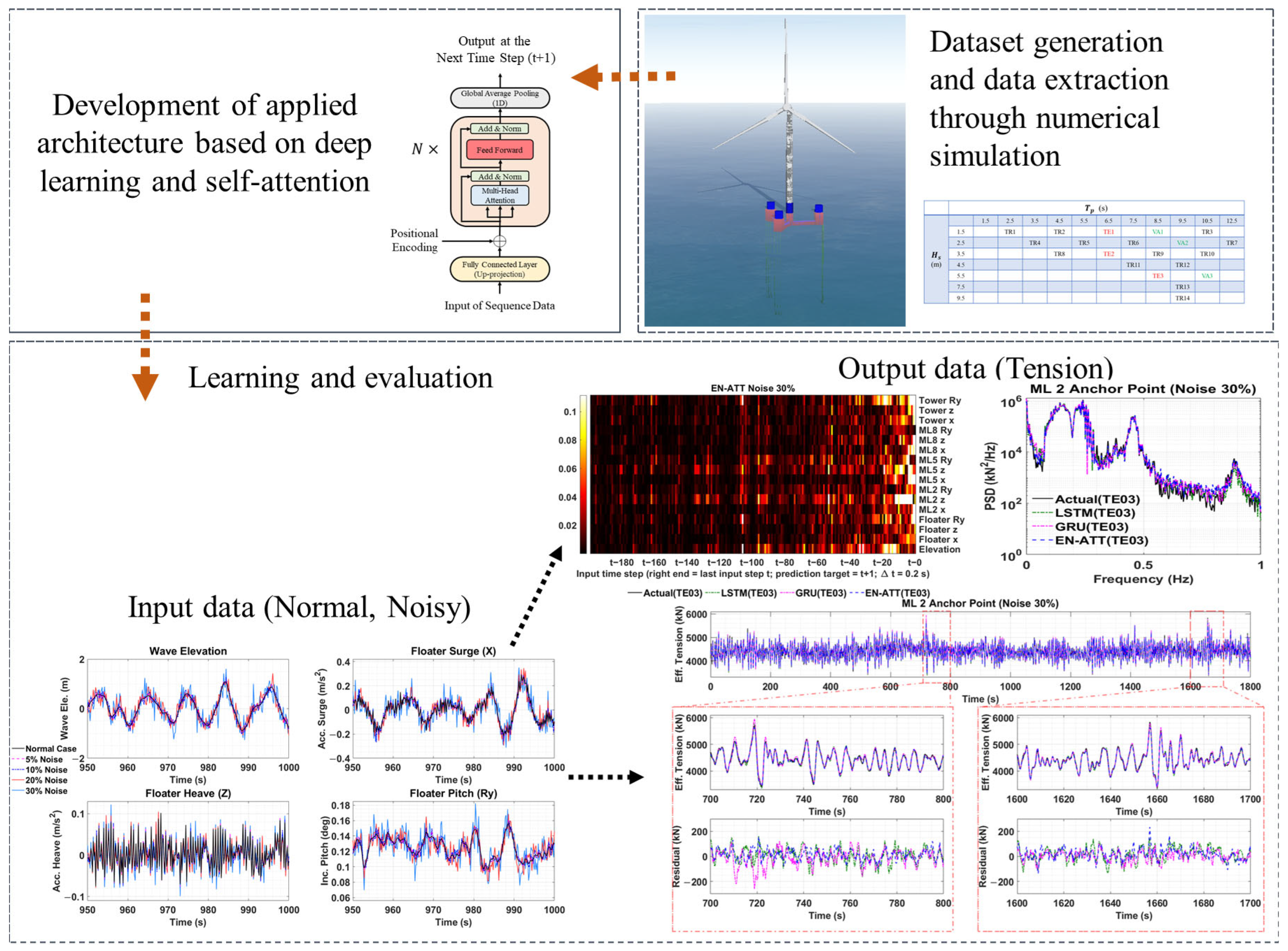
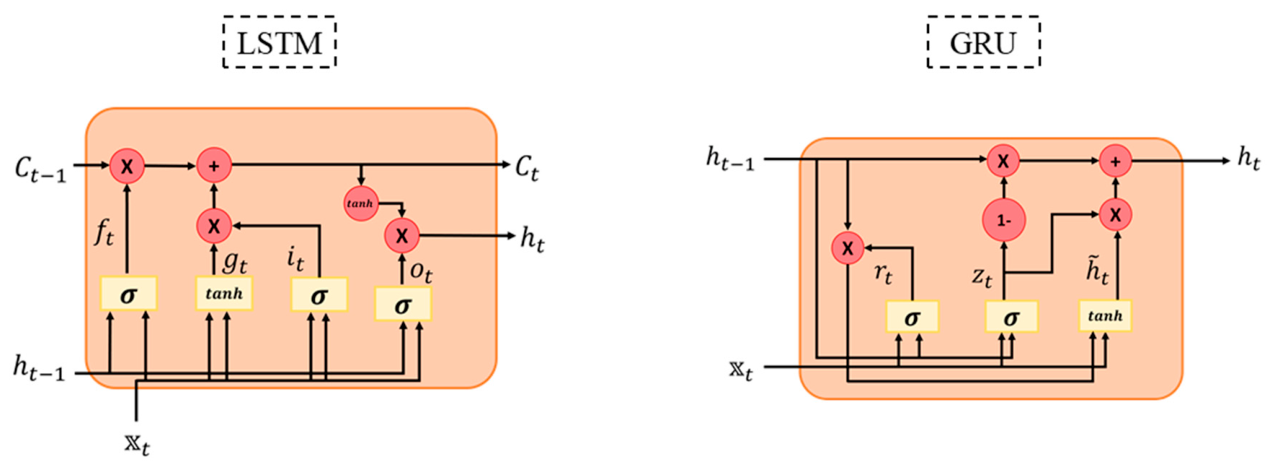
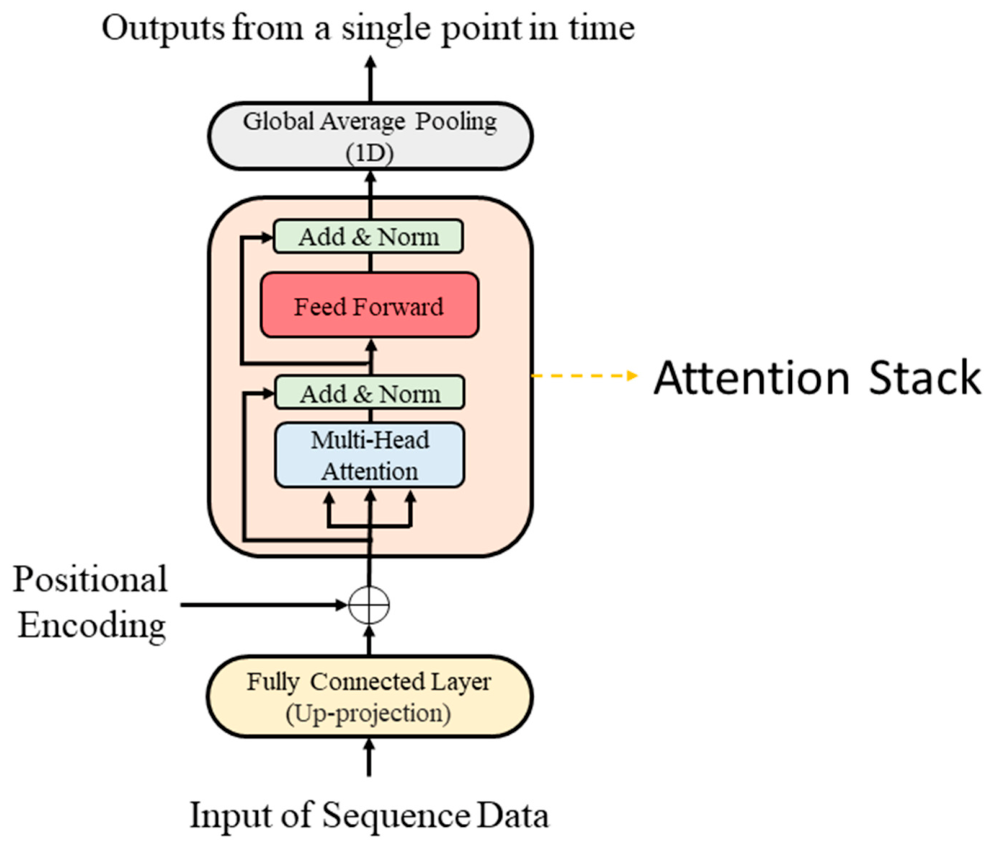
- This study focuses on estimating the dynamic mooring tension of a TLP-type FOWT, a topic that has received less attention than catenary-type FOWTs. Mooring tension was predicted using widely used RNNs (LSTM and GRU) and the self-attention-based neural network, with the three architectures comparatively evaluated.
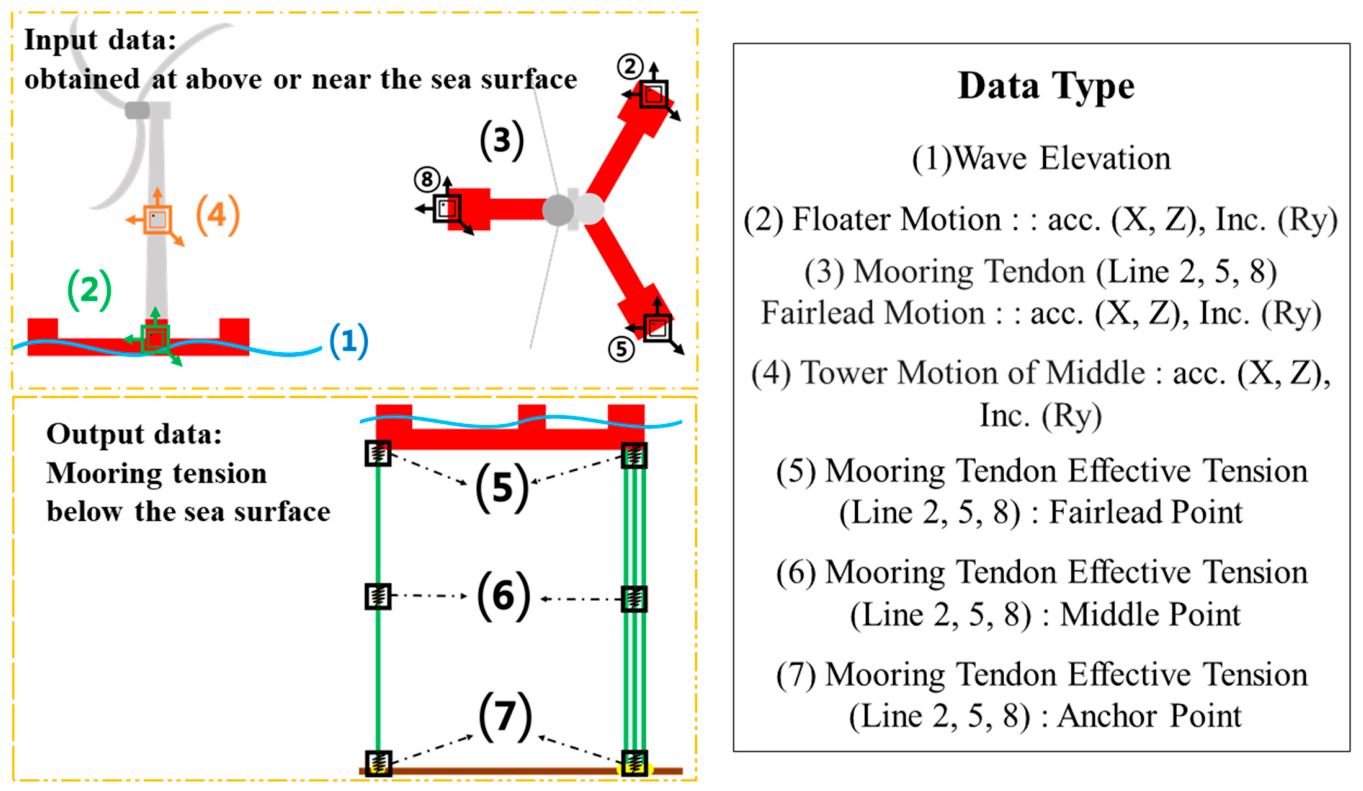
- The dynamic tension of the submerged tendon is predicted using only sensor information that can be easily obtained above or near the free surface.
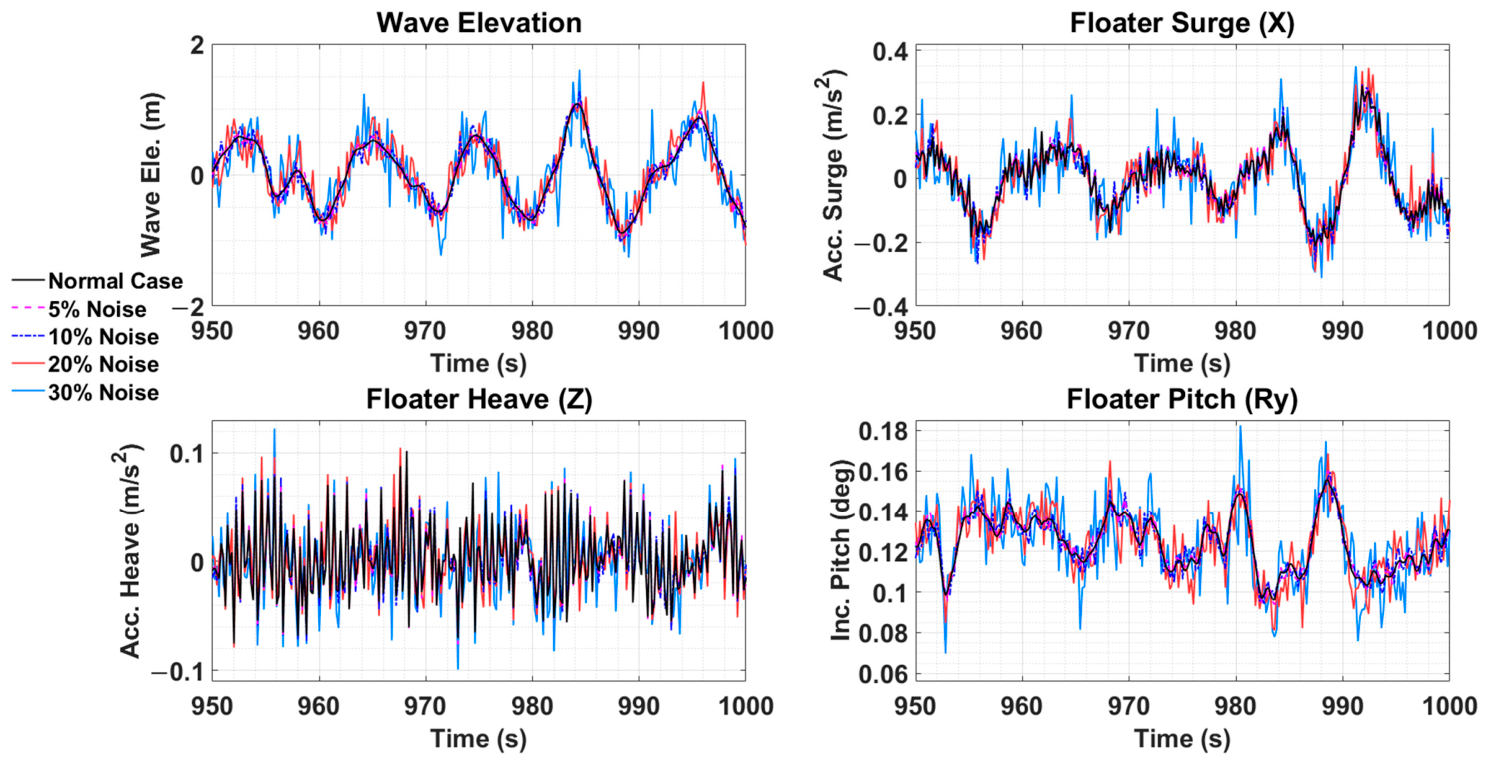
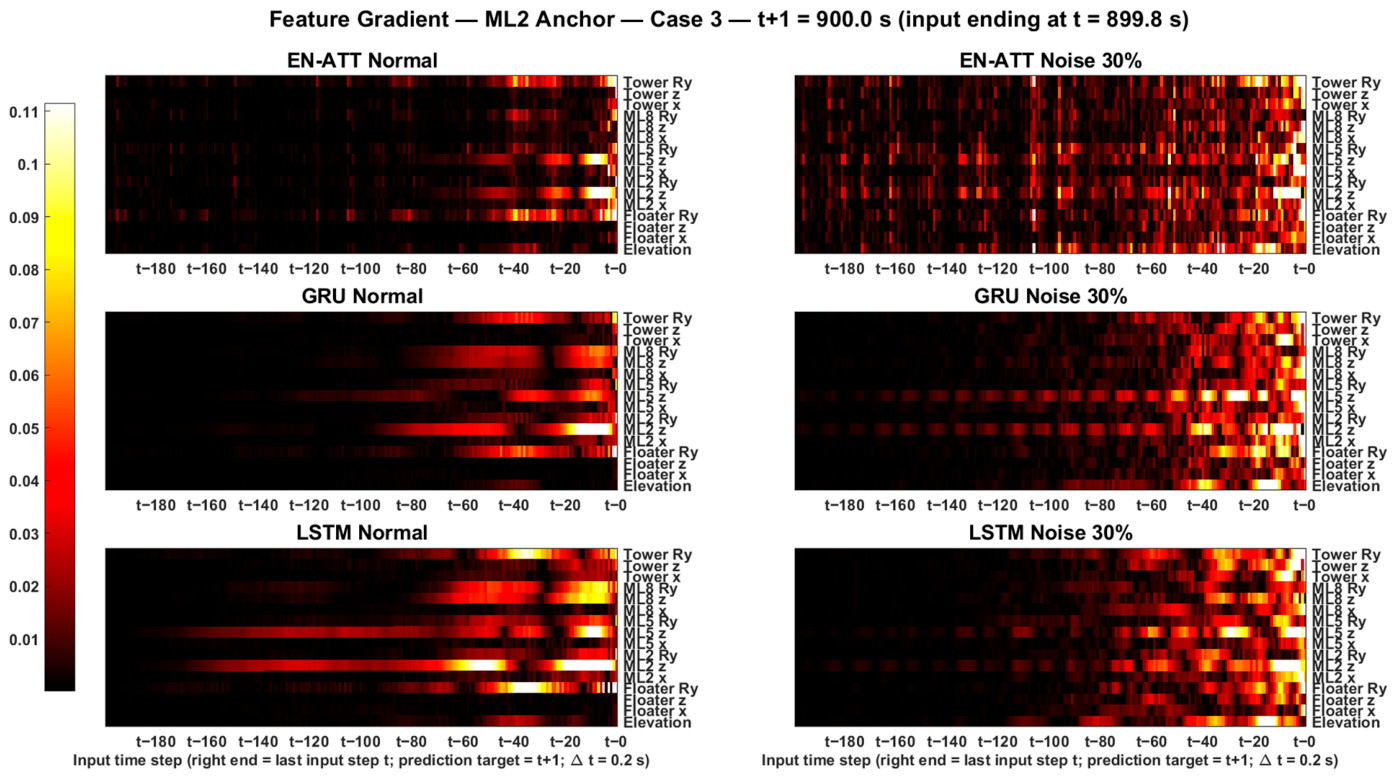
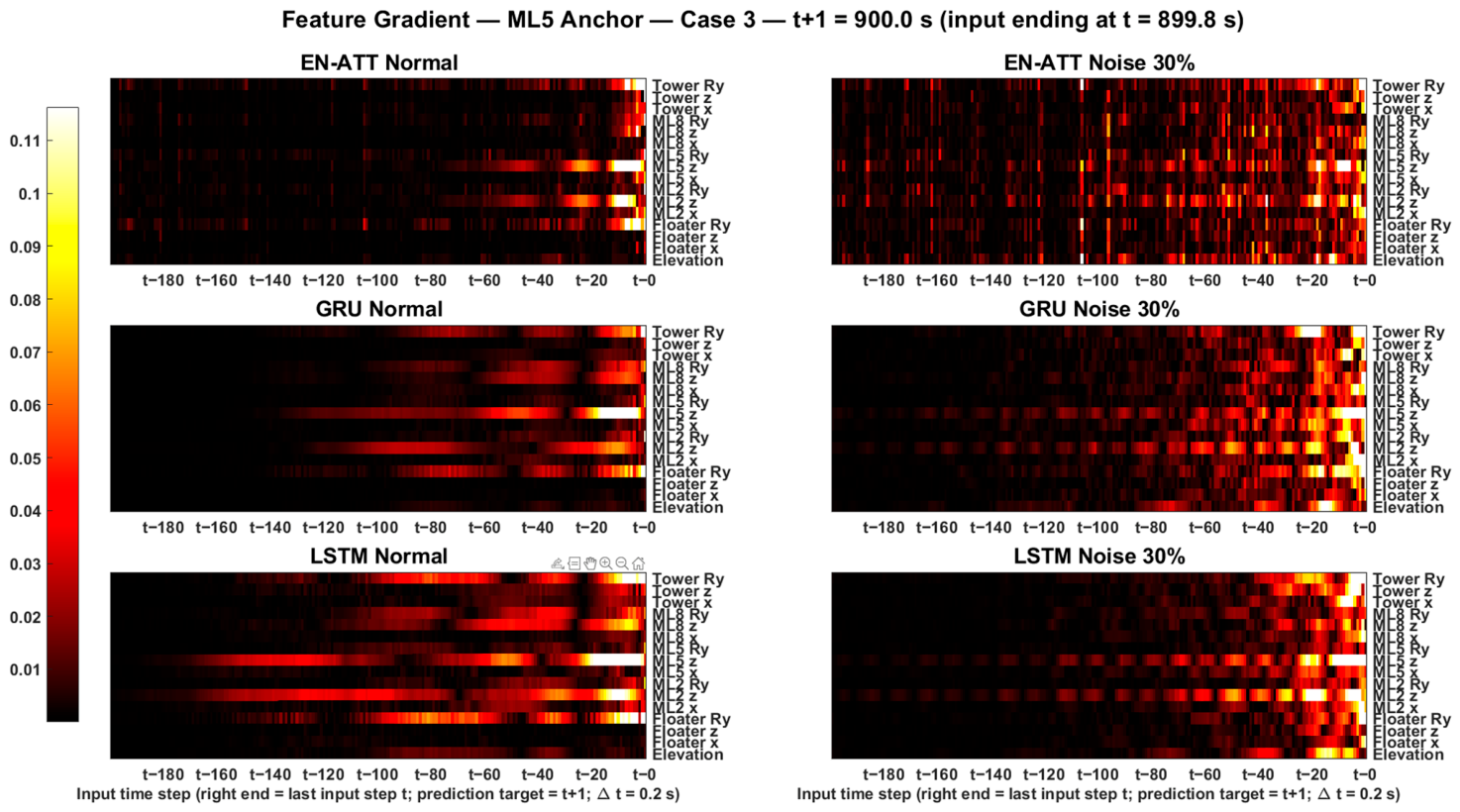
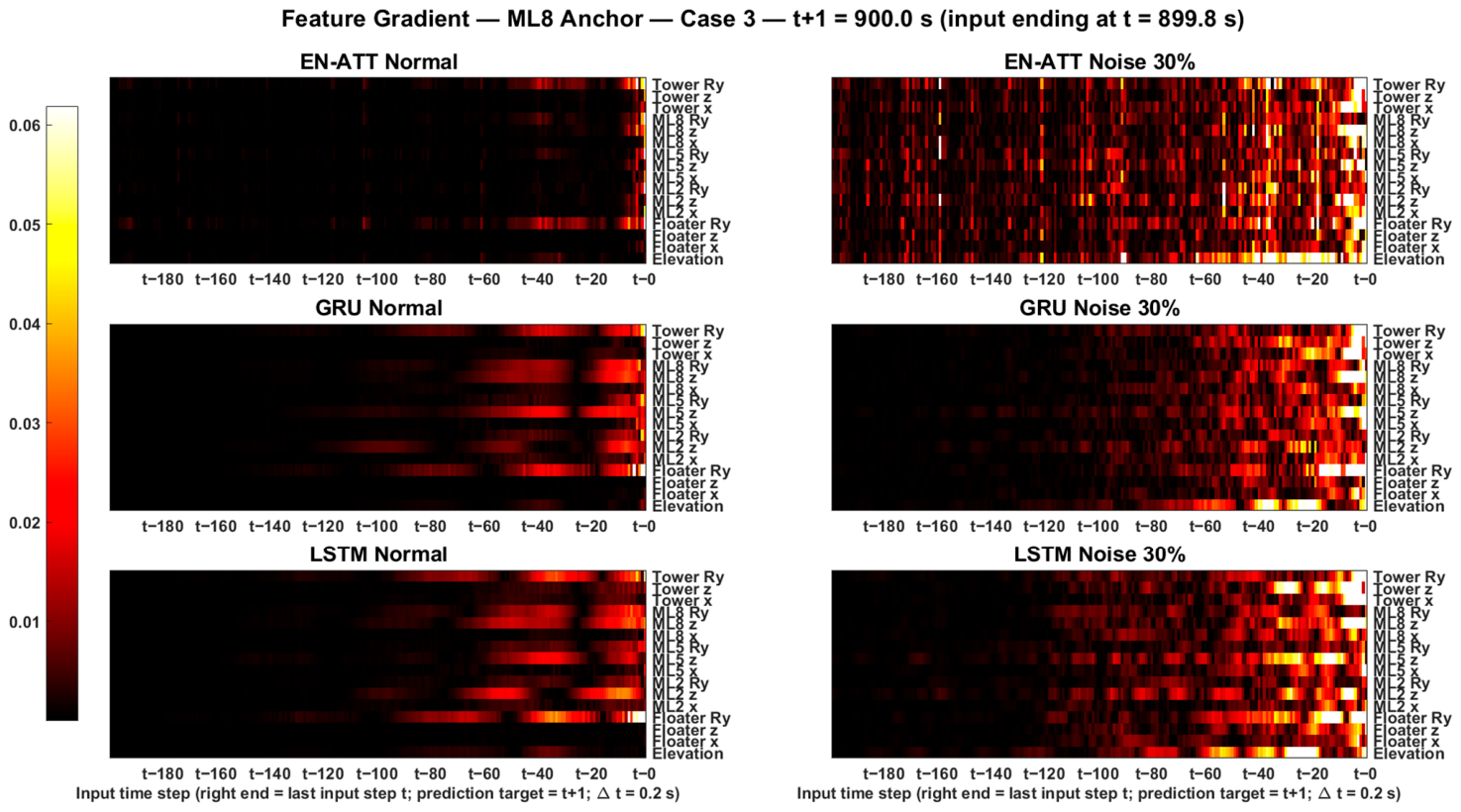
- For a more comprehensive evaluation, predictive performance is compared under multiple noise levels. In addition, feature gradient analysis is performed to examine and compare the structural characteristics of each neural network architecture, and to provide a physical interpretation of the models.
2. System and Data Processing
2.1. TLP-Type FOWT System
2.2. Case Classification by Wave Scatter Diagram
2.3. Numerical Simulation for Data Generation
2.4. Data Extraction for Training AI
3. Theoretical Background and Configuration of the Neural Networks Used in This Study
3.1. LSTM and GRU
3.2. EN-ATT: A Transformer-Encoder-Based Self-Attention Network
3.3. Analysis of Feature Gradients
3.4. Configuration of AI Architectures in This Study
3.5. Noise Sensitivity Evaluation
4. Results
4.1. Learning Process by Epoch
4.2. Performance Comparison Under Nominal Conditions (Without Noise)
4.3. Performance Comparison Under Noisy Conditions
5. Discussion
5.1. Overall Discussions
5.2. Neural Network Internal Characteristics and Physical Interpretation of System Dynamics Based on Feature Gradient Analysis
5.2.1. Physical Interpretability in Nominal Conditions
5.2.2. Noise Sensitivity and Shift in Input-Feature Sensitivity
5.3. Comprehensive Evaluation
6. Limitations and Future Work
7. Conclusions
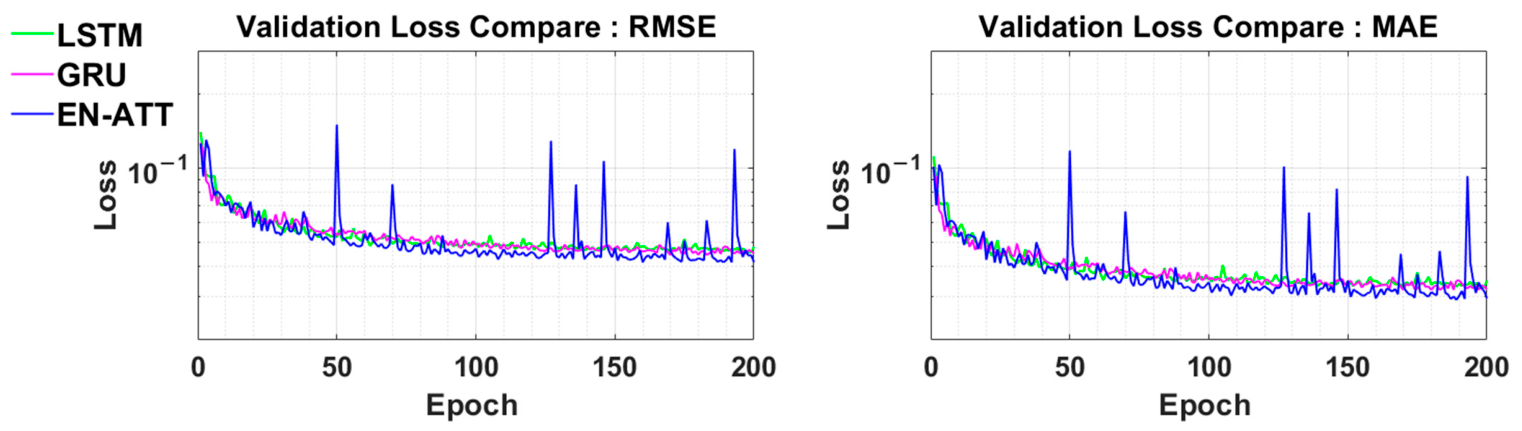
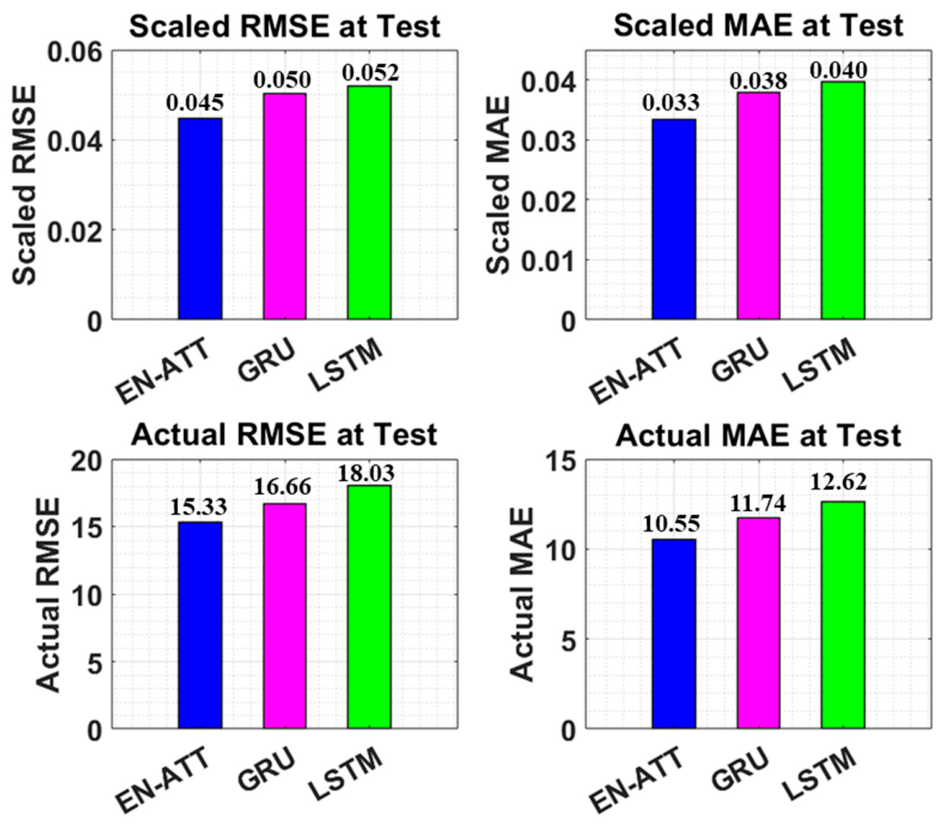
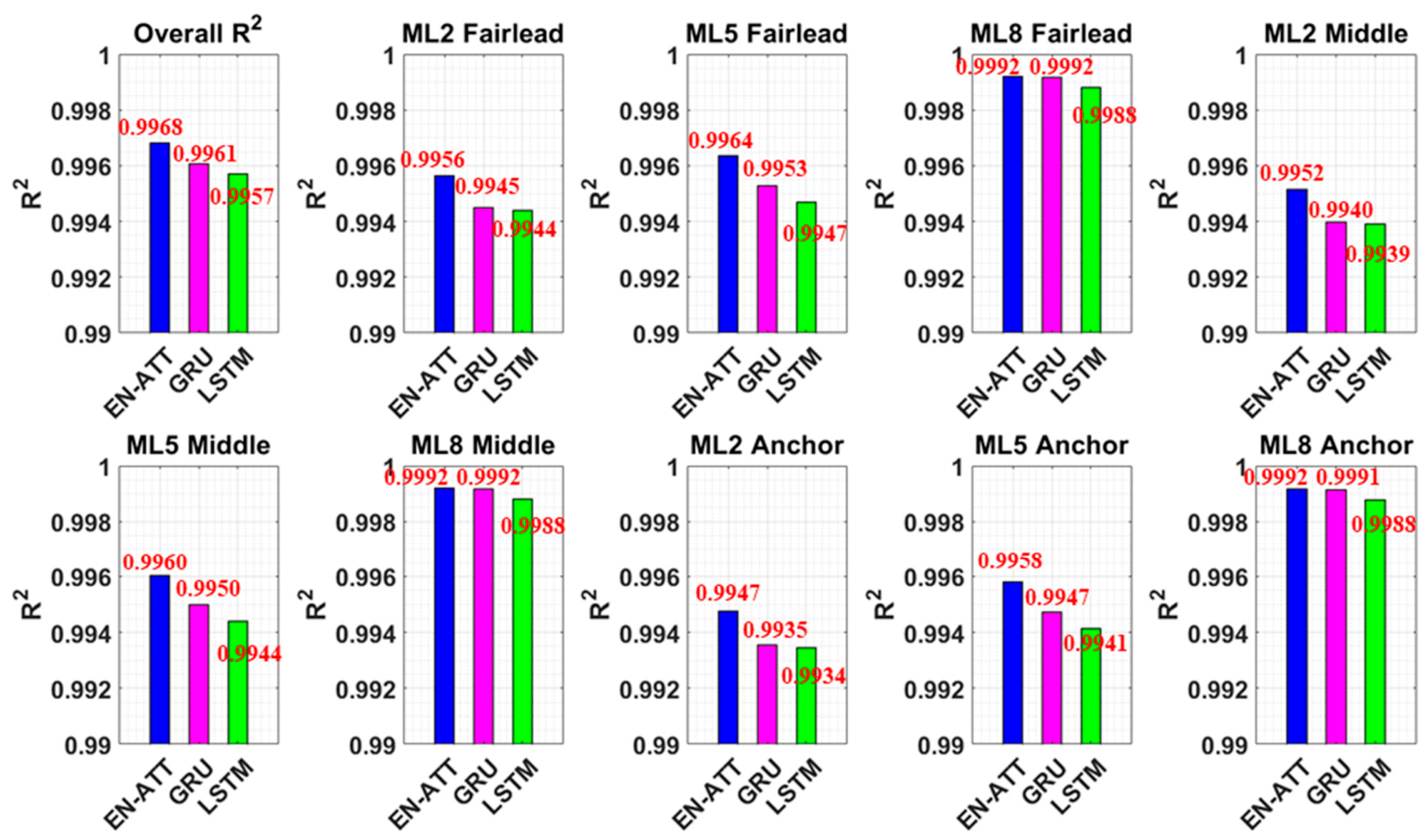
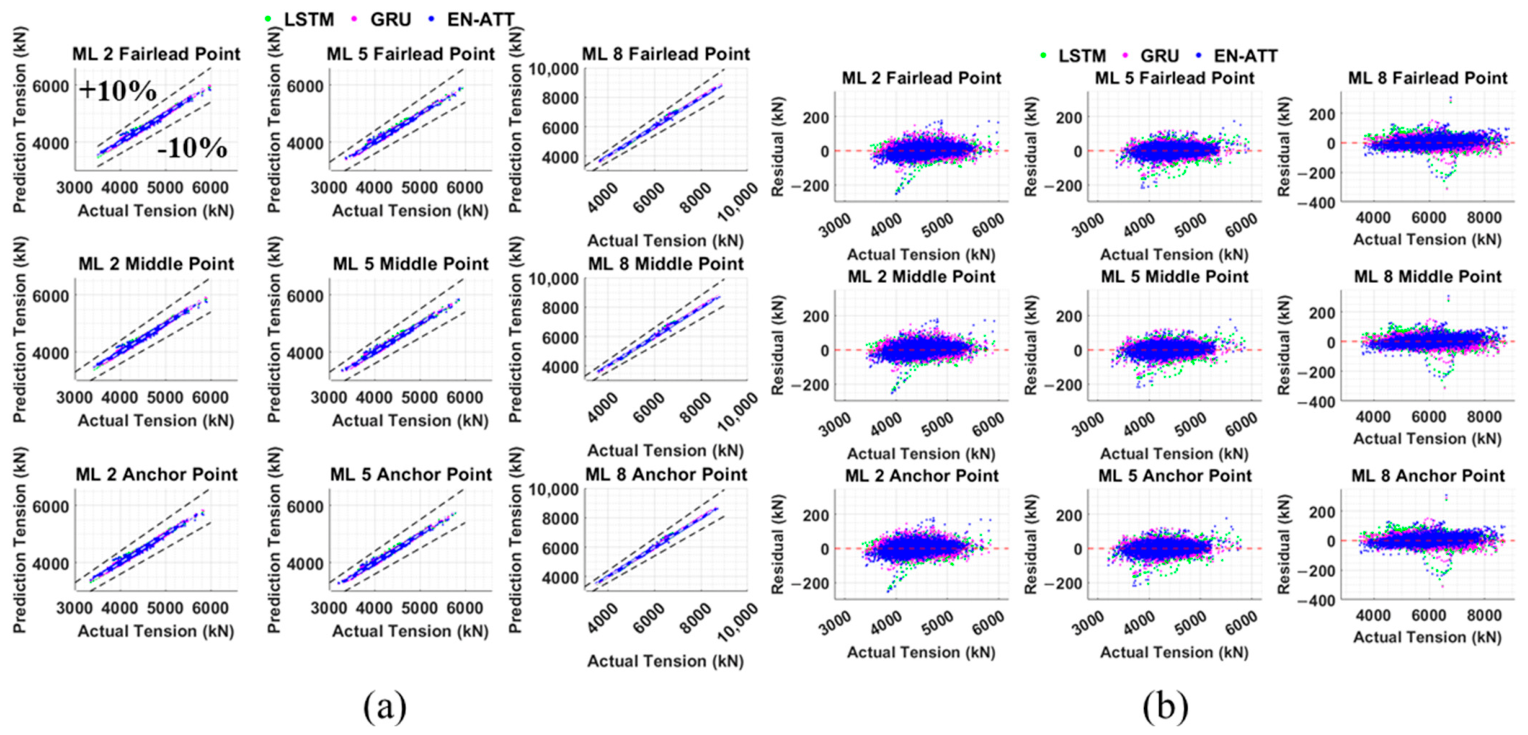
- In the nominal case, the self-attention-based network achieved lower loss function values and higher values than LSTM and GRU. Furthermore, due to the inherent characteristics of the TLP mooring system, the differences in mooring tension among the fairlead, middle, and anchor points exhibit only a slight downward deviation as the water depth increases. As a result, in the nominal case, all three neural networks were able to accurately predict the dynamic tension at submerged points using only sensors located above or near the free surface.
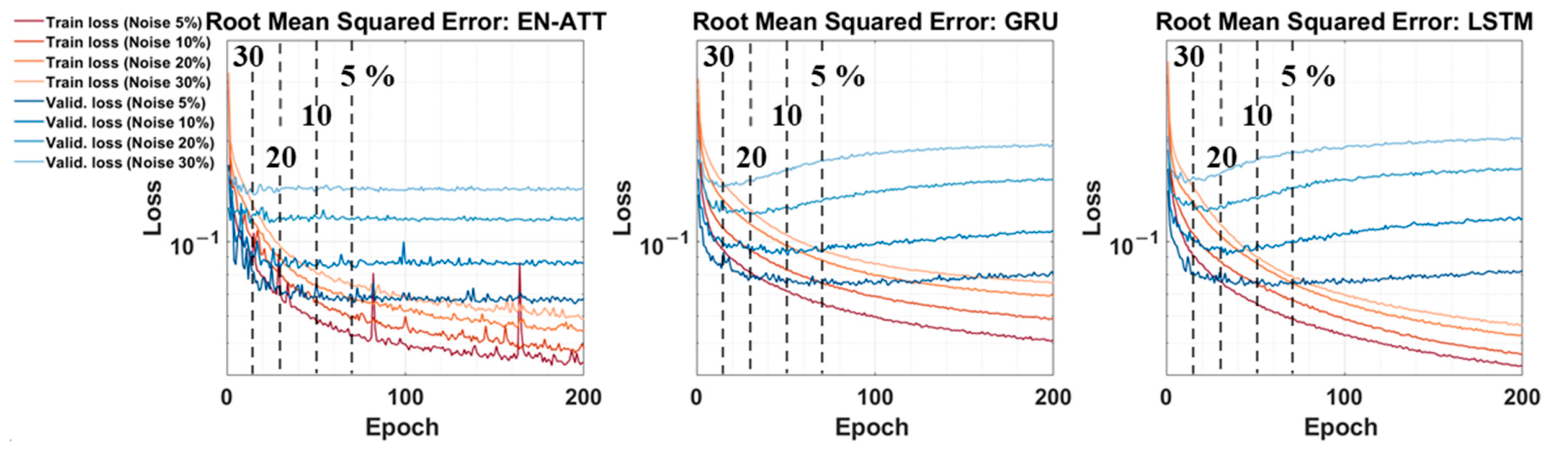
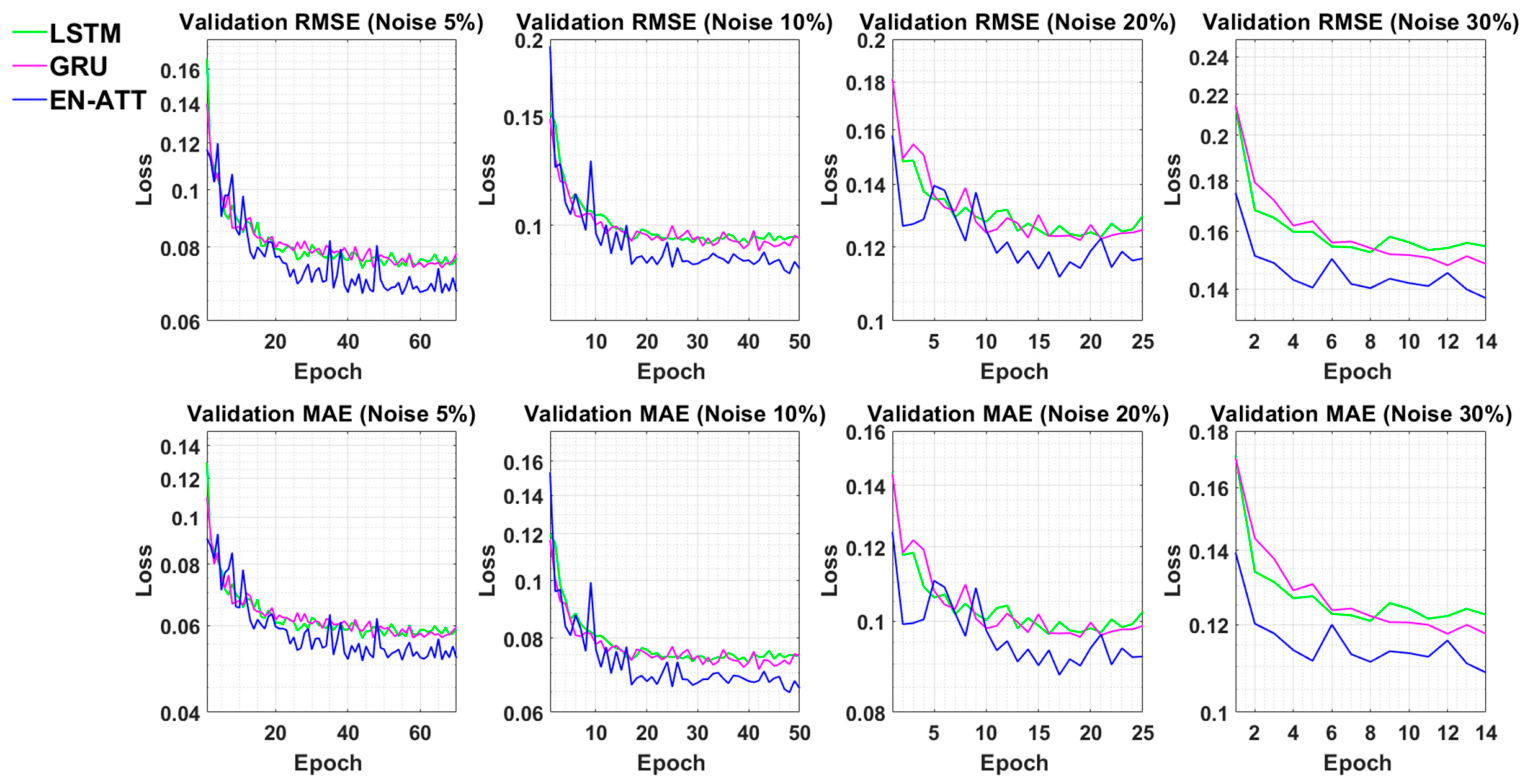
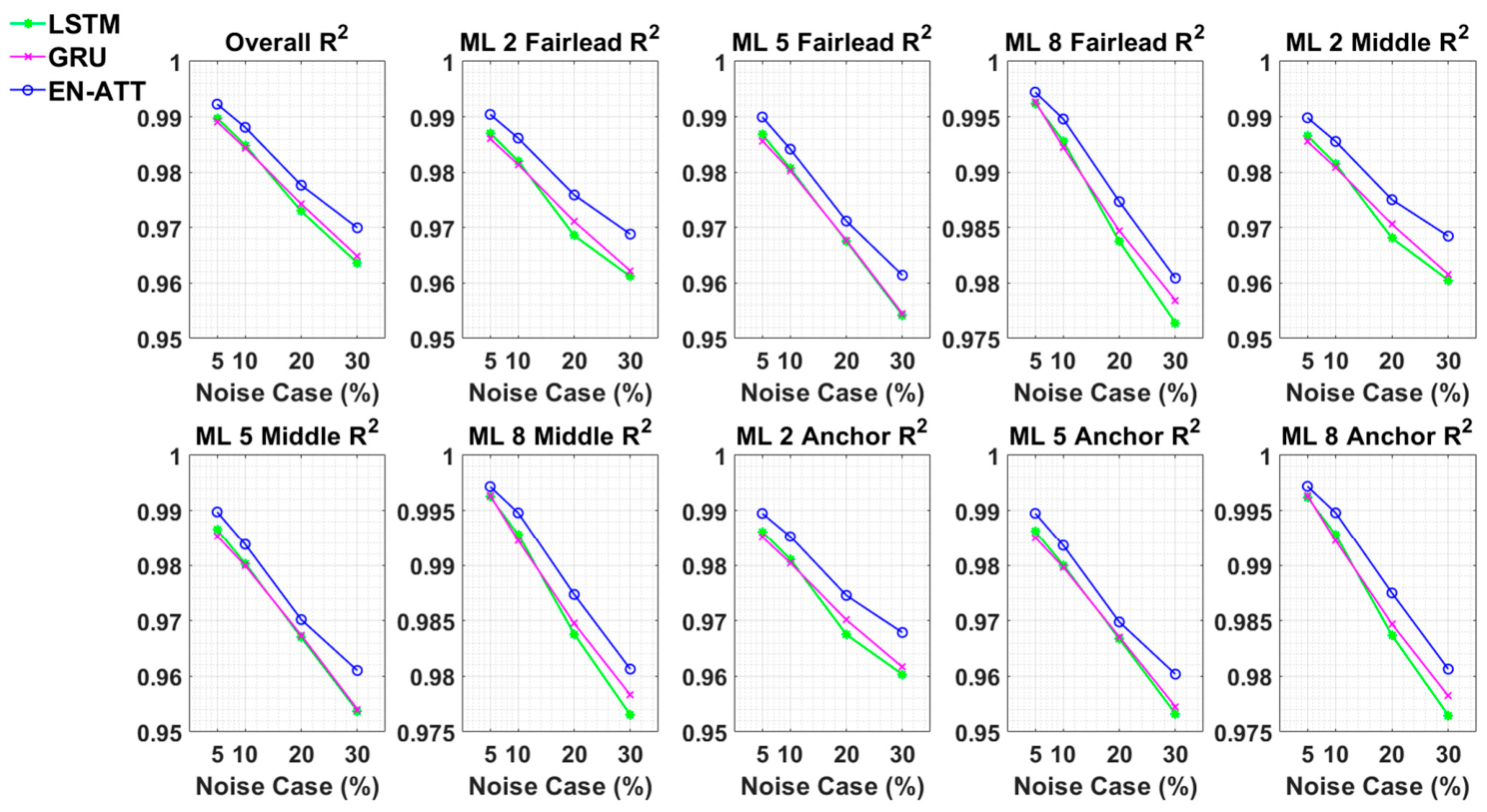
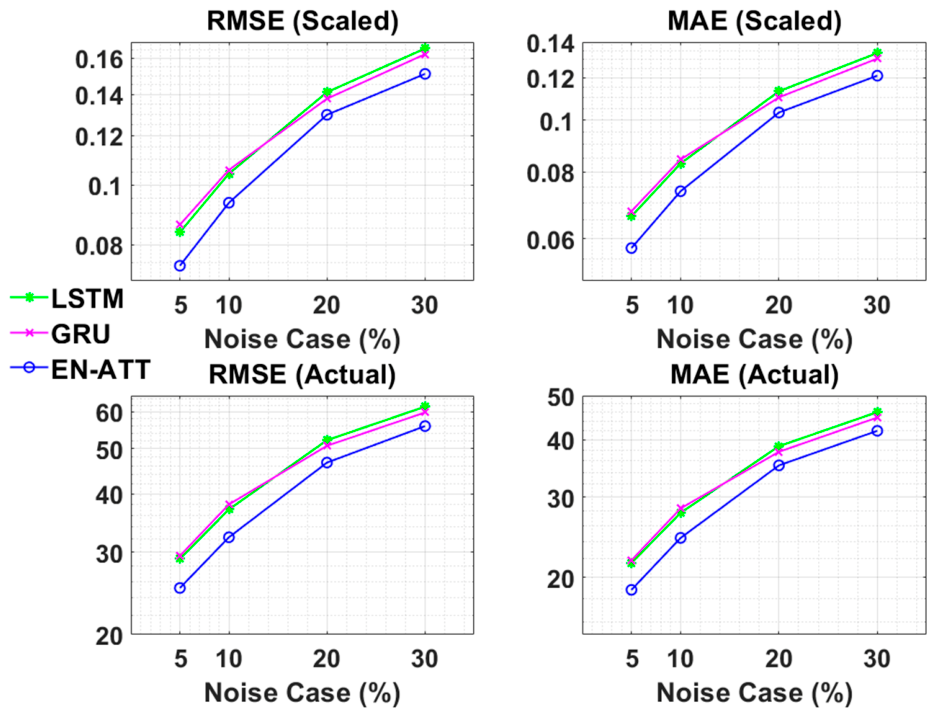
- In the noisy cases, the self-attention-based network again outperformed the RNNs in terms of evaluation metrics. Moreover, the differences in values among the prediction points were found to be marginal.
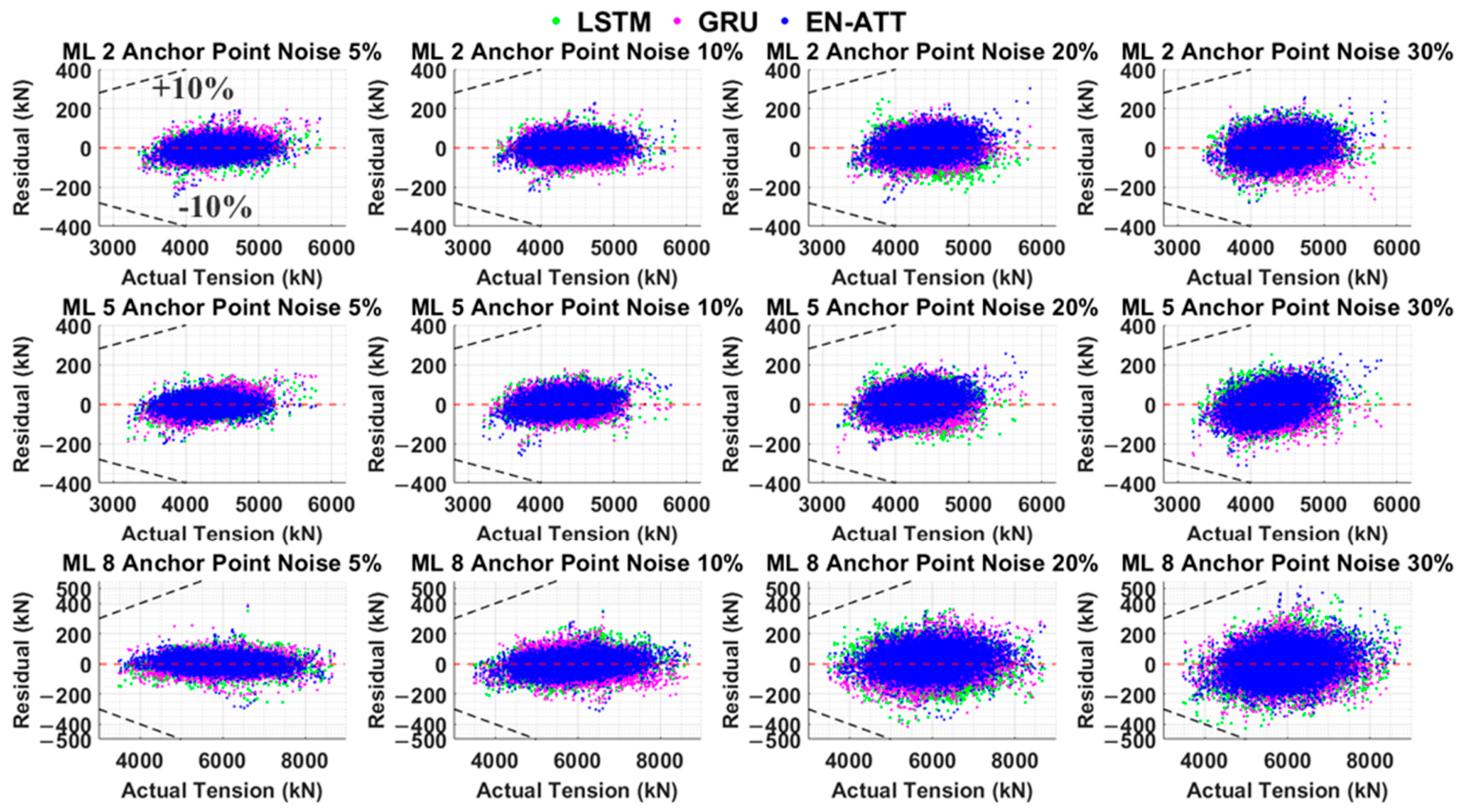
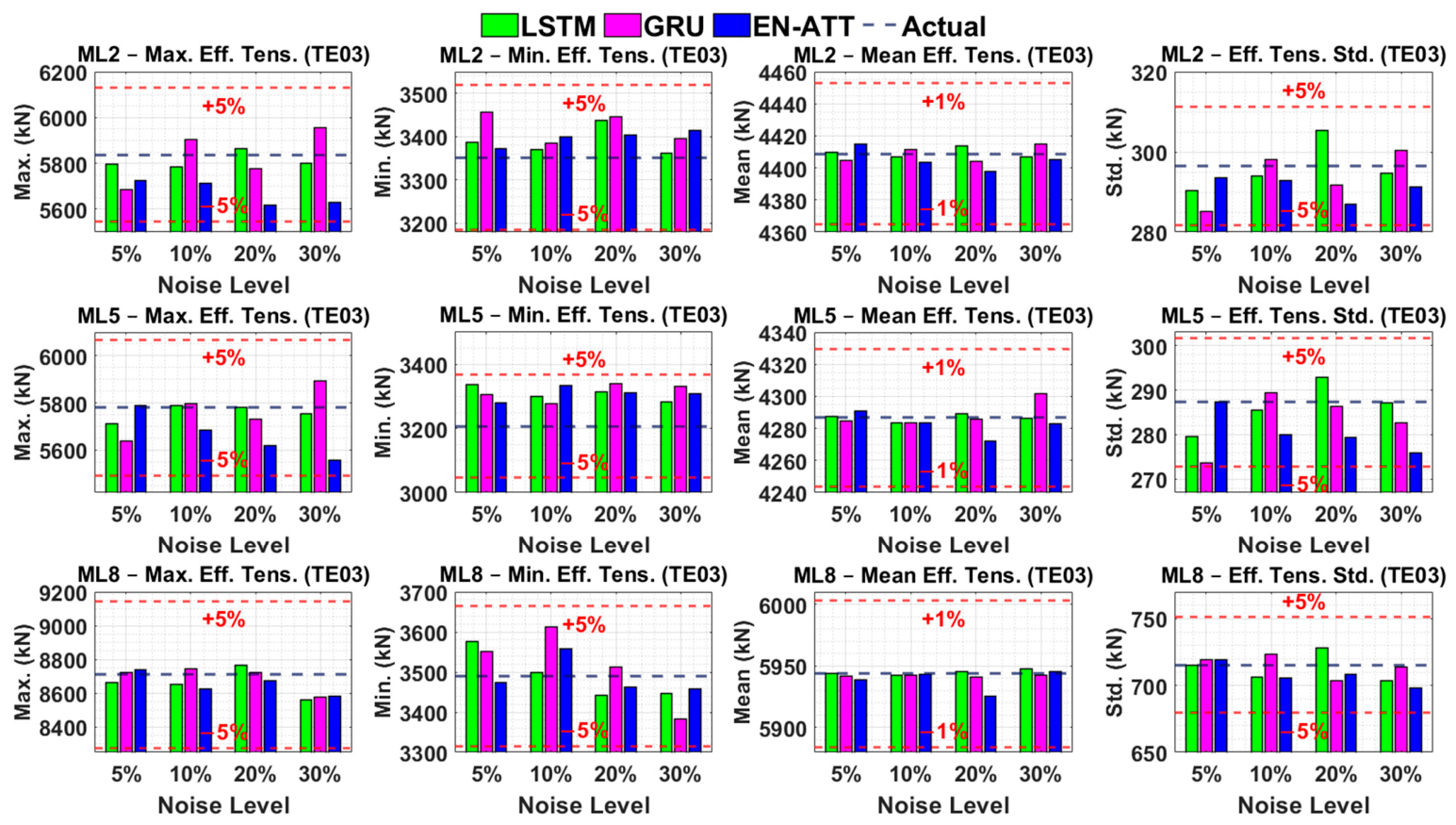
- When examining the maximum, minimum, mean, and standard deviation values under noisy conditions, EN-ATT did not consistently demonstrate superior predictive performance compared to the RNNs. This finding indicates that higher evaluation metric scores do not necessarily guarantee better predictive accuracy in all aspects, particularly for extreme values.
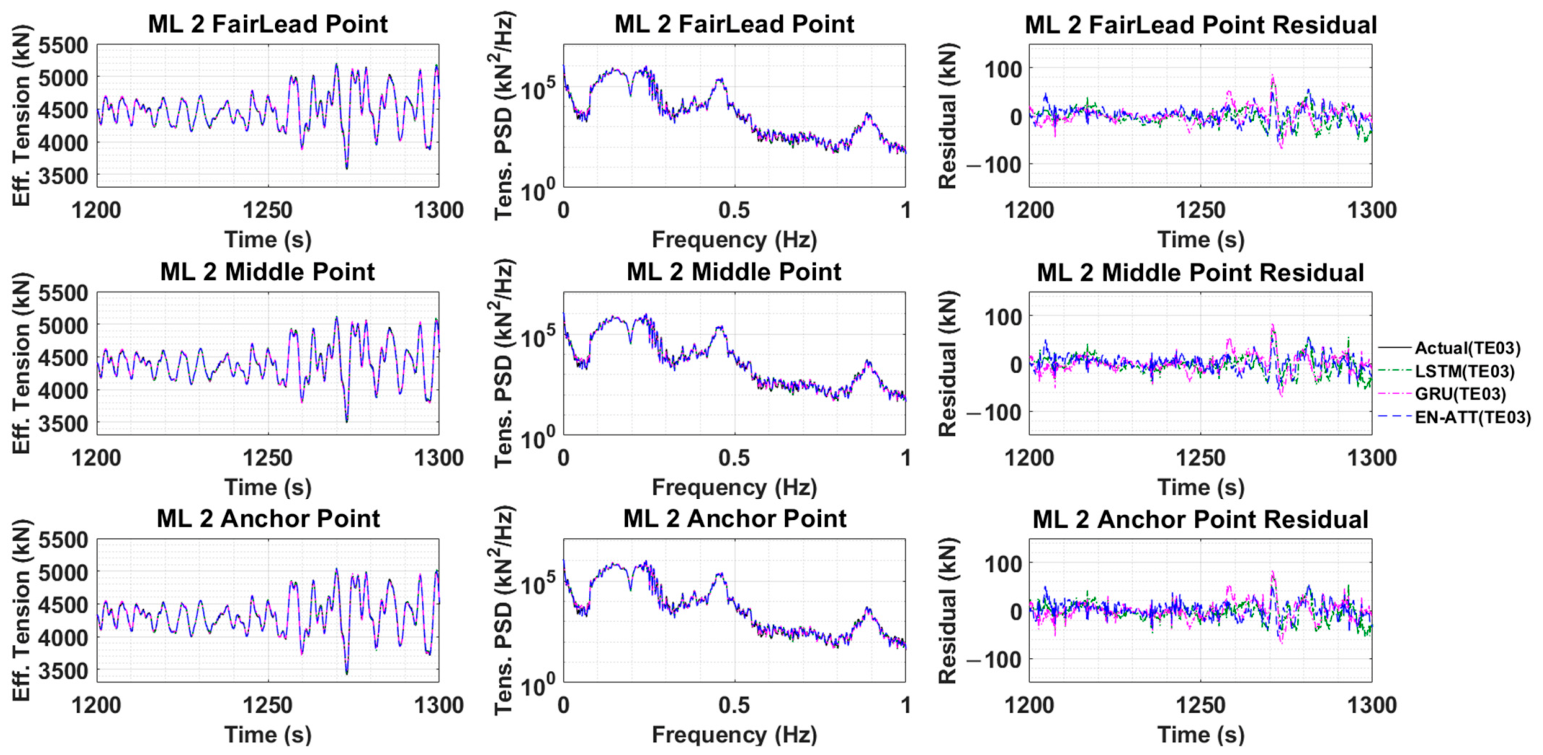
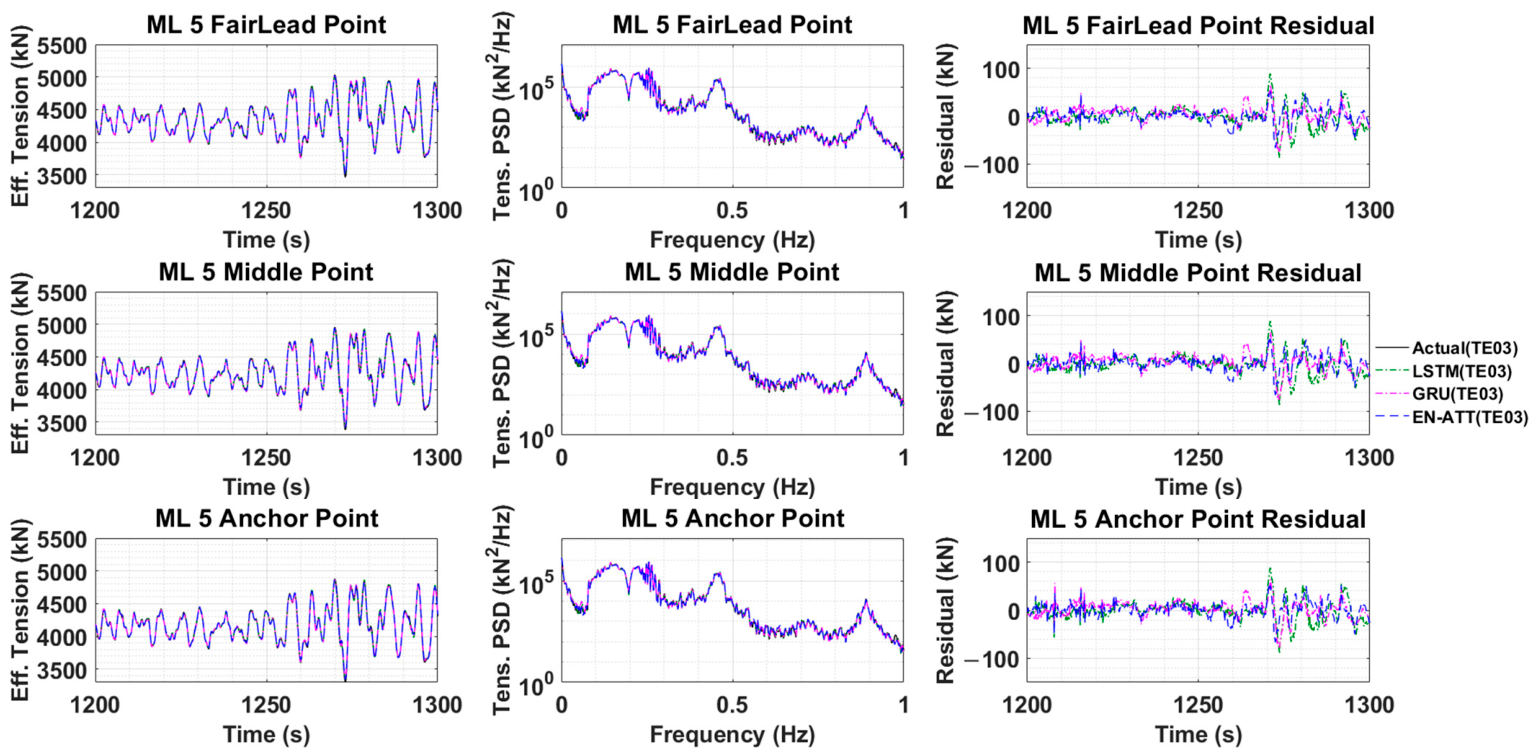
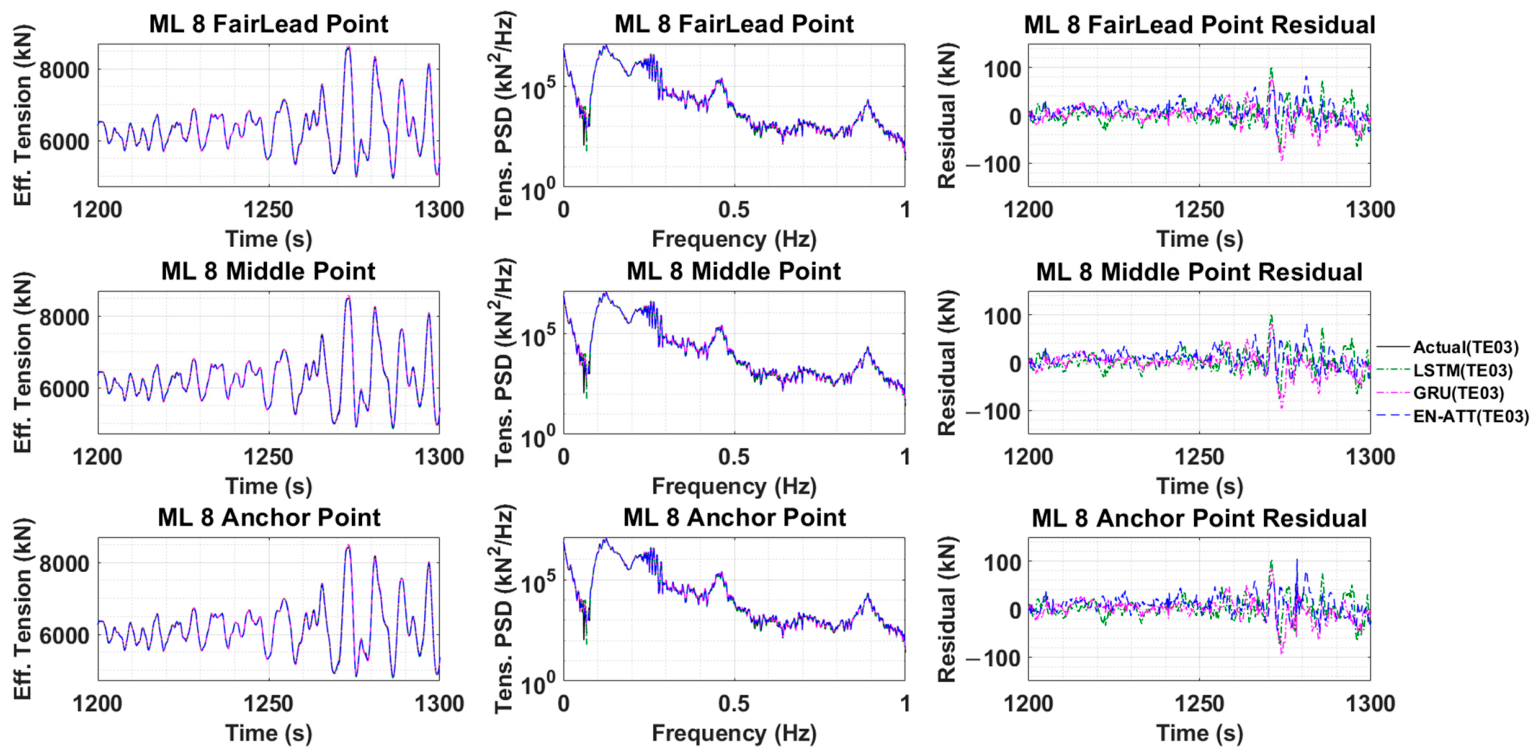
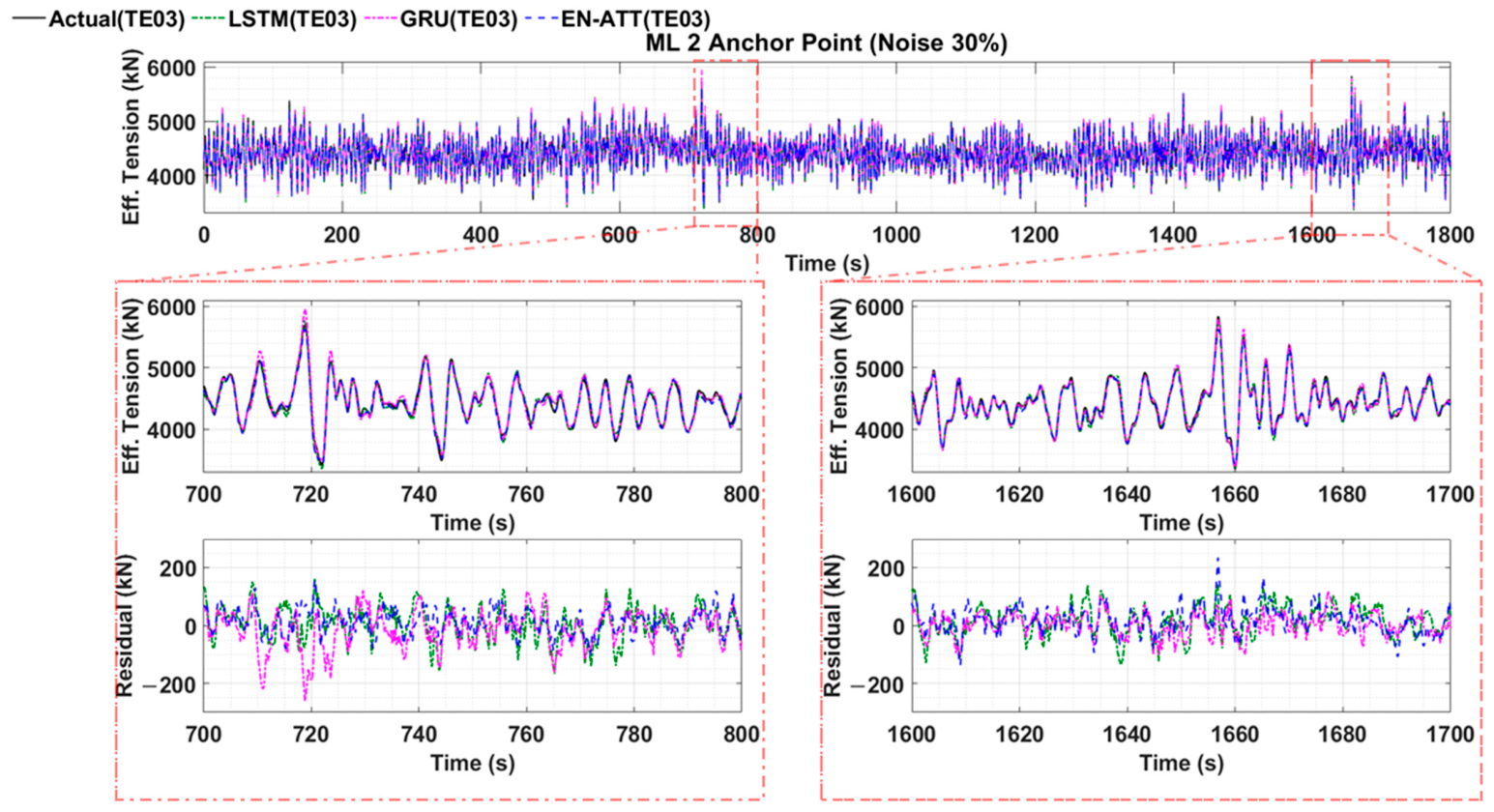
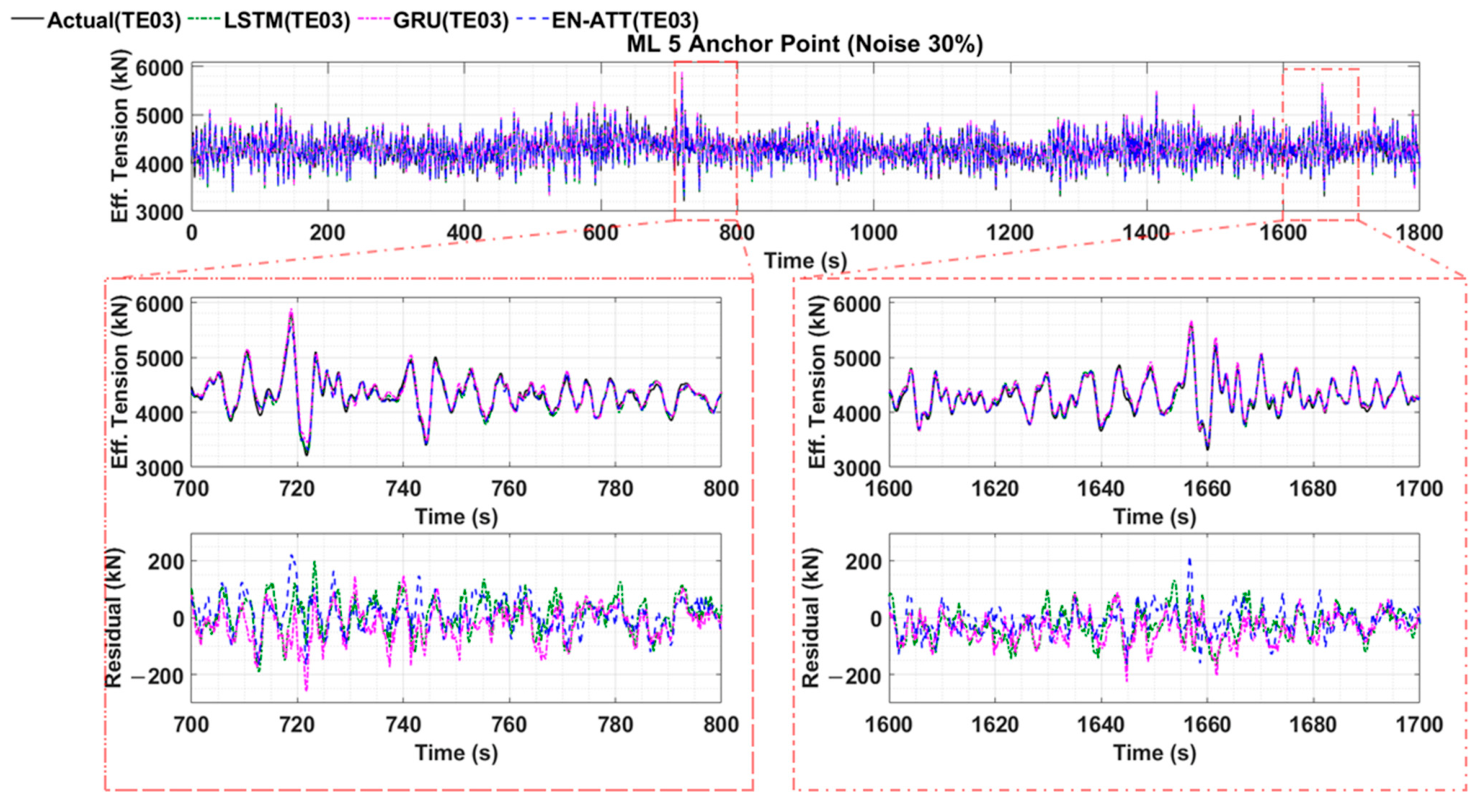
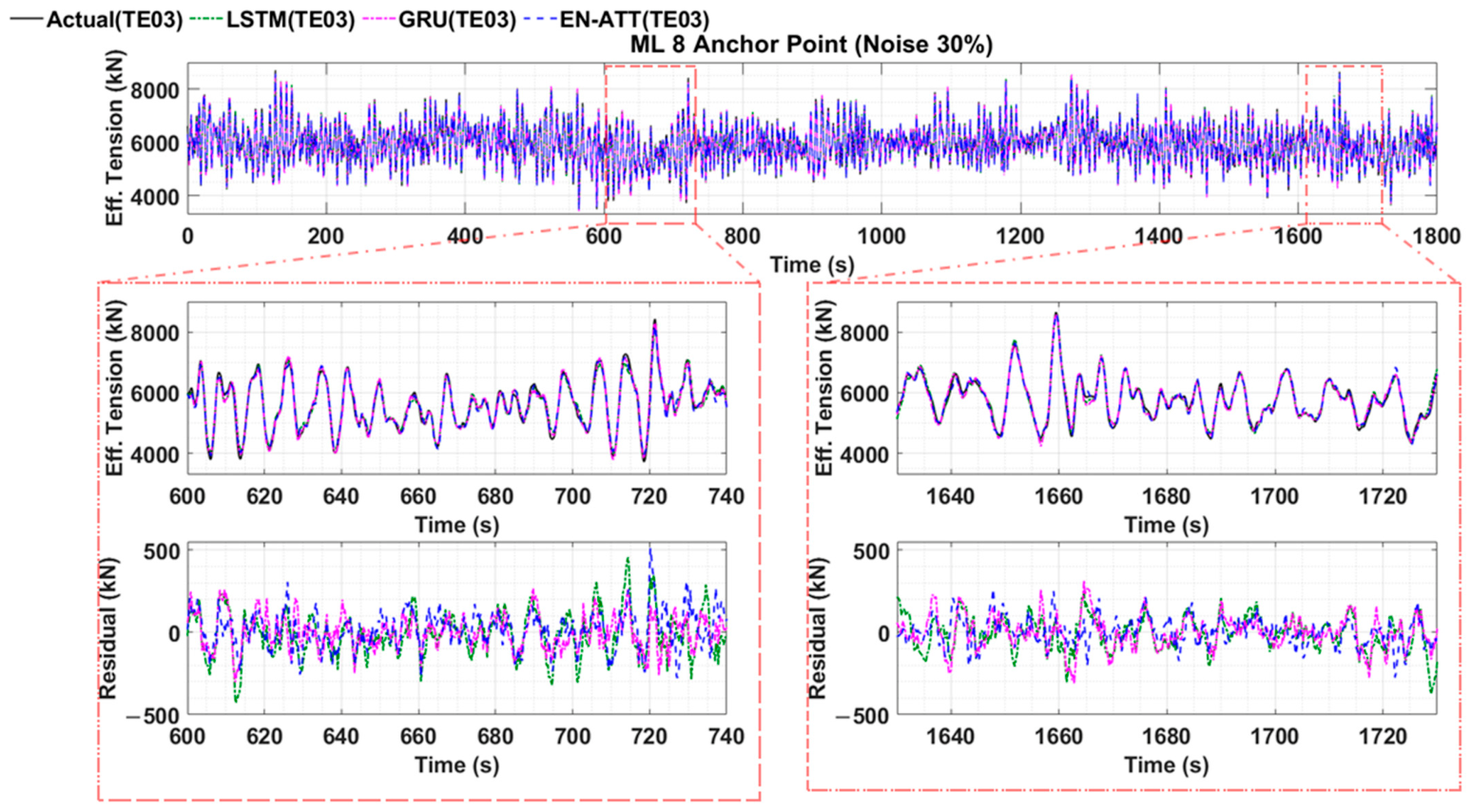
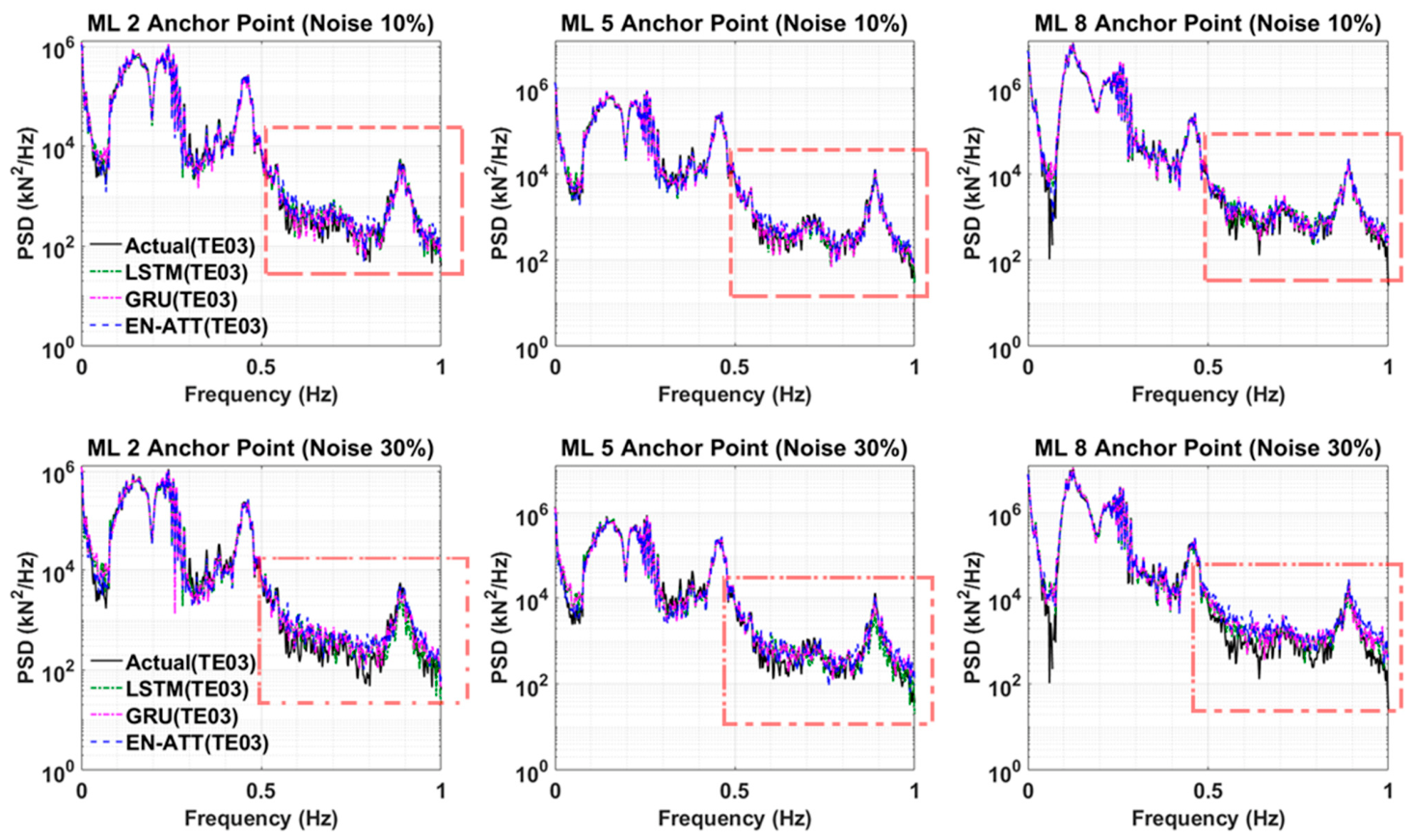
- From the time-series and PSD analyses, all neural networks exhibited good overall agreement with the reference results. However, EN-ATT occasionally underestimated the tension during abrupt tension surges. RNNs also showed large residuals during sudden tension variations. In the PSD analysis, prediction performance in higher-frequency regions deteriorated as the noise level increased.
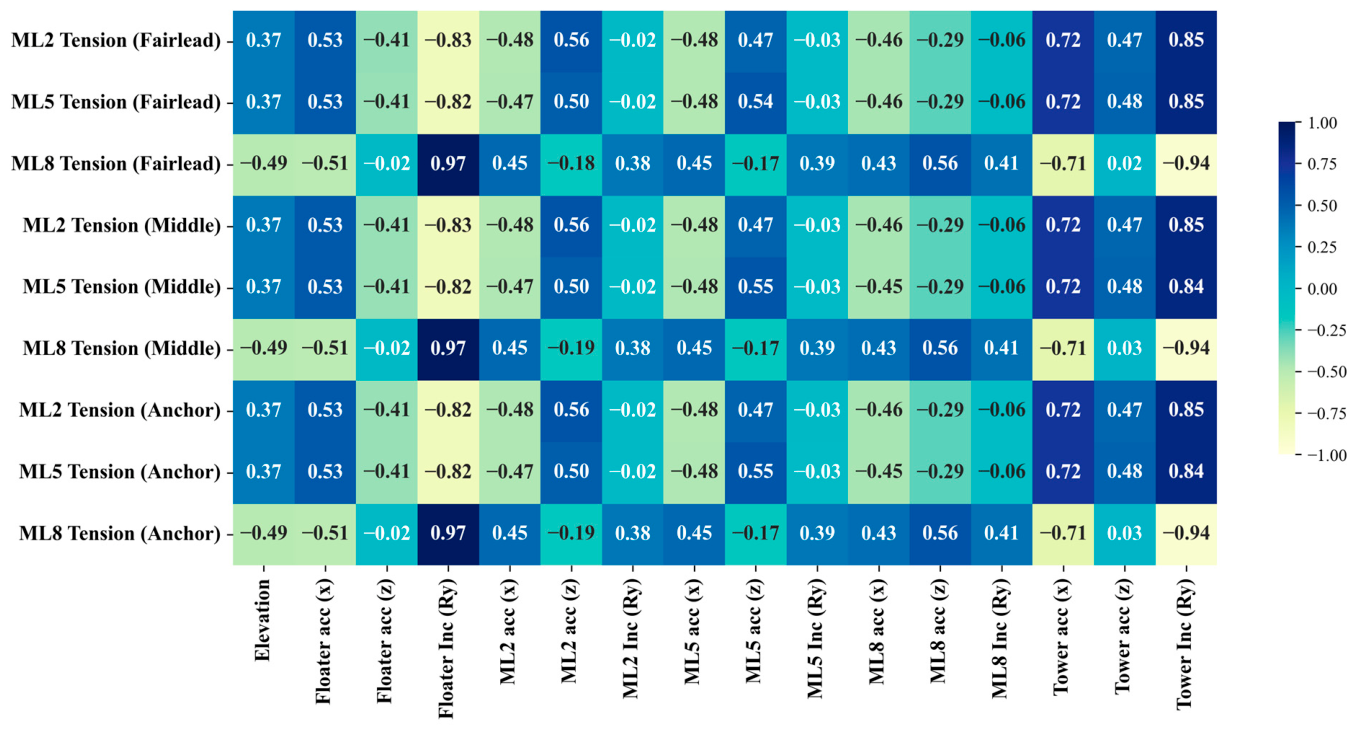
- Feature gradient analysis suggested that the neural networks primarily learned response patterns associated with vertical motions of the TLP system and its tendon, such as heave and pitch. In addition, under highly noisy conditions, wave elevation patterns were also captured more prominently in the learning process. Consequently, EN-ATT exhibited feature gradient sensitivity extending to longer input lags than the RNNs, suggesting that it may utilize a wider temporal range of the input window.
Supplementary Materials
Author Contributions
Funding
Data Availability Statement
Acknowledgments
Conflicts of Interest
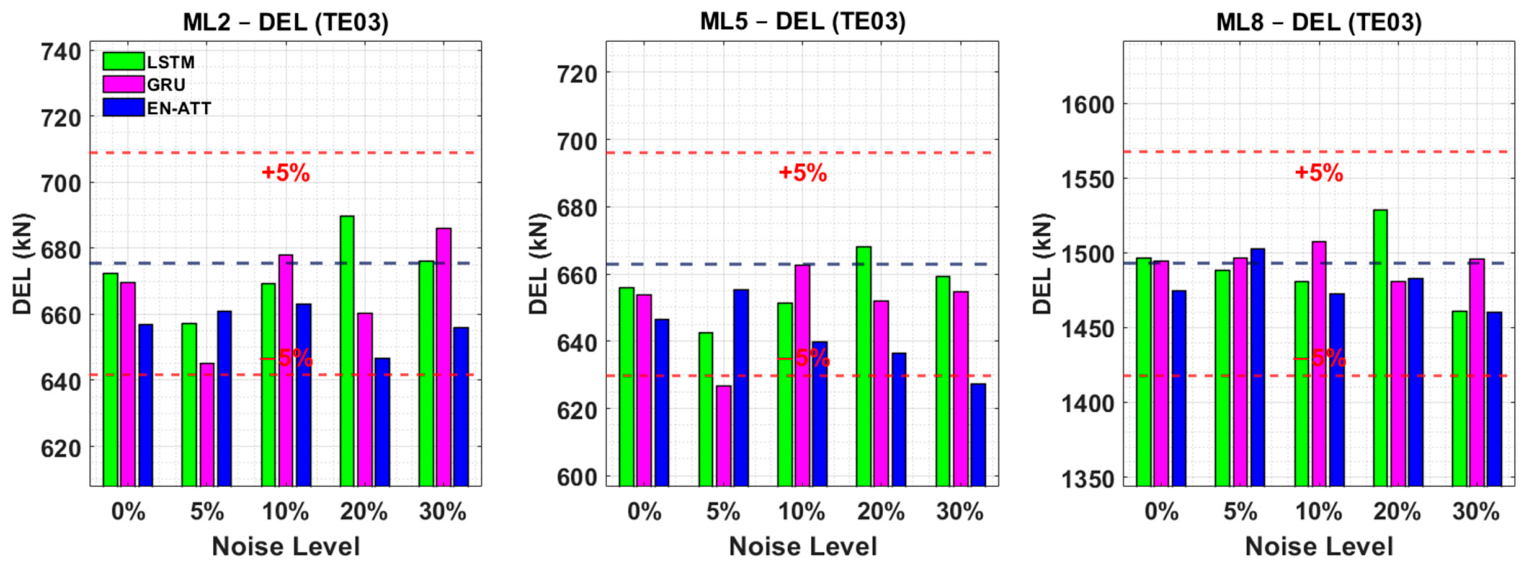
Appendix A. Indicative DEL Comparison for a Single Sea State

Appendix B. Parameter-Matched Comparison

| Model | Configuration | Total Number of Trainable Parameters |
|---|---|---|
| EN-ATT (lower) | Up = 64, H = 8, FFN = 128, 2 stacks | 68,617 |
| LSTM (matched) | 128–128–128–64 (units, 4 layers) | 387,401 |
| GRU (matched) | 256–128–64 (units, 3 layers) | 396,489 |
| Total Number of Trainable Parameters | Actual RMSE of Test | Actual MAE of Test | Overall of Test | |
|---|---|---|---|---|
| EN-ATT (Original) | 401,673 | 15.33 | 10.55 | 0.9968 |
| LSTM (Original) | 120,393 | 18.03 | 12.62 | 0.9957 |
| GRU (Original) | 66,249 | 16.66 | 11.74 | 0.9961 |
| EN-ATT (lower) | 68,617 | 16.95 | 12.15 | 0.9962 |
| LSTM (Matched) | 387,401 | 17.26 | 12.16 | 0.9958 |
| GRU (Matched) * | 396,489 | 159.6 | 112.3 | 0.7946 |
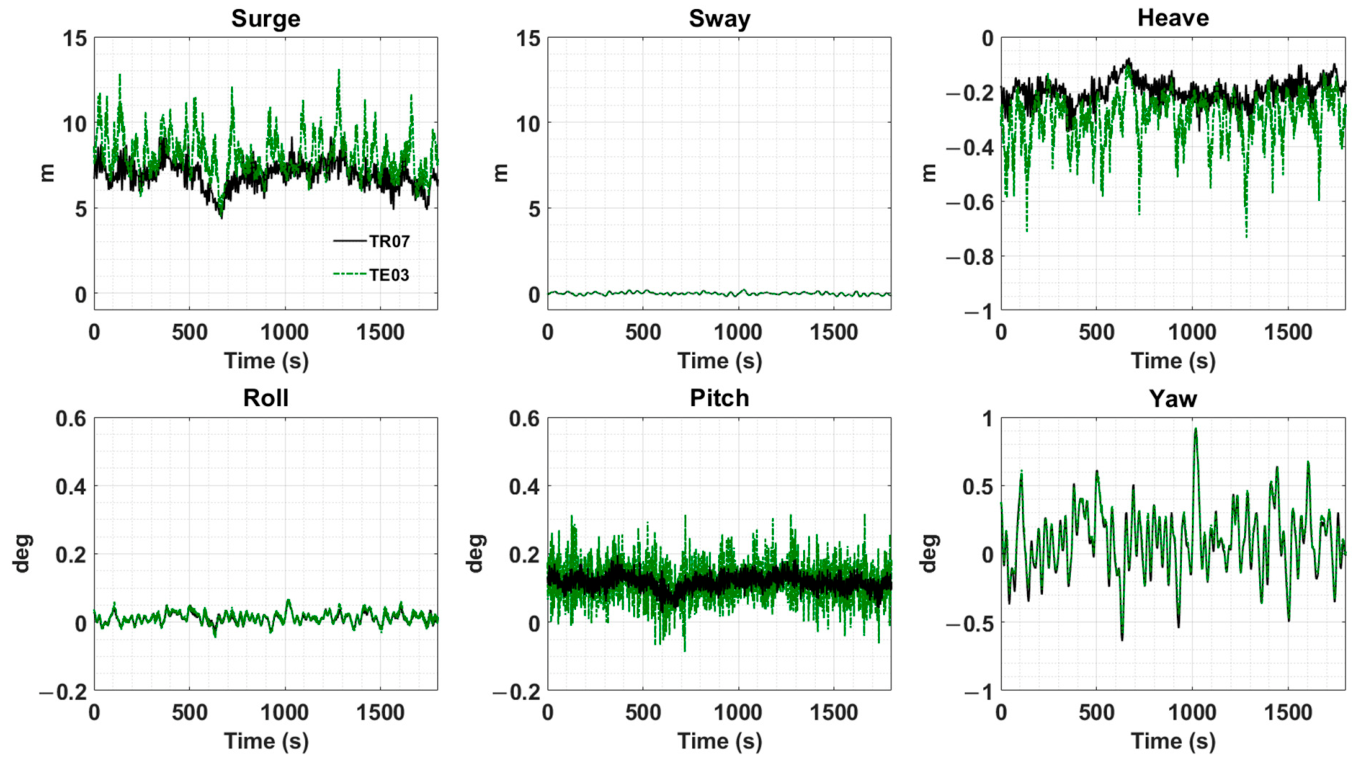
Appendix C. Motions of FOWT

Appendix D. Mean Tension of Mooring System a Static State
| T1 (kN) | T2 (kN) | T3 (kN) | T4 (kN) | T5 (kN) | T6 (kN) | T7 (kN) | T8 (kN) | T9 (kN) | |
|---|---|---|---|---|---|---|---|---|---|
| Static equilibrium | 5018.5 | 5040.8 | 5063.1 | 5063.1 | 5040.8 | 5018.5 | 4567.9 | 4567.9 | 4567.9 |
| Equilibrium with mean thrust applied | 4572.3 | 4499.6 | 4427.0 | 4286.1 | 4351.8 | 4417.4 | 5885.7 | 5892.7 | 5899.6 |
References
- Chen, J.; Kim, M.H. Review of Recent Offshore Wind Turbine Research and Optimization Methodologies in Their Design. J. Mar. Sci. Eng. 2022, 10, 28. [Google Scholar] [CrossRef] [Scilit]
- Bachynski, E.E.; Moan, T. Design Considerations for Tension Leg Platform Wind Turbines. Mar. Struct. 2012, 29, 89–114. [Google Scholar] [CrossRef] [Scilit]
- Li, B.; Huang, W.; Chen, X. Tendon Fatigue Analysis of Tension Leg Platform Using a New Time-Domain Quasi-Dynamic Method. Mar. Struct. 2025, 99, 103701. [Google Scholar] [CrossRef] [Scilit]
- Ran, X.; Bachynski-Polić, E.E. Time-Domain Simulation, Fatigue and Extreme Responses for a Fully Flexible TLP Floating Wind Turbine. Mar. Struct. 2025, 101, 103778. [Google Scholar] [CrossRef] [Scilit]
- Nejad, A.R.; Bachynski, E.E.; Kvittem, M.I.; Luan, C.; Gao, Z.; Moan, T. Stochastic Dynamic Load Effect and Fatigue Damage Analysis of Drivetrains in Land-Based and TLP, Spar and Semi-Submersible Floating Wind Turbines. Mar. Struct. 2015, 42, 137–153. [Google Scholar] [CrossRef] [Scilit]
- Chung, W.C.; Pestana, G.R.; Kim, M.H. Structural Health Monitoring for TLP-FOWT (Floating Offshore Wind Turbine) Tendon Using Sensors. Appl. Ocean Res. 2021, 113, 102740. [Google Scholar] [CrossRef] [Scilit]
- Chung, W.C.; Kim, M.H.; Jin, C. Real-Time Trace of Riser Profile and Stress with Numerical Inclinometers. Ocean Eng. 2021, 234, 109292. [Google Scholar] [CrossRef] [Scilit]
- Jin, C.; Lee, I.; Kim, M.H.; Hong, S.H. Global Behavior Monitoring of Underwater Lines Using Generalized Coordinate Based Polynomial Equations and Sensor Fusion. Ocean Syst. Eng. 2024, 14, 405. [Google Scholar] [CrossRef]
- Chung, W.C.; Jin, C.; Kim, M.H. Dual-Algorithm Hybrid Method for Riser Structural Health Monitoring Using the Fewest Sensors. J. Mar. Sci. Eng. 2022, 10, 1994. [Google Scholar] [CrossRef] [Scilit]
- Jin, C.; Hong, S.H. Underwater Line Monitoring Using Optimally Placed Inclinometers. J. Mar. Sci. Eng. 2024, 12, 1939. [Google Scholar] [CrossRef] [Scilit]
- Chung, M.; Kim, S.; Lee, K.; Shin, D.H. Detection of Damaged Mooring Line Based on Deep Neural Networks. Ocean Eng. 2020, 209, 107522. [Google Scholar] [CrossRef] [Scilit]
- Lee, K.; Chung, M.; Kim, S.; Shin, D.H. Damage Detection of Catenary Mooring Line Based on Recurrent Neural Networks. Ocean Eng. 2021, 227, 108898. [Google Scholar] [CrossRef] [Scilit]
- Choe, D.E.; Kim, H.C.; Kim, M.H. Sequence-Based Modeling of Deep Learning with LSTM and GRU Networks for Structural Damage Detection of Floating Offshore Wind Turbine Blades. Renew. Energy 2021, 174, 218–235. [Google Scholar] [CrossRef] [Scilit]
- Kang, B.; Park, S.; Kwon, D. Interpretable Prediction of Floating Offshore Wind Turbine Dynamic Responses: An Attention-Based Deep Learning Approach. Ocean Eng. 2025, 335, 121703. [Google Scholar] [CrossRef] [Scilit]
- Byun, N.; Lee, Y.; Kim, S. Estimation of Wave-Induced Full-Field Internal Forces in Submerged Floating Tunnels Using LSTM Network with Finite Impulse Response Filter and Modal Approach. Ocean Eng. 2025, 333, 121442. [Google Scholar] [CrossRef] [Scilit]
- Song, J.; Jin, C.; Jung, D.; Kim, S. Mooring Tension Estimation for Multi-Connected Floating Photovoltaic Arrays via LSTM Networks. Adv. Eng. Softw. 2025, 211, 104037. [Google Scholar] [CrossRef] [Scilit]
- Min, S.; Jeong, K.; Lee, Y.; Kim, S. Estimation of Unmeasured Structural Responses of Submerged Floating Tunnels Using Pattern Model Trained via Long Short-Term Memory. Ocean Eng. 2023, 277, 114284. [Google Scholar] [CrossRef] [Scilit]
- Yin, J.; Ding, J.; Yang, Y.; Yu, J.; Ma, L.; Xie, W.; Nie, D.; Bashir, M.; Liu, Q.; Li, C.; et al. Wave-Induced Motion Prediction of a Deepwater Floating Offshore Wind Turbine Platform Based on Bi-LSTM. Ocean Eng. 2025, 315, 119836. [Google Scholar] [CrossRef] [Scilit]
- Liu, J.; Li, B. A Deep Learning Model for Predicting Mechanical Behaviors of Dynamic Power Cable of Offshore Floating Wind Turbine. Mar. Struct. 2025, 99, 103705. [Google Scholar] [CrossRef] [Scilit]
- Shi, W.; Hu, L.; Lin, Z.; Zhang, L.; Wu, J.; Chai, W. Short-Term Motion Prediction of Floating Offshore Wind Turbine Based on Multi-Input LSTM Neural Network. Ocean Eng. 2023, 280, 114558. [Google Scholar] [CrossRef] [Scilit]
- Deng, S.; Ning, D.; Mayon, R. The Motion Forecasting Study of Floating Offshore Wind Turbine Using Self-Attention Long Short-Term Memory Method. Ocean Eng. 2024, 310, 118709. [Google Scholar] [CrossRef] [Scilit]
- He, Z.; Le, C.; Zhang, P.; Ding, H. Short-Term Forecast of Mooring Tension for Offshore Floating Photovoltaic Platform under Coupled Wind–Wave–Current Conditions Using an Enhanced Loss Function in the SAM-Bi-LSTM. Mar. Struct. 2026, 108, 104047. [Google Scholar] [CrossRef] [Scilit]
- Ye, M.; Cao, K.; Wang, J.; Wan, D. Mooring Tension Prediction of Floating Offshore Wind Turbines Using End-to-End Convolutional Neural Network Models with Attention Mechanisms. Ocean Eng. 2026, 346, 123939. [Google Scholar] [CrossRef] [Scilit]
- Ma, G.; Jiang, H.; Chen, H.; Sun, K.; Zhang, J.; Yang, H. Prediction of FOWT Mooring Tension during Non-Stationary Typhoon Transit: A Transformer-Based Framework with Bayesian Optimization. Ocean Eng. 2026, 353, 124758. [Google Scholar] [CrossRef] [Scilit]
- Yuan, L.; Chen, Y.; Li, Z. Real-Time Prediction of Mooring Tension for Semi-Submersible Platforms. Appl. Ocean Res. 2024, 146, 103967. [Google Scholar] [CrossRef] [Scilit]
- Lyu, F.; Ji, C.; Xu, S.; Lu, L.; Hao, Y. Short-Term Prediction of Mooring Tension for Floating Breakwater Based on the LSTM-ASSA-Transformer Method. Ocean Eng. 2025, 342, 123087. [Google Scholar] [CrossRef] [Scilit]
- Li, Y.; Zhong, Q.; Chen, X. A Hybrid Prediction Model for Deep-Water Semi-Submersible Platforms Motion Based on Transformer. Ocean Eng. 2026, 347, 124039. [Google Scholar] [CrossRef] [Scilit]
- Kim, D.; Bae, Y.H.; Park, S. Design Strategy for Resonance Avoidance to Improve the Performance of Tension Leg Platform-Type Floating Offshore Wind Turbines. Ocean Eng. 2024, 306, 118080. [Google Scholar] [CrossRef] [Scilit]
- Boo, S.Y.; Ha, Y.J.; Shelley, S.A.; Park, J.Y.; Lim, C.H.; Kim, K.H. Concept Design of a 15 MW TLP-Type Floating Wind Platform for Korean Offshore Installation. J. Mar. Sci. Eng. 2024, 12, 796. [Google Scholar] [CrossRef] [Scilit]
- Kim, S.M.; Park, S.; Chung, W.C. Study on Dynamic Behavior of 15 MW TLP FOWT under Earthquake and Mooring Line Broken. Ocean Eng. 2025, 340, 122430. [Google Scholar] [CrossRef] [Scilit]
- Yu, Y.J. Comparative Study of Floating Offshore Wind Turbine Platforms Under Environmental Conditions on Sea of Ulsan. Master’s Thesis, University of Ulsan, Ulsan, Republic of Korea, 2020. [Google Scholar]
- Orcina Ltd. OrcaFlex User Manual; Version 11.0b; Orcina Ltd.: Ulverston, UK, 2016. [Google Scholar]
- Hasselmann, K.; Barnett, T.P.; Bouws, E.; Carlson, H.; Cartwright, D.E.; Enke, K.; Ewing, J.A.; Gienapp, H.; Hasselmann, D.E.; Kruseman, P.; et al. Measurements of Wind-Wave Growth and Swell Decay During the Joint North Sea Wave Project (JONSWAP); Ergänzungsheft zur Deutschen Hydrographischen Zeitschrift, Reihe A (8°), Nr. 12; Deutsches Hydrographisches Institut: Hamburg, Germany, 1973; pp. 1–95. [Google Scholar]
- Jonkman, B.J. TurbSim User’s Guide v2.00.00; National Renewable Energy Laboratory (NREL): Golden, CO, USA, 2014. [Google Scholar]
- Lee, I.; Kim, M.H.; Jin, C. Impact of Hull Flexibility on the Global Performance of a 15 MW Concrete-Spar Floating Offshore Wind Turbine. Mar. Struct. 2025, 100, 103724. [Google Scholar] [CrossRef] [Scilit]
- Shannon, C.E. Communication in the Presence of Noise. Proc. IRE 1949, 37, 10–21. [Google Scholar] [CrossRef] [Scilit]
- Hochreiter, S.; Schmidhuber, J. Long Short-Term Memory. Neural Comput. 1997, 9, 1735–1780. [Google Scholar] [CrossRef] [Scilit]
- Cho, K.; van Merriënboer, B.; Gulcehre, C.; Bahdanau, D.; Bougares, F.; Schwenk, H.; Bengio, Y. Learning Phrase Representations Using RNN Encoder–Decoder for Statistical Machine Translation. arXiv 2014, arXiv:1406.1078. [Google Scholar] [CrossRef] [Scilit]
- Keras. LSTM Layer. Available online: https://keras.io/api/layers/recurrent_layers/lstm/ (accessed on 13 March 2026).
- Keras. GRU Layer. Available online: https://keras.io/api/layers/recurrent_layers/gru/ (accessed on 13 March 2026).
- Mienye, I.D.; Swart, T.G.; Obaido, G. Recurrent Neural Networks: A Comprehensive Review of Architectures, Variants, and Applications. Information 2024, 15, 517. [Google Scholar] [CrossRef] [Scilit]
- Vaswani, A.; Shazeer, N.; Parmar, N.; Uszkoreit, J.; Jones, L.; Gomez, A.N.; Kaiser, Ł.; Polosukhin, I. Attention Is All You Need. In Proceedings of the 31st International Conference on Neural Information Processing Systems (NIPS 2017), Long Beach, CA, USA, 4–9 December 2017; pp. 5998–6008. [Google Scholar] [CrossRef] [Scilit]
- Banerjee, K.; Gupta, R.R.; Vyas, K.; Mishra, B. Exploring Alternatives to Softmax Function. arXiv 2020, arXiv:2011.11538. [Google Scholar] [CrossRef] [Scilit]
- Ba, J.L.; Kiros, J.R.; Hinton, G.E. Layer Normalization. arXiv 2016, arXiv:1607.06450. [Google Scholar] [CrossRef] [Scilit]
- Keras. LayerNormalization Layer. Available online: https://keras.io/api/layers/normalization_layers/layer_normalization/ (accessed on 13 March 2026).
- Bai, Y. ReLU Function and Derived Function Review. SHS Web Conf. 2022, 144, 02006. [Google Scholar] [CrossRef] [Scilit]
- Keras. GlobalAveragePooling1D Layer. Available online: https://keras.io/api/layers/pooling_layers/global_average_pooling1d/ (accessed on 13 March 2026).
- Simonyan, K.; Vedaldi, A.; Zisserman, A. Deep Inside Convolutional Networks: Visualising Image Classification Models and Saliency Maps. arXiv 2013, arXiv:1312.6034. [Google Scholar] [CrossRef] [Scilit]
- Pedregosa, F.; Varoquaux, G.; Gramfort, A.; Michel, V.; Thirion, B.; Grisel, O.; Blondel, M.; Prettenhofer, P.; Weiss, R.; Dubourg, V.; et al. Scikit-Learn: Machine Learning in Python. J. Mach. Learn. Res. 2011, 12, 2825–2830. [Google Scholar]
- Dumre, P.; Bhattarai, S.; Shashikala, H.K. Optimizing Linear Regression Models: A Comparative Study of Error Metrics. In Proceedings of the 4th International Conference on Technological Advancements in Computational Sciences (ICTACS), Tashkent, Uzbekistan, 13–15 November 2024; pp. 1856–1861. [Google Scholar] [CrossRef] [Scilit]
- Di Bucchianico, A. Coefficient of Determination (R2). In Encyclopedia of Statistics in Quality and Reliability; Wiley: Hoboken, NJ, USA, 2008. [Google Scholar]
- Kwon, D.S.; Jin, C.; Kim, M.H. Prediction of Dynamic and Structural Responses of Submerged Floating Tunnel Using Artificial Neural Network and Minimum Sensors. Ocean Eng. 2022, 244, 110402. [Google Scholar] [CrossRef] [Scilit]
- Nakos, J.T. Uncertainty Analysis of an Accelerometer DAQ System; Report No. SAND2000-1152; Sandia National Laboratories: Albuquerque, NM, USA, 2000. [Google Scholar]
- Kim, H.; Jin, C.; Kim, M.H. Real-Time Estimation of Riser’s Deformed Shape Using Inclinometers and Extended Kalman Filter. Mar. Struct. 2021, 77, 102933. [Google Scholar] [CrossRef] [Scilit]
- MathWorks. Rainflow—Rainflow Counts for Fatigue Analysis. Available online: https://www.mathworks.com/help/signal/ref/rainflow.html (accessed on 16 June 2026).
- DNV. Offshore Standard DNV-OS-E301: Position Mooring; DNV: Høvik, Norway, 2024. [Google Scholar]

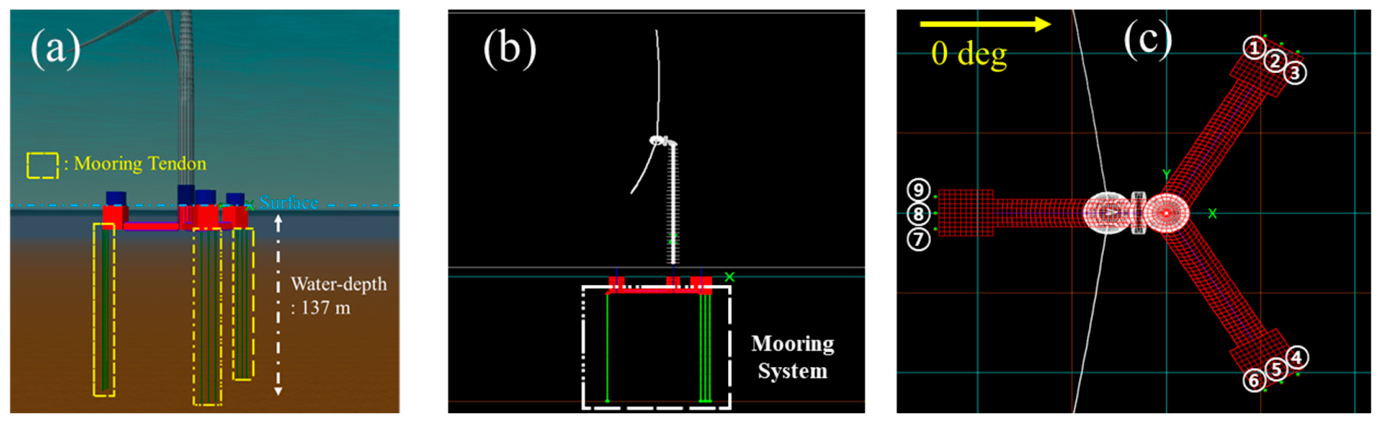










| TLP-Type FOWT System | |||
|---|---|---|---|
| Mooring System | Mooring tendon type | [-] | Wire rope with wire core |
| Nominal diameter | [m] | 0.2 | |
| Submerged mass | [kg/m] | 138.98 | |
| Mass in air | [kg/m] | 159.59 | |
| Minimum breaking load | [kN] | 2.533 | |
| Axial stiffness | [kN] | 1.62 | |
| Bending stiffness | [kN·m2] | 0 | |
| Environmental Condition | Value | ||||
|---|---|---|---|---|---|
| Wave | Significant wave height [m] | Case By Case | |||
| Spectral period [s] | |||||
| Spectrum [-] | Fixed | JONSWAP | |||
| Gamma [-] | 2.14 | ||||
| Current | Velocity [m/s] | Depth | 0.79 | Surface | |
| 1/7 power law | |||||
| Wind | Spectrum [-] | IEC Kaimal | |||
| Turbulence characteristic [-] | B | ||||
| Turbulence type [-] | Normal Turbulence Model | ||||
| Reference wind speed at hub-height (150 m) [m/s] | 10.0 | ||||
| Power law exponent [-] | 0.14 | ||||
| Training | Validation | Test | ||
|---|---|---|---|---|
| Window length | Input | 200 | ||
| Output | 1 | |||
| Features | 16 | |||
| Strides | 1 | |||
| Output Shape (Output length, Feature) | (1, 9) | (1, 9) | (1, 9) | |
| LSTM | GRU | EN-ATT | |
|---|---|---|---|
| Time window sizes | 200 | 200 | 200 |
| Epochs | 200 | 200 | 200 |
| Number of layers | 4 | 3 | - |
| Unit sizes | 64 | 64 | |
| Number of up-projection neurons | - | 128 | |
| Number of multi-head attention heads | 16 | ||
| Number of feed-forward neurons | 128 | ||
| Number of attention stacks | 4 | ||
| Total number of trainable parameters | 120,393 | 66,249 | 401,673 |
| Case Type | Case Name | Noise Level |
|---|---|---|
| Normal Case | Normal Case | No noise |
| Noise Case | 5% Noise | 5% Gaussian noise |
| 10% Noise | 10% Gaussian noise | |
| 20% Noise | 20% Gaussian noise | |
| 30% Noise | 30% Gaussian noise |
| EN-ATT | |||||
|---|---|---|---|---|---|
| Noise 5% | Noise 10% | Noise 20% | Noise 30% | ||
| Overall | 0.9923 | 0.9881 | 0.9777 | 0.9700 | |
| ML 2 | Fairlead | 0.9904 | 0.9862 | 0.9759 | 0.9688 |
| Middle | 0.9898 | 0.9856 | 0.9750 | 0.9685 | |
| Anchor | 0.9895 | 0.9852 | 0.9746 | 0.9679 | |
| ML 5 | Fairlead | 0.9900 | 0.9842 | 0.9712 | 0.9614 |
| Middle | 0.9897 | 0.9838 | 0.9702 | 0.9610 | |
| Anchor | 0.9895 | 0.9836 | 0.9698 | 0.9604 | |
| ML 8 | Fairlead | 0.9972 | 0.9948 | 0.9874 | 0.9804 |
| Middle | 0.9972 | 0.9948 | 0.9874 | 0.9806 | |
| Anchor | 0.9972 | 0.9948 | 0.9875 | 0.9806 | |
Disclaimer/Publisher’s Note: The statements, opinions and data contained in all publications are solely those of the individual author(s) and contributor(s) and not of MDPI and/or the editor(s). MDPI and/or the editor(s) disclaim responsibility for any injury to people or property resulting from any ideas, methods, instructions or products referred to in the content. |
© 2026 by the authors. Licensee MDPI, Basel, Switzerland. This article is an open access article distributed under the terms and conditions of the Creative Commons Attribution (CC BY) license.
Share and Cite
Kim, S.M.; Kang, B.; Chung, W.C. Mooring Tendon Dynamic Tension Estimation in a 15 MW TLP-Type FOWT: A Comparison of Self-Attention, LSTM, and GRU Networks. J. Mar. Sci. Eng. 2026, 14, 1745. https://doi.org/10.3390/jmse14181745
Kim SM, Kang B, Chung WC. Mooring Tendon Dynamic Tension Estimation in a 15 MW TLP-Type FOWT: A Comparison of Self-Attention, LSTM, and GRU Networks. Journal of Marine Science and Engineering. 2026; 14(18):1745. https://doi.org/10.3390/jmse14181745
Chicago/Turabian StyleKim, Seung Mo, Byungho Kang, and Woo Chul Chung. 2026. "Mooring Tendon Dynamic Tension Estimation in a 15 MW TLP-Type FOWT: A Comparison of Self-Attention, LSTM, and GRU Networks" Journal of Marine Science and Engineering 14, no. 18: 1745. https://doi.org/10.3390/jmse14181745
APA StyleKim, S. M., Kang, B., & Chung, W. C. (2026). Mooring Tendon Dynamic Tension Estimation in a 15 MW TLP-Type FOWT: A Comparison of Self-Attention, LSTM, and GRU Networks. Journal of Marine Science and Engineering, 14(18), 1745. https://doi.org/10.3390/jmse14181745