1. Introduction
Ports play a fundamental role in global trade and economic development, acting as strategic nodes that facilitate the exchange of goods and commodities between countries. Efficient port infrastructure is therefore essential for improving trade connectivity, reducing transportation costs and supporting economic growth [
1]. Over the past decades, the continuous expansion of maritime trade has also driven the development of increasingly larger vessels, which require port infrastructures capable of accommodating deeper drafts and higher cargo volumes [
2]. This challenge is particularly relevant for Brazil, a country with a strong export-oriented economy based on agricultural commodities, minerals and industrial products. Brazilian ports handle more than 95% of the country’s exports and the vast majority of its imports [
3]. In 2025, Brazilian ports handled approximately 1.4 billion tonnes of cargo, representing a new highest throughput ever recorded in the country [
4]. Given this strong dependence on maritime transport, the efficiency and capacity of the Brazilian port system are essential for maintaining the country’s international competitiveness.
Despite their strategic importance, Brazilian ports face significant structural constraints that limit their ability to accommodate the new generation of large container vessels. As highlighted in the study by Pimenta et al. (2025) [
5], the Brazilian port sector requires substantial modernization to adapt to the operational requirements of post-Panamax vessels. These ships, which exceed the size limitations of the original Panama Canal locks, typically have lengths exceeding 300 m, widths above 50 m, and drafts greater than 15 m, enabling them to transport significantly larger volumes of cargo and thus increasing the efficiency of maritime transport [
6,
7]. However, many existing Brazilian ports were developed under historical and geographical conditions that limit their ability to accommodate vessels of this scale. Although post-Panamax vessels are used in this study as a reference category to define deep-draft operational requirements, the spatial suitability model is not intended to address container traffic exclusively. Rather, it supports the identification of coastal areas with favourable conditions for deep-draft port infrastructure serving large vessels, which is particularly relevant in Brazil given the importance of both containerized cargo and bulk commodity flows.
Two major structural constraints help explain these limitations. First, insufficient channel and berth depths require frequent dredging operations to ensure navigability for larger vessels, resulting in high economic costs and potential environmental impacts, such as increased turbidity, sediment resuspension, and alterations in hydrodynamic conditions [
8,
9,
10]. Second, spatial constraints related to port–city interactions further restrict expansion possibilities. Many ports historically developed near urban areas, which have progressively expanded around them, limiting land availability and intensifying conflicts associated with land use, traffic congestion and environmental pressures [
11].
In this context, the aforementioned study by Pimenta et al. (2025) [
5] evaluated the capacity of existing Brazilian ports to accommodate larger vessels through a multi-criteria assessment of 210 port facilities. The results indicated that only a limited number of ports present favourable conditions for expansion, mainly due to constraints associated with depth, land availability and urban proximity. Notably, none of the analysed ports achieved the maximum adaptability score defined in the study, highlighting the structural limitations of the current port system in fully meeting the requirements of post-Panamax operations. While this infrastructure-based approach provides valuable insights into the adaptability of existing ports, it does not address a complementary strategic question: the identification of new coastal locations with favourable conditions for port development. From a planning perspective, this limitation underscores the need to move beyond the exclusive focus on existing infrastructure and to incorporate spatial approaches that support the identification of alternative locations for future port development.
Port site selection is generally recognized as a multi-dimensional planning problem that requires the integration of nautical, physical, environmental, logistical and territorial criteria [
12,
13]. Port planning and design guidelines emphasize that greenfield port development should consider factors such as natural water depth, navigational access, availability of land for terminals and storage areas, hinterland connectivity, environmental constraints, coastal morphology and the interaction between port development and surrounding land uses. These criteria are also consistent with GIS-based suitability approaches, which allow heterogeneous spatial factors to be combined within a transparent decision-support framework [
14,
15]. In this study, the selected variables were therefore intended to represent the main criteria that can be assessed consistently at a national scale, while more detailed metocean, sedimentary, ecological and engineering factors are left for subsequent site-specific feasibility assessments.
In the Brazilian context, port development is guided by a set of national planning instruments, including the National Plan for Port Logistics (PNLP), the Port Sector Plan (PSPORT), and port-specific Master Plans. These instruments provide strategic and tactical guidance for the development of the Brazilian port system, including demand projections, infrastructure needs, bottleneck identification, investment priorities and the integration of ports with the wider transport and logistics network. However, these planning instruments are mainly oriented towards the assessment, modernization and expansion of existing port complexes and planned infrastructure projects. They do not provide a national-scale GIS-based screening of alternative coastal locations with favourable natural and spatial conditions for future deep-draft port development. The present study therefore complements existing Brazilian port planning instruments by providing an early-stage spatial decision-support framework to identify priority coastal areas for further technical, economic, environmental and institutional assessment.
In this regard, research using spatially explicit approaches to identify new coastal sites suitable for deep-draft port development remains limited. Specifically, in the context of large coastal countries, the use of Geographic Information Systems (GIS) and spatial modelling approaches to enhance early-stage port development is largely understudied [
14,
16]. To address this gap, the present study develops a GIS-based spatial suitability model, using map algebra techniques, to identify coastal areas in Brazil with favourable conditions for the development of ports capable of accommodating post-Panamax vessels. By integrating environmental, physical, and infrastructural criteria within a multi-criteria spatial framework, the proposed approach provides a systematic spatial screening tool to support strategic decision-making in port infrastructure planning, enabling a shift from infrastructure-based assessments towards more spatially informed planning strategies.
This study contributes to the port planning literature by complementing infrastructure-based assessments with a spatially explicit framework that supports the identification of potential new (greenfield) locations for future deep-draft port development.
2. Methodology
This study develops and applies a GIS-based spatial modelling approach to identify coastal areas in Brazil with favourable conditions for deep-draft port development capable of serving large vessels, using post-Panamax operational requirements as a reference for the spatial screening. The methodology is conceived as a spatial screening tool to support early-stage strategic decision-making, rather than as a detailed technical or economic feasibility assessment.
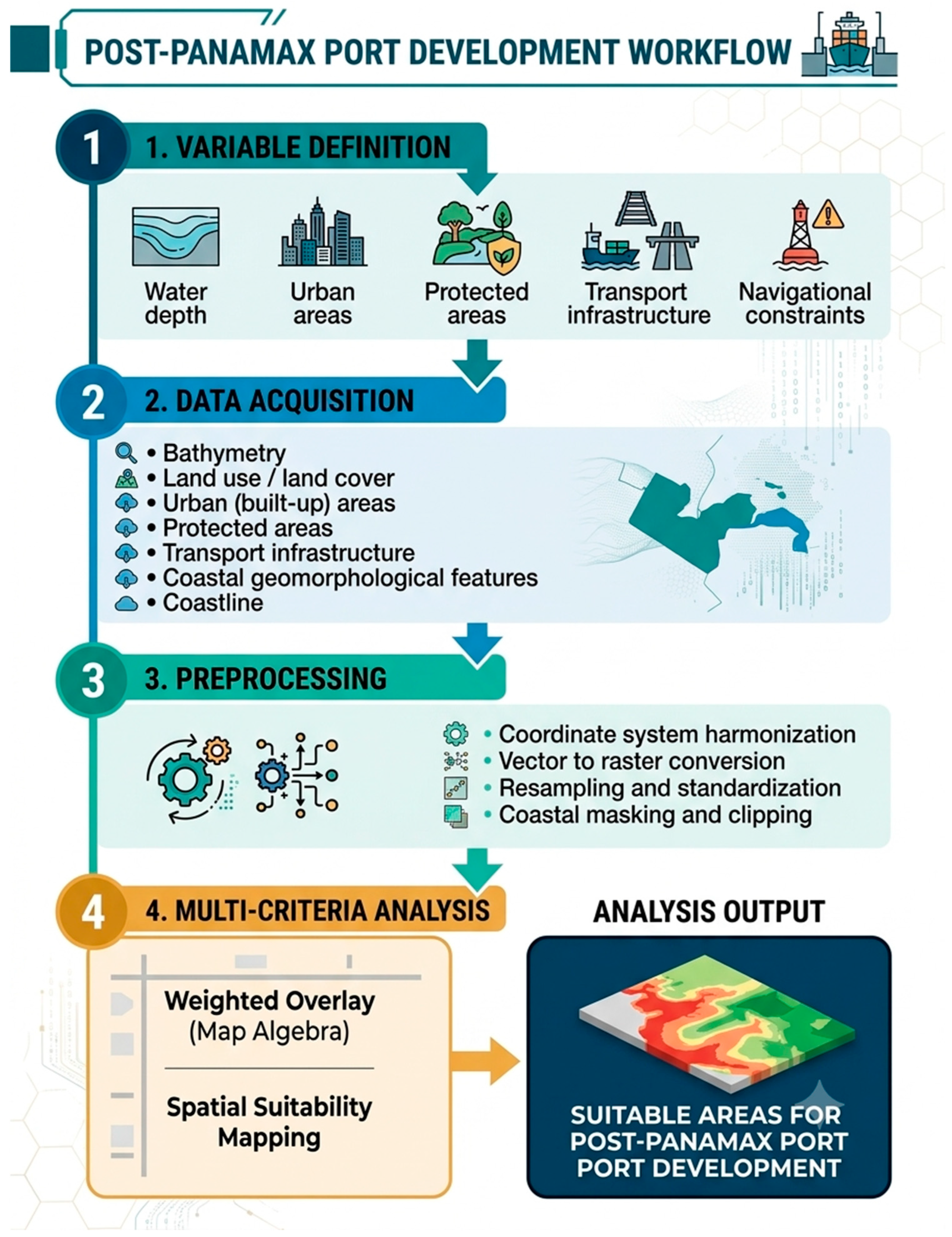
The methodology is structured into four main stages: (i) definition of spatial variables relevant to port site selection; (ii) collection of geospatial datasets from official sources; (iii) preprocessing and standardization of spatial data to ensure consistency in spatial resolution and coordinate systems; and (iv) spatial modelling through a weighted multi-criteria analysis to identify suitable coastal areas.
Figure 1 presents the overall workflow of the GIS-based multi-criteria spatial modelling approach applied in this study, illustrating the main methodological stages from variable definition to the final spatial suitability assessment. The following subsections describe each of these stages in detail.
2.1. Definition and Spatialization of Variables
According to Notteboom et al. (2022) [
17], ports designed to operate large container ships require extensive land and water areas, deep navigation channels, and efficient connections to inland transport networks, such as highways and railways. Thus, the operational and spatial requirements for the development of ports capable of accommodating post-Panamax vessels served as the basis for the selection of spatial variables taken into account in the suitability model.
In addition to these operational requirements, the selection of variables was supported by previous literature on port planning, port–city relations, maritime spatial planning and GIS-based spatial suitability analysis. Water depth is widely recognized as a fundamental condition for large-vessel operations, as insufficient natural depth increases the need for dredging and associated economic and environmental costs [
5,
17]. Urban areas were included because proximity to densely built-up coastal zones may intensify port–city conflicts, restrict land availability and increase land-use competition, as highlighted in recent port–city interface literature [
11,
18]. Protected areas were considered because environmental regulations and conservation priorities may strongly limit the feasibility of new coastal infrastructure, and are commonly incorporated as constraint layers in spatial suitability and maritime spatial planning approaches [
14,
19]. Transport infrastructure was included to represent hinterland connectivity, which is a key factor in port competitiveness and cargo distribution [
17]. Finally, navigational constraints were incorporated because coastal geomorphological features, such as islands, reefs, sandbanks and rocky slabs, may affect navigable access, approach channels and the operational safety of future port locations.
Based on these considerations, a set of five main criteria was defined to represent the key factors influencing the feasibility of deep-draft port development: water depth, urban areas, protected areas, transport infrastructure and navigational constraints. These criteria were subsequently operationalized through standardized spatial layers. In particular, transport infrastructure was represented by highways, railways and waterways, while navigational constraints were represented by coastal geomorphological features, including sandbanks, islands, reefs and rocky slabs.
Together, these variables capture the main dimensions influencing port site selection while maintaining a level of generalization consistent with a spatial screening approach. Each variable was spatialized within a GIS environment through the generation of thematic layers, using appropriate geoprocessing techniques such as distance analysis, buffer zones, density estimation, or spatial interpolation, depending on the nature of the dataset. The procedures for data preprocessing, normalization, and weighting are described in the following sections.
It should be noted that the selected variables do not aim to represent all technical, oceanographic, environmental or ecological factors that would be required in a detailed port feasibility study. Other relevant site-specific conditions, such as meteorological and metocean conditions, wave climate, wave convergence and divergence, tides, currents, sediment transport dynamics, detailed ecological sensitivity and site-specific environmental impacts, were not explicitly included in the present model. These factors are highly relevant for subsequent engineering, environmental impact assessment and operational planning stages. However, the objective of this study is to provide a national-scale strategic spatial screening of the Brazilian coastline based on variables that are consistently available, spatially comparable and directly relevant to early-stage port location assessment.
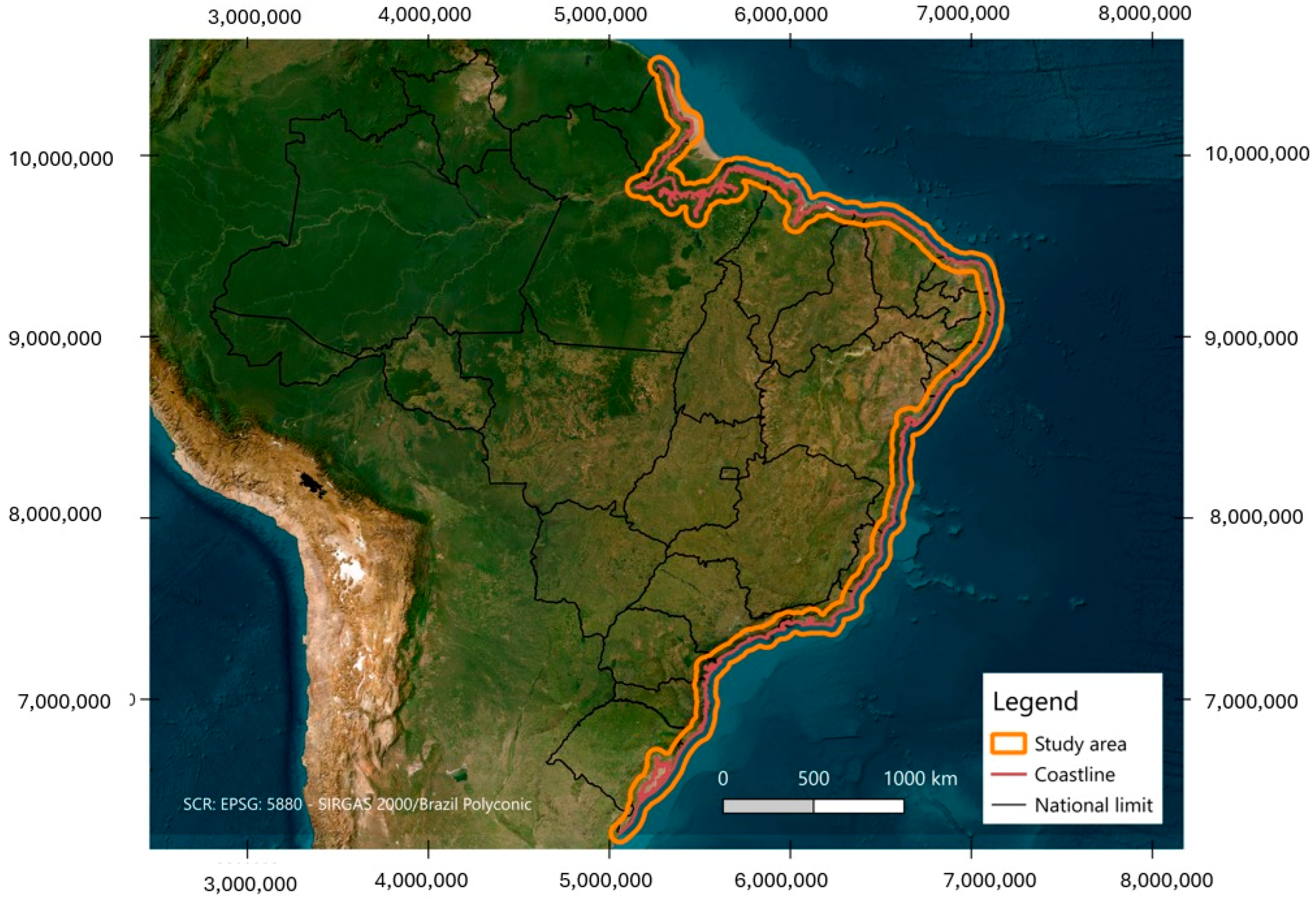
To define the spatial extent of the analysis, a coastal influence zone was established using a 100 km buffer along the Brazilian coastline, which extends for approximately 9200 km, with the buffer extending 50 km inland (onshore) and 50 km seaward (offshore) (
Figure 2). This delimitation captures the areas where both offshore marine conditions (e.g., bathymetry and navigational constraints) and onshore hinterland connectivity factors (e.g., proximity to transport infrastructure and urban areas) may influence the suitability of potential port locations. The selected distance reflects a balance between incorporating sufficient spatial context for port development and maintaining a level of generalization consistent with a strategic spatial screening approach.
2.2. Data Collection
In this phase, spatial datasets were systematically collected, validated, and organized to support the development of the GIS-based suitability model. The datasets correspond to the variables defined in
Section 2.1 and represent key physical, environmental, logistical, and territorial factors relevant to the potential implementation of deep-draft ports capable of accommodating post-Panamax vessels. All datasets were obtained from publicly available geospatial sources.
The datasets include information on land use and land cover, bathymetry, urban areas, environmental protection zones, transport infrastructure, and coastal geomorphological features. Together, these datasets capture both marine and terrestrial dimensions relevant to port location decisions and provide the empirical basis for constructing the spatial variables incorporated into the suitability model.
Table 1 summarizes the main data sources used in the analysis, including their origin and format.
All datasets were reviewed and selected based on their spatial coverage, consistency, and relevance for the study objectives. Although the data originate from different institutions and may present variations in resolution and level of detail, they provide a sufficiently robust and spatially consistent representation of the main factors influencing port location at a national scale.
2.3. Data Preprocessing and Standardization
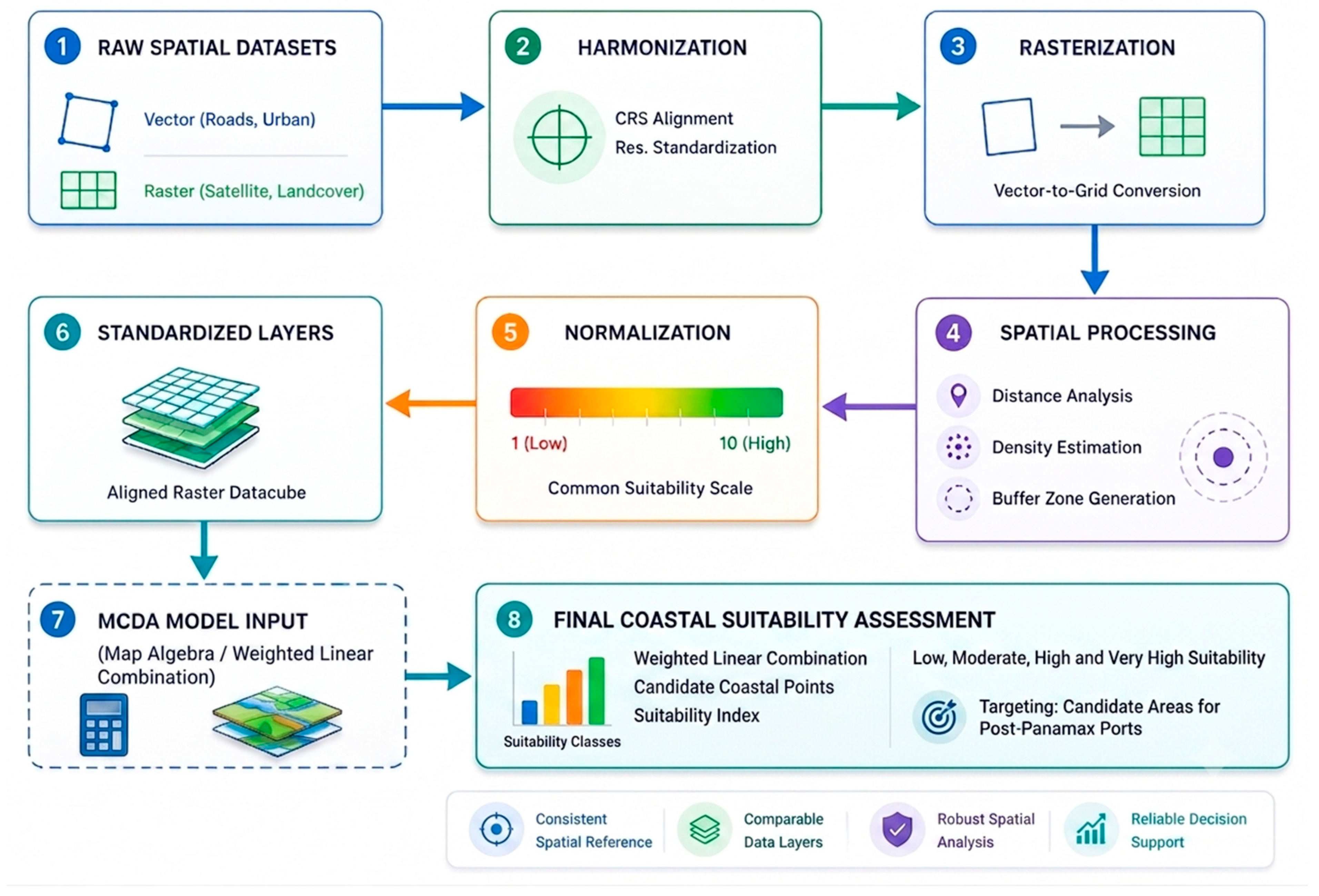
To ensure consistency with the GIS-based multi-criteria decision analysis (MCDA) framework, all datasets were pre-processed and standardized before spatial modelling. Given the heterogeneity of the original data sources, this step was essential to enable consistent spatial integration and analysis of variables. First, all datasets were harmonized in terms of the geographic reference system and spatial resolution. A common projection system was applied across all layers to ensure accurate spatial alignment, and a uniform raster cell size was defined to support consistent pixel-based analysis.
One of the first preprocessing steps involved converting the data into raster format. Since the suitability model is based on raster map algebra, all vector datasets (e.g., transport infrastructure, protected areas, and urban areas) were converted into raster format. This rasterization process ensured methodological consistency across variables and enabled the application of pixel-by-pixel mathematical operations required for the multi-criteria analysis.
After the rasterization, each variable was transformed into a suitability surface through the application of specific spatial operations adapted to the nature of the data. These included distance analysis (e.g., proximity to urban areas or transport infrastructure), density analysis (e.g., road network density), and buffer generation (e.g., exclusion zones around protected areas and navigational constraints). The resulting thematic layers represent the spatial distribution of each variable in terms of its relative influence on port development suitability.
To enable the integration of variables with different units and value ranges, all layers were normalized to a common ordinal suitability scale. This process involved reclassifying each variable into standardized scores ranging from low to high suitability according to predefined criteria. Normalization ensures that no single variable dominates the analysis due to differences in measurement units, allowing for a balanced combination of factors within the MCDA framework. The standardized raster layers produced in this phase constitute the input data for the weighted spatial modelling process described in the following section, where they are combined through map algebra to generate the final suitability index.
To improve the transparency and reproducibility of the normalization process, the reclassification thresholds used to transform each spatial variable into a standardized suitability score are presented in
Table 2. The thresholds were defined based on the operational requirements of deep-draft port development, using post-Panamax requirements as a reference, and on planning criteria commonly adopted in port location studies. For the bathymetric variable, particular emphasis was placed on the draft requirements of fully loaded large vessels, which typically require operational depths of around 15 m or more, together with additional under-keel clearance for safe navigation. Consequently, depths below 15 m were classified as unsuitable, depths between 15 and 18 m were considered suitable but less favourable, and depths greater than 18 m received the highest suitability score. Distances from urban areas were classified to reduce potential port–city conflicts and land-use pressure, while protected areas and navigational constraints were treated as threshold-based exclusion criteria. Transport infrastructure suitability was represented through a density-based indicator, reflecting the availability of transport features in the surrounding area.
It should be noted that the transport infrastructure criterion represents the spatial availability of transport infrastructure rather than its operational capacity or level of service. Given the predominance of road transport in Brazil, highway density was considered particularly relevant, while railways and waterways were included to capture potential multimodal connectivity. However, the indicator does not incorporate highway congestion, railway occupancy rates, inland waterway capacity, service frequency or modal performance indicators. These factors require detailed transport demand and network capacity data, which are not consistently available at the national scale considered in this study. Therefore, transport infrastructure should be interpreted as a proxy for potential hinterland connectivity rather than as a measure of effective logistics capacity.
In addition to the reclassification thresholds reported in
Table 2,
Figure 3 summarizes the overall preprocessing workflow used to transform raw spatial datasets into standardized suitability layers. The figure illustrates the sequence of operations applied, including coordinate system harmonization, rasterization, spatial processing (e.g., distance, buffer and density analyses), and normalization. This intermediate step provides a conceptual bridge between data collection and the subsequent multi-criteria spatial modelling.
2.4. Spatial Modelling and Multi-Criteria Analysis
The spatial suitability model was implemented using a Geographic Information Systems (GIS)-based multi-criteria decision analysis (MCDA) framework, enabling the integration of multiple spatial variables representing physical, environmental, logistical, and territorial conditions into a single suitability assessment.
Following the preprocessing and standardization phase (
Section 2.3), each criterion or subcriterion was represented as a raster-based suitability layer, and a weight was assigned to each one reflecting its relative importance for deep-draft port development. The weighting scheme was defined based on expert judgement supported by the literature [
20,
21] and refined to emphasize non-substitutable physical constraints over modifiable logistical factors. A scale ranging from 1 (lowest influence) to 10 (strongest influence) was adopted.
Table 3 summarizes the variables included in the model, together with their data sources, data processing methods, and assigned weights.
The weighting scheme reflects the objective of the model as a long-term strategic screening tool rather than a short-term feasibility assessment. Weights were assigned according to a qualitative rationale based on three main considerations: (i) the degree to which each factor represents a non-substitutable condition for post-Panamax operations; (ii) the potential economic, environmental and regulatory implications of modifying or overcoming that constraint; and (iii) the planning time horizon over which the constraint could realistically be mitigated or improved.
Water depth was assigned the highest weight because it represents a primary threshold condition for the operation of large vessels, using post-Panamax operational requirements as a reference. Locations that do not meet minimum depth requirements would require extensive dredging or other major maritime works, with substantial economic and environmental implications. However, the high weight assigned to water depth should not be interpreted as implying that deeper locations are always technically or economically preferable. In exposed coastal settings, deep-draft port development may also require significant maritime protection works, such as breakwaters, whose cost depends on local wave climate, seabed conditions and engineering design. Therefore, in this model, water depth is used as a strategic screening criterion related to vessel access and dredging requirements, while detailed breakwater design and associated construction costs are considered part of subsequent site-specific feasibility studies.
Urban areas and protected areas were assigned intermediate weights because they represent relevant spatial, social and regulatory constraints. Proximity to densely urbanized areas may restrict land availability, increase port–city conflicts and raise social pressures, while protected areas may impose environmental permitting requirements and conservation-related restrictions. These constraints may not be completely prohibitive in all cases, but they can significantly influence the feasibility, complexity and acceptability of port development.
Transport infrastructure was assigned a lower weight not because hinterland connectivity is considered unimportant, but because the model prioritizes the identification of locations with favourable inherent physical and spatial conditions at a national scale. From a long-term planning perspective, transport infrastructure can, in principle, be expanded or upgraded through future investment, whereas natural depth conditions and major environmental or urban constraints are less substitutable. Nevertheless, the lower weight assigned to transport infrastructure should be interpreted in relation to the strategic time horizon of the model: locations with existing railway, waterway or road connectivity may offer advantages in shorter-term development scenarios, while locations lacking such connectivity would require additional infrastructure planning and investment.
Similarly, navigational constraints associated with coastal geomorphological features were assigned a relatively low weight because, at the national screening scale adopted in this study, their operational impact is highly site-specific and can often be reduced through engineering solutions and navigational management, such as channel marking, pilotage, route design or localized maritime works. This hierarchical weighting structure therefore prioritizes non-substitutable natural conditions while acknowledging that infrastructure-related and navigational factors remain relevant, particularly when shorter implementation horizons or detailed engineering feasibility are considered.
The modelling approach builds on established GIS-based MCDA applications for infrastructure planning (e.g., refs. [
15,
20,
21,
22]), which typically rely on cost-surface analysis, and adapts this framework to a coastal context where spatial factors are interpreted as elements that either facilitate or constrain port development.
The modelling process resulted in a set of thematic suitability maps for each variable, which were subsequently combined into a final composite suitability map.
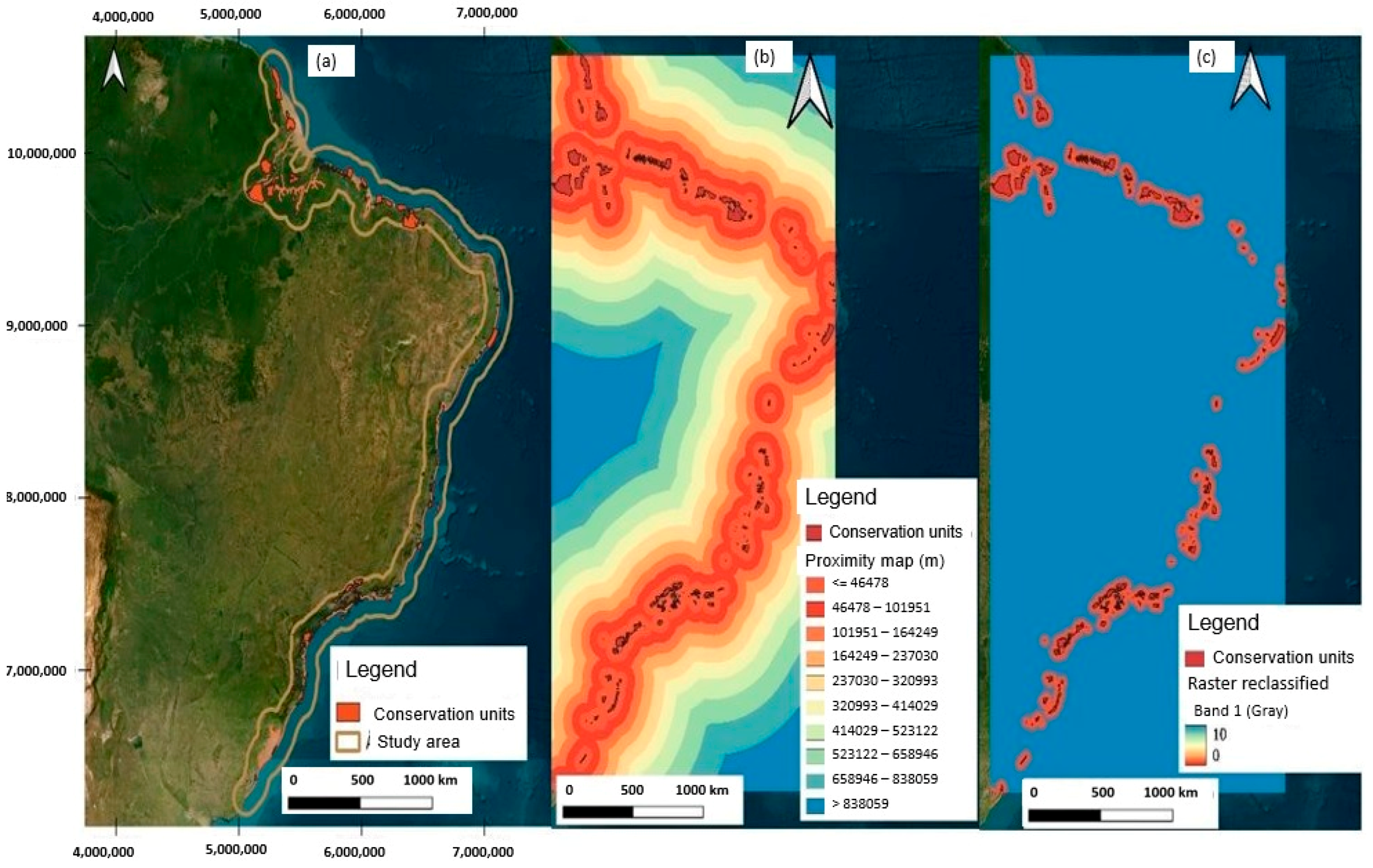
Figure 4 illustrates the geoprocessing workflow applied to the protected areas layer as an example, including distance analysis and subsequent reclassification into standardized suitability scores; in this case, distances below 3 km were classified as unsuitable in accordance with Brazilian environmental regulations, while areas beyond this threshold were classified as suitable and assigned the maximum suitability score. Through this process, all variables were ultimately transformed into a common ordinal scale ranging from 0 (lowest suitability) to 10 (highest suitability), ensuring their comparability within the multi-criteria framework.
This procedure was consistently applied to all variables prior to the weighted overlay operation, resulting in a final spatial representation of coastal suitability for deep-draft port development.
The suitability index was calculated using a weighted linear combination of the standardized variables through map algebra operations in the GIS environment, as expressed in Equation (1):
where
S represents the final suitability index,
wᵢ is the weight assigned to standardized spatial layer or subcriterion
i, and
xᵢ is the corresponding normalized suitability value, expressed on a standardized ordinal scale from 0 to 10. The map algebra operation consisted of summing all standardized raster layers after multiplying each one by its corresponding weight. Although the model is structured around five main criteria, the final weighted overlay includes ten standardized spatial layers, as shown in
Table 3. Since the sum of the weights is 26, the theoretical maximum suitability value is 260, and the theoretical minimum value of the index is 14. The observed suitability values ranged from 51 to 243, indicating that no analysed location reached the theoretical maximum score.
The resulting composite index represents the relative spatial distribution of suitability for the implementation of ports capable of receiving and operating post-Panamax vessels. Higher index values indicate locations where the combination of physical conditions, environmental constraints, and basic connectivity provides more favourable conditions for port development. As such, the model should be interpreted as a comparative spatial screening tool rather than a predictive or deterministic assessment of port feasibility.
Within this framework, spatial variables act as either facilitating or constraining factors depending on their characteristics. For example, insufficient depth, proximity to densely urbanized areas, the presence of environmental protection zones, limited transport connectivity, or coastal geomorphological obstacles may reduce suitability due to increased technical, environmental, logistical, and social constraints. Conversely, favourable bathymetry, low urban pressure, absence of environmental restrictions, adequate transport accessibility, and limited navigational constraints tend to increase suitability.
3. Results
To evaluate the spatial distribution of port suitability along the Brazilian coastline, a reference line was generated 1 km offshore, representing potential locations for the construction of ports capable of receiving and operating post-Panamax vessels. Points were subsequently placed at 5 km intervals along this line to capture spatial variations in the suitability index derived from the multi-criteria model.
A total of 1076 coastal points were analysed. Since the sum of the weights is 26 and each standardized layer ranges from 0 to 10, the theoretical maximum suitability value is 260. The observed suitability values ranged from 51 to 243, indicating that no analysed location reached the maximum theoretical score. This range reflects the combined influence of bathymetric conditions, urban proximity, environmental constraints, transport infrastructure and navigational constraints, and reveals a heterogeneous spatial pattern along the Brazilian coastline.
For interpretation purposes, suitability values were classified into four categories (low, moderate, high, and very high suitability) using predefined suitability score ranges. Approximately 31.2% of the coastline presents low suitability (51–109), corresponding to areas where the combination of evaluated factors results in overall unfavourable conditions for port development. An additional 62.4% corresponds to areas with moderate suitability (110–167), where a mix of favourable and limiting conditions is observed. Areas classified as high suitability (167–225) account for 5.4% of the analysed coastline and represent locations where several favourable conditions converge, although some constraints may still be present. Only about 1% of the analysed coastline falls within the very high suitability category (225–243), indicating locations where the combined effect of all variables produces the most favourable conditions for the potential implementation of new ports.
Despite this variability, the results indicate that only a limited number of coastal locations present highly favourable conditions under the scenario considered. It should be noted that the modelling approach focuses on physical, environmental, and spatial constraints, and does not explicitly account for demand-side factors such as cargo generation, industrial activity, or regional economic specialization. Therefore, the identified locations should be interpreted as candidate areas for further assessment, rather than as directly feasible port development sites.
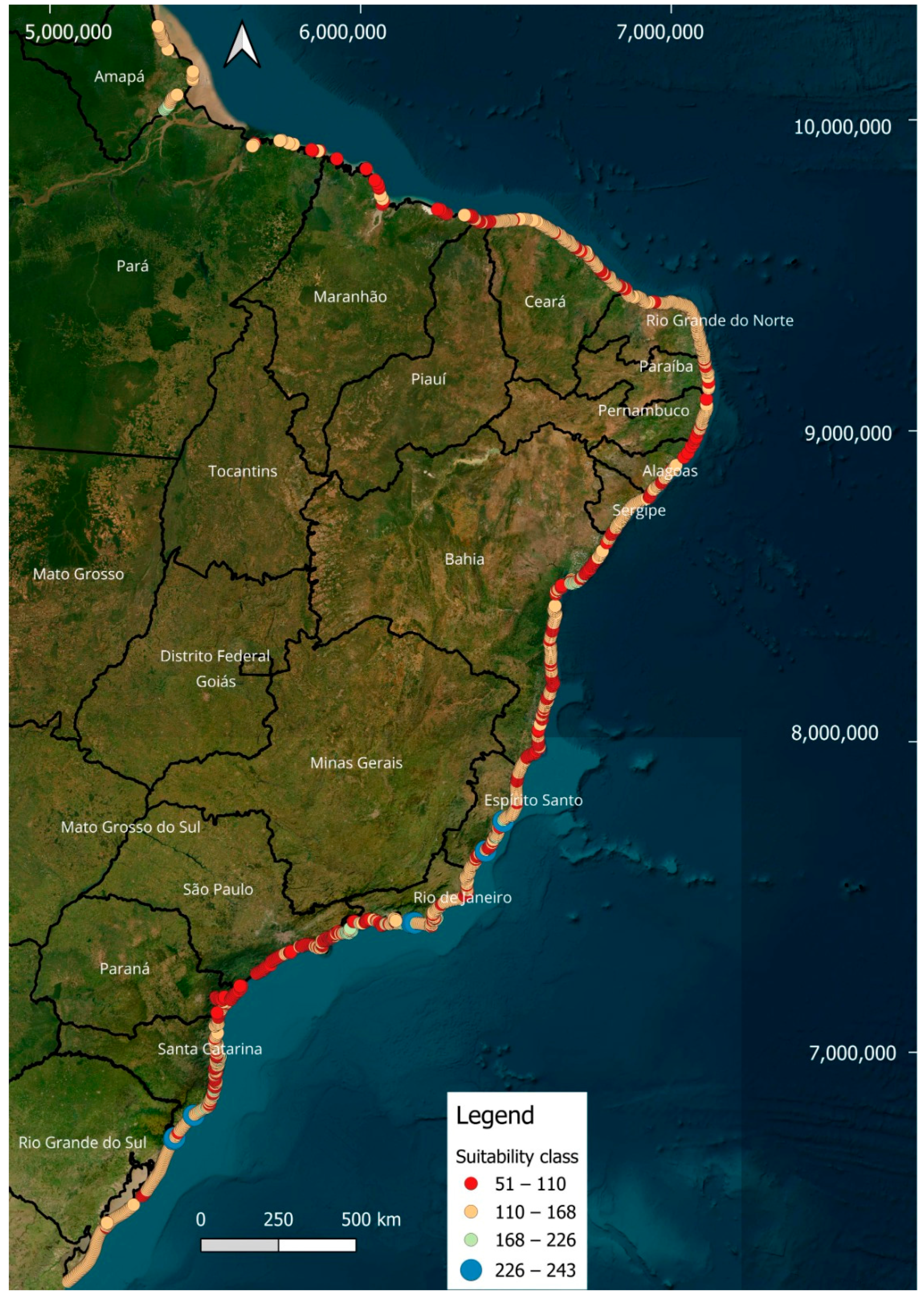
Figure 5 presents the spatial distribution of suitability values along the Brazilian coastline. The southeastern region shows the highest concentration of low-suitability points (red tones), reflecting strong constraints related to high urban density and the presence of conservation areas, both of which act as repulsive factors in the model. In contrast, areas with the highest suitability values (blue tones) are more sparsely distributed and correspond to locations where favourable physical and spatial conditions coincide.
Particular attention is given to the highest suitability class (226–243), represented by the darkest blue symbols in
Figure 5. This class identifies the most favourable candidate locations under the criteria considered in the model. Within this range, a total of nine locations were identified as the highest-ranking candidate locations along the Brazilian coastline under the criteria considered in the model.
These nine locations are presented below in descending order of suitability score under the baseline weighting scenario, to facilitate comparison of their relative potential for port development.
3.1. Balneário Rincão/Santa Catarina
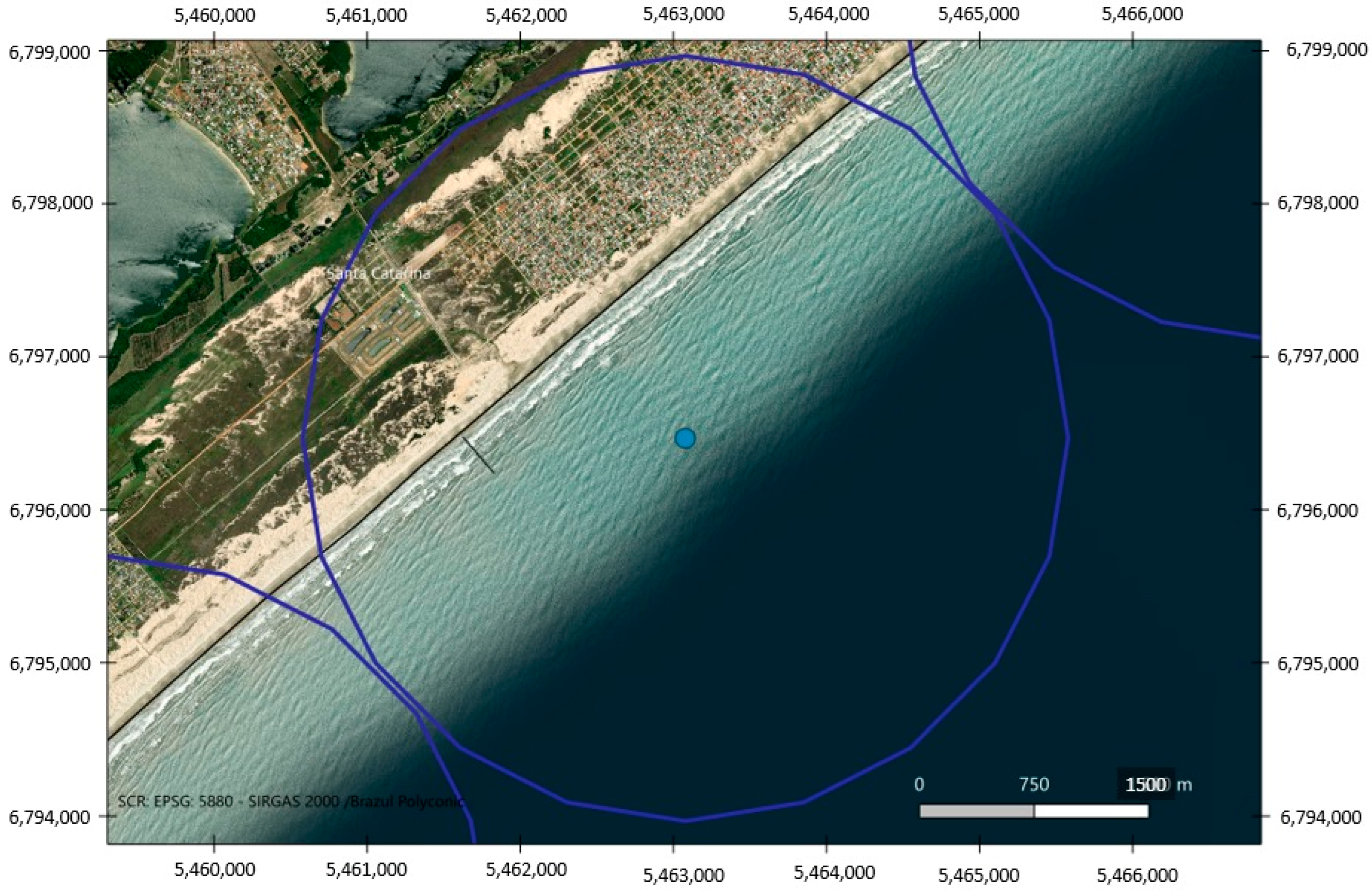
The location with the highest suitability score (243 points) is situated in the municipality of Balneário Rincão. This site combines favourable bathymetric conditions with sufficient land availability for potential port development. In contrast to other identified locations, it presents relatively low environmental and urban constraints, making it one of the most balanced and promising candidates highlighted by the model (
Figure 6). It should be noted that the proposed site has both open, undeveloped terrain and mid-to-low-density built-up regions.
3.2. Barra do Riacho/Espírito Santo
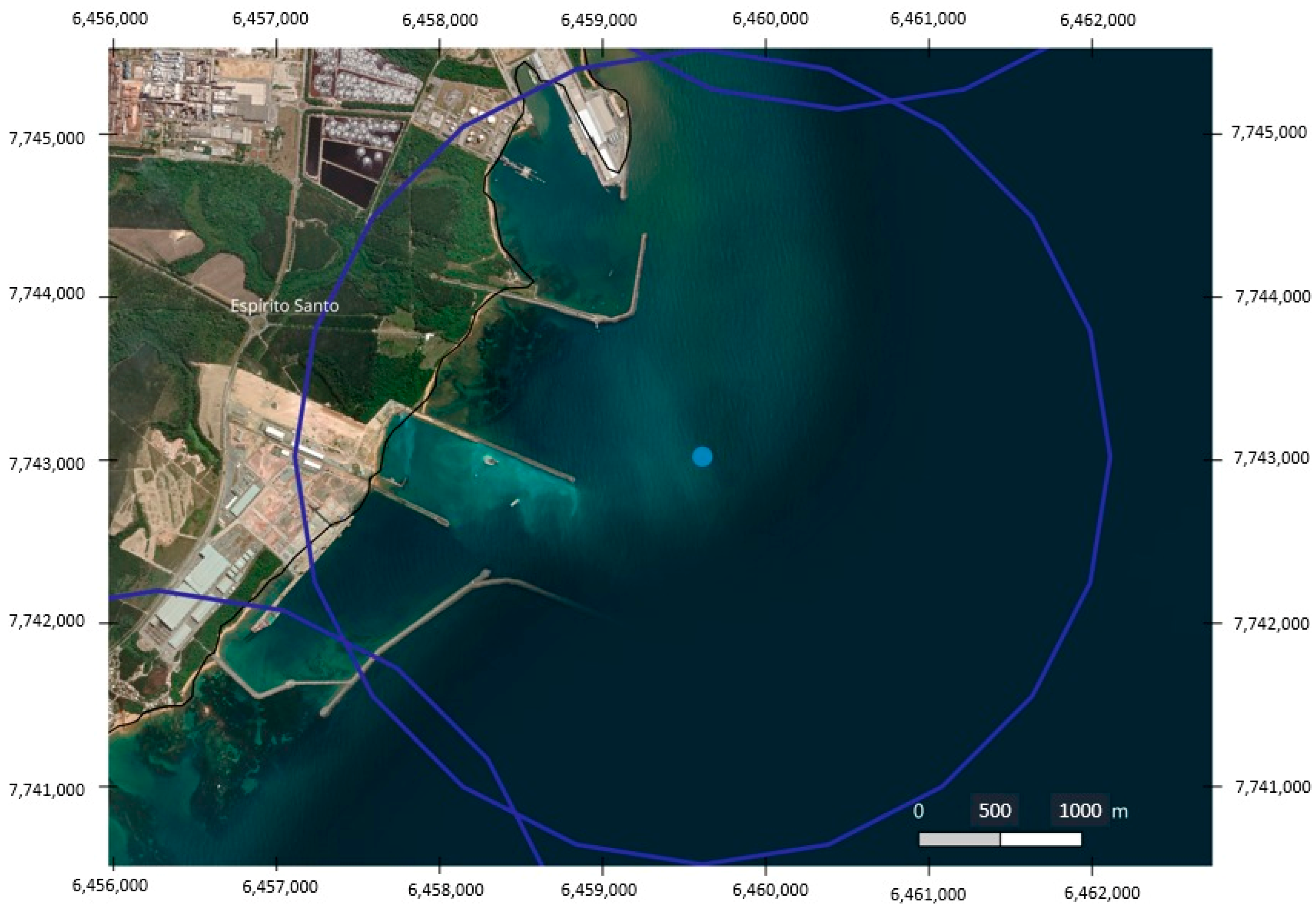
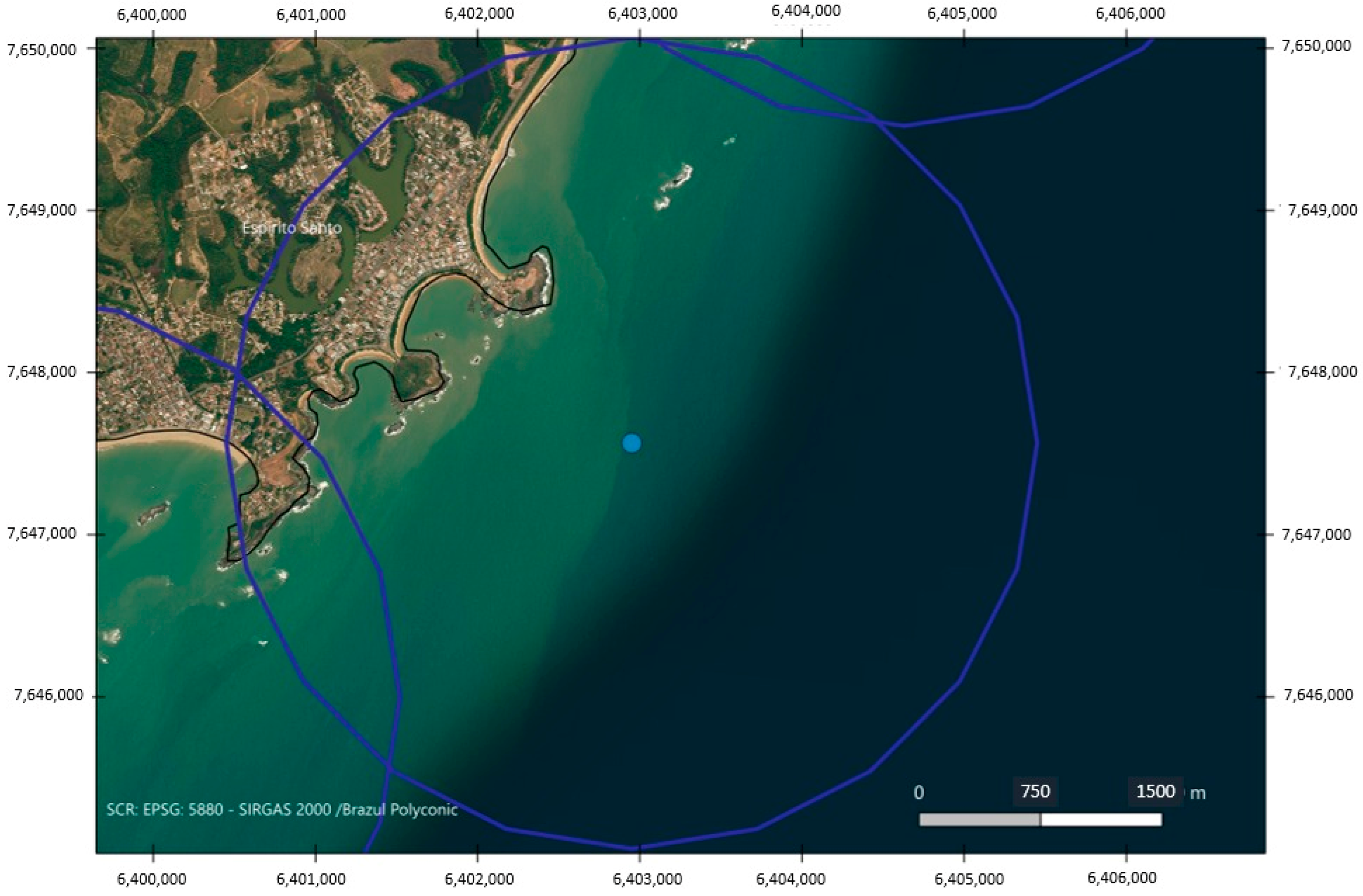
The second-highest suitability location (241 points) is situated in northern Espírito Santo, in the municipality of Barra do Riacho. This area already hosts several port-related facilities, including Portocel, Estaleiro Jurong and Imetame, which further support the model’s identification of this site as favourable. The high suitability score is primarily driven by favourable bathymetric conditions and the absence of major urban constraints, allowing the availability of extensive land for port operations and cargo storage. However, existing terminals in this area have required dredging works to maintain adequate navigational depth, and multimodal transport connectivity remains relatively limited (
Figure 7).
3.3. Arroio do Sal/Rio Grande do Sul (2 Locations)
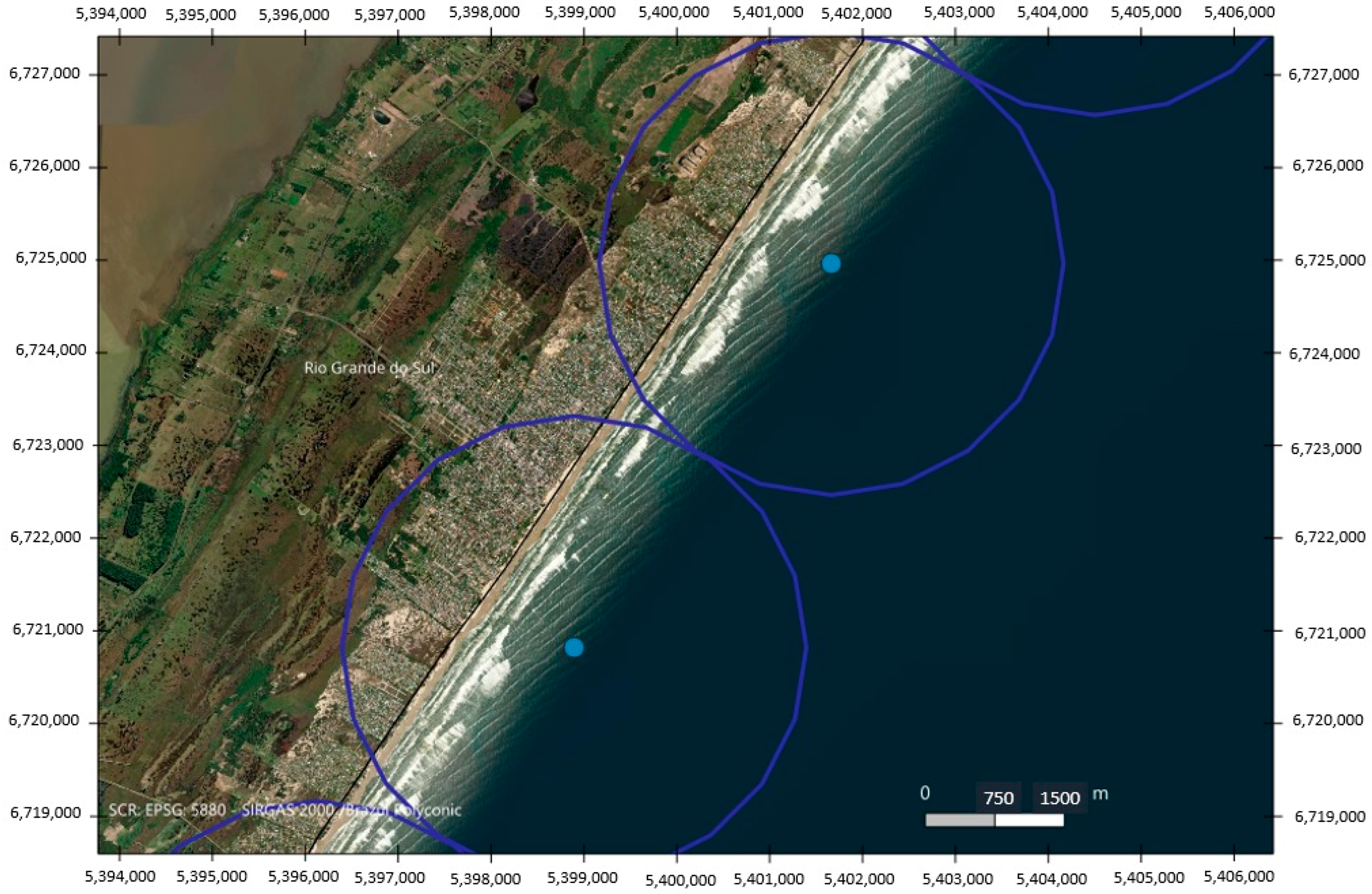
Two locations with high suitability scores (235 points) were identified in the state of Rio Grande do Sul, within the municipality of Arroio do Sal. These sites are characterized by favourable bathymetric conditions and the absence of nearby conservation units, which contribute positively to their overall suitability. However, relatively higher coastal population density in the surrounding area may impose moderate spatial constraints on future development (
Figure 8).
3.4. Nova Guarapari/Espírito Santo
Another high-suitability location (235 points) was identified in the municipality of Nova Guarapari, in Espírito Santo. This site reflects a balanced combination of favourable conditions, including adequate bathymetric characteristics, relatively low population density, and the absence of nearby protected areas. The result highlights the importance of combining favourable natural depth conditions with low urban and environmental constraints in the overall suitability assessment (
Figure 9).
3.5. Jaconé and Saquarema/Rio de Janeiro (3 Locations)
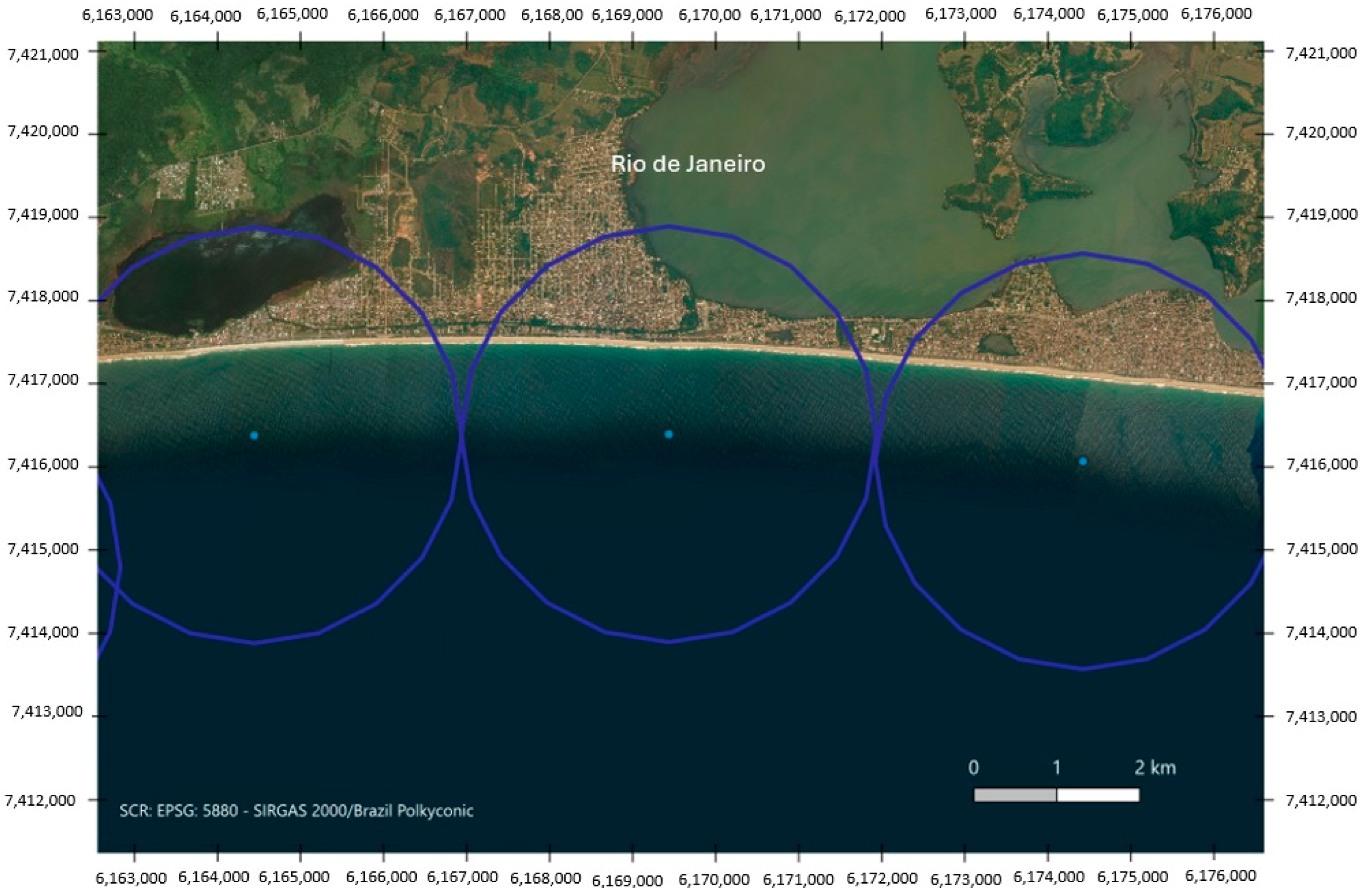
A notable spatial cluster is identified in the state of Rio de Janeiro, where three of the highest-ranking locations (233 points each) are concentrated between the municipalities of Jaconé and Saquarema. This area combines adequate bathymetric conditions, the absence of nearby conservation units, and relatively well-developed transport infrastructure. However, the surrounding territory is already significantly urbanized, which may limit the feasibility of large-scale port development despite the favourable suitability scores (
Figure 10).
3.6. Bombinhas/Santa Catarina
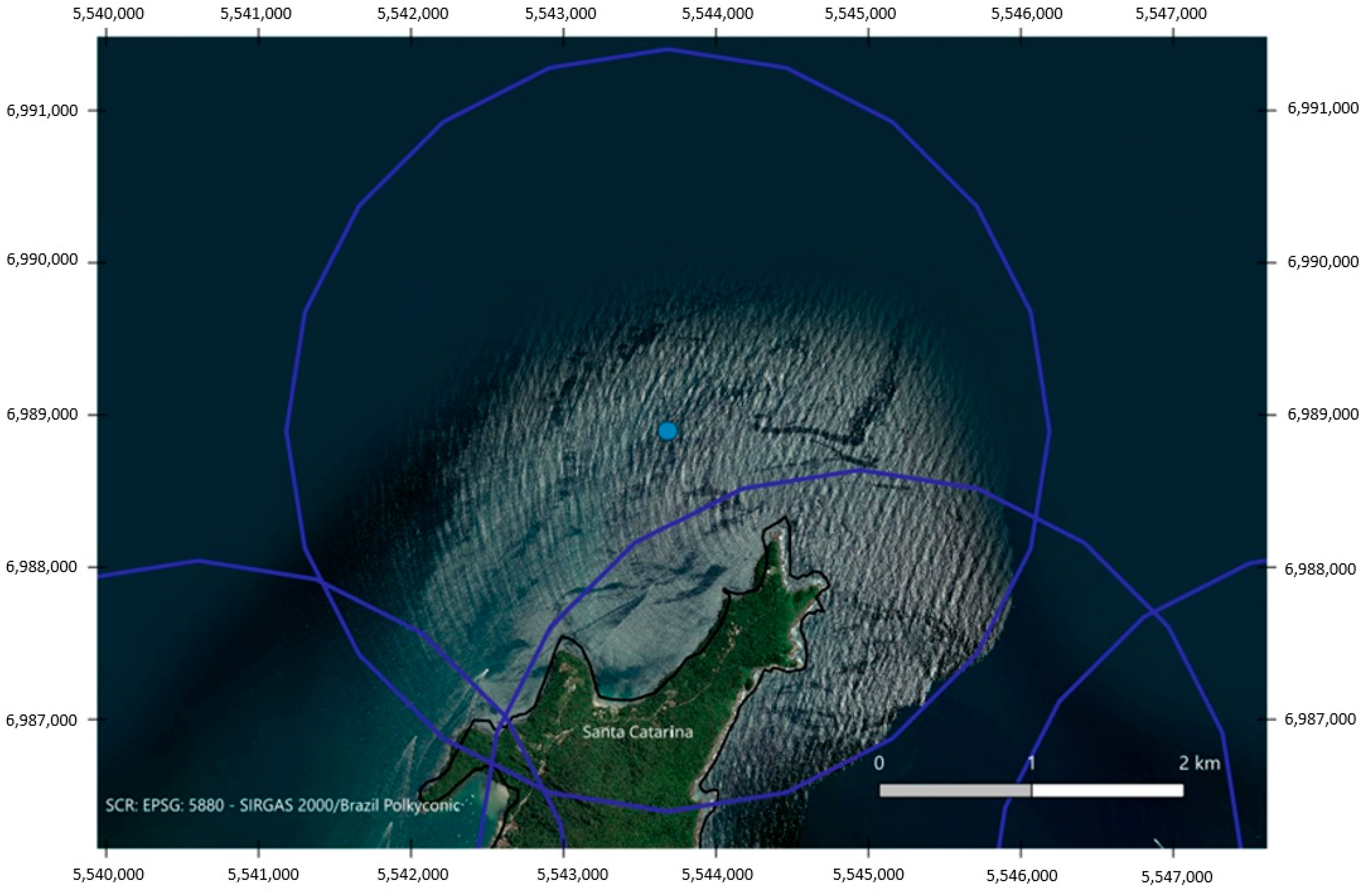
One additional location was identified in Santa Catarina (225 points), near the municipality of Bombinhas. This site benefits from adequate bathymetric conditions and potentially available land. However, its location in a coastal area with nearby environmental sensitivities means that any future port development would require a more detailed assessment of environmental restrictions and regulatory constraints. This case illustrates how locations with favourable physical conditions may still require careful evaluation before being considered feasible for port development (
Figure 11).
To facilitate comparison among the highest-ranking locations,
Table 4 summarizes the main suitability drivers, key constraints, planning interpretation, and relationship with the previous assessment of existing Brazilian port facilities conducted by [
5].
Beyond the identification of individual sites, the results reveal clear regional patterns along the Brazilian coastline. Notably, the São Paulo coastline does not include locations within the highest suitability class, which is consistent with the cumulative influence of dense urbanization, infrastructure saturation, and limited land availability. Similarly, from the coast of Bahia northwards, no locations reached the highest suitability class, with most areas falling within intermediate suitability ranges. This pattern suggests that, although some favourable conditions may be present, they do not coincide sufficiently to produce high overall suitability scores under the criteria considered.
Overall, the results indicate that highly suitable locations for deep-draft port development are spatially concentrated and relatively scarce along the Brazilian coastline. The identified sites tend to correspond to areas where favourable bathymetric conditions coincide with lower levels of urban pressure and fewer environmental constraints, reinforcing the importance of combined natural and spatial factors in early-stage port planning.
4. Discussion
The spatial suitability model developed in this study provides a systematic screening of the Brazilian coastline to identify coastal segments with favourable conditions for the development of ports capable of accommodating fully loaded post-Panamax vessels. By integrating physical, environmental, and basic logistical connectivity factors within a GIS-based multi-criteria framework, the model highlights areas where natural conditions are more compatible with deep-draft port infrastructure. As such, the results should be interpreted as a strategic screening tool that reduces the search space for future port development, rather than as a detailed feasibility assessment.
A first key finding is the limited number of highly suitable locations identified along the Brazilian coastline. Only nine coastal points reached the highest suitability values, indicating that the combination of adequate depth, low urban pressure, limited environmental restrictions and basic connectivity is relatively rare. This result reinforces the structural constraints associated with port development in Brazil, where physical and spatial conditions often limit the capacity to accommodate larger vessels without significant engineering interventions. The partial convergence observed between the results of this study and previous research on the adaptability of existing Brazilian port infrastructure further supports this interpretation. In particular, one of the highest-ranking locations identified in this study, Barra do Riacho, coincides with an area where several port-related facilities are already in operation, including Portocel, Estaleiro Jurong and the Barra do Riacho Terminal Aquaviário. This location was also identified among the most suitable areas in the assessment of existing Brazilian ports conducted by Pimenta et al. (2025) [
5]. This overlap suggests that both approaches, namely evaluating existing port infrastructure and identifying new potential coastal locations, tend to converge in areas where favourable natural conditions are present.
As an additional qualitative consistency check, the model outputs were compared with major Brazilian port clusters and known deep-draft port locations. This comparison shows that the model should not be interpreted as a ranking of the current economic importance or operational performance of existing ports. Several major Brazilian ports, such as Santos, Paranaguá, Rio de Janeiro/Itaguaí and Rio Grande, are located in historically consolidated port regions where port activity is strongly supported by cargo demand, industrial concentration and established hinterland connections. However, these same areas often present spatial constraints, high levels of urbanization, limited land availability, environmental restrictions and/or the need for dredging and engineered solutions. As a result, they may not appear in the highest suitability class of the present model, which prioritizes natural and spatial conditions for future deep-draft port development rather than existing cargo throughput or market relevance. Conversely, the partial overlap observed in Barra do Riacho suggests that the model is capable of identifying areas where favourable natural conditions and existing port development converge. This comparison reinforces the interpretation of the model as an early-stage spatial screening tool, while also explaining why some major existing port clusters do not necessarily score among the highest-ranking candidate locations.
A second relevant finding is the spatial mismatch between areas with the highest economic activity and those with the most favourable natural and spatial conditions for deep-draft port development. The southeastern coastline, particularly in São Paulo and Paraná, shows consistently lower suitability values despite being the core of the national logistics system. This result is largely explained by high levels of urbanization, limited land availability and environmental constraints. It suggests that historically consolidated port regions may face increasing limitations in adapting to larger vessel requirements, potentially requiring either costly infrastructure upgrades or a gradual consideration of alternative locations. This spatial mismatch highlights an important limitation of relying exclusively on existing port clusters for long-term capacity expansion, while also reinforcing the need for integrated national-scale planning approaches.
The regional distribution of suitability values also shows that highly suitable locations are not uniformly distributed along the coastline. The absence of highly suitable locations along the São Paulo coastline reflects the cumulative effect of intense urbanization, infrastructure saturation and limited available land. A similar pattern is observed from the coast of Bahia northwards, where no sites reached the highest suitability class and most areas fall within intermediate suitability ranges. These findings suggest that high suitability results from the intersection of multiple favourable conditions rather than from any single dominant factor. In particular, favourable bathymetric conditions alone are not sufficient if they coincide with strong environmental, urban or logistical constraints.
For this reason, the highest-ranking locations should not be interpreted as directly feasible port development sites. Rather, they represent candidate areas where favourable physical and spatial conditions justify more detailed investigation. Subsequent assessment should incorporate demand-side variables, including cargo generation, industrial clustering, market accessibility, investment feasibility, regulatory requirements and hinterland logistics capacity, as well as detailed technical and environmental studies. Similarly, the transport infrastructure criterion captures the spatial presence of transport networks, but not their operational performance, congestion levels or available capacity. This interpretation is consistent with the role of the model as an early-stage spatial screening tool rather than a comprehensive port feasibility assessment.
In addition, the model does not explicitly incorporate metocean variables such as wave climate, tides, currents or sediment transport dynamics, nor does it include detailed site-specific ecological assessments. These factors are particularly relevant when interpreting the high weight assigned to water depth, which should be understood as reflecting its role as a strategic access condition for post-Panamax vessels rather than as a complete proxy for construction cost. Deep-draft port sites may still require substantial maritime protection works, including breakwaters, depending on local wave exposure, coastal morphology, seabed conditions and engineering design. These aspects require site-specific technical, environmental and operational analyses and should therefore be incorporated in subsequent feasibility assessments of specific candidate locations.
From a methodological perspective, the main contribution of this study lies in the explicit prioritization of non-substitutable physical constraints, particularly water depth, within a spatial suitability framework. This approach is consistent with the recognition that maintaining deep navigation channels through continuous dredging can entail significant economic and environmental costs. By focusing on naturally suitable locations, the model provides a complementary perspective to infrastructure-based assessments, which typically emphasize the adaptation of existing ports.
The weighting scheme adopted in this study reflects a baseline strategic screening scenario based on the prioritization of non-substitutable physical constraints, particularly water depth. However, the absence of a formal sensitivity analysis represents a limitation of the present study since alternative weighting configurations could affect the ranking and spatial distribution of the highest-suitability locations. Accordingly, the results are interpreted as candidate locations identified under the baseline weighting scenario rather than as definitive priority sites. The lower weights assigned to individual logistical and navigational sub-layers reflect the objective of prioritizing fundamental geographical conditions, while recognizing that connectivity and navigational management may be improved through future investments or engineering solutions. Future studies should test the stability of the identified locations under alternative weighting scenarios, including reduced bathymetric dominance, higher weights for environmental and urban constraints, and higher weights for hinterland connectivity and navigational constraints.
More broadly, the results point to a strategic dilemma in Brazilian port development. While the adaptation of existing ports may offer more immediate solutions due to established infrastructure and demand, the availability of naturally suitable locations for new deep-draft ports is highly limited. This suggests that long-term planning will likely require a combination of both strategies: upgrading existing facilities where feasible and selectively developing new port infrastructure in locations where natural conditions can reduce long-term operational and environmental costs. In this context, GIS-based spatial suitability models such as the one presented in this study can play a valuable role in early-stage decision-making by identifying priority areas for further investigation and supporting a more efficient allocation of resources in subsequent technical, environmental and economic assessments.
Finally, the proposed approach may complement existing Brazilian planning instruments, such as national logistics plans, port sector plans and port Master Plans, by adding a spatially explicit screening layer focused on the identification of candidate coastal areas for future deep-draft port development. Integrating this type of spatial analysis into national port planning frameworks may therefore become increasingly relevant for supporting more resilient, spatially informed and forward-looking infrastructure strategies.
5. Conclusions
This study developed a GIS-based multi-criteria spatial modelling approach to identify coastal areas in Brazil with favourable conditions for deep-draft port development capable of serving large vessels, using post-Panamax requirements as a reference for defining key spatial and operational constraints. The results confirm that the availability of naturally suitable locations along the Brazilian coastline is highly limited.
Only nine coastal locations were identified with the highest suitability levels, reflecting the strong constraints imposed by water depth, environmental regulations, and land-use pressures. These locations should be understood as priority areas for further investigation, not as immediately feasible port development sites. Their potential development would require subsequent technical, economic, environmental and institutional assessments, including analyses of cargo demand, market accessibility, investment feasibility, regulatory requirements and hinterland logistics capacity. The convergence observed between Barra do Riacho and an existing port-related cluster provides a qualitative consistency check for the modelling approach and highlights the long-term importance of favourable natural conditions in port development. At a broader scale, the analysis reveals a structural spatial mismatch between Brazil’s main economic core and the coastal segments with the most favourable physical conditions for new deep-draft port infrastructure. This suggests that future port development strategies will need to balance the upgrading of existing ports with the selective development of new facilities in naturally suitable areas.
Overall, the proposed framework provides a transparent and replicable tool for narrowing down potential locations for port development at an early planning stage. By prioritizing natural suitability, it contributes to identifying options that may reduce long-term economic and environmental costs associated with large-scale engineering interventions. Future research should extend this approach by incorporating demand-side variables and institutional factors to support more comprehensive decision-making processes. In this context, integrating spatial suitability analyses into national port planning frameworks may become increasingly relevant to support more resilient and forward-looking infrastructure strategies.
Future research should also assess the sensitivity of the results to alternative weighting configurations, particularly scenarios with reduced bathymetric dominance or increased importance of environmental, urban, connectivity and navigational criteria.




 ,
,