Mechanism-Aligned Simplified Soil–Pile Interaction Models for Offshore Wind Turbine Monopiles in Sand


Abstract
1. Introduction
2. Numerical Models and Mechanisms of Monopile Resistance
2.1. Review of Soil–Pile Interaction Mechanisms
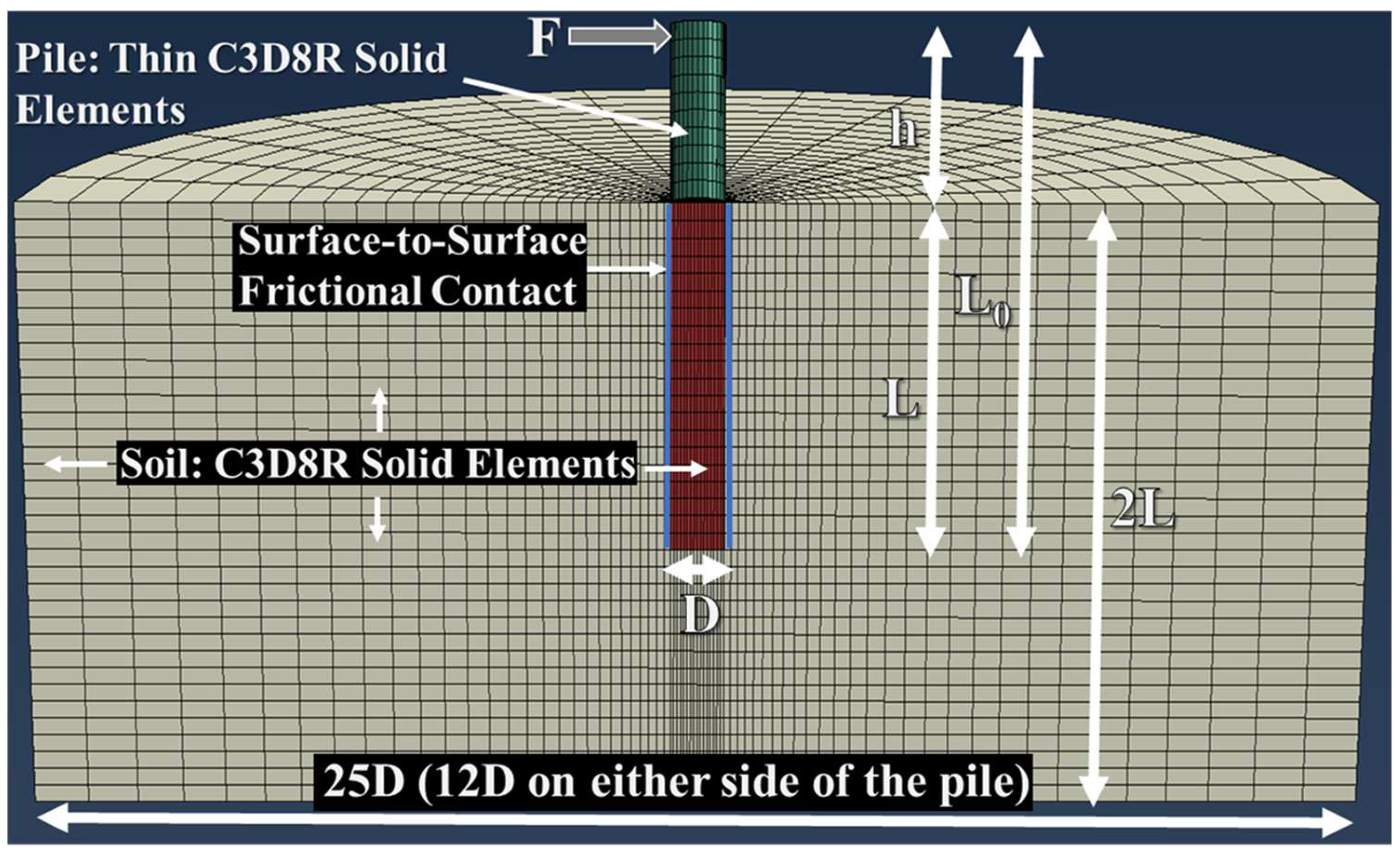
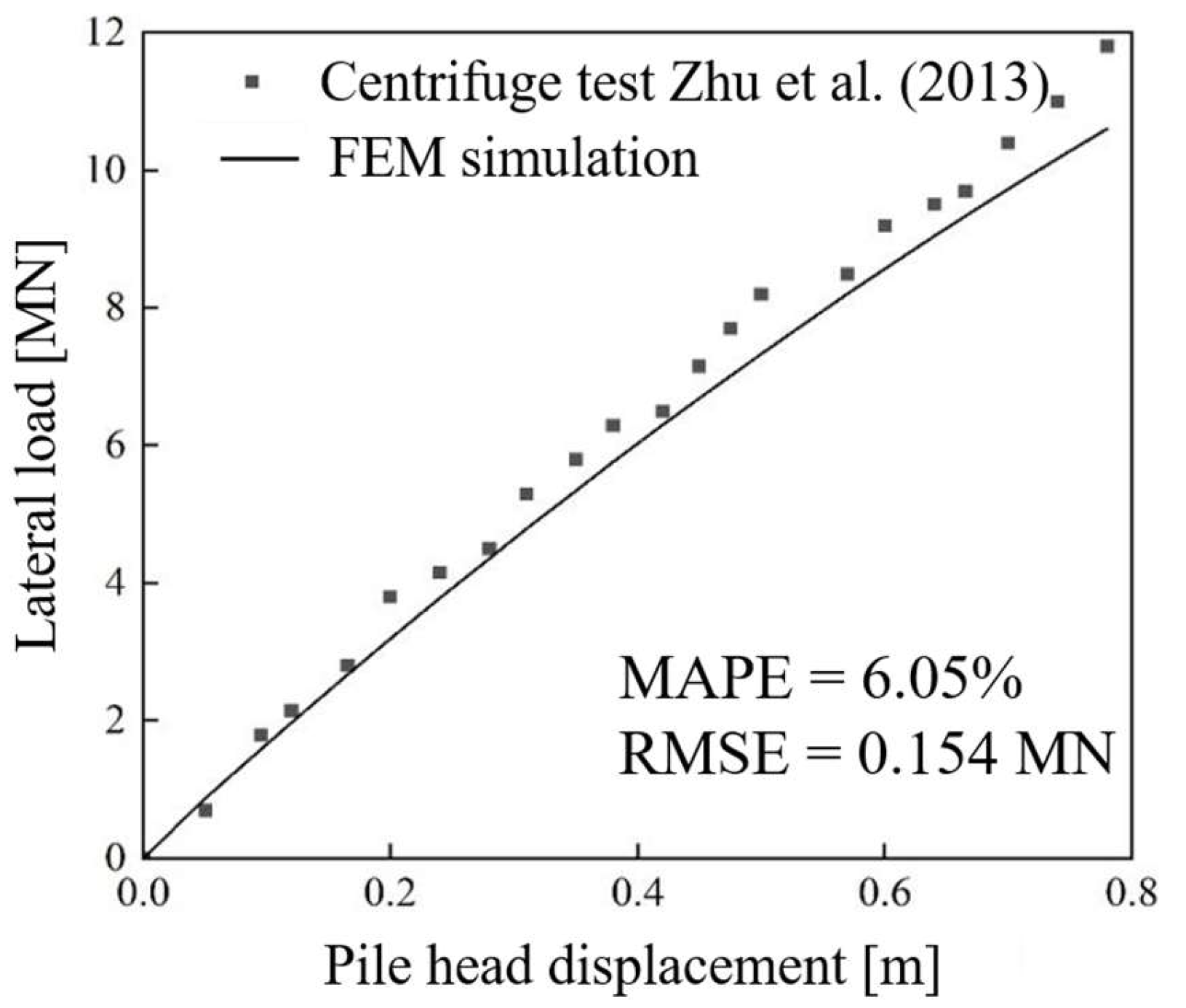
2.2. Numerical Models and Validation
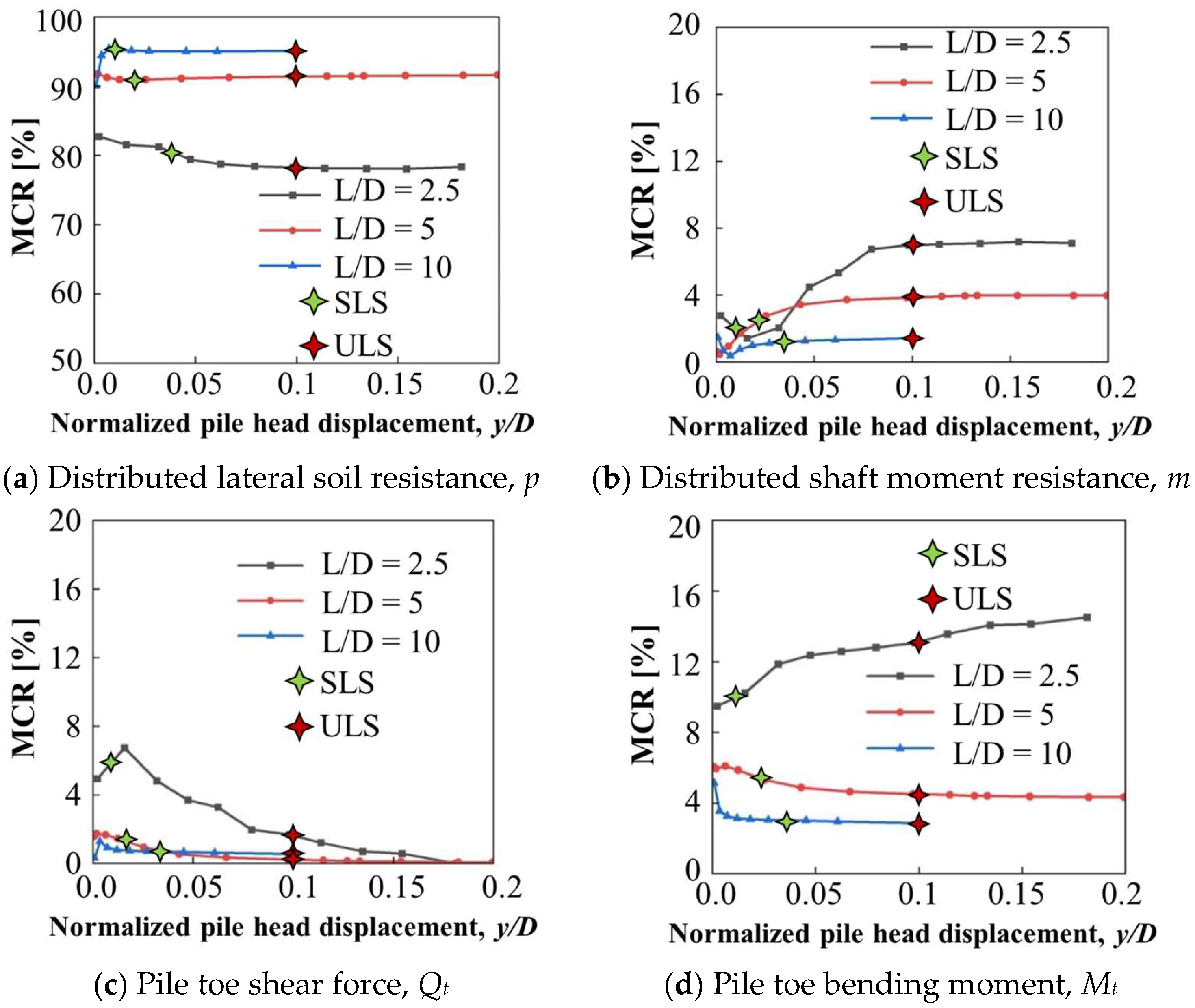
2.3. Mechanistic Analysis of the Contribution Ratios of Four Pile Resistance Components
3. Derivation of Spring Models for Monopiles with Different Length-to-Diameter Ratios
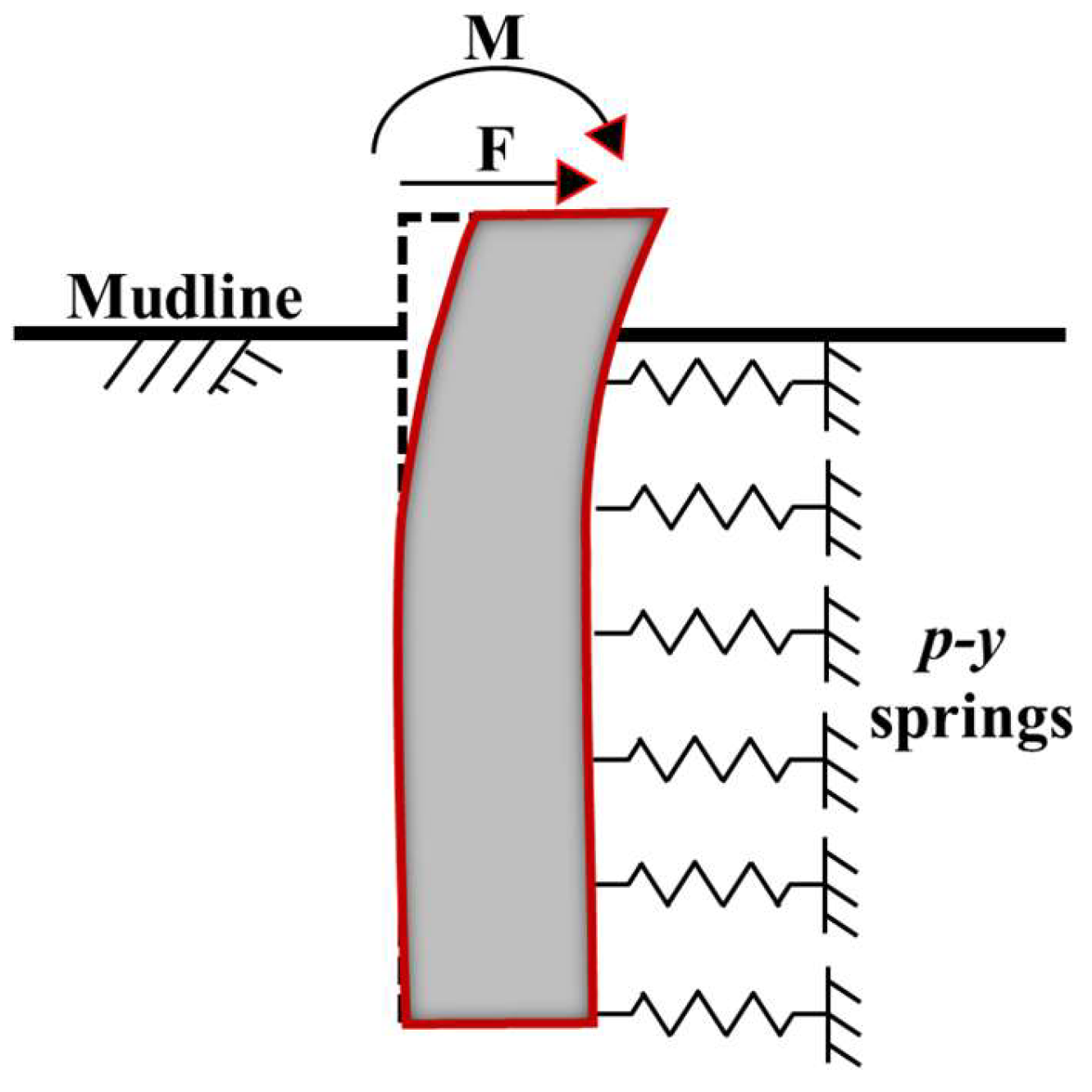
3.1. One-Spring “p-y” SPI Model for Flexible Piles
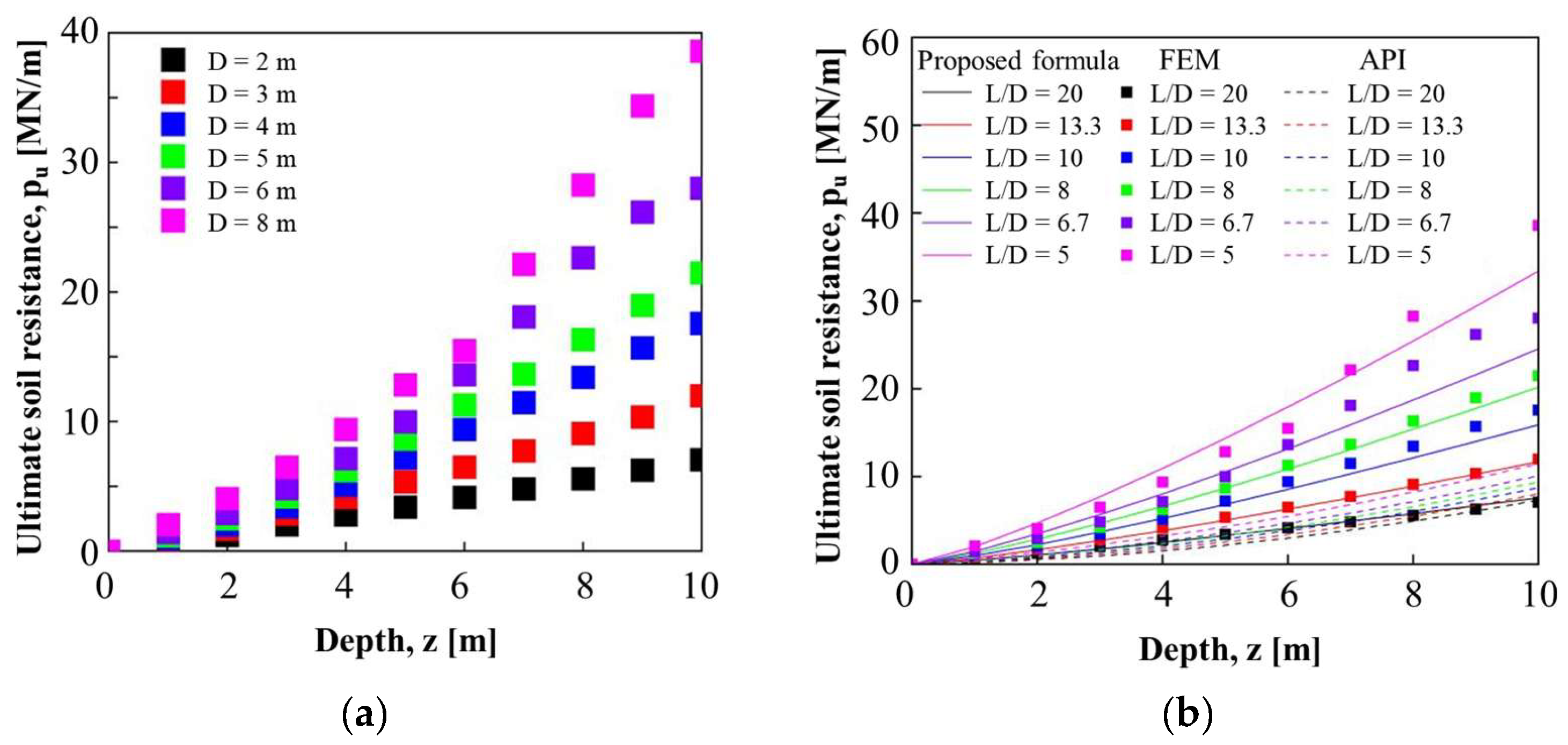
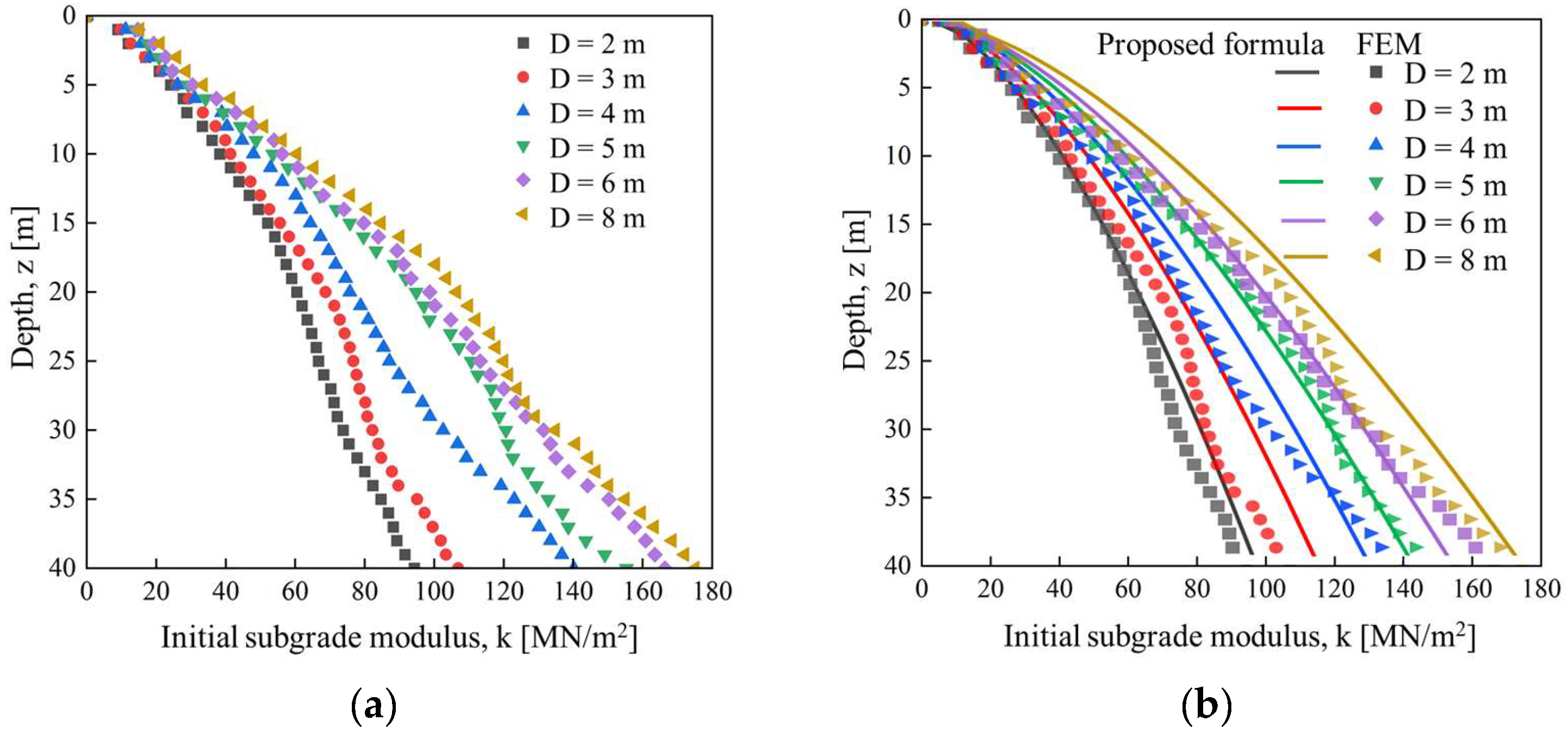
3.1.1. Defining the Proposed “p-y” Curve Formulation
3.1.2. Performance of the One-Spring “p-y” Model
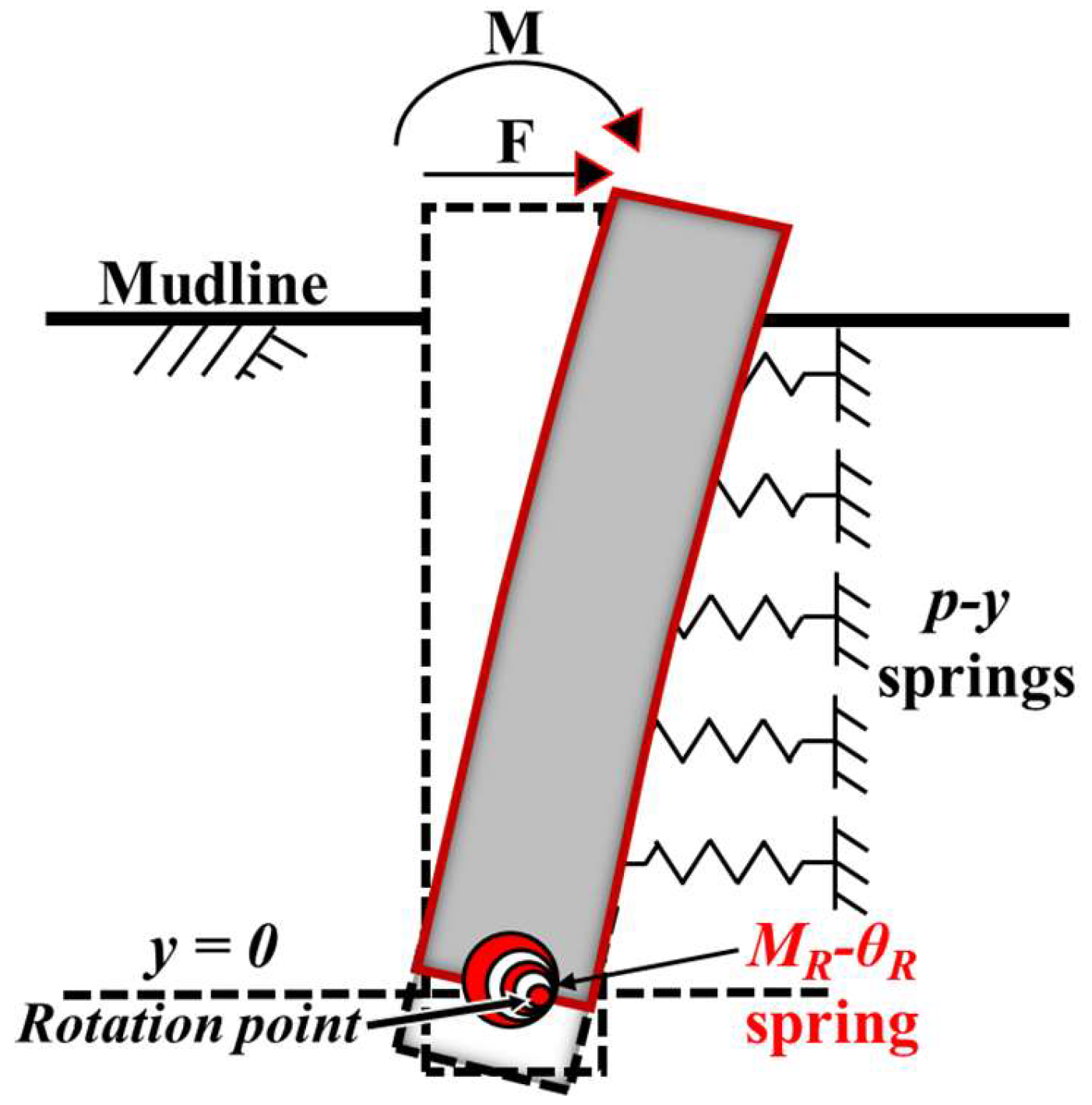
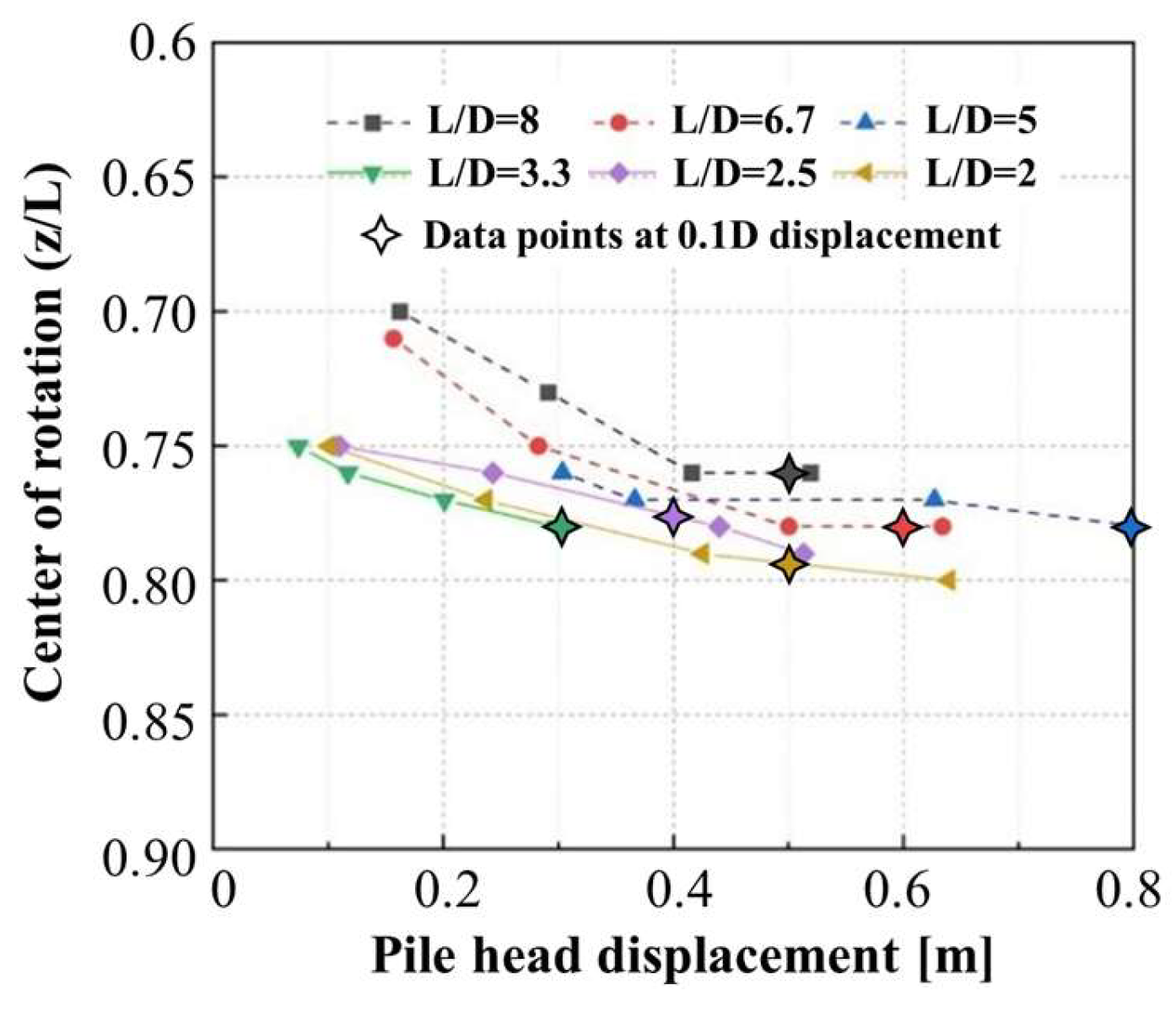
3.2. Two-Spring “p-y + MR-θR” SPI Model for Semi-Rigid Piles
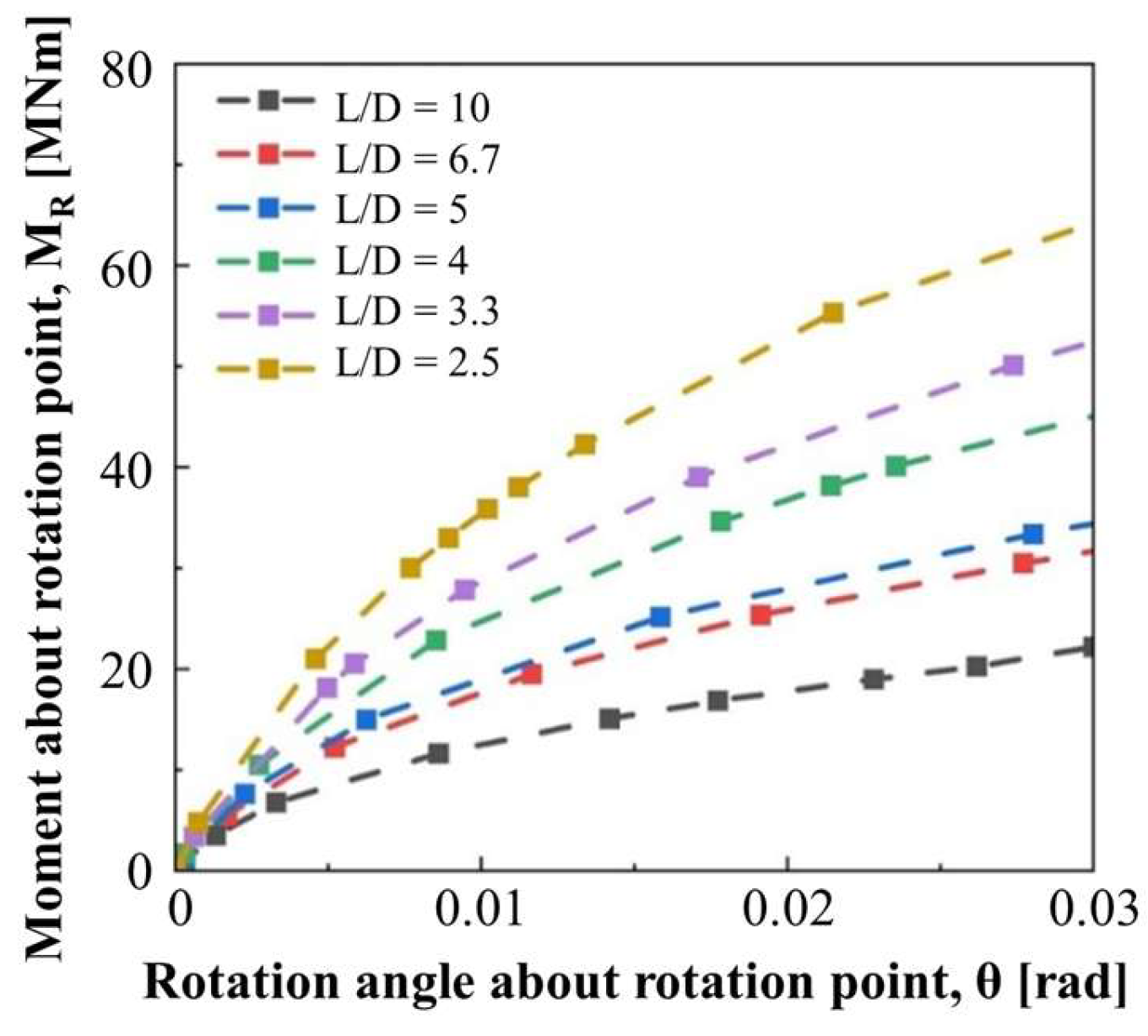
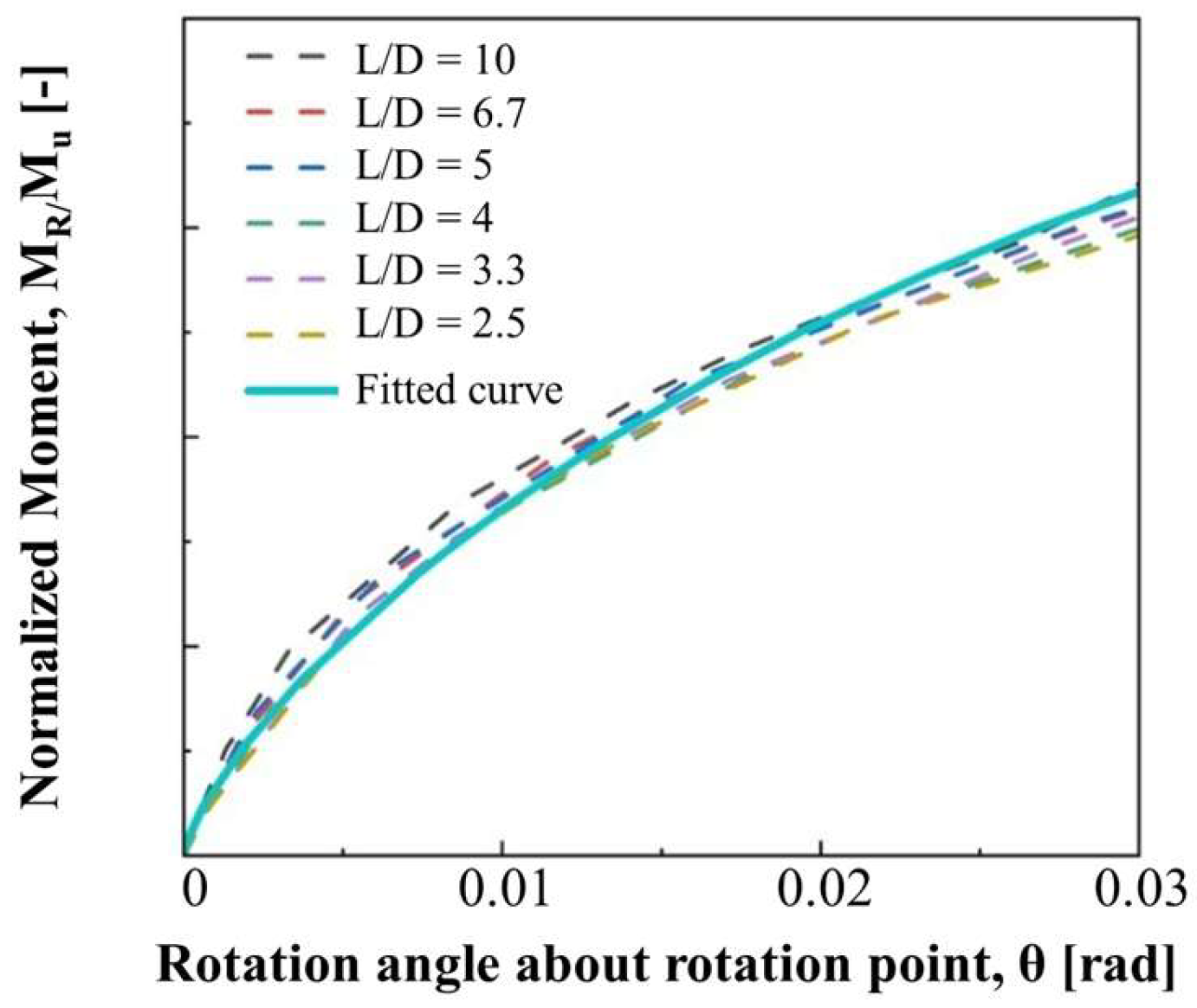
3.2.1. Defining the “MR-θR” Rotational Spring Curves
3.2.2. Implementation and Performance of the Two-Spring “p-y + MR-θR” Model
3.3. Three-Spring “p-y + MR-θR + Mp-θp” SPI Model for Rigid and Semi-Rigid Piles
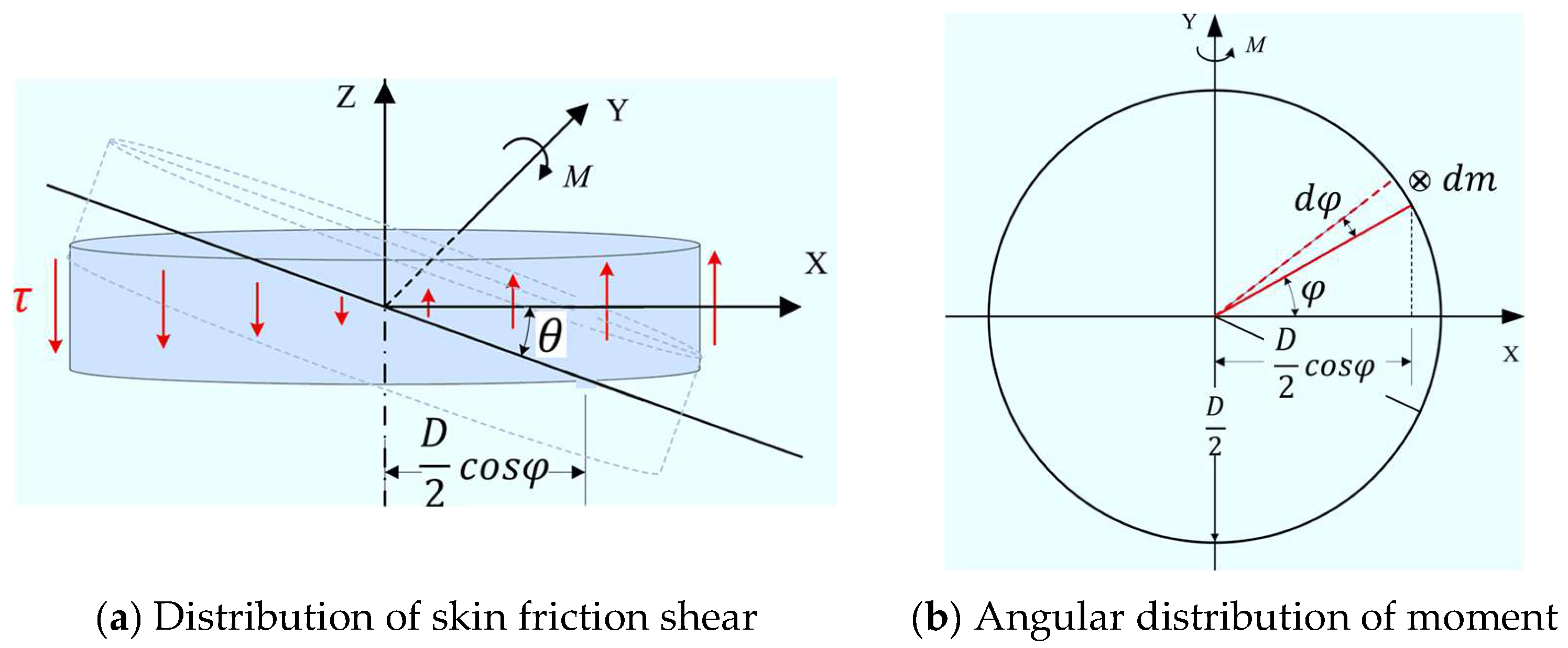
3.3.1. Defining the “Mp-θp” Rotational Spring Curves
- Construct a high-fidelity FEM soil-monopile model for a given L/D, conduct a static pile pushover, and extract the mudline displacement, y0, corresponding to 0.1D.
- Assume f(E′) = E, calculate the “Mp-θp” initial spring stiffness kp via Equation (15) and Mpu via Equation (14) at every 1 m embedment depth.
- Define the “Mp-θp” springs using Equation (9), the “p-y” springs using Equation (6), and the “MR-θR” spring using Equation (7). Build a simplified beam-spring model for the same monopile using the combined “p-y + MR-θR + Mp-θp” three-spring SPI model and run a pushover analysis (use M0) to obtain mudline displacement ym.
- Iteratively adjust f(E′) until the mudline displacement calculated via the simplified model satisfies the condition: |ym − y0|/ym ≤ 10−3.
- Repeat the procedure for monopiles with different L/D ratios.
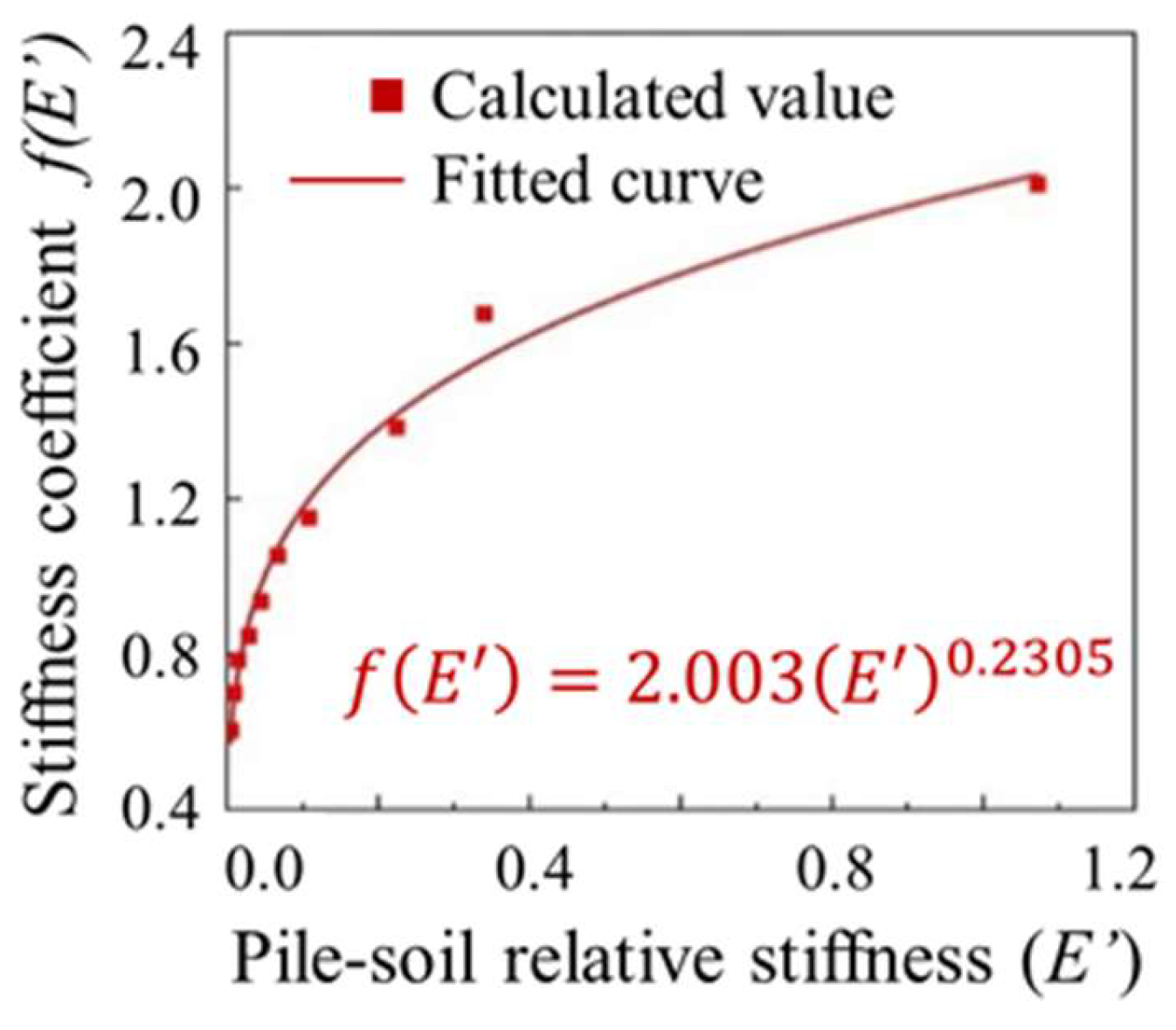
- Fit the optimized f(E′)-E′ data with a curve.
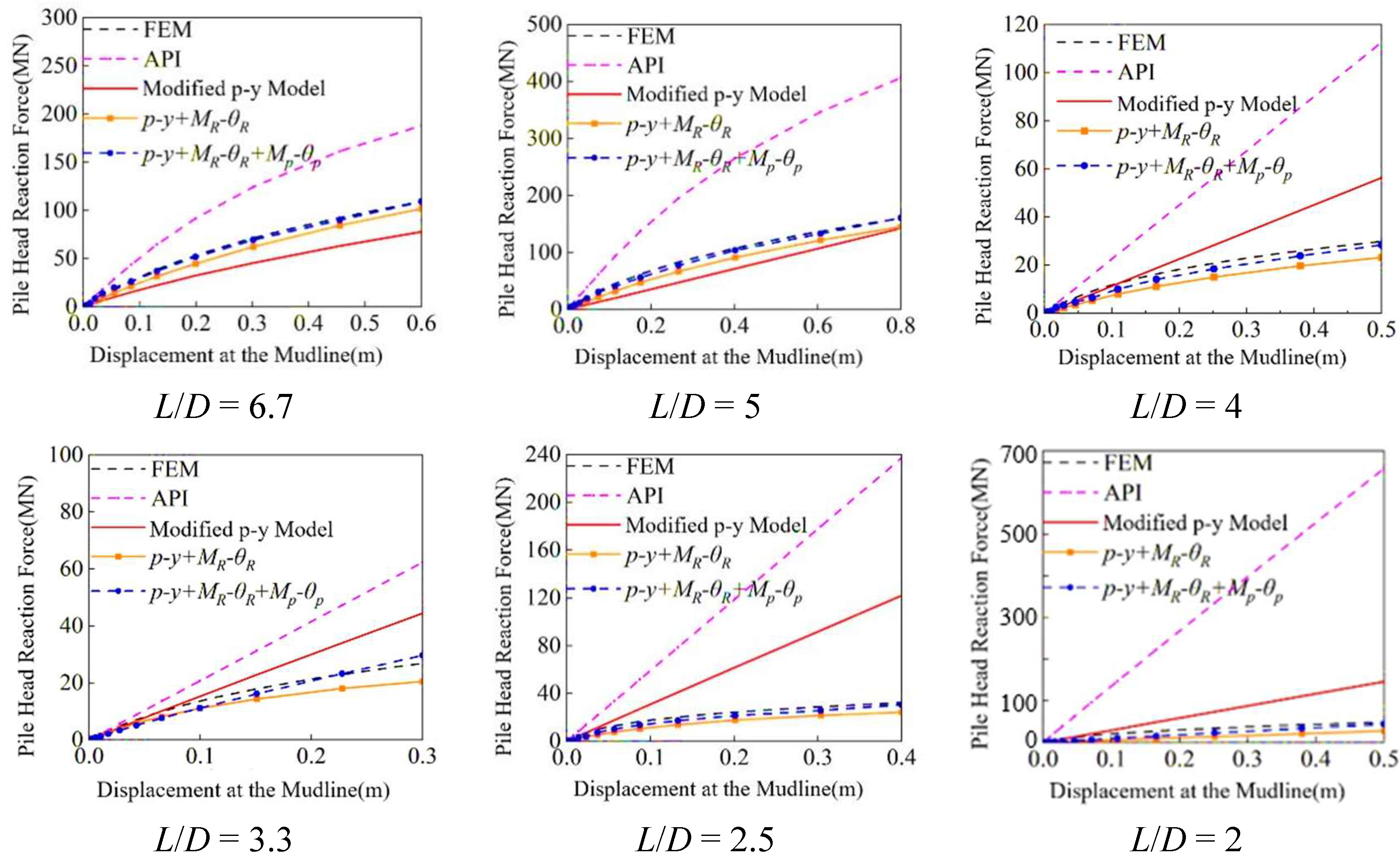
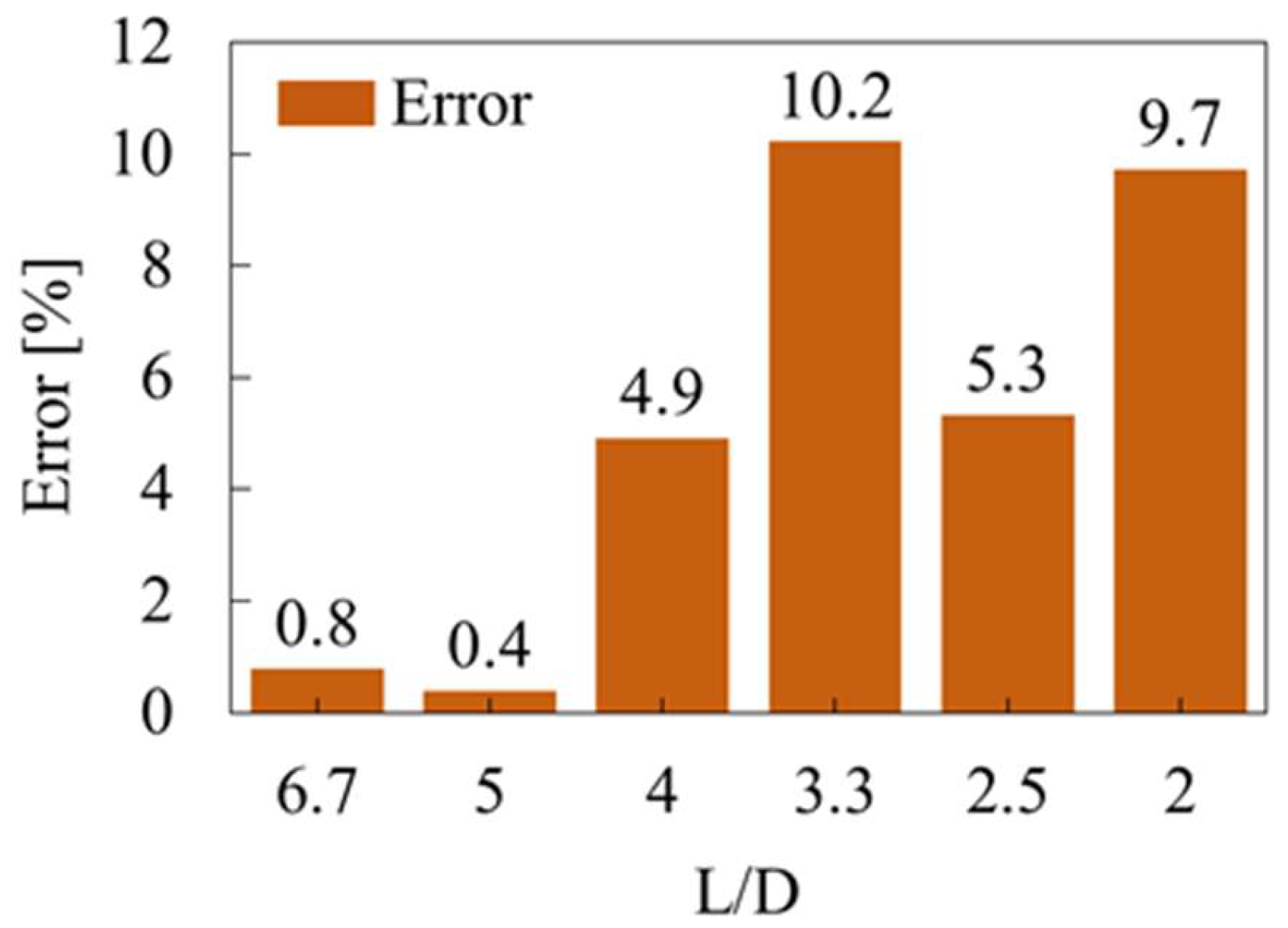
3.3.2. Implementation and Performance of the Three-Spring “p-y + MR-θR + Mp-θp” Model
4. Validations and Discussions
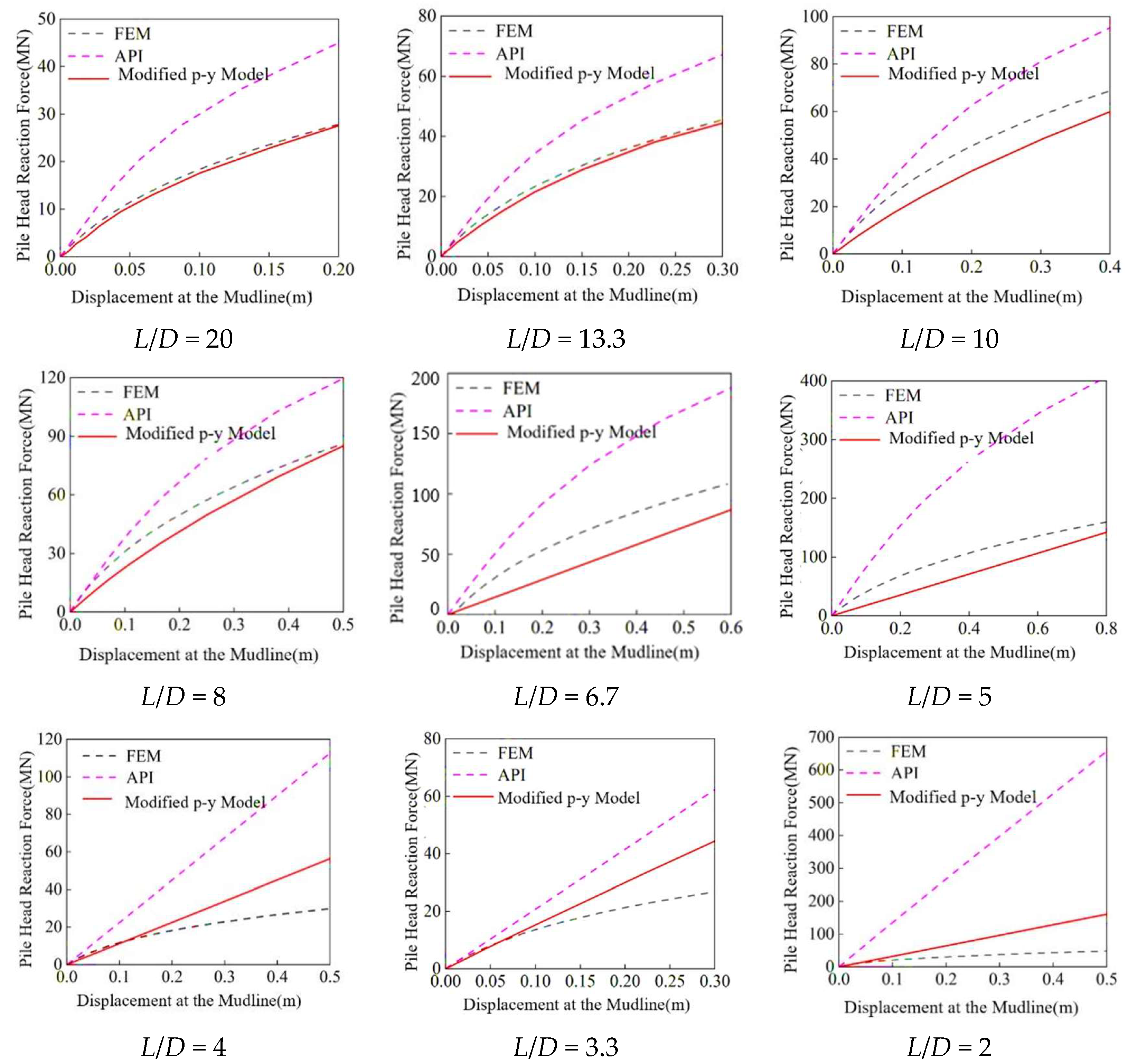
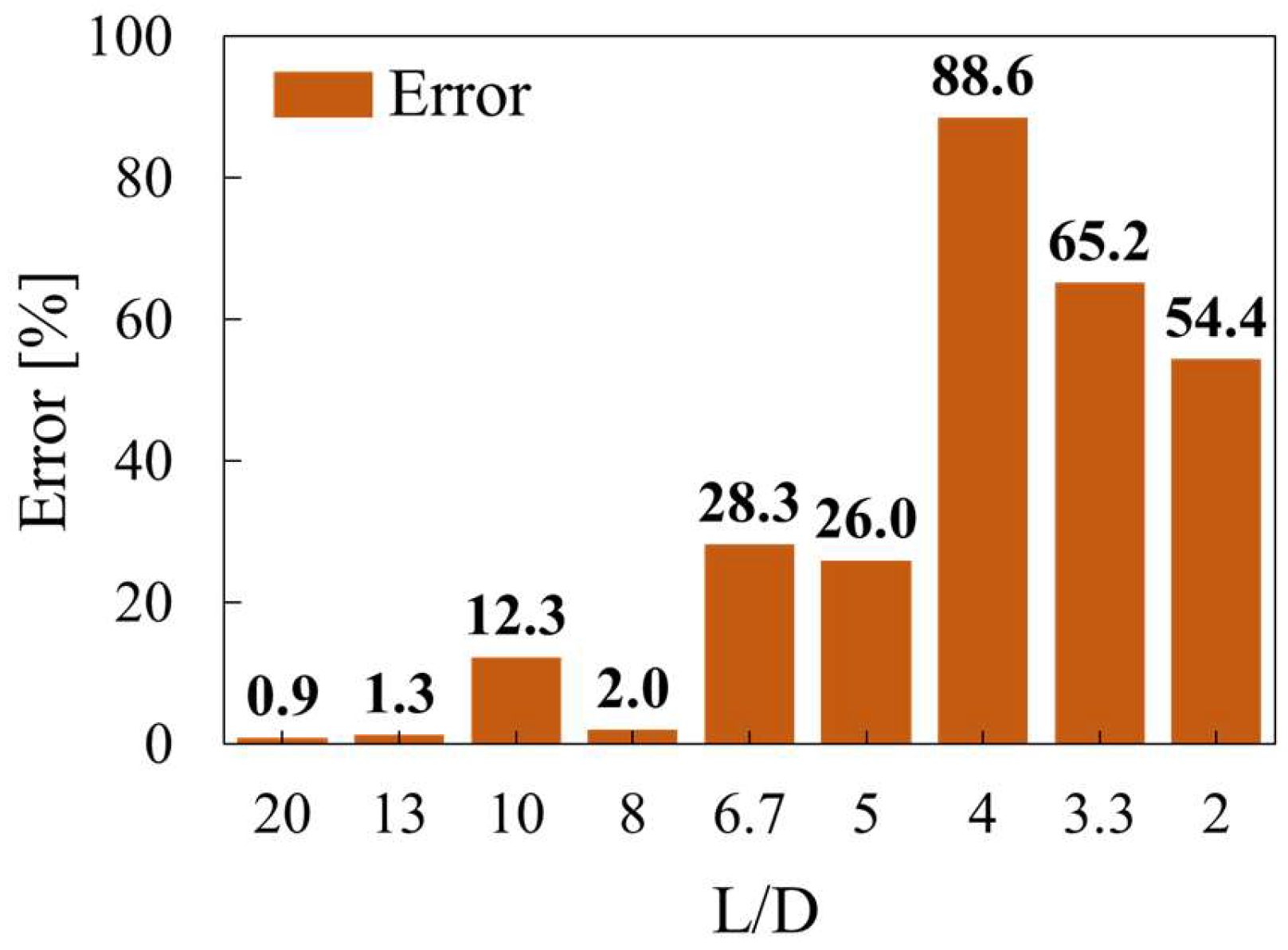
4.1. Validation of the One-Spring “p-y” Model
4.2. Validation of the Two-Spring “p-y + MR-θR” Model
4.3. Validation of the Three-Spring “p-y + MR-θR + Mp-θp” Model
5. Summary and Conclusions
Author Contributions
Funding
Data Availability Statement
Conflicts of Interest
Abbreviations
| API | American Petroleum Institute |
| DNV | Det Norske Veritas |
| FEM | Finite Element Method |
| L/D | Length-to-Diameter Ratio |
| MAPE | Mean Absolute Percentage Error |
| MCR | Moment Contribution Ratio |
| OWT | Offshore Wind Turbine |
| SPI | Soil–Pile Interaction |
References
- Leung, D.Y.; Yang, Y. Wind energy development and its environmental impact: A review. Renew. Sustain. Energy Rev. 2012, 16, 1031–1039. [Google Scholar] [CrossRef]
- Cheong, J. Financing Offshore Wind in APAC; GWEC: Brussels, Belgium, 2025. [Google Scholar]
- Musial, W.; Spitsen, P.; Duffy, P.; Beiter, P.; Shields, M.; Mulas Hernando, D.; Sathish, S. Offshore Wind Market Report 2023 Edition; No. NREL/TP--5000-87232; National Renewable Energy Laboratory: Golden, CO, USA, 2023. [Google Scholar] [CrossRef]
- Negro, V.; López-Gutiérrez, J.S.; Esteban, M.D.; Alberdi, P.; Imaz, M.; Serraclara, J.M. Monopiles in offshore wind: Preliminary estimate of main dimensions. Ocean Eng. 2017, 133, 253–261. [Google Scholar] [CrossRef]
- Wang, L.; Wang, L.; Hong, Y. Mitigation of side-to-side vibration of a 10MW monopile offshore wind turbine under misaligned wind and wave conditions by an active torque control. J. Sound Vib. 2024, 574, 118225. [Google Scholar] [CrossRef]
- Byrne, B.W.; McAdam, R.A.; Burd, H.; Houlsby, G.T.; Martin, C.M.; Beuckelaers, W.J.A.P.; Zdravkovic, L.; Taborda, D.M.G.; Potts, D.M.; Jardine, R.J.; et al. PISA: New design methods for offshore wind turbine monopiles. In Proceedings of the Society for Underwater Technology Offshore Site Investigation and Geotechnics 8th International Conference, London, UK, 12–14 September 2017. [Google Scholar] [CrossRef]
- Mroczek, M.M.; Arwade, S.R.; Davis, M.; Hallowell, S.; Myers, A.; Riyanto, R.D.; Pang, W. Reference monopile designs for US East Coast sites supporting the IEA 15 MW reference turbine using a novel conceptual design methodology. Ocean Eng. 2024, 304, 117814. [Google Scholar] [CrossRef]
- Kato, B.; Bhattacharya, S.; Wang, Y. Evaluation of post-storm soil stiffness degradation effects on the performance of monopile-supported offshore wind turbines in clay. Ocean Eng. 2023, 282, 114338. [Google Scholar] [CrossRef]
- Liang, J.; Kato, B.; Fu, Y.; Wang, Y. Support condition identification for monopile-supported offshore wind turbines based on time domain model updating. Mar. Struct. 2025, 99, 103709. [Google Scholar] [CrossRef]
- American Petroleum Institute. API Recommended Practice for Planning, Designing and Constructing Fixed Offshore Platforms-Working Stress Design, 21st ed.; American Petroleum Institute: Washington, DC, USA, 2000. [Google Scholar]
- Matlock, H. Correlations for design of laterally loaded piles in clay. In Proceedings of the Offshore Technology Conference, Houston, TX, USA, 1 January 1970; pp. 577–588. [Google Scholar]
- DNV. DNV GL-ST-0126 Support Structures for Wind Turbines; Det Norske Veritas: Høvik, Norway, 2016. [Google Scholar]
- Kallehave, D.; Thilsted, C.L.; Liingaard, M.A. Modification of the API p-y formulation of initial stiffness of sand. In Offshore Site Investigation and Geotechnics: Integrated Technologies–Present and Future; SUT-OSIG-12-50; Society for Underwater Technology: London, UK, September 2012. [Google Scholar]
- Kallehave, D.; Byrne, B.W.; LeBlanc Thilsted, C.; Mikkelsen, K.K. Optimization of monopiles for offshore wind turbines. Phil. Trans. R. Soc. A 2015, 373, 2035. [Google Scholar] [CrossRef]
- Abdullahi, A.; Wang, Y.; Bhattacharya, S. Comparative modal analysis of monopile and jacket supported offshore wind turbines including soil-structure interaction. Int. J. Struct. Stab. Dyn. 2020, 20, 2042016. [Google Scholar] [CrossRef]
- Shirzadeh, R.; Weijtjens, W.; Guillaume, P.; Devriendt, C. The dynamics of an offshore wind turbine in parked conditions: A comparison between simulations and measurements. Wind Energy 2015, 18, 1685–1702. [Google Scholar] [CrossRef]
- Achmus, M.; Kuo, Y.S.; Abdel-Rahman, K. Behavior of monopile foundations under cyclic lateral load. Comput. Geotech. 2009, 36, 725–735. [Google Scholar] [CrossRef]
- Byrne, B.W.; Burd, H.J.; Zdravkovic, L.; Abadie, C.N.; Houlsby, G.T.; Jardine, R.J.; Martin, C.M.; McAdam, R.A.; Pacheco Andrade, M.; Pedro, A.M.; et al. PISA design methods for offshore wind turbine monopiles. In Proceedings of the Offshore Technology Conference, OTC, Houston, TX, USA, 6–9 May 2019. [Google Scholar] [CrossRef]
- Page, A.M.; Næss, V.; De Vaal, J.B.; Eiksund, G.R.; Nygaard, T.A. Impact of foundation modelling in offshore wind turbines: Comparison between simulations and field data. Mar. Struct. 2019, 64, 379–400. [Google Scholar] [CrossRef]
- Lau, B.H. Cyclic Behaviour of Monopile Foundations for Offshore Wind Turbines in Clay. Doctoral Dissertation, University of Cambridge, Cambridge, UK, 2015. [Google Scholar]
- Shao, X.; Jiang, C.; Cao, R.; Pang, L.; Chen, L. Analysis for laterally loaded pile behavior on offshore sand slope crest considering friction effect and variational base angle in FW. Ocean Eng. 2022, 266, 112978. [Google Scholar] [CrossRef]
- Zhu, M.X.; Lu, H.Q.; Dai, G.L.; Gong, W.M.; Wang, L. Generalized solutions for lateral bearing behavior of large diameter monopile foundation for offshore wind turbine considering double additional moment effects. In Civil Infrastructures Confronting Severe Weathers and Climate Changes Conference; Springer International Publishing: Cham, Switzerland, 2018; pp. 99–124. [Google Scholar] [CrossRef]
- Bouzid, D.A. Numerical investigation of large-diameter monopiles in sands: Critical review and evaluation of both API and newly proposed “p-y” curves. Int. J. Geomech. 2018, 18, 04018141. [Google Scholar] [CrossRef]
- Zhang, X.L.; Zhou, R.; Zhang, G.L.; Han, Y. A corrected “p-y” curve model for large-diameter pile foundation of offshore wind turbine. Ocean Eng. 2023, 273, 114012. [Google Scholar] [CrossRef]
- Yang, M.; Ge, B.; Li, W.; Zhu, B. Dimension effect on p-y model used for design of laterally loaded piles. Procedia Eng. 2016, 143, 598–606. [Google Scholar] [CrossRef]
- Wang, C.; Liu, J.; Chen, Z.; Jiang, C.; Ding, X. A modified p–y model of single pile in coral sand under lateral load. Can. Geotech. J. 2022, 60, 334–350. [Google Scholar] [CrossRef]
- Zhang, Y.H.; Andersen, K.H. Scaling of lateral pile p-y response in clay from laboratory stress-strain curves. Mar. Struct. 2017, 53, 124–135. [Google Scholar] [CrossRef]
- Burd, H.J.; Taborda, D.M.; Zdravković, L.; Abadie, C.N.; Byrne, B.W.; Houlsby, G.T.; Gavin, K.G.; Igoe, D.J.P.; Jardine, R.J.; Martin, C.M.; et al. PISA design model for monopiles for offshore wind turbines: Application to a marine sand. Géotechnique 2020, 70, 1048–1066. [Google Scholar] [CrossRef]
- Byrne, B.W.; Houlsby, G.T.; Burd, H.J.; Gavin, K.G.; Igoe, D.J.; Jardine, R.J.; Martin, C.M.; McAdam, R.A.; Potts, D.M.; Taborda, D.M.G.; et al. PISA design model for monopiles for offshore wind turbines: Application to a stiff glacial clay till. Géotechnique 2020, 70, 1030–1047. [Google Scholar] [CrossRef]
- Zhang, Y.; Andersen, K.H. Soil reaction curves for monopiles in clay. Mar. Struct. 2019, 65, 94–113. [Google Scholar] [CrossRef]
- Wang, L.; Lai, Y.; Hong, Y.; Maín, D. A unified lateral soil reaction model for monopiles in soft clay considering various length-to-diameter (L/D) ratios. Ocean Eng. 2020, 212, 107492. [Google Scholar] [CrossRef]
- Fu, D.; Zhang, Y.; Aamodt, K.K.; Yan, Y. A multi-spring model for monopile analysis in soft clays. Mar. Struct. 2020, 72, 102768. [Google Scholar] [CrossRef]
- Zhu, B.; Xiong, G.; Liu, J.C.; Sun, Y.X.; Chen, R.P. Centrifuge modelling of a large-diameter single pile under lateral loads in sand. Chin. J. Geotech. Eng. 2013, 35, 1807–1815. [Google Scholar]
- Hong, Y.; He, B.; Wang, L.Z.; Wang, Z.; Ng, C.W.W.; Mašín, D. Cyclic lateral response and failure mechanisms of semi-rigid pile in soft clay: Centrifuge tests and numerical modelling. Can. Geotech. J. 2017, 54, 806–824. [Google Scholar] [CrossRef]
- Yang, S.; Deng, X.; Yang, J. Modeling of soil-pile-structure interaction for dynamic response of standalone wind turbines. Renew. Energy 2022, 186, 394–410. [Google Scholar] [CrossRef]
- Lopes, G.K.; de Sousa, J.R.M.; de Almeida, M.C.; de Almeida, M.S. A numerical methodology to predict the lateral load response of monopiles installed in SAND considering soil stiffness degradation. Ocean Eng. 2023, 270, 113723. [Google Scholar] [CrossRef]
- Poulos, H.G.; Hull, T.S. The role of analytical geomechanics in foundation engineering. In Foundation Engineering: Current Principles and Practices; ASCE: New York, NY, USA, 1989; pp. 1578–1606. [Google Scholar]
- Coyle, H.M.; Sulaiman, I.H. Skin friction for steel piles in sand. J. Soil Mech. Found. Div. 1967, 93, 261–278. [Google Scholar] [CrossRef]
- Petek, K.A. Development and Application of Mixed Beam-Solid Models for Analysis of Soil-Pile Interaction Problems. Doctoral Dissertation, University of Washington, Seattle, WA, USA, 2006. [Google Scholar]
- Murphy, G.; Igoe, D.; Doherty, P.; Gavin, K. 3D FEM approach for laterally loaded monopile design. Comput. Geotech. 2018, 100, 76–83. [Google Scholar] [CrossRef]
- Khezri, A.; Park, H.; Lee, D. Numerical Study on the Lateral Load Response of Offshore Monopile Foundations in Clay: Effect of Slenderness Ratio. Appl. Sci. 2024, 14, 8366. [Google Scholar] [CrossRef]
- Kondner, R.L. Hyperbolic stress-strain response: Cohesive soils. J. Soil Mech. Found. Div. 1963, 89, 115–143. [Google Scholar] [CrossRef]
- Tak Kim, B.; Kim, N.K.; Jin Lee, W.; Su Kim, Y. Experimental load–transfer curves of laterally loaded piles in Nak-Dong River sand. J. Geotech. Geoenviron. Eng. 2004, 130, 416–425. [Google Scholar] [CrossRef]
- Broms, B.B. Design of laterally loaded piles. J. Soil Mech. Found. Div. 1965, 91, 79–99. [Google Scholar] [CrossRef]
- Reese, L.C.; Cox, W.R.; Koop, F.D. Analysis of laterally loaded piles in sand. In Proceedings of the Offshore Technology Conference, Houston, TX, USA, 5–7 May 1974. [Google Scholar] [CrossRef]
- Wan, X.; Doherty, J.P.; Randolph, M.F. Relationships between lateral and rotational load transfer stiffnesses and soil modulus for the elastic response of monopiles. Comput. Geotech. 2021, 137, 104256. [Google Scholar] [CrossRef]
- Poulos, H.G.; Davis, E.H. Pile Foundation Analysis and Design; Monograph: New York, NY, USA, 1980. [Google Scholar]
- Hu, Z.B.; Yang, Y.X. Study on p-y curves of large-diameter steel pipe piles for offshore wind farm in sand based on in-situ tests. J. Appl. Sci. Eng. 2018, 21, 171–178. [Google Scholar]
- Choo, Y.W.; Kim, D. Experimental development of the p-y relationship for large-diameter offshore monopiles in sands: Centrifuge tests. J. Geotech. Geoenviron. Eng. 2016, 142, 04015058. [Google Scholar] [CrossRef]
- Prasad, Y.V.; Chari, T.R. Lateral capacity of model rigid piles in cohesionless soils. Soils Found. 1999, 39, 21–29. [Google Scholar] [CrossRef] [PubMed]


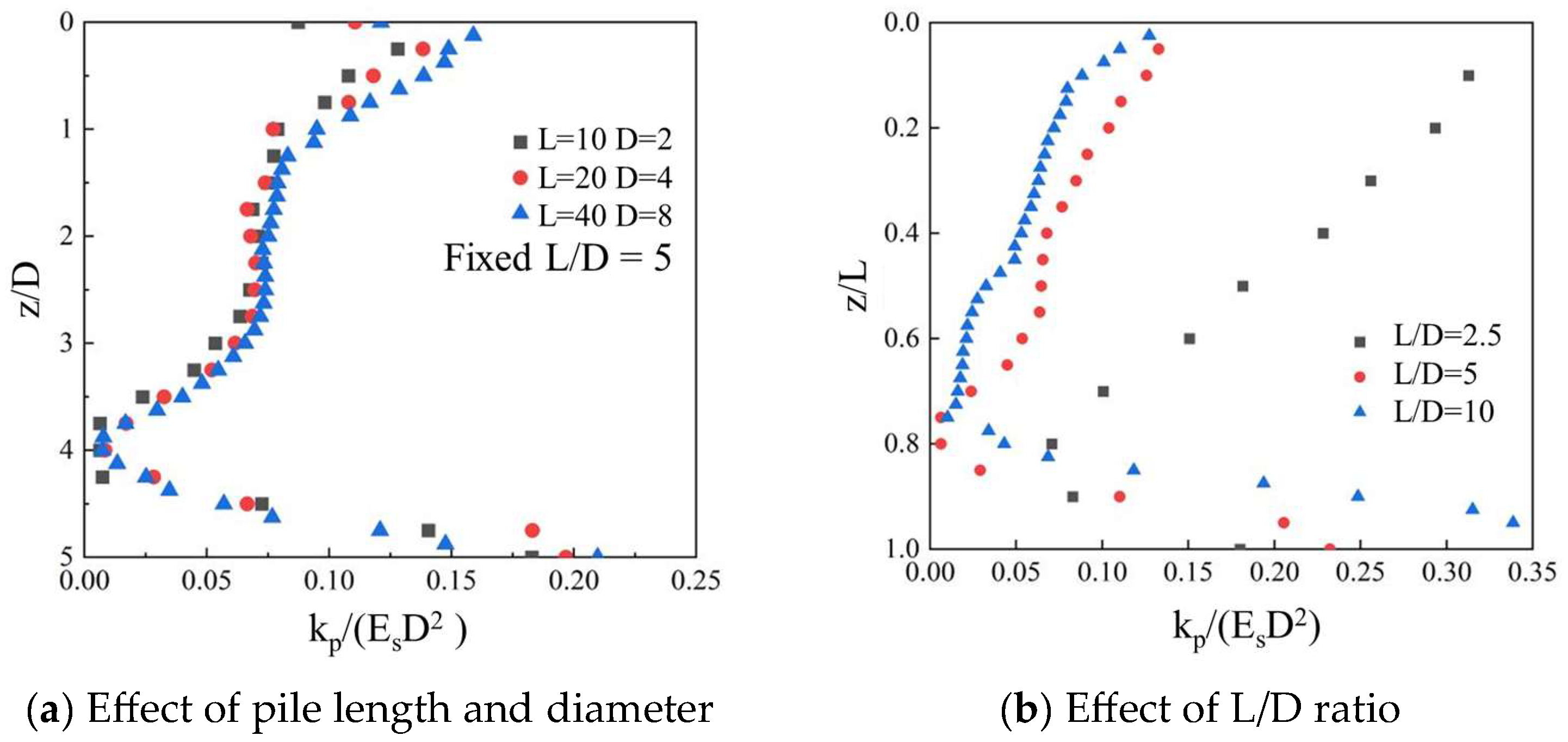





| Soil Type | Effective Unit Weight (kN/m3) | Elastic Modulus (MPa) | Poisson’s Ratio | Internal Friction Angle (°) | Cohesion (kPa) | Dilatancy Angle (°) |
|---|---|---|---|---|---|---|
| Sand | 9.76 | 0–82.5 (z: 0–40 m) | 0.25 | 35° | 0.1 | 5 |
| Embedment Length, L (m) | Pile Diameter, D (m) | L/D | Pile Length, L0 (m) | Pile Wall Thickness, t (m) | Pile–Soil Relative Stiffness, EpIp/Estoe | Pile Mechanism |
|---|---|---|---|---|---|---|
| 40 | 2 | 20 | 50 | 0.02635 | 0.000075 | flexible |
| 40 | 3 | 13.3 | 50 | 0.03635 | 0.00038 | flexible |
| 40 | 4 | 10 | 50 | 0.04635 | 0.0012 | flexible |
| 40 | 5 | 8 | 50 | 0.05635 | 0.0029 | semi-rigid |
| 40 | 6 | 6.7 | 50 | 0.06635 | 0.0061 | semi-rigid |
| 40 | 8 | 5 | 50 | 0.08635 | 0.019 | semi-rigid |
| 20 | 5 | 4 | 30 | 0.05635 | 0.071 | semi-rigid |
| 10 | 3 | 3.3 | 20 | 0.03635 | 0.22 | rigid |
| 10 | 4 | 2.5 | 20 | 0.04635 | 0.71 | rigid |
| 10 | 5 | 2 | 20 | 0.05635 | 1.73 | rigid |
| , flexible | |
| , semi-rigid | |
| , rigid |
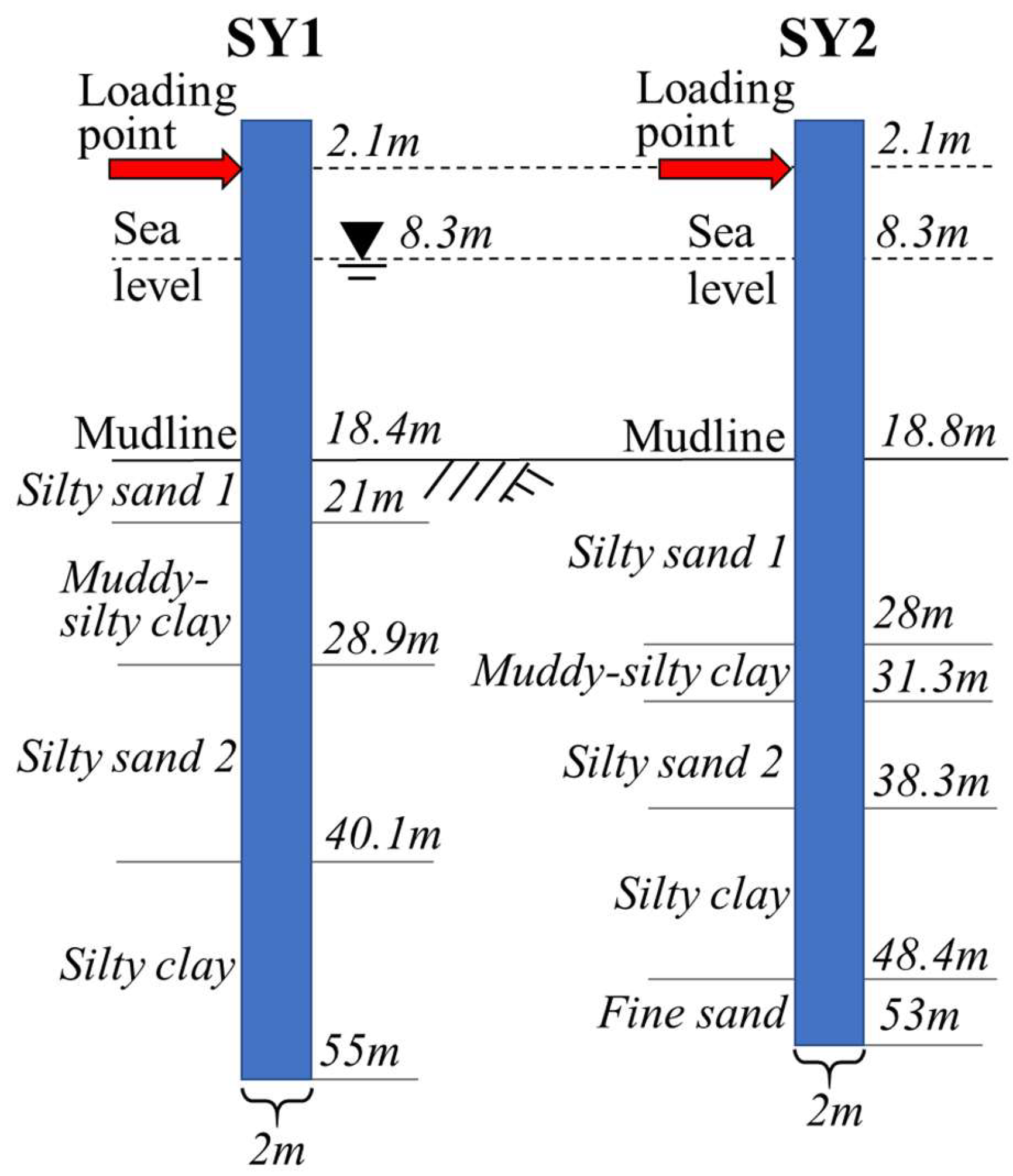
| Soil | Total Unit Weight (kN/m3) | Internal Friction Angle (°) | Compression Modulus (MPa) |
|---|---|---|---|
| Silty sand 1 | 19.1 | 30 | 6.8 |
| Muddy-silty clay | 17.4 | 10.9 | 3.1 |
| Silty sand | 19.8 | 33 | 13.9 |
| Silty clay 2 | 18.1 | 14.1 | 4.4 |
| Fine sand | 20.2 | 33.4 | 17.4 |
Disclaimer/Publisher’s Note: The statements, opinions and data contained in all publications are solely those of the individual author(s) and contributor(s) and not of MDPI and/or the editor(s). MDPI and/or the editor(s) disclaim responsibility for any injury to people or property resulting from any ideas, methods, instructions or products referred to in the content. |
© 2026 by the authors. Licensee MDPI, Basel, Switzerland. This article is an open access article distributed under the terms and conditions of the Creative Commons Attribution (CC BY) license.
Share and Cite
Kato, B.; Shu, Q.; Wang, Y. Mechanism-Aligned Simplified Soil–Pile Interaction Models for Offshore Wind Turbine Monopiles in Sand. J. Mar. Sci. Eng. 2026, 14, 1199. https://doi.org/10.3390/jmse14131199
Kato B, Shu Q, Wang Y. Mechanism-Aligned Simplified Soil–Pile Interaction Models for Offshore Wind Turbine Monopiles in Sand. Journal of Marine Science and Engineering. 2026; 14(13):1199. https://doi.org/10.3390/jmse14131199
Chicago/Turabian StyleKato, Bence, Qiang Shu, and Ying Wang. 2026. "Mechanism-Aligned Simplified Soil–Pile Interaction Models for Offshore Wind Turbine Monopiles in Sand" Journal of Marine Science and Engineering 14, no. 13: 1199. https://doi.org/10.3390/jmse14131199
APA StyleKato, B., Shu, Q., & Wang, Y. (2026). Mechanism-Aligned Simplified Soil–Pile Interaction Models for Offshore Wind Turbine Monopiles in Sand. Journal of Marine Science and Engineering, 14(13), 1199. https://doi.org/10.3390/jmse14131199