


Abstract
The Gulf of Mexico, a geologically complex environment, supports mesophotic coral ecosystems, with reefs such as the Pinnacle Trend, Flower Garden Banks National Marine Sanctuary, the Florida Middle Ground reef system, and Pulley Ridge. Mountain Top Bank is a dome-shaped hardground feature located 60–150 m below the sea surface along the Mississippi–Alabama shelf. It appears to prolong the Pinnacle Trend towards the southeast, bridging the gap between mesophotic coral reefs east and west of the Mississippi Canyon. Shipborne high-resolution multibeam data (bathymetry, backscatter, and water-column) and an AUV photomosaic were collected over the site during several oceanographic expeditions. Data were analyzed and compiled into an ArcGIS geodatabase to produce the first benthic habitat map of Mountain Top Bank. The site is characterized by a network of outcrops and boulders interspersed within a predominately sandy environment. Different seabed features were correlated with the presence and abundance of a diverse array of biota across the phyla of Cnidaria, Porifera, Mollusca, Chordata, Echinodermata, and Rhodophyta. We found the benthic assemblage to be similar to those found at the Pinnacle Trend, supporting the hypothesis that Mountain Top Bank is part of the same reef system and acts as a topographic bridge between ecosystems on the east and west of the Mississippi Canyon.
1. Introduction
Multibeam echo-sounder (MBES) acoustic data and high-resolution visual data are often combined to provide powerful tools to characterize the seabed and produce robust thematic maps [1]. We combined them to produce a benthic habitat map (BHM), which is an important tool for both bolstering our ecological understanding of the seafloor by spatially representing its abiotic and biotic relationships and distributions as well as aiding in decision making for future survey efforts [2]. Fully characterizing the seafloor is a difficult task because of the inability to easily access it, the lack of real-time observations, and the cost of oceanographic expeditions. Hence, mesophotic reefs, despite new insights into their abundance, diversity, and role in reef connectivity, are among the ecosystems that still remain largely unexplored throughout the global oceans [3]. Interdisciplinary research efforts focused on the benthos provide a dynamic understanding of this equally dynamic environment. They also support robust mapping initiatives that can be expanded upon as deep-sea studies continue to proliferate with technological advances. The predictive power of BHMs could also promote the efficient use of time and money by pinpointing where ground truthing efforts should be focused for future studies. The potential predictive power and derived information from BHMs could specifically prove to be an essential tool for planning Marine Protected Areas (MPAs) and the assessment and monitoring of extra space required for marine conservation [4,5].
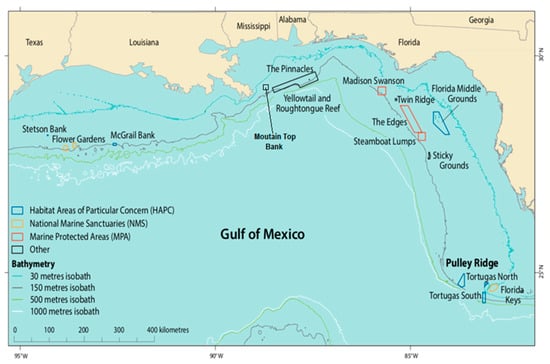
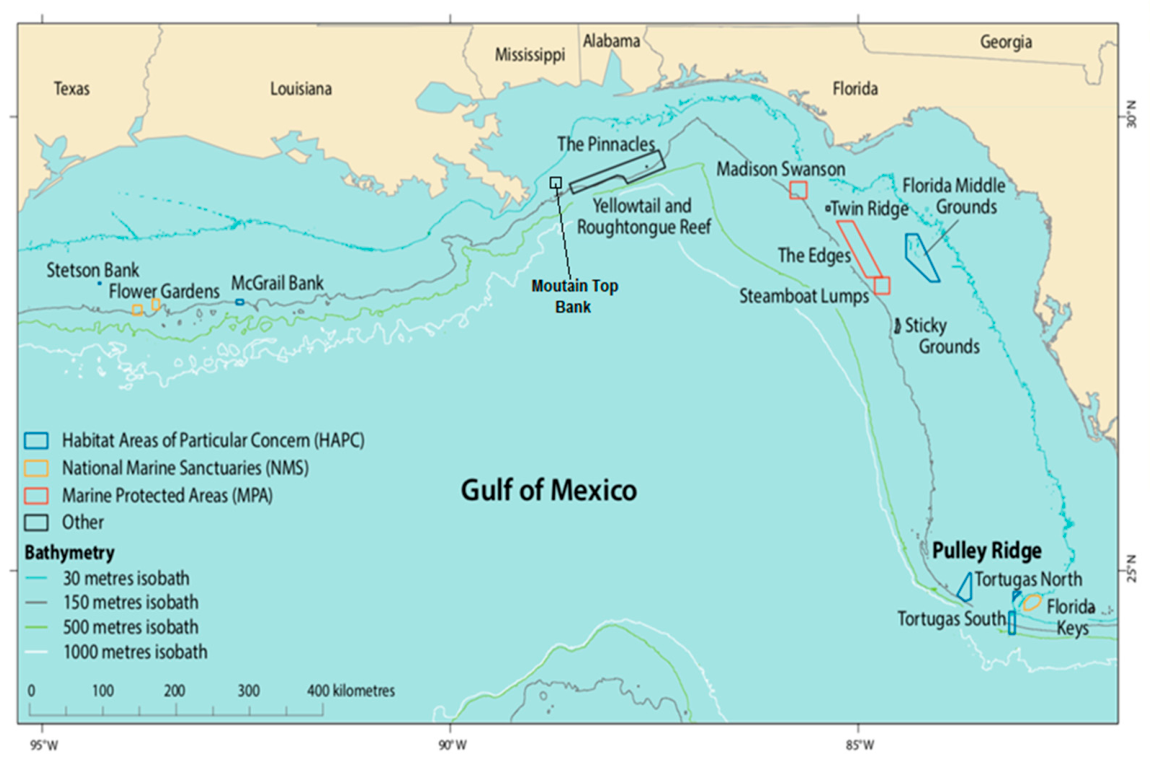
Mountain Top Bank (MTB) is an isolated dome-shaped hardground feature emerging from the seabed at a depth of about 150 m along the Mississippi–Alabama continental shelf in the Northern Gulf of Mexico (GOM, Figure 1). This feature emerges from a flat and featureless seafloor and is located between the Pinnacle Trend (offshore Alabama) and the Flower Garden Banks National Marine Sanctuary (FGBNMS, offshore Texas), two of the most prominent mesophotic coral reefs in the GOM. Separated by the Mississippi Canyon, these two reefs are over 1000 km apart. Structural, and therefore potential biological and ecological, connectivity between the two sites has been speculated through the existence of sites such as MTB. Although coral presence was previously reported at MTB [6], it has never been extensively investigated, and the benthic ecosystem has never been defined. In this paper, we present the first BHM, geodatabase, and species catalog of MTB. The data collected allowed us to display different components of MTB and better understand the interplay between factors such as, but not limited to, the general ecology, preferred substrate, and preferred assemblage of the benthic organisms found at MTB. The species catalog confirms the similarity of MTB with the Pinnacle Trend and the role it could play as a biological corridor for mesophotic ecosystem populations.
Figure 1.
Mesophotic reefs within the GOM including the FGBNMS off of TX-LA, the Pinnacles off of MS-AL, and the Florida Middle Grounds and Pulley Ridge off of FL [7].
2. Materials and Methods
MTB, bound by the coordinates −88.45 W, 29.21 N, −88.42 W, 29.24 N, is located offshore of the MS-AL coast, approximately 90 nm from Gulfport, MS, and to the east of the MS River Delta. It is a dome-shaped structural height occupying 3 km2; emerging from a flat surrounding seabed, it extends from 56.62–145.07 m below the water’s surface. The dome appears to be capped by a 20 m thick hardground and shows a moat around its base. Its dome structure may be associated with salt diapirism, which affects large parts of the GOM subsurface geology. Alternatively, because of the proximity to the Pinnacle Trend, it may share the same geological origin as the relict topography of the last glacial cycles [8].
The Hydrographic Science Research Center at the University of Southern Mississippi began studying MTB in 2007. The first MBES survey was conducted using the EM2000 from the AUV Eagle Ray, a torpedo-shaped explorer class AUV typically employed to map seabed deeper than 300 m. It revealed an unexpected and complex morphology on the top of the mound which appeared to be primarily characterized by rough hardground. This rough hardground, depth, and proximity to other well-known mesophotic coral ecosystems (MCEs) within the northern GOM suggested that MTB could support an extensive MCE. In the summer of 2020, the Mola Mola AUV was deployed from the R/V Point Sur to collect new still photo images and additional data from the MBES mounted on the vessel.
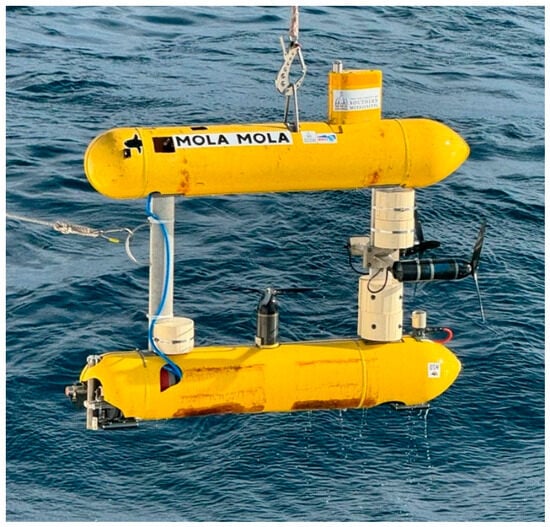
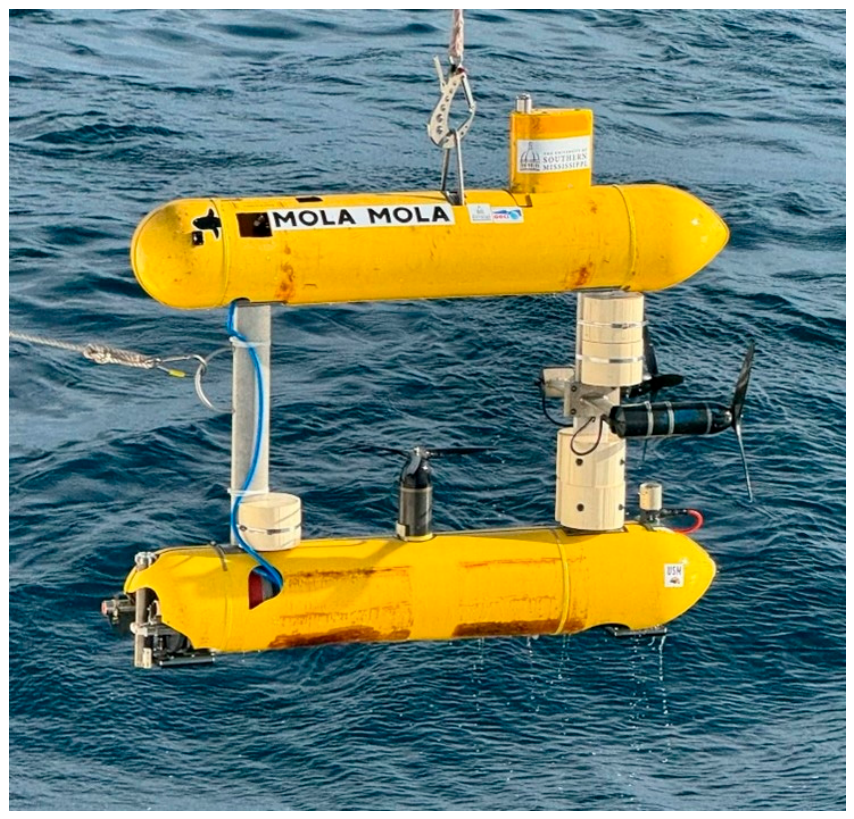
Mola Mola is a SeaBED-class AUV, Woods Hole Oceanographic Institution (WHOI), Woods Hole, MA, USA, with horizontal and vertical thrusters that allow it to maneuver at low speeds (0.15–0.25 m/s) 3 m above the seafloor (Figure 2). The vehicle is equipped with a downward-facing Allied Vision Technology industrial color video camera. The camera is centrally mounted on the lower housing of the AUV, with two LED arrays positioned fore and aft to illuminate the seafloor from different angles during image acquisition. To minimize the influence of ambient light, all surveys were conducted at night. The camera produces color-corrected seafloor imagery at a resolution of 2448 × 2050 pixels. The image footprint, when at a 3 m altitude, is about 2.6 m along-track and 3.2 m across-track [9].
Figure 2.
Mola Mola AUV.
The Kongsberg EM2040 multibeam, Kongsberg, Norway, was mounted on the side pole of the R/V Point Sur to collect bathymetry, seabed reflectivity, and water column backscatter data.
2.1. Data Analysis
2.1.1. MBES Acoustic Data
MBES bathymetry data were processed using QPS Qimera 2.7 following the standard processing workflow suggested by [10]. Topographic and slope maps were created at 3 m bin resolution. The seafloor backscatter data was processed utilizing Fledermaus Geocoder Toolkit (FMGT) v.7.9.7 following the workflow suggested by [11] and also gridded at a 3 m pixel resolution. Once gridded, backscatter values were further analyzed in ArcGIS Pro 3.4 to predict sediment type distribution and infer habitat class types.
2.1.2. Photo Mosaic
A total of 3345 still images were collated into a seafloor photo mosaic. High-densities of ground-truthing samples are required to increase the certainty in acoustic data interpretation and validation [12]. The mosaic was created through a set of Matlab version R2019b (MathWorks, Inc., Natick, MA, USA) tools that helped to determine which images should contribute to each pixel of the mosaic. Once those images were determined, color data was copied into the associated pixels of the mosaic grid. The colors were scaled with coefficients applied to the three-color bands, which provides a correction for differential absorption. The illumination was also balanced to prevent bright zones at the center and dark edges on the images. The resulting colorized mosaic was exported as a GeoTIFF and uploaded into ArcGIS. The images were also combined with vehicle navigation (altitude, pitch, roll, heave, yaw, heading, and position) to derive coefficients for an affine transform within a Cartesian coordinate system, allowing the mosaic to be overlaid onto the bathymetry and backscatter data layers within ArcGIS.
2.1.3. Organism Identification and Enumeration
The photos were analyzed frame by frame to identify, enumerate, and categorize sessile macrofauna and motile demersal organisms at the lowest taxonomic level possible from only visual observation and the substrate inhabited, allowing us to determine the soft and hard bottom communities. Different categories were used to describe shifts in habitat types and better understand relationships between organisms and habitat geology. The megabenthos analysis categories adapted from [13] are: sponges (Porifera), Echinodermata, bioturbators (indicate infauna), algae (Rhodophyta), corals (Cnidarians), Mollusca, and coral fragments/rubble. The geologic environmental descriptors as outlined in [14] are: sand, gravel/pebble, cobble/boulder, and substrate outcrops. The relationships observed between the two formed the basis for our establishment of possible surrogate relationships. Our photographic records were compared to other studies and reports [14,15,16,17,18,19,20] for both the purpose of narrowing down what organisms are present within the GOM and likely found at MTB and allowing for specific species identification where possible.
Species identification and enumeration from these photos allowed for further analyses including the calculation of the Shannon Diversity Index and richness levels where applicable. Richness refers to the number of groups or individuals within a determined category; species, class, and subclass richness were the three types used for these counts. The Shannon Diversity Index estimates the diversity of species within a community, considering the number of species living in a habitat and their relative abundance. The equation for this index is:
where H is the Shannon Diversity Index and pi is the proportion of individuals of i-th species in a community. The greater the diversity of species, the higher the index value.
2.1.4. Geodatabase
Our geodatabase compiled our remotely sensed data to map and store the spatial distribution of benthic habitats at MTB. Specific layers that were incorporated include our photomosaic, bathymetry, and backscatter maps. Seabed classification with ArcGIS allowed us to “see” the seabed in “pseudo-colors” that provide information on the material and topography of the seabed, while also providing a visual means of evaluating the spatial distribution of different variables [21]. It is important to acknowledge and evaluate a variety of environmental factors because of the dynamic nature of the seafloor.
3. Results
3.1. Seafloor Morphology
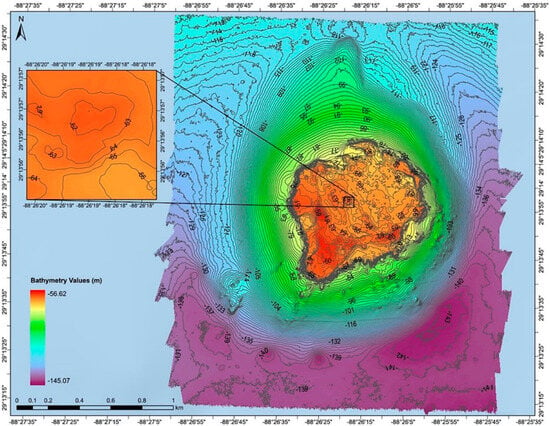
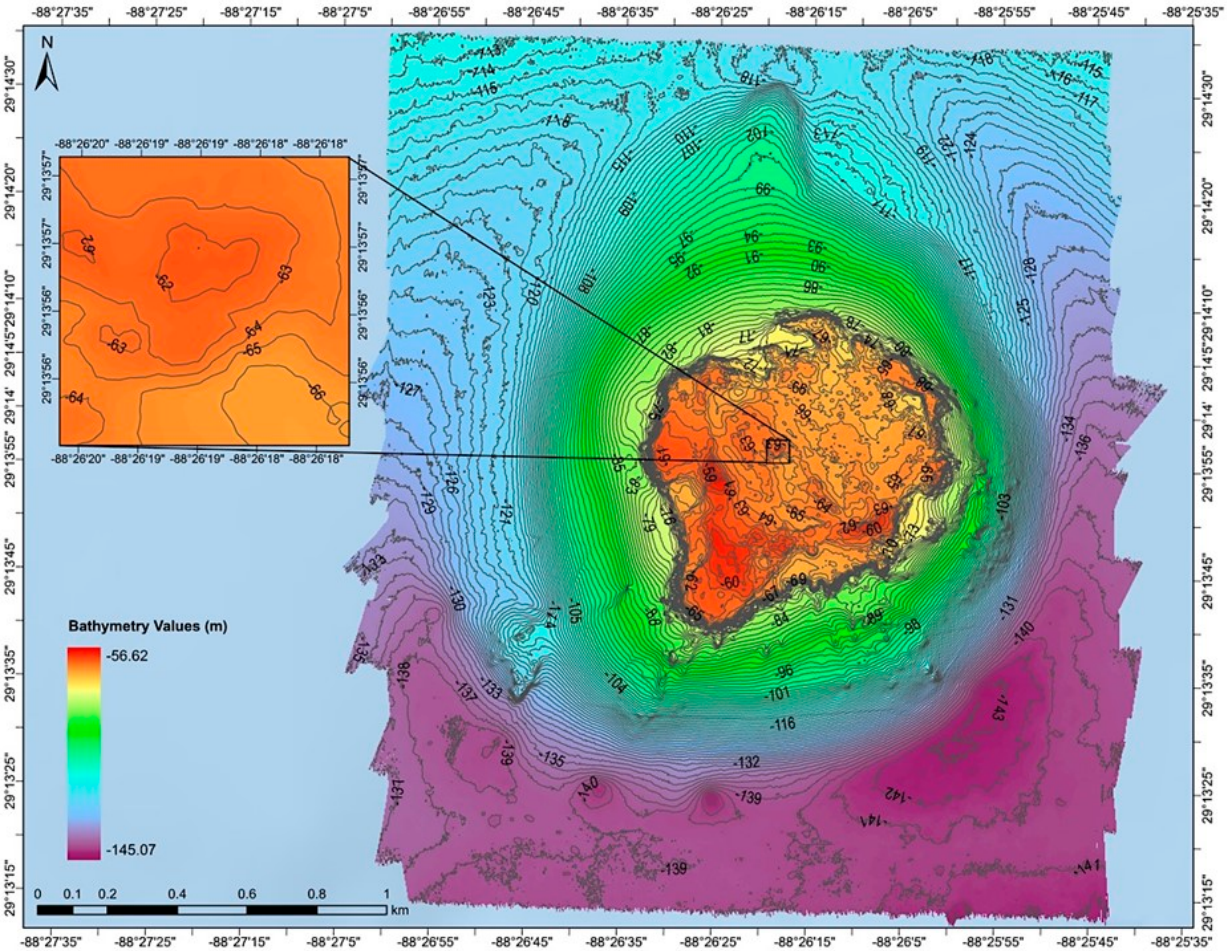
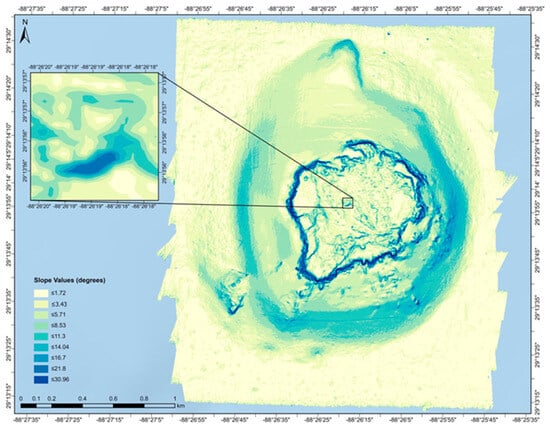
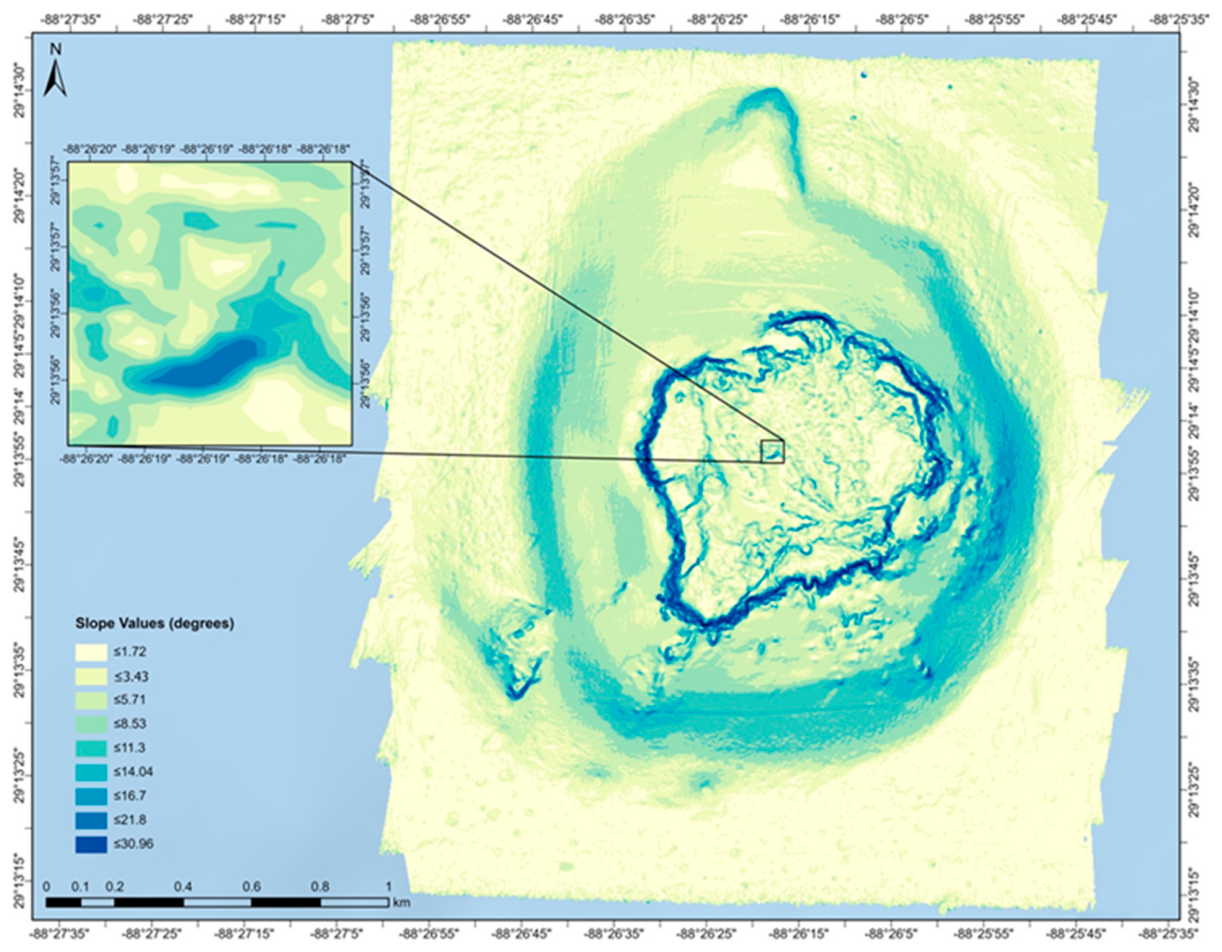
MTB extends from 56.62 m to 145.07 m below the sea’s surface, an 88.45 m change in elevation. The average depth throughout the entire structure is 113.82 m, which is around the base of the structure (Figure 3). The topography is most complex at the top of the mound structure and decreases as you move downwards towards the surrounding seafloor. Two well-defined circular pockmarks are also present along the south foot of the mound (Figure 3 and Figure 4). MTB has a slope ranging from 0 to 59.53°, averaging at 4.09° (Figure 4). The greatest change in slope occurs along the edge of the transition from the top of the mound to the relatively evenly sloping sides.
Figure 3.
Bathymetric map of the full MTB site featuring an inset of the sampling transect with a contour map overlay. Contours are at 1 m intervals.
Figure 4.
Slope map of the full MTB site featuring an inset of the sampling transect.
3.2. Seafloor Backscatter
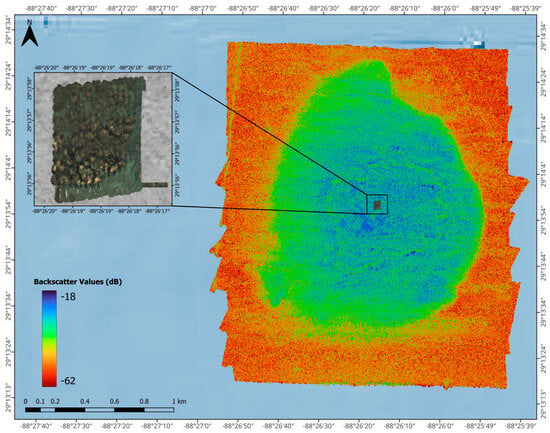
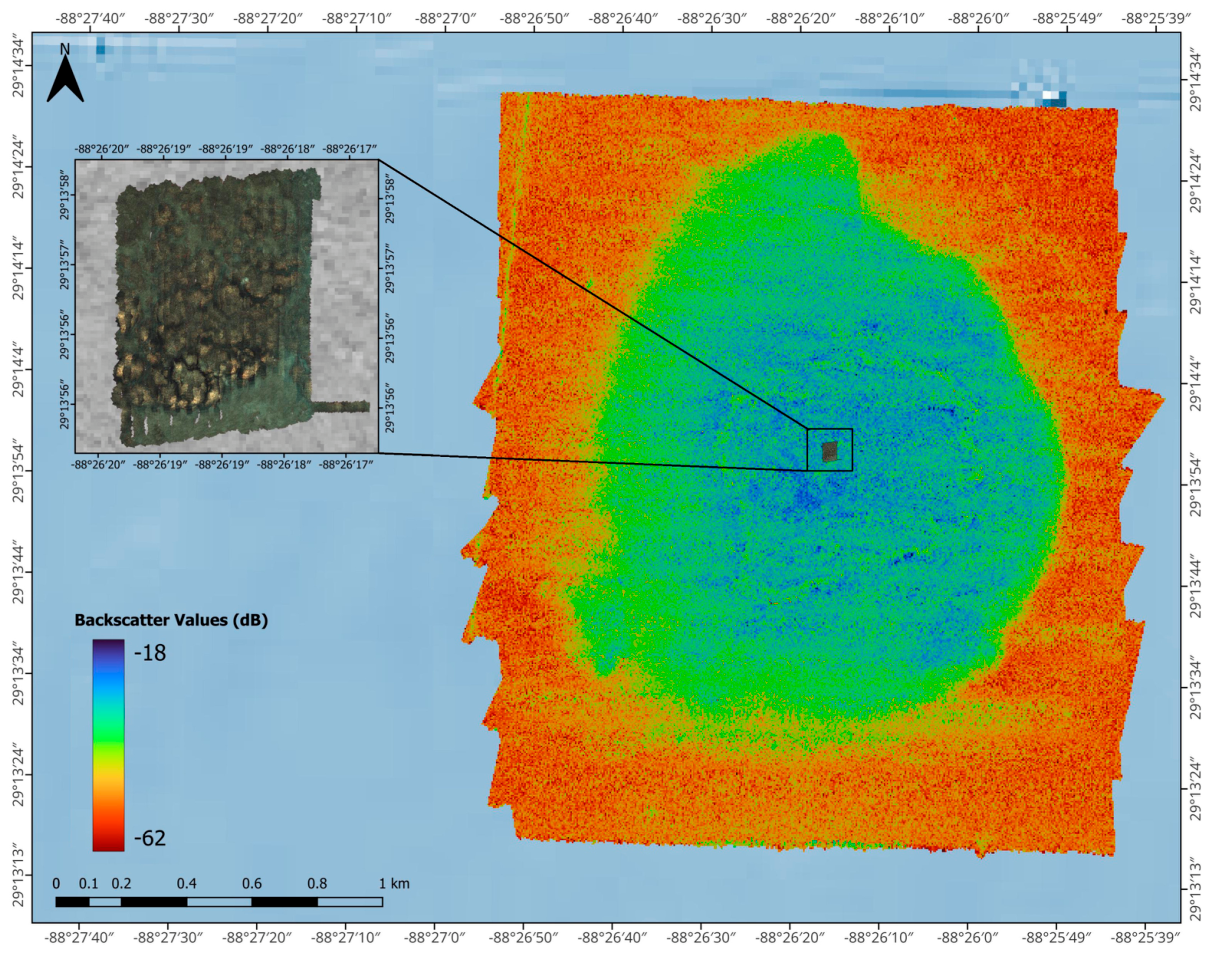
Figure 5 visualizes the seafloor backscatter derived from the multibeam data. Each gridded portion within the collected backscatter has a unique value, ranging from −18 to −62 dB. The light colors are associated with high intensities and dark colors associated with low intensities. The backscatter values of high intensity were correlated with rock outcrops with sand both beside and between outcrop features. When sand was the predominant feature within the grid, the backscatter was in the middle range of intensities, while the low intensities were associated with the muddy/sand areas.
Figure 5.
The backscatter map of the full MTB site featuring an inset of the sampling transect.
3.3. Image Data
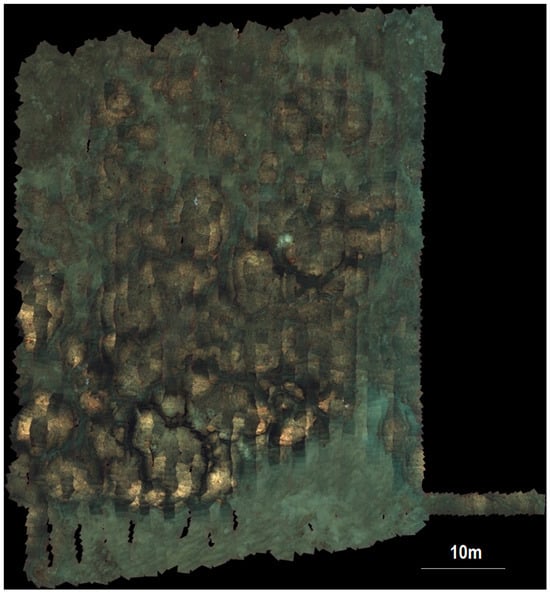
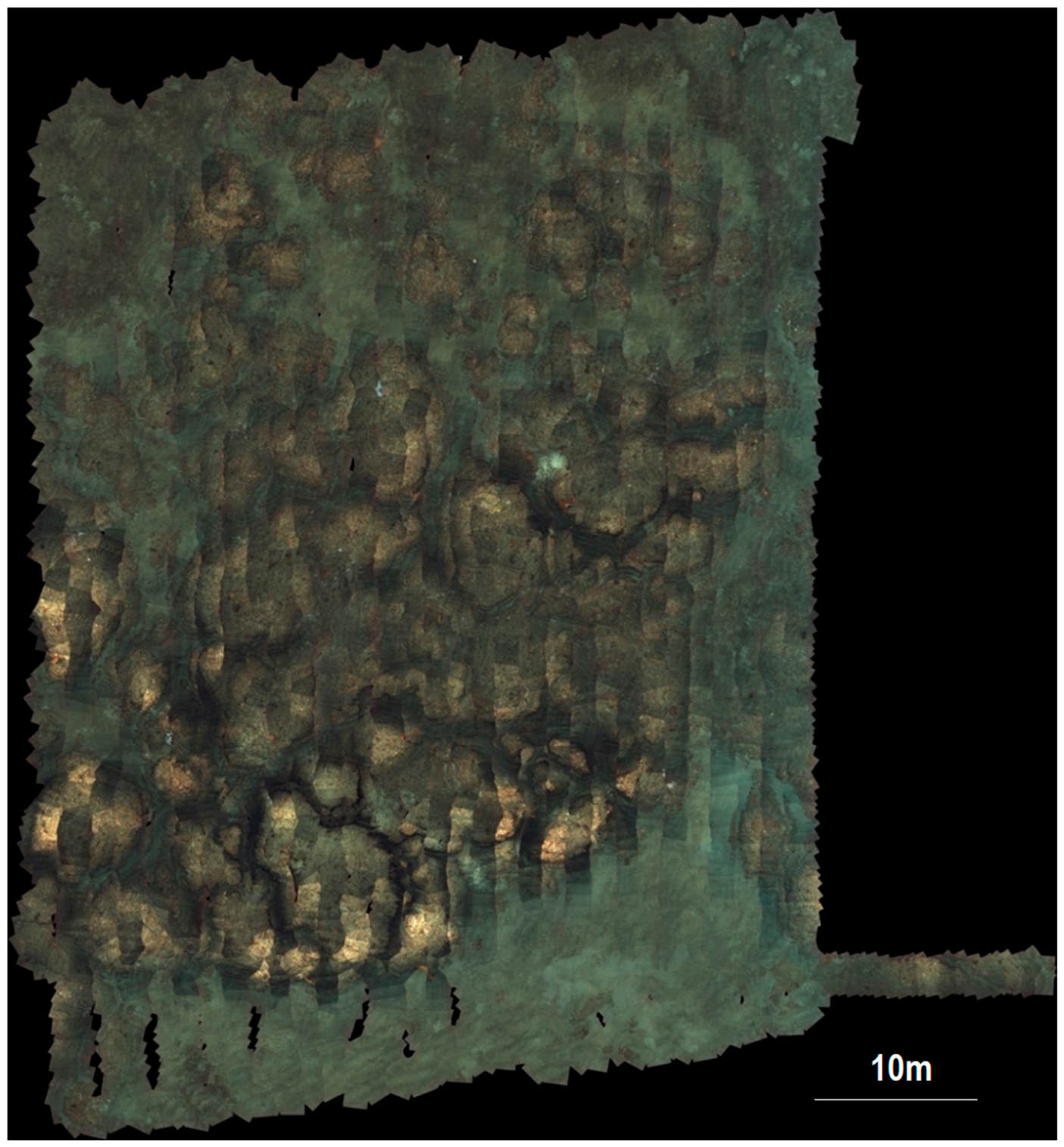
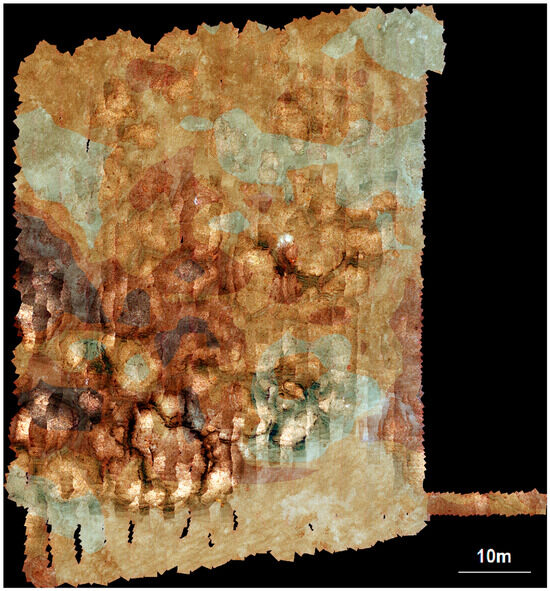
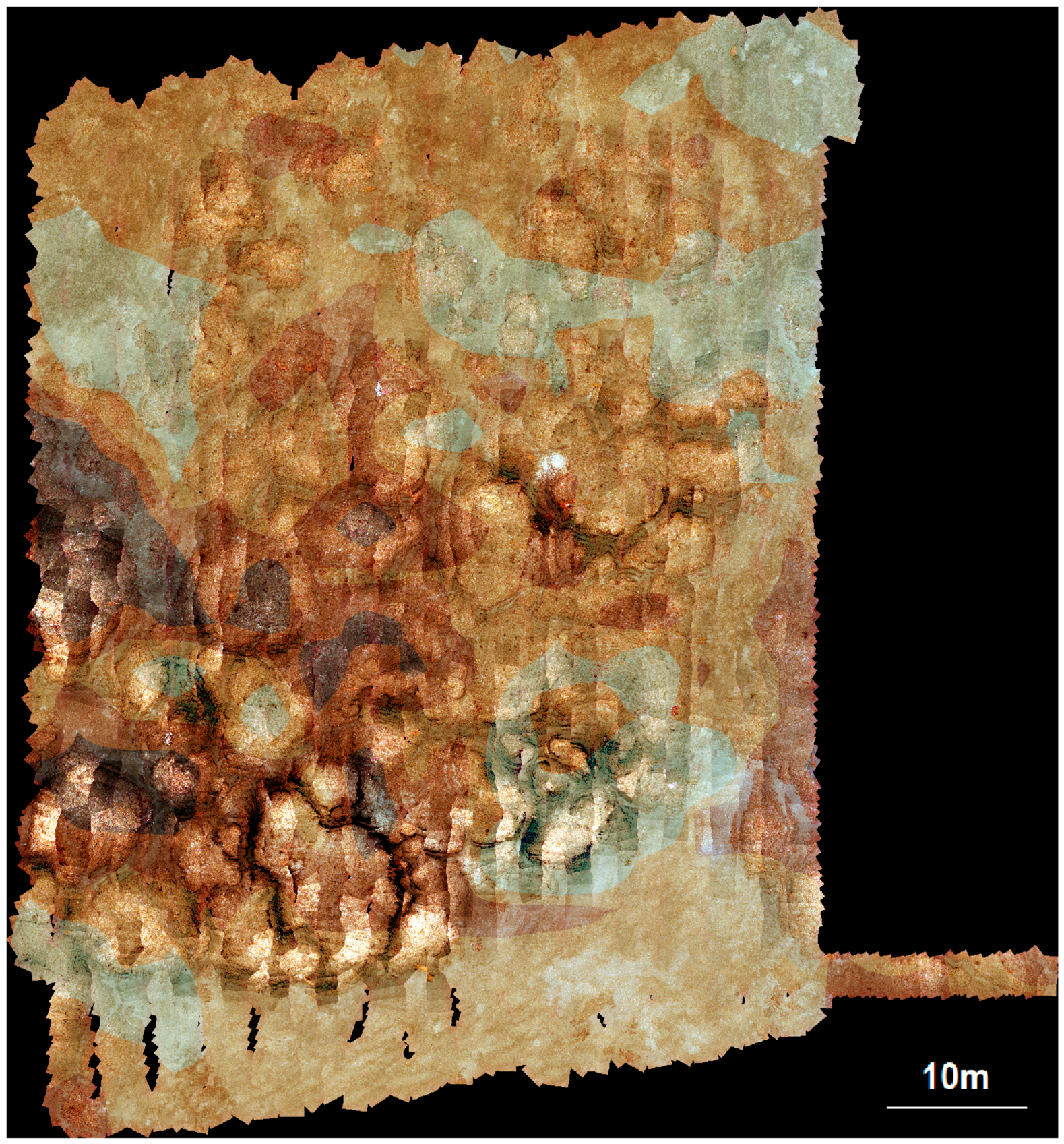
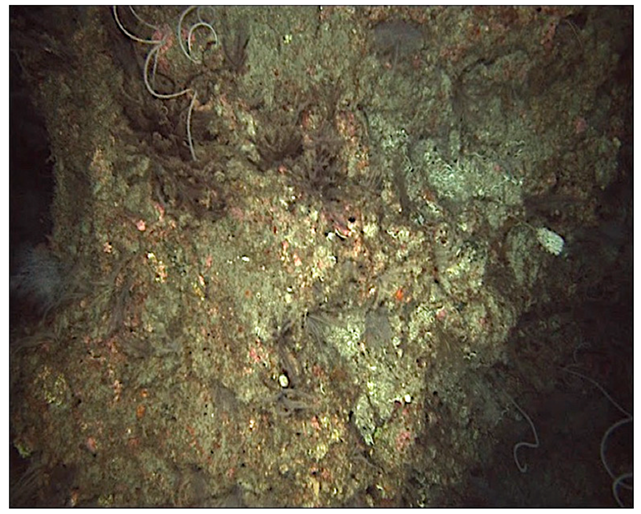
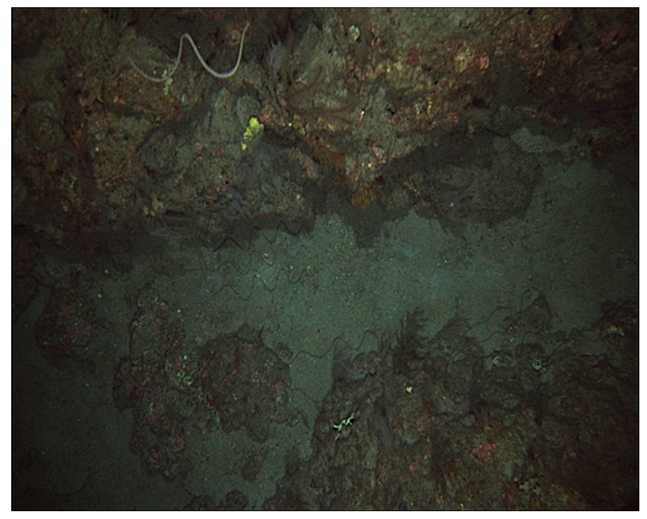
The 60 × 60 m photomosaic produced by the still images collected at the top of MTB is shown in Figure 6. This area correlates to the box highlighted in Figure 3, Figure 4 and Figure 5. We utilized the still images to catalog the benthic organisms and to ground-truth the substrate of their habitat.
Figure 6.
Photomosaic created from the ground-truthing images taken atop MTB by the Mola Mola AUV; color corrected and combined with seafloor positioning to overlay acoustic data sets.
3.4. Organism Identification and Enumeration
In the following subsections, we illustrate all of the species identified visually by the analysis of the still photos and comparison of similar studies. The standard scientific taxonomic citation for a species is adopted: genus + species in italics and scientist and year of first description. Identified species still photos are provided in the Supplementary Materials Figures S1–S67.
3.4.1. Chordata
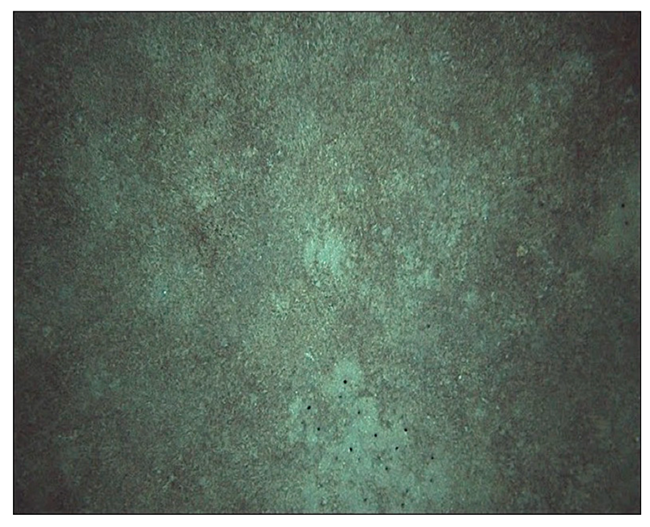
Seventeen fish species were identified while twenty-four fish were present in the images but unidentifiable (Table 1). The species identified were: short bigeye fish (Pristigenys alta Gill, 1862), honeycomb cowfish (Acanthostracion polygonius Poey, 1876), red lionfish (Pterois volitans Linnaeus, 1758), spotted moray (Gymnothorax moringa Cuvier, 1829), reef butterflyfish (Chaetodon sedentarius Poey, 1860), greater amberjack (Seriola dumerili Risso, 1810), snapper and grey snapper (Lutjanus spp. Bloch, 1790, L. griseus Linnaeus, 1758), grouper (Mycteroperca sp. Gill, 1862), scorpionfish (Scorpaenidae sp. Risso, 1827), rock beauty and queen angelfish (Holacanthus tricolor Bloch, 1795, H. ciliaris Linnaeus, 1758), tattler fish (Serranus phoebe Poey, 1851), sea robin (Triglidae sp. Rafinesque, 1815), yellowtail reef fish/royal gamma (Chromis enchrysura Jordan & Gilbert, 1882, Gramma loreto Poey, 1868), squirrelfish (Holocentridae sp. Bonaparte, 1833), and spinycheek soldierfish (Corniger spinosus Agassiz, 1831). The identified groupers could be M. interstitialis but their positioning in the still images makes it difficult to see the defining features required to make this ID; this similarly applies to the snapper fish identified, though it is possible they are all grey snappers. Three of the unidentifiable fish could belong to Anthiadidae sp. Poey, 1861, but were left within the unidentifiable category. Altogether, there were 95 individual fish identified among those species, the greatest counts being for grey snapper, reef butterflyfish (which were usually observed in pairs of two or four), red lionfish, short bigeye fish, and groupers; because fish are mobile organisms, there is a possibility for count overlap. The fish were observed throughout the study site, primarily atop or alongside the rock outcrops.
Table 1.
Fish species observed throughout the MTB study transect.
3.4.2. Cnidaria
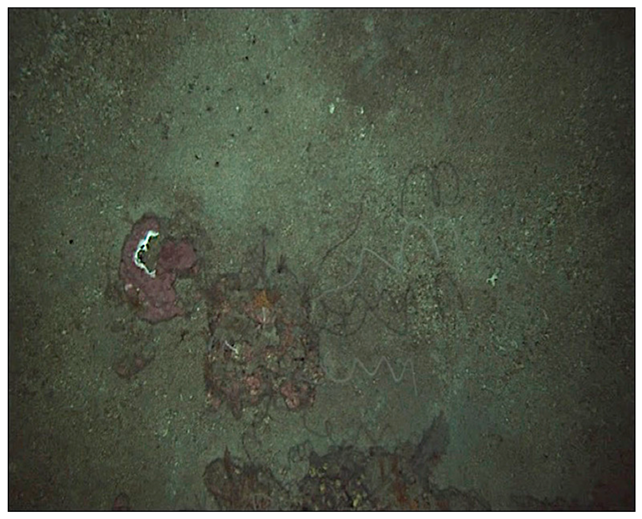
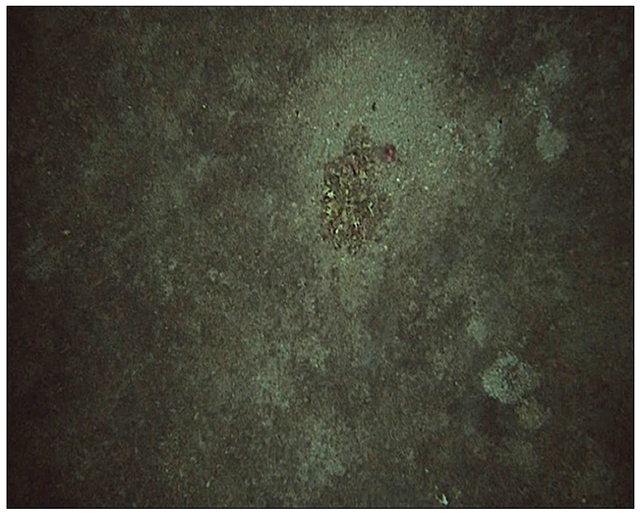
Fourteen corals and one sea pen were observed (Table 2). Among the corals observed, the following were identified to the species level: Stichopathes sp., Swiftia exserta, Muricea pendula, Antipathes spp., Tanacetipathes spp. Opresko, 2001, Aphanipathes sp. Brook, 1889, Oculina varicosa Le Sueur, 1820, and Siderastrea sp. Blainville, 1830. The most observed species were Stichopathes sp., Antipathes spp., S. exserta, and Tanacetipathes spp. It should be noted that of the 2489 photos that had corals, 2029 photos had corals present that were too dark or blurry to identify. There were also white branching corals, orange branching corals, and star corals that could not be positively identified as well as mounding organisms that were either corals or sponges. Visual observation alone is a limiting factor in coral identification, and physical samples would be needed for verifiable identification of both the unknown and some of the identified species. Also, some coral counts were only documented as the number of appearances rather than number of organisms within that species observed because of dense assemblages, overlap between photos, and location along rock outcrops making exact counts difficult. Throughout our study site, we observed piles of coral fragments. They were documented in 210 images, indicative of 70 instances of coral rubble. Most of these fragments were in consolidated piles or spread out across sandy sediments. Although rare, there were some instances where they were found on top of and on the side of rock faces and crevices.
Table 2.
List of corals observed throughout the MTB study transect.
3.4.3. Porifera
Ten different sponges were observed (Table 3). Of those, the following could be identified to the species level: Pseudoceratina/Aoilochroia crassa Hyatt, 1875, Geodia sp. Lamarck, 1815, Ircinia sp. Nardo, 1833, Agelas clathrodes Schmidt, 1870, and Halichondria sp. Fleming, 1828. There were also yellow, purple, white, red and white, and orange sponges that could not be positively identified. The most observed species were P. crassa, the unidentified red and white sponge, and the unidentified orange sponge. All of these sponges were found primarily in the encrusting and tubular form. Also, it is possible that some organisms identified as Geodia sp. were misidentified and are actually Siderastrea sp. and vice versa; identification was skewed by possible bleaching on the corals.
Table 3.
List of sponges observed at MTB.
3.4.4. Rhodophyta
We observed that larger rock features such as boulders and outcrops were encrusted with algae in the crustose coralline and encrusting rhodophyte (Peyssonnelia sp. Decaisne, 1841) forms, the former being the dominant form of algae present, with observation in 2297 photos and the latter appearing in 349 photos (Table 4). Another encrusting organism that was observed in 579 photos that may be algae was what was assumed to be Hydrolithon sp. Foslie, 1909.
Table 4.
List of identified encrusted algae observed throughout the MTB study transect.
3.4.5. Echinodermata
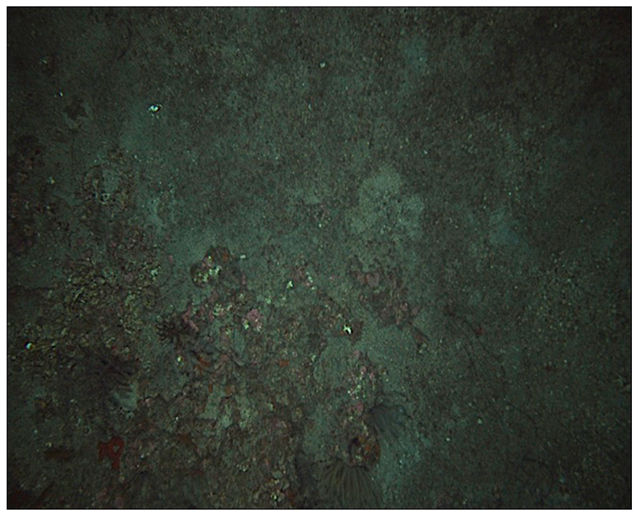
Crinoids, sea stars (Asteroidea spp. Blainville, 1830), and basket stars (Euryalida spp. Lamarck, 1816) were observed. Crinoids were the most frequently observed echinoderm, with presence in 1424 photos (Table 5). Similar to some corals, their dense assemblages, overlap between photos, and locations within crevices and on outcrop walls made accurate counts difficult. Counts within photos ranged from as few as one crinoid to as many as 8+, with the majority falling within the 2+ category; the + accounts for the possibility that there may be more, but lack of clarity makes it difficult to determine. The basket stars that were observed were attached to S. exserta. The sea stars that were observed were atop the sandy sediment portions of the study site.
Table 5.
List of Echinodermata observed throughout the MTB study transect.
3.4.6. Mollusca
Six whelks were observed throughout the study site (Table 6). Sedimentation and visibility factored into an inability to identify, but it is likely that they are lightning whelks (Sinistrofulgur perversum Linnaeus, 1758) based on relative size and shape. There were also two instances in which an organism appeared to be a mollusk, but both were unable to be identified further.
Table 6.
List of mollusks observed throughout the MTB study transect.
3.4.7. Infauna
Apart from the organisms we have listed, we also observed 371 instances of burrow holes within the study site, indicative of roughly 134 sets of burrow holes. The burrow holes always appeared with clusters of at least four holes within each set; some had over 10 holes. Lack of sediment grabs or cores made it impossible to accurately assign the organism(s) responsible for these holes. It is possible that they were squat lobsters (Eumunida spp. Smith, 1883). It should be noted that it is possible for overlapping counts to have occurred because most burrow holes were within the sandy sediment where there were no distinctive features by which to distinguish organisms.
3.4.8. Anthropogenic Debris
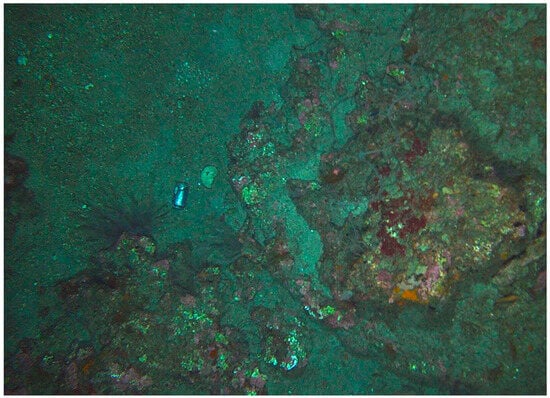
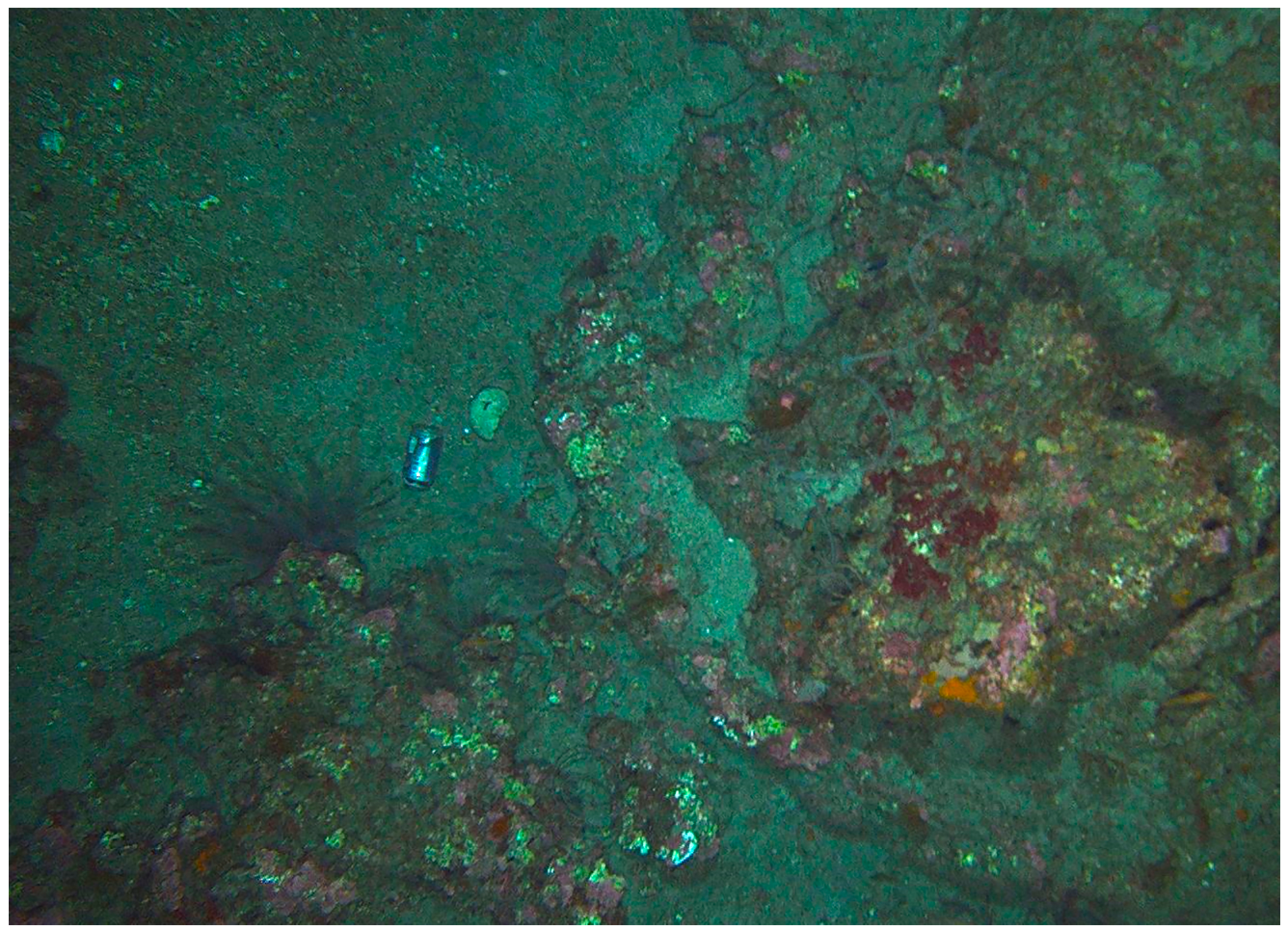
We also found evidence of anthropogenic pollution such as plastic cups and metal cans (Figure 7).
Figure 7.
One of the metal cans found at MTB.
3.5. Organism Statistical Distribution
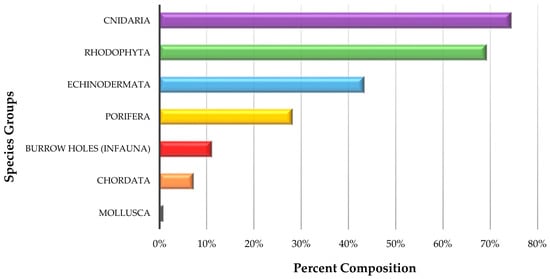
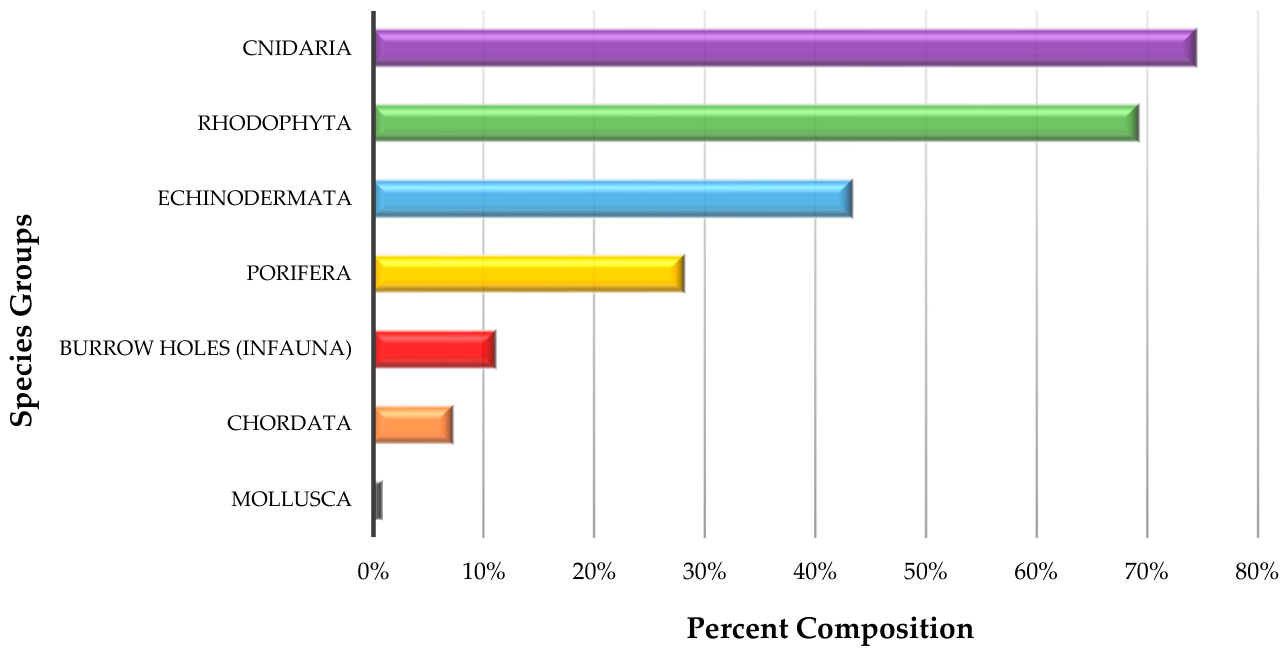
Cnidaria and Rhodophyta were the most frequently observed organisms; Mollusca and Chordata were the least frequently observed organisms. Although exact counts could not be made for each phylum, the number of appearances could be counted in order to estimate an organism percent composition at MTB as reported in the histogram in Figure 8. Of the 3345 photos taken, Cnidarians appeared in 2489 (74.41%), Rhodophyta appeared in 2313 (69.15%), Echinodermata appeared in 1449 (43.32%), Porifera appeared in 940 (28.10%), burrow holes (infauna) appeared in 370 (11.06%), Chordata appeared in 240 (7.17%), and Mollusca appeared in 25 (0.75%).
Figure 8.
Organism percent composition based on photo presence. Cnidaria and Rhodophyta were the most frequently observed organisms; Mollusca and Chordata were the least frequently observed organisms.
In Table 1, Table 2, Table 3, Table 4, Table 5 and Table 6, both identifiable and unidentifiable species are listed. Counts were included whenever possible; otherwise, only occurrences or appearances were recorded. Species richness calculations include only identifiable species, since unidentified organisms may belong to already recorded species and therefore cannot be considered distinct taxa, or because the number of unique species they represent is uncertain. Similarly, the Shannon Diversity Index was calculated using only identifiable species and should therefore be considered an under-approximation of the true diversity values.
3.6. Benthic Habitat Mapping
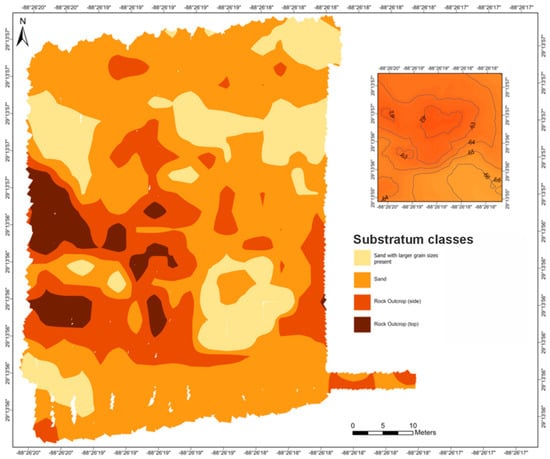
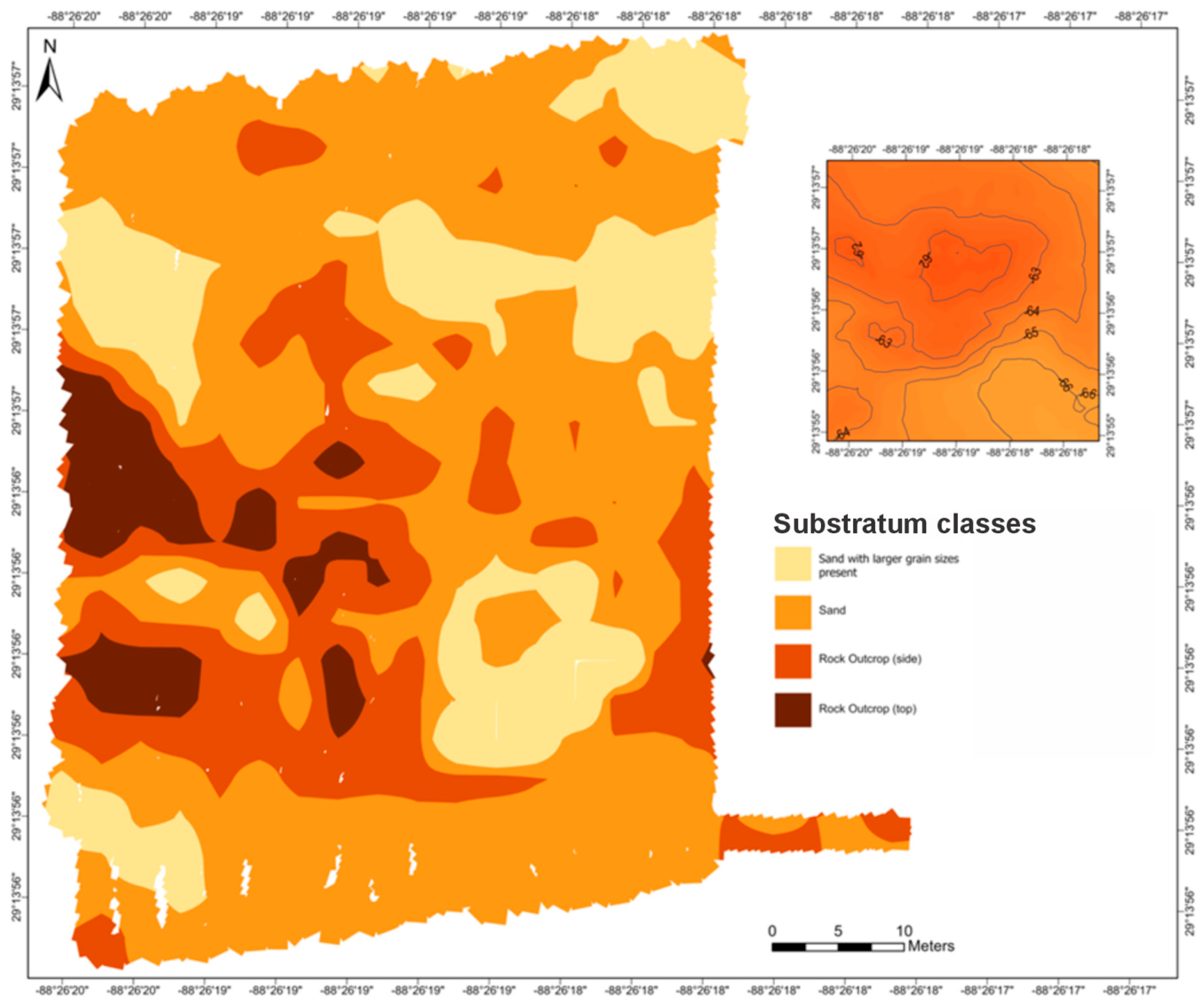
Table 7 details the substrate classifications with their associated benthic fauna assemblages and distribution throughout the MTB transect. We recognized six different habitat classes: sand; sand with boulders; sand with coral fragments; sand with gravel/gobbles; rock outcrop (top); and rock outcrop (side), but only four consolidated substratum habitat classes were correlated with the backscatter data (Figure 9). These consolidated classes include sand, sand with larger grain sizes present (sand with boulders, gravel/cobbles, coral fragments), rock outcrop (side), and rock outcrop (top).
Table 7.
Habitat class descriptions and benthic faunal assemblages and distributions derived from photo analysis.
Figure 9.
Substratum classification derived by integrating image ground-truthing and acoustic backscatter analysis.
There is also the possibility that muddy sand or sandy mud was present in either sand class distributions. The rock outcrop features also had sand present in some cases such as a veneer on the top or between rock outcrop structures. The substratum classes were then combined with the benthic fauna distribution to derive the MTB BHM (Figure 10). Despite some discrepancies, we found a good agreement between the benthic classes and the acoustic predictor.
Figure 10.
Photomosaic with benthic habitat map overlaying it.
4. Discussion
The BHM derived for the 60 × 60 m photomosaic area was applied to predict benthic habitats across the entire dome by integrating acoustic classes with geological sample calibration points collected outside the photomosaic boundary. The strong agreement between substratum classes and control points suggests that the observed benthic faunal assemblage is representative of the broader dome structure.
MTB is characterized by a network of rock outcrops and boulders interspersed within a predominantly sandy matrix. The relief ranges from 1 to 4 m, with areas surrounding outcrops typically spanning 1–2 m. Surface rugosity varied from bare rock substrate—occasionally veneered with sand or coral rubble—to surfaces encrusted with algae, sponges, or corals. The transition zones between outcrops and sand are associated with coarser grain sizes, including gravels and cobbles, which also occur around scattered boulder features distributed across otherwise flat, sandy terrain. Although algae, corals, echinoderms, and porifera dominate the assemblage, demersal fishes, while constituting a minor proportion of observed organisms, were the most species-rich taxon, with 17 species identified.
Scattered boulders and outcrops provide essential attachment substrates for large soft corals and sea whips [7], and represent the preferred habitat for S. exserta, M. pendula, Stichopathes spp., Antipathes spp., and Tanacetipathes spp. While Stichopathes spp. and Antipathes spp. occurred in dense assemblages, the remaining larger soft corals were predominantly solitary. These assemblage patterns enhance structural complexity and refuge availability, and the vertical relief generated by these species over soft substrata contributes to elevated biodiversity in high-relief zones [22]. All identified coral species were recorded within their expected depth range, biogeographic setting, and community structure type. The occurrence of Porites spp. within rubble piles—a characteristically shallow reef species—may reflect historical shifts in community composition in response to sea-level change.
Low-relief reef areas subject to sand inundation are known to be dominated by sponges interspersed with coralline red algae [23], while structurally complex surfaces support dense assemblages of erect sponges and encrusting calcareous red algae [1]. The encrusting organisms and sponge communities observed on MTB outcrops are consistent with these established habitat associations. Demospongiae, the most diverse sponge class, encompasses a wide range of growth forms and serves as an important food source for associated fauna. The majority of algae identified at MTB was crustose coralline algae (CCA), a reef-building taxon predominantly found in deep, low-relief habitats [24]. The significantly higher algal cover observed at upper mesophotic sites relative to shallow reefs supports the relevance of MTB’s mid-mesophotic position, where CCA is not in direct competition with photosynthetic coral species [16].
Fish community structure at the nearby FGBNMS is positively correlated with both depth and habitat relief [16]. Our findings are consistent with these patterns and include the presence of the invasive red lionfish, P. volitans, recorded at low but potentially increasing densities in the GOM [16]. The proliferation of lionfish at MTB and adjacent reef structures underscores the importance of understanding regional reef connectivity. Although fish species richness typically correlates with live coral cover, the abundance of crevices observed throughout MTB likely supports a comparatively high diversity of cryptic species [3]. Equipment avoidance and attraction is also a limiting factor in using photographic data to characterize fish assemblages. It is therefore probable that species richness at this site exceeds observed values. Fish species were similarly recorded within their expected depth, biogeographic, and community structure context.
MTB exhibits the varied faunal assemblages characteristic of mesophotic reef ecosystems throughout the GOM and other ocean basins [1,4,14,16], supporting the broader observation that diverse reef communities can persist at depth. Based on taxonomic overlap with both the Pinnacle Trend and FGBNMS, and given MTB’s geographic proximity to the Pinnacle Trend, the faunal assemblage observed here suggests that MTB likely represents an extension of the Pinnacle Trend.
Taxa shared between the FGBNMS and MTB include the majority of identified fishes, several coral genera (Antipathes sp., A. atlantica, A. pedata, Siderastrea sp., Stichopathes sp.), all identified sponges (A. clathrodes, Halichondria sp., Ircinia sp., Geodia sp., P./A. crassa), Rhodophyta, and the echinoderm Crinoidea spp. Species shared with the Pinnacle Reef Trend [22] include additional coral and fish taxa. Conversely, species such as Tanacetipathes spp., Asteroidea spp., Echinoidea sp., Euryalina spp., and B. perversum, though absent from Pinnacle Trend and FGBNMS records, have been documented at other mesophotic reefs within the GOM (e.g., Sticky Grounds). The differential distribution of organisms across these sites may reflect endemism within the northern GOM or varying degrees of ecological connectivity among reef systems. It is important to note, however, that the complexity of the faunal assemblage and the large overlap among these systems make MTB not a simple “rest stop” for larvae, as oil rigs [25] and/or shipwrecks [26] have been found to function, but rather a structural biological hotspot bridging the two regions.
Structural connectivity within the FGBNMS and surrounding deep-water areas provides the foundation for biological and ecological linkages among the more than one hundred reef structures along the TX and LA coastlines [15]. Depending on the extent of regional “habitat highways,” there exists potential for significant inter-site movement of species and individuals [15]. Should MTB lack direct connectivity with the FGBNMS, connectivity with other hardground banks in the NW GOM—many of which support extensive benthic invertebrate and reef fish communities [14,16]—remains plausible. Community composition data from MTB could be used to model assemblages across northern Gulf banks and, when integrated with genetic data, could inform assessments of regional connectivity.
The degree of connectivity between shallow and mesophotic coral reefs remains poorly understood. Genetic linkages between these zones could render mesophotic reefs a critical source of propagules for restoring shallow populations depleted by natural and anthropogenic disturbances [27]. However, localized larval retention driven by regional circulation patterns may promote high levels of endemism, and such patterns, combined with species longevity and diversity, may position mesophotic coral reefs as significant centers of speciation [28]. As potential extensions of adjacent shallow reefs, MCEs share some species with shallower counterparts while also harboring unique taxa, suggesting that conspecifics across these habitats may constitute components of larger metapopulations [29]. Limited larval dispersal over broad spatial scales, potentially linked to reproductive strategy [30], challenges the characterization of coral reefs as open systems. A comprehensive understanding of the multiple dimensions of connectivity is therefore essential for addressing existing knowledge gaps and informing effective conservation strategies.
5. Conclusions
The complex relationship between seafloor geology and biology underscores the need for interdisciplinary approaches in marine research. Identifying surrogate relationships is essential for advancing habitat mapping methodologies and improving the prediction and preservation of marine biodiversity. Continued investigation of the associations between physical properties and processes and biological communities will be necessary to further determine these linkages. This study at MTB contributes to that understanding by providing insight into these relationships within the northern GOM mesophotic zone and the potential for large-scale ecosystem connectivity across this region based on shared geomorphology and biodiversity patterns. At both the site-specific scale of MTB and the broader scale of the northern GOM, predictive habitat maps offer significant practical value—optimizing the allocation of ground-truthing efforts during sampling campaigns while reducing associated time and costs. Such tools could also prove to be essential for MPA planning and in supporting the assessment and monitoring frameworks required for effective marine conservation. Protection is particularly critical for reef communities harboring sensitive species that may be incapable of full recovery if exposure to degradation is not proactively prevented and managed.
Supplementary Materials
The following supporting information can be downloaded at: https://www.mdpi.com/article/10.3390/jmse14131160/s1, Figure S1: Honeycomb cowfish (Acanthostracion polygonius); Figure S2: Reef butterflyfish (Chaetodon sedentarius); Figure S3: Yellowtail reef fish or royal gamma (Chromis encrysura, Gramma loreto); Figure S4: Spinycheck soldierfish (Corniger spinosus); Figure S5: Spotted moray (Gymnothorax moringa); Figure S6: Queen angelfish (Holacanthus ciliaris); Figure S7: Rock beauty angelfish (Holacanthus tricolor); Figure S8: Squirrelfish (Holocentridae sp.), bottom photo also features reef butterflyfish; Figure S9: (Grey) snapper (Lutjanus sp., L. griseus); Figure S10: Short bigeye (Pristigenys alta); Figure S11: Red lionfish (Pterois volitans); Figure S12: Greater amberjack (Seriola dumerili); Figure S13: Grouper (Mycteroperca sp.); Figure S14: Grouper (Mycteroperca sp.); Figure S15: Scorpionfish (Scorpaenidae sp.); Figure S16: Tattler fish (Serranus phoebe); Figure S17: Sea robin (Triglidae sp.); Figure S18: Antipathes sp.; Figure S19: Antipathes sp.; Figure S20: Aphanipathes sp.; Figure S21: Muricea pendula; Figure S22: Oculina varicosa; Figure S23: Siderastrea sp.; Figure S24: Stichopathes sp.; Figure S25: Swiftia exserta; Figure S26: Tanacetipathes spp.; Figure S27: Tanacetipathes spp.; Figure S28: Type 1—very light pink, mounding/encrusting; Figure S29: Type 2—darker red with white edges, mounding/encrusting; Figure S30: Type 3—darker pink with no white edges – mounding/encrusting; Figure S31: Type 4—larger patches of darker red/pink, usually with white throughout, mounding; Figure S32: Unknown soft corals; Figure S33: Unknown star coral; Figure S34: Unknown star coral; Figure S35: Unknown star coral; Figure S36: Unknown sea pen; Figure S37: Agelas clathrodes; Figure S38: Halichondria sp.; Figure S39: Ircinia sp.; Figure S40: Geodia sp.; Figure S41: Psuedoceratina/Aoilochroia crassa; Figure S42: Unknown yellow sponge; Figure S43: Unknown purple sponge; Figure S44: Unknown white sponge; Figure S45: Unknown white sponge; Figure S46: Unknown white sponge; Figure S47: Unknown white spongel; Figure S48: Unknown white sponge; Figure S49: Unknown red and white sponge; Figure S50: Unknown orange sponge; Figure S51: Crustose coralline algae (pink), Hydrolithon sp. (tan), encrusting rhodophyte (maroon); Figure S52: Sea star (Asteroidea spp.); Figure S53: Basket stars (Euryalina spp.) on S. exserta; Figure S54: Crinoids (Crinoidea spp.); Figure S55: Unknown Echinodermata attached to S. exserta; Figure S56: Lightning whelk (Busycon perversum); Figure S57: Unknown mollusca; Figure S58: Unknown mollusca; Figure S59: Coral rubble (piles)—possibly Porites spp.; Figure S60: Burrow hole sets (infauna, possible squat lobsters Eummunida spp.); Figure S61: Burrow hole sets (infauna, possible squat lobsters Eummunida spp.); Figure S62: Miscellaneous unidentifiable organisms; Figure S63: Miscellaneous unidentifiable organisms; Figure S64: Miscellaneous unidentifiable organisms; Figure S65: Miscellaneous unidentifiable organisms; Figure S66: Miscellaneous unidentifiable organisms; Figure S67: Metal cans, plastic cup.
Author Contributions
B.P. conceived the research and identified the benthic species. L.M. and M.D. coordinated the research and the revisions. A.R.d.A. conducted data collection, processing, and interpretation. All authors have read and agreed to the published version of the manuscript.
Funding
This research was funded by the NOAA Ocean Exploration Cooperative Institute (OECI) (NOAA CI NA19OAR4320072) through the University of Southern Mississippi.
Data Availability Statement
Data are publicly available.
Acknowledgments
The authors would like to extend sincere thanks to our colleagues Max Woolsey, Roy Jarnagin, Vernon Asper, Anand Hiroji, and the crew aboard the R/V Point Sur during data collection cruises for their contributions to this research project. We would also like to thank Davin Wallace, Randy Clark, and the reviewers for their input on the manuscript. We would also like to thank NOAA’s Ocean Exploration Cooperative Institute and USM’s Department of Marine Science for their funding contributions.
Conflicts of Interest
The authors declare no conflicts of interest.
Abbreviations
The following abbreviations are used in this manuscript:
| MBES | Multibeam Echo-Sounder |
| BHM | Benthic Habitat Map |
| MPA | Marine Protected Area |
| MTB | Mountain Top Bank |
| GOM | Gulf of Mexico |
| MS | Mississippi |
| AL | Alabama |
| TX | Texas |
| LA | Louisiana |
| FGBNMS | Flower Garden Banks National Marine Sanctuary |
| MCEs | Mesophotic Coral Ecosystems |
| CCA | Crustal Coralline Algae |
References
- Beaman, R.J.; Daniell, J.J.; Harris, P.T. Geology–benthos relationships on a temperate rocky bank, eastern Bass Strait, Australia. Mar. Freshw. Res. 2005, 56, 943–958. [Google Scholar] [CrossRef] [Scilit]
- Misiuk, B.; Brown, C.J. Improved environmental mapping and validation using bagging models with spatially clustered data. Ecol. Inform. 2023, 77, 102181. [Google Scholar] [CrossRef] [Scilit]
- Kahng, S.E.; Garcia-Sais, J.R.; Spalding, H.L.; Brokovich, E.; Wagner, D.; Weil, E.; Hinderstein, L.; Toonen, R.J. Community ecology of mesophotic coral reef ecosystems. Coral Reefs 2010, 29, 255–275. [Google Scholar] [CrossRef] [Scilit]
- Beaman, R.J.; Harris, P.T. Geophysical variables as predictors of megabenthos assemblages from the northern Great Barrier Reef, Australia. In Mapping the Seafloor for Habitat Characterization; Todd, B.J., Greene, H.G., Eds.; Geological Association of Canada: St. John’s, NL, Canada, 2007; pp. 247–263. [Google Scholar]
- Pierdomenico, M.; Guida, V.G.; Macelloni, L.; Chiocci, F.L.; Rona, P.A.; Scranton, M.I.; Asper, A.; Diercks, A. Sedimentary facies, geomorphic features and habitat distribution at the Hudson Canyon head from AUV multibeam data. Deep-Sea Res. II 2015, 121, 112–125. [Google Scholar] [CrossRef] [Scilit]
- Pritzker, P.; Sullivan, K.D.; Sobeck, E. Deep Sea Coral Research and Technology Program 2016: Report to Congress; NOAA: Silver Spring, MD, USA, 2016. [Google Scholar]
- Baker, K.; Puglise, K.A.; Harris, P.T. (Eds.) Mesophotic Coral Ecosystems: A Lifeboat for Coral Reefs? The United Nations Environmental Programme, and GRID-Arendal: Arendal, Norway, 2016. [Google Scholar]
- Gardner, J.V.; Dartnell, P.; Sulak, K.J.; Calder, B.; Hellequin, L. Physiography and late Quaternary-Holocene processes of Northeastern Gulf of Mexico outer continental shelf off Mississippi and Alabama. Gulf Mex. Sci. 2001, 19, 132–157. [Google Scholar] [CrossRef] [Scilit]
- Woolsey, M.; Asper, V.L.; Diercks, A.R.; McLetchie, K. Enhancing NIUSTs SeaBED class AUV, Mola Mola. In Proceedings of the 2010 IEEE/OES Autonomous Underwater Vehicles (AUV 2010), Monterey, CA, USA, 1–3 September 2010. [Google Scholar]
- Mitchell, N.C. Processing and analysis of Simrad multibeam sonar data. Mar. Geophys. Res. 1996, 18, 729–739. [Google Scholar] [CrossRef] [Scilit]
- Schimel, A.C.; Beaudoin, J.; Parnum, I.M.; Le Bas, T.; Schmidt, V.; Keith, G.; Ierodiaconou, D. Multibeam sonar backscatter data processing. Mar. Geophys. Res. 2018, 39, 121–137. [Google Scholar] [CrossRef] [Scilit]
- Anderson, T.; Cochrane, G.R.; Roberts, D.A.; Chezar, H.; Hatcher, G. A rapid method to characterize seabed habitats and associated macro-organisms. Geol. Assoc. Can. Spec. Pap. 2007, 47, 71–79. [Google Scholar]
- Harris, P.; Baker, E. (Eds.) Seafloor Geomorphology as Benthic Habitat: GeoHab Atlas of Seafloor Geomorphic Features and Benthic Habitats; Elsevier: Amsterdam, The Netherlands, 2011. [Google Scholar]
- Bridge, T.C.; Done, T.J.; Friedman, A.; Beaman, R.J.; Williams, S.B.; Pizarro, O.; Webster, J.M. Variability in mesophotic coral reef communities along the Great Barrier Reef, Australia. Mar. Ecol. Prog. Ser. 2011, 428, 63–75. [Google Scholar] [CrossRef] [Scilit]
- Brooke, S.; Schroeder, W. State of deep coral ecosystems in the Gulf of Mexico region: Texas to the Florida Straits. In The State of Deep Coral Ecosystems of the United States; Lumsden, S.E., Hourigan, T.F., Bruckner, A.W., Dorr, G., Eds.; NOAA Technical Memorandum CRCP-3; NOAA: Silver Spring, MD, USA, 2007; pp. 1–365. [Google Scholar]
- Hickerson, E.L.; Schmahl, G.P.; Robbart, M.; Precht, W.F.; Caldow, C. The State of Coral Reef Ecosystems of the Flower Garden Bank, Stetson Bank, and Other Banks in the Northwestern Gulf of Mexico; NOAA: Silver Spring, MD, USA, 2008. [Google Scholar]
- Clark, R.; Taylor, J.C.; Buckel, C.A.; Kracker, L.M. Fish and Benthic Communities of the Flower Garden Banks National Marine Sanctuary: Science to Support Sanctuary Management; NOAA: Silver Spring, MD, USA, 2014. [Google Scholar]
- Nuttall, M.F.; Johnston, M.A.; Eckert, R.J.; Embesi, J.A.; Hickerson, E.L.; Schmahl, G.P. Lionfish (Pterois volitans [Linnaeus, 1758] and P. miles [Bennett, 1828]) records within mesophotic depth ranges on natural banks in the Northwestern Gulf of Mexico. Bioinvasions Rec. 2014, 3, 111–115. [Google Scholar] [CrossRef] [Scilit]
- Locker, S.D.; Reed, J.K.; Farrington, S.; Harter, S.; Hine, A.C.; Dunn, S. Geology and biology of the “Sticky Grounds”, shelf-margin carbonate mounds, and mesophotic ecosystem in the eastern Gulf of Mexico. Cont. Shelf Res. 2016, 125, 71–87. [Google Scholar] [CrossRef] [Scilit]
- Etnoyer, P.J.; Cairns, S.D. Deep-Sea Coral Taxa in the U.S. Gulf of Mexico: Depth and Geographical Distribution. Available online: https://deepseacoraldata.noaa.gov/ (accessed on 15 May 2026).
- Shuler, A.; Etnoyer, P. Octocorals of the Pinnacles Trend: A Photo-Identification Guide to Species; NOAA: Silver Spring, MD, USA, 2020. [Google Scholar]
- Bellec, V.K.; Boe, R.; Rise, L.; Lepland, A.; Thorsnes, T.; Bjarnadottir, R. Seabed sediments (grain size) of Nordland VI, offshore north Norway. J. Maps 2017, 13, 608–620. [Google Scholar] [CrossRef] [Scilit]
- Etnoyer, P.J.; Wickes, L.N.; Silva, M.; Dubick, J.D.; Balthis, L.; Salgado, E.; MacDonald, I.R. Decline in condition of gorgonian octocorals on mesophotic reefs in the northern Gulf of Mexico: Before and after the Deepwater Horizon oil spill. Coral Reefs 2016, 35, 77–90. [Google Scholar]
- Ierodiaconou, D.; Monk, J.; Rattray, A.; Laurenson, L.; Versace, V.L. Comparison of automated classification techniques for predicting benthic biological communities using hydroacoustics and video observations. Cont. Shelf Res. 2011, 31, S28–S38. [Google Scholar] [CrossRef] [Scilit]
- Rezak, R.; Gittings, S.R.; Bright, T.J. Biotic assemblages and ecological controls on reefs and banks of the northwest Gulf of Mexico. Am. Zool. 1990, 30, 23–35. [Google Scholar] [CrossRef] [Scilit]
- McLean, D.L.; Ferreira, L.C.; Benthuysen, J.A.; Miller, K.J.; Schläppy, M.; Ajemian, M.J.; Berry, O.; Birchenough, S.N.R.; Bond, T.; Boschetti, F.; et al. Influence of offshore oil and gas structures on seascape ecological connectivity. Glob. Change Biol. 2022, 28, 3515–3536. [Google Scholar] [CrossRef] [Scilit]
- Paxton, A.B.; McGonigle, C.; Damour, M.; Holly, G.; Caporaso, A.; Campbell, P.B.; Meyer-Kaiser, K.S.; Hamdan, L.J.; Mires, C.H.; Taylor, J.C. Shipwreck ecology: Understanding the function and processes from microbes to megafauna. BioScience 2024, 74, 12–24. [Google Scholar] [PubMed]
- Puglise, K.A.; Hinderstein, L.M.; Marr, J.C.A.; Dowgiallo, M.J.; Martinez, F.A. Mesophotic Coral Ecosystems Research Strategy: International Workshop to Prioritize Research and Management Needs for Mesophotic Coral Ecosystems; NOAA Technical Memorandum NOS NCCOS 98 and OAR OER 2; NOAA: Silver Spring, MD, USA, 2009. [Google Scholar]
- Roberts, J.M.; Wheeler, A.J.; Freiwald, A. Cold-water corals: The biology and geology of deep-sea coral habitats. Science 2006, 312, 543–547. [Google Scholar] [PubMed]
- Lesser, M.P.; Slattery, M.; Leichter, J.J. Ecology of mesophotic coral reefs. J. Exp. Mar. Biol. Ecol. 2009, 375, 1–8. [Google Scholar] [CrossRef] [Scilit]

Disclaimer/Publisher’s Note: The statements, opinions and data contained in all publications are solely those of the individual author(s) and contributor(s) and not of MDPI and/or the editor(s). MDPI and/or the editor(s) disclaim responsibility for any injury to people or property resulting from any ideas, methods, instructions or products referred to in the content. |
© 2026 by the authors. Licensee MDPI, Basel, Switzerland. This article is an open access article distributed under the terms and conditions of the Creative Commons Attribution (CC BY) license.