A Novel Ship-to-Shore Emergency Response System for Instantaneous Microbial Inactivation in Ballast Water


Abstract
1. Introduction
2. Materials and Methods
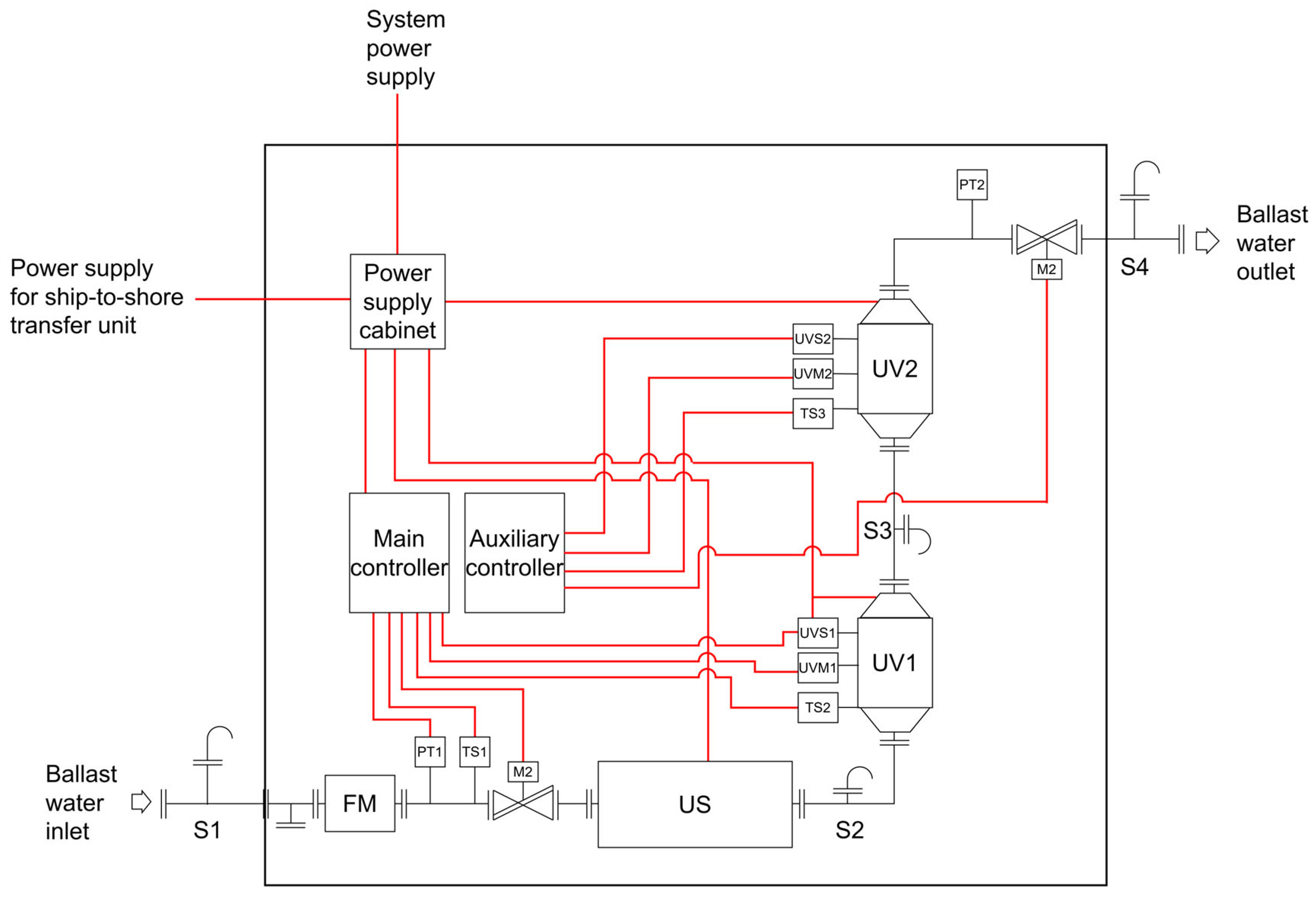
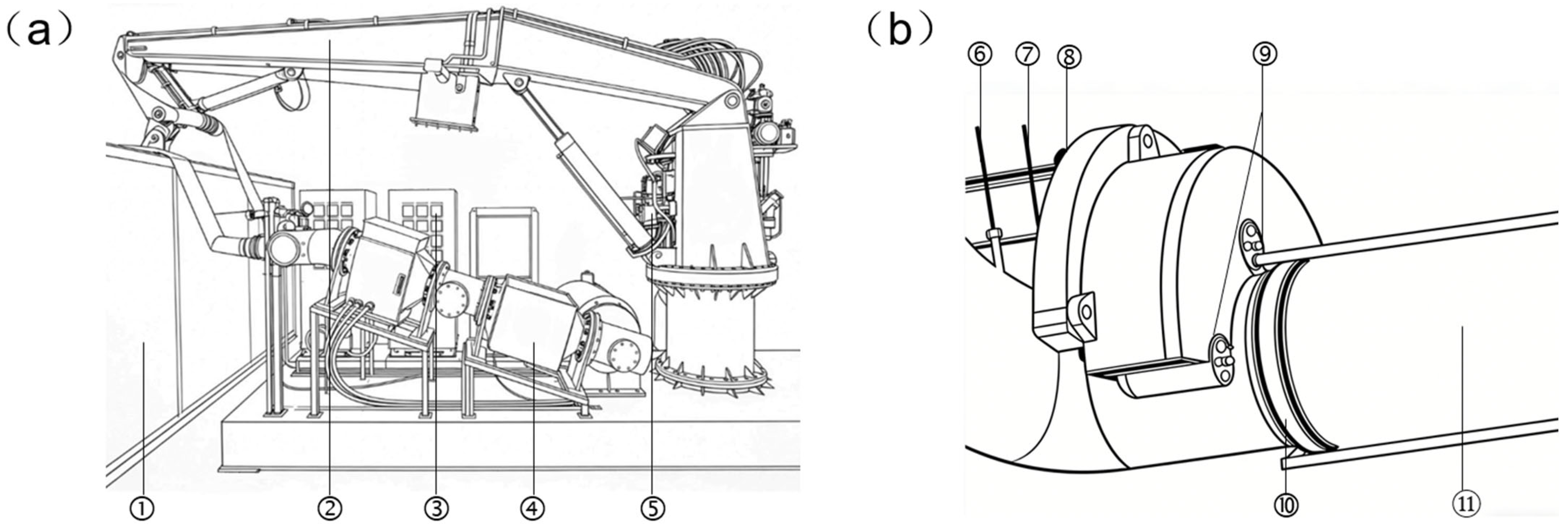
2.1. Design and Composition of the Ship-to-Shore Emergency Response System
2.2. Experimental Setup
2.2.1. Preparation of the Test Platform and Experimental Water
2.2.2. Sample Collection
2.2.3. Sample Analysis
2.2.4. Statistical Analysis
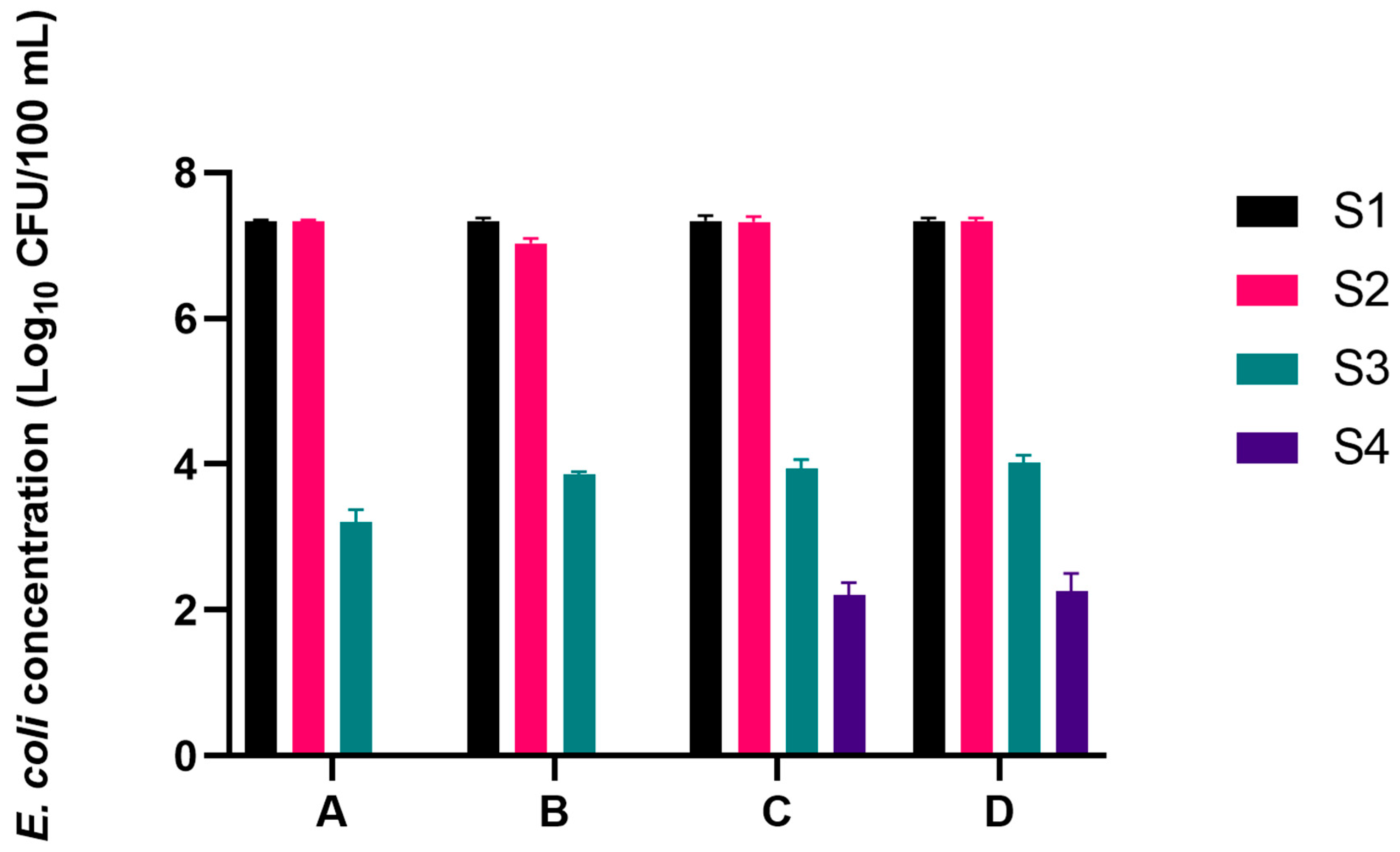
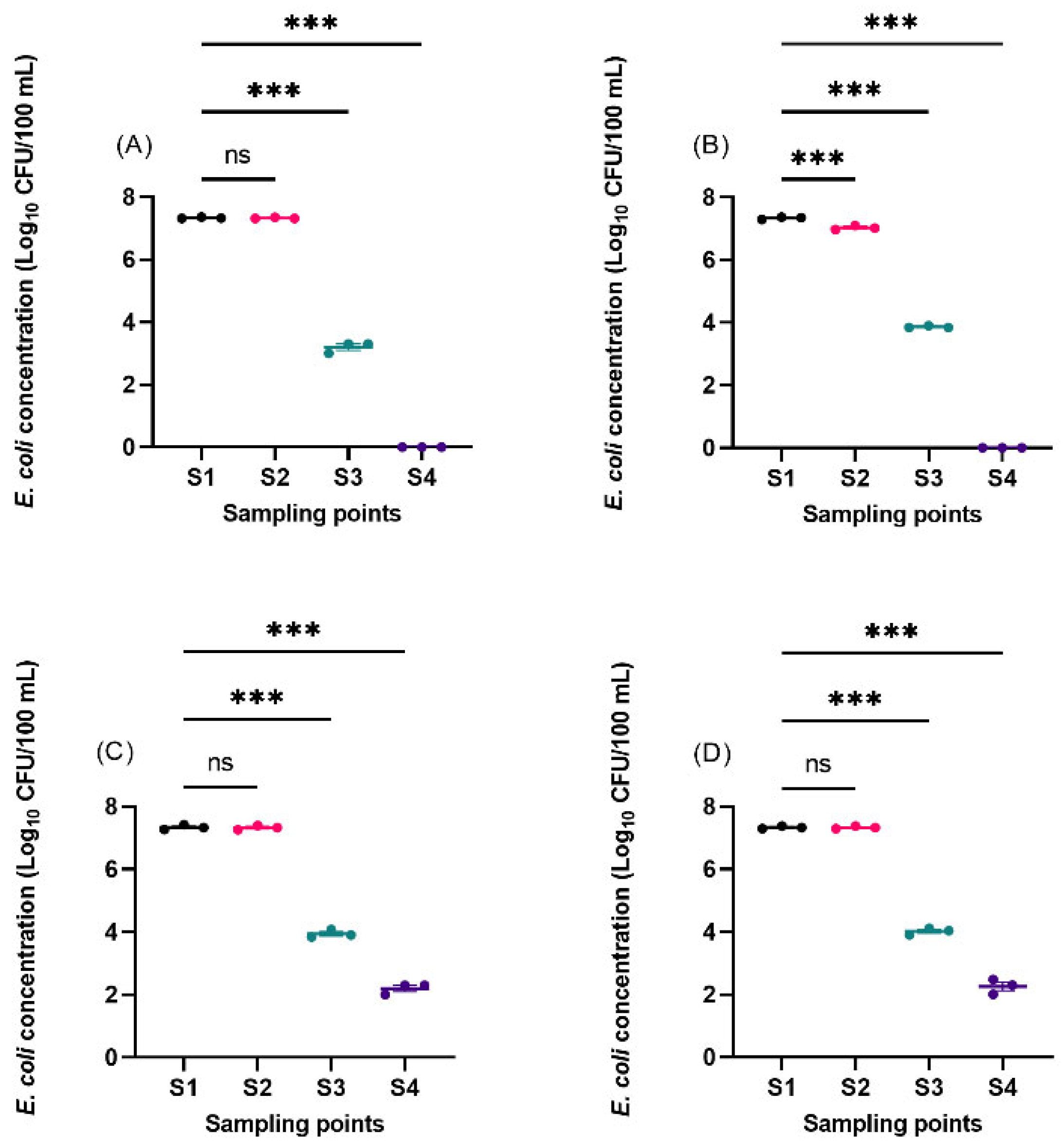
3. Results
4. Discussion
5. Conclusions
Author Contributions
Funding
Data Availability Statement
Conflicts of Interest
References
- Outinen, O.; Bailey, S.A.; Casas-Monroy, O.; Delacroix, S.; Gorgula, S.; Griniene, E.; Kakkonen, J.E.; Srebaliene, G. Biological Testing of Ships’ Ballast Water Indicates Challenges for the Implementation of the Ballast Water Management Convention. Front. Mar. Sci. 2024, 11, 1334286. [Google Scholar] [CrossRef]
- Stankiewicz, M.; Ljungberg, R.; Helavuori, M. Ballast Water Management in the Baltic Sea. WMU J. Marit. Aff. 2010, 9, 201–211. [Google Scholar] [CrossRef]
- Bailey, S.A. An Overview of Thirty Years of Research on Ballast Water as a Vector for Aquatic Invasive Species to Freshwater and Marine Environments. Aquat. Ecosyst. Health Manag. 2015, 18, 261–268. [Google Scholar] [CrossRef]
- Gollasch, S.; David, M.; Voigt, M.; Dragsund, E.; Hewitt, C.; Fukuyo, Y. Critical Review of the IMO International Convention on the Management of Ships’ Ballast Water and Sediments. Harmful Algae 2007, 6, 585–600. [Google Scholar] [CrossRef]
- Hess-Erga, O.-K.; Moreno-Andrés, J.; Enger, Ø.; Vadstein, O. Microorganisms in Ballast Water: Disinfection, Community Dynamics, and Implications for Management. Sci. Total Environ. 2019, 657, 704–716. [Google Scholar] [CrossRef] [PubMed]
- Brinkmeyer, R. Diversity of Bacteria in Ships Ballast Water as Revealed by next Generation DNA Sequencing. Mar. Pollut. Bull. 2016, 107, 277–285. [Google Scholar] [CrossRef]
- Rey, A.; Basurko, O.C.; Rodríguez-Ezpeleta, N. The Challenges and Promises of Genetic Approaches for Ballast Water Management. J. Sea Res. 2018, 133, 134–145. [Google Scholar] [CrossRef]
- Carney, K.J.; Basurko, O.C.; Pazouki, K.; Marsham, S.; Delany, J.E.; Desai, D.V.; Anil, A.C.; Mesbahi, E. Difficulties in Obtaining Representative Samples for Compliance with the Ballast Water Management Convention. Mar. Pollut. Bull. 2013, 68, 99–105. [Google Scholar] [CrossRef]
- McCarthy, S.A.; Khambaty, F.M. International Dissemination of Epidemic Vibrio Cholerae by Cargo Ship Ballast and Other Nonpotable Waters. Appl. Environ. Microbiol. 1994, 60, 2597–2601. [Google Scholar] [CrossRef]
- Annamalai, S.; Futalan, C.C.; Ahn, Y. Electrochemical Disinfection of Simulated Ballast Water Using RuO2-TiO2/Ti Electrode. Int. J. Environ. Res. Public Health 2022, 19, 1835. [Google Scholar] [CrossRef]
- Lv, B.; Zhu, G.; Tian, W.; Guo, C.; Lu, X.; Han, Y.; An, T.; Cui, Y.; Jiang, T. The Prevalence of Potential Pathogens in Ballast Water and Sediments of Oceangoing Vessels and Implications for Management. Environ. Res. 2023, 218, 114990. [Google Scholar] [CrossRef]
- Nie, A.; Wan, Z.; Shi, Z.; Wang, Z. Cost-Benefit Analysis of Ballast Water Treatment for Three Major Port Clusters in China: Evaluation of Different Scenario Strategies. Front. Mar. Sci. 2023, 10, 1174550. [Google Scholar] [CrossRef]
- Jang, P.-G.; Hyun, B.; Shin, K. Ballast Water Treatment Performance Evaluation under Real Changing Conditions. J. Mar. Sci. Eng. 2020, 8, 817. [Google Scholar] [CrossRef]
- Pereira, N.N.; Brinati, H.L.; Pereira Antunes, R. Onshore Reception Facilities for Ballast Water. Ship Sci. Technol. 2017, 10, 41–57. [Google Scholar] [CrossRef][Green Version]
- Wang, Z.; Corbett, J. Scenario-Based Cost-Effectiveness Analysis of Ballast Water Treatment Strategies. Manag. Biol. Invasions 2021, 12, 108–124. [Google Scholar] [CrossRef]
- Ishola, A.; Kontovas, C.A. Managing Ship’s Ballast Water: A Feasibility Assessment of Mobile Port-Based Treatment. Sustainability 2022, 14, 14824. [Google Scholar] [CrossRef]
- Zhang, B.; Zhang, L. Research on Application of Ballast Water Port Reception Facility. J. Shanghai Ocean. Univ. 2018, 27, 401–406. (In Chinese) [Google Scholar] [CrossRef]
- Duan, D.; Xu, F.; Wang, T.; Guo, Y.; Fu, H. The Effect of Filtration and Electrolysis on Ballast Water Treatment. Ocean Eng. 2023, 268, 113301. [Google Scholar] [CrossRef]
- Xiao, J.; Xu, Y.; Hu, L.; Wu, H. Evaluating the Treatment Performance of Filtration & Real-Time UV Irradiation Processes for Bacteria and Pathogens in Fresh Ballast Water. Reg. Stud. Mar. Sci. 2023, 63, 102971. [Google Scholar] [CrossRef]
- Xiong, W.; Zhan, X.; Yang, J.; Shi, Y.; Li, X. Enhanced Advanced Oxidation Treatment through the Synergy of Chloride Ion Activation and Electro-Fenton Process. Sep. Purif. Technol. 2024, 342, 126998. [Google Scholar] [CrossRef]
- Zhu, Y.; Ling, Y.; Peng, Z.; Zhang, N. Formation of Emerging Iodinated Disinfection By-Products during Ballast Water Treatment Based on Ozonation Processes. Sci. Total Environ. 2020, 743, 140805. [Google Scholar] [CrossRef]
- Guo, J.; Li, X.; Tang, Y.; Zhu, Z.; Sun, H.; Shi, Y.; Li, X.; Xiong, W. Adsorbed-Proton Promoted Oxygen Reduction to Hydrogen Peroxide for Enhanced Marine Ballast Water Treatment. Sep. Purif. Technol. 2025, 364, 132571. [Google Scholar] [CrossRef]
- Kiejza, D.; Kotowska, U.; Polińska, W.; Karpińska, J. Peracids—New Oxidants in Advanced Oxidation Processes: The Use of Peracetic Acid, Peroxymonosulfate, and Persulfate Salts in the Removal of Organic Micropollutants of Emerging Concern—A Review. Sci. Total Environ. 2021, 790, 148195. [Google Scholar] [CrossRef]
- Siebenmorgen, C.; Poortinga, A.; van Rijn, P. Sono-Processes: Emerging Systems and Their Applicability within the (Bio-)Medical Field. Ultrason. Sonochem. 2023, 100, 106630. [Google Scholar] [CrossRef]
- Balaji, R.; Yaakob, O.; Koh, K.K. A Review of Developments in Ballast Water Management. Environ. Rev. 2014, 22, 298–310. [Google Scholar] [CrossRef]
- Hwang, C.; Jung, S.; Hwang, Y.; Cho, B. Lethal Effects of Pulsed High-Voltage Discharge on Marine Plankton and Escherichia coli. Water Air Soil Pollut. 2010, 213, 161–169. [Google Scholar] [CrossRef]
- Costa, C.F.M.; Monteiro Neto, V.; de Carvalho Santos, B.R.; Costa, B.R.R.; Azevedo, A.; Serra, J.L.; Mendes, H.B.R.; Nascimento, A.R.; Mendes, M.B.P.; Kuppinger, O. Enterobacteria Identification and Detection of Diarrheagenic Escherichia coli in a Port Complex. Braz. J. Microbiol. 2014, 45, 945–952. [Google Scholar] [CrossRef]
- International Maritime Organization. MEPC.153(55): Guidelines for Ballast Water Reception Facilities (G5); IMO: London, UK, 2006. [Google Scholar]
- Zhang, K.; Chu, Q.; Liu, L.; Jia, J. Feasibility Study on Shore-Based Treatment Technology of Ship’s Ballast. IOP Conf. Ser. Earth Environ. Sci. 2021, 621, 012160. [Google Scholar] [CrossRef]
- Pereira, N.N.; Brinati, H.L. Onshore Ballast Water Treatment: A Viable Option for Major Ports. Mar. Pollut. Bull. 2012, 64, 2296–2304. [Google Scholar] [CrossRef]
- Kontovas, C.A. The Market and Economics of Mobile Port-Based Ballast Water Treatment Solutions. In Proceedings of the IAME 2019 Conference, Athens, Greece, 25–28 June 2019. [Google Scholar]
- Simeonova, A.; Kralev, P. Onshore Ballast Water Management Systems: National Perspectives. Annu. J. Tech. Univ. Varna 2023, 7, 1–11. [Google Scholar] [CrossRef]
- Cheng, L.; Wei, X.; Gao, A.; Zhou, L.; Shi, X.; Zhou, X.; Bi, X.; Yang, T.; Huang, S. Performance and Mechanism of Sequential UV-NaClO Disinfection: Inactivation and Reactivation of Antibiotic-Resistant Bacteria, Disinfection Byproduct Formation and Microbial Community Variation. J. Water Process Eng. 2024, 58, 104824. [Google Scholar] [CrossRef]
- Maglić, L.; Zec, D.; Frančić, V. Effectiveness of a Barge-Based Ballast Water Treatment System for Multi-Terminal Ports. Promet Traffic Transp. 2015, 27, 429–437. [Google Scholar] [CrossRef]
- Ren, Z.J.; Zhang, L.; Shi, Y.; Shao, J.C.; Leng, X.D.; Zhao, Y. Microorganism Removal from Ballast Water Using UV Irradiation. J. Residuals Sci. Technol. 2016, 13, 31–35. [Google Scholar] [CrossRef][Green Version]
- Waite, T.; Kazumi, J.; Lane, P.; Farmer, L.; Smith, S.; Smith, S.; Hitchcock, G.; Capo, T. Removal of Natural Populations of Marine Plankton by a Large-Scale Ballast Water Treatment System. Mar. Ecol. Prog. Ser. 2003, 258, 51–63. [Google Scholar] [CrossRef]
- Kollu, K.; Ormeci, B. Effect of Particles and Bioflocculation on Ultraviolet Disinfection of Escherichia coli. Water Res. 2012, 46, 750–760. [Google Scholar] [CrossRef]
- Liu, L.; Chu, X.; Chen, P.; Xiao, Y.; Hu, J. Effects of Water Quality on Inactivation and Repair of Microcystis viridis and Tetraselmis suecica Following Medium-Pressure UV Irradiation. Chemosphere 2016, 163, 209–216. [Google Scholar] [CrossRef]
- He, Q.; Liu, D.; Ashokkumar, M.; Ye, X.; Jin, T.Z.; Guo, M. Antibacterial Mechanism of Ultrasound against Escherichia coli: Alterations in Membrane Microstructures and Properties. Ultrason. Sonochem. 2021, 73, 105509. [Google Scholar] [CrossRef] [PubMed]
- Holm, E.R.; Stamper, D.M.; Brizzolara, R.A.; Barnes, L.; Deamer, N.; Burkholder, J.M. Sonication of Bacteria, Phytoplankton and Zooplankton: Application to Treatment of Ballast Water. Mar. Pollut. Bull. 2008, 56, 1201–1208. [Google Scholar] [CrossRef]
- Qi, Z.; Liu, C. Ultrasound Treatment Reducing the Production of VBNC Bacteria in the Process of Chlorine Disinfection: Efficiency and Mechanisms. Chem. Res. Chin. Univ. 2023, 39, 425–433. [Google Scholar] [CrossRef]
- Wong, C.; Zhou, X.; Carroll, L.; Fay, M.; Salazar, J.; Zhang, W. Transcriptomic Response of Listeria monocytogenes and Salmonella enterica Typhimurium to Power Ultrasound and Chlorine Treatments. Appl. Microbiol. 2025, 5, 119. [Google Scholar] [CrossRef]
- Wang, X.; Huang, Y.; Zhang, K.; Shi, Y.; Lu, Z.; Wang, Y. Inactivation Effect and Mechanisms of Combined Ultraviolet and Metal-Doped Nano-TiO2 on Treating Escherichia coli and Enterococci in Ballast Water. Environ. Sci. Pollut. Res. 2020, 27, 40286–40295. [Google Scholar] [CrossRef]
- Rubio, D.; Nebot, E.; Casanueva, J.F.; Pulgarin, C. Comparative Effect of Simulated Solar Light, UV, UV/H2O2 and Photo-Fenton Treatment (UV-Vis/H2O2/Fe2+,3+) in the Escherichia coli Inactivation in Artificial Seawater. Water Res. 2013, 47, 6367–6379. [Google Scholar] [CrossRef] [PubMed]
- Bai, Y.; Shi, C.; Zhou, Y.; Zhou, Y.; Zhang, H.; Chang, R.; Hu, X.; Hu, J.; Yang, C.; Peng, K.; et al. Enhanced Inactivation of Escherichia coli by Ultrasound Combined with Peracetic Acid during Water Disinfection. Chemosphere 2023, 322, 138095. [Google Scholar] [CrossRef]
- Nanayakkara, K.G.N.; Alam, A.K.M.K.; Zheng, Y.-M.; Chen, J.P. A Low-Energy Intensive Electrochemical System for the Eradication of Escherichia coli from Ballast Water: Process Development, Disinfection Chemistry, and Kinetics Modeling. Mar. Pollut. Bull. 2012, 64, 1238–1245. [Google Scholar] [CrossRef] [PubMed]
- Guilbaud, J.; Wyart, Y.; Moulin, P. Economic Viability of Treating Ballast Water of Ships by Ultrafiltration as a Function of the Process Position. J. Mar. Sci. Technol. 2018, 24, 1197–1208. [Google Scholar] [CrossRef]
- Kurniawan, S.B.; Pambudi, D.S.A.; Ahmad, M.M.; Alfanda, B.D.; Imron, M.F.; Abdullah, S.R.S. Ecological Impacts of Ballast Water Loading and Discharge: Insight into the Toxicity and Accumulation of Disinfection by-Products. Heliyon 2022, 8, e09107. [Google Scholar] [CrossRef]
- Batista, W.; Fernandes, F.; Lopes, C.; Lopes, R.; Miller, W.; Ruiz, G. Which Ballast Water Management System Will You Put Aboard? Remnant Anxieties: A Mini-Review. Environments 2017, 4, 54. [Google Scholar] [CrossRef]



| Category | Term/Symbol/Marking | Definition/Explanation |
|---|---|---|
| Abbreviation | AIS | Aquatic Invasive Species |
| Abbreviation | AOPs | Advanced Oxidation Processes |
| Abbreviation | BWMC | Ballast Water Management Convention |
| Abbreviation | BWMS | Ballast Water Management System |
| Abbreviation | COD | Chemical Oxygen Demand |
| Abbreviation | CFU | Colony Forming Units |
| Abbreviation | HAOP | Harmful Aquatic Organisms and Pathogens |
| Abbreviation | IMO | International Maritime Organization |
| Abbreviation | LOD | Limit of Detection |
| Abbreviation | LRVs | Log Reduction Values |
| Abbreviation | NTU | Nephelometric Turbidity Unit |
| Abbreviation | SD | Standard Deviation |
| Abbreviation | TOC | Total Organic Carbon |
| Abbreviation | TSS | Total Suspended Solids |
| Abbreviation | US | Ultrasound treatment |
| Abbreviation | UV | Ultraviolet treatment |
| Symbol | N0 | Initial concentration of E. coli before treatment |
| Symbol | N | Concentration of E. coli after treatment |
| Symbol | p | Probability value used for statistical significance testing |
| Marking | S1 | Sampling point before treatment |
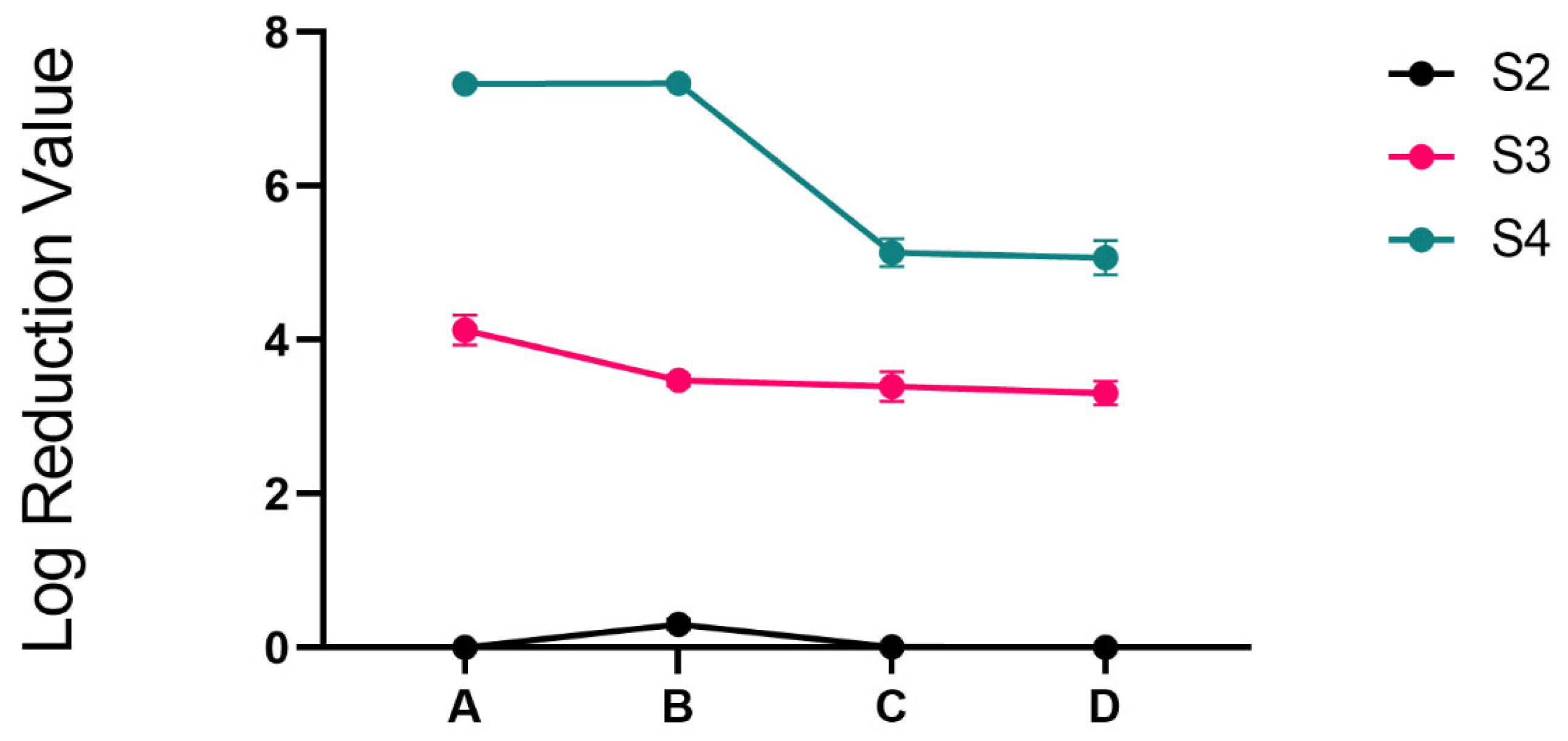
| Marking | S2 | Sampling point after Ultrasound treatment |
| Marking | S3 | Sampling point after the first UV treatment stage |
| Marking | S4 | Sampling point after the second UV treatment stage |
| Component | Label | Function |
|---|---|---|
| Ultrasound pretreatment unit | US | Ultrasound pretreatment for particle dispersion and disruption of particulate aggregates |
| UV reactor 1 | UV1 | First stage UV disinfection |
| UV reactor 2 | UV2 | Second stage UV disinfection |
| UV sensor | UVS1/UVS2 | Monitoring of UV reactor operating conditions |
| UV maintenance | UVM1/UVM2 | UV reactor inspection and maintenance |
| Flow meter | FM | Measurement of influent flow rate |
| Pressure transmitter | PT1/PT2 | Measurement of inlet and outlet pressure |
| Temperature sensor | TS1/TS2/TS3 | Measurement of water temperature at key locations |
| Motorized valve | M1/M2 | Flow regulation and isolation control |
| Sampling port | S1/S2/S3/S4 | Sampling before and after key treatment stages |
| Main controller | — | Central process control and module coordination |
| Auxiliary controller | — | Supplementary control of treatment operations |
| Power supply cabinet | — | Electrical power distribution and support |
| System | Deployment Configuration | Connection Point | Underwater Docking Capability | Treatment Principle | Additional Holding/Residence Time |
|---|---|---|---|---|---|
| InvaSave 300 [16] | Multiple deployment modes (e.g., truck, workboat, or barge) | Deck | N/A | Filtration + UV | No additional holding tank time (single-pass, in-line treatment) |
| Bawat BWTT [16] | Multiple deployment modes (e.g., truck, barge, or temporary on-deck installation) | Deck | N/A | Pasteurization (heat treatment) | No additional holding tank time (single-pass, internal thermal retention > 40 s) |
| HarborBallast | Multiple deployment modes (e.g., truck, fixed-location, or barge) | Deck | N/A | Filtration + UV | No additional holding tank time (single-pass, in-line treatment) |
| Glosten Ballast Responder [31] | Single deployment mode (temporary on-deck installation) | Deck | N/A | In-tank chemical dosing and neutralization | Yes (in-tank contact time) |
| Proposed system (this study) | Single deployment mode (truck) | Overboard discharge outlet | Yes | US pre-treatment + dual-stage UV | No additional holding tank time (single-pass, in-line treatment) |
Disclaimer/Publisher’s Note: The statements, opinions and data contained in all publications are solely those of the individual author(s) and contributor(s) and not of MDPI and/or the editor(s). MDPI and/or the editor(s) disclaim responsibility for any injury to people or property resulting from any ideas, methods, instructions or products referred to in the content. |
© 2026 by the authors. Licensee MDPI, Basel, Switzerland. This article is an open access article distributed under the terms and conditions of the Creative Commons Attribution (CC BY) license.
Share and Cite
Lu, Y.; Wang, Q.; Yuan, L.; Wu, H. A Novel Ship-to-Shore Emergency Response System for Instantaneous Microbial Inactivation in Ballast Water. J. Mar. Sci. Eng. 2026, 14, 1121. https://doi.org/10.3390/jmse14121121
Lu Y, Wang Q, Yuan L, Wu H. A Novel Ship-to-Shore Emergency Response System for Instantaneous Microbial Inactivation in Ballast Water. Journal of Marine Science and Engineering. 2026; 14(12):1121. https://doi.org/10.3390/jmse14121121
Chicago/Turabian StyleLu, Youxia, Qiong Wang, Lin Yuan, and Huixian Wu. 2026. "A Novel Ship-to-Shore Emergency Response System for Instantaneous Microbial Inactivation in Ballast Water" Journal of Marine Science and Engineering 14, no. 12: 1121. https://doi.org/10.3390/jmse14121121
APA StyleLu, Y., Wang, Q., Yuan, L., & Wu, H. (2026). A Novel Ship-to-Shore Emergency Response System for Instantaneous Microbial Inactivation in Ballast Water. Journal of Marine Science and Engineering, 14(12), 1121. https://doi.org/10.3390/jmse14121121