


Abstract
The design of coastal protection structures requires design parameters that accurately represent the hydrodynamic conditions along the coast. Currently, these input variables are based on univariate probability models, which do not consider the joint probability of water level and statistical wave parameters such as significant wave height. Bivariate probability modeling using copula models offers an alternative. Copulas can be used to describe the dependencies between water level and significant wave height and to compute joint probabilities of occurrence. First, various copulas are fitted to samples of physically consistent combinations of water level and significant wave height extracted from storm surge events along the German Baltic Sea coast of Mecklenburg-Western Pomerania. Next, the most appropriate copula model is used to compute design combinations of water level and significant wave height for selected return periods. The bivariate design parameters are compared with the univariate ones in a simplified design example for wave run-up on a dike. The validation of various models shows that the Frank copula best describes the dependence structure. The bivariate design parameters obtained for the same return periods are lower than those determined using the univariate method. The available data only allow a limited application of the copulas for engineering design in the study area. Nevertheless, copulas have the potential to replace univariate methods for determining design parameters and thus contribute to more reliable and cost-efficient coastal protection structure design.
1. Introduction
Like many countries around the world, the German federal state Mecklenburg-Western Pomerania (MP) uses a range of methodologies to protect the region against storm surges. Such methodologies include the construction of embankments, dunes, breakwaters, groins, and various longitudinal structures such as seawalls and revetments [1]. The functional and structural design of these structures is critical in ensuring their resilience to the extreme loads imposed by high water levels in combination with high waves. The hydrodynamic design parameters are determined with the aim of ensuring that the structures can withstand these extreme loads. Important design parameters are the design water level (DWL) and the design wave conditions (DWC). These parameters are instrumental in the design, sizing, and safety evaluation of coastal protection structures [2]. It is important to note that both parameters are location-dependent and represent the safety level considered necessary to protect the coastal area [3].
The sea state is described by characteristic parameters such as the significant wave height, the peak period, and the mean wave direction. The significant wave height H1/3 is derived from measurements or numerical simulations of a wave field and represents the mean of the highest one-third of waves within a given time interval, such as an hour, providing a statistical measure of the actual sea state at a given location [4]. SW denotes the peak value of the water levels observed during a storm surge event. H1/3 and SW form the basis for the derivation of the DWL and DWC.
In current practice in MP the DWL and DWC are determined using the methods of univariate extreme value statistics. The methodology involves extracting extreme values from the time series of parameters using an appropriate procedure. The parameters of suitable extreme value distributions are estimated using fitting methods. The design event is then extrapolated using the previously defined probability of occurrence. In MP, the return period (R) for the DWL and the significant wave height of the DWC is set at 200 years, which corresponds to a non-exceedance probability of p = 0.995 [3].
A disadvantage of the univariate method for determining DWL and DWC is that both parameters are determined independently of each other. However, various publications have demonstrated a moderate dependence between SW and H1/3 in several sea areas during storm surges (e.g., [5,6,7]). Recent studies for the Baltic Sea region confirm this behavior and show that the dependence is moderate and event-dependent rather than strictly simultaneous [8,9]. The univariately determined parameters DWL and DWC do not consider this dependence and may not reflect the real conditions during storm surges with sufficient accuracy [10]. This can result in suboptimal dimensioning of coastal protection structures. The failure of such structures can be attributed to either under-dimensioning, leading to functional and structural failure, or over-dimensioning, which can result in increased construction costs and reduced public acceptance.
The statistical description of the dependence between two or more variables and the computation of the joint probabilities of occurrence is facilitated by copula models. The theoretical foundation of these models is the theorem formulated by Abe Sklar [11]. This theorem enables the decomposition of each multivariate distribution into its marginal distributions and a dependence structure, expressed by the copula function C:
In the bivariate case, the left-hand side of Equation (1) describes the cumulative distribution function, while the right-hand side describes the two continuous marginal distributions of the random variables. Copulas thus offer a high degree of flexibility in modeling complex dependencies with different forms of distribution. This represents a considerable advantage over multivariate distributions (e.g., [5]).
Copula models were originally widely used in risk management, especially in financial applications (e.g., Frees & Valdez [12], Cherubini et al. [13], Kole et al. [14], Bouyé et al. [15], Fan & Patton [16]). The models are now also being used to address coastal engineering issues (e.g., Ferreira & Guedes Soares [17], de Waal & van Gelder [18], Salecker et al. [19] and Corbella et al. [20]). A framework and a practical guideline for performing a multivariate analysis of hydrodynamic parameters are presented by Salvadori et al. [21,22]. More recent studies further emphasize the importance of multivariate approaches for representing compound events and improving the reliability of design conditions (e.g., Latif & Simonovic [23], Gomze-Rave et al. [24]), particularly by demonstrating the need to account for interacting hydrodynamic drivers in compound coastal flood events.
While modeling the joint probability of SW and H1/3 is not a new concept in coastal engineering—having been applied, for example, to the Ravenna coast (Italy) by Masina et al. [25] and to Noordwijk (Netherlands) by Li et al. [26]—the German Baltic coast of MP represents a different sea area with distinct hydrodynamic conditions. The Baltic Sea is a semi-enclosed, micro-tidal basin where water levels are primarily driven by wind forcing, which may lead to different dependencies between water levels and wave heights and limits the direct transferability of existing approaches.
In this study, storm surge characteristics and significant wave heights are analyzed at six locations along this coast. This comparative analysis is essential to determine whether the DWL and DWC can be represented by a single probability model or require multiple models. A new approach for sampling is developed that extracts extreme combinations of SW and H1/3 while maintaining a stable dependence between the parameters. Based on the samples, the temporal dependence between the parameters during storm surges is investigated. Furthermore, DWL and DWC are derived using copula-based bivariate probability models and compared with univariate approaches in a conceptual design example.
By introducing a data-driven sampling strategy based on the stabilization of Kendall’s τ, this study provides a systematic and reproducible approach for representing the dependence between SW and H1/3. The results demonstrate that accounting for this dependence leads to systematically lower design values compared to conventional univariate approaches and thus has direct implications for the design of coastal protection structures.
2. Characterization of the Study Area
The Baltic Sea is an inland sea of the Atlantic Ocean, located in north-eastern Europe (see Figure 1). It is comparatively young, with an estimated age of about 8000 years. At the end of the last glacial period (Weichselian Glacial), the Scandinavian glaciers melted and filled the Baltic Sea basin with meltwater. The sea covers an area of 420,000 km2 and has a volume of 22,000 km3 [27]. Key characteristic values are summarized in Table 1.
Figure 1.
Study area along the German Baltic coast of Mecklenburg-Western Pomerania.
Table 1.
Characteristic values of the Baltic Sea.
The study area comprises the coast of MP in the south-western Baltic Sea (see Figure 1). The coastline can be divided into three main morphological types: large bay coast, equalizing coast, and Bodden-type equalizing coast. Its highly indented geomorphology results in locally varying hydrodynamic conditions, which directly influence water level and sea state. To further characterize the coastal sections, Table 2 summarizes key bathymetric parameters, including the nearshore seabed slope and the distance to the 15 m isobath, based on Dimke [28]. During storm surges, the local hydrodynamic conditions are primarily controlled by geomorphology, local water depth, and the fetch length determined by the geographical exposure of the coastline. Two main factors trigger storm surges in the Baltic Sea: elevated reference water levels along a given coastal section and strong onshore winds. In the south-western Baltic Sea, additional contributing factors include the basin filling level, seiche oscillations, wind setup, and, depending on the location, bay setup. Among these, wind setup typically has the greatest influence. In MP, large parts of the coastline are protected by dikes (218 km) and dunes (106 km) [1].
Table 2.
Bathymetric characteristics of the coastal sections [28].
3. Data and Methodology
3.1. Data Basis
The determination of hydrodynamic design parameters is based on time series of water level and significant wave height, representing the observed local sea state climate over the measurement period. These series constitute a single realization of the local sea state climate rather than all theoretically possible extreme events.
For extreme value statistical evaluations, hydrodynamic data must fulfill various criteria. According to the federal and state guidelines on hydrometry [29], the data must be free of gaps (continuity), free of anthropogenic influences (homogeneity), free of outliers (plausibility) and collected and processed in a standardized and systematic manner (consistency). Wind data are also included, as they will be used to model H1/3 via the wind-wave correlation method (WWC method) [30]. The WWC method is applied in this study primarily to extend the available wave data records and support statistical analysis, rather than to provide exact deterministic predictions of individual wave conditions.
Before the copula-based analysis, the available datasets are evaluated with respect to completeness and consistency to determine their suitability for the subsequent analyses. Both numerically generated and measured data are available for the study area. However, the recent comprehensive water level and sea state data from the CoastDat datasets [31], generated using different input data and model setups, are not consistent and therefore unsuitable for describing dependencies between water levels and significant wave heights or for computing joint probabilities of occurrence. In addition to numerical data, measurement data are also available, generally collected near the coast.
Sea state data have been collected near the coast through various measurement campaigns by the Chair of Geotechnics and Coastal Engineering at the University of Rostock (UHRO) and the State Offices for Agriculture and the Environment (StALU). Most campaigns span only a few months to a few years and are therefore not suitable for extreme value analyses. An exception is the Internal Measuring Coast Network (IMK) operated by StALU, which has continuously recorded wind, sea state, and water level data for 24 years (as of 2022) at six homogeneously distributed coastal stations with a temporal resolution of Δt = 20 min [32]. The wave parameters used in this study are provided as time-domain estimates derived from measured time series using a zero-downcrossing approach, rather than from spectral analysis. However, it is not documented whether the IMK data undergo manual or automated plausibility checks.
Additional water levels are measured by the Waterways and Shipping Offices (WSA) at 19 heterogeneously distributed locations along the Baltic coast of MP. Depending on the gauge location, these high-resolution coastal water level records (Δt = 60 min) extend back up to 60 years. While no explicit information is available on data verification, it can be assumed that plausibility checks are performed as part of the WSA’s operational duties [33].
Due to the micro-tidal conditions of the Baltic Sea, the influence of astronomical tides is very small, typically only a few centimeters (e.g., [34]), and is therefore negligible compared to meteorologically induced water level variations. Consequently, no explicit tidal correction was applied.
Wind data in Germany are officially recorded by the German Weather Service (DWD), which operates 292 stations nationwide and provides open access to data [35,36]. All stations are operated in accordance with World Meteorological Organization (WMO) regulations, and data undergo multiple manual and automated quality control procedures [37,38]. Along the Baltic Sea coast of MP, DWD records wind data at nine stations.
Within the study area, only the 24-year IMK sea state time series have sufficient temporal coverage for extreme-value analysis and for deriving the DWC. A plausibility comparison of the IMK water level and wind records against corresponding WSA and DWD data revealed long periods with significant deviations. Therefore, the WSA water level and DWD wind time series closest to the IMK locations are used instead. To ensure temporal consistency, the time series of H1/3 are extended using the WWC method based on the DWD wind data. Using this approach, the significant wave height data at all six IMK locations are extended to 38 years, resulting in longer time series suitable for extreme value statistical analysis. Figure 2 shows the coastal sections of the IMK stations used in the following analysis. Table 3 lists the corresponding WSA and DWD stations assigned to each IMK section.
Figure 2.
Locations of the IMK measuring stations, the DWD stations (wind) and the WSA gauges (water level).
Table 3.
Assignment of the WSA gauges and DWD wind stations to the IMK coastal sections.
3.2. Methodology for the Analysis of the Hydrodynamic Parameters
Once the data base has been compiled, the available hydrodynamic parameters along the coast of MP are analyzed and compared. This is necessary to decide whether a single probability model can describe the parameters at the various locations or whether multiple models are required due to the high spatial variability of SW and H1/3 along the coast. For this purpose, the spread and central tendency of water levels and significant wave heights are compared across the available coastal sections using boxplot diagrams. In addition, peak values, frequencies, and durations of storm surge events are evaluated in relation to storm surge categories to assess spatial and temporal variability.
3.3. Analysis of the Temporal Dependence Between Peak Water Level and Maximum Significant Wave Height
Many coastal protection structures are subjected to high hydrodynamic loads when the SW and the maximum significant wave height (H1/3max) occur simultaneously. Therefore, understanding their temporal relationship is essential. Three possible temporal sequences can be distinguished: SW occurs before H1/3max, both maxima occur simultaneously, and SW occurs after H1/3max. The three states are shown in Figure 3.
Figure 3.
The three possible states in the temporal sequence of SW and H1/3max: SW occurs before H1/3max (a), SW and H1/3max occur simultaneously (b) or SW occurs after H1/3max (c).
To ensure comparability of the temporal dependence of both parameters across the coastal sections, the times of SW and H1/3max are expressed relative to the length of a storm surge event:
Here, trel is the relative time (dimensionless), t(X) denotes the time of occurrence of parameter X, and ttotal is the total duration of the storm surge event. The variable X represents either SW or H1/3max. If, for example, a storm surge with a total length of 10 h reaches its peak after 6 h, trel(SW) = 0.6. In this way, it is possible to determine the time sequence and the time interval between the maximum SW and H1/3max in relation to the total duration of an event. To quantify the temporal difference between the occurrence of both maxima, the parameter
is introduced. The value of d ranges from −1 to 1. Positive values indicate that SW occurs before H1/3max, negative values indicate that it occurs afterwards, and d = 0 denotes simultaneous occurrence (see Table 4). The further d is from 0, the greater the relative time interval between SW and H1/3max. Based on this parameter, the temporal relationship between SW and H1/3max within the storm surge events along the Baltic Sea coast of MP is investigated.
Table 4.
Possible states of the factor to describe the temporal sequence and the temporal distance of SW and H1/3max.
3.4. Development of an Approach to Determine the Joint Probabilities of Occurrence of SW and H1/3
In the design, dimensioning, and safety assessment of coastal protection structures, it is essential to determine the magnitude of extreme events corresponding to specific return periods (e.g., 200 years). These aspects can be analyzed using both univariate and bivariate probability models. While univariate models treat each variable independently, bivariate models based on copulas account for the dependence between SW and H1/3. The univariate marginal distributions form the basis for the copula models, which link these distributions to represent the joint probability structure. Therefore, as a first step, the parameters of several univariate distribution functions are fitted to the samples of SW and H1/3 along the coast of MP.
3.4.1. Bivariate Probability Analysis
The steps involved in univariate extreme value analysis are well established and extensively documented in the literature (e.g., Coles [39], Dutfoy [40], Gomes [41]). Parameters of the selected extreme value distributions are estimated using the maximum likelihood method (ML method). The goodness of fit can be assessed through the Kolmogorov–Smirnov (KS test), the root mean square error (RMSE) between empirical and fitted distributions, and the Akaike Information Criterion (AIC).
Copulas are commonly categorized according to their mathematical construction, which determines the types of dependence they can represent. Well-known classes are the elliptical copulas, the extreme value copulas, the Archimedean copulas and vine copulas. In multivariate probability analysis of hydrodynamic variables, Archimedean copulas, first proposed by Kimberling [42], are of particular interest. Archimedean copulas are specifically designed for bivariate dependence structures and offer a wide range of models that can map different types of dependencies, including asymmetry and tail dependence. The parameterization, interpretation, and estimation of these models are straightforward, making them particularly suitable for modeling two parameters [43]. Vine copulas, on the other hand, have been designed for high-dimensional dependence structures by combining a large number of bivariate copulas in a tree structure. However, when reduced to only two parameters, a vine copula is reduced to a single bivariate copula, so there is no advantage over a directly selected Archimedean copula. The additional complexity and flexibility of vine copulas only become apparent when there are more than two variables [44].
The adaptability results from the construction of the copulas via the so-called generator function φ. The class of suitable generator functions is large, which means that many dependence structures can be generated. In this study, the Archimedean copulas are considered for modeling the dependence between SW and H1/3.
An important step for the adaptation of copula models is the extraction of the bivariate sample. Extreme combinations of the parameters SW and H1/3 are particularly relevant for the design of coastal protection structures. A generally valid definition of extreme events is difficult to establish in coastal engineering. As in the case of breakwaters, for example, extreme events do not always lead to the greatest loads [2]. The extraction of the sample therefore depends on the underlying question and must represent the local hydrodynamic conditions in the case of the design or safety review of coastal protection structures.
Bender [45] has summarized common methods in the literature shown in Figure 4, for bivariate sampling: the componentized block maxima model according to Tawn [46], the threshold model according to Resnick [47], the point-process model [48] and the conditional extreme events according to Heffernan and Tawn [49]. The sampling methods mentioned are not suitable for this study, as they do not necessarily account for the physical and temporal coupling between SW and H1/3 and all require the specification of thresholds, which must be set subjectively. Since different coastal sections with varying hydrodynamic conditions are analyzed, a common threshold is not meaningful. Therefore, a sampling approach was developed based on the extended block maxima method of Smith [50].
Figure 4.
Sampling options for bivariate statistical analyses (according to Bender [45]) for two parameters: componentized block maxima model (a), threshold model (b), point-process model (c) and model based on conditional extreme events (d). Black points indicate all observations, while blue points indicate the observations used for the respective sampling approach.
In this approach, storm surge events are first detected, and their peak value together with the corresponding significant wave height are extracted. For each coastal section, the r largest SW–H1/3 combinations from each temporal block (1 year) are then added to the bivariate sample. To ensure a stable dependence between SW and H1/3, parameter combinations are successively added to the bivariate sample for each coastal section. Starting from the highest annual maxima of SW together with their corresponding H1/3 values, additional SW–H1/3 combinations are included step by step until the dependence measure, expressed by Kendall’s τ, stabilizes. The corresponding number of combinations added per year is denoted as r. The parameter r thus represents the number of annual extreme SW–H1/3 combinations contributing to the final sample. Kendall’s τ is used as a diagnostic tool to assess the statistical stability of the dependence structure. By allowing more than one parameter combination per block, this approach provides flexibility across coastal sections and reduces bias associated with relying on single extreme values, thereby ensuring a stable dependence structure in the resulting sample.
As with univariate distributions, various adjustment tests can be performed to identify suitable copulas. These tests can be divided into formal and graphical tests. A detailed overview of the tests can be found in Fermanian [51], Berg [52], Genest [53], and Fermanian [54], among others. The Cramér-von-Mises test (CvM test), the RMSE and the AIC are used to validate different copula models against the samples. In addition, an empirical tail dependence analysis following the approach of Frahm et al. [55] is performed to examine the strength and stability of the upper-tail dependence between SW and H1/3. This analysis quantifies whether extreme storm surge peaks are systematically associated with extreme significant wave heights.
3.4.2. Comparison of the Univariate and Bivariate Design Parameters Determined Using a Design Example
Since dikes are a common coastal protection measure in MP (Section 2), the DWL and DWC determined in the coastal sections are applied in a dike design example to assess wave run-up and to compare the results of the univariate and bivariate probability analyses. The wave run-up height (Ru2%) on dikes is defined as the distance between the DWL and the highest point of the wave run-up and is computed using the methods of the EurOtop Manual [56] as
where ξm−1,0 is the surf similarity parameter (breaker parameter or Iribarren number), γb is the influence factor for a berm, γf is the influence factor for roughness elements on a slope and γβ is the influence factor for oblique wave attack. Figure 5 shows the input parameters of the method. The aim of the design is to dimension the dike so that the wave run-up height on the seaward slope does not exceed the crest elevation.
Figure 5.
Parameters for determining the wave run-up height Ru2% according to EurOtop Manual [56].
The following assumptions are made: The dike toe and the foreshore are at mean water level. Both are covered with low-roughness material (e.g., concrete or short grass). Thus, the foreshore and seaward slope have no significant wave-damping effect. The dike has a 1:5 slope without berms. The design waves approach the dike perpendicularly.
The input values for determining the wave run-up heights must be available at the foot of the dike. The wave period used in the run-up calculation is derived from the data used in this study, based on a linear regression with significant wave height, applied separately for each coastal section. Since DWC refers to deep-water conditions, it is transformed to the location of the dike toe using the SWAN model (v40.72AB) [57]. SW does not appear explicitly in Equation (4) but is indirectly accounted for as a boundary condition in the wave transformation performed with the SWAN model. Thus, SW influences the wave characteristics at the dike toe, which serve as input for the run-up calculation. The resulting wave run-up heights are then computed for both univariate and bivariate design parameters and compared at locations along the coast of MP.
4. Results
4.1. Analysis of the Hydrodynamic Parameters
4.1.1. Water Levels
For the systematic analysis of the water levels, the statistical key figures of water levels in the coastal sections are first determined and visualized in box plot diagrams (see Figure 6). All analyses presented in this section are based on a consistent 38-year period, as described in Section 3.1. The water levels of the sections Warnemünde and Zingst as well as Varnkevitz and Göhren are evaluated together, as they are assigned the same gauge (see Table 3).
Figure 6.
Boxplot representation of the water-level distributions at the WSA gauges in the investigated coastal sections. The boxplots show the median, interquartile range, whiskers, and outliers. The numbers next to the boxes indicate the median water levels.
The statistical key figures of the water levels along the Baltic Sea coast of MP are presented in Figure 6 in order from west to east. Boltenhagen is the westernmost and Koserow the easternmost section of the coast (see Figure 2). The median water levels rise from west to east. In Boltenhagen, the median is 0.03 m above NHN and increases eastward. NHN (Normalhöhennull) is the official German vertical reference system for elevations above mean sea level. The highest median, of 0.1 m above NHN, occurs in Koserow. This gradient is primarily influenced by dominant westerly winds, which push water eastward (see Section 3), but is also affected by geomorphological conditions and coastal configuration.
A contrary trend can be identified for the extreme water levels. During the measurement period, the highest water levels were measured in Boltenhagen at up to 2 m above NHN. In comparison, lower peak values were measured in the Varnkevitz/Göhren and Koserow sections, which are around 1.5 m above NHN. The variability of the extreme water levels can be explained by the interaction of geomorphological factors [28], in addition to the influences on storm surge development mentioned in Section 2. The most important geomorphological factors include the slope of the seabed, the shape and exposure of the coast and the fetch length.
StALU and other authorities classify storm surges according to their peak water level. Table 5 shows the StALU classification of storm surges. Figure 7 shows the frequency analysis of elevated water levels and storm surges in the coastal sections investigated. The number of storm surge events is lowest in the Varnkevitz/Göhren section due to its island location and the absence of a significant wind setup effect in bays. Elevated water levels occur with similar frequency in the other sections. Light storm surges occur most frequently in the Boltenhagen and Warnemünde/Zingst sections, while medium storm surges are mainly observed in Boltenhagen and Koserow. The variability can be attributed to the interaction of geomorphological factors and meteorological conditions.
Table 5.
Classification of storm surges [1].
Figure 7.
Illustration of the absolute frequencies of elevated water levels (a) and storm surges in the coastal sections (b).
The mean storm surge duration shown in Figure 8 indicates that surges in the western sections are generally shorter than those in the eastern sections. In bay-like sections, such as Boltenhagen, wind setup is the dominant factor controlling extreme water levels, and the same may apply to Warnemünde during prolonged storms. In contrast, wind setup is less dominant in the eastern sections, where basin filling and seiche oscillations, which have greater inertia, are likely to contribute to the longer observed surge durations.
Figure 8.
Mean duration of storm surges in the coastal sections, grouped by storm surge category.
4.1.2. Significant Wave Heights
After analyzing the water levels in the coastal sections, H1/3 values are now examined, which were modeled using the WWC method (see Section 3.1). Figure 9 shows that the lowest median of H1/3 was modeled in the Boltenhagen section. This section has a low inclination of the seabed, which means that comparatively less energy is transported into the coastal area by waves [28]. The median H1/3 values in the Warnemünde, Zingst, Göhren and Koserow sections are comparable—they range between 0.1 m and 0.17 m. In Varnkevitz, the median is higher at 0.27 m, which suggests that the waves here are comparatively higher on average. The extreme H1/3 values vary between the sections. The highest H1/3 is modeled in Boltenhagen at approx. 2 m. In Warnemünde, Varnkevitz and Koserow, the highest H1/3 values reach a height of 3 m to 4 m. In the Göhren section, the highest H1/3 is modeled at approx. 5 m.
Figure 9.
Boxplot representation of the H1/3 distributions at the IMK stations in the investigated coastal sections. The boxplots show the median, interquartile range, whiskers, and outliers. The numbers next to the boxes indicate the median H1/3.
Figure 10 summarizes and compares the statistical metrics of investigated hydrodynamic parameters in the coastal sections: mean SW, mean H1/3 at SW, mean duration, and frequency of storm surge events. The coordinates of the points correspond to the mean SW above the 0.9 quantile (x-axis) and the corresponding mean H1/3 (y-axis). The frequency of storm surge events is represented by the diameter of the inner points, while the diameter of the outer circles represents the mean duration. The results clearly show that the hydrodynamic parameters show considerable spatial variation along the coast, indicating that DWL and DWC cannot be represented by a single model, but require separate models for each coastal section.
Figure 10.
Each point represents the mean peak water level SW above the 0.9 quantile (x-axis) and the corresponding mean significant wave height H1/3 (y-axis). The diameter of the inner circle indicates the frequency of storm surge events, while the diameter of the outer circle denotes the mean event duration.
4.2. Analysis of the Temporal Dependence of Peak Value and Maximum Significant Wave Height
Figure 11 shows the relationship between SW and the factor d (see Table 4). Blue dots indicate a positive factor d, yellow dots a factor d equal to zero and orange dots a negative factor d. The sections Boltenhagen, Warnemünde, Zingst and Varnkevitz show similar characteristics. Only in 18% to 21% of cases does SW reach its maximum before H1/3max. SW and H1/3max rarely occur simultaneously, only in 4% to 8% of cases.
Figure 11.
Illustration of the temporal sequence of the peak values SW and the maximum wave heights H1/3max. If t(SW) is before t(H1/3max), d > 0; if t(SW) and t(H1/3max) occur at the same time, d = 0. If t(SW) is after t(H1/3max), d < 0.
In most cases (>70%), H1/3max occurs before SW. In the sections with an east-facing coastline (Göhren and Koserow), the relative proportion of events in which H1/3max occurs after SW is higher than in the other coastal sections, at 38% and 35%, respectively. Simultaneous occurrence of the maxima is also rare in these sections.
Figure 11 also shows that the positive and negative factors approach 0 as the peak value increases. This indicates that with increasing SW, the relative time intervals between the two maxima become smaller, while H1/3max still tends to occur before SW in most cases. Events with d = 0 occur nearly uniformly across all peak values. At low SW, the time dependence between the maxima is comparatively low. This can be explained by the different factors influencing the development of storm surges. While the waves are mainly generated by the wind, the seiche oscillations and the base filling level, among other things, influence the formation of storm surges (see Section 2).
4.3. Determination of the Univariate and Bivariate Parameters
4.3.1. Sampling Method
To identify a suitable sampling range that ensures stable dependencies between SW and the corresponding H1/3, the samples were generated using the sampling approach described in Section 3.4.1, applying different values of r annual maxima per year. Figure 12 shows the variation of Kendall’s τ as a function of r for the six coastal sections. At low r-values (1–6), Kendall’s τ fluctuates considerably, indicating unstable dependencies due to limited sample sizes and inconsistent event representation. With increasing r, the correlations gradually converge. To reduce subjectivity in the selection of r, the stability of the dependence structure was assessed based on the change in Kendall’s τ between consecutive values, defined as
Figure 12.
Determination of r for defining the bivariate sample. The dependence between SW and H1/3, expressed by Kendall’s τ, is unstable for small r and becomes stable from about r ≥ 7 onward.
Stability was assumed when the maximum change across all coastal sections remained consistently below a threshold of ε = 0.04 for at least two consecutive values of r.
It should be noted that the choice of the threshold ε is to some extent subjective. However, the selected value is consistent with the observed magnitude of Δτ (≈ 0.02–0.03 in the stable range) and ensures that the stabilization of the dependence structure is identified without being overly sensitive to minor fluctuations. The results show a reduction in Δτ up to r ≈ 7, after which the changes remain small (Δτ ≈ 0.02–0.03), indicating that the dependence structure has reached an approximately stable plateau. Therefore, r = 7 was selected as the smallest value at which the dependence can be considered stable. This interpretation is also supported by the visual assessment of Figure 12, where the curves clearly flatten from r ≈ 7 onward.
Based on this selection, for each year, the seven highest SW values together with their corresponding H1/3 were included in the bivariate sample, ensuring that the resulting dataset provides a balance between statistical robustness and the preservation of physically meaningful SW–H1/3 combinations. The samples for the coastal sections are shown in Figure 13. Events with SW < 0.5 m above NHN were excluded from the dataset, as they do not represent extreme events with high load potential for coastal protection structures. The analysis is based on absolute water levels rather than isolated storm surge components. Consequently, negative anomalies (e.g., related to inverse barometer effects) are not represented in the selected extreme event sample. Additionally, physically implausible parameter combinations were removed.
Figure 13.
Bivariate samples of SW and H1/3 for the six IMK coastal sections derived using r = 7.
Although Figure 13 indicates an overall increasing trend between water level and significant wave height, the relationship is not strictly linear and shows considerable scatter. The dependence is only moderate (τ ≈ 0.23–0.34), and the variability of the significant wave height increases with higher water levels. For design applications, the joint probability of extreme events is more relevant than the average trend, which motivates the use of copula-based approaches.
4.3.2. Determination of the Univariate Marginal Distributions
To identify suitable marginal distributions for the stochastic modeling of SW and H1/3, a univariate goodness-of-fit analysis was performed. Several candidate distributions were assessed—including Normal, Weibull, Generalized Extreme Value (GEV), Logistic, and Lognormal distributions—based on the KS test, the RMSE, and the AIC. Figure 14 presents the results for SW. Both Lognormal and GEV distributions demonstrated the best overall performance. The KS test indicates that the Lognormal distribution yields p-values above the significance level α = 0.05 for most coastal sections, suggesting no significant deviation from the empirical data.
Figure 14.
Statistical goodness-of-fit evaluation for SW using KS test, RMSE, and AIC across all coastal sections (only distributions that passed the KS test are shown).
This finding is supported by low RMSE and AIC values, which confirm that the Lognormal model provides a consistent representation of the upper tail and extreme water levels. The GEV distribution performs comparably but shows slightly higher residuals in some cases, while the Logistic distribution tends to underestimate high water levels. Consequently, the Lognormal distribution was selected as the marginal model for SW. The estimated parameters of the Lognormal distribution for all coastal sections are summarized in Table 6.
Table 6.
Estimated parameters for adjusting the LogN distribution to the water levels in the coastal sections.
Figure 15 shows the results for H1/3. Among the tested models, the GEV distribution exhibits the most consistent behavior across all coastal sections, with the highest KS p-values and the lowest RMSE and AIC values. These results indicate that the GEV distribution adequately represents the statistical characteristics of H1/3, particularly in the upper range of the data. The Normal and Logistic distributions, in contrast, underestimate the tail behavior, while the Weibull distribution shows higher deviations for extreme events. Therefore, the GEV distribution was selected as the marginal model for H1/3. The corresponding parameter estimates for all coastal sections are provided in Table 7.
Figure 15.
Statistical goodness-of-fit evaluation for H1/3 using KS test, RMSE, and AIC across all coastal sections (only distributions that passed the KS test are shown).
Table 7.
Estimated parameters for adjusting the GEV distribution to the wave heights in the coastal sections.
It should be noted that Figure 14 and Figure 15 only display the probability distributions that successfully passed the KS test (p > 0.05) for each coastal section. Distributions that did not meet this criterion were excluded from graphical representation to ensure that only statistically valid models are compared. Overall, the combination of a Lognormal distribution for SW and a GEV distribution for H1/3 provides a statistically consistent and physically meaningful description of the univariate extremes. These marginals form the basis for the subsequent bivariate dependence modeling described in Section 4.3.3.
4.3.3. Determination of the Bivariate Joint Distributions
To describe the dependence structure between SW and H1/3, several Archimedean copulas were tested, including Clayton, Frank, Gumbel, and Normal copulas. The copula parameters are estimated using the ML method. Figure 16 shows the resulting goodness-of-fit evaluation for all coastal sections based on the CvM test, the RMSE, and the AIC.
Figure 16.
Evaluation of the bivariate model performance for all coastal sections using the CvM test, RMSE, and AIC for different copulas. Higher CvM test p-values and lower RMSE and AIC values indicate better model performance and a more accurate representation of the dependence structure between SW and H1/3.
Among the tested families, the Frank copula provides the most consistent and statistically robust fit across all coastal sections. Across individual coastal sections, differences in copula performance are relatively small, indicating similar dependence structures between SW and H1/3 along the coast. It shows the lowest RMSE values and the highest CvM test p-values in most cases, indicating that the Frank copula adequately captures the central dependence structure between SW and H1/3 without overemphasizing either tail. The Gumbel copula performs comparably but tends to overrepresent upper-tail dependence, while the Clayton copula overestimates the lower-tail behavior. The Normal copula generally shows weaker performance, particularly for extreme events. The Göhren section shows reduced fit performance, with higher RMSE values and lower p-values, likely caused by increased local variability or data-related uncertainties. Overall, the Frank copula was selected as the most suitable dependence model for the subsequent bivariate extreme value analysis, as it provides a statistically consistent and physically plausible representation of the dependence between SW and H1/3. The estimated copula parameters for all sections are summarized in Table 8.
Table 8.
Estimated parameters for the Clayton, Frank, Gumbel, and Normal copulas in the coastal sections.
To evaluate the co-occurrence of extreme SW and H1/3, the empirical upper-tail dependence λU(u) was estimated following the approach of Frahm et al. [55]. This method quantifies the conditional probability that one variable exceeds a high quantile given that the other exceeds the same quantile, thereby measuring the strength of dependence between simultaneous extremes. The analysis was applied to the observed bivariate samples of SW and H1/3 from all coastal sections (see Figure 13). Figure 17 presents the variation of λU as a function of the quantile threshold u, illustrating how the strength of dependence evolves toward the upper tail of the joint distribution.
Figure 17.
Empirical estimation of the upper-tail dependence λU(u) between SW and H1/3 for all coastal sections, following the approach of Frahm et al. [55]. The curves illustrate the evolution of dependence strength as a function of the quantile threshold u.
The empirical analysis of the upper-tail dependence λU(u) shows moderate positive dependence between SW and H1/3 across all coastal sections, with values mostly between 0.2 and 0.5. The Boltenhagen section exhibits the strongest and most stable dependence, whereas the eastern sections (Göhren, Koserow) show slightly weaker and more variable dependence. For u > 0.98, λU becomes unstable due to limited sample sizes.
An infinite number of parameter combinations can be generated using the parameterized copula model, for which either the non-exceedance probability or the corresponding return period can be determined. This allows the identification of all combinations SW and H1/3 associated with a given probability of occurrence. A graphical representation of these combinations is provided by isolines, which connect all pairs of SW and H1/3 values corresponding to the same return period. Figure 18 illustrates the isolines for R = 5 a, R = 25 a, and R = 100 a for all coastal sections. Each isoline theoretically contains an infinite number of possible parameter combinations, and there is no inherent criterion for selecting a single design event along the curve. Therefore, a direct comparison of events between different coastal sections is challenging. To support a consistent interpretation, the black points (PmaxD) indicate the locations of maximum probability density along each isoline, following the approach of Salvadori et al. [58].
Figure 18.
Isolines of equal return periods (R = 5 a, R = 25 a, and R = 100 a) for the joint distribution of SW and H1/3 derived from the Frank copula.
The shape of the isolines in Figure 18 further supports the findings of the dependence analysis. In all coastal sections, the isolines exhibit a pronounced curvature toward the upper right corner, indicating a positive dependence between SW and H1/3. The curvature is strongest in Boltenhagen, reflecting a stable coupling between high SW and H1/3. In the central sections (Warnemünde and Zingst), the dependence is moderately expressed, while in the eastern sections (Göhren and Koserow) the isolines flatten slightly, suggesting weaker joint extremes and a higher degree of variability. These spatial patterns correspond well with the tail-dependence results shown in Figure 17.
With the adapted univariate and bivariate probability models, it is now possible to compute and compare SW and H1/3 for defined R in each coastal section. The red lines in Figure 19 represent the univariate results, while the black lines correspond to the bivariate combinations derived from the copula models. Water levels are indicated by dots and wave heights by squares. The curves of the univariate and bivariate determined SW show only minor differences in magnitude, and from R = 50 a onward, both curves progress almost linearly. In all sections, the univariate determined SW values are higher than the corresponding bivariate ones. In contrast, the univariate determined H1/3 show both linear and exponential tendencies across the coastal sections. In Boltenhagen, the increase in H1/3 remains almost linear, while in Göhren a pronounced exponential rise is observed. At the points PmaxD, the H1/3 values exhibit no significant increase beyond R = 50 a, indicating an approximately linear progression. The deviations between univariate and bivariate determined H1/3 are considerably larger than those of the water levels.
Figure 19.
Comparison of univariate (red) and bivariate (black) design values of SW and H1/3 for different return periods (R) across all coastal sections.
Accounting for the dependencies between SW and H1/3 using the copula models leads to systematically lower parameter magnitudes for the same return periods across all coastal sections. This suggests that univariate analyses tend to overestimate design values, while the bivariate approach provides more realistic estimates by incorporating the physical dependence between SW and H1/3.
Section 4 presented the results of the data analysis, univariate and bivariate probabilistic modeling of SW and H1/3 along the Baltic Sea coast of MP. The findings revealed distinct spatial variations in the hydrodynamic parameters and a consistent positive dependence between SW and H1/3 across all coastal sections. Univariate analyses identified the Lognormal distribution as the most suitable model for SW and the GEV distribution for H1/3. The bivariate dependence was successfully represented by the Frank copula, which captured the moderate upper-tail dependence and provided statistically robust fits. The comparison of univariate and bivariate design values demonstrated that neglecting the dependence between SW and H1/3 leads to an overestimation of design parameters, particularly for the wave height.
Overall, the combined use of univariate and copula-based bivariate models provided a reliable and physically consistent framework for determining joint design parameters. These results form the basis for the subsequent design example in Section 5, where the derived design parameters are applied to calculate the wave run-up on coastal dikes.
5. Design Example for Determining the Wave Run-Up on Dikes
For simplification and comparability, the influencing factors γb, γf and γβ are set to 1 in all sections when determining the wave run-up heights. As a result, berms, surface roughness, and wave direction have no influence on the computed run-up height. This simplification is deliberately chosen to isolate and demonstrate the effect of univariate and bivariate design parameters on wave run-up and crest elevation. It should be noted that wave run-up depends not only on hydrodynamic conditions (water level, wave height, and wave direction) but also on dike geometry, vegetation, and foreshore characteristics.
First, the univariate design parameters determined for R = 10 a, 25 a, 50 a, 100 a, 150 a and 200 a are transformed to the location of the dike toe using the numerical sea-state model SWAN [57], and the corresponding wave run-up heights are computed. When applying the bivariate design parameters, the procedure must be modified, as it is initially unknown which combination of water level and wave height for a given R produces the maximum run-up. Therefore, the relevant parameters are first modeled at the dike toe for a sufficiently large number of combinations of R within each coastal section. The wave run-up height is then computed for each combination, and in the bivariate case, the combination producing the highest run-up for the respective R is selected for comparison. Figure 20 compares the resulting univariate and bivariate wave run-up heights.
Figure 20.
Comparison of the univariate (blue) and bivariate (red) determined wave run-up heights for different return periods.
The comparison shows that the run-up heights are generally higher in the univariate case than in the bivariate case. This is attributed to the DWLs, which are higher when derived from univariate probability analysis. Higher water levels result in increased wave energy reaching the dike, leading to greater run-up. In both cases, DWCs computed in deep water show no significant influence on run-up, as the waves are transformed across the dike foreland. The required crest elevation of the dike is then computed as the sum of SW and the wave run-up height. Figure 21 presents the results. The light-blue and yellow bars represent the DWL for each return period, while the dark-blue and orange bars correspond to the required crest elevation in the univariate and bivariate cases, respectively. A freeboard of 0.5 m, typically applied in MP [1], was not considered in this computation. The bivariate analysis results in lower crest elevations for all coastal sections, although the magnitude of the difference varies. While Boltenhagen shows nearly identical crest levels for both approaches, substantial differences appear in Koserow.
Figure 21.
Determination of the crest elevation of the dikes in the univariate and bivariate case for different return periods.
6. Discussion
6.1. Data Basis and Limitations
Measured and modeled water level and wave data are available for the study area. However, the modeled datasets were not used, as differences in atmospheric forcing and model configurations result in a lack of physical consistency between water levels and sea state conditions. Instead, observational data from the IMK network, DWD and WSA were employed, providing consistent measurements of water levels, wave parameters, and wind data at six coastal locations.
A key limitation of the IMK dataset is the relatively short record length of 24 years, which includes temporal gaps and does not cover major historical storm surge events prior to 1998. This restricts the robustness of extreme value analyses and the derivation of hydrodynamic design parameters. To partially address this limitation, the H1/3 time series were extended to 38 years using the WWC method based on DWD wind data.
While the WWC method provides a pragmatic approach to extend the dataset, it introduces additional sources of uncertainty. It does not fully capture the variability of wave generation under identical wind conditions, especially during extreme events [59]. Moreover, the transferability of wind data to realistic sea state conditions is limited in coastal areas, where the correlation between wind and waves decreases due to local processes such as land–sea interactions, atmospheric turbulence, and bathymetric influences. These effects can introduce additional scatter and pseudo-correlations in the data. Furthermore, swell components originating outside the local domain may only be weakly correlated with local wind conditions, increasing the uncertainty of reconstructed wave heights [60,61].
These uncertainties directly affect the copula-based dependence modeling. Inconsistent or noisy data can distort the estimated dependence structure between SW and H1/3, potentially leading to both over- and underestimation of joint extremes. Local processes and unresolved variability may artificially strengthen or weaken apparent dependence, thereby reducing the stability and interpretability of the copula fit. In addition, the presence of data uncertainties complicates the identification of a unique best-fitting copula model, as different models may yield similar goodness-of-fit metrics (see Section 4.3.3), limiting the diagnostic value of conventional performance measures.
Despite these limitations, the overall conclusions of the study are considered robust. The WWC method is primarily used to improve the statistical basis of the analysis rather than to reproduce exact wave conditions. Furthermore, the focus is on statistical dependencies and relative patterns between SW and H1/3, which are generally less sensitive to moderate uncertainties in individual wave estimates.
For a more reliable application of copula-based approaches, physically consistent hydrodynamic model datasets are required that jointly represent water levels and sea states. Such datasets, driven by long-term atmospheric reanalysis data (e.g., COSMO or ERA5), would enable the inclusion of major historical storm surge events and provide a more robust basis for the estimation of joint extremes [62,63]. In general, internally consistent time series with a sufficient number of extreme events are essential to ensure a reliable characterization of the upper tail of the joint distribution. While a quantitative uncertainty analysis was not performed, the impact of the WWC-based extension on the resulting design parameters can be qualitatively assessed. The main effect is expected in the magnitude and variability of H1/3, which directly influences the derived DWC and, consequently, the wave run-up and crest elevations.
In contrast, the dependence structure between SW and H1/3, which forms the basis of the copula modeling, is considered less sensitive to moderate uncertainties in individual wave estimates, as it is governed by relative patterns rather than absolute values. As a result, uncertainties in the WWC-derived wave data may lead to deviations in the absolute design parameters, particularly for extreme return periods, whereas the overall conclusions regarding the dependence structure and the relative differences between univariate and bivariate approaches are expected to remain robust. A quantitative assessment of these effects, for example through sensitivity analyses or ensemble-based approaches, is identified as an important topic for future research.
6.2. Analysis of the Hydrodynamic Parameters and the Temporal Dependence of SW and H1/3max
The hydrodynamic conditions along the Baltic Sea coast of MP show pronounced spatial variability. These differences are primarily related to variations in storm surge generation mechanisms, coastal morphology, and exposure to prevailing wind directions. As a result, the application of a single probabilistic model for the entire coastline—whether univariate or bivariate—is not appropriate, as it would introduce significant uncertainty in the derivation of DWL and DWC. Instead, location-specific modeling approaches are required.
The temporal relationship between SW and H1/3max depends on event intensity. For low SW, both parameters exhibit weak coupling, with H1/3max occurring before and after SW. With increasing SW, the relative time lag decreases, although H1/3max still tends to precede SW in most cases, while simultaneous occurrence remains rare. This behavior is physically plausible, as storm surge water levels respond more slowly than waves due to the inertia of the water body.
Previous studies confirm that the temporal relationship between SW and H1/3max is highly variable and site dependent. Kudryavtseva [8] reported weak correlations for the southern Baltic Sea, whereas stronger dependencies and more frequent simultaneous occurrences were observed in northern regions such as the Gulf of Bothnia. Johansson et al. [9] showed for the Gulf of Finland that SW and H1/3max do not necessarily occur simultaneously, although a moderate positive correlation (τ ≈ 0.2) was identified. Comparable findings have also been reported outside the Baltic Sea, for example by Bricheno et al. [64], who observed event-dependent time lags between wave and storm surge maxima in the Irish Sea. These results indicate that the temporal coupling between SW and H1/3max cannot be generalized and is strongly influenced by regional hydrodynamic conditions.
The interpretation of temporal dependencies is further constrained by the data base. Both SW and H1/3 are available at hourly resolution, and the statistical extension of the H1/3 time series introduces a loss of temporal detail. As a result, short-term dynamics and exact time lags may not be fully resolved, which may affect the accuracy of the relationships derived. Higher resolution and physically consistent datasets would be required for a more reliable assessment.
Overall, the results emphasize the need to account for spatial variability and temporal mismatch between SW and H1/3max. Neglecting these effects may lead to biased estimates of hydrodynamic loads and thus affect the reliability of coastal protection design.
6.3. Univariate and Bivariate Probability Analyses
In literature and coastal engineering practice, predefined threshold values are commonly used to identify extreme events (see Section 4.1.1, Table 5). These thresholds are typically defined for practical reasons and applied uniformly along the coast of MP. However, they do not reflect the spatial variability of hydrodynamic conditions observed in the study area. Approaches such as those presented by Bender [45] rely on the selection of one or more threshold values, which—although often guided by experience—inevitably involve a degree of subjectivity. Given the pronounced spatial variability, the use of a single threshold may introduce systematic biases or excessive variance in the extracted samples.
The sampling approach developed in this study addresses this limitation by replacing subjective threshold selection with a data-driven criterion. Instead of defining a fixed threshold, the sampling density r was determined based on the stability of the dependence between SW and H1/3, expressed through Kendall’s τ. This ensures statistically stable samples and an appropriate representation of the dependence structure for copula-based modeling of joint extremes. Nevertheless, the uncertainties in the data base discussed in Section 6.1 also affect this approach and should be considered when interpreting the results. The selection of the stability threshold ε introduces a degree of subjectivity, as different values may lead to slightly different sampling densities. However, the chosen value is consistent with the observed stabilization behavior of Kendall’s τ and results in a robust and physically plausible sample size.
The univariate analysis identified the Lognormal distribution as the most suitable model for SW and the GEV distribution for H1/3. Both distributions provided statistically consistent fits across all coastal sections. The GEV distribution also performed satisfactorily for SW, indicating that both distributions are generally appropriate for describing extreme water levels in the study area. For H1/3, the GEV distribution showed the most consistent performance, although local deviations were observed, particularly in the Göhren section, likely due to limited sample size and the influence of WWC-based data.
Despite the overall good statistical performance, the reliability of the fitted distributions is constrained by the limited length of the available time series. With a total duration of 38 years, rare extreme events are only sparsely represented. The absence of major historical events, such as the 1872 [65] storm surge, limits the characterization of the upper tails and affects extrapolation to long return periods (e.g., R > 100 a), which may lead to over- or underestimation of design parameters.
The bivariate dependence analysis confirmed a consistent positive correlation between SW and H1/3 across all coastal sections. Among the tested Archimedean copulas, the Frank copula provided the most stable and statistically robust fit, characterized by low RMSE values and high CvM test p-values. Its symmetric structure enables a balanced representation of dependence without emphasizing tail asymmetry, which is consistent with the observed data behavior. However, differences between the tested copulas were generally small (see Figure 16, Section 4.3.3), which can be attributed to the limited number of extreme SW–H1/3 combinations.
This interpretation is supported by the empirical upper-tail dependence analysis. The estimated λU(u) values (Figure 17) indicate moderate positive dependence across all coastal sections, typically ranging between 0.2 and 0.5. Spatial differences are evident: Boltenhagen exhibits the strongest and most stable coupling, which is also reflected in the lower variability of extreme SW–H1/3 combinations (Figure 13). A plausible explanation is the geographical setting within Lübeck Bay, where bay-induced water level amplification enhances the coupling between water level and wave height. In contrast, eastern coastal sections are more influenced by basin-scale processes such as basin filling and seiche oscillations (see Section 2), which reduce the direct correlation between SW and H1/3.
Future research should evaluate the robustness of the selected marginal distributions and copula models using longer and physically consistent datasets that better represent extreme events. The proposed sampling approach should be validated for other coastal regions and hydrodynamic conditions. In addition, the sensitivity of copula selection to data uncertainty and sample size should be systematically assessed. The development of physically consistent hydrodynamic modeling frameworks, as outlined in Section 6.1, is essential to provide coherent long-term datasets, improve the estimation of joint extremes, and reduce uncertainties associated with the WWC method.
6.4. Design Example
For the application of the univariate and bivariate design parameters, wave run-up on a conceptual dike was calculated. Deep-water wave conditions were transformed to the dike toe using the SWAN model, and wave run-up was computed with the EurOtop approach. Since the governing combination of SW and H1/3 for a given return period is not known a priori, multiple parameter combinations were evaluated for each return period. The results show that bivariate design parameters consistently lead to lower wave run-up heights and crest elevations compared to the univariate approach across all coastal sections. This reflects the consideration of the dependence between SW and H1/3. In line with the temporal analysis presented in Section 6.2, the maxima of SW and H1/3 rarely occur simultaneously. Consequently, univariate approaches tend to overestimate hydrodynamic loads and may result in conservative or overdesigned coastal protection structures. The magnitude of these differences varies between locations, indicating the influence of spatially variable dependence structures.
A key limitation of the copula-based approach is that, for a given return period, an infinite number of SW–H1/3 combinations exist along the same isoline of joint probability. The selection criterion proposed by Salvadori et al. [58], based on maximum probability density, is mathematically consistent but not necessarily representative of the design-relevant condition. The governing parameter combination depends on the structure type, dominant load mechanism, and design objective. Therefore, engineering judgment remains essential when applying bivariate methods in practice. In addition, evaluating a large number of parameter combinations may become computationally demanding in practical applications. Although wave heights typically peak before maximum water levels, simultaneous extremes may still occur. Given the data-related uncertainties, such compound events should be considered in design to ensure structural safety. Overall, the use of bivariate design parameters enables a more physically consistent and potentially more efficient design of coastal protection structures.
The applicability of the results is limited by the available data, particularly the absence of major historical storm surge events and uncertainties associated with the WWC-based estimation of H1/3. With improved, physically consistent datasets—such as those derived from integrated hydrodynamic modeling frameworks (Section 6.1)—copula-based approaches have the potential to replace univariate methods for determining hydrodynamic design parameters in coastal engineering.
Future research should focus on validating the approach using extended datasets and assessing the sensitivity of design results to the selection of dependence models and sampling strategies. Furthermore, multivariate approaches should be extended beyond two variables, and alternative methods such as the Metastatistical Extreme Value Distribution [66] should be explored for improved representation of rare events.
7. Conclusions
This study investigated the determination of hydrodynamic design parameters, namely SW and H1/3, for coastal protection structures along the Baltic Sea coast of MP using copula-based bivariate probability models. The motivation was to overcome limitations of the currently applied univariate approach, which neglects the dependence between peak water levels and significant wave heights during storm surge events.
Hydrodynamic conditions were analyzed at six coastal sections, including the temporal relationship between both variables. A dependence-guided, physically motivated sampling approach was developed to extract extreme and statistically consistent SW–H1/3 combinations for copula modeling.
The results demonstrate pronounced spatial variability along the coast, indicating that a single probabilistic model is not sufficient to represent all locations. The temporal analysis further showed that H1/3 typically reaches its maximum before SW, while simultaneous occurrence is rare.
Univariate analysis identified the Lognormal distribution for SW and the GEV distribution for H1/3 as suitable marginal models. The dependence structure was best represented by the Frank copula, indicating a moderate but consistent positive dependence across all coastal sections.
The comparison of univariate and bivariate design values revealed that the univariate approach tends to overestimate hydrodynamic design parameters, particularly for H1/3, due to neglecting parameter dependence. This was confirmed in the design example, where bivariate design parameters resulted in lower wave run-up heights and crest elevations. Accounting for dependence structures therefore improves the physical realism of design conditions and can contribute to more efficient coastal protection design.
However, the applicability of the results is limited by the available data, including the short record length, the absence of major historical storm surge events, and uncertainties associated with the WWC-based estimation of H1/3. Therefore, the application of copula-based methods in practice should currently be treated with caution.
Nevertheless, the study demonstrates the potential of multivariate approaches for coastal engineering and introduces a transferable framework for deriving joint design parameters. However, its applicability to other coastal regions may be limited by the specific hydrodynamic and morphological conditions of the southwestern Baltic Sea. Future work should focus on longer and physically consistent datasets to validate the methodology and improve the reliability of multivariate design approaches.
This article is a revised and expanded version of a paper entitled “Determination of the hydrodynamic design parameters water level and wave height using copula models for the design of coastal protection structures on the Baltic Sea of Germany”, which was presented at the International Probabilistic Workshop (10–12 September 2025, University of Rostock, Germany) [67].
Author Contributions
Conceptualization, C.K. and F.S.; methodology, C.K. and F.S.; software, C.K.; validation, C.K. and F.S.; formal analysis, C.K.; investigation, C.K.; resources, F.S.; data curation, C.K.; writing—original draft preparation, C.K.; writing—review and editing, F.S.; visualization, C.K.; supervision, F.S.; project administration, C.K. and F.S.; funding acquisition, C.K. and F.S. All authors have read and agreed to the published version of the manuscript.
Funding
This research received no external funding.
Institutional Review Board Statement
Not applicable.
Informed Consent Statement
Not applicable.
Data Availability Statement
The data used was provided by the relevant authorities exclusively for the investigations described here and is not publicly available. More information and data are available upon request from the authors.
Acknowledgments
The authors would like to thank the editor and reviewers for providing valuable review comments.
Conflicts of Interest
The authors declare no conflicts of interest.
References
- Staatliches Amt für Umwelt und Natur Rostock. Regelwerk Küstenschutz Mecklenburg-Vorpommern: Grundlagen, Grundsätze, Standortbestimmungen und Ausblick; Ministerium für Landwirtschaft, Umwelt und Verbraucherschutz Mecklenburg-Vorpommern: Schwerin, Germany, 2009.
- Weichbrodt, F.; Zarncke, T.; Sommermeier, K.; Klee, A.; Schlamkow, C. Grundlagen für Entwurf, Bemessung und Sicherheitsüberprüfung von Küstenschutzanlagen in Mecklenburg-Vorpommern. In Die Küste 80; Kuratorium für Forschung im Küsteningenieurwesen: Karlsruhe, Germany, 2013; pp. 143–162. [Google Scholar]
- Staatliches Amt für Landwirtschaft und Umwelt Mittleres Mecklenburg. Hydrodynamische Eingangsparameter für den Entwurf, die Bemessung und die Sicherheitsüberprüfung von Küstenschutzanlagen in M-V; Ministerium für Klimaschutz, Landwirtschaft, Ländliche Räume und Umwelt Mecklenburg-Vorpommern: Schwerin, Germany, 2022.
- Holthuijsen, L.H. Waves in Oceanic and Coastal Waters; Cambridge University Press: Cambridge, UK, 2007. [Google Scholar] [CrossRef] [Scilit]
- Hawkes, P.J.; Gouldby, B.P.; Tawn, J.A.; Owen, M.W. The joint probability of waves and water levels in coastal engineering design. J. Hydraul. Res. 2002, 40, 241–251. [Google Scholar] [CrossRef] [Scilit]
- Bruss, G.; Jimenez, N.; Eiben, H.; Mayerle, R. Entwicklung von Methoden zur Bestimmung maßgeblicher Bemessungsparameter an der deutschen Ostseeküste. Abschlussbericht Nr. 2.2 zum KFKI-Verbundprojekt Modellgestützte Untersuchungen zu Sturmhochwasserständen mit sehr Geringen Eintrittswahrscheinlichkeiten an der Deutschen Ostseeküste (MUSTOK); Forschungs- und Technologiezentrum Westküste: Kiel, Germany, 2007. [Google Scholar] [CrossRef] [Scilit]
- Galiatsatou, P.; Prinos, P. Joint probability analysis of extreme wave heights and storm surges in the Aegean Sea in a changing climate. In Proceedings of the FLOODrisk 2016—3rd European Conference on Flood Risk Management, Lyon, France, 17–21 October 2016. [Google Scholar] [CrossRef] [Scilit]
- Kudryavtseva, N.; Räämet, A.; Soomere, T. Coastal flooding: Joint probability of extreme water levels and waves along the Baltic Sea coast. J. Coast. Res. 2020, 95, 1146–1151. [Google Scholar] [CrossRef] [Scilit]
- Johansson, M.M.; Björkqvist, J.-V.; Särkkä, J.; Leijala, U.; Kahma, K.K. Correlation of wind waves and sea level variations on the coast of the seasonally ice-covered Gulf of Finland. Nat. Hazards Earth Syst. Sci. 2022, 22, 813–829. [Google Scholar] [CrossRef] [Scilit]
- Orcel, O.; Sergent, P.; Ropert, F. Trivariate copula to design coastal structures. Nat. Hazards Earth Syst. Sci. 2021, 21, 239–260. [Google Scholar] [CrossRef] [Scilit]
- Sklar, A. Fonctions de rèpartition à n dimensions et leurs marges. Publ. L’institut Stat. L’Université Paris 1959, 8, 229–231. [Google Scholar]
- Frees, E.W.; Valdez, E.A. Understanding Relationships Using Copulas. N. Am. Actuar. J. 1998, 2, 1–25. [Google Scholar] [CrossRef] [Scilit]
- Cherubini, U.; Luciano, E.; Vecchiato, W. Copula Methods in Finance; John Wiley & Sons Press: Hoboken, NJ, USA, 2004; pp. 37–95. [Google Scholar] [CrossRef] [Scilit]
- Kole, E.; Koedijk, K.; Verbeek, M. Selecting copulas for risk management. J. Bank. Financ. Vol. 2007, 31, 2405–2423. [Google Scholar] [CrossRef] [Scilit]
- Bouyé, E.; Salmon, M.H.; Gaussel, N. Investing Dynamic Dependence Using Copulae. SSRN Electron. J. 2008. [Google Scholar] [CrossRef] [Scilit]
- Fan, Y.; Patton, A.J. Copulas in Econometrics. Annu. Rev. Econ. 2014, 6, 179–200. [Google Scholar] [CrossRef] [Scilit]
- Ferreira, J.A.; Guedes Soares, C. Modelling bivariate distributions of significant wave height and mean wave period. Appl. Ocean Res. Vol. 2002, 24, 31–45. [Google Scholar] [CrossRef] [Scilit]
- de Waal, D.J.; van Gelder, P.H.A.J.M. Modelling of extreme wave heights and periods through copulas. Extremes 2005, 8, 345–356. [Google Scholar] [CrossRef] [Scilit]
- Salecker, D.; Gruhn, A.; Schlamkow, C.; Fröhle, P. Statistical analysis of hydrodynamic impacts for risk assessment of coastal areas. J. Coast. Res. 2011, 1906–1910. [Google Scholar]
- Corbella, S.; Strech, D.D. Simulating a multivariate sea storm using Archimedean copulas. Coast. Eng. 2013, 76, 68–78. [Google Scholar] [CrossRef] [Scilit]
- Salvadori, G.; Tomasicchio, G.R.; D’Alessandro, F. Multivariate approach to design coastal and off-shore structures. J. Coast. Res. 2013, 65, 386–391. [Google Scholar] [CrossRef] [Scilit]
- Salvadori, G.; Tomasicchio, G.R.; D’Alessandro, F. Practical guidelines for multivariate analysis and design in coastal and off-shore engineering. Coast. Eng. 2014, 88, 1–14. [Google Scholar] [CrossRef] [Scilit]
- Latif, S.; Simonovic, S.P. Compounding joint impact of rainfall, storm surge and river discharge on coastal flood risk: An approach based on 3D fully nested Archimedean copulas. Environ. Earth Sci. 2023, 82, 63. [Google Scholar] [CrossRef] [Scilit]
- Gomez-Rave, D.V.; Urrea Méndez, D.; del Jesus, M. Multivariate design events for compound flooding analysis in estuaries. Coast. Eng. 2025, 202, 104850. [Google Scholar] [CrossRef] [Scilit]
- Masina, M.; Lamberti, A.; Archetti, R. Coastal flooding: A copula based approach for estimating the joint probability of water levels and waves. Coast. Eng. 2015, 9, 37–52. [Google Scholar] [CrossRef] [Scilit]
- Li, F.; van Gelder, P.H.A.J.M.; Callaghan, D.P.; Jongejan, R.B.; Den Heijer, C.; Ranasinghe, R. Probabilistic modeling of wave climate and predicting dune erosion. J. Coast. Res. 2013, 65, 760–765. [Google Scholar] [CrossRef] [Scilit]
- Feistel, R.; Nausch, G.; Wasmund, N. (Eds.) State and Evolution of the Baltic Sea, 1952–2005: A Detailed 50-Year Survey of Meteorology and Climate, Physics, Chemistry, and Marine Environment; Wiley-Interscience: Hoboken, NJ, USA, 2008. [Google Scholar] [CrossRef] [Scilit]
- Dimke, S. Zusammenhängende Analyse von Sturmflutwasserständen an der Ostseeküste Mecklenburg-Vorpommerns. Diploma Thesis, Universität Rostock, Institut für Umweltingenieurwesen, Rostock, Germany, 2006. [Google Scholar]
- Ministerium für Umwelt, Klima und Energiewirtschaft Baden-Württemberg. Leitfaden zur Hydrometrie des Bundes und der Länder—Pegelhandbuch; Kulturbuch-Verlag GmbH: Stuttgart, Germany, 2018.
- Witte, J.; Fröhle, P.; Fittschen, T.; Kohlhase, S. Assessment of long-term directional wave conditions based on nearshore wind-wave correlations. In Proceedings of the International MEDCOAST Conference on Wind and Wave Climate of Mediterranean and Black Sea Antalya; Middle East Technical University: Ankara, Turkey, 1999. [Google Scholar]
- Weisse, R. CoastDat-1 Waves Baltic Sea; World Data Center for Climate (WDCC) at DKRZ: Hamburg, Germany, 2015. [Google Scholar] [CrossRef] [Scilit]
- Staatliches Amt für Umwelt und Natur Rostock. Regelwerk Küstenschutz Mecklenburg-Vorpommern: Internes Messnetz Küste und Hydrografische Datenbanken; Ministerium für Landwirtschaft, Umwelt und Verbraucherschutz Mecklenburg-Vorpommern: Schwerin, Germany, 2009.
- Wasserstraßen- und Schifffahrtsverwaltung des Bundes. Die Aufgaben der Wasserstraßen- und Schifffahrtsverwaltung des Bundes. 2022. Available online: https://www.gdws.wsv.bund.de/DE/gdws/01_ueber-uns/aufgaben/aufgaben-node.html (accessed on 28 May 2026).
- Weisse, R.; Dailidienė, I.; Hünicke, B.; Kahma, K.; Madsen, K.; Omstedt, A.; Parnell, K.; Schöne, T.; Soomere, T.; Zhang, W.; et al. Sea level dynamics and coastal erosion in the Baltic Sea region. Earth Syst. Dyn. 2019, 12, 871–898. [Google Scholar] [CrossRef] [Scilit]
- Deutscher Wetterdienst. Aktuelles Netz aus Stationen mit Stündlichen Winddaten des Nationalen Klimadatenzentrums. 2019. Available online: https://www.dwd.de/DE/leistungen/klimadatendeutschland/mnetzkarten/messnetz_ff.pdf;jsessionid=405C0EDAA3FA69A7E5D3C01CCB4D9F1A.live11051?__blob=publicationFile&v=12 (accessed on 28 May 2026).
- Deutscher Wetterdienst. Open-Data-Server des Deutschen Wetterdienstes—Entgeltfreie Versorgung mit DWD-Geodaten [Online]. 2022. Available online: https://www.dwd.de/DE/leistungen/opendata/opendata.html (accessed on 28 May 2026).
- Kaspar, F.; Müller-Westermeier, G.; Penda, E.; Mächel, H.; Zimmermann, K.; Kaiser-Weiss, A.; Deutschländer, T. Monitoring of climate change in Germany—Data, products and services of Germany’s National Climate Data Centre. Adv. Sci. Res. 2013, 10, 99–106. [Google Scholar] [CrossRef] [Scilit]
- Deutscher Wetterdienst. Historische stündliche Stationsmessungen der Windgeschwindigkeit und Windrichtung für Deutschland [Online]. DWD Climate Data Center (CDC) Version v21.3. 2022. Available online: https://opendata.dwd.de/climate_environment/CDC/observations_germany/climate/hourly/wind/DESCRIPTION_obsgermany_climate_hourly_wind_en.pdf (accessed on 28 May 2026).
- Coles, S. An Introduction to Statistical Modeling of Extreme Values; Springer Series in Statistics; Springer: London, UK, 2001. [Google Scholar] [CrossRef] [Scilit]
- Dutfoy, A. Univariate Extreme Value Theory: Practice and Limitations. In Extreme Value Theory with Applications to Natural Hazards; Springer: Cham, Switzerland, 2021. [Google Scholar] [CrossRef] [Scilit]
- Gomes, M.I.; Guillou, A. Extreme Value Theory and Statistics of Univariate Extremes: A Review. Int. Stat. Rev. Vol. 2014, 82, 263–292. [Google Scholar] [CrossRef] [Scilit]
- Kimberling, C.H. A probabilistic interpretation of complete monotonicity. Aequationes Math. 1974, 10, 152–164. [Google Scholar] [CrossRef] [Scilit]
- Chesneau, C. Extensions of Two Bivariate Strict Archimedean Copulas. Comput. J. Math. Stat. Sci. 2023, 2, 159–180. [Google Scholar] [CrossRef] [Scilit]
- Czado, C.; Nagler, T. Vine Copula Based Modeling. Annu. Rev. Stat. Its Appl. 2022, 9, 453–477. [Google Scholar] [CrossRef] [Scilit]
- Bender, J. Zur Ermittlung von hydrologischen Bemessungsgrößen an Flussmündungen mit Verfahren der Multivariaten Statistik; Mitteilungen des Forschungsinstituts Wasser und Umwelt der Universität Siegen Heft 9; Forschungsinstitut Wasser und Umwelt (fwu). Doctoral Dissertation, Universität Siegen, Siegen, Germany, 2015. [Google Scholar]
- Tawn, J.A. Bivariate extreme value theory: Models and estimation. Biometrika 1988, 75, 397–415. [Google Scholar] [CrossRef]
- Resnick, S.I.; Mikosch, T.V.; Robinson, S.M. Extreme Values, Regular Variation and Point Processes; Springer: New York, NY, USA, 1987. [Google Scholar] [CrossRef] [Scilit]
- Coles, S.G.; Tawn, J.A. Modelling Extreme Multivariate Events. J. R. Stat. Soc. Ser. B (Methodol.) 1991, 53, 377–392. [Google Scholar] [CrossRef] [Scilit]
- Heffernan, J.E.; Tawn, J.A. A Conditional Approach for Multivariate Extreme Values (with Discussion). J. R. Stat. Soc. Ser. B Stat. Methodol. 2004, 66, 497–546. [Google Scholar] [CrossRef] [Scilit]
- Smith, R.L. Extreme value theory based on the r largest annual events. J. Hydrol. 1986, 86, 27–43. [Google Scholar] [CrossRef] [Scilit]
- Fermanian, J.D. Goodness-of-fit tests for copulas. J. Multivar. Anal. 2005, 95, 119–152. [Google Scholar] [CrossRef] [Scilit]
- Berg, D. Copula goodness-of-fit testing: An overview and power comparison. Eur. J. Financ. 2009, 15, 675–701. [Google Scholar] [CrossRef] [Scilit]
- Genest, C.; Rémillard, B.; Beaudoin, D. Goodness-of-fit tests for copulas: A review and a power study. Insur. Math. Econ. 2009, 44, 199–213. [Google Scholar] [CrossRef] [Scilit]
- Fermanian, J.D. An Overview of the Goodness-of-Fit Test Problem for Copulas. In Copulae in Mathematical and Quantitative Finance; Lecture Notes in Statistics; Springer: Berlin/Heidelberg, Germany, 2013; Volume 213, pp. 61–89. [Google Scholar] [CrossRef] [Scilit]
- Frahm, G.F.; Junker, M.; Schmidt, R. Estimating the tail-dependence coefficient: Properties and pitfalls. Insur. Math. Econ. 2005, 37, 80–100. [Google Scholar] [CrossRef] [Scilit]
- Van der Meer, J.W.; Allsop, N.W.H.; Bruce, T.; De Rouck, J.; Kortenhaus, A.; Pullen, T.; Schüttrumpf, H.; Troch, P.; Zanuttigh, B. EurOtop Manual on Wave Overtopping of Sea Defences and Related Structures. An Overtopping Manual Largely Based on European Research, but for Worldwide Application. 2018. Available online: http://www.overtopping-manual.com (accessed on 28 May 2026).
- The SWAN Team. User Manual for the Simulation WAves Nearshore Model (SWAN)—SWAN Cycle III Version 41.31A. 2020. Available online: http://swanmodel.sourceforge.net/ (accessed on 28 May 2026).
- Salvadori, G.; de Michele, C.; Vezzoli, R.; Pecora, S. Multivariate assessment of droughts: Frequency analysis and dynamic return period. Water Resour. Res. 2013, 49, 6985–6994. [Google Scholar] [CrossRef] [Scilit]
- Alkhalidi, M.; Al-Dabbous, A.; Al-Dabbous, S.; Alzaid, D. Evaluating the Accuracy of the ERA5 Model in Predicting Wind Speeds Across Coastal and Offshore Regions. J. Mar. Sci. Eng. 2025, 13, 149. [Google Scholar] [CrossRef] [Scilit]
- Yeganeh-Bakhtiary, A.; EyvazOghli, H.; Shabakhty, N.; Abolfathi, S. Machine learning prediction of wave characteristics: Comparison between semi-empirical approaches and DT model. Ocean Eng. 2023, 286, 115583. [Google Scholar] [CrossRef] [Scilit]
- Gang Li, G.; Jiang, Y.; Yu, D.; Dong, Z. A mixed stochastic waves model for analyzing offshore structures considering engineering characteristics correlation of wind-generated-wave and swell. Ocean Eng. 2024, 314, 119671. [Google Scholar] [CrossRef] [Scilit]
- Bollmeyer, C.; Keller, J.D.; Ohlwein, C.; Wahl, S.; Crewell, S.; Friederichs, P.; Hense, A.; Keune, J.; Kneifel, S.; Pscheidt, I.; et al. Towards a high-resolution regional reanalysis for the European CORDEX domain. Q. J. R. Meteorol. Soc. 2015, 141, 1–15. [Google Scholar] [CrossRef] [Scilit]
- Hersbach, H.; Bell, B.; Berrisford, P.; Hirahara, S.; Horányi, A.; Muñoz-Sabater, J.; Nicolas, J.; Peubey, C.; Radu, R.; Schepers, D.; et al. The ERA5 global reanalysis. Q. J. R. Meteorol. Soc. 2020, 146, 1999–2049. [Google Scholar] [CrossRef] [Scilit]
- Bricheno, L.M.; Soret, A.; Wolf, J.; Jorba, O.; Baldasano, J.M. Effect of High-Resolution Meteorological Forcing on Nearshore Wave and Current Model Performance. J. Atmos. Ocean. Technol. 2013, 30, 1021–1037. [Google Scholar] [CrossRef] [Scilit]
- Jensen, J.; Habib, M.; Beckmann, S. Best estimates for historical storm surge water level and MSL development at the Travemünde/Baltic Sea gauge over the last 1000 years. Die Küste—J. Coast. Eng. Res. Pract. North Balt. Sea 2022, 92, 5–39. [Google Scholar] [CrossRef]
- Marani, M.; Ignaccolo, M. A metastatistical approach to rainfall extremes. Adv. Water Resour. 2015, 79, 121–126. [Google Scholar] [CrossRef] [Scilit]
- Kaehler, C.; Saathoff, F. Determination of the hydrodynamic design parameters water level and wave height using Copula models for the design of coastal protection structures on the Baltic Sea of Germany. Ce/Papers 2025, 8, 41–50. [Google Scholar] [CrossRef] [Scilit]
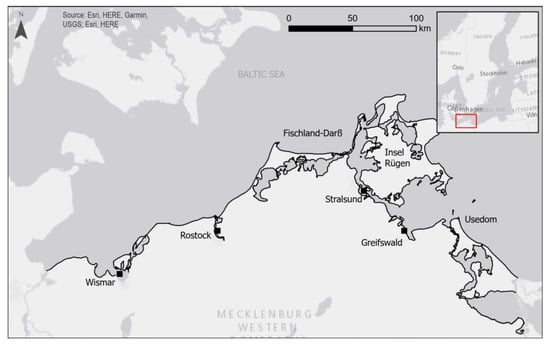
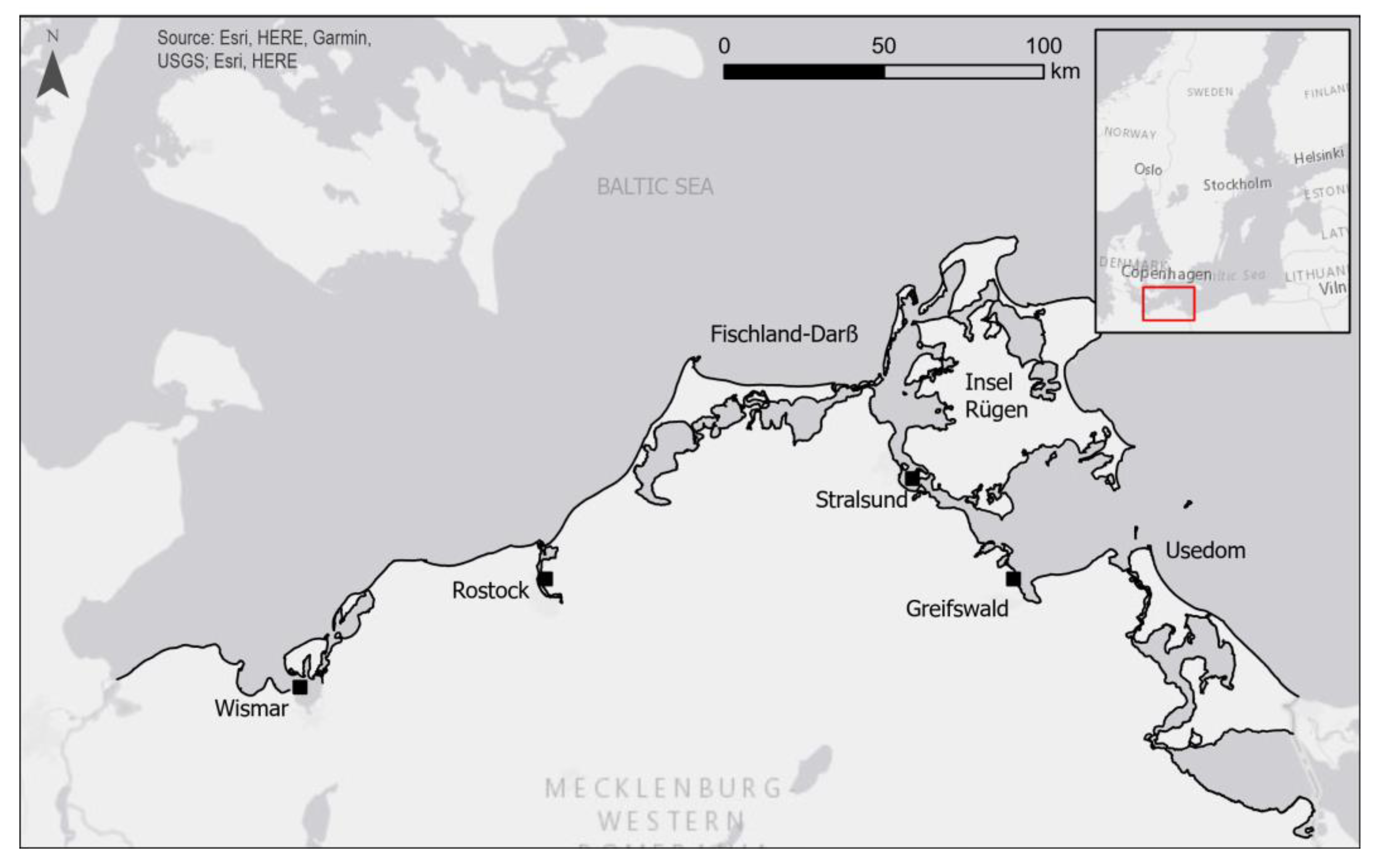
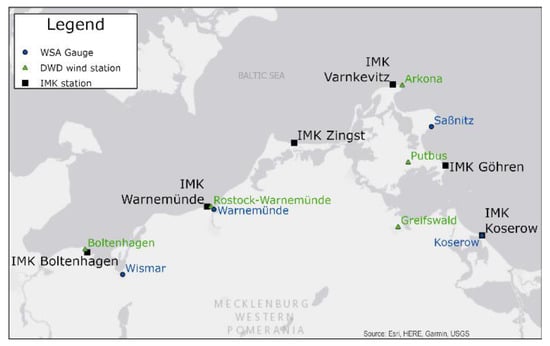
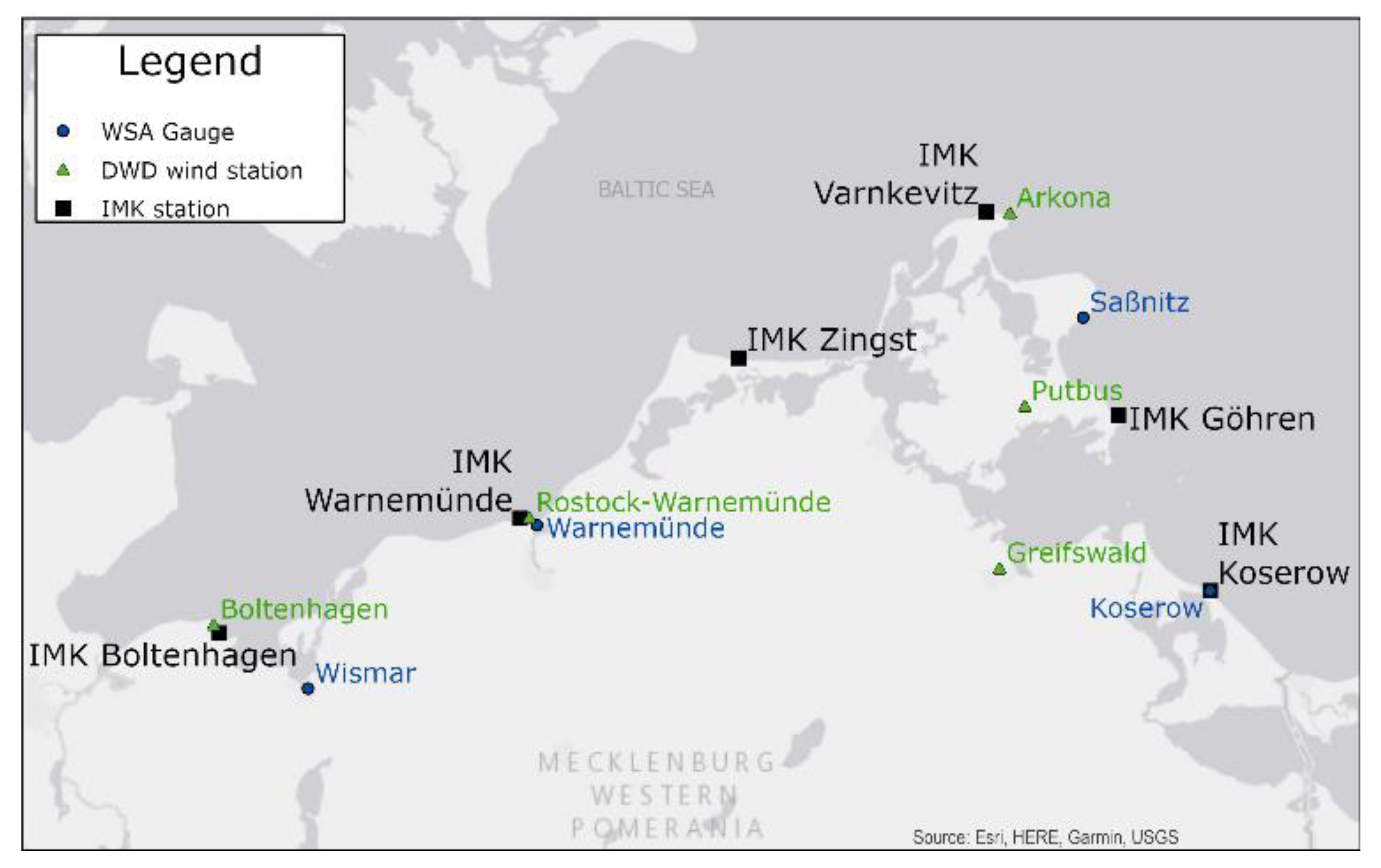
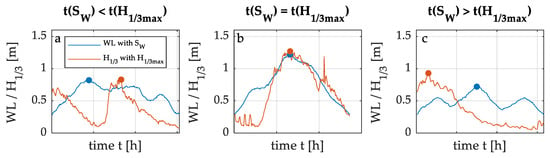
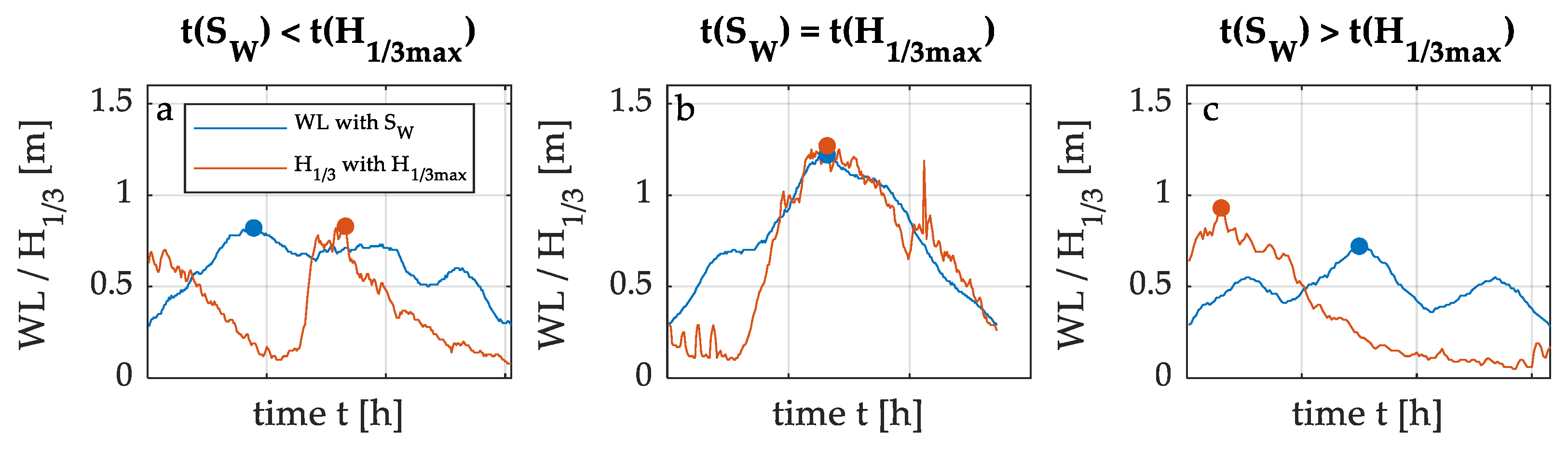
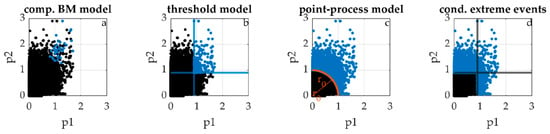
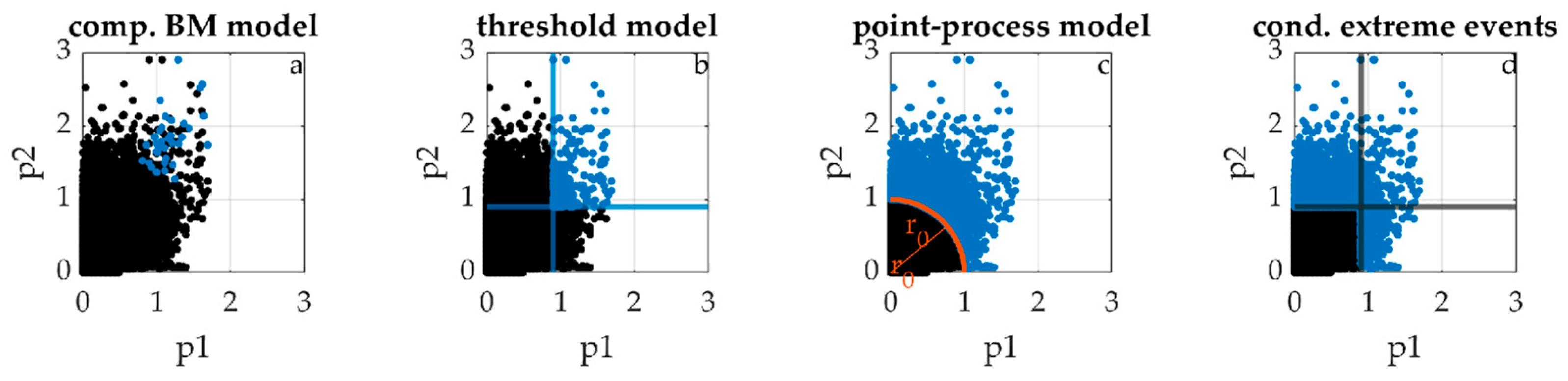
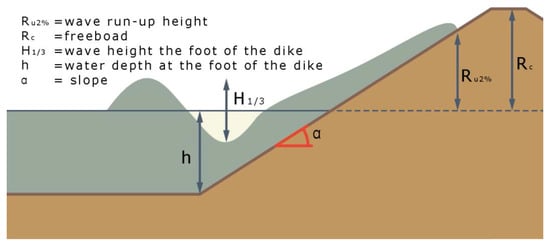
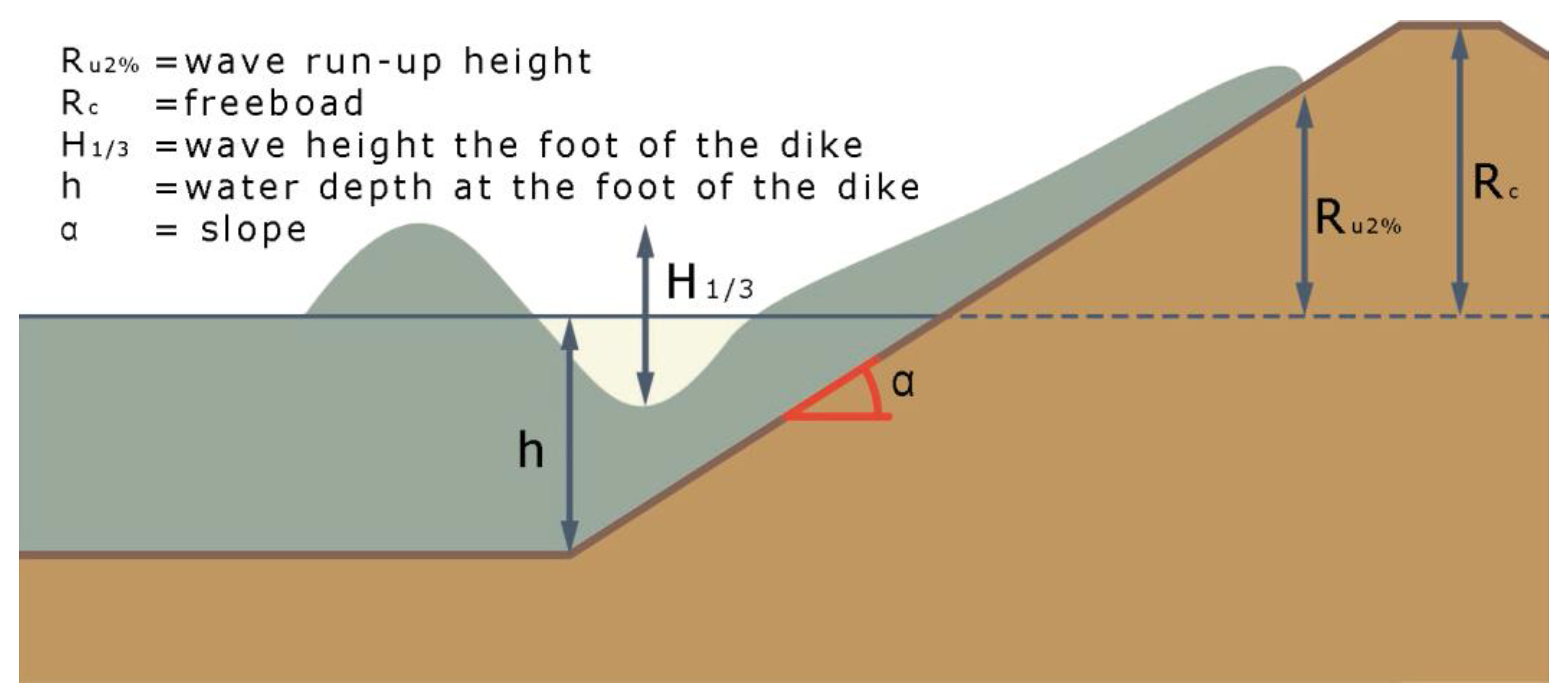
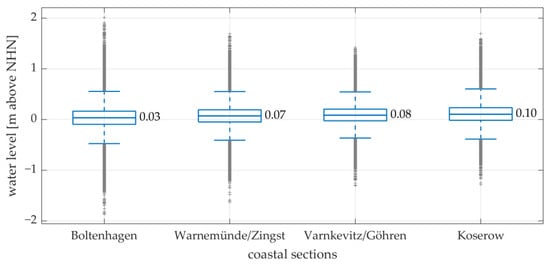
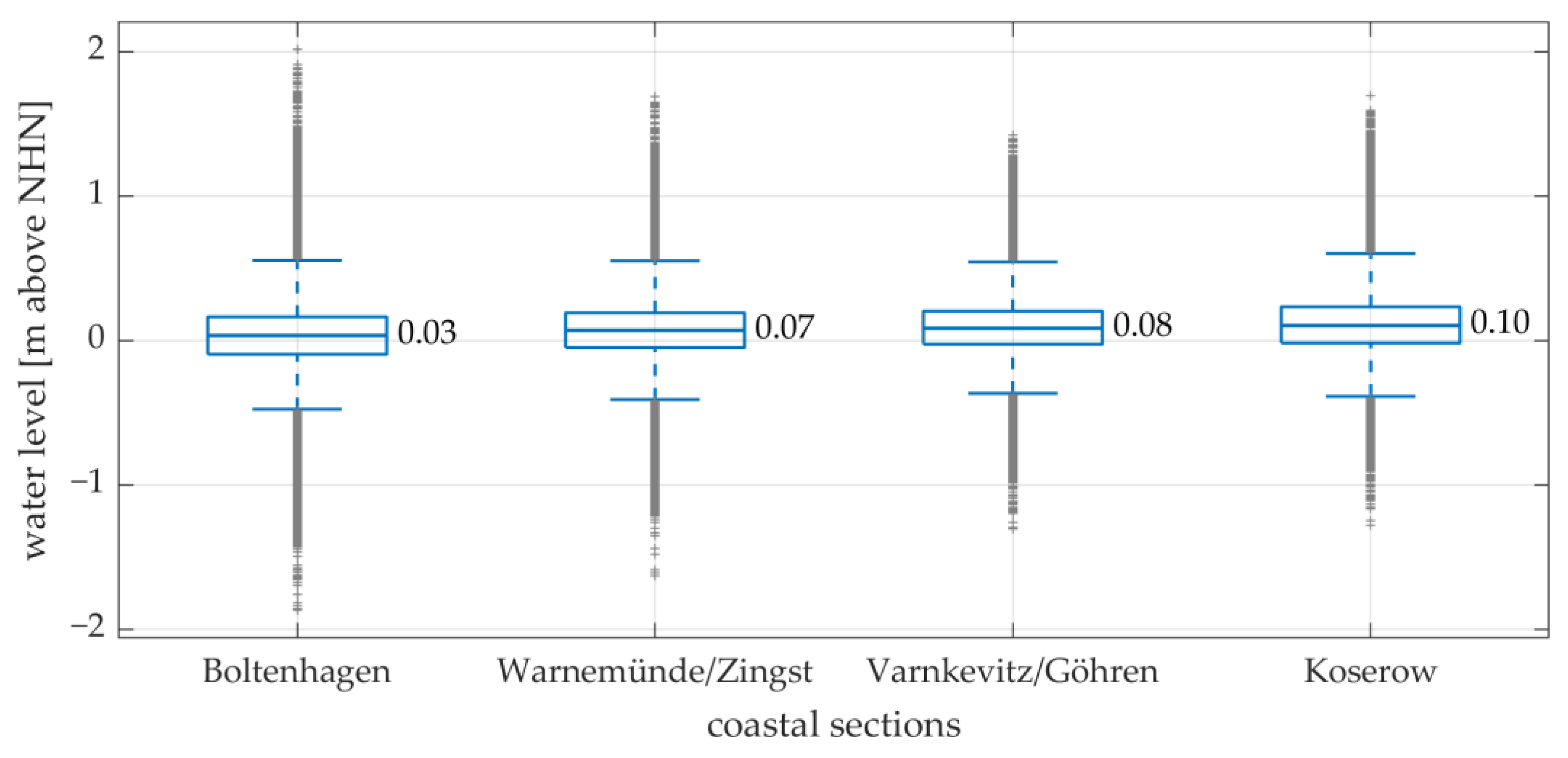
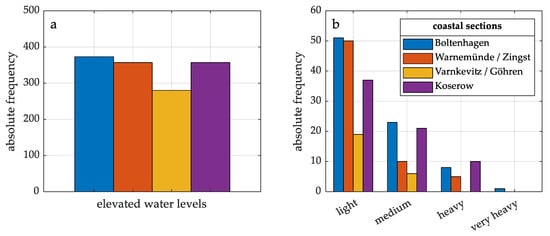
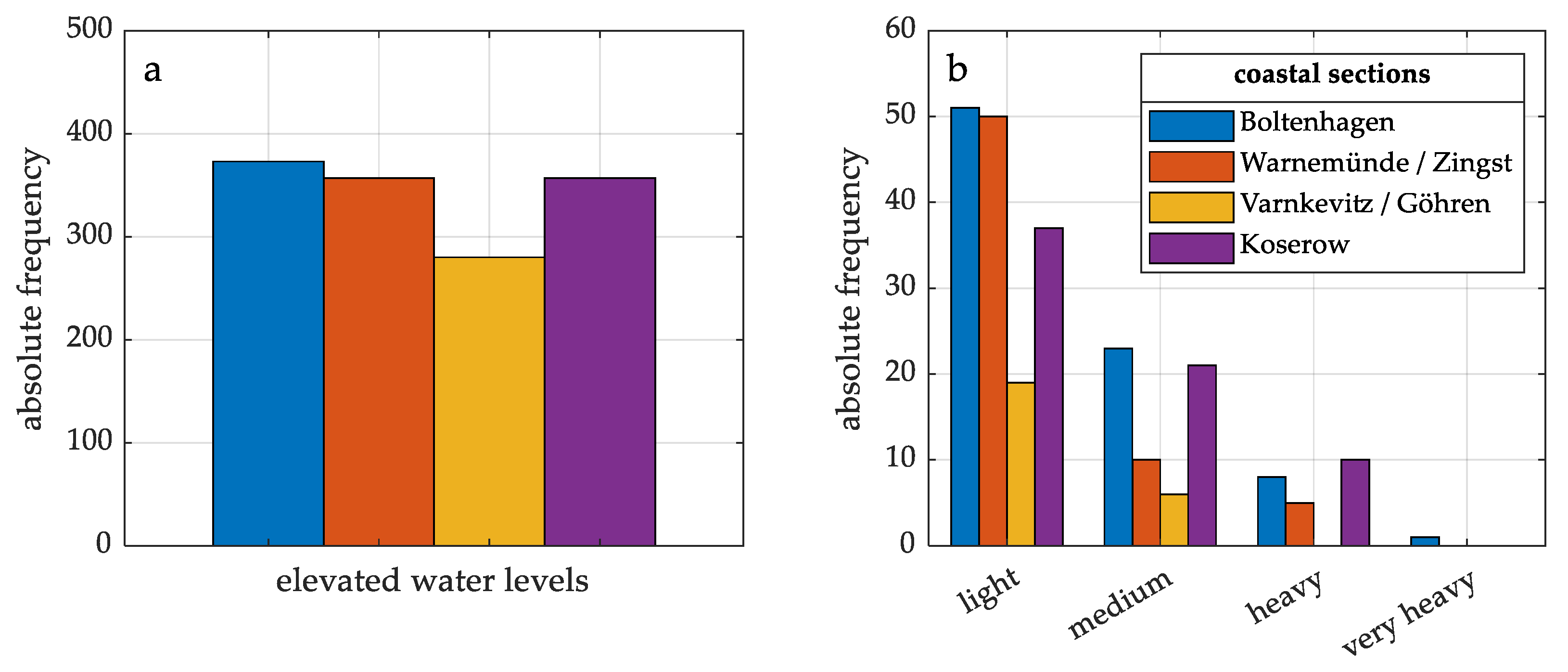
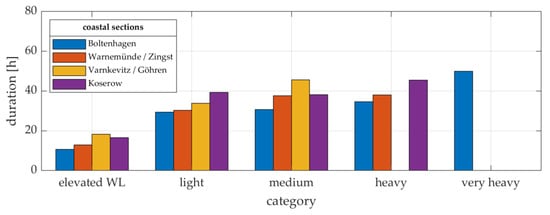
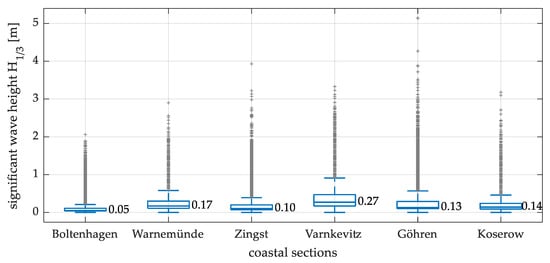
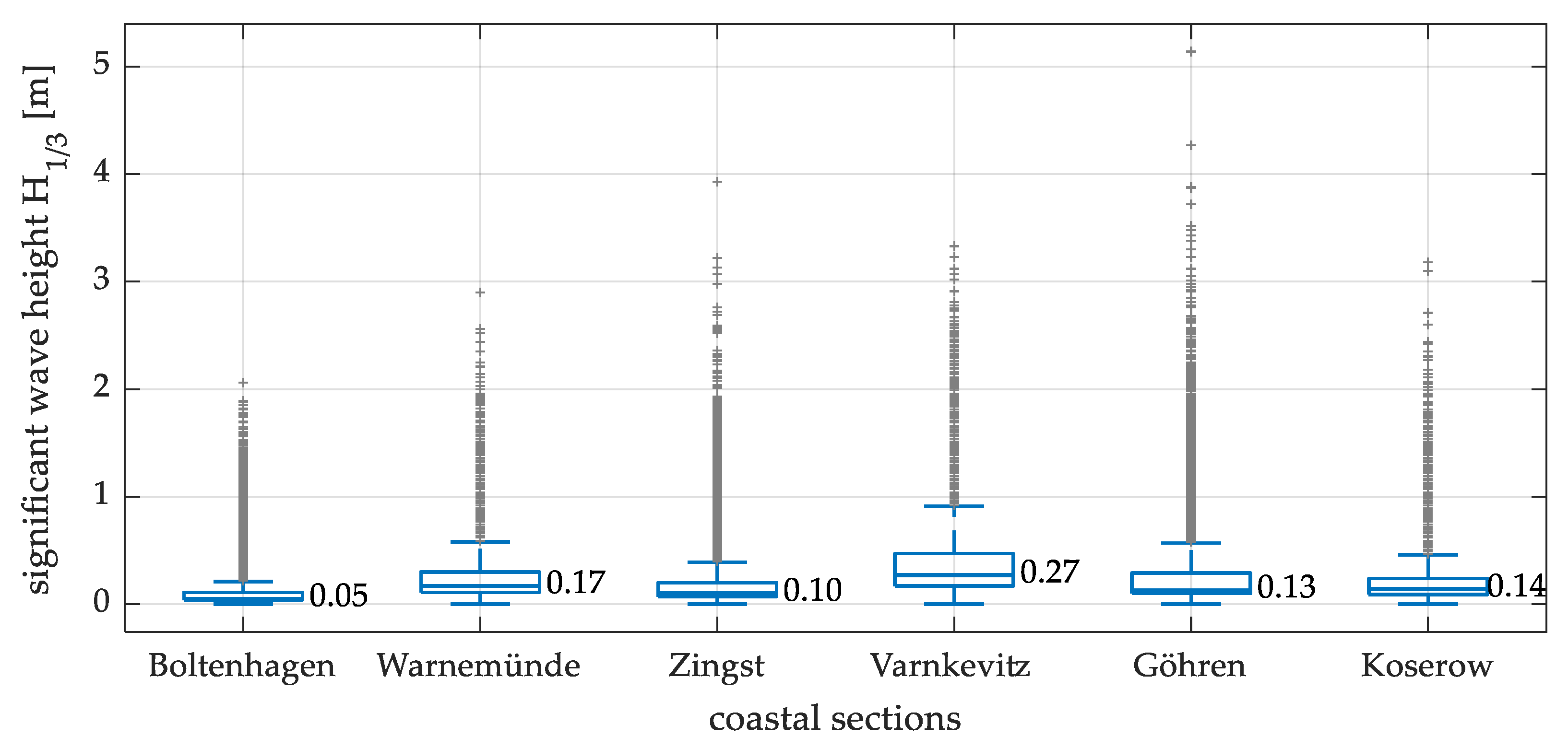
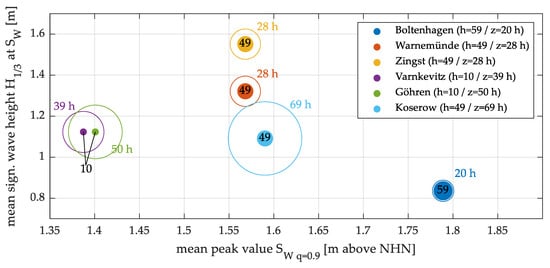
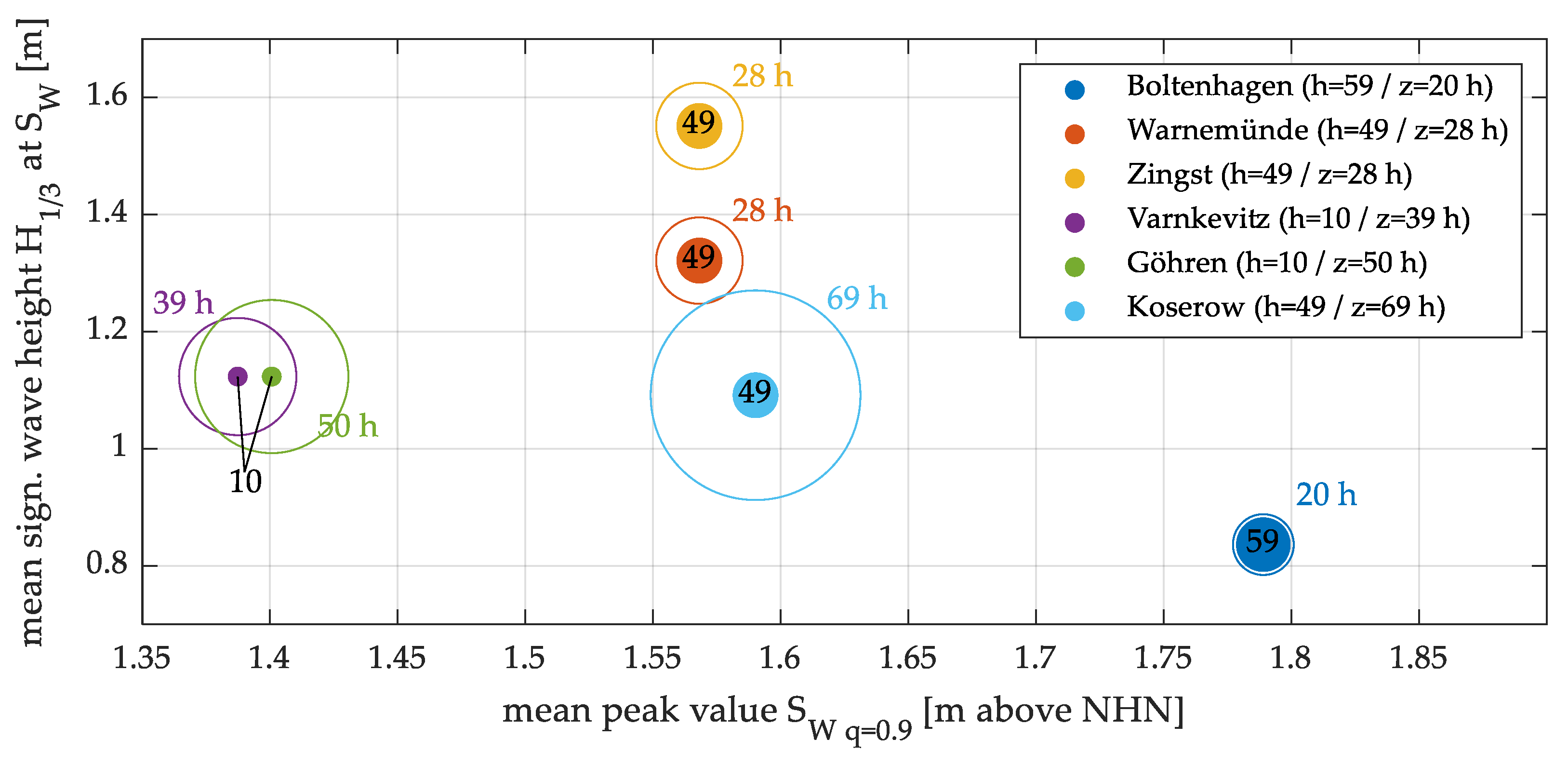
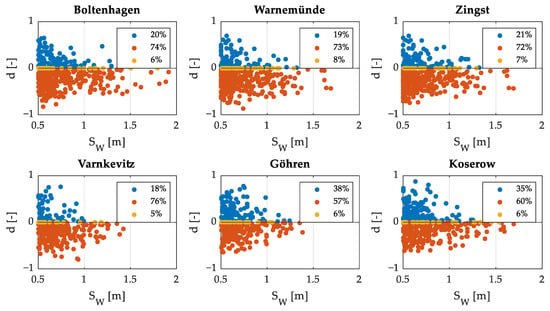
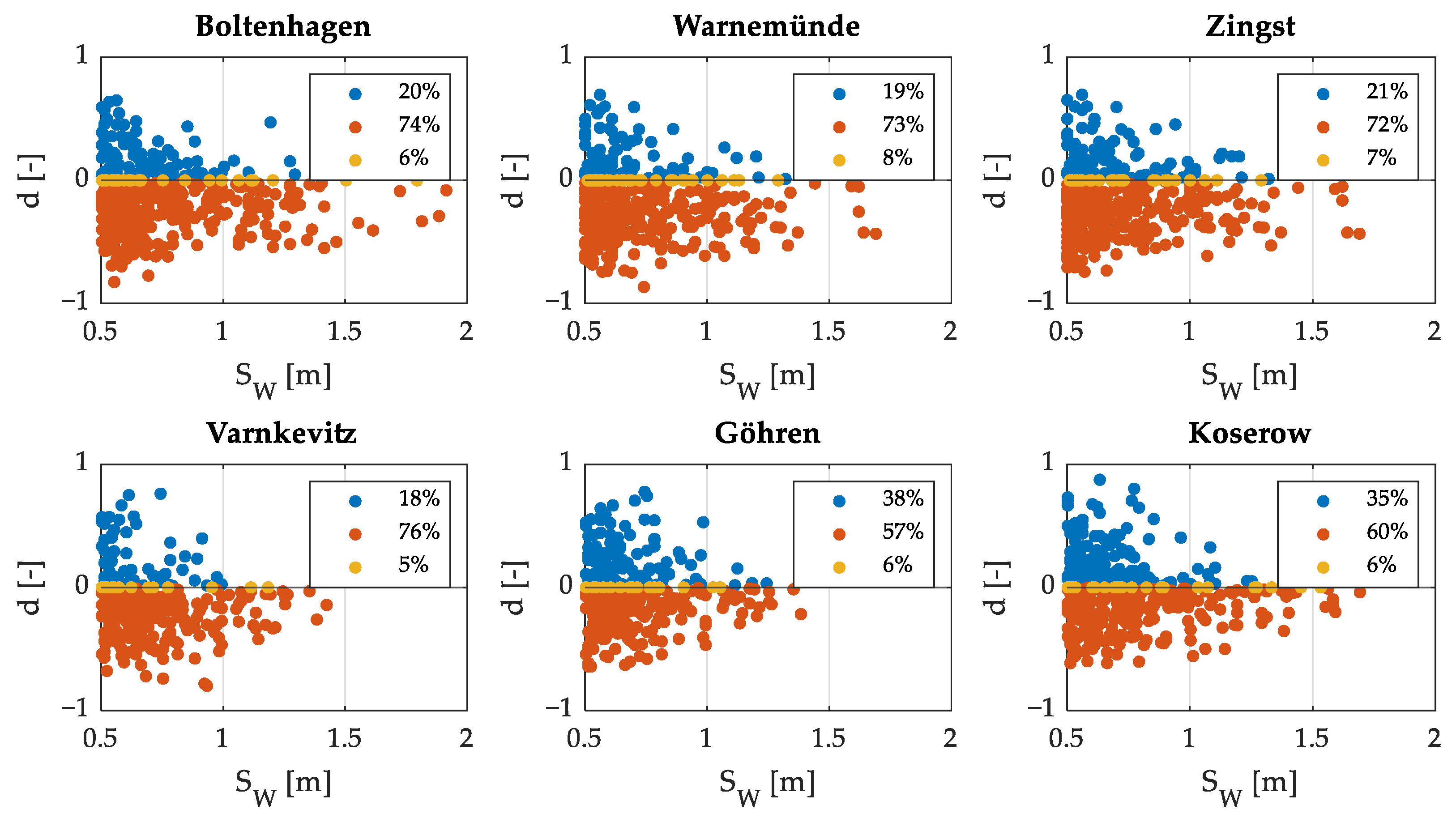
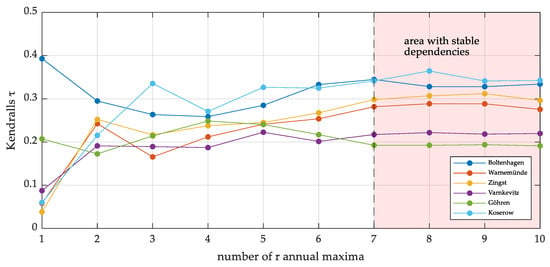
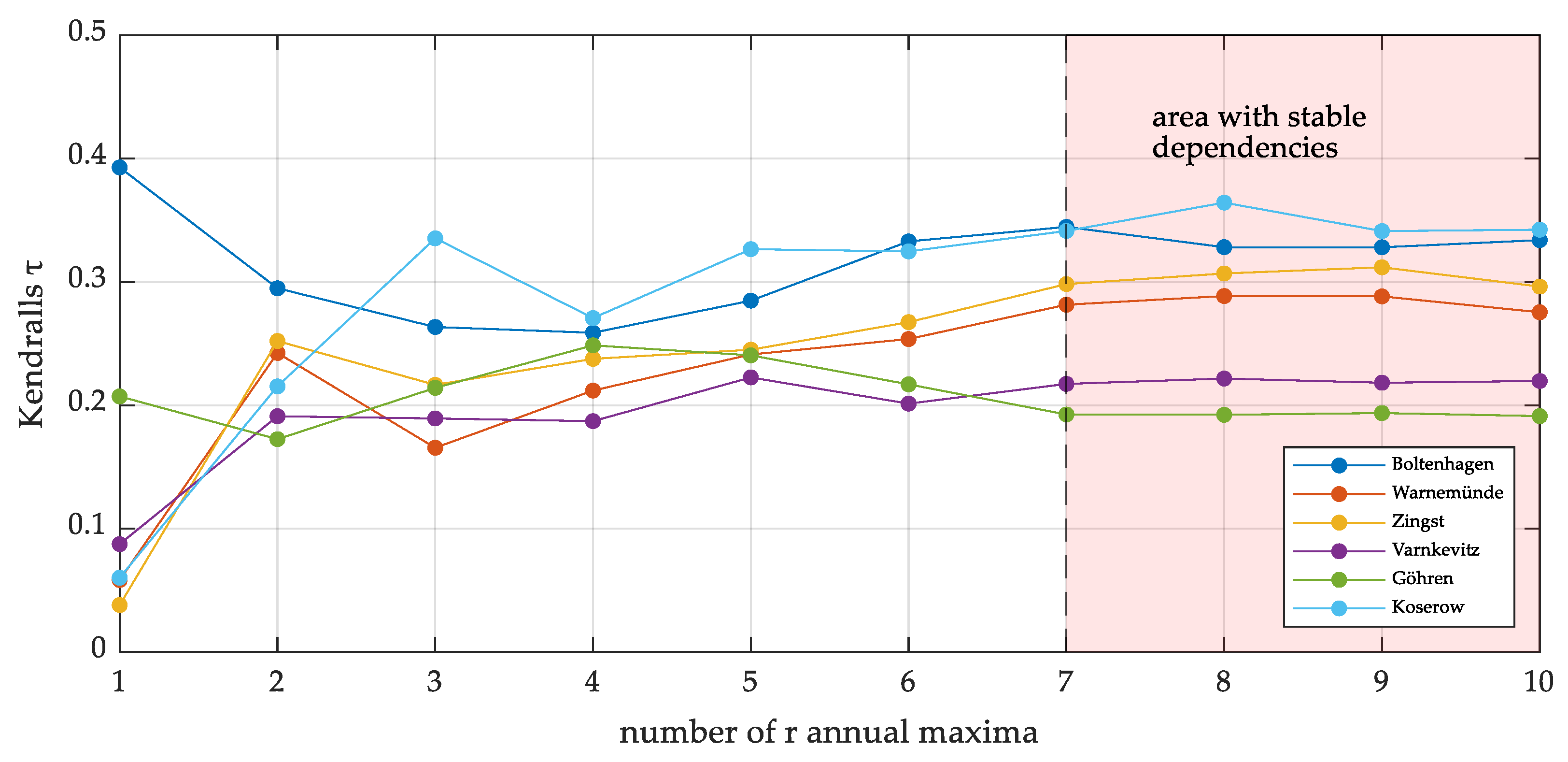
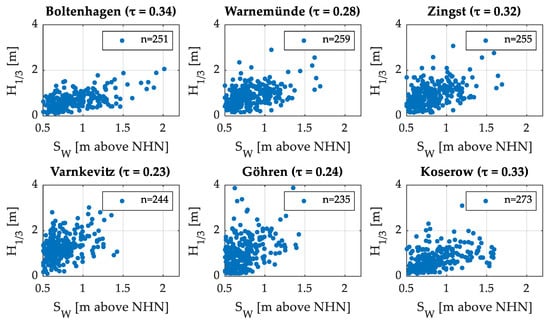
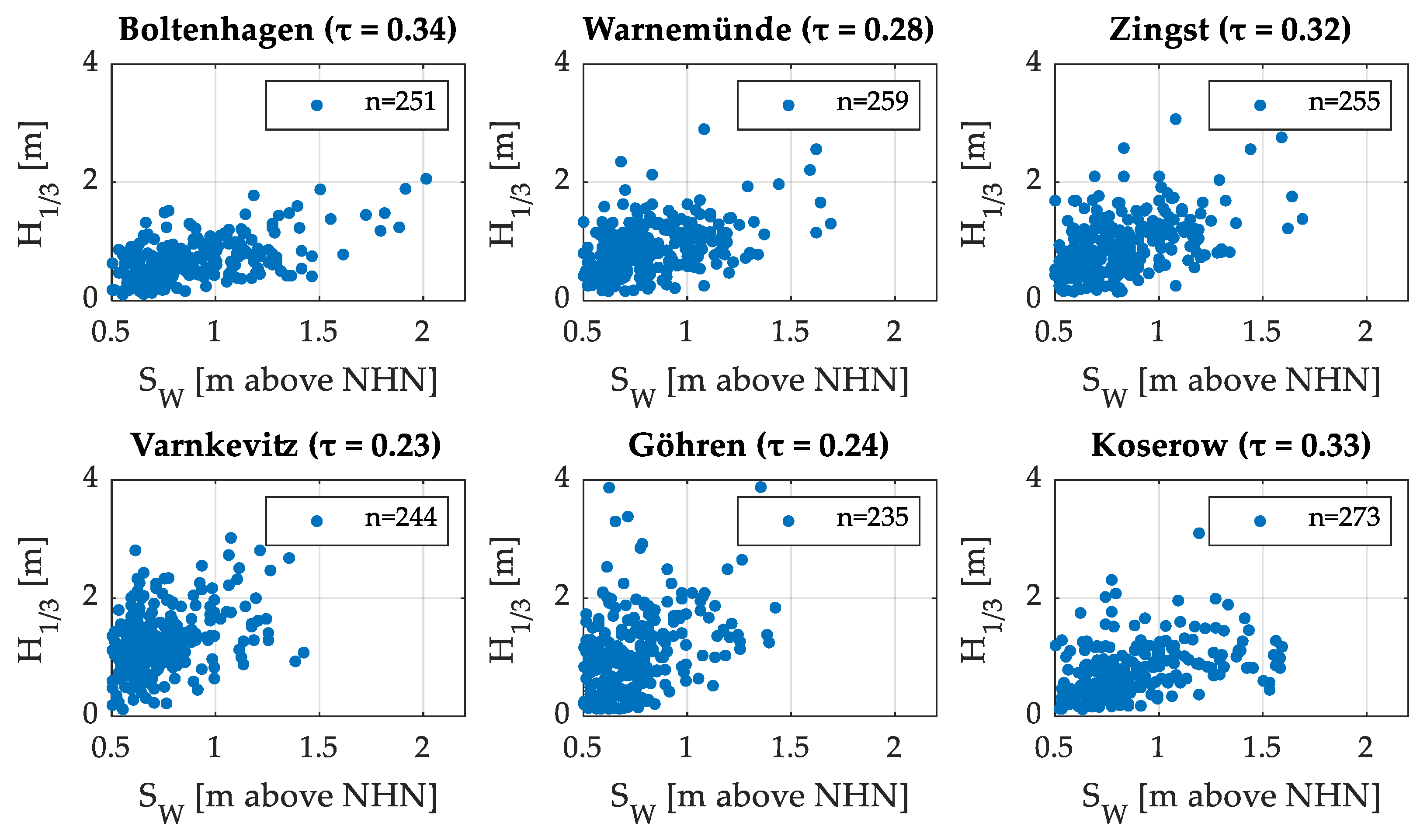
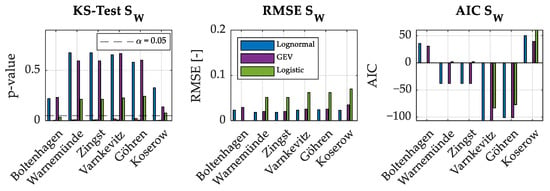
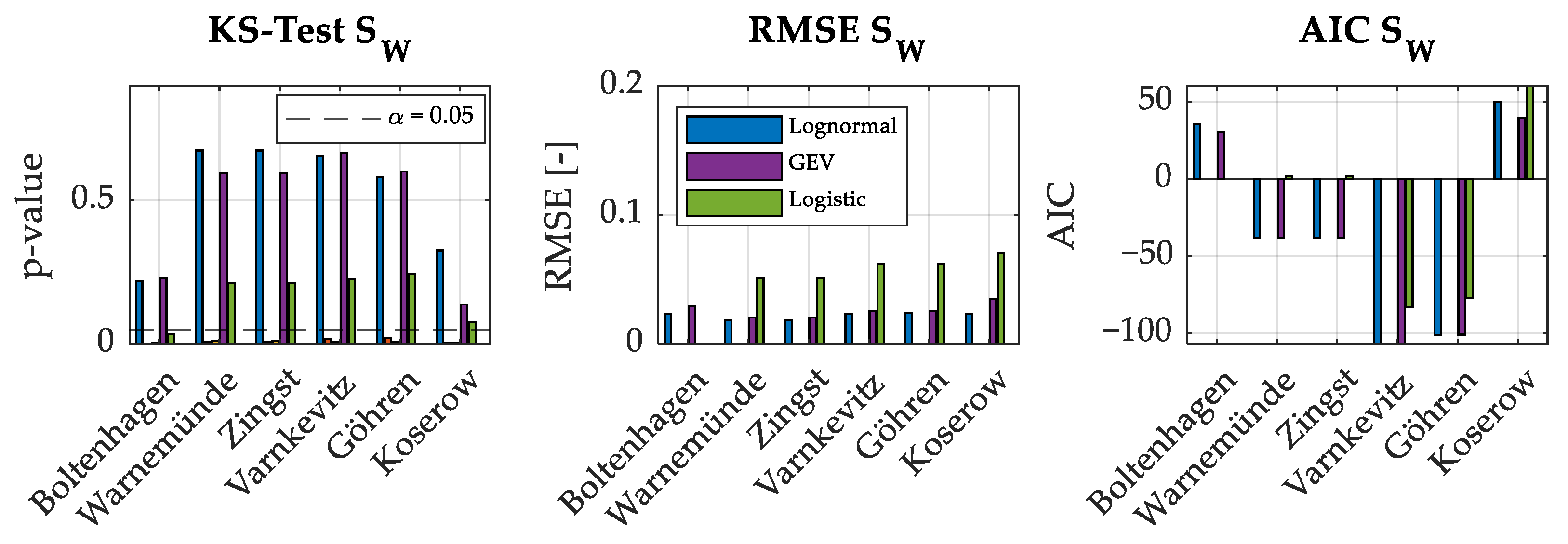
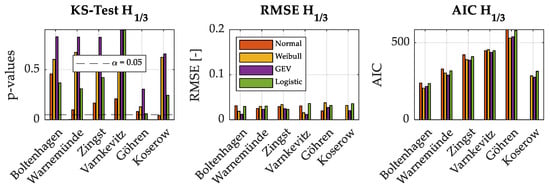
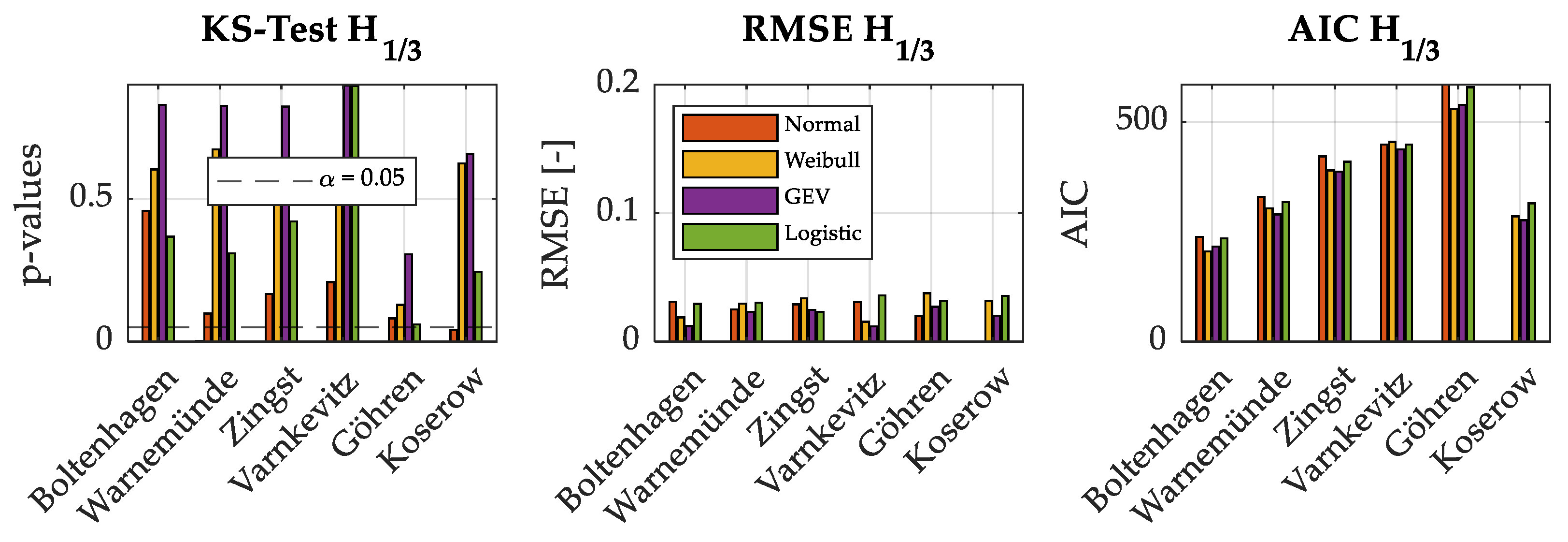
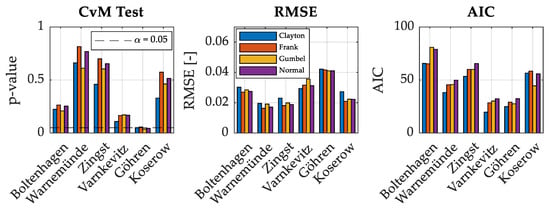
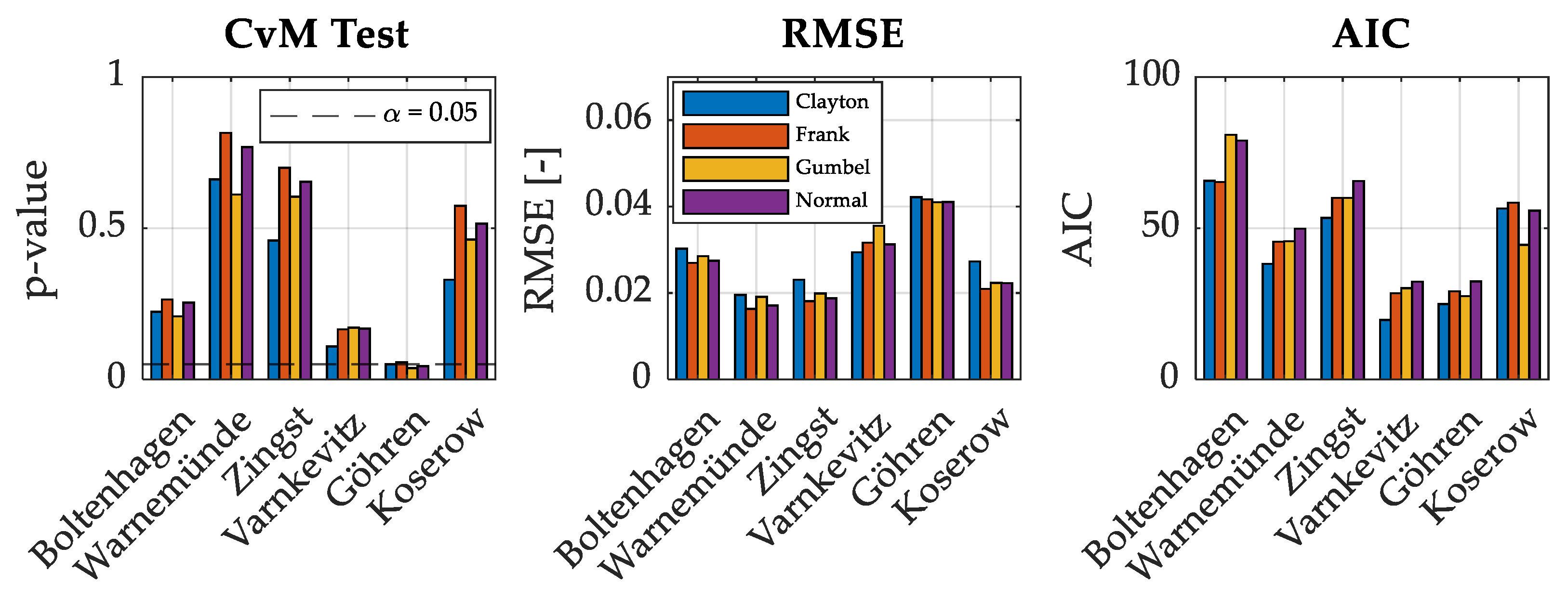
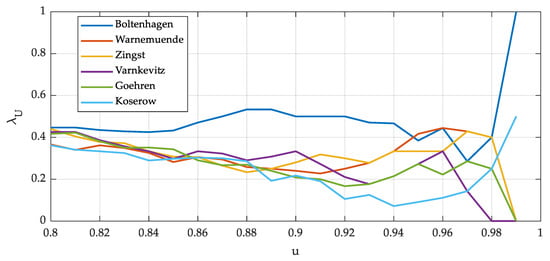
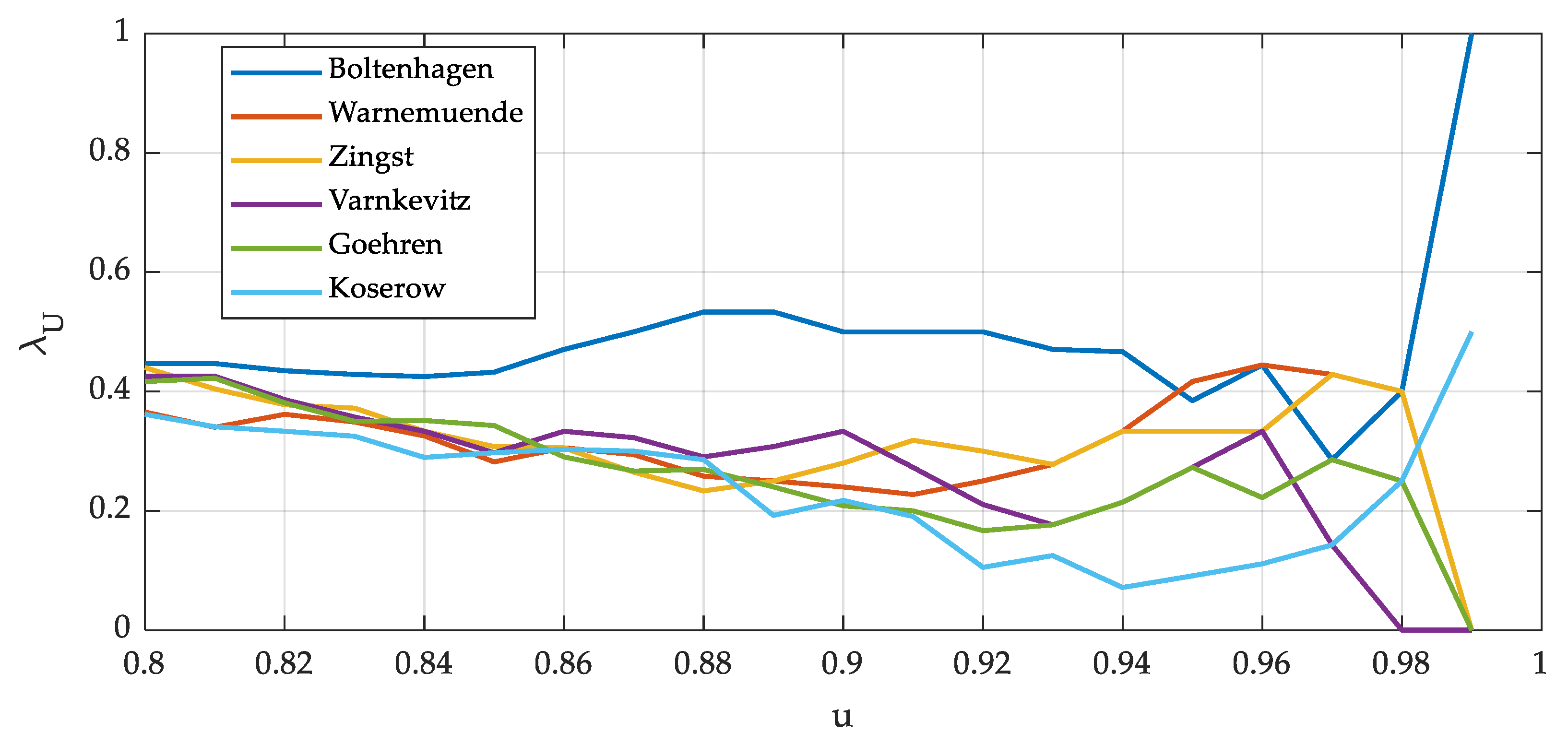
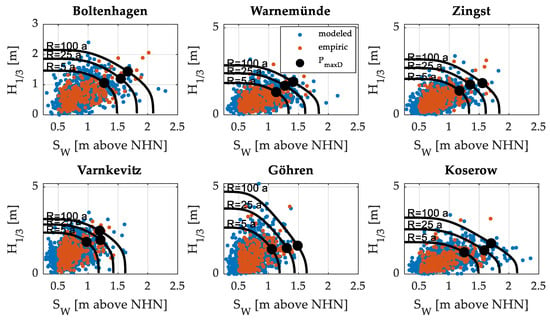
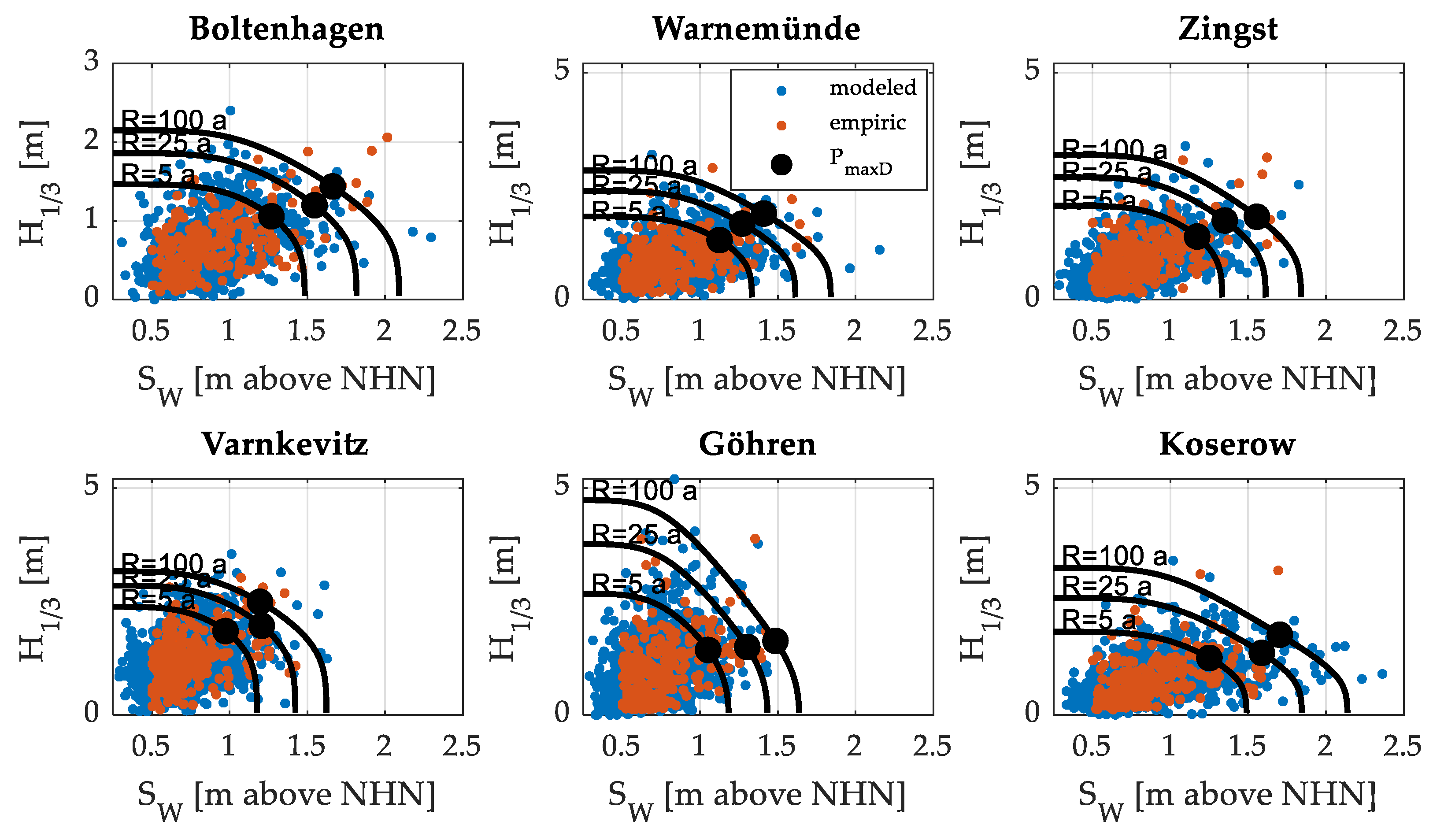
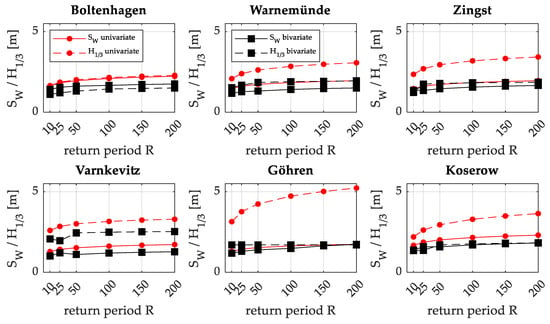
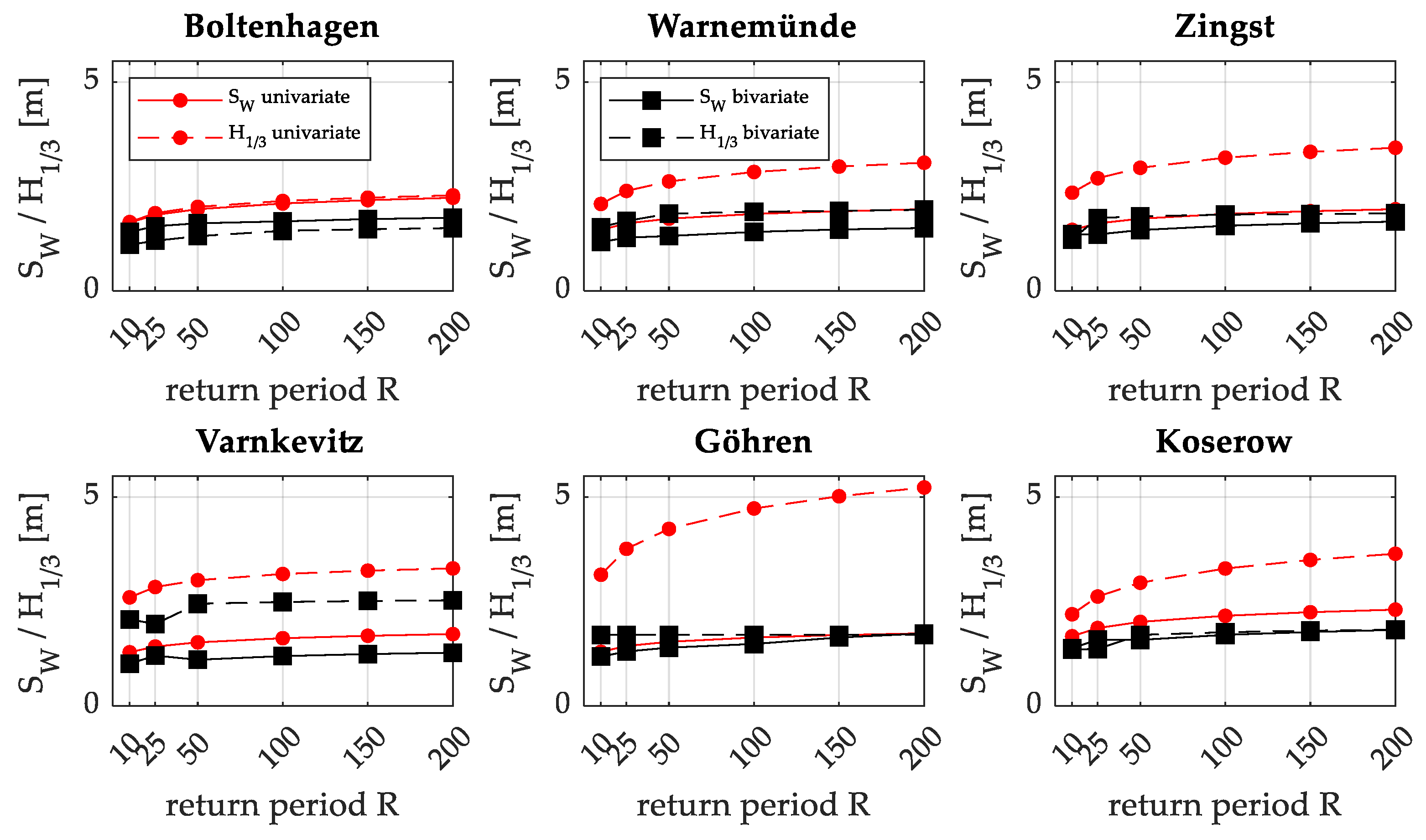
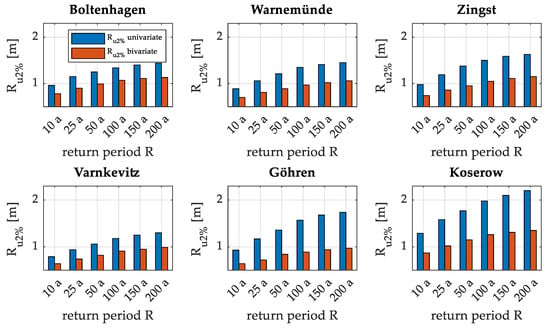
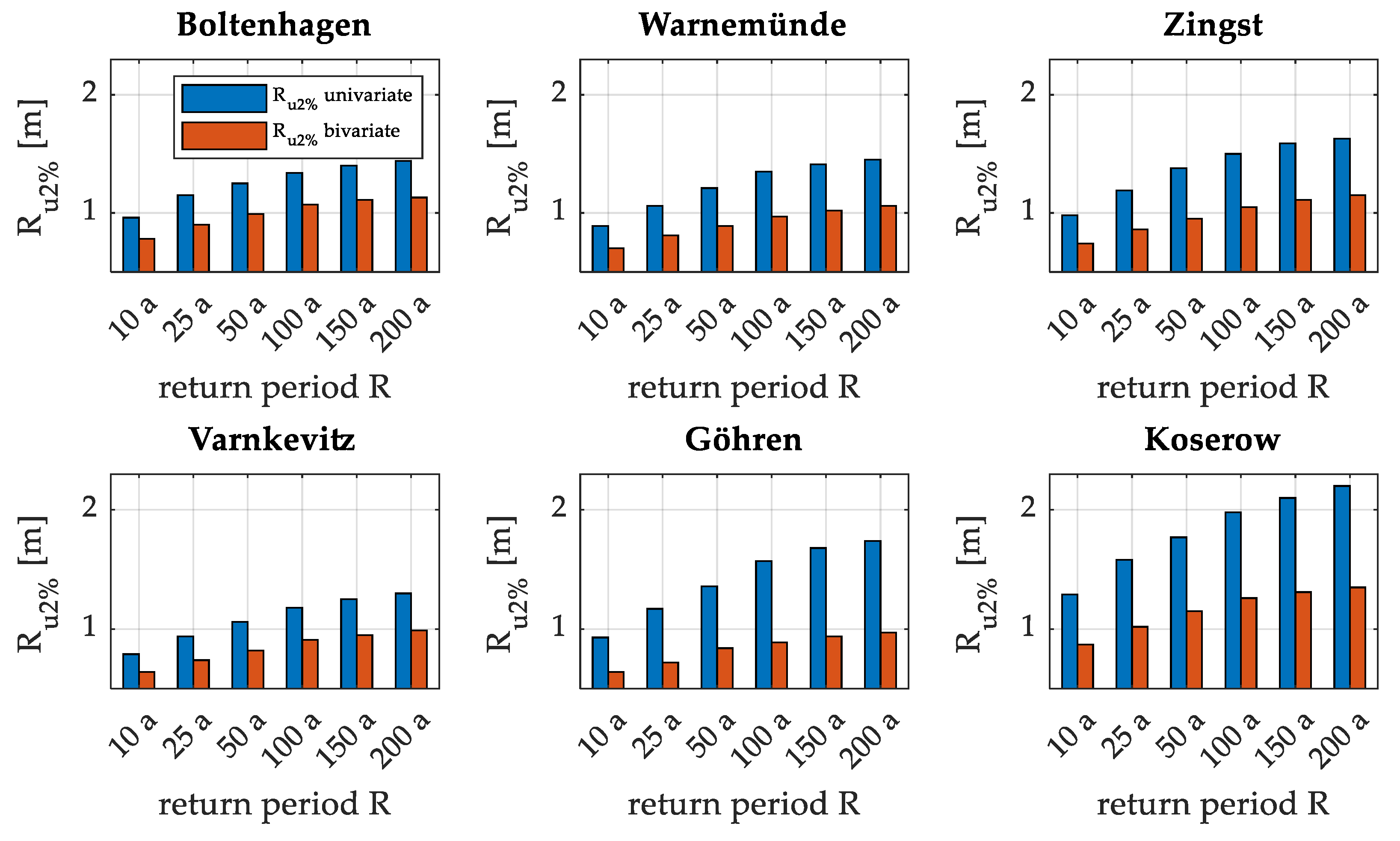
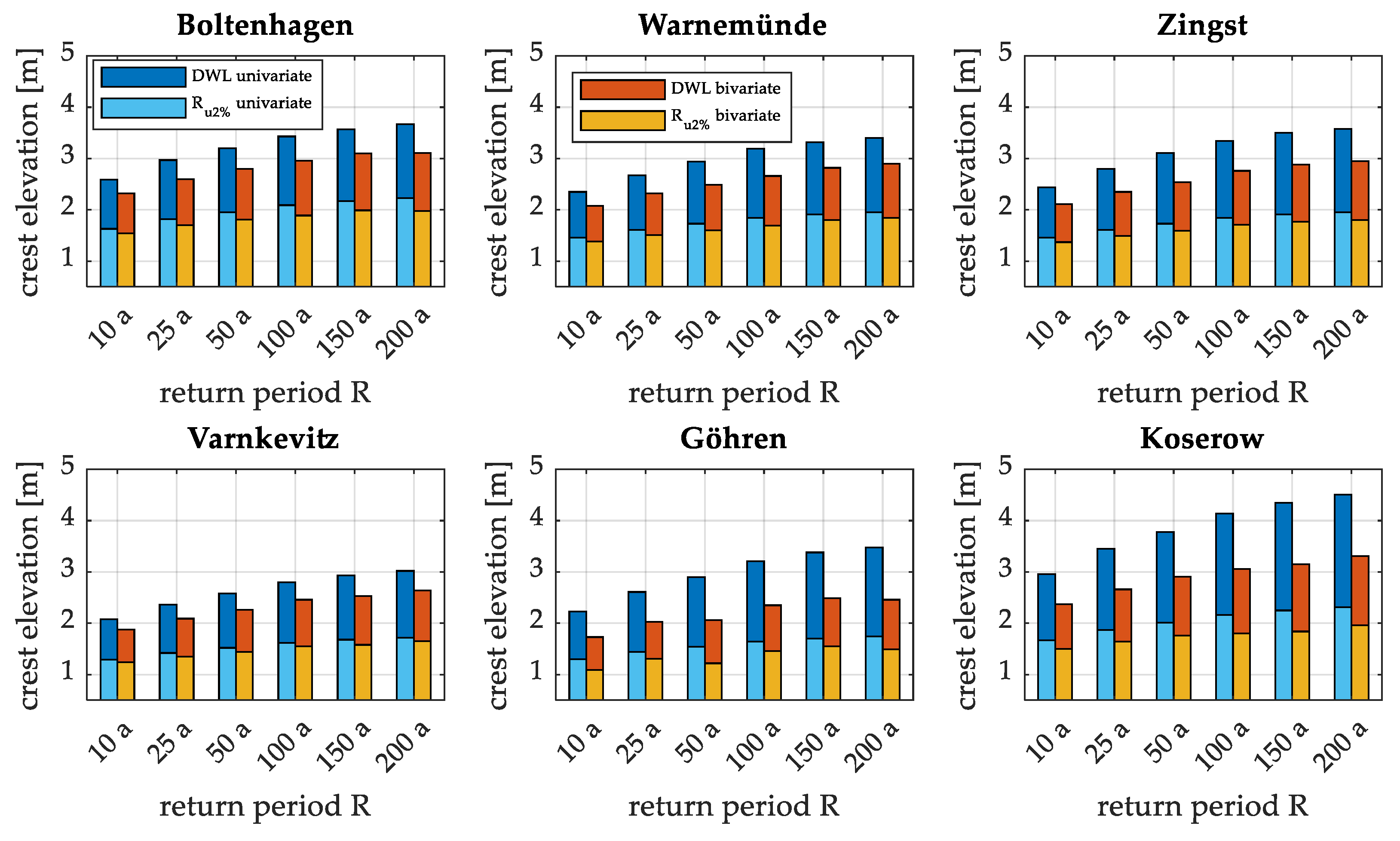

Disclaimer/Publisher’s Note: The statements, opinions and data contained in all publications are solely those of the individual author(s) and contributor(s) and not of MDPI and/or the editor(s). MDPI and/or the editor(s) disclaim responsibility for any injury to people or property resulting from any ideas, methods, instructions or products referred to in the content. |
© 2026 by the authors. Licensee MDPI, Basel, Switzerland. This article is an open access article distributed under the terms and conditions of the Creative Commons Attribution (CC BY) license.