1. Introduction
Growing concern among the global community and regulatory institutions regarding increasing air pollution from harmful emissions and the intensification of climate change has led to the introduction of stricter regulations and standards aimed at reducing pollutant emissions and greenhouse gases (GHG) in the transport sector. The transport sector, including maritime shipping, accounts for approximately 20% of global CO
2 emissions and is considered the second-largest source of carbon dioxide emissions worldwide after industry [
1]. The share of greenhouse gas emissions from maritime transport energy systems is relatively small: globally, it accounts for approximately 2–3%, while within the transport sector it represents around 11% [
1,
2,
3]. Nevertheless, the environmental impact of maritime transport in high-traffic shipping areas and port waters can reach up to 14% of total transport-related emissions [
4]. Therefore, since the late 20th century—and particularly over recent decades—the International Maritime Organization (IMO), through international Marine Environment Protection Committee (MEPC) resolutions, as well as EU Parliament directives, has established regulatory limits for ship emissions and promoted the use of cleaner fuels and decarbonization technologies. The air pollution prevention provisions of the MARPOL convention represent one of the key IMO instruments for enhancing environmental sustainability and advancing maritime decarbonization [
5]. In 2022, the IMO adopted an updated GHG reduction strategy for shipping, setting an interim target of achieving a 20% (potential to reach 40%) reduction in CO
2 emissions by 2030, 70% reduction by 2040 and a long-term objective of reaching net-zero emissions in international shipping by 2050 [
6,
7].
To monitor the effectiveness of decarbonization measures implemented by shipping companies, the International Maritime Organization (IMO) has developed a comprehensive regulatory framework applicable to both newly designed and constructed vessels as well as existing vessels. This framework introduces energy efficiency standards reflecting CO
2 emissions per unit of transport work (cargo and passenger capacity), including the Energy Efficiency Design Index (EEDI), the Energy Efficiency Existing Ship Index (EEXI), and the Carbon Intensity Indicator (CII) [
6]. In line with the objective of the European Green Deal to achieve climate neutrality by 2050, the European Union (EU) has been systematically developing a legal framework aimed at reducing greenhouse gas (GHG) emissions from the maritime sector [
8,
9,
10]. This framework consists of three main complementary instruments: the EU Emissions Trading System (EU ETS), the FuelEU Maritime Regulation, and the Monitoring, Reporting and Verification (MRV) system. The main EU structure defining decarbonization measures and requirements is the FuelEU Maritime Regulation [
8]. The main goal of maritime decarbonization is to reduce ESD emissions by 80% by 2050 compared to pre-industrial levels in 1990, primarily by replacing petroleum-based marine fuel with low-carbon and renewable fuel types. While regulatory emphasis is primarily placed on fuel transition, EU legislation also supports the application of technological solutions to achieve decarbonization targets. A key advancement in the EU regulatory approach is the adoption of a lifecycle-based emissions assessment, covering the entire fuel pathway—from raw material extraction and fuel production to onboard combustion in ship engines (well-to-wake, WtW). Also, within the EU framework, GHG emissions are expressed in CO
2 equivalent. It includes not only carbon dioxide (CO
2), but also methane (CH
4) and nitrous oxide (N
2O) emissions. In order to track the progress in maritime decarbonization, the annual indicator “greenhouse gas intensity of energy used” is applied as a key performance metric.
One of the most challenging and critical tasks is the decarbonization of the existing vessels [
7]. According to DNV Maritime data, more than 91.3% of vessels currently in operation rely on conventional petroleum-based marine fuels (heavy fuel oil and marine diesel), accounting for approximately 98% of the total deadweight. In contrast, a significant transition is observed in newbuilding projects, where approximately 78% of vessels on order are designed to operate on low-carbon and alternative fuels, representing around 50% of the total gross tonnage of the orderbook [
7].
The decarbonization of the existing vessels is further constrained by the limited feasibility of implementing advanced technological solutions on existing vessels, in contrast to newly designed and constructed vessels [
11,
12]. Consequently, the prioritization of rational solutions for such ship shifts and the applicability of certain methods must be reassessed accordingly. From a practical perspective, compliance with GHG emission reduction requirements established by the EU and the International Maritime Organization (IMO) [
11,
13,
14,
15] is typically achieved through a combination of technological and operational measures, whose effectiveness in reducing GHG emissions ranges from approximately 5% to 100% [
7]. A wide range of technological solutions is available. These include measures aimed at improving hull hydrodynamics, such as hull coating, hull-form optimization, air lubrication systems, and hull cleaning, which can provide emission reductions of approximately 5–15%. Further improvements can be achieved through the modernization of onboard energy systems, including machinery efficiency enhancements, waste heat recovery (WHR), engine derating, battery hybridization, and fuel cells, with a typical reduction potential of 5–20%. To achieve higher reduction in emissions from the vessels, gradual transition of propulsion systems to low-carbon and renewable fuels, including LNG, LPG, biofuels, methanol, ammonia and hydrogen, as well as the application of wind-assisted and nuclear propulsion technologies, can potentially reach up to 100% emission reduction. Carbon capture and storage (CCS) technologies offer significant decarbonization potential, ranging from approximately 73% [
16] to 100%, depending on the implementation context.
The use of renewable and low-carbon fuels (RLCFs) in the maritime sector represents a significant pathway for reducing CO
2 emissions from ships. However, the practical implementation of several of these fuels remains constrained by limitations in shore-side infrastructure development, challenges related to their safe and efficient application onboard vessels, and issues associated with vessel autonomy and operational range [
17,
18,
19]. Equally important are the production technologies of these fuels and their intrinsic properties, particularly in the long-term transition toward green feedstocks and alternative energy sources in fuel production processes [
7].
Fossil liquefied natural gas (LNG) demonstrates a moderate decarbonization potential, enabling a reduction in CO
2 emissions by approximately 20–25% on a tank-to-wake (TTW) basis [
20,
21]. Owing to its decarbonization benefits and the relatively well-developed infrastructure, LNG remains a dominant transitional fuel in the maritime sector [
22]. However, in the context of the transition toward bio-LNG and synthetic LNG produced using renewable energy sources, natural gas is increasingly considered a viable option for long-term application [
23,
24]. From an economic perspective, LNG can be competitive with conventional marine fuels, with operational expenditures (OPEX) that are comparable to or lower than those of marine gas oil (MGO) [
21]. The use of LNG onboard vessels requires cryogenic storage and fuel systems (approximately −162 °C), which increases energy demand and onboard space requirements, while also introducing additional risks related to fuel leakage and explosion hazards [
20].
Paraffinic fuels, such as hydrotreated vegetable oil (HVO), exhibit a high well-to-wake (WTW) decarbonization potential, achieving approximately 85–90% lower CO
2 emissions compared to conventional diesel fuels. However, their tank-to-wake (TTW) decarbonization potential remains relatively limited. Experimental studies show that the use of HVO100 can reduce CO
2 emissions by 3.5 to 6.7%, suggesting that HVO application in ships can help achieve 4% of decarbonization performance [
25]. The actual decarbonization performance depends on the volumetric blending ratio of the fuel; for example, a B20 blend can achieve approximately 10–12% emission reduction [
26,
27]. The deployment of HVO represents one of the fastest options for both short- and long-term decarbonization, primarily due to its “drop-in” compatibility with existing marine engines and fuel infrastructure [
28,
29]. From an economic perspective, despite higher fuel efficiency parameters, HVO can only lead to higher operational expenditures (OPEX) compared to conventional marine diesel fuels due to higher fuel prices. Additionally, the use of HVO can also lead to lower fuel consumption [
30,
31,
32].
Ammonia exhibits a 100% CO
2 emission reduction potential on a tank-to-wake (TTW) basis as it contains no carbon [
33]. However, the actual achievable decarbonization performance when using ammonia is approximately 95%, because a portion of pilot diesel is required for the fuel to function, and the use of this diesel results in additional CO
2 emissions. Blue ammonia—produced from natural gas with the application of carbon capture and storage (CCS)—can achieve up to 61% reduction in greenhouse gas (GHG) emissions on a well-to-wake (WTW) basis [
34]. Ammonia is considered one of the key long-term decarbonization options for the maritime sector; however, its widespread adoption is currently limited by insufficient infrastructure development [
7,
35]. Due to its low volumetric energy density and lower calorific value, the use of ammonia requires larger fuel volumes and storage capacity, thereby increasing onboard space requirements [
7]. From a safety perspective, ammonia is toxic, and its combustion can result in the formation of nitrogen oxides (NO
x), which require additional mitigation measures [
33].
Therefore, when establishing the boundary conditions for selecting decarbonization methods, one should take into account the varying technological maturity of the methods being compared in relation to the selected decarbonization period (which is largely linked to the ship’s age and the remaining service life of the hull), the wide range of decarbonization efficiency, depending on production potential based on alternative energy sources and raw materials, the greenhouse gas emission reduction levels adopted by regulatory authorities in the context of time estimates, as well as the range of life cycle boundaries.
The reduction in CO2 emissions can be achieved not only through the use of renewable and low-carbon fuels, but also by applying additional decarbonization technologies in parallel.
Waste heat recovery (WHR) systems capture a portion of the thermal energy generated by the main engine and convert it into useful propulsion power or electrical energy onboard the vessel, thereby increasing the overall system efficiency [
36]. Modern WHR systems are capable of recovering approximately 1–14% of the generated waste heat, resulting in measurable fuel savings [
37]. According to studies, the use of WHR technology in ships can reach about 6.9% reduction in CO
2 emissions, so it can be stated that the application of this technology can assure around 7% of decarbonization performance [
38].
Carbon capture and storage (CCS) technology onboard vessels can achieve up to approximately 81% reduction in CO
2 emissions [
39]. However, the implementation of CCS systems introduces challenges related to the additional onboard space required for CO
2 storage, which directly affects cargo capacity. Furthermore, the lack of sufficiently developed and standardized infrastructure for long-term CO
2 storage and offloading currently limits the wider adoption of this technology.
Wind-assisted propulsion technologies, such as kite systems, can reduce fuel consumption and CO
2 emissions by up to ~35%, depending on operational conditions and the use of kites with an area of approximately 500 m
2 [
40,
41]. These systems are characterized by low energy demand and relatively low operational expenditures (OPEX). However, their effectiveness is highly dependent on meteorological conditions and may be constrained in high-traffic shipping areas. The required deck space for such systems is approximately 20–40 m
2.
Flettner rotor systems can achieve reductions in fuel consumption and CO
2 emissions from 20% up to 30% using a Flettner rotor [
41,
42]. These systems require approximately 40–80 kW of additional electrical power per rotor. Their integration onboard necessitates significant deck space (~50–100 m
2 per rotor) and may increase vessel height, potentially leading to operational constraints.
Air lubrication systems (ALS), installed along the bottom of the ship hull, occupy a relatively small area—approximately 1–2% of the hull bottom surface. Depending on the applied mode, different energy-saving potentials can be achieved: bubble drag reduction (BDR) systems can provide approximately 3–6% energy savings, air layer drag reduction (ALDR) systems achieve 4–12%, and partial cavity drag reduction (PCDR) systems can reach 16–22% [
43]. From a safety perspective, potential system failures and their impact on vessel hydrodynamics and stability must be carefully considered.
The evaluation of maritime decarbonization technologies is based on a multi-criteria assessment framework that encompasses environmental, technical, economic, and operational factors. The primary objective is to achieve the greenhouse gas (GHG) emission reduction targets established by the International Maritime Organization (IMO) and the European Union (EU) [
9,
10]. Within the overall set of evaluation criteria, several key domains are commonly considered. The assessment of decarbonization technologies relies on the analysis of multiple interrelated criteria:
The environmental performance (“ecological”) criterion evaluates the ability of a technology to achieve established decarbonization targets, based on IMO and EU indicators, and considers emission intensity either over the full fuel lifecycle (well-to-wake, WTW) or during operation (tank-to-wake, TTW).
The environmental impact criterion assesses changes in emissions of CO2, SOx, NOx, and particulate matter, as well as compliance with IMO regulatory requirements.
The technological maturity criterion evaluates the level of technology readiness, including its practical applicability onboard vessels, within port infrastructure, and in fuel supply (bunkering) systems.
The energy efficiency criterion analyzes changes in energy consumption, including fuel, electricity, and auxiliary energy demand.
The technological compatibility criterion examines the feasibility of integrating the technology into existing ship systems, considering engine adaptability, impacts on payload capacity, and vessel autonomy.
The operational suitability criterion evaluates the performance of the technology under real operating conditions, including voyage duration, load profiles, and operational efficiency.
The economic viability criterion includes capital expenditures (CAPEX) and operational expenditures (OPEX), fuel costs, impacts on transport costs, and compliance with EU ETS requirements.
The safety criterion is based on risk assessment, taking into account fuel properties, technology maturity, and crew preparedness.
Finally, the space and volume requirement criterion assesses the impact of the technology on vessel capacity, design, and commercial efficiency, emphasizing trade-offs between energy system integration and cargo space preservation.
The challenges of maritime sector decarbonization and improving energy efficiency are closely linked to broader global energy trends. The growing global demand for energy is increasingly constrained by the limited expansion and utilization potential of conventional energy sources [
44]. Furthermore, the continuous rise in global temperatures has intensified efforts to enhance energy efficiency and reduce carbon dioxide (CO
2) emissions, thereby contributing to the development of a more sustainable environment [
45]. As energy demand and prices continue to increase, the global energy crisis is becoming more pronounced. Consequently, energy conservation and emission reduction have become key priorities within European Union (EU) initiatives aimed at achieving sustainable development in both the energy and environmental sectors [
46]. To address these challenges, researchers worldwide are actively investigating the potential of industrial technologies to improve energy efficiency and reduce emissions using multi-criteria decision-making (MCDM) methods and optimization approaches [
47,
48]. The increasing relevance of MCDM methods in technological applications—particularly in recent decades—is driven by the growing complexity of quality requirements for products and services. In many cases, methods aimed at achieving specific quality criteria are inherently conflicting. In various engineering fields, multi-criteria analysis based on both qualitative and quantitative indicators is a complex process, as expert-based evaluation alone is often insufficient [
49]. Therefore, more rational solutions are achieved through compromise-based decision-making supported by multi-criteria mathematical methods. Moreover, to reduce the likelihood of biased or uncertain outcomes, it is common practice to apply multiple methods based on different mathematical principles in parallel. Among the most widely used methods are MOORA (Multi-Objective Optimization on the basis of Ratio Analysis) [
50,
51], TOPSIS (Technique for Order Preference by Similarity to Ideal Solution) [
52], VIKOR (compromise ranking method) [
53,
54], COPRAS (Complex Proportional Assessment of alternatives) [
55], and MEW (Multiplicative Exponential Weighting) [
56], as well as other related approaches [
57,
58].
In this context, the decarbonization of the transport sector—including maritime transport—is no exception and has become particularly relevant over the past decade. In practical applications, the comprehensive evaluation of decarbonization technologies and methods, based on predefined criteria, is widely performed using multi-criteria mathematical approaches [
5,
9]. For instance, in Sweden and the broader Nordic–Baltic region, maritime decarbonization decisions are not based on a single criterion but are systematically assessed across multiple dimensions, integrating technological, economic, environmental, and social factors [
59]. This approach is supported by interdisciplinary research conducted in leading academic and research institutions, such as KTH Royal Institute of Technology and King Abdullah University of Science and Technology, where maritime decarbonization pathways are analyzed using mixed-method approaches, including qualitative assessments and techno-economic modeling [
60]. Recent studies demonstrate the application of multi-criteria decision-making (MCDM) methods for selecting the most suitable alternative fuels—such as methanol, hydrogen, biofuels, ammonia, and LNG—based on economic, environmental, technical, and social criteria. For example, in article “Decision framework for sustainability assessment of alternative fuels to achieve shipping decarbonization” [
60] BWM and TOPSIS methods were applied to identify optimal fuel options in the maritime sector. Similarly, the TOPSIS method was employed in another study involving 19 evaluation criteria, grouped into environmental, economic, technical, and operational categories, to assess the long-term applicability of alternative fuels up to 2050 [
61]. These analyses often incorporate different policy scenarios to evaluate how optimal solutions vary depending on strategic objectives. Comparable approaches are also applied when evaluating different operational scenarios, economic conditions, and regulatory frameworks, with the aim of determining optimal technological configurations for ship design, energy system optimization, and decarbonization strategies [
12]. Decarbonization technologies are typically assessed based on lifecycle GHG emissions, economic costs, and regulatory compliance, while also considering technological, operational, and infrastructural aspects such as energy source characteristics, vessel design, operational profiles, and supply chains [
11]. It is widely recognized that, in order to achieve more balanced and reliable outcomes in addressing complex technological challenges—such as the decarbonization of existing vessels—it is common practice to apply multiple mathematical models with different structures and algorithms in parallel [
48,
62].
These methodological approaches largely rely on expert judgment, the primary limitation of which lies in the difficulty of ensuring representative samples. In order to improve the reliability of estimated outcomes and expand the informational basis of the analysis, it is reasonable to complement multi-criteria decision-making (MCDM) methods with broader data collection and analytical tools. One such approach, widely applied in practice and recognized for its effectiveness, is SWOT analysis [
63,
64]. The SWOT method is used to evaluate the strengths, weaknesses, opportunities, and threats associated with each analyzed technology, thereby enabling the formulation of initial structured insights based on these four dimensions. However, it should be noted that SWOT analysis also involves certain assumptions, particularly when assessing the potential impact of future policy decisions, which are inherently difficult—or in some cases impossible—to predict. Therefore, conducting a comprehensive SWOT analysis requires the use of a broad range of up-to-date information sources, as well as consideration of prevailing technological trends and market developments [
65,
66].
In this context, the integrated application of MCDM and SWOT is more appropriate for generating an informative dataset, based on which a selection of MCDM-based decarbonization methods is ranked within the boundary conditions adopted in the study.
The results of the review indicate that multivariate analysis methods, which have proven effective in practice, are already widely used to assess the feasibility of technological solutions for ship decarbonization, including for the existing fleet. Furthermore, a gap is evident in a number of research areas related to the study and refinement of the boundary parameters for the applicability of multi-criteria evaluation methods. These include studies on the stability of the results of the ranking of technological solutions based on the parallel application of several MCDM methods, the testing of the feasibility of the combined application of integrated analysis methods—in particular SWOT—as an initial phase, with MCDM methods to expand the information base of the research, as well as specific solutions for identifying the boundary conditions of the study (temporal regulatory ranges for decarbonization, consideration of life cycle ranges, etc.).
The aim of the research conducted by researchers at Klaipeda University was to explore the methodological aspects of testing the integrated application of comprehensive analysis and ranking methods for decarbonization technologies, as applied to a prototype oil tanker. Based on the application of the combined SWOT analysis method in the initial phase of the research for the medium-term decarbonization range adopted in the study (up to 2030–2035) and a number of other boundary conditions, it is proposed to create an informative database intended primarily to identify available decarbonization technologies for the adopted oil tanker prototype. Their subsequent ranking is planned to be performed based on the parallel application of several multi-criteria analysis (MCDM) methods (TOPSIS, COPRAS, SAW).
The scientific novelty of this study lies in the development of an integrated methodology for evaluating decarbonization technologies for in-service ships, based on the combined application of SWOT analysis, SAW, TOPSIS, COPRAS, and sensitivity analysis. Unlike traditional comparative ranking, the proposed method allows for the investigation of the stability of the obtained solutions depending on variations in the weight coefficients of the criteria and differences in the mathematical logic of the applied MCDM methods.
2. Materials and Methods
In line with the stated research objective, the methodological framework encompasses the selection of alternative decarbonization technologies and relevant evaluation criteria, as well as the definition of the research structure and the application of multi-criteria decision-making (MCDM) methods. The selection and evaluation of decarbonization technologies for this study were conducted with a focus on their practical applicability in the medium-term perspective (2030–2035). This specific medium-term time period was chosen due to the relation with the age of oil tanker ships currently operating. Since the average age of the oil tankers currently in service is around 14 years and around 45% of oil tankers are older than 15 years, it means that many of the ships may become non-operational in the medium-term period [
67,
68]. This is relevant considering that the operational lifetime of oil tanker vessels typically ranges from 20 to 30 years [
69].
The analysis of the maturity and readiness levels of technologies over time reveals clear trends in development. Alternative fuels, such as HVO and LNG, are being considered mature technologies by 2025 due to stability and predictable growth. For comparison, technologies such as waste heat recovery (WHR) systems, Flettner rotors, air lubrication systems, and electrification (battery systems) are still in their early deployment stages. Although these technologies are currently available on the market, they need to be more widely integrated in order to be fully utilized. A similar situation applies to ammonia, carbon capture and storage (CCS), and wind propulsion technologies (e.g., kite-based systems). These solutions are technically feasible but are currently used in only a relatively small number of commercial sectors. It is projected that in the 2030–2035 period, most of these technologies—including ammonia—will reach a mature stage and become widely adopted in the maritime sector, maintaining stable growth potential. However, CCS and kite-based propulsion systems are expected to remain in the early deployment phase, requiring further technological development, infrastructure expansion, and scaling to achieve broader market penetration.
To achieve the objectives of this study and ensure the applicability of the proposed methodological framework using multi-criteria decision-making (MCDM) methods, a representative subset of decarbonization technologies was selected rather than attempting to cover the entire spectrum of available solutions. In accordance with the adopted integrated research strategy, the selection of MCDM technologies to be evaluated for the adopted medium-term period is based on the established information base and the results of the comprehensive SWOT analysis.
Selection of Decarbonization Technologies. The aggregated data on the decarbonization potential of selected primary alternative fuels and technologies are presented in
Table 1.
The second column, “Decarbonization performance,” presents summary statistical data obtained under various operating conditions, covering both fuel consumption reduction and the elemental composition of the fuel.
Evaluation Criteria for Decarbonization Effectiveness. The selection of evaluation criteria for the comparative assessment is based on widely applied approaches in the literature [
60,
62] and encompasses the following evaluation criteria—encompassing technological, environmental, economic, and operational aspects in an integrated manner—was developed specifically for the purposes of methodological design and validation. For practical applications, when selecting and justifying rational decarbonization solutions for a specific vessel or case study, it is advisable to consider the full set of influencing factors discussed above in order to ensure a comprehensive and reliable assessment.
For the application of multi-criteria decision-making (MCDM) methods, the spectrum of evaluation criteria, in accordance with the methodological objectives of the studies being conducted, was reduced to the following key dimensions: environmental impact, economic viability, energy efficiency, safety, and onboard space requirements. Each criterion and short description is presented in
Table 2.
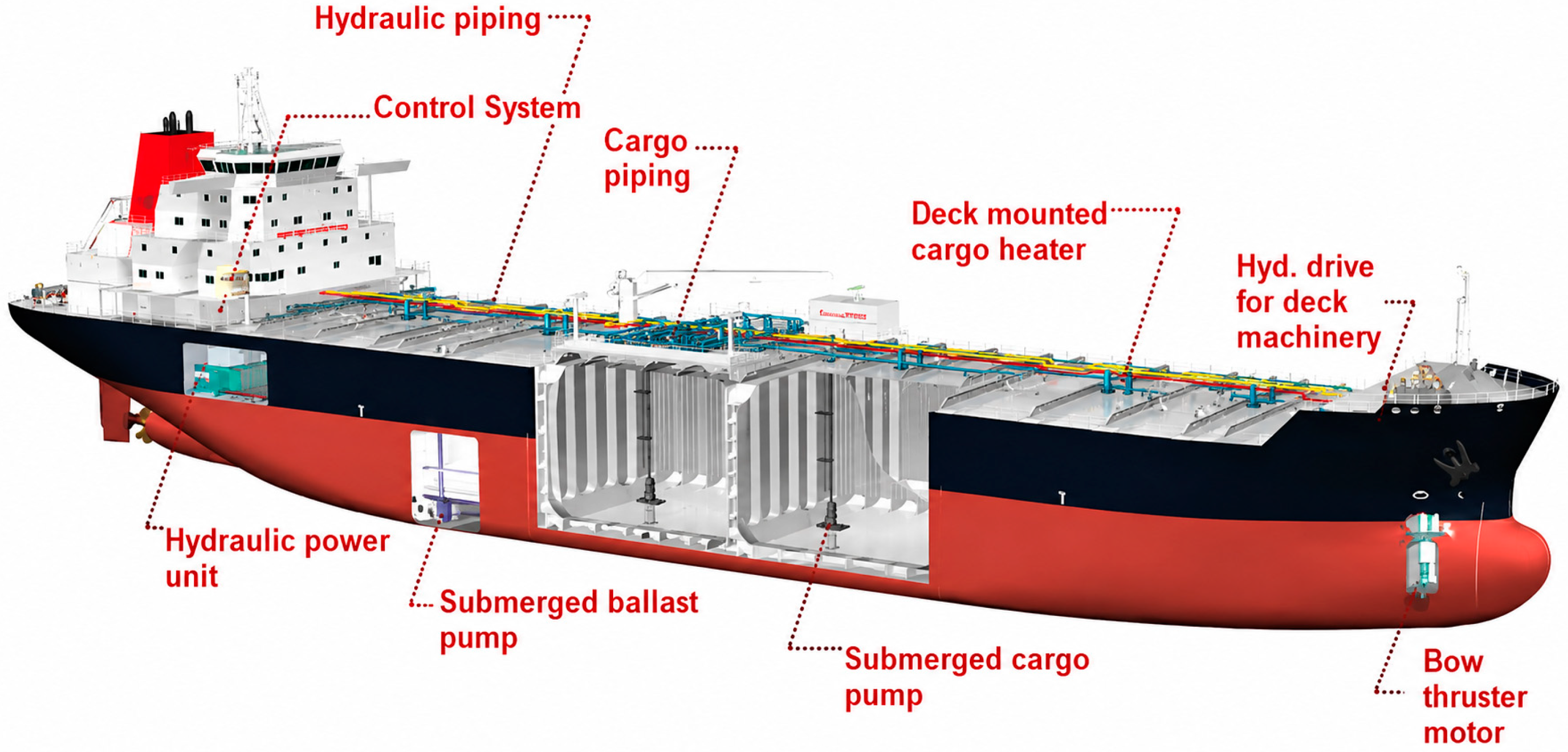
Decarbonization Object. For the practical application of the proposed methodology, an oil tanker was selected as the case study vessel. The choice of an oil tanker is primarily determined by its structural characteristics, which allow for a broader range of decarbonization technology options compared to other ship types. The suitability of oil tankers for the implementation of decarbonization technologies is further enhanced by their cargo handling process, which is based on pipeline systems rather than terminal equipment such as cranes. This eliminates the need for unobstructed access to cargo holds typically required for crane operations. For this reason, oil tankers have relatively large “open deck” areas. This provides sufficient space for the installation of wind-assisted propulsion technologies, such as Flettner rotors and kite systems, without interfering with cargo handling operations or reducing the safe distance to pipelines and cargo handling equipment. In addition, oil tankers have sufficient internal and open-deck space to accommodate carbon dioxide capture and storage (CCS) systems, which consist of absorption units and CO
2 storage tanks. However, installation of CCS technology can have a negative effect to cargo capacity and additionally may require onboard energy supply. Due to the shape of their hulls and their operational characteristics—which are typically associated with long voyages and a relatively constant cruising speed—oil tankers are also ideally suited for the implementation of air lubrication technology, which reduces hydrodynamic drag and fuel consumption. Furthermore, the structure of an oil tanker allows for an assessment of the interaction between different technologies, including their impact on the ship’s stability, autonomy, energy balance, and cargo capacity. For these reasons, an oil tanker can be considered a relevant object for a comprehensive assessment of the use of various decarbonization technologies. The oil tanker structural diagram is presented in
Figure 1.
For this case study a prototype oil tanker was selected with the parameters presented in
Table 3.
Structure of the Study. The proposed methodological framework consists of two main components, reflecting the sequential stages of multi-criteria evaluation of decarbonization solutions. The initial stage of the study involves the selection of decarbonization technologies and the corresponding evaluation criteria, followed by a preliminary comparative assessment that takes into account the characteristics of the selected case study vessel. In this case, SWOT analysis is a methodological approach that allows for a qualitative, interconnected assessment of the characteristics of selected decarbonization technologies based on the compiled information base and the completed assessments. The main advantage of this method, compared to relatively narrow, survey-based methods, is that the SWOT method draws on a wider range of information sources, including technical documentation, scientific publications, review articles, and other relevant data sources. The results from this stage serve as input data for the main phase of the study, during which a detailed analysis is conducted and optimal decarbonization solutions are selected using multi-criteria mathematical methods. Furthermore, the analysis framework allows for an iterative process: based on the results obtained, the initial assumptions and input data from the preliminary stage can be refined, and the multi-criteria evaluation cycle can be repeated to improve the robustness and reliability of the final outcomes.
SWOT Analysis. SWOT analysis (Strengths–Weaknesses–Opportunities–Threats) is an effective strategic assessment tool that enables the systematic evaluation of key internal factors (strengths and weaknesses) and external factors (opportunities and threats). This method is typically conducted in two main stages. Strengths and weaknesses represent the internal aspects of decarbonization technologies and are primarily associated with their direct operational applicability under current conditions and looking ahead to the medium-term decarbonization period. In contrast, opportunities and threats reflect external factors, focusing on future development prospects, technological improvement potential, and possible barriers, including political, geographical, social, and, in some cases, cultural influences. The analysis begins with the identification of SWOT factors and the construction of a SWOT matrix. Based on this matrix, an optimal set of strategies is formulated by combining internal and external factors [
71]. Conducting a SWOT analysis provides a significantly broader information base regarding the technologies under analysis and a comparison of their parameters, which is a key element in creating a targeted and relevant database, based on statistical information, for MCDM evaluation. As mentioned, in the context of this study, SWOT analysis serves as an initial evaluation tool, enabling a comparative assessment of decarbonization technologies and generating structured qualitative input data for the subsequent multi-criteria decision-making (MCDM) stage. Furthermore, it facilitates the identification of the most promising solutions, as well as their inherent limitations. The key decarbonization aspects identified by the authors for the application of SWOT analysis and their subsequent use in MCDM stages in the maritime sector—particularly for the decarbonization of existing vessels—are presented in
Table 4.
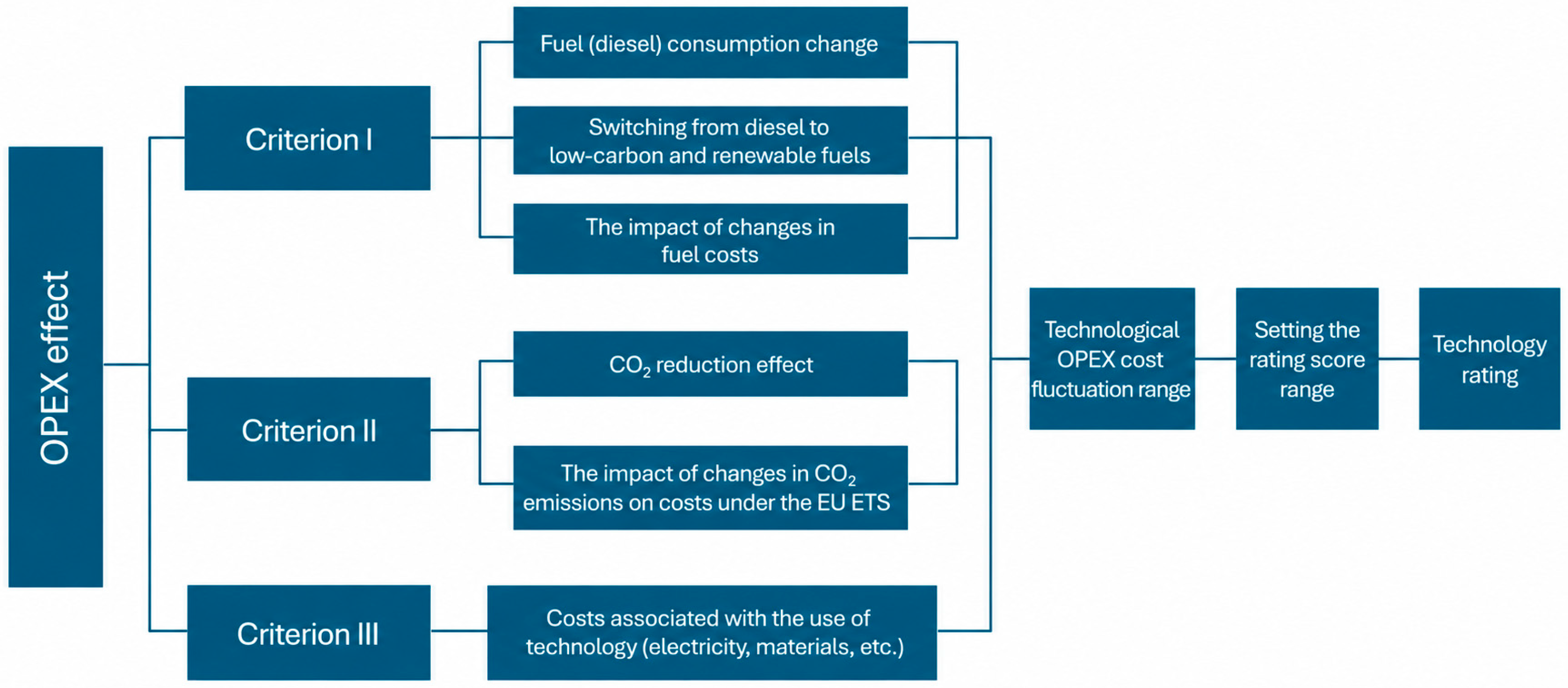
Based on the SWOT analysis of the information obtained, the effects of the technologies under comparison are evaluated according to the following criteria: quantitative or qualitative expression. The range of scores for the technologies under evaluation is identified by setting minimum and maximum score values. Quantitative criteria are scored by proportionally distributing points among the quantitative results of the evaluated alternatives, while qualitative criteria are assessed using descriptions such as “very good”, “good”, “average”, “poor”, and “negative, and based on the alternative’s effectiveness and considering the criteria description, a score is proportionally assigned among the evaluated alternatives. As an example of scoring, a sample scoring system for OPEX criterion alternatives is provided (see
Figure 2), on the basis of which analogical systems are applied to describe other criteria.
Multi-Criteria Mathematical Methods. The multi-criteria decision-making (MCDM) methodology was selected due to its capability to compare a set of decarbonization technologies based on multiple rationality criteria, which can be weighted according to their relative importance. As with survey methods, the weight matrix for the characteristics of the technologies under evaluation is formulated on a similar basis during the MCDM application phase, but based on significantly more representative, aggregated SWOT data. To mitigate the risk of uncertainty and improve the reliability of the evaluation, the proposed approach combines MCDM methods with SWOT analysis. This integration enables the creation of a broader information base and helps facilitate more balanced and informed decisions. Furthermore, MCDM methods not only allow for a comprehensive assessment of qualitative and quantitative criteria but also enable the comparison of several different decarbonization technologies, which ultimately helps identify the optimal decarbonization solution. In this context, when addressing practical decarbonization challenges, it is advisable to apply several multi-criteria decision-making methods simultaneously [
72,
73,
74] and to differentiate the results of decision-making according to the selected priority structures. Another important aspect of study involving the parallel application of multiple criteria decision-making (MCDM) methods is the ability to assess the robustness of the results obtained under varying scenario changes. In the present study, three widely used methods were applied concurrently: SAW (Simple Additive Weighting), TOPSIS (Technique for Order Preference by Similarity to an Ideal Solution), and COPRAS (Complex Proportional Assessment).
Study parameters. The main study parameters adopted include the following key components: the technological solutions being evaluated, applied to the medium-term decarbonization period of 2030–2035; and the assessment of decarbonization effectiveness using the “TtW” life-cycle components.
3. Results
In accordance with the developed methodological framework, this section addresses the main research tasks, including the application of SWOT analysis to the selected case study, the formation of input data for the multi-criteria evaluation of decarbonization methods, the development and implementation of the multi-criteria analysis algorithm using a computational tool, and the comparative evaluation of the results obtained after application of the methodology.
3.1. Application of SWOT Analysis to the Case Study
The summary of the SWOT analysis results for the selected case study is presented in
Table 4. Based on a preliminary assessment, the technologies selected for the research object were comparatively evaluated using the developed SWOT analysis with the aim of forming the initial dataset for the multi-criteria evaluation. Seven of the most promising decarbonization technologies for maritime transport were identified: HVO, LNG, air lubrication systems (ALS), Flettner rotors, waste heat recovery (WHR), carbon capture and storage (CCS), and kite-assisted propulsion systems. The comparative assessment is primarily based on the synthesis and generalization of information derived from the literature sources used in this study.
The results of the SWOT structural assessments are preliminary and are being refined through the practical application of the methodology. The results are presented in
Table 5.
The results presented in the table, in addition to the qualitative characteristics derived from a broad information base, in most cases reveal clear trade-offs between the technologies being compared. These findings support the applicability of multi-criteria evaluation methods to rank technologies. Based on the conducted SWOT analysis, each decarbonization technology was quantitatively assessed by assigning scores according to its strengths, weaknesses. The scores were assigned based on which alternative demonstrated the best characteristics in SWOT analysis. Based on the results of the SWOT analysis, a preliminary comparative evaluation table for decarbonization technologies has been compiled using a 6-point scale (6 being the highest score and 1 the lowest). The resulting scores are presented in
Table 6.
This table shows that, given the particular emphasis on technological maturity, it is reasonable to exclude two technologies during this transitional period under evaluation: ammonia and battery-based electrification, and to conduct a multi-criteria assessment using the filtered technologies, assigning weighting factors to each criterion.
Although CCS technology is not currently mature enough for use in shipping, it was included in further assessments because, according to the planned IMO and EU requirements, their implementation in accordance with the established standards is currently delayed. On this basis, the use of CCS and nuclear energy in shipping is considered one of the solutions to improve this situation. There is a possibility that by 2030, CCS technology in shipping will become suitable and mature for use.
SWOT analysis is widely used in the industrial and transportation sectors as a strategic assessment tool and is often included in companies’ annual decarbonization reports to evaluate operational efficiency, technological development, and potential risks. In the context of maritime transport decarbonization, SWOT analysis allows for the structuring of preliminary information on the strengths, weaknesses, opportunities, and threats of technologies, thereby providing a basis for the initial formation of a decision matrix. However, a SWOT analysis does not in itself provide a quantitative mechanism for determining the relative priority, rationality, or stability of alternative technological solutions under changing evaluation conditions. Therefore, in order to perform a comparative ranking of alternatives, assess the influence of weighting coefficients, and analyze the sensitivity or stability of technological priorities, multi-criteria decision-making (MCDM) methods are additionally applied in this study.
Fuel-based LNG technology is highly suitable for achieving medium-term decarbonization targets due to their relatively high technological maturity and compatibility with existing infrastructure. In particular, HVO demonstrates high flexibility and minimal integration requirements, while LNG remains a key transitional fuel despite challenges related to methane slip emissions.
Energy efficiency technologies, such as the air lubrication system (ALS), the Flettner rotor, kite technology, and waste heat recovery (WHR), offer significant potential for reducing fuel consumption and improving operational efficiency. Among these technologies, WHR technology in particular stands out as an exceptionally effective solution for improving efficiency, as it allows for the utilization of waste heat without the need for additional fuel. Wind-assisted technologies provide substantial benefits under favorable environmental conditions.
Although CCS technology is associated with high operational costs, significant energy demand, and substantial space requirements, it is recognized as a strategically important long-term solution due to its potential to achieve substantial emission reductions. Its role is expected to become increasingly important with the introduction of stricter regulatory frameworks and carbon pricing mechanisms.
Given the staged nature of the analysis, as well as the methodological objective of the research, primarily related to the method’s implementation, technologies such as ammonia-based propulsion and battery electrification were excluded at the final selection stage due to the worst score results and due to current limitations related to safety, infrastructure availability, and insufficient energy density, particularly for long-distance maritime operations. However, it should be noted that sufficiently developed terminal infrastructure for ammonia transportation by oil tankers exists to support its widespread use as a fuel.
This integrated approach is essential to balance economic feasibility, operational performance, and compliance with evolving International Maritime Organization (IMO) and European Union (EU) requirements.
Based on the results of the primary SWOT analysis, two decarbonization technologies were eliminated, and multi-criteria evaluation matrices can further be developed for the technologies that performed best in the initial assessment.
3.2. Fundamentals of Multi-Criteria Analysis Methodology and Implementation Principles
Each multi-criteria decision-making (MCDM) method is based on an evaluation criterion analogous to an objective function. For a set of alternatives
Aj (
j = 1, 2, …, n), where n is the number of alternatives, the best alternative corresponds to the maximum (or minimum) value of the aggregated evaluation criterion, depending on the nature of the problem. All alternatives are ranked according to the values of this criterion in either descending or ascending order. It should be noted that such ranking approaches are not applicable when only a single alternative is considered. Since different MCDM methods possess distinct analytical properties, only those methods with well-established characteristics are applied in this study, namely: SAW (Simple Additive Weighting), TOPSIS (Technique for Order Preference by Similarity to an Ideal Solution), and COPRAS (Complex Proportional Assessment). The foundation of quantitative multi-criteria decision-making (MCDM) methods is the decision matrix:
where
rij represents the value of the
i-th criterion for the
j-th alternative. These values are obtained either from available statistical data or from expert evaluations. In addition, a weight vector is defined as:
where
m denotes the number of criteria and n denotes the number of compared alternatives. Since the criteria are typically expressed in different measurement units, their aggregation into a single evaluation criterion is only possible after data normalization. A brief description of the methods applied in this study is provided below. For the SAW and COPRAS methods [
52,
80], the so-called classical normalization is applied:
(
), where
rij is the value of the
i-th criterion for the
j-th alternative.
The criterion
Sj in the SAW method is calculated using the formula:
The sum of the values of criterion Sj for all n alternatives equals one: and .
Evaluation of decarbonization technology systems using the COPRAS method.
The values of criterion
Zj in the COPRAS method are determined using the formula:
where
is the sum of the weighted normalized values
to be maximized according to Formula (3) for each alternative
j;
—the sum of the minimized weighted normalized values
sum;
.
The sum of the evaluation components for all alternatives is equal to the sum of the weights of the maximized criteria and .
The TOPSIS method uses vector data normalization.
The TOPSIS method determines the optimal alternative
V* and the worst alternative
V−:
where
I1 (
I2) denotes the set of indices of the criteria to be maximized (minimized), and
ωi denotes the weight of the
i criterion.
The total distance
of each alternative under consideration to the best alternative
V* and the distance
to the worst alternative
V− are calculated:
The aggregated criterion
of the TOPSIS method is calculated using the following formula:
When the values of the criteria are multidimensional, the aggregated criteria of the SAW (or COPRAS) methods can be used to evaluate the attractiveness of individual alternatives. Experts determine the maximum (minimum) value for each criterion. For maximizing criteria, the value
is calculated using the formula:
For the minimizing criteria, the value
is calculated accordingly using the formula:
where
max ri (
min ri) is the maximum (minimum) value of the
i-th criterion as determined by the experts.
The maximum theoretical value of criterion S is equal to one: max S = 1. The calculated value of S reflects the degree of attractiveness of the object. It is most convenient to present the value of S on a percentage scale. This scale reflects the comparison of the object with the maximum possible value, which is 100%.
Criterion values can be expressed as percentages, on a ten-point scale, a five-point scale, or another system. All criteria must be maximized.
The value of criterion
S in the SAW method is calculated using the formula:
where
ri is the value of the
i-th criterion for evaluation variant (object)
i, and
ωi is the weight of the
i-th criterion. The maximum value of criterion
S depends on the chosen evaluation scale. For example, if the units of measurement are expressed as percentages, the maximum value of
S is 100%.
Including hypothetical best and worst case alternatives among the alternatives under comparison, along with the isolated alternative being evaluated, allows for the application of any quantitative multi-criteria method to the evaluation and, by utilizing the properties of these methods, for an absolute assessment of the condition of a specific object. The values of the criteria for these hypothetical alternatives can be determined by experts or obtained by analyzing statistical data. The SAW and COPRAS methods were used to implement this idea. After calculating the values of the criteria , and for the isolated object under evaluation, the distances to the criterion value of the worst-case hypothetical alternative and to the criterion value of the best-case hypothetical alternative . A positive difference indicates that the object’s evaluation is closer to the best alternative than to the worst alternative, i.e., its position is better than average. The ratio indicates the object’s absolute evaluation relative to the maximum value, which is equal to one.
The value of evaluation criterion (11) in this method ranges from 0 to 1. The properties of the TOPSIS method allow for an immediate absolute assessment of an object’s position by comparing the evaluation to the average criterion value of 0.5. Other multi-criteria methods, such as SAW and COPRAS, do not possess such properties.
3.3. Multi-Criteria Analysis Implementation
The objective of the task is to analyze the implementation of greenhouse gas (GHG) emission reduction targets, assess CO
2 reduction potential, and evaluate system energy efficiency and safety aspects. Based on the used models, a multi-criteria evaluation of decarbonization technologies implemented onboard vessels was performed using three MCDM methods: SAW [
81], TOPSIS [
52], and COPRAS [
55]. These methods are widely applied in the field of transport technologies, including SAW [
80], TOPSIS [
82], and COPRAS [
83].
The initial data used in the calculations were selected based on a literature review and input technology list was defined by results of conducted SWOT analysis. Decarbonization technologies selected for evaluation are presented in
Table 7, along with definitions of the input alternatives.
Five groups of criteria were selected for the multi-criteria analysis; given the methodological considerations in this specific case, it is reasonable to combine them, while in future studies it would be appropriate to examine these criteria in greater detail. Based on the results obtained from the SWOT analysis, an evaluated and normalized decision matrix was constructed, forming the input dataset for the subsequent multi-criteria analysis and presented in
Table 8.
Weight factors were assigned based on the authors’ expert judgment, summarizing data sources when applying the SWOT method. In the authors’ expert assessment, this prioritization is most appropriate because the key evaluation criterion in this article is the decarbonization performance, since the focus is on the IMO’s decarbonization targets, a weighting factor of 0.500 was applied to this criterion, while the other criteria were also allocated based on expert assessment and taking into account the usual priorities of shipping market participants. Since the purpose of this article is to present a possible methodology for evaluating decarbonization technologies based on rationality criteria and its applicability, and, last but not least, to assess the sensitivity of the results, rather than to obtain precise results, there was no need to determine these weighting coefficients differently. Weighting coefficients should be determined and applied on a case-by-case basis, taking into account what is most important to the evaluator.
The data from this matrix, together with formulas (3–14), are being used to compile summaries of the results of the multi-criteria analysis of element alternatives for each of the multi-criteria methods: SAW, COPRAS, and TOPSIS.
A weighted normalized solution matrix is constructed using the SAW method and presented in
Table 9.
A weighted normalized solution matrix is constructed using the COPRAS method and presented in
Table 10.
Next, we will apply the TOPSIS method to determine the priority order of ship decarbonization technologies, and we will present the results of the TOPSIS calculations in
Table 11.
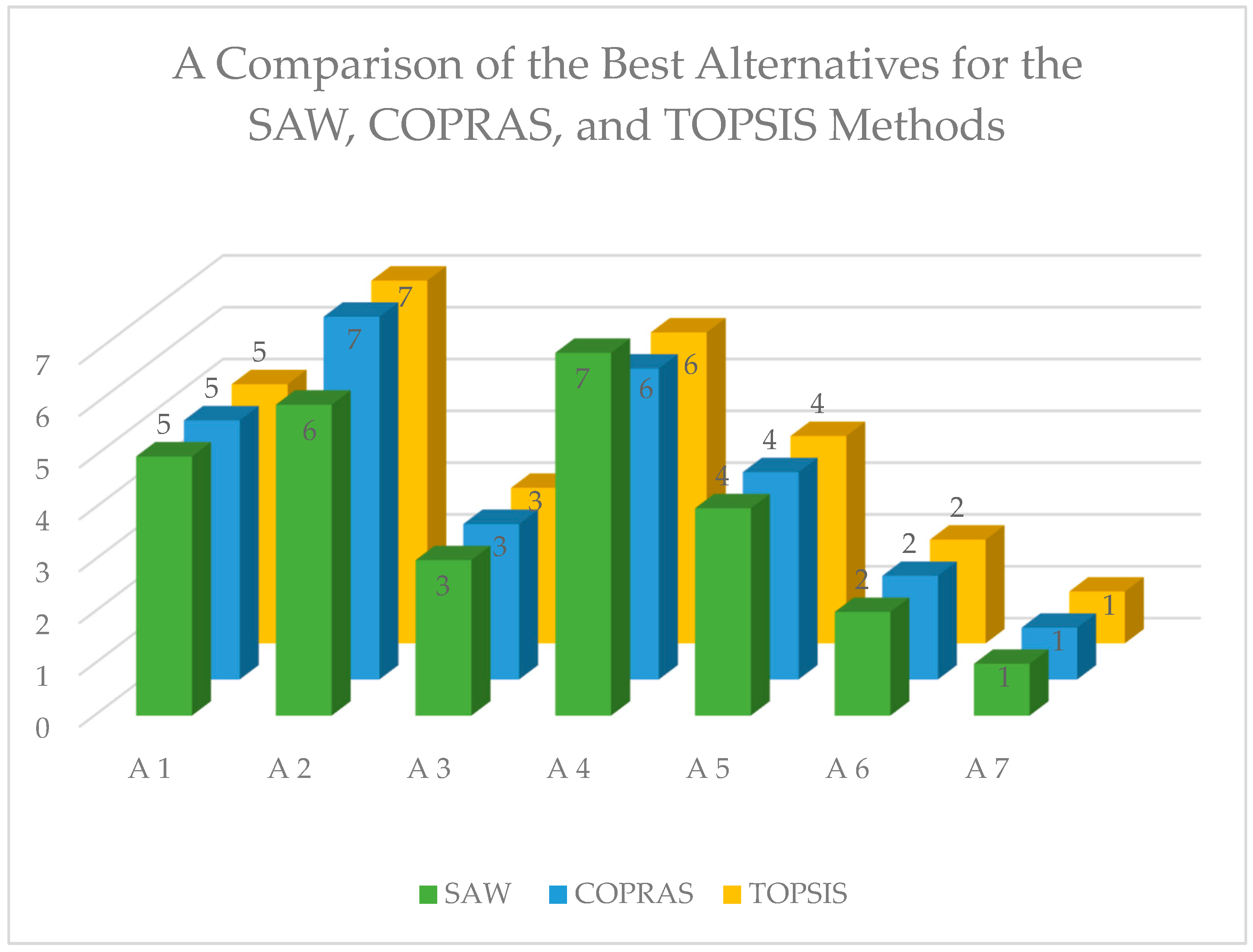
As shown by a comparison of the results of absolute and relative evaluations, the TOPSIS method’s criterion values and the corresponding decarbonization parameters differ only slightly, even though the relative evaluation was obtained by comparing all criteria together, while the absolute evaluation was obtained by comparing each criterion separately with hypothetical worst-case and best-case parameters. The priority rankings obtained using the SAW, COPRAS, and TOPSIS methods following a multi-criteria analysis are presented in
Table 12 and
Figure 3.
The results indicate that the highest-ranked technologies, all three methods yielded the same results (top-ranked technologies). Only minor variations were observed among the lower-ranked technologies.
After determining the criteria weights and applying three different multi-criteria decision-making (MCDM) methods, it was found that alternative A7 (CCS technology) represents the optimal decarbonization solution across all applied methods, while alternative A6 (Kite technology) ranks as the second-best option, A3 (Air lubrication (PCDR) technology) ranks as third-best option, A5 (Flettner rotor technology) ranks as fourth-best option and A1 (LNG) ranks as fifth-best option (see
Figure 3). The remaining alternatives are ranked the same using COPRAS and TOPSIS methods and only the SAW method represents a different ranking for the lowest ranking range due to the mathematical properties of this method. Identical ranking results between the COPRAS and TOPSIS methods indicate that the results remain stable. The criterion for CO
2 emission reduction, which was assigned the highest weighting factor in the matrix (0.500), had the greatest influence on the results. For this reason, all methods prioritized alternatives with the highest emission reduction potential. The TOPSIS method proved to be the most sensitive to significant deviations from the ideal result; therefore, alternatives that performed poorly on the CO
2 emission reduction criterion were significantly downgraded based on this most important criterion. Thus, alternative A2 (HVO fuel) became the worst option, as the criterion with the highest weighting coefficient had the lowest score. The SAW method remained more compensatory, thus allowing good economic and technical criteria to partially offset the weaker results of the CO
2 emission reduction criterion. It is precisely for this reason that, following evaluations using the SAW method, alternative A2 (HVO fuel) was rated higher than alternative A4 (WHR). The similarity of the results obtained using the TOPSIS and COPRAS methods indicates that both methods focus primarily on the dominant criteria, which are assigned high weighting coefficients. In this study, the CO
2 emission reduction criterion, with a weight of 0.500, had a decisive influence. Consequently, both methods prioritized technologies with the highest decarbonization potential, primarily CCS and wind turbine technology. This convergence further confirms the reliability of the results obtained.
The evaluation of ship decarbonization technologies involves multiple, often conflicting criteria; therefore, a single method cannot equally reflect the priorities of all stakeholders. Each MCDM method provides a distinct analytical perspective on the decision problem. The results confirm that different MCDM methods interpret the same initial data differently. The SAW method exhibits a pronounced compensatory effect, whereby strong economic or operational indicators can partially offset the insufficient effect of CO2 emission reduction. In contrast, the TOPSIS method shows greater sensitivity to critically weak criteria, as it is based on determining the distance to the ideal solution. The COPRAS method occupies an intermediate position, allowing the influence of positive and negative criteria on the final rationality of the technological solution to be considered separately.
3.4. Evaluation of Sensitivity and Stability of the Results in Parallel Application MCDM
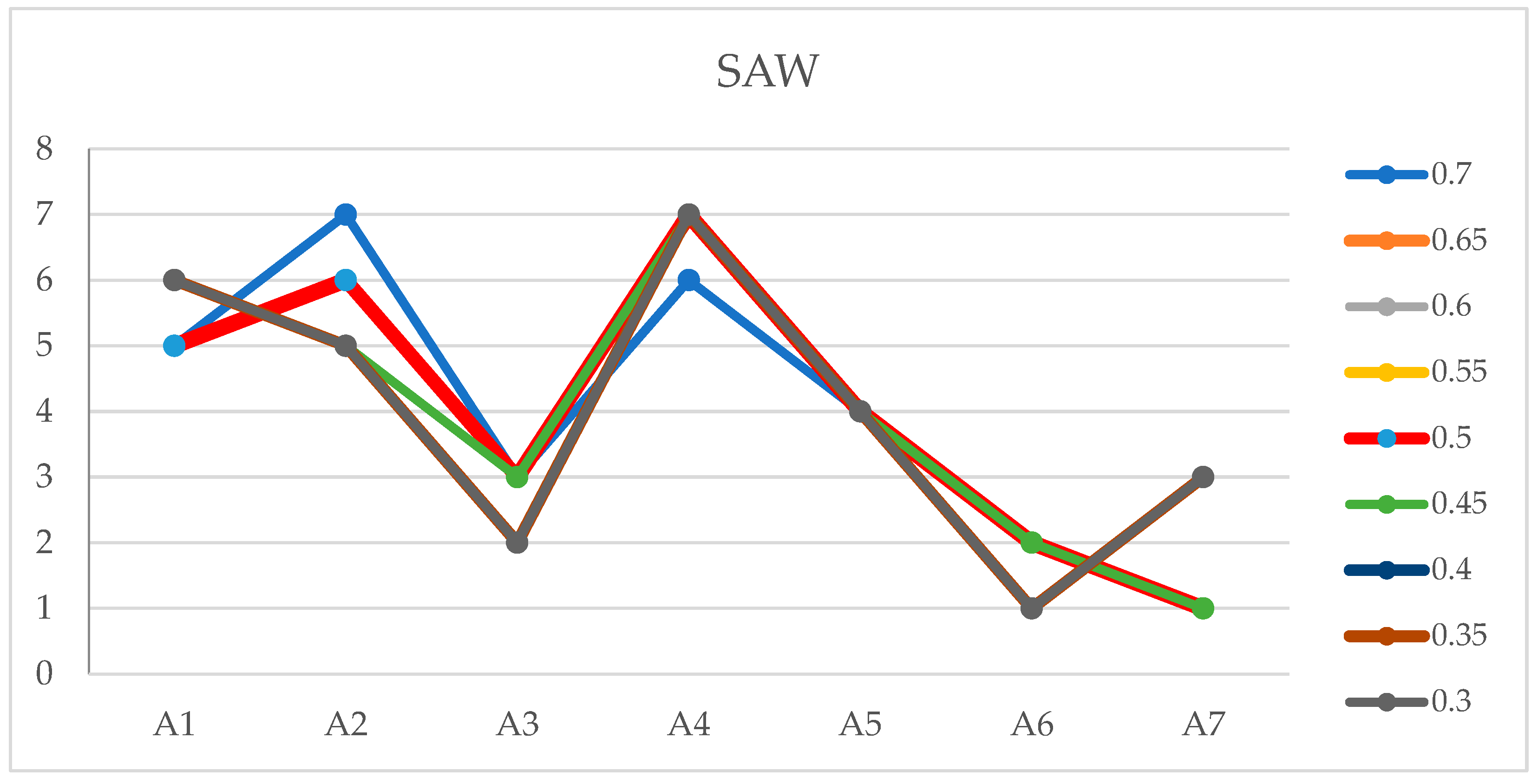
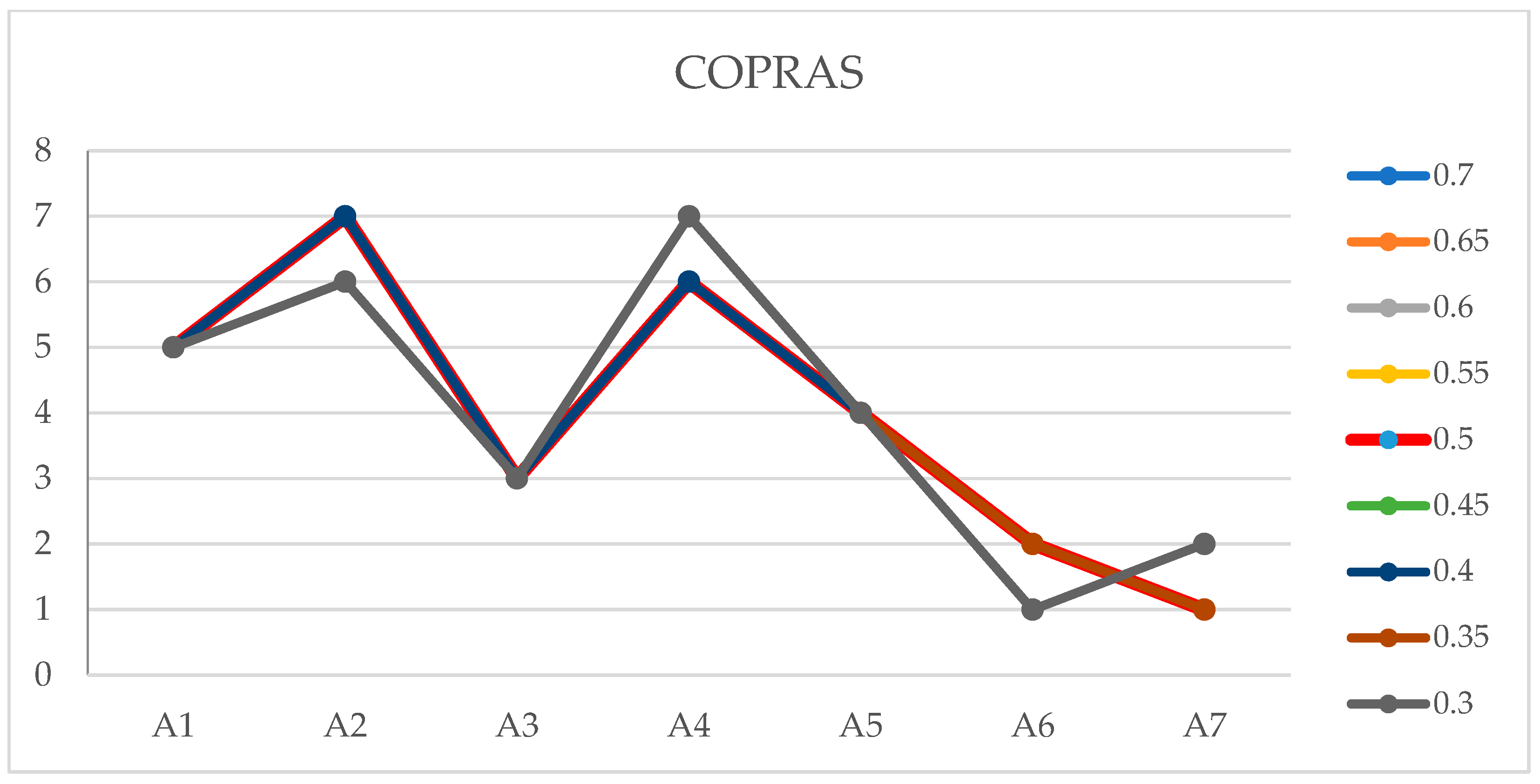
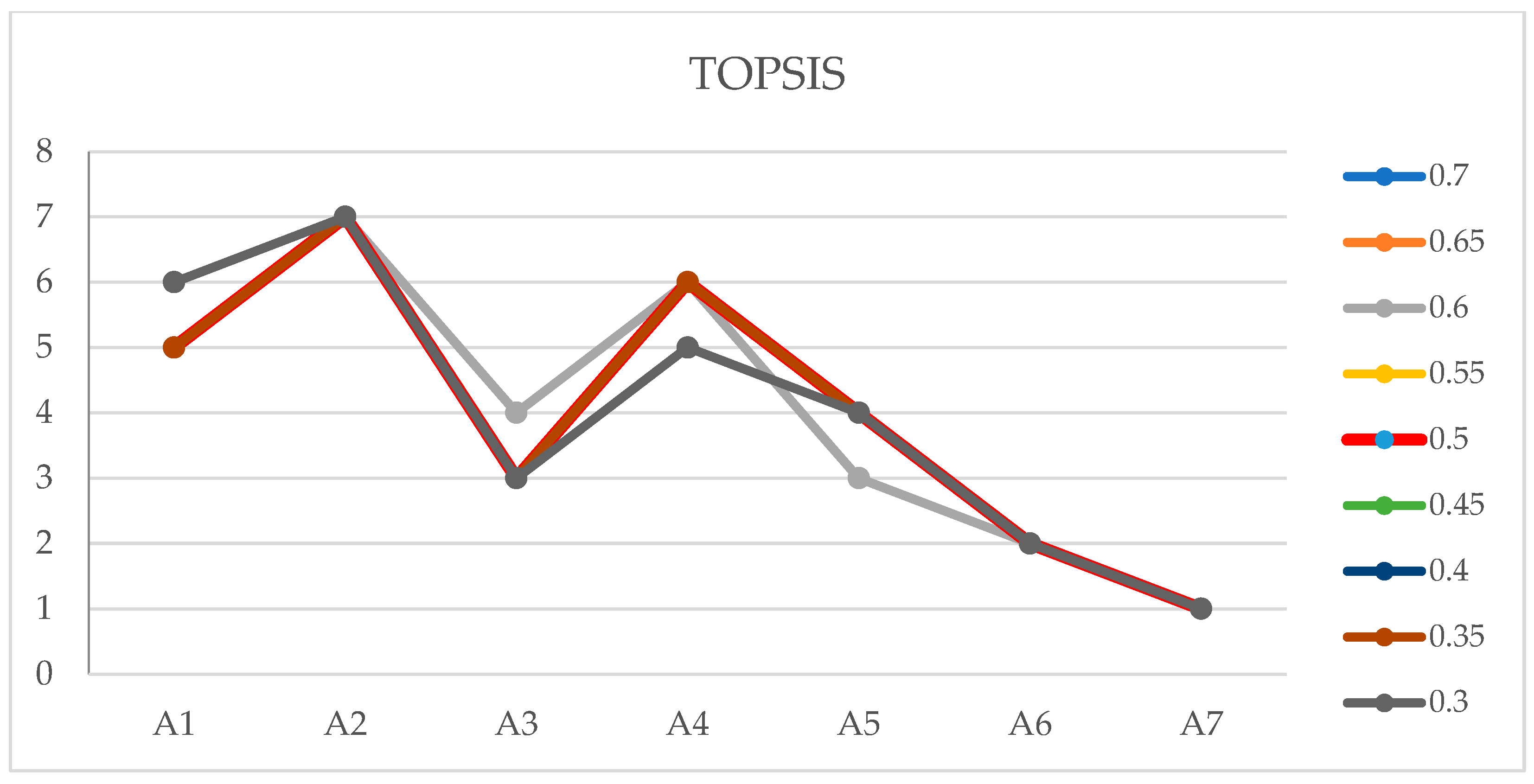
The results confirm that different MCDM methods interpret the same initial data differently. The SAW method exhibits a pronounced compensatory effect, whereby strong economic or operational indicators can partially offset the insufficient effect of CO2 emission reduction. In contrast, the TOPSIS method shows greater sensitivity to critically weak criteria, as it is based on determining the distance to the ideal solution. The COPRAS method occupies an intermediate position, allowing the influence of positive and negative criteria on the final rationality of the technological solution to be considered separately. Different methods may yield varying rankings of alternatives; however, their comparison provides valuable insight into the robustness and stability of the decision. If the same technology ranks highest across SAW, TOPSIS, and COPRAS, this indicates strong dominance. On the other hand, differences in ratings highlight the most sensitive criteria that influence the final decision. Finally, the application of several multi-criteria methods allows for increased reliability of decisions and reduces the influence of the mathematical logic of a single method on the final results. Since different methods are based on varying principles for evaluating alternatives, their application makes it possible to assess the stability of results and the sensitivity of alternatives. Alternatives that maintain high rankings across different methods can be considered effective, while significant differences in rankings indicate greater dependence on the chosen evaluation model. Therefore, the use of multiple methods in the evaluation of decarbonization technologies allows for more informed and methodologically sound decisions. Once the results were obtained, a sensitivity analysis was performed, focusing on the key evaluation criterion in this study: the reduction in CO2 emissions. By changing the weighting coefficient of this criterion, while proportionally reducing or increasing the values of other weighting coefficients, different results were obtained with a changing order of priority for decarbonization measures. Based on these results, it is possible to determine the critical relative thresholds for changing weighting coefficients; once these thresholds are exceeded, the results of the method change significantly, thereby creating a different distribution of decarbonization measure priorities. The sensitivity analysis was conducted by evaluating possible changes in weight coefficients within a range of a 20% increase or decrease. The parallel application of several multi-criteria methods allowed for an increase in the reliability of the decisions made and a reduction in the influence of the limitations of individual mathematical algorithms. The convergence of priorities across different methods can be viewed as an indicator of high decision reliability, while differences in rankings allow for the identification of the most sensitive criteria and alternatives.
Following the sensitivity analysis using the SAW, COPRAS, and TOPSIS methods, the results are presented in
Figure 4,
Figure 5 and
Figure 6.
After conducting sensitivity analyses using the SAW, COPRAS, and TOPSIS methods, the following results were obtained. For the SAW method, the critical relative threshold at which the order of priority of decarbonization measures begins to change occurs when the weighting coefficient is reduced by 10% or increased by 20%. In the case of the COPRAS method, the critical relative thresholds are distributed as follows: when the weighting coefficient is reduced by 15%, the order of priority of decarbonization measures begins to change, while when the weighting coefficient is increased to 20%, no changes in the priorities of decarbonization measures were observed. In the case of the TOPSIS method, the critical relative thresholds are distributed as follows: when the weighting factor is reduced by 20%, the order of priority of decarbonization measures begins to change, and when the weighting factor is increased by 10%, the order of priority of decarbonization measures begins to change. When evaluating all multi-criteria methods together, it can be concluded that when changing the key evaluation criterion of this study—CO2 emission reduction—the critical relative thresholds for coefficient changes, both when increasing and decreasing the criterion’s weighting coefficient, reach 10%.
In this study, stability is defined as an alternative’s ability to maintain its relative ranking position under different weighing factor conditions and when applying different multi-criteria decision-making methods. After conducting a sensitivity analysis and evaluating the results, it can be seen that the evaluation results show a sufficiently high level of stability when changing the weighting factor of the main criterion—CO2 emission reduction. In all applied MCDM methods, alternatives A7 and A6 consistently maintained the top positions; therefore, these technologies can be considered the most reliable and the least sensitive to changes in weighting factors. It was also found that the COPRAS method exhibits the highest stability of results, as changes in the priorities of the alternatives were observed only after reducing the weight of the CO2 criterion by more than 15%, and no significant changes in priorities were observed when the weight was increased to 20%. The TOPSIS method exhibited high sensitivity to critically weak criteria—changes in priorities began to be detected when the weight was reduced by 20% or increased by 10%. However, the SAW method was the most sensitive to changes in weight factors due to the method’s own compensatory effect, as changes in the priorities of the alternatives were observed even after reducing the weight of the CO2 criterion by 10%. The overall distribution of results among the SAW, COPRAS, and TOPSIS methods suggests that the proposed evaluation model exhibits high reliability. Meanwhile, the differences in rankings among lower-priority alternatives indicate greater dependence on the chosen mathematical evaluation model and sensitivity to changes in criterion weights.
4. Conclusions and Discussion
The results of the methodological approaches applied during the research confirm the feasibility of integrating SWOT analysis with multi-criteria decision-making (MCDM) models, as well as a sensitivity analysis of the methods to variability in boundary conditions, to achieve a comprehensive and balanced assessment of decarbonization technologies for operational vessels. Moreover, more comprehensive and, importantly, compromise-based technology rankings are achieved through the parallel application of multiple MCDM models with different decision-making algorithms and their underlying mathematical structures.
The use of a SWOT method specifically structured for assessing the basic aspects of decarbonization at the initial stage of the research allowed for a preliminary ranking of technological methods for decarbonizing operational vessels for the medium term (2030–2035) and the formation of a representative information base for the subsequent application of multi-criteria research methods. By parallelizing the SAW (Simple Additive Weighting), TOPSIS (Technique for Order Preference by Similarity to an Ideal Solution), and COPRAS (Complex Proportional Assessment) methods, a comparative analysis and ranking of low-carbon and renewable fuels (LNG and HVO) and decarbonization technologies (WHR, CCS, Flettner rotor, etc.) for an operating oil tanker was conducted.
The parallel application of MCDM in the study not only increased transparency but also provided a mechanism for combined verification of results built into the methods’ mathematical solution algorithms. Compared to the COPRAS and TOPSIS methods, the SAW method produced different ranking results due to its compensatory principle. However, the distribution of the highest-ranked alternatives was found to be analogous across all applied methods. Therefore, based on the conducted multi-criteria assessment, it can be concluded that the most suitable alternative for the prototype tanker is the CCS technology, which ranked first due to its high decarbonization effect. In the evaluated case, decarbonization was assigned the highest weighting factor among all criteria. Nevertheless, the Kite technology, ranked second, and the air lubrication (PCDR) technology, ranked third, may also be considered attractive alternatives because of their favorable decarbonization potential combined with their already relatively high safety level and technological maturity. Thus, the resulting rankings for high-priority technologies (CCS and Kite) across all three methods confirmed the high level of stability of the resulting rankings. In contrast, alternatives with lower rankings (WHR and HVO) exhibit minor variability in the mathematical logic of individual methods, which should be considered when solving practical problems using MCDM.
Of practical importance were the results of the study examining the sensitivity of all three methods to variable changes in the weighting factors of the criteria, which is relevant for the constantly changing real-world priorities of a given decarbonization technology. Thus, the consistency of the results for the CCS and WHR alternatives across all methods confirms the high level of reliability of the decisions made. In contrast, variations in the ranking of intermediate alternatives (e.g., the Flettner rotor) demonstrate sensitivity to the mathematical logic of individual methods. Thus, the combined use of multiple methods allows for the identification of a more balanced, compromise solution, reducing the risk of bias associated with any single method.
The performed sensitivity and stability analysis demonstrated that the integrated application of MCDM methods ensures sufficiently consistent and reliable results in the evaluation of ship decarbonization technologies. The identical results for the highest-priority alternatives obtained using the SAW, COPRAS, and TOPSIS methods confirm the high level of stability of the evaluation results. Meanwhile, the differences among lower-priority alternatives indicate that the final results depend in part on the mathematical structure and evaluation logic of the method used. Therefore, the parallel application of several MCDM methods reduces the influence of any single method’s dominance and creates the conditions for making more well-founded and balanced decisions.
Decarbonization technologies are complex and involve numerous interrelated factors. The results of multi-criteria analysis are, to a certain extent, determined by differences in the mathematical logic of the algorithms and the mathematical principles underlying the evaluation of various methods. The SAW method is the simplest. The best alternative is the one with the largest number of “stable” criteria. The COPRAS method more clearly distinguishes between benefit and cost criteria, thereby better identifying economically viable alternatives. The TOPSIS method is more sensitive to extreme values and negative characteristics, so alternatives with even one weak criterion may be significantly underestimated. No multi-criteria method is “universally comprehensive.” A single method is sufficient when the problem is simple, the number of criteria is small, the alternatives differ only slightly, and the results are almost obvious. The conducted research has shown that when addressing complex decarbonization challenges (based on comprehensive assessments of CO2 emission reductions, safety, cost-effectiveness, energy efficiency, and other potential criteria), particularly for an operating fleet, the parallel application of multiple MCDMs is prioritized.
Based on the obtained results, at a subsequent, more advanced stage of the study, the authors plan to conduct a multi-criteria analysis of the individual structural components of each of the rated decarbonization technologies using the TOPSIS method. This will be accomplished using a multi-criteria design approach. It is planned to determine the relative importance, priority ranking, and utility of alternative decarbonization technology configurations, which will enable the identification of the most optimal solution among the options under consideration.
Furthermore, several opportunities for improving the integrated assessment algorithm were identified. First, it is recommended to align the achieved decarbonization performances with the evolving regulatory framework, including the EU Emissions Trading System (EU ETS). This will allow for the inclusion of potentially significant additional operating costs associated with insufficient decarbonization efficiency in operating cost assessments. Furthermore, it would be advisable to expand the integrated application of evaluation criteria within multi-criteria decision-making (MCDM) methods, ensuring a closer relationship between technological, environmental, economic, and operational aspects at the final decision-making stage. Finally, the methodology should include an operational mechanism for adjusting weighting factors based on real-world decarbonization efficiency data, thereby increasing the adaptability and accuracy of the model. Furthermore, it would be advisable to adapt this method by expanding the list of evaluation criteria.
Given the aforementioned areas for improvement and expansion, practical testing of the methodology is planned for solving real-world decarbonization problems in the maritime sector. Thus, the study confirms that prior to the practical application of multi-criteria decision-making methods to address maritime transport decarbonization issues, particularly in conditions of high uncertainty and conflicting evaluation criteria, it is advisable to conduct a preliminary methodological validation of these methods.