Article

Occurrence of Microplastic-like Particles in Opisthonema libertate and Sardinops sagax from the Gulf of California: Seasonal Patterns, Morphophysiological Responses, and Fisheries Management Implications

by
María José Ruelas Carlón
1,
Apolinar Santamaría Miranda
1,*,
Juan Pablo Apún Molina
1,
Luis Tupak Aguilar Bustos
2,
Máximo García Marciano
1,
Luis Parmenio Suescún-Bolívar
3,
Martín Armando Román Vega
1,* and
Mauro Espinoza Ortiz
1
1
Centro Interdisciplinario de Investigación para el Desarrollo Integral Regional, Unidad Sinaloa, Instituto Politécnico Nacional, Guasave 81100, Mexico
2
Instituto Politécnico Nacional, Centro de Investigación y Desarrollo de Tecnología Digital, Tijuana 22435, Mexico
3
Licenciatura en Educación con Énfasis en Ciencias Sociales y Ambientales (LECSA), Universidad de Cartagena, Cartagena de Indias 130001, Colombia
*
Authors to whom correspondence should be addressed.
J. Mar. Sci. Eng. 2026, 14(11), 1024; https://doi.org/10.3390/jmse14111024
Submission received: 22 April 2026 / Revised: 28 May 2026 / Accepted: 28 May 2026 / Published: 31 May 2026
(This article belongs to the Special Issue Microplastics in Aquaculture and Fisheries Systems)

Abstract

The proliferation of microplastics in marine environments threatens coastal ecosystems via ingestion by planktivorous fish. This study evaluated the occurrence of microplastic-like particles (MPLPs), characterized morphologically, in the digestive tracts of Opisthonema libertate and Sardinops sagax in the Gulf of California. Blue and green fibers dominated the assemblages. O. libertate exhibited peak abundance in autumn (74.08 particles/individual), while S. sagax peaked in winter (78.10 particles/individual). Species-specific analysis revealed distinct patterns: S. sagax showed a strong positive correlation between MPLP abundance and both total length (r = 0.71, p < 0.01) and body weight (r = 0.68, p < 0.05), indicating ontogenetic accumulation. Furthermore, a significant negative correlation between MPLPs and triglycerides in S. sagax (r = −0.38, p < 0.05) suggests a potential metabolic cost. Conversely, ingestion in O. libertate appeared incidental. These findings document chronic exposure in key forage fish, with high fiber prevalence suggesting abandoned fishing gear as a likely source. While spectroscopic validation is needed, these results highlight the necessity of integrating microplastic monitoring into sustainable fisheries management to ensure food security in the region.

1. Introduction

Plastic debris is now pervasive across marine environments and represents a persistent form of contamination with implications for ecosystem functioning, fisheries productivity, and food safety [1,2]. The durability of synthetic polymers, combined with continuous inputs from land- and sea-based sources, has led to their widespread distribution from surface waters to sediments and marine biota [2,3,4]. Through physical, chemical, and photolytic processes, larger plastic items progressively fragment into particles smaller than 5 mm, commonly referred to as microplastics [5,6].
Microplastics originate from both primary and secondary sources. Primary microplastics are intentionally manufactured at small sizes for industrial and cosmetic applications, whereas secondary microplastics result from the breakdown of larger plastic debris such as packaging materials, agricultural films, synthetic textiles, and fishing gear [7,8,9,10]. In regions with intensive fishing activity, including the Gulf of California, abandoned, lost, or discarded fishing gear (ALDFG) represents a significant and continuous source of plastic inputs. Ropes, nets, and trawl materials release synthetic fibers that disperse throughout pelagic systems and may remain suspended in the water column for extended periods [11,12].
Small pelagic fish are particularly susceptible to the ingestion of these particles due to their feeding strategies. Species such as Opisthonema libertate and Sardinops sagax feed by filtering plankton and suspended matter with limited selectivity, increasing the likelihood of ingesting particles that resemble natural prey in size, color, or density [12,13]. Ingestion may occur directly during feeding or indirectly through contaminated zooplankton, facilitating the incorporation of microplastics into the food web [5,11]. Experimental and field studies have associated microplastic ingestion in teleost fish with physiological and biochemical alterations, including cellular stress, tissue damage, metabolic disruption, and impaired reproductive performance [14]. These effects raise concerns about potential consequences for population dynamics, ecosystem functioning, and trophic transfer to higher predators, including species of commercial and conservation relevance [2].
Within the Gulf of California, O. libertate and S. sagax are key components of small pelagic fisheries and play a central role in regional trophic dynamics. These species transfer energy from planktonic production to higher trophic levels, supporting populations of tunas, marine mammals, and seabirds [15]. Their ecological importance, high abundance, and direct relevance to human consumption make them suitable bioindicators for assessing exposure to plastic contamination in pelagic ecosystems. Despite this, information on the occurrence and potential biological implications of microplastic-like particles in these species remains limited.
This study investigates the presence of MPLPs in O. libertate and S. sagax from the Gulf of California. Specifically, it aims to (I) characterize the occurrence and morphology of particles in the digestive tract; (II) evaluate seasonal, size-related, and sex-related variation in MPLP abundance; (III) assess morphophysiological and biochemical parameters; and (IV) explore potential relationships between MPLP load and indicators of physiological condition. Because no spectroscopic analyses were performed, all particles are conservatively classified as MPLPs, and interpretations regarding their composition and origin are made with caution.

2. Materials and Methods

2.1. Study Area

The Gulf of California (Figure 1) is a semi-enclosed subtropical sea approximately 1200 km long, with a width of 80–200 km and a surface area near 160,000 km2 [16]. Its hydrography follows a marked seasonal cycle. Winter and spring are dominated by coastal upwelling along the eastern margin, sustaining high primary and secondary productivity. Autumn transitions toward anticyclonic circulation promote convergence and the retention of suspended particles [17]. These patterns shape the spatial and temporal distribution of plastic-like particles in the water column, influencing the exposure of pelagic fish.

2.2. Specimen Collection

A total of 150 specimens were analyzed in this study, including 90 Opisthonema libertate and 60 Sardinops sagax. The fish were collected in three seasons: autumn (October–November 2024), winter (January–February 2025), and spring (April–May 2025). Autumn and spring samples were obtained onboard the research vessel Dr. Jorge Carranza Fraser (Instituto Mexicano de Investigación en Pesca y Acuacultura Sustentables, IMIPAS) using midwater trawls (NMWT 25/25 and BSC 79/107). Winter sampling was conducted aboard the commercial vessel Karla Melina (Cooperativa “Guasave 400”). Fish schools were located with sonar, and Sardinops sagax was not available in the spring.
Specimens were stored on ice immediately after capture and transported to the Laboratorio de Diagnóstico Patológico-Fisiológico y de Calidad Reproductiva de Peces, Moluscos y Crustáceos (IPN-CIIDIR Sinaloa, Guasave, Mexico) for processing.
Biological samples were obtained through both research cruises and commercial fishing vessels, depending on seasonal availability; while this introduces a potential source of variation in sampling platforms, standardized handling protocols were strictly followed to minimize external contamination (specific measures are detailed in Section 2.4).

2.3. Morphometric Measurements and Physiological Indices

Total length (TL, cm) was measured with a Pentair FMB2 ichthyometer (0.01 mm precision), and total body weight (BW, g) was recorded with an Ohaus balance (0.1 g precision). Gonads and stomach contents were removed and weighed separately.
Three indices were calculated:
  • Fulton’s condition factor (CF): CF = (BW/TL3) × 100 [18].
  • Gonadosomatic index (GI): GI = (gonad weight/BW) × 100 [19].
  • Gastric repletion index (GRI): GRI = (stomach content weight/eviscerated body weight) × 100 [20].

2.4. Characterization of Microplastic-like Particles

To ensure the integrity of the results, strict contamination control protocols were implemented during sample processing. Analysts wore 100% cotton lab coats, and all work surfaces were cleaned with 70% ethanol. All reagents, including 30% H2O2 (Sigma-Aldrich, St. Louis, MO, USA) and distilled water, were pre-filtered through 0.22 um membranes. Procedural blanks (empty Petri dishes) were placed in the workstation to monitor airborne contamination; no particles were found in these controls.
The entire gastrointestinal tract (from esophagus to anus) was excised and dissected. Each tract was opened longitudinally, and the contents were extracted. To eliminate organic interferences, samples were subjected to chemical oxidation using 200 mL of 30% (v/v) H2O2. Following complete digestion, the solution was vacuum-filtered through Whatman No. 40 filter paper. Filters were dried at 50 °C and stored in pre-cleaned glass Petri dishes. This digestion technique was adapted from established methodologies for marine organisms [21]. All particles were identified through stereoscopic microscopy and scanning electron microscopy (SEM—[Leica Microsystems, Wetzlar, Germany]). Due to equipment limitations, no spectroscopic analyses (e.g., FTIR or Raman) were performed; therefore, particles are classified strictly as microplastic-like particles (MPLPs).

2.5. Biochemical Analyses

Approximately 1.0 g of dorsal white muscle was excised, lyophilized at −90 °C and 0.05 mBar for 48 h (Labconco 2.5 L), and ground to a fine powder. Aliquots of 100 mg of dry tissue were rehydrated in 1 mL of isotonic saline (0.9% NaCl) for 48 h at 4 °C. This extended rehydration period was implemented to ensure the complete re-solubilization of proteins and lipids from the lyophilized matrix, a critical step for maximizing extraction efficiency in biochemical assays from dehydrated tissues. Following rehydration, samples were centrifuged, and the supernatants were used for biochemical determinations. Absorbance was measured in a Multiskan GO microplate reader. Analyses included:
  • Total protein: Bradford method at 595 nm [22].
  • Total lipids: Sulfo-phospho-vanillin method (SPV) at 540 nm [23].
  • Triglycerides: Enzymatic GPO-PAP kit (Randox) at 490 nm.
  • Cholesterol: CHOD-PAP colorimetric kit (Boehringer Mannheim) at 490 nm.

2.6. Statistical Analysis

Data normality and homoscedasticity were verified using Shapiro–Wilk and Levene’s tests, respectively. When assumptions were not met, data were log-transformed [log(x + 1)] to achieve normality before analysis. Significant differences in MPLP abundance and physiological indices were determined using one-way ANOVA, followed by Tukey’s HSD post hoc test to account for multiple comparisons and reduce Type I error. Pearson correlation coefficients were used to assess relationships between variables. All statistical analyses were performed in STATISTICA 7.0 (StatSoft Inc., Tulsa, OK, USA). with a significance level of alpha = 0.05. Categorical variables, such as season and sex, were numerically coded prior to Pearson correlation analysis to allow for the assessment of their relationship with microplastic abundance and physiological indices.

3. Results

A total of 150 gastrointestinal tracts were examined in this study, corresponding to Opisthonema libertate (n = 90) and Sardinops sagax (n = 60).
Procedural blanks processed alongside the samples yielded no particle contamination, confirming that laboratory environments and reagents did not contribute to the observed MPLP counts.

3.1. Occurrence and Morphology of Microplastic-like Particles

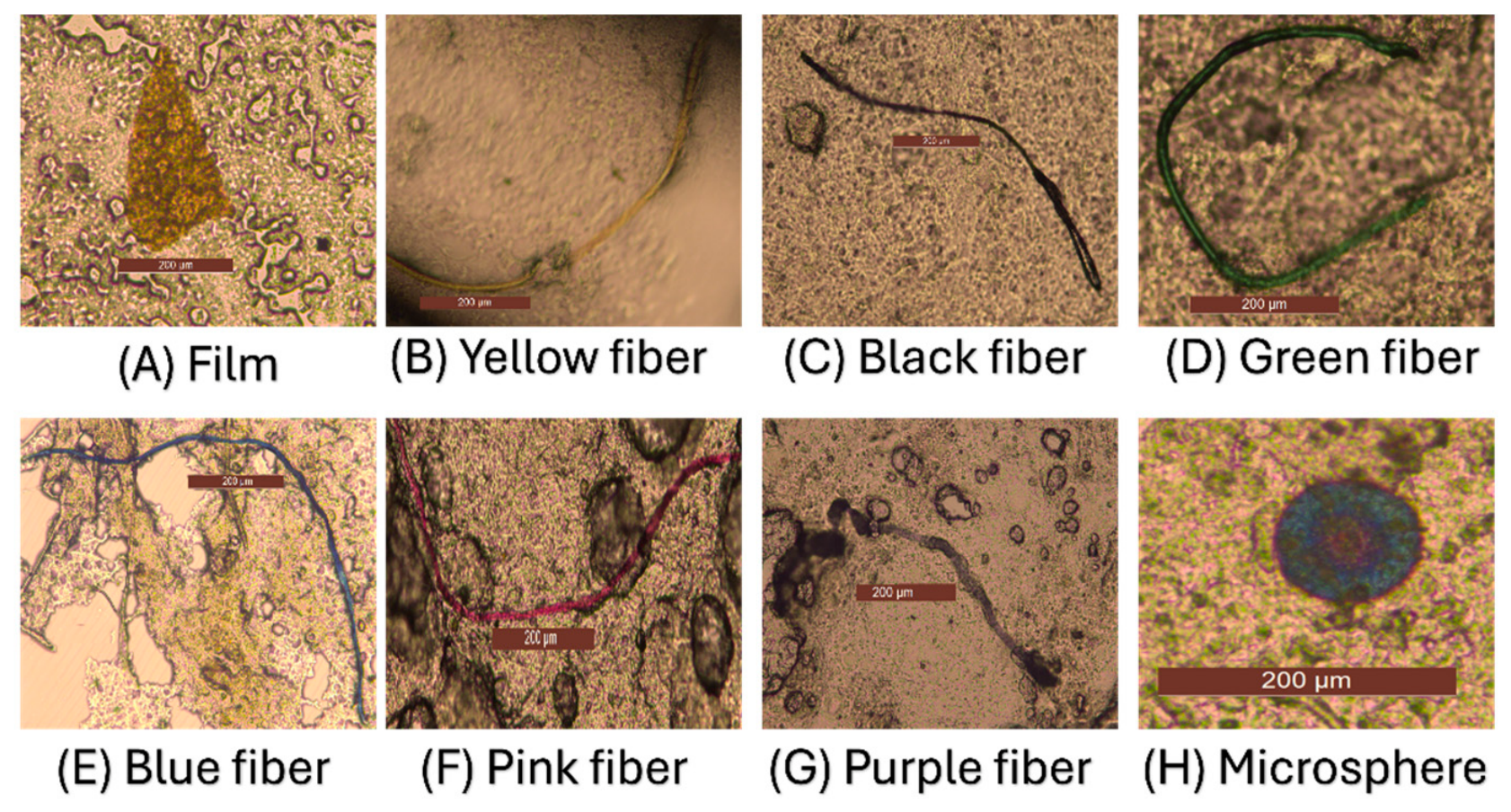
MPLPs were consistently observed within the gastrointestinal tracts of Opisthonema libertate and Sardinops sagax throughout all seasons (Figure 2). The isolated particles exhibited diverse morphologies and pigmentation. Fibers were the most abundant morphotype in both species, predominantly appearing in blue (Figure 2E) and green (Figure 2D) hues. Secondary morphologies included irregular fragments, thin films (Figure 2A), and rare occurrences of microspheres (Figure 2H). A detailed visual characterization further confirmed a wide color spectrum among the isolated fibers, identifying yellow (Figure 2B), black (Figure 2C), pink (Figure 2F), and purple (Figure 2G) particles.

3.2. Variation in MPLP Abundance by Sex

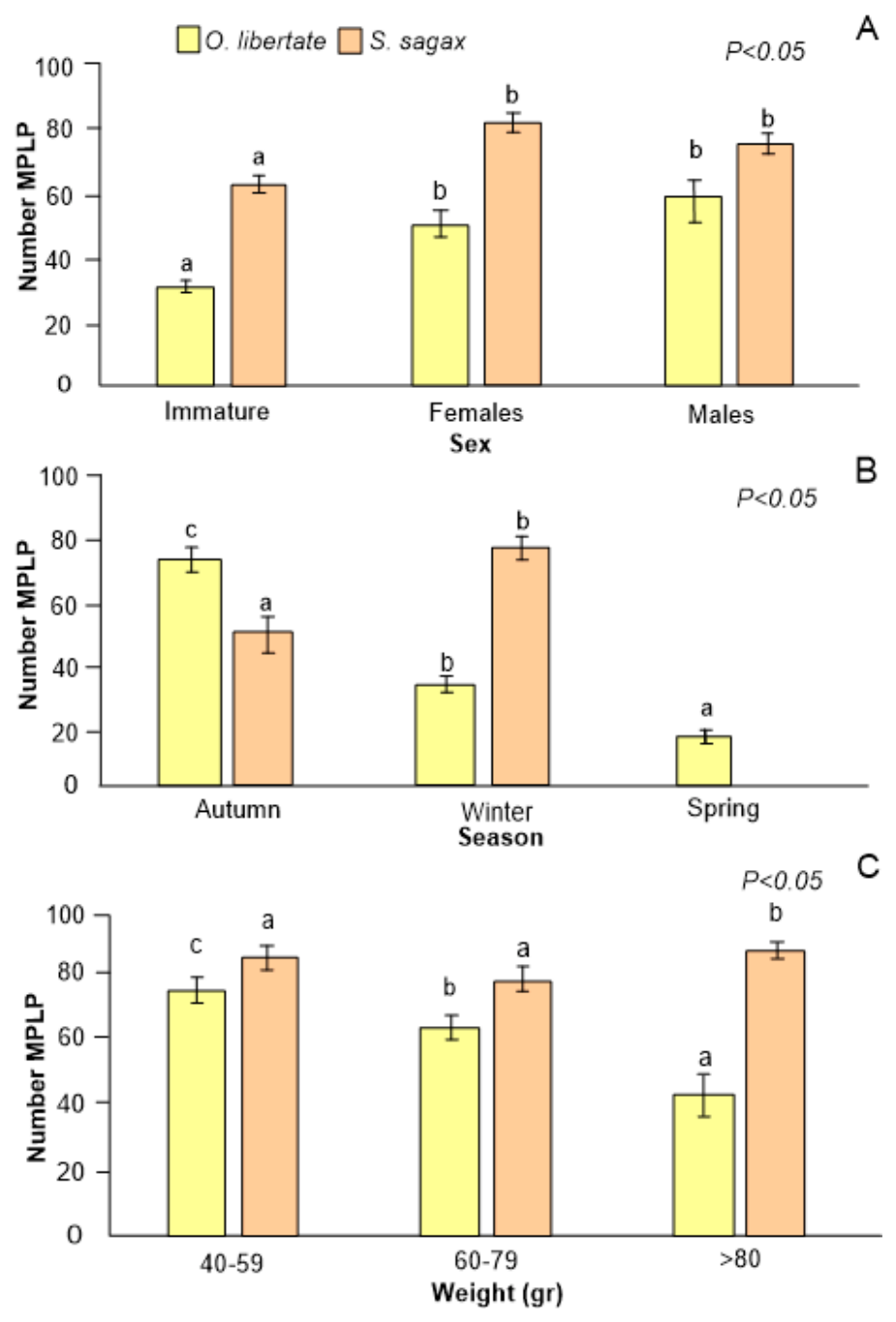
MPLP abundance varied significantly among sexes in both species (p < 0.05; Figure 3A). In O. libertate, males exhibited the highest mean count (58.60 particles individual−1), followed by females (49.62) and undetermined individuals (30.52). In S. sagax, females showed the highest values (81.60), followed by males (75.28) and undetermined individuals (62.21).

3.3. Seasonal Variation in MPLP Abundance

Seasonal differences in MPLP abundance were significant for both species (p < 0.05; Figure 3B). In O. libertate, the highest mean MPLP count occurred during autumn (74.08), followed by winter (32.05) and spring (16.35). For S. sagax, the highest count was recorded in winter (78.10), followed by autumn (50.45); spring data were not available for this species.

3.4. Variation by Body-Size Class

MPLP abundance showed significant variation across the defined body-size classes in O. libertate (p < 0.05; Figure 3C). Small individuals (40–50 g) exhibited the highest mean counts (59.90 particles individual−1), followed by the medium (60–70 g; 50.94) and large (>80 g; 34.62) classes, indicating a decreasing trend as body mass increased. For S. sagax, significant differences were also recorded among size categories; specifically, the largest size class (>80 g) presented a significantly higher MPLP abundance compared to the small (40–50 g) and medium (60–70 g) categories, as supported by the post hoc analysis and indicated by the distinct significance letters in Figure 3C.

3.5. Morphophysiological Indices

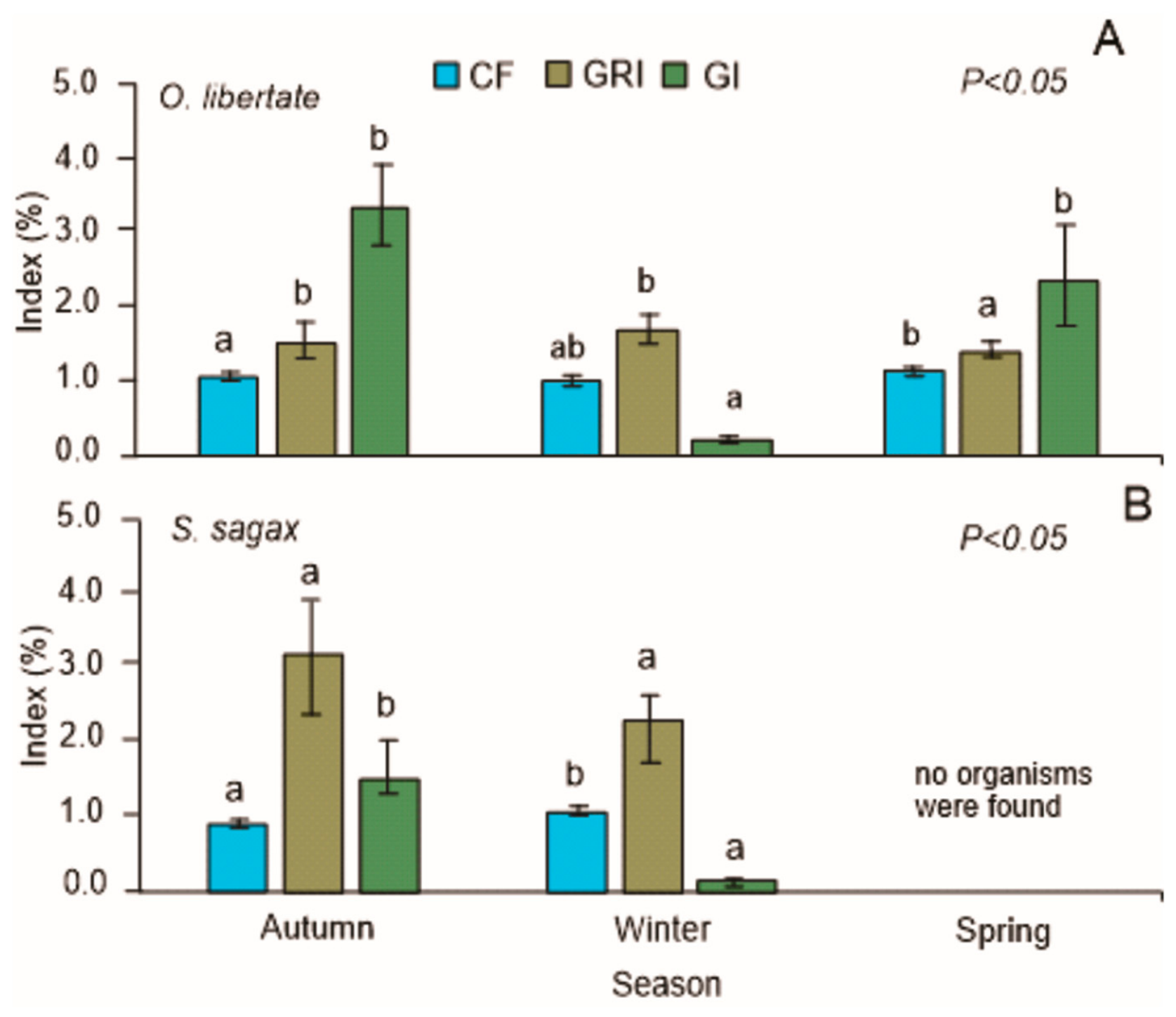
Seasonal variations in morphophysiological indices were analyzed for both species (Figure 4). In O. libertate (Figure 4A), Fulton’s condition factor (CF) varied significantly among seasons (p < 0.05), reaching its highest value in spring, while autumn presented the lowest. The gonadosomatic index (GI) showed maximum values during autumn and spring, both being significantly higher than in winter. Conversely, the gastric repletion index (GRI) was significantly lower in spring compared to autumn and winter, which did not differ from each other.
For S. sagax (Figure 4B), significant seasonal differences were observed for CF and GI (p < 0.05). CF was significantly higher in winter than in autumn, whereas GI showed the opposite trend, exhibiting significantly higher values in autumn. GRI did not present significant seasonal variations. Spring data were not available for this species as no organisms were collected during that season.

3.6. Variation in Morphophysiological Indices by Body-Size Class

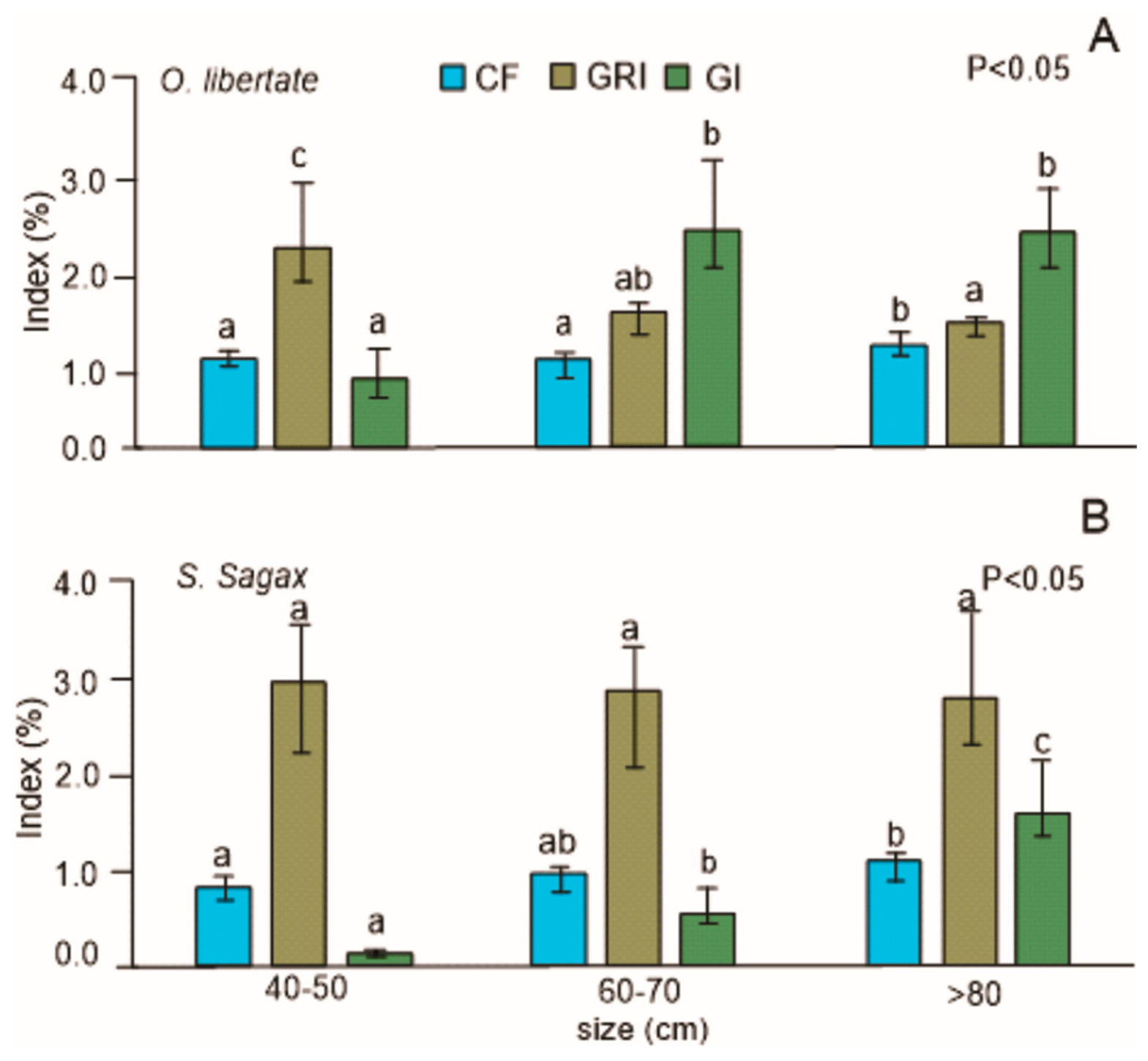
The morphophysiological indices were also evaluated across different body-size classes (Figure 5). In O. libertate (Figure 5A), Fulton’s condition factor (CF) showed no significant differences between small (40–50 g) and medium (60–70 g) individuals but was significantly higher in large fish (>80 g) (p < 0.05). The gastric repletion index (GRI) was significantly higher in small individuals, whereas medium and large fish exhibited lower values. Conversely, the gonadosomatic index (GI) was significantly lower in small fish compared to medium and large individuals, which did not differ significantly from each other.
In S. sagax (Figure 5B), CF was significantly higher in large fish compared to small individuals, with the medium size class exhibiting intermediate values (p < 0.05). GI increased significantly with body size, showing distinct statistical differences across all three size classes, reaching its maximum in large fish. Consistent with the seasonal patterns, GRI did not differ significantly among any of the body-size classes for this species.

3.7. Variation in Morphophysiological Indices by Sex

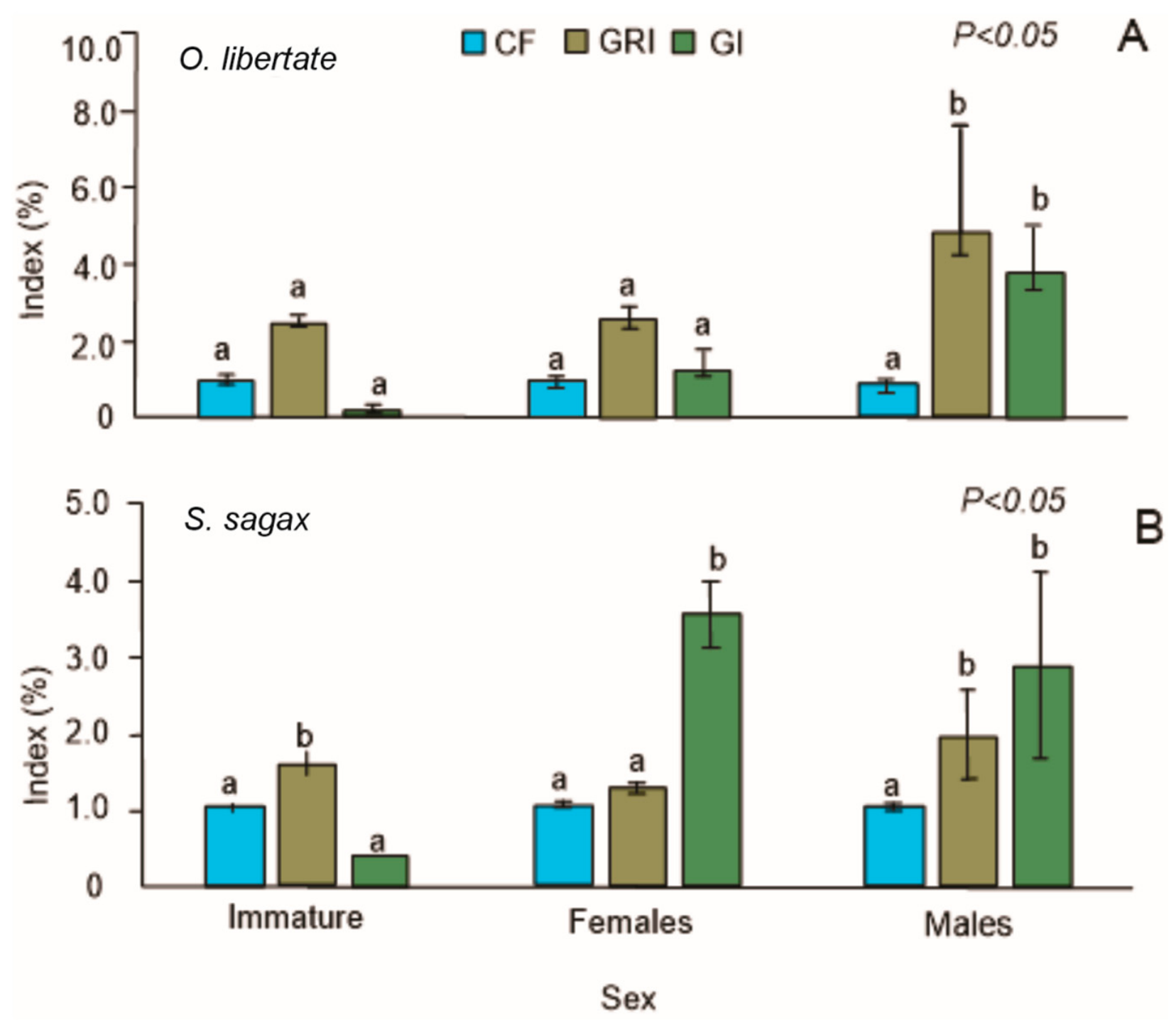
Morphophysiological indices were evaluated to identify sex-specific patterns in both study species (Figure 6). In O. libertate (Figure 6A), significant variations were exclusively observed for the GI (p < 0.05). Both adult females and males exhibited significantly higher GI values (3.55 and 2.89, respectively) compared to undetermined individuals, although no significant differences were found between adult sexes. Conversely, Fulton’s condition factor (CF) and the gastric repletion index (GRI) remained stable across all sex categories, indicating a uniform physiological condition and feeding intensity regardless of sex for this species.
Regarding S. sagax (Figure 6B), sex-specific differences were also limited to the GI (p < 0.05). However, in contrast to O. libertate, males of S. sagax presented significantly higher GI values (3.75) than females (1.24). Similar to the other species, no significant sex-related variations were detected for CF or GRI, suggesting that energy reserves and recent food intake were not influenced by sex during the sampling period.

3.8. Biochemical Composition of Muscle Tissue

The seasonal biochemical composition of dorsal white muscle was evaluated for both species. In O. libertate (Table 1), muscle protein, triglycerides, and cholesterol exhibited significant seasonal variations (p ≤ 0.05). Protein content reached its highest value during autumn (29.81 ± 1.81 mg g−1), which was significantly higher than both winter and spring; no significant difference was observed between the latter two seasons. Triglycerides were significantly higher in both autumn and spring compared to winter. Cholesterol peaked significantly in autumn (39.48 ± 2.88 mg g−1), whereas winter and spring showed lower, statistically similar values. Total lipid content did not differ significantly across seasons.
For S. sagax (Table 2), only muscle protein showed significant seasonal variation, presenting significantly higher values in winter (23.24 ± 3.01 mg g−1) compared to autumn (15.09 ± 1.88 mg g−1). Triglycerides, cholesterol, and total lipids showed no significant seasonal differences for this species.

3.9. Correlation Analysis by Species

Pearson correlation matrices were generated separately for O. libertate (Table 3b) and S. sagax (Table 3a) to evaluate the relationships between morphometric, physiological, biochemical, and microplastic variables. In O. libertate, no significant correlations were found between MPLP abundance and body weight (r = −0.12) or total length (r = −0.09), suggesting that particle ingestion in this species is likely incidental and independent of size.
In contrast, S. sagax exhibited a strong and significant positive correlation between MPLP abundance and both body weight (r = 0.68, p < 0.05) and total length (r = 0.71, p < 0.01), indicating an ontogenetic increase in particle accumulation. Additionally, a significant positive correlation was observed with the gastric repletion index (GRI: r = 0.42, p < 0.05), while a significant negative correlation was found with triglycerides (r = −0.38, p < 0.05). Regarding the physiological indices, CF showed a weak negative relationship with MPLP abundance in both species (r = −0.15 for O. libertate and r = −0.04 for S. sagax), although these correlations did not reach statistical significance (p > 0.05).

3.10. Scanning Electron Microscopy (SEM)

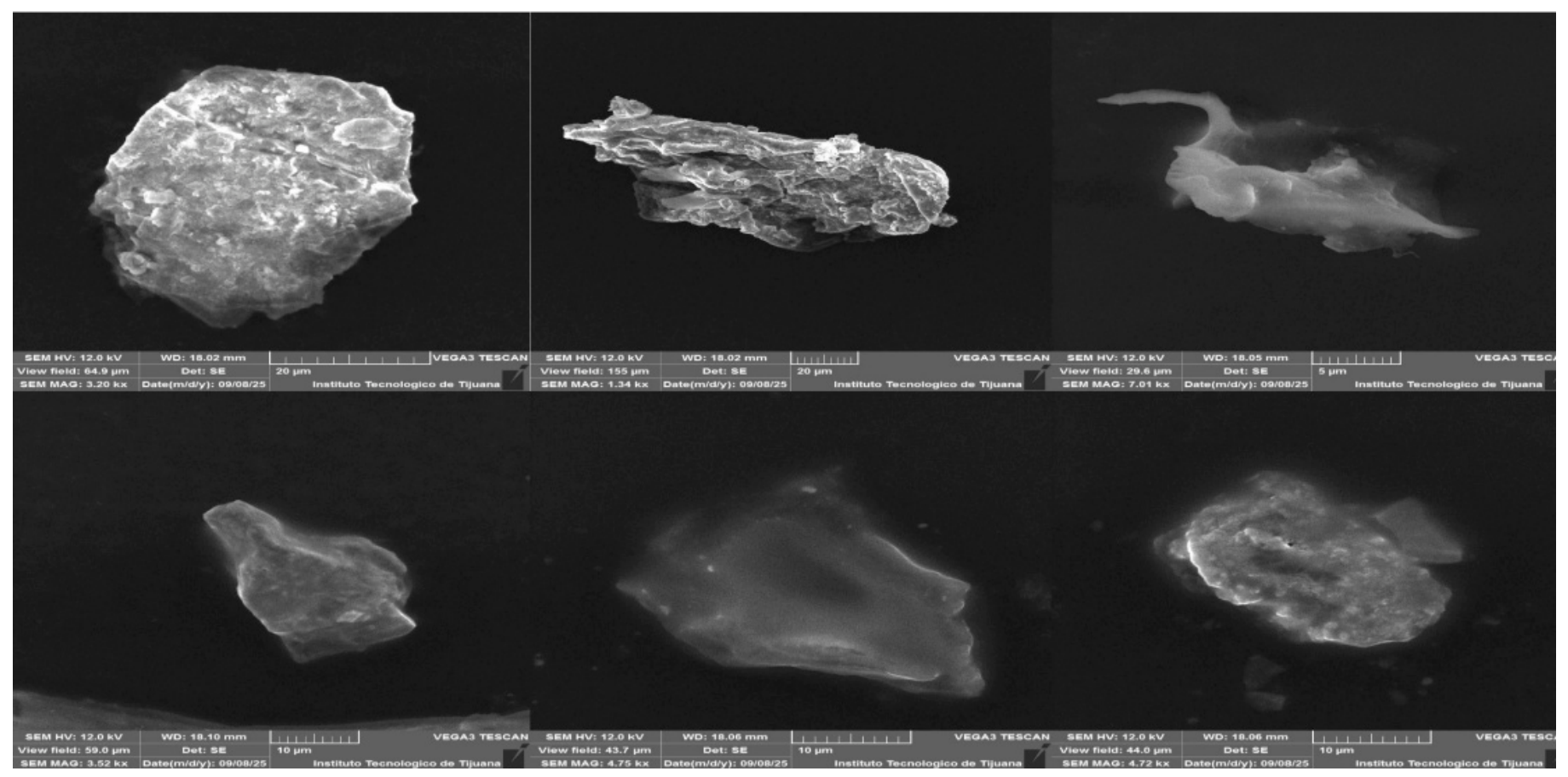
SEM analysis of selected isolated fibers revealed irregular topographies characterized by fissures, mechanical abrasion marks, surface exfoliation, and uneven reflectance (Figure 7). Bright regions in the micrographs corresponded to smoother, less eroded surfaces, while dull and porous areas indicated advanced stages of weathering. These morphological patterns are consistent with processes of environmental degradation and mechanical abrasion typical of prolonged exposure in marine habitats.

4. Discussion

4.1. Occurrence and Morphology of Plastic-like Particles

Blue and green fibers dominated the MP-p assemblage in both species, a pattern widely reported in small pelagic fish from the eastern Pacific and the Gulf of Mexico [24,25]. The predominance of fibers, rather than fragments or pellets, is consistent with a fishing-related origin, as synthetic nets, monofilament lines, and polypropylene ropes continuously release filaments and represent a major pathway of abandoned, lost, or discarded fishing gear (ALDFG). This is particularly relevant in the Gulf of California, which hosts one of Mexico’s most intensive commercial and artisanal fishing fleets [11,12], making ALDFG a primary source of anthropogenic debris in the region. Similar fiber-dominated assemblages have been documented in Engraulis encrasicolus from European coastal waters [13] and in multiple clupeoid species from the Mexican Pacific [25].

4.2. Seasonal Patterns

Opisthonema libertate exhibited peak MPLP abundance in autumn, whereas Sardinops sagax showed maximum values in winter. Seasonal variability in particle abundance reflects the combined influence of river discharge, atmospheric deposition, oceanographic circulation, and species-specific habitat use. In the Gulf of California, the transition from summer cyclonic circulation, which promotes dispersion, to autumn anticyclonic conditions favors the formation of convergence zones that retain floating particles [17]. This mechanism likely contributes to the elevated autumn MPLP counts observed in O. libertate, which occupies central areas of the Gulf during the post-upwelling period. Comparable seasonal peaks have been reported in the Gulf of Mexico, where increased river discharge following summer rainfall enhances the transport of terrestrial plastic inputs into coastal systems [25]. The winter peak observed in S. sagax may reflect seasonal shifts in distribution, feeding intensity, or vertical habitat use during periods of increased productivity.

4.3. Body-Size and Sex Effects

In S. sagax, the strong and significant positive correlation between MPLP abundance and total length (r = 0.72, p < 0.01) confirms an ontogenetic shift in feeding capacity or a cumulative exposure effect over time. As these filter-feeders grow, the increase in branchial surface area and filtration volume likely enhances the probability of fiber retention, a pattern frequently reported for larger pelagic species [26]. Conversely, in O. libertate, the lack of significant positive correlation with size (r = −0.31) suggests that particle ingestion is independent of the organism’s growth stage. This discrepancy between species may be attributed to their distinct feeding strategies; while S. sagax relies on continuous filtration, the more opportunistic feeding behavior of O. libertate may result in a more incidental and transient intake of particles. Sex-related differences were particularly relevant in O. libertate, where a significant correlation was observed (r = 0.37, p < 0.05). These patterns may be associated with sex-specific behavior, reproductive activity, or spatial distribution. Similar trends have been reported in other clupeiform species, where increased feeding activity during reproductive periods leads to higher incidental ingestion of particles [27].

4.4. Morphophysiological and Biochemical Responses

Seasonality emerged as the most influential driver of MPLP abundance for both species (r = −0.86 for O. libertate and r = −0.80 for S. sagax, p < 0.01). Seasonal variation in CF in O. libertate, with higher values in spring, is consistent with periods of energy accumulation before reproductive investment in clupeoid species [28]. The peak in GI during autumn indicates reproductive activity, coinciding with a higher feeding intensity (GRI: r = 0.43, p < 0.05) which directly drives higher particle encounter and ingestion rates in this species.
This biological schedule helps explain the distinct seasonal ingestion patterns observed between the two small pelagics. For instance, the winter peak of MPLPs in S. sagax closely tracks its reproductive cycle; during these spawning windows, elevated metabolic demands likely prompt higher ventilation and filtration rates, inadvertently accelerating the uptake of microplastic-like particles. From a fisheries management perspective, these findings reveal a critical window of physiological vulnerability where coastal fish are subjected to the cumulative stress of reproductive effort and anthropogenic pollution. Therefore, regional monitoring frameworks in the Gulf of California should integrate these seasonal reproductive schedules to accurately evaluate the impacts of plastic debris on local commercial stocks and regional food security.
Regarding the energetic indicators, muscle protein levels in O. libertate were positively correlated with MPLPs (r = 0.43, p < 0.05), coinciding with elevated GI values, which suggests allocation of metabolic resources toward gonadal development. In S. sagax, the most striking finding was the strong negative correlation between MPLP abundance and Fulton’s condition factor (r = −0.78, p < 0.01). This relationship suggests that high particle ingestion may induce a significant physiological cost, potentially compromising the overall health and robustness of the fish [1,14]. In contrast, O. libertate did not show a negative physiological response to MPLP load, indicating a higher metabolic resilience or a more transient exposure in this species.

4.5. Correlations Between MPLP Abundance and Physiological Condition

The species-specific breakdown reveals a nuanced biological reality. In O. libertate, the absence of significant positive correlations between MPLP abundance and size reinforces the hypothesis that particle uptake in this species is primarily driven by feeding intensity (GRI: r = 0.43) and protein mobilization. In contrast, S. sagax exhibits a clear interaction between particle load, growth, and health status. The strong positive correlation with length (r = 0.72) suggests that the filtration mechanism in this species leads to a cumulative effect. This is supported by the significant positive correlation with the GRI (r = 0.59), which indicates that ingestion is driven by feeding intensity. Furthermore, the high-magnitude negative correlation with the condition factor (r = −0.78) and the negative trend in triglycerides (r = −0.21) in S. sagax indicate that high microplastic ingestion is linked to significant physiological stress [1,14]. These results suggest that individuals with higher feeding intensity and larger sizes are more vulnerable to the sub-lethal effects of plastic exposure, emphasizing that the nature and strength of these interactions are highly dependent on the biological and environmental context of each species.

4.6. SEM Observations and Potential Sources

SEM observations revealed irregular, eroded surfaces with signs of abrasion and degradation. These features are consistent with prolonged environmental weathering, including UV exposure, mechanical abrasion, and chemical degradation. Similar surface characteristics have been reported in particles derived from fishing-related materials [29]. Although chemical composition was not determined, the observed morphology supports a potential contribution from fishing activities as a source of these particles.

4.7. Ecological and Fisheries Management Implications

Opisthonema libertate and Sardinops sagax occupy a key position in the trophic structure of the Gulf of California, transferring energy from plankton to higher-level predators. Their exposure to plastic-like particles suggests a potential pathway for trophic transfer. Both species are also consumed by humans, indicating a possible route of dietary exposure that warrants further investigation [2]. These findings highlight the importance of incorporating plastic monitoring into fisheries assessment programs and reducing inputs associated with fishing activities, such as the recovery of abandoned fishing gear.

4.8. Methodological Constraints and Future Perspectives

Several methodological constraints must be acknowledged in the present study. First, the absence of chemical characterization through spectroscopic techniques prevents the definitive identification of polymer types. While automated Raman spectroscopy has been proposed to standardize identification criteria [30], it remains a challenge for high-throughput monitoring.
Furthermore, the global review of microplastic impacts underscores that these contaminants are a persistent threat to marine ecosystems [31]. The lack of spectroscopic validation requires these particles to be classified conservatively as MPLPs [23], a term used when additives or specific polymers cannot be confirmed [32]. These contaminants are particularly concerning as emerging pollutants in Mexican waters [33]. Recent research on sardines suggests that plastic fiber ingestion can even be influenced by environmental factors like temperature [34]. Previous regional research in Northern Sinaloa [35] confirms that commercial species are already bioaccumulating these materials. Finally, the potential for trophic transfer and the long-term ecological consequences outlined in comprehensive reviews [36], in specific RAMSAR sites [37], and other studies [38] emphasize the need for incorporating microplastic monitoring into fisheries management to ensure food security in the Pacific.
Additionally, the transition between research cruises and commercial fishing vessels across sampling seasons represents a methodological limitation that may influence sampling platforms or potential contamination risks, although strict quality control measures were implemented to ensure data comparability. It is important to acknowledge certain methodological limitations in this study. The quantification and characterization of the particles were based on rigorous visual identification and SEM analysis; however, confirmatory spectroscopic techniques (e.g., FTIR or Raman spectroscopy) were not performed due to equipment and resource constraints. Consequently, all identified items are strictly referred to as MPLPs. While visual identification is a widely accepted and cost-effective method for preliminary ecological assessments and biological impact studies, future research in the Gulf of California should incorporate chemical characterization to determine the specific polymer composition and better understand the pollution dynamics in the region.

5. Conclusions

MPLPs were consistently detected in the digestive tracts of Opisthonema libertate and Sardinops sagax across all sampled seasons in the Gulf of California, with blue and green fibers dominating the assemblage. In the absence of spectroscopic confirmation, all particles are conservatively classified as microplastic-like, and no conclusions are drawn regarding polymer identity or chemical composition.
Significant seasonal, size-related, and sex-related differences in MPLP abundance indicate that exposure is not uniform, but instead shaped by ecological and physiological factors. The negative association between MPLP abundance and Fulton’s condition factor suggests a potential link between particle load and somatic condition; however, causality cannot be established from the present data. Likewise, seasonal variation in muscle biochemical composition reflects reproductive and energetic dynamics typical of small pelagic fish and cannot be directly attributed to MPLP ingestion without controlled experimental evidence.
Given their ecological role as key forage species and their importance for fisheries and human consumption, O. libertate and S. sagax represent priority targets for long-term monitoring of plastic contamination in the Gulf of California. Future research should incorporate spectroscopic validation of particles, expand environmental sampling to characterize ambient particle loads, and assess MPLP presence in edible tissues. In parallel, reducing inputs from abandoned, lost, or discarded fishing gear should be considered a central management strategy. Integrating these approaches into fisheries assessment frameworks will improve understanding of exposure pathways and support ecosystem-based management in the region.

Author Contributions

Conceptualization, A.S.M.; methodology, M.J.R.C.; software, M.A.R.V., A.S.M., M.E.O. and J.P.A.M.; validation, A.S.M. and J.P.A.M.; formal analysis, M.A.R.V., M.E.O. and M.G.M.; investigation, M.J.R.C., A.S.M., M.A.R.V. and J.P.A.M.; resources, A.S.M., J.P.A.M. and L.T.A.B.; data curation, M.A.R.V. and A.S.M.; writing—original draft preparation, M.J.R.C., A.S.M. and M.A.R.V.; writing—review and editing, M.A.R.V., A.S.M., L.P.S.-B. and M.E.O.; visualization, A.S.M.; supervision, A.S.M.; project administration, A.S.M.; funding acquisition, A.S.M. All authors have read and agreed to the published version of the manuscript.

Funding

This research was financially supported by grants from the National Polytechnic Institute (Project: SIP 20240734: Efecto de la adición de los carotenoides extraídos del subproducto de cabeza de camarón para aumento de la pigmentación y expresión de genes de la piel del pez Lutjanus guttatus).

Data Availability Statement

The original contributions presented in this study are included in the article. Further inquiries can be directed to the corresponding authors.

Acknowledgments

The authors express their gratitude to CIIDIR-IPN, Unidad Sinaloa, for providing the laboratory facilities and equipment necessary for this research. One of the authors was a recipient of the SECIHTI graduate fellowship, as well as a fellow of COFAA-IPN and EDI-IPN. We also thank all the technical staff and collaborators who assisted in the sampling and laboratory procedures for their invaluable support. During the preparation of this manuscript, the authors used Claude 3.5 Sonnet (Anthropic), ChatGPT-4o (OpenAI), and Grammarly (version 1.0.96) for the purposes of editing, bibliographic review, style correction, and English grammar improvement. The authors have reviewed and edited the output and take full responsibility for the content of this publication.

Conflicts of Interest

The authors declare no conflicts of interest.

Abbreviations

MPLPsMicroplastic-like particles
ALDFGAbandoned, lost, or discarded fishing gear
SEMScanning electron microscopy
FTIRFourier-transform infrared spectroscopy
CFFulton’s condition factor
GIGonadosomatic index
GRIGastric repletion index
BWBody weight
TLTotal length
IPNInstituto Politécnico Nacional
CIIDIRCentro Interdisciplinario de Investigación para el Desarrollo Integral Regional

References

  1. Egbeocha, C.; Malek, S.; Emenike, C.; Milow, P. Feasting on microplastics: Ingestion by and effects on marine organisms. Aquat. Biol. 2019, 27, 93–106. [Google Scholar] [CrossRef]
  2. Pironti, C.; Ricciardi, M.; Motta, O.; Miele, Y.; Proto, A.; Montano, L. Microplastics in the environment: Intake through the food web, human exposure and toxicological effects. Toxics 2021, 9, 224. [Google Scholar] [CrossRef] [PubMed]
  3. Thushari, G.G.N.; Senevirathna, J.D.M. Plastic pollution in the marine environment. Heliyon 2020, 6, e04709. [Google Scholar] [CrossRef] [PubMed]
  4. Lebreton, L.; Egger, M.; Slat, B. A global mass budget for positively buoyant macroplastic debris in the ocean. Sci. Rep. 2019, 9, 12922. [Google Scholar] [CrossRef]
  5. Thompson, R.C.; Olsen, Y.; Mitchell, R.P.; Davis, A.; Rowland, S.J.; John, A.W.G.; McGonigle, D.; Russell, A.E. Lost at sea: Where is all the plastic? Science 2004, 304, 838. [Google Scholar] [CrossRef]
  6. Cole, M.; Lindeque, P.; Halsband, C.; Galloway, T.S. Microplastics as contaminants in the marine environment: A review. Mar. Pollut. Bull. 2011, 62, 2588–2597. [Google Scholar] [CrossRef] [PubMed]
  7. Browne, M.A.; Galloway, T.S.; Thompson, R.C. Spatial patterns of plastic debris along estuarine shorelines. Environ. Sci. Technol. 2010, 44, 3404–3409. [Google Scholar] [CrossRef]
  8. Hasan Anik, A.; Hossain, S.; Alam, M.; Binte Sultan, M.; Hasnine, M.D.T.; Rahman, M.M. Microplastics pollution: A comprehensive review on the sources, fates, effects, and potential remediation. Environ. Nanotechnol. Monit. Manag. 2021, 16, 100530. [Google Scholar] [CrossRef]
  9. Sutkar, P.R.; Gadewar, R.D.; Dhulap, V.P. Recent trends in degradation of microplastics in the environment: A state-of-the-art review. J. Hazard. Mater. Adv. 2023, 11, 100343. [Google Scholar] [CrossRef]
  10. Pfohl, P.; Wagner, M.; Meyer, L.; Domercq, P.; Praetorius, A.; Hüffer, T.; Hofmann, T.; Wohlleben, W. Environmental degradation of microplastics: How to measure fragmentation rates to secondary micro- and nanoplastic fragments and dissociation into dissolved organics. Environ. Sci. Technol. 2022, 56, 11323–11334. [Google Scholar] [CrossRef]
  11. Law, K.L.; Thompson, R.C. Microplastics in the seas. Science 2014, 345, 144–145. [Google Scholar] [CrossRef] [PubMed]
  12. Gago, J.; Carretero, O.; Filgueiras, A.V.; Viñas, L. Synthetic microfibers in the marine environment: A review on their occurrence in seawater and sediments. Mar. Pollut. Bull. 2018, 127, 365–376. [Google Scholar] [CrossRef]
  13. Collard, F.; Gilbert, B.; Compère, P.; Eppe, G.; Das, K.; Jauniaux, T.; Parmentier, E. Microplastics in livers of European anchovies (Engraulis encrasicolus, L.). Environ. Pollut. 2017, 229, 1000–1005. [Google Scholar] [CrossRef]
  14. Ghosh, T. Microplastics bioaccumulation in fish: Its potential toxic effects on hematology, immune response, neurotoxicity, oxidative stress, growth, and reproductive dysfunction. Toxicol. Rep. 2025, 14, 101854. [Google Scholar] [CrossRef] [PubMed]
  15. Engelhard, G.H.; Peck, M.A.; Rindorf, A.; Smout, S.C.; van Deurs, M.; Raab, K.; Andersen, K.H.; Garthe, S.; Lauerburg, R.A.M.; Scott, F.; et al. Forage fish, their fisheries, and their predators: Who drives whom? ICES J. Mar. Sci. 2014, 71, 90–104. [Google Scholar] [CrossRef]
  16. Vázquez Figueroa, V.C.; Prol-Ledesma, R.M.; Sánchez, A.; Dando, P.; Camprubí, A.; Robinson, C.J.; Hiriart Le Bert, G. Batimetría y características hidrográficas en las Cuencas de Consag y Wagner, Norte del Golfo de California, México. Bol. Soc. Geol. Mex. 2009, 61, 119–127. [Google Scholar] [CrossRef]
  17. Marinone, S.G. A three-dimensional numerical model of the seasonal and interannual circulation of the Gulf of California. J. Geophys. Res. Ocean. 2003, 108, 3081. [Google Scholar] [CrossRef]
  18. Froese, R. Cube law, condition factor and weight–length relationships: History, meta-analysis and recommendations. J. Appl. Ichthyol. 2006, 22, 241–253. [Google Scholar] [CrossRef]
  19. Santamaría-Miranda, A.; Elorduy-Garay, J.F.; Villalejo-Fuerte, M.; Rojas-Herrera, A.A. Desarrollo gonadal y ciclo reproductivo de Lutjanus peru (Pisces: Lutjanidae) en Guerrero, México. Rev. Biol. Trop. 2003, 51, 489–502. [Google Scholar]
  20. Cubillos, L.; Canales, T.; Bucarey, D.; Saavedra, A.; Alarcón, R. Época reproductiva y talla media de primera madurez sexual de Strangomera bentincki y Engraulis ringens en el período 1993–1997, en la zona centro-sur de Chile. Investig. Mar. 1998, 26, 73–85. [Google Scholar] [CrossRef]
  21. Valencia-Velasco, F.; Guabloche-Zuñiga, A.; Alvariño, L.; Iannacone, J. Standardization of a protocol to evaluate microplastics in marine bivalves in the department of Lima, Peru. Biologist 2020, 18, 119–134. [Google Scholar] [CrossRef]
  22. Bradford, M.M. A rapid and sensitive method for the quantitation of microgram quantities of protein utilizing the principle of protein-dye binding. Anal. Biochem. 1976, 72, 248–254. [Google Scholar] [CrossRef] [PubMed]
  23. Barnes, H.; Blackstock, J. Estimation of lipids in marine animals and tissues: Detailed investigation of the sulphophosphovanillin method for ‘total’ lipids. J. Exp. Mar. Biol. Ecol. 1973, 12, 103–118. [Google Scholar] [CrossRef]
  24. Hidalgo-Ruz, V.; Gutow, L.; Thompson, R.C.; Thiel, M. Microplastics in the marine environment: A review of the methods used for identification and quantification. Environ. Sci. Technol. 2012, 46, 3060–3075. [Google Scholar] [CrossRef]
  25. Sánchez-Hernández, L.J.; Ramírez-Romero, P.; Rodríguez-González, F.; Ramos-Sánchez, V.H.; Márquez Montes, R.A.; Romero-Paredes Rubio, H.; Sujitha, S.B.; Jonathan, M.P. Seasonal evidences of microplastics in environmental matrices of a tourist-dominated urban estuary in Gulf of Mexico, Mexico. Chemosphere 2021, 277, 130261. [Google Scholar] [CrossRef]
  26. Gad, A.K.; Midway, S.R. Relationship of microplastics to body size for two estuarine fishes. Microplastics 2022, 1, 211–220. [Google Scholar] [CrossRef]
  27. García-Jaramillo, L.S.; Morán-Silva, Á.; Chávez-López, R.; Cházaro-Olvera, S. Presencia de microplásticos en tracto digestivo de Anchoa hepsetus (Clupeiformes: Engraulidae) obtenidos de la pesca ribeñera del municipio de Alvarado, Veracruz. Biocyt Biol. Cienc. Tecnol. 2023, 16, 1155–1169. [Google Scholar] [CrossRef]
  28. Hecht, T.; van der Lingen, C.D. A comparison of condition factor and gonadosomatic index of sardine Sardinops sagax stocks in the northern and southern Benguela upwelling ecosystems, 1984–1999. Afr. J. Mar. Sci. 2010, 23, 23–34. [Google Scholar] [CrossRef]
  29. Gniadek, M.; Dąbrowska, A. The marine nano- and microplastics characterisation by SEM-EDX: The potential of the method in comparison with various physical and chemical approaches. Mar. Pollut. Bull. 2019, 148, 210–216. [Google Scholar] [CrossRef]
  30. Fernandes, R.S.; Miclea, P.-T.; Fadda, T.; Putzu, M.; Sacco, A.; Rossi, A.M.; Giovannozzi, A.M.; Barbaresi, M.; Masino, M.; Mattarozzi, M.; et al. Inter-instrument definition of valid criteria for the automatic identification of microplastics by micro-Raman spectroscopy. Talanta 2025, 298, 128834. [Google Scholar] [CrossRef] [PubMed]
  31. Román-Vega, M.A.; Apún-Molina, J.P.; Escobedo-Urias, D.C.; Muñoz Sevilla, N.P.; Jeyakumar, S.S.L.; Santamaría-Miranda, A. Effects of plastics and microplastics on marine ecosystems: A global review. In Health and Climate Change; Elsevier: Amsterdam, The Netherlands, 2025; pp. 151–173. [Google Scholar] [CrossRef]
  32. Sambolino, A.; Iniguez, E.; Herrera, I.; Kaufmann, M.; Dinis, A.; Cordeiro, N. Microplastic ingestion and plastic additive detection in pelagic squid and fish: Implications for bioindicators and plastic tracers in open oceanic food webs. Sci. Total Environ. 2023, 894, 164952. [Google Scholar] [CrossRef]
  33. Rivera Gutiérrez, E.; Martínez Gallegos, S.; Macedo Miranda, M.G.; Illescas, J. Microplásticos: Un nuevo tipo de contaminantes emergentes y persistentes. Mater. Av. 2023, 3, 48–59. [Google Scholar] [CrossRef]
  34. Rodriguez-Romeu, O.; Constenla, M.; Soler-Membrives, A.; Dutto, G.; Saraux, C.; Schull, Q. Sardines in hot water: Unravelling plastic fiber ingestion and feeding behaviour effects. Environ. Pollut. 2024, 363, 125035. [Google Scholar] [CrossRef] [PubMed]
  35. Román-Vega, M.; Martínez-Álvarez, I.; Ahumada-Cervantes, R.; Portillo-Molina, R.; Apún-Molina, J.; Zavala-Norzagaray, A.; Santamaría-Miranda, A. Contaminación por microplásticos en peces marinos de importancia comercial del Norte de Sinaloa, México. Abanico Agrofor. 2024, 6, e2023-15. [Google Scholar] [CrossRef]
  36. Marcharla, E.; Vinayagam, S.; Gnanasekaran, L.; Soto-Moscoso, M.; Chen, W.-H.; Thanigaivel, S.; Ganesan, S. Microplastics in marine ecosystems: A comprehensive review of biological and ecological implications and its mitigation approach using nanotechnology for the sustainable environment. Environ. Res. 2024, 256, 119181. [Google Scholar] [CrossRef] [PubMed]
  37. Román Vega, M.A.; Santamaría-Miranda, A.; Apún Molina, J.P.; Martínez Álvarez, I.G.; Aguilar Romero, R.d.J.; Valdez Chávez, K.A.; García-Marciano, M.; Espinoza Ortíz, M.; Suescún Bolívar, L.P. Presence and Identification of Microplastics in Commercial Fish from Two RAMSAR Sites in Northwestern Mexico. Microplastics 2026, 5, 70. [Google Scholar] [CrossRef]
  38. Palermo, J.D.H.; Labrador, K.L.; Follante, J.D.; Agmata, A.B.; Pante, M.J.R.; Rollon, R.N.; David, L.T. Susceptibility of Sardinella lemuru to emerging marine microplastic pollution. Glob. J. Environ. Sci. Manag. 2020, 6, 281–292. [Google Scholar] [CrossRef]
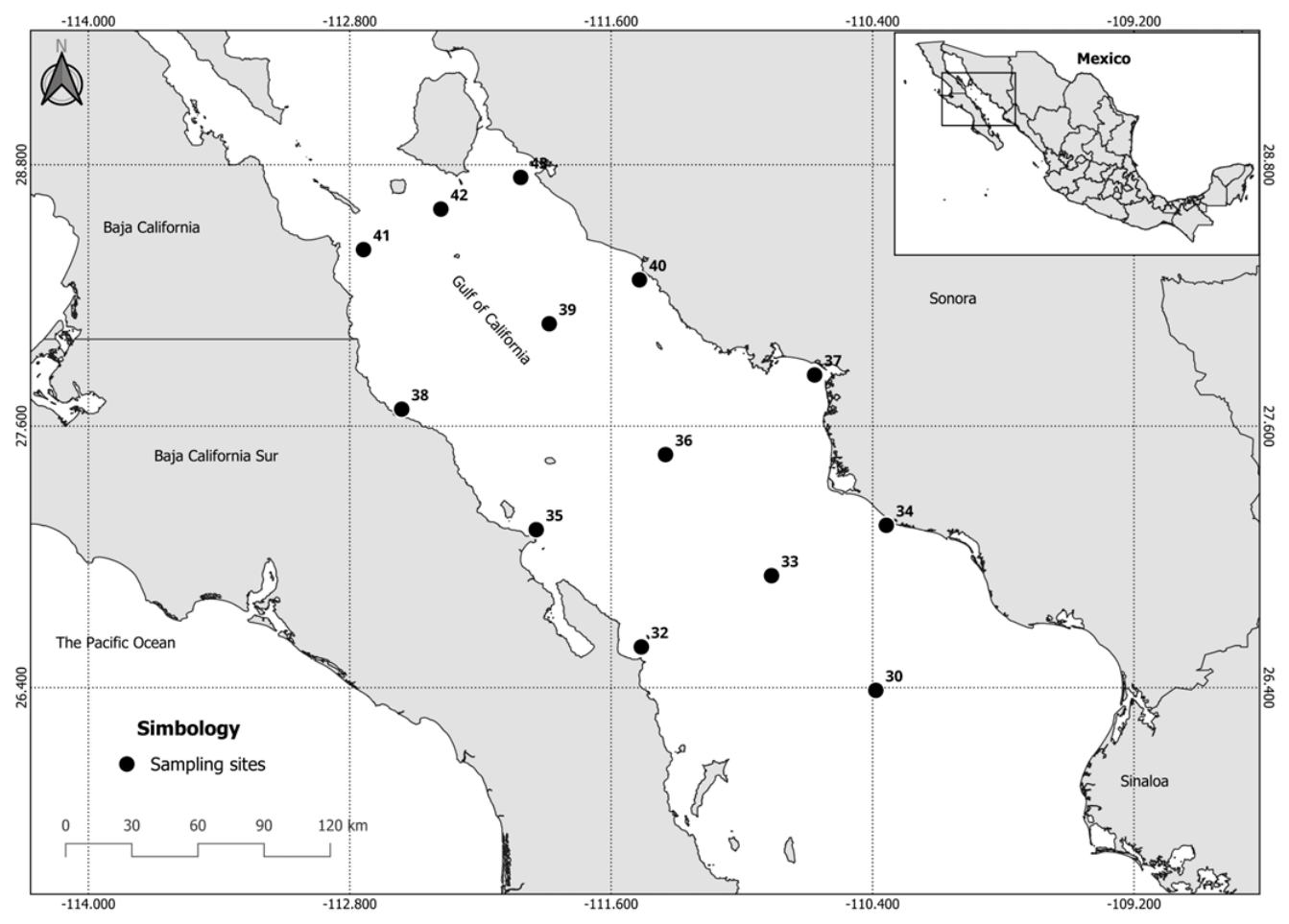
Figure 1. Gulf of California and sampling points.
Jmse 14 01024 g001
Figure 2. Representative morphologies and colors of microplastic-like particles (MPLPs) isolated from the gastrointestinal tracts of Opisthonema libertate and Sardinops sagax. Examples include: (A) thin film; (B) yellow fiber; (C) black fiber; (D) green fiber; (E) blue fiber; (F) pink fiber; (G) purple fiber; and (H) microsphere. Scale bar = 200 µm for all panels.
Jmse 14 01024 g002
Figure 3. Variation in the abundance of microplastic-like particles (MPLPs) in O. libertate and S. sagax according to (A) sex, (B) sampling season, and (C) body-size class. Data are expressed as mean ± standard error (SEM). Different lowercase letters indicate significant differences between categories within the same species (p < 0.05).
Jmse 14 01024 g003
Figure 4. Seasonal variation in morphophysiological indices: Fulton’s condition factor (CF), gastric repletion index (GRI), and gonadosomatic index (GI) in (A) Opisthonema libertate and (B) Sardinops sagax. Data are expressed as mean ± standard error. Different lowercase letters indicate significant differences between seasons for each specific index (p < 0.05).
Jmse 14 01024 g004
Figure 5. Variation in morphophysiological indices by body-size class: Fulton’s condition factor (CF), gastric repletion index (GRI), and gonadosomatic index (GI) in (A) Opisthonema libertate and (B) Sardinops sagax. Data are expressed as mean ± standard error. Different lowercase letters indicate significant differences between size classes for each specific index (p < 0.05).
Jmse 14 01024 g005
Figure 6. Variation in morphophysiological indices by sex: Fulton’s condition factor (CF), gastric repletion index (GRI), and gonadosomatic index (GI) in (A) Opisthonema libertate and (B) Sardinops sagax. Data are expressed as mean ± standard error. Different lowercase letters indicate significant differences between sexes for each specific index (p < 0.05).
Jmse 14 01024 g006
Figure 7. Scanning electron micrograph of a representative microplastic-like fiber (MPLPs) isolated from the gastrointestinal tract. The surface exhibits clear signs of advanced environmental weathering, including transverse fissures and surface exfoliation. Scale bar = 5–20 µm.
Jmse 14 01024 g007
Table 1. Seasonal biochemical composition (mean ± SE) of dorsal white muscle in Opisthonema libertate (N = 90). Different superscript letters within a column indicate significant differences (Tukey’s HSD, p ≤ 0.05).
SeasonProtein
(mg g−1)
Triglycerides
(mg g−1)
Cholesterol
(mg g−1)
Total Lipids
(mg g−1)
Autumn29.81 ± 1.81 b2.92 ± 0.15 b39.48 ± 2.88 b40.30 ± 1.02
Winter17.17 ± 1.20 a1.76 ± 0.17 a26.67 ± 1.69 a43.21 ± 2.01
Spring20.69 ± 1.37 a3.29 ± 0.24 b28.29 ± 2.26 a40.84 ± 1.38
Table 2. Seasonal biochemical composition (mean ± SE) of dorsal white muscle in Sardinops sagax (N = 60). Different superscript letters within a column indicate significant differences (Tukey’s HSD, p ≤ 0.05). Spring samples were not available for this species.
SeasonProtein
(mg g−1)
Triglycerides
(mg g−1)
Cholesterol
(mg g−1)
Total Lipids
(mg g−1)
Autumn15.09 ± 1.88 a1.89 ± 0.1528.85 ± 4.1845.12 ± 1.55
Winter23.24 ± 3.01 b2.67 ± 0.4534.22 ± 3.9541.45 ± 2.47
Table 3. Pearson correlation matrix for morphometric, physiological, biochemical, and microplastic-like particle (MPLPs) variables in (a) Sardinops sagax (N = 60); (b) Opisthonema libertate (N = 90).
(a) Sardinops sagax
VariableSeasonBW (g)TL (cm)CFGRIGIProteinTrig
TL (cm)−0.920.44
CF0.98 −0.93
GRI−0.49 0.48−0.49
GI−0.40 0.51−0.400.67
Protein0.41 0.37
Trig 0.85
Chol 0.830.73
Lip 0.37
MPLPs−0.80 0.72−0.780.590.50
(b) Opisthonema libertate
VariableSeasonBW (g)TL (cm)SexGIProteinTrigChol
CF0.340.620.30
GRI −0.27−0.35
GI 0.370.330.50
Protein−0.45−0.33−0.350.55
Trig 0.42 0.57
Chol−0.39−0.27−0.270.39 0.760.61
MPLPS−0.86−0.32−0.310.370.300.43 0.43
Note: BW: body weight; TL: total length; CF: Fulton’s condition factor; GRI: gastric repletion index; GI: gonadosomatic index; Trig: triglycerides; Chol: cholesterol; MPLPs: microplastic-like particles count. Significant correlations (p < 0.05).
Disclaimer/Publisher’s Note: The statements, opinions and data contained in all publications are solely those of the individual author(s) and contributor(s) and not of MDPI and/or the editor(s). MDPI and/or the editor(s) disclaim responsibility for any injury to people or property resulting from any ideas, methods, instructions or products referred to in the content.