2.2.1. Datasets and Pre-Processing
Bathymetric and hydrodynamic datasets used in this study were compiled from two field campaigns conducted in May 2022 and November–December 2022, together with existing engineering surveys, navigational charts, and offshore bathymetric products. The compiled dataset includes topographic-bathymetric maps at scales of 1:1000–1:2000 acquired during 2017–2022, a 1:5000 bathymetric survey completed in 2023, Vietnamese navigational charts at a scale of 1:25,000, and offshore bathymetry from the GEBCO grid (GEBCO_2023; GEBCO Compilation Group, 2023), which was used only for the offshore background beyond the zone of direct inlet influence. These sources collectively cover the inlet, adjacent shoreline, nearshore zone, and offshore approach. The 2022 campaigns were designed to support model setup, calibration, and independent validation under two distinct seasonal observation windows. The station framework was kept consistent between campaigns, with repeat measurements at established locations where re-deployment was required.
The topo-bathymetric surface for the Delft3D model was assembled from datasets of different spatial extent, survey period, and resolution. Highest priority was given to the most detailed local surveys in the inlet throat and the adjacent morphodynamically active nearshore zone, because these sectors exert the primary control on wave penetration, current reorganization, and sediment convergence at the entrance. The 1:25,000 navigational charts were used mainly to extend coverage across the transitional nearshore waters, whereas GEBCO data were retained only for the offshore background beyond the zone of direct inlet influence.
All topographic, bathymetric, and observed water-level data were reduced to a common national vertical reference prior to interpolation and model implementation; the adopted reference in this study was the Hon Dau datum. Water-level observations from the harbor tide station were tied to the national elevation system through surveyed control benchmarks, allowing simulated and observed water levels to be compared within a consistent vertical framework. All datasets were transformed to UTM Zone 48N referenced to WGS84 before grid generation.
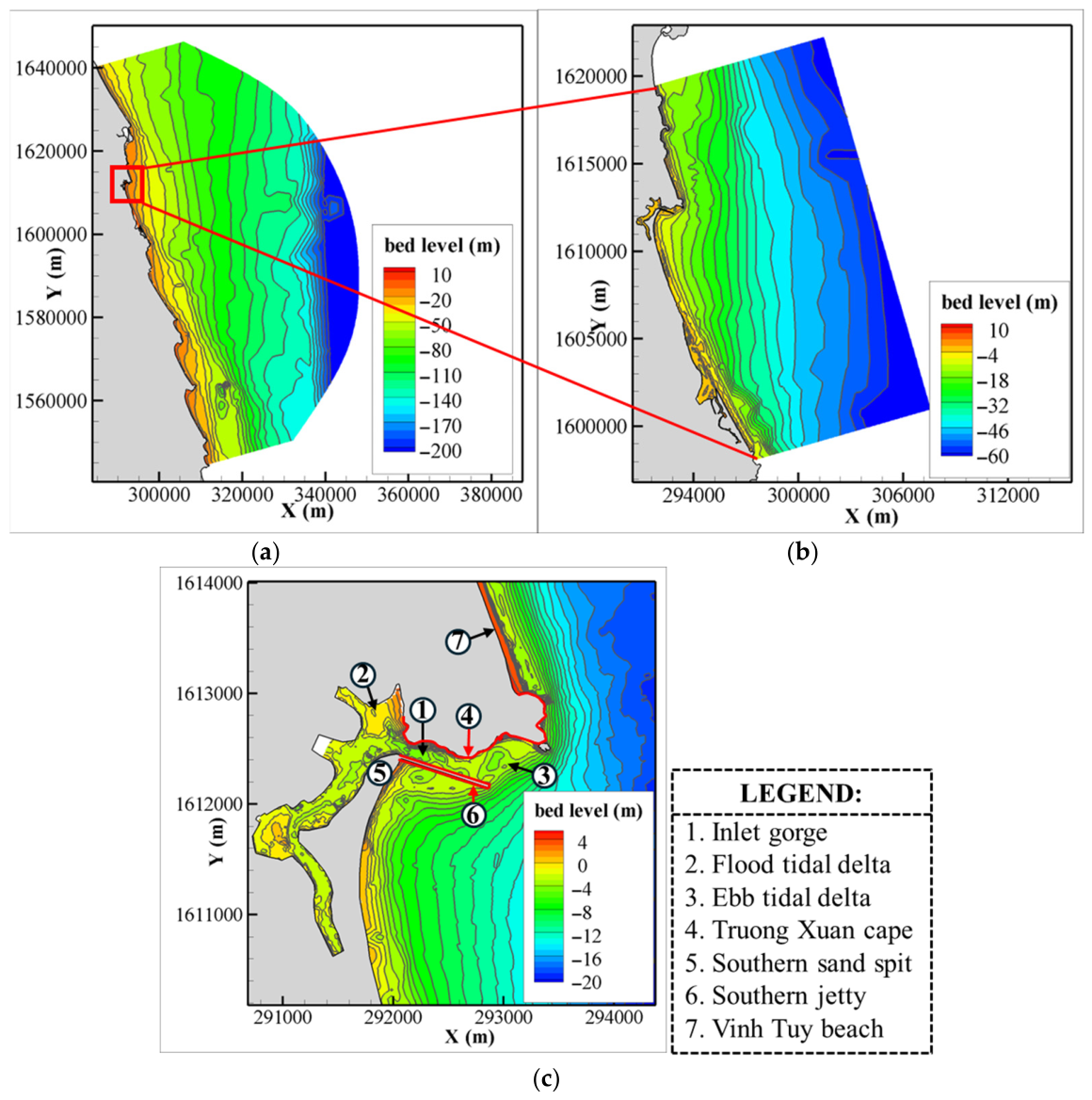
Where datasets overlapped, the merged bathymetric surface was constructed by prioritizing the most detailed available source, particularly within the inlet and adjacent nearshore sectors, and then applying grid averaging followed by smoothing to obtain a numerically consistent DEM for model input. This procedure was adopted to preserve the principal geometric controls governing inlet response, including the entrance throat, Truong Xuan Cape, the southern jetty sector, and the outer nearshore approach, while reducing numerical artifacts associated with abrupt transitions between datasets of different origin, survey period, and map scale (
Figure 4).
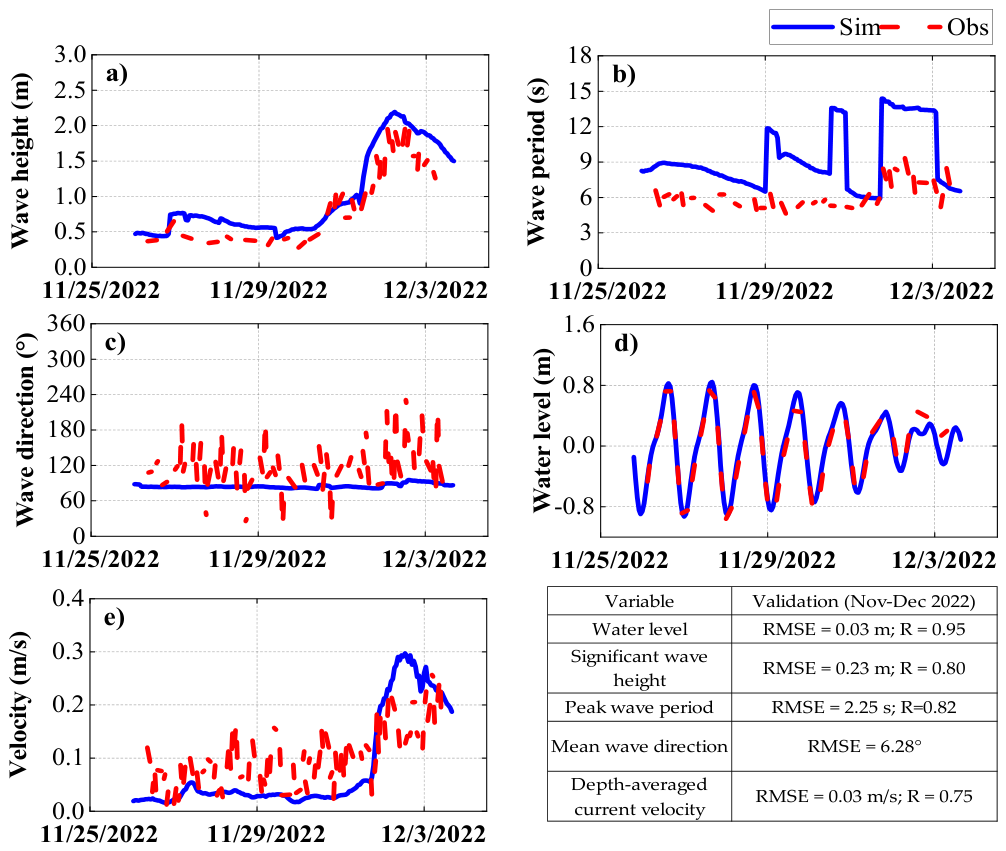
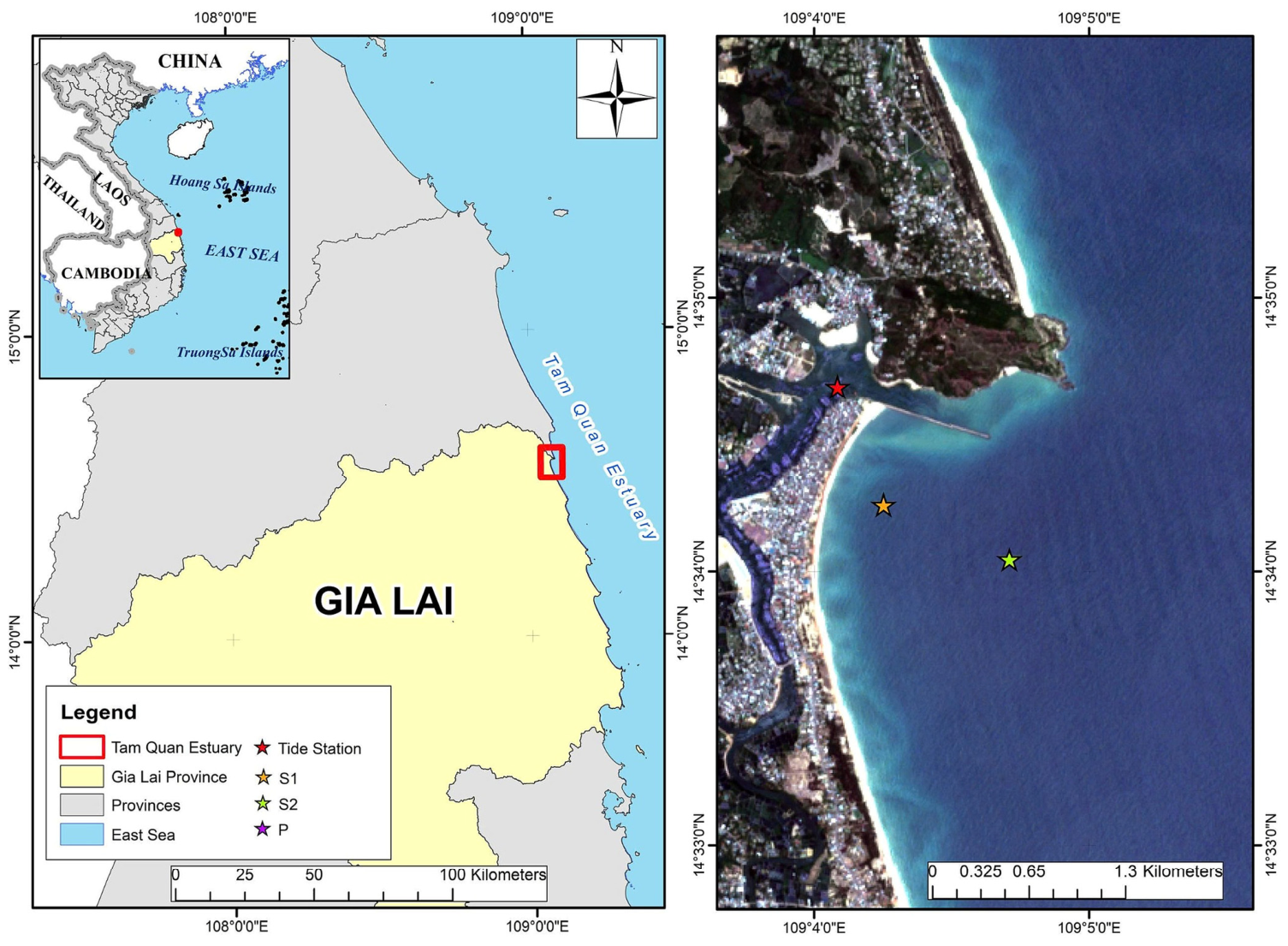
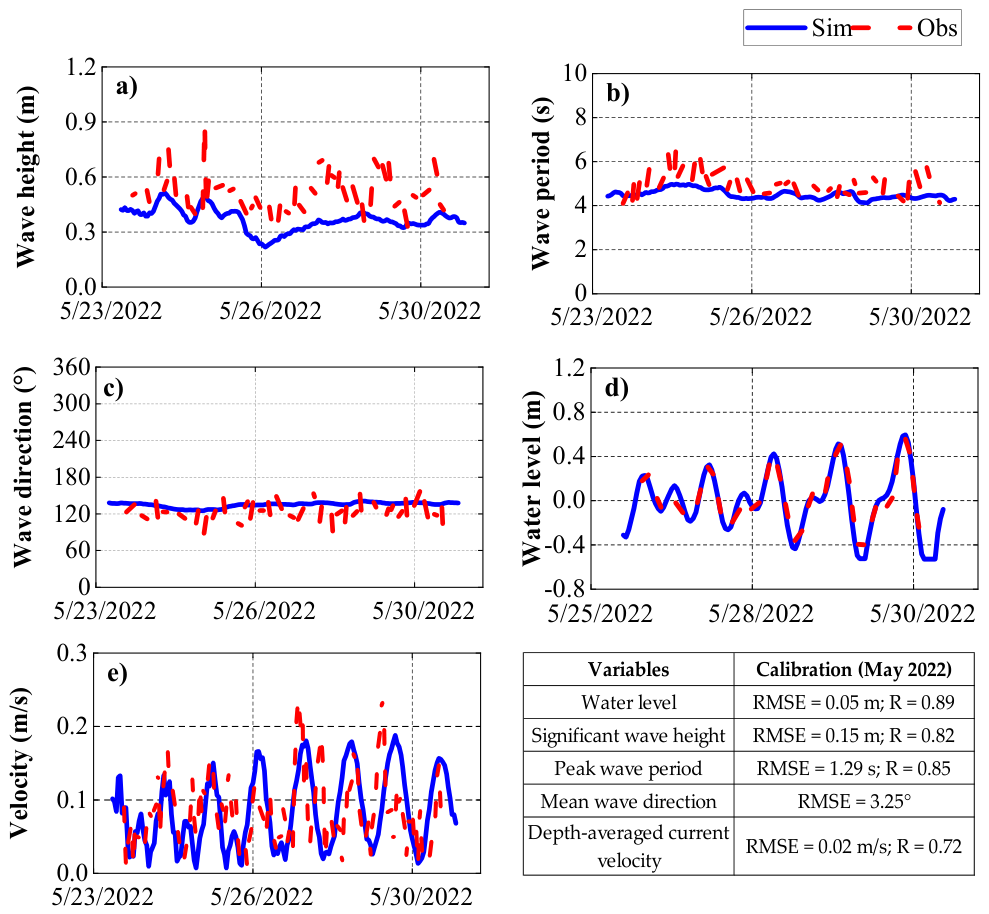
Hydrodynamic observations used for model evaluation comprised wave, current, and water-level measurements collected during the 2022 field campaigns. In May 2022, wave-current data were measured at stations S1 and S2 using FlowQuest 1000 instruments acoustic Doppler current profilers (LinkQuest Inc., San Diego, CA, USA), while suspended-sediment samples at S1 were used to support interpretation of sediment-mobility conditions (
Table 1). In November–December 2022, wave-current observations were repeated at S1, and water level data were obtained from the harbor tide-gauge record within the inlet area. Together with the compiled topo-bathymetric dataset and engineering-layout drawings, these observations were used to support process diagnosis and comparative evaluation of the proposed alternatives.
Because the DEM was assembled from surveys acquired at different times, some residual uncertainty remains in rapidly evolving shoals and nearshore bars. However, the morphodynamically active inlet-control zone was represented using the highest-priority local datasets available and is therefore considered adequate for the process-based and comparative objectives of this study.
2.2.2. Hydrodynamic Forcing and Representative Scenarios
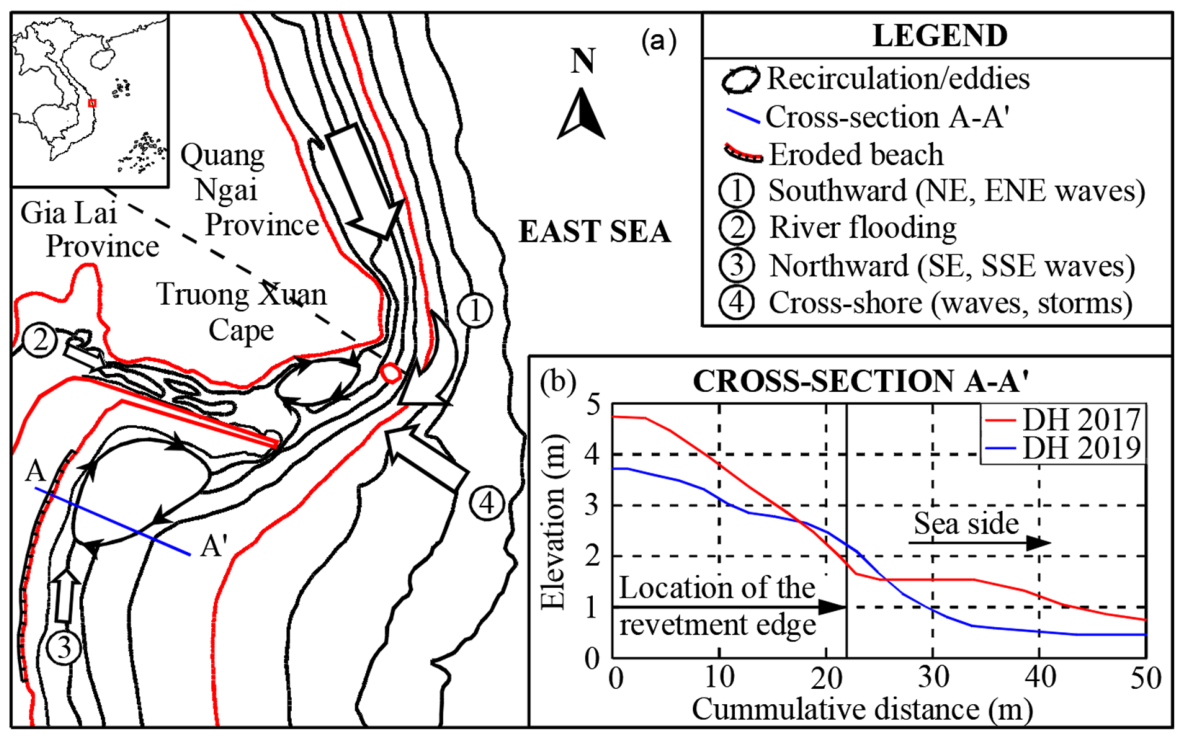
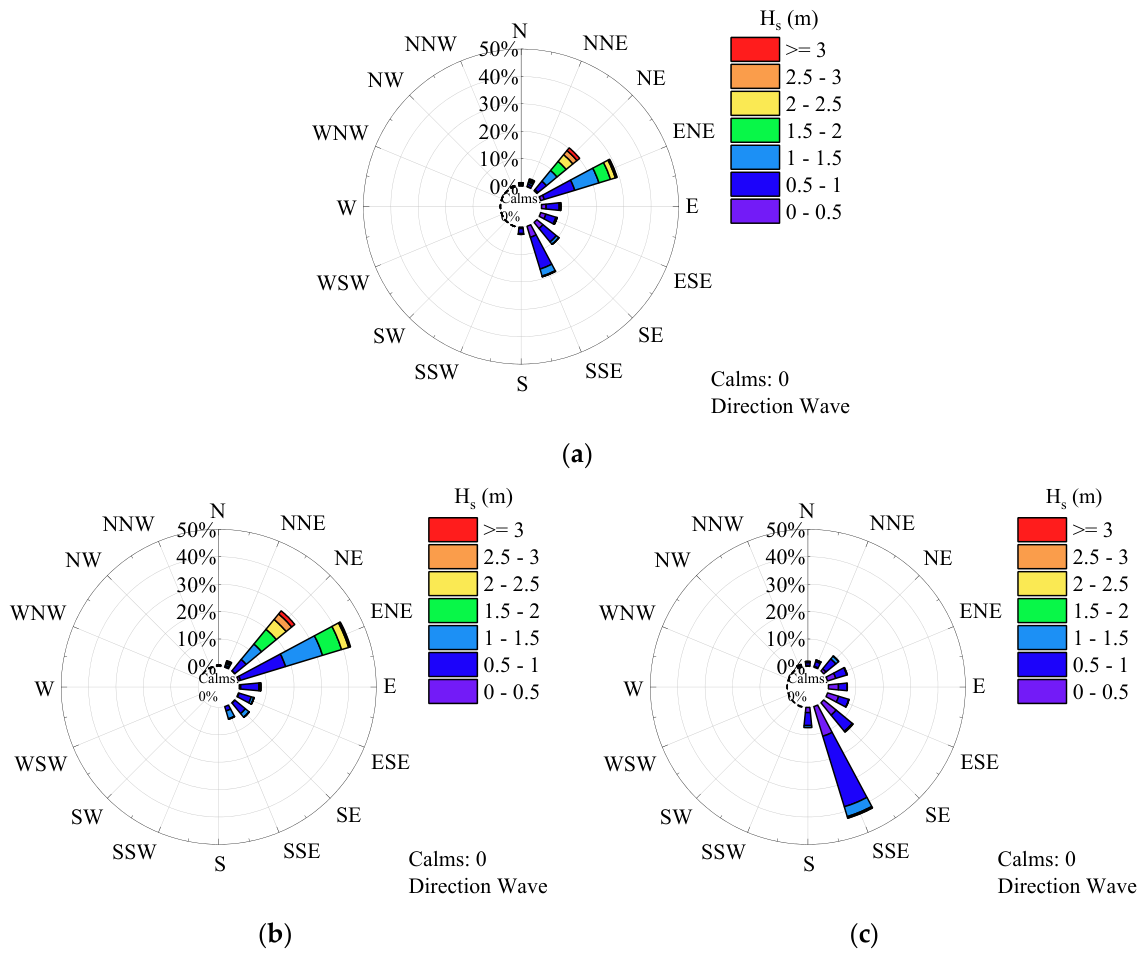
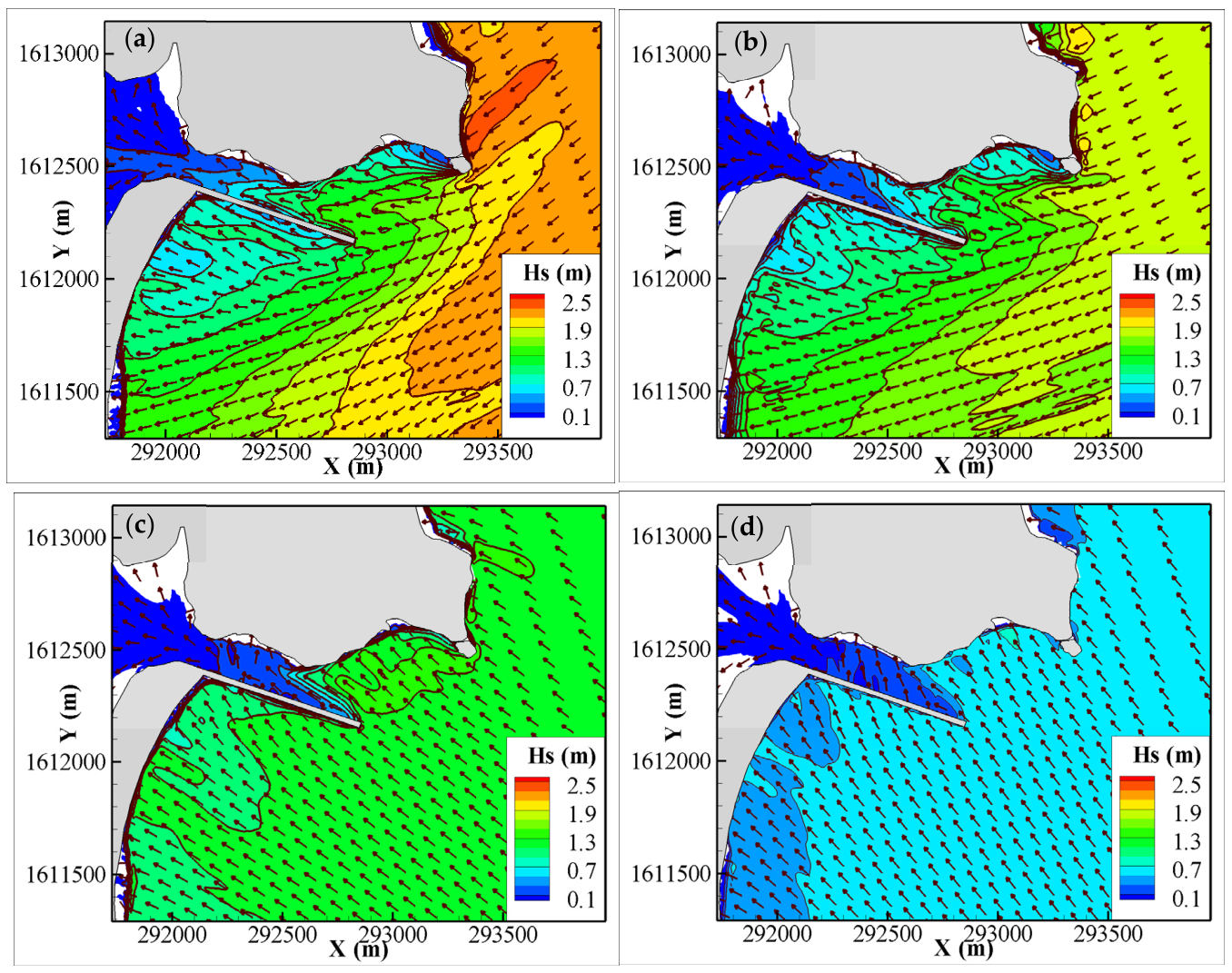
Hydrodynamic forcing at Tam Quan is governed primarily by a pronounced monsoon regime. Winter conditions are associated with more energetic NE-ENE waves, whereas summer conditions are more commonly characterized by lower-to-moderate energy SE-SSE waves [
1,
9] (
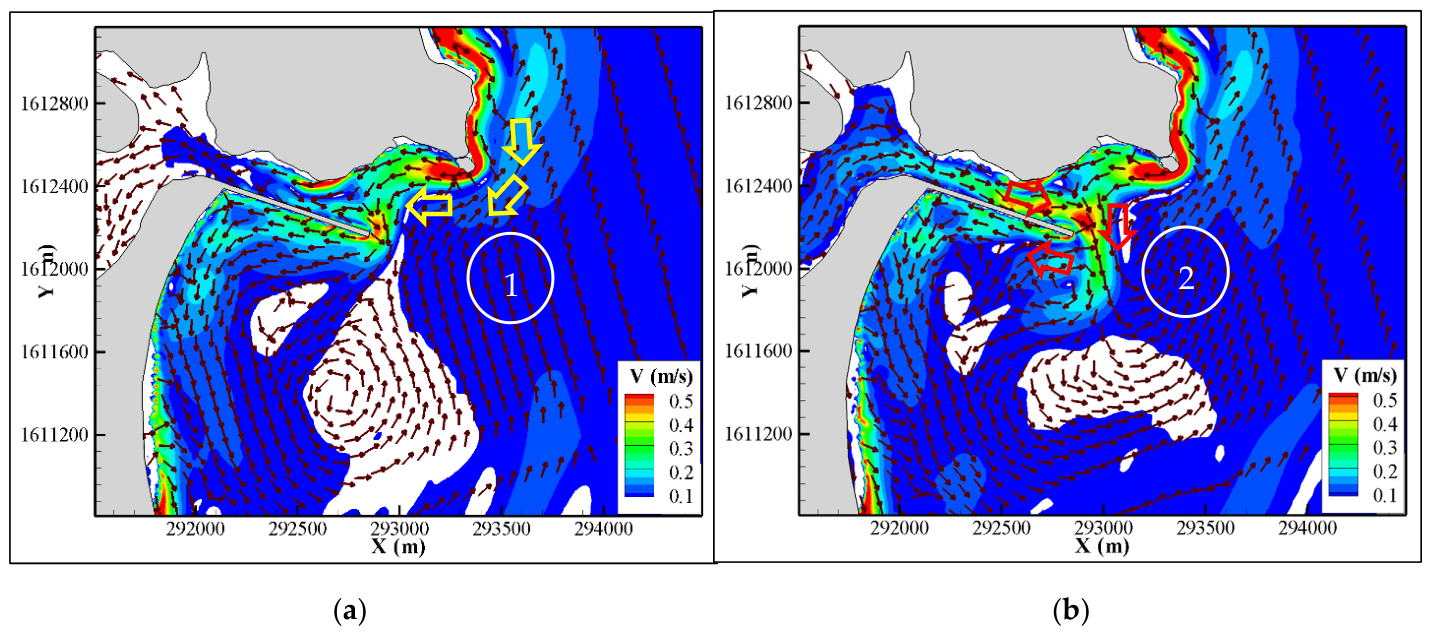
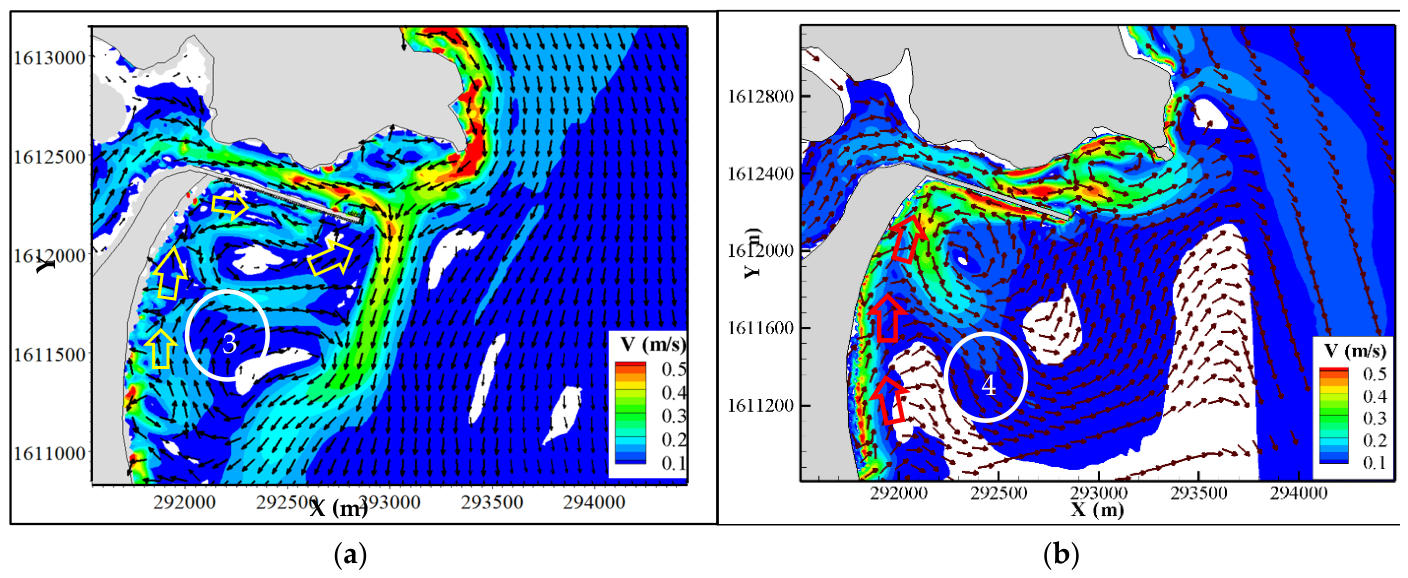
Figure 5b,c). This seasonal shift alters not only the potential magnitude and direction of longshore sediment transport but also the nearshore circulation pattern around the inlet, including jet acceleration, flow separation, and recirculation in the lee of Truong Xuan Cape and the southern jetty.
The tidal regime is irregular diurnal, consistent with the south-central coast of Vietnam. Reported tidal ranges are approximately 1.2–1.8 m under typical conditions and around 0.5 m during neap conditions. Although tidal water-level fluctuations remain important for water exchange through the inlet, available evidence indicates that the representative hydrodynamic conditions relevant to chronic shoaling are more strongly controlled by wave forcing and wave-induced circulation than by tidal asymmetry alone [
9,
19].
Tam Quan Inlet is also connected to a relatively small and steep river system with strongly seasonal discharge under monsoon conditions. River inflow may become more important during flood periods; however, during the dry season and the southwest monsoon, discharge at the inlet is generally low, and the system tends to adjust toward a low-flow morphology. This tendency is further reinforced by upstream flow regulation within the Lai Giang system, including reservoir storage on the An Lao tributary. Under these non-flood conditions, hydrodynamic and sedimentary processes at the inlet are therefore interpreted to be governed predominantly by marine forcing, particularly incident waves and wave-induced nearshore circulation, rather than by sustained fluvial discharge. Accordingly, the representative forcing conditions considered in this study were defined to capture the dominant seasonal wave regimes responsible for circulation reorganization, sediment convergence, and recurrent shoaling at the inlet mouth [
1].
Hydrodynamic boundaries were prescribed using time-varying tidal water levels reconstructed from TPXO8.0 harmonic constituents, together with representative upstream discharges for the seasonal screening runs [
20]. Because river discharge at Tam Quan is comparatively small under non-flood conditions, constant inflows of 5 m
3/s and 10 m
3/s were adopted for the representative dry- and wet-season cases, respectively. This simplification is consistent with previous studies indicating that the recurrent shoaling problem at Tam Quan is governed predominantly by marine forcing, while river contribution is secondary outside flood periods [
1,
4].
Offshore wave forcing was extracted at point P (14.5° N, 109.5° E) from the NOAA WAVEWATCH III dataset using a multi-year time series for 2013–2025 [
21]. The dominant seasonal wave regimes were identified from this record by statistical analysis over the two principal monsoonal windows, with the northeast monsoon defined for November–March and the southeast monsoon for May–September. Representative forcing conditions were then selected in terms of significant wave height, peak period, and mean wave direction to diagnose circulation reorganization under the principal seasonal states. Four incident-wave sectors were considered: NE, ENE, SE, and SSE [
9,
22] (
Table 2). The numerical setup and boundary conditions used for circulation diagnosis and layout screening are summarized in
Table 3. Of these, the NE and SE cases were retained for comparative engineering screening because they represent the dominant winter and summer forcing regimes governing the recurrent hydrodynamic response of the inlet.
In this configuration, the scenario set serves two complementary purposes: first, to identify the circulation mechanisms responsible for sediment convergence under representative monsoonal forcing; and second, to compare how alternative layouts modify those mechanisms under the two dominant seasonal states. The model is therefore used here as a process-based and comparative framework, rather than as a deterministic reconstruction of the full long-term sequence of hydrodynamic events [
23].
2.2.3. Coupled Delft3D-FLOW/WAVE Model Setup
This study uses a process-based numerical framework based on the coupling of Delft3D-FLOW and Delft3D-WAVE (Delft3D 4.03.01; Deltares, Delft, The Netherlands) to simulate water levels, depth-averaged currents, wave transformation, and wave–current interaction at Tam Quan Inlet [
23,
24,
25,
26]. The coupled Delft3D-FLOW/WAVE framework provides an integrated representation of tidal exchange, depth-averaged circulation, wave transformation, wave–current interaction, sediment transport, and morphodynamic response in coastal and inlet environments. Its nested curvilinear structured-grid capability is well suited to resolving the offshore-to-nearshore wave-transformation pathway, the inlet throat, adjacent beaches, and near-jetty circulation gradients at Tam Quan Inlet. These features provide a practical balance of physical detail, computational efficiency, diagnostic transparency, and reproducibility for comparative inlet-layout assessment.
For the present study, these capabilities are particularly relevant because the morphodynamic behavior of Tam Quan is controlled by the interaction among incident wave penetration, flow contraction through the inlet throat, circulation deflection near the southern jetty, and sediment convergence in the entrance sector. The coupled framework, therefore, allows the model to represent not only the separate effects of waves and currents but also their combined influence on seasonal circulation reorganization and sediment-routing pathways. Rather than being used as a deterministic long-term forecasting tool, the coupled system is applied here as a process-based diagnostic and comparative framework for testing how alternative engineering layouts modify wave exposure, current structure, and potential sediment-retention zones under consistent boundary-forcing conditions. The FLOW module resolves tidal exchange, mean circulation, and representative river inflow, while the WAVE module resolves the transformation of offshore wave forcing toward the nearshore and inlet mouth. Accordingly, the model is used to identify forcing-dependent circulation mechanisms, evaluate the relative tendency for sediment to enter the navigation corridor or be retained in external basins, and compare the hydrodynamic and morphodynamic responses of the proposed layouts.
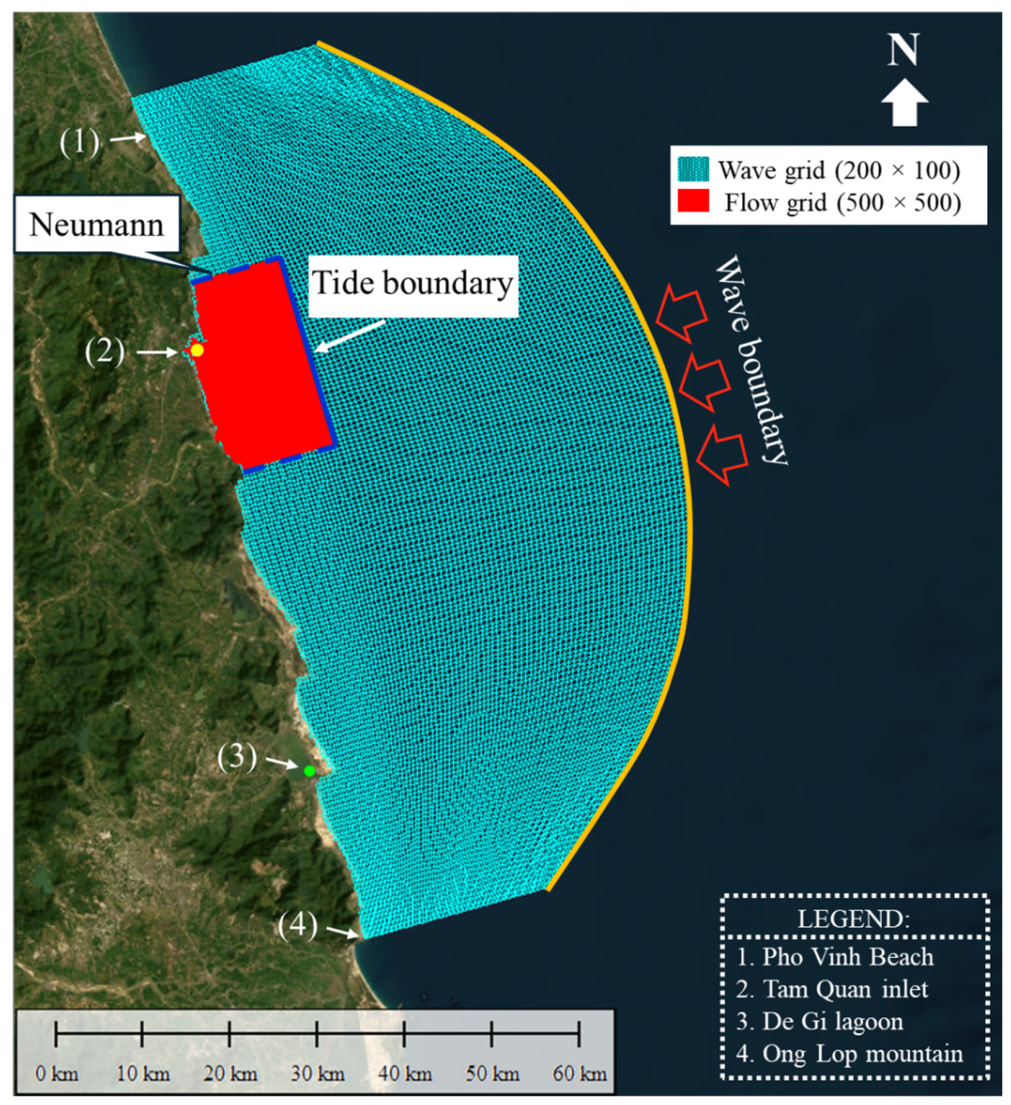
A nested-grid modeling strategy was adopted to balance computational efficiency with the spatial resolution required to resolve wave transformation, circulation reorganization, and sediment trapping at Tam Quan Inlet [
23,
25]. The outer grid comprised 200 × 100 cells and transferred offshore forcing toward the detailed nearshore domain, whereas the inner grid comprised 500 × 500 cells and resolved the inlet throat, adjacent beaches, and the circulation gradients associated with Truong Xuan Cape and the southern jetty (
Figure 6). Local refinement in the inlet-control zone was approximately 10 m, allowing the model to capture the main flow contraction, wave penetration, and near-jetty circulation features. The hydrodynamic model was implemented in depth-averaged form using a single vertical layer. The model-domain configuration shown in
Figure 6 was redrawn and modified based on the authors’ original model grids and updated geospatial datasets. A preliminary version of the model-domain configuration was previously reported by Tung and Duc Anh [
26], whereas the present configuration is used here as part of the expanded calibrated and independently validated process-based analysis.
This modeling strategy was intentionally process-based rather than predictive of site-specific long-term evolution. Representative morphodynamic simulations were therefore used to compare the relative tendency for shoaling in the navigation corridor and for sediment retention in external basins under the dominant seasonal wave climates. The results are interpreted as comparative mechanistic evidence for layout selection within the limits of the available field record and model assumptions, rather than as deterministic forecasts of long-term morphological change.
2.2.4. Morphodynamic Simulation and Comparative Indicators
Using the representative forcing scenarios defined above, morphodynamic simulations were conducted to compare how the existing condition and the alternative layouts modify shoaling and external sediment retention at Tam Quan Inlet. Bed updating was enabled throughout the simulations, and the bed was represented as a non-cohesive sandy system using a representative median grain size of
D50 = 200 µm, consistent with the detailed project-level model configuration and with the documented occurrence of fine-to-medium sand in the Tam Quan nearshore system [
3]. While it is acknowledged that spatial grain-size sorting may occur under actual field conditions, the single representative grain size was adopted to represent the highly mobile fine-sand fraction that primarily contributes to channel infilling at Tam Quan Inlet. A potential implication of this simplification is that sediment-transport rates may be locally overestimated in shallow nearshore zones where coarser native sediments are present, while local sorting and armoring effects are not explicitly resolved. However, because the same sediment representation is applied consistently across all tested layouts, the comparison of relative shoaling tendency within the navigation corridor remains appropriate for the process-based and comparative objectives of this study.
Each representative morphodynamic simulation was run for approximately two weeks under the selected monsoonal forcing scenarios. The objective was not to reproduce the full long-term evolution of the inlet directly, but to resolve the short-duration bed response associated with the dominant seasonal forcing states and to compare how the alternative layouts modify the location, magnitude, and spatial organization of deposition and scour. In the adopted model configuration, the morphological acceleration factor was set to MorFac = 1. The simulated bed-level changes are therefore interpreted as direct short-duration morphodynamic responses to representative forcing conditions, rather than as accelerated predictions of long-term morphological evolution [
23].
For comparative assessment, the morphodynamic results were evaluated in terms of bed-level-change patterns and integrated depositional volumes within the defined analysis zones. The navigation corridor was treated as the primary shoaling zone, whereas the outer basins and designated trapping sectors were treated as sediment-retention zones. Positive bed-level change within these areas was used to compare the relative tendency for sediment to accumulate either within the navigation channel or outside it in the intended retention zones. This framework allows the alternatives to be assessed according to whether they reduce direct channel infilling and shift the dominant retention pattern away from the navigation corridor [
23,
27,
28].
Because the representative morphodynamic simulations were designed to compare bed-response patterns under the dominant seasonal forcing states [
29], the corresponding volumetric results are presented here as annualized equivalent measures on a common temporal basis. These annualized values are not intended to represent deterministic yearly sedimentation rates; rather, they provide normalized comparative indicators for evaluating the relative tendency of each layout to reduce channel shoaling and promote external sediment retention under the adopted forcing framework. This interpretation is particularly important because the simulations resolve short-duration responses to representative seasonal conditions rather than the complete sequence of waves, floods, storms, dredging operations, and morphological feedbacks that would control long-term evolution.
The interpretation of these morphodynamic outputs is constrained by the design of the simulations. Uncertainty in the compiled bathymetry, the simplification of continuous wave climates into stationary representative scenarios, the use of a single representative grain size, and the restricted simulation duration may influence the absolute volumetric estimates [
30]. For this reason, the results are used primarily to compare relative layout performance under consistent boundary conditions, rather than to provide deterministic long-term forecasts of inlet evolution or yearly sedimentation volumes [
31]. Because the simulated responses are governed by the specific inlet geometry, wave climate, and sediment conditions at Tam Quan, the quantitative volumetric results are site-specific and should not be transferred directly to other inlet systems without local recalibration [
32].
To connect process-based hydrodynamic interpretation with layout evaluation, this study adopts a framework consisting of four groups of indicators [
7,
27]. Hydrodynamic indicators describe wave penetration into the inlet, longshore-current intensity around Truong Xuan Cape, and local flow acceleration or deflection near the southern structure. Sediment-transport indicators identify potential convergence zones and the relative tendency for sediment either to enter the navigation corridor or to be retained in outer basins. Management-oriented indicators evaluate whether a given layout shifts the dominant sediment-retention zone away from the navigation corridor and creates a practical source area for bypassing toward the eroding southern beach. Geometric indicators assess whether the proposed inner-throat configuration maintains sufficient hydraulic concentration and remains consistent with equilibrium-based inlet behavior.
2.2.6. Escoffier-Type Hydraulic Assessment and Layout Definition
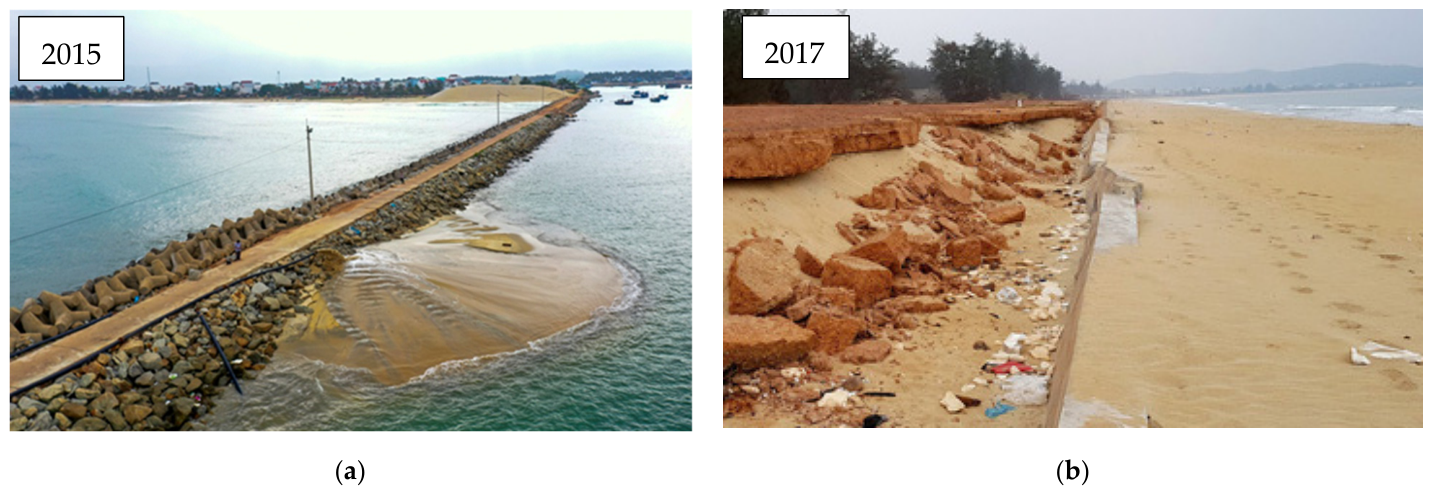
Based on the existing planform, field observations, and previous studies, the outer Tam Quan Inlet may be regarded as only weakly constrained geometrically. Under such conditions, exchange flow through the inlet throat tends to remain insufficiently concentrated, while wave penetration into the inlet and adjacent channel remains significant [
2,
4,
19]. This setting favors sediment mobilization, redistribution, and inward sediment intrusion from the nearshore zone, thereby contributing to the persistent shoaling observed within the navigation corridor. Accordingly, the selection of a hydraulically appropriate inlet-throat width is treated here as a key control variable, because it influences flow concentration, wave penetration, and the overall tendency for channel infilling [
33].
Within this framework, the hydrodynamic, sediment-transport, and geometric indicators are used to identify the mechanisms controlling circulation and shoaling, while an Escoffier-type cross-sectional analysis provides a supplementary hydraulic assessment of inlet-throat stability at the cross-section scale [
6,
34,
35]. Its purpose is to define an initial hydraulically admissible throat scale, expressed first as an equilibrium cross-sectional area and then as a corresponding range of reasonable throat widths. These values are not treated as final design dimensions. Rather, they provide initial hydraulic guidance for formulating candidate layouts, which are then tested against the numerical modeling results and the broader indicator set established for each case. The maximum velocity in the inlet channel, accounting for both tidal forcing and upstream river discharge, is determined from the analytical solution for a lagoon–inlet system [
34,
36,
37].
where
and
are the tidal-forcing terms,
is the dimensionless inlet velocity, and
is the velocity contribution associated with river inflow. The tidal component was based on a characteristic ocean tidal amplitude of
= 0.8 m, while
was specified using representative discharge conditions.
To represent the seasonal hydrological regime, the analysis first adopts
and
based on previous local modeling and technical assessments [
13]. Additional discharge scenarios are then introduced to reflect measured hydrodynamic states from field surveys, including
during the dry season and
during the wet season [
19]. The inclusion of these measured values provides an observational benchmark for comparing the Escoffier curves with recorded peak velocities of 0.49–0.58 m/s before evaluating the proposed layouts. Taken together, the discharge range from
allows inlet stability to be examined across a sufficiently broad spectrum of flow conditions, from low-flow periods to monsoon-driven high-flow states.
The inlet-hydraulic coefficients, including Manning roughness
and the entrance and exit loss coefficients
and
were standardized on the basis of previous local studies, and the full set of hydraulic and geometric inputs is summarized in
Table 5. To maintain physical consistency under the energetic monsoon-dominated conditions of central Vietnam, the stability parameters are not adopted directly as universal constants but are adjusted to the regional setting. The velocity exponent is set to
, a value consistent with established sediment-transport formulations for tidal inlets [
35] and specifically applied to equilibrium topographical models [
38]. This higher exponent is used here to represent the strong non-linear sensitivity of sediment-transport capacity to seasonal variations in ebb-flow strength at Tam Quan [
19].
Furthermore, to reduce calibration arbitrariness, the transport-efficiency coefficient is set to
. According to phenomenological similarity criteria [
35], this coefficient should reflect the specific dynamic balance between local littoral sediment input and ebb-tidal transport capacity. Therefore,
was derived through an inverse modeling approach constrained by local in situ measurements [
19]. By anchoring the theoretical Escoffier stability curve to the measured maximum ebb-flow velocities of 0.49–0.58 m/s [
19],
places the measured ebb-flow velocities below the estimated stability threshold. In the present study, these parameters are therefore treated as regionally calibrated values for comparative hydraulic assessment, rather than as universal constants [
3,
39]. Accordingly, the calibrated value of
should be interpreted as site- and region-specific for the energetic, monsoon-dominated sandy-inlet conditions of central Vietnam and should not be transferred directly to other inlet systems without local recalibration using site-specific sediment supply, tidal-prism, and velocity data.
The equilibrium velocity
, representing the threshold required to maintain the inlet against wave-driven shoaling, is defined following Escoffier-type stability theory [
35]:
where
is the sediment-transport capacity constant that represents the balance between littoral sediment input and the ebb-flow transport capacity of the inlet. In this study, the Van Rijn formulation is used to estimate the representative littoral sediment-input term under the northeast- and southwest-monsoon regimes, rather than to determine
directly as an independent empirical constant [
6,
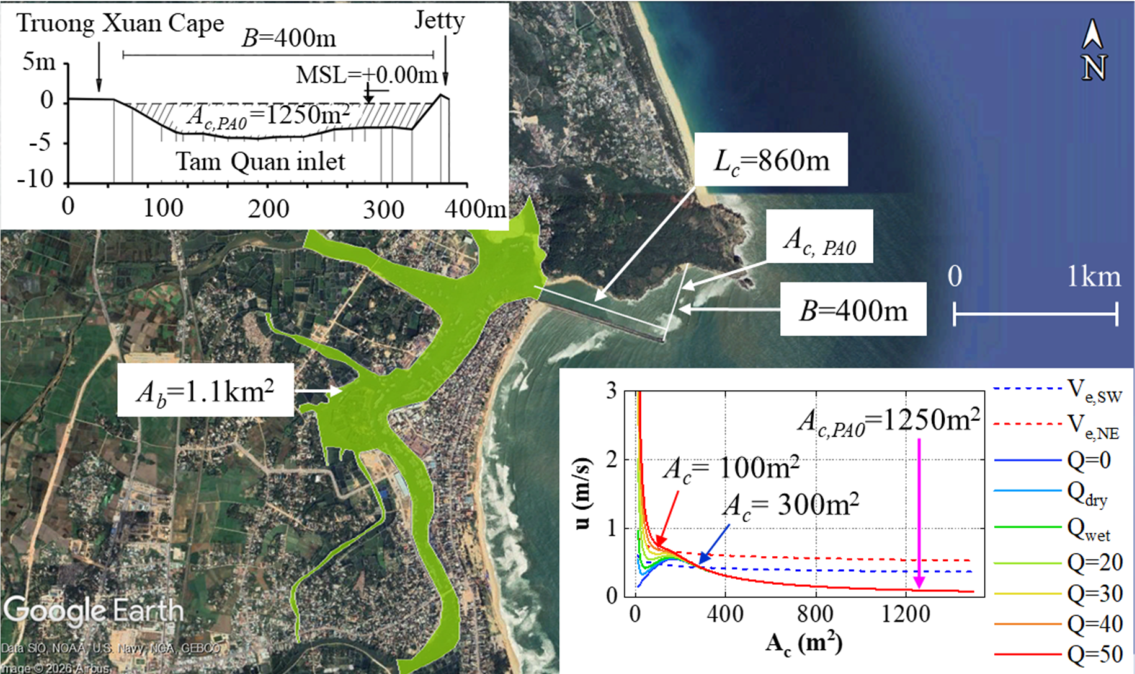
40]. The calculation is driven by the NOAA wave dataset extracted at point P for 2013–2025, ensuring consistency with the wave-forcing framework used in the preceding sections. The geometric parameters used in the stability assessment are derived from the available bathymetric surveys and satellite imagery (
Figure 7). The effective inlet-channel length is defined as the distance from the hydraulic center of the lagoon to the throat section, thereby representing the frictional resistance of the navigation corridor. The hydraulically active lagoon surface area,
was defined as the water surface area contributing to tidal storage, with the first-order tidal prism estimated as
. Together with the boundary conditions listed in
Table 5, these parameters define the existing-condition baseline. Under this baseline, the present inlet entrance remains relatively wide and weakly constrained, with
, producing velocities lower than the estimated stability threshold and therefore consistent with the chronic deposition observed at the site. This comparison supports the interpretation that the existing flow regime does not provide sufficient hydraulic flushing capacity to offset monsoon-driven sediment input without implying that the analytical model provides a unique or fully calibrated prediction of inlet stability.
The stability analysis indicates that the equilibrium cross-sectional area
varies from approximately 100 m
2 during the southwest monsoon to approximately 300 m
2 during the northeast monsoon. The northeast monsoon is adopted as the controlling assessment condition because it delivers the dominant sediment input responsible for chronic shoaling at the inlet [
4]. On this basis, the candidate layouts are evaluated with the objective of maintaining the throat cross section close to the northeast-monsoon equilibrium scale of
, while recognizing that this value provides a hydraulic target range rather than a unique design dimension.
It should be emphasized that the Escoffier analysis yields an equilibrium throat cross-sectional area rather than a unique inlet width. In practice,
is used here as a hydraulic criterion to guide the selection of a reasonable throat-width range, such that the resulting configuration may sustain sufficient flow concentration to reduce shoaling tendency. The selected width is therefore not treated as a direct geometric conversion from
, but as an initial hydraulic estimate that must be checked against the numerically simulated wave field, circulation pattern, and sediment-transport response of each layout [
34]. Thus, the Escoffier analysis provides a first-order hydraulic constraint that strengthens, rather than replaces, the process-based numerical comparison.
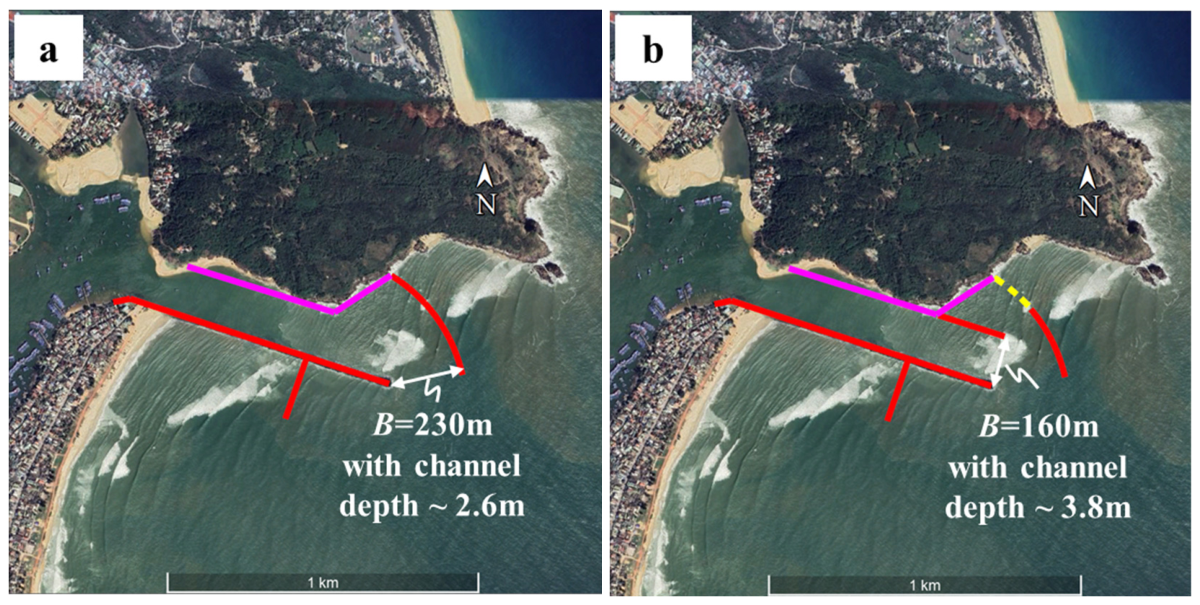
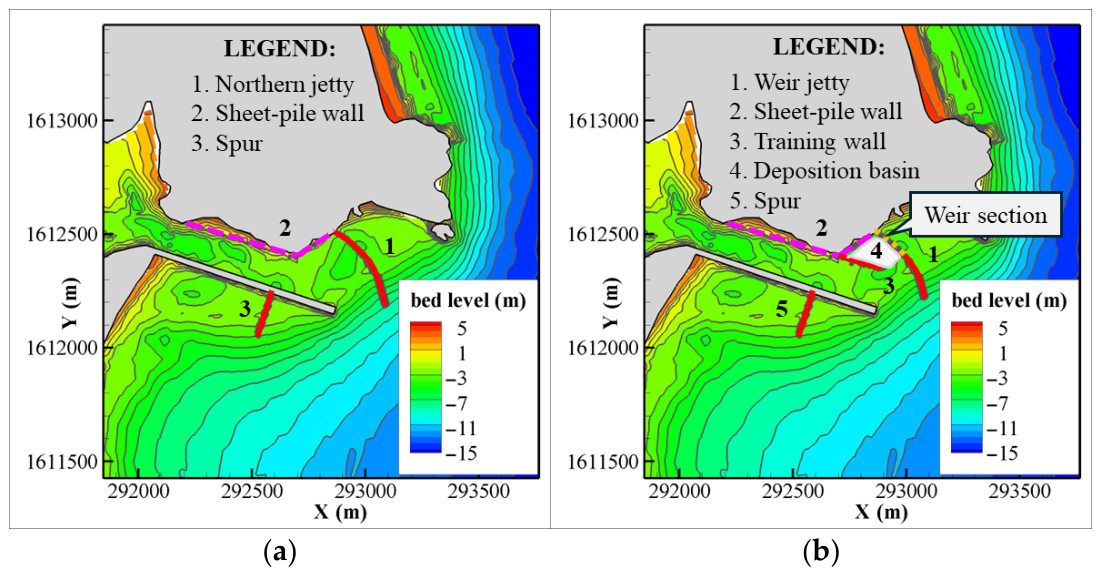
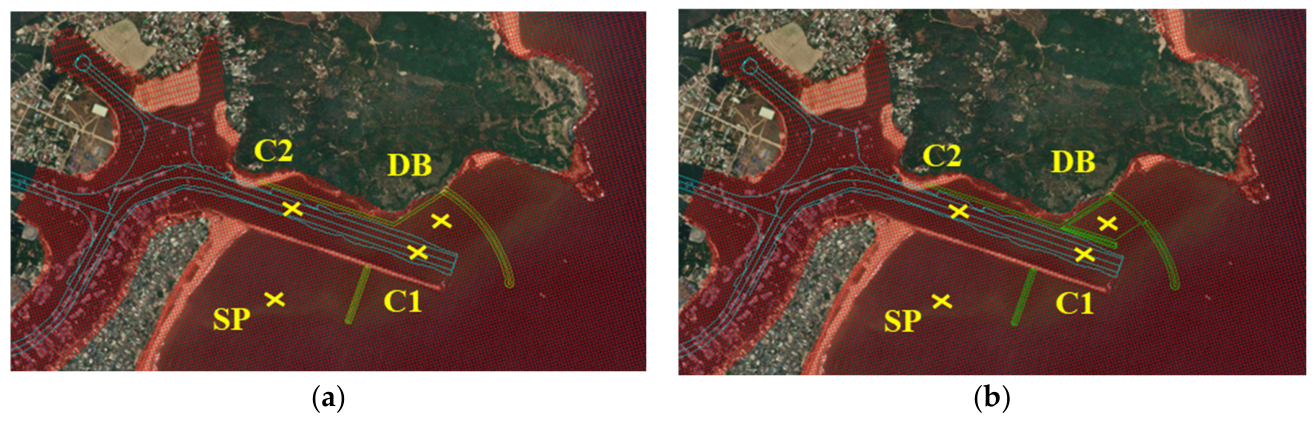
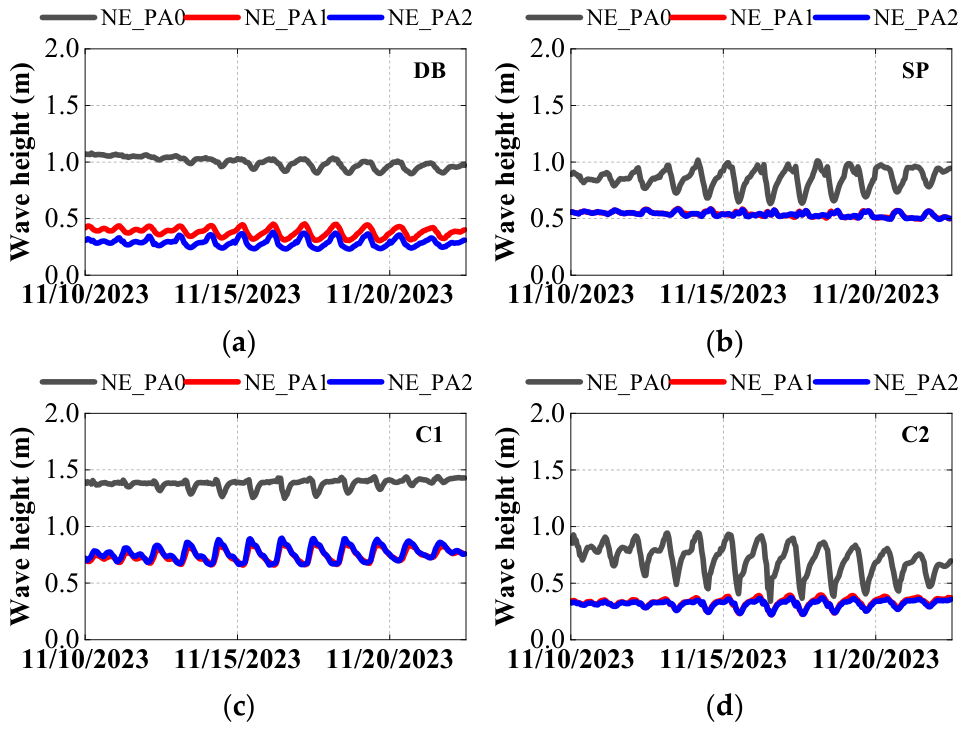
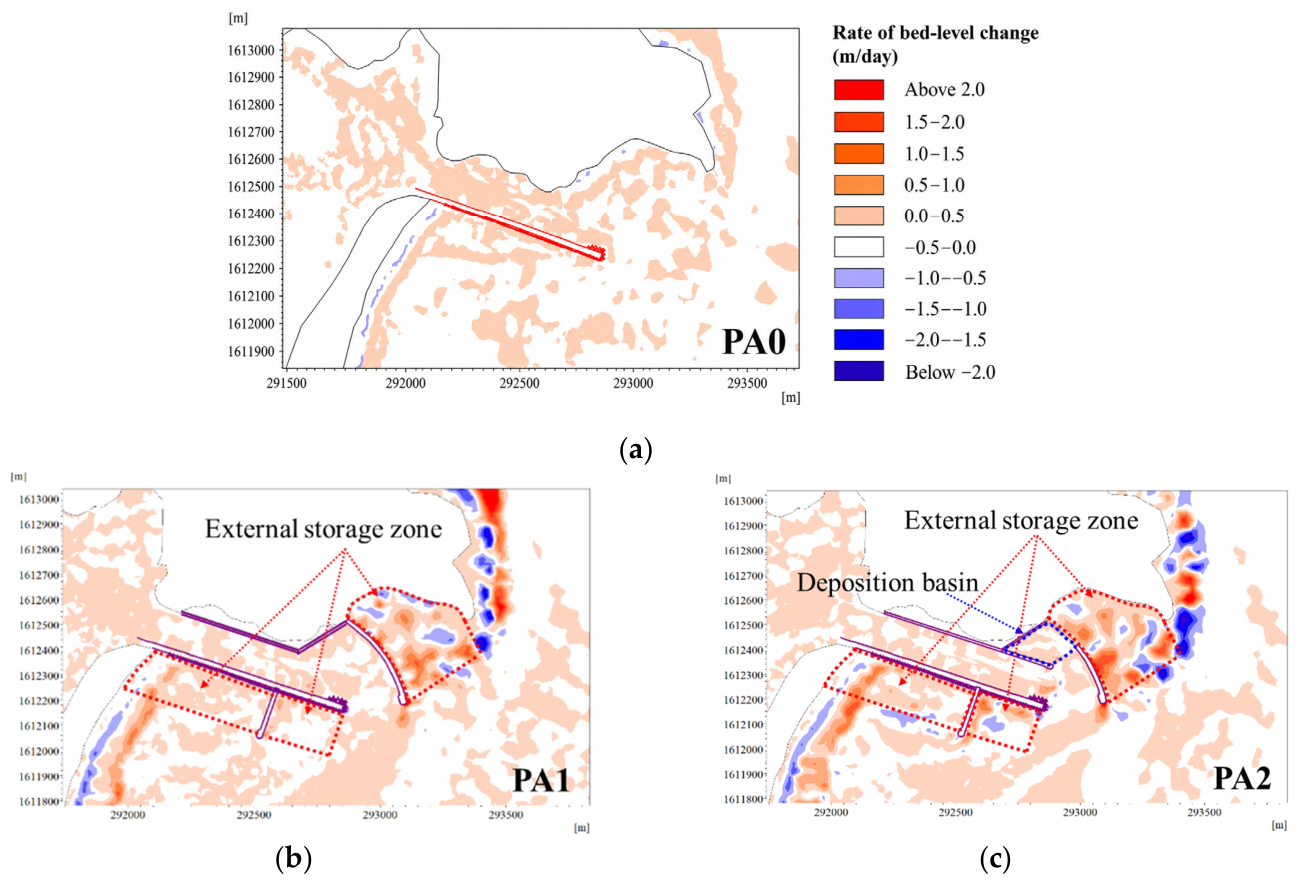
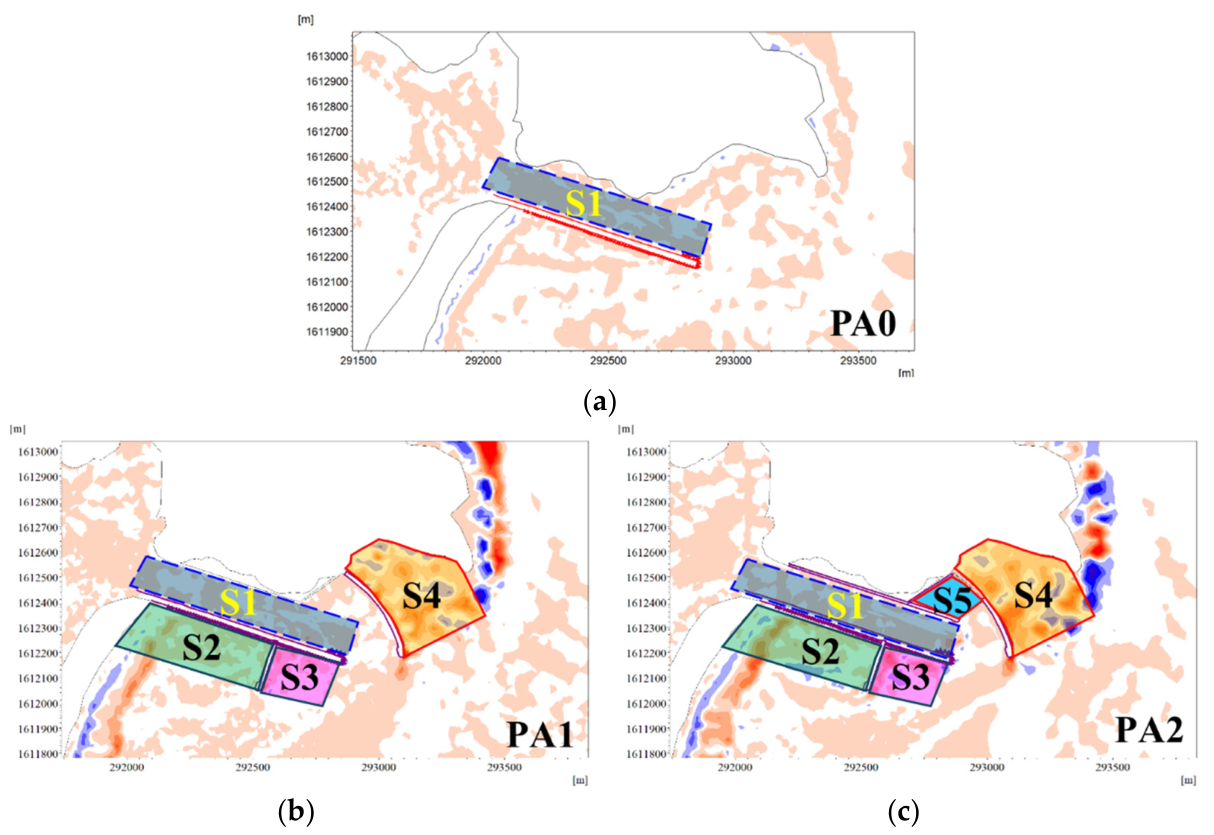
On this basis, two management-oriented layouts are formulated for comparative assessment under identical forcing conditions, denoted PA1 and PA2. PA1 is an anti-shoaling layout consisting of a northern wave-reduction and sand-control breakwater, a sheet-pile training structure connected to the inner channel, and a southern sand-control dike tied to the existing southern jetty (
Figure 8a). Its objective is to reduce direct wave penetration, weaken inlet-directed sediment transport from the north, and shift deposition outside the navigation corridor. PA2 is a sediment-trapping layout that retains the northern and southern control elements of PA1 while adding a low-crested sill, an outer trapping basin, and a flow-guiding structure intended to retain sediment within a more controlled outer basin before it enters the navigation corridor (
Figure 8b). Accordingly, PA1 and PA2 are not evaluated as final engineering designs but as comparative process-based layouts used to test whether hydraulic concentration, wave reduction, and external sediment retention can be improved relative to the present condition. The digitized engineering layouts implemented in the numerical screening runs are shown in
Figure 9.
In summary, the Escoffier concept is not used here as a final design method. Instead, it serves as an initial hydraulic appraisal tool for distinguishing between an excessively wide, deposition-prone throat and a more hydraulically admissible concentrated throat. The final comparison between PA1 and PA2 is therefore based not on the cross-sectional analysis alone, but on the combined evidence from the initial Escoffier guidance and the numerical-model results for wave penetration, circulation, sediment transport, and the spatial distribution of sediment retention. This combined framework preserves the hydraulic significance of the equilibrium-area analysis while ensuring that layout preference is evaluated through the simulated hydrodynamic and morphodynamic response.