1. Introduction
Marine power systems are facing increasingly stringent requirements for energy efficiency and environmental protection. Relevant conventions of the International Maritime Organization (IMO) and national policies (e.g., the clear emphasis on “vigorously developing green ships” and the utilization of clean energy in China’s 14th Five-Year Plan) have jointly driven the development of marine power systems towards higher efficiency, lower emissions, and stronger adaptability [
1,
2,
3,
4,
5]. Driven by the dual forces of policy and industrial demand, traditional marine power systems driven by a single prime mover can no longer meet the operational requirements of high efficiency, low emissions, and flexibility. With the large-scale application of renewable energy, marine gas turbine–electric hybrid power systems integrating gas turbines, renewable energy, and energy storage systems have become an important research direction for improving the comprehensive performance of ships and promoting the green upgrading of marine power systems, thanks to their operational characteristics of multi-energy complementarity, environmental advantages of low emissions, and adaptability to complex navigation conditions. Their technological research, development, and engineering applications have also become a research hotspot in the field of maritime engineering [
6,
7,
8,
9,
10].
The core competitiveness of ship gas turbine–electric hybrid power systems lies in the collaborative and efficient utilization of multiple energy sources. As the core link of system energy management, the performance of control strategies directly determines whether the system can realize optimal power distribution of power sources and smooth switching of operating modes in the complex and variable ship operation environment, and ultimately achieve the comprehensive operational goals of high efficiency, stability, and low emissions. Different from conventional power systems driven solely by diesel engines or gas turbines, the gas turbine–photovoltaic hybrid energy storage power system integrates a variety of power units, including prime mover generator sets, lithium–ion batteries, supercapacitors, and photovoltaic power generation systems. The diversity of energy sources and switchability of operating modes are its core characteristics, yet the significant differences in the inherent characteristics of each power source also bring prominent control challenges.
In terms of dynamic response speed, supercapacitors feature millisecond-level fast response capability and can effectively suppress high-frequency power fluctuations, while gas turbines require second- to minute-level response and are thus unable to cope with instantaneous power changes. From the perspective of efficiency characteristics, gas turbines have a distinct high-efficiency operating range, and deviation from this range will lead to a sharp rise in fuel consumption rate. In terms of service life constraints, the cycle life of lithium–ion batteries is closely related to the depth of discharge and charge-discharge frequency, with over-charging and over-discharging significantly shortening their service life. In terms of load characteristics, ship load fluctuations are abrupt and unpredictable [
11,
12,
13]; under operating conditions such as emergency collision avoidance and high-speed navigation, the load power can surge severalfold within seconds or even milliseconds [
14,
15]. Such complex operating conditions may render traditional energy management strategies unable to achieve accurate power coordination, and may cause grid voltage instability or equipment overload [
16,
17,
18]. The combination of such multi-time-scale dynamic characteristics, multi-dimensional efficiency constraints, and multi-objective performance requirements renders the coordination of system power distribution and switching of operating modes a highly complex multi-objective optimization problem, with a control complexity far exceeding that of traditional ship power systems. Therefore, aiming at different navigation conditions, such as ship berthing and unberthing, normal cruising and severe sea conditions, as well as different mission requirements, such as economic cruising, rapid maneuvering, and compliance with emission control areas, designing an energy management control strategy with condition adaptive capability to give full play to the performance advantages of each power source and avoid its inherent defects is the key to unlocking the full potential of ship gas turbine–electric hybrid power systems.
To address the above challenges, scholars at home and abroad have taken the research on control strategies as a core topic of hybrid power ships, and have committed to realizing the real-time optimal power distribution through advanced control algorithms. Although the existing control strategies are diverse in form, their fundamental principle is to construct a closed-loop feedback system, whose core task is to ensure that the sum of the output power of all online power sources can match the instantaneous demand power of the ship in a real-time and accurate manner. According to the differences in decision-making basis and optimization time domain, the existing energy management strategies can be classified into two fundamental categories: rule-based strategies [
19,
20,
21,
22,
23,
24,
25] and optimization-based strategies [
26,
27,
28,
29,
30,
31,
32,
33,
34,
35]. The former relies on preset logical rules or expert experience for heuristic decision-making to realize the basic functional coordination of power sources; the latter establishes a system model and solves the optimal solution under a specific objective function to realize the quantitative optimization of system performance. The common goal of both is to realize the optimal power distribution of power sources and autonomous and smooth switching of operation modes under all working conditions through the refined management and control of energy generation, distribution, transmission, and consumption in the power chain, thereby comprehensively improving the dynamic performance, economy, and environmental protection of ships [
36,
37,
38].
Rule-based control strategies have the advantages of simple design, easy implementation, and good dynamic response capability. Although fuzzy rule-based control strategies have optimized and improved them, similar to deterministic rule-based control strategies, their boundary threshold setting is highly dependent on engineering practice experience and difficult to accurately control, leading to suboptimal control performance and obvious limitations [
39,
40,
41,
42]. Therefore, such strategies are only applicable to power application scenarios with relatively low electrification and intelligence levels [
43,
44,
45]. To meet the performance requirements of all-electric ships and achieve more efficient energy management, researchers have begun to explore optimization-based control strategies in order to realize the refined and efficient utilization of energy.
Although optimization-based control strategies, such as dynamic programming, model predictive control, and instantaneous optimization algorithms, can provide global or instantaneous optimal solutions in theory, and have the advantages of dynamic adjustment and efficient resource utilization, they still face two major challenges in the practical engineering application of marine hybrid power systems [
46,
47,
48]: Firstly, high computational complexity and insufficient real-time performance. Global optimization algorithms need to predict the complete working conditions and require a huge amount of computation, and the online solution of instantaneous optimization is also limited by the computing power of marine embedded hardware, making it difficult to meet the millisecond-level real-time control requirements. Secondly, strong model dependence and poor robustness. The performance of the strategy is highly sensitive to the modeling accuracy of system nonlinear dynamics, environmental interference, and uncertainty, and model mismatch is likely to lead to the deviation of optimization results from the actual situation and even affect the operational stability of the system.
The rule-based control methods have been applied to the energy management of shipboard gas turbine–photovoltaic hybrid energy storage systems [
13,
49]. By means of state machine logic and supercapacitor power correction, these methods can realize the mode switching and power allocation among multiple operating units, thereby improving the stability and economic efficiency of the system to a certain extent. Nevertheless, such rule-based schemes are essentially static control approaches, whose performance relies heavily on manually preset thresholds and engineering experience. Consequently, it is difficult to achieve dynamic global optimization under the complex and variable real navigation conditions, which limits further enhancement of the system’s comprehensive performance.
To further improve the comprehensive performance of shipboard hybrid power systems, the current research focus has gradually shifted toward intelligent control methods with online optimization capabilities. Model predictive control (MPC) is widely used in the coordinated management of multi-energy systems due to its ability to predict future states based on system models and generate rolling optimization control commands [
50,
51,
52,
53,
54,
55,
56,
57,
58,
59,
60,
61,
62]. The equivalent consumption minimization strategy (ECMS) converts the energy distribution problem into an instantaneous optimization problem by equating electrical energy consumption to fuel consumption, which takes into account global energy efficiency while ensuring real-time performance, and has become an effective solution for real-time energy management of hybrid power systems [
63]. Furthermore, this method has been widely applied in the fields of electric vehicles [
64,
65,
66,
67] and marine power systems [
54,
68,
69,
70,
71,
72]. However, existing studies mostly apply the two methods independently and fail to fully exploit the complementary advantages of their predictive optimization and instantaneous decision-making. In particular, ECMS still has limitations, such as insufficient adaptability and a lack of foresight in practical applications, which affect its overall optimization effect under dynamic operating conditions [
73,
74,
75].
Therefore, this paper proposes a real-time optimal control strategy (referred to as MPC-ECMS), integrating model predictive control and equivalent consumption minimization strategy for a gas turbine–photovoltaic hybrid energy storage shipboard power system. The core of the strategy is as follows: the MPC is used to predict the load and photovoltaic power within the prediction time domain to predict the system operating conditions in advance, and the equivalent fuel consumption factor is dynamically adjusted according to the battery state of charge (SOC), realizing the optimal design of the equivalent factor based on the coordination of operating condition identification and battery operating state. By transforming the power distribution optimization problem within a finite time domain into an equivalent fuel consumption minimization problem, an approximately optimal power distribution scheme is obtained in real time. At the same time, the supercapacitor still adopts the power secondary correction method proposed in ref. [
49] to bear high-frequency power and suppress the bus voltage fluctuation, ensuring the dynamic response performance of the system.
To clearly demonstrate the novelty and contributions of this paper,
Table 1 presents a structured comparison between the proposed two-level MPC-ECMS and conventional MPC-ECMS strategies. The main objectives of this paper are as follows. First, a real-time optimized MPC-ECMS strategy is proposed for the shipboard GT-PV-HESS system to address the poor adaptability of rule-based methods and the insufficient foresight of conventional ECMS. Second, a two-level equivalent factor adjustment mechanism is designed, using MPC condition prediction and battery SOC feedback to realize adaptive optimal power allocation. Third, the strategy achieves a comprehensive balance among fuel economy, generation efficiency, battery lifespan, and DC bus voltage stability. Fourth, the effectiveness and superiority of the proposed method are verified through comparative simulations, providing a practical energy management solution for shipboard hybrid power systems.
The subsequent arrangement of this paper is as follows:
Section 2 establishes the model of the shipboard gas turbine–photovoltaic hybrid energy storage hybrid power system;
Section 3 introduces the basic principle and application of ECMS and MPC;
Section 4 proposes the designed optimal MPC-ECMS control strategy;
Section 5 verifies the operation effect of the proposed strategy under typical operating conditions through simulation and compares the system operation effects under different strategies; and
Section 6 summarizes the content of this paper.
2. The Model of the Shipboard Gas Turbine–Photovoltaic Hybrid Energy Storage Hybrid Power System
2.1. Model Description
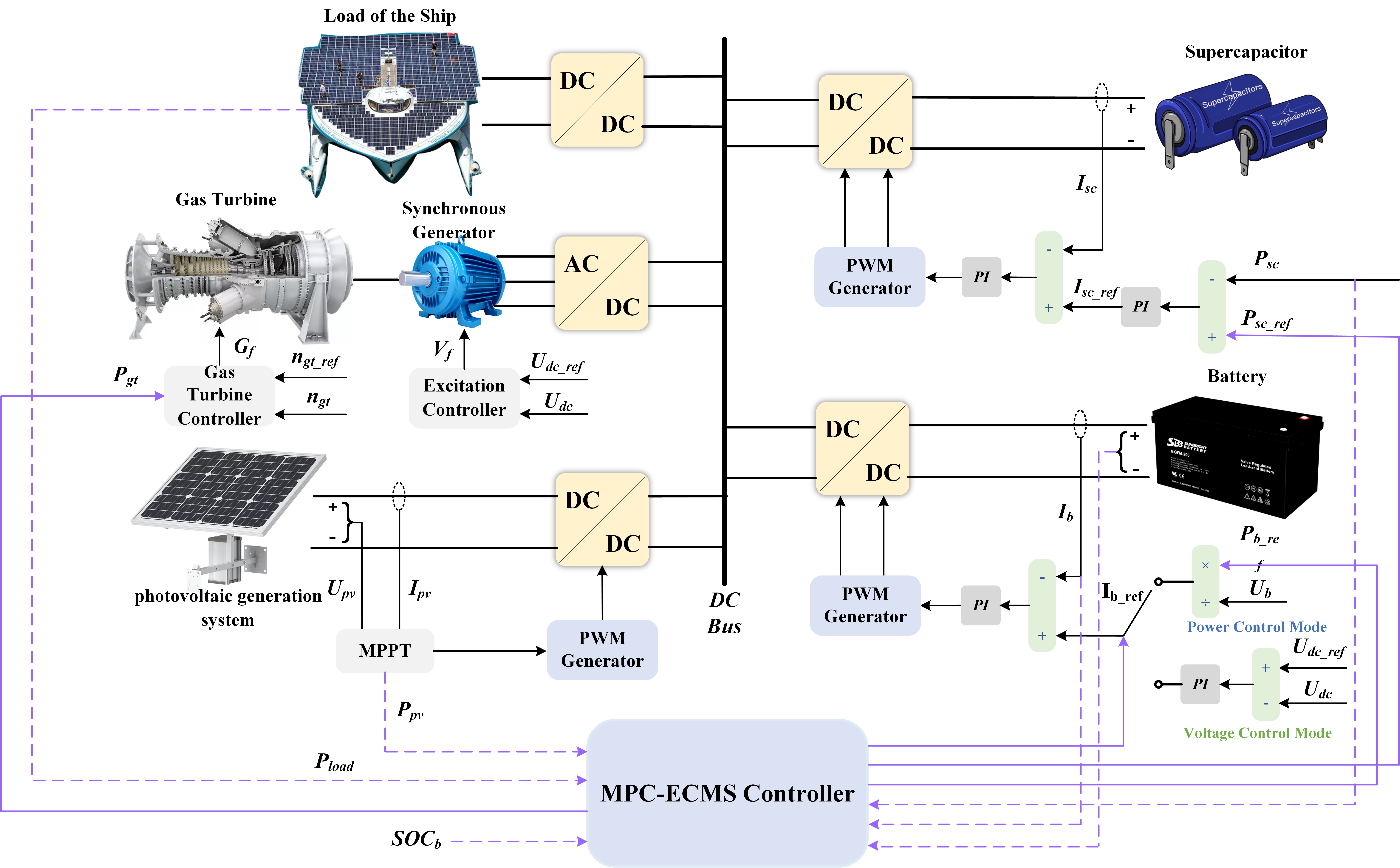
The model of the gas turbine–photovoltaic hybrid energy storage (GT-PV-HESS) hybrid power system established in this paper is shown in
Figure 1.
The ship design prototype is derived from PlanetSolar, the world’s largest all-solar-powered ship. The ship has an overall length of 31 m and a width of 15 m, with more than 500 square meters of photovoltaic modules laid on the upper deck and six sets of lithium battery energy storage systems configured. The peak output power of the photovoltaic power generation system can reach 93.5 kW. A detailed introduction to the ship background can be found in ref. [
76].
Figure 1 fully presents the topological architecture and hierarchical control logic of the GT-PV-HESS hybrid power system for ships. With the DC bus as the core hub, the system integrates modules including power generation units, energy storage units, load units, and a global energy management controller, realizing multi-source coordinated power supply and optimal power distribution. It should be emphasized that the gas turbine is selected as the prime mover in this study instead of a conventional diesel internal combustion engine for its distinct superiorities in marine hybrid power systems. Compared with diesel engines, gas turbines feature higher power density, lower pollutant emissions, faster dynamic response, and more flexible power regulation capability. These characteristics are crucial for matching the abrupt fluctuations in ship loads and realizing coordinated operation with photovoltaic systems and hybrid energy storage. With the increasing requirements for high dynamic performance, low emissions, and high integration in modern marine electric power systems, gas turbines have become increasingly attractive in shipboard DC microgrid applications. Therefore, this paper takes the gas turbine as the core prime mover to study its coordinated control with photovoltaic hybrid energy storage and ship loads.
The adopted gas turbine generator operates within a power range of 80–100 kW, matched with a gas turbine prime mover with a rated power of approximately 120 kW to maintain a reasonable power margin. This power configuration is derived from a practical 100 kW-class gas turbine power generation experimental platform in NUE [
77,
78,
79]. Micro gas turbines with a rated power of around 120 kW are commercially mature and widely applied as emergency power supplies for residences, commercial facilities, and special equipment. The simulation model is established strictly according to the actual parameters of the physical platform, rather than adopting a reduced-scale miniature system.
2.2. Working Principle
The power generation unit consists of two parts: a gas turbine power generation system and a photovoltaic power generation system. The gas turbine outputs alternating current through a synchronous generator, which is connected to the DC bus via an AC/DC rectifier converter. A dedicated gas turbine controller and excitation controller are configured to regulate the gas turbine speed/fuel flow and control the generator excitation voltage, respectively, ensuring the gas turbine operates within a high-efficiency power range. The gas turbine model is built as a physical mechanism model in MATLAB/Simulink, rather than a simplified transfer–function model. The model fully reflects the rotational dynamics, fuel flow regulation, thermal inertia, and volume inertia characteristics of the marine gas turbine. The key dynamic parameters are set according to typical marine micro gas turbine data: the start-up time is 100 s, and the power ramp rate (acceleration rate) is 30 kW/s. These parameters impose hard constraints on the power variation rate during start-up, mode switching, and load changes, which directly affect the transient process and DC bus voltage fluctuation characteristics.
The photovoltaic power generation system can effectively utilize spatial resources, such as the ship’s deck, and is connected to the bus through a DC/DC boost converter, equipped with a maximum power point tracking (MPPT) controller and a PWM generator to maximize the capture efficiency of photovoltaic energy. It supplies clean electricity for the ship under sufficient sunlight, reducing the operating time and fuel consumption of the gas turbine. The specific control logic of the MPPT control adopted in the photovoltaic power generation system is as follows: the voltage and current of the photovoltaic circuit are input to the MPPT controller, which outputs a duty cycle signal to the photovoltaic DC/DC boost circuit, thereby adjusting the photovoltaic output power. The specific power distribution signals are generated by the MPC-ECMS controller designed for the system. The photovoltaic power output in this study is set as an ideal controllable sequence without considering partial shading, deck motion caused by waves, or real irradiance volatility in the marine environment. These factors affect only high-frequency fluctuations in PV power and do not change the core energy distribution logic or operating mode transition rules of the system. Therefore, the simplified ideal PV model is reasonable for verifying the proposed energy management strategy.
The hybrid energy storage unit is composed of lithium–ion batteries and supercapacitors, which are connected in parallel to the DC bus through independent bidirectional DC/DC converters, forming a complementary architecture with high energy density and high power density. Supercapacitors feature a millisecond-level response speed and are responsible for suppressing high-frequency and instantaneous power fluctuations; their control loop is centered on a power closed loop, and the fast tracking of charging and discharging power is achieved through a PI controller and a PWM generator. Lithium–ion batteries have high energy density, suitable for medium and low-frequency power fluctuation regulation and medium-to-long-term energy scheduling. They are equipped with dual modes of power control and voltage control, which can be flexibly switched according to system operating conditions to ensure DC bus voltage stability and medium-to-long-term energy balance.
The ship load unit is connected to the DC bus through a DC/DC converter to provide stable power for the ship’s propulsion system, auxiliary equipment, and other loads. The core control center of the system is the MPC-ECMS controller, which integrates global state information, including photovoltaic output power (), load demand power (), and lithium battery SOC (). Based on the operating characteristics and power response capabilities of each energy unit, it outputs power reference commands for each unit (e.g., and ), realizing optimal power distribution under all operating conditions: under low-load conditions, such as berthing, unberthing, and low-speed cruising, photovoltaic and energy storage systems are prioritized for power supply to achieve “zero-emission” operation of the ship; in scenarios such as high-speed navigation and sudden high-power load surges, the gas turbine is started and controlled within a high-efficiency operating range, and the hybrid energy storage system is used to suppress load fluctuations, significantly reducing the specific fuel consumption for power generation and improving the ship’s endurance.
Through hierarchical control and multi-source coordination, this control structure not only fully exploits the cleanliness of photovoltaic energy, the high reliability of gas turbines, and the complementarity of hybrid energy storage, but also solves the stability problem of the coordinated operation of multi-source systems through the MPC-ECMS global energy management strategy. It can provide a complete technical solution for the efficient, environmentally friendly, and reliable operation of ship hybrid power systems.
However, the increase in system components undoubtedly increases the difficulty of the coordinated and stable operation of the system. Therefore, it is necessary to design a reasonable power allocation strategy according to the operating characteristics and power response characteristics of each energy unit.
3. Equivalent Consumption Minimization Strategy and Principle of Model Predictive Control
3.1. Fundamentals of the Equivalent Consumption Minimization Strategy
For a gas turbine–electric hybrid power system, the electrical energy consumed during the battery charging and discharging process must ultimately be supplemented by the gas turbine generator set through fuel consumption. As a classic instantaneous optimization method in energy management of hybrid power systems, ECMS introduces an “equivalent factor” to equate the electrical energy consumption of the battery to the fuel consumption of the engine, thereby constructing a unified objective function and realizing the coordinated optimization of the prime mover and battery power.
The core idea of ECMS is “energy equivalence”, which converts the battery charging and discharging behavior into equivalent fuel consumption, thus transforming the global optimization problem of multi-energy systems into an equivalent fuel consumption minimization problem at each moment. This method not only retains the idea of global optimization but also overcomes the shortcomings of algorithms, such as dynamic programming, with high computational complexity and difficulty in online application, and is suitable for real-time control scenarios [
80]. Specifically, at each moment, the system traverses all possible engine and battery power combinations within the constraint range, according to the current state, calculates the corresponding equivalent fuel consumption, and selects the power distribution scheme that minimizes the objective function as the optimal decision.
In engineering applications, ECMS has been widely used for real-time energy management in hybrid electric vehicles, shipboard integrated power systems, and other fields due to its simple structure and good real-time performance [
81,
82]. However, traditional ECMS still has certain limitations in practical applications. For example, the equivalent factor is usually set as a fixed value or simply adjusted based on the battery SOC, which is difficult to adapt to the dynamically changing road or navigation conditions and affects the global economy of the system.
The energy sources of hybrid power systems are diverse: the prime mover directly consumes fuel to output mechanical energy, while the battery realizes energy storage and release through charging and discharging (without directly consuming fuel). However, there is an inherent correlation between the two energy flows.
When the system is in the discharging process, the battery releases electrical energy to supply power to the power system. Although this reduces the fuel consumption of the engine at the current moment, the released electrical energy needs to be supplemented through the charging process in the future, and additional output from the engine (or other energy sources) is required during charging to convert it into electrical energy for storage, which is equivalent to “advancing” the future fuel consumption. Therefore, from the perspective of full-cycle energy balance, the equivalent fuel consumption of the electrical energy released during the battery discharging process should be counted as a positive value.
When the system is in the charging process, part of the mechanical energy of the engine is converted into electrical energy through the motor and stored in the battery. Although this increases the fuel consumption at the current moment, the stored electrical energy will replace the engine output during future discharging, thereby reducing future fuel consumption. Therefore, from the perspective of full-cycle energy balance, the electrical energy stored during the battery charging process is equivalent to “reserving” the fuel that can be saved in the future, and its equivalent fuel consumption should be counted as a negative value (i.e., equivalent to fuel saving).
3.2. ECMS Modeling and Equivalent Fuel Consumption Expression
To realize the equivalence of energy flow, it is necessary to quantify the actual fuel consumption of the engine and the equivalent fuel consumption of battery charging and discharging, and construct the total equivalent fuel consumption objective function.
The actual specific fuel consumption curve
(unit: kg/kWh) of the gas turbine used in this paper was fitted through test data in refs. [
49,
79]. Therefore, the actual fuel consumption rate
(unit: kg/s) of the gas turbine can be expressed as shown in Equation (1):
The energy change of the battery itself does not directly consume fuel, but its charging and discharging process indirectly changes the fuel consumption by affecting the power output of the engine. The calculation formula of the battery equivalent fuel consumption
(kg/s) is given by Equation (2) [
73]:
where
is the equivalent factor;
is the battery operating power, kW; and
is the lower heating value of fuel, kJ/kg. The fuel used by the gas turbine in this paper is diesel oil, with a value of 42.7 MJ/kg.
is the power generation efficiency of the gas turbine generator set.
Therefore, ECMS adds the actual fuel consumption rate of the engine and the equivalent fuel consumption rate of the battery to form the total equivalent fuel consumption rate function
, as shown in Equation (3):
The actual equivalent fuel consumption
of the system is obtained by integrating the fuel consumption rate over time, as shown in Equation (4):
where
is the integral variable, representing the time differential.
3.3. Design Principle of Equivalent Factor
The equivalent fuel consumption factor
is the most critical parameter in ECMS, and its physical meaning is the “equivalent fuel mass corresponding to unit battery energy”, which directly determines the algorithm’s preference for battery charging and discharging [
73].
Early ECMS mostly adopted a fixed equivalent factor, whose value is usually determined based on the energy density ratio of the battery to fuel (e.g., how many kWh of battery energy corresponds to 1 kg of fuel energy). However, the static factor has obvious defects: when the system operates in the charging or discharging condition for a long time, the battery SOC continuously deviates from the reasonable range (such as a too-low or too-high SOC), leading to the unstable operation of the system (such as battery damage due to over-discharging or energy waste due to over-charging). To solve the problem of SOC offset, modern ECMS generally adopts the dynamic equivalent factor method, designing as a function of the battery SOC, and realizes the dual-objective balance of “fuel consumption minimization” and “SOC maintenance” by adjusting the value of in real-time. Its core logic is designed as follows.
When the SOC is below the reference value (e.g., SOC < 0.5), charging should be encouraged and discharging restricted. In this case, is increased to raise the equivalent cost of battery discharging (the algorithm tends to reduce discharging) and enhance the equivalent benefit of charging (the algorithm tends to increase charging). Conversely, when the SOC is above the reference value (e.g., SOC > 0.5), discharging should be encouraged and charging restricted. Then is decreased to lower the equivalent cost of battery discharging and reduce the equivalent benefit of charging. When the SOC is close to the reference value, takes a moderate value to balance the charging and discharging demands.
However, the method of correcting the equivalent factor based only on the SOC state has obvious limitations. Essentially, this method is a “post-compensation” mechanism, which only adjusts according to the current SOC state without considering the future changes of system operating conditions. In practical applications, the load demand is often random and fluctuating, and the simple SOC feedback cannot foresee the future changes of power demand, leading to a lack of foresight in control decisions. For example, when the system is about to enter a high-load condition, if the equivalent factor is set low based only on the current SOC state, excessive discharging may occur, resulting in insufficient support capacity of the energy storage equipment when the subsequent high-load demand comes. On the contrary, a high equivalent factor set for the system on the verge of a light-load condition leads to the loss of the optimal charging opportunity.
Precisely because of these drawbacks, more advanced control strategies need to be introduced to improve the performance of the system. Model predictive control (MPC) provides an effective way to solve the above problems. MPC adopts a rolling optimization strategy, which performs optimization decisions in each control cycle based on the current state and prediction information within the future time domain, which not only maintains the forward-looking nature of optimization but also overcomes the influence of model errors and external disturbances through feedback correction. The operating condition and SOC coordinated adjustment method based on MPC can simultaneously consider the future changing trend of operating conditions and the demand for SOC maintenance, realizing the dynamic optimal adjustment of the equivalent factor.
3.4. Principle of Model Predictive Control
Model predictive control (MPC) is an advanced control method based on the closed-loop logic of “forward prediction–rolling optimization–feedback correction”. Its core advantage is that it can realize global optimal decision-making under complex dynamic operating conditions through predicting the future system behavior [
83,
84]. In hybrid energy systems (such as gas turbine–battery–photovoltaic systems), the core function of MPC is to provide “operating condition prediction” and “decision guidance” for the energy management strategy through the accurate prediction of future load and renewable energy output, fundamentally overcoming the limitation of traditional feedback control that “only relies on the current state and lacks a global vision”.
To capture the dynamic characteristics of power changes, the system sets a sliding window to store the historical data of the latest control cycles in real time, with a control cycle of and a window coverage time of . The data in the window include:
The load power historical sequence, as shown in Equation (5):
The photovoltaic power historical sequence, as shown in Equation (6):
where
is the current moment, and the window data are updated rolling with the control cycle, that is, the earliest data are eliminated, and the latest measured values are added in each control cycle time, ensuring that the latest power change trend is always reflected.
The original power data (especially the load) contains high-frequency noise (such as interference from the instantaneous start and stop of equipment), which needs to be suppressed by moving average filtering to extract the trend component. The formulas for the smoothed photovoltaic and load power are given by Equations (7) and (8):
Through the mean value calculation, and can effectively filter high-frequency disturbances and retain the low-frequency trend of power changes (such as the slow growth of load and the gradual change characteristics of photovoltaic).
Based on the smoothed window data, the trend slope of power change is calculated by linear fitting, reflecting the increasing and decreasing direction and rate of power. The calculation formulas for the trend slopes of load power and photovoltaic power are given by Equations (9) and (10):
where the numerator is the difference between the smoothed values at the beginning and end of the window, the denominator
is the time interval within the window, and the unit of the slope is W/s. A positive value indicates a power increase, and a negative value indicates a power decrease.
Subsequently, based on the smoothed value and trend slope, the power value of the next
control cycles (
is the prediction time domain) is extrapolated. Therefore, the prediction formulas for the load power and photovoltaic power at the future moment
are given by Equations (11) and (12):
where
(
) is the time difference between the future moment and the current moment, and the linear prediction of power change is realized through trend extrapolation.
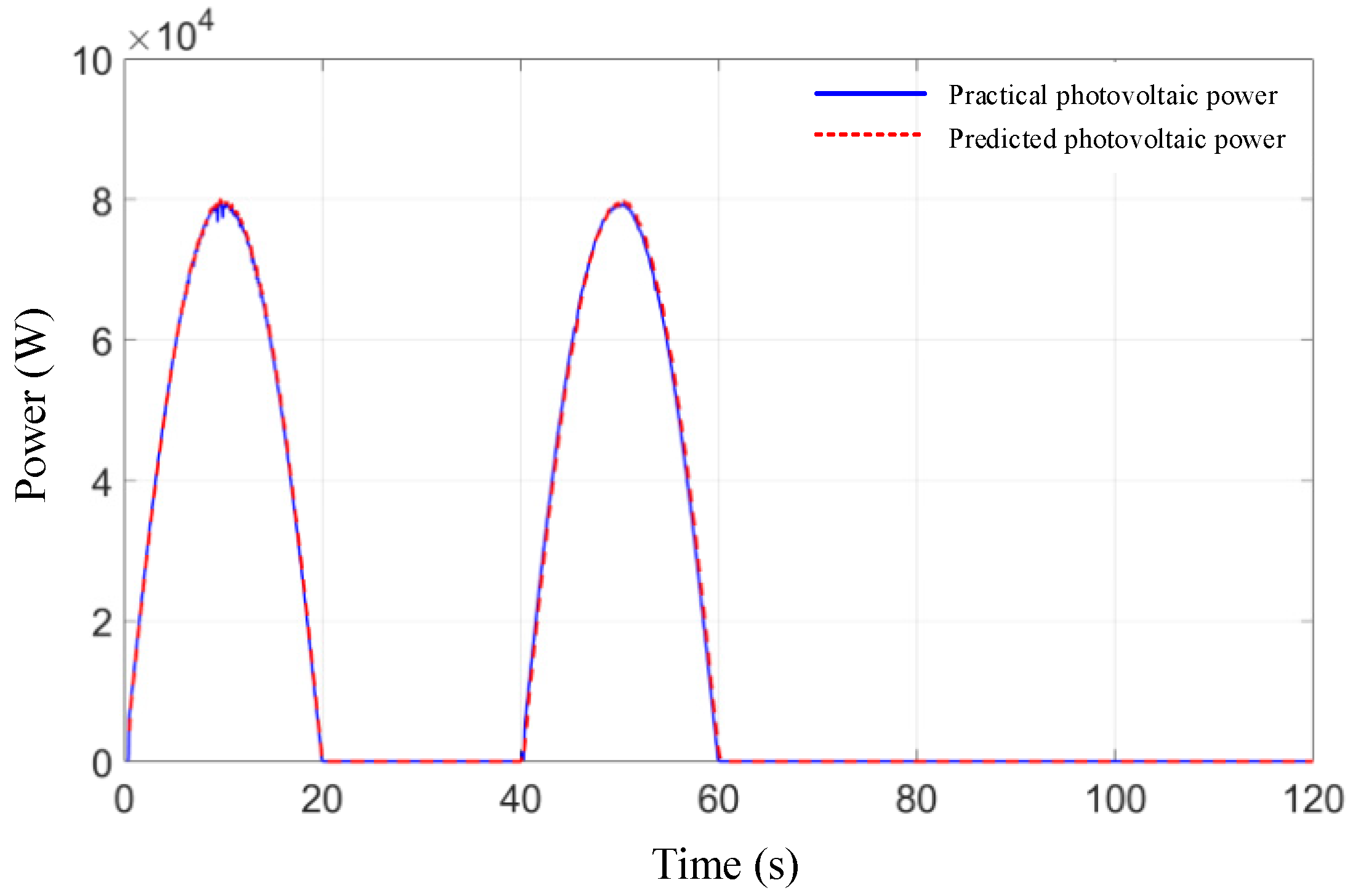
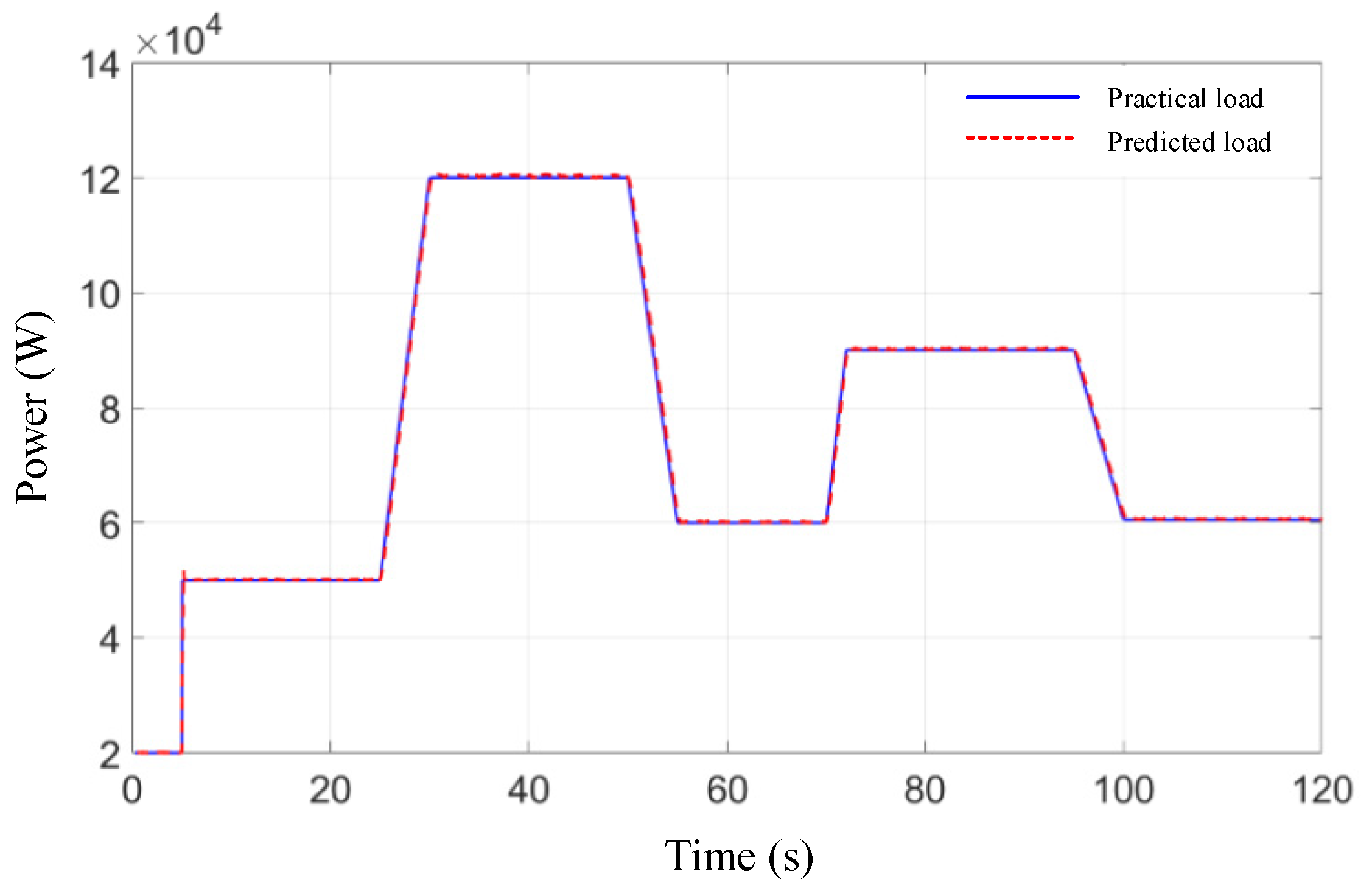
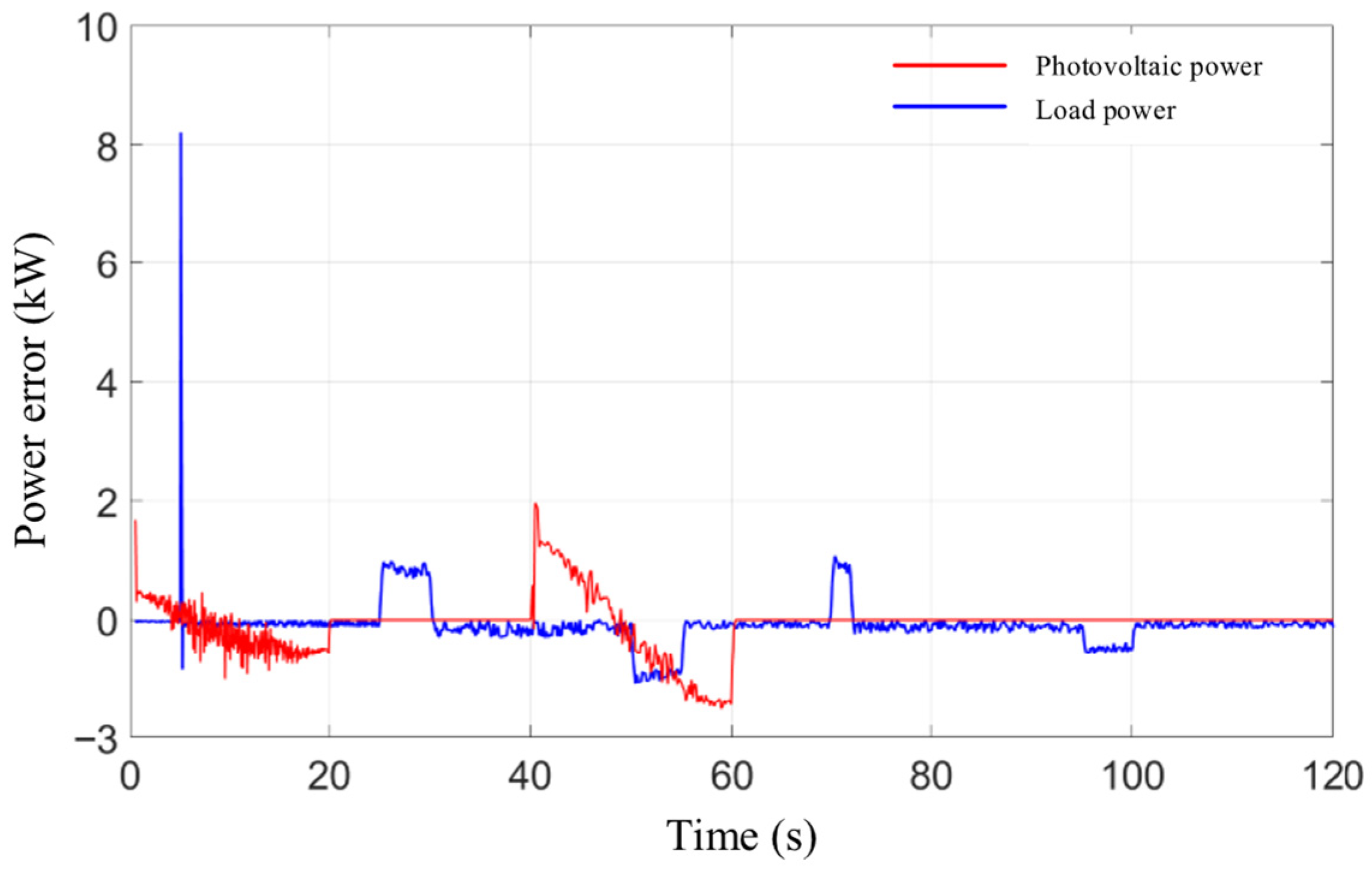
Subsequently, based on the above algorithm, the prediction is carried out based on the photovoltaic and load data. The prediction results are shown in
Figure 2 and
Figure 3, and the specific prediction error is shown in
Figure 4.
The error analysis in
Figure 4 shows that the photovoltaic power prediction error is always lower than 2 kW under all operating conditions. Compared with the maximum output power of 80 kW of the photovoltaic power generation system, the prediction error is always lower than 2.5%, with good prediction accuracy. The load power prediction has a transient error peak (8.2 kW) at the 5th second due to the sudden change condition of the 30 kW sudden load increase, but the error is always maintained within 2 kW under normal acceleration and deceleration conditions, with good overall prediction accuracy.
3.5. Comparison and Selection of Prediction Methods
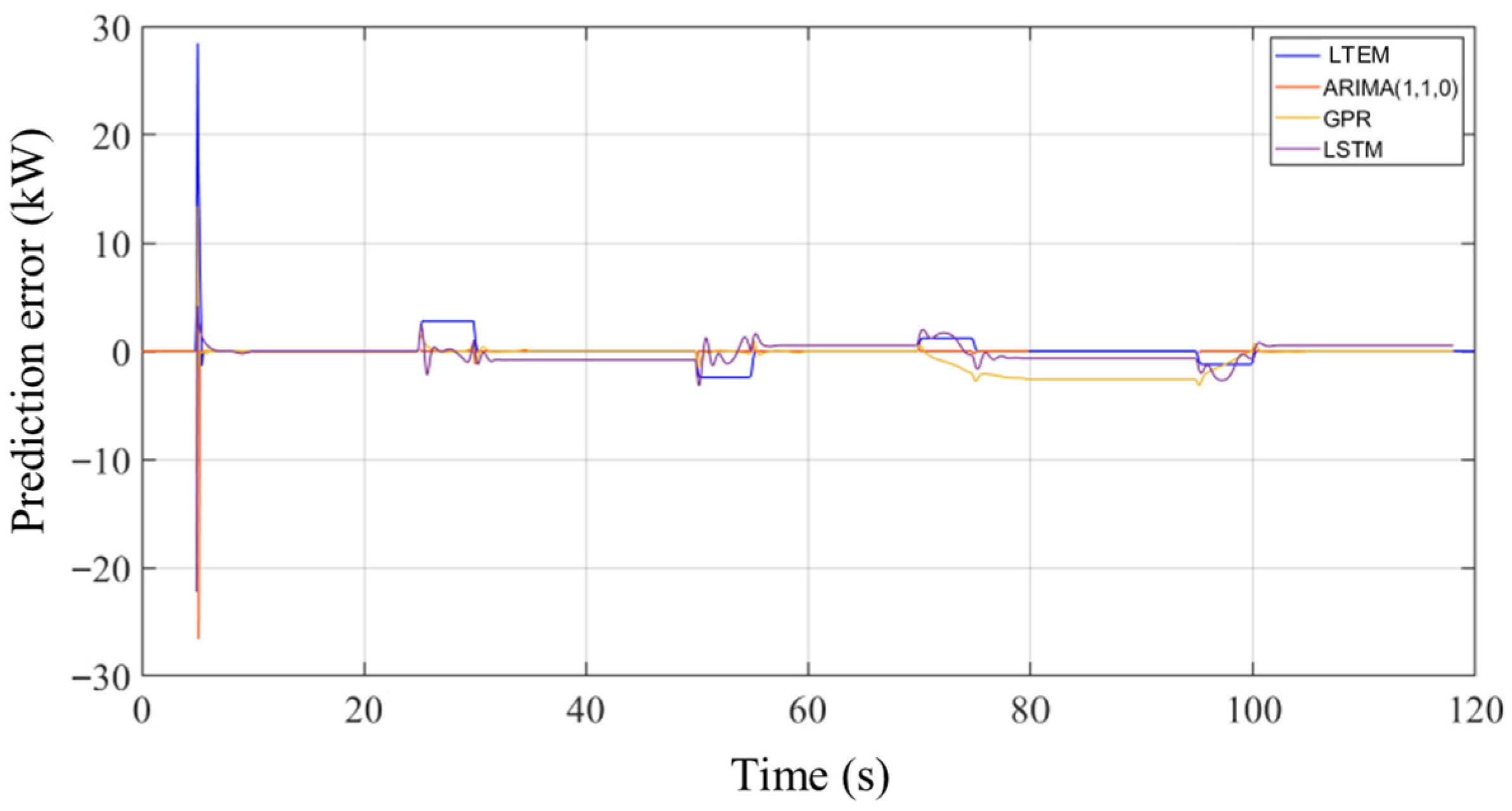
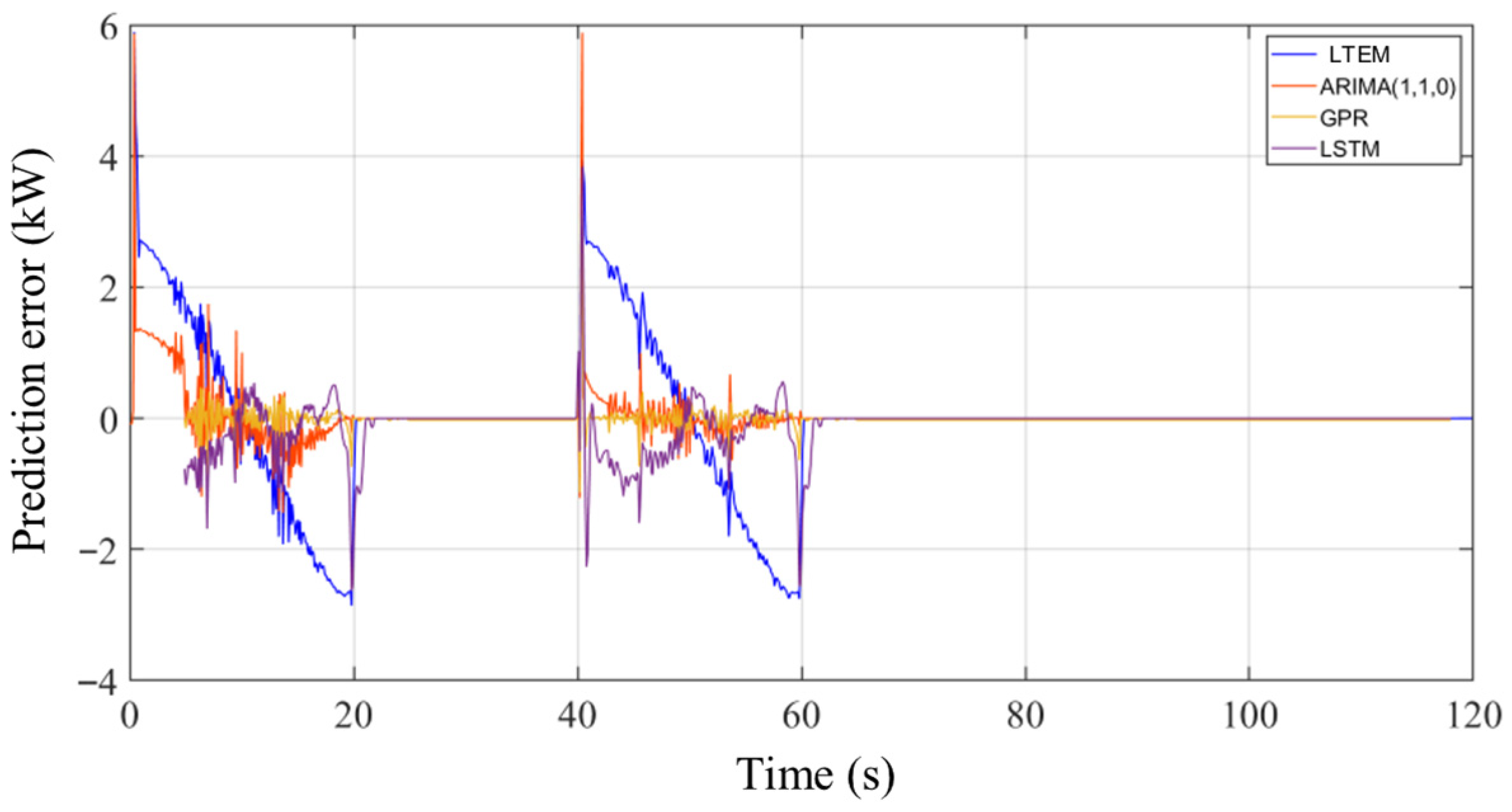
To further justify the rationality of the power prediction method adopted in this paper, the Linear Trend Extrapolation Method (LTEM) is compared with three typical forecasting algorithms, namely Auto Regressive Integrated Moving Average (ARIMA), Gaussian Process Regression (GPR), and Long Short-Term Memory (LSTM). All four methods use the same sampling period and prediction horizon, where the sampling period and the prediction horizon , corresponding to a 2 s prediction time window.
The total simulation duration is 0–120 s. The evaluation metrics include the Mean Absolute Error (MAE), Root Mean Square Error (RMSE), Mean Absolute Percentage Error (MAPE), maximum error, average computing time, and valid sample ratio. Among them, the average computing time is used to evaluate the real-time performance of the algorithm, and the valid sample ratio reflects the availability of the prediction method within the evaluation interval. Since the photovoltaic power contains a zero-power platform, to avoid distortion of the MAPE caused by an excessively small denominator, the MAPE of photovoltaic power is only calculated for samples where the actual power is greater than 1% of the peak power.
Figure 5 and
Figure 6 present the one-step prediction error comparison of the load power and photovoltaic power among the four methods. As shown in
Figure 5, the one-step prediction error of load power mainly concentrates at the moment of the step change. All methods yield small prediction errors when the power is relatively stable. The LTEM maintains a near-zero error most of the time but produces an instantaneous error peak during sudden load changes, because the short-term prediction model relies only on historical power data and cannot obtain prior information about future step changes.
As illustrated in
Figure 6, the one-step prediction error of photovoltaic power mainly appears during the rapid rise or fall of photovoltaic power. All methods show small errors when the photovoltaic power is at the zero-power platform or changes slowly, while the prediction errors increase significantly under rapid power variations. The GPR method has a relatively small overall error but requires longer computing time than linear trend extrapolation. Although linear trend extrapolation exhibits a certain lag, it features the lowest computational complexity and is suitable for online prediction in MPC.
The quantitative prediction results of the four methods are listed in
Table 2.
It can be observed from
Table 2 that for load power prediction, the LTEM achieves a lower MAE and MAPE than the other three methods, with the shortest average computing time and a 100% valid sample ratio, indicating its superior comprehensive performance in short-term load power prediction. Although the GPR method has a smaller RMSE and maximum error, its MAE and computing time are higher than those of linear trend extrapolation. The ARIMA method suffers from estimation failure in some power platform segments, resulting in a valid sample ratio of only 39.61% and a long computing time. The LSTM method shows large errors under the current training samples and input features without obvious advantages.
For photovoltaic power prediction, GPR yields the lowest MAE, RMSE, and MAPE, demonstrating its capability to fit the nonlinear variations of photovoltaic power. However, from the perspective of online control, the computing time of GPR and LSTM is significantly longer than that of linear trend extrapolation. Despite a certain lag during rapid photovoltaic power variations, linear trend extrapolation maintains a 100% valid sample ratio and the minimum computing time, which can satisfy the real-time requirement of online rolling computation in MPC.
The low valid sample ratios of the ARIMA method in both load and photovoltaic power prediction are mainly caused by long constant power platforms. The parameter estimation of ARIMA tends to degenerate when the power remains nearly constant within the historical window. Since neither hold prediction nor linear extrapolation is used as an alternative in this paper, the failed windows are marked as invalid samples.
Considering prediction error, valid sample ratio, and average computing time comprehensively, the LTEM is finally adopted for the power prediction module of MPC. This method features a simple structure, high computing speed, and full valid sample coverage, which can well meet the requirements of short-term power prediction and online MPC-ECMS control in this study.
4. The Integrated MPC-ECMS Energy Management Strategy
4.1. Design of Control Strategy
Although the traditional ECMS has good real-time optimization capability in the energy management of hybrid power systems, it still has obvious limitations in practical applications. Its core problem is that the design of the equivalent factor is relatively rigid, which is only dynamically adjusted according to the battery SOC, and it is difficult to adapt to the complex and variable actual operating conditions. Especially when the load and renewable energy power fluctuate sharply, it is easy to cause unreasonable power distribution between the engine and the battery, resulting in a decline in system fuel economy. In addition, as an instantaneous optimization strategy, the traditional ECMS lacks the forward-looking ability for future operating conditions, and only makes decisions based on the current system state, which has the problem of “short-sighted optimization”, which is easy to cause the battery SOC to deviate from the reasonable interval for a long time, and may also force the gas turbine to operate in the low-efficiency zone due to insufficient energy storage in the upcoming high-load operating conditions, resulting in fuel waste and equipment loss.
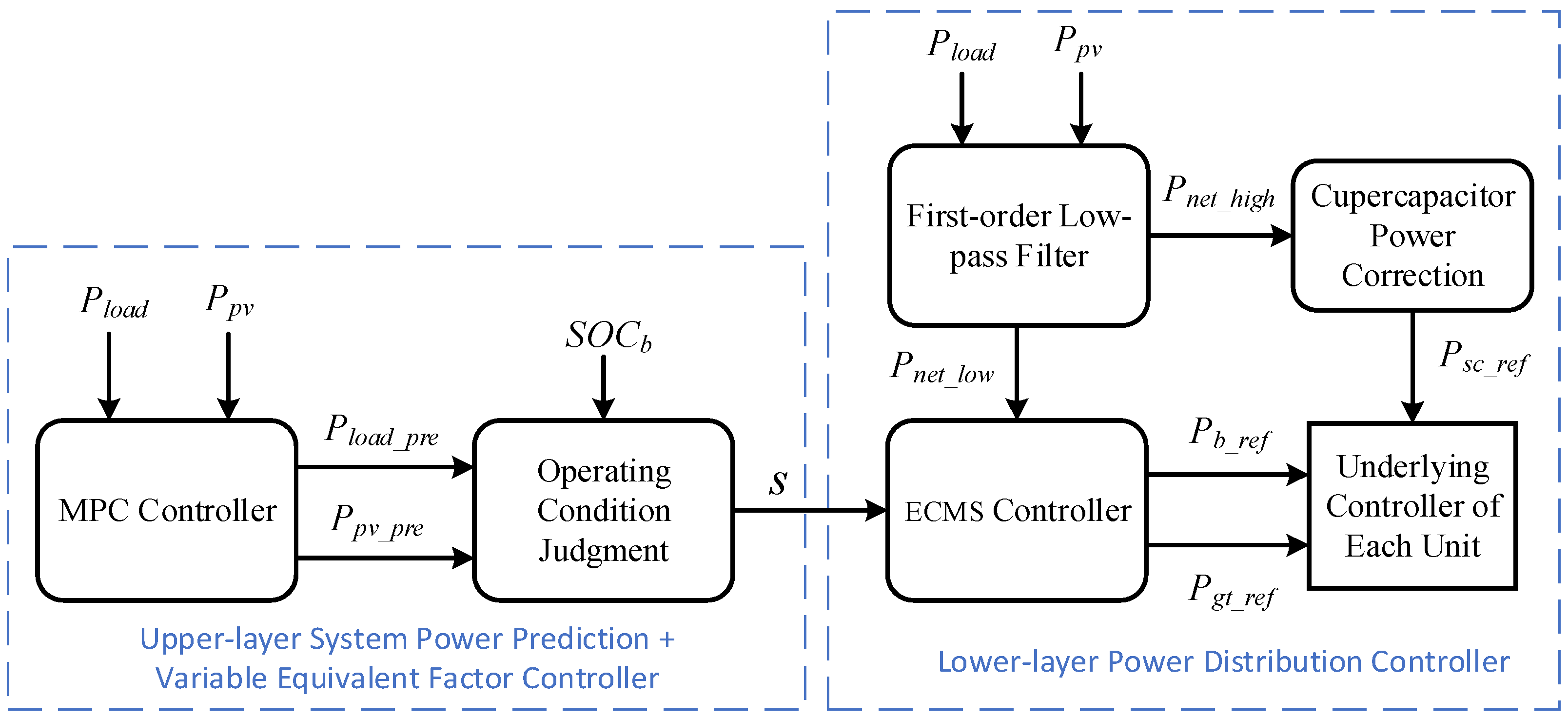
To overcome the above defects, this section proposes an MPC-ECMS control method integrating the model predictive control and equivalent consumption minimization strategy. The core of the strategy is to use the power prediction capability of MPC to real-time predict the short-term load and photovoltaic power through rolling time domain optimization and divide the system operating state into three typical operating conditions, based on the predicted net load. The basic value of the equivalent factor is set for different operating conditions, and then dynamically corrected in combination with the real-time state of the battery SOC to realize the two-level optimal adjustment of the equivalent factor. The optimized equivalent factor is transmitted to the ECMS module to guide the power distribution between the battery and the gas turbine. Through the energy management strategy combining rules and optimization, the method ultimately improves the overall fuel economy of the system while ensuring the high-efficiency operation of the gas turbine. The specific flow of the control strategy is shown in
Figure 7.
It can be seen from
Figure 7 that the designed MPC-ECMS controller first calculates the system predicted net power
, according to the load predicted power
and photovoltaic predicted power
obtained by the model predictive controller, as shown in Equation (13):
Subsequently, the predicted signal is input into the operating condition judgment module, and then the system is divided into three basic operating modes, according to the value of and the power judgment threshold , and the corresponding equivalent factor adjustment strategies are formulated.
- (1)
Mode 1:
At this time, the photovoltaic power generation in the system is higher than the load demand power, and the system is in an energy surplus state, so there is no problem in power distribution between the battery and the gas turbine. Therefore, to store energy to the maximum extent, a low equivalent factor is set to reduce the equivalent fuel cost of battery charging and encourage battery charging, as shown in Equation (14):
If the battery SOC reaches the excessively high threshold in this mode, the surplus power of the system is processed by the method of additional absorption by supercapacitor and photovoltaic curtailment.
- (2)
Mode 2:
At this time, the system is in the low load demand mode, the basic equivalent factor is
, and the actual equivalent factor is dynamically adjusted with the change of the battery state of charge
, as shown in Equation (15):
- (3)
Mode 3:
At this time, the system is in the high load demand mode, the basic equivalent factor is
, and a load ratio term is introduced for the actual equivalent factor on the basis of
adjustment, as shown in Equation (16):
This strategy can significantly increase when the load is high and is low, restrict battery discharging, and improve the operating power and efficiency of the gas turbine.
After determining
, the low-frequency part of the system net power is imported into the equivalent consumption minimization controller, and the power distribution between the battery and the gas turbine is realized by solving the following optimization problem, as shown in Equation (17):
The base equivalent factors , , and can be determined by offline iterative calibration under typical ship operating conditions. The calibration aims to balance fuel economy, gas turbine efficiency, and battery SOC stability, ensuring reasonable charge–discharge behavior and efficient operation of the gas turbine.
4.2. Optimization Constraints
Meanwhile, during the optimization process, the system operation must satisfy the following physical constraints and safety limits:
- (1)
Power balance constraint
The total generated power is equal to the load demand power at any moment, as shown in Equation (18):
where
is the charging/discharging power of the battery at time
,
is the charging/discharging power of the supercapacitor at time
,
is the output power of the gas turbine at time
, and
is the load demand power of the system at time
.
- (2)
Equipment operation constraints
The power limit of the gas turbine is defined as shown in Equation (19):
where
is the maximum operating power of the gas turbine.
Battery state of charge constraint is defined as shown in Equation (20):
where
and
are the low and high thresholds of the battery state of charge, respectively.
Battery power constraint is defined as shown in Equation (21):
where
is the maximum charging/discharging power of the battery.
- (3)
Correlation constraint of optimization variables
To ensure the operating efficiency of the gas turbine, its power reference value must also be selected within a certain range, which shall be no lower than the maximum discharge power of the battery and no higher than the maximum operating power of the gas turbine.
5. Simulation Verification and Result Analysis
For the aforementioned equivalent consumption minimization strategy (ECMS) and the improved model predictive control–equivalent consumption minimization strategy (MPC-ECMS), this section analyzes the operation results of the two control strategies and conducts a comparative analysis on the operation results of the rule-based control strategy and the two strategies proposed in this paper under the same operating conditions.
Based on the mathematical model of the system, simulation research is carried out in this paper, and the key simulation parameters of the system are shown in
Table 3. The simulation duration is 120 s, which covers typical ship operating cycles including anchoring, low-speed cruising, high-speed maneuvering, sudden load changes, and gas turbine start–stop and mode switching. Although actual ship voyages last for hours or days, they mainly consist of repeated typical operating conditions. Therefore, the 120 s simulation can fully reflect the dynamic response, power distribution mechanism, and multi-objective optimization performance of the proposed energy management strategy. The fuel consumption and SOC fluctuation results obtained under this representative period are sufficient to verify the effectiveness and superiority of the strategy, and the conclusions can be generalized to long-term ship operation conditions.
Due to the limitation of simulation time, the state of the SOC parameters of the hybrid energy storage system shows a small variation range during the simulation. Therefore, in the simulation, the upper and lower SOC thresholds of the battery are set to 50% and 47%, respectively, and the upper SOC threshold of the supercapacitor is set to 71%. The change of threshold affects the charging and discharging duration of the battery, but does not alter its instantaneous dynamic charging and discharging capability when there is a sudden change in load power. This adjustment aims to shorten the overall simulation time and demonstrate the transition process between different operating modes more intuitively, thereby better validating the effectiveness of the proposed dual-layer cooperative architecture.
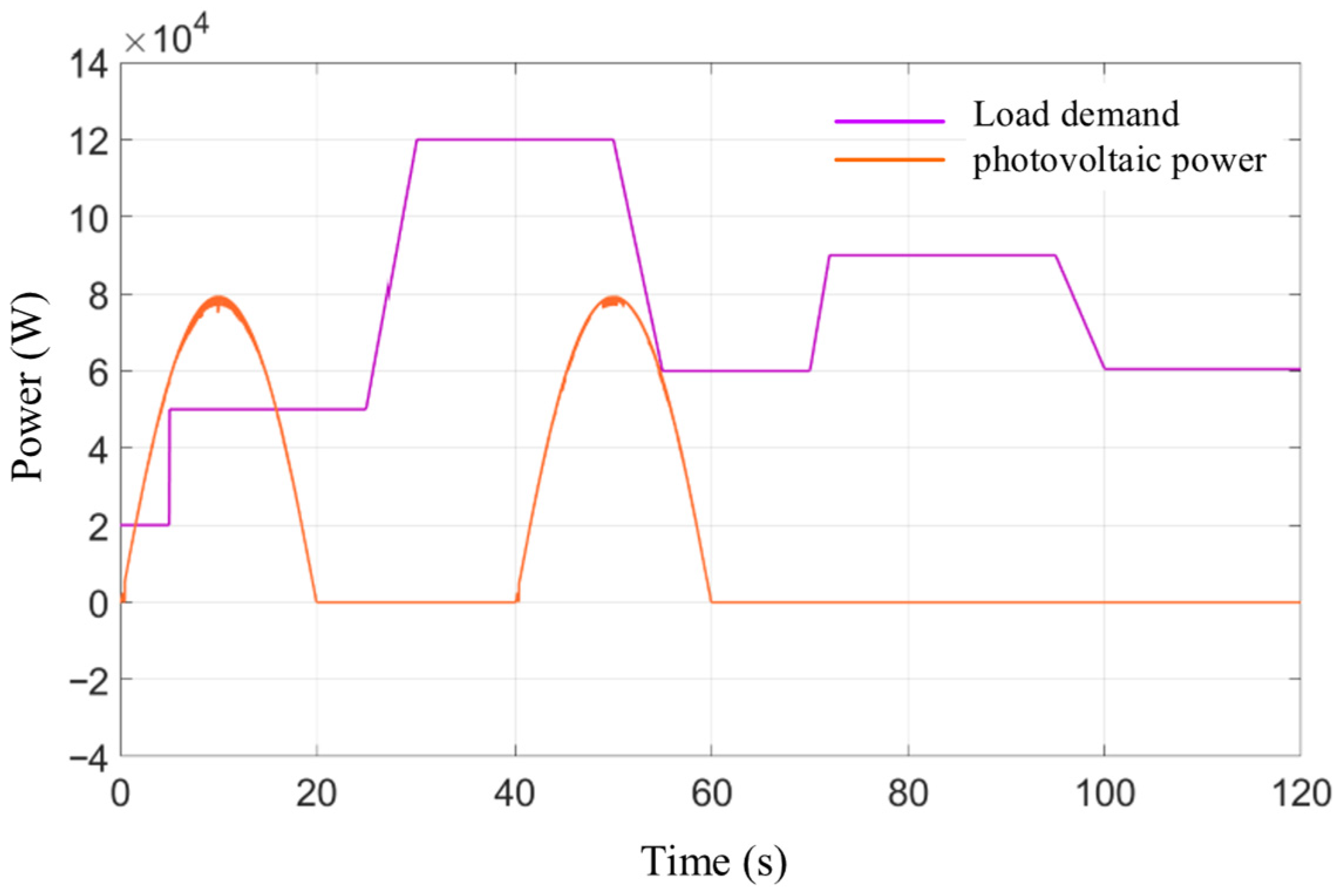
The photovoltaic power fluctuation characteristics and load demand set in this paper are shown in
Figure 8. The photovoltaic power profile is artificially generated to form typical and repeatable working conditions. The PV power is constrained to non-negative values to conform to physical characteristics.
As shown in
Figure 8, this load refers to the load power of a special-purpose ship driven by a gas turbine–electric hybrid power system, and its variation follows a certain pattern.
During 0–5 s, the ship is in an anchoring condition with a low load demand of 20 kW. From 5 to 25 s, the ship operates at a low speed with a slightly lower power demand of 50 kW. During 55–70 s and 100–120 s, the load demand reaches 60 kW, corresponding to the stable propulsion power requirement under economic speed. The periods of 25–50 s and 70–100 s represent the ship’s acceleration, constant speed, and deceleration states under different high-speed operating conditions. By setting the superposition characteristics of different load powers and photovoltaic generation powers, the complexity and uncertainty of the system’s operating modes during operation can be intuitively presented. Meanwhile, the effectiveness of the dual-layer cooperative control strategy proposed in this paper, as well as its steady-state performance and dynamic response under different operating conditions, can be verified. The overall parameters of the MPC-ECMS controller are shown in
Table 4.
5.1. Simulation Result Analysis of ECMS Control Strategy
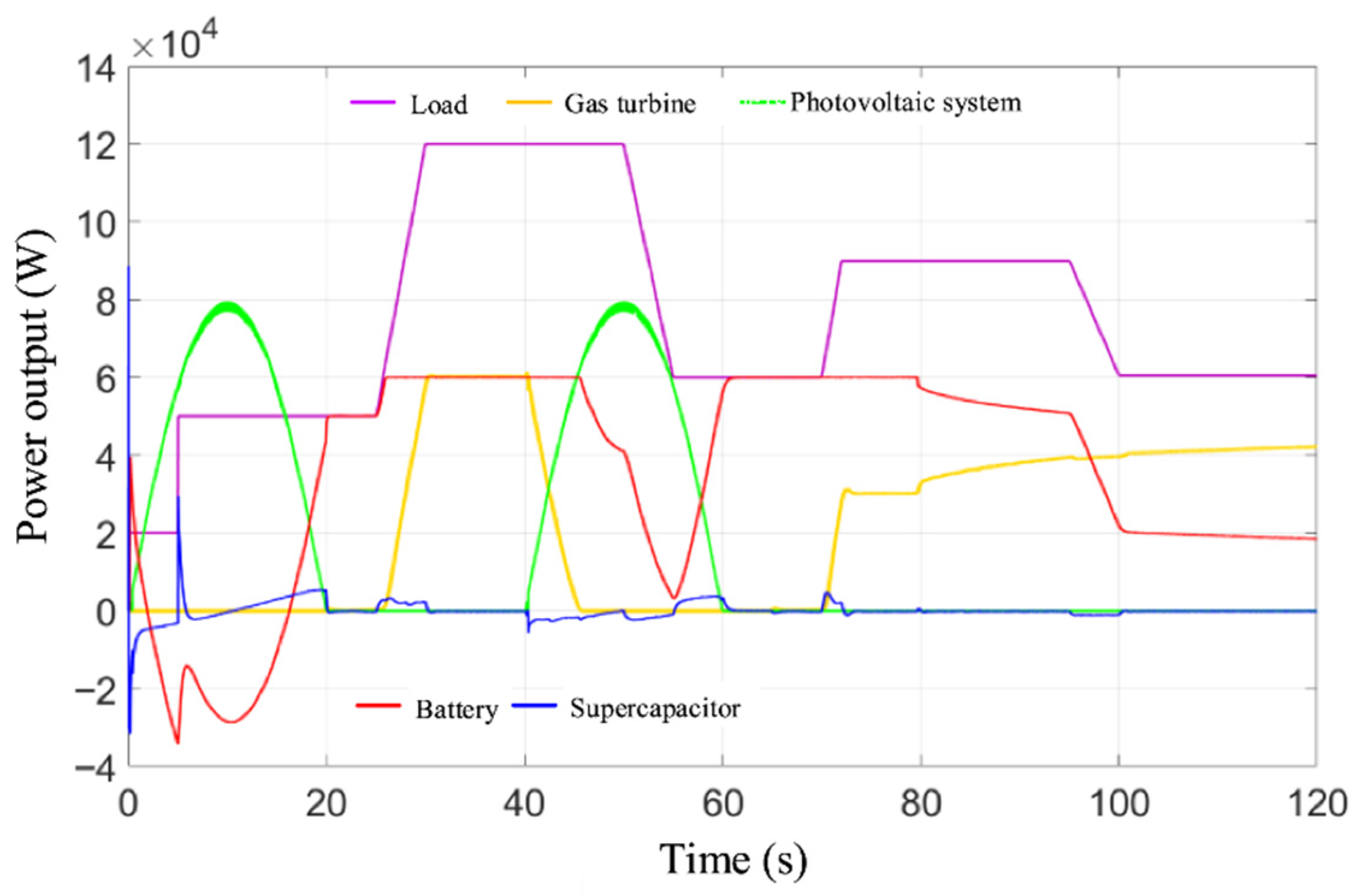
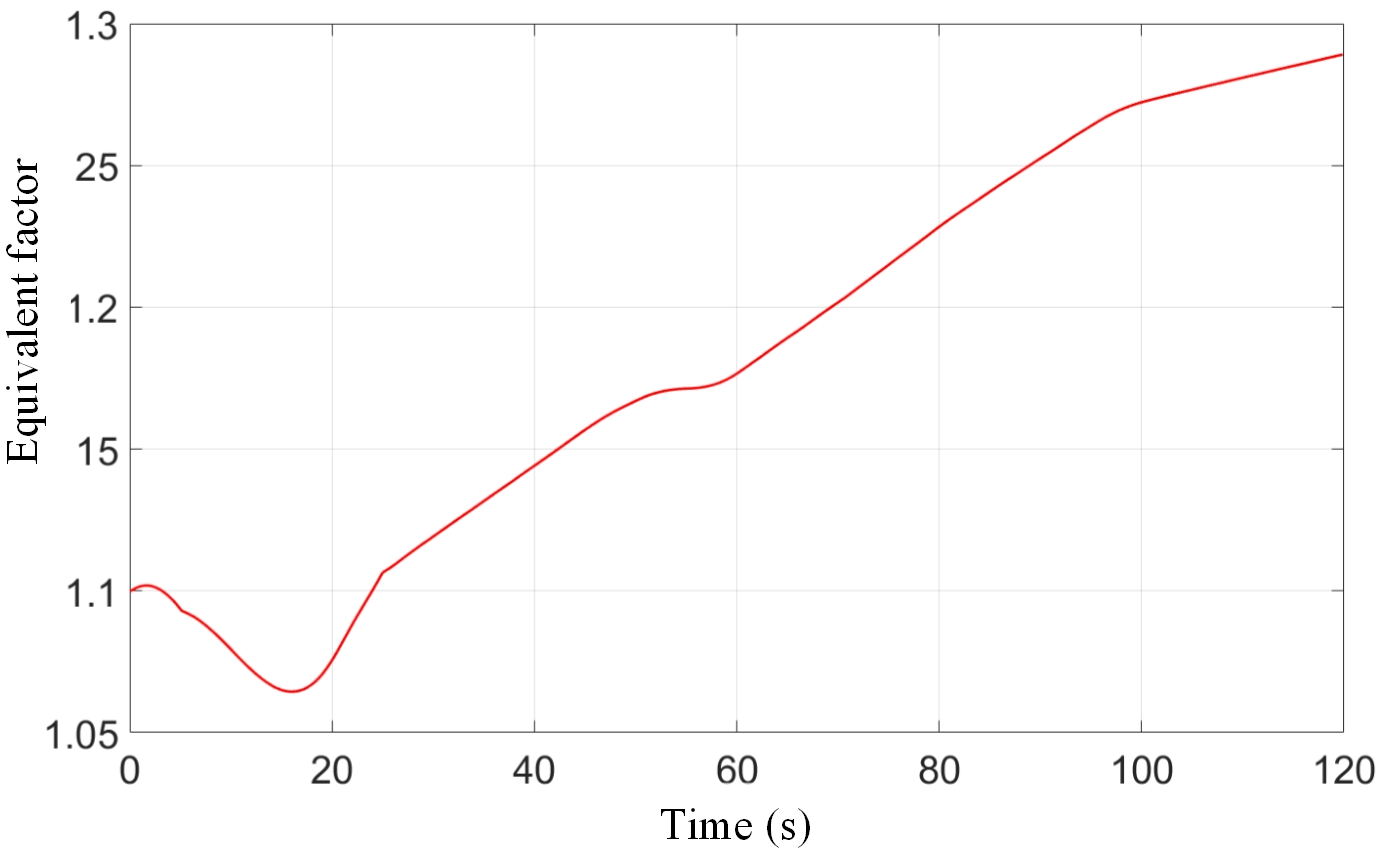
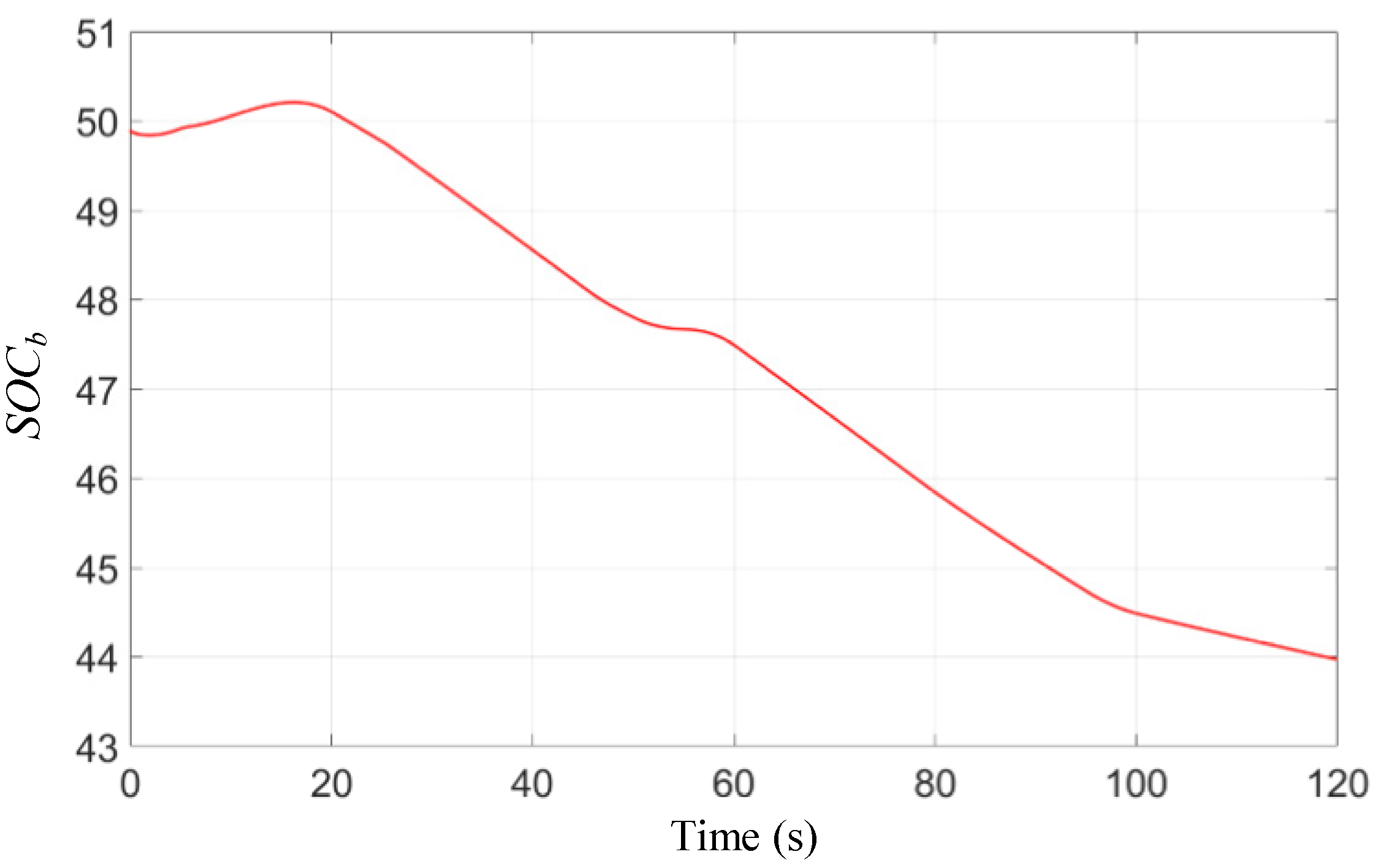
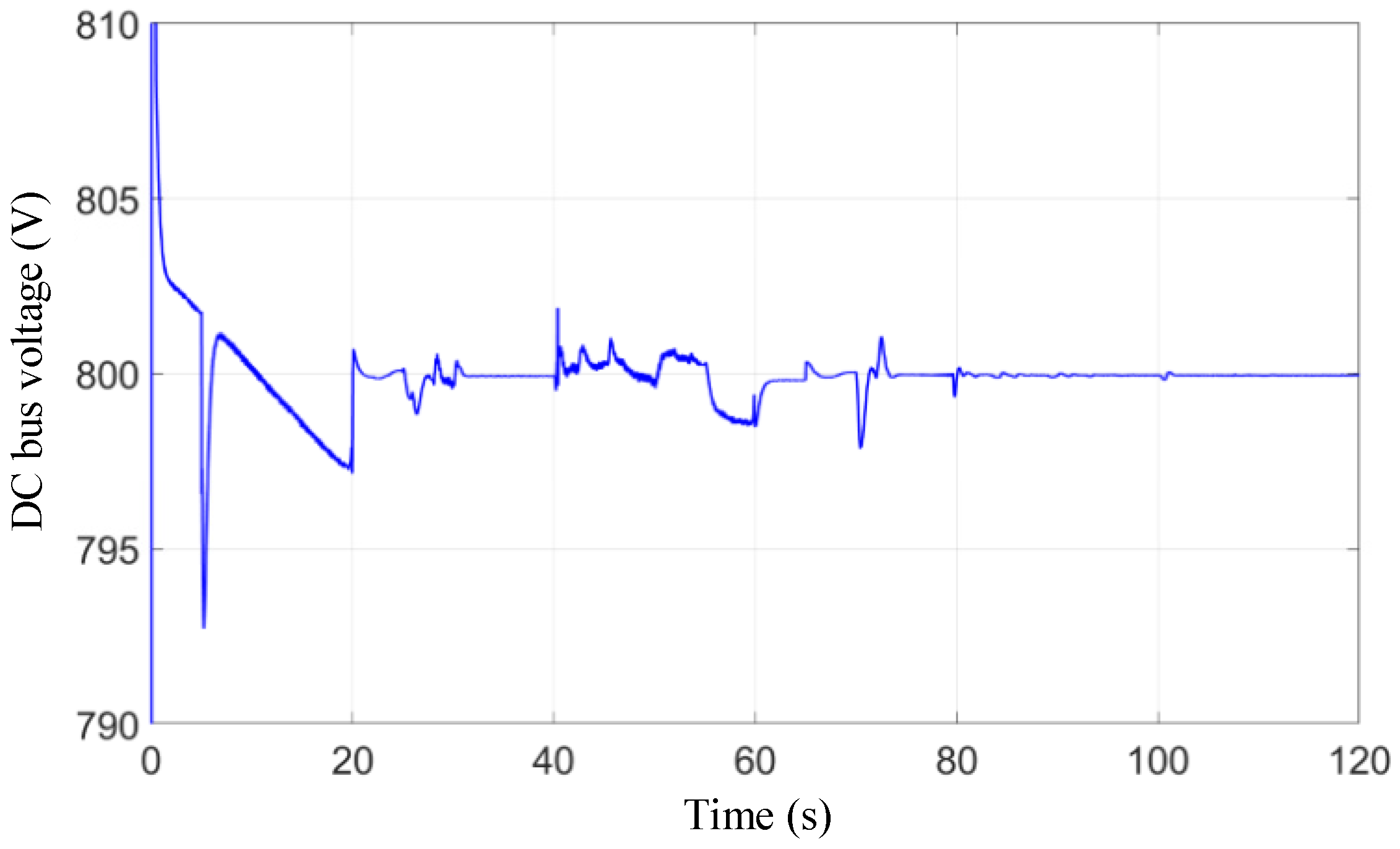
Under the standalone equivalent consumption minimization strategy (ECMS), simulations and analyses of the variation characteristics of each parameter during system operation are conducted based on the load and photovoltaic power profiles set in
Figure 8. The overall power variation characteristics of the system are presented in
Figure 9, the variation characteristics of the equivalent factor and battery state of charge (SOC) are illustrated in
Figure 10 and
Figure 11, respectively, and the variation characteristic of the DC bus voltage during system operation is shown in
Figure 12.
It can be seen from
Figure 9,
Figure 10 and
Figure 11 that from 0 to 16.22 s, the photovoltaic power is higher than the system load demand power. At this time, the battery state of charge continues to increase from the initial 50% to 50.21%. Subsequently, due to the decrease in photovoltaic power, the system needs a power supplement. At this time, the battery SOC is sufficient, so the equivalent factor is at a low level, indicating that the equivalent fuel consumption of battery discharging is low. Therefore, the ECMS controller tends to make the battery discharge continuously to supply power to the system until 25.71 s later. Because the battery reaches its maximum discharge power and the system demand power continues to increase, the gas turbine starts to operate at this time to make up for the deficit power in the system. The battery and the gas turbine output 60 kW of power at the same time to meet the 120 kW load power demand.
At 40 s, due to the continuous increase in photovoltaic power, the system’s demand power is supplemented to a certain extent. Therefore, the gas turbine power gradually decreases with the increase in photovoltaic power until it shuts down after 45.76 s. Subsequently, the battery and photovoltaic power generation system jointly supply power to the system, and the battery maintains the power balance of the system through flexible power control. From 45.76 s to 70.61 s, the battery continuously discharges, and the SOC continuously decreases. The ECMS controller corrects the value of the equivalent factor in real time with the decrease in the battery SOC, and the equivalent factor gradually increases with the decrease in the battery SOC, indicating that the equivalent fuel consumption of battery discharging gradually increases. After 70.61 s, with the gradual increase in the equivalent factor, the ECMS controller begins to tend to the gas turbine for power generation to make up for the system power. Therefore, the battery discharge power continues to decrease, the gas turbine output power continues to increase, the decrease in the rate of the battery SOC slows down, the priority of the gas turbine power output gradually increases, and the system power distribution tends to rely on the gas turbine to discharge more and the battery to discharge less to maintain the stability of the battery SOC.
It can be seen from
Figure 12 that the DC bus voltage fluctuation in the system is low during operation. The maximum fluctuation occurs at the fifth second due to the sudden increase in system power, with a voltage fluctuation amplitude of 792.71 V, corresponding to a fluctuation rate of 0.91%. In other cases, the voltage fluctuation is lower than 0.5%. During the overall operation, the DC bus voltage fluctuation rate is always lower than 1%, and the power grid system has strong stability. This is because under the ECMS control strategy, in order to meet the requirement of the lowest equivalent fuel consumption, the battery is dominant in operation for most of the time, with a large power proportion, and the start-up and shutdown processes of the gas turbine are relatively smooth with low operating power, which does not cause excessive impact on the power grid. However, the low operating power and slow power response of the gas turbine also mean that it has certain defects in terms of fuel consumption rate and operating efficiency. Although the equivalent fuel consumption of the system is reduced, it is not conducive to the long-term high-efficiency operation of the gas turbine.
5.2. Simulation Result Analysis of MPC-ECMS Control Strategy
This section simulates and analyzes the variation characteristics of each parameter under the system operation based on the improved MPC-ECMS control strategy combining rules and optimization strategies for the short-time domain load and photovoltaic power predicted in
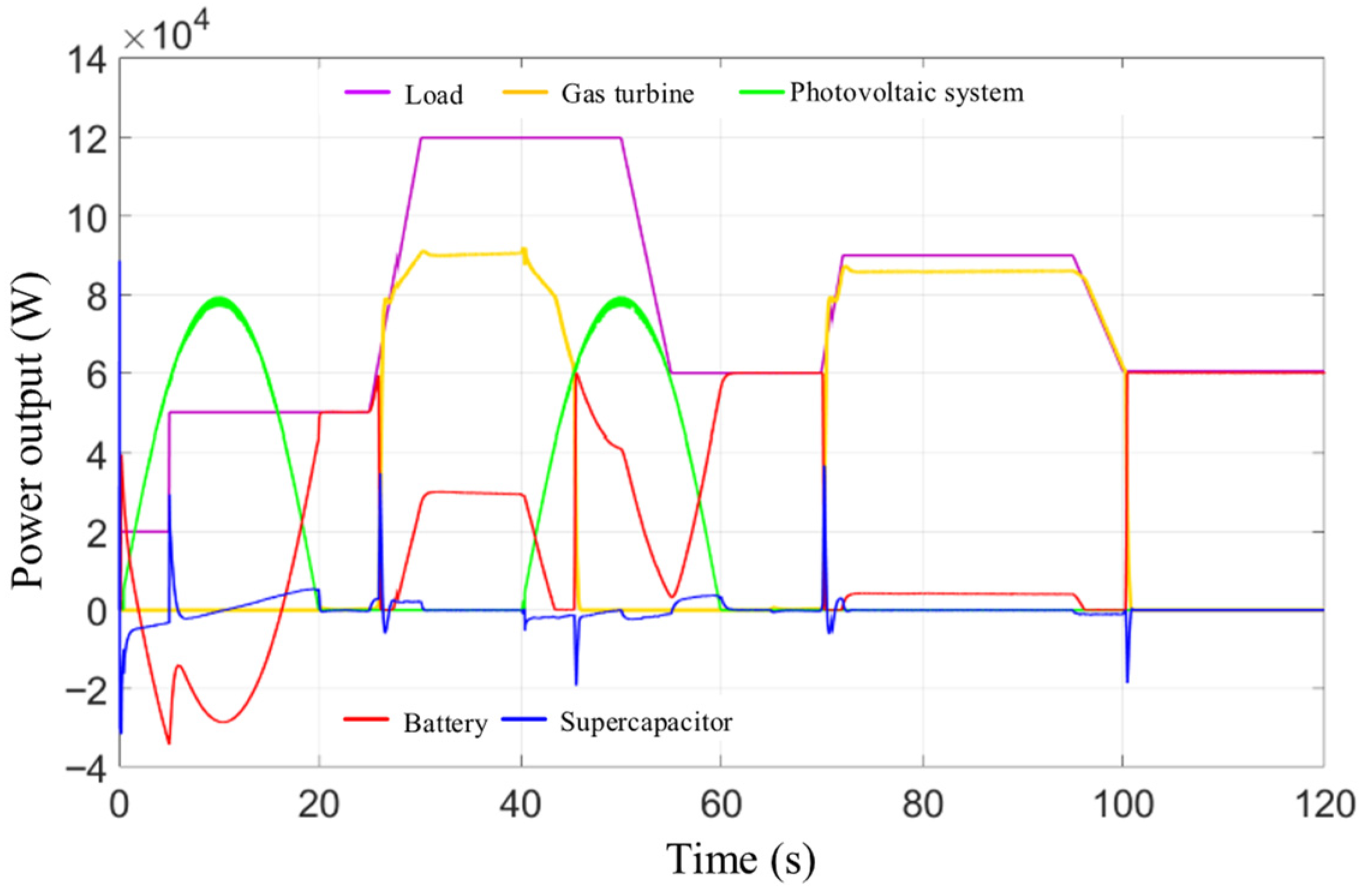
Section 3.4. The overall power variation characteristics of the system are shown in
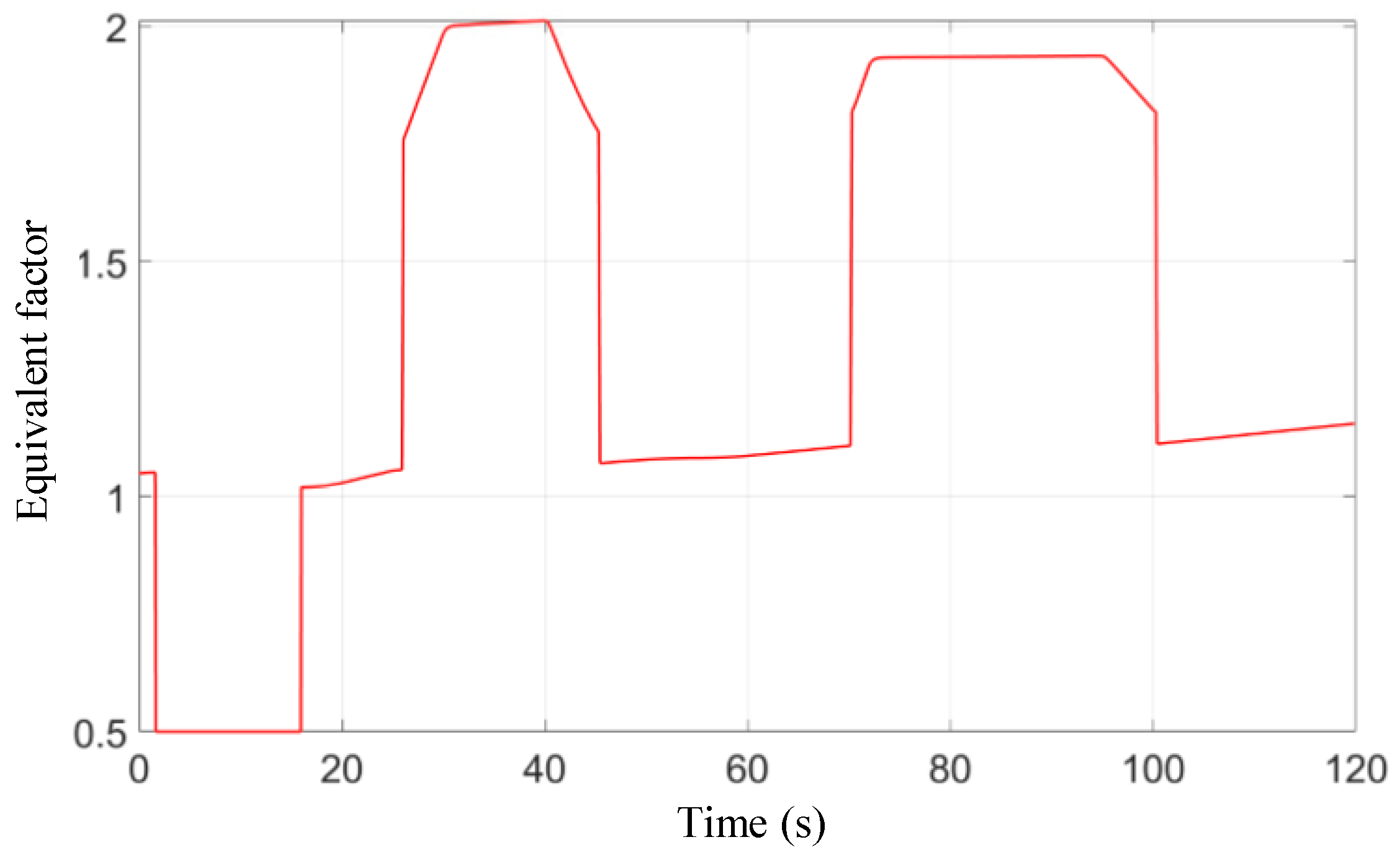
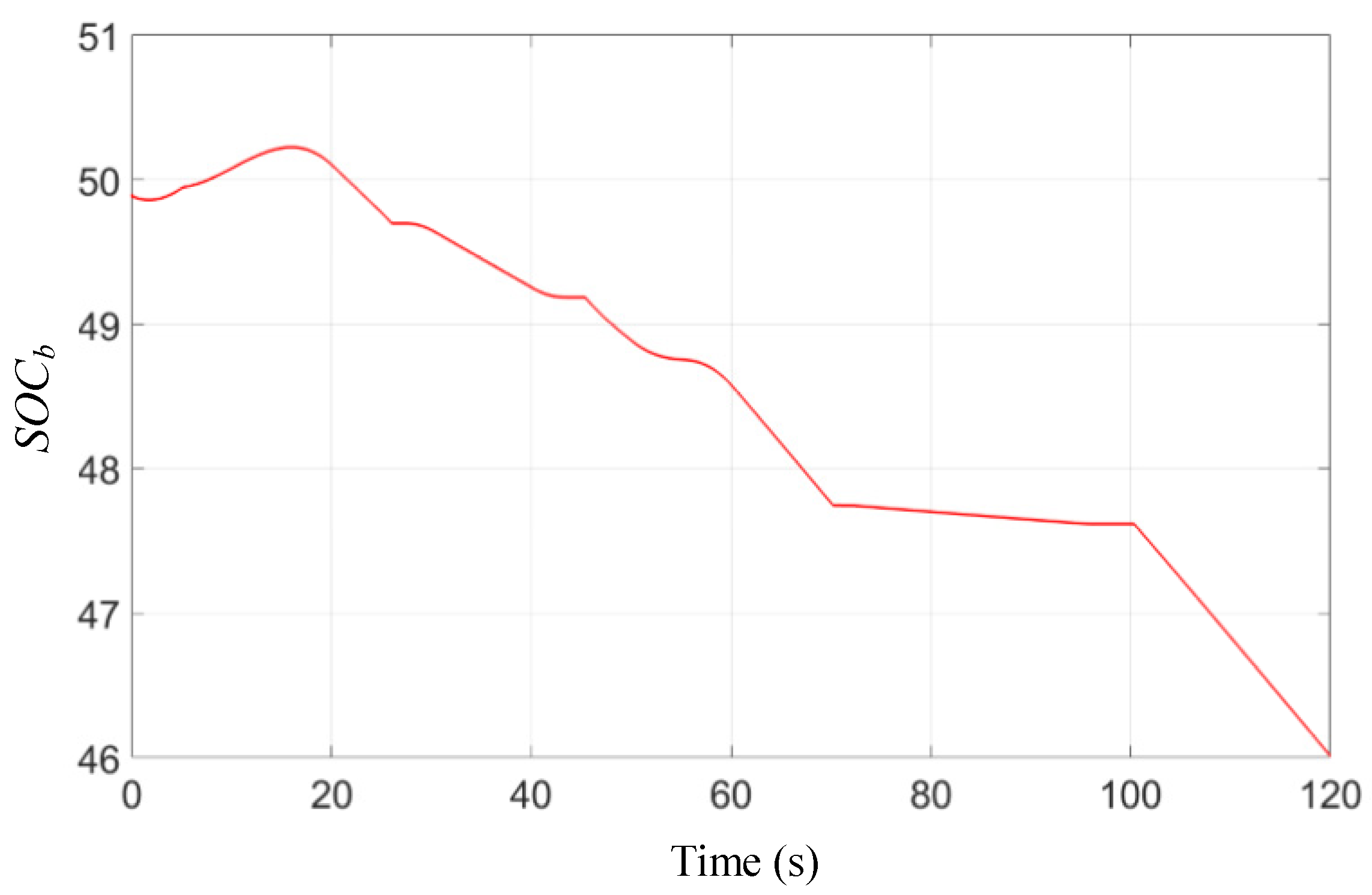
Figure 13, and the variation characteristics of the equivalent factor and battery state of charge are shown in
Figure 14 and
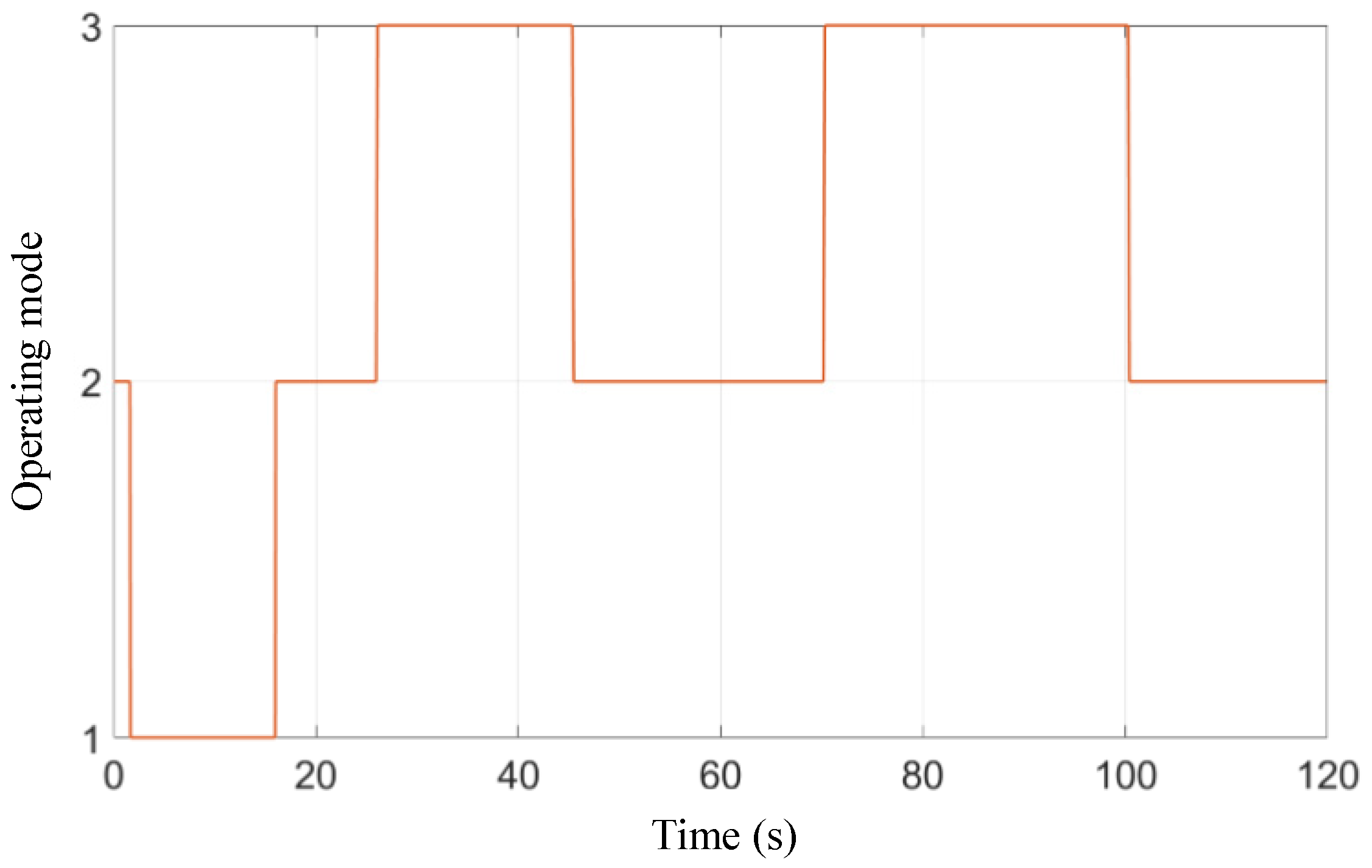
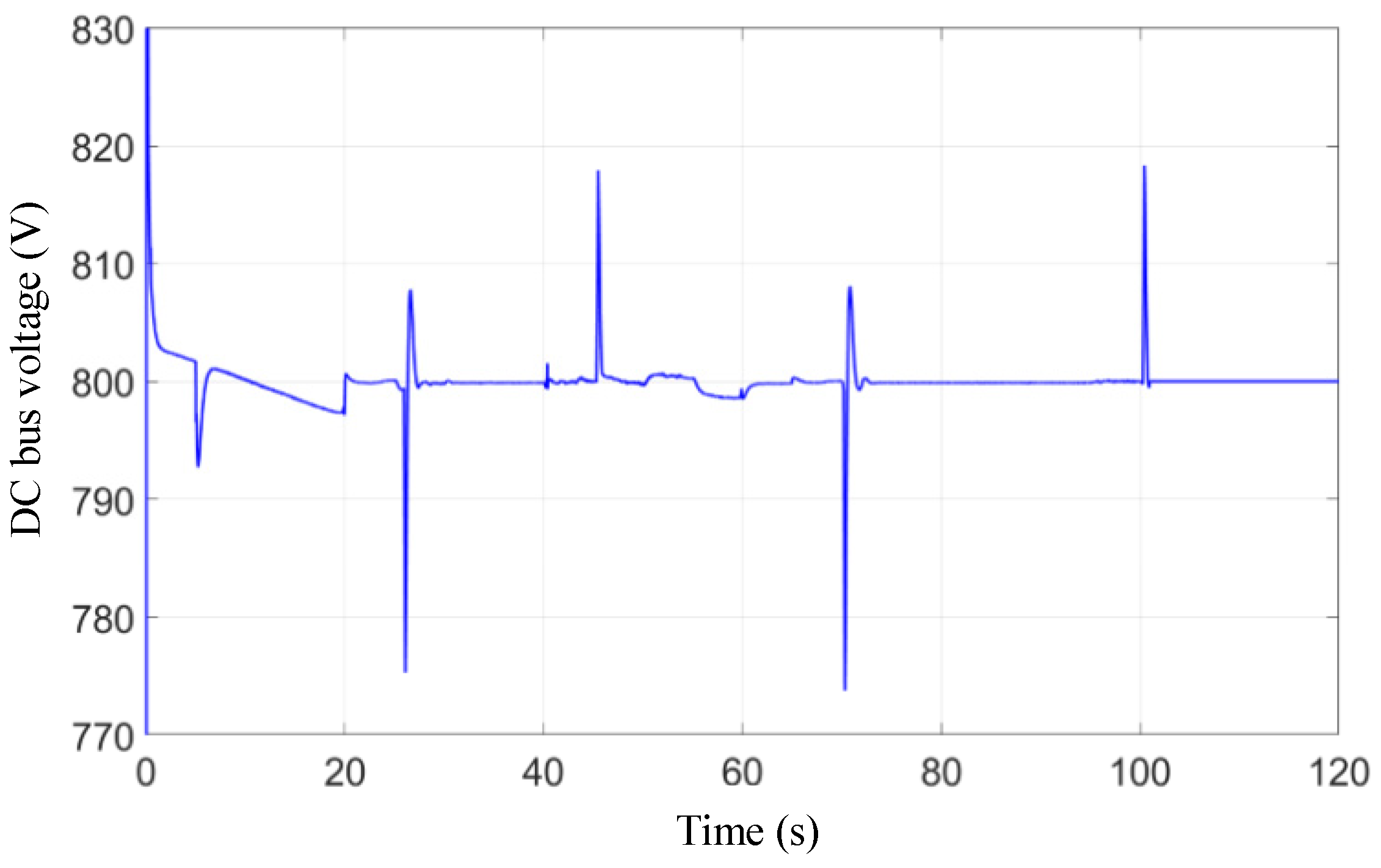
Figure 15. The system operating mode and the variation characteristics of the DC bus voltage during operation are shown in
Figure 16 and
Figure 17.
It can be seen from
Figure 13,
Figure 14,
Figure 15 and
Figure 16 that, from 0 to 16.22 s, the system operation is the same as the ECMS strategy, encouraging battery charging by reducing the equivalent factor. From 16.22 s to 25.94 s, the system is in Mode 2. At this time, the system is in the low-load demand stage through power prediction, so the equivalent factor is in the equilibrium interval, and it still tends to rely on the battery to discharge to supply power to the system at this time. However, after 25.94 s, due to the increase in the system demand power higher than the set threshold, the controller judges that the system enters the high load demand stage, i.e., Mode 3. At this time, the equivalent factor enters a higher value range, and the equivalent fuel consumption of battery discharging is greatly increased. Therefore, under the ECMS objective, the lower-layer ECMS controller tends to make the gas turbine deliver more power. The gas turbine starts to operate and quickly reaches a higher operating power, undertaking most of the load demand power in the system.
Subsequently, after the 40th second, the net demand power of the system gradually decreases due to the increase in photovoltaic power. At this time, the equivalent factor output by the upper-layer controller gradually decreases, and the priority of gas turbine discharge gradually decreases until 45.39 s, when the output power of photovoltaic and battery is sufficient to meet the system demand, and the gas turbine ceases operation. Then, from 45.39 to 70.00 s, the battery serves as the main power source to continuously discharge until 70.00 s later, when the system power increases again. With the judgment of the upper operating mode, the system enters Mode 3, and the equivalent factor increases again, so that the gas turbine can always operate at a higher power under high load demand. At 100.00 s, due to the decrease in load power, the system returns to Mode 2 operation, and the equivalent factor returns to the equilibrium interval at the same time. Then, the gas turbine gradually reduces the power to shut down, and the load power demand is mainly supplied by battery discharge.
The allowable voltage deviation in the shipboard DC microgrid in this study complies with IEC 60092 and GB/T 35719-2017 [
86,
87], which specify that the steady-state voltage deviation shall be limited to ±10% of the rated voltage, and the transient voltage fluctuation amplitude shall not exceed ±5%. With a rated bus voltage of 800 V, the permissible transient voltage range is 760 V to 840 V.
It can be seen from
Figure 17 that the bus voltage fluctuates greatly, mainly when the gas turbine starts and shuts down. This is because, under the operation of the MPC-ECMS control strategy, to improve the operating efficiency of the gas turbine, the equivalent factor changes greatly when the operating mode is switched, leading to the accelerated power ramp of the gas turbine. However, through the supercapacitor power correction method proposed above, the transient fluctuation in the bus voltage is still effectively suppressed. The bus voltage reaches 775.29 V and 773.75 V at 25.96 s and 70.30 s, respectively, due to the start-up of the gas turbine, corresponding to fluctuation rates of 3.09% and 3.28%, respectively. The stabilization times for the bus voltage to return to the ±1% stable interval are 0.26 s and 0.27 s, respectively. It reaches 817.92 V and 818.20 V at 45.50 s and 100.30 s, respectively, due to the shutdown of the gas turbine, corresponding to fluctuation rates of 2.24% and 2.28%, respectively, and the stabilization time for the bus voltage to return to stability is 0.26 s in both cases. In general, the maximum DC bus voltage fluctuation rate under the proposed MPC-ECMS strategy is controlled within 3.28%, which is far below the 5% limit required by IEC 60092 and GB/T 35719-2017 for marine DC power systems. The voltage stabilization time is within 0.26–0.27 s, and the entire transient process remains within the standard allowable range. Therefore, such short-term and limited voltage fluctuations will not affect the normal operation of shipboard sensitive loads, such as navigation and communication equipment.
5.3. Performance Comparison and Analysis of Different Control Strategies
To verify the effectiveness and performance of the MPC-ECMS control strategy integrating model predictive control and equivalent consumption minimization strategy proposed in
Section 5.2, this section compares its system operation results with those of the gas turbine high-efficiency operation rule-based control strategy proposed in ref. [
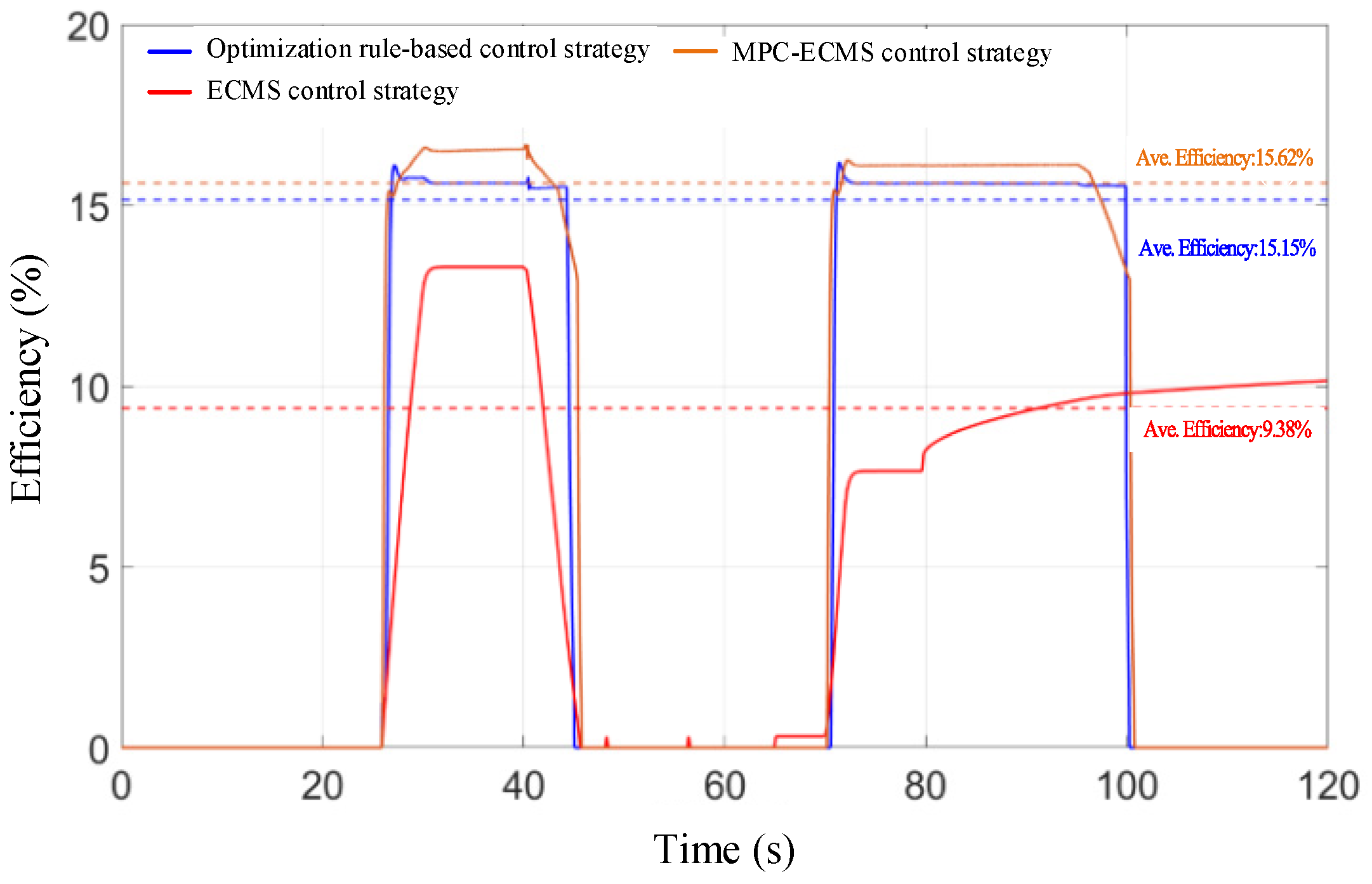
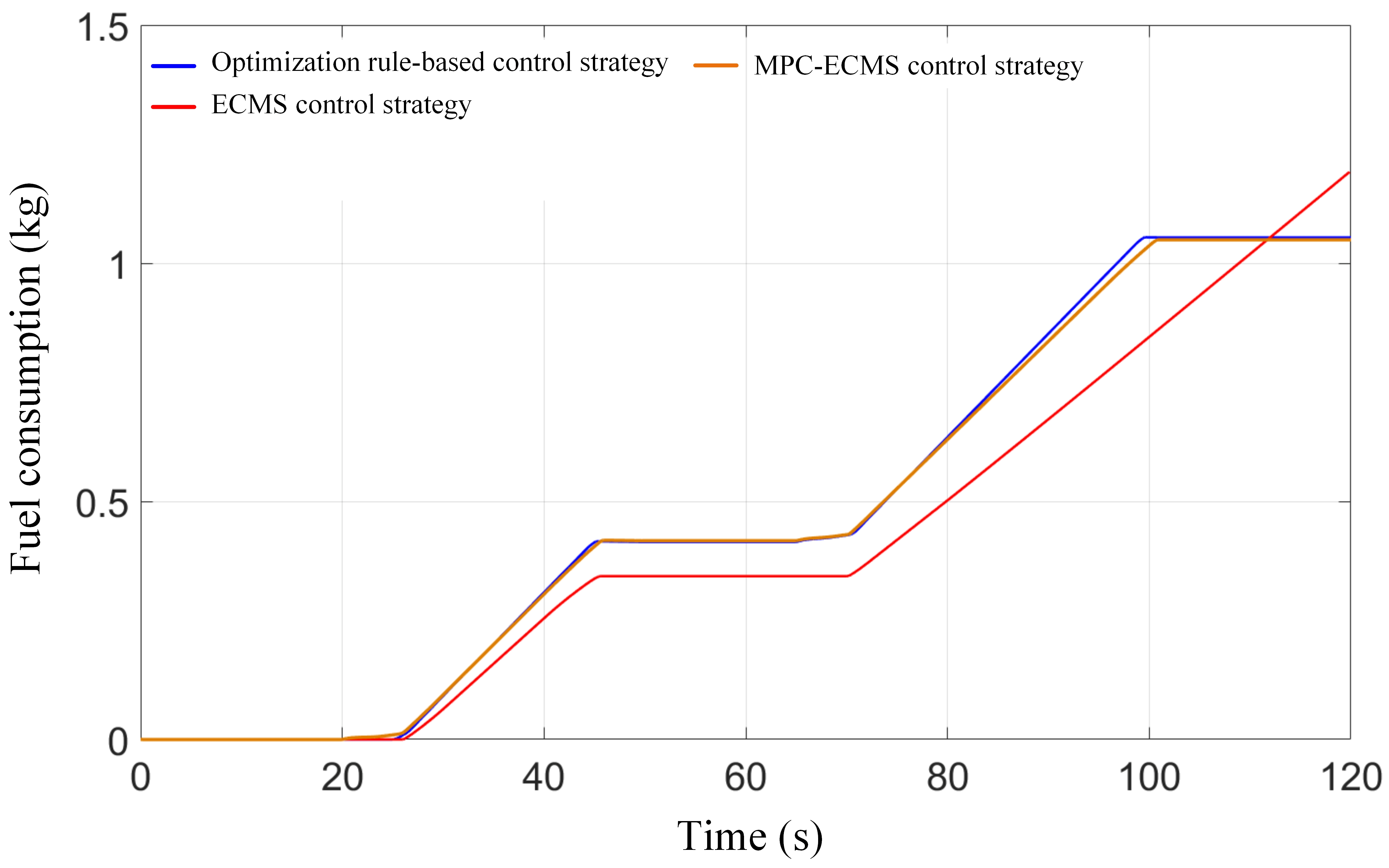
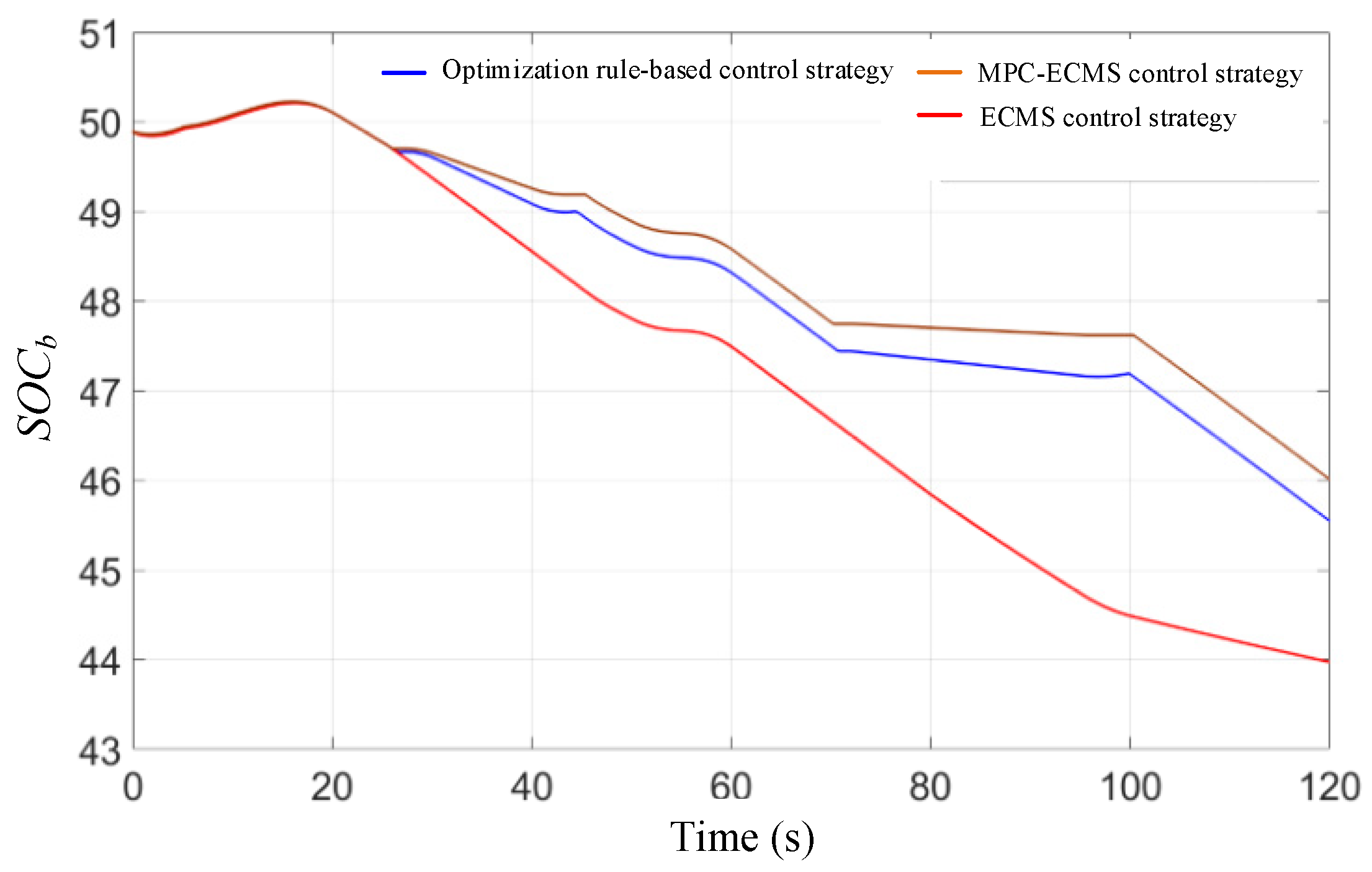
49] and the single ECMS control strategy. The primary objective is to compare the power generation efficiency of the gas turbine system, the overall fuel consumption of the system, and the variation characteristics of the battery state of charge under the three control strategies, with the results presented in
Figure 18,
Figure 19 and
Figure 20.
It can be seen from
Figure 18 that the MPC-ECMS control strategy designed in this paper can effectively improve the overall power generation efficiency of the gas turbine under all operating conditions, which is conducive to the long-term stable operation of the gas turbine. On the basis of the same operating conditions, the MPC-ECMS control strategy and the optimization rule-based control strategy can make the gas turbine operate in a higher power range under high load demand conditions, improving the power generation efficiency of the gas turbine. Under the optimization rule control strategy designed based on the gas turbine high-efficiency operation objective, the average operating efficiency of the gas turbine reaches 15.15%, while under the designed MPC-ECMS control strategy, the average operating efficiency of the gas turbine reaches 15.62%, with a relative increase of 3.10%. However, under the single ECMS control strategy, the dynamic process of its equivalent factor only depends on the change of the battery state of charge without considering the corresponding relationship between the operating power and efficiency of the prime mover, such as the gas turbine, so the power generation efficiency of the gas turbine under this strategy is the lowest, at 9.38%.
At the same time, it can be seen from
Figure 19 that the fuel consumption is the lowest under the designed MPC-ECMS control strategy, the fuel consumption under the optimization rule control strategy is similar to that under the MPC-ECMS strategy but slightly higher, and the fuel consumption under the ECMS control strategy is the highest. This is because the ECMS control strategy simply takes the minimum equivalent fuel consumption as the objective, ignoring the low efficiency and high fuel consumption rate of the gas turbine when operating at low power, and the design of the variable equivalent factor is not flexible enough, leading to the gas turbine frequently operating at low power for a long time. It can be seen from
Figure 20 that the battery state of charge changes the least under the MPC-ECMS control strategy, with the lowest battery power consumption; the battery power consumption under the rule control strategy is the second, and the battery power consumption under the ECMS control strategy is the highest. Under the same load condition as shown in
Figure 8, the system operation results under three different strategies are shown in
Table 5.
It can be seen from
Table 5 that in terms of fuel economy, the total system fuel consumption during the simulation process under the MPC-ECMS strategy is 1.049 kg, which is lower than 1.054 kg under the optimization rule strategy and much lower than 1.192 kg under the single ECMS strategy. In terms of power generation efficiency, the MPC-ECMS strategy makes the average power generation efficiency of the gas turbine reach 15.62%, an increase of 0.47% compared with the rule strategy (15.15%) and a significant increase of 6.24% compared with the single ECMS strategy (9.38%), effectively avoiding the gas turbine operating in the low-efficiency zone for a long time. In terms of battery service life protection, the SOC fluctuation range under the MPC-ECMS strategy is only 3.89%, which is a reduction of 11.83% compared with the optimization rule-based strategy and a significant decrease of 52.44% compared with the ECMS strategy. This indicates that the proposed strategy can better maintain the battery energy state and effectively avoid deep charging and discharging of the battery, thereby prolonging its service life.
However, the battery cycle life is related not only to the magnitude of SOC fluctuation but also to factors such as DoD, number of cycles, average SOC, charge/discharge rate, and temperature. Therefore, evaluating battery life improvement based solely on the variation in SOC has certain limitations. To further quantitatively verify the impact of different control strategies on battery life degradation, on the basis of the above SOC simulation results, this paper introduces the rain-flow counting method and a semi-empirical battery aging model to calculate the equivalent number of cycles and capacity fade ratio of the battery under the three control strategies.
The simulation results of the three control strategies show significant differences, the fundamental reason for which lies in their respective core optimization logic and adaptability to system dynamics. The optimization rule-based control strategy shows good fuel economy. This proves that if the high-efficiency operating interval of the gas turbine is fully considered, the rules are properly designed and the thresholds are reasonably selected, this strategy is still a simple and effective method under a certain given working condition. However, its fundamental disadvantage is that the performance is highly dependent on artificially preset thresholds and rules. Therefore, optimization algorithms can be used to optimize the thresholds under specific working conditions to reduce the dependence on empirical values. However, when facing diversified or unforeseen working conditions, the fixed rules of the rule-based strategy are difficult to adjust adaptively, leading to its insufficient flexibility and robustness.
As an optimization method, ECMS has a certain adaptive ability, and its objective is to minimize the instantaneous equivalent fuel consumption. As shown in
Figure 19, in the early stage of the simulation, the fuel consumption is low because the strategy gives priority to the use of battery energy storage. But its core defect is the “short-sightedness” of the optimization vision. The equivalent factor is only adjusted by feedback according to the current battery state and cannot foresee future changes in power demand. Under the continuous high-load working condition in the later stage of the simulation, the strategy continuously consumes the battery power due to the lack of foresight, resulting in the gas turbine operating in the low-efficiency zone for a long time, causing a sharp rise in fuel consumption in the later stage and the highest total fuel consumption finally. The MPC-ECMS strategy combines the advantages of prediction and optimization. It uses model predictive control (MPC) to look forward to the future working conditions in the short time domain, and dynamically adjusts the reference of the ECMS equivalent factor accordingly, making the optimization decision forward-looking. For example, when a high load is predicted to come, it will encourage the gas turbine to operate at high-efficiency power in advance. Therefore, this strategy overcomes the rigidity of the rule strategy and the short-sightedness of ECMS, and achieves a better global balance between ensuring the efficiency of the power source, maintaining the battery state, and controlling the total fuel consumption, showing stronger adaptability and comprehensive performance.
5.4. Battery Life Degradation Analysis Based on Rain-Flow Counting Method and Semi-Empirical Model
Previous studies have analyzed the battery state of energy maintenance under different control strategies using the SOC fluctuation range. The results indicate that the MPC-ECMS strategy can effectively reduce the variation in battery SOC. However, battery lifetime degradation is a multi-factor coupled process; cycle life depends not only on the SOC range but also closely on the depth of discharge (DoD), cycle number, average SOC, charge/discharge rate, temperature, and other factors. Therefore, to avoid the limitation of inferring battery lifetime improvement only from the SOC fluctuation range, this paper further introduces the rain-flow counting method and a semi-empirical battery aging model to quantitatively analyze battery cycle life degradation under different control strategies.
A lithium iron phosphate battery is selected as the energy storage unit, and battery cycle damage conversion is performed based on the SOC time series. First, the rain-flow counting method is used to decompose the simulated SOC curve and extract equivalent charge–discharge cycles from the irregular battery operation. For the i-th rain-flow cycle, its cycle depth and average SOC are expressed as follows:
where M is the total number of extracted cycles,
is the maximum battery SOC during one charge–discharge cycle, and
is the minimum battery SOC during one cycle.
denotes the depth of discharge for the cycle, and
is the average SOC for the cycle. The rain-flow counting method can decompose the complex SOC variation into several full cycles and half-cycles, where a full cycle is counted as 1 and a half-cycle as 0.5.
Considering that different depths of discharge and average SOC levels impose distinct effects on battery aging, a Wöhler curve-based equivalent cycle conversion method is adopted to convert actual cycles under different stress levels into equivalent cycles under standard conditions. To characterize the influence of average SOC on the aging rate, an average SOC acceleration factor
is introduced. The equivalent number of cycles
for each rain-flow cycle is calculated as shown in Equation (25):
where
and
are Wöhler curve parameters,
is the early-life aging exponent reflecting nonlinear aging characteristics,
is the reference life coefficient at 50% SOC,
k is the aging sensitivity coefficient for average SOC, and
is the average SOC acceleration factor, usually expressed as a quadratic function, as shown in Equation (26):
The total equivalent standard cycle number over the simulation period is given by Equation (27):
A semi-empirical aging model based on solid–electrolyte interphase (SEI) growth is used to calculate the capacity fade ratio, as shown in Equation (28):
where
is the percentage of capacity fade,
is the pre-exponential factor (empirical constant),
is the activation energy,
R is the universal gas constant, and
T is the absolute temperature. The calculated battery life degradation results under different control strategies are listed in
Table 6.
It can be seen from
Table 6 that significant differences exist in battery life degradation among the three control strategies. The MPC-ECMS strategy yields the smallest rain-flow cycle depth (DoD = 0.0365), with a total equivalent cycle number of 0.2593 and a capacity fade ratio of 0.23%. The optimization rule-based strategy gives a DoD of 0.0413, a total equivalent cycle number of 0.2935, and a capacity fade ratio of 0.25%. The conventional ECMS strategy shows the largest DoD of 0.0565, a total equivalent cycle number of 0.4035, and a capacity fade ratio of 0.29%.
Taking the conventional ECMS strategy as the benchmark, the MPC-ECMS strategy reduces the total equivalent cycle number by approximately 35.7% and the capacity fade ratio by about 20.7%. These results demonstrate that the MPC-ECMS strategy not only reduces the SOC fluctuation range but also mitigates deep cycling and equivalent cycle damage, thereby further slowing battery capacity fade. The reason is that the MPC-ECMS strategy uses the predicted load and PV power trends within the prediction horizon to increase the equivalent factor before high-load conditions, allowing the gas turbine to bear more load power and reducing sustained deep battery discharge during high-power demand. In contrast, the conventional ECMS strategy adjusts the equivalent factor mainly based on the real-time SOC state and lacks foresight of future operating conditions, so it tends to rely excessively on battery discharge during sustained high-load phases, resulting in higher equivalent cycles and capacity fade.
Therefore, the calculation results based on the rain-flow counting method and the semi-empirical aging model further verify the effectiveness of the MPC-ECMS strategy in battery lifetime protection. The strategy is not merely reflected in a reduced SOC fluctuation range; it outperforms the comparison strategies in key lifetime indicators, including cycle depth, equivalent cycle number, and capacity fade ratio, providing quantitative evidence for delaying battery aging and extending service life.
In summary, this study not only validates the effectiveness of the optimization rule-based strategy in a given scenario but, more importantly, the proposed MPC-ECMS strategy provides a good solution for solving the global optimization problem of hybrid power systems under dynamic environments, and provides theoretical guidance and design references for control strategies to improve the performance of shipboard hybrid power systems.
Although the proposed MPC-ECMS energy management strategy achieves satisfactory performance in fuel economy, gas turbine efficiency, battery lifespan protection, and DC bus voltage stability, this study still has several inherent limitations. First, all verification is conducted only through MATLAB/Simulink simulation under ideal modeling assumptions, without considering actual hardware nonlinearity, system disturbances, or real-time operation constraints. Second, the photovoltaic model is built under standard irradiance and temperature conditions, which cannot fully reflect the random fluctuations caused by time-varying marine meteorology, cloud shading, and complex sea environments. Third, the simulation is limited to fixed and relatively short working conditions, which cannot cover the full navigation cycle of actual ships. To address these limitations, future research will focus on constructing a hardware-in-the-loop (HIL) experimental platform for physical verification of the proposed strategy, establishing a high-precision dynamic photovoltaic model using measured marine meteorological data to improve environmental adaptability, and extending the simulation to full-voyage and diversified operating profiles to develop more practical multi-objective optimal scheduling schemes for marine hybrid power systems.
6. Conclusions
Aiming at the shipboard gas turbine–photovoltaic hybrid energy storage power system, this paper proposes a real-time optimal control method of MPC-ECMS combining rule and optimization strategies. The prediction capability of MPC is used to real-time predict the changes in load and photovoltaic power in the future time domain, and the system operating state is divided into three typical modes: energy surplus, low-load demand, and high-load demand based on the predicted net power. The basic value of the equivalent factor is set for different operating conditions, and then dynamically corrected in combination with the real-time state of the battery SOC to realize the two-level optimal adjustment of the equivalent factor. The optimized equivalent factor is fed to the ECMS module, and the optimal power distribution between the gas turbine and the battery is realized by solving the equivalent fuel consumption minimization problem.
The simulation results show that the proposed improved MPC-ECMS strategy is superior to the comparison strategies in several key indicators: the total system fuel consumption (1.049 kg) is lower than that of the optimization rule strategy (1.054 kg) and significantly lower than that of the single ECMS strategy (1.192 kg); the average power generation efficiency of the gas turbine reaches 15.62%, which is 0.47% and 6.24% higher than that of the rule strategy and ECMS strategy, respectively; and the battery SOC fluctuation range (3.89%) is better than that of the ECMS strategy (5.93%) and the rule strategy (4.35%), reflecting better comprehensive performance. At the same time, through the power secondary correction mechanism of the supercapacitor, the maximum DC bus voltage fluctuation rate under the MPC-ECMS control strategy is 3.28%, and the maximum voltage recovery time is 0.26 s, which meets the power grid stability requirements and ensures the system power supply quality and dynamic stability. Furthermore, calculation results based on the rain-flow counting method and the semi-empirical battery aging model show that the total equivalent cycle number of the MPC-ECMS strategy is 0.2593, lower than 0.2935 for the optimization rule-based strategy and 0.4035 for the ECMS strategy. The capacity fade ratio is 0.23%, which is also lower than 0.25% for the optimization rule-based strategy and 0.29% for the ECMS strategy.
In summary, the improved MPC-ECMS control strategy, by integrating the forward-looking optimization capability of MPC and the real-time decision-making advantage of ECMS, achieves a better balance of multiple key indicators such as fuel economy, power generation efficiency and battery life on the premise of ensuring the stable operation of the system under all operating conditions, and provides a high-performance and technically feasible energy management solution for shipboard hybrid power systems.