Article

Scour-Protection Strategies for Offshore Wind Farms: A Life Cycle Assessment of Operation and Maintenance Impacts


1
State Key Laboratory of Ocean Engineering, Department of Civil Engineering, Shanghai Jiao Tong University, Shanghai 200240, China
2
Shanghai Key Laboratory for Digital Maintenance of Buildings and Infrastructure, Department of Civil Engineering, Shanghai Jiao Tong University, Shanghai 200240, China
*
Author to whom correspondence should be addressed.
J. Mar. Sci. Eng. 2026, 14(10), 872; https://doi.org/10.3390/jmse14100872
Submission received: 3 April 2026 / Revised: 29 April 2026 / Accepted: 5 May 2026 / Published: 8 May 2026
(This article belongs to the Section Marine Energy)

Abstract

The operation and maintenance (O and M) phase of offshore wind farms is often simplified in life cycle assessments (LCA), especially with respect to scour-related activities. This study develops a refined O and M–LCA model that explicitly includes scour monitoring, repair, and protection measures, and applies it to a 202 MW offshore wind farm in China. The analysis focuses on the environmental burdens of scour-related O and M activities under predefined engineering scenarios, rather than on the prediction of structural fatigue life or reliability-based intervention timing. Two representative scour-protection strategies were compared: rock dumping (S1) and cement-stabilized soil (S2). The results show that scour protection can substantially increase the environmental burdens of the O and M phase. Relative to the baseline O and M carbon intensity of 4.36 kg CO2-eq/MWh, S1 causes only a slight increase in global warming potential but greatly increases air pollution- and resource-related impacts because of large-scale rock extraction and transport. In contrast, S2 reduces mineral resource scarcity from 2.14 to 0.042 kg Cu-eq/MWh, corresponding to a 98% reduction compared with S1, but raises the global warming potential to 9.94 kg CO2-eq/MWh, mainly because of cement production and offshore treatment. Sensitivity analysis shows that S1 is more affected by hydrodynamic-driven intervention frequency in air pollution-related categories, whereas S2 is more sensitive to seabed conditions and stabilization efficiency in terms of GWP. A site-specific screening framework is proposed by integrating geotechnical and hydrodynamic constraints, regional environmental concerns, and targeted mitigation options. The results provide O and M-stage environmental evidence for the site-specific screening of scour-protection strategies and for improving the environmental performance of offshore wind O and M.

1. Introduction

Offshore wind power is widely regarded as an important pathway for decarbonizing the power sector [1]. However, its environmental performance should be evaluated over the full life cycle rather than judged only by its low operational emissions. Life cycle assessment (LCA) has, therefore, been widely applied in offshore wind research to quantify the environmental impacts associated with raw material extraction, manufacturing, transportation, installation, operation and maintenance (O and M), and decommissioning [2,3,4].
Existing LCA studies on offshore wind have mainly focused on manufacturing, foundation construction, and, more recently, decommissioning or recycling scenarios. In comparison, the O and M phase is often represented in a simplified way, typically including only routine inspections, vessel trips, and component replacement [2]. Such simplification may lead to an underestimation of the actual environmental burdens over the service life of offshore wind farms [5]. Unlike manufacturing and installation, which are largely one-time stages, O and M is long term, recurring, and is strongly influenced by site-specific conditions such as distance to shore, weather windows, and accessibility [6]. Its environmental burdens arise not only from routine maintenance activities, but also from additional interventions triggered by specific engineering problems, including monitoring, repair, material replenishment, and follow-up engineering works. If these dynamic processes are omitted, the model may fail to capture additional material demand, vessel use, and follow-up interventions during the O and M phase, thereby affecting the overall life cycle evaluation of offshore wind power [7].
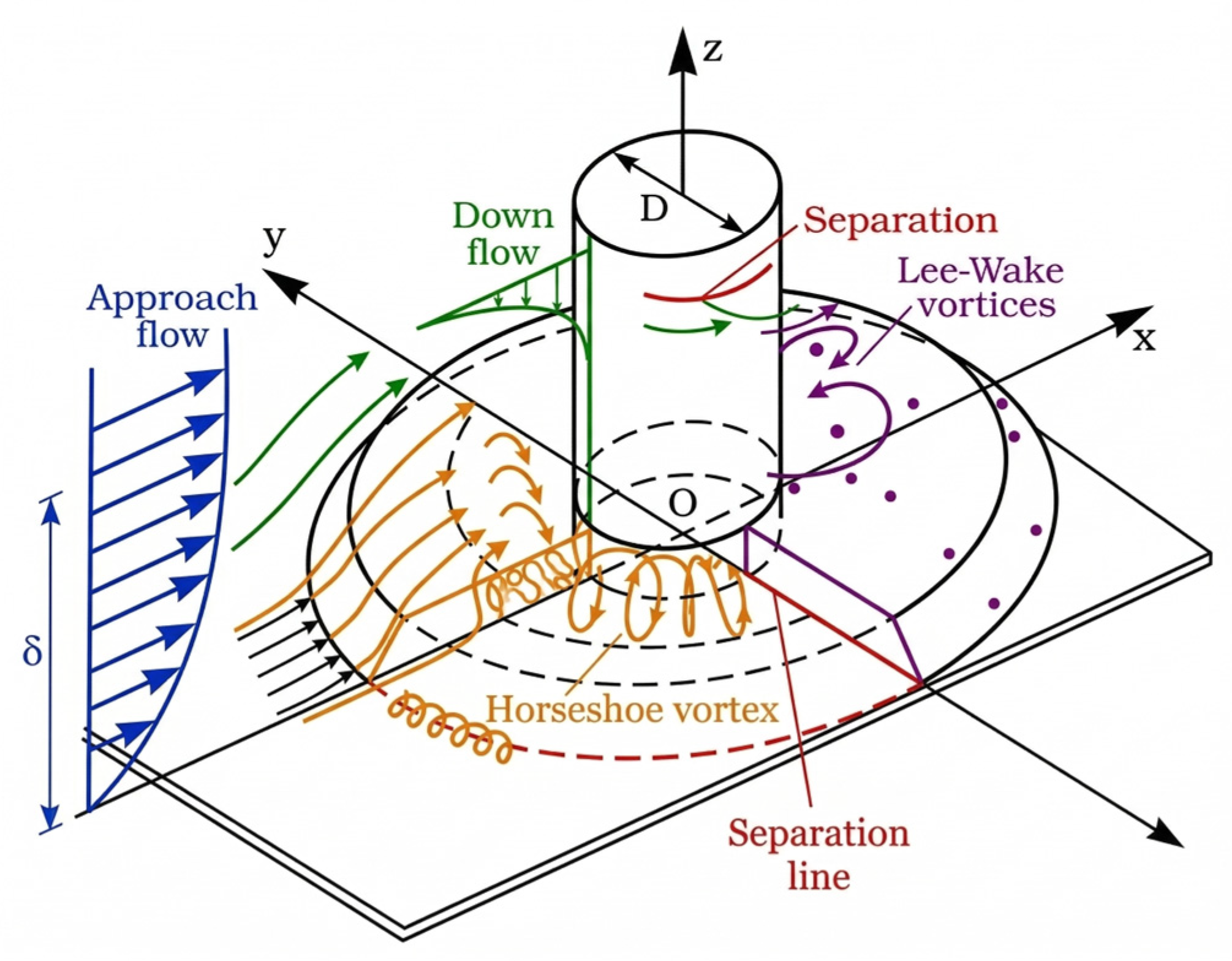
Among the O and M activities that are often simplified or neglected, scour-related activities are particularly important. For offshore wind turbine foundations, local scour induced by waves and currents can alter the seabed morphology around the foundation, reduce the effective embedment depth, and further affect structural behavior, dynamic response, and long-term service safety (Figure 1) [8,9,10,11,12,13]. This issue is especially significant under shallow water, soft seabed, or complex hydrodynamic conditions. Under such conditions, scour development, or the failure of protection measures, may result in more frequent inspections, additional engineering intervention, and repeated material replenishment. Scour-related activities should, therefore, be regarded as an integral part of offshore wind O and M rather than as a marginal issue [14].
A variety of scour-protection methods have been developed for offshore wind turbine foundations. In general, these methods can be classified into three main categories. The first category includes hydrodynamic control measures, which reduce scour by modifying the local flow field around the foundation, such as collars and other flow-guiding devices [15,16,17,18]. The second category includes physical protection measures, which improve scour resistance by covering or reinforcing the seabed surface, such as rock dumping, mattresses, geotextiles, concrete interlocking blocks, and geocells [19,20,21]. The third category includes ground improvement measures, which enhance soil strength and stability through methods such as grouting and soil stabilization [22,23,24,25]. In recent years, some studies have also explored additional hybrid or eco-engineering approaches such as artificial reefs and other multifunctional components [26,27,28,29,30]. These methods differ substantially in terms of material input, construction practice, maintenance requirements, and applicable seabed conditions. Scour protection should, therefore, be understood not as a single engineering measure, but as a group of technical options with different environmental implications. Among these options, rock dumping and cement-stabilized soil protection are two representative strategies with markedly different material and operational profiles.
Nevertheless, existing studies on scour protection have mainly concentrated on hydraulic performance, structural stability, construction feasibility, and site applicability [18,21,31,32,33,34,35,36,37]. Systematic evaluation of their environmental impacts from a life cycle perspective remains limited. The few studies that address environmental aspects usually focus on specific stages such as comparing protection materials during installation or discussing the ecological implications of retaining protection layers during decommissioning [38,39]. By contrast, the environmental burdens associated with dynamic scour-related activities during the O and M phase remain insufficiently understood. In addition, the environmental performance of different scour-protection methods should not be assessed solely in terms of carbon emissions. Trade-offs across multiple impact categories also need to be considered.
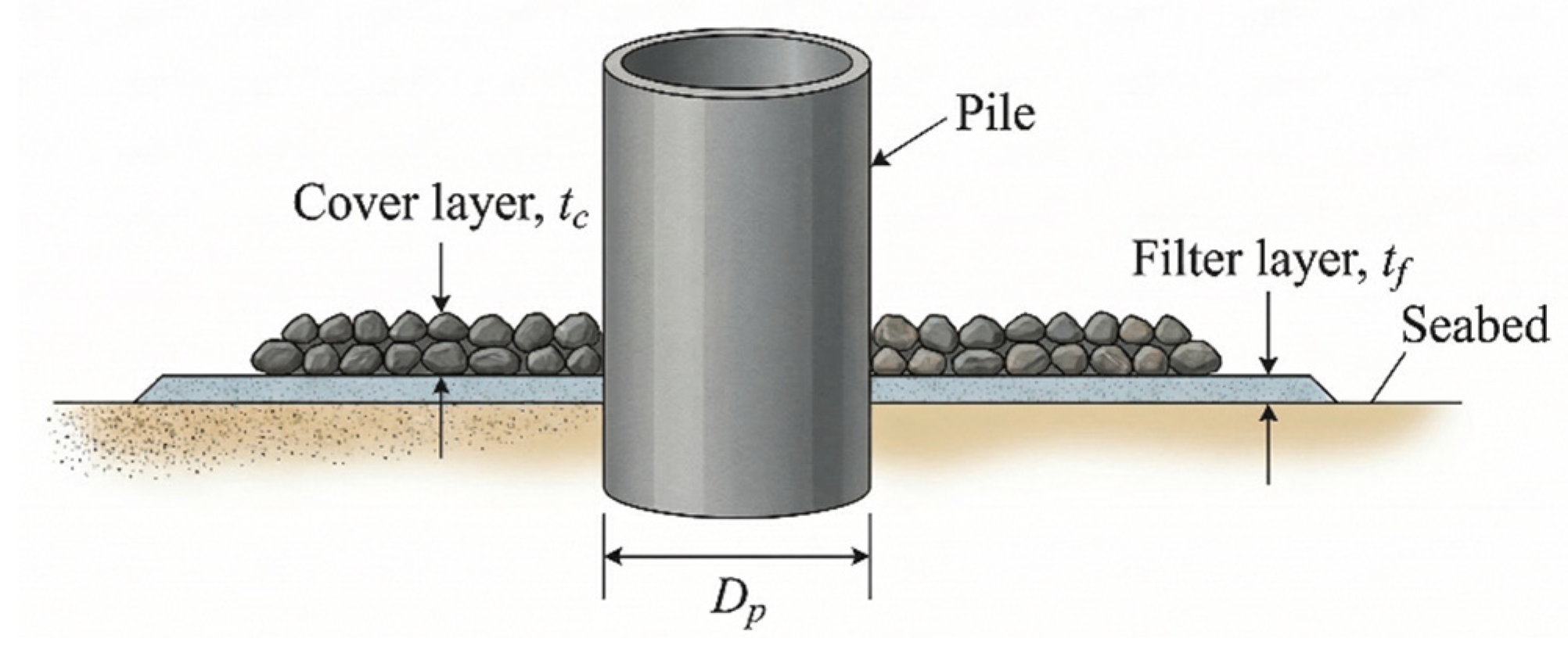
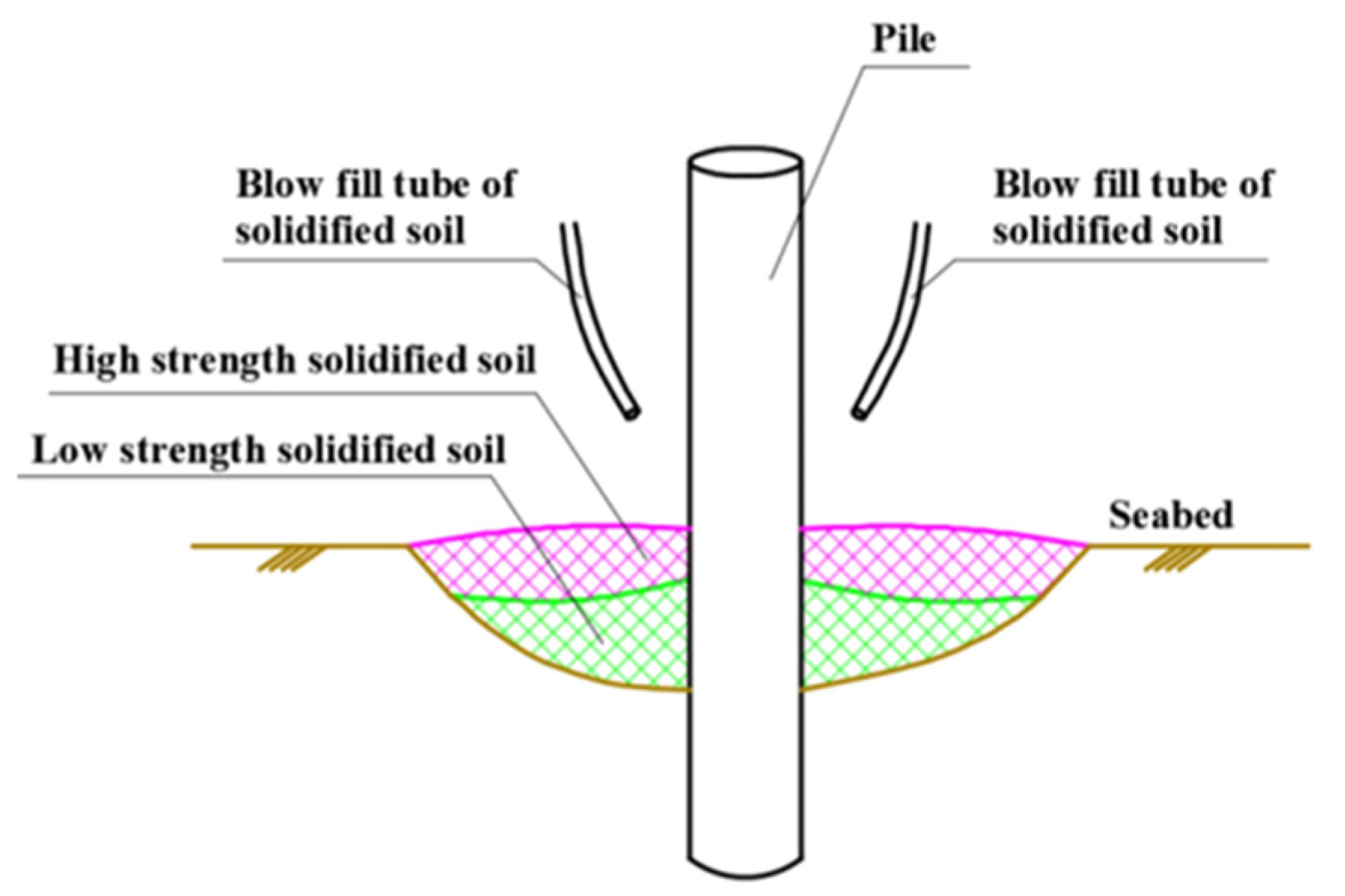
Against this background, scour protection-related activities should be incorporated into the LCA framework for the O and M phase of offshore wind farms and treated as an important source of operational environmental burdens. In this study, a 202 MW offshore wind farm in China was selected as the case study and an O and M–LCA framework incorporating scour monitoring and repair processes was developed. As shown in Table 1, S0 represents the baseline O and M scenario without dedicated scour protection, S1 represents the scenario with rock-dumping scour protection, and S2 represents the scenario with cement-stabilized soil scour protection. The engineering schematics of rock-dumping scour protection and cement-stabilized soil scour protection are presented in Figure 2 and Figure 3, respectively.
Based on this framework, the environmental performance of the three scenarios is evaluated across multiple impact categories, and the influence of hydrodynamic and geological uncertainties is further examined. This study examines the environmental burdens associated with scour-related O and M activities, compares the trade-offs between two representative protection strategies, and provides O and M-stage environmental evidence for site-specific screening of scour-protection strategies.
It should be emphasized that the scope of this study is restricted to the environmental assessment of scour-related O and M activities. The intervention frequency in S1 and the stabilization efficiency in S2 are treated as predefined engineering scenarios based on project operation records, design experience, and site-condition assumptions, rather than as outputs of a fatigue-damage or structural reliability model. Therefore, expressions, such as “service safety”, “failure risk”, and “engineering robustness”, are used to explain the engineering motivation for scour management, not as calculated structural performance indicators. No fatigue life, dynamic amplification, or reliability index is computed in this study. Coupling scour evolution, cyclic loading, fatigue accumulation, and reliability-based intervention triggers with the proposed O and M–LCA framework is an important direction for future work.

2. Research Methodology

This research adheres to the internationally recognized four-stage life cycle assessment (LCA) framework outlined in ISO 14040:2006 and ISO 14044:2006 [40,41], covering goal definition, inventory analysis (LCI), impact assessment (LCIA), and result interpretation. The entire modeling process was conducted using openLCA v.2.4.1 software, with environmental impacts quantified through the ReCiPe 2016 midpoint methodology [42].

2.1. Case Background and Functional Unit

A representative offshore wind farm in southeastern China was selected as the case study. The wind farm has an installed capacity of 202 MW. It is located about 10 km offshore, and the water depth is about 8–12 m. The main site information is given in Table 2. This site has long-term scour problems around the foundations. Therefore, scour-related O and M activities are important in this case. The functional unit (FU) was defined as 1 MWh of net electricity delivered to the grid over the 25-year design life of the wind farm. All material inputs, energy use, and emissions in the O and M phase were normalized to this unit. This allows for direct comparison among different O and M scenarios.
It should be noted that this case wind farm represents a site-specific nearshore and shallow-water offshore wind farm with active sediment transport and documented scour-related concerns. Therefore, the inventory parameters and scenario settings used in this study should not be interpreted as universal default values for all offshore wind farms. Instead, they represent the engineering and environmental conditions of this specific case, including its water depth, offshore distance, seabed composition, tidal regime, foundation types, and O and M accessibility. The results and decision implications are, therefore, most relevant to offshore wind farms with similar nearshore fixed-bottom settings and comparable scour management requirements. For sites with greater water depths, longer offshore distances, different foundation types, weaker or stronger hydrodynamic conditions, or different O and M logistics, the same O and M–LCA framework can be applied; however, the inventory parameters and scenario assumptions should be recalibrated using site-specific data.

2.2. Full Life Cycle Background of the Case Wind Farm

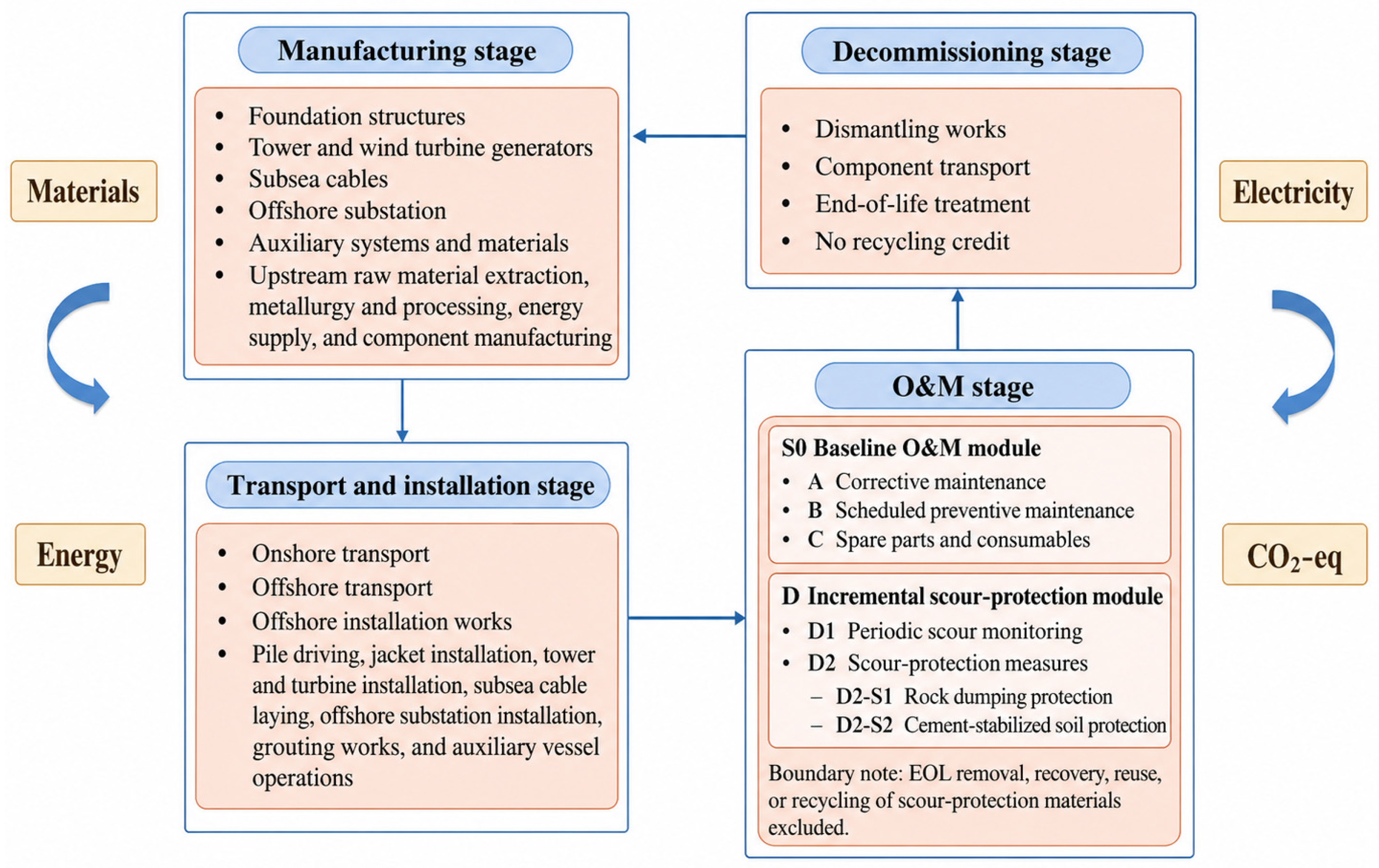
Before isolating the O and M phase, a full cradle-to-grave life cycle assessment was conducted for the same 202 MW case wind farm to provide the broader life cycle context. Following the ISO-defined life cycle stages, the system was divided into manufacturing, transport and installation, O and M, and decommissioning, as illustrated in Figure 4. The manufacturing stage includes the production of major structures and components, together with upstream raw material extraction, material processing, energy supply, and component manufacturing. The transport and installation stage includes onshore transport, offshore transport, and installation-related marine operations. The O and M stage includes both the baseline O and M module and the incremental scour-protection module. In this study, scour monitoring and scour-protection implementation are treated as O and M-stage activities. Follow-up replenishment or repair is included for the rock-dumping scenario where applicable, whereas the baseline cement-stabilized soil scenario is modelled as a one-time offshore in situ treatment without scheduled in-service repair. The decommissioning stage covers dismantling activities after the wind farm reaches the end of its service life, component transport, and end-of-life treatment.
The total life cycle global warming potential (GWP) was 20.81 kg CO2-eq/MWh without recycling credits. As shown in Table 3, manufacturing was the dominant contributor, accounting for 13.74 kg CO2-eq/MWh, or 66.0% of the total GWP. The baseline O and M stage contributed 4.36 kg CO2-eq/MWh, accounting for 21.0%, followed by transport and installation at 2.11 kg CO2-eq/MWh, or 10.1%. Decommissioning contributed 0.60 kg CO2-eq/MWh, or 2.9%, under the baseline end-of-life assumption.
In this study, no recycling credits were considered for the decommissioning stage. This is mainly because project-level data on offshore wind farm decommissioning and material recovery in China remain limited; data specifically related to the recovery or reuse of scour-protection materials are not yet available. Under this setting, only the environmental burdens associated with dismantling, transport, and end-of-life treatment are included, while avoided burdens or recycling credits from recovered materials are excluded.
In addition, although scour-protection materials are accounted for when they are produced, transported, installed, monitored, and maintained during the O and M phase, their end-of-life removal, recovery, reuse, or recycling are not included in the baseline comparative boundary. This boundary choice was made because including the end-of-life treatment of scour-protection materials would require additional assumptions about removal methods, vessel operations, material recovery rates, seabed remediation, and final disposal routes, which are not yet supported by reliable case-specific data. Therefore, the potential influence of scour-protection end-of-life treatment on decommissioning burdens and resource-recovery indicators is acknowledged as a limitation of this study.
These results show that, although manufacturing remains the dominant carbon hotspot of the case wind farm, the O and M phase is the second-largest contributor and is, therefore, non-negligible in the life cycle carbon profile. This finding supports the need for a more detailed representation of O and M activities, especially for site-specific engineering issues that may require repeated monitoring, material supply, offshore operations, and repair interventions during the service life. For the case wind farm, scour-related activities represent an additional O and M burden because they are closely linked to local seabed conditions, tidal dynamics, and foundation safety management. The full life cycle background assessment, therefore, provides the context for the more detailed O and M-stage modeling developed in this study. Accordingly, the following analysis isolates the O and M phase from the full life cycle background and focuses on the incremental environmental burdens attributable to scour monitoring, protection implementation, and follow-up repair activities.
To explain the plausibility of the single-site results, the full life cycle GWP of the case wind farm was compared with published offshore wind LCA studies from China and Europe. Previous studies have shown that the reported GWP values of offshore wind farms vary considerably because of differences in turbine capacity, foundation type, water depth, offshore distance, capacity factor, system boundary, database selection, and end-of-life assumptions. Reported GWP values in the published offshore wind LCA literature generally range from 6.49 to 41.7 kg CO2-eq/MWh, with a median value of approximately 12.1 kg CO2-eq/MWh and an average value of approximately 16.5 kg CO2-eq/MWh [2,3,5,7,43,44,45,46,47,48]. The full life cycle GWP of the present case is 20.81 kg CO2-eq/MWh, which therefore falls within the published range, although it is higher than the median value.
The relatively higher value of the present case can be explained by the nearshore shallow-water location of the wind farm, the soft and stratified seabed sediments, and active sediment transport. In addition, the O and M stage was modelled in greater detail in this study, including routine vessel operations, spare-parts supply, and scour monitoring and protection activities. Previous studies have also shown that the contribution of the O and M stage can be strongly affected by vessel-related assumptions, maintenance strategies, offshore logistics, and whether only routine maintenance or additional engineering interventions are included [2,3,5,44]. Therefore, the baseline O and M intensity of 4.36 kg CO2-eq/MWh in S0 should not be interpreted as a universal default value for all offshore wind farms. Instead, it represents a site-specific O and M background for a Chinese nearshore offshore wind farm with explicit scour-management requirements.

2.3. Modular O and M Model

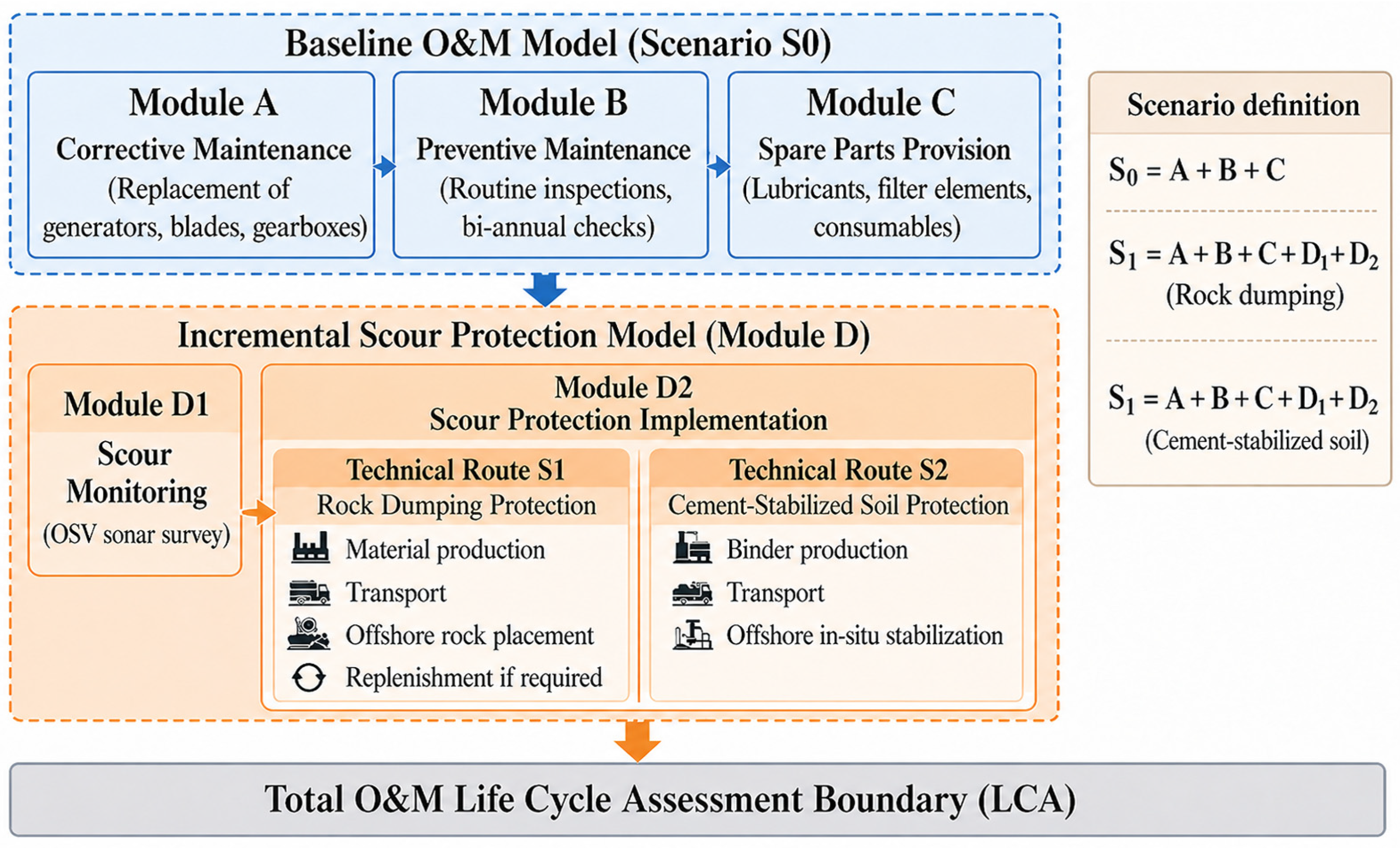
To separate the environmental contributions of different O and M activities, the O and M phase was modeled using a modular structure rather than as a single aggregated process (Figure 5). This study compares the O and M-stage differences among the three scenarios while keeping the shared routine O and M background consistent. Within the O and M boundary, activities were divided into two layers. The first layer is the baseline O and M layer, which is shared by S0, S1, and S2, and includes corrective maintenance, preventive maintenance, and spare parts/consumables supply. The second layer is the incremental scour-protection layer, which includes scour monitoring and protection-related activities added only in S1 and S2. This structure makes it possible to quantify the additional environmental burdens caused by scour-related O and M activities, while avoiding repeated accounting of routine O and M processes. The module composition is shown in Table 4.

2.3.1. Baseline O and M Model (Scenario S0)

Scenario S0 is defined as a computational reference baseline rather than a recommended or physically preferred long-term operating strategy for the case wind farm. It includes routine corrective maintenance, preventive maintenance, and spare parts/consumables supply, but excludes dedicated scour-protection activities. Because the case wind farm has documented scour-related concerns, S0 is used only to isolate the incremental environmental burdens of adding scour monitoring and protection measures in S1 and S2. It should not be interpreted as a structurally advisable 25-year operating scenario for a site with persistent scour risk.

2.3.2. Incremental Scour-Protection O and M Model (Module D)

To quantify the extra environmental burden caused by scour management, an incremental module, namely Module D, was added to the baseline O and M model. Module D1 represents periodic scour monitoring. In this study, it mainly includes seabed topographic surveys and scour inspections using offshore operation vessels and sonar or similar equipment.
Module D2 represents the implementation of scour protection measures. For S1, this module includes rock material production, land–sea transportation, offshore placement, and subsequent replenishment or repair, when required. For S2, this module includes binder production, transport, and one-time offshore in situ cement-stabilized soil treatment; no scheduled in-service repair of the cement-stabilized layer is included in the baseline comparative boundary. In this framework, S1 is defined as the baseline O and M model plus Module D1 and Module D2-S1, which represents rock-dumping scour protection. S2 is defined as the baseline O and M model plus Module D1 and Module D2-S2, which represents cement-stabilized soil scour protection. This design makes it possible to identify the additional impacts caused by scour-related activities, while keeping the normal O and M background unchanged.

2.4. Life Cycle Inventory (LCI)

A hybrid life cycle inventory approach was used in this study. The foreground data include wind farm layout, O and M frequency, component failure rates, vessel operation time, fuel use, and scour-protection activity parameters. These data were collected from engineering records, operation logs, and technical documents of the case wind farm. The background data include upstream material production, regional power supply, fuel combustion, and transport-related processes. The TianGong LCA Database v0.2.0, released on 17 April 2024, was used as the primary Chinese background database where directly comparable unit-process datasets were available. The database was accessed during the study and manuscript revision, and its ILCD-formatted release was adopted to ensure data consistency and reproducibility.
To improve inventory transparency and international comparability, the major foreground inputs were mapped either to TianGong background processes or to explicitly defined modelling parameters. Recent work on the Tiangong Steel Datasets has also emphasized that transparency, standardization, and comparability are important requirements for Chinese product carbon-footprint and LCA datasets [49]. Therefore, the key material, fuel, and transport parameters used in this study are documented in Table 5. TianGong values were used where suitable Chinese unit-process datasets were available such as steel-related processes and Portland cement production. For processes not fully represented in TianGong v0.2.0, including standalone diesel/HFO combustion, ton-kilometer-based transport, and aggregate GWP, supplementary activity-based parameters, or internationally recognized emission factors, were used.
As summarized in Table 5, the key LCI factors include steel, steel rebar, copper, glass fiber, GFRP blade material, cement, concrete, cementitious grout, diesel, heavy fuel oil, truck transport, and nearshore barge transport. Cement was represented using the TianGong OPC new dry process above 4000 t/d dataset, with an adopted value of 0.662 kg CO2-eq/kg. The other TianGong OPC datasets provide a reference range of 0.625–0.729 kg CO2-eq/kg. For copper, glass fiber, GFRP blade material, concrete, and cementitious grout, the adopted values are engineering-equivalent parameters from the case wind farm LCA model rather than single TianGong unit-process emission factors. These values were retained to maintain consistency with the full life cycle calculation of the case wind farm.
Additional treatment was required for fuel combustion, transport, and rock aggregate processes. TianGong v0.2.0 does not provide standalone direct-combustion unit processes for marine diesel oil or heavy fuel oil. Therefore, the direct fuel-combustion factors for diesel and HFO were taken from the Fourth IMO GHG Study 2020 [50]. TianGong v0.2.0 also does not provide directly comparable ton kilometer-based road or nearshore-barge transport processes. Therefore, inland truck transport and nearshore barge transport were modelled using activity-based t-km factors. For the rock aggregate used in S1, the TianGong sand-and-gravel aggregate dataset is an NESPS2 emissions-only dataset and does not report complete CO2, NOx, SO2, diesel, or electricity inputs. Therefore, quarrying and processing energy inputs for rock materials were supplemented using activity-based parameters.
Maritime transport and offshore vessel operations were modelled using activity-level parameters rather than a single aggregated transport intensity, with material transport and vessel operations treated separately. Road and marine material transport were expressed as transport work in ton-kilometers (t-km), calculated from transported material mass and transport distance. Offshore vessel operations were represented by vessel operating time and corresponding fuel consumption, with the main parameters including vessel type, operation duration, sailing distance, fuel type, and fuel consumption rate. This activity-based treatment allowed for the environmental contributions of routine O and M, scour monitoring, material delivery, offshore placement, in situ treatment, and repair operations to be distinguished in the contribution analysis.
For routine O and M, vessel-related activities included WTG inspection by crew transfer vessel (CTV), cable inspection, foundation inspection, substation visits, corrective maintenance, and spare-parts replacement and logistics. For scour-related activities, periodic scour monitoring was added in both S1 and S2 and was modelled using monitoring frequency, survey-vessel operating times, and fuel use. In S1, the additional burdens were mainly associated with rock material supply and rock placement, including inland transport from quarry to port, barge transport from coastal loading point to the wind farm site, initial offshore placement, and subsequent replenishment or repair. In S2, the additional burdens were mainly associated with cementitious material supply and in situ treatment, including inland transport of binder from production site to port, barge transport from coastal loading point to the wind farm site, offshore in situ stabilization treatment, and scenario-based variation in stabilization efficiency. The transport distances, intervention frequencies, intensity indicators, and emission factors or modelling parameters used for these activities are summarized in Table 6.
To further improve inventory reproducibility and transparency, Supplementary Materials Table S1 documents the key background processes that have a direct influence on the comparative results, including cement clinker production, marine fuel combustion, and granite/rock aggregate quarrying and processing. Directly comparable TianGong values are reported for cement clinker and Portland cement. For marine diesel/HFO combustion and rock aggregate GWP, directly comparable TianGong unit-process factors were not available; therefore, the adopted supplementary factors and modelling treatment are explicitly documented.

2.5. Scenario Setting and Parameter Justification

A scenario-based uncertainty analysis was carried out for the key parameters that may change during scour-related O and M activities. The parameter ranges were set based on project operation records, engineering experience, and assumptions about site conditions. Generic default values were not used. Two groups of scenarios were built for the two scour-protection strategies.
For S1, the main variable is maintenance frequency. It is used to reflect different levels of hydrodynamic influence. The baseline case assumes five interventions over the 25-year service life, which is consistent with the project records used in this study. The low-frequency case assumes two interventions and represents relatively mild sea conditions. The high-frequency case assumes eight interventions and represents stronger hydrodynamic disturbance and more frequent scour repair needs.
For S2, the main variable is stabilization rate, which reflects the treatment efficiency of cement-stabilized soil under different seabed conditions. The medium-stabilization scenario is defined as the baseline case based on the average project conditions. The fast-stabilization scenario represents favorable geological conditions, where the target stabilization effect can be achieved more efficiently and with lower material demands. The slow-stabilization scenario represents unfavorable conditions, where lower treatment efficiency leads to higher material demands, for example, due to material loss or washout during construction.

2.6. Life Cycle Impact Assessment (LCIA) Methodology

To convert the inventory results into environmental impacts, the ReCiPe 2016 midpoint method was used [43]. All 17 midpoint indicators were kept in the assessment. For easier reading, these indicators were grouped into five categories. The indicators used in this study are listed in Table 7.
Among these indicators, GWP was used to describe climate-change impacts. PMFP, TAP, HOFP, and EOFP mainly describe air pollution-related impacts. SOP, FFP, WCP, and LOP were used to reflect resource-related pressures. Toxicity- and eutrophication-related indicators were used to show possible pressures on human health and ecosystems. Although the full set of indicators was retained, Section 3 focuses on the categories with the clearest differences among scenarios and the strongest relevance to offshore engineering practices.

3. Results and Discussion

3.1. Environmental Profile of the Baseline O and M (S0)

Under the computational baseline scenario (S0), which is used as a reference case for quantifying incremental scour-related O and M burdens rather than as a recommended engineering strategy, this study quantified the environmental burdens of the offshore wind farm during the 25-year operation and maintenance phase using a life cycle assessment. The results show that the global warming potential (GWP) of S0 is 4.36 kg CO2-eq/MWh. This indicates that routine O and M activities can generate a non-negligible cumulative climate burden, even without additional scour-related interventions. Although the O and M phase is not usually the dominant source of life cycle emissions in offshore wind systems, its long-term and recurring nature means that it should not be simplified excessively in environmental assessments.
In addition to climate-change impacts, the baseline O and M scenario also contributes to several non-climate impact categories, mainly through offshore vessel fuel use, spare-parts logistics, and related upstream processes. These non-climate impacts are not discussed separately in this subsection but are included in the full LCIA comparison across 17 midpoint indicators in Section 3.2.

3.2. Comparative Performance of Scour-Protection Schemes

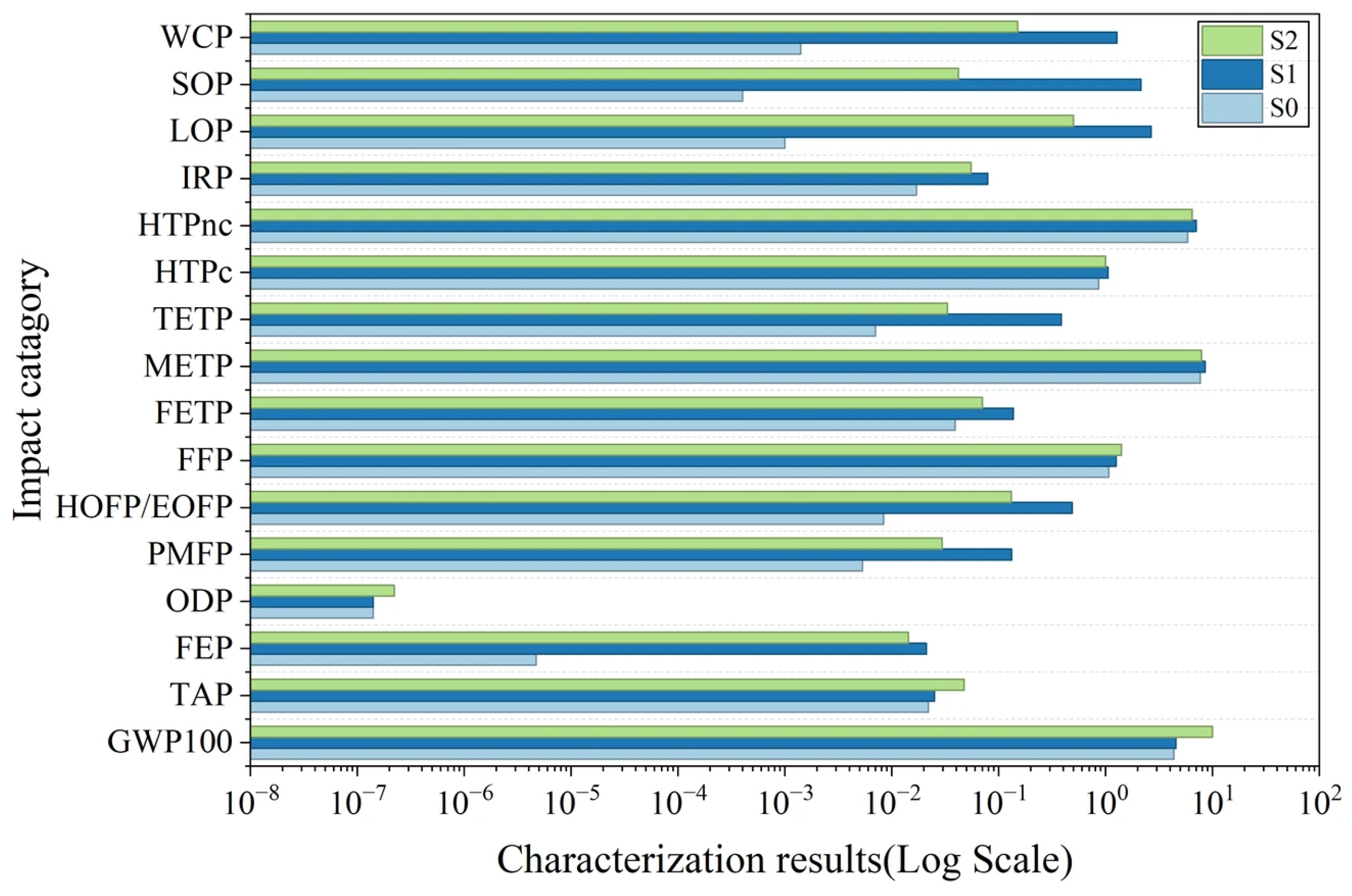
After scour-protection activities are added, the environmental profile of the wind farm changes substantially. Figure 6 compares S0, S1 (medium-frequency scenario), and S2 (medium-stabilization scenario) across 17 midpoint indicators. A logarithmic scale is used because the magnitudes of the indicators differ considerably. Overall, scour protection does not increase all impacts in the same way. Instead, it shifts the burden among climate change, air pollution, and resource use, which reveals a clear environmental trade-off between the two strategies.

3.2.1. S1: Rock-Dumping Scour Protection

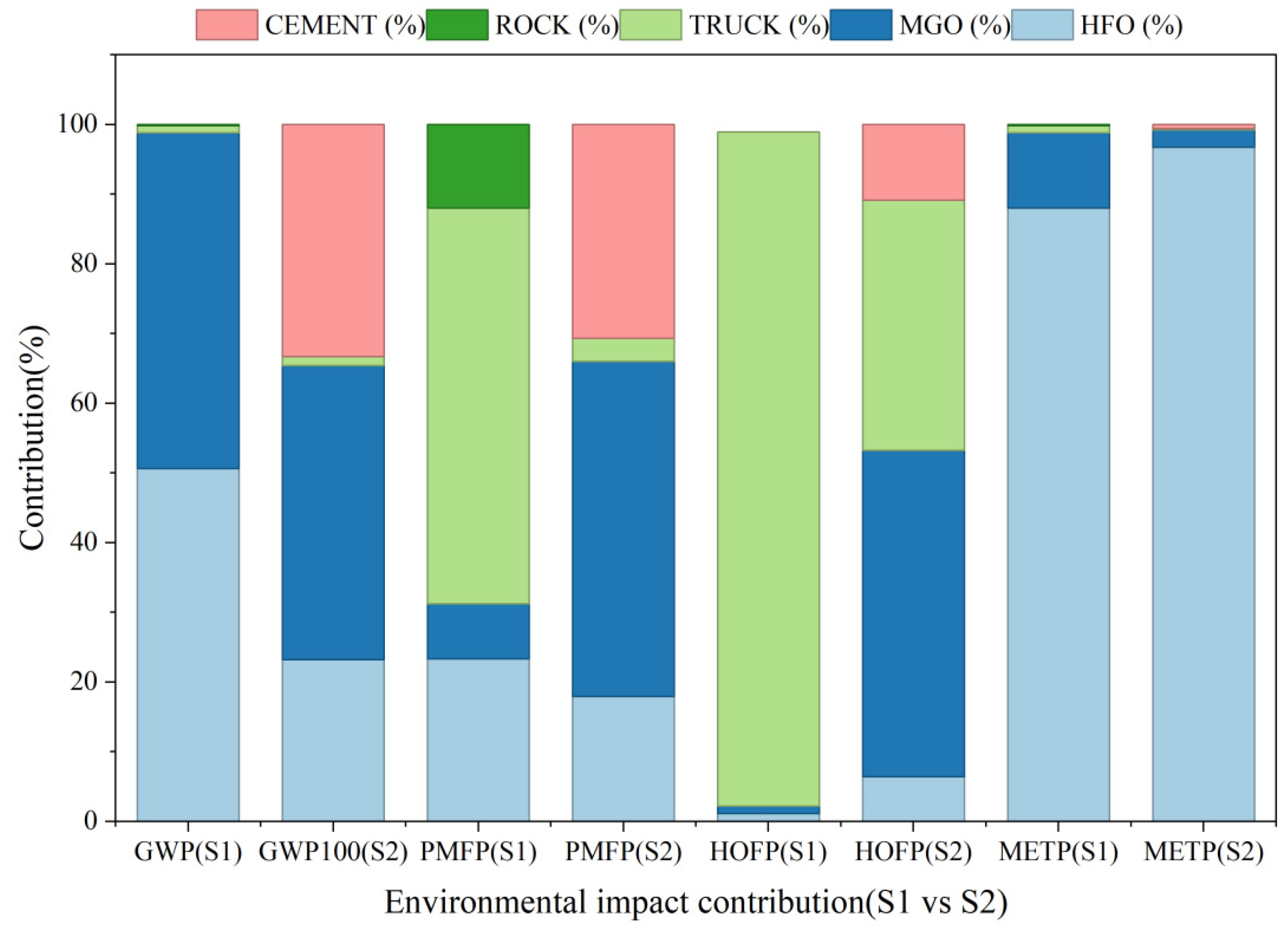
Under the medium-frequency scenario, rock-dumping scour protection (S1) increases the GWP of the O and M phase from 4.36 to 4.55 kg CO2-eq/MWh, which is only 4.4% higher than S0. This result suggests that the direct climate burden of rock placement and replenishment is relatively limited within the assumed maintenance range. However, several other impact categories increase much more strongly. As shown in Figure 7, the human photochemical ozone formation potential (HOFP) rises to 0.486 kg NOx-eq/MWh, which is more than 50 times the baseline level, while mineral resource scarcity (SOP) reaches 2.14 kg Cu-eq/MWh.
This low-carbon but high-resource and high-emission profile is mainly associated with the material demand and logistics chain of S1. The contribution analysis shows that long-distance road transport from inland quarries to coastal ports is a major source of NOx emissions and particulate-related burdens, while large-scale granite extraction substantially increases mineral resource use and land-related impacts. Therefore, the main environmental disadvantage of S1 does not come mainly from offshore placement itself, but from the upstream supply chain required to support repeated rock replenishment. Because HOFP is the most prominent environmental disadvantage of S1, the influence of alternative rock sourcing distances is further examined in Section 3.3.2.

3.2.2. S2: Cement-Stabilized Soil Scour Protection

Under the medium-stabilization scenario, cement-stabilized soil scour protection (S2) shows a markedly different environmental profile from S1. Its GWP reaches 9.94 kg CO2-eq/MWh, which is 2.28 times that of S0 and 2.18 times that of S1. As shown in Figure 6, this increase is mainly driven by cement production, especially clinker calcination, and is also influenced by fuel consumption from offshore grouting vessels during mixing and treatment operations.
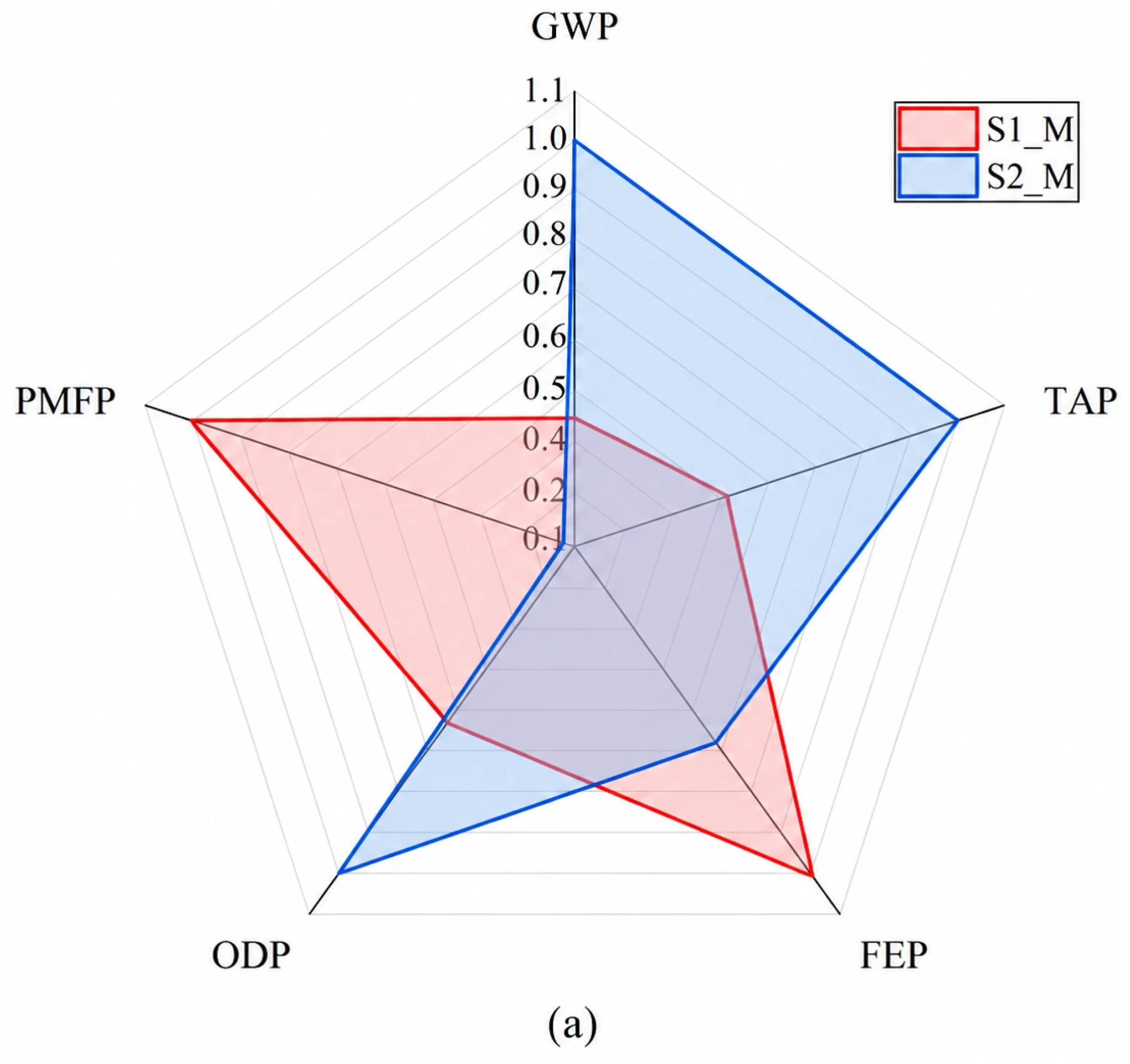
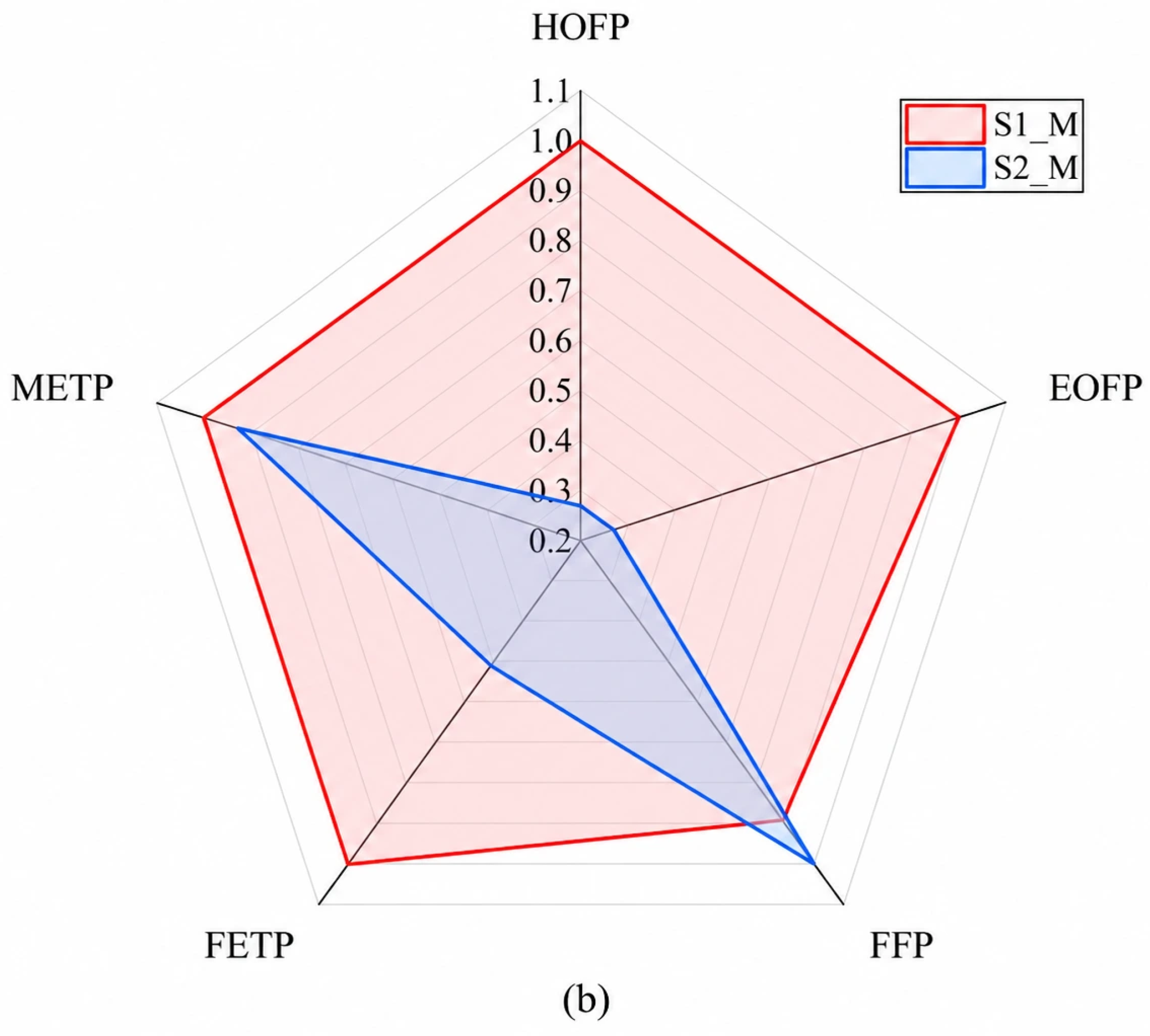
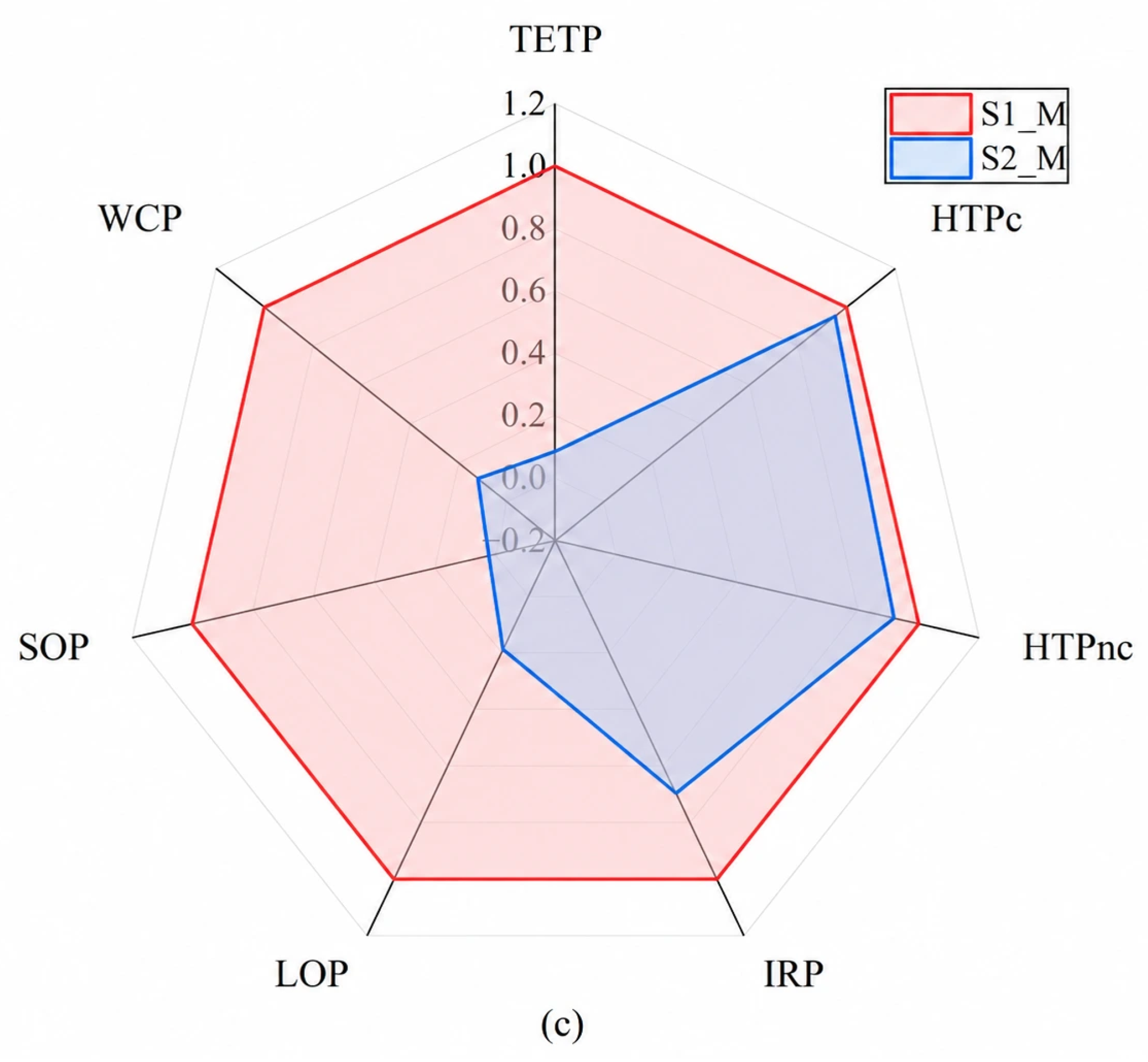
In contrast, S2 performs much better in land- and resource-related categories. Its agricultural land occupation potential (LOP) and mineral resource scarcity (SOP) are 0.50 m2·a crop-eq/MWh and 0.042 kg Cu-eq/MWh, respectively, which are 81% and 98% lower than those of S1. This indicates that in situ seabed stabilization can greatly reduce the upstream burdens caused by quarrying and long-distance land transport. Figure 8 further illustrates this contrast. Compared with S1, S2 has a higher climate burden, but clearly lower resource- and transport-related burdens. For each midpoint indicator, the values of S1_M and S2_M were normalized by the maximum value between the two scenarios; thus, the figure highlights relative trade-off patterns rather than absolute LCIA magnitudes.
It should also be noted that S2 is interpreted here as a representative ground improvement-based scour-protection pathway under predefined engineering assumptions, rather than as a technology with the same deployment maturity as conventional rock dumping. Compared with S1, the LCI of S2 may be subject to greater uncertainty because offshore in situ cement stabilization depends more strongly on treatment quality, vessel availability, binder dosage, seabed conditions, and offshore construction control.

3.2.3. Engineering-Scale Interpretation Based on Average Allocation per Turbine Foundation

In addition to reporting the results per 1 MWh of net electricity delivered to the grid, the O and M-stage GWP results were further converted to an average per turbine foundation basis to improve their engineering interpretability. The 1 MWh functional unit remains the primary basis for the LCA comparison, because it allows for comparisons with previous offshore wind LCA studies. However, for offshore wind O and M planning and scour-protection strategy discussion, allocating the cumulative wind farm-level environmental burden to each turbine foundation provides a more intuitive understanding of the engineering-scale magnitude of different scenarios.
Because rock dumping and cement-stabilized soil protection differ substantially in material form, construction process, the maintenance mechanism, and normalization by intervention or by ton of protection material may introduce additional comparability issues. Therefore, this study uses the turbine foundation as a common engineering reference unit applicable to all compared scenarios. It should be noted that the per foundation results do not indicate that all environmental burdens are directly generated by the foundation structure itself. Nor do they assume that the 55 turbine foundations have identical scour conditions or identical maintenance requirements. Instead, these values represent an average allocation of the 25-year O and M-stage GWP of the case wind farm across the 55 turbine foundations.
As shown in Table 8, the baseline O and M scenario, S0, corresponds to an average allocated GWP of approximately 1009 t CO2-eq per turbine foundation over the 25-year operation period. Under the medium-frequency rock-dumping scenario, S1_M, this value increases slightly to 1053 t CO2-eq per turbine foundation, corresponding to an additional 44 t CO2-eq per foundation relative to S0. In contrast, the medium-stabilization cement-stabilized soil scenario, S2_M, reaches approximately 2300 t CO2-eq per turbine foundation, with an additional burden of 1291 t CO2-eq per foundation relative to S0. These results indicate that the higher climate-change burden of S2 remains evident not only on a per MWh basis, but also after average allocation to the turbine foundation scale.

3.3. Sensitivity Analysis of Scour-Related O and M Parameters

To examine the robustness of the comparative results, three sensitivity analyses were conducted for key scour-related O and M parameters. Section 3.3.1 presents a scenario-based sensitivity analysis of the intervention frequency for rock-dumping scour protection and the stabilization efficiency for cement-stabilized soil scour protection. Section 3.3.2 further examines the effect of inland rock transport distance on S1, because the contribution analysis shows that road transport is a major source of air pollution-related impacts in this scenario. Section 3.3.3 evaluates the influence of the assumed service life of the cement-stabilized layer on S2, which directly addresses the uncertainty associated with the no-scheduled-repair assumption in the baseline model.
The sensitivity analysis in this study was designed as a deterministic scenario-based analysis rather than a probabilistic uncertainty analysis. This is because the dominant uncertainties addressed here are mainly engineering scenario variables, including rock replenishment frequency, rock sourcing distance, stabilization efficiency, and the effective service life of the cement-stabilized layer, rather than LCIA characterization-factor uncertainties alone. These variables are strongly controlled by site-specific hydrodynamic conditions, seabed properties, construction quality, and O and M logistics, and also currently lack robust probability distributions based on field-scale offshore wind data. Therefore, Monte Carlo simulations were not performed in this study. Instead, deterministic scenario analysis was used to test whether the main comparative conclusions remained stable under plausible changes in key engineering assumptions. In this setting, the intervention frequency of S1 and the stabilization efficiency of S2 are treated as discrete engineering scenarios, whereas rock transport distance and S2 service life are examined through deterministic parameter scans. This treatment is consistent with the objective of this study, which focuses on the environmental consequences of predefined scour-related O and M strategies rather than on reliability-based prediction of intervention timing.

3.3.1. Scenario-Based Sensitivity Analysis of Intervention Frequency and Stabilization Efficiency

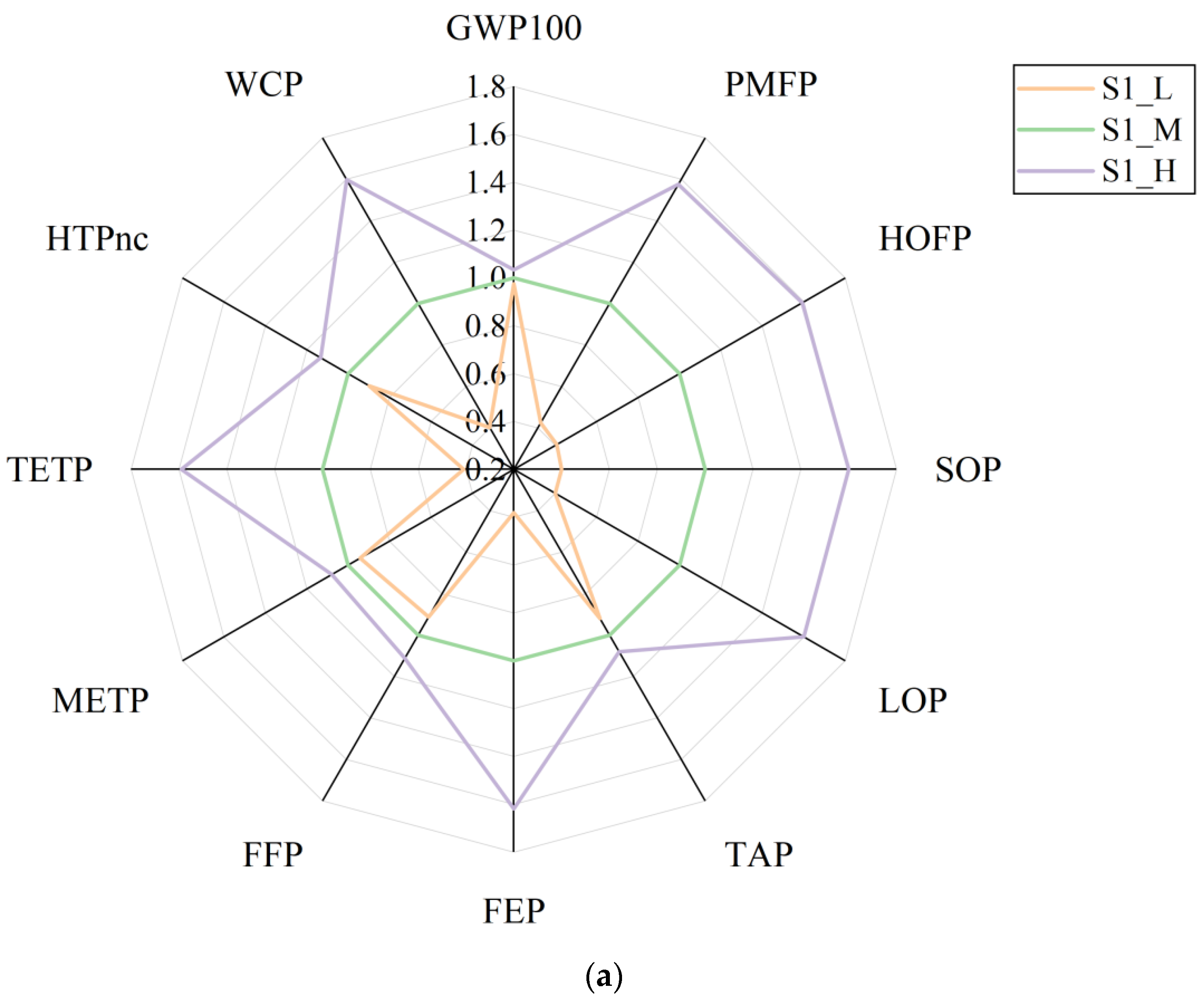
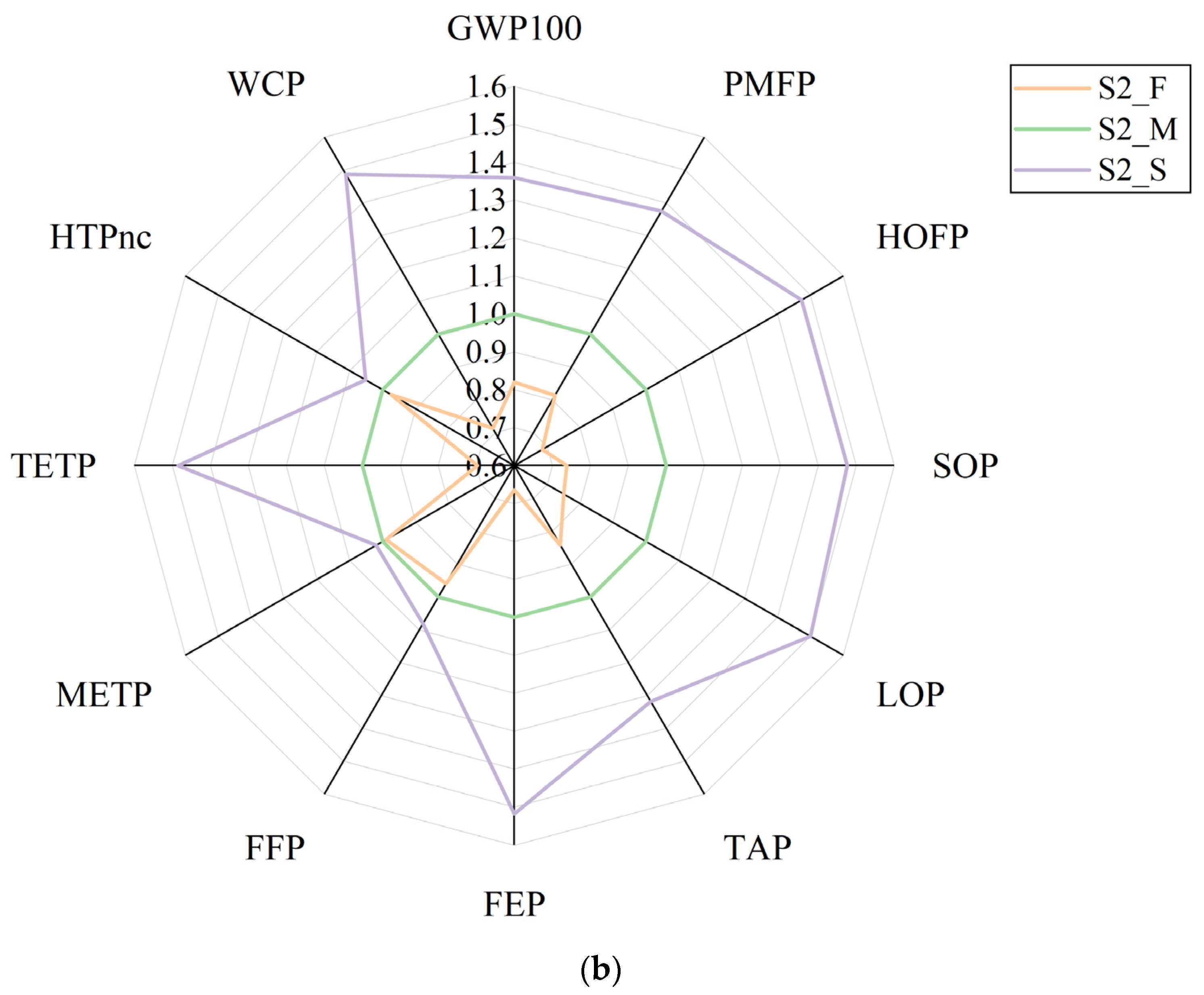
To examine how the two scour-protection strategies respond to marine and geological uncertainties, a scenario-based sensitivity analysis was first conducted. Figure 8 presents 12 relatively sensitive midpoint indicators selected from the 17 midpoint categories to highlight the indicators with the largest variations across scenarios and to improve figure readability.  
For S1, the sensitivity variable is the number of rock replenishment or repair interventions over the 25-year design life. The low-, medium-, and high-frequency scenarios correspond to 2, 5, and 8 interventions, respectively. As shown in Figure 9a, the environmental impacts of S1 generally increase with the number of interventions. However, the magnitude of increase differs substantially among indicators. GWP increases only from 4.44 to 4.71 kg CO2-eq/MWh, corresponding to an increase of about 8.0%. This indicates that the climate-change impact of S1 is relatively insensitive to the assumed intervention frequency within the tested range. By contrast, HOFP increases from 0.20 to 0.77 kg NOx-eq/MWh, showing a much stronger response. This suggests that repeated rock replenishment mainly amplifies air pollution-related impacts through additional material transport and vessel operations.
For S2, the sensitivity variable is the stabilization efficiency of the cement-stabilized soil treatment. The fast-, medium-, and slow-stabilization scenarios represent different seabed and construction conditions, which are reflected through different binder requirements and offshore treatment durations. As shown in Figure 9b, the environmental impacts of S2 are more strongly affected by stabilization efficiency. The GWP increases from 8.15 kg CO2-eq/MWh in the fast-stabilization scenario to 13.51 kg CO2-eq/MWh in the slow-stabilization scenario. This result indicates that unfavorable seabed conditions, such as high permeability, material loss, or reduced in situ treatment efficiency, can substantially increase the material and vessel-operation requirements of S2.
It should be emphasized that the sensitivity variables of S1 and S2 have different engineering meanings. For S1, the 2/5/8-event setting represents different frequencies of replenishment or repair of the rock protection layer during the 25-year service period. For S2, the fast/medium/slow setting does not represent repeated maintenance. Instead, it represents different levels of one-time stabilization efficiency during the initial in situ treatment. Therefore, the S1 sensitivity mainly reflects uncertainty in hydrodynamic disturbance and replenishment demand, whereas the S2 sensitivity mainly reflects uncertainty in seabed conditions and construction efficiency. The two strategies are therefore not compared on an identical maintenance frequency basis, but according to their respective engineering mechanisms and modeling boundaries.
Overall, the scenario-based sensitivity analysis shows that S1 remains relatively stable in terms of GWP but is sensitive in air pollution-related categories, especially HOFP. In contrast, S2 shows a stronger response in GWP because its environmental burden is closely related to binder consumption and offshore treatment duration. These results support the main conclusion that S1 is more favorable in terms of climate-change impact, whereas S2 may reduce certain resource-related impacts but is more sensitive to construction efficiency assumptions.

3.3.2. Sensitivity to Inland Rock Transport Distance

The baseline S1 inventory assumes that rock materials are transported by truck from an inland quarry to the coastal port over a distance of approximately 300 km. As shown in the contribution analysis in Section 3.2.1, long-distance road transport is an important contributor to the air pollution-related impacts of S1, especially HOFP. Therefore, an additional sensitivity analysis was conducted to examine whether the comparative conclusions would change if the rock source was located substantially closer to or further from the wind farm supply port.
In this analysis, the inland transport distance was varied from 150 km to 700 km. The 150 km case represents a near-coastal or relatively favorable sourcing condition, whereas the 700 km case represents an unfavorable long-distance inland sourcing condition. Except for the transport distance, all other parameters were kept consistent with the medium-frequency S1 baseline, including material demand, offshore transport distance, vessel operation time, and background emission factors.
Because road transport was modeled using ton-kilometer activity data and fixed background transport factors, the values at additional transport distances were obtained by parametrically scaling the inland truck transport component of the medium-frequency baseline. During this scaling process, material demand, offshore transport, vessel operations, and other non-truck inventory flows were kept unchanged. This approach isolates the effect of rock-sourcing distance and is consistent with the fixed activity-based LCI structure used in this study. The scaling reproduced the 300 km baseline value and was, therefore, used to examine the directional sensitivity of S1 to the inland rock transport distance. The results are summarized in Table 9.
The results show that the GWP of S1 is only weakly affected by the inland transport distance. When the distance increases from 150 km to 700 km, the GWP changes from 4.50 to 4.68 kg CO2-eq/MWh. Compared with the 300 km baseline, the increase at 700 km is only about 2.8%. More importantly, even under the unfavorable 700 km sourcing scenario, the GWP of S1 remains far below that of the medium-stabilization S2 baseline. This indicates that the conclusion that S1 has a lower climate-change impact than S2 is robust with respect to the assumed inland transport distance.
In contrast, HOFP shows a much stronger response to rock transport distance. The HOFP value decreases to 0.25 kg NOx-eq/MWh at 150 km and increases to 1.11 kg NOx-eq/MWh at 700 km. Compared with the 300 km baseline, this corresponds to a decrease of 48% at 150 km and an increase of 128% at 700 km. This result confirms that the air-pollution burden of S1 is strongly controlled by the logistics of rock supply. Therefore, although a longer sourcing distance does not overturn the GWP advantage of S1, it can substantially amplify its air pollution-related disadvantage.
SOP shows little variation with transport distance because this indicator is mainly governed by upstream rock extraction rather than the transport process in the present model. This result further indicates that different environmental indicators respond to different parts of the S1 supply chain. GWP is only moderately affected by inland transport, HOFP is highly sensitive to transport distance, and SOP is mainly associated with material extraction.
These findings have practical implications for site-specific environmental screening and O and M planning. If suitable rock sources are located far inland, the air-pollution burden of S1 may be considerably higher than that reported in the baseline scenario. In such cases, coastal quarries, barge-accessible supply routes, railway transport, or other low-emission logistics options should be prioritized. Therefore, the screening of S1 should not only consider its lower GWP, but also the availability and transport conditions of suitable rock materials.

3.3.3. Sensitivity to the Service Life of the Cement-Stabilized Layer

The baseline S2 model assumes that one offshore in situ cement-stabilized treatment provides scour protection over the 25-year wind farm design life, with no scheduled in-service re-treatment. This assumption reflects the intended engineering function of cement-stabilized soil as a one-time seabed reinforcement measure. However, long-term field evidence on the multi-decadal durability of cement-stabilized scour protection in harsh offshore environments remains limited. Therefore, an additional sensitivity analysis was conducted to examine how the results would change if the effective service life of the cement-stabilized layer was shorter than the 25-year design life.
In this analysis, the assumed service life of the cement-stabilized layer was varied from 25 years to 10 years. The 25-year case represents the baseline assumption, while the 10-year case represents a conservative durability condition requiring repeated treatment during the project lifetime. For each service-life assumption, the number of treatments required over the 25-year design period was determined according to whether the assumed service life could cover the full design period. The final treatment was assumed to cover the remaining years of the 25-year period.
Except for the assumed service life, all other parameters were kept consistent with the medium-stabilization S2 baseline. The cumulative S2 burdens under each service-life assumption were obtained by scaling the medium-stabilization per treatment increment according to the corresponding number of treatments, while holding the S0 baseline burden and all per treatment activity flows constant. Therefore, this analysis should be interpreted as a conservative bounding test of durability uncertainty rather than as a set of independent LCA runs or a prediction of actual repair frequency. The results are presented in Table 10.
Under the 25-year baseline assumption, S2 has a GWP of 9.94 kg CO2-eq/MWh and a SOP of 0.042 kg Cu-eq/MWh. If the assumed service life decreases to 20 or 15 years, two treatments would be required over the 25-year design period and the GWP would increase to 15.52 kg CO2-eq/MWh. Under the 10-year service-life assumption, three treatments would be required and the GWP would increase to 21.10 kg CO2-eq/MWh. This indicates that the GWP burden of S2 is highly sensitive to the long-term durability of the cement-stabilized layer.
Compared with S1, the GWP disadvantage of S2 becomes larger as the assumed service life decreases. Under the 25-year baseline assumption, the GWP of S2 is about 2.18 times that of S1. When the assumed service life decreases to 20 or 15 years, this ratio increases to 3.41. Under the 10-year assumption, the ratio further increases to 4.64. Therefore, a shorter effective service life does not reverse the conclusion that S1 is more favorable in terms of GWP. Instead, it strengthens this conclusion.
By contrast, the SOP advantage of S2 remains robust across all service-life assumptions tested in this study. Even under the 10-year service-life scenario, the SOP of S2 is 0.126 kg Cu-eq/MWh, which remains much lower than the S1 baseline value of 2.14 kg Cu-eq/MWh. In other words, although repeated treatment would increase the resource-related burden of S2, its SOP remains only 5.9% of the corresponding S1 value. This indicates that the conclusion that S2 has a clear advantage in mineral resource scarcity is not dependent on the no-scheduled-repair assumption.
These results show that the comparative conclusion between S1 and S2 is robust; however, the magnitude of the trade-off is sensitive to the durability of cement-stabilized soil. S1 remains favorable in terms of GWP, while S2 remains favorable in terms of SOP. However, if the cement-stabilized layer requires repeated offshore treatment, the climate-change burden of S2 will increase substantially. This highlights the importance of long-term field monitoring, durability verification, and low-carbon binder optimization when cement-stabilized soil is selected as a scour protection strategy.

3.4. Site-Specific Environmental Screening Framework

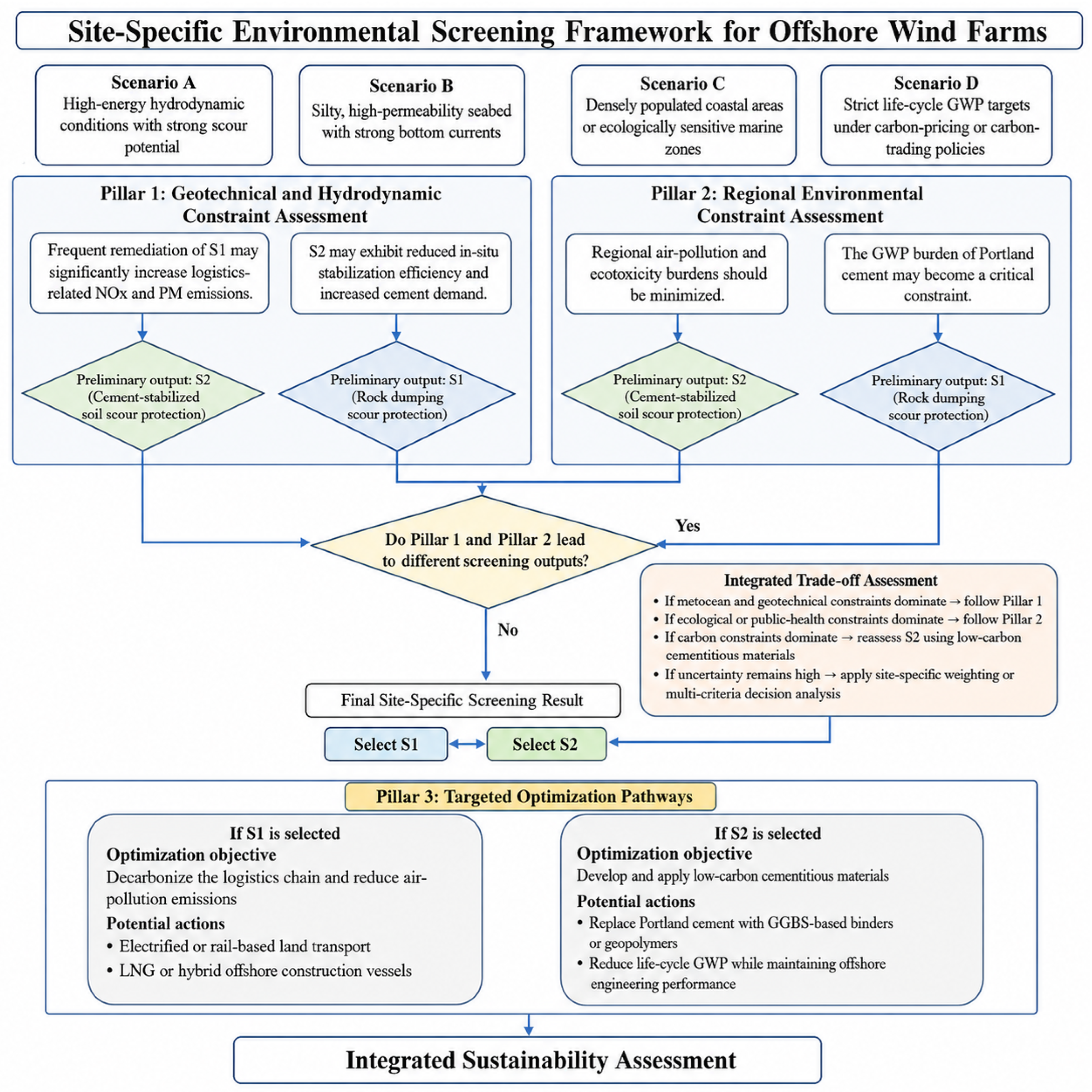
The proposed framework is not intended as a universal decision rule for all offshore wind farms. Instead, it is a site-specific environmental screening framework derived from the environmental patterns observed in the case wind farm and should be recalibrated when applied to sites with different metocean, geotechnical, logistical, or regulatory conditions. The LCA results indicate that the selection of scour-protection strategy is not only an engineering issue, but also a site-specific environmental trade-off. Rock-dumping scour protection (S1) and cement-stabilized soil scour protection (S2) shift environmental burdens in different directions. S1 mainly increases air pollution- and ecotoxicity-related burdens, whereas S2 is mainly associated with climate-change impacts. Therefore, a universally optimal solution is unlikely to exist. To connect the LCA results with engineering practices, this study proposes a site-specific environmental screening framework (Figure 10). The framework is intended to support preliminary environmental screening rather than to provide threshold-based engineering design criteria. It includes three evaluation pillars and one trade-off step.

3.4.1. Geotechnical and Hydrodynamic Constraints

The sensitivity analysis in Section 3.3 shows that metocean and geological conditions strongly affect the environmental performance boundaries of the two strategies. Under Scenario A, where the site is exposed to strong hydrodynamic forcing and high scour risk, the environmental disadvantage of S1 becomes more pronounced. Frequent repair and rock replenishment would increase both marine and land-based transport activities and would further raise NOx and PM emissions across the supply chain. In such cases, when the main challenge is persistent hydrodynamic disturbance rather than low stabilization efficiency, S2 is more likely to be the environmentally preferable option.
By contrast, under Scenario B, where the seabed is silty, highly permeable, and influenced by strong bottom currents, the engineering feasibility of S2 may be constrained by reduced stabilization efficiency. Under such conditions, higher binder input and longer offshore treatment times may be required to achieve the target stabilization effect. Additional re-treatment is not included in the baseline S2 model; however, it remains a potential long-term durability risk under unfavorable site conditions. Therefore, under unfavorable geological conditions of this kind, S1 may be the more robust option. Overall, Pillar 1 suggests that geotechnical and hydrodynamic constraints should be treated as the first screening dimension in strategy selection.

3.4.2. Regional Environmental Constraints

In addition to engineering conditions, strategy selection should also reflect regional differences in environmental regulation, ecological sensitivity, and management priorities. Under Scenario C, when an offshore wind farm is located near a densely populated coastal area or an ecologically sensitive marine zone, the high HOFP and METP burdens associated with quarrying, land–sea transport, and offshore dumping in S1 may be difficult to accept. In this case, S2 is usually the preferable option because it can substantially reduce pressure on regional air quality and sensitive marine ecosystems.
Under Scenario D, if the project is subject to strict life cycle carbon constraints, the high GWP burden associated with Portland cement in S2 may weaken the low carbon value of offshore wind power. Under the medium-stabilization scenario, the GWP of S2 reaches 9.94 kg CO2-eq/MWh; under the slow-stabilization scenario, it rises further to 13.51 kg CO2-eq/MWh. When carbon performance becomes the dominant environmental criterion, a well-managed S1 strategy may better support regional decarbonization goals. Therefore, Pillar 2 ensures that strategy selection remains aligned with the main environmental pressures and governance priorities of the project region.

3.4.3. Trade-Off Assessment Under Conflicting Conditions

When Pillar 1 and Pillar 2 provide conflicting recommendations for the same project, the final decision becomes more difficult. For example, a site may favor S2 under Scenario A because frequent rock replenishment in S1 would increase logistics-related emissions. However, the same site may favor S1 under Scenario D because strict carbon constraints penalize the cement-related emissions of S2. To avoid overly simplified judgments in such cases, this framework introduces an integrated trade-off assessment.
At this stage, the preliminary screening result should be interpreted according to the dominant constraint. If extreme metocean and geological risks are likely to cause engineering failure or very frequent repair, the recommendation from Pillar 1 should be prioritized. If regional public health regulations or ecological carrying capacity impose strict limits on local emissions and toxicity, the recommendation from Pillar 2 should take priority. If carbon allowance becomes the main project bottleneck, the framework does not suggest a direct shift to S1. Instead, it calls for a renewed assessment of S2 with low-carbon cementitious materials. When major constraints remain uncertain, a site-specific multi-criteria decision analysis is recommended.

3.4.4. Optimization Pathways

For a specific offshore wind farm, selecting the relatively better option between two imperfect strategies is still not sufficient. Once a preliminary scour-protection strategy has been screened for a specific site, targeted mitigation measures should be developed around its main environmental hotspots. In this sense, Pillar 3 is not a simple extension of the previous decision process, but an essential part of the overall framework.
If S1 is selected, the main optimization priority should be the decarbonization of the land–sea logistics chain and the reduction in air-pollution emissions. Practical measures include reducing transport distance, shifting part of land transport to rail or electrified systems, and upgrading offshore construction vessels to lower-emission propulsion systems. These measures would directly address the main environmental hotspots of S1.
If S2 is selected, the main optimization priority should shift to low-carbon cementitious materials and more efficient in situ treatment processes. Since the main hotspot of S2 is from conventional Portland cement, reducing the carbon intensity of the binder is the key to improvement. Blended binders based on GGBS or other low-carbon alternatives [51] may provide a feasible pathway, provided that the required stabilization performance can still be achieved in offshore conditions.
Although S2 is evaluated as a representative ground-improvement strategy in this study, offshore in situ cement-stabilized soil protection should be regarded as a less mature option than conventional rock dumping. Compared with S1, which has a longer track record in offshore scour protection, large-scale deployment of S2 in wind farms of comparable capacity remains more limited. The availability of specialized grouting vessels, offshore construction experience, quality-control procedures, and supply-chain maturity may therefore influence both the feasibility and the reliability of the S2 inventory data. Accordingly, the S2 results should be interpreted as an environmental assessment of a technically feasible but less mature alternative, rather than as evidence that S2 is equally ready for immediate large-scale deployment at all sites.
Overall, these site-oriented optimization pathways provide a basis for future integrated sustainability assessment, in which environmental performance, life cycle cost, and supply-chain maturity can be considered together.

4. Conclusions and Recommendations

4.1. Conclusions

This study developed a refined O and M–LCA model for offshore wind farms by including scour monitoring, repair, and protection-related activities. Using a 202 MW offshore wind farm in China as a case study, the results show that scour protection can substantially change the environmental profile of the O and M phase and should not be neglected in life cycle assessments.
The comparison between the two scour-protection strategies reveals a clear environmental trade-off. Rock-dumping scour protection (S1) causes only a small increase in GWP, from 4.36 to 4.55 kg CO2-eq/MWh; however, it greatly increases several air pollution- and resource-related impacts. In particular, HOFP rises to 0.486 kg NOx-eq/MWh, and SOP reaches 2.14 kg Cu-eq/MWh. By contrast, cement-stabilized soil scour protection (S2) performs much better in land- and resource-related categories, with SOP reduced to 0.042 kg Cu-eq/MWh; however, its GWP increases to 9.94 kg CO2-eq/MWh because of binder production and offshore treatment activities.
The sensitivity analysis further shows that the two strategies respond differently to site conditions. For S1, stronger hydrodynamic conditions mainly increase logistics- and transport-related burdens through more frequent rock replenishment. For S2, unfavorable seabed conditions mainly increase climate burdens by reducing stabilization efficiency, which leads to higher binder demand and longer offshore operating times. These results confirm that the environmental performance of scour protection is strongly site dependent.
Overall, there is no universally optimal scour-protection strategy for offshore wind farms. Strategy selection should consider not only engineering feasibility, but also the dominant environmental pressure at the site. In this study, S1 shows a low-carbon but resource- and transport-intensive profile, whereas S2 shows a lower resource burden but a higher carbon burden. This burden-shifting effect highlights the need for site-specific environmental assessment in offshore wind O and M.

4.2. Recommendations

Site-specific screening: A site-specific screening approach is recommended for comparing scour-protection strategies. The results of this study should not be interpreted as a universal ranking of rock dumping and cement-stabilized soil protection. Instead, the relative environmental preference between S1 and S2 depends on local hydrodynamic conditions, seabed properties, material sourcing distance, vessel availability, regional environmental priorities, and carbon constraints. Therefore, the proposed framework should be used as a preliminary environmental screening tool and should be recalibrated using site-specific engineering, environmental, and logistical data before being applied to other offshore wind farms.
Targeted optimization: After the strategy is selected, optimization should focus on its main environmental hotspots. For S1, priority should be given to cleaner quarrying and transport systems, including shorter transport distance, rail-based or electrified land transport, and lower-emission offshore vessels. For S2, priority should be given to low-carbon binders and more efficient in situ treatment processes in order to reduce the climate burden of cement use.
Limitations and future work: While this study provides a useful environmental basis for scour-protection selection, several limitations should be acknowledged.
(1) Site specificity: This study is based on a single 202 MW offshore wind farm in southeastern China. The results are influenced by the local water depth, offshore distance, seabed composition, tidal regime, foundation types, transport distances, and O and M accessibility of the selected site. Therefore, the proposed framework should be interpreted as a site-specific environmental screening framework rather than a universally calibrated engineering decision tool for all offshore wind farms. Future studies should extend the comparison to a wider range of sites with different water depths, seabed conditions, hydrodynamic regimes, foundation types, and O and M practices;
(2) End-of-life treatment of scour-protection materials: The end-of-life treatment of scour-protection materials was not modelled in the baseline comparative boundary. At present, reliable project-level data remain limited regarding whether rock layers or cement-stabilized seabed materials would be removed, recovered, reused, remediated, or left in place during offshore wind farm decommissioning in China. Including these processes would require additional assumptions about removal methods, vessel operations, recovery rates, seabed remediation, final disposal routes, and potential avoided burdens from recovered materials. This exclusion may affect decommissioning-related burdens and resource-recovery indicators, especially for scenarios involving large quantities of rock- or cement-stabilized materials. Future studies should incorporate protection-layer end-of-life scenarios when large-scale offshore wind decommissioning data become available;
(3) Technology maturity and long-term durability: The two strategies have different reliability and technology-maturity profiles. Rock dumping is a mature scour-protection method with extensive offshore engineering experience, whereas offshore in situ cement-stabilized soil protection has a more limited large-scale deployment record in offshore wind farms. Therefore, the LCI results for S2 may be subject to greater uncertainty than those for S1, especially with respect to binder dosage, treatment efficiency, grouting-vessel availability, offshore construction quality control, and long-term durability under tidal currents, cyclic storm loading, chloride-rich pore water, and permeable seabed conditions. Future work should combine O and M–LCA with long-term field monitoring and durability verification to reduce uncertainty in the environmental assessment of ground improvement-based scour protection;
(4) Scenario-based uncertainty treatment: The sensitivity analyses in this study were deterministic scenario-based analyses rather than probabilistic uncertainty analyses. The key variables, including rock replenishment frequency, rock sourcing distance, stabilization efficiency, and the effective service life of the cement-stabilized layer, are strongly controlled by site-specific engineering conditions and currently lack robust probability distributions based on field-scale offshore wind data. Therefore, the results should be interpreted as scenario-based robustness checks rather than statistical confidence intervals. Future studies should incorporate probabilistic uncertainty analysis when sufficient field data become available for scour evolution, repair frequency, vessel operation time, material loss, and treatment durability;
(5) Broader ecological impacts and underwater noise: This study focuses on midpoint LCIA indicators calculated using ReCiPe 2016 and does not quantitatively assess broader ecological effects such as benthic habitat disturbance, underwater-noise impacts from monitoring and offshore construction vessels, or habitat alteration caused by scour-protection layers. Underwater noise was not included as a separate impact indicator because it is not characterized in the ReCiPe 2016 midpoint framework and project-specific acoustic monitoring data were not available. Future work should couple O and M–LCA with field ecological monitoring, underwater-noise measurements, or noise-propagation models to evaluate the broader ecological consequences of scour-related offshore operations;
(6) Integration with economic and structural assessment: The proposed framework focuses mainly on environmental performance and does not yet fully integrate economic feasibility, supply-chain maturity, structural reliability, or life cycle cost. Although the framework can support preliminary environmental screening, it should not be interpreted as a complete engineering design or investment decision tool. Future studies should further integrate environmental impacts, life cycle cost analysis, hydrodynamic modelling, geotechnical performance, structural reliability assessment, and multi-criteria decision analysis to support more comprehensive scour-protection strategy evaluations.

Supplementary Materials

The following supporting information can be downloaded at: https://www.mdpi.com/article/10.3390/jmse14100872/s1. Table S1. Documentation and published-reference benchmarking of key background processes used in the LCI.

Author Contributions

Y.X.: Writing—original draft, Investigation, Resources, Visualization, Formal analysis, Data curation, Conceptualization. C.H.: Writing—review and editing, Supervision, Resources, Conceptualization, Funding acquisition. All authors have read and agreed to the published version of the manuscript.

Funding

This research received no external funding.

Data Availability Statement

The original contributions presented in this study are included in the article/Supplementary Material. Further inquiries can be directed to the corresponding author.

Acknowledgments

In the preparation of this work, the author used the school’s locally deployed AI tool in order to improve the readability, grammar, and language of the manuscript. After using the tool, the author reviewed and edited the content as needed and takes full responsibility for the content of the publication.

Conflicts of Interest

The authors declare no conflicts of interest.

References

  1. IEA. Renewables 2020; IEA: Paris, France, 2020; Available online: https://www.iea.org/reports/renewables-2020 (accessed on 5 May 2025).
  2. Bonou, A.; Laurent, A.; Olsen, S.I. Life cycle assessment of onshore and offshore wind energy-from theory to application. Appl. Energy 2016, 180, 327–337. [Google Scholar] [CrossRef]
  3. Arvesen, A.; Hertwich, E.G. Assessing the life cycle environmental impacts of wind power: A review of present knowledge and research needs. Renew. Sust. Energ. Rev. 2012, 16, 5994–6006. [Google Scholar] [CrossRef]
  4. C, O.M.H.; Shadman, M.; Amiri, M.M.; Silva, C.; Estefen, S.F.; La Rovere, E. Environmental impacts of offshore wind installation, operation and maintenance, and decommissioning activities: A case study of Brazil. Renew. Sustain. Energy Rev. 2021, 144, 110994. [Google Scholar] [CrossRef]
  5. Garcia-Teruel, A.; Rinaldi, G.; Thies, P.R.; Johanning, L.; Jeffrey, H. Life cycle assessment of floating offshore wind farms: An evaluation of operation and maintenance. Appl. Energy 2022, 307, 118067. [Google Scholar] [CrossRef]
  6. Ren, Z.; Verma, A.S.; Li, Y.; Teuwen, J.J.E.; Jiang, Z. Offshore wind turbine operations and maintenance: A state-of-the-art review. Renew. Sustain. Energy Rev. 2021, 144, 110886. [Google Scholar] [CrossRef]
  7. Brussa, G.; Grosso, M.; Rigamonti, L. Life cycle assessment of a floating offshore wind farm in Italy. Sustain. Prod. Consum. 2023, 39, 134–144. [Google Scholar] [CrossRef]
  8. Prendergast, L.J.; Gavin, K.; Doherty, P. An investigation into the effect of scour on the natural frequency of an offshore wind turbine. Ocean Eng. 2015, 101, 1–11. [Google Scholar] [CrossRef]
  9. Ma, H.; Yang, J.; Chen, L. Effect of scour on the structural response of an offshore wind turbine supported on tripod foundation. Appl. Ocean Res. 2018, 73, 179–189. [Google Scholar] [CrossRef]
  10. Jawalageri, S.; Prendergast, L.J.; Jalilvand, S.; Malekjafarian, A. Effect of scour erosion on mode shapes of a 5 MW monopile-supported offshore wind turbine. Ocean Eng. 2022, 266, 113131. [Google Scholar] [CrossRef]
  11. Menéndez-Vicente, C.; López-Querol, S.; Bhattacharya, S.; Simons, R. Numerical study on the effects of scour on monopile foundations for Offshore Wind Turbines: The case of Robin Rigg wind farm. Soil Dyn. Earthq. Eng. 2023, 167, 107803. [Google Scholar] [CrossRef]
  12. Saathoff, J.-E.; Goldau, N.; Achmus, M.; Schendel, A.; Welzel, M.; Schlurmann, T. Influence of scour and scour protection on the stiffness of monopile foundations in sand. Appl. Ocean Res. 2024, 144, 103920. [Google Scholar] [CrossRef]
  13. Nielsen, A.W. Scour Protection of Offshore Wind Farms. Ph.D. Thesis, Technical University of Denmark, Kongens Lyngby, Denmark, 2011. [Google Scholar]
  14. Whitehouse, R.J.S.; Harris, J.M.; Sutherland, J.; Rees, J. The nature of scour development and scour protection at offshore windfarm foundations. Mar. Pollut. Bull. 2011, 62, 73–88. [Google Scholar] [CrossRef]
  15. Tang, Z.-H.; Melville, B.; Singhal, N.; Shamseldin, A.; Zheng, J.-H.; Guan, D.-W.; Cheng, L. Countermeasures for local scour at offshore wind turbine monopile foundations: A review. Water Sci. Eng. 2022, 15, 15–28. [Google Scholar] [CrossRef]
  16. Yang, B.; Wei, K.; Yang, W.; Li, T.; Qin, B. A feasibility study of reducing scour around monopile foundation using a tidal current turbine. Ocean Eng. 2021, 220, 108396. [Google Scholar] [CrossRef]
  17. Li, J.; Lian, J.; Guo, Y.; Wang, H.; Yang, X. Numerical study on scour protection effect of monopile foundation based on disturbance structure. Ocean Eng. 2022, 248, 110856. [Google Scholar] [CrossRef]
  18. Tang, Z.; Melville, B.; Shamseldin, A.; Guan, D.; Singhal, N.; Yao, Z. Experimental study of collar protection for local scour reduction around offshore wind turbine monopile foundations. Coast. Eng. 2023, 183, 104324. [Google Scholar] [CrossRef]
  19. Broekema, Y.B.; van Steijn, P.W.; Wu, M.; Robijns, T. Predicting loose rock scour protection deformation around monopiles using the relative mobility number and the Keulegan–Carpenter number. Ocean Eng. 2024, 300, 117475. [Google Scholar] [CrossRef]
  20. Sarmiento, J.; Guanche, R.; Losada, I.J.; Serna, J. Experimental analysis of scour around an offshore wind gravity base foundation. Ocean Eng. 2024, 308, 118330. [Google Scholar] [CrossRef]
  21. Wang, G.; Xu, S.; Zhang, Q.; Zhang, J. An experimental study of the local scour protection methods around the monopile foundation of offshore wind turbines. Ocean Eng. 2023, 273, 113957. [Google Scholar] [CrossRef]
  22. Chambel, J.; Fazeres-Ferradosa, T.; Miranda, F.; Bento, A.M.; Taveira-Pinto, F.; Lomonaco, P. A comprehensive review on scour and scour protections for complex bottom-fixed offshore and marine renewable energy foundations. Ocean Eng. 2024, 304, 117829. [Google Scholar] [CrossRef]
  23. Zhang, F.; Chen, X.; Feng, T.; Wang, Y.; Liu, X.; Liu, X. Experimental study of grouting protection against local scouring of monopile foundations for offshore wind turbines. Ocean Eng. 2022, 258, 111798. [Google Scholar] [CrossRef]
  24. OuYang, H.; Dai, G.; Gao, L.; Zhu, W.; Du, S.; Gong, W. Local scour characteristics of monopile foundation and scour protection of cement-improved soil in marine environment—Laboratory and site investigation. Ocean Eng. 2022, 255, 111443. [Google Scholar] [CrossRef]
  25. Wang, W.; Yan, J.; Chen, S.; Liu, J.; Jin, F.; Wang, B. Gridded cemented riprap for scour protection around monopile in the marine environment. Ocean Eng. 2023, 272, 113876. [Google Scholar] [CrossRef]
  26. Gimpel, A.; Werner, K.M.; Bockelmann, F.D.; Haslob, H.; Kloppmann, M.; Schaber, M.; Stelzenmüller, V. Ecological effects of offshore wind farms on Atlantic cod (Gadus morhua) in the southern North Sea. Sci. Total Environ. 2023, 878, 162902. [Google Scholar] [CrossRef]
  27. Kingma, E.M.; ter Hofstede, R.; Kardinaal, E.; Bakker, R.; Bittner, O.; van der Weide, B.; Coolen, J.W.P. Guardians of the seabed: Nature-inclusive design of scour protection in offshore wind farms enhances benthic diversity. J. Sea Res. 2024, 199, 102502. [Google Scholar] [CrossRef]
  28. Werner, K.M.; Haslob, H.; Reichel, A.F.; Gimpel, A.; Stelzenmüller, V. Offshore wind farm foundations as artificial reefs: The devil is in the detail. Fish. Res. 2024, 272, 106937. [Google Scholar] [CrossRef]
  29. Liu, X.; Chen, J.; Lei, Y.; Liu, R.; Zhou, Y.; Li, H.; Yuan, J. An experimental study of using artificial reefs as scour protection around an offshore wind monopile. Ocean Eng. 2025, 337, 121932. [Google Scholar] [CrossRef]
  30. Spielmann, V.; Dannheim, J.; Brey, T.; Coolen, J.W.P. Decommissioning of offshore wind farms and its impact on benthic ecology. J. Environ. Manag. 2023, 347, 119022. [Google Scholar] [CrossRef] [PubMed]
  31. Wu, M.; Stratigaki, V.; Fazeres-Ferradosa, T.; Rosa-Santos, P.; Taveira-Pinto, F.; Troch, P. Experimental uncertainty analysis of monopile scour protection stability tests. Renew. Energy 2023, 210, 174–187. [Google Scholar] [CrossRef]
  32. Zhang, F.; Chen, X.; Feng, T.; Zhang, Y. Experimental investigation of the horizontal bearing capacity of offshore wind-turbine monopiles with grouting protection against scouring. Ocean Eng. 2023, 280, 114848. [Google Scholar] [CrossRef]
  33. Zhang, F.; Chen, X.; Feng, T.; Zhang, Y.; Guan, J. Method to determine the ultimate horizontal bearing capacity of offshore wind turbine monopiles with grouting protection against scouring. Ocean Eng. 2023, 286, 115638. [Google Scholar] [CrossRef]
  34. Ma, H.; Zhang, S.; Li, B.; Huang, W. Local scour around the monopile based on the CFD-DEM method: Experimental and numerical study. Comput. Geotech. 2024, 168, 106117. [Google Scholar] [CrossRef]
  35. Tang, Z.; Melville, B.; Shamseldin, A.Y.; Singhal, N.; Guan, D. Experimental study of bed solidification as a local scour countermeasure for offshore wind turbine monopile foundations. Ocean Eng. 2024, 299, 117369. [Google Scholar] [CrossRef]
  36. Wu, X.; Li, R.; Shu, J.; Chen, J.; Wang, H.; Jiang, H.; Wang, X. Anti-scour performance of fluidized solidified slurry in dynamic water for scour repair. Ocean Eng. 2024, 291, 116345. [Google Scholar] [CrossRef]
  37. Zhou, W.; Cheng, Y.; Zhang, J. Preventing scour of monopile foundations using a vertical rotation device. Ocean Eng. 2024, 311, 118879. [Google Scholar] [CrossRef]
  38. Hoyme, H.; Su, J.H.; Kono, J.; Wallbaum, H. Nonwoven geotextile scour protection at offshore wind parks, application and life cycle assessment. In Proceedings of the 9th International Conference on Scour and Erosion (ICSE 2018); CRC Press: Boca Raton, FL, USA, 2018; pp. 315–321. [Google Scholar]
  39. Smyth, K.; Christie, N.; Burdon, D.; Atkins, J.P.; Barnes, R.; Elliott, M. Renewables-to-reefs?—Decommissioning options for the offshore wind power industry. Mar. Pollut. Bull. 2015, 90, 247–258. [Google Scholar] [CrossRef]
  40. ISO 14040:2006; Environmental Management—Life Cycle Assessment—Principles and Framework. International Organization for Standardization: Geneva, Switzerland, 2006.
  41. ISO 14044:2006; Environmental Management—Life Cycle Assessment—Requirements and Guidelines. International Organization for Standardization: Geneva, Switzerland, 2006.
  42. Huijbregts, M.A.J.; Steinmann, Z.J.N.; Elshout, P.M.F.; Stam, G.; Verones, F.; Vieira, M.; Zijp, M.; Hollander, A.; van Zelm, R. ReCiPe2016: A harmonised life cycle impact assessment method at midpoint and endpoint level. Int. J. Life Cycle Assess. 2017, 22, 138–147. [Google Scholar] [CrossRef]
  43. Wagner, H.J.; Baack, C.; Eickelkamp, T.; Epe, A.; Lohmann, J.; Troy, S. Life cycle assessment of the offshore wind farm. Energy 2011, 36, 2459–2464. [Google Scholar] [CrossRef]
  44. Raadal, H.L.; Vold, B.I.; Myhr, A.; Nygaard, T.A. GHG emissions and energy performance of offshore wind power. Renew. Energy 2014, 66, 314–324. [Google Scholar] [CrossRef]
  45. Huang, Y.-F.; Gan, X.-J.; Chiueh, P.-T. Life cycle assessment and net energy analysis of offshore wind power systems. Renew. Energy 2017, 102, 98–106. [Google Scholar] [CrossRef]
  46. Yang, J.; Chang, Y.; Zhang, L.; Hao, Y.; Yan, Q.; Wang, C. The life-cycle energy and environmental emissions of a typical offshore wind farm in China. J. Clean. Prod. 2018, 180, 316–324. [Google Scholar] [CrossRef]
  47. Kaldellis, J.K.; Apostolou, D. Life cycle energy and carbon footprint of offshore wind energy. Comparison with onshore counterpart. Renew. Energy 2017, 108, 72–84. [Google Scholar] [CrossRef]
  48. Cao, Y.; Meng, Y.; Zhang, Z.; Yang, Q.; Li, Y.; Liu, C.; Ba, S. Life cycle environmental analysis of offshore wind power: A case study of the large-scale offshore wind farm in China. Renew. Sustain. Energy Rev. 2024, 196, 114351. [Google Scholar] [CrossRef]
  49. Wang, H.; Yue, Q.; Chang, H.; Fu, X.; Ji, W.; Xu, C.; Wang, H. Toward a standardized and comparable life cycle dataset system for steel production in China. Resour. Conserv. Recycl. 2026, 227, 108715. [Google Scholar] [CrossRef]
  50. International Maritime Organization. Fourth IMO GHG Study 2020: Full Report and Annexes; International Maritime Organization: London, UK, 2021. [Google Scholar]
  51. Imoh, U.U.; Habashneh, M.; Kaine, S.C.; Babafemi, A.J.; Hassan, R.; Movahedi Rad, M. Metakaolin-Enhanced Laterite Rock Aggregate Concrete: Strength Optimization and Sustainable Cement Replacement. Buildings 2025, 15, 4553. [Google Scholar] [CrossRef]
Figure 1. Seabed scour around offshore wind turbine foundations. Redrawn from Ref. [13].
Jmse 14 00872 g001
Figure 2. Engineering schematic of rock-dumping scour protection.
Jmse 14 00872 g002
Figure 3. Engineering schematic of cement-stabilized soil scour protection (Ref. [40]).
Jmse 14 00872 g003
Figure 4. Life cycle system boundary of the case offshore wind farm.
Jmse 14 00872 g004
Figure 5. Modular LCA system boundaries for the baseline (S0) and incremental scour-protection (Module D) scenarios.
Jmse 14 00872 g005
Figure 6. Characterization results of environmental impacts for S0, S1 (medium-frequency), and S2 (medium-stabilization) scenarios (logarithmic scale).
Jmse 14 00872 g006
Figure 7. Contribution analysis of selected representative environmental impact categories for S1 and S2 under the baseline scenarios. Note: The comparison is based on the medium-frequency scenario for rock-dumping scour protection (S1) and the medium-stabilization scenario for cement-stabilized soil scour protection (S2).
Jmse 14 00872 g007
Figure 8. Multi-dimensional radar charts illustrating the environmental trade-offs between S1 and S2 across 17 midpoint categories. For each midpoint indicator, the values of S1_M and S2_M were normalized by the maximum value between the two scenarios. Therefore, a value of 1 indicates the higher impact for that indicator, while values below 1 indicate lower relative impacts. The radar charts are intended to compare relative trade-off patterns rather than absolute LCIA magnitudes. (a) GWP, TAP, FEP, ODP, and PMFP; (b) HOFP, EOFP, FFP, FETP, and METP; (c) TETP, HTPc, HTPnc, IRP, LOP, SOP, and WCP.
Jmse 14 00872 g008aJmse 14 00872 g008bJmse 14 00872 g008c
Figure 9. Scenario-based sensitivity analysis of: (a) rock-dumping scour protection (S1); and (b) cement-stabilized soil scour protection (S2) across 12 sensitive midpoint indicators. Note: S1_L, S1_M, and S1_H denote the low-frequency, medium-frequency, and high-frequency scenarios for rock-dumping scour protection, corresponding to 2, 5, and 8 interventions over the 25-year design life, respectively. S2_F, S2_M, and S2_S denote the fast-, medium-, and slow-stabilization scenarios for cement-stabilized soil scour protection, respectively.
Jmse 14 00872 g009aJmse 14 00872 g009b
Figure 10. Site-specific multi-dimensional environmental screening framework for scour-protection strategy selection in offshore wind farms.
Jmse 14 00872 g010
Table 1. Definition of the three compared O and M scenarios.
ScenarioScenario NameComposition
S0Baseline O and M without dedicated scour protectionRoutine O and M only: corrective maintenance, preventive maintenance, and spare parts/consumables supply
S1O and M with rock-dumping scour protectionBaseline O and M + periodic scour monitoring + rock-dumping protection (material production, land–sea transport, offshore placement, and replenishment/repair)
S2O and M with cement-stabilized soil scour protectionBaseline O and M + periodic scour monitoring + cement-stabilized soil protection, including binder production, transport, and one-time offshore in situ treatment. No scheduled in-service repair is assumed in the baseline comparative boundary.
Table 2. Detailed information of the case wind farm.
ItemDescription
RegionSoutheastern coastal area of China
Installed capacity202 MW
Water depth8–12 m
Distance from shoreApproximately 10 km
Number of turbines55
Foundation typesHigh-pile cap foundation, monopile foundation, and composite bucket foundation
Design lifetime25 years
Main seabed soilsSilt, silty clay, and fine sand with loose and stratified sediments.
Hydrodynamic conditionsIrregular semidiurnal tide regime with strong tidal dynamics and active sediment transport
Table 3. Stage-resolved life cycle GWP and contribution shares of the case wind farm (per 1 MWh net electricity, no recycling credits).
StageGWP (kg CO2-eq/MWh)Share of GWP
Manufacturing13.7466.0%
Transport + installation2.1110.1%
O and M (S0 baseline)4.3621.0%
Decommissioning0.602.9%
Total20.81100%
Table 4. Modular composition of the O and M system boundary under the three scenarios.
ModuleModule DescriptionMain Activities IncludedIncluded in S0Included in S1Included in S2
Module ACorrective maintenanceUnscheduled repair activities triggered by component failure, including vessel operation, technician dispatch, replacement, and repair workYesYesYes
Module BPreventive maintenanceScheduled inspection and maintenance activities during the operational life, including routine servicing and offshore access operationsYesYesYes
Module CSpare parts and consumables supplyProduction and delivery of spare parts, lubricants, auxiliary materials, and other consumables required during routine O and MYesYesYes
Module D1Periodic scour monitoringSeabed topographic survey and scour condition inspection using offshore operation vessels and sonar or similar survey equipmentNoYesYes
Module D2-S1Rock-dumping scour protection implementationQuarrying/material production, land transport to port, marine transport, offshore rock placement, and later replenishment or repair, when requiredNoYesNo
Module D2-S2Cement-stabilized soil scour protection implementationProduction of cementitious binder and related materials, transport, and one-time offshore in situ stabilization treatmentNoNoYes
Table 5. Key LCI factors and modelling parameters for material, fuel, and transport processes.
Input/ParameterMain UseBackground Process/ParameterUnitAdopted Value
SteelSteel componentsTianGong steel + iron wind-farm datasetkg steel2.06 kg CO2-eq/kg
Steel rebarReinforced componentsTianGong steel rebar wind-farm datasetkg rebar0.196 kg CO2-eq/kg
CopperCables and electrical componentsEngineering-equivalent copper parameter used in the case wind farm LCA modelkg copper4.50 kg CO2-eq/kg
Glass fiberBlades and compositesEngineering-equivalent glass-fiber parameter used in the case wind farm LCA modelkg glass fiber6.65 kg CO2-eq/kg
GFRP blade materialBlade materialComposite-material equivalent parameter including glass-fiber and resin upstream burdenskg material8.10 kg CO2-eq/kg
CementCementitious materialsTianGong OPC, new dry process > 4000 t/dkg cement0.662 kg CO2-eq/kg
ConcreteConcrete-related materialsEngineering-equivalent concrete parameter used in the case wind farm LCA modelm3 concrete300 kg CO2-eq/m3
Cementitious groutGrouting/stabilized soilEngineering-equivalent grout parameter based on cementitious-material modellingm3 grout250 kg CO2-eq/m3
DieselVessel and equipment fuelFourth IMO GHG Study 2020 direct fuel-combustion factor [50]kg fuel3.206 kg CO2/kg fuel
Heavy fuel oilHeavy offshore vesselsFourth IMO GHG Study 2020 direct fuel-combustion factor [50]kg fuel3.114 kg CO2/kg fuel
Heavy truck transportInland transportActivity-based ton-kilometer factort·km0.062 kg CO2-eq/t·km
Nearshore barge transportMarine transportActivity-based ton-kilometer factort·km0.016 kg CO2-eq/t·km
Note: Values are the adopted GWP factors or equivalent modelling parameters used in the LCI. TianGong v0.2.0 was used where directly comparable Chinese unit-process data were available. Cement adopts the TianGong OPC new dry process above 4000 t/d value; the other TianGong OPC datasets range from 0.625 to 0.729 kg CO2-eq/kg. Copper, glass fiber, GFRP, concrete, and grout are engineering-equivalent parameters from the case wind farm LCA model. Diesel and HFO values are direct CO2 combustion factors adopted from the Fourth IMO GHG Study 2020 [50], while truck and barge transport are activity-based t-km factors.
Table 6. Activity-level parameters and emission/background factors used for transport and offshore vessel operations in the LCI.
ActivityScenarioMaintenance/Intervention FrequencyTransport/Sailing DistanceIntensity IndicatorEmission or Background FactorProject-Specific Parameter
or Assumption
Routine O and M activities (S0, S1 and S2)
WTG inspection (CTV)S0, S1, S2Two inspections/year/turbineOne-way sailing distance: 20–30 kmVessel-trip, working hours, kg fuelDiesel: 3.206 kg CO2/kg fuelCTV inspects 5 turbines per trip; 22 trips/year
Cable inspectionS0, S1, S2Two surveys/yearOne-way sailing distance: 20–30 kmVessel-day, kg fuelDiesel: 3.206 kg CO2/kg fuelSurvey vessel; vessel operating time taken from O and M records
Foundation inspectionS0, S1, S2Two surveys/yearOne-way sailing distance: 20–30 kmVessel-day, kg fuelDiesel: 3.206 kg CO2/kg fuelSurvey vessel; vessel operating time taken from O and M records
Substation visitS0, S1, S2One visit/yearOne-way sailing distance: 20–30 kmVessel-day, working hours, kg fuelDiesel: 3.206 kg CO2/kg fuelOn-site working time per visit: 8 h
Corrective maintenanceS0, S1, S2From component annual failure ratesOne-way sailing distance: 20–30 kmRepair events, working hours, kg fuelDiesel: 3.206 kg CO2/kg fuel; HFO: 3.114 kg CO2/kg fuelCalculated for major replacement, major repair, and minor repair separately; failure rates and repair durations from O and M records
Spare-parts replacement and logisticsS0, S1, S2Large parts 0.0713/turbine·yr; blades 0.317/turbine·yr; generators 0.317/turbine·yrDetermined by part origin, port and site distancesTransport t-km, vessel-day, kg fuelActivity-based road/marine transport factors; IMO fuel-combustion factorsSpare-parts replacement frequencies set from case wind farm O and M records
Periodic scour monitoring (S1 and S2)
Periodic scour monitoringS1, S2Set by site scour-risk levelOne-way sailing distance: 20–30 kmMonitoring frequency, vessel-day, kg fuelDiesel: 3.206 kg CO2/kg fuelSonar or seabed topographic survey vessel; frequency adapted to site scour risk
Rock-dumping scour protection (S1)
Inland transport of rock materialS1Varies with placement and replenishment events300 kmt·kmHeavy truck transport: 0.062 kg CO2-eq/t-km, activity-based factorRock material transported from inland quarry to coastal port
Nearshore transport of rock materialS1Varies with placement and replenishment events12 kmt·kmNearshore barge transport: 0.016 kg CO2-eq/t-km, activity-based factorRock material transported by barge from the coastal loading point to the wind farm site
Offshore rock placementS1Initial placementOn-site operationRock volume, vessel-day, kg fuelDiesel: 3.206 kg CO2/kg fuel; HFO: 3.114 kg CO2/kg fuelVessel operating time scales with rock volume per intervention
Rock replenishment and repairS1_L, S1_M, S1_H2/5/8 events over 25 yrSame as rock inland and nearshore transportNumber of events, t·km, vessel-day, kg fuelTruck, barge and vessel-fuel emission factorsThree frequency levels represent different hydrodynamic-disturbance conditions
Cement-stabilized soil scour protection (S2)
Inland transport of cementitious materialsS2Varies with stabilization demand41 kmT-kmHeavy truck transport: 0.062 kg CO2-eq/t-km, activity-based factorCement and binder transported from production site to coastal port
Nearshore transport of cementitious materialsS2Varies with stabilization demand~10 kmT-kmNearshore barge transport: 0.016 kg CO2-eq/t-km, activity-based factorBinder and grouting equipment transported by barge from the coastal loading point to the wind farm site
Offshore in situ stabilization treatmentS2_F, S2_M, S2_SFast/medium/slow stabilization scenariosOn-site operationTreated volume, vessel-day, kg fuelDiesel: 3.206 kg CO2/kg fuel; HFO: 3.114 kg CO2/kg fuelLower stabilization efficiency implies higher binder demand and longer offshore operating time
Note: S0 represents the baseline O and M scenario, S1 adds rock-dumping scour protection, and S2 adds cement-stabilized soil scour protection. Routine vessel operations were modelled using vessel operating time, fuel consumption, and direct fuel-combustion factors. The case wind farm has an installed capacity of 202 MW, 55 turbines, and a 25-year design life. The one-way sailing distance for routine O and M vessels was 20–30 km; an average one-way distance of 25 km and a round-trip distance of 50 km were used in fuel-consumption calculations. Routine WTG inspection by CTV was assumed to be performed twice per year per turbine, and each CTV trip covers five turbines, giving 22 CTV trips/year. Material transport was modelled using ton-kilometer (t-km) indicators. The port-to-site barge transport distance for rock and cementitious materials was set to 12 km, reflecting the nearshore location of the wind farm and the approximate distance from the coastal loading point to the wind farm site. Diesel and HFO direct CO2 combustion factors were taken from the Fourth IMO GHG Study 2020 [50], while truck and barge transport were represented using activity-based t-km factors. In S1, replenishment and repair frequencies were set to 2, 5, and 8 events over 25 years. In S2, S2_F, S2_M, and S2_S represent fast-, medium-, and slow stabilization-efficiency conditions for a one-time offshore in situ treatment. No scheduled in-service repair of the cement-stabilized layer was included in the baseline comparative boundary.
Table 7. ReCiPe 2016 midpoint indicators used in this study.
IndicatorCategoryUnit
Climate changeGWPGlobal warming potentialkg CO2-eq to air
Air pollutionPMFPParticulate matter formation potentialkg PM2.5-eq to air
Air pollutionTAPTerrestrial acidification potentialkg SO2-eq to air
Air pollutionHOFPHuman photochemical ozone formation potentialkg NOx-eq to air
Air pollutionEOFPEcosystem photochemical ozone formation potentialkg NOx-eq to air
Resource useSOPMineral resource scarcity potentialkg Cu-eq
Resource useFFPFossil resource scarcity potentialkg oil-eq
Resource useWCPWater consumption potentialm3 water-eq consumed
Resource useLOPAgricultural land occupation potentialm2 × yr annual cropland-eq
ToxicityHTPcHuman toxicity potential (carcinogenic)kg 1,4-DCB-eq to urban air
ToxicityHTPncHuman toxicity potential (non-carcinogenic)kg 1,4-DCB-eq to urban air
ToxicityFETPFreshwater ecotoxicity potentialkg 1,4-DCB-eq to freshwater
ToxicityMETPMarine ecotoxicity potentialkg 1,4-DCB-eq to marine water
ToxicityTETPTerrestrial ecotoxicity potentialkg 1,4-DCB-eq to industrial soil
EutrophicationFEPFreshwater eutrophication potentialkg P-eq to freshwater
Other impactsIRPIonizing radiation potentialkBq Co-60-eq to air
Other impactsODPOzone depletion potentialkg CFC-11-eq to air
Table 8. Engineering-scale conversion of O and M-stage GWP results allocated per turbine foundation.
ScenarioGWP Intensity
(kg CO2-eq/MWh)
GWP per Foundation
(t CO2-eq/Foundation)
Increment vs. S0
(t CO2-eq/Foundation)
S04.361009
S1_L4.44102719
S1_M4.55105344
S1_H4.71109081
S2_F8.151886877
S2_M9.9423001291
S2_S13.5131262117
Note: S0 represents the baseline O and M scenario without dedicated scour protection. S1_L, S1_M, and S1_H represent rock-dumping scour protection with low-, medium-, and high-intervention frequencies, respectively. S2_F, S2_M, and S2_S represent cement-stabilized soil scour protection under fast, medium, and slow stabilization conditions, respectively. GWP intensity refers to the O and M-stage global warming potential normalized by net electricity generation over the 25-year design life. GWP per foundation was calculated by dividing the total 25-year O and M-stage GWP of the case wind farm by 55 turbine foundations. Increment vs. S0 represents the additional average GWP per turbine foundation relative to the baseline O and M scenario. These values are reported as supplementary engineering-scale normalization results and do not imply that all turbine foundations have identical scour conditions or identical maintenance requirements.
Table 9. Sensitivity of S1 environmental indicators to inland rock transport distance under the medium-frequency baseline.
DistanceGWP
(kg CO2-eq/MWh)
ΔGWP vs. 300 kmHOFP
((kg NOx-eq/MWh)
ΔHOFP vs. 300 km
1504.50−1.0%0.25−48%
3004.550.48
5004.61+1.4%0.80+64%
7004.68+2.8%1.11+130%
Note: Values at 150, 500, and 700 km were obtained by varying the inland truck transport distance while keeping the medium-frequency S1 baseline settings unchanged. GWP and HOFP respond differently because road transport contributes more strongly to the air pollution-related burden of S1 than to its total climate-change impact. SOP is mainly governed by upstream rock extraction and, therefore, shows negligible sensitivity to transport distance in the present model.
Table 10. Sensitivity of S2 environmental indicators to the assumed service life of the cement-stabilized layer.
Assumed S2 Service Life (Years)Treatments over 25 YearsS2 GWP (kg CO2-eq/MWh)S2 SOP (kg Cu-eq/MWh)S2/S1 GWP RatioS2 SOP as % of S1 SOP
25 19.940.0422.182.0%
20215.520.0843.413.9%
15215.520.0843.413.9%
10321.100.1264.645.9%
Note: The baseline S2 scenario assumes one treatment over the 25-year design life. For shorter assumed service lives, additional treatments are included to cover the full design period and the final treatment is assumed to cover the remaining years. The comparison uses the medium-frequency S1 baseline as the reference, with S1 GWP = 4.55 kg CO2-eq/MWh and S1 SOP = 2.14 kg Cu-eq/MWh. This analysis should be interpreted as a conservative bounding test rather than as a prediction of actual repair frequency because partial re-treatment of damaged areas may require fewer materials and offshore operating times than a full initial treatment.
Disclaimer/Publisher’s Note: The statements, opinions and data contained in all publications are solely those of the individual author(s) and contributor(s) and not of MDPI and/or the editor(s). MDPI and/or the editor(s) disclaim responsibility for any injury to people or property resulting from any ideas, methods, instructions or products referred to in the content.