Article

Parametric Study on the Dynamic Response of a Barge-Jacket Coupled System During Transportation

1
PowerChina Huadong Engineering Corporation Limited, Hangzhou 310000, China
2
Yantai Research Institute, Harbin Engineering University, Yantai 264000, China
3
College of Aerospace and Civil Engineering, Harbin Engineering University, Harbin 150000, China
*
Author to whom correspondence should be addressed.
J. Mar. Sci. Eng. 2026, 14(1), 100; https://doi.org/10.3390/jmse14010100
Submission received: 11 December 2025 / Revised: 26 December 2025 / Accepted: 30 December 2025 / Published: 4 January 2026
(This article belongs to the Special Issue Advanced Studies in Marine Structures)

Abstract

As offshore wind farms expand into deeper waters, the safe transportation of large jacket foundations presents a significant engineering challenge. This study utilizes the SESAM 2022 software suite, based on three-dimensional potential flow theory, to conduct a coupled numerical simulation and parametric analysis of a barge-jacket system. Finite element models of the barge and jacket are established, with mesh convergence verified. The influences of key parameters including wave frequencies (0.4–1.6 rad/s), wave directions (0–180°), forward speeds (0–8 knots) and jacket arrangement (vertical/horizontal) on the six degrees of freedom (6-DOF) dynamic responses of the coupled system are systematically investigated. Based on the observed response characteristics, optimized transportation configurations and practical engineering recommendations are proposed. The findings consolidate previous scattered parametric results into a single, repeatable SESAM-based benchmark data set, offering a reference against which future nonlinear or time-domain models can be validated. Furthermore, this work establishes a systematic parametric basis and offers practical guidance for assessing the safety of offshore wind turbine (OWT) foundation transportation in deep-water environments.

1. Introduction

With the global energy transition accelerating, offshore wind energy is a type of clean energy and is rapidly scaling up and moving into deeper waters. Turbine capacities continue to increase, and rotor diameters expand, significantly improving power generation efficiency while imposing stricter requirements on foundation structures. The shift toward deep-sea areas is an inevitable trend for offshore wind farms: nearshore resources are increasingly saturated, while farther offshore, wind resources are more abundant and stable, facilitating the construction of large-scale wind farms [1,2]. The foundation of an OWT is a critical structure that supports the entire turbine and protects the superstructure from wave loads. Common fixed foundation types include gravity-based structures [3,4], which are suited for shallow waters with stable seafloors; monopiles [5,6], which are cost-effective for moderate water depths but face installation challenges for large diameters; jackets [7,8], known for their high strength and suitability for waters 30–50 m and beyond; and suction buckets [9], which are primarily used in water depths up to 50 m [10]. The selection depends on water depth, soil conditions, and environmental loads. Among these, jacket foundations, which are known for their high strength and large load-bearing capacity, are suitable for installation in waters 30–50 m deep and beyond, making them the preferred foundation solution for deep-sea offshore wind farms.
However, transporting large jacket foundations poses significant challenges. Their substantial dimensions and complex geometry not only increase construction difficulty and cost but also elevate safety risks during transportation. The six degree of freedom (6-DOF) motions of the barge can induce large inertial loads on the jacket, potentially leading to stability issues such as sliding or excessive tilt, and may also excite dynamic responses that affect operational safety. Therefore, a thorough understanding of the coupled system’s motion behavior under various environmental conditions is essential for assessing transport feasibility and defining safe operational windows.
In response to these challenges, several researchers have conducted relevant studies. When semi-submersible barges transport large jackets, the high center of gravity and large cargo dimensions often lead to poor stability. Zhu et al. [11] used MOSES to accurately calculate the center of gravity of the cargo to ensure its reasonable distribution on the barge to improve overall stability and conduct sensitivity analysis by changing parameters, such as the cargo’s center of gravity, the barge’s speed, to assess the impact of these changes on the barge’s stability and motion response, thereby finding the optimal loading and transport plan. Cai et al. [12] discussed analysis methods for deepwater jacket transportation and optimized barge selection criteria to avoid resource waste and ensure transport safety. Zhang et al. [13] applied MOSES and SCAS to perform towing analysis and optimize towing algorithms, meeting design requirements for jacket foundations in water depths up to 300 m. Wang et al. [14] analyzed the towing motion response of deepwater jackets to obtain parameters necessary for structural strength analysis, thereby ensuring towing safety. Chen et al. [15] used SESAM to achieve accurate coupling analysis of inertial and gravitational forces during towing, improving simulation accuracy and providing a reference workflow for barge-jacket system analysis. However, it lacks an analysis of parameter sensitivity. Chen et al. [16,17] systematically investigated the dynamic response and extreme load evaluation during jacket lifting operations using floating crane vessels based on the AQWA, offering methodological insights for modeling barge-jacket coupled systems. Horn et al. [18] pointed out that traditional single-degree-of-freedom models exhibit significant errors in estimating structural responses under irregular waves and recommended a multi-harmonic dynamic amplification factor (DAF) model to better capture dynamic responses under low-frequency excitation. In terms of software applications, Yin et al. [19] used SESAM and three-dimensional potential flow theory to conduct short-term motion response predictions for large upper modules transported via semi-submersible barges, verifying the computational accuracy and engineering applicability of SESAM in frequency-domain response analysis of large barge-structure systems. However, the study investigated the motion response characteristics at zero forward speed and lacks content regarding the sensitivity analysis to forward speed. Luo et al. [20] investigated the motion response of a T-shaped launching barge during dry-towing through motion monitoring combined with numerical simulations. Separately, Bai et al. [21] conducted model tests to analyze the motion behavior and load characteristics of a T-shaped barge during float-over installation. Both studies highlight the significant influence of loading methods, wave direction, and barge layout on the system response. Additionally, Shin et al. [22] combined FAST with hydrodynamic codes to validate the accuracy of numerical models in predicting 6-DOF platform motions in studies of semi-submersible platforms and floating wind turbines, offering a methodological reference framework for environmental load modeling and motion prediction in similar coupled marine systems, such as barge-jacket systems. By comparing numerical predictions with experimental data, Tahar et al. [23] emphasized the necessity of multi-body coupled modeling for float-over installation and validated the effectiveness of frequency-domain analysis in assessing transport safety.
In summary, previous research has established a framework for the hydrodynamic analysis of large-structure transportation, based on potential flow theory and utilizing software tools such as SESAM, AQWA, and MOSES, often validated by model tests. Considerable experience has been accumulated in multi-body coupling modeling, extreme response prediction, and parameter sensitivity analysis. However, most existing methods rely on multi-software collaboration, and systematic analyses focusing specifically on the motion response during the transportation of large jacket foundations remain relatively scarce. Compared with earlier SESAM-based transportation analyses, the present study emphasizes a consistent comparative framework that simultaneously considers jacket arrangement, wave direction, wave frequency, and forward speed for a coupled barge-jacket system. By maintaining identical modeling assumptions and numerical settings across all cases, the study aims to provide clearer insight into the relative influence and interaction of these key transportation parameters. Therefore, this study analyzes the dynamic response characteristics of a barge-jacket coupled system using SESAM. Through systematic numerical simulation and parameter analysis, it aims to reveal the response of the coupled system under different marine environmental conditions, thereby providing a scientific basis for optimizing transportation schemes. This study provides insights that may contribute to improving the safety and economic efficiency of OWT foundation transportation.

2. Research Methods

This study employs DNV’s integrated software suite SESAM to evaluate the motion responses of a coupled barge-jacket system. Based on three-dimensional potential flow theory and the finite element method, SESAM is widely utilized for the assessment of marine structures hydrodynamics. The present analysis primarily employs three core modules: Genie V8.5-04, for building three-dimensional numerical models; HydroD V6.2-01, for performing hydrodynamic analyses; and PostResp V7.2-03, for conducting post-processing.
The numerical workflow, illustrated in Figure 1, is summarized as follows:
Model Preparation in Genie: Three numerical models are developed: A panel model of the barge for calculating frequency-domain wave loads. A structural model of the jacket and barge provided the detailed mass distribution, center of gravity, and moments of inertia for the integrated barge-jacket system. These properties were extracted and applied to the mass model used for RAOs calculations in HydroD. After the frequency-domain hydrodynamic analysis, the wave pressures on the wet surface of the barge panel model were mapped onto the corresponding structural elements of the barge hull. Hydrodynamic loads are transferred to structural models for the analysis of motions and stresses.
Hydrodynamic Analysis in HydroD: The hydrodynamic response analysis is executed within this module. The response characteristics of the coupled system are calculated under unit-amplitude waves. A frequency-domain analysis is performed across a range of environmental parameters (e.g., wave frequencies, directions) to quantify their influence on the system’s six-degree-of-freedom (6-DOF) motions. To improve the realism of roll RAOs, additional roll damping was applied. A critical damping matrix of 0.03 was applied for the barge in the coupled system.
Post-Processing in PostResp: The results from HydroD are processed to generate Response Amplitude Operator (RAO) curves. Key statistical quantities are subsequently calculated to characterize the system’s dynamic behavior.

3. Numerical Model of Barge-Jacket Coupled System

3.1. Modeling in Genie

To accurately represent the transportation scenario, a coupled barge-jacket model was developed in Genie.
This study utilizes a semi-submersible barge as the transportation vessel for the jacket foundation. The principal particulars of the barge and the key parameters of the jacket are summarized in Table 1 and Table 2. Jacket is a four-legged structure with a footprint of 35 m × 35 m at the base, tapering to a top dimension of 16.5 m × 16.5 m. The legs have an outer diameter of 3.9 m with a wall thickness of 90 mm at the base. Main X braces have an outer diameter of 0.65 m with a thickness of 20 mm are modeled using beam elements. The jacket model consists of 118 beam elements, with steel material properties (Young = 210 GPa, Poisson = 0.3, Yield = 255 MPa, Density = 7580 kg/m3). The barge is modeled with 31 shell elements.

3.2. Jacket Foundation Arrangements

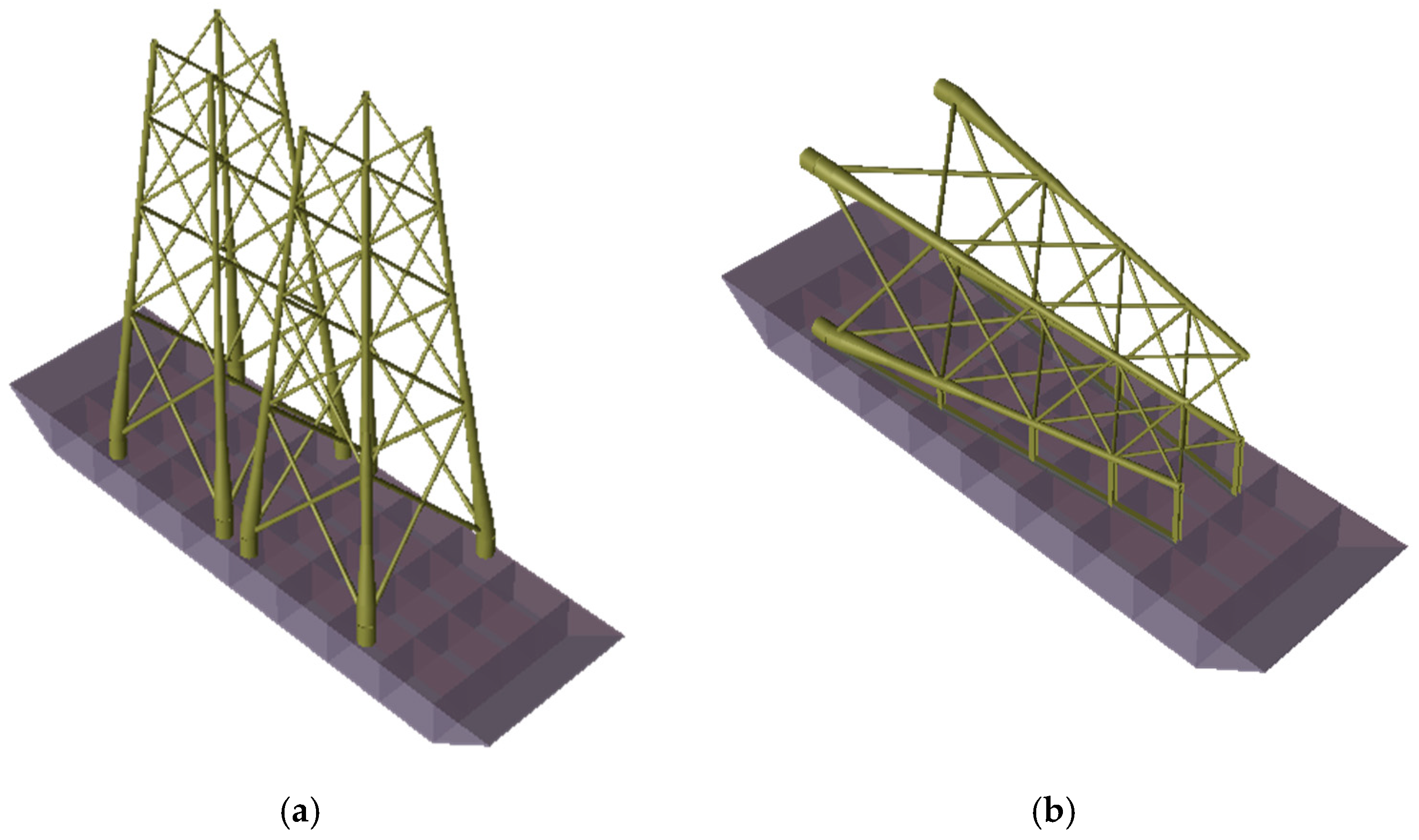
Two typical transportation arrangement models were developed using the Genie module, as illustrated in Figure 2. The first configuration is the vertical arrangement (Figure 2a), in which the jacket is positioned upright on the barge deck. The jacket is assumed to be rigidly connected to the barge deck at four support points located at the corners of its base footprint. This connection constrains all six degrees of freedom between the jacket and the barge deck in the model.
The second configuration is the horizontal arrangement (Figure 2b), where the jacket is placed in a lying orientation during transportation. The jacket is supported by a series of grillage structures distributed along its length. This support condition is simplified as a rigid connection between the jacket and the barge deck, effectively constraining all six degrees of freedom.

3.3. Panel Mesh Convergence Study

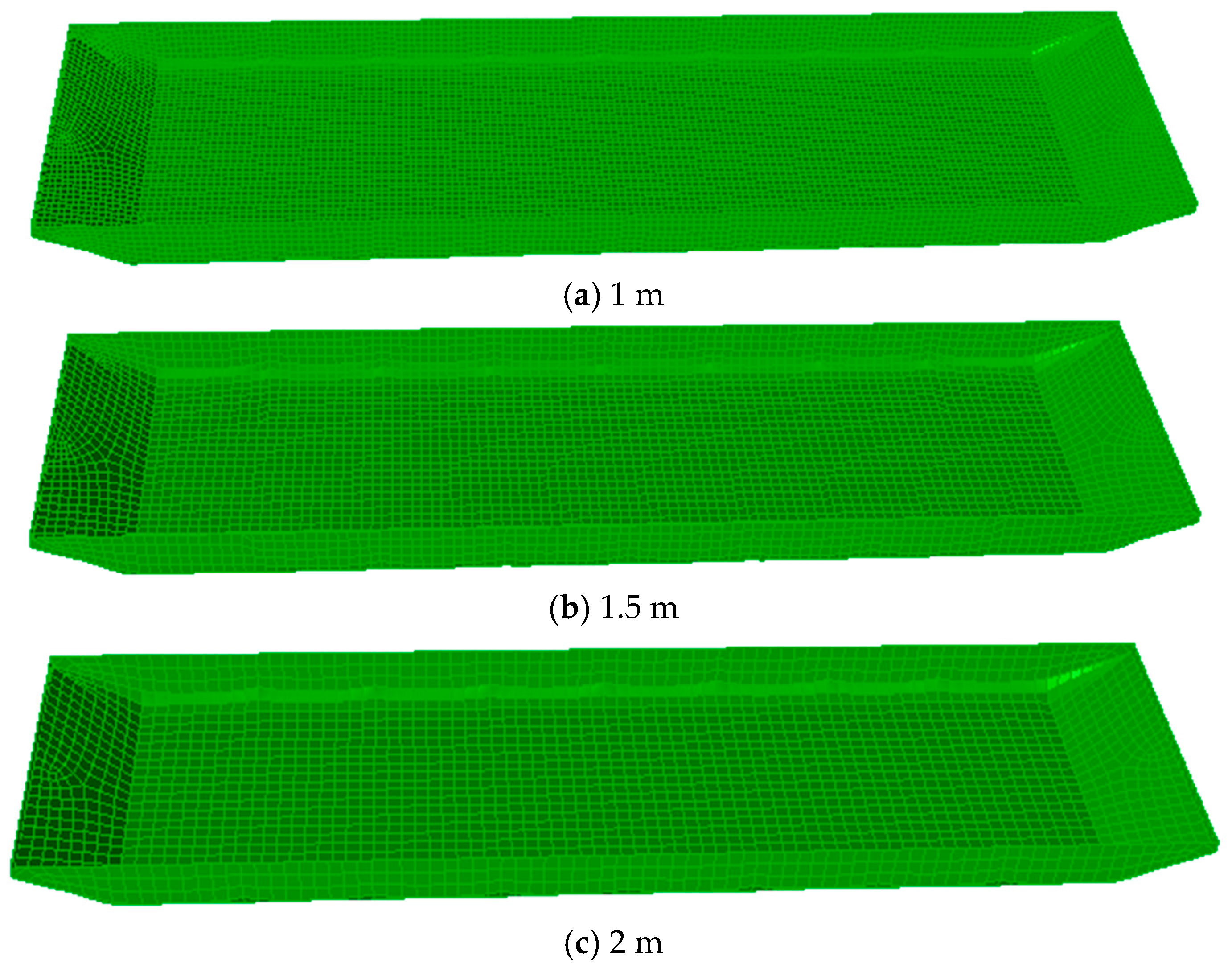
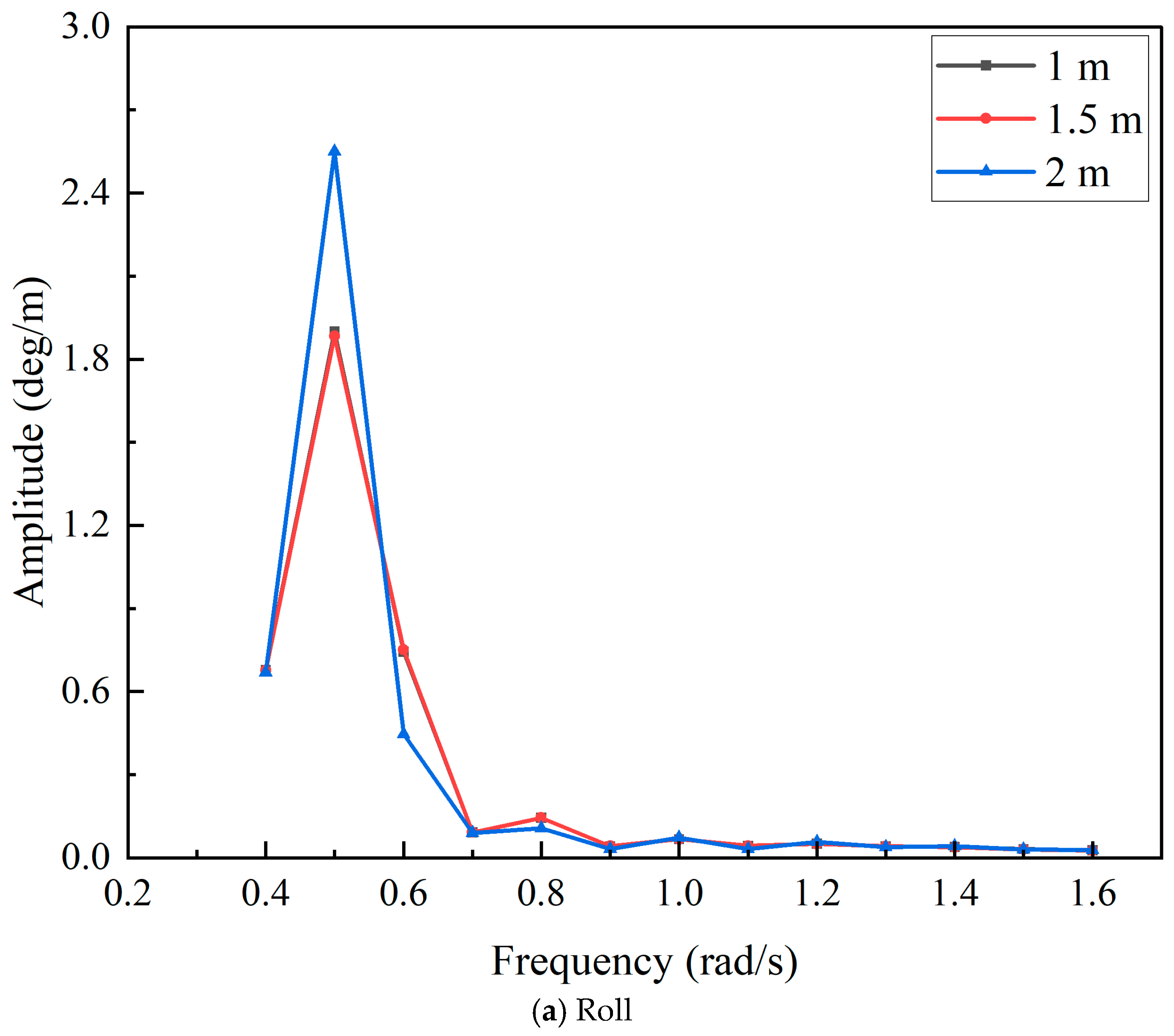
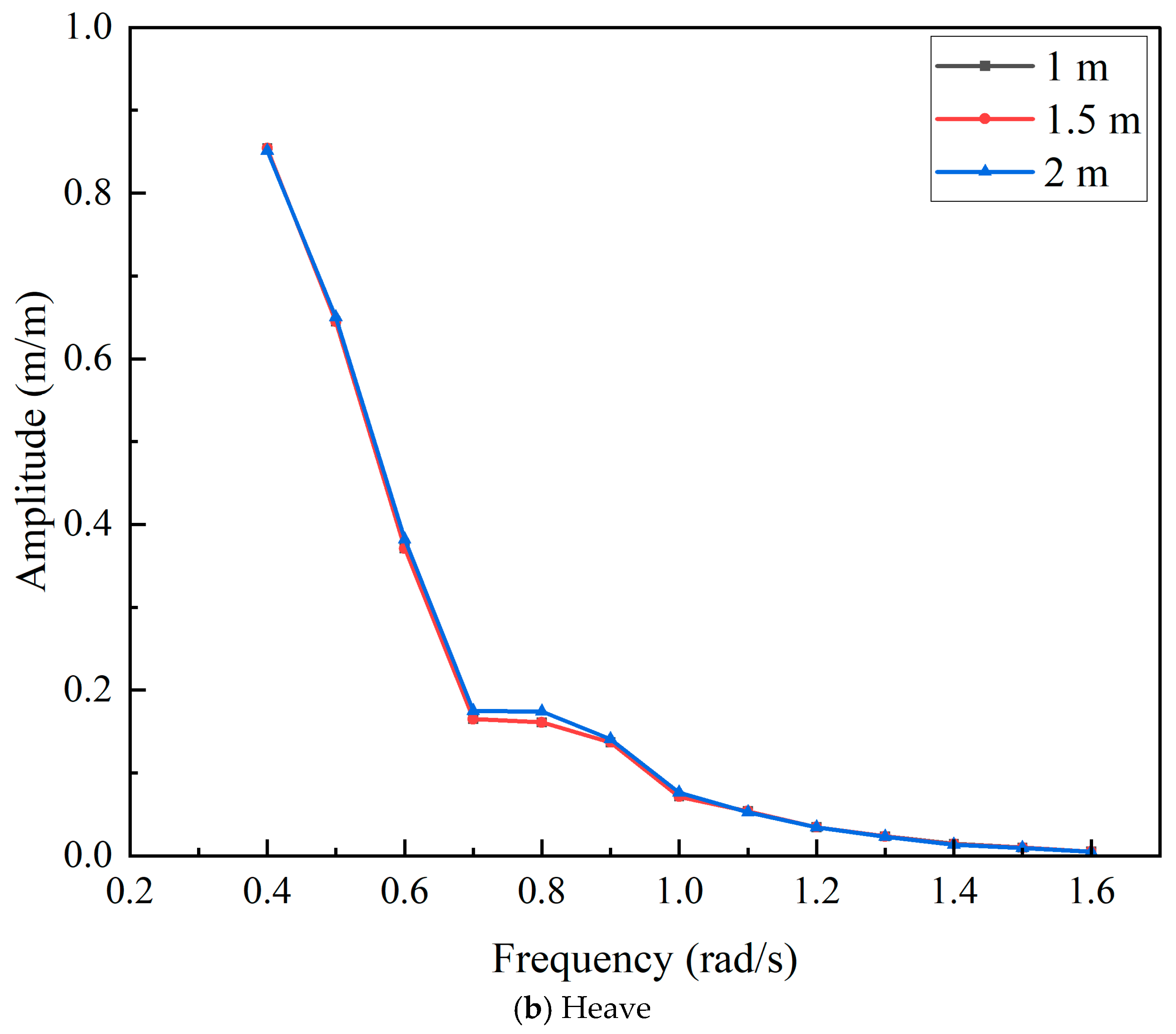
To ensure numerical accuracy, a systematic mesh convergence study was conducted. The element size is intrinsically linked to the highest wave frequency of interest. While an excessively coarse mesh fails to resolve the wave-body interaction adequately, an overly refined mesh unnecessarily increases the total element count, leading to prohibitive computational cost. Therefore, verifying mesh convergence is essential prior to full-scale simulations. Based on three-dimensional potential flow theory, the panel length Δ generally satisfies /6, where λ is the wavelength corresponding to the highest frequency considered [24,25]. Three uniform mesh sizes—1.0 m, 1.5 m, and 2.0 m—were tested. The corresponding total number of nodes were approximately 10,353, 4775, and 2781, respectively. The corresponding total number of elements were approximately 10,152, 4636, and 2676, respectively. Figure 3 shows the panel mesh for the three mesh sizes configuration. Figure 4 compares the roll motion Response Amplitude Operators (RAOs) obtained with these meshes. Results show that the 2.0 m mesh exhibits significant deviation, whereas the responses for the 1.5 m and 1.0 m meshes are nearly identical, with differences below 3.5%. This confirms convergence at a mesh size of 1.5 m. Considering the balance between accuracy and computational efficiency, the 1.5 m mesh was selected for all subsequent simulations.

4. Frequency-Domain Hydrodynamic Analyses

For the horizontal transportation arrangement, the Response Amplitude Operators (RAOs) of the barge-jacket coupled system were evaluated under various wave directions, wave frequencies, and forward speeds. The two transportation arrangements—the vertical and horizontal configurations—were subsequently compared in terms of their motion responses.

4.1. Influence of Wave Frequency

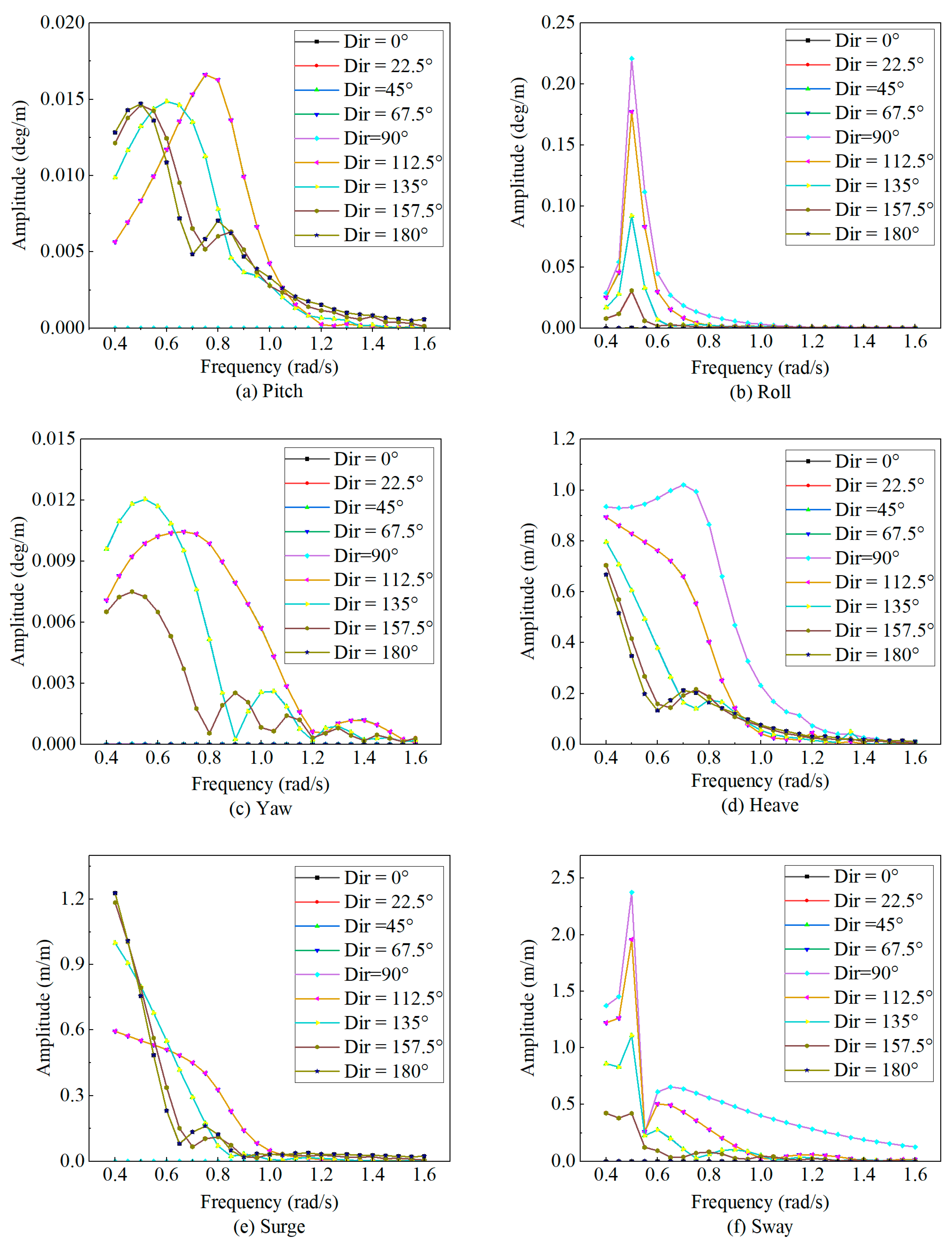
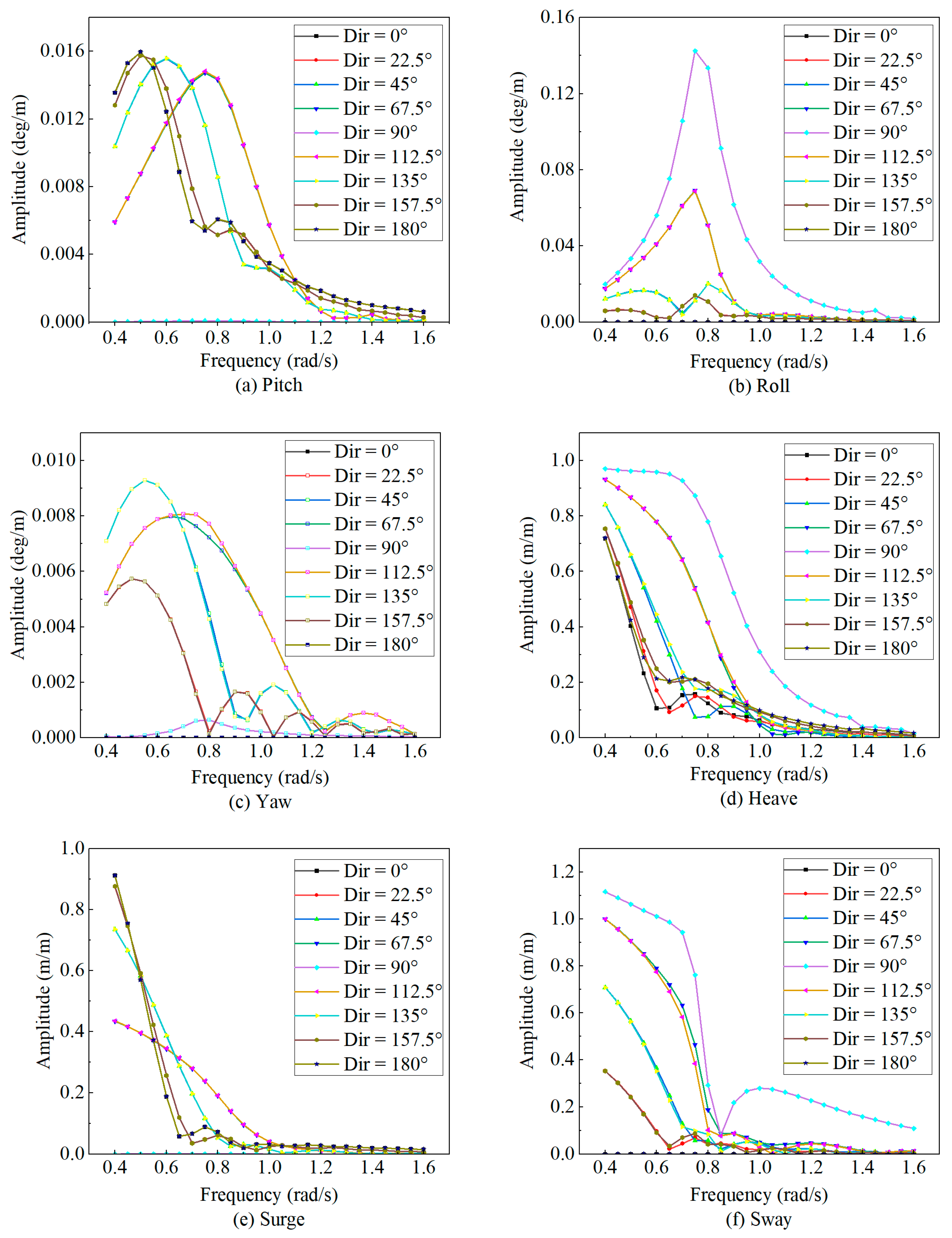
This section analyzes the motion responses under different wave frequencies. The analysis considered the barge at zero forward speed, carrying the jacket foundation, with regular wave frequencies ranging from 0.4 to 1.6 rad/s. Given that the barge-jacket system is symmetrical about its longitudinal axis, wave headings from 0° to 180° were examined at 22.5° increments for the hydrodynamic analysis. The motion RAOs of the coupled system across the specified frequency range were calculated, as presented in Figure 5.
A clear low-frequency dominance is observed in the motion RAOs of the barge-jacket coupled system. Surge, sway, and heave motions exhibit the largest amplitudes within the low-frequency ranges, and their responses decay rapidly as wave frequency increases, approaching zero at higher frequencies. In contrast, roll, pitch, and yaw motions show a characteristic trend of initial growth followed by attenuation with increasing wave frequency.
Within specific frequency ranges, evident response amplification occurs across multiple degrees of freedom. Heave RAOs are bigger in the 0.4–0.6 rad/s band than others, whereas surge and sway reach their maxima near 0.4 rad/s. Roll responses rise sharply and peak between 0.7 and 0.8 rad/s, while pitch exhibits pronounced peaks within 0.5–0.8 rad/s for all wave directions. Yaw RAOs increase gradually and attain their maximum between 0.5 and 0.8 rad/s. When RAOs enter these peak-frequency bands, the coupled system experiences amplified dynamic motions, which may impose additional risks to structural safety and transportation stability. These peaks are likely associated with a coupled resonance frequency of the asymmetrically loaded and barge-jacket system.
The overall results indicate that low-frequency excitation plays a critical role in the hydrodynamic behavior of the barge-jacket system. Small variations within the low-frequency region can lead to substantial changes in motion amplitudes, highlighting the need for special attention to operational safety and stability when the transportation vessel encounters low-frequency waves.

4.2. Influence of Wave Direction

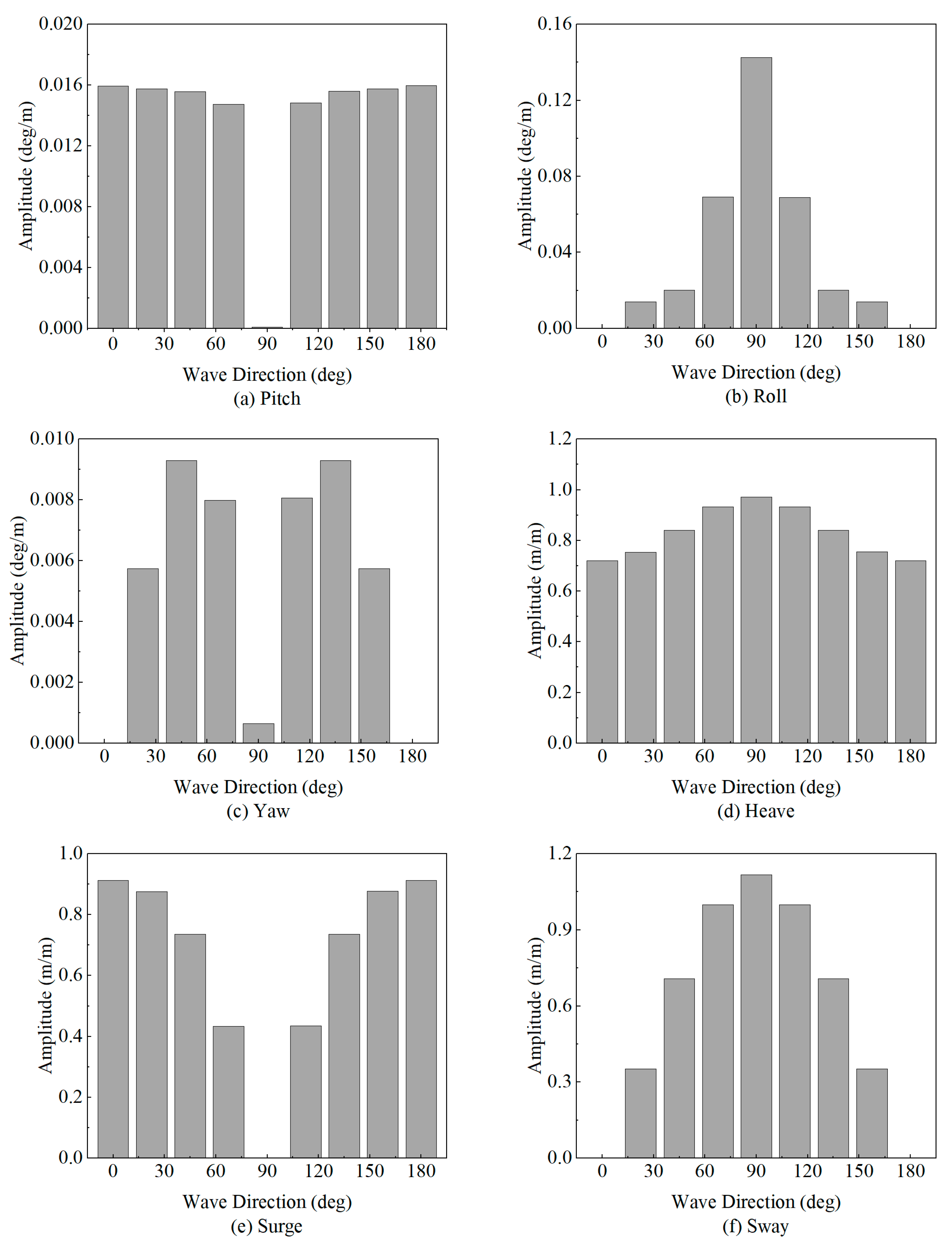
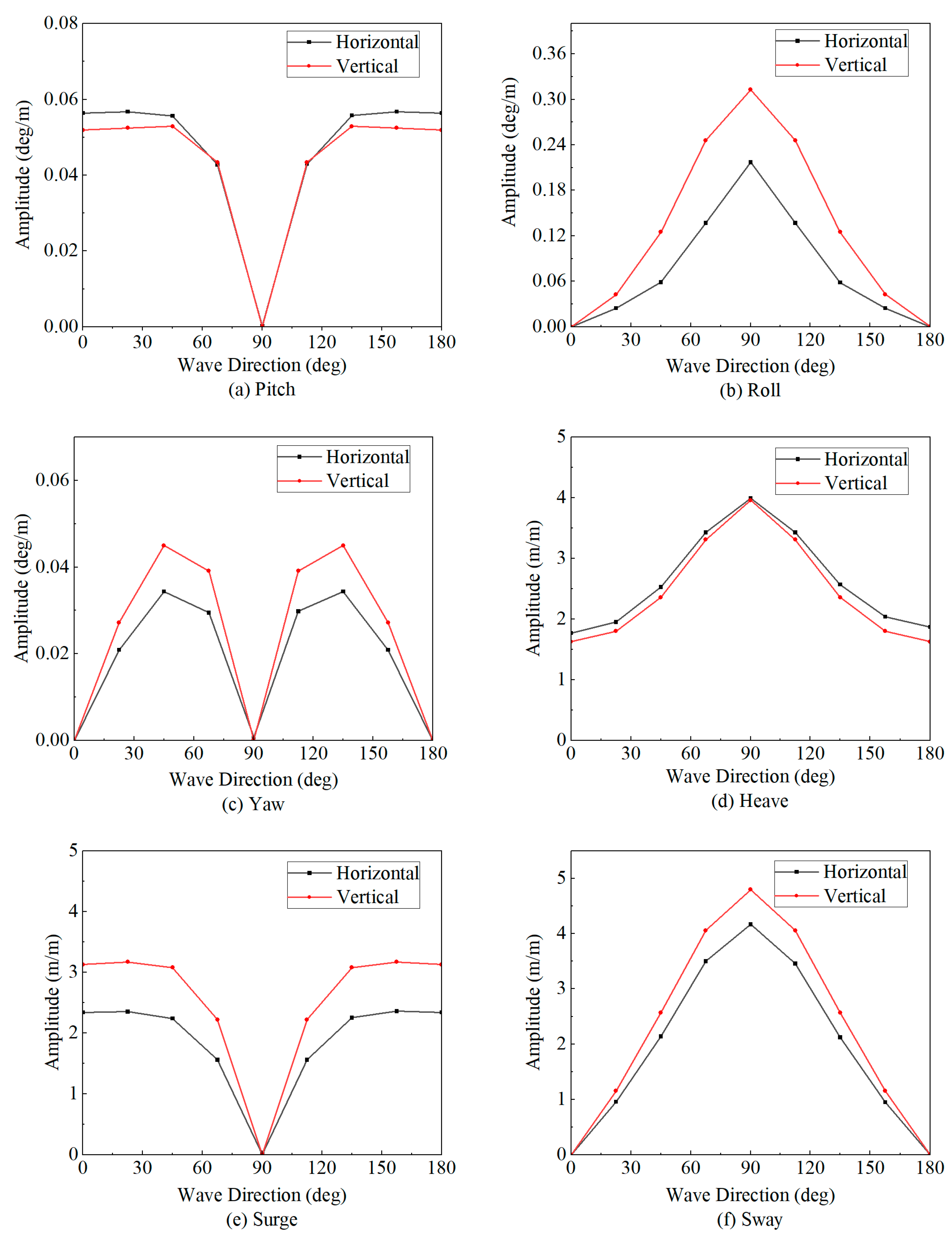
This section examines the motion response of the coupled system under varying wave directions. Based on the calculated results, the motion response data across different wave headings are analyzed. The maximum response amplitudes for each degree of freedom under these conditions are summarized in Figure 6.
Figure 6 reveals a significant influence of wave direction on the motion response of the coupled system, with distinctly varying effects across the six degrees of freedom. Overall, following seas (0°) and head seas (180°) most prominently affect longitudinal motions, whereas beam seas (90°) induce the largest lateral and heave responses. Oblique wave directions exhibit coupled excitation across multiple degrees of freedom.
Specifically, the pitch motion is most pronounced at wave directions of 0° and 180° and reaches its minimum at 90°, which is attributed to the symmetry of wave excitation relative to the vessel’s longitudinal axis under beam seas. The surge motion also exhibits minimum response at 90°, as the wave excitation force acts primarily in the transverse direction under beam seas, resulting in reduced longitudinal excitation. In contrast, the response curves for roll, sway, and heave are symmetric, peaking at 90° and minimizing at 0° and 180°. Their response amplitudes initially increase and then decrease with changing wave direction, confirming that beam seas exert the most substantial influence on these three motions. The yaw motion amplitude remains minimal at 0°, 90°, and 180°, nearly zero. The observed symmetry in the motion responses primarily arises from the geometric symmetry of the barge-jacket system, which ensures that wave-induced forces are evenly distributed for symmetric wave directions.

4.3. Influence of Forward Speed

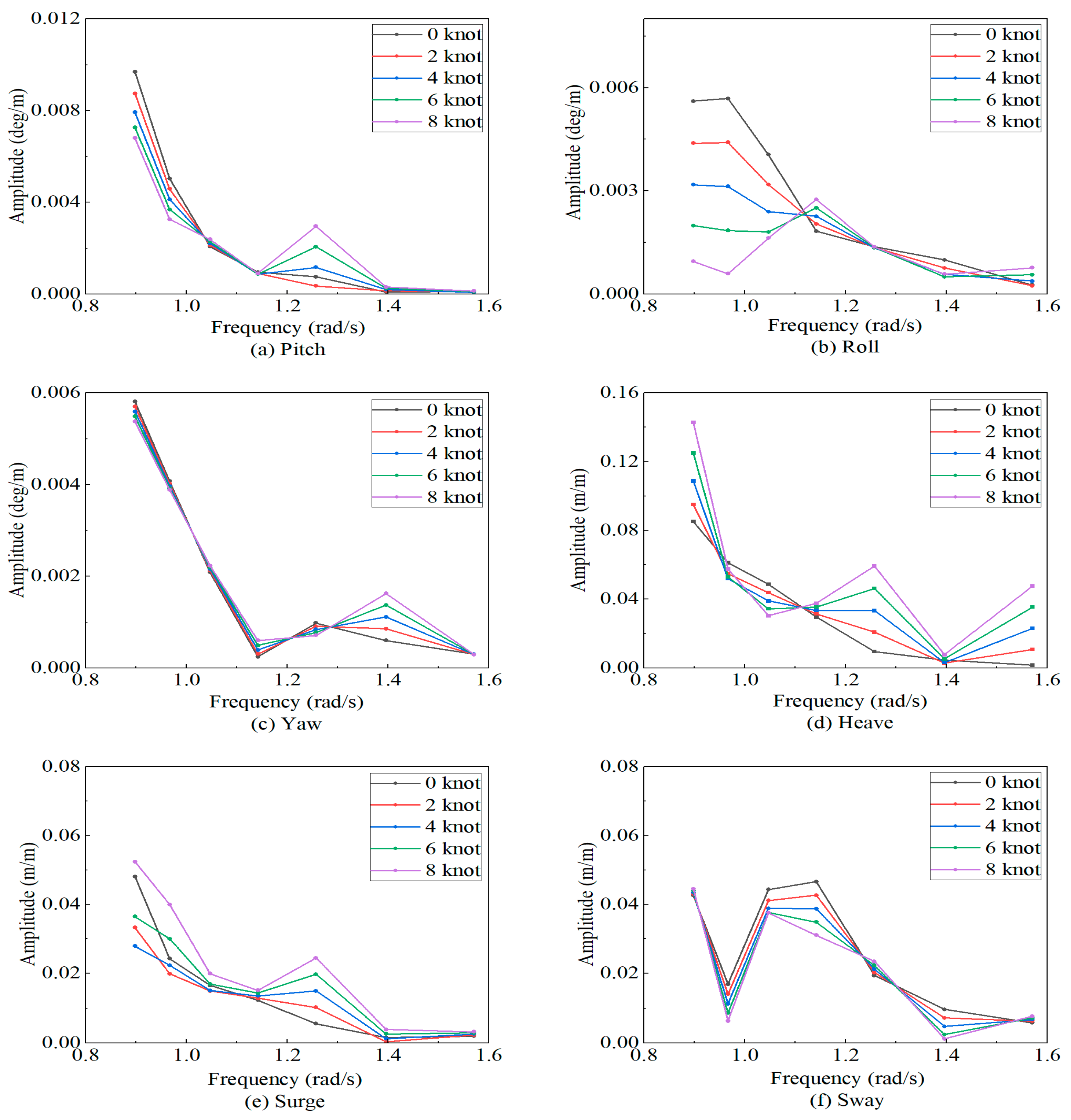
This section examines the motion response of the coupled system under different forward speeds. The analysis was conducted in regular waves at speeds of 0 knots (stationary), 2 knots, 4 knots, 6 knots and 8 knots. The six-degree-of-freedom motion responses were computed and compared to assess the influence of forward speed. The corresponding results are presented in Figure 7.
Figure 7 presents the RAOs of the coupled system at different forward speeds. The results indicate that the variation in motion response across the tested speed range is relatively minor. This suggests that the influence of forward speed on the system’s dynamics is considerably less pronounced than that of wave frequency and direction.

4.4. Influence of Arrangement

Figure 8 shows the RAOs of a coupled system for vertical arrangement. A comparison between Figure 5 (horizontal arrangement) and Figure 8 reveals that motion responses for both configurations are relatively pronounced under low-frequency waves, and the wave frequency range corresponding to the peak response amplitudes is similar.
The maximum motion responses of the horizontally arranged system at zero forward speed under different wave directions are summarized in Table 3, while those for the vertical arrangement are provided in Table 4.
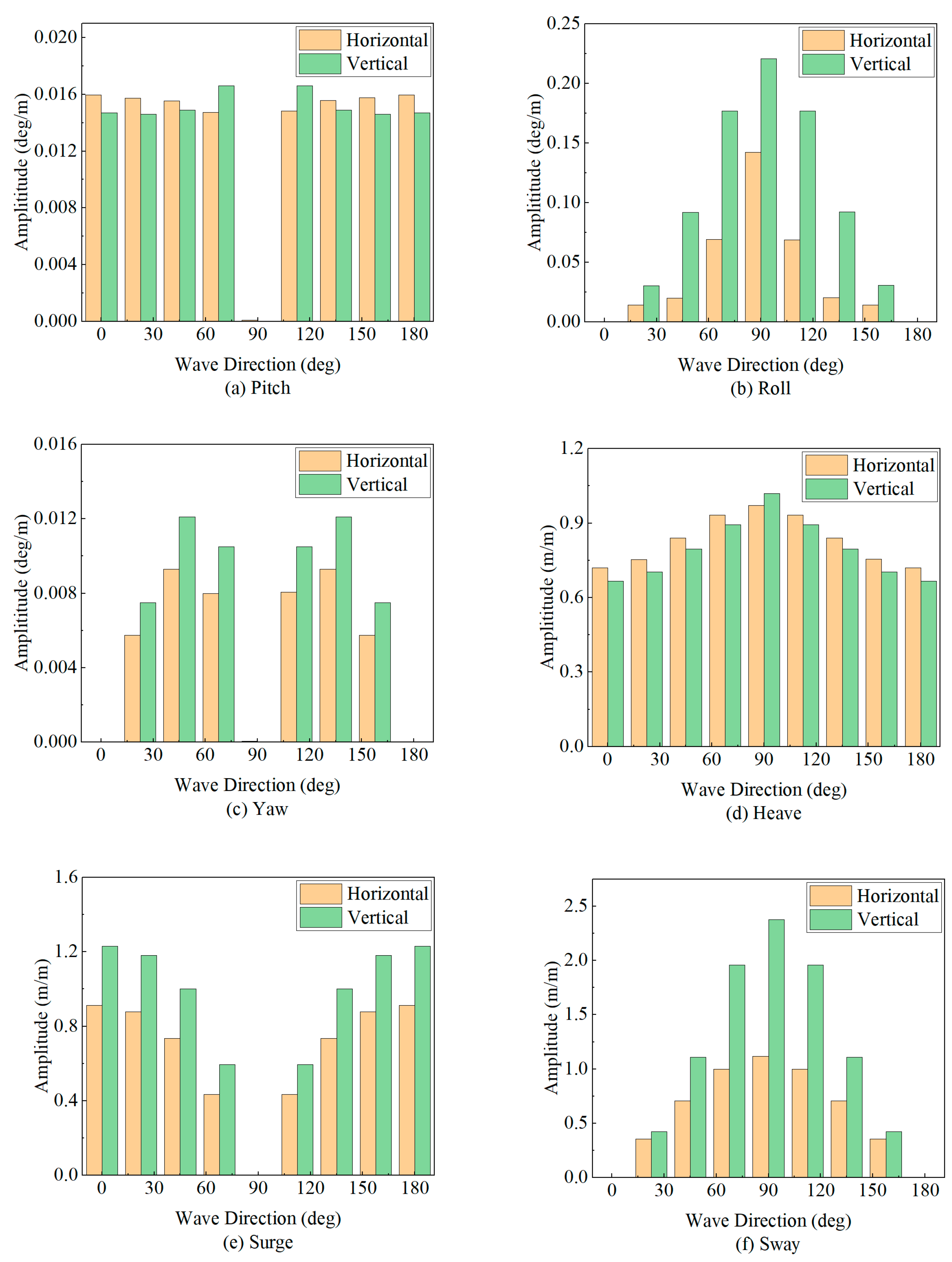
A direct comparison of the maximum response values under the two arrangements across different wave directions is shown in Figure 9. When the horizontal arrangement is adopted, the response amplitudes are smaller than those in the vertical arrangement. This indicates that the horizontal configuration has better overall system stability. In contrast, when transported vertically, the motion response of each degree of freedom exhibits pronounced variation. Overall, the horizontal arrangement demonstrates a clear advantage in reducing motion responses of the system. Consequently, if a vertical arrangement is employed, particular attention must be paid during structural design and transportation planning to assess the critical influence of wave direction on motion response, thereby ensuring operational safety and stability.

4.5. Short-Term Response Analysis

The design analysis for offshore transportation operations typically requires environmental conditions corresponding to a return period exceeding 10 times the operation duration. If the sailing operation lasts more than one month, the extreme monthly wave conditions with a one-year return period, along with the corresponding wave periods and wind speeds, are adopted as the design criteria. Based on the one-year return wave statistics, the condition with the largest significant wave height is selected as the design wave condition, Hs = 5.5 m and Tp = 11.0 s, which is used for subsequent dynamic response.
After obtaining the RAOs of the coupled system, combined with the PM spectrum, the environmental load is once a year. Next, the short-term responses analysis is carried out to obtain the amplitude of motion under each wave direction, which is shown in Figure 10. We can know the maximum amplitude of motion in each motion and summarize the results as shown in Table 5.
From Table 5, it can be seen that heave, surge, roll and sway have a greater impact. In the roll, heave and sway motions, when the wave direction angle is 90°, the motion amplitudes of the system are the largest. In the yaw motion, the maximum motion amplitude occurs at 45°. In the pitch motion, the maximum motion amplitude occurs at 45° for vertical arrangement and at 22.5° for the horizontal. In the surge motion, the maximum motion amplitude occurs at 22.5° for vertical arrangement and at 157.5° for the horizontal.

5. Conclusions

This study presents a systematic numerical investigation into the motion response characteristics of a barge-jacket coupled system during transportation, utilizing the SESAM software suite. The main findings are summarized as follows:
(1)
Influence of Wave Frequency: The motion responses of the coupled system exhibit strong low-frequency dependence. Within the low-frequency wave region (0.5–0.8 rad/s), motion amplitudes are significantly amplified. In contrast, responses in the high-frequency region are significantly smaller and decay gradually. Transport operations should prioritize avoiding sea states within this critical frequency band.
(2)
Influence of Wave Direction: Wave direction has a distinct effect on each degree of freedom. Following seas (0°) and head seas (180°) predominantly excite longitudinal motions (surge and pitch), whereas beam seas (90°) induce the largest lateral (sway) and heave responses.
(3)
Influence of Forward Speed: Variations in forward speed (0–8 knots) induce relatively minor changes in motion response compared to wave frequency and direction. However, a consistent, gradual increase in Response Amplitude Operators (RAOs) is observed with increasing speed across all six degrees of freedom.
(4)
Influence of Jacket Arrangement: Both vertical and horizontal arrangements experience pronounced motion under low-frequency waves, with similar frequency ranges for peak response. However, the horizontal arrangement demonstrates a clear advantage in overall stability.
Based on these results, the following engineering recommendations are proposed: The horizontal arrangement should have superior stability. The vertical arrangement may be considered in restricted waterways where space is limited, but operations must avoid wave conditions within the critical 0.5–0.8 rad/s frequency range to prevent resonant amplification. Regardless of the transportation arrangement, care must be taken to avoid encountering beam seas. In addition, the short-term analysis indicates that the largest motion amplitudes occur in the sway and roll motions. Particular attention should be paid to the safety of the system when the wave direction is 90°.
In summary, this study elucidates the dynamic response characteristics of a barge-jacket coupled system through comprehensive numerical simulation and parametric analysis. The resulting optimization insights and practical guidelines provide a valuable theoretical and technical foundation for enhancing the safety and efficiency of offshore wind turbine foundation transportation. It is noted that while the applied potential-flow method is standard for comparative hydrodynamic assessment, final engineering design for a specific transport operation should be supported by model tests to account for viscous effects and confirm absolute load values.

Author Contributions

Conceptualization, R.S. and Y.X.; methodology, B.H.; software, J.Z.; validation, X.Z. and Z.Z.; formal analysis, B.H.; investigation, Y.X.; resources, R.S.; data curation, B.H.; writing—original draft preparation, X.Z.; writing—review and editing, Z.Z.; supervision, J.Z.; project administration, J.Z. All authors have read and agreed to the published version of the manuscript.

Funding

This research was funded by “Pioneer” and “Leading Goose” R&D Program of Zhejiang (grant No. 2024C03031), National Natural Science Foundation of China (Grant No. 52271294) and National Key R&D Program of China (Grant No. 2024YFB4205400).

Data Availability Statement

The data presented in this study are available on request from the corresponding author.

Conflicts of Interest

Authors Ruilong Shi, Yanhui Xia and Ben He were employed by the company PowerChina Huadong Engineering Corporation Limited. The remaining authors declare that the research was conducted in the absence of any commercial or financial relationships that could be construed as a potential conflict of interest.

Abbreviations

The following abbreviations are used in this manuscript:
DOFDegrees of Freedom
OWTOffshore Wind Turbine
DAFDynamic Amplification Factor
RAOResponse Amplitude Operator
DirDirection

References

  1. Jiao, Y.F. Wind Power Expands to Deep Sea Areas Expecting a Peak Delivery Year in 2025. 21st Century Business Herald, 13 January 2025. (In Chinese) [Google Scholar]
  2. Kumar, P.; Paul, S.; Kumar Saha, A.; Yadav, O. Recent Advancements in Planning and Reliability Aspects of Large-Scale Deep Sea Offshore Wind Power Plants: A Review. IEEE Access 2025, 13, 3738–3767. [Google Scholar] [CrossRef]
  3. Escobar, A.; López-Gutiérrez, J.S.; Esteban, M.D.; Negro, V. A Modified Method for Assessing Hydrodynamic Loads in the Design of Gravity-Based Structures for Offshore Wind Energy. J. Coast. Res. 2018, 85, 931–935. [Google Scholar] [CrossRef]
  4. Widianto, E.Å.; Fosså, K.T.; Hurff, J.; Khan, M.S. Offshore Concrete Gravity-Based Structures. Concr. Int. 2019, 41, 27–30. [Google Scholar]
  5. Wang, K.; Hu, H.; Hu, J.; Feng, X.; Liu, T.; Ni, Z.; Yan, Y. A Validated Finite Element Framework for Stress Wave and Fatigue Analysis of Extra-Large Diameter Monopiles during Impact Driving. Ocean Eng. 2026, 343, 123449. [Google Scholar] [CrossRef]
  6. Huang, T.; Zhang, J.; Hou, L.; Wang, R.; Cheng, N. Experimental Investigation of the Response of Monopiles in Silty Seabed to Regular Wave Action. China Ocean Eng. 2022, 36, 112–122. [Google Scholar] [CrossRef]
  7. Yang, L.C. Construction and Application of Jacket Foundations for Offshore Wind Power Projects. Installation 2025, 57–60. (In Chinese) [Google Scholar]
  8. Wei, X.; Wang, T.; Wang, Y.; Liu, Y.; Jiang, M.; Zhang, P. Horizontal Bearing Performance of the Four-Bucket Jacket Foundation. J. Marine Sci. Appl. 2025, 24, 542–551. (In Chinese) [Google Scholar] [CrossRef]
  9. Yang, X.; Wang, J.; Lian, J.J.; Yao, Y.; Liu, M.M. Permeability Characteristics and Critical Pressure Differential of Complex Configuration Suction Bucket Foundations for Offshore Wind Power. Acta Energiae Solaris Sin. 2025, 46, 741–746. (In Chinese) [Google Scholar]
  10. Zhou, J.J. Comparison and Analysis of Foundation Type Selection for Offshore Wind Turbines. Ship Stand. Eng. 2025, 58, 109–112. (In Chinese) [Google Scholar]
  11. Zhu, Q.D.; He, M.; Liu, S.Q.; Meng, W.C.; Cui, G.L.; Chen, K.C. Analysis on Stability and Motion Response Sensitivity of Large Jacket in Semi-submersible Barge Transportation. Petro-Chem Equip. 2021, 24, 28–34. (In Chinese) [Google Scholar]
  12. Cai, Y.L.; Tian, F.; Liu, P. Transportation Analysis of Deepwater Jackets. In Proceedings of the 2007 Annual Conference on Ocean Engineering, Guiyang, China, 1 November 2007; pp. 342–347. (In Chinese). [Google Scholar]
  13. Zhang, Y.F.; Zhao, J.N.; Huang, H.Z.; Wang, L.; Yuan, Y.J. Analysis Method for Towing a 300 m Water Depth Deepwater Jacket. Ship Ocean Eng. 2023, 52, 102–104+136. (In Chinese) [Google Scholar]
  14. Wang, Q.; Chen, D.; Liu, J.; Hao, M.N. Offshore Installation Analysis of Deepwater Jacket Based on MOSES Software. Nav. Archit. Ocean Eng. 2025, 41, 72–78. (In Chinese) [Google Scholar]
  15. Chen, B.M.; Zhang, H.; Wang, Z.Y.; Yang, S.M. Towing Analysis of Jacket Using SESAM Software. Petrochemical Ind. Technol. 2018, 25, 238–240+245. (In Chinese) [Google Scholar]
  16. Chen, M.S.; Yuan, G.B.; Li, B.C.; Zhang, X.X.; Li, L. Dynamic Analysis and Extreme Response Evaluation of Lifting Operation of the Offshore Wind Turbine Jacket Foundation Using a Floating Crane Vessel. J. Ma. Sci. Eng. 2022, 10, 2023. [Google Scholar] [CrossRef]
  17. Chen, M.; Yuan, G.; Li, B.; Li, C.B.; Ouyang, M.; Li, L.; Shi, W.; Han, Z.; Zhang, W.; Chen, Z. Dynamic Analysis of Lift-off Operation of Offshore Wind Turbine Jacket Foundation from the Transportation Barge. Ocean Eng. 2024, 301, 117443. [Google Scholar] [CrossRef]
  18. Horn, J.T.H.; Amdahl, J.; Haver, S.K. Dynamic Amplification of Drag Dominated Structures in Irregular Seas. In Proceedings of the International Conference on OCEANS 15 MTS/IEEE Washington, Washington, DC, USA, 19–22 October 2015. [Google Scholar]
  19. Yin, Y.; Li, C.H.; Wu, X.Y.; Wang, C. Short-Term Motion Response Prediction of Large Upper Modules. Ocean Eng. Equip. Technol. 2016, 3, 25–30. (In Chinese) [Google Scholar]
  20. Luo, H.; Yu, D.; Xie, P.; Zhang, Z.; Li, H.; Wang, A. Motion Monitoring of T-Shaped Launching Barge with LW3-1 Jacket Dry-Towing from Qingdao to South China Sea. In Proceedings of the ASME 2013 32nd International Conference on Ocean, Offshore and Arctic Engineering, Nantes, France, 9–14 June 2013; Volume 5, p. V005T06A03. [Google Scholar]
  21. Bai, X.; Luo, H.; Xie, P. Experimental Investigation on Motions Behavior and Loads Characteristic of Floatover Installation with T-Shaped Barge. Ocean Eng. 2020, 195, 106761. [Google Scholar] [CrossRef]
  22. Shin, H.; Kim, B.; Pham, T.D.; Jung, K. Motion of OC4 5MW Semi-Submersible Offshore Wind Turbine in Irregular Waves. In Proceedings of the ASME 2013 32nd International Conference on Ocean, Offshore and Arctic Engineering, Nantes, France, 9–14 June 2013; Volume 8, p. V008T09A02. [Google Scholar]
  23. Tahar, A.; Halkyard, J.; Steen, A.; Finn, L. Float Over Installation Method—Comprehensive Comparison Between Numerical and Model Test Results. J. Offshore Mech. Arct. Eng. 2006, 128, 256–262. [Google Scholar] [CrossRef]
  24. Wang, F. Analysis of Hydrodynamic Characteristics and Installation Dynamics of a Novel Offshore Wind Turbine Transport and Installation Vessel. Master’s Thesis, Wuhan University of Technology, Wuhan, China, 2021. (In Chinese). [Google Scholar]
  25. Ji, Y.M.; Zhang, W.Z.; Yuan, Y.P.; Lu, H.Y.; Guo, J.B.; Xu, Y.Q. Accelerated Thermal Fatigue and Equivalent Life Assessment Method for Highly Intensified Diesel Engine Pistons. Acta Armamentarii 2022, 43, 3008–3019. (In Chinese) [Google Scholar]
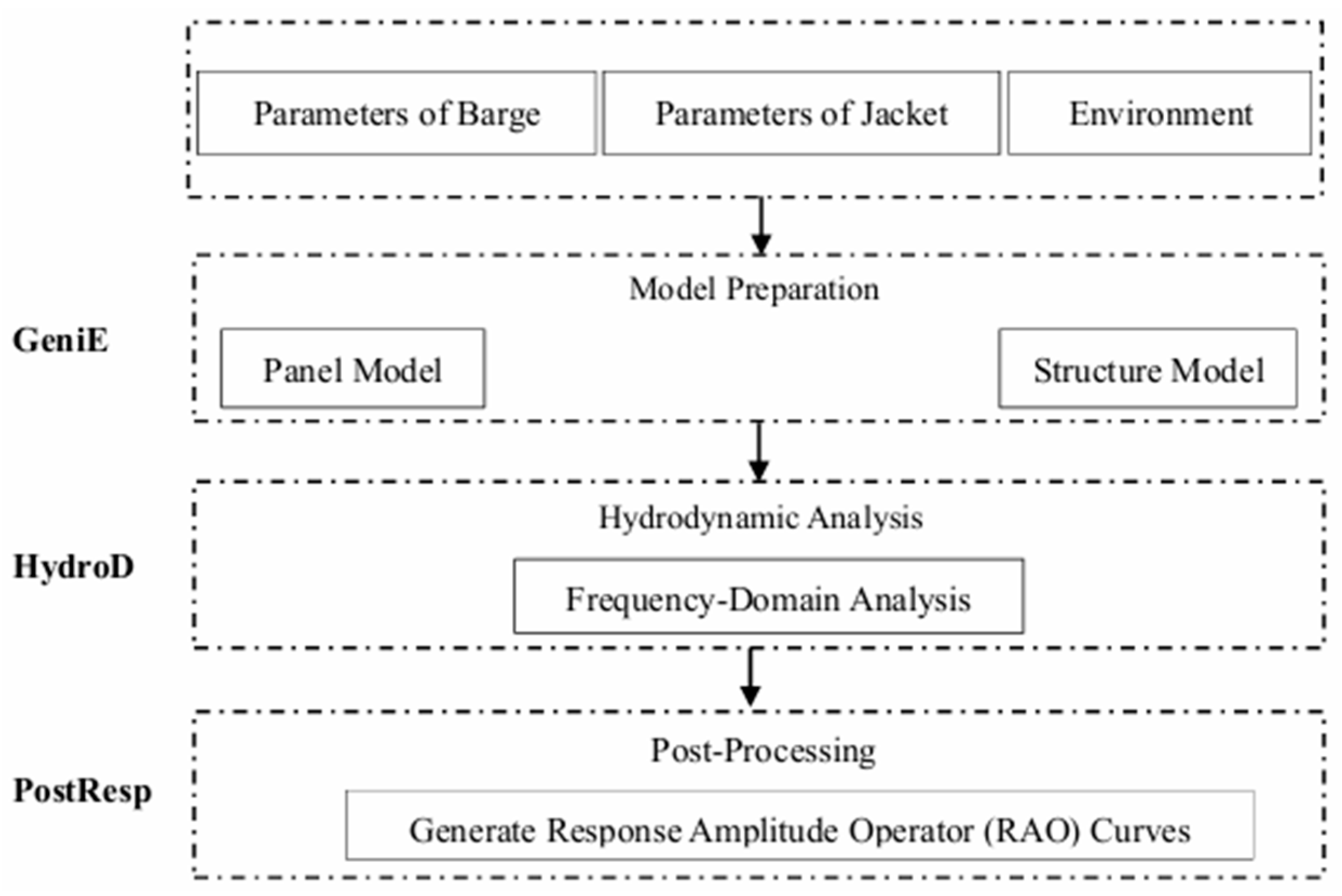
Figure 1. Numerical workflow.
Jmse 14 00100 g001
Figure 2. Barge-jacket coupled system models developed in SESAM: (a) Vertical arrangement; (b) Horizontal arrangement.
Jmse 14 00100 g002
Figure 3. Panel mesh for different mesh densities.
Jmse 14 00100 g003
Figure 4. Maximum RAOs for different mesh densities.
Jmse 14 00100 g004aJmse 14 00100 g004b
Figure 5. RAOs for horizontal arrangement.
Jmse 14 00100 g005
Figure 6. Maximum RAOs for different wave directions.
Jmse 14 00100 g006
Figure 7. RAOs for different forward speeds.
Jmse 14 00100 g007
Figure 8. RAOs for vertical arrangement.
Jmse 14 00100 g008
Figure 9. Maximum RAOs for different arrangements.
Jmse 14 00100 g009
Figure 10. Amplitudes in different wave directions.
Jmse 14 00100 g010
Table 1. Main parameters of the barge.
Module CharacteristicValue
Length overall (m)149.8
Beam (m)40.2
Depth (m)9.2
Displacement (tons)15,000
COG (m)(0, 0, 5.0)
Ixx (kg·m2)1.8 × 10⁹
Iyy (kg·m2)2.0 × 10¹⁰
Izz (kg·m2)2.1 × 10¹⁰
Table 2. Main parameters of the jacket.
Module CharacteristicValue
Length of footprint (m)35
Height of main body (m)90
Total mass (tons)2942
COG (m)Vertical(0, 0, 50)
Horizontal(−9.4, 0, 27.9)
Ixx (kg·m2)Vertical5.6 × 109
Horizontal1.04 × 109
Iyy (kg·m2)Vertical8.2 × 109
Horizontal2.86 × 109
Izz (kg·m2)Vertical4.6 × 109
Horizontal2.84 × 109
Table 3. Maximum RAOs for horizontal arrangement.
Wave
Direction
SurgeSwayHeave
(deg)Amplitude
(m/m)
Frequency
(rad/s)
Amplitude
(m/m)
Frequency
(rad/s)
Amplitude
(m/m)
Frequency
(rad/s)
00.9120.4000.0000.8000.7190.400
22.50.8760.4000.3530.4000.7540.400
450.7350.4000.7080.4000.8410.400
67.50.4350.4001.0000.4000.9320.400
900.0010.7501.1200.4000.9710.400
112.50.4350.4001.0000.4000.9320.400
1350.7360.4000.7070.4000.8410.400
157.50.8770.4000.3530.4000.7550.400
1800.9120.4000.0000.8000.7210.400
Wave
Direction
RollPitchYaw
(deg)Amplitude
(deg/m)
Frequency
(rad/s)
Amplitude
(deg/m)
Frequency
(rad/s)
Amplitude
(deg/m)
Frequency
(rad/s)
00.0001.4500.0160.5000.0001.500
22.50.0140.7500.0160.5000.0060.500
450.0200.8000.0160.6000.0090.550
67.50.0690.7500.0150.7500.0080.650
900.1430.7500.0000.8000.0010.800
112.50.0690.7500.0150.7500.0080.700
1350.0200.8000.0160.6000.0090.550
157.50.0140.7500.0160.5000.0060.500
1800.0001.4500.0160.5000.0001.500
Table 4. Maximum RAOs for vertical arrangement.
Wave
Direction
SurgeSwayHeave
(deg)Amplitude
(m/m)
Frequency
(rad/s)
Amplitude
(m/m)
Frequency
(rad/s)
Amplitude
(m/m)
Frequency
(rad/s)
01.2280.4000.0000.5000.6670.400
22.51.1840.4000.4220.4000.7040.400
451.0000.4000.8550.4000.7950.400
67.50.5950.4001.3770.5000.8930.400
900.0000.7501.6550.5001.0210.700
112.50.5950.4001.3770.5000.8930.400
1351.0000.4000.8550.4000.7950.400
157.51.1840.4000.4220.4000.7040.400
1801.2280.4000.0000.5000.6670.400
Wave
Direction
RollPitchYaw
(deg)Amplitude
(deg/m)
Frequency
(rad/s)
Amplitude
(deg/m)
Frequency
(rad/s)
Amplitude
(deg/m)
Frequency
(rad/s)
00.0000.5000.0150.5000.0001.350
22.50.0200.5000.0150.5000.0080.500
450.0600.5000.0150.6000.0120.550
67.50.1150.5000.0170.7500.0100.700
900.1430.5000.0000.8000.0000.500
112.50.1150.5000.0170.7500.0100.700
1350.0600.5000.0150.6000.0120.550
157.50.0200.5000.0150.5000.0080.500
1800.0000.5000.0150.5000.0001.300
Table 5. Maximum amplitude of short-term response.
MotionMaximum AmplitudeWave Direction
PitchHorizontal0.057°Horizontal22.5°
Vertical0.053°Vertical45°
RollHorizontal0.217°Horizontal90°
Vertical0.313Vertical90°
YawHorizontal0.034°Horizontal45°
Vertical0.045°Vertical45°
HeaveHorizontal3.99 mHorizontal90°
Vertical3.96 mVertical90°
SurgeHorizontal2.36 mHorizontal157.5°
Vertical3.17 mVertical22.5°
SwayHorizontal4.17 mHorizontal90°
Vertical4.8 mVertical90°
Disclaimer/Publisher’s Note: The statements, opinions and data contained in all publications are solely those of the individual author(s) and contributor(s) and not of MDPI and/or the editor(s). MDPI and/or the editor(s) disclaim responsibility for any injury to people or property resulting from any ideas, methods, instructions or products referred to in the content.