Article

A New Eco-Physical, Individual-Based Model of Humpback Whale (Megaptera novaeangliae, Borowski, 1781) Swimming and Diving


by
Marisa González Félix
1,2,†,
Jennifer Coston-Guarini
3,†,
Pascal Rivière
1,† and
Jean-Marc Guarini
1,*,†
1
Univ Brest, CNRS, Ifremer, IRD, UMR6539 LEMAR, F-29280 Plouzané, France
2
Institut de Ciències del Mar (ICM-CSIC), Pg. Marítim de la Barceloneta 37-49, 08003 Barcelona, Spain
3
The Entangled Bank Laboratory, 11 Rue Anatole France, 66650 Banyuls sur Mer, France
*
Author to whom correspondence should be addressed.
These authors contributed equally to this work.
J. Mar. Sci. Eng. 2025, 13(8), 1388; https://doi.org/10.3390/jmse13081388
Submission received: 28 May 2025 / Revised: 10 July 2025 / Accepted: 18 July 2025 / Published: 22 July 2025
(This article belongs to the Section Marine Biology)

Abstract

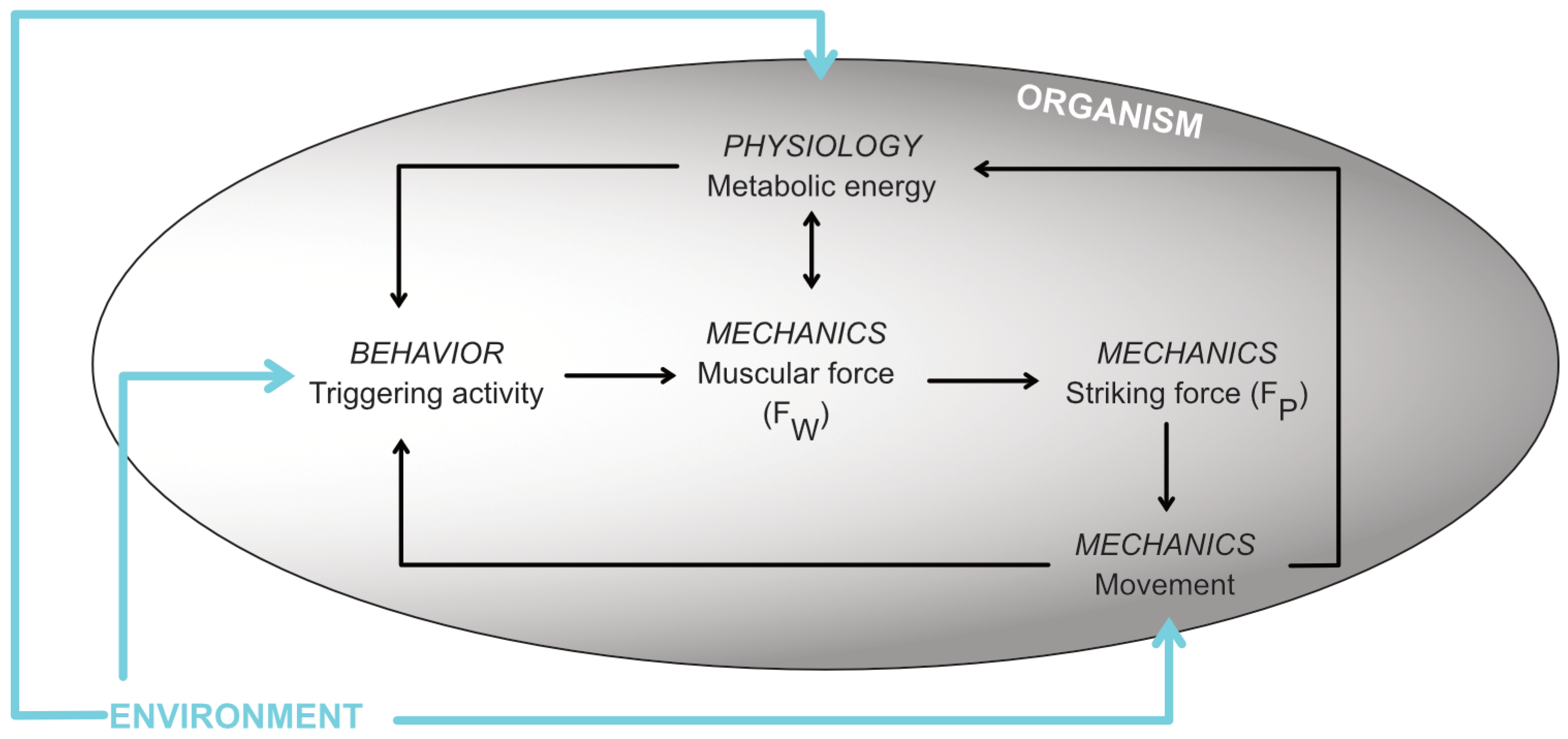
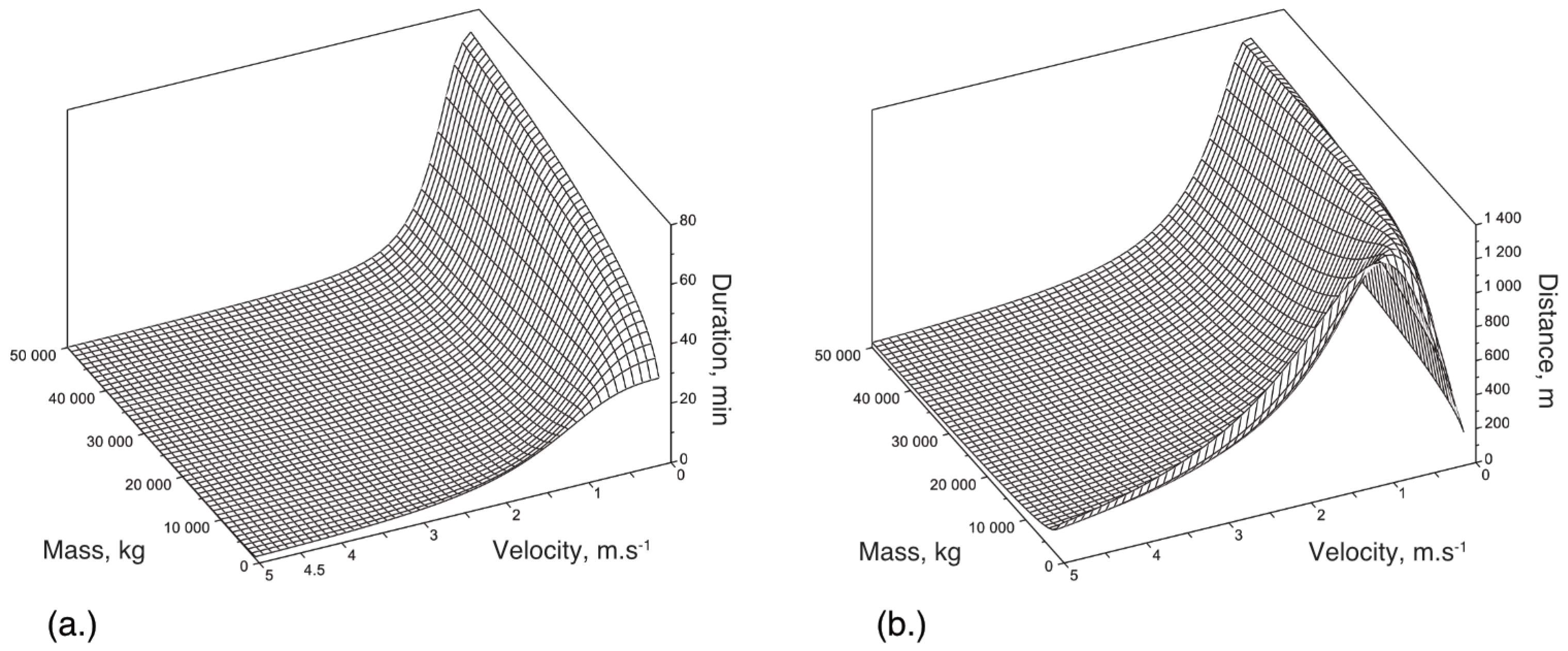
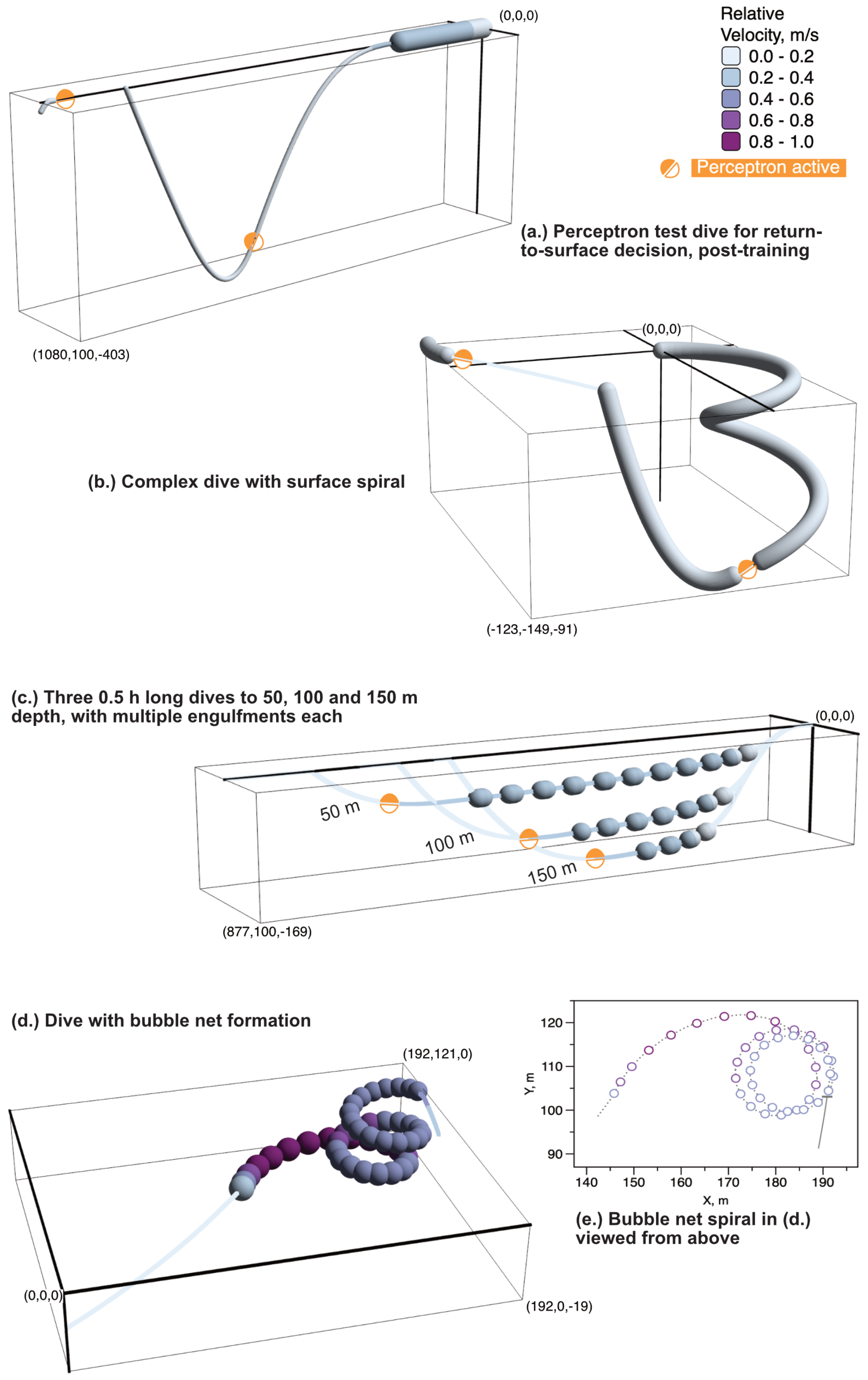
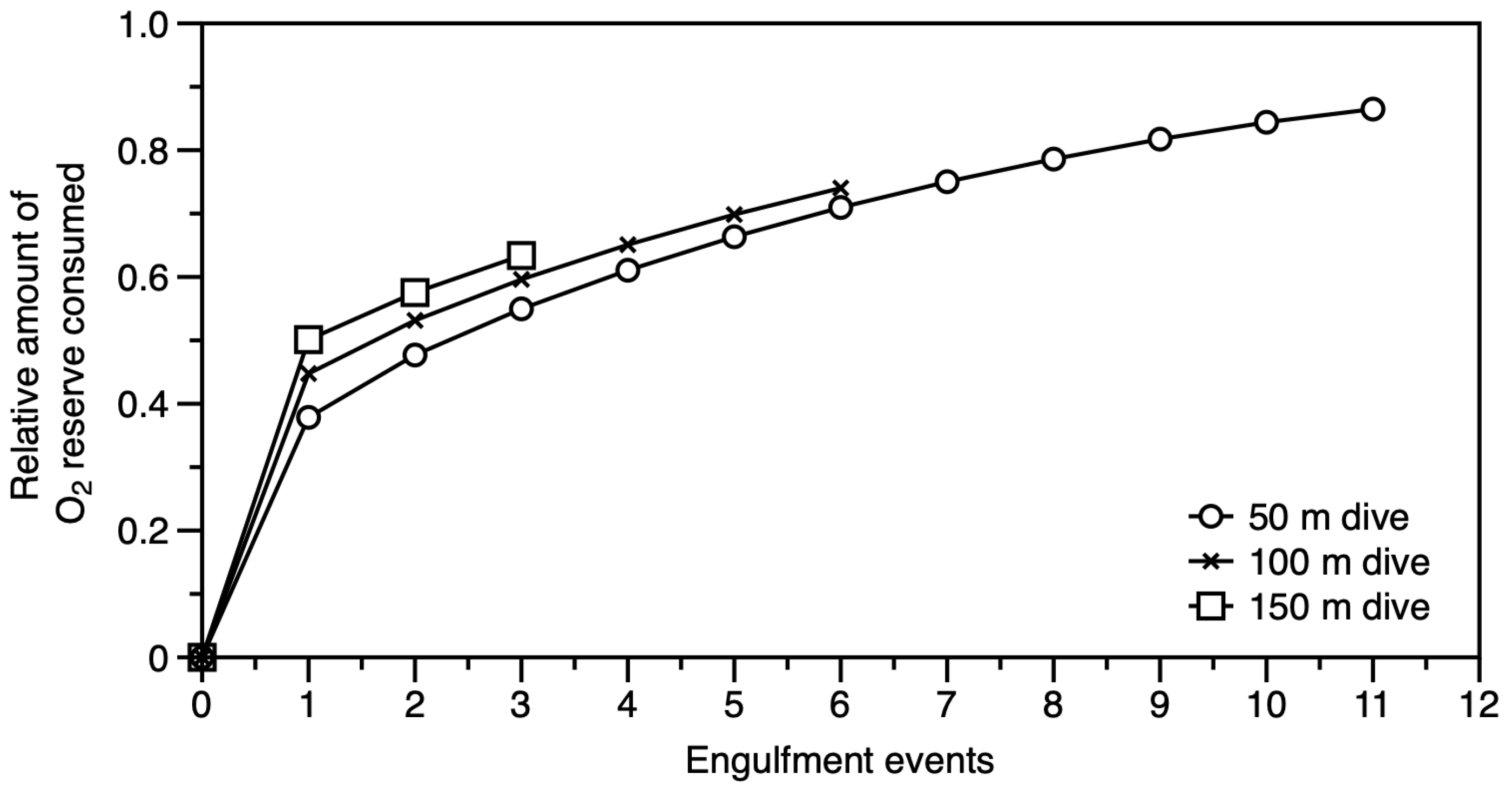
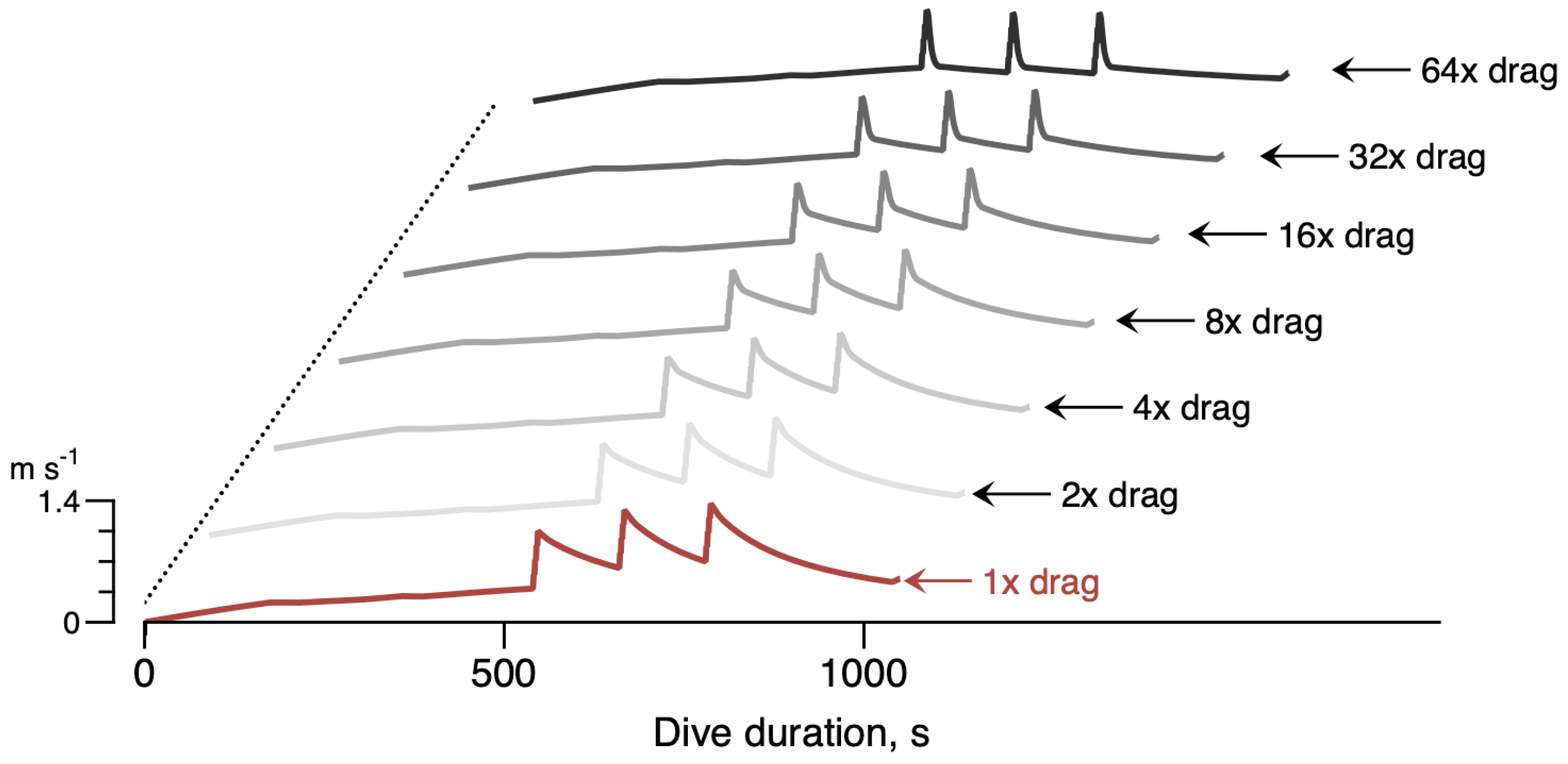
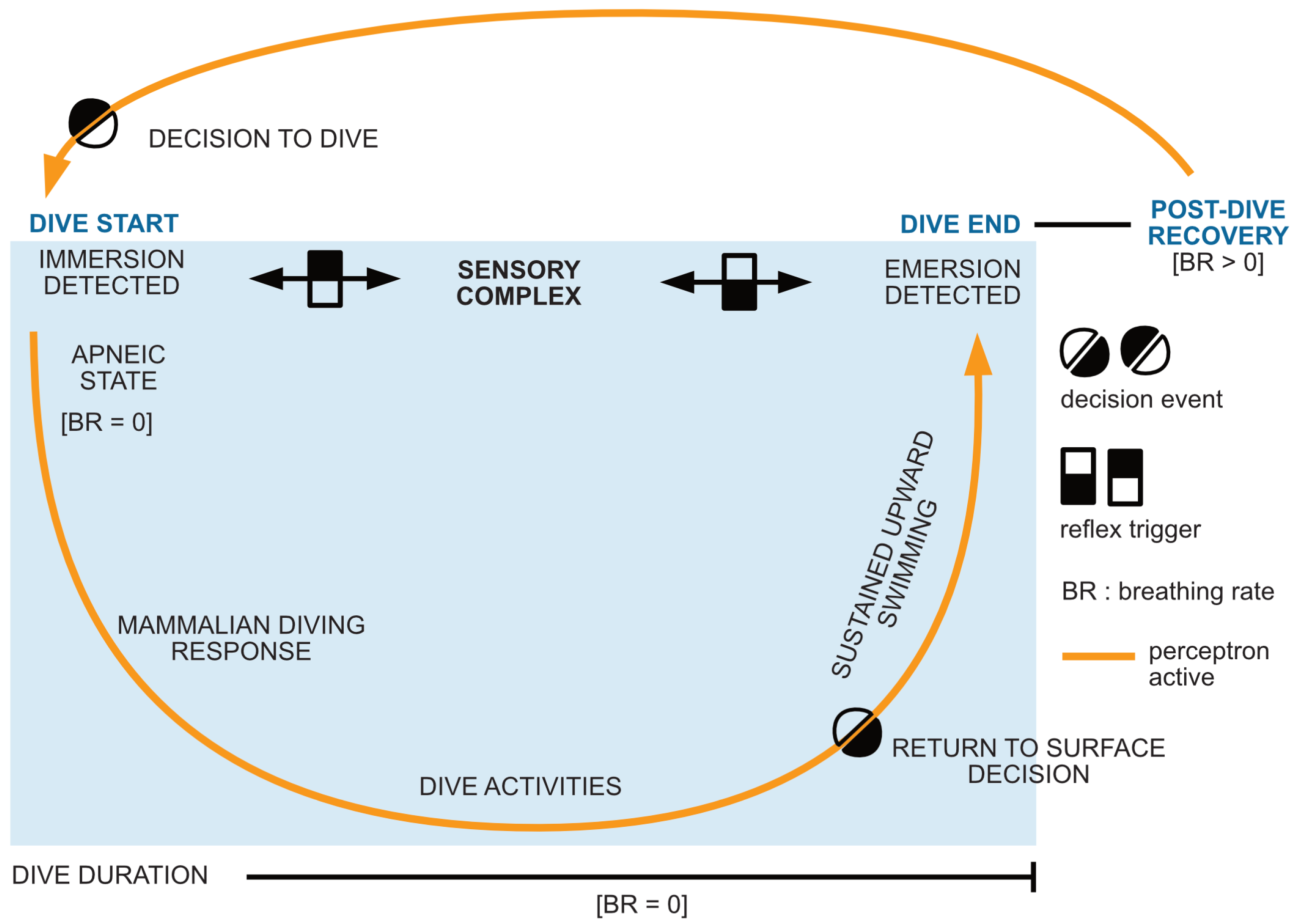
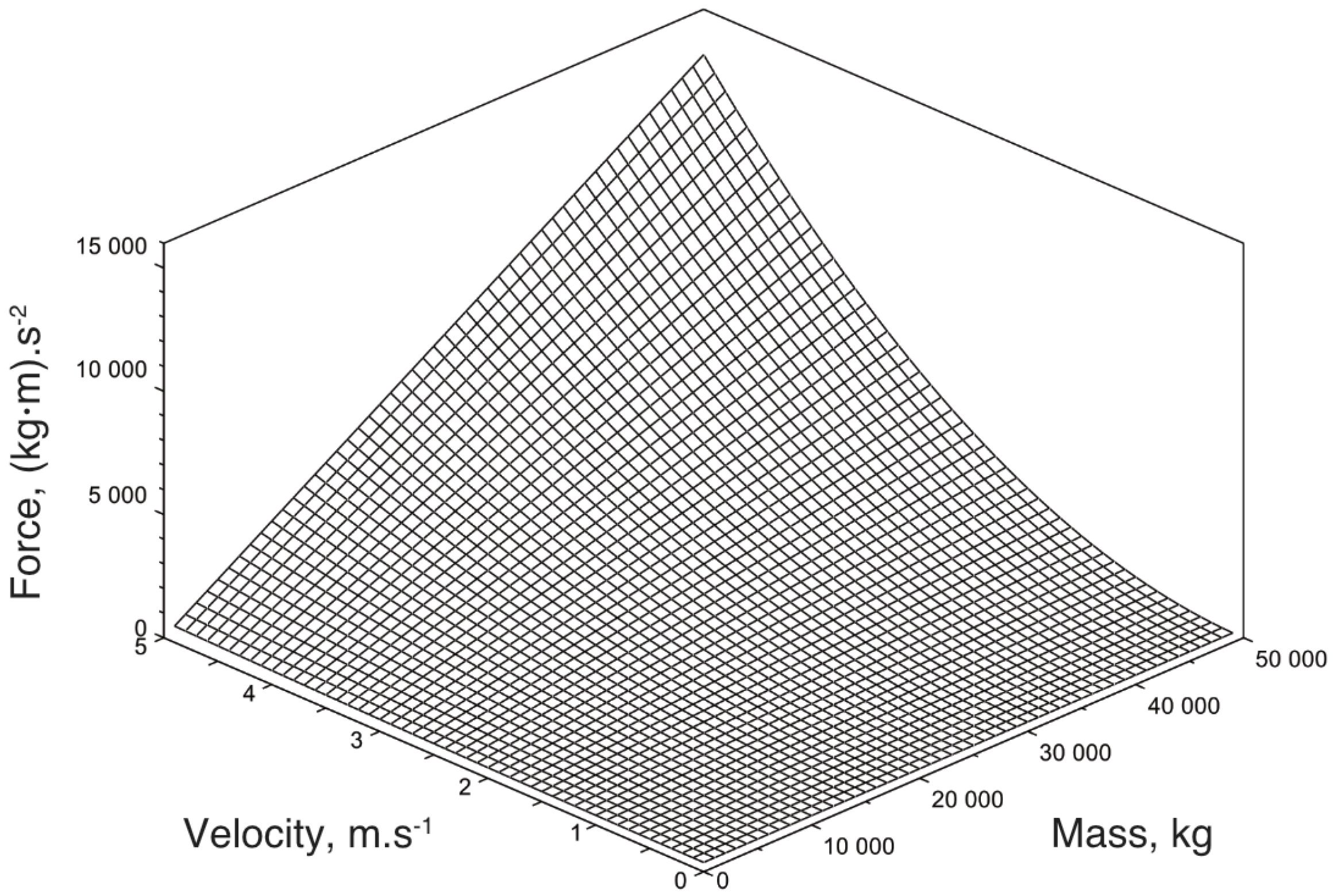
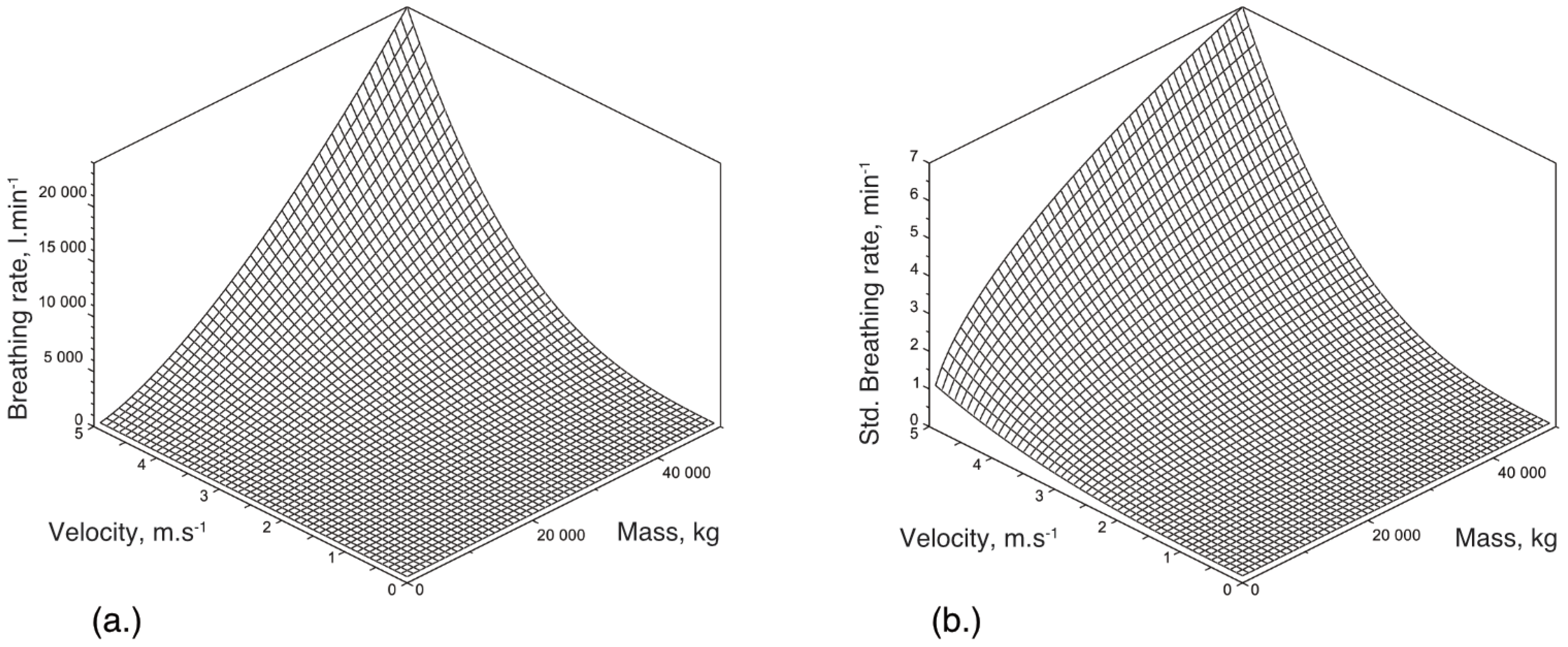
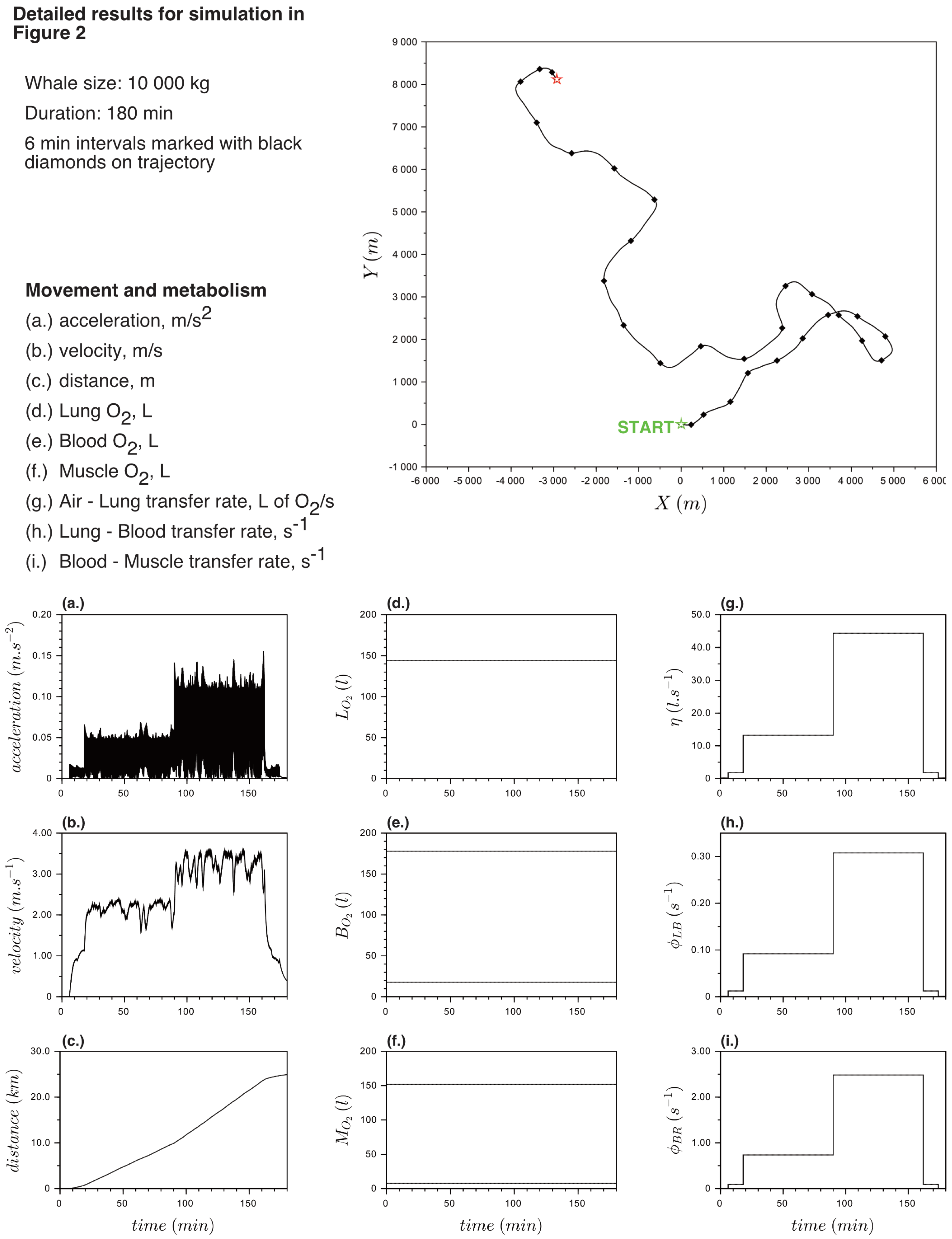
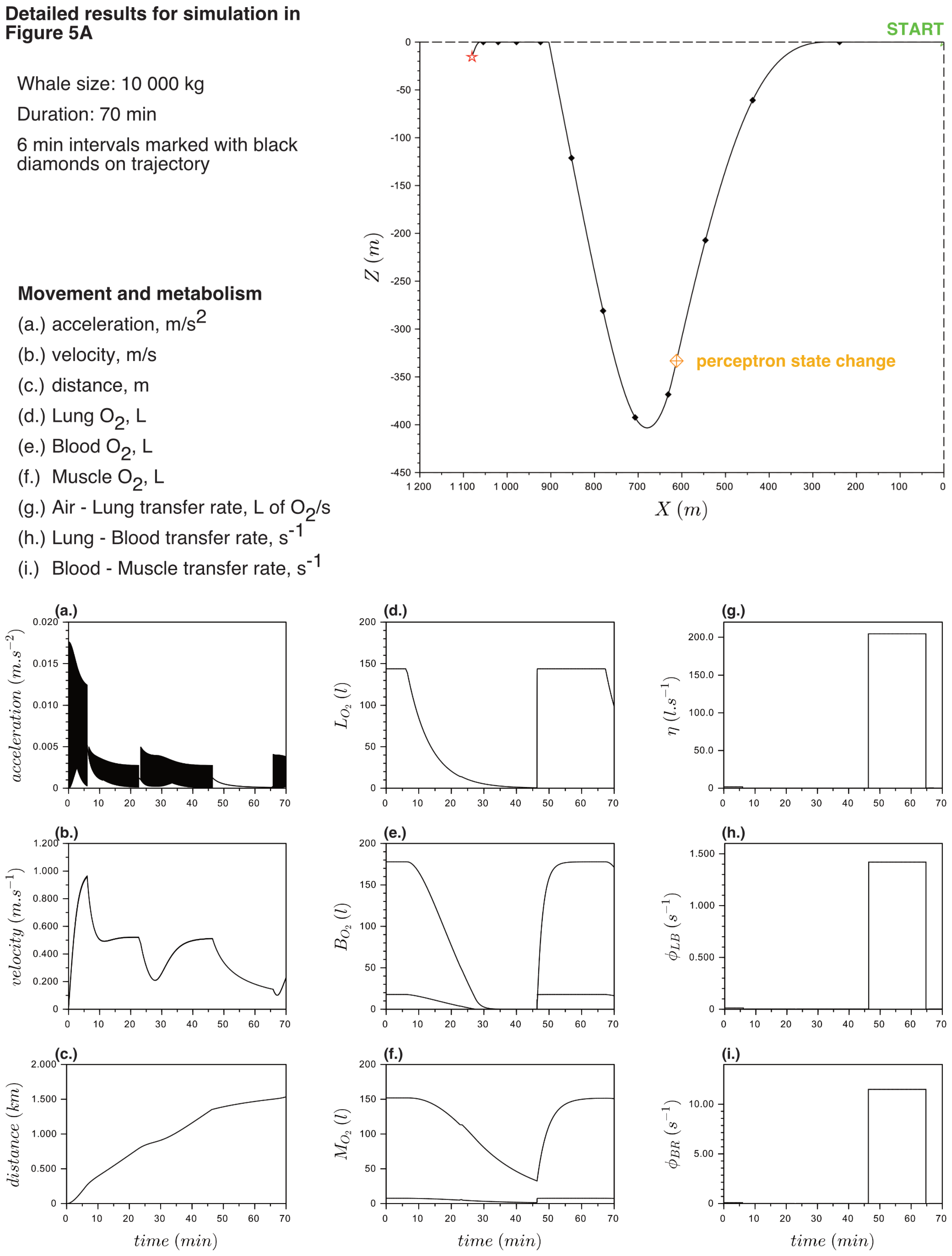
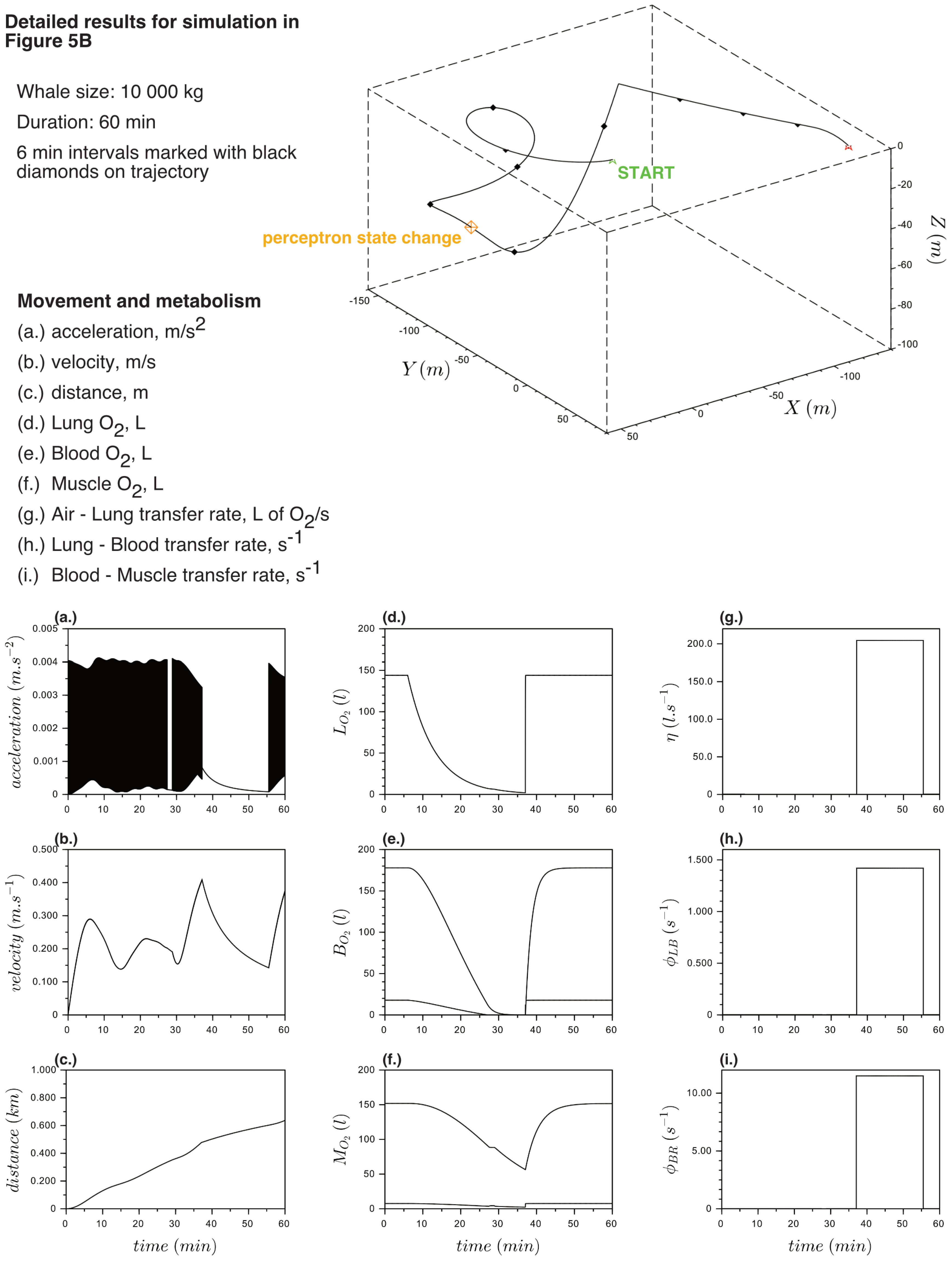
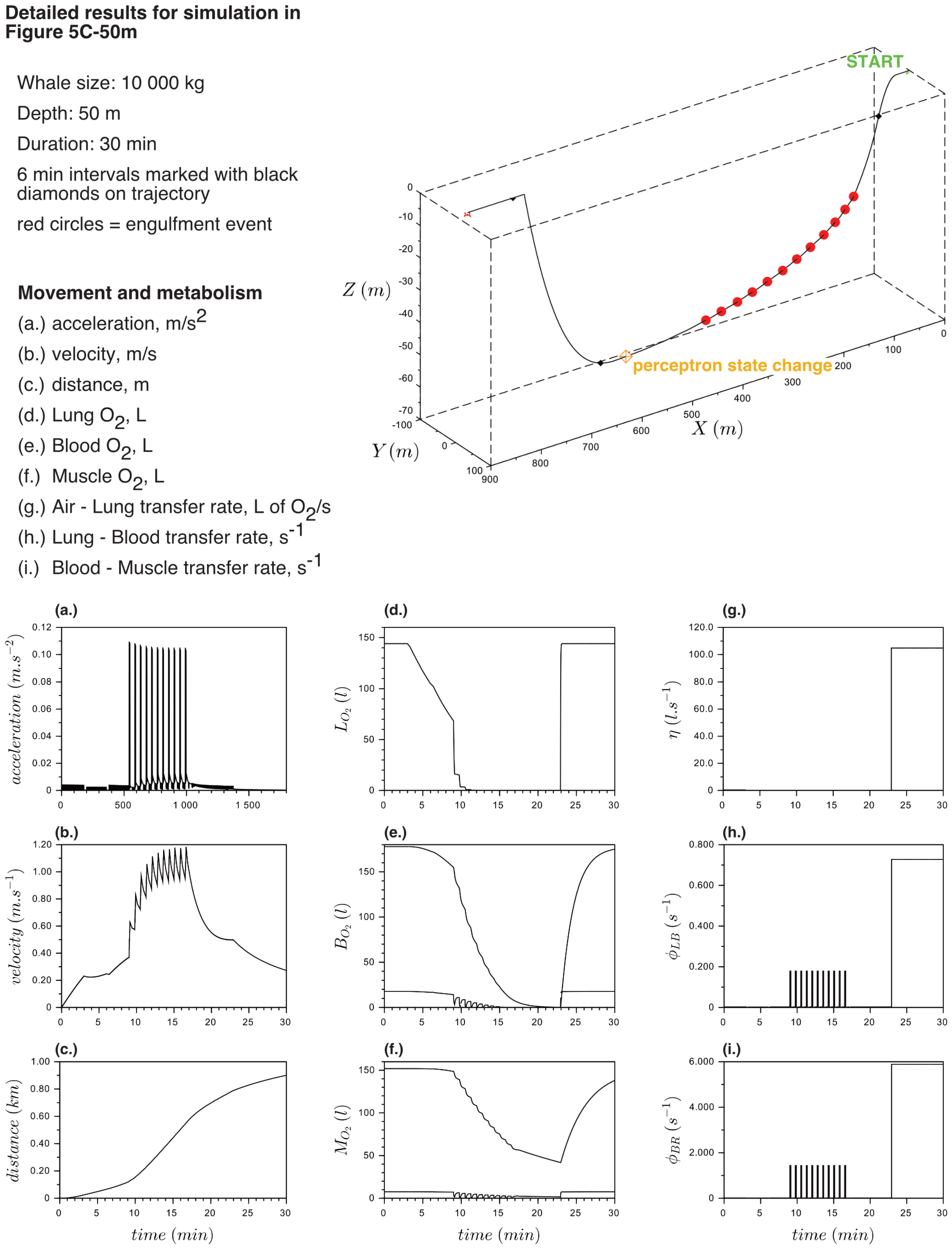
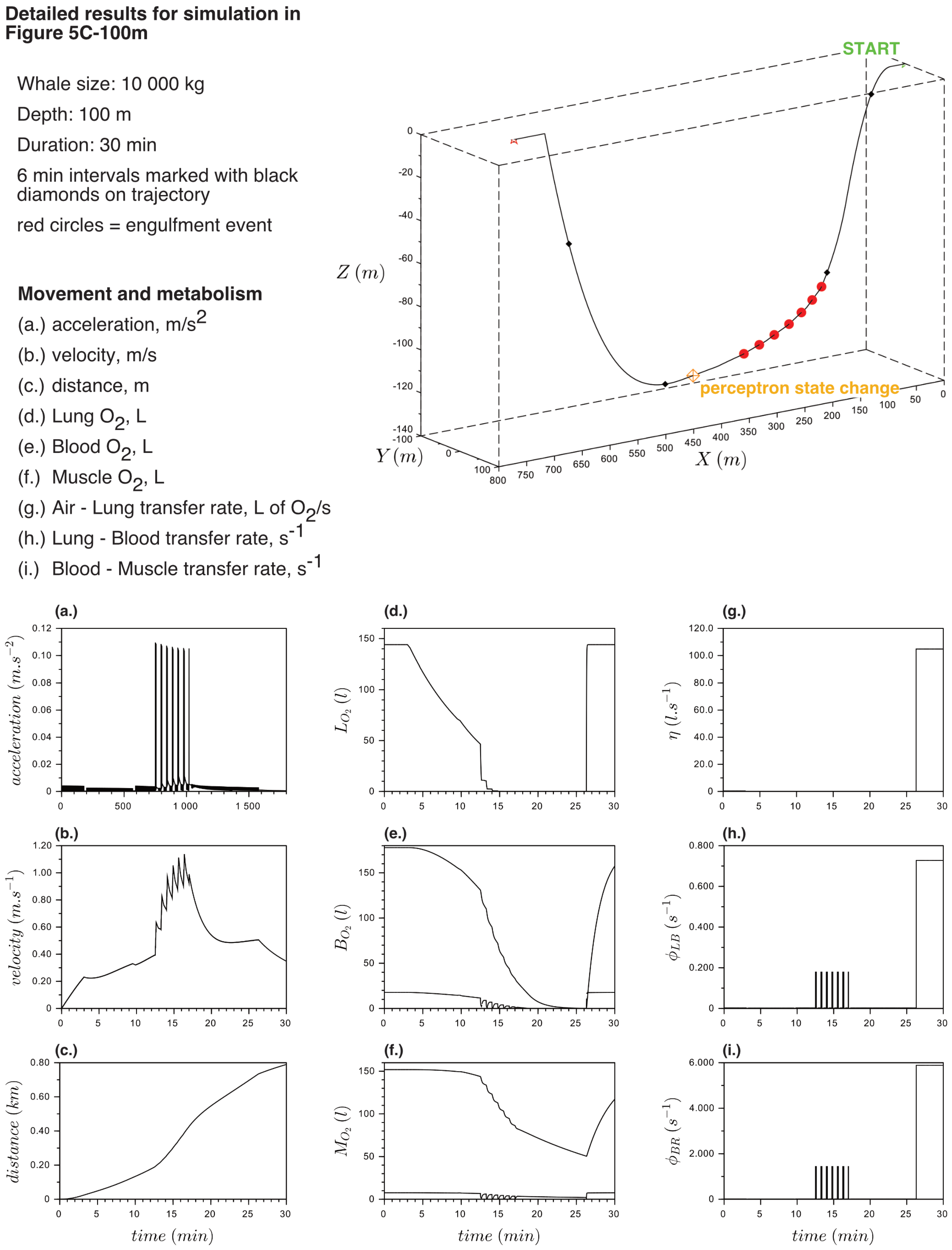
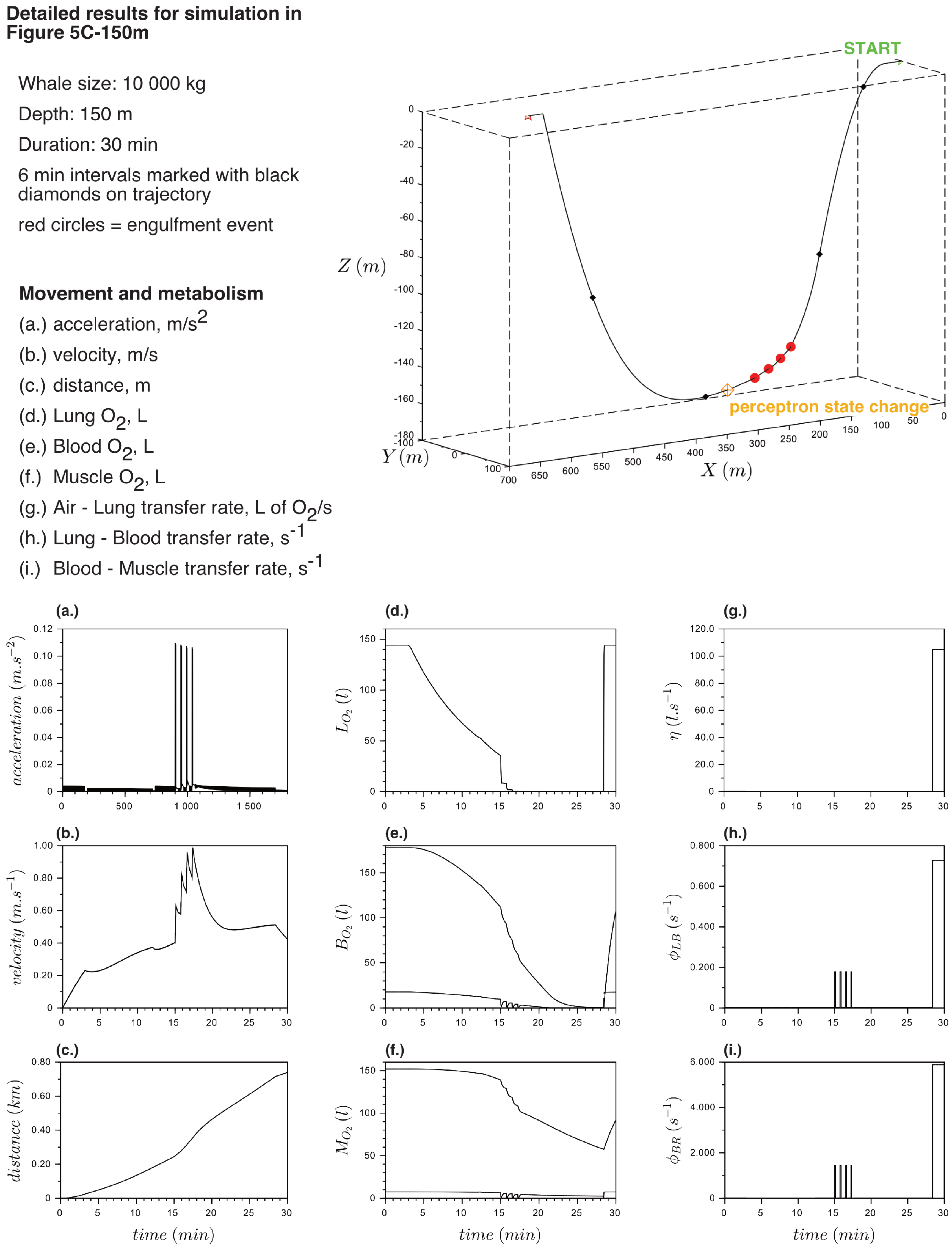
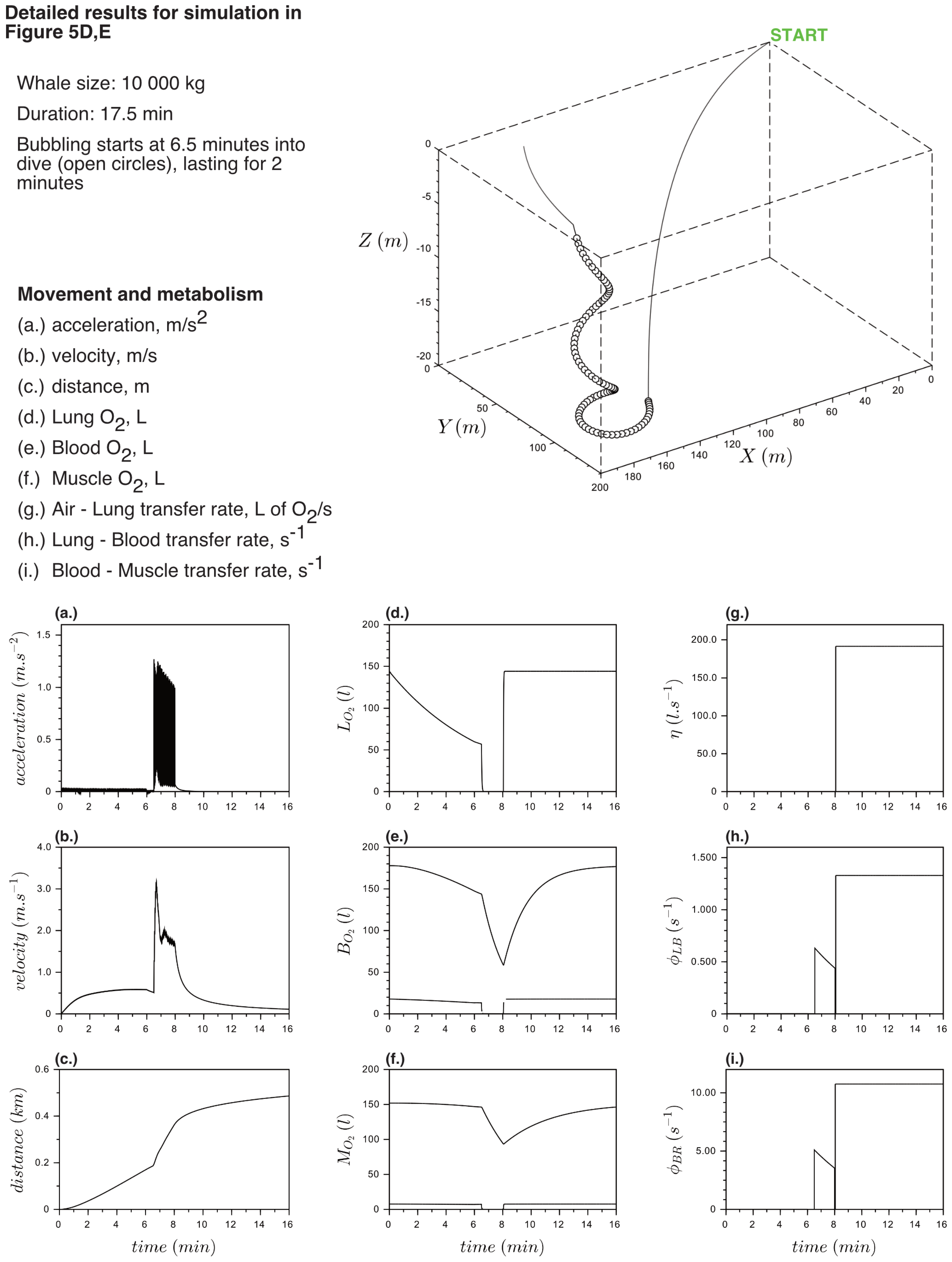
Among marine organisms, baleen whale species like the humpback whale (Megaptera novaeangliae) are a case for which individual-based models are necessary to study population changes because individual trait variabilities predominate over average demographic rates to govern population dynamics. These models require quantification of individual organisms’ dynamics with respect to local conditions, which implies optimal strategy frameworks cannot be used. Instead, to quantify how individuals perform according to the environmental conditions they encounter, we formulated a model linking individual mechanical characteristics of swimming and diving with their aerobic metabolism and behavior. The model simulates the dynamics of swimming and diving for the reported range of whale sizes (1000 to 50,000 kg). Additional processes simulate foraging events including rapid accelerations and water engulfment, which modifies whale shape, weight and drag. Simulations show how the energy cost of swimming at equilibrium increases geometrically with velocity and linearly with mass. The duration and distance covered under apnea vary monotonically with mass but not with velocity; hence, there is a positive mass-dependent optimal velocity that maximizes the distance and duration of apnea. The dive limit was explored with a combination of the physiological state, mechanical force produced and distance to return to surface. This combination is imposed as an inequality constraint on the whale individual. The inequality constraint, transformed as a multi-layer perceptron, which continuously processes information about oxygen, depth and relative velocity, provides the whale individual with autonomous decision-making about whether or not to continue the dive. The results also highlight where missing metabolic information is needed to simulate the dynamics of a population of autonomous individuals at the scale of the Global Ocean.
Keywords: baleen whales; individual-based modeling; swimming and diving behavior; foraging; aerobic metabolism; neural network baleen whales; individual-based modeling; swimming and diving behavior; foraging; aerobic metabolism; neural network