1. Introduction
The vast majority of global offshore wind energy resources are located in waters deeper than 60 m. Fixed-bottom offshore wind turbines become prohibitively expensive to install in depths exceeding 50–60 m due to sharply rising construction costs. Floating offshore wind turbines (FOWTs) overcome this depth limitation by utilizing floating supporting platforms, enabling large-scale development of wind resources in deep water areas. Additional advantages of FOWTs include reduced visual impact from shore, minimized seabed disturbance, energy supply for desalinated water on islands and ease of modular fabrication, etc. [
1,
2]. Consequently, FOWTs have advanced rapidly in recent years, with prototype units and small-scale floating wind farms successively deployed in countries, such as Norway [
3], Portugal [
4], the United Kingdom [
5], France [
6], Japan [
7], and China [
8]. Indeed, FOWTs have made significant progress, advancing from single demonstration units to small-scale commercial pilot farms. DNV optimistically predicts that global floating wind capacity could reach 260 GW by 2050 [
9]. Based on hydrostatic stability principles of floating support platforms [
10], FOWTs can be classified into four main types: spar-type, semi-submersible, tension-leg platform, and barge-type. Among these, the semi-submersible FOWT is currently the most widely adopted configuration, with the largest number of full-scale prototypes deployed to date. This type typically employs multiple buoyant columns to provide hydrostatic stability, offers flexible adaptability to varying water depths, and enables convenient transportation and installation [
11].
Although semi-submersible FOWTs provide good hydrostatic stability, they can experience significant nonlinear hydrodynamic effects during extreme sea conditions. Firstly, when the platform undergoes substantial pitch or heave motions in waves, the waterplane and wetted surface of the floating platform change significantly. This results in nonlinear variations in the position of the center of buoyancy and the magnitude of hydrostatic restoring force, which in turn affect motion responses or even trigger parametric resonance [
12]. Related studies indicate that large platform motion and wave run-up may cause nonlinearities in hydrostatic restoring forces and even alter motion natural periods of FOWTs [
13,
14]. Secondly, nonlinear wave loads, primarily second-order difference-frequency wave forces, are significantly amplified under extreme sea conditions, exacerbating slow-drift motions of semi-submersible FOWTs and posing risks to the mooring safety. Zeng et al. [
15] emphasize that nonlinear hydrodynamic effects from wave-structure interactions are critical in shaping FOWT dynamics. In addition to these effects, Pegalajar-Jurado and Bredmose [
16] also highlight the essential role of slow-drift forcing and damping in accurately predicting low-frequency motions. Moreover, there is a close coupling effect between nonlinear wave surface changes and platform motion, which could increase the peak wave pressure [
17]. Consequently, the instantaneous wetted surface becomes particularly significant under conditions of intense platform motion or substantial waterline variations, such as those induced by ballast tank adjustments. These combined nonlinearities pose considerable challenges for semi-submersible FOWTs.
Therefore, accurately calculating the hydrodynamic forces of semi-submersible FOWTs is particularly important for our design. Currently, the main hydrodynamic calculation methods for FOWTs include Computational Fluid Dynamics (CFD), frequency-domain potential flow theory, and time-domain potential flow theory. The characteristics and differences among these three methods are summarized in
Table 1.
Among these methods, Computational Fluid Dynamics (CFD) achieves high-fidelity hydrodynamic reproduction of FOWTs via numerically solving the Navier–Stokes equations. CFD is capable of simulating strongly nonlinear hydrodynamic phenomena that linear potential flow theory cannot capture, such as wave breaking, wave-in-deck impacts and viscous damping. Liu et al. [
18] developed a fully coupled fluid–structure interaction (FSI) system for the OC4 DeepCWind semi-submersible FOWT using OpenFOAM. Similarly, Tran and Kim [
19] employed the overset mesh technique and Volume-of-Fluid (VOF) method to construct a high-fidelity fluid–structure model of the OC4 DeepCWind semi-submersible FOWT. However, CFD is extremely computationally expensive. Simulating just a few hours (in real time) of a FOWT’s response can require weeks or even months of computational time on a conventional computer, making it impractical for use throughout the entire engineering design cycle. Currently, CFD is primarily employed as a tool to validate simplified models and to investigate specific physical phenomena. In contrast, frequency-domain potential flow theory is the most widely used method in current engineering practice. Based on linear potential flow assumptions, it calculates hydrodynamic loads in the frequency domain. Its core assumptions include inviscid, irrotational flow and small-amplitude body motions, implying that changes in the wetted surface area are negligible [
20]. Software tools such as WADAM [
21], WAMIT [
22], and AQWA [
23] can efficiently compute hydrodynamic coefficients (i.e., added mass and radiation damping) and wave excitation forces. Subsequently, integrated simulation tools, i.e., FAST [
24] and GH Bladed [
25], transform these frequency-domain hydrodynamic coefficients into time-domain hydrodynamic loads using Cummins’ equation [
26]. The main limitation of this approach lies in its linear assumptions. Although second-order forces can be approximately accounted for using Quadratic Transfer Functions (QTFs) [
27], this approach remains inadequate in scenarios involving significant instantaneous changes in the wetted surface. The OC5 project shown that this method can lead to an underprediction of motion responses for semi-submersible platforms near resonance frequencies by approximately 20% [
28]. Moreover, because frequency-domain potential flow methods assume a fixed equilibrium waterline and constant wetted surface, they may introduce substantial errors when applied to some semi-submersible FOWTs with non-vertical column geometries or those undergoing significant platform tilting—conditions under which the waterplane area and wetted surface change markedly during motion. Yet, research addressing these limitations remains largely unexplored and represents a critical knowledge gap.
Time-domain potential flow methods were developed to overcome the limitations of frequency-domain approaches mentioned above. By solving the equations of motion in a time-marching framework, they can account for instantaneous changes in the wetted surface and nonlinear wave loads. Although their computational efficiency is lower than that of frequency-domain potential flow methods, it is significantly higher than that of CFD and sufficiently practical to be widely accepted in industrial design. Building upon the advancement of time-domain potential flow methods, several innovative computational strategies have been developed to better capture nonlinear wave-structure interactions. Qiu and Peng [
29] established a body-exact time-domain approach utilizing a panel-free technique for simulating floating body motions, which effectively resolves the instantaneous wetted surface without requiring re-meshing. Additionally, Xiao et al. [
30] combined a high-order spectral method with a three-dimensional, weakly nonlinear ship motion model, enabling the evaluation of Froude–Krylov and hydrostatic pressures directly on the actual submerged geometry. Commercially, WASIM has emerged as a prominent tool based on a time-domain Rankine source method [
31]. Its formulation incorporates the quadratic term in Bernoulli’s equation and calculates hydrostatic and Froude–Krylov pressures on the instantaneous wetted surface, which is updated according to rigid-body motions and incident wave profiles. Despite the long-standing development and application of time-domain potential flow theory in ship hydrodynamics, its use in the analysis of FOWTs remains relatively limited.
Furthermore, the design phase of FOWTs is often challenged by cumbersome and less accurate structural stress analysis procedures. Since conventional frequency-domain potential flow methods cannot directly provide time-domain data on external hydrodynamic pressures during integrated coupled analysis, it is often necessary to employ time-domain potential flow software such as WASIM to reproduce the pressure field by imposing pre-calculated platform motions for subsequent structural stress evaluation. For instance, Bakhshandehrostami et al. [
32] proposed a workflow in which frequency-domain hydrodynamic coefficients of a semi-submersible FOWT platform computed by WADAM are imported into Bladed for integrated time-domain simulation of the FOWT. The resulting platform motions, tower interface loads, and mooring loads from Bladed are then fed into WASIM to simulate the platform’s forced motion, thereby reconstructing the external hydrodynamic pressure. Finally, structural stress time history is obtained through a finite element module. Although this analysis procedure has become the mainstream approach for FOWT structural analysis in current practice, it suffers from two major drawbacks: operational inefficiency due to manual data transfer between multiple tools, and inherent inaccuracies introduced by relying on a linear hydrodynamic solver for the initial motion and load calculations.
To address the aforementioned challenges, this study proposes the FAST2WASIM (F2W) time-domain fully coupled framework for hydrodynamic analysis of semi-submersible FOWTs. The proposed framework offers the following key advantages: it integrates the Rankine source method to update the instantaneous wetted surface in real time based on platform displacements and wave interactions, enabling accurate quantification of nonlinear hydrostatic restoring forces and transient buoyancy effects; it incorporates transient free-surface updates, quadratic terms in Bernoulli’s equation, and higher-order wave effects to improve load prediction accuracy under large-wave conditions; and it pioneers a unified time-domain environment that simultaneously resolves hydrodynamic loads and external panel pressures, thereby eliminating errors associated with cross-software data transfer. Compared to current mainstream time-domain structural analysis workflows, the proposed F2W framework enhances both computational efficiency and prediction accuracy in structural analysis. Although Chen et al. [
33] applied this method to study Spar-type FOWTs, semi-submersible FOWTs feature a more complex platform structure and nonlinear hydrodynamic characteristics. In addition, previous studies have not analyzed the structural stress responses of the FOWTs under this methodology.
The remainder of this paper is structured as follows:
Section 2 presents the methodological framework of the F2W tool and elaborates on its core hydrodynamic theory.
Section 3 introduces the research object along with its modeling parameters.
Section 4 provides a comprehensive comparison between the proposed F2W tool and FAST (which represents a conventional linear hydrodynamic approach) under a series of test conditions to evaluate their respective performances.
Section 5 compares the structural analysis procedure for FOWTs established using F2W against traditional structural analysis workflows. Finally,
Section 6 concludes the paper and outlines promising future research directions.
3. FOWT Model
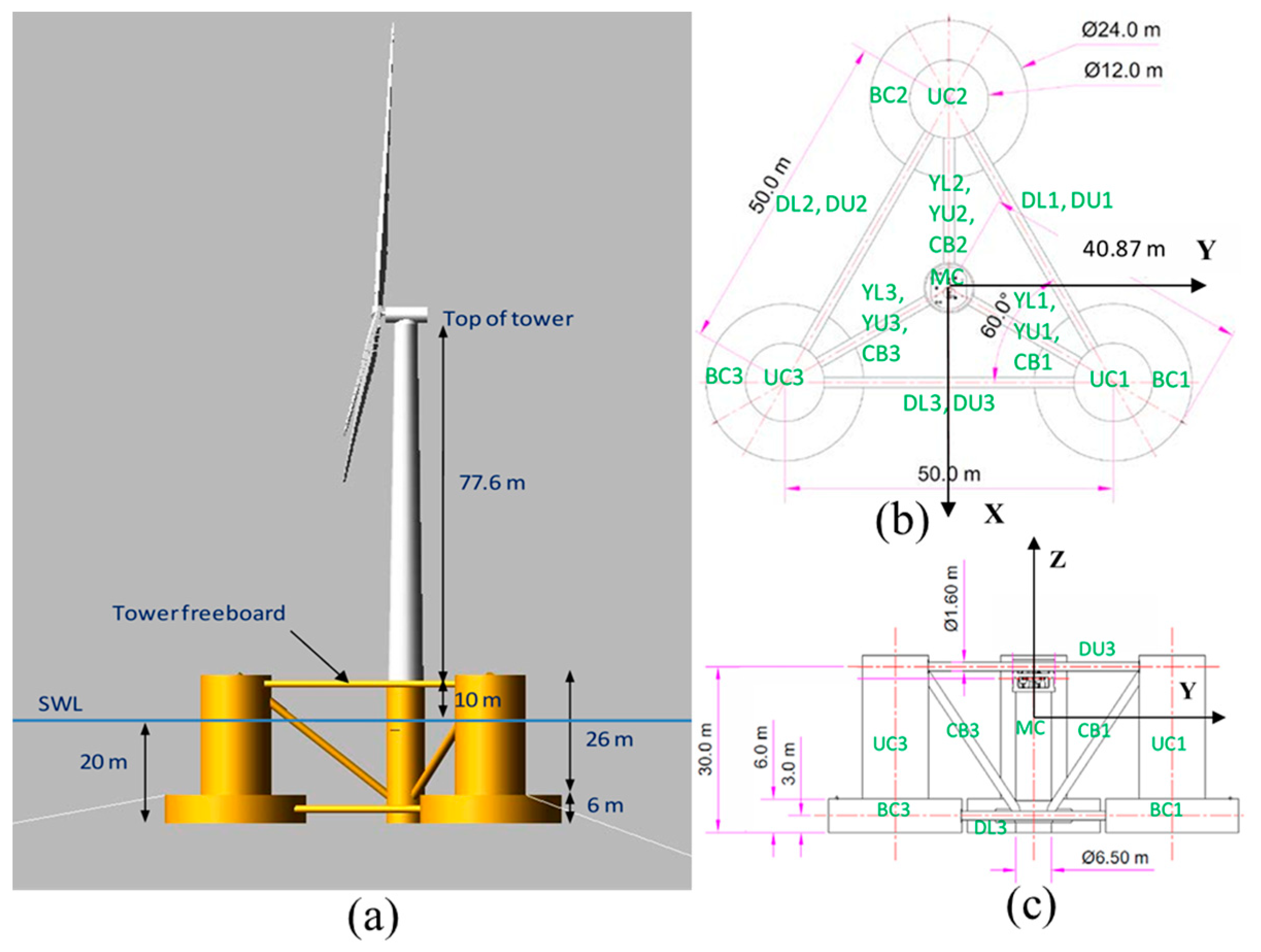
The DeepCwind semi-submersible FOWT, developed within the IEA Wind Offshore Code Comparison Collaboration Continuation (OC4) project [
37], was adopted in this study, as illustrated in
Figure 2a. Specific platform dimensions are shown in
Figure 2b,c, while the main parameters of the FOWT are listed in
Table 2. The DeepCwind semi-submersible platform consists of three offset pontoons, a central column, and connecting braces linking these components. The platform has a designed draft of 20 m, with the RNA (Rotor-Nacelle-Assembly) and a tower mounted atop the central column, positioned 10 m above the calm waterline. The NREL-5 MW reference wind turbine specifications are provided in Reference [
38]. The floating platform is moored using three catenary lines; further details on the mooring system and platform parameters are also available in Reference [
37].
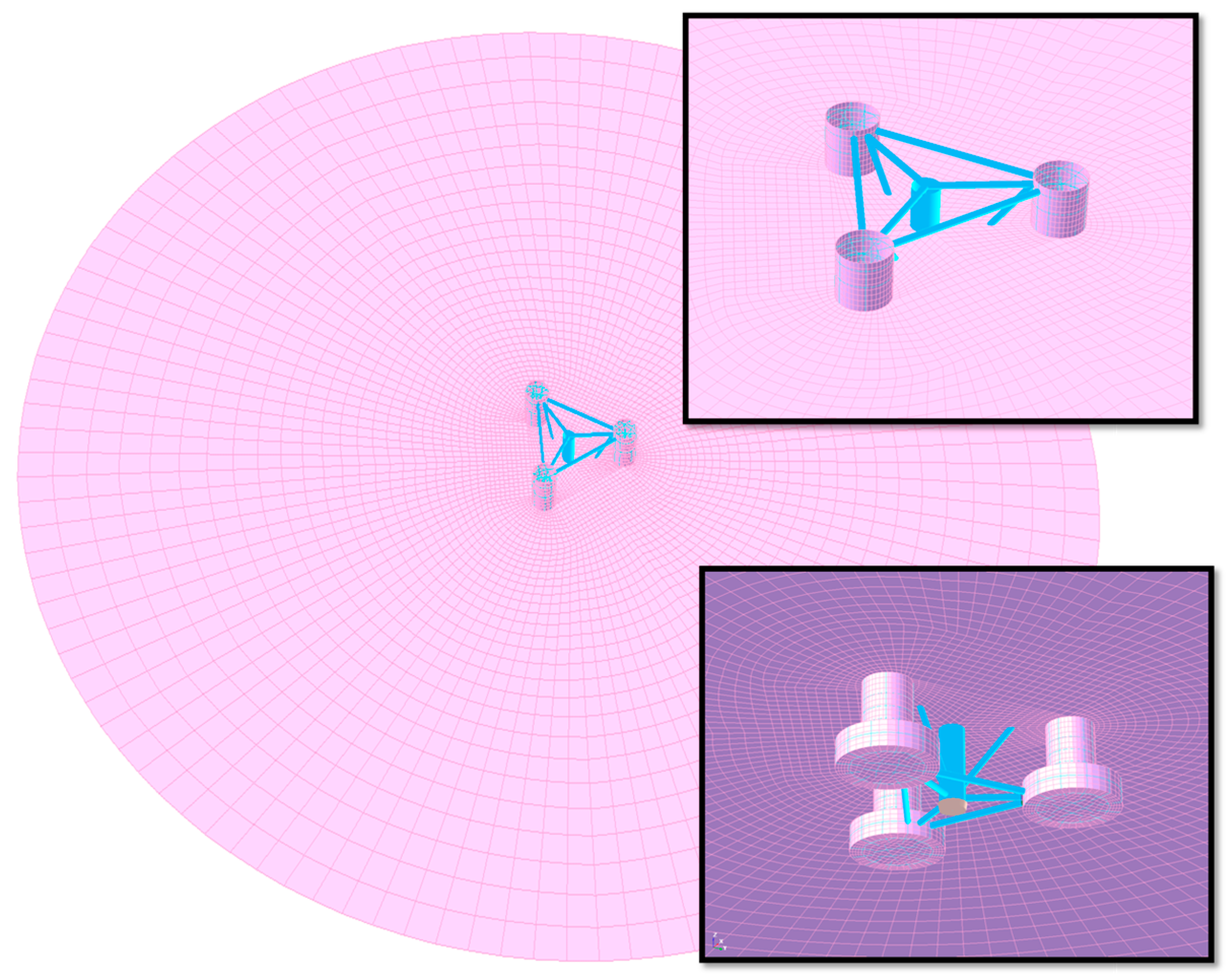
Since the Rankine method does not inherently satisfy the free-surface boundary conditions, both a panel mesh on the hull and a free-surface mesh must be established for hydrodynamic calculations in WASIM, as illustrated in
Figure 3. Considering the characteristics of the OC4 DeepCwind semi-submersible floating platform, the central column and truss structures have relatively small diameters and are primarily subjected to viscous forces. Therefore, these components are modeled using beam elements in Morison’s formula (see blue members in
Figure 3). In contrast, the three pontoons have larger diameters and are suitable for potential flow analysis, requiring hull panel discretization (shown in pink members in
Figure 3).
Regarding mesh convergence, potential flow methods exhibit lower sensitivity to mesh resolution than computational fluid dynamics (CFD) approaches. For engineering applications, adequate accuracy is generally achieved when the mesh size near the body surface remains below 1/8 of the shortest wavelength of interest. In this analysis, the shortest wave period considered is
Tmin = 3 s, corresponding to a minimum wavelength of
λmin ≈ 14 m. To satisfy spatial resolution requirements, the maximum hull panel size in the longitudinal direction should not exceed 1.75 m (i.e., Δ
max ≤ λ
min/8). The current study employs a longitudinal panel size of approximately 0.94 m, which fulfills the recommended criterion for numerical accuracy and stability. According to the WASIM user manual [
35], a time step of 0.1 s is sufficient to maintain numerical stability and accuracy at low to moderate speeds. Given that the present analysis involves a stationary structure (zero forward speed), a time step of ∆t = 0.1 s is applied, in accordance with the established guidelines.
4. Verification and Comparison
This section evaluates the accuracy of the proposed F2W tool for numerical simulations of the DeepCwind semi-submersible FOWT under various test conditions, including free decay motion, wind-only condition, regular wave condition and irregular wave condition. The numerical results are compared against those obtained from the software FAST. FAST employs a conventional approach based on linear frequency-domain potential flow theory and linear hydrostatic restoring stiffness, with time-domain hydrodynamic forces generated by transforming frequency-domain data into the time domain—a methodology widely adopted in most current integrated FOWT simulation tools. The predictions from F2W and FAST should be broadly consistent, thereby validating the accuracy of F2W. Furthermore, a detailed analysis of the subtle differences between the results from the two software tools helps to elucidate the advantages of nonlinear hydrodynamic methods (F2W) over the traditional linear approaches (FAST) in predicting the nonlinear hydrodynamic performance of the semi-submersible FOWT.
4.1. Free Decay Motion
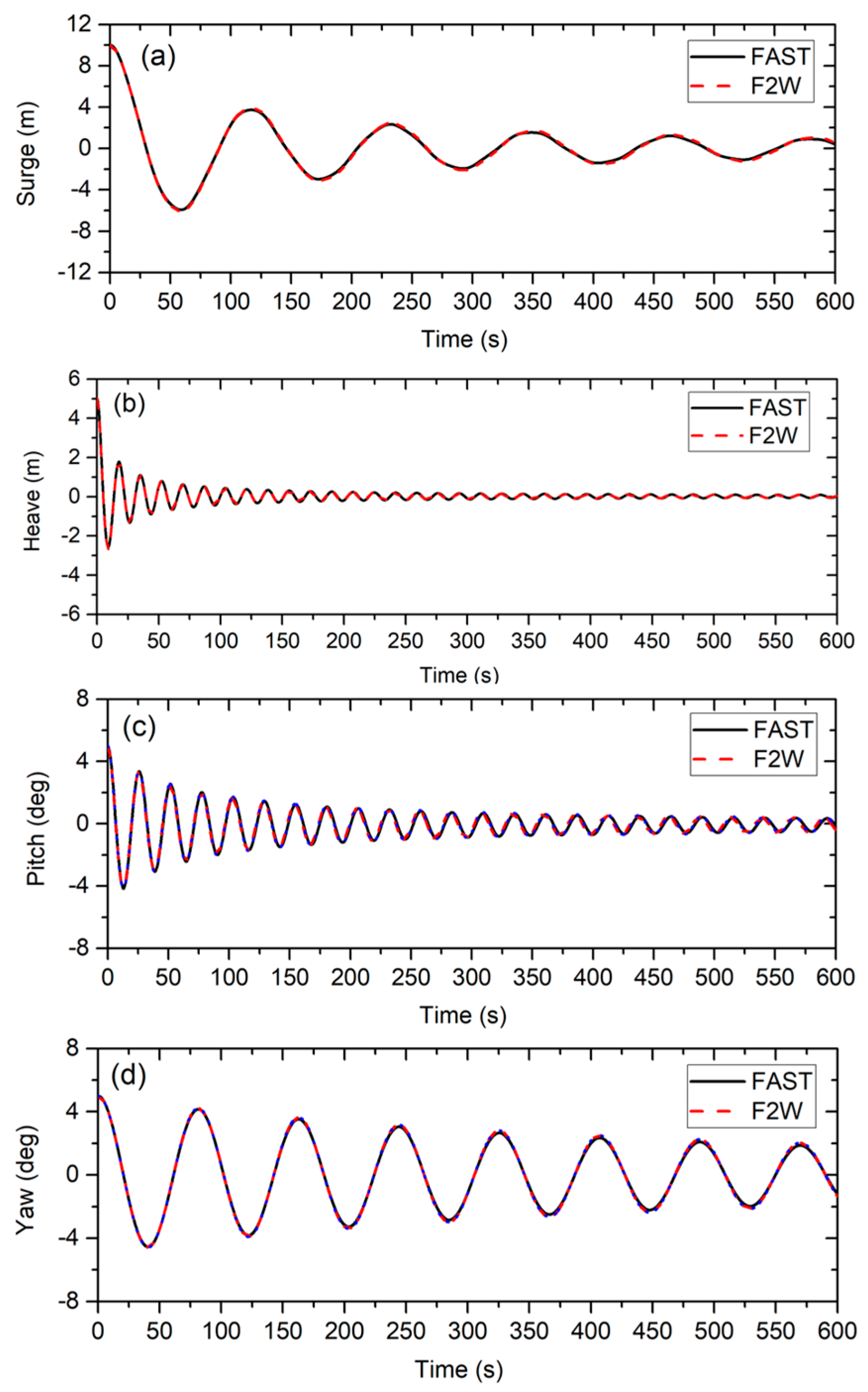
A comparison of the free decay responses of the FOWT predicted by F2W and FAST allows for validation of the fundamental accuracy of the proposed F2W tool in the OC4 DeepCwind semi-submersible FOWT model, particularly regarding some critical characteristics such as mass properties, moments of inertia, displaced volume, hydrostatic restoring forces, hydrodynamic damping, and mooring restoring stiffness, etc. The surge, heave, pitch, and yaw motions computed by F2W and FAST are compared in
Figure 4 (sway and roll can be omitted due to the platform’s geometric symmetry). The natural frequencies and damping ratios derived from these decay curves are summarized in
Table 3. As shown in the figure comparisons, the free decay motions predicted by F2W and FAST exhibit excellent agreement. Furthermore, the natural frequencies and damping values reported in
Table 3 are also in close alignment, with maximum discrepancies less than 1%. This indicates that the F2W tool accurately models the semi-submersible FOWT and reliably predicts its fundamental characteristics, including buoyancy, hydrostatic restoring forces, hydrodynamic damping and mooring system behavior.
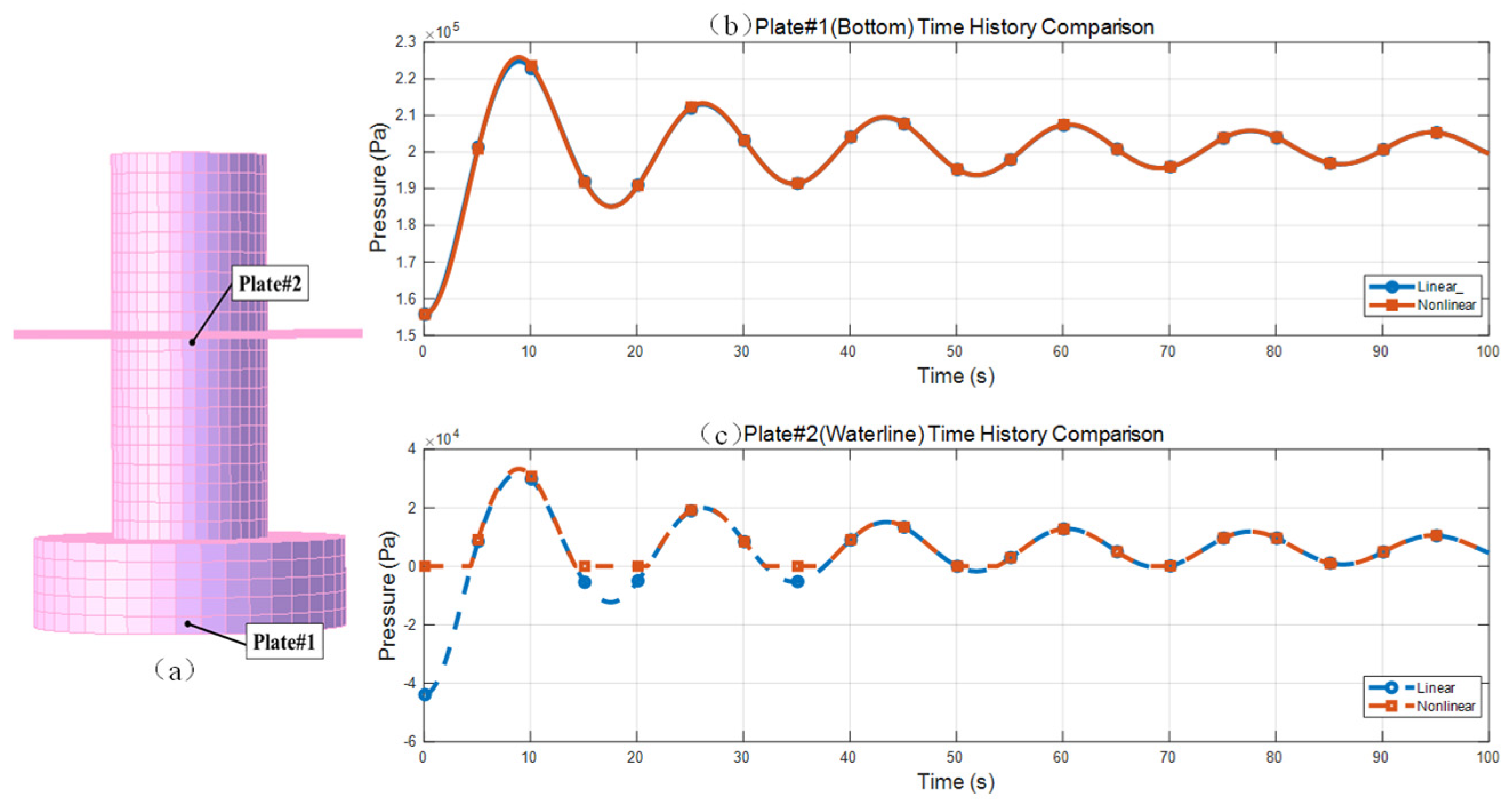
Pressure monitoring points are placed on the outer hull panels at the bottom and near the equilibrium waterline of one pontoon of the semi-submersible platform. The time histories of water pressure at these points, predicted by the linear and nonlinear hydrodynamic models under the heave motion decay condition, are compared in
Figure 5. As illustrated in
Figure 5b, the pressures at the bottom location are nearly identical between the two methods. However, discrepancies appear near the waterline (
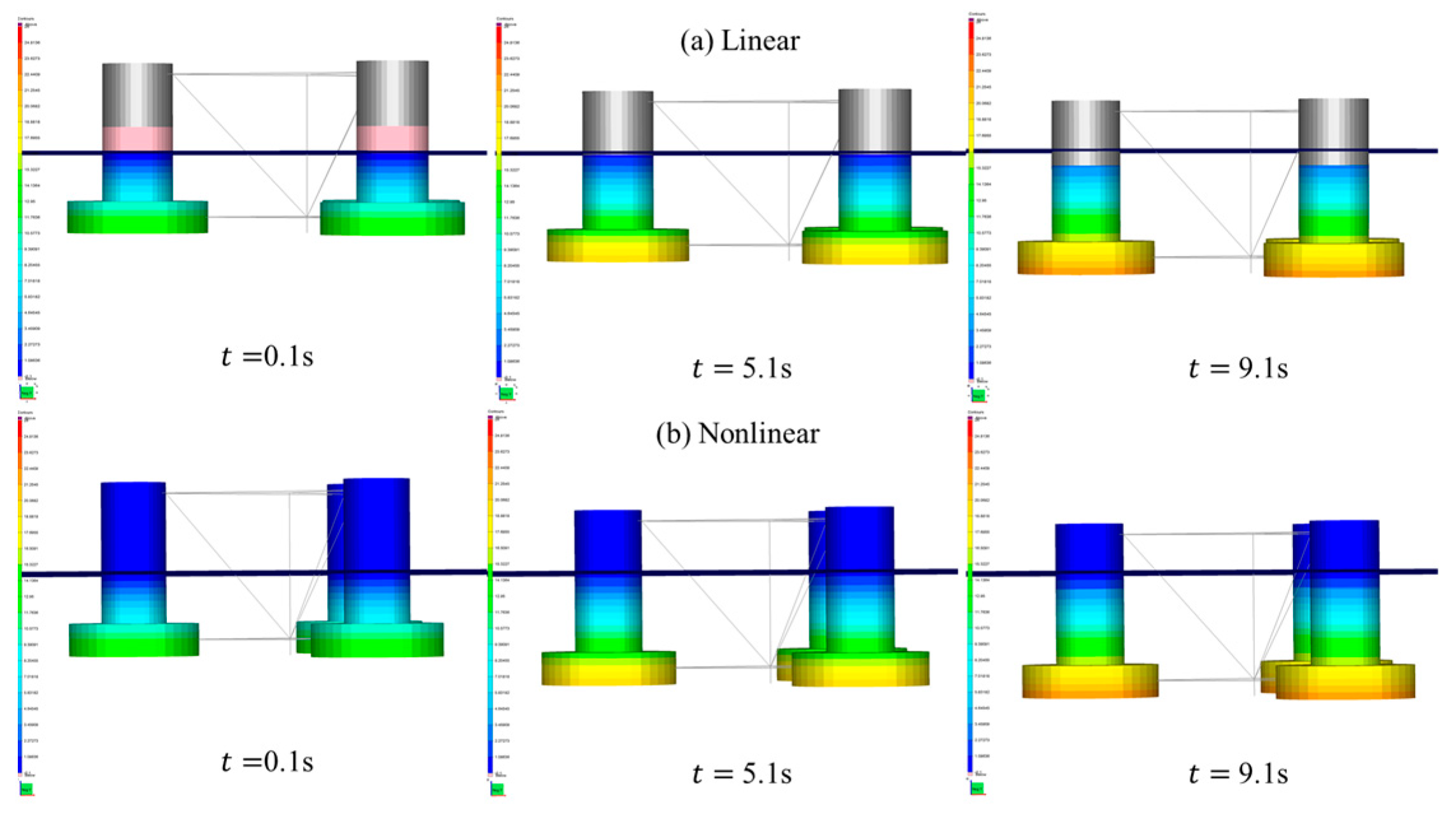
Figure 5c). In the linear model, the pressure at the near-waterline point exhibits continuous oscillations; when the point moves above the water surface due to upward platform motion, the pressure becomes negative, with increasingly negative values as the elevation above the water surface increases—this behavior is clearly unphysical. In contrast, in the nonlinear model, the pressure remains zero once the monitoring point emerges from the water, which aligns with real physical conditions. Comparing the pressure distributions on the platform’s wetted surface at 0.1 s, 5.1 s, and 9.1 s during the heave decay motion, as shown in
Figure 6, reveals that the linear model consistently computes water pressure up to the equilibrium waterline regardless of the platform’s actual position. This results in negative pressure values on the portion of the hull between the actual and equilibrium waterlines when the platform moves upward and this region is exposed to air—a non-physical outcome. Conversely, the nonlinear model dynamically updates the wetted surface based on the instantaneous free surface, correctly assigning zero pressure to regions exposed to air, consistent with the observed pressure time histories.
The aforementioned results indicate that the linear hydrodynamic method’s inability to update the waterline and wetted surface in real time can lead to incorrect local hydrodynamic pressures during the FOWT’s motion. This may result in errors in calculating motion responses and local structural stresses. Nonetheless, in scenarios involving significant platform motions or inclinations that cause substantial changes in the wetted surface of the platform, notable errors may occur.
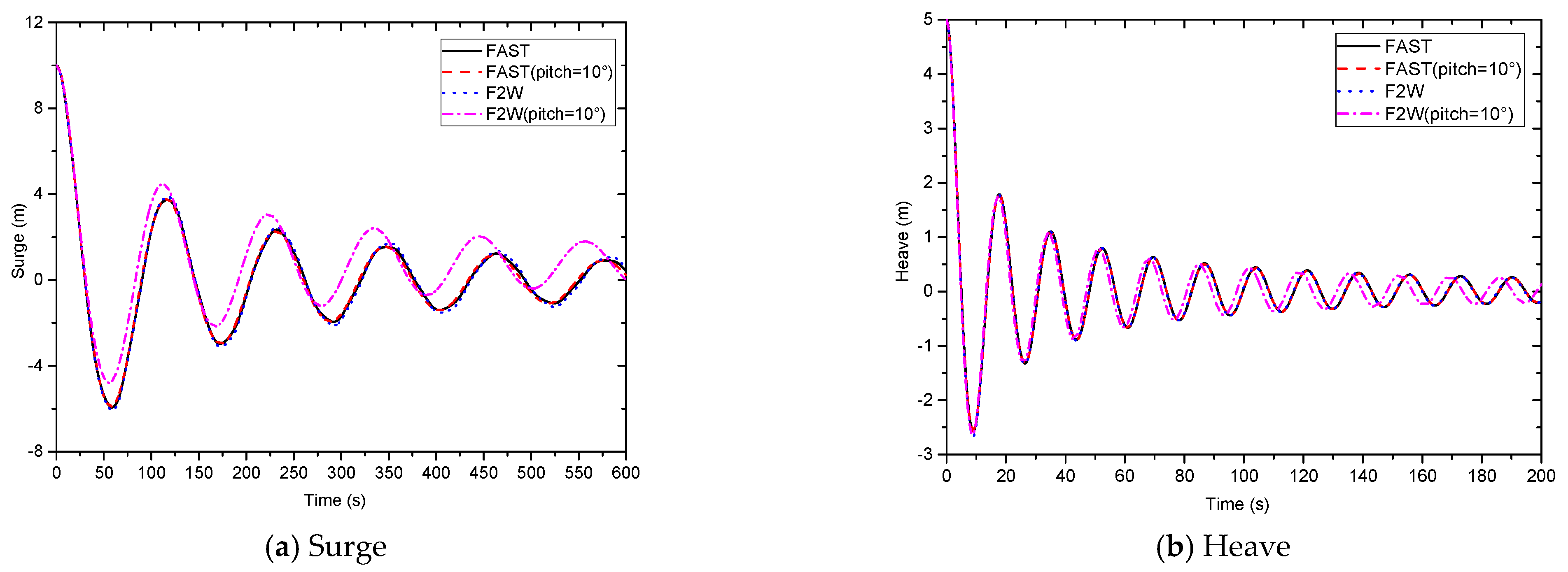
Taking the platform in a tilted state as an example (10° pitch angle is imposed), a condition commonly encountered when the FOWT is subjected to wind overturning moments, the predicted surge decay motion and heave decay motion are compared between FAST (employing a linear frequency-converted-time domain method) and F2W (employing a nonlinear time-domain method), as illustrated in
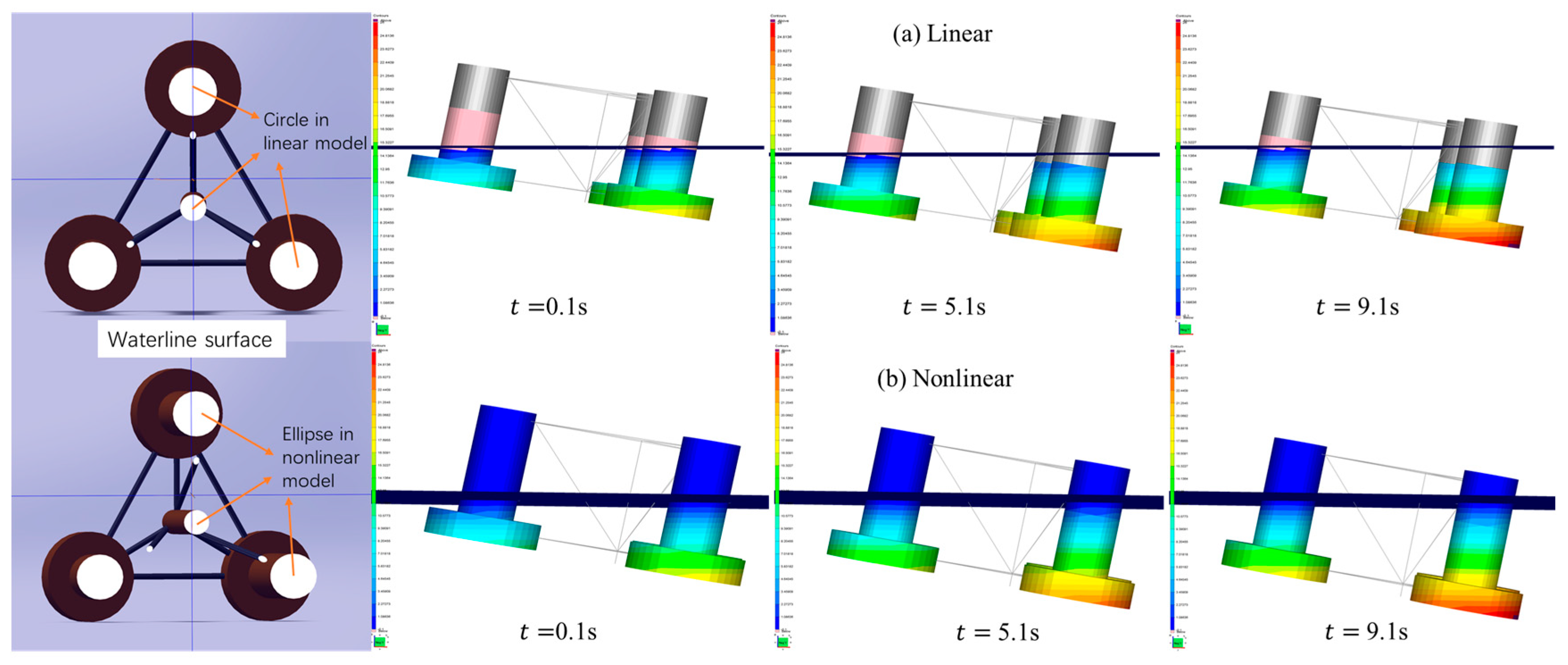
Figure 7. For FAST, the motion decay curves remain identical regardless of whether the platform is tilted or not. This indicates that the linear hydrodynamic model combined with constant hydrostatic stiffness cannot account for changes in the waterplane area and wetted surface due to platform inclination. Instead, it generates a linear restoring moment for pitch motion, while hydrodynamic forces continue to be computed based on the upright (zero heel) equilibrium position—an unphysical simplification that also causes the hydrostatic stiffness to remain unchanged. In contrast, the nonlinear hydrodynamic model in F2W accounts for the increased waterplane area induced by changing from a circular to a larger elliptical cross-section upon tilt (see
Figure 8), and dynamically updates the wetted surface. Consequently, the nonlinear model predicts a slight shift in the mean surge displacement during decay, resulting from the coupled motion induced by the offset of the coordinate origin due to pitch motion, as shown in
Figure 7a. Additionally, the surge restoring stiffness increases (corresponding to a reduced natural period: decreasing from the original 116.55 s to 110.99 s), which arises from the combined effects of surge offset and altered wetted surface.
Figure 7b also reveals that FAST’s linear approach also fails to capture the change in heave restoring stiffness caused by the enlarged waterplane area under a tilted condition. In contrast, F2W’s nonlinear method correctly models the increased waterplane area, leading to higher heave stiffness and thus a shorter natural heave period (reduced from 17.269 s to 16.98 s). It leads to an interesting finding: the natural frequencies of motion for a FOWT are not constant, as previously assumed, but instead vary nonlinearly during platform motion due to changes in the wetted surface of the platform. This variation can potentially trigger parametric resonance—an effect entirely overlooked by conventional linear hydrodynamic methods.
Furthermore, a comparison of the external hull pressure distributions at 0.1 s, 5.1 s, and 9.1 s during heave decay motion further highlights these differences. Under the tilted condition, the linear model exhibits more pronounced negative pressure regions on the side of the pontoon exposed above the water, where the emerged area is larger than in the upright case. Simultaneously, on the opposite, more deeply submerged side, hydrodynamic pressures are only computed up to the original (equilibrium) waterline, neglecting any pressure on the region between the original and actual instantaneous waterlines—resulting in significant inaccuracies in pressure distribution. In contrast, the nonlinear model continuously updates both the instantaneous waterline and wetted surface, yielding a physically consistent and more accurate pressure solution.
4.2. Wind-Only Condition
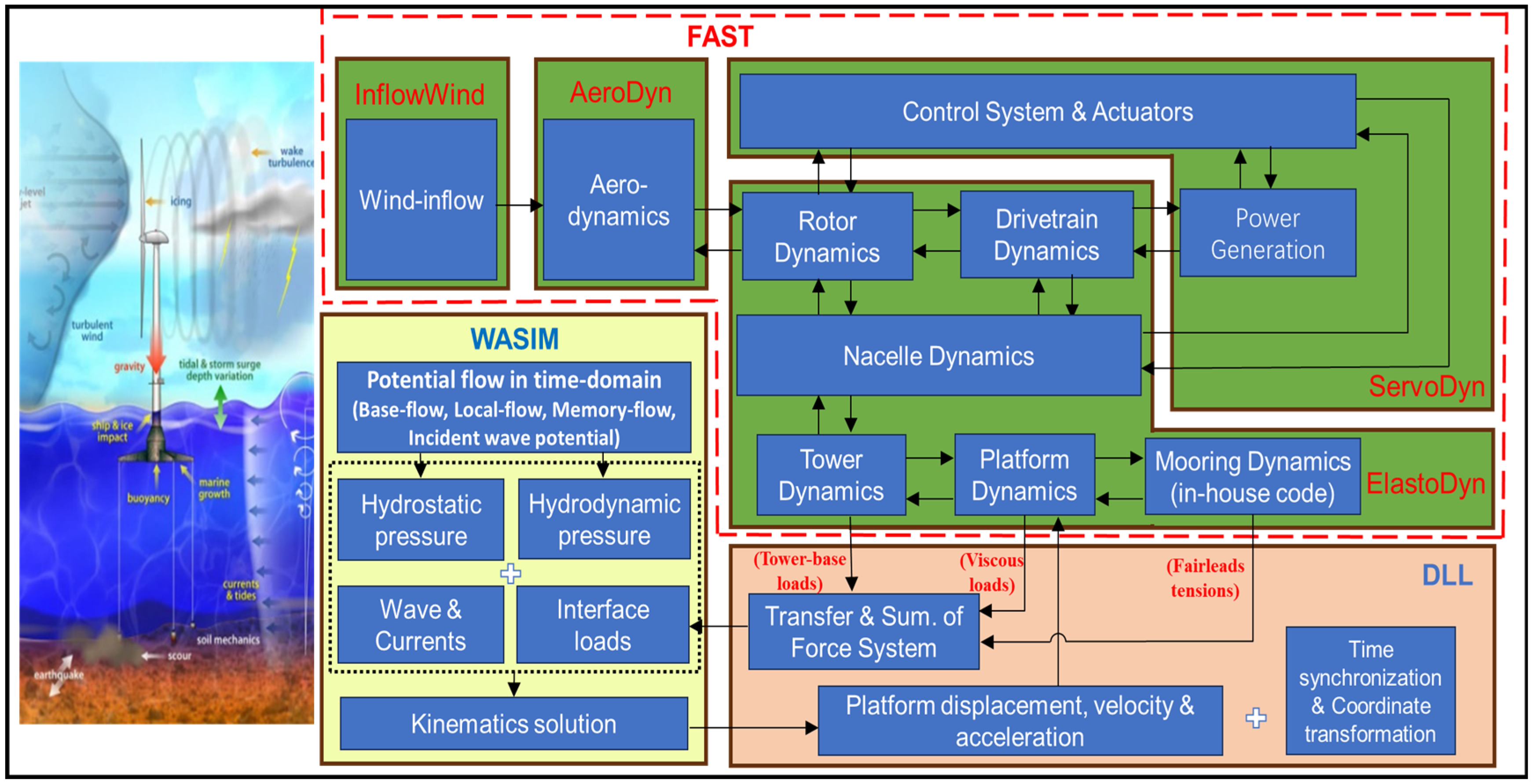
According to the flowchart of F2W shown in
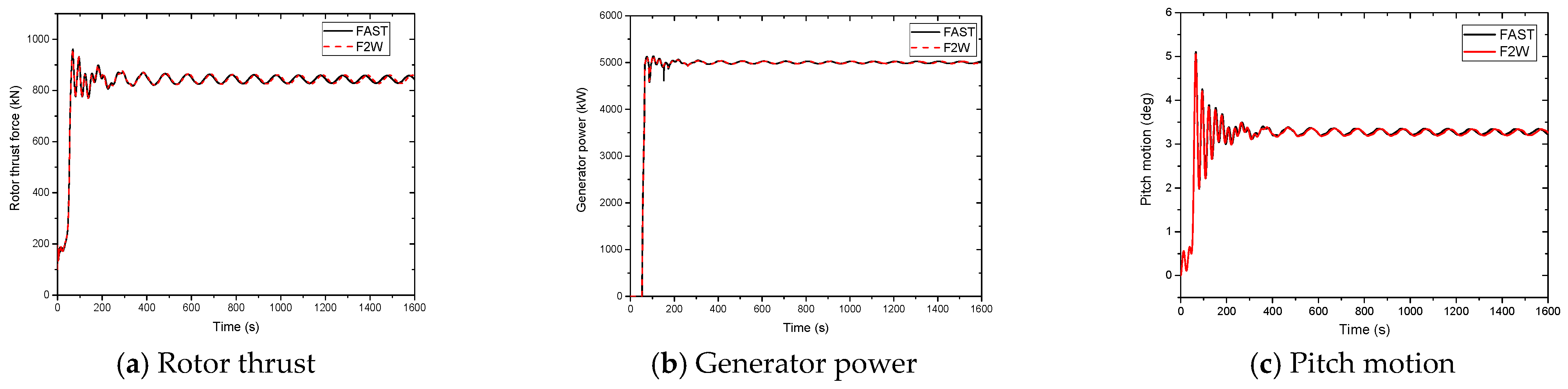
Figure 1, it is evident that wind loads and rotor-tower dynamics within the F2W framework are calculated by subroutines of the FAST software. These loads are then transferred to WASIM via the interface at the tower-base. Therefore, the aerodynamic loads computed by F2W and FAST should be consistent. To verify this, a case with spatially uniform steady wind conditions (wind speed of 11.4 m/s) was examined. The aerodynamic thrust, power, and platform pitch responses calculated by F2W and FAST are compared in
Figure 9. The results show a high degree of consistency between the two software tools in terms of aerodynamic loads and rotor power, as well as in pitch motion. Both reflect the initial transient effect due to the impact of aerodynamic loads, followed by a stabilization phase, and exhibit fluctuations caused by the periodic rotation of the rotor. This indicates that the F2W tool proposed in this study accurately computes the aerodynamic loads on FOWTs and correctly transfers these loads in real-time to WASIM for coupled calculations.
4.3. Regular Wave Condition
Regular wave conditions reflect the fundamental wave response characteristics of FOWTs and thus a regular wave case was set up with a wave height (
Hs) of 6 m and a wave period (
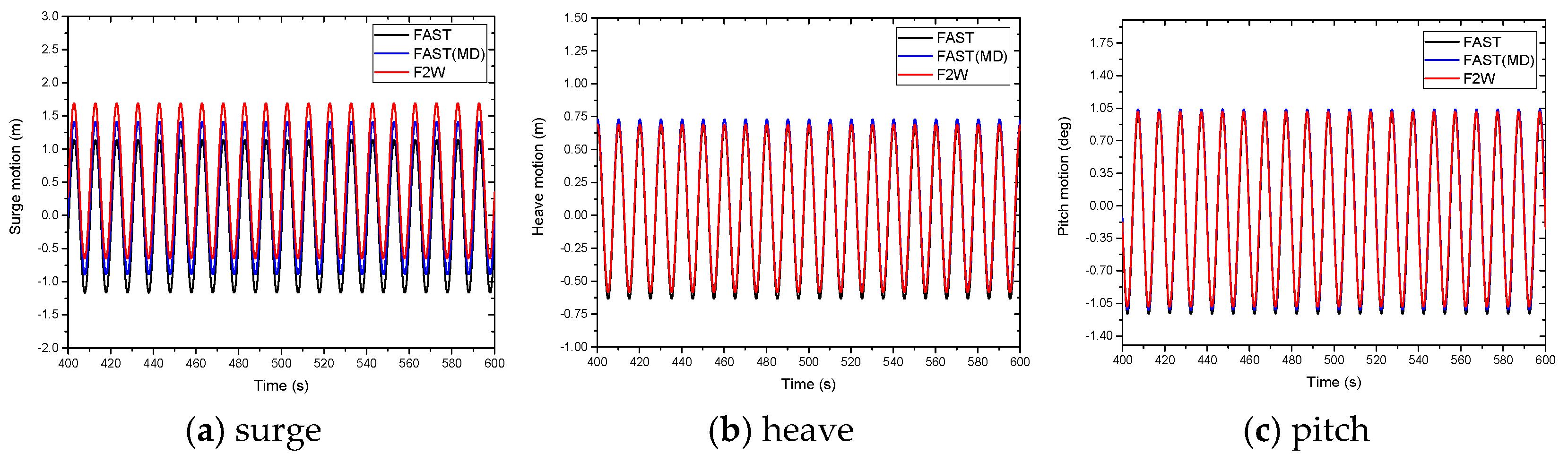
Tp) of 10 s. The platform motion responses computed by FAST and F2W are compared in
Figure 10, where “MD” denotes the linear hydrodynamic method adding wave mean drift forces using the Quadratic Transfer Function (QTF) method.
As shown in
Figure 10, conventional linear frequency-domain potential flow theory fails to account for wave mean drift forces, resulting in an underprediction of the mean surge displacement (black curve in
Figure 10a). This can lead to underestimated risks of mooring line failures. Correcting the linear model using the diagonal terms of the QTF matrix to approximate wave drift forces improves prediction accuracy to some extent (blue curve in
Figure 10a), but the predicted mean surge offset remains lower than that predicted by F2W’s nonlinear time-domain potential flow method (red curve in
Figure 10a).
In contrast, as seen in
Figure 10b,c, the heave and pitch motion responses under regular waves are generally consistent across all methods. Upon closer inspection, the mean values and amplitudes from the QTF-corrected FAST model and F2W show slight differences compared to the uncorrected FAST model, mainly affected by surge differences.
4.4. Irregular Wave Condition
Irregular waves can elicit nonlinear response behaviors in FOWTs, thereby providing a means to examine the nonlinear wave computation capabilities of F2W. An irregular wave case was set up using the JONSWAP spectrum with a significant wave height (
Hs) of 7.1 m, peak spectral period (
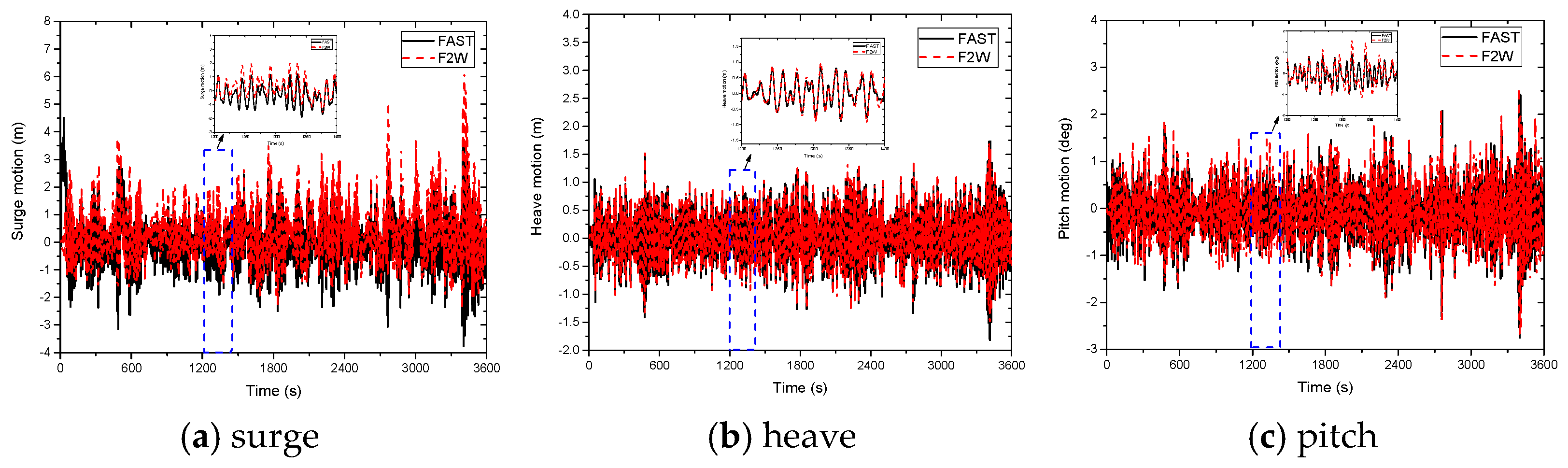
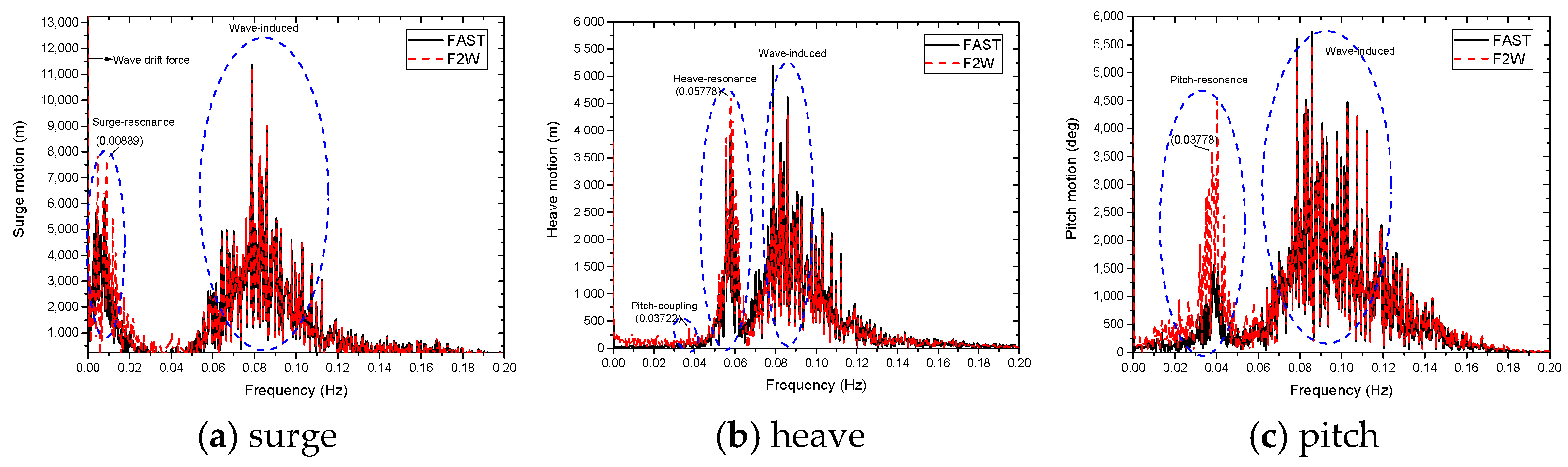
Tp) of 12 s, and a shape parameter (γ) of 2.2. The time-domain motion responses of the FOWT computed by FAST and F2W are compared in
Figure 11, alongside comparisons of amplitude spectra in
Figure 12.
From the perspective of time-domain response comparison (see
Figure 11), the calculated motion responses from both software tools are generally consistent. However, upon closer inspection, the mean surge displacement computed by F2W shows a notable deviation, similar to the observations from the regular wave response comparison in
Figure 10a. This deviation is primarily due to the fact that F2W accounts for the wave mean drift forces. Despite this, the overall trend of surge motion calculated by both tools remains consistent. For heave motion, the consistency between the two software tools is even stronger. However, for pitch motion, there are noticeable peak discrepancies between F2W and FAST at certain moments.
When comparing the amplitude spectra of the motions in
Figure 12, it is evident that the OC4 DeepCwind semi-submersible FOWT predominantly responds to wave excitation and natural frequency excitation under irregular wave conditions. Overall, the frequency-domain response results from both software packages are broadly consistent. Nevertheless, F2W exhibits larger response peaks at lower frequencies, particularly for pitch motion. These differences arise mainly because FAST’s hydrodynamics are based on linear frequency-domain calculations, which neglect nonlinear wave force, especially wave drift forces and second-order difference-frequency wave forces. This highlights the superior capability of F2W in capturing these nonlinear effects, leading to more accurate predictions of low-frequency responses.
In summary, the computational results of the proposed F2W and FAST are largely consistent across a series of test cases, indicating that F2W accurately models the DeepCwind semi-submersible FOWT. Meanwhile, the observed differences in certain response and outer hull pressure results highlight F2W’s capability to dynamically update the platform’s waterline and wetted surface in real time. This enables F2W to reflect nonlinear hydrostatic variations following changes in platform attitude and during platform motion, as well as to capture additional nonlinear hydrodynamic components. Consequently, F2W facilitates more precise hydrodynamic computations.
5. Structural Analysis Comparison
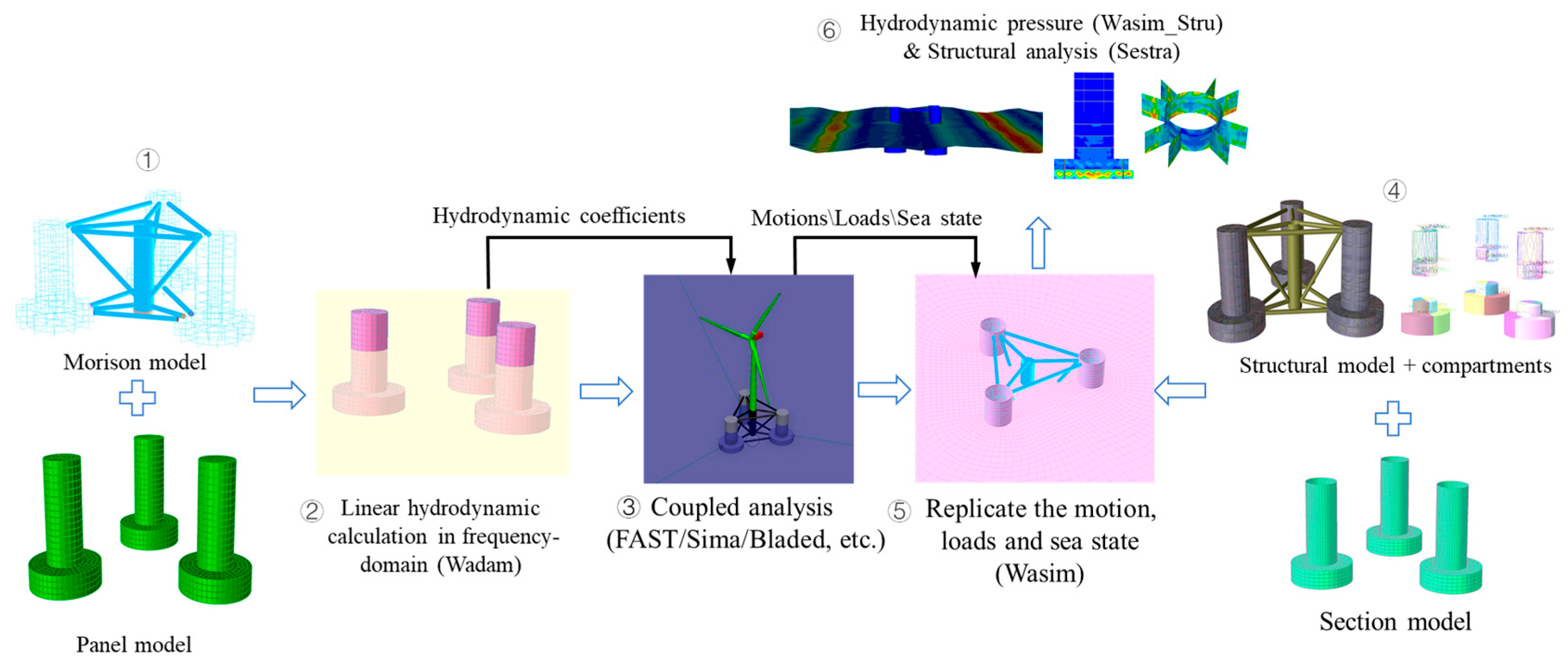
Generally, performing a time-domain structural analysis of a FOWT requires first obtaining the time-varying water pressures acting on the platform hull. However, most simulation tools employ linear frequency-domain potential flow methods for FOWT hydrodynamic calculations, which are then transformed into the time domain using the Cummins equation. This approach cannot provide time-domain panel pressures on a FOWT directly, making the structural analysis process cumbersome and fragmented. Taking the OC4 DeepCwind FOWT as an example, the traditional workflow involves several sequential steps as illustrated in
Figure 13. First, a panel model of the platform must be established, along with a Morison element model for slender members. Linear hydrodynamic coefficients are then computed using frequency-domain potential flow tools such as WADAM, WAMIT or AQWA. If second-order hydrodynamic effects or wave mean drift forces need to be accounted for, the platform’s QTF matrix must also be calculated. These hydrodynamic coefficients are subsequently imported into integrated time-domain simulation tools—such as FAST, SIMA, or Bladed—to perform time-domain simulations under various design load cases. Since these integrated tools do not output time-resolved hydrodynamic pressures on hull panels, additional modeling steps are required before structural analysis. Specifically, a sectional model and a structural model with adjusted compartments must be created. Then, using WASIM (or other hydrodynamic solver), the platform is subjected to prescribed motions based on the sea states, motion time series, and relevant loads previously computed by the integrated tool. This data transfer typically involves manual processing and format conversion to ensure compatibility between different software modules. Finally, a finite element analysis tool, i.e., Sestra, is used to compute structural stresses and perform fatigue or ultimate limit state assessments. This step requires applying the time-varying external hydrodynamic pressures, applied loads, boundary conditions, and inertia relief methods at each time step.
As evident from this workflow, the process involves at least two separate potential flow solutions—one in the frequency domain and another in the time domain via WASIM—and two separate motion simulations: one in the integrated tool (e.g., FAST) and another in WASIM for forced motion. This dual-simulation approach is not only time-consuming but also introduces potential inconsistencies. Since the hydrodynamic modeling in the integrated tool relies on constant hydrostatic restoring stiffness and linear frequency-domain hydrodynamics, it inherently neglects nonlinear hydrodynamic effects. For certain operating conditions or platforms with complex geometries, these simplifications can lead to significant errors in predicted motions and loads. When these inaccurate motion and load inputs are used to drive the platform in WASIM for structural loading calculations, the resulting hydrodynamic pressures and structural stresses may also be erroneous, thereby compromising the overall fidelity of the structural assessment.
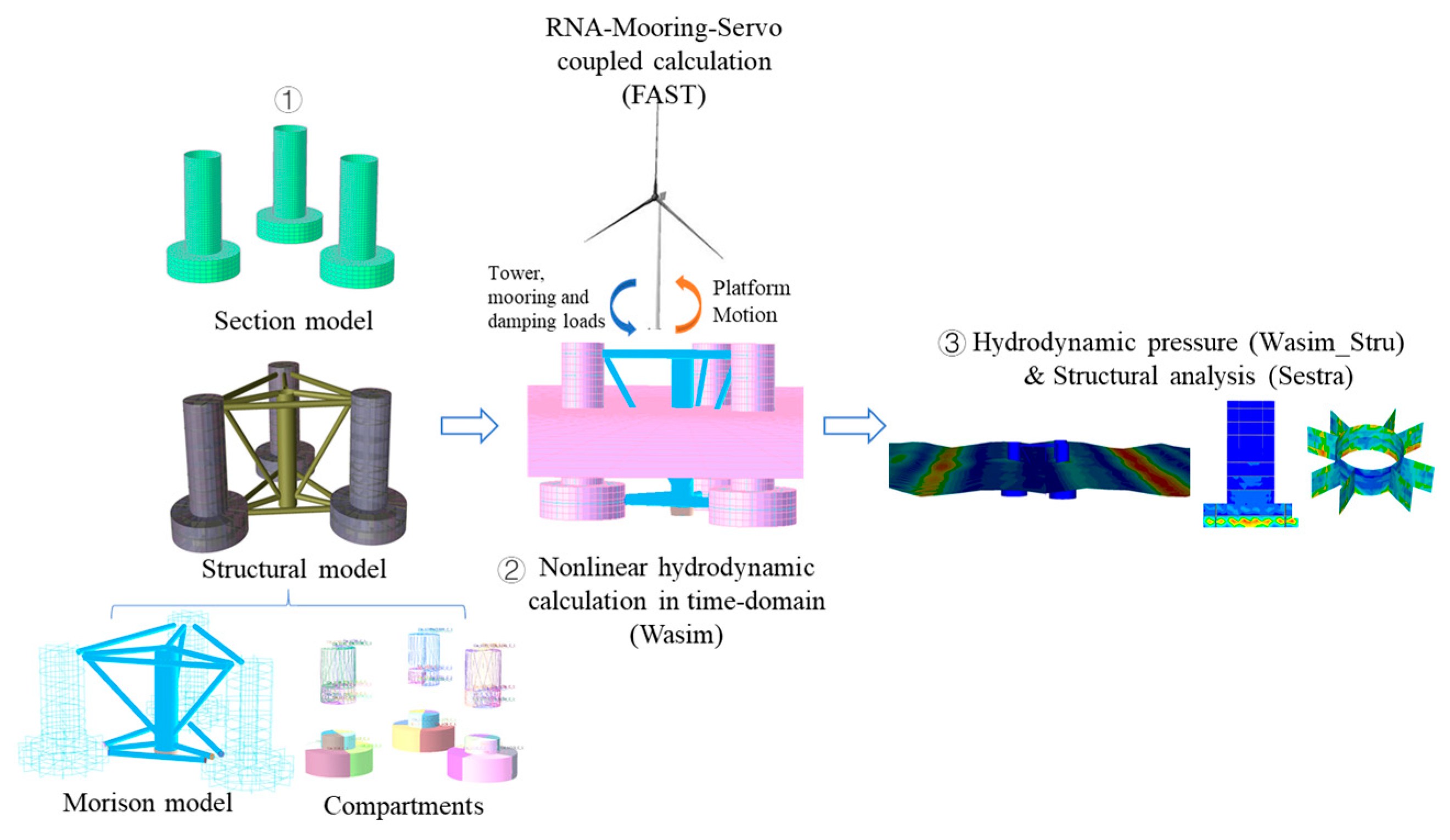
In contrast, using the F2W tool proposed in this study significantly simplifies the structural analysis procedure for FOWTs, as illustrated in
Figure 14. Only a sectional model and a structural model need to be established. A single hydrodynamic and fully coupled time-domain simulation using the F2W tool can directly yield time-varying external hydrodynamic pressures on the hull panels, enabling subsequent finite element structural analysis.
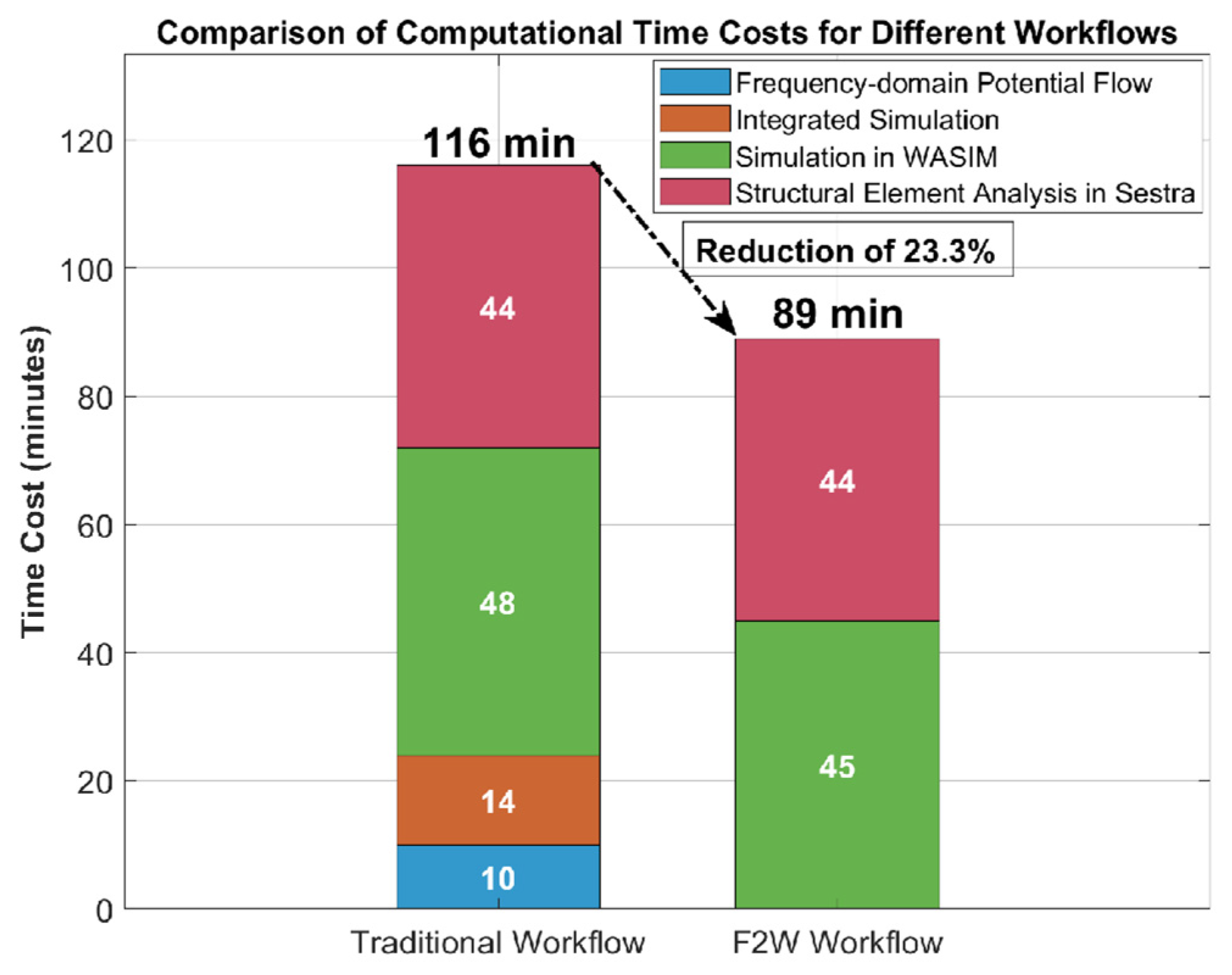
Two workflows were used to perform 1500 s numerical simulations of the OC4 DeepCwind semi-submersible FOWT, with a time step of 0.1 s, and structural stress analysis was conducted at each time step. The computational time cost between the two workflows is compared in
Figure 15. It can be seen that the traditional workflow required about 116 min, whereas the F2W workflow took approximately 89 min in total. However, it should be noted that the actual computation time cost depends on various factors, such as sea state parameters, mesh resolution, hardware configurations, among others. Compared to the traditional workflow, it is evident that the F2W-based workflow eliminates one frequency-domain potential flow solution and one integrated time-domain simulation, while also reducing the need for manual data transfer and format conversion between different software modules. Consequently, the computational cost per load case using F2W is at least 23.3% lower than that of the traditional workflow. Furthermore, since F2W performs real-time coupling of aerodynamic loads, control system dynamics, mooring system behavior, and nonlinear hydrodynamics, it offers higher accuracy compared to traditional decoupled approaches. This accuracy advantage is particularly significant under conditions involving large-amplitude platform motions, variable draft conditions (i.e., ballast adjustment, transportation and installation), and other scenarios where nonlinear effects are prominent.
Taking the irregular wave case setting as an example (JONSWAP spectrum, Hs = 7.1 m, Tp = 12 s, γ = 2.2, simulation duration of 3600 s), structural analyses of the FOWT were performed using the two workflows: the traditional multi-step approach illustrated in
Figure 13 (labeled as “Multistep”) and the integrated F2W workflow shown in
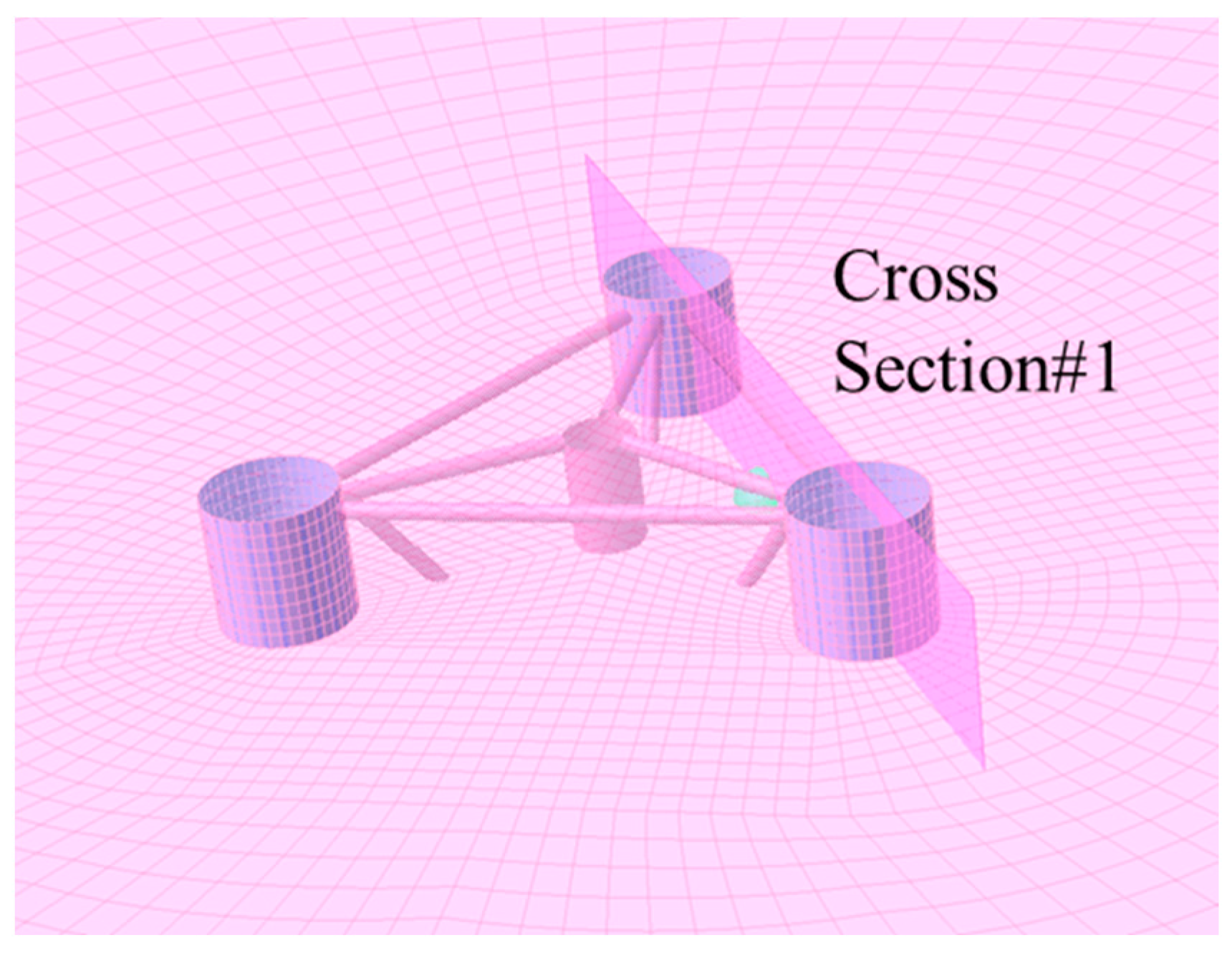
Figure 14 (labeled as “F2W”). The cross-section used for internal force analysis is depicted in
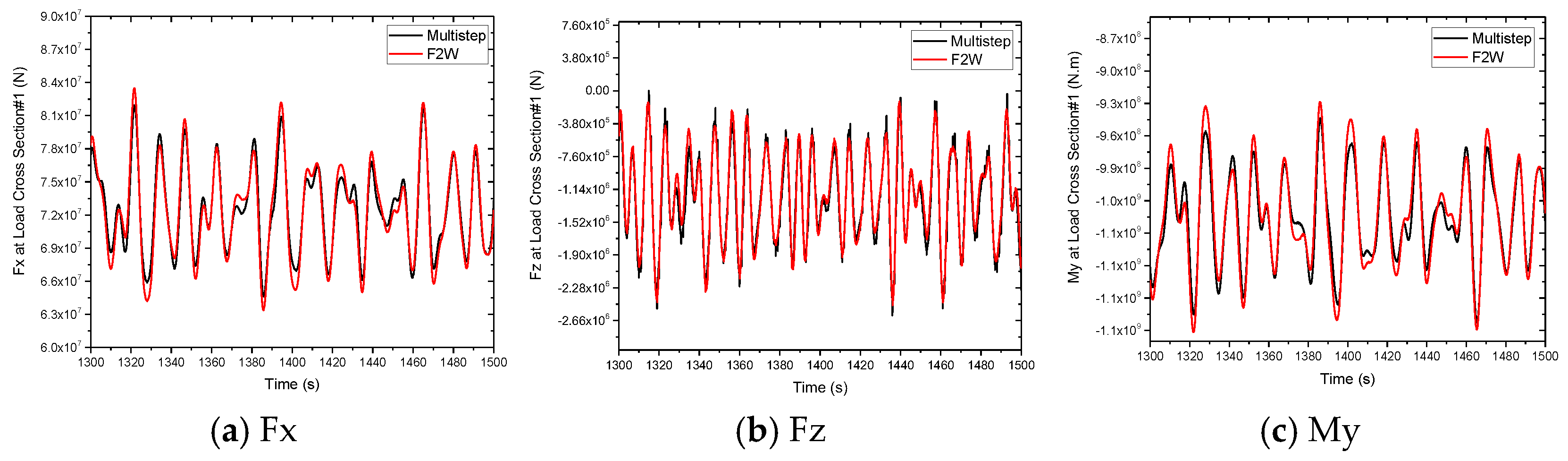
Figure 16. The time histories of sectional internal forces F
x and F
z and moments M
y (expressed in the platform-fixed coordinate system) are compared in
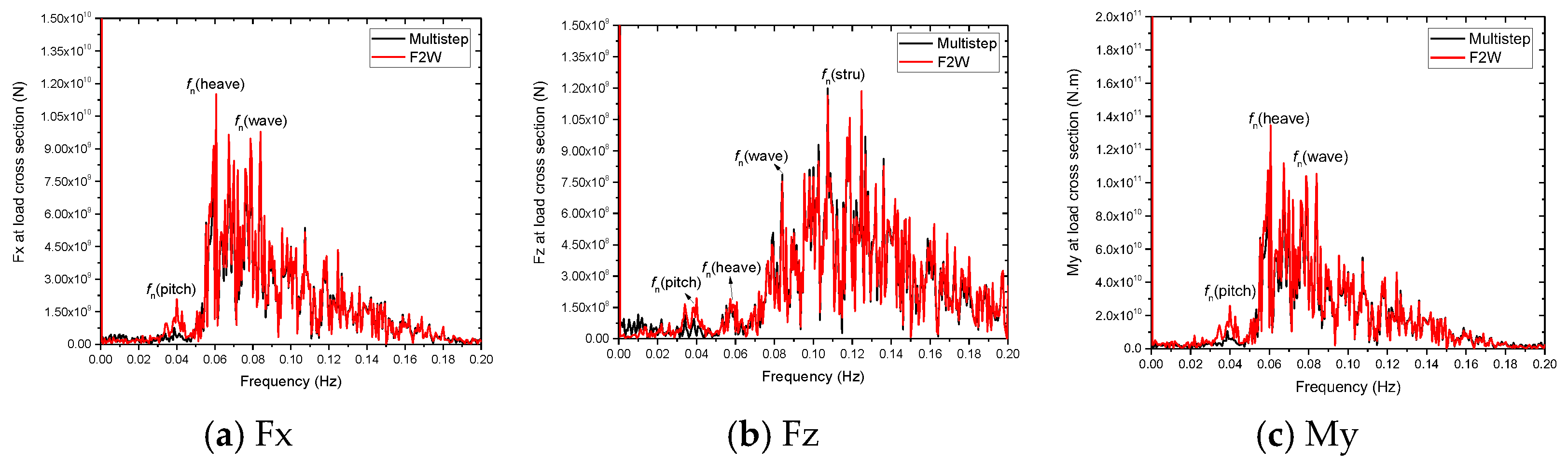
Figure 16, along with their corresponding spectral results in
Figure 17. In the Multistep approach, although FAST is used initially for integrated simulation based on linear frequency-domain hydrodynamics, a subsequent time-domain nonlinear hydrodynamic analysis is performed in WASIM. However, in this step, WASIM uses prescribed motions derived from the prior FAST simulation. As shown in
Figure 17, the structural internal forces in the time series predicted by F2W are generally consistent with those from the traditional approach. However, slight differences in response amplitudes are observed at certain time instances, particularly in F
x and M
y. In the frequency domain (see
Figure 18), F
x and M
y are dominated by wave-frequency responses and low-frequency excitations corresponding to the natural heave and pitch modes. The F2W results exhibit higher peaks at these low-frequency resonant modes, which are consistent with the motion response findings presented in
Section 4.4. For the F
z component, significant high-frequency structural responses are present caused by nonlinear wet surface changes, which are captured by both methods.
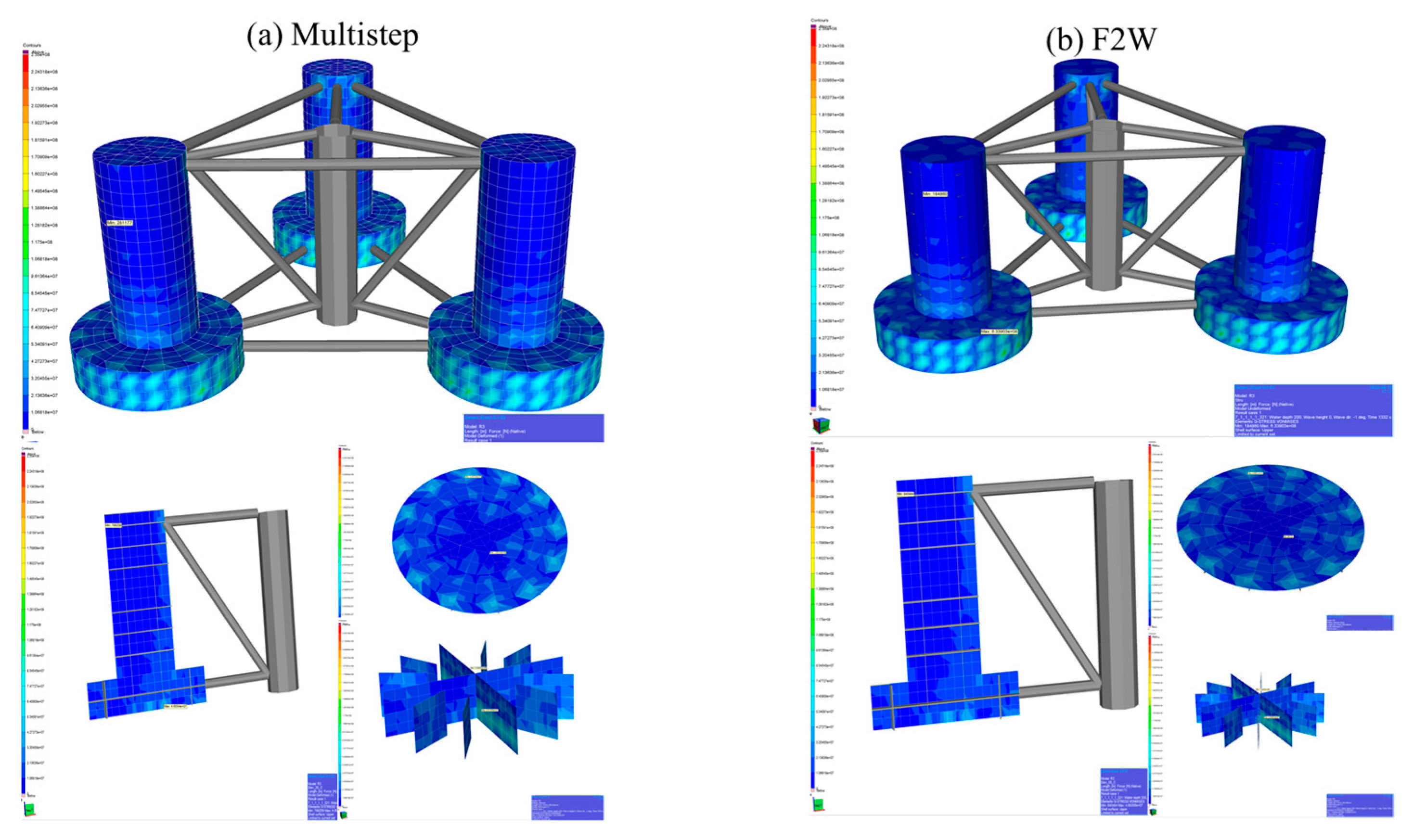
The von Mises stress distribution at the 1332 s time instant is compared in
Figure 19. At this moment, high-stress regions are primarily concentrated in the lower pontoon structures and at the interface between the braces and pontoons. In terms of overall distribution, the stress patterns from the two methods are generally consistent, although slight differences in magnitude are observed. Furthermore, von Mises stresses for selected finite elements between the two methods are listed in
Table 4. The results show that there are certain discrepancies in the computed stress values between the two methods for identical finite elements. For some elements, the difference even reaches up to 18.84%. On average, the stress difference across all finite elements of the semi-submersible platform is approximately 3.18% between the two methods.
6. Conclusions
This paper proposes a time-domain coupled solver for FOWTs named FAST2WASIM (abbreviated as F2W). Then, a series of operating condition simulations was conducted on the OC4 DeepCwind semi-submersible FOWT, comparing F2W with FAST. The overall hydrodynamic response predictions show good agreement, demonstrating the effectiveness of F2W. However, certain discrepancies in hydrodynamic results are observed under specific conditions, particularly those involving significant changes in the platform’s waterline or wetted surface, such as tilted states or extreme wave states. Furthermore, a novel time-domain structural analysis procedure for FOWTs based on F2W is proposed and compared with the traditional methods, analyzing differences in computational efficiency, internal forces and stress results. Key conclusions are summarized as follows:
- (1)
The proposed F2W tool updates the platform’s waterline and wetted surface in real time, enabling the consideration of nonlinear hydrostatic stiffness variations that alters the natural frequencies of a FOWT, but are neglected by conventional tools relying on constant stiffness coefficients.
- (2)
Hydrodynamic pressure calculations in the linear hydrodynamic model are always performed only at the mean waterline and wetted surface without considering the platform’s actual motion. During large-amplitude platform motions, this can lead to erroneous negative pressures or missing pressure loads, which may result in increased errors in local structural stress analysis.
- (3)
The method of converting frequency-domain potential flow solutions to time domain cannot account for motion responses induced by wave mean drift forces or slow-drift wave forces. Even with QTF matrix corrections, this approach remains decoupled and underestimates the nonlinear wave effects compared to the proposed F2W method. In contrast, F2W naturally incorporates these nonlinear hydrodynamic effects by employing a time-domain potential flow solver.
- (4)
Compared to the traditional structural stress analysis workflow, the structural stress analysis process based on F2W involves fewer steps, lower computational cost, and higher theoretical accuracy. The comparison results show certain differences between the proposed F2W-based workflow and traditional workflow in predicting internal forces and structural stresses. Although the overall discrepancies are not significant, notable differences exist in local structural stress.
It should be noted that, under most operating conditions, the predictions from F2W and FAST are generally consistent. The advantages of F2W’s nonlinear hydrodynamic calculations become more apparent in cases where the platform’s waterplane or wetted surface undergoes significant changes, such as for floating structures with complex non-vertical outer surfaces (i.e., WINFLO [
39] and SPIC [
40]), under extreme wave conditions, during ballast adjustments and so on. Due to page limitations and the unavailability of certain design parameters for the FOWTs, these scenarios will be investigated in the future. In addition, F2W is only compared with FAST on a code-to-code basis and shows logically consistent response differences. Future work requires experimental validation or comparison through CFD simulations to further verify the effects of nonlinear hydrodynamics on a FOWT.