Next Article in Journal
Theoretical and Experimental Analysis of the Global Response of a Flexible Pipe Under Combined Axisymmetric and Bending Loads
Previous Article in Journal
Experimental and Numerical Investigation of the Structural Behavior of Steel Cylindrical Shells Under Lateral Load Considering Fixed and Frictional Boundary Conditions
error_outline You can access the new MDPI.com website here. Explore and share your feedback with us.
 
 
Article

Surface and Vertical Nutrient Profiles in the Northwestern Black Sea: Trends, Comparisons, and Sample Preservation Assessment


National Institute for Research and Development on Marine Geology and Geoecology—GeoEcoMar, 23-25 Dimitrie Onciul Str., 024053 Bucharest, Romania
*
Author to whom correspondence should be addressed.
J. Mar. Sci. Eng. 2025, 13(11), 2178; https://doi.org/10.3390/jmse13112178
Submission received: 17 October 2025 / Revised: 13 November 2025 / Accepted: 15 November 2025 / Published: 17 November 2025
(This article belongs to the Section Chemical Oceanography)

Abstract

This study investigated the physicochemical properties and nutrient dynamics on the Romanian shelf of the northwestern Black Sea in July 2024, collecting data across 36 stations (13–1116 m depth) heavily influenced by Danube discharges. Vertical CTD profiling revealed a pronounced seasonal thermocline and a deep-lying permanent halocline. The Cold Intermediate Layer (CIL) boundary, defined by the 8 °C isotherm, was absent, indicating warmer subsurface waters. Surface nutrient concentrations, particularly for nitrate (NO3) and phosphate (PO4), were considerably lower than peak eutrophication periods, approaching pre-1970s values, suggesting a positive trend due to reduced anthropogenic loading. They are also comparable to or lower than other coastal regions in the Black Sea. Vertical nutrient profiles confirmed the typical anoxic Black Sea structure, but with regional specifics: the PO4 maximum was slightly deeper, and the NO3 maximum position and concentration mirrored the pre-eutrophication period, further supporting reduced anthropogenic nitrogen input. Silicate (SiO4) concentrations were consistently low throughout the water column, suggesting the northwest shelf functions as a SiO4 sink compared to the southeastern Black Sea. Overall results indicate a shift towards a less eutrophic state on the Romanian shelf while highlighting the continued dominance of Danube-driven hydrodynamics. In addition to those investigations, this study assessed nutrient preservation techniques, finding that pasteurization was significantly superior to freezing for maintaining the stability of PO4 and NOx (losses up to 20% and 47% for frozen samples, respectively) over six months. Though SiO4 was stable under both methods, the freezing produced lower concentrations, possibly from incomplete depolymerization during thawing. These findings stress that pasteurization could be taken into consideration as a reliable preservation technique for long-term storage of nutrient samples.

1. Introduction

The Northwestern Black Sea (NWBS) is still significantly affected by eutrophication driven by nutrient discharges from the Danube and other major Ukrainian rivers and further exacerbated by the continuous urbanization along the Romanian coast. This local exacerbation is primarily mediated by two mechanisms inherent to rapid coastal development: (1) increased population density places a growing strain on existing wastewater treatment infrastructure, leading to localized discharges of incompletely treated or raw sewage, which directly increases nitrogen (N) and phosphorus (P) loads; and (2) the expansion of impermeable paved surfaces accelerates surface runoff [1,2]. This enhanced runoff bypasses natural soil filtration, efficiently mobilizing and transporting diffuse urban pollutants (including sediment, petrochemicals, and atmospheric deposition) directly into coastal waters. Studies conducted in the late 20th century highlighted the devastating consequences of unsustainable agricultural and industrial practices, coupled with a lack of adequate environmental policies, especially during the communist era, resulting in adverse effects on the Black Sea ecosystem’s structure and function [3,4,5,6]. Currently, however, nutrient inputs show a significant reduction compared to the last decades of the 20th century, aligning with the implementation of EU environmental policies (e.g., ICDPR, WFD, MSFD, MSP) across the Danube watershed and the Romanian coast. While large-scale eutrophication events and partial ecosystem recovery in recent decades have been documented [7,8,9], important uncertainties remain regarding the nature of the current nutrient regime. Specifically, key unanswered questions include the following: (1) How does the contribution of highly localized coastal hotspots compare to the remaining diffuse riverine inputs across the shelf? (2) What specific biogeochemical mechanisms (e.g., remineralization intensity) drive the anomalous persistence of certain nutrients (e.g., NH4) in shallow coastal zones? (3) How do these refined spatial differences influence the short-term nutrient dynamics critical for plankton community structure?
The Black Sea’s restricted connection to the World Ocean via the Turkish Straits (Bosphorus-Marmara Sea-Dardanelles), combined with its large river catchment area, makes it one of the most isolated basins globally. This isolation leads to a unique and pronounced permanent vertical stratification, resulting from low-salinity riverine inputs overlaying denser, saltier water entering the Black Sea via the Bosphorus strait, primarily driven by a permanent halocline which separates the water masses. This stratification limits vertical mixing below approximately 100–200 m, creating a sharp division between a relatively brackish, oxygenated upper layer and a saltier, anoxic (oxygen-free) deep layer [10,11]. The nutrient regime in the oxic layer in the NWBS is influenced by the Danube discharge (in the upper layer), the subsurface chlorophyll maximum layer (which often coincides with an oxygen maximum), and the Cold Intermediate Layer (CIL) which is responsible for lateral input of oxygen and nutrients [4,5,8,10,12].
The CIL layer, generally located just above the permanent halocline [13], is classically defined as the layer bounded by the 8 °C isotherm [12], but recent studies have shown that CIL has weakened significantly in last decade, a phenomenon linked to global warming [14]. The CIL formation and evolution strongly influence the dynamics of the Black Sea ecosystem [15], as changes in the thermohaline structure impact nutrient exchange and food-web dynamics [6,16].
The oxic layer experiences strong seasonal variability in both its physical and biological components that dictates nutrient availability and biological processes [17]. During winter, surface cooling leads to deep convection, contributing to the formation of the CIL and driving nutrient homogenization within the mixed layer [10,13,18,19]. Conversely, the summer period, when this study was conducted (July 2024), is characterized by strong thermal stratification. This stratification not only isolates the upper mixed layer from the nutrient-rich CIL and the anoxic zone below but also creates the necessary thermal stability for the formation and maintenance of the Subsurface Chlorophyll Maximum (SCM) and DO maximum [11,15]. This overall stability severely restricts vertical nutrient exchange, leading to increased nutrient depletion in surface waters and enhancing the reliance on local, short-term biogeochemical processes and lateral inputs from riverine sources [15].
The anoxic layer is a permanent feature resulting from the lack of ventilation [20] and is characterized by high levels of ammonium, phosphate, and silicate. A particular characteristic of the Black Sea is the suboxic transition zone between these two layers, which is defined as a layer of low concentration (less than 10 µM) and low vertical gradients of oxygen above the onset of the sulfidic zone [21] and is one of the most biogeochemically active regions in the global ocean, where redox processes profoundly influence the cycling of nutrients and trace elements [19,22].
Coastal eutrophication in the NWBS has been well-documented since the 1980s [7,23,24,25,26,27,28]. Recent studies confirm the complexity of contemporary nutrient dynamics in the Black Sea surface waters [29] and highlight the need for comprehensive assessment methods like TRIX, BEAST, and NEAT to track eutrophication changes [30]. Although the implementation of the Water Framework Directive (WFD) and the Marine Strategy Framework Directive (MSFD) mandates that Romania strengthen its eutrophication monitoring capabilities, technical and financial limitations currently restrict the program mostly to the inner shelf waters (depths < 60 m). Consequently, studies on nutrient dynamics in the Romanian open waters are scarce, relying primarily on data from national and EU-funded projects (e.g., ANEMONE, BRIDGE-BS, DOORS).
The present work addresses these key gaps by focusing on a multi-scale investigation of the nutrient regime, pursuing two main objectives. First, we provide new, high-resolution data on the nutrient regime in both the coastal and understudied offshore Romanian Black Sea waters to offer a more comprehensive understanding of the effects of reduced anthropogenic pressures and climate change over time. Second, recognizing the technical and logistical challenges inherent in extensive monitoring programs, we contribute new insights into analytical methods by evaluating pasteurization as an energy-efficient, ambient-temperature preservation technique for seawater nutrient samples, proposing it as a viable alternative to conventional freezing.

2. Materials and Methods

2.1. Study Area

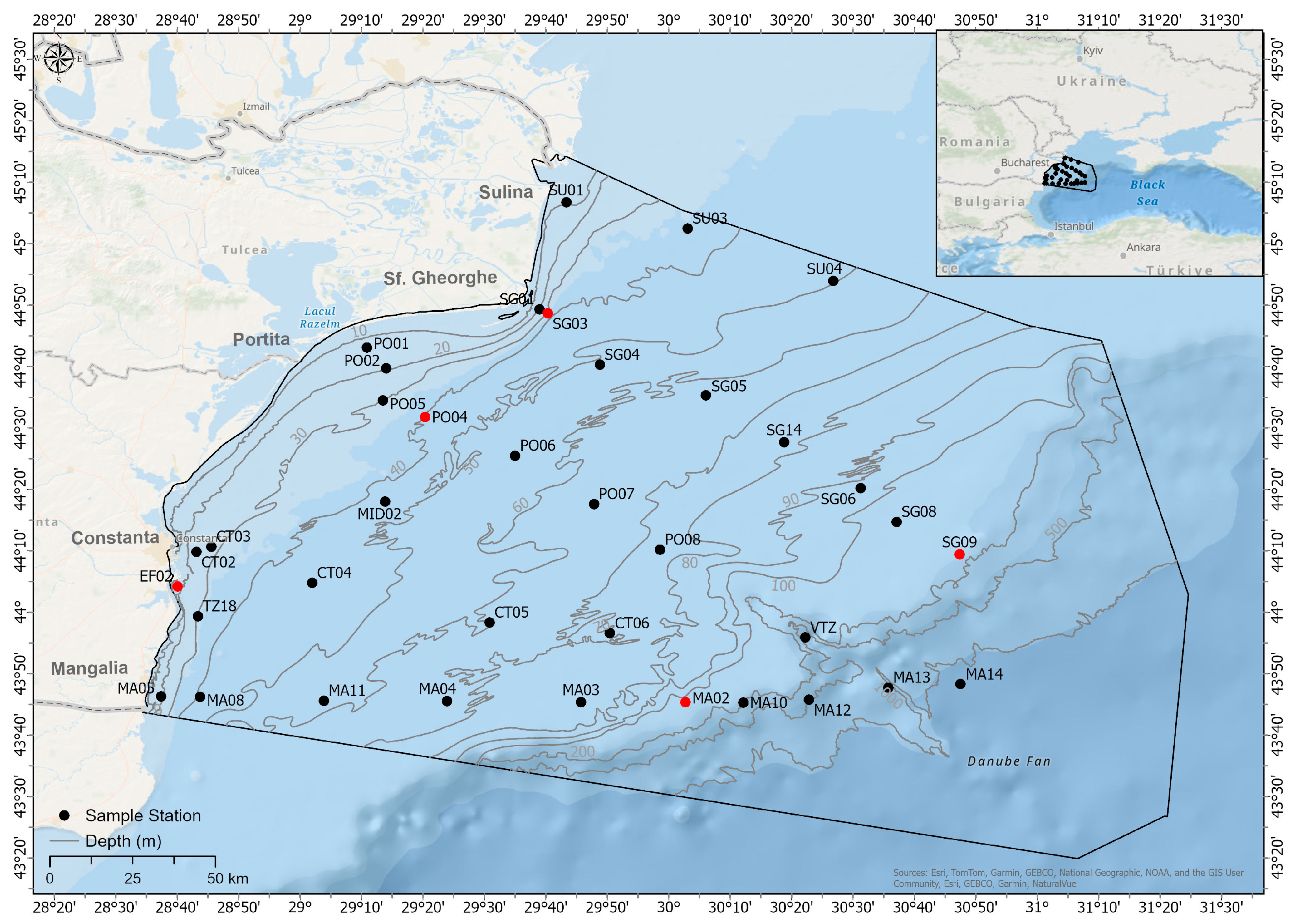
In July 2024, seawater samples for physicochemical and nutrient analyses were collected from 36 stations aboard the R/V Mare Nigrum within the Romanian Exclusive Economic Zone (EEZ) of the northwestern Black Sea (Figure 1 and Table 1). These stations, with depths from 13 m to 1116 m, were primarily located along the Sfântu Gheorghe South-East, Portița South-East, and Mangalia East transects. The study area is considerably influenced by the Danube discharges and also human activities in the coastal area, primarily industry, port & shipping, tourism, and Oil & Gas (O & G).
To test the effects of pasteurization as a preservation method on nutrient measurements, five stations were selected, each representing the main hydrological and anthropogenic pressure regimes on the Romanian shelf [31,32]. While a larger sample size was initially considered, the final choice of five sites was optimized to capture the full spectrum of environmental variability given the limited temporal and logistical capacity of the cruise. The stations were chosen to ensure robust and representative results across the dominant hydrodynamic and pressure regimes. Three shallow stations (bottom depths < 25 m) were selected for their strong terrestrial influence. SG03 represents the maximum direct riverine influence. It is located immediately in front of the Sfântu Gheorghe branch and is subjected to the highest and most variable load of Danube nutrient discharges. PO04 captures the combined pressure of riverine influence and O & G activities. While strongly influenced by Danube discharges, it lies within a designated O & G perimeter. EF02 represents high urban and port-related anthropogenic pressure. Situated in front of the Constanța port, it is primarily impacted by maritime traffic, port activities, and wastewater outfalls. Direct Danube influence is markedly reduced here compared to the other shallow sites. Additionally, two deeper stations were chosen for their less significant terrestrial nutrient input in the upper mixed layer and their relevance to long-term hydro-chemical structure dynamics. MA02 (100 m depth) serves as the offshore shelf transition zone. Finally, SG09 (~160 m depth) represents the deepest, most remote Black Sea influence within the study area, acting as a regional reference point crucial for assessing potential remote effects of climate change on the entire water column.

2.2. Sampling and Analytical Methods

Vertical profiles of temperature, salinity, density (expressed as σt), dissolved oxygen (DO), and chlorophyll were obtained using an SBE 911 Plus CTD profiler (Bellevue, WA, USA). The instrument was equipped with sensors for temperature (SBE 3F), conductivity (SBE 4C), dissolved oxygen (SBE 43, membrane polarographic oxygen detector), and fluorescence (ECO FLNTU). The SBE 43 oxygen sensor has an accuracy of ±8 µmol/kg and the ECO FLNTU fluorescence sensor has a detection limit of 0.015 µg/L Chlorophyll a. Raw fluorescence data were calibrated using manufacturer specifications and converted to chlorophyll a concentration, reported in μg/L. Data were acquired and processed using SBE software protocols (including Seasave V7 and SBE Data Processing win 32 version 7.26.7), and profiles were then binned and averaged at 1 dbar intervals. Water samples for nutrient analyses were collected using a Sea-Bird SBE 32 carousel water sampler (equipped with twelve 5 L Niskin bottles) attached to the SBE 911 Plus. Samples were taken from discreet depths selected based on the real-time CTD vertical profiles, targeting key biogeochemical interfaces for maximum informational return. The objective criteria for depth selection were based on specific physical, chemical, and biological features:
-
Surface Layer: A fixed depth (e.g., 1 m) within the upper mixed layer;
-
Extrema: Depths corresponding to the Upper Thermocline Limit, the maximum DO concentration, and the Subsurface Chlorophyll Maximum (SCM) (maximum fluorescence). These points capture the peak biological and physical boundaries controlling water column stability;
-
Water Masses: Depths within the core of the Cold Intermediate Layer (CIL), which acts as a dynamic reservoir influencing lateral transport of nutrients;
-
Biogeochemical Interfaces (σt): Specific isopycnal surfaces (σt) targeting redox and nutrient layers: 15.6, 15.8, 15.9, 16.0, 16.1, 16.2, and 16.5. These densities specifically encompass the base of the nitracline, the mitrate maximum layer, the phosphate minimum and maximum layers, and the suboxic/anoxic transition zones, which are critical areas for nitrogen and phosphorus cycling.
Approximately 0.5 L of seawater was transferred from the Niskin bottle into 0.5 L high-density polyethylene (HDPE) bottles. These bottles had been pre-cleaned by washing with 10% hydrochloric acid followed by thorough rinsing with ultrapure water. The samples were then immediately frozen at −24 °C for subsequent analysis, within one week.
Crucially, all water samples used for nutrient analysis in this study, including those designated for the pasteurization experiment and general monitoring, were analyzed in an unfiltered state. This deliberate methodological choice was made to assess the total nutrient pool (dissolved inorganic and easily releasable particulate) in the whole water sample. This approach provides a more representative measure of the overall eutrophication potential and ensures methodological consistency across all aims, particularly in the context of testing preservation effects on the complex, coupled nutrient system of the turbid shelf waters.
In the laboratory, the samples were thawed overnight and then analyzed spectrophotometrically for nutrients using a UV-VIS Perkin Elmer Lambda 35 spectrophotometer (Springfield, IL, USA). Phosphate was determined by the ascorbic acid-potassium antimony tartrate method of [33], as modified by [34]. Silicate was determined by reducing (with ascorbic acid) the silicomolybdic acid formed when the sample is treated with a molybdate solution [35]. Nitrite was determined following the method of [36]. Nitrate was reduced to nitrite using hydrazine sulphate as outlined by [37]. Ammonium was measured using the indophenol blue method, which relies on the reaction of ammonia in a mild alkaline solution to form indophenol blue [38].
Quality control was ensured using 1000 mg/L standard solutions of nitrate, nitrite, ammonium, phosphate and silicate (Merck, Darmstadt, Germany) for calibration curves as well as high-purity reagents. The seawater certified reference material CR (Kanso, Osaka, Japan) was used to check the accuracy of the method. The LOD and LOQ values for silicate, phosphate, nitrate, nitrite, and ammonium were 0.01 and 0.04 µM/L; 0.001 and 0.002 µM/L; 0.02 and 0.07 µM/L; 0.001 and 0.004 µM/L; and 0.001 and 0.002 µM/L.

2.3. Rationale for Preservation Test: Pasteurization vs. Freezing

Recognizing that onboard nutrient measurement is not always feasible, this study evaluates pasteurization as an alternative to freezing, owing to its lower energy consumption and greenhouse gas footprint. Specifically, freezing (−22 °C to −24 °C) and pasteurization (80 °C for 2 h) were tested in parallel to compare their effectiveness. Freezing is the most widely used preservation method, while pasteurization is a relatively recent technique that ensures long-term preservation of seawater samples at ambient temperature without the addition of reagents or toxicants. The applied heat treatment effectively inhibits or slows microbial activity [39,40,41]. Previous research confirms that, with the exception of ammonium (which is highly sensitive to microbial activity), pasteurization does not produce detectable concentration changes during long-term storage at ambient temperature, making it applicable to field samples [39]. Nitrate and nitrite show satisfactory stability, with insignificant changes observed after pasteurization at 65° and preservation for at least one year. While phosphate is slightly affected by heating, this effect can be significantly minimized by adjusting the sample’s pH to approximately 7 prior to treatment (ideally at 80–85 °C) [42]. Therefore, considering its stability for most nutrients (except ammonium) and lower energy footprint, pasteurization is proposed as a viable, long-term, ambient-temperature preservation method for seawater nutrient samples, offering a compelling alternative to conventional freezing.

2.4. Preservation Test Procedure

To test and compare the two preservation techniques, a total of 198 additional samples were collected across the selected stations (SG03, PO04, EF02, MA02, and SG09), ensuring representation from all previously selected sampling depths. This sample total was determined by experimental matrix, which required 66 unique station/depth combinations to be tested at three distinct analysis time points (one week, one month, and six months) for three separate preservation/variable groups (frozen, pasteurized for phosphate/silicate/oxidized nitrogen, and pasteurized for ammonium). This yielded a total sample size of 66 × 3 = 198 samples. These 198 samples were allocated between the two preservation techniques. Sixty-six samples were preserved by rapid freezing at −24 °C. This rapid freezing protocol ensures the stability of inorganic nutrients, including the sensitive ammonium, during the critical initial storage period [43,44]. These frozen samples were subsequently analyzed after one week, one month, and six months following collection. The remaining 132 samples were preserved by pasteurization and subsequently analyzed at the same time intervals. For the pasteurization group, 66 samples were reserved for phosphate, silicate, and oxidized nitrogen (nitrate + nitrite), and the remaining 66 samples were reserved for ammonium.
The pasteurized samples were placed in a pre-heated Memmert UF260 oven (Schwabach, Germany). Glass bottles were used for ammonium samples and HDPE bottles for phosphate, nitrate, nitrite, and silicate. The pasteurization process began once the oven reached 80 °C and was sustained for two hours. Following this period, the pasteurized samples were removed, sealed, and allowed to cool to room temperature in the dark before being transported to the laboratory. The pasteurized samples were then stored at room temperature in the dark. In the laboratory, only the frozen samples were thawed overnight before analysis. Subsequently, all preserved samples were analyzed spectrophotometrically using the method described previously.

2.5. Data Processing

Statistical analysis, specifically Student’s t-test, Pearson correlation, and ANOVA, were performed using XLSTAT ver. 2024.2.1.1421. The relationships between the measured physical and chemical parameters were assessed using Pearson correlation analysis (Table 2). To address the issue of multiple comparisons within the correlation matrix, the resulting p-values were subjected to correction using the False Discovery Rate (FDR) control method established by [45]. The significance threshold for the corrected p-values was set at α = 0.05. We acknowledge that some degree of spatial autocorrelation may influence the Pearson correlation results. This analysis, however, serves as an initial descriptive assessment of key biogeochemical coupling. For future, more detailed modeling efforts, methods explicitly addressing spatial dependency, such as geostatistical regression or partial least squares regression, would be necessary to fully account for the geographic arrangement of the data.
The station location map was created using ArcGIS® (ArcGIS Pro 3.3.0). General data analysis and visualization were executed within Jupyter Notebook 7.4.7, leveraging the Python 3.12.4 libraries Pandas, NumPy, and Matplotlib 3.10.6 for data manipulation and graphical representation [46]. The linear interpolation method was selected because it provides stable and realistic results maintaining numerical stability and minimizing artifacts in regions with sparse sampling. Some specific parameters (DO, chlorophyll, phosphate, and nitrate) were plotted against σt using Ocean Data View (ODV) 5.7.2 [47].

3. Results

3.1. CTD Parameters (Temperature, Salinity, Dissolved Oxygen, and Chlorophyll)

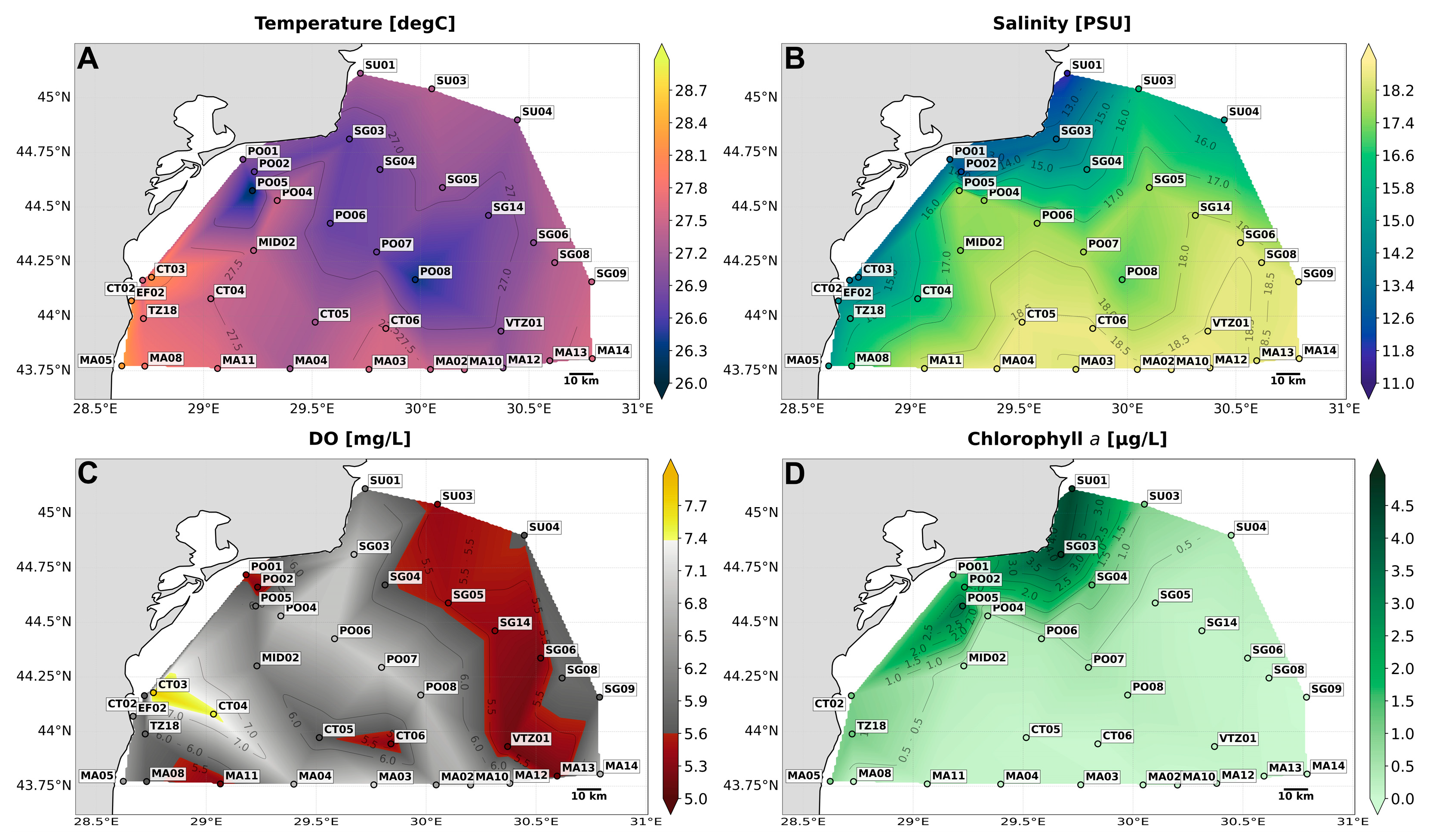
Surface distributions of the main CTD parameters are presented in Figure 2. Sea surface temperature (SST) exhibited a strong central tendency with a mean ± SD of 27.31 ± 0.47 °C. The overall range was 2.12 °C, spanning from 26.19 °C to 28.31 °C. While this low standard deviation indicates a statistically uniform thermal regime across the measured stations, the interpolation in Figure 2A clearly reveals spatial patterns of heterogeneity, with the warmest waters concentrated in the offshore southern sector and cooler temperatures near the coast.
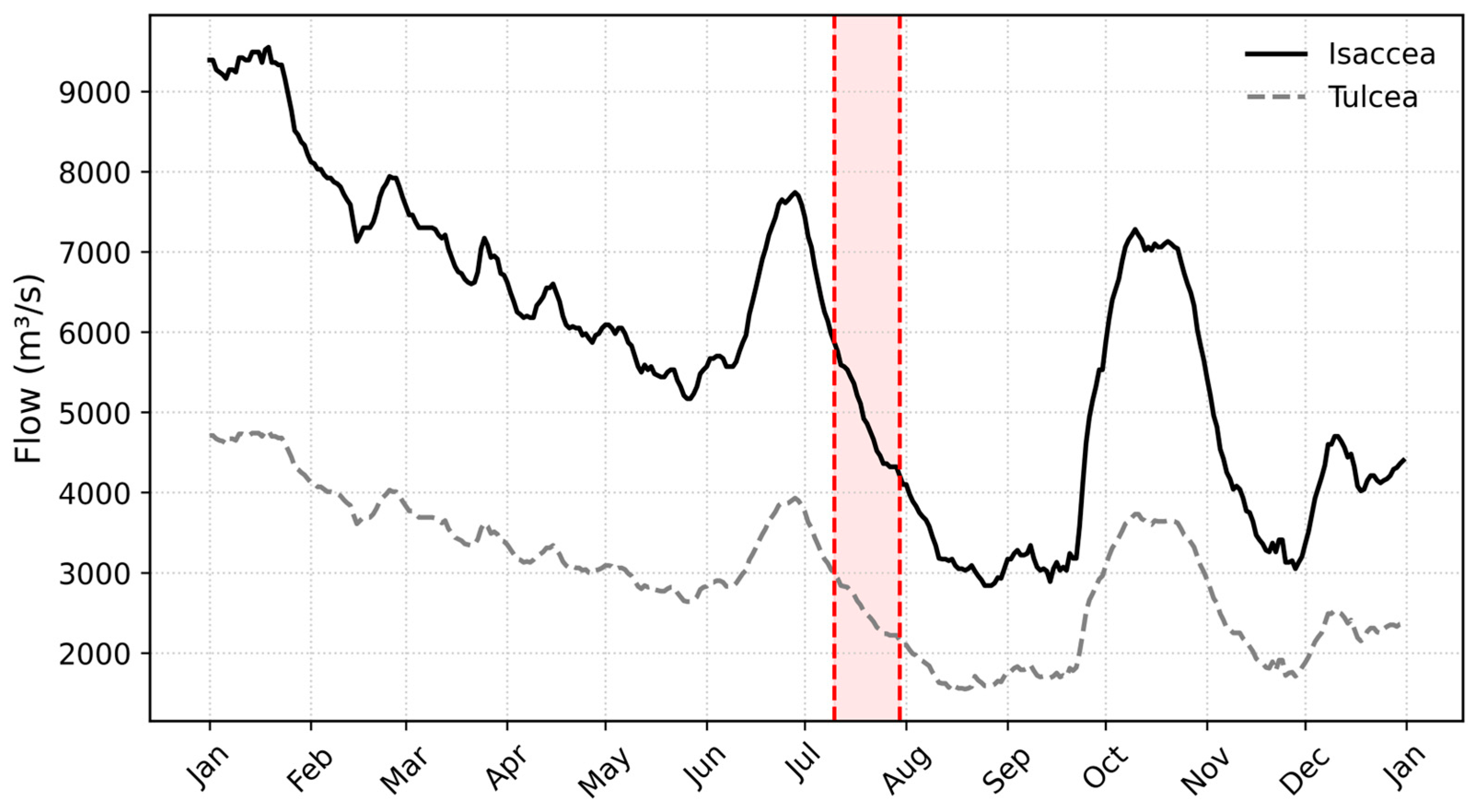
In contrast, sea surface salinity (SSS) exhibited higher variability, with a mean ± SD of (16.80 ± 2.09 PSU). The high range, spanning from 11.68 to 18.81 PSU, was dominated by the strong horizontal gradient clearly visible in Figure 2B. The highest SSS was recorded in the deepest waters of the Mangalia-East transect (maximum at station MA10), while the lowest SSS was measured in the shallowest stations in front of the Danube mouths (minimum at station SU01). This spatial pattern is in agreement with the high Danube discharges recorded in July 2024 (Figure 3; data provided by the National Institute of Hydrology and Water Management, Romania).
Surface DO concentrations exhibited a relatively heterogeneous distribution, with a mean ± SD of 6.12 ± 0.72 mg/L and values ranging from 5.20 mg/L (station VTZ01) to 7.79 mg/L (station CT03). Figure 2C shows that the lowest DO values were generally concentrated in the shallow waters in the Portita bay, while higher concentrations were observed further offshore.
Surface layer chlorophyll showed high variability, with a mean ± SD of 0.73 ± 1.17 µg/L and a range from 0.01 to 4.36 µg/L. This high variability is demonstrably influenced by freshwater input from the Danube, which is confirmed by a highly significant negative correlation with SSS (Pearson, r = −0.721, p < 0.0001) (Table 2). Consistent with the freshwater plume influence, the highest values were measured in front of the Danube mouths (stations SG03—4.31 µg/L and SU01—4.36 µg/L) (Figure 2D). Relatively high values (1.2–3.41 µg/L were also observed in the shallow waters from the Portita-SE transect, while the lowest chlorophyll characterized the open waters.
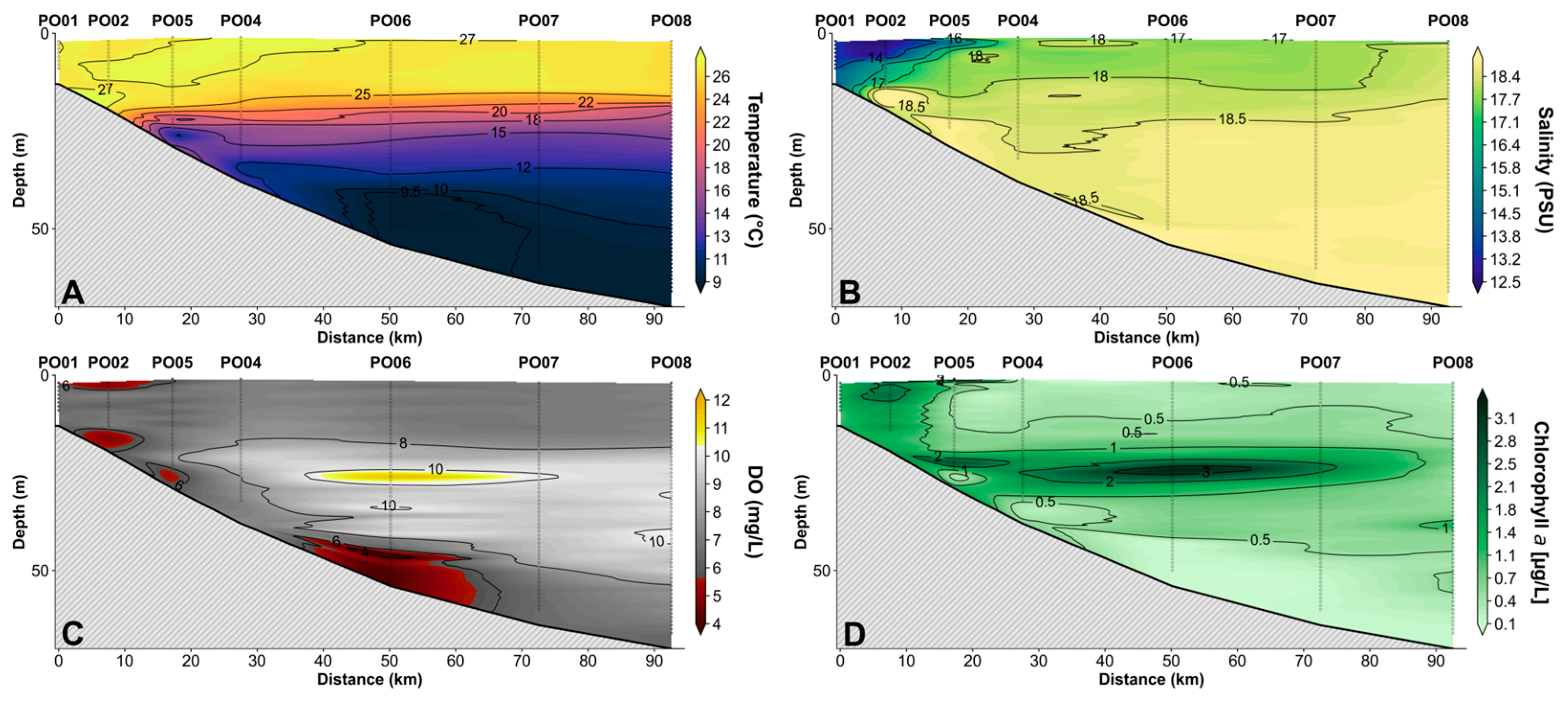
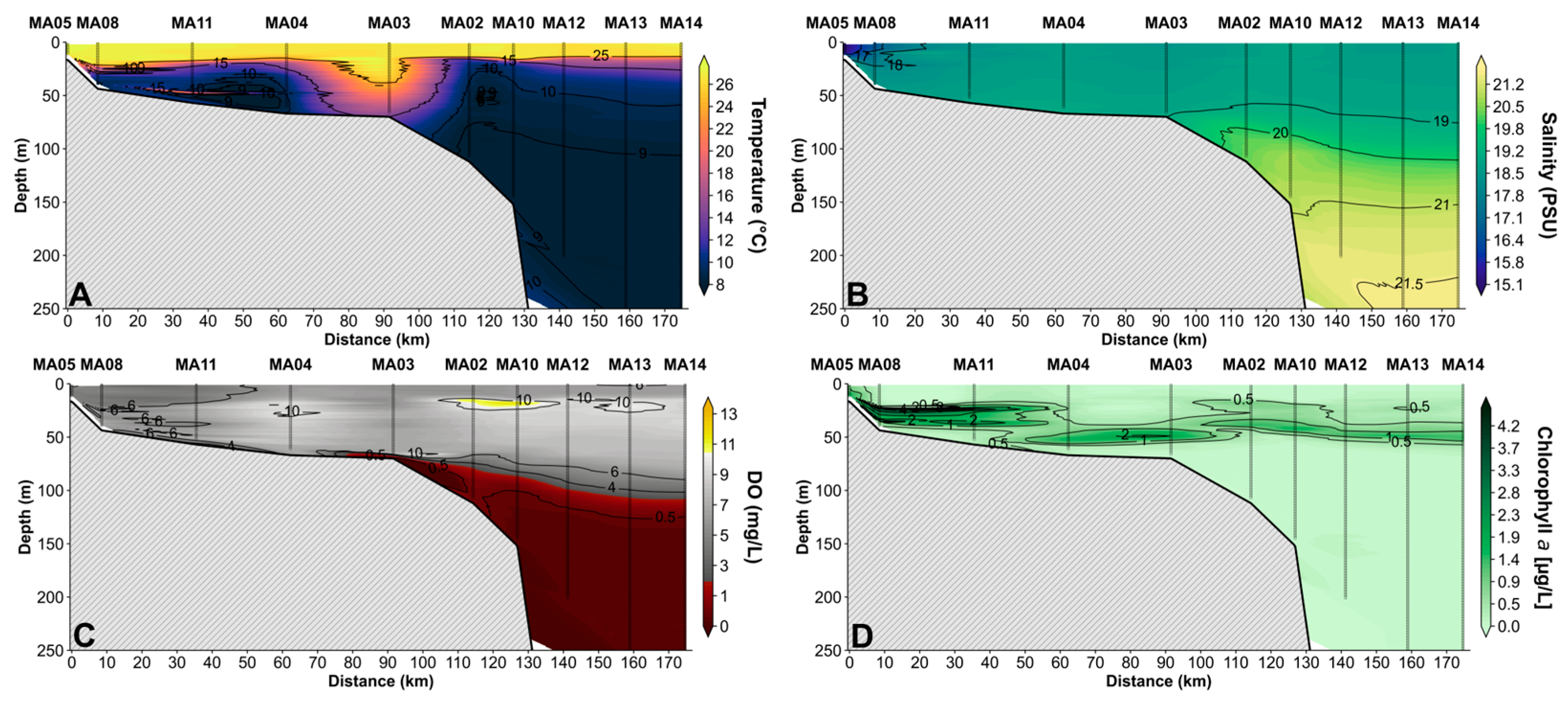
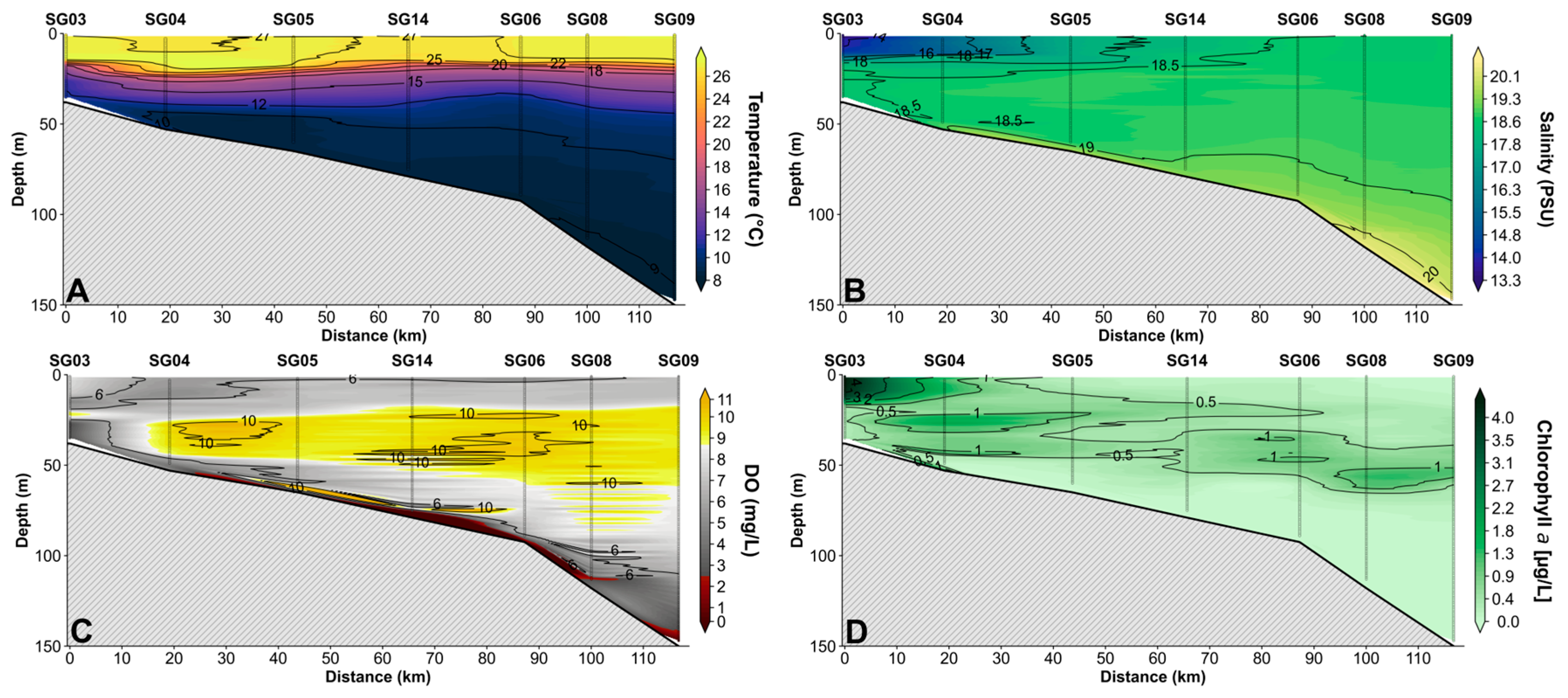
The vertical profiles of the CTD parameters along the three studied transects are presented in Figure 4, Figure 5 and Figure 6.

3.1.1. Mangalia-East Transect

A prominent seasonal thermocline was observed across the entire transect, with its upper limit varying from 10–12 m in the deepest stations of the transect (MA12, MA13, and MA14) to 25–28 m at station MA03 (Figure 4A). Surface temperatures were high (>27 °C, with maximum in the shallowest station MA05—28.31 °C). The Cold Intermediate Layer (CIL) did not show temperatures below 8 °C, as it is classically defined [18]. It was deepest offshore, spanning depths from approximately 55 m (at station MA02) down to 85 m (at station MA13), where the lowest measured temperature was 8.25 °C. The corresponding σt for the CIL core ranged from 14.50 (MA02) to 14.85 (MA13). The isotherms showed a slight depression offshore. Vertical profiles of salinity showed the permanent halocline beginning at depths of 45–55 m (corresponding to σt = 14.3–14.35), slightly deeper in the most distant stations (Figure 4B). The 19 PSU to 20 PSU isohalines were clearly visible, indicating strong stratification below 50 m. The 21 PSU isohaline showed a significant deepening offshore past station MA10. As regards to DO vertical profiles, a marked subsurface maximum DO layer was observed along the transect whose position varied greatly. The depth of the DO maximum layer decreased with the distance from the shore. Thus, the DO maximum layer was found at approximately 30 m depth in station MA03, while in the deepest station (MA14) it was situated at 16 m depth (Figure 4C). DO maximum concentrations varied between 8.01 mg/L in station MA03 and 12.12 mg/L in station MA10 (at 18 m depth). The DO maximum layer was relatively thin (5–10 m). Below the DO maximum layer, the oxycline was very steep, and concentrations dropped sharply below 60 m, corresponding to the upper part of the halocline. DO concentrations corresponding to the upper limit of the suboxic zone (10 μmol/L or 0.32 mg/L) were measured at depths ranging from 103 m (station MA10) to 130 m (stations MA13 and MA14), which corresponded to σθ = 15.8–15.9. DO reached the detection limit from depths of 130–145 m, corresponding to σθ = 16.0–16.1. Vertical profiles of chlorophyll showed a well-contoured Subsurface Chlorophyll Maximum (SCM) at depths ranging from 23 m to 40 m (Figure 4D). The SCM deepened significantly towards the deepest offshore stations (MA13/MA14), where its concentration was lower, suggesting a transition to more oligotrophic conditions offshore. The chlorophyll values in the SCM core varied greatly, ranging from 3.98 μg/L (station MA11, at 24 m depth) down to 1.35 μg/L (station MA12, at 48 m depth). The chlorophyll values in the SCM were significantly higher than the values determined in the surface layer, suggesting high rates of subsurface primary productivity.

3.1.2. Portita South-East Transect

The well-pronounced seasonal thermocline is observed along the entire transect, excepting the shallowest stations (PO01 and PO02 with bottom depths < 20 m), where the vertical temperature distribution was homogeneous. The seasonal thermocline was sharp and relatively uniform, located between 15 m and 45 m across the transect, its thickness decreased offshore (Figure 5A). Surface temperatures were slightly lower than the Mangalia transect, ranging within 26.34 °C and 27.34 °C. The CIL was shallower here, starting at around 55 m at the deepest stations (PO07 and PO08). The CIL core at PO08 showed a minimum temperature of 8.55 °C at 57 m depth. Vertical profiles of salinity were strongly influenced by the Danube discharge, with its influence being more evident in the shallowest stations PO01 and PO02 (Figure 5B). In the deepest station, relatively low surface salinities extended down to the upper limit of the thermocline (~15 m), suggesting the Danube plume influences the entire bay. Due to this pronounced freshwater influence and the shallower bottom depths along the Portița transect, the permanent halocline is not visible (Figure 5B). This transect featured a thick and widespread DO maximum layer compared to Mangalia, typically 15 m to 20 m thick and found between 20 m and 40 m depth. Maximum DO concentrations were high, reaching values between 9.33 (PO04) and 11.56 mg/L (PO06) (Figure 5C). Suboxic conditions were not reached, as the maximum depth was only 70 m. A well-pronounced SCM was present along the transect generally at depths around 25 m (Figure 5D). The SCM core concentrations were generally high (2.04–3.28 μg/L) and horizontally continuous, suggesting productive subsurface waters. The only exception was the shallow SCM core at the deepest station (PO08) which measured only 0.80 μg/L. This deepest station, however, showed an additional, more pronounced SCM core deeper at 38 m (1.2 μg/L), overshadowing the shallower one.

3.1.3. Sfântu Gheorghe—South-East Transect

The thermocline was sharply defined and relatively shallow, starting between 14 m and 20 m depth (deeper in the shallowest stations). Surface temperatures were high, exceeding 26.8 °C at all stations, with maximum in the deepest station SG09—27.35 °C) (Figure 6A). The CIL was observed at the deepest stations, with its core typically between 75 m and 95 m depth (corresponding to σt = 14.5–14.6), showing the largest variability in its vertical position among all three transects. This transect showed the strongest horizontal and vertical salinity gradient (Figure 6B). Surface salinity was extremely low near the coast (station SG03—13.37 PSU; SG04—15.34 PSU), which is characteristic to the direct Danube influence. Salinity increased rapidly both horizontally and vertically. The halocline was clearly visible, beginning around 65 m (SG14) to 85 m (SG09) and sharply separating the low-salinity surface layer from the deep, saline waters (>19 PSU. The DO maximum layer was present between 15 m and 45 m depth. Similar to Portița, the DOM was relatively thick (20 m to 35 m) but its maximum concentration was generally lower (9.54–10.21 mg/L) compared to the maximum observed at Mangalia. The oxycline was situated slightly deeper, with its upper limit around 58 m to 70 m, deeper in the most distant stations (Figure 6C). Only the deepest station (SG09) reached suboxic conditions (<0.32 mg/L) starting around 147 m, confirming significant oxygen depletion in the deepest parts of this transect. As regards the chlorophyll, this transect showed the highest surface chlorophyll concentration (up to 4.36 μg/L at station SG03) due to riverine nutrient input. The SCM was shallower (20–25 m) at stations SG04, SG05, and SG14, where the surface salinities were below 18 PSU, suggesting the Danube plume influence. It deepened down to depths of 40–55 m (Figure 6D) once the Danube influence considerably decreased. The chlorophyll concentrations in the SCM core varied from 0.81 μg/L at station SG14 to 1.86 μg/L at station SG04.

3.1.4. Characterization of Water Masses

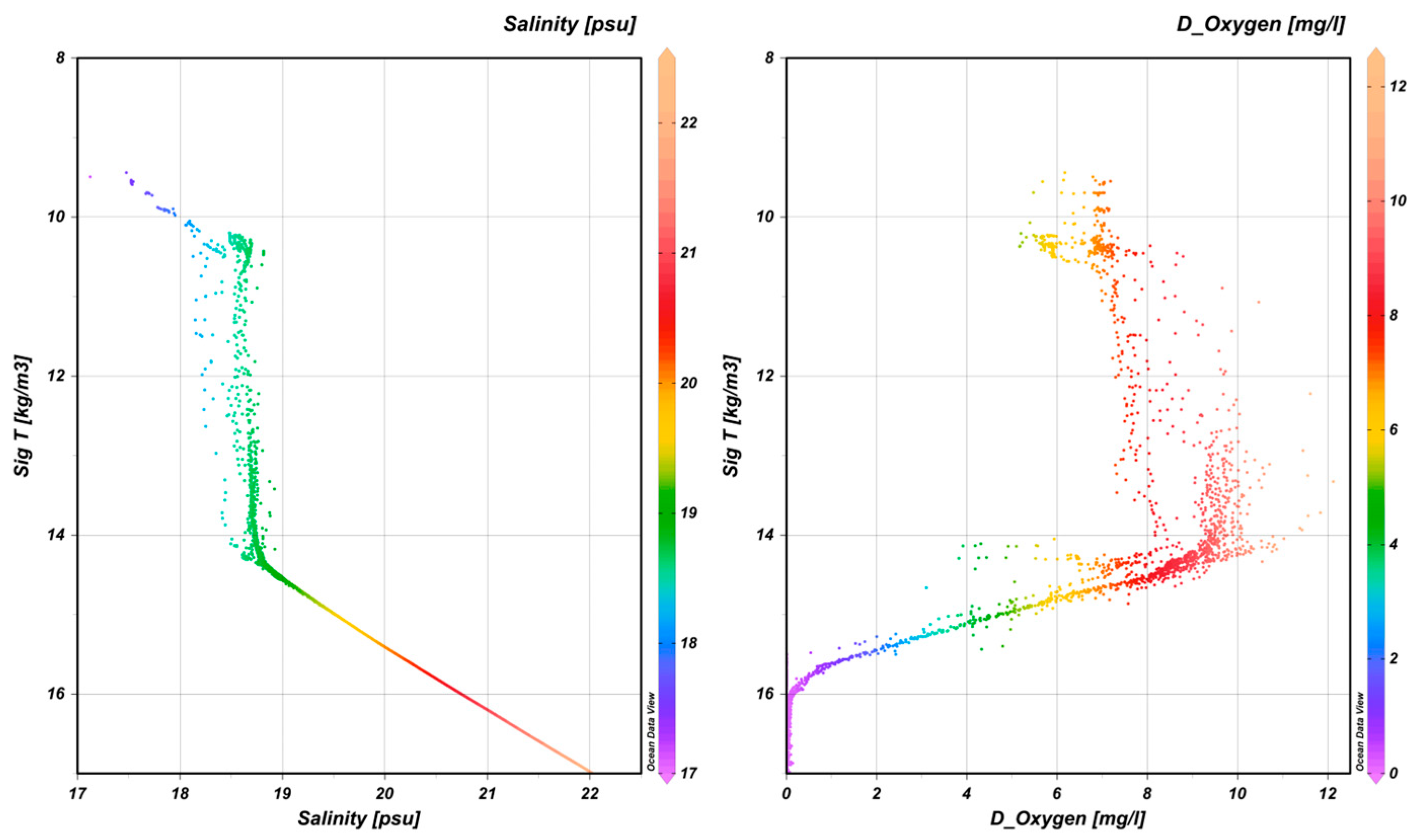
Figure 7 presents the σθ-salinity and σθ-DO diagrams, which synthesize the entire dataset across all three transects to clearly delineate the characteristic Black Sea water masses and the redox gradient.
The σθ-salinity plot demonstrates the strong permanent stratification, confirming the presence of two primary water masses:
-
Surface and Mixed Layer Waters (σθ < 14.3): This area is characterized by low and highly variable surface salinities (17 to 18.5 PSU) and low σθ values, primarily encompassing the seasonal thermocline and the upper CIL remnants. The high spread in salinity reflects the strong influence of river discharge (particularly the Danube) across the shelf;
-
Deep Saline Waters (σθ > 16.0): The dense, anoxic deep waters are tightly constrained to a high-salinity endmember (reaching ~22 PSU);
-
Permanent Halocline (σθ~14.3 to 16.0): This steep, diagonal feature connects the two masses, demonstrating the uniform relationship between increasing salinity and increasing density below the seasonal layer.
The σθ-DO plot illustrates the sharp vertical redox gradient, defining the critical transition zones:
-
Oxic Layer: The cluster of points between σθ~10 and 14.5 shows high oxygen concentrations (up to 12 mg/L), particularly where the DO maximum layer (as described in Figure 4, Figure 5 and Figure 6) is present;
-
Oxycline: This zone is defined by the steepest gradient and sharp drop in dissolved oxygen concentration as density increases. It spans the range DO maximum to 0.3–0.4 mg/L to the disappearance of measurable oxygen.
-
Suboxic Zone: The zone begins below the oxycline (with DO typically <0.3–0.4 mg/L) and extends to the onset of the anoxic zone;
-
Anoxic Zone: The deepest, densest waters (σθ > 16.0) are characterized by no measurable oxygen. This tight cluster of points confirms the presence of the deep, sulfide-rich anoxic layer below the suboxic zone across the deeper stations of the studied transects.

3.2. Nutrient Regime in the NW Black Sea Shelf

3.2.1. Surface Nutrients in the NW Black Sea Shelf

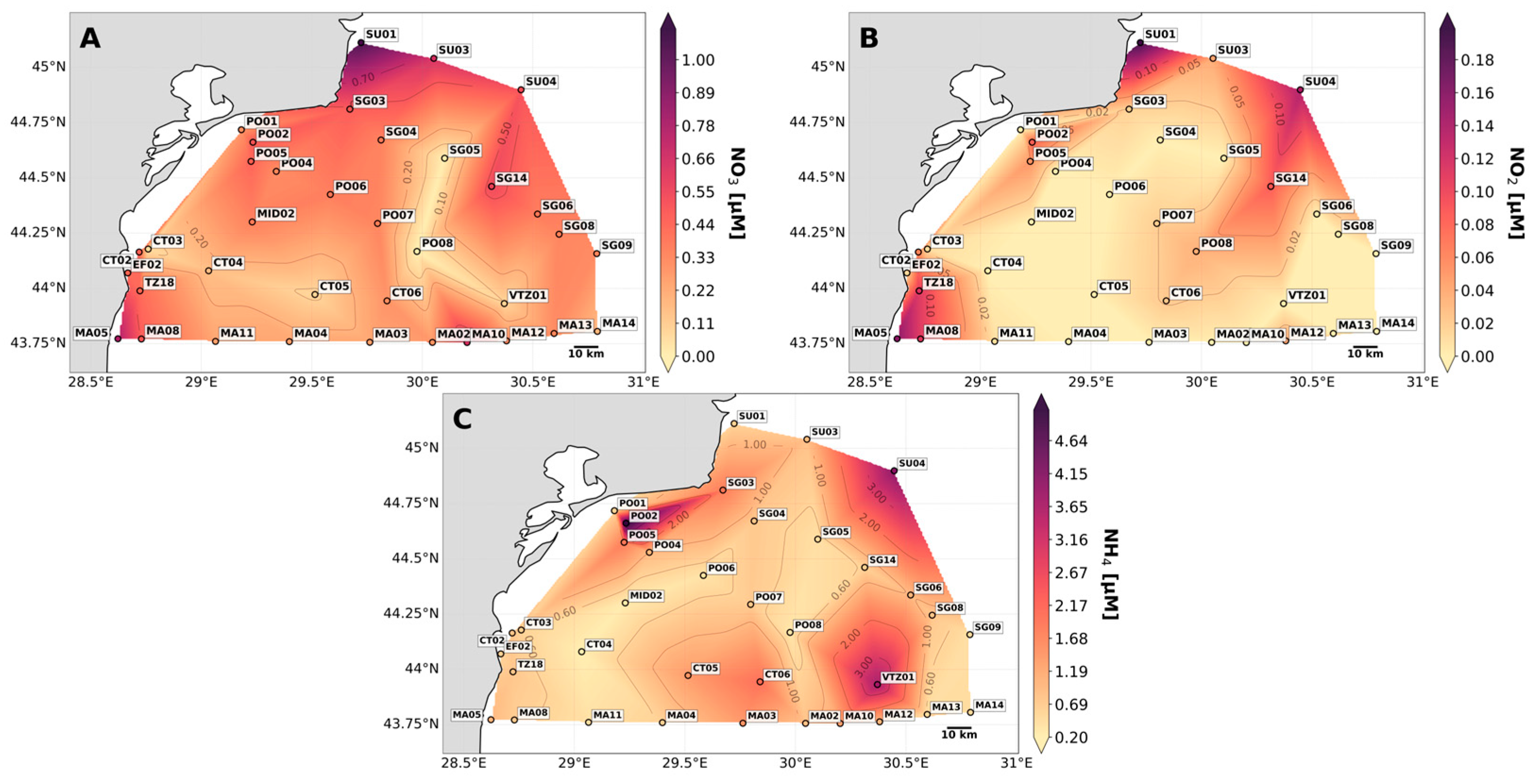
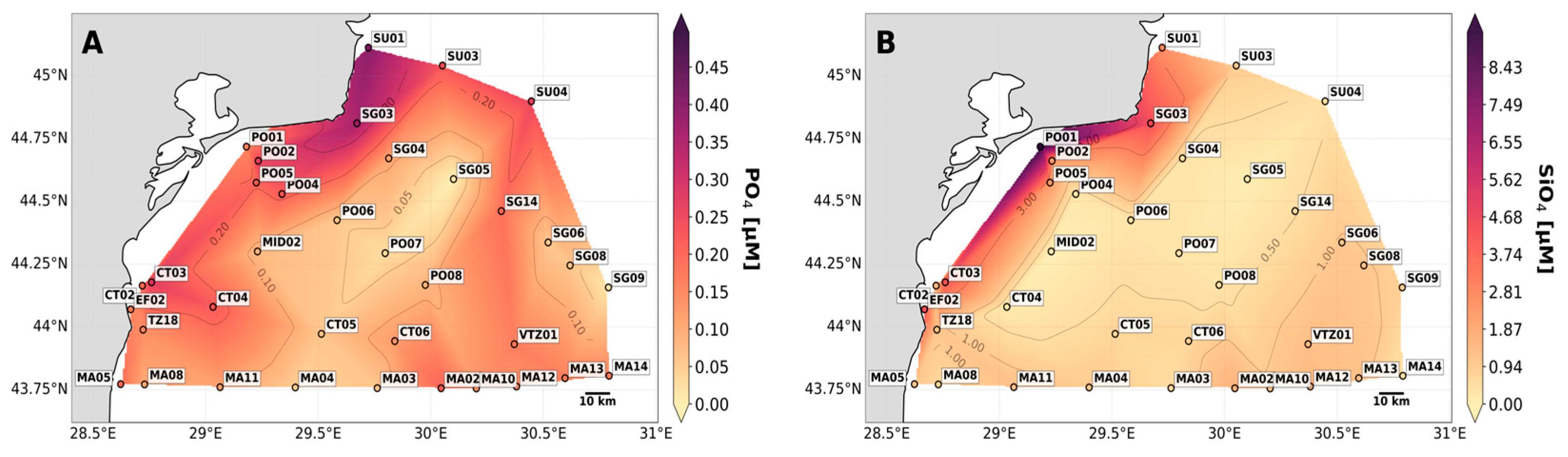
Nutrients in the surface layer showed high variability (Figure 8), primarily influenced by the Danube discharges. This riverine influence is substantiated by the strong negative correlations observed between salinity and most inorganic nutrient concentrations (PO4, SiO4, NO3, and NO2; see Table 2 for the full correlation matrix), but also human activities south of the Romanian coast. Furthermore, the data indicate a clear coupling between nutrient availability and primary production: chlorophyll exhibited strong positive correlations with phosphate (PO4) and nitrate (NO3), suggesting that these river-supplied nutrients were key factors supporting algal growth (Table 2). Phosphates ranged within 0.014–0.40 µM, silicates within 0.31–9.29 µM, nitrates within 0.08–1.05 µM, nitrites < LoD to 0.19 µM, and ammonia within 0.21–3.19 µM.
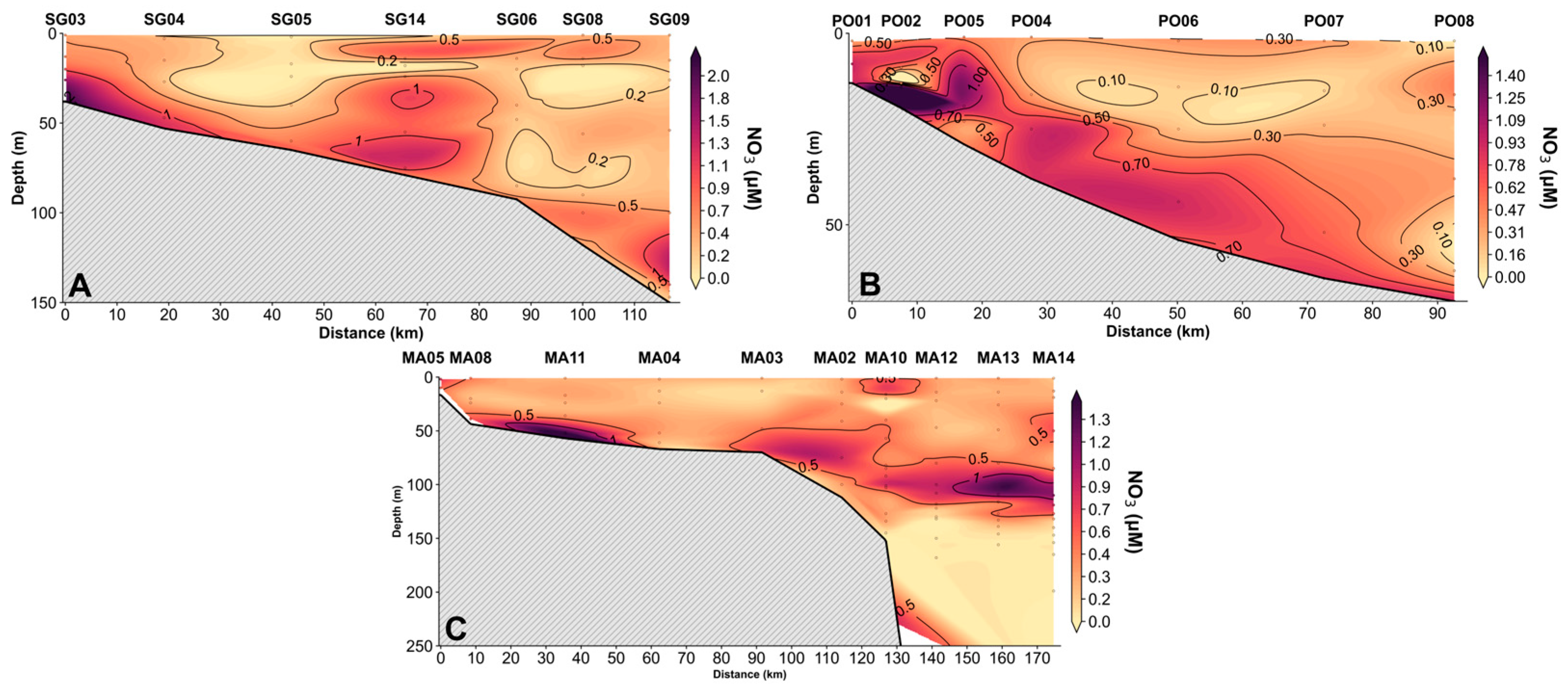
The highest surface phosphate concentrations were recorded in front of the Sulina and Sf. Gheorghe branches, in stations SU01 (0.40 µM) and SG03 (0.36 µM), respectively (Figure 8A, while the surface silicate maximum was shown in the shallowest station from the Portita bay (PO01) (Figure 8B). Similar to surface phosphate, the oxidized forms of inorganic nitrogen (NO3 and NO2) showed maxima in the shallow waters in front of the Sulina branch (SU01). However, slightly higher NO3 and NO2 concentrations were measured in the shallowest station from the Mangalia-East transect (Figure 9A,B), most likely linked to higher anthropogenic pressures such as WWTP and port activities. The highest surface ammonium concentration was found in the shallow waters of the Portita bay (Figure 9C), most likely in connection with the organic matter decomposition, facilitated by high seawater temperatures and weak currents in that sheltered area, which is also confirmed by lower DO concentrations.

3.2.2. Vertical Distribution of Nutrients

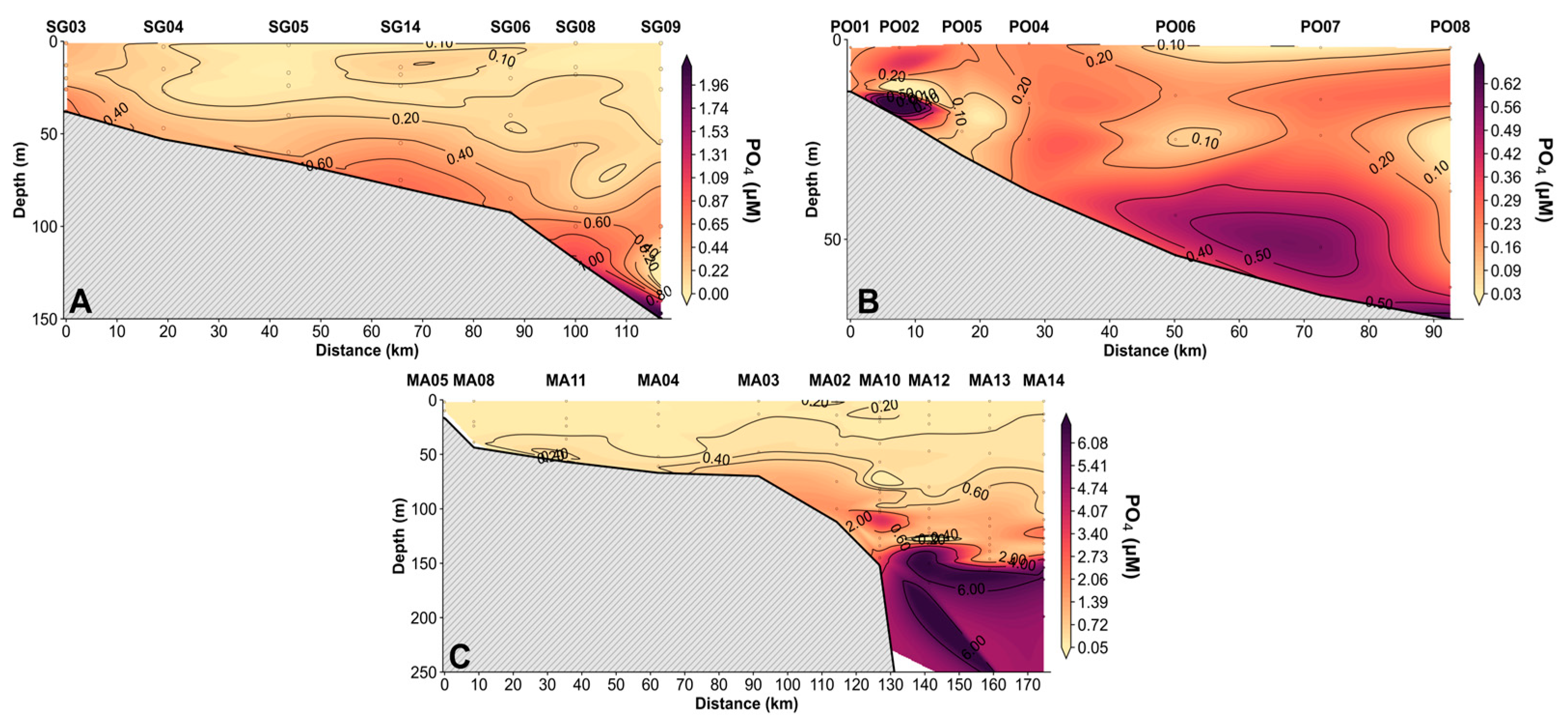
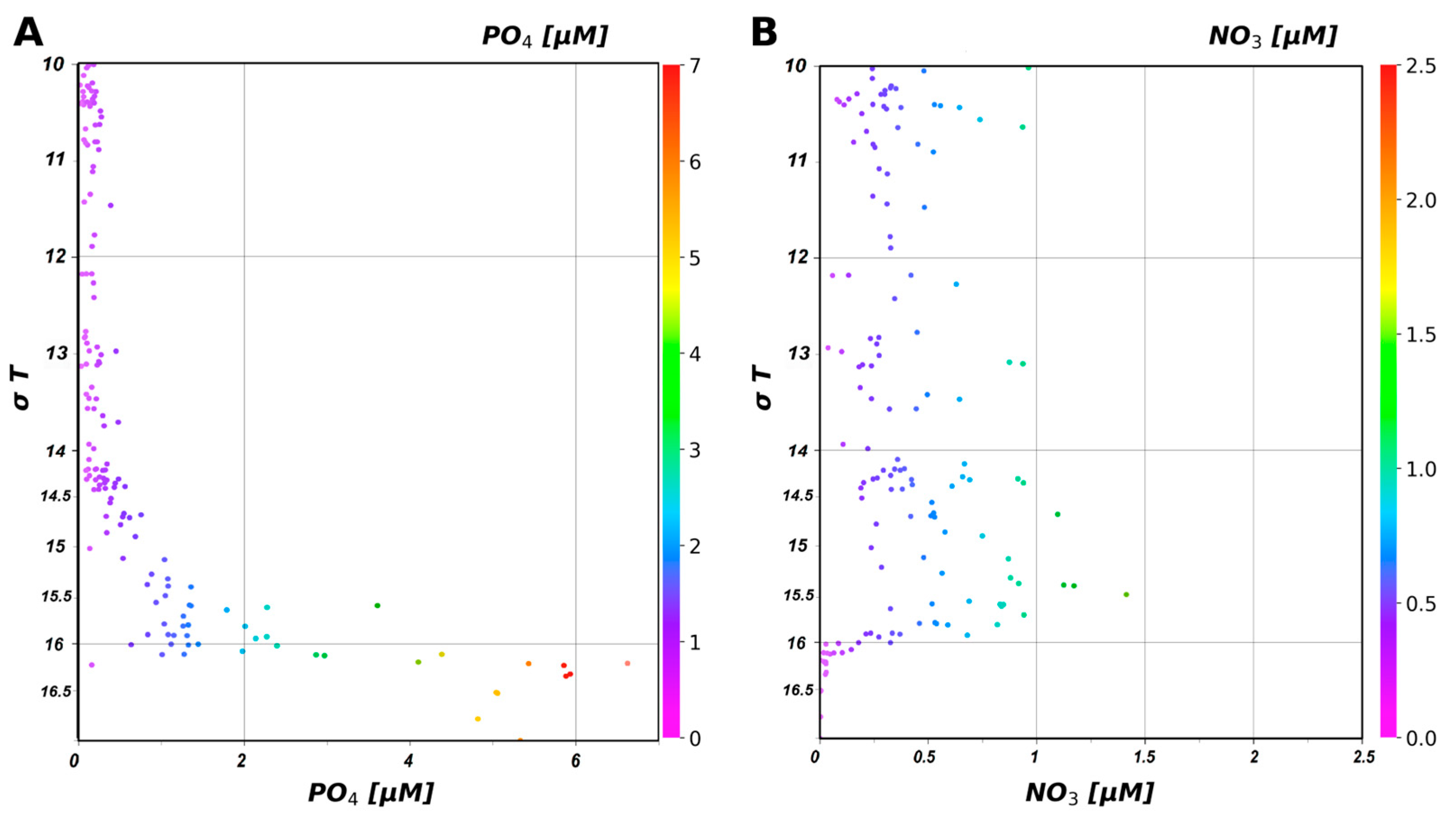
Phosphate concentrations showed a relatively homogeneous distribution in the upper mixed layer on the Mangalia transect (CVs of 13–37%), followed by a slight increase up to the top of the halocline. The increase is more accentuated starting there, leading to an upper phosphate maximum at depths of 103–109 m (Figure 10), which corresponded to σθ = 15.6–15.7. Concentrations in this maximum varied from 1.34 to 3.61 µM. Below this maximum the concentration sharply decreased up to the phosphate minimum where the concentrations ranged from 0.64 to 1.12 µM (Figure 10). This minimum was measured at depths of 130–155, corresponding to σθ = 15.9–16.0. This minimum was followed by a sharp increase, with concentrations reaching the second phosphate maximum (4.1–6.62 µM), measured at σθ = 16.2. In the anoxic zone, the phosphate slightly decreased from σθ = 16.2 to σθ = 16.5 (e.g., in the station MA14, from 5.85 µM to 5.04 µM), followed by a gradual increase, with the concentration measured at σθ = 17.0 being 7.33 µM (station MA14). A similar vertical profile of phosphate was observed in the deepest stations of the Sf. Gheorghe-SE transect (SG08 and SG09). In the shallower stations of the Sf. Gheorghe-SE transect as well as stations along the Portita-SE transect, the phosphate profile showed a slight decrease from the surface to the SCM layer, t likely due to higher phosphate consumption for algal growth, followed by a gradual increase up to the bottom layer.
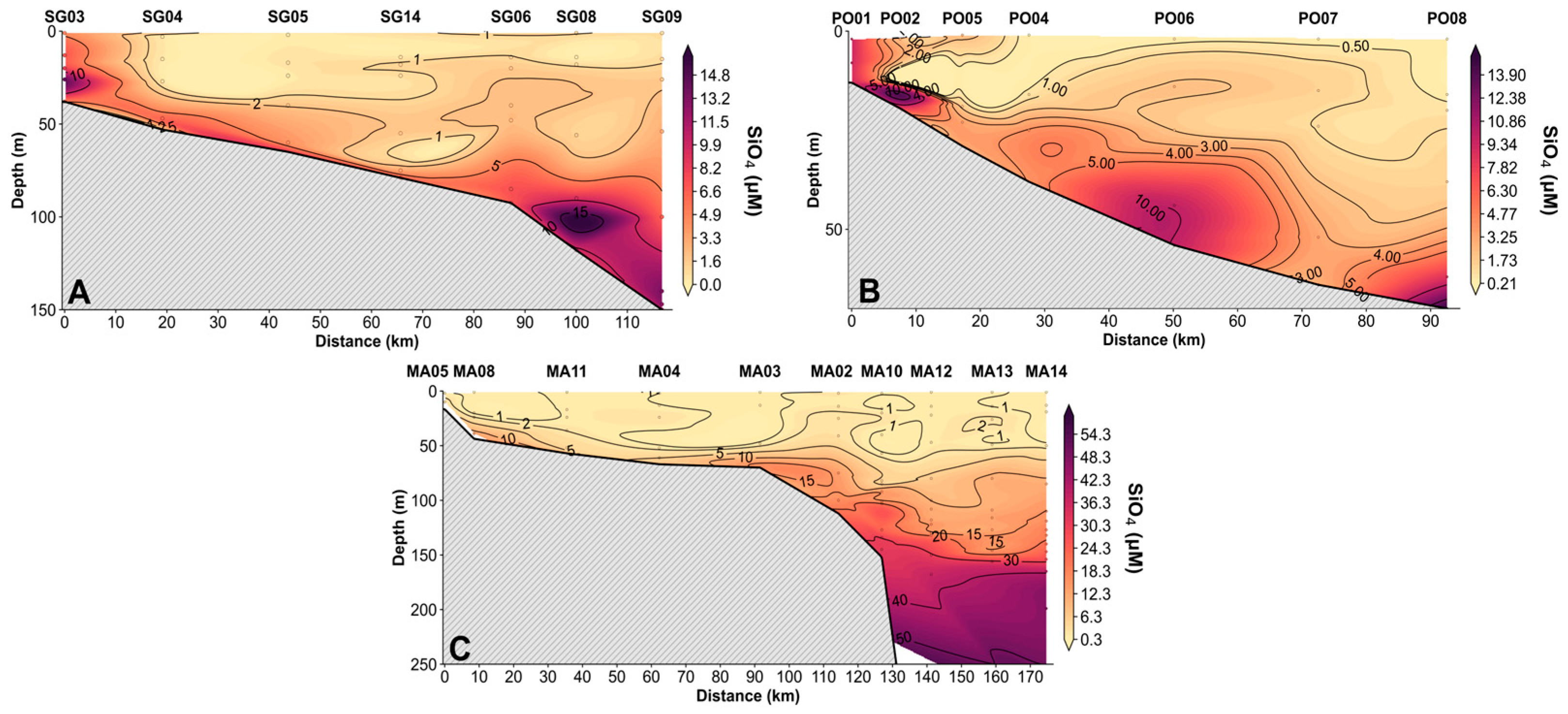
Vertical silicate profiles on the Mangalia-East transect showed a homogeneous distribution down to the top of halocline (CVs between 7% and 38%), with concentrations varying from 0.33 µM to 2.52 µM. Starting at the halocline, silicate concentrations sharply increased up to the near-bottom layer (Figure 11), reaching values of 15.1–23.01 µM at the upper boundary of anoxic zone (σθ = 15.9–16.0), 27.81–30.78 µM at σθ = 16.2, 41.22–46.62 µM at σθ = 16.5, and 63.28 µM at σθ = 17 (station MA14). Unlike the Mangalia transect, the silicate vertical distribution along the Sf. Gheorghe-SE and Portita-SE transects showed a slight increase from below the lower limit of thermocline up to the top of halocline. Concentrations generally peaked in the subsurface SCM, reaching values of 1.27–2.86 µM that are significantly higher than in the surface layer (0.31–1.06 µM). Below the upper limit of halocline, the silicate concentrations steeply increased up to the bottom layer.
Nitrate exhibited heterogeneous vertical distributions in both the shallower and deeper stations. In the shallower stations, nitrate concentrations were generally higher in the near-bottom layer (0.63–2.13 µM) (Figure 12). In the deeper stations, nitrate concentrations were relatively homogeneously distributed in the upper layer, showing a slight increase at the top of the halocline (Figure 12). Starting at the upper halocline, nitrate increased sharply, reaching maxima (0.82–1.71 µM) at depths of 75–140 m, corresponding to σθ = 15.4–15.8. The nitrate maximum was followed by a clear decrease in concentrations, becoming steeper below the σθ = 15.9–16.0. In this region, when DO drop below 10 µM, denitrification reactions occur, resulting in the nitrate removal.
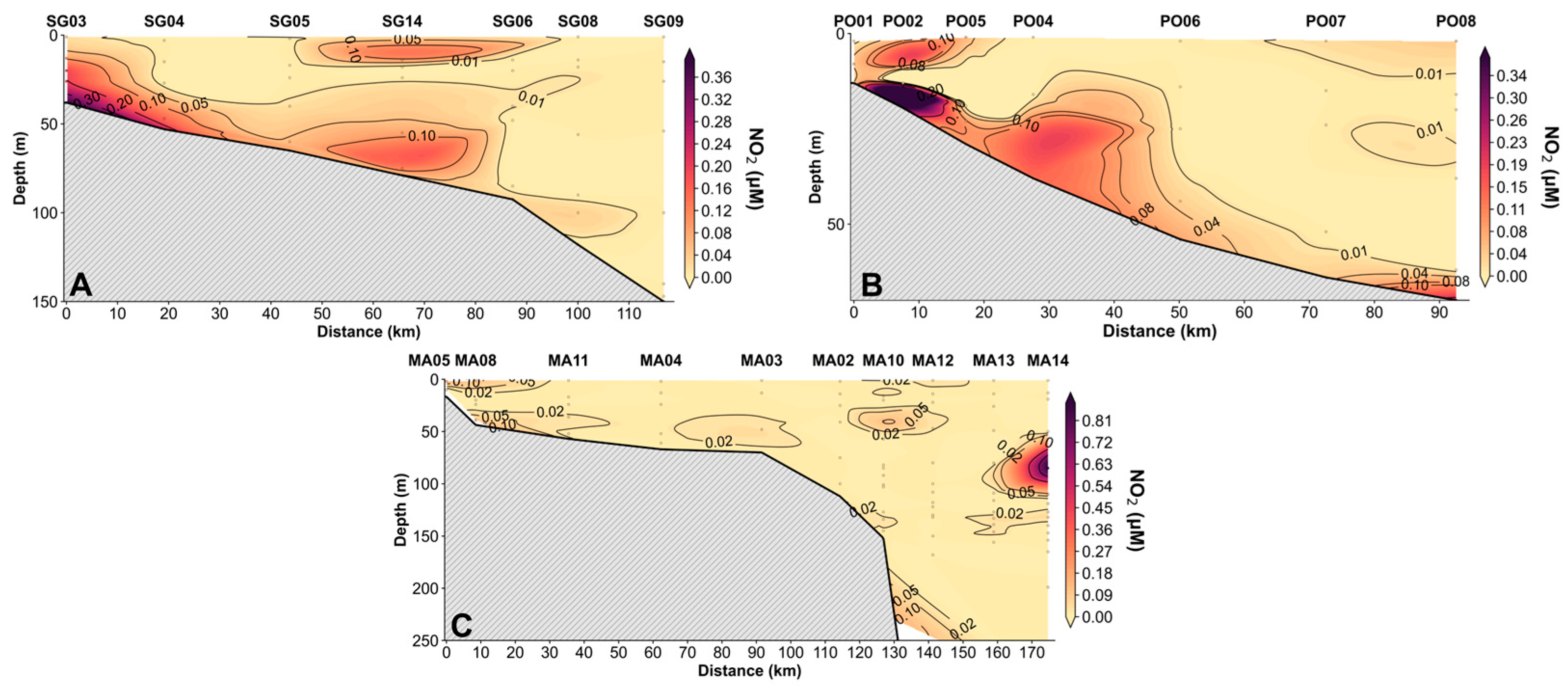
Nitrite vertical profiles were variable between stations. Concentrations in the upper column were very low (often below the detection limit), except at the shallowest stations (0.01–0.041 μM) (Figure 13). The highest nitrite concentrations (up to 0.38 μM) were recorded in the bottom layer of the shallow stations across all studied transects. In the deeper stations, nitrite vertical profiles sometimes exhibited one or two maxima, more evident on the Mangalia-East transect (Figure 13).
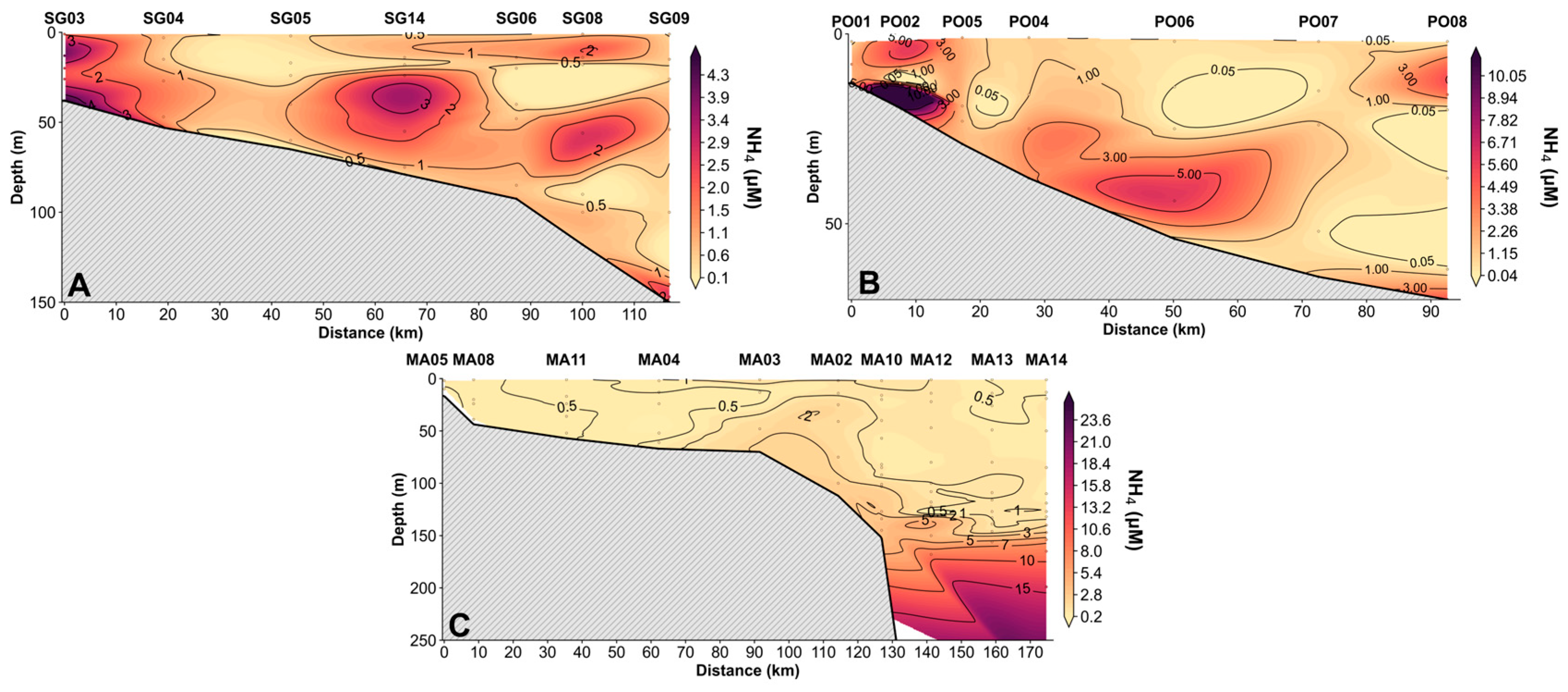
Ammonia concentrations were quite homogeneously distributed within the oxic water column, coefficients of variations ranging within 5–41% on the Mangalia transect, 6–51% on the Portita transect, and 28–47% on the Sf. Gheorghe transect. The higher CVs are mainly due to a slight decrease observed within the oxygen maximum layer, primarily on the Sf. Gheorghe and Portita transects. The shallowest stations in front of the Danube’s mouths showed relatively high ammonia concentrations (>1.5 µM) homogeneously distributed within the water column (Figure 14). In the deeper stations along the Mangalia-East transect, ammonia concentrations showed concentrations < 0.5 µM up to the suboxic zone, where they gradually increased up to concentrations within 0.96–1.97 µM. Below the suboxic zone, the increase became steeper. Concentrations reached 1.51–4.02 µM at σθ = 16.10, and then increased to 3.62–5.92 µM at σθ = 16.20, 8.40–8.66 µM at σθ = 16.30, 11.93–14.08 µM at σθ = 16.50, and 41.14 µM at σθ = 17.0 (station MA14).
The relationship between the nutrients and the σθ is presented in Figure 15, which plots PO4 vs. σθ and NO3 vs. σθ. The PO4 vs. σθ plot on the left clearly visualizes the pattern described: low concentrations in the upper layer (σθ ~ 8–14), followed by a distinct upper maximum around σθ = 15.6–15.7, a sharp decrease to a minimum at σθ = 15.9–16.0, and finally, a steep increase to the second maximum at σθ = 16.2. Similarly, the NO3 vs. σθ plot on the right illustrates the nitrate maximum between σθ = 15.4–15.8, followed by the rapid decline and near-zero values below σθ ~ 16.0, which corresponds to the region of intense denitrification. The plots effectively summarize the decoupling of nitrogen and phosphorus cycling in the deep-water column, characterized by the simultaneous removal of nitrate and regeneration of phosphate.

3.3. Testing and Comparing the Preservation Methods

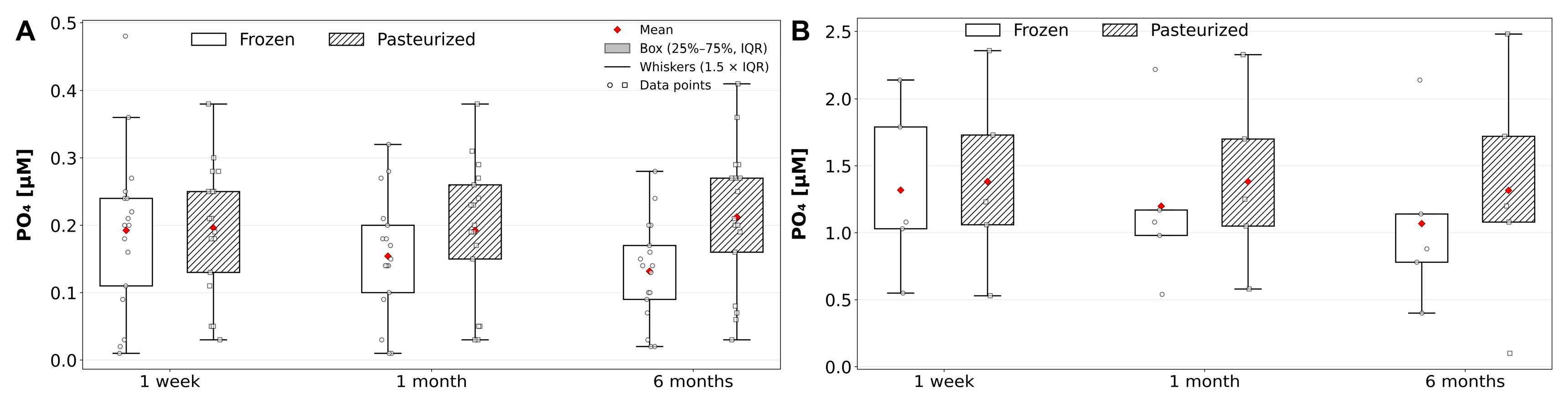
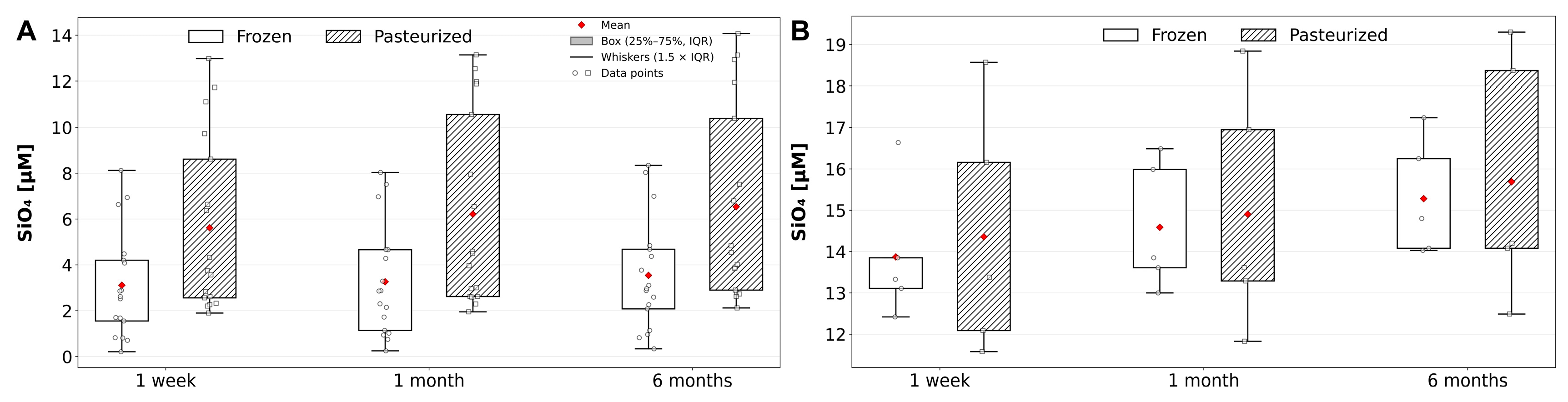
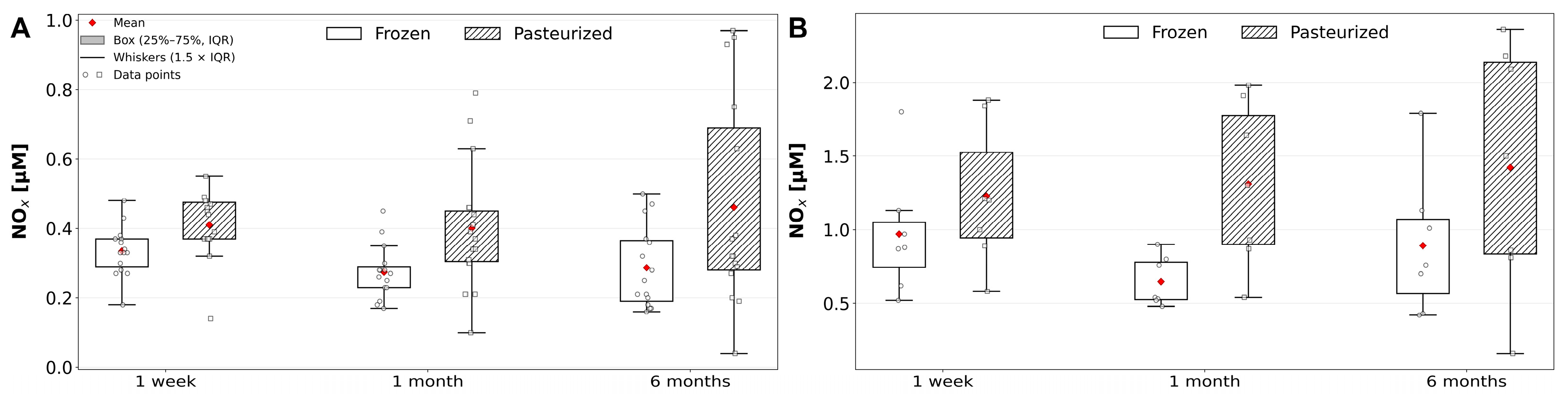
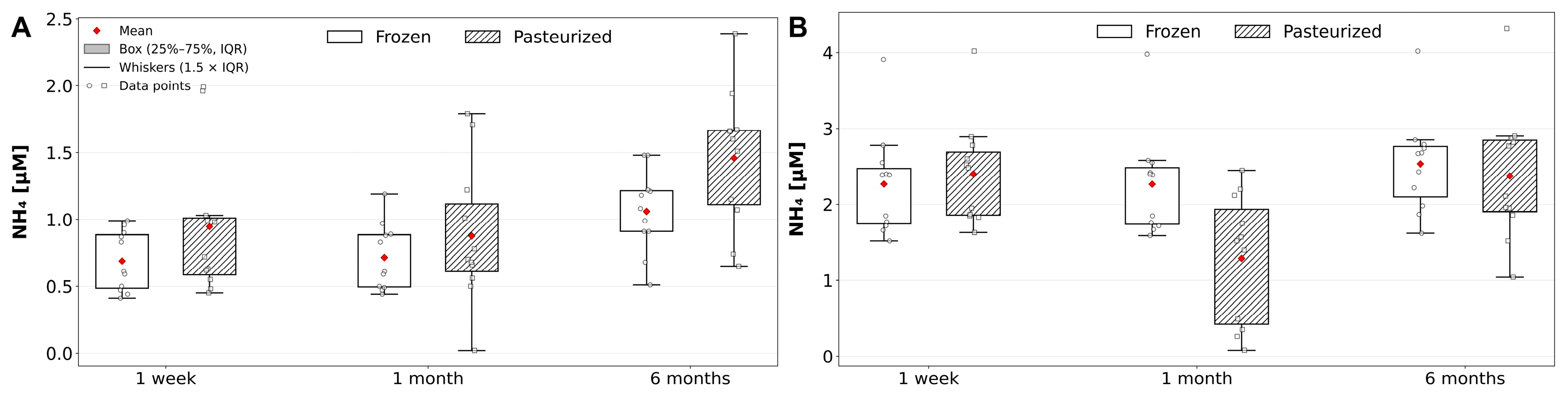
To assess how storage conditions influence nutrient measurements, temporal changes in phosphate (PO4), ammonium (NH4), nitrite + nitrate (NOx), and silicate (SiO4) were monitored in seawater samples stored for different periods under frozen and pasteurized treatments. Since the onboard working conditions did not permit immediate analysis of the nutrients in the current study, the one-week preserved, both frozen and pasteurized samples were used as baseline for evaluating temporal stability (up to 6 months) for both storage methods (freezing and pasteurization). Changes over time within the same storage method were assessed using paired two-tailed Student’s t-tests, while comparisons between frozen and pasteurized treatments at each time point were evaluated using two-sample two-tailed Student’s t-tests. The variability and distribution of nutrient concentrations are summarized in Figure 16, Figure 17, Figure 18 and Figure 19 using box plots, where boxes represent the interquartile range (25th–75th percentiles), whiskers show the full range of observed values, individual points represent potential outliers, and mean is represented by red dot.
Phosphate concentrations in frozen samples showed a general decline with storage time (Figure 16). At low concentrations (PO4 < 0.5 µM), average losses reached 20% and 15% after one month and six months, respectively, and the decreases were statistically significant (paired two-tailed Student’s t-test, p < 0.01). At higher concentrations (PO4 > 0.5 µM), the losses were smaller (~9% after one month and 11% after 6 six months) and not statistically significant (paired two-tailed Student’s t-test, p > 0.05). For the pasteurized samples, higher stability was observed, with negligible variations at both concentration ranges (up to 10% for six months of storage), and no significant differences over time (paired two-tailed Student’s t-test, p > 0.1) (Figure 15B). The difference between the frozen and pasteurized methods for one week storage was very low, but they increased systematically with storage time (Figure 16). After six months, the pasteurized samples exceeded the frozen ones for both concentration ranges, and the difference was statistically significant at low phosphate concentrations (paired two-tailed Student’s t-test, p < 0.001).
Silicate concentrations in frozen samples increased slightly with storage time. At low concentrations (SiO4 < 10 µM), the average silicate concentration increased by approximately 5% and 9% after one and six months (Figure 17A), respectively, and this increase was statistically significant (paired two-tailed Student’s t-test, p < 0.001)). At high concentrations (SiO4 > 10 µM), the increase remained minimal (up to 5%) (Figure 17B) and was not statistically significant (paired two-tailed Student’s t-test, p > 0.05) throughout the storage period. Pasteurized samples showed similar small increases for both concentration ranges (Figure 17) (between 3% and 11%), with significant changes over time (paired two-tailed Student’s t-test, p < 0.05). However, when comparing the storage methods, pasteurized samples showed significantly higher averages than frozen ones for the 0–10 μM range (two-sample two-tailed Student’s t-test, p < 0.001), with increases of 58% after one week, 91% after one month, and 85% after six months. In contrast, for concentrations > 10 µM, the differences between the methods were minor (<4%) and not statistically significant (two-sample two-tailed Student’s t-test, p > 0.7).
Nitrate + nitrite (NOx) concentrations in frozen samples exhibited substantial variability with storage (Figure 18). At low concentrations (NOx < 0.5 µM), the averages were 18% and 14% lower after one month and six months (Figure 18A), respectively, compared with the one-week samples, and these decreases were statistically significant (paired two-tailed Student’s t-test, p < 0.05). For high concentration range (>0.5 µM), the decline was even more pronounced, reaching up to 47% after one month of storage (Figure 18B), and was also statistically significant (paired two-tailed Student’s t-test, p < 0.05). The pasteurized samples showed a higher stability in time, with concentrations at one and six months being only up to 15% higher than those in the one-week samples for both concentration ranges (paired two-tailed Student’s t-test, p > 0.05). When comparing the two storage methods, pasteurized samples displayed significantly higher concentrations than the frozen ones for all storage times (two-sample two-tailed Student’s t-test, p < 0.05), with increases of 22–26% after one week, 46–102% after one month, and approximately 60% after six months (Figure 18).
Ammonium concentrations in frozen samples remained similar to their initial concentrations for up to one month of storage (paired two-tailed Student’s t-test, p > 0.05). However, after six months, the average was higher than the one-week samples, especially for concentrations > 1.0 µM (paired two-tailed Student’s t-test, p < 0.05) (Figure 19A), likely due to microbial degradation of organic matter in frozen samples [48]. For pasteurized samples, NH4 averages at low concentrations (<1.0 µM) showed a slight reduction at one month (7%; paired two-tailed Student’s t-test, p > 0.05) and a significant increase (≈45%) at six months compared to the one-week samples (paired two-tailed Student’s t-test, p < 0.01) (Figure 19A). Conversely, at high concentrations (>1.0 µM), pasteurized samples were significantly lower at one month (46%; paired two-tailed Student’s t-test, p < 0.01) and relatively unchanged at six months (Figure 19B). Comparing the storage methods, ammonium concentrations measured after one week were similar for high concentrations (>1.0 μM; two-sample two-tailed Student’s t-test, p > 0.05), while at low concentrations (<1.0 μM), pasteurized samples were significantly higher (37%; two-sample two-tailed Student’s t-test, p < 0.05). For longer storage, pasteurized samples showed higher averages in the low concentration range after one month (22%; two-sample two-tailed Student’s t-test, p < 0.05) and six months (37%; two-sample two-tailed Student’s t-test, p < 0.01). In contrast, for concentrations > 1.0 µM, pasteurized samples were lower than frozen samples (by 43% and 7%, respectively), with the former being significant (two-sample two-tailed Student’s t-test, p < 0.01) and the latter not significant (two-sample two-tailed Student’s t-test, p > 0.05).

4. Discussion

A key limitation when interpreting the multi-decadal nutrient trends is our reliance on heterogeneous historical data, which are typically only available as published means and concentration ranges and were often acquired using varying analytical methodologies, precluding formal statistical significance testing. Consequently, the comparisons discussed in Section 4.1 and Section 4.2 should be viewed as strong qualitative indicators of change rather than statistically proven differences.

4.1. Surface Nutrients

Surface nutrient concentrations exhibit high spatial heterogeneity, with the highest values found in the Danube Delta influence area. Localized hotspots along the southern Romanian coast also contribute to nutrient enrichment in shallow coastal waters. The averages of surface nutrient concentrations in the Romanian shelf waters were 0.15 ± 0.09 µM for phosphate, 1.33 ± 7.74 µM for silicate, 0.37 ± 0.22 µM for nitrate, 0.03 ± 0.05 µM for nitrite, and 1.20 ± 1.16 µM for ammonium. The pronounced standard deviation in silicate (±7.74 µM) reflects the strong environmental dichotomy between the high-concentration fluvial plume from the Danube Delta and the rapidly diluted, biologically depleted background shelf waters [24,49,50]. This spatial dichotomy is critical for interpreting nutrient status. The high concentrations in the north (especially for silicate, nitrate, and phosphate) are directly attributable to the Danube River fluvial input, which acts as the dominant, large-scale diffuse input source [49,50]. This results in the Danube Delta influence area being the primary driver of nutrient concentrations on the northern shelf [51]. In contrast, localized hotspots along the southern coast are linked to coastal point sources [51,52], explaining the distinct behavior of individual nutrients. For instance, being an element primarily derived from terrestrial weathering, silicate is highly correlated with fluvial input dominance [53,54]. The dominance of terrigenous sediment supply in deltaic areas, as discussed by [53], is the primary factor dictating the high dissolved Si signal in the northern Romanian shelf waters. Nitrate and phosphate patterns reflect large-scale diffuse source reduction. Their clear decreasing trend compared to historical data is correlated with the success of large-scale diffuse source reduction across the Danube catchment [54]. This period of transition in the mid-2000s marked a significant step in the recovery of the Romanian coastal ecosystem, a finding corroborated by studies tracking regional nutrient dynamics and the assessment of eutrophication indices [30,31]. Conversely, the sustained, relatively high surface concentration of ammonium is an anomaly that correlates with localized sources and high regeneration rates from the rapid remineralization of organic matter following intense primary productivity [50,55], highlighting a challenge in controlling coastal organic matter loading, distinct from the success in reducing NO3 and PO4 inputs.
Phosphate showed concentrations slightly higher than those measured in the pre-eutrophication period (before the 1970s), specifically 0.11 ± 0.04 μM according to [56], but markedly lower than the mid-1970s, specifically 1.34 ± 0.33 μM and the 2006–2011 period (0.31 ± 0.96 μM) [27]. Nitrate showed a clear decreasing trend from 15.8 ± 9.4 μM in the mid-1970s and 5.18 ± 6.73 μM in 2006–2011 to 0.39 ± 0.23 µM in the present study. Both nitrite and ammonium concentrations determined in this study are visibly lower than those recorded in 2006–2011, more specifically 0.89 ± 3.11 μM and 4.15 ± 9.42 μM, according to [27]. The data from [54] further support this transition period, noting an improvement in the eutrophication phenomenon due to decreased nutrient loads from the Danube. As for the silicate, the current concentrations are far below from those measured in the mid-1960s, 41.3 ± 7 μM, as well as in 1985–1993, 6.0 ± 2.0 μM. Furthermore, the most recent data (2020–2023) measured in shallow waters of Constanța [57] show notably higher concentrations than those measured in this study for all nutrients. However, the large contrast is likely attributed to the different spatial and temporal coverage; the data provided by [57] are obtained only from one station, on a daily basis.
Comparing with other coastal regions across the Black Sea, the surface phosphate concentrations measured in this study showed values quite similar to those measured in north and north-eastern Black Sea, specifically 0.05–0.3 μM and 0.1–0.2 μM, respectively [58,59] and markedly lower than those measured by [9] in south-eastern Black Sea (0.34 ± 2.23 μM). Surface silicate showed relatively similar values to the northern Black Sea, 0.5–2.7 μM according to [58], and slightly lower values as compared to north-eastern and south-eastern coastal Black Sea waters. Refs [9,59] showed surface silicate concentrations of ~2 μM and ~3 μM, respectively. Regarding the nitrate, refs. [9,60] found surface concentrations in coastal north-eastern and south-eastern Black Sea of 0.27–0.70 μM and 0.27 ± 0.83 μM, respectively, which are quite close to those measured in the current study. Surface ammonium concentrations measured in the current study showed values higher than in the northern Black Sea, where the average concentrations were 0.19–0.22 μM.
The relatively low surface nutrient concentrations determined in the present study might be linked mostly to more sustainable practices in agriculture, wastewater treatment, and industry. However, the sustained, relatively high surface ammonium concentration remains an anomaly. This elevation is likely a result of high rates of localized NH4 regeneration due to the rapid remineralization of organic matter following intense primary productivity in nutrient-rich areas (e.g., Portița Bay) [50,55]. We also considered the possibility of localized, continuous inputs from coastal anthropogenic point sources (e.g., wastewater and urban runoff). Although previous data [52] supported this supposition, our current data did not corroborate it. This suggests an improving effectiveness in wastewater treatment practices within the main coastal hotspots, which has helped reduce direct NH4 loading. Nevertheless, this sustained NH4 elevation highlights a remaining challenge in coastal zone management—specifically controlling localized organic matter loading and the resulting high nitrogen turnover—despite the overall success in reducing diffuse NO3 and PO4 inputs.

4.2. Vertical Profiles of Nutrients

In open waters, phosphate has the most complicated vertical profiles among the chemical properties [13,21], showing two maxima and a minimum. The upper maximum is found at the base of oxycline and is most likely due to the release of organic matter during the aerobic respiration [61]. In the current study, this upper maximum was found at σθ = 15.6–15.7, at placing it at a greater depth than in the previous studies of [16,21] in central and western Black Sea, where it was observed at σθ = 15.45–15.55. The σθ shift, along with the high concentrations measured here (1.3–3.6 μM vs. 1–2 μM by [62]), might be attributed to the downward shift in the lower limit of the oxycline, possibly linked to the reduction in particulate organic matter flux following decreased eutrophication in Romanian shelf waters [16]. The phosphate minimum layer, found at σθ = 15.9–16.0 (in agreement with [9,21,63]) corresponds to the suboxic/oxic interface. However, concentrations in this layer are elevated in this study (0.64–1.12 μM) compared to the north-eastern Black Sea (<0.5 μM) [62]. The lower maximum, in contrast, was found in the upper part of the anoxic zone at σθ = 16.2. This “phosphate dipole” structure, responsible for the complicated structure of phosphate vertical profiles, is attributed to processes involving Mn and Fe cycling between oxidized and reduced forms [13] The lower phosphate maximum is more pronounced than the upper one reaching, in the current study, concentrations of 4.1–6.6 μM. These concentrations align consistently with those found in the deeper maximum over past decades in both western and central basins [64,65] and recent studies [9,62]. A second, deeper, phosphate minimum was observed in the anoxic zone, at σθ = 16.5, in line with [13].
Silicate exhibited vertical profiles quite similar to those of salinity and density since it is not involved in the processes connected with changes in the redox conditions [13] Thus, it generally showed a homogeneous distribution up to the top of the halocline (σθ = 14.3), followed by a slight increase down to the oxic/anoxic interface. Silicate concentrations measured in the current study were considerably lower along the vertical profile than those published for south-eastern Black Sea [9,66]. The concentrations found in the suboxic zone, as well as in the anoxic zone, are lower by a considerable amount compared to those data, most likely because the broad, shallow NW shelf acts as an efficient silica sink. This mechanism reduces the supply of sinking biogenic silica (BSi) to the deep basin through two interconnected processes: (1) rapid trapping and burial of diatomaceous material on the extensive shelf sediments, and (2) subsequent enhanced dissolution and authigenic mineral formation within these shallow, highly reactive sediments, effectively removing a substantial amount of silica from the water column before it can be transported to and enrich the deep anoxic waters [24,25,50,67]. This process contrasts with the south-eastern part of the Black Sea, where the narrower shelf allows a greater fraction of BSi to bypass the shelf and enrich the deep anoxic waters [9].
Regarding the nitrate vertical profiles, they showed a relatively homogeneous distribution in the upper mixed layer, followed by a sharp increase from the top of the halocline, forming the nitracline. This feature results from the rapid remineralization (aerobic respiration) of sinking organic matter just below the oxygenated surface layer, but above the anoxic zone where nitrate is consumed by denitrification [59]. Nitrate concentrations reached maxima at σθ = 15.4–15.8. The observed σθ range slightly differs from the other Black Sea regions’ studies where nitrate maxima were found at σθ = 15.2–15.5 in north-eastern Black Sea [59] and σθ = 15.35–15.5 in south-western Black Sea [9,68]. This is due to the influence of local dynamics of the nitracline position. In north-western Black Sea, the main drivers are the source/flux and lability of the organic matter originating from the highly productive shelf and the resulting depth of the oxycline [69,70]. Additionally, the intensity of the Rim Current indirectly affects the nitracline by controlling the advective distribution of nutrients from the NW shelf [71]. Ultimately the nitracline position is more directly controlled by the rapid remineralization of organic matter near the oxic/anoxic boundary, with labile organic matter driving remineralization higher in the water column and shifting the nitracline upward [70]. The nitrate maximum concentrations measured in the current study (0.82–1.41 µM) are lower than the ones measured in other Black Sea regions (~1.5–5.5 µM [58,68] and are comparable to concentrations from the pre-eutrophication period [16]. This supports the recent reduction in the nitrate maximum detected by [58] and suggests a significant decrease in anthropogenic nitrogen input to the NW Black Sea ecosystem, a finding corroborated by studies tracking regional nutrient dynamics and eutrophication indices [30,31]. Nitrate maximum is followed by a sharp decrease up to concentrations below detection limit at the upper boundary of suboxic zone [22,66,72], due to removal of nitrate by denitrification [22,72].
The nitrite vertical profiles determined in the current study are quite different from those described by [68] for the north-western region. Nitrite in the shelf waters was very low (excepting the stations directly influenced by the Danube discharge) in the surface layer, exhibiting a small maximum either in the SCM (stations MA10 and MA12) or in the suboxic layer (stations MA13, MA04, and SG08). The maximum co-located with the SCM is likely a net result of coupled biological processes within this active zone. It is potentially associated with nitrite excretion by certain phytoplankton groups [22,73] and/or nitrification of ammonium by chemoautotrophic bacteria [22,74]. In contrast, the nitrite maximum found deeper in the suboxic layer is primarily governed by anaerobic processes: nitrification of ammonia diffusing up from the anoxic zone and the reduction in nitrate diffusing down via denitrification/anammox (anaerobic processes), where nitrate is reduced to nitrite before its ultimate conversion to N2 [22,72]. Only station MA10 exhibited the typical nitrite profile for the north-western slope region [68], exhibiting two maxima. In contrast, at some stations (MA02 and SG09) no nitrite maximum was observed. The different nitrite vertical profiles found in the current study might be linked to the vertical mixing, the position of the oxycline, and local productivity blooms, which cause significant horizontal variability in nutrient profiles [72].
Ammonium vertical profiles exhibited an increase at σθ = 15.95 and increased progressively into the deep water. In the oxic zone, ammonium is oxidized to nitrate/nitrite, thus maintaining its concentrations at relatively low levels [58], which is confirmed by our data. Starting with the suboxic zone, as the DO decreases significantly, the concentration of ammonium is primarily controlled by a balance between its production from organic matter remineralization and its removal by anaerobic oxidation (anammox), leading to an abrupt increase in ammonium content below the onset of sulfides [58]. The concentrations measured within this study in the anoxic sulfidic waters are quite similar to those measured in the south-eastern Black Sea, for the same season [9]. As compared to the past data provided by [16], ammonium concentrations from this study are comparable to those registered in the mid-1990s, thus, far from the pre-eutrophication.

4.3. Considerations on Nutrient Samples Preservation

Phosphate concentrations generally declined with freezing, with PO4 losses reaching up to 20%, whereas pasteurization maintained much higher stability (negligible PO4 change). These results are consistent with earlier reports [38,75,76] showing that freezing promotes gradual phosphate losses, primarily through absorption or salt precipitation during thawing. Given that our samples were analyzed in an unfiltered state, this loss is further exacerbated by the presence of particulate matter (e.g., phytoplankton and detritus), which provides surfaces for adsorption and allows for continued microbial assimilation, particularly during the thawing process. In contrast, pasteurization effectively preserves nutrient integrity by suppressing microbial activity without significantly altering chemical composition [77,78]. While the initial difference between the two tested methods after one week was minor, the pasteurized samples consistently maintained higher PO4 levels than the frozen ones as the storage time increased. This is expected given the steeper decrease in phosphate concentration over time for samples preserved by freezing.
Silicate concentrations slightly increased in both methods (up to ≈11%), but pasteurized samples consistently showed dramatically higher concentrations than frozen ones in the low concentration range (up to 91% higher). Initial results showing low changes in silicate concentrations during freezing are consistent with previous reports showing that SiO4 is among the most stable inorganic nutrients during frozen storage, with changes generally within analytical variability [38,44,79]. Additionally, the silicate in the pasteurized samples did not show significant changes, which is expected since silicate is known to be stable over time [39]. However, it is surprising that we observed significantly lower concentrations in the frozen samples as compared with the pasteurized ones. This could be explained through the relatively low thawing time (overnight thawing) used in the current study which might result in an incomplete depolymerization [80,81]. This might lead to another explanation of lower silicate concentrations found in the anoxic zone in the current study compared to other studies (besides the one provided above), although there is no clear evidence regarding detailed analytical procedures in the past studies.
NOx concentrations generally declined with freezing, with NOx losses up to 47%, whereas pasteurization maintained higher stability (<15% change for NOx). For frozen samples, the obtained results are not entirely in agreement with the previous studies. Only the low concentration range showed results (decrease up to 15% over time) in agreement with the previous studies, which mentioned that oxidized nitrogen species are relatively stable during frozen storage, with only minor losses attributed to microbial activity or adsorption processes [38,78]. Regarding the high concentration range, the extreme loss at one month (47% decrease) is most plausibly attributed to the unfiltered nature of our coastal samples (e.g., station SG03). The high concentration of NOx in the presence of suspended particulate organic matter provides a favorable substrate for continued microbial assimilation or reduction processes (e.g., denitrification) that occur either before complete freezing or during the thawing process [82]. This biological activity, facilitated by the unfiltered material, leads to a significant and rapid conversion of NOx to other nitrogen forms (NH4), explaining the unusual magnitude of the observed loss. The higher stability for pasteurized samples suggested by this study is in line with [82] who reported that pasteurization generally ensures nitrate stability over months, although variability may arise from the matrix effects or partial reduction/oxidation processes. Ammonium stability varied by concentration: frozen samples showed late increases in high concentrations, likely due to microbial degradation, while pasteurized samples were less stable initially for high concentrations but showed a significant increase for low concentrations after six months. These findings are, however, in agreement with [82], which suggested that ammonium concentrations are more or less altered by heating, especially through atmospheric contamination [39].
Based on our comparative preservation study, we offer the following concrete recommendations for future nutrient sampling protocols in similar marine environments:
-
Thawing Protocol for Silicate: Given that our analysis suggests overnight thawing may cause incomplete depolymerization, protocols for frozen samples containing silicate should implement a longer thawing period (e.g., at least 24 h at room temperature) to ensure the full dissolution of polymerized silicate species before analysis [82];
-
Silicate Measurement Accuracy (Alkalinization): For optimal accuracy, especially in samples where high concentration or polymerization is suspected, we recommend adopting the standard technique of alkalinization (e.g., pH adjustment pH > 10 with NaOH) prior to the colorimetric reaction, as detailed in established methodologies [83], to measure all forms of silica accurately;
-
Optimal Preservation Method: Considering the consistent stability maintained across PO4 and NOx in the pasteurized samples, we strongly recommend pasteurization over freezing as the superior long-term preservation method for comprehensive nutrient studies in matrices susceptible to microbial activity.

5. Conclusions

The current study provides compelling evidence of a significant and sustained shift towards lower eutrophication levels in the Romanian Black Sea shelf waters, driven by effective anthropogenic nutrient reduction.
The most critical finding is the convergence of surface nutrient concentrations towards pre-eutrophication levels, providing clear evidence of reduced anthropogenic disturbance. Both nitrate (NO3) and nitrite (NO2) concentrations in the surface waters have decreased considerably since the 1970s and 2006–2011 period. Surface phosphate (PO4) levels are now near historic values. This reduction is reinforced by the vertical profile data, where the NO3 maximum was observed at density values and concentrations comparable to the pre-eutrophication period, indicating a substantial decrease in nitrogen input. These widespread reductions reflect the positive impact and validated success of management strategies implemented across the Danube River watershed, particularly in agriculture, industry, and wastewater treatment.
While the overall trend is positive, nutrient data reveals important spatial nuances. Overall surface concentrations of PO4 and NO3 are now generally comparable to or lower than other coastal regions in the Black Sea. However, localized nutrient hotspots persist, particularly evidenced by relatively high ammonium (NH4) levels, indicating continuous, localized sources of anthropogenic input. Furthermore, silicate (SiO4) concentrations were consistently and substantially lower compared to the southeastern Black Sea, suggesting that the northwest shelf continues to act as an important SiO4 sink.
The successful trend in nutrient reduction has profound implications for ecosystem management. The challenge now shifts from managing acute eutrophication crises to promoting the restoration of biodiversity and the historical ecosystem structure. The next phase of recovery necessitates the continued, stringent application of current sustainable practices, combined with sustained and localized monitoring. Targeted mitigation strategies are essential for addressing persistent nutrient hotspots and areas prone to high organic loading, such as shallow, sheltered bays, ensuring long-term ecological resilience.
Finally, the assessment of nutrient sample preservation methods demonstrated that pasteurization is generally superior to freezing for maintaining the integrity of PO4 and NOx concentrations over time. Since these samples were not filtered prior to preservation, freezing led to significant losses in PO4 (up to 20%) and NOx (up to 47%). This loss is most likely due to adsorption onto particulate surfaces, precipitation, and continued microbial activity (as enabled by the unfiltered organic matter), whereas pasteurization offered much higher stability. While SiO4 was stable under both methods, unexpectedly lower concentrations were found in frozen samples, possibly due to incomplete depolymerization during relatively short thawing times. NH4 stability varied by concentration and method, being affected by both microbial degradation in frozen samples and potential contamination or matrix effects in pasteurized ones. These results strongly support the use of pasteurization as an appropriate, reliable preservation method ensuring long-term storage, though future protocols utilizing freezing should ensure extended thawing periods to guarantee accurate SiO4 measurements.

Author Contributions

Conceptualization, D.V. and A.B.; methodology, A.B. and D.V.; software, F.F.; validation, A.B. and F.R.; formal analysis, A.B., S.B., and F.R.; investigation, A.B. and S.B.; resources, D.V.; data curation, A.B. and D.V., writing—original draft preparation, D.V. and A.B.; writing—review and editing, D.V. and A.B.; visualization, D.V.; supervision, D.V.; project administration, D.V.; funding acquisition, D.V. All authors have read and agreed to the published version of the manuscript.

Funding

The present study has been supported by the following projects: “Premiere Euro GO-SHIP (Enhancing Ocean observations)”, PN 23300103 “Improving the monitoring program of the Romanian Black Sea Shelf in order to increase the capacity to assess and predict the impact of multistressors on marine ecosystem services”, and H2020 BRIDGE-BS.

Data Availability Statement

Data is available on request.

Acknowledgments

The authors are very grateful to the captain and crew of the R/V Mare Nigrum (GeoEcoMar, Romania) for their assistance and support during the cruise. We are also grateful to E. Malcolm S. Woodward, Head of Department at Plymouth Marine Laboratory (UK), for his valuable support and insightful discussions regarding the nutrient preservation methodology.

Conflicts of Interest

The authors declare no conflicts of interest.

Abbreviations

The following abbreviations are used in this manuscript:
CTDConductivity, Temperature and Depth Tool
CILCold Intermediate Layer
NWBSNorthwestern Black Sea
ICDPRInternational Commission for the Protection of the Danube River
WFDWater Framework Directive
MSFDMarine Strategy Framework Directive
MSPMaritime Spatial Planning
EEZRomanian Exclusive Economic Zone
DODissolved Oxygen
HDPEHigh-density polyethylene
SFMSubsurface Fluorescence Maximum
SSTSea Surface Temperature
SSSSea Surface Salinity
O & GOil & Gas

References

  1. Li, R.; Zhao, Y.; Zeng, X.; Mao, W. Analyzing the impact of coastal land use on seawater quality in the Bohai Rim of China. Mar. Dev. 2025, 3, 11. [Google Scholar] [CrossRef]
  2. Xu, H.; Zhang, Y.; Zhu, X.; Zheng, M. Effects of rainfall–runoff pollution on eutrophication in coastal zone: A case study in Shenzhen Bay, southern China. Hydrol. Res. 2019, 50, 1062–1075. [Google Scholar] [CrossRef]
  3. Zaitsev, Y. Recent Changes in the Trophic Structure of the Black Sea. Fish. Oceanogr. 1992, 1, 180–189. [Google Scholar] [CrossRef]
  4. Gomoiu, M.T. Some Remarks Concerning Actual State of the Danube River-Black Sea Ecological System, Danube Delta–Black Sea. Syst. Glob. Change Impact. 1996, 1, 31–34. [Google Scholar]
  5. Moncheva, S.; Gotsis-Skretas, O.; Pagou, K.; Krastev, A. Phytoplankton Blooms in Black Sea and Mediterranean Coastal Ecosystems Subjected to Anthropogenic Eutrophication: Similarities and Differences. Estuar. Coast. Shelf Sci. 2001, 53, 281–295. [Google Scholar] [CrossRef]
  6. Daskalov, G.M. Long-Term Changes in Fish Abundance and Environmental Indices in the Black Sea. Mar. Ecol. Prog. Ser. 2003, 255, 259–270. [Google Scholar] [CrossRef]
  7. Lazar, L.; Boicenco, L.; Marin, O.; Culcea, O.; Pantea, E.; Bișinicu, E.; Mihailov, M.E. Black Sea Eutrophication Dynamics from Causes to Effects. Cercet. Mar. 2018, 48, 100–117. [Google Scholar]
  8. Tan, I.; Atabay, H.; Evcen, A.; Kurt, G.; Taşkın, E.; Polat Beken, Ç. Integrated assessment of eutrophication in the southern Black Sea waters, using the Nested Environmental Status Assessment Tool. Mar. Poll. Bull. 2023, 195, 115424. [Google Scholar] [CrossRef] [PubMed]
  9. Alkan, A.; Serdar, S.; Fidan, D.; Akbas, U.; Zegin, B.; Kilic, M.B. Spatial, temporal, and vertical variability of nutrients in the Southeastern Black Sea. Chemosphere 2022, 302, 134809. [Google Scholar] [CrossRef] [PubMed]
  10. Poulos, S.E. Water Masses of the Mediterranean Sea and Black Sea: An Overview. Water 2023, 15, 3194. [Google Scholar] [CrossRef]
  11. Pokazeev, K.; Sovga, E.; Chaplina, T. General Oceanographic Characteristics of the Black Sea. In Pollution in the Black Sea; Springer Oceanography; Springer: Berlin/Heidelberg, Germany, 2021. [Google Scholar] [CrossRef]
  12. Oguz, T.; Latun, V.S.; Latif, M.A.; Vladimirov, V.V.; Sur, H.I.; Makarov, A.A.; Ozsoy, E.; Kotovshchikov, B.B.; Eremeev, V.V.; Unluata, U. Circulation in the surface and intermediate layers of the Black Sea. Deep Sea Res. 1993, 40, 1597–1612. [Google Scholar] [CrossRef]
  13. Yakushev, E.V.; Chasovnikov, V.K.; Murray, J.W.; Pakhomova, S.V.; Podymov, O.I.; Stunzhas, P.A.; Kostianoy, A.G.; Kosarev, A.N. Vertical Hydrochemical Structure of the Black Sea. In The Black Sea Environment; The Handbook of Environmental Chemistry; Kostianoy, A.G., Kosarev, A.N., Eds.; Springer: Berlin/Heidelberg, Germany, 2007; ISBN 978-3-540-74291-3. [Google Scholar]
  14. Çokacar, T. Cold Intermediate Water Formation in the Black Sea Triggered by March 2022 Cold Intrusions. J. Mar. Sci. Eng. 2024, 12, 2027. [Google Scholar] [CrossRef]
  15. Oguz, T.; Dippner, J.W.; Kaymaz, Z. Climatic regulation of the Black Sea hydrometeorological and ecological properties at interannual-to-decadal time scales. J. Mar. Syst. 2006, 60, 235–254. [Google Scholar] [CrossRef]
  16. Konovalov, S.K.; Murray, J.W. Variations in the chemistry of the Black Sea on a time scale of decades (1960–1995). J. Mar. Syst. 2001, 31, 217–243. [Google Scholar] [CrossRef]
  17. Kordzadze, A.A.; Demetrashvili, D.I.; Surmava, A.A. Numerical Modeling of Hydrophysical Fields of the Black Sea under the Conditions of Alternation of Atmospheric Circulation Processes. Izv. Atmos. Ocean. Phys. 2008, 44, 213–224. [Google Scholar] [CrossRef]
  18. Akpinar, A.; Fach, B.A.; Oguz, T. Observing the subsurface thermal signature of the Black Sea cold intermediate layer with Argo profiling floats. Deep Sea Res. Part I Oceanogr. Res. Pap. 2017, 124, 140–152. [Google Scholar] [CrossRef]
  19. Murray, J.; Top, Z.; Oszoy, E. Hydrographic properties and ventilation of the Black Sea. Deep Sea Res. Part A Oceanogr. Res. Pap. 1991, 38, S663–S689. [Google Scholar] [CrossRef]
  20. Capet, A.; Vandenbulcke, L.; Grégoire, M. A new intermittent regime of convective ventilation threatens the Black Sea oxygenation status. Biogeosciences 2020, 17, 6507–6525. [Google Scholar] [CrossRef]
  21. Murray, J.W.; Codispoti, L.A.; Friederich, G.E. Oxidation-reduction environments: The suboxic zone in the Black Sea. In Aquatic Chemistry: Interfacial and Interspecies Processes; Huang, C.P., O’Melia, C.R., Morgan, J.J., Eds.; ACS Advances in Chemistry Series; American Chemical Society: Washington, DC, USA, 1995; p. 244. [Google Scholar]
  22. Codispoti, L.A.; Friederich, G.E.; Murray, J.W.; Sakamoto, C.M. Chemical variability in the Black Sea: Implications of continuous vertical profiles that penetrated the oxic/anoxic interface. Deep Sea Res. Part A Oceanogr. Res. Pap. 1991, 38, S691–S710. [Google Scholar] [CrossRef]
  23. Cociasu, A.; Dorogan, L.; Humborg, C.; Popa, L. Long-term ecological changes in the Romanian coastal waters of the Black Sea. Mar. Pollut. Bull. 1996, 32, 32–38. [Google Scholar] [CrossRef]
  24. Humborg, C.; Ittekkot, V.; Cociasu, A.; Bodungen, B. Effect of Danube River dam on Black Sea biogeochemistry and ecosystem structure. Nature 1997, 386, 385–388. [Google Scholar] [CrossRef]
  25. Friedrich, J.; Dinkel, C.; Friedl, G.; Pimenov, N.; Wijsman, J.; Gomoiu, M.T.; Cociasu, A.; Popa, L.; Wehrli, B. Benthic nutrient cycling and diagenetic pathways in the north-western Black Sea. Estuar. Coast. Shelf Sci. 2002, 54, 369–383. [Google Scholar] [CrossRef]
  26. Oguz, T.; Velikova, V. Abrupt Transition of the Northwestern Black Sea Shelf Ecosystem from a Eutrophic to an Alternative Pristine State. Mar. Ecol. Prog. Ser. 2010, 405, 231–242. [Google Scholar] [CrossRef]
  27. Lazăr, L.; Boicenco, L.; Coatu, V.; Oros, A.; Tigănus, D.; Mihailov, M.E. Nutrient Levels and Eutrophication of the Romanian Black Sea Waters (2006–2011)—Assessment Related to the Marine Strategy Framework Directive Implementation. Cercet. Mar. 2013, 43, 162–173. [Google Scholar]
  28. Lazar, L.; Vlas, O.; Pantea, E.; Boicenco, L.; Marin, O.; Abaza, V.; Filimon, A.; Bisinicu, E. Black Sea Eutrophication Comparative Analysis of Intensity between Coastal and Offshore Waters. Sustainability 2024, 16, 5146. [Google Scholar] [CrossRef]
  29. Orekhova, N.A. Nutrients Dynamics in the Surface Waters of the Black Sea. Phys. Oceanogr. 2021, 28, 660–676. [Google Scholar] [CrossRef]
  30. Tan, I.; Atabay, H.; Aslan, E.; Mantıkcı, M.; Ergün Taşkın, E.; Kurt, G.; Polat Beken, C. Comparative assessment of eutrophication in the southern Black Sea using TRIX, BEAST, and NEAT. Reg. Stud. Mar. Sci. 2025, 91, 104538. [Google Scholar] [CrossRef]
  31. Lazar, L. ANEMONE Deliverable 2.1 “Impact of the Rivers on the Black Sea Ecosystem”; CD Press: Bucharest, Romania, 2021; p. 225. [Google Scholar]
  32. Lazar, L.; Boicenco, L.; Denga, Y. ANEMONE Deliverable 2.2 “Anthropogenic Pressures and Impacts on the Black Sea Coastal Ecosystem”; CD Press: Bucharest Romania, 2021; p. 167. [Google Scholar]
  33. Murphy, J.; Riley, J.P. A modified single solution method for the determination of phosphate in natural waters. Anal. Chim. Acta 1962, 27, 31–36. [Google Scholar] [CrossRef]
  34. Koroleff, F. Determination of phosphorus. In Methods of Seawater Analysis, 2nd ed.; Grasshoff, K., Ehrhardt, M., Kremling, K., Eds.; Verlag Chemie: Hoboken, NJ, USA, 1983; pp. 125–142. [Google Scholar]
  35. Koroleff, F. On the Determination of Reactive Silicate in Natural Waters; CM 1971/C: 43; ICES: Toronto, ON, Canada, 1971. [Google Scholar]
  36. Bendschneider, K.; Robinson, R.J. A new spectrophotometric method for the determination of nitrite in sea water. J. Mar. Res. 1952, 11, 87–96. [Google Scholar]
  37. Mullin, J.B.; Riley, J.P. The Spectrophotometric Determination of Nitrate in Natural Waters, with Particular Reference to Sea-Water. Anal. Chim. Acta 1955, 12, 464–480. [Google Scholar] [CrossRef]
  38. Grasshoff, K.; Kremling, K.; Ehrhardt, M. Methods of Seawater Analysis, 3rd ed.; Wiley-VCH: Weinheim, Germany, 1999. [Google Scholar]
  39. Daniel, A.; Kerouel, R.; Aminot, A. Pasteurization: A reliable method for preservation of nutrients in seawater samples for inter-laboratory and field applications. Mar. Chem. 2012, 128–129, 57–63. [Google Scholar] [CrossRef]
  40. Becker, S.; Aoyama, M.; Woodward, E.M.S.; Bakker, K.; Coverly, S.; Mahaffey, C.; Tanhua, T. GO-SHIP Repeat Hydrography Nutrient Manual: The Precise and Accurate Determination of Dissolved Inorganic Nutrients in Seawater, Using Continuous Flow Analysis Methods. Front. Mar. Sci. 2020, 7, 581790. [Google Scholar] [CrossRef]
  41. Aminot, A.; Kérouel, R. Autoclaved seawater as a reference material for the determination of the nitrate and phosphate in the sea water. Anal. Chim. Acta 1991, 248, 277–283. [Google Scholar] [CrossRef]
  42. Aminot, A.; Kérouel, R. Assessment of heat treatment for nutrient preservation in seawater samples. Anal. Chim. Acta 1998, 351, 299–309. [Google Scholar] [CrossRef]
  43. Degobbis, D. On the storage of seawater samples for ammonia determination. Limnol. Oceanogr. 1973, 18, 146–150. [Google Scholar] [CrossRef]
  44. Rho, T.P.; Son, P.; Choi, S.H.; Kang, D.J. Cryogenic freezing: A reliable preservation method of samples for seawater nutrient analysis. Limnol. Oceanogr. 2022, 20, 543–552. [Google Scholar] [CrossRef]
  45. Benjamini, Y.; Hochberg, Y. Controlling the false discovery rate: A practical and powerful approach to multiple testing. J. R. Stat. Soc. Ser. B Methodol. 1995, 57, 289–300. [Google Scholar] [CrossRef]
  46. Thing, M.K.; Greene, C.A.; Hetland, R.D.; Zimmerle, H.M.; DiMarco, S.F. True Colors of Oceanography: Guidelines for Effective and Accurate Colormap Selection. Oceanog 2016, 29, 9–13. [Google Scholar] [CrossRef]
  47. Schlitzer, R. Ocean Data View. 2024. Available online: http://odv.awi.de (accessed on 10 September 2025).
  48. Holmes, R.M.; Aminot, A.; Kerouel, R.; Hooker, B.A.; Peterson, B.J. A simple and precise method for measuring ammonium in marine and freshwater ecosystems. Can. J. Fish. Aquat. Sci. 1999, 56, 1801–1808. [Google Scholar] [CrossRef]
  49. Cociasu, A.; Popa, L. Significant changes in Danube nutrient loads and their impact on the Romanian Black Sea coastal waters. Cercet. Mar. 2004, 35, 43–68. [Google Scholar]
  50. Ragueneau, O.; Lancelot, C.; Egorov, V.; Roubeix, V.; Schrimm, M.; Dandois, J.M. Biogeochemical transformations of inorganic nutrients in the mixing zone between the Danube River and the north-western Black Sea. Mar. Ecol. Prog. Ser. 2002, 238, 17–30. [Google Scholar] [CrossRef]
  51. Lazar, L.; Spanu, A.; Boicenco, L.; Oros, A.; Damir, N.; Bisinicu, E.; Abaza, V.; Filimon, A.; Harcota, G.; Marin, O.; et al. Methodology for prioritizing marine environmental pressures under various management scenarios in the Black Sea. Front. Mar. Sci. 2024, 11, 1388877. [Google Scholar] [CrossRef]
  52. Dragomir, A.; Vuta, L.; Petrescu, M.; Stoian, V. Water quality in the coastal zone of the Black Sea and the phenomenon of massive algae development. Sci. Bull. Politeh. Univ. Timişoara 2014, 59, 2. [Google Scholar]
  53. Trapp-Müller, G.; Aller, R.C.; Sluijs, A.; Middelburg, J.J. Silicate Weathering and Diagenetic Reaction Balances in Deltaic Muds. Am. J. Sci. 2025, 325, 10. [Google Scholar] [CrossRef]
  54. Cociasu, A.; Lazar, L.; Varga, E.; Vasiliu, D. Recent data concerning evolution of the eutrophication level indicators in Romanian seawater. J. Environ. Prot. Ecol. 2009, 10, 701–731. [Google Scholar]
  55. Lee, J.; An, S. High ammonium recycling in an anthropogenically altered Yeongsan River Estuary, South Korea. Front. Mar. Sci. 2022, 9, 1017434. [Google Scholar] [CrossRef]
  56. Yunev, O.A.; Carstensen, J.; Moncheva, S.; Khaliulin, A.; Aeligrtebjerg, G.; Nixon, S. Nutrient and phytoplankton trends on the western Black Sea shelf in response to cultural eutrophication and climate changes. Estuar. Coast. Shelf Sci. 2007, 74, 63–76. [Google Scholar] [CrossRef]
  57. Ristea, E.; Bisinicu, E.; Lavric, V.; Parvulescu, O.C.; Lazar, L. A Long-Term Perspective of Seasonal Shifts in Nutrient Dynamics and Eutrophication in the Romanian Black Sea Coast. Sustainability 2025, 17, 1090. [Google Scholar] [CrossRef]
  58. Varenik, A.V.; Myslina, M.A.; Tarasevich, D.V. Atmospheric Input of Silica in Crimea and Factors Affecting it. Ecol. Saf. Coast. Shelf Zones Sea 2023, 1, 77–90. [Google Scholar] [CrossRef]
  59. Pakhomova, S.; Vinogradova, E.; Yakusheva, E.; Zatsepin, A.; Shtereva, G.; Chasovnikov, V.; Podymov, O. Interannual variability of the Black Sea Proper oxygen and nutrients regime: The role of climatic and anthropogenic forcing. Estuar. Coast. Shelf Sci. 2014, 140, 134–145. [Google Scholar] [CrossRef]
  60. Yakushev, E.V.; Chasovnikov, V.K.; Debolskaya, E.I.; Egorov, A.V.; Makkaveev, P.N.; Pakhomova, S.V.; Podymov, O.I.; Yakubenko, V.G. The northeastern Black Sea redox zone: Hydrochemical structure and its temporal variability. Deep Sea Res. Part II Top. Stud. Oceanogr. 2006, 53, 1769–1786. [Google Scholar] [CrossRef]
  61. Murray, J.W.; Jannasch, H.W.; Honjo, S.; Anderson, R.F.; Reeburgh, W.S.; Top, Z.; Friederich, G.E.; Codispoti, L.A.; Izdar, E. Unexpected changes in the oxic/anoxic interface in the Black Sea. Nature 1989, 338, 411–413. [Google Scholar] [CrossRef]
  62. Kondratev, S.I.; Khoruzhii, D.S. Vertical Distribution of Phosphates in the Black Sea Based on the Expeditionary Data, 2016–2019. Phys. Oceanogr. 2021, 28, 538–548. [Google Scholar] [CrossRef]
  63. Yakushev, E.V.; Lukashev, Y.F.; Chasovnikov, V.K.; Chzhu, V.P. Modern notion of the vertical hydrochemical structure of the Black Sea redox zone. In Complex Investigation of the Northeastern Black Sea; Zatsepin, A.G., Flint, M.V., Eds.; Springer: Berlin/Heidelberg, Germany, 2002; p. 119. [Google Scholar]
  64. Basturk, O.; Saydam, C.; Salihoglu, I.; Eremeev, L.V.; Konovalov, S.K.; Stoyanov, A.; Dimitrov, A.; Cociasu, A.; Dorogan, L.; Altabet, M. Vertical variations in the principle chemical properties of the Black Sea in the autumn of 1991. Mar. Chem. 1994, 45, 149–165. [Google Scholar] [CrossRef]
  65. Konovalov, S.K.; Tugrul, S.; Basturk, O.; Salihoglu, I. Spatial isopycnal analysis of the main pycnocline chemistry of the Black Sea: Seasonal and interannual variations. In Sensitivity to Change: Black Sea, Baltic Sea and North Sea; NATO ASI, 2/27; Ozsoy, Ž.E., Mikaelyan, A., Eds.; Kluwer Academic Publishing: Dordrecht, The Netherlands, 1997; pp. 197–210. [Google Scholar]
  66. Murray, J.; Yakushev, E. The Suboxic Transition Zone in the Black Sea. In Past and Present Water Column Anoxia; Nato Science Series: IV: Earth and Environmental Sciences; Neretin, L., Ed.; Springer: Dordrecht, The Netherlands, 2006. [Google Scholar] [CrossRef]
  67. Mousing, E.A.; Adjou, M.; Ellegaard, M. Evidence of intensified biogenic silica recycling in the Black Sea after 1970. Estuar. Coast. Shelf Sci. 2015, 164, 335–339. [Google Scholar] [CrossRef]
  68. Tugrul, S.; Murray, J.W.; Friederich, G.E.; Salihoğlu, I. Spatial and temporal variability in the chemical properties of the oxic and suboxic layers of the Black Sea. J. Mar. Syst. 2014, 135, 29–43. [Google Scholar] [CrossRef]
  69. Gundersen, K.; Jannasch, H.W.; Murray, J.W.; Codispoti, L.A.; Taylor, K.E. Dinitrogen production from the nitracline to the anoxic waters in the Black Sea. Mar. Chem. 1998, 60, 1–13. [Google Scholar]
  70. Murray, J.W.; Jannasch, H.W.; Honjo, S.; Anderson, R.F.; Reeburgh, W.S.; Top, Z.; Friederich, G.E.; Codispoti, L.A.; Izdar, E. Physical and chemical properties of the Black Sea. Deep Sea Res. Part II Top. Stud. Oceanogr. 1995, 42, 209–239. [Google Scholar]
  71. Cannaby, H.; Fach, B.A.; Arkin, S.S.; Salihoglu, B. Climatic controls on biophysical interactions in the Black Sea under present day conditions and a potential future (A1B) climate scenario. J. Mar. Syst. 2015, 141, 149–166. [Google Scholar] [CrossRef]
  72. Kondratev, S.I.; Varenik, A.V.; Orekhova, N.A. Inorganic Forms of Nitrogen in the Deep Part of the Black Sea Based on the Expeditionary Data, 2016–2019. Phys. Oceanogr. 2023, 30, 186–201. [Google Scholar]
  73. Vaccaro, R.F.; Ryther, J.H. Marine phytoplankton and the distribution of nitrite in the sea. ICES J. Mar. Sci. 1960, 25, 260–271. [Google Scholar] [CrossRef]
  74. Dore, J.E.; Karl, D.M. Nitrite distributions and dynamics at station ALOHA. Deep Sea Res. Part II Top. Stud. Oceanogr. 1996, 43, 385–402. [Google Scholar] [CrossRef]
  75. Kremling, K.; Wenck, A. On the Storage of Dissolved Inorganic Phosphate, Nitrate and Reactive Silicate in Atlantic Ocean Water Samples; Verlag Paul Parey: Singhofen, Germany, 1986; ISSN 0341-6836. [Google Scholar]
  76. Aminot, A.; Kérouel, R. Dosage Automatique des Nutriments Dans les Eaux Marines; Edition Quae: Versailles, France, 2007. [Google Scholar]
  77. Pujo-Pay, M.; Raimbault, P. Improvement of the wet-oxidation procedure for simultaneous determination of particulate organic nitrogen and phosphorus collected on filters. Mar. Ecol. Prog. 1994, 105, 203–207. [Google Scholar] [CrossRef]
  78. Kirkwood, D.S. Stability of solutions of nutrient salts during storage. Mar. Chem. 1992, 38, 151–164. [Google Scholar] [CrossRef]
  79. Kattner, G. Storage of dissolved inorganic nutrients in seawater: Poisoning with mercuric chloride. Mar. Chem. 1999, 67, 61–66. [Google Scholar] [CrossRef]
  80. Kirkwood, D. Nutrients: Practical Notes on Their Determination in Sea Water; Techniques in Marine Environmental Sciences; International Council for the Exploration of the Sea: Copenhagen, Denmark, 1996. [Google Scholar]
  81. Becker, S.; Aoyama, M.; Woodward, E.M.S.; Bakker, K.; Coverly, S.; Mahaffey, C.; Tanhua, T. GO-SHIP Repeat Hydrography Nutrient Manual: The precise and accurate determination of dissolved inorganic nutrients in seawater, using Continuous Flow Analysis methods. In GO-SHIP Repeat Hydrography Manual: A Collection of Expert Reports and Guidelines; Version 1.1; GO-SHIP Program and SCOR: Brest, France, 2019; p. 56. [Google Scholar] [CrossRef]
  82. Aminot, A.; Kérouel, R. Pasteurization as an alternative method for preservation of nitrate and nitrite in seawater samples. Mar. Chem. 1997, 61, 203–208. [Google Scholar] [CrossRef]
  83. Strickland, J.D.H.; Parsons, T.R. A Practical Handbook of Seawater Analysis, 2nd ed.; Fisheries Research Board of Canada Bulletin: Ottawa, ON, Canada, 1972; p. 167.
Figure 1. Map of the study area (the red spots represent the sampling stations where the pasteurization method was tested).
Jmse 13 02178 g001
Figure 2. Surface distribution of seawater temperature (A), salinity (B), DO (C), and chlorophyll a (D) in the Romanian EEZ.
Jmse 13 02178 g002
Figure 3. Daily variation in the Danube flow (m3/s) in 2024, at Isaccea and Tulcea hydrographic stations. The red dashed lines indicate the cruise period (20–30 July) plus the 10-day pre-cruise window. This extended period is shown to incorporate the necessary lag time for significant Danube River flow fluctuations to influence the nutrient status of the sampling stations.
Jmse 13 02178 g003
Figure 4. CTD parameters (temperature—(A), salinity—(B), DO—(C), and chlorophyll—(D)) distribution along the Mangalia-East transect.
Jmse 13 02178 g004
Figure 5. CTD parameters (temperature—(A), salinity—(B), DO—(C), and chlorophyll—(D)) distribution along the Portita-South-East transect.
Jmse 13 02178 g005
Figure 6. CTD parameters (temperature—(A), salinity—(B), DO—(C), and chlorophyll—(D)) distribution along the Sfantu Gheorghe—South-East transect.
Jmse 13 02178 g006
Figure 7. Salinity and DO against σθ in July 2024.
Jmse 13 02178 g007
Figure 8. Surface distribution of phosphate (A) and silicate (B) in the study area.
Jmse 13 02178 g008
Figure 9. Surface distribution of nitrate (A), nitrite (B), and ammonium (C) in the study area.
Jmse 13 02178 g009
Figure 10. Vertical distribution of phosphate on the Sf. Gheorghe-SE (A), Portita-SE (B), and Mangalia-E (C) transects.
Jmse 13 02178 g010
Figure 11. Vertical distribution of silicate on the Sf. Gheorghe-SE (A), Portita-SE (B), and Mangalia-E (C) transects.
Jmse 13 02178 g011
Figure 12. Vertical distribution of nitrate on the Sf. Gheorghe-SE (A), Portita-SE (B), and Mangalia-E (C) transects.
Jmse 13 02178 g012
Figure 13. Vertical distribution of nitrite on the Sf. Gheorghe-SE (A), Portita-SE (B), and Mangalia-E (C) transects.
Jmse 13 02178 g013
Figure 14. Vertical distribution of ammonium on the Sf. Gheorghe-SE (A), Portita-SE (B), and Mangalia-E (C) transects.
Jmse 13 02178 g014
Figure 15. Phosphate (A) and nitrate (B) against σθ (coastal stations are not considered).
Jmse 13 02178 g015
Figure 16. Temporal variability in phosphate concentrations ((A)—concentrations < 0.5 µM; (B)—concentrations > 0.5 µM) for both preservation methods.
Jmse 13 02178 g016
Figure 17. Temporal variability in silicate concentrations ((A)—concentrations < 10 µM; (B)—concentrations > 10 µM) for both preservation methods.
Jmse 13 02178 g017
Figure 18. Temporal variability in nitrate + nitrite concentrations ((A)—concentrations < 0.5 µM; (B)—concentrations > 0.5 µM) for both preservation methods.
Jmse 13 02178 g018
Figure 19. Temporal variability in ammonium concentrations ((A)—concentrations < 1 µM; (B)—concentrations > 1 µM) for both preservation methods.
Jmse 13 02178 g019
Table 1. Coordinates and water depths of sampling stations.
Sample Station Date (dd/mm/yyyy)
/Time (UTC)
Longitude (°)Latitude (°)Water Depth (m)
SU0126 July 2024/12:3029.722545.112522
SU0326 July 2024/09:5030.051745.041134
SU0426 July 2024/05:4530.446444.898952
SG0326 July 2024/04:5029.671944.811138
SG0427 July 2024/05:1529.813144.671453
SG0527 July 2024/07:5030.100844.588965
SG0625 July 2024/14:3030.520844.336492.5
SG0825 July 2024/11:2030.618344.2450118
SG0925 July 2024/09:1030.788944.1572150
SG1427 July 2024/10:0030.313144.461479
PO0129 July 2024/08:3529.181144.718113
PO0229 July 2024/05:5029.233644.661419.5
PO0827 July 2024/14:1029.975544.167170
PO0428 July 2024/13:5029.339244.529438
PO0529 July 2024/05:1029.225044.574729
PO0628 July 2024/08:3029.583644.425054
PO0728 July 2024/05:1029.797344.293864
CT0229 July 2024/13:3528.718944.164427
CT0522 July 2024/06:0229.514243.972264
CT0622 July 2024/12:1429.840043.943670
CT0320 July 2024/12:4528.759744.178027
CT0420 July 2024/15:5029.033144.079746
MID0228 July 2024/11:1029.230344.300645
EF0221 July 2024/05:2028.667244.070016.5
TZ1821 July 2024/06:5528.722543.988933.1
MA0223 July 2024/05:3030.045643.7556112
MA0322 July 2024/14:4029.762243.756170
MA0422 July 2024/05:1029.398343.758967
MA0521 July 2024/10:5028.622843.771916.6
MA0821 July 2024/12:5028.728943.770843.7
MA1023 July 2024/09:4030.202243.7550152
MA1121 July 2024/16:3029.064243.760057
MA1224 July 2024/06:0530.380643.7625484
MA1324 July 2024/09:4030.595743.7959887
MA1424 July 2024/12:3530.791743.80531116
VTZ0123 July 2024/15:2530.370543.9313621
Table 2. Correlation matrix (Pearson) of physical and chemical parameters. Values in bold indicate a statistically significant correlation coefficient (p ≤ 0.05) after correction for multiple comparisons using the False Discovery Rate (FDR) method [45].
VariablesTemp. [°C]Salinity [PSU]DO [mg/L]Chl. [µg/L]PO4 [µM]SiO4 [µM]NO3 [µM]NO2 [µM]NH4 [µM]
Temp. [°C]10.128−0.070−0.397−0.069−0.2130.2240.201−0.247
Salinity [PSU]0.12810.203−0.721−0.670−0.530−0.584−0.623−0.265
DO [mg/L]−0.0700.20310.003−0.077−0.1490.005−0.129−0.314
Chl [µg/L]−0.397−0.7210.00310.7370.4730.5700.4550.181
PO4 [µM]−0.069−0.670−0.0770.73710.3970.6380.5450.392
SiO4 [µM]−0.213−0.530−0.1490.4730.39710.1690.0360.068
NO3 [µM]0.224−0.5840.0050.5700.6380.16910.7090.078
NO2 [µM]0.201−0.623−0.1290.4550.5450.0360.70910.240
NH4 [µM]−0.247−0.265−0.3140.1810.3920.0680.0780.2401
Disclaimer/Publisher’s Note: The statements, opinions and data contained in all publications are solely those of the individual author(s) and contributor(s) and not of MDPI and/or the editor(s). MDPI and/or the editor(s) disclaim responsibility for any injury to people or property resulting from any ideas, methods, instructions or products referred to in the content.