Experimental and Simulation Study on Flow-Induced Vibration of Underwater Vehicle



Abstract
1. Introduction
2. Experiment Measurement
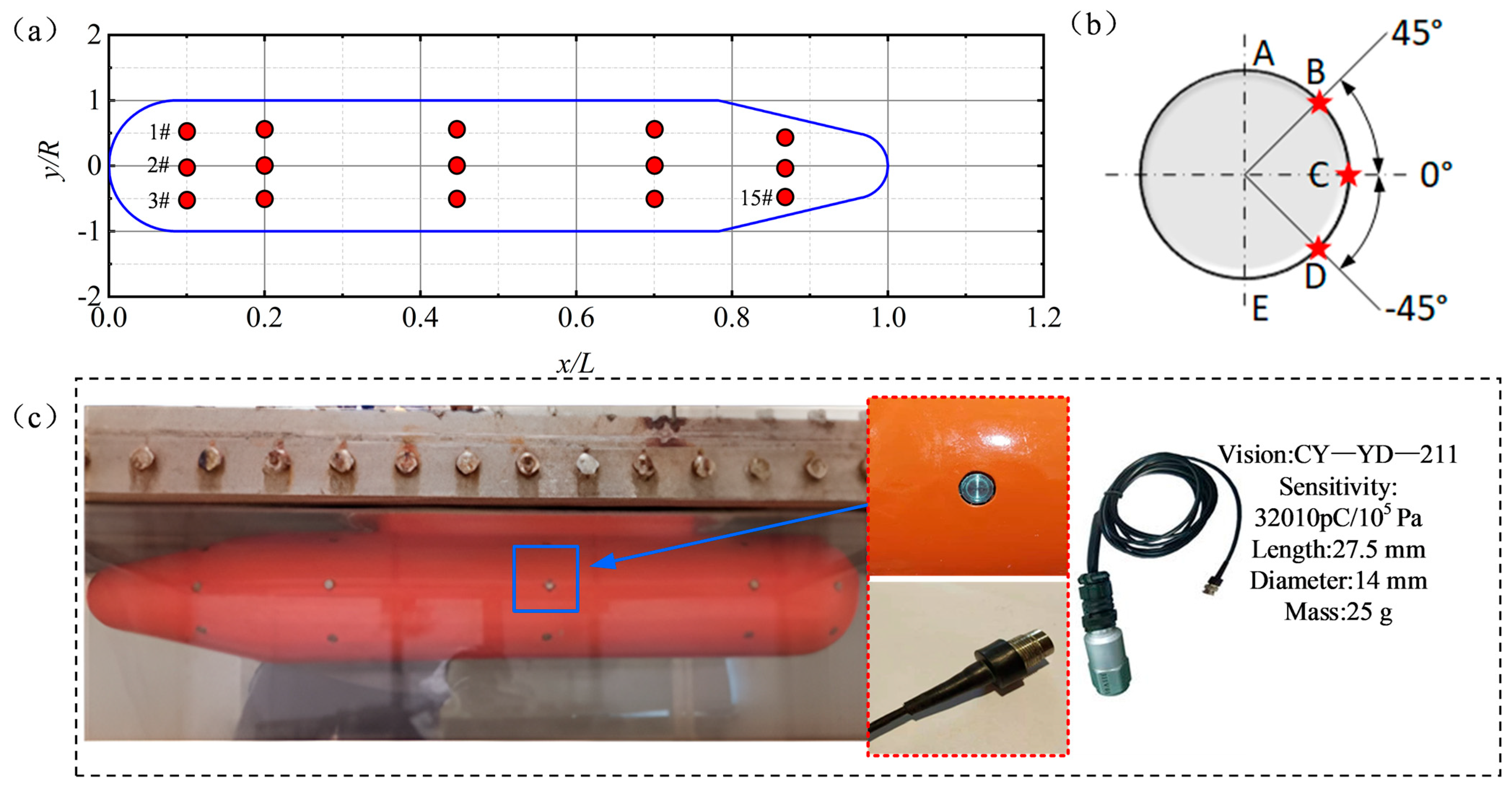
2.1. Experimental Model
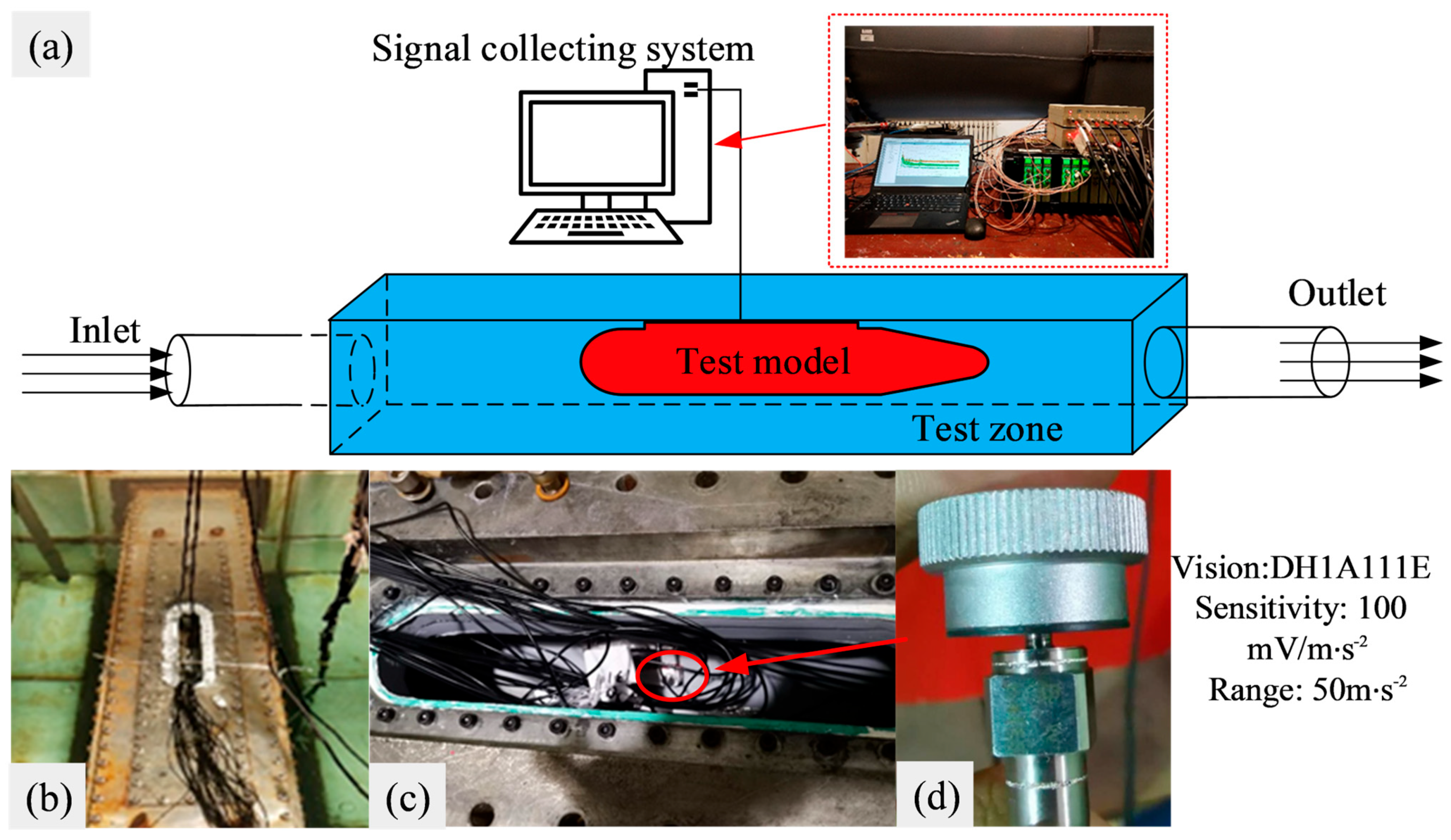
2.2. Experiment System
3. Theoretical Methods
3.1. Turbulence Model
3.2. Modal Superposition Method
3.3. Machine Learning Framework
4. Numerical Simulation Model
4.1. Flow Field Simulation
4.2. Vibration Calculation Model
5. Results and Discussion
5.1. Analysis of Pulsating Pressure
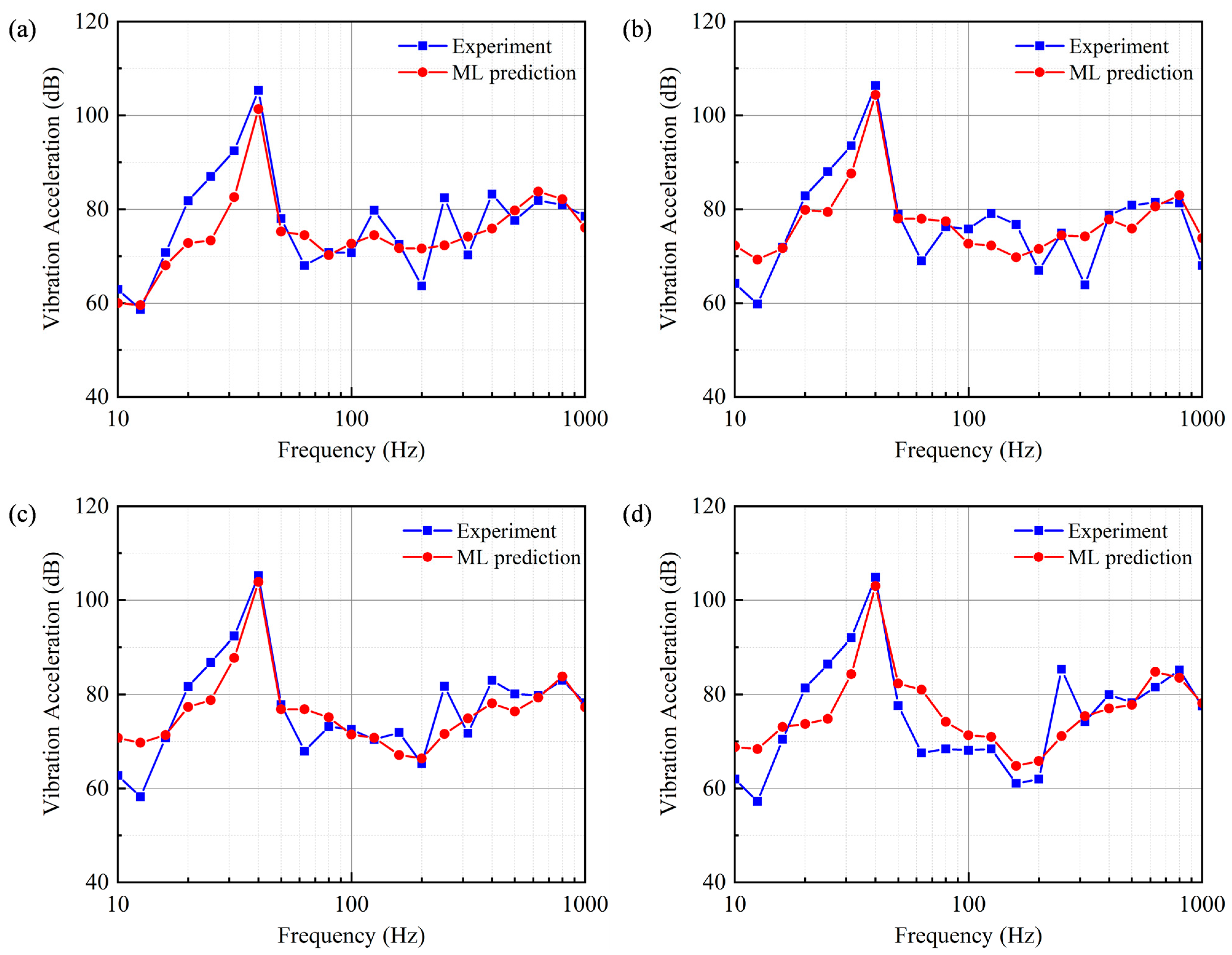
5.2. Analysis of Fluid-Induced Vibration Response
6. Conclusions
- (1)
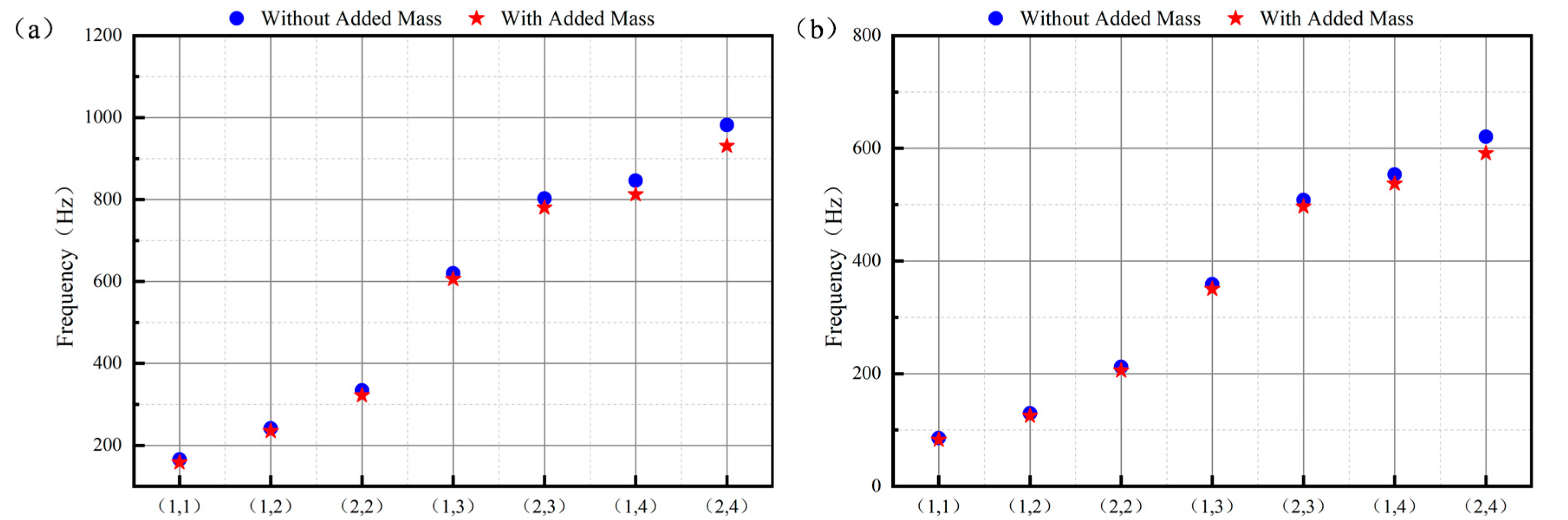
- The additional mass caused by the acceleration sensor can reduce the natural frequency of the higher-order mode of the structure, but has little effect on the natural frequency of the lower-order mode;
- (2)
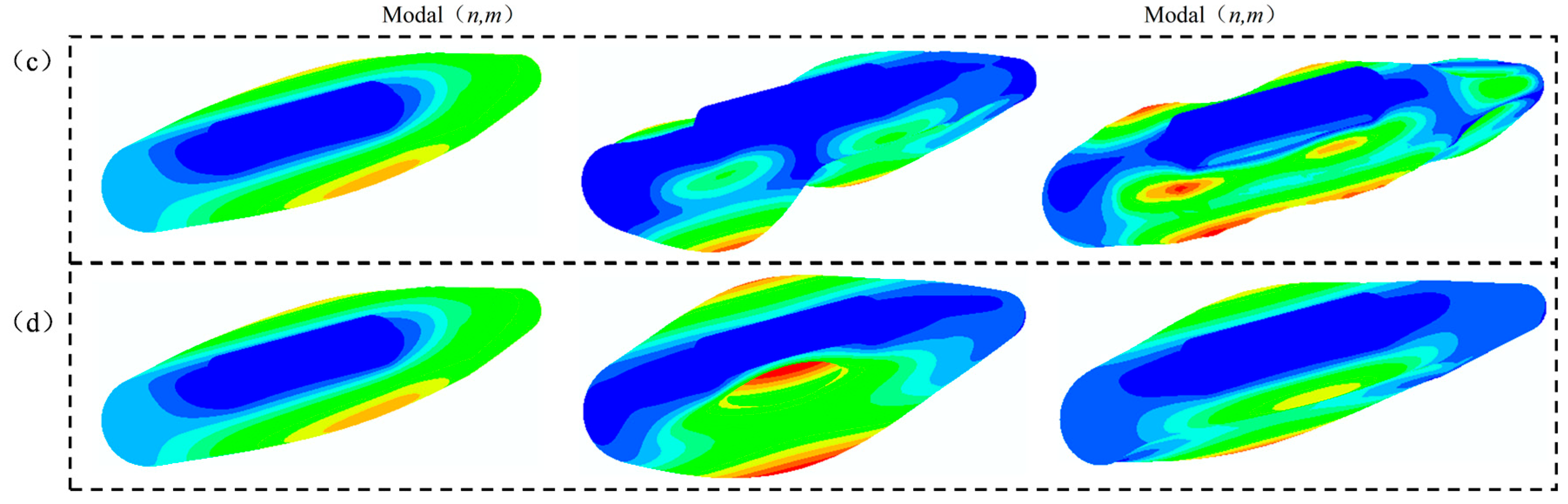
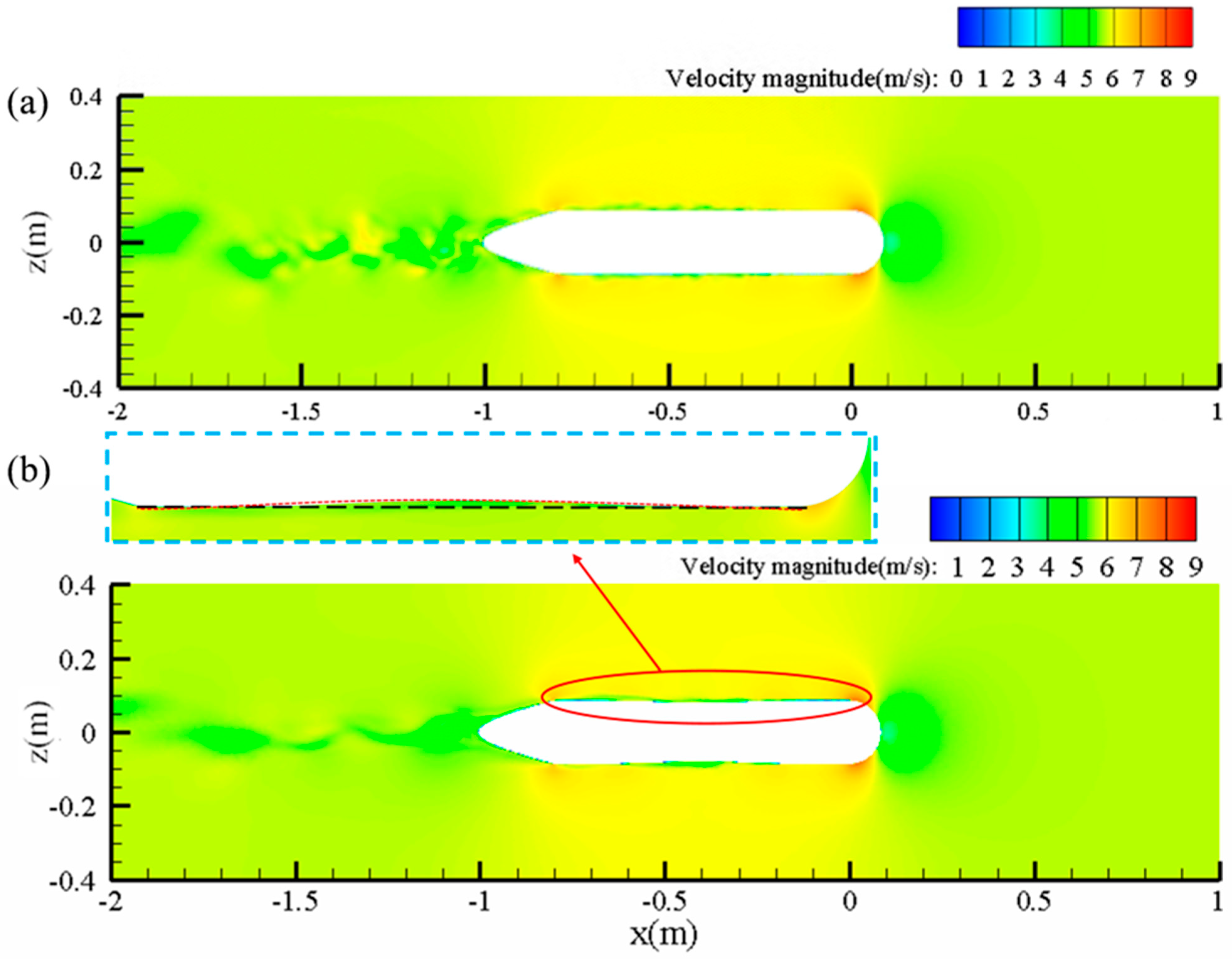
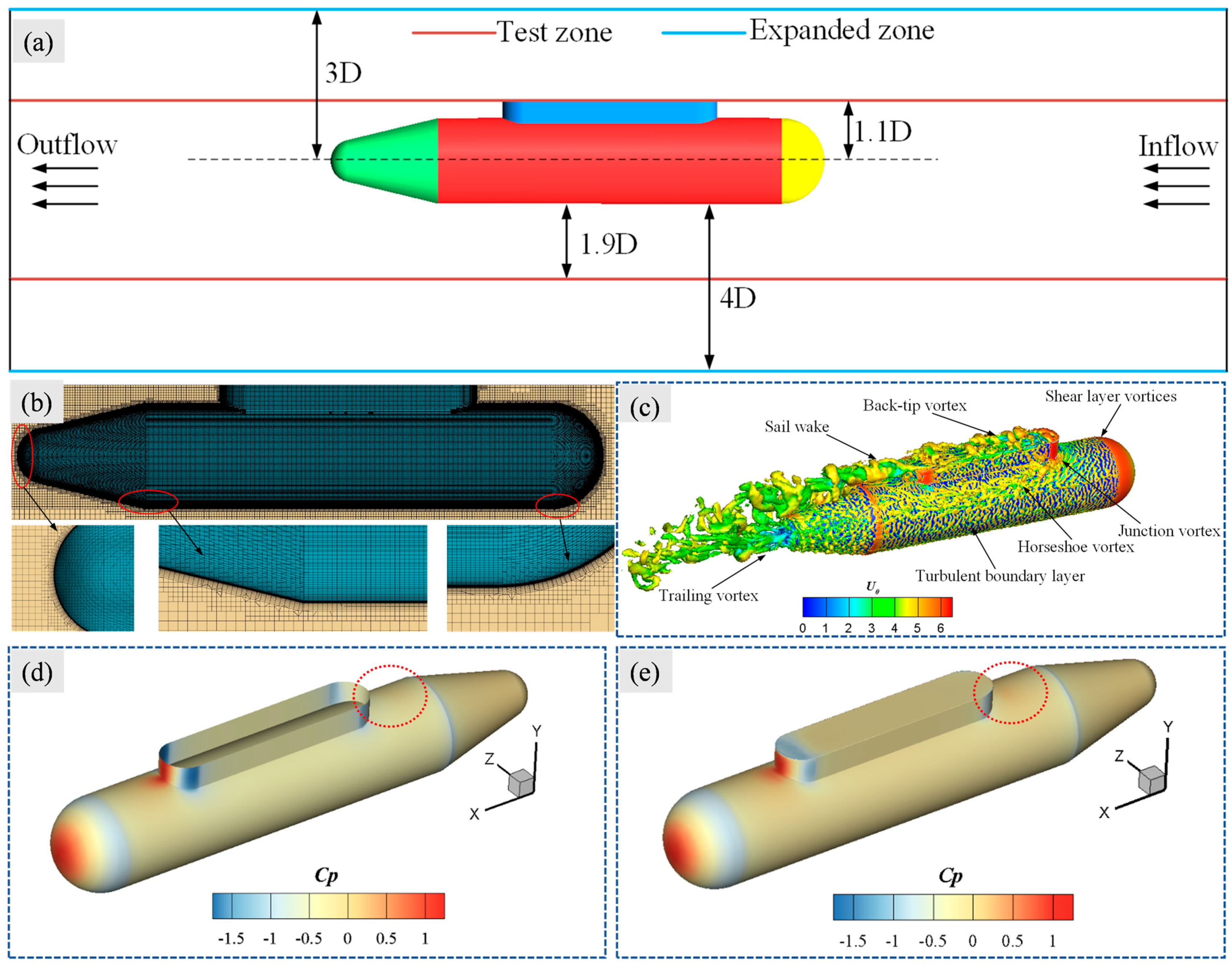
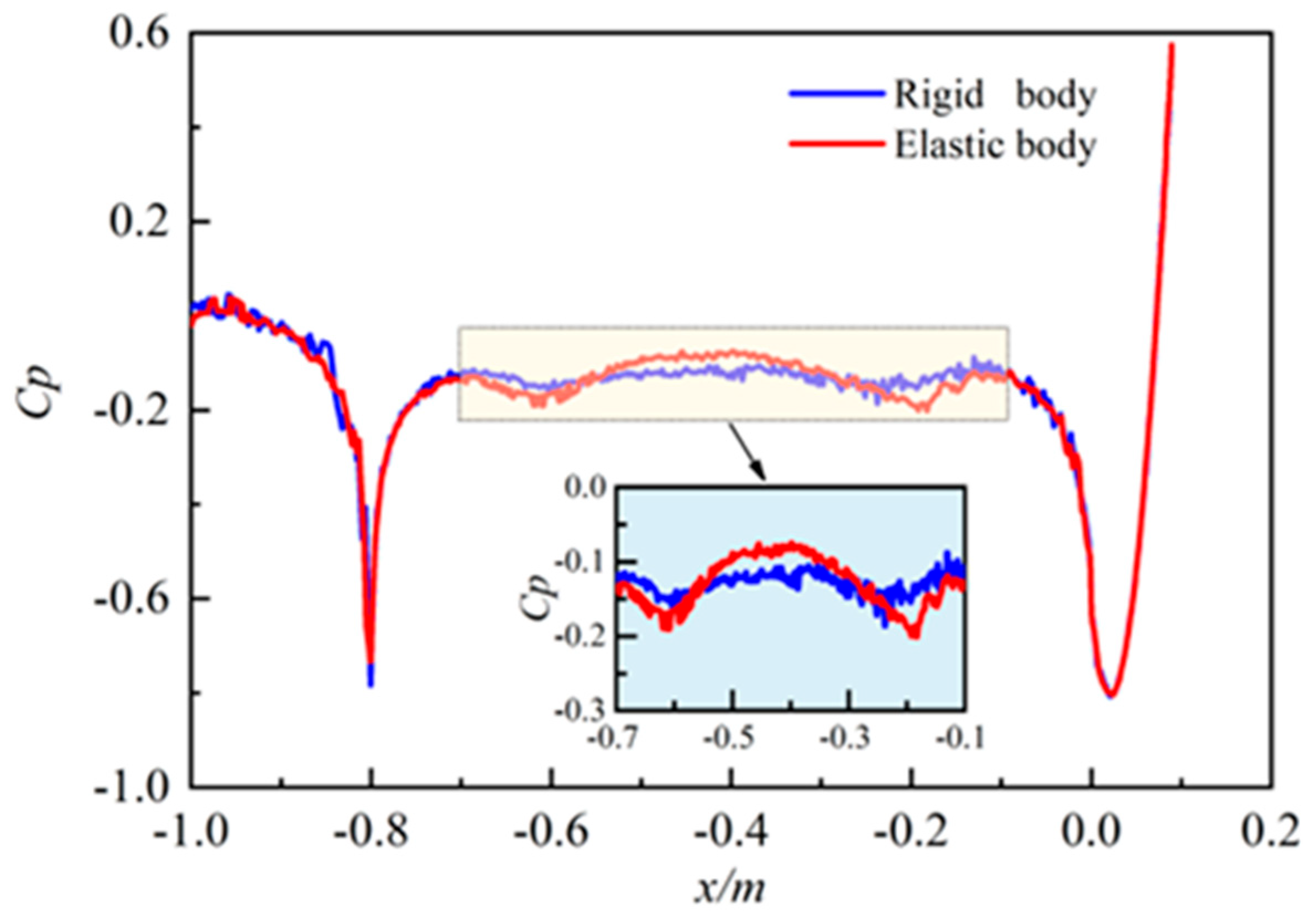
- The presence of protrusion changes the original vortex structure around the cone–cylinder–sphere combined structure, resulting in a large number of small and medium scale vortices in the middle region of the cylindrical section. Under the action of deep-water pressure, the shell structure undergoes slight deformation. This deformation is mainly concentrated in the cylindrical section. After deformation of the shell, the vortex structure around the wall also changes;
- (3)
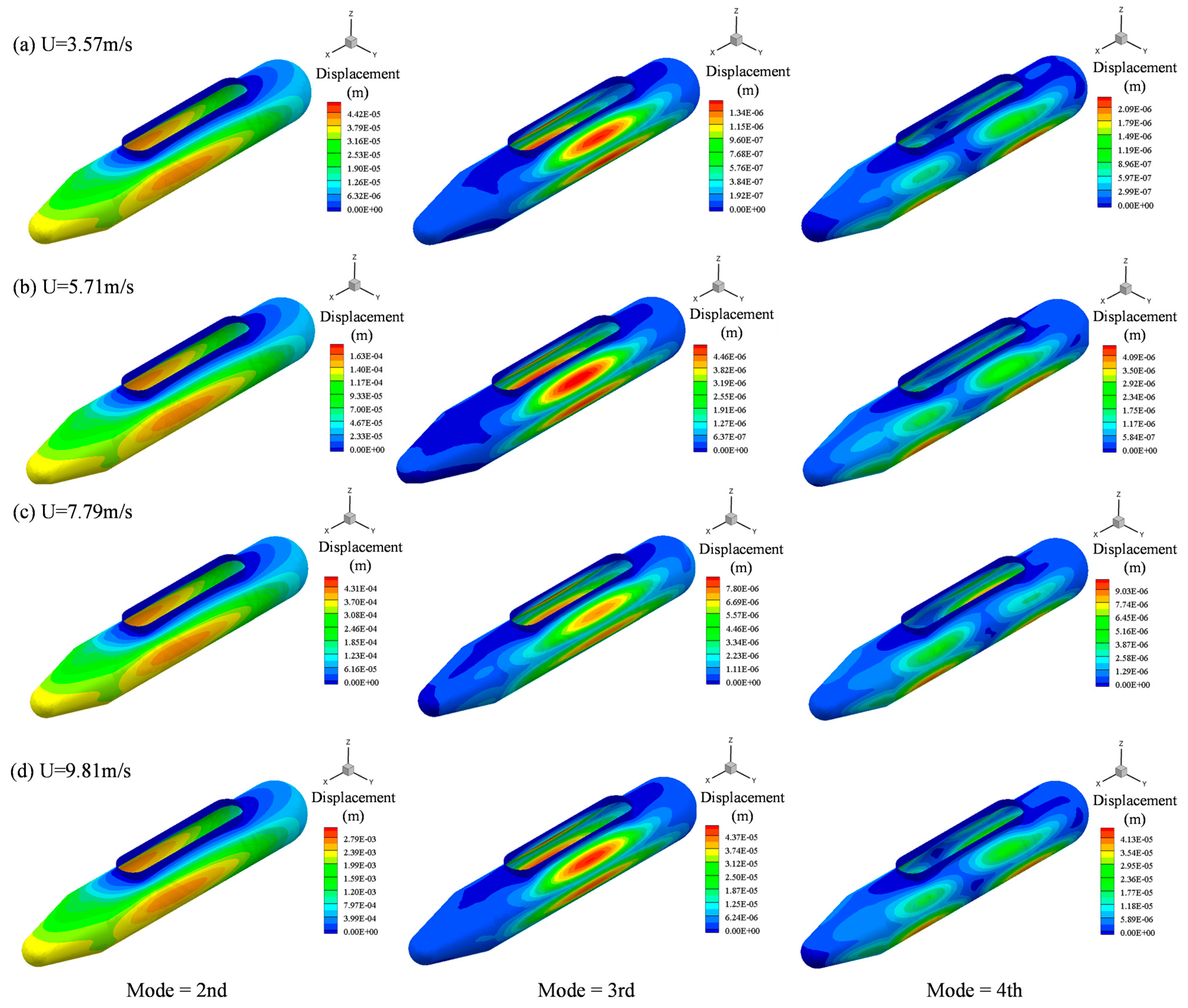
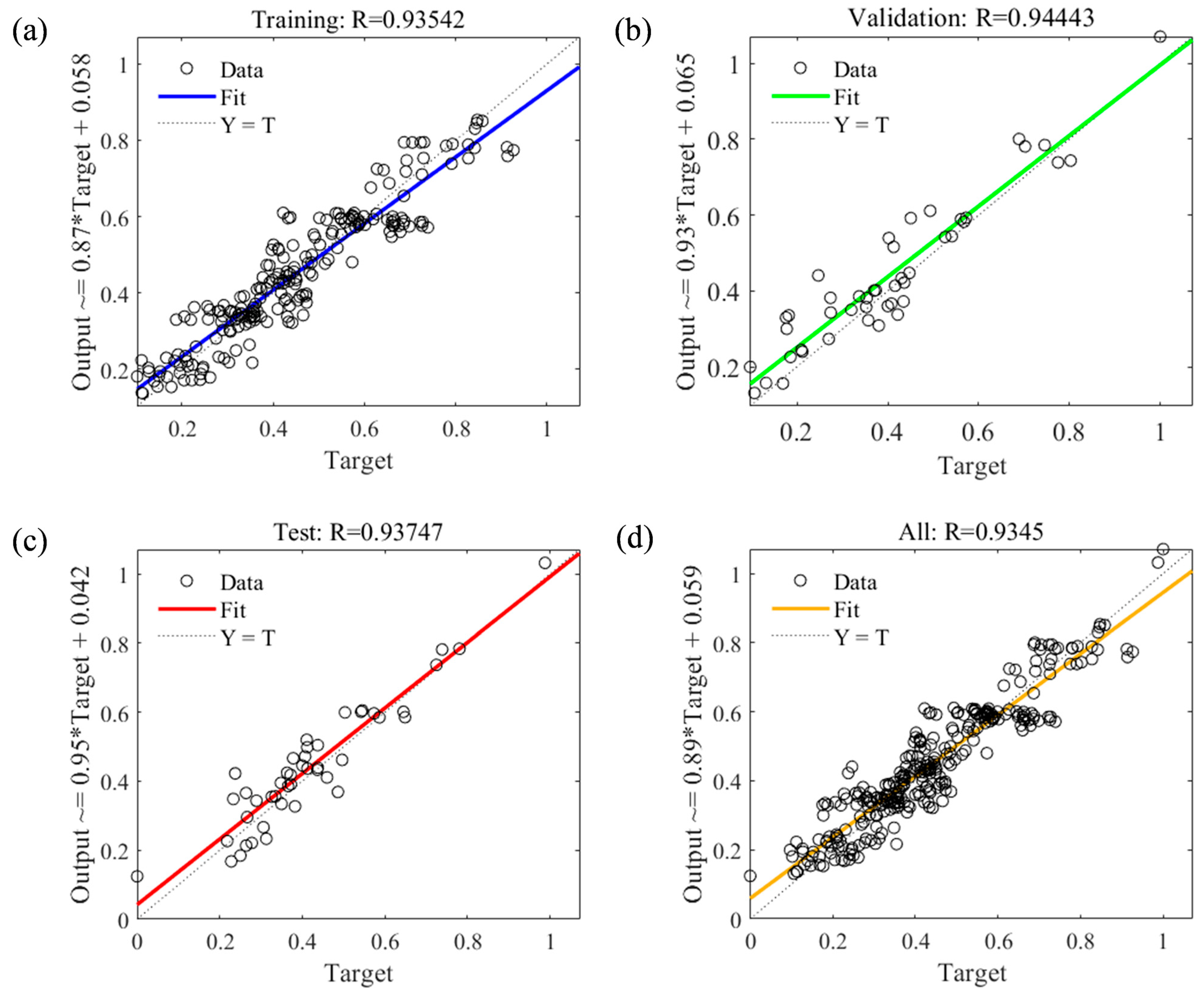
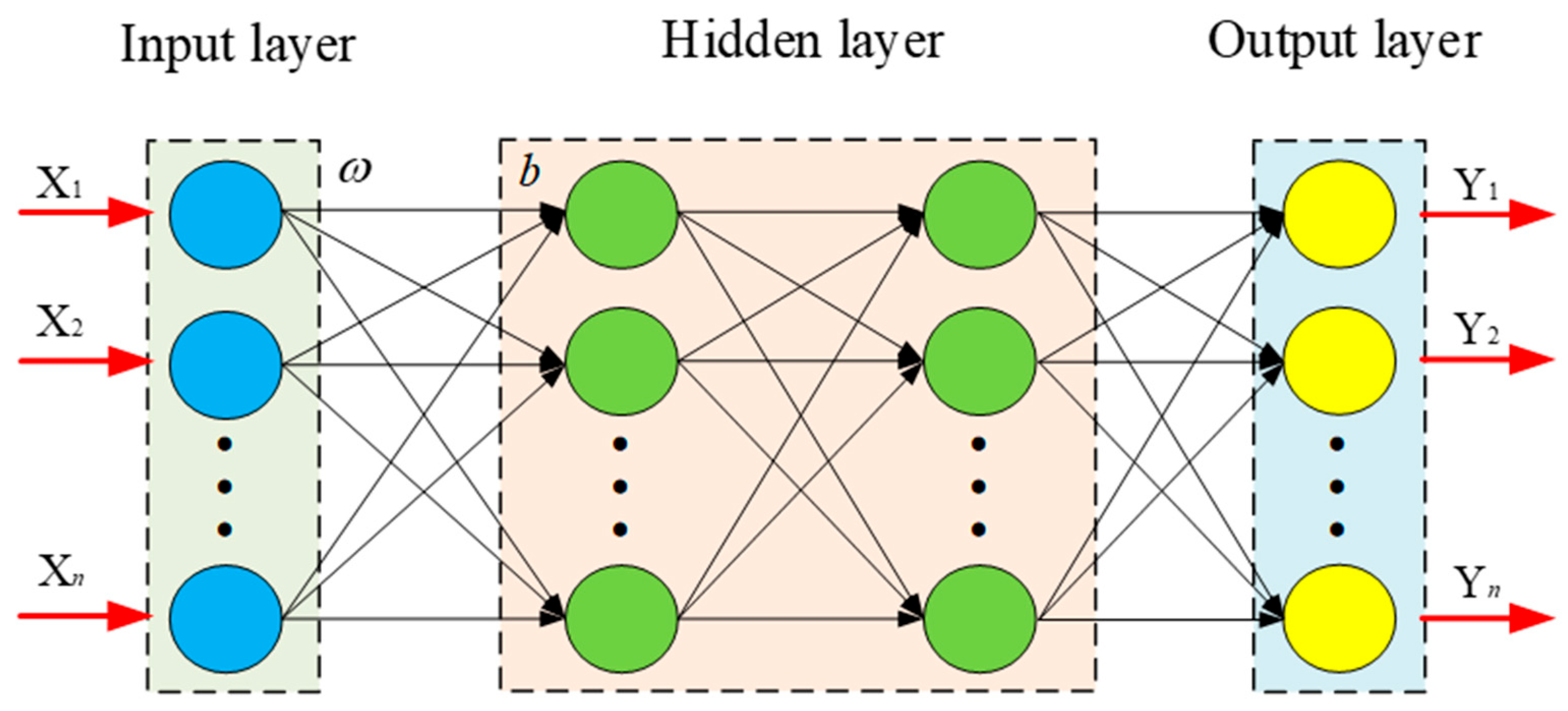
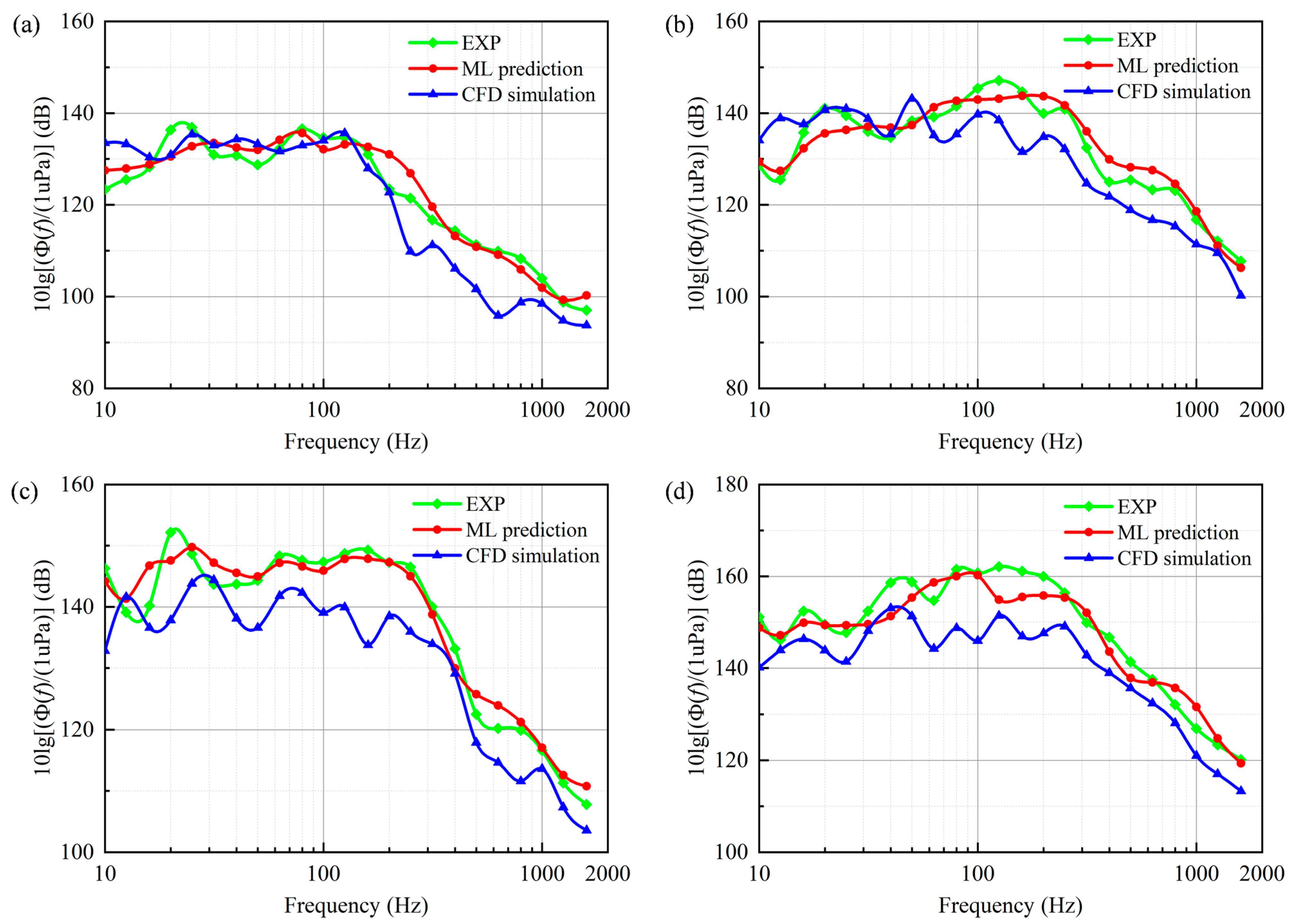
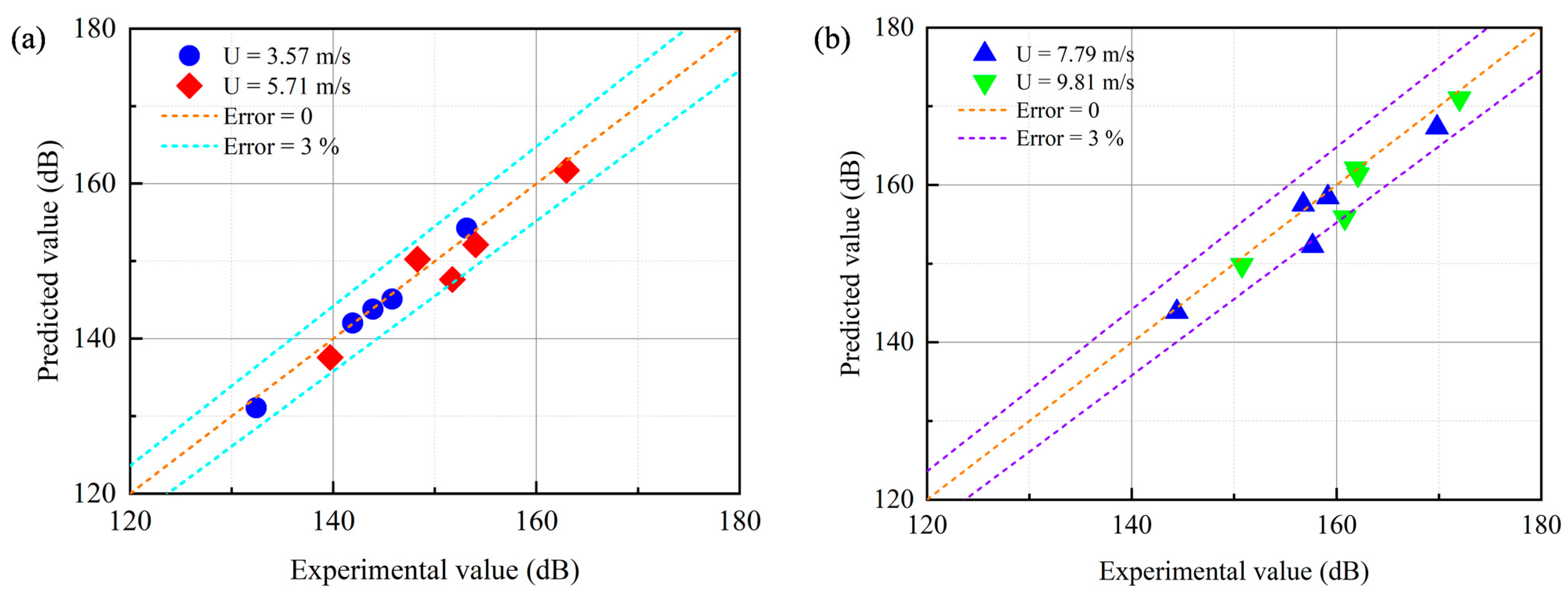
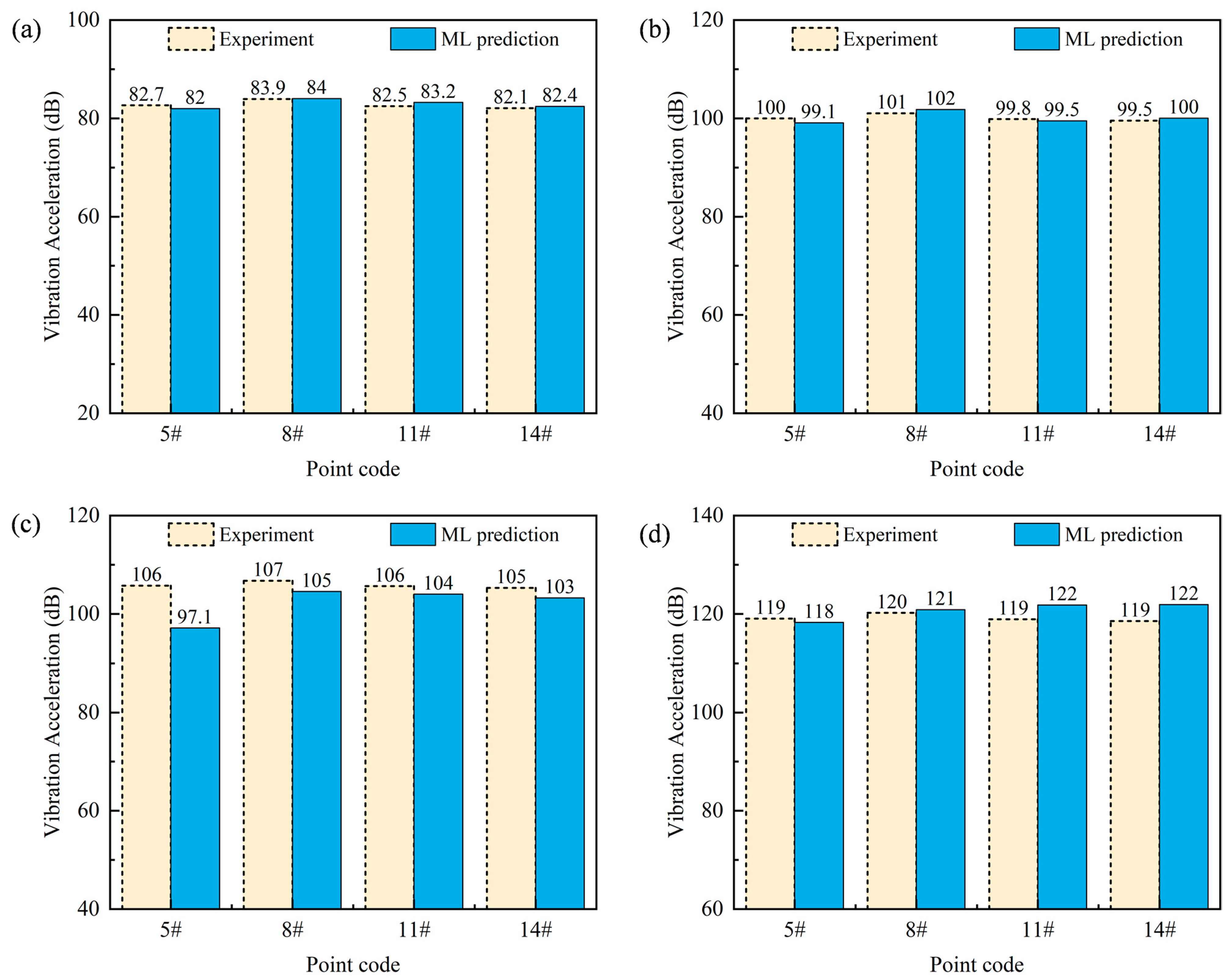
- The neural network model proposed in this study can quickly predict the surface pulsation pressure and vibration response of cone–cylinder–sphere combined structures. The predicted results of the pulsating pressure and vibration response are basically consistent with the test results. With the error of 3 dB as the threshold, the accuracy of the forecast method proposed in this study is greater than 93%. Moreover, the required computational time is far less than that of numerical simulation methods. Therefore, it can be used as a new method for rapidly predicting flow-induced vibration noise of underwater vehicles.
Author Contributions
Funding
Institutional Review Board Statement
Informed Consent Statement
Data Availability Statement
Conflicts of Interest
References
- Merchant, N.D.; Pirotta, E.; Barton, T.R.; Thompson, P.M. Monitoring ship noise to assess the impact of coastal developments on marine mammals. Mar. Pollut. Bull. 2014, 74, 85–95. [Google Scholar] [CrossRef] [Scilit]
- Carral, L.; Lara-Rey, J.; Castro-Santos, L.; Couce, J.C. Oceanographic research vessels: Defining scientific winches for fisheries science biological sampling manoeuvres. Ocean Eng. 2018, 154, 121–132. [Google Scholar] [CrossRef] [Scilit]
- Hildebrand, J.A. Anthropogenic and natural sources of ambient noise in the ocean. Mar. Ecol. Prog. Ser. 2009, 395, 5–20. [Google Scholar] [CrossRef] [Scilit]
- Herrin, D.W.; Ramalingam, S.; Cui, Z.; Liu, J. Predicting insertion loss of large duct systems above the plane wave cutoff frequency. Appl. Acoust. 2012, 73, 37–42. [Google Scholar] [CrossRef] [Scilit]
- Mohammad, K.; Hassan, M. Passive sonar target classification using multi-layer perceptron trained by salp swarm algorithm. Ocean Eng. 2019, 181, 98–108. [Google Scholar] [CrossRef] [Scilit]
- Ying, C.; Guan, G.; Liang, G.; Yang, Q. Numerical investigation on flow-induced vibration of porous square cylinder and its mechanism research. Ocean Eng. 2024, 309, 118314. [Google Scholar] [CrossRef] [Scilit]
- Corcos, G.M. The structure of the turbulent pressure field in boundary layer wall pressure. J. Fluid Mech. 1964, 18, 353–378. [Google Scholar] [CrossRef] [Scilit]
- Chase, D.M. Modeling of the wavevecter-frequendy spectrum of turbulent boundary wall pressure. J. Sound Vib. 1980, 70, 29–67. [Google Scholar] [CrossRef] [Scilit]
- Chase, D.M. The character of the turbulent wall pressures pectrum at subconvective wavenurnber and a suggestedcom prehensive model. J. Sound Vib. 1987, 112, 125–147. [Google Scholar] [CrossRef] [Scilit]
- Chase, D.M. The wave- vector- frequency spectrum of pressure on a smooth plane in turbulent boundary- layer flow at low Mach number. J. Acoust. Soc. Am. 1991, 90, 1032–1040. [Google Scholar] [CrossRef] [Scilit]
- Liu, Y.; Li, Y.; Shang, D. The Generation Mechanism of the Flow-Induced Noise from a Sail Hull on the Scaled Submarine Model. Appl. Sci. 2018, 9, 106. [Google Scholar] [CrossRef] [Scilit]
- Wei, Y.; Wang, Y. Unsteady hydrodynamics of blade forces and acoustic responses of a model scaled submarine excited by propeller’s thrust and side-forces. J. Sound Vib. 2013, 332, 2038–2056. [Google Scholar] [CrossRef] [Scilit]
- Tian, J.; Zhang, Z.; Ni, Z.; Hua, H. Flow-induced vibration analysis of elastic propellers in a cyclic inflow: An experimental and numerical study. Appl. Ocean Res. 2017, 65, 47–59. [Google Scholar] [CrossRef] [Scilit]
- Li, D.-Q.; Hallander, J.; Johansson, T. Predicting underwater radiated noise of a full scale ship with model testing and numerical methods. Ocean Eng. 2018, 161, 121–135. [Google Scholar] [CrossRef] [Scilit]
- Qin, D.; Huang, Q.; Pan, G. Numerical simulation of hydrodynamic and noise characteristics for a blended-wing-body underwater glider. Ocean Eng. 2022, 252, 111056. [Google Scholar] [CrossRef] [Scilit]
- Li, W.J.; Zhang, D.H.; Shi, X.F. Establishment of a flow-induced vibration power database based on deep neural network machine learning method. Ocean Eng. 2023, 285, 115463. [Google Scholar] [CrossRef] [Scilit]
- Fukami, K.; Fukagata, K.; Taira, K. Super-resolution reconstruction of turbulent flows with machine learning. J. Fluid Mech. 2019, 870, 106–120. [Google Scholar] [CrossRef] [Scilit]
- Fukami, K.; Fukagata, K.; Taira, K. Machine-learning-based spatio-temporal super resolution reconstruction of turbulent flows. J. Fluid Mech. 2020, 909, A9. [Google Scholar] [CrossRef] [Scilit]
- Rabault, J.; Kuchta, M.; Jensen, A.; Réglade, U.; Cerardi, N. Artificial neural networks trained through deep reinforcement learning discover control strategies for active flow control. J. Fluid Mech. 2019, 865, 281–302. [Google Scholar] [CrossRef] [Scilit]
- Maulik, R.; San, O.; Jacob, J.D.; Crick, C. Sub-grid scale model classification and blending through deep learning. J. Fluid Mech. 2019, 870, 784–812. [Google Scholar] [CrossRef] [Scilit]
- Li, B.; Yang, Z.; Zhang, X.; He, G.; Deng, B.-Q.; Shen, L. Using machine learning to detect the turbulent region in flow past a circular cylinder. J. Fluid Mech. 2020, 905, A10. [Google Scholar] [CrossRef] [Scilit]
- Raissi, M.; Perdikaris, P.; Karniadakis, G.E. Physics-Informed Neural Networks: A Deep Learning Framework for Solving forward and Inverse Problems Involving Nonlinear Partial Differential Equations. J. Comput. Phys. 2019, 378, 686–707. [Google Scholar] [CrossRef] [Scilit]
- Chae, E.J.; Akcabay, D.T.; Lelong, A.; Astolfi, J.A.; Young, Y.L. Numerical and experimental investigation of natural flow-induced vibrations of flexible hydrofoils. Phys. Fluids 2016, 28, 075102. [Google Scholar] [CrossRef] [Scilit]
- Seyed-Aghazadeh, B.; Anderson, N.; Dulac, S. Flow-induced vibration of high-mass ratio isolated and tandem flexible cylinders with fixed boundary conditions. J. Fluids Struct. 2021, 103, 103276. [Google Scholar] [CrossRef] [Scilit]
- Ma, Y.; Xu, W.; Zhai, L.; Ai, H. Hydrodynamic characteristics of two tandem flexible cylinders undergoing flow-induced vibration. Ocean Eng. 2019, 193, 106587. [Google Scholar] [CrossRef] [Scilit]
- Xu, W.; Ji, C.; Sun, H.; Ding, W.; Bernitsas, M.M. Flow-induced vibration of two elastically mounted tandem cylinders in cross-flow at subcritical Reynolds numbers. Ocean Eng. 2019, 173, 375–387. [Google Scholar] [CrossRef] [Scilit]
- Ma, L.; Lin, K.; Fan, D.; Wang, J.; Triantafyllou, M.S. Triantafyllou; Flexible cylinder flow-induced vibration. Phys. Fluids 2022, 34, 011302. [Google Scholar] [CrossRef] [Scilit]
- Korkischko, I.; Meneghini, J.R. Experimental investigation of flow-induced vibration on isolated and tandem circular cylinders fitted with strakes. J. Fluids Struct. 2010, 26, 611–625. [Google Scholar] [CrossRef] [Scilit]
- Jin, G.; Ma, X.; Wang, W.; Liu, Z. An energy-based formulation for vibro-acoustic analysis of submerged submarine hull structures. Ocean Eng. 2018, 164, 402–413. [Google Scholar] [CrossRef] [Scilit]
- Jin, G.Y.; Ma, X.L.; Shi, S.X.; Ye, T.G.; Liu, Z.G. A modified Fourier series solution for vibration analysis of truncated conical shells with general boundary conditions. Appl. Acoust. 2014, 85, 82–96. [Google Scholar] [CrossRef] [Scilit]
- Zhang, Q.; Jaiman, R.K.; Ma, P.; Liu, J. Investigation on the Performance of a Ducted Propeller in Oblique Flow. ASME. J. Offshore Mech. Arct. Eng. 2020, 142, 011801. [Google Scholar] [CrossRef] [Scilit]
- Ran, Y.; Deng, Z.; Yu, H.; Chen, W.; Gao, D. Review of passive control of flow past a circular cylinder. J. Vis. 2023, 26, 1–44. [Google Scholar] [CrossRef] [Scilit]
- Baz, A.; Ro, J. Active control of flow-induced vibrations of a flexible cylinder using direct velocity feedback. J. Sound Vib. 1991, 146, 33–45. [Google Scholar] [CrossRef] [Scilit]
- Zhou, Z.; Mei, Z.; Wu, D.; Chen, G. Vibroacoustic behavior of submerged stiffened composite plates excited by a turbulent boundary layer. J. Sound Vib. 2022, 528, 116894. [Google Scholar] [CrossRef] [Scilit]
- Jia, W.; Chen, M.; Zhou, Z.; Xie, K. A semi-analytical method for vibro-acoustic analysis of submerged ring-stiffened cylindrical shells coupled with arbitrary inner structures. Appl. Acoust. 2021, 179, 108047. [Google Scholar] [CrossRef] [Scilit]
- Wang, Q.; Qin, B.; Shi, D.; Liang, Q. A semi-analytical method for vibration analysis of functionally graded carbon nanotube reinforced composite doubly-curved panels and shells of revolution. Compos. Struct. 2017, 174, 87–109. [Google Scholar] [CrossRef] [Scilit]
- Wang, Q.; Cui, X.; Qin, B.; Liang, Q.; Tang, J. A semi-analytical method for vibration analysis of functionally graded (FG) sandwich doubly-curved panels and shells of revolution. Int. J. Mech. Sci. 2017, 134, 479–499. [Google Scholar] [CrossRef] [Scilit]
- Jia, D.; Zou, Y.; Pang, F.; Miao, X.; Li, H. Experimental study on the characteristics of flow-induced structure noise of underwater vehicle. Ocean Eng. 2022, 262, 112126. [Google Scholar] [CrossRef] [Scilit]
- Posa, A.; Balaras, E. Large-eddy simulations of a notional submarine in towed and self-propelled configurations. Comput. Fluids 2018, 165, 116–126. [Google Scholar] [CrossRef] [Scilit]
- Ren, Y.; Qin, Y.; Pang, F.; Wang, H.; Su, Y.; Li, H. Investigation on the flow-induced structure noise of a submerged cone-cylinder-hemisphere combined shell. Ocean Eng. 2023, 270, 113657. [Google Scholar] [CrossRef] [Scilit]




Disclaimer/Publisher’s Note: The statements, opinions and data contained in all publications are solely those of the individual author(s) and contributor(s) and not of MDPI and/or the editor(s). MDPI and/or the editor(s) disclaim responsibility for any injury to people or property resulting from any ideas, methods, instructions or products referred to in the content. |
© 2024 by the authors. Licensee MDPI, Basel, Switzerland. This article is an open access article distributed under the terms and conditions of the Creative Commons Attribution (CC BY) license (https://creativecommons.org/licenses/by/4.0/).
Share and Cite
Zou, Y.; Du, Y.; Zhao, Z.; Pang, F.; Li, H.; Hui, D. Experimental and Simulation Study on Flow-Induced Vibration of Underwater Vehicle. J. Mar. Sci. Eng. 2024, 12, 1597. https://doi.org/10.3390/jmse12091597
Zou Y, Du Y, Zhao Z, Pang F, Li H, Hui D. Experimental and Simulation Study on Flow-Induced Vibration of Underwater Vehicle. Journal of Marine Science and Engineering. 2024; 12(9):1597. https://doi.org/10.3390/jmse12091597
Chicago/Turabian StyleZou, Yucheng, Yuan Du, Zhe Zhao, Fuzhen Pang, Haichao Li, and David Hui. 2024. "Experimental and Simulation Study on Flow-Induced Vibration of Underwater Vehicle" Journal of Marine Science and Engineering 12, no. 9: 1597. https://doi.org/10.3390/jmse12091597
APA StyleZou, Y., Du, Y., Zhao, Z., Pang, F., Li, H., & Hui, D. (2024). Experimental and Simulation Study on Flow-Induced Vibration of Underwater Vehicle. Journal of Marine Science and Engineering, 12(9), 1597. https://doi.org/10.3390/jmse12091597