1. Introduction
As the global economy rapidly expands, the number of maritime vessels has significantly increased, marking them as barometers of the global economic climate [
1]. This growth has led to increasingly crowded maritime routes, escalating concerns about navigational safety. Against this backdrop, the development of effective collision avoidance mechanisms for ships has become a critical issue in ensuring navigational safety in complex maritime environments. The International Regulations for Preventing Collisions at Sea (COLREGs) play a pivotal role in this [
2]. However, statistics indicate that over 80% of maritime collisions are caused by human error, including the crew’s failure to fully and effectively comply with the COLREGs at critical moments [
3]. The primary research goal for autonomous maritime collision avoidance algorithms is to enable ships to make effective collision avoidance decisions in complex environments, thus minimizing or preventing accidents.
Various algorithms for ship collision avoidance automation have been proposed, such as the A* algorithm [
4], genetic algorithm (GA) [
5], and artificial potential field (APF) [
6]. These classic path-planning techniques have supported the preliminary exploration of intelligent maritime navigation. However, these algorithms, while useful, encounter several limitations, including high computational complexity, strong dependence on environmental models and heuristic functions, and a lack of learning capabilities. These issues are particularly problematic in scenarios involving unknown environments, moving obstacles, and other unquantifiable factors that are crucial in unmanned maritime path planning.
In contrast, recent advancements in automation and artificial intelligence have introduced new avenues for addressing these challenges in maritime collision avoidance. Deep reinforcement learning (DRL) algorithms, known for their adaptability and versatility, are expected to address these shortcomings and are becoming a focal point in collision avoidance research. Guo Siyu et al. [
7] employed a combination of reinforcement learning algorithms, such as deep deterministic policy gradient (DDPG) and APF, to enhance learning efficiency and convergence speed. However, their research did not account for ship models and actual environmental conditions, necessitating further validation in complex settings. Yin Cheng et al. [
8] designed a comprehensive reward function for deep reinforcement learning tailored to underactuated unmanned marine vessels, taking into account environmental disturbances and vessel motion characteristics. They successfully implemented path planning in complex maritime areas with numerous static obstacles; however, the applicability of this method in scenarios with dynamic obstacles remains to be evaluated. Zhijian Huang et al. [
9] adjusted the standard Deep Q-Network (DQN) architecture to better handle the complexity and partial observability of marine environments, although further validation is required to assess the algorithm’s performance in dynamic and multi-obstacle settings. Xu Xinli et al. [
10] developed a COLREGs-compliant intelligent collision avoidance algorithm (CICA) that tracks and updates network weights. The design of the action space involves three discrete values, resulting in a lack of continuity in actions.
Compared to other DRL algorithms, the proximal policy optimization (PPO) algorithm offers greater stability and efficiency in managing continuous action spaces, making it particularly well-suited for handling the continuous control challenges in ship maneuvering [
11]. Qianhao Xiao et al. [
12] introduced a novel distributed sampling strategy that enhances the balance and diversity of sample collection through regional segmentation. They incorporated a Beta strategy to address action boundary issues in continuous action spaces, thereby increasing the success rate of path planning and reward accumulation. Eivind Meyer et al. [
13] proposed a new observation vector and reward function design, including a feasibility pooling algorithm for real-time sensor data dimension reduction. They also introduced a reward trade-off parameter λ, enabling the agent to dynamically adjust its navigation strategy based on the current policy. Wei Guan et al. [
14] proposed an improved algorithm that integrates generalized advantage estimation into the loss function of the PPO algorithm, verifying that unmanned ships can autonomously navigate and avoid collisions without human intervention. Chuanbo Wu et al. [
15] developed a collision avoidance path planning method combining the dynamic window approach with the PPO algorithm, which has been validated through simulation experiments to be effective in near-shore navigation.
Although the PPO algorithm has made significant progress in maritime collision avoidance, there remains room for improvement in exploration efficiency and policy performance. Particularly, it exhibits limitations in balancing exploration and exploitation. In complex maritime environments, the algorithm may become trapped in local optima, limiting further performance enhancements. To overcome this challenge, introducing appropriate exploration mechanisms is crucial, especially when dealing with complex or high-dimensional decision spaces. Such mechanisms can help the algorithm escape local optima and explore a broader solution space, thereby improving overall decision quality and strategy robustness.
Entropy regularization is an effective method to avoid local optima by encouraging agents to engage in broader exploration during training, fostering the discovery of new possibilities, and maintaining the randomness of strategies [
16,
17]. However, applying this technique to complex environments at sea and balancing entropy parameters to achieve optimal performance between exploration and exploitation remains a nuanced challenge. To address these issues, this paper introduces an improved PPO algorithm with dynamically adjusted entropy (DAE-PPO). This research introduces a quadratically decreasing entropy approach designed to maintain a high entropy coefficient early in training, allowing for extensive exploration, thus preventing convergence to local optima and adapting to more complex training environments. As training progresses, the entropy coefficient gradually decreases, mitigating abrupt changes in exploration intensity, ensuring a smooth transition during the training process, reducing instability, and accelerating model convergence. The main contributions of this paper are as follows:
- (1)
An enhanced proximal policy optimization (PPO) algorithm based on dynamic entropy adjustment is proposed. This approach optimizes the entropy regularization framework to improve the exploration efficiency and policy performance of the PPO algorithm without introducing additional hyperparameters. A PPO network framework specifically designed for maritime collision avoidance has been developed, with various improvements analyzed and compared based on a comprehensive training environment.
- (2)
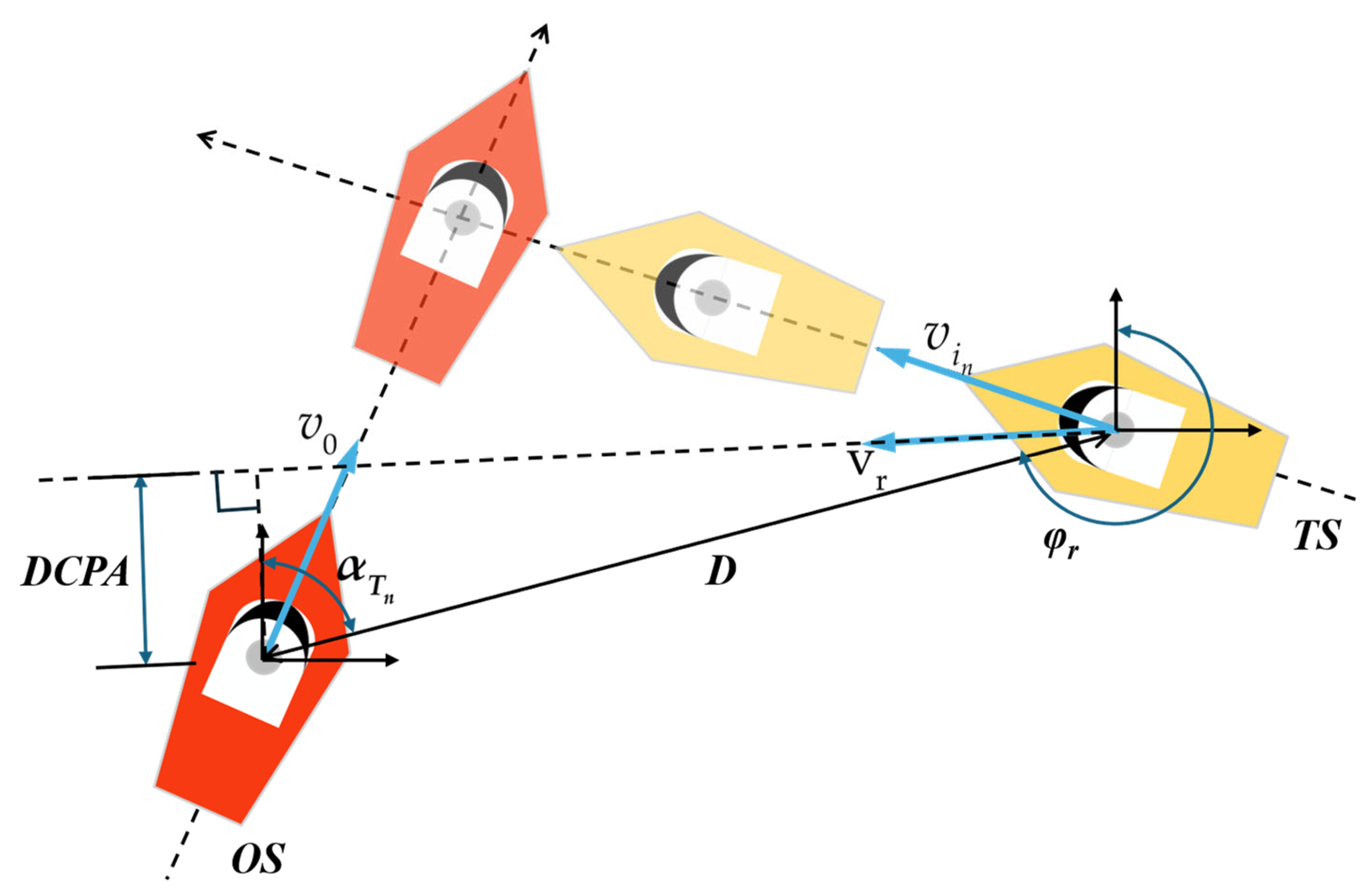
A collision risk (CR) metric is introduced into the reward function, based on the distance to the closest point of approach (DCPA) and time to the closest point of approach (TCPA). Regulations from COLREGs are integrated, and factors influencing the collision avoidance process are considered, constructing a refined reward signal tailored for training unmanned ships.
- (3)
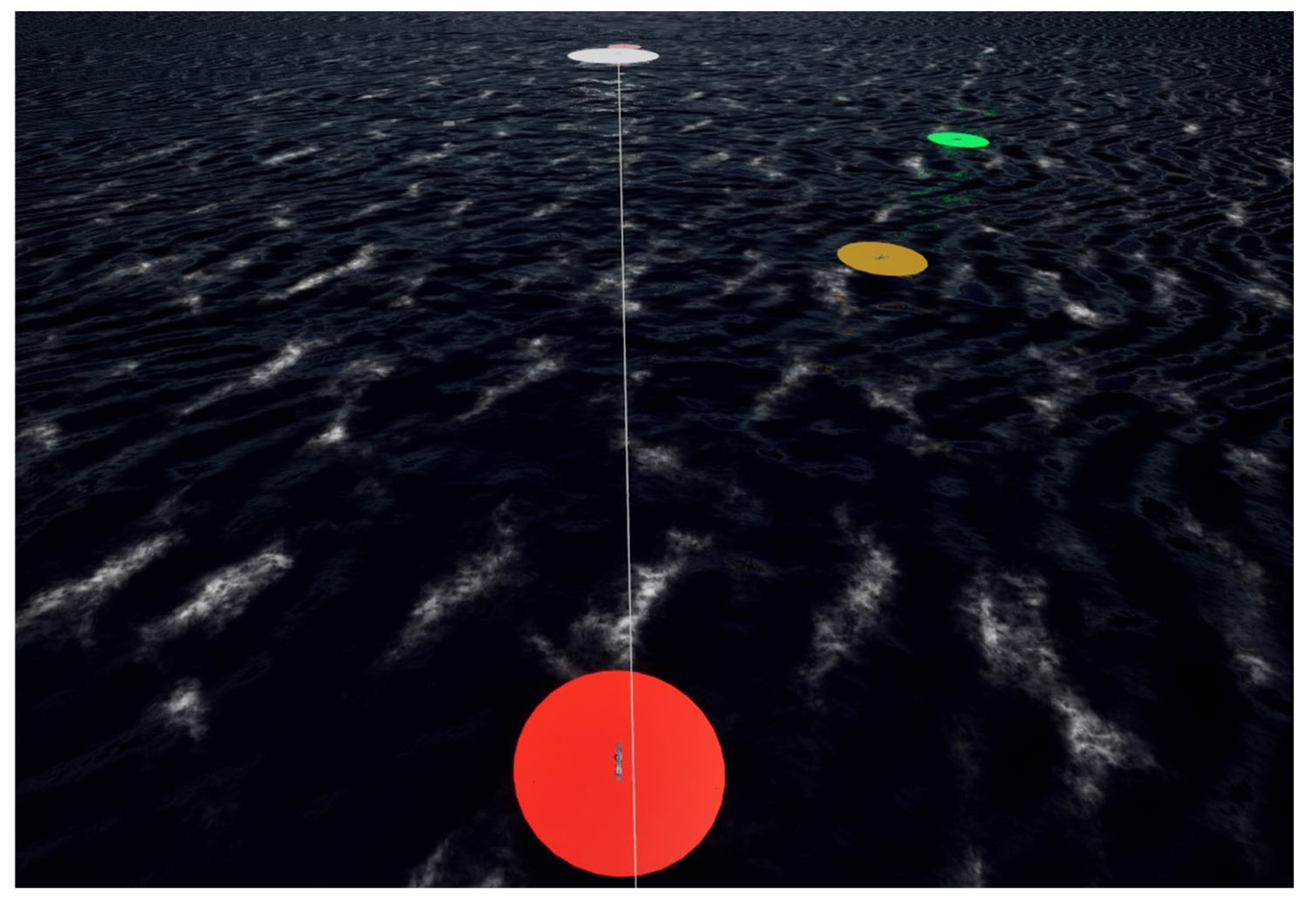
The proposed algorithm is implemented on the Unreal Engine 5 (UE5) physics engine platform, creating a simulation environment that mirrors maritime navigation characteristics. Experimental validation is conducted to demonstrate the effectiveness and practicality of the proposed method.
This study contributes a robust and compliant approach to collision avoidance in autonomous ship navigation, enhancing safety and operational efficiency in complex maritime environments.
The organization of this paper is as follows:
Section 2 presents the ship dynamics model, COLREGs, collision risks, and mathematical models of ships.
Section 3 covers deep reinforcement learning methods, network frameworks, PPO optimization techniques, the design of action and state spaces, and reward function design.
Section 4 describes the establishment of the training environment and the presentation of training results, and it includes tests conducted on the improved ship collision avoidance algorithm within the UE5 environment. The paper concludes with a summary and outlook.
3. Collision Avoidance for Unmanned Ships Based on Deep Reinforcement Learning
In the field of machine learning, reinforcement learning (RL) is a core algorithmic paradigm focused on how agents learn through interaction with the environment to maximize cumulative rewards. Policy gradient methods are representative algorithms in this domain, which evaluate the performance of potential strategies to optimize decision-making processes. A significant advantage of these methods is their ability to directly parameterize strategies, particularly suitable for exploring high-dimensional action spaces [
27,
28]. However, significant changes in policy parameters can lead to performance instability in practice.
To address the challenges of policy gradient methods, researchers have developed trust region policy optimization (TRPO). The TRPO algorithm, inspired by natural policy gradients, centers on the idea of limiting the extent of policy updates to ensure gradual improvement in stability and performance. TRPO employs Kullback-Leibler (KL) divergence to control the magnitude of policy updates, thereby preventing excessively large update steps [
29,
30].
where
is the probability of action
under state
according to the new policy.
is the advantage function, used to assess the superiority of action
compared to the average policy.
TRPO maintains stability during policy iteration by constructing a trust region, which prevents performance degradation due to overly large update steps. However, the application of TRPO often involves complex second-order optimization computations, limiting its wider application and scalability.
To address the limitations of TRPO, Schulman et al. [
31] introduced proximal policy optimization (PPO). The PPO algorithm regulates the policy update process as follows:
where
represents the ratio of the new policy to the old policy (importance sampling ratio). Clipping operations constrain changes in this ratio, preventing excessively large updates and, thus, enhancing the stability of the algorithm. This approach not only simplifies the implementation process but also shows significant advantages in terms of sample complexity, scalability, and performance.
PPO effectively mitigates severe fluctuations in performance that could result from policy updates by limiting the likelihood ratio between new and old policies. The implementation of PPO consists of two fundamental steps: first, executing the policy and collecting data, and second, using a gradient ascent algorithm to optimize the agent’s objective function.
In the PPO algorithm, the loss function consists of three parts: the policy objective function
, the value function term
, and the entropy term
[
32]. These components are combined into the total loss function of PPO, where coefficients
and
are used to adjust the weights of the value function and entropy term. The policy objective function aims to optimize decision-making effectiveness, the value function term improves the accuracy of state estimation, and the entropy term enhances policy exploration to prevent premature convergence to local optima.
Specifically, the loss function in PPO can be expressed as follows:
where
is the policy objective function,
is the value function loss, and
represents the policy entropy, which is the entropy of the probability distribution of choosing an action,
, under a given state
according to policy
. Adjusting
and
controls the influence of the value function and entropy on the total loss, balancing optimization, and exploration in the policy.
While simplifying implementation, PPO demonstrates significant advantages in terms of sample complexity, scalability, and performance. By limiting the extent of policy updates, PPO effectively avoids potential instabilities during training. Compared to TRPO, PPO simplifies the complex second-order optimization problem, thus enhancing training efficiency. However, PPO also has some limitations, such as relatively low sample utilization and sensitivity to hyperparameters, which, although less critical than in TRPO, still require careful tuning of multiple hyperparameters to ensure optimal performance.
Chaudhari and others [
33] introduced entropy as a quantitative measure of randomness into the PPO objective function, increasing the uncertainty of the policy and thereby encouraging exploratory behavior. An increase in entropy implies a more exploratory policy, while a decrease leads to a more deterministic approach. In PPO, the objective function can be expressed as follows:
where the entropy regularization term
is added to the objective function, where
is a tuning hyperparameter that balances the relationship between the PPO objective function
and the entropy regularization. Its range is from 0 to 1, with higher values encouraging more exploratory behaviors and increasing policy randomness, thereby avoiding early policy convergence. The introduction of entropy
effectively promotes exploratory behavior during policy training, especially in situations with large action spaces or complex state transitions. The introduction of policy entropy as a regularization term in the loss function helps prevent the policy from prematurely focusing on a few actions and avoids early convergence to local optima, thus motivating the algorithm to explore a wider range of state–action pairs during training. This mechanism is particularly useful in scenarios with large action spaces or complex state transitions, aiding in the discovery of better long-term strategies.
3.1. The Proposed DAE-PPO Algorithm
This algorithm optimizes the entropy regularization framework within the PPO algorithm without introducing additional hyperparameters, thus promoting more efficient exploration and improved policy performance. To further enhance the exploration capability of the policy, we propose a dynamic entropy adjustment method using a quadratically decreasing entropy approach to unify reward maximization with exploration uncertainty. This refinement allows for more precise entropy adjustments. The improved objective function incorporating the quadratically decreasing entropy term is represented as follows:
Here,
represents the entropy coefficient as a function of time
, defined as follows:
where
represents the maximum exploration coefficient set during training,
the minimum exploration coefficient,
the current timestep, and
the total number of timesteps. The entropy coefficient decreases quadratically from
to
as
progresses toward
. This coefficient decreases quadratically over time, providing more exploration space in the early stages of training and preventing premature convergence. As training progresses, the entropy coefficient gradually diminishes, facilitating a smooth transition from exploration to exploitation and ensuring the policy quickly converges to the global optimum during the later stages of training.
The core advantage of the quadratically decreasing entropy method lies in its high entropy coefficient settings at the beginning of training, which provides ample exploration space for the model and helps prevent the strategy from converging prematurely to local optima. Compared to simple linearly decreasing methods, this approach maintains higher entropy values longer during the early training phase, thereby enhancing the breadth of policy exploration and increasing the likelihood of discovering global optima, especially in complex and variable training environments. As training progresses, the gradual decay of the entropy coefficient aids in a smooth transition to the exploitation phase, reducing training instabilities caused by sudden changes in exploration intensity. In the later stages of training, the reduced entropy coefficient encourages the strategy to utilize the knowledge acquired, thereby facilitating rapid convergence of the model and enhancing policy performance. Furthermore, the dynamic entropy adjustment method employed in this study not only improves the exploration efficiency of the PPO algorithm but also enhances the adaptability and robustness of the strategy in varied environments. With a carefully designed entropy adjustment strategy, we can more effectively guide agents in making decisions within complex reinforcement learning tasks, providing a novel optimization approach for solving practical problems.
3.2. Network Architecture and Initial Settings
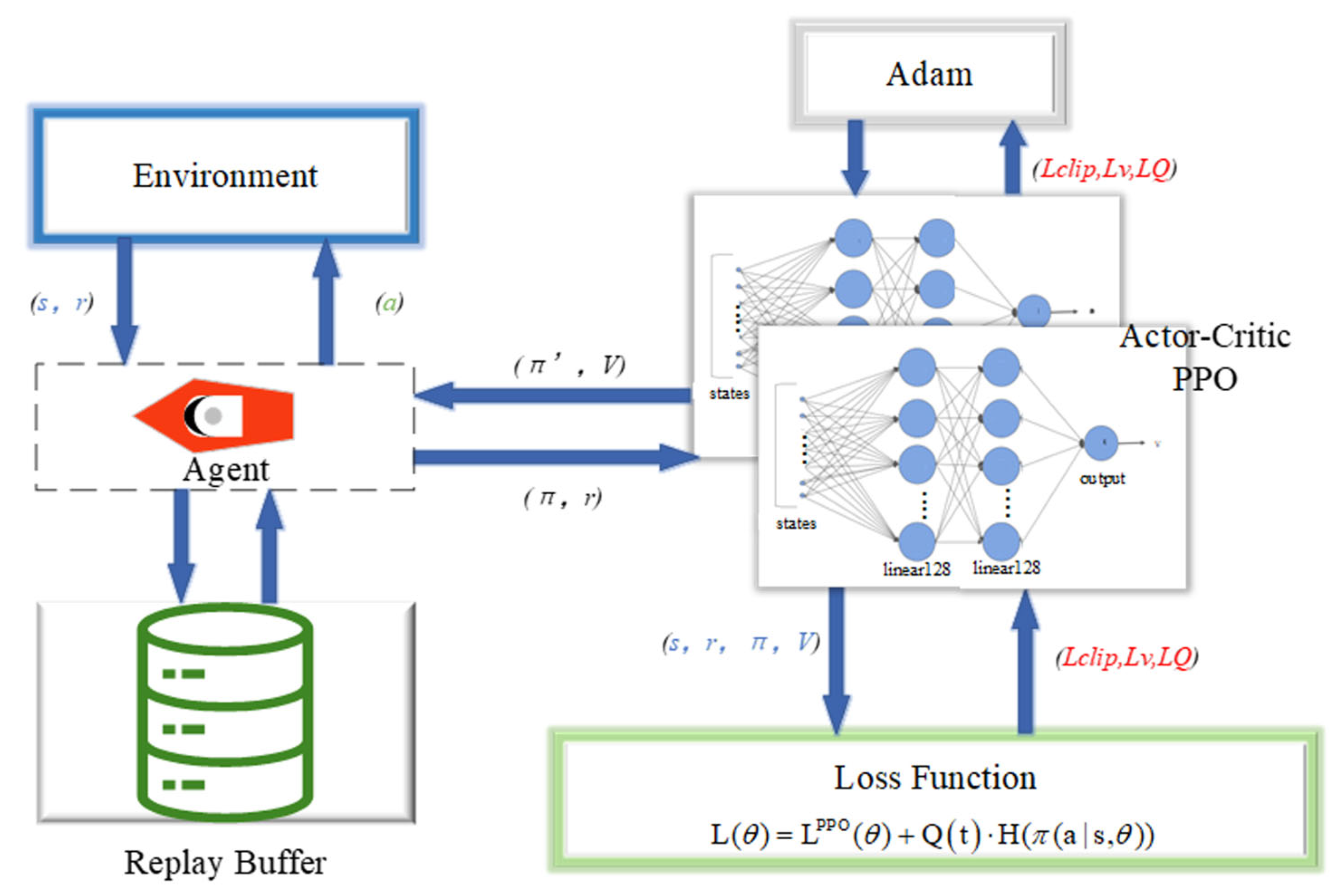
In this study, we employ an actor-critic architecture to implement the PPO algorithm, where the actor network is responsible for generating a probability distribution of actions and sampling to determine the actual actions, while the critic network estimates the state values. The dimensions of the input layer of this architecture are determined by the observation vector of the environment, while the dimensions of the output layer are dictated by the action vector. Specifically, the actor network outputs the means and standard deviations of the actions, making the output layer’s dimension twice the number of actions; conversely, the critic network outputs a single state value, with an output layer dimension of 1. In terms of hidden layer design, both the actor and critic networks employ a multi-layer perceptron (MLP) structure, with each hidden layer containing 128 units, split across two layers.
The initial steps of the training process include creating a Replay Buffer to store interaction experiences, followed by initializing the actor and critic networks, and deciding whether to use initial network weights based on the configuration file. Subsequently, both networks are configured with the Adam optimizer, and an exponential learning rate scheduler is used to adjust the learning rate.
During the training loop, experience data are received from the trainer and stored in the replay buffer. The network parameters are then updated using the PPO strategy, with the updated strategy fed back to the trainer, ensuring synchronous updates of the critic network.
The design of this network architecture aims to leverage the dual advantages of the actor-critic method: parallel optimization of policy and value functions to accelerate the learning process. The actor network’s output of action probability distributions facilitates natural policy exploration, while the introduction of entropy loss and regularization loss further incentivizes exploratory behavior, helping to prevent the strategy from prematurely converging to local optima. The critic network provides a value estimate that offers a stable reference objective for policy optimization. Furthermore, updates to network parameters are performed through a dedicated optimizer, incorporating core features of the PPO algorithm, such as clipping of probability ratios and truncation of value functions. These mechanisms work together to safeguard the update process, preventing instability due to excessively large steps.
Figure 4 illustrates the update process of the PPO algorithm. The PPO algorithm effectively captures complex feature relationships through a multi-layer perceptron structure and uses a replay buffer to store experiences, ensuring sample diversity and stability. Through clipping mechanisms and synchronous update strategies, the PPO algorithm achieves stability in policy and consistency in value estimates during training. This design not only enhances the model’s flexibility and adaptability but also ensures the robustness and reliability of the learning process.
3.3. State and Action Space Design
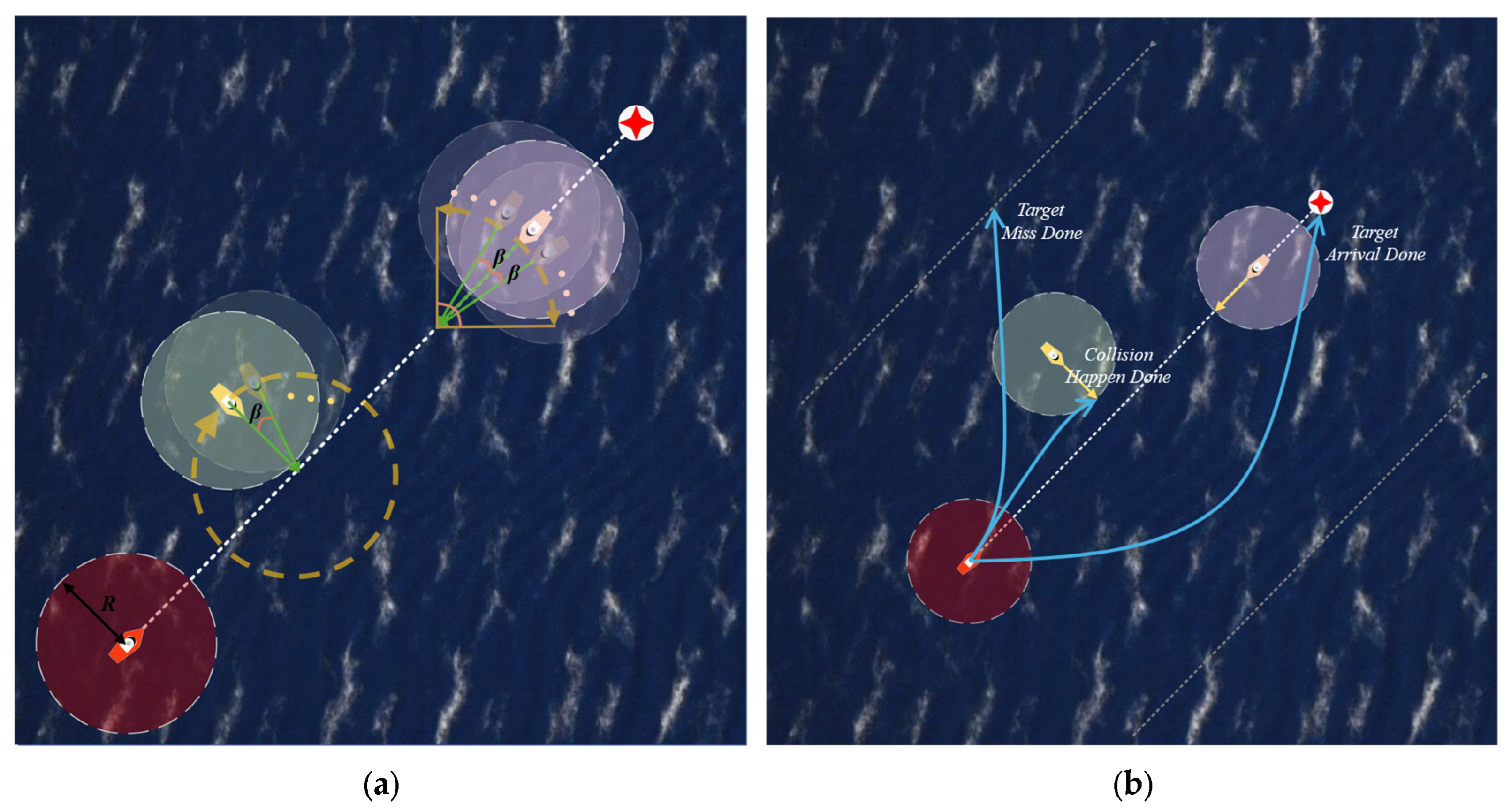
In the reinforcement learning framework, the environment provides the agent with observations of its current state, based on which the agent selects actions. Subsequently, the environment responds to the agent’s actions, providing feedback that includes new state information and corresponding rewards. In the context of autonomous collision avoidance tasks, unmanned ships act as agents, while obstacles, the marine environment, and other vessels constitute their environment. To ensure effective deployment and application in real-world settings, the design of the state space must closely reflect data available from actual sensors. This study has designed a multidimensional state space, as follows:
which includes the following four parts: 1. The agent’s own navigational status: This part involves the unmanned ship’s heading, rate of heading change, rudder angle, rudder angular velocity, speed, and position coordinates, all of which collectively describe the ship’s immediate navigational state. 2. Goal-related state: This part includes the relative bearing and coordinates of the goal in relation to the unmanned ship, providing target-oriented navigation information. 3. Target ship state information: for each TS in the environment, the state space includes its true bearing, speed, heading, position coordinates, and
CR relative to the OS. This information is crucial for assessing and avoiding collision risks. 4. Reference path state: this concerns the distance between the unmanned ship and the nearest point on the reference path, providing a reference for path planning and navigation.
To ensure safe navigation at sea, mariners continuously monitor collision risks and make decisions based on extensive navigation experience to make timely adjustments to the vessel’s course. Through comprehensive training in a simulation environment, the unmanned ship can learn and master these collision avoidance decision-making skills. In this study, the rudder angle serves as the action chosen by the agent through the strategy, capable of changing the unmanned ship’s direction and path.
The rudder angle is designed in a continuous space, from −35° to 35°, and from −5° to 5°. This design closely mimics the physical characteristics of actual ship maneuvering, enhancing the flexibility and adaptability of the unmanned ship’s navigation.
3.4. Reward Function Design
The reward function plays a crucial role in reinforcement learning, serving as a metric to evaluate the agent’s behavior and guiding the agent to act in a way that maximizes its cumulative rewards. As the training process iterates, the agent learns how to act within the explored environment to maximize its expected future benefits, eventually converging toward a stable behavior strategy. To ensure that the trained strategies effectively accomplish the autonomous collision avoidance tasks, this study divides the reward function into four components: destination reward, navigation reward, collision avoidance reward, and rule compliance reward. The reward values are calculated and accumulated at each frame. Here is the specific design of each part of the reward function:
- (1)
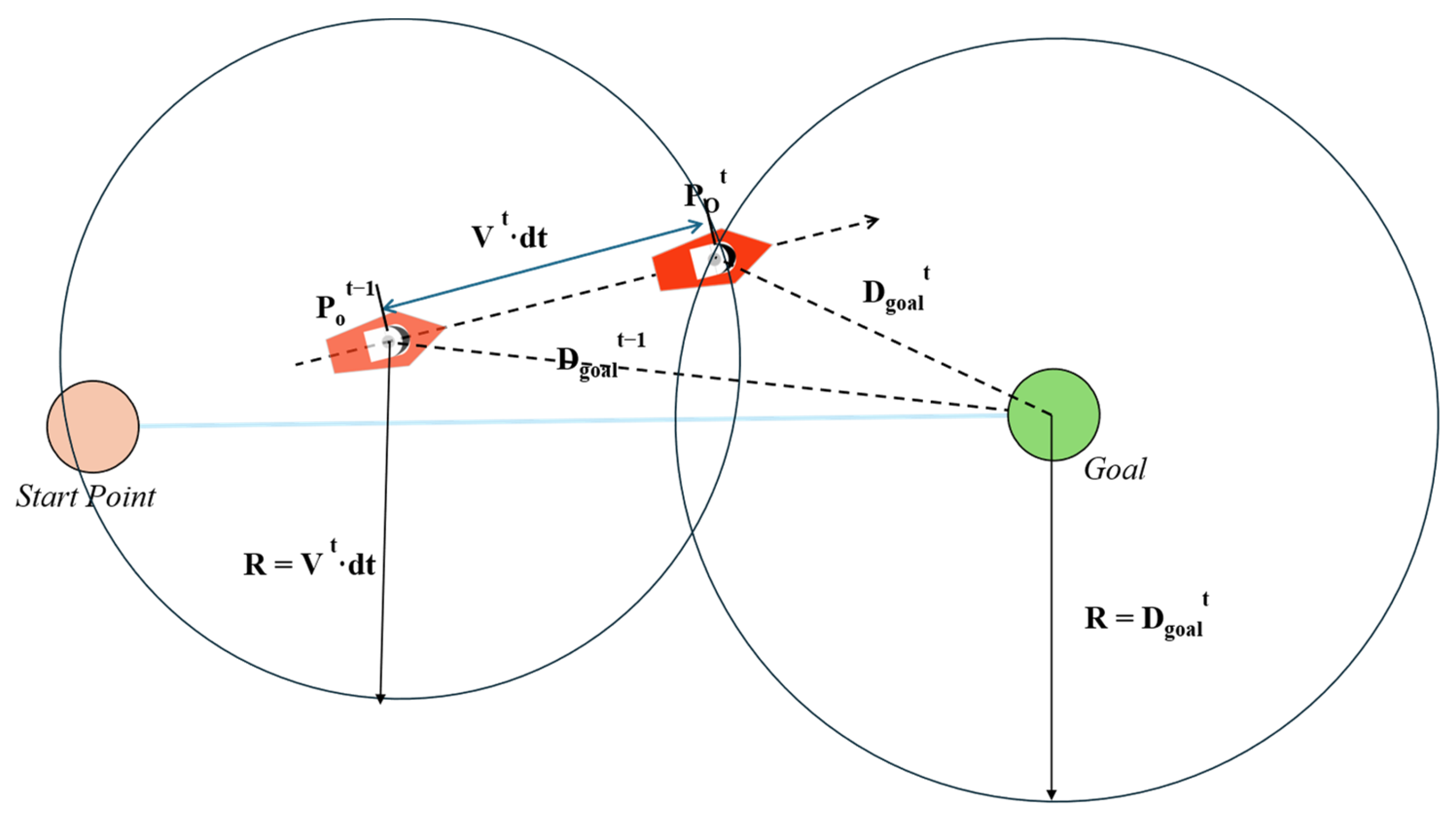
Destination reward: This reward is designed to guide the agent toward the destination.
where
and
are the distances between the destination and the ship’s previous and current positions, respectively.
is the goal position, and
is the OS’s current position.
is the OS’s forward speed, and
is the timestep. The numerator represents the difference in distance to the destination across each timestep, while the denominator represents the actual displacement of the ship per timestep. Thus, the equation effectively measures the ratio of the ship’s effective displacement toward the destination to its actual displacement. The higher the ratio, the more aligned the ship’s movement is with the direct line to the destination.
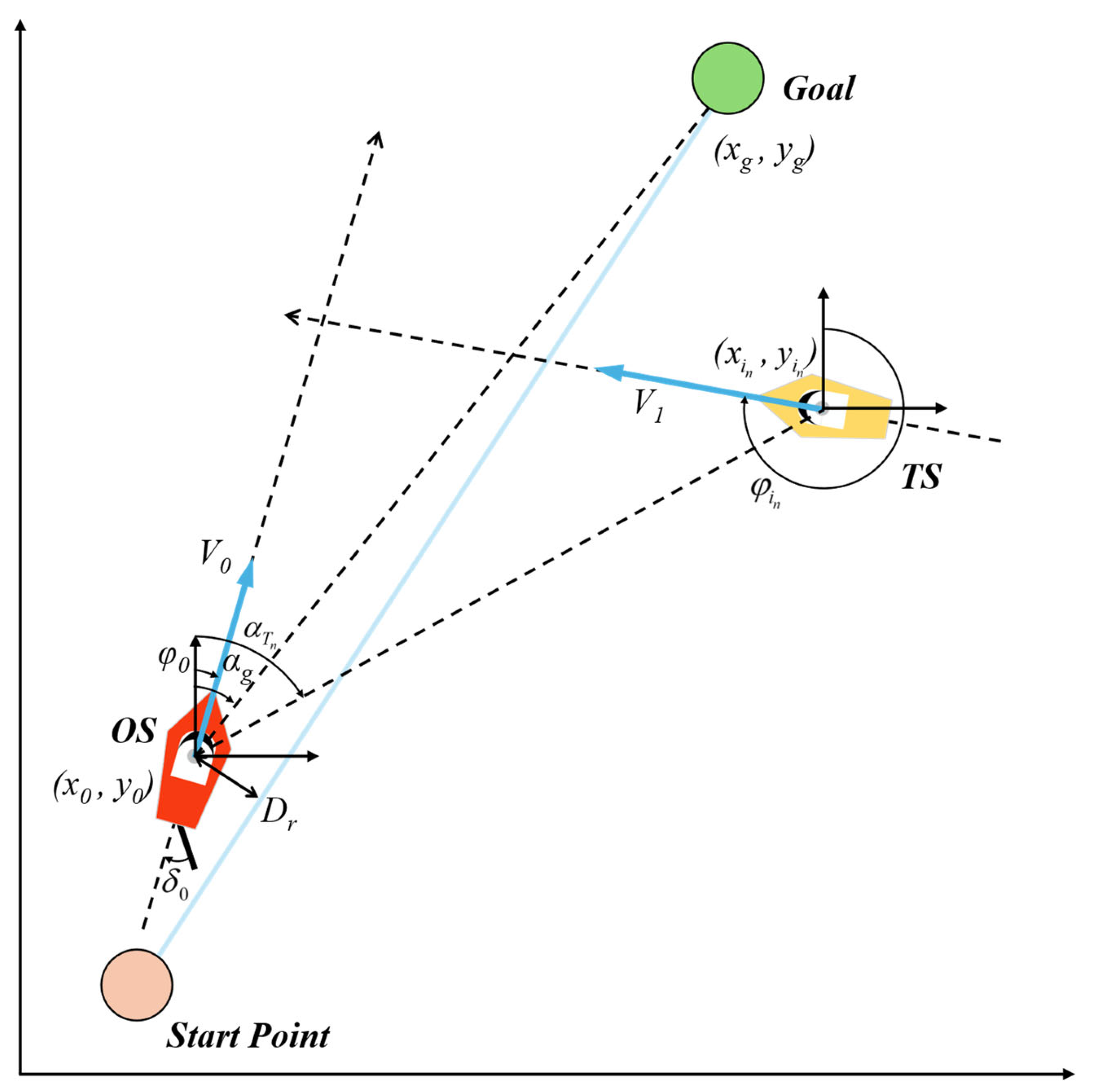
Figure 5 illustrates the design principles of the reward function.
- (2)
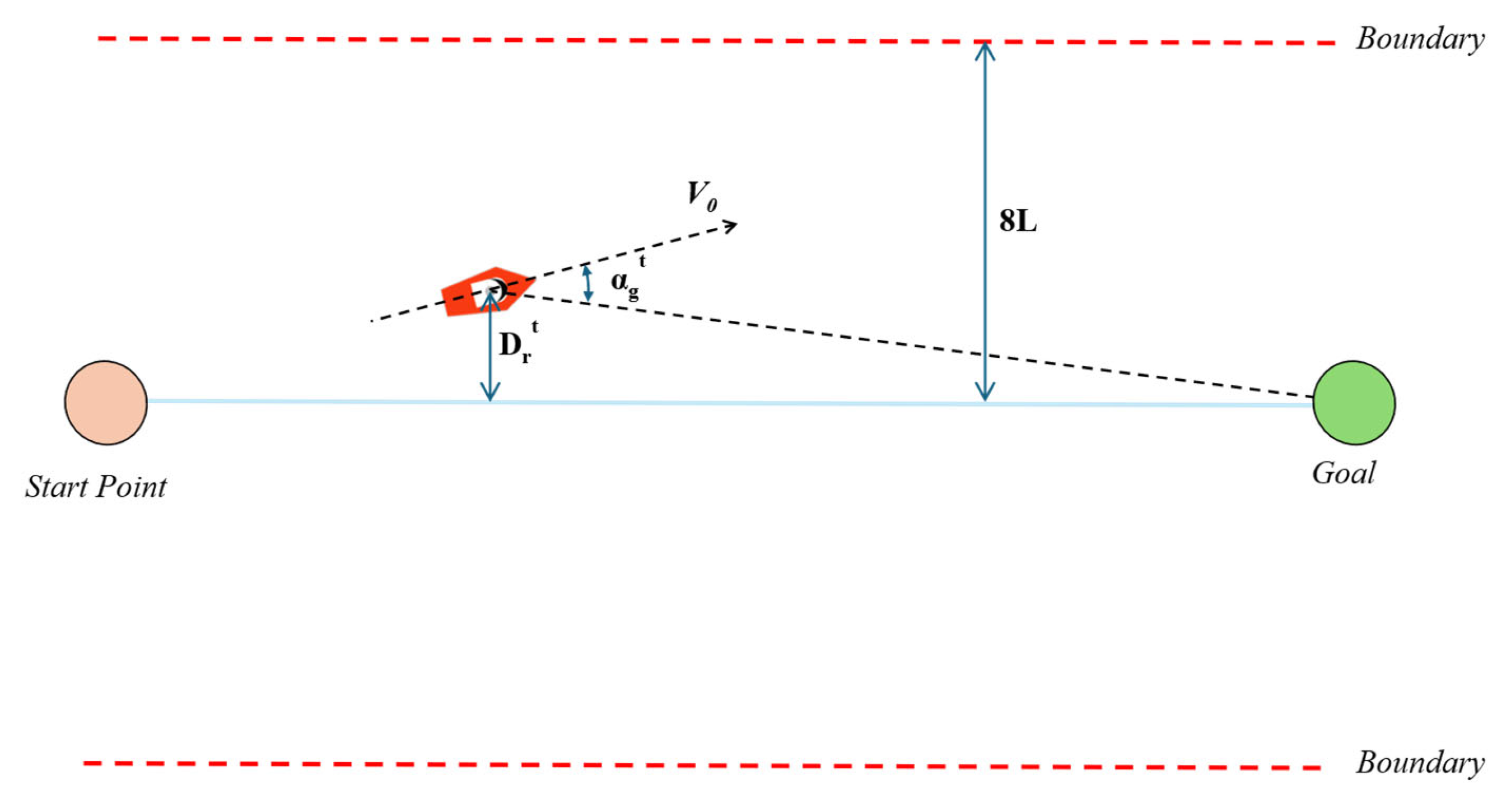
Navigation reward: This reward encourages the agent to navigate efficiently along the reference path.
where
is the shortest distance between the ship and the reference path at time
,
is the ship’s length, and the boundary distance is set to eight times
. The reward increases as the ship sails closer to the reference path, with the formula using four times the ship’s length as the denominator.
is the angle between the ship’s course at time
and the line connecting the ship to the destination. The reward increases as the ship’s velocity direction more closely aligns with the destination. If
exceeds 90°, indicating the ship is moving away from the destination, a reward of −1 is given to discourage this behavior.
Figure 6 illustrates the design principles of the reward function.
- (3)
Collision avoidance reward: This reward is based on the current collision risk value and a critical threshold, aimed at preventing collisions with obstacle vessels.
where
represents the current collision risk value, and
is the critical collision risk threshold. If
is less than
, the ship is considered relatively safe from the target ship. If
exceeds
, it is considered that there is a significant risk of collision, and collision avoidance decisions should be executed promptly.
- (4)
Rule compliance reward: According to the COLREGs, this reward guides autonomous ships in making collision avoidance decisions that conform to rules.
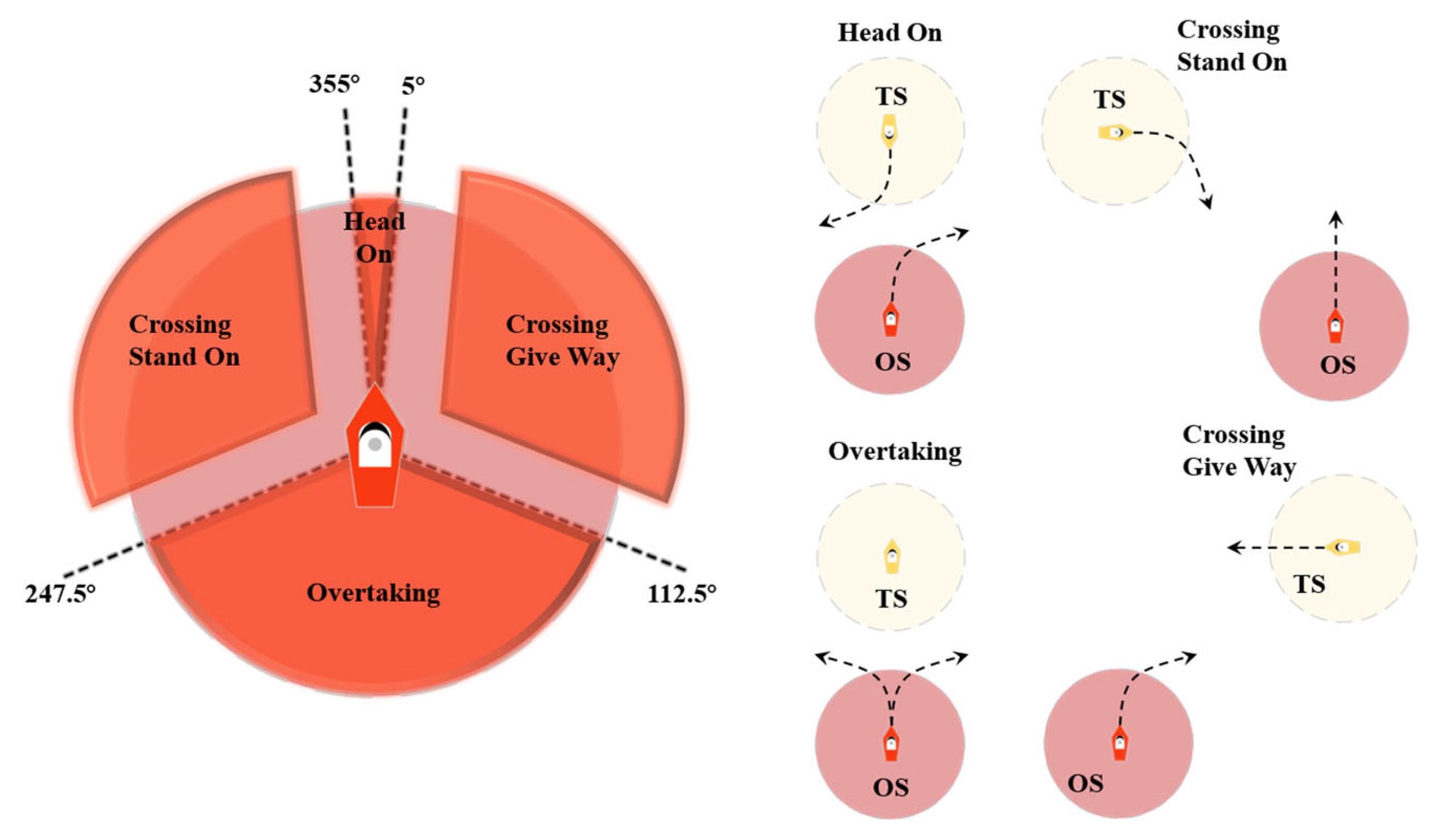
COLREGs constrain the behavior of autonomous ships. First, refer to the standards in
Figure 2 to assess encounter scenarios, and then determine if the OS’s decisions comply with COLREG rules 13–17 to appropriately avoid conflicts and provide corresponding rewards. If the OS decides to alter course in a head-on or starboard-crossing situation when
> 0, it is considered compliant with COLREGs, receiving a reward value of 1; in all other cases, the reward is 0.
Through meticulous design of state spaces, action spaces, and reward functions, this study has established a comprehensive reinforcement learning training system. At each timestep, the agent’s state information is fed into the neural network, which outputs value estimates for each possible action based on current parameters and states. The agent selects the best action based on these estimates, leading to updates in the environmental state. This design ensures that the agent can learn effective collision avoidance strategies in complex maritime environments.
5. Conclusions
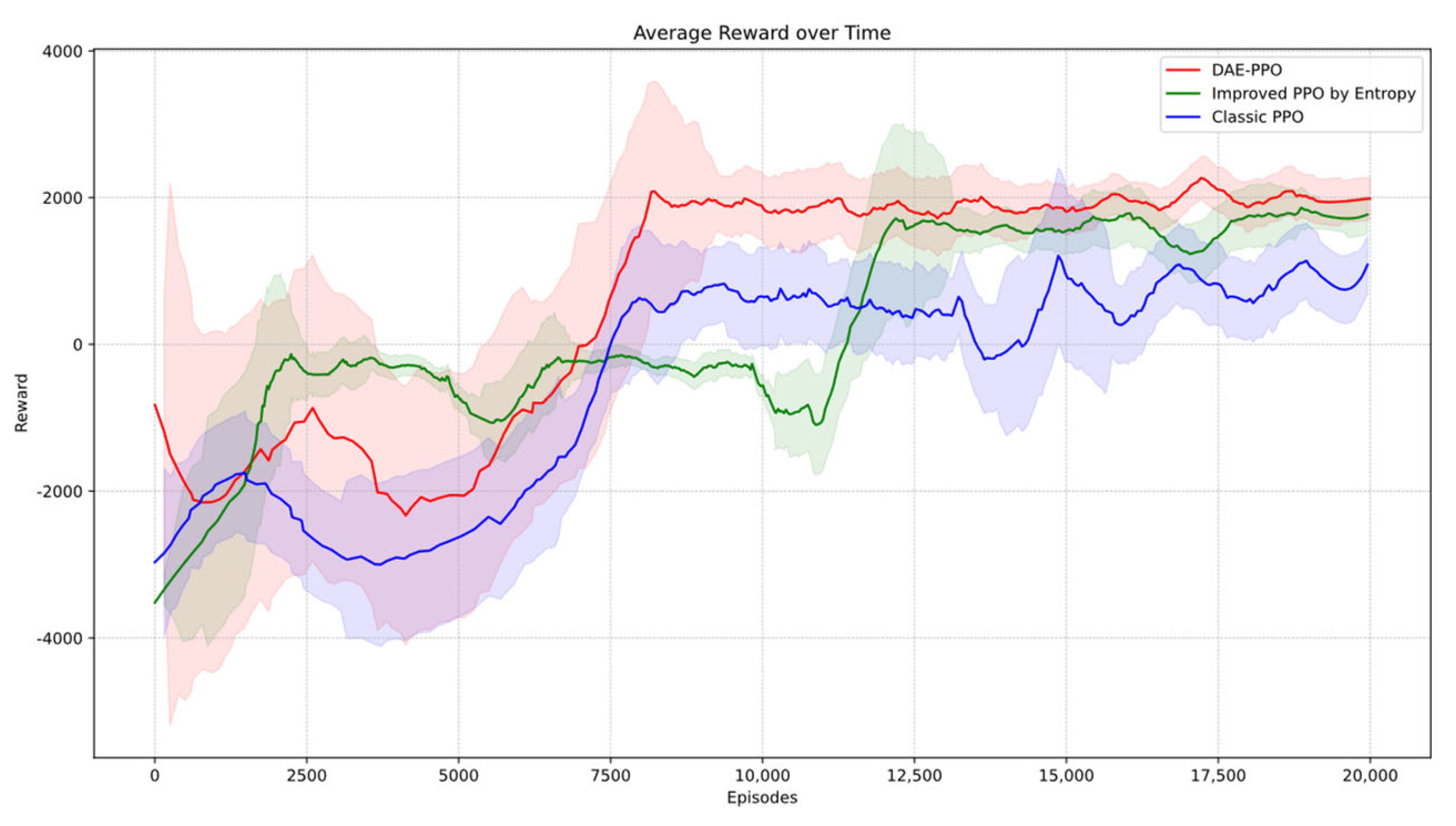
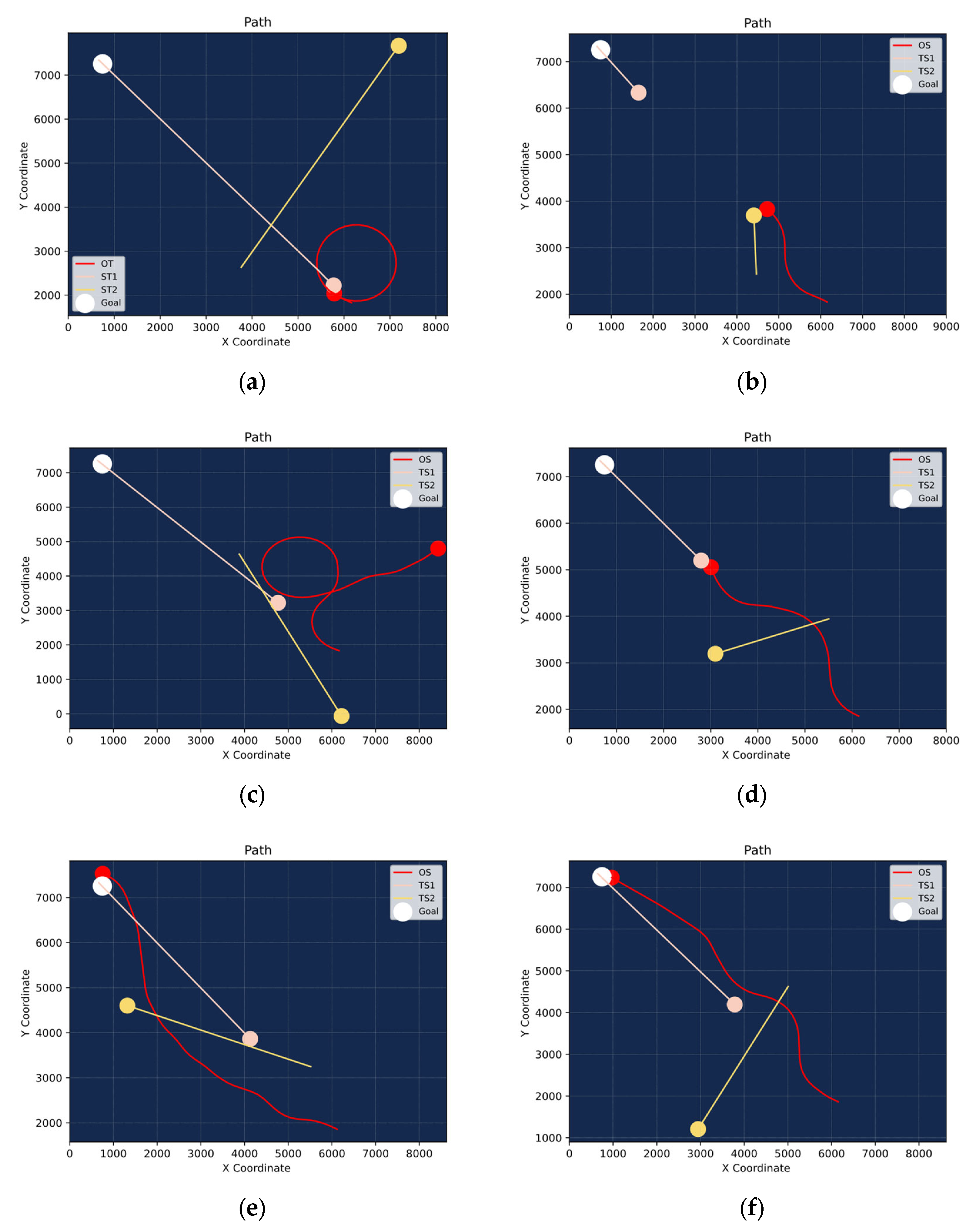
This study addresses the issue of ship collision avoidance in maritime transport environments by proposing an improved PPO algorithm (DAE-PPO) based on dynamically adjusted entropy. The algorithm optimizes the exploration mechanism through a quadratically decreasing entropy method, effectively avoiding local optima and enhancing strategic performance, all while considering the COLREGs. Simulation results indicate that the DAE-PPO algorithm significantly outperforms in efficiency, success rate, and stability in collision avoidance tests.
Moreover, the reward function designed in this study is subdivided into destination, navigation, collision avoidance, and rule compliance rewards, effectively guiding the agent in making effective collision avoidance decisions in complex maritime environments.
Despite the significant achievements of the DAE-PPO algorithm in simulated environments, future research needs to delve deeper into several areas: While simulation environments can emulate various scenarios, the complexity and unpredictability of actual maritime environments are higher. Future work should include testing and validating the algorithm in real maritime conditions. Maritime traffic often involves interactions among multiple ships; research could explore collaborative collision avoidance strategies within multi-agent systems to enhance the efficiency and safety of overall maritime traffic. The exploration of elliptical ship domain models, which can dynamically adjust based on the speed of unmanned ships, will more accurately simulate real-world collision avoidance scenarios. Through these subsequent studies, we will aim to further enhance the performance of autonomous collision avoidance algorithms for unmanned ships, advance unmanned ship technology, and ultimately achieve safe and efficient autonomous maritime navigation.