Article

The Potential of Tidal Energy Production in a Narrow Channel: The Gulf of Morbihan

1
LUSAC EA 4253, University of Caen Normandy, 60 rue Max-Pol Fouchet, F-50130 Cherbourg en Cotentin, France
2
Geo-Ocean, Univ Bretagne Sud, Univ Brest, CNRS, Ifremer, UMR6538, F-56000 Vannes, France
*
Author to whom correspondence should be addressed.
J. Mar. Sci. Eng. 2024, 12(3), 479; https://doi.org/10.3390/jmse12030479
Submission received: 5 February 2024 / Revised: 8 March 2024 / Accepted: 8 March 2024 / Published: 12 March 2024

Abstract

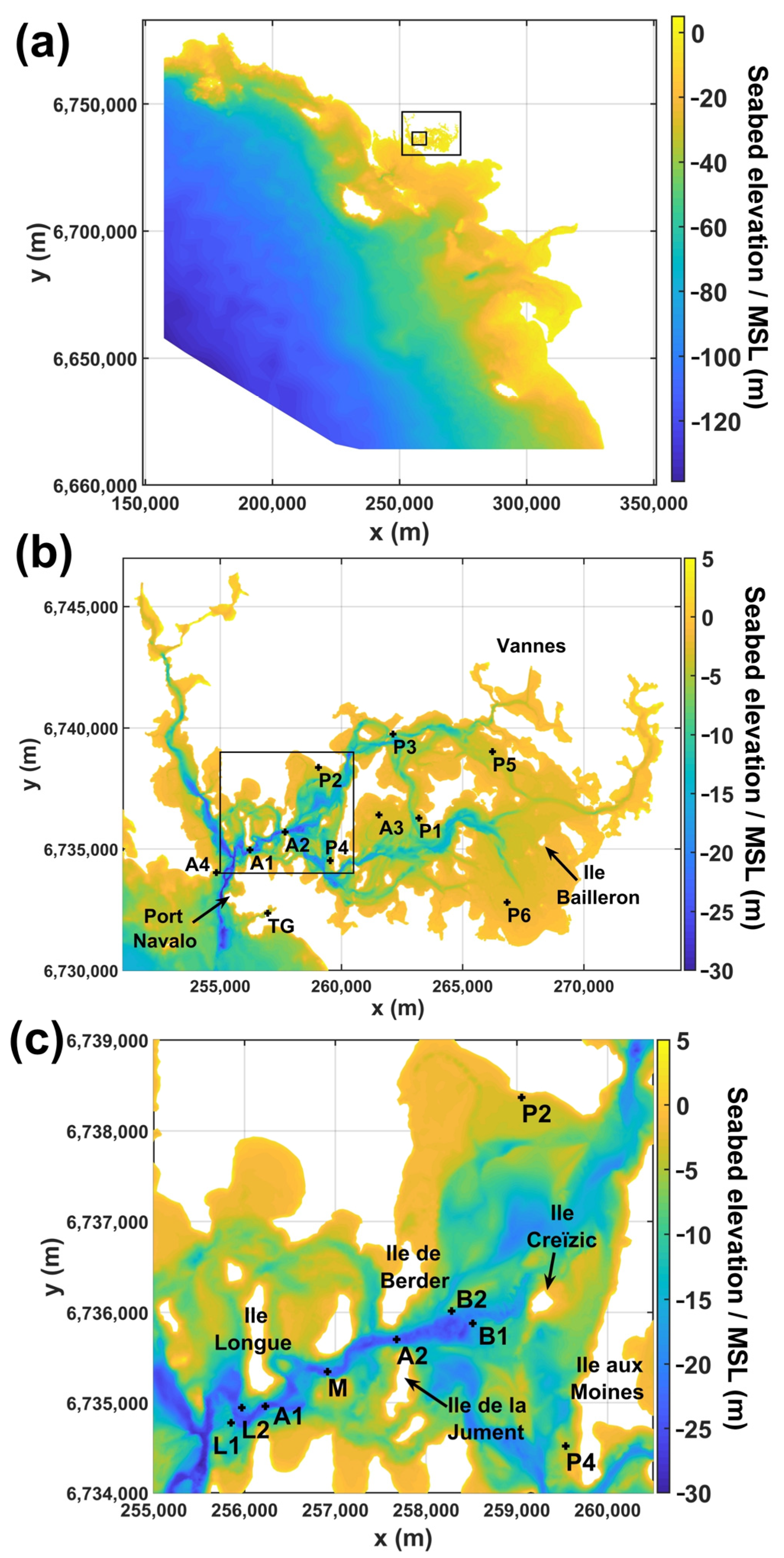
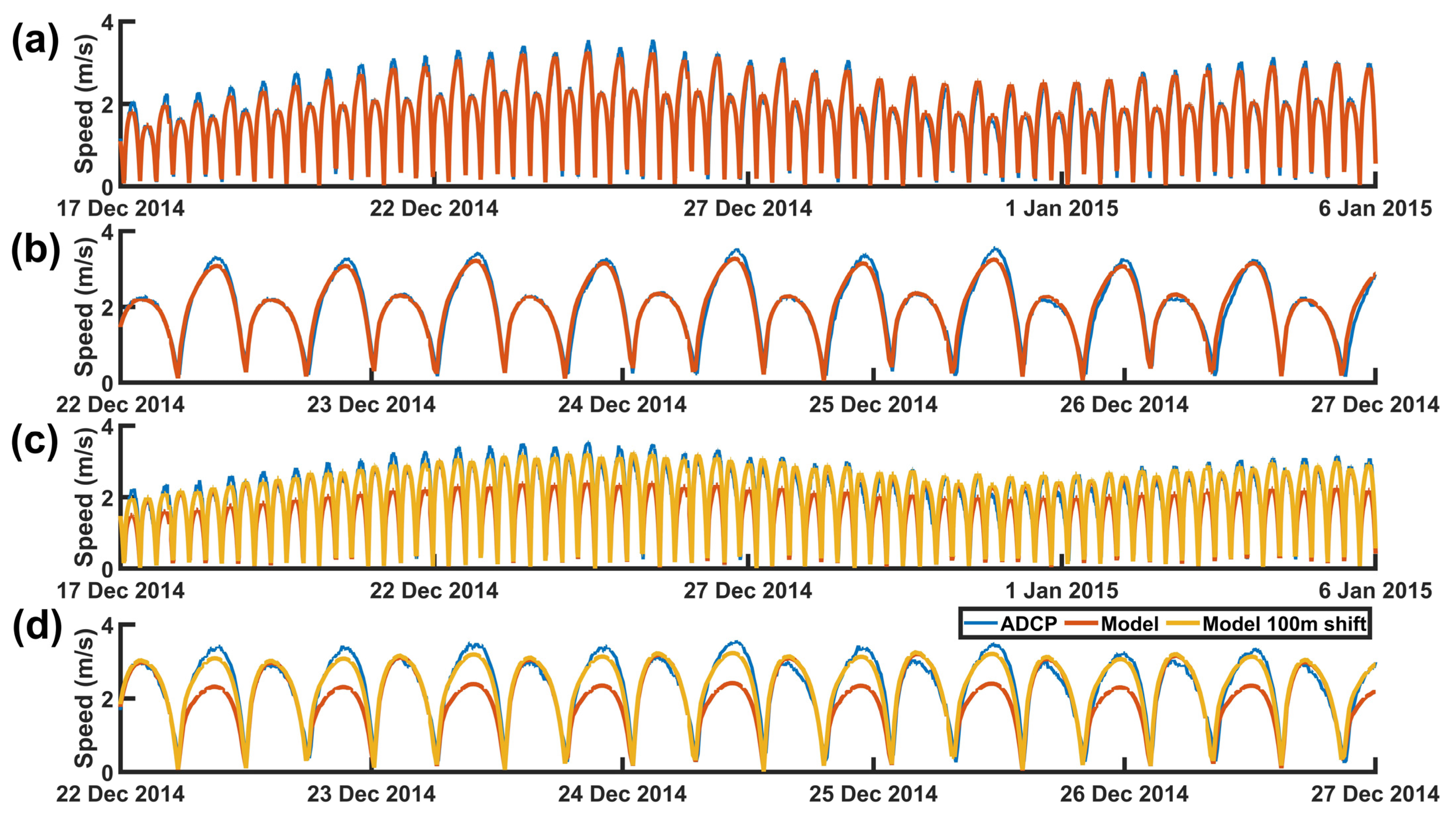
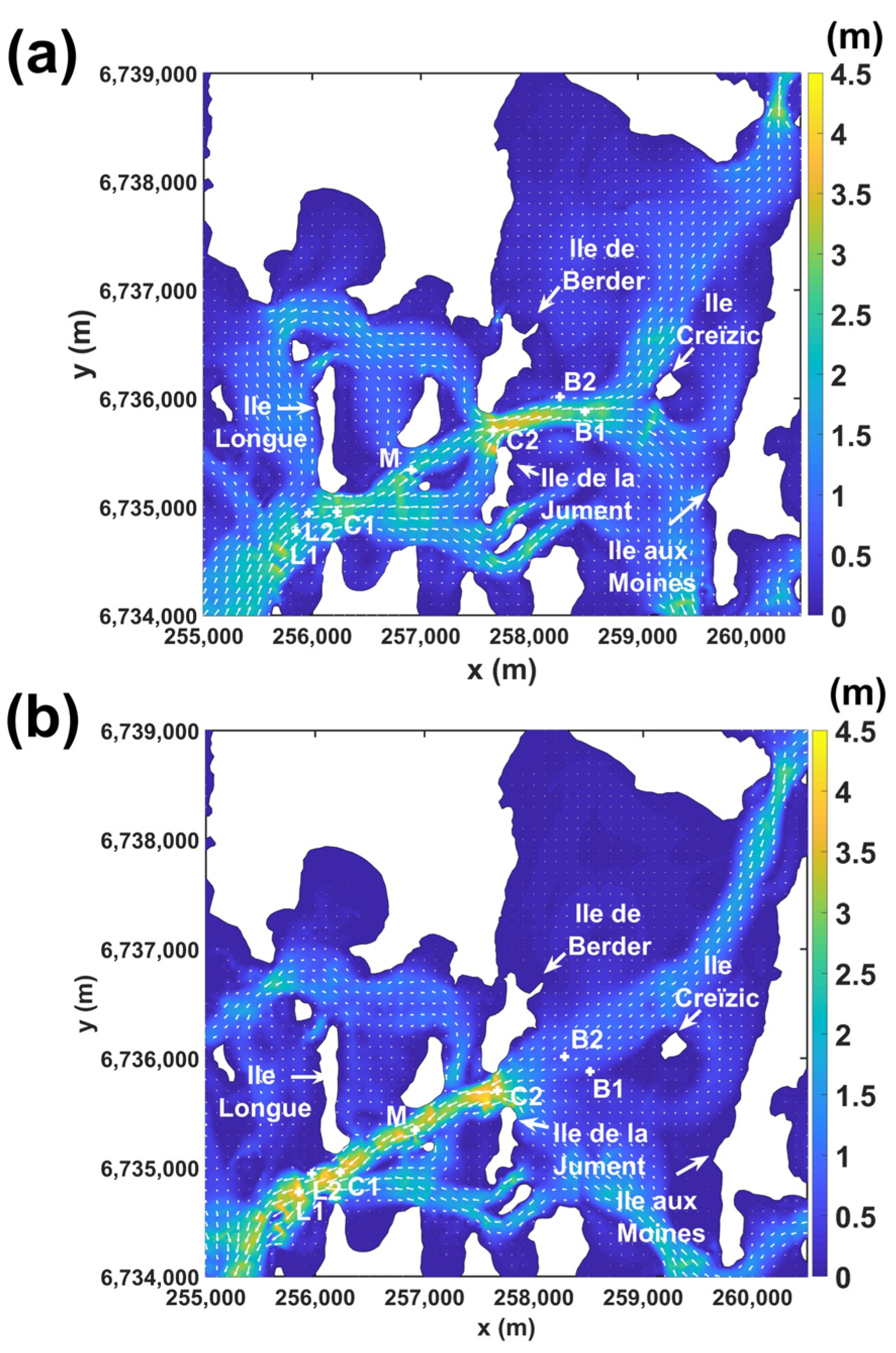
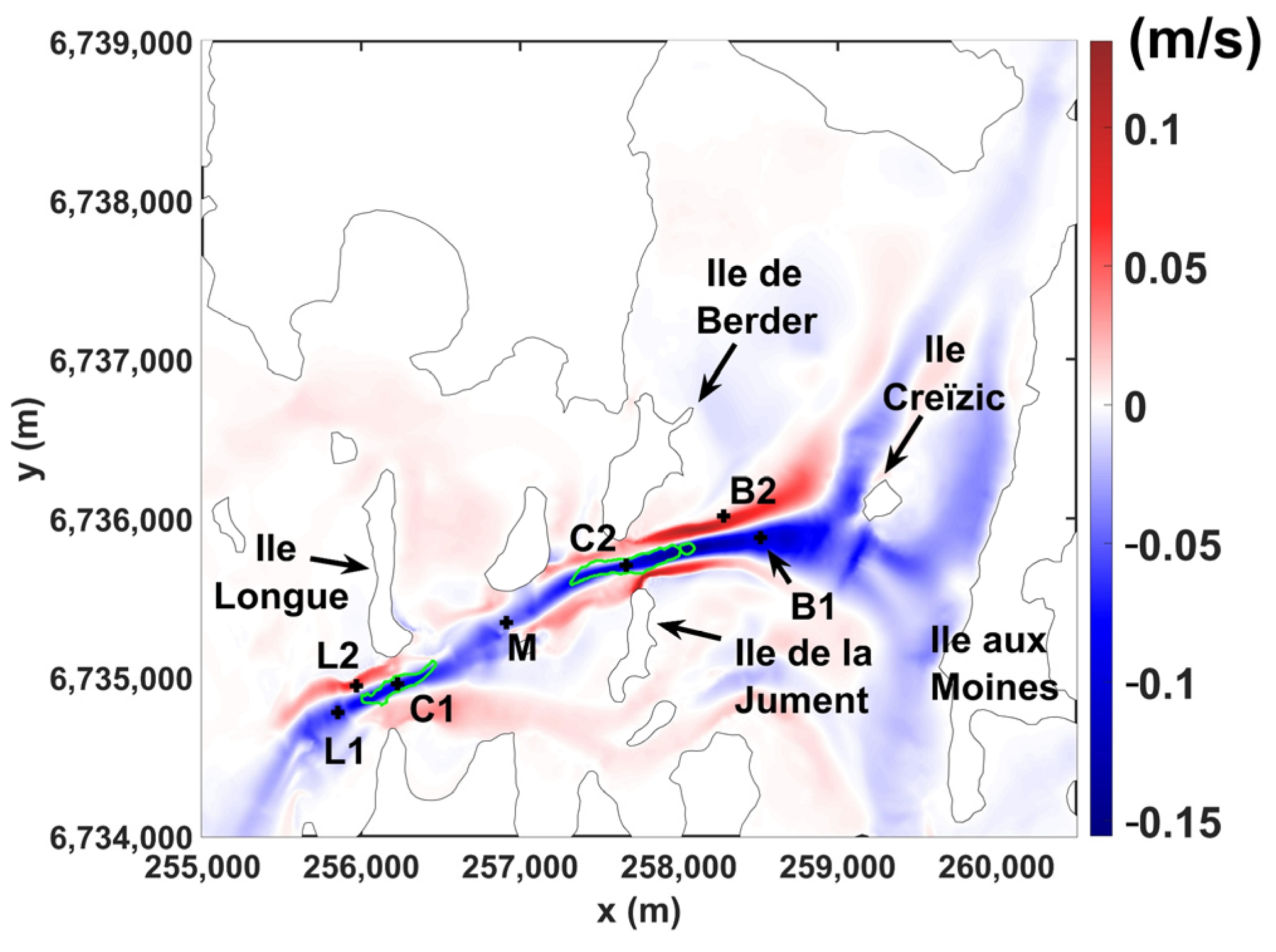
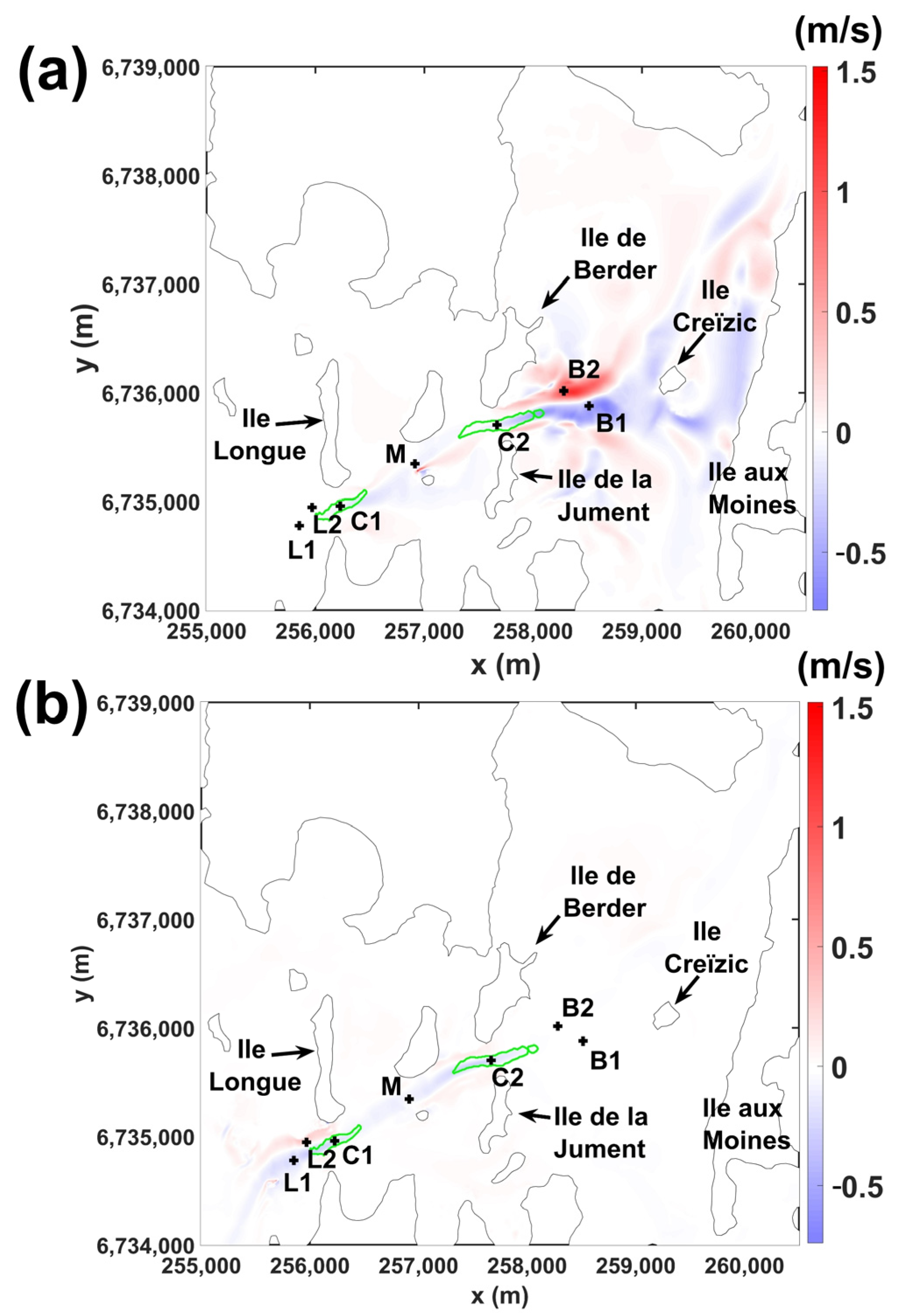
The tidal currents of the Gulf of Morbihan reach up to 3.5 m/s within a narrow (200 m large) channel connecting the sea to the inner part of the gulf. In this study, a Telemac2D model validated with a large dataset of field measurements is used to assess the resources of the gulf. The results show that two sites have the potential to host up to 48 turbines (diameter of 8 m). If the entire width of the channel is occupied by turbines, significant increases in current speed are expected to occur on each side of the main channel. Simulations also show that flow changes differ between ebbing and flooding tides. During ebbing tide, the changes are limited in amplitude and remain localised within the channel. During flooding tide, the changes are more significant, especially in the vicinity of one of the two sites where the water passing through the site is flushed into a large and shallow basin. In this area, energy extraction significantly modifies the spatial distribution of the current velocities. We consider different scenarios of tidal energy extraction. The results show that flow perturbation can be significantly reduced using a lower density of turbines, that extracting tidal energy at one site slightly reduces the resource of the other, and that the deployment of two turbines (testing conditions) has a negligible effect on ambient current speeds.
Keywords: Gulf of Morbihan; Telemac2D; tidal turbine; tidal resource; tide Gulf of Morbihan; Telemac2D; tidal turbine; tidal resource; tide