Article

A Robust Multi-Objective Evolutionary Framework for Artificial Island Construction Scheduling Under Dynamic Constraints

1
College of Shipbuilding Engineering, Harbin Engineering University, Harbin 150001, China
2
CCCC Water Transportation Consultants Co., Ltd., No.28, Guozijian St, Beijing 100007, China
3
Gaoling School of Artificial Intelligence (GSAI), Renmin University of China, Beijing 100872, China
*
Author to whom correspondence should be addressed.
J. Mar. Sci. Eng. 2024, 12(11), 2008; https://doi.org/10.3390/jmse12112008
Submission received: 6 October 2024 / Revised: 30 October 2024 / Accepted: 3 November 2024 / Published: 7 November 2024
(This article belongs to the Special Issue Advances in Recent Marine Engineering Technology)

Abstract

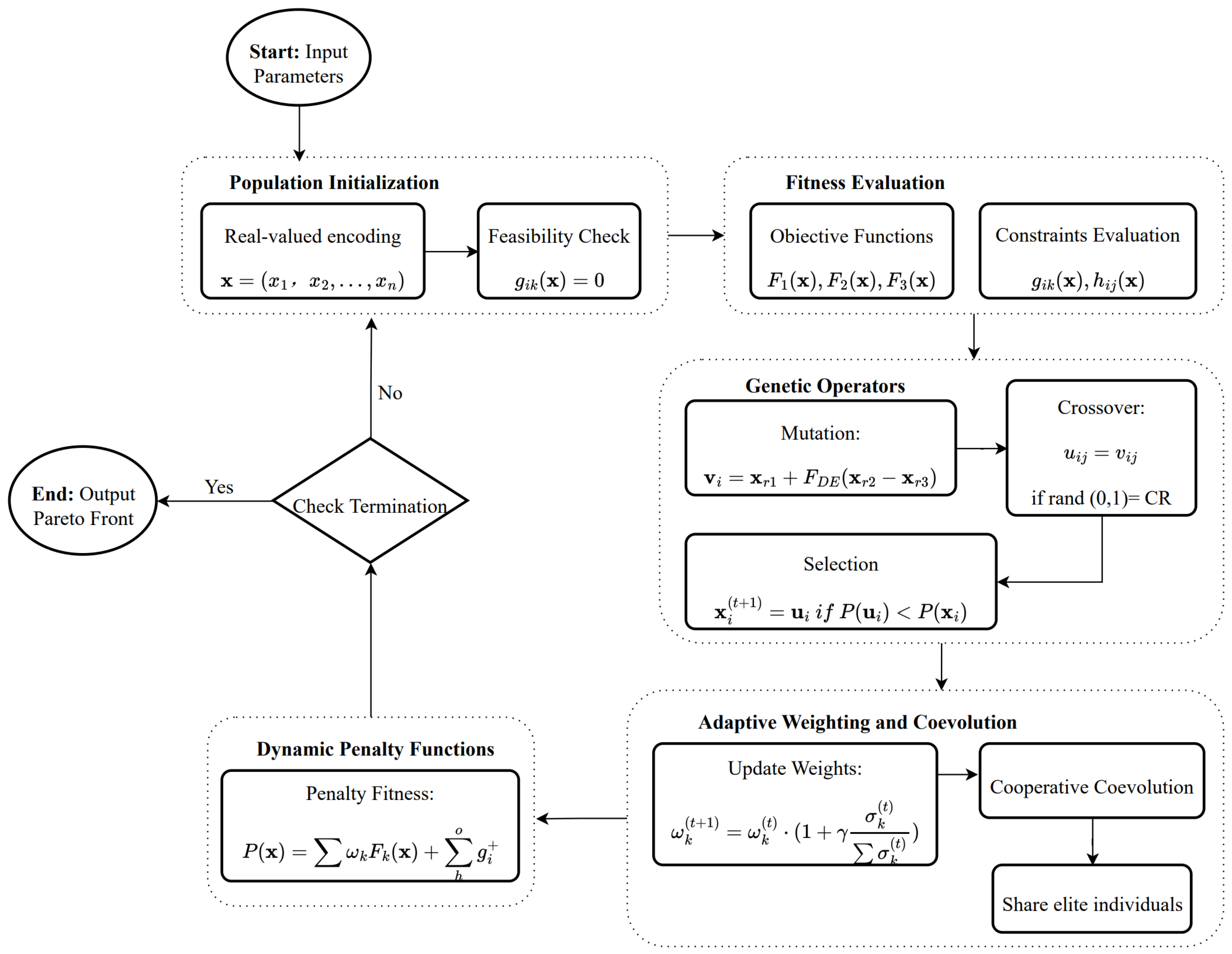
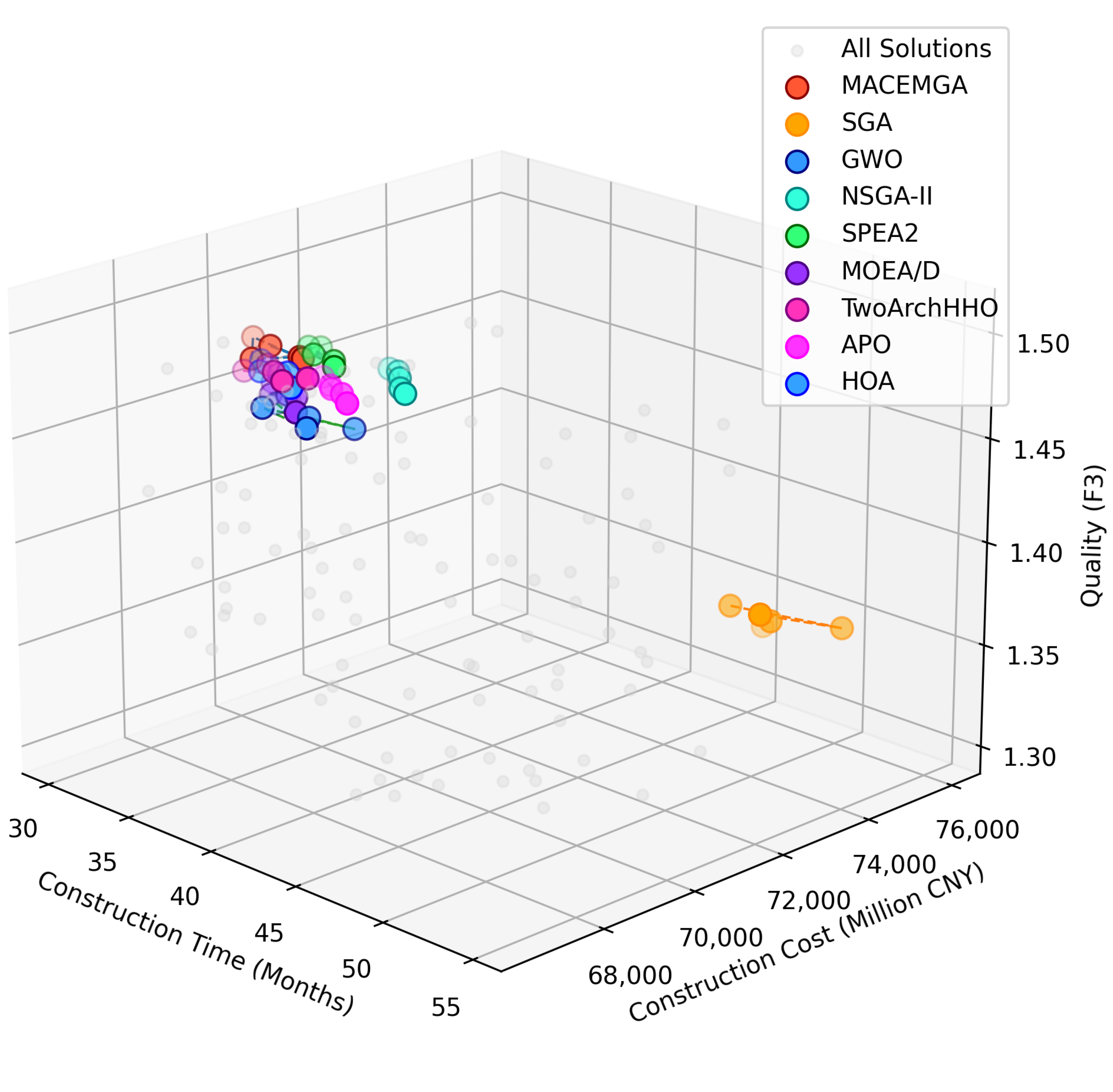
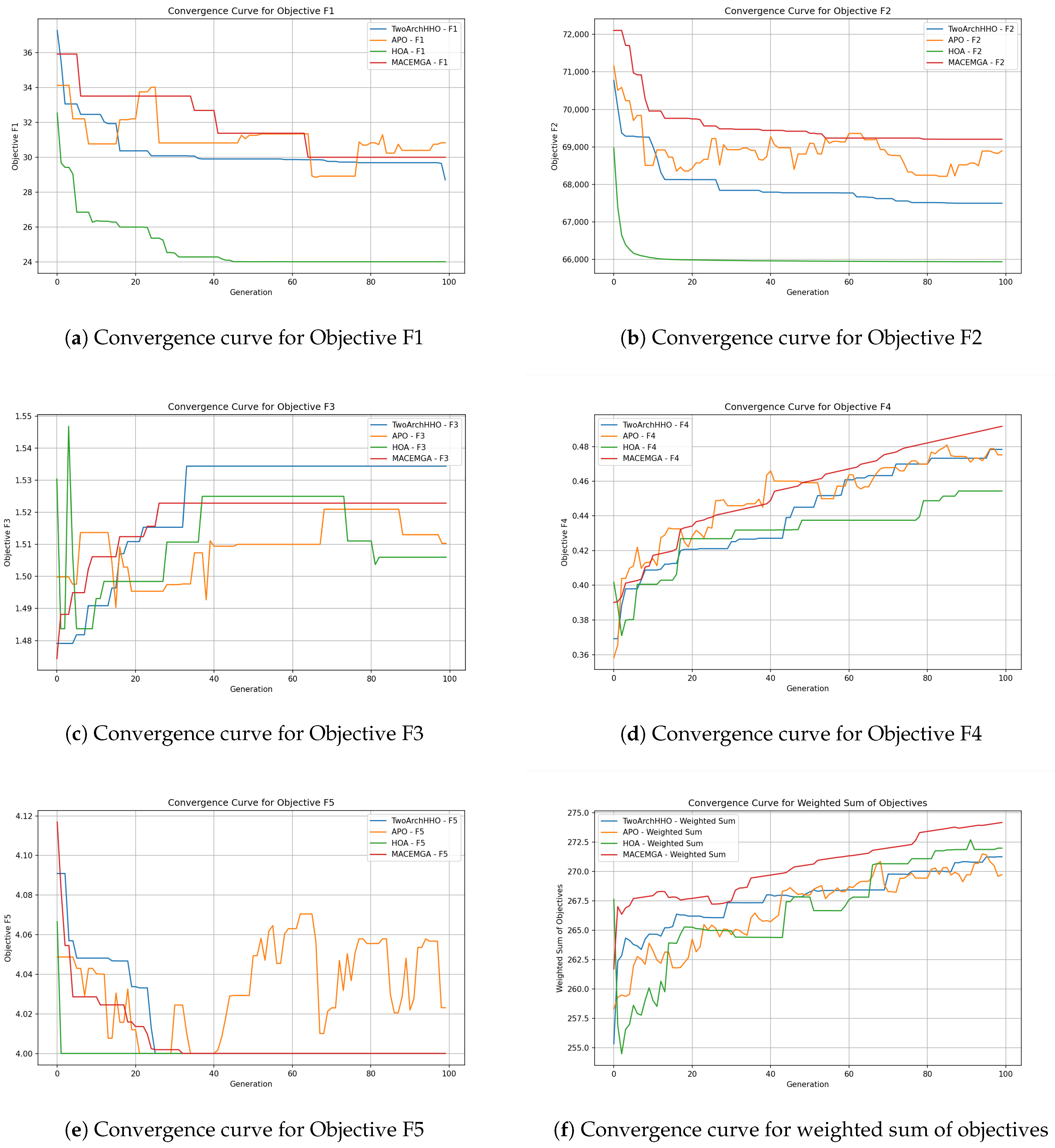
Artificial island construction is a multifaceted engineering endeavor that demands precise scheduling to optimize resource allocation, control costs, ensure safety, and minimize environmental impact within dynamic marine environments. This study introduces a comprehensive multi-objective optimization model that integrates critical factors such as resource limitations, task dependencies, environmental variability, safety risks, and regulatory compliance. To effectively address the complexities of this model, we develop and employ the Multi-Objective Adaptive Cooperative Evolutionary Marine Genetic Algorithm (MACEMGA). MACEMGA combines cooperative coevolution, adaptive dynamic weighting, dynamic penalty functions, and advanced genetic operators to navigate the solution space efficiently and identify Pareto optimal schedules. Through extensive computational experiments using data from the Dalian Bay Cross-Sea Traffic Engineering project, MACEMGA is benchmarked against algorithms such as NSGA-II, SPEA2, and MOEA/D. The results demonstrate that MACEMGA achieves a reduction in construction time from 32.8 to 23.5 months and cost savings from CNY 4105.3 million to CNY 3650.0 million while maintaining high-quality outcomes and compliance with environmental standards. Additionally, MACEMGA shows improvements in hypervolume by up to 15% over existing methods and a Convergence Rate that is 8% faster than MOEA/D.
Keywords: construction scheduling; multi-objective optimization; genetic algorithms; cooperative coevolution; resource allocation; environmental constraints; artificial island; evolutionary algorithms construction scheduling; multi-objective optimization; genetic algorithms; cooperative coevolution; resource allocation; environmental constraints; artificial island; evolutionary algorithms