The Effects of Two Land Creation Processes Using Modified Phosphogypsum on Soil Properties and Potato Yield and Quality

Abstract
1. Introduction
2. Materials and Methods
2.1. Study Area Overview
2.2. Main Materials
2.3. Experimental Design
2.4. Preparation of Modified PG
2.5. Sample Collection and Analysis
2.5.1. Soil and Plant Sample Collection
2.5.2. Soil and Plant Sample Analysis
2.6. Data Processing and Statistical Analysis
3. Results
3.1. Physical and Chemical Properties of Soil
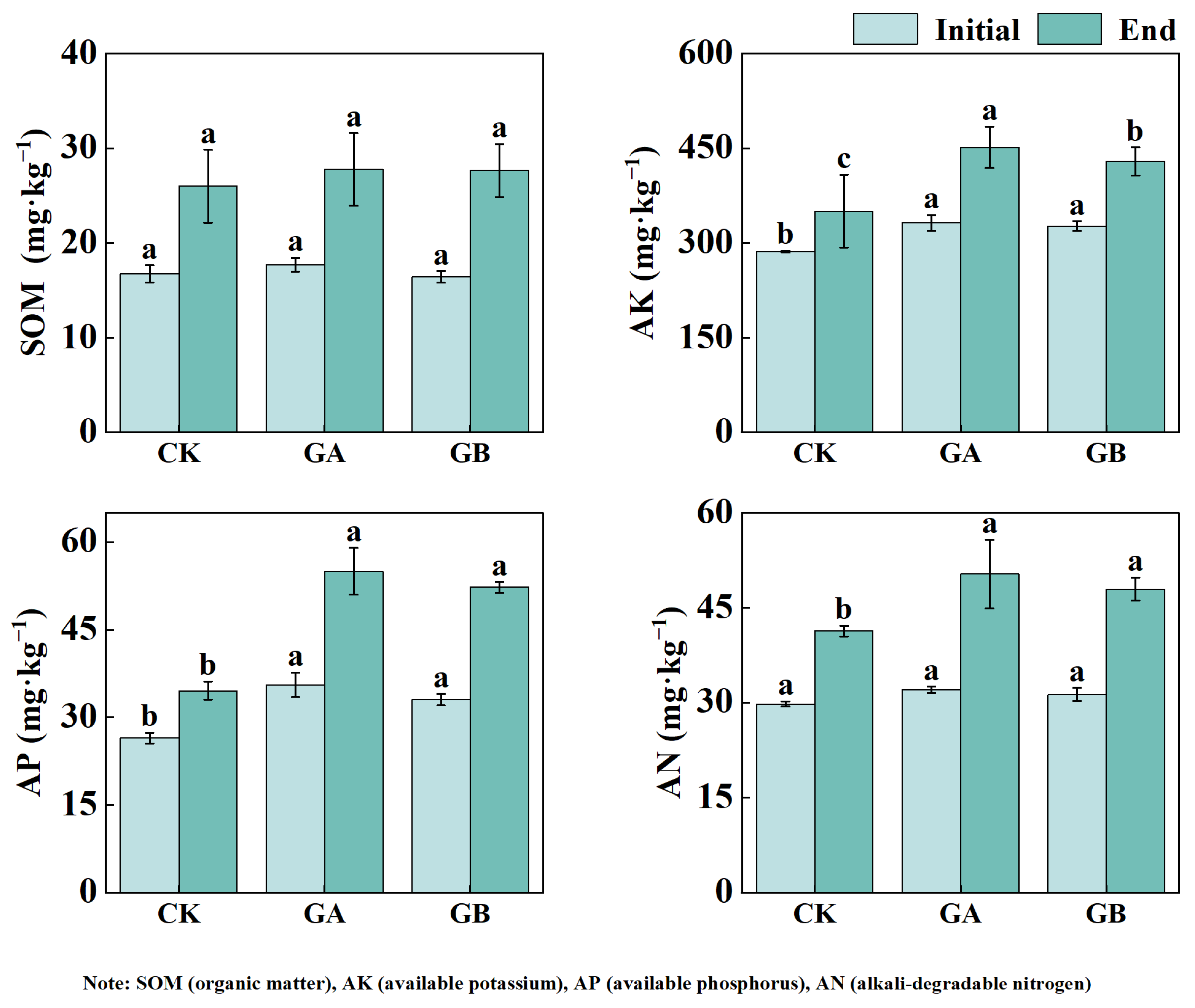
3.2. Soil Nutrient Status
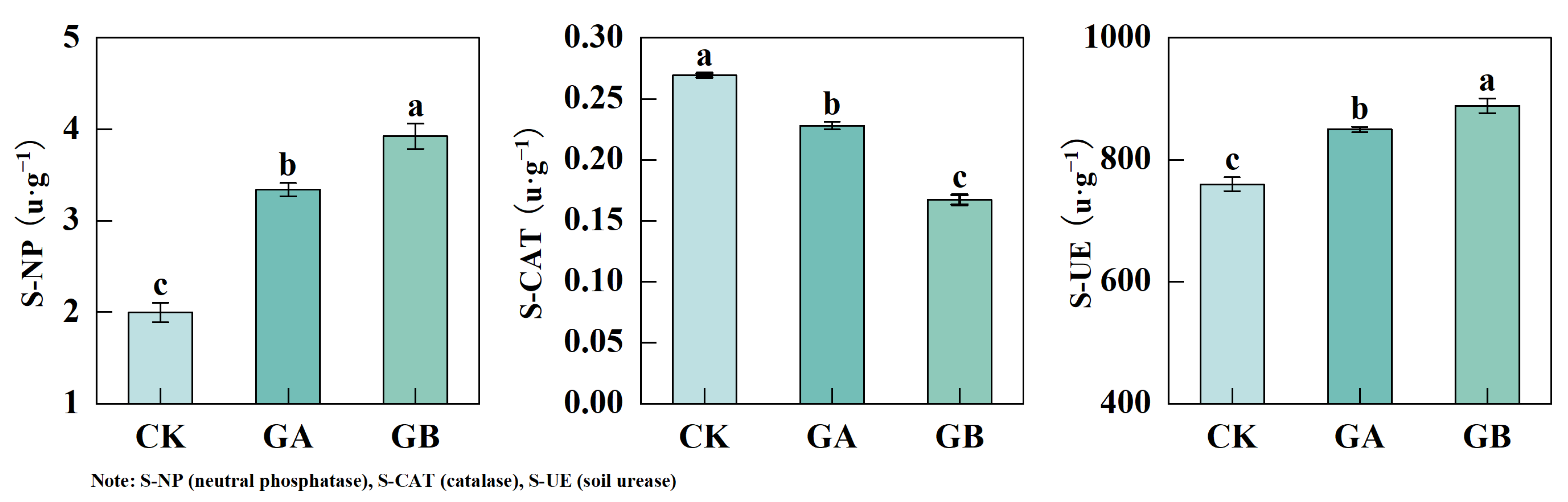
3.3. Soil Enzyme Activity
3.4. Potato Yield and Biological Characteristics
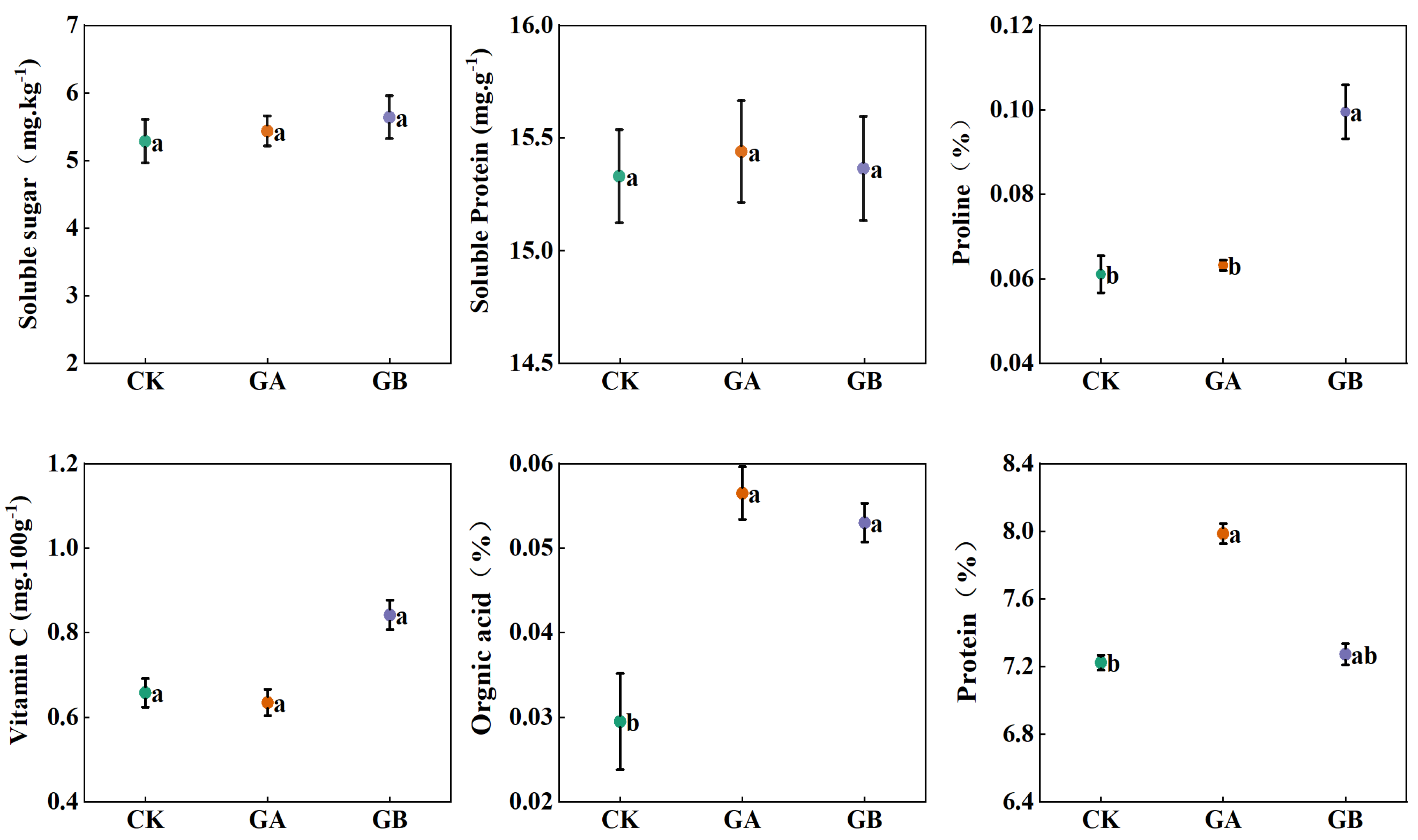
3.5. Nutritional Quality of Potatoes
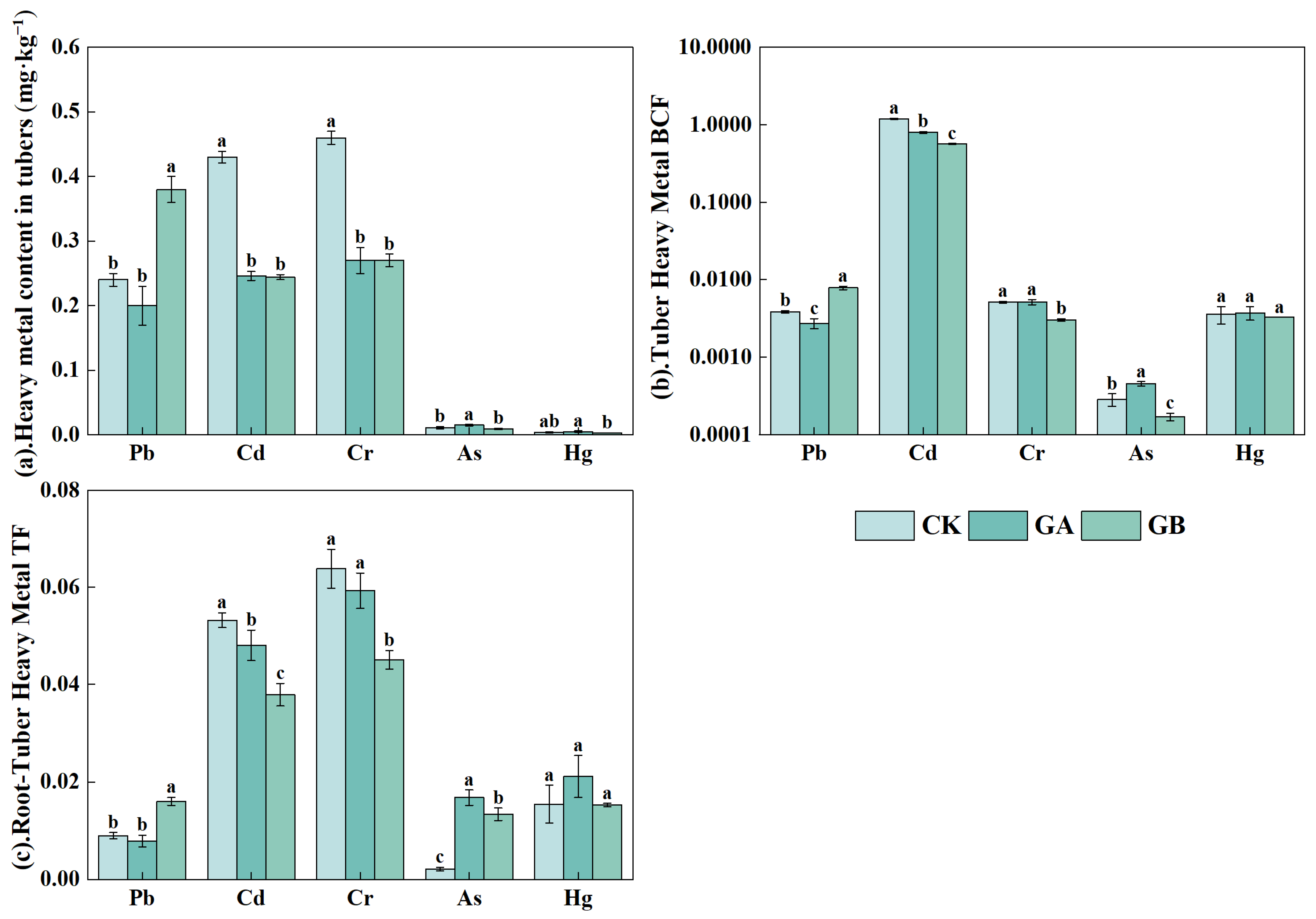
3.6. Heavy Metal Transfer Coefficients and Bioaccumulation Factors
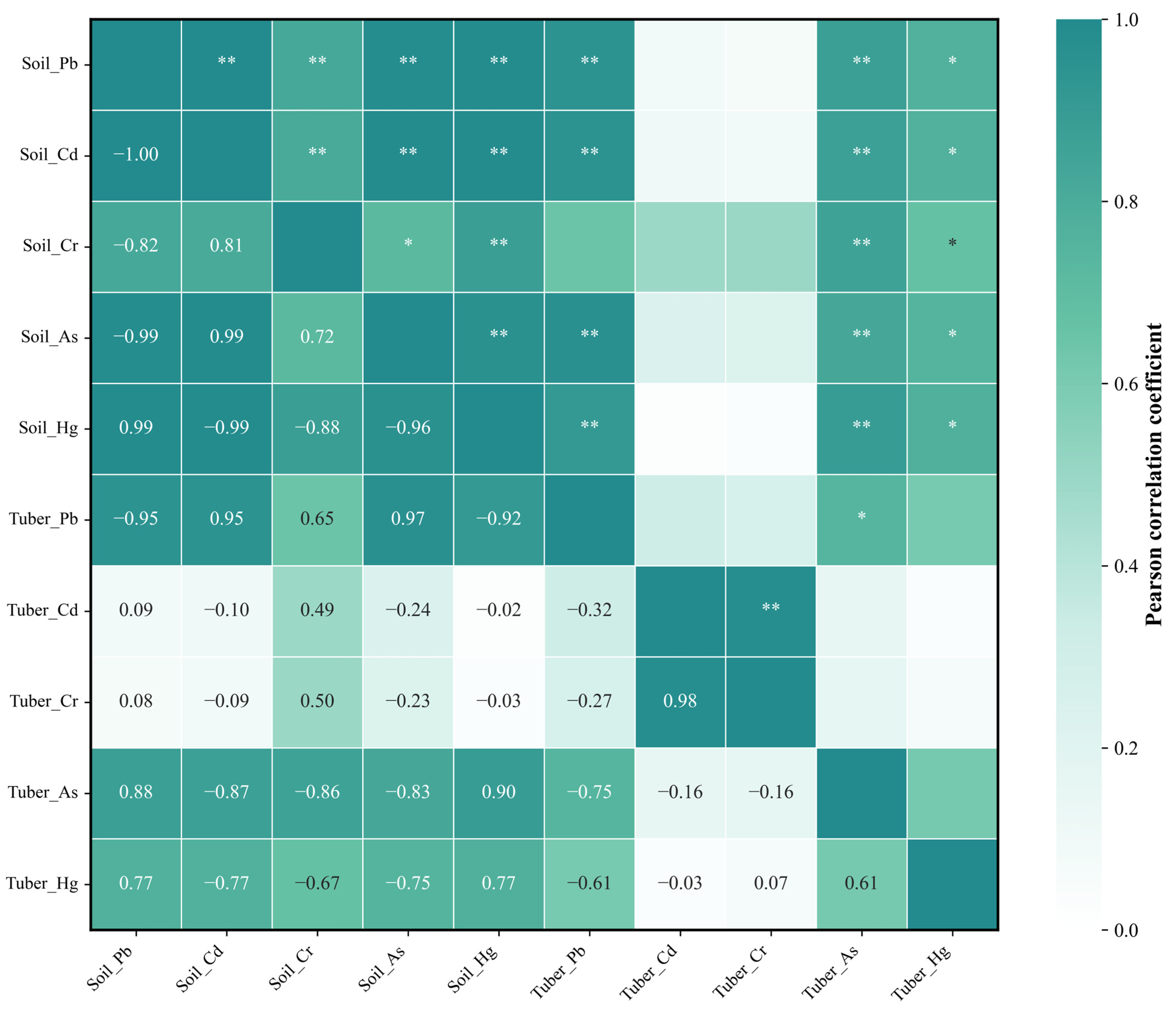
3.7. The Correlation Between Potato Tubers and Heavy Metal Concentrations in Soil
4. Discussion
4.1. Effects of Land Creation Using Modified PG on Soil Properties
4.2. Effects of Land Creation Using Modified PG on Potato Growth and Quality
4.3. Heavy Metal Accumulation and Food Safety Assessment
5. Conclusions
Supplementary Materials
Author Contributions
Funding
Institutional Review Board Statement
Data Availability Statement
Conflicts of Interest
References
- Lv, X.; Xiang, L. Investigating the novel process for thorough removal of eutectic phosphate impurities from phosphogypsum. J. Mater. Res. Technol. 2023, 24, 5980–5990. [Google Scholar] [CrossRef]
- Guan, Q.; Wang, Z.; Zhou, F.; Yu, W.; Yin, Z.; Zhang, Z.; Chi, R.A.; Zhou, J. The Impurity Removal and Comprehensive Utilization of Phosphogypsum: A Review. Materials 2024, 17, 2067. [Google Scholar] [CrossRef]
- Wang, X.; Hu, M.; Li, Y.; Liu, X.; Xiao, D.; Lian, B. Safety risk analysis of high dosage of phosphogypsum in limestone soil and yellow soil: A case study of potted amaranth. Sci. Rep. 2026, 16, 6214. [Google Scholar] [CrossRef]
- Akfas, F.; Elghali, A.; Aboulaich, A.; Munoz, M.; Benzaazoua, M.; Bodinier, J.L. Exploring the potential reuse of phosphogypsum: A waste or a resource? Sci. Total Environ. 2024, 908, 168196. [Google Scholar] [CrossRef]
- Li, Q.; Li, S.; Xiao, Y.; Zhao, B.; Wang, C.; Li, B.; Gao, X.; Li, Y.; Bai, G.; Wang, Y. Soil acidification and its influencing factors in the purple hilly area of southwest China from 1981 to 2012. CATENA 2019, 175, 278–285. [Google Scholar] [CrossRef]
- Zhang, C.; Zou, X.; Yang, H.; Liang, J.; Zhu, T. Bioaccumulation and Risk Assessment of Potentially Toxic Elements in Soil-Rice System in Karst Area, Southwest China. Front. Environ. Sci. 2022, 10, 866427. [Google Scholar] [CrossRef]
- Xiao, Y.; Ju, X.; Li, C.; Wang, T.; Wu, R. Research on Recycling of Phosphorus Tailings Powder in Open-Graded Friction Course Asphalt Concrete. Materials 2023, 16, 2000. [Google Scholar] [CrossRef]
- Zhang, J.; Cui, K.; Chang, J.; Wang, L. Phosphogypsum-based building materials: Resource utilization, development, and limitation. J. Build. Eng. 2024, 91, 109734. [Google Scholar] [CrossRef]
- Jin, C.; Liu, X.; Chen, B.; Qu, G.; Tian, Y.; Wu, F.; Yang, J.; Xu, R.; Ning, P. Improvement of ecological structure and function in phosphorus tailings-based soils through phosphorus-solubilizing bacteria inoculation and magnetic field treatment. J. Environ. Chem. Eng. 2025, 13, 115239. [Google Scholar] [CrossRef]
- Qi, J.; Zhu, H.; Zhou, P.; Wang, X.; Wang, Z.; Yang, S.; Yang, D.; Li, B. Application of phosphogypsum in soilization: A review. Int. J. Environ. Sci. Technol. 2023, 20, 10449–10464. [Google Scholar] [CrossRef]
- Wu, F.; Ren, Y.; Qu, G.; Liu, S.; Chen, B.; Liu, X.; Zhao, C.; Li, J. Utilization path of bulk industrial solid waste: A review on the multi-directional resource utilization path of phosphogypsum. J. Environ. Manag. 2022, 313, 114957. [Google Scholar] [CrossRef]
- Kalinitchenko, V.; Nosov, V. Phosphogypsum: P Fertilizer By-Product and Soil Amendment. Better Crops Plant Food 2019, 103, 50–53. [Google Scholar] [CrossRef][Green Version]
- Takahashi, T.; Ikeda, Y.; Nakamura, H.; Nanzyo, M. Efficiency of gypsum application to acid Andosols estimated using aluminum release rates and plant root growth. Soil Sci. Plant Nutr. 2010, 52, 584–592. [Google Scholar] [CrossRef]
- Alves, L.A.; Fontoura, S.M.V.; Tiecher, T.; Pesini, G.; Flores, J.P.M.; Filippi, D.; Moraes, R.P.D.; Pias, O.H.D.C.; Bayer, C. Long-term soil acidity dynamics and crop yield response to phosphogypsum and limestone with different reactivities in a no-till Oxisol. Eur. J. Agron. 2010, 171, 14. [Google Scholar] [CrossRef]
- Yin, Y.-P.; Shu, Y.-Z.; Dong, W.-N.; Huang, L.; Sun, W.-L.; Song, L.-F.; Liang, Q. Effect of Phosphorus Gypsum Application for Three Consecutive Years on Physical and Chemical Characteristics of Red Soil. China J. Agric. Sci. 2016, 29, 2187–2192. [Google Scholar]
- Belyuchenko, I.; Dobrydnev, E.; Muravev, E. Ecological features of phosphogypsum and appropriateness of its use in agriculture. In Proceedings of the II All-Russian Scientific Conference “Problems of Reclamation of Household, Industrial and Agricultural Production Wastes”, Krasnodar, Russia, 18–19 March 2010; pp. 18–19. [Google Scholar]
- Outbakat, M.B.; Bouray, M.; Choukr-Allah, R.; El Gharous, M.; El Omari, K.; El Mejahed, K. Phosphogypsum as Fertilizer: Impacts on Soil Fertility, Barley Yield Components, and Heavy Metals Contents. Plants 2025, 14, 16. [Google Scholar] [CrossRef]
- Peng, X.; Deng, Y.; Liu, L.; Tian, X.; Yue, K. The addition of biochar as a fertilizer supplement for the attenuation of potentially toxic elements in phosphogypsum-amended soil. J. Clean. Prod. 2020, 277, 124052. [Google Scholar] [CrossRef]
- Huang, L.; Liu, Y.; Ferreira, J.F.; Wang, M.; Na, J.; Huang, J.; Liang, Z. Long-term combined effects of tillage and rice cultivation with phosphogypsum or farmyard manure on the concentration of salts, minerals, and heavy metals of saline-sodic paddy fields in Northeast China. Soil Tillage Res. 2022, 215, 105222. [Google Scholar] [CrossRef]
- Rodriguez-Jorda, M.P.; Garrido, F.; Garcia-Gonzalez, M.T. Potential use of gypsum and lime rich industrial by-products for induced reduction of Pb, Zn and Ni leachability in an acid soil. J. Hazard. Mater. 2010, 175, 762–769. [Google Scholar] [CrossRef] [PubMed]
- Mahmoud, E.; Abd El-Kader, N. Heavy metal immobilization in contaminated soils using phosphogypsum and rice straw compost. Land Degrad. Dev. 2015, 26, 819–824. [Google Scholar] [CrossRef]
- Liu, Y.; Zhang, L.; Chen, L.; Xue, B.; Wang, G.; Zhu, G.; Gou, W.; Yang, D. Potential of artificial soil preparation for vegetation restoration using red mud and phosphogypsum. Sci. Total Environ. 2024, 941, 173553. [Google Scholar] [CrossRef] [PubMed]
- Gao, L.; Li, R.; Yang, D.; Bao, L.; Zhang, N. Phosphogypsum improves soil and benefits crop growth: An effective measure for utilizing solid waste resources. Sci. Rep. 2025, 15, 11827. [Google Scholar] [CrossRef]
- Goffart, J.-P.; Haverkort, A.; Storey, M.; Haase, N.; Martin, M.; Lebrun, P.; Ryckmans, D.; Florins, D.; Demeulemeester, K. Potato production in northwestern Europe (Germany, France, the Netherlands, United Kingdom, Belgium): Characteristics, issues, challenges and opportunities. Potato Res. 2022, 65, 503–547. [Google Scholar] [CrossRef]
- Zhang, H.; Fen, X.; Yu, W. Progress of potato staple food research and industry development in China. J. Integr. Agric. 2017, 16, 2924–2932. [Google Scholar] [CrossRef]
- Shan, X.; Dou, F.; Li, D.; Yuan, Y.; Zhang, Y.; Liu, C. Cadmium accumulation and translocation in maize cultivars on contaminated soils in southern China. BMC Plant Biol. 2025, 25, 589. [Google Scholar] [CrossRef] [PubMed]
- Wright, P.B.; Steven, J.C. Accumulation of heavy metals in Conyza canadensis. Integr. Comp. Biol. 2024, 64, 645–654. [Google Scholar] [CrossRef]
- Wang, P.; Liu, Q.; Fan, S.; Wang, J.; Mu, S.; Zhu, C. Combined application of desulfurization gypsum and Biochar for improving saline-alkali soils: A strategy to improve newly reclaimed cropland in coastal mudflats. Land 2023, 12, 1717. [Google Scholar] [CrossRef]
- Lee, C.H.; Ha, B.Y.; Lee, Y.B.; Kim, P.J. Effect of alkalized phosphogypsum on soil chemical and biological properties. Commun. Soil Sci. Plant Anal. 2009, 40, 2072–2086. [Google Scholar] [CrossRef]
- Naseem, H.; Ahsan, M.; Shahid, M.A.; Khan, N. Exopolysaccharides producing rhizobacteria and their role in plant growth and drought tolerance. J. Basic Microbiol. 2018, 58, 1009–1022. [Google Scholar] [CrossRef]
- Al-Oudat, M.; Arslan, A.; Kanakri, S. Physical and chemical properties, plant growth, and radionuclide accumulation effects from mixing phosphogypsum with some soils. Commun. Soil Sci. Plant Anal. 1998, 29, 2515–2528. [Google Scholar] [CrossRef]
- Outbakat, M.B.; Choukr-Allah, R.; EL Gharous, M.; EL Omari, K.; Soulaimani, A.; EL Mejahed, K. Does phosphogypsum application affect salts, nutrients, and trace elements displacement from saline soils? Front. Environ. Sci. 2022, 10, 964698. [Google Scholar] [CrossRef]
- Liu, Y.; Zhang, L.; Xue, B.; Chen, L.; Wang, G.; Wang, J.; Wan, H.; Lin, X.; Zhu, G. Simulation of red mud/phosphogypsum-based artificial soil engineering applications in vegetation restoration and ecological reconstruction. Sci. Total Environ. 2024, 951, 175656. [Google Scholar] [CrossRef]
- Rousk, K.; Michelsen, A.; Rousk, J. Microbial control of soil organic matter mineralization responses to labile carbon in subarctic climate change treatments. Glob. Change Biol. 2016, 22, 4150–4161. [Google Scholar] [CrossRef] [PubMed]
- Azadi, N.; Raiesi, F. Salinization depresses soil enzyme activity in metal-polluted soils through increases in metal mobilization and decreases in microbial biomass. Ecotoxicology 2021, 30, 1071–1083. [Google Scholar] [CrossRef]
- Li, C.; Dong, Y.; Yi, Y.; Tian, J.; Xuan, C.; Wang, Y.; Wen, Y.; Cao, J. Effects of phosphogypsum on enzyme activity and microbial community in acid soil. Sci. Rep. 2023, 13, 6189. [Google Scholar] [CrossRef]
- Al-Karaki, G.N.; Al-Omoush, M. Wheat response to phosphogypsum and mycorrhizal fungi in alkaline soil. J. Plant Nutr. 2006, 25, 873–883. [Google Scholar] [CrossRef]
- Alva, A.; Sumner, M. Amelioration of acid soil infertility by phosphogypsum. Plant Soil 1990, 128, 127–134. [Google Scholar] [CrossRef]
- Artyszak, A. Effect of silicon fertilization on crop yield quantity and quality—A literature review in Europe. Plants 2018, 7, 54. [Google Scholar] [CrossRef]
- Smaoui-Jardak, M.; Turki, M.; Zouari, M.; Kallel, M.; Ben Abdallah, F.; Elloumi, N. Effect of phosphogypsum amendment on saline soil and on growth, productivity, and antioxidant enzyme activities of pepper (Capsicum annuum L.). J. Environ. Integr. 2024, 9, 393–403. [Google Scholar] [CrossRef]
- Singh, S.; Singh, S. Use of indigenous sources of sulphur in soils of eastern India for higher crops yield and quality: A review. Agric. Rev. 2016, 37, 117–124. [Google Scholar] [CrossRef]
- Bossolani, J.W.; Crusciol, C.A.C.; Merloti, L.F.; Moretti, L.G.; Costa, N.R.; Tsai, S.M.; Kuramae, E.E. Long-term lime and gypsum amendment increase nitrogen fixation and decrease nitrification and denitrification gene abundances in the rhizosphere and soil in a tropical no-till intercropping system. Geoderma 2020, 375, 114476. [Google Scholar] [CrossRef]
- Gorbunov, A.; Frontasyeva, M.; Gundorina, S.; Onischenko, T.; Maksjuta, B.; Pal, C.S. Effect of agricultural use of phosphogypsum on trace elements in soils and vegetation. Sci. Total Environ. 1992, 122, 337–346. [Google Scholar] [CrossRef]
- Al-Enazy, A.A.R.; Al-Oud, S.S.; Al-Barakah, F.N.; Usman, A.R. Role of microbial inoculation and industrial by-product phosphogypsum in growth and nutrient uptake of maize (Zea mays L.) grown in calcareous soil. J. Sci. Food Agric. 2017, 97, 3665–3674. [Google Scholar] [CrossRef]
- Koyama, H.; Kobayashi, Y.; Kobayashi, Y. Organic acid metabolism and release in stress tolerance of plant. Jpn. J. Germfree Life Gnotobiol. 2009, 39, 57–60. [Google Scholar]
- Elloumi, N.; Zouari, M.; Chaari, L.; Abdallah, F.B.; Woodward, S.; Kallel, M. Effect of phosphogypsum on growth, physiology, and the antioxidative defense system in sunflower seedlings. Environ. Sci. Pollut. Res. 2015, 22, 14829–14840. [Google Scholar] [CrossRef] [PubMed]
- Bossolani, J.W.; Crusciol, C.A.C.; Moretti, L.G.; Garcia, A.; Portugal, J.R.; Bernart, L.; Vilela, R.G.; Caires, E.F.; Amado, T.J.C.; Calonego, J.C. Improving soil fertility with lime and phosphogypsum enhances soybean yield and physiological characteristics: Improving soil fertility with lime and phosphogypsum enhances soybean yield and physiological characteristics. Agron. Sustain. Dev. 2022, 42, 26. [Google Scholar] [CrossRef]
- Khalifa, T.; Elbagory, M.; Omara, A.E.-D. Salt stress amelioration in maize plants through phosphogypsum application and bacterial inoculation. Plants 2021, 10, 2024. [Google Scholar] [CrossRef]
- Ben Chabchoubi, I.; Bouguerra, S.; Ksibi, M.; Hentati, O. Health risk assessment of heavy metals exposure via consumption of crops grown in phosphogypsum-contaminated soils. Environ. Geochem. Health 2021, 43, 1953–1981. [Google Scholar] [CrossRef] [PubMed]
- Enamorado, S.; Abril, J.M.; Delgado, A.; Más, J.L.; Polvillo, O.; Quintero, J.M. Implications for food safety of the uptake by tomato of 25 trace-elements from a phosphogypsum amended soil from SW Spain. J. Hazard. Mater. 2014, 266, 122–131. [Google Scholar] [CrossRef]
- Shi, Y.-X.; Wu, S.-H.; Zhou, S.-L.; Wang, C.-H.; Chen, H. Simulation of the absorption, migration and accumulation process of heavy metal elements in soil-crop system. Huan Jing Ke Xue Huanjing Kexue 2016, 37, 3996–4003. [Google Scholar] [CrossRef]
- Chen, Z.-F.; Zhao, Y.; Gu, L.; Hu, H.-X.; Tian, Q. Pb Accumulation and Its Health Risk in Soil-wheat System of Beijing City Based on Agricultural Location Theory. Geogr. Sin. 2012, 32, 1142–1147. [Google Scholar] [CrossRef]
- Wang, F.; Zhang, S.; Cheng, P.; Zhang, S.; Sun, Y. Effects of soil amendments on heavy metal immobilization and accumulation by maize grown in a multiple-metal-contaminated soil and their potential for safe crop production. Toxics 2020, 8, 102. [Google Scholar] [CrossRef]
- Uraguchi, S.; Mori, S.; Kuramata, M.; Kawasaki, A.; Arao, T.; Ishikawa, S. Root-to-shoot Cd translocation via the xylem is the major process determining shoot and grain cadmium accumulation in rice. J. Exp. Bot. 2009, 60, 2677–2688. [Google Scholar] [CrossRef]
- Cobbett, C.; Goldsbrough, P. Phytochelatins and metallothioneins: Roles in heavy metal detoxification and homeostasis. Annu. Rev. Plant Biol. 2002, 53, 159–182. [Google Scholar] [CrossRef]
- Zhang, H.; Dong, C.-Y.; Yang, H.-C.; Sun, S.-J.; Han, Y.; Huang, Z.-Z.; Zhang, N.-M.; Bao, L. Analysis of Heavy Metal Pollution Evaluation and Correlation of Farmland Soil and Vegetables in Zhaotong City. Huan Jing Ke Xue Huanjing Kexue 2024, 45, 1090–1097. [Google Scholar] [CrossRef]
- Deng, Q.; Sun, Z.; Zhang, L.; Zhang, Y.; Zhou, L.; Yang, J.; Sun, G.; Lu, C. Transport characteristics of heavy metals in the soil-atmosphere-wheat system in farming areas and development of multiple linear regression predictive model. Sci. Rep. 2024, 14, 17322. [Google Scholar] [CrossRef]
- Li, Q.; Han, Z.; Tian, Y.; Xiao, H.; Yang, M. Risk assessment of heavy metal in farmlands and crops near Pb–Zn mine Tailing Ponds in Niujiaotang, China. Toxics 2023, 11, 106. [Google Scholar] [CrossRef] [PubMed]
- Kubier, A.; Wilkin, R.T.; Pichler, T. Cadmium in soils and groundwater: A review. Appl. Geochem. 2019, 108, 104388. [Google Scholar] [CrossRef] [PubMed]
- Kotaś, J.; Stasicka, Z. Chromium occurrence in the environment and methods of its speciation. Environ. Pollut. 2000, 107, 263–283. [Google Scholar] [CrossRef] [PubMed]
- ISO 11272:2017; Soil Quality—Determination of Dry Bulk Density. ISO: Geneva, Switzerland, 2017.
- ISO 11274:2019; Soil Quality—Determination of Soil Moisture Content—Gravimetric Method. ISO: Geneva, Switzerland, 2019.
- ISO 10390:2021; Soil Quality—Determination of pH. ISO: Geneva, Switzerland, 2021.
- ISO 11265:2021; Soil Quality—Determination of Electrical Conductivity. ISO: Geneva, Switzerland, 2021.
- ISO 17294-2:2016; Soil Quality—Determination of Trace Elements—Part 2: Digestion for Subsequent Determination by Flame and Graphite Furnace Atomic Absorption Spectrometry (AAS) and Inductively Coupled Plasma Mass Spectrometry (ICP-MS). ISO: Geneva, Switzerland, 2016.
- ISO 17378-1:2014; Soil Quality—Determination of Arsenic, Cadmium, Lead, Nickel and Selenium—Part 1: Digestion with Aqua Regia. ISO: Geneva, Switzerland, 2014.
- Bai, Z.; Wu, F.; He, Y.; Han, Z. Pollution and risk assessment of heavy metals in Zuoxiguo antimony mining area, southwest China. Environ. Pollut. Bioavailab. 2023, 35, 2156397. [Google Scholar] [CrossRef]
- ISO 14240-1:2019; Soil Quality—Determination of Soil Organic Carbon—Wet Oxidation Method with Potassium Dichromate. ISO: Geneva, Switzerland, 2019.
- ISO 14235:1998; Soil Quality—Determination of Alkali-Hydrolyzable Nitrogen—Alkaline Diffusion Method. ISO: Geneva, Switzerland, 1998.
- ISO 11263:2021; Soil Quality—Determination of Available Phosphorus. ISO: Geneva, Switzerland, 2021.
- ISO 17297:2013; Soil Quality—Determination of Exchangeable Potassium. ISO: Geneva, Switzerland, 2013.
- ISO 17294-2:2021; Water Quality—Application of Inductively Coupled Plasma Mass Spectrometry (ICP-MS). ISO: Geneva, Switzerland, 2021.
- Pothuraju, N.; Pogula, H.K.; Jagdale, R.; Vadla, U.K.; Gajbhiye, R.L.; Parihar, V.K.; Velayutham, R.; Peraman, R. Impact of microwave-assisted acid extraction (MW-AAE) methods on simultaneous ICP-MS analysis of multi-elements in edibles besides associated greenness and human health risk assessment. Environ. Monit. Assess. 2025, 197, 344. [Google Scholar] [CrossRef] [PubMed]
- ISO 20483:2020; Cereals and Pulses—Determination of Crude Protein Content—Kjeldahl Method. ISO: Geneva, Switzerland, 2020.
- ISO 6557-2:2017; Food Products—Determination of Ascorbic Acid Content—Part 2: Colorimetric Method with 2,4-Dinitrophenylhydrazine. ISO: Geneva, Switzerland, 2017.
- ISO 5377:1981; Starch Hydrolysis Products—Determination of Reducing Power and Dextrose Equivalent—Lane and Eynon constant Titre Method. ISO: Geneva, Switzerland, 1981.
- ISO 20483:2021; Cereals and Cereal Products—Determination of Protein Content. ISO: Geneva, Switzerland, 2021.
- ISO 750:2019; Fruit and Vegetable Juices—Determination of Titratable Acidity. ISO: Geneva, Switzerland, 2019.
- ISO 18422:2021; Fruit and Vegetable Products—Determination of Free Amino Acids and Proline. ISO: Geneva, Switzerland, 2021.



| Process Names | Processing Area(m2) | Construction Technology and Proportion (Mass Ratio) |
|---|---|---|
| Dry Farmland | ||
| CK | 177 | 100% locally imported soil |
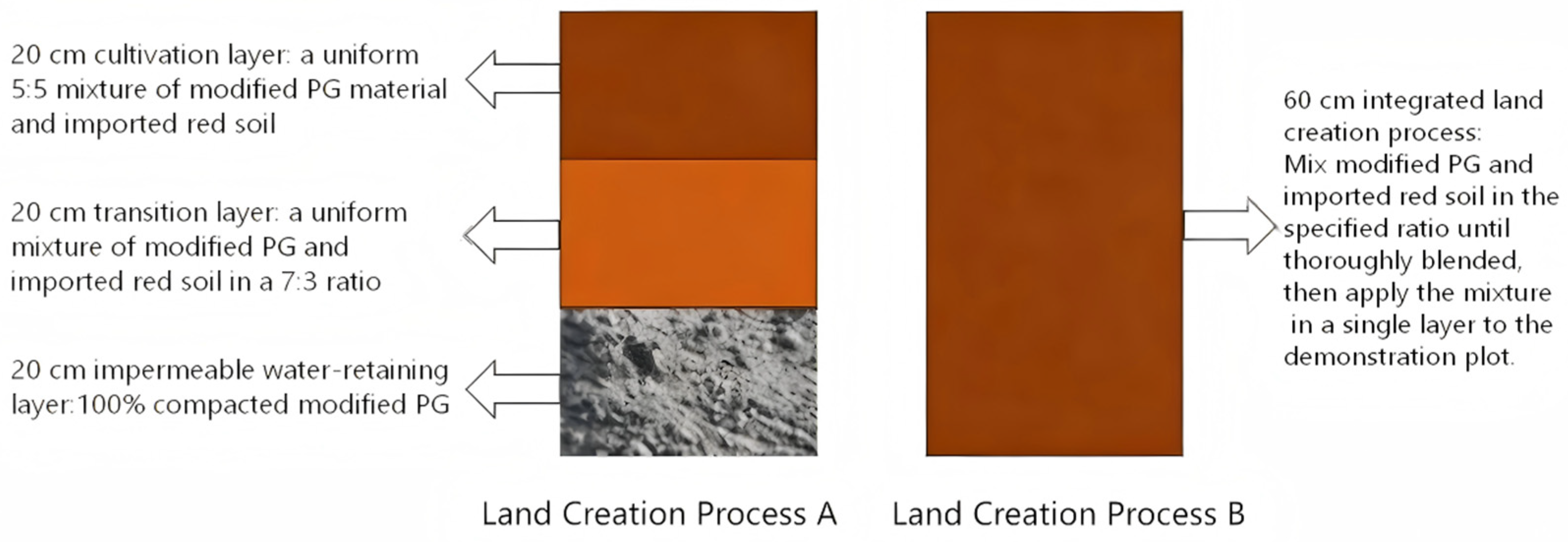
| GA | 323 | Layered Reconstruction Process A |
| GB | 300 | Integrated process B, PG:imported soil = 5:5 |
| Process | BD g·cm−3 | MC% | POR% | pH | EC μS·cm−1 |
|---|---|---|---|---|---|
| CK | 1.34 ± 0.026 a | 11.93 ± 0.69 b | 50.87 ± 0.43 a | 7.37 ± 0.13 a | 254.67 ± 21.45 b |
| GA | 1.2 ± 0.045 b | 13.34 ± 2.20 ab | 46.47 ± 2.36 a | 7.38 ± 0.2 a | 1798.00 ± 32.12 a |
| GB | 1.26 ± 0.079 ab | 15.96 ± 1.54 a | 49.81 ± 3.04 a | 7.43 ± 0.18 a | 1782.67 ± 98.98 a |
| Process | BD g·cm−3 | MC% | POR% | pH | EC μS·cm−1 |
|---|---|---|---|---|---|
| CK | 1.34 ± 0.025 a | 1.71 ± 0.233 c | 51.66 ± 0.78 a | 7.16 ± 0.07 a | 654.00 ± 62.43 b |
| GA | 1.27 ± 0.058 ab | 3.14 ± 0.128 a | 45.95 ± 2.51 a | 7.41 ± 0.37 a | 1925.33 ± 6.51 a |
| GB | 1.17 ± 0.053 b | 2.95 ± 0.198 b | 49.68 ± 1.84 a | 7.20 ± 0.05 a | 1876.00 ± 53.86 a |
| Process | H (cm) | ST (mm) | RL (cm) | TW (g) | B (g·plant−1) | NT (Piece) | Yield (t·ha−1) |
|---|---|---|---|---|---|---|---|
| CK | 38.00 ± 2.94 b | 7.89 ± 1.69 a | 14.00 ± 6.08 a | 55.33 ± 7.54 b | 115.82 ± 6.46 c | 5.00 ± 0.82 b | 16.60 ± 1232.88 b |
| GA | 54.00 ± 3.74 a | 8.02 ± 1.02 a | 19.33 ± 3.97 a | 65.69 ± 5.33 ab | 156.06 ± 4.84 b | 9.33 ± 1.25 a | 34.40 ± 1131.37 a |
| GB | 53.00 ± 2.45 a | 9.00 ± 1.16 a | 16.83 ± 3.62 a | 77.74 ± 11.04 a | 189.75 ± 13.91 a | 9.67 ± 2.62 a | 35.00 ± 1232.88 a |
| Avg | 48.33 | 8.30 | 16.72 | 66.25 | 153.88 | 8.33 | 28.67 |
| CV | 6.30% | 15.54% | 27.25% | 12.03% | 5.46% | 18.77% | 4.18% |
Disclaimer/Publisher’s Note: The statements, opinions and data contained in all publications are solely those of the individual author(s) and contributor(s) and not of MDPI and/or the editor(s). MDPI and/or the editor(s) disclaim responsibility for any injury to people or property resulting from any ideas, methods, instructions or products referred to in the content. |
© 2026 by the authors. Licensee MDPI, Basel, Switzerland. This article is an open access article distributed under the terms and conditions of the Creative Commons Attribution (CC BY) license.
Share and Cite
Wang, X.; He, J.; Li, Y.; Peng, X.; Yang, K.; Wang, L.; Zhu, S.; Bai, M.; Zhou, Y.; Zhang, N. The Effects of Two Land Creation Processes Using Modified Phosphogypsum on Soil Properties and Potato Yield and Quality. Agriculture 2026, 16, 989. https://doi.org/10.3390/agriculture16090989
Wang X, He J, Li Y, Peng X, Yang K, Wang L, Zhu S, Bai M, Zhou Y, Zhang N. The Effects of Two Land Creation Processes Using Modified Phosphogypsum on Soil Properties and Potato Yield and Quality. Agriculture. 2026; 16(9):989. https://doi.org/10.3390/agriculture16090989
Chicago/Turabian StyleWang, Xiang, Jianyang He, Yingmei Li, Xiuling Peng, Ke Yang, Lijuan Wang, Shundi Zhu, Muxi Bai, Yongxiang Zhou, and Naiming Zhang. 2026. "The Effects of Two Land Creation Processes Using Modified Phosphogypsum on Soil Properties and Potato Yield and Quality" Agriculture 16, no. 9: 989. https://doi.org/10.3390/agriculture16090989
APA StyleWang, X., He, J., Li, Y., Peng, X., Yang, K., Wang, L., Zhu, S., Bai, M., Zhou, Y., & Zhang, N. (2026). The Effects of Two Land Creation Processes Using Modified Phosphogypsum on Soil Properties and Potato Yield and Quality. Agriculture, 16(9), 989. https://doi.org/10.3390/agriculture16090989