Article

Simulation and Experiment of the Interaction Process Between Seeding and Soil-Engaging for Transverse Sugarcane Planter


College of Mechanical Engineering, Guangxi University, Nanning 530004, China
*
Author to whom correspondence should be addressed.
Agriculture 2026, 16(8), 853; https://doi.org/10.3390/agriculture16080853
Submission received: 17 March 2026 / Revised: 6 April 2026 / Accepted: 10 April 2026 / Published: 12 April 2026
(This article belongs to the Section Agricultural Technology)

Abstract

Uneven seed spacing, skewed stalk posture, and inconsistent planting depth remain major challenges in horizontal sugarcane planting. To address these issues, a semi-automatic transverse sugarcane planter integrating a supply–buffer–discharge seeder and multiple soil-engaging components was developed. The seed placement process and the interaction between stalk discharge and soil disturbance were investigated through Discrete Element Method (DEM) simulations and experiments. First, the working principle and key component parameters of the whole machine were determined. It integrated the processes of soil crushing, furrowing, seeding, ridge covering. In addition, a dynamic analysis was conducted on the inter-particle disengagement effect during the two-step seed filling process of lifting and discharging. Secondly, a discrete element simulation model for the entire process of soil-engaging seed arrangement operations was established for the machine. The effects of forward speed and seed outlet position were studied using a discrete element method (DEM) simulation model that coupled soil disturbance flow with stalk-seed discharge behaviour. Furthermore, a response surface methodology (RSM) experiment was performed on the seeding test bench to quantify the effects of guiding parameters on seed placement uniformity. The determination coefficient (R2) of the established regression model exceeded 0.9, indicating high prediction accuracy. The optimal collaborative parameter combination was optimized as follows: forward speed of 1.2 m·s−1, buffer inclination angle of 55°and supply roller speed of 26 r·min−1. After verification, the seed placement uniformity coefficient of the seeder reached 91.8 ± 1.4%, which met the expected accuracy requirements for horizontal planting.

1. Introduction

Sugarcane is a globally important sugar and cash crop, and its large-scale planting productivity is largely dependent on mechanized seeding technology. Currently, sugarcane planting predominantly utilizes disinfected, pre-cut dual-bud stalk segments selected through germplasm screening as seeds. These stalk segments are geometrically characterized by a high length-to-diameter ratio, which is markedly different from conventional small, quasi-spherical granular seeds [1,2,3]. Compared with traditional longitudinal planting, horizontal stalk planting exhibits stronger lodging resistance and tillering capacity while reducing seed consumption by more than 50% [4]. Accordingly, a horizontal planter must continuously and orderly convey large quantities of cane stalks. It discharges them in a metered manner through a conveying mechanism and synchronizes with furrowing, soil covering, and other soil-engaging operations to form continuous, row-oriented horizontal seedbeds [5]. However, during horizontal stalk metering and placement, seed placement uniformity and effective planting depth are highly sensitive to deviations in the lateral and vertical postures of the stalks [6,7]. In addition, missed or duplicate discharges can aggravate uneven plant spacing and ultimately reduce yield. Furthermore, horizontal planting requires furrows with a depth of approximately 25 cm and a width of at least 1.5 times the stalk length. The large volume of soil generated by such extensive excavation severely interferes with the positioning accuracy and posture stability of the falling rod-shaped seeds. These coupled effects of stalk motion and soil flow restrict the quality of seedbed formation. They impose higher requirements on seeder discharge accuracy, soil transfer and control capability of soil-engaging components, and coordination between subsystems.
Extensive studies have been conducted worldwide on the interaction between seeder and soil-engaging components in planters. In sugarcane planting, Su Wei et al. [8], Taghinezhad J et al. [9], and Saengpratanarug K et al. [10] investigated particle extraction and guiding mechanisms of seed-pin, vibratory, spoon-chain, and lifting-type metering devices, respectively. Choudhary et al. [11] and Hongmei et al. [12] employed genetic algorithms and particle swarm optimization, respectively, to optimize electromechanical control parameters related to operational conditions, thereby improving sowing uniformity. Regarding furrow opening and soil covering, Barr et al. [13], Milkevych et al. [14], Li et al. [14], and Ucgul et al. [15] et al. analyzed soil transport behaviour induced by different soil-engaging components using discrete element method (DEM) simulations and physical tracer techniques. Furthermore, Lu et al. [16] and Ma Fanglan et al. [17] elucidated particle motion characteristics during soil covering and seed metering processes by establishing interaction models between agricultural implements and soil or seed particles. These studies have systematically explored the operational procedures of planter seeding and soil-engaging operations and yielded valuable insights into metering principles and soil-implement interaction mechanisms. However, limited attention has been paid to the horizontal supply–discharge process of rod-shaped stalks and their dynamic interaction with soil flow during seed placement. Furthermore, a comprehensive simulation model covering the entire process of horizontal seedbed formation is still lacking, which directly restricts the accurate prediction of seed placement uniformity and operational stability.
To address these gaps, a semi-automatic horizontal sugarcane planter integrating a supply–buffer–discharge seeder with multiple soil-engaging components was designed and evaluated in this study. The interaction between the seeder and soil-engaging components during seed placement was investigated through a combined numerical simulation and experimental approach. Therefore, this study proposes a pre-cut-type horizontal combined sugarcane planter based on an agronomic–mechanical integrated design concept. The objectives of this study are as follows: (1) to design a coordinated supply–buffer–discharge seeding system; (2) to establish a stable seed placement mechanism; and (3) to evaluate the seed metering and discharge performance under different operating conditions.

2. Materials and Methods

2.1. Agronomic–Mechanical Design of the Seeder

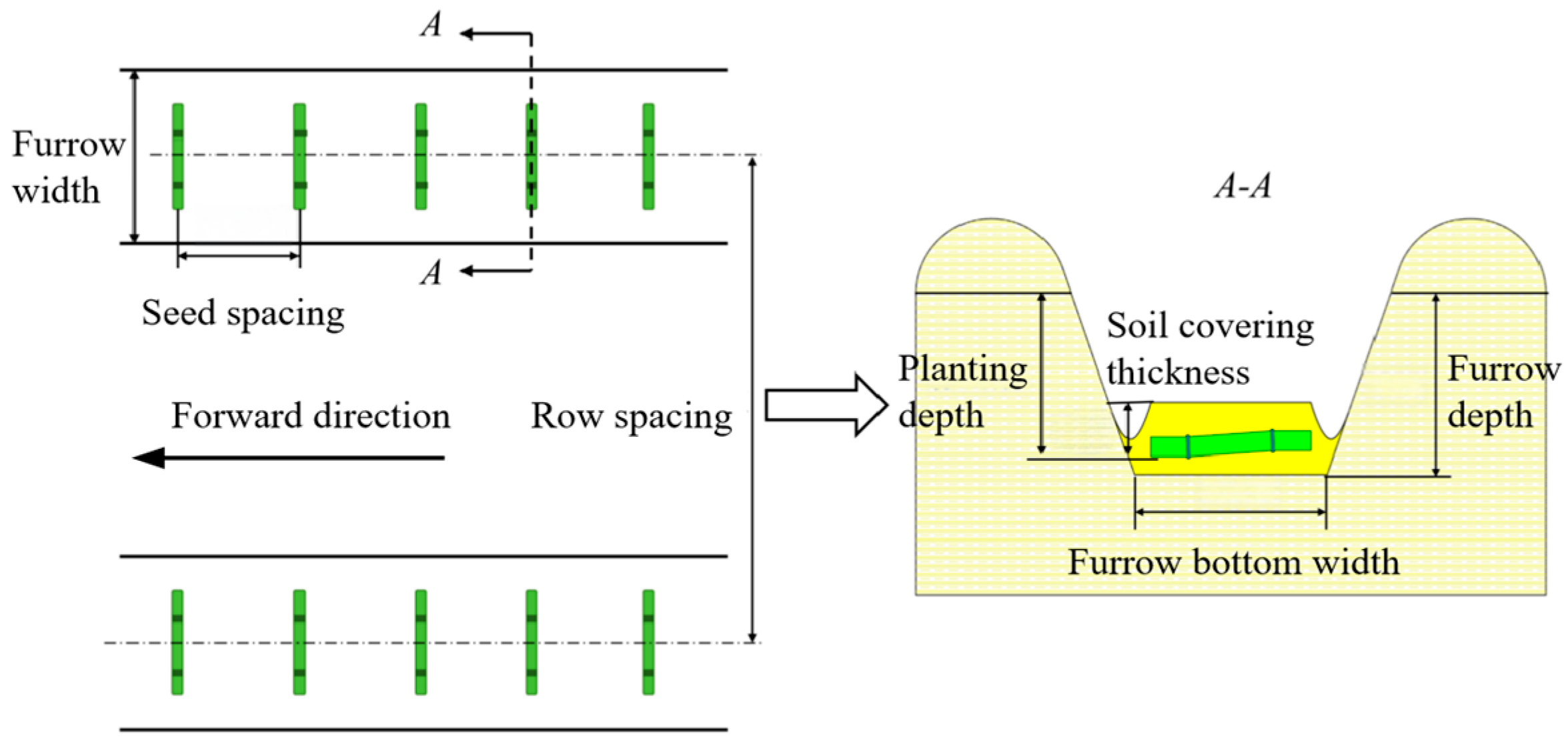
According to the agronomic requirements for horizontal planting of dual-bud sugarcane stalk segments, as illustrated in Figure 1, the “deep planting with shallow covering” method requires a planting depth of 20~28 cm to improve root anchorage and lodging resistance. The furrow bottom width must be at least 35 cm to exceed the maximum stalk length. A soil covering thickness of 5~8 cm is optimal for maintaining the positional and postural stability of the stalks. For wide-row planting, the row spacing is set at 1.4 m, with a seed placement spacing of 30~35 cm to ensure adequate yield and plant density.
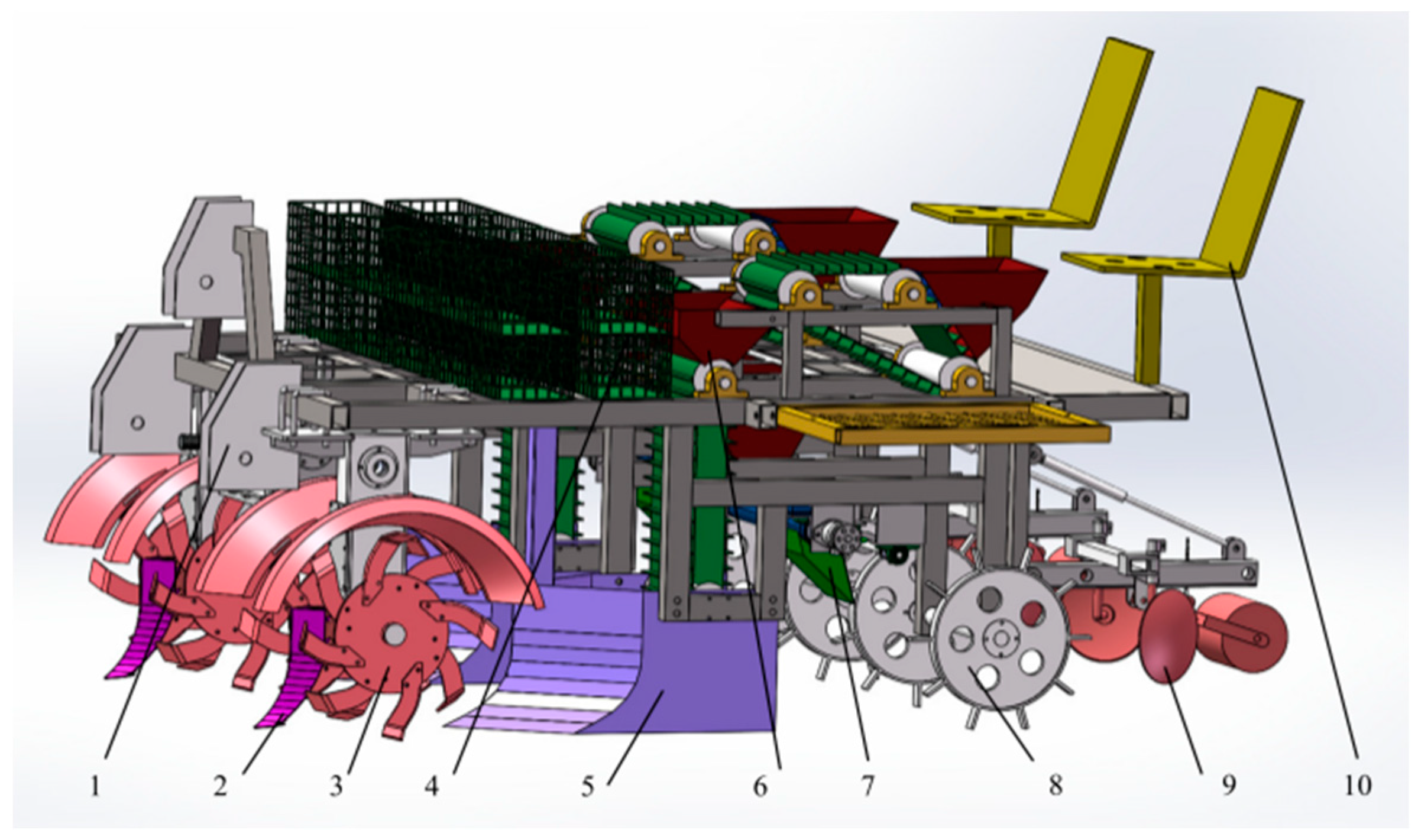
To achieve the above objectives, the assembly process is as follows. To integrally realize key field operations, including rotary tillage, furrow opening, seeding, fertilizing, soil covering, and pressing, the overall structure of the developed pre-cut-type horizontal combined sugarcane planter is illustrated in Figure 2. The machine was characterized by high semi-automatic reliability, a compact structural layout, and lightweight precision, making it suitable for hilly terrain and compatible with low- to medium-power tractors. Its primary functional assemblies consisted of a supply–buffer–discharge seeder and a soil-engaging mechanism. The mechanism was composed of multiple soil-engaging components. These assemblies, respectively, drive the stalk particle flow and the soil particle flow, enabling their coordinated interaction to form the seed furrow and, subsequently, the seedbed after soil covering.
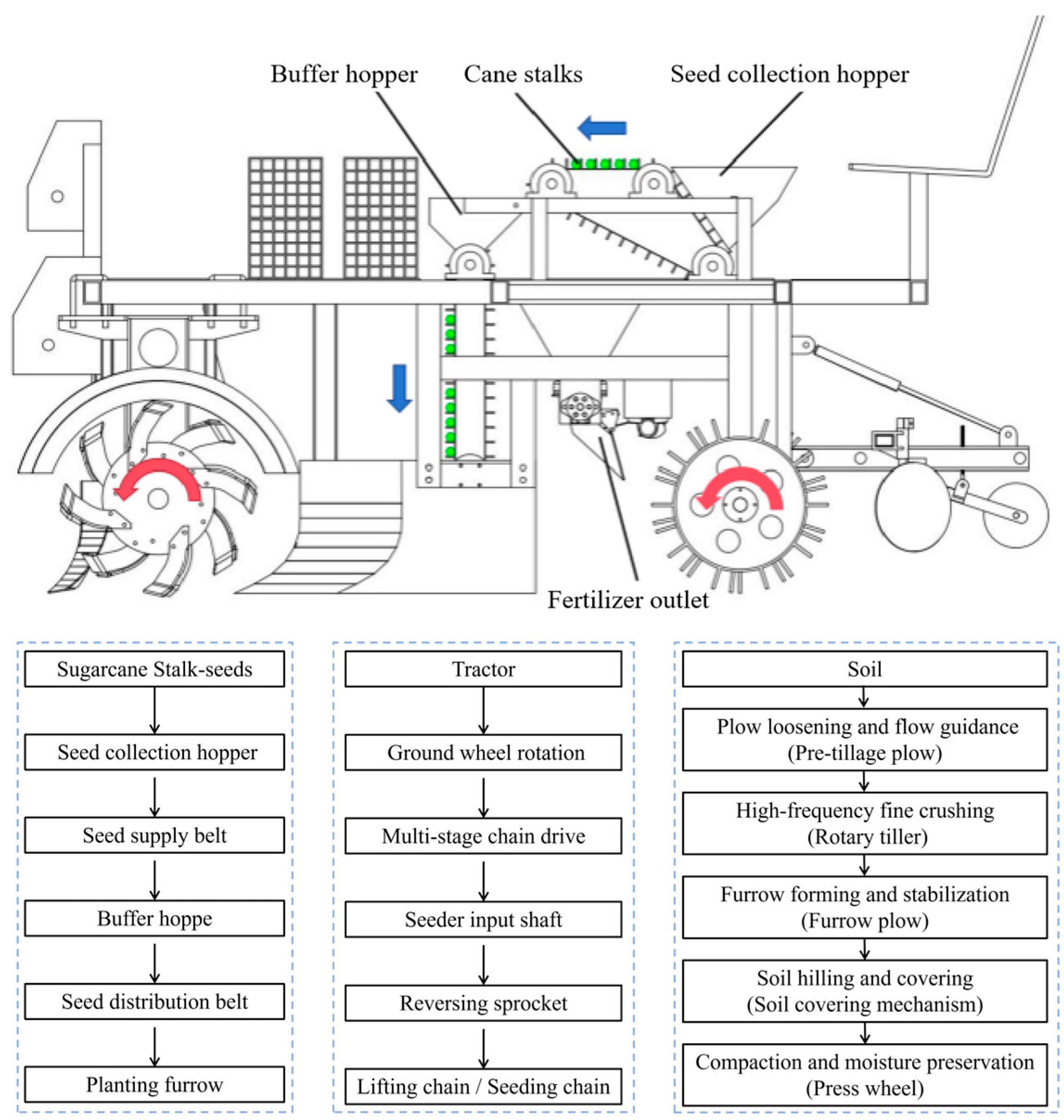
In the integrated farming process described above, the precision of the seeding stage directly affects the quality of sugarcane cultivation. The sugarcane horizontal planter is connected to the tractor via a three-point hitch and receives power from the tractor’s power output shaft. The transmitted power is delivered through a gearbox to drive the rotary tillage blade disc at a rotational speed of 300~500 r·min−1, generating high-frequency, high-torque cutting and crushing forces to break clay clods commonly found in South China. In conjunction with soil loosening by the front plough and soil gathering by the enveloping mudguard of the rotary tiller, the soil is repeatedly cut and fractured, thereby increasing soil particle fragmentation and improving seedbed conditions for germination [18,19]. Subsequently, the furrowing plough excavates two parallel seed furrows, while the side wing guard plates restrict immediate soil backflow, providing a stable furrow profile to accommodate horizontally placed stalk segments. Meanwhile, cane stalks are manually and orderly fed laterally into the seed collection hopper of the seeder. Driven cooperatively by dual motors, the front and rear conveyor belts execute orderly progressive seed supply and quantitatively spaced discharge, respectively, thereby achieving fixed-distance placement and orderly arrangement of stalks within the seed furrow. A ground wheel then drives the fertilizer applicator through a chain transmission system to achieve uniform fertilizer application. Finally, a soil covering mechanism pushes a controlled amount of soil onto the stalks, and a press roller consolidates the covering soil. As a result, the integrated seed placement process is continuously completed row by row, as shown in Figure 3, forming a seedbed that satisfies the agronomic requirement of “deep planting with shallow covering” with well-defined planting depth and stalk posture.
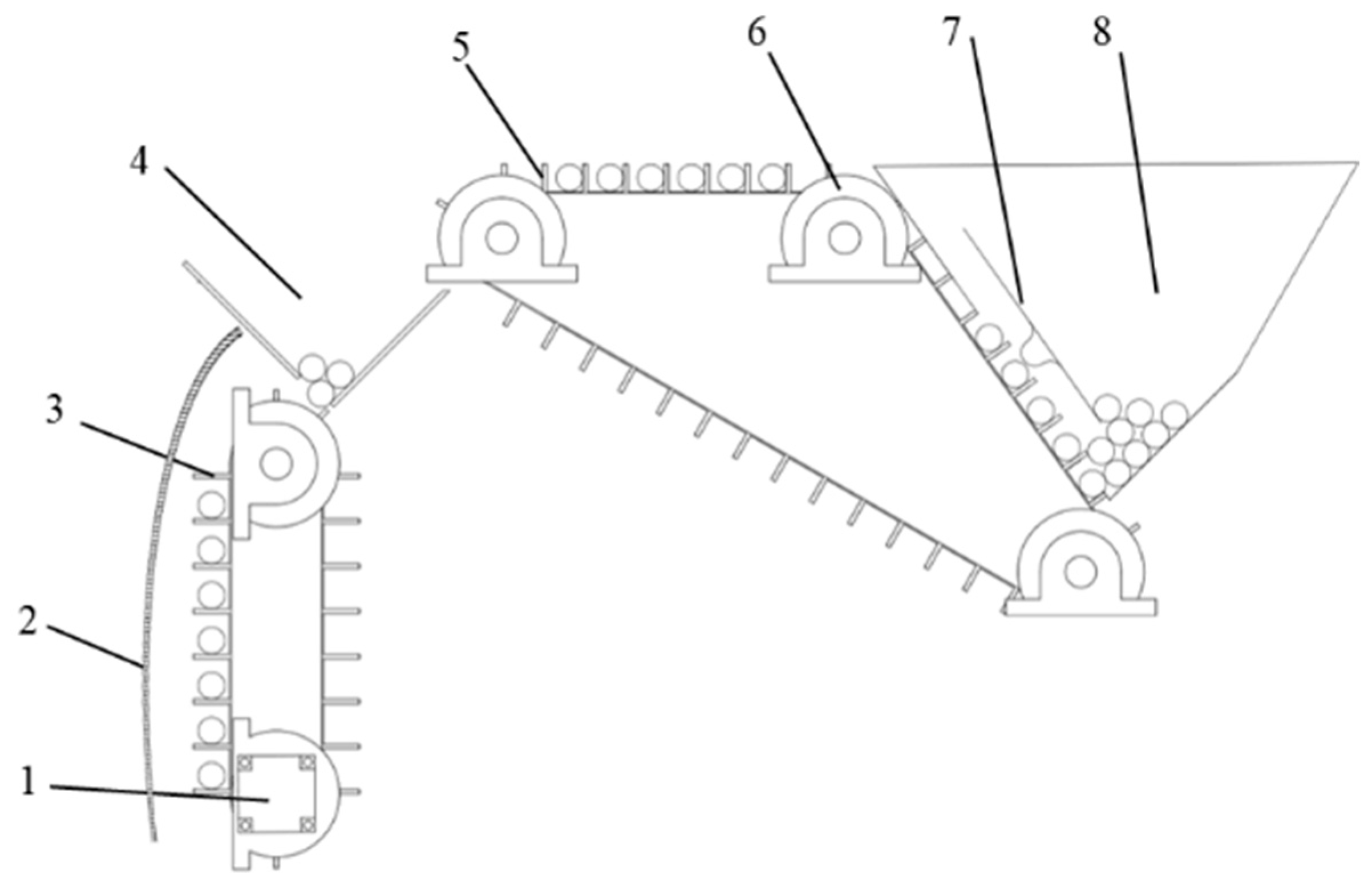
To achieve orderly seed supply and continuous quantitative discharge, the designed supply–buffer–discharge seeder primarily consists of a seed collection hopper, a supply belt conveyor, a buffer hopper, a discharge belt conveyor, and stepper motors (Figure 4). Initially, the cane stalks flow continuously into the grooves of the supply belt under the action of gravity. During conveyance, redundant seeds lifted by the belt fall back into the seed box due to their own weight and the constraints of elastic elements. This ensures that seeds are delivered to the buffer hopper in an orderly, laterally aligned state. To prevent miss-seeding caused by underfilled grooves on the supply belt, the V-shaped buffer hopper stores a specific quantity of seeds, allowing them to flow continuously and seamlessly into the discharge belt grooves. These seeds are then transported to the low-position outlet and discharged into the furrow. Since the discharge belt speed is contingent upon the forward travel speed and required seed spacing, the seeder synchronizes the supply and discharge processes by dynamically adjusting the speeds of the two-stage conveyors in real-time. This configuration also provides a compensatory filling capability, ensuring continuous and precise planting under varying agronomic requirements.
Regarding the seed groove design, statistical analysis of the pre-cut dual-bud “Zhongzhe No. 9” variety indicates a stalk length range of 23.6~31.8 cm. The furrow opener is mounted externally to the discharge belt. Given that its transverse space is highly positively correlated with furrowing resistance, the groove length was designed to be approximately 1.1 times the maximum stalk length, set at 35 cm. Considering the stalk diameter (2.8~3.3 cm) and inherent internodal curvature, the groove width and height were set to 5.0 cm and 3.0 cm, respectively, to facilitate single-stalk flow restriction and accommodate geometric variability.

2.2. Material Properties in Simulation

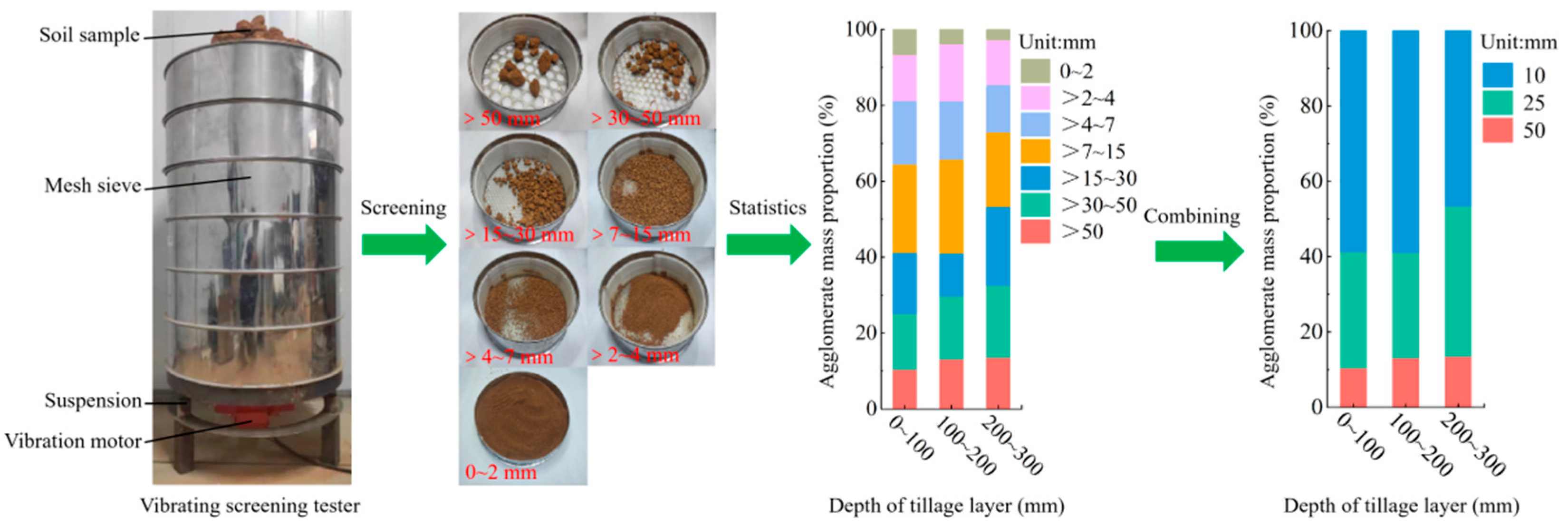
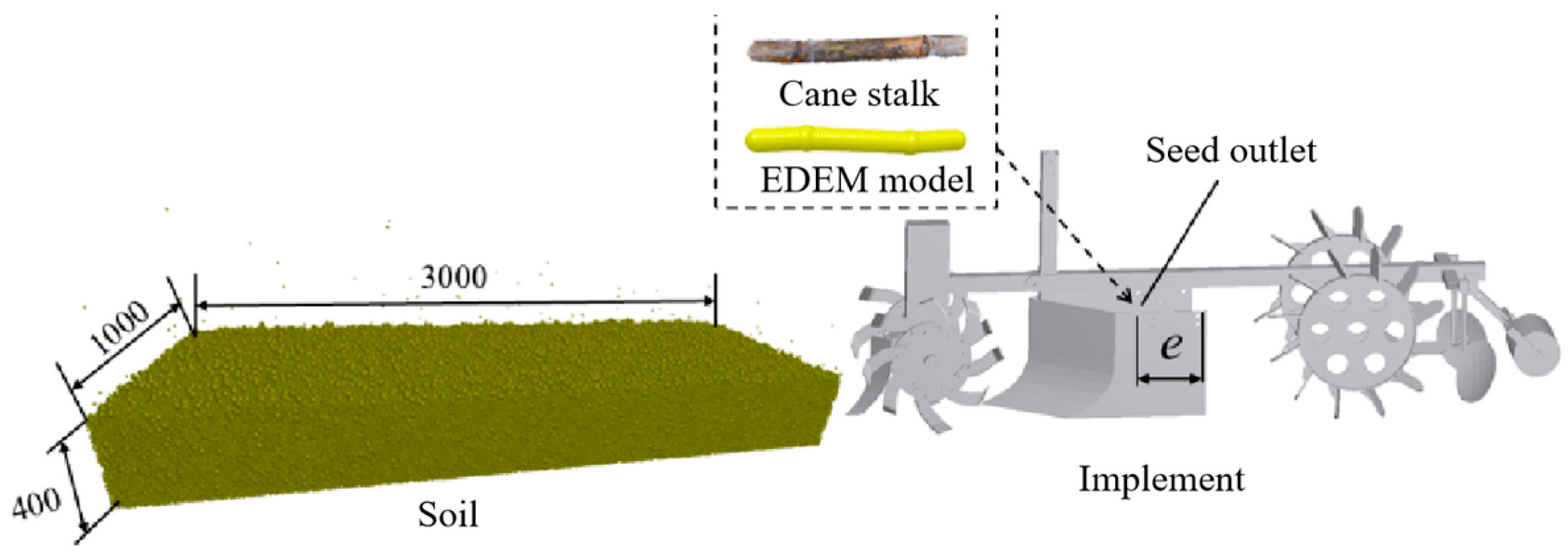
Lateritic clay soil is widely distributed across Guangxi, the primary sugarcane-producing region in China. Accordingly, the Hertz-Mindlin with JKR contact model, which effectively reflects the adhesive contact forces between particles, was selected to develop the discrete element model for the tillage layer [20]. Among the parameters, the soil surface energy is critical to the rheological behaviour of the clay. Its value was assigned based on the field-measured moisture content of 18 ± 1.9% typically found during the planting season (March~April), adopting the calibrated values from our group’s previous work. Soil particle size distribution (PSD) was determined via field sampling using the five-point method at three soil depths (0–200 mm, 200–300 mm, and 300–400 mm). The samples were sieved using a vibrating screen, and the mass proportions of different particle sizes were quantified. The measured PSD results are presented in Figure 5, which shows the proportions of 58.8%, 30.8%, and 10.4% for particles of 10 mm, 25 mm, and 50 mm, respectively [21,22]. Accordingly, corresponding quasi-spherical particles with diameters of 10 mm, 25 mm, and 50 mm were established in the discrete element model. The tillage layer was then constructed in EDEM software (Altair EDEM 2022) through mixed deposition and compaction, achieving a porosity close to the measured value of 55%, as shown in Figure 6. Other intrinsic soil parameters, as well as the contact parameters between soil particles, cane stalks, and the steel surfaces of the machine, were also based on measured values obtained through our group’s previous physical and mechanical tests [4,23,24]. These parameters are summarized in Table 1.
In addition, based on the measured geometric dimensions of dual-bud sugarcane stalk segments [23], rod-shaped stalk particles were randomly generated within length ranges of 25~30 cm, diameters of 2.5~3.5 cm, and internode bending angles of 5~9°, while incorporating characteristic node protrusions. Subsequently, all soil-engaging components of the combined planter were imported as rigid mechanisms into the discrete element model. Simultaneously, a seed discharge outlet (with a low-position seeding height of 32 cm), capable of intermittently generating stalk particles and controlling the discharge rate, was bound to the inner side of the furrowing plough. This established the interaction relationships between the implement, the cultivated layer soil particles, and the horizontally arranged sugarcane stalk particles, as shown in Figure 6. This setup enabled the simulation of the full-process seed placement operation, encompassing soil crushing, furrowing, seeding, and ridge covering. Furthermore, to mitigate the rigid wall effects of the side boundaries on the disturbance field while considering computational constraints, the width of the cultivated layer was set to 2.5 times the operating width of the implement.

2.3. Evaluation Metrics

Given that seedbed construction is completed through the interaction between the seeder and the soil-engaging mechanisms, the forward speed of the implement and the relative position of the seed discharge outlet (e, as defined in Figure 6) were selected as experimental factors to investigate the interaction between the downward stalk particle flow and the disturbed soil particle flow. This approach considers the parameter dependence of particle lateral transfer and backflow effects. A virtual orthogonal experiment was conducted to study the influence of these factors on the seed placement process and planting quality, with the levels for each factor set as shown in Table 2. During the simulation, the tillage depth and rotary tillage speed were maintained at constant values of 30 cm and 200 r·min−1, respectively. The linear velocity of the ground wheel rotation was set equal to the forward speed, and the seed discharge rate (νd, in pcs·s−1) was determined according to Equation (1). To enhance simulation accuracy, the mesh size was set to three times the minimum particle radius, and the Rayleigh time step was set to 20% [25].
v d = v f / S
where S is the required horizontal seed spacing, taken as the agronomically expected value of 33 cm.
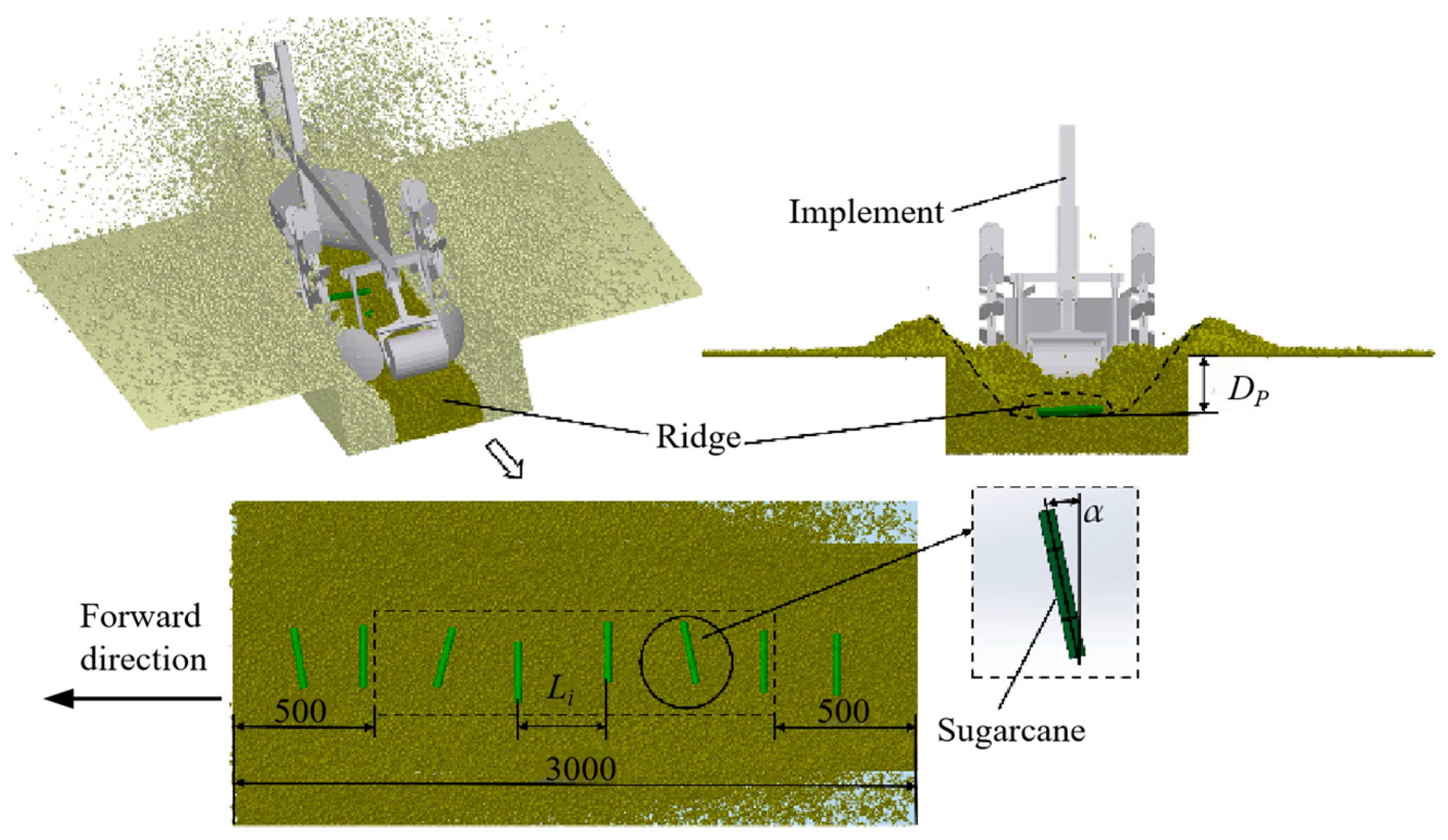
The measurement indicators for the horizontal seed placement effect were determined as the inter-seed uniformity coefficient (Uc), the lateral posture deviation angle (α), and the planting depth (Dp). These indicators comprehensively evaluate seedbed quality based on agronomic requirements for planting uniformity, directionality, and burial depth, as shown in Figure 7. The inter-seed uniformity coefficient for the stable seed placement region is calculated as follows:
L i = l i + 1 l i
L a v = 1 n i = 1 n L i
U c = 1 1 n i = 1 n L i L a v 2 / L a v × 100 %
where i is the seed stalk numbered in the order of discharge within the stable region; li is the position coordinate of the i-th stalk along the forward direction; Li is the horizontal spacing between the (i + 1)-th and i-th stalks; Lav is the average seed spacing.

2.4. Testing Bench and Method

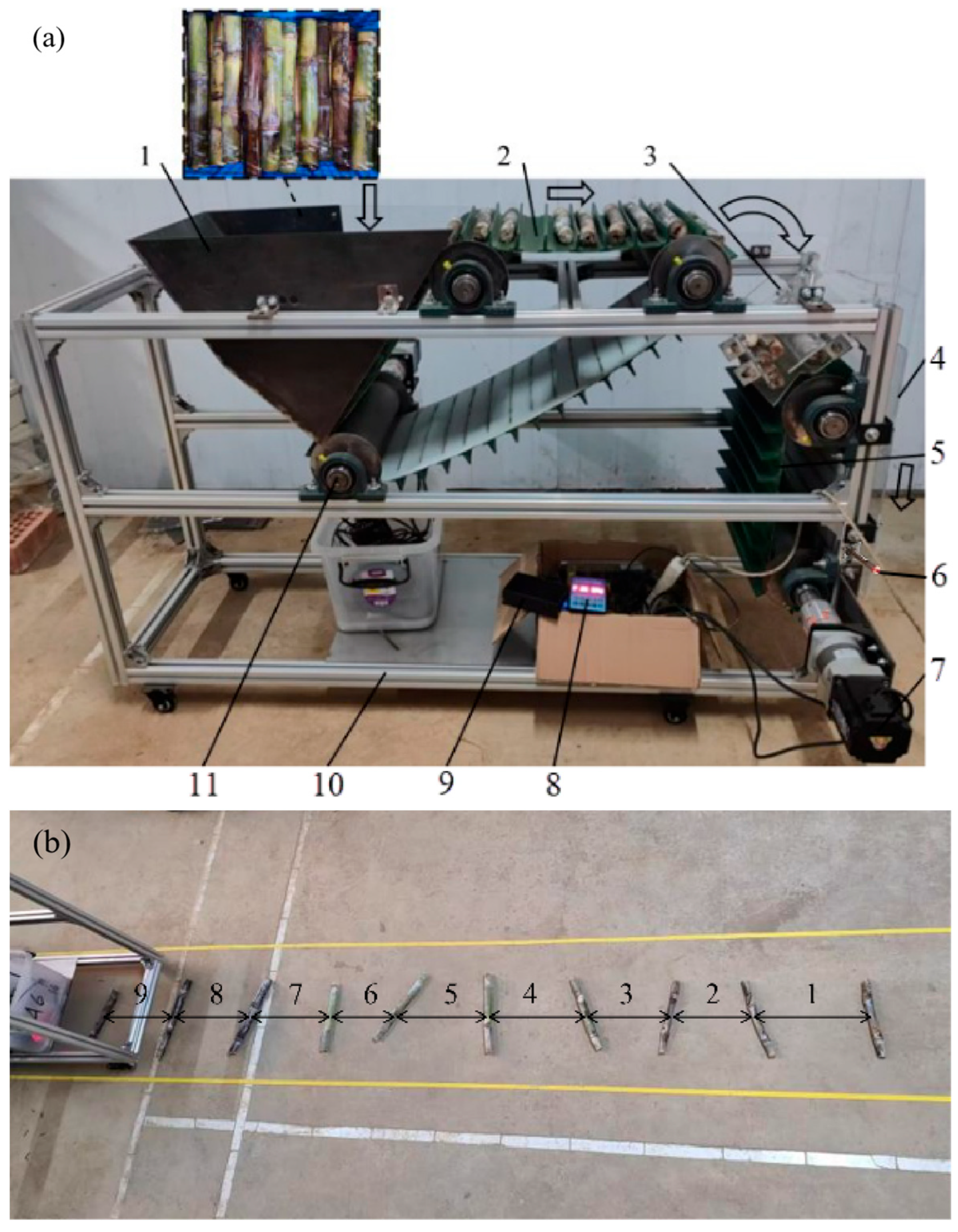
Given that the state of generated descending stalks in the interactive seed placement simulation model did not account for the actual performance output of the seeder, a response surface methodology experiment was conducted using a developed supply–buffer–discharge seeder test bench with pre-cut dual-bud stalk segments of the “Zhongzhe No. 9” variety. This experiment investigated the influence of the supply–buffer–discharge seeder’s guiding parameters on discharge uniformity, as shown in Figure 8. Based on the kinetic analysis of the seeding process, the buffer inclination angle was selected as the main structural parameter, with a feasible range of 45°~60° determined through preliminary tests. The operational parameters included the forward speed and the supply roller speed, which collectively affected filling quality and efficiency. The forward speed was matched to the discharge belt speed to reflect various field operating conditions ranging from 0.6 to 1.2 m·s−1. Based on discharge belt requirements and permissible buffer capacity, the supply roller speed was set between 25 and 28 r·min−1. All parameter adjustments were controlled by a unit driving the stepper motors. To mitigate the impact of missed discharge, a photoelectric sensor was installed at the discharge outlet. When an under-filling signal was detected in a groove, a microcontroller program output a pulse signal to accelerate the discharge roller rotation by 100% until the filling signal was restored. The performance evaluation focused on the uniformity coefficient of the seeder, calculated by measuring the horizontal spacing according to Equation (4). The average values from three repeated tests were recorded. The response surface experimental matrix was presented in Table 3.

3. Results and Discussion

3.1. Mechanism and Force Analysis of Seed Filling Process

A large quantity of horizontally oriented cane stalks manually placed initially existed in a state of continuous contact. Subsequently, quantitative particle discretization and sorting effects occur during the lifting–supply stage and the buffer–discharge stage, respectively. The force analysis of the composite seeding operation involving both lifting–filling and downward-filling is as follows:
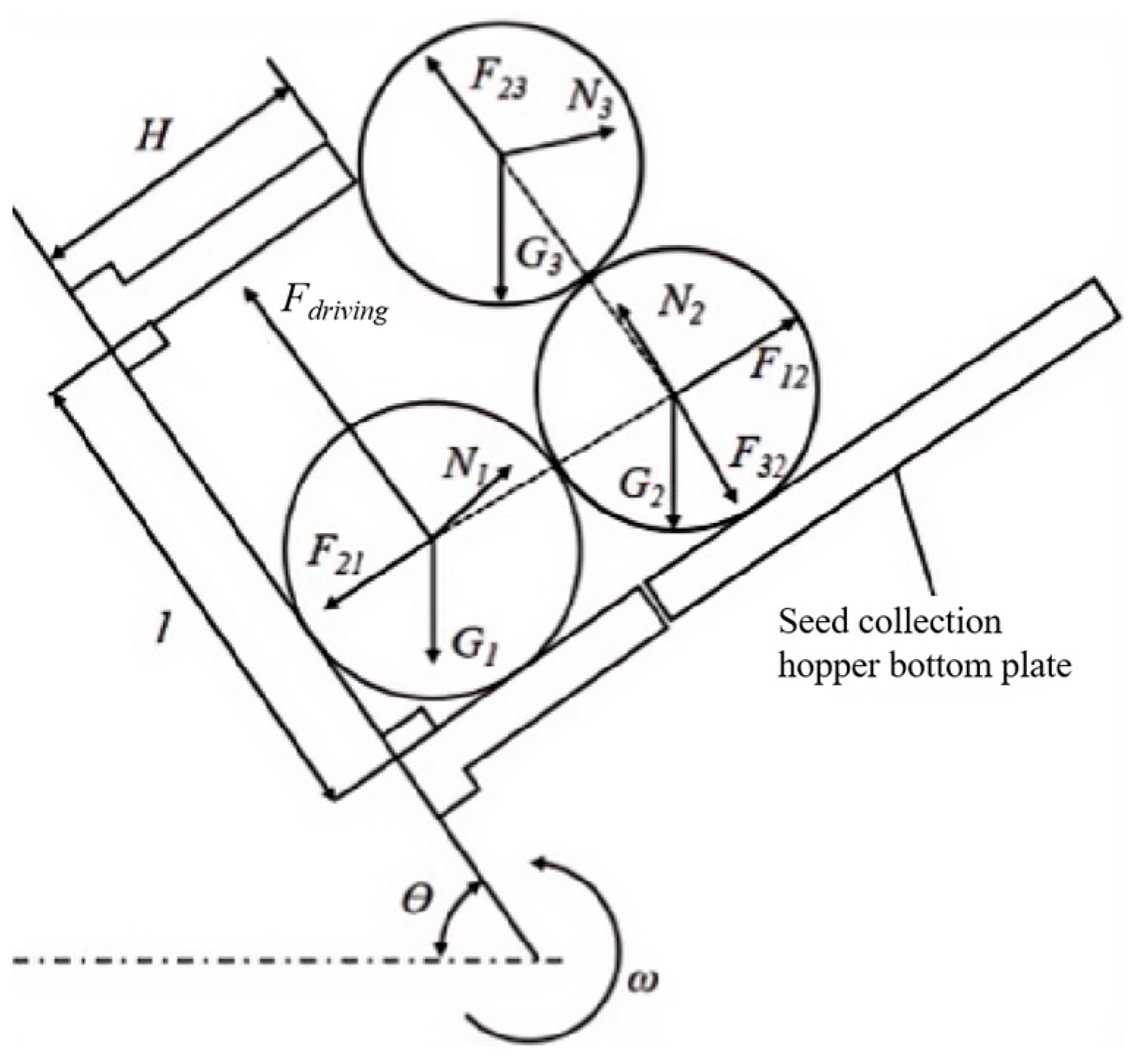
According to the lifting–filling force diagram in Figure 9, the cane stalks, driven by the tangential component of gravity decomposed from their weight, continuously slide from the bottom plate of the seed collection hopper into the seed grooves in sequence. They are then driven by the lifting force of the groove wall, gradually losing contact with other seeds. Stalks that are not yet filled remain in a state of quasi-static equilibrium, simultaneously constrained in position by both the groove space and the overlying elastic elements, thereby achieving laterally aligned and orderly conveyance of the rod-shaped particles.
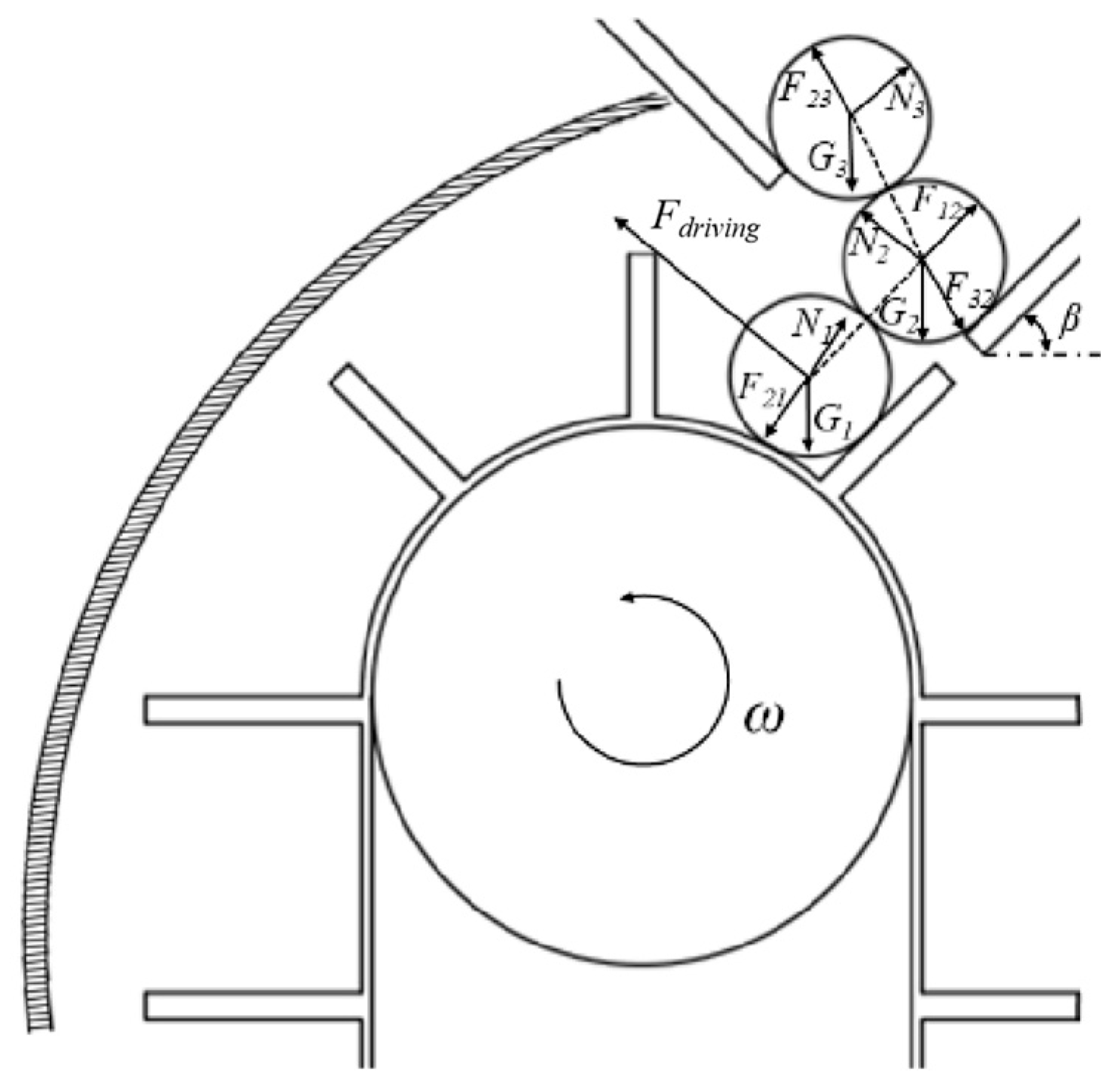
According to the downward-filling force diagram in Figure 10, cane stalks within the V-shaped buffer hopper flow individually into the grooves of the discharge belt under gravity. They are then driven by the rotational force of the groove wall, gradually separating from other seeds. Particles awaiting filling that have not yet slid down remain in a state of quasi-static equilibrium, simultaneously subject to the single-stalk cross-sectional flow restriction of the V-shaped hopper outlet. This enables the selective discharge of rod-shaped particles in a state of continuous, single-file alignment.
The theoretical analysis further revealed that the supply roller speed ω and the buffer inclination angle β are the primary parameters influencing the lifting driving force and the downward-filling driving force, respectively. Together, they determine the quality and efficiency of the two-stage filling process during seeding.

3.2. Simulation Results and Analysis of Soil–Seed Interaction

The analysis of the interactive simulation effects during the soil-engaging seed placement operation is presented in Table 4, encompassing the full-process sequence including soil crushing, furrowing, seeding, and ridge covering. The simulation reveals that the combined action of the soil-lifting flow from the front plough, the rear-throwing flow from the rotary tiller, and the furrow-clearing flow from the furrowing plough excavates a near-rectangular seed furrow in real-time, approximately 300 mm deep and 400 mm wide. This demonstrates an accommodation capacity for falling stalks of varying lengths. However, a significant soil particle backflow effect associated with the larger furrow profile causes this rectangular space to rapidly assume a V-shaped contraction. This contraction interacts with seeds that have not yet settled at the furrow bottom, creating interfering contacts that adversely affect the lateral placement posture and effective burial depth of the stalks. Subsequently, the ground wheels push and press a small amount of soil against both ends of the stalks, relatively fixing their position and posture. This provides the beneficial effect of preventing stalk displacement otherwise caused by the forward pushing action of the soil-covering mechanism. Finally, the “deep planting with shallow covering” seedbed is established through backfilling by the ridging discs and consolidation by the press roller. The simulation results confirm that the designed planter achieves effective seed placement through the interaction of multiple mechanisms and elucidates the principles of the integrated continuous process, which are difficult to observe effectively in physical experiments [26,27,28].
The range analysis of the experimental results is shown in Table 5. The primary and secondary factors affecting the inter-seed uniformity coefficient (Uc) are the forward speed (νf) and the relative position of the seed discharge outlet (e), respectively. Uc primarily increases with higher νf, which is attributed to a reduction in the impact from soil backflow observed in the simulations. For the lateral posture deviation angle (α), the primary and secondary factors are e and νf, respectively. α increases as e is positioned further rearward, because the shielding effect of the furrowing plough against backflowing soil diminishes, leading to increased impact and consequent skewing of the cane stalks. The primary and secondary factors affecting the planting depth (Dp) are also e and νf, respectively, showing an influence trend similar to that of α. Based on this comprehensive analysis, a parameter combination of a forward speed of 1.2 m·s−1 and a seed outlet position 215 mm from the rear end of the furrowing plough was selected, as it achieved the best consistency across multiple seed placement performance indicators.

3.3. Experimental Results and Parameter Optimization of Seeding Performance

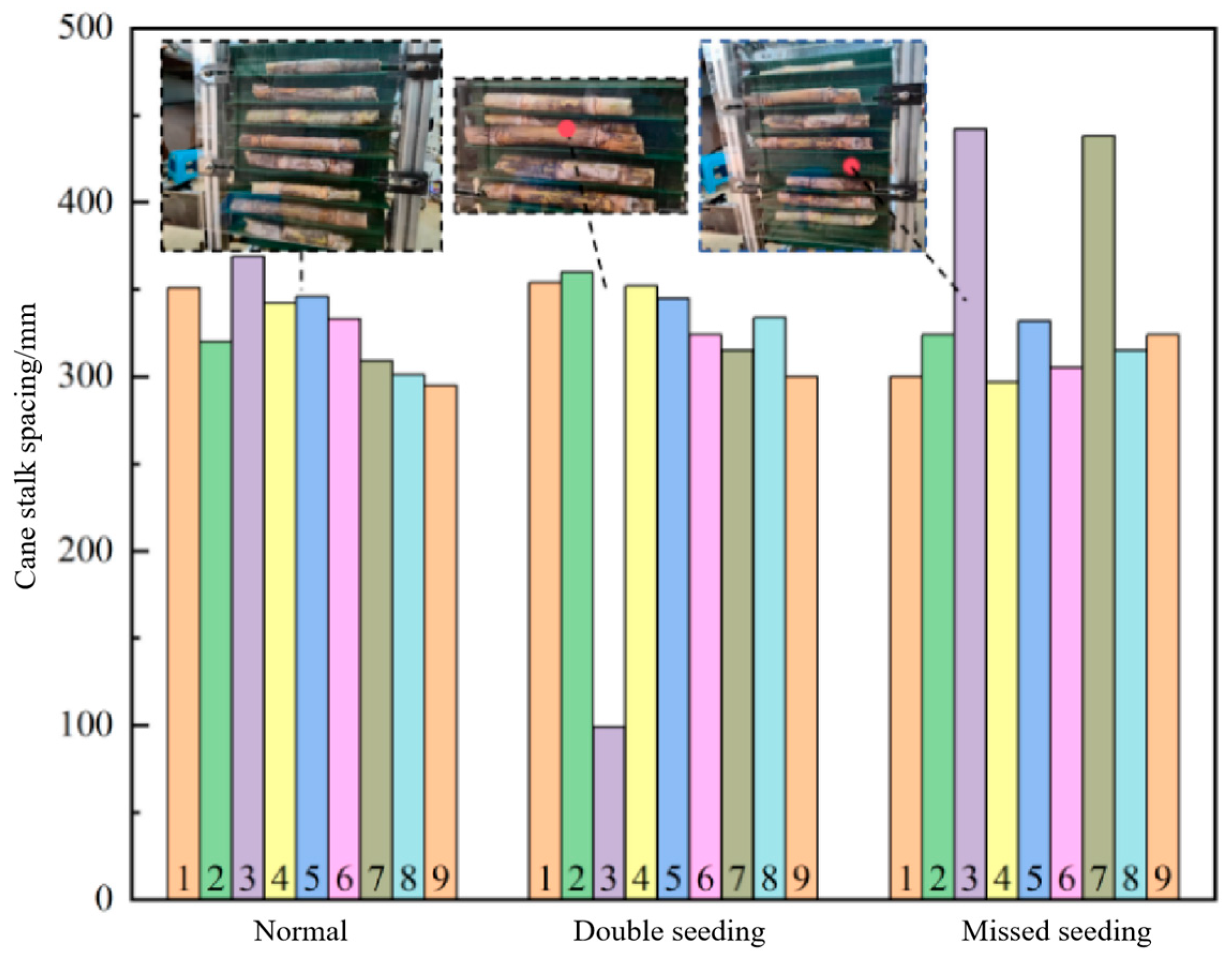
The spacing distribution of horizontally placed sugarcane stalks is shown in Figure 11. The results indicated that under normal continuous seeding operations, the seed spacing ranges from 29.8 to 36.4 cm. The deviation from the standard spacing of 33 cm is within ±10.3%, demonstrating the potential of the supply–buffer–discharge seeding principle for high-precision seed placement. However, occasional overfilling and underfilling of the discharge grooves lead to double seeding and missed seeding, respectively, causing fluctuations in individual seed spacings. These fluctuations can reach maximum deviations of −69.7% and +31.8% from the standard value, thereby affecting the average seeding uniformity under continuous operation.
A Box–Behnken experimental design (BBD) with three factors and three levels was adopted in this study. This experimental design provided a reasonable basis for the subsequent analysis of variance (ANOVA) to evaluate the significance of model and factors. The ANOVA results for the measured uniformity coefficient (Uc), as shown in Table 6, revealed that the regression model was highly significant. All three experimental factors significantly affect the seed discharge uniformity coefficient. The order of their primary influence is A > B > C. This ranking was determined based on the F-values from the ANOVA results (Table 6), where a higher F-values indicates a more significant influence of the factor on the inter-seed uniformity coefficient Uc. Forward speed exerts the most significant disturbance on the stability of cane stalk particle transport by directly controlling the motion synchronization between planter travel and seed discharge. Secondly, the buffer inclination angle regulates the continuous and smooth inflow of cane stalks into the discharge grooves, and its rational design directly determines the filling quality of the discharge grooves, serving as a key structural factor affecting seeding performance. Finally, although the seed-lifting supply stage mainly functions to discretize cane stalk particles, the discretization effect is effectively suppressed by the seeder’s elastic constraint and gravity reflux design, which greatly reduces its adverse impact on seeding stability; thus, the supply roller speed has a relatively minor influence on the final seeding output.
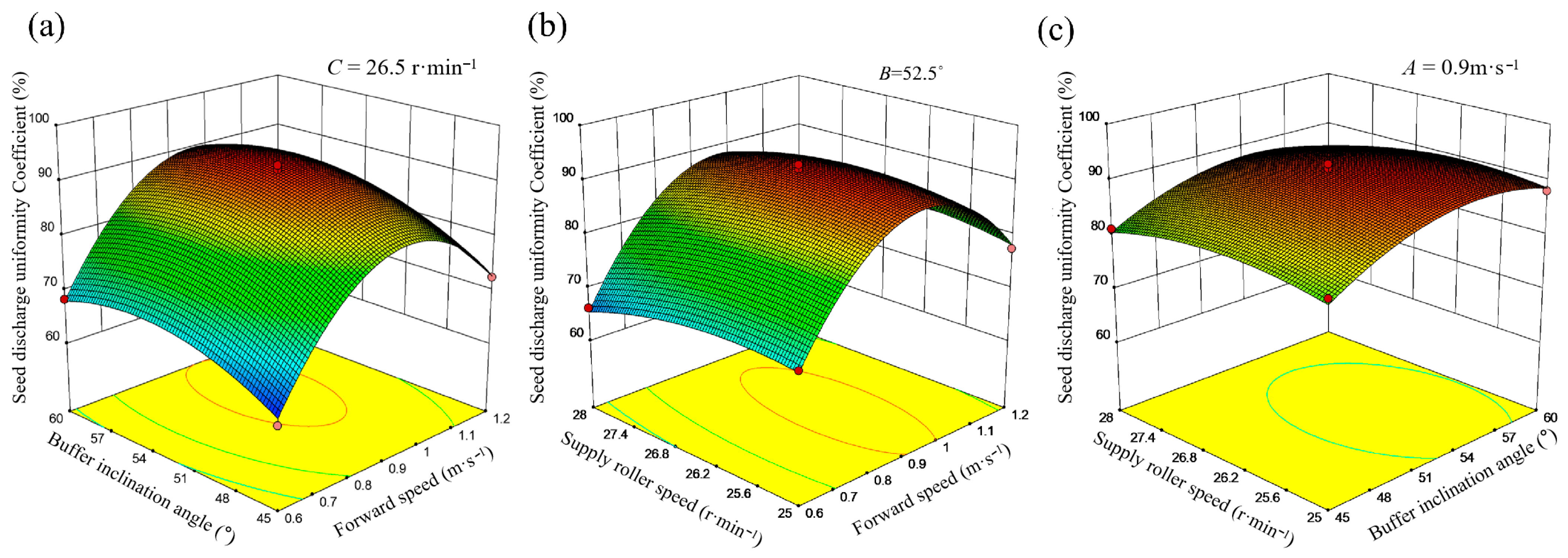
The response surfaces illustrating the interaction effects of the seeder’s structural and operational factors on the discharge uniformity coefficient are shown in Figure 12. The peak response values for all factors are located near intermediate levels, suggesting that the parameter ranges were selected reasonably. The evident gradients across the surfaces imply that optimal discharge performance exists within a relatively narrow configuration window. Consequently, a surrogate model combined with a single-objective genetic algorithm was employed to optimize these effects. After removing non-significant terms, the developed approximate model is expressed in Equation (5). The coefficient of determination R2 for this model exceeds 0.9, indicating high approximation accuracy for discharge performance.
U c = 91.52 + 5.26 A + 2.90 B 1.1 C 15.91 A 2 4.89 B 2 2.56 C 2
The optimization of the seeder’s discharge performance must also consider the subsequent interactive soil-engaging seed placement process. Therefore, using the optimal forward speed of 1.2 m·s−1 obtained in Section 3.3 as a fixed condition, the optimization problem was defined as follows:
max U c A , B , C s . t . A = 1.2 45 B 60 25 C 28
The optimal parameter set obtained using the genetic algorithm includes a buffer inclination angle of 55° and a supply roller speed of 26 r·min−1, with a predicted discharge uniformity coefficient of 92.5%. To validate these results, the seeder’s configuration was adjusted to this optimal collaborative combination. The measured inter-seed uniformity coefficient from three repeated tests was 91.8 ± 1.4%, which meets the expected accuracy requirement of being greater than 90% for the horizontal planting of dual-bud stalk segments. This effectively improves the precision of mechanical seeding for horizontal sugarcane planting, directly reducing sugarcane seed stalk waste and enhancing the uniformity of seedling emergence, which is the core guarantee for high and stable sugarcane yields. The measured discharge uniformity coefficient of 91.8 ± 1.4% agrees well with the predicted value of 92.5%, with only a small discrepancy. This slight difference is mainly caused by idealized simulation conditions and minor experimental disturbances, which validates the accuracy of the prediction model and optimization method. In summary, regarding the issues of directional conveying and precise arrangement of sugarcane stalk-seeds in horizontal planting, the structural collaborative optimization of the supply–buffer–discharge seeder provides a reliable technical approach for the efficient horizontal sowing of double-bud stalk-seeds.

4. Conclusions

(1)
To address the quality issues related to uneven seedbed formation in horizontal sugarcane planting, a combined planter integrating a supply–buffer–discharge seeder with a multi-component soil-engaging mechanism was designed. This machine could continuously and integrally complete the processes of soil crushing, furrowing, seeding, ridge covering. Based on the determined key component parameters, a force analysis was conducted, which revealed the sorting behaviour and underlying patterns of particle discretization during the two-stage seed filling (lifting and discharging) within the seeding process.
(2)
A discrete element simulation model for the full-process soil-engaging seed placement operation of the implement was established. This model was used to study the interaction between the soil disturbance flow and the descending stalk flow. The virtual experiment results indicate that interference between the soil particle backflow effect from the large furrow profile and the falling seeds compromises the seed placement posture and effective burial depth. Conversely, the ground wheel’s pushing and pressing action provides a beneficial effect by preventing the displacement and posture shifting of the stalks. The effectiveness of the interactive seed placement principle among multiple mechanisms was confirmed. Furthermore, the comprehensive effects of forward speed and the relative position of the seed discharge outlet on inter-seed uniformity, lateral posture deviation, and effective planting depth were analyzed.
(3)
Through response surface methodology experiments conducted on the supply–buffer–discharge seeder test bench, the disturbance patterns of operating conditions on particle transport stability were revealed, specifically that transport stability decreases with increasing forward speed and supply roller speed, while it first increases and then decreases with increasing buffer inclination angle. Furthermore, the buffer inclination angle was identified as a key factor governing the filling quality of the discharge belt grooves. Based on these findings, the optimal collaborative flow-guiding parameter combination was obtained: a forward speed of 1.2 m·s−1, a buffer inclination angle of 55°, and a supply roller speed of 26 r·min−1. Validation tests confirmed a measured seed discharge uniformity coefficient of 91.8 ± 1.4%, which meets the expected accuracy requirement for the horizontal planting of dual-bud stalk segments.

Author Contributions

Conceptualization, B.Z.; methodology, B.Z. and D.P.; software, D.P. and Q.L.; validation, Q.L. and W.S.; investigation, W.S. and G.L.; writing—original draft preparation, B.Z.; writing—review and editing, B.Z. and D.P.; funding acquisition, B.Z. All authors have read and agreed to the published version of the manuscript.

Funding

This research was funded by the Guangxi Natural Science Foundation Project (Grant No.: 2026GXNSFBA00640433).

Institutional Review Board Statement

Not applicable.

Data Availability Statement

The original contributions presented in this study are included in the article. Further inquiries can be directed to the corresponding author.

Conflicts of Interest

The authors declare no conflicts of interest.

References

  1. Dai, F.; Pan, H.; Zhou, W.; Tang, H.; Wang, Q.; Li, W.; Wang, J. Analysis of Maize Planting Mode and Simulation and Optimization of Ridging and Fertilization Components in Arid Area of Northwest China. Agriculture 2024, 14, 1360. [Google Scholar] [CrossRef]
  2. Xie, J.; Zhang, H.; Feng, H.; Huang, W.R.; Jin, J.Y.; Ma, W.B. Design and Experiment of Friction Adjustable Precision Seed Feeder Device for Wheat Experimental Sowing. Nongye Jixie Xuebao/Trans. Chin. Soc. Agric. Mach. 2025, 56, 164–173. [Google Scholar]
  3. Konzett, M.; Strauss, P.; Schmaltz, E.M. The Not-so-Micro Effects of in-Furrow Micro-Dams and Cover Crops on Water and Sediment Retention in Potato Fields. Soil. Tillage Res. 2024, 235, 105911. [Google Scholar] [CrossRef]
  4. Li, S.; Pan, J.; Zhong, J.; Huang, Z.X.; Gan, F.F. Design and Experiment of Furrow Opener for Transversal Sugarcane Planter Based on Effective Seeding Space. Nongye Jixie Xuebao/Trans. Chin. Soc. Agric. Mach. 2022, 53, 162–170. [Google Scholar]
  5. He, Y.; Wu, F.; Li, S.; Liu, T.X.; Yu, Y.F.; Deng, Z.L. Design and Test of Replenishment System for Sugarcane Horizontal Planter. Nongye Jixie Xuebao/Trans. Chin. Soc. Agric. Mach. 2020, 51, 94–102+138. [Google Scholar]
  6. Wu, C.; Feng, J.; Huang, V.; Che, Y.; Xia, M. Analysis on the situation and proposal of sugarcane mechanization. Sugarcane Canesugar 2021, 50, 11–15. (In Chinese) [Google Scholar]
  7. Lu, G.; Wang, S.; Lian, Y.; Wei, Y. Development and utiliazation of sugarcane by-products in the sugar manufacturing process. Sugar Crops China 2020, 42, 75–80. (In Chinese) [Google Scholar]
  8. Su, W.; Hong, F.; Lai, Q.; Jia, G.X.; Chen, Z.W. Design and Test of Pre-cutting and Spoon Seed-metering Device for Sugarcane. Trans. Chin. Soc. Agric. Mach. 2020, 51, 87–97. (In Chinese) [Google Scholar]
  9. Taghinezhad, J.; Alimardani, R.; Jafari, A. Design, Development and Evaluation of a New Mechanism for Sugarcane Metering Device Using Analytical Hierarchy Method and Response Surface Methodology. Sugar Tech 2015, 17, 258–265. [Google Scholar] [CrossRef]
  10. Saengprachatanarug, K.; Chaloemthoi, C.; Kamwilaisak, K.; Kasemsiri, P.; Chaun-Udom, S.; Taira, E. Effect of Metering Device Arrangement to Discharge Consistency of Sugarcane Billet Planter. Eng. Agric. Environ. Food 2018, 11, 139–144. [Google Scholar] [CrossRef]
  11. Choudhary, V.; Machavaram, R.; Patidar, P.; Singh, G.; Singh, N.; Kumawat, L. Assessment of Sensor Driven Automatic Smart Soil and Paddy Seed Metering Mechanisms Using Artificial Intelligence for Paddy Nurseries. Smart Agric. Technol. 2025, 10, 100831. [Google Scholar] [CrossRef]
  12. Xia, H.; Liu, Y.; Zhao, K.; Jiang, L.; He, Z.; Gu, S. A Novel Sowing Operation Parameter Learning Optimization Method Using Dataset of Sown Seeds with Similar Properties. Comput. Electron. Agric. 2022, 201, 107293. [Google Scholar] [CrossRef]
  13. Barr, J.B.; Ucgul, M.; Desbiolles, J.M.A.; Fielke, J.M. Simulating the Effect of Rake Angle on Narrow Opener Performance with the Discrete Element Method. Biosyst. Eng. 2018, 171, 1–15. [Google Scholar] [CrossRef]
  14. Li, P.; Ucgul, M.; Lee, S.-H.; Saunders, C. A New Method to Analyse the Soil Movement during Tillage Operations Using a Novel Digital Image Processing Algorithm. Comput. Electron. Agric. 2019, 156, 43–50. [Google Scholar] [CrossRef]
  15. Ucgul, M.; Saunders, C.; Li, P.; Lee, S.-H.; Desbiolles, J.M.A. Analyzing the Mixing Performance of a Rotary Spader Using Digital Image Processing and Discrete Element Modelling (DEM). Comput. Electron. Agric. 2018, 151, 1–10. [Google Scholar] [CrossRef]
  16. Lu, Q.; Liu, F.J.; Liu, L.J.; Liu, Z.J.; Liu, Y.Q. Establishment and Verification of Discrete Element Model for Seed Furrow Soil-Seed-Covering Device. Trans. Chin. Soc. Agric. Mach. 2023, 54, 46–57. (In Chinese) [Google Scholar]
  17. Ma, F.; Liu, T.; Li, S.; Luo, X.; Wu, F.; Yu, Y. Design and test of transverse transplanter for pre-cut sugarcane. Trans. Chin. Soc. Agric. Mach. 2020, 51, 72–81. (In Chinese) [Google Scholar]
  18. Zhou, H.; Liu, Z.; Shao, J.; Shen, W.; Hamdi, E. Effects of Stress Direction and Magnitude on Strength and Failure of Weakly Anisotropic Sandstone under True Triaxial Compression. Rock. Mech. Rock. Eng. 2026, 59, 3213–3234. [Google Scholar] [CrossRef]
  19. Zhao, Z.; Wang, J.; Shiau, J.; Luo, H.; Yu, D. Probabilistic Analysis of Pile-Reinforced Slopes Considering Anisotropic Spatial Soil Properties. Int. J. Numer. Anal. Methods Geomech. 2026, 50, 1309–1327. [Google Scholar] [CrossRef]
  20. Horabik, J.; Molenda, M. Parameters and Contact Models for DEM Simulations of Agricultural Granular Materials: A Review. Biosyst. Eng. 2016, 147, 206–225. [Google Scholar] [CrossRef]
  21. Zhang, B.; Yang, X.; Wang, J.; Chen, J.; Shen, W. Construction of a rheological model based on discrete element parameters calibration of clay from sugarcane cultivated land. Trans. Chin. Soc. Agric. Eng. 2024, 40, 36–44. (In Chinese) [Google Scholar]
  22. Zhang, B.; Chen, J.; Zhu, Y.; Li, S.; Shen, W. Study on the Effective Furrow Profile Space Affecting Transversely Arranged Seed Bed of Stalk-Seeds. Comput. Electron. Agric. 2026, 240, 111150. [Google Scholar] [CrossRef]
  23. Zhang, B.; Wang, J.; Yang, X.; Chen, B. A DEM-MBD Based Method for Regulating Transfer Flux in the Supply and Discharge of Cane Seed Particles. Comput. Electron. Agric. 2024, 218, 108732. [Google Scholar] [CrossRef]
  24. Zhong, J.-Q.; Tao, L.-M.; Li, S.-P.; Zhang, B.; Wang, J.-Y.; He, Y.-L. Determination and Interpretation of Parameters of Double-Bud Sugarcane Model Based on Discrete Element. Comput. Electron. Agric. 2022, 203, 107428. [Google Scholar] [CrossRef]
  25. Wang, X.; Zhang, S.; Pan, H.; Zheng, Z.; Huang, Y.; Zhu, R. Effect of Soil Particle Size on Soil-Subsoiler Interactions Using the Discrete Element Method Simulations. Biosyst. Eng. 2019, 182, 138–150. [Google Scholar] [CrossRef]
  26. Zhang, Q.; Liu, H.; Li, L.; Li, Y.; Liu, Z.; Sun, Z. A Real-Time Prediction Model for Tunnel Rock Strength Using Geological Drilling Data and Physics-Informed Neural Networks. Tunn. Undergr. Space Technol. 2026, 170, 107272. [Google Scholar] [CrossRef]
  27. Ding, P.; Xu, R.; Wang, L.; Gao, Z.; Ge, X.; Wen, M. Fractional Derivative Viscoelastic Models Based on L2-1σ Formula: Modelling and Numerical Application. Comput. Geotech. 2026, 189, 107633. [Google Scholar] [CrossRef]
  28. Yang, Q.; Liu, Z.; Wang, X.; Liu, B.; Tian, F.; Wang, X. Physical Model Test and Numerical Modeling of Cross-Sectional Shape Effect on Evolution Mechanism of Time-Delayed Deformation and Rockburst in Deep Tunnels. Rock. Mech. Rock. Eng. 2026, 59, 2015–2043. [Google Scholar] [CrossRef]
Figure 1. Seed bed structure with cane seed-stalks arranged horizontally.
Agriculture 16 00853 g001
Figure 2. Assembly structure of semi-automatic combined sugarcane planter. 1 three-point hitch, 2 pre-tilling plough, 3 envelope-type rotary cultivator, 4 seed storage area, 5 furrow-opening plough, 6 supply–buffer–discharge seeder, 7 fertilizer applicator, 8 ground wheel, 9 soil covering mechanism, and 10 manual seed picking and placing station.
Agriculture 16 00853 g002
Figure 3. Working principle of horizontal seed arrangement.
Agriculture 16 00853 g003
Figure 4. Supply–buffer–discharge seeder. 1 stepper motor, 2 PVC flexible guard plate, 3 seed distribution belt, 4 buffer hopper, 5 seed supply belt, 6 roller, 7 elastic element, 8 seed collection hopper.
Agriculture 16 00853 g004
Figure 5. Geometric composition measurements of soil agglomerates.
Agriculture 16 00853 g005
Figure 6. Interaction model of machine-tilling layer-cane stalks.
Agriculture 16 00853 g006
Figure 7. Indicative measurement of horizontal seed arrangement.
Agriculture 16 00853 g007
Figure 8. Experiment on the sowing performance of supply–buffer–discharge seeder. (a) Test bench. 1 Seed collection hopper, 2 supply belt, 3 buffer hopper, 4 stalk retaining plate, 5 discharge belt, 6 photoelectric sensor, 7 NEMA 23 stepper motor, 8 KH-01 controller, 9 driver, 10 bench frame, 11 supply roller. (b) Measurement of stalk horizontal spacing.
Agriculture 16 00853 g008
Figure 9. Force diagram of lifting seed filling.
Agriculture 16 00853 g009
Figure 10. Force diagram of discharged seed filling.
Agriculture 16 00853 g010
Figure 11. Spacing distribution of horizontally arranged cane stalks.
Agriculture 16 00853 g011
Figure 12. Response surfaces under the influence of multiple factors. (a) Forward speed and Buffer inclination angle; (b) Forward speed and Supply roller speed; (c) Buffer inclination angle and Supply roller speed.
Agriculture 16 00853 g012
Table 1. Material property parameters for EDEM simulation.
Parameter PropertyParameterValue
SoilDensity (kg·m−3)2680
Shear modulus (MPa)1.2
Poisson‘s ratio0.38
Coefficient of restitution0.629
Static friction coefficient0.911
Rolling friction coefficient0.066
JKR surface energy (J·m−2)6.1
ImplementDensity (kg·m−3)7800
Shear modulus (MPa)7.0 × 10⁴
Poisson‘s ratio0.344
Cane stalkDensity (kg·m−3)1100
Shear modulus (MPa)9.28 × 10³
Poisson‘s ratio0.33
Coefficient of restitution0.426
Static friction coefficient0.19
Rolling friction coefficient0.035
Interaction contact parametersSoil-implement coefficient of restitution0.558
Soil-implement static friction coefficient0.711
Soil-implement rolling friction coefficient0.101
Cane stalk-soil coefficient of restitution0.51
Cane stalk-soil static friction coefficient0.43
Cane stalk-soil rolling friction coefficient0.11
Cane stalk-implement coefficient of restitution0.351
Cane stalk-implement static friction coefficient0.423
Cane stalk-implement rolling friction coefficient0.057
Table 2. Virtual test matrix and measurement results.
S.NoExperimental FactorsInter-Seed Uniformity Coefficient,
Uc/(%)
Lateral Posture Deviation Angle,
α/(°)
Planting Depth,
Dp/(mm)
Forward Speed,
vf/(m·s−1)
Relative Position of Seed Outlet,
e/(mm)
10.626092.25.5269
20.621590.36.0269
30.617092.77.0270
40.926091.87.9267
50.921593.13.8271
60.917089.85.7270
71.226092.53.3270
81.221597.33.2271
91.217094.68.3269
Table 3. Response surface test matrix and sowing results.
S.NoExperimental FactorsExperimental Indicator
Forward Speed,
A/(m·s−1)
Buffer Inclination Angle,
B/(°)
Supply Roller Speed,
C/(r·min−1)
Inter-Seed Uniformity Coefficient,
Uc/(%)
10.645.026.561.6
21.245.026.572.5
30.660.026.568.3
41.260.026.580.5
50.652.525.070.4
61.252.525.077.5
70.652.528.066.2
81.252.528.078.1
90.945.026.582.7
100.960.026.588.1
110.945.028.081.2
120.960.028.084.3
130.952.526.592.1
140.952.526.591.5
150.952.526.592.9
160.952.526.590.6
170.952.526.590.5
Table 4. Simulated process of soil-engaging seed arrangement.
ProcessOperation Flow
Soil crushingAgriculture 16 00853 i001
FurrowingAgriculture 16 00853 i002
SeedingAgriculture 16 00853 i003
Ridge coveringAgriculture 16 00853 i004
Table 5. Range analysis.
Experimental IndicatorsFactorsK1K2K3ROptimization
Ucvf275.2274.7284.43.2vf3
e276.5280.7277.11.4e2
Priority ordervf > e
αvf18.517.514.91.1vf3
e16.713.021.12.7e2
Priority ordere > vf
DPvf807.6808.3809.60.7vf3
e806.6810.4808.51.3e2
Priority ordere > vf
Table 6. Comprehensive ANOVA.
Experimental
Indicator
SourceSum of
Squares
DFMean
Square
F Valuep ValueSig
UcModel1568.769174.31107.07<0.001**
A221.551221.55136.09<0.001**
B67.28167.2841.330.001**
C9.9019.906.080.043*
AB0.4210.420.260.626
AC5.7615.763.540.102
BC1.3211.320.810.397
A21065.8011065.80654.70<0.001**
B2100.481100.4861.720.001**
C227.59127.5916.950.005**
Error11.4071.63
Total1580.1616
Note: A = Forward Speed (m·s−1); B = Buffer Inclination Angle (°); C = Supply Roller Speed (r·min−1); ** means that this item is extremely significant (p < 0.01), * means that this item is significant (p < 0.05).
Disclaimer/Publisher’s Note: The statements, opinions and data contained in all publications are solely those of the individual author(s) and contributor(s) and not of MDPI and/or the editor(s). MDPI and/or the editor(s) disclaim responsibility for any injury to people or property resulting from any ideas, methods, instructions or products referred to in the content.