Article

The Development of a N/K Ratio Model for Diagnosing the Nitrogen–Potassium Balance of Sweet Potato

The Key Laboratory for Quality Improvement of Agricultural Products of Zhejiang Province, College of Advanced Agricultural Sciences, Zhejiang A&F University, Hangzhou 311300, China
*
Author to whom correspondence should be addressed.
These authors contributed equally to this work.
Agriculture 2026, 16(8), 836; https://doi.org/10.3390/agriculture16080836
Submission received: 16 March 2026 / Revised: 1 April 2026 / Accepted: 7 April 2026 / Published: 9 April 2026
(This article belongs to the Section Crop Production)

Abstract

Nitrogen and potassium are the two most essential elements for the growth of sweet potatoes. A balanced nitrogen and potassium supply is crucial for producing high-quality, high-yield sweet potatoes. This study aimed to establish an optimal nitrogen-to-potassium ratio model for diagnosing the nitrogen-to-potassium balance in sweet potato, and to achieve quantitative management of nitrogen and potassium fertilizers in sweet potato cultivation. The experimental design comprised four potassium levels (K0: 0, K1: 100, K2: 200, K3: 300 kg/ha) and four nitrogen levels (N0: 0, N1: 60, N2: 120, N3: 180 kg/ha). Biomass and nitrogen and potassium content were determined in different sweet potato organs. Bayesian modeling was employed to construct the critical plant nitrogen concentration models under varying potassium levels and the critical plant potassium concentration models under varying nitrogen levels. The results established critical nutrient concentration models for sweet potato: Nc = 3.31 DW−0.46 and Kc = 3.39 DW−0.47 for nitrogen and potassium, respectively. Furthermore, the critical N/K ratio was modeled as Nc/Kc = 0.976 DW0.01. Using independent experimental data from 2020, the nitrogen–potassium nutritional balance in plants was diagnosed based on the ratio of the measured N/K ratio to the critical N/K ratio. The results demonstrated that the model exhibited satisfactory predictive performance. Accordingly, the model enables quantitative diagnosis of the in-plant N/K ratio, offering a valuable tool for assessing nutrient balance in sweet potato and providing a theoretical foundation for precise nitrogen and potassium fertilization.

1. Introduction

China is the world’s largest producer of sweet potato (Ipomoea batatas (L.) Lam.), accounting for the highest global cultivation area and total yield [1]. In practical production, scientific and reasonable fertilization is a crucial agronomic measure for achieving high yields, quality, and efficiency in sweet potatoes. The interactive effects of nitrogen and potassium nutrition exert extensive influences on crop growth, development, and metabolism [2,3]. Nitrogen deficiency suppresses aboveground growth, resulting in thin stems, weak leaves, and insufficient canopy leaf area, which reduces photosynthetic capacity, slows storage root bulking, and ultimately limits yield formation [4]. Potassium acts as a ‘lubricant’ for carbohydrate transfer and distribution between the crop ‘sink–source’ organs. Appropriate potassium application facilitates the translocation of photosynthates to underground organs, ensuring an ample supply of carbon substrates for starch biosynthesis. This process promotes storage root enlargement and ultimately enhances sweet potato yield [5]. Significant interactive effects exist between nitrogen and potassium nutrients in high-yield sweet potatoes. On one hand, nitrogen promotes the absorption and transport of potassium; on the other hand, potassium also promotes the accumulation and metabolism of nitrogen, improving the utilization efficiency of nitrogen [6]. Therefore, nitrogen and potassium directly influence “source building” and “sink expansion” of sweet potato. Rational nitrogen–potassium application is key to resolving the source–sink balance relationship of sweet potatoes.
The critical nitrogen concentration was first defined as the minimum nitrogen nutrient amount required for crops to achieve maximum biomass growth, making it one of the basic methods for nitrogen diagnosis in crops. Lemaire et al. [7] first proposed a dilution curve model for the critical nitrogen concentration of forage. This model describes a power-function relationship between aboveground dry matter mass and plant nitrogen concentration under non-limiting nitrogen conditions. Subsequently, researchers have established related curve models for different crops, including C3 and C4 crops [8], such as wheat [9], corn [10], potatoes [11], sweet potatoes [12], and cucumbers [13], all of which demonstrate a power-function relationship between critical nitrogen concentration and aboveground biomass. Moreover, it has been confirmed that the parameters of these models exhibit a degree of stability among different environments and varieties. In contrast, research on the critical potassium concentration is relatively sparse. Patricio Sandaña et al. [14] investigated critical potassium concentrations in potatoes during key high-yielding growth phases. He et al. [15] developed a critical potassium dilution model for sweet potato by adapting methodologies originally established for critical nitrogen concentration modeling. Based on this model, they further established a potassium nutrition index to achieve a nutritional diagnosis of potassium concentration for sweet potato. Sweet potatoes are significantly influenced by both nitrogen and potassium, with a significant interaction between them. Nutritional diagnosis of sweet potatoes involves a comprehensive assessment of both elements, considering not only individual deficiencies but also elemental balance [16]. Previous studies have indicated a synergistic relationship between nitrogen and potassium in regulating sweet potato storage root yield. Under high N conditions, root dry weight increased with rising leaf K content. Likewise, under high K conditions, root dry weight rose with increasing leaf N content [17]. In contrast, Ning et al. [18] observed that under low N conditions, elevating K concentration tended to slightly reduce root dry weight. Likewise, under low K conditions, increasing N supply decreased root dry weight. These results collectively suggest that sweet potato yield is influenced not merely by the sufficiency or deficiency of N and K individually, but critically by the balance between the two nutrients. Wang et al. [19] showed that the interaction effects of nitrogen and potassium on sweet potato yield are no less than their respective independent effects. The importance of nitrogen–potassium interactions in sweet potato cultivation is grounded in the fundamental roles of these two nutrients themselves. Ensuring both nutrients are maintained at optimal concentrations and coordinating the optimal nitrogen–potassium ratio are key to maintaining the source–sink balance. Although significant nitrogen–potassium interactions have been documented in sweet potato [16,17,18,19], and an optimal N/K ratio is crucial for the normal growth and development of sweet potato, the current critical models established for nitrogen and potassium nutrient diagnosis in sweet potato [12,15] often fail to adequately reflect the balance between nitrogen and potassium, resulting in oversimplified diagnostic results.
Current crop nutrition diagnosis research is mostly based on single-element diagnosis, with little consideration of the combined diagnosis of two elements. Research specifically addressing the balanced diagnosis of two elements is particularly scarce. The N/K equilibrium can be diagnosed by an integrated model that is more informative than single-element diagnostics. This study aimed to (1) establish critical dilution models for whole-plant nitrogen and potassium to diagnose individual nutrient levels; (2) develop a critical N/K ratio model for whole-plant nitrogen–potassium balance assessment; and (3) propose a Nitrogen–Potassium Index (NKI) as a diagnostic tool for the overall nutritional status of whole-plant sweet potato.

2. Materials and Methods

2.1. Experimental Design

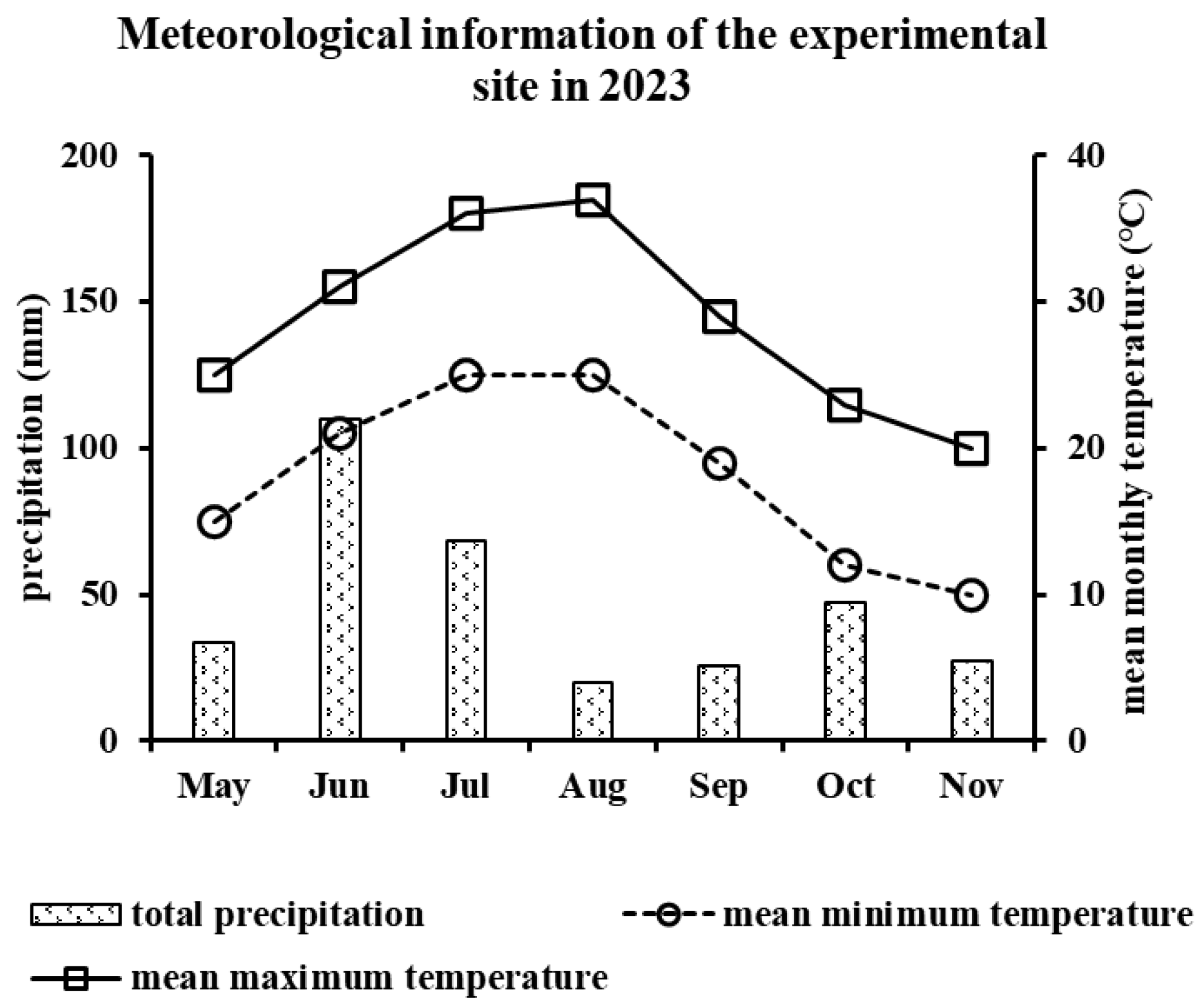
Experiments 1 and 2 were conducted in 2023 in Changhua Town (119°21′ E, 30°17′ N), Tianmushan Town (119°53′ E, 30°21′ N), Lin’an District, Hangzhou City, Zhejiang Province, with ‘Xinxiang’ used as the experimental cultivar, followed by comparative experiments at different geographical locations within the same year. Meteorological information during the experimental period is shown in Figure 1. Experiment 3 was derived from a previous study [20] conducted in 2020 in the agricultural garden of Zhejiang Agricultural and Forestry University, using ‘Yanshu 25’ and ‘Shangshu 19’ as experimental cultivars. The data obtained from Experiment 3 were used for model validation. Table 1 shows the design of the nitrogen and potassium fertilizer gradient experiments. The fertilization scheme was optimized and supplemented based on previous study [20]. A split-plot design was employed in the field trial, with potassium (K) as the main plot factor and nitrogen (N) as the subplot factor. Each nitrogen–potassium treatment constituted one experimental plot, with each plot covering an area of 25 m2 and three replications. Adjacent plots were separated by a distance of more than one meter to prevent fertilizer mutual infiltration. The planting method used was cutting propagation, with row spacing set at 80 cm and plant spacing at 15 cm, establishing a baseline plant density of 60,000 seedlings per hectare. When ridges were formed, 60 kg/ha of phosphorus fertilizer was applied to each treatment, and no topdressing was applied in the experiment. The basic soil fertility properties were summarized in Table 1. Natural rainwater irrigation was used, and no film covering was applied.

2.2. Sampling and Measurement

Approximately 20 days after transplanting, sweet potato sampling was initiated and conducted at roughly 15-day intervals, resulting in a total of six sampling events over the entire growth period. For each treatment, three uniformly growing and healthy plants were randomly selected and divided into four parts: stem, leaf, storage root, and fibrous root. The samples were placed in a constant-temperature drying oven at 80 °C until a constant weight was achieved, and then weighed to calculate the dry matter mass of each organ, which was further converted to the whole-plant dry matter mass. Subsequently, the dried samples were ground using a hammer cyclone mill for further analysis. The plant samples were digested using the concentrated H2SO4∙H2O2 method [21], and then the total nitrogen content of the plant samples was determined using a Kjeldahl nitrogen analyzer [22]. The potassium content of the plant samples was determined using a flame photometer based on the principle of atomic absorption spectroscopy [23]. Each measurement was performed on three individual plants, and the average values were calculated.

2.3. Calculation of Dry Matter Weight, Nitrogen Concentration, and Potassium Concentration

The aboveground nitrogen concentration was calculated using the following formula:
N a   =   ( D M l   ×   N l   +   D M s   ×   N s ) D M a
where DMl is the leaf dry weight, Nl is the leaf nitrogen concentration, DMs is the stem dry weight, Ns is the stem nitrogen concentration, and DMa is the sum of leaf dry weight (DMl) and stem dry weight (DMs), representing the aboveground biomass.
The belowground nitrogen concentration was calculated using the following formula:
N u   =   ( D M f   ×   N f   +   D M t   ×   N t ) D M u
where DMf is the fibrous root dry weight, Nf is the fibrous root nitrogen concentration, DMt is the storage root dry weight, Nt is the storage root nitrogen concentration, and DMu is the sum of fibrous root dry weight (DMf) and storage root dry weight (DMt), representing the belowground biomass.
The whole-plant nitrogen concentration was calculated using the following formula:
N w   =   ( D M a   ×   N a   +   D M u   ×   N u ) D M w
where DMa is the aboveground dry weight, Na is the aboveground nitrogen concentration, DMu is the belowground dry weight, Nu is the belowground nitrogen concentration, and DMw is the sum of aboveground dry weight (DMa) and belowground dry weight (DMu), representing the total biomass of the whole plant
The calculation method for the potassium concentration is the same as that for the nitrogen concentration.

2.4. Construction of the Critical Nitrogen–Potassium Ratio Model

The critical nitrogen concentration and critical potassium concentration of crops decrease with the increase in plant dry matter during the growth period. The critical nitrogen concentration model and critical potassium concentration model are determined using the following formula:
N c   =   a 1   ×   D M b 1
K c = a 2   ×   D M b 2
where Nc and Kc are the critical nitrogen concentration and critical potassium concentration (%), DM is total plant dry matter (t/ha), a is the critical nutrient concentration when the dry matter is 1 t/ha, and parameter b is the dilution curve coefficient.
Using a Bayesian hierarchical model [24], the critical nitrogen and potassium dilution curves for sweet potato were fitted via a Markov chain Monte Carlo (MCMC) algorithm. The classical method [9] was used to obtain prior information on the parameter ranges of a and b. As the probability distributions of parameters, a and b were unknown, a uniform prior distribution was used for the calculations [25]. The posterior distributions of parameters a and b were computed using the MCMC algorithm, implemented with the R package rjags (ver. 4.3.0) [26], for the different varieties under two potassium levels. The biomass and nitrogen concentration data from all sampling days of the two experiments in 2023, respectively, were first iterated 50,000 times using the algorithm. After the model converged, the algorithm was continued with 100,000 additional iterations using three chains. The a and b data after the run conformed to a normal distribution and generated medians and 95% credibility intervals for the parameters a and b. In this way, the critical nitrogen concentration curves at different potassium levels and the critical potassium concentration curves at different nitrogen levels were obtained, as well as the credible intervals for both. Subsequently, models with significant overlap in their 95% credibility intervals were merged to obtain a comprehensive critical nitrogen concentration curve and a critical potassium concentration curve [27].
The critical nitrogen–potassium ratio model for sweet potatoes is defined as the ratio of the critical nitrogen dilution model to the critical potassium dilution model. In view of the characteristics of the power function, its expression is still a power function. The specific function is as follows:
N c K c = a 3 × D M b 3

2.5. Construction of the Sweet Potato Nitrogen–Potassium Ratio Index (NKI)

The nitrogen–potassium ratio index (NKI) refers to the ratio of the actual nitrogen–potassium ratio of the plant to the critical nitrogen–potassium ratio. It is used to determine the nitrogen–potassium ratio nutritional status of the plant. The calculation formula is as follows:
N K I = N K a N K c
where NKa is the actual nitrogen–potassium concentration ratio of the plant, and NKc is the critical nitrogen–potassium concentration ratio of the plant. When the derived NKI value equals 1, it corresponds to a balanced nutrient ratio, implying an optimal state for plant growth. When NKI is greater than or less than 1, it indicates an imbalance between nitrogen and potassium in the plant.

2.6. Statistical Analysis

Data statistics and chart creation were performed using Excel 2016. RStudio software 2023 was used for curve fitting and model construction, and SPSS (version 20.0) was primarily used to analyze the relationship between NKI and relative yield.

3. Results and Analysis

3.1. Changes in Whole Sweet Potato Dry Weight During the Growing Period

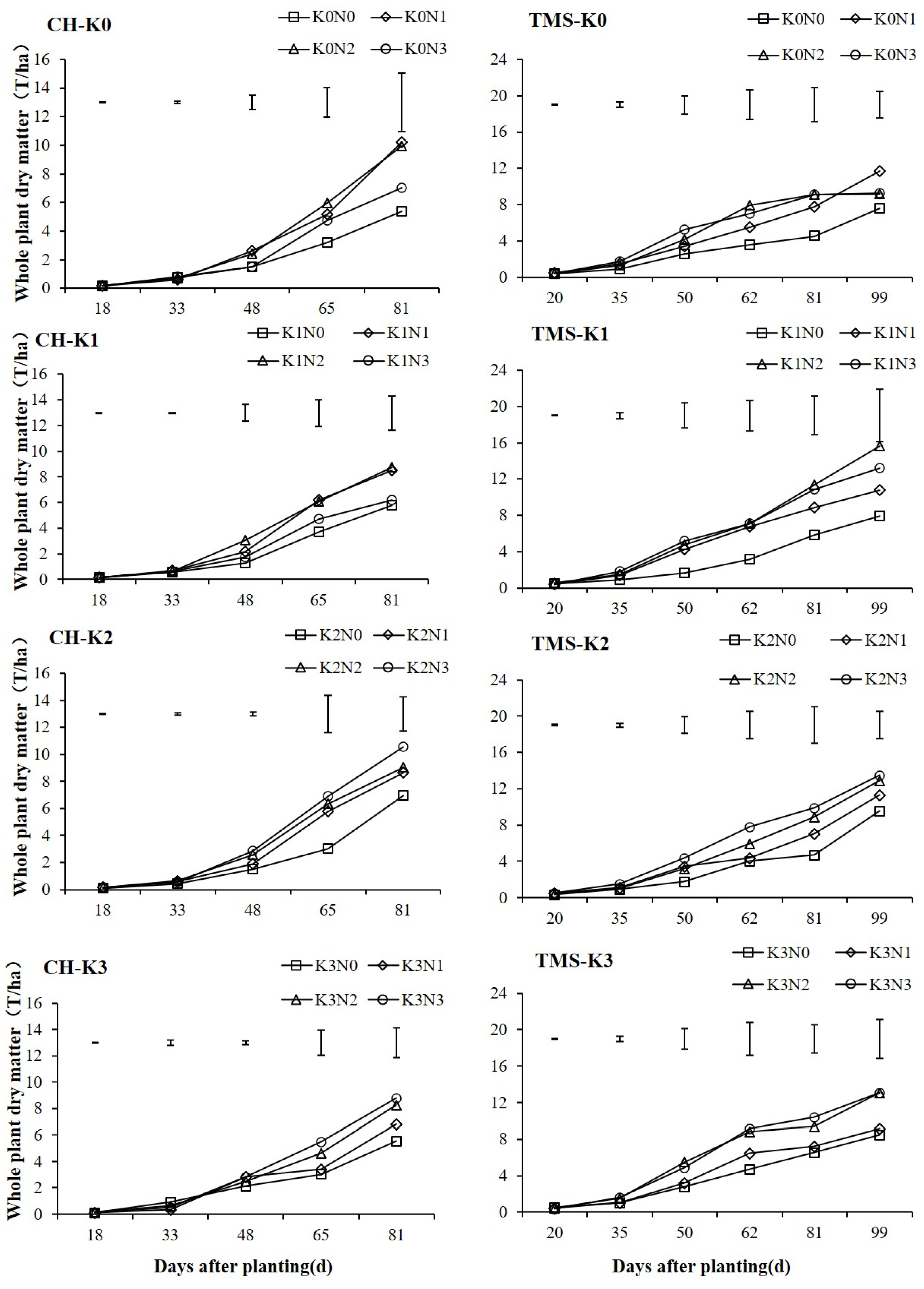
The whole-plant dry weight of sweet potato is the sum of all dry weights of the aboveground and underground parts of the sweet potato during its growth period. Figure 2 shows the changes in whole-plant dry matter during the growth period of sweet potato under different nitrogen and potassium treatments. At the Changhua test site, whole-plant dry matter of sweet potato exhibited a period of slow growth until 48 days after transplanting, followed by a phase of rapid accumulation up to day 81. In contrast, plants at the Tianmushan site showed slow initial development until day 50, rapid growth from day 50 to 81, and a subsequent decline in growth rate from day 81 to 99. The response of sweet potato dry matter to nitrogen application differed by site and potassium level. At Changhua, an increase-then-decrease trend was observed across all potassium levels. At Tianmushan, this same pattern occurred under low potassium (K0, K1), but under sufficient potassium (K2, K3), dry matter weight increased monotonically with nitrogen. The results indicate that the nitrogen–potassium ratio plays an important role in sweet potato biomass accumulation. Based on the two experimental trials, whole-plant biomass ranged from 0.16 to 11.66 T/ha under K0 conditions, 0.11–15.67 T/ha under K1, 0.11–13.51 T/ha under K2, and 0.09–13.10 T/ha under K3. The findings further demonstrate that an appropriate nitrogen–potassium balance supports optimal plant growth and leads to higher biomass production.

3.2. Changes in Nitrogen Content of the Whole Plant of Sweet Potato

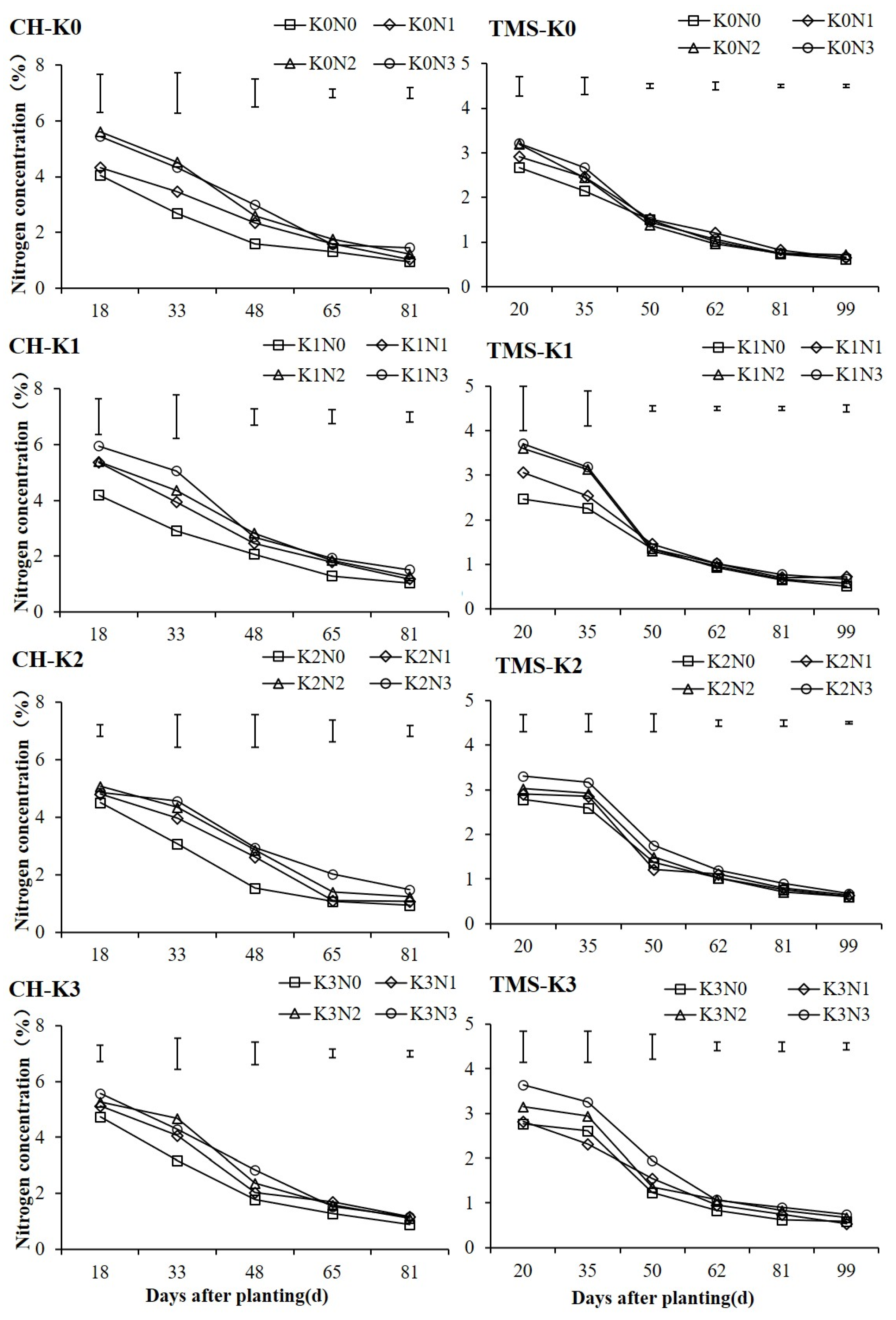
Figure 3 shows the whole-plant nitrogen (N) concentration of the cultivar ‘Xinxiang’ at the Changhua and Tianmushan sites under different N and K treatments at different growth stages. At the Changhua site, the whole-plant N concentration of sweet potato declined rapidly until 60 days after transplanting (DAT), after which the rate of decrease slowed and eventually stabilized. At the Tianmushan site, the whole-plant N concentration decreased gradually until 35 DAT, followed by a rapid decline between 35 and 62 DAT, and then the rate of decrease slowed before stabilizing. The N concentration of the whole sweet potato plant increased with increasing N application under different K level treatments.
Combining data from the two test sites, whole-plant N concentrations in sweet potato ranged from 0.60 to 5.62 under K0; from 0.51 to 6.39 under K1; from 0.59 to 5.09 under K2; and from 0.53 to 5.57 under K3 treatment. Nitrogen concentrations at the Changhua site were slightly higher than those at the Tianmushan site. The results showed that under N0 and N1 conditions, whole-plant N concentration increased gradually with higher K fertilizer application. Under N2 and N3 conditions, whole-plant N concentration initially increased and then decreased as K fertilizer application increased. Moderate K fertilizer application can enhance whole-plant N concentration in sweet potato and accelerate nitrogen uptake. Excessive K fertilization does not further promote N absorption and may result in a decrease in plant N concentration.

3.3. Changes in the Whole-Plant Potassium Concentration of Sweet Potato

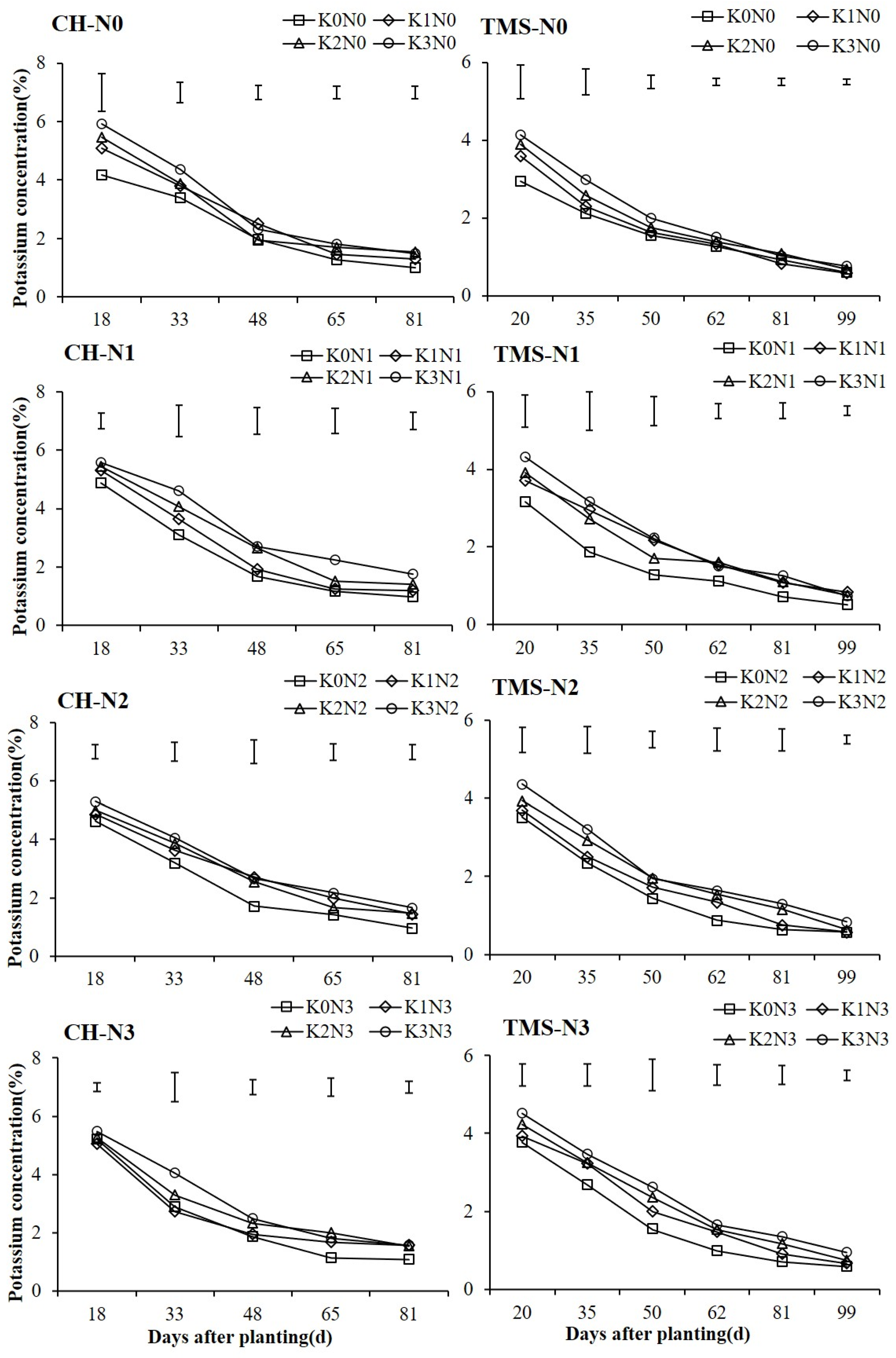
Figure 4 shows the changes in the whole-plant potassium (K) concentration of ‘Xinxiang’ at the Changhua site and the Tianmushan site during the growth period under different N and K treatments. The whole-plant K concentration remained relatively stable, with a consistent decrease during the early and mid-growth stages. After 80 DAT, the decline in K concentration gradually slowed and eventually stabilized.
At the Changhua site, the whole-plant K concentration decreased rapidly within 48 DAT, after which the decline rate slowed and stabilized. At the Tianmushan site, the whole-plant K concentration decreased rapidly within 62 DAT, then the rate of decline slowed and stabilized. In general, at different N levels, the whole-plant K content increased gradually with higher K fertilizer application. The results indicate that with increasing nitrogen fertilizer application, whole-plant K concentration in sweet potato initially decreased gradually and then stabilized. The whole-plant K concentration ranged from 0.58 to 6.04 under N0, from 0.50 to 5.58 under N1, from 0.56 to 5.28 under N2, and from 0.57 to 5.98 under N3.

3.4. Determination of N and K Limitation Conditions

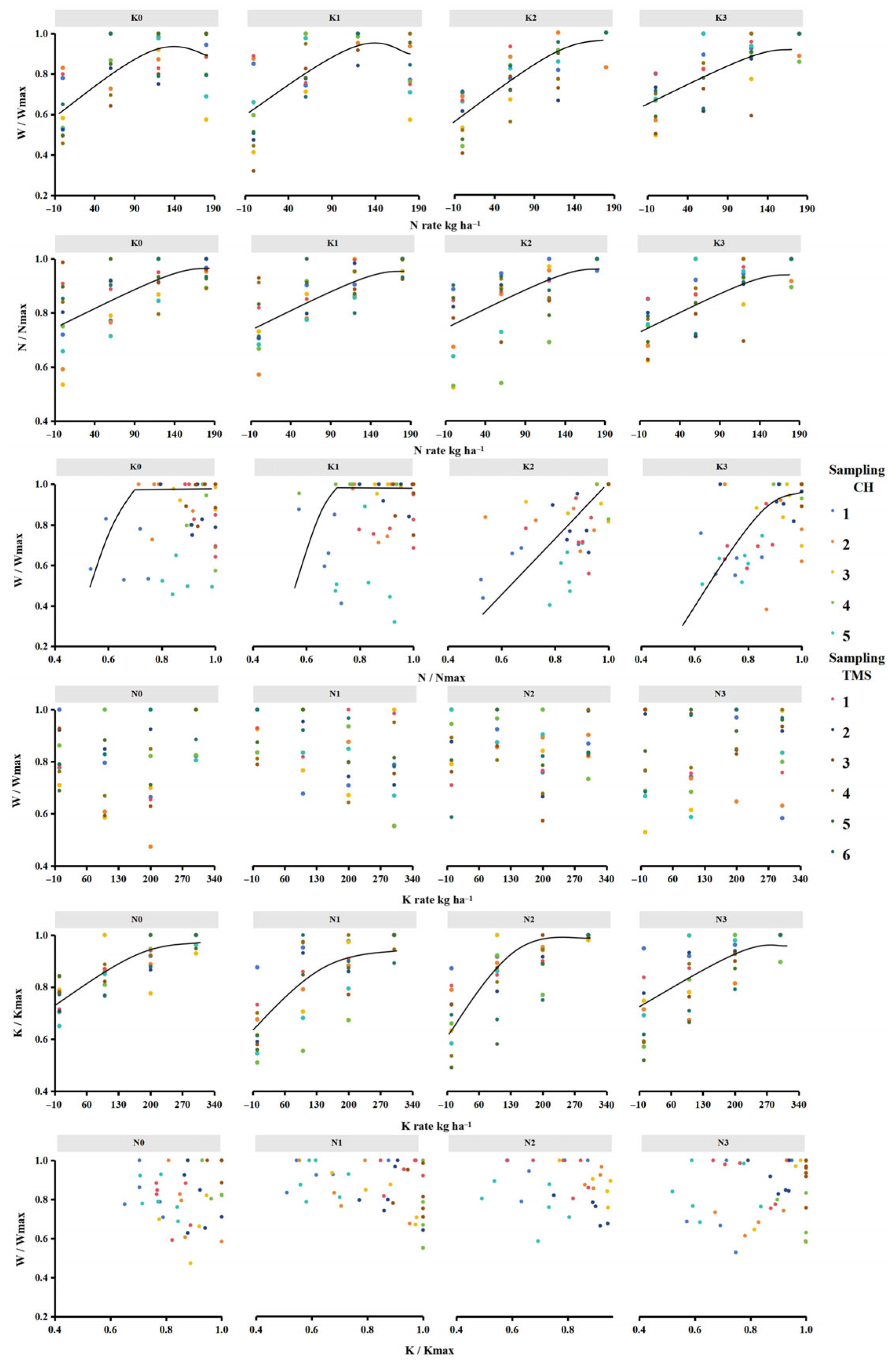
To distinguish between limiting and unlimiting data, and thereby ensure the construction of a robust critical nitrogen–potassium model, the following ratios were determined at each sampling time: the ratio of actual dry matter to maximum dry matter (W/Wmax), the ratio of actual nitrogen concentration to maximum nitrogen concentration (N/Nmax), and the ratio of actual potassium concentration to maximum potassium concentration (K/Kmax). This approach ensures that increases in nitrogen and potassium concentrations occur without a corresponding increase in dry matter, thereby better satisfying the linear response plateau criterion.
As shown in Figure 5, both N/Nmax and K/Kmax increased with increasing fertilizer application rates. Regarding W/Wmax, under increasing nitrogen application rates, the W/Wmax values in the K0 and K1 treatments initially increased and then decreased, exhibiting a peak, whereas those in the K2 and K3 treatments showed an increasing trend without a peak. Thus, “non-limiting nitrogen” conditions were achieved under the K0 and K1 treatments. With increasing potassium application rates, no significant changes in W/Wmax were observed across the different nitrogen treatments. Finally, correlation analysis between W/Wmax and N/Nmax provided a more intuitive means of distinguishing “limiting” from “non-limiting” points. Under the K0 and K1 treatments, N/Nmax continued to increase even after W/Wmax reached a plateau, indicating non-limiting nitrogen conditions. Since W/Wmax did not vary significantly with increasing potassium application rates, non-limiting potassium conditions were considered to have been achieved by default.

3.5. Construction of the Critical Nitrogen–Potassium Ratio Model

3.5.1. Construction of the Critical N Concentration Curve

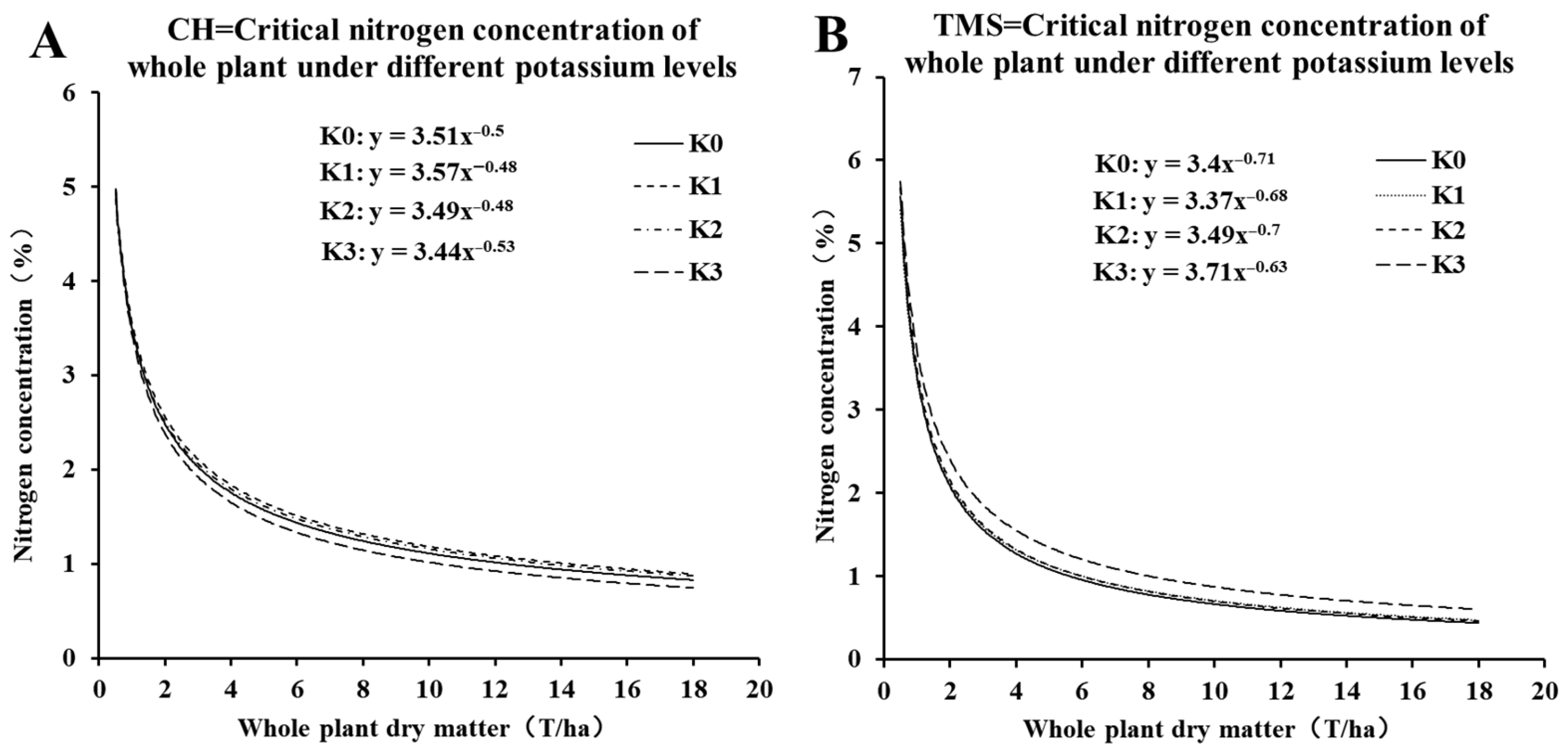
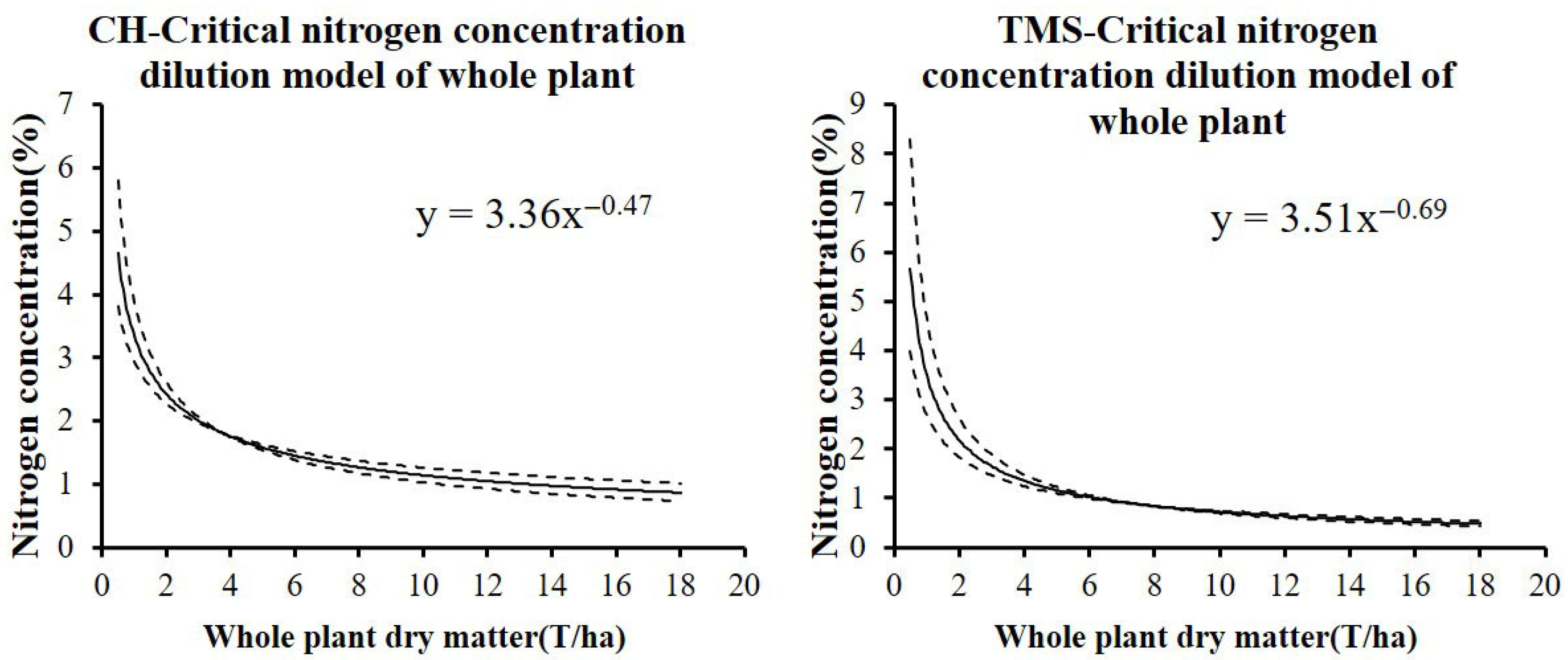
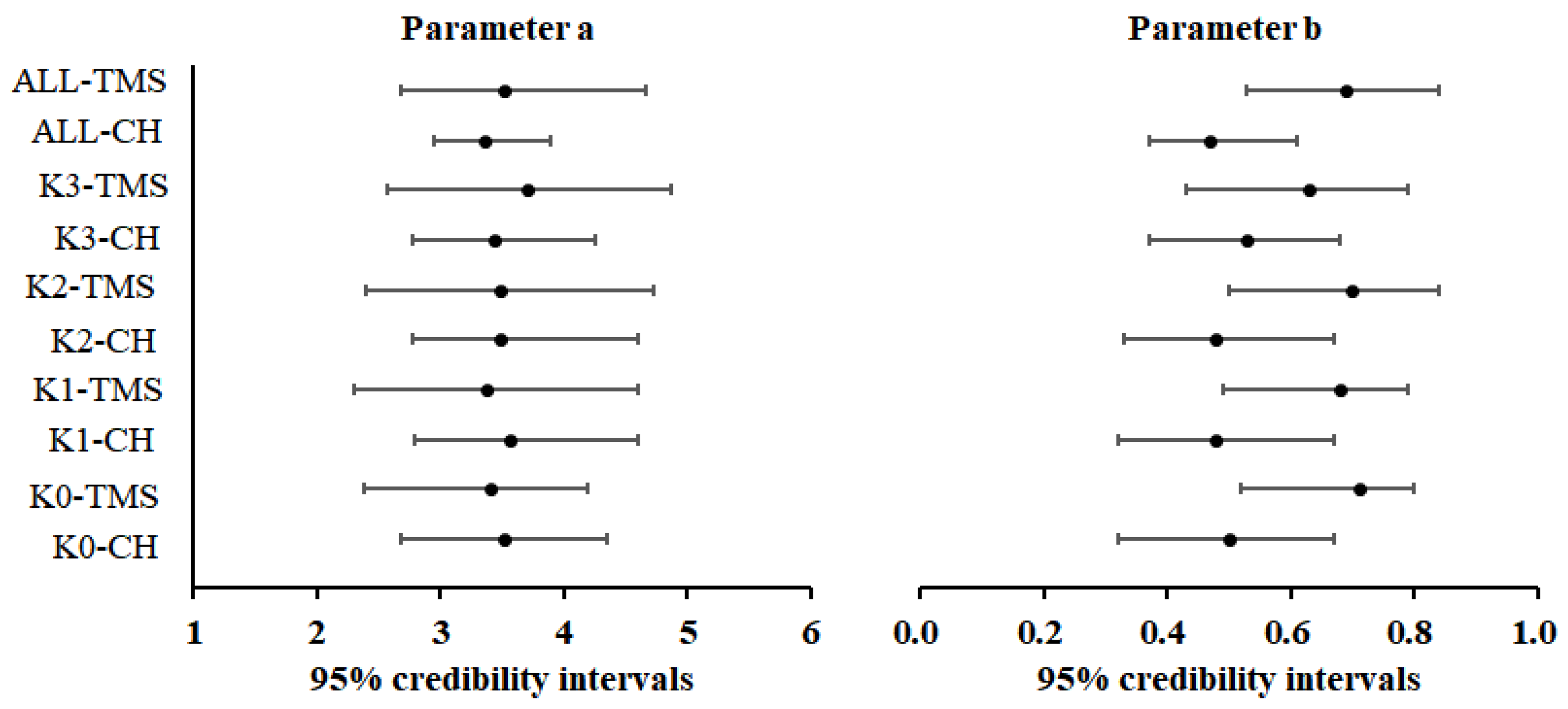
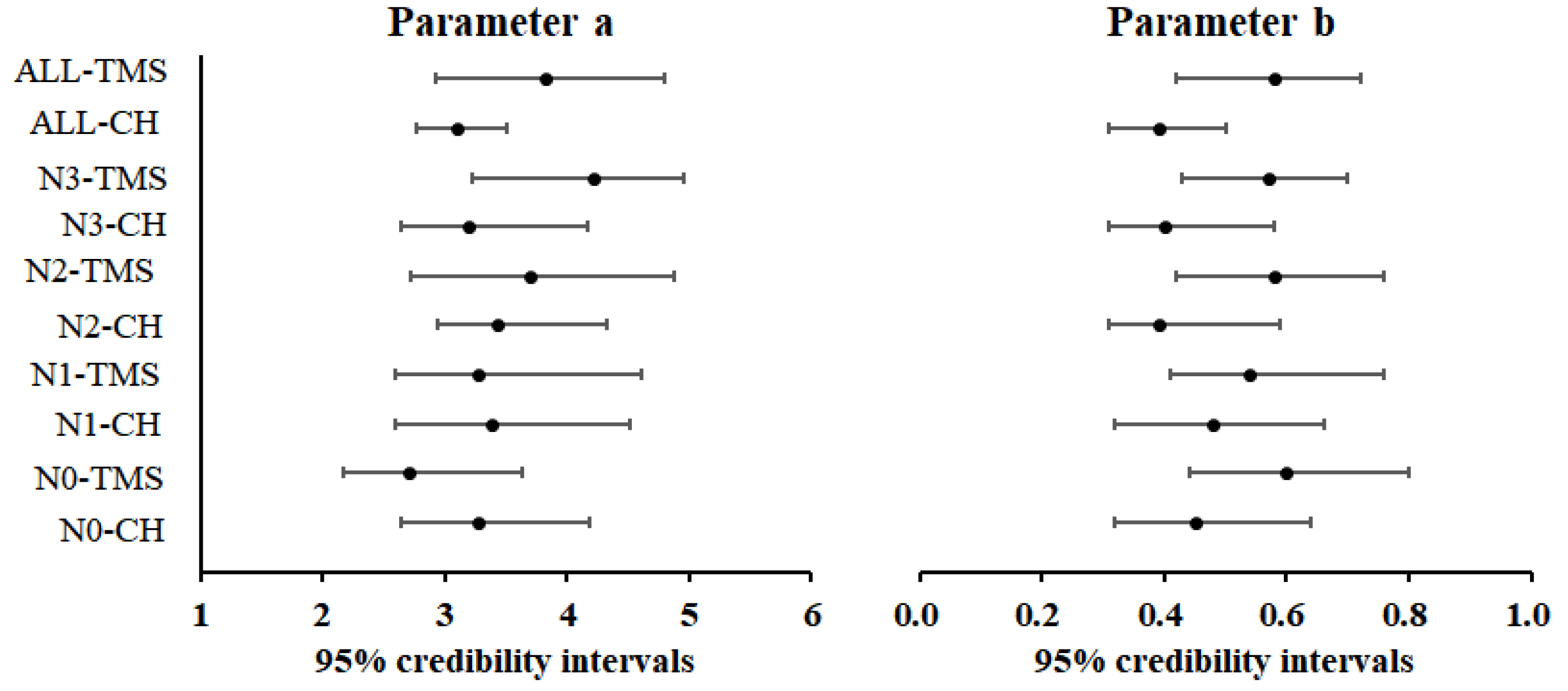
Figure 6 shows the critical N concentration curves at different K levels at the two sites. At the Changhua site, the critical N dilution curves for whole sweet potato plants at the four K levels were as follows: K0: Nc = 3.51 DW−0.5, K1: Nc = 3.57 DW−0.48, K2: Nc = 3.49 DW−0.48, K3: Nc = 3.44 DW−0.53 (where Nc represents the whole-plant N concentration of sweet potato, and DW represents the whole-plant dry matter of sweet potato). The critical N dilution curves of the whole-plant sweet potato at four K levels at the Tianmushan site were K0: Nc = 3.4 DW−0.71, K1: Nc = 3.37 DW−0.68, K2: Nc = 3.49 DW−0.7, and K3: Nc = 3.71 DW−0.63. As shown in Figure 7, the data from various K treatments were refitted using the Bayesian model for parameter estimation, and the fitting results for both experimental sites were obtained. The rationale for this refitting is that the 95% credibility intervals for parameters a and b of the critical nitrogen concentration curve under different K levels in Figure 8 exhibited significant overlap, indicating that the data from all K treatments could be fitted to a unified curve. The critical N dilution model for the Changhua site is Nc = 3.36 DW−0.47, while for the Tianmushan site, the model is Nc = 3.51 DW−0.69.
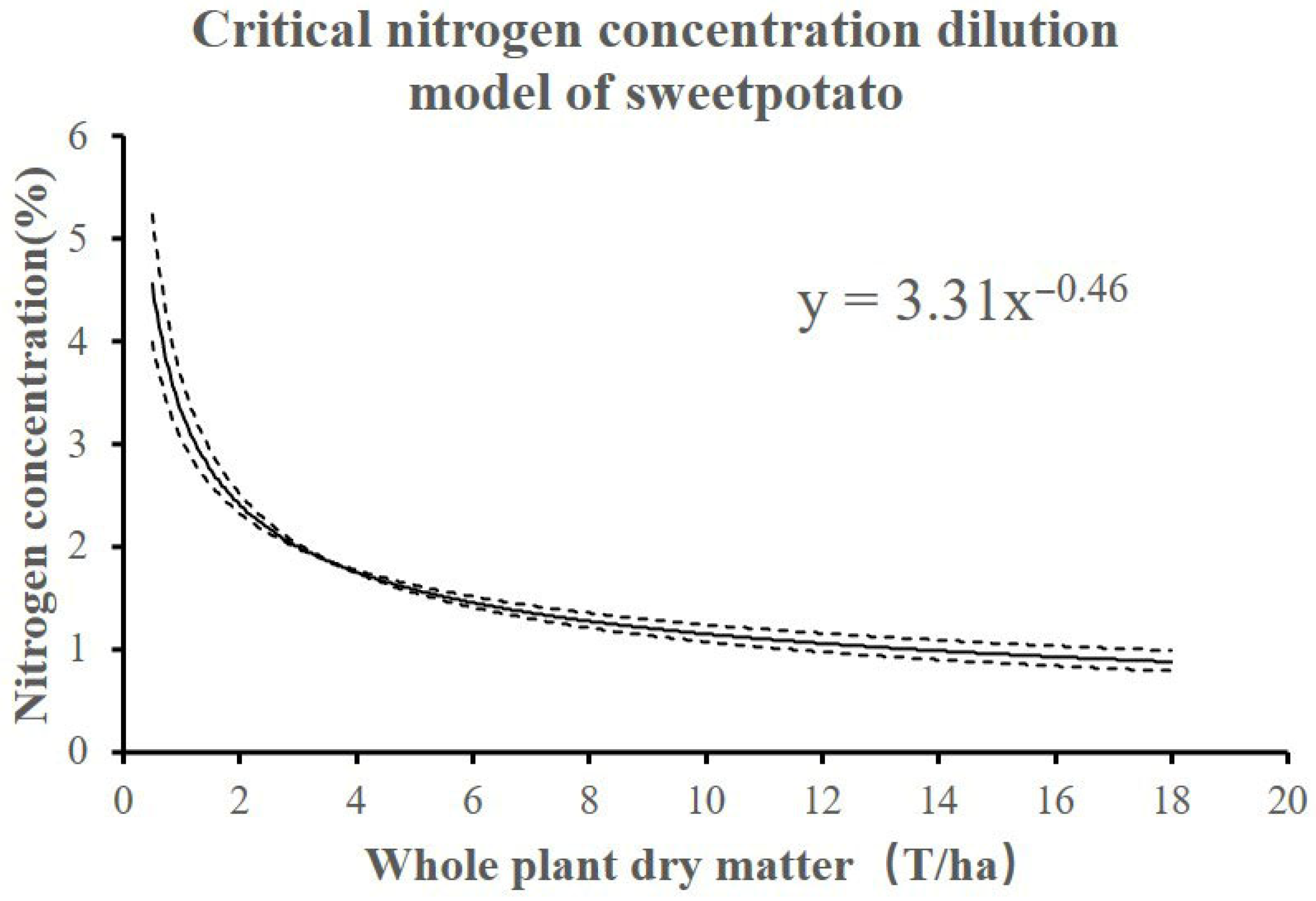
With the increase in potassium application, parameter a showed a trend of decreasing and then increasing, while parameter b basically showed a trend of gradually decreasing. The 95% credibility intervals for parameters a and b of the critical nitrogen concentration curves from the two experimental sites in Figure 8 exhibited significant overlap. Therefore, the data were pooled and fitted to a single curve. As shown in Figure 9, the critical nitrogen concentration curve for the whole-plant sweet potato is given by Nc = 3.31 DW−0.46.
K application influenced the parameters of the critical N dilution curve in sweet potato, but the differences were not significant. At Changhua, parameter a initially increased and then decreased with the increase in K application, while parameter b exhibited the opposite trend. At Tianmushan, with the increase in K application, parameter a showed a trend of decreasing and then increasing, while parameter b basically showed a trend of gradually decreasing. The model parameters and their 95% credibility intervals across different potassium levels showed that the critical N dilution model remained stable, even with varying K application rates. Furthermore, a 95% credibility interval analysis of the model parameters from both sites confirmed the model’s validity across different field environments, demonstrating its effectiveness in diagnosing plant N concentration independent of site-specific variations.

3.5.2. Construction of the Critical Potassium Concentration Curve

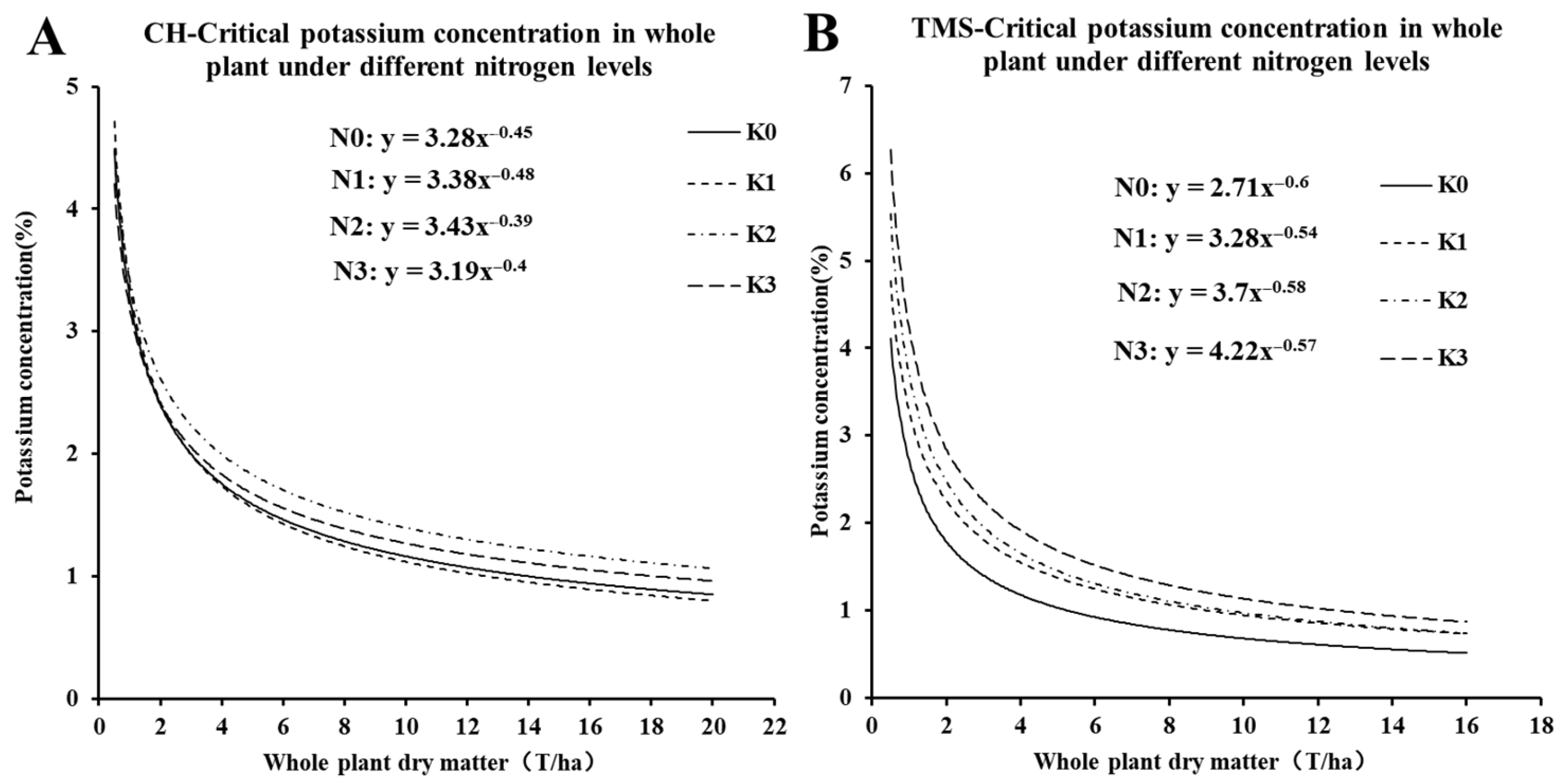
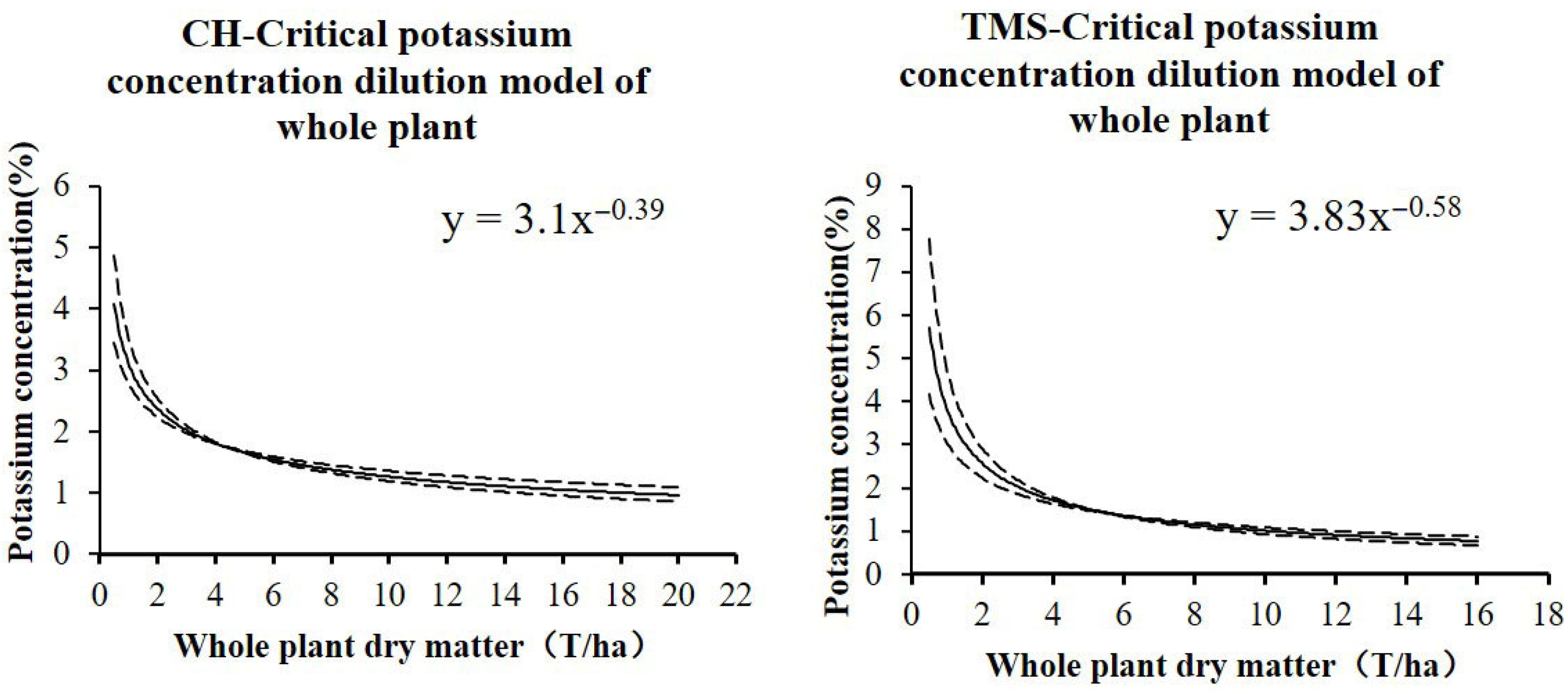
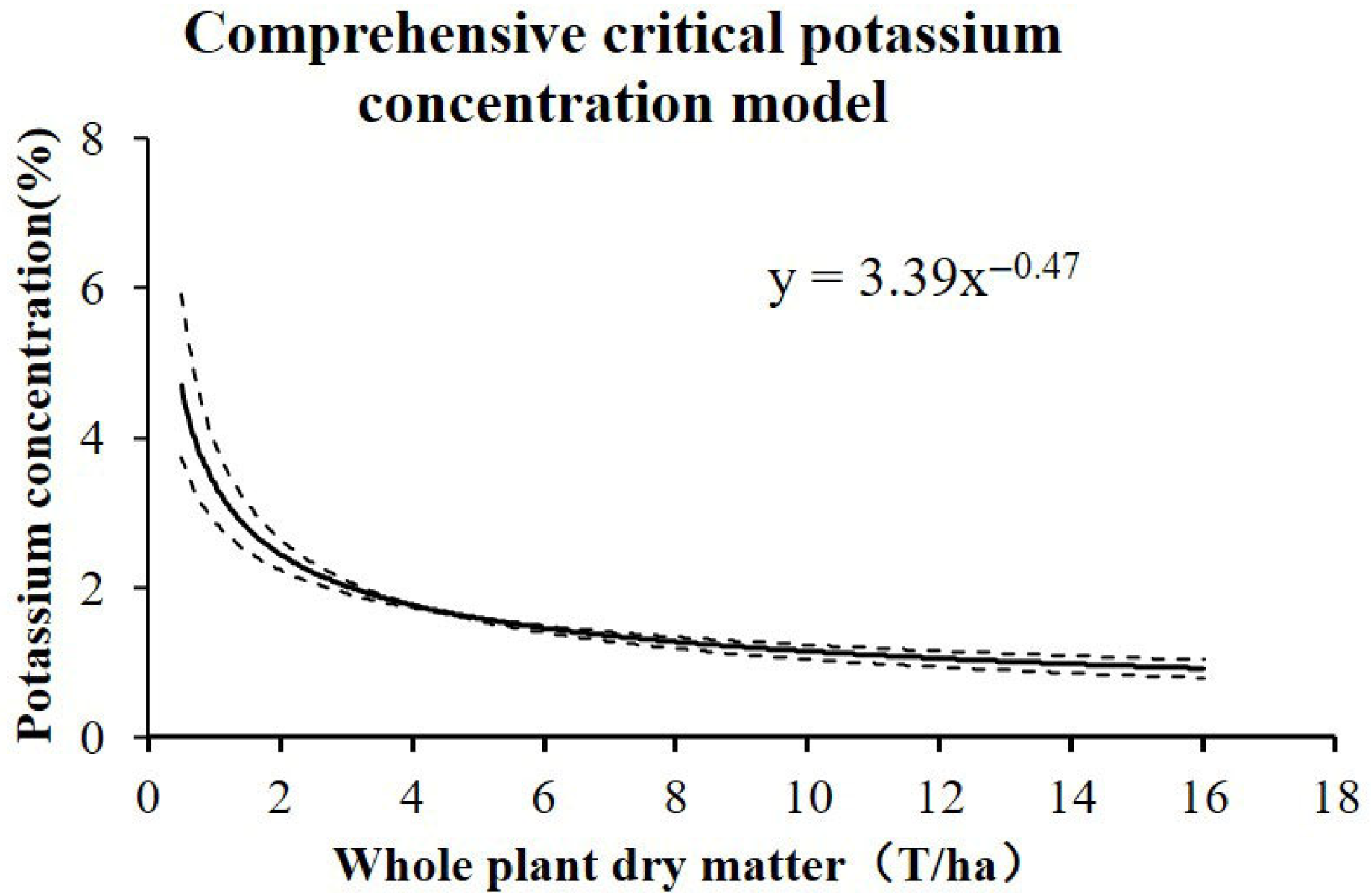
Figure 10 presents the critical K concentration models across different N levels for the two experiments. In Experiment 1, the models at the four N levels were as follows: N0: Kc = 3.28 DW−0.45, N1: Kc = 3.38 DW−0.48, N2: Kc = 3.43 DW−0.39, N3: Kc = 3.19 DW−0.4. The critical K concentration models at the four N levels in Experiment 2 were: N0: Kc = 2.71 DW−0.6, N1: Kc = 3.28 DW−0.54, N2: Kc = 3.7 DW−0.58, N3: Kc = 4.22 DW−0.57 (where Kc represents the whole-plant K concentration, and DW represents the whole-plant dry matter). All data from the N treatments were pooled and fitted to a single curve. As shown in Figure 11, the critical K con-centration model for Changhua was Kc = 3.1 DW−0.39, while that for Tianmushan was Kc = 3.83DW−0.58. The rationale for this pooling is that the 95% credibility intervals for parameters a and b of the critical K concentration curve under different N levels in Figure 12 exhibited significant overlap. Meanwhile, the 95% credibility intervals for pa-rameters a and b of the critical N concentration curves at the two experimental sites also showed significant overlap. Therefore, they were merged into a generalized curve: Kc = 3.39 DW−0.47 (Figure 13).
Nitrogen application affected parameter a of the critical K concentration model in sweet potato, while its impact on parameter b was relatively minor. In Experiment 1, parameter a initially increased and then decreased with the increase in N application. In Experiment 2, parameter a consistently increased with an increase in N application. The model parameters and their 95% credibility intervals across different N levels indicated that the critical K dilution model remained stable across all treatments except for the N0 treatment. This showed that the critical K concentration model of the whole-plant sweet potato could overcome the differences in N fertilizer application and experimental sites, and could be used as a reliable index for K diagnosis.

3.5.3. Construction of the Critical Nitrogen–Potassium Ratio Model

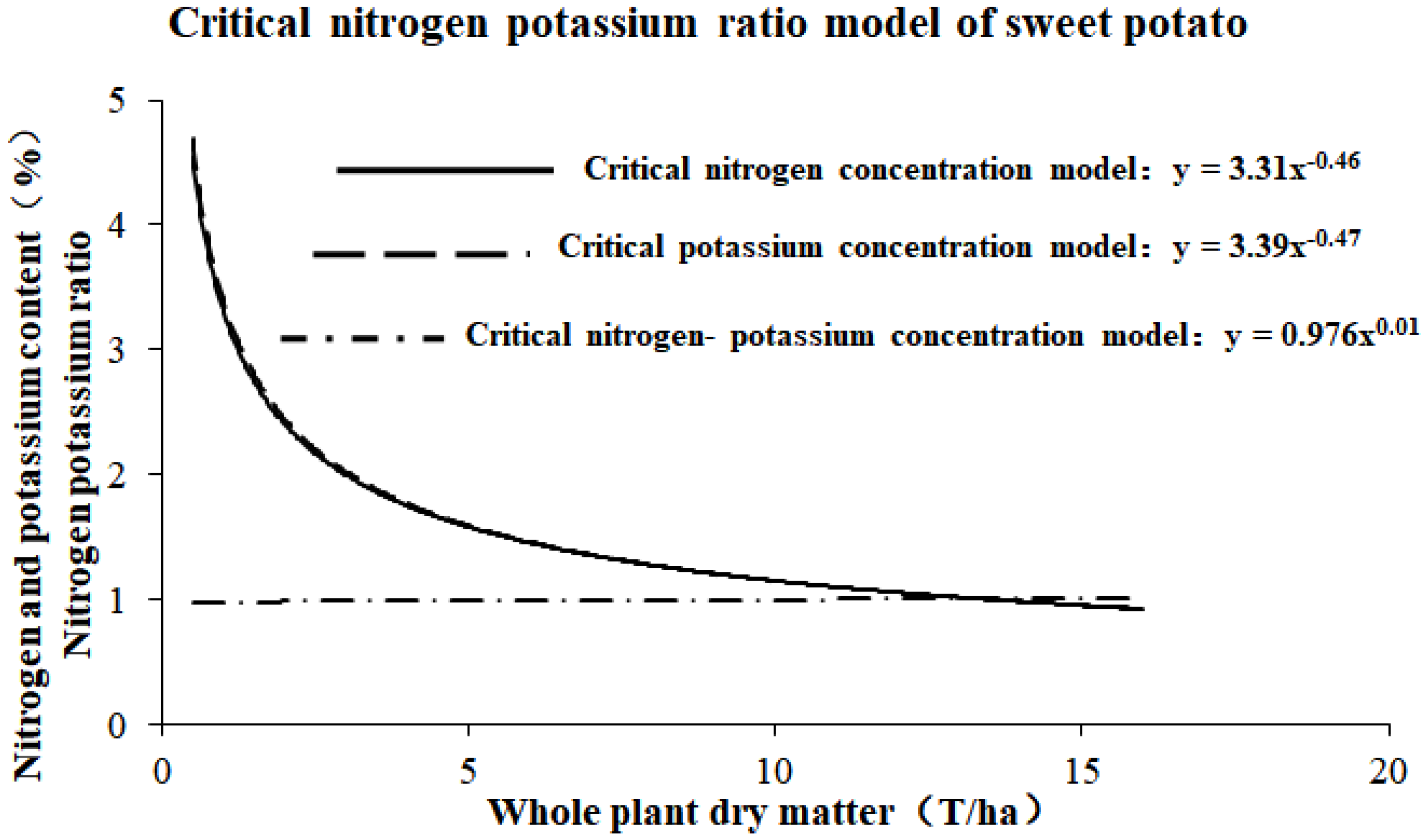
The critical nitrogen-to-potassium (N/K) ratio model for sweet potato was derived mathematically from the ratio of the critical N concentration model to the critical K concentration model. Since both models are exponential, the resulting N/K ratio model also follows a power function. As shown in Figure 14, the model is defined as: Nc/Kc = 0.976 DW0.01, where Nc/Kc represents the whole-plant N/K ratio and DW is the whole-plant dry matter.

3.6. Validation of the Critical Nitrogen–Potassium Ratio Model

3.6.1. Validation of the Critical N Concentration Dilution Curve

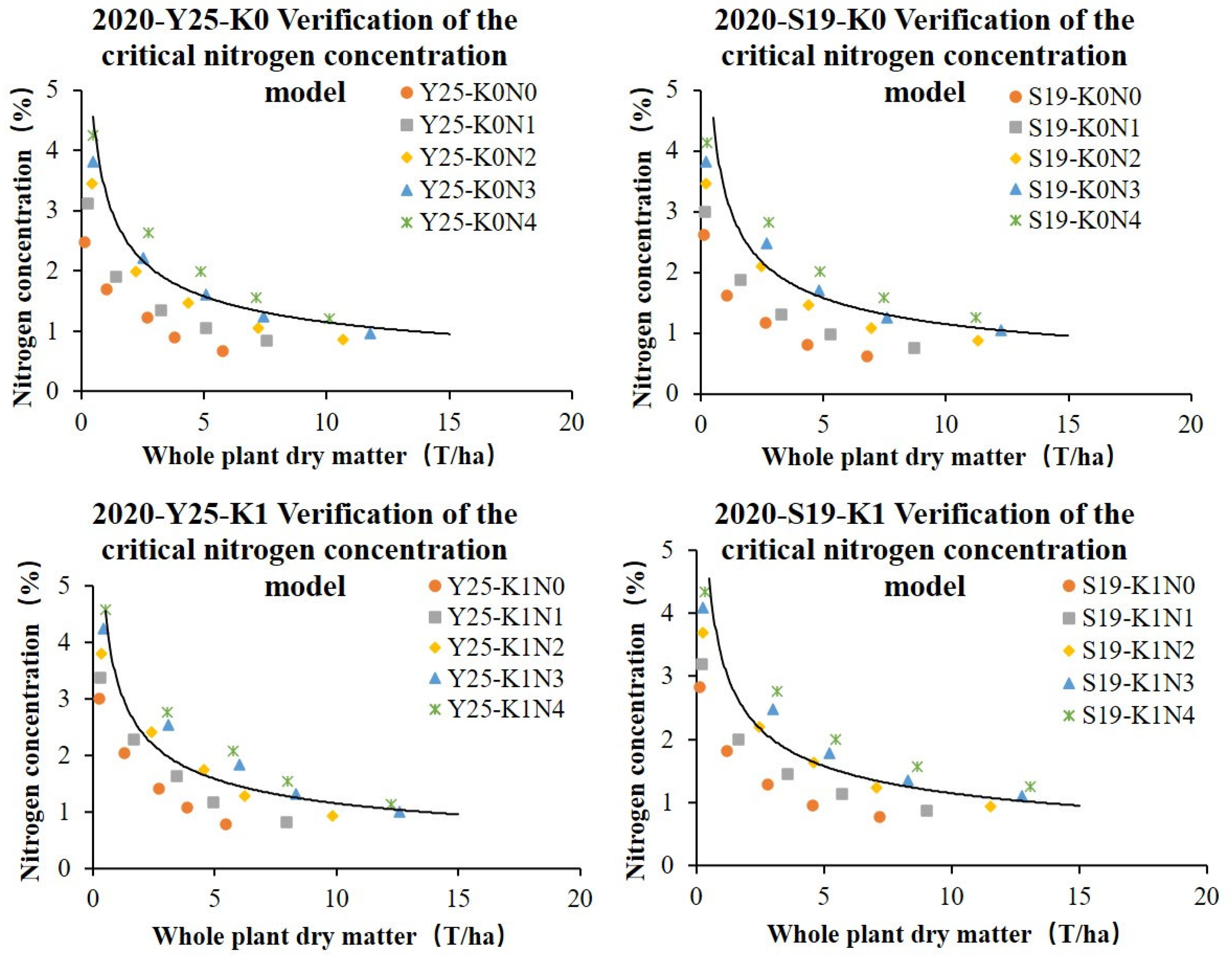
As shown in Figure 15, the critical N concentration model for the whole plant was validated using independent experimental data from 2020. The model effectively distinguished between nitrogen-sufficient and nitrogen-deficient conditions across different sweet potato cultivars. The results indicated that under K0 conditions, both ‘Yanshu 25’ and ‘Shangshu 19’ exhibited a continuous increase in whole-plant N concentration with increasing N application. Both varieties showed N excess under the N4 treatment, while N deficiency was observed under the N0 and N1 treatments. The whole-plant N concentrations in the K1N2 and K1N3 treatments were close to the critical N concentration curve. This indicated that, at this potassium fertilizer level, when pursuing the maximum whole-plant yield of sweet potato, these two nitrogen application modes can serve as the upper limit standard for nitrogen supply from the perspective of nutrient adequacy.
Under K1 conditions, both varieties showed a trend of increasing N concentration with increasing N application. N excess was observed in the N3 and N4 treatments, while N deficiency occurred in the N0 and N1 treatments. The N2 treatment showed whole-plant N concentrations closest to the critical N concentration curve, making it the optimal N application rate under these conditions.

3.6.2. Validation of the Critical K Concentration Dilution Curve

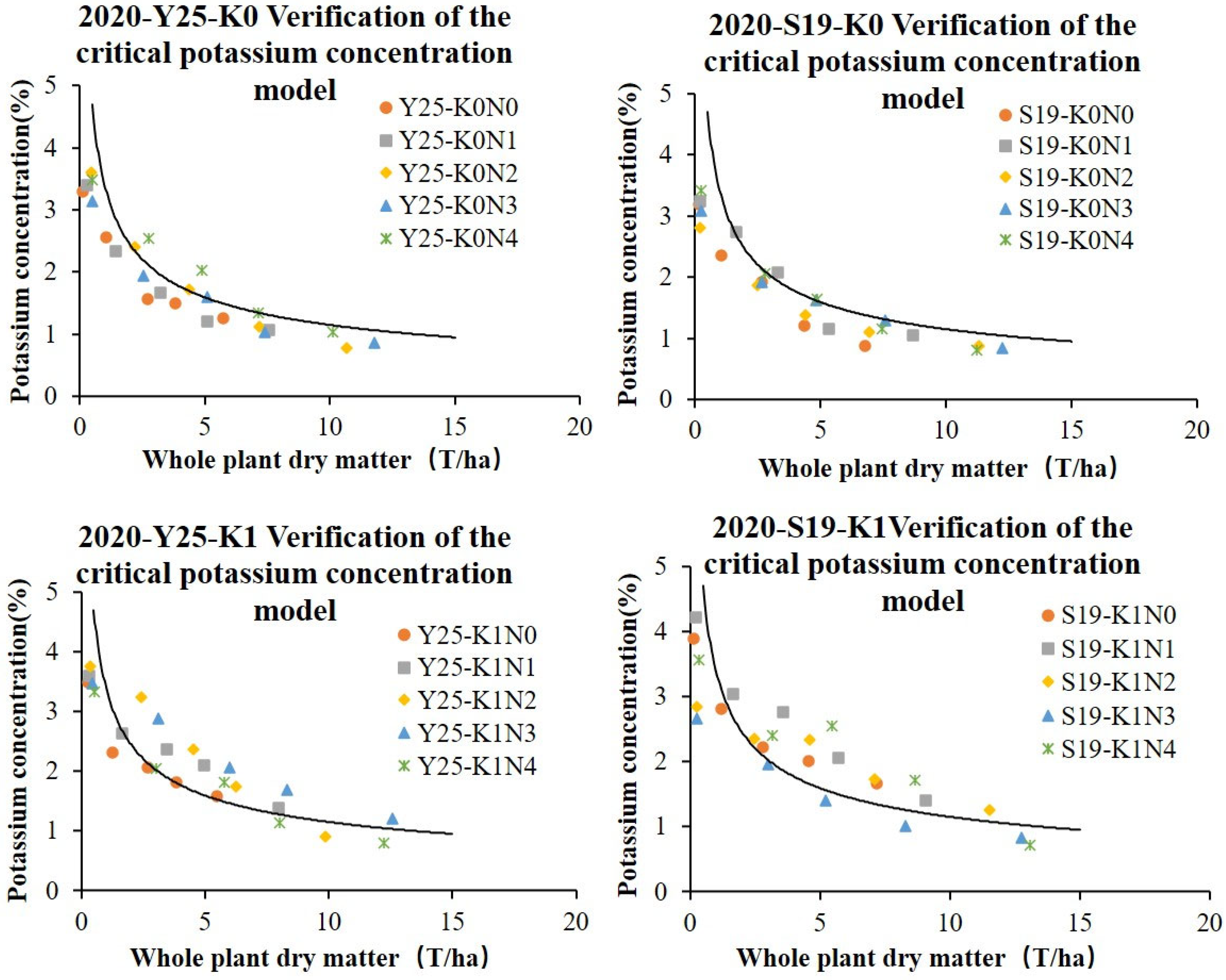
K concentration data from two sweet potato cultivars collected in 2020 were used to validate the established critical K concentration model. As shown in Figure 16, the constructed critical K dilution curve effectively distinguishes between K excess and K deficiency across different sweet potato cultivars. Under K0 conditions, whole-plant K concentration increased with higher N application; however, this increase had a limited effect on alleviating K deficiency. In ‘Yanshu 25’, K concentration under the N4 treatment approached the critical K concentration curve, whereas in ‘Shangshu 19’ this occurred under the N3 treatment. All other treatments exhibited K deficiency. Under K1 conditions, whole-plant K concentration in both cultivars increased with rising N application rates. K concentration in ‘Yanshu 25’ under the N0 treatment and in ‘Shangshu 19’ under the N3 treatment was close to the critical curve, while the remaining treatments showed K excess. Collectively, plants exhibited K deficiency in the absence of K fertilization, whereas the application of 240 kg ha−1 K resulted primarily in K excess; this may be attributed to the higher background potassium content at the site of Experiment 3 (Table 1). These results provide critical insights for optimizing K fertilization in sweet potato production systems.

3.6.3. Validation of the Critical Nitrogen–Potassium Ratio Model

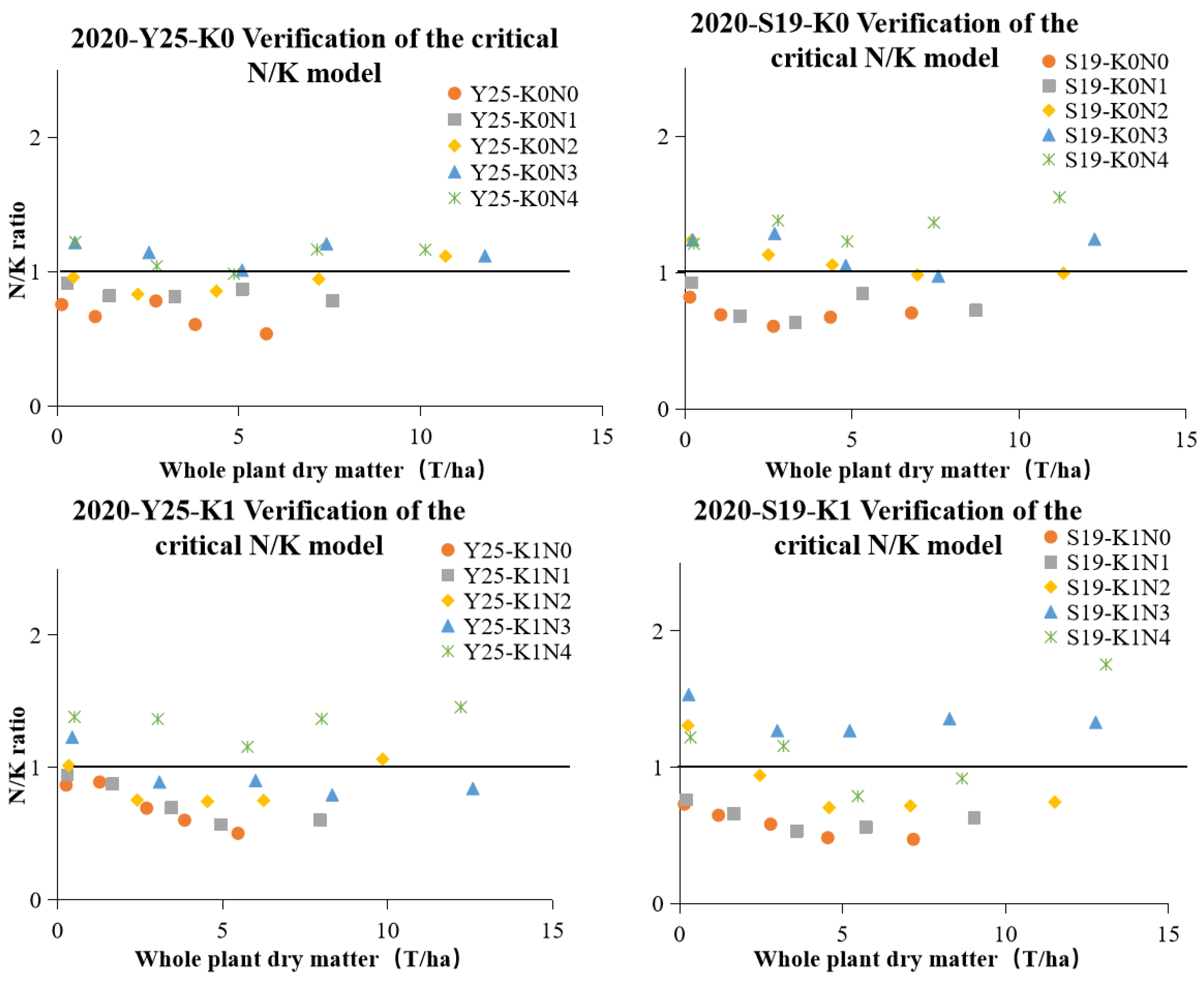
As shown in Figure 17, the N/K ratio model for sweet potato was validated using independent experimental data. Under K0 conditions, the K0N3 and K0N4 treatments for both ‘Yanshu 25’ and ‘Shangshu 19’ exhibited N excess coupled with K deficiency, whereas the K0N0 and K0N1 treatments showed N deficiency. The K0N2 treatment in both cultivars resulted in an N/K ratio closest to the critical N/K ratio model, indicating a more balanced nitrogen–potassium supply. Under K1 conditions, ‘Yanshu 25’ exhibited K excess and N deficiency across the K1N0, K1N1, K1N2, and K1N3 treatments, while the K1N4 treatment showed the opposite trend. In ‘Shangshu 19’, K excess and N deficiency were observed in the K1N0, K1N1, and K1N2 treatments, whereas N excess and K deficiency were present in the K1N3 and K1N4 treatments.
Overall, for ‘Yanshu 25’, the N/K ratio was closest to balance under the K1N3 treatment, while for ‘Shangshu 19’, the ratio approached balance between the K1N2 and K1N3 treatments. These findings suggest that under K1 conditions, the whole sweet potato plant may require a higher N supply to maintain nutrient equilibrium.

3.7. Analysis of the Nitrogen–Potassium Ratio Index (NKI) in Sweet Potato

The Nitrogen–Potassium Index (NKI) is derived from the critical nitrogen–potassium ratio model and provides a real-time assessment of the nutrient balance between N and K in plants. When NKI > 1, it reflects N excess and K deficiency in sweet potato; when NKI < 1, it reflects K excess and N deficiency. When NKI = 1, it indicates that nitrogen and potassium elements are relatively balanced in the sweet potato plant, which corresponds to favorable conditions for plant growth and development.
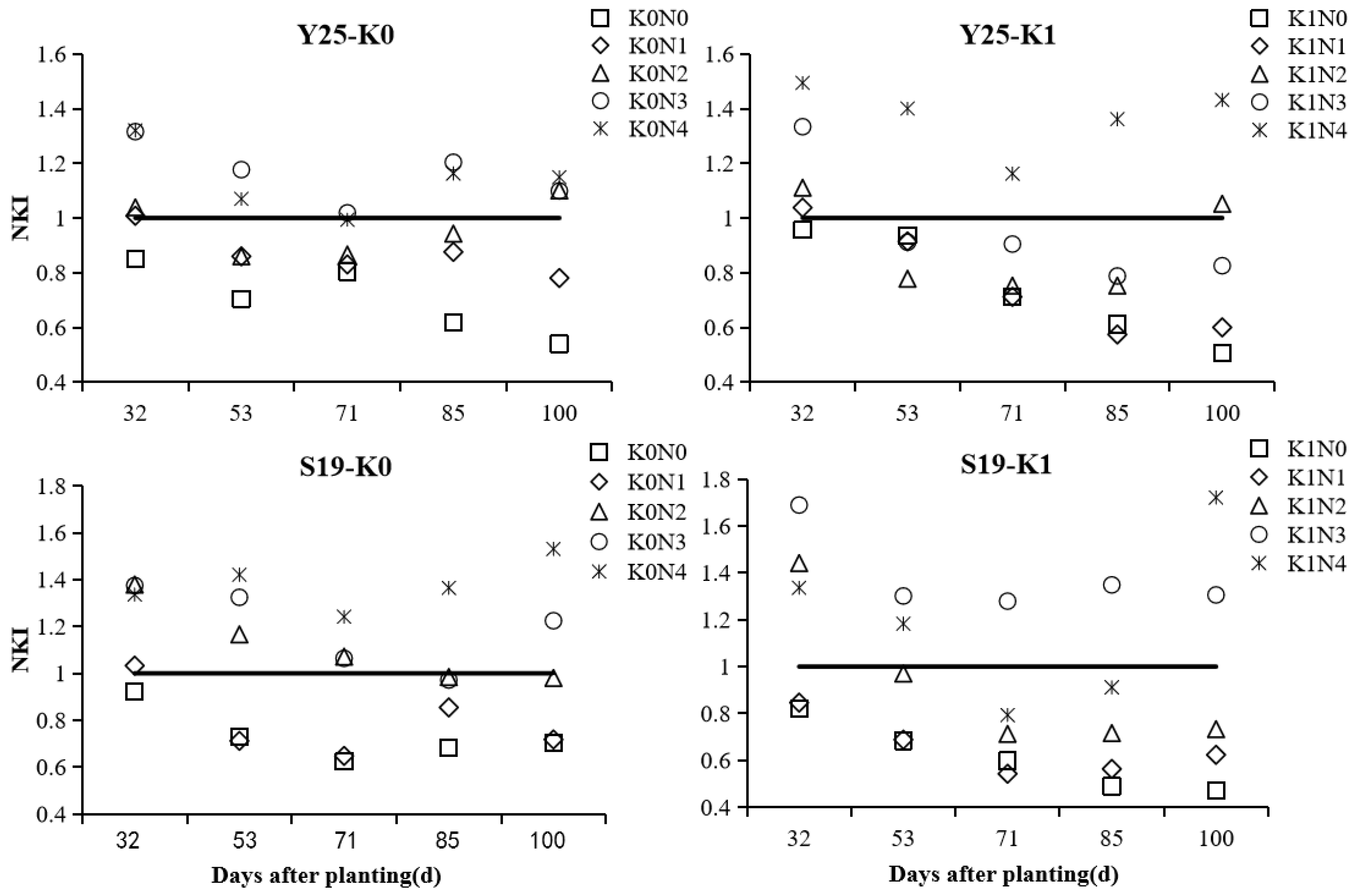
Independent data were used to establish the NKI for the whole-plant sweet potato. As shown in Figure 18, under K0 conditions, the NKI for both ‘Yanshu 25’ and ‘Shangshu 19’ was greater than 1 in the K0N3 and K0N4 treatments throughout the growth period, indicating N excess and K deficiency. In contrast, the index was below 1 in the K0N0 and K0N1 treatments, indicating N deficiency and K excess. The K0N2 treatment yielded a value close to 1, suggesting a near-optimal nitrogen–potassium balance.
Under K1 conditions, the NKI of ‘Yanshu 25’ exceeded 1 in the K1N4 treatment, indicating N excess and K deficiency. In contrast, NKI remained below 1 throughout most of the growing period in the K1N0, K1N1, and K1N2 treatments, reflecting K excess and N deficiency. The K1N3 treatment maintained NKI values closest to 1, suggesting a near-optimal nitrogen–potassium balance. For ‘Shangshu 19’, NKI exceeded 1 during most of the growth period in the K1N3 and K1N4 treatments, indicating N excess and K deficiency, resulting in nitrogen–potassium imbalance. Conversely, NKI stayed below 1 in the K1N0, K1N1, and K1N2 treatments, indicating potassium excess and nitrogen deficiency.
In summary, for ‘Yanshu 25’, the optimal nitrogen application rate was 120 kg ha−1 under K0 conditions and 180 kg ha−1 under K1 conditions. For ‘Shangshu 19’, the optimal nitrogen rate was 120 kg ha−1 under K0 and 120–180 kg ha−1 under K1. These nitrogen management regimes promoted a more balanced nitrogen–potassium status, thereby supporting coordinated growth and development of sweet potato plants.

4. Discussion

4.1. The Construction of the Critical Nitrogen–Potassium Ratio Model for Sweet Potatoes

Nitrogen and potassium significantly interact during sweet potato growth, and a balanced supply of both nutrients is critical for achieving high yield and quality. Ning et al. [18] reported that under N-limiting conditions, increased plant K reduced dry matter accumulation; similarly, under low K conditions, the increase in N content of plants also inhibited the development of dry matter weight. Under conditions of abundant N and K in sweet potatoes, increasing the concentration of one element promoted the development of dry matter weight. Jones et al. [20] further demonstrated that under high N, increased leaf K enhanced storage root dry matter, while under high K, elevated leaf N stimulated root development. Additionally, Wang et al. [19] found that the individual effects of N and K on yield were greater than their interaction effect, highlighting the importance of optimizing N-K balance within suitable agronomic ranges. Therefore, optimizing the N/K ratio within an appropriate range is essential for maximizing sweet potato yield. The critical N dilution model is well-established as a reliable diagnostic tool for plant N status. Following a similar methodological framework, critical K dilution models have been developed for various crops to support K nutrition diagnosis. As the two most limiting macronutrients in sweet potato, N and K play decisive roles in achieving high yield, superior quality, and enhanced production efficiency.
This experiment established critical N concentration models under varying K concentrations and critical K concentration models under varying N concentrations through multiple N-K gradient combinations. By comparing and integrating the differences between these models, universal critical N and K concentration models were developed for the whole plant of sweet potato. Subsequently, a critical N-K ratio model was constructed using mathematical methods. The parameters a for the two trials used to construct the critical N concentration model were 3.36 and 3.51, respectively. The parameters b were 0.47 and 0.69, respectively. The differences in parameter b resulted from a certain degree of variation between the two experimental sites and their differing growth periods. The growth period at the Changhua experimental site was from May to August, while that at the Tianmushan site spanned August to November. At the Tianmushan site, the whole plant grew faster in the early stage due to higher average temperature, leading to a faster dilution of N concentration. Therefore, its parameter b was slightly larger. Analysis of the two curves revealed no significant differences, allowing them to be merged into a single curve. The dilution coefficient b reflects the rate at which nutrient concentration decreases with biomass accumulation. Previous studies [28] have shown that the nitrogen dilution coefficient in major aboveground crops is generally higher than that of potassium. For instance, in rapeseed [29], the dilution coefficients for nitrogen and potassium range from 0.35 to 0.40 and 0.25 to 0.30, respectively. For crops such as sweet potato, where the underground tuberous root is the primary harvested organ, the unique source–sink relationship and nutrient allocation pattern determine the specificity of nitrogen–potassium interactions. Nitrogen application significantly increases the biomass of sweet potato shoots, thereby exacerbating potassium dilution. In contrast, the biomass increase resulting from potassium application is smaller than that from nitrogen application, because potassium promotes nitrogen uptake to a greater extent than it enhances dry matter accumulation. Following potassium application, the nitrogen absorbed by the plant is largely allocated to the synthesis of photosynthetic products rather than solely to increasing biomass [29]. Potassium application mainly promotes the partitioning of photosynthetic products to the root tubers, with a relatively minor effect on the overall biomass of the sweet potato plant. Consequently, this unique nitrogen–potassium interaction mechanism in sweet potato plants reduces the gap between the dilution coefficients of nitrogen and potassium, bringing them closer to convergence, which is consistent with the conclusions of this study. Finally, the critical N-K ratio model was calculated by mathematical methods, and the model was concluded as: Nc/Kc = 0.976 DW0.01.
These studies demonstrate that external factors can influence the parameters of critical nitrogen and potassium concentration models in sweet potato. However, such effects are generally limited, resulting in only minor variation among parameter estimates. This relative stability supports the integration of datasets into generalized critical nutrient dilution curves and provides a robust foundation for developing a comprehensive N/K ratio diagnostic model. The N/K ratio model established in the present study is consistent with previous findings, exhibits broad applicability, and serves as a practical and reliable tool for diagnosing nutrient balance in sweet potato production systems.

4.2. Applicability of the Critical Nitrogen–Potassium Ratio Index for Sweet Potatoes

The Nitrogen Nutrition Index (NNI), derived from the critical N concentration model, is widely regarded as a reliable indicator of crop N status. It quantitatively reflects variations in N availability and offers practical guidance for nitrogen fertilizer management [20]. Similarly, the Potassium Nutrition Index (KNI), derived from the critical K concentration model, serves as a robust diagnostic tool for assessing crop K status and informs K fertilization strategies [15]. While previous research has primarily focused on physiological responses or single-nutrient fertilization optimization, comprehensive diagnostic indices for multiple nutrient interactions remain underexplored. Studies have demonstrated a significant positive interaction between N and K application in enhancing both aboveground and underground development of sweet potatoes, as well as in increasing yield [30,31]. Zhao et al. [32] found that an optimal N/K ratio facilitates the absorption of these nutrients by sweet potatoes and enhances their translocation from the aerial parts to the storage roots, thereby promoting high yield. Yang et al. [33] suggested that, under appropriate ratios, moderately reducing N and K fertilizer inputs does not negatively impact sweet potato yield or nutritional quality. Additionally, fertilizer response trials across various regions have been conducted to assess the response of different sweet potato cultivars to nitrogen, phosphorus, and potassium, leading to the determination of optimal fertilization rates for each cultivar [23].
The NKI proposed in this study is derived from the critical nitrogen–potassium ratio model and is designed to diagnose and regulate nitrogen–potassium balance in sweet potato plants throughout various growth stages, thereby enhancing both yield and quality. An NKI value near 1 indicates a balanced N-K status, which is associated with optimal yield potential. Values greater than 1 indicate an excess of nitrogen or a deficiency in potassium, whereas values below 1 suggest an excess of potassium or a deficiency in nitrogen. Both extremes reflect nutrient imbalances that may limit yield, as the optimal nitrogen–potassium ratio is not achieved. Wang et al. [34] developed a Diagnosis and Recommendation Integrated System (DRIS) model based on leaf nutrient concentrations to characterize the relationship between nutrient ratios and yield. The study emphasized that maintaining a balanced nutrient status in the aboveground parts of sweet potato is critical for sustaining and optimizing tuber yield.
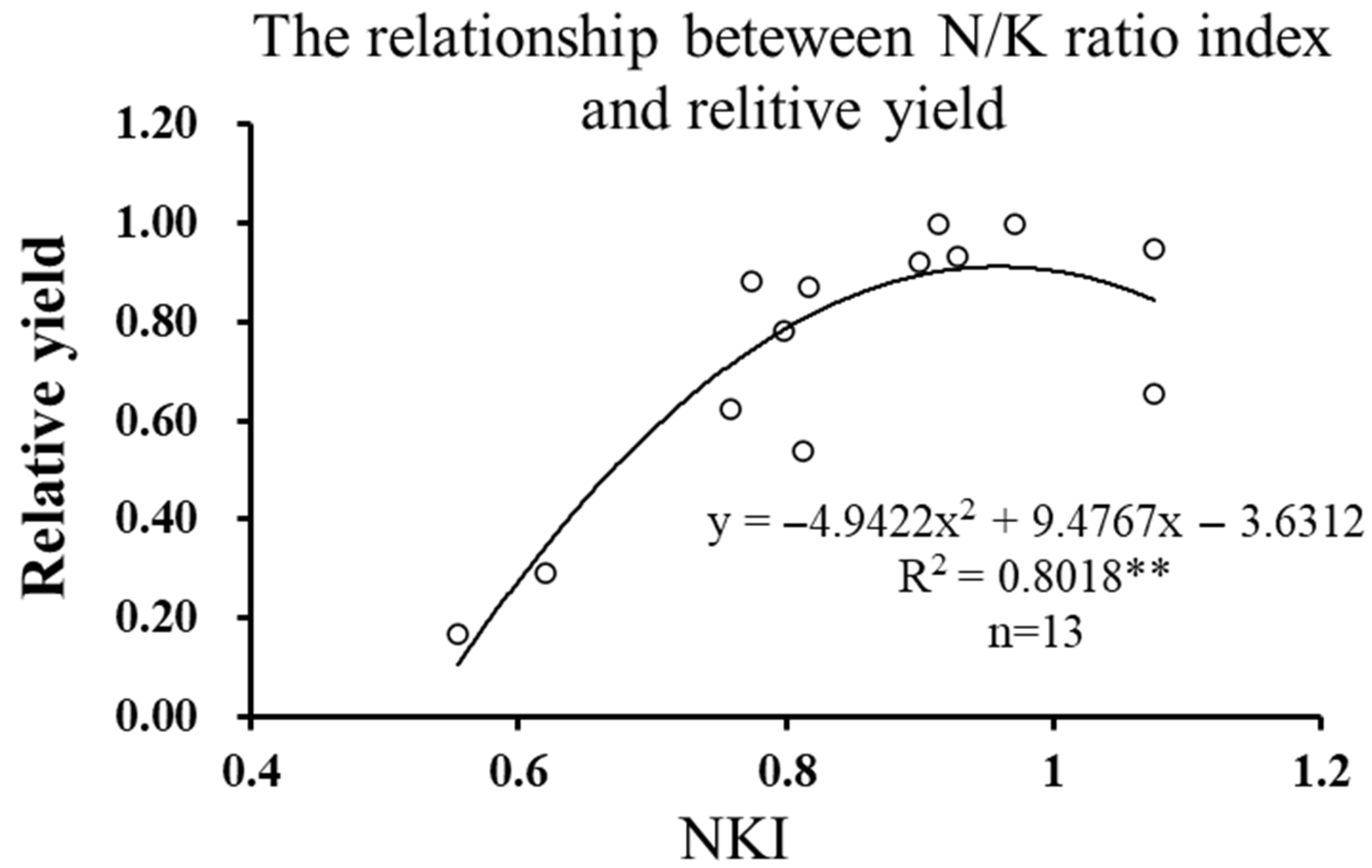
As shown in Figure 19, as the NKI increases, the relative yield of sweet potatoes shows a trend of first increasing and then decreasing. When the NKI approaches 1, the relative yield of sweet potatoes reaches its maximum value. The coefficient of determination (R2) for the fitted function exceeded 0.8 (p < 0.01), confirming a strong functional relationship between NKI and relative yield. Previous studies have primarily focused on the role of potassium nutrition index (KNI) and nitrogen nutrition index (NNI) in crop nutrient diagnosis [15,29], often neglecting the impact of nitrogen–potassium balance on sweet potato yield. By investigating the relationship between the N-K ratio index and sweet potato yield, this study demonstrates that nitrogen–potassium balance is equally crucial for the yield formation of sweet potato. While diagnosing nitrogen and potassium deficiencies in sweet potato, the nitrogen–potassium ratio should also be adopted as a key diagnostic indicator for assessing nitrogen–potassium balance.

4.3. Effect of Sweet Potato Critical Nitrogen–Potassium Ratio Index on Fertilization Patterns

Figure 14 illustrates the critical nitrogen–potassium ratio index values derived by integrating data from each growth stage of the independent verification trials into the constructed critical N-K ratio model. Throughout the entire growth period, the NKI for sweet potato plants initially declined, then increased, before ultimately stabilizing. This is primarily due to the higher nitrogen demand of sweet potato during the early growth stage, which leads to a decline in the N-K ratio. As the plant develops, K requirement surpasses that of N, resulting in an increase in the N-K ratio during later stages. This pattern suggests that under the current fertilization approach (with all fertilizers applied as a single basal dose and no topdressing), sweet potato plants experienced an excessive N supply during the first 32 days after transplanting, followed by N deficiency between days 32 and 71. These findings highlight the need for adjustments in sweet potato fertilization practices. In previous physiological studies on sweet potato cultivation, Du et al. [6] demonstrated that even with a 20% reduction in N input, applying N fertilizer during the tuber formation stage (approximately 35 days after transplanting) significantly improves nitrogen-use efficiency. This practice maintains favorable root vitality and directs nutrients toward developing roots, substantially increasing both the number of roots and overall yield. Ning et al. [18] reported that during early growth, low N availability promotes root growth and differentiation, whereas high N levels inhibit tuber formation and reduce yield. In contrast, during the mid-growth stage, moderate to high nitrogen application enhances source–sink development and supports higher tuber yield. This study was conducted based on a single-application fertilization model. The results showed an excess of fertilizer in the early stage but a deficiency in the middle and late stages, which coincides with the fertilization strategy for sweet potato under a split-application model: while ensuring normal early-stage development, nitrogen fertilization should be limited initially and concentrated primarily during the mid-growth stage [35,36]. Furthermore, under N-deficient soil conditions, combined N-K fertilization has been shown to enhance productivity, with topdressing treatments generally producing the greatest yield increases [17]. These studies provide direct physiological insight into the dynamics of the NKI observed across the entire growth cycle in the present study. They also offer valuable guidance for refining fertilization regimes and optimizing nutrient-diagnostic models aimed at achieving high-quality, high-yield sweet potato production.

4.4. Limitations of Model Construction

This study was conducted at two different experimental sites within one year, with certain variations in the growing seasons. Additionally, two varieties were used for model validation. This approach aimed to assess the model’s applicability from a more comprehensive perspective. However, due to differences in geographical location, season, and variety among the experiments, although the 95% credibility intervals of the parameters of the constructed critical curve exhibited significant overlap, the posterior medians still showed certain discrepancies. Therefore, multi-year and multi-site experiments are still needed to demonstrate the model’s broader applicability. Meanwhile, the assessment of critical conditions for nitrogen and potassium indicated that under the K2 and K3 conditions, the “non-limiting nitrogen” condition was not achieved. Under such circumstances, the constructed whole-plant critical nitrogen concentration model for sweet potato carries a risk of underestimation. Consequently, future studies should expand the nitrogen fertilizer gradient to attain the “non-limiting nitrogen” condition, thereby ensuring the accuracy of model construction.
Furthermore, the dataset used for model construction consisted of four N levels and four K levels, whereas the validation dataset comprised five N levels and two K levels. Moreover, the specific N and K gradients in the validation dataset were not consistent with those in the modeling dataset. Consequently, it was not possible to perform a quantitatively standardized diagnosis for models constructed under different fertilization levels; instead, only the combined general model could be validated. In addition, the K0 and K1 treatments in Experiment 3 were close to the minimum and maximum values observed in Experiments 1 and 2, respectively. Under such circumstances, the quantitative indicators calculated (RMSE, n-RMSE) did not perform well. Therefore, the model validation in this study primarily focused on practical applicability, i.e., diagnosing the sufficiency or deficiency status of N and K. In our previous study [20], the validation of the critical model was confined to simply categorizing nitrogen status as either limited or non-limited. In the present study, we propose that the uncertainty of the curve (the 95% credibility intervals) can be incorporated as a criterion for assessing the degree of deviation. However, given that this uncertainty interval differs only slightly from the actual critical curve and exhibits overlap with it, and that actual diagnostic results from the previous study also showed that data points were rarely concentrated within the 95% credibility intervals, we consider that for now, the nutritional status of the elements should still be evaluated based on the degree of deviation from the curve, combined with the NNI indicator, while the 95% credibility intervals may serve as a refined diagnostic metric. In summary, future research should conduct replicated experiments to quantitatively evaluate the accuracy of the model.

5. Conclusions

This study constructed the critical N concentration curves under different K levels and the critical K concentration curves under different N levels. There was no significant difference between the critical N concentration model under different K levels and the critical K concentration model under different N levels, which had good versatility. These were combined into one curve, expressed as Nc = 3.31 DW−0.46 and Kc = 3.39 DW−0.47, respectively. On this basis, a critical nitrogen–potassium ratio model for sweet potato growth and development was further constructed, expressed as Nc/Kc = 0.976 DW0.01. Within the scope of this study, the model demonstrated utility in diagnosing nitrogen–potassium balance during sweet potato growth. The nitrogen-to-potassium ratio nutrient index developed in this study suggests that appropriate nitrogen-to-potassium ratios promote biomass accumulation and relative yield in sweet potato. However, given the limitations of the validation dataset used in this study, as well as the potential variability of the model under different environmental conditions, cultivars, and management practices, the robustness and general applicability of the model still require further validation through multi-year and multi-location replicated trials. Further refinement of the critical nitrogen–potassium ratio model is expected to enhance the accuracy of diagnosing nitrogen–potassium balance during the growth period and improve yield predictions. This also supports the development of efficient and environmentally sustainable nutrient management strategies.

Author Contributions

X.Z.: Conceptualization, Formal analysis, Software, Validation, Writing—original draft, Writing—review and editing. S.W.: Conceptualization, Data curation, Investigation, Visualization, Writing—original draft, Writing—review and editing. X.Q., J.L.: Data curation, Methodology, Software, Validation, Visualization. J.B.: Data curation, Formal analysis. Z.Z.: Data curation, Formal analysis, Software. X.X.: Supervision, Visualization. Y.Z.: Software, Supervision, Visualization. G.L.: Investigation, Visualization. Z.L.: Funding acquisition, Investigation, Project administration, Resources, Software, Supervision, Visualization, Writing—review and editing. All authors have read and agreed to the published version of the manuscript.

Funding

This work was supported by the Natural Science Foundation of China (32272222, 32572192), Zhejiang Province Aid-to-Xinjiang Science & Technology Special Mission, Three Rural Affairs and Nine Parties Project in Zhejiang (2026SNJF013).

Data Availability Statement

The data presented in this study are available on request from the corresponding author.

Conflicts of Interest

The authors declare that they have no known competing financial interests or personal relationships that could have appeared to influence the work reported in this paper.

References

  1. Jiang, Y.F.; Ma, D.F. The Sweetpotato of China Agricultural Research System promotes the industrialization and disciplinary development of sweetpotato. J. Jiangsu Norm. Univ. 2016, 34, 23–27. [Google Scholar]
  2. Tang, W.; Zhang, Y.-G.; Liu, Y.-J.; Wang, X.; Kou, M.; Yan, H.; Ma, D.-F.; Li, Q. Quantifying cultivation technique and growth dynamics of purple-fleshed sweetpotato (Ipomoea batatas L.) in China. Field Crop Res. 2018, 227, 41–48. [Google Scholar] [CrossRef]
  3. Melvin, G.; Lu, G.; Zhou, W. Genotypic variation for potassium uptake and utilization efficiency in sweetpotato. Field Crop Res. 2002, 77, 7–15. [Google Scholar]
  4. Ning, Y.W.; Ma, H.B.; Zhang, H.; Wang, J.-D.; Xu, X.-J.; Zhang, Y.-C. Response of sweetpotato in source-sink relationship establishment, expanding, and balance to nitrogen application rates. Acta Agron. Sin. 2015, 41, 432–439. [Google Scholar] [CrossRef]
  5. Yao, H.; Zhang, L.; Shi, C.; Zhang, C.; Liu, H.; Zhang, H. Effects of potassium application period on the plant traits and yield of sweet potato. Acta Agric. Boreali-Occident. Sin. 2010, 19, 82–85. [Google Scholar]
  6. Du, X.; Liu, X. Lowering rate and split application of nitrogen fertilizer promote root differentiation and storage root enlargement of sweet potato. Plant Nutr. Fert. Sci. 2019, 25, 1702–1709. [Google Scholar]
  7. Lemaire, G.; Gastal, F.; Salette, J. Analysis of the effect of N nutrition on dry matter yield of a sward by reference to potential yield and optimum N content. In Proceedings of the 16th International Grassland Congress, Nice, France, 4–11 October 1989; pp. 179–180. [Google Scholar]
  8. Greenwood, D.J.; Lemaire, G.; Gosse, G.; Cruz, P.; Draycott, A.; Neeteson, J.J. Decline in percentage N of C3 and C4 crops with increasing plant mass. Ann Bot-London 1990, 67, 181–190. [Google Scholar] [CrossRef]
  9. Justes, E.; Mary, B.; Meynard, J.M.; Machet, J.M.; Huché-Thélier, L. Determination of a critical nitrogen dilution curve for winter wheat crops. Ann Bot-London 1994, 74, 397–407. [Google Scholar] [CrossRef]
  10. Plénet, D.; Lemaire, G. Relationships between dynamics of nitrogen uptake and dry matter accumulation in maize crops: Determination of critical N concentration. Plant Soil 1999, 216, 65–82. [Google Scholar] [CrossRef]
  11. Giletto, C.M.; Echeverría, H.E. Critical nitrogen dilution curve in processing potato cultivars. Am. J. Plant Sci. 2015, 6, 3144–3156. [Google Scholar] [CrossRef]
  12. Lv, Z.; He, W.; Lin, L.; Deng, L.; Yu, M.; Fei, C.; Wang, J.; Jie, R.; He, M.; Cui, P.; et al. Development of critical shoot and root N curves for diagnosing sweetpotato shoot and root N status. Field Crop Res. 2020, 257, 107927. [Google Scholar] [CrossRef]
  13. Zhao, M.; Wang, A.; Zhao, W.; Zhang, Z.; Jiang, J.; Fang, S.; Miao, M. Simulation of critical nitrogen concentration and nitrogen nutrition index in greenhouse cucumber. Soil Fert. Sci. 2018, 6, 141–147. [Google Scholar]
  14. Patricio Sandaña, P.; Soratto, R.P.; Silva JCde, A.; Valenzuela, A.; Parecido, R.J.; Fernandes, A.M.; Ciampitti, I.A. Critical potassium dilution curve for potato crops. Field Crops Res. 2024, 316, 109492. [Google Scholar] [CrossRef]
  15. He, W.; Li, J.; Lu, Y.; Chen, S.; Deng, L.; Xu, X.; Zhu, Y.; Jin, M.; Liu, Y.; Lu, G.; et al. Development of critical K dilution curves for diagnosing sweetpotato K status. Front Plant Sci. 2023, 14, 1197832. [Google Scholar] [CrossRef] [PubMed]
  16. O’Sullivan, J.N.; Blamey, F.P.C.; Asher, C.J. Diagnostic criteria for nutrition disorders of sweet potato. II. Critical nutrient concentrations in leaves. In Mineral Nutrient Disorders of Root Crops in the Pacific: A Workshop; ACIAR Proceedings No. 65; ACIAR: Canberra, Australia, 1996. [Google Scholar]
  17. Hata, H.S. Studies on the characteristics of storage root enlargement in sweet potato: II. Effects of nutrient supply levels on root enlargement. Hortic. Seed 1990, 5, 21–24. [Google Scholar]
  18. Ning, Y.W.; Ma, H.B.; Xu, X.J.; Wang, J.D.; Zhang, H.; Xu, J.P.; Chen, J.; Zhang, Y.C. Effects of deficiency of N, P, or K on growth traits and nutrient uptakes of sweetpotato at early growing stage. Sci. Agric. Sin. 2013, 46, 489–495. [Google Scholar]
  19. Wang, S.; Liu, Q.; Shi, Y.; Li, H. Interactive effects of nitrogen and potassium on photosynthesis product distribution and accumulation of sweet potato. Sci. Agric. Sin. 2017, 50, 2706–2716. [Google Scholar]
  20. Deng, L.; Xu, X.; Zhu, Y.; He, W.; Jin, M.; Liu, Y.; Lu, G.; Lv, Z. Changes in dilution curves of critical nitrogen concentration in sweetpotato under different potassium conditions. Field Crop Res. 2023, 303, 109130. [Google Scholar] [CrossRef]
  21. Jones, J.B.; Case, V.W. Sampling, handling, and analyzing plant tissue samples. In Soil Testing and Plant Analysis, 3rd ed.; Westerman, R.L., Ed.; Soil Science Society of America: Madison, WI, USA, 1990; pp. 389–428. [Google Scholar]
  22. Bremner, J.M.; Mulvaney, C.S. Nitrogen-total. In Methods of Soil Analysis: Part 2. Chemical and Microbiological Properties; Page, A.L., Ed.; American Society of Agronomy: Madison, WI, USA, 1982; pp. 595–624. [Google Scholar]
  23. Cate, R.B.; Nelson, L.A. A simple statistical procedure for partitioning soil test correlation data into two classes. Soil Sci. Soc. Am. J. 1971, 35, 658–660. [Google Scholar] [CrossRef]
  24. Makowski, D.; Zhao, B.; Ata-Ul-Karim, S.T.; Lemaire, G. Analyzing uncertainty in critical nitrogen dilution curves. Eur. J. Agron. 2020, 118, 126076. [Google Scholar] [CrossRef]
  25. Lv, Z.; Liu, X.; Tang, L.; Liu, L.; Cao, W.; Zhu, Y. Estimation of ecotype-specific cultivar parameters in a wheat phenology model and uncertainty analysis. Agric. For. Meteorol. 2016, 221, 219–229. [Google Scholar] [CrossRef]
  26. Plummer, M. JAGS Version 4.3.0 User Manual. 2017. Available online: https://sourceforge.net/projects/mcmc-jags/files/ (accessed on 31 March 2026).
  27. Ciampitti, I.A.; Makowski, D.; Fernandez, J.; Lacasa, J.; Lemaire, G. Does water availability affect the critical N dilution curves in crops? A case study for maize, wheat, and tall fescue crops. Field Crops Res. 2021, 273, 108301. [Google Scholar] [CrossRef]
  28. Li, J.; Hu, W.; Lu, Z.; Meng, F.; Cong, R.; Li, X.; Ren, T.; Lu, J. Imbalance between nitrogen and potassium fertilization influences potassium deficiency symptoms in winter oilseed rape leaves. Crop J. 2022, 10, 565–576. [Google Scholar] [CrossRef]
  29. Fontana, M.; Bélanger, G.; Ciampitti, I.; Ziadi, N.; Guillaume, T.; Steiner, S.; Bragazza, L. Critical dilution curves for phosphorus, potassium, and sulfur along with relationships to nitrogen for major crops. Plant Soil 2025, 1–14. [Google Scholar] [CrossRef]
  30. Wang, S.; Li, H.; Liu, Q.; Shi, Y. Interactive effects of nitrogen and potassium on root growth and leaf enzyme activities of sweet potato. Acta Agric. Boreali-Sin. 2015, 30, 167–173. [Google Scholar]
  31. Hou, M.; Liu, Y.J.; Wang, X.; Tang, W.; Yan, H.; Ma, D.F.; Zhang, Y.G.; Li, Q. Effects of nitrogen application combined with potassium on yield and quality of edible sweetpotato. Southwest China J. Agric. Sci. 2015, 28, 260–264. [Google Scholar]
  32. Zhao, B.; Ata-Ul-Karim, S.T.; Liu, Z.; Ning, D.; Xiao, J.; Liu, Z.; Qin, A.; Nan, J.; Duan, A. Development of a critical nitrogen dilution curve based on leaf dry matter for summer maize. Field Crop Res. 2017, 208, 60–68. [Google Scholar] [CrossRef]
  33. Yang, C.-J.; Tang, D.-B.; Zhang, K.; Du, K.; Huang, H.; Qiao, H.-H.; Wang, J.-C.; Lyu, C.-W. Effect of reducing nitrogen and potassium application on yield and quality in sweet potato. Sci. Agric. Sin. 2024, 50, 1341–1350. [Google Scholar] [CrossRef]
  34. Wang, M.; Fang, Z.G.; Liang, B.; Zeng, L.S.; Li, J.L. Effects of combined application of nitrogen and potassium fertilizer on yield and quality of fresh-eating sweet potato in soil with high fertility. Acta Agric. Boreali-Sin. 2016, 31, 199–204. [Google Scholar]
  35. Loebenstein, G.; Thottappilly, G. (Eds.) The Sweetpotato; Springer Science + Business Media: Berlin/Heidelberg, Germany, 2009. [Google Scholar]
  36. Foloni, J.S.S.; Corte, A.J.; Corte, J.R.d.N.; Echer, F.R.; Tiritan, C.S. Topdressing fertilization with nitrogen and potassium levels in sweet-potato. Semin. Cienc. Agrar. 2013, 34, 117–126. [Google Scholar] [CrossRef]
Figure 1. Meteorological information.
Agriculture 16 00836 g001
Figure 2. Changes in whole-plant dry matter during growth period of sweet potato under different nitrogen and potassium treatments. Vertical lines represent the LSD values (p < 0.05) at each sampling date.
Agriculture 16 00836 g002
Figure 3. Changes in N concentration in the whole-plant sweet potato during growth stages under different N and K treatments. Vertical lines represent the LSD values (p < 0.05) at each sampling date.
Agriculture 16 00836 g003
Figure 4. Changes in whole-plant K concentration in sweet potato during growth stage under different nitrogen and potassium treatments. Vertical lines represent the LSD values (p < 0.05) at each sampling date.
Agriculture 16 00836 g004
Figure 5. Relationship between the biomass to maximum biomass (W/Wmax) ratio, the plant nitrogen concentration to maximum N (%N/%Nmax), and the plant potassium concentration to maximum K (K/Kmax) versus fertilizer rate levels, and the W/Wmax to %N/%Nmax to K/Kmax ratios for this study across sampling times.
Agriculture 16 00836 g005
Figure 6. Model of critical N concentration of whole-plant sweet potato under different K levels (Part (A) Changhua site; Part (B) Tianmushan site).
Agriculture 16 00836 g006
Figure 7. Critical N concentration model for whole-plant sweet potato at two experimental sites. The solid lines represent the critical N concentration dilution curves, and the dashed lines represents the 95% credibility intervals.
Agriculture 16 00836 g007
Figure 8. 95% credibility intervals for parameters a and b.
Agriculture 16 00836 g008
Figure 9. Comprehensive critical whole-plant N concentration model. The solid lines represent the critical N concentration dilution curves, and the dashed lines represents the 95% credibility intervals.
Agriculture 16 00836 g009
Figure 10. Critical K concentration model of whole-plant under different N levels (Part (A) Changhua site; Part (B) Tianmushan site).
Agriculture 16 00836 g010
Figure 11. Critical potassium concentration model for whole sweet potato plants in two experimental sites. The solid lines represent the critical K concentration dilution curves, and the dashed lines represents the 95% credibility intervals.
Agriculture 16 00836 g011
Figure 12. The 95% credibility intervals for parameters a and b.
Agriculture 16 00836 g012
Figure 13. Comprehensive critical K concentration model. The solid lines represent the critical K concentration dilution curves, and the dashed lines represents the 95% credibility itervals.
Agriculture 16 00836 g013
Figure 14. The critical N/K model of sweet potato.
Agriculture 16 00836 g014
Figure 15. Verification of the critical N concentration model for the whole-plant sweet potato.
Agriculture 16 00836 g015
Figure 16. Verification of the critical potassium concentration model of the whole sweet potato plant.
Agriculture 16 00836 g016
Figure 17. Verification of the critical N/K model for the whole-plant sweet potato.
Agriculture 16 00836 g017
Figure 18. Effect of different N and K combined application on the N/K index of the whole-plant sweet potato.
Agriculture 16 00836 g018
Figure 19. Relationship between NKI and relative yield under different treatments. ** p < 0.005.
Agriculture 16 00836 g019
Table 1. General situation of experimental site and experimental design.
Experiment
No.
SiteCultivarN Rate (kg/ha)K Rate (kg/ha)Sampling Date
(Days After Planting)
Total N (g kg−1)Available K (mg kg−1)Available P (mg kg−1)Soil Organic Matter (%)PH
Experiment 1Changhua Town, Lin’an (CH)
(30°17′ N, 119°21′ E)
XinxiangN0 (0)
N1 (60)
N2 (120)
N3 (180)
K0 (0)
K1 (100)
K2 (200)
K3 (300)
18, 33, 48,
65, 81, 95
1.4626.2375.872.835.7
Experiment 2Tianmushan Town, Lin’an (TMS)
(30°21′ N, 119°53′ E)
XinxiangN0 (0)
N1 (60)
N2 (120)
N3 (180)
K0 (0)
K1 (100)
K2 (200)
K3 (300)
20, 35, 50,
62, 81, 99
1.6818.8074.112.715.9
Experiment 3Zhejiang A&F University (30°26′ N, 119°72′ E)Yanshu 25
Shangshu 19
N0 (0)
N1 (60)
N2 (120)
N3 (180)
N4 (240)
K0 (0)
K1 (240)
30, 47, 64,
79, 94
1.2129.7063.002.325.6
Disclaimer/Publisher’s Note: The statements, opinions and data contained in all publications are solely those of the individual author(s) and contributor(s) and not of MDPI and/or the editor(s). MDPI and/or the editor(s) disclaim responsibility for any injury to people or property resulting from any ideas, methods, instructions or products referred to in the content.