Review

Insights on Physiological, Biochemical and Genetic Responses of Tomato (Solanum lycopersicum L.) to Drought Conditions


1
Department of Agriculture, Food and Environment (Di3A), University of Catania, Via Santa Sofia 100, 95123 Catania, Italy
2
Crop Science Department, Agricultural Institute of Slovenia, 1000 Ljubljana, Slovenia
*
Author to whom correspondence should be addressed.
Agriculture 2026, 16(7), 813; https://doi.org/10.3390/agriculture16070813
Submission received: 19 February 2026 / Revised: 26 March 2026 / Accepted: 30 March 2026 / Published: 6 April 2026

Abstract

With global warming and climate change, drought stress is nowadays a threatening problem for growing vegetable crops worldwide. The introduction of more resilient and less water-demanding varieties is a key aspect for sustainable vegetable production, especially in Mediterranean countries where water availability for agricultural uses is progressively decreasing. This review highlights different mechanisms of tomato plant, as one of the most important crops of the Mediterranean countries, which are activated at physiological, biochemical and molecular levels in response to drought. With regard to the root system architecture modification, osmotic adjustments, and hormonal and antioxidant regulations are discussed. For vegetative organs, plant architecture, leaf morphology adjustments and stomatal regulation are described. Major genetic traits related to drought stress, along with responsive genes, are listed. The metabolic pathways, which determine the tolerance to drought stress, are reported and their related molecular markers used for the molecular-assisted selection (MAS) are listed. Novel growing systems and techniques which can improve efficiency for mitigating drought are highlighted; in addition, different breeding methods, both conventional and new gene-editing ones, are mentioned.

1. Introduction

The increasing frequency and severity of drought events, driven by global climate change, represent a major challenge to agricultural productivity worldwide [1,2,3]. Drought is a complex abiotic stress that affects plants performance at multiple levels, including morphological, physiological, biochemical and molecular processes [4,5]. One of its most critical impacts concerns photosynthesis, where drought stress limits carbon assimilation and stomatal closure, reducing CO2 availability and leading to non-stomatal impairments affecting mesophyll metabolism and photochemical efficiency [6,7]. Importantly, drought tolerance is not a single trait but a multidimensional and dynamic phenotype, resulting from the integration of several adaptive strategies including drought avoidance (e.g., root architecture and water uptake), drought tolerance (cellular and metabolic adjustments), and drought escape (phenological shifts). These mechanisms are further modulated by genotype × environment interactions, developmental stage, and stress intensity, making the identification and the selection of drought-resilient genotypes particularly challenging.
Tomato (Solanum lycopersicum L., 2n = 24) is one of the most widely cultivated vegetable crops globally and is characterized by relatively high water requirements. It is grown using diverse production systems, ranging from rainfed conditions to intensive irrigated systems in open fields, greenhouses, and hydroponics [8]. Global production reached approximately 188.5 million tons in 2024, with a cultivated area exceeding 5.1 million hectares [9]. Thus, tomato is considered moderately sensitive to drought, particularly during reproductive stages [10,11]. These drought effects reflect not only physiological limitations but also the disruptions in hormonal regulation and source–sink relationships. Over the past decades, considerable efforts have been devoted to improving tomato performance under water-limited conditions, particularly in Mediterranean environments [12]. While classical breeding has successfully enhanced yield, fruit quality, and nutritional attributes, progress in drought tolerance has been comparatively limited due to the restricted genetic variability within cultivated germplasm and the polygenic nature of stress adaptation [13]. In this context, the exploitation of the full spectrum of the drought-responsive mechanisms requires an integrated approach that combines physiological understanding, molecular dissection, and advanced breeding strategies.
In this review, we provide a comprehensive and critical synthesis of the mechanisms underlying tomato adaptation to drought stress, encompassing physiological, biochemical, and genetic responses. Particular attention has been paid to the integration of these processes across plant organs and developmental stages, as well as to emerging breeding approaches, including the molecular and the biotechnological tools aimed at developing drought-resilient tomato cultivars.

2. Drought Stress and Plant Biological Mechanisms Involved

Defence mechanisms play a critical role in determining whether the tomato plant is sensitive or more tolerant to drought conditions. In general, three mechanisms may be activated in response to drought stress, and they include the following: (i) increase water uptake; (ii) avoid water loss; (iii) improve biochemical and genetic pathways for increasing plant drought tolerance. Drought tolerance can be categorized into constitutive traits, which are expressed under both well-watered and drought conditions, and drought-responsive traits, which are induced only under significant water deficit [14]. While drought-responsive traits contribute to yield maintenance primarily under severe water stress, the constitutive ones influence yield across a broader range of drought intensities, including mild and moderate stress [15].

2.1. Tomato Plant Architecture and Physiological Modifications in Response to Drought

2.1.1. Modification at the Root Level

Tomato plants enhance root length and density when grown under drought conditions, particularly in deeper soil layers, to access water unavailable in upper layers. That determines an increment of the root-to-shoot ratio, enhancing water uptake efficiency [16]. Nevertheless, the effectiveness of this strategy is highly dependent on soil characteristics and cultivar genetic background. In addition, the development of a larger root system requires significant carbon allocation that may reduce resources available for shoot growth and fruit production. This mechanism illustrates the fundamental trade-off between drought survival strategies and plant productivity, which is particularly relevant for crops such as tomato for which fruit yield represents the main agronomic objective.
Root architecture modifications are regulated by hormonal adjustments, such as altered levels of auxins and cytokinins, and the upregulation of genes associated with root growth [17]. Abscisic acid (ABA) plays a central role in root signalling during drought stress. It is synthesized primarily in roots and transported to shoots or rapidly produced in leaves in response to the decline of water potential [18]. ABA induces stomatal closure to minimize water loss and activate the expression of drought-responsive genes, contributing to plant adaptation [19]. However, prolonged or excessive ABA accumulation may also negatively affect plant growth by inhibiting cell expansion and reducing photosynthetic activity, illustrating the trade-off between stress protection and growth maintenance. Therefore, although ABA signalling is essential for drought acclimation, its regulatory balance is critical, as excessive hormonal responses may compromise overall plant development.
To maintain cellular turgor under drought, roots accumulate osmolytes, such as proline, glycine betaine, and soluble sugars, which balance osmotic potential, stabilize proteins and membranes, and protect cellular structures [20]. These osmolytes balance the osmotic potential between root cells and the surrounding soil, protecting cellular structures and stabilizing proteins and membranes. Despite their protective role, the accumulation of osmolytes is not always directly correlated with enhanced drought tolerance, and in some cases, it may represent a general physiological response to stress rather than a specific adaptive mechanism. Indeed, several studies have suggested that osmolyte accumulation may serve more as a biochemical indicator of stress intensity rather than a direct determinant of drought resistance. The increase in antioxidant enzymes, such as superoxide dismutase (SOD), catalase (CAT), and peroxidase (POD), is also noted under drought conditions. These enzymes mitigate oxidative damage by scavenging reactive oxygen species (ROS), which are elevated under water deficit [21,22]. The production of both enzymatic and non-enzymatic antioxidants protects root cells from oxidative damage, maintaining cellular integrity. However, the efficiency of antioxidant responses varies considerably among tomato genotypes and their contribution to improved drought tolerance under field conditions remains insufficiently clarified.

2.1.2. Modification at the Plant Growth Level

At the leaf level, one of the immediate plant responses to drought is the stomatal closure after the perception of drought stress, often mediated by a decrease in leaf water potential and an increase in ABA concentration [23,24]. ABA accumulates in response to drought and binds to receptors in guard cells. This binding triggers a signalling cascade involving secondary messengers, such as calcium ions (Ca2+), reactive oxygen species (ROS), and nitric oxide (NO). These messengers activate ion channels, leading to the efflux of potassium ions (K+) and chloride ions (Cl) from the guard cells. Concurrently, there is an influx of calcium ions, which further amplifies the signal. The loss of these ions causes water to exit the guard cells osmotically, reducing their turgor pressure and leading to stomatal closure [16]. This reduction in turgor pressure causes the guard cells to become flaccid, effectively closing the stomatal pore and reducing water loss through transpiration. While this mechanism is essential for preventing excessive water loss, stomatal closure also restricts CO2 diffusion into the leaf mesophyll, thereby limiting photosynthetic carbon assimilation and potentially reducing plant productivity under prolonged drought conditions.
Different leaf morphological adjustments take place in response to stress such as the leaf size reduction that occurs due to decreased cell expansion and slowed leaf growth rates [25]. At the same time, it helps to minimize the surface area of the leaf through which water can be lost via transpiration. However, the reduction in leaf area also decreases the photosynthetic surface available for carbon fixation, which may negatively impact biomass accumulation and yield. The development of thicker leaves with increased succulence helps to maintain cellular hydration levels despite the reduced water availability [21]. Thicker leaves have larger water storage capacity within their tissues, thus higher availability of water for plant functioning. Leaf curling or rolling is another structural adjustment reducing the exposure of leaf surfaces to direct sunlight and air, thereby minimizing water loss through transpiration. Rolled or curled leaves create a microenvironment that retains moisture and protects against excessive evaporation [22]. Another change is the increased deposition of cuticular wax, which forms a barrier that reduces water loss through the leaf surface [26] and prevents water loss from non-stomatal channels [27]. The increase in the trichome density (hair-like structures) on the leaf and stem surface can also affect light reflection and temperature regulation, further supporting water conservation [28]. Despite these protective roles, the effectiveness of these morphological traits can vary considerably among tomato cultivars and environmental conditions, indicating that no single trait alone is sufficient to confer drought tolerance. Prolonged water stress may induce the senescence of older leaves or lead to their shedding. This adaptive response reallocates resources from older, less productive leaves to newer growth areas, ensuring efficient water use and enhancing overall plant survival during periods of water scarcity [21]. However, accelerated senescence may also reduce the overall photosynthetic capacity of the plant and limit assimilate availability for fruit development, highlighting the trade-off between survival strategies and crop productivity. Taken together, the structural and physiological modifications occurring at both the root and shoot levels represent coordinated responses aimed at maintaining plant water status. Thus, the effectiveness of these mechanisms largely depends on environmental conditions, genotype-specific traits, and the interaction between physiological and biochemical stress responses. Moreover, many of the physiological and structural responses described above have been characterized primarily under controlled experimental conditions, which may not fully represent the complexity of field environments where drought often interacts with additional stresses such as high temperature or nutrient limitation.

2.1.3. Modifications of the Reproductive Development and Fruit Set

The drought stress in S. lycopersicum not only affects vegetative growth but also exerts profound effects on reproductive development, ultimately determining yield stability. In particular, reproductive processes such as pollen development, viability, fertilization efficiency and fruit set, highly sensitive to drought stress, remain underrepresented [29]. Drought stress has been shown to impair microsporogenesis and pollen maturation, leading to reduced pollen viability and germination capacity, as well as altered anther dehiscence, thereby limiting successful pollination [30]. These effects are often associated with carbohydrate limitation and oxidative stress in developing pollen grains, which disrupt cellular homeostasis and reproductive competence.
At the molecular level, fruit set in tomatoes is tightly regulated by the balance between auxin and gibberellins (GA), which act as key hormonal signals, initiating ovary growth following fertilization [31]. Under optimal conditions, successful fertilization triggers auxin accumulation in ovary tissues, which subsequently promotes gibberellin biosynthesis, leading to cell division and fruit development [32]. However, drought stress disrupts this hormonal equilibrium by altering auxin transport and signalling, as well as GA metabolism, reducing fruit set and increasing flower/fruit abortion [33]. Experimental evidence indicates that exogenous application of auxin or gibberellins can partially rescue fruit set under stress conditions, further supporting the central role of auxin–GA crosstalk in drought-affected reproductive processes [34,35].
Moreover, emerging studies suggest that drought-induced transcriptional reprogramming in reproductive tissues involves key regulators such as ARFs (Auxin Response Factors), DELLA proteins, and ABA-dependent signalling pathways, highlighting a complex hormonal network integrating stress perception with reproductive development [36,37]. Notably, increased abscisic acid (ABA) levels under drought conditions may antagonize auxin and gibberellin signalling, further contributing to reproductive failure [38]. Despite these advances, the integration of hormonal regulation with epigenetic and transcriptional networks controlling reproductive resilience under drought in tomatoes remains poorly understood. In particular, whether epigenetic mechanisms contribute to the regulation of hormone biosynthesis and signalling in reproductive organs represents a key unanswered question. Addressing these gaps is essential for developing strategies aimed at stabilizing the fruit sets and the yield under drought conditions.

2.2. Biochemical Adjustment

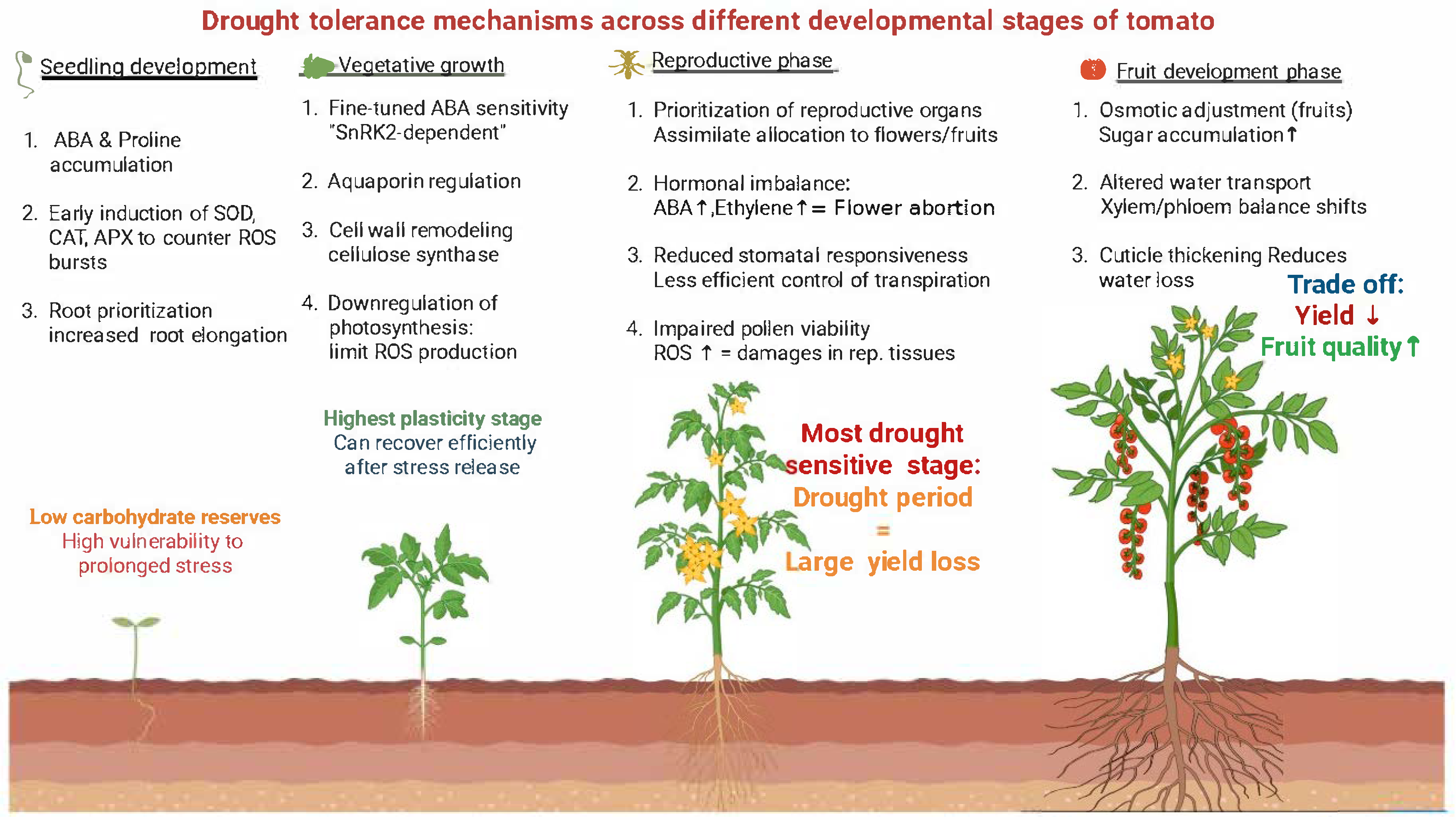
Beyond the structural and the physiological modifications, drought stress also triggers a wide range of biochemical responses that contribute to cellular protection and metabolic adjustment along the growing cycle of the plant at different stages (Figure 1). These biochemical mechanisms often operate in close coordination with the morphological and physiological responses described above, reinforcing plant capacity to maintain cellular homeostasis under water-deficit conditions.

2.2.1. Plant Osmotic Adjustments

In response to drought stress, the majority of the horticultural crops, including economically important species such as tomato, activate protective mechanisms to manage excess excitation energy generated during photosynthesis. Non-photochemical quenching processes, such as thermal dissipation and photorespiration, alleviate photoinhibition under drought conditions [39]. Gas exchange measurements and chlorophyll fluorescence analysis are widely employed to evaluate photosynthetic responses [40]. Several strategies are activated to counteract drought-induced damage, including the accumulation of compatible solutes, like proline, glycine betaine, and soluble sugars [41]. These osmolytes assist in maintaining turgor pressure, stabilizing proteins and membranes, and promoting cellular water retention, thereby enhancing drought tolerance [42].
Proline serves a multifaceted role in drought tolerance. It not only contributes to osmotic balance but also stabilizes subcellular structures, protects enzymes, and acts as a redox buffer against oxidative damage. Moreover, it supports the expression of stress-responsive genes and contributes to the restructure of root system architecture, enhancing water uptake [13,37]. In addition to its metabolic roles, proline is involved in modulating mitochondrial activity and is linked to energy conservation under stress conditions. Glycine betaine protects the photosynthetic system, including photosystem II (PSII), from stress-induced damage by preserving the structural integrity of thylakoid membranes, stabilizing protein–pigment complexes and preventing the over-reduction of the electron transport chain under drought conditions [43,44]. This protection helps maintain photochemical efficiency, reduces photoinhibition, and ensures sustained carbon assimilation under limited water availability. Studies have shown that drought-tolerant tomato cultivars accumulate higher levels of glycine betaine due to enhanced expression of its biosynthetic enzymes, such as choline monooxygenase (CMO) and betaine aldehyde dehydrogenase (BADH) [39,40]. This accumulation is important in maintaining enzymatic activity and supporting photosynthetic efficiency during stress.
Soluble sugars, including sucrose, glucose, and fructose, serve not only as osmo-protectants but also as signalling molecules and metabolic energy sources. They facilitate osmotic balance and turgor maintenance, particularly in root and leaf tissues, and regulate the expression of key drought-responsive transcription factors, including members of the bZIP, NAC, and WRKY families [41,42]. This dual metabolic and signalling function highlights the complexity of osmotic adjustment, which integrates metabolic regulation with transcriptional control of stress responses.

2.2.2. Plant Antioxidant Defence

The excessive accumulation of reactive oxygen species (ROS), such as superoxide anion ( O 2 ), hydrogen peroxide (H2O2), and hydroxyl radicals (OH), is a typical consequence of drought stress. These ROS, if not tightly controlled, can damage lipids, proteins, nucleic acids, and cellular membranes, ultimately leading to impaired physiological functions [43,45]. The plants, to contrast the oxidative damage, activate the antioxidant defence system comprising both enzymatic and non-enzymatic components. Key enzymatic antioxidants include superoxide dismutase (SOD), which catalyzes the conversion of O 2 to H2O2; catalase (CAT), which breaks down H2O2 into water and oxygen; and peroxidases (PODs), which use various substrates to neutralize H2O2 [21]. These enzymes are often upregulated in drought-tolerant cultivars and contribute to reducing oxidative load and maintaining redox balance [46].
Non-enzymatic antioxidants, such as ascorbic acid (vitamin C), glutathione (GSH), carotenoids (including β-carotene and lycopene), and flavonoids, also play important roles in ROS detoxification. The ascorbate–glutathione cycle, in particular, is important for maintaining cellular redox homeostasis and regenerating oxidized forms of antioxidants [47,48,49]. Importantly, antioxidant defence does not operate in isolation but interacts with other drought-response mechanisms, including osmotic adjustment and hormonal signalling pathways [50]. This integration allows plants to coordinate metabolic protection with physiological adaptation under drought conditions.
Carotenoids also serve as precursors for abscisic acid (ABA) synthesis, linking antioxidant defence to hormonal regulation of drought responses [51]. The maintenance of cellular hydration and water transport capacity is important for drought stress adaptation. In this context, aquaporins (AQPs), which are membrane channel proteins that facilitate transmembrane water movement, play a pivotal role in maintaining root conductivity and overall plant water status, thereby complementing other biochemical and physiological drought responses [52]. In tomato, AQPs contribute significantly to preserving conductivity, maintaining osmotic homeostasis, and enhancing water-use efficiency under drought conditions [46,53]. Among these, plasma membrane intrinsic proteins (PIPs) and tonoplast intrinsic proteins (TIPs) are particularly important in regulating cellular water transport. Their expression is modulated by environmental stimuli, such as cytosolic pH, calcium signalling, ROS, and phytohormones. In drought-tolerant tomato genotypes, genes such as SlPIP2;5, TIP1;1, and TIP2;2 are frequently upregulated, promoting improved water transport and turgor maintenance. Notably, the functional characterization of SlPIP1;7 has revealed its central role in enhancing drought tolerance. Overexpression of SlPIP1;7 resulted in improved root development, increased root hydraulic conductivity, and elevated antioxidant capacity under drought stress. Conversely, silencing of this gene led to growth inhibition and increased drought sensitivity [52]. The aquaporins are also implicated in ROS signalling, as they facilitate H2O2 diffusion across cellular membranes. This dual functionality connects water and redox homeostasis, making AQPs key regulators of stomatal behaviour and transpiration under drought [46]. Additionally, plants employ both structural and biochemical strategies to mitigate drought effects. For instance, suberin deposition in the root exodermis serves as a physical barrier that limits uncontrolled water loss. Genes, such as SIASFT and SlMYB92, are known to regulate this deposition, and their activation has been linked to improved drought survival [54,55].

2.3. The Genetic Response Under Drought Conditions

The elucidation of the tomato genome in 2012 has significantly advanced the understanding of the genetic determinants underlying abiotic stress tolerance [56]. Previous studies have provided compelling evidence that a suite of genes is involved in the tomato plant’s response to environmental stressors, particularly salinity and drought. Drought conditions elicit a complex transcriptional response, leading to the upregulation of genes associated with various physiological adaptations, including antioxidant defence, ionic equilibrium maintenance, and cell wall restructuring [52,57]. These genetic responses are closely interconnected with the physiological and biochemical mechanisms described in previous sections, indicating that drought tolerance results from a coordinated multilevel regulatory system rather than the action of individual genes. Recent genetic and molecular studies unravel the intricate network of genes and pathways that confer water stress tolerance in tomatoes. For example, in-depth analyses of the genetic architecture of stress tolerance in tomatoes highlight the presence of a combination of structural and regulatory genes in the plant providing it the ability to withstand drought [58,59,60]. The functional validation of many drought-responsive genes remains limited. Consequently, the relative contribution of specific genes to drought tolerance under field conditions is still not fully resolved, emphasizing the need for integrative studies that combine molecular genetics with physiological and agronomic evaluations.

2.3.1. Genetic Architecture of Drought Tolerance

Drought stress triggers a complex transcriptional reprogramming in tomato, leading to the activation of numerous stress-responsive genes involved in a wide range of adaptive physiological and biochemical processes, including antioxidant defence, ion homeostasis, osmotic adjustment, and cell wall remodelling. Numerous studies have delineated the molecular pathways and gene networks implicated in tomato’s drought tolerance [56,61,62]. In a functional genomics framework, drought-responsive genes can be broadly classified into two categories based on their roles in the stress response: structural effector genes and regulatory genes.
The structural effector class includes genes that encode proteins directly involved in mitigating cellular damage and sustaining metabolic functionality under stress [63,64,65]. These encompass: osmoregulatory proteins, which preserve cellular turgor pressure; antioxidant enzymes, which scavenge reactive oxygen species (ROS) and limit oxidative injury; and late embryogenesis abundant (LEA) proteins, which stabilize proteins and membranes during dehydration [66]. These genes are typically positioned downstream within the signalling cascade and they are essential for preserving physiological homeostasis under drought conditions. Conversely, the regulatory gene class comprises those encoding proteins that act as upstream modulators of stress signalling pathways. These include transcription factors and the protein kinases that function predominantly at the transcriptional and post-translational levels to initiate early stress responses. Key transcription factor families involved for drought signalling include bZIP (e.g., gbZIP), WRKY, MYB, and AP2/EREBP, which act as central regulators within drought-responsive gene networks [67]. Among these, the DREB (Dehydration-Responsive Element-Binding) and the AREB/ABF (ABA-Responsive Element-Binding–ABA-Responsive Binding Factor) families are particularly well-characterized for their roles in orchestrating gene expression in both abscisic acid (ABA)-dependent and ABA-independent pathways [68]. These transcriptional master regulators exert control over extensive gene networks by binding to the conserved cis-regulatory elements, thereby integrating external drought cues into precise molecular outputs. Their functional activity is critical for reprogramming transcriptional responses that support cellular protection, osmotic stability, and metabolic adaptation under water stress [69]. In addition to regulatory and effector genes, other key components contributing to the drought tolerance include aquaporin genes, such as TIP1;1 and PIP1;2, which regulate transmembrane water fluxes and contribute to enhanced water-use efficiency in tomato under limited water availability [70,71,72].

2.3.2. Gene Expression and Regulation (Methods to Validate the Expressed Gene by Transgenic Approaches and Gene Editing)

Transcriptomic analyses under water-deficit conditions have identified numerous drought-responsive genes in tomato plants, many of which participate in signalling pathways, osmotic adjustment, and cellular protection mechanisms [73,74]. However, drought tolerance does not result from the isolated activity of individual genes but rather from the coordinated action of regulatory transcription factors and downstream structural genes that together shape plant physiological response to stress.
Among the most prominent regulatory components, the transcription factors belonging to the AP2/ERF, MYB, and NAC families represent the key nodes within drought-responsive gene networks. For instance, members of the AP2/ERF family, such as SlDREB2, are typically associated with ABA-independent drought signalling pathways, where they regulate downstream genes involved in osmolyte biosynthesis, stress protection, and metabolic adjustment [75,76]. These transcription factors activate stress-inducible genes that contribute to cellular protection and osmotic balance, including enzymes involved in compatible solute production. One such example is SlP5CS, which encodes Δ1-pyrroline-5-carboxylate synthetase, a key enzyme in proline biosynthesis. Proline accumulation contributes to osmotic adjustment, stabilization of cellular structures, and protection of macromolecules during dehydration [77,78,79]. Through this hierarchical regulatory architecture, transcription factors act upstream of metabolic and protective genes that ultimately influence plant physiological performance under drought conditions. Table 1 outlines various genes, their functions and their expression responses to water stress in tomato plants.
Recent studies have further demonstrated that transcriptional regulation can directly coordinate specialized metabolic pathways that enhance drought tolerance [80]. For example, SlMYB13 has been identified as a central regulator of two Solanaceae-specific phenolamide biosynthetic gene clusters (BGC7 and BGC11), which together include multiple biosynthetic enzymes and a transporter gene involved in phenolamide metabolism [81]. SlMYB13 binds to the promoters of genes within these clusters, promoting their coordinated expression and increasing phenolamide accumulation. Functional studies indicate that loss of SlMYB13 results in increased drought sensitivity, whereas activation of BGC7, BGC11, and SlMYB13 enhances antioxidant capacity and improves drought tolerance. Phenolamides contribute to stress resilience through their antioxidant properties, interacting synergistically with enzymatic antioxidant systems such as superoxide dismutase (SOD) and catalase (CAT) to maintain redox homeostasis under drought conditions [82]. In addition, these metabolites appear to influence phytohormonal regulation by stimulating the expression of ABA biosynthesis genes including NCED3, ABA2, and ABA3, thereby linking metabolic regulation with hormonal drought signalling [80].
Table 1. Gene expression and functional responses to drought stress of tomato plants.
Gene NameFunctionExpression in Response to Water StressRef.
SlDREB2Transcription factorUpregulated in leaves and roots under drought stress[76]
SlLEA2Late embryogenesis abundant proteinConstitutively expressed, upregulated in response to dehydration[66]
SlSOS1Sodium transporterUpregulated in roots under saline conditions, implicated in drought response[78,79]
SlP5CSDelta-1-pyrroline-5-carboxylate synthetaseInduced in leaves and roots under drought stress, involved in proline biosynthesis[81,82]
In addition to transcription factors, post-transcriptional regulation mediated by microRNAs (miRNAs) has emerged as an important component of drought-responsive gene networks [83]. Several drought-responsive miRNAs have been identified in tomato, including miR160, miR165, miR166, miR171, and miR9552, which exhibit differential expression patterns between drought-tolerant and drought-sensitive cultivars [82]. These miRNAs target genes involved in hormone signalling, cell wall modification, and stress protection. miR9552, for example, is predicted to regulate UDP-glucosyltransferase genes, enzymes involved in the biosynthesis of secondary metabolites such as flavonoids and in the modulation of phytohormone levels including auxin and ABA [84]. Through these regulatory interactions, miRNAs can influence physiological processes such as stomatal regulation, root architecture, and metabolic reprogramming during drought stress.
Despite the growing number of drought-responsive genes identified through transcriptomic analyses, functional validation remains limited for many candidate genes. In many cases, gene expression changes detected under stress conditions are interpreted as indicators of functional relevance, yet transcript abundance alone does not necessarily establish causal roles in drought tolerance. Only a subset of candidate genes has been experimentally validated through transgenic overexpression, gene silencing, or genome-editing approaches, which are essential for confirming their physiological contributions to drought adaptation. Consequently, the hierarchical relationships between regulatory transcription factors and downstream structural genes remain incompletely characterized. Future research should therefore prioritize integrative functional genomics approaches combining transcriptomics, gene-editing technologies, and physiological phenotyping. Such strategies will help clarify the regulatory networks connecting ABA-dependent and ABA-independent pathways, identify key regulatory nodes controlling drought responses, and ultimately facilitate the development of tomato cultivars with improved drought resilience.

2.3.3. Epigenetic Approach

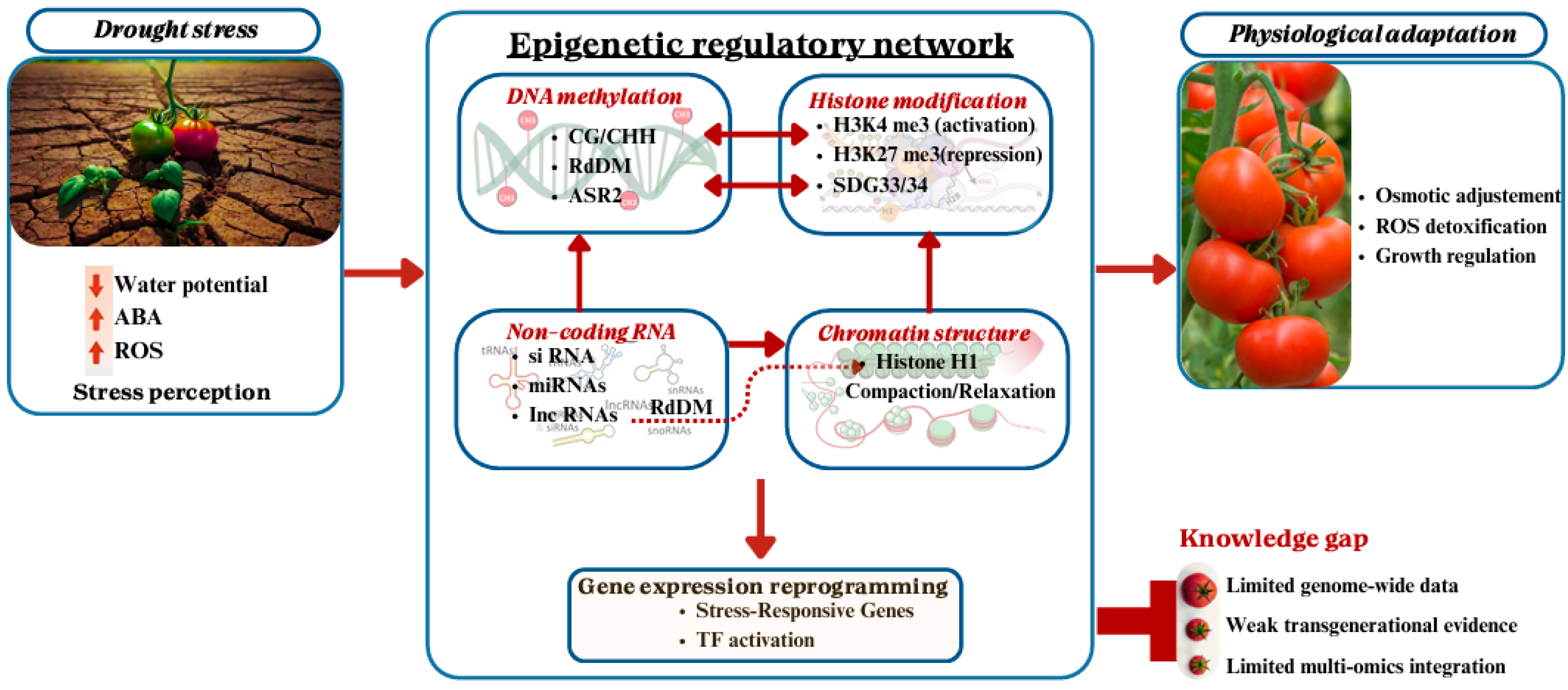
Epigenetic regulation represents a key mechanism by which S. lycopersicum responds to drought stress, enabling rapid transcriptional reprogramming and contributing to stress acclimation. This regulation involves a complex interplay between DNA methylation, histone modifications, chromatin structural proteins, and non-coding RNAs [85]. Figure 2 highlights the main epigenetic network involved in response to drought signalling in tomato. However, despite increasing interest, current evidence in tomato remains fragmented and is largely derived from locus-specific or candidate gene studies rather than comprehensive genome-wide analyses, which limits our understanding of the coordinated epigenomic landscape underlying drought adaptation.
DNA methylation constitutes one of the most extensively investigated epigenetic mechanisms in tomato under water-deficit conditions. The demethylation of the Asr2 gene represents a well-characterized example, where drought-induced loss of cytosine methylation in regulatory regions correlates with transcriptional activation [86]. While this finding provides direct evidence for methylation-mediated gene regulation, it remains restricted to a limited number of loci. Some studies suggest that drought may induce context-specific methylation changes (CG, CHG, and CHH), particularly in promoter regions and transposable elements, and genome-wide methylome reprogramming in tomato under drought conditions [39,87]. Thus, this relates to tissue specificity (e.g., roots versus leaves) and temporal dynamics across stress stages. In this context, CHH methylation, potentially mediated by the RNA-directed DNA methylation (RdDM) pathway, has been proposed to play a role in early stress responses, although its functional relevance in tomato requires further validation.
Histone-based regulation adds an additional layer of complexity to drought-responsive gene expression. Early studies reported the accumulation of histone H1 variants under water-deficit conditions, suggesting a role for chromatin compaction and higher-order structure in stress adaptation [88]. More recent work has implicated histone methylation dynamics, particularly H3K9me2, in modulating transcriptional responses to drought. For example, alterations in histone methyltransferases such as SDG33 and SDG34 have been shown to influence drought tolerance by reshaping chromatin states [89]. However, much of this evidence derives from targeted or comparative studies, and the genome-wide redistribution of activating (e.g., H3K4me3, H3K9ac) and repressive (e.g., H3K27me3, H3K9me2) histone marks under drought stress of tomato remains poorly resolved. Consequently, the extent to which histone modifications coordinate large-scale transcriptional networks in tomato drought responses is still unclear.
At the locus-specific level, the Asr2 gene further illustrates the multilayered nature of epigenetic regulation. Under drought conditions, Asr2 undergoes rapid demethylation in non-CG contexts, accompanied by the loss of the repressive H3K9me2 mark, thereby facilitating transcriptional activation [86]. However, such gene-centric observations should be interpreted with caution, as they do not necessarily reflect the behaviour of the broader epigenome. An emerging, yet still insufficiently characterized, component of epigenetic regulation in tomato involves non-coding RNAs. Long non-coding RNAs (lncRNAs) and small interfering RNAs (siRNAs) have been implicated in drought responses, particularly through the RdDM pathway, which links small RNA activity to de novo DNA methylation [30,90]. siRNAs are thought to guide CHH methylation at stress-responsive loci, while lncRNAs may function as scaffolds for chromatin-modifying complexes. In parallel, drought-responsive miRNAs (e.g., miR398, miR159, miR169) regulate key transcription factors and stress-related pathways [91]. Nevertheless, the functional integration between miRNAs, lncRNAs, and core epigenetic machinery in tomato remains largely unresolved, and the extent to which these pathways operate in a coordinated regulatory network under drought stress is still unclear.
A critical unresolved issue concerns the stability and heritability of drought-induced epigenetic modifications in tomato. While stress-responsive changes in DNA methylation and histone marks have been clearly documented, their persistence is primarily supported at the within-generation (mitotic) level, contributing to short-term stress memory. Robust evidence for stable transgenerational inheritance of drought-induced epialleles in tomato remains limited and largely indirect [87]. Although loci such as Asr2 exhibit rapid epigenetic reprogramming, their long-term stability across generations has not been conclusively demonstrated. Moreover, the maintenance of such epigenetic states appears to be strongly influenced by genetic background and environmental conditions, raising concerns about their predictability under field conditions. From an applied perspective, epigenetic regulation offers potential avenues for improving drought tolerance in tomato, including the identification of stable epialleles, the development of epigenetic recombinant inbred lines (epiRILs), and the use of emerging tools such as CRISPR/dCas9-mediated epigenome editing [85]. However, the practical implementation of these strategies remains constrained by the limited understanding of epigenetic stability, reversibility, and environmental sensitivity, which currently hinder their integration into breeding programmes.
In summary, although DNA methylation, histone modifications, chromatin organization, and non-coding RNAs have each been implicated in tomato drought responses, current evidence does not yet support a fully integrated, genome-wide model of epigenetic regulation. Future research should prioritize multi-omics approaches combining methylome, chromatin profiling, and sRNA sequencing across tissues and stress stages to elucidate the spatiotemporal dynamics of epigenetic regulation and to better assess its potential for enhancing drought resilience in tomato.

2.4. Integrated Signalling Network Controlling Drought Responses in Tomato

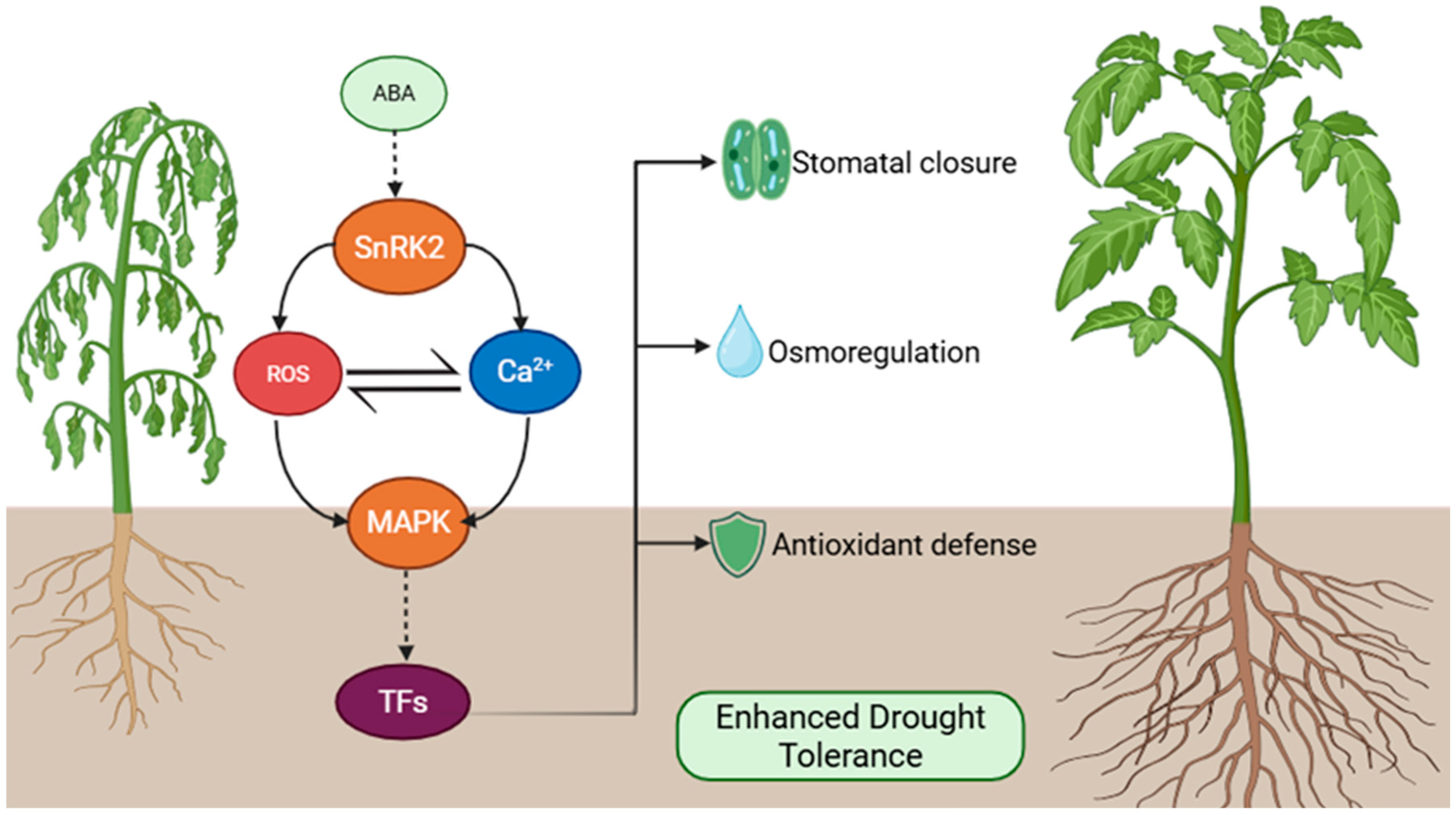
Plant responses to drought stress emerge from the coordinated interaction between hormonal signalling, redox homeostasis, and transcriptional reprogramming [73] represented in Figure 3.
Among these regulatory components, abscisic acid (ABA) acts as a central integrator linking environmental perception with physiological and molecular adjustments. Under water-deficit conditions, increased ABA accumulation activates the canonical PYR/PYL/RCAR–PP2C–SnRK2 signalling cascade, which regulates ion channel activity in guard cells and promotes stomatal closure, thereby improving water-use efficiency [92]. Specifically, subclass III SnRK2 kinases (e.g., SnRK2.2/2.3/2.6/OST1) become activated upon PP2C inhibition and directly phosphorylate downstream targets including SLAC1 anion channels and ABA-responsive transcription factors. Emerging evidence indicates that SnRK2s can also intersect with mitogen-activated protein kinase (MAPK) cascades, for instance through modulation of MAPKKKs, such as MAPKKK18, establishing a phosphorylation relay between ABA core signalling and MAPK modules [93]. In parallel, ABA signalling stimulates NADPH oxidases (respiratory burst oxidase homologs, RBOHs), leading to the controlled production of reactive oxygen species (ROS) [94]. In guard cells, OST1 directly phosphorylates RBOHF, while Ca2+-dependent protein kinases (e.g., CPK5, CPK6, CPK11) phosphorylate RBOHD/F at specific serine residues, resulting in enhanced ROS production tightly coupled to Ca2+ signalling [71]. Although ROS are often associated with oxidative damage, they also function as essential secondary messengers in drought signalling. ROS production in the apoplast activates plasma membrane Ca2+-permeable channels, including OSCA and cyclic nucleotide-gated channels (CNGCs), generating characteristic cytosolic Ca2+ oscillations (“Ca2+ signatures”) that encode stress intensity. These Ca2+ signals further activate CDPKs and CBL–CIPK complexes, reinforcing RBOH activity and establishing a self-amplifying ROS–Ca2+ feedback loop [95]. In particular, ROS accumulation can activate MAPK cascades, which propagate stress signals and mediate downstream transcriptional responses [96]. Canonical drought-responsive MAPK modules include MKK4/5–MPK3/6 and MKK1/2–MPK4, which are rapidly activated by ROS and can regulate both stress-responsive gene expression and programmed cell death depending on signal intensity and duration. Additionally, Ca2+-regulated kinases (CDPKs and CIPKs) have been shown to modulate MAPK activity either directly or via upstream MAPKKKs, creating a tightly interconnected phosphorylation network linking Ca2+ sensing to MAPK signalling [96,97]. These pathways converge in the nucleus, where they modulate the activity of key stress-responsive transcription factors, including members of the AREB/ABF and DREB families. These transcriptional regulators coordinate the expression of numerous drought-inducible genes involved in osmotic adjustment, antioxidant defence, and cellular protection [98]. At the transcriptional level, SnRK2s phosphorylate AREB/ABF factors to promote ABA-dependent gene expression, whereas MAPKs such as MPK3/6 can phosphorylate DREB2A, WRKY33, and other transcription factors, thereby integrating ABA-dependent and ABA-independent pathways [59]. Crosstalk between these pathways allows fine-tuning of transcriptional outputs under fluctuating drought conditions. Through this integrated ABA–ROS–MAPK regulatory network, hormonal signalling, redox regulation, and transcriptional control become tightly interconnected, enabling plants to coordinate stomatal regulation, root system plasticity and stress-responsive gene expression under water-deficit conditions.
Recent integrative studies, combining transcriptomic profiling with ecophysiological measurements, have further refined our understanding of how these regulatory networks operate across progressive stages of drought stress [99]. Transcriptional responses in tomato leaves showed to follow a stepwise activation pattern closely associated with physiological drought thresholds. At early stages of drought, corresponding to partial stomatal closure (~10% reduction in stomatal conductance), the transcriptional response was dominated by ABA-independent transcription factors, suggesting that initial stress perception involves signalling pathways that precede strong ABA-mediated regulation [100]. As drought intensity increased and stomatal conductance declined sharply, ABA-dependent transcription factors became strongly induced, indicating a transition toward hormone-mediated coordination of stress responses.
At more advanced stages of dehydration, associated with the onset of hydraulic dysfunction and leaf embolism formation, the transcriptional programme shifted toward the activation of heat shock factors and antioxidant pathways, reflecting increasing cellular stress. Under severe drought conditions, genes involved in oxidative stress regulation were strongly upregulated, highlighting the central role of ROS homeostasis in maintaining cellular integrity during prolonged dehydration.
The younger leaves exhibited transcriptional signatures consistent with a reallocation of cellular resources from growth-related processes toward structural reinforcement and homeostasis maintenance. Enhanced expression of genes involved in cell wall remodelling, including xyloglucan endotransglucosylase/hydrolases (XTHs), cellulose synthases, and fasciclin-like arabinogalactan proteins, may contribute to the production of smaller cells with reinforced cell walls capable of sustaining higher turgor pressure under reduced water availability for the plant. In addition, increased callose deposition at phloem sieve elements may limit water and solute loss, thereby supporting osmotic regulation and energy conservation. The repression of chlorophyll a/b-binding protein genes in young leaves further suggests a mechanism to reduce photosynthesis-associated ROS production during severe drought stress [99].
These findings highlight that drought tolerance in tomatoes emerges from the dynamic interplay between molecular signalling networks and ecophysiological stress thresholds. Integrating transcriptomic data with physiological indicators such as stomatal conductance and hydraulic failure therefore provides a more mechanistic framework for understanding drought adaptation. Such multi-scale approaches are likely to improve the identification of molecular markers linked to functional drought tolerance and may ultimately support the development of more resilient tomato cultivars.

3. Integrative Responses of Tomato to Drought in the Context of Combined Abiotic Stresses

Combined abiotic stresses, particularly drought, high temperature and salinity, impose complex and often synergistic constraints on tomato plants, eliciting responses that are fundamentally distinct from those observed under individual stress conditions [101]. These stress combinations converge on critical physiological and cellular processes, including plant water status, photosynthetic performance, ion homeostasis, redox equilibrium and hormonal regulation, thereby driving a highly integrated adaptive response.
At the physiological level, combined stresses induce a marked decline in stomatal conductance, relative water content and chlorophyll stability, ultimately leading to a substantial reduction in photosynthetic capacity [102]. This impairment is closely associated with decreased PSII efficiency, disruption of thylakoid membrane integrity, and accelerated leaf senescence. Importantly, the co-occurrence of heat and drought amplifies transpiration imbalance and thermal damage [99], while salinity–alkalinity stress further exacerbates ionic toxicity and nutrient disequilibrium, particularly through the disruption of K+/Na+ homeostasis [103], thereby intensifying both osmotic and ionic stress components.
At the biochemical level, combined stresses promote excessive accumulation of reactive oxygen species (ROS), including hydrogen peroxide (H2O2) and superoxide radicals, resulting in pronounced oxidative pressure [104]. To counteract this, tomato plants activate a coordinated antioxidant defence system involving key enzymatic components (SOD, CAT and APX), alongside non-enzymatic antioxidants including ascorbate and glutathione. Concurrently, the accumulation of osmoprotective metabolites, notably proline and soluble sugars, contributes to cellular osmotic adjustment and redox buffering. Nevertheless, elevated levels of lipid peroxidation, commonly assessed via malondialdehyde (MDA) content, indicate that oxidative damage remains a critical constraint under combined stress conditions [105].
At the molecular level, these stress combinations trigger extensive transcriptional reprogramming, reflecting the activation of complex and highly coordinated regulatory networks [77]. Key functional genes involved in osmoprotection (e.g., P5CS), ion transport and compartmentalization (NHX1, HKT1), and stress detoxification are consistently upregulated. These responses are orchestrated by central transcription factor families, including DREB, NAC, MYB, and bZIP, which integrate multiple stress-derived signals. In addition, heat-related components such as heat shock factors (HSFs) and heat shock proteins (HSPs) play a pivotal role in maintaining protein stability and cellular homeostasis under combined thermal and osmotic stress conditions [106].
Hormonal signalling constitutes a central regulatory hub in this context, with ABA acting as a primary integrator of stress signals. Enhanced expression of ABA biosynthesis genes, such as NCED, and activation of downstream signalling cascades contribute to stomatal regulation, osmotic adjustment, and gene expression control [48]. Furthermore, dynamic crosstalk with other phytohormones, including ethylene and Jasmonic acid, modulates the balance between stress tolerance and growth inhibition, depending on stress intensity and duration [107].
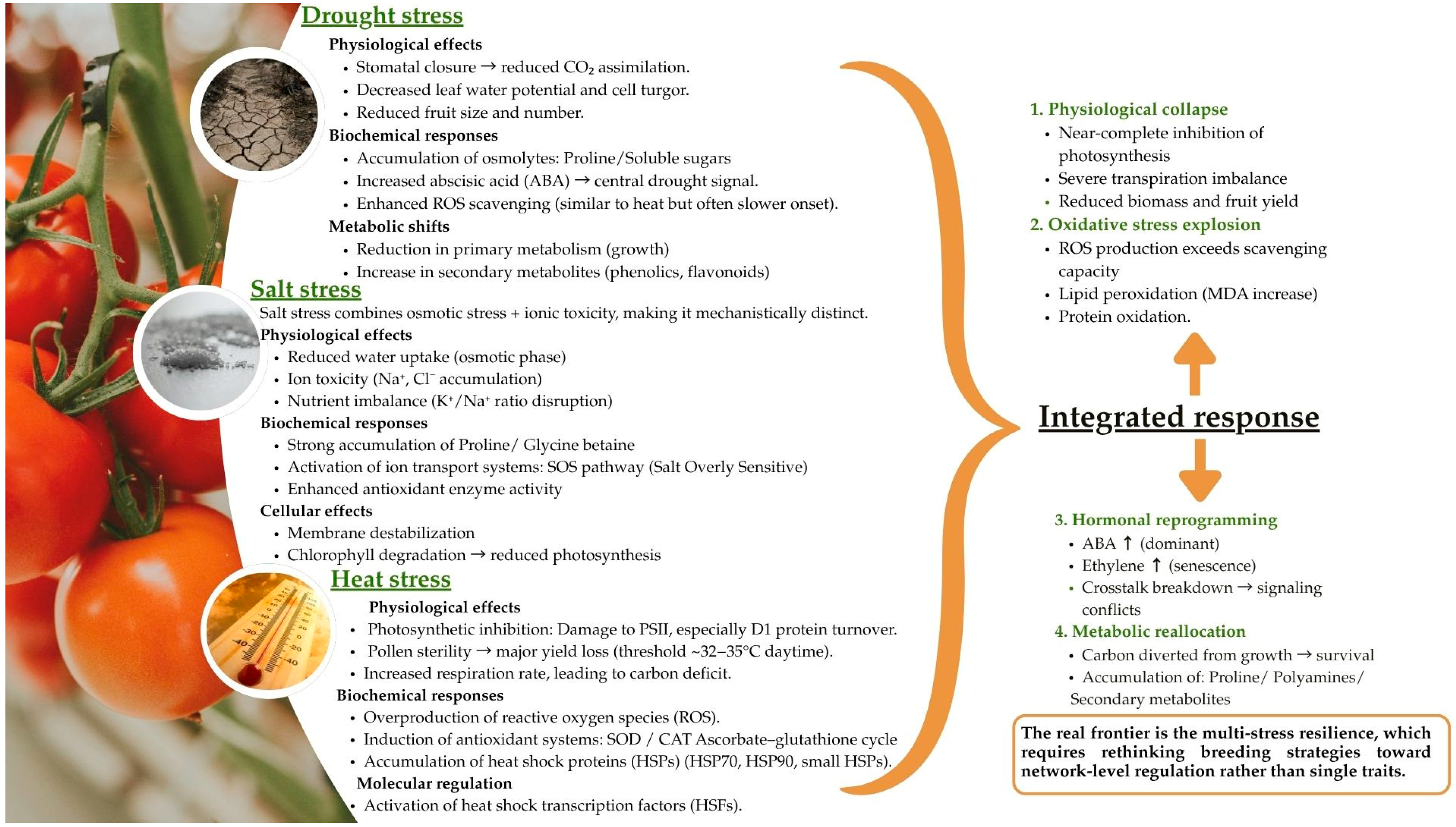
Crucially, emerging transcriptomic and metabolomic evidence indicates that plant responses to combined stresses are not merely additive but involve the activation of unique regulatory circuits, including stress combination-specific gene expression profiles and metabolic signatures (Figure 4). This highlights the existence of distinct integrative signalling hubs and underscores the necessity of adopting multi-stress frameworks to accurately dissect plant adaptive mechanisms. Such insights are essential for the development of resilient tomato cultivars capable of withstanding increasingly complex environmental constraints.

4. Application and Findings

4.1. Agricultural Practices

The alleviation of the drought stress in tomato plants has been mainly the responsibility of the farmer who manages the agricultural practices and the growing techniques [108]. Over the decades, a large number of combined agricultural practices at the field level have succeeded in limiting losses due to drought to a certain point in tomato fields (Table 2).
Tomato grafted onto drought-tolerant rootstocks is recognized as an effective practice, improving physiological performance of tomato plants under drought, including higher relative water content, enhanced photosynthetic capacity, and reduced oxidative damage compared to the self-rooted control plants, due to improved root–shoot communication and stress-responsive metabolic adjustment [42,109,110].
Microbial consortia and plant growth-promoting microorganisms (PGPMs), including selected rhizobacteria and mycorrhizal fungi, have also demonstrated capacity to ameliorate drought stress by enhancing root growth, nutrient uptake, antioxidant activity, osmotic adjustment, and soil biological function; the application into the soil will improve physiological indices such as chlorophyll content and relative water status and reduce stress markers in tomato under drought conditions [111,112,113].
The use of elicitors and biostimulants, such as protein hydrolysates, plant-derived compounds and nano particles, has shown promise for modulating stress-related pathways and for maintaining water relations and fruit quality under limited water supply, although their efficacy can vary according to the stress severity and application method [114,115,116,117]. Recent studies have highlighted the emerging role of melatonin as a key regulator in plant drought tolerance. This indoleamine, traditionally known for its role in animals, has been increasingly recognized as a multifunctional molecule in plants, involved in growth regulation and stress responses. The exogenous application of melatonin, for example, under drought stress conditions, has been shown to enhance osmotic adjustment by promoting the biosynthesis of compatible solutes such as proline, trehalose, and sucrose. Moreover, melatonin stimulates root system development, thereby facilitating improved water uptake and transport. Altaf et al. [118] demonstrated that melatonin-treated tomato plants exhibit reduced electrolyte leakage and maintain higher photosynthetic rates under drought conditions.
Table 2. Agricultural practices for mitigating drought stress in tomato plants.
Practice/TechniqueMode of ActionObserved Effects Under DroughtReferences
Grafting onto drought-tolerant rootstocksEnhances root system efficiency, improves root–shoot signalling, and stress-responsive metabolismHigher relative water content, improved photosynthesis, reduced oxidative damage, better fruit yield[42,109,110,119]
Microbial consortia/PGPMsPromote root growth, nutrient uptake, osmotic adjustment, antioxidant activityIncreased chlorophyll content, relative water status, reduced stress markers, improved fruit yield[111,112,113,120]
Elicitors/Biostimulants Activate stress-responsive pathways, enhance osmotic adjustment, antioxidant defenceMaintained water relations, improved physiological performance, sustained fruit quality[114,115,118]
Deficit irrigation/water-saving field managementRegulates water supply based on crop stage, maintains soil moisture balanceImproved water productivity, maintained fruit yield and quality[121,122]
Greenhouse training modes and canopy managementOptimizes light interception, air circulation, and evapotranspirationEnhanced water-use efficiency, reduced mutual shading, better stress resilience[123,124]
At the field level, judicious selection of varieties with inherent vigour and drought-adaptive traits (e.g., efficient root systems, high water-use efficiency, and stress-responsive phenotypes) remains a primary mitigation strategy [125,126] as genotype × environment interactions strongly influence drought performance, and screening under deficit irrigation permit the identification of potential cultivars capable of sustaining yield with reduced water inputs [127,128].
Complementary agronomic practices such as deficit irrigation or regulated water-saving irrigation strategies can significantly increase water productivity while preserving quality traits, highlighting the importance of irrigation scheduling tailored to crop phenology and soil moisture dynamics [121,122]. In greenhouse production, plant training modes and canopy management can further mitigate drought stress. Optimizing plant architecture through pruning and trellising improves light interception and air movement, reduces mutual shading, and can indirectly improve water use efficiency [124]; when combined with controlled environment technologies such as precise fertigation and climate control, these practices enhance plant vigour and stress resilience [129].

4.2. Varietal Evaluation and Selection

Long-standing efforts for varietal selection for drought-prone environments have consistently demonstrated significant genotypic variation in tomato drought responses, providing a valuable foundation for targeted breeding strategies [130]. Integrated evaluations of tomato landraces under drought have identified specific accessions that maintain yield and physiological performance when irrigation is reduced, suggesting that the use of these traditional varieties can be promising in the establishment of breeding lines for the region where they are traditionally cultivated [131]. Phenotypic screening under controlled osmotic stress has similarly revealed certain genotypes, such as sustained higher germination rates, seedling vigour, and root-to-shoot ratios, under drought-inducing conditions, highlighting genetic variability that can be exploited in selection programmes [132]. Comparative studies between traditional landraces and modern commercial cultivars demonstrate that landraces often exhibit stronger adaptive strategies such as sustained root biomass and efficient physiological adjustments under prolonged stress periods, reinforcing their value in varietal selection for drought conditions [128]. Field-based phenotyping of advanced breeding populations, supported by stress tolerance indices, has facilitated the identification of high-performing F6 genotypes under drought stress. This highlights the effectiveness of integrating conventional breeding strategies with rigorous, multi-environment evaluation frameworks to select stable and resilient drought-adapted lines [133]. Research that evaluates stability of drought tolerance from greenhouse to field settings further supports the selection of wild relatives and diverse germplasm as sources of robust water-deficit resilience traits [134]. These recent findings underscore that effective varietal selection for drought tolerance in tomato depends on identifying and integrating diverse phenotypic traits from landraces, wild relatives, and advanced breeding lines, thereby enhancing the potential to develop cultivars that sustain productivity under water-limited conditions [123,135].

4.3. MAS and Genotyping

Marker-assisted selection (MAS) showed to be an effective approach for improving drought tolerance in tomato by enabling breeders to associate molecular markers with QTLs controlling drought-related traits, thus allowing selection to proceed with minimal reliance on repeated phenotypic screening, and have significantly advanced the understanding of the genetic architecture underlying complex stress-adaptive traits in tomato [136]. Early genetic studies demonstrated the feasibility of this approach by identifying QTLs involved in drought tolerance during seed germination, several of which originated from the wild relative Solanum pimpinellifolium, highlighting the value of wild germplasm as a source of adaptive alleles [137,138]. Building on this work, more recent high-resolution linkage mapping in recombinant inbred line populations has revealed multiple QTLs associated with drought tolerance at the seedling stage, derived from crosses between tolerant and sensitive parents [139]. These QTLs are distributed across several chromosomes and account for a substantial proportion of the observed phenotypic variation under water-deficit conditions, with candidate genes often related to stress perception, signalling, and regulatory pathways [139]. The identification and use of such markers facilitate the pyramiding of favourable alleles into elite tomato cultivars, thereby accelerating breeding progress and enhancing drought tolerance in a more efficient and reliable manner, particularly given the complex and polygenic nature of drought response in this crop [11,140].

4.4. Exploitation of Wild Tomato Germplasm for Drought Tolerance

Tomato wild relatives (CWRs) represent a valuable reservoir of genetic diversity for improving drought tolerance in cultivated tomato [141]. In particular, species such as Solanum pennellii and S. pimpinellifolium have evolved under arid and semi-arid environments and exhibit enhanced water-use efficiency, deeper root systems and superior osmotic adjustment capacity [142]. Genomic studies have identified several drought-responsive loci and quantitative trait loci (QTL) derived from these species, particularly through the use of introgression lines (ILs) based on S. pennellii, which have enabled the dissection of complex traits associated with stress adaptation [143]. Notably, specific genomic regions from S. pennellii have been associated with improved root architecture, stomatal regulation, and yield stability under water-limited conditions, while S. pimpinellifolium has contributed alleles related to stress-responsive transcription factors and hormonal regulation pathways [144]. These wild-derived alleles have been successfully introgressed into cultivated varietal backgrounds, demonstrating their potential to enhance drought tolerance without severely compromising fruit quality [145]. However, the utilization of wild germplasm remains challenging due to linkage drag and undesirable agronomic traits, necessitating precise breeding strategies. The integration of marker-assisted selection (MAS), genomic selection, and advanced backcrossing approaches, combined with high-resolution phenotyping, has significantly improved the efficiency of transferring beneficial alleles from wild relatives into elite cultivars [138]. Despite these advances, the functional characterization of many drought-responsive genes derived from wild species remains incomplete, particularly under field conditions and combined stress scenarios. Therefore, further efforts are required to bridge the gap between gene discovery and practical breeding applications, ensuring the effective exploitation of wild tomato relative resources for developing new climate-resilient cultivars.

4.5. Gene Expression in Introgression Lines

The introgression line (IL) populations incorporate specific genomic segments from tomato wild relatives’ species into cultivated backgrounds. These ILs serve as high-resolution platforms for mapping QTLs and dissecting the genetic basis of drought-responsive phenotypes. The summary presented in Table 3, compiling key drought-associated genes identified in IL populations [143], underscores the translational potential of these resources for both fundamental research and tomato breeding programmes targeting enhanced stress resilience.

4.6. Transgenic Application

Transgenic approaches for enhancing drought tolerance in tomato crops involve the strategic insertion of specific genes into their genome. It encompasses the introduction of genes encoding proteins that facilitate osmotic adjustment, enhance water uptake, and activate stress signalling pathways, thereby bolstering the plant’s overall resilience to drought [106]. The overexpression of the P5CS gene, which is responsible for proline synthesis, has been shown to increase proline levels in transgenic tomatoes, leading to improved drought tolerance [143]. Another approach focuses on improving water uptake efficiency by overexpressing aquaporin genes [146]. Transgenic tomatoes expressing genes such as PIP1 and PIP2 have demonstrated enhanced water uptake, contributing to better growth under drought conditions. Enhancing water uptake in tomato can be achieved through the manipulation of aquaporin genes, which encode for proteins that play a pivotal role in facilitating water transport across cell membranes [147]. By altering the expression of these genes, the water relations of plants may be influenced, potentially shifting their behaviour from isohydric (characterized by their ability to maintain relatively constant leaf water potentials under drought stress, often at the expense of stomatal conductance and carbon assimilation) to anisohydric (in power to exhibit a greater variation in leaf water potential, allowing for continued gas exchange under mild-to-moderate drought conditions). This difference in behaviour can significantly impact plant survival and productivity under water-limited environments [148]. Notably, the overexpression of the tomato aquaporin gene TIP2;2 has been shown to convert isohydric tomato plants into anisohydric ones [149]. This gene was specifically selected due to its responsiveness to abiotic stress, indicating its potential role in regulating water transport under stress conditions [66]. Table 4 summarizes various genes and their associated functions, transgenic effects, and responses related to improving drought tolerance and stress resilience in tomato plants and other species. Thus, the genetic base for resistance and tolerance against abiotic stress in species of wild tomato are hereditary as quantitative traits; thus, it is also unlikely that a single gene from wild tomato species expressed in cultivated species will confer drought tolerance.
CRISPR/Cas genome editing is increasingly positioned as a transformative platform for engineering drought-resilient tomato cultivars (Table 5); however, functional evidence highlights important conceptual constraints associated with reductionist loss-of-function strategies [158]. Targeted disruption of SlMAPK3, a core component of MAP kinase-mediated stress signalling, results in reduced rather than enhanced drought tolerance, accompanied by increased oxidative damage, impaired antioxidant capacity, and dysregulation of stress-responsive transcriptional networks, thereby demonstrating a positive regulatory role in drought adaptation [159]. Similarly, CRISPR/Cas9-mediated mutagenesis of SlNPR1 leads to increased stomatal aperture, elevated reactive oxygen species accumulation, reduced antioxidant enzyme activity, and repression of drought-responsive gene expression, confirming that this master immune regulator also functions as an integrative hub linking biotic and abiotic stress signalling [160]. These observations converge on a broader principle: drought resilience in tomato is governed by multilayered regulatory networks rather than single negative regulators, limiting the effectiveness of simple gene knockout approaches [161]. Recent studies further emphasize that CRISPR-based crop improvement under abiotic stress must transition toward precise modulation of regulatory architecture, as programmable nucleases enable targeted alteration of complex genetic pathways beyond the scope of conventional breeding or transgenesis [162,163]. In this framework, next-generation genome engineering, including cis-regulatory editing, promoter engineering, quantitative expression tuning through base or prime editing, and multiplex targeting of coordinated pathways, offers a biologically coherent route to optimize stress adaptation while preserving developmental stability [164]. Parallel integration of transcriptomic, epigenomic, and metabolomic datasets is increasingly recognized as essential for identifying emergent regulatory bottlenecks and guiding rational genome engineering for climate resilience. Nevertheless, metabolic engineering of drought tolerance remains constrained by enzyme promiscuity, pathway crosstalk, and pervasive pleiotropy, implying that durable phenotypic improvement will require coordinated network-level rewiring through multiplex genome editing combined with synthetic biology-guided circuit design. Collectively, the field is undergoing a conceptual transition, from gene disruption toward quantitative regulatory network engineering, that defines a central frontier for next-generation climate-resilient crop breeding [161,165]. Table 5 summarizes the latest results from CRISPR/Cas9 mainly on tomato model plants for drought tolerance.

5. Conclusions

Tomato plant adaptation to drought stress emerges as a highly integrated and dynamic process involving coordinated adjustments across morphological, physiological, biochemical, and molecular levels. The plasticity of vegetative and reproductive organs enables plants to modulate architecture, growth, and resource allocation, while tightly regulated physiological processes, such as stomatal control, photosynthetic adjustment, and water-use efficiency, ensure short-term survival under water deficit. These responses are further reinforced by complex biochemical and molecular reprogramming, including enzyme regulation, hormonal signalling, and stress-responsive gene expression, which collectively shape the plant’s adaptive capacity. Importantly, these mechanisms do not operate in isolation mode but rather as part of a multivariate and interconnected network, where phenotypic outcomes reflect the integration of genetic, epigenetic, and environmental interactions. This complexity underscores the necessity of adopting system-level approaches in tomato pre-breeding programmes, where the identification of drought-resilient genotypes must rely on the combined evaluation of physiological traits, biochemical markers, and molecular signatures. In this context, the integration of MAS with advanced genomic and transcriptomic tools offers a powerful framework for dissecting the genetic basis of drought tolerance. The identification and validation of candidate genes, quantitative trait loci (QTLs), and regulatory networks controlling drought stress responses provide new opportunities to enhance both yield stability and fruit quality under water-limited conditions. However, translating these discoveries into breeding outcomes remains challenging due to the polygenic nature of drought tolerance and its strong interaction with environmental variability. Future progress will depend on the synergistic integration of high-throughput phenotyping, multi-omics approaches, and diverse genetic resources, enabling a more precise characterization of drought-responsive traits across developmental stages, including reproductive processes that critically determine yield. In particular, bridging the gap between vegetative stress responses and reproductive resilience, such as pollen viability, fruit set, and hormonal regulation, represents a key research priority.
Ultimately, improving drought tolerance in tomatoes requires a holistic breeding strategy that combines traditional selection methods with cutting-edge genomic technologies, while also incorporating agronomic practices tailored to water-limited environments. Given the increasing frequency and severity of drought events under climate change scenarios, the development of resilient tomato cultivars is not only a scientific challenge but also an urgent agricultural priority. Achieving this goal will depend on our ability to translate complex biological knowledge into robust, scalable, and field-relevant solutions.

Author Contributions

Conceptualization, F.B. and D.R.; methodology, N.A.A.; validation, H.B.A., D.A. and D.R.; formal analysis, D.R.; investigation, N.A.A. and H.B.A.; resources, F.B.; data curation, H.B.A. and D.A.; writing—original draft preparation, N.A.A. and H.B.A.; writing—review and editing, N.A.A. and F.B.; visualization, H.B.A. and D.A.; supervision, F.B.; project administration, D.A.; funding acquisition, D.R. and F.B. All authors have read and agreed to the published version of the manuscript.

Funding

This research was carried out within the framework of the project Agritech National Research Center funded by the European Union Next-GenerationEU (PIANO NAZIONALE DI RIPRESA E RE-SILIENZA (PNRR)—MISSIONE 4 COMPONENTE 2, INVESTIMENTO 1.4—D.D. 1032 17 June 2022, CN00000022).

Data Availability Statement

No new data were created or analyzed in this study. Data sharing is not applicable to this article.

Conflicts of Interest

The authors declare no conflicts of interest.

References

  1. Yuan, X.; Li, S.; Chen, J.; Yu, H.; Yang, T.; Wang, C.; Huang, S.; Chen, H.; Ao, X. Impacts of Global Climate Change on Agricultural Production: A Comprehensive Review. Agronomy 2024, 14, 1360. [Google Scholar] [CrossRef]
  2. Liang, G.; Liu, J.; Zhang, J.; Guo, J. Effects of Drought Stress on Photosynthetic and Physiological Parameters of Tomato. J. Am. Soc. Hortic. Sci. 2020, 145, 12–17. [Google Scholar] [CrossRef]
  3. Vicente-Serrano, S.M.; Peña-Angulo, D.; Beguería, S.; Domínguez-Castro, F.; Tomás-Burguera, M.; Noguera, I.; Gimeno-Sotelo, L.; El Kenawy, A. Global Drought Trends and Future Projections. Philos. Trans. R. Soc. Math. Phys. Eng. Sci. 2022, 380, 20210285. [Google Scholar] [CrossRef] [PubMed]
  4. Oguz, M.C.; Aycan, M.; Oguz, E.; Poyraz, I.; Yildiz, M. Drought Stress Tolerance in Plants: Interplay of Molecular, Biochemical and Physiological Responses in Important Development Stages. Physiologia 2022, 2, 180–197. [Google Scholar] [CrossRef]
  5. Seleiman, M.F.; Al-Suhaibani, N.; Ali, N.; Akmal, M.; Alotaibi, M.; Refay, Y.; Dindaroglu, T.; Abdul-Wajid, H.H.; Battaglia, M.L. Drought Stress Impacts on Plants and Different Approaches to Alleviate Its Adverse Effects. Plants 2021, 10, 259. [Google Scholar] [CrossRef]
  6. Ansari, W.A.; Shahid, M.; Shafi, Z.; Farah, M.A.; Zeyad, M.T.; Al-Anazi, K.M.; Ahamad, L. Multifaceted Rhizobacterial Co-Inoculation Enhances Drought-Stress Tolerance in Tomato: Insights Into Physiological, Biochemical, and Molecular Responses. J. Basic Microbiol. 2025, 65, e70065. [Google Scholar] [CrossRef]
  7. Bashir, S.S.; Hussain, A.; Hussain, S.J.; Wani, O.A.; Zahid Nabi, S.; Dar, N.A.; Baloch, F.S.; Mansoor, S. Plant Drought Stress Tolerance: Understanding Its Physiological, Biochemical and Molecular Mechanisms. Biotechnol. Biotechnol. Equip. 2021, 35, 1912–1925. [Google Scholar] [CrossRef]
  8. Mozafarian Meimandi, M.; Kappel, N. Grafting Plants to Improve Abiotic Stress Tolerance. In Plant Ecophysiology and Adaptation Under Climate Change: Mechanisms and Perspectives II; Hasanuzzaman, M., Ed.; Springer: Singapore, 2020; pp. 477–490. ISBN 978-981-15-2171-3. [Google Scholar]
  9. FAOSTAT. Available online: https://www.fao.org/faostat/en/#home (accessed on 16 February 2026).
  10. Salinas-Vargas, D.; Maldonado-Peralta, M.D.L.Á.; Rojas-Garcia, A.R.; León-Villanueva, A.; Álvarez-Vázquez, P.; Maldonado-Peralta, R. Response of Tomato Varieties (Solanum lycopersicum L.) to Water Stress. Agro Prod. 2021, 13, 69–74. [Google Scholar] [CrossRef]
  11. Taheri, S.; Gantait, S.; Azizi, P.; Mazumdar, P. Drought Tolerance Improvement in Solanum lycopersicum: An Insight into “OMICS” Approaches and Genome Editing. 3 Biotech 2022, 12, 63. [Google Scholar] [CrossRef] [PubMed]
  12. Giorio, P.; Guida, G.; Mistretta, C.; Sellami, M.H.; Oliva, M.; Punzo, P.; Iovieno, P.; Arena, C.; De Maio, A.; Grillo, S.; et al. Physiological, Biochemical and Molecular Responses to Water Stress and Rehydration in Mediterranean Adapted Tomato Landraces. Plant Biol. 2018, 20, 995–1004. [Google Scholar] [CrossRef]
  13. Krishna, R.; Ansari, W.A.; Soumia, P.S.; Yadav, A.; Jaiswal, D.K.; Kumar, S.; Singh, A.K.; Singh, M.; Verma, J.P. Biotechnological Interventions in Tomato (Solanum lycopersicum) for Drought Stress Tolerance: Achievements and Future Prospects. BioTech 2022, 11, 48. [Google Scholar] [CrossRef]
  14. Haghpanah, M.; Hashemipetroudi, S.; Arzani, A.; Araniti, F. Drought Tolerance in Plants: Physiological and Molecular Responses. Plants 2024, 13, 2962. [Google Scholar] [CrossRef]
  15. Vadez, V.; Grondin, A.; Chenu, K.; Henry, A.; Laplaze, L.; Millet, E.J.; Carminati, A. Crop Traits and Production under Drought. Nat. Rev. Earth Environ. 2024, 5, 211–225. [Google Scholar] [CrossRef]
  16. Hernandez-Espinoza, L.H.; Barrios-Masias, F.H. Physiological and Anatomical Changes in Tomato Roots in Response to Low Water Stress. Sci. Hortic. 2020, 265, 109208. [Google Scholar] [CrossRef]
  17. Ivanchenko, M.G.; Den Os, D.; Monshausen, G.B.; Dubrovsky, J.G.; Bednářová, A.; Krishnan, N. Auxin Increases the Hydrogen Peroxide (H2O2) Concentration in Tomato (Solanum lycopersicum) Root Tips While Inhibiting Root Growth. Ann. Bot. 2013, 112, 1107–1116. [Google Scholar] [CrossRef] [PubMed]
  18. Korwin Krukowski, P.; Colanero, S.; Sutti, A.; Martignago, D.; Conti, L. How Changes in ABA Accumulation and Signaling Influence Tomato Drought Responses and Reproductive Development. Int. J. Plant Biol. 2023, 14, 162–176. [Google Scholar] [CrossRef]
  19. Jensen, N.B.; Ottosen, C.-O.; Zhou, R. Exogenous Melatonin Alters Stomatal Regulation in Tomato Seedlings Subjected to Combined Heat and Drought Stress through Mechanisms Distinct from ABA Signaling. Plants 2023, 12, 1156. [Google Scholar] [CrossRef]
  20. Nahar, K.; Ullah, S. Drought Stress Effects on Plant Water Relations, Growth, Fruit Quality and Osmotic Adjustment of Tomato (Solanum lycopersicum) under Subtropical Condition. Asian J. Agric. Hortic. Res. 2018, 1, 1–14. [Google Scholar] [CrossRef]
  21. Yuan, X.K.; Yang, Z.Q.; Li, Y.X.; Liu, Q.; Han, W. Effects of Different Levels of Water Stress on Leaf Photosynthetic Characteristics and Antioxidant Enzyme Activities of Greenhouse Tomato. Photosynthetica 2016, 54, 28–39. [Google Scholar] [CrossRef]
  22. Mishra, R.; Shteinberg, M.; Shkolnik, D.; Anfoka, G.; Czosnek, H.; Gorovits, R. Interplay between Abiotic (Drought) and Biotic (Virus) Stresses in Tomato Plants. Mol. Plant Pathol. 2022, 23, 475–488. [Google Scholar] [CrossRef]
  23. Lahbouki, S.; Meddich, A.; Ben-Laouane, R.; Outzourhit, A.; Pari, L. Subsurface Water Retention Technology Promotes Drought Stress Tolerance in Field-Grown Tomato. Energies 2022, 15, 6807. [Google Scholar] [CrossRef]
  24. Li, S.; Liu, J.; Liu, H.; Qiu, R.; Gao, Y.; Duan, A. Role of Hydraulic Signal and ABA in Decrease of Leaf Stomatal and Mesophyll Conductance in Soil Drought-Stressed Tomato. Front. Plant Sci. 2021, 12, 653186. [Google Scholar] [CrossRef]
  25. Rai, G.K.; Parveen, A.; Jamwal, G.; Basu, U.; Kumar, R.R.; Rai, P.K.; Sharma, J.P.; Alalawy, A.I.; Al-Duais, M.A.; Hossain, M.A.; et al. Leaf Proteome Response to Drought Stress and Antioxidant Potential in Tomato (Solanum lycopersicum L.). Atmosphere 2021, 12, 1021. [Google Scholar] [CrossRef]
  26. Ihuoma, S.O.; Madramootoo, C.A. Sensitivity of Spectral Vegetation Indices for Monitoring Water Stress in Tomato Plants. Comput. Electron. Agric. 2019, 163, 104860. [Google Scholar] [CrossRef]
  27. Xue, F.; Liu, W.; Cao, H.; Song, L.; Ji, S.; Tong, L.; Ding, R. Stomatal Conductance of Tomato Leaves Is Regulated by Both Abscisic Acid and Leaf Water Potential under Combined Water and Salt Stress. Physiol. Plant. 2021, 172, 2070–2078. [Google Scholar] [CrossRef]
  28. Zhang, Y.; Song, H.; Wang, X.; Zhou, X.; Zhang, K.; Chen, X.; Liu, J.; Han, J.; Wang, A. The Roles of Different Types of Trichomes in Tomato Resistance to Cold, Drought, Whiteflies, and Botrytis. Agronomy 2020, 10, 411. [Google Scholar] [CrossRef]
  29. Patanè, C.; Siah, S.; Pellegrino, A.; Cosentino, S.L.; Siracusa, L. Fruit Yield, Polyphenols, and Carotenoids in Long Shelf-Life Tomatoes in Response to Drought Stress and Rewatering. Agronomy 2021, 11, 1943. [Google Scholar] [CrossRef]
  30. Lamin-Samu, A.T.; Farghal, M.; Ali, M.; Lu, G. Morpho-Physiological and Transcriptome Changes in Tomato Anthers of Different Developmental Stages under Drought Stress. Cells 2021, 10, 1809. [Google Scholar] [CrossRef]
  31. Shohat, H.; Eliaz, N.I.; Weiss, D. Gibberellin in Tomato: Metabolism, Signaling and Role in Drought Responses. Mol. Hortic. 2021, 1, 15. [Google Scholar] [CrossRef]
  32. De Jong, M.; Mariani, C.; Vriezen, W.H. The Role of Auxin and Gibberellin in Tomato Fruit Set. J. Exp. Bot. 2009, 60, 1523–1532. [Google Scholar] [CrossRef]
  33. Bari, R.; Jones, J.D.G. Role of Plant Hormones in Plant Defence Responses. Plant Mol. Biol. 2009, 69, 473–488. [Google Scholar] [CrossRef]
  34. Hossain, M.E.; Amin, R.; Sani, M.N.H.; Ahamed, K.U.; Hosain, M.T.; Nizam, R. Impact of Exogenous Application of Plant Growth Regulators on Growth and Yield Contributing Attributes of Summer Tomato. Int. J. Plant Soil Sci. 2018, 24, 1–14. [Google Scholar] [CrossRef]
  35. Azizi, M.; Untari, Y.; Ritaqwin, Z.; Maulina, F.A. Effectiveness of Auxin and Gibberellin Hormone Application on Tomato Plant Growth and Yield (Solanum Lycoprisicum L). SEAS Sustain. Environ. Agric. Sci. 2025, 9, 161–169. [Google Scholar] [CrossRef]
  36. Hernández-García, J.; Sun, R.; Serrano-Mislata, A.; Inoue, K.; Vargas-Chávez, C.; Esteve-Bruna, D.; Arbona, V.; Yamaoka, S.; Nishihama, R.; Kohchi, T.; et al. Coordination between Growth and Stress Responses by DELLA in the Liverwort Marchantia Polymorpha. Curr. Biol. 2021, 31, 3678–3686.e11. [Google Scholar] [CrossRef]
  37. Locascio, A.; Blázquez, M.A.; Alabadí, D. Genomic Analysis of DELLA Protein Activity. Plant Cell Physiol. 2013, 54, 1229–1237. [Google Scholar] [CrossRef] [PubMed]
  38. Illouz-Eliaz, N.; Nissan, I.; Nir, I.; Ramon, U.; Shohat, H.; Weiss, D. Mutations in the Tomato Gibberellin Receptors Suppress Xylem Proliferation and Reduce Water Loss under Water-Deficit Conditions. J. Exp. Bot. 2020, 71, 3603–3612. [Google Scholar] [CrossRef] [PubMed]
  39. Qiao, M.; Hong, C.; Jiao, Y.; Hou, S.; Gao, H. Impacts of Drought on Photosynthesis in Major Food Crops and the Related Mechanisms of Plant Responses to Drought. Plants 2024, 13, 1808. [Google Scholar] [CrossRef] [PubMed]
  40. Bunce, J. Leaf Gas Exchange and Photosystem II Fluorescence Responses to CO2 Cycling. Plants 2023, 12, 1620. [Google Scholar] [CrossRef]
  41. Ilyas, M.; Nisar, M.; Khan, N.; Hazrat, A.; Khan, A.H.; Hayat, K.; Fahad, S.; Khan, A.; Ullah, A. Drought Tolerance Strategies in Plants: A Mechanistic Approach. J. Plant Growth Regul. 2021, 40, 926–944. [Google Scholar] [CrossRef]
  42. Mahapatra, P.P.; Bae, D.W.; Notaguchi, M.; Muneer, S. Grafting Enhances Drought Stress Tolerance by Regulating the Proteome and Targeted Gene Regulatory Networks in Tomato. Front. Plant Sci. 2025, 16, 1591437. [Google Scholar] [CrossRef]
  43. Raja, V.; Qadir, S.U.; Alyemeni, M.N.; Ahmad, P. Impact of Drought and Heat Stress Individually and in Combination on Physio-Biochemical Parameters, Antioxidant Responses, and Gene Expression in Solanum lycopersicum. 3 Biotech 2020, 10, 208. [Google Scholar] [CrossRef]
  44. Dikilitas, M.; Simsek, E.; Roychoudhury, A. Role of Proline and Glycine Betaine in Overcoming Abiotic Stresses. In Protective Chemical Agents in the Amelioration of Plant Abiotic Stress; Roychoudhury, A., Tripathi, D.K., Eds.; Wiley: Hoboken, NJ, USA, 2020; pp. 1–23. ISBN 978-1-119-55163-8. [Google Scholar]
  45. Patanè, C.; Cosentino, S.L.; Romano, D.; Toscano, S. Relative Water Content, Proline, and Antioxidant Enzymes in Leaves of Long Shelf-Life Tomatoes under Drought Stress and Rewatering. Plants 2022, 11, 3045. [Google Scholar] [CrossRef]
  46. Conti, V.; Cantini, C.; Romi, M.; Cesare, M.M.; Parrotta, L.; Del Duca, S.; Cai, G. Distinct Tomato Cultivars Are Characterized by a Differential Pattern of Biochemical Responses to Drought Stress. Int. J. Mol. Sci. 2022, 23, 5412. [Google Scholar] [CrossRef] [PubMed]
  47. Liu, X.; Lin, Y.; Wu, C.; Yang, Y.; Su, D.; Xian, Z.; Zhu, Y.; Yu, C.; Hu, G.; Deng, W.; et al. The SlARF4-SlHB8 Regulatory Module Mediates Leaf Rolling in Tomato. Plant Sci. 2023, 335, 111790. [Google Scholar] [CrossRef]
  48. Thilakarathne, A.S.; Liu, F.; Zou, Z. Plant Signaling Hormones and Transcription Factors: Key Regulators of Plant Responses to Growth, Development, and Stress. Plants 2025, 14, 1070. [Google Scholar] [CrossRef]
  49. Medyouni, I.; Zouaoui, R.; Rubio, E.; Serino, S.; Ahmed, H.B.; Bertin, N. Effects of Water Deficit on Leaves and Fruit Quality during the Development Period in Tomato Plant. Food Sci. Nutr. 2021, 9, 1949–1960. [Google Scholar] [CrossRef]
  50. Sachdev, S.; Ansari, S.A.; Ansari, M.I.; Fujita, M.; Hasanuzzaman, M. Abiotic Stress and Reactive Oxygen Species: Generation, Signaling, and Defense Mechanisms. Antioxidants 2021, 10, 277. [Google Scholar] [CrossRef]
  51. Gao, Y.; Zheng, M.; Wang, T.; Guo, Z.; Hong, Y.; Hua, K.; Wang, Z. A Manipulation of Carotenoids Metabolism Impacts Fruit Quality and Drought Tolerance in Tomato. Plant Cell Rep. 2025, 44, 173. [Google Scholar] [CrossRef] [PubMed]
  52. Fan, S.; Han, N.; Wu, H.; Jia, J.; Guo, J. Plasma Membrane Intrinsic Protein SlPIP1;7 Promotes Root Growth and Enhances Drought Stress Tolerance in Transgenic Tomato (Solanum lycopersicum) Plants. Plant Breed. 2021, 140, 1102–1114. [Google Scholar] [CrossRef]
  53. Zandi, P.; Schnug, E. Reactive Oxygen Species, Antioxidant Responses and Implications from a Microbial Modulation Perspective. Biology 2022, 11, 155. [Google Scholar] [CrossRef]
  54. Liu, T.; Hu, X.; Zhang, J.; Zhang, J.; Du, Q.; Li, J. H2O2 Mediates ALA-Induced Glutathione and Ascorbate Accumulation in the Perception and Resistance to Oxidative Stress in Solanum lycopersicum at Low Temperatures. BMC Plant Biol. 2018, 18, 34. [Google Scholar] [CrossRef]
  55. Hou, X.; Zhang, W.; Du, T.; Kang, S.; Davies, W.J. Responses of Water Accumulation and Solute Metabolism in Tomato Fruit to Water Scarcity and Implications for Main Fruit Quality Variables. J. Exp. Bot. 2020, 71, 1249–1264. [Google Scholar] [CrossRef]
  56. Chaudhary, J.; Khatri, P.; Singla, P.; Kumawat, S.; Kumari, A.; R, V.; Vikram, A.; Jindal, S.K.; Kardile, H.; Kumar, R.; et al. Advances in Omics Approaches for Abiotic Stress Tolerance in Tomato. Biology 2019, 8, 90. [Google Scholar] [CrossRef]
  57. Islam, M.R.; Islam, R.; Dutta, T.; Jhelom, F.R. Genetic and Microbial Insights into Drought Stress Alleviation in Tomato (Solanum lycopersicum L.). Biol. Life Sci. Forum 2023, 27, 22. [Google Scholar] [CrossRef]
  58. Gambetta, G.A.; Knipfer, T.; Fricke, W.; McElrone, A.J. Aquaporins and Root Water Uptake. In Plant Aquaporins; Chaumont, F., Tyerman, S.D., Eds.; Signaling and Communication in Plants; Springer International Publishing: Cham, Switzerland, 2017; pp. 133–153. ISBN 978-3-319-49393-0. [Google Scholar]
  59. Liu, M.; Zhao, G.; Huang, X.; Pan, T.; Chen, W.; Qu, M.; Ouyang, B.; Yu, M.; Shabala, S. Candidate Regulators of Drought Stress in Tomato Revealed by Comparative Transcriptomic and Proteomic Analyses. Front. Plant Sci. 2023, 14, 1282718. [Google Scholar] [CrossRef]
  60. Jo, L.; Buti, S.; Artur, M.A.S.; Kluck, R.M.C.; Cantó-Pastor, A.; Brady, S.M.; Kajala, K. Transcription Factors SlMYB41, SlMYB92, and SlWRKY71 Regulate Gene Expression in the Tomato Exodermis. J. Exp. Bot. 2025, 76, 6472–6486. [Google Scholar] [CrossRef]
  61. Tranchida-Lombardo, V.; Aiese Cigliano, R.; Anzar, I.; Landi, S.; Palombieri, S.; Colantuono, C.; Bostan, H.; Termolino, P.; Aversano, R.; Batelli, G.; et al. Whole-Genome Re-Sequencing of Two Italian Tomato Landraces Reveals Sequence Variations in Genes Associated with Stress Tolerance, Fruit Quality and Long Shelf-Life Traits. DNA Res. 2018, 25, 149–160. [Google Scholar] [CrossRef] [PubMed]
  62. Sato, S.; Tabata, S. Tomato Genome Sequence. In Functional Genomics and Biotechnology in Solanaceae and Cucurbitaceae Crops; Ezura, H., Ariizumi, T., Garcia-Mas, J., Rose, J., Eds.; Biotechnology in Agriculture and Forestry; Springer: Berlin/Heidelberg, Germany, 2016; Volume 70, pp. 1–13. ISBN 978-3-662-48533-0. [Google Scholar]
  63. Yang, Y.; Tang, N.; Xian, Z.; Li, Z. Two SnRK2 Protein Kinases Genes Play a Negative Regulatory Role in the Osmotic Stress Response in Tomato. Plant Cell Tissue Organ Cult. PCTOC 2015, 122, 421–434. [Google Scholar] [CrossRef]
  64. Shinozaki, K.; Yamaguchi-Shinozaki, K. Functional Genomics in Plant Abiotic Stress Responses and Tolerance: From Gene Discovery to Complex Regulatory Networks and Their Application in Breeding. Proc. Jpn. Acad. Ser. B 2022, 98, 470–492. [Google Scholar] [CrossRef]
  65. Nakashima, K.; Yamaguchi-Shinozaki, K.; Shinozaki, K. Transcriptional Gene Network Involved in Drought Stress Response: Application for Crop Breeding in the Context of Climate Change. Philos. Trans. B 2025, 380, 20240236. [Google Scholar] [CrossRef] [PubMed]
  66. Jia, C.; Guo, B.; Wang, B.; Li, X.; Yang, T.; Li, N.; Wang, J.; Yu, Q. The LEA Gene Family in Tomato and Its Wild Relatives: Genome-Wide Identification, Structural Characterization, Expression Profiling, and Role of SlLEA6 in Drought Stress. BMC Plant Biol. 2022, 22, 596. [Google Scholar] [CrossRef]
  67. Hrmova, M.; Hussain, S.S. Plant Transcription Factors Involved in Drought and Associated Stresses. Int. J. Mol. Sci. 2021, 22, 5662. [Google Scholar] [CrossRef]
  68. Kim, J.-S.; Kidokoro, S.; Yamaguchi-Shinozaki, K.; Shinozaki, K. Regulatory Networks in Plant Responses to Drought and Cold Stress. Plant Physiol. 2024, 195, 170–189. [Google Scholar] [CrossRef]
  69. Dakal, T.C.; Dagariya, S.; Goswami, B.; Rathore, R.; Rankawat, R.; Bhargavi, H.A.; Rana, A.; Srivastava, S.; Gadi, B.R. Integrative Multi-Omics Approaches for Crop Abiotic Stress Tolerance. Discov. Plants 2025, 2, 361. [Google Scholar] [CrossRef]
  70. Barzana, G.; Rios, J.J.; Lopez-Zaplana, A.; Nicolas-Espinosa, J.; Yepes-Molina, L.; Garcia-Ibañez, P.; Carvajal, M. Interrelations of Nutrient and Water Transporters in Plants under Abiotic Stress. Physiol. Plant. 2021, 171, 595–619. [Google Scholar] [CrossRef] [PubMed]
  71. Ding, L.; Fox, A.R.; Chaumont, F. Multifaceted Role and Regulation of Aquaporins for Efficient Stomatal Movements. Plant Cell Environ. 2024, 47, 3330–3343. [Google Scholar] [CrossRef]
  72. Alam, M.M.; Rafi, A.; Rahman, M.A.; Mitu, M.A.; Sakib, M.N.; Rahman, M.A.; Rahimi, M.; Kordrostami, M.; Biswas, A.; Rashad, M.M.I. Aquaporins as Natural Stress Integrator: Coordinating Transport, Signals, and Tolerance Mechanisms in Plants. Plant Cell Environ. 2026, 49, 2311–2325. [Google Scholar] [CrossRef]
  73. Murtaza, M.; Aqeel, M.; Waheeb, S.A.; Rehman, N.; Irum, S.; Almahasheer, H.; Zahed, R.; Hassan, R.N.; Fiaz, S.; Uzair, M.; et al. Transcriptome-Based Meta-Analysis of Drought Stress Regulatory Genes in Tomato. BMC Plant Biol. 2025, 25, 1347. [Google Scholar] [CrossRef] [PubMed]
  74. Reis, R.R.; Mertz-Henning, L.M.; Marcolino-Gomes, J.; Rodrigues, F.A.; Rockenbach-Marin, S.; Fuganti-Pagliarini, R.; Koltun, A.; Gonçalves, L.S.A.; Nepomuceno, A.L. Differential Gene Expression in Response to Water Deficit in Leaf and Root Tissues of Soybean Genotypes with Contrasting Tolerance Profiles. Genet. Mol. Biol. 2020, 43, e20180290. [Google Scholar] [CrossRef] [PubMed]
  75. Ma, Z.; Hu, L.; Jiang, W. Understanding AP2/ERF Transcription Factor Responses and Tolerance to Various Abiotic Stresses in Plants: A Comprehensive Review. Int. J. Mol. Sci. 2024, 25, 893. [Google Scholar] [CrossRef]
  76. Tao, L.; Yu, G.; Chen, H.; Wang, B.; Jiang, L.; Han, X.; Lin, G.; Cheng, X.-G. SlDREB2 Gene Specifically Recognizing to the Universal DRE Elements Is a Transcriptional Activator Improving Drought Tolerance in Tomato. Sci. Hortic. 2022, 295, 110887. [Google Scholar] [CrossRef]
  77. Rabbi, M.A.; Hossain, M.M.; Shuvo, M.R.K.; Bhuya, A.R.; Ghosh, A. Comprehensive Analysis of Proline Metabolizing Genes Reveals Their Functional Diversification and Abiotic Stress Response in Solanum lycopersicum. PLoS ONE 2025, 20, e0335608. [Google Scholar] [CrossRef]
  78. Wang, Z.; Hong, Y.; Li, Y.; Shi, H.; Yao, J.; Liu, X.; Wang, F.; Huang, S.; Zhu, G.; Zhu, J. Natural Variations in SlSOS1 Contribute to the Loss of Salt Tolerance during Tomato Domestication. Plant Biotechnol. J. 2021, 19, 20–22. [Google Scholar] [CrossRef]
  79. Hong, Y.; Guan, X.; Wang, X.; Kong, D.; Yu, S.; Wang, Z.; Yu, Y.; Chao, Z.-F.; Liu, X.; Huang, S.; et al. Natural Variation in SlSOS2 Promoter Hinders Salt Resistance during Tomato Domestication. Hortic. Res. 2023, 10, uhac244. [Google Scholar] [CrossRef]
  80. Cao, P.; Yang, J.; Xia, L.; Zhang, Z.; Wu, Z.; Hao, Y.; Liu, P.; Wang, C.; Li, C.; Yang, J.; et al. Two Gene Clusters and Their Positive Regulator SlMYB13 That Have Undergone Domestication-Associated Negative Selection Control Phenolamide Accumulation and Drought Tolerance in Tomato. Mol. Plant 2024, 17, 579–597. [Google Scholar] [CrossRef]
  81. Mushtaq, N.; Iqbal, S.; Hayat, F.; Raziq, A.; Ayaz, A.; Zaman, W. Melatonin in Micro-Tom Tomato: Improved Drought Tolerance via the Regulation of the Photosynthetic Apparatus, Membrane Stability, Osmoprotectants, and Root System. Life 2022, 12, 1922. [Google Scholar] [CrossRef]
  82. Chen, Y.; Liao, X.; Li, W.; Cheng, X.; Qi, B.; Gao, J.; Wan, F. Silencing of SlERF.F5 Affects Tolerance to Drought, Salt and Low-Temperature Stresses in Tomato. BMC Genom. 2025, 26, 1117. [Google Scholar] [CrossRef] [PubMed]
  83. Válóczi, A.; Várallyay, É.; Kauppinen, S.; Burgyán, J.; Havelda, Z. Spatio-temporal Accumulation of microRNAs Is Highly Coordinated in Developing Plant Tissues. Plant J. 2006, 47, 140–151. [Google Scholar] [CrossRef] [PubMed]
  84. Qiu, L.; Chen, X.; Hou, H.; Fan, Y.; Wang, L.; Zeng, H.; Chen, X.; Ding, Y.; Hu, X.; Yan, Q.; et al. Genome-Wide Characterization of the Tomato UDP-Glycosyltransferase Gene Family and Functional Identification of SlUDPGT52 in Drought Tolerance. Hortic. Adv. 2023, 1, 14. [Google Scholar] [CrossRef]
  85. Delarue, M.; Benhamed, M.; Fragkostefanakis, S. The Role of Epigenetics in Tomato Stress Adaptation. New Crops 2025, 2, 100044. [Google Scholar] [CrossRef]
  86. González, R.M.; Ricardi, M.M.; Iusem, N.D. Epigenetic Marks in an Adaptive Water Stress-Responsive Gene in Tomato Roots under Normal and Drought Conditions. Epigenetics 2013, 8, 864–872. [Google Scholar] [CrossRef]
  87. Zhang, H.; Lang, Z.; Zhu, J.-K. Dynamics and Function of DNA Methylation in Plants. Nat. Rev. Mol. Cell Biol. 2018, 19, 489–506. [Google Scholar] [CrossRef]
  88. Scippa, G.S.; Griffiths, A.; Chiatante, D.; Bray, E.A. The H1 Histone Variant of Tomato, H1-S, Is Targeted to the Nucleus and Accumulates in Chromatin in Response to Water-Deficit Stress. Planta 2000, 211, 173–181. [Google Scholar] [CrossRef]
  89. Bvindi, C.; Lee, S.; Tang, L.; Mickelbart, M.V.; Li, Y.; Mengiste, T. Improved Pathogen and Stress Tolerance in Tomato Mutants of SET Domain Histone 3 Lysine Methyltransferases. New Phytol. 2022, 235, 1957–1976. [Google Scholar] [CrossRef]
  90. Lamin-Samu, A.T.; Zhuo, S.; Ali, M.; Lu, G. Long Non-Coding RNA Transcriptome Landscape of Anthers at Different Developmental Stages in Response to Drought Stress in Tomato. Genomics 2022, 114, 110383. [Google Scholar] [CrossRef] [PubMed]
  91. Candar-Cakir, B.; Arican, E.; Zhang, B. Small RNA and Degradome Deep Sequencing Reveals Drought-and Tissue-specific Micrornas and Their Important Roles in Drought-sensitive and Drought-tolerant Tomato Genotypes. Plant Biotechnol. J. 2016, 14, 1727–1746. [Google Scholar] [CrossRef]
  92. Bai, G.; Xie, H.; Yao, H.; Li, F.; Chen, X.; Zhang, Y.; Xiao, B.; Yang, J.; Li, Y.; Yang, D.-H. Genome-Wide Identification and Characterization of ABA Receptor PYL/RCAR Gene Family Reveals Evolution and Roles in Drought Stress in Nicotiana Tabacum. BMC Genom. 2019, 20, 575. [Google Scholar] [CrossRef] [PubMed]
  93. Kulik, A.; Wawer, I.; Krzywińska, E.; Bucholc, M.; Dobrowolska, G. SnRK2 Protein Kinases—Key Regulators of Plant Response to Abiotic Stresses. OMICS J. Integr. Biol. 2011, 15, 859–872. [Google Scholar] [CrossRef] [PubMed]
  94. Marino, D.; Dunand, C.; Puppo, A.; Pauly, N. A Burst of Plant NADPH Oxidases. Trends Plant Sci. 2012, 17, 9–15. [Google Scholar] [CrossRef]
  95. Guru, A.; Ranjan, D.; Jaiswal, D.; Hidangmayum, A.; Dwivedi, P. Role of Osmolytes in ROS-Scavenging and Maintaining Homeostasis Under Abiotic Stress. In Plant Signaling Molecules in Regulation of ROS-Scavenging System; Iqbal, N., Khan, N.A., Ferrante, A., Eds.; Springer Nature: Singapore, 2026; pp. 61–86. ISBN 9789819533763. [Google Scholar]
  96. Majeed, Y.; Zhu, X.; Zhang, N.; Rasheed, A.; Tahir, M.M.; Si, H. Functional Analysis of Mitogen-Activated Protein Kinases (MAPKs) in Potato under Biotic and Abiotic Stress. Mol. Breed. 2022, 42, 31. [Google Scholar] [CrossRef]
  97. Shu, J.; Zhang, L.; Liu, G.; Wang, X.; Liu, F.; Zhang, Y.; Chen, Y. Transcriptome Analysis and Metabolic Profiling Reveal the Key Regulatory Pathways in Drought Stress Responses and Recovery in Tomatoes. Int. J. Mol. Sci. 2024, 25, 2187. [Google Scholar] [CrossRef]
  98. Sun, L.; Wang, Y.-P.; Chen, P.; Ren, J.; Ji, K.; Li, Q.; Li, P.; Dai, S.-J.; Leng, P. Transcriptional Regulation of SlPYL, SlPP2C, and SlSnRK2 Gene Families Encoding ABA Signal Core Components during Tomato Fruit Development and Drought Stress. J. Exp. Bot. 2011, 62, 5659–5669. [Google Scholar] [CrossRef]
  99. Zhou, R.; Yu, X.; Zhao, T.; Ottosen, C.-O.; Rosenqvist, E.; Wu, Z. Physiological Analysis and Transcriptome Sequencing Reveal the Effects of Combined Cold and Drought on Tomato Leaf. BMC Plant Biol. 2019, 19, 377. [Google Scholar] [CrossRef]
  100. Bortolami, G.; De Werk, T.A.; Larter, M.; Thonglim, A.; Mueller-Roeber, B.; Balazadeh, S.; Lens, F. Integrating Gene Expression Analysis and Ecophysiological Responses to Water Deficit in Leaves of Tomato Plants. Sci. Rep. 2024, 14, 29024. [Google Scholar] [CrossRef] [PubMed]
  101. Kissoudis, C.; Sunarti, S.; Van De Wiel, C.; Visser, R.G.F.; Van Der Linden, C.G.; Bai, Y. Responses to Combined Abiotic and Biotic Stress in Tomato Are Governed by Stress Intensity and Resistance Mechanism. J. Exp. Bot. 2016, 67, 5119–5132. [Google Scholar] [CrossRef]
  102. Vitale, L.; Francesca, S.; Arena, C.; D’Agostino, N.; Principio, L.; Vitale, E.; Cirillo, V.; De Pinto, M.C.; Barone, A.; Rigano, M.M. Multitraits Evaluation of a Solanum pennellii Introgression Tomato Line Challenged by Combined Abiotic Stress. Plant Biol. 2023, 25, 518–528. [Google Scholar] [CrossRef]
  103. Chaves, M.M.; Flexas, J.; Pinheiro, C. Photosynthesis under Drought and Salt Stress: Regulation Mechanisms from Whole Plant to Cell. Ann. Bot. 2009, 103, 551–560. [Google Scholar] [CrossRef]
  104. Martinez, V.; Nieves-Cordones, M.; Lopez-Delacalle, M.; Rodenas, R.; Mestre, T.; Garcia-Sanchez, F.; Rubio, F.; Nortes, P.; Mittler, R.; Rivero, R. Tolerance to Stress Combination in Tomato Plants: New Insights in the Protective Role of Melatonin. Molecules 2018, 23, 535. [Google Scholar] [CrossRef]
  105. Zhou, R.; Kong, L.; Yu, X.; Ottosen, C.-O.; Zhao, T.; Jiang, F.; Wu, Z. Oxidative Damage and Antioxidant Mechanism in Tomatoes Responding to Drought and Heat Stress. Acta Physiol. Plant. 2019, 41, 20. [Google Scholar] [CrossRef]
  106. Muñoz-Mayor, A.; Pineda, B.; Garcia-Abellán, J.O.; Antón, T.; Garcia-Sogo, B.; Sanchez-Bel, P.; Flores, F.B.; Atarés, A.; Angosto, T.; Pintor-Toro, J.A.; et al. Overexpression of Dehydrin Tas14 Gene Improves the Osmotic Stress Imposed by Drought and Salinity in Tomato. J. Plant Physiol. 2012, 169, 459–468. [Google Scholar] [CrossRef] [PubMed]
  107. Pascual, L.S.; Mittler, R.; Sinha, R.; Peláez-Vico, M.Á.; López-Climent, M.F.; Vives-Peris, V.; Gómez-Cadenas, A.; Zandalinas, S.I. Jasmonic Acid Is Required for Tomato Acclimation to Multifactorial Stress Combination. Environ. Exp. Bot. 2023, 213, 105425. [Google Scholar] [CrossRef] [PubMed]
  108. Al Achkar, N.; Treccarichi, S.; Rizzo, G.F.; Amari, M.; Calì, R.; Arena, D.; Branca, F. The Effect of Grafting on the Fruit and Seed Production of the Sicilian Long Light Green Zucchini Landrace (Cucurbita pepo L.). Acta Hortic. 2024, 1411, 197–202. [Google Scholar] [CrossRef]
  109. Bahadur, A.; Singh, P.M.; Rai, N.; Singh, A.K.; Singh, A.K.; Karkute, S.G.; Behera, T.K. Grafting in Vegetables to Improve Abiotic Stress Tolerance, Yield and Quality. J. Hortic. Sci. Biotechnol. 2024, 99, 385–403. [Google Scholar] [CrossRef]
  110. Alves, F.M.; Joshi, M.; Djidonou, D.; Joshi, V.; Gomes, C.N.; Leskovar, D.I. Physiological and Biochemical Responses of Tomato Plants Grafted onto Solanum pennellii and Solanum peruvianum under Water-Deficit Conditions. Plants 2021, 10, 2236. [Google Scholar] [CrossRef]
  111. Tahiri, A.; Slimani, A.; Raklami, A.; Meddich, A.; Oufdou, K. Drought Stress Mitigation in Tomato Through Combined Use of Plant Growth Promoting Rhizobacteria, Arbuscular Mycorrhizal Fungi, and Organic-Mineral Amendments. J. Soil Sci. Plant Nutr. 2025, 25, 7909–7928. [Google Scholar] [CrossRef]
  112. Fusco, G.M.; Burato, A.; Pentangelo, A.; Cardarelli, M.; Nicastro, R.; Carillo, P.; Parisi, M. Can Microbial Consortium Applications Affect Yield and Quality of Conventionally Managed Processing Tomato? Plants 2022, 12, 14. [Google Scholar] [CrossRef] [PubMed]
  113. Rizzo, G.F.; Al Achkar, N.; Treccarichi, S.; Malgioglio, G.; Infurna, M.G.; Nigro, S.; Tribulato, A.; Branca, F. Use of Bioinoculants Affects Variation in Snap Bean Yield Grown under Deficit Irrigation. Agriculture 2023, 13, 865. [Google Scholar] [CrossRef]
  114. Fernandes, Â.; Chaski, C.; Pereira, C.; Kostić, M.; Rouphael, Y.; Soković, M.; Barros, L.; Petropoulos, S.A. Water Stress Alleviation Effects of Biostimulants on Greenhouse-Grown Tomato Fruit. Horticulturae 2022, 8, 645. [Google Scholar] [CrossRef]
  115. Kurniawan, A.; Noviandi, W.D.; Maulidah, N.I.; Mullatif, I.A.; Rahmandhias, D.T.; Karim, M.F.; Shyu, D.J.H. Mitigating Drought Stress Effects in Tomato through Seed Priming and Foliar Application of Salicylic Acid: Impacts on Germination and Plant Growth. J. Ecol. Eng. 2025, 26, 369–383. [Google Scholar] [CrossRef]
  116. Ahanger, M.A.; Qi, M.; Huang, Z.; Xu, X.; Begum, N.; Qin, C.; Zhang, C.; Ahmad, N.; Mustafa, N.S.; Ashraf, M.; et al. Improving Growth and Photosynthetic Performance of Drought Stressed Tomato by Application of Nano-Organic Fertilizer Involves up-Regulation of Nitrogen, Antioxidant and Osmolyte Metabolism. Ecotoxicol. Environ. Saf. 2021, 216, 112195. [Google Scholar] [CrossRef]
  117. Franzoni, G.; Cocetta, G.; Prinsi, B.; Ferrante, A.; Espen, L. Biostimulants on Crops: Their Impact under Abiotic Stress Conditions. Horticulturae 2022, 8, 189. [Google Scholar] [CrossRef]
  118. Altaf, M.A.; Shahid, R.; Ren, M.-X.; Naz, S.; Altaf, M.M.; Khan, L.U.; Tiwari, R.K.; Lal, M.K.; Shahid, M.A.; Kumar, R.; et al. Melatonin Improves Drought Stress Tolerance of Tomato by Modulating Plant Growth, Root Architecture, Photosynthesis, and Antioxidant Defense System. Antioxidants 2022, 11, 309. [Google Scholar] [CrossRef] [PubMed]
  119. Asins, M.J.; Albacete, A.; Martínez-Andújar, C.; Celiktopuz, E.; Solmaz, İ.; Sarı, N.; Pérez-Alfocea, F.; Dodd, I.C.; Carbonell, E.A.; Topcu, S. Genetic Analysis of Root-to-Shoot Signaling and Rootstock-Mediated Tolerance to Water Deficit in Tomato. Genes 2020, 12, 10. [Google Scholar] [CrossRef]
  120. Rizzo, G.F.; Ciccarello, L.; Arena, D.; Catara, V.; Siscaro, G.; Gfeller, V.; Messmer, M.M.; Branca, F. Microbial Consortium Can Enhance Plant Growth, Control Leaf Miners and Parasitic Root Nematodes in Tomato Crops Grown in Mediterranean Greenhouse. Front. Hortic. 2026, 4, 1679927. [Google Scholar] [CrossRef]
  121. He, Y.; Wang, J.; Yang, J.; Bai, P.; Feng, J.; Wu, Y.; Yu, J.; Hu, L.; Liao, W. Enhancement of Tomato Fruit Quality Through Moderate Water Deficit. Foods 2024, 13, 3540. [Google Scholar] [CrossRef] [PubMed]
  122. Badr, M.A.; Ali, E.; Salman, S.R. Effect of Regulated and Controlled Deficit Irrigation on Yield and Yield Response Factor of Processing Tomato. BMC Plant Biol. 2026, 26, 169. [Google Scholar] [CrossRef]
  123. Tüzel, Y.; Kayıkçıoğlu, H.H.; Durdu, T.; Harouna, O.S.; Tunalı, U.; Öztekin, G.B.; Tutal, A.; Tepecik, M.; Kaygısız, T.; Kandemir, B.N.; et al. Enhancing Tomato Drought Resilience with Organic Amendments and Local Landraces. Sci. Rep. 2025, 15, 26172. [Google Scholar] [CrossRef]
  124. Zushi, K.; Takita, K.; Egawa, R. Combined Effects of the Training Method and Deficit Irrigation on the Yield and Fruit Quality of Semi-Determinate Cherry Tomato (Solanum lycopersicum L.). Environ. Control Biol. 2023, 61, 37–43. [Google Scholar] [CrossRef]
  125. Grozeva, S.; Topalova, E.; Ganeva, D.; Tringovska, I. Evaluation of Tomato Landraces for Tolerance to Drought Stress Using Morphological and Physiological Traits. Int. J. Plant Biol. 2024, 15, 1391–1404. [Google Scholar] [CrossRef]
  126. Conti, V.; Mareri, L.; Faleri, C.; Nepi, M.; Romi, M.; Cai, G.; Cantini, C. Drought Stress Affects the Response of Italian Local Tomato (Solanum lycopersicum L.) Varieties in a Genotype-Dependent Manner. Plants 2019, 8, 336. [Google Scholar] [CrossRef]
  127. Chiwina, K.E.; Bhattarai, G.; Xiong, H.; Joshi, N.K.; Dickson, R.W.; Phiri, T.M.; Alatawi, I.; Chen, Y.; Stansell, Z.; Ling, K.-S.; et al. Evaluation of Drought Tolerance in USDA Tomato Germplasm at Seedling Stage. Agronomy 2024, 14, 380. [Google Scholar] [CrossRef]
  128. Pompeiano, A.; Moles, T.M.; Mariotti, L.; Santaniello, A.; Di Baccio, D.; Scartazza, A.; Huarancca Reyes, T.; Guglielminetti, L. Tomato Biodiversity Reveals Landrace Enhanced Drought-Adaptive Strategy. Plant Physiol. Biochem. 2025, 220, 109495. [Google Scholar] [CrossRef]
  129. Padilla, Y.; Fotopoulos, V.; Ntatsi, G.; Calatayud, Á.; Penella, C.; Sabatino, L.; Mozafarian, M. Strategies for Enhancing Resilience in Horticultural Crops Against Combined Abiotic Stresses. Physiol. Plant. 2025, 177, e70502. [Google Scholar] [CrossRef]
  130. Al Achkar, N.; Chalak, L.; Rizzo, F.G.; Ciccarello, L.; Garcia, G.; Treccarichi, S.; Branca, F. Diversity of Traditional Snake Melon (Cucumis melo var. flexuosus L.) Landraces Cultivated in the Mediterranean Basin and Its Exploitation. Acta Hortic. 2024, 1411, 347–354. [Google Scholar] [CrossRef]
  131. Veronico, P.; Rosso, L.C.; Melillo, M.T.; Fanelli, E.; De Luca, F.; Ciancio, A.; Colagiero, M.; Pentimone, I. Water Stress Differentially Modulates the Expression of Tomato Cell Wall Metabolism-Related Genes in Meloidogyne incognita Feeding Sites. Front. Plant Sci. 2022, 13, 817185. [Google Scholar] [CrossRef]
  132. Yadav, P.K.; Bhujel, P.; Bhandari, N.; Sharma, S.; Sharma, A. Screening Tomato Genotypes for Early-Stage Drought Tolerance Using Polyethylene Glycol-Induced Osmotic Stress. BMC Plant Biol. 2025, 25, 1476. [Google Scholar] [CrossRef]
  133. Amier, N.; Farid, M.; Anshori, M.F.; Dermawan, R.; Adnan; Hendra, J. Yield Assessment of F6 Generation Tomato Lines under Irrigated and Drought Environments Based on Stress Tolerance Index. Reprod. Breed. 2025, 5, 214–221. [Google Scholar] [CrossRef]
  134. Antar, O.; Isern, H.; Rivera, A.; Plazas, M.; Díez, M.J.; Vilanova, S.; Casals, J. From Greenhouse Conditions to the Field: Stability of Tolerance to Water Deficit in the Tomato Wild Relatives Solanum lycopersicum var. cerasiforme and Solanum pimpinellifolium. BMC Plant Biol. 2025, 25, 1682. [Google Scholar] [CrossRef]
  135. Cirillo, V.; Romano, I.; Woo, S.L.; Di Stasio, E.; Lombardi, N.; Comite, E.; Pepe, O.; Ventorino, V.; Maggio, A. Inoculation with a Microbial Consortium Increases Soil Microbial Diversity and Improves Agronomic Traits of Tomato under Water and Nitrogen Deficiency. Front. Plant Sci. 2023, 14, 1304627. [Google Scholar] [CrossRef] [PubMed]
  136. Cappetta, E.; Andolfo, G.; Di Matteo, A.; Barone, A.; Frusciante, L.; Ercolano, M.R. Accelerating Tomato Breeding by Exploiting Genomic Selection Approaches. Plants 2020, 9, 1236. [Google Scholar] [CrossRef] [PubMed]
  137. Foolad, M.R.; Zhang, L.P.; Subbiah, P. Genetics of Drought Tolerance during Seed Germination in Tomato: Inheritance and QTL Mapping. Genome 2003, 46, 536–545. [Google Scholar] [CrossRef] [PubMed]
  138. Martínez-Cuenca, M.-R.; Pereira-Dias, L.; Soler, S.; López-Serrano, L.; Alonso, D.; Calatayud, Á.; Díez, M.J. Adaptation to Water and Salt Stresses of Solanum pimpinellifolium and Solanum lycopersicum var. cerasiforme. Agronomy 2020, 10, 1169. [Google Scholar] [CrossRef]
  139. Li, J.; Ai, G.; Wang, Y.; Ding, Y.; Hu, X.; Liang, Y.; Yan, Q.; Wu, K.; Huang, R.; Chen, C.; et al. A Truncated B-Box Zinc Finger Transcription Factor Confers Drought Sensitivity in Modern Cultivated Tomatoes. Nat. Commun. 2024, 15, 8013. [Google Scholar] [CrossRef]
  140. Makhadmeh, I.; Albalasmeh, A.A.; Ali, M.; Thabet, S.G.; Darabseh, W.A.; Jaradat, S.; Alqudah, A.M. Molecular Characterization of Tomato (Solanum lycopersicum L.) Accessions under Drought Stress. Horticulturae 2022, 8, 600. [Google Scholar] [CrossRef]
  141. Song, B.; Song, Y.; Fu, Y.; Kizito, E.B.; Kamenya, S.N.; Kabod, P.N.; Liu, H.; Muthemba, S.; Kariba, R.; Njuguna, J.; et al. Draft Genome Sequence of Solanum aethiopicum Provides Insights into Disease Resistance, Drought Tolerance, and the Evolution of the Genome. GigaScience 2019, 8, giz115. [Google Scholar] [CrossRef]
  142. Wang, X.; Gao, L.; Jiao, C.; Stravoravdis, S.; Hosmani, P.S.; Saha, S.; Zhang, J.; Mainiero, S.; Strickler, S.R.; Catala, C.; et al. Genome of Solanum pimpinellifolium Provides Insights into Structural Variants during Tomato Breeding. Nat. Commun. 2020, 11, 5817. [Google Scholar] [CrossRef]
  143. Pessoa, H.P.; Dariva, F.D.; Copati, M.G.F.; De Paula, R.G.; De Oliveira Dias, F.; Gomes, C.N. Uncovering Tomato Candidate Genes Associated with Drought Tolerance Using Solanum pennellii Introgression Lines. PLoS ONE 2023, 18, e0287178. [Google Scholar] [CrossRef]
  144. Vicente, M.H. Natural Genetic Variations from the Tomato Wild Relative Solanum pennellii Associated with Domestication and Drought Resistance. Ph.D. Thesis, Universidade de São Paulo, Piracicaba, Brazil, 2019. [Google Scholar]
  145. Tapia, G.; Méndez, J.; Inostroza, L. Different Combinations of Morpho-physiological Traits Are Responsible for Tolerance to Drought in Wild Tomatoes Solanum chilense and Solanum peruvianum. Plant Biol. 2016, 18, 406–416. [Google Scholar] [CrossRef] [PubMed]
  146. Ghosh, U.K.; Islam, M.N.; Siddiqui, M.N.; Khan, M.A.R. Understanding the Roles of Osmolytes for Acclimatizing Plants to Changing Environment: A Review of Potential Mechanism. Plant Signal. Behav. 2021, 16, 1913306. [Google Scholar] [CrossRef]
  147. Wang, L.; Chen, L.; Li, R.; Zhao, R.; Yang, M.; Sheng, J.; Shen, L. Reduced Drought Tolerance by CRISPR/Cas9-Mediated SlMAPK3 Mutagenesis in Tomato Plants. J. Agric. Food Chem. 2017, 65, 8674–8682. [Google Scholar] [CrossRef] [PubMed]
  148. Roman, D.T.; Novick, K.A.; Brzostek, E.R.; Dragoni, D.; Rahman, F.; Phillips, R.P. The Role of Isohydric and Anisohydric Species in Determining Ecosystem-Scale Response to Severe Drought. Oecologia 2015, 179, 641–654. [Google Scholar] [CrossRef]
  149. Sade, N.; Vinocur, B.J.; Diber, A.; Shatil, A.; Ronen, G.; Nissan, H.; Wallach, R.; Karchi, H.; Moshelion, M. Improving Plant Stress Tolerance and Yield Production: Is the Tonoplast Aquaporin SlTIP2;2 a Key to Isohydric to Anisohydric Conversion? New Phytol. 2009, 181, 651–661. [Google Scholar] [CrossRef]
  150. Jiang, Q.; Yang, J.; Wang, Q.; Zhou, K.; Mao, K.; Ma, F. Overexpression of MdEPF2 Improves Water Use Efficiency and Reduces Oxidative Stress in Tomato. Environ. Exp. Bot. 2019, 162, 321–332. [Google Scholar] [CrossRef]
  151. Tauzin, A.S.; Giardina, T. Sucrose and Invertases, a Part of the Plant Defense Response to the Biotic Stresses. Front. Plant Sci. 2014, 5, 293. [Google Scholar] [CrossRef]
  152. The 100 Tomato Genome Sequencing Consortium; Aflitos, S.; Schijlen, E.; De Jong, H.; De Ridder, D.; Smit, S.; Finkers, R.; Wang, J.; Zhang, G.; Li, N.; et al. Exploring Genetic Variation in the Tomato (Solanum Section Lycopersicon) Clade by Whole-genome Sequencing. Plant J. 2014, 80, 136–148. [Google Scholar] [CrossRef] [PubMed]
  153. Olsson, A.; Engström, P.; Söderman, E. The Homeobox Genes ATHB12 and ATHB7encode Potential Regulators of Growth in Response to Water Deficit in Arabidopsis. Plant Mol. Biol. 2004, 55, 663–677. [Google Scholar] [CrossRef]
  154. Jia, J.; Liang, Y.; Gou, T.; Hu, Y.; Zhu, Y.; Huo, H.; Guo, J.; Gong, H. The Expression Response of Plasma Membrane Aquaporins to Salt Stress in Tomato Plants. Environ. Exp. Bot. 2020, 178, 104190. [Google Scholar] [CrossRef]
  155. Goel, D.; Singh, A.K.; Yadav, V.; Babbar, S.B.; Bansal, K.C. Overexpression of Osmotin Gene Confers Tolerance to Salt and Drought Stresses in Transgenic Tomato (Solanum lycopersicum L.). Protoplasma 2010, 245, 133–141. [Google Scholar] [CrossRef]
  156. Thirumalaikumar, V.P.; Devkar, V.; Mehterov, N.; Ali, S.; Ozgur, R.; Turkan, I.; Mueller-Roeber, B.; Balazadeh, S. NAC Transcription Factor JUNGBRUNNEN 1 Enhances Drought Tolerance in Tomato. Plant Biotechnol. J. 2018, 16, 354–366. [Google Scholar] [CrossRef] [PubMed]
  157. Sun, C.; Deng, L.; Du, M.; Zhao, J.; Chen, Q.; Huang, T.; Jiang, H.; Li, C.-B.; Li, C. A Transcriptional Network Promotes Anthocyanin Biosynthesis in Tomato Flesh. Mol. Plant 2020, 13, 42–58. [Google Scholar] [CrossRef]
  158. Yu, D.; Meng, Z.; Kong, F.; Gao, N.; Liu, K.; Deng, Y.; Zong, L.; Zhang, X.; Han, Z. Increasing γ-Aminobutyric Acid Content in Dwarf Cherry Tomato Using CRISPR/Cas9-Mediated Gene Editing. Horticulturae 2025, 11, 1423. [Google Scholar] [CrossRef]
  159. Wang, L.; Li, Q.-T.; Lei, Q.; Feng, C.; Zheng, X.; Zhou, F.; Li, L.; Liu, X.; Wang, Z.; Kong, J. Ectopically Expressing MdPIP1;3, an Aquaporin Gene, Increased Fruit Size and Enhanced Drought Tolerance of Transgenic Tomatoes. BMC Plant Biol. 2017, 17, 246. [Google Scholar] [CrossRef]
  160. Li, R.; Liu, C.; Zhao, R.; Wang, L.; Chen, L.; Yu, W.; Zhang, S.; Sheng, J.; Shen, L. CRISPR/Cas9-Mediated SlNPR1 Mutagenesis Reduces Tomato Plant Drought Tolerance. BMC Plant Biol. 2019, 19, 38. [Google Scholar] [CrossRef] [PubMed]
  161. Ahmed, T.; Noman, M.; Shahid, M.; Muhammad, S.; Tahir Ul Qamar, M.; Ali, M.A.; Maqsood, A.; Hafeez, R.; Ogunyemi, S.O.; Li, B. Potential Application of CRISPR/Cas9 System to Engineer Abiotic Stress Tolerance in Plants. Protein Pept. Lett. 2021, 28, 861–877. [Google Scholar] [CrossRef] [PubMed]
  162. Tang, Q.; Wang, X.; Jin, X.; Peng, J.; Zhang, H.; Wang, Y. CRISPR/Cas Technology Revolutionizes Crop Breeding. Plants 2023, 12, 3119. [Google Scholar] [CrossRef]
  163. Lee, J.-E.; Ezura, H. Genome-Editing Technologies and Their Use in Tomato. In Functional Genomics and Biotechnology in Solanaceae and Cucurbitaceae Crops; Ezura, H., Ariizumi, T., Garcia-Mas, J., Rose, J., Eds.; Biotechnology in Agriculture and Forestry; Springer: Berlin/Heidelberg, Germany, 2016; Volume 70, pp. 239–250. ISBN 978-3-662-48533-0. [Google Scholar]
  164. Ahtisham, M.; Obaid, Z. The Role of CRISPR/CAS9 Technology in Enhancing Crop Resilience to Climate Change. Prem. J. Plant Biol. 2024, 1, 100001. [Google Scholar] [CrossRef]
  165. Kumar, D.; Yadav, A.; Ahmad, R.; Dwivedi, U.N.; Yadav, K. CRISPR-Based Genome Editing for Nutrient Enrichment in Crops: A Promising Approach Toward Global Food Security. Front. Genet. 2022, 13, 932859. [Google Scholar] [CrossRef]
  166. Liu, L.; Zhang, J.; Xu, J.; Li, Y.; Guo, L.; Wang, Z.; Zhang, X.; Zhao, B.; Guo, Y.-D.; Zhang, N. CRISPR/Cas9 Targeted Mutagenesis of SlLBD40, a Lateral Organ Boundaries Domain Transcription Factor, Enhances Drought Tolerance in Tomato. Plant Sci. 2020, 301, 110683. [Google Scholar] [CrossRef] [PubMed]
  167. Lv, H.; Wang, X.; Dong, X.; Gao, M.; Dong, D.; Li, C.; Jing, S.; Guo, Y.; Zhang, N. CRISPR/Cas9 Edited SlGT30 Improved Both Drought Resistance and Fruit Yield through Endoreduplication. Plant Cell Environ. 2025, 48, 2581–2595. [Google Scholar] [CrossRef]
  168. Saikia, B.; S, R.; Debbarma, J.; Maharana, J.; Sastry, G.N.; Chikkaputtaiah, C. CRISPR/Cas9-Based Genome Editing and Functional Analysis of SlHyPRP1 and SlDEA1 Genes of Solanum lycopersicum L. in Imparting Genetic Tolerance to Multiple Stress Factors. Front. Plant Sci. 2024, 15, 1304381. [Google Scholar] [CrossRef]
  169. Shu, P.; Li, Y.; Li, Z.; Sheng, J.; Shen, L. SlMAPK3 Enhances Tolerance to Salt Stress in Tomato Plants by Scavenging ROS Accumulation and Up-Regulating the Expression of Ethylene Signaling Related Genes. Environ. Exp. Bot. 2022, 193, 104698. [Google Scholar] [CrossRef]
Figure 1. Tolerance mechanisms along the different developmental stages of tomato plant under drought conditions. Created in BioRender by author Nicolas Al Achkar (2026), https://BioRender.com/5u56xem (accessed on 29 March 2026).
Agriculture 16 00813 g001
Figure 2. Integrated model of epigenetic regulation underlying drought stress responses in tomato. Drought stress perception, characterized by reduced water potential and increased abscisic acid (ABA) and reactive oxygen species (ROS) levels, triggers a coordinated epigenetic regulatory network. This network involves DNA methylation, histone modifications, chromatin remodelling, and non-coding RNAs (miRNAs and lncRNAs). These interconnected mechanisms drive transcriptional reprogramming of stress-responsive genes and transcription factor activation, ultimately leading to physiological adaptation.
Agriculture 16 00813 g002
Figure 3. Drought signalling and regulatory network in tomato. Created in BioRender by author Nicolas Al Achkar (2026), https://BioRender.com/ajj3a7y (accessed on 29 March 2026).
Agriculture 16 00813 g003
Figure 4. Multilevel integration of physiological, metabolic, and transcriptional responses in tomato exposed to combined abiotic stresses.
Agriculture 16 00813 g004
Table 3. Characterization of genes of introgression line (IL) functions and responses in tomato.
GeneChr.Encoded ProteinFunctionAssociated Response
SCSchr 1SnRK2Involved in plant response to water deprivationWater
deprivation
PRXIIFchr 1Mitochondrial matrix localized peroxiredoxinInvolved in redox homeostasis and oxidative stress responseOxidative stress
LCDchr 1Enzyme that decomposes L-cysteineInvolved in plant response to droughtDrought
CCD1chr 19-cis-epoxycarotenoid dioxygenaseResponds to water deprivationWater
deprivation
PRXQchr 7Peroxiredoxin QDecomposes peroxides; involved in cellular response to oxidative stressOxidative stress
CFS1chr 7RING-type zinc-finger family proteinInvolved in response to ABAABA
response
At1g55840chr 7Sec14p-like phosphatidylinositol transfer family proteinInvolved in defence response to abiotic stressAbiotic stress
AHG2chr 7Poly(A)-specific ribonuclease AtPARNUpregulated by ABA or stress treatment; acts upstream of or within the response to ABA and osmotic stressABA and
osmotic stress
SAP5chr 7Protein with E3 ligase activityPositively regulates stress responses in Arabidopsis; responds to water deprivationWater
deprivation
REF4-RELATED 1chr 8Protein that associates with the mediator complexRegulates phenylpropanoid homeostasis; involved in plant response to abiotic stressAbiotic stress
Table 4. Genetic interventions for enhancing drought tolerance of tomato plants.
GeneSourceFunctionTransgenic EffectAssociated ResponseRef.
MdEPF2Malus
domestica
Regulates stomatal developmentImproved drought tolerance and WUEDrought tolerance[150]
cwInv-Cell wall invertaseHigher photosynthetic efficiency and stomatal conductanceStress
tolerance
[151]
AtGAMT1Arabidopsis
thaliana
Biosynthetic gene for pipecolic acidIncreased photosynthetic efficiency and osmoprotectionStress
tolerance
[152]
SlADL1-Biosynthetic gene for pipecolic acidIncreased photosynthetic efficiency and stomatal conductanceStress
tolerance
[78]
ATHB-7Arabidopsis
thaliana
Transcription factorReduced stomatal density and increased stress toleranceStress
tolerance
[153]
SlPIP2;1, SlPIP2;7, SlPIP2;5-Aquaporin synthesisIncreased water content and maintenance of osmotic balanceOsmotic balance[154]
Osmotin-Stress proteinIncreased leaf expansion, chlorophyll, proline content, and RWCStress
tolerance
[155]
TAS14 (dehydrin gene)-Reduces osmotic potential, increases solute and ABA contentImproved plant stress toleranceStress
tolerance
[106]
SlJUB1S. lycopersicumIncreases stress tolerance by enhancing RWC and reducing H2O2Drought stress toleranceDrought tolerance[156]
Anthocyanin-related genes-Stimulate proline biosynthesis, SOD, POD, and CAT activityGreater tolerance to droughtDrought tolerance[157]
Note. ‘-’ indicates unknown plant source.
Table 5. The latest results from Crispr/Cas9 mainly on tomato model plants for drought tolerance.
GeneMode of ActionObserved Effects Under DroughtReferences
SlLBD40Lateral Organ Boundaries Domain TF; negative regulator of drought toleranceKnockout enhanced drought tolerance, reduced water loss[166]
SlGT30Trihelix transcription factor regulating stomatal density and endoreduplicationKnockout increased drought tolerance and fruit yield[167]
SlARF4Auxin Response Factor affecting leaf morphology and transpirationLoss-of-function reduced water loss and improved drought recovery[47]
SlBBX18B-box zinc-finger transcription factor regulating drought sensitivityKnockout enhanced drought tolerance and survival[139]
SlHyPRP1Hybrid proline-rich protein; negative regulator of abiotic stressMutants showed enhanced drought and salt tolerance[168]
SlDEA1Dehydrin-like protein involved in dehydration responseKnockout improved drought tolerance under water deficit[168]
SlMAPK3MAP kinase involved in stress-signal transductionEditing altered drought-responsive gene expression networks[159,169]
SlNPR1Stress- and defence-related transcriptional regulatorKnockout increased drought sensitivity [160]
Disclaimer/Publisher’s Note: The statements, opinions and data contained in all publications are solely those of the individual author(s) and contributor(s) and not of MDPI and/or the editor(s). MDPI and/or the editor(s) disclaim responsibility for any injury to people or property resulting from any ideas, methods, instructions or products referred to in the content.