Article

Design and Evaluation of a Flexible Shelling and Cleaning Integrated Machine for Camellia oleifera Fruits

1
College of Mechanical and Electrical Engineering, Hunan Agricultural University, Changsha 410128, China
2
Nongyou Machinery Group Co., Ltd., Loudi 417700, China
*
Author to whom correspondence should be addressed.
Agriculture 2026, 16(7), 800; https://doi.org/10.3390/agriculture16070800
Submission received: 18 March 2026 / Revised: 1 April 2026 / Accepted: 2 April 2026 / Published: 3 April 2026
(This article belongs to the Section Agricultural Technology)

Abstract

This study involves the design of an integrated machine dedicated to the core processes of classifying, shelling, and cleaning to address the critical drawbacks of existing Camellia oleifera fruit processing equipment, including the high manual labor requirement, low operating efficiency, unsatisfactory shelling and cleaning performance, and severe camellia seed damage. The classifying system employed a slat drum structure, and response surface methodology (RSM) was utilized to determine and optimize its operating parameters: spiral blade speed: 20 rpm; drum speed: 10 rpm; and rise angle: 9.6°. The shelling system employed a horizontal flexible structure, and polyurethane was the core material. We determined through single-factor experiments that the shelling drum rotation speed was 200 rpm. For the cleaning system, a composite mode integrating drum screening and friction separation was adopted, and single-factor experiments further determined the optimal operating parameters: cleaning drum rotation speed: 20 rpm; friction conveyor shaft rotation speed: 150 rpm; and cleaning inclination angle: 25°. The performance test verified that the integrated machine achieved outstanding results: the shelling rate reached 97.52%, the camellia seed breakage rate did not exceed 2.42%, the impurity content rate did not exceed 1.99%, the loss rate was less than 3.66%, and the processing capacity reached 2614 kg/h.

1. Introduction

Camellia oleifera Abel fruit, a unique fruit with high-quality woody oil from China, is one of the top four woody oil crops in the world, together with olive, palm, and coconut [1], and these oil crops have extremely high nutritional, economic, and social value. By 2025, the planting area of Camellia oleifera fruits had reached more than 75 million mu (1 mu = 1/15 hectare) nationwide, with more than 11.8 million mu of newly planted area and more than 9.7 million mu of low-yield and low-efficiency forest transformation area in the last three years [2]. The Camellia oleifera industry has shown a large-scale development trend. However, the research on the post-harvest processing machinery of Camellia oleifera fruits in China started late, and the number of relevant pieces of equipment has been scarce. Currently, there are no fully developed post-harvest processing machinery and equipment for Camellia oleifera fruits [3,4].
The existing Camellia oleifera fruit classifying technologies are predominantly size-based, including the drum-type and belt-type classifying systems. Kang et al. [5] developed an inclined drum screen, where the Camellia oleifera fruits are fed at the upper end and pass through the square screen apertures of gradually varying sizes. This equipment exhibits a large processing capacity but a low classifying accuracy. Liang et al. [6] designed a classifying device with multiple parallel rubber belts equipped with progressively widening gaps; the Camellia oleifera fruits roll along the belts and fall through the corresponding gaps during classification. Boasting a simple structure, this device is limited by a poor classification accuracy and a high tendency to skip-classify. Fu [7] proposed a slat drum classifying device integrated with an internal spiral blade. The spiral blade transports Camellia oleifera fruits toward the discharge end, and the relative rotation between the slat drum and the spiral blade enables the Camellia oleifera fruits to fall through the matched gaps based on their sizes, thus avoiding skip-classifying.
Once fed into the shelling equipment, the classified Camellia oleifera fruits are shelled under the action of mechanical external force, including impacting [8,9], planning [10,11], extrusion–rubbing [12,13], laser scoring [14,15], striking [16], and other treatments. For instance, Yang et al. [13] developed a shelling machine that achieves camellia shell removal via extrusion–rubbing and the friction generated by the relative motion of inner and outer barrels, boasting a high shelling efficiency and a large processing capacity. However, the excessive shell-breaking force tends to crush camellia shells, raising the difficulty of cleaning. Luo et al. [15] designed a laser scoring shelling machine, in which once the sensor detects fruits conveyed via the V-shaped belt, the laser beam scores grooves on the fruit surface and deactivates as the Camellia oleifera fruits exit the laser focusing zone. This equipment lowers the shell-breaking force and reduces the camellia seed damage, yet it is restricted by low throughput and high operating costs. Liao et al. The authors of [17,18] proposed a coupled shelling technology combining low-temperature airflow drying, cracking, and flexible mechanical shelling. Using low-temperature airflow blasting pretreatment followed by mechanical shelling, this technology achieves a 100% shelling rate and a camellia seed breakage rate of below 0.5%.
After shelling, the Camellia oleifera fruit shells and camellia seeds are thoroughly mixed, and the mixture enters the cleaning device. The current cleaning technologies for Camellia oleifera fruits mainly include mechanical screening [19,20], friction sorting [21], color sorting [22,23,24], flotation [25], drum cleaning [26], and integrated systems combining two or more of these methods [27].
Zhu et al. and Tang et al. [19,20] devised a three-stage classified size sieve, noting that a higher number of size grades improves cleaning precision but simultaneously reduces cleaning efficiency and leads to a more complex and bulky equipment structure. Wang et al. [21] developed an inclined friction cleaning device, leveraging the discrepancy between friction coefficients and rolling inertia, and the camellia seeds exhibit a low friction coefficient and a high rolling inertia, rolling downward, while the camellia shells exhibit a high friction coefficient and a low rolling inertia, moving upward with the belt for being discharged from the top. Color sorting relies on cameras to collect surface features, with software conducting image processing and analysis, which are then separated by pneumatic jets or oscillating paddles [22,23,24]. Despite its precision, this technique entails high costs; additionally, prolonged storage darkens the camellia shells, narrows the color difference between camellia shells and camellia seeds, and lowers cleaning accuracy. Peng et al. [25] designed a water flotation tank, where camellia seeds are conveyed out by belts while camellia shells float on the water surface and flow off. Owing to the small differences in the density and flotation speed of camellia shells and camellia seeds, the cleaning effect remains unsatisfactory.
The Jiangxi Institute of Agricultural Machinery [26] adopted a combined toothed roller and smooth roller, where the camellia shells drop through slat gaps, and the camellia seeds jump to the discharge port for separation. While this method delivers decent cleaning efficiency, it entails a high camellia seed breakage rate and frequent blockages.
Hu et al. [27] developed an integrated device combining drum screen roughing and belt sorting, in which large camellia shells are separated via the drum screen, and the camellia seeds and the small camellia shells fall onto the lower conveyor belt. The mixture separation is achieved via differences in friction and rolling inertia, with the camellia seeds rolling downward and the camellia shells moving upward, yielding favorable cleaning efficiency and a coherent high-efficiency workflow. Building on the research group’s prior findings, this study designed an integrated Camellia oleifera fruit processing machine featuring classifying, shelling, and cleaning functions. Simulation tests were conducted to investigate the impacts of spiral blade speed, drum speed, and rise angle on classifying accuracy and productivity, determining the optimal classifying parameters, whose validity was further verified via bench tests. The parameters of the whole machine were finalized through individual component bench tests and overall system bench tests, ensuring stable production efficiency and compliance with all processing indicators. This research provides reliable equipment support for the industrialization of mechanized Camellia oleifera fruit processing, significantly boosting the industrial development of the Camellia oleifera industry.

2. Materials and Methods

2.1. Determination of Physical Parameters of Camellia oleifera Fruits

2.1.1. Camellia oleifera Fruits’ Particle Size Distribution

We used as test objects the 500 samples of Camellia oleifera fruits obtained from Shuangfeng County. To ensure more random sampling, the materials were repeatedly inverted and thoroughly mixed. Samples were then collected from the upper, middle, and lower layers as well as the periphery of the material pile, and this process was repeated to obtain 500 experimental samples.
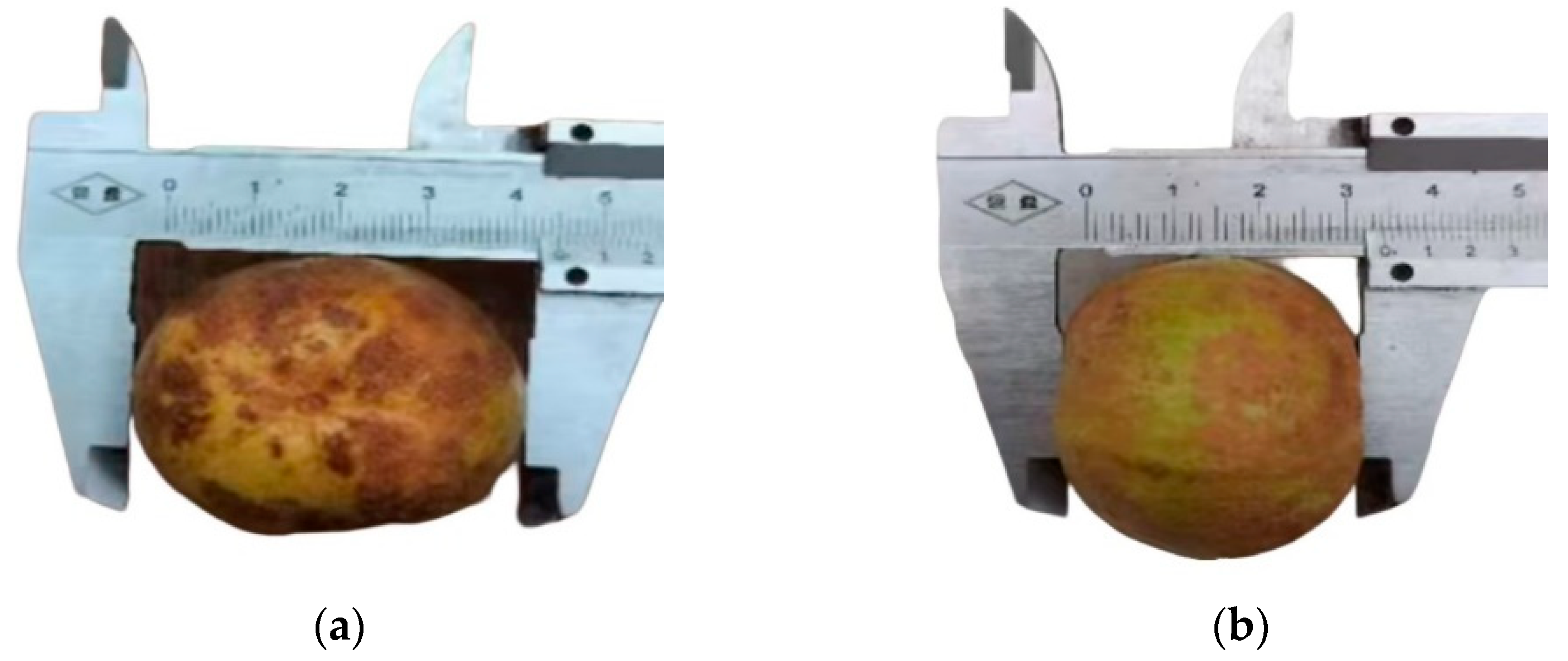
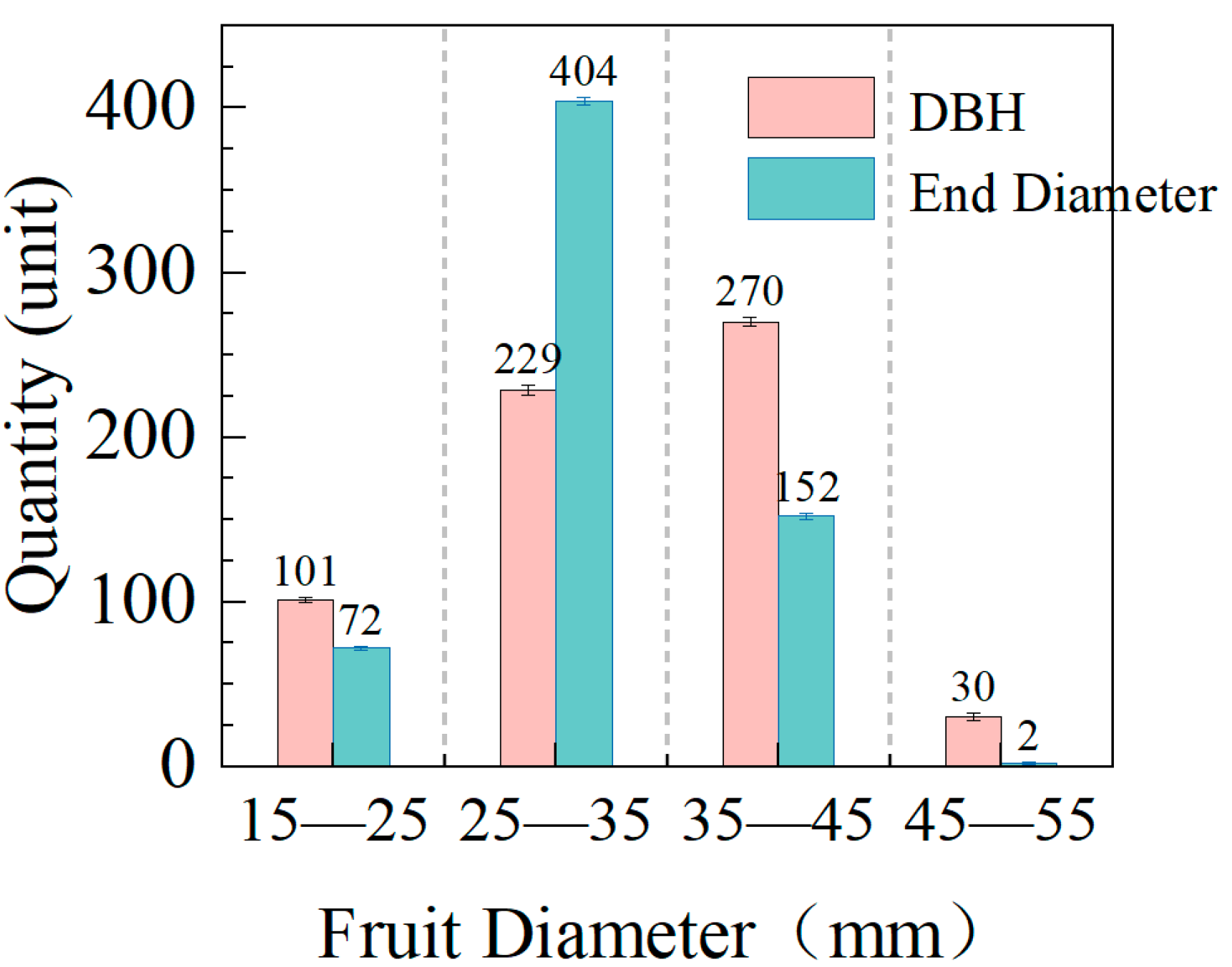
The Diameter at Breast Height (DBH) and end diameter measurement methods of the Camellia oleifera fruits are shown in Figure 1, and their particle size distribution is shown in Figure 2.
As shown in Figure 2, the DBH of Camellia oleifera fruits is mostly in the 35 mm–45 mm range, and their end diameter is mostly in the 25 mm–35 mm range. The Camellia oleifera fruit diameter is the most critical factor affecting classification and determines the quality of subsequent shelling and cleaning. Therefore, the pre-positioned high-precision classifying unit is the core design. A comprehensive verification test shows that the diameter of Camellia oleifera fruits after drying and cracking increases appropriately. Therefore, the gaps between the slat bars are divided into three levels: the first level gap is 23 mm, the second level gap is 37 mm, and the third level gap is 52 mm.

2.1.2. Friction Coefficient of Camellia oleifera Fruits

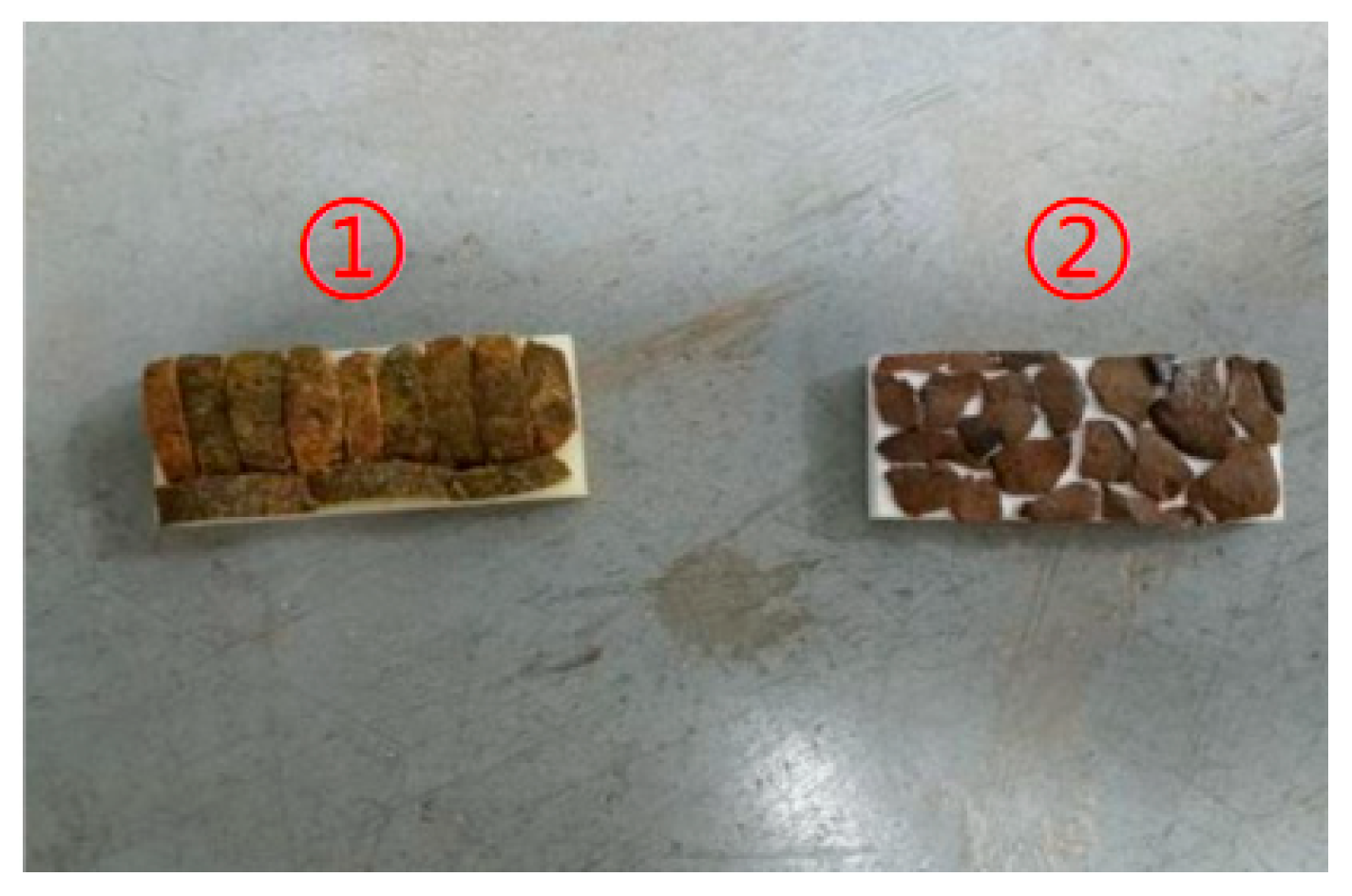
We cut the Camellia oleifera fruit shells into strips of similar shape and size, approximately 10 mm in length and 5 mm in width, and evenly attached them to the surface of prepared cuboid specimens with the outer shell surface facing outward. As the Camellia oleifera seed shells are brittle materials, it is difficult to cut them into strips of uniform shape and size. Therefore, relatively flat fragments of the Camellia oleifera seed shells were selected as far as possible and attached to identical cuboid specimens in the same manner. The friction blocks are shown in Figure 3.
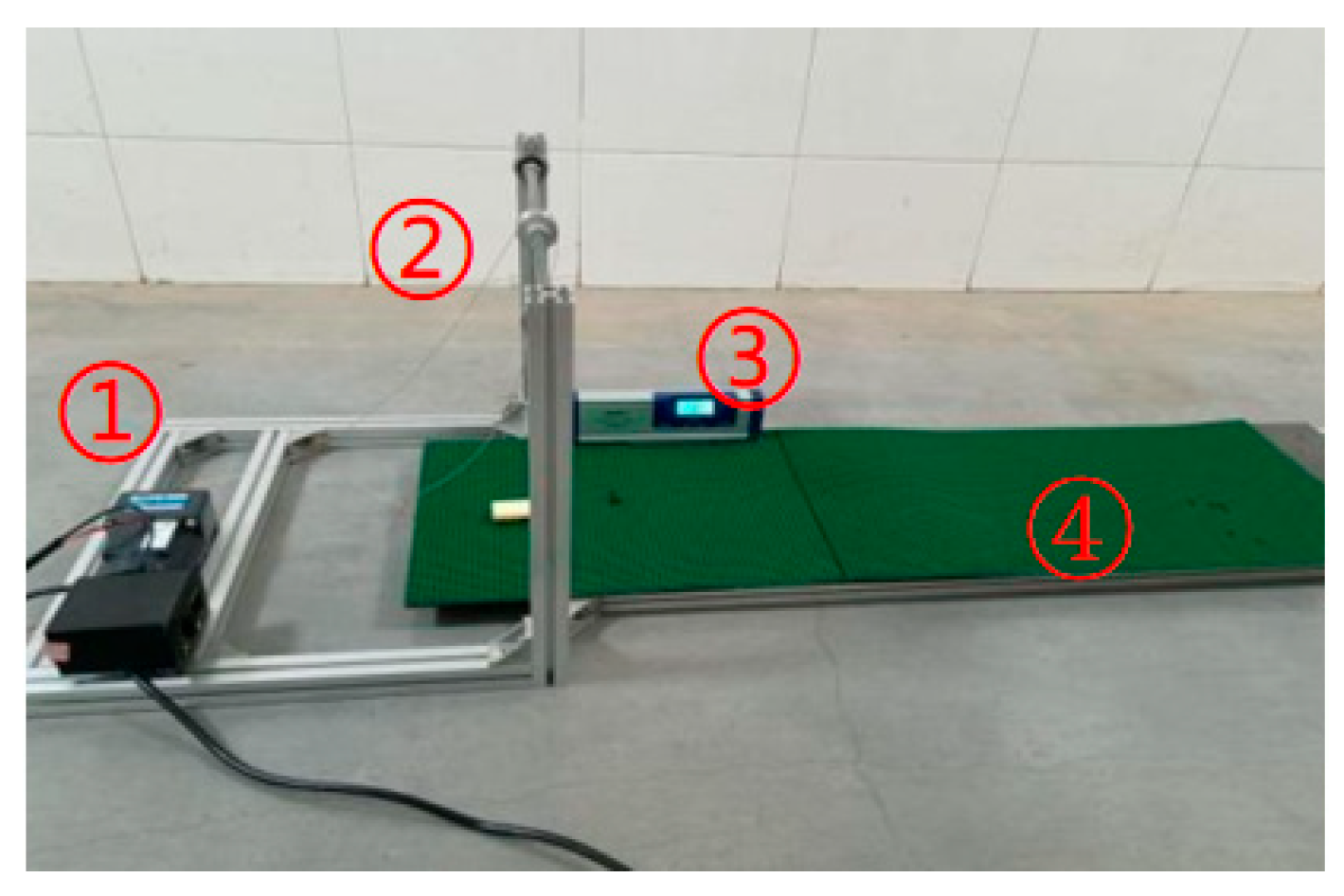
The PVC belt was laid on a horizontal steel plate, and the test specimen, attached with the Camellia oleifera shells and camellia seeds, was placed on the PVC belt in a stationary state. A thin string was fastened to the Motor (41K25RGN-C, Zhongda Leader Intelligent Transmission Co., Ltd., Ningbo, China) shaft and routed over a fixed pulley, and its other end was fixed to the steel plate. The motor was activated, the steel plate was slowly lifted by the traction of the thin string, and the inclination angle of the horizontal plane increased gradually; when the test specimen started to slide along the inclination plane, the motor was immediately turned off, and the reading of the angle meter(Deqing Shengtai Core Electronics Technology Co., Ltd., Huzhou, China) was recorded. This experiment was repeated 10 times, the average value was calculated, and the calculated value was considered the approximate sliding friction angle. Then, the same test steps were performed on the steel plate. The test bench is shown in Figure 4.
Through a preliminary test, the friction coefficient and sliding friction angle of the shells and seeds of Camellia oleifera on a steel plate and PVC lawn belt are determined as shown in Table 1. Each set of experiments was repeated 3 times. The average sliding friction angle of camellia shells on the PVC belt is 42°, and the average sliding friction angle of camellia seeds is 33°. As the friction coefficient is greatly affected by moisture content, the smaller the moisture content, the smaller the friction coefficient and friction angle. The friction coefficient and friction angle measured in this test are based on the moisture content of 65% [28].
Descriptive statistics and variability: For each measurement, the mean, standard deviation (SD), coefficient of variation (CV), and 95% confidence interval (CI) were calculated from three replicates. The CI was derived using the t-distribution with two degrees of freedom (df = 2, t0.025 = 4.303). The CV expresses SD as a percentage of the mean and serves as a dimensionless measure of relative dispersion, facilitating comparison across metrics with different units. The results are shown in Table 2 and Table 3.
For the camellia shell, most measurements show lower to moderate variability (CV ≤ 5%), reflecting good repeatability. The rolling friction coefficient with PVC is the exception, with a notably higher CV of 15.00% (SD = 0.0186), indicating greater measurement dispersion for this parameter. The 95% CI for the sliding friction coefficient with steel is [0.5668, 0.7278], and with PVC [0.8295, 0.9708], both relatively wide due to the small sample size (n = 3). Rolling friction coefficients have narrow confidence intervals, particularly on steel [0.0765, 0.0839], reflecting high measurement consistency.
The camellia seed measurements exhibit consistently low variability across all parameters (CV ≤ 3.90%), demonstrating excellent repeatability. The rolling friction coefficients are particularly stable: CV = 3.37% on steel (SD = 0.0014) and CV = 2.91% on PVC (SD = 0.0020). The 95% CI for the sliding friction coefficient with PVC is [0.5818, 0.7066]. The relatively narrow confidence intervals across all seed measurements indicate high experimental precision.

2.2. Structural Design

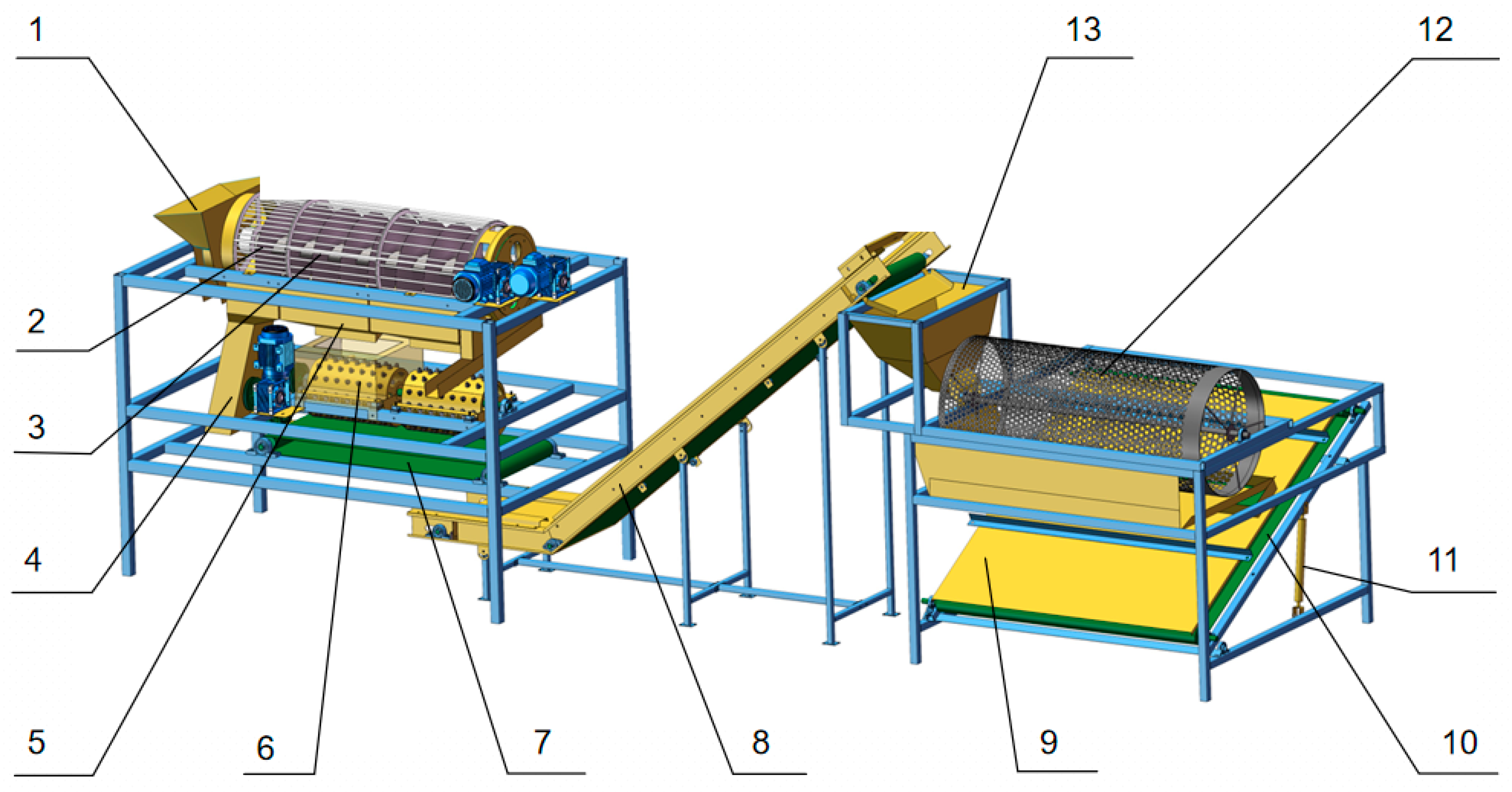
The Camellia oleifera fruit shelling and cleaning machine is mainly composed of a classifying device, a shelling device, a cleaning device, a motor, a transmission device, etc., as shown in Figure 5. The classification of Camellia oleifera fruits is mainly completed in the classification device. After the Camellia oleifera fruits enter the classifying device from the hopper, the Camellia oleifera fruits fall into the shelling drum below for shelling, and the shelled Camellia shell and Camellia seed mixture is conveyed to the cleaning device for cleaning through the conveyor belt. Finally, the separated camellia seeds and camellia shells are obtained.

2.2.1. Working Principle

Firstly, after the Camellia oleifera fruits are subjected to drying pretreatment [29,30], they enter the classifying device from the hopper, the Camellia oleifera fruits are received by the spiral blade in the slat drum, the spiral blade rotates under the drive of the motor, and the Camellia oleifera fruits are stably conveyed to the discharge end of the device by virtue of the thrust of the spiral blades, so as to avoid the accumulation of the Camellia oleifera fruits or conveyor blockage. The slat drum is simultaneously driven by another driving motor to maintain relative rotation with the spiral blade, and this relative movement can make the Camellia oleifera fruits in the conveying process continuously adjust their posture and contact with the slats of the slat drum more fully.
The slat drum is preset with a three-level classifying interval according to the sizes of the Camellia oleifera fruits, and the slat gaps of the intervals are different; when the Camellia oleifera fruits move to the classifying interval corresponding to the gaps along with the spiral blade, the Camellia oleifera fruits with sizes smaller than the slat gaps of the interval fall from the gaps and enter the discharge hopper through the corresponding partition of the receiving hopper; the Camellia oleifera fruits smaller than the first-stage interval fall out and are collected from the first-stage discharge hopper, and the Camellia oleifera fruits falling out from the latter two stages directly fall into the shelling drum of the shelling device.
Then, the Camellia oleifera fruits fall into a lower conveying belt from a gap in the screen after achieving camellia shell and camellia seed detachment under the kneading and beating of the shelling drum and the screen, and they are conveyed to a cleaning device through another conveying device. The camellia seed and camellia shell mixture enters a drum screen, and the large camellia shells are separated from the drum screen through rough selection. The camellia seeds and small camellia shells fall onto a conveyor belt because of the differences in the friction coefficients between the camellia seeds and the small camellia shells. The camellia seeds fall from the lower end under the action of gravity, and the small camellia shells are conveyed upwards along with the belt.

2.2.2. Design of Key Components

Design of Classifying Device
As a key component of the shelling and cleaning machine, the classifying device performs the crucial task of separating the big and small fruits. Our research team designed a slat drum classifying device with a spiral blade for resolving the issues of skip-classifying, low classifying rate, and poor productivity exhibited by the existing classifying device for Camellia oleifera fruits. The slat gaps were determined to be 20 mm, 35 mm, and 50 mm by measuring the sizes of Camellia oleifera fruits. Verified by simulation experiments and bench tests, the classifying device achieved a classifying rate of 91.6% and a productivity of 3923.3 kg/h when the rotation speed of the spiral blade was 58 r/min, the drum rotation speed was 50 r/min, and the pitch was 156 mm. Due to the adjustment of test conditions, Camellia oleifera fruits cracked after drying pretreatment, and they were not ideal spheres. Therefore, our team redesigned a new classifying device.
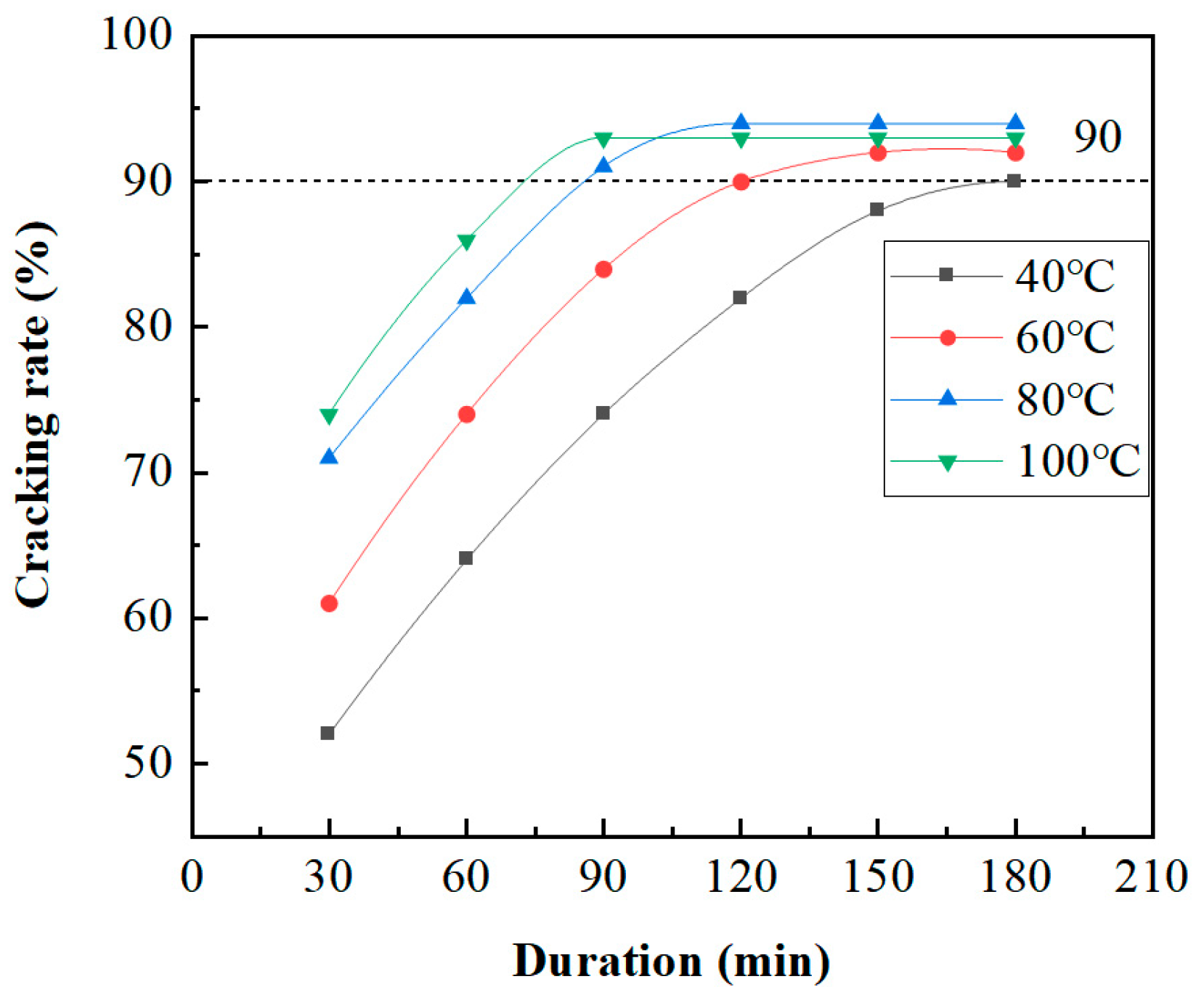
In the preliminary experiments, the number of the classifying stages were determined by measuring the particle size distribution of Camellia oleifera fruits, and the slat gap parameters were re-optimized by comparing the changes in size and shape; after a large number of drying and shelling experiments, we determined that a suitable drying temperature was 80 °C and a suitable duration was 90 min, the reason is shown in Figure 6. Within 90 min of drying, the cracking rate rises rapidly to approximately 90%, which is significantly higher than that at 60 °C (red line) and 40 °C (black line). When the duration reaches 90 min, the cracking rate at 80 °C approaches the maximum value, and a further extension of duration (from 90 to 180 min) results in only a marginal increase in the cracking rate.
The moisture content of Camellia oleifera fruits was approximately 65%. Lastly, Camellia oleifera fruits in different diameters were randomly selected for 3D scanning and modeling; then, we conducted simulation experiments, taking classifying rate and productivity as the evaluation indicators; the new optimal operating parameter combination for the device (a spiral blade speed of 20 rpm, drum speed of 10 rpm, and rise angle of 9.6°) was obtained through the comprehensive analysis of simulation experiment data and bench test results.
Design of Shelling Device
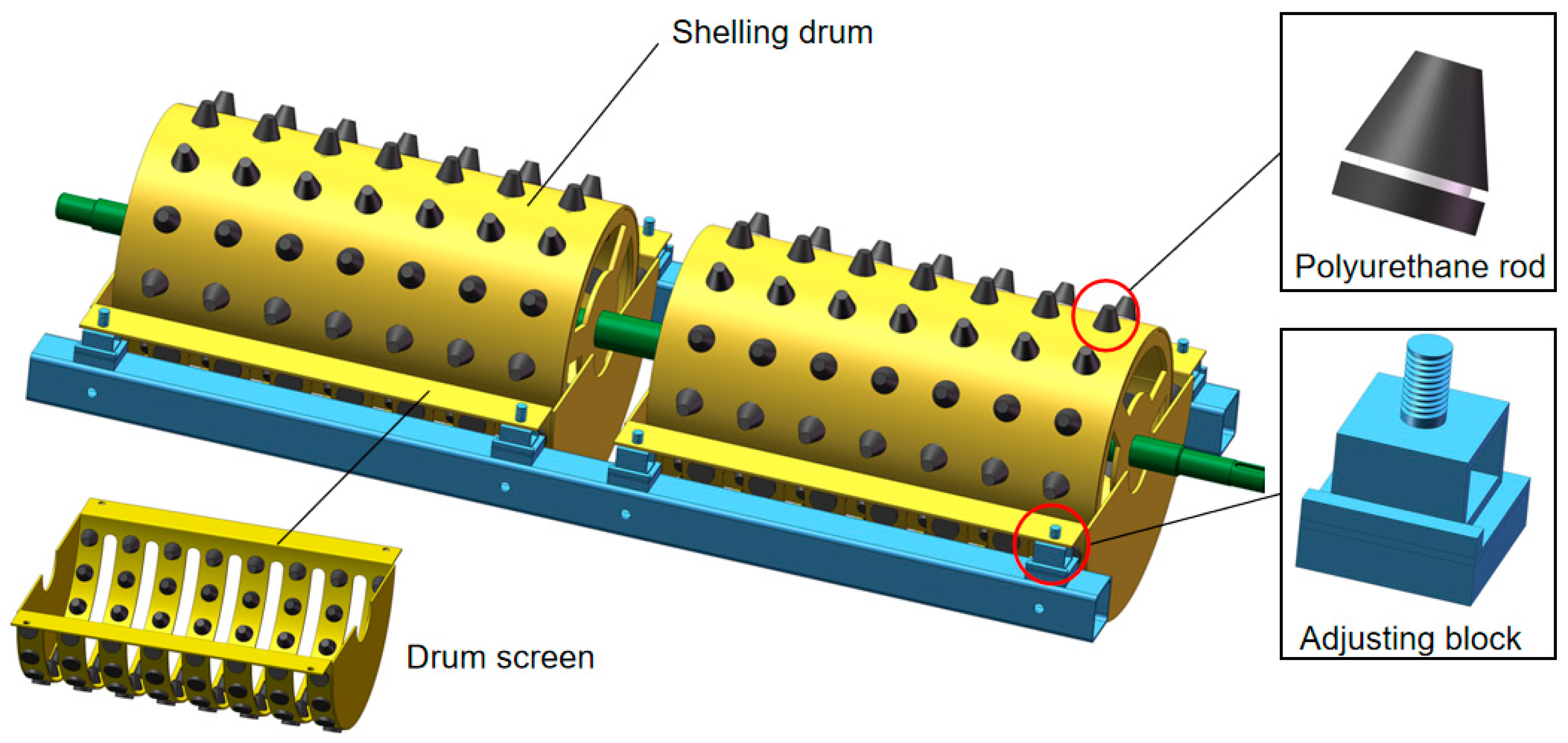
The shelling device is mainly based on the research of Liao et al. [17,18], and polyurethane rods are the main shelling components of the horizontal flexible shelling device [31,32,33]. Aiming to resolve the issue that the shelling rate and the seed breakage rate cannot be satisfied simultaneously in the existing shelling equipment, the horizontal shelling equipment is adopted to ensure an appropriate processing time of the camellia fruits in the shelling space and ensure the high shelling rate [34,35,36]. The shelling drum and the shelling rods on the shelling screen, as shown in Figure 7, being the main shelling components, are made of flexible polyurethane rods, which can effectively reduce the camellia seed breakage rate [37,38,39]. The horizontal flexible shelling device considered the shelling rate and seed breakage rate as indicators: the shelling rate reached 97.52%, and the camellia seed breakage rate did not exceed 5%. The main structural parameters (shelling gaps) and technological parameters (drum speed and pretreatment time) were studied through experiments. In the further parameter optimization, through repeated verification and cross-comparison of a high amount of experimental data, the first-stage shelling gap was 15 mm–20 mm, and the second-stage shelling gap was 20 mm–25 mm. The rotation speed of the drum was 200 rpm, and the pretreatment time was 80 °C for drying for 90 min [37]. In addition, in order to make the shelling device adapt to the camellia fruits of different sizes, the gap between the screen and the drum was adjusted by replacing the adjusting blocks with different sizes, and the adjustment range was 5 mm–10 mm; it was automatically adjusted by replacing elastic pads or springs, etc.
Design of Cleaning Device
The prior camellia seed and camellia shell cleaning equipment mostly utilized a single cleaning mode, such as a toothed roller, color separation, flotation, or vibration, and the cleaning rate of the single cleaning mode is low, and the impurity content rate is high because the shapes and sizes of the camellia seeds are different. The differences in camellia shells after shelling are large; the camellia seeds and camellia shells are easily damaged, the loss rate is increased, and the economic loss also increases. In order to solve this problem and achieve the goal of high efficiency and low-loss cleaning, a cleaning device for Camellia oleifera fruits was developed, which consists of drum screen roughing and conveyor belt friction cleaning.
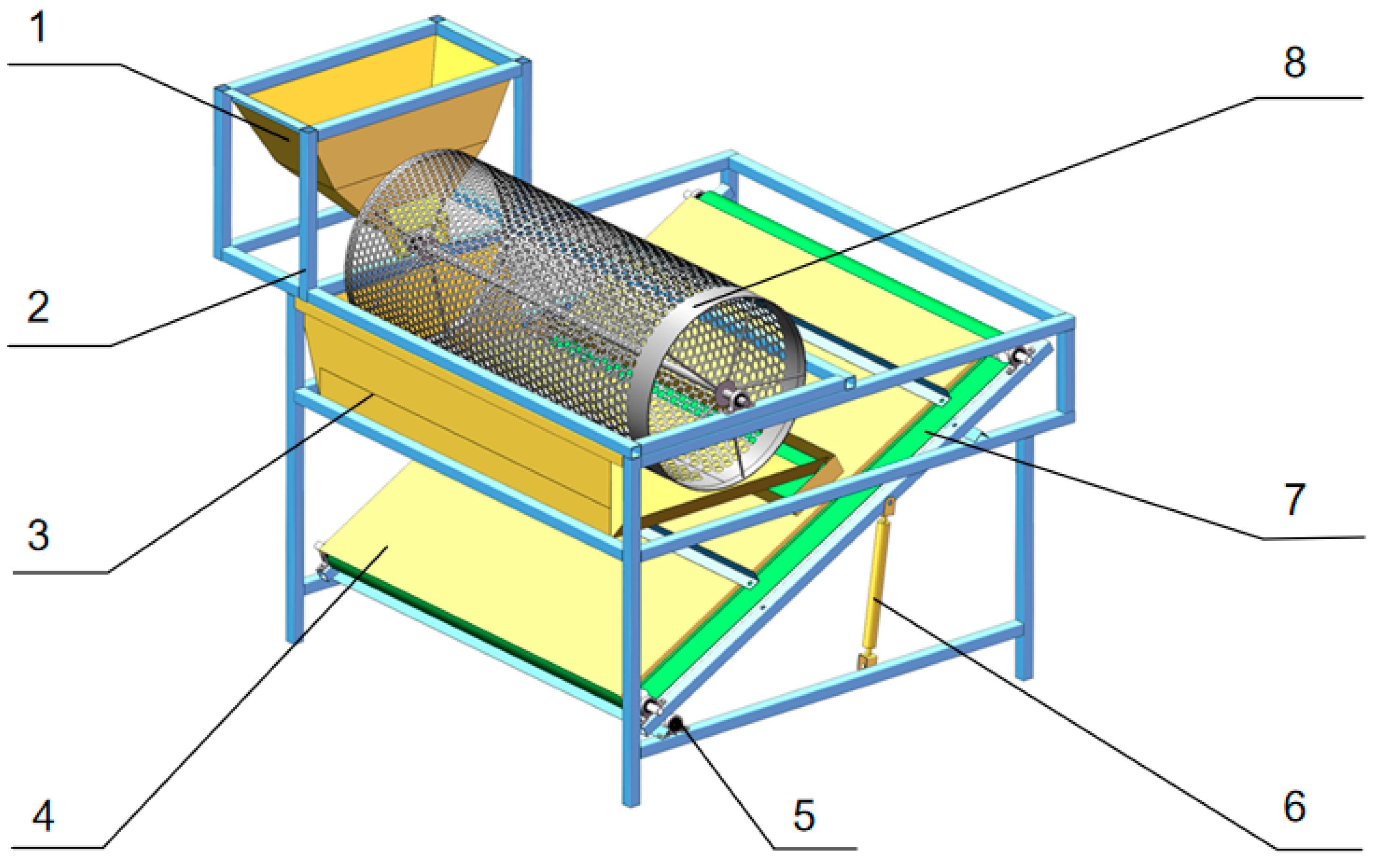
The camellia seed and camellia shell mixture falls into the hopper and then enters the drum screen; the drum screen rotates to move this mixture forward; the camellia seeds and a part of the camellia shells with smaller sizes fall from the drum screen holes onto a material-receiving platform, and the camellia shells with larger sizes fall down from the end of the drum screen, and the rough separation is achieved; the camellia seeds and camellia shells present on the material-receiving platform slide downward and fall onto the conveyor belt through the vibration of the vibration motor. Due to the different friction coefficients and rolling inertia of the camellia shells and camellia seeds, the camellia seeds exhibit a low friction coefficient and a high rolling inertia, rolling downward, while the camellia shells exhibit a high friction coefficient and a low rolling inertia, moving upward with the belt and being discharged from the top, thus achieving the cleaning of the camellia shells and camellia seeds, as shown in Figure 8.
Based on the experimental measurements and formula calculations, the belt length of the original equipment is 2700 mm, the belt width is 1000 mm, the belt speed range is 0.5 m/s–1.5 m/s, the speed of the drum screen is 38.6 rpm, and the inclined angle is 25°. Due to the differences in experimental materials and different pretreatment conditions, the friction coefficient of camellia shells and camellia seeds changes; thus, it is difficult to meet the cleaning requirements of the fixed conveyor belt inclined plane. Through the determination and experimental verification of the friction coefficient of camellia shells and camellia seeds under new conditions, the classification equipment and structure are adjusted, the fixed inclined plane parts are removed, and the lower end of the inclined plane is connected by the bearing support, so that the inclined plane can rotate around the bearing support. The upper end is connected by a tractor suspension center pull rod, which can adjust the inclination range of 20–30°.

2.3. Simulation Analysis

2.3.1. Model Establishment

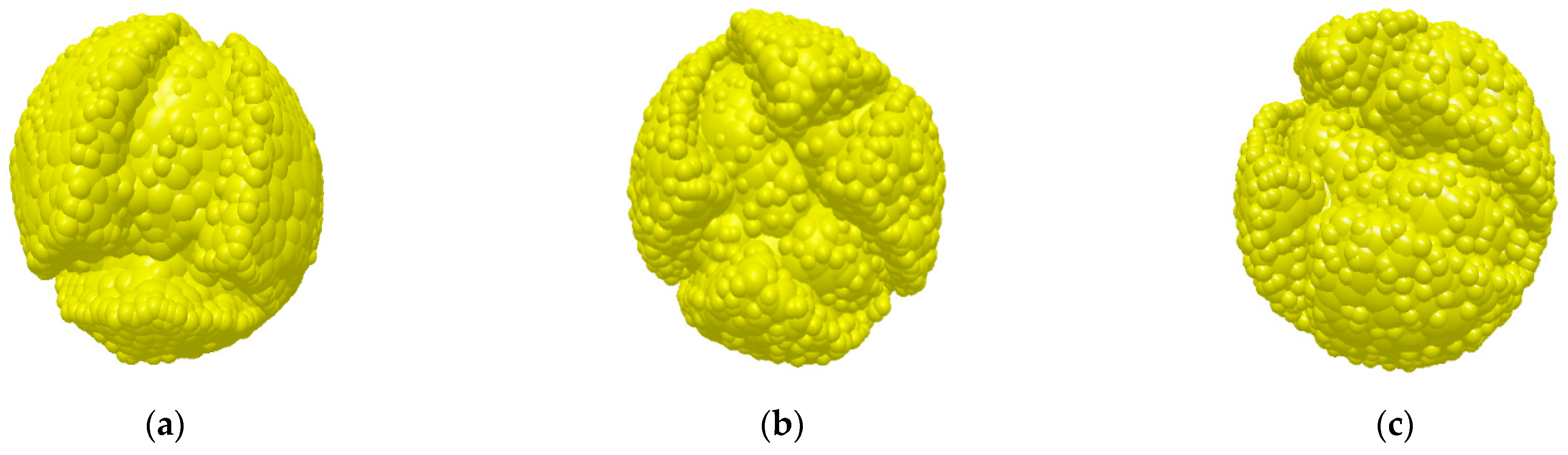
Figure 9 presents the 3D scanned models of Camellia oleifera fruits with three particle size ranges (15 mm–20 mm, 25 mm–35 mm, and 35 mm–45 mm) that had cracked after drying at 80 °C for 90 min. Overcoming the limitation of simplifying Camellia oleifera fruits into regular spheres in traditional discrete element method (DEM) simulations, the models achieve accurate 3D reconstruction according to the irregular morphologies and actual particle size distributions of the Camellia oleifera fruits after drying and cracking. This approach restores the authentic geometric characteristics of the test objects, thus ensuring the consistency and reliability between simulation tests and physical experiments. Serving as precise digital entities for analyzing the contact parameters, motion laws, and collision behaviors of Camellia oleifera fruit particles in EDEM simulations, these models form the fundamental object basis for the subsequent dynamic simulations of the grading process and quantitative analysis of the particle–device interactions.
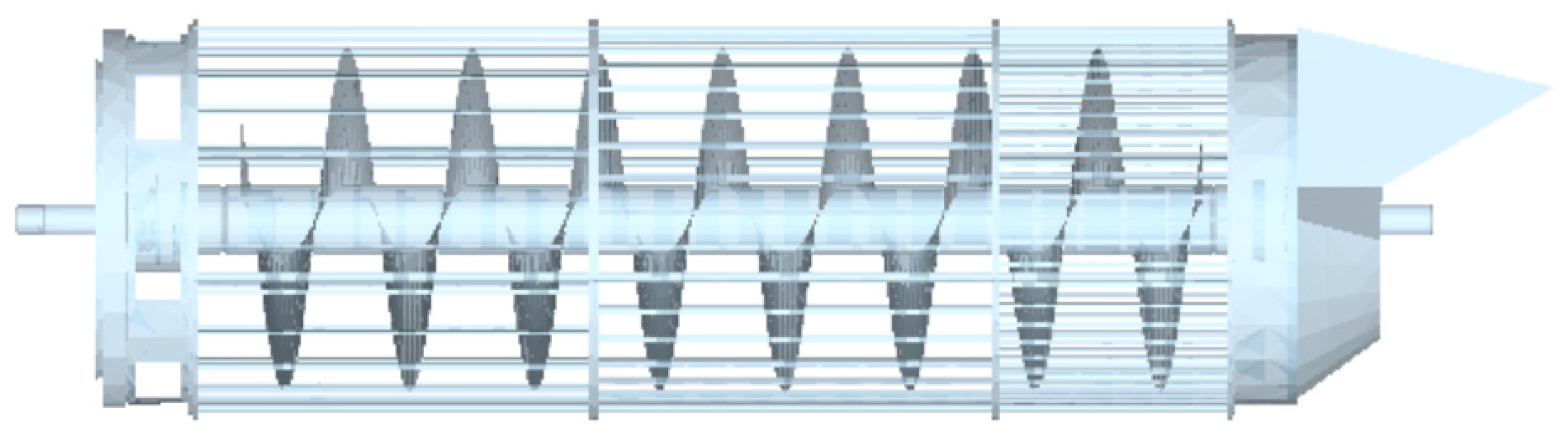
Figure 10 presents the simulation model of the Camellia oleifera fruit classifying device [40], which was developed in SolidWorks 2023 SP05and imported into EDEM 2024. Only the core structural components that make contact with Camellia oleifera fruits during the classifying process are retained for the structural simplification and core region extraction of the classifying device. Redundant components with no direct role in Camellia oleifera fruit classification are eliminated, which reduces the computational load of simulations and improves simulation efficiency while ensuring the structural integrity and geometric accuracy of the device’s core functional parts (the slat drum and spiral blade). This model establishes a coupled simulation system for Camellia oleifera fruit particles and the classifying device, serving as a precise digital platform of the device for the subsequent simulation test operations, including the setting of experimental factors (spiral blade speed, drum speed, and rise angle), the monitoring of particle motion trajectories, and the statistical analysis of classifying efficiency and processing capacity.

2.3.2. Experimental Factors and Indicators

Through the determination of a large quantity of early experimental data and literature reviews [41,42], various simulation parameters are determined as shown in Table 4.
The rise angle, spiral blade rotation speed, and drum rotation speed are selected as test factors in the classifying test. The experimental level and factor code values are shown in Table 5. Considering the interaction relationship among various factors, response surface analysis (RSM) is performed. According to the design principle of Box–Behnken Design (BBD) center combination, the software Design Expert 13 is used for data analysis. The classifying rate y1 and productivity y2 are considered as test indicators. Classifying rate y1 = N1/N2 × 100% and productivity y2 = m/t, where N1 denotes the number of Camellia oleifera fruit particle models correctly falling into the classifying interval, N2 denotes the total number of Camellia oleifera fruit particle models, m denotes the total mass of Camellia oleifera fruit particle models (kg), and t denotes the time required for the completion of Camellia oleifera fruit classification (h) [43].
The experimental plan and results are shown in Table 6.

3. Results

3.1. Analysis of Simulation Results

3.1.1. Analysis of Experimental Factors Influencing Classifying Rate

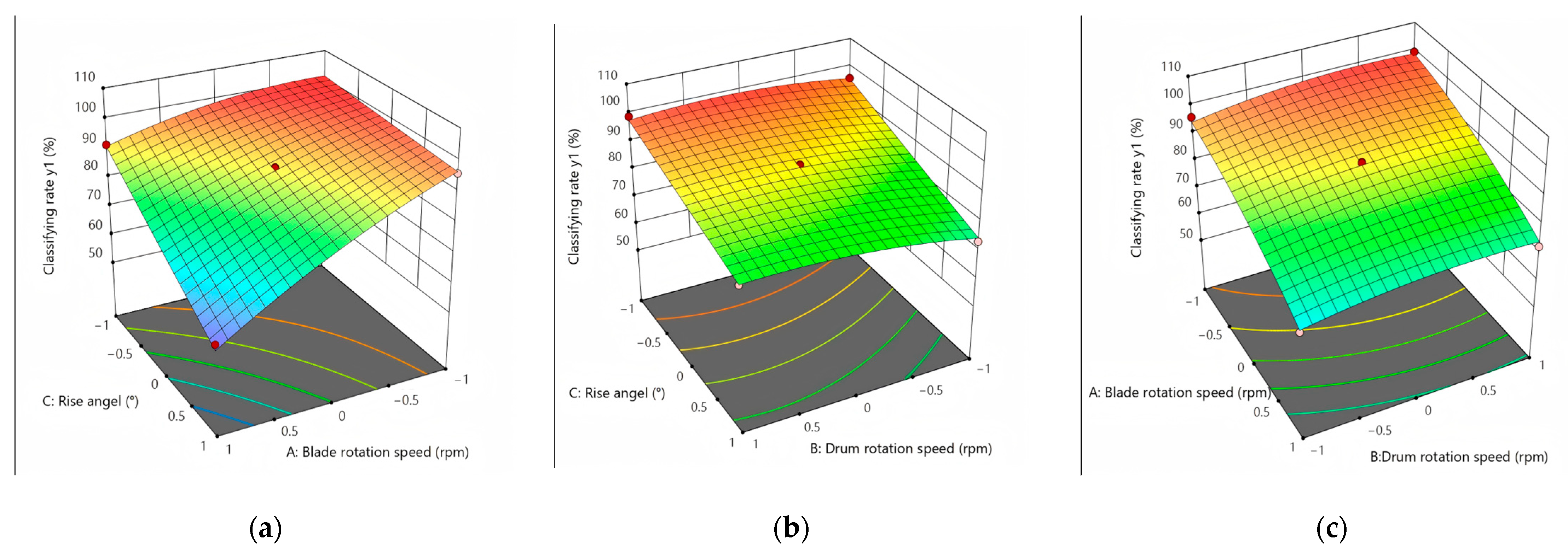
The variance analysis of the classifying rate of camellia seeds is presented in Table 7. The data indicate that the experimental model is highly significant (p < 0.01). The order of influence of factors on the classifying rate is as follows: A, C, AC, A2, B2, B, BC, AB, and C2. The coefficients of the regression model reveal the direction and magnitude of factor effects on the classifying rate. Spiral blade rotation speed (A, coefficient = −12.17) and rise angle (C, coefficient = −9.29) are the most influential factors, with negative coefficients indicating that lower spiral blade rotation speed and smaller rise angle contribute to a higher classifying rate. The interaction term AC (coefficient = −6.93) shows a significant synergistic effect, while quadratic terms A2 and B2 suggest optimal ranges exist for spiral blade rotation speed and drum rotation speed. The relative importance of main effects follows the order A > C > B. The regression equations for each factor influencing the classifying rate are obtained as follows:
y1 = 89.54 − 12.17A + 2.24B − 9.29C − 0.125AB − 6.93AC + 1.20BC − 2.97A2 − 2.40B2 + 0.055C2
Loss of fit test: The p-value is 0.0557, which is not significant. Then, there is no other factor affecting the classifying rate, and the test factors and classifying rate have a significant relationship, R2 = 0.9895, indicating that the regression mathematical model has a high degree of fit with the actual experimental model, showing that more than 99% of the evaluation indicators can be explained by this model, and it can be used to analyze the classifying rate. The predicted R2 of 0.8583 is in reasonable agreement with the Adjusted R2 of 0.9759, with their difference less than 0.20, indicating that the regression model and test model show a high degree of fit and can be used to analyze the classifying rate.
Response surface analysis: It evaluates the impact of each factor interaction on the classification rate, as shown in Figure 11. The analysis determines that the interaction degree of each factor is AC > BC > AB, and the AC interaction is extremely significant. It can be seen from the figure that, when the rise angle is constant, the classifying rate decreases with the increase in spiral blade rotation speed; When the rise angle is 12°, the spiral blade rotation speed is 40 rpm, and as the spiral blade rotation speed rises, the classifying rate decreases. The fundamental reason is that the larger the spiral blade rotation speed, the faster the Camellia oleifera fruits move forward, resulting in a lower classifying rate and a higher productivity; At the same rise angel, when the spiral blade rotation speed decreases, the axial displacement of the material is reduced, the conveying capacity per unit time is decreased, and the productivity declines.
From Figure 11b,c, the classifying rate increases as the rise angle decreases, and the change in classifying rate is significant. The classifying rate increases as the drum rotation speed increases, but the change in classifying rate is not significant. When the spiral blade rotation speed is constant, the classifying rate increases with the increase in the drum rotation speed, but the change is small. The fundamental reason is that the main factor affecting the classifying rate is the conveying speed of the Camellia oleifera fruits, which is mainly determined by the speed of the spiral blade rotation speed and rise angle, while the drum rotation speed primarily affects the degree of full contact between the Camellia oleifera fruits and the drum bars, having little impact on the classifying rate.

3.1.2. Analysis of Experimental Factors Influencing Productivity

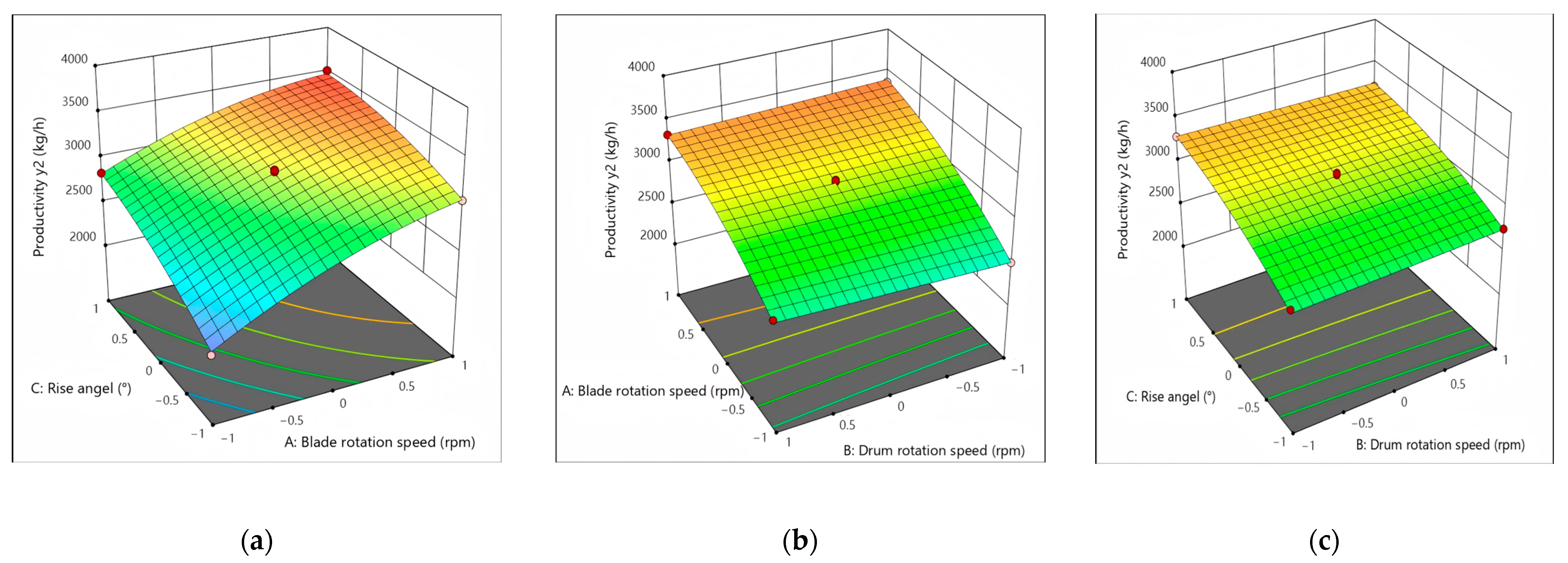
The variance analysis for productivity is presented in Table 8. The data indicate that the experimental model is highly significant (p < 0.01). The order of influence of factors on productivity is A, C, A2, C2, AC, AB, BC, B, and B2. The coefficients of the regression model reveal the direction and magnitude of factor effects on productivity. Spiral blade rotation speed (A, coefficient = 399.25) and rise angle (C, coefficient = 280.63) are the most influential factors, with negative coefficients indicating that higher spiral blade rotation speed and larger rise angle contribute to a higher productivity. The interaction term AC (coefficient = −73.25) shows a significant synergistic effect, while quadratic terms A2 and C2 suggest optimal ranges exist for spiral blade rotation speed and rise angel. The relative importance of main effects follows the order A > C > B. The regression equations for each factor influencing productivity are obtained as follows:
y2 = 3082.60 + 399.25A + 8.63B + 280.63C − 45.25AB − 73.25AC − 25BC − 123.05A2 + 1.7B2 − 91.3C2
Loss of fit test: The p-value is 0.3963, which is not significant. Then, there is no other factor affecting productivity, and the test factors and productivity have a significant relationship, R2 = 0.9924, indicating that the regression mathematical model has a high degree of fit with the actual experimental model, showing that more than 99% of the evaluation indicators can be explained by this model, and it can be used to analyze the productivity. The predicted R2 of 0.9342 is in reasonable agreement with the Adjusted R2 of 0.9825, with their difference less than 0.20, indicating that the regression model and test model exhibit a high degree of fit and can be used to analyze productivity.
Response surface analysis: It evaluates the impact of each factor interaction on the classification rate, as shown in Figure 12. The analysis determines that the interaction degree of each factor is AC > AB > BC, and the AC interaction is significant. It can be seen from the figure that, when the rise angle is constant, the larger the spiral blade rotation speed, the greater the productivity; when the rise angle is 12°, the spiral blade rotation speed is 40 rpm, and as the spiral blade rotation speed rises, the productivity rises. The fundamental reason is that when the spiral blade rotation speed is appropriately increased, the forward component of the material along the axis increases, the axial displacement per unit time increases, the conveying capacity improves, and the conveying efficiency reaches its peak; however, when the spiral blade rotation speed is too large, the material is prone to stick closely to the drum, and may even be unable to move forward, causing the productivity to drop sharply.
From Figure 12b,c, the productivity increases as the rise angle increases, and the change in productivity is significant. The productivity increases as the drum rotation speed increases, but the change in productivity is not significant. When the spiral blade rotation speed is constant, the productivity increases with the increase in the drum rotation speed, but the change is small. The fundamental reason is that the main factor affecting productivity is the conveying speed of the Camellia oleifera fruits, which is mainly determined by the speed of the spiral blade rotation speed and rise angle, while the drum rotation speed primarily affects the degree of full contact between the Camellia oleifera fruits and the drum bars, having little impact on productivity.

3.1.3. Residual Analysis

Shapiro–Wilk Normality Test
A fundamental assumption of ANOVA and regression is that the residuals follow a normal distribution. The Shapiro–Wilk test was applied to the residuals of both models; results are shown in Table 9. For y1, W = 0.9679 (p = 0.7804); for y2, W = 0.9290 (p = 0.2091). Both p-values substantially exceed 0.05, providing no evidence against normality and confirming that the normality assumption is satisfied for both models
Levene Test for Variance Homogeneity
The Levene test was used to assess homogeneity of residual variance across the three levels of factor A (−1, 0, +1). For y1, F = 1.2301 (p = 0.3220); for y2, F = 0.2572 (p = 0.7768). Both p-values are well above 0.05, indicating no significant heteroscedasticity. The assumption of homogeneous variance is therefore satisfied for both response models (Table 10).
Residual Diagnostic Plots
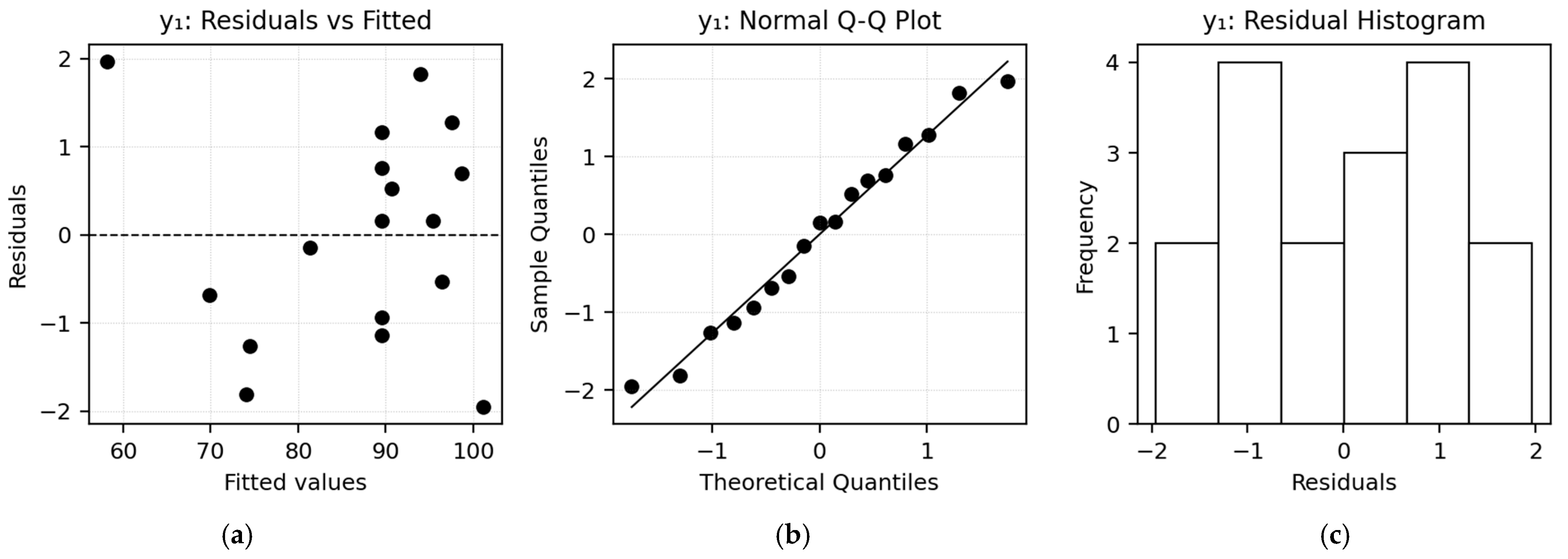
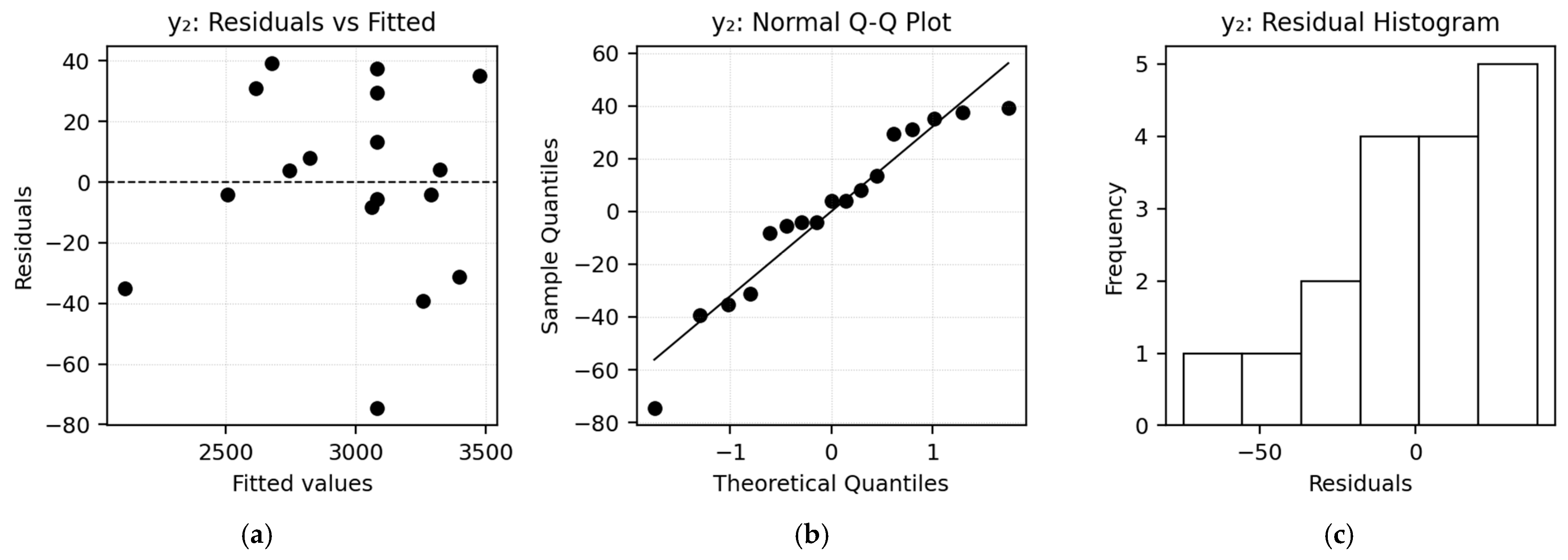
Residual diagnostic plots for y1 and y2 are presented in Figure 13 and Figure 14, respectively. Each set includes: (Figure 13a and Figure 14a) residuals versus fitted values to detect non-constant variance or systematic patterns; (Figure 13b and Figure 14b) a normal Q-Q plot to visually assess normality; and (Figure 13c and Figure 14c) a histogram of residuals. For both models, the residuals scatter randomly around zero with no visible trend, the Q-Q points align closely with the reference line, and the histograms exhibit approximate bell shapes. These diagnostics are fully consistent with the quantitative test results and confirm the validity of both regression models.

3.1.4. Relative Importance: Standardized Regression Coefficients and Sensitivity Analysis

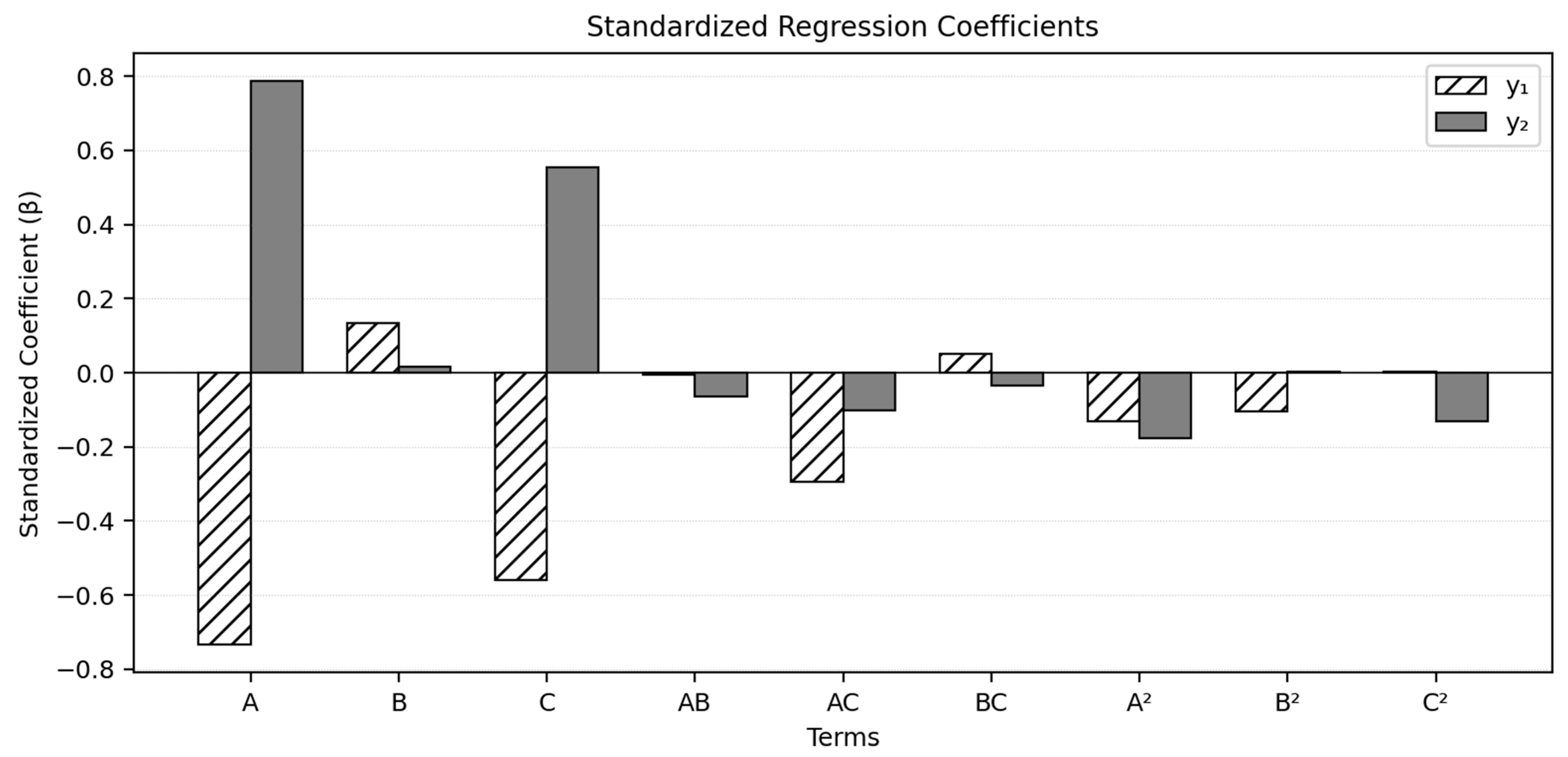
To compare the relative importance of each term on a common scale, standardized regression coefficients (β) were computed by multiplying each unstandardized coefficient by the ratio of the standard deviation of the corresponding predictor to the standard deviation of the response. Results are summarized in Table 11 and illustrated in Figure 15.
For y1, factor A has the largest absolute standardized coefficient (β = −0.734), confirming it as the dominant influence on classifying rate, followed by factor C (β = −0.560) and the AC interaction (β = −0.295). For y2, factor A again ranks first (β = +0.787), followed by factor C (β = +0.553). Factor B and most interaction and quadratic terms have comparatively minor effects on both responses.
Sensitivity analysis: at the center point (A = B = C = 0), the partial derivatives of the regression equations provide local sensitivity estimates. For y1: ∂y1/∂A = −12.17%/unit, ∂y1/∂B = +2.24%/unit, ∂y1/∂C = −9.29%/unit. For y2: ∂y2/∂A = +399.25 kg/h per unit, ∂y2/∂C = +280.63 kg/h per unit. These results confirm that factor A is the most sensitive control variable for both responses and should receive the greatest attention during process optimization.

3.2. Bench Test

3.2.1. Bench Test of Classifying Device

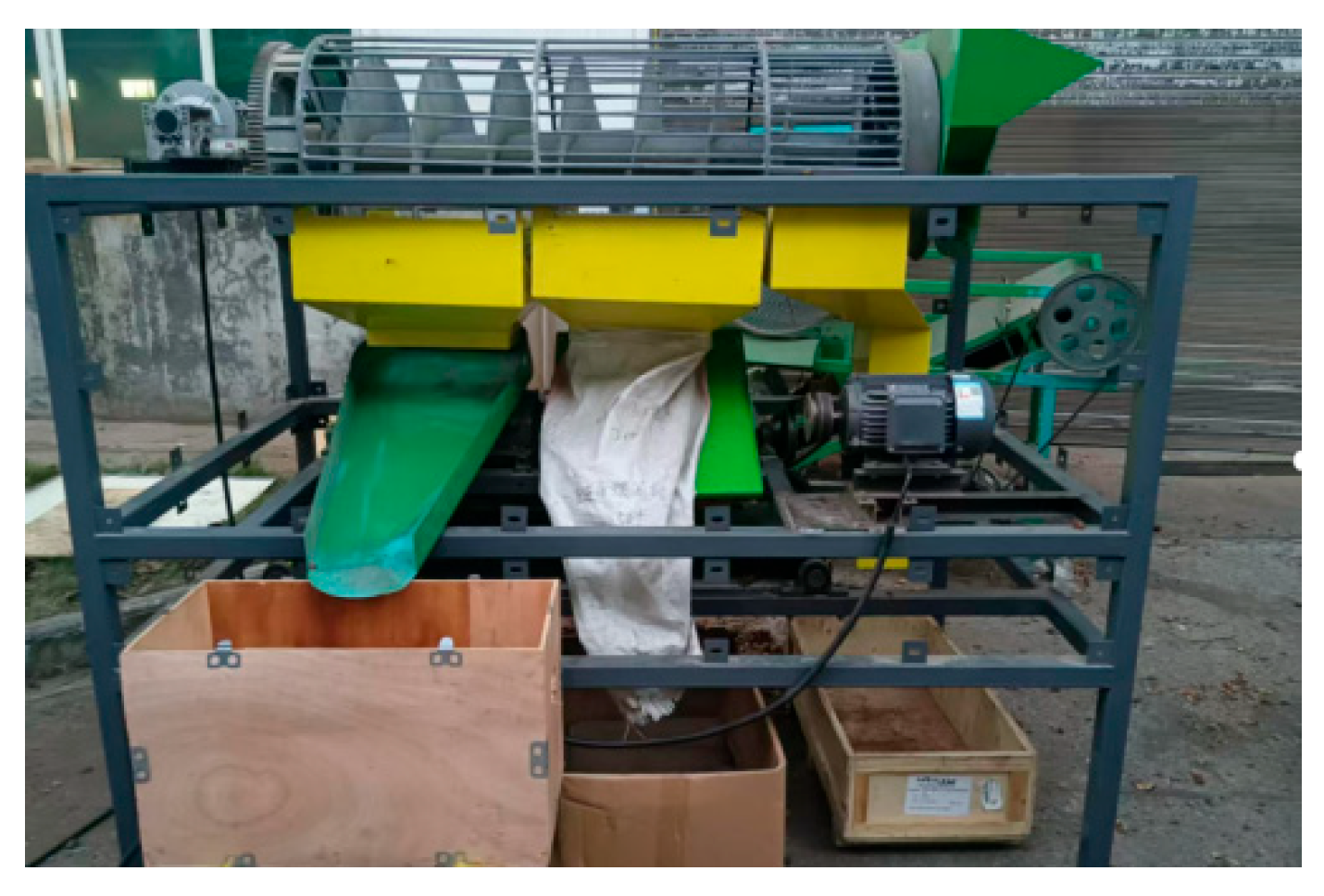
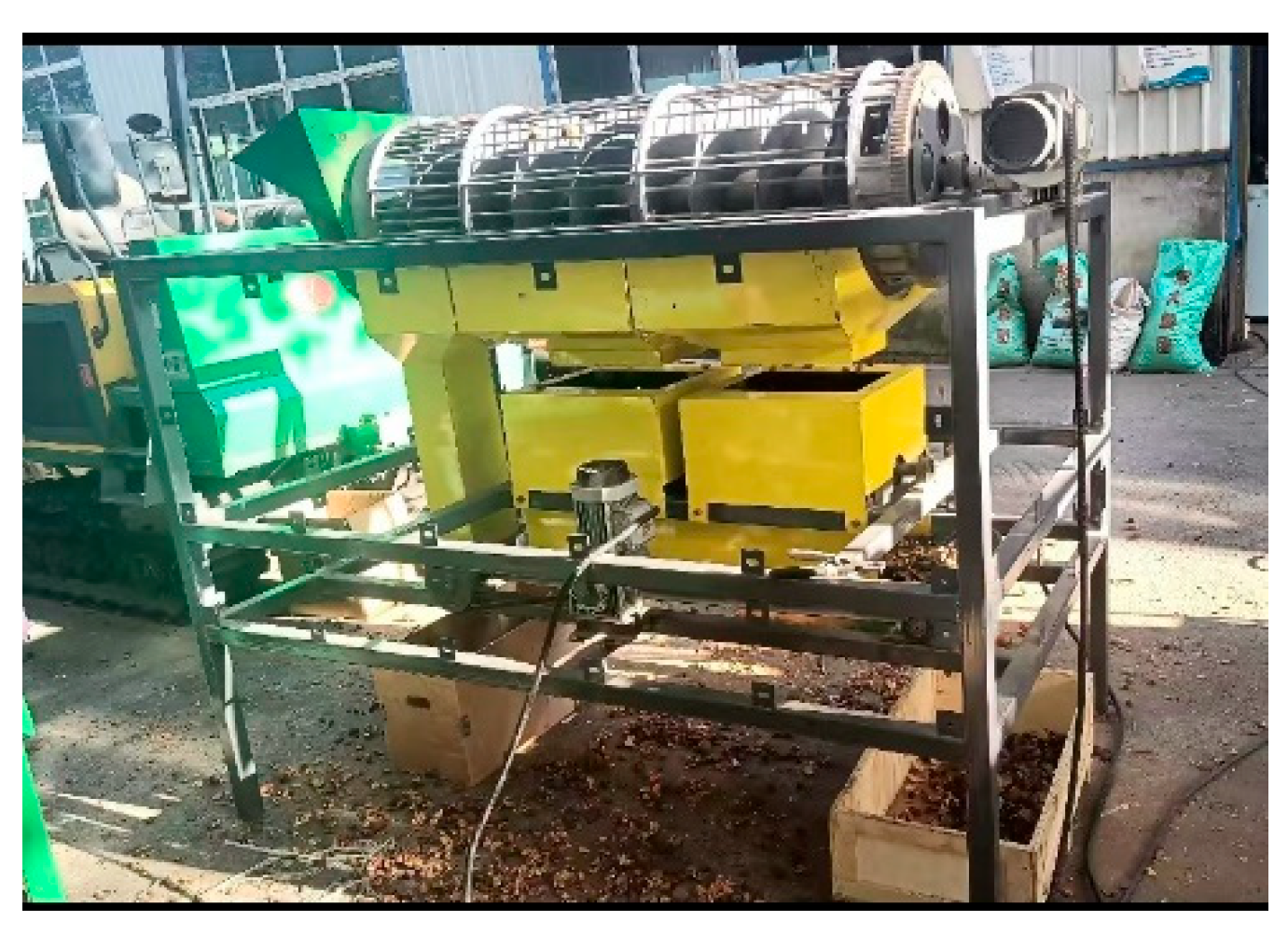
After the prototype was completed, we conducted bench tests based on the simulation data results. The prototype is shown in Figure 16.
We set the spiral blade rotation speed to 20 rpm, the slat drum rotation speed to 10 rpm, and the rise angle to 10°. We conducted 10 sets of horizontal experiments, and the experimental results are presented in Table 12.
The experimental results show that the average classifying rate is 98.39%, which is 1.01% lower than that under the optimal parameters of the simulation test, and the average productivity is 2574.5 kg/h, which is 509.831 kg/h higher than that under the optimal parameters of the simulation test. Compared with the simulation test and the bench test, the error of the experimental results is small, the relative error is only 19.8%, and the bench test meets the required production requirements. The classifying rate is more than 95%, and productivity is more than 2000 kg/h.

3.2.2. Bench Test of Shelling Device

The shelling test is conducted under the condition of setting different shelling drum rotation speeds, and the bench test of the shelling device is carried out under the current classifying parameters. The total feeding amount of a single test is 40 kg, which is poured into the hopper of the classifying device at a constant speed. The Camellia oleifera fruits fall into the shelling device through the classifying device. The prototype is shown in Figure 17.
The experimental results are presented in Table 11.
Each set of experiments was repeated 3 times. It is evident from Table 13 that, when the shelling speed is lower, productivity is lower, the threshing rate is also lower, and the broken camellia seed rate is also lower. After many experiments, it was found that when the shelling speed is reduced to 150 rpm, the Camellia oleifera fruits remain shelled; when the rotation speed is below 150 rpm, the equipment cannot properly complete the shelling task, and the camellia seeds get stuck in the device. Therefore, data for speeds not exceeding 150 rpm cannot be collected. Considering issues such as cost and energy consumption while meeting actual requirements, the top shelling drum speed is selected to be 200 rpm, the breakage rate is only 2.2% which is less than 5%, the cleaning rate is 97.61% which is greater than 95% and only 0.63% lower than 98.24%, the productivity reaches 2526 kg/h which is far greater than 2000 kg/h.

3.2.3. Bench Test of Cleaning Device

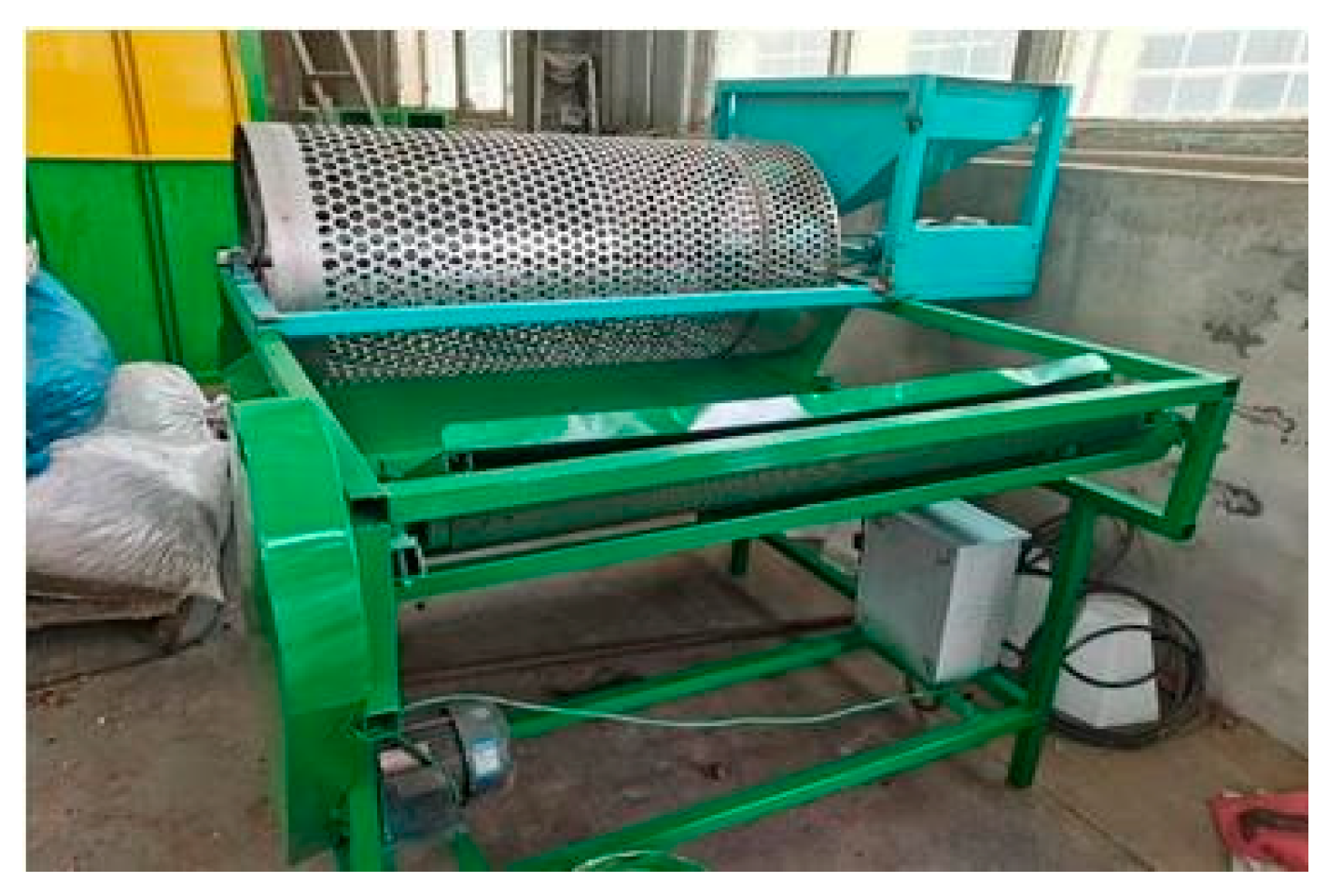
A batch of Camellia oleifera fruits is selected for shelling. During the shelling process, multiple groups of camellia shell and camellia seed mixture test samples of 20 kg each were sampled, and the conveyor belt rotation speed was controlled as a test variable to conduct verification tests of the cleaning device. The cleaning device is shown in Figure 18.
The experimental results are presented in Table 14.
Each set of experiments was repeated 3 times. It is evident from the above table that the impurity content decreases with an increase in rotation speed, and the impurity content is not greater than 5% under this test condition. Productivity is greater than that of the classification and shelling device, and the loss rate increases with an increase in rotation speed. When the rotation speed is greater than 200 rpm, the loss rate is greater than 5%. When the rotation speed is equal to 200 rpm, the loss rate is close to 5%. Based on the actual situation and experience, the rotation speed of the friction conveyor shaft of the classification device is 150 rpm, the rotation speed of the drum is 20 rpm, and the inclination angle is 25°.

3.2.4. Bench Test of Integrated Machine

The test parameters of each device are determined through the bench test of some devices, and the bench verification test of the whole machine is continued under the obtained parameters. The rotation speed of the spiral blade is 20 rpm, the rotation speed of the slat drum is rounded to 10 rpm, the rotation speed of the shelling drum is 200 rpm, the rotation speed of the drum screen is 20 rpm, the rotation speed of the conveyor belt is 150 rpm, and the inclination angle is 25°. The test results of five groups of tests are shown in Table 15.
The test results show that, under these parameters, the average cleaning rate is 97.52%, the average camellia seed breakage rate is 2.42%, the average impurity rate is 1.99%, the average loss rate is 3.66%, and the average productivity is 2614 kg/h, which meets the target test requirements.

4. Discussion

The classifying device developed in this study enhances the contact between Camellia oleifera fruits and the drum screen via the relative rotation of the blade and the drum. The slat gaps are precisely customized to the actual particle sizes of Camellia oleifera fruits, thereby reliably securing the desired classifying performance. Experimental tests validate that, following optimization, the classifying efficiency reaches 98.39%, effectively resolving the prevalent issues of skip-classifying and low classifying accuracy. The flexible shelling device absorbs and buffers the mechanical force, striking an optimal balance between the high shelling rate and the intact camellia seed protection, with the camellia seed loss rate controlled to no more than 5%. The cleaning device integrates the drum and friction separation, and the device achieves a smooth connection between coarse separation and fine separation; this design drastically boosts the thoroughness of camellia shell and camellia seed separation while reducing camellia seed material loss, reaching a remarkable cleaning rate of 97.52%.
Innovations: (1) Structural integration: The integration of three functional modules simplifies the complex connections of traditional equipment. The flexible shelling and composite cleaning structure reduces camellia seed damage and loss issues in the existing machines. (2) Scientific parameter optimization: Multi-objective optimization via response surface methodology is applied to the classifying device, revealing the interactions among multiple factors. The operational parameters are optimized according to the equipment structure, improving practical performance.
Limitations: The experimental samples were limited to the Camellia oleifera fruits collected from Shuangfeng County, Hunan Province. The adaptability of the equipment parameters and structural dimensions to Camellia oleifera fruits of other regions and varieties remains untested. Furthermore, the equipment exhibits a relatively low degree of automation and still requires manual assistance for operations such as unloading, and it is difficult to satisfy the requirements of modern automated processing.
Follow-up research: First, the scope of experimental samples should be expanded, the equipment structure and parameters should be optimized, and the equipment versatility should be improved. Second, automatic feeding, unloading, and material detection devices should be integrated to achieve complete process automation and reduce manual intervention. Third, industrial trials should be conducted, the structural stability and continuous working performance of the equipment should be enhanced, energy consumption and processing costs should be analyzed, and data support should be provided for industrial application and promotion.
This study provides feasible equipment solutions and technical references for the development of Camellia oleifera fruits’ mechanized processing equipment. Further validation and optimization should be carried out in combination with more practical production scenarios. The development of Camellia oleifera fruit processing equipment should target the core objectives of high efficiency, low loss, versatility, and automation. Designs should be customized based on the physical properties of the Camellia oleifera fruits and the demands of the production regions, integrating technologies such as simulation and intelligent parameter optimization, to promote the mechanization and intelligent upgrading of the industry.

5. Conclusions

(1)
A flexible shelling and cleaning equipment for Camellia oleifera fruits based on drying pretreatment was developed. The structural design and theoretical analysis of the key classifying, shelling, and cleaning parts were carried out. The influence of blade speed, drum speed, and rise angle on the classifying rate and productivity was explored through the simulation test and the bench test, and the parameters of the integrated equipment were determined through simulation experiments and bench tests.
(2)
The regression model of productivity and classifying rate was established using response surface methodology, and the rationality and accuracy of the model were verified by analyzing the misfit term and F value. The order of influence of factors on productivity is as follows: A (spiral blade rotation speed) > C (rise angle) > B (drum rotation speed). The order of influence of factors on the classifying rate is as follows: A (spiral blade rotation speed) > C (rise angle) > B (drum rotation speed). A (spiral blade rotation speed) and C (rise angle) interact significantly. If the rise angle is excessively small, the material is dominated by high-resistance axial pushing, resulting in a low working efficiency. If the rise angle is too large, the material is prone to being spilt, leading to material backflow. An optimal rise angle can maximize the axial thrust, thereby improving efficiency and reducing energy loss.
(3)
The simulation and bench test results were optimized in Design Expert, and the optimal parameters were determined to be the following: spiral blade speed: 20 rpm; slat drum speed: 10 rpm; rise angle: 9.6°; shelling drum speed: 200 rpm; cleaning drum speed: 20 rpm; conveyor shaft speed: 150 rpm; and inclination: 25°. The average cleaning rate reached 97.52%, the camellia seed breakage rate was less than 2.42%, the impurity rate was less than 1.99%, the loss rate was less than 3.66%, and productivity reached 2614 kg/h.
(4)
Practical Significance: This study is beneficial for breaking the current reliance on manual labor and inefficient single machines, supporting the small and medium-scale processing of Camellia oleifera fruits; It helps reduce costs and increase efficiency, enable continuous and stable operations and reduce labor, transportation, and storage costs; It helps improve quality, with low kernel breakage, low impurities, and low losses, enhancing product grade, oil yield, and quality; It helps promote industry upgrading, laying the hardware foundation for the automation and intelligence of oil-tea processing, and can later connect with modules such as automatic feeding, intelligent inspection, and continuous drying, adapting to modern agricultural product processing standards.
This equipment is not a simple improvement of existing devices, but a comprehensive upgrade in terms of process logic, structural form, and performance indicators. Through integration, flexibility, and precise parameterization, it achieves a combination of high efficiency, low damage, and high cleanliness in Camellia oleifera fruit processing. It is a strong support for the Camellia oleifera fruits industry to transition from mainly manual to fully mechanized operations, and has a great value for industrial promotion.

Author Contributions

Conceptualization, Z.W.; methodology, Y.C.; software, Y.C. and G.H.; investigation, Y.C., G.H., X.Y., J.L., F.L. and T.L.; resources, Y.C.; writing—original draft preparation, Y.C.; writing—review and editing, J.L. and Z.W.; supervision, J.L., M.Z., Z.W., F.L. and T.L.; project administration, Z.W.; funding acquisition, Z.W. All authors have read and agreed to the published version of the manuscript.

Funding

This research was funded by the Hunan Provincial Intelligent Agricultural Machinery Equipment Innovation Project (2025) by the Hunan Provincial Department of Agriculture and Rural Affairs (HNNJ-2025-08-02), the Hunan Provincial Natural Science Foundation of China (2026JJ50133), and the Project of Research Base Construction Project for Full Mechanization of Characteristic Oilseed Crops (Camellia oleifera) by the Ministry of Agriculture and Rural Affairs (2112-430000-04-03-549452).

Institutional Review Board Statement

Not applicable.

Data Availability Statement

The original contributions presented in this study are included in the article; further inquiries can be directed to the corresponding author.

Conflicts of Interest

Authors Tiehui Li and Fuping Liu were employed by the company Nongyou Machinery Group Co., Ltd. The remaining authors declare that the research was conducted in the absence of any commercial or financial relationships that could be construed as a potential conflict of interest.

References

  1. Zheng, P. Analysis on Promoting Camellia oleifera Industry to Boost County Economic Development—A Case Study of Datian County. High-Quality Agric. Prod. 2026, 1, 84–86. [Google Scholar]
  2. Wang, Q. China’s Camellia Oil Output Increased by 53% During the 14th Five-Year Plan Period. Land Green. 2025, 11, 4–5. [Google Scholar]
  3. Miao, S.H.; Ma, Z.; Su, S.C. Changes in Fruit Quality of Four Camellia oleifera Fruits Varieties During Maturation Period. J. Northeast. For. Univ. 2023, 51, 37–44. [Google Scholar]
  4. Xia, F.J.; Huang, F.H.; Niu, Y.X. Research and Practice of Shelling and Oil Extraction Process for Camellia Seeds. China Oils Fats 2004, 29, 34–35. [Google Scholar]
  5. Kang, D.; Chen, Z.J.; Li, Y. Design of Grading Drum Screen for Camellia oleifera Fruits. Hunan For. Sci. Technol. 2017, 44, 95–98. [Google Scholar]
  6. Liang, F.; Zheng, H.N.; Wang, B.Y.; Zhou, Y.Y.; Zhao, L.H.; Ma, X.Q. A Cutting and Extrusion Shelling Machine for Camellia oleifera Fruits. Chinese Patent CN119586782A, 11 March 2025. [Google Scholar]
  7. Fu, J.W. Design and Experiment of Flexible Shelling Machine for Camellia oleifera Fruits Based on Differential Speed Grading. Master’s Thesis, Hunan Agricultural University, Changsha, China, 2024. [Google Scholar]
  8. Liao, P.; Quan, L.Z.; Xiao, X. Design and Test of Impact Type Camellia oleifera Fruits Shells Breaking Device. J. Hunan Agric. Univ. 2019, 45, 108–112. [Google Scholar]
  9. Tang, X.; Xie, F.P.; Li, X. Design and Test of Camellia oleifera Fruits Shelling Device. J. Hunan Agric. Univ. 2014, 40, 665–668. [Google Scholar]
  10. Huo, J.; Wang, Y.Q.; Sun, J.W. Design and Experiment of Multi-Channel High-Speed Planing Camellia oleifera Fruits Shells Breaker. J. Hubei Univ. Technol. 2023, 38, 1–4. [Google Scholar]
  11. Wang, Y.Q.; Ma, J.; Xiong, R. Design of Multi-Channel Pneumatic Planing Camellia oleifera Fruits Shells Breaker. Hubei Agric. Sci. 2018, 57, 100–105. [Google Scholar]
  12. Zhang, Y.X. Stress Analysis and Parameter Optimization of Differential Speed Rubbing Camellia oleifera Fruits Shelling Machine. Master’s Thesis, Harbin University of Science and Technology, Harbin, China, 2022. [Google Scholar]
  13. Yang, S.S.; Li, L.J.; Gao, Z.C. Experimental Study on Shells Breaking Performance of Camellia oleifera Fruits Based on Extrusion and Rubbing Method. J. Agric. Mech. Res. 2015, 37, 173–175+179. [Google Scholar]
  14. Xiao, B.G.; Hu, S.F.; Deng, Y.J. Design of Marking Shell Breaking Device for Camellia oleifera Fruits. South. Agric. Mach. 2021, 52, 17–19. [Google Scholar]
  15. Luo, X.; Cui, Y.; Yang, X. Design and Experiment of a Laser Scoring Device for Camellia oleifera Fruits. Agriculture 2025, 15, 987. [Google Scholar] [CrossRef]
  16. Xiong, P.Y.; Wang, Y.; Wu, Z.K. Research and Design of Green Camellia oleifera Fruits Shelling Device. J. Chin. Agric. Mech. 2016, 37, 126–129. [Google Scholar]
  17. Liao, J.; Zhong, M.; Wu, Z. Low-Temperature Airflow-Drying Cracking Coupling with Flexible Mechanical Shelling for Camellia oleifera Fruit: Process and Mechanism. Drying Technol. 2024, 42, 871–879. [Google Scholar]
  18. Liao, J.; Wu, Z.; Wu, M. Flexible Shelling of Camellia oleifera Fruits Based on Cracking Treatment: Key Components Design and Mechanism. J. Food Process Eng. 2025, 48, e70190. [Google Scholar] [CrossRef]
  19. Zhu, J.M. Separating and Cleaning Device for Camellia oleifera Sheller. Chinese Patent 201420287402.X, 10 December 2014. [Google Scholar]
  20. Tang, J.Y.; Wang, D.; Kou, X. Design and Experiment of Four-Channel Full-Automatic Shelling Machine for Mature Fresh Camellia oleifera Fruits. Trans. Chin. Soc. Agric. Mach. 2021, 52, 109–116+229. [Google Scholar]
  21. Wang, F.; Ding, Y.; Xie, W. Design and Experimental Study of a Separating Machine for Seed and Peel of Camellia oleifera Fruit. IFAC Pap. 2019, 52, 87–91. [Google Scholar] [CrossRef]
  22. Duan, Y.F.; Sun, J.W.; Dong, G. Design and Experiment of Real-Time Sorting System for Camellia Shells and Camellia Seeds. J. Agric. Mech. Res. 2024, 46, 79–86. [Google Scholar]
  23. Hu, Y.F.; Wang, Y.Q.; Ma, J. Application of Color Sorter in Shelling and Cleaning of Camellia oleifera Fruits. J. Hubei Univ. Technol. 2018, 33, 62–64. [Google Scholar]
  24. Lu, Y.; Wang, W.; Zhong, B. Design and Experiment of Belt Screen Type Camellia Shells and Camellia Seeds Separator Combined with Photoelectric Color Sorting. Trans. Chin. Soc. Agric. Mach. 2020, 51, 429–439. [Google Scholar]
  25. Peng, R.X.; Li, F.C.; Jin, W.W. Design and Application of Flotation Separation Technology for Camellia oleifera Fruits Shell and Camellia Seeds. Hubei Agric. Mech. 2019, 10, 4–8. [Google Scholar]
  26. Deng, Y.J. Design and Experiment of Spring Needle Drum Shell Inserting Type Cleaning Device for Fresh Camellia Seeds and Camellia Shells. Master’s Thesis, Jiangxi Agricultural University, Nanchang, China, 2022. [Google Scholar]
  27. Hu, J.; Luo, X.H.; Fu, J.W. Design and Simulation Analysis of Camellia Seeds and Camellia Shells Cleaning Machine. Agric. Eng. Equip. 2023, 50, 5–9. [Google Scholar]
  28. Ding, B.; Xie, J.; Feng, M.; Chen, Z.; Chang, L.; Jiang, Y. Effect of Moisture Content of Peanut Pod on the Efficiency and Quality of Mechanical Husking. J. Peanut Sci. 2021, 50, 47–54. [Google Scholar]
  29. Yang, P.; Fu, H.; Sun, P. Experimental and Simulation Study of Heat and Mass Transfer During Drying-Shelling of Camellia oleifera Fruits with Changing Diffusion Pathways. Food Bioprod. Process. 2025, 154, 865–878. [Google Scholar] [CrossRef]
  30. Yang, P.; Fu, H.; Sun, P. Exploring the Impact of Drying Temperature on Camellia oleifera Fruits Shelling Through Shrinkage Strain, Case Hardening and Microstructure. Biosyst. Eng. 2025, 260, 104325. [Google Scholar] [CrossRef]
  31. Liao, X.; Xie, H.; Hu, Z.; Wang, J.; Liu, M.; An, J.; Wei, H.; Zhang, H. Peanut-shelling technologies and equipment: A review of recent developments. Agriculture 2024, 14, 1178. [Google Scholar] [CrossRef]
  32. Liao, X.; Liu, T.; Wang, J.; Liu, M.; Sun, C.; An, J.; Xie, H.; Hu, Z.; Shen, Y.; Wei, H. Optimization of a Low-Loss Peanut Mechanized Shelling Technology Based on Moisture Content, Flexible Materials, and Key Operating Parameters. J. Agriculture 2025, 15, 2365. [Google Scholar] [CrossRef]
  33. Alsharifi, S.K. Affecting on threshing machine types, grain moisture content and cylinder speeds for maize, Cadiz variety. Agric. Eng. Int. CIGR J. 2018, 20, 233–244. [Google Scholar]
  34. Xing, H.; Yang, L.; Zhao, M. Research on Camellia oleifera Shell Mechanical–Structural Cracking Behavior During Collision Hulling with In Situ Testing. Processes 2025, 13, 856. [Google Scholar] [CrossRef]
  35. Yang, P.; Fu, H.; Sun, P. Shells Structure Impacts Camellia oleifera Fruits Splitting During Dehydration. Food Bioprod. Process. 2024, 148, 298–308. [Google Scholar] [CrossRef]
  36. Cao, J.J.; Liu, X.P.; Zhang, Y.L. Analysis on Variation Law of Physical Properties of Camellia oleifera Fruits Before and After Explosion Puffing Drying. Digit. Agric. Intell. Agric. Mach. 2025, 9, 21–25. [Google Scholar]
  37. Lan, F.; Liu, T.; Su, Z.H. Research on Complete Set of Camellia oleifera Fruits Shelling and Cleaning Equipment. J. Chin. Agric. Mech. 2016, 37, 85–93. [Google Scholar]
  38. Xue, Q.; Guo, J.C.; Yang, S. Experiment on Static Pressure Mechanical Properties of Fresh Camellia oleifera Fruits. J. Shenyang Agric. Univ. 2020, 51, 593–598. [Google Scholar]
  39. Wang, Z.C. Research on Shelling Mechanism Based on Structural Characteristics of Camellia oleifera Fruits. Master’s Thesis, Wuhan Polytechnic University, Wuhan, China, 2025. [Google Scholar]
  40. Miu, P.I.; Kutzbach, H. Modeling and simulation of grain threshing and separation in threshing units—Part I. Comput. Electron. Agric. 2008, 60, 96–104. [Google Scholar] [CrossRef]
  41. Jiang, J.; Cheng, J. Study on Material Characteristics of Camellia oleifera Fruits and Simulation Contact Parameters During Shelling Process. J. Chin. Agric. Mech. 2025, 46, 233–240. [Google Scholar]
  42. Jing, X.; Guo, C.; Yan, L. Discrete Element Simulation Analysis of Blade Wear of Screw Conveyor. Mach. Des. Manuf. 2025, 1–8. [Google Scholar]
  43. Zied, H.B.; Javad, M.F.; Zafer, B.A. Comparative Study of the Joint Neuro-Fuzzy Friction Models for a Triple Link Rotary Inverted Pendulum. J. IEEE Access. 2020, 8, 49066–49078. [Google Scholar]
Figure 1. The DBH and end diameter measurement method of Camellia oleifera fruits. (a) Diameter at Breast Height. (b) End diameter.
Agriculture 16 00800 g001
Figure 2. The fruit diameter distribution statistics of Camellia oleifera fruits.
Agriculture 16 00800 g002
Figure 3. The test specimen for the determination of the coefficient of friction. ① Friction block made of camellia shells; ② friction block made of camellia seeds.
Agriculture 16 00800 g003
Figure 4. The test bench for the determination of the coefficient of friction. ① Motor; ② fixed pulley system; ③ spirit level; ④ PVC conveyor belt.
Agriculture 16 00800 g004
Figure 5. Flexible shelling and cleaning integrated machine. 1—classifying device hopper; 2—classifying drum; 3—spiral blade; 4—first-stage hopper; 5—Feeding hopper; 6—shelling drum; 7—shelling conveyor belt; 8—conveyor belt device; 9—conveyor belt baffle; 10—cleaning conveyor belt; 11—rotating shaft; 12—cleaning drum screen; 13—cleaning device hopper.
Agriculture 16 00800 g005
Figure 6. Cracking rate versus duration.
Agriculture 16 00800 g006
Figure 7. Horizontal flexible shelling drum and screen.
Agriculture 16 00800 g007
Figure 8. The camellia seed and camellia shell cleaning device. 1—Drum screen; 2—receiving platform; 3—tilt adjustment device; 4—conveyor belt; 5—hopper; 6—frame; 7—conveyor belt baffle; 8—rotating shaft.
Agriculture 16 00800 g008
Figure 9. The scanned filling model of Camellia oleifera fruits. (a) 15 mm–25 mm diameter model. (b) 25 mm–35 mm diameter model. (c) 35 mm–45 mm diameter model.
Agriculture 16 00800 g009
Figure 10. The simplified simulation model of the classifying device.
Agriculture 16 00800 g010
Figure 11. Response surface analysis showing the effect of experimental interactions on the classifying rate. (a) AC interaction. (b) BC interaction. (c) AB interaction.
Agriculture 16 00800 g011
Figure 12. Response surface analysis illustrating the effect of experimental interactions on productivity. (a) AC interaction. (b) AB interaction. (c) BC interaction.
Agriculture 16 00800 g012
Figure 13. Residual diagnostic plots for classifying rate (y1): (a) Residuals vs. Fitted, (b) Normal Q-Q Plot, (c) Histogram.
Agriculture 16 00800 g013
Figure 14. Residual diagnostic plots for productivity (y2): (a) Residuals vs. Fitted, (b) Normal Q-Q Plot, (c) Histogram.
Agriculture 16 00800 g014
Figure 15. Comparison of standardized regression coefficients (β) for classifying rate (y1) and Productivity (y2).
Agriculture 16 00800 g015
Figure 16. The prototype and classifying device bench test.
Agriculture 16 00800 g016
Figure 17. The prototype and shelling device bench test.
Agriculture 16 00800 g017
Figure 18. The prototype and cleaning device bench test.
Agriculture 16 00800 g018
Table 1. Friction coefficient and sliding friction angle of Camellia oleifera shells and seeds.
Sliding Friction Coefficient with Steel PlateSliding Friction Angle with Steel Plate (°)Sliding Friction Coefficient with PVCSliding Friction Angle with PVC (°)Rolling Friction Coefficient with Steel PlateRolling Friction Coefficient with PVC
Shells0.6532.90.9041.980.080.12
Seeds0.5729.50.6432.780.040.07
Table 2. Descriptive statistics for camellia shell friction measurements (n = 3).
MeasurementMeanSDCV95% CI (t-Distribution, n = 3)
Sliding friction coefficient with a steel plate0.64730.03245.01%[0.5668, 0.7278]
Sliding friction angle with steel plate (°)32.901.31153.99%[29.64, 36.16]
Sliding friction coefficient with PVC0.90010.02843.16%[0.8295, 0.9708]
Sliding friction angle with PVC (°)41.980.90182.15%[39.74, 44.22]
Rolling friction coefficient with a steel plate0.08020.00151.84%[0.0765, 0.0839]
Rolling friction coefficient with PVC0.12420.018615.00%[0.0779, 0.1705]
Table 3. Descriptive statistics for camellia seed friction measurements (n = 3).
MeasurementMeanSDCV95% CI (t-Distribution, n = 3)
Sliding friction coefficient with a steel plate0.56660.01372.42%[0.5325, 0.6007]
Sliding friction angle with steel plate (°)29.530.59652.02%[28.05, 31.02]
Sliding friction coefficient with PVC0.64420.02513.90%[0.5818, 0.7066]
Sliding friction angle with PVC (°)32.781.01163.09%[30.27, 35.30]
Rolling friction coefficient with a steel plate0.04000.00143.37%[0.0367, 0.0434]
Rolling friction coefficient with PVC0.07020.00202.91%[0.0651, 0.0752]
Table 4. Classifying simulation data of Camellia oleifera fruits.
Parameter
Poisson’s ratio of Camellia oleifera fruits0.25
Poisson’s ratio of Q2350.25
Density of Camellia oleifera fruits (g/cm3)0.99
Density of Q235 (g/cm3)7.85
Shear modulus of Camellia oleifera fruits (Pa)2–5 × 10⁷
Shear modulus of Q235 (Pa)7.8 × 10⁸
Collision recovery coefficient between fruit and fruit0.39
Collision recovery coefficient between fruit and Q2350.34
Static friction coefficient between fruit and fruit0.79
Static friction coefficient between the fruit and Q2350.61
Rolling friction coefficient between fruit and fruit0.13
Rolling friction coefficient between the fruit and Q2350.02
Table 5. Experimental levels and factor code values.
Code ValueA: Spiral Blade Rotation Speed (rpm)B: Drum Rotation Speed (rpm)C: Rise Angle (°)
−120106.5
0402012
1603017.5
Table 6. Orthogonal experimental design and results.
Experiment No.ABCClassifying Rate, y1 (%)Productivity, y2 (kg/h)
100090.33112
200088.63120
3−11099.42647
401−198.82750
51−1069.23366
601181.23218
710160.23510
800089.73096
911072.33328
1010−191.23052
110−1173.23286
1200088.43077
1300090.73008
140−1−195.62718
15−1−1095.82504
16−10−199.22080
17−10195.92831
Table 7. Analysis of variance results for the classifying rate in simulation experiments.
Source of VariationSum of SquaresDegrees of FreedomMean SquareFpSignificance
Model2178.489242.0572.96<0.0001Significant
A1185.8411185.84357.42<0.0001
B40.05140.0512.070.0103
C690.061690.06207.99<0.0001
AB0.062510.06250.01880.8947
AC191.821191.8257.820.0001
BC5.7615.761.740.2291
A237.14137.1411.190.0123
B224.15124.157.280.0307
C20.012710.01270.00380.9523
Residual12,01173.32
Missing terms19.0936.366.160.0557Not significant
Pure error4.1341.03
Total value2201.7016
Table 8. Analysis of variance results for productivity in simulation experiments.
Source of VarianceSum of SquaresDegrees of FreedomMean SquareFpSignificance
Model2.043 × 10692.269× 105101.04<0.0001Significant
A1.275 × 10611.275 × 106567.71<0.0001
B595.131595.130.26490.6226
C6.300 × 10516.300 × 105280.47<0.0001
AB8190.2518190.253.650.0978
AC21,462.25121,462.259.550.0175
BC2500.0012500.001.110.3265
A263,752.85163,752.8528.380.0011
B212.17112.170.00540.9434
C235,097.64135,097.6415.630.0055
Residual15,723.4572246.21
Missing terms7684.2532561.421.270.3963Not significant
Pure error8039.2042009.8
Total value2.058 × 10616
Table 9. Shapiro–Wilk normality test results for model residuals.
Response VariableShapiro–Wilk Wp-ValueConclusion
y1 (Classifying Rate)0.96790.7804Normal distribution (p > 0.05)
y2 (Productivity)0.92900.2091Normal distribution (p > 0.05)
Table 10. Levene test results for variance homogeneity.
Response VariableLevene Fp-ValueConclusion
y1 (Classifying Rate)1.23010.3220Variance homogeneous (p > 0.05)
y2 (Productivity)0.25720.7768Variance homogeneous (p > 0.05)
Table 11. Regression coefficients and standardized coefficients for y1 and y2.
Termb (y1)β (y1)Significance (y1)b (y2)β (y2)Significance (y2)
Intercept89.54//3082.60//
A−12.17−0.734p < 0.0001 **+399.25+0.787p < 0.0001 **
B+2.24+0.135p = 0.0103 *+8.63+0.017p = 0.6226
C−9.29−0.560p < 0.0001 **+280.63+0.553p < 0.0001 **
AB−0.125−0.005p = 0.8947−45.25−0.063p = 0.0978
AC−6.93−0.295p = 0.0001 **−73.25−0.102p = 0.0175 *
BC+1.20+0.051p = 0.2291−25.00−0.035p = 0.3265
A2−2.97−0.130p = 0.0123 *−123.05−0.177p = 0.0011 **
B2−2.40−0.105p = 0.0307 *+1.70+0.002p = 0.9434
C2+0.055+0.002p = 0.9523−91.30−0.131p = 0.0055 **
Note. * represents significant difference at p < 0.05, ** represents highly significant difference at p < 0.01.
Table 12. Classifying device bench test results.
Evaluation Index12345678910Mean
y1 (%)99.8698.7299.5097.4796.3899.8497.6498.1297.7498.6598.39
y2 (kg/h)25872660267924862477256025892493255426602574.5
Table 13. The shelling device bench test results.
Rotation Speed (rpm)Feed Rate (kg)Total Seed Yield (kg)Treatment Duration (s)Broken Seed Quantity (kg)Incomplete Shell Quantity (kg)Breakage Rate (%)Cleaning Rate (%)Productivity (kg/h)
3504016.91360.99160.70355.8698.243999
3004017.02440.70260.77234.1398.073272
2504016.87510.50010.80462.9697.992823
2004016.66570.36620.95272.297.612526
15040///////
10040///////
Table 14. The cleaning device bench test results.
Rotation Speed
(rpm)
Feed
Rate (kg)
Total
Seed
Yield (kg)
Inclination Angle
(°)
Shell
Content
in Seeds (kg)
Seed
Content
in Shells (kg)
Treatment Duration (s)Impurity Rate (%)Loss
Rate (%)
Productivity (kg/h)
100208.32250.3260.087264.081.052769
150208.17250.1650.238222.062.913272
200208.55250.0740.406190.874.753789
250208.462500.91217010.784235
Table 15. Integrated machine bench test results.
Evaluation Indicator12345Average
Shelling rate (%)98.6297.8597.5096.2797.3697.52
Breakage rate (%)2.471.862.542.282.942.42
Impurity rate (%)2.831.971.861.541.771.99
Loss rate (%)3.744.563.872.963.183.66
Productivity (kg/h)267225872660255825942614
Disclaimer/Publisher’s Note: The statements, opinions and data contained in all publications are solely those of the individual author(s) and contributor(s) and not of MDPI and/or the editor(s). MDPI and/or the editor(s) disclaim responsibility for any injury to people or property resulting from any ideas, methods, instructions or products referred to in the content.