Article

Effects of Low Temperature Stress During Jointing Stage on the Source–Flow–Sink System in Winter Wheat


1
Fujian Meteorological Service Center, No.108, JianXin Middle Road, Cangshan District, Fuzhou 350007, China
2
State Key Laboratory of Severe Weather (LASW), Chinese Academy of Meteorological Sciences, No.46, Zhongguancun South Street, Haidian District, Beijing 100081, China
3
Collaborative Innovation Center of Forecast and Evaluation of Meteorological, Nanjing University of Information Science & Technology, Nanjing 210044, China
*
Authors to whom correspondence should be addressed.
Agriculture 2026, 16(7), 738; https://doi.org/10.3390/agriculture16070738
Submission received: 8 January 2026 / Revised: 20 March 2026 / Accepted: 25 March 2026 / Published: 27 March 2026
(This article belongs to the Section Crop Production)

Abstract

Low-temperature stress during the jointing stage severely disrupts the coordination of the source–flow–sink system in winter wheat. To elucidate the underlying mechanism, three wheat cultivars with different winter habits (Zhenmai 12, Jimai 22, and Shannong 38) were selected and subjected to six temperature levels (−6 °C to 8 °C) and three stress durations (2–6 days). The effects of vascular bundle traits on the transport of photosynthetic products, dry matter distribution, and yield formation were analyzed. The results showed that Zhenmai 12 and Jimai 22 completely ceased photosynthesis under 0 °C and −3 °C, respectively. The leaf vascular bundle area continuously decreased with increasing low-temperature stress, while the proportion of xylem and phloem initially increased by approximately 15% and 10%, respectively, before rapidly decreasing to 65% of the control value. In the stem, the three vascular bundle parameters initially increased by 20%, 25%, and 20%, respectively, before quickly decreasing to 50%. Changes in the vascular bundle structure weakened the transport capacity of assimilates, with dry matter in leaves and stems decreasing by 15–20% and 10%, respectively, while the root dry matter increased by 20–30%. Correlation analysis revealed highly significant relationships (p < 0.001) between vascular bundle parameters and yield components. Principal component and cluster analyses indicate that the area of leaf and stem vascular bundles, maximum net photosynthetic rate, and water use efficiency may be key indicators in explaining the variation in yield. Radar plots further validated this finding, showing that Zhenmai 12 and Jimai 22 are more sensitive to changes in the maximum net photosynthetic rate, while Shannong 38 exhibits a greater sensitivity to changes in water use efficiency. Based on existing research on photosynthetic pathways and dry matter distribution, this study innovatively investigates the potential relationship between material transport and yield formation under low-temperature stress during the jointing stage from the perspective of anatomical structure and functional coupling. The findings provide new insights into understanding the structural impact of low-temperature stress on crop yield formation and offer theoretical support for identifying the structural basis of limited material transport under stress and for developing disaster diagnostic models driven by structural parameters.

1. Introduction

Wheat (Triticum aestivum L.) is the most widely cultivated cereal crop globally, with the highest total production and trade volume among staple grains [1]. Winter wheat accounts for over 70% of the global wheat planting area. In 2023, China’s winter wheat planting area accounted for approximately 13.3% of the worldwide total, yet contributed 17% of the world’s production, with a yield per unit area ranking among the highest globally [2,3]. The jointing stage is a critical developmental period, marking the transition of winter wheat from vegetative to reproductive growth [4]. During this stage, photosynthetic capacity and carbon assimilation efficiency directly determine the number of spikes and grain formation, influencing the final yield [5,6].
The Huang-Huai-Hai Plain is a critical region for winter wheat cultivation in China, where the jointing stage occurs in the spring [7]. Photosynthetic parameters are crucial indicators of winter wheat’s response to low-temperature stress. Their impairment restricts carbon assimilation, and the photosynthetic accumulation during the jointing stage plays a vital role in subsequent yield formation. Research has shown that physiological parameters such as net photosynthetic rate (Pn), dark respiration rate (Rd), water use efficiency (WUE), and light reaction parameters are strongly correlated with yield components [8,9,10]. Low-temperature stress can cause phase transitions in the leaf cell membranes, reduce stomatal conductance, disrupt CO2 balance, and ultimately suppress photosynthetic efficiency [11,12], thereby affecting the synthesis of photosynthetic products. Although existing studies have explored the responses of photosynthetic parameters to low-temperature stress and their relationship with later yield formation [13,14,15,16], further research is needed to understand how low temperatures influence photosynthetic parameters and subsequently regulate the coordination of the “source-sink” system, thereby affecting yield formation.
The transport of nutrients and water in winter wheat relies on the functionality of the vascular bundle, which is composed of tissues such as xylem, phloem, and vascular cambium, ensuring the effective movement of substances [17,18]. Studies have shown that low temperatures can increase the rigidity of xylem cell walls, reducing the efficiency of water and solute transport [19]. Additionally, low temperatures can cause the dissociation or damage of sieve tube cells in the phloem, further impairing the transport capacity of nutrients [20,21]. These changes directly affect the translocation of assimilates, which in turn influences grain development and grain filling efficiency. However, most current studies are still limited to qualitative observations and microscopic anatomical descriptions [22,23,24], with a lack of effective methods for measuring vascular bundle parameters. Furthermore, existing research has yet to systematically link the mechanistic processes between vascular bundle parameters, photosynthetic parameters, and subsequent yield formation.
Given the existing challenges, this study divides the research on photosynthetic parameters into two components: “photosynthetic capacity and potential efficiency” and “photosynthetic regulation and resource use efficiency,” focusing on the assimilation capacity limit and translocation capacity of the leaves, respectively. Based on an improved U-Net model, the study integrates photosynthetic parameters, dry matter allocation, and yield, aiming to reveal the mechanistic pathways of low-temperature stress on yield formation from an anatomical perspective. The research objectives were: (1) To analyze the response of photosynthetic parameters under low-temperature stress from the perspective of source-sink balance, and combine leaf vascular bundle parameters to reveal the regulatory effects of low-temperature stress on photosynthetic efficiency and resource allocation. (2) To analyze the effects of low-temperature stress during the jointing stage on dry matter production, allocation, and changes in stem vascular bundle parameters in winter wheat, and to elucidate the adaptive strategies of material transport in response to low-temperature stress. (3) To explore the correlation between yield formation and leaf and stem vascular bundle parameters, and based on this, combine principal component analysis (PCA) and clustering analysis to select sensitive parameters for low-temperature stress response in different winter wheat genotypes as key indicators for cold-tolerance evaluation.

2. Materials and Methods

2.1. Experimental Materials

This study used three widely cultivated winter wheat (Triticum aestivum L.) cultivars from the Huang-Huai-Hai region: “Jimai 22,” “Shannong 38,” and “Zhenmai 12”, ensuring both regional representativeness and scientific relevance. “Jimai 22” is a semi-winter cultivar with strong cold tolerance, good stem elasticity, and a growth duration of approximately 239 days. It is widely planted in the northern part of the Huang-Huai-Hai wheat zone and represents a cultivar with moderate cold tolerance [25]. “Shannong 38” is a strong winter cultivar, known for its exceptional cold tolerance and a shorter growth period. It has excellent overwintering ability and resistance to root rot, making it common in the northern and northwestern regions [26]. In contrast, “Zhenmai 12” is a semi-spring cultivar with weaker cold tolerance and a growth duration of about 211 days. Despite its lower cold tolerance, it exhibits strong resistance to lodging and disease, and holds potential for specific ecological conditions [27]. The use of these three cultivars allows for a comparison of cold stress responses at the jointing stage in winter wheat with varying winter hardiness.
The seeds were sown in nutrient pots at Nanjing University of Information Science & Technology and placed in a Venlo-type greenhouse. When the first basal internode of winter wheat elongated and emerged 1.5–2.0 cm above the soil surface (jointing stage), the nutrient pots were transferred to an artificial climate chamber (TPG1260, Thermoline, Wetherill Park, NSW, Australia) for low-temperature treatment. Details of the sowing method, fertilization conditions, and greenhouse environmental settings are provided in Supplementary Material S1 [28,29,30,31].

2.2. Experimental Design

Based on the analysis of meteorological data from the Huang-Huai-Hai region between 1970 and 2023, the average daily temperature during the winter wheat jointing stage (March to April) typically exceeds 8 °C, with a diurnal temperature variation of about 10 °C, following a near-sinusoidal day-night fluctuation pattern [6]. To simulate optimal growing conditions, the control temperature (CK) was set at 8 °C/18 °C (daily minimum/maximum). Historical records of extreme weather events indicate that low-temperature stresses during the jointing stage typically occur at 3 °C, 0 °C, −3 °C, and −6 °C, with durations lasting up to 6 days. To simulate typical cold stress scenarios, five temperature treatments were designed with minimum temperatures of 6 °C, 3 °C, 0 °C, −3 °C, and −6 °C, with stress durations of 2, 4, and 6 days. To systematically investigate the variations in vascular bundle parameters within the “source–flow–sink” system under low-temperature conditions and the responses of different cultivars, this study employed a continuous temperature gradient with both positive and negative temperature variations. This approach aims to explore the adaptive changes in vascular bundles under low-temperature stress [32]. Through this continuous temperature gradient design, we are able to comprehensively assess the impact of low-temperature stress on the “source–flow–sink” system and reveal the combined effects of different temperatures on plant physiological processes.
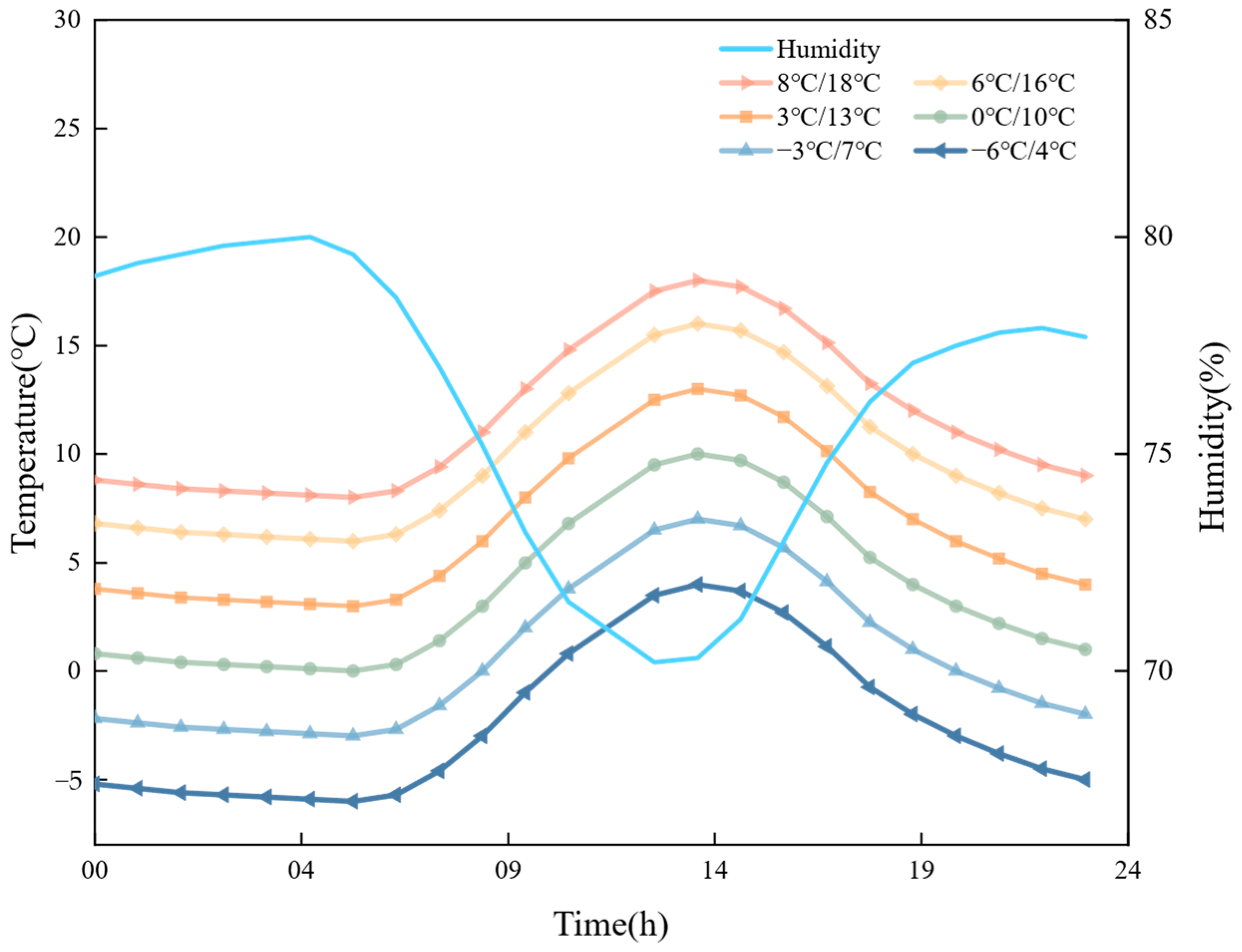
The control group (CK) grew naturally in the greenhouse. The artificial environmental control experiment set up five low-temperature treatments, with the following daily minimum/maximum temperatures: 6 °C/16 °C, 3 °C/13 °C, 0 °C/10 °C, −3 °C/7 °C, and −6 °C/4 °C. Each treatment lasted for 2, 4, or 6 days. In the experiment, full-spectrum LED light sources were used, covering the photosynthetically active radiation range of 400–700 nm, with a color temperature of approximately 4000–6500 K to simulate the spectral composition of natural light. The light intensity was set to 800 μmol·m−2·s−1, with a light cycle from 06:00 to 18:00, and the relative humidity was maintained at 75 ± 5%. This setup ensured that the light intensity and spectral composition effectively promoted the photosynthetic response of winter wheat, while all light, temperature, and humidity conditions were strictly controlled to ensure environmental consistency across all groups (Figure 1). Considering that the temperature, humidity, light intensity, and fertilization conditions in the greenhouse are consistent with the artificial climate chamber setup, and the sample size for the CK group is much larger than for the low-temperature treatment groups, the greenhouse can effectively control factors such as pests and diseases, ensuring the comparability of data between the control and low-temperature treatment groups. Specifically, the CK treatment was conducted in the greenhouse, with temperatures ranging from 8 °C to 18 °C, and light intensity, photoperiod, and humidity were consistent with the artificial climate chamber conditions. Each cultivar was planted in 50 pots under the CK condition, with a total of 150 pots for the three cultivars. Each nutrient pot containing winter wheat plants was considered as an experimental unit. For each low-temperature treatment, 36 pots were prepared per cultivar, totaling 108 pots for the three cultivars across five treatments. Additionally, 14 backup pots per cultivar were prepared to account for cultivar variation or growth disruptions, resulting in a total of 250 pots per cultivar (750 pots in total for all three cultivars) (Table 1). Since the environmental conditions (such as temperature, humidity, and light intensity) within the climate chambers were strictly controlled and evenly distributed, no rotation of plants was performed. The five low-temperature treatments were conducted in separate climate chambers, while the control group was maintained in a greenhouse, ensuring that each plant in its respective treatment group was exposed to consistent environmental conditions, thereby avoiding positional effects and inter-group interference.
Prior to treatment, temperature, light, humidity, and other environmental factors were preset and stabilized in six artificial climate chambers. At 09:00 on the treatment day, winter wheat plants grown in nutrient pots were placed into the chambers and subjected to low-temperature (LT) stress. At the end of each treatment period—2 days (09:00 on day 3), 4 days (09:00 on day 5), and 6 days (09:00 on day 7)—plants were sampled for physiological measurements, and the remaining plants from each LT treatment were transferred to a Venlo-type greenhouse to continue growth under field-simulated conditions, while maintaining the same management practices as during treatment. Throughout the experiment, irrigation and fertilization were strictly carried out in accordance with standard field cultivation protocols.

2.3. Measurement Methods

2.3.1. Measurement of Photosynthetic Parameters

Photosynthetic characteristics of winter wheat leaves under low-temperature (LT) stress at the jointing stage were assessed based on two functional groupings: (1) photosynthetic capacity and potential efficiency (Pnmax, AQY, and Rd) representing maximum carbon assimilation capacity and intrinsic efficiency; and (2) photosynthetic regulation and resource use traits (Ls, LSP, and WUE), indicative of stress adaptive responses and resource utilization efficiency.
Measurements were conducted using a portable photosynthesis system (LI-6400XT; LI-COR Biosciences, Lincoln, NE, USA) equipped with a red-blue LED light source. The leaf chamber temperature was maintained at 24 °C, CO2 concentration at 400 μmol·mol−1, and photosynthetic photon flux density (PPFD) was set to 14 light intensities: 1800, 1600, 1400, 1200, 1000, 800, 600, 500, 400, 300, 200, 100, 50, and 0 μmol·m−2·s−1 [33]. Key parameters (Rd, Pnmax, AQY, Ls, WUE, LSP) were derived from non-rectangular hyperbola or other standard model fittings to these curves.
Measurements were taken between 09:00 and 11:00 h on clear days. In the experiment, the second fully expanded leaf from the tip was selected as the research object. Three instruments were used for each treatment group, and three pots were randomly selected from the same treatment to serve as biological replicates. The measurement data of five different second fully expanded leaves from each pot were used as technical replicates, and statistical analysis was performed based on biological replicates. Data are presented as mean ± standard deviation (SD).

2.3.2. Measurement of Anatomical Structures

Destructive sampling was conducted immediately after artificial low-temperature (LT) treatments. The penultimate leaf was selected as it is the primary functional leaf during the jointing stage—actively elongating or about to expand, structurally dynamic, and a key site for photosynthetic product synthesis. Simultaneously, the first internode of the main stem was chosen, representing the rapidly elongating central axis during jointing, which functions as the main conduit for the vertical transport of water and assimilates, and is known to be highly responsive to environmental stress.
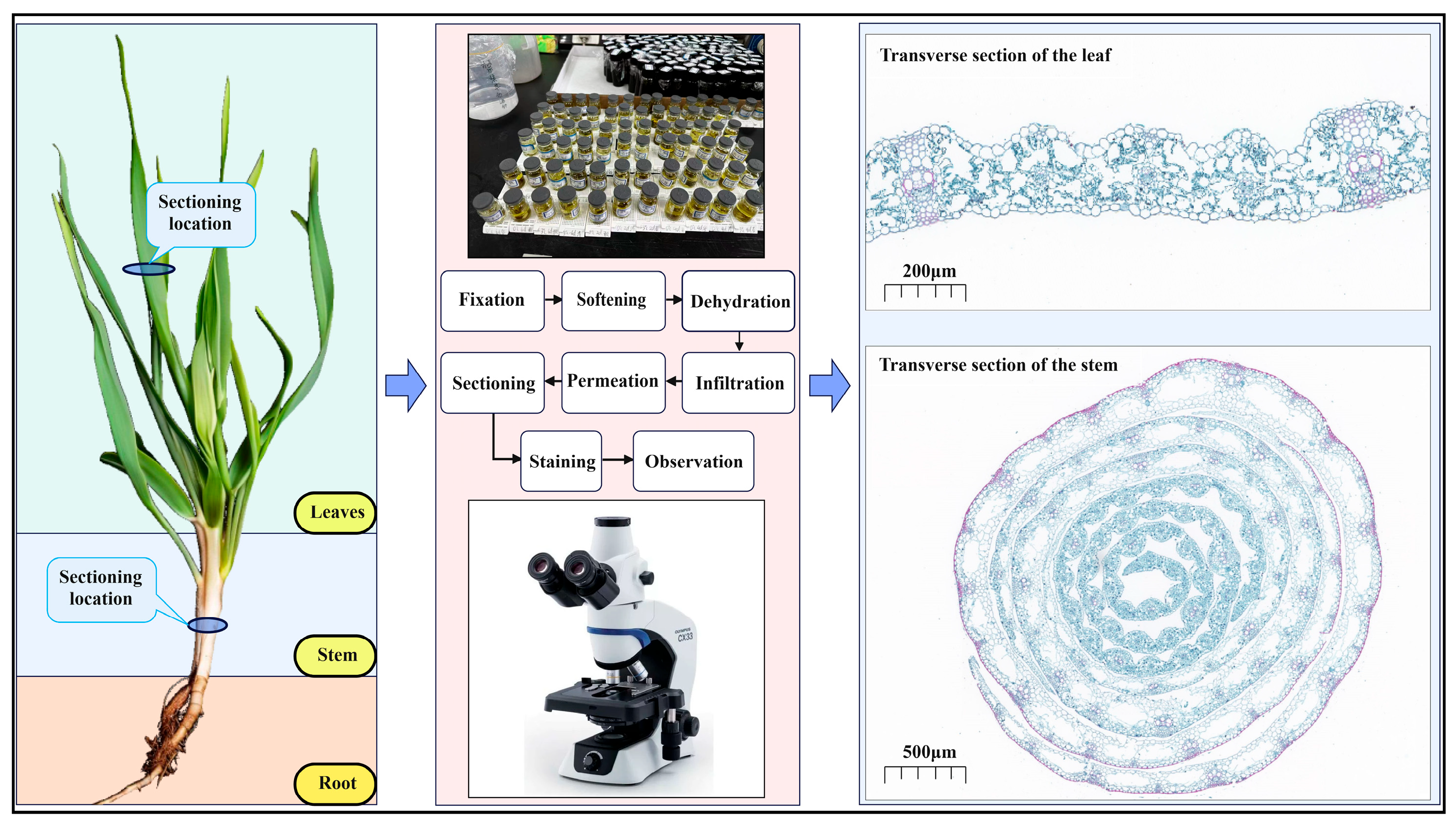
The workflow of paraffin sectioning for leaf and stem tissues is shown in Figure 2. At sampling, tissues from both parts were excised into segments approximately 1.0 cm × 0.5 cm in size and immediately immersed in pre-chilled FAA fixative (60% ethanol, 90 mL; glacial acetic acid, 5 mL; formalin, 5 mL) for 72 h. Following fixation, samples were transferred into labeled embedding cassettes and rinsed under gentle running tap water for 24 h to remove residual fixative. They were then softened in 12% hydrofluoric acid for 72 h, followed by thorough washing with distilled water for 48 h to eliminate acid residues. Finally, tissues were stained in 1% safranin solution and stored for 48 h to enhance cellular structural contrast, facilitating subsequent sectioning and microscopic observation (Figures S2–S7).
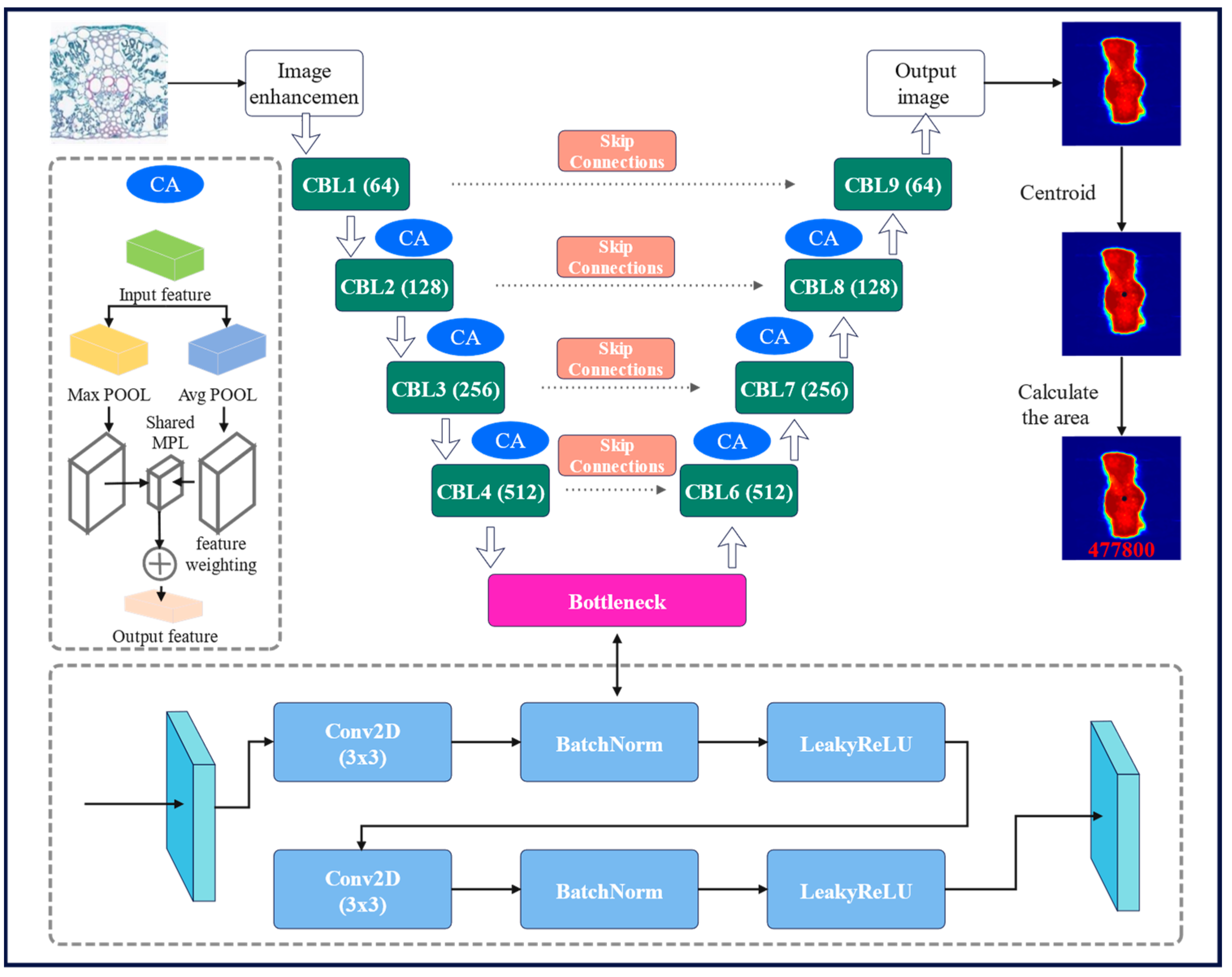
After staining, the samples underwent a conventional histological sectioning workflow, including dehydration, clearing, paraffin infiltration and embedding, microtome sectioning, slide mounting, and sealing with neutral balsam. Microscopic observation and image acquisition were subsequently performed using an Olympus CX-33 light microscope (Olympus Corporation, Hachioji, Tokyo, Japan), and the captured images were preserved for subsequent anatomical trait analysis [22]. Given the limitations of traditional manual annotation under light microscopy (such as labor-intensive procedures and insufficient precision in quantifying the number, size, and area of vascular bundles) [34], this study employed a U-Net-based deep learning model to improve the accuracy of automatically identifying and quantifying the central position and cross-sectional area of both large and small vascular bundles. The detailed image processing workflow is illustrated in Figure 3. To address staining ambiguity between xylem and phloem in paraffin sections, a color attention (CA) module was embedded into the multi-scale skip connections of the U-Net architecture, enabling the model to highlight tissue features during feature fusion. In addition, a Conv(3 × 3)–BatchNorm–LeakyReLU block was adopted to ensure stable convergence under limited sample sizes. Ablation experiments showed that removing either color enhancement or CA reduced Dice scores for large and small vascular bundle segmentation by 10.2 and 14.7 percentage points, respectively, confirming the necessity of these improvements for enhancing recognition accuracy (Figure S1).

2.3.3. Measurement of Dry Matter

Sampling was conducted at 9:00 a.m. on the final day of stress treatment, with controls sampled at the same time to avoid diurnal variation in photosynthetic metabolism affecting dry matter measurements. Irrigation was maintained under standard management during the 24 h before sampling, without additional fertilization or water adjustment, to prevent short-term fluctuations from altering tissue dry matter content.
Plants were carefully uprooted and roots were gently rinsed with deionized water on a 0.25 mm stainless steel mesh, then blotted dry with absorbent paper. Samples were separated into roots, stems, and leaves, immediately weighed for fresh mass, and placed into pre-labeled Kraft envelopes. They were first heated at 105 °C for 15 min to inactivate enzymes and stop respiration, then dried at 85 °C until constant weight (defined as a difference <0.002 g between two successive measurements taken 4 h apart). After drying, samples were cooled in a desiccator for 30 min and weighed using an analytical balance with 0.0001 g precision. Final dry mass was used to calculate total plant dry matter accumulation and its allocation among organs [35].

2.3.4. Measurement of Yield

All traits were measured independently at the single-plant level, and the mean of the five plants in the same pot was used as one biological replicate for statistical analysis. Yield-related traits included grain number per plant and spikelet sterility (%) to evaluate the effects of LT stress on spike development and fertility. Sampled plants were then threshed to determine thousand-grain weight (g), reflecting grain filling and maturity. Total pot yield (g) was further calculated and compared with the control to obtain the yield reduction rate (%), providing an integrated assessment of LT stress on yield formation in winter wheat [36].

2.3.5. Statistical Analysis

At the end of each LT treatment, three pots of uniformly grown, healthy winter wheat plants without noticeable pests or diseases were randomly selected. Five winter wheat plants from each pot were measured. The measured parameters included photosynthetic traits, vascular bundle characteristics, dry matter production and distribution, and yield-related traits. The three pots under the same treatment were considered as three biological replicates, with each replicate coming from a different pot. The measurement data of the five plants within each pot were used as technical replicates, and statistical analysis was performed based on biological replicates. Data are presented as mean ± standard deviation (SD). In the correlation analysis, principal component analysis (PCA), and cluster analysis, the averages of each low-temperature treatment group were used, calculated from the measurement data of three biological replicates (three pots of plants). These analyses were primarily employed as descriptive tools to reveal the relationships and trends of traits under different low-temperature treatments.
Statistical analyses were performed using SPSS 24.0 (SPSS Inc., Chicago, IL, USA), with temperature, cultivar, and duration as fixed factors. Three-way analysis of variance (ANOVA) and Tukey HSD post hoc test were conducted on the photosynthetic capacity and potential photosynthetic efficiency, photosynthetic regulation capacity and resource use efficiency, leaf vascular bundle structural parameters, stem vascular bundle structural parameters, yield, and its component traits. Correlation analysis was performed for the relationships between temperature, duration, leaf and stem vascular bundle parameters, yield, and its components. Principal component analysis (PCA) and cluster analysis were carried out for all parameters. Correlation analysis, PCA, and cluster analysis were performed using Origin 2024 (OriginLab Corporation, Northampton, MA, USA).

3. Results

3.1. Coordinated Responses of Leaf Photosynthetic Traits and Vascular Bundle Parameters to Low-Temperature Stress

To elucidate the synergistic response mechanisms of photosynthetic function and anatomical structure to low-temperature stress at the jointing stage from a source-flow perspective, this section analyzes integrated changes in leaf photosynthetic performance (capacity and potential efficiency), resource use efficiency, and vascular bundle structure to identify key limiting factors and structural determinants associated with cold tolerance in winter wheat.

3.1.1. Effects of Low-Temperature Stress on Photosynthetic Capacity and Potential Photosynthetic Efficiency of Winter Wheat Leaves

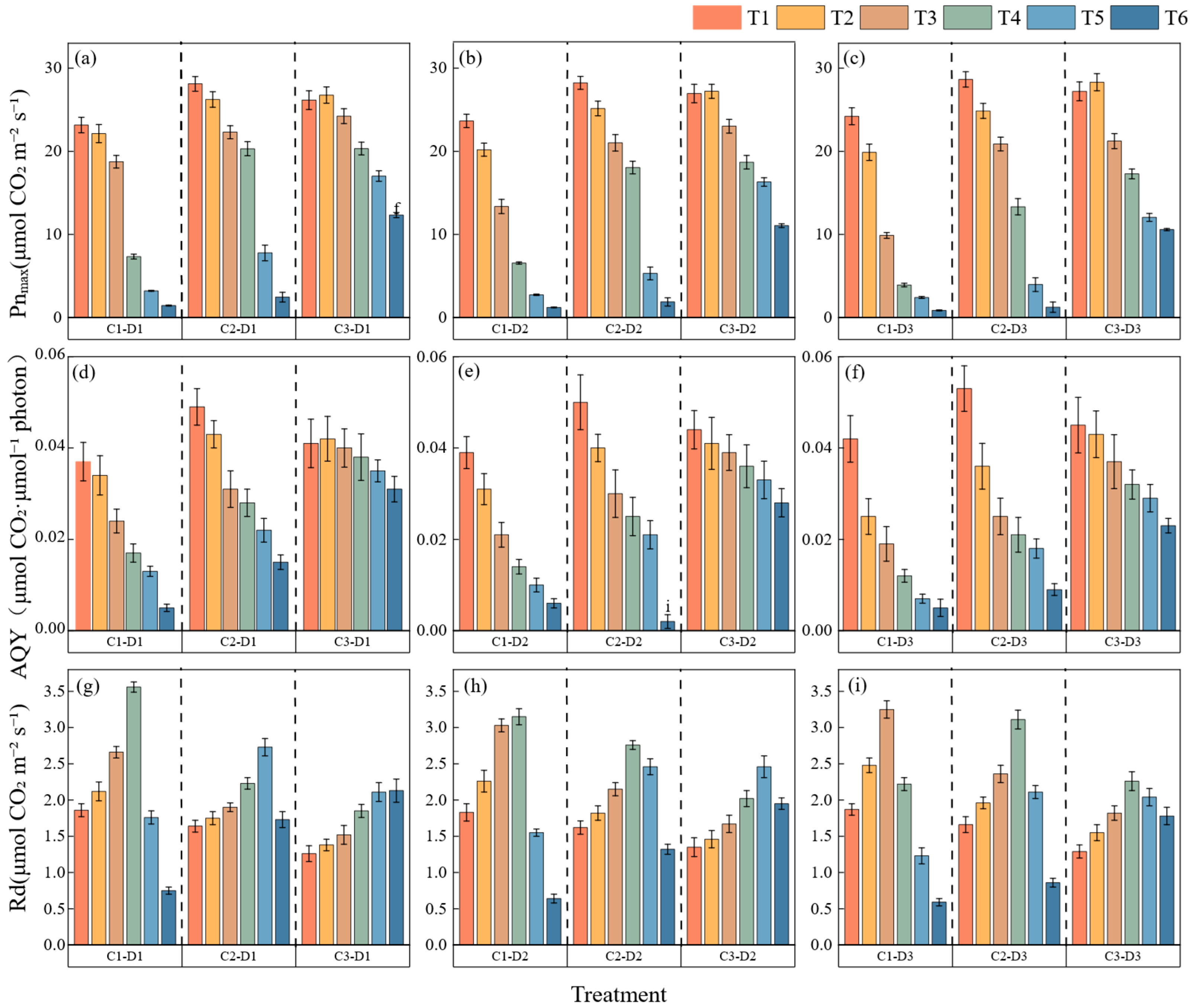
A three-way analysis of variance (ANOVA) was performed using cultivar, temperature, and duration as fixed factors (Tables S1, S3 and S5). The results showed that all fixed factors and their interactions were significant (p < 0.05). Further, Tukey’s HSD post hoc analysis confirmed significant differences between the groups (p < 0.05) (Tables S2, S4 and S6), indicating that temperature, duration, and their interactions significantly affected the photosynthetic capacity and potential photosynthetic efficiency of winter wheat leaves with different winter hardiness (Figure 4a–i). The three cultivars exhibited a consistent trend in their stress response: as the intensity of the cold stress increased, both Pnmax (maximum net photosynthetic rate) and AQY (apparent quantum efficiency) gradually decreased, with temperature having a greater impact on these two parameters than the duration of stress. Under the T6 treatment, Pnmax decreased by more than 50% in all cultivars. Rd (The dark respiration) rate showed an overall increase but declined under severe stress conditions.
There were differences in the responses among the cultivars. Under control conditions (CK), cultivar C2 had higher Pnmax and AQY values, while cultivar C3 had a higher Rd. As stress intensity increased, Pnmax and AQY of cultivar C1 showed a significant decline, particularly under the T4D1 and D3T4 treatments, where reductions exceeded 90%. In contrast, cultivar C3 maintained a low but measurable photosynthetic rate even under the most severe stress. In the case of Rd response, cultivars C1 and C2 reached peak values under T4D1 and T5D1 treatments, increasing by 54.05% and 37.50%, respectively, compared to T1D1, before declining. Cultivar C3, however, showed a slight decrease in Rd under the T6D2 treatment.

3.1.2. Effects of Low-Temperature Stress on Photosynthetic Regulation and Resource Use Efficiency in Leaves

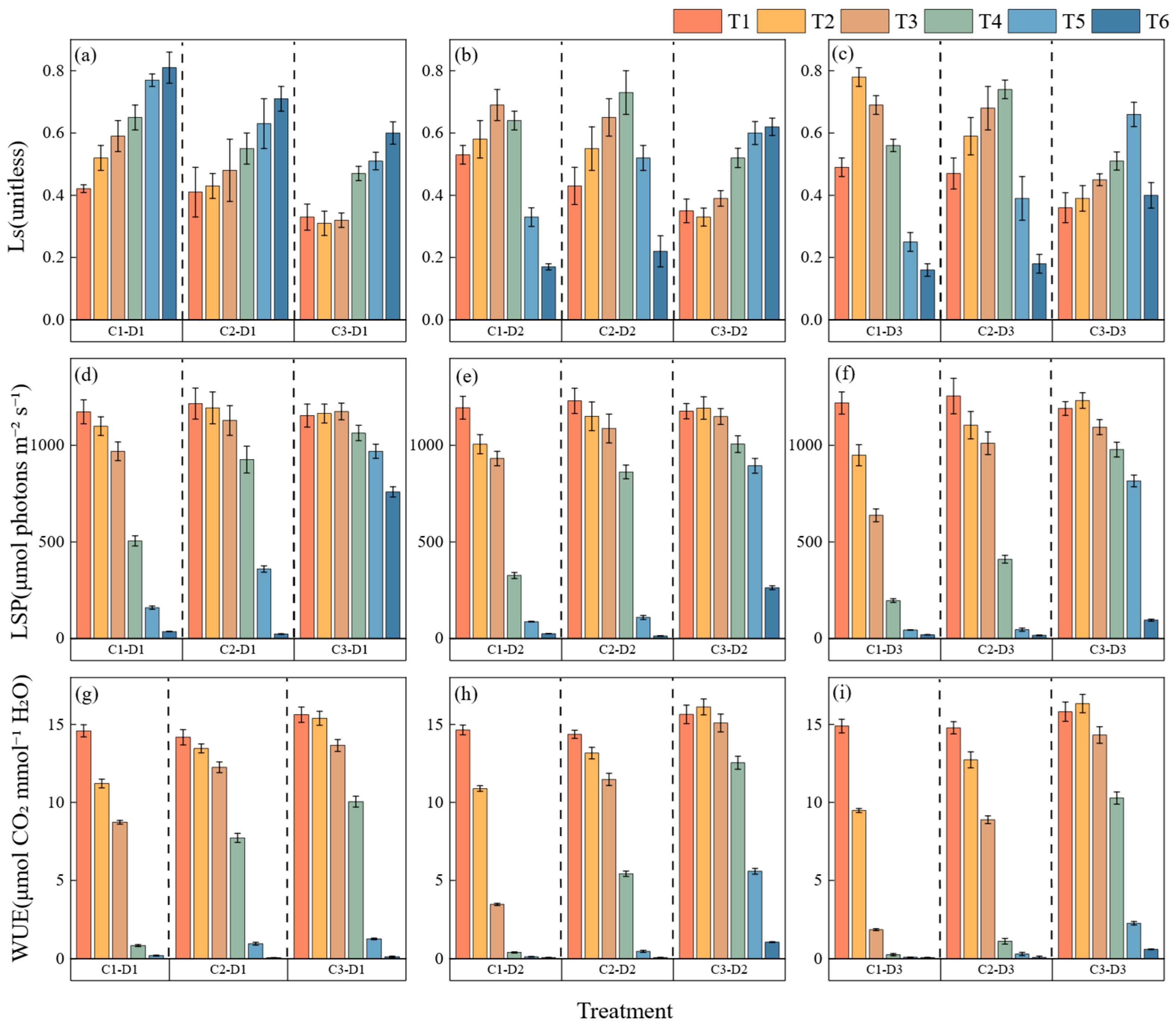
A three-way analysis of variance (ANOVA) was performed using cultivar, temperature, and duration as fixed factors (Tables S7, S9 and S11). The results showed that all fixed factors and their interactions were significant (p < 0.05). Further, Tukey’s HSD post hoc analysis confirmed significant differences between the groups (p < 0.05) (Tables S8, S10 and S12), indicating that temperature, duration, and their interactions significantly affected the photosynthetic regulation capacity and resource use efficiency of winter wheat leaves with different winter hardiness (Figure 5a–i). As the intensity of cold stress increased, the stomatal limitation value (Ls) generally increased, but some treatments showed a decline in Ls once the cold tolerance threshold was exceeded. Both the light saturation point (LSP) and water use efficiency (WUE) continuously decreased, with their responses being more sensitive to temperature variations than to stress duration, exhibiting trends similar to the decline observed in Pnmax and AQY.
There were significant differences in the responses among cultivars: cultivar C1 reached a peak Ls of 0.81 under T6D1, a 97.56% increase compared to the control group, and then declined after T3D2; cultivar C2 began to show a decrease in Ls at T5D2, while cultivar C3 only exhibited a slight decrease at T6D3. In terms of LSP, C1 and C2 showed significant declines after D1T5 treatment, while C3 started to decline after T6D2. The changes in WUE displayed differential sensitivity among the cultivars: the strong winter-hardiness cultivar C3 had a higher threshold for WUE decline, while C1 and C2 experienced a sharp decrease after T5.

3.1.3. Effects of Low-Temperature Stress on Leaf Vascular Bundle Structural Parameters

A three-way analysis of variance (ANOVA) was performed using cultivar, temperature, and duration as fixed factors (Tables S13, S15 and S17). The results showed that all fixed factors and their interactions were significant (p < 0.05). Further, Tukey’s HSD post hoc analysis confirmed significant differences between the groups (p < 0.05) (Tables S14, S16 and S18), indicating that temperature, duration, and their interactions significantly affected the anatomical characteristics of winter wheat leaves with different winter hardiness (Table 2). Under control conditions (T1, D1–D3), cultivar C2 had significantly higher leaf vascular bundle area (Lvba) and xylem proportion (Lxp) compared to C1 and C3, while cultivar C3 exhibited a higher phloem proportion (Lpp). As LT stress intensified, Lvba declined in all three cultivars, with cultivar C1 showing the fastest decrease after the T2T3 treatment, reaching a minimum of 539.55 μm2 under T6D3, a 26.9% reduction compared to the control. Cultivars C2 and C3 entered their rapid decline phases after T4D2 and T5D3 treatments, respectively, ultimately decreasing to 673.41 μm2 and 720.45 μm2, corresponding to reductions of 20.5% and 13.7% from the initial values.
Both Lxp and Lpp exhibited dynamic “rise-then-fall” responses under LT stress. Lxp peaked at T4D2 (C1), T5D1 (C2), and T6D1 (C3), increasing by 25.32%, 15.38%, and 5.34%, respectively, before significantly declining. Lpp showed smaller fluctuations, with its peak occurring earlier, followed by a gradual decline, reaching a minimum at T6D3. Overall, the amplitude of Lpp’s response was smaller than that of Lxp, suggesting that its sensitivity to LT stress may be lower.

3.2. Responses of Dry Matter Allocation and Stem Vascular Bundle Parameters to Low-Temperature Stress

The vascular bundle structure of the stem plays a central regulatory role in the conduction and allocation of photosynthetic products. Low-temperature stress during the jointing stage may alter vascular bundle structural characteristics, affecting assimilate accumulation and inter-organizational processes. Investigating their coordinated response provides deeper insights into the structural basis of material transport and yield formation in winter wheat under LT stress.

3.2.1. Effects of Low-Temperature Stress on Dry Matter Accumulation and Allocation Ratios in Winter Wheat

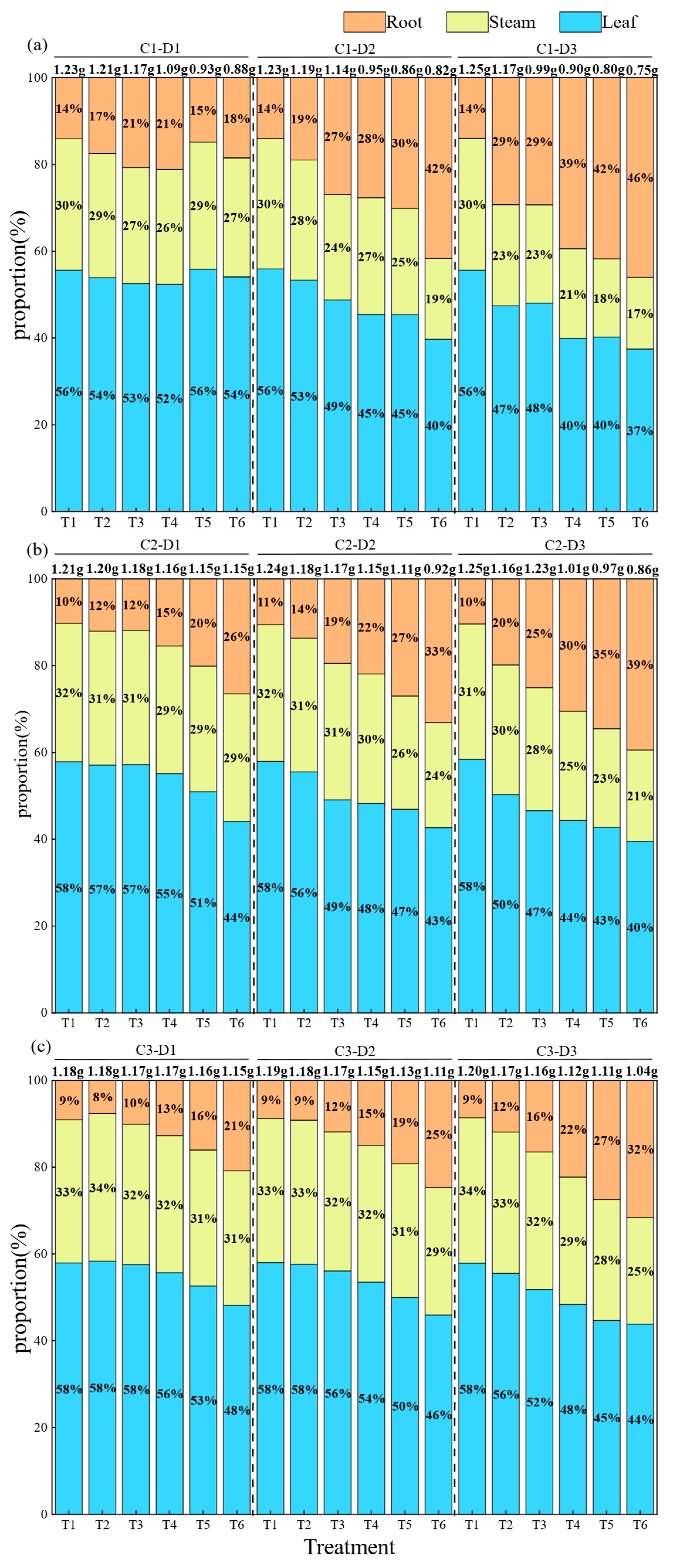
The results indicated that as the intensity and duration of low-temperature (LT) stress increased, total dry matter accumulation in the roots, stems, and leaves of all three genotypes generally decreased (Figure 6a–c). Cultivar C1 was the most sensitive to LT stress, with total dry matter rapidly declining after the T5D2 treatment and reaching 0.75 g under T6D3, a 40.00% reduction compared to the control group (T1D3). In contrast, C2 and C3 exhibited more moderate declines, with significant decreases observed at T6D2. By T6D3, the total dry matter in C2 and C3 dropped to 0.86 g and 1.04 g, respectively, which represented reductions of 31.20% and 13.33% relative to the control group.
Further analysis revealed that, for the different winter-hardiness cultivars, the root allocation proportion gradually increased, while the leaf and stem allocation proportions decreased. For cultivar C1, the root dry matter allocation significantly increased at T3D2, while the leaf and stem proportions declined markedly. At T6D3, the root allocation reached 46.00%, which was 2.3 times that of the control group, with leaf and stem allocations decreasing by 33.93% and 43.33%, respectively. In comparison, C2 and C3 also showed an increase in root allocation at T3D2. Notably, cultivar C3 exhibited relatively smaller fluctuations in dry matter allocation ratios across roots, stems, and leaves.

3.2.2. Effects of Low-Temperature Stress on Stem Vascular Bundle Structural Parameters

Based on the analysis of dry matter accumulation and allocation patterns, a three-way analysis of variance (ANOVA) was performed using cultivar, temperature, and duration as fixed factors (Tables S19, S21 and S23). The results showed that all fixed factors and their interactions were significant (p < 0.05). Further, Tukey’s HSD post hoc analysis confirmed significant differences between the groups (p < 0.05) (Tables S20, S22 and S24), indicating that temperature, duration, and their interactions significantly affected the stem vascular bundle structure with different winter hardiness (Table 3). Under control conditions (T1, D1–D3), cultivar C3 had a significantly larger stem vascular bundle area (Svba) than C1 and C2, exceeding them by 23.87% and 12.41%, respectively. In contrast, cultivar C2 exhibited the highest xylem proportion (Sxp). On the other hand, cultivar C3 had the lowest phloem proportion (Spp), reflecting the differences in vascular bundle development associated with its winter-hardiness characteristics. As LT stress intensified, the stem Svba initially showed a transient increase, followed by a sharp decline under severe stress conditions. Specifically, the three cultivars reached peak Svba at T3D3, T4D3, and T5D3 treatments, respectively. At T6D3, Svba decreased to its minimum, with reductions of 33.25%, 16.69%, and 8.86% compared to the control.
The xylem proportion (Sxp) followed a “rise-then-fall” trend, peaking at T4D2 (C1), T5D1 (C2), and T6D1 (C3), with increases of 26.10%, 36.43%, and 3.92%, respectively, compared to the control group. Compared to leaves, cultivars C1 and C2 showed more significant increases in the stem xylem proportion. The phloem proportion (Spp) in the stem also showed a similar “rise-then-fall” trend, but with greater fluctuations than those observed in the leaves.

3.3. Correlation Analysis of Yield and Vascular Bundle Parameters Under Low-Temperature Stress and Identification of Sensitive Parameters

3.3.1. Effects of Low-Temperature Stress on Winter Wheat Yield and Its Component Traits

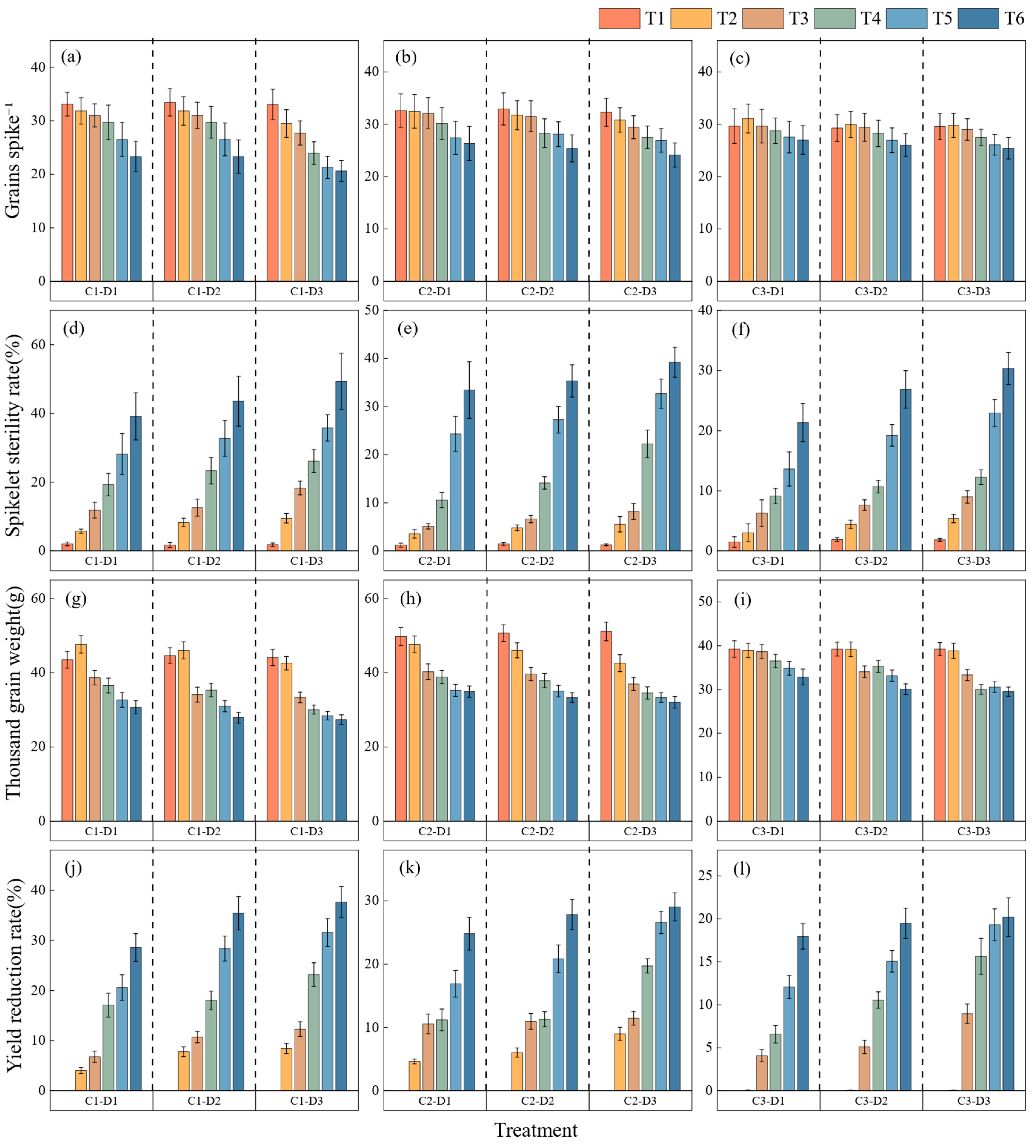
A three-way analysis of variance (ANOVA) was performed using cultivar, temperature, and duration as fixed factors (Tables S25, S27, S29 and S31). The results showed that all fixed factors and their interactions were significant (p < 0.05). Further, Tukey’s HSD post hoc analysis confirmed significant differences between the groups (p < 0.05) (Tables S26, S28, S30 and S32), indicating that temperature, duration, and their interactions significantly affected the yield and its component traits with different winter hardiness (Figure 7a–l). Under control conditions (T1), all three cultivars showed good performance in terms of grains per spike (Gs), spikelet sterility rate (Ssr), and thousand-grain weight (Tgw). As LT stress increased, spikelet sterility rate rose significantly. Under the most severe treatment (T6D3), grains per spike decreased by 37.77%, 26.03%, and 16.49%, respectively. Sterility rate increased to 49.33% in C1, and 39.22% and 30.33% in C2 and C3, respectively, indicating the heightened sensitivity of reproductive organs to cold stress.
Thousand-grain weight showed significant changes under LT stress. Under T6D3 conditions, the thousand-grain weight of C1, C2, and C3 dropped to 27.31 g, 32.01 g, and 29.51 g, representing reductions of 38.81%, 37.39%, and 24.80% compared to the control group. The changes in spikelet sterility rate and thousand-grain weight led to significant yield losses, with yield reduction rates (Yrr) of 37.65%, 29.04%, and 20.21% for the three cultivars under T6D3. Notably, cultivar C3 showed a slight yield increase under mild LT stress (T2D1), while cultivar C1 exhibited the highest sensitivity to yield loss under cold stress.

3.3.2. Correlation Analysis Between Vascular Bundle Parameters and Yield Components of Winter Wheat Under Different Temperature and Duration Treatments

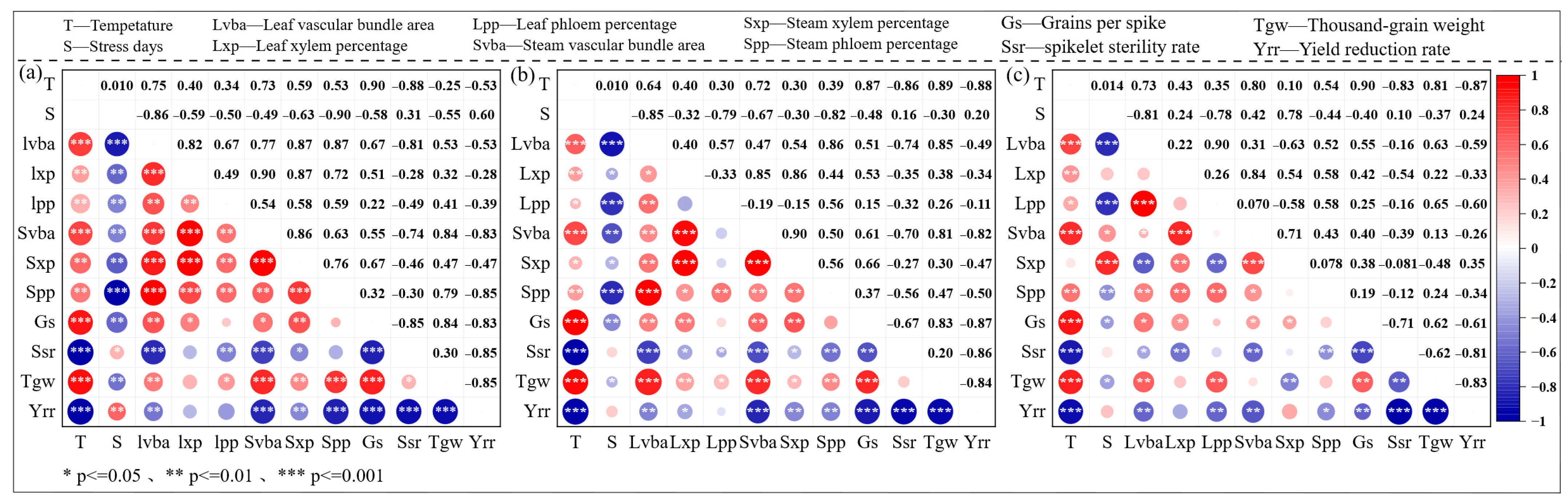
To explore the potential intrinsic relationships between vascular bundle parameters and yield components under different temperature (T) and stress duration (S) conditions, this study conducted a correlation analysis with T and S as independent variables. It is important to note that T and S are analyzed as independent variables in this study, meaning they are not interdependent. Therefore, the results of the correlation analysis reflect the individual effects of T and S on the traits. The study found that leaf vascular bundle area (Lvba), stem vascular bundle area (Svba), grains per spike (Gs), and thousand-grain weight (Tgw) were significantly positively correlated with T (p < 0.001), meaning that as the temperature decreased, these traits significantly declined. Conversely, spikelet sterility rate (Ssr) and yield reduction rate (Yrr) were significantly negatively correlated with T (p < 0.001), indicating that a decrease in temperature led to a significant increase in these two traits (Figure 8). In contrast, most parameters showed a different trend in relation to S, and their correlations were less significant, indicating that although S affects these traits, its impact and statistical significance are lower than those of T.
In different winter wheat varieties with varying winter hardiness, the correlation between vascular bundle parameters and yield components showed both commonalities and varietal specificity. The common response was that Gs was positively correlated with Lvba and Svba (p < 0.05), Ssr was consistently negatively correlated with Svba, and Tgw was positively correlated with Lvba (p < 0.05). As for the varietal differences, C1 and C2 showed consistent and stronger correlations. Specifically, in C1 and C2, Tgw was strongly positively correlated with Svba and Spp (p < 0.001), while Yrr was strongly negatively correlated with Svba and Spp (p < 0.001), and also showed a negative correlation with Lvba and Sxp (p < 0.01). In contrast, C3 exhibited weaker correlations, with Tgw positively correlated with Lpp (p < 0.01) and negatively correlated with Sxp (p < 0.01), while Yrr was mainly negatively correlated with Lvba, Lpp, and Svba (p < 0.01).

3.4. Screening of Representative Indicators of Low-Temperature Responses During the Jointing Stage in Winter Wheat

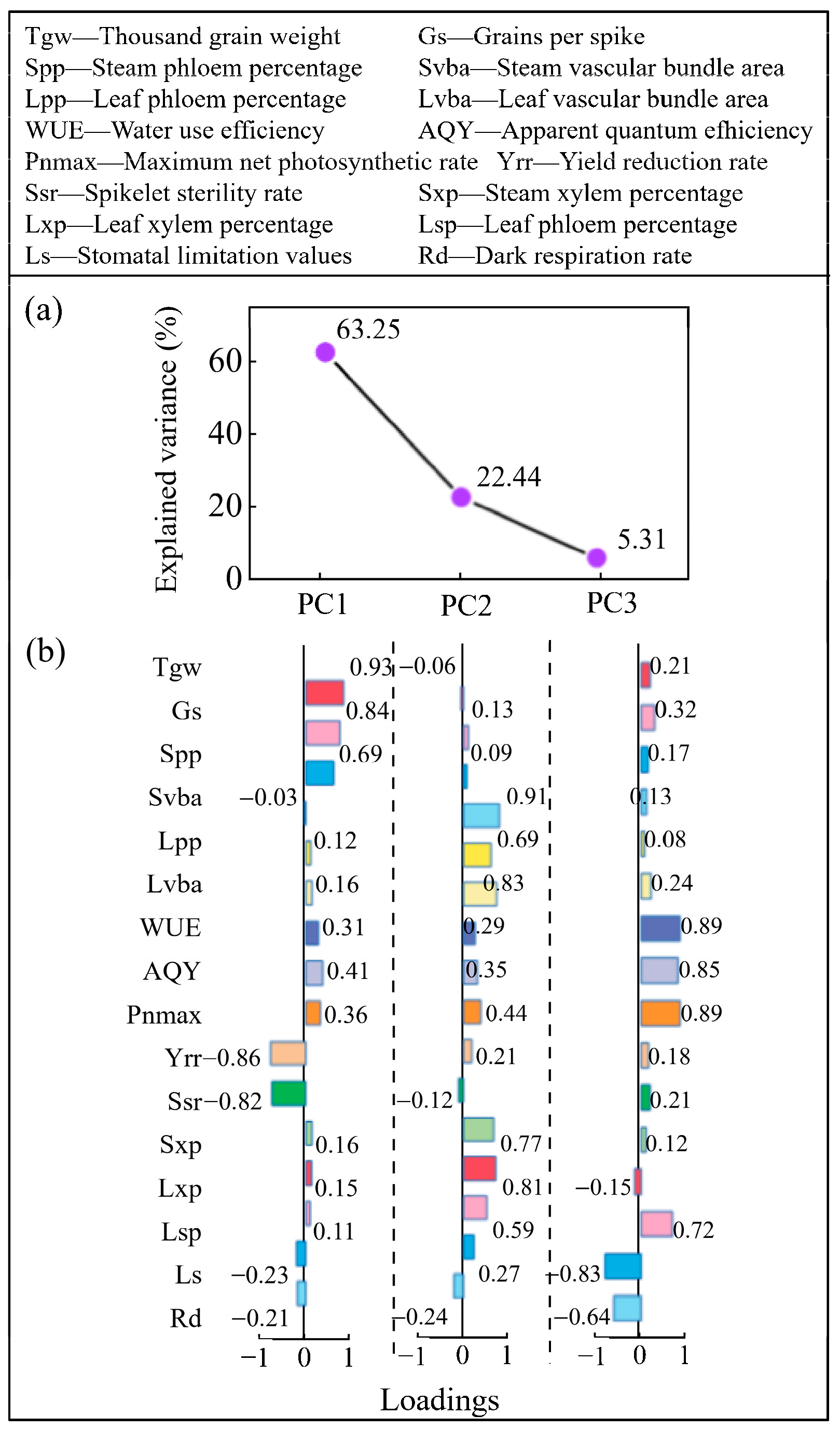
Principal component analysis (PCA) was used to explore the main variance structures of physiological parameters, anatomical traits, and yield-related characteristics under LT stress. The first three principal components explained a cumulative 91.0% of the total variance, indicating that the variance structure of the data is highly representative (Figure 9a). Principal component 1 (PC1, 63.25%) showed high loadings for traits such as thousand-grain weight (Tgw, 0.93) and grain number per spike (Gs, 0.84), while lower loadings were observed for yield reduction rate (Yrr, −0.86) and spikelet sterility rate (Srr, −0.82), which may reflect the variance structure associated with yield. Principal component 2 (PC2, 22.44%) exhibited high loadings for traits related to vascular anatomy, including stem vascular bundle area (Svba, 0.91), leaf vascular bundle area (Lvba, 0.83), and xylem proportion (Sxp, 0.77; Lxp, 0.81), which may reflect the variance structure of the plant’s vascular system. Principal component 3 (PC3, 5.31%) showed high loadings for water use efficiency (WUE, 0.89), apparent quantum yield (AQY, 0.85), and maximum net photosynthetic rate (Pnmax, 0.89), while higher negative loadings were observed for stomatal limitation (Ls, −0.83) and dark respiration rate (Rd, −0.64), which may reflect the limiting factors in the photosynthetic process (Figure 9b).
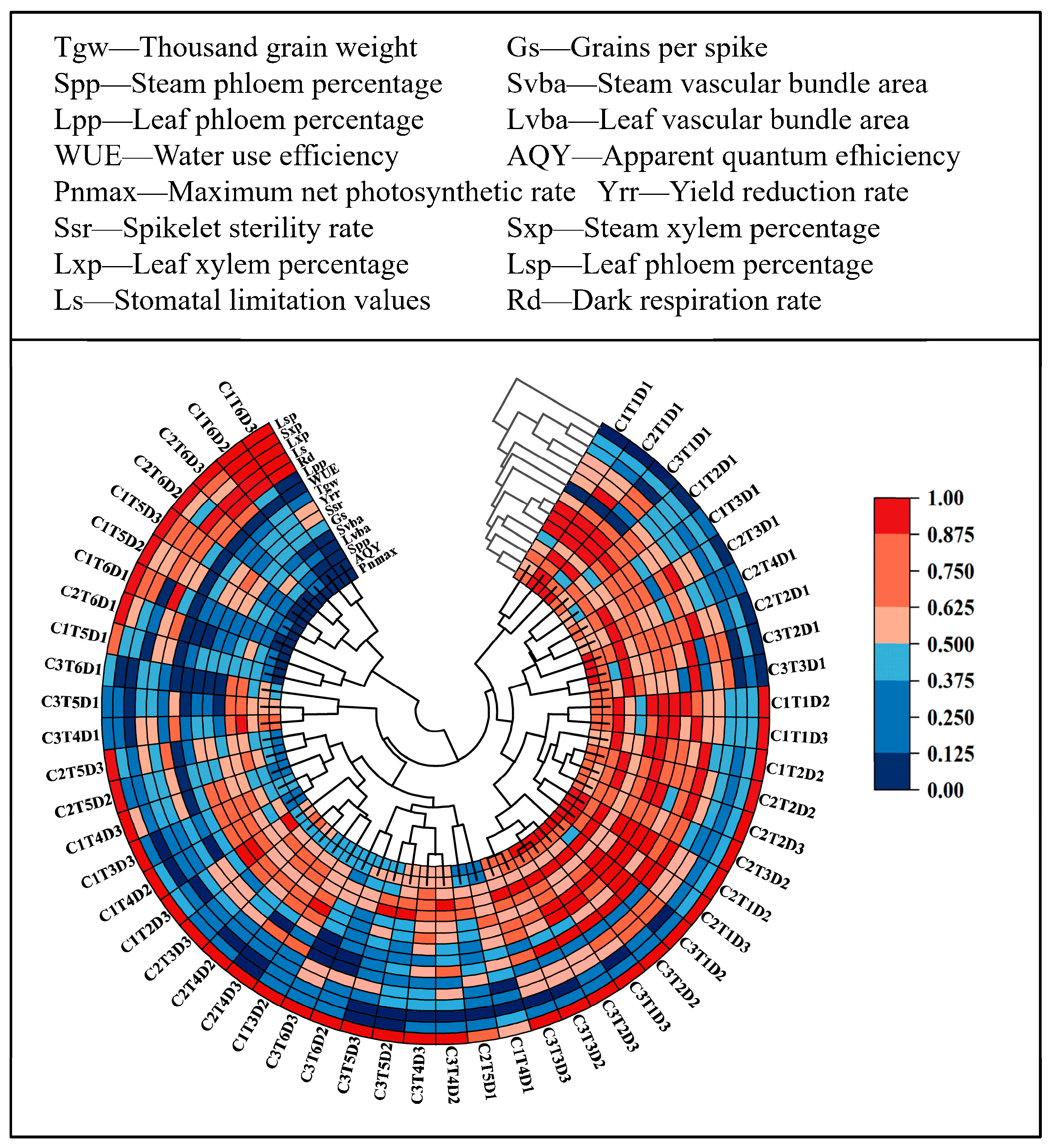
Based on PCA, clustering analysis was performed to better understand the synergistic variation in trait parameters under LT stress and to reveal the potential relationships and variation structures between traits under different LT treatments. The clustering heatmap derived from the clustering analysis (Figure 10) illustrates the stable branching patterns of various parameters under LT stress. Yield-related traits (such as thousand-grain weight, Tgw) in the three winter wheat varieties commonly cluster with Pnmax and WUE, as well as Lvba and Svba, showing consistent color gradient changes, while Ls and Rd exhibit opposite color gradient changes in most sub-branches. Ssr and Yrr align oppositely to Tgw, suggesting potential differences in their variation directions under LT stress. Vertically, C1 samples are typically associated with phenotypic traits characterized by low Pnmax/WUE and high Ls/Rd, while C3 samples cluster with phenotypic traits characterized by high Pnmax/WUE and low Ls/Rd. C2 samples show an intermediate pattern, aligning with both C1 and C3 to some extent, further highlighting the differential responses of winter wheat varieties with varying winter hardiness to LT stress.
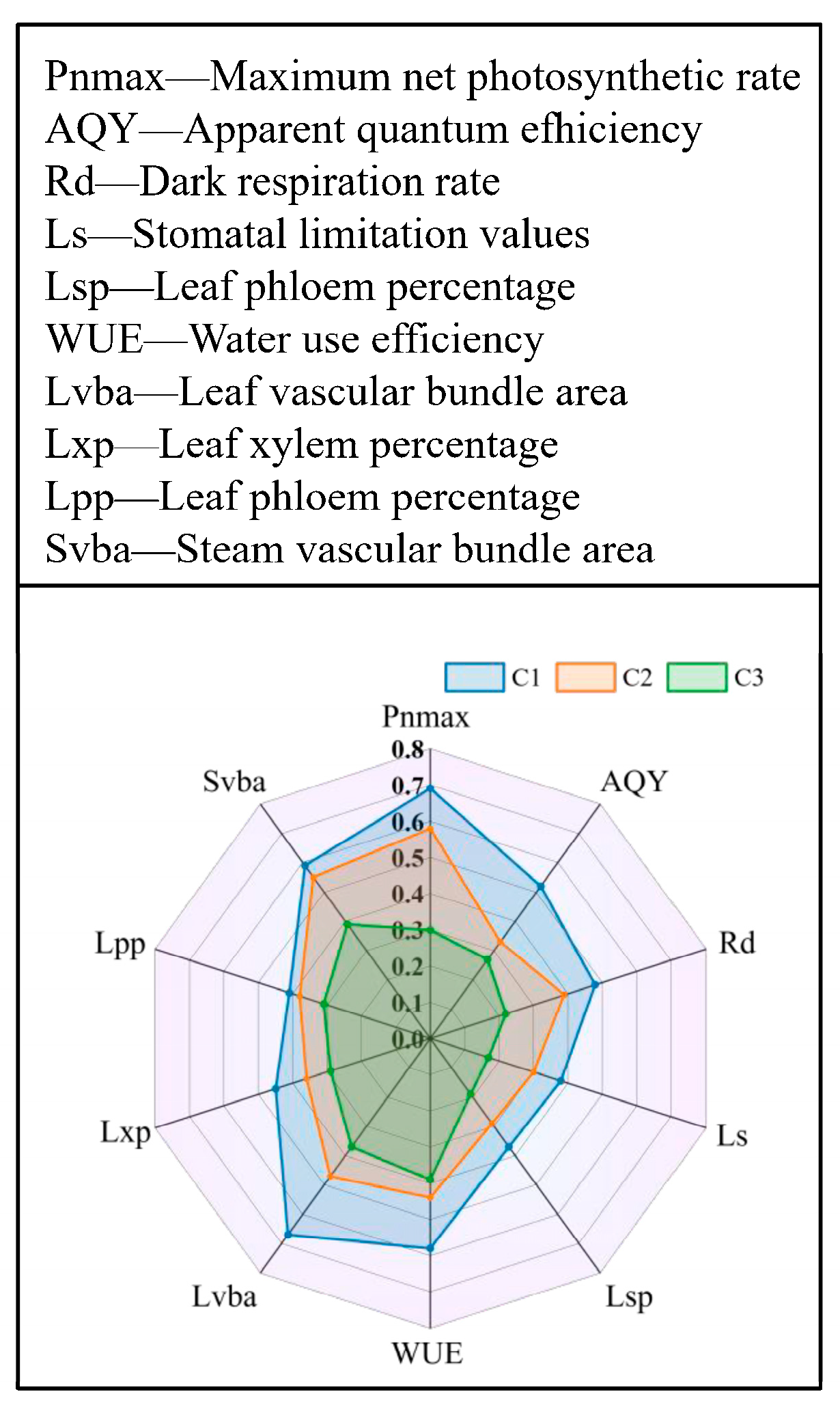
Finally, a radar chart was further employed to provide a visual comparison of varietal differences in LT responses (Figure 11). In this analysis, trait values were averaged across all LT treatments, expressed as relative changes compared with the control (CK), and yield-related traits were excluded. The results showed distinct sensitive indicators among genotypes in terms of photosynthetic physiology and vascular traits. In C1, the most pronounced relative reductions were observed in maximum net photosynthetic rate (Pnmax) and leaf vascular bundle area (Lvba); in C2, the strongest responses occurred in Pnmax and stem vascular bundle area (Svba); while in C3, water use efficiency (WUE) and Svba exhibited the greatest relative variation.

4. Discussion

This study focuses on the impact of low-temperature stress during the jointing stage on the photosynthetic parameters, vascular bundle structure, dry matter production and distribution, and yield of winter wheat. Unlike previous research that primarily emphasized surface anatomical traits such as leaf thickness, palisade tissue, and spongy tissue, this study uniquely improves upon the traditional U-Net model to quantitatively analyze vascular bundle parameters, exploring the potential relationship between leaf vascular bundle characteristics, photosynthetic capacity, and assimilate transport efficiency. Further analysis of dry matter production and allocation revealed the potential role of stem vascular bundles in nutrient transport. By combining correlation and clustering analyses, we examined whether changes in vascular bundle parameters under low-temperature stress are related to yield formation, identifying representative indicators to explain the effects of low-temperature stress on various wheat parameters. These results provide new theoretical perspectives and structural insights for understanding how low-temperature stress during the jointing stage affects yield formation in winter wheat.

4.1. Dynamic Changes and Potential Relationship Between Photosynthetic Parameters and Leaf Vascular Bundle Traits Under Low-Temperature Stress

Low-temperature (LT) stress during the jointing stage primarily suppresses carbon assimilation in winter wheat by reducing photosynthetic potential and efficiency parameters (Pnmax, AQY, LSP, WUE), while increasing dark respiration rate (Rd) and stomatal limitation (Ls). This is consistent with previous studies showing impaired electron transport and reduced carbon fixation efficiency under cold stress [13,14,15]. Building on this, the current study improves the traditional U-Net model, significantly increasing the Dice coefficient for vascular bundle recognition by more than 10%. Through quantitative analysis of vascular bundle parameters under low-temperature stress, this study attempts to explore the relationship between anatomical structure and photosynthetic function. The results show a certain correlation between changes in vascular bundle structure and photosynthetic parameters: Principal Component Analysis (PCA) reveals that the vascular bundle area of stems and leaves (Svba, Lvba) load most heavily on PC2 (0.91 and 0.83), while PC3 is primarily dominated by Pnmax and WUE, representing the dimensions of “vascular structure” and “photosynthetic function,” respectively. Although these parameters are statistically independent, clustering analysis shows that Pnmax and WUE consistently group with or are adjacent to Lvba and Svba, with synchronized color-scale shifts, suggesting a potential coordinated response under LT stress.
From a mechanistic perspective, Lvba consistently decreases under LT stress, possibly due to the repression of genes controlling cell division and differentiation. The ratio of xylem to phloem follows a typical “increase-then-decrease” pattern. Early LT stress may reduce leaf water potential and disrupt transpiration, triggering compensatory differentiation towards xylem, which temporarily enhances hydraulic capacity, delays the decline in Pnmax and WUE, and inhibits the rapid rise in Ls [37]. With prolonged stress, lignification and vessel formation are inhibited, leading to reduced vessel number and diameter, decreased hydraulic conductivity, and a reduction in xylem proportion and an increase in phloem proportion [16]. This exacerbates the limitations on photosynthesis (declining Pnmax and AQY; rising Rd and Ls). These dynamic changes may influence stomatal limitations through vascular bundle structural changes, thereby restricting photosynthesis and forming a progressive cascade effect. Furthermore, phloem transport limitation could directly reduce sucrose transport to sink organs, causing sugar accumulation in leaves. This may downregulate photosynthesis-related genes (such as RbcS, Cab) through the HXK1-mediated sugar-sensing pathway, further weakening photosynthetic efficiency. Overall, these results not only confirm previous findings but also explore the intrinsic connections at the microscopic level, which may help reveal the response characteristics of winter wheat photosynthetic parameters under low-temperature stress and provide a potential structural explanation.

4.2. Dynamic Changes and Potential Relationship Between Dry Matter Production and Allocation and Stem Vascular Bundle Traits Under Low-Temperature Stress

The accumulation and distribution of dry matter are fundamental determinants of crop yield formation, reflecting the coordinated function of plant organs [38]. Low-temperature stress significantly reduces the accumulation of aboveground dry matter in winter wheat at the jointing stage, causing dynamic changes in the distribution pattern, characterized by a temporary increase in root dry matter proportion and a decrease in stem and leaf distribution. This is consistent with previous studies, which suggest that low-temperature stress drives dry matter to be preferentially allocated to underground organs, reflecting the plant’s adaptive strategy to prioritize root function under adverse conditions [39,40,41]. Unlike traditional studies that focus only on changes in dry matter accumulation, this study integrates anatomical responses of the stem vascular bundles to explore their potential role in dry matter transport and distribution. The study found that the stem vascular bundle area significantly increased during the early stages of low-temperature stress, which may help enhance the transport capacity of water and photosynthetic products, thereby mitigating the negative effects of low-temperature stress. In contrast, the leaf vascular bundle area continuously decreased under low-temperature stress, possibly associated with reduced photosynthetic product synthesis, and lacked similar structural compensation. As low-temperature stress intensifies, the stem vascular bundle area, along with the proportion of xylem and phloem, gradually decreases. This may lead to a decline in the transport efficiency of water and photosynthetic products, further limiting photosynthesis and creating a bottleneck in the transport from source (leaves) to sink (roots and spikes), ultimately resulting in an imbalance in dry matter distribution, with a preference for allocating dry matter to the roots at the expense of the stems and leaves. These findings suggest that the anatomical changes in stem vascular bundles are closely related to the mechanisms of water and photosynthetic product transport and may also be linked to the plant’s adaptive adjustments in dry matter resource allocation.

4.3. Potential Relationship Between Yield Formation and Leaf and Stem Vascular Bundle Characteristics Under Low Temperature Stress and Screening of Sensitive Parameters

Yield, as a core indicator for assessing the impact of LT stress during the jointing stage, declines primarily due to increased spikelet sterility and reduced thousand-grain weight, both closely linked to constraints within the “source–flow–sink” system [42]. Damage to the leaf vascular bundles may weaken the synthesis and transport of photosynthetic products, which could lead to insufficient nutritional support for reproductive organs, increasing sterility. Meanwhile, the reduction in 1000-grain weight may reflect limitations in carbon and nitrogen supply during grain filling, further restricting filling and grain development [43,44]. Therefore, yield loss may represent a combined result of photosynthetic limitations in the source area and transport and storage restrictions within the “flow-sink” system. The results of the correlation analysis partially support this explanation: Lvba is significantly correlated with Ssr and Tgw (p < 0.001), which may highlight the critical role of “source” structure integrity in reproductive development and grain filling [45]. Svba is positively correlated with Tgw and negatively correlated with Yrr (p < 0.05), which may be influenced by restricted transport capacity in the “flow-sink” pathway, affecting dry matter accumulation and allocation [46]. By combining PCA and clustering analysis, this study found that changes in Pnmax and WUE were highly consistent with changes in Lvba and Svba. PCA showed that the main variation in Pnmax and WUE was explained by PC1 and PC2, while Lvba and Svba had higher loadings on PC2. Clustering analysis further revealed that Pnmax and WUE consistently grouped with or adjacent to Lvba and Svba, with synchronized changes in color scale. Additionally, Ls and Rd exhibited different grouping patterns, providing Supplementary Information from the perspective of limiting factors. These results provide theoretical support for the coordinated changes between vascular bundle structure and photosynthetic function, which may help in constructing the core discriminating axis of winter wheat’s response to low temperatures.
From a mechanistic perspective, the reduction in vascular bundle area and changes in the xylem/phloem ratio may indicate an early bottleneck in the “flow” pathway, with reduced nutrient and water transport capacity limiting the output of assimilates. Yield traits are highly consistent with this framework: the reduction in 1000-grain weight parallels the decline in Pnmax and WUE, while the increase in spike sterility may be related to the decrease in Lvba and Svba. Differences among winter wheat cultivars further validate this mechanism: “Zhenmai 12” is most sensitive in Pnmax and Lvba, which may reflect synchronized damage in carbon assimilation and leaf transport; “Jimai 22” shows the most significant decline in Pnmax and Svba, possibly indicating a bottleneck in stem transport; while “Shannong 38” maintains relatively stable Pnmax, likely mitigating stress through WUE and Svba. Overall, these results clarify the mechanistic basis of yield loss induced by low temperatures, aiding in the exploration of the potential relationships between anatomical structure, photosynthetic production, material transport, and yield formation, and further deepening our understanding of the possible “source–flow–sink” limiting effects.

4.4. Research Limitations and Future Directions

The main limitation of this study is that, although a conceptual framework was proposed for the transition from low-temperature (LT) stress to structural changes, photosynthetic impairments, and yield reduction, most of the measurements were taken immediately after the LT stress treatment, which has not clearly distinguished primary and secondary response mechanisms. Although the improved U-Net architecture offers advantages in the quantitative analysis of vascular bundle anatomical traits, it did not account for functional parameters such as pipe number or diameter, which limits our understanding of water and assimilate transport mechanisms. Furthermore, the experiments were conducted primarily under controlled pot conditions, lacking field validation across diverse agroecological environments. Future research should include temporal dynamic measurements after the end of LT stress to track the sequence of changes and better understand the progression of responses. Furthermore, it is important to integrate multi-omics analyses with dynamic phenotyping and place emphasis on multi-source data fusion technologies. This approach would combine low-altitude unmanned aerial vehicle (UAV) observations, near-surface meteorological measurements, and crop structural and physiological traits. Additionally, a more comprehensive analysis, including functional parameters such as pipe number or diameter, should be conducted to better reveal the role of vascular bundles in water and assimilate transport under LT stress, and field validation should be carried out across different agricultural ecological environments in actual production.

5. Conclusions

This study investigates the effects of low-temperature stress during the jointing stage on winter wheat from the ‘source-sink-flow’ perspective. The results indicate that under low-temperature stress, photosynthesis in Zhenmai 12 and Jimai 22 completely ceased at 0 °C and −3 °C, respectively. Leaf vascular bundle area continuously decreased under low-temperature stress, and the proportion of xylem and phloem initially increased by approximately 10%, before rapidly declining to less than half of the control group values. A significant transfer of dry matter occurred from the leaves and stems to the roots, resulting in a more than 20% increase in root dry matter. Multivariate statistical analysis revealed that changes in the maximum net photosynthetic rate and water use efficiency were closely associated with variations in leaf and stem vascular bundle area, which strongly represented the structural variability of yield components. This may explain the limiting effects of low-temperature stress during the jointing stage on yield formation. By integrating anatomical data, the study elucidates the potential pathways through which low-temperature stress affects yield formation, providing new insights for future research on the effects of low-temperature stress on crop growth. Additionally, it offers theoretical support and structural diagnostic criteria for the selection and improvement of cold-resistant cultivars.

Supplementary Materials

The following supporting information can be downloaded at: https://www.mdpi.com/article/10.3390/agriculture16070738/s1, We have provided more information on the detailed experimental setup and environmental conditions (Material S1), Three-way Analysis of Variance (ANOVA) of Maximum Net Photosynthetic Rate (Pnₘₐₓ) of Winter Wheat Leaves under Different Cultivar, Temperature, and Duration Treatments (Table S1), Tukey HSD Post-Hoc Test of Maximum Net Photosynthetic Rate (Pnₘₐₓ) of Winter Wheat Leaves under Different Cultivar, Temperature, and Duration Treatments (Table S2), Three-way Analysis of Variance (ANOVA) of AQY (apparent quantum efficiency) of Winter Wheat Leaves under Different Cultivar, Temperature, and Duration Treatments (Table S3), Tukey HSD Post-Hoc Test of AQY (apparent quantum efficiency) of Winter Wheat Leaves under Different Cultivar, Temperature, and Duration Treatments (Table S4), Three-way Analysis of Variance (ANOVA) of Rd (The dark respiration) of Winter Wheat Leaves under Different Cultivar, Temperature, and Duration Treatments (Table S5), Tukey HSD Post-Hoc Test of Rd (The dark respiration) of Winter Wheat Leaves under Different Cultivar, Temperature, and Duration Treatments (Table S6), Three-way Analysis of Variance (ANOVA) of The Stomatal Limitation Value (Ls) of Winter Wheat Leaves under Different Cultivar, Temperature, and Duration Treatments (Table S7), Tukey HSD Post-Hoc Test of The Stomatal Limitation Value (Ls) of Winter Wheat Leaves under Different Cultivar, Temperature, and Duration Treatments (Table S8), Three-way Analysis of Variance (ANOVA) of The Light Saturation Point (LSP) of Winter Wheat Leaves under Different Cultivar, Temperature, and Duration Treatments (Table S9), Tukey HSD Post-Hoc Test of The Light Saturation Point (LSP) of Winter Wheat Leaves under Different Cultivar, Temperature, and Duration Treatments (Table S10), Three-way Analysis of Variance (ANOVA) of Water Use Efficiency (WUE) of Winter Wheat Leaves under Different Cultivar, Temperature, and Duration Treatments (Table S11), Tukey HSD Post-Hoc Test of Water Use Efficiency (WUE) of Winter Wheat Leaves under Different Cultivar, Temperature, and Duration Treatments (Table S12), Three-way Analysis of Variance (ANOVA) of Leaf Vascular Bundle Area (Lvba) under Different Cultivar, Temperature, and Duration Treatments (Table S13), Tukey HSD Post-Hoc Test of Leaf Vascular Bundle Area (Lvba) of Winter Wheat Leaves under Different Cultivar, Temperature, and Duration Treatments (Table S14), Three-way Analysis of Variance (ANOVA) of Leaf Xylem Percentage (Lxp) under Different Cultivar, Temperature, and Duration Treatments (Table S15), Tukey HSD Post-Hoc Test of Leaf Xylem Percentage (Lxp) under Different Cultivar, Temperature, and Duration Treatments (Table S16), Three-way Analysis of Variance (ANOVA) of Leaf Phloem Percentage (Lpp) under Different Cultivar, Temperature, and Duration Treatments (Table S17), Tukey HSD Post-Hoc Test of Leaf Phloem Percentage (Lpp) under Different Cultivar, Temperature, and Duration Treatments (Table S18), Three-way Analysis of Variance (ANOVA) of Stem Vascular Bundle Area (Svba) under Different Cultivar, Temperature, and Duration Treatments (Table S19), Tukey HSD Post-Hoc Test of Stem Vascular Bundle Area (Svba) under Different Cultivar, Temperature, and Duration Treatments (Table S20), Three-way Analysis of Variance (ANOVA) of Stem Xylem Percentage (Sxp) under Different Cultivar, Temperature, and Duration Treatments (Table S21), Tukey HSD Post-Hoc Test of Stem Xylem Percentage (Sxp) under Different Cultivar, Temperature, and Duration Treatments (Table S22), Three-way Analysis of Variance (ANOVA) of Stem Phloem Percentage (Spp) under Different Cultivar, Temperature, and Duration Treatments (Table S23), Tukey HSD Post-Hoc Test of Stem Phloem Percentage (Spp) under Different Cultivar, Temperature, and Duration Treatments (Table S24), Three-way Analysis of Variance (ANOVA) of Grains Per Spike (Gs) under Different Cultivar, Temperature, and Duration Treatments (Table S25), Tukey HSD Post-Hoc Test of Grains Per Spike (Gs) under Different Cultivar, Temperature, and Duration Treatments (Table S26), Three-way Analysis of Variance (ANOVA) of Spikelet Sterility Rate (Ssr) under Different Cultivar, Temperature, and Duration Treatments (Table S27), Tukey HSD Post-Hoc Test of Spikelet Sterility Rate (Ssr) under Different Cultivar, Temperature, and Duration Treatments (Table S28), Three-way Analysis of Variance (ANOVA) of Thousand-grain weight (Tgw) under Different Cultivar, Temperature, and Duration Treatments (Table S29), Tukey HSD Post-Hoc Test of Thousand-grain weight (Tgw) under Different Cultivar, Temperature, and Duration Treatments (Table S30), Three-way Analysis of Variance (ANOVA) of Yield Reduction Rates (Yrr) under Different Cultivar, Temperature, and Duration Treatments (Table S31), Tukey HSD Post-Hoc Test of Yield Reduction Rates (Yrr) under Different Cultivar, Temperature, and Duration Treatments (Table S32), Effect of the color attention (CA) module on the Dice coefficient for vascular bundle segmentation (Figure S1), Transverse sections of leaf vascular bundles in winter wheat cultivar ‘Zhenmai 12’ at the jointing stage under different low-temperature stress treatments (Figure S2), Transverse sections of stem vascular bundles in winter wheat cultivar ‘Zhenmai 12’ at the jointing stage under different low-temperature stress treatments (Figure S3), Transverse sections of leaf vascular bundles in winter wheat cultivar ‘Jimai 22’ at the jointing stage under different low-temperature stress treatments (Figure S4), Transverse sections of stem vascular bundles in winter wheat cultivar ‘Jimai 22’ at the jointing stage under different low-temperature stress treatments (Figure S5), Transverse sections of leaf vascular bundles in winter wheat cultivar ‘Shannong 38’ at the jointing stage under different low-temperature stress treatments (Figure S6), as well as the Transverse sections of stem vascular bundles in winter wheat cultivar ‘Shannong 38’ at the jointing stage under different low-temperature stress treatments (Figure S7).

Author Contributions

Conceptualization, F.Z. and W.Z.; methodology, J.W.; software, F.Z.; validation, J.Y., Z.H. and N.W.; formal analysis, F.Z.; investigation, C.L.; resources, W.Z.; data curation, J.W.; writing—original draft preparation, F.Z., W.Z. and Z.H.; writing—review and editing, F.Z., J.Y. and Z.H.; visualization, W.Z.; supervision, C.L.; project administration, J.W.; funding acquisition, J.W. and Z.H. All authors have read and agreed to the published version of the manuscript.

Funding

This study was supported by the Guided Key Project for Social Development: Research on Meteorological Hazard Characteristics and Multi-Source Data Fusion Technologies for Low-Altitude Flight (2025Y0065), the National Key Research and Development Program of China (2022YFD2300202), the Key Innovative Team of Agricultural Meteorology of the China Meteorological Administration (CMA2024ZD02), the Basic Research Fund of Chinese Academy of Meteorological Sciences (2024Z001), the 2024 Ministry of Education Youth Foundation Project for Humanities and Social Sciences Research: A Study on Green Fertilization Technology Adoption Behavior and Guiding Policies for Large-Scale Farmers Based on a Dual-Layer Coupled Network (24YJCZH303).

Data Availability Statement

Data not readily available for public consumption due to privacy and other issues. The data presented in this study are available on request from the corresponding author due to confidentiality requirements of the project under which the experiments were conducted. Data requests will be considered upon reasonable request and with the corresponding author’s permission.

Conflicts of Interest

The authors declare no conflicts of interest.

References

  1. Li, G.; Ren, X.; Pang, S.; Feng, C.; Niu, Y.; Qu, Y.; Liu, C.; Lin, X.; Wang, D. Nitrogen redistribution during the grain-filling stage and its correlation with senescence and TaATG8 expression in leaves of winter wheat. J. Integr. Agric. 2024, 25, 1433–1442. [Google Scholar] [CrossRef]
  2. Xie, J.; Zhang, D.; Jin, N.; Cheng, T.; Zhao, G.; Han, D.; Niu, Z.; Li, W. Coupling crop growth models and machine learning for scalable winter wheat yield estimation across major wheat regions in China. Agric. For. Meteorol. 2025, 372, 110687. [Google Scholar] [CrossRef]
  3. Wang, Y.; Li, B.; Luo, M.; Guo, H.; Meng, X.; Cao, Z. Daily-scale gridded analysis of spatiotemporal characteristics in agricultural drought events across winter wheat growth stages in the Huang–Huai–Hai Plain, China. Agric. Water Manag. 2026, 327, 110274. [Google Scholar] [CrossRef]
  4. Xie, S.; Wang, X.; Zhu, X.; Li, Y. Prediction of soil organic matter content in winter wheat jointing stage based on UAV multispectral and machine learning. Measurement 2025, 256, 118508. [Google Scholar] [CrossRef]
  5. Ji, W.; Gu, J.; Zhang, W.; Chen, X.; Qiu, X.; Xiao, L.; Liu, B.; Tang, L.; Cao, W.; Zhu, Y.; et al. Prediction of grain number and grain weight across different spikelet positions in winter wheat under short-term low-temperature stress. Inf. Process. Agric. 2026, in press. [Google Scholar] [CrossRef]
  6. Zhang, F.; Huo, Z.; Yang, Z.; Zhang, L.; Wang, N.; Jiang, M.; Kong, R.; Mi, Q.; Li, M.; Wu, H. Construction of Indicators of Low-Temperature Stress Levels at the Jointing Stage of Winter Wheat. Agriculture 2024, 14, 1430. [Google Scholar] [CrossRef]
  7. Zhao, J.; Yang, J.; Huang, R.; Xie, H.; Qin, X.; Hu, Y. Estimating evapotranspiration and drought dynamics of winter wheat under climate change: A case study in Huang-Huai-Hai region, China. Sci. Total Environ. 2024, 949, 175114. [Google Scholar] [CrossRef] [PubMed]
  8. Lin, F.; Li, C.; Xu, B.; Chen, J.; Chen, A.; Hassan, M.A.; Liu, B.; Xu, H.; Chen, X.; Sun, J.; et al. Late spring cold reduces grain number at various spike positions by regulating spike growth and assimilate distribution in winter wheat. Crop J. 2023, 11, 1272–1278. [Google Scholar] [CrossRef]
  9. Ma, M.-Y.; Liu, Y.; Zhang, Y.-W.; Qin, W.-L.; Wang, Z.-M.; Zhang, Y.-H.; Lu, C.-M.; Lu, Q.-T. In situ measurements of winter wheat diurnal changes in photosynthesis and environmental factors reveal new insight into photosynthesis improvement by super-high-yield cultivation. J. Integr. Agric. 2021, 20, 527–539. [Google Scholar] [CrossRef]
  10. Pang, H.; Lian, Y.; Zhao, Z.; Guo, H.; Li, Z.; Hu, J.; Ren, Y.; Lin, T.; Wang, Z. Compensatory effect of supplementary irrigation on winter wheat under warming conditions. Agric. Water Manag. 2024, 295, 108778. [Google Scholar] [CrossRef]
  11. Wu, R.; Shen, X.; Shang, B.; Zhao, J.; Agathokleous, E.; Feng, Z. Complexity and interactions of climatic variables affecting winter wheat photosynthesis in the North China Plain. Eur. J. Agron. 2025, 166, 127568. [Google Scholar] [CrossRef]
  12. Zhang, Z.-Z.; Cheng, S.; Fan, P.; Zhou, N.-B.; Xing, Z.-P.; Hu, Y.-J.; Xu, F.-F.; Guo, B.-W.; Wei, H.-Y.; Zhang, H.-C. Effects of sowing date and ecological points on yield and the temperature and radiation resources of semi-winter wheat. J. Integr. Agric. 2023, 22, 1366–1380. [Google Scholar] [CrossRef]
  13. Chen, J.; Zhang, P.; Liu, J.; Deng, J.; Su, W.; Wang, P.; Li, Y. Study on the impact of low-temperature stress on winter wheat based on multi-model coupling. Food Energy Secur. 2024, 13, e543. [Google Scholar] [CrossRef]
  14. Lotfi, R.; Eslami-Senoukesh, F.; Mohammadzadeh, A.; Zadhasan, E.; Abbasi, A.; Kalaji, H.M. Identification of key chlorophyll fluorescence parameters as biomarkers for dryland wheat under future climate conditions. Sci. Rep. 2024, 14, 28699. [Google Scholar] [CrossRef] [PubMed]
  15. Miller, K.; Hall, D.; Kramer, D.; Olson, E.; Merewitz, E. Photosynthetic health of winter wheat following overwintering stresses in controlled conditions. Grass Res. 2024, 4, 25–36. [Google Scholar] [CrossRef]
  16. Shah, A.; Schiller, J.A.; Ramos, I.; Serrano, J.; Adams, D.K.; Tawfick, S.; Ertekin, E. Automated image segmentation of scanning electron microscopy images of graphene using U-Net Neural Network. Mater. Today Commun. 2023, 35, 106127. [Google Scholar] [CrossRef]
  17. Faleiro, R.; Pace, M.R.; Tessmer, M.A.; Pereira, A.d.E.S.; Fraceto, L.F.; Mayer, J.L.S. Smart delivery of auxin: Lignin nanoparticles promote efficient and safer vascular development in crop species. Plant Nano Biol. 2026, 15, 100226. [Google Scholar] [CrossRef]
  18. Wang, C.; Liu, M.; Wang, Z.; Batool, M.; El-Badri, A.M.; Sun, C.; Gao, J.; Zhang, J.; Zhao, Y.; Liu, S.; et al. Rapid elongation of stems during the bolting stage reduces the lodging resistance of late-sown rapeseed. Crop J. 2025, 13, 1874–1883. [Google Scholar] [CrossRef]
  19. Xu, H.; Hassan, M.A.; Sun, D.; Wu, Z.; Jiang, G.; Liu, B.; Ni, Q.; Yang, W.; Fang, H.; Li, J.; et al. Effects of Low Temperature Stress on Source-Sink Organs in Wheat and Phosphorus Mitigation Strategies. Front. Plant Sci. 2022, 13, 807844. [Google Scholar] [CrossRef]
  20. Yu, X.; Jiang, Y.; Yao, H.; Ran, L.; Zang, Y.; Xiong, F. Cytological and molecular characteristics of delayed spike development in wheat under low temperature in early spring. Crop J. 2022, 10, 840–852. [Google Scholar] [CrossRef]
  21. Yu, J.; Cang, J.; Zhou, Z.; Liu, L. Anatomical Structure Comparison Between Leaves of Two Winter Wheat Cultivars with Different Cold/Freezing Tolerance Under Low Temperature Stress. J. Northeast Agric. Univ. (Engl. Ed.) 2011, 18, 1–6. [Google Scholar] [CrossRef]
  22. Khoshravesh, R.; Hoffmann, N.; Hanson, D.T. Leaf microscopy applications in photosynthesis research: Identifying the gaps. J. Exp. Bot. 2022, 73, 1868–1893. [Google Scholar] [CrossRef] [PubMed]
  23. Wang, Y.; Bo, C.; Wang, X.; Yang, X.; Wang, H. Analysis of the Physiological Parameters of Cold Resistance in Core Winter and Spring Wheat Cultivars. Agronomy 2024, 14, 2438. [Google Scholar] [CrossRef]
  24. Xiao, L.; Asseng, S.; Wang, X.; Xia, J.; Zhang, P.; Liu, L.; Tang, L.; Cao, W.; Zhu, Y.; Liu, B. Simulating the effects of low-temperature stress on wheat biomass growth and yield. Agric. For. Meteorol. 2022, 326, 109191. [Google Scholar] [CrossRef]
  25. Liu, P.; Zhang, Z.; Yin, Y.; Yan, S.; Ren, Y.; Sang, W.; Xu, H.; Han, X.; Cui, F.; Nie, Y.; et al. Quality traits analysis of 153 wheat lines derived from CIMMYT and China. Front. Genet. 2023, 14, 1198835. [Google Scholar] [CrossRef]
  26. Mei, X.-R.; Zhong, X.-L.; Vincent, V.; Liu, X.-Y. Improving Water Use Efficiency of Wheat Crop Varieties in the North China Plain: Review and Analysis. J. Integr. Agric. 2013, 12, 1243–1250. [Google Scholar] [CrossRef]
  27. Ma, M.; Li, Y.; Xue, C.; Xiong, W.; Peng, Z.; Han, X.; Ju, H.; He, Y. Current Situation and Key Parameters for Improving Wheat Quality in China. Front. Plant Sci. 2021, 12, 638525. [Google Scholar] [CrossRef]
  28. Papadimitriou, D.M.; Daliakopoulos, I.N.; Louloudakis, I.; Savvidis, T.I.; Sabathianakis, I.; Savvas, D.; Manios, T. Impact of container geometry and hydraulic properties of coir dust, perlite, and their blends used as growing media, on growth, photosynthesis, and yield of Golden Thistle (S. hispanicus L.). Sci. Hortic. 2024, 323, 112425. [Google Scholar] [CrossRef]
  29. Sato, M.; Inaba, S.; Noguchi, M.; Nakagiri, A. Vermiculite as a culture substrate greatly improves the viability of frozen cultures of ectomycorrhizal basidiomycetes. Fungal Biol. 2020, 124, 742–751. [Google Scholar] [CrossRef] [PubMed]
  30. Wang, Y.; Qi, M.; Yang, C.; Sun, R.; Li, H.; Zhao, Y.; Wang, L. Biochar and Phosphogypsum in agricultural soils: Individual roles, combined potentials, and future prospects. Pedosphere, 2025; in press. [CrossRef]
  31. Ali, M.F.; Ma, L.; Han, W.; Zhou, Y.; Wang, S.; Lin, X.; Wang, D. Interactive effects of irrigation and planting density on photosynthetic performance and yield of winter wheat. Field Crops Res. 2026, 337, 110250. [Google Scholar] [CrossRef]
  32. Zhang, F.; Jiang, N.; Zhang, H.; Huo, Z.; Yang, Z. Effect of Low Temperature on Photosynthetic Characteristics, Senescence Characteristics, and Endogenous Hormones of Winter Wheat “Ji Mai 22” during the Jointing Stage. Agronomy 2023, 13, 2650. [Google Scholar] [CrossRef]
  33. Wang, D.; Rianti, W.; Gálvez, F.; van der Putten, P.E.L.; Struik, P.C.; Yin, X. Estimating photosynthetic parameter values of rice, wheat, maize and sorghum to enable smart crop cultivation. Crop Environ. 2022, 1, 119–132. [Google Scholar] [CrossRef]
  34. Wu, J.; Liu, W.; Li, C.; Jiang, T.; Shariful, I.M.; Yao, Y.; Sun, H.; Li, X.; Li, X.; Huang, X.; et al. A state-of-the-art survey of U-Net in microscopic image analysis: From simple usage to structure mortification. Neural Comput. Appl. 2023, 36, 3317–3346. [Google Scholar] [CrossRef]
  35. Ahmed, N.; Zhang, Y.; Li, K.; Zhou, Y.; Zhang, M.; Li, Z. Exogenous application of glycine betaine improved water use efficiency in winter wheat (Triticum aestivum L.) via modulating photosynthetic efficiency and antioxidative capacity under conventional and limited irrigation conditions. Crop J. 2019, 7, 635–650. [Google Scholar] [CrossRef]
  36. Zhang, Z.; Sun, S.; Zhang, F.; Guo, S.; Guo, E.; Liu, Z.; Zhao, J.; Zhao, C.; Li, T.; Yang, X. Using estimated radiation in crop models amplified the negative impacts of climate variability on maize and winter wheat yields in China. Agric. For. Meteorol. 2022, 318, 108914. [Google Scholar] [CrossRef]
  37. Zhai, L.; Song, S.; Zhang, L.; Huang, J.; Lv, L.; Dong, Z.; Cui, Y.; Zheng, M.; Hou, W.; Zhang, J.; et al. Subsoiling before winter wheat alleviates the kernel position effect of densely grown summer maize by delaying post-silking root-shoot senescence. J. Integr. Agric. 2023, 24, 3384–3402. [Google Scholar] [CrossRef]
  38. Cheng, J.; Liu, C.; Yang, G.; Fan, Z.; Lai, Y.; Zhang, J.; Cao, X.; Kang, J.; Ma, X.; Yang, H.; et al. Estimating wheat above-ground biomass by integrating dry matter allocation and phenology information. Eur. J. Agron. 2026, 172, 127885. [Google Scholar] [CrossRef]
  39. Han, Y.; Wang, Y.; Zhang, D.; Gao, H.; Sun, Y.; Tao, B.; Zhang, F.; Ma, H.; Liu, X.; Ren, H. Planting models and deficit irrigation strategies to improve radiation use efficiency, dry matter translocation and winter wheat productivity under semi-arid regions. J. Plant Physiol. 2023, 280, 153864. [Google Scholar] [CrossRef]
  40. Yan, S.; Wu, Y.; Fan, J.; Zhang, F.; Guo, J.; Zheng, J.; Wu, L. Optimization of drip irrigation and fertilization regimes to enhance winter wheat grain yield by improving post-anthesis dry matter accumulation and translocation in northwest China. Agric. Water Manag. 2022, 271, 107782. [Google Scholar] [CrossRef]
  41. Zhu, Y.; Liu, J.; Li, J.; Xian, L.; Chu, J.; Liu, H.; Song, J.; Sun, Y.; Dai, Z. Delayed sowing increased dry matter accumulation during stem elongation in winter wheat by improving photosynthetic yield and nitrogen accumulation. Eur. J. Agron. 2023, 151, 127004. [Google Scholar] [CrossRef]
  42. Astaoui, G.; Dadaiss, J.E.; Sebari, I.; Benmansour, S.; Mohamed, E. Mapping Wheat Dry Matter and Nitrogen Content Dynamics and Estimation of Wheat Yield Using UAV Multispectral Imagery Machine Learning and a Variety-Based Approach: Case Study of Morocco. AgriEngineering 2021, 3, 29–49. [Google Scholar] [CrossRef]
  43. Chen, X.; Liu, L.; Cai, H.; Zheng, B.; Li, J. Effects of spring low-temperature stress on winter wheat seed-setting characteristics of spike. Plant Soil Environ. 2024, 70, 84–92. [Google Scholar] [CrossRef]
  44. Zhao, J.; Peng, H.; Yang, J.; Huang, R.; Huo, Z.; Ma, Y. Response of winter wheat to different drought levels based on Google Earth Engine in the Huang-Huai-Hai Region, China. Agric. Water Manag. 2024, 292, 108662. [Google Scholar] [CrossRef]
  45. Xu, X.; He, W.; Zhang, H. A novel habitat adaptability evaluation indicator (HAEI) for predicting yield of county-level winter wheat in China base on multisource climate data from 2001 to 2020. Int. J. Appl. Earth Obs. Geoinf. 2023, 125, 103603. [Google Scholar] [CrossRef]
  46. Xiao, L.; Liu, B.; Zhang, H.; Gu, J.; Fu, T.; Asseng, S.; Liu, L.; Tang, L.; Cao, W.; Zhu, Y. Modeling the response of winter wheat phenology to low temperature stress at elongation and booting stages. Agric. For. Meteorol. 2021, 303, 108376. [Google Scholar] [CrossRef]
Figure 1. Temporal design of temperature and humidity under different treatments.
Agriculture 16 00738 g001
Figure 2. Workflow of paraffin sectioning for leaf and stem tissues of winter wheat.
Agriculture 16 00738 g002
Figure 3. Vascular bundle feature recognition based on an improved U-Net model.
Agriculture 16 00738 g003
Figure 4. Responses of leaf photosynthetic capacity and potential efficiency to low-temperature stress in winter wheat. Note: Changes in three winter wheat varieties with different winter hardiness (‘Zhenmai 12’ (C1), ‘Jimai 22’ (C2), ‘Shannong 38’ (C3)) under different temperature (8 °C, T1, CK; 6 °C, T2; 3 °C, T3; 0 °C, T4; −3 °C, T5; −6 °C, T6) and duration (2d, D1; 4d, D2; 6d, D3) are shown for maximum net photosynthetic rate (Pnmax) (ac), apparent quantum yield (AQY) (df), and dark respiration rate (Rd) (gi).
Agriculture 16 00738 g004
Figure 5. Responses of leaf photosynthetic regulation and resource use efficiency to low-temperature stress in winter wheat. Note: Changes in three winter wheat varieties with different winter hardiness (‘Zhenmai 12’ (C1), ‘Jimai 22’ (C2), ‘Shannong 38’ (C3)) under different temperatures (8 °C, T1, CK; 6 °C, T2; 3 °C, T3; 0 °C, T4; −3 °C, T5; −6 °C, T6) and duration (2d, D1; 4d, D2; 6d, D3) are shown for stomatal limitation value (Ls) (ac), light saturation point (LSP) (df), and water use efficiency (WUE) (gi).
Agriculture 16 00738 g005
Figure 6. Changes in dry matter production and allocation in winter wheat after low-temperature stress. Note: Changes in dry matter production and allocation in three winter wheat cultivars under different temperature (8 °C, T1, CK; 6 °C, T2; 3 °C, T3; 0 °C, T4; −3 °C, T5; −6 °C, T6) and duration (2d, D1; 4d, D2; 6d, D3). ‘Zhenmai 12’ (C1) is shown in (a), ‘Jimai 22’ (C2) in (b), and ‘Shannong 38’ (C3) in (c).
Agriculture 16 00738 g006
Figure 7. Responses of yield and yield components to low-temperature stress in winter wheat. Note: Changes in three winter wheat varieties with different winter hardiness (‘Zhenmai 12’ (C1), ‘Jimai 22’ (C2), ‘Shannong 38’ (C3)) under different temperature (8 °C, T1, CK; 6 °C, T2; 3 °C, T3; 0 °C, T4; −3 °C, T5; −6 °C, T6) and duration (2d, D1; 4d, D2; 6d, D3) are shown for grains per spike (Gs) (ac), spikelet sterility rate (Ssr) (df), thousand-grain weight (Tgw) (gi), and yield reduction rate (Yrr) (jl).
Agriculture 16 00738 g007
Figure 8. Correlation analysis between vascular bundle parameters in leaves and stems and yield components of winter wheat under different temperature and duration treatments. Note: ‘Zhenmai 12’ (a), ‘Jimai 22’ (b), and ‘Shannong 38’ (c).
Agriculture 16 00738 g008
Figure 9. Principal Component Analysis of Winter Wheat Traits under Low-Temperature Stress at the Jointing Stage: (a) Scree Plot; (b) Factor Loading Plot.
Agriculture 16 00738 g009
Figure 10. Clustering Heatmap of Winter Wheat Traits under Low-Temperature Stress at the Jointing Stage.
Agriculture 16 00738 g010
Figure 11. Radar Chart Comparing Sensitive Indicators of Winter Wheat with Different Winter Hardiness under Low-Temperature Stress at the Jointing Stage. Note: ‘Zhenmai 12’ (C1), ‘Jimai 22’ (C2), and ‘Shannong 38’ (C3).
Agriculture 16 00738 g011
Table 1. Experimental design of low-temperature treatments for winter wheat cultivars differing in winter hardiness.
CultivarLow Temperature Treatment
NameTypesTotal Planting Pot [Pot]MarkerDuration [d]MarkerTemperature [°C]Biological Replicate [Pot]Marker
Zhen Mai 12semi-spring250C12D18/18 (min/max)150CK
6/16108T1
Ji Mai 22semi-winter 250C24D23/13108T2
0/10108T3
Shan Nong 38strong-winter250C36D3−3/7108T4
−6/4108T5
CultivarLow Temperature Treatment
NameTypesTotal Planting Pot [pot]MarkerStress
[d]
MarkerTemperature [°C]Biological Replicate per Treatment [pot]Marker
Zhen Mai 12semi-spring220C12D18/18 (min/max)108CK
6/16108T1
Ji Mai 22semi-winter 220C24D23/13108T2
0/10108T3
Shan Nong 38strong-winter220C36D3−3/7108T4
−6/4108T5
Table 2. Responses of Leaf Vascular Bundle Structural Parameters in Winter Wheat to Low-Temperature Stress.
TreatmentsLeaf Vascular Bundle Area (μm2)Leaf Xylem Percentage (%)Leaf Phloem Percentage (%)
C1C2C3C1C2C3C1C2C3
T1-D1738.39 ± 21.36847.14 ± 23.04835.56 ± 23.5846.23 ± 0.9649.56 ± 1.1255.76 ± 0.8633.75 ± 1.3038.75 ± 1.0730.49 ± 1.15
T1-D2737.28 ± 19.32844.56 ± 24.27838.14 ± 27.7846.56 ± 0.9349.56 ± 1.4756.03 ± 0.8233.92 ± 1.0238.89 ± 1.0530.42 ± 1.56
T1-D3745.29 ± 25.95845.85 ± 28.47843.15 ± 26.2846.49 ± 0.9549.56 ± 0.9855.83 ± 0.8434.04 ± 1.3038.55 ± 1.0230.63 ± 1.27
T2-D1729.75 ± 16.17851.88 ± 30.12837.93 ± 24.9647.76 ± 0.7550.07 ± 0.8955.95 ± 0.8335.13 ± 0.8539.05 ± 1.3630.73 ± 1.22
T2-D2728.46 ± 18.57846.24 ± 23.58831.48 ± 24.0950.67 ± 0.9750.76 ± 1.0355.32 ± 0.8238.80 ± 0.9638.80 ± 0.9630.63 ± 0.73
T2-D3720.24 ± 15.87851.07 ± 33.84837.93 ± 32.5851.96 ± 0.7851.15 ± 0.9054.63 ± 0.8034.25 ± 1.0838.63 ± 1.2530.55 ± 0.86
T3-D1731.19 ± 29.79838.74 ± 22.17840.66 ± 20.9753.85 ± 0.6552.02 ± 0.7056.37 ± 0.9534.33 ± 1.0938.50 ± 0.9630.50 ± 0.88
T3-D2717.78 ± 16.47819.87 ± 20.91834.18 ± 20.5554.78 ± 0.8352.38 ± 0.7956.76 ± 0.8337.56 ± 1.1937.53 ± 1.1930.43 ± 0.76
T3-D3700.74 ± 19.71810.33 ± 27.54831.42 ± 20.3156.37 ± 0.9253.94 ± 0.7356.88 ± 1.0332.55 ± 0.9335.52 ± 0.8230.48 ± 1.13
T4-D1705.24 ± 23.55826.50 ± 28.98835.17 ± 24.0657.48 ± 0.4854.63 ± 0.8857.15 ± 0.9532.65 ± 1.0235.40 ± 0.8630.38 ± 0.96
T4-D2690.33 ± 25.50804.99 ± 31.08826.53 ± 23.3758.35 ± 0.7255.68 ± 0.8357.33 ± 0.9232.81 ± 1.3035.20 ± 1.1930.35 ± 1.22
T4-D3673.17 ± 20.79786.51 ± 29.07810.24 ± 28.7449.83 ± 1.0356.46 ± 0.8557.54 ± 0.9033.92 ± 1.2937.33 ± 1.3330.20 ± 1.10
T5-D1657.96 ± 24.66781.08 ± 18.03798.93 ± 22.1746.56 ± 0.7257.18 ± 0.8057.78 ± 0.7933.98 ± 1.0834.45 ± 0.8930.15 ± 0.80
T5-D2633.84 ± 29.04759.51 ± 16.02791.19 ± 26.5538.52 ± 0.9054.54 ± 0.8358.23 ± 0.8833.70 ± 0.9334.33 ± 1.0330.08 ± 1.12
T5-D3619.08 ± 27.15725.19 ± 31.56777.54 ± 24.9630.69 ± 0.7651.24 ± 0.9058.59 ± 1.1233.54 ± 0.9336.73 ± 1.0229.66 ± 0.88
T6-D1615.63 ± 17.55714.93 ± 22.17759.87 ± 27.2432.85 ± 0.8249.26 ± 0.7258.74 ± 0.9233.23 ± 0.7236.45 ± 0.8829.33 ± 0.91
T6-D2570.99 ± 27.24699.27 ± 25.08743.16 ± 23.8827.93 ± 0.6945.63 ± 0.7954.15 ± 0.8631.55 ± 1.0836.32 ± 1.1129.05 ± 0.69
T6-D3539.55 ± 26.64673.41 ± 32.46720.45 ± 23.6727.48 ± 0.9941.46 ± 0.8351.84 ± 1.1028.16 ± 0.8836.05 ± 0.9928.73 ± 1.13
Table 3. Responses of Stem Vascular Bundle Structural Parameters in Winter Wheat to Low-Temperature Stress.
TreatmentsStem Vascular Bundle Area (μm2)Stem Xylem Percentage (%)Stem Phloem Percentage (%)
C1C2C3C1C2C3C1C2C3
T1-D15896.37 ± 126.346497.36 ± 168.367303.88 ± 187.3138.28 ± 0.6841.29 ± 0.7445.22 ± 1.2130.34 ± 1.1229.11 ± 0.8526.19 ± 0.75
T1-D25937.75 ± 146.746528.29 ± 189.367339.14 ± 200.1338.86 ± 0.7641.86 ± 0.6245.65 ± 1.1631.69 ± 1.1629.29 ± 0.6926.22 ± 0.59
T1-D36014.25 ± 134.696578.15 ± 177.437398.56 ± 196.3439.04 ± 0.9142.13 ± 0.8146.13 ± 0.9632.43 ± 0.8929.76 ± 0.7726.46 ± 0.62
T2-D16339.85 ± 153.646829.36 ± 180.177314.51 ± 206.7341.23 ± 0.8341.78 ± 0.5945.36 ± 1.0630.59 ± 1.0529.46 ± 0.6226.33 ± 0.71
T2-D26597.34 ± 144.737085.07 ± 189.717403.73 ± 213.4341.59 ± 0.6943.09 ± 0.7146.21 ± 1.1131.86 ± 0.8229.54 ± 0.7526.69 ± 0.66
T2-D36616.75 ± 129.377135.73 ± 200.367477.97 ± 179.3442.66 ± 0.8644.59 ± 0.6547.82 ± 0.8632.86 ± 1.0629.81 ± 0.8227.02 ± 0.69
T3-D17028.61 ± 159.347026.59 ± 197.347464.99 ± 185.7344.13 ± 0.9544.36 ± 0.6146.29 ± 0.7629.31 ± 0.7930.25 ± 0.6526.95 ± 0.74
T3-D27323.69 ± 171.357221.29 ± 206.377587.51 ± 192.3346.39 ± 1.0245.11 ± 0.8647.55 ± 1.3328.18 ± 0.8529.46 ± 0.5927.36 ± 0.58
T3-D37611.27 ± 186.347389.59 ± 211.467667.12 ± 165.9248.27 ± 0.8747.26 ± 0.9148.37 ± 1.4226.19 ± 0.7428.59 ± 0.6827.98 ± 0.64
T4-D17269.73 ± 163.727429.28 ± 193.377686.57 ± 175.2945.36 ± 0.9348.79 ± 0.7948.86 ± 1.1928.57 ± 0.8228.29 ± 0.7626.59 ± 0.75
T4-D27063.79 ± 174.647890.55 ± 204.317790.63 ± 184.3341.11 ± 0.7251.79 ± 0.6250.12 ± 1.2927.37 ± 0.7627.86 ± 0.8227.81 ± 0.59
T4-D36576.43 ± 152.478319.86 ± 217.337953.12 ± 189.3735.22 ± 0.6956.33 ± 0.6851.89 ± 1.4625.19 ± 0.6927.57 ± 0.6629.69 ± 0.63
T5-D16203.39 ± 171.087526.82 ± 198.378240.24 ± 208.3638.38 ± 0.6650.22 ± 0.5250.74 ± 1.2824.23 ± 0.5226.99 ± 0.5228.45 ± 0.57
T5-D25723.34 ± 130.287119.63 ± 169.348576.01 ± 213.4333.39 ± 0.6346.19 ± 0.4953.61 ± 1.5222.15 ± 0.7126.53 ± 0.4827.69 ± 0.85
T5-D35122.67 ± 129.336633.58 ± 172.378900.66 ± 222.7328.46 ± 0.5241.22 ± 0.3655.36 ± 1.3621.85 ± 0.6624.39 ± 0.3225.22 ± 0.57
T6-D14767.42 ± 142.696319.84 ± 179.347745.90 ± 196.3424.85 ± 0.4336.26 ± 0.5254.75 ± 1.2721.74 ± 0.6125.86 ± 0.5126.19 ± 0.69
T6-D24364.31 ± 116.325928.37 ± 140.377255.64 ± 185.1622.33 ± 0.3732.29 ± 0.4651.39 ± 1.1220.26 ± 0.4923.85 ± 0.4825.02 ± 0.51
T6-D33935.56 ± 105.965413.05 ± 152.436656.78 ± 190.1819.83 ± 0.2625.28 ± 0.4148.33 ± 1.0519.96 ± 0.3822.29 ± 0.3723.62 ± 0.73
Note: C1–C3 represent different winter wheat varieties, with C1 as ‘Zhenmai 21’, C2 as ‘Jimai 22’, and C3 as ‘Shannong 38’. T1–T6 represent different low-temperature treatments, T1: 8 °C (CK), T2: 6 °C, T3: 3 °C, T4: 0 °C, T5: −3 °C, and T6: −6 °C. D1–D3 represent different durations of low-temperature treatments, with D1 for 2 days, D2 for 4 days, and D3 for 6 days.
Disclaimer/Publisher’s Note: The statements, opinions and data contained in all publications are solely those of the individual author(s) and contributor(s) and not of MDPI and/or the editor(s). MDPI and/or the editor(s) disclaim responsibility for any injury to people or property resulting from any ideas, methods, instructions or products referred to in the content.