Article

Maize Straw Strip Mulching Mediated Transformation of Soil Organic Nitrogen Across Soil Depths in Wheat and Potato Cultivation

1
State Key Laboratory of Aridland Crop Science, Gansu Agricultural University, Lanzhou 730070, China
2
College of Agronomy, Gansu Agricultural University, Lanzhou 730070, China
3
Institute of Molecular Biology and Biotechnology, University of Lahore, Lahore 54000, Pakistan
4
Northeast Institute of Geography and Agroecology, Chinese Academy of Sciences, Changchun 130102, China
5
Key Laboratory of Ecological Safety and Sustainable Development in Arid Lands, Northwest Institute of Eco-Environment and Resources, Chinese Academy of Sciences, Lanzhou 730000, China
*
Authors to whom correspondence should be addressed.
Agriculture 2026, 16(6), 674; https://doi.org/10.3390/agriculture16060674
Submission received: 31 December 2025 / Revised: 7 March 2026 / Accepted: 9 March 2026 / Published: 17 March 2026
(This article belongs to the Section Agricultural Soils)

Abstract

Soil nitrogen availability is a major constraint to crop productivity in rainfed arid and semi-arid regions. The influence of straw strip mulching on nitrogen availability and transformation across soil layers remains unclear. This study investigates the effect of straw strip mulching on soil nitrogen dynamics and crop-specific variation in wheat- and potato-cultivated soils under rainfed semi-arid conditions. This study consisted of five mulching treatments, including without mulching (Tck), black plastic film mulching (Tp), straw strip mulching (Tss), plant strip without mulch (Tps), and composite strip of straw strip mulching and plant strip without mulch (Tcs) applied in wheat and potato cultivation during 2019 and 2020, and soil nitrogen fractions were determined across different soil depths. Tss mulching showed the highest increase in urease activity (48%), nitrite reductase activity (48%), microbial biomass nitrogen (52%), NH4 (11%), acid-hydrolyzed total nitrogen (10%), acid-soluble NH4 (6%), acid-hydrolyzed amino sugar (16%) and acid-hydrolyzable unknown nitrogen (59%) relative to Tck without mulching. While total nitrogen (11%) and acid-hydrolyzed amino acid (9%) were highest in the Tps treatment compared to Tck treatment, the mulching treatment had no significant effect on soil organic nitrogen-derived functional traits. Across all treatments, the 0–20 cm soil layer consistently showed the highest concentrations of observed soil traits, which declined with increasing soil depth. Furthermore, potato-cultivated soils showed consistently higher concentrations of these traits than wheat-cultivated soils, and the concentrations of these traits in 2020 exceeded those observed in 2019. This study highlights that maize straw mulching in strips significantly promotes soil organic nitrogen fractions, particularly in the upper soil layers, and promotes higher nitrogen availability in potato than in wheat-cultivated soils, and is recommended as an effective soil management practice to improve soil nitrogen availability in rainfed semi-arid Loess Plateau conditions.

1. Introduction

Nitrogen is a vital nutrient that governs crop productivity, soil fertility, and agroecosystem sustainability [1]. Although inorganic nitrogen forms such as ammonium and nitrate are directly available to plants, they represent only a small and highly dynamic portion of total soil nitrogen. The majority occurs as soil organic nitrogen, which includes amino acids, amino sugars, microbial biomass nitrogen (MBN), and other acid-hydrolyzable fractions that differ in chemical stability and biological accessibility [2]. Labile nitrogen fractions such as MBN and free amino acids in the soil solution are rapidly transformed through microbial mineralization and immobilization processes and play a key role in regulating short-term nitrogen supply. Amino acids occur in multiple soil pools, including free/labile forms in the soil solution, adsorbed forms on mineral surfaces with intermediate stability, and protein-bound forms incorporated within soil organic matter that represent more stabilized nitrogen. In contrast, acid-hydrolyzable nitrogen fractions are relatively more recalcitrant and contribute primarily to long-term nitrogen storage and gradual nitrogen release. More stable acid-hydrolyzable fractions act as intermediate and long-term reservoirs that buffer nitrogen availability and reduce losses through leaching [3]. The transformation among these organic nitrogen fractions, driven primarily by microbial activity and enzyme-mediated processes, determines the balance between nitrogen availability and stabilization across soil depths. Therefore, evaluating the transformation and vertical distribution of soil organic nitrogen fractions is essential for understanding nitrogen dynamics and the effects of soil management practices [4].
Crop residue return, particularly in the form of straw mulching, is a progressively recommended approach to augment soil organic matter, sustain soil structure, and support microbial-mediated nutrient cycling [5]. Applying straw to the soil surface delivers an external carbon and nitrogen source that stimulates microbial activity to produce various enzymes and alters soil physical conditions such as moisture retention and temperature regulation [6]. Among different sources of residues, maize straw is a high-biomass byproduct rich in structural carbon compounds and is extensively accessible in various cereal production farming systems [7]. Maize straw can influence both the quantity and quality of soil nitrogen fractions, predominantly by fueling microbial turnover and enzyme-mediated nitrogen transformations [8]. Strip mulching of maize straw in alternating bands across the soil surface is an applied variation in full-surface mulching, which sustains conservation benefits with ease of planting and machinery operation. However, this spatial configuration presents an assortment of soil biochemical processes [9,10]. Areas directly beneath the straw mulch zones tend to retain soil moisture and labile carbon, which directly stimulate microbial biomass turnover. However, straw retention may also introduce constraints such as the accumulation of soil-borne pathogens and pests, as well as the release of phenolic compounds that can inhibit seed germination and early crop growth [11]. In contrast, uncovered areas may have dissimilar soil temperatures and aeration regimes [12]. This micro-spatial inconsistency, specifically when harmonizing with vertical gradients in soil properties, can lead to substantial alterations in nitrogen transformation processes both horizontally between straw mulch zones and vertically across soil depths [13,14]. Yet, the interaction between these spatial effects on soil organic nitrogen fractions and soil enzyme activities remains insufficiently understood.
Soil microorganisms play dominant roles in nutrient cycling through the production of extracellular enzymes [15]. Among N-cycle enzymes, urease catalyzes the hydrolysis of urea to ammonia and CO2 as part of N mineralization, while nitrite reductase participates in denitrification through the reduction in nitrite to gaseous N [16,17]. In contrast, nitrification is primarily mediated by ammonia monooxygenase and hydroxylamine oxidoreductase during ammonia oxidation, and by nitrite oxidoreductase during nitrite oxidation [18]. These enzyme activities collectively reflect microbial metabolic processes and regulate the rates of soil nitrogen transformation. Their activity is controlled by organic matter inputs, soil moisture, temperature, and substrate availability, making them sensitive indicators of changes in soil biochemical functioning in response to management practices such as mulching [19,20]. However, previous studies have traditionally focused on topsoil because it is more aerated, supports higher microbial activity, and is the primary zone of residue incorporation, while nitrate is one of the few nitrogen forms capable of vertical movement through the soil profile. However, deeper soil layers may still play important roles in nitrogen stabilization and leaching processes. The vertical distribution of nitrogen fractions and enzyme activities is therefore influenced by surface residue inputs, root distribution, and the downward movement of dissolved nitrogen compounds through the soil profile [21,22,23]. The carbon-to-nitrogen (C:N) ratio of organic inputs, such as straw, and existing soil organic matter regulates microbial activity, organic matter decomposition, and nitrogen mineralization or immobilization processes [24]. Therefore, changes in soil nitrogen fractions reflect the outcomes of these C:N-driven microbial processes. Evaluating the depth-dependent responses of soil nitrogen fractions, enzyme activities, and C:N dynamics is therefore essential for understanding how straw mulching influences microbial functioning and nitrogen availability across the rooting zone [25].
Although maize straw is extensively employed as a mulching practice, limited knowledge exists regarding its residue influence on nitrogen cycling when applied to wheat and potato fields, particularly concerning how it modifies soil organic nitrogen fractions and enzyme activity at different soil depths. Wheat and potato exhibit distinct nitrogen acquisition patterns. Wheat primarily exploits the effective rooting depth (primary root zone) of 0–30 cm, a shorter growth duration of up to 120 days, and a moderate nitrogen requirement of 120 kg N ha−1. In contrast, potato utilizes a relatively deeper effective rooting depth of 0–50 cm, grows over a longer season of 150 days, and uptakes higher nitrogen up to 180 kg N ha−1. These quantified differences in rooting depth, growth period, and nitrogen demand suggest that the timing and depth of straw-derived nitrogen release may be differentially captured by each crop, which needs to be considered in crop-specific nitrogen utilization when evaluating the effectiveness of straw strip mulching. The previous studies have explored the effects of straw mulching on soil nitrogen pools; however, their regulation by microbial pathways remains underexplored. Duanyuan et al. [26] reported that straw mulching increased total nitrogen (TN) by 16% and soil organic carbon by 28%. In contrast, Liu et al. [27]. observed no significant change in bulk TN or TOC under increasing amounts of maize straw mulch in the maize rhizosphere, which highlights that mulching effects can be site- and management-dependent. This study hypothesized that maize straw strip mulching increases soil nitrogen availability in wheat- and potato-cultivated soils by shifting nitrogen from organic hydrolyzable pools toward inorganic forms in surface soils, while altering the vertical distribution of the amino acid, amino sugar, acid-soluble ammonium, and residual hydrolyzable nitrogen along the soil profile compared with unmulched soils. This study aimed to quantify the effects of maize straw strip mulching on the vertical (soil depth) and horizontal (within- and between-mulched strip) distribution patterns of key soil organic nitrogen fractions across different soil layers, thereby capturing the spatial heterogeneity induced by strip mulching. All treatments received identical fertilizer type, rate, and application timing to eliminate fertilization-related confounding. This uniform management ensured that the observed differences reflect the effects of maize straw strip mulching and crop type rather than fertilizer variability.

2. Materials and Methods

2.1. Experimental Site

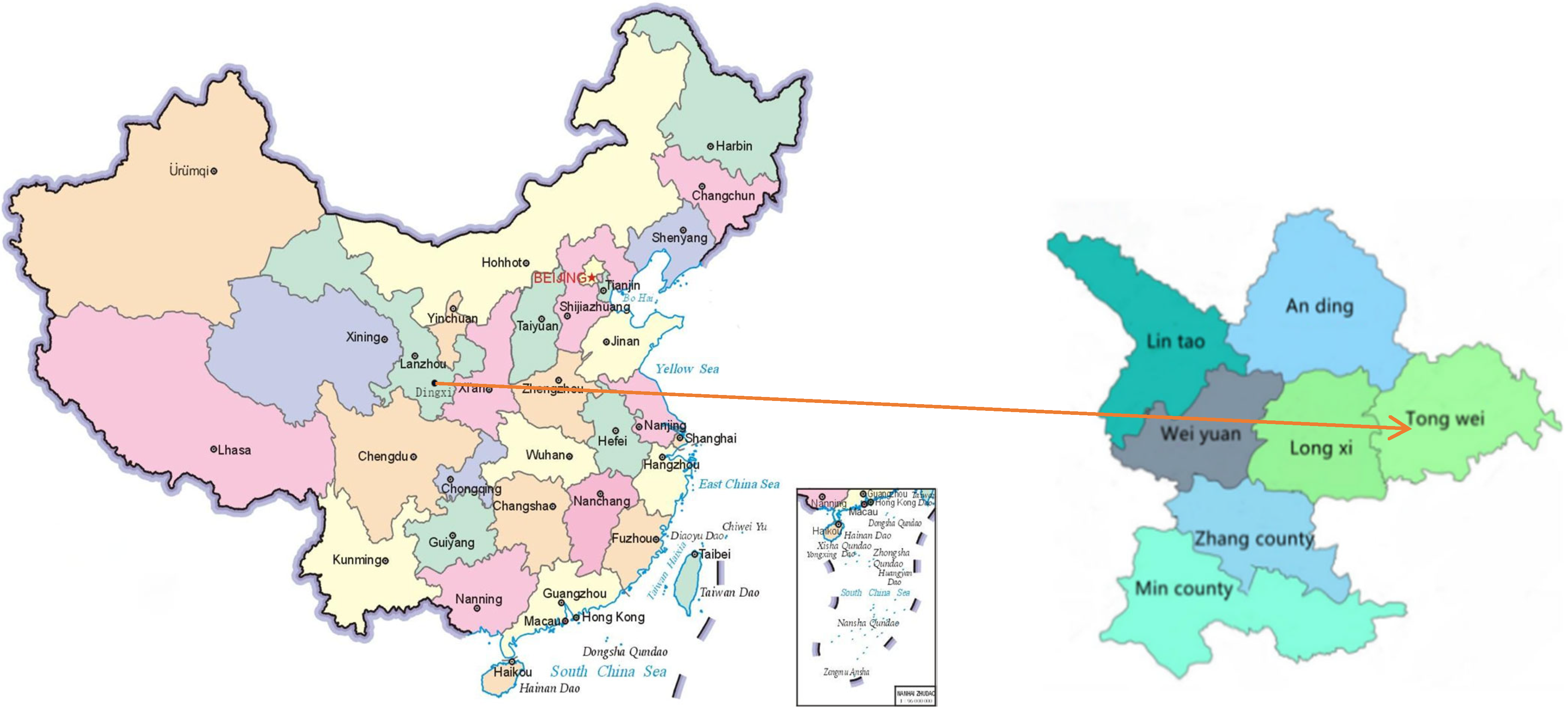
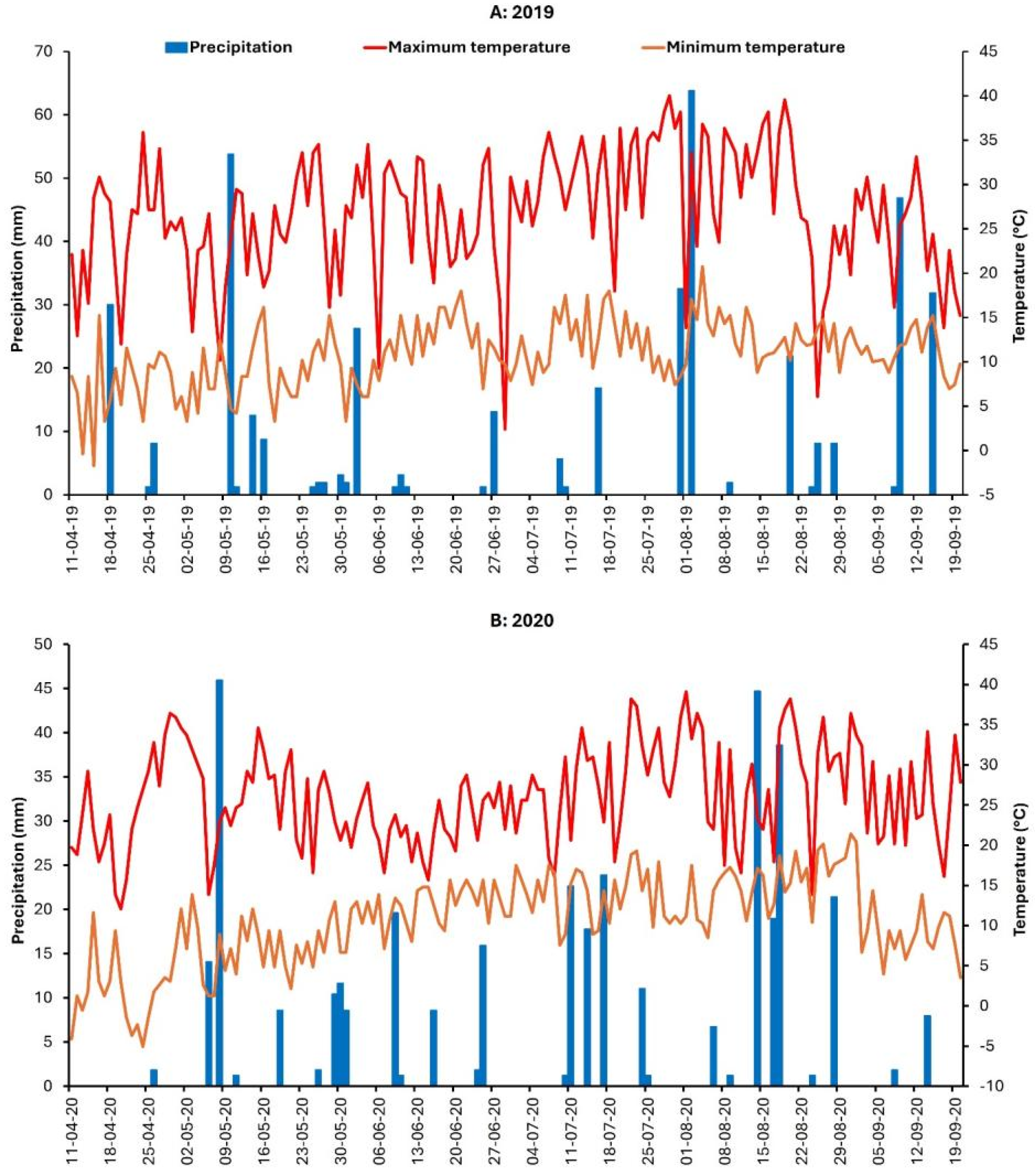
The experiment was conducted at the Gansu Agricultural University Experimental Base in Tongwei County, Dingxi City, Gansu Province, China (latitude 35°11′ N, longitude 105°19′ E, and 1750 m above sea level). The geographical location of this study’s experimental site is given in Figure 1. The experimental area is a typical rain-fed region in northwest China, characterized as a semi-arid climate with an annual sunshine duration of 2100 h to 2430 h, a frost-free period of 120 to 170 days, an annual average temperature of 7.2 °C, and an annual evaporation of 1500 mm. The average annual precipitation was 390.7 mm, and the rainfall seasons were unevenly distributed, mainly from July to September (weather data were obtained from the Dingxi Meteorological Bureau). The soil at the experimental site is a typical Loess-derived soil classified as a Haplic Cambisol according to the Schad (2023) [28], and the average bulk density of the 0–20 cm soil layer was 1.25 g cm−3, possessing a soft texture, a deep soil layer, uniform texture, good moisture retention capacity, and a pH of 8.5. The experimental soil had organic matter of 11.72 g kg−1, TN of 0.79 g kg−1, available phosphorus of 11.63 mg kg−1, and available potassium of 122.7 mg kg−1. The rainfall recorded during the growth periods of spring wheat in 2019 and 2020 was 200.1 mm and 180.7 mm, respectively. The distribution of precipitation and the temperature variations during the growth period are illustrated in Figure 2.

2.2. Experimental Design

The field experiment was conducted to evaluate the effect of different mulching treatments on nitrogen fractions in soils under wheat and potato cultivation. This experiment was laid out in a Randomized Complete Block Design (RCBD) with factorial arrangement in three replications. Each plot of this study was 60 m2 (10 m × 6 m) and standard crop management practices were applied uniformly across treatments. Five mulching treatments, including (i) without mulching (Tck), (ii) black plastic film mulching (Tp), (iii) straw strip mulching (Tss), (iv) plant strip without mulch (Tps), and (v) composite mulched straw strip and without mulch plant strip (Tcs). The specification for these treatments is given in Table 1. In treatment Tck, wheat was sown in lines at a row spacing of 0.15 m using the recommended seed rate with 3 cm plant-to-plant distance within the row. Potato was planted in lines at 0.30 m spacing, with 25 cm plant-to-plant distance within the row. The soil surface was left bare, without any mulch material. In treatment Tp, wheat and potato were sown in the same manner as in the Tck treatments; however, 100% of experimental plots were covered with black polyethylene mulch (8 µm thickness). Wheat and potato seeds were sown through perforations made in the film at the required plant-to-plant spacing mentioned in the Tck treatment. The treatment Tcs in wheat and potato consisted of alternating maize straw mulched strips (0.7 m wide strips) and plant strips without straw mulch (0.5 m wide strips). In both crops, 58% of the field surface was mulched and 42% remained bare. Maize straw at the rate of 9000 kg hm−2 was applied in Ts experimental plots. The maize straw used for the strip mulching treatments was not crushed or finely chopped. The straw was applied as intact, whole stalks placed directly on the soil surface within the designated mulching strips. The line sowing row spacing and plant-to-plant spacing in wheat and potato sowing were in the same manner as reported in Tck treatment. The Tss treatment consisted of a 0.7 m wide straw strip, accounting for 58% of the covered area, without seedlings. This strip was mulched with maize straw. On both sides of the straw strip, there were 0.5 m wide seedling strips. The Tps treatment consisted of a 0.5 m wide plant strip, accounting for 42% of the area, without any mulching. This plant strip was flanked on both sides by 0.7 m wide straw strips without seedlings.
In treatment Ts, composite soil samples were collected from both the straw strip and the plant strip. The soil sampling in Tss, Tps, and Tcs treatments was performed to separate the effects of plant roots, straw decomposition, and their combined influence on nitrogen fractions and enzymatic activity under straw strip mulching. These mulching treatments were started applying in November 2017 and the data from the experimental years 2019 and 2020 were collected for this study. After three years of continuous mulching every year followed an annual cycle, and soil sampling was collected after the harvesting of wheat and potatoes in the 2019 and 2020 experiments. The comparison between 2019 and 2020 was intended to evaluate the interannual assessment of the temporal stability of mulching and soil depth effects on nitrogen pools and turnover in wheat and potato cultivation.
The spring wheat variety Xihan No. 3 was sown at a seed rate of 225 kg hm−2 on 15th March and harvested on 6th July in each experimental trial. The potato variety Tianshu 11 was planted at the end week of April with a plant density of 55,500 plants hm−2 and harvested on 6 November in each experimental trial. Potato tubers were sown using the hill planting method. Seed tubers were placed at a depth of 15 cm in the soil, with an intra-row spacing of 30 cm. Field soil for the wheat and potato experiments was prepared using rotary tillage to accomplish uniform soil loosening and an adequate seedbed structure. In the wheat plots, the soil was carefully tilled to create a fine and leveled seedbed to promote seed germination and root development. In the potato plots, rotary tillage was followed by the formation of ridges (hill planting) along the planting rows. Seed tubers were placed in furrows and covered with soil to form hills. In wheat experimental plots, fertilizers were applied at the rate of 120 kg hm−2 nitrogen and 90 kg hm−2 phosphorus as base doses during rotary tillage. In potato experimental plots, fertilizers were applied at the rate of 261 kg hm−2 nitrogen and 326 kg hm−2 phosphorus as base doses during hill formation. The nitrogen and phosphorus were applied in the form of urea (46% nitrogen) and diammonium phosphate (46% P2O5 and 18% nitrogen), respectively. Potassium fertilizer was not applied in this experiment. This field experiment was conducted under rainfed conditions (no irrigation). All other agronomic practices, including insect and pest control, were applied uniformly across all treatments.

2.3. Collection of Soil Samples

Soil sampling was performed after wheat and potato crop harvesting. Soil samples from the Tck and Tp treatments were collected from the plant strip area. In the Tcs treatment, composite soil samples were taken from both the straw strip mulching and the plant strip without mulch area. For the Tss treatment, samples were collected entirely from the straw strip, while in the Tps treatment, samples were collected from the plant strip without the mulch area. For each treatment, soil was sampled randomly from 10 places of the experimental plot, involving four corners and the center of each plot, and composite samples were obtained for five depth intervals of 0–20 cm, 20–40 cm, 40–60 cm, 60–90 cm, and 90–120 cm. Samples were transported to the laboratory in cooled containers (<10 °C). In the laboratory, roots and debris were removed, and soils were passed through a 2 mm stainless-steel sieve and homogenized. Each composite sample was divided into two portions: one part was air-dried at 25 °C for 72 h and stored at room temperature for the determination of TN and acid-hydrolyzed nitrogen fractions, while the other part was stored fresh at 4 °C in darkness and processed within 48 h for the analysis of urease and nitrite reductase activities, ammonium, nitrate, and MBN.

2.4. Determination of Urease and Nitrite Reductase Activities

Soil urease and nitrite reductase activities were determined using spectrophotometric methods based on colorimetric reactions as described by Guan (1986) [29]. Soil samples were incubated with a urea substrate solution at 37 °C for 24 h under controlled moisture conditions. Following incubation, the released NH3 was extracted with potassium chloride solution and quantified spectrophotometrically after reaction with a chromogenic reagent. A calibration curve prepared with standard ammonium solutions was used to determine the concentration of NH3. Urease activity was expressed as mg of NH3 released per gram of oven-dry soil in 24 h. Appropriate soil-free blanks were included to correct for background absorbance. Nitrite reductase activity was determined by incubating fresh soil samples with a nitrite substrate under anaerobic conditions for 24 h. After incubation, the residual nitrite (NO2) concentration was quantified calorimetrically using sulfanila-mide-N-(1-naphthyl)-ethylenediamine dihydrochloride reagent. The reduction in nitrite concentration was calculated against a standard calibration curve of NO2. Nitrite reductase activity was expressed as mg of NO2 reduced per 10 g of oven-dry soil in 24 h. Soil blanks without added substrate were analyzed simultaneously to account for background absorbance.

2.5. Determination of Nitrogen Fractions

Soil TN was determined by the semi-micro Kjeldahl method (Douglas and Magdoff, 1991) [30]. The air-dried soil (1.0 g sieved through 0.15 mm) was placed in a semi-micro digestion tube. The accelerant composed of K2SO4/Cu was added to each tube and digested with concentrated H2SO4 (5.0 mL) until a clear/light green solution. After cooling, concentrated NaOH was added to the digest to make the solution alkaline. The ammonia was absorbed in boric acid indicator (5.0 mL of 20 g L−1) and titrated with standardized H2SO4. MBN was measured by the chloroform fumigation–extraction method [31]. The fumigated and non-fumigated (control) soil samples were extracted with 0.5 M K2SO4 to release soluble nitrogen. The extractable nitrogen was determined calorimetrically and the difference between fumigated and non-fumigated extracts was used to estimate MBN.
The extractable ammonium and nitrate were determined through the KCl extraction method followed by distillation–titration [31]. The fresh soil sample (10 g sieved through 2 mm) was taken in an Erlenmeyer flask (250 mL) and KCl (50 mL of 2.0 M) was added. Samples were shaken on a mechanical shaker for 1 h, allowed to stand for 30 min, and then filtered. For ammonium determination, the aliquot of KCl extract (20 mL) was transferred to a distillation tube and MgO (10 mL) was added to render the solution alkaline. The mixture was distilled using a semi-automatic distillation unit. The distillate was absorbed in boric acid indicator (5.0 mL of 20 g L−1) and titrated with standardized H2SO4. For nitrate determination, the aliquot of KCl extract (20 mL) was reduced to nitrite by the addition of sulfonic acid (1 mL) and zinc–ferrous sulfate (1.0 g) reducing agent. The reduced sample was then distilled, absorbed in boric acid, and titrated similarly.

2.6. Determination of Acid-Hydrolyzed Organic Nitrogen Fractions

Acid-hydrolyzable nitrogen analysis was performed to assess biologically available and mineralizable soil nitrogen that regulates nitrogen lability, stability, and turnover. Organic nitrogen fractions were determined by sulfuric acid hydrolysis following the methods of Bremner (1965) [32]. Air-dried soil samples were hydrolyzed with concentrated H2SO4, and nitrogen released during hydrolysis was quantified using a semi-micro Kjeldahl method [31]. The TN released after hydrolysis was defined as acid-hydrolyzed TN. Acid-soluble NH4 was determined as the NH4 fraction released directly during hydrolysis and obtained by distillation after addition of MgO. Acid-hydrolyzed amino acid (AA) was quantified after neutralization of the hydrolysates and distillation following the addition of ninhydrin reagent, while acid-hydrolyzed amino sugar (AS) was measured from the hydrolysate fraction after specific reduction and distillation steps targeting amino sugar-derived nitrogen. Acid-hydrolyzed unknown nitrogen (UN) was estimated by calculating the difference between acid-hydrolyzed TN and acid-soluble NH4, acid-hydrolyzed AA + acid-hydrolyzed AS, and represented nitrogen compounds not attributable to the defined fractions. In all cases, the liberated ammonia was distilled, absorbed in boric acid indicator solution (5.0 mL of 20 g L−1), and titrated with standardized H2SO4. The derived nitrogen indices, including the hydrolyzed nitrogen index (HNI), microbial necromass nitrogen proportion (MNNP), nitrogen lability index (NLI), nitrogen stability index (NSI), and nitrogen turnover index (NTOI), were calculated using Equations (1)–(5) as given below.
H N I = A c i d   h y d r o l y z e d   t o t l   n i t r o g e n K j e l d a h l   t o t a l   n i t r o g e n
M N N P   ( % ) = A c i d   h y d r o l y z e d   a m i n o   s u g a r A c i d   h y d r o l y z e d   t o t a l   n i t r o g e n × 100
N L I = A c i d   s o l u b l e   N H 4     A c i d   h y d r o l y z e d   a m i n o   a c i d A c i d   h y d r o l y z e d   a m i n o   s u g a r     A c i d   h y d r o l y z e d   U n k n o w n   n i t r o g e n
N S I = A c i d   h y d r o l y z e d   a m i n o   a c i d     A c i d   h y d r o l y z e d   U n k n o w n   n i t r o g e n A c i d   h y d r o l y z e d   t o t a l   n i t r o g e n
N T O I = A c i d   h y d r o l y z e d   a m i n o   a c i d A c i d   h y d r o l y z e d   a m i n o   s u g a r
where HNI = hydrolyzed nitrogen index; NLI = nitrogen lability index; NSI = nitrogen stability index; and NTOI = nitrogen turnover index.

2.7. Statistical Analysis

The normality of the data was checked using the Shapiro–Wilk test before performing ANOVA. Only datasets that met the normality assumption were analyzed using one-way or factorial ANOVA, followed by the LSD test to separate means at p < 0.05. The experimental data comprising five mulching treatments, four soil depth layers, two crops, and two years with three replications were subjected to analysis of variance using a mixed linear model in SPSS v.16.0. In the model, mulching treatments, soil depth layers, crop type, and year were considered fixed effects, while replications were treated as random effects under a randomized complete block design with factorial arrangements. The significance was tested at α = 0.05. Mean comparisons were performed using Tukey’s HSD test in Statistix version 8.1 (https://www.statistix.com/), and alphabetical letters were used to differentiate significant differences among mulching treatments and soil depth layers. Significant means were further visualized through bar graphs with error bars in Microsoft Excel 2025. To assess interactions between observed traits, the data were normalized by subjecting them to principal component analysis in OriginPro v.2024. The interaction between the observed traits, mulching treatments, and soil depth layers was observed by preparing a heatmap using SRplot (https://www.bioinformatics.com.cn/srplot, accessed on 2 March 2026).

3. Results

3.1. Effect of Straw Strip Mulching on Enzyme Activities

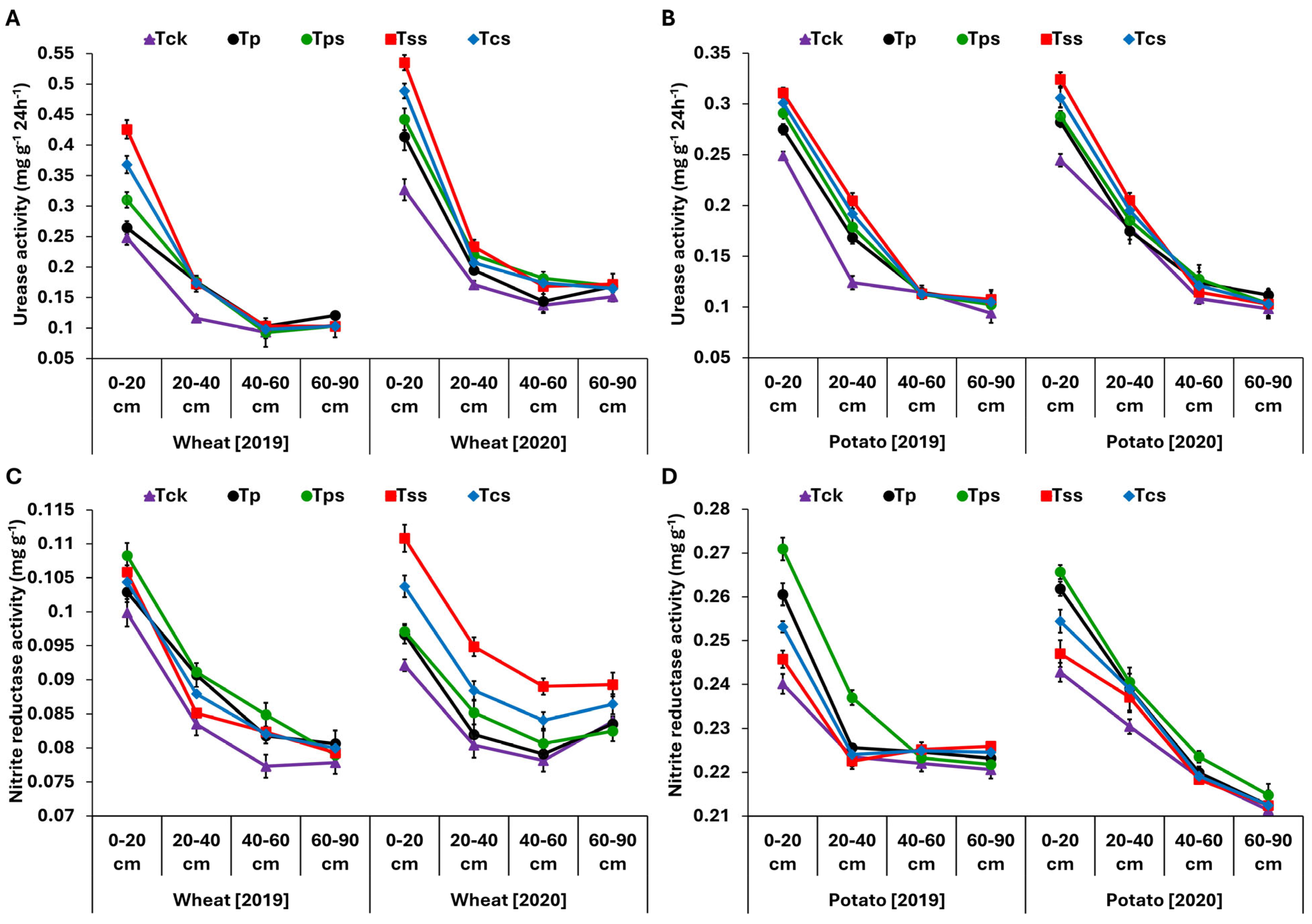
Soil urease and nitrite reductase activities were significantly (p < 0.05) affected by mulching treatments across soil depths in both wheat- and potato-cultivated soils (Table S1 and Figure S1). The effect of year and its interaction with crop type had no significant effect on nitrite reductase activity. The mulching straw strip (Tss) showed the highest increase in urease activity and nitrite reductase activity over the control without mulching (Tck; Figure 3). These enzyme activities were higher in the surface soil (0–20 cm) and declined linearly with increasing depth. Crop types differently influenced enzyme activities as wheat-cultivated soils showed higher urease activity than potato-cultivated soils, whereas nitrite reductase activity was higher in potato-grown soils across. At depths of 20–40 cm, urease activity under mulching treatments was statistically similar in 2019 and 2020, while the Tck showed the lowest urease and nitrite reductase activities in wheat compared to potato-cultivated soils during both 2019 and 2020 trials.

3.2. Effect of Straw Strip Mulching on Soil Nitrogen Pools

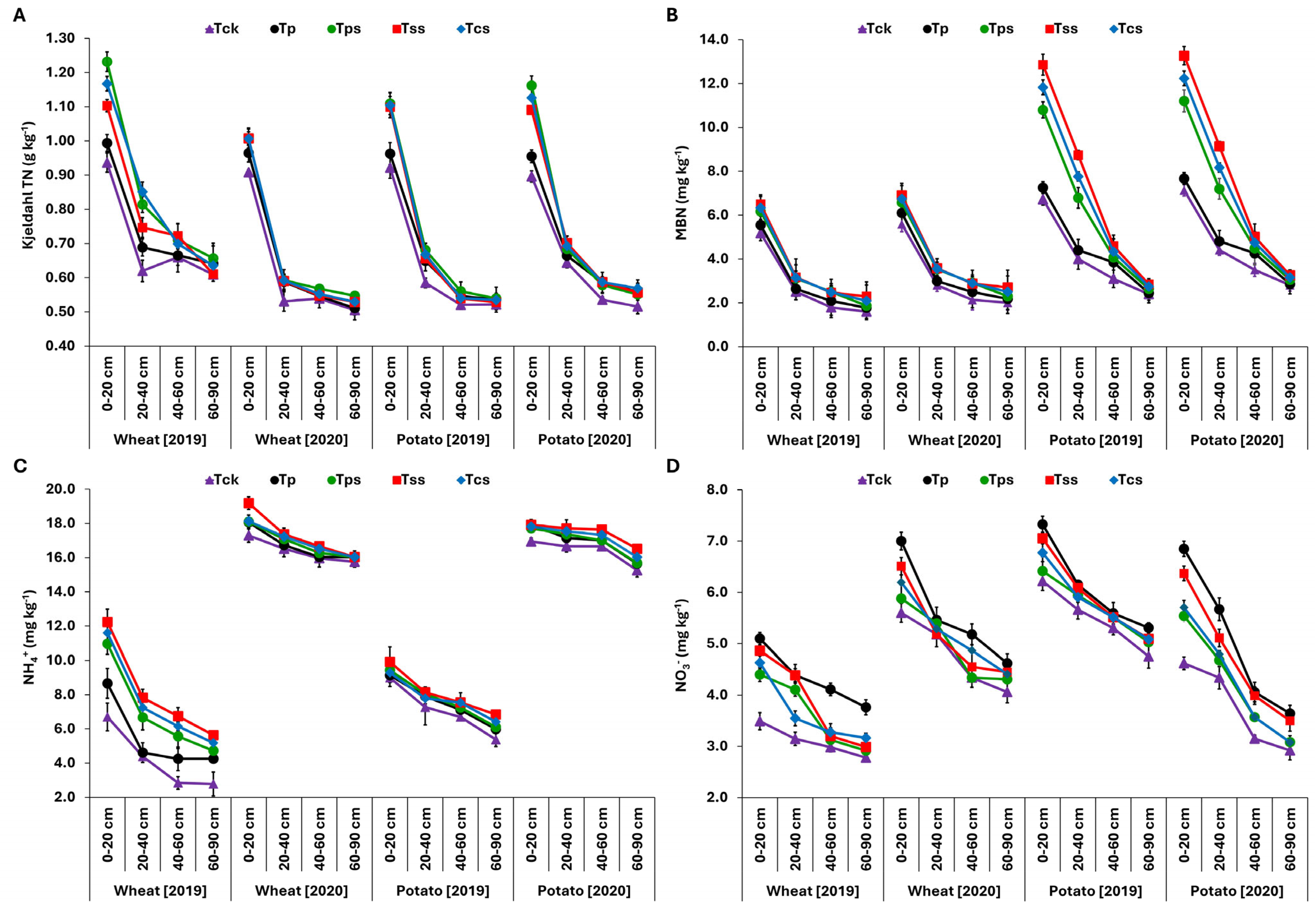
Straw strip mulching significantly (p < 0.05) influenced Kjeldahl TN, MBN, NO3, and NH4 across soil depths, crops, and years (Table S1 and Figure S1). For Kjeldahl TN, mulching treatments, soil depths, crops, and years were significant, while the interactions of year with mulching and soil depth were not significant. Kjeldahl TN increased under all mulching treatments compared with the control, with the highest increases under treatments plant strip without mulch (Tps), black plastic film mulching (Tp), and mulched straw strip (Tcs; Figure 4A). These treatments showed higher Kjeldahl TN in the surface soil and decreased with the increase in soil depth. Kjeldahl TN levels were similar in wheat- and potato-cultivated soils, with wheat showing higher Kjeldahl TN in 2019 and potato soils slightly higher in 2020. The MBN was significantly affected by mulching treatment, soil depth, crop, year, and two-way interactions, but higher-order interactions involving the year were not significant. The Tss treatment showed the highest increase in MBN compared to the Tck treatment (Figure 4B). Its concentration declined with soil depth and was higher in potato soils than in wheat-cultivated soils. Across both crops, MBN was higher in 2020 than in 2019, with the highest increases observed in surface soils under the treatment Tss.
The NO3 and NH4 concentrations were significantly affected by mulching, soil depth, crop, year, and all associated interactions, indicating consistent treatment- and depth-dependent responses across both crops and years. Mulching treatments Tp and Tss showed the highest increase in NO3 concentrations (Figure 4C). NO3 concentration was highest in the surface layer and decreased with the increase in depth. Potato soils had higher NO3 than wheat-cultivated soils, while year effects were minor. The treatment Tp showed the highest NO3 across crops and years. The NH4 also increased under mulching, with Tss showing the highest increase (Figure 4D). Its concentrations decreased with depth and were similar in wheat- and potato-cultivated soils, but higher in 2020 than in 2019. Across both crops, Tps showed relatively higher NH4 levels, with the highest increase in wheat-cultivated soils in 2019 compared with the control.

3.3. Effect of Straw Strip Mulching on Acid-Hydrolyzed Organic Nitrogen Fractions

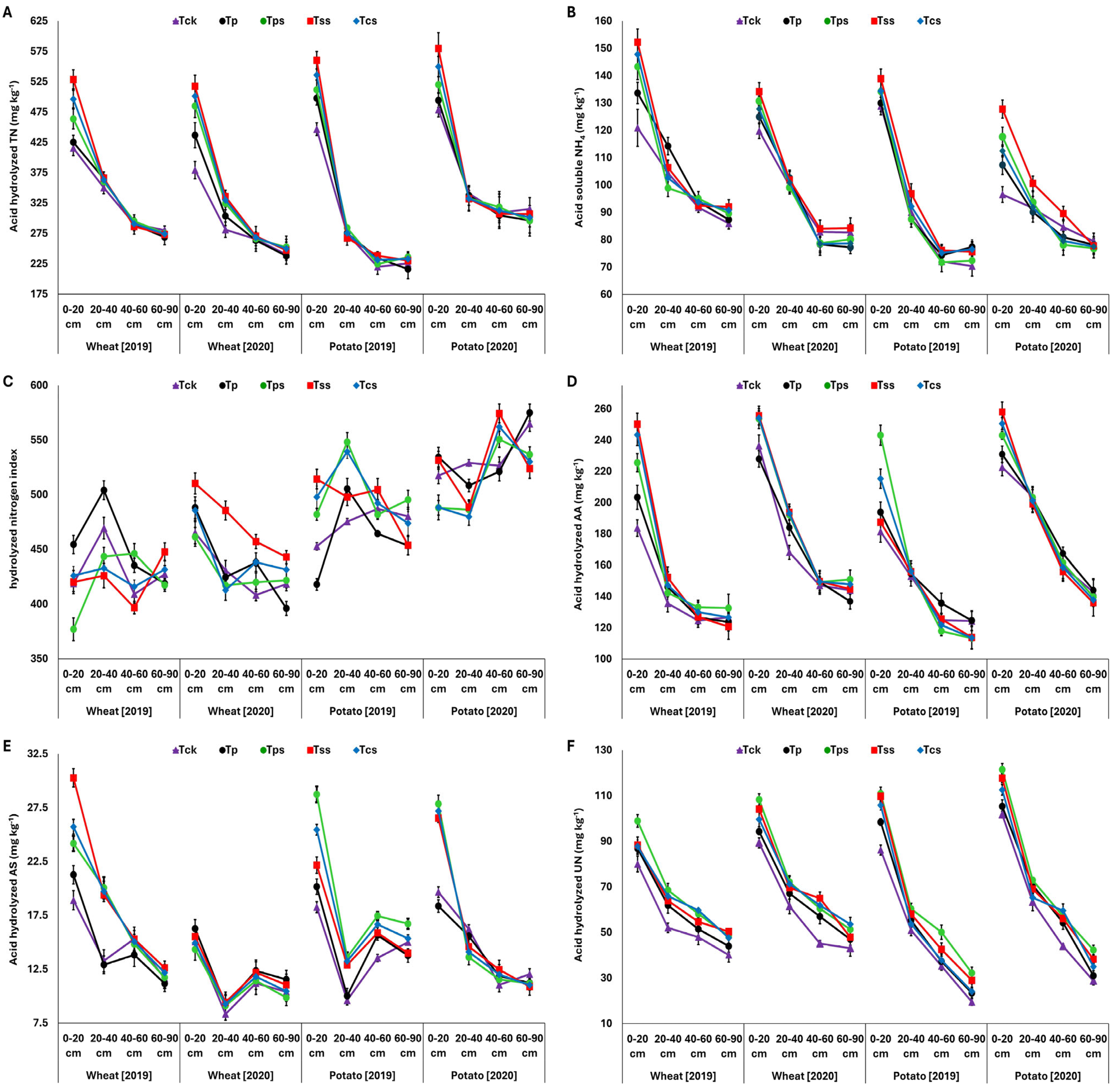
Organic nitrogen fractions, including acid-hydrolyzed TN, acid-soluble NH4, HNI, AA, AS, and UN were significantly (p < 0.05) influenced by mulching, soil depth, crop, and year (Table S2 and Figure S1). Mulching treatment and soil depth were the dominant factors, constantly increasing organic N fractions in surface soils. Year and crop showed lower and variable effects. The higher-order interactions involving year were not significant. Acid-soluble NH4 and UN showed the better response to all factors, while AA and AS were mainly affected by mulching and soil depth. Acid-hydrolyzed TN concentrations were highest due to Tss treatment, followed by Tps and Tcs, compared to Tck (Figure 5A). Its concentrations were higher in the 0–20 cm layer and decreased with depth, while its concentrations were similar in both crops and years.
Acid-soluble NH4 showed a similar pattern, with a higher concentration under Tss treatment in wheat- and potato-cultivated surface soil, and lower values with the increase in depth (Figure 5B). Its concentrations were similar between crops and years, but were slightly higher in 2019 than in 2020. The increase in HNI was highest due to mulching treatment Tps compared to Tck (Figure 5C). This increase was higher in the surface layer and declined with depth. Its levels were higher in potato than in wheat and higher in 2020 than in 2019. Acid-hydrolyzed AA was highest due to Tps treatment in surface soil and decreased with depth (Figure 5D). Its concentrations were similar in wheat- and potato-cultivated soils and were higher in 2020 than in 2019. Acid-hydrolyzed AS was higher under mulching Tss, Tps, and Tcs (Figure 5E). Its level was highest in surface soil and declined with depth. Its concentrations were higher in potato than in wheat and higher in 2019 than in 2020. The strongest increase occurred under Tps in wheat soils. Acid-hydrolyzed UN increased under mulching treatment Tps and was the lowest under Tck (Figure 5F). Its concentrations were higher in the 0–20 cm layer and higher in potato than in wheat.

3.4. Effect of Straw Strip Mulching on Nitrogen Functional Indices

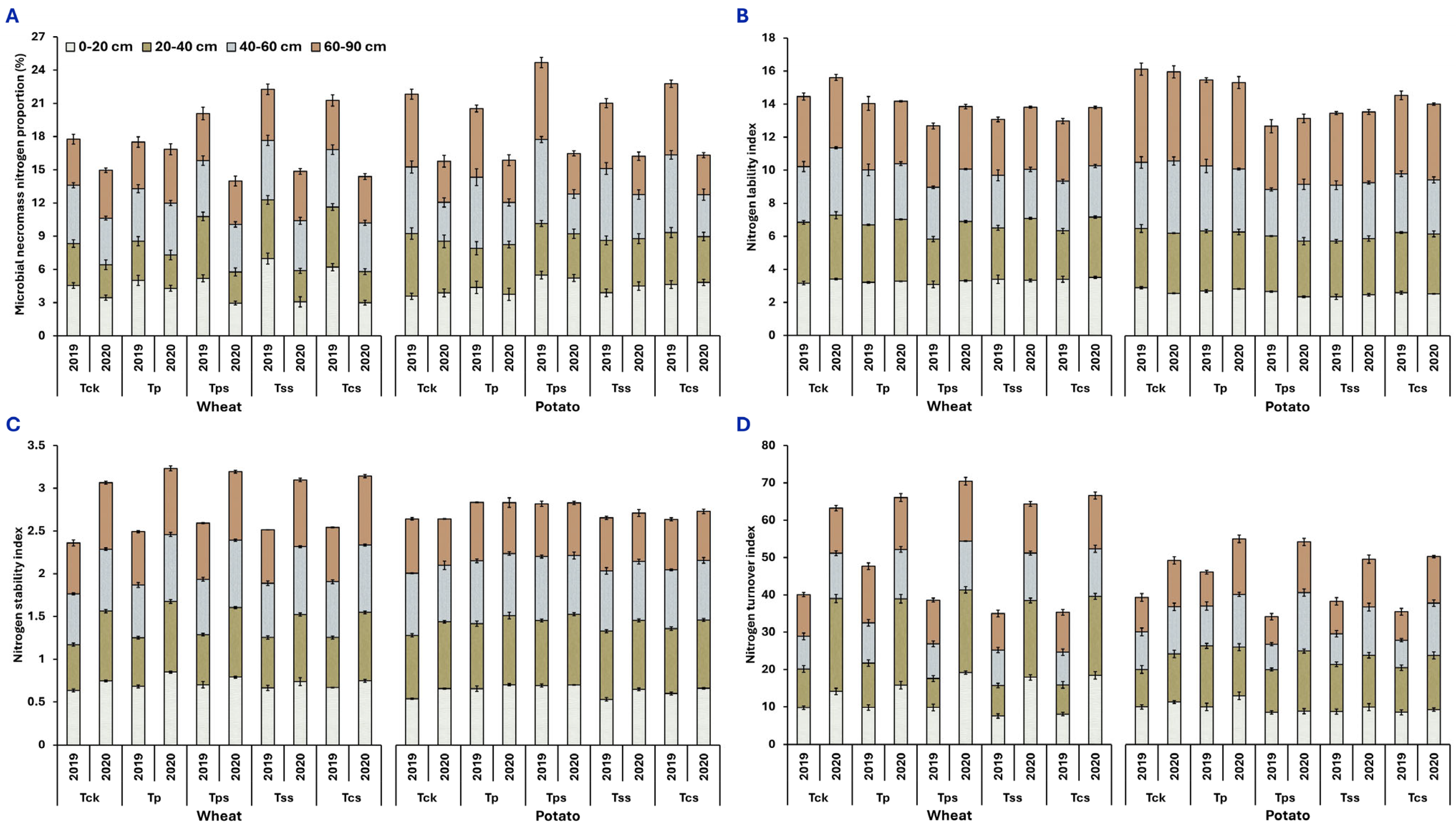
The soil depth, crop, and year showed strong and consistent effects on nitrogen functional indices, including MNNP, NLI, NSI, and NTOI, whereas the influence of mulching varied among these indices (Table S3 and Figure S1). The MNNP and NTOI were significantly affected by soil depth, crop, and year, while mulching showed no effect on these indices. In contrast, NLI and NSI showed significant responses to mulching in addition to soil depth, crop, and year. The interaction effects were generally limited. For MNNP, only year × mulching and year × crop × soil depth showed significant effects. The NLI and NSI exhibited significant interactions among most factors; however, interactions involving mulching with year or higher-order combinations, including mulching, showed non-significant effects. For NTOI, significant interactions were restricted to combinations involving year, crop, and soil depth, including year × crop, year × soil depth, crop × soil depth, and year × crop × soil depth, while other interactions showed no effect.
Nitrogen dynamics were regulated by soil depth, crop type, and year, while mulching treatment showed indirect and context-dependent effects (Figure 6). The MNNP showed no response to mulching but increased with depth, reaching the highest values at 40–60 cm, and remained higher in potato-cultivated soils than in wheat soils (Figure 6A). These results indicated greater subsurface nitrogen accumulation under the potato. MNNP was also higher in 2019 than in 2020, showing temporal control over nitrogen redistribution. Depth-dependent responses to mulching differed between crops, with surface enrichment under Tps in wheat soils and subsurface accumulation under Tps, Tck, and Tcs in potato soils in 2019. The NLI was weakly influenced by mulching, with slightly higher values under Tck, but was strongly controlled by depth and crop (Figure 6B). The highest NLI occurred at 60–90 cm, indicating increased nitrogen lability in deeper soil layers, and potato soils showed higher NLI than wheat soils. Year effects were negligible, indicating stable nitrogen lability across seasons. Crop-specific depth responses showed consistently higher NLI at 60–90 cm under Tck in both crops.
The NSI was significantly affected by mulching but varied with depth, crop, and year (Figure 6C). Maximum nitrogen stability occurred at 20–40 cm soil depth, while lower values at 60–90 cm indicated reduced nitrogen stability at depth. Potato soils maintained higher NSI than wheat soils, and values increased in 2020, indicating enhanced nitrogen stabilization under improved conditions. Depth-specific interactions showed increased NSI in deeper wheat soils under Tcs and mid-depth enrichment in potato soils under Tps in 2020. The NTOI was unaffected by mulching but peaked at 20–40 cm, showing active nitrogen turnover in the subsurface layer (Figure 6D). Its value was consistently higher in potato soils and increased in 2020, indicating stronger nitrogen cycling under favorable conditions. Depth-dependent variation showed surface-driven turnover in wheat soils under Tps and mid-depth dominance in potato soils under Tp in 2019.

3.5. Mechanistic Relationships Between Mulching Treatments, Soil Depth, and Observed Traits Under Wheat–Potato Cultivation

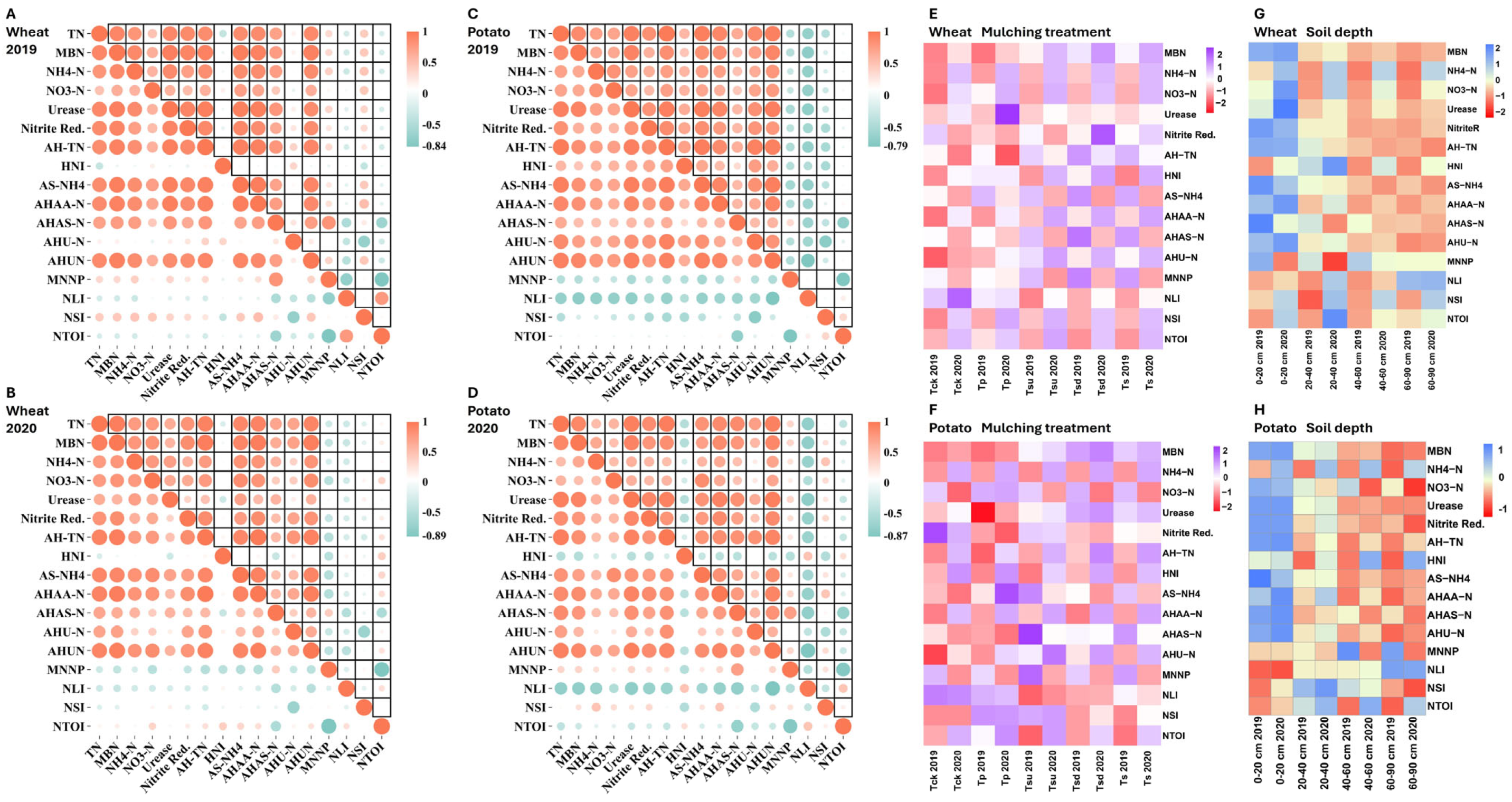
Correlation analyses revealed mechanistic links among nitrogen fractions, enzymatic activities, soil depth, and mulching treatments in wheat- and potato-cultivated soils (Figure 7). Among the applied mulching treatments, straw strip treatments Tps, Tss, and Ts were positively correlated with most of the nitrogen fractions and enzyme activities in surface soils, indicating that mulching enhances microbial nitrogen cycling and the availability of labile and hydrolyzed nitrogen forms. The observed traits, including TN, NO3, NH4, MBN, urease, nitrite reductase, and acid-hydrolyzed nitrogen fractions (AA, AS, UN) were strongly positively correlated, indicating that mulching increases nitrogen retention and microbial activity in the upper soil layer across both the wheat and potato trials of 2019 and 2020. These positive correlations were more consistent in 2020, suggesting cumulative effects of mulching on surface nitrogen dynamics. Derived indices such as HNI, NSI, NLI, and NTOI generally showed neutral or slightly negative correlations with bulk nitrogen fractions in surface soils, reflecting that these indices capture nitrogen transformation and stability rather than absolute nitrogen contents. The deeper soil layer of 20–90 cm showed weaker or negative correlations with surface nitrogen traits. However, certain indices, such as NTOI and MNNP, were positively associated with deep soil layers, indicating active nitrogen turnover and stabilization below the surface. The NH4 and HNI also showed some positive associations in deeper layers in 2020, suggesting year-dependent accumulation or transformation processes. Potato soils showed stronger positive correlations among nitrogen fractions and enzymes compared with wheat for MBN and acid-hydrolyzed fractions, suggesting crop-specific effects on nitrogen cycling.

4. Discussion

Soil nitrogen varies in its turnover rates and stability, which influence the soil fertility and microbial function. The evaluation of soil nitrogen fractions under mulching practices and depth-specific soil layers can provide critical insight into crop-specific nitrogen management. In this study, the straw strip mulch treatment produced the highest urease and nitrite reductase activities in both wheat- and potato-cultivated soils during 2019 and 2020. The plant strip without mulch consistently showed the second-highest urease activity (Figure 3). The higher urease and nitrite reductase activity under straw strip mulch might be due to increased carbon inputs and soil moisture retention that stimulate microbial growth activities and enhance enzyme persistence. The comparatively lower activity of enzymes in plant strips without mulch reflects rhizospheric stimulation by roots but reduced enzyme stabilization in the absence of mulch. Microbial decomposition of straw releases organic carbon and nitrogen compounds that serve as substrates and energy sources, triggering microbial biomass and enzyme production [33,34]. Urease activity increases due to microbial utilization of organic matter, which hydrolyzes urea more efficiently [35], while nitrite reductase activity is stimulated due to labile carbon due to straw decomposition as an electron donor and creates anaerobic microsites that favor denitrifying bacteria [36]. The increase in enzyme activities in the current study aligns well with the previous findings of Iqbal et al. [37], Dou et al. [38] and Zhang et al. [39] which demonstrated that the increase in enzyme activities in the surface soil was due to higher substrate availability [40,41]. Wheat rhizosphere showed higher urease activity than potato, likely due to differences in root exudates and rhizodeposition, while nitrite reductase showed limited variation across treatments, which might be influenced by soil moisture, oxygen, and C:N ratio [42,43,44].
The straw strip mulch showed the highest increase in total nitrogen, NH4, and MBN, while NO3 concentrations were maximized under Tp in wheat- and potato-cultivated soil in 2019 and 2020 experiments (Figure 4). This increase in nitrogen fraction might be due to microbial decomposition of straw mulch, which promotes the labile carbon and organic nitrogen pool [27]. The increase in labile carbon served as fuel for microbial growth, which mineralized organic nitrogen into ammonium and nitrate [27,45]. The organic mulching treatments conserve soil water and promote nitrogen retention in soil by reducing ammonia volatilization and surface runoff nitrogen [46]. It accelerates soil aggregation and promotes favorable microsites that foster mineralization and nitrogen retention in microbial biomass [6]. The labile carbon boosted the immobilization of inorganic nitrogen into MBN by microorganisms during the early decomposition process of straw mulch and is remobilized into plant-available nitrogen pools over time [3]. Our findings are in parallel with the findings of Wang et al. [42], Graf et al. [47], and Paliaga et al. [48]. We observed an increase in TN in potato soils and a decrease in wheat soils that might be due to differences in crop residue. Potato residues are typically richer in nitrogen, which could contribute to a gradual increase in TN retention, whereas wheat residues may lead to nitrogen immobilization and reduction in TN over time due to a higher C:N ratio. This aligns with the findings by Machado et al. [49] and Anning et al. [50], who discussed how variations in crop residues affect soil nitrogen dynamics.
In the current study, higher MBN was observed in the potato soils of the second year experiment which indicates the increase in microbial activity and nitrogen immobilization being regulated by straw mulch (Figure 4). Potato residues showed higher organic matter accumulation, which provides substrates for microbial growth and improved soil aeration and which may support a more active aerobic microbial community compared to wheat-cultivated soils. Our observations are consistent with previous studies by Sarangi et al. [51] and Yagi et al. [52], who reported the increased microbial biomass under potato cultivation due to higher organic inputs. The NO3 and NH4 concentrations in this study were highly distributed in the surface layer and declined with depth, which highlights the dominance of surface soils in nitrogen cycling and the limited NH4 mobility (Figure 4). The higher NO3 levels in potato soils could be due to limited NO3 leaching or denitrification processes, which could increase its uptake in plants and microbial immobilization to prevent nitrate accumulation [53]. These findings are in line with the results reported by Volkogon et al. [44], Ding et al. [54], and Ahmad et al. [53], who observed stable nitrate concentrations in potato soils under similar conditions.
The straw strip mulching increased acid-hydrolyzed nitrogen fractions, including acid-hydrolyzed TN, acid-soluble NH4, acid-hydrolyzed AA, acid-hydrolyzed AS, and acid-hydrolyzed UN in wheat and potato-cultivated soils (Figure 5). This accumulation of hydrolyzable nitrogen pools could be due to increased organic matter inputs and improved soil microenvironmental conditions, which promoted microbial decomposition [55]. These findings align with previous studies reported by Chen et al. [56], Zhang et al. [39], Sun et al. [20] and Cheng et al. [57], who reported that mulching practices can stimulate nitrogen release by enhancing microbial enzymatic activity and decomposition of surface residues. The higher HNI further suggests that mulching practices can promote microbial activity and nitrogen cycling efficiency [57]. The observed enrichment of amino sugar nitrogen under straw strip mulch indicated that residues not only contribute organic substrates but also stimulate microbial pathways to generate stable microbial-derived nitrogen compounds. The straw strip mulch may be transformed from complex organic compounds into acid-hydrolyzed nitrogen through microbial residue-mediated alterations in the soil microenvironment. The accumulation of acid-hydrolyzed UN under Tss could also indicate an intermediate stage in the stabilization of nitrogen compounds, bridging the gap between labile and more recalcitrant pools. The previous findings of Su et al. [58] and Dong et al. [59] also reported an increase in organic nitrogen by applying maize straw mulching.
The microbial necromass nitrogen lability, stability, and turnover were increased due to straw strip mulch in wheat- and potato-cultivated soil during 2019 and 2020 (Figure 6). Straw strip mulch enriched the composition of hydrolyzable nitrogen pools and the balance between labile and stable nitrogen fractions [60]. The control treatment showed slightly higher NLI values compared with mulched soils, indicating a relatively larger pool of labile nitrogen in the absence of residue inputs (Figure 6). This pattern suggests lower microbial immobilization in the mulch control treatment, whereas mulched soils promoted microbial assimilation of nitrogen into biomass and temporarily reduced the labile inorganic nitrogen pool [61]. The lack of significant differences in functional indices among treatments could be attributed to changes in the soil microbial communities or changes in residue management practices. Microbial communities may adapt to altered organic inputs, maintaining functional stability across different mulching treatments [62]. However, the slight reduction in nitrogen lability under mulching relative to the control treatment may reflect a stabilizing effect, whereby enhanced residue inputs promoted the incorporation of nitrogen into more protected forms, offsetting increases in mineralizable pools [63]. The observed changes in nitrogen fractions under mulching treatments can be attributed to alterations in the metabolic pathways [20,64,65].
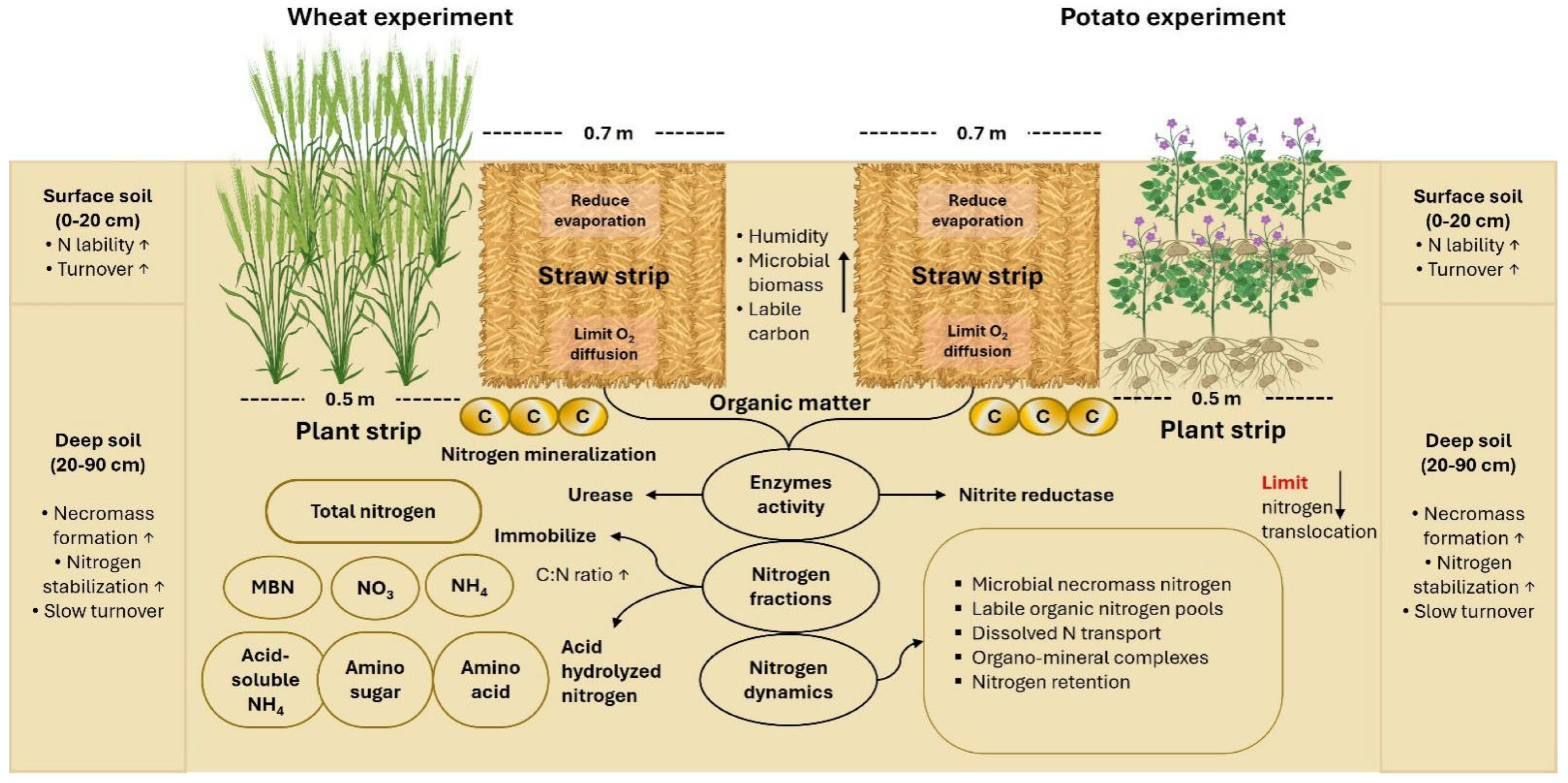
Soil nitrogen dynamics were primarily driven by soil depth, with crop and year as secondary modulators under mulching treatments (Figure 6). The surface soils of the 0–20 cm layer were enriched in labile nitrogen fractions, including acid-soluble NH4, acid-hydrolyzed AA, and acid-hydrolyzed AS, which reflected active microbial processing. Straw mulching provides a rich source of labile carbon in the surface soil, which triggers microbial activity to decompose straw and mineralize organic nitrogen into NH4 [66]. The microbial turnover enhances amino acids from protein and amino sugar from microbial cell wall components, including chitin and peptidoglycan. In the present study, acid-hydrolyzed unknown nitrogen accumulated at 40–60 cm. The acid-hydrolyzed unknown nitrogen is mainly a more recalcitrant or slow-cycling decomposing organic nitrogen pool in mid-depth soil, which is derived from partially decomposed plant residues or microbial necromass [67] that might further migrate into deeper soil layers. Microbial biomass and organic carbon decreased exponentially with depth, primarily due to declining substrate availability and reduced oxygen diffusion, which together constrain microbial activity and organic matter turnover. Nitrogen stability and turnover were maximal at 20–40 cm, indicating stratified nitrogen transformation and stabilization. This nitrogen stability and turnover below the surface soil might be due to the partial stabilization of organic matter into microbial biomass or organo-mineral complexes, which are involved in rapid nitrogen cycling, while the rest of the organic matter remains recalcitrant to decomposition. This study further revealed that potato soils consistently enhanced microbial necromass nitrogen and functional indices relative to wheat. These results reflect differences in crop residue, root exudation, and soil management. Potato cultivation had higher below-ground and above-ground organic inputs, including root biomass and residues, which are rich in labile carbon and which stimulate microbial activity. The mechanistic concept of the present study is illustrated in Figure 8.

5. Conclusions

This study demonstrates that maize straw strip strengthened soil N-cycling processes in rainfed semi-arid conditions of the Loess Plateau. This straw strip mulching significantly increased soil urease activity and nitrite reductase activity in the upper soil layers, indicating enhanced microbial mineralization and denitrification potential. These enzyme activities corresponded with increases in soil total nitrogen, microbial biomass nitrogen, nitrate, and ammonium nitrogen, showing that straw strip mulching effectively regulated organic and inorganic nitrogen pools. The maize straw strip mulching also increased organic nitrogen fractions, such as acid-hydrolyzed total nitrogen, ammonium, amino acid, amino sugar, and unknown nitrogen components, demonstrating its role in accelerating the turnover and stabilization of straw-derived nitrogen. These improvements were greater in potato-cultivated soils than in wheat-cultivated soils, reflecting crop-specific differences in rooting patterns and N uptake that influence the synchronization between nitrogen release and plant demand under rainfed semi-arid Loess Plateau conditions. These findings demonstrate that straw strip mulching is an effective soil management practice to improve soil nitrogen availability and enrich soil organic nitrogen pools in wheat- and potato-cultivated soils. The study was limited to four years and focused on a single agroecosystem under rainfed semi-arid conditions, which should be further extended to evaluate soil health, crop yield, and greenhouse gas emissions across diverse crops and agroecological zones.

Supplementary Materials

The following supporting information can be downloaded at https://www.mdpi.com/article/10.3390/agriculture16060674/s1.

Author Contributions

L.P.: Paper writing, data analysis, review and editing. B.X.: Measuring sample. T.G.G.: Measuring sample. M.Z.M.: Paper writing, review and editing. N.H.: Data analysis. X.W. (Xiaoyan Wang): Data analysis. X.W. (Xiaohua Wang): Measuring sample. H.Z.: Measuring sample. J.L.: Paper writing, data analysis. All authors have read and agreed to the published version of the manuscript.

Funding

This research was funded by the National Natural Science Foundation of China (32160525), Gansu Provincial Natural Science Foundation (20JR5RA034), Industry-University Research Collaboration Project (GSAU-JSYF-2024-22 and GSAU-JSYF-2024-23), Graduate Education and Teaching and Key Course Construction Project of Gansu Agricultural University (GSAU-ZDKC-1909). Special Research on Curriculum and Teaching Materials for Primary, Secondary and Tertiary Education of the Education Department of Gansu Province (GSJC-Y2024057).

Data Availability Statement

The original contributions presented in the study are included in the article and Supplementary Materials, further inquiries can be directed to the corresponding authors.

Acknowledgments

We appreciate and thank the anonymous reviewers for their helpful comments that led to the overall improvement of the manuscript. We also thank the Journal Editor Board for their help and patience throughout the review process.

Conflicts of Interest

The authors declare no conflicts of interest.

References

  1. Spiertz, J.H.J. Nitrogen, sustainable agriculture and food security. A review. Agron. Sustain. Dev. 2010, 30, 43–55. [Google Scholar] [CrossRef]
  2. Wang, Z.; Liu, Z.T.; Hu, W.; Bai, H.; Ma, L.J.; Lv, X.B.; Zhou, Z.G.; Meng, Y.L. Crop residue return improved soil nitrogen availability by increasing amino acid and mineralization under appropriate N fertilization. Land Degrad. Dev. 2022, 33, 2197–2207. [Google Scholar] [CrossRef]
  3. Chen, S.; Elrys, A.S.; Yang, W.; Du, S.; He, M.; Cai, Z.; Zhang, J.; Müller, C. Soil recalcitrant but not labile organic nitrogen mineralization contributes to microbial nitrogen immobilization and plant nitrogen uptake. Glob. Change Biol. 2025, 30, e17290. [Google Scholar] [CrossRef] [PubMed]
  4. Pathak, P.; Reddy, A.S. Vertical distribution analysis of soil organic carbon and total nitrogen in different land use patterns of an agro-organic farm. Trop. Ecol. 2021, 62, 386–397. [Google Scholar] [CrossRef]
  5. Liang, M.D.; Chen, L.; Chen, G.Q.; Zhao, Y.R.; Liu, G.X.; Sun, E.H.; Yong, C.; Huang, H.Y.; Li, F.Y.; Qu, P. Protective effects of straw mulching on soil health and function: A review. Environ. Pollut. Bioavailab. 2025, 37, 2533900. [Google Scholar] [CrossRef]
  6. Yang, Y.H.; Liu, H.; Wu, J.C.; Zhang, S.S.; Gao, C.M.; Zhang, S.Q.; Tang, D.W.S. Soil enzyme activities, soil physical properties, photosynthetic physical characteristics and water use of winter wheat after long-term straw mulch and organic fertilizer application. Front. Plant Sci. 2023, 14, 1186376. [Google Scholar] [CrossRef]
  7. Wozniak, A.; Kuligowski, K.; Swierczek, L.; Cenian, A. Review of Lignocellulosic Biomass Pretreatment Using Physical, Thermal and Chemical Methods for Higher Yields in Bioethanol Production. Sustainability 2025, 17, 287. [Google Scholar] [CrossRef]
  8. Wu, G.; Ling, J.; Zhao, D.Q.; Xu, Y.P.; Liu, Z.X.; Wen, Y.; Zhou, S.L. Deep-injected straw incorporation improves subsoil fertility and crop productivity in a wheat-maize rotation system in the North China Plain. Field Crops Res. 2022, 286, 108612. [Google Scholar] [CrossRef]
  9. Yin, W.; Chen, G.P.; Feng, F.X.; Guo, Y.; Hu, F.L.; Chen, G.D.; Zhao, C.; Yu, A.Z.; Chai, Q. Straw retention combined with plastic mulching improves compensation of intercropped maize in arid environment. Field Crops Res. 2017, 204, 42–51. [Google Scholar] [CrossRef]
  10. Lan, X.M.; Chai, S.X.; Coulter, J.A.; Cheng, H.B.; Chang, L.; Huang, C.X.; Li, R.; Chai, Y.W.; Li, Y.W.; Ma, J.T.; et al. Maize Straw Strip Mulching as a Replacement for Plastic Film Mulching in Maize Production in a Semiarid Region. Sustainability 2020, 12, 6273. [Google Scholar] [CrossRef]
  11. Ninkuu, V.; Liu, Z.; Qin, A.; Xie, Y.; Song, X.; Sun, X. Impact of straw returning on soil ecology and crop yield: A review. Heliyon 2025, 11, e41651. [Google Scholar] [CrossRef] [PubMed]
  12. Shen, Y.F.; Chen, Y.Y.; Li, S.Q. Microbial Functional Diversity, Biomass and Activity as Affected by Soil Surface Mulching in a Semiarid Farmland. PLoS ONE 2016, 11, e0159144. [Google Scholar] [CrossRef] [PubMed]
  13. Akhtar, K.; Wang, W.Y.; Khan, A.; Ren, G.X.; Zaheer, S.; Sial, T.A.; Feng, Y.Z.; Yang, G.H. Straw mulching with fertilizer nitrogen: An approach for improving crop yield, soil nutrients and enzyme activities. Soil Use Manag. 2019, 35, 526–535. [Google Scholar] [CrossRef]
  14. Liao, Y.; Cao, H.X.; Liu, X.; Li, H.T.; Hu, Q.Y.; Xue, W.K. By increasing infiltration and reducing evaporation, mulching can improve the soil water environment and apple yield of orchards in semiarid areas. Agric. Water Manag. 2021, 253, 106936. [Google Scholar] [CrossRef]
  15. Luo, L.; Meng, H.; Gu, J.D. Microbial extracellular enzymes in biogeochemical cycling of ecosystems. J. Environ. Manag. 2017, 197, 539–549. [Google Scholar] [CrossRef]
  16. Cabello, P. Nitrate reduction and the nitrogen cycle in archaea. Microbiology 2004, 150, 3527–3546. [Google Scholar] [CrossRef]
  17. Hayatsu, M.; Tago, K.; Saito, M. Various players in the nitrogen cycle: Diversity and functions of the microorganisms involved in nitrification and denitrification. Soil Sci. Plant Nutr. 2008, 54, 33–45. [Google Scholar] [CrossRef]
  18. Ouyang, Y.; Reeve, J.R.; Norton, J.M. Soil enzyme activities and abundance of microbial functional genes involved in nitrogen transformations in an organic farming system. Biol. Fertil. Soils Coop. J. Int. Soc. Soil Sci. 2018, 54, 437–450. [Google Scholar] [CrossRef]
  19. Bowles, T.M.; Acosta-Martínez, V.; Calderón, F.; Jackson, L.E. Soil enzyme activities, microbial communities, and carbon and nitrogen availability in organic agroecosystems across an intensively-managed agricultural landscape. Soil Biol. Biochem. 2014, 68, 252–262. [Google Scholar] [CrossRef]
  20. Sun, X.D.; Ye, Y.Q.; Ma, Q.X.; Guan, Q.W.; Jones, D.L. Variation in enzyme activities involved in carbon and nitrogen cycling in rhizosphere and bulk soil after organic mulching. Rhizosphere 2021, 19, 100376. [Google Scholar] [CrossRef]
  21. Tian, L.; Dell, E.; Shi, W. Chemical composition of dissolved organic matter in agroecosystems: Correlations with soil enzyme activity and carbon and nitrogen mineralization. Appl. Soil Ecol. 2010, 46, 426–435. [Google Scholar] [CrossRef]
  22. Almagro, M.; Ruiz-Navarro, A.; Díaz-Pereira, E.; Albaladejo, J.; Martínez-Mena, M. Plant residue chemical quality modulates the soil microbial response related to decomposition and soil organic carbon and nitrogen stabilization in a rainfed Mediterranean agroecosystem. Soil Biol. Biochem. 2021, 156, 108198. [Google Scholar] [CrossRef]
  23. Bai, T.Q.; Ran, C.; Ma, Q.Y.; Miao, Y.; Li, S.Z.; Lan, H.; Li, X.R.; Chen, Q.L.; Zhang, Q.; Shao, X.W. The Application of Straw Return with Nitrogen Fertilizer Increases Rice Yield in Saline-Sodic Soils by Regulating Rice Organ Ion Concentrations and Soil Leaching Parameters. Agronomy 2024, 14, 2807. [Google Scholar] [CrossRef]
  24. Cui, J.W.; Zhu, R.L.; Wang, X.Y.; Xu, X.P.; Ai, C.; He, P.; Liang, G.Q.; Zhou, W.; Zhu, P. Effect of high soil C/N ratio and nitrogen limitation caused by the long-term combined organic-inorganic fertilization on the soil microbial community structure and its dominated SOC decomposition. J. Environ. Manag. 2022, 303, 114155. [Google Scholar] [CrossRef]
  25. Chen, X.; Tang, Z.W.; Weng, Y.; Cai, H.M.; Wu, Y.; Zheng, B.Q.; Li, J.C. Effects of 15-year straw incorporation on soil carbon composition and microbial community under wheat-maize rotation system in the Huang-Huai-Hai Plain. BMC Plant Biol. 2025, 25, 522. [Google Scholar] [CrossRef] [PubMed]
  26. Duanyuan, H.; Zhou, T.; He, Z.; Peng, Y.Y.; Lei, J.J.; Dong, J.Y.; Wu, X.H.; Wang, J.; Yan, W.D. Effects of Straw Mulching on Soil Properties and Enzyme Activities of Camellia oleifera-Cassia Intercropping Agroforestry Systems. Plants 2023, 12, 3046. [Google Scholar] [CrossRef]
  27. Liu, B.Y.; Dai, Y.S.; Cheng, X.; He, X.; Bei, Q.C.; Wang, Y.F.; Zhou, Y.L.; Zhu, B.; Zhang, K.P.; Tian, X.Q.; et al. Straw mulch improves soil carbon and nitrogen cycle by mediating microbial community structure and function in the maize field. Front. Microbiol. 2023, 14, 1217966. [Google Scholar] [CrossRef]
  28. Schad, P. World Reference Base for Soil Resources—Its fourth edition and its history. J. Plant Nutr. Soil Sci. 2023, 186, 151–163. [Google Scholar] [CrossRef]
  29. Guan, S.Y. Soil Enzyme and Its Research Methods; Agriculture Press: Beijing, China, 1986. [Google Scholar]
  30. Douglas, B.F.; Magdoff, F.R. An evaluation of nitrogen mineralization indices for organic residues. J. Environ. Qual. 1991, 20, 368–372. [Google Scholar] [CrossRef]
  31. Bao, S.D. Soil and Agro-Chemistry Analytical Methods, 3rd ed.; China Agriculture: Beijing, China, 2016. [Google Scholar]
  32. Bremner, J.T. Organic forms of nitrogen. In Methods of Soil Analysis: Part 2 Chemical and Microbiological Properties; American Society of Agronomy: Madison, WI, USA, 1965; Volum 9, pp. 1238–1255. [Google Scholar]
  33. Liu, B.; Xia, H.; Jiang, C.C.; Riaz, M.; Yang, L.; Chen, Y.F.; Fan, X.P.; Xia, X.E. 14 year applications of chemical fertilizers and crop straw effects on soil labile organic carbon fractions, enzyme activities and microbial community in rice-wheat rotation of middle China. Sci. Total Environ. 2022, 841, 156608. [Google Scholar] [CrossRef]
  34. Zhang, X.Y.; Ren, X.Y.; Cai, L.Q. Effects of Different Straw Incorporation Amounts on Soil Organic Carbon, Microbial Biomass, and Enzyme Activities in Dry-Crop Farmland. Sustainability 2024, 16, 10588. [Google Scholar] [CrossRef]
  35. Jiang, D.Q.; Jiang, N.; Jiang, H.; Chen, L.J. Urease inhibitors increased soil ureC gene abundance and intracellular urease activity when extracellular urease activity was inhibited. Geoderma 2023, 430, 116295. [Google Scholar] [CrossRef]
  36. Li, Z.G.; Yang, Y.C.; Wang, X.R.; Qi, Y.B.; Yang, X.Y. Linking N2O emissions and nosZ gene abundance: A meta-analysis of organic carbon amendments in agricultural soils. Plant Soil 2025, 515, 613–627. [Google Scholar] [CrossRef]
  37. Iqbal, A.; Khan, A.; Green, S.J.; Ali, I.; He, L.; Zeeshan, M.; Luo, Y.; Wu, X.; Wei, S.; Jiang, L. Long-term straw mulching in a no-till field improves soil functionality and rice yield by increasing soil enzymatic activity and chemical properties in paddy soils. J. Plant Nutr. Soil Sci. 2021, 184, 622–634. [Google Scholar] [CrossRef]
  38. Dou, Y.; Wen, M.M.; Yang, C.D.; Zhao, F.Z.; Ren, C.J.; Zhang, N.N.; Liang, Y.Y.; Wang, J. Effects of straw and plastic film mulching on microbial functional genes involved in soil nitrogen cycling. Front. Microbiol. 2023, 14, 1205088. [Google Scholar] [CrossRef]
  39. Zhang, K.H.; Peng, H.B.; Xu, B.; Sha, Z.P. Responses of soil reactive nitrogen losses and nitrogen pools to straw mulching. Soil Tillage Res. 2025, 250, 106499. [Google Scholar] [CrossRef]
  40. Piotrowska-Dlugosz, A.; Dlugosz, J.; Gryta, A.; Frac, M. Responses of N-Cycling Enzyme Activities and Functional Diversity of Soil Microorganisms to Soil Depth, Pedogenic Processes and Cultivated Plants. Agronomy 2022, 12, 264. [Google Scholar] [CrossRef]
  41. Chang, W.H.; Ma, W.W.; Song, L.C.; Tang, Y.M.; Long, Y.C.; Xu, G.R.; Yuan, J.Y. Responses of soil N-cycle enzyme activities to vegetation degradation in a wet meadow on the Qinghai-Tibet Plateau. Front. Ecol. Evol. 2023, 11, 1210643. [Google Scholar] [CrossRef]
  42. Wang, Y.; Shi, M.F.; Zhang, R.Y.; Zhang, W.N.; Liu, Y.H.; Sun, D.X.; Wang, X.X.; Qin, S.H.; Kang, Y.C. Legume-potato rotation affects soil physicochemical properties, enzyme activity, and rhizosphere metabolism in continuous potato cropping. Chem. Biol. Technol. Agric. 2023, 10, 132. [Google Scholar] [CrossRef]
  43. Qian, Z.Z.; Zhuang, S.Y.; Gao, J.S.; Tang, L.Z.; Harindintwali, J.D.; Wang, F. Aeration increases soil bacterial diversity and nutrient transformation under mulching-induced hypoxic conditions. Sci. Total Environ. 2022, 817, 153017. [Google Scholar] [CrossRef]
  44. Volkogon, V.V.; Dimova, S.B.; Volkogon, K.I.; Sidorenko, V.P.; Volkogon, M.V. Biological Nitrogen Fixation and Denitrification in Rhizosphere of Potato Plants in Response to the Fertilization and Inoculation. Front. Sustain. Food Syst. 2021, 5, 606379. [Google Scholar] [CrossRef]
  45. Currey, P.M.; Johnson, D.; Sheppard, L.J.; Leith, I.D.; Toberman, H.; van der Wal, R.; Dawson, L.A.; Artz, R.R.E. Turnover of labile and recalcitrant soil carbon differ in response to nitrate and ammonium deposition in an ombrotrophic peatland. Glob. Change Biol. 2010, 16, 2307–2321. [Google Scholar] [CrossRef]
  46. Li, H.T.; Wang, L.; Peng, Y.; Zhang, S.W.; Lv, S.Q.; Li, J.; Abdo, A.; Zhou, C.J.; Wang, L.Q. Film mulching, residue retention and N fertilization affect ammonia volatilization through soil labile N and C pools. Agric. Ecosyst. Environ. 2021, 308, 107272. [Google Scholar] [CrossRef]
  47. Graf, M.; Greenfield, L.M.; Reay, M.K.; Bargiela, R.; Golyshin, P.N.; Evershed, R.P.; Lloyd, C.E.M.; Williams, G.B.; Chadwick, D.R.; Jones, D.L. Field-based assessment of the effect of conventional and biodegradable plastic mulch film on nitrogen partitioning, soil microbial diversity, and maize biomass. Appl. Soil Ecol. 2024, 202, 105595. [Google Scholar] [CrossRef]
  48. Paliaga, S.; Badalucco, L.; Ciaramitaro, V.C.; Martino, D.F.C.; Gelsomino, A.; Kandeler, E.; Marhan, S.; Laudicina, V.A. Fertilizer enriched bio-based mulch films increase nitrogen and phosphorus availability and stimulate soil microbial biomass and activity. Appl. Soil Ecol. 2025, 211, 106159. [Google Scholar] [CrossRef]
  49. Machado, D.; Sarmiento, L.; Gonzalez-Prieto, S. The use of organic substrates with contrasting C/N ratio in the regulation of nitrogen use efficiency and losses in a potato agroecosystem. Nutr. Cycl. Agroecosyst 2010, 88, 411–427. [Google Scholar] [CrossRef]
  50. Anning, D.K.; Qiu, H.Z.; Zhang, C.H.; Ghanney, P.; Zhang, Y.J.; Guo, Y.J. Maize Straw Return and Nitrogen Rate Effects on Potato (Solanum tuberosum L.) Performance and Soil Physicochemical Characteristics in Northwest China. Sustainability 2021, 13, 5508. [Google Scholar] [CrossRef]
  51. Sarangi, S.K.; Maji, B.; Sharma, P.C.; Digar, S.; Mahanta, K.K.; Burman, D.; Mandal, U.K.; Mandal, S.; Mainuddin, M. Potato (Solanum tuberosum L.) Cultivation by Zero Tillage and Paddy Straw Mulching in the Saline Soils of the Ganges Delta. Potato Res. 2021, 64, 277–305. [Google Scholar] [CrossRef]
  52. Yagi, R.; Dobrychtop, E.C.; Bittencourt, H.V.H.; Andrade, D.S.; Kawakami, J.; Soratto, R.P. Soil Tillage, Straw Mulching, and Microalgae Biofertilization in Potato Production in Conventional and Organic Systems. Potato Res. 2025, 68, 877–896. [Google Scholar] [CrossRef]
  53. Ahmad, R.; Si, C.C.; Fahad, S.; Khattak, W.A.; Zakir, M. Balancing Nitrogen Application to Enhance Soil Health and Mitigate Heavy Metal Contamination Risks in Sweet Potato Cultivation. J. Soil Sci. Plant Nutr. 2025, 25, 6361–6380. [Google Scholar] [CrossRef]
  54. Ding, Y.; Huang, X.; Li, Y.; Liu, H.Y.; Zhang, Q.C.; Liu, X.M.; Xu, J.M.; Di, H.J. Nitrate leaching losses mitigated with intercropping of deep-rooted and shallow-rooted plants. J. Soils Sediments 2021, 21, 364–375. [Google Scholar] [CrossRef]
  55. Cotrufo, M.F.; Haddix, M.L.; Kroeger, M.E.; Stewart, C.E. The role of plant input physical-chemical properties, and microbial and soil chemical diversity on the formation of particulate and mineral-associated organic matter. Soil Biol. Biochem. 2022, 168, 108648. [Google Scholar] [CrossRef]
  56. Chen, Q.Y.; Liu, Z.J.; Zhou, J.B.; Xu, X.P.; Zhu, Y.J. Long-term straw mulching with nitrogen fertilization increases nutrient and microbial determinants of soil quality in a maize-wheat rotation on China’s Loess Plateau. Sci. Total Environ. 2021, 775, 145930. [Google Scholar] [CrossRef]
  57. Cheng, W.; Ma, X.C.; Wu, J.G.; Gu, Y.; Duo, X. Returning Different Organic Materials to the Field: Effects on Labile Soil Nitrogen Pool under Drip Irrigation with Film Mulching in a Semi-Arid Soil. Appl. Sci. 2024, 14, 2818. [Google Scholar] [CrossRef]
  58. Su, H.Z.; Zhang, Y.L.; Wu, G.H.; Chen, Z.H.; Jiang, N.; Qiu, W.W.; Chen, L.J. Effects of different maize residue managements on soil organic nitrogen cycling in different soil layers in northeast China. Glob. Change Biol. Bioenergy 2024, 16, e13123. [Google Scholar] [CrossRef]
  59. Dong, S.H.; Deng, F.B.; Zhou, F.; Ma, S.C.; Wang, Z.Y.; Wang, W.Q.; Zhang, W.; He, H.B.; Zhang, X.D. Internal transformation of fertilizer-derived organic nitrogen fractions in an arable soil and the regulation of maize residue mulching. Geoderma 2025, 459, 117385. [Google Scholar] [CrossRef]
  60. Hou, H.; Liu, X.; Zhou, W.; Ji, J.; Lan, X.; Lv, Z.; Liu, Y.; Zhang, J.; Müeller, C. N transformation mechanisms and N dynamics of organic fertilisers as partial substitutes for chemical fertilisers in paddy soils. J. Soils Sediments 2022, 22, 2516–2529. [Google Scholar] [CrossRef]
  61. Mohamed, T.A.; Wei, Z.M.; Mohaseb, M.; Wu, J.Q.; El Maghraby, T.; Chen, X.M.; Abdellah, Y.A.Y.; Mu, D.C.; El Kholy, M.; Pan, C.A.; et al. Performance of microbial inoculation and tricalcium phosphate on nitrogen retention and conversion: Core microorganisms and enzyme activity during kitchen waste composting. J. Environ. Manag. 2024, 356, 120601. [Google Scholar] [CrossRef]
  62. Shi, Y.L.; Li, T.T.; Zheng, L.; Jing, X.K.; Hussain, H.A.; Zhang, Q.W. Enhancing soil multifunctionality through restoring erosion environment and microbial functions combined with organic manure and straw mulching. Agric. Ecosyst. Environ. 2025, 383, 109515. [Google Scholar] [CrossRef]
  63. Yuan, L.; Liu, Y.; He, H.B.; Zhu, T.B.; Chen, X.; Zhang, X.D.; Liang, C.; Xie, H.T.; Zhang, J.B.; Müller, C.; et al. Effects of long-term no-tillage and maize straw mulching on gross nitrogen transformations in Mollisols of Northeast China. Geoderma 2022, 428, 116194. [Google Scholar] [CrossRef]
  64. Wang, X.K.; Wang, G.; Guo, T.; Xing, Y.Y.; Mo, F.; Wang, H.D.; Fan, J.L.; Zhang, F.C. Effects of plastic mulch and nitrogen fertilizer on the soil microbial community, enzymatic activity and yield performance in a dryland maize cropping system. Eur. J. Soil Sci. 2021, 72, 400–412. [Google Scholar] [CrossRef]
  65. Fahad, S.; Ali, I.; Hussain, I.; Ahmad, D.; Saud, S.; Dawar, K.; Danish, S.; Datta, R.; Hassan, S.; Liu, H.T.; et al. Modulation of maize growth, yield and soil enzymes activities by introducing wheat straw mulching and tillage practices. Plant Soil 2024, 496, 699–719. [Google Scholar] [CrossRef]
  66. Fu, Y.Y.; Sun, H.; Luo, Y.; Zhang, W.J.; Cai, Z.J.; Li, Y.C.; Luan, L.; Ning, Q.; Shi, Q.E.; Liang, Y.T.; et al. Deciphering Biotic and Abiotic Mechanisms Underlying Straw Decomposition and Soil Organic Carbon Priming in Agriculture Soils Receiving Long-Term Fertilizers. J. Agric. Food Chem. 2023, 71, 20549–20562. [Google Scholar] [CrossRef]
  67. Rovira, P.; Vallejo, V.R. Labile and recalcitrant pools of carbon and nitrogen in organic matter decomposing at different depths in soil: An acid hydrolysis approach. Geoderma 2002, 107, 109–141. [Google Scholar] [CrossRef]
Figure 1. Geographical location of the experimental site showing its position within China, with the specific area where the field experiment was performed. Note: The map is from http://bzdt.ch.mnr.gov.cn/.
Agriculture 16 00674 g001
Figure 2. The precipitation and maximum and minimum air temperatures were recorded at the experimental site during the 2019 and 2020 study periods.
Agriculture 16 00674 g002
Figure 3. Interactive effects of mulching treatment and soil depth on urease activity in wheat-cultivated soil (A) and potato-cultivated soil (B), and on nitrite reductase activity in wheat-cultivated soil (C) and potato-cultivated soil (D); the presented data are means ± standard error from three replicates; Tck denotes without mulching; Tp denotes black plastic film mulching; Tss denotes straw strip mulching; Tps denotes plant strip without mulching; Tcs denotes composite strip of straw strip mulching and plant strip without mulching.
Agriculture 16 00674 g003
Figure 4. Interactive effects of mulching treatment and soil depth on Kjeldahl total nitrogen (TN; (A)), microbial biomass nitrogen (MBN; (B)), nitrate (NO3; (C)), and ammonium (NH4; (D)) in wheat- and potato-cultivated soils; the presented data are means ± standard error from three replicates; Tck denotes without mulching; Tp denotes black plastic film mulching; Tss denotes straw strip mulching; Tps denotes plant strip without mulching; Tcs denotes composite strip of straw strip mulching and plant strip without mulching.
Agriculture 16 00674 g004
Figure 5. Interactive effects of mulching treatment and soil depth on acid-hydrolyzed total nitrogen (TN; (A)), acid-soluble ammonium (NH4; (B)), hydrolyzed nitrogen index (C), acid-hydrolyzed amino acid (AA; (D)), acid-hydrolyzed amino sugar (AS; (E)), and acid-hydrolyzed unknown nitrogen (UN; (F)) in wheat- and potato-cultivated soils; the presented data are means ± standard error from three replicates; Tck denotes without mulching; Tp denotes black plastic film mulching; Tss denotes straw strip mulching; Tps denotes plant strip without mulching; Tcs denotes composite strip of straw strip mulching and plant strip without mulching.
Agriculture 16 00674 g005
Figure 6. Interactive effects of mulching treatment and soil depth on microbial necromass nitrogen proportion (A), nitrogen lability index (B), nitrogen stability index (C), and nitrogen turnover index (D) across different soil layers in wheat- and potato-cultivated soil during 2019 and 2020; Tck denotes without mulching; Tp denotes black plastic film mulching; Tss denotes straw strip mulching; Tps denotes plant strip without mulching; Tcs denotes composite strip of straw strip mulching and plant strip without mulching.
Agriculture 16 00674 g006
Figure 7. Interactions among soil traits in wheat-cultivated soil in 2019 (A) and 2020 (B), and in potato-cultivated soil in 2019 (C) and 2020 (D); interactions of mulching treatments with soil traits are shown for wheat-cultivated soil (E) and potato-cultivated soil (F), while interactions of soil depth with soil traits are shown for wheat-cultivated soil (G) and potato-cultivated soil (H). Abbreviations: total nitrogen (TN), microbial biomass nitrogen (MBN), ammonium nitrogen (NH4-N), nitrate nitrogen (NO3-N), nitrite reductase (nitrite red.), acid-hydrolyzed total nitrogen (AH-TN), hydrolyzable nitrogen index (HNI), acid-soluble ammonium (AS-NH4), acid-hydrolyzed amino acid nitrogen (AHAA-N), acid-hydrolyzed amino sugar nitrogen (AHAS-N), acid-hydrolyzed unknown nitrogen (AHU-N), microbial necromass nitrogen proportion (MNNP), nitrogen lability index (NLI), nitrogen stability index (NSI), nitrogen turnover index (NTOI), without mulching (Tck), black plastic film mulching (Tp), straw strip mulching (Tss), plant strip without mulching (Tps), composite strip of straw strip mulching and plant strip without mulching (Tcs).
Agriculture 16 00674 g007
Figure 8. The concept of regulation of nitrogen enzymes, fractions, and microbial necromass under straw mulch in wheat and potato systems. Straw mulch increases labile carbon that stimulates microbial activity and regulates urease and nitrite reductase for the hydrolysis of urea, nitrate transformation, and the availability of total nitrogen, ammonium (NH4), and nitrate (NO3). Enhanced microbial growth increases microbial biomass nitrogen (MBN) and promotes transient immobilization of mineral nitrogen. Microbial turnover produces necromass nitrogen, partitioned into acid-hydrolyzed total nitrogen, acid-soluble NH4, acid-hydrolyzed amino acids, amino sugars, and unknown nitrogen, with amino sugars indicating necromass accumulation and stabilization through organo-mineral associations.
Agriculture 16 00674 g008
Table 1. The specific measures of applied treatments in wheat and potato experiments.
Mulching WheatPotato
Without
mulching (Tck)
  • Mulched area = 0%; non-mulched area = 100%.
  • Line sowing at 0.15 m row spacing.
  • Soil sampling from plant strip.
  • Mulched area = 0%; non-mulched area = 100%.
  • Hill planting method at 0.30 m row spacing.
  • Soil sampling from plant strip.
Black plastic
film mulching (Tp)
  • Mulching with black plastic film (8 µm thickness).
  • Mulched area = 100%; non-mulched area = 0%.
  • Line sowing at 0.15 m row spacing.
  • Soil sampling from plant strip.
  • Mulching with black plastic film (8 µm thickness).
  • Mulched area = 100%; non-mulched area = 0%.
  • Hill planting method at 0.30 m row spacing.
  • Soil sampling from plant strip.
Mulched straw strip (Tss)
  • A 0.7 m width strip (58% covered area) without seedlings.
  • This area was mulched with maize straw.
  • Both sides of the straw strip contain a 0.5 m width seedling strip.
  • A 0.7 m width strip (58% covered area) without seedlings.
  • This area was mulched with maize straw.
  • Both sides of the straw strip contain a 0.5 m width seedling strip.
Plant strip without mulch (Tps)
  • A 0.5 m width plant strip (42% area) without any mulching.
  • Both sides of the plant strip contain a 0.7 m width straw strip without seedlings.
  • A 0.5 m width plant strip (42% area) without any mulching.
  • Both sides of the plant strip contain a 0.7 m width straw strip without seedlings.
Composite straw strip mulch & plant strip without mulch
(Tcs)
  • This treatment received a composite strip of straw mulch (0.7 m width) and without mulched plant strip (0.5 m width).
  • The mulched area with seedlings was 58% and the non-mulched area with seedlings was 42%.
  • This treatment received a composite strip of straw mulch (0.7 m width) and without mulched plant strip (0.5 m width).
  • The mulched area with seedlings was 58% and the non-mulched area with seedlings was 42%.
Disclaimer/Publisher’s Note: The statements, opinions and data contained in all publications are solely those of the individual author(s) and contributor(s) and not of MDPI and/or the editor(s). MDPI and/or the editor(s) disclaim responsibility for any injury to people or property resulting from any ideas, methods, instructions or products referred to in the content.