

Article

Mapping Sheep and Goat Biodiversity in the Apulia Region: The LOCAL Project

1
Department of Agriculture, Food, Natural Resources and Engineering (DAFNE), University of Foggia, 71121 Foggia, Italy
2
Department of Biosciences, Biotechnologies and Environment, University of Bari Aldo Moro, 70125 Bari, Italy
*
Author to whom correspondence should be addressed.
Agriculture 2026, 16(6), 673; https://doi.org/10.3390/agriculture16060673
Submission received: 28 January 2026 / Revised: 16 February 2026 / Accepted: 13 March 2026 / Published: 16 March 2026
(This article belongs to the Special Issue Conservation Strategies for Local Animal Breeds)

Abstract

The LOCAL project, ‘Biodiversity and enhancement of local sheep and goat genotypes with a predominant aptitude for milk production’, was developed in the Apulia region of Southern Italy. It adopted a multidisciplinary scientific approach to address the conservation of native sheep and goat breeds, and it aimed to engage a wide and diverse audience to contribute to the development of the territory. This work outlines some of the project’s objectives and, in particular, the activities relating to the historical documentation, census and morphological characteristics of four breeds: the Gentile di Puglia sheep and the Grigia del Subappennino Dauno, Capestrano Pugliese and Antica Murgiana goat breeds. The project’s results enabled the four breeds to be registered in the Regional Register of Animal Genetic Resources, paving the way for further initiatives aimed at implementing in situ and ex situ conservation of the breeds’ genetic heritage. Furthermore, the paper presents actions aimed at raising awareness of the importance of animal biodiversity and native populations, with a particular focus on education, tourism, and productive services.

1. Introduction

In recent decades, dairy small ruminant farming has emerged as a livestock sector in steady expansion, driven by increased interest and demand among consumers for dairy products alternative to bovine milk [1]. However, small ruminant production has always played a crucial role in food security, especially in arid, mountainous, and marginal areas with difficult conditions for agricultural activities, where they support livelihoods, facilitate access to animal-derived products, and maintain agroecosystem functions [2]. Sheep and goats, indeed, play an important role in maintaining agroecological balance through efficient use of crop residues and grazing on marginal pasture, and exhibit greater resilience to climatic stressors such as drought and heat when compared to other ruminants [3]. Moreover, they require lower production inputs and have shorter generation intervals over cattle, as well as being well-suited to small-scale farming, and fulfil multiple functions including milk, meat, and fiber production [4].
In 2023, global milk production from goats and sheep exceeded 30 million tons, with Asia and Africa contributing over 70% of the total production [5]. In Europe, although production volumes are lower, small ruminants remain central to traditional dairy systems and high-value food chains. Italy is one of the largest European countries in terms of the number of sheep and goat herds, with an estimated population of around 5.4 million sheep and around 1 million goats [6], reaching over 450,000 tons per year of milk from small ruminants [7].
In 2024, the Apulia region of Southern Italy recorded about 3000 sheep and goat farms, with a strong presence of small-scale ruminant farming systems and persistence of traditional extensive practices in marginal areas [8]. Gentile di Puglia and Leccese sheep and Garganica and Jonica goats are autochthonous breeds of the Apulia region [9] supported by regional and national conservation plans, valued for their rusticity, disease resistance, and ability to produce high-quality milk in low-input systems [10]. However, in addition to these formally recognized breeds, the region also preserves several traditional animal populations historically referred to as “genetic type”. This term is used to describe livestock populations that display consistent phenotypic and adaptive traits, often the result of centuries of selection under local environmental and socio-cultural conditions, but that have not undergone formal genetic characterization or been entered into official breed registries [11].
Recent regional initiatives under the Rural Development Program (PSR) Puglia 2014–2022, Measure 10.2 [12] have led to the recognition of four such populations to be registered in the Regional Register of Animal Genetic Resources: the Gentile Moretta ovine breed and the goat breeds Grigia del Subappennino Dauno, Capestrina Pugliese, and Antica Murgia. These newly recognized autochthonous populations are characterized by high rusticity, thermal tolerance, and efficient use of marginal pastures. Their official recognition marks a critical step in reversing the process of genetic erosion caused by indiscriminate crossbreeding, abandonment of traditional grazing systems, and socio-economic marginalization of pastoral practices.
Preserving and promoting these breeds is essential for biodiversity conservation, promoting sustainable livestock systems, reinforcing rural cultural identity and supporting the production of high-quality, locally sourced dairy products [13].
This paper reports on the outcomes of the three-year project ‘Biodiversity and Valorisation of Local Sheep and Goat Genotypes with Prevalent Aptitude for Milk Production’ (LOCAL), which was funded by the Puglia 2014–2022 Rural Development Program (PSR), Measure 10.2 [14]. While the project’s objectives are broader, this paper focuses on the breeds’ origin and territorial links. It also reports the current size and distribution of native populations across the Apulia region for the first time, and describes the morphological traits of the Gentile Moretta sheep breed and the Grigia del Subappennino Dauno, Capestrina Pugliese and Antica Murgia goat breeds. Moreover, the paper presents actions designed to raise awareness of the importance of animal biodiversity and native populations among different stakeholders, including educational, tourist and production services.

2. Materials and Methods

2.1. Project Partners and Objectives

The project “Biodiversity and valorization of local sheep and goat genotypes with prevalent aptitude for milk production”, with the acronym LOCAL, was approved in 2022 and funded by the 2014–2020 Apulian Rural Development Program—Sub-measure 10.2 “Support for the conservation, use and sustainable development of genetic resources in agriculture”.
The project partners were the Universities of Foggia and Bari with different areas of expertise, the Regional Breeders Association and some local breeders; overall, the project was characterized by a comprehensive strategy articulated in the following objectives:
  • Identification of native genetic resources (including documentary research, historical research related to their presence in the area, traditions, culture and customs, and local economies);
  • Increases in genetic variability and population size and improvements in reproductive efficiency;
  • Morphological, genetic, physiological and health characterization;
  • In situ conservation through improvement and production characterization and study of traditional and/or innovative products aimed at the economic sustainability of farms;
  • Maintenance, dissemination and promotion of the socio-cultural aspects related to the breed, also aimed at gastronomic tourism;
  • Ex situ conservation of the genetic heritage of pure breeds (including the maintenance of breeding animals in conservation centers and the conservation of germplasm: semen, oocytes, embryos);
  • Registration of varieties/clones/biotypes in national and regional catalogues;
  • Inventories, germplasm banks and databases (through the creation of computerized databases).
The goals of the project included the protection and valorization of four autochthonous small ruminant populations: the Gentile Moretta sheep and the Grigia del Subappennino Dauno, Capestrina Pugliese, and Antica Murgia goat breeds of the Apulia region.
In particular, the aim of the present paper was to present the results of the project concerning (i) the census and the morphological characterization of the four small ruminant breeds and their registration in the Regional Register of Animal Genetic Resources; and (ii) the dissemination strategies to valorize animal biodiversity and local farming systems.

2.2. Identification, Data Collection, and Territorial Distribution of the Four Small Ruminant Autochthonous Breeds

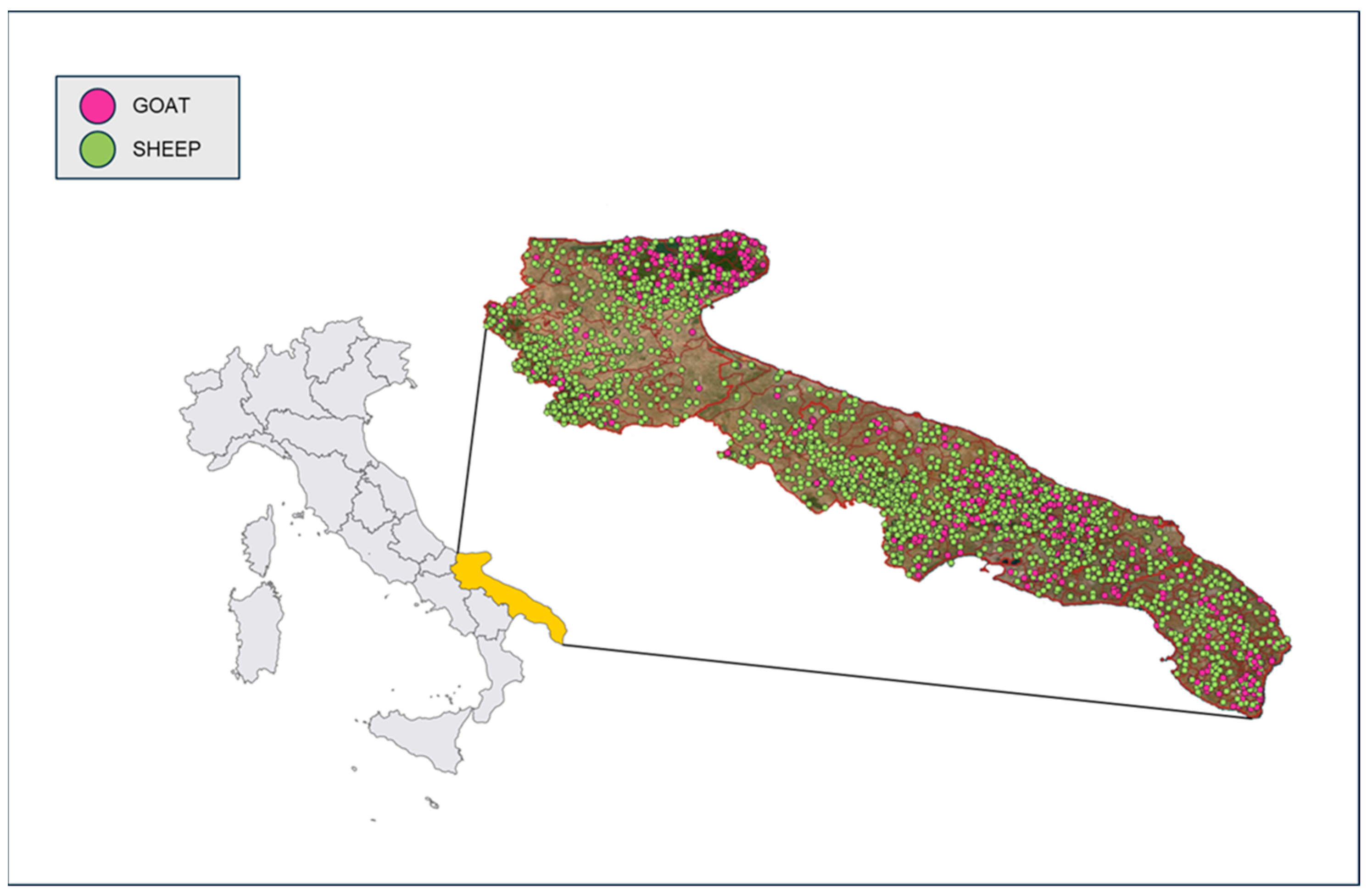
From May 2023 to May 2024, a preliminary survey of small ruminant farms was conducted based on the official registry of sheep and goat resources [8], which reported a total of 2993 farms operating in the Apulia region (Figure 1). Based on this list, a screening process was applied to reach out to all the farms that were likely to host the four populations under study. The process of selecting a smaller and relevant number of farms was conducted in collaboration with the breeder assessors of the Regional Breeders Association and Veterinary Services and informal farmer networks. During this phase, the sheep and goat populations present on the farms were assessed through telephone interviews, direct visits, and official records.
Through this process, 46 farms were selected as potentially suitable for hosting the populations surveyed. All 46 farms were contacted and visited. As part of the on-farm visits, structured video interviews were conducted with local farmers to gather qualitative information on (i) the farm history (how long the farm has been active and changes in breeding practices), (ii) breed memory (farmers were asked to recount their memories and knowledge regarding the ancient breeds, or other local breeds historically present in the area), and (iii) identification of the ovine and caprine breeds reared on the farm. Table 1 reports the numbers of male and female animals and the total number of heads for all sheep (A) and goat (B) breeds studied in the 46 selected farms.
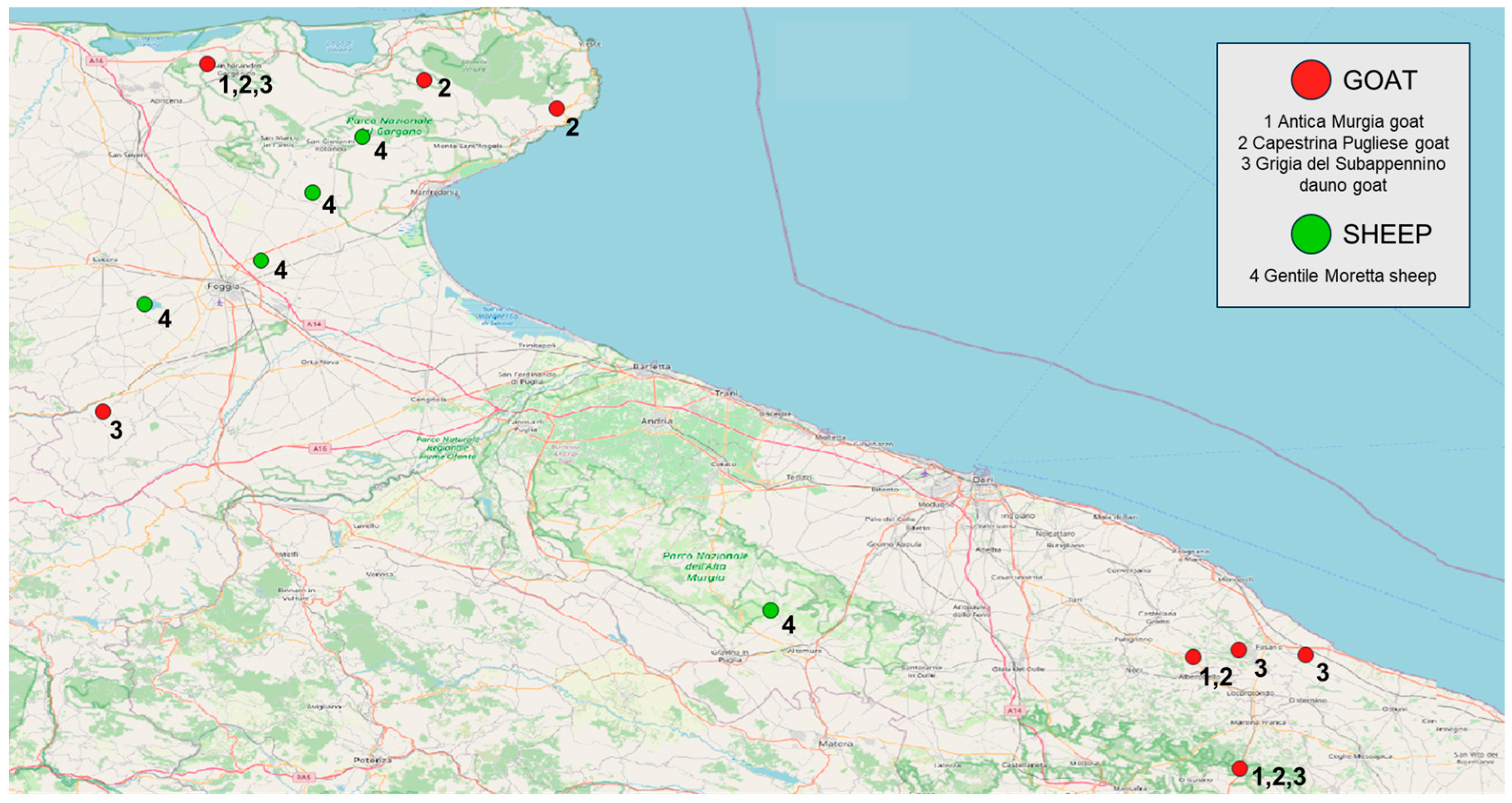
Among the selected farms, only 13 housed the populations under study at the time of the survey, and were referred to as “guardian farms” for the four populations included in the project. The geographic localization of the 13 guardian farms and the breeds reared in each farm are reported in Figure 2. Guardian farmers were invited to complete a detailed questionnaire (Survey S1), which collected information on breed-specific traits, farm characteristics, and management practices.
Furthermore, the historical and geographical context of these populations was investigated through the consultation of local archives, libraries, and museum collections. Institutions involved in this phase included the Civic Museums of Foggia; State Archives of Bari, Foggia and Lecce; national and municipal libraries; archaeological museums; civil and ecclesiastical historical archives; and the Inspectorates for Agriculture located in the main Apulian provinces and in smaller towns.
The geolocation of the 13 guardian farms was carried out using QGIS (https://qgis.org, accessed on 13 November 2025); the spatial data was organized into a geopackage format, which included both geographical coordinates and descriptive attributes of the farms. This geopackage was subsequently imported into a WebGIS platform (http://suite.irideservices.earth/en/map/local_puglia/, accessed on 13 November 2025) [15], enabling the interactive visualization of the guardian farms.
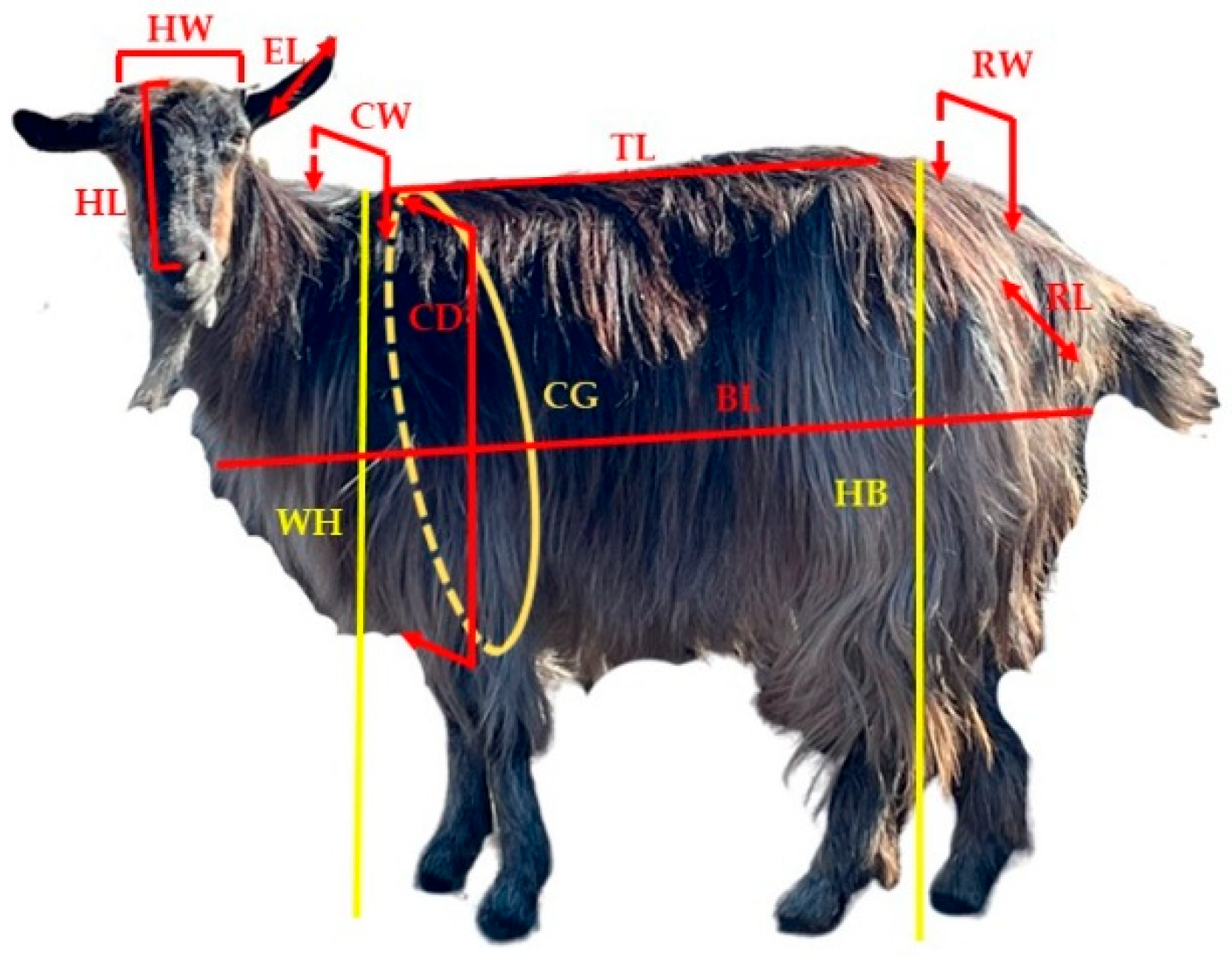
Morphometric traits were measured by a tape meter (in centimeters) during on-site farm visits on all animals over 18 months of age. The scheme of body measurements in the sheep and goats under study is presented in Figure 3. In particular, the following traits were recorded:
HW—
Head width: Measured at the widest part of the head at the level of the occipital region (above the ears);
HL—
Head length: Measured from the tip of the muzzle to the occipital protuberance;
EL—
Ear length: Measured from the base of the ear to the tip;
CG—
Thoracic girth: Body circumference just behind the forelegs;
CW—
Chest width: Measured on the inner surface between the upper parts of the forelegs;
CD—
Thoracic height: Measured from the most dorsal point of the withers to the ventral surface of the sternum;
WH—
Withers height: Measured from the top of the spine in between the shoulders to the ground;
HB—
Rump height: Measured from the top rump structure (hips) to the ground;
RW—
Rump width: Measured as the distance between the two iliac tuberosities (hip bones);
RL—
Rump length: Measured as the distance between the ischial tuberosity and the iliac tuberosity;
TL—
Trunk length: Measured from the most dorsal point of the withers to the top rump structure (hips);
BL—
Body length: Measured from the top point of the shoulder (scapular point) to the ischium.
The zootechnical indices (Cephalic (HW/HL × 100), Thoracic (CW/CD × 100), Pelvic (RW/RL × 100), and Corporal (BL/CG × 100)) were calculated in accordance with Alderson [16].
Data collected were subjected to the PROCMEANS procedure of SAS, 2013 [17] to determine the mean and standard deviation for each body measurement and index.

2.3. Dissemination Strategies to Valorize Ancient Local Populations

The actions undertaken to disseminate the results of the on-farm survey and on the characteristics of ovine and goat ancient Apulian populations involved various stakeholders, namely students of primary and secondary schools, breeders and farmers, dairy technicians, and tourism and catering businesses.
The main objective of this part of the intervention was to disseminate and promote the concept of animal biodiversity and its significance in defining the cultural identity of the Apulian territory.

2.3.1. Project Website

The main action concerning the dissemination of the project content was the creation and development of a dedicated website (https://localpsrpuglia.it/, accessed on 14 November 2025) [18]. The website was designed to be easily accessible and user-friendly, with the aim of reaching not only researchers and professionals but also a broader public interested in rural biodiversity. Its structure emphasizes clarity and dissemination, providing sections for project updates, educational materials, and visual documentation. In addition, the website includes a dedicated reporting page that enables users to submit information on newly identified or locally occurring breeds. This feature supports the ongoing documentation, verification, and sharing of data related to regional animal genetic resources, thereby strengthening the project’s long-term impact.

2.3.2. Educational Program for Schools

Between December 2024 and March 2025, ten meetings were organized in collaboration with educational institutions across the Apulia region, engaging more than 1000 primary and middle school students. Each event consisted of interactive sessions focusing on local animal genetic resources, sustainable animal husbandry practices, and the cultural–historical relevance of native breeds. The activities included educational presentations, video storytelling by farmers, distribution of learning kits and hands-on activities. Visual and multimedia materials (comics and short educational video) were also used to enhance the learning experience.

2.3.3. Educational Program for Dairy Sector

From May to June 2025, a series of meetings were organized with farmers and dairy-sector stakeholders to present the project results related to local breeds, milk quality, and the use of milk in both traditional and innovative cheese-making processes. Several demonstrative cheese-making events were performed with the production of traditional Pecorino and Cacioricotta from ovine and goat cheese, respectively, and with the production of innovative cheese typology such as pasta-filata (stretched-curd), brie, and blue cheeses.

2.3.4. Further Dissemination Activities

Workshops and seminars were organized at regional agricultural and livestock fairs to disseminate the project’s results. In addition, demonstrative meetings and round-table discussions served as key platforms for knowledge exchange and dialogue among breeders, technicians, and researchers. Furthermore, the promotion of enogastronomic tourism was pursued through the organization of experiential visits by involving international experts, journalists, buyers, and tourism entrepreneurs.
All the activities carried out as part of the project have been documented on the LOCAL website [18].

3. Results and Discussion

3.1. Origin and Morphological Traits of the Four Local Dairy Goat and Sheep Populations

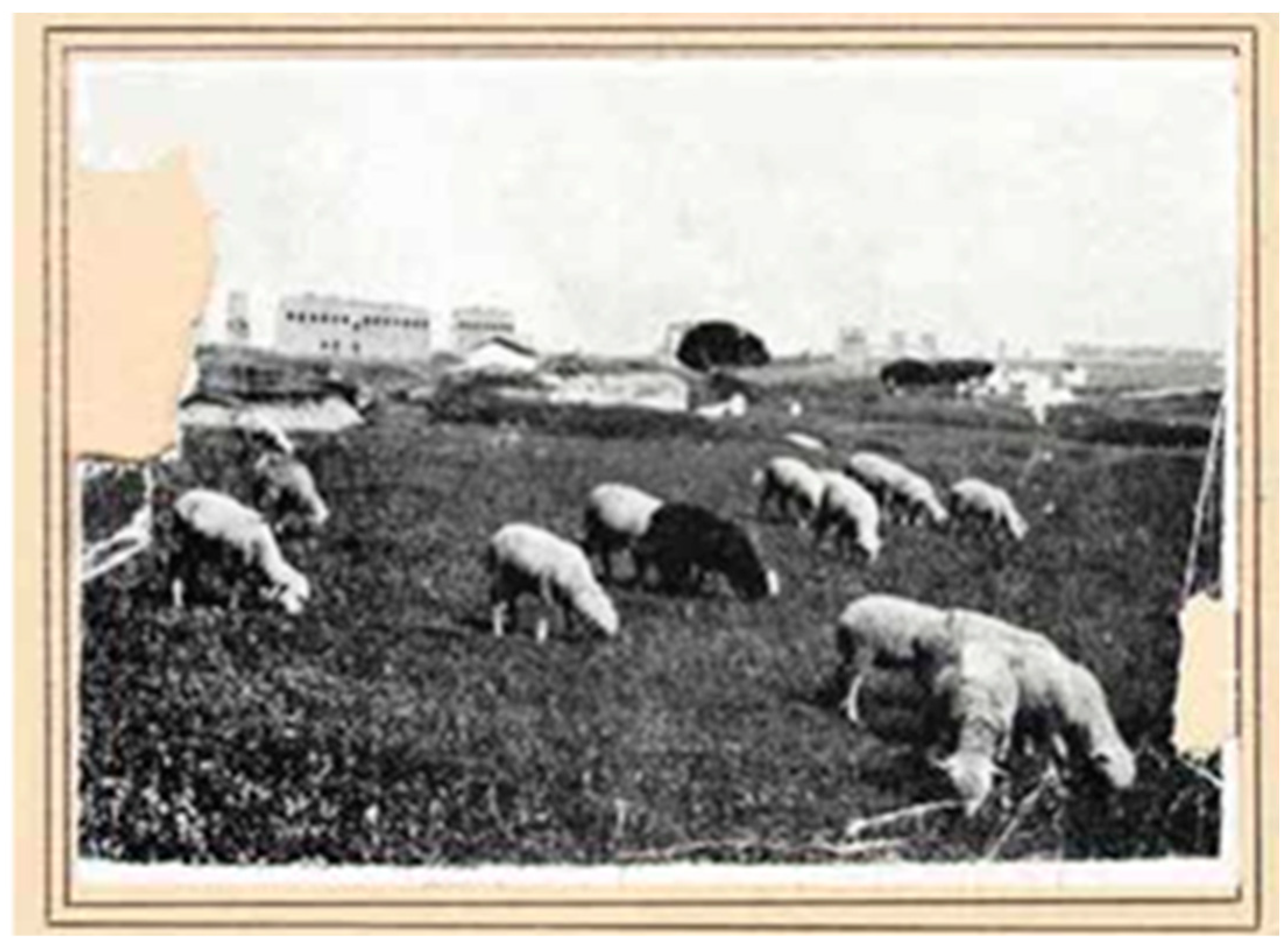
The LOCAL project focused on Gentile Moretta sheep and Grigia del Subappennino Dauno, Capestrina Pugliese, and Antica Murgia goats. The four local dairy goat and sheep populations were identified as genetic resources in the Apulia region that are worthy of conservation measures. The study area was the entire Apulia region, in the south-eastern part of the boot-shaped Italian peninsula, covering a surface area of approximately 19,500 km2. The region has a semi-arid Mediterranean climate with hot and dry summers and mild and rainy winter seasons [19]. As part of the activities of the LOCAL project, an extensive historical investigation was carried out to trace the origins and evolution of the native sheep and goat breeds under study. The methodology combined desk-based research on digital sources with field-based exploratory visits to historical archives, libraries, rural museums, and local documentation centers across Apulia. Initial data collected in online catalogues, such as Internet Culturale, Biblioteca la Magna Capitana, and the Accademia dei Georgofili, contributed to outline the broader historical livestock farming scenario in the Apulia region. Public and private archives and libraries, located in the main cities of the provinces, offered poor and inconsistent recordings for the targeted genetic resources—except for the Gentile Moretta sheep, for which few dedicated records were retrieved (Figure 4).
More broadly, the documentation revealed relevant insights into genetic improvement initiatives dating back to the 19th century, particularly the Leccese sheep. Notably, breeding records described the historical introduction of foreign germplasm, including Bergamasca or Ile de France sheep, to improve local productivity traits. Archival sources also highlighted critical issues faced by Apulian livestock farming in the 19th century, such as poor pasture availability due to the sedentary nature of post-transhumant systems and a general underdevelopment of herd management practices. Historical maps and registers indicated a very different zootechnical landscape from the present: while sheep farming was once predominant in areas like Salento, especially with fine-wooled breeds such as Gentile di Puglia and Leccese, today it is largely absent. However, documents also suggest a shift, in some areas, from fine-wooled to coarser-haired sheep types, probably ascribable to the reduced availability of good-quality pastures [21].
In parallel with documentary research, direct fieldwork was conducted through interviews and explorations with livestock keepers, historians, and local communities who preserved oral memory of traditional farming practices. The combination of these sources provided a nuanced reconstruction of the identity and past presence of the breeds.
Overall, this integrated research approach facilitated the identification and mapping of custodian farms for the four target breeds across the Apulian region. Despite the scarcity of direct historical references to the modern definitions of the breeds, the research substantiated the historical relevance of local ovine and caprine farming systems and underlined the importance of preserving cultural and genetic memory. The collected information has been systematized, catalogued, and geo-referenced.
This wide-ranging selection of documents made it possible to narrow the field down from around 3000 to 46 farms that were likely to have the local breeds covered by the study. Visits to the farms and questionnaires administered to the selected farmers provided a comprehensive overview of the sheep and goat breeds actually being reared at the time of the project. Table 1 reports the number of female and male animals, as well as the total number of heads, for both the most and least common sheep (A) and goat (B) breeds in the 46 selected farms. As expected, data confirmed that the small ruminant biodiversity across Apulia region is mainly associated with well-known native sheep and goats such as Gentile di Puglia, Leccese, Altamurana, and Garganica. However, the targeted ovine breed Gentile Moretta was registered in four farms, representing 0.31% of the total heads. Among the 46 farms surveyed, the Grigia del Subappennino Dauno goat, Capestrina Pugliese goat, and Antica Murgia goat represented 4.37%, 3.68%, and 0.82% of the total heads, respectively.
The 13 guardian farms hosting the breeds covered by this study were actively involved in the project. The questionnaires administered to guardian farms highlighted the type of farming system and the general characteristics of the farm, and their georeferencing within the Apulia region. The guardian farms were located mainly in the north and central/south areas of the Apulia region; in particular, eight farms were located in the province of Foggia, with four hosting sheep and four the local goat populations, whereas one sheep farm was found in the province of Bari and three goat farms in the provinces of Brindisi and Taranto (Figure 2). From this survey, it emerged that 15% of the farms were located in mountainous areas, 54% in hills and 31% in planes. Most of the farms had been inherited from parents and some had been owned by the family for several generations. Eighty per cent of the farms had family members working in various operational and managerial roles. All the farms processed animal and plant products and were organized for direct sales or sales to commercial enterprises. Some farms had a dairy for processing and direct sales on the farm. Only one of the 13 guardian farms had an educational farm and a farmhouse. Farming systems were classed as extensive based mainly on the natural pasture and partly on seeded pasture. The majority of the farms relied on feed supplements based on hay and concentrates, mainly maize and field beans. Production activity relied mainly on meat (62%), followed by both meat and milk (31%) and meat, milk and wool (7%). When farmers were asked to report the strengths of the local breeds, frugality and rusticity were most appreciated and, albeit less frequently, the quality of their production, especially in terms of milk composition and flavor. On the contrary, the low prolificacy and productivity of the animals were given as weaknesses; these latter characteristics were also those for which improvement measures were requested by farmers. Their reproductive activity is based only on natural mating, evidencing the absence of reproductive schemes for these local population breeds. The involvement of breeders was a priority objective in this phase of the project. Listening to farmers’ motivations for maintaining the breeds, acquiring their points of view on the positive and negative elements, and in particular learning about the morphological and productive traits that should be improved, made it possible to create a network characterized by trust and commitment. These actions were useful in pursuing traditional conservation methods in further stages of the project, such as in situ livestock breed conservation. Indeed, according to Tăpăloagă et al. [22], community involvement is essential, as local knowledge and practices can improve the sustainability of livestock management and reinforce the socio-cultural importance of traditional breeds. Furthermore, this made farmers feel empowered to achieve their own success and profitability. The main result of this first phase of the project was the registration of the Gentile Moretta sheep and the Grigia del Subappennino Dauno, Capestrina Pugliese, and Antica Murgia goat populations in the Regional Register of Local Genetic Resources through the regional directive N.00174 of 11 April 2025 [23].

3.1.1. Gentile Moretta Ovine Breed: Origin and Morphological Traits

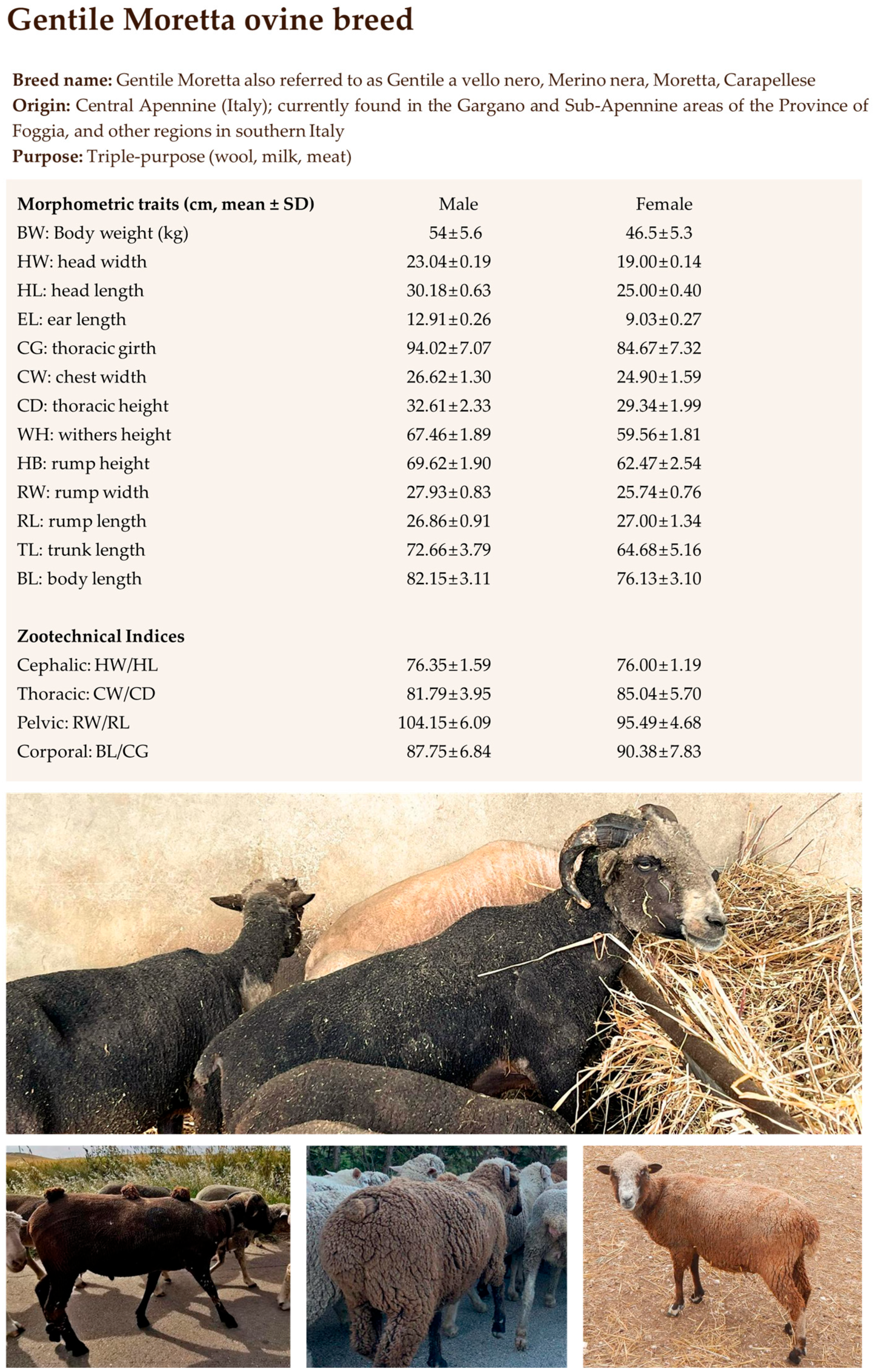
The Gentile Moretta is an Italian native sheep breed whose origins trace back to Molise, an inland region of Southern Italy. Over time, the breed spread into the Gargano area and the Sub-Apennine region of the province of Foggia, as well as into Campania, Molise, Abruzzo, and other southern Italian regions, where it is still commonly raised in small groups or pairs. Figure 5 shows pictures taken in the guardian farms and the mean values of the morphometric traits and zootechnical indices of the Gentile Moretta breed, collected from the guardian farms involved in the project. The historical sources consulted have shown that the breed was developed through systematic crossbreeding between local ovine populations and Merino rams imported from Spain, initially by Alfonso V, King of Aragon, in the 15th century, and later by the Bourbon dynasty of Naples [24]. The latter established prominent sheep farms in the Tavoliere delle Puglie, a plain in northern Apulia, notably at the estates of Tre Santi and Santa Cecilia near the city of Foggia. The presence of Moretta sheep was documented as early as the 1500s, a period when selection efforts focused on conserving the black fleece phenotype across multiple generations. This selection was motivated by two main objectives: to prevent lamb mortality during the winter, as black-fleeced lambs were born with better thermal insulation, and to circumvent the compulsory requisitioning of white lambs for the Roman market by the Grascia institute (a regulatory measure in force from 1580 to 1789) [25]. In 1941, Beretta acknowledged the superiority of the so-called “black sheep” (pecore negre), stating: ‘Although they are not as fine [in terms of wool] as the white ones, they are more resistant to the cold, can graze anywhere, are more robust, produce better cheese, more fat and, above all, cacio di fiore which is the precursor to today’s Pecorino cheese’. By the mid-18th century, the district of Rome had approximately 114,156 white sheep and 205,034 Moretta sheep [26]. Indeed, according to other sources, the white lamb requisition policy led to 80% of the regional sheep population being converted into “Moretta” sheep [27]. However, the abolition of this policy by Pope Pius VI in 1789, coupled with the widespread importation of Spanish Merinos to improve local breeds, likely contributed to the gradual decline of the Moretta sheep.
Although this breed was originally prized for both milk and wool production, today it is considered a triple-purpose breed (milk, meat, and wool), similar to the Gentile di Puglia, with which it shares most of its morphological and productive characteristics. In 1876, Guzzoni wrote: “Although the Moretta is inferior in terms of wool quality […], it surpasses [other breeds] in milk production and composition, being rich in casein and butterfat, and highly sought after for cheese production. However, it remains poorly distributed because the most profitable product in the Roman countryside is wool” [28]. This document highlights the breed’s traditional aptitude for cheese production. Nevertheless, its wool has historically played a significant role, particularly in Rome, where it was used to produce high- and medium-quality Borgognoni fabrics, Carfagni and Fioretti [29].
The Gentile Moretta sheep is currently bred in various environments ranging from plains to hilly and mountainous areas. Historically, its management was based on large-scale transhumance [26]. Between June and September, the flocks migrated seasonally to the mountain pastures of Maiella and Gran Sasso. Although agricultural reform and the reclamation of the Tavoliere have favoured more sedentary farming systems, traditional transhumance practices have survived on a smaller scale. Even today, flocks continue to migrate along the ancient sheep tracks from early June to mid-October, before returning to the plains of the Tavoliere for the winter.
The fleece is rust-black on the outer surface and tends toward black internally; it is composed of fine wool fibers (approximately 13 μm) arranged in prismatic staples, with well-defined crimping. The fleece covers the entire body, including the ventral surface, forehead, cheeks, forelimbs down to the knees, and hind limbs down to the fetlocks. Cutaneous folds are absent. The skin is thin and black. The tongue, palate, and natural orifices are generally unpigmented, though small light-colored spots may occasionally appear on the ears, muzzle, and periorbital area. The head displays a slightly convex, Roman nosed profile. Males are typically horned, with strong, regularly spiraled horns. Females generally exhibit a straight profile and are polled (hornless), although approximately 10% may present small, underdeveloped horns. The neck is short and muscular in males, longer and finer in females. The trunk is elongated and moderately broad. In males, the withers are wide and lower than the rump; in females, they are narrower and lower than the rump. The chest is deep and high, with well-sprung ribs in males; in females, they are less deep and show less pronounced rib curvature. The topline is straight from withers to loin. The rump is moderately wide and slightly sloping posteriorly. Finally, the limbs are solid and relatively short, well-suited for movement in hilly or marginal terrains. As with Gentile di Puglia, Gentile Moretta sheep are sheared once a year. In transhumant flocks, this usually takes place between the end of March and the beginning of April, before the transfer from the plains to the highlands, while in sedentary flocks it takes place in May.

3.1.2. Capestrina Pugliese Goat Breed: Origin and Morphological Traits

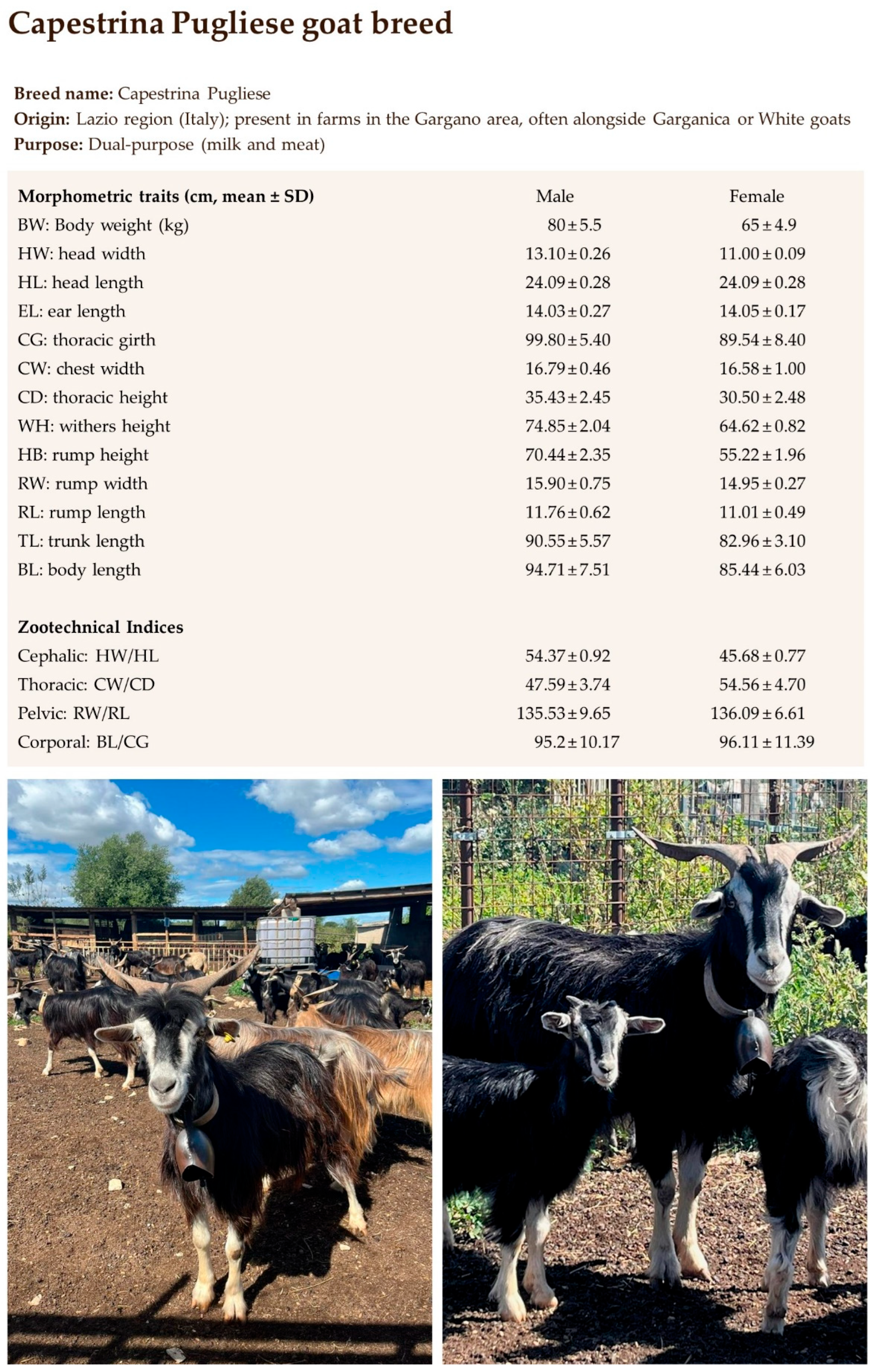
The Capestrina pugliese goat appears to descend from the longest-established autochthonous goat breeds in the Lazio region [30,31]. Several breeders currently managing Capra Blanche or Capra Ciociara herds recalled that their predecessors also kept significant numbers of Capestrina or Black goats. The mountain ranges of the Lepini, Ausoni, and Aurunci are likely the area of origin of this population. Figure 6 shows pictures and the morphometric traits and zootechnical indices of the Capestrina Pugliese breed, collected from the guardian farms involved in the project.
In the present survey, Capestrina Pugliese goats were registered in a significant number of farms, although often found in association with larger populations of white goats, Garganica goats or more or less crossbred individuals. Flocks in which Capestrina goats constituted the majority were relatively rare.
In Apulia, the presence of this breed is closely linked to transhumance practices that bring small ruminants from the central Apennines to the Tavoliere plain. Oral accounts from local breeders on the Gargano promontory confirmed the long-standing presence of the Capestrina goat in this area. In fact, in Sannicandro (a small village in the Gargano, in the province of Foggia, Apulia), the term “Capestrina” is used to describe the lively temperament of this breed which, together with its greater resistance, distinguishes it from the Garganica goat.
This breed is typically reared according to traditional extensive farming systems. The Capestrina goat is characterized by its hardiness and greater independence compared to other local breeds. When herding a flock, it is often seen at the head, leading the animals to pasture. It is interesting to note that the presence of Capestrina goats is positively correlated with altitude and terrain: the more inaccessible the environment, the more frequent the presence of Capestrina goats.
The coat is generally anthracite black, with white streaks extending from the base of the horns to the muzzle. Some individuals also present a white submandibular beard and white edging on the ears. In such cases, the ventral area and perianal region are usually white as well. Hair length varies between 5 and over 15 cm. The head is generally large and elongated, with a straight profile, occasionally slightly dished. The cheeks are flat. Both males and females typically bear large, laterally divergent horns that are relatively flattened in cross-section. The ears are large and horizontally carried, although smaller ear sizes are not uncommon. A chin beard is generally present in both sexes. The neck is long and very broad in males, and may or may not exhibit wattles. The chest and abdomen are highly developed, indicating substantial strength and a high capacity for ingesting coarse forages. The dorsal–lumbar line is straight, and the rump is relatively broad and sloping. The limbs are strong, with large black hooves clearly distinguishable from the circumference of the cannon bone. They are well adapted to grazing in rugged and uneven terrains.

3.1.3. Grigia Del Subappennino Dauno Goat Breed: Origin and Morphological Traits

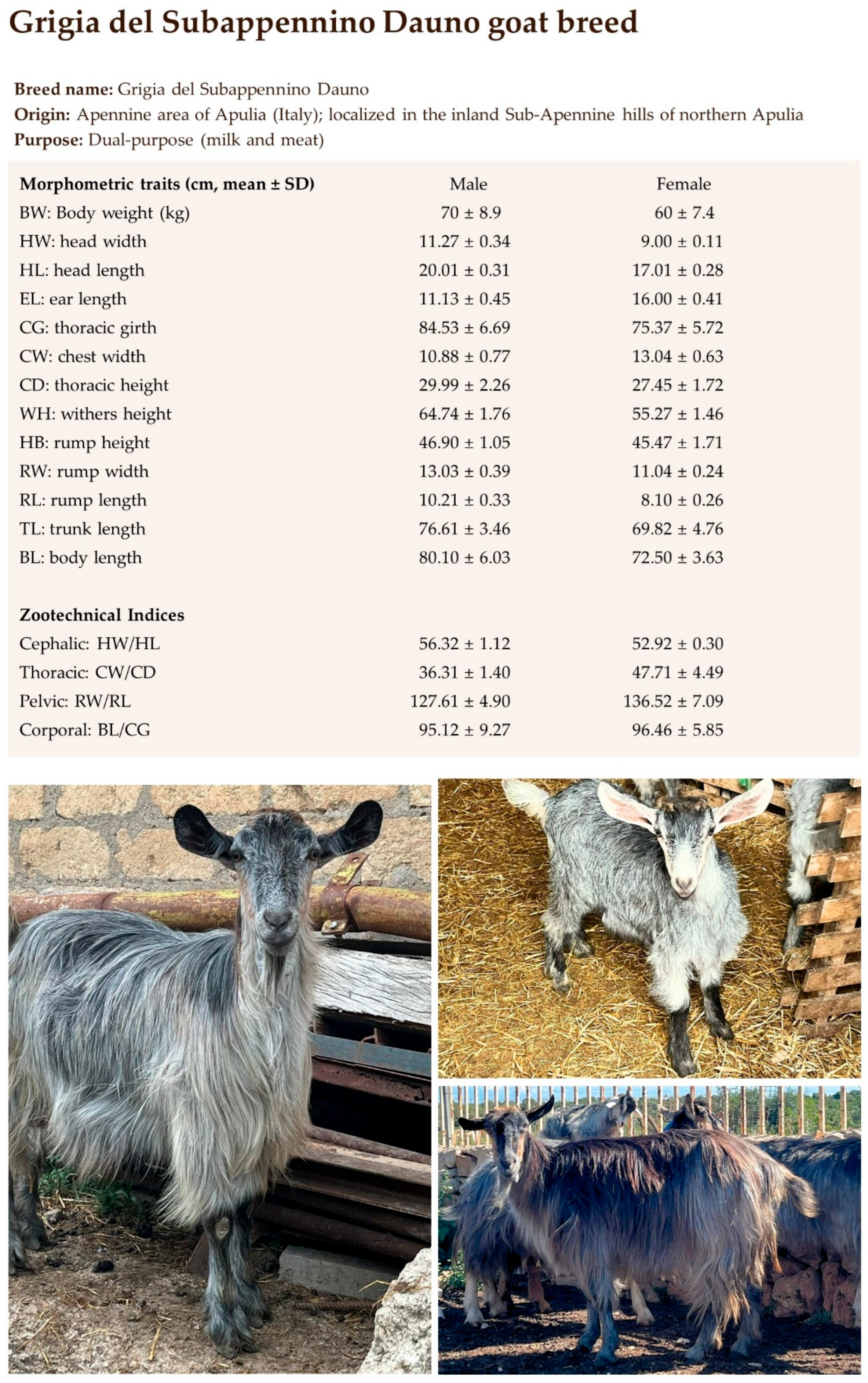
The Grigia del Subappennino Dauno goat is a little-known breed, yet it exhibits a wealth of specific traits that have been carefully preserved over time by local breeders in the Sub-Apennine Dauno region. Figure 7 shows pictures and the morphometric traits and zootechnical indices of the Grigia del Subappennino Dauno breed, collected from the guardian farms involved in the project. This population is predominantly found in the inland areas of the northern Tavoliere delle Puglie, particularly within the hilly zones of the Sub-Apennine Dauno. Although local herders consistently report the longstanding presence of this breed in the region, its precise origins remain unclear. Genetic analyses suggest contributions from multiple genetic pools, especially Garganica and a yet unidentified group. Furthermore, clear morphological similarities have been observed with other gray-coated goat populations, such as the Ciociara from Lazio, Grigia from Molise, and Argentata dell’Etna from Sicily [32].
The Grigia del Subappennino Dauno goat is characterized by high rusticity and resilience. Accordingly, it is primarily managed under extensive or semi-extensive systems, albeit stationary, with substantial reliance on high-hill pastures. During the winter months, typically harsh in this region, the animals are sheltered indoors and fed with hay, oats, and barley.
This population is predominantly dairy-oriented. Farm outputs mainly include milk, but also meat through the production of light-weight kid goats. The breed displays a seasonal polyestrous reproductive cycle and high prolificacy, with approximately 50% twin births. Milk is typically processed on-farm to produce traditional cheeses such as Cacioricotta cheese, pure goat’s milk cheese, mixed goat and sheep milk cheese, and Ricotta cheese, both fresh and dried.
The coat is characterized by a dark and light silvery-gray coloration, typically with a darker dorsal region. The hair is predominantly long over the entire trunk, with a length varying from 5 cm to over 15 cm. In young animals, it is not uncommon to observe a coat with brownish tones. The skin is gray, with varying degrees of pigmentation, and the natural openings (muzzle, eyelids, anus, vulva) are gray to black. The head is small, generally with a straight profile. Some individuals may exhibit a prominent frontal tuft, and it is not rare to find goats with brown or reddish facial pigmentation. Horns are present in approximately 50% of the population. The ears are thin, and held horizontally. The trunk is medium in length, with a broad and sloping rump. The thorax and abdomen are well developed. The mammary system is moderately developed and well projected relative to the rump. The limbs are strong and lean, dark gray in color, and partially covered with hair.

3.1.4. Antica Murgia Goat Breed: Origin and Morphological Traits

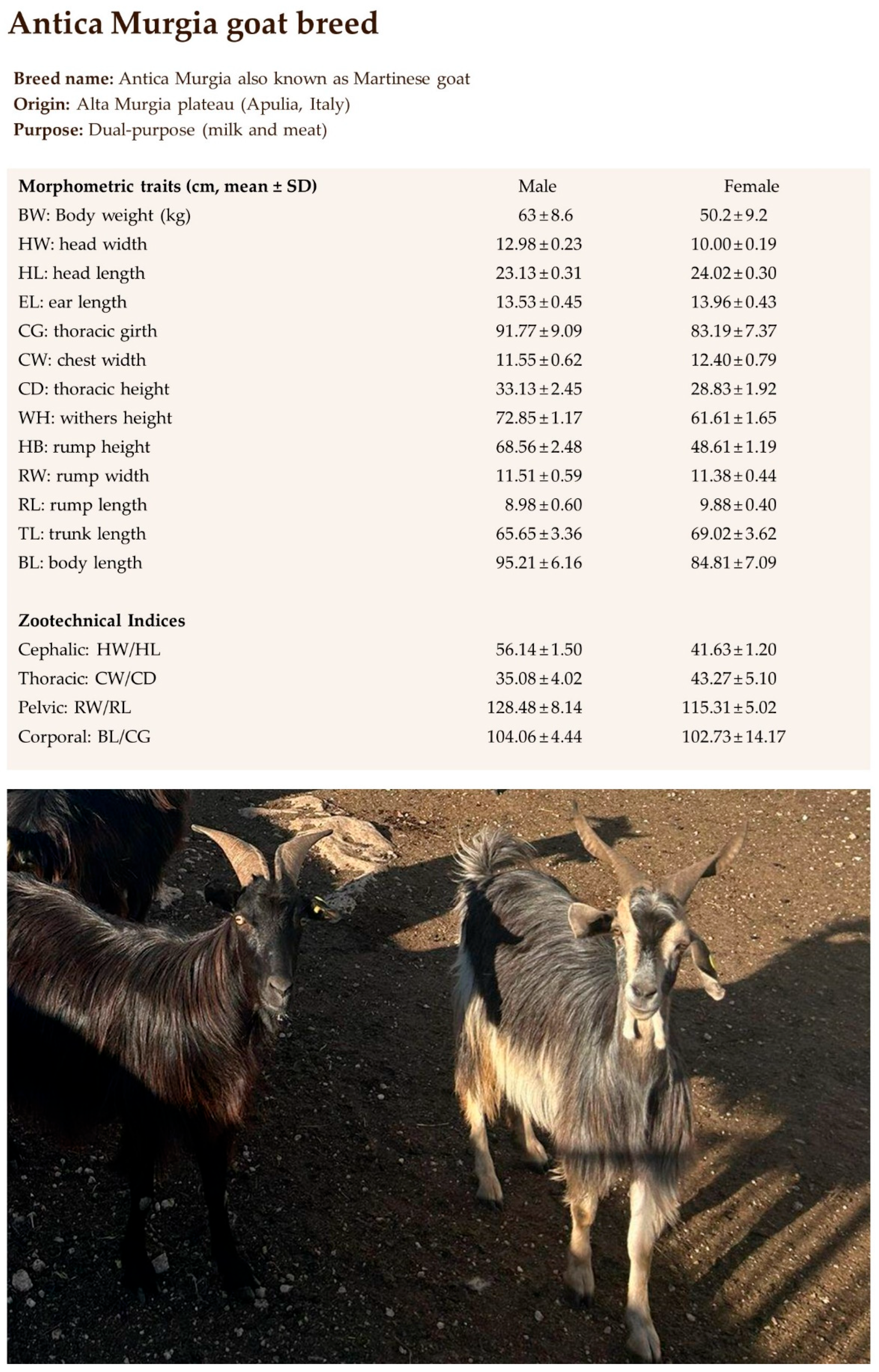
The Capra Antica Murgia, also known as Capra Martinese, is an autochthonous goat breed native to the Murgia Plateau in Southern Italy. Figure 8 shows pictures of subjects and the morphometric traits and zootechnical indices of the Antica Murgia breed, collected from the guardian farms involved in the project.
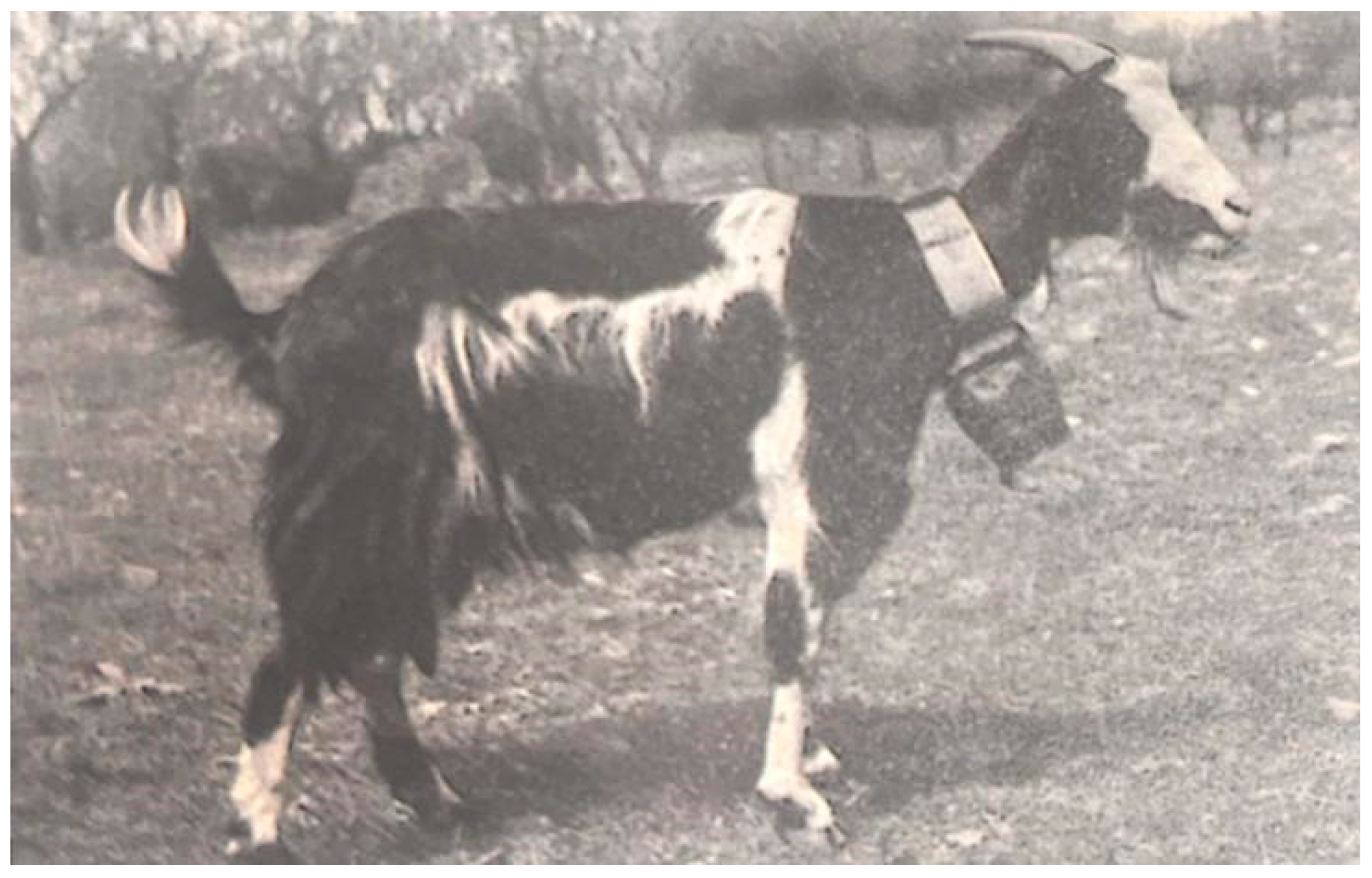
Oral accounts from local herders indicate that this breed has historically been present in the area and may have originated from the crossbreeding between an indigenous goat population and the Capra Garganica, one of the oldest and most historically rooted breeds of Apulia. This hypothesis is supported by the breed’s morphological traits, which include a heterogeneous coat coloration (ranging from black to gray and lighter shades) and long, curved horns. Accordingly, Balasini [33] reported Capra delle Murge (Figure 9) as one of the local breeds (the other one is the Garganica goat) still bred in Puglia. It is described as a goat characterized by a highly variable coat, white or spotted, with brown ears and large, twisted horns that spread wide apart, an excellent milk producer and very prolific.
Similar to what has been documented for the Capra dell’Aspromonte—with which the Capra Antica Murgia shares several morphological similarities—this breed may have undergone genetic introgression from breeds introduced in the early 20th century, such as the Maltese goat, known for its long, silky coat, and the Abyssinian goat. These historical genetic influences may have contributed to defining some of the phenotypic and adaptive traits observed in the current population.
The coat is characterized by a significant hair length both on the forequarters and hindquarters. Hair length is generally uniform, although the longest hair tends to cover the rump and thighs. The coat is piebald, typically with black predominating on the posterior and cream on the anterior regions. The head displays black or gray streaks. The skin is dark in pigmentation. The head is proportionate, light, and generally refined. The frontonasal profile is slightly dished or straight. The ears are long and pendulous. Horns are usually present in both sexes. In females, horns are moderately developed, lyre-shaped, and often flat and broad at the base. In males, horns are highly developed, long, lyre-shaped, and similarly flat and broad at the base. The neck is of medium length and fine in structure, with wattles variably present. The thoracic and abdominal regions are well-developed. The dorsal–lumbar line is quite straight and horizontal, and the rump is broad and slightly sloping. The mammary system is well-developed and well-attached, with a globular or pear-shaped udder. The limbs are strong and long, with solid, compact, dark slate-colored hooves.

3.2. Actions and Strategies to Valorize and Preserve Ancient Local Populations

In the context of safeguarding endangered local animal genetic resources, dissemination and education activities represent essential tools for raising awareness, building cultural memory, and fostering community-based conservation practices. To address the conservation of sheep and goat breeds and their contribution to rural development in marginal areas, this project has embraced a multidisciplinary scientific approach and sought to involve a broad and diverse target audience in order to disseminate the results. Particular effort has been made to the transmission of knowledge related to the native ovine and caprine breeds and populations of Apulia through structured educational programs in schools and farming and dairy sector and targeted actions in the field of rural tourism.
School-based outreach initiatives, implemented in various primary and secondary schools in the Puglia region, aimed to educate students about the importance of biodiversity and sustainable farming, as well as the specific results of the survey conducted on four sheep and goat breeds. The ultimate goal of these activities was to improve young people’s engagement and to cultivate a renewed sense of connection between the younger generations and the rural world.
An extensive program of training and dissemination was carried out, designed to transfer knowledge to farmers, technicians, and the wider community, while raising awareness about the importance of local animal genetic resources. Training sessions, demonstrative cheese-making events, workshops, and forums were organized to facilitate knowledge sharing and the exchange of experiences.
The promotion of enogastronomic tourism was pursued through the organization of experiential visits involving international experts, journalists, and buyers. These activities aimed to explore how animal biodiversity can increase the attractiveness of local tourism and hospitality. Ecotourism is a form of nature-based tourism that addresses two key issues: improving livelihoods and conserving biodiversity. Ecotourism is one of the fastest-growing sectors in the travel industry, expected to grow seven times faster than the rest of the tourism industry [34]. The tours offered participants immersive exposure to the breeding systems, landscapes, and artisanal dairy practices linked to native breeds such as the Gentile di Puglia ovine and Garganica caprine breeds. Tastings, show-cooking sessions, and guided visits to guardian farms not only contributed to greater appreciation of the sensory qualities of traditional dairy products, but also reinforced the cultural narratives embedded in their production. The activity aimed at the creation of new and niche marketing approaches that may enhance the contact between breeders and consumers/tourists. In particular, the Gargano and Subappennino Dauno areas welcomed international buyers, travel bloggers, cycle tourists and food and wine tourism experts from Spain, France, Germany, the Netherlands, Finland and Denmark for an immersive journey to discover Apulia’s biodiversity. The guests spent four days visiting the guardian farms to experience the deep connection between the territory, animals and productions. The links to the news, video and blog articles published on local, national and international websites are reported in Table S1. Educational outreach and experience-based tourism act synergistically to promote territorial valorization while enhancing the social and economic viability of marginal livestock farming systems. They transform native breeds from past residue into active agents of rural development, supporting the creation of niche markets, fostering place-based food identity, and encouraging multigenerational commitment to conservation.

4. Conclusions and Outlook

The LOCAL project was characterized by several objectives and by a comprehensive strategy with the overall aim of identifying, preserving and promoting four autochthonous small ruminant populations: the Gentile Moretta sheep and the Grigia del Subappennino Dauno, Capestrina Pugliese, and Antica Murgia goat breeds of the Apulia region.
This study emphasized the historical and documentary sources that link the breeds to the territory, conducted the first census of animals and identified the farms involved in breeding these local populations. The primary outcome of the initial project phase was the morphological description of the local breeds and their registration in the Regional Register of Local Genetic Resources. Another outcome was the development of an educational and training project involving various stakeholders, including students, breeders, the dairy sector and tourism operators. Combining animal husbandry, education and ecosystem services can contribute to the conservation of animals and the sustainability of local agroecosystems. A balanced, interdisciplinary approach to modern animal breed conservation combines genetic evaluation, traditional knowledge, collaborative practices, and supportive policies. This work presents preliminary data revealing the presence of valuable native populations in the Apulia region.
Further research into genetic characterization, population size and reproductive efficiency, as well as the outcomes of in situ and ex situ conservation activities, will clarify the profitability of breeding these native breeds. The aim is to preserve animal biodiversity and develop the regional economy.

Supplementary Materials

The following supporting information can be downloaded at https://www.mdpi.com/article/10.3390/agriculture16060673/s1. Survey S1: Farmer questionnaire template; Table S1: News, video and blog articles links published on local national and international websites.

Author Contributions

Conceptualization, M.A. and A.S.; methodology, M.A. and A.S.; software, M.d.C.; validation, M.A. and A.S.; formal analysis, M.d.C.; investigation, M.d.C. and E.C.; resources, M.A.; data curation, M.d.C.; writing—original draft preparation, M.d.C.; writing—review and editing, A.S., M.A., E.C. and M.d.C.; visualization, M.d.C.; supervision, M.A. and A.S.; project administration, M.A.; funding acquisition, M.A. All authors have read and agreed to the published version of the manuscript.

Funding

The present study was funded by the “Biodiversity and enhancement of local sheep and goat genotypes with a prevalent aptitude for milk production (Acronym: LOCAL)” Rural Development Program PSR PUGLIA 2014–2022 Article 28 of Regulation (EU) no. 1305/2013, through MISURA 10.2. Regione Puglia-Program PSR PUGLIA 2014–2022: CUP: B77H23000040009. Principal Investigator: M. Albenzio.

Data Availability Statement

The data on questionnaires submitted to the regional breeders presented in this study are availa-ble on request from the Regional Breeders Association of Puglia (segreteria@ara.puglia.it). The data are not publicly available due to privacy. Data on morphological traits of the local breeds in-volved in the project were obtained from Regional Breeders Association of Puglia (https://www.allevatoripuglia.it) and are available from the authors with the permission of Re-gional Breeders Association of Puglia.

Acknowledgments

The authors would like to thank the sheep and goat farmers for their help during data collection.

Conflicts of Interest

The authors declare no conflicts of interest.

References

  1. Sepe, L.; Argüello, A. Recent advances in dairy goat products. Asian-Australas. J. Anim. Sci. 2019, 32, 1306–1320. [Google Scholar] [CrossRef] [PubMed]
  2. Rapiya, M.; Mndela, M.; Ramoelo, A. Sustainable Food Systems Through Livestock–Pasture Integration. Agriculture 2025, 15, 967. [Google Scholar] [CrossRef]
  3. Joy, A.; Dunshea, F.R.; Leury, B.J.; Clarke, I.J.; DiGiacomo, K.; Chauhan, S.S. Resilience of small ruminants to climate change and increased environmental temperature: A review. Animals 2020, 10, 867. [Google Scholar] [CrossRef] [PubMed]
  4. Pulina, G.; Francesconi, A.H.D.; Stefanon, B.; Sevi, A.; Calamari, L.; Lacetera, N.; Dell’Orto, V.; Pilla, F.; Ajmone Marsan, P.; Mele, M.; et al. Sustainable ruminant production to help feed the planet. Ital. J. Anim. Sci. 2017, 16, 140–171. [Google Scholar] [CrossRef]
  5. FAOSTAT. Available online: https://www.fao.org/faostat/en/#data/QCL/visualize (accessed on 12 May 2025).
  6. Ministero Della Salute, Sistema Informativo Veterinario—Statistiche. Available online: https://www.vetinfo.it (accessed on 22 January 2024).
  7. Small Ruminant Milk Production, ISTAT Data. Available online: https://esploradati.istat.it/databrowser/#/it/dw/categories/IT1,Z1000AGR,1.0/AGR_CRP/DCSP_LATTE/IT1,101_959_DF_DCSP_LATTE_2,1.0 (accessed on 12 May 2025).
  8. Anagrafe Nazionale Zootecnica—Statistiche. Consistenze Allevamenti e Capi Ovicaprini. Available online: https://www.vetinfo.it/j6_statistiche/#/report-pbi/29 (accessed on 20 September 2025).
  9. Santillo, A.; della Malva, A.; Albenzio, M. Preserving Biodiversity of Sheep and Goat Farming in the Apulia Region. Animals 2025, 15, 1610. [Google Scholar] [CrossRef]
  10. Temerario, L.; Monaco, D.; Mastrorocco, A.; Martino, N.A.; Cseh, S.; Lacalandra, G.M.; Ciani, E.; Dell’Aquila, M.E. New strategies for conservation of Gentile di Puglia sheep breed, an autochthonous capital of millennial tradition in Southern Italy. Animals 2023, 13, 2371. [Google Scholar] [CrossRef] [PubMed]
  11. Hoffmann, I. Climate change and the characterization, breeding and conservation of animal genetic resources. Anim. Genet. 2010, 41, 32–46. [Google Scholar] [CrossRef] [PubMed]
  12. Apulia Region. Programma di Sviluppo Rurale (PSR) Puglia 2014–2022. Available online: https://psr.regione.puglia.it/documents/33128/89378/Determinazione+Autorit%C3%A0+di+Gestione+n.+268+del+07.07.2020.pdf/5653b80c-d9c7-d63c-56d4-bf7eda7ee078?t=1594810219243 (accessed on 9 October 2025).
  13. Di Trana, A.; Sepe, L.; Di Gregorio, P.; Di Napoli, M.A.; Giorgio, D.; Caputo, A.R.; Claps, S. The role of local sheep and goat breeds and their products as a tool for sustainability and safeguard of the Mediterranean environment. In The Sustainability of Agro-Food and Natural Resource Systems in the Mediterranean Basin; Vastola, A., Ed.; Springer: Berlin/Heidelberg, Germany, 2023; pp. 79–107. [Google Scholar] [CrossRef]
  14. Regione Puglia. Dipartimento Politiche Agricole e Forestali DPGR n° 22/2021. Oggetto: PSR Puglia 2014–2022. Misura 10—Pagamenti Agro-Climatico-Ambientali. Sottomisura 10.2—Sostegno per la Conservazione, L’uso e lo Sviluppo Sostenibili Delle Risorse Genetiche in Agricoltura. Operazione 10.2.1—Progetti per la Conservazione e Valorizzazione Delle Risorse Genetiche in Agricoltura. Avviso Pubblico Approvato con D.A.G. n. 113 del 09/03/2020, Pubblicata nel B.U.R.P. n. 33 del 12/03/2020. e75108a3-2295-0852-a1b7-ece00c13c5b9 (regione.puglia.it). Available online: https://psr.regione.puglia.it/documents/33128/89378/Determinazione+Sezione+Attuazione+programmi+comunitari+per+l%27agricoltura+n.+111+del+09.02.2023.pdf/e75108a3-2295-0852-a1b7-ece00c13c5b9 (accessed on 13 November 2025).
  15. Geographic Information Systems (GIS) Based on WebGIS Architecture. An Interactive Webgis Framework of Apulian Farm Involved in the LOCAL Project. Available online: http://suite.irideservices.earth/en/map/local_puglia/ (accessed on 13 November 2025).
  16. Alderson, L. The developments of a system of linear measurements to provide an assessment of type are function of beef cattle. Anim. Genet. Resour. Inf. 1999, 25, 45–55. [Google Scholar] [CrossRef]
  17. SAS Institute Inc. Base SAS Procedures Guide: Statistical Procedures. Base SAS 9.4; Statistical Analysis System Institute Inc.: Cary, NC, USA, 2013. [Google Scholar]
  18. Official WebSite of the LOCAL Project. Available online: https://localpsrpuglia.it/ (accessed on 14 November 2025).
  19. Ladisa, G.; Todorovic, M.; Trisorio Liuzzi, G. A GIS-based approach for desertification risk assessment in Apulia region, SE Italy. Phys. Chem. Earth Parts A/B/C 2012, 49, 103–113. [Google Scholar] [CrossRef]
  20. De Sanctis, M.A. La Pastorizia e L’alimentazione di Roma nel Medioevo e Nell’età Moderna; Maglione, P., Strini, C., Eds.; Roma, Italy, 1918; Volume XIV, p. 239. [Google Scholar]
  21. Scoditti, L. Le famose lane tarantine dell’epoca romanan. Rivista Storia Dell’Agricoltura 1963, 3, 76–79. [Google Scholar]
  22. Tăpăloagă, D.; Gheorgherimia, R.A.; Sonea, C.; Ilie, L.; Ciocîrlie, N.; Tăpăloagă, P.R. Balancing Tradition and Innovation: A 5-Year Review of Modern Approaches to Livestock Breed Conservation. Agriculture 2025, 15, 1855. [Google Scholar] [CrossRef]
  23. Regione Puglia. Registro Delle Determinazioni. Directive N. 00174 of 11th April 2025. Available online: https://app.sistema.puglia.it/ords/f?p=130:4:113352135587712::NO:RP,4:: (accessed on 12 March 2026).
  24. Ceccobelli, S.; Landi, V.; Senczuk, G.; Mastrangelo, S.; Sardina, M.T.; Ben-Jemaa, S.; Persichilli, C.; Karsli, T.; Bâlteanu, V.A.; Raschia, M.A.; et al. A comprehensive analysis of the genetic diversity and environmental adaptability in worldwide Merino and Merino-derived sheep breeds. Genet. Sel. Evol. 2023, 55, 24. [Google Scholar] [CrossRef] [PubMed]
  25. Spada, E. La Transumanza. In Transumanza e Allevamento Stanziale Nell’umbria Sudorientale; Quaderni del CEDRAV n. 2; CEDRAV Editor: Cerreto di Spoleto, Italy, 2002. [Google Scholar]
  26. Ceccobelli, S.; Giacchè, L.; Giampaoli, G.; Giovannini, S.; Landi, V.; Lasagna, E.; Panella, F.; Sarti, F.M. La razza Sopravissana. Torneranno le greggi di merinos nelle nostre montagne? In Collana i Quaderni Della Biodiversità N. 13; Regione Umbria Servizio Sviluppo rurale e Agricoltura Sostenibile, 3A-PTA: Perugia, Italy, 2023. [Google Scholar]
  27. Rinaldi, N. Il pastore e l’armento del vissano. In Ambiente e Società Pastorale Nella Montagna Maceratese: Atti del XX Convegno di Studi Maceratesi, Ussita, 1984; Centro di Studi Storici Maceratesi: Macerata, Italy, 1987; pp. 521–553. [Google Scholar]
  28. Guzzoni, M. Le pecore italiane all’esposizione mondiale di Vienna nel 1873 [originally published in Italia Agricola 1876, pp. 60–64]. In Collana i Quaderni della Biodiversità; No. 13; Regione Umbria, Servizio Sviluppo Rurale e Agricoltura Sostenibile: Perugia, Italy, 2023. [Google Scholar]
  29. Colizzi Miselli, V. Memoria delle lane greggie, e manifatturate dello Stato Pontificio. In Dai Torchi; Da’Torchj di Luigi Perego Salvioni: Roma, Italy, 1802. [Google Scholar]
  30. D’Anza, E.; Auzino, B.; Pugliano, M.; Albarella, S.; Ciotola, F.; Galli, T.; Saralli, G.; Rosati, R.; Cosenza, G.; Peretti, V. Genetic structure at CSN1S1, CSN2 and CSN1S2 loci of four authoctonous goat breed reared in Lazio and Campania regions. In ASPA 24th Congress Book of Abstract; Taylor & Francis: Abingdon, UK, 2021; pp. 154–155. [Google Scholar] [CrossRef]
  31. Bionda, A.; Negro, A.; Grande, S.; Crepaldi, P. Mapping risks and landscapes: Conservation insights for Italian small ruminant populations. Pastor. Res. Policy Pract. 2025, 15, 14997. [Google Scholar] [CrossRef]
  32. Bionda, A.; Cortellari, M.; Negro, A.; Crepaldi, P. 70 years of heat waves and summer climate change affecting Italian small ruminant populations. Pastor. Res. Policy Pract. 2024, 14, 12848. [Google Scholar] [CrossRef]
  33. Balasini, D. Zootecnica Applicata Ovicaprini. Pecore e Capre; Calderini Edagricole: Bologna, Italy, 2001; p. 64. [Google Scholar]
  34. Samal, R.; Dash, M. Ecotourism, biodiversity conservation and livelihoods: Understanding the convergence and divergence. Int. J. Geoherit. Parks 2023, 11, 1–20. [Google Scholar] [CrossRef]
Figure 1. Spatial distribution of sheep and goat farms across the Apulia region of Italy (in yellow), visualized using geolocation data and the GIS platform developed within the LOCAL project.
Agriculture 16 00673 g001
Figure 2. Geographic positions of the 13 guardian farms within the LOCAL project.
Agriculture 16 00673 g002
Figure 3. Body measurement scheme in sheep and goats: HW: head width; HL: head length; EL: ear length; CG: thoracic girth; CW: chest width; CD: thoracic height; WH: withers height; HB: rump height; RW: rump width; RL: rump length; TL: trunk length; BL: body length.
Agriculture 16 00673 g003
Figure 4. Pecora Moretta at the center of a Sopravissane flock [20].
Agriculture 16 00673 g004
Figure 5. Pictures, morphometric traits, and zootechnical indices of the Gentile Moretta ovine breed collected from the guardian farms involved in the LOCAL project.
Agriculture 16 00673 g005
Figure 6. Pictures, morphometric traits, and zootechnical indices of the Capestrina Pugliese goat breed, collected from the guardian farms involved in the LOCAL project.
Agriculture 16 00673 g006
Figure 7. Pictures, morphometric traits, and zootechnical indices of the Grigia del Subappennino Dauno goat breed, collected from the guardian farms involved in the LOCAL project.
Agriculture 16 00673 g007
Figure 8. Picture and biometric traits of the Antica Murgia goat breed, collected from the guardian farms involved in the LOCAL project.
Agriculture 16 00673 g008
Figure 9. Antica Murgia goat [33].
Agriculture 16 00673 g009
Table 1. Number of male and female animals, and total number of heads, for all sheep (A) and goat (B) breeds studied in the 46 selected farms of the Apulia region within the LOCAL project.
(A) Ovine BreedGenderNumber(B) Caprine BreedGenderNumber
Male15 Male3
AltamuranaFemale384Capra Antica MurgiaFemale32
TOT399 TOT35
Male2 Male6
ComisanaFemale113Camosciata delle AlpiFemale152
TOT115 TOT158
Male0 Male6
FasaneseFemale15Capra Capestrina PuglieseFemale151
TOT15 TOT157
Male93 Male144
Gentile di PugliaFemale4182Capra GarganicaFemale2370
TOT4275 TOT2514
Male5Capra Grigia del
Subappennino-Dauno
Male7
Gentile MorettaFemale16Female179
TOT21 TOT186
Male0 Male5
LaucaneFemale42Capra IonicaFemale300
TOT42 TOT305
Male21 Male0
CrossbredFemale541Fasanese or Turca MarroneFemale15
TOT562 TOT15
Male43 Male51
Moscia LecceseFemale971CrossbreedFemale829
TOT1014 TOT880
Male11 Male0
SardaFemale184SaanenFemale4
TOT195 TOT4
Male3 Male0
SuffolkFemale0SirianaFemale5
TOT3 TOT5
Male1
Valle del BeliceFemale114
TOT115
Disclaimer/Publisher’s Note: The statements, opinions and data contained in all publications are solely those of the individual author(s) and contributor(s) and not of MDPI and/or the editor(s). MDPI and/or the editor(s) disclaim responsibility for any injury to people or property resulting from any ideas, methods, instructions or products referred to in the content.