Article

SSR-Based Genetic Diversity Assessment Among Varieties Conserved in a Romanian Grapevine (Vitis vinifera L.) Collection


1
Faculty of Horticulture and Business in Rural Development, University of Agricultural Sciences and Veterinary Medicine Cluj-Napoca, 400372 Cluj-Napoca, Romania
2
Department of Agricultural and Environmental Sciences, University of Milan, 20133 Milano, Italy
3
Department of Horticultural Technologies, Faculty of Horticulture, “Ion Ionescu de la Brad” Iaşi University of Life Sciences, 700490 Iași, Romania
*
Authors to whom correspondence should be addressed.
Agriculture 2026, 16(5), 605; https://doi.org/10.3390/agriculture16050605
Submission received: 23 January 2026 / Revised: 23 February 2026 / Accepted: 4 March 2026 / Published: 5 March 2026

Abstract

The present study highlights the genetic relationships among 52 grapevine varieties, including traditional and newly developed Romanian varieties and international reference cultivars, held in a small didactic ampelographic collection in Iaşi, Romania, and their genetic diversity, assessed using multivariate analysis. Twelve nuclear simple sequence repeat (SSR) markers, including nine OIV-standard descriptors, were used for genetic profiling. A total of 102 alleles were identified, with an average of 8.5 alleles per locus. The mean polymorphic information content (PIC) of 0.779 confirmed the high discriminatory power of the chosen markers. NJ dendrogram and PCoA yielded mostly similar results but did not clearly differentiate genotypes based on the selected criteria for genotype comparison (usage or historical status). STRUCTURE analysis assigned genotypes to SSR-group 1 (23.07%) and SSR-group 2 (34.61%) under K = 2 and a Q-value threshold of 0.85. The high proportion of admixed genotypes (42.32%) may reflect complex pedigrees and the migration of grapevine varieties across a wider territory surrounding Romania. The present research may serve as a starting point for future studies in Romania on the genetic structure and parental analysis of grapevine varieties held in small didactic collections, aiming to characterize and hold valuable grapevine varieties under secure conditions for future generations.

1. Introduction

Domesticated grapevine (Vitis vinifera L. subsp. sativa) is an economically important crop that has stimulated scientific research aimed at improving the characterization of genetic resources in germplasm collections [1,2,3]. The conservation of national variety collections and the assessment of their genetic relationships are essential for the preservation and effective use of the biodiversity of European grapevine varieties [4].
It is important to note that a well-maintained grapevine germplasm collection preserves genetic diversity among varieties and provides valuable data for breeding programs [5,6].
The main requirement for efficient management of germplasm collections is that all existing or introduced varieties in the collection must be identified and described using reliable methods, including molecular ampelography methods [7].
In Romania, as in other European countries, grapevine varieties included in germplasm collections were mainly characterized using traditional ampelographic and ampelometric methods [8]. Characterization and discrimination of grapevine varieties using traditional ampelographic methods present disadvantages, including effects of terroir, cultivation practices, and plant health [9]. Additionally, conventional ampelographic descriptions are applicable only to mature vines—at least 4 years old—and are mainly used during the growing season rather than year-round. Furthermore, the ability to identify grapevine varieties is a skill developed over many years of field observation [7,9]. The need for a reliable system for the identification and characterization of grape varieties highlights the importance of integrating and using genotypic data from simple sequence repeat (SSR) analysis, as SSR profiles are generally easy to reproduce and standardize, facilitating the comparison of data between laboratories [10,11,12,13,14,15].
Despite Romania’s rich viticultural heritage, the efforts of national research teams to characterize grape varieties at the DNA level remain relatively underemphasized, especially when compared with international research on DNA-based molecular marker analysis. Over the past twenty years, microsatellites or SSR markers have been used to study the phylogenetic relationships among grapevine varieties and gene pools of several Romanian Vitis germplasm collections [4,16,17,18,19,20]. To further the genetic characterization of Romanian grapevine genetic resources, the present study was designed to investigate, by SSR markers, the genetic relationships among 52 V. vinifera varieties preserved in the didactic ampelographic collection of the Faculty of Horticulture within ’Ion Ionescu de la Brad’ University of Life Sciences in Iaşi, Romania, which is recognized as an essential national source of germplasm for the valorization and conservation of Vitis genetic diversity.
Considering the importance of viticulture and winemaking in Romania, the ex situ ampelographic collection at the Faculty of Horticulture was established in 1985 and has been listed in the International Catalogue of Ampelographic Collections since 1994. The collection includes 175 registered accessions, of which V. vinifera varieties (114), interspecific direct-producer hybrids (32), and rootstock species and clones (29) are included [21].

2. Materials and Methods

2.1. Plant Material

This study, conducted in 2023, analyzed 52 grapevine varieties: 39 designated for wine (W), 8 for table grapes (T), and 5 for dual-purpose (W/T). The varieties were selected based on their known economic importance in Romanian viticulture, taking into account cultivated area and oenological or commercial value. The selection includes both traditional and recently developed Romanian grape varieties, each intended for a main use: wine production, table consumption, or dual use. Seven grapevine cultivars (‘Cabernet Sauvignon’, ‘Cardinal’, ‘Merlot’, ‘Muscat of Hamburg’, ‘Muscat Ottonel’, ‘Riesling Italian’ and ‘Chasselas Blanc’) of international origin were designated as reference cultivars (Table 1). The didactic ampelographic collection at the Faculty of Horticulture of ‘Ion Ionescu de la Brad’ University of Life Sciences in Iași, Romania, from which the 52 samples were provided, is located at 27°53′ east longitude and 47°09′ north latitude, creating conditions favorable for grapevine cultivation.

2.2. DNA Isolation and SSR Analysis

Total genomic DNA was extracted from young grapevine using a CTAB-based protocol described by [22] and subsequently improved by [23,24]. The DNA purity and concentration were determined with a NanoDrop 1000 spectrophotometer (Nanodrop Technologies, Wilmington, NC, USA). For PCR, DNA samples were diluted to 20 ng/μL with Nuclease-free water (Promega, Madison, WI, USA).
Twelve SSR markers were used for SSR assays, including nine (VVS2, VVMD5, VVMD7, VVMD25, VVMD27, VVMD28, VVMD32, VrZAG62, VrZAG79) recognized as descriptors by the International Organization of Vine and Wine (OIV) [25]. Three additional SSR markers were also used in this study: VVS5 [26], VVS29 [26,27], and VrZag47 [28,29,30]. Because of their polymorphism, these markers are considered useful for identifying varieties and for performing molecular characterization of V. vinifera varieties [26,27,28,29,30].
PCR was performed in singleplex PCR with reaction volume of 10 μL containing 1× Taq buffer (colorless), 1.5 mM MgCl2, 100 μM dNTPs, 0.5 U Go Taq Polymerase (Promega, Madison, WI, USA), nuclease-free water (Promega, Madison, WI, USA), 0.25 μM of both forward and reverse primer (Integrated DNA Technologies, Coralville, IA, USA) and genomic template DNA (20 ng/µL). The forward primer in each pair was labeled with one of the following 5′ WellRed TM fluorescent dyes: D2, D3, or D4.
PCR reactions were carried out in a 96 Well Gradient Palm Cycler (Corbett Research, Northampton, MA, USA) with the following program: pre denaturation at 95 °C for 1 min, followed by 35 cycles of denaturation at 95 °C for 30 s, annealing at 50–57 °C for 1 min (depending on the lowest primer temperature for each primer set), and extension at 72 °C for 30 s. A final extension was performed at 72 °C for 7 min. The annealing temperatures for each SSR primer set used in the analysis of 52 grapevine varieties are presented in Table S1.
Amplification products were electrophoresed on 2% agarose gels (Promega, Madison, WI, USA) in 1× TAE buffer at 0.29 V/cm2 for 2 h. After staining with 0.5 μg/μL ethidium bromide for 15 min, PCR products were visualized using a UVP Biospectrum AC Imaging System (UVP BioImaging Systems, Hanover, Germany)
Before migration and separation in the CEQ 8800TM capillary DNA analysis system (Beckman Coulter, Fullerton, CA, USA), amplified products were mixed with the sample-loading solution (30 μL) and 0.25 μL of the Genome DNA Standard Kit-400 (Beckman Coulter, Fullerton, CA, USA). Allele sizes were determined for each SSR locus using the internal fragment analysis software of the CEQ 8800TM DNA analysis system (Beckman Coulter, Fullerton, CA, USA).

2.3. Data Processing and Analysis

First, the genetic profiles obtained for the grapevine varieties used in this study were compared with those included in the Vitis International Variety Catalogue (VIVC) (www.vivc.de, accessed on 25 August 2025) using the ‘Microsatellite data of varieties’ section to identify any non-accepted differences in the size of alleles in SSR profiles. For varieties used in this study that lacked SSR genetic profiles in the database, they were included because the recorded sizes (bp) for each SSR primer set fell within the accepted size range reported in the VIVC.
Genetic diversity parameters among grapevine genotypes were estimated using GenAlEx version 6.503 [31]. The following genetic parameters were calculated: number of alleles per locus (Na), effective number of alleles (Ne), observed heterozygosity (Ho), expected heterozygosity (He), Shannon information index (I), and fixation index (F), also known as the inbreeding coefficient. Allele frequencies for each SSR locus were calculated based on allele size (bp). The polymorphism information content (PIC) and the frequency of null alleles F (null) were estimated using Cervus 3.0.7 [32].
Multivariate analysis was used in this study. Clustering was conducted using MEGA12 [33], which generated a distance-based tree using the Neighbor-joining (N-J) method [34] in Tree Explorer, with the scaling option, based on codominant genotypic distance between samples computed in GenAlEx 6.503. To explore genetic relationships among genotypes, a Principal Coordinate Analysis (PCoA) was conducted in GenAlEx 6.503 using a covariance matrix with standardized data, and the results were displayed in a two-dimensional scatter plot. The genetic structure of the analyzed grapevine germplasm was assessed using a Bayesian model-based cluster analysis in Structure 2.3.4 [35] to identify the optimum number of genetically supported groupings based on SSR analysis. The cluster values were set from K = 1 to K = 10, and an admixture model with an independent allele frequency model was used in a Markov chain Monte Carlo (MCMC) simulation, with no prior information used to define the clusters. The burn-in period was set to 100,000, and the MCMC after burn-in was set to 100,000 [36]; for each K value, the calculation was repeated 10 times. The method of [37] was used to determine the optimal K value. The website program Structure Selector [38], including the CLUMPAK (CLustering Using Multiple Prototypes) [39], which produces consistent results for visualization, was used to estimate the optimal value of K using the ΔK criterion.

3. Results

3.1. SSR Genetic Diversity Assessment

Genetic data generated using a set of 12 nuclear microsatellites from 52 grapevine varieties were analyzed in this study. The results of the present study show that the genetic profiles of the seven reference varieties match those reported in VIVC for the OIV 800–809 descriptors. For the other 45 analyzed grapevine genotypes, no synonymy or mislabeling was detected using SSR analysis. The genotypes analyzed revealed distinct allelic profiles. These profiles are presented in Supplementary Table S2. To our knowledge, the grapevine varieties ‘Amurg’, ‘Aromat de Iaşi’, ‘Arcaş’, ‘Băbească gri’, ‘Blasius’, ‘Balada’, ‘Cetăţuia’, ‘Milcov’, ‘Mioriţa’, ‘Napoca’, ‘Someşan’, ‘Selena’, and ‘Transilvania’ were characterized for the first time using SSR markers, including the SSR loci proposed by OIV as 801–809 coded descriptors. These genetic profiles can serve as a starting point for future comparative studies with literature data.
For the SSR data, the descriptive molecular statistics included the number of alleles (Na), the effective number of alleles (Ne), the observed heterozygosity (Ho), the expected heterozygosity (He), Shannon’s information index (I), the fixation index (F), the polymorphism information content (PIC), and the frequency of null alleles F(null).). These statistics were used to assess the genetic diversity of the analyzed grapevine varieties. The discriminatory efficiency of the twelve SSR markers is presented in Table 2.
All 12 microsatellite primer pairs used in this study were polymorphic, yielding 102 different alleles across 52 varieties analyzed (n = 52); the number of alleles per locus ranged from 5 to 11, with an average of 8.5 per locus.
The effective number of alleles, considering alleles present at relevant frequencies in the sample, ranged from 2.562 for locus VVS29 to 8.571 for locus VVMD28, with a mean of 5.578. In this study, for SSR markers, Ho and He values were used to assess genetic variability across the analyzed varieties. Ho values ranged from 0.558 (VVS5) to 0.942 (VVMD5 and VVMD25), with an overall mean of 0.803. He values ranged from 0.610 (VVS29) to 0.883 (VVMD28), with an average of 0.805. The overall mean of Ho and He was nearly identical (0.803 vs. 0.805).
The I index is an important genetic parameter that reflects the level of polymorphism. The highest I value was observed at the VVMD28 locus (2.253), and the lowest was observed at VVS29 (1.144). The average across the twelve SSR loci was 1.835. The F index, which reflects a reduction in heterozygosity level, an indicator of inbreeding, ranged from −0.186 (VVMD25) to 0.342 (VVS5), with a mean of 0.002. Negative F values indicate an excess of heterozygous genotypes, often due to outbreeding or selection favoring diverse traits.
The PIC index indicates a marker’s capacity to detect polymorphisms and is thus crucial for selecting markers in V. vinifera genetic research. As expected, the highest PIC value (0.872) was associated with the highest number of alleles per locus (11) and the highest He value (0.883), and was observed with the VVMD28 marker, as shown in Table 2. Conversely, the lowest PIC value (0.553) was recorded for the VVS29 marker, which generated the lowest He value (0.610) and the lowest number of alleles per locus (5). The average PIC value was 0.779, demonstrating the effectiveness of the twelve SSR markers in assessing the genetic diversity among the analyzed varieties. Their values were consistently lower than the corresponding expected heterozygosity (He) values. Since all SSR markers had PIC values greater than 0.5, they are considered highly informative for this study. Notably, descriptive statistics from the SSR analysis of the VVS5 locus indicated a likelihood of null alleles (Ho < He; 0.558 vs. 0.847; F = 0.342, and F (null) = 0.2064). Given the PIC value (0.830) and the number of effective alleles (Ne = 6.547), VVS5 was used for genetic relationship analysis, with the clarification that the aim of this study was not pedigree analysis or paternity testing.
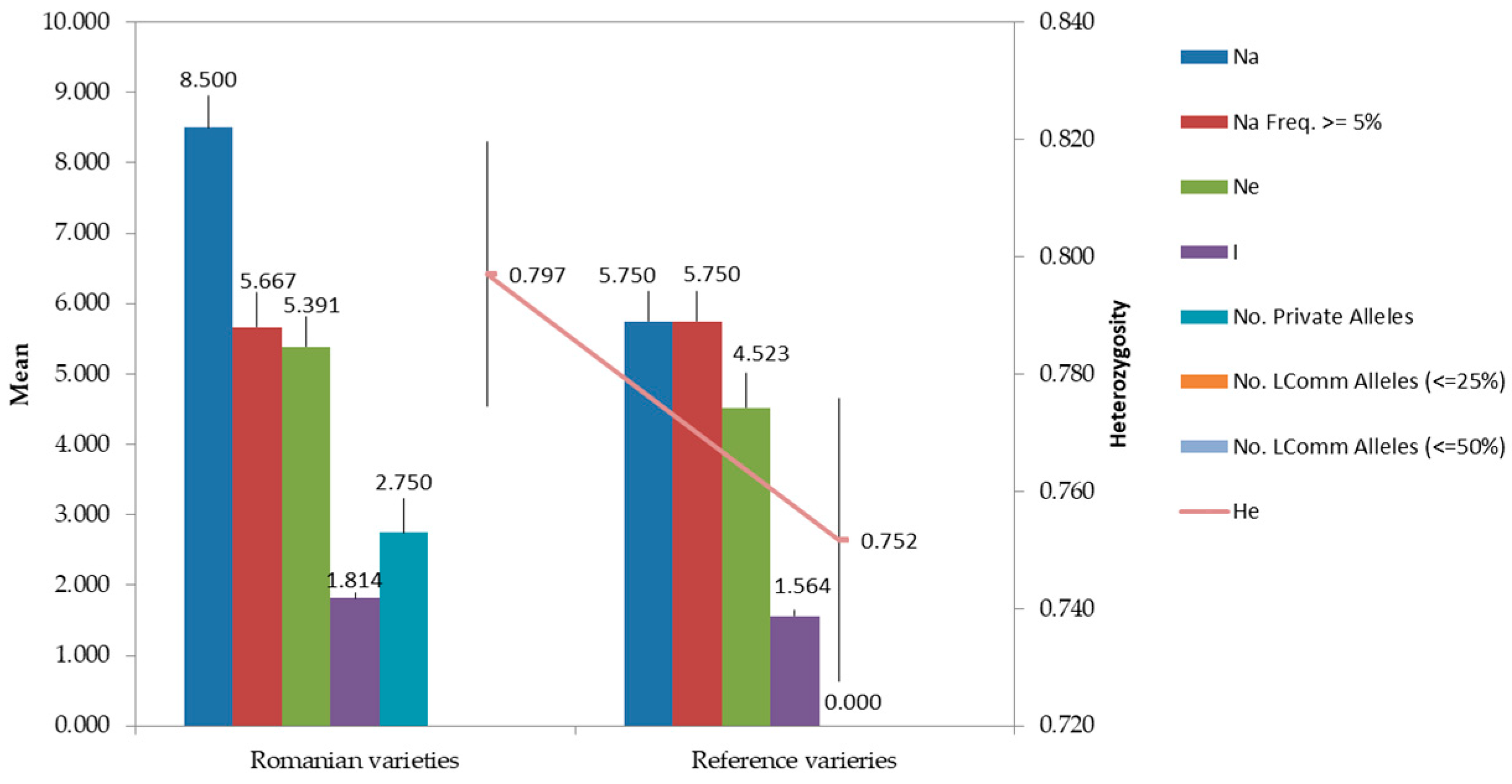
The sizes of the identified alleles, expressed in base pairs (bp), and allele frequencies for each SSR marker are presented in Supplementary Figures S1–S12. The results for the analyzed loci indicate that at least one allele with a frequency greater than 0.20 (20%) was identified at each SSR locus, as shown in Figures S1–S12. In addition, allelic patterns for codominant data analysis were used to examine the distribution and allele frequencies at SSR loci, highlighting common and private alleles among the analyzed Romanian grapevine varieties and the international reference varieties (Figure 1).
Thus, the mean number of different alleles (Na) for Romanian grapevines was higher than that of the varietal references, 8.50 versus 5.75. In contrast, the values for alleles with a frequency of more than 5% were comparable between the two groups (5.667 and 5.750, respectively) (Figure 1).
Regarding the number of private alleles, Romanian grapevine varieties had an average of 2.75 private alleles, compared with the reference varieties. The list of Romanian grapevine varieties with one or more private alleles at each SSR locus is provided in Supplementary Table S3.
No common alleles with a frequency of 5% or higher are found in at least 25% or 50% of the grapevines in the two analyzed groups (Romanian grapevines vs. grapevine cultivars used as reference varieties), as shown in Figure 1.

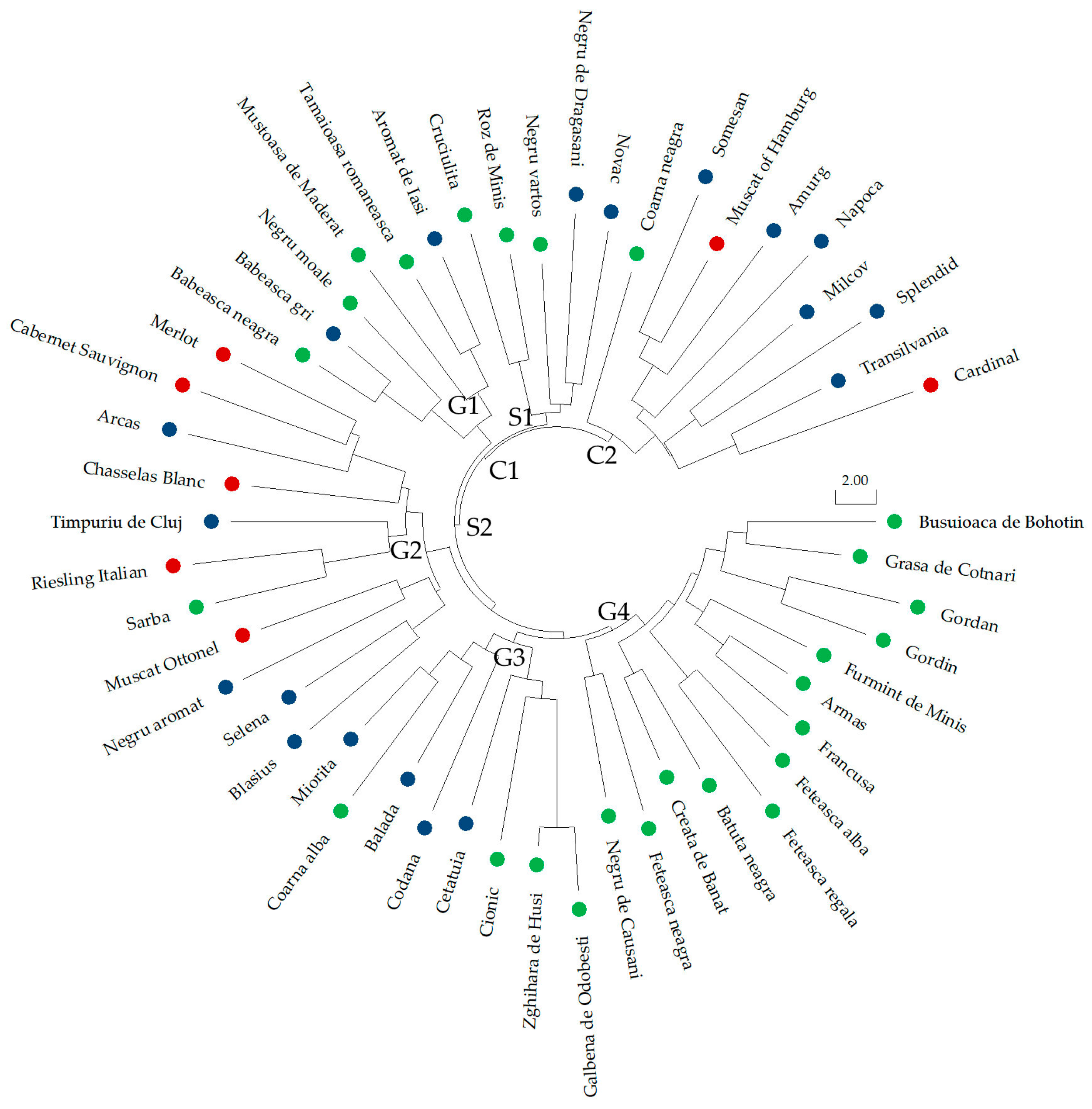
3.2. Evaluation of Genetic Relationships Using SSR Markers

A Neighbor-joining (NJ) distance tree was constructed to examine the genetic relationships among 52 grapevine varieties at 12 analyzed SSR loci. As shown in Figure 2, the dendrogram included two major clusters (C1 and C2). The first cluster comprises two main sub-clusters (S1; S2) and includes 43 grapevine varieties. It is worth noting that while the first main sub-cluster comprises five wine-producing varieties, including three traditional Romanian varieties (‘Cruciuliță’, ‘Roz de Miniș’, and ‘Negru vîrtos’) and two newly developed varieties (‘Novac’ and ‘Negru de Căușani’), the second main sub-cluster comprises four named groups (G1–4) totaling 38 grapevine varieties, which serve different purposes, such as wine production, table grape production, or both. Of these, 21 are traditional varieties, 12 are newly developed varieties, and five are international reference cultivars. While groups 1 and 3 include both traditional and newly developed grape varieties, group 4 consists of traditional grapevine varieties considered to have been grown in Romania since ancient times. Group 2 of the second main subcluster (S2) includes international cultivars such as ‘Merlot’, ‘Cabernet Sauvignon’, ‘Chardonnay’, ‘Riesling Italian’, and ‘Muscat Ottonel’, as well as newly developed varieties: ‘Arcaş’, ‘Timpuriu de Cluj’, ‘Șarba’, ‘Negru aromat’, ‘Selena’, and ‘Blasius’.
As shown in Figure 2, the second main group (Cluster 2) of the dendrogram includes several newly developed varieties such as ‘Someşan’, ‘Napoca’, ‘Splendid’, and ‘Transilvania’, created for table grape production, as well as ‘Amurg’, a grapevine variety used for wine production, along with two international varieties: ‘Muscat of Hamburg’ and ‘Cardinal’, both recognized for use in wine and table grape production. Notably, the ‘Coarnă neagră’, variety can be considered an outlier within this group.
In summary, the cluster analysis did not reveal a clear separation of the analyzed grapevine varieties, either by utilization (wine, table, or dual-purpose) or by historical status (traditional or newly developed). Notably, all seven international reference varieties used in this study were included in the first main cluster (C1) (group 2) and second main cluster (C2), along with newly developed varieties.
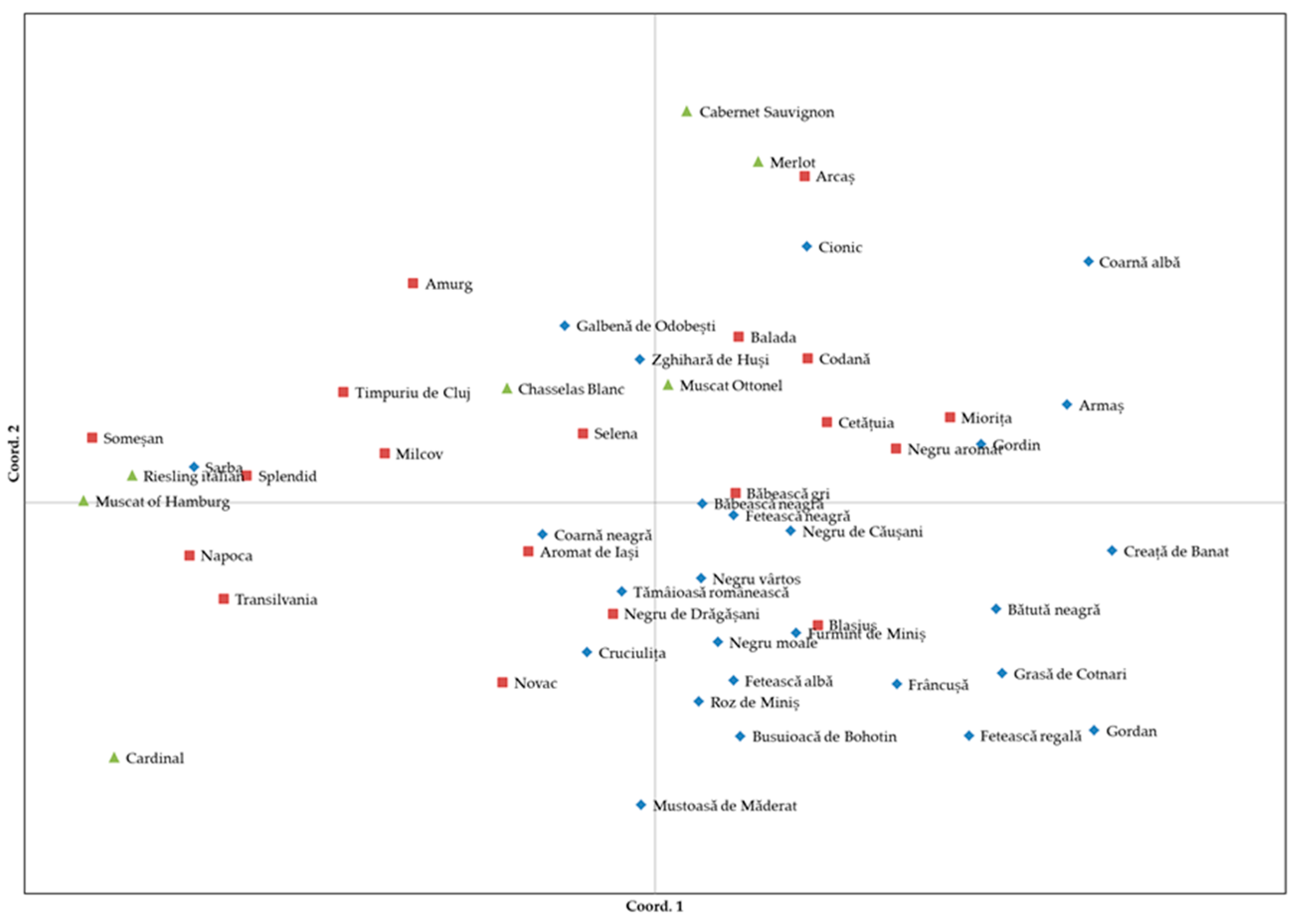
To assess genetic diversity among the analyzed grapevine genotypes, a distance-based PCoA was conducted using SSR analysis results from 12 SSR primer sets (Figure 3).
The first two principal coordinates (PCo) accounted for 17% of the total genetic variation, with PCo1 explaining 9% and PCo2 explaining 8%. As shown in Figure 3, the PCoA did not reveal a clear separation among genotypes according to their usage or historical status. Samples from the traditional and newly created Romanian varieties largely overlapped in the bidimensional space defined by the first two principal coordinates. Nevertheless, a weak but noticeable trend was observed, with more than half of the grape samples clustering toward positive values along PCo2. It is important to note that the first two PCoA axes explain only 17% of the total variation. This indicates that a complex of factors may influence the genetic relationships among genotypes, which are not fully captured in the two-dimensional plot.
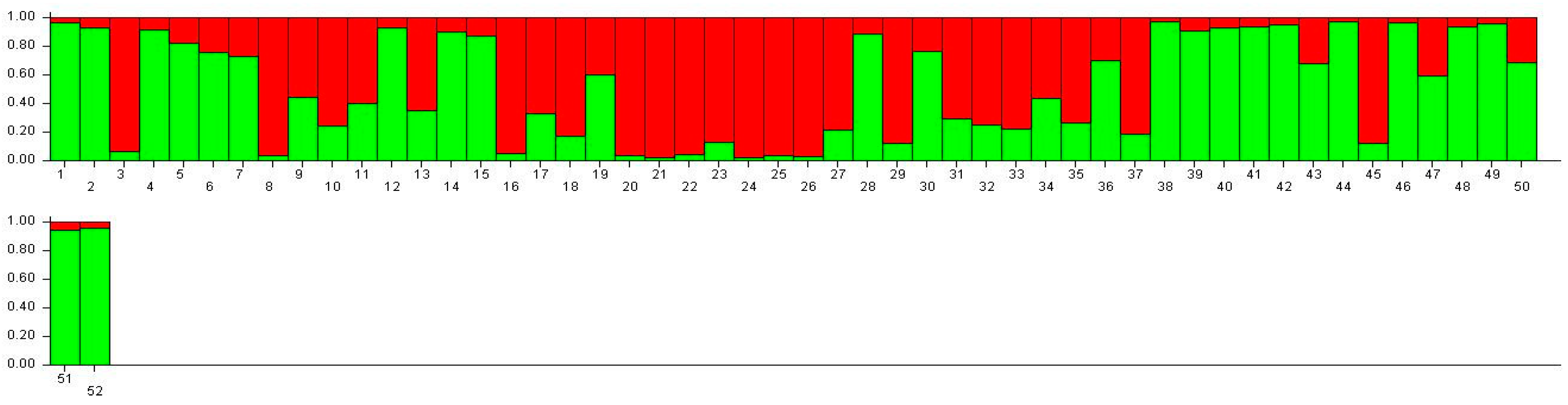
To understand relationships among grapevine varieties, population structure was analyzed using STRUCTURE v.2.3.4. The optimal cluster number (K) for 52 genotypes was 2, based on the highest LnP(K) and delta K in Structure Selector (see Supplementary files Figures S13 and S14). A Q-value threshold of 0.85 [40] assigned genotypes to SSR-group 1 and SSR-group 2 under K = 2. The inferred ancestry of grapevine genotypes, based on the membership coefficient (Q), is presented in the Supplementary files as Table S4. As shown in Figure 4, 12 grapevine genotypes (23.07%) were assigned to SSR-group 1 and 18 (34.61%) to SSR-group 2.
SSR-group 1 comprised 12 traditional Romanian grapevine varieties, historically cultivated for wine production—such as ‘Bătută neagră’, ‘Creaţă de Banat’, ‘Fetească regală’, ‘Frâncuşă’, ‘Furmint de Miniş’, ‘Galbenă de Odobeşti’, ‘Gordan’, ‘Gordin’, ‘Grasă de Cotnari’, ‘Mustoasă de Măderat’, and ‘Zghihară de Huşi’—or for wine and table grape production like ‘Armaş’.
SSR group 2 includes 11 Romanian grape varieties with different uses: five for wine (‘Selena’, ‘Șarba’, ‘Amurg’, ‘Arcaș’, ‘Codană’), five for table grapes (‘Milcov’, ‘Splendid’, ‘Transilvania’, ‘Someșan’, ‘Timpuriu de Cluj’), and ‘Aromat de Iași’ for dual purposes. It also features five international wine cultivars (‘Cabernet Sauvignon’, ‘Merlot’, ‘Riesling Italian’, ‘Chasselas Blanc’), one dual-purpose (‘Muscat of Hamburg’), and two traditional Romanian varieties (‘Cionic’; ‘Coarnă neagră’) used for both wine and table grapes.
The remaining 42.32% of genotypes were admixed, including two international cultivars (‘Cardinal’ and ‘Muscat Ottonel’) and nine Romanian varieties—seven for wine (‘Băbească gri’, ‘Balada’, ‘Blasius’, ‘Novac’, ‘Mioriţa’, ‘Negru aromat’, ‘Negru de Drăgăşani’) and two for table grapes (‘Cetăţuia’ and ‘Napoca’). It also includes 11 traditional Romanian varieties: ‘Băbească neagră’ for dual purposes, and ‘Busuioacă de Bohotin’, ‘Coarnă albă’, ‘Cruciuliţa’, ‘Fetească albă’, ‘Fetească neagră’, ‘Tămâioasă românească’, ‘Roz de Miniş’, ‘Negru de Căuşani’, ‘Negru moale’, ‘Negru vîrtos’ for wine production.
The Bayesian clustering results of 52 grapevine varieties for assumed K = 2 are presented in Figure 4. In addition, the number of clusters generated by CLUMPAK clustering visualization is shown in Figure S15.
Structural analysis of 52 grapevine varieties used in this study reveals genetic diversity among them and heterogeneous SSR-group structures. The STRUCTURE analysis at K = 2 did not clearly separate varieties by use or historical status: SSR-group 1 is composed entirely of traditional wine varieties, except Armas, which is used for dual purposes (W/T), but SSR-group 2 and the admixed group are heterogeneous, including varieties that are traditional and newly developed, with wine, table, or dual-purpose usage.

4. Discussion

Although various research teams have raised concerns about analyzing Romanian grapevine germplasm with SSRs [4,20,41,42], the evaluation of Romanian grapevine heritage conserved in germplasm collections, especially in collections with didactic activities, remains an ongoing project.
The ampelographic collection at Life Science University of Iași serves as a “living laboratory,” providing a critical pedagogical foundation for studying grapevine diversity through traditional ampelographic methods and modern biotechnological approaches. The genetic structure and diversity indices observed in this study are the direct result of a purposeful curation history. Established in 1985 and listed in the international catalog since 1994, the collection has been systematically expanded each year, with new creations emerging from breeding programs in Romania or neighboring countries. Furthermore, the collection explicitly seeks to diversify the “varietal conveyor” of economically important table and wine grape varieties, with the objective of optimizing harvest timing and quality in response to the increasing unpredictability of weather patterns.
Currently, it is essential to characterize and preserve valuable varieties within the didactic collection. This is especially important given the global preference for a small number of elite cultivars renowned for wine production, as well as the impact of globalization and market forces, which have caused uniformity and a decline in grape biodiversity [43]. In this context, assessing the genetic diversity of economically important varieties is crucial for protecting and using grapevine genetic resources in Romanian ampelographic collections as a legacy for future generations.

4.1. Assessment of the Genetic Diversity by SSR Molecular Markers

In the present study, a set of 12 Vitis-based SSR markers was used to assess the genetic relationships among 52 grape varieties in a didactic ampelographic collection from Romania. Regarding the effectiveness of SSR markers, the genotypes were successfully amplified with all SSR markers (with some small technical problems of VVS5 amplification), and the expected allele sizes in base pairs fell within the range reported in previous studies [10,12,20,44,45]. Loci recommended [25] and used in genotyping of the world’s largest germplasm collection [46], in our study, proved to be equally effective; e.g., the most informative locus was VVMD28. In this study, the VVMD28 locus exhibited 11 alleles, the highest among all loci, consistent with previous studies of Romanian grapevine germplasm [4,20]. The lowest number of alleles was observed in VVS29, with five alleles per locus. This value was also reported by [45], who analyze the molecular biodiversity of grapevine samples from El Hierro Island (Spain) using 20 SSR markers.
In this study, the number of total alleles (Na) was 102, averaging 8.50 (Table 2, Section 3). This aligns with Popescu and Crespan [20], who analyzed 50 grapevine varieties from the ex situ NRDIBH collection at Ștefăneşti (Romania) using 13 SSR markers, reporting 112 alleles with an average of 8.62 per locus.
Although most grapevine varieties are self-fertilizing, they remain highly heterozygous, as also confirmed in this paper. For six of the twelve SSR markers, Ho exceeded He. Similar patterns are reported in numerous studies [12,47,48,49]. The average He was higher than Ho. These results are in line with those of other studies [50,51], which suggested high gene diversity among the analyzed grapevine genotypes.
The average PIC value of 0.779 demonstrates the efficiency of the 12 SSR markers used in assessing genetic diversity among the analyzed grapevine varieties in the present study. Our results are very similar to those reported by [52,53]. Moreover, in the analysis of Romanian germplasm using SSR markers, our results are in line with those reported by [20] (mean PIC value of 0.742) and by [4] (mean PIC value of 0.741).
Shannon’s information index (I) values indicate that the analyzed grapevine varieties exhibit genetic diversity, consistent with other research [50,54]. The F (null) parameter (Table 2; Section 3) can help identify allele amplification problems during genotyping or detect deletions of target sequences [55]. Notably, the frequency of the null allele (F null) was negative for eight out of 12 SSRs, with only lower positive values (0.05 or less) observed in SSR markers VVMD7, VVMD32, and VrZAG47. Although the VVS5 marker is recommended by the OIV (International Organisation of Vine and Wine) for worldwide Vitis data analysis, in this study, the frequency of null alleles at the SSR marker VVS5 (0.2064) can suggest their presence, despite the high number of alleles (8). The presence of null alleles is a problem for pedigree reconstruction in viticulture, as Jahnke et al. suggest [56]. In this context, and based on the VVS5 results recorded in this study, the choice of this SSR marker for pedigree and parental analyses, where a clear distinction between homo- and heterozygous genotypes is crucial, must be made with prudence.

4.2. Evaluation of Genetic Relationships Based on SSR Markers

Understanding genetic diversity and relatedness among grapevine varieties is crucial for identifying gene pools [50]. Without detailed information on the genetic relationships among most varieties, identifying the most accurate clustering method for grape germplasm characterization is challenging. Thus, the application of multivariate analysis based on multiple clustering criteria can be essential to ensure that genetic relationship results are consistent [57].
In the context of the present study’s results, NJ clustering indicates that certain traditional grapevine varieties (‘Busuioacă de Bohotin’, ‘Grasă de Cotnari’, ‘Gordan’, ‘Gordin’, ‘Furmint de Miniş’, ‘Armaş’, ‘Frâncuşă’, ‘Fetească albă’, ‘Fetească regală’, ‘Bătută neagră’, ‘Creaţă de Banat’, ‘Fetească neagră’ and ‘Negru de Căuşani’), considering that they have been cultivated in Romania since ancient times, are grouped together. They are maintained in Romanian ampelographic collections and considered valuable old varieties [21].
Conversely, the NJ cluster analysis did not reveal a distinct division of grapevine varieties based on use (wine, table, or dual-purpose) or historical classification (traditional or newly created varieties). As in other previously reported studies on grapevine germplasm characterization [57,58,59], controversial SSR-based clustering results may arise from gaps in genetic relatedness information. Thus, in Romania, a wide range of grapevine varieties, which evolved through natural selection and the efforts of numerous generations of growers, have origins that are sometimes unclear [8]. Moreover, recording grape varieties during the pre-phylloxera period was challenging because the 1884 phylloxera outbreak destroyed many unique local biotypes, and some information about their genetic relationships was lost [60]. In the post-phylloxera period, modern breeding programs aimed to develop new varieties from valuable descendants through complex hybridizations that included well-known and valuable international cultivars [61,62]. The findings of the present study suggest that preserving the gene pools of the presumably traditional Romanian varieties and maintaining them as a distinct genetic core group (as suggested by the SSR-group 1 STRUCTURE and NJ cluster analysis) in the didactic collection from ULS Iaşi is crucial for future comparative studies based on molecular markers. The grapevine varieties from SSR Group 2 and the mixed group show a heterogeneous structure, with grapevine varieties of different uses and historical statuses interspersed. This observation suggests a long history of selection and improvement, during which gene flow between use categories was exploited in breeding activities. The low variation explained by the PCoA axes (17% cumulative) is justified by this heterogeneity. The “dispersed” individuals on the PCoA plot reflect the mixed nature of these genotypes, which combine diverse genetic characters, making it impossible to group them into a single historical or functional category.
Moreover, this study analyzed 19 new Romanian-developed grape varieties alongside 26 traditional ones. Including these varieties is important because they are economically valuable for production of high-quality wines and table grape production; [63,64]. Developed through hybridization, newly developed Romanian varieties highlight their high yield potential and valuable climate resilience [65]. As a finding, thirteen newly developed varieties, ‘Amurg’, ‘Aromat de Iaşi’, ‘Arcaş’, ‘Băbească gri’, ‘Blasius’, ‘Balada’, ‘Cetăţuia’, ‘Milcov’, ‘Mioriţa’, ‘Napoca’, ‘Someşan’, ‘Selena’, and ‘Transilvania’, that, to our knowledge, have not yet been characterized, were analyzed at the molecular level using SSR markers.
Previous studies have analyzed the genetic diversity of Romanian grapevine germplasm collections using SSR markers [4,17,41,42,66]. However, to our knowledge, no documentation of relationships among Romanian grapevine varieties, based on population structure, exists.

5. Conclusions

The present study highlights the genetic relationships among 52 grapevine varieties held in a small didactic ampelographic collection and their genetic diversity, assessed by multivariate analysis. The high proportion of admixed genotypes (42.32%) may reflect complex pedigrees and the migration of grapevine varieties across a wider territory surrounding Romania. Given the study’s limitations, the present research may be considered a starting point for future studies in Romania on the genetic structure and parental analysis of grapevine varieties held in small didactic collections, aiming to characterize and maintain as many grapevine varieties as possible under secure conditions for future generations.

Supplementary Materials

The following supporting information can be downloaded at https://www.mdpi.com/article/10.3390/agriculture16050605/s1, Figures S1–S12: Allele sizes and allele frequencies generated at loci VVS2; VVMD5; VVMD7; VVMD25; VVMD27; VVMD28; VVMD32; VrZAG62; VrZAG79; VVS5; VVS29 and VrZAG47; Figures S13: A capture of the results for the Evanno table output; Figure S14: The best K value used (K = 2) was determined by calculating ln(K) (a) and ΔK (b) using STRUCTURE SELECTOR; Figure S15: CLUMPAK clustering visualization of the structure results at assumed K = 2 for 52 analyzed grapevine genotypes. Notes: The numbers in the Bayesian clustering results correspond to the grapevine sample codes in Table 1. Each variety is represented by a vertical column colored according to the Q coefficient and the corresponding original population. Table S1: The annealing temperatures for each SSR primer set used in the analysis of 52 grapevine varieties; Table S2: The SSR genetic profiles obtained with a set of 12 SSR markers for 52 gravevine varieties; Table S3: List of Romanian grapevine varieties with one or more private alleles generated using GenAlEx version 6.503 software; Table S4: The inferred ancestry of grapevine genotypes based on membership coefficient (Q).

Author Contributions

Conceptualization, M.H. and L.R.; methodology, M.H.; software, M.H. and G.D.L.; validation, M.H., L.C.C. and D.C.; formal analysis, L.R.; investigation, M.H.; resources, M.H. and L.R.; data curation, M.H.; writing—original draft preparation, M.H.; writing—review and editing, M.H.; visualization, D.C.; supervision, L.C.C.; project administration, M.H.; funding acquisition, M.H. and L.R. All authors have read and agreed to the published version of the manuscript.

Funding

Romanian Ministry of Agriculture and Rural Development, grant number ADER 6.1.7./2023.

Institutional Review Board Statement

Not applicable.

Data Availability Statement

The original contributions presented in this study are included in the article and Supplementary Material. For further inquiries, please contact the corresponding authors.

Conflicts of Interest

The authors declare no conflicts of interest.

References

  1. Dokupilová, I.; Šturdík, E.; Mihálik, D. Characterization of Vine Varieties by SSR Markers. Acta Chim. Slovaca 2013, 6, 227–234. [Google Scholar] [CrossRef][Green Version]
  2. Bibi, A.C.; Gonias, E.D.; Doulis, A.G. Genetic Diversity and Structure Analysis Assessed by SSR Markers in a Large Collection of Vitis Cultivars from the Island of Crete, Greece. Biochem. Genet. 2020, 58, 294–321. [Google Scholar] [CrossRef] [PubMed]
  3. Almanza Cano, A.; Ignacio-Cárdenas, S.; Pisconte Vilca, J.A.; Campos Felix, U.; Santolalla Ruiz, S.H.; Aybar Peve, L.J.; Ibáñez, J.; Zolla, G.; Tello, J. The Genetic Characterization of Grapevine Genetic Resources in Peru Identifies Novel Criolla Varietal Genotypes. Aust. J. Grape Wine Res. 2025, 2025, 1886959. [Google Scholar] [CrossRef]
  4. Dumitru, A.M.I.; Manolescu, A.E.; Sumedrea, D.I.; Popescu, C.F.; Cosmulescu, S. Genetic Diversity of Some Autochthonous White Grape Varieties from Romanian Germplasm Collections. Czech J. Genet. Plant Breed. 2023, 59, 55–66. [Google Scholar] [CrossRef]
  5. Cretazzo, E.; Sanz, P.M.; Lorenzi, S.; Benítez, M.L.; Velasco, L.; Emanuelli, F. Genetic Characterization by SSR Markers of a Comprehensive Wine Grape Collection Conserved at Rancho de La Merced (Andalusia, Spain). Plants 2022, 11, 1088. [Google Scholar] [CrossRef]
  6. González, R.; Vargas, A.M.; Garnatje, T.; Vallès, J.; de Andrés, M.T. Exploring Diversity among Grapevines Varieties (Vitis vinifera L.) in Ibiza and Formentera (Balearic Islands, Spain) Using Microsatellite Markers, Ampelographic Methods and an Ethnobotanical Approach. Horticulturae 2023, 9, 1307. [Google Scholar] [CrossRef]
  7. Merkouropoulos, G.; Doupis, G. Can Molecular Ampelography Identify a Grapevine Variety in the Absence of Any Ampelographic Inputs? J. Agric. Sci. 2025, 17, 18. [Google Scholar] [CrossRef]
  8. Popescu, C.F. Strategii Şi Principii Pentru Conservarea Resurselor Genetice Viticole În Colecţii Ex Situ; Editura Universităţii din Piteşti: Pitești, Romania, 2018; ISBN 9786065606036. [Google Scholar]
  9. This, P.; Lacombe, T.; Thomas, M.R. Historical Origins and Genetic Diversity of Wine Grapes. Trends Genet. 2006, 22, 511–519. [Google Scholar] [CrossRef]
  10. Grando, M.S.; Frisinghelli, C. Grape Microsatellite Markers: Sizing of DNA Alleles and Genotype Analysis of Some Grapevine Cultivars. Vitis 1998, 37, 79–82. [Google Scholar]
  11. Grassi, F.; Labra, M.; Imazio, S.; Spada, A.; Sgorbati, S.; Scienza, A.; Sala, F. Evidence of a Secondary Grapevine Domestication Centre Detected by SSR Analysis. Theor. Appl. Genet. 2003, 107, 1315–1320. [Google Scholar] [CrossRef]
  12. Martínez, L.E.; Cavagnaro, P.F.; Masuelli, R.W.; Zúñiga, M. SSR-Based Assessment of Genetic Diversity in South American Vitis vinifera Varieties. Plant Sci. 2006, 170, 1036–1044. [Google Scholar] [CrossRef]
  13. Hârta, M.H.; Pamfil, D. Molecular Characterisation of Romanian Grapevine Cultivars Using Nuclear Microsatellite Markers. Bull. Univ. Agric. Sci. Vet. Med. Cluj-Napoca Hortic. 2013, 70, 131–136. [Google Scholar]
  14. Taheri, F.; Darzi Ramandi, H. Microsatellite Markers Analysis for the Genetic Characterization and Relationships among Some of Iranian Local Grapevine Accessions (Vitis vinifera L.). Int. J. Fruit Sci. 2020, 20, S387–S404. [Google Scholar] [CrossRef]
  15. de Oliveira, G.L.; de Souza, A.P.; de Oliveira, F.A.; Zucchi, M.I.; de Souza, L.M.; Moura, M.F. Genetic Structure and Molecular Diversity of Brazilian Grapevine Germplasm: Management and Use in Breeding Programs. PLoS ONE 2020, 15, e0240665. [Google Scholar] [CrossRef] [PubMed]
  16. Gheorghe, R.N.; Popescu, C.F.; Pamfil, D. Microsatellite Fingerprinting of Some Vitis vinifera L Cultivars Grown in Romania. Bull. Univ. Agric. Sci. Vet. Med. Cluj-Napoca. Hortic. 2008, 65, 674. [Google Scholar]
  17. Coste, A.; Postolache, D.; Popescu, F.; Butiuc-Keul, A.L. Authentication of Valuable Grapevine Varieties from Romania through Molecular Markers. Rom. Biotechnol. Lett. 2010, 15, 3–10. [Google Scholar]
  18. Gheorghe, R.N.; Popescu, C.F.; Pamfil, D.; Ciocirlan, C.N.; Sestras, R. Genetic Diversity of Some Romanian Grapevine Cultivars as Revealed by Microsatellite Markers. Rom. Biotechnol. Lett. 2010, 15, 26–31. [Google Scholar]
  19. Maul, E.; Töpfer, R.; Carka, F.; Cornea, V.; Crespan, M.; Dallakyan, M.; De Andrés Domínguez, T.; De Lorenzis, G.; Dejeu, L.; Goryslavets, S.; et al. Identification and Characterization of Grapevine Genetic Resources Maintained in Eastern European Collections. Vitis-J. Grapevine Res. 2015, 54, 5–12. [Google Scholar]
  20. Popescu, C.F.; Crespan, M. Combining Microsatellite Markers and Ampelography for Better Management of Romanian Grapevine Germplasm Collections. Not. Sci. Biol. 2018, 10, 193–198. [Google Scholar] [CrossRef]
  21. Coţovanu, R.; Rotaru, L. The Ampelographic Collection Belonging to the Faculty of Horticulture Iasi, as Viticultural Source of Germplasm. Lucr. Ştiinţ. USAMV Iaşi Ser. Hortic. 2011, 54, 455–460. [Google Scholar]
  22. Lodhi, M.A.; Ye, G.; Weeden, N.F.; Reisch, B.I. A Simple and Efficient Method for DNA Extraction from Grapevine Cultivars and Vitis species. Plant Mol. Biol. 1994, 12, 6–13. [Google Scholar] [CrossRef]
  23. Pop, R.; Ardelean, M.; Pamfil, D.; Gaboreanu, I.M. The efficiency of different DNA isolation and purification protocols in ten cultivars of Vitis vinifera. Bul. Univ. Științe Agric. și Med. Vet. Cluj-Napoca Ser. Zooteh. și Biotehnol. 2003, 59, 259–261. [Google Scholar]
  24. Bodea, M.; Pamfil, D.; Pop, R.; Sisea, C.R. DNA Isolation from Desiccated Leaf Material for Plum Tree (Prunus domestica L.) Molecular Analysis. Bull. UASVM Hortic. 2016, 73, 5–6. [Google Scholar] [CrossRef] [PubMed]
  25. Maul, E.; Sudharma, K.N.; Kecke, S.; Marx, G.; Müller, C.; Audeguin, L.; Boselli, M.; Boursiquot, J.M.; Bucchetti, B.; Cabello, F.; et al. The European Vitis Database (Www.Eu-Vitis.de)—A Technical Innovation through an Online Uploading and Interactive Modification System E. Vitis-J. Grapevine Res. 2012, 51, 79–85. [Google Scholar]
  26. Thomas, M.R.; Matsumoto, S.; Cain, P.; Scott, N.S. Repetitive DNA of Grapevine: Classes Present and Sequences Suitable for Cultivar Identification. Theor. Appl. Genet. 1993, 86, 173–180. [Google Scholar] [CrossRef]
  27. Crespan, M.; Botta, R.; Milani, N. Molecular Characterization of Twenty Seeded and Seedless Table Grape Cultivars (Vitis vinifera L.). Vitis 1999, 38, 87–92. [Google Scholar]
  28. Sefc, K.M.; Regner, F.; Turetschek, E.; Glössl, J.; Steinkellner, H. Identification of Microsatellite Sequences in Vitis Riparia and Their Applicability for Genotyping of Different Vitis Species. Genome 1999, 42, 367–373. [Google Scholar] [CrossRef]
  29. Pollefeys, P.; Bousquet, J. Molecular Genetic Diversity of the French-American Grapevine Hybrids Cultivated in North America. Genome 2003, 46, 1037–1048. [Google Scholar] [CrossRef]
  30. Kozjak, P.; Korošec-Koruza, Z.; Javornik, B. Characterisation of Cv. Refošk (Vitis vinifera L.) by SSR Markers. Vitis 2003, 42, 83–86. [Google Scholar]
  31. Peakall, R.; Smouse, P.E. GenALEx 6.5: Genetic Analysis in Excel. Population Genetic Software for Teaching and Research-an Update. Bioinformatics 2012, 28, 2537–2539. [Google Scholar] [CrossRef]
  32. Kalinowski, S.T.; Taper, M.L.; Marshall, T.C. Revising How the Computer Program CERVUS Accommodates Genotyping Error Increases Success in Paternity Assignment. Mol. Ecol. 2007, 16, 1099–1106. [Google Scholar] [CrossRef]
  33. Kumar, S.; Stecher, G.; Suleski, M.; Sanderford, M.; Sharma, S.; Tamura, K. MEGA12: Molecular Evolutionary Genetic Analysis Version 12 for Adaptive and Green Computing. Mol. Biol. Evol. 2024, 41, msae263. [Google Scholar] [CrossRef] [PubMed]
  34. Saitou, N.; Nei, M. The Neighbor-Joining Method: A New Method for Reconstructing Phylogenetic Trees. Mol. Biol. Evol. 1987, 4, 406–425. [Google Scholar] [CrossRef] [PubMed]
  35. Pritchard, J.K.; Stephens, M.; Donnelly, P. Inference of Population Structure Using Multilocus Genotype Data. Genetics 2000, 155, 945–959. [Google Scholar] [CrossRef] [PubMed]
  36. Riaz, S.; De Lorenzis, G.; Velasco, D.; Koehmstedt, A.; Maghradze, D.; Bobokashvili, Z.; Musayev, M.; Zdunic, G.; Laucou, V.; Walker, M.A.; et al. Genetic Diversity Analysis of Cultivated and Wild Grapevine (Vitis vinifera L.) Accessions around the Mediterranean Basin and Central Asia. BMC Plant Biol. 2018, 18, 137. [Google Scholar] [CrossRef]
  37. Evanno, G.; Regnaut, S.; Goudet, J. Detecting the Number of Clusters of Individuals Using the Software STRUCTURE: A Simulation Study. Mol. Ecol. 2005, 14, 2611–2620. [Google Scholar] [CrossRef]
  38. Li, Y.L.; Liu, J.X. StructureSelector: A Web-Based Software to Select and Visualize the Optimal Number of Clusters Using Multiple Methods. Mol. Ecol. Resour. 2018, 18, 176–177. [Google Scholar] [CrossRef]
  39. Kopelman, N.M.; Mayzel, J.; Jakobsson, M.; Rosenberg, N.A.; Mayrose, I. Clumpak: A Program for Identifying Clustering Modes and Packaging Population Structure Inferences across K. Mol. Ecol. Resour. 2015, 15, 1179–1191. [Google Scholar] [CrossRef]
  40. Bacilieri, R.; Lacombe, T.; Le Cunff, L.; Di Vecchi-Staraz, M.; Laucou, V.; Genna, B.; Péros, J.P.; This, P.; Boursiquot, J.M. Genetic Structure in Cultivated Grapevines Is Linked to Geography and Human Selection. BMC Plant Biol. 2013, 13, 25. [Google Scholar] [CrossRef]
  41. Popescu, C.F.; Maul, E.; Dejeu, L.C.; Dinu, D.; Gheorge, R.N.; Laucou, V.; Lacombe, T.; Migliaro, D.; Crespan, M. Identification and Characterization of Romanian Grapevine Genetic Resources. Vitis-J. Grapevine Res. 2017, 56, 173–180. [Google Scholar] [CrossRef]
  42. Dumitru, A.M.I.; Crespan, M.; Minto, A.; Popescu, C.F.; Manolescu, A.E.; Sumedrea, D.I.; Cosmulescu, S.N. Identification and Characterization of New Vitis vinifera L. Accessions from Romanian Germplasm. Vitis-J. Grapevine Res. 2024, 63. [Google Scholar] [CrossRef]
  43. Žulj Mihaljević, M.; Maletić, E.; Preiner, D.; Zdunić, G.; Bubola, M.; Zyprian, E.; Pejić, I. Genetic Diversity, Population Structure, and Parentage Analysis of Croatian Grapevine Germplasm. Genes 2020, 11, 737. [Google Scholar] [CrossRef] [PubMed]
  44. Adam-Blondon, A.F.; Roux, C.; Claux, D.; Butterlin, G.; Merdinoglu, D.; This, P. Mapping 245 SSR Markers on the Vitis vinifera Genome: A Tool for Grape Genetics. Theor. Appl. Genet. 2004, 109, 1017–1027. [Google Scholar] [CrossRef] [PubMed]
  45. Fort, F.; Lin-Yang, Q.; Suárez-Abreu, L.R.; Sancho-Galán, P.; Canals, J.M.; Zamora, F. Study of Molecular Biodiversity and Population Structure of Vitis vinifera L. ssp. Vinifera on the Volcanic Island of El Hierro (Canary Islands, Spain) by Using Microsatellite Markers. Horticulturae 2023, 9, 1297. [Google Scholar] [CrossRef]
  46. Lacombe, T.; Boursiquot, J.M.; Laucou, V.; Di Vecchi-Staraz, M.; Péros, J.P.; This, P. Large-Scale Parentage Analysis in an Extended Set of Grapevine Cultivars (Vitis vinifera L.). Theor. Appl. Genet. 2013, 126, 401–414. [Google Scholar] [CrossRef]
  47. Carimi, F.; Mercati, F.; Abbate, L.; Sunseri, F. Microsatellite Analyses for Evaluation of Genetic Diversity among Sicilian Grapevine Cultivars. Genet. Resour. Crop Evol. 2010, 57, 703–719. [Google Scholar] [CrossRef]
  48. Boz, Y.; Bakir, M.; Çelikkol, B.P.; Kazan, K.; Yilmaz, F.; Çakir, B.; Aslantasç, S.; Söylemezogcaron, G.; Yaşasin, A.S.; Özer, C.; et al. Genetic Characterization of Grape (Vitis vinifera L.) Germplasm from Southeast Anatolia by SSR Markers. Vitis-J. Grapevine Res. 2011, 50, 99–106. [Google Scholar]
  49. Yüksel Özmen, C.; Yilmaz Baydu, F.; Hazrati, N.; Uysal, T.; Yaşasin, A.S.; Özer, C.; Büyük, B.P.; Boz, Y.; Özünlü, B.; Ergül, A. Genetic Diversity and Population Structure Analysis of Grapevine Germplasm of the Aegean Region (Türkiye) by SSR Markers. Turkish J. Agric. For. 2023, 47, 1099–1114. [Google Scholar] [CrossRef]
  50. Margaryan, K.; Melyan, G.; Röckel, F.; Töpfer, R.; Maul, E. Genetic Diversity of Armenian Grapevine (Vitis vinifera L.) Germplasm: Molecular Characterization and Parentage Analysis. Biology 2021, 10, 1279. [Google Scholar] [CrossRef]
  51. Avramidou, E.V.; Masaoutis, I.; Pitsoli, T.D.; Kapazoglou, A.; Pikraki, M.; Trantas, E.A.; Nikolantonakis, M.; Doulis, A.G. Analysis of Wine-Producing Vitis vinifera L. Biotypes, Autochthonous to Crete (Greece), Employing Ampelographic and Microsatellite Markers. Life 2023, 13, 220. [Google Scholar] [CrossRef]
  52. Augusto, D.; Ib, J.; Pinto-sintra, A.L.; Leal, F.; Mart, M.; Oliveira, A.A.; Castro, I. Grapevine Diversity and Genetic Relationships in Northeast Portugal Old Vineyards. Plants 2021, 10, 2755. [Google Scholar] [CrossRef] [PubMed]
  53. Milišić, K.; Sivčev, B.; Štajner, N.; Jakše, J.; Matijašević, S.; Nikolić, D.; Popović, T.; Ranković-Vasić, Z. Ampelographic and Molecular Characterisation of Grapevine Varieties in the Gene Bank of the Experimental Vineyard ‘Radmilovac’—Serbia. OENO One 2021, 55, 129–144. [Google Scholar] [CrossRef]
  54. Vignani, R.; Scali, M.; Ciacci, A. Grapevine (Vitis vinifera L.) Germplasm from Siena (Italy) Includes Rare Strains and Reveals Population Structuring. Proc. Natl. Acad. Sci. India Sect. B-Biol. Sci. 2024, 94, 659–669. [Google Scholar] [CrossRef]
  55. Belmanaa, R.; Simozrag, A.; Laiadi, Z.; Gaad, D.; Khouane, A.C.; Olivotto, I.; Gerlin, A.; Migliaro, D. Discovery of New Autochthonous Grape Varieties in Khenchela (North-East Algeria), Using Molecular Markers and Morphological Characteristics. Vitis-J. Grapevine Res. 2025, 64. [Google Scholar] [CrossRef]
  56. Jahnke, G.; Smidla, J.; Barna, Á. The SSR Null Allele Problem, and Its Consequences in Pedigree Reconstruction and Population Genetic Studies in Viticulture. Horticulturae 2022, 8, 658. [Google Scholar] [CrossRef]
  57. de Oliveira, G.L.; Bettinelli, P.; Nicolini, D.; de Souza, A.P.; Furlan, M.F.M.; Stefanini, M.; Vezzulli, S. Exploring Genetic Diversity in North American Vitis Species: Screening for Resistance Loci and Implications for Utilization in Molecular Breeding Programs. Hortic. Environ. Biotechnol. 2025, 66, 1719–1740. [Google Scholar] [CrossRef]
  58. El Oualkadi, A.; Ater, M.; Messaoudi, Z.; Laucou, V.; Boursiquot, J.M.; Lacombe, T.; This, P. Molecular Characterization of Moroccan Grapevine Germplasm Using Ssr Markers for the Establishment of a Reference Collection. J. Int. Sci. Vigne Vin 2009, 43, 135–148. [Google Scholar] [CrossRef]
  59. De Lorenzis, G.; Maghradze, D.; Biagini, B.; Di Lorenzo, G.S.; Melyan, G.; Musayev, M.; Savin, G.; Salimov, V.; Chipashvili, R.; Failla, O. Molecular Investigation of Caucasian and Eastern European Grapevine Cultivars (V. vinifera L.) by Microsatellites. Vitis-J. Grapevine Res. 2015, 54, 13–16. [Google Scholar]
  60. Popa, A.; Tuțulescu, F. Aspects Concerning Results Obtained Through Improvement Activities Performed Upon Some Autochthonous and Foreign Vine Kinds. Ann. Univ. CRAIOVA Biol. Hortic. Food Prod. Process. Technol. Environ. Eng. 2024, 29, 388–397. [Google Scholar] [CrossRef]
  61. Harta, M.; Pamfil, D. The Current State of Characterization of Romanian Vitis vinifera L. Germplasm by Molecular Markers. Bull. Univ. Agric. Sci. Vet. Med. Cluj-Napoca. Hortic. 2014, 71, 173–179. [Google Scholar] [CrossRef][Green Version]
  62. Liviu, M.; Nicolae, G.; Carmen, P.; Ramona, C. Tradition and Quality of Romanian Viticulture. Ann. Univ. Craiova 2018, XXIII, 139–143. [Google Scholar]
  63. Bosoi, I.; Rotaru, L.; Puscalau, M.; Colibaba, C. Vine Varieties for White Wines in the Climate Context of the Odobesti Vineyard, Romania. J. Appl. Life Sci. Environ. 2022, 55, 62–74. [Google Scholar] [CrossRef]
  64. Filimon, R.; Damin, D.; Nechita, A.; Filimon, R. Studies on the Behavior of a New Wine Grape Hybrid Elite in the Climatic Conditions of the Copou-Iasi Viticultural Center. Rom. J. Hortic. 2021, 2, 131–136. [Google Scholar] [CrossRef]
  65. Buburuzanu, C.; Cotea, V.V.; Niculaua, M.; Moraru, I. Study of Physical-Chemical Parameters of Romanian White Grape Varieties and the Effect on Wine Quality. Lucr. Științifice Univ. Științe Agric. Și Med. Vet. Ion Ionescu Brad Iași Ser. Hortic. 2012, 55, 371–376. [Google Scholar]
  66. Bodea, M.; Pamfil, D.; Pop, R.; Pop, I.F. Use of Random Amplified Polymorphic DNA (RAPD) to Study Genetic Diversity among Romanian Local Vine (Vitis vinifera L.) Cultivars. Bull. UASVM. Hortic. 2009, 66, 17–22. [Google Scholar]
Figure 1. Allelic patterns (expressed as mean values) across the two analyzed groups: Na, number of different alleles; Na (Freq. ≥5%), number of different alleles with a frequency ≥5%; Ne, effective alleles; I, Shannon’s information index; No. Private Alleles, number of private alleles for one group; No. LComm Alleles (≤25%), number of locally common alleles (freq. ≥5%) that are present in no more than 25% (one-quarter) of the two groups being compared; No. LComm Alleles (≤50%), number of locally common alleles (freq. ≥5%) that are present in no more than 50% (half) of the two groups being compared; He, expected heterozygosity. Note: no alleles marked in orange or blue-light were identified in the two groups compared in this study.
Agriculture 16 00605 g001
Figure 2. Neighbor-joining dendrogram showing the genetic relationships among the 52 analyzed grapevine varieties based on 12 SSR loci. International reference varieties are marked with a red circle, traditional grapevine varieties with a green circle, and newly developed Romanian varieties with a blue circle. C1; C2-main clusters; S1, S2-subclusters; G1–G4.-groups.
Agriculture 16 00605 g002
Figure 3. Principal coordinate analysis (PCoA) of SSR markers among Romanian varieties, including the seven international reference cultivars. Note: International reference varieties are marked with a green triangle, traditional grapevine varieties with a blue diamond, and newly developed Romanian varieties with a red square.
Agriculture 16 00605 g003
Figure 4. Bayesian clustering results of 52 grapevine varieties obtained using STRUCTURE. Notes: The numbers in the Bayesian clustering results correspond to the grapevine sample codes in Table 1. Each variety is represented by a vertical column colored according to the Q coefficient and the corresponding original population.
Agriculture 16 00605 g004
Table 1. Vitis vinifera L. varieties analyzed in this study by SSR markers.
NoName
of Variety
Registered Code No.UtilizationNo.Name of VarietyRegistered Code No.Utilization
1Amurg *ROM 022-0006W27Mioriţa *ROM 022-0090W
2Arcaş *ROM 022-0008W28Milcov *ROM 022-0091T
3Armaş **ROM 022-0009W/T29Mustoasă de Măderat **ROM 022-0100W
4Aromat de Iaşi *ROM 022-0010W/T30Napoca *ROM 022-0101T
5Băbească gri *ROM 022-0013W31Negru aromat *ROM 022-0104W
6Băbească neagră **ROM 022-0014W/T32Negru de Căuşani **ROM 022-0105W
7Balada *ROM 022-0016W33Negru de Drăgăşani *ROM 022-0106W
8Bătută neagră **ROM 022-0019W34Negru moale **ROM 022-0107W
9Blasius *ROM 022-0025W35Negru vârtos **ROM 022-0108W
10Busuioacă de Bohotin **ROM 022-0027W36Novac *ROM 022-0109W
11Cetăţuia * ROM 022-0030T37Roz de Miniş **ROM 022-0127W
12Cionic ** ROM 022-0037W/T38Șarba **ROM 022-0133W
13Coarnă albă ** ROM 022-0038W/T39Selena *ROM 022-0140W
14Coarnă neagră ** ROM 022-0039T40Splendid *ROM 022-0145T
15Codană *ROM 022-0041W41Someşan *ROM 022-0146T
16Creaţă de Banat **ROM 022-0046W42Transilvania *ROM 022-0153T
17Cruciuliţa **ROM 022-0048W43Tămâioasă românească **ROM 022-0150W
18Fetească albă **ROM 022-0055W44Timpuriu de Cluj * ROM 022-0151W
19Fetească neagră **ROM 022-0056W45Zghihară de Huşi **ROM 022-0165W
20Fetească regală **ROM 022-0057W46Cabernet Sauvignon ***ROM 022-0028W
21Frâncuşă **ROM 022-0058W47Cardinal *** ROM 022-0029W/T
22Furmint de Miniş **ROM 022-0062W48Merlot ***ROM 022-0087W
23Galbenă de Odobesti **ROM 022-0063W49Muscat of Hamburg *** ROM 022-0096W/T
24Gordan **ROM 022-0069W50Muscat Ottonel ***ROM 022-0097W
25Gordin **ROM 022-0070W51Riesling Italian ***ROM 022-0162W
26Grasă de Cotnari **ROM 022-0071W52Chasselas Blanc ***ROM 022-0033W
Note: The following abbreviations were used: W—wine grapes; T—table grapes; W/T dual-purpose grapes. In the table, * indicates newly developed Romanian varieties; ** presumably traditional Romanian varieties; *** grapevine cultivars of international origin used as reference genotypes.
Table 2. Descriptive statistics of the 52 grapevine genotypes at 12 microsatellite loci.
LocusNaNeHoHeIFPICF (Null)
VVS295.2660.6730.8101.8580.1690.785−0.0981
VVMD586.7010.9420.8511.982−0.1080.833−0.0518
VVMD784.3060.7500.7681.6690.0230.7330.0139
VVMD2594.8630.9420.7941.757−0.1860.765−0.0880
VVMD2796.4690.9230.8452.002−0.0920.827−0.0467
VVMD28118.5710.9230.8832.253−0.0450.872−0.0215
VVMD32104.4920.7690.7771.7420.0100.7480.0038
VrZAG6285.9430.8650.8321.886−0.0400.810−0.0224
VrZAG79106.1110.9040.8362.015−0.0810.818−0.0410
VVS586.5470.5580.8471.9780.3420.8300.2064
VVS2952.5620.6350.6101.144−0.0410.553−0.0335
VrZag4775.1020.7500.8041.7290.0670.7750.0333
Total102
Min52.5620.5580.6101.144−0.1860.553−0.0981
Max118.5710.9420.8832.2530.3420.8720.2064
Mean8.5005.5780.8030.8051.8350.0020.779−0.0121
Na, number of different alleles; Ne, effective alleles; Ho, observed heterozygosity; He, expected heterozygosity; I, Shannon’s information index; F, fixation index; PIC, polymorphic information content; F (Null), frequency of null alleles.
Disclaimer/Publisher’s Note: The statements, opinions and data contained in all publications are solely those of the individual author(s) and contributor(s) and not of MDPI and/or the editor(s). MDPI and/or the editor(s) disclaim responsibility for any injury to people or property resulting from any ideas, methods, instructions or products referred to in the content.