Article

Seasonal Dynamics of Photosynthesis and High-Light Responses in Hosta ‘So Sweet’

1
College of Horticulture, Jilin Agricultural University, 2888 Xincheng Street, Changchun 130118, China
2
Jilin Provincial Key Laboratory of Horticultural Plant Genetics, Breeding and Biotechnology, Jilin Agricultural University, 2888 Xincheng Street, Changchun 130118, China
*
Author to whom correspondence should be addressed.
Agriculture 2026, 16(5), 593; https://doi.org/10.3390/agriculture16050593
Submission received: 16 January 2026 / Revised: 10 February 2026 / Accepted: 3 March 2026 / Published: 4 March 2026
(This article belongs to the Section Crop Production)

Abstract

Hosta ‘So Sweet’, a shade-tolerant Asparagaceae species, displays remarkable high-light tolerance in open-field full-sun cultivation without photoinhibition symptoms. To clarify its growing-season photosynthetic dynamics and adaptive strategies, this study measured diurnal photosynthetic variations from May to September, determined chlorophyll fluorescence parameters and pigment contents in May, July and September, and analyzed the data alongside the light and CO2 response curves for July. The results showed that the high temperatures combined with high-light conditions in July lowered Pn relative to May and September, but the light saturation point (LSP) reached 1508.99 μmol m−2 s−1, and the CO2 compensation point (CCP) was 75.46 μmol mol−1, highlighting the robust light energy utilization and carbon assimilation potential. Meanwhile, PSII maximum photochemical efficiency (Fv/Fm) remained stable under these conditions, indicating undamaged photosystems. Mechanistically, its photosynthetic limitation strategies showed seasonal plasticity: a tight coupling between Pn, stomatal conductance, and humidity in May shifted to a strong association between Pn and photoprotective dissipation (qN) in July, followed by an optimization of light capture linked to increased chlorophyll content and adjusted Chl a/b ratios in September. Taken together, H. ‘So Sweet’ synergistically adapts to growing-season light and temperature fluctuations by integrating light utilization potential, photosystem stability and pigment adjustment strategies. This study preliminarily delineated its photosynthetic physiological profile, revealed core light-adaptive strategies, and provided a theoretical basis for the ecological application of this excellent ornamental cultivar.

1. Introduction

Photosynthesis is the physiological foundation of plant growth and development and constitutes a crucial pathway for biomass accumulation. This process is dynamically regulated by various environmental factors, such as light, temperature, and water [1]. Hosta (Asparagaceae) are herbaceous perennials. Their ornamental value derives primarily from the form of their foliage clumps and neat habit, complemented by elegant flowers. They exhibit rich variations in leaf morphology and color over a long ornamental period, conferring high landscape value [2,3]. In landscape planting schemes, they are frequently employed as focal points in herbaceous borders, for path edging, or as groundcovers. As an important ornamental group for shaded urban habitats, Hosta species possess photosynthetic characteristics adapted to low light, typified by low light compensation points and light saturation points [4]. However, intense direct sunlight often leads to photoinhibition, leaf scorching and growth decline [5,6].
Current research on the application of Hosta plants in landscape horticulture has mainly focused on resource classification [7], breeding and cultivation [8,9], and physiological and ecological responses [10]. Research related to photosynthesis has mainly focused on physiological responses under stress [11,12,13], the effects of cuticular wax on leaf color [14], the responses of chlorophyll biosynthesis-related genes [15] and comparisons of photosynthetic characteristic parameters and chlorophyll fluorescence characteristics among different cultivars [16]; however, a systematic evaluation of the physiological responses in Hosta plants across different growing seasons remains to be conducted.
Hosta ‘So Sweet’ is a medium-sized cultivar, with a plant height reaching 40–45 cm prior to flowering. Its foliage is dark green, featuring irregular creamy-yellow margins that gradually fade to white in the later growth stage. The leaf surface is lustrous with a finely undulating texture. The flowers range in color from pale lavender to nearly white and emit a rich, intense fragrance [17]. In 1996, this cultivar was awarded the title of Hosta of the Year by the American Hosta Growers Association (AHGA), and it was the first cultivar ever to receive this prestigious title. This cultivar exhibits unique performance in landscape applications that distinguishes it from most other Hosta: it demonstrates more robust growth performance and displays a high capacity for tolerating full-sun exposure or strong light conditions and better flowering performance under sunny conditions. This phenomenon suggests that H. ‘So Sweet’ may possess photosynthetic physiological characteristics that confer superior tolerance to higher light radiation. However, there is currently a lack of systematic research on how high-light-tolerant Hosta cultivars dynamically adjust their photosynthetic physiology across seasons and what integrated physiological strategies underpin this sustained tolerance.
Therefore, this study focuses on the widely adaptable H. ‘So Sweet’ and systematically monitors the dynamics of photosynthetic physiological and chlorophyll fluorescence parameters across different months under its natural growth conditions, with the aim of elucidating the seasonal patterns of its photosynthetic performance, identifying the key physiological mechanisms underlying its acclimatization to varying light and temperature conditions, and providing a theoretical and practical basis for its seasonal management in landscape applications and scientific deployment in similar climates.

2. Materials and Methods

2.1. Study Site and Plant Material

The experimental site was located at the Ornamental Plant Germplasm Nursery, Jilin Agricultural University, Changchun City, Jilin Province, China, characterized by a temperate continental semi-humid monsoon climate. According to official climatic data from the Jilin Meteorological Bureau, the Changchun area features four distinct seasons, with cold and dry winters and warm and rainy summers. Its key climatic characteristics, according to the 1991–2020 climatological normals, are summarized below: the annual mean temperature is approximately 6.6 °C, the annual mean precipitation is about 580 mm, the annual mean relative humidity is around 65%, the annual sunshine hours total roughly 2500 h, and the frost-free period lasts about 150 days. Detailed data on ambient temperature and rainfall are provided in Supplementary Table S1.
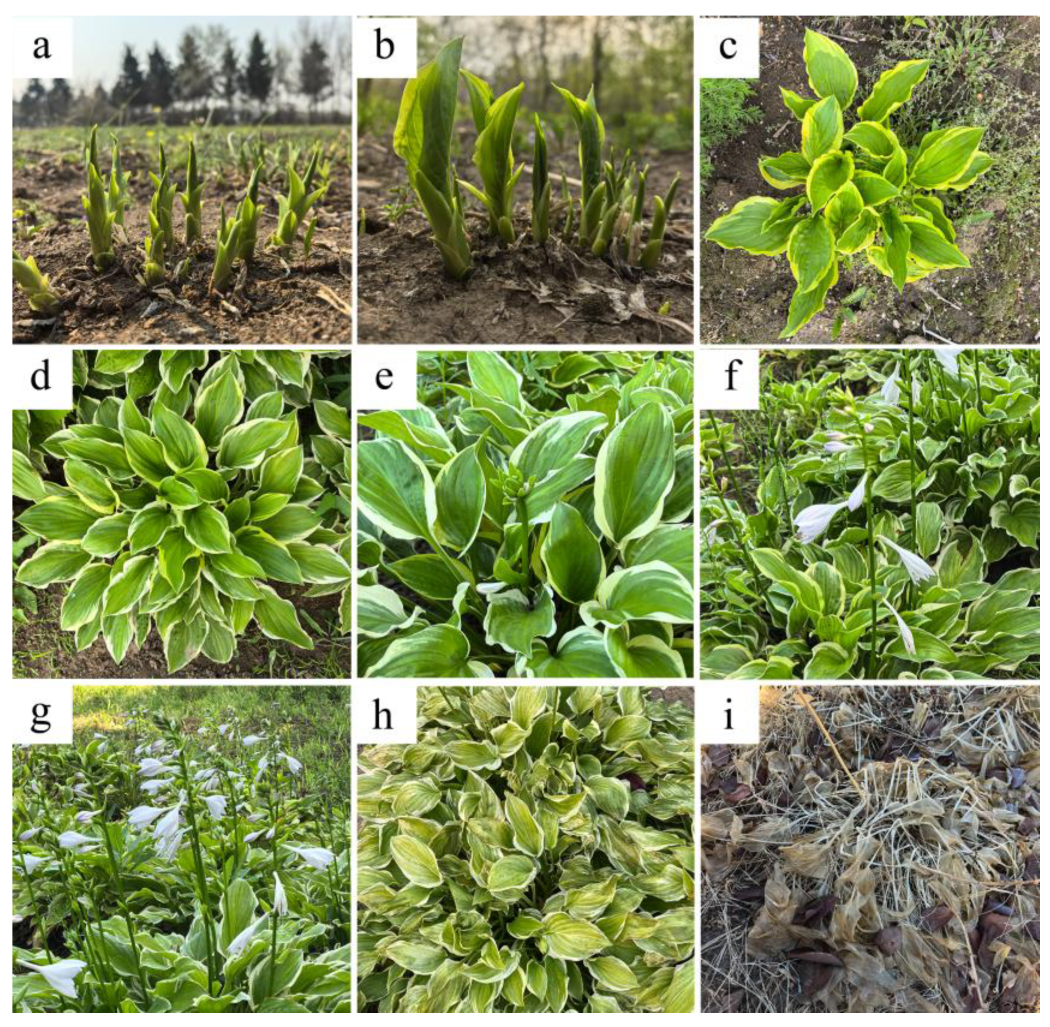
The experimental material used in this study was H. ‘So Sweet’, which was field-planted in June 2019 with a planting density of 0.5 m × 0.5 m. In the Changchun area, H. ‘So Sweet’ initiates bud break in May as temperatures increase. This is followed by the leaf expansion and active vegetative growth stages from late May through July. The scape emergence and flowering stages occur from late July to early September. Finally, the plant enters the senescence stage from mid-September to early October (Figure 1).

2.2. Gas Exchange Traits

The experiment was conducted from May to September 2025. Three consecutive clear and rainless days were selected for measurement within each month: 22–24 May; 21–23 June; 13–15 July; 17, 19, 20 August; 9–11 September. The daily ambient temperature data for these dates are compiled in Supplementary Table S2. On each of these days, photosynthetic physiological and ecological indices were assessed at six time points (8:00, 10:00, 12:00, 14:00, 16:00, and 18:00) with three individual plants per time point. To provide context for interpreting diurnal patterns, sunrise at the field site occurred between 04:00 and 04:30 from May to July, between 04:30 and 05:00 in August, and between 05:00 and 05:30 in September. Thus, the first measurement (8:00) was taken approximately 3.5–4 h after sunrise from May to July and 3–3.5 h after sunrise in August and September. All measurements were conducted under natural, full sunlight conditions. The photosynthetically active radiation (PAR) and relative humidity in cuvette (RH cuvette) recorded at each time point represent the immediate ambient light and moisture conditions upon leaf enclosure. The cuvette temperature (Tcuv) reported is the value measured by the chamber’s infrared sensor, integrating the effects of these ambient conditions within the cuvette. At each measurement, we randomly selected a healthy third leaf from uniform plants, ensuring no mutual shading. This procedure constituted one biological replicate; three replicates were performed per month. The measurements were performed using a CIRAS-4 (PP Systems, Amesbury, MA, USA) portable photosynthesis system. To ensure stable airflow entering the leaf chamber, a 20 L buffer flask was connected to the inlet of the instrument. This flask was placed in an open area to sample well-mixed ambient air. The system was fitted with a transparent leaf chamber measuring 2.5 cm × 0.7 cm, giving an area of 1.75 cm2, and the flow rate was set to 300 cm3 min−1. The measured indices included net photosynthetic rate (Pn; μmol m−2 s−1), intercellular CO2 concentration (Ci; μmol mol−1), transpiration rate (Tr; mmol m−2 s−1), stomatal conductance (Gs; mmol m−2 s−1), water-use efficiency (WUE; µmol CO2 mmol−1 H2O), vapor pressure deficit (VPD; kPa), cuvette temperature (Tcuv; °C), analyzed CO2 concentration (CO2a; μmol mol−1), photosynthetically active radiation (PAR; μmol m−2 s−1), and relative humidity in cuvette (RH cuvette; %).

2.3. Determination of the Irradiance Response of Pn and CO2 Response

The measurements were conducted on clear and cloudless days in July, between 9:00 and 11:30. The third or fourth pairs of functional leaves from plants with vigorous growth and free from diseases and insect pests were selected as the test materials. A portable photosynthesis system (CIRAS-4) was employed for the measurements, with its built-in red–blue light source serving as the artificial light source. The gas flow rate was set at 300 μmol s−1, the ambient CO2 concentration was maintained at 400 ± 0.5 μmol mol−1, and the air temperature inside the leaf chamber was controlled within the range of 25–27 °C. The automatic measurement function of the instrument was utilized, with the PAR gradient inside the leaf chamber set at 1800, 1600, 1400, 1200, 1000, 800, 600, 400, 200, 100, 50, and 0 μmol m−2 s−1. The response process to light intensity was fitted using a rectangular hyperbolic model [18] to plot photosynthesis–light response (P-PAR) curves, followed by the calculation of three key photosynthetic parameters: light compensation point (LCP, μmol m−2 s−1), light saturation point (LSP, μmol m−2 s−1), and apparent quantum yield (AQY).
After the determination of the photosynthesis–light response curves, the photosynthesis–CO2 response curves of the same leaves were measured. The gas flow rate was set at 300 μmol s−1, and CO2 was supplied from a pressurized gas cylinder. The light intensity in the leaf chamber was maintained at 1200 μmol m−2 s−1, and the air temperature inside the leaf chamber was controlled within the range of 25–27 °C. The CO2 concentration gradient started from the ambient concentration, with the concentration decreased first, returned to the ambient concentration, and finally increased to the maximum concentration, specifically: 400, 300, 200, 100, 50, 0, 400, 600, 800, 1000, 1200, 1400, and 1600 μmol mol−1. The net photosynthetic rate (Pn) under different CO2 concentrations was determined and fitted using a modified hyperbolic model [19]. The derived parameters of the response curve included the maximum net photosynthetic rate (Amax), CO2 compensation point (CCP), CO2 saturation point (CSP), and apparent carboxylation efficiency (ACE).

2.4. Chlorophyll Fluorescence Measurement

To elucidate the PSII photochemical efficiency and photoprotective capacity of H. ‘So Sweet’ during key phenological phases, typical functional leaves from three individual plants (serving as independent biological replicates) were selected for chlorophyll fluorescence parameter determination across three distinct developmental stages: the early vigorous growth stage (measured on a representative day in late May, 28 May), the summer high-temperature and high-irradiance period (measured on a typical hot day in mid-July, 22 July), and the late growing season (measured on a day in mid-September, 18 September). The daily ambient temperature data for these dates are compiled in Supplementary Table S3. Chlorophyll fluorescence parameters were determined using an FMS-2 portable pulse-modulated fluorometer (PP Systems, Amesbury, MA, USA). The measurements were conducted between 8:00 and 11:00 a.m. in May, July, and September. Prior to the assay, the leaves were subjected to dark adaptation for 20–30 min, followed by the determination of minimal fluorescence (Fo), maximal fluorescence (Fm), steady-state fluorescence yield (Fs), and maximum photochemical efficiency of PSII (Fv/Fm). Non-photochemical quenching (NPQ) was calculated using the formula NPQ = (Fm − Fm′)/Fm′; the non-photochemical quenching coefficient (qN) was calculated using the formula qN = (Fm − Fm′)/(Fm − Fo′); the photochemical quenching coefficient (qP) was calculated using the formula qP = (Fm′ − Fs)/(Fm′ − Fo′). Fo′ denotes the minimal fluorescence under light-adapted conditions; Fm’ denotes the maximal fluorescence under light-adapted conditions [20,21].

2.5. Determination of Chlorophyll Content

Chlorophyll content was determined in the Chlorotic Zone, Transition Zone, and Photosynthetically Active Zone of H. ‘So Sweet’ leaves in May, July, and September, respectively, using the ethanol extraction method [22]. The detailed procedures were as follows: 0.1 g of fresh leaf tissue from each zone was sampled, cut into pieces, and placed in an Erlenmeyer flask, followed by the addition of 10 mL of 95% ethanol solution to ensure that the tissue was completely submerged, the flask opening was sealed, and the mixture was incubated in the dark without agitation for 48 h for chlorophyll extraction. After the leaf tissue turned completely white, the supernatant extract was collected, and its absorbance values at wavelengths of 665 nm and 649 nm were measured using a spectrophotometer, with anhydrous ethanol as the blank control, and three biological replicates were set for each sample. The formulas were as follows: chlorophyll a (mg g−1 FW) = 13.95A665 − 6.88A649, chlorophyll b (mg g−1 FW) = 24.96A649 − 7.32A665, total chlorophyll (mg g−1 FW) = chlorophyll a + chlorophyll b, chlorophyll a/b = chlorophyll a/chlorophyll b.

2.6. Statistical Analysis

Data were collated using Microsoft Excel 2019, and figures were prepared with GraphPad Prism (version 9.5.0). Chlorophyll content and chlorophyll fluorescence parameters were conducted using one-way ANOVA and Duncan’s multiple comparison test (p < 0.05) in DPS software (version 9.01). Principal component analysis (PCA) and Pearson correlation analysis were performed using Origin 2025. PCA was based on the correlation matrix of photosynthetic physiological and microenvironmental parameters, which standardizes variables to zero mean and unit variance (Z-score normalization). To assess pairwise linear associations, Pearson correlation coefficients were computed, with statistical significance assessed at p < 0.05.

3. Results

3.1. Microenvironmental Conditions During Measurements

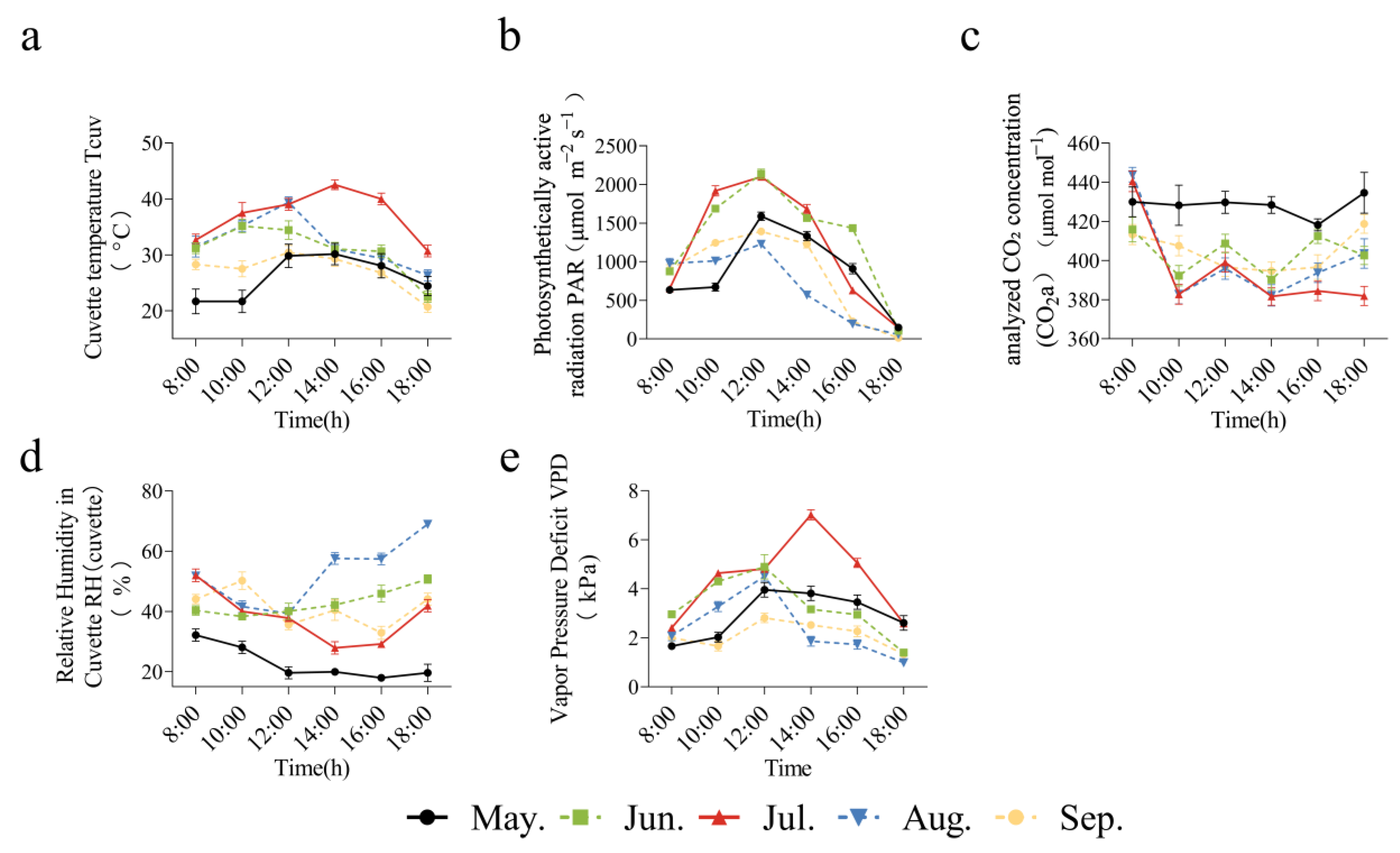
The seasonal dynamics of key environmental drivers are presented in Figure 2. The variation ranges of Tcuv in different months were as follows: 21–31 °C in May, 22–35.5 °C in June, 30–42.5 °C in July, 26–40 °C in August, and 20–31 °C in September. The maximum Tcuv was recorded in July, while the minimum Tcuv was observed in September (Figure 2a); additionally, the measured leaf temperature (Tl) closely tracked Tcuv across all dates (Supplementary Figure S1). As depicted in Figure 2b, PAR exhibited clear seasonal variation. The irradiance levels recorded during the measurement periods ranged from 130–1600 μmol m−2 s−1 in May, 90–2100 μmol m−2 s−1 in June, 130–2200 μmol m−2 s−1 in July, 50–1300 μmol m−2 s−1 in August, to 10–1400 μmol m−2 s−1 in September, with the highest intensities observed in June and July; the variation ranges of CO2a were as follows: 411.28–434.6 μmol·mol−1 in May, 390.94–417.14 μmol·mol−1 in June, 381.92–434.52 μmol·mol−1 in July, 381.87–446.22 mmol·mol−1 in August, and 395.61–419.05 μmol·mol−1 in September. The maximum CO2a was recorded in August, while the minimum was observed in July (Figure 2c); RH (cuvette) (Figure 2d) ranged from 17–30% in May, 38–51.5% in June, 28–52.5% in July, 40–71% in August, to 40–52% in September. The highest humidity levels were recorded in July and August, in contrast to the lowest in May, with June and September being intermediate; the diurnal variation in VPD exhibited a unimodal curve pattern (Figure 2e). It is important to note that VPD, as reported here, is calculated from cuvette temperature (Tcuv) and represents the evaporative demand at the cuvette surface. A relatively high VPD value of 7.01 kPa was recorded in the afternoon of July, while the maximum VPD values in June, August, May, and September showed a sequential decreasing trend, with the variation range falling between 2.6 and 5.0 kPa. In summary, July was characterized by typical summer stress conditions of high temperature and intense irradiance, whereas September offered a milder environment with lower light, temperature, and humidity levels.

3.2. Diurnal Variations in Photosynthetic Characteristics of H. ‘So Sweet’ Across Growing Season Months

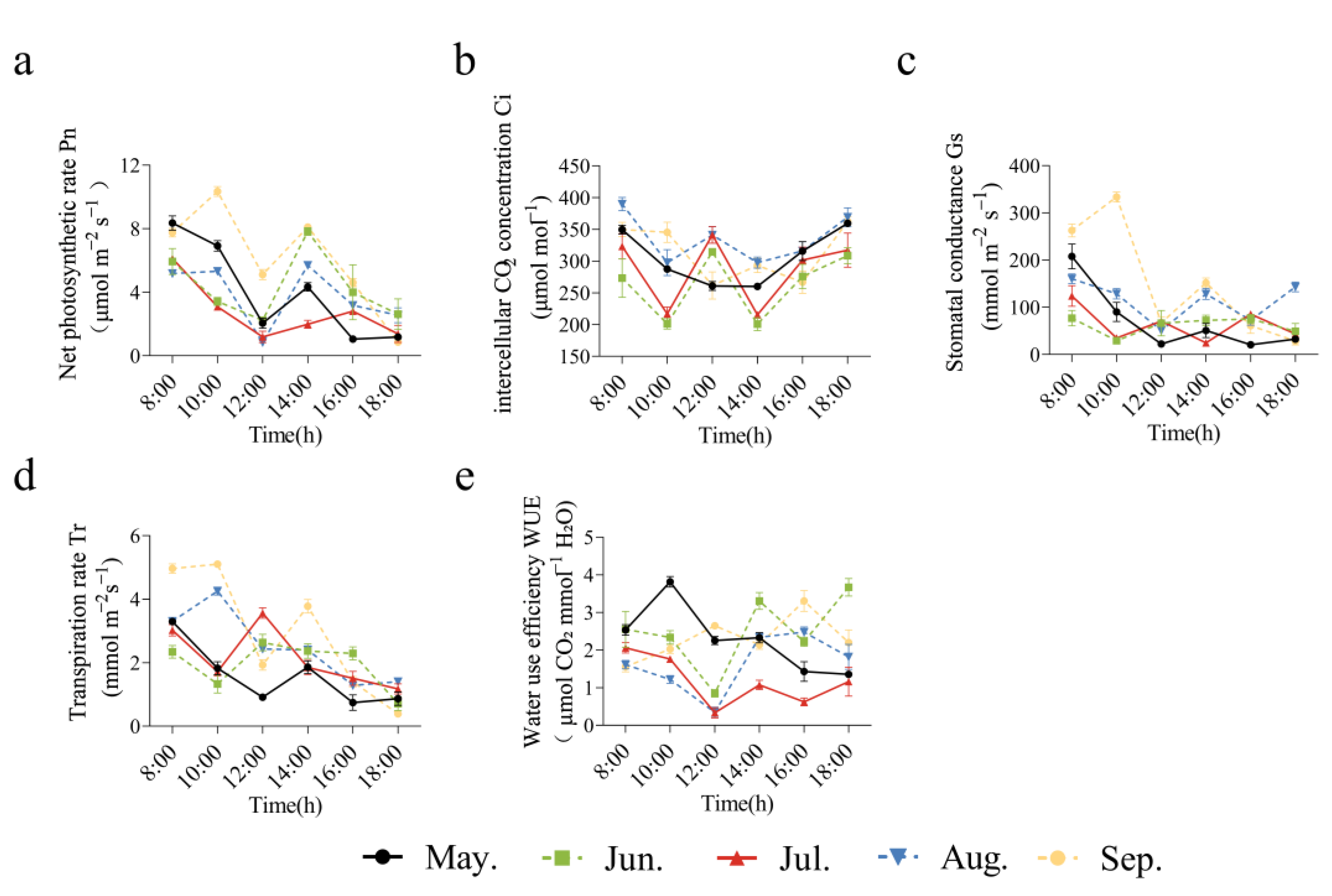
The diurnal variations in photosynthetic characteristics of H. ‘So Sweet’ were determined for each month throughout the entire growing season, with the results presented in Figure 3. The variation patterns of the Pn across different months were basically consistent (Figure 3a), all exhibiting a typical bimodal curve with a significant phenomenon of photosynthetic midday depression. The highest values were reached between 8:00 and 10:00 a.m., with a second peak appearing between 13:00 and 15:00. The maximum was recorded in September, while the Pn in July was relatively lower at all time points compared with that in other months, which might be attributed to the more severe stress induced by the high temperatures and strong light in July. Specifically, the maximum value of 10.34 μmol m−2 s−1 was observed at 10:00 a.m. in September. The Pn values in May and August fell within the intermediate range, followed by June, and the lowest values were detected in July. The diurnal variation patterns of Ci were generally consistent across all measurement periods (Figure 3b), typically displaying a W-shaped trend, with the exception being May and September. In June, July, and August, Ci hit its lowest value at 14:00 and peaked at 12:00. In contrast, Ci in May and September followed a pattern of initial decline and subsequent increase, attaining values of 260.80 and 261.52 μmol mol−1 at 12:00, respectively. Gs exhibited a diurnal variation pattern closely matching that of the Pn (Figure 3c). September being the sole exception, all other months registered their maximum Gs at 8:00, in the descending order of May, August, June and July, with respective values of 207.63, 160.56, 123.98 and 77.14 mmol m−2 s−1. In contrast, Gs peaked at 10:00 a.m. in September, reaching 333.72 mmol m−2 s−1. Tr showed notable discrepancies in the timing of peak values across different months (Figure 3d). In May, Tr followed a pattern of an initial drop followed by a rise, hitting its peak at 14:00 and then declining afterward. June and July adopted a comparable pattern of initial reduction and subsequent rise, with Tr peaking at 12:00. In contrast, August and September exhibited a bimodal diurnal pattern, with dual peaks recorded at 10:00 and 14:00, respectively. WUE is a key metric reflecting the plant’s trade-off between carbon assimilation and water consumption. It exhibited distinct diurnal dynamics across the growing season (Figure 3e). In May, WUE increased progressively from 8:00 to 10:00, peaking at the latter time point and then tapering off afterward. For June, July, and August, WUE underwent a gradual decline between 8:00 and 12:00 and subsequently bounced back to hit its maximum at 14:00. WUE in September exhibited a bimodal pattern, peaking at 12:00 and 14:00, recording values of 2.65 and 3.30 µmol CO2 mmol−1 H2O, respectively.

3.3. Measured Photosynthetic Light Response and Photosynthetic CO2 Response for Leaves of H. ‘So Sweet’

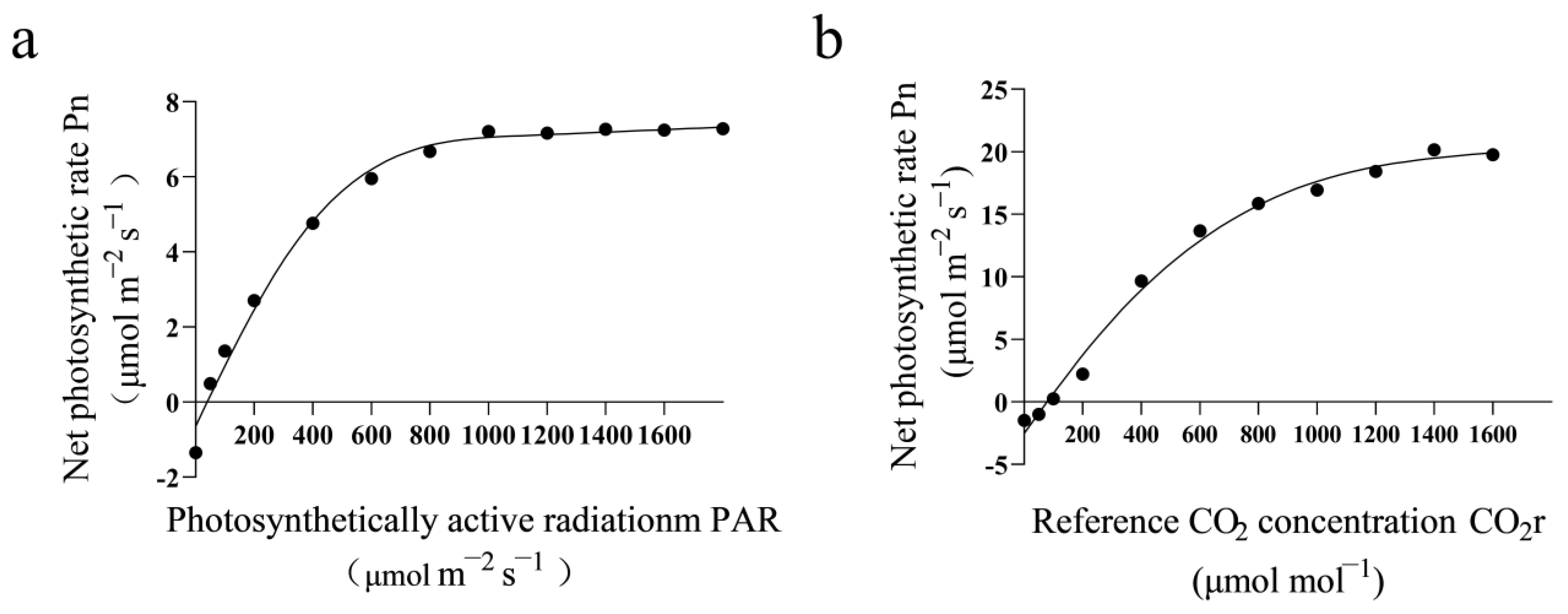
To elucidate the physiological acclimatization mechanisms underlying the maintenance of leaf health in H. ‘So Sweet’ under open-field, high-temperature, and high-light conditions in Northeast China during July, this study measured the light response curves and CO2 response curves of its leaves (Figure 4) to clarify its photosynthetic potential under such extreme conditions. The light response curve (Figure 4a) showed that in the low light intensity range of 0–100 μmol m−2 s−1, Pn exhibited a linear correlation with PAR (Y = 0.0295X − 1.132, R2 = 0.9977), and its AQY was 0.0295, indicating that it exhibits excellent light energy capture efficiency under low light conditions. With increasing light intensity, Pn increased rapidly in the range of 200–400 μmol m−2 s−1, followed by a gradual deceleration in its increment. The fitted LSP was as high as 1508.99 μmol m−2 s−1, with the LCP being 42.19 μmol m−2 s−1.
The CO2 response curve (Figure 4b) was well fitted by the modified hyperbolic model (R2 = 0.991). When the reference CO2 concentration was below 600 μmol mol−1, Pn exhibited an approximately linear increase, from which the apparent carboxylation efficiency (ACE) was calculated to be 0.0352 and the CCP was 75.46 μmol mol−1. When the CO2 concentration exceeded 600 μmol mol−1, the increment of Pn decelerated and then leveled off after reaching 1200 μmol mol−1. At this point, the fitted Amax reached 19.75 μmol m−2 s−1, which reflects its theoretical photosynthetic potential under optimal CO2 and light intensity conditions.

3.4. Characteristics of Chlorophyll Fluorescence Parameters in H. ‘So Sweet’ Leaves Across Different Months

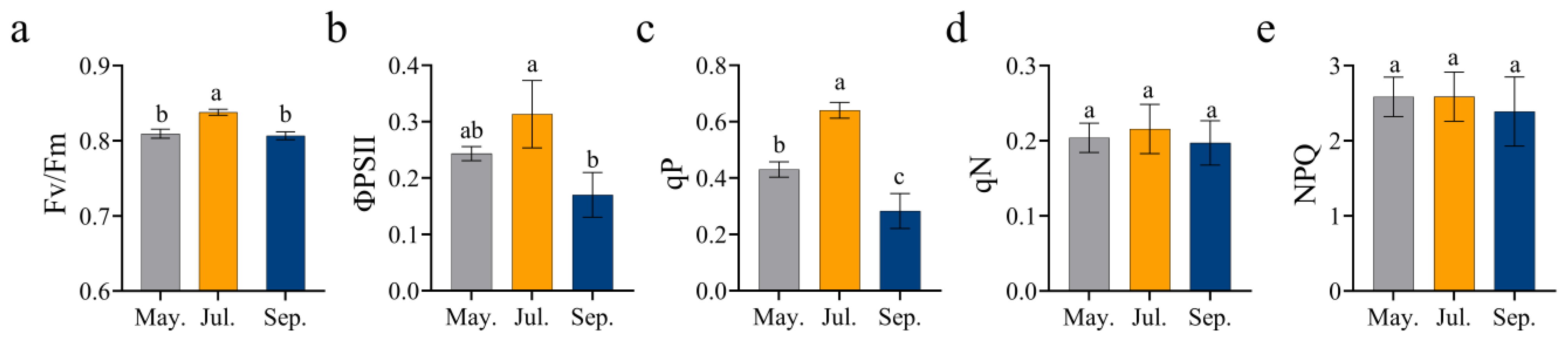
The determination results of chlorophyll fluorescence parameters in H. ‘So Sweet’ on the measurement days in May, July, and September indicated that significant variations among these sampling dates existed in its PSII function (Figure 5). The Fv/Fm remained at a relatively high level on all three dates, with the value on 22 July being significantly higher than those on 28 May and 18 September: 0.838, 0.809, 0.807, respectively (Figure 5a). This indicated that the PSII reaction centers of H. ‘So Sweet’ remained undamaged under the high-irradiance conditions of the midsummer measurement day and exhibited the highest potential light energy conversion efficiency at that time. ΦPSII and qP showed a consistent trend, peaking in July, followed by May, and reaching their lowest in September. Significant differences were found between these three months (Figure 5b,c). This indicated that H. ‘So Sweet’ allocated the highest proportion of light energy to photochemical reactions under the July measurement conditions. In contrast, qN and NPQ exhibited no significant variations across the three measurement days (Figure 5d,e). This indicated that the thermal dissipation capacity of H. ‘So Sweet’ remained stable among the sampled time points.

3.5. Monthly Variations in Chlorophyll Content of Functional Leaf Regions in H. ‘So Sweet’

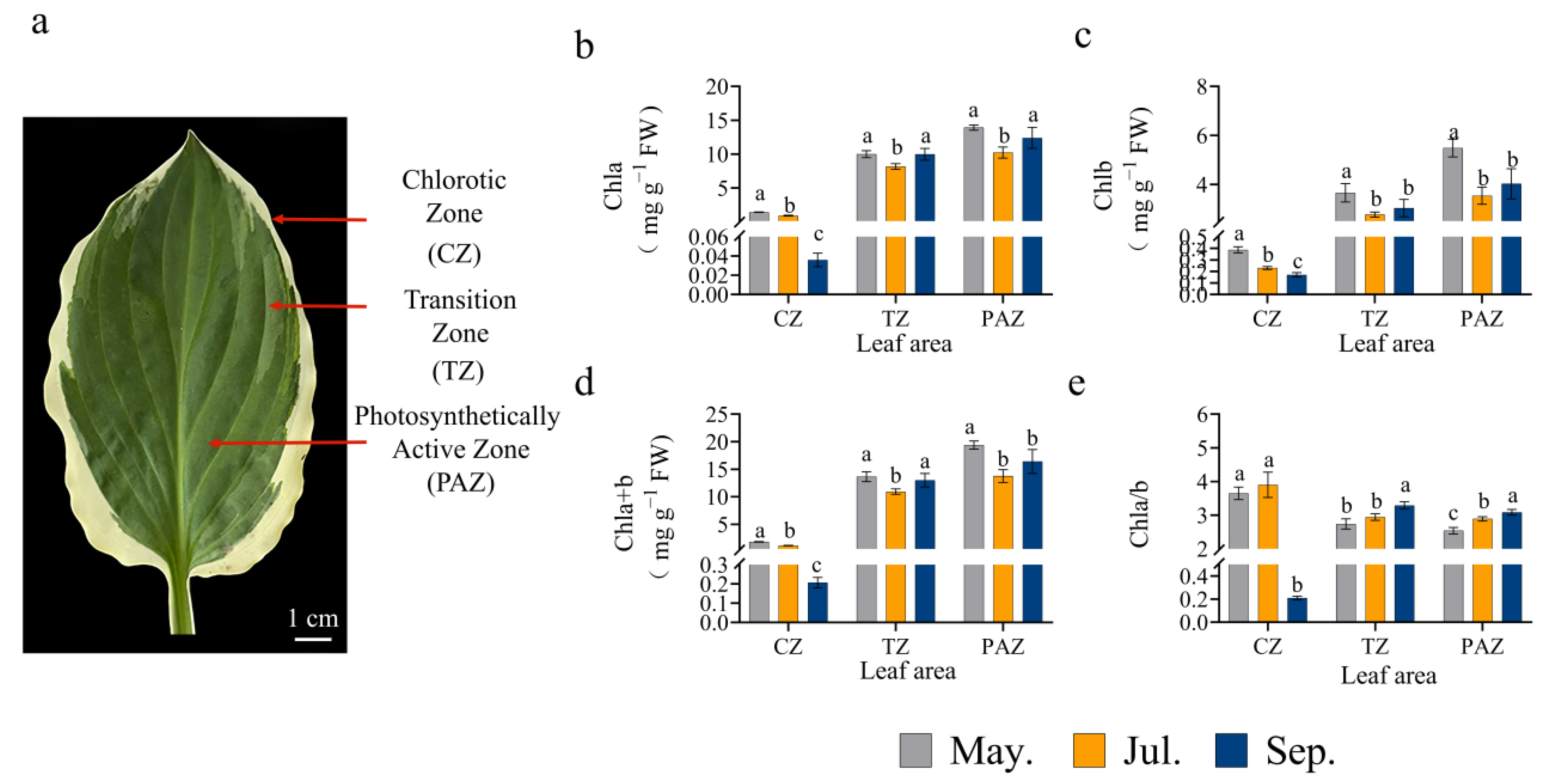
To elucidate the response strategies of the photosynthetic pigment system in H. ‘So Sweet’ leaves across different months, this study determined the chlorophyll contents in three functional leaf regions, the chlorotic zone, transition zone and photosynthetically active zone, in May, July and September (Figure 6a). Chlorophyll a content was the highest in May and the lowest in September in the chlorotic zone, while in both the transition zone and the photosynthetically active zone it was significantly lower in July than in May and September (Figure 6b). Chlorophyll b content exhibited significant differences between different months across the three regions, with the content in both the transition zone and the photosynthetically active zone reaching the highest level in May (Figure 6c). Total chlorophyll content reached the maximum in May and the minimum in September in the chlorotic zone; it was the lowest in July in the transition zone, while it peaked in May in the photosynthetically active zone (Figure 6d). The chlorophyll a/b ratio exhibited significant monthly differences across the three regions. Specifically, the ratio was the lowest in September in the chlorotic zone; it reached the maximum in September in the transition zone, while in the photosynthetically active zone it peaked in September and was the lowest in May (Figure 6e).

3.6. Monthly Variation in Photosynthetic Physiology in H. ‘So Sweet’ and Its Correlation with Measured Microenvironmental Variables

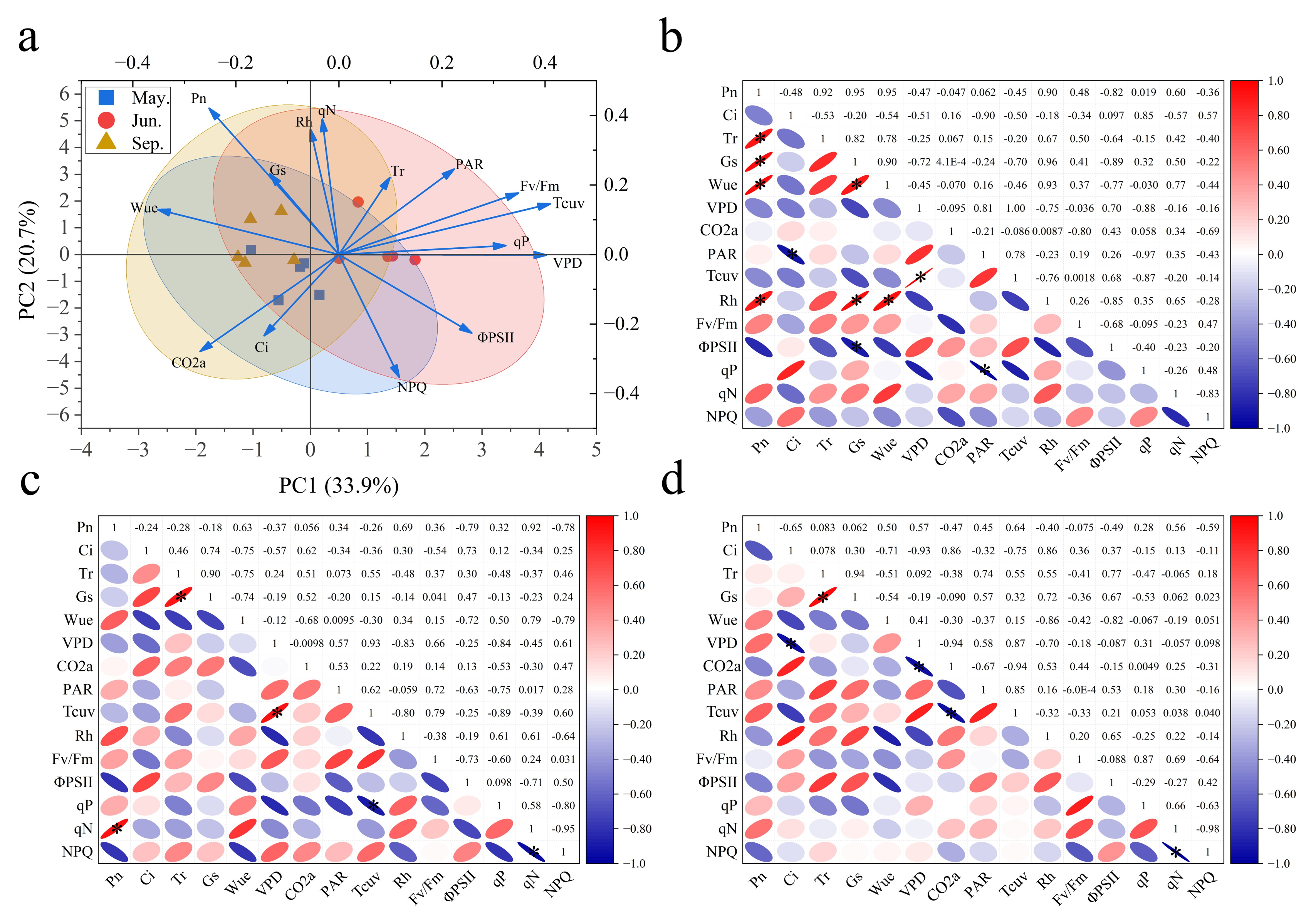
To elucidate the multivariate relationships among photosynthetic and microenvironmental parameters of H. ‘So Sweet’ across seasons, principal component analysis (PCA) was performed on data from May, July, and September (Figure 7). The first two principal components (PC1 and PC2) explained 54.6% of the total variance (PC1: 33.9%; PC2: 20.7%). The complete factor loadings for all variables are provided in Supplementary Table S4. These loadings reveal the driving variables behind each component: PC1 was most strongly associated with Tcuv (0.41) and VPD (0.40) and negatively with WUE (−0.35), representing a primary gradient of temperature and atmospheric demand. PC2 was positively loaded by qN (0.39) and RH (cuvette) (0.36) and negatively by NPQ (−0.35) and ΦPSII (−0.23), suggesting a secondary gradient related to photoprotective and humidity responses. The positions of variable vectors in the PCA biplot (Figure 7a) illustrate their pairwise relationships: WUE and Pn showed a strong positive association, closely aligned on PC1. Pn and PAR exhibited a positive correlation, primarily on PC2. In contrast, RH (cuvette) and ΦPSII were negatively correlated along PC2. Pn and CO2a (ambient CO2) showed a weak linear relationship in this multivariate space, with near-orthogonal vectors and low loadings on both components.
To further quantify the direct effects of key factors on Pn across different months, Pearson correlation coefficients for May, July, and September were calculated (Figure 7b–d). In May, Pn was positively correlated most strongly with RH (cuvette) (r = 0.90) and with stomatal parameters Tr and Gs. In July, the strongest positive correlation with Pn was found with qN (r = 0.92), indicating a tight coupling between photoprotective dissipation and photosynthetic rate under summer conditions. In September, no physiological parameter showed a significant linear correlation with Pn in this month. Collectively, the PCA and correlation analyses demonstrate that the suite of parameters co-varying with photosynthesis in H. ‘So Sweet’ undergoes a marked seasonal shift, reflecting adaptive adjustments in physiological strategy in response to changing environmental conditions.

4. Discussion

Throughout the entire growing season of Hosta investigated in this study, we found that despite the drastic fluctuations in environmental factors including Tcuv, PAR, and RH (cuvette) (Figure 2), field-grown H. ‘So Sweet’ exhibited similar diurnal variation patterns of photosynthesis across different months, with Pn showing a typical bimodal curve accompanied by a distinct midday depression of photosynthesis (Figure 3a). This pattern is consistent with the findings of previous studies on Hosta and other shade-tolerant plants during summer, e.g., Angelica sinensis [23], representing a common conservative strategy for avoiding photosystem damage under midday stresses such as high light and high temperature. It also stands in sharp contrast to the unimodal diurnal photosynthesis curve observed in sun-loving plants such as Rosa chinensis [24]. However, significant monthly differences in photosynthetic performance reveal a dynamic shift in the dominant limiting mechanisms. Specifically, Pn dropped to its lowest level in July, primarily due to the combined stress of high temperature and atmospheric drought. Despite the highest PAR intensity during this period (Figure 2b), the extreme Tcuv of up to 42.5 °C and severe atmospheric drought with a midday VPD reaching 7.01 kPa together created a harsh compound stress environment (Figure 2a,e). Under such conditions, Gs decreased at midday (Figure 3c). A simultaneous reduction in Pn and Gs at midday in July was accompanied by a rising or stable trend in Ci (Figure 3b). This response pattern, characterized by decreased Pn and Gs unaccompanied by a commensurate decline in Ci, indicates that non-stomatal factors likely exerted an enhanced role in constraining photosynthesis under the severe stress conditions in July, in conjunction with the observed stomatal closure. In contrast, under the milder environmental conditions in September (Figure 2), H. ‘So Sweet’ exhibited the highest Pn peak and higher WUE (Figure 3a,e). This indicates that H. ‘So Sweet’ can flexibly cope with environmental stresses of varying intensities by dynamically adjusting its photosynthetic limitation types, which is a key manifestation of its excellent physiological resilience.
Light response curves of plant photosynthesis describe the relationship between Pn and PAR intensity; they can be used to evaluate the ability of leaves to acclimate to different light levels [25]. In the classification of garden plants based on their light requirements, plants can be categorized into sun-loving plants, shade-tolerant plants, and neutral plants. Sun-loving plants possess relatively high light saturation points and light compensation points, whereas shade-tolerant plants exhibit the opposite traits [26]; in contrast, shade-tolerant plants are characterized by low light compensation points and high apparent quantum yields [27,28]. The LSP fitted in this study was 1509 μmol m−2 s−1, which is far higher than the reported values of 400–800 μmol m−2 s−1 for common Hosta cultivars [4], and this indicates that H. ‘So Sweet’ has an expanded light energy utilization range, and its photosynthetic apparatus may possess stronger light energy capture and conversion capacity or a more efficient photoprotective mechanism. The absence of leaf scorching under field high-light conditions, together with its measured abnormally high light saturation point (LSP), leads us to hypothesize that this elevated LSP is a key physiological basis for its summer high-light tolerance. This trait likely helps prevent severe photoinhibition and damage to the photosynthetic apparatus. In the analysis of the CO2 response curve, a relatively low CCP of 75.46 μmol mol−1 indicates a high apparent affinity for CO2, while a relatively high CSP of 1515.30 μmol mol−1 reflects a strong potential for CO2-saturated assimilation [29,30]. The rapid increase in Pn with rising Ci at low CO2 concentrations suggests efficient carboxylation under limiting CO2. This response pattern reveals that H. ‘So Sweet’ has high carbon assimilation efficiency within a wide range of CO2 concentrations. The fitted Amax was 19.75 μmol m−2 s−1, which was significantly higher than the peak value of 6.13 μmol m−2 s−1 observed in the diurnal variation in the field on the same day. This difference is mainly attributed to the fact that the response curve measurement is an instantaneous measurement with temperature, humidity, CO2 concentration and light all controlled at optimal conditions, while the field diurnal variation data are subject to comprehensive limitations of multiple environmental factors such as Gs fluctuation, midday high-temperature stress and dynamic light.
Fv/Fm is one of the key parameters reflecting the effects of ambient environments on the PSII reaction centers. Specifically, Fv/Fm represents the maximum photochemical efficiency of the PSII reaction centers, which typically ranges from 0.80 to 0.85 under non-stress conditions but declines or even decreases sharply when exposed to environmental stress [16]. In this study, Fv/Fm of H. ‘So Sweet’ stabilized at a high level of 0.80–0.83 during May, July and September (Figure 5a), indicating that its PSII reaction centers did not suffer irreversible damage throughout the entire growing season. More importantly, under the high-temperature and high-light stress in July, its ΦPSII and qP instead reached their peak values (Figure 5b,c). This finding corroborates well with its high light saturation point revealed by the light response curves (Figure 4a), together demonstrating that this cultivar possesses the physiological potential to actively and efficiently utilize high light energy. Meanwhile, its NPQ remained stable across months (Figure 5d,e), indicating that the basal thermal dissipation mechanism dependent on the xanthophyll cycle maintained a constitutive operation, which constitutes a robust ‘safety-net’ strategy to prevent photodamage. Under high-light and high-temperature conditions in July, the decreased chlorophyll content in the photosynthetically active region may represent a protective acclimation strategy to reduce light absorption. In contrast, the significant increase in chlorophyll a/b ratio in this region in September (Figure 6) may reflect that H. ‘So Sweet’ enhances its light energy utilization efficiency in autumn via the optimization of its photosystem structure.
PCA and correlation analyses reveal that the suite of physiological and microenvironmental parameters co-varying with photosynthesis in H. ‘So Sweet’ undergoes a marked seasonal restructuring. In May, Pn was most strongly associated with Tr, Gs, and RH (cuvette), suggesting that during the early growth phase under mild conditions, stomatal behavior and external water availability were primary factors co-varying with carbon gain [31]. This pattern shifted fundamentally under the high-temperature and high-light stress of July. Here, Pn showed its strongest positive correlation with the photoprotective index qN, indicating that the coordination of light energy utilization and dissipation became paramount [32]. Notably, the PCA indicated that across the entire dataset, CO2r and PAR were not the dominant sources of variation in Pn. This supports the interpretation of a context-dependent shift in the primary limiting factors: under complex field conditions, the direct effects of CO2r and PAR were statistically integrated and often overshadowed by stronger co-variates like temperature and photoprotective processes, aligning with the known shift from stomatal to non-stomatal limitations under stress. The persistent negative correlation between Pn and Ci (Figure 4b) further clarifies this shift: under natural fluctuations, Ci co-varies with factors imposing non-stomatal limitations, such that high irradiance or temperature can simultaneously constrain Ci and stimulate photoprotective demand. Thus, the system’s priority transitioned from modulating gas exchange in spring to managing excess light energy and biochemical co-regulation in summer. The maintenance of high ΦPSII and qP alongside elevated qN in July (Figure 5) confirms an integrated physiological state where efficient photochemistry and robust photoprotection operated synergistically under stress [33], representing an active acclimation strategy beyond simple midday depression [34]. Later in the season, the correlations of Pn with qN and Gs diminished, while Tcuv emerged as a key correlate. This shift, alongside the observed higher peak Pn (Figure 3a), may reflect a late-season re-prioritization of physiological processes as environmental stress abated.
In conclusion, H. ‘So Sweet’ has developed a highly efficient synergistic acclimatization system by dynamically coordinating its photosynthetic limiting factors, photochemical efficiency, and photoprotection capacity. The high light saturation potential, stable thermal dissipation, and efficient photochemical conversion revealed in this study collectively constitute the key physiological mechanisms underlying the concurrent shade tolerance and high-light resistance of H. ‘So Sweet’.

5. Conclusions

This study systematically clarifies the response and acclimatization mechanisms of the photosynthetic physiological characteristics of H. ‘So Sweet’ to the dynamic changes in the environment during its main growing season from May to September. The results showed that under the typical high-temperature and high-light stress conditions in July, although Pn decreased to some extent, the light response and CO2 response curves revealed that the plant still retained high light energy utilization potential. Moreover, chlorophyll fluorescence parameters indicated that its Fv/Fm remained stable, with no significant photoinhibition observed in the photosynthetic apparatus, which reflects the strong tolerance of the photosynthetic system. Notably, multivariate and correlation analyses revealed a distinct seasonal shift in the key parameters most closely associated with Pn: strong associations with stomatal conductance and humidity in May transitioned to close coupling with qN in July, with further altered correlational patterns between Pn and temperature in September. This finding underscores the dynamic seasonal reconfiguration of the physiological prioritization and integrative regulatory mechanisms governing photosynthetic processes in response to shifting environmental conditions across the growing season. In conclusion, H. ‘So Sweet’ has formed a highly efficient synergistic acclimatization system by integrating high light energy potential, stable photoprotection capacity, and dynamic physiological regulation strategies. This not only serves as the intrinsic physiological basis for maintaining leaf health and avoiding leaf scorch and yellowing under open-field high-light stress but also provides crucial theoretical support for its ecological adaptability in landscape greening and ornamental applications.

Supplementary Materials

The following supporting information can be downloaded at: https://www.mdpi.com/article/10.3390/agriculture16050593/s1, Table S1: Seasonal meteorological factors during the growing season of this study; Table S2: Ambient air temperature on days of gas exchange measurements; Table S3: Ambient air temperature on days of chlorophyll fluorescence measurements; Table S4: Factor loadings of photosynthetic and environmental variables on the first five principal components; Figure S1: Diurnal courses of leaf temperature (Tl) across the growing season.

Author Contributions

Conceptualization, S.L. and Y.Z.; methodology, S.L., X.W., R.L., Y.Q., Y.M. and X.Y.; formal analysis, S.L., X.W., R.L. and X.Y.; investigation, S.L., X.W., R.L., Y.Q. and Y.M.; data curation, S.L., X.W., Y.Q., Y.M., Y.B. and X.Y.; funding acquisition, Y.Z. and Y.B.; writing—original draft, S.L.; project administration, Y.Z. and Y.B.; writing—review and editing, S.L., X.W., R.L., Y.Q., Y.M., X.Y., Y.B. and Y.Z. All authors have read and agreed to the published version of the manuscript.

Funding

This study was supported by the Scientific Research Start-up Funds of Jilin Agricultural University (202023298).

Institutional Review Board Statement

Not applicable.

Data Availability Statement

The original contributions presented in this study are included in the article. Further inquiries can be directed to the corresponding authors.

Acknowledgments

The authors would like to express their gratitude to the Ornamental Plant Resources Research Lab of Jilin Agricultural University for the unconditional support given to this research.

Conflicts of Interest

The authors declare no conflicts of interest.

Abbreviations

The following abbreviations are used in this manuscript:
PnNet Photosynthetic Rate
CiIntercellular CO2 Concentration
GsStomatal Conductance
TrTranspiration Rate
WUEWater-Use Efficiency
VPDVapor Pressure Deficit
TcuvCuvette Temperature
PARPhotosynthetically Active Radiation
RH (cuvette)Relative Humidity in Cuvette
CO2aAnalyzed CO2 Concentration
CO2rReference CO2 Concentration
Fv/FmOptimal/Maximal Quantum Yield of PSII Photochemistry
ΦPSIIEffective Quantum Yield of PSII Photochemistry
qPPhotochemical Quenching
qNNon-Photochemical Quenching coefficient
NPQNon-Photochemical Quenching

References

  1. Schurr, U.; Walter, A.; Rascher, U. Functional dynamics of plant growth and photosynthesis-from steady-state to dynamics-from homogeneity to heterogeneity. Plant Cell Environ. 2006, 29, 340–352. [Google Scholar] [CrossRef] [PubMed]
  2. Schmid, W.G. The Genus Hosta; Timber Press, Inc.: Portland, OR, USA, 1991. [Google Scholar]
  3. Yang, J.; Kim, S. Hosta clausa (Asparagaceae) in East Asia: Intraspecific chloroplast genome variation and its phylogenomic implications. PloS ONE 2025, 20, e317884. [Google Scholar] [CrossRef] [PubMed]
  4. Zhang, J.Z.; Shi, L.; Shi, A.P.; Zhang, Q.X. Photosynthetic responses of four Hosta cultivars to shade treatments. Photosynthetica 2004, 42, 213–218. [Google Scholar] [CrossRef]
  5. Ogren, E. Convexity of the photosynthetic light-response curve in relation to intensity and direction of light during growth. Plant Physiol. 1993, 101, 1013–1019. [Google Scholar] [CrossRef]
  6. Li, Z.; Liu, D.; Zhao, S.; Jiang, C.D.; Shi, L. Mechanisms of photoinhibition induced by high light in Hosta grown outdoors. Chin. J. Plant Ecol. 2014, 38, 720–728. [Google Scholar]
  7. Tetsukazu, Y.; Hirota, S.K.; Fujii, S.; Kokami, Y.; Fuse, K.; Sato, H.; Tagane, S.; Suyama, Y. Molecular phylogeny and taxonomy of Hosta (Asparagaceae) on Shikoku Island, Japan, including five new species, one new subspecies, and two new status assignments. PhytoKeys 2023, 235, 137–187. [Google Scholar] [CrossRef]
  8. Papachatzi, M.; Hammer, P.A.; Hasegawa, P.M. In Vitro Propagation of Hosta plantaginea1. HortScience 1980, 15, 506–507. [Google Scholar] [CrossRef]
  9. Choi, H.; Yang, J.C.; Ryu, S.H.; Yoon, S.M.; Kim, S.Y.; Lee, S.Y. In vitro multiplication of Hosta Tratt. species native to Korea by shoot-tip culture. Korean J. Plant Resour. 2019, 32, 53–62. [Google Scholar]
  10. Sun, X.; Zhu, C.; Li, B.; Ning, W.; Yin, J. Combining Physiology and Transcriptome to Reveal Mechanisms of Hosta ‘Golden Cadet’in Response to Alkali Stress. Plants 2025, 14, 593. [Google Scholar] [CrossRef]
  11. Gavrilescu, M. Water, soil, and plants interactions in a threatened environment. Water 2021, 13, 2746. [Google Scholar] [CrossRef]
  12. Jiao, Z.; Youming, C.; Xin, L.; Yang, L.; Zhang, Y. High-nitrogen fertilizer alleviated adverse effects of drought stress on the growth and photosynthetic characteristics of Hosta ‘Guacamole’. BMC Plant Biol. 2024, 24, 299. [Google Scholar] [CrossRef] [PubMed]
  13. Zhang, J.Z.; Wang, W.; Sun, G.F.; Liu, H.Z.; Li, X.D. Photosynthesis of Hosta under light and controlled-release nitrogen fertilizer. Russ. J. Plant Physiol. 2011, 58, 261–270. [Google Scholar] [CrossRef]
  14. Guan, P.; Chen, S.; Sun, J.; Zhao, S.; Fan, R.; Xu, Y.; Qu, B. Effects of Different Shade Treatments on the Epidermal Wax Deposition of Hosta Genotypes with Different Glaucousness of Leaf Surface. Horticulturae 2024, 10, 981. [Google Scholar] [CrossRef]
  15. Zhang, J.; Sui, C.; Liu, H.; Chen, J.; Han, Z.; Yan, Q.; Liu, S.; Liu, H. Effect of chlorophyll biosynthesis-related genes on the leaf color in Hosta (Hosta plantaginea Aschers) and tobacco (Nicotiana tabacum L.). BMC Plant Biol. 2021, 21, 45. [Google Scholar] [CrossRef]
  16. Liu, D.-H.; Ji, W.-T.; Zou, Q.-Q.; Wu, H.-Y.; Li, T.; Shi, W.-B.; Jiang, C.-D. Investigation of the Global Changes in Photosynthetic Electron Transport in Hosta Plants Grown Under Different Light Levels. Int. J. Mol. Sci. 2024, 25, 12876. [Google Scholar] [CrossRef]
  17. Cui, B.; Zhao, X.; Chen, G.; Qin, S.; Liu, Y.; Han, Z.; Yan, Q.; Han, L.; Liu, S.; Liu, S.; et al. Functional analysis of two terpene synthase genes isolated from the flowers of Hosta ‘So Sweet’. Horticulturae 2022, 8, 447. [Google Scholar] [CrossRef]
  18. Ye, Z.; Suggett, D.J.; Robakowski, P.; Kang, H. A mechanistic model for the photosynthesis-light response based on the photosynthetic electron transport of photosystem II in C3 and C4 species. New Phytol. 2013, 199, 110–120. [Google Scholar] [CrossRef]
  19. Ye, Z.P.; Yu, Q. A new model for relationship between irradiance and the rate of photosynthesis in Oryza sativa. Photosynthetica 2007, 45, 637–640. [Google Scholar] [CrossRef]
  20. Murchie, E.H.; Lawson, T. Chlorophyll fluorescence analysis: A guide to good practice and understanding some new applications. J. Exp. Bot. 2013, 64, 3983–3998. [Google Scholar] [CrossRef]
  21. Kalaji, H.M.; Schansker, G.; Ladle, R.J.; Goltsev, V.; Bosa, K.; Allakhverdiev, S.I.; Brestic, M.; Bussotti, F.; Calatayud, A.; Dąbrowski, P.; et al. Frequently asked questions about in vivo chlorophyll fluorescence: Practical issues. Photosynth. Res. 2014, 122, 121–158. [Google Scholar] [CrossRef]
  22. Lichtenthaler, H.K. Chlorophylls and carotenoids: Pigments of photosyn thetic biomembranes. Method Enzymol. 1987, 148, 350–383. [Google Scholar]
  23. Zhang, X.H.; Lang, D.Y.; Zhang, E.H.; Bai, C.C.; Wang, H.Z. Diurnal changes in photosynthesis and antioxidants of Angelica sinensis as influenced by cropping systems. Photosynthetica 2013, 51, 252–258. [Google Scholar] [CrossRef]
  24. Shi, L.; Kim, W.S. Effect of drought stress during supplemental lighting on diurnal photosynthesis of cut rose ‘Charming Black’. Hortic. Environ. Biotechnol. 2015, 56, 582–587. [Google Scholar] [CrossRef]
  25. Pires, M.V.; Almeida, A.A.F.; Figueiredo, A.L.; Gomes, F.P.; Souza, M.M. Photosynthetic characteristics of ornamental passion flowers grown under different light intensities. Photosynthetica 2011, 49, 593–602. [Google Scholar] [CrossRef]
  26. Valladares, F.; Niinemets, Ü. Shade tolerance, a key plant feature of complex nature and consequences. Annu. Rev. Ecol. Evol. Syst. 2008, 39, 237–257. [Google Scholar] [CrossRef]
  27. Feng, Y.; Wang, J.; Sang, W. Biomass allocation, morphology and photosynthesis of invasive and noninvasive exotic species grown at four irradiance levels. Acta Oecol. 2007, 31, 40–47. [Google Scholar] [CrossRef]
  28. Boardman, N.T. Comparative photosynthesis of sun and shade plants. Annu. Rev. Plant Physiol. 1977, 28, 355–377. [Google Scholar] [CrossRef]
  29. Buur, J.A.; Franziska, E.; Sorrell, B.K. Comparative flooding tolerance of Typha latifolia and Phalaris arundinacea in wetland restoration: Insights from photosynthetic CO2 response curves, photobiology and biomass allocation. Heliyon 2024, 10, e23657. [Google Scholar]
  30. Ainsworth, E.A.; Rogers, A. The response of photosynthesis and stomatal conductance to rising [CO2]: Mechanisms and environmental interactions. Plant Cell Environ. 2007, 30, 258–270. [Google Scholar] [CrossRef]
  31. Tezara, W.; Fernández, M.D.; Donoso, C.; Herrera, A. Seasonal changes in photosynthesis and stomatal conductance of five plant species from a semiarid ecosystem. Photosynthetica 1998, 35, 399–410. [Google Scholar] [CrossRef]
  32. Chovancek, E.; Zivcak, M.; Botyanszka, L.; Hauptvogel, P.; Yang, X.; Misheva, S.; Brestic, M. Transient Heat Waves May Affect the Photosynthetic Capacity of Susceptible Wheat Genotypes Due to Insufficient Photosystem I Photoprotection. Plants 2019, 8, 282. [Google Scholar] [CrossRef]
  33. Zhang, X.H.; Li, H.X.; Zhuo, G.; He, Z.Z.; Zhang, C.Y.; Shi, Z.; Wang, Y. Improvement in the Photoprotective Capability Benefits the Productivity of a Yellow-Green Wheat Mutant in N-Deficient Conditions. Photosynthetica 2022, 60, 476–485. [Google Scholar] [CrossRef]
  34. Franco, A.C.; Lüttge, U. Midday Depression in Savanna Trees: Coordinated Adjustments in Photochemical Efficiency, Photorespiration, CO2 Assimilation and Water Use Efficiency. Oecologia 2002, 131, 356–365. [Google Scholar] [CrossRef]
Figure 1. Phenological stages of H. ‘So Sweet’: (a) bud break stage; (b) leaf expansion stage; (c,d) vegetative growth stage; (e) scape emergence stage; (f) bud formation stage; (g) flowering stage; (h,i) senescence stage.
Agriculture 16 00593 g001
Figure 2. Diurnal variation in environmental factors: (a) cuvette temperature (Tcuv); (b) photosynthetically active radiation (PAR); (c) analyzed CO2 concentration (CO2a); (d) relative humidity in cuvette (RH cuvette); (e) vapor pressure deficit (VPD). Data are mean ± SD (n = 3). Curves show dynamic temporal trends; no statistical comparisons were made between time points.
Agriculture 16 00593 g002
Figure 3. Daily variations in gas exchange parameters of H. ‘So Sweet’ in different months: (a) net photosynthetic rate (Pn); (b) intercellular CO2 concentration (Ci); (c) stomatal conductance (Gs); (d) transpiration rate (Tr); (e) water-use efficiency (WUE). Data are mean ± SD (n = 3). Curves show dynamic temporal trends; no statistical comparisons were made between time points.
Agriculture 16 00593 g003
Figure 4. Photosynthetic rate–light response curve and CO2 response curve of H. ‘So Sweet’: (a) light response curve of H. ‘So Sweet’; (b) CO2 response curve of H. ‘So Sweet’. Data are mean (n = 3).
Agriculture 16 00593 g004
Figure 5. Chlorophyll fluorescence parameters of H. ‘So Sweet’ in different months: (a) maximal quantum yield of PSII photochemistry (Fv/Fm); (b) quantum yield of PSII photochemistry (ΦPSII); (c) photochemical quenching (qP); (d) non-photochemical quenching coefficient (qN); (e) non-photochemical quenching (NPQ). Data are mean ± SD (n = 3). The statistical significance of data among different leaf regions was determined by one-way ANOVA followed by Duncan’s multiple range test. Different lowercase letters indicate significant differences among months at the p < 0.05 level.
Agriculture 16 00593 g005
Figure 6. Monthly variations in chlorophyll content in different leaf regions of H. ‘So Sweet’: (a) schematic diagram of leaf regional division (CZ: chlorotic zone; TZ: transition zone; PAZ: photosynthetically active zone); (b) chlorophyll a content (Chl a); (c) chlorophyll b content (Chl b); (d) chlorophyll a + b content (Chl a + b); (e) chlorophyll a/b ratio (Chl a/b). Data are mean ± SD (n = 3). Different lowercase letters indicate significant differences between different months within the same region (p < 0.05, one-way ANOVA followed by Duncan’s multiple range test).
Agriculture 16 00593 g006
Figure 7. Relationship between environmental factors, photosynthetic parameters, and chlorophyll fluorescence characteristics across different months in H. ‘So Sweet’: (a) principal component analysis (PCA) of the integrated dataset; panels (bd) depict correlation analyses integrating the three variable groups for May, July, and September, respectively. The correlation matrix shows significant p-values (<0.05) of different tested parameters, where their color indicates the correlation slope (red, Pearson’s correlation coefficient = 1.0; blue one = −1.0). Asterisks indicate significant differences: * p < 0.05.
Agriculture 16 00593 g007
Disclaimer/Publisher’s Note: The statements, opinions and data contained in all publications are solely those of the individual author(s) and contributor(s) and not of MDPI and/or the editor(s). MDPI and/or the editor(s) disclaim responsibility for any injury to people or property resulting from any ideas, methods, instructions or products referred to in the content.