Review

Potential of PGPR to Enhance Soybean Productivity in Europe

by
Anna Kolanoś
*,
Katarzyna Panasiewicz
,
Agnieszka Faligowska
,
Grażyna Szymańska
and
Karolina Ratajczak
Department of Agronomy, Poznań University of Life Sciences, Dojazd 11, 60-637 Poznań, Poland
*
Author to whom correspondence should be addressed.
Agriculture 2026, 16(5), 497; https://doi.org/10.3390/agriculture16050497
Submission received: 4 February 2026 / Revised: 21 February 2026 / Accepted: 23 February 2026 / Published: 25 February 2026

Abstract

Soybean cultivation in Europe remains limited compared to major global producing regions, resulting in dependence on imported sources of plant protein. Although soybean cultivation has expanded in several European countries in recent years, production is still constrained by climatic variability, soil conditions, restricted availability of locally adapted varieties, and yield instability. To improve the stimulation of plant defense mechanisms against biotic and abiotic stress, and above all, to achieve yield stability, there is an increasing search for environmentally friendly products, such as biofertilizers, that can be used to rebuild and maintain a sustainable ecosystem. However, environmental intervention requires extensive research on plant species and bacteria. Therefore, increasing attention is being focused on plant growth-promoting rhizobacteria (PGPR), among other factors. These microorganisms stimulate the growth of their host through various pathways, enabling biomass growth, and improving vitality. In the near future, this may explain the various detailed mechanisms of their interactions with plants. This article reviews the current state of soybean production in Europe and synthesizes recent advances in the understanding of PGPR–soybean interactions, with particular emphasis on both direct and indirect mechanisms of action. The roles of PGPR in nutrient acquisition, phytohormone modulation, biological nitrogen fixation efficiency, and stress tolerance are discussed alongside their capacity to suppress soil-borne pathogens and induce systemic resistance. Furthermore, recent European field and greenhouse studies evaluating seed and soil inoculation strategies are summarized to highlight region-specific responses under diverse agroecological conditions. Collectively, the available evidence indicates that PGPR application can contribute to improved soybean performance in Europe, although its effectiveness remains strongly dependent on environmental factors, strain selection, and crop management practices.

1. Introduction

Soybean (Glycine max (L.) Merr.) is one of the most strategically important crops globally due to its dual value as a high-protein feed ingredient and a major oilseed [1,2,3]. Global soybean production, primarily due to genetically modified (GM) varieties, has increased steadily over the past decade, as a result of both the expansion of cultivated areas and increased yields. At the same time, soybean cultivation remains highly geographically concentrated, with nearly 80% of the global sown area located in Brazil, the United States, and Argentina [4,5]. According to the U.S. Department of Agriculture, Foreign Agricultural Service, in recent years, Brazil alone has accounted for approx. 40% of global soybean production [6]. The strong concentration of soybean production in a limited number of leading countries has promoted the development of large-scale and intensive production systems in these regions and increased the dependence of global supply chains on a small group of producers [7,8]. Soybean was not domesticated in Europe until the 19th century and is currently grown in a much smaller area than in the world’s main production regions (0.8% of global cultivation in 2024). Due to the different and, above all, diverse climatic and soil conditions in Europe, this species still requires intensive research in this region [9,10,11]. Furthermore, due to Europe’s restrictive policy on genetically modified organisms, most crops are non-modified varieties, which also contributes to limited production and continued dependence on imported plant protein [9,11,12].
Nevertheless, soybean cultivation has increased in several European countries over the last decade [9,10,11]. The largest share in production is currently held by Ukraine, followed by Italy and Serbia, while several countries in Central and Southeastern Europe have a smaller but not insignificant share (Table 1). Soybean production in Europe is constrained by both climatic and agronomic factors [12]. Moreover, regional differences in climate and yield potential suggest that further expansion will depend on targeted breeding for stress tolerance and adaptation to diverse European growing conditions [13,14].
Previous studies have focused mainly on agronomic strategies, including optimized fertilization [16], crop rotation [17], water and tillage management [9,18], weed and pest control [19] and genetic improvement [20], with the application of beneficial microorganisms representing one of the complementary approaches within integrated production systems [21,22] but there is still a lack of long-term studies that would allow for the formulation of targeted and unambiguous recommendations for the use of rhizosphere bacteria in the variable soil and climatic conditions of Europe. This review fills a gap in knowledge on the current use of plant growth-promoting rhizobacteria (PGPR) in soybean cultivation in this part of the world. The use of microorganisms in agricultural practice in Europe is strictly conditioned by both the regulatory framework and the growing environmental awareness. Soil degradation, excessive use of chemicals in agricultural production, depletion of natural resources and a decline in biodiversity were important reasons for the European Union to implement the concept of integrated production and plant protection [23,24]. Growing consumer expectations regarding food quality and safety, as well as increasing public awareness of the impact of agriculture on the environment, indicate that the further development of the sector will move towards the implementation of environmentally friendly technologies, including microbiological solutions [25,26]. In accordance with Regulation (EU) 2019/1009 of the European Parliament and of the Council of 5 June 2019 laying down rules on making fertilizing products available on the EU market and amending previous Regulations (EC) No 1069/2009 and (EC) No 1107/2009, preparations containing specific microorganisms, including bacteria of the genus Azotobacter spp., Rhizobium spp., Azospirillum spp. and mycorrhizal fungi, have been authorized for marketing as EU fertilizing products [27]. In the context of the dynamic development of the biofertilizer market and the growing importance of microorganisms in sustainable agriculture strategies, it is important to conduct educational and information activities [25]. Raising the level of knowledge among agricultural producers regarding the principles of using microbiological fertilizer products is a prerequisite for their effective and safe use in agricultural practice [28].
The use of beneficial plant-associated microorganisms, including plant growth-promoting rhizobacteria (PGPR), has gained increasing attention as a response to the growing demand for sustainable yield improvement under restrictive regulatory frameworks [29], which is also reflected in the increasing number of scientific publications over recent decades [30]. Plant growth-promoting rhizobacteria are primarily soil bacteria that colonize the rhizosphere and interact closely with plant roots [31,32,33]. Rhizosphere bacteria are divided into two groups: intracellular symbiotic bacteria, including bacteria from the genera Agrobacterium, Azotobacter, Azospirillum, Bacillus, Chromobacterium, Caulobacter, Erwinia, Micrococcous, Pseudomonas, and Serratia; and free-living extracellular bacteria, such as Frankia, and bacteria from the Rhizobiaceae family, including Allorhizobium, Azorhizobium, Bradyrhizobium, and Rizobium [31,34,35]. These bacteria contribute to plant development through processes related to nutrient availability, such as phosphorus solubilization and biological nitrogen fixation [36]. They also enhance plant performance by promoting nutrient acquisition, producing phytohormones, and facilitating resistance to biotic and abiotic stressors, acting both directly through metabolic activities and indirectly by suppressing pathogens and improving stress tolerance [37]. In the context of soybean cultivation, PGPR comprise bacteria that colonize the rhizosphere, rhizoplane, or internal plant tissues [38]. In the literature, plant growth-promoting rhizobacteria are commonly classified based on the nature of their interaction with the host plant into symbiotic and non-symbiotic groups [39]. To reflect this distinction, the terms extracellular PGPR (ePGPR) and intracellular PGPR (iPGPR) are frequently used. EPGPR are mainly associated with the root surface (rhizoplane), and iPGPR are able to colonize internal root tissues, including intercellular spaces or, in the case of legumes, form root nodules [40]. The most extensively studied group is symbiotic nitrogen-fixing bacteria belonging to the genus Bradyrhizobium, which form root nodules and play a central role in soybean nitrogen nutrition. However, beyond classical rhizobia, a wide array of non-symbiotic PGPR has been reported to influence soybean growth, including members of the genera Bacillus, Pseudomonas, Azospirillum, Serratia, Streptomyces, Agrobacterium, Arthrobacter, Azotobacter, Burkholderia, Caulobacter, Chromobacterium, Erwinia, Flavobacterium, Micrococcus, etc. [41,42,43,44]. In addition to the previously mentioned genus Bradyrhizobium, other symbiotic rhizobia associated with soybean include fast-growing species such as Ensifer fredii, which differ from classical soybean rhizobia in their genetic characteristics, host range, and environmental adaptability [45]. PGPR associated with soybean occur naturally in soils. However, their abundance, diversity, and effectiveness vary markedly depending on soil type, climate, cropping history, and the presence of suitable host plants [17]. Large populations of soybean-compatible rhizobia are typically found in regions with a long history of soybean cultivation, where repeated cropping has favored the establishment and persistence of symbiotic strains in the soil. In contrast, in regions where soybean has been introduced relatively recently, such as many parts of Central Europe, native soils often lack sufficient populations of effective soybean symbionts [46]. Under such conditions, conventional agronomic measures alone are insufficient to restore symbiotic nitrogen fixation, which has led to the widespread use of microbial inoculation strategies. As a consequence, numerous studies [47,48,49] have focused on the isolation and characterization of bacteria from the soybean rhizosphere, rhizoplane, and root tissues. By isolating and screening bacteria naturally associated with soybean, researchers are able to select strains with desirable characteristics for use in inoculation practices [50]. In agricultural practice, inoculants may be applied either directly to seeds prior to sowing or to soils [51], with the aim of introducing microbial strains capable of establishing beneficial associations with soybean plants, particularly in soils where native populations are poorly adapted. In view of the above, and due to the importance attached to improving the productivity of soybean in Europe, the aim of this review is to analyze the latest trends in the application of plant growth-promoting rhizobacteria (PGPR) as biofertilizers, focusing on their potential to increase soybean productivity and yield stability under European growing conditions.

2. Mechanisms of PGPR Action in Soybean

2.1. Direct Mechanisms of PGPR Action in Soybean

Direct mechanisms of PGPR action involve processes that directly influence plant metabolism and nutrient uptake. One of the most important direct effects is the enhancement of nutrient availability, particularly nitrogen (N) and phosphorus (P). Although soybean is capable of symbiotic nitrogen fixation through its association with Bradyrhizobium spp., co-inoculation with non-symbiotic PGPR such as Azospirillum spp. has been shown to further enhance nitrogen assimilation by stimulating root development, improving nodulation efficiency, and increasing biological nitrogen fixation rates [52].
Biological nitrogen fixation (BNF) in soybean is an energetically demanding process resulting from a symbiotic interaction between the plant and nitrogen-fixing bacteria belonging primarily to the genus Bradyrhizobium and, to a lesser extent, Ensifer fredii. This symbiosis is initiated through a complex molecular dialog, in which flavonoids released by soybean roots induce the expression of nodulation (nod) genes in rhizobia, leading to the production of nod factors that trigger nodule organogenesis in the host plant [53].
Following infection thread formation and bacterial colonization of the developing nodules, rhizobia differentiate into bacteroids capable of reducing atmospheric nitrogen (N2) to ammonia via the nitrogenase enzyme complex. Although nitrogenase is highly sensitive to oxygen, this process is enabled by the unique microaerobic environment of the nodule, where oxygen availability is tightly regulated by leghemoglobin, allowing bacterial respiration while protecting nitrogenase activity [54]. The fixed nitrogen is subsequently assimilated into amino acids and transported to aerial plant tissues, supporting soybean growth and yield.
The efficiency of BNF is strongly influenced by root system architecture, which is genetically determined and closely linked to nodulation traits [55], as well as by the physiological status of the host plant. Any factor that enhances root growth or increases the number of infection sites can positively affect nodulation and nitrogen fixation efficiency. In this context, non-symbiotic PGPR such as Azospirillum spp. act as indirect facilitators of BNF by stimulating root elongation and lateral root formation, thereby increasing the root surface area available for rhizobial infection and nodule formation [56].
Another important regulatory factor of BNF is ethylene, a plant hormone that negatively affects nodulation and nodule functioning when present at elevated levels. PGPR possessing 1-aminocyclopropane-1-carboxylate (ACC) deaminase activity can lower stress-induced ethylene concentrations, thereby alleviating ethylene-mediated inhibition of nodulation and contributing to improved nitrogen fixation efficiency [57]. Through these complementary mechanisms, PGPR enhance the performance of the soybean–Bradyrhizobium symbiosis without directly participating in nitrogen fixation.
Additionally, PGPR-mediated modulation of plant hormonal balance, particularly through the production of indole-3-acetic acid (IAA), can influence early stages of symbiosis by promoting cortical cell division and nodule primordium development [58]. A further direct mechanism underlying PGPR-mediated enhancement of soybean performance involves phytohormone production. Numerous bacterial taxa associated with the soybean rhizosphere are capable of synthesizing plant hormones or hormone-like compounds that directly modulate plant growth and development. Among these, auxins, particularly IAA, represent the most extensively studied and physiologically relevant group of bacterial phytohormones in soybean–PGPR interactions [59].
IAA production has been reported for several PGPR genera commonly isolated from soybean rhizosphere and root tissues, including Azospirillum, Bacillus, and Pseudomonas [34]. Bacterial IAA is primarily synthesized via tryptophan-dependent pathways and can be released into the rhizosphere, where it is perceived by plant root cells and integrated into endogenous auxin signaling networks [60]. The effect of bacterial IAA on plant growth is concentration-dependent, with low to moderate levels generally promoting root development, while excessive auxin concentrations can inhibit elongation or cause abnormal growth responses [61].
Beyond its role in modulating primary root growth in interaction with other phytohormones, bacterially derived IAA also influences early developmental processes that are critical for soybean establishment. Auxin-mediated stimulation of lateral root formation and root hair development leads to a more highly branched root system with increased absorptive surface area, which enhances the plant’s capacity to explore the soil environment [62].
Such modifications of root system architecture are particularly important during early growth stages, when efficient water and nutrient uptake strongly determine subsequent plant performance. Studies on auxin-producing PGPR, especially members of the genus Azospirillum, have demonstrated that changes mediated via IAA in root morphology contribute to improved seedling vigor and nutrient acquisition in leguminous crops, including soybean [63]. By shaping root architecture, IAA-producing PGPR create favorable physiological conditions for efficient nutrient assimilation and interactions with other beneficial microorganisms in the rhizosphere [64]. The magnitude of these effects depends on environmental and biological conditions, including plant developmental stage, soil nutrient and water availability, and strain–host compatibility within the rhizosphere.
In addition to auxins, some PGPR associated with soybean are capable of producing other classes of phytohormones, including gibberellins. Accumulating evidence indicates that gibberellin-producing PGPR influence soybean growth primarily by modulating endogenous phytohormone homeostasis rather than by acting as simple growth stimulators, an effect that is particularly evident under abiotic stress conditions [65,66]. This regulatory role is well illustrated by the soybean-associated bacterium Bacillus aryabhattai strain SRB02, which synthesizes bioactive gibberellins together with IAA, abscisic acid, and cytokinins. Inoculation with this strain leads to coordinated changes in endogenous hormone levels, thereby enhancing soybean tolerance to oxidative and nitrosative stress [65,66]. Similar hormonal profiles have been reported for other soybean growth-promoting Bacillus strains, which secrete gibberellins as part of a broader spectrum of phytohormones that promote shoot development and stress resistance [67]. The results of these studies suggest that although the effects of gibberellin are less well understood than those of auxin, gibberellin production by microorganisms represents a complementary hormonal pathway that contributes to improved soybean performance under adverse environmental conditions through PGPR. Another important direct mechanism by which plant growth-promoting rhizobacteria influence soybean growth is the mobilization of poorly available soil nutrients, particularly phosphorus, through the production of low-molecular-weight organic acids. Several PGPR strains associated with the soybean rhizosphere have been shown to release organic acids such as gluconic and citric acids, which directly modify rhizosphere chemistry by lowering pH and solubilizing inorganic phosphate compounds.
Several indigenous rhizobacteria isolated from soybean, including Pseudomonas and Bacillus spp., have been shown to produce organic acids in vitro as part of their phosphate-solubilizing activity, indicating a role for low-molecular-weight organic acids in enhancing phosphorus availability in the rhizosphere [68]. Mechanistically, these bacteria use organic acids to acidify the rhizosphere and chelate cations associated with phosphate complexes, thereby converting insoluble forms into phosphorus available to plants [69]. Furthermore, isolates recovered from saline soybean rhizosphere soils demonstrated clear phosphate mobilization zones under laboratory conditions, supporting the functional relevance of microbial metabolites, including organic acids, in promoting phosphorus uptake by soybean roots [70].
Beyond phosphorus mobilization, plant growth-promoting rhizobacteria may also influence soybean nutrient acquisition through additional direct mechanisms, including iron chelation via siderophore production. In soybean, siderophore production by PGPR has been identified as a rhizosphere-level mechanism influencing iron availability at the soil–root interface. Several soybean-associated PGPR, particularly Bacillus spp., have been shown to produce siderophores that chelate ferric iron and contribute to improved iron homeostasis and plant growth, especially under stress conditions [71,72].
The importance of siderophore-producing PGPR becomes particularly evident in soybean cultivated on iron-limiting soils, such as calcareous or alkaline soils, where ferric iron is poorly soluble and iron uptake by soybean plants is frequently restricted. Under such conditions, inoculation with selected PGPR strains, particularly siderophore-producing bacteria, can enhance iron availability by chelating poorly soluble ferric iron Fe3+, thereby improving plant iron acquisition and alleviating iron deficiency symptoms [73].
In soybean grown on calcareous soils, PGPR strains exhibiting siderophore-producing capacity stimulate key physiological processes involved in iron acquisition. Roriz et al. (2021) demonstrated that PGPR inoculation increases ferric-chelate reductase activity in soybean roots, a well-established physiological response that enhances the reduction of Fe3+ to the more plant-available Fe2+ form under iron-deficient conditions [74].
In parallel, molecular-level regulation of iron acquisition is also affected. In a subsequent study, Roriz et al. (2023) reported that PGPR-inoculated soybean plants exhibit enhanced expression of genes directly involved in iron uptake and homeostasis, including FRO2 and IRT1, which play central roles in iron reduction and transport across root cell membranes [75]. These coordinated physiological and molecular responses are accompanied by increased iron accumulation in soybean tissues, indicating that PGPR inoculation improves the plant’s intrinsic capacity to acquire and utilize iron under iron-limiting soil conditions.

2.2. Indirect Mechanisms of PGPR Action in Soybean

Beyond their direct contributions to nutrient acquisition, PGPR influence plant growth through several indirect mechanisms that operate without direct nutrient transfer to the plant. The effects of PGPR are not immediate after introduction into a new environment, as they depend on successful root colonization, a process that develops over hours to days. The timing and persistence of these effects further depend on the type of plant–bacteria interaction, differing between rhizospheric and endophytic PGPR [28,76]. Mechanisms of PGPR action include microbial interactions in the rhizosphere, such as pathogen suppression via antibiotics and lytic enzymes, competition for ecological niches and nutrients, siderophore-mediated effects on iron availability, regulation of plant ethylene levels through ACC deaminase activity, and the activation of induced systemic resistance [77]. One of the most extensively documented indirect mechanisms of PGPR action in soybean is the suppression of soil-borne pathogens through the production of antimicrobial compounds and cell wall-degrading enzymes. Soybean is affected by a broad spectrum of fungal and oomycete pathogens, with soil-borne species of Fusarium, Rhizoctonia, Phytophthora, and Pythium being highlighted in the literature due to their impact on root health, seedling establishment, and yield stability [78].
Experimental evidence supporting the role of indirect PGPR mechanisms in soybean has been provided by studies focusing on the biological control of major soil-borne pathogens. Zhao et al. (2018) [79] demonstrated that endophytic and rhizosphere-associated bacterial strains isolated from soybean effectively suppressed the growth of Phytophthora sojae, a key causal agent of soybean root and stem rot. These antagonistic effects are primarily expressed under pathogen pressure, as the production of antimicrobial compounds, lytic enzymes and siderophores is functionally relevant mainly in the presence of competing or pathogenic microorganisms in the rhizosphere. Microscopic observations revealed severe structural damage to fungal hyphae, including cell wall disruption and hyphal deformation, indicating that pathogen suppression resulted from direct antagonism. Importantly, soybean growth promotion observed in PGPR-inoculated plants was attributed to reduced pathogen pressure and improved root health, supporting the classification of these effects as indirect mechanisms of PGPR action rather than direct stimulation of plant nutrition or metabolism [79].
Another indirect mechanism of PGPR action in soybean involves competition for ecological niches and nutrients in the rhizosphere. Soybean-associated PGPR with high rhizosphere competence are able to rapidly colonize the root surface, thereby limiting the availability of space and nutrients for soil-borne pathogens. Rapid root colonization has been demonstrated for the soybean-associated PGPR Bacillus aryabhattai strain SRB02, which was shown to successfully colonize soybean roots within 2 days of inoculation, indicating a strong capacity for early establishment in the rhizosphere [49]. Such early and effective colonization is considered a key determinant of PGPR-mediated pathogen suppression, as rapid occupation of root-associated niches enhances competitive exclusion of pathogenic microorganisms.
The activation of induced systemic resistance (ISR) represents another important indirect mechanism by which plant growth-promoting rhizobacteria enhance soybean resistance to pathogens. ISR is a plant-mediated defense response triggered by beneficial microorganisms, leading to a primed physiological state that enables faster activation of defense mechanisms upon subsequent pathogen attack [80].
Induced resistance does not involve the constitutive activation of plant defense mechanisms. It is characterized by the priming of latent defense responses that are more strongly expressed upon pathogen challenge. As originally described, ISR enhances the plant’s defensive capacity without imposing significant fitness costs under non-stress conditions, thereby allowing normal growth and development to be maintained [81].
A wide diversity of rhizobacterial genera, including Pseudomonas and Bacillus, have been identified as effective inducers of ISR across multiple plant species [80]. These PGPR colonize the rhizosphere and interact with plant roots, triggering systemic signaling pathways that modulate plant immunity [81]. In crop systems such as soybean, PGPR-induced ISR has been demonstrated to contribute to disease suppression, complementing other indirect mechanisms such as competition for nutrients and ecological niches by enhancing resistance through plant-mediated defense activation [82].

3. European Research on PGPR Application in Soybean

Plant growth-promoting rhizobacteria are described as biofertilizers because they can improve plant mineral nutrition through mechanisms such as biological nitrogen fixation and the mobilization of nutrients including P, K, S, Zn, and Fe, thereby supporting crop fertilization with lower reliance on conventional chemical inputs [83]. Recent reviews emphasize that PGPR-based biofertilizers are mainly valued for their ability to enhance nutrient acquisition via rhizosphere processes, which makes them suitable components of integrated nutrient management rather than standalone replacements of fertilizers [84]. Accordingly, the agronomic role of PGPR in soybean is often evaluated under combined strategies, where microbial inoculation is applied together with mineral fertilization to optimize yield response and fertilizer efficiency [85]. At the European level, recent analyses describe a clear shift toward reducing dependence on conventional chemical inputs and increasing the role of bio-based solutions, including microbial products, within nutrient management strategies [86]. In parallel, EU sustainability frameworks for crop production emphasize risk reduction from chemical plant protection products and highlight the need to strengthen integrated approaches and alternatives, which further support the development of biological tools in agriculture [29].
European field and greenhouse studies provide growing, although still fragmented, evidence that PGPR can positively influence soybean performance under specific agroecological conditions. In contrast to regions with a long history of soybean cultivation, such as America or East Asia, European studies are still relatively limited in number and heterogeneous in terms of experimental design and microbial strains tested.
In Portugal, Roriz et al. (2023) [75] demonstrated that PGPR inoculation under alkaline soil conditions significantly modulated soybean physiological and molecular responses related to iron nutrition, including the expression of Fe-related genes and nutrient accumulation in plant tissues. A total of 76 bacterial strains were isolated from soybean shoots, roots, and rhizosphere, with Bacillus and Microbacterium as the dominant genera. In alkaline soil (pH 8.2), inoculation did not significantly affect photosynthetic parameters, chlorophyll content, or total biomass; however, B. licheniformis P2.3 increased pod number by 33%. This strain also upregulated the expression of Fe-related genes and reduced ferric-chelate reductase activity by 45%, indicating improved Fe availability. In addition, inoculation with B. licheniformis P2.3 significantly enhanced Fe, Mn, Zn, and Cu accumulation in soybean tissues, highlighting its potential as a bioinoculant for soybean cultivation under alkaline soil conditions [75].
In Italy, Paradiso et al. (2017) [87] investigated the effects of a consortium of plant growth-promoting microorganisms on soybean cultivated in a closed hydroponic system under controlled environmental conditions. Soybean seeds were inoculated with a commercial microbial consortium (Myco Madness) containing a mixture of bacteria, yeasts, and beneficial fungi. Inoculation resulted in significant modifications of leaf anatomical traits, which enhanced gas exchange capacity and photosynthetic efficiency [87]. Microbiological characterization of the root-associated compartments revealed that the rhizoplane and endosphere of inoculated plants were strongly dominated by Ochrobactrum spp., indicating effective bacterial colonization under hydroponic conditions. The enhanced photosynthetic performance was associated with increased plant growth and a significant increase in seed yield (+36.9%) compared with non-inoculated controls, while leaf chlorophyll content remained unchanged [87].
In Poland, Jarecki et al. (2024), in a field experiment, evaluated the effects of seed inoculation with Bradyrhizobium japonicum under contrasting nitrogen fertilization regimes and reported that inoculation substantially improved nodulation, leaf area index (LAI), and chlorophyll status (SPAD) compared with non-inoculated controls [88]. Importantly, the application of a double dose of commercial inoculants resulted in the most favorable effects on yield components and final seed yield, whereas the effectiveness of standard inoculation rates varied between growing seasons. The authors further demonstrated that weather conditions significantly modified inoculation outcomes, highlighting strong year-to-year variability in soybean responses [88]. In another study, Jarecki et al. (2020) [89] found that the seed inoculation with B. japonicum significantly increased nodule number and nodule dry weight, confirming effective symbiotic nitrogen fixation under field conditions. Inoculation also exhibited higher leaf area index and SPAD values, indicating improved nutritional status and greater green biomass. Moreover, inoculation increased pod number, thousand seed weight, and seed protein content, and resulted in a yield increase of 0.54 t/ha compared with the non-inoculated control [89]. Similarly, Panasiewicz et al. (2024) [21] evaluated the yield of Ukrainian soybean ‘Annushka’ grown in central Poland in a field experiment, combining mineral nitrogen fertilization with seed inoculation using B. japonicum. Their multi-year field experiments showed that soybean yields ranged from 0.98 to 1.68 t/ha, with significant interannual variability reflecting local environmental conditions. Nitrogen fertilization combined with rhizobial inoculation proved to be a key factor in improving seed and protein yields compared with non-inoculated controls, although it slightly modified seed composition. The highest increases in seed yield and protein yield were observed when inoculation was combined with moderate nitrogen doses (30–60 kg N/ha), confirming that biological nitrogen fixation can effectively complement mineral fertilization strategies [21]. Panasiewicz et al. (2023) [16] evaluated the optimal mineral nitrogen dose (0, 30, and 60 kg N/ha) combined with seed inoculation using commercial B. japonicum product (HiStick® Soy or Nitroflora) under field conditions in the southeastern Baltic region. Higher seed, protein, and fat yields were obtained with HiStick® Soy compared to Nitroflora, indicating that inoculant formulation can significantly affect agronomic outcomes. The combined application of B. japonicum inoculation and nitrogen fertilization improved biometric traits, yield components, and particularly the seed yield of the soybean ‘Aldana’. The highest seed yield was recorded when HiStick® Soy (BASF Agricultiral Specialities Limited, Littlehampton West Sussex, UK) was applied together with mineral nitrogen at 30 or 60 kg N/ha, confirming that moderate starter nitrogen can enhance productivity when combined with rhizobial inoculation [16]. In a field experiment conducted by Dłutowska et al. (2024) [90] on the soybean ‘Magnolia PZO’, four commercial inoculants—Liquifix Glycine 120, Turbosoy, Rhizobium Soi, and Bi Soya—were applied at different concentrations of B. japonicum. The authors observed that the inoculants increased both the number and weight of nodules, as well as soybean yield. The highest yield was obtained with Liquifix Glycine 120 (6.90 t/ha), while the lowest was recorded with Rhizobium Soi (5.19 t/ha), compared with the control (5.59 t/ha). No significant effect on soil chemical properties or seed chemical composition was observed [90].
In Germany, Omari et al. (2022) evaluated the performance of indigenous Bradyrhizobium isolates under field and greenhouse conditions and reported significant strain–cultivar interactions affecting nodulation responses [91]. While inoculation generally increased nodule number and nodule dry weight, particularly under well-watered conditions, these improvements did not consistently translate into higher grain yield under field conditions. Notably, the reference strain USDA110 showed a more stable yield-enhancing effect in specific cultivars, whereas several indigenous isolates improved nodulation without showing a corresponding increase in grain yield [91]. Rotaru and Risnoveanu (2019) [92], in a pot experiment, investigated the interactive effects of plant growth-promoting rhizobacteria (PGPR) and phosphorus sources on soybean growth and phosphorus nutrition under moderate drought conditions. Soybean plants were inoculated with Burkholderia cepacia B36 or Enterobacter radicincitans D5/23T and grown in non-autoclaved acidic soil supplied with either soluble or insoluble phosphate, under well-watered (70% WHC) or drought (35% WHC) regimes. PGPR inoculation significantly improved shoot and root biomass, phosphorus uptake, and phosphorus use efficiency, with the strongest effects observed for B. cepacia under insoluble phosphate supply and water deficit. Inoculated plants also exhibited higher stress tolerance index values, indicating partial mitigation of drought-induced growth inhibition [92]. Jabborova et al. (2020) [93] examined the combined application of nodulating rhizobia and root-colonizing PGPR in soybean in pot assay experiments. The co-inoculation of B. japonicum USDA110 with Pseudomonas putida NUU8 significantly enhanced soybean growth, nodulation, and nutrient uptake compared with single inoculation or non-inoculated controls under drought stress. Notably, co-inoculated plants exhibited substantial increases in root length, shoot length, root and shoot dry weight, and nodule number, indicating improved root system architecture and nitrogen fixation capacity. In addition to plant-level responses, the combined inoculation markedly improved soil nutrient availability and soil enzyme activities under both normal and drought conditions [93].
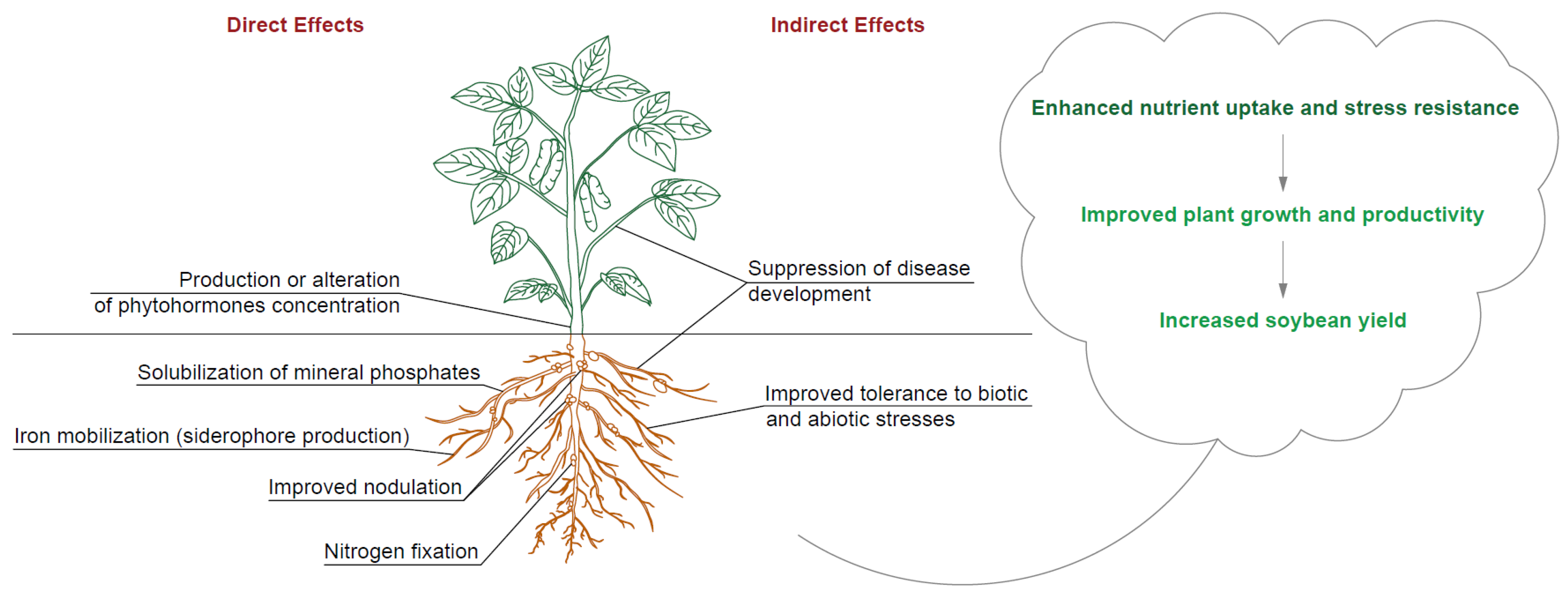
In Serbia, a series of studies [42,94,95] by Marinković et al. demonstrated the multifaceted benefits of PGPR-based inoculation strategies for soybean under field and controlled conditions. In a long-term field experiment on chernozem soil, co-inoculation of soybean with B. japonicum and selected PGPR strains significantly modified rhizosphere microbial structure and activity, increasing the abundance of beneficial functional groups (including Azotobacter, Ammonifiers, Actinomycetes, and nitrogen-fixing bacteria), enhancing soil dehydrogenase activity, and improving nodulation, plant nitrogen accumulation, and yield, with an average yield increase of 3.9% and the highest yield obtained under co-inoculation with Azotobacter chroococcum [42]. Under drought stress conditions, subsequent pot experiments showed that inoculation with B. japonicum and Bacillus subtilis, particularly in combination, enhanced antioxidant defense systems, nitrogen fixation efficiency, biomass accumulation, and tissue nitrogen content, with co-inoculation consistently outperforming single-strain treatments [94]. More recently, integrated application of B. japonicum with PGPR consortia (including A. chroococcum, B. subtilis, and Bacillus megaterium) combined with targeted mineral nutrient supplementation was shown to significantly improve seed germination energy, seedling vigor, root development, and early biomass accumulation in soybean, highlighting the importance of PGPR consortia for crop establishment and yield stability under variable European agroecological conditions [95]. Iličić et al. (2017) [43] evaluated the effects of co-inoculation with B. japonicum and PGPR strains belonging to Bacillus sp. and Pseudomonas chlororaphis under field conditions. The study showed that co-inoculation treatments significantly improved soybean yield components compared with a commercial rhizobial inoculant alone. Relative to the control yield of approximately 4.0 t/ha, co-inoculation treatments resulted in statistically significant yield increases, reaching 4.3–4.4 t/ha depending on the bacterial combination, corresponding to yield gains of 5.7–10%. In addition to increased grain yield, co-inoculation enhanced pod number per plant, grain mass, and the accumulation of nitrogen and sulfur in seeds [43]. Also in Serbia, Malenčić et al. (2023) [96] reported that seed inoculation with the PGPR strain B. subtilis significantly improved soybean tolerance to biotic stress caused by mite Tetranychus urticae infestation. Their study demonstrated that inoculated plants exhibited reduced lipid peroxidation and a more efficient antioxidant response, particularly through increased activity of superoxide dismutase and peroxidases in roots, indicating improved oxidative stress management. Information on whether the study was conducted under field or greenhouse conditions was not provided in the conference abstract. In addition to physiological protection, B. subtilis isolates have demonstrated many characteristics that promote plant growth, including enzyme production and siderophore synthesis, which are important for nutrient acquisition and plant resistance [96]. A summary of the direct and indirect effects of PGPRs on soybean is presented in Figure 1. In a laboratory study conducted by Miljaković et al. (2022) [44], soybean seeds were bio-primed with B. japonicum (commercial strains) and B. megaterium (newly isolated strains), used both as single inoculants and in co-inoculation. The results showed that B. megaterium significantly improved germination and vigor parameters, including final germination, shoot and root length, root dry weight, and seedling vigor index. Additionally, B. japonicum bio-priming improved germination energy and seedling biomass compared with non-primed seeds [44]. Stajković-Srbinović et al. (2020) [97] investigated the effects of inoculation with different Bradyrhizobium strains on soybean grown in two soils containing high total Ni levels (59 and 106 mg/kg). The cited authors showed that Bradyrhizobium inoculation significantly increased seed yield (up to 125%) and seed nitrogen content while simultaneously reducing nickel accumulation in soybean seeds by up to 48% compared with non-inoculated controls and mineral fertilization. Inoculated treatments also exhibited reduced concentrations of P, Fe, Cu, and Zn in seeds, whereas C, S, Ca, and Mg contents remained unaffected. Importantly, overall nutrient uptake by seeds was generally maintained or increased, despite the lower Ni concentrations [97].
In Croatia, Kajić et al. (2023) [98] evaluated the effects of seed co-inoculation with indigenous strains of B. japonicum and Pseudomonas fluorescens on soybean growth parameters in greenhouse conditions. The study demonstrated that inoculation with different rhizobial strains significantly affected most investigated plant traits, confirming the importance of strain selection for effective symbiosis. The addition of P. fluorescens influenced soybean performance in a strain-dependent manner, with co-inoculation resulting in increased shoot dry weight when combined with the reference B. japonicum strain and selected indigenous isolates, while no significant effects were observed for root length or other parameters. Notably, P. fluorescens applied alone did not produce statistically significant changes in plant growth, indicating that its effects are primarily mediated through interactions with rhizobia [98].
In Ukraine, Iutynska et al. (2022) [99] evaluated complex seed inoculation under irrigated conditions in the Southern Steppe, combining B. japonicum with endophytic strains. Their multi-year field study showed that the commercial bioformulation (Ryzobin), especially when combined with Bacillus sp. 4, enhanced rhizosphere microbial activity, increased nitrogen-fixing and phosphorus-mobilizing bacteria, and improved soybean productivity under heat and drought stress. The highest seed yields reached 2.66 and 2.90 t/ha for ultra-early and medium maturing cultivars, respectively, representing yield increases of up to 40% compared to non-inoculated controls, along with simultaneous improvements in seed protein and fat content [99]. Shevchuk et al. (2025) [100] examined the effect of pre-sowing seed co-inoculation with rhizobia and an endophytic bacterium on soybean ‘Sultot’ adaptation and productivity under combined hyperthermia and drought conditions. The inoculation treatment consisted of endophytic Bacillus sp. 4 applied together with B. japonicum strains UCM B-6018, B-6023, and B-6035. The study assessed antioxidant status (total antioxidant activity and catalase activity) in leaves and roots, plant water regime, and productivity under field cultivation, with statistical testing of differences. The control plants showed higher total antioxidant activity (reported as 32% in leaves and 55% in roots), while in the case of co-inoculation, these values were lower by 12.5% (leaves) and 5.5% (roots). The highest catalase activity was recorded in inoculated plants. Inoculation also increased moisture content and water retention capacity compared to the control plants under stress conditions, along with observed changes in soybean yield [100].
In Spain, Estévez et al. (2009) [101] investigated the effect of co-inoculation of soybean with Ensifer (Sinorhizobium) fredii strains SMH12 or HH103 and the plant growth-promoting rhizobacterium Chryseobacterium balustinum Aur9 under moderate saline conditions. Soybean plants were grown under controlled and saline stress conditions (25 mM NaCl), and the impact of single versus double inoculation was evaluated by monitoring nodule primordia formation and symbiotic performance. Co-inoculation with E. fredii SMH12 and C. balustinum Aur9 resulted in improved symbiotic performance of soybean plants, particularly under saline stress, compared with single inoculation. In contrast, co-inoculation did not enhance nodule primordia development when E. fredii HH103 was used [101].
In Romania, Stefan et al. (2010) [102] investigated the effects of inoculating soybean with Bacillus pumilus RS3, a rhizobacterial strain isolated from the soybean rhizosphere, on plant growth, nodulation, and seed protein yield under ecological field conditions without organic fertilizers or pesticides. It found that the inoculation with B. pumilus RS3 significantly increased plant height, number of leaves, foliar area, nodulation, seed protein content, and seed protein yield compared with the non-inoculated control [102].

4. Conclusions

Soybean production in Europe is characterized by strong regional heterogeneity and remains constrained by both environmental and agronomic factors. The reviewed evidence demonstrates that plant growth-promoting rhizobacteria represent an agronomically relevant approach to support soybean cultivation under European conditions. PGPR influence soybean performance through multiple, often complementary mechanisms, including enhanced nutrient availability, modulation of phytohormonal balance, improved efficiency of symbiotic nitrogen fixation, suppression of soil-borne pathogens, and increased tolerance to stress.
European studies indicate that both single-strain inoculation and co-inoculation strategies can positively affect nodulation, plant physiological traits, and yield components. Nevertheless, the magnitude of these effects varies substantially across environments, years, and soybean cultivars. This highlights the importance of strain selection, adaptation to local soil and climatic conditions, and integration of PGPR application with other agronomic practices.
In Europe, with the growing demand for feed protein, soybean cultivation and the use of PGPR-based products are becoming increasingly important, as evidenced by the research presented in the article. However, further yield improvements will depend primarily on optimizing the practical application of these solutions, rather than simply increasing their availability. The selection of appropriate strains of microorganisms adapted to local soybean varieties and specific soil and climatic conditions is of key importance. The lack of long-term field studies that would allow for the development of consistent recommendations remains a significant limitation. An additional barrier is the regulatory requirements for the registration and classification of microbial inoculants, which hinder their wider use in agricultural practice. Overall, PGPR-based inoculation should be regarded as a supportive component of integrated soybean production systems rather than a standalone solution. Future research should prioritize long-term field studies and a better understanding of the strain–environment–host interactions in order to fully exploit the potential of PGPR for better adaptation of soybean in Europe and, above all, for higher and more stable yields.

Author Contributions

Conceptualization, A.K. and K.P.; validation, A.K. and K.P.; formal analysis, A.K. and K.P.; resources, A.K.; writing—original draft preparation, A.K., K.P., A.F., G.S. and K.R.; writing—review and editing, A.K., K.P., A.F., G.S. and K.R.; supervision, A.K. and K.P. All authors have read and agreed to the published version of the manuscript.

Funding

The publication was financed by the Polish Minister of Science and Higher Education as part of the Strategy of the Poznan University of Life Sciences for 2024–2026 in the field of improving scientific research and development work in priority research areas.

Data Availability Statement

No new data were created or analyzed in this study. Data sharing is not applicable to this article.

Conflicts of Interest

The authors declare no conflicts of interest.

References

  1. Dilawari, R.; Kaur, N.; Priyadarshi, N.; Prakash, I.; Patra, A.; Mehta, S.; Singh, B.; Jain, P.; Islam, M.A. Soybean: A Key Player for Global Food Security. In Soybean Improvement; Wani, S.H., Sofi, N.U.R., Bhat, M.A., Lin, F., Eds.; Springer International Publishing: Cham, Switzerland, 2022; pp. 1–46. [Google Scholar] [CrossRef]
  2. Pagano, M.C.; Miransari, M. The Importance of Soybean Production Worldwide. In Abiotic and Biotic Stresses in Soybean Production; Miransari, M., Ed.; Elsevier: Amsterdam, The Netherlands; Academic Press: London, UK, 2016; pp. 1–26. [Google Scholar] [CrossRef]
  3. Kumari, S.; Dambale, A.S.; Samantara, R.; Jincy, M.; Bains, G. Introduction, History, Geographical Distribution, Importance, and Uses of Soybean (Glycine max L.). In Soybean Production Technology; Singh, K.P., Singh, N.K., T, A., Eds.; Springer Nature: Singapore, 2025; pp. 1–17. ISBN 978-981-97-8676-3. [Google Scholar]
  4. Volkova, E.; Smolyaninova, N. Analysis of World Trends in Soybean Production. BIO Web Conf. 2024, 141, 01026. [Google Scholar] [CrossRef]
  5. Klein, H.S.; Luna, F.V. Soybeans. In Brazilian Crops in the Global Market; Palgrave Studies in Economic History; Springer Nature: Cham, Switzerland, 2023; pp. 79–106. ISBN 978-3-031-38588-9. [Google Scholar]
  6. USDA. Foreign Agricultural Service. PSD Online Database: Soybean. Available online: https://apps.fas.usda.gov/psdonline/ (accessed on 10 January 2026).
  7. Peng, D.; Zhang, H.; Zhang, Y.; Yu, L.; Chen, M.; Chen, J.M.; You, L.; Li, P.; Liu, J.; Zhang, X.; et al. Global Soybean Trade Dynamics: Drivers, Impacts, and Sustainability. Innovation 2025, 7, 101124. [Google Scholar] [CrossRef] [PubMed]
  8. Sedibe, M.M.; Mofokeng, A.M.; Masvodza, D.R. Soybean Production, Constraints, and Future Prospects in Poorer Countries: A Review. In Production and Utilization of Legumes—Progress and Prospects; Hasanuzzaman, M., Ed.; IntechOpen: London, UK, 2023. [Google Scholar] [CrossRef]
  9. Popescu, A.; Dinu, T.A.; Stoian, E.; Şerban, V.; Hontus, A.; Angelescu, C.; Stanciu, M. Soybean in the European Union—An Upward Trend for Cultivation and Production. Sci. Papers Ser. Manag. Econom. Eng. Agric. Rural Dev. 2025, 25, 633–646. [Google Scholar]
  10. Popescu, A. Soybean production trends in the world, European Union and Romania. Sci. Papers, Ser. Manag. Econom. Eng. Agric. Rural Dev. 2024, 24, 695–708. [Google Scholar]
  11. Barboza Martignone, G.M.; Ghosh, B.; Papadas, D.; Behrendt, K. The Rise of Soybean in International Commodity Markets: A Quantile Investigation. Heliyon 2024, 10, e34669. [Google Scholar] [CrossRef]
  12. Kłosowicz, M.; Panasiewicz, K.; Kolanoś, A. Perspektywy uprawy soi w Polsce. Fragm. Agron. 2024, 41, 1–8. [Google Scholar]
  13. Pannecoucque, J.; Goormachtigh, S.; Ceusters, J.; Debode, J.; Van Waes, C.; Van Waes, J. Temperature as a Key Factor for Successful Inoculation of Soybean with Bradyrhizobium Spp. under Cool Growing Conditions in Belgium. J. Agric. Sci. 2018, 156, 493–503. [Google Scholar] [CrossRef]
  14. Rotundo, J.L.; Marshall, R.; McCormick, R.; Truong, S.K.; Styles, D.; Gerde, J.A.; Gonzalez-Escobar, E.; Carmo-Silva, E.; Janes-Bassett, V.; Logue, J.; et al. European Soybean to Benefit People and the Environment. Sci. Rep. 2024, 14, 7612. [Google Scholar] [CrossRef]
  15. COCERAL. Crop Forecast—Oilseeds (December 2025). Available online: https://www.coceral.com (accessed on 12 January 2026).
  16. Panasiewicz, K.; Faligowska, A.; Szymańska, G.; Ratajczak, K.; Sulewska, H. Optimizing the Amount of Nitrogen and Seed Inoculation to Improve the Quality and Yield of Soybean Grown in the Southeastern Baltic Region. Agriculture 2023, 13, 798. [Google Scholar] [CrossRef]
  17. Sanzovo, A.W.S.; Silvestre, D.A.; Goes, K.C.G.P.; Volsi, B.; Constantino, L.V.; Bordin, I.; Telles, T.S.; Andrade, D.S. Crop Rotation and Inoculation Increase Soil Bradyrhizobia Population, Soybean Grain Yields, and Profitability. Braz. J. Microbiol. 2023, 54, 3187–3200. [Google Scholar] [CrossRef]
  18. Kulig, B.; Klimek-Kopyra, A. Sowing Date and Fertilization Level Are Effective Elements Increasing Soybean Productivity in Rainfall Deficit Conditions in Central Europe. Agriculture 2022, 13, 115. [Google Scholar] [CrossRef]
  19. Van Acker, R.C.; Swanton, C.J.; Weise, S.F. The Critical Period of Weed Control in Soybean [Glycine max (L.) Merr.]. Weed Sci. 1993, 41, 194–200. [Google Scholar] [CrossRef]
  20. Klimek-Kopyra, A.; Skowera, B.; Dacewicz, E.; Boligłowa, E.; Kulig, B.; Znój, K. Occurrence of Diseases and Seed Yield of Early Maturing Soybean Cultivars Grown under the Conditions of Central Europe. Agronomy 2024, 14, 534. [Google Scholar] [CrossRef]
  21. Panasiewicz, K.; Faligowska, A.; Szymańska, G.; Ratajczak, K.; Kłosowicz, M.; Wolna-Maruwka, A. Sustainable Methods of Soybean Cultivation in Poland. Sustainability 2024, 16, 5762. [Google Scholar] [CrossRef]
  22. Zhong, Y.; Zhong, S. Advances in Agronomic Practices for High-Yield Soybean Cultivation. Biosci. Methods 2024, 15, 337–347. [Google Scholar] [CrossRef]
  23. European Commission. Sustainable Agriculture and Soil Conservation in the EU; Publications Office of the European Union: Brussels, Belgium, 2014. [Google Scholar]
  24. Lal, R. Soil Degradation as a Reason for Inadequate Human Nutrition. Food Secur. 2009, 1, 45–57. [Google Scholar] [CrossRef]
  25. Food and Agriculture Organization of the United Nations. Sustainable Food and Agriculture: An Integrated Approach; Food and Agriculture Organization of the United Nations (FAO): Rome, Italy, 2018. [Google Scholar]
  26. Pretty, J. Agricultural Sustainability: Concepts, Principles and Evidence. Phil. Trans. R. Soc. B 2008, 363, 447–465. [Google Scholar] [CrossRef]
  27. European Parliament and Council of the European Union. Regulation (EU) 2019/1009 of the European Parliament and of the Council of 5 June 2019 Laying Down Rules on the Making Available on the Market of EU Fertilising Products; European Parliament and Council of the European Union: Brussels, Belgium, 2019. [Google Scholar]
  28. Vessey, J.K. Plant Growth Promoting Rhizobacteria as Biofertilizers. Plant Soil 2003, 255, 571–586. [Google Scholar] [CrossRef]
  29. Lankinen, Å.; Witzell, J.; Aleklett, K.; Furenhed, S.; Karlsson Green, K.; Latz, M.; Liljeroth, E.; Larsson, R.; Löfkvist, K.; Meijer, J.; et al. Challenges and Opportunities for Increasing the Use of Low-Risk Plant Protection Products in Sustainable Production. A Review. Agron. Sustain. Dev. 2024, 44, 21. [Google Scholar] [CrossRef]
  30. Qin, H.; Wang, Z.; Sha, W.; Song, S.; Qin, F.; Zhang, W. Role of Plant-Growth-Promoting Rhizobacteria in Plant Machinery for Soil Heavy Metal Detoxification. Microorganisms 2024, 12, 700. [Google Scholar] [CrossRef] [PubMed]
  31. Bhattacharyya, P.N.; Jha, D.K. Plant Growth-Promoting Rhizobacteria (PGPR): Emergence in Agriculture. World J. Microbiol. Biotechnol. 2012, 28, 1327–1350. [Google Scholar] [CrossRef]
  32. Khoso, M.A.; Wagan, S.; Alam, I.; Hussain, A.; Ali, Q.; Saha, S.; Poudel, T.R.; Manghwar, H.; Liu, F. Impact of Plant Growth-Promoting Rhizobacteria (PGPR) on Plant Nutrition and Root Characteristics: Current Perspective. Plant Stress 2024, 11, 100341. [Google Scholar] [CrossRef]
  33. Beneduzi, A.; Ambrosini, A.; Passaglia, L.M.P. Plant Growth-Promoting Rhizobacteria (PGPR): Their Potential as Antagonists and Biocontrol Agents. Genet. Mol. Biol. 2012, 35, 1044–1051. [Google Scholar] [CrossRef]
  34. Verma, J.P.; Yadav, J.; Tiwari, K.N.; Lavakush, S.; Singh, V. Impact of Plant Growth Promoting Rhizobacteria on Crop Production. Int. J. Agric. Res. 2010, 5, 954–983. [Google Scholar] [CrossRef]
  35. Martínez-Viveros, O.; Jorquera, M.A.; Crowley, D.E.; Gajardo, G.; Mora, M.L. Mechanisms and practical considerations involved in plant growth promotion by rhizobacteria. J. Soil Sci. Plant Nutr. 2010, 10, 293–319. [Google Scholar] [CrossRef]
  36. Zhang, T.; Jian, Q.; Yao, X.; Guan, L.; Li, L.; Liu, F.; Zhang, C.; Li, D.; Tang, H.; Lu, L. Plant Growth-Promoting Rhizobacteria (PGPR) Improve the Growth and Quality of Several Crops. Heliyon 2024, 10, e31553. [Google Scholar] [CrossRef]
  37. Yang, P.; Condrich, A.; Scranton, S.; Hebner, C.; Lu, L.; Ali, M.A. Utilising Plant Growth-Promoting Rhizobacteria (PGPR) to Advance Sustainable Agriculture. Bacteria 2024, 3, 434–451. [Google Scholar] [CrossRef]
  38. Grover, M.; Bodhankar, S.; Sharma, A.; Sharma, P.; Singh, J.; Nain, L. PGPR Mediated Alterations in Root Traits: Way Toward Sustainable Crop Production. Front. Sustain. Food Syst. 2021, 4, 618230. [Google Scholar] [CrossRef]
  39. Mattedi, A.; Farda, B.; Djebaili, R.; Del Gallo, M.; Pellegrini, M. Molecular Mechanism of Plant–Bacteria Interactions. In Plant Holobiome Engineering for Climate—Smart Agriculture; Sayyed, R.Z., Ilyas, N., Eds.; Sustainable Plant Nutrition in a Changing World; Springer Nature: Singapore, 2024; pp. 499–520. ISBN 978-981-99-9387-1. [Google Scholar]
  40. Editorial Office. From Rhizosphere to Crop Production: Evolutionary and Molecular Insights into Plant Growth Promoting Rhizobacteria (PGPR). Ann. Agri-Bio Res. 2025, 30, 126–140. [Google Scholar] [CrossRef]
  41. Paulus, J.M.; Tooy, D. Effect of Plant Growth Promoting Rhizobacteria (PGPR) on Growth and Yield of Soybean. J. Agric. 2024, 3, 30–38. [Google Scholar] [CrossRef]
  42. Marinković, J.; Bjelić, D.; Tintor, B.; Miladinović, J.; Đukić, V.; Đorđević, V. Effects of Soybean Co-Inoculation with Plant Growth Promoting Rhizobacteria in Field Trial. Rom. Biotechnol. Lett. 2018, 23, 13401–13408. [Google Scholar]
  43. Iličić, R.M.; Pivić, R.N.; Dinić, Z.S.; Latković, D.S.; Vlajić, S.A.; Jošić, D.L.J. The Enhancement of soybean growth and yield in a field trial through introduction of mixtures of Bradyrhizobium japonicum, Bacillus sp. and Pseudomonas chlororaphis. Not. Sci. Biol. 2017, 9, 274–279. [Google Scholar] [CrossRef]
  44. Miljaković, D.; Marinković, J.; Tamindžić, G.; Đorđević, V.; Tintor, B.; Milošević, D.; Ignjatov, M.; Nikolić, Z. Bio-Priming of soybean with Bradyrhizobium japonicum and Bacillus megaterium: Strategy to improve seed germination and the initial seedling growth. Plants 2022, 11, 1927. [Google Scholar] [CrossRef]
  45. Zhou, X.; Li, Z. Improving Nitrogen Fixation in Soybean: Insights into Rhizobium Interactions. Mol. Pathog. 2025, 16, 226–235. [Google Scholar] [CrossRef]
  46. Griebsch, A.; Matschiavelli, N.; Lewandowska, S.; Schmidtke, K. Presence of Bradyrhizobium Sp. under Continental Conditions in Central Europe. Agriculture 2020, 10, 446. [Google Scholar] [CrossRef]
  47. Ma, M.; Jiang, X.; Wang, Q.; Guan, D.; Li, L.; Ongena, M.; Li, J. Isolation and Identification of PGPR Strain and Its Effect on Soybean Growth and Soil Bacterial Community Composition. Int. J. Agric. Biol. 2018, 20, 1289–1297. [Google Scholar] [CrossRef]
  48. Ai, W.; Guo, T.; Lay, K.D.; Ou, K.; Cai, K.; Ding, Y.; Liu, J.; Cao, Y. Isolation of Soybean-Specific Plant Growth-Promoting Rhizobacteria Using Soybean Agglutin and Evaluation of Their Effects to Improve Soybean Growth, Yield, and Soil Nutritional Status. Microbiol. Res. 2022, 261, 127076. [Google Scholar] [CrossRef]
  49. Mun, B.-G.; Hussain, A.; Park, Y.-G.; Kang, S.-M.; Lee, I.-J.; Yun, B.-W. The PGPR Bacillus aryabhattai Promotes Soybean Growth via Nutrient and Chlorophyll Maintenance and the Production of Butanoic Acid. Front. Plant Sci. 2024, 15, 1341993. [Google Scholar] [CrossRef]
  50. Purwaningsih, S.; Agustiyani, D.; Dewi, T.K.; Antonius, S. The Screening of Plant Growth-Promoting Rhizobacteria Based on the Ability to Promote the Growth and Nodulation of Soybean (Glycine max L.) Seedlings. J. Pure Appl. Microbiol. 2023, 17, 231–240. [Google Scholar] [CrossRef]
  51. Bashan, Y.; de-Bashan, L.E.; Prabhu, S.R.; Hernandez, J.-P. Advances in Plant Growth-Promoting Bacterial Inoculant Technology: Formulations and Practical Perspectives (1998–2013). Plant Soil 2014, 378, 1–33. [Google Scholar] [CrossRef]
  52. Hungria, M.; Nogueira, M.A.; Araujo, R.S. Co-inoculation of soybeans and common beans with rhizobia and azospirilla: Strategies to improve sustainability. Biol. Fertil. Soils 2013, 49, 791–801. [Google Scholar] [CrossRef]
  53. Oldroyd, G.E.D. Speak, Friend, and Enter: Signalling Systems That Promote Beneficial Symbiotic Associations in Plants. Nat. Rev. Microbiol. 2013, 11, 252–263. [Google Scholar] [CrossRef] [PubMed]
  54. Udvardi, M.; Poole, P.S. Transport and Metabolism in Legume-Rhizobia Symbioses. Annu. Rev. Plant Biol. 2013, 64, 781–805. [Google Scholar] [CrossRef]
  55. Yang, Y.; Zhao, Q.; Li, X.; Ai, W.; Liu, D.; Qi, W.; Zhang, M.; Yang, C.; Liao, H. Characterization of Genetic Basis on Synergistic Interactions between Root Architecture and Biological Nitrogen Fixation in Soybean. Front. Plant Sci. 2017, 8, 1466. [Google Scholar] [CrossRef]
  56. Bashan, Y.; de-Bashan, L.E. How the Plant Growth-Promoting Bacterium Azospirillum Promotes Plant Growth—A Critical Assessment. In Advances in Agronomy; Elsevier: Amsterdam, The Netherlands, 2010; Volume 108, pp. 77–136. ISBN 978-0-12-381031-1. [Google Scholar]
  57. Glick, B.R. Modulation of Plant Ethylene Levels by the Bacterial Enzyme ACC Deaminase. FEMS Microbiol. Lett. 2005, 251, 1–7. [Google Scholar] [CrossRef] [PubMed]
  58. Spaepen, S.; Vanderleyden, J.; Remans, R. Indole-3-Acetic Acid in Microbial and Microorganism-Plant Signaling. FEMS Microbiol. Rev. 2007, 31, 425–448. [Google Scholar] [CrossRef] [PubMed]
  59. Dąbrowska, G.; Zdziechowska, E. The Role of Rhizobacteria in the Stimulation of the Growth and Development Processes and Protection of Plants against Environmental Factors. Prog. Plant Prot. 2015, 55, 498–506. [Google Scholar] [CrossRef]
  60. Duca, D.; Lorv, J.; Patten, C.L.; Rose, D.; Glick, B.R. Indole-3-Acetic Acid in Plant–Microbe Interactions. Antonie Van Leeuwenhoek 2014, 106, 85–125. [Google Scholar] [CrossRef]
  61. Kudoyarova, G.; Arkhipova, T.; Korshunova, T.; Bakaeva, M.; Loginov, O.; Dodd, I.C. Phytohormone Mediation of Interactions Between Plants and Non-Symbiotic Growth Promoting Bacteria Under Edaphic Stresses. Front. Plant Sci. 2019, 10, 1368. [Google Scholar] [CrossRef]
  62. Verbon, E.H.; Liberman, L.M. Beneficial Microbes Affect Endogenous Mechanisms Controlling Root Development. Trends Plant Sci. 2016, 21, 218–229. [Google Scholar] [CrossRef]
  63. Fukami, J.; Cerezini, P.; Hungria, M. Azospirillum: Benefits That Go Far beyond Biological Nitrogen Fixation. AMB Expr. 2018, 8, 73. [Google Scholar] [CrossRef]
  64. Vacheron, J.; Desbrosses, G.; Bouffaud, M.-L.; Touraine, B.; Moënne-Loccoz, Y.; Muller, D.; Legendre, L.; Wisniewski-Dyé, F.; Prigent-Combaret, C. Plant Growth-Promoting Rhizobacteria and Root System Functioning. Front. Plant Sci. 2013, 4, 356. [Google Scholar] [CrossRef]
  65. Cheng, S.-S.; Contador, C.A.; Zhang, F.; Ho, Y.-L.; Lam, H.-M. Whispers beneath the Soil: Soybean-Microbe Communication Pathways in the Rhizosphere. Front. Plant Sci. 2025, 16, 1686819. [Google Scholar] [CrossRef]
  66. Dubey, A.; Saiyam, D.; Kumar, A.; Hashem, A.; Abd_Allah, E.F.; Khan, M.L. Bacterial Root Endophytes: Characterization of Their Competence and Plant Growth Promotion in Soybean (Glycine max (L.) Merr.) under Drought Stress. Int. J. Environ. Res. Public Health 2021, 18, 931. [Google Scholar] [CrossRef] [PubMed]
  67. Park, Y.-G.; Mun, B.-G.; Kang, S.-M.; Hussain, A.; Shahzad, R.; Seo, C.-W.; Kim, A.-Y.; Lee, S.-U.; Oh, K.Y.; Lee, D.Y.; et al. Bacillus aryabhattai SRB02 tolerates oxidative and nitrosative stress and promotes the growth of soybean by modulating the production of phytohormones. PLoS ONE 2017, 12, e0173203. [Google Scholar] [CrossRef]
  68. Kajić, S.; Gradinščak, A.; Königshofer, D.; Fadljević, I.; Sikora, S.; Rajnović, I. Characterization of Plant Growth Promoting Rhizobacteria and Their Benefits on Soybean Growth. Legume Res. 2024, 48, 131–136. [Google Scholar] [CrossRef]
  69. Vey, R.T.; Jacques, R.J.S.; Pavinato, P.S.; López-Baena, F.J.; Spanevello, J.F.; Bronzatto, E.S.; Fulaneti, F.S.; Santos, R.E.; Brum, L.N.; Martin, T.N. Phosphate solubilization capacity by bacteria in soybean crops. Braz. J. Biol. 2025, 85, e289630. [Google Scholar] [CrossRef]
  70. Smirnova, I.; Sadanov, A.; Baimakhanova, G.; Faizulina, E.; Tatarkina, L. Phosphate-Solubilizing Salt-Tolerant Bacteria to Support Soybean Growth (Glycine max (L.) Merr.) On Saline Soils. Online J. Biol. Sci. 2024, 24, 9–18. [Google Scholar] [CrossRef]
  71. Radhakrishnan, R.; Hashem, A.; Abd_Allah, E.F. Bacillus: A Biological Tool for Crop Improvement through Bio-Molecular Changes in Adverse Environments. Front. Physiol. 2017, 8, 667. [Google Scholar] [CrossRef]
  72. Shaffique, S.; Kang, S.-M.; Hoque, M.I.U.; Imran, M.; Aaqil Khan, M.; Lee, I.-J. Research Progress in Soybean by Phytohormone Modulation and Metal Chelation over the Past Decade. Agriculture 2023, 13, 1325. [Google Scholar] [CrossRef]
  73. Robin, A.; Vansuyt, G.; Hinsinger, P.; Meyer, J.M.; Briat, J.F.; Lemanceau, P. Chapter 4 Iron Dynamics in the Rhizosphere. In Advances in Agronomy; Elsevier: Amsterdam, The Netherlands, 2008; Volume 99, pp. 183–225. ISBN 978-0-12-374360-2. [Google Scholar]
  74. Roriz, M.; Pereira, S.I.A.; Castro, P.M.L.; Carvalho, S.M.P.; Vasconcelos, M.W. Iron Metabolism in Soybean Grown in Calcareous Soil Is Influenced by Plant Growth-Promoting Rhizobacteria—A Functional Analysis. Rhizosphere 2021, 17, 100274. [Google Scholar] [CrossRef]
  75. Roriz, M.; Pereira, S.I.A.; Castro, P.M.L.; Carvalho, S.M.P.; Vasconcelos, M.W. Impact of Soybean-Associated Plant Growth-Promoting Bacteria on Plant Growth Modulation under Alkaline Soil Conditions. Heliyon 2023, 9, e14620. [Google Scholar] [CrossRef]
  76. Carroll, D.; Holden, N.; Gifford, M.L.; Dupuy, L.X. Framework for Quantification of the Dynamics of Root Colonization by Pseudomonas fluorescens Isolate SBW25. Front. Microbiol. 2020, 11, 585443. [Google Scholar] [CrossRef]
  77. Glick, B.R. Plant Growth-Promoting Bacteria: Mechanisms and Applications. Scientifica 2012, 2012, 963401. [Google Scholar] [CrossRef] [PubMed]
  78. Hosseini, B.; Voegele, R.T.; Link, T.I. Diagnosis of Soybean Diseases Caused by Fungal and Oomycete Pathogens: Existing Methods and New Developments. J. Fungi 2023, 9, 587. [Google Scholar] [CrossRef]
  79. Zhao, L.; Xu, Y.; Lai, X. Antagonistic Endophytic Bacteria Associated with Nodules of Soybean (Glycine max L.) and Plant Growth-Promoting Properties. Braz. J. Microbiol. 2018, 49, 269–278. [Google Scholar] [CrossRef] [PubMed]
  80. Annapurna, K.; Kumar, A.; Kumar, L.V.; Govindasamy, V.; Bose, P.; Ramadoss, D. PGPR-Induced Systemic Resistance (ISR) in Plant Disease Management. In Bacteria in Agrobiology: Disease Management; Maheshwari, D.K., Ed.; Springer: Berlin/Heidelberg, Germany, 2013; pp. 405–425. ISBN 978-3-642-33638-6. [Google Scholar]
  81. Pieterse, C.M.J.; Zamioudis, C.; Berendsen, R.L.; Weller, D.M.; Van Wees, S.C.M.; Bakker, P.A.H.M. Induced Systemic Resistance by Beneficial Microbes. Annu. Rev. Phytopathol. 2014, 52, 347–375. [Google Scholar] [CrossRef] [PubMed]
  82. Khalimi, K.; Suprapta, D.N. Induction of Plant Resistance against Soybean Stunt Virus Using Some Formulations of Pseudomonas aaeruginosa. J. Int. Soc. Southeast Asian Agric. Sci. Philipp. 2011, 17, 98–105. [Google Scholar]
  83. Alzate Zuluaga, M.Y.; Fattorini, R.; Cesco, S.; Pii, Y. Plant-Microbe Interactions in the Rhizosphere for Smarter and More Sustainable Crop Fertilization: The Case of PGPR-Based Biofertilizers. Front. Microbiol. 2024, 15, 1440978. [Google Scholar] [CrossRef]
  84. Mitter, E.K.; Tosi, M.; Obregón, D.; Dunfield, K.E.; Germida, J.J. Rethinking Crop Nutrition in Times of Modern Microbiology: Innovative Biofertilizer Technologies. Front. Sustain. Food Syst. 2021, 5, 606815. [Google Scholar] [CrossRef]
  85. Dos Santos, R.M.; Cueva-Yesquén, L.G.; Garboggini, F.F.; Desoignies, N.; Rigobelo, E.C. Inoculum Concentration and Mineral Fertilization: Effects on the Endophytic Microbiome of Soybean. Front. Microbiol. 2022, 13, 900980. [Google Scholar] [CrossRef]
  86. Kurniawati, A.; Stankovics, P.; Hilmi, Y.S.; Toth, G.; Smol, M.; Toth, Z. Understanding the Future of Bio-Based Fertilisers: The EU’s Policy and Implementation. Sust. Chem. Clim. Act. 2023, 3, 100033. [Google Scholar] [CrossRef]
  87. Paradiso, R.; Arena, C.; De Micco, V.; Giordano, M.; Aronne, G.; De Pascale, S. Changes in Leaf Anatomical Traits Enhanced Photosynthetic Activity of Soybean Grown in Hydroponics with Plant Growth-Promoting Microorganisms. Front. Plant Sci. 2017, 8, 674. [Google Scholar] [CrossRef] [PubMed]
  88. Jarecki, W.; Borza, I.M.; Rosan, C.A.; Vicas, S.I.; Domuța, C.G. Soybean Response to Seed Inoculation with Bradyrhizobium japonicum and/or Nitrogen Fertilization. Agriculture 2024, 14, 1025. [Google Scholar] [CrossRef]
  89. Jarecki, W.; Buczek, J.; Jańczak-Pieniążek, M. Soybean (Glycine max (L.) Merr.) Response to Commercial Inoculation with Bradyrhizobium japonicum. Appl. Ecol. Env. Res. 2020, 18, 6713–6724. [Google Scholar] [CrossRef]
  90. Dłutowska, K.; Gałka, B.; Szuba-Trznadel, A.; Ramut, R.; Włodarczyk, M.; Jama-Rodzeńska, A.; Fialkiewicz, W. The Effect of Various Inoculants on the Productivity, Chemical Composition of Soybean Seeds (Glycine max (L. Merrill) Magnolia PZO) and Chemical Properties of Soil in Southwest Part of Poland—Preliminary Studies. Curr. Agron. 2024, 53, 158–168. [Google Scholar] [CrossRef]
  91. Omari, R.A.; Yuan, K.; Anh, K.T.; Reckling, M.; Halwani, M.; Egamberdieva, D.; Ohkama-Ohtsu, N.; Bellingrath-Kimura, S.D. Enhanced Soybean Productivity by Inoculation with Indigenous Bradyrhizobium Strains in Agroecological Conditions of Northeast Germany. Front. Plant Sci. 2022, 12, 707080. [Google Scholar] [CrossRef]
  92. Rotaru, V.I.; Risnoveanu, L. Interactive Effects of Plant Growth-Promoting Rhizobacteria and Phosphates Sources on Growth and Phosphorus Nutrition of Soybean under Moderate Drought. Not. Bot. Horti Agrobot. 2019, 47, 872–880. [Google Scholar] [CrossRef]
  93. Jabborova, D.; Wirth, S.; Kannepalli, A.; Narimanov, A.; Desouky, S.; Davranov, K.; Sayyed, R.Z.; El Enshasy, H.; Malek, R.A.; Syed, A.; et al. Co-Inoculation of Rhizobacteria and Biochar Application Improves Growth and Nutrientsin Soybean and Enriches Soil Nutrients and Enzymes. Agronomy 2020, 10, 1142. [Google Scholar] [CrossRef]
  94. Marinković, J.; Miljaković, D.; Đorđević, V.; Vasiljević, M.; Tamindžić, G.; Miladinović, J.; Vasiljević, S. Perspectives of Bradyrhizobium and Bacillus Inoculation for Improvement of Soybean Tolerance to Water Deficit. Agronomy 2024, 14, 2692. [Google Scholar] [CrossRef]
  95. Marinković, J.; Miljaković, D.; Červenski, J.; Vasiljević, M.; Đorđević, V.; Tamindžić, G.; Miladinović, J. Synergistic Effect of PGPR and Nutrient Complex on Soybean Seed Germination and Initial Seedling Growth. Agriculture 2025, 15, 2022. [Google Scholar] [CrossRef]
  96. Malenčić, Đ.; Manojlović, A.; Šućur Elez, J.; Đurić, S.; Petrović, A.; Miladinović, J. The Use of Rhizobacteria Bacillus Subtilis for Biotic Stress Management in Soybean Plants. In Proceedings of the Abstracts, 11th World Soybean Research Conference (WSRC 11): Soybean Research for Sustainable Development, Vienna, Austria, 18–23 June 2023; University of Natural Resources and Life Sciences, Vienna (BOKU): Vienna, Austria, 2023; p. 443. [Google Scholar]
  97. Stajković-Srbinović, O.; De Meyer, S.E.; Kuzmanović, D.; Dinić, Z.; Delić, D.; Willems, A. Soybean Seed Chemical Composition as Influenced by Bradyrhizobium Inoculation in Soils with Elevated Nickel Concentrations. Appl. Soil Ecol. 2020, 153, 103576. [Google Scholar] [CrossRef]
  98. Kajić, S.; Lenkert, B.; Sikora, S.; Rajnović, I. Influence of Co-Inoculation of Bradyrhizobium japonicum and Pseudomonas fluorescens on Growth of Soybean (Glycine max L.). J. Cent. Eur. Agric. 2023, 24, 681–688. [Google Scholar] [CrossRef]
  99. Iutynska, H.; Goloborodko, S.; Tytova, L.; Dubynska, O. Effectiveness of Endophytic-Rhizobial Seed Inoculation of Soybean (Glycine max (L.) Merr.) Cultivated in Irrigated Soil. J. Cent. Eur. Agric. 2022, 23, 40–53. [Google Scholar] [CrossRef]
  100. Shevchuk, N.V.; Tytova, L.V.; Iutynska, H.; Sergiienko, V.G.; Katrii, V.B. Influence of Rhizobia and Endophytic Bacteria on Adaptation and Productivity of Glycine max (L.) Merr. under Hyperthermia and Drought Conditions. Microbiol. J. 2025, 5, 12–24. [Google Scholar] [CrossRef]
  101. Estévez, J.; Dardanelli, M.S.; Megías, M.; Rodríguez-Navarro, D.N. Symbiotic Performance of Common Bean and Soybean Co-Inoculated with Rhizobia and Chryseobacterium balustinum Aur9 under Moderate Saline Conditions. Symbiosis 2009, 49, 29–36. [Google Scholar] [CrossRef]
  102. Stefan, M.; Dunca, S.; Olteanu, Z.; Oprica, L.; Hritcu, L.; Mihasan, M.; Cojocaru, D. Soybean (Glycine max [L] Merr.) Inoculation with Bacillus pumilus RS3 Promotes Plant Growth and Increases Seed Protein Yield: Relevance for Environmentally-Friendly Agricultural Applications. Carpath. J. Earth Environ. Sci. 2010, 5, 131–138. [Google Scholar]
Figure 1. Beneficial effects of the plant growth-promoting rhizobacteria (PGPR) on soybean [42,75,83,91].
Agriculture 16 00497 g001
Table 1. Soybean area, yield, and production in Europe in 2025 [15].
UkraineItalySerbiaFranceAustriaPolandCroatiaRomaniaHungarySlovakiaGermanyCzech Rep.GreeceBosnia and
Herzegovina
BulgariaSpain
Area (ha)2,100,000320,000497,000150,00086,000100,00088,000130,00079,00068,00044,00020,0009000700050002000
Yield (t/ha)2.303.602.212.583.202.252.461.602.142.273.082.443.502.001.603.00
Production (t)4,830,0001,152,0001,098,000387,000275,000225,000216,000208,000169,000154,000136,00049,00032,00014,00080006000
Disclaimer/Publisher’s Note: The statements, opinions and data contained in all publications are solely those of the individual author(s) and contributor(s) and not of MDPI and/or the editor(s). MDPI and/or the editor(s) disclaim responsibility for any injury to people or property resulting from any ideas, methods, instructions or products referred to in the content.