Article

Effects of Root-Cutting Treatment on Biomass, Photosynthetic Characteristics, and Soil Nutrients in Jerusalem Artichoke


College of Grassland Science, University of Inner Mongolia Minzu University, Tongliao 028000, China
*
Author to whom correspondence should be addressed.
Agriculture 2026, 16(4), 411; https://doi.org/10.3390/agriculture16040411
Submission received: 12 January 2026 / Revised: 5 February 2026 / Accepted: 9 February 2026 / Published: 11 February 2026
(This article belongs to the Section Agricultural Soils)

Abstract

Helianthus tuberosus L. tubers are the primary part utilized by humans for bioenergy and bioproduct production. Therefore, achieving high tuber yield is a core issue in Jerusalem artichoke cultivation and management. In this study, red-skinned Jerusalem artichoke was used as an experimental material. Under field conditions from 2022 to 2023, different root-cutting treatments were established to investigate their effects on Jerusalem artichoke biomass, photosynthetic characteristics, and rhizosphere (non-rhizosphere) soil nutrient content, aiming to provide a theoretical basis for high-yield cultivation of Jerusalem artichoke. During the vegetative growth stage (70–75 days after planting), a “vertical cutting method” was applied; centered on the plant, vertical cuts were made through the horizontal root system at radii of 20 cm, 30 cm, 40 cm, and 50 cm to implement root-cutting treatments. The total biomass, underground biomass, tuber yield and root/shoot ratio of Jerusalem artichoke increased by 11.59–25.97%, 15.77–46.33%, 7.69–49.09% and 11.72–62.69%, respectively. The tuber yield was greatest under D1 (20 cm) (0.94 kg·plant−1 and 0.98 kg·plant−1). On the 7th and 15th days after root breakage, the photosynthetic characteristics and transpiration rate of the Jerusalem artichoke gradually increased with increasing root-cutting radius and were lower than those of the control. On the 21st day after the root-cutting treatment, the photosynthetic characteristics and transpiration rate of the Jerusalem artichoke plants gradually decreased with increasing root-cutting radius and were greater than those of the control plants. The water use efficiency of Jerusalem artichoke increased with increasing root-cutting radius. The contents of C, N, P, available phosphorus, alkali-hydrolyzed nitrogen, nitrate nitrogen showed that proper root-cutting can increase tuber yield of Jerusalem artichoke and improve rhizosphere soil nutrients.

1. Introduction

The contradiction between fossil fuel reserves and consumption has become increasingly acute, and the demand for biomass energy has become more urgent with the decrease in fossil fuel reserves [1]. The development and utilization of biomass energy contribute to reducing greenhouse gas emissions and improving the environment. Therefore, regions with poor habitat conditions that are unsuitable for conventional crop production have become preferred sites for cultivating energy plants. Correspondingly, crops with strong ecological adaptability, capable of large-scale cultivation under unfavorable environmental conditions while yielding substantial outputs, have become the preferred feedstock for biomass energy supply [2]. Jerusalem artichoke (Helianthus tuberosus L.) is a multifunctional plant, especially because the inulin content of its tuber accounts for approximately 70% to 90% of the dry matter, and the conversion rate of inulin to ethanol is 83–99% [3]. The aboveground biological yield (dry weight) ranges from 6 to 7 t·ha−1 under poor habitat conditions to 20–30 t·ha−1 under good habitat conditions, and the tuber biological yield (dry weight) ranges from 2 to 3 t·ha−1 to 10–15 t·ha−1 [4,5]. These data suggest that the distribution of aboveground and underground materials is extremely unbalanced. Therefore, increasing tuber yield has become a major research focus, and scholars have conducted many studies on how to improve the tuber yield of Jerusalem artichoke from the perspectives of fertilizer management [6], harvest time [7], planting density [8] and water management [9].
Crop yield is also affected not only by cultivation and management measures but also by the accumulation, transport and distribution of assimilates. The accumulation, transport and distribution of assimilates among various organs are affected mainly by the source–sink relationship [10,11]. Limited sources and sparse reservoirs are the main means to study the relationship between sources and reservoirs. The growth and development of plants involve feedback processes with aboveground photosynthesis and subsurface root absorption of water and nutrients. Root absorption promotes photosynthesis in the aboveground part, while sufficient photosynthetic products provide essential nutrients for root growth; together, these components constitute a complete photosynthetic production system. It is highly important to study how to improve tuber yield by reducing sources and thinning reservoirs. Previous studies have discussed source–sink adjustment measures to improve the yield of Jerusalem artichoke tubers by means of leaf removal, root breaking, top dominance removal and flower removal and achieved fruitful results [12,13]. Studies have shown that root cutting affects plant growth and development through multiple pathways. It alters the plant’s water uptake patterns and promotes growth under drought conditions [14,15]. To some extent, root cutting can enhance the efficiency of nutrient uptake, particularly for major nutrients such as nitrogen, phosphorus, and potassium [16]. By improving nutrient absorption, plants are better able to support aboveground photosynthesis, thereby increasing crop yield [17,18,19]. However, whether root cutting can enhance tuber yield in Jerusalem artichoke remains unclear.
The contents of nutrients, such as C, N, and P, in rhizosphere and non-rhizosphere soils are closely related to the material absorption efficiency of plant roots [20]. Studies have shown that plants provide carbon sources for underground growth through photosynthesis and export carbon to the rhizosphere soil environment in the form of root sediments [21]. The soil nitrogen content has a positive effect on the plant net photosynthetic rate (Pn) and CO2 diffusion conductance [21,22,23,24,25]. Phosphorus promotes the formation of chlorophyll, thus enhancing photosynthesis [26,27]. Therefore, soil (rhizosphere and non-rhizosphere) nutrients have a significant impact on plant photosynthetic characteristics, and photosynthesis plays a decisive role in plant dry matter accumulation, which is highly important for revealing the mechanisms that promote high yields in plants.
Currently, research on the effects of root cutting on crop yield and quality has primarily focused on crops such as wheat, rice, and maize. However, studies investigating the impact of root cutting on Jerusalem artichoke tubers are extremely limited. As an important biomass energy source and a key raw material for the bioethanol and inulin industries, how to enhance the biomass yield and quality of Jerusalem artichoke tubers has become a hot topic of interest among researchers. In practice, proper root cutting can significantly improve the tubers of Jerusalem artichoke, but the underlying mechanism is still unclear. Therefore, by studying the effects of different root-cutting treatments on the biomass, photosynthetic characteristics and soil (rhizosphere and non-rhizosphere) nutrient content of Jerusalem artichoke, this paper was aimed at revealing the effects of root cutting on the biological yield of Jerusalem artichoke from the perspective of photosynthetic characteristics and soil nutrients and to provide technical support for the high-yield cultivation of this plant.

2. Materials and Methods

2.1. Experimental Design

2.1.1. Study Site

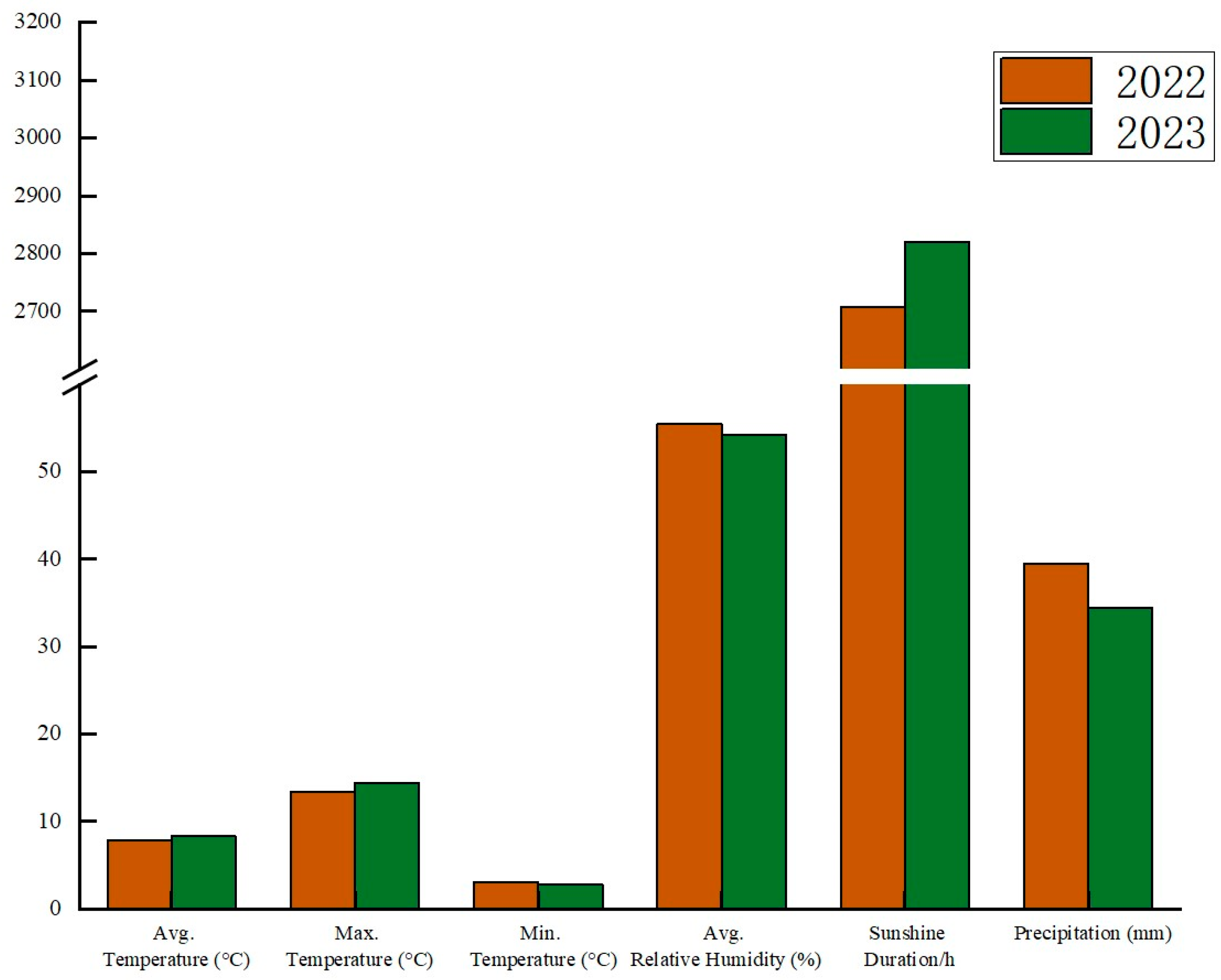
The experimental site is situated in the Science and Technology Demonstration Park of Inner Mongolia University for Nationalities, Tongliao, Inner Mongolia, China (43°36′ N, 122°22′ E). The site has an average annual temperature of 8.1 °C, with minimum temperatures ranging between −30 °C and −25 °C. The annual accumulated temperature exceeding 10 °C is 3137 °C·d. The number of days with temperatures below 0 °C varies between 86 and 98 days. The site receives an average of 2670 h of sunshine annually, with a frost-free period ranging between 135 and 145 days. The average annual precipitation is 399 mm, while the evaporation is 4.8 times greater. The seasonal average wind speed ranges between 3.1 and 4.3 m·s−1. This region is characterized by a typical temperate continental monsoon climate. The soil in the experimental field is sandy, with an Alkali Hydrolyzed Nitrogen content of 11.14 mg·kg−1, Available Phosphorus content of 4.49 mg·kg−1, Available Potassium content of 94.94 mg·kg−1, total nitrogen content of 1.45 g·kg−1, total phosphorus content of 5.79 mg·kg−1, pH of 8.2, and organic matter content of 4.81%. Meteorological data for 2022 and 2023 are shown in Figure 1.

2.1.2. Experimental Design

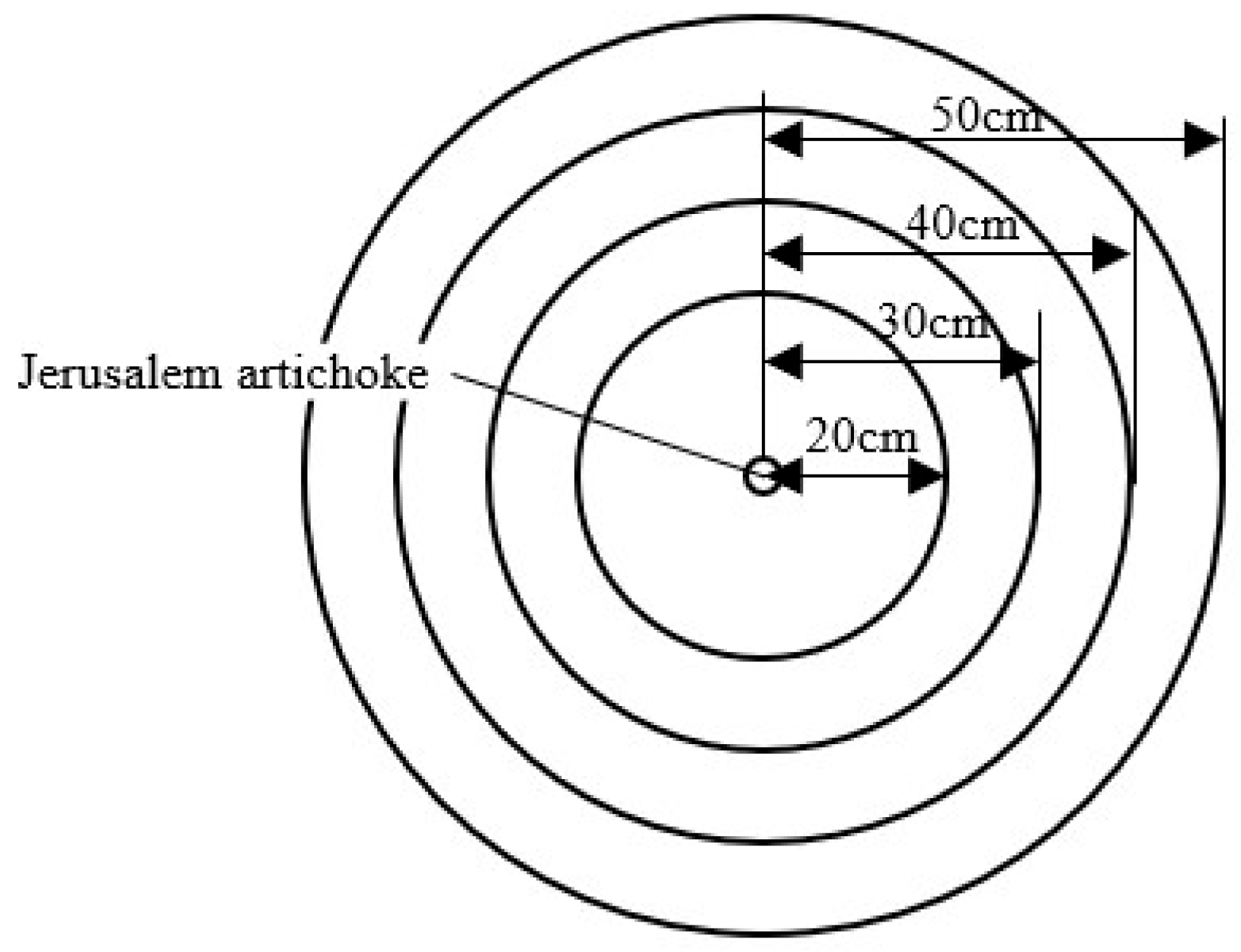
The experiment utilized the Helianthus tuberosus ‘Red Skin’ variety from the Tongliao region and was conducted over two growing seasons in 2022–2023. The Jerusalem artichoke tubers were precut into 20–25 g segments and planted on 10 April 2022, and again in 2023. Nitrogen, phosphorus, and potassium were applied at 80, 20 and 40 kg·ha−1, respectively, for base fertilizer based on the pre-planting soil test results and the nutritional needs of Jerusalem artichoke [28]. The experiment adopted a completely randomized block design with a planting density of 2 m × 2 m. Using individual plants as the experimental units, vertical circular root cutting was performed during the vegetative growth stage (approximately 70–75 days after planting), centered on the plant based on the horizontal distribution characteristics of Jerusalem artichoke roots. The cutting radii were set as follows: 20 cm (D1), 30 cm (D2), 40 cm (D3), 50 cm (D4), and a non-cutting control (CK), totaling five treatments (Figure 2). Each treatment was replicated across 10 plants, resulting in a total of 50 experimental plants. The cutting depth was 50 cm [19]. Conventional manual field management practices such as weeding and irrigation were implemented.

2.2. Sampling and Measurement

2.2.1. Biomass

On 9–10 October 2022 and 2023, we randomly selected ten Jerusalem artichoke plants from each plot to collect samples of aboveground and underground biomass. The aboveground biomass was cut from the ground surface, the underground biomass was obtained from 0 to 50 cm depth, and the roots and tubers were separated. The underground biomass weight included the tuber and root weights.

2.2.2. Photosynthetic Characteristics

On the 7th, 15th, and 21st days after the root-cutting treatment, measurements were conducted between 9:00 and 11:30 AM on clear, sunny days. For each treatment, five plants were randomly selected. The third true leaf from the apex of each plant was chosen for measurement. A Li-6400 (LI-COR, Lincoln, NE, USA) portable photosynthesis system was used to determine photosynthetic parameters. The leaf chamber conditions were set as follows: open gas exchange path, leaf chamber temperature at 25 °C, photosynthetic photon flux density (PPFD) of the red-blue light source at 1000 µmol·m−2·s−1, CO2 concentration at 400 µmol·mol−1, and flow rate at 500 µmol·s−1. After readings stabilized, the net photosynthetic rate (Pn), transpiration rate (Tr), and leaf water use efficiency (WUE = Pn/Tr) were automatically recorded.

2.2.3. Soil Nutrients

The soil samples included non-rhizosphere soil and rhizosphere soil, and the rhizosphere soil samples included the main rhizosphere soil, lateral rhizosphere soil and tuber rhizosphere soil. Soil sampling was performed at the same time as the biomass measurements, and the specific soil sample collection process was as follows [29,30].
Non-rhizosphere soil: the roots (including the main roots, lateral roots and tubers) were removed from the soil and shaken vigorously, and the falling soil was considered non-rhizosphere soil.
Rhizosphere soil: The main roots, lateral roots and tubers were gently brushed with a brush to dislodge as much soil from the root surface as possible. This part of the soil is the rhizosphere soil of the main roots, lateral roots and tubers.
The rhizosphere soil and non-rhizosphere soil from the same plant were passed through an 80-mesh soil sieve and allowed to dry in the shade for later use.

2.2.4. Nutrient Determination Methods [31]

Carbon content: The external heating method involving potassium dichromate was used.
Nitrogen content: H2SO4-H2O2 digestion and Kjeldahl nitrogen determination method.
Phosphorus content: H2SO4-H2O2 digestion-molybdenum antimony resistance colorimetric method.
Alkali-hydrolytic nitrogen content: alkali-diffusion method.
The content of available potassium: NH4OAC extraction and flame spectrophotometry.
Nitrate nitrogen and ammonium nitrogen content: Flow analyzer determination [31].

2.3. Data Analysis

2.3.1. Correlation Calculation

Subsurface biomass = root biomass + tuber biomass
Total biomass = aboveground biomass + belowground biomass.
Root-shoot ratio = underground biomass/aboveground biomass.
Water use efficiency = net photosynthetic rate/transpiration rate.

2.3.2. Analysis of Variance

Microsoft Excel (2019) software and DPS (2019) software were used for the statistical analysis of the experimental data. Prior to analysis, the normality and homogeneity of variance of the data were tested, and both assumptions were met. Differences in measured parameters among different root-cutting times and different root-cutting radii were examined using two-way analysis of variance (ANOVA). Correlation analysis (Pearson correlation coefficient) was conducted using SPSS 25.0 (with n = 10 for biomass and photosynthetic parameters, and n = 40 for soil parameters).

3. Results

3.1. Effect of Root Cutting on Biomass

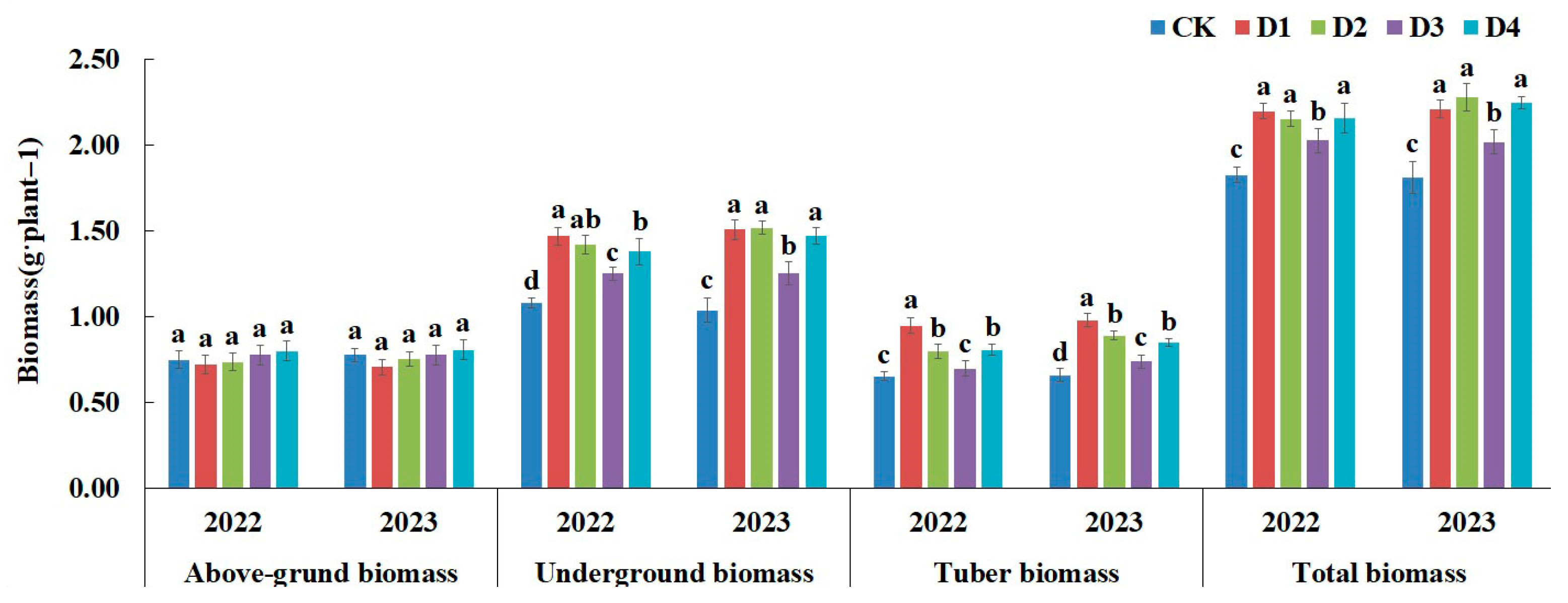
The total biomass, underground biomass and tuber biomass of the Jerusalem artichoke plants that received the root-cutting treatment were significantly greater than those of the control treatment (p < 0.05), with the total biomass increasing by 11.5–25.97%, underground biomass increasing by 15.77–46.33% and tuber biomass increasing by 7.07–49.09%. The total biomass, underground biomass and tuber biomass of Jerusalem artichoke under the D3 treatment were lower than those under the other root-cutting treatments. Compared with that under the control treatment, the tuber biomass under the D1 treatment was the highest and increased by 45.23% and 49.09% in 2022 and 2023, respectively. Under root-cutting conditions, the aboveground biomass showed an increasing trend with larger cutting radii, although no significant differences were observed among the treatments. The order of aboveground biomass across both years under different root-cutting conditions was D4 > D3 > CK > D2 > D1 (Figure 3).

3.2. Effect of Root Cutting on the Root/Shoot Ratio of Jerusalem artichoke

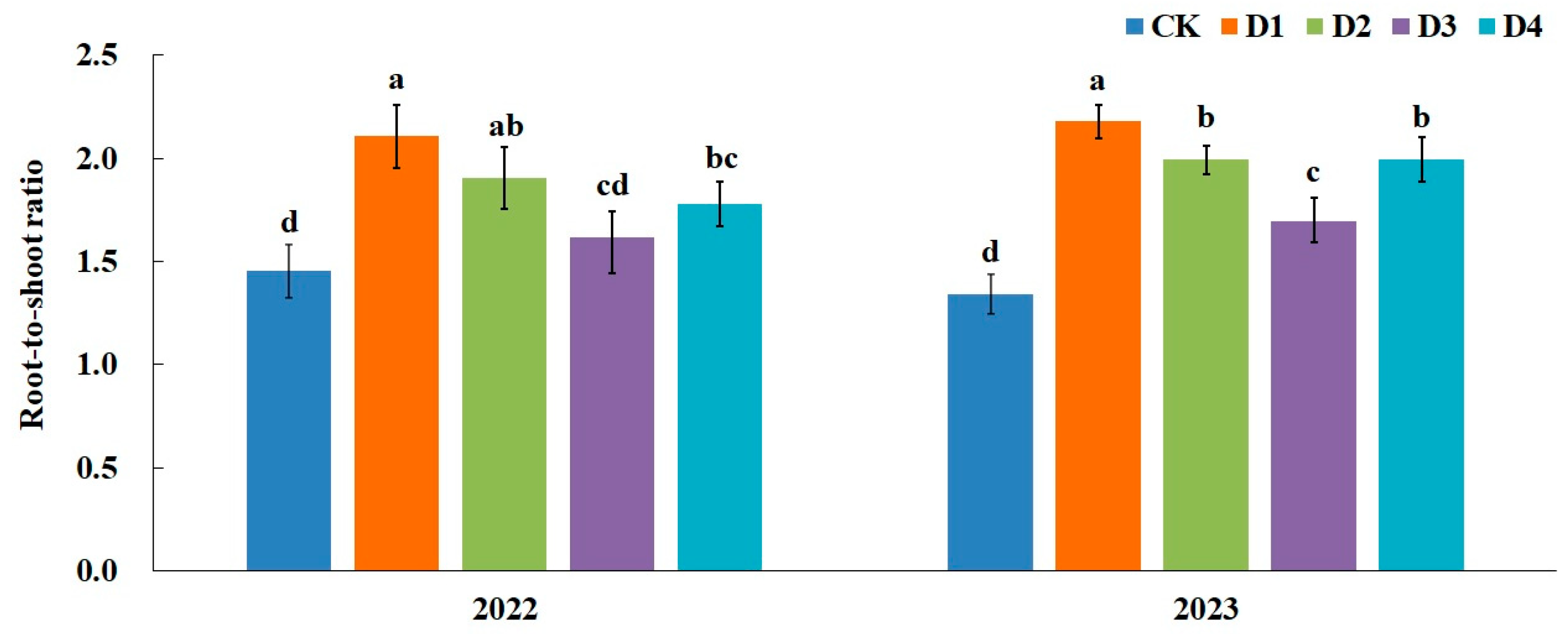
Root cutting significantly increased the root/shoot ratio (p < 0.05), and all the root-cutting treatments had significantly greater effects than did the CK treatment, with D1 exhibiting the greatest increases of 45.52% and 62.69% in the two years, respectively. Additionally, with increasing root radius, the order of the root-to-shoot ratio was D1 > D2 > D4 > D3, with the D3 treatment showing the lowest value. The ratio between roots and shoots exhibited a trend of initially decreasing and then increasing. Over the two years, the D1 treatment consistently yielded the highest root-to-shoot ratio among all treatments. Specifically, root-cutting at a 20 cm radius resulted in the highest root-to-shoot ratio, which was greater than that of all other treatments (Figure 4).

3.3. Effects of Root Cutting on the Photosynthetic Characteristics of Jerusalem artichoke

As shown in Table 1, which presents the mean net photosynthetic rates across different times and treatments, except for the D3 and D4 treatments, the variation trends of the net photosynthetic rate in Jerusalem artichoke plants under different treatments were generally similar across days after root-cutting. With increasing days after root cutting, the CK treatment showed an initial increase followed by a decrease, while the D1 and D2 treatments exhibited an increasing trend, with significant differences observed among the treatments (p < 0.05). In contrast, the D3 and D4 treatments displayed an initial increase followed by a decrease in 2022, but an increasing trend in 2024. However, for all treatments, the photosynthetic rates on the 7th and 15th days were lower than those of the CK treatment, whereas the photosynthetic rate on the 21st day was higher than that of the CK treatment. On the 7th and 15th days, the photosynthetic rate gradually increased with increasing root radius, and on the 21st day, it gradually decreased.
The transpiration rate in the control group on the 7th and 15th days after root cutting was significantly greater than that in the root-cutting treatment group, and the transpiration rate gradually increased with increasing root-cutting radius. The transpiration rate of the control group on the 15th day after root cutting in 2022 was lower than that of the root-cutting treatment group. In 2023, the transpiration rate in the D2 treatment was greater than that in the control, and those in the other treatments were lower than that in the control. Under the same treatment conditions (including the control), the transpiration rate first increased and then decreased with increasing measurement time (Table 1).

3.4. Effect of Root Cutting on Soil C, N, and P Contents

The contents of C, N, and P in non-rhizosphere soil were lower than those in rhizosphere soil (including taproot, lateral root, and tuber soils). There was no significant difference in the C content of the taproot rhizosphere between the CK treatment and the root-cutting treatments. In the root-cutting treatments, the soil C content under lateral roots and tubers was higher than that under the control, with the D1 treatment showing the highest C content among all treatments. Over the two years, the order of soil C content in the lateral root rhizosphere was D1 > D2 > D3 > CK > D4, while in the tuber rhizosphere it was D1 > D2 > D3 > D4 > CK. The N contents of the non-rhizosphere and rhizosphere soils (including the main roots, lateral roots and tubers) under the root-cutting treatments were greater than those under the control treatment, and there was no significant difference in the N contents of the non-rhizosphere and main root soils between the control and different treatments. The N content of the soil under the lateral root and tuber root-cutting treatments was greater than that under the control treatment, and the N content under D1 was greatest among the treatments.
Over the two experimental years, the trends in soil P content were largely consistent. There were no significant differences in P content among treatments in non-rhizosphere soil or taproot rhizosphere soil under different root-cutting conditions. In the lateral root rhizosphere, the P content under D1 was significantly higher than that under other treatments (p < 0.05). In the tuber rhizosphere, the order of soil P content was D1 > D2 > D3 > D4 > CK, with D1 being significantly higher than the other treatments (Table 2).

3.5. Effect of Root Cutting on the Soil CNP Stoichiometric Ratio

Based on data from both years, the order of soil C: N ratios was: non-rhizosphere soil > taproot rhizosphere soil > lateral root rhizosphere soil > tuber rhizosphere soil; the order of soil C: P ratios was: non-rhizosphere soil > taproot rhizosphere soil > tuber rhizosphere soil > lateral root rhizosphere soil; and the order of soil N:P ratios was: tuber rhizosphere soil > lateral root rhizosphere soil > taproot rhizosphere soil > non-rhizosphere soil. The non-rhizosphere soil C:N, N:P, and C:P ratios were lower than those of the rhizosphere soil (including the taproots, lateral roots and tubers), and there were different trends because of the different root-cutting radii. The non-rhizosphere and taproot C:N and C:P ratios were not significantly different between the control group and the different treatment groups. Root-cutting treatments had little effect on the C:N ratio in non-rhizosphere soil and taproot rhizosphere soil, with no significant differences observed among the treatments. The values of C:N and C:P under root-cutting conditions were lower than those in the control, and the C:P ratio gradually increased with increasing cutting root radius (Table 3).

3.6. Effects of Root Cutting on Available Nutrients in Soil

The overall trends of soil available nutrients across different treatments were consistent over the two years, with significant differences observed among different soil compartments within the same treatment. The contents of available phosphorus, alkali-hydrolyzed nitrogen, nitrate nitrogen and ammonium nitrogen in the non-rhizosphere soil were lower than those in the rhizosphere soil (including the taproots, lateral roots and tubers), and the differences differed depending on the radius of the root cuttings. There was no significant difference in the available P content of the non-rhizosphere or the taproot soil between the control and the different treatments. The available P contents of the lateral root and tuber soils were greater than those of the control, and D1 had the highest available P content. There was no significant difference in the content of alkali-hydrolyzed nitrogen in the non-rhizosphere or main root soil between the control and different treatments. The contents of alkali-hydrolyzed nitrogen in the lateral root and tuber soils were greater than those in the control, and D1 had the highest content. There was little variation in the nitrate nitrogen and ammonium nitrogen contents in the non-rhizosphere soil and rhizosphere soil (including the main roots, lateral roots and tubers) under root-cutting treatments, the magnitude of these changes was relatively small (Table 4).

3.7. Correlation Analysis

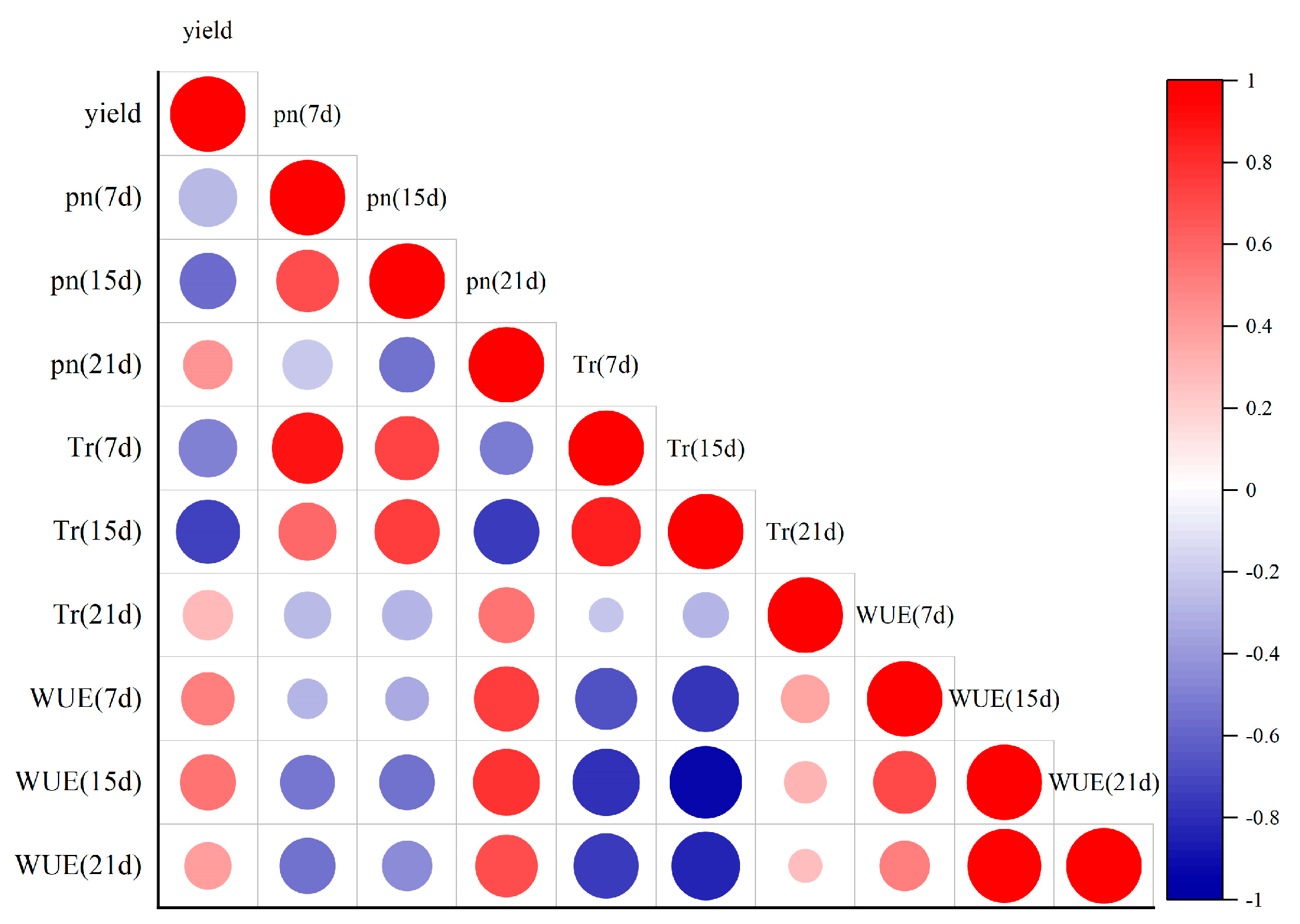
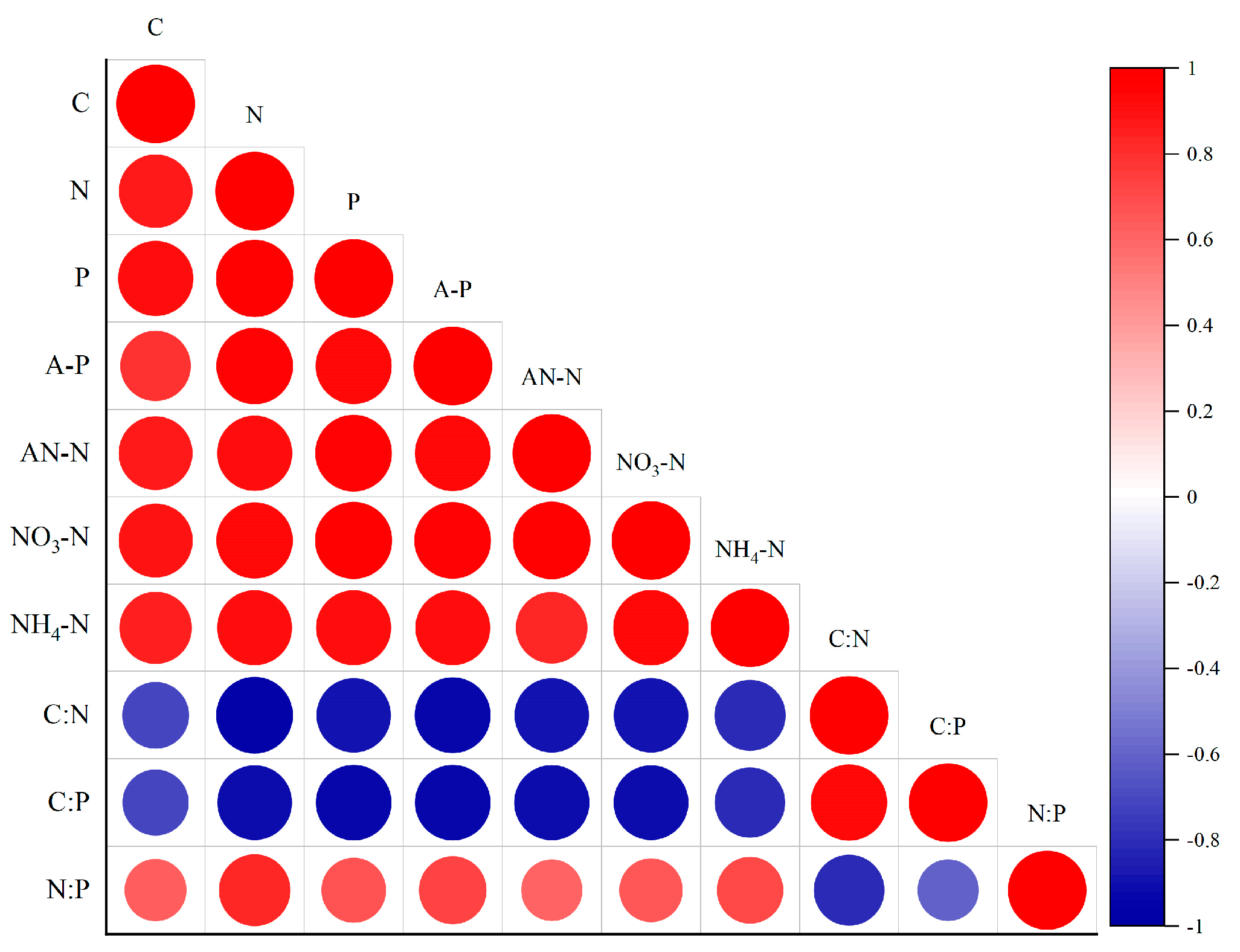
There was a significant negative correlation between tuber biological yield and water use efficiency and a significant positive correlation between the net photosynthetic rate and C content. The transpiration rate and water use efficiency were significantly negatively correlated, and carbon, nitrogen, phosphorus, potassium, available phosphorus, alkali-hydrolyzed nitrogen, nitrate nitrogen and ammonium nitrogen were significantly positively correlated (Figure 5 and Figure 6).

4. Discussion

4.1. Effects of Root Cutting on the Biomass of Jerusalem artichoke

As one of the important organs of plants, the root system also plays an important role in the formation of plant biomass. Many studies have been performed on root traits, such as root morphogenesis, vitality function, root adaptability to various environmental factors, the contribution of root growth to yield, the relationship between root growth and aboveground parts, and the genetic rule of root traits. In production practice, it is also common to increase yield by root cutting, and it has been proven that root cutting can increase yield in fruit trees [32], winter wheat [33] and other plants. A similar conclusion was drawn in this study; the aboveground biomass, underground biomass and tuber biomass of Jerusalem artichoke increased in response to root cutting. The reasons may be as follows: Plants exhibit different regeneration modes after injury. When they are injured locally, the meristem will be rebuilt at the injured part. When they are severely injured, cells near the wound proliferate and establish new meristems at the top of the stem or root, and then new organs are produced [34]. In this study, it was found that reasonable root-cutting methods could increase the tuber biomass of Jerusalem artichoke. All treatments increased the tuber yield of Jerusalem artichoke. Among them, D1 treatment increased the most. The reason may be that root cutting promoted the growth of plant roots, improved root activity, promoted the absorption of water and nutrients by roots, and then promoted the photosynthesis of crops. Root cutting was carried out during the vegetative growth period. After root cutting, the plants were damaged, and the roots produced new meristems. The number of roots increased, which improved the nutrient and water absorption capacity of roots. D3 treatment increased the least, which may damage the root function, resulting in a root-to-shoot ratio lower than D1 and D2. Under root-cutting conditions, the production of a large amount of root exudates improves the chemical properties of the rhizosphere and non-rhizosphere soil, improves soil nutrient availability, and provides more absorbable nutrients for roots, thereby increasing yield [35].

4.2. Effects of Root-Cutting on Photosynthetic Characteristics of Jerusalem artichoke

As a method to increase yield, the key aspects of root cutting (e.g., the optimal cutting time, depth and radius) have been the focus of attention [36]. Additionally, the mechanism by which root cutting affects yield has also been a research hotspot in the field of source–sink theory [37]. The main factors affecting yield are leaf photosynthesis and root mineral uptake [38,39,40]. Therefore, the photosynthetic characteristics and nutrient absorption after root cutting are key factors affecting plant yield. In this study, the photosynthetic rate and transpiration rate of Jerusalem artichoke on the 7th and 15th days were lower than those of the control. The difference between the control and treatment groups narrowed on the 21st day after root cutting, and the values of some treatments were greater than those of the control group. The root system was damaged in the early stage of root cutting, which affected the absorption of water and mineral elements and resulted in a lower photosynthetic rate than that of the control. However, in the process of root self-repair, certain substances need to be consumed, so the transpiration rate became greater than that of the control. With the extension of root-cutting time, gradual root repair, especially the gradual increase in the number of fibrous roots, greatly improved the ability of plants to absorb minerals and water. In this case, the photosynthetic rate and transpiration rate of plants following root cutting were also greater than those of the control group. Moreover, root exudates and root bleeding can increase under cutting root treatment, which can change the soil chemistry, improve the nutrient availability in the root-adjacent soil (see table of available nutrients and nutrients), and provide more absorbable nutrients to the root system, thereby improving photosynthetic characteristics [41,42]. Water-use efficiency (WUE) is defined as the biomass produced per unit of water used by crops or the amount of carbon absorbed by crops [43], and it represents the economic degree of water utilization in the growth process of plants. High water-use efficiency can help plants maintain a certain yield under stress conditions, which is important for production [44]. In this study, WUE gradually decreased with increasing root-cutting radius. The reason may be that after root cutting, the water absorption capacity of the Jerusalem artichoke root system decreased, which put the plants in a state of stress and increased water use efficiency.

4.3. Effect of Root Cutting on Soil Nutrients

Plant root exudates and bleeding are important factors affecting soil nutrients, especially changes in available nutrients [45]. The influence of root exudates and bleeding under root-cutting conditions should not be ignored. Both root exudates and bleeding affect soil physical and chemical properties and change soil microbial diversity and enzyme activity to increase the effective soil substance content [46]. The results showed that the nutrient content of the non-rhizosphere soil was lower than that of the rhizosphere soil (including the taproots, lateral roots and tubers), and the results showed that the nutrient content of the non-rhizosphere soil was lower than that of the rhizosphere soil (including the taproots, lateral roots and tubers). The contents of C, N, P, available phosphorus, alkali-hydrolyzed nitrogen, nitrate nitrogen and ammonium nitrogen in the rhizosphere soil (lateral roots and tubers) decreased with increasing root-cutting radius. This finding also confirms that changes in plant–rhizosphere microbial interactions mediated by root exudates and exudates play an extremely important role in soil fertility and plant growth and development [47,48]. Furthermore, the changes in soil nutrients in the rhizosphere and non-rhizosphere were consistent with the changes in the net photosynthetic rate. The reason may be that damage to the plant roots produced compensatory and supercompensatory effects, stimulated root vitality and increased the net photosynthetic rate.

4.4. Effect of Root Cutting on Soil Stoichiometric Ratio

The soil C:N:P ratio is an important index for describing the cycling of carbon, nitrogen and phosphorus in soil and can reflect the composition of soil organic matter and nutrient supply [49]. In this study, the C:N and C:P ratios in the rhizosphere soil were lower than those in the non-rhizosphere soil, and the C:N and C:P ratios in the rhizosphere soil (lateral roots and tubers) increased with increasing root-cutting radius and were both lower than those in the CK. Root cutting changed the C:N and C:P ratios in the rhizosphere soil of Jerusalem artichoke, indicating that root cutting improved the release of nitrogen and phosphorus during organic matter mineralization in the rhizosphere soil of this plant. With increasing root-cutting degree, the reserves of nitrogen and phosphorus in rhizosphere soil increased.

5. Conclusions

This study proved that root cutting is an effective agronomic measure to improve the yield of Jerusalem artichoke tubers. Root-cutting with a radius of 20 cm had the highest tuber yield, which was 45.23% and 49.09% higher than CK in 2022 and 2023, respectively. This significantly increased total biomass, tuber yield and root-to-shoot ratio; the total nutrient and available nutrient content of soil were increased. The net photosynthetic rate and transpiration rate of Jerusalem artichoke finally reached the highest level. Therefore, root cutting with a radius of 20 cm is a suitable nitrogen application method for high-yield cultivation of red-skin Jerusalem artichoke in the Tongliao area of Inner Mongolia. This provides a theoretical basis for the high-yield cultivation of Jerusalem artichoke by root cutting.
This study was a root-cutting experiment conducted on local varieties in a specific area, and its interaction with different irrigation or fertilization systems deserves further study.

Author Contributions

Conceptualization, H.X. and X.L.; methodology, S.L., E.Z. and J.Q.; software, S.L., R.D. and H.X.; validation, H.X., J.Q. and X.L.; formal analysis, X.L. and H.X.; investigation, X.L. and H.X.; resources, T.Z.; data curation, X.L. and H.X.; writing—original draft preparation, X.L. and H.X.; writing—review and editing, H.X. and X.L.; visualization, H.X.; supervision, T.Z. and K.G.; project administration, K.G.; funding acquisition, K.G. All authors have read and agreed to the published version of the manuscript.

Funding

This work was supported by the National Natural Science Foundation of China [grant numbers 31560672].

Data Availability Statement

The original data proposed in this study have been included in the article, and the corresponding authors can be contacted for further inquiry.

Conflicts of Interest

The authors declare no conflict of interest.

References

  1. Gunnarsson, I.B.; Svensson, S.E.; Johansson, E.; Karakashev, D.; Angelidaki, I. Potential of Jerusalem artichoke (Helianthus tuberosus L.) as a biorefinery crop. Ind. Crops Prod. 2014, 56, 231–240. [Google Scholar] [CrossRef]
  2. Clark, W.C.; Munn, R.E. Sustainable Development of the Biosphere; Cambridge University Press: Cambridge, UK, 1986. [Google Scholar]
  3. Wang, Y.-Z.; Zou, S.-M.; He, M.-L.; Wang, C.-H. Bioethanol production from the dry powder of Jerusalem artichoke tubers by recombinant Saccharomyces cerevisiae in simultaneous saccharification and fermentation. J. Ind. Microbiol. Biotechnol. 2015, 42, 543–551. [Google Scholar] [CrossRef]
  4. Liu, Z.-X.; Han, L.-P.; Yosef, S.; Xie, G.-H. Genetic variation and yield performance of Jerusalem artichoke germplasm collected in China. Agric. Sci. China 2011, 10, 668–678. [Google Scholar] [CrossRef]
  5. Lv, S.; Wang, R.; Xiao, Y.; Li, F.; Mu, Y.; Lu, Y.; Gao, W.; Yang, B.; Kou, Y.; Zeng, J.; et al. Growth, yield formation, and inulin performance of a non-food energy crop, Jerusalem artichoke (Helianthus tuberosus L.), in a semi-arid area of China. Ind. Crops Prod. 2019, 134, 71–79. [Google Scholar] [CrossRef]
  6. Bogucka, B.; Jankowski, K. Jerusalem artichoke: Quality response to potassium fertilization and irrigation in Poland. Agronomy 2020, 10, 1518. [Google Scholar] [CrossRef]
  7. Baldini, M.; Danuso, F.; Monti, A.; Amaducci, M.T.; Stevanato, P.; De Mastro, G. Chicory and Jerusalem artichoke productivity in different areas of Italy, in relation to water availability and time of harvest. Ital. J. Agron. 2006, 1, 291–309. [Google Scholar] [CrossRef]
  8. Szpunar-Krok, E.; Bobrecka-Jamro, D.; Grochowska, S.; Buczek, J. Yield of the aboveground parts and tubers of Jerusalem artichoke (Helianthus tuberosus L.) depending on plant density. Acta Sci. Pol. Agric. 2016, 15, 70–78. [Google Scholar]
  9. Bogucka, B.; Pszczółkowska, A.; Okorski, A.; Jankowski, K. The effects of potassium fertilization and irrigation on the yield and health status of Jerusalem artichoke (Helianthus tuberosus L.). Agronomy 2021, 11, 234. [Google Scholar] [CrossRef]
  10. Fioreze, S.L.; Gotz, W.J.H.; Turek, T.L.; Fioreze, A.C.D.C.L. Source-sink relationship of soybean accessed by increasing in solar radiation through the plant canopy. Rev. Ceres 2022, 69, 436–442. [Google Scholar] [CrossRef]
  11. Zhang, D.; Sun, Z.; Feng, L.; Bai, W.; Yang, N.; Zhang, Z.; Du, G.; Feng, C.; Cai, Q.; Wang, Q.; et al. Maize plant density affects yield, growth and source-sink relationship of crops in maize/peanut intercropping. Field Crops Res. 2020, 257, 107926. [Google Scholar] [CrossRef]
  12. Gao, K.; Zhang, Z.; Zhu, T.; Coulter, J.A. The influence of flower removal on tuber yield and biomass characteristics of Helianthus tuberosus L. in a semi-arid area. Ind. Crops Prod. 2020, 150, 112374. [Google Scholar] [CrossRef]
  13. Gao, K.; Zhang, Z.; Zhu, T.; Tian, X.; Gao, Y.; Zhao, L.; Li, T. The influence of leaf removal on tuber yield and fuel characteristics of Helianthus tuberosus L. in a semi-arid area. Ind. Crops Prod. 2019, 131, 8–13. [Google Scholar] [CrossRef]
  14. Hodge, A.; Berta, G.; Doussan, C.; Merchan, F.; Crespi, M. Plant root growth, architecture and function. Plant Soil. 2009, 321, 153–187. [Google Scholar] [CrossRef]
  15. Fanello, D.D.; Kelly, S.J.; Bartoli, C.G.; Cano, M.G.; Martínez Alonso, S.; Guiamet, J.J. Plasticity of root growth and respiratory activity: Root responses to above-ground senescence, fruit removal or partial root pruning in soybean. Plant Sci. 2020, 290, 110296. [Google Scholar] [CrossRef] [PubMed]
  16. Darnell, R.L.; Alvarado-Raya, H.E.; Williamson, J.G. Root pruning effects on growth and yield of red raspberry. HortScience 2008, 43, 681–684. [Google Scholar] [CrossRef]
  17. Hu, C.; Sadras, V.O.; Lu, G.; Zhang, R.; Yang, X.; Zhang, S. Root pruning enhances wheat yield, harvest index and water-use efficiency in semiarid area. Field Crops Res. 2019, 230, 62–71. [Google Scholar] [CrossRef]
  18. Ma, S.C.; Xu, B.C.; Li, F.M.; Liu, W.Z.; Huang, Z.B. Effects of root pruning on competitive ability and water use efficiency in winter wheat. Field Crops Res. 2008, 105, 56–63. [Google Scholar] [CrossRef]
  19. Yang, S.; Xing, S.; Liu, C.; Du, Z.; Wang, H.; Xu, Y. Effects of root pruning on the vegetative growth and fruit quality of Zhanhuadongzao trees. Hortic. Sci. 2010, 37, 14–21. [Google Scholar] [CrossRef]
  20. McNear, D.H. The rhizosphere-roots, soil and everything in between. Nat. Educ. Knowl. 2013, 4, 1. [Google Scholar]
  21. Bais, H.P.; Weir, T.L.; Perry, L.G.; Gilroy, S.; Vivanco, J.M. The role of root exudates in rhizosphere interactions with plants and other organisms. Annu. Rev. Plant Biol. 2006, 57, 233–266. [Google Scholar] [CrossRef]
  22. Bown, H.E.; Watt, M.S.; Mason, E.G.; Clinton, P.W.; Whitehead, D. The influence of nitrogen and phosphorus supply and genotype on mesophyll conductance limitations to photosynthesis in Pinus radiata. Tree Physiol. 2009, 29, 1143–1151. [Google Scholar] [CrossRef] [PubMed]
  23. Li, Y.; Gao, Y.; Xu, X.; Shen, Q.; Guo, S. Light-saturated photosynthetic rate in high-nitrogen rice (Oryza sativa L.) leaves is related to chloroplastic CO2 concentration. J. Exp. Bot. 2009, 60, 2351–2360. [Google Scholar] [CrossRef] [PubMed]
  24. Xiong, D.; Liu, X.; Liu, L.; Douthe, C.; Li, Y.; Peng, S.; Huang, J. Rapid responses of mesophyll conductance to changes of CO2 concentration, temperature and irradiance are affected by N supplements in rice. Plant Cell Environ. 2015, 38, 2541–2550. [Google Scholar] [CrossRef] [PubMed]
  25. Yamori, W.; Nagai, T.; Makino, A. The rate-limiting step for CO2 assimilation at different temperatures is influenced by the leaf nitrogen content in several C3 crop species. Plant Cell Environ. 2011, 34, 764–777. [Google Scholar] [CrossRef]
  26. Eisvand, H.R.; Kamaei, H.; Nazarian, F. Chlorophyll fluorescence, yield and yield components of bread wheat affected by phosphate bio-fertilizer, zinc and boron under late-season heat stress. Photosynthetica 2018, 56, 1287–1296. [Google Scholar] [CrossRef]
  27. El-Desouki, Z.; Xia, H.; Abouseif, Y.; Cong, M.; Zhang, M.; Riaz, M.; Moustafa-Farag, M.; Jiang, C. Improved chlorophyll fluorescence, photosynthetic rate, and plant growth of Brassica napus L. after co-application of biochar and phosphorus fertilizer in acidic soil. J. Plant Nutr. Soil Sci. 2024, 187, 260–273. [Google Scholar] [CrossRef]
  28. Gao, K.; Zhu, T.X.; Xun, T.; Lin, W.; Yang, G. The influence of root-cutting radius on tuber yield and fuel characteristics of Helianthus tuberosus L. in a semi-arid area. Ind. Crops Prod. 2018, 115, 202–207. [Google Scholar] [CrossRef]
  29. Yue, M.; Guo, Y.X.; Chai, Y.F.; Liu, X. Field Internship and Experimental Guide in Ecology; Northwest University Press: Evanston, IL, USA, 2023; p. 116. [Google Scholar]
  30. Bao, S.D. Soil and Agricultural Chemistry Analysis; CAP: Beijing, China, 2000; pp. 265–267. [Google Scholar]
  31. GB/T 42487-2023[S]; National Technical Committee for Soil Quality Standardization (SAC/TC 404). Soil Quality—Determination of Nitrate, Nitrite and Ammonium in Soils—Extraction with Potassium Chloride Solution and Determination Using Automated Method with Segmented Flow Analysis. SPC: Beijing, China, 2023; pp. 2–3.
  32. Ferree, D.C.; Myers, S.C.; Schupp, J.R. Root pruning and root restriction of fruit trees-current review. Acta Hortic. 1991, 322, 153–166. [Google Scholar] [CrossRef]
  33. Yan, S.; Dongbin, W.; Zhenwen, Y.; Songlie, Y. Effects of deep cultivation-root-cutting on nitrogen distribution and utilization and yield in dry land wheat of high yield. Acta Agric. Nucl. Sin. 2002, 16, 224–227. [Google Scholar]
  34. Ikeuchi, M.; Favero, D.S.; Sakamoto, Y.; Iwase, A.; Coleman, D.; Rymen, B.; Sugimoto, K. Molecular mechanisms of plant regeneration. Annu. Rev. Plant Biol. 2019, 70, 377–406. [Google Scholar] [CrossRef]
  35. Brimecombe, M.J.; De Leij, F.A.; Lynch, J.M. The effect of root exudates on rhizosphere microbial populations. In The Rhizosphere; Willig, S., Varanini, Z., Nannipieri, P., Eds.; CRC Press: Boca Raton, FL, USA, 2000; pp. 111–156. [Google Scholar]
  36. Gao, K.; Zhu, T.-X.; Wang, L.; Gao, Y. The effect of time and radius of root-cutting on the Jerusalem artichoke tuber production and horizontal distribution. Acta Agrestia Sin. 2018, 26, 781. [Google Scholar]
  37. Li, Z.; Dou, H.; Zhang, W.; He, Z.; Li, S.; Xiang, D.; Zhang, Y. The root system dominates the growth balance between the aboveground and belowground parts of cotton. Crop Environ. 2023, 2, 221–232. [Google Scholar] [CrossRef]
  38. Guo, J.; Jia, Y.; Chen, H.; Zhang, L.; Yang, J.; Zhang, J.; Hu, X.; Ye, X.; Li, Y.; Zhou, Y. Growth, photosynthesis, and nutrient uptake in wheat are affected by differences in nitrogen levels and forms and potassium supply. Sci. Rep. 2019, 9, 1248. [Google Scholar] [CrossRef] [PubMed]
  39. Long, S.P.; Marshall-Colon, A.; Zhu, X.G. Meeting the global food demand of the future by engineering crop photosynthesis and yield potential. Cell 2015, 161, 56–66. [Google Scholar] [CrossRef] [PubMed]
  40. Palta, J.A.; Yang, J. Crop root system behaviour and yield. Field Crops Res. 2014, 165, 1–4. [Google Scholar] [CrossRef]
  41. Ai, Z.; Zhang, J.; Liu, H.; Xin, Q.; Xue, S.; Liu, G. Soil nutrients influence the photosynthesis and biomass in invasive Panicum virgatum on the Loess Plateau in China. Plant Soil 2017, 418, 153–164. [Google Scholar] [CrossRef]
  42. Morales, F.; Pavlovič, A.; Abadía, A.; Abadía, J. Photosynthesis in poor nutrient soils, in compacted soils, and under drought. In The Leaf: A Platform for Performing Photosynthesis; Adams, W.W., Terashima, I., Eds.; Springer International Publishing: Cham, Switzerland, 2018; pp. 371–399. [Google Scholar]
  43. Hatfield, J.L.; Dold, C. Water-use efficiency: Advances and challenges in a changing climate. Front. Plant Sci. 2019, 10, 103. [Google Scholar] [CrossRef] [PubMed]
  44. Zhang, J.; Wang, Q.; Xia, G.; Wu, Q.; Chi, D. Continuous regulated deficit irrigation enhances peanut water use efficiency and drought resistance. Agric. Water Manag. 2021, 255, 106997. [Google Scholar] [CrossRef]
  45. Hu, L.; Robert, C.A.M.; Cadot, S.; Zhang, X.; Ye, M.; Li, B.; Manzo, D.; Chervet, N.; Steinger, T.; van der Heijden, M.G.A.; et al. Root exudate metabolites drive plant-soil feedbacks on growth and defense by shaping the rhizosphere microbiota. Nat. Commun. 2018, 9, 2738. [Google Scholar] [CrossRef] [PubMed]
  46. Wu, L.-K.; Lin, X.-M.; Lin, W.-X. Advances and perspective in research on plant-soil-microbe interactions mediated by root exudates. Chin. J. Plant Ecol. 2014, 38, 298–310. [Google Scholar]
  47. Eisenhauer, N.; Scheu, S.; Jousset, A. Bacterial diversity stabilizes community productivity. PLoS ONE 2012, 7, e34517. [Google Scholar] [CrossRef] [PubMed]
  48. Vives-Peris, V.; de Ollas, C.; Gómez-Cadenas, A.; Pérez-Clemente, R.M. Root exudates: From plant to rhizosphere and beyond. Plant Cell Rep. 2020, 39, 3–17. [Google Scholar] [CrossRef] [PubMed]
  49. Galloway, J.N.; Townsend, A.R.; Erisman, J.W.; Bekunda, M.; Cai, Z.; Freney, J.R.; Martinelli, L.A.; Seitzinger, S.P.; Sutton, M.A. Transformation of the nitrogen cycle: Recent trends, questions, and potential solutions. Science 2008, 320, 889–892. [Google Scholar] [CrossRef] [PubMed]
Figure 1. Meteorological data during the 2022–2023 experiment. The data in the figure are averages.
Agriculture 16 00411 g001
Figure 2. Diagram of root-cutting radius.
Agriculture 16 00411 g002
Figure 3. Effect of rooting Jerusalem artichoke on biomass. Note: Different small letters indicate significant differences between treatments (p < 0.05).
Agriculture 16 00411 g003
Figure 4. Effect of root cutting on root-shoot ratio of Jerusalem artichoke. Note: Different small uppercase letters indicate significant differences between treatments (p < 0.05).
Agriculture 16 00411 g004
Figure 5. Correlation between yield and photosynthetic characteristics. Abbreviations: Pn, nct photosynthetic rate; Tr, transpiration rate; WUF, water use efficiency.
Agriculture 16 00411 g005
Figure 6. Correlation between soil stoichiometry. Abbreviations: C, soil organic carbon; N, total nitrogen; P, total phosphorus; A-P, available phosphorus; AH-N, alkaline hydrolysable nitrogen; NO3-N, nitrate nitrogen; NH4-N, ammonium nitrogen.
Agriculture 16 00411 g006
Table 1. Effects of root cutting on the photosynthetic characteristics of Jerusalem artichoke.
TimeTreatmentPn (µmol·m−2·s−1)Tr (mmol·m−2·s−1)WUE
202220232022202320222023
7DCK12.69 ± 0.34 Ba14.05 ± 0.07 Ba6.14 ± 0.11 Ba5.60 ± 0.27 Ba2.07 ± 0.07 Bd2.52 ± 0.15 Ac
D16.66 ± 1.15 Cd8.45 ± 0.13 Cb2.46 ± 0.14 Ce2.73 ± 0.29 Bc3.09 ± 0.13 Ba3.05 ± 0.20 Ca
D29.63 ± 0.56 Bc14.32 ± 0.13 Ba3.96 ± 0.08 Bd5.32 ± 0.27 Bab2.43 ± 0.13 Bc2.69 ± 0.06 Bbc
D311.64 ± 0.51 Bb14.29 ± 0.12 Ba4.23 ± 0.13 Ac5.15 ± 0.36 Ab2.76 ± 0.12 Bb2.91 ± 0.23 Cab
D411.60 ± 0.58 Bb14.98 ± 0.19 ABa5.17 ± 0.29 Ab5.27 ± 0.19 Aab2.25 ± 0.19 Bcd2.85 ± 0.21 Aab
15DCK15.26 ± 0.19 Aa15.28 ± 0.13 Aa6.98 ± 0.39 Aa6.23 ± 0.21 Aa2.19 ± 0.13 Bc2.45 ± 0.07 Ad
D112.74 ± 0.92 Bb11.42 ± 0.25 Bb3.40 ± 0.27 Be2.44 ± 0.12 Bd3.74 ± 0.25 Aa4.62 ± 0.23 Aa
D212.52 ± 1.41 Ab12.36 ± 0.28 Ab4.02 ± 0.30 Be4.11 ± 0.23 Cc3.12 ± 0.28 Ab3.01 ± 0.27 Ac
D314.12 ± 1.68 Aab16.12 ± 0.18 Aa4.65 ± 0.54 Ac4.32 ± 0.15 Bc3.04 ± 0.18 Ab3.73 ± 0.26 Ab
D414.90 ± 1.51 Aa15.64 ± 0.35 Aa5.33 ± 0.50 Ab5.14 ± 0.24 ABb2.81 ± 0.35 Ab3.05 ± 0.18 Ac
21DCK12.08 ± 0.64 Bd14.92 ± 0.24 Bcd4.54 ± 0.35 Cab5.56 ± 0.40 Ba2.68 ± 0.24 Ac2.58 ± 0.13 Ad
D115.46 ± 0.82 Aa18.20 ± 0.19 Aa4.81 ± 0.11 Aa4.94 ± 0.47 Ab3.22 ± 0.19 Ba3.67 ± 0.17 Ba
D213.88 ± 0.34 Ab16.38 ± 0.15 Ab4.63 ± 0.17 Aab5.97 ± 0.43 Aa3.01 ± 0.15 Aab2.77 ± 0.16 ABcd
D312.98 ± 0.41 ABc15.84 ± 0.09 ABbc4.48 ± 0.13 Ab4.88 ± 0.36 Ab2.90 ± 0.09 ABbc3.37 ± 0.21 Bb
D412.82 ± 0.51 Bcd14.14 ± 0.10 Bd4.61 ± 0.03 Bab4.88 ± 0.04 Bb2.78 ± 0.10 Abc2.84 ± 0.14 Ac
Note: Capitalized letters indicate differences in the same treatment at different times, while lowercase letters indicate differences in different treatments at the same time.
Table 2. Effects of root cutting on SOC, TN and TP in the rhizosphere (taproot, lateral root and tuber) and non-rhizosphere soils of Jerusalem artichoke.
PositionTreatmentSOC (g·kg−1)TN (g·kg−1)TP (g·kg−1)
202220232022202320222023
Non-rhizosphereCK9.68 ± 0.50 Ba10.57 ± 0.40 Cab0.56 ± 0.03 Ca0.55 ± 0.01 Cbc0.19 ± 0.02 Ca0.20 ± 0.01 Ca
D19.54 ± 0.39 Ca10.52 ± 0.43 Cab0.56 ± 0.01 Ca0.59 ± 0.04 Cb0.18 ± 0.01 Da0.20 ± 0.01 Da
D28.92 ± 0.38 Ca9.84 ± 0.42 Cb0.51 ± 0.03 Ca0.57 ± 0.02 Cbc0.17 ± 0.01 Da0.19 ± 0.01 Da
D38.89 ± 0.55 Ba9.85 ± 0.38 Cb0.53 ± 0.03 Da0.51 ± 0.04 Cc0.17 ± 0.01 Ca0.19 ± 0.01 Ca
D49.87 ± 0.22 Ca10.89 ± 0.24 Ca0.54 ± 0.01 Ca0.65 ± 0.02 Ca0.19 ± 0.00 Ca0.21 ± 0.01 Ca
RhizosphereTaprootCK12.71 ± 0.25 Aa14.36 ± 0.28 Ba0.85 ± 0.01 Ba0.91 ± 0.01 Ba0.27 ± 0.01 Ba0.30 ± 0.01 Ba
D112.51 ± 0.40 Ba14.13 ± 0.45 Ba0.84 ± 0.01 Ba0.83 ± 0.01 Bb0.27 ± 0.01 Ca0.30 ± 0.01 Ca
D212.41 ± 0.33 Ba14.02 ± 0.37 Ba0.84 ± 0.01 Ba0.87 ± 0.03 Bab0.27 ± 0.01 Ca0.30 ± 0.01 Ca
D312.77 ± 0.35 Aa14.43 ± 0.40 Ba0.86 ± 0.03 Ca0.87 ± 0.01 Bab0.28 ± 0.01 Ba0.30 ± 0.01 Ba
D412.67 ± 0.24 Ba14.32 ± 0.27 Ba0.84 ± 0.01 Ba0.89 ± 0.03 Ba0.28 ± 0.1 Ba0.30 ± 0.01 Ba
Lateral rootCK13.23 ± 0.12 Ab14.95 ± 0.14 Abb0.97 ± 0.04 Ae1.04 ± 0.03 Ad0.31 ± 0.01 Ad0.32 ± 0.00 Ad
D114.09 ± 0.25 Aa15.92 ± 0.28 Aa1.37 ± 0.01 Ad1.53 ± 0.02 Aa0.42 ± 0.01 Aa0.43 ± 0.02 Aa
D213.73 ± 0.20 Aab15.51 ± 0.23 Aab1.26 ± 0.02 Ac1.33 ± 0.03 Ab0.40 ± 0.01 Ab0.39 ± 0.01 Ab
D313.33 ± 0.31 Ab15.07 ± 0.35 ABb1.15 ± 0.02 Bb1.18 ± 0.02 Ac0.35 ± 0.01 Ac0.36 ± 0.01 Ac
D413.23 ± 0.17 Ab14.95 ± 0.19 Ab1.05 ± 0.06 Aa1.07 ± 0.01 Ad0.30 ± 0.01 Ad0.35 ± 0.01 Acd
TuberCK13.37 ± 0.21 Ac15.10 ± 0.24 Ac1.02 ± 0.03 Ac0.98 ± 0.01 Ae0.31 ± 0.01 Ac0.34 ± 0.01 Ac
D114.36 ± 0.24 Aa16.22 ± 0.27 Aa1.35 ± 0.02 Aa1.51 ± 0.03 Aa0.40 ± 0.01 Ba0.38 ± 0.00 Ba
D213.96 ± 0.16 Aab15.77 ± 0.18 Aab1.26 ± 0.01 Ab1.37 ± 0.01 Ab0.37 ± 0.01 Bb0.36 ± 0.00 Bb
D313.66 ± 0.29 Abc15.44 ± 0.33 Abc1.21 ± 0.02 Ab1.17 ± 0.01 Ac0.34 ± 0.01 Ab0.35 ± 0.01 Abc
D413.43 ± 0.28 Abc15.18 ± 0.32 Abc1.07 ± 0.04 Ac1.08 ± 0.02 Ad0.31 ± 0.01 Ac0.34 ± 0.01 Ac
Note: Capital letters indicate differences between different parts for the same treatment, while lowercase letters indicate differences between different treatments for the same part. SOC is Soil Organic Carbon Content, TN is Total Nitrogen Content, TP is Total Phosphorus Content.
Table 3. Effects of root cutting on the stoichiometric ratio of the rhizosphere (taproot, lateral root and tuber) and non-rhizosphere soils of Jerusalem artichoke.
PositionTreatmentC:NC:PN:P
202220232022202320222023
Non-rhizosphereCK17.19 ± 0.16 Aa19.33 ± 0.61 Aa52.02 ± 1.99 Aa53.84 ± 1.70 Aa3.03 ± 0.09 Aa2.82 ± 0.10 Ca
D117.14 ± 0.78 Aa17.98 ± 0.62 Ab53.00 ± 0.61 Aa51.83 ± 1.50 Aa2.98 ± 0.03 Cab2.89 ± 0.15 Ca
D217.63 ± 0.68 Aa17.26 ± 0.26 Ab52.48 ± 0.48 Aa50.98 ± 1.08 Aa2.98 ± 0.10 Bab2.96 ± 0.11 Ca
D316.91 ± 0.89 Aa19.39 ± 0.87 Aa51.34 ± 0.62 Aa52.89 ± 1.92 Aa3.04 ± 0.15 Aa2.82 ± 0.04 Ba
D418.40 ± 0.48 Aa16.68 ± 0.38 Ab51.07 ± 0.21 Aa51.92 ± 1.05 Aa2.78 ± 0.08 Bb2.97 ± 0.07 Aa
RhizosphereTaprootCK15.01 ± 0.45 Ba15.84 ± 0.35 Ba46.49 ± 1.09 Ba47.87 ± 0.42 Ba3.10 ± 0.04 Aa3.02 ± 0.08 Aba
D114.90 ± 0.15 Ba16.96 ± 0.30 Ba45.78 ± 1.37 Ba46.61 ± 1.32 Ba3.07 ± 0.11 BCa2.87 ± 0.05 Ca
D214.84 ± 0.60 Ba16.19 ± 0.56 Ba46.58 ± 0.98 Ba46.27 ± 1.65 Ba3.15 ± 0.19 Aba2.86 ± 0.01 Ca
D314.80 ± 0.12 Ba16.59 ± 0.59 Ba45.08 ± 0.30 Ba48.18 ± 2.11 Ba3.05 ± 0.02 Aa2.91 ± 0.16 Ba
D415.14 ± 0.08 Ba16.11 ± 0.60 Aa45.86 ± 1.25 Ba48.32 ± 1.16 Ba3.03 ± 0.09 Aa3.01 ± 0.18 Aa
Lateral rootCK13.67 ± 0.62 Ca14.44 ± 0.55 BCa42.71 ± 0.74 Ca46.25 ± 0.45 BCa3.04 ± 0.06 Ab3.21 ± 0.10 Ab
D110.31 ± 0.19 Cd10.41 ± 0.18 Ca33.31 ± 0.87 Dc37.35 ± 0.93 Dc3.23 ± 0.07 AAa3.59 ± 0.12 Aa
D210.90 ± 0.33 Ccd11.70 ± 0.13 Cd34.34 ± 1.07 Dc39.47 ± 1.05 Dc3.20 ± 0.04 ABa3.37 ± 0.07 Bab
D311.63 ± 0.46 Cbc12.74 ± 0.56 Cc37.79 ± 1.76 Cb42.26 ± 0.87 Cb3.18 ± 0.06 Aa3.32 ± 0.18 Aab
D412.63 ± 0.54 Cb14.02 ± 0.18 Bb44.16 ± 1.75 Ba43.19 ± 1.67 Cb3.14 ± 0.02 Aab3.08 ± 0.15 Ab
TuberCK13.11 ± 0.21 Ca15.37 ± 0.32 Ca42.71 ± 1.59 Ca44.43 ± 0.69 Ca3.18 ± 0.06 Abc2.89 ± 0.02 BCd
D110.66 ± 0.03 Cc10.75 ± 0.21 Cd35.91 ± 1.18 Cc42.31 ± 0.37 Cb3.37 ± 0.10 Aa3.94 ± 0.05 Ba
D211.08 ± 0.11 Cbc11.49 ± 0.10 Cd38.10 ± 0.88 Cbc43.42 ± 0.75 Cab3.32 ± 0.05 Aab3.78 ± 0.08 Aa
D311.26 ± 0.15 Cb13.24 ± 0.43 Cc39.84 ± 1.57 Cab44.12 ± 0.79 Ca3.20 ± 0.07 Aabc3.34 ± 0.10 Ab
D412.57 ± 0.50 Ca14.06 ± 0.53 Bb42.96 ± 2.38 Ba44.58 ± 1.02 Ca3.15 ± 0.05 Ac3.15 ± 0.09 Ac
Note: Capital letters indicate differences between different parts for the same treatment, while lowercase letters indicate differences between different treatments for the same part.
Table 4. Effects of root cutting on available nutrients in rhizosphere (taproot, lateral root and tuber) and non-rhizosphere soils of Jerusalem artichoke.
PositionTreatmentA-P (mg·kg−1)AKN (mg·kg−1)NO3-N (mg·kg−1)NH4-N (mg·kg−1)
20222023202220232022202320222023
Non-rhizosphereCK18.18 ± 0.48 Ca17.05 ± Ca15.61 ± 0.22 Ca15.13 ± 0.17 Ca8.87 ± 0.07 Dc9.03 ± 0.04 Da7.48 ± 0.06 Da7.45 ± 0.05 Da
D118.87 ± 0.52 Da17.42 ± Ca15.33 ± 0.90 Da15.00 ± 0.22 Da9.03 ± 0.08 Dab8.98 ± 0.06 Da7.51 ± 0.07 Da7.44 ± 0.07 Da
D218.45 ± 0.56 Da17.00 ± Ca14.60 ± 0.57 Ca15.11 ± 0.38 Ca8.99 ± 0.02 Dbc8.99 ± 0.09 Da7.51 ± 0.06 Da7.45 ± 0.08 Da
D318.76 ± 0.56 Ca17.24 ± Ca15.43 ± 0.90 Ca14.90 ± 0.36 Da9.14 ± 0.07 Da9.02 ± 0.05 Da7.45 ± 0.04 Da7.48 ± 0.04 Da
D418.48 ± 0.58 Ca17.02 ± Ca15.40 ± 0.96 Ca15.46 ± 0.50 Ca9.04 ± 0.07 Db8.93 ± 0.05 Da7.46 ± 0.05 Da7.48 ± 0.07 Ca
RhizosphereTaprootCK20.14 ± 0.28 Ba20.14 ± Ba21.37 ± 0.66 Ba20.67 ± 1.05 Ba11.10 ± 0.11 Ca11.53 ± 0.09 Ca8.05 ± 0.06 Ca9.86 ± 0.10 Ca
D120.30 ± 0.61 Ca20.30 ± Ba21.77 ± 0.83 Ca20.57 ± 0.82 Ca11.12 ± 0.08 Ca11.48 ± 0.05 Ca8.08 ± 0.03 Ca9.88 ± 0.08 Ca
D220.52 ± 0.24 Ca20.52 ± Ba20.63 ± 1.40 Ba21.37 ± 0.82 Ba11.06 ± 0.09 Ca11.53 ± 0.08 Ca8.07 ± 0.07 Ca9.63 ± 0.07 Cb
D320.00 ± 0.22 Ba20.00 ± Ba21.03 ± 1.11 Ba21.07 ± 0.48 Ca11.14 ± 0.07 Ca11.51 ± 0.07 Ca8.07 ± 0.05 Ca9.64 ± 0.09 Cb
D420.19 ± 0.24 Ba20.19 ± Ba21.47 ± 1.35 Ba20.73 ± 0.63 Ba11.12 ± 0.07 Ca11.53 ± 0.07 Ca8.05 ± 0.05 Ca9.55 ± 0.05 Bb
Lateral rootCK22.05 ± 0.33 Ac22.05 ± Ab23.93 ± 0.48 Ac23.63 ± 0.09 Ab13.21 ± 0.04 Ad13.57 ± 0.21 Ac10.12 ± 0.02 Ae12.54 ± 0.05 Ad
D124.85 ± 0.24 Aa24.85 ± Aa26.53 ± 0.69 Aa25.40 ± 0.22 Aa14.22 ± 0.06 Aa14.75 ± 0.17 Aa13.60 ± 0.02 Aa15.36 ± 0.04 Aa
D224.06 ± 0.18 Ab24.06 ± Aa25.17 ± 0.26 Ab24.13 ± 0.17 Ab13.96 ± 0.07 Ab14.25 ± 0.09 Ab13.12 ± 0.09 Ab15.01 ± 0.08 Ab
D324.14 ± 0.23 Ac24.14 ± Aa24.40 ± 0.57 Abc23.70 ± 0.16 Ab13.71 ± 0.03 Ac14.08 ± 0.11 Ab12.44 ± 0.05 Ac13.45 ± 0.09 Ac
D422.32 ± 0.67 Ac22.32 ± Ab24.07 ± 0.45 Abc23.67 ± 0.87 Ab13.04 ± 0.02 Ae13.32 ± 0.18 Ac11.58 ± 0.18 Ad12.12 ± 0.02 Ae
TuberCK21.89 ± 0.15 Bbc21.89 ± Ac23.00 ± 0.70 Ab22.67 ± 0.42 Ab12.45 ± 0.07 Bd12.47 ± 0.06 Bc9.65 ± 0.07 Bd11.54 ± 0.01 Be
D124.28 ± 0.40 Ba24.28 ± Aa24.70 ± 0.18 Ba23.77 ± 0.25 Ba13.30 ± 0.04 Ba13.20 ± 0.05 Ba11.49 ± 0.05 Ba13.25 ± 0.04 Ba
D223.24 ± 0.25 Ba23.24 ± Aab23.49 ± 0.08 Ab23.27 ± 0.33 Aab13.09 ± 0.04 Bb12.94 ± 0.08 Bb10.94 ± 0.12 Bb12.87 ± 0.07 Bb
D322.56 ± 0.08 Bb22.56 ± Abc23.34 ± 0.28 Ab22.53 ± 0.19 Bb12.73 ± 0.02 Bc12.74 ± 0.19 Bb10.44 ± 0.01 Bc12.65 ± 0.05 Bc
D420.41 ± 0.52 Bc20.41 ± Bd23.10 ± 0.29 ABb22.50 ± 0.43 Ab12.66 ± 0.09 Bc12.79 ± 0.14 Bb9.79 ± 0.02 Bd12.04 ± 0.06 Ad
Note: Capital letters indicate differences between different parts for the same treatment, while lowercase letters indicate differences between different treatments for the same part. A-P is Soil Available Phosphorus, AKN is Soil Alkali-hydrolyzable Nitrogen, NO3-N is soil nitrate nitrogen, NH4-N is soil ammonium nitrogen.
Disclaimer/Publisher’s Note: The statements, opinions and data contained in all publications are solely those of the individual author(s) and contributor(s) and not of MDPI and/or the editor(s). MDPI and/or the editor(s) disclaim responsibility for any injury to people or property resulting from any ideas, methods, instructions or products referred to in the content.