Review

Postbiotics in Poultry Nutrition: Mechanisms of Action, Health Benefits and Future Perspectives

School of Biosciences and Veterinary Medicine, University of Camerino, 62024 Matelica, Italy
*
Author to whom correspondence should be addressed.
Agriculture 2026, 16(3), 387; https://doi.org/10.3390/agriculture16030387
Submission received: 29 December 2025 / Revised: 3 February 2026 / Accepted: 4 February 2026 / Published: 6 February 2026

Abstract

In the poultry industry, measures related to combating antimicrobial resistance have accelerated the search for safe and effective alternatives capable of sustaining production while limiting the spread of pathogens in livestock farms. Among these, postbiotics have recently emerged as a promising solution to overcome the use of traditional in-feed additives. Defined as a preparation of inanimate microorganisms and/or their components that confer a health benefit to the host, postbiotics appear to combine biological effects with improved technological stability. Numerous studies have highlighted their beneficial effects on gut morphology, mucus production, immune modulation, microbiota composition and feed conversion ratio. Moreover, several postbiotic formulations exhibit protective effects against pathogens, suggesting a potential role in disease prevention. Overall, current evidence indicates that postbiotics are a valuable tool for improving poultry health, productivity and food safety while reducing reliance on antibiotics. This review summarises the studies on the use of postbiotics in poultry, providing a framework for their documented benefits. It also aims to highlight the limitations associated with their application and the existing knowledge gaps—particularly regarding mechanisms of action, optimal dosages, and methods of administration—in order to support standardisation and ensure reproducibility within the livestock industry.

1. Introduction

Antimicrobial resistance (AMR) has emerged as one of the most pressing global health challenges of the 21st century [1,2]. For decades, antibiotics have been widely used in poultry production not only for the treatment and prevention of infectious diseases, but also as growth promoters, to improve feed efficiency and weight gain. While this practice has significantly contributed to the economic success of the poultry industry, it has also accelerated the selection and spread of antimicrobial-resistant bacteria, raising serious concerns for both animal and public health [3]. As a consequence, in a rising demand sector, increasing regulatory restrictions have driven the search for safer and more effective alternatives to in-feed antibiotics to obtain higher-quality poultry products. In this context, a wide range of nutraceuticals have gained popularity over the past years due to their ability to modulate gut microbiota, enhance immunity and support overall performance in poultry [4]. First and foremost, the composition of the diet and the use of nutritional supplements, such as intestinal acidifiers (e.g., organic acids), phytonutrients or various “biotics”, have been widely employed to support poultry health and performance [5]. Among these, probiotics, defined as live microorganisms [6], have been extensively investigated as functional feed additives in poultry due to their ability to modulate gut microbiota, enhance immune responses, and improve productive performance [7,8]. However, concerns have been raised by international health authorities (WHO, FAO) regarding their safety, stability, strain viability, and the potential horizontal transfer of antimicrobial resistance genes [9,10], especially for their application in livestock production. These limitations have prompted increasing interest in alternative strategies based on non-viable microorganisms and their derivatives [11]. In this context, postbiotics have emerged as a promising option, offering biological activity comparable to that of probiotics while providing improved safety, stability, and technological robustness. Postbiotics are defined by the International Scientific Association for Probiotics and Prebiotics (ISAPP) as a “preparation of inanimate microorganisms and/or their components that confers a health benefit on the host”. Unlike live probiotics, postbiotics consist of non-viable microbial cells or fragments (e.g., cell walls) or bacterial metabolites that are safe, well-defined, and often provide anti-inflammatory or immune-boosting effects [12]. In poultry, postbiotics have been proposed as functional feed additives able to improve gut integrity, modulate immune responses, enhance nutrient absorption and contribute to disease resistance, ultimately promoting growth and performance without the drawbacks associated with antibiotics. Moreover, whereas phytogenic and organic acids primarily exert antimicrobial or digestive effects through chemical interactions in the gut environment and enzymes improve nutrient digestibility, postbiotics combine the bioactivity of microbes with enhanced stability and safety compared to live probiotics. Although numerous beneficial effects of postbiotics have been documented, their underlying mechanisms of action are not yet fully elucidated and are often inferred from functional outcomes rather than direct molecular evidence, particularly considering the substantial heterogeneity of substances classified as postbiotics, which complicates their classification, mechanistic interpretation, and the standardisation of formulations and dosing. To date, regulatory authorities worldwide are actively considering how to classify and regulate postbiotics; however, no specific, harmonised guidelines or official regulations governing their use as food or dietary supplements have yet been established [13].
This review aims to provide a comprehensive overview of the main characteristics and currently known mechanisms of postbiotics in poultry, with particular emphasis on their interactions with the gastrointestinal tract, immune system, intestinal microbiota, and pathogen resistance. In addition, this review seeks to identify key knowledge gaps and highlight future research perspectives to better evaluate the potential of postbiotics as effective alternatives to antibiotic growth promoters in poultry production.

2. Postbiotics: Definition and General Features

Cell viability has long been considered one of the most important features of probiotics, as it is a crucial aspect in achieving the fundamental objective of conferring health benefits. Nevertheless, growing evidence demonstrates that not only live bacterial cells but also non-viable microorganisms, their structural components, and their metabolites can exert beneficial effects on host health [14]. Accordingly, the use of inactivated bacteria in the form of postbiotics has gained increasing attention in both human and animal nutrition as a strategy to valorise microbial “by-products” while maintaining biological efficacy.

2.1. Definition of Postbiotics

Over the last decade, many definitions have been given to describe compounds containing non-viable microorganisms, including non-viable probiotics, heat-killed probiotics, tyndallised probiotics, cell lysates, paraprobiotics, ghost probiotics and postbiotics [15]. The most significant challenge, related to the definition of this category, was the lack of consistency, which led to considerable confusion: numerous preparations were identified with different names, even when they shared similar characteristics. The various definitions used in the literature distinguished between postbiotics as “non-viable bacterial products or metabolic products obtained from microorganisms with biological activity in the host”, and paraprobiotics (also called ghost probiotics) as “crude cell extracts that benefit the human or animal consumer when administered orally or topically in sufficient amounts”. As previously mentioned, in 2021, an univocal description of postbiotics was proposed by the International Scientific Association of Probiotics and Prebiotics (ISAPP) [12]. Accordingly, the term postbiotic thus refers to various preparations derived from the inactivation of microorganisms. While the term ‘postbiotic’ may refer to well-defined preparations that include the residual presence of microbial-derived components and molecules, as well as detailed information on the originating microorganisms, production matrix and inactivation method, including the term ‘components’ in the current definition substantially widens its scope [12]. This enables a wide and heterogeneous range of metabolites and microbial-derived structures to be included in the classification, such as vitamins, organic acids, short-chain fatty acids (SCFAs), secreted proteins and peptides, bacteriocins, neurotransmitters, biosurfactants, amino acids, flavonoids, phenolic-derived metabolites (e.g., equol, urolithins, valerolactones, enterolactone, enterodiol, and 8-prenylnaringenin), teichoic acids, peptidoglycan-derived muropeptides, surface-associated molecules (such as pili, fimbriae, and flagella), exopolysaccharides (EPSs), cell surface-related proteins, and inactivated or non-viable microbial cell components (e.g., cell wall-bound biosurfactants) [16]. This broad compositional heterogeneity poses significant challenges in terms of classification, mechanistic interpretation and standardisation of postbiotic products.

2.2. Production Methods

Regarding their production, the ISAPP also highlights that the microbial composition of the preparation must be characterised prior to inactivation. However, the non-viability of postbiotics can be achieved by a variety of techniques, while preserving the beneficial effects of the living form, including enzymatic processes, solvent extraction, sonication and chemicals (e.g., formalin). The method used to inactivate microorganisms represents a key determinant of postbiotic composition and bioactivity [17]. One of the most used methods is heat treatment, where temperature and duration of inactivation are modulated based on the characteristics of the microorganisms (e.g., vegetative cells or spores) [17]. This treatment can preserve overall cell structure while denaturing heat-sensitive proteins and enzymes, potentially reducing or modifying immunomodulatory activity. Chemical inactivation and solvent extraction may alter cell wall integrity or remove soluble metabolites, thereby changing the spectrum of bioactive compounds. Physical methods such as sonication or high-pressure processing can induce cell lysis, increase the release of intracellular components, but also lead to variability in molecular profiles. Consequently, different inactivation strategies can generate postbiotic preparations with distinct biological properties, even when derived from the same microbial strain [18]. This variability highlights the need for standardised production protocols and a detailed description of inactivation methods to ensure reproducibility and comparability across studies.

2.3. Properties and Limitations of Postbiotics

The increased interest in postbiotics arises from the observation that microbial viability, the main characteristic of probiotics, is unlikely to play a central role in the benefits observed after probiotic administration; indeed, it has been reported that postbiotics produced from probiotics could provide similar health benefits by eliminating the risks previously associated with probiotics [19]. Furthermore, as they are inactivated or metabolic by-products, postbiotics are generally less susceptible to environmental factors such as temperature, pH and feed processing conditions than live probiotics [20]. This enhanced storage stability enables postbiotics to retain their bioactivity for longer, making them more suitable for various applications in animal nutrition [21]. However, the feasibility and efficiency of large-scale production depend on the specific type of postbiotic and the production process employed. Although postbiotics have been shown to offer enhanced stability, scalability and a favourable safety profile compared to live microorganisms, their performance must be evaluated on a case-by-case basis, taking into account compositional characteristics, production methods and formulation-specific factors. Furthermore, no dosage recommendations have been established for the use of postbiotics. Current knowledge is based solely on scientific studies reporting the results of administering various postbiotic compounds at different dosages. Examples of these preparations, use and dosage are reported in Table 1. These studies have indicated that the effects of viable microorganisms compared to inactive ones, or of the microbial fractions derived from them, are comparable or even enhanced in the case of the latter [22,23,24]. However, as with probiotics, postbiotics are characterised by considerable variability in the composition of the mixture, both in terms of the method of inactivation and the starting formula that is subsequently inactivated. Postbiotic mechanisms of action partially overlap with those described for probiotics, particularly for the pathways that do not require microbial viability. Structural components and metabolites retained in postbiotic preparations can interact with host pattern recognition receptors, modulate cytokine production, influence intestinal barrier integrity, and exert antimicrobial effects through organic acids or bacteriocins. However, unlike probiotics, postbiotics lack the ability to colonise the gastrointestinal tract, actively metabolise substrates in situ, or engage in dynamic interactions with the resident microbiota. Consequently, postbiotic effects are primarily mediated through direct host–molecule interactions and indirect modulation of the gut environment, rather than through sustained microbial activity. Recognising these mechanistic differences is essential for interpreting experimental outcomes and for the rational design and standardisation of postbiotic formulations.

2.4. Review: Method

A systematic literature search was conducted using the PubMed and Scopus databases in accordance with PRISMA guidelines. Only peer-reviewed articles published in English were included. The search strategy used relevant keywords, including postbiotic OR paraprobiotic AND chicken OR poultry OR broiler.
The initial search yielded a total of 436 records. Of these, 222 were excluded as duplicates, and 53 were excluded because they were review articles. Subsequently, a further 51 studies were excluded for not meeting the inclusion criteria, such as inappropriate animal species or unrelated fields of study. The full texts of the remaining articles were reviewed, and the reference lists of the included studies were also screened to identify additional relevant publications.

3. Postbiotic and Growth Performance

Optimising growth performance is a fundamental objective in poultry production and depends largely on efficient nutrient absorption, adequate intestinal development, balanced gut microbiota, and effective control of enteric pathogens. It is well described that gut microbiota and its metabolites (SCFAs) can directly influence gut morphology. This influence of the microbiota on gut morphology is indirectly related to its metabolic functions and, in particular, to the production of SCFAs. Postbiotics compounds can contain variable amounts of “ready-to-use” SCFAs (mostly acetate, propionate and butyrate). Other than playing a major role in host energy metabolism [39,40], SCAFs regulate gut homeostasis, enterocyte growth, and proliferation, stimulating the formation of tight junction and intestinal blood flow [41,42,43]. Other than SCFAs, microbial cell fragments, extracellular polysaccharides, cell lysates, teichoic acid, vitamins, etc., are able to increase nutrient absorption in the gut and especially in the jejunum, which is responsible for this function [22].
The state of intestinal inflammation and tight junction stability has been considered as potentially involved not only in immunity, but also in growth-promoting effects [44]. It is well known that inflammation causes severe energy consumption. Some metabolic changes can be induced by cytokine production during inflammation (e.g., increased protein breakdown in skeletal muscle), to accomplish the increased demands of leukocytes and production of protective proteins, thus depriving muscle and other tissues and reducing growth performances [45]. It has been estimated that a vigorous acute-phase immune response in chickens accounts for about 10% of the nutrient utilisation under conditions of equal feed intake [45]. In support of this hypothesis, Jiang et al. [46] mimicked an acute inflammation by administering lipopolysaccharide (LPS). These chickens showed a 22% decrease in body weight (BW) gain during challenge; 59% of the loss was attributed to reduced feed intake, while 41% was attributed to the presence of immune response-related factors. A shift in this state can be achieved by reversing the cytokine response in favour of an anti-inflammatory pattern, down-regulating the cell-mediated response and thus reducing the use of energy to maintain an inflammatory response and protein production, thereby obtaining growth-promoting effects [46]. It follows that the administration of various pro- or postbiotic compounds can limit the intestinal inflammatory state either directly (by reducing the proliferation of entero-pathogens) or indirectly by favouring the establishment of a balanced microbiota, maintaining intestinal homeostasis and promoting an anti-inflammatory immune activation.
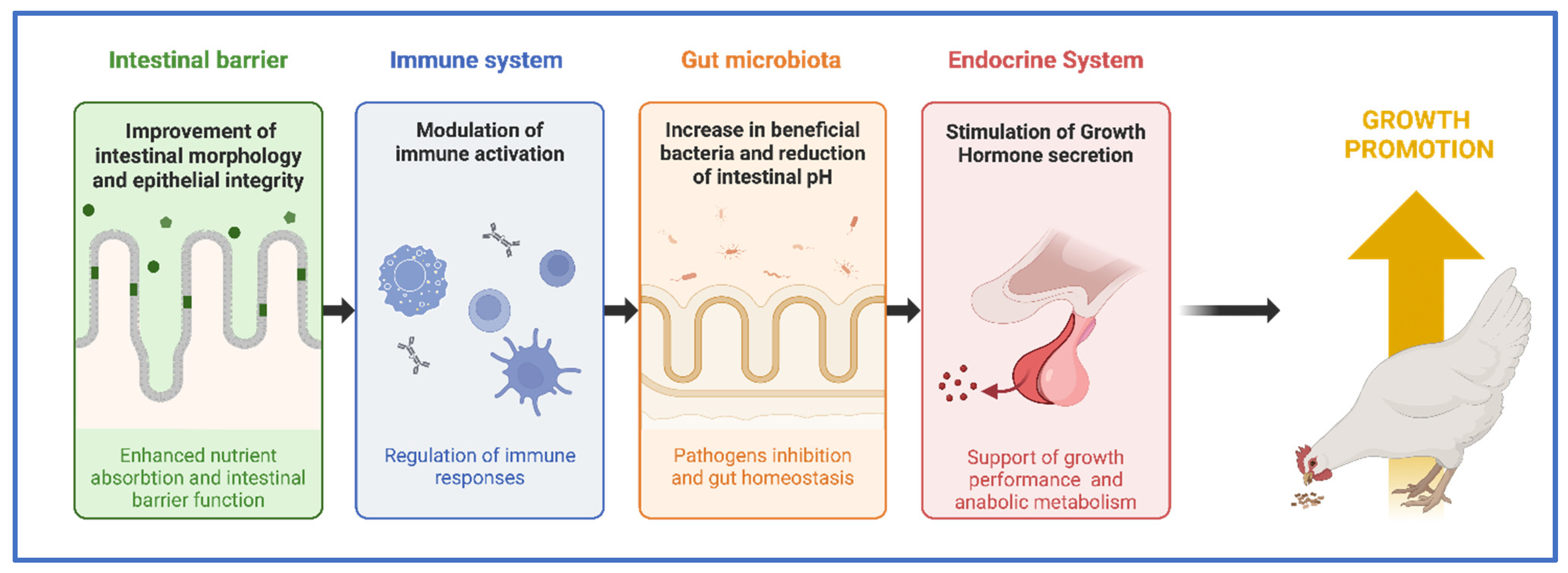
All these effects are primarily mediated through multiple, interconnected mechanisms, including inhibition of pathogenic bacteria, modulation of gut microbiota composition, regulation of the intestinal environment (e.g., pH), and indirect effects on growth-related gene expression [47]. Together, these processes contribute to improved intestinal functionality and feed efficiency (Figure 1).

3.1. Growth Performance and Intestinal Morphology

To evaluate the efficacy of a new compound on poultry performance, usually both zootechnical parameters [e.g., growing rates, feed consumption, feed conversion ratio (FCR)] and gut histomorphology (e.g., villus length, villus height, crypt depth, villus area) are considered. The improvement in villus morphology is proportional to the increased absorption of nutrients in the gut, resulting in animal growth. The administration of postbiotics as a feed additive in livestock has been shown to improve growth performance and health in broilers [48,49] or in piglets [50].
The effects of postbiotics on growth performance were investigated by examining compounds derived from different Lactobacilli. In a feeding trial [51], supplementing a Basal diet with 100 mg/kg of L. reuteri postbiotics for 18 days notably improved the average daily gain of broiler chickens in the postbiotics + E. coli group compared to the E. coli-infected group. Similar results were observed with a mixture of stabilised aqueous non-viable Lactobacilli (Culbac®, TransAgra’s International Inc., Storm Lake, IA, USA), comparing the effect of the postbiotic with two different antibiotic alternatives under Necrotic Enteritis challenge [52]. In another study performed on 192 one-day-old Xiangdong chickens fed a Basal diet supplemented with an inactivated L. plantarum bacterial solution at a concentration 1.8% of the feed weight, the final body weight, average daily gain, average daily feed intake, and feed conversion ratio were significantly higher than in the control group [53]. The authors Ning et al. [53] attributed these successful results to the fact that the postbiotics derived from L. plantarum contained beneficial compounds that stimulate the proliferation of beneficial bacteria at the intestinal level, thereby improving the growth performance of the chickens.
Different inclusion percentages of Lactobacillus plantarum and inulin (Basal diet + 1.0% inulin + 0.15% or 0.3% or 0.45% or 0.6%) showed significantly higher body weight and weight gain than the control group, especially in the 0.15% and 0.45% supplementation [54]. Kareem et al. [55] reported a positive effect on body weight and feed consumption following dietary supplementation with different combinations of L. plantarum RI11 [T3: (0.3% RI11 + 0.8% Inulin), T4: (0.3% RI11 + 1.0% Inulin), and T6: (0.3% RG14 + 1.0% Inulin)]. In particular, birds fed T3 had lower FCR. These results are attributed to reduced levels of harmful gut microbes. Similar results were obtained with Lactobacillus plantarum RG14 and inulin (Basal diet + 1.0% inulin + 0.15% or 0.3% or 0.45% or 0.6%) in comparison with neomycin and oxytetracycline [56]. Diet supplementation of a standard maize–soybean-based diet + 0.3% metabolite combination of L. plantarum RS5, RI11, RG14 and RG11 or Neomycin and Oxytetracycline (positive control), resulted in a higher final body weight, weight gain, average daily gain and lower feed conversion ratio in all treated groups [28]. A total of 336, one-day-old (COBB 500) chicks were fed for 35 days with the eight treatment diets, including the Basal diet and 0.2% (v/w) inclusion of various postbiotics (TL1, RS5, RG11, RI11, RG14). Final body weight, weight gain, and FCR were not significantly affected by the dietary treatments. However, feed intake recorded a significant change across the dietary treatments [30]. The combination of L. plantarum RI11, RG14 and RG11 strains improved intestinal villus height in laying hens [49]. Lysozyme treatment (Lysonir®), administered via both drinking water (thrice) and spray (once) at 20% concentration, resulted in better FCR and intestinal integrity compared to the control group [37]. Dietary supplementation with heat-killed Bacillus subtilis resulted in a dose-dependent increase in body weight gain, improvement in feed conversion ratio, and enhancement of caecal villus height and villus-to-crypt ratio, with graded inclusion levels of 0.000%, 0.015%, 0.030%, and 0.045% in the feed [25]. Positive influence on body weight gain, gut histomorphology and feed efficiency were also described in chicks fed a diet containing 0.015% of Bacillus subtilis ACCC 11025 postbiotic [35] or Saccharomyces cerevisiae fermentation product at 1.25 kg/MT feed [57]. Bacillus amyloliquefaciens F1 postbiotics (BAP) administered at 100 g/t and 150 g/t in broiler chicken significantly increased body weight and daily gain, in a manner nondependent on the dose [58].
Different multi-strain postbiotics or mixed compounds have been tested, with various percentages of inclusions in feed [59]. For example, a Basal diet supplementation with encapsulated postbiotics (0.30%) derived from Lactobacillus plantarum, Bacillus subtilis, or Enterococcus faecium, as well as combinations of these encapsulated postbiotics with 1.0% inulin, was effective in obtaining an increase in body weight and body weight gain, as well as FCR [38].
In comparison with antimicrobial treatment, L. plantarum postbiotic significantly increased final body weight, total weight gain, and mean daily gain compared to oxytetracycline-treated birds [56,60]. Conversely, Monika et al. [22] found no significant differences in growth metrics when comparing L. acidophilus-derived postbiotics with chlortetracycline-treated animals. However, significant improvements in villus height, width and crypt depth were observed in comparison to the zinc bacitracin-treated group and the control group. The effects of a L. acidophilus postbiotic in different inclusion percentages [0.02% (w/v) chlortetracycline or 0.2%, 0.4%, 0.6%, 0.8% (w/v)] of postbiotic showed a significant increase in body weight, villus height, width, and crypt depth after the treatment. This outcome was mainly pronounced in 0.6% and 0.8% supplementation compared to antimicrobial treatment [27].

3.2. Growth Hormone

Growth performance in poultry is tightly regulated by endocrine pathways, particularly the growth hormone (GH)–insulin-like growth factor-1 (IGF-1) axis. Growth hormone, secreted by the pituitary gland, stimulates hepatic IGF-1 production through activation of the GH receptor (GHR), thereby promoting somatic growth, nutrient utilisation, and tissue development. Although there is a direct influence of GH on growth promotion, its effects are mainly exerted through IGF-1 activity [61]. IGF-I is also produced in many other tissues (such as muscle), but in general, this locally produced IGF-I is not released into the bloodstream and only exerts autocrine or paracrine effects. Growth promotion results from GH production levels and hepatic tissue’s ability to respond to GH stimulation and IGF-I levels, which in turn stimulate specific receptors, especially differentiation and proliferation of bone and muscle cells [62]. In other species, the hypothesis has been formulated that postbiotics have the capacity to increase the expression of IGF-I in various organs through the modulation of intestinal microbiota and the levels of SCFAs produced [63]. Moreover, improved gut integrity and a balanced microbiota may facilitate more efficient nutrient absorption, thereby supporting hepatic IGF-I synthesis and downstream growth responses.
The role of GH in the regulation of body conditions and growth is well described in both chickens and other species [30,64,65]. Few studies have already reported that dietary supplementation with postbiotics is associated with modulation of this axis and upregulation of GH, GHR and IGF-I expression [66,67,68]. Nonetheless, the number of studies available on poultry, particularly those investigating the impact of postbiotic administration on the GH/IGF-I axis, remains limited. Specifically, the administration of a multi-strain encapsulated postbiotic has been observed to result in an upregulation of the mRNA expression of GH and IGF-I [38]. Hepatic GHR and IGF-1 gene expressions were significantly increased by L. plantarum-based postbiotics inclusion in feed [30]. Similarly, Kareem et al. [55] reported an increased expression of GH and IGF-I mRNA levels after postbiotics and inulin supplementation. These results are corroborated by the findings of the study by Humam et al. [60], which observed the increased expression of IGF-I and GHR mRNA levels in the RI11 and UL4 birds under heat stress as compared with the NC group. However, evidence linking postbiotics to the GH/IGF-I axis is currently based mainly on gene-expression data, with limited protein-level validation, hormone measurements, or long-term physiological confirmation, making it difficult to distinguish direct endocrine effects from indirect responses. As a result, it remains unclear whether postbiotics exert direct effects on endocrine signalling pathways or whether observed changes in GH/IGF-I-related gene expression are secondary to microbiota modulation, improved nutrient absorption, enhanced gut integrity, or reduced immune and inflammatory stress. Thus, longitudinal studies integrating gene expression, hormone profiling, and performance outcomes are needed to confirm the influence of postbiotic administration on the GH–IGF-1 axis and growth promotion.

4. Postbiotics and Intestinal Microbiota Composition

Likely probiotics, the molecules contained in the postbiotics compound can affect microbial composition of gut microbiota [55]. Probiotic bacteria are able to modulate the composition of the gut microbiota not only through the direct proliferation of the administered bacteria, but especially through the modification of the gut microenvironment mediated by the metabolites produced by the bacteria themselves, which are also present as such in postbiotic compounds. Metabolites that can be present in postbiotics preparations, such as organic acids, bacteriocins, vitamins, mannans or enzymes, such as sialidases, can have a direct effect on the proliferation of beneficial bacteria and the competitive exclusion of pathogenic ones. SCFAs are involved in microbial homeostasis in chickens, lowering intestinal pH and inhibiting acid-sensitive pathogenic bacteria, such as members of the Enterobacteriaceae family [60].
The modulation of intestinal microbiota has, in turn, direct repercussions on gut development, nutrient absorption, pathogen resistance and immune development. Studies conducted in GF chickens have shown reduced weight and thinner walls of the small intestine and cecum compared to control animals [69]. Even some parameters of intestinal morphology may be altered in GF chicken, with shorter and thinner villi being recorded [70]. Evidence shows that it is mainly through the increase in beneficial microbes, such as lactic acid bacteria (LAB), that postbiotics are able to improve the histomorphology of the small intestine [48,50,55].
A positive correlation was observed between variation in caecal pH and the count of beneficial bacteria (Lactobacillus and Bifidobacterium), as well as a negative correlation between beneficial bacteria and Enterobacteriaceae, E. coli, and Salmonella spp. These results are associated with a reduction in caecal pH and the inhibition of the proliferation of gut pathogens [60]. A combination of L. plantarum RI11 or RG14 postbiotic and inulin positively increased total and beneficial bacteria counts in the caecal digesta of broiler chickens, while reducing pathogenic bacteria through increased production of acetic acid, which can lower gut pH and thus modulate gut microbiota [56]. Previously, Choe et al. [71] reported that the inclusion of 0.6% liquid metabolite combinations obtained from three L. plantarum strains could increase the faecal lactic acid bacteria population and reduce the faecal pH and Enterobacteria population. Similarly, increased LAB populations have been reported following supplementation of broiler diet with 0.3% metabolite combination of Lactobacillus plantarum RS5, RI11, RG14 and RG11 strains with L. plantarum-derived metabolites [28]. Another study regarding the effect of different compositions containing L. plantarum in layers reported a significant decrease in faecal Enterobacteriaceae and increased lactic acid bacteria counts attributed to the varying [22] concentrations of organic acids and bacteriocins [48]. In recent studies [22], gut health was assessed by caecal microbial counts, with special attention to coliform and LAB. Data reported a significant influence on microbial composition after Lactobacillus acidophilus-derived postbiotics administration, mainly characterised by reduced Enterobacteriaceae and increased Lactobacillus counts. Lactobacillus counts were also increased after lysozyme (Lysonir®) treatment [37]. Other studies have also reported a reduction in enteric pH and an increase in beneficial bacteria such as Bifidobacterium and Enterococcus, further supporting the beneficial effect of postbiotic administration on the composition of the gut microbiota [24]. Comparing the effects of different diets and additives Lactobacillus-based (control, probiotic and postbiotic), it is reported that the composition of the diet but not the different supplementation affected caecal microbiota, even considering a significant shift in the β-diversity index for the postbiotic-treated group [72,73].

5. Postbiotics and the Immune System

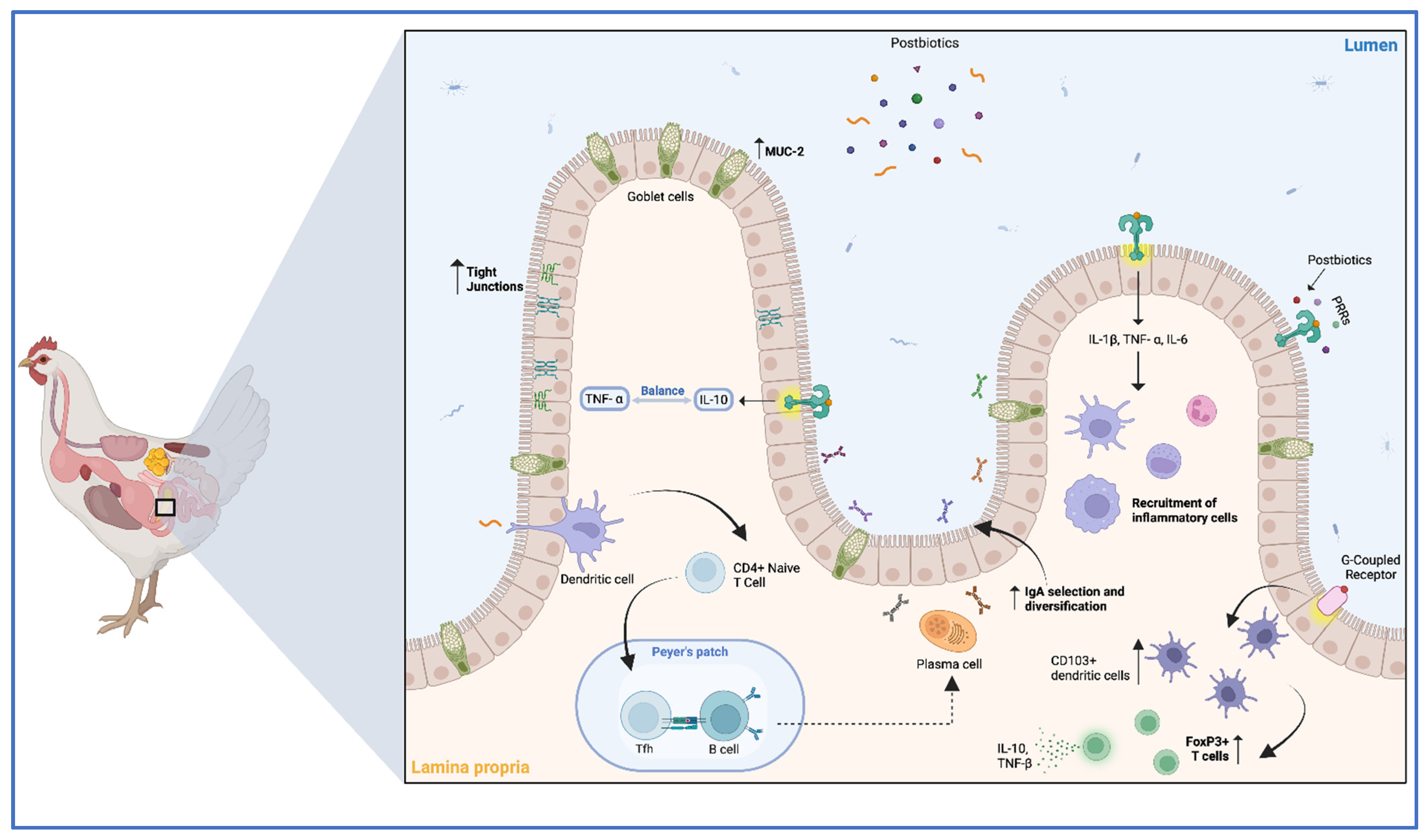
As described in detail above, postbiotics are inactivated bacteria or their metabolites. Given their composition, although heterogeneous, they retain the immunomodulatory capacity demonstrated for probiotics. The probiotic–Gut-Associated Lymphoid Tissue (GALT) interaction occurs mainly through the modulation of the composition of the intestinal microbiota. Furthermore, it has been demonstrated that the antigenic stimulation caused by bacterial colonisation of the intestinal tract is essential for the proper development of the immune system. Research involving murine models clarified that gut microbiota is actively involved in the training and development of major components of the host’s innate and adaptive immune systems [74]. Studies carried out on germ-free (GF) animal models have made it clear that the absence of commensal microbial colonisation is associated with serious defects in the structure of the host’s lymphoid tissue associated with multiple alterations (e.g., reduction in intestinal epithelial lymphocytes or IgA mucosal antibodies), which can be restored upon de novo colonisation [75]. In birds, the development and maturation of Bursa Farbicii (BF) and GALT are strictly correlated to gut-delivered antigens and thus to the composition of gut microbiota. The lack of microbial colonisation results in a general restriction of GALT development. Cells, structures and signals that make up the intestinal immune system are involved in both immune defence against pathogens and induction of immune tolerance to commensal bacteria. The intestinal immune system and all its components adapt to the presence of microbiota constituents, which are able to directly influence the structure and functionality of the immune system and of the intestinal structure [76,77]. Enterocytes possess antigen-presenting cell features expressing pattern recognition receptors (PRRs), including both extracellular Toll-like receptors (TLRs) and intracellular NOD-like receptors (NLRs). In a homeostatic condition, TLRs and NLRs remain mainly unresponsive to bacteria, while their activation occurs in case of infection, leading to the induction of an inflammatory host response [78]. Intestinal epithelial cells (IECs) regulate the immune system through the identification and uptake of SCFAs. Beneficial bacteria normally ferment dietary fibres to produce SCFAs, which stimulate the production of anti-inflammatory cytokines [79]. As extensively reviewed by Kogut and colleagues [80], the impact of the gut microbiota on the structure and function of the immune system in poultry has been delineated. Gut bacteria have been shown to educate immune cells and promote the establishment of immune tolerance. This communication between gut microbiota and immune cells, including T cells, B cells, and dendritic cells, occurs through various signalling pathways. Given that, the stimulation obtained through cells walls, metabolites and overall antigenic compound contained within postbiotic preparations can explain the immunomodulatory effects. Due to their diverse molecular composition, postbiotics are likely to interact with the immune system by activating multiple pathways such PRRs recognition and regulation, influence on intestinal mucosal barrier and tight junction expression and/or direct recruitment and activation of both innate and adaptive immune response [81] (Figure 2). It is evident that the immunomodulation achieved exerts a significant influence on resistance to pathogens, intestinal health, and, consequently, the absorption of nutrients and growth performance.

5.1. PRRs-Mediated Innate Immune Recognition

In the gastrointestinal tract, components of postbiotics can be recognised by host PRRs, including TLRs, NLRs, C-type lectin receptors (CLRs), and G protein–coupled receptors (GPCRs) [82]. In postbiotic preparations derived from inactivated probiotic bacteria, cell wall-associated structures constitute a major fraction of the bioactive components. Following inactivation, several surface-associated molecules are retained, such as polysaccharides, teichoic acids, peptidoglycan fragments, muramyl peptides, and surface proteins. These conserved microbial structures can be detected by PRRs in a manner similar to viable bacteria and may contribute to immunomodulatory effects. Host recognition of bacterial components occurs through conserved microorganism-associated molecular patterns (MAMPs) or pathogen-associated molecular patterns (PAMPs), which interact with PRRs expressed on intestinal epithelial and immune cells. The resulting immune response is modulated by both the nature and abundance of these molecular patterns [83], which in turn activate a complex cytokine pathway. To date, no studies have reported the direct effects of postbiotic preparation on various PRRs expression in chickens. Information derived from in vitro and in vivo studies performed in other species can offer an idea of this pathway. Intestinal goblet cells (T84) treated with lipoteichoic acid from Lactobacillus paracasei have been shown to promote signalling of Toll-like receptor (TLR)/p38 mitogen-activated protein kinases (p38-MAPK) and increase the expression of mucin 2 (Muc2) [84]. Peptidoglycan from L. rhamnosus has been demonstrated to trigger TLR3 activation, whilst concomitantly exerting a positive modulatory effect on the immune system response by increasing the levels of anti-inflammatory cytokines IL-α, IL-β, IL-γ, IL-10, and IL-6 [85]. The exopolysaccharides from Lactobacillus delbrueckii OLL1073R-1 increased expression of receptors TLR3, enhanced cytokine response of CCL4 and CXCL10 and reduced expression of proinflammatory cytokines and IL-6 [86].

5.2. Modulation of Cytokines and Interleukins Production

Cytokines are small extracellular signalling proteins produced by the host, which are central to mediating the communication among cells during immune development and immune responses [87]. Various immune cell populations, including T and B lymphocytes, macrophages, and Natural Killer cells, produce both pro-inflammatory and anti-inflammatory cytokines, based on which it is possible to classify lymphocytes into T helper 1 (Th1) and T helper 2 (Th2) subsets. Th1-associated cytokines, such as IL-2, IL-8, IFN-γ, and TNF-α, are primarily involved in the activation of cell-mediated immune responses, whereas Th2-associated cytokines, including IL-6 and IL-10, are mainly linked to the regulation of humoral immunity. Most of the immunomodulatory effect demonstrated for probiotics is attributed to the release of cytokines, which is exerted through the interaction of bacterial cell wall structure with IECs, dendritic cells, Th1, Th2 or Tregs [88,89]. In the case of postbiotics, it is possible to postulate that the same antigenic stimulation observed with live bacteria is maintained after. Among metabolites, SCFAs contained in postbiotics preparations can directly activate the immune response [90].
Studies performed in a mouse model revealed that postbiotics are able to increase the expression of IL-6 and IL-10 at both transcriptional and protein levels and further improve the murine macrophages’ response [91]. This immunostimulatory activity is exerted through the interactions with macrophage-inducible Ca2+-dependent lectin receptor (Mincle) [92]. The administration of an inactive cell composition from Bifidobacterium spp. was capable of stimulating the production of IL-10 and IL-6 to a comparable extent to the active form [93], while heat-killed lactic acid bacteria such as L. paracasei could induce IL-12 secretion [94]. The cell-free supernatant of L. reuteri DSM 17938 was shown to upregulate the synthesis of the anti-inflammatory cytokine IL-10 in vitro [95]. The dietary administration of different postbiotics combined with inulin increased the expression of the ileal cytokine IL-6, except at the highest level of supplementation (0.6% postbiotic + 1% inulin) when IL-6 decreased dramatically. This result suggests that high concentrations of Lactobacillus and Bifidobacterium are able to induce anti-inflammatory cytokine expression, showing a dose-dependent effect [56]. Lysozyme (Lysonir®) administered via both drinking water (thrice) and spray (once) induced both a decreased expression of IL-1β and CXCL8, but also showed an influence on cellular immune response, demonstrated by higher opsonic activity (MΦ and phagocytic index), local IgA, and vaccination reaction [37]. Following feed inclusion of a Lactiplantibacillus plantarum ABG0050-based postbiotics at 0.01%, it was described as an overall shift in Th1/Th2 balance towards Th1 dominance based on the significant increase in IFN-γ, IL-6, and IL-12 [96]. Feed supplementation of L. plantarum RI11 at different inclusion percentages (0.2%, 0.4%, 0.6%, 0.8%) was compared to oxytetracycline treatment. Supplementation upregulated the mRNA expression of IL-10 and downregulated the IL-8, tumour necrosis factor alpha, heat shock protein 70, and alpha-1-acid glycoprotein levels, indicating a positive shift from a prevalent Th1 to a Th2 response under heat stress conditions [97]. Recombinant Lactococcus lactis-derived cell extract expressing receptor activator of NF-κB ligand (RANKL) has been shown to promote the differentiation of microfold (M) cells. These specialised epithelial cells play a key role in antigen transport to GALT, thereby enhancing mucosal immune responses and the efficacy of orally administered vaccines [98]. Enzymatically treated yeast was evaluated in broiler chickens challenged with coccidia at increasing dietary inclusion levels (0, 1, or 2 g/kg). Coccidian infection induced an upregulation of IL-1β mRNA expression, which was partially attenuated in birds receiving yeast supplementation, indicating a modulatory effect on the inflammatory response [99].

5.3. Enhancement of Intestinal Barrier Defences

The primary component of the intestinal barrier consists of mucosal epithelial cells, intercellular tight junctions, adherent junctions, and desmosomes. Impaired integrity of the intestinal barrier is capable of triggering the cascade of intestinal inflammation. In addition to its function in providing physical protection from potentially harmful compounds and pathogens, the intestinal epithelium also acts as a selective barrier for nutrient transport.
Mucin production and goblet cells are often evaluated to assess the effect of the administration of different compounds on the first-line mucosal immune defence. Mucus secreted by goblet cells prevents not only bacterial translocation but also mechanical injury. Mucin, especially acidic mucin and sulfomucin, are among the major components of mucus, and its role is to enhance intestinal defences, other than being a source of carbohydrates for commensal bacteria [24]. Studies have shown that a postbiotic compound containing SCFAs, mainly butyrate, can stimulate Mucin 2 (MUC2) expression and secretion by goblet cells, preventing pathogens from destroying enterocytes [100]. In ovo administration of 0.5 mL of cell-free supernatant from a probiotic consortium, and a probiotic group of the probiotic consortium itself (108 CFU/mL) enhanced goblet cell numbers, heat shock proteins (HSP27, HSP60, HSP70, HSP90), and proliferating cell nuclear antigen (PCNA) expression, particularly in the duodenum [101], overall indication of a stronger cellular stress response and proliferative activity on the Gastro intestinal tract (GIT).
An indirect effect of postbiotics on the immune system is mediated by their interaction with the intestinal barrier, with beneficial effects observed in terms of pathogen translocation or the incidence of local inflammation [102]. This is mainly achieved through the modulation of the expression of tight junctions. The intestinal epithelium consists of a single layer of columnar epithelial cells tightly bound by intercellular junctional complexes [99]. Maintenance of the integrity of intestinal junctional complexes by regulating paracellular permeability is fundamental for pathogen resistance and overall nutrient absorption. L. acidophilus-derived probiotics restored Zonula Occludens-1 (ZO-1) and Occludin proteins other than attenuated cellular apoptosis, and reduced Tumour Necrosis Factor-α (TNF-α) by suppressing the activation of Nuclear Factor κB (NF-κB) [103]. The increase in proteins forming tight junctions—ZO-1, Occludin, and Claudin-1—along with mucin MUC2 was demonstrated after Bacillus Amoliquefaciens supplementation [58]. These effects are mainly explained by the action of metabolites contained within postbiotic compounds or cell wall components, such as peptidoglycans, which stimulate the upregulation of the TLR family, activating signalling pathways, including mitogen-activated protein kinase (MAPK) and activated protein kinase (AMPK), and promoting tight junction assembly. Bifidobacterium bifidum postbiotics and their components (bacterial lysates or metabolites) restored intestinal barrier function by upregulating the expression of tight junction proteins (ZO-1, Occludin, and Claudin-1) after Salmonella pullorum infection [34]. Protected butyrate supplementation increased the abundance of the major tight junction proteins, claudin-1 and claudin-3, in the jejunum [104].

5.4. Modulation of Humoral Immunity

In the protection of the intestinal epithelial barrier, IgA produced by the mucosal surface is considered among the immunoglobulins to play a vital role in pathogen protection, thus preventing the entry and colonisation of pathogens by toxins [60]. A significant increase in colon mucosa of secretory Immunoglobulin A (sIgA), but not in circulating IgM and IgG, was reported after Lactiplantibacillus plantarum postbiotic administration [30]. In contrast, a significant increase in plasmatic IgG levels was recorded after dietary inclusion of L. plantarum RI11, while plasma IgA level was not affected by postbiotic supplements under heat stress conditions [60]. L. plantarum postbiotic was able to increase humoral immune response with higher plasma IgG and IgM concentration [60]. The antibody production is critical to ensure an effective response to vaccination. Improved immune response against some viruses, such as Newcastle Disease Virus, Avian Influenza Virus, or Infectious Bursal Disease viruses, was reported [52].

6. Postbiotics and Pathogen Resistance

In the context of pathogen resistance, few studies have examined the use of postbiotic compounds in chickens infected with various gastrointestinal pathogens, such as Clostridium spp., Eimeria spp., Salmonella spp. and E. coli. Some main mechanisms have been identified to explain the interaction between postbiotic compounds and pathogen resistance. Firstly, the reduction in the intestinal pH can inhibit the proliferation of certain pathogens, such as E. coli and Salmonella spp., which are intolerant to an acidic environment [55]. Postbiotics containing bacteriocins, SCFAs or organic acids can also lead to a reduction in intestinal pH [28]. Additionally, modulation of the gut microbiota and stimulation of beneficial bacteria can directly inhibit pathogen activity via the same mechanisms as probiotics, primarily through competition for intestinal adhesion sites and nutrients [105]. SCAFs can increase mucin production, and propionate can promote the production of tight junction proteins ZO-1 and Occludin, thus improving gut barrier function [106]. Bile acids and pancreatic juice play a very important role in regulating the growth of the intestinal microbiota and in preventing the overgrowth of pathogenic bacterial species. Postbiotics regulate bile acid metabolism and, consequently, influence digestive processes. They help maintain healthy gallbladder function and, indirectly, pancreatic enzyme secretion through the modulation of bile acid synthesis and recirculation [107]. While specific postbiotics may not directly cause pancreatic juice secretion, the increased bile acid secretion is part of the overall digestive signalling cascade (including Cholecystokinin or CCK release), which encourages pancreatic enzyme release. Finally, postbiotics-producing bacteria (like Lactobacillus and Bifidobacterium) increase Bile Salt Hydrolase (BSH) activity, which alters bile acid composition and encourages the liver to produce more bile acids from cholesterol [108].
Some studies have compared the effect of postbiotic supplementation with antibiotic treatment in chickens. Postbiotics have antibacterial (bacteriostatic and bactericidal) properties that allow them to inhibit pathogenic bacteria and toxin production in the gut, mimicking antibiotic activity [22]. This also results in the reduction in subclinical infections, increased nutrient absorption and modulation of intestinal morphology.

6.1. Clostridium perfringens Infection

Necrotic Enteritis (NE) is a disease caused by the toxins produced by pathogenic strains of Clostridium perfringens type A, C, and G. This infection represents a major cause of losses in the poultry industry.
In chickens challenged with C. perfringens, a postbiotic blend containing Pediococcus acidilactici, Lactobacillus reuteri, Enterococcus faecium, and Lactobacillus acidophilus was effective in improving intestinal lesion scores, reducing C. perfringens counts and mortality, and improving weight gain compared to the challenged control group [109]. A heat-inactivated Lactobacillus spp. mixture, administered as a probiotic, postbiotic or culture supernatant, was administered with oral gavage at a dose of 1 mL of a Lactobacillus spp. mixture (approximately 2.2 × 10⁹ CFU/mL). All the treatments showed a partially protective effect by attenuating most of the intestinal damage induced after C. perfringens challenges, with no relevant differences among the groups [110]. The efficacy of two antibiotic alternatives, including a postbiotic (dry feed additive and aqueous nonviable Lactobacillus species fermentation) and a probiotic (dry feed additive and aqueous Bacillus subtilis and B. lischeniformis mixture) were compared to an antibiotic treatment (amoxicillin) against NE. The postbiotic (Culbac; TransAgra International Inc., Storm Lake, IA, USA) was used in doses of 1 kg/tonne of starter and 500 g/tonne of grower and finisher feed for the dry form and 4 mL/L drinking water for the aqueous form. Treatment with the nonviable Lactobacillus acidophilus species fermentation product markedly decreased the severity of NE signs in comparison with other challenged groups treated with probiotics [26]. A significant reduction in lesion score in the jejunum and ileum was observed after in ovo administration of a Saccharomyces cerevisiae-based postbiotic in challenged chicken [33,111]. The effect of dietary supplementation with B. velezensis TL metabolites on C. perfringens infection was tested. It was found to significantly reduce intestinal damage, improve the duodenal villus height–crypt depth ratio, and decrease the C. perfringens load in the duodenum [112]. These results are obtained mainly through the ability of postbiotics to reduce C. perfringens proliferation, increase mucin or tight junction proteins expression, thus improving gut health and feed absorption, limiting weight loss, and, overall, indicating a positive effect of postbiotic administration on NE severity.

6.2. Eimeria spp. Infection

Postbiotics also showed potential in the prevention and treatment of Eimeria spp. infections in chickens. In chickens infected with Eimeria spp., the immune system normally activates a humoral immune response, putting much effort into the production of circulating antibodies, including IgM, IgY and IgA, but these are mostly ineffective given the nature of Eimeria spp. as intracellular parasites [113]. Stimulation of cellular immunity is, in contrast, the primary method to be used to contrast Eimeria spp. Cytokines such as interferons (IFNs) and interleukins (ILs) stimulate helper T cells (Th) to differentiate into Th1 and Th2. Th1, which is specific for intracellular pathogens, can in turn produce the interferon IFN-γ to stop the proliferation of Eimeria spp. [114]. In addition, other cytokines are produced by Th1 (IL-1β, IL-6, IL-12, IL-15, IL-17) during Eimeria spp. infection. The Th1 production of IFN-γ plays a crucial role in regulating Natural Killer (NK) cells during Eimeria infections by enhancing their activity, which is fundamental and vital for host protection [115]. Studies show that Eimeria spp. infection induces high local levels of IFN-γ, especially in the caecal tonsils of resistant chickens [116]. Finally, high local levels of IFN-γ stimulate NK cells to release cytotoxic components, such as perforin and proteases, which directly inhibit the intracellular development of the Eimeria parasite.
Two studies were conducted to evaluate the effects of dietary administration of maltol (10.0 and 1.0 mg/kg feed) as a postbiotic on maintaining intestinal homeostasis against avian coccidiosis, both in vitro and in vivo [117]. The principal outcome of this study demonstrates that, after postbiotic treatment, there is an increased expression of tight junction proteins in intestinal epithelial cells, jejunal IL-1β, Interferon-γ (IFN-γ), and IL-10 and reduced jejunal lesion score of E. maxima infection and oocyst shedding [118]. Park and colleagues [118] also evaluated the effect of gut Microbiota-Derived Indole-3-Carboxylate (ICOOH) as a postbiotic at 10.0 and 1.0 mg/kg feed in E. maxima challenged chickens. In vivo, chickens on the 10.0 mg/kg feed diet demonstrated a reduction in jejunal IL-1β, IFN-γ, and IL-10 expression, accompanied by an increase in the expression of genes activated by aryl hydrocarbon receptors and nutrient transporters in E. maxima-infected chickens. This represents an indication of the beneficial effects of dietary ICOOH on intestinal immune responses and barrier integrity. On the contrary, dietary administration of an enzymatically treated yeast enhanced nutrient utilisation and intestinal development in broiler chickens but did not completely reduce the adverse effects of a coccidia challenge in broiler chickens [99].

6.3. Salmonella spp. Infection

Another critical issue for the poultry industry is Salmonella spp. infection, which is the major cause of foodborne disease in humans [119]. A Saccharomyces cerevisiae fermentation-derived postbiotic (SCFP) additive (Diamond V, Original XPC®) was tested with in vitro studies and then administered on feed to commercial pullets directly and indirectly exposed to Salmonella enteritidis. The caecal count was reduced in the indirectly exposed group fed with the postbiotics, but in none of the directly exposed pullets [120]. The same product was also tested in vitro to evaluate the effect against multiple drug-resistant Salmonella enterica serovars [121], obtaining a significant reduction in five of the six serovars tested. Though contrasting results are reported for the dietary supplementation of other Saccharomyces cerevisiae fermentation products (SCFP). One study reports the lack of effectiveness on Salmonella colonisation and antimicrobial resistance level after feeding 1.25 kg/MT of SCFP, while the treatment was effective against E. coli infection [122]. A lower abundance of nalidixic acid-resistant Salmonella enteritidis was observed in the caecal content of layer chicks fed a combination of a yeast cell wall at 0.05% and a 250,000 CFU Bacillus subtilis probiotics after a challenge with a nalidixic acid-resistant S. enteritidis strain [107]. The protective effect of Bifidobacterium bifidum postbiotics against S. pullorum infection was evaluated [34]. Results showed that postbiotic treatment significantly improved growth performance in infected chickens, reducing mortality, suppressing the expression of pyroptosis-related proteins and inflammatory cytokines, including IL-1β and IL-8, while increasing anti-inflammatory cytokines, such as IL-10 and IL-4. The same treatment also resulted in the improvement of the expression of tight junction proteins and the modulation of microbiota composition. Another postbiotic obtained from L. plantarum exhibited a strong antibacterial effect against Salmonella both in vitro and in vivo [29]. In particular, it decreased intestinal lesions score, improved intestinal morphology and tight junctions, and especially influenced the inflammatory response. In fact, while an upregulation of IL-1β, IL-6, TNF-α, and the downregulation of IL-10 is described durig active Salmonella enterica infection, this condition is reversed by postbiotic administration, which induces an activation of NOD-like receptor thermal protein domain-associated protein 3 (NLRP3) inflammasome by decreasing the gene expression of Caspase-1, IL-lβ, and IL-18.
Sialidases are a family of enzymes produced by probiotic bacteria, especially Bifidobacteria. These enzymes remain active even after thermal treatments of Bifidobacteria, representing interesting postbiotics. Bifidobacteria’s sialidases can release sialic acid by breaking down host mucin, which helps reduce Salmonella colonisation through competitive exclusion and metabolic modulation of the gut environment. While some pathogens use free sialic acid as a nutrient, efficient consumption of this sugar by probiotics limits its availability for Salmonella, thereby restricting its growth [123].

7. Limits and Future Perspectives

Across poultry studies, postbiotics are administered using heterogeneous units that largely reflect the nature of the product. Inactivated/heat-killed cell preparations are often reported as % inclusion in feed, with some studies showing dose-dependent responses [25], while some products are supplied via drinking water and reported as mL/L [52]. However, CFU-equivalent values prior to inactivation and standardised compositional markers (e.g., dry matter, total organic acids/SCFAs, peptide content) are not always consistently reported, limiting cross-study comparability and preventing the definition of universal optimal dosing windows. This is particularly important considering that some of the analysed outcomes show non-linear dose responses [58], indicating that increasing dose may not always improve a certain performance. Additionally, the biological activity of postbiotics cannot be inferred solely from inclusion rate, as compositional differences may result in markedly different host responses.
In addition, despite the evidence supporting the use of postbiotics in poultry nutrition, many gaps in the knowledge are present. First, improved characterisation of the bioactive components within postbiotic preparations is essential, both in terms of bacteria and metabolites. Second, large-scale, long-term field trials conducted under commercial poultry production conditions are needed, with particular attention to production-specific systems (e.g., broilers versus layers). Third, a deeper investigation of the interactions between postbiotic preparations, including both inactivated microbial cells and microbial-derived metabolites, and the host immune system is required to clarify unresolved mechanistic pathways. In fact, while immunomodulatory effects, such as altered cytokine expression, enhanced antibody responses, or reduced inflammatory markers, are frequently reported, direct causal links between specific postbiotic components and defined immune signalling pathways remain unvalidated in poultry. In many cases, immune modulation is inferred from downstream outcomes rather than demonstrated through receptor-specific or pathway-focused analyses. Moreover, although postbiotics are consistently associated with shifts in intestinal microbiota composition and reduced pathogen load, it remains unclear whether these microbiota changes are primary drivers of host responses or secondary consequences of improved gut environment and barrier function. Collectively, these findings support the need for poultry-specific, product-standardised dose–response trials and harmonised reporting criteria to identify reproducible and economically feasible dosing ranges.

8. Discussion and Conclusions

The growing concerns related to AMR and food safety have accelerated the search for safe alternatives to antibiotic growth promoters in poultry production. In order to achieve independence from the use of antimicrobials, valid alternatives should be able to knock down pathogens’ infections and, at the same time, have a direct effect on weight gain. Many concerns have been raised against the use of probiotics, especially in humans, regarding the potential spread of infections, the production of harmful substances or the transfer of antibiotic resistance genes [124,125]. Other limitations when using viable bacteria encompass all the factors affecting viability during storage, such as temperature, moisture, and air, especially for their application in animal production [14]. For this reason, the use of inactivated products such as postbiotics has gained increasing attention due to their properties and practical advantages. Indeed, as previously described, they have shown beneficial effects on FCR, gut health, immune modulation and, overall, productive performances. Furthermore, the inactivation process increases their stability, ease of storage and reduced safety concerns compared with live probiotics, supporting their applicability under real farming conditions.
Postbiotics have not only been used in poultry production, but also in other areas of livestock farming. Significant results have been obtained in pigs to reduce weaning stress, increase growth performances or limit intestinal infections [126,127,128]. In addition, postbiotic supplementation has been demonstrated to exert a favourable influence on a number of key parameters in both dairy cows and calves, including rumen fermentation, growth performance, aecal score, heat stress and milk production [129,130,131,132,133].
Despite the multifaceted biological effects attributed to postbiotics, the current evidence indicates that their mechanisms of action may not exhibit equivalent relevance across diverse outcomes. The promotion of growth appears to be driven primarily by improved intestinal morphology, enhanced barrier integrity, optimised nutrient absorption, and reduced subclinical inflammation, with microbiota modulation acting as an essential upstream promoter. Although improvements in villus morphology and microbiota composition are commonly associated with enhanced growth performance, the majority of the available evidence is correlative. In contrast, protection against enteric pathogens and disease resistance is more closely associated with direct antimicrobial activity, immune modulation through PRRs signalling, and reinforcement of mucosal defences. However, these mechanisms are characterised by a high degree of crosstalk, and their relative contribution is likely to depend on factors such as the composition of postbiotics, the dosage administered, the host’s physiological status, and environmental or infectious pressure. Consequently, postbiotic activity should be interpreted as the result of a coordinated, multi-level response rather than a single mechanistic pathway. Another interesting feature regarding growth performances is connected to the GH/IGF-1 axis. As previously mentioned, the extant studies are mainly focused on genetic stimulation rather than on a circulating hormonal level. However, it can be hypothesised that the observed effects resulting from postbiotics administration are, in fact, indirectly derived from the modulation of intestinal microbiota. Studies have demonstrated the existence of a correlation between microbiota and the levels of IGF-1 and its orthologs in a variety of species, including Drosophila, Zebrafish and mouse [63,134,135]. The precise mechanism through which this interaction occurs remains to be elucidated. However, given the different bacterial species implicated in modulating IGF-1 levels, it has been proposed that microbial metabolites, such as SCFAs, produced by all these bacterial species, could provide the mechanistic link between gut microbiota and regulation of host IGF-1 [136]. Consequently, probiotics and postbiotics have the capacity to act upon this axis through microbiota modulation. In the case of postbiotics, this action is accompanied by the supplementation of ready-to-use SCFAs. Nevertheless, further data substantiating this hypothesis must be provided, particularly with regard to the subject matter of this review.
Despite these encouraging results, several limitations must be addressed to optimise their use and to clarify their mechanisms of action. As with probiotics, postbiotic activity could be strain-dependent; therefore, results obtained with a specific bacterial species should not be generalised. Future studies should also focus on establishing dose–response relationships: determining a reproducible and economically feasible dosage is essential for real-world application. Furthermore, the identification of optimal combinations of inactivated microbes and their metabolites potentially capable of leading to synergic effects should be evaluated, to maximise the effects of postbiotics. On the other hand, understanding how they interact with other functional feed additives could also improve their efficacy, supporting the development of new antibiotic-free nutritional strategies. From a practical point of view, more in vivo poultry-specific studies are also required: much of the knowledge about postbiotics originates from murine or in vitro models, which may not fully translate to poultry under commercial production systems.
In conclusion, postbiotics represent a promising and relevant tool for improving poultry health and productivity while contributing to the reduction in antibiotic use, but further studies are needed to make their use applicable in a business context. As these knowledge gaps are progressively addressed, postbiotics could have the potential to become part of a more sustainable and safe poultry production.

Author Contributions

Conceptualisation, L.B. and G.R.; methodology, M.C.M. and D.D.B.; investigation, L.B. and M.C.M.; resources, L.G.; data curation, L.B., M.C.M., L.G., D.D.B., A.R. and G.R.; writing—original draft preparation, L.B., M.C.M. and L.G.; writing—review and editing, D.D.B., A.R. and G.R. All authors have read and agreed to the published version of the manuscript.

Funding

This research received no external funding.

Institutional Review Board Statement

Not applicable.

Data Availability Statement

No new data were created or analysed in this study. Data sharing is not applicable to this article.

Acknowledgments

During the preparation of this manuscript, the authors used BioRender for the preparation of Figure 1 [Muollo, M. (2026) https://BioRender.com/lxsknx0, accessed on 27 December 2025] and Figure 2 [Muollo, M. (2026) https://BioRender.com/2whcvh6, accessed on 27 December 2025]. The authors have reviewed and edited the output and take full responsibility for the content of this publication.

Conflicts of Interest

The authors declare no conflicts of interest.

Abbreviations

The following abbreviations are used in this manuscript:
AMRAntimicrobial Resistance
ISAPPInternational Scientific Association of Probiotics and Prebiotics
SCFAsShort-Chain Fatty Acids
EPSsExopolysaccharides
ILInterleukin
FCRFeed Conversion Ratio
LABLactic Acid Bacteria
GHGrowth Hormone
IGF-1Insulin Growth Factor-1
LPSLipopolysaccharide
BWBody Weight
PRRsPattern Recognition Receptors
TLRsToll-Like Receptors
NLRsNOD-Like Receptors
CTLRsC-Type Lectin-Like Receptors
GPCRsG Protein–Coupled Receptors
MAMPsMicroorganism-Associated Molecular Patterns
PAMPsPathogen-Associated Molecular Patterns
MincleMacrophage-Inducible Ca2+-Dependent Lectin Receptor
MUC2Mucin-2
ZO-1Zonula Occludens-1
TNF-αTumour Necrosis Factor-α
NF-κBNuclear Factor κB
sIgASecretory Immunoglobulin A
IgImmunoglobulin
IFN Interferon
ThHelper T Cells
NENecrotic Enteritis

References

  1. Global Antibiotic Resistance Surveillance Report 2025. Available online: https://www.who.int/publications/i/item/9789240116337 (accessed on 9 December 2025).
  2. WOAH. Annual Report on Antimicrobial Agents Intended for Use in Animals, 9th Report; WOAH (World Organisation for Animal Health): Paris, France, 2025. [Google Scholar]
  3. Daniali, M.; Nikfar, S.; Abdollahi, M. Antibiotic Resistance Propagation through Probiotics. Expert Opin. Drug Metab. Toxicol. 2020, 16, 1207–1215. [Google Scholar] [CrossRef]
  4. Biagini, L.; Galosi, L.; Roncarati, A.; Attili, A.-R.; Mangiaterra, S.; Rossi, G. The Role of Nutraceuticals and Phytonutrients in Chickens’ Gastrointestinal Diseases. Animals 2022, 12, 892. [Google Scholar] [CrossRef]
  5. Hassan, H.M.A.; Mohamed, M.A.; Youssef, A.W.; Hassan, E.R. Effect of Using Organic Acids to Substitute Antibiotic Growth Promoters on Performance and Intestinal Microflora of Broilers. Asian-Australas. J. Anim. Sci. 2010, 23, 1348–1353. [Google Scholar] [CrossRef]
  6. FAO; WHO. Nutrition Division Probiotics in Food: Health and Nutritional Properties and Guidelines for Evaluation—Report of a Joint FAO/WHO Expert Consultation on Evaluation of Health and Nutritional Properties of Probiotics in Food Including Powder Milk with Live Lactic Acid Bacteria; FAO Food and Nutrition Paper; FAO/WHO: Rome, Italy, 2006; ISBN 978-92-5-105513-7. [Google Scholar]
  7. Abd El-Hack, M.E.; El-Saadony, M.T.; Shafi, M.E.; Qattan, S.Y.A.; Batiha, G.E.; Khafaga, A.F.; Abdel-Moneim, A.-M.E.; Alagawany, M. Probiotics in Poultry Feed: A Comprehensive Review. J. Anim. Physiol. Anim. Nutr. 2020, 104, 1835–1850. [Google Scholar] [CrossRef] [PubMed]
  8. Biagini, L.; Galosi, L.; Tambella, A.M.; Roncarati, A.; De Bellis, D.; Pesaro, S.; Attili, A.-R.; Berardi, S.; Rossi, G. Effect of In Ovo Supplementation of Slab51 Probiotic Mixture, Associated with Marek’s Disease Vaccine, on Growth Performance, Intestinal Morphology and Eimeria spp. Infection in Broiler Chickens. Animals 2024, 14, 3435. [Google Scholar] [CrossRef]
  9. Liu, X.; Zhao, H.; Wong, A. Accounting for the Health Risk of Probiotics. Heliyon 2024, 10, e27908. [Google Scholar] [CrossRef]
  10. Doron, S.; Snydman, D.R. Risk and Safety of Probiotics. Clin. Infect. Dis. 2015, 60, S129–S134. [Google Scholar] [CrossRef] [PubMed]
  11. Yeşilyurt, N.; Yılmaz, B.; Ağagündüz, D.; Capasso, R. Involvement of Probiotics and Postbiotics in the Immune System Modulation. Biologics 2021, 1, 89–110. [Google Scholar] [CrossRef]
  12. Salminen, S.; Collado, M.C.; Endo, A.; Hill, C.; Lebeer, S.; Quigley, E.M.M.; Sanders, M.E.; Shamir, R.; Swann, J.R.; Szajewska, H.; et al. The International Scientific Association of Probiotics and Prebiotics (ISAPP) Consensus Statement on the Definition and Scope of Postbiotics. Nat. Rev. Gastroenterol. Hepatol. 2021, 18, 649–667. [Google Scholar] [CrossRef]
  13. Guglielmetti, S.; Boyte, M.-E.; Smith, C.L.; Ouwehand, A.C.; Paraskevakos, G.; Younes, J.A. Commercial and Regulatory Frameworks for Postbiotics: An Industry-Oriented Scientific Perspective for Non-Viable Microbial Ingredients Conferring Beneficial Physiological Effects. Trends Food Sci. Technol. 2025, 163, 105130. [Google Scholar] [CrossRef]
  14. Zhao, X.; Liu, S.; Li, S.; Jiang, W.; Wang, J.; Xiao, J.; Chen, T.; Ma, J.; Khan, M.Z.; Wang, W.; et al. Unlocking the Power of Postbiotics: A Revolutionary Approach to Nutrition for Humans and Animals. Cell Metab. 2024, 36, 725–744. [Google Scholar] [CrossRef]
  15. Hooper, L.V.; Littman, D.R.; Macpherson, A.J. Interactions Between the Microbiota and the Immune System. Science 2012, 336, 1268–1273. [Google Scholar] [CrossRef]
  16. Tsilingiri, K.; Barbosa, T.; Penna, G.; Caprioli, F.; Sonzogni, A.; Viale, G.; Rescigno, M. Probiotic and Postbiotic Activity in Health and Disease: Comparison on a Novel Polarised Ex-Vivo Organ Culture Model. Gut 2012, 61, 1007–1015. [Google Scholar] [CrossRef]
  17. de Almada, C.N.; Almada, C.N.; Martinez, R.C.R.; Sant’Ana, A.S. Paraprobiotics: Evidences on Their Ability to Modify Biological Responses, Inactivation Methods and Perspectives on Their Application in Foods. Trends Food Sci. Technol. 2016, 58, 96–114. [Google Scholar] [CrossRef]
  18. Zhu, X.; Zhang, X.; Zhang, Y.; Li, F. Supplemental Probiotics, Postbiotics, and Their Combination on the Growth, Slaughter Variables, Organ Development, Intestinal Morphology, and Cecal Microbiota of Broilers. Probiot. Antimicro. Prot. 2025. [Google Scholar] [CrossRef] [PubMed]
  19. Martín, R.; Langella, P. Emerging Health Concepts in the Probiotics Field: Streamlining the Definitions. Front. Microbiol. 2019, 10, 1047. [Google Scholar] [CrossRef] [PubMed]
  20. Thorakkattu, P.; Khanashyam, A.C.; Shah, K.; Babu, K.S.; Mundanat, A.S.; Deliephan, A.; Deokar, G.S.; Santivarangkna, C.; Nirmal, N.P. Postbiotics: Current Trends in Food and Pharmaceutical Industry. Foods 2022, 11, 3094. [Google Scholar] [CrossRef]
  21. Liu, C.; Ma, N.; Feng, Y.; Zhou, M.; Li, H.; Zhang, X.; Ma, X. From Probiotics to Postbiotics: Concepts and Applications. Anim. Res. One Health 2023, 1, 92–114. [Google Scholar] [CrossRef]
  22. Monika, M.; Tyagi, J.S.; Sonale, N.; Biswas, A.; Murali, D.; Sky; Tiwari, A.K.; Rokade, J.J. Evaluating the Efficacy of Lactobacillus acidophilus Derived Postbiotics on Growth Metrics, Health, and Gut Integrity in Broiler Chickens. Sci. Rep. 2024, 14, 24768. [Google Scholar] [CrossRef]
  23. Danladi, Y.; Loh, T.C.; Foo, H.L.; Akit, H.; Md Tamrin, N.A.; Mohammad Naeem, A. Impact of Feeding Postbiotics and Paraprobiotics Produced From Lactiplantibacillus Plantarum on Colon Mucosa Microbiota in Broiler Chickens. Front. Vet. Sci. 2022, 9, 859284. [Google Scholar] [CrossRef]
  24. Chang, H.M.; Loh, T.C.; Foo, H.L.; Lim, E.T.C. Lactiplantibacillus Plantarum Postbiotics: Alternative of Antibiotic Growth Promoter to Ameliorate Gut Health in Broiler Chickens. Front. Vet. Sci. 2022, 9, 883324. [Google Scholar] [CrossRef]
  25. Cui, Y.; Meng, W.; He, F.; Chen, Z.; Liu, H.; Li, D. Heat-Killed Bacillus subtilis Concerning Broilers’ Performance, Cecal Architecture and Microbiota. Front. Microbiol. 2025, 16, 1606352. [Google Scholar] [CrossRef]
  26. Abd El-Ghany, W.A.; Abdel-Latif, M.A.; Hosny, F.; Alatfeehy, N.M.; Noreldin, A.E.; Quesnell, R.R.; Chapman, R.; Sakai, L.; Elbestawy, A.R. Comparative Efficacy of Postbiotic, Probiotic, and Antibiotic against Necrotic Enteritis in Broiler Chickens. Poult. Sci. 2022, 101, 101988. [Google Scholar] [CrossRef] [PubMed]
  27. Tukaram, N.M.; Biswas, A.; Deo, C.; Laxman, A.J.; Monika, M.; Tiwari, A.K. Effects of Paraprobiotic as Replacements for Antibiotic on Performance, Immunity, Gut Health and Carcass Characteristics in Broiler Chickens. Sci. Rep. 2022, 12, 22619. [Google Scholar] [CrossRef]
  28. Thanh, N.T.; Loh, T.C.; Foo, H.L.; Hair-bejo, M.; Azhar, B.K. Effects of Feeding Metabolite Combinations Produced by Lactobacillus plantarum on Growth Performance, Faecal Microbial Population, Small Intestine Villus Height and Faecal Volatile Fatty Acids in Broilers. Br. Poult. Sci. 2009, 50, 298–306. [Google Scholar] [CrossRef] [PubMed]
  29. Guan, L.; Hu, A.; Ma, S.; Liu, J.; Yao, X.; Ye, T.; Han, M.; Yang, C.; Zhang, R.; Xiao, X.; et al. Lactiplantibacillus plantarum Postbiotic Protects against Salmonella Infection in Broilers via Modulating NLRP3 Inflammasome and Gut Microbiota. Poult. Sci. 2024, 103, 103483. [Google Scholar] [CrossRef] [PubMed]
  30. Danladi, Y.; Loh, T.C.; Foo, H.L.; Akit, H.; Md Tamrin, N.A.; Naeem Azizi, M. Effects of Postbiotics and Paraprobiotics as Replacements for Antibiotics on Growth Performance, Carcass Characteristics, Small Intestine Histomorphology, Immune Status and Hepatic Growth Gene Expression in Broiler Chickens. Animals 2022, 12, 917. [Google Scholar] [CrossRef]
  31. Chuang, W.-Y.; Lin, L.-J.; Hsieh, Y.-C.; Chang, S.-C.; Lee, T.-T. Effects of Saccharomyces Cerevisiae and Phytase Co-Fermentation of Wheat Bran on Growth, Antioxidation, Immunity and Intestinal Morphology in Broilers. Anim. Biosci. 2021, 34, 1157–1168. [Google Scholar] [CrossRef]
  32. Khan, M.H.; Soren, S.; Jas, R.; Mondal, S.; Mukherjee, J.; Pakhira, M.C.; Paul, A.; Samanta, I.; Mondal, A.; Nsereko, V.; et al. Effects of Saccharomyces Cerevisiae Fermentation Product (SCFP) and Phytogenic Feed Additive as Alternatives to Antibiotic Growth Promoters on Pathogen Mitigation, Immunomodulation and Production Performance in Commercial Broiler Chickens. Poult. Sci. 2025, 104, 105743. [Google Scholar] [CrossRef]
  33. Dong, B.; Calik, A.; Blue, C.E.C.; Dalloul, R.A. Impact of Early Postbiotic Supplementation on Broilers’ Responses to Subclinical Necrotic Enteritis. Poult. Sci. 2024, 103, 104420. [Google Scholar] [CrossRef]
  34. Chen, Y.; Zhu, F.; Yu, G.; Peng, N.; Li, X.; Ge, M.; Yang, L.; Dong, W. Bifidobacterium bifidum Postbiotics Prevent Salmonella Pullorum Infection in Chickens by Modulating Pyroptosis and Enhancing Gut Health. Poult. Sci. 2025, 104, 104968. [Google Scholar] [CrossRef]
  35. Fang, S.; Fan, X.; Xu, S.; Gao, S.; Wang, T.; Chen, Z.; Li, D. Effects of Dietary Supplementation of Postbiotic Derived from Bacillus subtilis ACCC 11025 on Growth Performance, Meat Yield, Meat Quality, Excreta Bacteria, and Excreta Ammonia Emission of Broiler Chicks. Poult. Sci. 2024, 103, 103444. [Google Scholar] [CrossRef]
  36. Chatman, C.C.; Olson, E.G.; Freedman, A.J.; Wythe, L.A.; McKee, H.; Scheaffer, A.; Crenshaw, T.D.; Dittoe, D.K.; Majumder, E.L.-W.; Ricke, S.C. Using Metabolomics to Assess the Impact of Different Yeast Fermentate Dietary Postbiotic Supplementation Levels on 14 Day Old Broiler Chick Cecal Contents. J. Environ. Sci. Health Part B 2025, 60, 278–289. [Google Scholar] [CrossRef] [PubMed]
  37. Bastamy, M.; Raheel, I.; Elbestawy, A.; Diab, M.; Hammad, E.; Elebeedy, L.; El-Barbary, A.M.; Albadrani, G.M.; Abdel-Daim, M.M.; Abdel-Latif, M.A.; et al. Postbiotic, Anti-Inflammatory, and Immunomodulatory Effects of Aqueous Microbial Lysozyme in Broiler Chickens. Anim. Biotechnol. 2024, 35, 2309955. [Google Scholar] [CrossRef] [PubMed]
  38. Atan Çırpıcı, H.; Kırkpınar, F. Effects of Supplementation with Encapsulated Different Postbiotics, Alone or with Inulin, on Growth Performance, Carcass and Organ Characteristics, Blood Parameters, Growth Hormone, and Insulin-like Growth Factor mRNA in Broilers. Animals 2025, 15, 1010. [Google Scholar] [CrossRef]
  39. Liao, X.; Shao, Y.; Sun, G.; Yang, Y.; Zhang, L.; Guo, Y.; Luo, X.; Lu, L. The Relationship among Gut Microbiota, Short-Chain Fatty Acids, and Intestinal Morphology of Growing and Healthy Broilers. Poult. Sci. 2020, 99, 5883–5895. [Google Scholar] [CrossRef] [PubMed]
  40. Pan, D.; Yu, Z. Intestinal Microbiome of Poultry and Its Interaction with Host and Diet. Gut Microbes 2014, 5, 108–119. [Google Scholar] [CrossRef]
  41. Sanderson, I.R. Short Chain Fatty Acid Regulation of Signaling Genes Expressed by the Intestinal Epithelium. J. Nutr. 2004, 134, 2450S–2454S. [Google Scholar] [CrossRef]
  42. Tellez, G.; Higgins, S.E.; Donoghue, A.M.; Hargis, B.M. Digestive Physiology and the Role of Microorganisms. J. Appl. Poult. Res. 2006, 15, 136–144. [Google Scholar] [CrossRef]
  43. Li, P.-N.; Herrmann, J.; Tolar, B.B.; Poitevin, F.; Ramdasi, R.; Bargar, J.R.; Stahl, D.A.; Jensen, G.J.; Francis, C.A.; Wakatsuki, S. Nutrient Transport Suggests an Evolutionary Basis for Charged Archaeal Surface Layer Proteins. ISME J. 2018, 12, 2389–2402. [Google Scholar] [CrossRef]
  44. Tarradas, J.; Tous, N.; Esteve-Garcia, E.; Brufau, J. The Control of Intestinal Inflammation: A Major Objective in the Research of Probiotic Strains as Alternatives to Antibiotic Growth Promoters in Poultry. Microorganisms 2020, 8, 148. [Google Scholar] [CrossRef]
  45. Klasing, K.C. Nutrition and the Immune System. Br. Poult. Sci. 2007, 48, 525–537. [Google Scholar] [CrossRef]
  46. Jiang, Z.; Schatzmayr, G.; Mohnl, M.; Applegate, T.J. Net Effect of an Acute Phase Response—Partial Alleviation with Probiotic Supplementation. Poult. Sci. 2010, 89, 28–33. [Google Scholar] [CrossRef] [PubMed]
  47. Urban, J.; Kareem, K.Y.; Atanasov, A.G.; Matuszewski, A.; Bień, D.; Ciborowska, P.; Rygało-Galewska, A.; Michalczuk, M. Postbiotics, a Natural Feed Additive for Growth Performance, Gut Microbiota and Quality of Poultry Products. Curr. Res. Biotechnol. 2024, 8, 100247, Corrigendum in Curr. Res. Biotechnol. 2025, 9, 100284. https://doi.org/10.1016/j.crbiot.2025.100284. [Google Scholar] [CrossRef]
  48. Loh, T.C.; Choe, D.W.; Foo, H.L.; Sazili, A.Q.; Bejo, M.H. Effects of Feeding Different Postbiotic Metabolite Combinations Produced by Lactobacillus plantarum strains on Egg Quality and Production Performance, Faecal Parameters and Plasma Cholesterol in Laying Hens. BMC Vet. Res. 2014, 10, 149. [Google Scholar] [CrossRef] [PubMed]
  49. Loh, T.C.; Thanh, N.T.; Foo, H.L.; Hair-Bejo, M.; Azhar, B.K. Feeding of Different Levels of Metabolite Combinations Produced by Lactobacillus plantarum on Growth Performance, Fecal Microflora, Volatile Fatty Acids and Villi Height in Broilers. Anim. Sci. J. 2010, 81, 205–214. [Google Scholar] [CrossRef]
  50. Thu, T.V.; Loh, T.C.; Foo, H.L.; Yaakub, H.; Bejo, M.H. Effects of Liquid Metabolite Combinations Produced by Lactobacillus plantarum on Growth Performance, Faeces Characteristics, Intestinal Morphology and Diarrhoea Incidence in Postweaning Piglets. Trop. Anim. Health Prod. 2011, 43, 69–75. [Google Scholar] [CrossRef]
  51. Li, C.; Fan, J.; Zhang, Y.; Zhang, Y.; Yan, J.; Li, P.; Guo, S.; Ding, B. Effect of Lactobacillus reuteri Postbiotics on Growth Performance and Intestinal Health of Escherichia Coli-Infected Broilers. Animals 2026, 16, 82. [Google Scholar] [CrossRef]
  52. Abd El-Ghany, W.A.; Fouad, H.; Quesnell, R.; Sakai, L. The Effect of a Postbiotic Produced by Stabilized Non-Viable Lactobacilli on the Health, Growth Performance, Immunity, and Gut Status of Colisepticaemic Broiler Chickens. Trop. Anim. Health Prod. 2022, 54, 286. [Google Scholar] [CrossRef] [PubMed]
  53. Ning, Z.; Wang, H.; Qin, R.; Wei, W.; Aireti, N.; Guo, S.; Wang, H.; Cai, F.; Wang, J.; Pu, L.; et al. Effects of Lactobacillus plantarum-Fermented Feed and Postbiotics on the Growth Performance, Digestibility, Serum Biochemistry, and Caecal Microbiota of Chickens. Poult. Sci. 2026, 105, 106275. [Google Scholar] [CrossRef]
  54. Kareem, K.Y.; Loh, T.C.; Foo, H.L. Effect of New Feed Additive on Growth Performance and Immunoglobulin of Broilers. IOP Conf. Ser. Earth Environ. Sci. 2021, 761, 012110. [Google Scholar] [CrossRef]
  55. Kareem, K.Y.; Loh, T.C.; Foo, H.L.; Akit, H.; Samsudin, A.A. Effects of Dietary Postbiotic and Inulin on Growth Performance, IGF1 and GHR mRNA Expression, Faecal Microbiota and Volatile Fatty Acids in Broilers. BMC Vet. Res. 2016, 12, 163. [Google Scholar] [CrossRef]
  56. Kareem, K.Y.; Loh, T.C.; Foo, H.L.; Asmara, S.A.; Akit, H. Influence of Postbiotic RG14 and Inulin Combination on Cecal Microbiota, Organic Acid Concentration, and Cytokine Expression in Broiler Chickens. Poult. Sci. 2017, 96, 966–975. [Google Scholar] [CrossRef]
  57. Soren, S.; Mandal, G.P.; Mondal, S.; Pradhan, S.; Mukherjee, J.; Banerjee, D.; Pakhira, M.C.; Amla; Mondal, A.; Nsereko, V.; et al. Efficacy of Saccharomyces cerevisiae Fermentation Product and Probiotic Supplementation on Growth Performance, Gut Microflora and Immunity of Broiler Chickens. Animals 2024, 14, 866. [Google Scholar] [CrossRef]
  58. Chen, W.; Li, W.; Xu, Y.; Huang, Y.; Lin, C.; Luo, W.; Luo, C.; Zhang, H.; Yan, X. Effects of Bacillus amyloliquefaciens F1 Postbiotics on Growth Performance, Serum Biochemistry, Intestinal Morphology and Intestinal Microbiota of Yellow-Feathered Broilers. Poult. Sci. 2026, 105, 106332. [Google Scholar] [CrossRef]
  59. Ali, P.; Khan, S.; Al-Khalaifah, H.; Rafiullah; Khan, R.U.; Naz, S.; Alhidary, I.A.; Abudabos, A. Lactobacillus-Enriched Zophobas Morio Larvae Impact Performance, Digestibility, Immunity and Economics in Broilers. J. Anim. Physiol. Anim. Nutr. 2025, 109, 1192–1201. [Google Scholar] [CrossRef]
  60. Humam, A.M.; Loh, T.C.; Foo, H.L.; Samsudin, A.A.; Mustapha, N.M.; Zulkifli, I.; Izuddin, W.I. Effects of Feeding Different Postbiotics Produced by Lactobacillus plantarum on Growth Performance, Carcass Yield, Intestinal Morphology, Gut Microbiota Composition, Immune Status, and Growth Gene Expression in Broilers under Heat Stress. Animals 2019, 9, 644. [Google Scholar] [CrossRef]
  61. Kim, J.W. The Endocrine Regulation of Chicken Growth. Asian-Australas. J. Anim. Sci. 2010, 23, 1668–1676. [Google Scholar] [CrossRef]
  62. Lupu, F.; Terwilliger, J.D.; Lee, K.; Segre, G.V.; Efstratiadis, A. Roles of Growth Hormone and Insulin-like Growth Factor 1 in Mouse Postnatal Growth. Dev. Biol. 2001, 229, 141–162. [Google Scholar] [CrossRef] [PubMed]
  63. Yan, J.; Herzog, J.W.; Tsang, K.; Brennan, C.A.; Bower, M.A.; Garrett, W.S.; Sartor, B.R.; Aliprantis, A.O.; Charles, J.F. Gut Microbiota Induce IGF-1 and Promote Bone Formation and Growth. Proc. Natl. Acad. Sci. USA 2016, 113, E7554–E7563. [Google Scholar] [CrossRef] [PubMed]
  64. Beckman, B.R. Perspectives on Concordant and Discordant Relations between Insulin-like Growth Factor 1 (IGF1) and Growth in Fishes. Gen. Comp. Endocrinol. 2011, 170, 233–252. [Google Scholar] [CrossRef]
  65. Beckman, B.R.; Shimizu, M.; Gadberry, B.A.; Parkins, P.J.; Cooper, K.A. The Effect of Temperature Change on the Relations among Plasma IGF-I, 41-kDa IGFBP, and Growth Rate in Postsmolt Coho Salmon. Aquaculture 2004, 241, 601–619. [Google Scholar] [CrossRef]
  66. Izuddin, W.I.; Loh, T.C.; Samsudin, A.A.; Foo, H.L.; Humam, A.M.; Shazali, N. Effects of Postbiotic Supplementation on Growth Performance, Ruminal Fermentation and Microbial Profile, Blood Metabolite and GHR, IGF-1 and MCT-1 Gene Expression in Post-Weaning Lambs. BMC Vet. Res. 2019, 15, 315. [Google Scholar] [CrossRef] [PubMed]
  67. Carnevali, O.; de Vivo, L.; Sulpizio, R.; Gioacchini, G.; Olivotto, I.; Silvi, S.; Cresci, A. Growth Improvement by Probiotic in European Sea Bass Juveniles (Dicentrarchus labrax, L.), with Particular Attention to IGF-1, Myostatin and Cortisol Gene Expression. Aquaculture 2006, 258, 430–438. [Google Scholar] [CrossRef]
  68. Du, R.; Jiao, S.; Dai, Y.; An, J.; Lv, J.; Yan, X.; Wang, J.; Han, B. Probiotic Bacillus Amyloliquefaciens C-1 Improves Growth Performance, Stimulates GH/IGF-1, and Regulates the Gut Microbiota of Growth-Retarded Beef Calves. Front. Microbiol. 2018, 9, 2006. [Google Scholar] [CrossRef]
  69. Gabriel, I.; Lessire, M.; Mallet, S.; Guillot, J.F. Microflora of the Digestive Tract: Critical Factors and Consequences for Poultry. World’s Poult. Sci. J. 2006, 62, 499–511. [Google Scholar]
  70. Forder, R.E.A.; Howarth, G.S.; Tivey, D.R.; Hughes, R.J. Bacterial Modulation of Small Intestinal Goblet Cells and Mucin Composition during Early Posthatch Development of Poultry. Poult. Sci. 2007, 86, 2396–2403. [Google Scholar] [CrossRef]
  71. Choe, D.W.; Loh, T.C.; Foo, H.L.; Hair-Bejo, M.; Awis, Q.S. Egg Production, Faecal pH and Microbial Population, Small Intestine Morphology, and Plasma and Yolk Cholesterol in Laying Hens given Liquid Metabolites Produced by Lactobacillus plantarum Strains. Br. Poult. Sci. 2012, 53, 106–115. [Google Scholar] [CrossRef]
  72. Jansseune, S.C.G.; Blanc, F.; Lammers, A.; van Baal, J.; Bruneau, N.; der Laan, M.-H.P.; Hendriks, W.H.; Calenge, F. Microbiota but Not Immune Modulation by a Pro- and Postbiotic Was Associated with the Diet-Additive Interaction in Broilers. Poult. Sci. 2024, 103, 104184. [Google Scholar] [CrossRef] [PubMed]
  73. Jansseune, S.C.G.; Lammers, A.; van Baal, J.; Blanc, F.; van der Laan, M.-H.P.; Calenge, F.; Hendriks, W.H. Diet Composition Influences Probiotic and Postbiotic Effects on Broiler Growth and Physiology. Poult. Sci. 2024, 103, 103650. [Google Scholar] [CrossRef] [PubMed]
  74. Hooper, L.V.; Midtvedt, T.; Gordon, J.I. How Host-Microbial Interactions Shape the Nutrient Environment of the Mammalian Intestine. Annu. Rev. Nutr. 2002, 22, 283–307. [Google Scholar] [CrossRef]
  75. Zheng, D.; Liwinski, T.; Elinav, E. Interaction between Microbiota and Immunity in Health and Disease. Cell Res. 2020, 30, 492–506. [Google Scholar] [CrossRef]
  76. Kogut, M.H. The Gut Microbiota and Host Innate Immunity: Regulators of Host Metabolism and Metabolic Diseases in Poultry? J. Appl. Poult. Res. 2013, 22, 637–646. [Google Scholar] [CrossRef]
  77. Verwoolde, M.B.; van den Biggelaar, R.H.G.A.; de Vries Reilingh, G.; Arts, J.A.J.; van Baal, J.; Lammers, A.; Jansen, C.A. Innate Immune Training and Metabolic Reprogramming in Primary Monocytes of Broiler and Laying Hens. Dev. Comp. Immunol. 2021, 114, 103811. [Google Scholar] [CrossRef]
  78. Kayama, H.; Takeda, K. Regulation of Intestinal Homeostasis by Innate and Adaptive Immunity. Int. Immunol. 2012, 24, 673–680. [Google Scholar] [CrossRef]
  79. Yoo, J.Y.; Groer, M.; Dutra, S.V.O.; Sarkar, A.; McSkimming, D.I. Gut Microbiota and Immune System Interactions. Microorganisms 2020, 8, 1587, Correction in Microorganisms 2020, 8, 2046. https://doi.org/10.3390/microorganisms8122046. [Google Scholar] [CrossRef] [PubMed]
  80. Kogut, M.H. Impact of the Gut Microbiota on the Immune System. In Avian Immunology; Elsevier: Amsterdam, The Netherlands, 2022; pp. 353–364. [Google Scholar]
  81. De Marco, S.; Sichetti, M.; Muradyan, D.; Piccioni, M.; Traina, G.; Pagiotti, R.; Pietrella, D. Probiotic Cell-Free Supernatants Exhibited Anti-Inflammatory and Antioxidant Activity on Human Gut Epithelial Cells and Macrophages Stimulated with LPS. Evid.-Based Complement. Altern. Med. 2018, 2018, 1756308. [Google Scholar] [CrossRef]
  82. Zhong, Y.; Wang, S.; Di, H.; Deng, Z.; Liu, J.; Wang, H. Gut Health Benefit and Application of Postbiotics in Animal Production. J. Anim. Sci. Biotechnol. 2022, 13, 38. [Google Scholar] [CrossRef] [PubMed]
  83. Mehta, J.P.; Ayakar, S.; Singhal, R.S. The Potential of Paraprobiotics and Postbiotics to Modulate the Immune System: A Review. Microbiol. Res. 2023, 275, 127449. [Google Scholar] [CrossRef] [PubMed]
  84. Wang, S.; Ahmadi, S.; Nagpal, R.; Jain, S.; Mishra, S.P.; Kavanagh, K.; Zhu, X.; Wang, Z.; McClain, D.A.; Kritchevsky, S.B.; et al. Lipoteichoic Acid from the Cell Wall of a Heat Killed Lactobacillus Paracasei D3-5 Ameliorates Aging-Related Leaky Gut, Inflammation and Improves Physical and Cognitive Functions: From C. elegans to Mice. GeroScience 2020, 42, 333–352. [Google Scholar] [CrossRef]
  85. Clua, P.; Kanmani, P.; Zelaya, H.; Tada, A.; Kober, A.K.M.H.; Salva, S.; Alvarez, S.; Kitazawa, H.; Villena, J. Peptidoglycan from Immunobiotic Lactobacillus Rhamnosus Improves Resistance of Infant Mice to Respiratory Syncytial Viral Infection and Secondary Pneumococcal Pneumonia. Front. Immunol. 2017, 8, 948. [Google Scholar] [CrossRef]
  86. Kanmani, P.; Albarracin, L.; Kobayashi, H.; Iida, H.; Komatsu, R.; Humayun Kober, A.K.M.; Ikeda-Ohtsubo, W.; Suda, Y.; Aso, H.; Makino, S.; et al. Exopolysaccharides from Lactobacillus delbrueckii OLL1073R-1 Modulate Innate Antiviral Immune Response in Porcine Intestinal Epithelial Cells. Mol. Immunol. 2018, 93, 253–265. [Google Scholar] [CrossRef]
  87. Mendes, V.; Galvão, I.; Vieira, A.T. Mechanisms by Which the Gut Microbiota Influences Cytokine Production and Modulates Host Inflammatory Responses. J. Interferon Cytokine Res. 2019, 39, 393–409. [Google Scholar] [CrossRef]
  88. Azad, M.A.K.; Sarker, M.; Wan, D. Immunomodulatory Effects of Probiotics on Cytokine Profiles. BioMed Res. Int. 2018, 2018, 8063647. [Google Scholar] [CrossRef]
  89. Shida, K.; Nanno, M.; Nagata, S. Flexible Cytokine Production by Macrophages and T Cells in Response to Probiotic Bacteria: A Possible Mechanism by Which Probiotics Exert Multifunctional Immune Regulatory Activities. Gut Microbes 2011, 2, 109–114. [Google Scholar] [CrossRef]
  90. Parada Venegas, D.; De la Fuente, M.K.; Landskron, G.; González, M.J.; Quera, R.; Dijkstra, G.; Harmsen, H.J.M.; Faber, K.N.; Hermoso, M.A. Corrigendum: Short Chain Fatty Acids (SCFAs)-Mediated Gut Epithelial and Immune Regulation and Its Relevance for Inflammatory Bowel Diseases. Front. Immunol. 2019, 10, 277, Corrigendum in Front. Immunol. 2019, 10, 1486. https://doi.org/10.3389/fimmu.2019.01486. [Google Scholar] [CrossRef]
  91. Malamud, M.; Carasi, P.; Freire, T.; de los Angeles Serradell, M. S-Layer Glycoprotein from Lactobacillus Kefiri CIDCA 8348 Enhances Macrophages Response to LPS in a Ca+ 2-Dependent Manner. Biochem. Biophys. Res. Commun. 2018, 495, 1227–1232. [Google Scholar] [CrossRef]
  92. Malamud, M.; Carasi, P.; Assandri, M.H.; Freire, T.; Lepenies, B.; Serradell, M.D. S-Layer Glycoprotein From Lactobacillus Kefiri Exerts Its Immunostimulatory Activity Through Glycan Recognition by Mincle. Front. Immunol. 2019, 10, 1422. [Google Scholar] [CrossRef] [PubMed]
  93. Geun-Eog, J. Modulatory Activity of Bifidobacterium Sp. BGN4 Cell Fractions on Immune Cells. J. Microbiol. Biotechnol. 2006, 16, 584–589. [Google Scholar]
  94. Arai, S.; Iwabuchi, N.; Takahashi, S.; Xiao, J.; Abe, F.; Hachimura, S. Orally Administered Heat-Killed Lactobacillus Paracasei MCC1849 Enhances Antigen-Specific IgA Secretion and Induces Follicular Helper T Cells in Mice. PLoS ONE 2018, 13, e0199018. [Google Scholar] [CrossRef]
  95. Haileselassie, Y.; Navis, M.; Vu, N.; Qazi, K.R.; Rethi, B.; Sverremark-Ekström, E. Postbiotic Modulation of Retinoic Acid Imprinted Mucosal-like Dendritic Cells by Probiotic Lactobacillus Reuteri 17938 In Vitro. Front. Immunol. 2016, 7, 96. [Google Scholar] [CrossRef]
  96. Kondo, H.; Iino, S.; Fukuda, T.; Aoki, M.; Yoshimura, Y.; Isobe, N.; Nii, T. Time-Course Analysis of the Effect of Paraprobiotics ABG0050 on the Intestinal Immune System of Broilers. Poult. Sci. 2025, 104, 105174. [Google Scholar] [CrossRef]
  97. Humam, A.M.; Loh, T.C.; Foo, H.L.; Izuddin, W.I.; Zulkifli, I.; Samsudin, A.A.; Mustapha, N.M. Supplementation of Postbiotic RI11 Improves Antioxidant Enzyme Activity, Upregulated Gut Barrier Genes, and Reduced Cytokine, Acute Phase Protein, and Heat Shock Protein 70 Gene Expression Levels in Heat-Stressed Broilers. Poult. Sci. 2021, 100, 100908. [Google Scholar] [CrossRef]
  98. Xuan, B.; Park, J.; Choi, S.; Kim, E.B. Postbiotic-Based Recombinant Receptor Activator of NF-κB Ligand Enhanced Oral Vaccine Efficiency in Chicken. Appl. Microbiol. Biotechnol. 2024, 108, 397. [Google Scholar] [CrossRef]
  99. Alagbe, E.O.; Schulze, H.; Adeola, O. Growth Performance, Nutrient Digestibility, Intestinal Morphology, Cecal Mucosal Cytokines and Serum Antioxidant Responses of Broiler Chickens to Dietary Enzymatically Treated Yeast and Coccidia Challenge. J. Anim. Sci. Biotechnol. 2023, 14, 57. [Google Scholar] [CrossRef]
  100. Burger-van Paassen, N.; Vincent, A.; Puiman, P.J.; van Der Sluis, M.; Bouma, J.; Boehm, G.; Van Goudoever, J.B.; Van Seuningen, I.; Renes, I.B. The Regulation of Intestinal Mucin MUC2 Expression by Short-Chain Fatty Acids: Implications for Epithelial Protection. Biochem. J. 2009, 420, 211–219. [Google Scholar] [CrossRef]
  101. Cinar, O.O.; Ekim, B.; Calik, A.; Kocak, C.O.; Kocak, E.; Ceylan, A. Comparative Effects of Probiotic and Postbiotic in Ovo Administration on Broiler Intestinal Development and Health. Res. Vet. Sci. 2025, 196, 105918. [Google Scholar] [CrossRef]
  102. Morniroli, D.; Vizzari, G.; Consales, A.; Mosca, F.; Giannì, M.L. Postbiotic Supplementation for Children and Newborn’s Health. Nutrients 2021, 13, 781. [Google Scholar] [CrossRef]
  103. Wang, H.F.; Zhang , Q.X.; Niu, Y.H.; Zhang, X.; Lu, R.R. Surface-Layer Protein from Lactobacillus Acidophilus NCFM Attenuates Tumor Necrosis Factor-α-Induced Intestinal Barrier Dysfunction and Inflammation. Int. J. Biol. Macromol. 2019, 136, 27–34. [Google Scholar] [CrossRef]
  104. Mátis, G.; Mackei, M.; Boomsma, B.; Fébel, H.; Nadolna, K.; Szymański, Ł.; Edwards, J.E.; Neogrády, Z.; Kozłowski, K. Dietary Protected Butyrate Supplementation of Broilers Modulates Intestinal Tight Junction Proteins and Stimulates Endogenous Production of Short Chain Fatty Acids in the Caecum. Animals 2022, 12, 1940. [Google Scholar] [CrossRef]
  105. Liu, H.; Zhang, J.; Zhang, S.; Yang, F.; Thacker, P.A.; Zhang, G.; Qiao, S.; Ma, X. Oral Administration of Lactobacillus fermentum I5007 Favors Intestinal Development and Alters the Intestinal Microbiota in Formula-Fed Piglets. J. Agric. Food Chem. 2014, 62, 860–866. [Google Scholar] [CrossRef]
  106. Liu, L.; Li, Q.; Yang, Y.; Guo, A. Biological Function of Short-Chain Fatty Acids and Its Regulation on Intestinal Health of Poultry. Front. Vet. Sci. 2021, 8, 736739. [Google Scholar] [CrossRef]
  107. Suganuma, K.; Hamasaki, T.; Hamaoka, T. Effect of Dietary Direct-Fed Microbial and Yeast Cell Walls on Cecal Digesta Microbiota of Layer Chicks Inoculated with Nalidixic Acid Resistant Salmonella Enteritidis. Poult. Sci. 2021, 100, 101385. [Google Scholar] [CrossRef] [PubMed]
  108. Zhao, M.; Zhao, J.; Yang, H.; Ouyang, Z.; Lv, C.; Geng, Z.; Zhao, J. The Bile Acid-Gut Microbiota Axis: A Central Hub for Physiological Regulation and a Novel Therapeutic Target for Metabolic Diseases. Biomed. Pharmacother. 2025, 188, 118182. [Google Scholar] [CrossRef] [PubMed]
  109. Johnson, C.N.; Kogut, M.H.; Genovese, K.; He, H.; Kazemi, S.; Arsenault, R.J. Administration of a Postbiotic Causes Immunomodulatory Responses in Broiler Gut and Reduces Disease Pathogenesis Following Challenge. Microorganisms 2019, 7, 268. [Google Scholar] [CrossRef]
  110. de Souza, M.; Baptista, A.A.S.; Menck-Costa, M.F.; Justino, L.; da Glória, E.M.; Shimizu, G.D.; Ferraz, C.R.; Verri, W.A.; Van Immerseel, F.; Bracarense, A.P.F.R.L. Modulation of Broiler Intestinal Changes Induced by Clostridium Perfringens and Deoxynivalenol through Probiotic, Paraprobiotic, and Postbiotic Supplementation. Toxins 2024, 16, 46. [Google Scholar] [CrossRef]
  111. Dong, B.; Calik, A.; Dalloul, R.A. Impact of in Ovo and Water Supplementation of a Postbiotic on Intestinal Integrity and Immune Responses in Broiler Chickens Challenged with Necrotic Enteritis. Front. Vet. Sci. 2025, 12, 1654028. [Google Scholar] [CrossRef]
  112. Wang, Z.; Zhang, W.; Dong, Z.; Wu, Y.; Kuang, S.; Xia, Y.; Hou, W.; Wang, C.; Li, Y.; Cui, W.; et al. Optimization of Culture Conditions for Enhanced Antibacterial Metabolite Production by Bacillus velezensis TL and Evaluation of Its Efficacy against Necrotic Enteritis in Broilers. Poult. Sci. 2026, 105, 106439. [Google Scholar] [CrossRef] [PubMed]
  113. Chen, P.; Liu, K.; Yue, T.; Lu, Y.; Li, S.; Jian, F.; Huang, S. Plants, Plant-derived Compounds, Probiotics, and Postbiotics as Green Agents to Fight against Poultry Coccidiosis: A Review. Anim. Res. One Health 2024, 3, 240–260. [Google Scholar] [CrossRef]
  114. Takehara, K.; Kobayashi, K.; Ruttanapumma, R.; Kamikawa, M.; Nagata, T.; Yokomizo, Y.; Nakamura, M. Adjuvant Effect of Chicken Interferon-γ for Inactivated Salmonella Enteritidis Antigen. J. Vet. Med. Sci. 2003, 65, 1337–1341. [Google Scholar] [CrossRef]
  115. Yun, C.H.; Lillehoj, H.S.; Choi, K.D. Eimeria tenella Infection Induces Local Gamma Interferon Production and Intestinal Lymphocyte Subpopulation Changes. Infect. Immun. 2000, 68, 1282–1288. [Google Scholar] [CrossRef]
  116. Kogut, M.H.; Lange, C. Interferon-γ-Mediated Inhibition of the Development of Eimeria Tenella in Cultured Cells. J. Parasitol. 1989, 75, 313–317. [Google Scholar] [CrossRef]
  117. Park, I.; Goo, D.; Nam, H.; Wickramasuriya, S.S.; Lee, K.; Zimmerman, N.P.; Smith, A.H.; Rehberger, T.G.; Lillehoj, H.S. Effects of Dietary Maltol on Innate Immunity, Gut Health, and Growth Performance of Broiler Chickens Challenged With Eimeria Maxima. Front. Vet. Sci. 2021, 8, 667425. [Google Scholar] [CrossRef]
  118. Park, I.; Nam, H.; Goo, D.; Wickramasuriya, S.S.; Zimmerman, N.; Smith, A.H.; Rehberger, T.G.; Lillehoj, H.S. Gut Microbiota-Derived Indole-3-Carboxylate Influences Mucosal Integrity and Immunity Through the Activation of the Aryl Hydrocarbon Receptors and Nutrient Transporters in Broiler Chickens Challenged with Eimeria Maxima. Front. Immunol. 2022, 13, 867754. [Google Scholar] [CrossRef] [PubMed]
  119. Lamichhane, B.; Mawad, A.M.M.; Saleh, M.; Kelley, W.G.; Harrington, P.J.; Lovestad, C.W.; Amezcua, J.; Sarhan, M.M.; El Zowalaty, M.E.; Ramadan, H.; et al. Salmonellosis: An Overview of Epidemiology, Pathogenesis, and Innovative Approaches to Mitigate the Antimicrobial Resistant Infections. Antibiotics 2024, 13, 76. [Google Scholar] [CrossRef] [PubMed]
  120. Chaney, W.E.; McBride, H.; Girgis, G. Effect of a Saccharomyces Cerevisiae Postbiotic Feed Additive on Salmonella Enteritidis Colonization of Cecal and Ovarian Tissues in Directly Challenged and Horizontally Exposed Layer Pullets. Animals 2023, 13, 1186. [Google Scholar] [CrossRef]
  121. Olson, E.G.; Dittoe, D.K.; Chaney, W.E.; Binnebose, A.M.; Ricke, S.C. Potential of Saccharomyces Cerevisiae Fermentation-Derived Postbiotic Technology in Mitigating Multiple Drug-Resistant Salmonella Enterica Serovars in an In Vitro Broiler Cecal Model. PLoS ONE 2025, 20, e0320977. [Google Scholar] [CrossRef]
  122. Chao, N.V.; Phung, L.D.; Dung, H.T.; Hien, B.T.; Hung, P.H.S.; Vui, T.Q.; Hoa, N.T.; Mondal, A.; Nsereko, V.L.; Thao, L.D. Effect of Feeding a Saccharomyces Cerevisiae Fermentation Product on Pathogenic and Antibiotic Resistance Bacteria in Crossbred F1 (Luong Phuong × Ri) Broiler Chickens in the Production Systems With Low Biosecurity (Sector 3). Anim. Sci. J. 2025, 96, e70049. [Google Scholar] [CrossRef]
  123. Deng, L.; Wang, S. Colonization Resistance: The Role of Gut Microbiota in Preventing Salmonella Invasion and Infection. Gut Microbes 2024, 16, 2424914. [Google Scholar] [CrossRef] [PubMed]
  124. Tóth, A.G.; Csabai, I.; Judge, M.F.; Maróti, G.; Becsei, Á.; Spisák, S.; Solymosi, N. Mobile Antimicrobial Resistance Genes in Probiotics. Antibiotics 2021, 10, 1287. [Google Scholar] [CrossRef]
  125. Haghighat, L.; Crum-Cianflone, N.F. The Potential Risks of Probiotics among HIV-Infected Persons: Bacteraemia Due to Lactobacillus Acidophilus and Review of the Literature. Int. J. STD AIDS 2016, 27, 1223–1230. [Google Scholar] [CrossRef]
  126. Ali, M.S.; Lee, E.-B.; Hsu, W.H.; Suk, K.; Sayem, S.A.J.; Ullah, H.A.; Lee, S.-J.; Park, S.-C. Probiotics and Postbiotics as an Alternative to Antibiotics: An Emphasis on Pigs. Pathogens 2023, 12, 874. [Google Scholar] [CrossRef]
  127. Duarte, M.E.; Kim, S.W. Efficacy of Saccharomyces Yeast Postbiotics on Cell Turnover, Immune Responses, and Oxidative Stress in the Jejunal Mucosa of Young Pigs. Sci. Rep. 2024, 14, 19235. [Google Scholar] [CrossRef] [PubMed]
  128. Kim, S.W.; Duarte, M.E. Saccharomyces Yeast Postbiotics Supplemented in Feeds for Sows and Growing Pigs for Its Impact on Growth Performance of Offspring and Growing Pigs in Commercial Farm Environments. Anim. Biosci. 2024, 37, 1463. [Google Scholar] [CrossRef] [PubMed]
  129. Chae, J.-B.; Schoofs, A.D.; McGill, J.L. Beneficial Effects of Saccharomyces Cerevisiae Fermentation Postbiotic Products on Calf and Cow Health and Plausible Mechanisms of Action. Front. Anim. Sci. 2024, 5, 1491970. [Google Scholar] [CrossRef]
  130. Dai, D.; Kong, F.; Han, H.; Shi, W.; Song, H.; Yoon, I.; Wang, S.; Liu, X.; Lu, N.; Wang, W. Effects of Postbiotic Products from Saccharomyces Cerevisiae Fermentation on Lactation Performance, Antioxidant Capacity, and Blood Immunity in Transition Dairy Cows. J. Dairy Sci. 2024, 107, 10584–10598. [Google Scholar] [CrossRef]
  131. Guo, J.; Zhang, Z.; Guan, L.L.; Yoon, I.; Plaizier, J.C.; Khafipour, E. Postbiotics from Saccharomyces Cerevisiae Fermentation Stabilize Microbiota in Rumen Liquid Digesta during Grain-Based Subacute Ruminal Acidosis (SARA) in Lactating Dairy Cows. J. Anim. Sci. Biotechnol. 2024, 15, 101. [Google Scholar] [CrossRef]
  132. Vicente, F.; Campo-Celada, M.; Menéndez-Miranda, M.; García-Rodríguez, J.; Martínez-Fernández, A. Effect of Postbiotic Supplementation on Nutrient Digestibility and Milk Yield during the Transition Period in Dairy Cows. Animals 2024, 14, 2359. [Google Scholar] [CrossRef]
  133. Al Rharad, A.; El Aayadi, S.; Avril, C.; Souradjou, A.; Sow, F.; Camara, Y.; Hornick, J.-L.; Boukrouh, S. Meta-Analysis of Dietary Tannins in Small Ruminant Diets: Effects on Growth Performance, Serum Metabolites, Antioxidant Status, Ruminal Fermentation, Meat Quality, and Fatty Acid Profile. Animals 2025, 15, 596. [Google Scholar] [CrossRef]
  134. Schwarzer, M.; Makki, K.; Storelli, G.; Machuca-Gayet, I.; Srutkova, D.; Hermanova, P.; Martino, M.E.; Balmand, S.; Hudcovic, T.; Heddi, A.; et al. Lactobacillus plantarum Strain Maintains Growth of Infant Mice during Chronic Undernutrition. Science 2016, 351, 854–857. [Google Scholar] [CrossRef]
  135. Storelli, G.; Defaye, A.; Erkosar, B.; Hols, P.; Royet, J.; Leulier, F. Lactobacillus plantarum Promotes Drosophila Systemic Growth by Modulating Hormonal Signals through TOR-Dependent Nutrient Sensing. Cell Metab. 2011, 14, 403–414. [Google Scholar] [CrossRef] [PubMed]
  136. Yan, J.; Charles, J.F. Gut Microbiota and IGF-1. Calcif. Tissue Int. 2018, 102, 406–414. [Google Scholar] [CrossRef] [PubMed]
Figure 1. Schematic representation of the main mechanisms through which postbiotics influence growth performance in poultry. Postbiotic components, including microbial structural molecules and metabolites (e.g., short-chain fatty acids, organic acids, bacteriocins), act on the gastrointestinal tract by modulating gut pH, inhibiting pathogenic bacteria, and promoting beneficial microbiota. These effects contribute to improved intestinal morphology, enhanced barrier integrity, and reduced inflammatory responses, ultimately leading to improved nutrient absorption, feed efficiency, and growth performance. Created with BioRender.com.
Agriculture 16 00387 g001
Figure 2. Postbiotics–host interactions in the gut: barrier function and immune regulation. Postbiotics modulate intestinal barrier integrity through recognition by different pattern recognition receptors (PRRs). This interaction activates multiple signalling pathways involving tight junction proteins and cytokine secretion. Both cell-mediated and humoral immune responses are activated, enhancing the gut’s resilience to pathogens. Created with BioRender.com.
Agriculture 16 00387 g002
Table 1. Summary of postbiotic strains and their biological effects (examples).
Postbiotic StrainWay of Administration and Dosage Biological Effects InvestigatedReferences
Bacillus subtilisDiet supplementation
(0.000, 0.015, 0.030, or 0.045% heat-killed Bacillus subtilis)
Growth performance, cecal morphology, cecal bacteria and fungus composition[25]
Diet supplementation
Basal diet + 300 mg/kg viable B. subtilis (probiotic), 320 mg/kg heat-killed L. plantarum (postbiotic), or their mixtures (combination)
Growth, slaughter variables, organ development, intestinal morphology, cecal microbiota of broilers[18]
Lactobacillus species fermentationDrinking water
at 4 mL/L
Efficacy against C. perfringens infection[26]
Lactobacillus acidophilusDiet supplementation
Control diet + 0.02% (w/v) chlortetracycline or 0.2%, 0.4%, 0.6% and 0.8% (w/v) PPB
Comparison with chlortetracycline, immunity, gut health and carcass characteristics[27]
Diet supplementation
T1 = Basal diet (BD) + 0.2%(v/w); T2 = BD + Antibiotic chlortetracycline; T3 = BD + probiotic; T4, T5 & T6 = BD + postbiotics supplementation of 0.2%, 0.4% and 0.6% (v/w)
Growth metrics, health and gut integrity [22]
Lactiplantibacillus plantarumDiet supplementation
Standard maize–soybean-based diet + 0·3% metabolite combination of L. plantarum (RS5, RI11, RG14 and RG11) or Neomycin and Oxytetracycline (positive control)
Growth performance, faecal microbial population, small intestine villus height and faecal volatile fatty acids in broilers[28]
Drinking water
0.8%
Efficacy against Salmonella enterica serovar Enteritidis [29]
Diet supplementation
T1 = Basal diet (BD); T2 = BD + 0.01% oxytetracycline; T3, T4, T6 = BD + 0.2% postbiotic TL1 or RS5 or RI11; T5, T7, T8 = BD + 0.2% paraprobiotic RG1, RI14 or RI11
Colon mucosa microbiota[30]
Saccharomyces cerevisiaeDiet supplementation
4 treatment groups (5% or 10%wheat bran, 5% or 10% phytase co-fermented wheat bran)
Growth performances, antioxidation, immunity and intestinal morphology [31]
Diet supplementation
4 treatment (Basal diet (BD)+ bacitracin methylene disalicylate; BD + commercial phytogenic feed additive at 500 g/MT; BD + SCFP at 1.25 kg/MT)
Pathogen mitigation (Enterohaemorrhagic E. coli and Salmonella), immunomodulation and production performance[32]
In ovo (ED18)
1.6 mL/L postbiotic into the amnion
Eimeria spp. and C. Perfringens infection[33]
Bifidobacterium bifidum postbiotics (BbP)Oral gavage
1 mL of BbP daily (1 × 10⁹ CFU/mL)
Efficacy against S. pullorum infection[34]
Bacillus subtilis ACCC 11025Diet supplementation
(Basal diet + 0.000, 0.015, 0.030, or 0.045%)
Growth performance, meat yield, meat quality, bacteria excreta, and ammonia emission excreta[35]
Yeast fermentate (YF) products Diet supplementation
(Basal diet + 0.20%; 0.50%; 0.75%)
Cecal metabolome[36]
LysozymesDrinking water and spray (20% concentration)Zootechnical performance,
immunity, microbiota
[37]
Encapsulated Bacillus subtilis (EBS), Enterococcus faecium (EEF), or Lactobacillus plantarum (ELP); and combinations of these postbiotics with 1% inulinDiet supplementation
(Basal diet supplemented with encapsulated postbiotics at 0.30%)
Growth performance, carcass traits, organ weights, blood parameters, and mRNA expression of selected hormones[38]
Disclaimer/Publisher’s Note: The statements, opinions and data contained in all publications are solely those of the individual author(s) and contributor(s) and not of MDPI and/or the editor(s). MDPI and/or the editor(s) disclaim responsibility for any injury to people or property resulting from any ideas, methods, instructions or products referred to in the content.