Article

Integrated mRNA-miRNA Analysis Reveals the Regulatory Network Under Salt–Alkali Stress in Alfalfa (Medicago sativa L.)

1
School of Grassland Science, Beijing Forestry University, Beijing 100083, China
2
Institute of Animal Sciences, Chinese Academy of Agricultural Sciences, Beijing 100193, China
*
Authors to whom correspondence should be addressed.
Agriculture 2026, 16(3), 323; https://doi.org/10.3390/agriculture16030323
Submission received: 19 December 2025 / Revised: 20 January 2026 / Accepted: 26 January 2026 / Published: 28 January 2026
(This article belongs to the Special Issue Forage Breeding and Cultivation—2nd Edition)

Abstract

Soil salinization and alkalinization critically constrain alfalfa (Medicago sativa L.) productivity, yet the regulatory mechanisms underlying its responses to salt–alkali stress are not fully understood. In this study, the alfalfa variety “Zhongmu No. 1” was used as experimental material. The seeds were subjected to salt stress (75 mM NaCl), alkali stress (15 mM NaHCO3), and combined salt–alkali stress (50 mM NaCl + 5 mM NaHCO3) in dishes, with ddH2O serving as the control (CK). After 7 days of germination, the seedlings were transferred to a hydroponic system containing Hoagland nutrient solution supplemented with the corresponding treatments. Following 32 days of stress exposure, leaf and root tissue samples were collected for morphological and physiological measurements, as well as mRNA and miRNA sequencing analyses. Physiological assays revealed significant growth inhibition and increased electrolyte leakage under stress conditions. Transcriptome profiling identified over 5000 common differentially expressed genes (DEGs) in both leaves and roots under stress conditions, mainly enriched in pathways related to “iron ion binding”, “flavonoid biosynthesis”, “MAPK signaling”, and “alpha-Linolenic acid metabolism”. MiRNA sequencing detected 453 miRNAs, including 188 novel candidates, with several differentially expressed miRNAs (DEMs) exhibiting tissue- and stress-specific patterns. Integrated analysis revealed 147, 81, and 140 negatively correlated miRNA–mRNA pairs across three treatment groups, highlighting key regulatory modules in hormone signaling and metabolic pathways. Notably, in the ethylene and abscisic acid signaling pathways, ERF (XLOC_006645) and PP2C (MsG0180000476.01) were found to be regulated by miR5255 and miR172c, respectively, suggesting a post-transcriptional layer of hormonal control. DEM target genes enrichment pathway analyses also identified stress-specific regulation of “Fatty acid degradation”, “Galactose metabolism”, and “Fructose and mannose metabolism”. qRT-PCR validation confirmed the expression trends of selected DEGs and DEMs. Collectively, these findings reveal the complexity of miRNA–mRNA regulatory networks in alfalfa’s response to salt–alkali stress and provide candidate regulators for breeding stress-resilient cultivars.

1. Introduction

Soil salinization is a major constraint on agricultural production. In China, approximately 100 million hectares of land are affected by salinity and alkalinity, of which only 33 million hectares remain arable [1,2]. Salt–alkali stress disrupts ion balance and enzyme activity in cells of crop plants and various economically important species, leading to impaired metabolic homeostasis, reduced photosynthetic efficiency, and growth inhibition, which ultimately results in severe yield losses or plant death [3].
Alfalfa (Medicago sativa L.), the most widely cultivated forage crop, is highly valued for its nutritional quality and palatability [4]. Alfalfa’s response to saline–alkali stress is a complex process involving multi-layered and coordinated regulation. Studies on the “Zhongmu No. 1” cultivar have shown that under combined saline–alkali stress, it up-regulates the expression of ion transporter genes (MsSOS1, MsNHX1) and enhances antioxidant enzyme activity to counteract ionic toxicity and oxidative damage [5]. In recent years, multi-omics integrated analysis has become the mainstream approach for deciphering these regulatory networks. Research integrating miRNA, degradome, and proteome data in alfalfa has systematically constructed a saline–alkali stress response network and identified key candidate genes [6]. Together, these studies establish a conceptual framework for understanding alfalfa’s response to saline–alkali stress.
MicroRNAs (miRNAs), a class of endogenous non-coding small RNAs, have been demonstrated to play a central role in stress response in plants [7]. Accumulating evidence indicates that miRNAs play important roles in alfalfa’s response to environmental stresses. For example, under salt stress, the expression of miR398 and members of the miR156b family is significantly altered in alfalfa “Millenium”, suggesting that miRNAs may enhance salt tolerance by targeting specific genes [8]. Additionally, miR397-5p improves drought tolerance in alfalfa by targeting LAC4, regulating the lignin biosynthesis pathway, and influencing the accumulation of osmotic adjustment substances as well as the activity of antioxidant enzymes [9]. Despite these advances, research into alfalfa has predominantly focused on the expression analysis of individual miRNAs or mRNAs, with limited attention paid to integrated regulatory networks.
In this study, “Zhongmu No. 1” alfalfa was selected as the experimental material due to its stronger stress adaptability and higher yield stability, which makes it a key cultivar for forage production in China [10]. The seeds were subjected to salt stress (75 mM NaCl), alkali stress (15 mM NaHCO3), or combined salt–alkali stress (50 mM NaCl + 5 mM NaHCO3) in dishes, with ddH2O serving as the control (CK). After 7 days of germination, the seedlings were transferred to a hydroponic system containing Hoagland nutrient solution supplemented with corresponding stress treatments for 25 days. Subsequently, leaves and roots from each treatment group were collected separately. Morphological and physiological responses were evaluated, and miRNA and mRNA sequencing libraries were constructed from both leaf and root tissues. By integrating miRNA and mRNA expression profiles, we aimed to elucidate the molecular mechanisms underlying alfalfa’s response to saline–alkali stress, providing new insights into the miRNA–mRNA regulatory networks that govern tolerance in this important forage crop.

2. Materials and Methods

2.1. Plant Materials and Stress Treatment

The alfalfa variety “Zhongmu No. 1”, which was bred by a research group from the Institute of Animal Science, Chinese Academy of Agricultural Sciences, was used as the experimental material. This study evaluated the effects of NaCl (50, 75, 100, 125, and 150 mM), NaHCO3 (5, 10, 15, 20, and 50 mM) (Shanghai Hushi Laboratory Instruments Co., Ltd., Shanghai, China), and their 1:1 mixtures on alfalfa. The selection criterion for the treatment concentration was to allow the plants to germinate normally while causing a certain degree of growth inhibition. Based on germination rate, root length, and true leaf development, stress concentrations that differed significantly from the control while still permitting basic seedling growth were identified and selected for subsequent experiments.
For salt or alkali stress treatment, 75 mM NaCl (S75) or 15 mM NaHCO3 (A15, pH 8.35) was added to the dish, respectively. For compound salt and alkali stress treatment, 50 mM NaCl and 5mM NaHCO3 (SA, pH 8.01) were added to the dish. ddH2O was used for the control group (CK). Three replicates were processed in each group. Seven days after germination, seedlings from each treatment group were transferred to a hydroponic system containing half-strength Hoagland nutrient solution (Beijing Coolibom Technology Co., Ltd., Beijing, China) supplemented with the corresponding treatment. The measured pH values of the nutrient solutions were 8.14 for the A15 treatment and 7.76 for the SA treatment. The growth conditions were 23 °C, 80% relative humidity, and a 16 h light/8 h dark environment.

2.2. Measurement of Morphological and Physiological Indicators

Thirty-two days after germination, plants with consistent growth status from each group (S75, A15, SA, CK) were selected for morphological and physiological indicator measurement.
For root length, a standard ruler was used to measure the length of the primary root. For plant height, a ruler was used to measure the vertical height of the shoot.
For relative electrolytic leakage (REL), 0.1 g of leaf samples were collected and placed in centrifuge tubes containing ddH2O. After soaking in water for 24 h, the conductivity (R1) of the sample and the conductivity (R0) of distilled water were measured. The conductivity (R1′) of the sample and the conductivity (R0′) of distilled water were measured after boiling for 30 min. The relative electrolytic leakage was measured according to the following formula: REL (%) = (R1 − R0)/(R1′ − R0′) × 100 [11].
For root length, plant height and REL, three biological replicates were measured for each group.

2.3. mRNA Sequencing and Data Analysis

Thirty-two days after germination, plants with consistent growth status from each group (S75, A15, SA, CK) were selected for mRNA sequencing. Leaf and root samples were collected, respectively. Three biological replicates were collected for each group (S75-leaves, S75-roots, A15-leaves, A15-roots, SA-leaves, SA-roots, CK-leaves, CK-roots).
The total RNA of each sample was extracted using the Trizol method [12], the concentration and purity of RNA were detected using the Nanodrop 2000 instrument (Thermo, Waltham, MA, USA), and the integrity of RNA was accurately detected using the Agilent 2100 bioanalyzer (Agilent Technologies, Palo Alto, CA, USA).
After quality control, mRNA was enriched and reverse transcribed to obtain the cDNA library. The obtained double-stranded cDNA was further purified, repaired, amplified, and sequenced using the Illumina NovaSeq 6000 platform (Illumina, San Diego, CA, USA). Raw data in fastq format were first processed through in-house perl scripts. Clean data were obtained by trimming reads containing adapter, ploy-N or with low quality from raw data. Using Hisat2 (http://ccb.jhu.edu/software/hisat2) software, the filtered clean reads were aligned to the reference genome of alfalfa cultivar “Zhongmu No. 1” (https://figshare.com/articles/dataset/Medicago_sativa_genome_and_annotation_files/12623960) (accessed on 1 May 2024) [13].

2.4. miRNA Sequencing and Data Analysis

MiRNA libraries were constructed using the NEB Next® Multiplex Small RNA Library Prep Set for Illumina® (New England Biolabs (NEB), Ipswich, MA, USA) following the manufacturer’s protocol. 3′ and 5′ adaptors were ligated to 3′ and 5′ end of small RNA, respectively. Then the first-strand cDNA was synthesized after hybridization with the reverse transcription primer. The double-stranded cDNA library was generated through PCR enrichment. After purification and size selection, libraries with insertions between 18 and ~40 bp were ready for sequencing on Illumina sequencing with SE50 (Illumina, San Diego, CA, USA).
The raw data obtained from sequencing were filtered and screened to obtain clean data, and the length-screened small RNAs (sRNAs) were localized to reference sequences using Bowtie (version 1.3.1) [14]. To remove tags originating from protein-coding genes, repeat sequences, rRNAs, tRNAs, snRNAs, and snoRNAs, small RNA tags were mapped to RepeatMasker, Rfam database. The reads mapped to the reference sequences were compared with the specified range of sequences in miRBase (http://www.mirbase.org/, version 22) to identify known miRNAs, the hairpin structure of miRNA precursors was utilized to predict novel miRNAs, and finally, analysis of new miRNAs was performed by miREvo and mirdeep2 prediction software [15,16].

2.5. Differential Expression Analysis

Edger software (version 3.22.5) was used to analyze the significance of expression differences [17]. Padj is the value of p-value corrected using the Benjamini and Hochberg method when the false positive rate is high [18]. The smaller the corrected p-value, the more significant it is. Based on this analysis, |log2FoldChange| > 0.5 and padj < 0.05 were used as the criteria for differentially expressed genes (DEGs) screening, and |log2foldchange| > 1 and padj < 0.05 were used as screening criteria for differentially expressed miRNAs (DEMs).

2.6. miRNA Target Gene Prediction and Network Construction

The psRobotwas used to predict target genes for DEMs, which were derived from DEGs [19]. The screened DEM target gene pairs with negative regulatory relationships were used to construct miRNA–mRNA networks using Cytoscape (version 3.10.0) [20].

2.7. GO and KEGG Pathway Enrichment Analysis

Goseq-based Wallenius non-central hyper-geometric distribution [21], which could adjust for gene length bias, was implemented for gene ontology (GO) enrichment analysis. ClusterProfiler software (version 3.8.1) was used for Kyoto Encyclopedia of Genes and Genomes (KEGG) enrichment analysis of differentially expressed genes [22].

2.8. Quantitative Real-Time PCR (qRT-PCR) Analysis

Six DEGs and six DEMs were selected for qRT-PCR verification. The primer sequences used for qRT-PCR are provided in Table S4. Total RNA was extracted using the Trizol method. For miRNA analysis, reverse transcription was performed using the miRcute plus miRNA First-strand cDNA Kit (Tiangen, Beijing, China) according to the manufacturer’s instructions, with U6 small nuclear RNA (snRNA) serving as the reference. qRT-PCR of miRNAs was conducted with the miRcute Plus miRNA qRT-PCR Kit (Tiangen, Beijing, China), which contains SYBR® Green detection reagents. For mRNA analysis, reverse transcription was performed using the HiScript III All-in-One RT SuperMix Perfect for qPCR (Vazyme, Nanjing, China), and quantitative analysis was carried out with the Taq Pro Universal SYBR qPCR Master Mix (Vazyme, Nanjing, China). The alfalfa MsActin gene (GenBank accession JQ028730.1) was used as the internal reference for mRNA expression normalization. qRT-PCR reactions were performed on a CFX96 Real-Time PCR Detection System (Bio-rad, Hercules, CA, USA). Three biological replicates were analyzed for each sample. Relative expression levels of target genes under different stress treatments were calculated using the 2−ΔΔCT method [23].

3. Results

3.1. Effects of Salt, Alkali, or Combined Salt–Alkali Stress on the Morphology and Physiology of Alfalfa

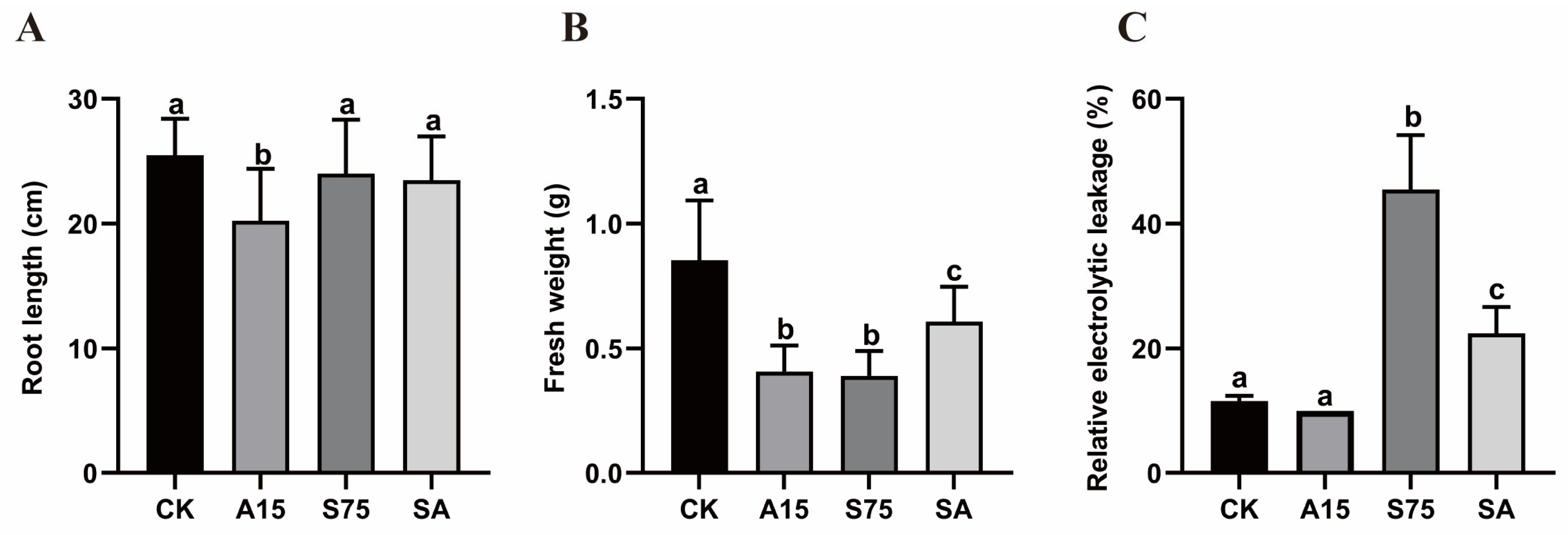
Under salt, alkali, or combined salt–alkali stress, both root lengths and fresh weights were reduced. Compared with the control, root lengths decreased by 19.62%, 9.80%, and 9.72% under the A15, S75, and SA treatments, respectively (Figure 1A). Correspondingly, seedling fresh weight decreased by 52.34%, 54.30%, and 28.91%, respectively, under the above stress treatments (Figure 1B). Compared with alfalfa leaves under normal growth conditions, all stress treatments except A15 resulted in increased relative electrolytic leakage, with the S75 treatment showing the most significant elevation (Figure 1C).

3.2. mRNA and sRNA Sequencing Data Analysis

To investigate the transcriptional responses to saline and alkali stress, 24 mRNA libraries were constructed and sequenced using the Illumina platform. Sequencing yielded 86.28 million raw reads from leaf samples and 85.98 million from root samples. After quality filtering, 84.83 million clean reads from leaves and 84.77 million from roots were retained. The mapping rates of valid reads to the reference genome were 90.18% for leaves and 73.22% for roots (Table S1).
For sRNA sequencing, each of the 24 samples produced an average of 11.94 million raw reads. After removing low-quality reads, an average of 11.90 million clean reads per sample remained. From these, an average of 7.25 million sRNAs in the 18–30 nucleotide (nt) range were identified per sample. In total, 453 miRNAs were detected, comprising 265 known and 188 novel predicted miRNAs (Table S2). Length distribution analysis revealed that sRNAs of 21 nt and 24 nt were the most abundant in both leaves and roots (Figure S1).
Correlation analyses were conducted separately for the sRNA datasets. Heatmap results showed strong correlations among biological replicates within each treatment group, indicating high data quality and reproducibility for libraries (Figure S2).

3.3. Analysis of Differentially Expressed Genes (DEGs)

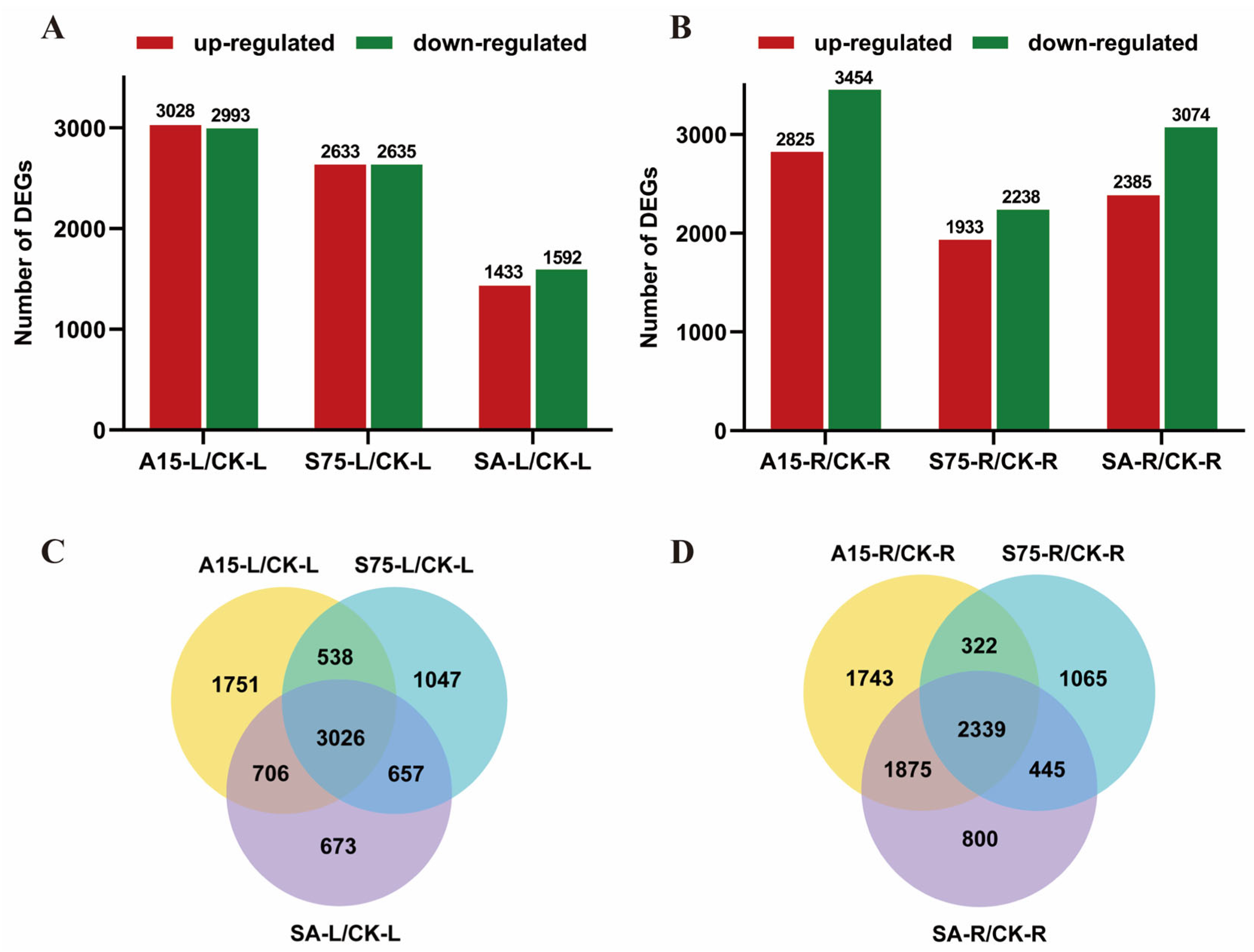
DEGs in leaves and roots under salt or alkali stress were identified using the criteria of |log2(fold change)| ≥ 0.5 and padj < 0.05. In leaves, the A15 treatment resulted in 6210 DEGs, including 3028 up-regulated and 2993 down-regulated genes. The S75 treatment yielded 5268 DEGs, with 2633 up-regulated and 2635 down-regulated. The SA treatment produced 5062 DEGs, comprising 2387 up-regulated and 2675 down-regulated genes. A total of 3026 DEGs were shared across all stress treatments, including 1433 up-regulated and 1592 down-regulated genes (Figure 2A,C).
In roots, the A15 treatment identified 6279 DEGs, the S75 treatment identified 4171 DEGs, and the SA treatment identified 5459 DEGs. Under A15 treatment, 2825 genes were up-regulated, and 3454 were down-regulated. The S75 treatment resulted in 1933 up-regulated and 2238 down-regulated genes, while the SA treatment led to 2385 up-regulated and 3074 down-regulated genes. A total of 2339 mRNAs were commonly differentially expressed across all salt, alkali, and combined salt–alkali stress treatments, including 1072 up-regulated and 1258 down-regulated genes (Figure 2B,D).
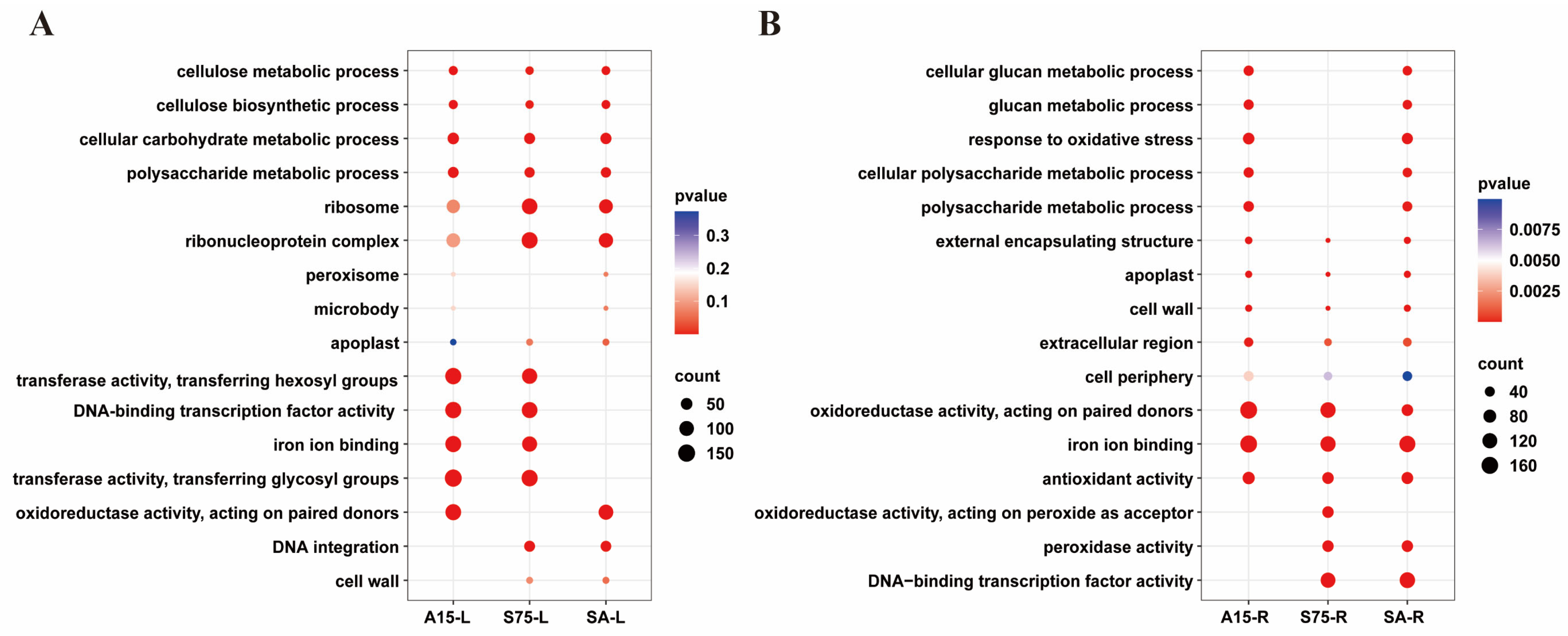
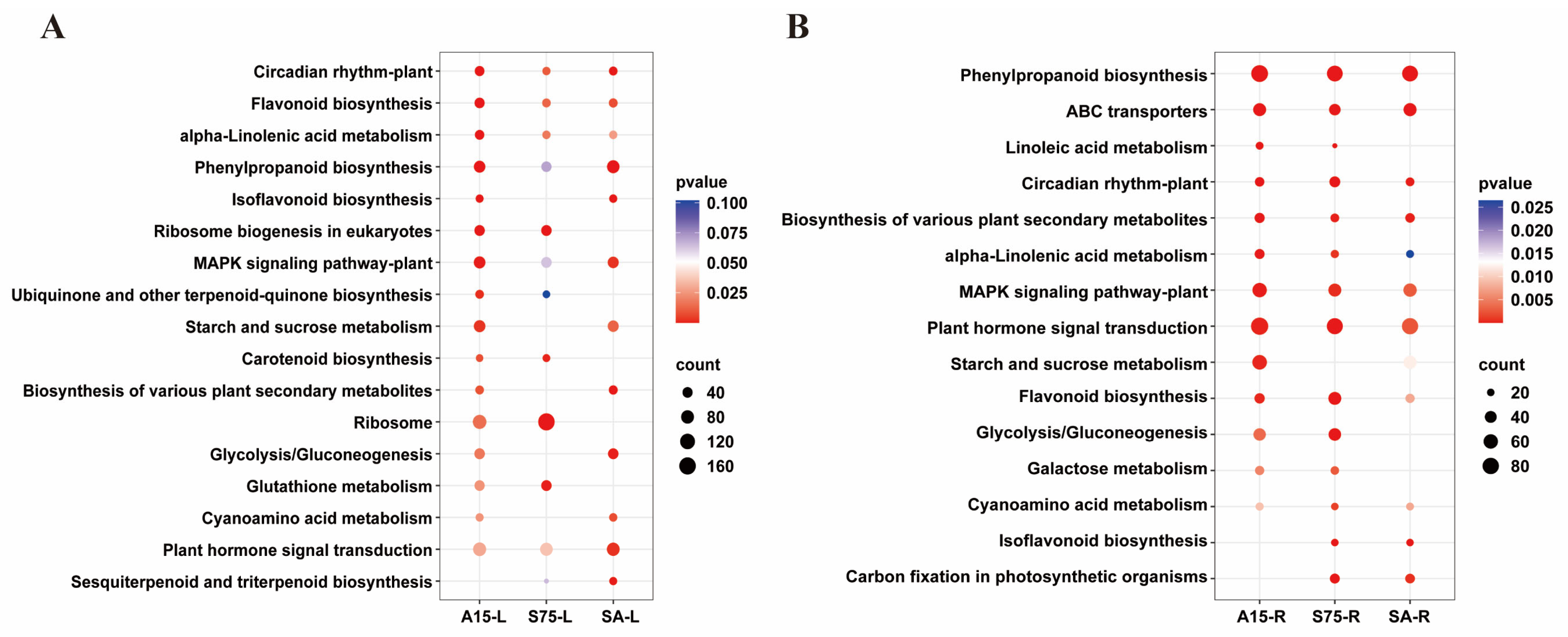
To better understand the functional roles of DEGs under various stress treatments, GO and KEGG enrichment analyses were performed. GO enrichment analysis showed that leaf DEGs under A15, S75, and SA treatments were commonly enriched in “ribosome”, “cellulose metabolic process”, “polysaccharide metabolic process”, and related molecular functions (Figure 3A). KEGG pathway analysis revealed that these DEGs were commonly enriched in “Plant hormone signal transduction”, “alpha-linolenic acid metabolism”, “Ribosome”, and the “Flavonoid biosynthesis” pathway (Figure 4A).
In roots, GO enrichment indicated that DEGs under all three stress treatments were co-enriched in categories such as “iron ion binding”, “cell periphery”, “cell wall”, “extracellular region” and “antioxidant activity” (Figure 3B). KEGG analysis showed significant enrichment of root DEGs in pathways, including “Phenylpropanoid biosynthesis”, “MAPK signaling pathway”, “alpha-Linolenic acid metabolism” and “Biosynthesis of various plant secondary metabolites” (Figure 4B).

3.4. Analysis of Differentially Expressed miRNAs (DEMs)

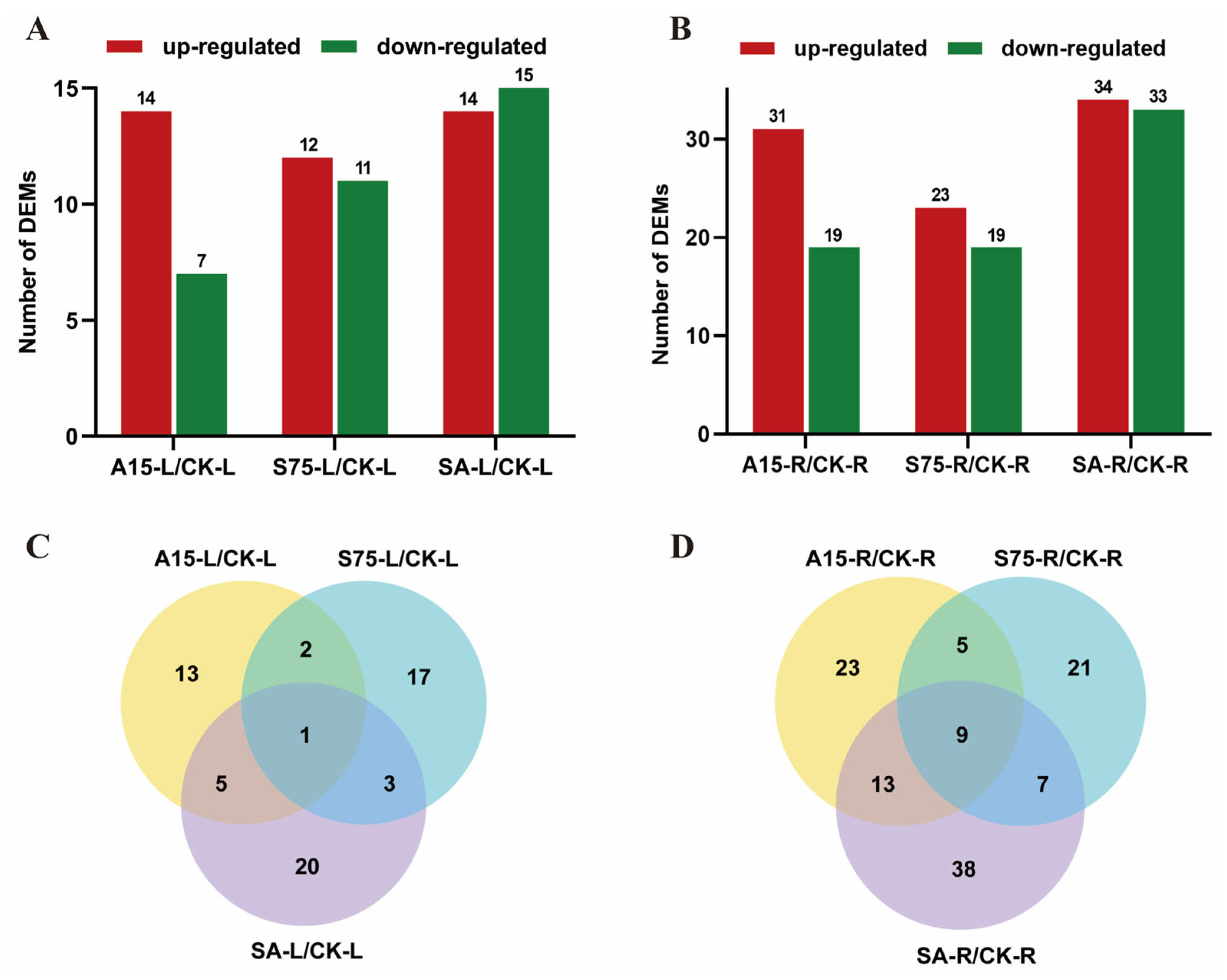
To identify salt- and alkali-responsive miRNAs, DEMs were screened using thresholds of |log2(fold change)| > 1 and padj < 0.05. In leaves, the A15 treatment yielded 22 DEMs, including 14 up-regulated and 7 down-regulated miRNAs. The S75 treatment produced 23 DEMs, with 12 up-regulated and 11 down-regulated. The SA treatment resulted in 29 DEMs, comprising 14 up-regulated and 15 down-regulated miRNAs (Figure 5A). In roots, 50 DEMs were identified under the A15 treatment, 42 under S75, and 67 under SA treatment (Figure 5B).
In leaves, one conserved miRNA, miR397-5p, was differentially expressed under all stress treatments (Figure 5C, Table S3). In roots, nine shared DEMs were identified, including two up-regulated miRNAs, miR408-3p and miR398b, and four down-regulated ones, miR1510a-5p, miR2111g-3p, miR5754, and novel_122 (Figure 5D, Table S3).

3.5. miRNA–mRNA Integrated Analysis

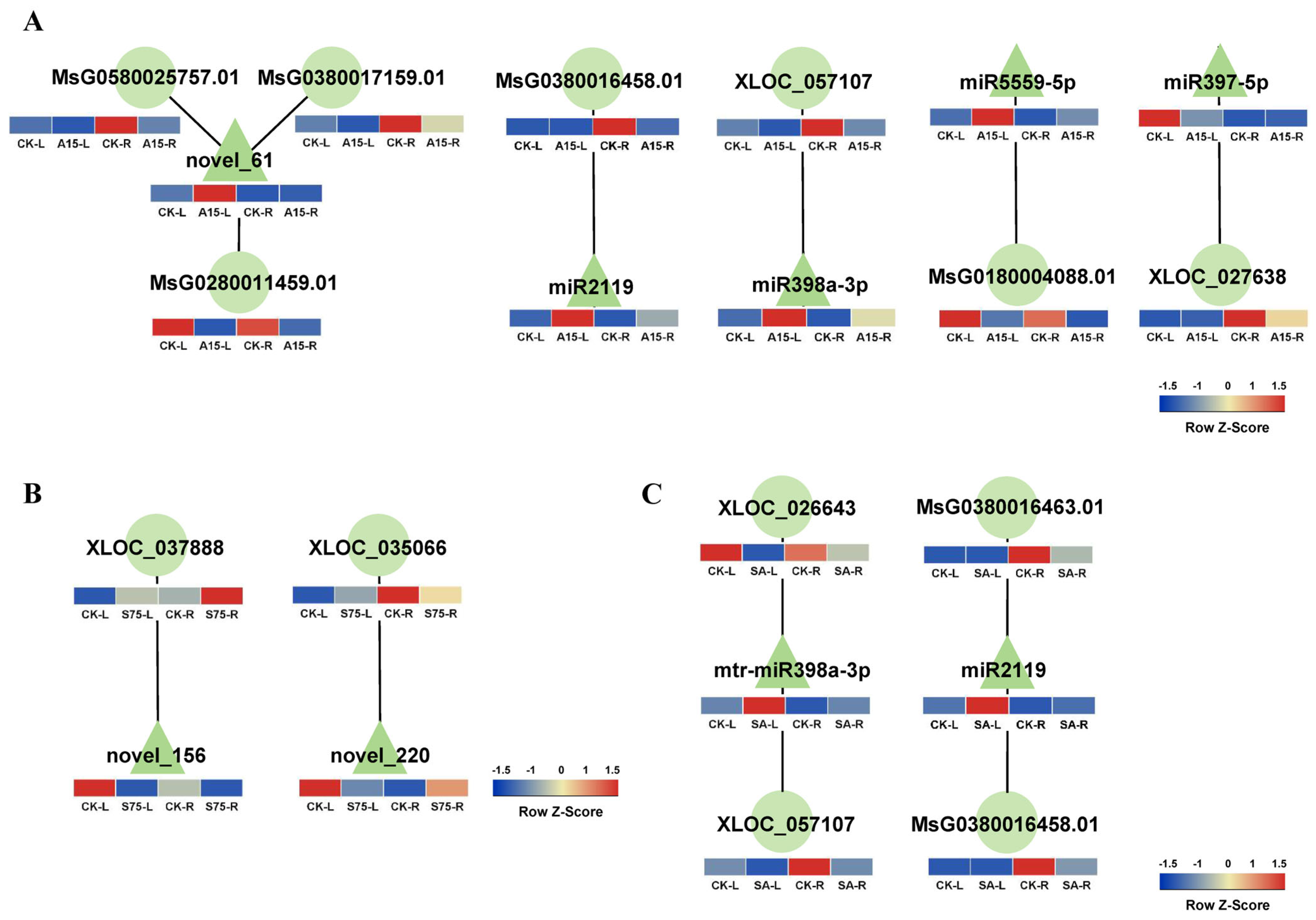
Given that miRNAs function by silencing or degrading their target mRNAs, we analyzed expression correlations between mRNA-seq and miRNA-seq datasets to identify miRNA–mRNA pairs associated with responses to salt and/or alkali stress. Target prediction and correlation analysis revealed 147, 81, and 140 negatively correlated miRNA–mRNA pairs under S75, A15, and SA treatments, respectively. Under the A15 treatment, five miRNA–mRNA pairs exhibited negative correlations in both leaves and roots, with two of these also showing negative correlations under the SA treatment (Figure 6A,C). Additionally, two and four negatively correlated pairs were identified under the S75 and SA treatments, respectively (Figure 6B,C).

3.6. miRNA Target Genes Enrichment Analysis

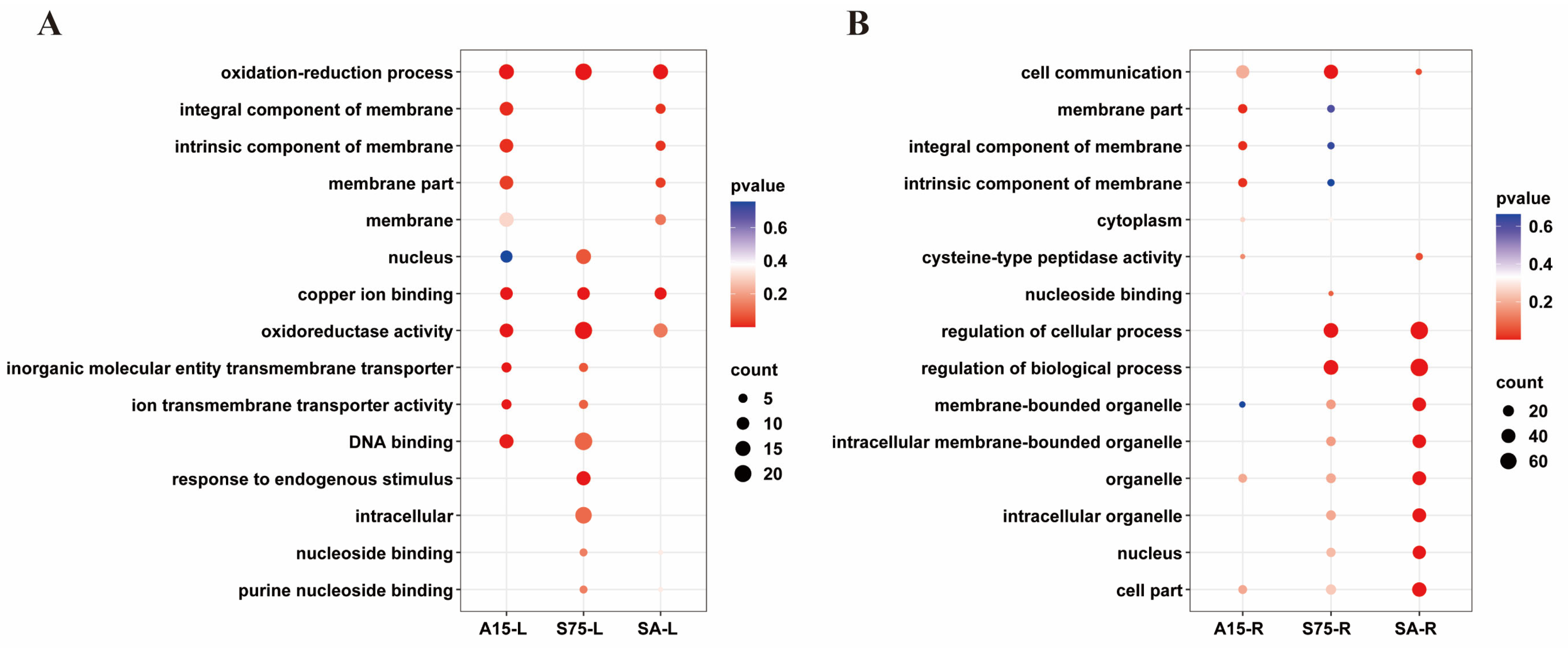
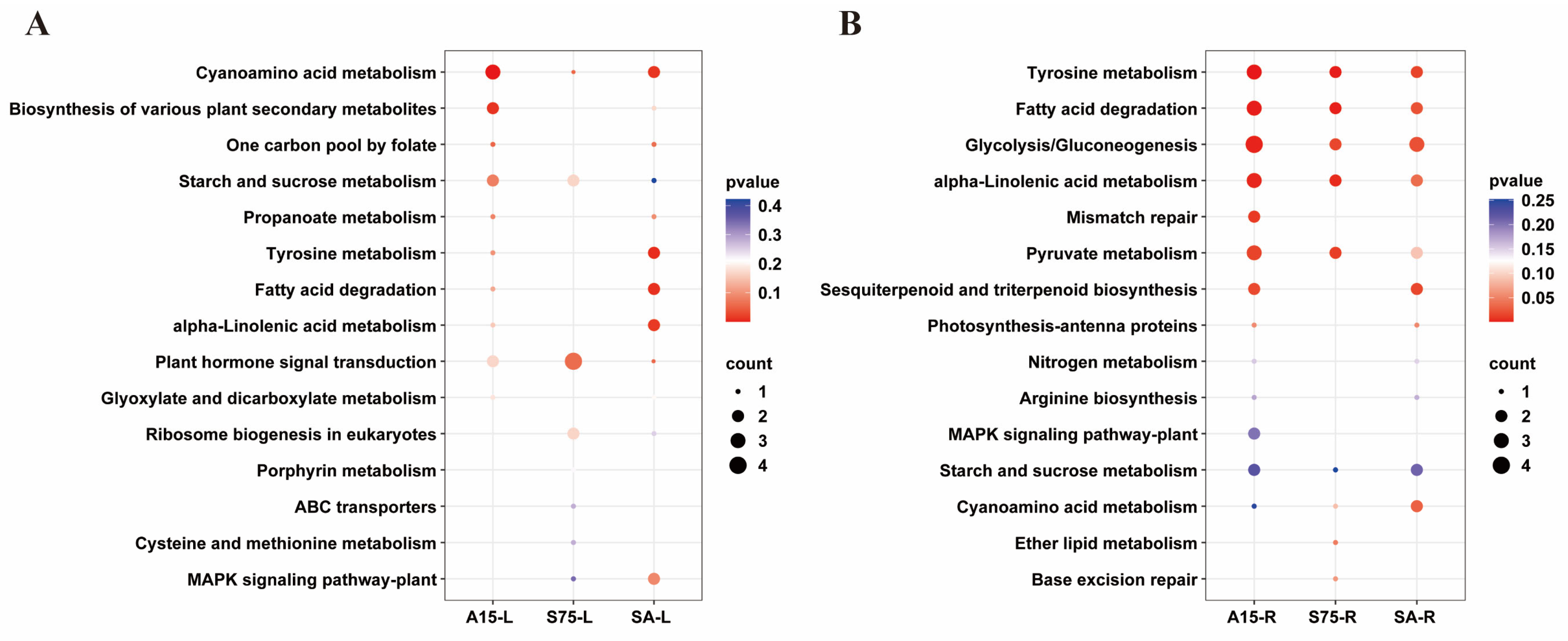
GO enrichment of miRNA target genes in leaves under A15, S75, and SA treatments was commonly enriched in “oxidation-reduction process”, “copper ion binding”, “oxidoreductase activity”, and related molecular functions (Figure 7A). KEGG pathway analysis revealed that these DEGs were commonly enriched in “Cyanoamino acid metabolism”, “Plant hormone signal transduction”, “MAPK signaling pathway-plant”, and the “Starch and sucrose metabolism” pathway (Figure 8A).
GO enrichment of miRNA target genes in roots under all three stress treatments was co-enriched in categories such as “cell communication”, “membrane-bounded organelle”, “organelle”, and “cell part” (Figure 7B). KEGG analysis showed significant enrichment of root DEMs in pathways, including “Tyrosine metabolism”, “alpha-Linolenic acid metabolism”, “Glycolysis/Gluconeogenesis”, and “Pyruvate metabolism” (Figure 8B).

3.7. MiRNA-Mediated Regulatory Pathways in Response to Salt and Alkali Stress

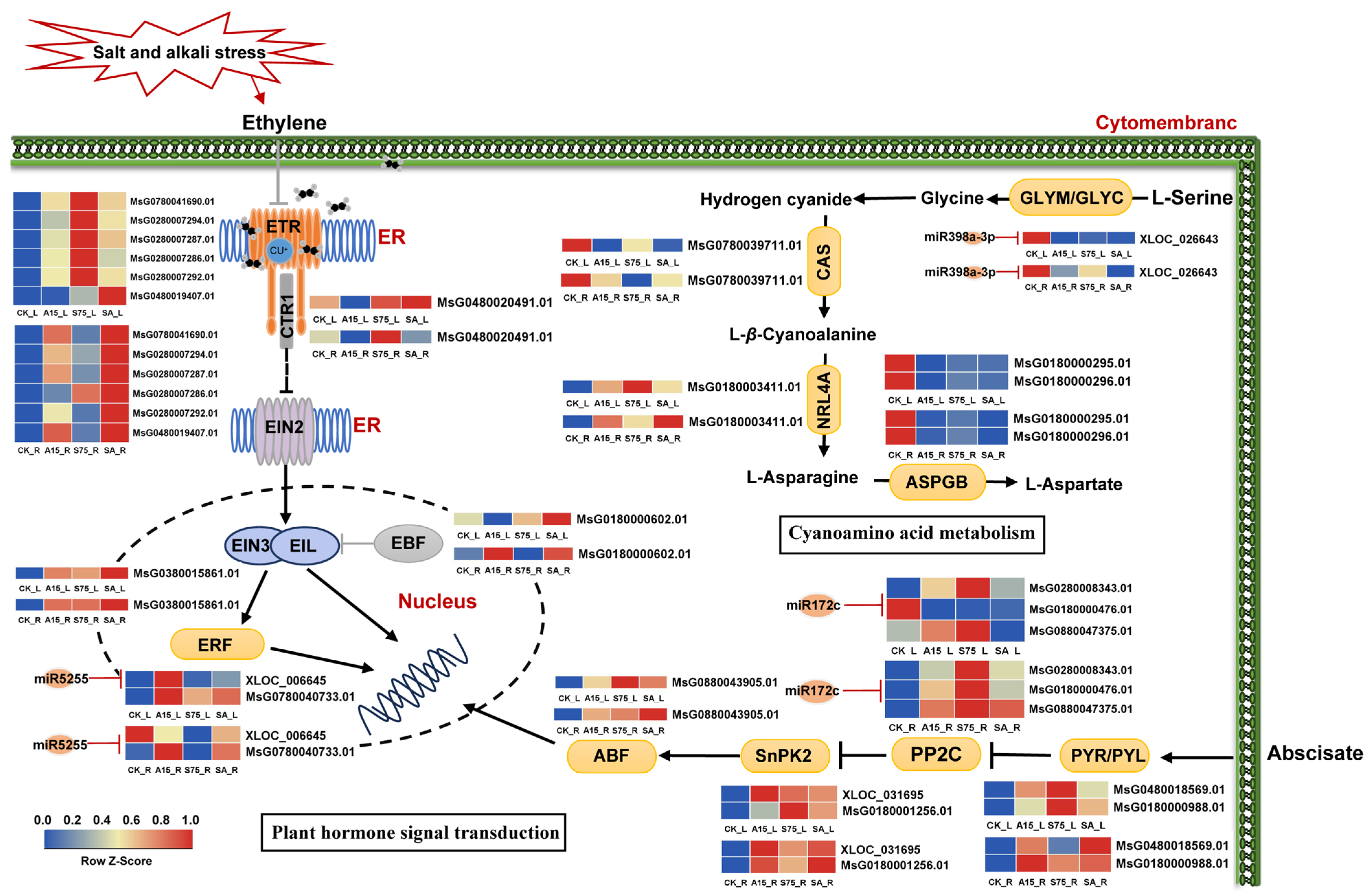
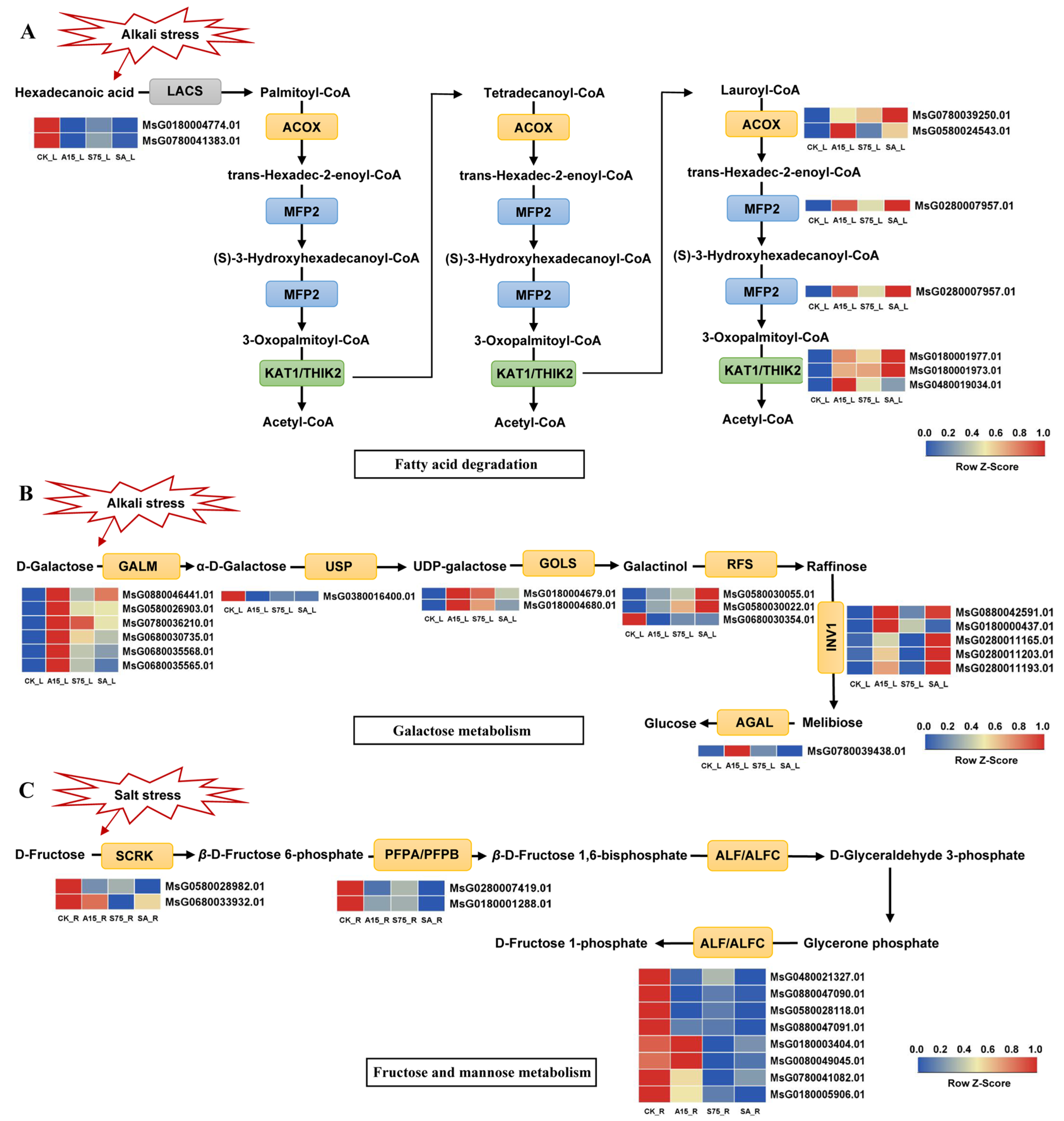
Two regulatory pathways, “Plant hormone signal transduction” and “Cyanoamino acid metabolism”, were responsive in both leaves and roots under salt, alkali, or combined salt–alkali stress (Figure 9). In contrast, “Fatty acid degradation” and “Galactose metabolism” pathways responded specifically in leaves under alkali stress, whereas the “Fructose and mannose metabolism” pathway responded specifically in roots under salt stress (Figure 10).
In the “Plant hormone signal transduction” pathway, the ethylene receptor genes (ETR/ERS; MsG0780041690.01, MsG0280007294.01, MsG0280007286.01, MsG0280007287.01, MsG0280007292.01, MsG0480019407.01) and the downstream Ethylene-insensitive 3 (EIN3/EIL) coding gene, MsG0380015861.01, and Ethylene-responsive transcription factor (ERF) coding gene (XLOC_006645, MsG0780040733.01) were up-regulated under all stress treatments. Moreover, according to the miRNA target gene prediction result, ERF (XLOC_006645) expression may be negatively regulated by miR5255 (Figure 9). Under all three stress conditions, two abscisic acid (ABA) receptor gene (PYR/PYL; MsG0480018569.01, MsG0180000988.01) were up-regulated, along with downstream genes encoding Serine/threonine-protein kinase (SnPK2; XLOC_031695 and MsG0180001256.01), and the ABA-responsive element binding factor gene (ABF; MsG0880043905.01) were up-regulated. Furthermore, based on miRNA target prediction results, the expression of the protein phosphatase 2C gene(PP2C; MsG0180000476.01) in the ABA signaling pathway was likely negatively regulated by miR172c (Figure 9).
In the “Cyanoamino acid metabolism” pathway, genes encoding Serine hydroxymethyltransferase (GLYM/GLYC7; XLOC_026643), Cyanolanine synthase (CAS; MsG0780039711.01), and Isolaspartyl peptidase/L-Asparaginase (ASPGB; MsG0180000295.01, MsG0180000296.01) were all down-regulated under all stress conditions. Notably, the GLYM/GLYC7 gene was predicted to be negatively regulated by miR398a-3p (Figure 9).
In the “Fatty acid degradation” pathway in leaves under alkali stress, genes encoding acyl-CoA oxidase (ACOX; MsG0780039250.1, MsG0580024543.01), peroxisomal fatty acid β-oxidation multifunctional protein (MFP2; MsG0280007957.01), and 3-ketoacyl-CoA thiolase (THIK2/CKT1; MsG0180001977.01, MsG0180001973.01, MsG0480019034.01) were all up-regulated, with higher fold changes under A15 than S75 treatment, indicating stronger pathway activation (Figure 10A). In the “Galactose metabolism” pathway, genes encoding galactose mutarotase (GALM; MsG0880046441.01, MsG0580026903.01, MsG0780036210.01, MsG0680030735.01, MsG0680035568.01, MsG0680035565.01) were significantly up-regulated under alkali stress. Similarly, genes encoding galactinol synthase 2 (GOLS2; MsG0180004679.01, MsG0180004680.01) and alpha-galactosidase (AGAL; MsG0780039438.01) showed greater up-regulation under A15 than S75 treatment, suggesting that A15 strongly promoted galactose metabolism (Figure 10B).
In roots, with the “Fructose and mannose metabolism” pathway, the pyrophosphate-fructose-6-phosphate 1-phosphatase subunit beta (PFPB; MsG0180001288.01, MsG0280007419.01) was significantly down-regulated under salt stress. Genes encoding fructose-bisphosphate aldolase, cytoplasmic isozyme 1 (ALF/ALFC; MsG0180003404.01, MsG0080049045.01, MsG0780041082.01, MsG0880047090.01, MsG0580028118.01, MsG0880047091.01, MsG0480021327.01, MsG0180005906.01) were down-regulated under both salt and alkali stress, but fold changes were greater under salt stress (Figure 10C).

3.8. qRT-PCR Validation of the DEGs and DEMs

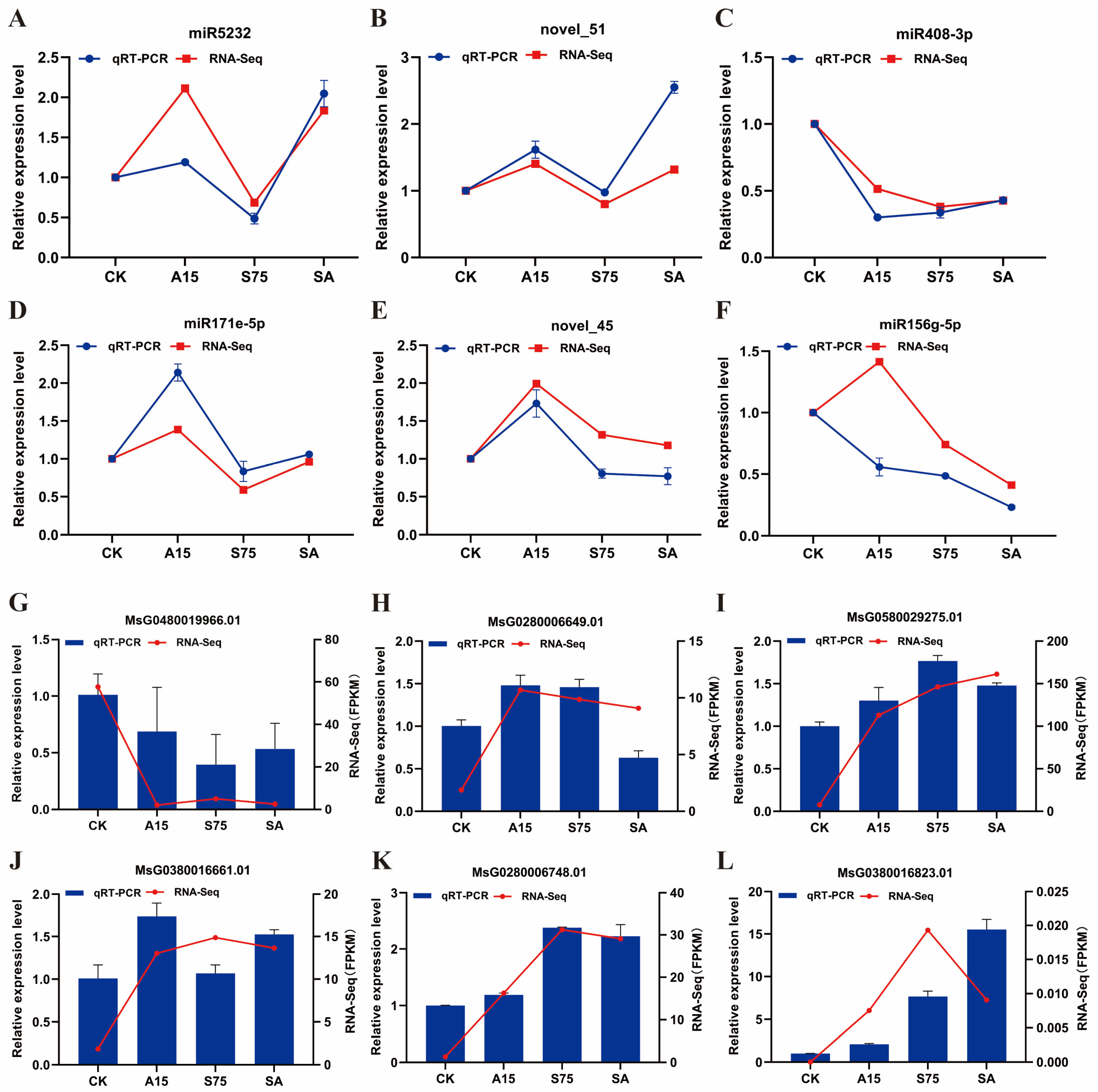
Based on miRNA sequencing results, six significantly differentially expressed miRNAs and six significantly differentially expressed mRNAs under stress treatments were randomly selected for quantitative real-time PCR (qRT-PCR) validation to verify the reliability of the experimental results. All selected mRNAs and miRNAs exhibited varying expression changes under salt, alkali, or combined salt-alkali stress. The comparative data between qRT-PCR and sequencing results are presented in Figure 11. The qRT-PCR expression profiles were largely consistent with the RNA-Seq results, further confirming the reliability of the RNA-Seq data.

4. Discussion

MiRNAs are small non-coding RNAs that play a pivotal role in plant adaptation to environmental stresses by regulating target gene expression [24]. In this study, differential expression analysis revealed that miR397a was consistently and significantly down-regulated in alfalfa leaves under salt, alkali, and combined salt–alkali stresses. This observation is consistent with the suppression of miR397 reported in moso bamboo (Phyllostachys edulis (Carrière) J.Houz.) under NaCl stress [25]. Target prediction indicated that miR397a primarily regulates laccase (LAC) genes, whose activity enhanced lignin accumulation, thereby conferring resistance to heavy metal toxicity and drought stress [26,27]. Recent studies also confirmed the involvement of miR397a in alfalfa drought responses [9]. Overall, these analyses suggest that the down-regulation of miR397a may represent a conserved mechanism in plant responses to environmental stresses. In contrast, miR398b and miR408 were significantly up-regulated in roots across all stress conditions, in agreement with their reported induction in Medicago truncatula under drought [28]. These findings support their conserved roles in abiotic stress responses. However, the expression patterns differ from those reported by Cao et al. [29], who observed reduced expression of these miRNAs under salt stress and no response to alkali stress in alfalfa. This discrepancy may reflect temporal differences in miRNA dynamics, underscoring the importance of sampling stage in transcriptomic analyses.
Ethylene signaling is one of the central regulators of abiotic stress responses [30,31]. In our study, activation of ethylene receptor (ETR) genes could suppress the negative regulator Serine/threonine-protein kinase (CTR1; MsG0180003411.01), thereby up-regulating downstream Ethylene-insensitive 3 (EIN3/EIL; MsG0380015861.01) and Ethylene-responsive transcription factor (ERF; XLOC_006645, MsG0780040733.01), which mediate stress-responsive transcriptional reprogramming. Notably, our results also suggest a potential post-transcriptional regulatory layer, as miR5255 was predicted to negatively regulate ERF (XLOC_006645). Such interaction indicates that miRNAs fine-tune ethylene signaling in alfalfa under salt and alkali stress, integrating transcriptional and post-transcriptional regulation to achieve balance. In tomato (Solanum lycopersicum L.), Sly-miR1917 exemplifies a similar miRNA-ethylene crosstalk, where it regulates ethylene signaling by targeting SlCTR4 splice variants for degradation [32]. In switchgrass (Panicum virgatum L.), miR319 regulates the ethylene metabolism pathway after salt stress [33]. Together, these findings highlight the evolutionary conservation of miRNA-ethylene interactions and suggest that the miR5255-ERF regulation could represent a previously unrecognized node in this signaling crosstalk, thereby providing a new clue for elucidating their interplay under saline–alkali stress.
Abscisic acid (ABA) signaling represents another key pathway enabling plants to withstand adverse environmental conditions [34]. In our study, both salt and alkali stresses activated ABA signaling by up-regulating Serine/threonine-protein kinase (SnRK2; XLOC_031695, MsG0180001256.01) and ABA-responsive element binding factor gene (ABF; MsG0880043905.01). Furthermore, miR172c-5p was predicted to negatively regulate the PP2C gene (MsG0180000476.01), a well-established negative regulator of ABA signaling. This interaction may alleviate PP2C-mediated suppression, thereby sustaining SnRK2 activation and reinforcing ABA signaling under salt and alkali conditions. Similar ABA–miRNA interactions have been documented in Arabidopsis thaliana L., where miR165/166 modulates ABA homeostasis under drought and cold stress [35]. Moreover, SnRK2 protein kinases regulate miRNA biogenesis through phosphorylation of HYL1 and SE, core components of the miRNA processing complex, forming a feedback regulatory loop between ABA signaling and miRNA regulation [36]. Thus, our findings provide evidence that miRNA–ABA modules play a critical role in fine-tuning ABA signaling under salt and alkali stresses in alfalfa.
The “Cyanoamino acid metabolism” pathway also emerged as a critical stress-responsive metabolic route [37,38]. We found that key enzyme-encoding genes, including GLYM/GLYC (serine hydroxymethyltransferase), β-CAS (β-cyanoalanine synthase), and ASPGB (Isoaspartyl peptidase/L-asparaginase), were consistently down-regulated under salt and alkali stresses. GLYM/GLYC, a folate-dependent enzyme, is central to photorespiration and one-carbon metabolism [39]. and its reduced expression may reflect regulation by miR398a-3p, paralleling its role in oxidative stress regulation in Arabidopsis [40]. Particularly noteworthy is the down-regulation of β-CAS, a core enzyme in cyanide detoxification, which converts cyanide into cyanoalanine. In Cassava (Manihot esculenta Crantz.), β-CAS is essential for cyanogenic glycoside metabolism, and its reduced activity under stress may reflect a response strategy adopted by plants to conserve energy [41]. Supporting this, β-CAS gene silencing in tobacco (Nicotiana tabacum L.) exacerbates oxidative stress damage [42]. Synergistic down-regulation of multiple genes in the cyanoamino acid metabolism pathway reflects a reprogramming strategy in alfalfa, which prioritizes energy conservation and maintenance of core survival processes under adverse conditions [43].
Overall, this study has preliminarily established a miRNA-mediated transcriptional regulatory network underlying alfalfa’s response to saline–alkali stress (Figure 9 and Figure 10). This network not only reveals the mechanisms by which key miRNAs, such as miR398a-3p, miR5255, and miR172c, participate in the stress response by regulating hormonal signaling and metabolic pathways, but also provides potential targets and a theoretical framework for improving alfalfa’s saline–alkali tolerance through molecular breeding in the future. However, the specific regulatory functions of the interactions between these miRNAs and their target genes have not yet been fully elucidated and require further in-depth investigation.

5. Conclusions

In this study, we demonstrated that salt–alkali stress induces extensive transcriptional reprogramming and miRNA-mediated regulation in alfalfa. Stress-responsive miRNAs, such as miR397, miR398, miR408, miR5255, and miR172c, were implicated in fine-tuning key hormonal and metabolic pathways. MiRNA–mRNA interactions mediate ethylene and ABA signaling transduction under salt–alkali stress in alfalfa. Additionally, these interactions confer stress-type and tissue-specific responses through specialized metabolic pathways: “Fatty acid degradation” and “Galactose metabolism” pathway in leaves under alkali stress, and “Fructose and mannose metabolism” pathway in roots under salt stress. Together, this study reveals miRNA response mechanisms under saline–alkali stress and establishes a theoretical framework for molecular breeding, with key miRNAs and related pathways serving as potential targets for developing tolerant alfalfa varieties. Further functional validation of miRNA target interactions will be crucial for translating these findings into breeding practice.

Supplementary Materials

The following supporting information can be downloaded at: https://www.mdpi.com/article/10.3390/agriculture16030323/s1, Figure S1: the miRNA length distribution map. (A) miRNA length distribution map in leaves; (B) miRNA length distribution map in roots, Figure S2: sample correlation heatmap of miRNA, Table S1: evaluation of mRNA data quality, Table S2: evaluation of miRNA data quality, Table S3: co-differentially expressed miRNAs under different treatments, Table S4: gene IDs and primer sequences for the genes used for qPCR verification.

Author Contributions

Conceptualization, X.L., R.L. and M.L.; methodology, X.L., R.L., Y.X. and H.Y.; software, L.Z., W.Z., B.D. and L.S.; writing—original draft preparation, M.L.; writing—reviewing and editing, X.L. and M.L.; supervision, X.L. All authors have read and agreed to the published version of the manuscript.

Funding

This work was supported by the Hohhot Science and Technology Plan Project (2024-Unveiled and Leading-agriculture-2-2), the Central Public-interest Scientific Institution Basal Research Fund (Y2025YC44), and the Fundamental Research Funds for the Central Universities (BLX202270).

Data Availability Statement

The datasets generated and/or analyzed during the current study are available from the corresponding authors on reasonable request.

Conflicts of Interest

The authors declare no conflict of interest.

References

  1. Zhu, J.; Cui, Z.; Wu, C.; Deng, C.; Chen, J.; Zhang, H. Research advances and prospect of saline and alkali land greening in China. World For. Res. 2018, 31, 70–75. [Google Scholar]
  2. Yang, J.; Yao, R.; Wang, X.; Xie, W.; Zhang, X.; Zhu, W.; Zhang, L.; Sun, R. Research on salt-affected soils in China: History, status quo and prospec. Acta Pedol. Sin. 2022, 59, 10–27. [Google Scholar]
  3. Xie, Z.; Mu, L.; Zhang, Z.; Chen, G.; Liu, Y.; Gao, S.; Wei, Z. Effects on fermentation in alfalfa mixed silage of added lactic acid bacteria or organic acid salt combined with urea. Acta Pratacult. Sin. 2021, 30, 165–173. [Google Scholar]
  4. Yang, Q. Guide of Alfalfa Production and Management; China Forestry Publishing House: Beijing, China, 2003. [Google Scholar]
  5. Zhang, Z.; Hou, W.; Lv, W.; Zhou, X.; Liu, Y.; Dong, W. Physiological responses of alfalfa cv. Zhongmu No.1 to mixed salt-alkali stress. Grassl. Turf 2023, 43, 126–132. [Google Scholar]
  6. Ling, L. Multi-Omics Integration Study for High-Throughput Screening of Key Genes in Salt-Alkali Tolerance of Alfalfa. Ph.D. Thesis, Harbin Normal University, Harbin, China, 2021. [Google Scholar]
  7. Zhu, Z.; Li, D.; Cong, L.; Lu, X. Identification of microRNAs involved in crosstalk between nitrogen, phosphorus and potassium under multiple nutrient deficiency in sorghum. Crop J. 2021, 9, 465–475. [Google Scholar] [CrossRef]
  8. Wang, Y.; Li, J.; Ma, J. Identification and analysis of microRNAs and targets involved in salt stress responses in alfalfa (Medicago sativa ‘Millenium’). Mol. Plant Breed. 2019, 17, 8072–8081. [Google Scholar]
  9. Cen, H.; Tao, J.; Wang, Y.; Xu, T.; Zhang, Y.; Zhu, H. Heterologous expression of miR397-5p from Medicago sativa cv. ‘Pianguan’ improves the drought tolerance of tobacco. Acta Pratacult. Sin. 2024, 33, 123–134. [Google Scholar]
  10. Chen, L.; He, F.; Long, R.; Zhang, F.; Li, M.; Wang, Z.; Kang, J.; Yang, Q. A global alfalfa diversity panel reveals genomic selection signatures in Chinese varieties and genomic associations with root development. J. Integr. Plant Biol. 2021, 63, 1937–1951. [Google Scholar] [CrossRef] [PubMed]
  11. Zou, Q. Plant Physiology Experiment Guide; China Agriculture Press: Beijing, China, 2003. [Google Scholar]
  12. Kang, J.; Li, M.; Long, R.; Yang, Q.; Yu, J.; Zhang, J. Identification and functional analysis of lncRNA167 and its cleavage product miR167c in Medicago truncatula. Acta Pratacult. Sin. 2022, 31, 164–180. [Google Scholar]
  13. Shen, C.; Du, H.; Chen, Z.; Lu, H.; Zhu, F.; Chen, H.; Meng, X.; Liu, Q.; Liu, P.; Zheng, L.; et al. The chromosome-level genome sequence of the autotetraploid alfalfa and resequencing of core germplasms provide genomic resources for alfalfa research. Mol. Plant 2020, 13, 1250–1261. [Google Scholar] [CrossRef] [PubMed]
  14. Langmead, B.; Trapnell, C.; Pop, M.; Salzberg, S.L. Ultrafast and memory-efficient alignment of short DNA sequences to the human genome. Genome Biol. 2009, 10, R25. [Google Scholar] [CrossRef]
  15. Wen, M.; Shen, Y.; Shi, S.; Tian, T. miREvo: An integrative microRNA evolutionary analysis platform for next-generation sequencing experiments. BMC Bioinform. 2012, 13, 140. [Google Scholar] [CrossRef]
  16. Friedländer, M.R.; Mackowiak, S.D.; Li, N.; Chen, W.; Rajewsky, N. miRDeep2 accurately identifies known and hundreds of novel microRNA genes in seven animal clades. Nucleic Acids Res. 2012, 40, 37–52. [Google Scholar] [CrossRef]
  17. Robinson, M.D.; Mccarthy, D.J.; Smyth, G.K. EdgeR: A bioconductor package for differential expression analysis of digital gene expression data. Bioinformatics 2010, 26, 139–140. [Google Scholar] [CrossRef] [PubMed]
  18. Benjamini, Y.; Hochberg, Y. Controlling the false discovery rate: A practical and powerful approach to multiple hypothesis testing. J. R. Stat. Soc. B 1995, 57, 289–300. [Google Scholar] [CrossRef]
  19. Wu, H.; Ma, Y.; Chen, T.; Wang, M.; Wang, X. PsRobot: A web-based plant small RNA meta-analysis toolbox. Nucleic Acids Res. 2012, 40, W22–W28. [Google Scholar] [CrossRef] [PubMed]
  20. Yang, X.; Kang, Y.; Liu, Y.; Shi, M.; Zhang, W.; Fan, Y.; Yao, Y.; Li, H.; Qin, S. Integrated analysis of miRNA-mRNA regulatory networks of potato (Solanum tuberosum L.) in response to cadmium stress. Ecotoxicol. Environ. Saf. 2021, 224, 112682. [Google Scholar] [CrossRef] [PubMed]
  21. Young, M.D.; Wakefield, M.J.; Smyth, G.K.; Oshlack, A. Gene ontology analysis for RNA-seq: Accounting for selection bias. Genome Biol. 2010, 11, R14. [Google Scholar] [CrossRef]
  22. Yu, G.; Wang, L.; Han, Y.; He, Q. ClusterProfiler: An R package for comparing biological themes among gene clusters. OMICS J. Integr. Biol. 2012, 16, 284–287. [Google Scholar] [CrossRef]
  23. Livak, K.J.; Schmittgen, T.D. Analysis of relative gene expression data using real-time quantitative PCR and the 2−ΔΔCT Method. Methods 2001, 25, 402–408. [Google Scholar] [CrossRef]
  24. Jones-Rhoades, M.W.; Bartel, D.P. Computational identification of plant microRNAs and their targets, including a stress-induced miRNA. Mol. Cell 2004, 14, 787–799. [Google Scholar] [CrossRef]
  25. Wang, L.; Zhao, H.; Sun, H.; Dong, L.; Lou, Y.; Gao, Z. Cloning and expression analysis of miR397 and miR1432 in phyllostachys edulis under stresse. Sci. Silvae Sin. 2015, 51, 63–70. [Google Scholar]
  26. Zhang, S.; Ju, C.; Wang, X. Arabidopsis laccase gene AtLAC4 is involved in growth and abiotic stress response. J. Integr. Plant Biol. 2012, 47, 357–365. [Google Scholar]
  27. Ali, S.; Huang, S.; Zhou, J.; Bai, Y.; Liu, Y.; Shi, L.; Liu, S.; Hu, Z.; Tang, Y. miR397-LACs mediated cadmium stress tolerance in Arabidopsis thaliana. Plant Mol. Biol. 2023, 113, 415–430. [Google Scholar] [CrossRef]
  28. Trindade, I.; Capitão, C.; Dalmay, T.; Fevereiro, M.P.; Santos, D.M. miR398 and miR408 are up-regulated in response to water deficit in Medicago truncatula. Planta 2010, 231, 705–716. [Google Scholar] [CrossRef]
  29. Cao, C.; Long, R.; Zhang, T.; Kang, J.; Wang, Z.; Wang, P.; Sun, H.; Yu, J.; Yang, Q. Genome-wide identification of microRNAs in response to salt/alkali stress in Medicago truncatula through high-throughput sequencing. Int. J. Mol. Sci. 2018, 19, 4076. [Google Scholar] [CrossRef] [PubMed]
  30. Cao, Y.; Chen, S.; Zhang, J. Ethylene signaling regulates salt stress response. Plant Signal. Behav. 2008, 3, 761–763. [Google Scholar] [CrossRef] [PubMed]
  31. Arraes, F.B.M.; Beneventi, M.A.; Lisei De Sa, M.E.; Paixao, J.F.R.; Albuquerque, E.V.S.; Marin, S.R.R.; Purgatto, E.; Nepomuceno, A.L.; Grossi-de-Sa, M.F. Implications of ethylene biosynthesis and signaling in soybean drought stress tolerance. BMC Plant Biol. 2015, 15, 213. [Google Scholar] [CrossRef]
  32. Wang, Y.; Zou, W.; Xiao, Y.; Cheng, L.; Liu, Y.; Gao, S.; Shi, Z.; Jiang, Y.; Qi, M.; Xu, T.; et al. MicroRNA1917 targets CTR4 splice variants to regulate ethylene responses in tomato. J. Exp. Bot. 2018, 69, 1011–1025. [Google Scholar] [CrossRef]
  33. Liu, Y.; Li, D.; Yan, J.; Kexin, W.; Luo, H.; Zhang, W. MiR319-mediated ethylene biosynthesis, signaling and salt stress response in switchgrass. Plant Biotechnol. J. 2019, 17, 2370–2383. [Google Scholar] [CrossRef]
  34. Waadt, R.; Seller, C.A.; Hsu, P.; Takahashi, Y.; Munemasa, S.; Schroeder, J.I. Plant hormone regulation of abiotic stress responses. Nat. Rev. Mol. Cell Biol. 2022, 23, 680–694. [Google Scholar] [CrossRef] [PubMed]
  35. Yan, J.; Zhao, C.; Zhou, J.; Yang, Y.; Wang, P.; Zhu, X.; Tang, G.; Bressan, R.A.; Zhu, J. The miR165/166 mediated regulatory module plays critical roles in ABA homeostasis and response in Arabidopsis thaliana. PLoS Genet. 2016, 12, E1006416. [Google Scholar] [CrossRef]
  36. Yan, J.; Wang, P.; Wang, B.; Hsu, C.; Tang, K.; Zhang, H.; Hou, Y.; Zhao, Y.; Wang, Q.; Zhao, C. The SnRK2 kinases modulate miRNA accumulation in Arabidopsis. PLoS Genet. 2017, 13, E1006753. [Google Scholar] [CrossRef] [PubMed]
  37. Abdelrahman, M.; Burritt, D.J.; Gupta, A.; Tsujimoto, H.; Tran, L.P. Heat stress effects on source-sink relationships and metabolome dynamics in wheat. J. Exp. Bot. 2020, 71, 543–554. [Google Scholar] [CrossRef]
  38. Segarra-Medina, C.; Alseekh, S.; Fernie, A.R.; Rambla, J.L.; Pérez-Clemente, R.M.; Gómez-Cádenas, A.; Zandalinas, S.I. Abscisic acid promotes plant acclimation to the combination of salinity and high light stress. Plant Physiol. Biochem. 2023, 203, 108008. [Google Scholar] [CrossRef]
  39. Yan, M.; Li, W.; Zhou, Z.; Pan, T.; Li, L.; Chai, M.; Feng, Z.; Yu, S. Genome-wide identification of the serine hydroxymethyltransferase gene revealed the function of GhSHMT11s involved in plant growth development and salt stress tolerance in cotton. Ind. Crops Prod. 2024, 222, 119687. [Google Scholar] [CrossRef]
  40. Sunkar, R.; Kapoor, A.; Zhu, J. Posttranscriptional induction of two Cu/Zn superoxide dismutase genes in Arabidopsis is mediated by down-regulation of miR398 and Important for oxidative stress tolerance. Plant Cell 2006, 18, 2051–2065. [Google Scholar] [CrossRef]
  41. Zidenga, T.; Siritunga, D.; Sayre, R.T. Cyanogen metabolism in cassava roots: Impact on protein synthesis and root development. Front. Plant Sci. 2017, 8, 220. [Google Scholar] [CrossRef] [PubMed]
  42. Yu, L.; Liu, Y.; Liu, C.; Zhu, F.; He, Z.; Xu, F. Overexpressed β-cyanoalanine synthase functions with alternative oxidase to improve tobacco resistance to salt stress by alleviating oxidative damage. FEBS Lett. 2020, 594, 1284–1295. [Google Scholar] [CrossRef]
  43. Liu, H.; Gao, X.; Fan, W.; Fu, X. Optimizing carbon and nitrogen metabolism in plants: From fundamental principles to practical applications. J. Integr. Plant Biol. 2025, 67, 1447–1466. [Google Scholar] [CrossRef]
Figure 1. Morphological and physiological indices of alfalfa plants under A15, S75, or SA stress treatments. Different lowercase letters indicate significant differences among treatments (p < 0.05). (A) Root lengths of alfalfa under A15, S75, or SA stress treatments; (B) fresh weights of alfalfa under A15, S75, or SA stress treatments; (C) relative electrolytic leakage of alfalfa under A15, S75, or SA stress treatments.
Agriculture 16 00323 g001
Figure 2. The number of DEGs in leaves and roots of alfalfa under stress treatment. (A) Bar graphs of the number of DEGs in leaves; (B) bar graphs of the number of DEGs in roots; (C) Venn diagram of the number of unique and shared DEGs in leaves; (D) Venn diagram of the number of unique and shared DEGs in roots.
Agriculture 16 00323 g002
Figure 3. GO enrichment of DEGs in leaves and roots under stress treatment. (A) GO enrichment of DEGs in leaves under A15, S75, and SA stress treatment; (B) GO enrichment of DEGs in roots under A15, S75, and SA stress treatment.
Agriculture 16 00323 g003
Figure 4. KEGG enrichment of DEGs in leaves and roots under stress treatment. (A) KEGG enrichment of DEGs in leaves under A15, S75, and SA stress treatment; (B) KEGG enrichment of DEGs in roots under A15, S75, and SA stress treatment.
Agriculture 16 00323 g004
Figure 5. The number of DEMs in leaves and roots of alfalfa under stress treatment. (A) Bar graphs of the number of DEMs in leaves; (B) bar graphs of the number of DEMs in roots; (C) Venn diagram of the number of unique and shared DEMs in leaves; (D) Venn diagram of the number of unique and shared DEMs in roots.
Agriculture 16 00323 g005
Figure 6. MiRNA–mRNA correlation networks under stress treatment. (A) The negative regulatory networks in both leaves and roots under A15 stress; (B) the negative regulatory networks in both leaves and roots under S75 stress; (C) the negative regulatory networks in both leaves and roots under SA stress.
Agriculture 16 00323 g006
Figure 7. GO enrichment of miRNA target genes in leaves and roots under stress treatment. (A) GO enrichment of target genes in leaves under A15, S75, and SA stress treatment; (B) GO enrichment of target genes in roots under A15, S75, and SA stress treatment.
Agriculture 16 00323 g007
Figure 8. KEGG enrichment of miRNA target genes in leaves and roots under stress treatment. (A) KEGG enrichment of target genes in leaves under A15, S75, and SA stress treatment; (B) KEGG enrichment of target genes in roots under A15, S75, and SA stress treatment.
Agriculture 16 00323 g008
Figure 9. Key pathways involved in the coordinated response of alfalfa leaves and roots to salt and alkali stresses.
Agriculture 16 00323 g009
Figure 10. Specific response pathways of alfalfa leaves and roots under salt and alkali stress. (A) Fatty acid degradation pathway; (B) galactose metabolism pathway; (C) fructose and mannose metabolism pathway.
Agriculture 16 00323 g010
Figure 11. qRT-PCR analysis of DEMs and DEGs in alfalfa leaves and roots under salt, alkali, or combined salt–alkali stress. (AC) qRT-PCR analysis of DEMs in leaves; (DF) qRT-PCR analysis of DEMs in roots; (GI) qRT-PCR analysis of DEGs in leaves; (JL) qRT-PCR analysis of DEGs in roots.
Agriculture 16 00323 g011
Disclaimer/Publisher’s Note: The statements, opinions and data contained in all publications are solely those of the individual author(s) and contributor(s) and not of MDPI and/or the editor(s). MDPI and/or the editor(s) disclaim responsibility for any injury to people or property resulting from any ideas, methods, instructions or products referred to in the content.