Article

Analysis and Testing of Straw Collector Crushing Mechanism Based on DEM-MBD Coupled Simulation

1
School of Mechanical Engineering, North China University of Water Resources and Electric Power, Zhengzhou 450045, China
2
Yubei Steering System (Xinxiang) Co., Ltd., Xinxiang 453003, China
3
School of Information Engineering, North China University of Water Resources and Electric Power, Zhengzhou 450045, China
*
Author to whom correspondence should be addressed.
Agriculture 2026, 16(3), 305; https://doi.org/10.3390/agriculture16030305
Submission received: 27 November 2025 / Revised: 16 January 2026 / Accepted: 25 January 2026 / Published: 25 January 2026
(This article belongs to the Section Agricultural Technology)

Abstract

To address the low efficiency of corn straw collection, this study aims to optimize the design of the straw shredding mechanism of corn straw harvesters. A multi-blade arrangement shredding mechanism was designed, with ANSYS 2022 employed for gas-phase flow field simulation of the pick-up and fan conveying chambers, and a multi-field coupled simulation was conducted to evaluate performance using pick-up rate and qualified cutting length rate as metrics. Field tests were carried out to validate the simulation results. The results show that the DC-type pick-up (symmetrically arranged Y-shaped and hammer claw blades) exhibited optimal performance. At a travel speed of 1.2 m/s and rotational speed of 2100 r/min, the pick-up rate and qualified cutting length rate reached 93.62% and 93.94%, respectively, in field tests (81.34% pick-up rate in simulation); its maximum collection efficiency reached 92.98% under the conditions of fan 1 speed of 2300 r/min, fan 2 speed of 4600 r/min, and single feed rate of 9.4 kg. All pick-up types had maximum forces below the stress limit (348 MPa), meeting operational requirements. This research provides reliable references for the design and optimization of corn straw returning machines and verifies the accuracy of the simulation method.

1. Introduction

Corn straw is an important agricultural byproduct with widespread applications in agricultural production. It contains a wealth of nutrients and can be used as fertilizer, feed, and fuel [1,2,3,4,5]. However, the current utilization rate of corn straw is extremely low, leading to significant waste, primarily due to the lack of a well-developed corn straw collection machine for operational use [6,7]. Traditional corn straw collection methods often require substantial manpower and material resources, resulting in low efficiency and high costs [8,9,10]. Therefore, developing a high-efficiency corn straw collection machine holds significant practical significance [11,12,13].
The straw collection and shredding mechanism can effectively collect and shred straw, reducing straw accumulation and open burning, thereby lowering the risk of air and soil pollution [14,15,16]. Jia Honglei developed a combined straw and root residue shredding and returning machine to achieve simultaneous shredding and returning of straw and root residues in a single operation, thereby reducing the number of times machinery enters the field. It was found that straw returning and root residue shredding could be performed as a combined operation [17]. Zheng Zhiqi developed a straw collection, shredding, and burial composite return-to-field machine, which can perform straw collection, shredding, conveying, and trench burial in a single operation. Burying straw underground accelerates its degradation and significantly improves soil physical and chemical properties [18]. Yan Jingfeng et al. designed a straw shredding, strip trenching, and burying machine to address issues such as the heavy texture, poor permeability, and unstable drainage channels in soda–alkaline soils. This integrated machine performs multiple operations simultaneously to enhance the efficiency of saline–alkali land improvement. This machine employs a three-point hitch connection, utilizing tractor power to simultaneously complete field operations including trench digging, straw collection, shredding, trench filling, and covering with original soil layers [19]. To address issues arising from China’s massive corn straw volume—including shallow incorporation by existing equipment affecting subsequent seedling emergence, high pest incidence, and deep soil “carbon starvation”—Yuan Xingmao et al. developed a straw shredding, centralized, full-volume deep incorporation machine. This machine connects to tractors via a three-point hitch and can simultaneously perform straw collection, shredding, conveying, deep loosening and furrowing, centralized injection burial, and soil crumbling and compaction [20]. To enhance straw deep burial quality and address issues like poor collection efficiency, limited conveying methods, low productivity, and inadequate burial rates, Tong Zhenwei et al. developed a direct-injection straw collection, shredding, and deep burial machine featuring an innovative guardless pick-up device and a combined “mechanical + pneumatic” conveying system capable of simultaneously completing straw pick-up, shredding, conveying, trenching, and direct injection burial operations [21]. While numerous scholars have studied combined operations of straw return machines, research specifically focused on corn straw collectors remains limited. Therefore, in-depth investigation and optimization of the structural and motion parameters of straw collector pick-up devices are critically important.
Based on the above literature review, it was found that the challenge of low corn straw collection efficiency remains unresolved in current research. Optimizing the straw-collecting device plays a crucial role in improving the corn straw collecting efficiency. Therefore, this paper employs a multi-field coupled simulation method, combining different types of pick-up devices, travel speeds, and rotational speeds, to conduct simulation analysis and experimental research on the crushing mechanism of corn straw collectors. This approach clarifies the working principle and performance of the crushing mechanism. By optimizing the pick-up head design, this study enhances both straw collection efficiency and shredding effectiveness, providing theoretical support and practical evidence for the design and optimization of corn straw collectors.

2. Materials and Methods

2.1. Overall Structure and Working Principle of the Straw Collector

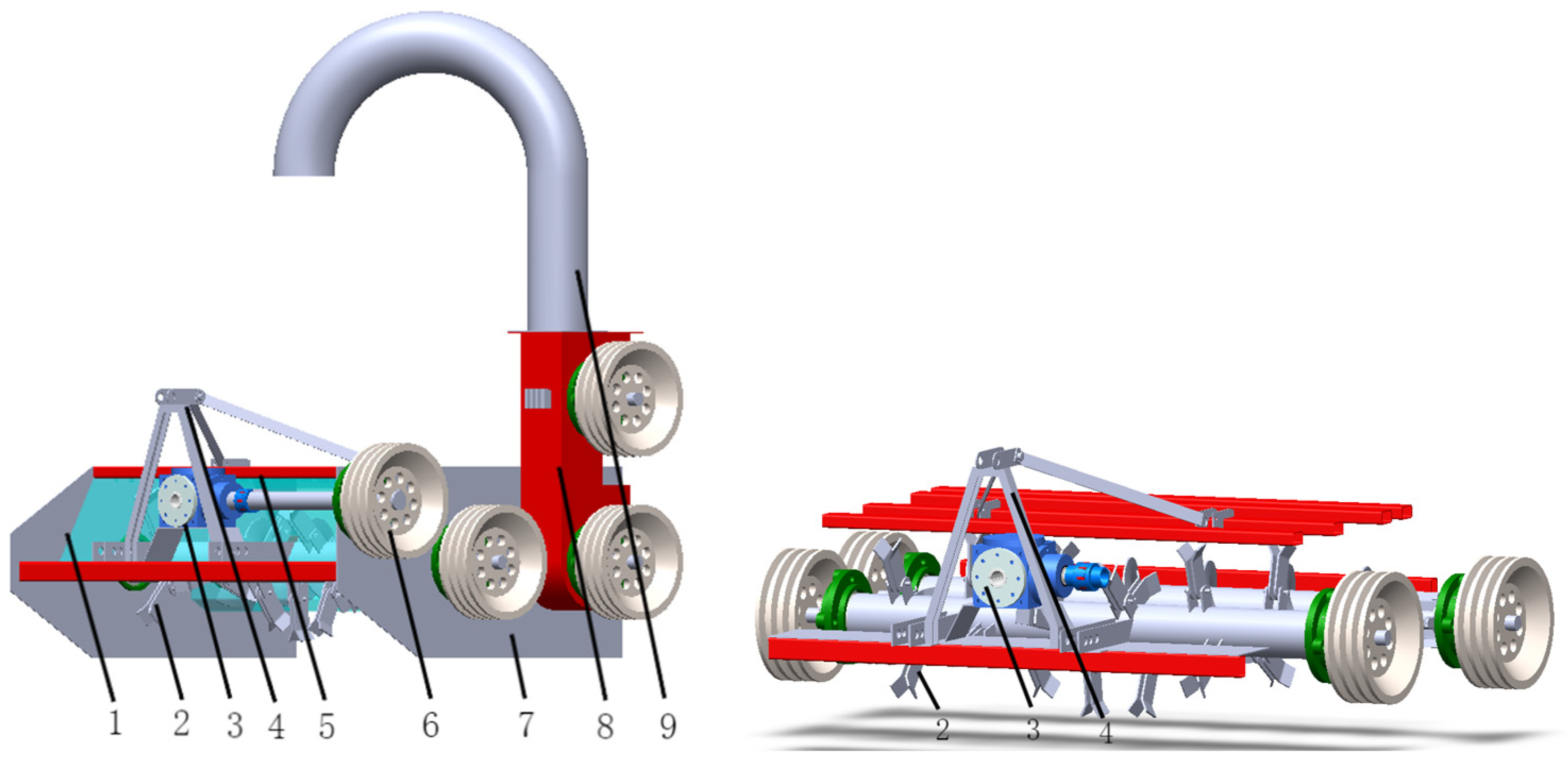
As shown in Figure 1, the machine mainly consists of a straw picking and crushing mechanism, an auger conveyor mechanism, and a fan crushing mechanism.
The straw collector is mounted on the rear of a tractor via a triangular suspension system and powered by the tractor’s rear output shaft. During operation, corn straw spread across the field is picked up by the pick-up unit, crushed, and conveyed to the rear conveyor auger. The conveyor auger rotates to transport the straw material horizontally to the left-side fan, where the straw material is blown by the fan’s airflow to the crushing fan for further crushing. The crushed straw is then discharged through the discharge chute [22]. Generally, agricultural three-wheeled vehicles or other loading vehicles collect the crushed corn straw at the discharge port.

2.2. Design of the Pick-Up and Crushing Mechanism

2.2.1. Tool Selection and Arrangement

A reasonable tool arrangement not only affects the collection and crushing efficiency of straw but also ensures more uniform force distribution across the blades, reduces power consumption, and maintains the dynamic balance of the entire collector. Depending on the working width and the type of material being collected, the main arrangement methods for the collector include single-spiral arrangement, double-spiral arrangement, and triple-spiral arrangement.
This study comprehensively considered straw collection, crushing, and the subsequent mixing ratio with soil [23] and decided to use a collector equipped with hammer claw-type collection blades and Y-type collection blades for experimental testing and adjustment.
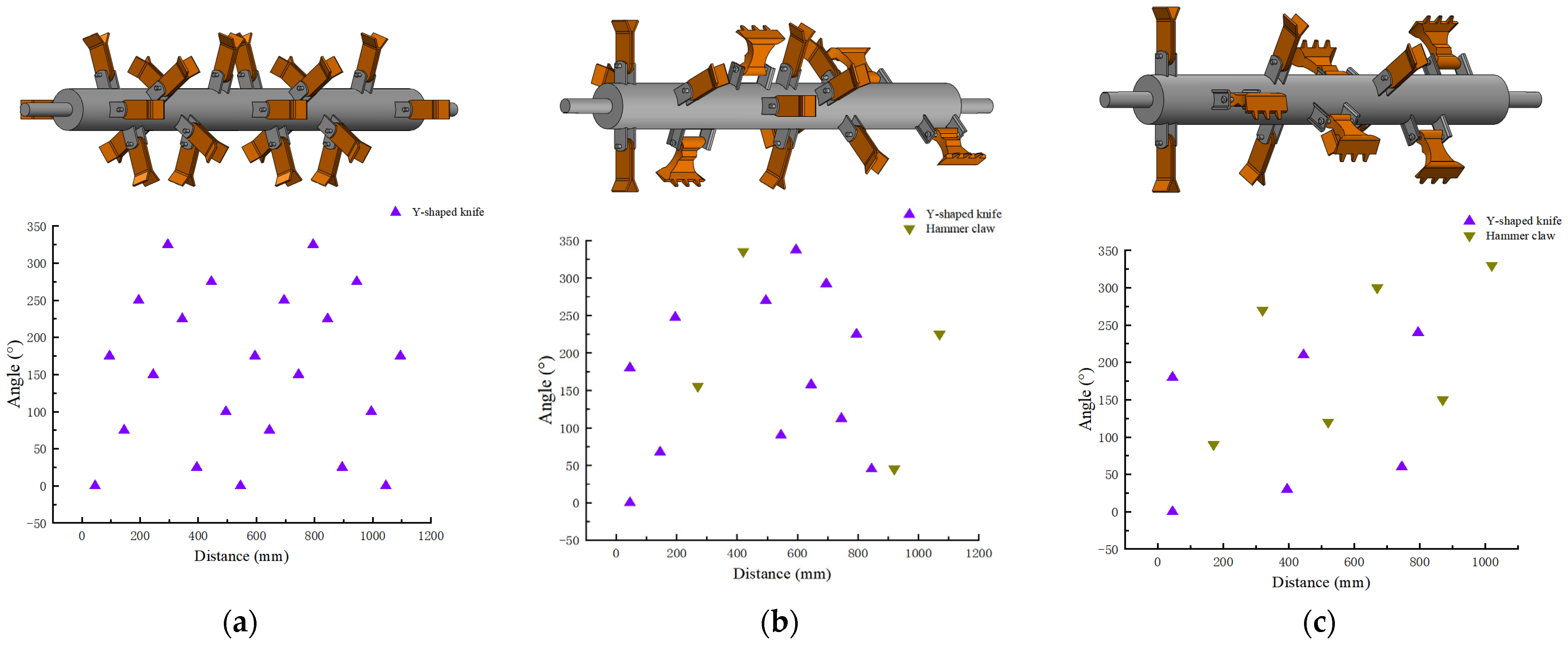
This study comprehensively considers the corn straw pick-up rate and straw cutting length qualification rate and adopts the following arrangement methods. (1) All cutting tools are Y-type pick-up knives, arranged in a double spiral configuration. (2) Cutting tools are hammer claw-type pick-up knives and Y-type pick-up knives alternately mixed, arranged in a double spiral configuration. (3) The tools are hammer claw-type pick-up blades and Y-type pick-up blades symmetrically mixed, arranged in a double spiral configuration. The structures of the pick-up units and the planar unfolded diagrams of the blades are shown in Figure 2, where both the hammer claw-type pick-up blades and Y-type pick-up blades comply with national standards [24], and the rotating diameter of the shredding blades is 205 mm.

2.2.2. Fan Crusher Mechanism Design

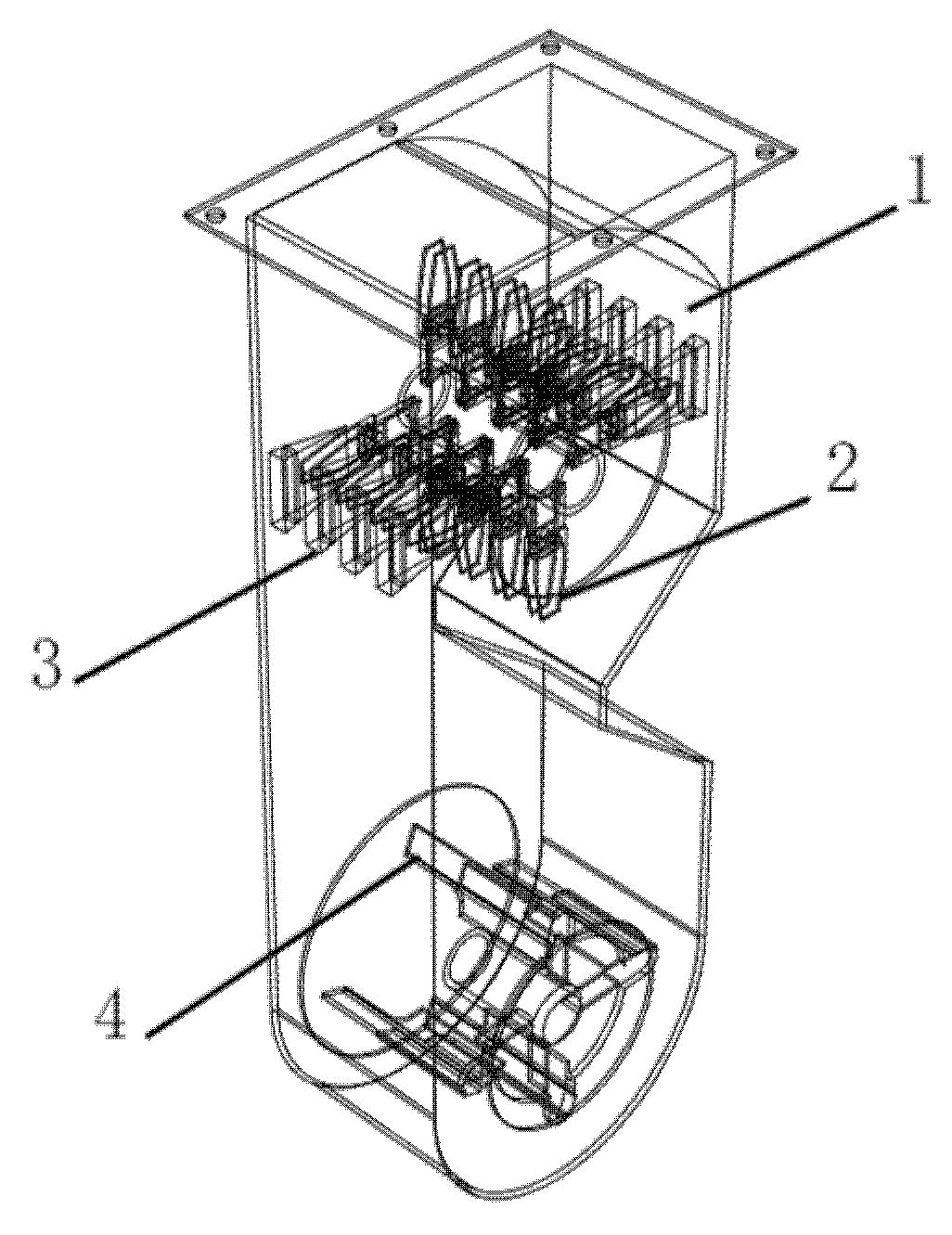
This study uses the fan crushing mechanism commonly found in corn straw collection machines, which mainly consists of a fan cover (with fixed blades attached to the upper inner wall), a wind fan, and a crushing fan [25], as shown in Figure 3.
Its primary function is to transport and shear straw that has been crushed once. The working principle is that a high-speed fan rotates at high speed, carrying the straw from the auger outlet into the fan’s rotating area. The straw is then blown upward by the fan’s airflow to the upper crushing blades, where it undergoes secondary crushing. The crushed straw is then blown through a duct to the compression molding mechanism.

2.3. Simulation Methods

2.3.1. Simulation Platform and Parameter Settings

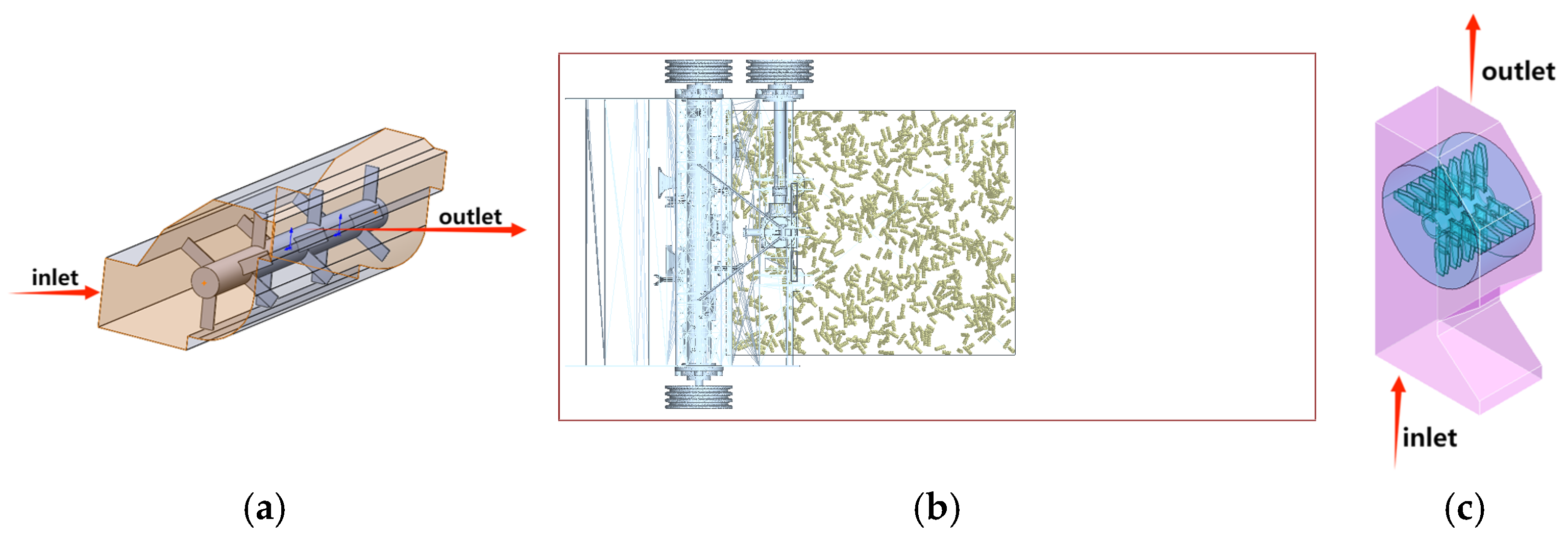
As shown in Figure 4a, based on the structure of the picking chamber, the picking and crushing mechanism was imported into ANSYS Design Modeler for air duct design.
The fluid medium is set to air, using the default parameters. The temperature is 20 °C, the density is 1.225 kg/m3, and the viscosity is 1.7984 × 10⁻⁵ kg/(m·s) [26]. The gas phase flow field inside the pick-up chamber is assumed to be incompressible. The MRF coordinate system is used to solve the rotation problem of the pick-up device [27]. The forward speed is set to 0, and the rotation speeds are set to 1900 r/min, 2100 r/min, and 2300 r/min, respectively. Both the inlet and outlet are set as pressure–inlet and pressure–outlet, respectively. The coupled scheme is selected as the solution method, with the relaxation factor set to the default value. The residual convergence accuracy is set to 0.001, and the calculated airflow rates at the inlet and outlet are both less than 1%.
The standard k − ε two-equation turbulence model was adopted to accurately capture the turbulent fluctuation characteristics of the airflow. A hybrid meshing strategy combining structured and unstructured grids was employed for mesh generation, with grid refinement implemented in key regions, such as the vicinity of the pick-up knives and the airflow inlet/outlet; the total number of grid elements was approximately 2.3 × 10⁶. The grid quality inspection results showed that the grid skewness was less than 5%, and the orthogonality exceeded 0.8, meeting the requirements of numerical calculation accuracy. Grid independence verification was performed, and the deviation of the calculated airflow velocity at the pick-up outlet was less than 2% when the grid number was increased by 10%, indicating that the current grid density was sufficient to ensure the reliability of the calculation results. The convergence criterion was set to a residual convergence accuracy of 10−3, and the mass flow balance error at the inlet and outlet was monitored simultaneously to ensure that the error was less than 1%.
Import the picking mechanism (picker and frame shell, etc.) into MBD and add constraints to the model, as shown in Table 1.
All component materials are set to steel; the direction of gravity is the negative direction of the Y-axis. Add rotational drives to the rotational joint between the rotating knife roll and the machine frame housing, with rotational speeds of 1900 r/min, 2100 r/min, and 2300 r/min. Add translational drives to the translational joint between the entire machine and the ground, with translational speeds of 0.6 m/s, 1.2 m/s, and 1.8 m/s.
Since two software programs need to be coupled, it is also necessary to establish a wall [28] for all components in the model that can come into contact with particles in MBD and output the established walls as a three-dimensional model that can be imported into DEM.
Use the static filling-exported particle bed as the particle factory and import the wall outputs by MBD into DEM-Geometry via “Import Geometry from MBD” (or import the “.stl” format model via “Import Geometry”), as shown in Figure 4b. No additional motion needs to be added to the model in DEM, but it is important to ensure that the material properties of the DEM model (equipment material) match those in MBD. When solving, the simulation time in both MBD and DEM must be consistent [29], and the step size should be an integer multiple of the step size in MBD.
As shown in Figure 4c, based on the fan cavity structure, the secondary crushing mechanism was imported into ANSYS Design Modeler for duct design.
Like the pick-up mechanism, the fluid medium also uses air. Viscous employs the realizable k-epsilon (2eqn) model with standard wall functions. The boundary conditions set the interface between the two regions as an interface surface. Unlike the pick-up mechanism, the inlet is set as a velocity inlet. According to Section 3.1, the calculated wind speeds are 8.44 m/s, 9.33 m/s, and 10.22 m/s, respectively. The outlet is set as a pressure outlet.
The movement of the fan and secondary crushing mechanism is relatively simple, as is that of the conveying churning mechanism, and only DEM is needed to realize the movement of the mechanism. Add motion to the wind fan and crushing fan and set the parameters of the corresponding parts to add motion.
The total time of simulation (total time) is 3 s. In order to ensure a more accurate view of the straw being conveyed and crushed at each moment, the target save interval is set to 0.01 s, and the cell size is set to 3 min.

2.3.2. Establishment of a Corn Straw Particle Model

Currently, self-propelled corn harvesters are widely used for corn harvesting in the Huanghuaihai region [30], with the length of harvested corn straws primarily ranging from 45 to 60 mm.
In the DEM preprocessing, bulk material particles (particles) are added, and the material properties and contact parameters of the particles (harvested corn straw) are set, as shown in Table 2 and Table 3 [31].
The coefficient of restitution is defined as the ratio of the relative value of the separation velocity of two objects after collision to that of their approach velocity before collision. The outer bark of straw has high toughness and strength, so small balls with a radius of 1 mm are used to fill the outer bark of the straw; the pith of the straw has lower toughness and strength, so small balls with a radius of 2 mm are used to fill the pith of the straw, forming a discrete model of the straw. Due to the complex shape of the straw, it is not possible to directly establish a particle model in DEM. Therefore, SolidWorks 2023 is first used to create the cross-sectional graphics of the straw, and macro-commands are used to extract the corresponding coordinate parameters. The coordinates are then imported into DEM, and the mate particle function is used to bind the filling particles of the corn straw outer layer and pith together. The discrete element model of corn straws employs spherical particle clusters and the Hertz–Mindlin model with the Bonding model. Particles are connected via bonding links to simulate the straw’s integrity. The core parameters of the bonding model are normal stiffness kn = 2.5 × 10⁷ N/m, shear stiffness ks = 9.2 × 10⁶ N/m, critical normal stress = 35 MPa, and critical shear stress = 18 MPa [32].
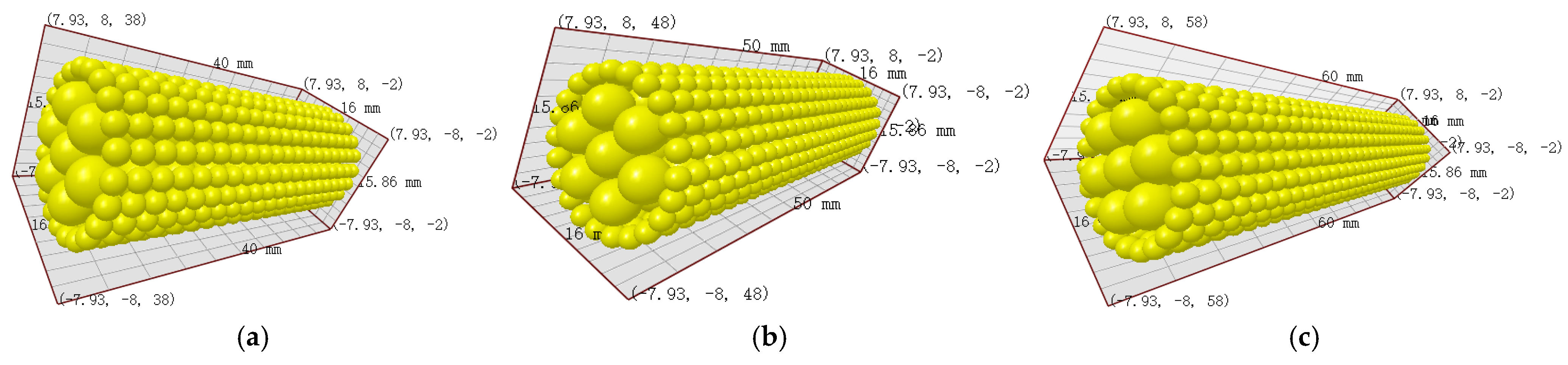
To simplify the simulation model, straw lengths were set to three segments, 36 mm, 46 mm, and 56 mm [33,34], accounting for 20%, 35%, and 45% of the total straw production, respectively. The individual particles were bonded together via adhesive bonds to form a unified structure, as shown in Figure 5.

2.3.3. Establishment of the Straw Particle Bed Model

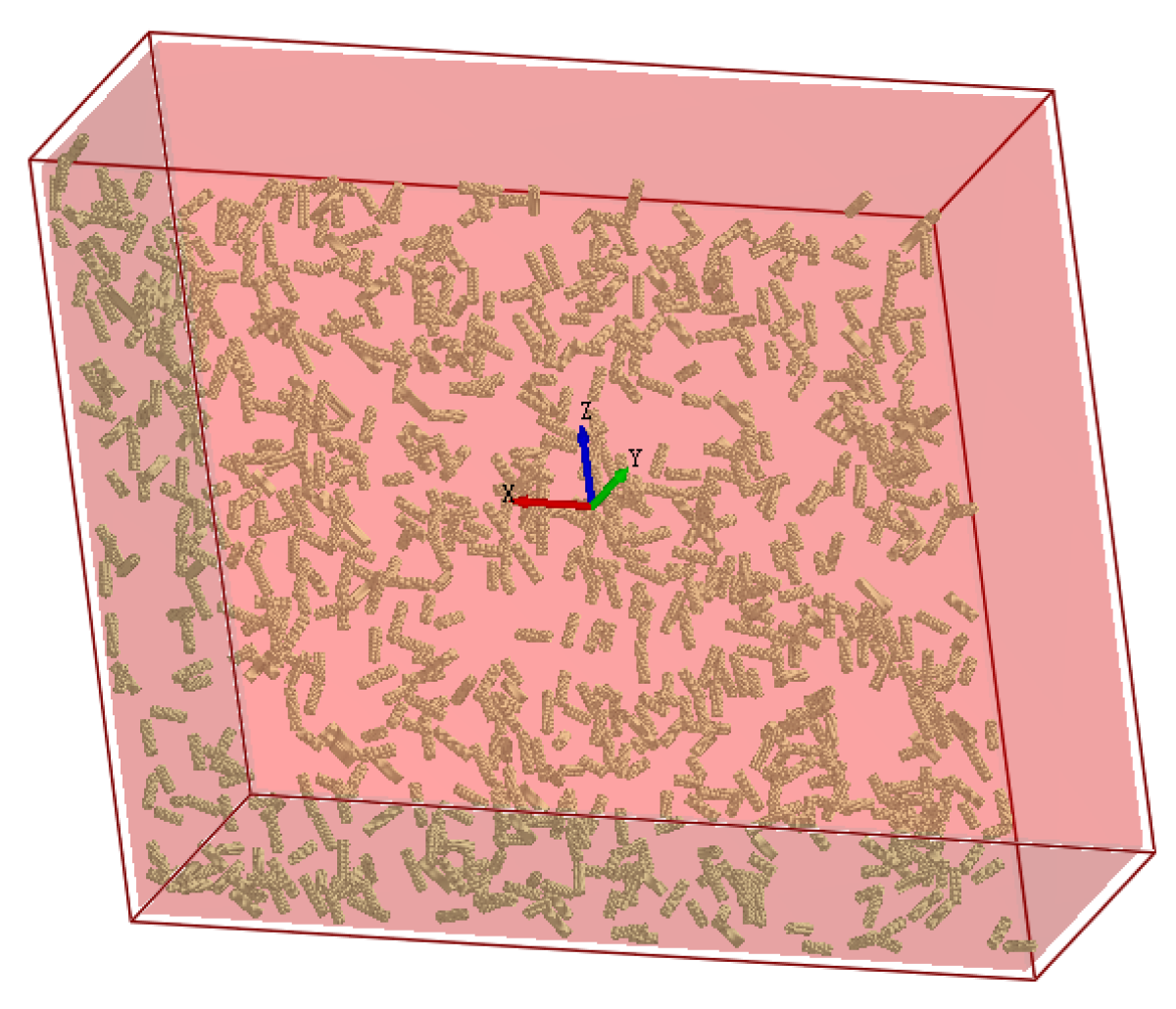
After adding particles (straw) and setting the particle material in DEM preprocessing, square geometries with lengths of 0.6 m, 1.2 m, and 1.8 m were first established based on different travel speeds and pick-up mechanism positions to hold the straw particle model.
The particle factory is set to static generation mode with the total mass option, and the aforementioned mate particle straw particle models are used to fill them. After filling, the straw represents the straw spread on the field surface after harvesting, as shown in Figure 6. After completing the static filling of particles, particle information is exported via DEM post-processing.

2.4. Field Trials

In order to verify the accuracy of the various simulation results of the picker, detect the straw pick-up rate and straw shear length qualification rate, and further enhance the rate of straw return to the field, on the basis of the 4JQH-120 collector. Three kinds of pickers applicable to this type of collector were mounted separately to carry out field tests.

2.4.1. Test Conditions

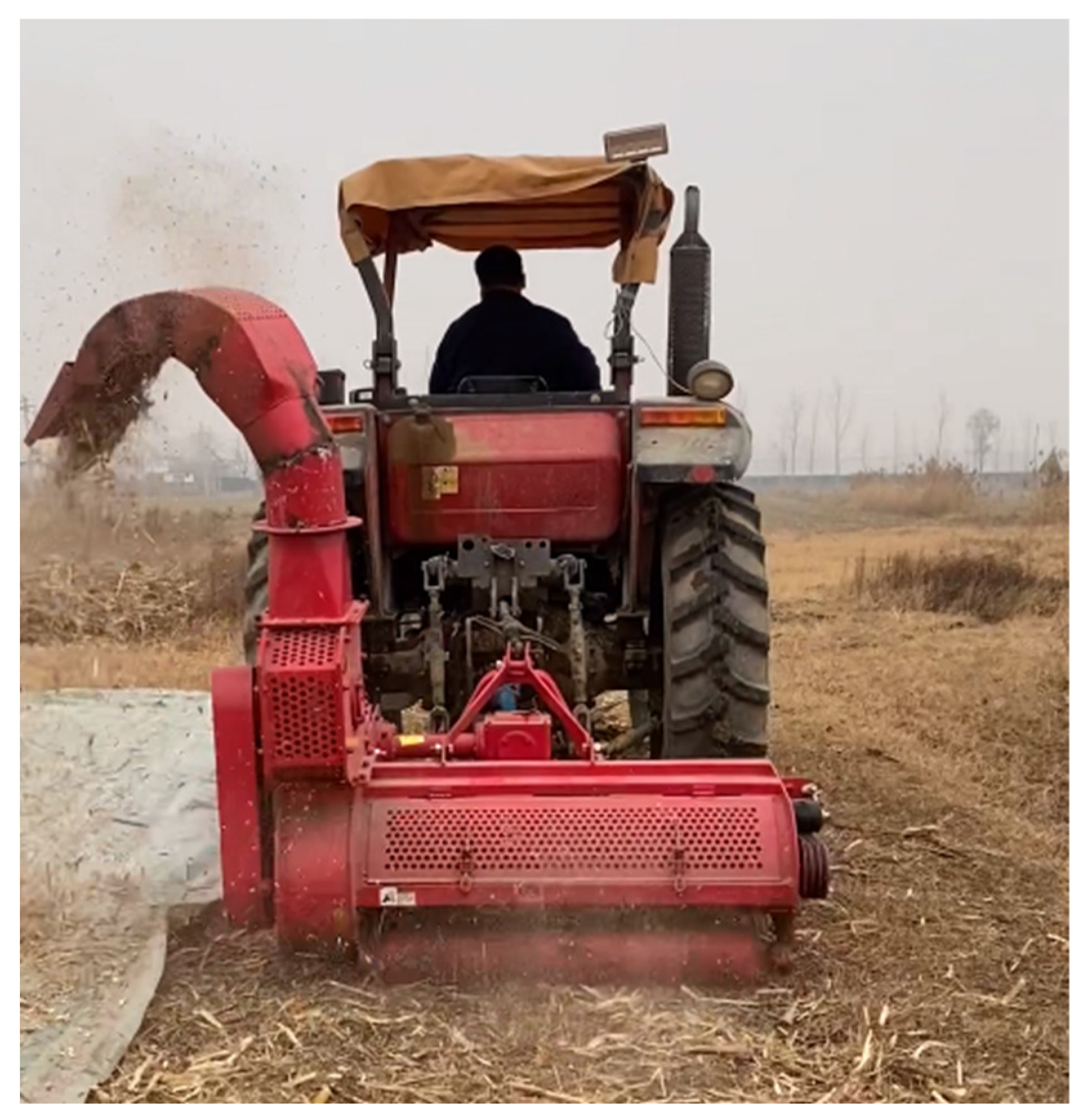
To verify the straw pick-up and crushing of three kinds of pickers under different traveling speeds and picker rotational speeds, the straw pick-up rate and straw shear length were taken as the main test indices [34]. The test site was selected as the test field of Henan Molster Agricultural Equipment Co., Ltd. in Jun County, Hebi City, Henan Province, which was planted according to equal row spacing of 60 cm and equal plant spacing of 25 cm. Before the test, the experimental field was divided into 3 large blocks and 9 small blocks, with the area of each small block being 1.2 m × 60 m, and a canvas was laid on one side of the collector, as shown in Figure 7, which was used to collect the straw picked up by the collector.

2.4.2. Test Methods

The test was carried out in accordance with the “Protected Tillage Machinery Straw Crushing and Collecting Machine” and the “General Provisions on Measurement Methods for Testing Conditions of Agricultural Machinery”. The tractor was started, and the three kinds of pickers were equipped in order to carry out the straw picking and crushing test in accordance with the respective horizontal traveling speeds and speeds of the pickers, in order to make three tests for each group. The canvas for collecting straw advances with the collector, and the collector randomly selects three 1.2 m × 5 m data collection zones for measurement every 60 m of advancement, and every advancement of a data collection zone for a data collection weighs all the mass of straw falling on the canvas with a balance and measures the length of straw shear with a straightedge (length of the crushed straw ≤ 3 cm is qualified).

2.4.3. Collection and Processing of Experimental Data

The operation test indices of the straw collector are the straw picking rate and the straw shearing length pass rate.
The straw pick-up rate of each test area was calculated according to Equation (1) [35].
Y 1 = m M · 100 %
In the formula, we have the following:
Y1 is the straw collection rate (%) in the straw trial area;
m is the mass of straw on a single test area canvas (g);
M is the total mass of straw in the test area (g).
Calculate the qualification rate of the straw cutting length.
Calculate the qualified rate of the straw shear length in each test area according to Equations (2) and (3).
Y 2 i = m i M i · 100 %
Y 2 = i = 0 n Y 2 i 10
In the formula, we have the following:
Y2i is the qualification rate (%) of straw chopping length at point i;
mi is the total mass (kg) of the i-th cut of qualified straw segments;
Mi is the total mass of straw at point i (kg);
Y2 is the qualification rate of straw chopping length in the test area (%).

3. Results

3.1. Simulation Results of the Pick-Up Mechanism

The straw pick-up and shredding mechanism is the foundation of the entire machine, and its design directly determines the recovery rate of corn straw [36]. This component consists of a cutting roller and picking blades. Its operating principle involves the cutting roller rotating at high speed to drive the picking blades to collect corn straw that is either standing upright or lying flat in the field. During high-speed rotation, the picking blades interact with the stationary blades on the inner wall of the chamber to shear the corn straw. Once the straw reaches a certain length, the crushed straw is propelled by air pressure and inertia into the conveying auger mechanism.
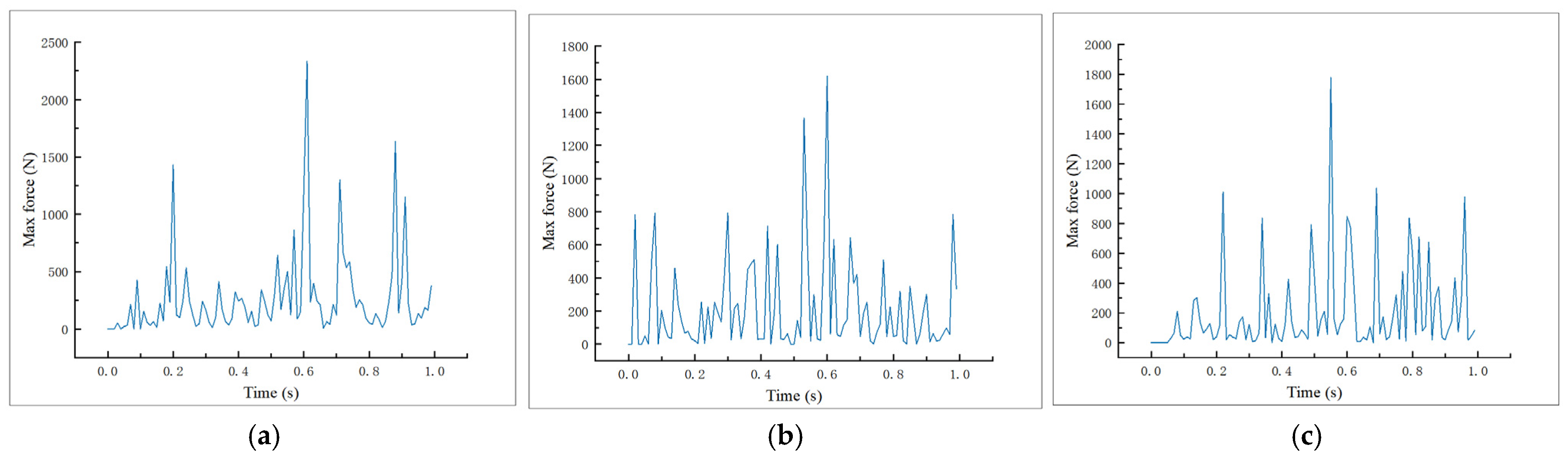
The material used for the picker roller is 45 steel, with a yield strength of 355 MPa [37]. The force-bearing area of the knife roller is 6.8 m2. After post-processing with DEM, the force conditions of the picker knife rollers during each group’s picking process were examined, as shown in Figure 8. The picker equipped with Y-shaped picking knives arranged in a double spiral configuration operates at a speed of 2300 rpm, and when traveling at a speed of 0.6 m/s, it experiences a maximum force of 2366.1 N. The maximum limit is 348 MPa, which is below its stress limit. The maximum forces experienced by the other two types of picker knife rolls are also below this value, thus meeting the usage requirements.

3.2. Simulation and Analysis of the Gas Flow Field in the Pick-Up Chamber

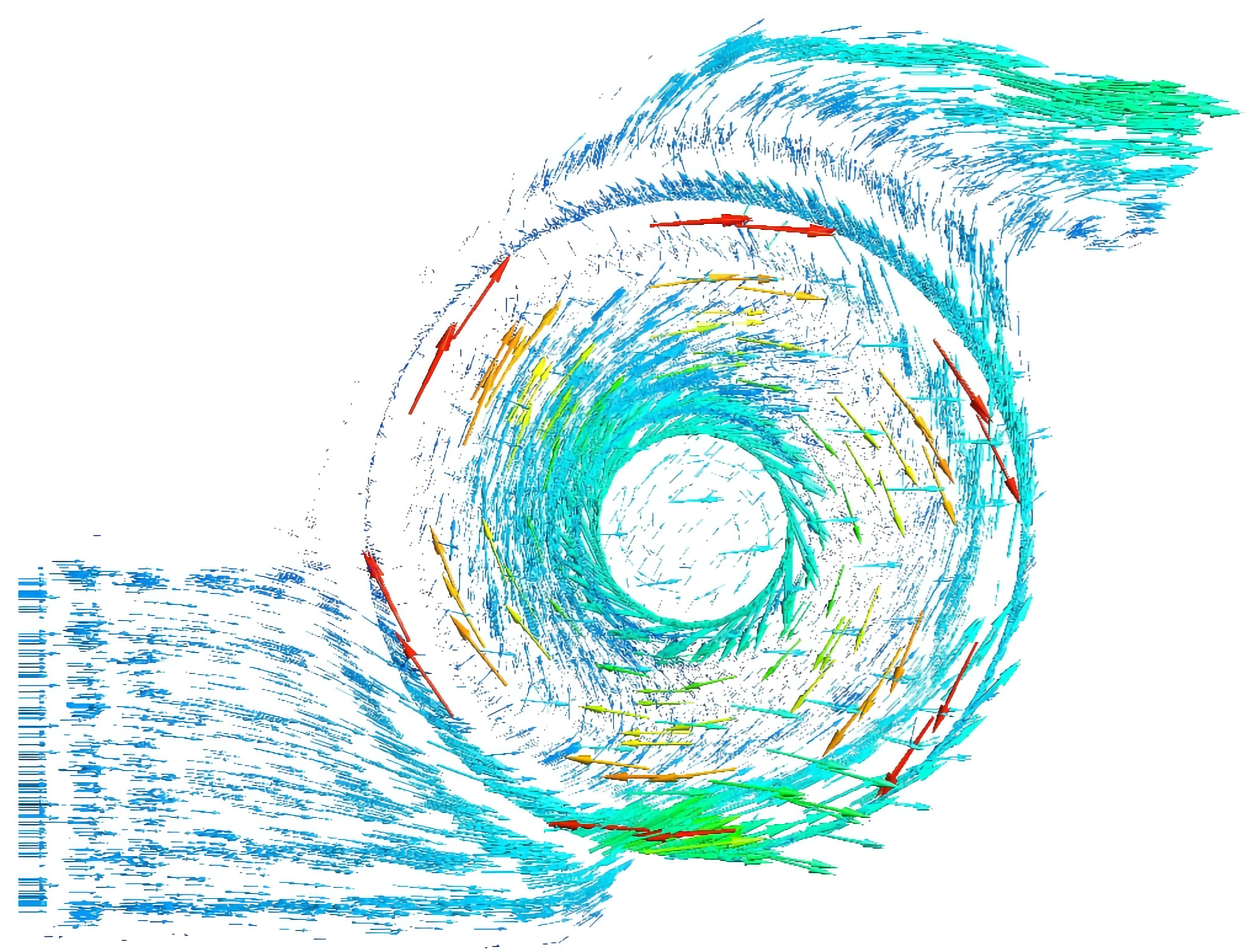
The velocity vector diagram of the pick-up chamber (Y-2100 r/min) is shown in Figure 9. Other operating conditions are similar. As shown in the figure, the air flows smoothly in the front lower part of the machine, enabling the straw in front of the machine to be stably sucked into the pick-up unit. When the air enters the pick-up unit, it is subjected to the high-speed rotation of the knife roll, causing it to rotate around the pick-up unit and form a high-speed airflow as it passes over the end of the pick-up blades. At this point, the straw is picked up by the pick-up knife inside the chamber and, under the combined action of other pick-up knives and fixed knives, undergoes fragmentation. When the air enters the upper part of the chamber, the airflow direction becomes horizontal and rearward and is influenced by the high-speed rotation of the pick-up unit. The exhaust air velocity is significantly greater than the intake air velocity. At this point, the picked-up and crushed straw is blown to the rear conveying auger by the high-speed airflow.
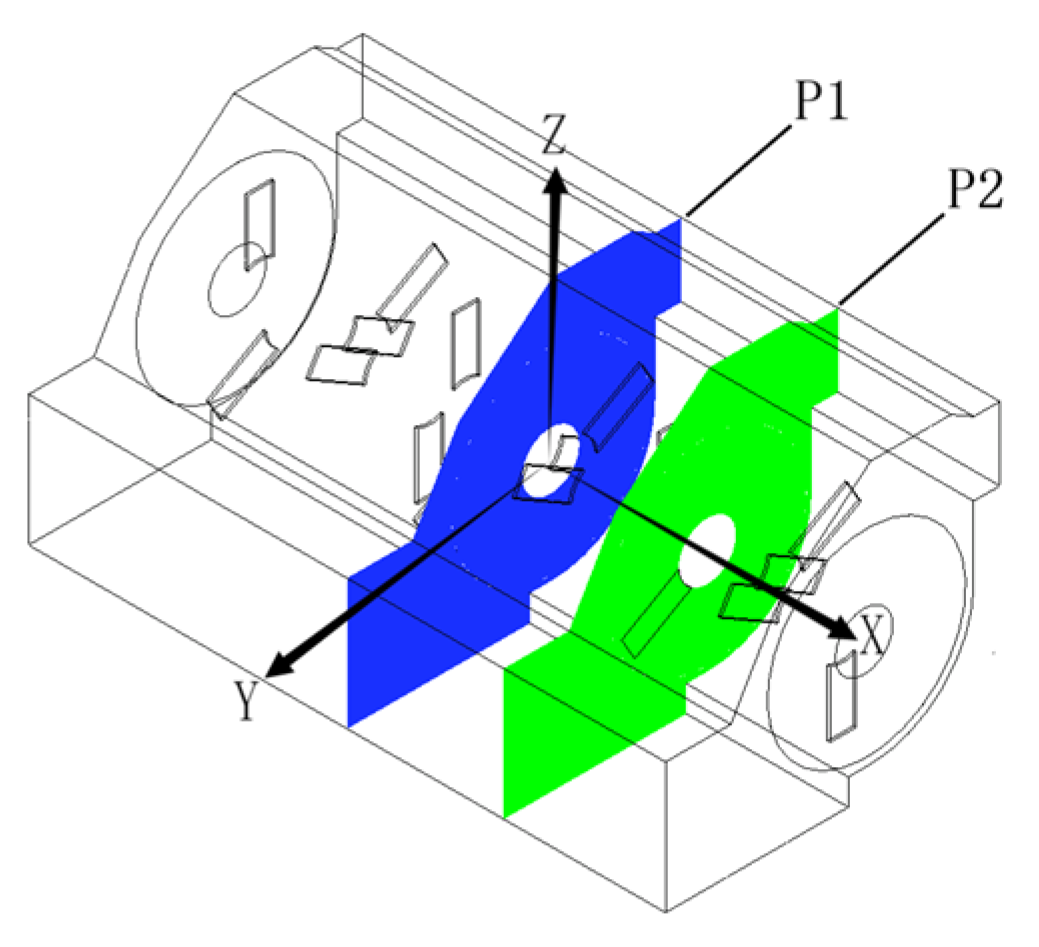
To fully capture the flow field details in different regions of the pick-up chamber, two observation cross-sections (P1 and P2) were arranged at 0 mm and 300 mm on the YZ plane, respectively, to monitor the velocity and pressure distribution characteristics at different positions. The specific locations of the observation cross-sections are shown in Figure 10.
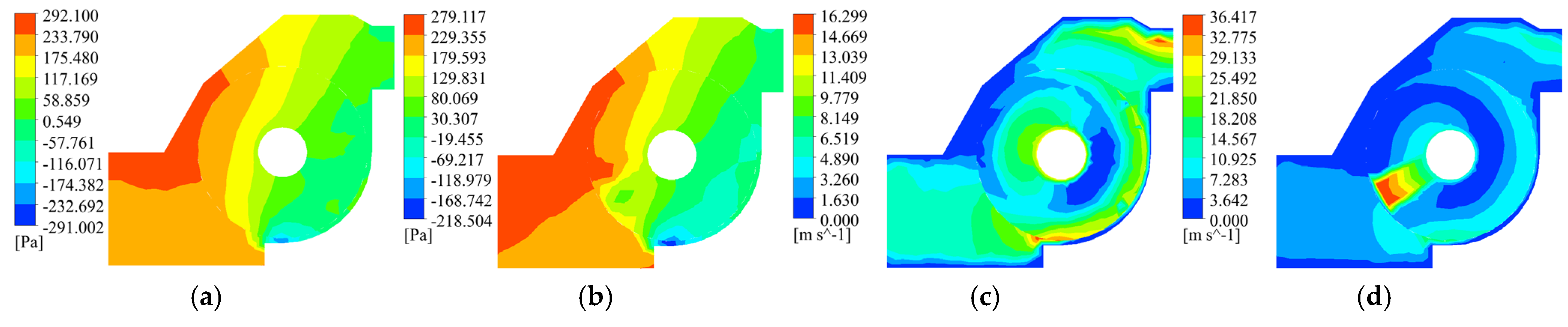
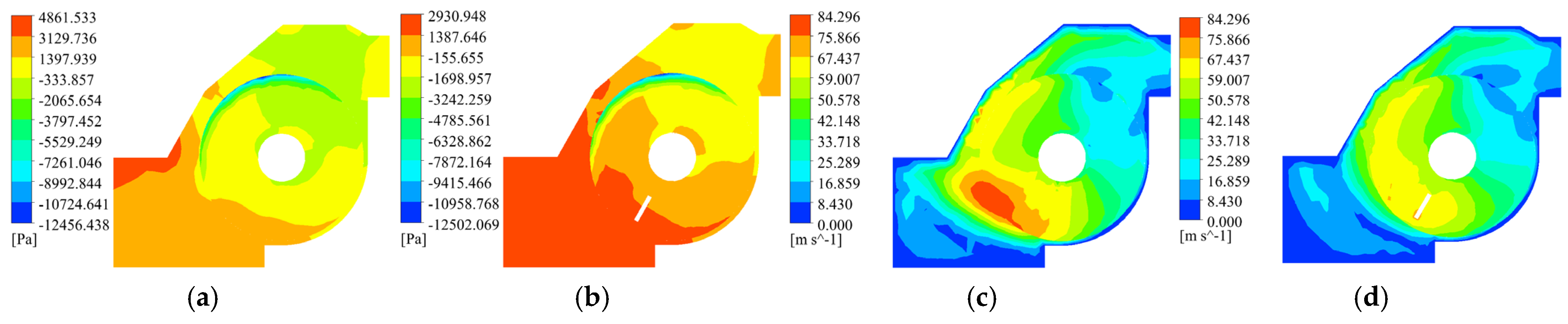
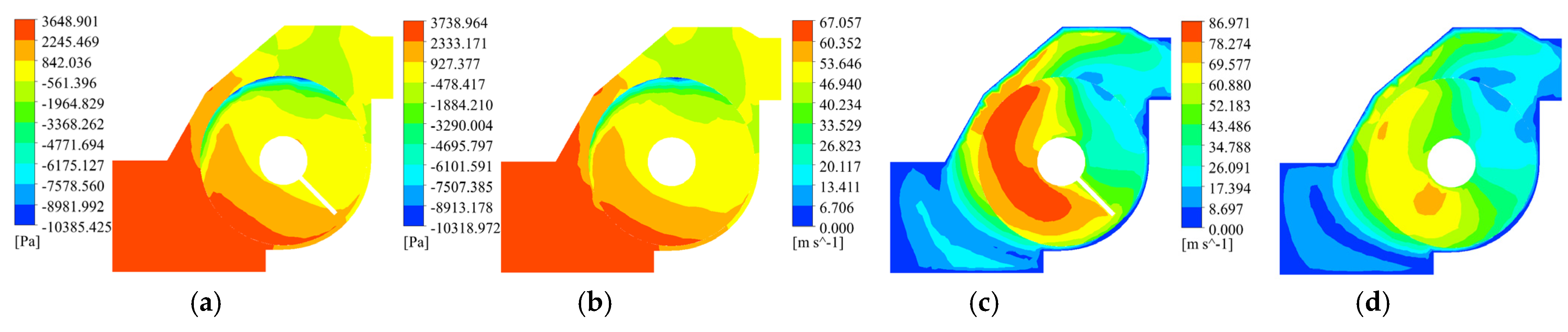
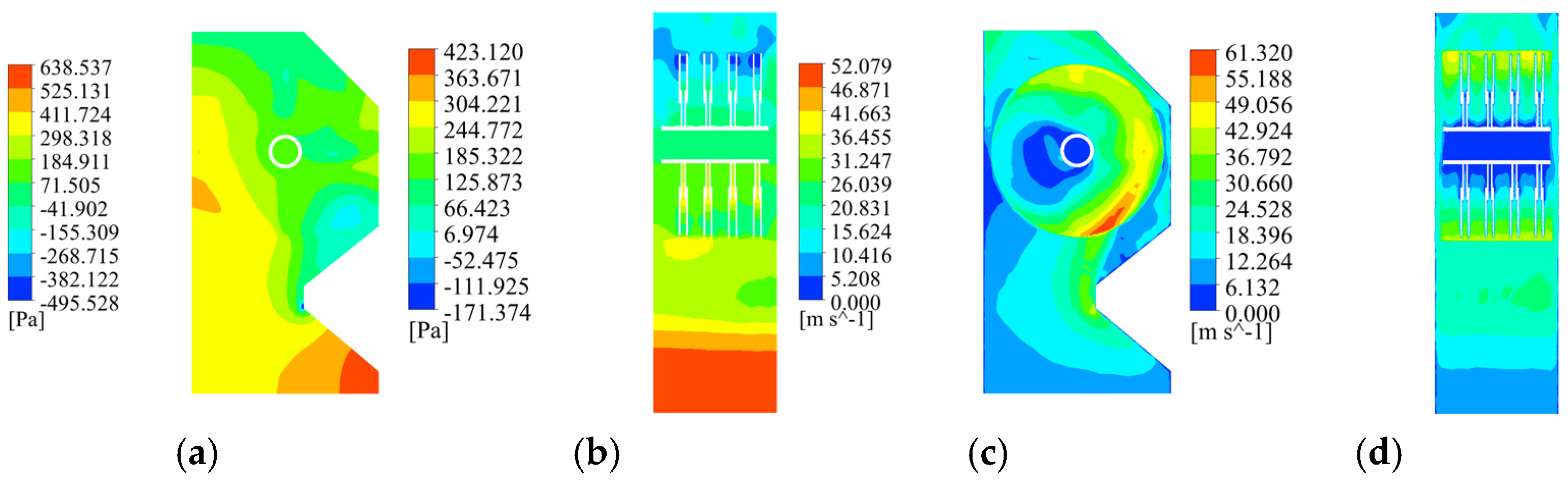
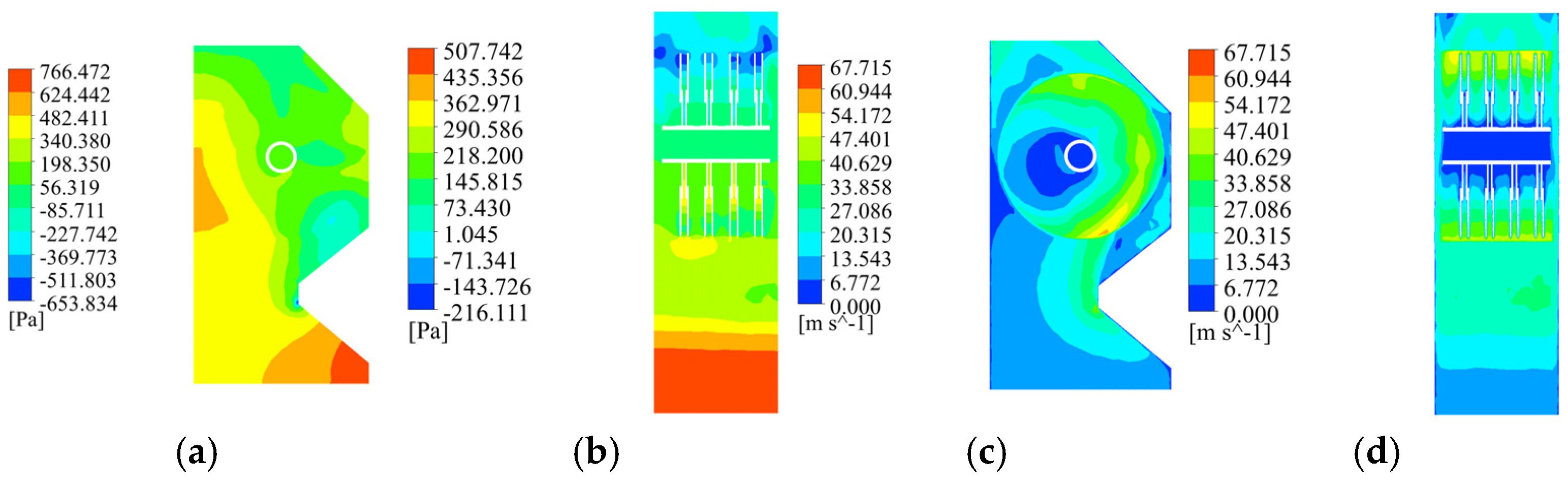
Pressure nephograms and velocity nephograms were also added to the two observation cross-sections to intuitively present the spatial distribution laws of flow field parameters, with the relevant diagrams shown in Figure 11, Figure 12 and Figure 13.
By examining the pressure and velocity contour plots of the Y-type knife pick-up mechanism in the double-helix installation shown in Figure 11, it can be observed that both the pressure and velocity contour plots at points P1 and P2 exhibit distinct layering and similar appearances. The region of maximum force is located above the junction between the air inlet and the pick-up mechanism, while the region of maximum velocity is near the outlet. This configuration facilitates the transportation of the picked-up straw. The pressure and velocity contour maps at P2 show an additional red region at the junction compared to P1, which is due to a set of pick-up blades located at the 300 mm position on the YZ plane. In the area where the pick-up blades pass, there are significant changes in pressure and velocity, making it easier for straw in the presence of the pick-up blades to be sucked into the pick-up mechanism [38].
By comparing Figure 12 and Figure 13, which show the pressure and velocity distributions of the pick-up mechanism equipped with hammer claw pick-ups, it can be observed that the areas of maximum force are located at the inlet and below the pick-up knife roll. The areas with the highest velocity are at the junction of the air inlet and the pick-up knife roller and near the exhaust outlet, with the highest velocity at the junction of the air inlet and the pick-up knife roller. This is because the hammer claw tools have a larger air resistance area than Y-type knives during rotation [39,40]. At the same time, a negative pressure is formed inside the pick-up chamber, which aids in the suction of straw from the ground.

3.3. Simulation Test Results and Optimization

(1)
Material Movement Trajectory in the Pick-Up and Crushing Chamber
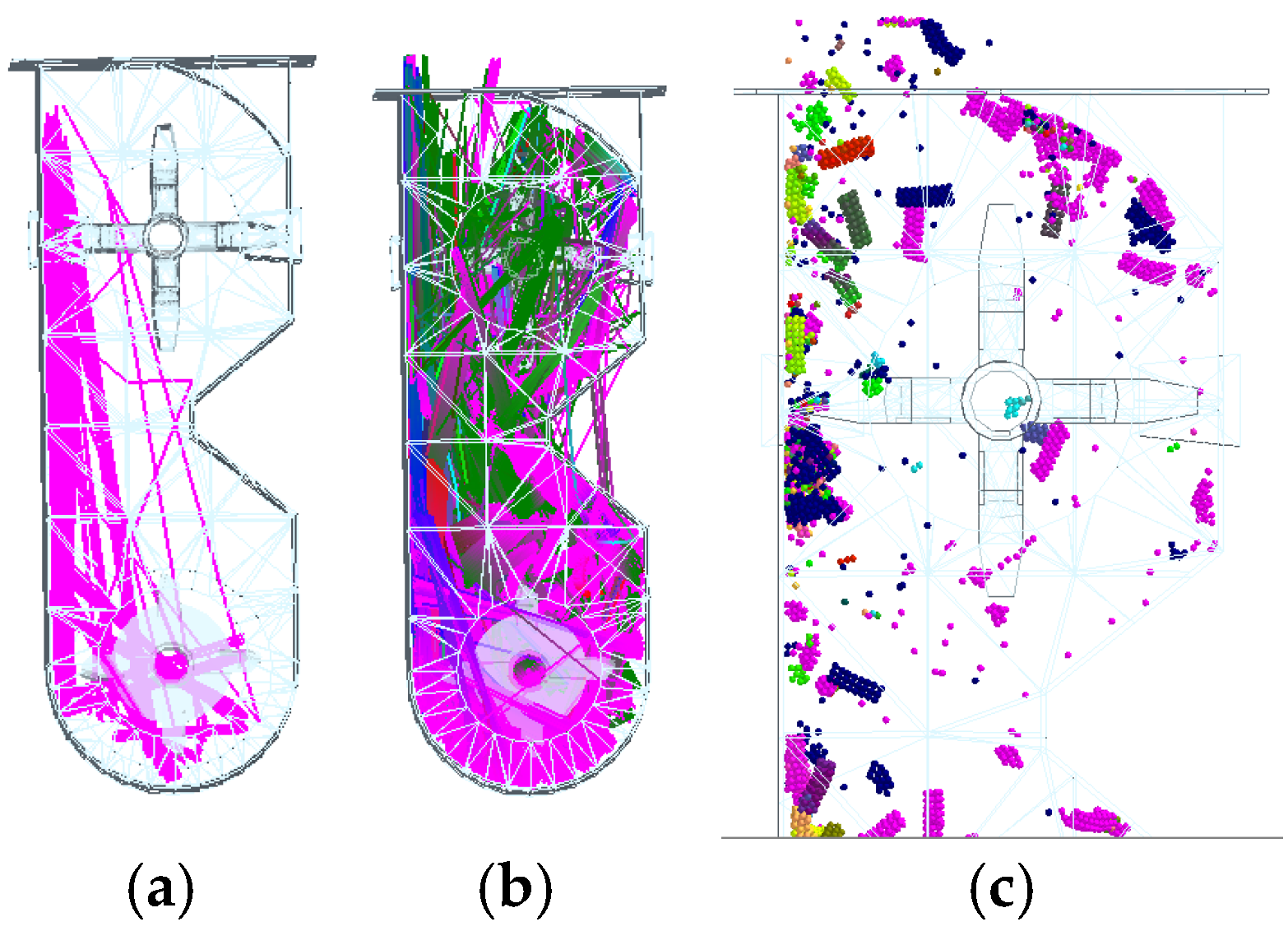
In the DEM post-processing interface, set up tracking of particle movement trajectories, as shown in Figure 14. At time 1 and times 2 to 4, manually select a small segment of straw particles and then view their movement trajectories. From time 1 to time 2, it can be observed that the small segment of straw is not crushed thoroughly, and only a few fragments are thrown to the rear conveying auger after crushing. Most are thrown into the intermediate area between the pick-up device and the conveying auger, as this segment of straw collides with the pick-up blades too infrequently during the pick-up process and does not pass through the fixed blade section of the pick-up chamber, resulting in insufficient tearing. However, due to the high-speed rotation of the pick-up device, it may be sucked into the working ring area of the pick-up device for re-pick-up and crushing; from time 3 to time 4, it can be seen that this section of straw is successfully thrown to the rear auger after being picked up, with excellent crushing results. Observing the trajectory, this is because this section of straw comes into contact with the pick-up blades multiple times after being picked up and undergoes intense tearing by the fixed blades on the inner wall of the pick-up chamber [41].
(2)
Pick-Up Rate
A grid bin group is established between the pick-up and the conveyor auger to calculate the mass of straw thrown from the pick-up into the rear conveyor auger. The ratio of the mass of particles in this section to the total mass of particles is the straw pick-up rate, as shown in Table 4.
Based on simulation data, it can be observed that the pick-up rate does not exhibit a positive or negative correlation with the aforementioned factors but is significantly influenced by them. Among these, the pick-up rate is most affected by the configuration of the pick-up unit, which features a symmetrical mixed arrangement of hammer claw-type pick-up blades and Y-shaped pick-up blades in a double-spiral layout. At a travel speed of 1.2 m/s and a pick-up speed of 2100 r/min, the pick-up rate reaches its highest value of 81.34%. After multiple simulation tests, the pick-up rate remained relatively low. This is due to the limitations of coupled simulation, where straw is only picked up when it comes into contact with the pick-up knife. In real-world conditions, a negative pressure is formed inside the pick-up chamber, causing some straw that does not come into contact with the pick-up knife to be sucked into the pick-up unit due to air pressure.

3.4. Analysis of the Flow Field Characteristics of the Fan Conveying Mechanism

Under the high-speed rotation of the wind turbine, straw is drawn from the outlet of the auger, crushed, and blown upward to the crushing fan. The crushing fan rotates at a higher speed and interacts with the fixed blades on the inner wall of the fan housing, enabling the straw to be thoroughly crushed and ejected from the fan. Therefore, the movement trajectory of the straw within the fan housing is extremely complex [42].
The relationship between the airflow rate Q output by the wind turbine and the turbine speed [43] is as follows:
Q = λ · V 60 · n · π · R 2 · B
In the formula, we have the following:
Q is the fan output air volume (m3/s);
λ · V is the volume efficiency, which is 0.7~0.8;
n is the fan rotational speed (r/min);
R is the blade length radius (m);
B is the blade width (m).
The relationship between fan output air volume and wind speed is as follows:
Q = 3600 · A · v
In the formula, we have the following:
A is the fan outlet cross-sectional area (m2);
v is the wind speed (m/s).
The relationship between wind force and wind speed is as follows:
W P = 0.5 · ρ a · v 2
F w i n d = W P · A
G = m · g = ρ · V · g = ρ · π · r 2 · l g
In the formula, we have the following:
WP is the output air pressure (kN/m2);
ρ a is the air density, which is 1.225 kg/m3;
G is the material gravity (N);
m is the material weight (kg);
g is the gravitational acceleration, which is 9.81 m/s2.
Based on the relevant parameters of the wind turbine in the 4JQ-H series straw collector, with a straw length of 40 mm and a rotational speed of 1900 r/min, the theoretical mass m of the wind turbine is calculated to be 6.4 kg, while the actual mass m is 6.15 kg. Therefore, the wind turbine is capable of lifting the straw.

3.5. Simulation and Analysis of the Gas Flow Field Inside the Fan Conveying Mechanism Cavity

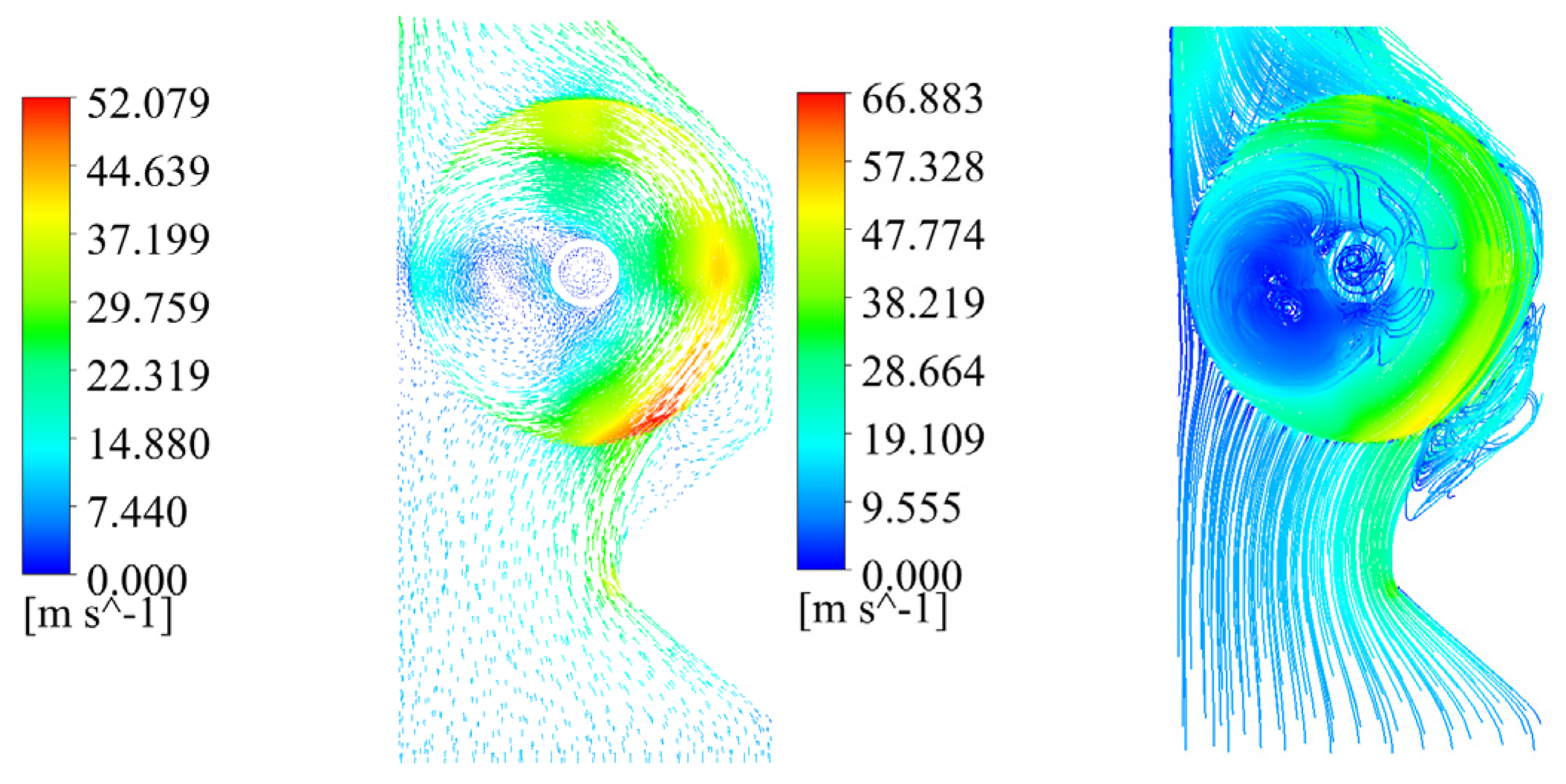
After completing the calculations and outputting the results, post-processing analysis was performed using CFD-post. The airflow trajectory within the fan cavity is particularly complex. The airstream diagram (2100 r/min) is shown in Figure 15, with similar patterns observed under other operating conditions. As shown in Figure 15, by the time the air reaches the shredding fan, it is rotating at a high speed under the influence of the fan, with some air leaving the fan cavity. At this point, the majority of the straw has been shredded and is carried out of the fan cavity with the air [44].
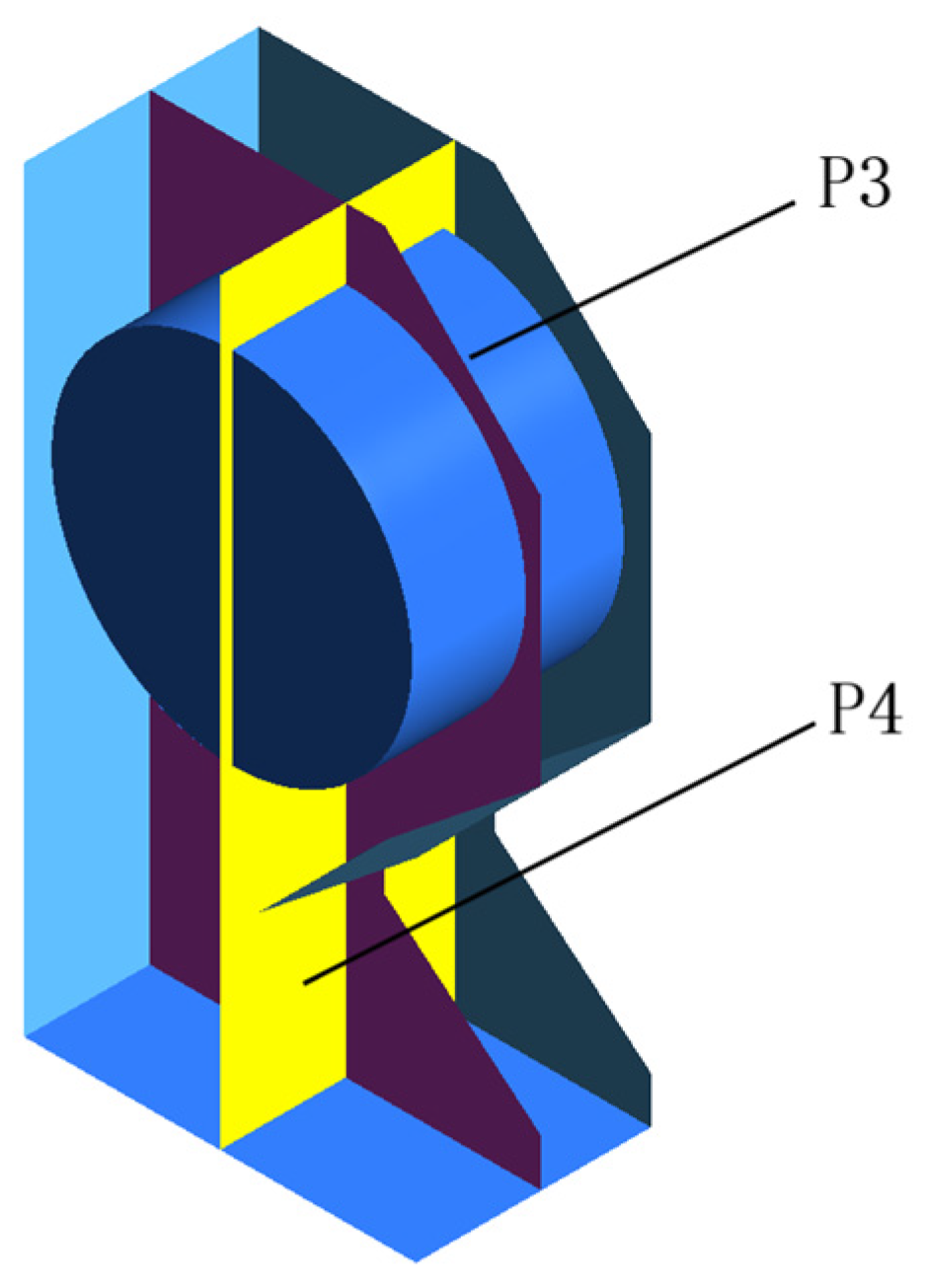
To observe the smooth characteristics of the cavity at more locations, P3 and P4 were established at 0 mm in the YZ plane and XY plane, respectively, as shown in Figure 16.
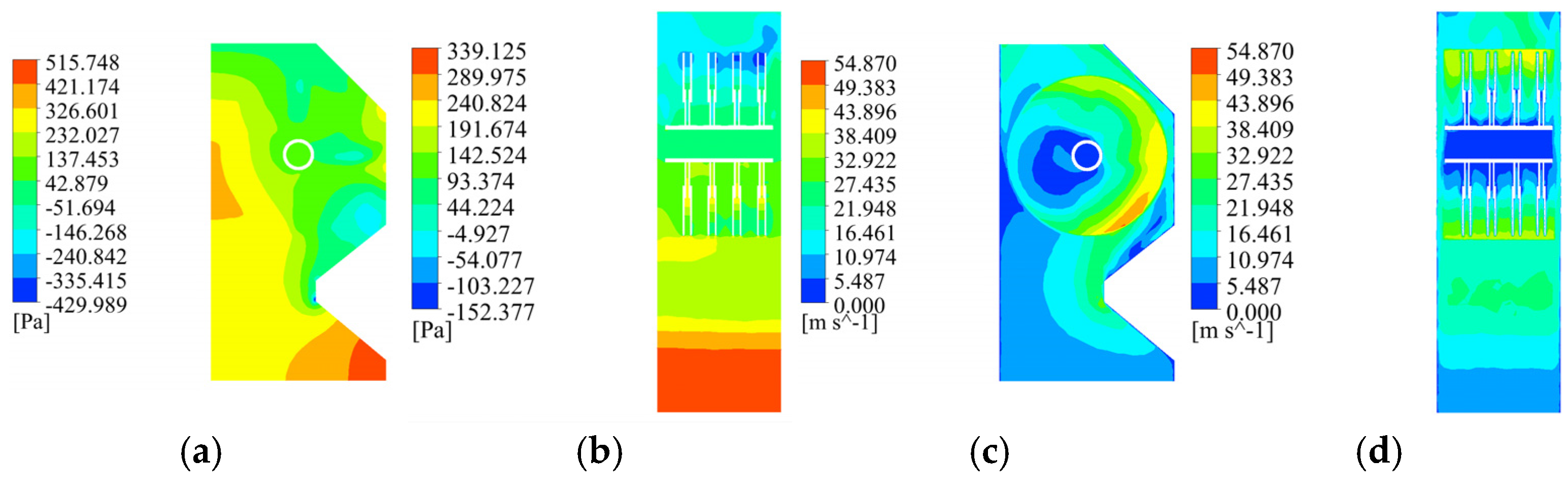
Add pressure cloud maps and velocity cloud maps at positions P3 and P4, respectively, as shown in Figure 17, Figure 18 and Figure 19.
By comparing Figure 17, Figure 18 and Figure 19, it can be learned that the pressure and speed maps under different rotational speeds are obviously stratified and close in appearance, and the maximum pressure and speed areas are both in the crushing fan and the inner wall of the left cavity because this position is narrow and subject to the action of the wind fan. In practice, this position is equipped with a fixed crushing knife, which helps in the crushing and transportation of the straw.

3.6. Straw Movement, Crushing Situation, Fan Force Analysis

The straw conveyed by the churn is crushed once by the picker, and it is seriously torn after entering the fan; at the same time, it is subjected to the air pressure brought by the high-speed rotation of the fan, so the straw movement is very complicated. Post-processing of DEM shows the movement trajectory of a single straw and the state of the crushed straw, as illustrated in Figure 20.
Multiple trajectory curves are generated. The first corresponds to the straw’s initial entry into the fan, followed by tearing when the larger fragments return to the fan for secondary crushing until the desired crushing effect is achieved. The second corresponds to the crushing stage, during which small straw fragments are produced. Each small section of the straw material trajectory is shown in the figure.
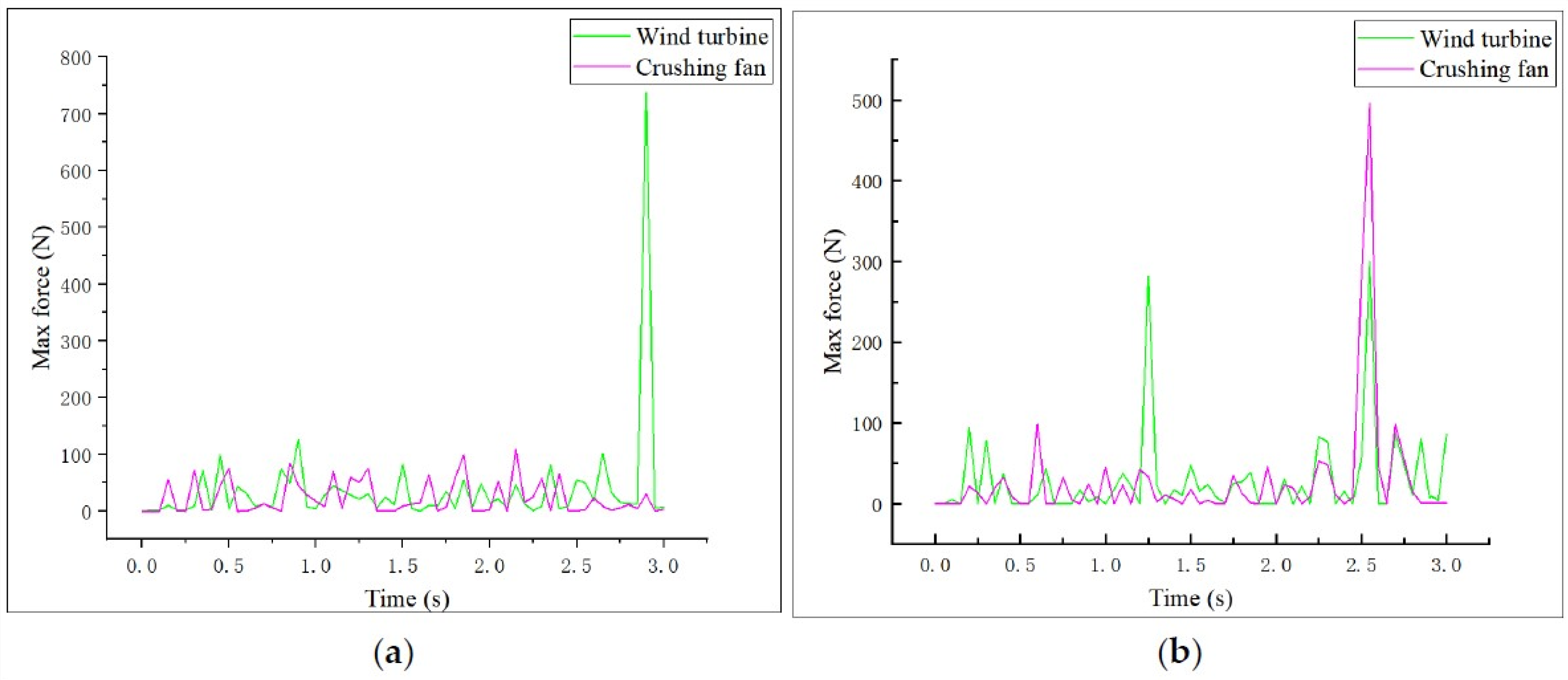
The fan is constructed from 45 steel, with a force-bearing area of 2.5 m2. By observing and comparing the simulation results across different groups, it was found that the maximum external forces acting on the two fans during the conveying process occurred at various points in time, as shown in Figure 21. Among these, the highest force of 737.5 N was recorded when the feed rate was 14.1 kg and the rotational speed was 2100 r/min (Figure 21a), with a maximum stress of 295 MPa. At a feed rate of 4.7 kg and a rotational speed of 2300 r/min (Figure 21b), the crushing fan experiences the highest force of 495.8 N, with a maximum stress of 198.3 MPa. Both values are below their stress limits, thus meeting operational requirements.

3.7. Collection Efficiency of the Fan-Based Crushing Mechanism

A grid bin group is established at the exit position of the fan, which is used to count the mass of straw fed by the conveyor stirrer after crushing by the fan in 1~2 s, and the collection efficiency of the fan can be compared according to the comparison between the mass of the collected materials and the feeding amount at each rotational speed of the fan.
According to the simulation, it can be seen in Table 5 that the picker carrying a symmetrical mixed double helix arrangement equipped with hammer claw picker knives and Y-type picker knives has the highest collection efficiency of 92.98% at a fan 1 speed of 2300 r/min, a fan 2 speed of 4600 r/min, and a feed volume of 9.4 kg.

3.8. Field Trial Results

At the end of the test in each small plot, the data of each collection area were collected immediately, and three collection areas of 1.2 m × 5 m were randomly selected in each 60 m traveled by the collection machine. All the straws in the collection area were collected into sacks by canvas for weighing one by one, and the mass of the straws collected in each collection area was m = m1 + m2 + m3 + … + mn, where mn was the mass of the straw in the nth sack in the collection area. One sack was randomly selected in each collection area to measure the straw shear length after picking up and crushing. The straw picking and crushing situation is shown in Table 6. The mass of straw in the nth sack in the collection area was measured by randomly selecting one sack in each collection area to measure the shear length of straw after picking and crushing [45], and the straw picking and crushing are shown in Table 6.
Consider the efficiency of the two test indicators of straw return rate Y1 and straw shear rate Y2 to take the optimal value of the factor driving speed v and speed n for analysis and finally determine the optimal combination of the parameters of the factor for the driving speed of 1.2 m/s and the picker speed of 2100 r/min. Referencing the national standard “straw crushing and collecting machine GB/T 24675.6 -2009,” it can be seen that this condition meets the working requirements of the straw collector, and the DC picker works best.

3.9. Consistency Comparison Between Simulation and Field Test Results

To verify the validity of the DEM-MBD coupled simulation model, this section compares the straw collection rate and shear pass rate—the two core performance indicators—under the same operating conditions for simulation calculations and field tests. The comparison results are shown in Table 7.

3.9.1. Analysis of Consistency Characteristics

Trend Consistency
The performance ranking of the three pick-up devices is consistent in both simulation and field tests: DC-type > Y-type > YC-type. This indicates that the simulation model can accurately reflect the impact of different blade arrangement structures on the operating performance of the straw collector.
Magnitude Rationality of Deviation
The simulation values of the two indicators are generally lower than the field test values, with the deviation rate ranging from 11.53% to 15.52%. This deviation is within the acceptable range of agricultural machinery numerical simulation (generally ≤ 20%). The main reasons for the deviation are consistent with the analysis in Section 4.2, including the simplified straw particle model, incomplete consideration of negative pressure suction effects, and field environmental factors.
Validity Verification of the Simulation Model
The consistency in trend and the rationality of deviation magnitude between the simulation and test results prove that the DEM-MBD coupled simulation method established in this study can effectively predict the operating performance of the straw collector. This model can be extended to performance analysis under other operating conditions, such as different travel speeds, rotational speeds, and feed rates.

3.9.2. Extension of Model Validity

The consistent variation law between the simulation and test results shows that the model can be used to perform the following.
It can predict the pick-up and crushing performance of the straw collector under untested parameter combinations, reducing the number of field tests.
It can analyze the internal mechanism of straw movement and force changes in the pick-up chamber and fan cavity, which is difficult to observe directly in field tests.
It can provide a reliable numerical basis for the structural optimization of components, such as pick-up blades and fan housings.

4. Discussion

4.1. Performance Differences Among Different Blade Arrangements

The simulation and field trial results both indicate that among the three pick-up mechanisms, the DC-type pick-up demonstrates optimal performance. Its underlying physical mechanism is as follows. (1) Symmetrical hybrid arrangement advantage. The DC-type pick-up employs a symmetrical hybrid arrangement of hammer claw-type and Y-type blades, combining the strengths of both blade types. The hammer claw blades create a large air resistance surface during rotation, generating strong negative pressure within the pick-up chamber to lift fallen crop residues. The Y-shaped blades feature sharp edges and high cutting precision, effectively shearing residues to meet length requirements. (2) Force balance and dynamic stability. Symmetrical arrangement ensures uniform force distribution on the pick-up roller during rotation, reducing vibration and power consumption. In contrast, the alternating hybrid arrangement of YC-type pick-up units causes uneven force distribution, leading to unstable operation and compromised pick-up and cutting performance. (3) Flow field optimization. The blade arrangement of the DC-type pick-up unit optimizes pressure and velocity distribution within the pick-up chamber. The maximum pressure zone at the inlet and the maximum velocity zone at the inlet-pick-up roller junction generate a powerful airflow that drives straw into the pick-up chamber. The high-speed airflow at the outlet rapidly conveys the shredded straw to the auger, minimizing straw accumulation.

4.2. Analysis of Differences Between Simulation and Field Trial Results

The primary reasons for discrepancies between the simulation and field trial results are as follows. The straw particle model in the simulation is a discrete element model composed of small spheres, which cannot fully replicate the complex physical properties of actual straw, such as flexibility, moisture content, and fiber structure. Actual straw possesses a degree of flexibility, allowing it to bend and deform during pick-up. This makes it easier to be drawn into the pick-up chamber, thereby increasing the pick-up rate. The simulation did not fully account for the influence of field environmental factors, such as terrain undulations, straw distribution density, and wind speed. In actual field trials, slight terrain undulations allow the pick-up mechanism to hug the ground more closely, improving straw suction efficiency. Field winds also assist in blowing straw into the pick-up chamber. Although simulations introduced pressure gradient forces to model suction effects, they cannot fully replicate the complex airflow characteristics within the actual pick-up chamber. During actual operation, the negative pressure within the pick-up chamber is more pronounced, allowing more straw that does not directly contact the pick-up blades to be drawn into the chamber. Field trials may involve certain measurement errors, such as incomplete collection of straw by canvas sheets and manual weighing inaccuracies, which could slightly overestimate the pick-up rate.

4.3. Limitations and Future Improvements

The straw particle model is relatively simplified, failing to account for factors such as moisture content and flexibility that influence the simulation results. Future efforts should establish a more realistic straw particle model and calibrate material parameters through experiments. The simulation is divided into two parts: the pick-up mechanism and the fan crushing mechanism. While this reduces computational costs, it fails to fully account for the interaction between the two components. As hardware computing power improves, a whole-machine simulation should be conducted to better reflect actual operating conditions. Field trials only considered a single field environment and a straw variety. Future research should conduct multi-environment and multi-variety trials to enhance the equipment’s adaptability. Current studies focus solely on blade arrangement and operational parameter optimization for the pick-up mechanism. Future research should also consider structural optimization of other components, such as the auger and fan housing, to further improve the overall performance of the straw collector.

5. Conclusions

This paper conducts an in-depth study on the straw collection and shredding process, as well as the fan shredding process of a straw collector. Through flow field characteristic analysis and discrete element simulation, combined with field trials, the overall performance of the machine was validated. The main conclusions are as follows:
(1)
The maximum stress point of the pick-up and shredding mechanism is located above the junction between the air inlet and the pick-up device, while the maximum velocity point is near the air outlet. This configuration facilitates straw ejection and transportation. Additionally, the hammer claw pick-up blades exhibit a large aerodynamic resistance area during rotation, and the negative pressure generated within the pick-up chamber aids in suctioning ground-level straw. At all rotational speeds, the maximum forces experienced by the pick-up mechanism remained below its stress limit, meeting operational requirements. Tracking particle trajectories revealed multiple contacts between the straw and the pick-up blades during collection. Combined with vigorous tearing by the inner fixed blades, straw was successfully discharged to the rear auger, achieving effective shredding.
(2)
The maximum pressure and maximum velocity zones of the fan crushing mechanism are both located at the crushing fan and the left chamber inner wall, which facilitates straw crushing and conveying. The maximum external forces on the two fans are 737.5 N and 495.8 N, respectively, both below the yield strength of 45 steel (355 MPa), meeting operational requirements. Under conditions of fan 1 speed at 2300 r/min, fan 2 speed at 4600 r/min, and a feed rate of 9.4 kg, the DC-type pick-up achieved the highest collection efficiency of 92.98%. At a travel speed of 1.2 m/s and a DC-type pick-up speed of 2100 r/min, the straw pick-up rate reached 81.85%.
(3)
The field test results indicate that at a travel speed of 1.2 m/s and a pick-up speed of 2100 r/min, the DC-type pick-up achieved a straw collection rate of 93.62% and a qualified straw cutting length rate of 93.94%. The overall machine demonstrated excellent performance, meeting practical operational requirements.
This study combined multi-field coupled simulation with field trials to optimize the pick-up and shredding mechanisms of the straw collector, providing theoretical foundations and experimental data support for the design and optimization of such machinery. The research findings hold significant practical implications for enhancing straw collection efficiency and shredding effectiveness.

Author Contributions

Conceptualization, J.Y. and S.Y.; methodology, Z.Z.; software, D.G.; validation, J.Y., S.Y., and G.S.; formal analysis, X.X.; investigation, J.Y.; resources, Z.Z.; data curation, D.G.; writing—original draft preparation, S.Y.; writing—review and editing, G.S.; visualization, X.X.; supervision, S.Y.; project administration, X.X.; funding acquisition, J.S. All authors have read and agreed to the published version of the manuscript.

Funding

This study was funded by the National Natural Science Foundation of China (grant number 71371172), the Henan Province Science and Technology R&D Special Program (grant number 232102111131), the International Science and Technology Cooperation Project of Henan Province (grant number 242102520040), and the 16th Graduate Student Innovation Ability Enhancement Program of North China University of Water Resources and Electric Power (grant number NCWUYC-202416067).

Data Availability Statement

The data presented in this study are available upon request from the corresponding author. The data are not publicly available due to privacy concerns.

Acknowledgments

We sincerely thank all authors for their collaborative efforts and express our gratitude to the various funding agencies for their generous support.

Conflicts of Interest

Author Zheng Zhang was employed by the company Yubei Steering System (Xinxiang) Co., Ltd. The remaining authors declare that the research was conducted in the absence of any commercial or financial relationships that could be construed as a potential conflict of interest.

References

  1. Han, L.B.; Yan, Q.J.; Liu, X.Y.; Hu, J.Y. Straw resources and their utilization in China. Trans. Chin. Soc. Agric. Eng. 2002, 18, 87–91. [Google Scholar]
  2. Soam, S.; Borjessom, P.; Sharma, P.K.; Gupta, R.P.; Tuli, D.K.; Kumar, R. Life cycle assessment of rice straw utilization practices in India. Bioresour. Technol. 2017, 228, 89–98. [Google Scholar] [CrossRef]
  3. Montero, G.; Coronado, M.A.; Torres, R.; Jaramillo, B.E.; Garcia, C.; Stoytcheva, M.; Vazquez, A.M.; Leon, J.A.; Lambert, A.A.; Valenzuela, E. Higher heating value determination of wheat straw from Baja California, Mexico. Energy 2016, 109, 612–619. [Google Scholar] [CrossRef]
  4. Wang, J.W.; Tang, H.; Wang, J.F. Current Situation and Development Analysis of Comprehensive Utilization of Crop Straw Resources in Northeast China. Trans. Chin. Soc. Agric. Mach. 2017, 48, 1–21. [Google Scholar]
  5. Zhang, X.Q.; Wang, Z.F.; Can, M.Y.; Bai, H.H.; Ta, M. Analysis of Crop Straw Yield and Current Status of Comprehensive Utilization in China. J. China Agric. Univ. 2021, 26, 30–41. [Google Scholar]
  6. Li, W.L.; Ma, X.B.; Zhang, J.B.; Yang, C.H. Comprehensive Treatment and Effective Utilization of Crop Straw. China Sci. Technol. Inf. 2021, 16, 41–42. [Google Scholar]
  7. Lu, Q.; Du, X.D.; Qiu, H.G. Adoption patterns and productivity impacts of agricultural mechanization services. Agric. Econ. 2022, 53, 826–845. [Google Scholar] [CrossRef]
  8. Liu, P.; He, J.; Lou, S.Y.; Wang, Y.B.; Zhang, Z.G.; Lin, H. Design and experiment for a dynamic supporting type maize straw chopping retention device with different rotation speeds of the disc blade. Trans. Chin. Soc. Agric. Mach. 2021, 52, 41–50. [Google Scholar]
  9. Chen, L.; Lai, Y.H.; Chen, S.Y.; Ma, M.X.; Zhou, Y.G. Analysis of corn straw utilization and key common technologies based on bibliometrics. Trans. Chin. Soc. Agric. Eng. 2024, 40, 224–236. [Google Scholar]
  10. Ma, C.; Yang, P.; Bai, M.L.; Pang, A.P.; Yu, L.Y. Design and experiment on straw-fertilizer-mixing and returning machine. J. Agric. Mech. Res. 2022, 44, 177–182. [Google Scholar]
  11. Zong, J.Y. Conservation Tillage in China; China Agriculture Press: Beijing, China, 2008; pp. 1–7. [Google Scholar]
  12. Yang, F.K.; He, B.L.; Zhang, L.G. An approach toimprove soil quality: A case study of straw incorporation with a decomposerunder full film-mulched ridge-furrow tillage on the semiarid loess plateau, China. J. Soil Sci. Plant Nutr. 2020, 20, 125–138. [Google Scholar] [CrossRef]
  13. Yang, H.S.; Meng, Y.; Feng, J.X.; Li, Y.F.; Zhai, S.L.; Liu, J. Direct and indirecteffects of long-term ditch-buried straw return on soil bacterial community ina rice–wheat rotation system. Land Degrad. Dev. 2020, 31, 851–867. [Google Scholar] [CrossRef]
  14. Huang, T.T.; Yang, N.; Lu, C.; Qin, X.L.; Siddique, K.H.M. Soil organic carbon, total nitrogen, available nutrients, and yield under different straw returningmethods. Soil Tillage Res. 2021, 214, 105171. [Google Scholar] [CrossRef]
  15. Akhtar, K.; Wang, W.Y.; Ren, G.X.; Khan, A.; Feng, Y.Z.; Yang, G.H.; Wang, H.Y. Integrated use of straw mulch with nitrogen fertilizer improves soilfunctionality and soybean production. Environ. Int. 2019, 132, 105092. [Google Scholar] [CrossRef]
  16. Su, Y.; Yu, M.; Xi, H.; Lv, J.L.; Ma, Z.H.; Kou, C.L.; Shen, A.L. Soil microbialcommunity shifts with long-term different straw return in wheat-corn rotation system. Sci. Rep. 2020, 10, 6360. [Google Scholar] [CrossRef]
  17. Jia, H.L.; Ma, C.L.; Liu, F.; Liu, Z.C.; Yu, H.B.; Tan, H.J. Study on technology and matching machine for straw/stubble breaking and mulching combined operation. Trans. Chin. Soc. Agric. Mach. 2005, 36, 52–55. [Google Scholar]
  18. Zheng, Z.Q.; He, J.; Wang, Q.J.; Li, H.W.; Li, W.Y. Design and experiment on a straw pick-up-chopping and ditch-burying integrated machine. Trans. Chin. Soc. Agric. Mach. 2017, 48, 87–96. [Google Scholar]
  19. Yan, J.B.; Ren, H.T.; Chen, A.G. Design and Experiment of Straw Chopping, Gathering, and Trench Burial Machine. J. Agric. Mech. Res. 2025; in press. [Google Scholar]
  20. Yuan, X.M.; Li, X.H.; Jiao, H.T.; Zhou, S.L.; Zhang, J.J.; Wu, H.Y. Design and Experiment of a Straw Chopping and Deep Burial Returning Machine with Centralized Full Quantities. Trans. Chin. Soc. Agric. Mach. 2023, 54, 27–35. [Google Scholar]
  21. Tong, Z.W.; Li, H.W.; Lu, C.Y.; Wang, C.; Zhong, G.Y. Design and Experiment of Direct Injection Straw Picking, Crushing, and Deep Burial Machine. Trans. Chin. Soc. Agric. Mach. 2024, 55, 83–95. [Google Scholar]
  22. Zhang, F.W.; Song, X.F.; Zhang, X.K.; Zhang, F.Y.; Wei, W.C. Simulation and test of the mechanical characteristics of the corn straw kneading and crushing process. Trans. Chin. Soc. Agric. Eng. 2019, 35, 58–65. [Google Scholar]
  23. Wang, Q.J.; Liu, F.; Jiao, F.; Chang, B.C.; Jiang, H.; Gong, X.F. Effects of mechanical return of straw crushed in set strips and deeply buried on soil physical properties. Trans. Chin. Soc. Agric. Eng. 2019, 35, 43–49. [Google Scholar]
  24. Yang, J.; Zhang, Z.; Gu, D.D.; Zhang, Y.Z.; Wu, F. Design and testing of the corn straw return machine picker. J. Agric. Mech. Res. 2023, 45, 111–116. [Google Scholar]
  25. Li, X.Y.; Liao, M.; Yang, J.; Zheng, R.K. Calibration and seed arrangement verification of discrete element parameters of Notopterygium seed and pearlite. J. Chin. Agric. Mech. 2022, 43, 40–46. [Google Scholar]
  26. Li, J.; Song, X.M.; Lu, J.C.; Li, Z.C. Experimental Study and Numerical Simulation on Single-phase Resistance Characteristics of Ordered Packed Sphere Bed. At. Energy Sci. Technol. 2012, 46, 807–810. [Google Scholar]
  27. He, Q.S. Simulation and Analysis of the Working Process of Air-suction Type Rice Seeders Based on CFD-DEM Coupling. Master’s Thesis, Jilin Agricultural University, Changchun, China, 2018. [Google Scholar]
  28. Ming, Z.H.; He, Q.B.; Huang, K.J. Design and experiment of air-suction rice metering device. J. Chin. Agric. Mech. 2019, 40, 11–15. [Google Scholar]
  29. Zhu, H.B.; Wu, X.; Bai, L.Z.; Qian, C.; Zhao, H.R.; Li, H. Development of a dual-axis stubble-breaking no-tillage device for rice stubble land based on EDEM-ADAMS simulation. Trans. Chin. Soc. Agric. Eng. 2022, 38, 10–22. [Google Scholar]
  30. Wang, K.R.; Li, L.L.; Lu, Z.S.; Gao, S.; Wang, M.Z.; Huang, Z.F.; Xie, R.Z.; Ming, B.; Hou, P.; Xue, J.; et al. Quality of mechanized grain harvesting of summer maize in the Yellow and Huaihai Seas and its main influencing factors. Trans. Chin. Soc. Agric. Eng. 2021, 37, 1–7. [Google Scholar]
  31. Jia, C.X.; Zhang, D.W.; Kang, Y.L. Design and test of harvester for corn and straw. J. Agric. Mech. Res. 2018, 40, 133–137+241. [Google Scholar]
  32. Xie, Q. Design and Experimental Research on Corn Straw Kneading Machine Based on Discrete Element Method. Master’s Thesis, Gansu Agricultural University, Lanzhou, China, 2025. [Google Scholar]
  33. Zhao, S.H.; Gao, L.L.; Yuan, Y.W.; Hou, L.T.; Zhang, X.; Yang, Y.Q. Maize straw motion law in subsoiling operation using the discrete element method. Trans. Chin. Soc. Agric. Eng. 2021, 37, 53–62. [Google Scholar]
  34. Xia, Y.; Zhang, H.F.; Chen, Y.; Du, H.S.; Su, J.; Liu, L.; Shen, C. Modeling of dfig-based wind energy conversion system with transfer function analysis. Proc. CSEE 2024, 44, 4759–4775. [Google Scholar]
  35. Zhang, J.; Yu, Y.T.; Yang, Q.Y.; Zhang, J.W.; Zhang, Z.L.; Geng, A.J. Design and experiment of smashed straw unit for high stubble maize double header. Trans. Chin. Soc. Agric. Mach. 2018, 49, 42–49. [Google Scholar]
  36. Gan, S.Q.; Li, Y.J.; Zhang, X.Y. Design and experiment on a banana straw chopper with feeding type spindle flail. Trans. Chin. Soc. Agric. Eng. 2014, 30, 10–19. [Google Scholar]
  37. Ma, Y.H.; Song, C.D.; Xuan, C.Z.; Wang, H.Y.; Yang, S.; Wu, P. Calibration of discrete element model parameters for alfalfa straw compression simulation. Trans. Chin. Soc. Agric. Eng. 2020, 36, 22–30. [Google Scholar]
  38. Liu, P.; He, J.; Li, Y.J.; Li, H.W.; Wang, Q.J.; Lu, C.Y.; Zhang, Z.G.; Li, S.H. Design and test of opposite-speed roller-type corn straw crushing and returning device. Trans. Chin. Soc. Agric. Eng. 2020, 36, 69–79. [Google Scholar]
  39. Jia, H.Z.; Tan, H.Y.; Ma, Z.Q. Design and test of a corn harvester straw breaker. Trans. Chin. Soc. Agric. Eng. 2022, 38, 12–23. [Google Scholar]
  40. Fu, Q.K.; Fu, J.; Chen, Z.; Chen, C.; Ren, L.Q. Optimization of vibration de-soiling operation parameters of the straw picking and baling machine. Trans. Chin. Soc. Agric. Eng. 2018, 34, 26–33. [Google Scholar]
  41. Guo, J.X.; Liu, Y.C.; Wei, Y.J.; Zhou, J.; Shi, Y. Vibration characteristic analysis and structural optimization of an integrated machine for straw return and residual film recycling. Trans. Chin. Soc. Agric. Eng. 2024, 40, 155–163. [Google Scholar]
  42. Wu, F.; Xu, H.b.; Gu, F.w.; Chen, Y.Q.; Shi, L.L.; Hu, Z.C. Improvement of straw conveying device for straw crushing and then throwing multifunctional no-till planter. Trans. Chin. Soc. Agric. Eng. 2017, 33, 18–26. [Google Scholar]
  43. Tian, Y.; Lin, J.; Li, B.F.; Zhang, D.J.; Qi, L.; Wang, J.Q. Design and test of pneumatic type 1JH-2 straw deep-embedded field return machine. Trans. Chin. Soc. Agric. Eng. 2018, 34, 10–18. [Google Scholar]
  44. Sun, N.N.; Wang, X.Y.; Li, H.W.; He, J.; Wang, Q.J.; Wang, J.; Liu, Z.D.; Wang, Y.B. Design and test of a differential sawing type rice straw crushing and returning machine. Trans. Chin. Soc. Agric. Eng. 2019, 35, 267–276. [Google Scholar]
  45. NY/T 1004-2006; Agricultural Machinery Testing and Certification Center, Ministry of Agriculture. Technical Specifications for Quality Evaluation of Straw Returning Machines. China Standards Press: Beijing, China, 2006.
Figure 1. Straw collector structure diagram. 1. Crushing chamber. 2. Pick-up. 3. Gearbox. 4. Three-point hitch. 5. Support steel tube. 6. Drive pulley. 7. Conveying auger. 8. Fan. 9. Flow guide channel.
Agriculture 16 00305 g001
Figure 2. Structure and flat unfolding diagram of three types of pick-ups. (a) Y-type pick-up; (b) YC-type pick-up; (c) DC-type pick-up.
Agriculture 16 00305 g002
Figure 3. Crushing device of a fan of a mixed-field returning machine. 1. Crushing a fixed knife. 2. Fan cover. 3. Crushing fan. 4. Wind fan.
Agriculture 16 00305 g003
Figure 4. (a) Picker model establishment and air duct design. (b) Importing walls into DEM. (c) Fan model establishment and air duct design. Note: The direction indicated by the arrow represents the direction of airflow.
Agriculture 16 00305 g004
Figure 5. Mate particle corn straw particle model: (a) 36 mm straw; (b) 46 mm straw; (c) 56 mm straw.
Agriculture 16 00305 g005
Figure 6. Establishment of a straw pellet bed.
Agriculture 16 00305 g006
Figure 7. Straw picking and crushing test.
Agriculture 16 00305 g007
Figure 8. Force on the cutter roll of pick-up. (a) Y-2300 r/min-0.6 m/s (when the pick-up equipped with Y-type pick-up knives in a double-helix arrangement operates at a rotational speed of 2300 r/min and a traveling speed of 0.6 m/s); (b) YC-2100 r/min-1.2 m/s (when the pick-up equipped with YC-type pick-up knives in a double-helix arrangement operates at a rotational speed of 2100 r/min and a traveling speed of 1.2 m/s); (c) DC-1900 r/min-1.8 m/s (when the pick-up equipped with DC-type pick-up knives in a double-helix arrangement operates at a rotational speed of 1900 r/min and a traveling speed of 1.8 m/s).
Agriculture 16 00305 g008
Figure 9. Vector plot of picking cavity speed at Y-2100 r/min.
Agriculture 16 00305 g009
Figure 10. Insert the plane surface position.
Agriculture 16 00305 g010
Figure 11. Y-2100 r/min plane pressure and velocity cloud. (a) P1 pressure cloud; (b) P2 pressure cloud; (c) P1 velocity cloud; (d) P2 velocity cloud.
Agriculture 16 00305 g011
Figure 12. YC-2100 r/min plane pressure and velocity cloud. (a) P1 pressure cloud; (b) P2 pressure cloud; (c) P1 velocity cloud; (d) P2 velocity cloud.
Agriculture 16 00305 g012
Figure 13. DC-2100 r/min plane pressure and velocity cloud. (a) P1 pressure cloud; (b) P2 pressure cloud; (c) P1 velocity cloud; (d) P2 velocity cloud.
Agriculture 16 00305 g013
Figure 14. Movement trajectory of the straw in the picking device. (a) Moment 1; (b) Moment 2; (c) Moment 3; (d) Moment 4.
Agriculture 16 00305 g014
Figure 15. Vector diagram of the picking up cavity speed at 2100 r/min of the fan.
Agriculture 16 00305 g015
Figure 16. Insert the olane surface. P3 is located at 0 mm of the YZ plane in the fan conveying chamber; it is a longitudinal section along the radial and axial directions of the fan. P4 is located at 0 mm of the XY plane in the fan conveying chamber; it is a transverse section along the radial and transverse directions of the fan.
Agriculture 16 00305 g016
Figure 17. Fan 1900 r/min plane pressure and speed cloud diagram. (a) P3 pressure cloud; (b) P4 pressure cloud; (c) P3 velocity cloud; (d) P4 velocity cloud.
Agriculture 16 00305 g017
Figure 18. Fan 2100 r/min plane pressure and speed cloud diagram. (a) P3 pressure cloud; (b) P4 pressure cloud; (c) P3 velocity cloud; (d) P4 velocity cloud.
Agriculture 16 00305 g018
Figure 19. Fan 2300 r/min plane pressure and speed cloud diagram. (a) P3 pressure cloud; (b) P4 pressure cloud; (c) P3 velocity cloud; (d) P4 velocity cloud.
Agriculture 16 00305 g019
Figure 20. Movement trajectory and crushing of straw in the fan. (a) Feed straw movement trajectory; (b) small section straw movement trajectory; (c) straw breakage.
Agriculture 16 00305 g020
Figure 21. Fan force situation: (a) 2100 r/min-14.1 kg; (b) 2300 r/min-4.7 kg.
Agriculture 16 00305 g021
Table 1. The model is parameterized in MBD.
Constraint TypeComponents
fixed deputyKnife holder pin—knife roller
mobile deputyCrushing chamber—earth
rotary jointKnife roller—crushing chamber
rotary jointPick-up knife—knife holder pin
Table 2. Material property settings.
Types of MaterialsPoisson RatioDensity, kg·m−3Modulus of Elasticity, Pa
straw husk0.311701 × 108
straw core0.45306 × 107
picking device0.2978017 × 1010
Table 3. Material-to-material contact parameters.
Types of MaterialsCollision Recovery
Coefficient
Static Friction
Coefficient
Coefficient of Rolling
Friction
Epidermis—Epidermis0.4110.5660.062
Epidermis—Medulla0.7020.6040.070
Epidermis—Picking Device0.7020.3440.059
Medulla—Medulla0.1650.6520.075
Medullary Core—Picking Device0.3820.4340.053
Table 4. Straw picking rate.
Serial NumberPick-Up TypeTotal Straw Mass, M/gTravel Speed
v, m/s
Rotational Speed
n, r/min
Straw Collection Quality, m/gStraw Collection Rate Y1, %
1Y19,559.40.6190013,95871.36
2DC19,559.41.2190015,14977.45
3YC19,559.41.8190014,43973.82
4Y19,559.40.6210015,49379.21
5DC19,559.41.2210015,91081.34
6YC19,559.41.8210015,36878.57
7Y19,559.40.6230015,02676.82
8DC19,559.41.2230015,70680.30
9YC19,559.41.8230015,04776.93
Table 5. Quality of straw collected by fans.
GroupPick-Up TypeFan 1 Speed, r/minFan 2 Speed, r/minFeed Rate Per
Unit Time, kg
Collection Quality, kgCollection Efficiency, %
1Y190038004.74.1287.66
2DC190038009.48.1987.31
3YC1900380014.112.2586.88
4Y210042004.74.1087.23
5DC210042009.48.7492.98
6YC2100420014.112.6689.79
7Y230046004.74.3091.49
8DC230046009.48.3488.72
9YC2300460014.112.0185.18
Table 6. Straw picking and crushing test results.
Serial NumberPick-Up TypeTotal
Straw Mass, M/g
Travel Speed
v, m/s
Rotational Speed
n, r/min
Straw Collection
Quality, m/g
Straw Collection
Rate Y1, %
Shear Pass Rate Y2, %
1Y19,559.40.6190016,35483.6190.57
2DC19,559.41.2190017,22088.0491.22
3YC19,559.41.8190016,61884.9690.98
4Y19,559.40.6210017,51289.5392.53
5DC19,559.41.2210018,31293.6293.94
6YC19,559.41.8210017,64390.2093.50
7Y19,559.40.6230017,39288.9292.91
8DC19,559.41.2230018,12492.6693.57
9YC19,559.41.8230017,38888.9091.81
Table 7. Comparison results. Note: The simulation value of the shear pass rate is converted from the mass ratio of qualified straw particles in the DEM post-processing results.
Pick-Up TypeOperating Conditions (Travel Speed/Rotational Speed)Straw Collection Rate (Simulation)Straw Collection
Rate (Field Test)
Deviation RateShear Pass Rate (Simulation)Shear Pass Rate (Field Test)Deviation Rate
DC1.2 m/s / 2100 r/min81.34%93.62%13.12%82.17%93.94%12.53%
Y0.6 m/s / 2100 r/min79.21%89.53%11.53%78.89%92.53%14.74%
YC1.8 m/s / 2100 r/min78.57%90.20%12.89%79.03%93.50%15.52%
Disclaimer/Publisher’s Note: The statements, opinions and data contained in all publications are solely those of the individual author(s) and contributor(s) and not of MDPI and/or the editor(s). MDPI and/or the editor(s) disclaim responsibility for any injury to people or property resulting from any ideas, methods, instructions or products referred to in the content.