


Abstract
Soil total carbon (TC) and total nitrogen (TN) are key indicators of soil fertility and ecosystem stability, particularly in dryland agroecosystems. However, how rotational tillage combined with straw return affects aggregate formation and aggregate-associated TC and TN stabilization remains insufficiently understood. In this study, we aimed to clarify how rotational tillage affects aggregate structure, stability, and the spatial distribution of TC and TN, thereby revealing internal processes driving nutrient stabilization in dryland farming systems. A long-term field experiment was conducted at the Shenfeng site of Shanxi Agricultural University, China, including three rotational tillage systems with straw return: T1 (two years of no tillage (NT) + one year of deep tillage (DT)), T2 (two years of conventional tillage (CT) + one year of DT), and T3 (two years of DT + one year of CT). Soil aggregates were separated into total mechanical aggregate (TMA), 0.25–2 mm MA, and 2–10 mm MA, and they were further fractionated into water-stable aggregates (WM, Wm, and Wf) for TC and TN analysis. The results showed that aggregate stability, TC, and TN were positively correlated and decreased with soil depth, indicating strong surface enrichment. TC was mainly enriched in 0.25–2 mm MA, whereas TN was concentrated in 2–10 mm MA, and water-stable macroaggregates (WM) acted as the dominant reservoirs for RC and RN. Relative to the 2016 baseline (CK), TC in 2022 tended to be higher under rotational tillage with straw return, while NT-containing systems better maintained TN across the 0–60 cm profile. Among the treatments, T1 provided the most balanced performance, with a higher MWD and GMD, lower D, and improved aggregate-associated TC and TN retention. These findings suggest that rotational tillage with straw return, particularly the NT–NT–DT sequence, can support aggregate stability and is associated with improved aggregate-mediated TC and TN retention in the Loess Plateau dryland winter wheat system.
1. Introduction
The Loess Plateau, as one of the oldest cultivated regions in China, faces long-standing challenges in achieving sustainable soil productivity due to its inherently low soil total carbon (TC) and nitrogen (TN) contents [1]. Soil TC and TN are fundamental to maintaining soil fertility, ecological function, and agroecosystem resilience, forming a critical foundation for sustainable land use [2]. Among the key factors influencing soil carbon and nitrogen retention, the structure and stability of soil aggregates play a vital role by regulating nutrient storage and cycling [3]. Stable aggregates contribute to long-term carbon sequestration and nitrogen preservation, and their formation is closely shaped by tillage practices, edaphic properties, and climatic conditions [4]. The distribution and composition of aggregates across particle sizes determine the physical and chemical protection of soil organic matter. Larger aggregates often contain higher concentrations of TC, labile carbon, and nitrogen, while smaller aggregates tend to offer stronger chemical stabilization, slowing decomposition and promoting long-term nutrient retention [5]. In contrast, carbon and nitrogen stored in larger aggregates are physically protected but more vulnerable to disturbance and rapid turnover [6]. These dynamics underscore the importance of managing aggregate stability to enhance soil fertility and resilience under changing land management regimes. Therefore, understanding the structural integrity and nutrient storage capacity of macroaggregates under varying tillage disturbances is essential for developing sustainable soil management strategies in semi-arid regions such as the Loess Plateau.
As an important physical disturbance factor in farmland ecosystems, tillage measures inevitably affect the nutrient status and agglomeration property of soil [7]. No tillage (NT) helps maintain surface soil cover, reduces mechanical disturbance, and benefits soil stability and aggregation [8]. With no mechanical disruption, organic matter is retained, leading to increased soil carbon and nitrogen content. Conventional tillage (CT) disrupts soil aggregates but also improves soil permeability and water retention, enhancing microbial and enzyme activity and accelerating soil carbon and nitrogen cycling [9]. Similarly, deep tillage (DT) disrupts soil aggregates, but with increased depth and intensity, straw is buried deeply, leading to higher organic matter decomposition rates [10]. Additionally, DT improves root extension, soil–air exchange, and microbial activity, providing a solid foundation for soil carbon and nitrogen cycling [11]. The susceptibility of large aggregates to tillage practices is noteworthy, as continuous conventional and deep tillage can lead to their destruction, thereby exposing the organic carbon within. This not only results in an increase in the export of organic matter but also intensifies greenhouse gas emissions from the soil [12]. Continuous no-tillage farming practices lead to a reduction in the soil’s internal colloidal material, which is primarily responsible for coagulating soil mineral particles with organic matter to form aggregates [13]. Hence, the persistent implementation of the same tillage techniques can have detrimental effects on soil nutrient levels. In addition, the incorporation of straw residue into the soil matrix can enhance the process of agglomeration, mitigate the detrimental impact of tillage operations on aggregate stability to a certain degree, augment the proportion of macroaggregates in soil, and expedite the sequestration of organic carbon and nitrogen onto macroaggregates [14]. In conclusion, different tillage methods combined with straw return are important factors affecting soil aggregate parameters and carbon and nitrogen sequestration [15].
Current research mainly focuses on the response of soil carbon, nitrogen, and aggregate parameters to different cultivation practices, but there is a lack of in-depth information on the internal structure and carbon–nitrogen components of large mechanical aggregates under different levels of physical disturbance. Furthermore, while previous studies have examined the combination of straw return and cultivation practices, they often involve single continuous cultivation methods, with limited exploration of combining straw return with multiple rotation cultivation methods. Therefore, to address these knowledge gaps, we adopted an operational joint aggregate fractionation scheme—termed Aggregated Joint Grouping—to quantify how soil TC and TN are redistributed across aggregate structural units under rotational cultivation and straw return. Specifically, Aggregated Joint Grouping combines mechanical aggregate pooling (dry sieving) with subsequent water-stable fractionation within each mechanical pool (wet sieving). This design resolves the internal structural composition of large, mechanically defined aggregates and their associated TC and TN, rather than treating the whole soil as a single unit during wet fractionation. Using this approach, we investigated how three 3-year rotational tillage sequences with straw return influence (i) the distribution and stability of soil aggregates, (ii) TC and TN partitioning across the Aggregated Joint Grouping joint matrix, and (iii) linkages between the internal structure of mechanical aggregates and their carbon–nitrogen composition. This research provides a foundation for elucidating aggregate formation and soil carbon–nitrogen fixation mechanisms, thereby offering theoretical support for improving soil quality.
2. Materials and Methods
2.1. Study Area and Experimental Design
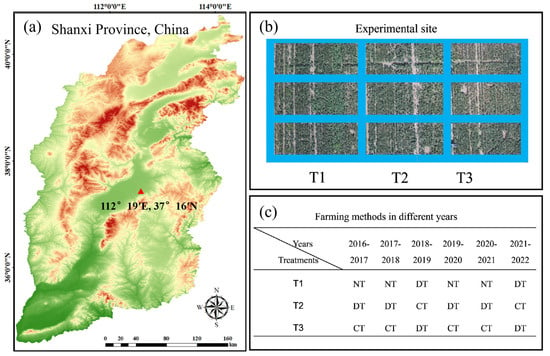
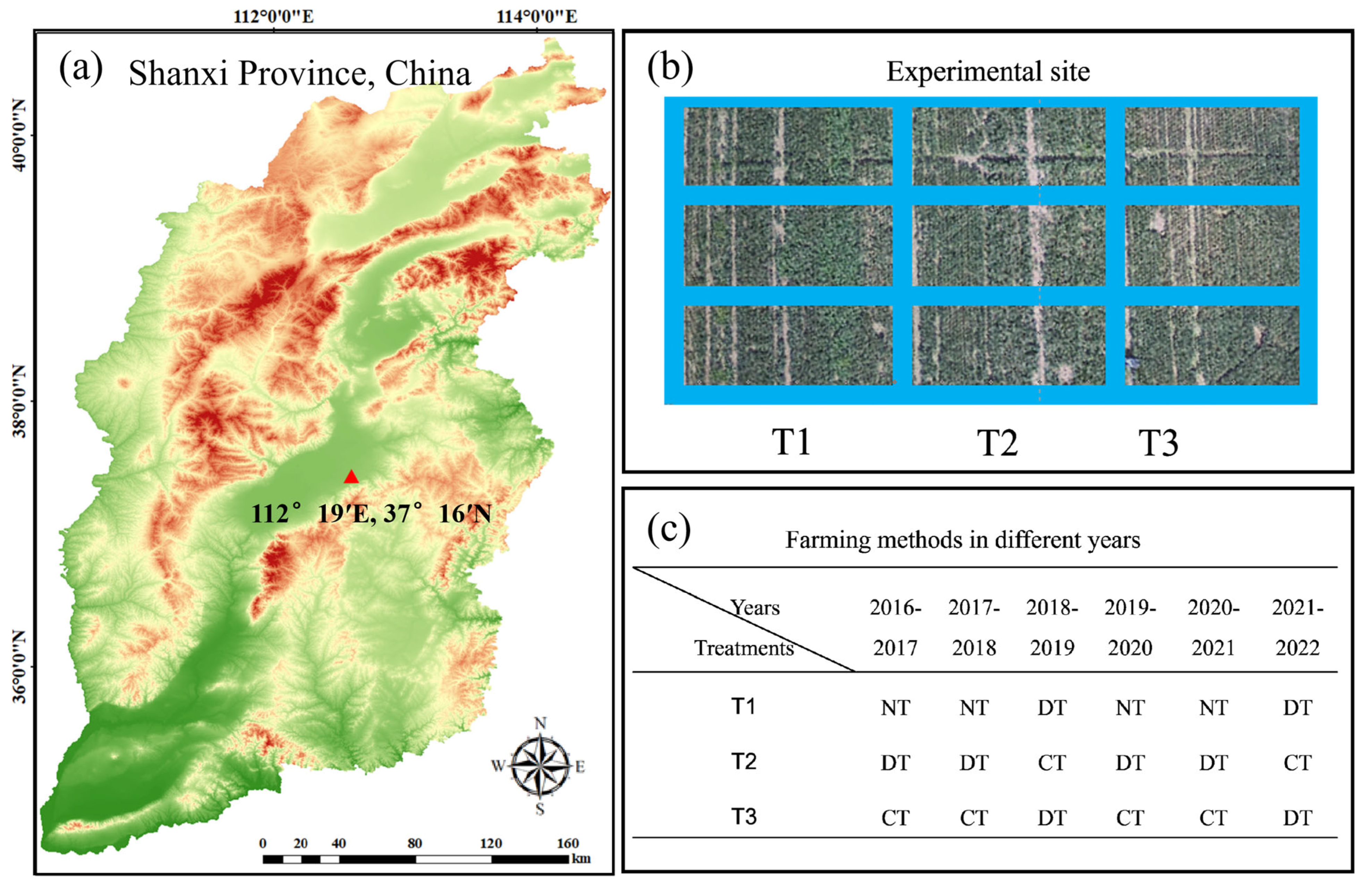
This experiment was conducted at the Shenfeng Conservation tillage Experimental Demonstration Base (112°19′ E, 37°16′ N, 782.6 m above sea level), Shanxi Agricultural University, Taigu County, Jinzhong City, Shanxi Province (Figure 1a). The region has a warm temperate continental climate with an average annual temperature of 9.9 °C, a frost-free period of 176 days, and rainfall of around 462.9 mm. It is characterized by brown clay with a coarse sandy soil texture. The experiment was initiated in 2016 as a long-term field platform. Soil properties measured in 2016, prior to treatment implementation, are presented as a baseline reference (CK) rather than a contemporaneous control for 2022. Because all plots entered the rotational tillage program after establishment, and an untreated control was not maintained for repeated annual sampling, a 2022 CK plot was not available. Therefore, comparisons with CK are interpreted as changes relative to the initial condition, while mechanistic inference relies primarily on contrasts among the 2022 treatments (T1–T3).
Figure 1.
Location of the experimental site and schematic of rotational tillage management across years. Note: NT: no tillage; DT: deep tillage; CT: conventional tillage; T1: 2 years of NT + 1 year of DT; T2: 2 years of CT + 1 year of DT; T3: 2 years of DT + 1 year of CT.
The experimental tillage methods were as follows: (1) NT, (2) DT at a depth of 30–35 cm, and (3) CT at a depth of 10–15 cm. All straw residues were threshed and returned to the field. Each plot measured 17 m × 10 m, with three replicates, and the wheat variety was Jintai 182. Field management procedures (sowing, fertilization, irrigation, and pest control) followed local farmer practices (Figure 1b). To represent realistic management decisions and to account for potential legacy effects of physical disturbance, we implemented a 3-year rotational tillage design with a “2 years + 1 year” structure (Figure 1c), including T1 (2 years of NT + 1 year of DT), T2 (2 years of CT + 1 year of DT), and T3 (2 years of DT + 1 year of CT). Intensive operations such as DT are typically applied intermittently rather than annually, with less intensive practices (NT and CT) maintained in other years; therefore, these sequences were designed to establish a disturbance gradient for mechanistic assessment of aggregate structure and TC and TN partitioning. The basic soil properties in the tillage layer were the following: soil bulk weight, 1.28 g cm−3; TC, 23.5 g kg−1; total nitrogen, 2.01 g kg−1; pH, 8.16; and field water-holding capacity, 0.38.
2.2. Sample Collection
Undisturbed soil samples from the 0–10, 10–20, 20–40, and 40–60 cm layers were collected from each plot before the start of the experiment in 2016 and after the harvest of winter wheat in 2022. The undisturbed soil samples were gently stripped by hand along the natural structure of the soil into small clods with a diameter of 1 cm, with coarse roots and small stones discarded. Care was taken to avoid mechanical pressure on the soil during striping to prevent deformation [16], and the treated soil samples were naturally air-dried.
2.3. Aggregate Fractionation
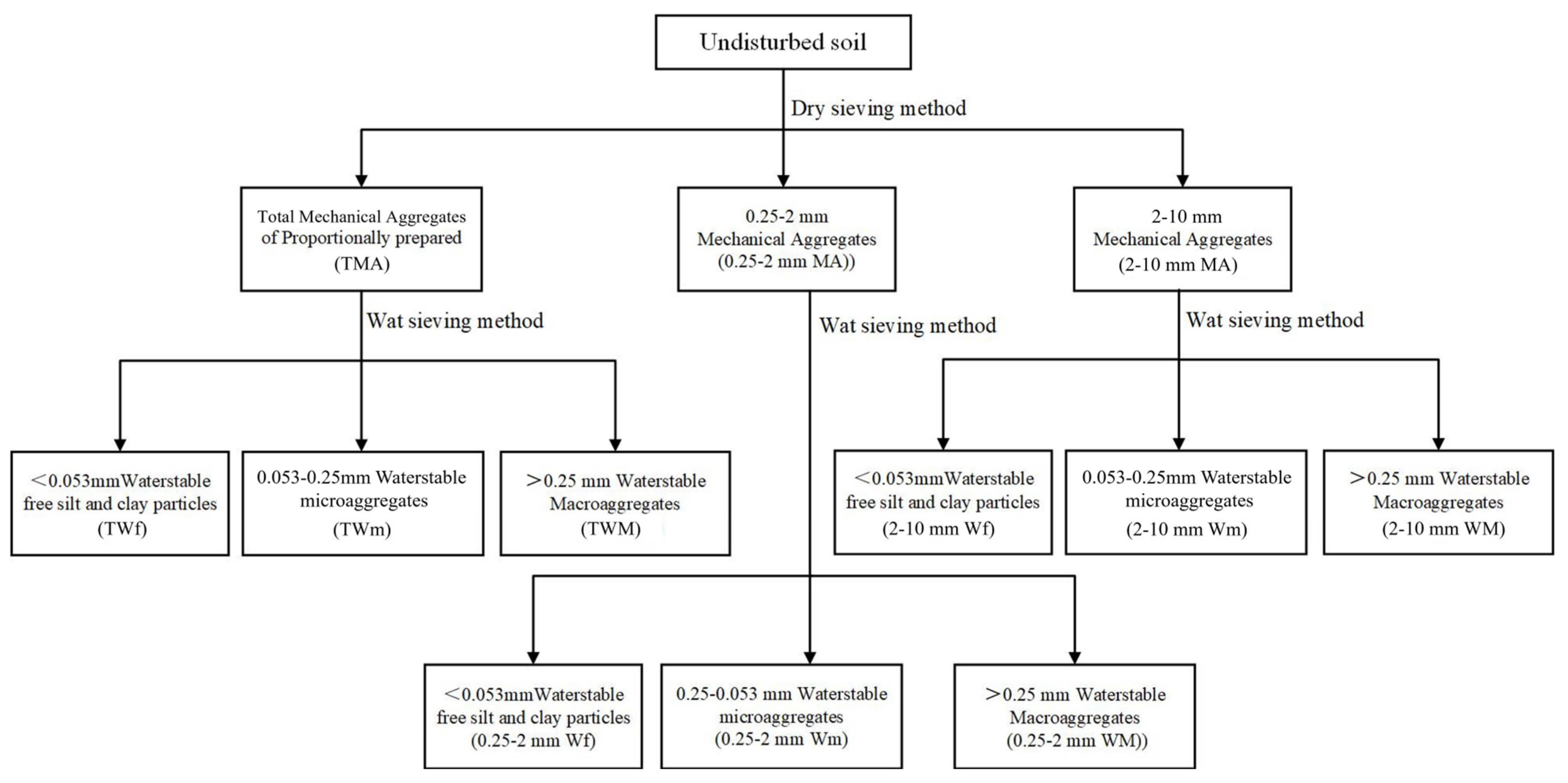
The structure and distribution of aggregates were determined by dry and wet sieving methods [17], with the specific process shown in Figure 2. Through the dry sieving method, all the original soil samples were dry-screened through sieves with apertures of 10, 5, 2, 1, 0.5, and 0.25 mm, respectively, to calculate their percentage content. Then, they were divided into 50 g of total mechanical aggregate (TMA), 50 g of 0.25–2 mm mechanical aggregate (0.25–2 mm MA), and 50 g of 2–10 mm mechanical aggregate (2–10 mm MA), according to their composition.
Figure 2.
Workflow of dry and wet sieving procedures (Aggregated Joint Grouping).
TMA, 0.25–2 mm MA, and 2–10 mm MA were passed through a sieve set (2, 1, 0.5, 0.25, 0.106, 0.053 mm) with an amplitude of 38 mm for 30 min in water for wet sieving, and the sieved aggregate soil was rinsed, placed in an aluminum box, and left until it clarified; the supernatant was poured off, dried, and weighed. The weight of the water-stable aggregates at each level was obtained. The aggregates were divided into three categories according to particle size: water-stable fine silt and clay particles (<0.053 mm, Wf), waterstable microaggregate (0.25–0.053 mm, Wm), and the waterstable macroaggregate (>0.25 mm, WM) [18,19,20].
Based on the dry–wet fractionation procedure described above, we defined Aggregated Joint Grouping as a two-step, nested aggregate fractionation approach. Specifically, whole soil (unsieved) was first separated into mechanical aggregate pools via dry sieving (0.25–2 mm MA, 2–10 mm MA, and TMA). Subsequently, each pool was independently wet-sieved to obtain its internal water-stable fractions (WM, Wm, and Wf). This joint (cross-classified) grouping yielded a mechanical aggregate pool × water-stable fraction (0.25–2 mm MA–WM/Wm/Wf and 2–10 mm MA–WM/Wm/Wf) matrix, enabling quantification of (i) the mass proportion of water-stable fractions within each pool and (ii) the distribution of TC and TN across these aggregate structural units. The aggregate hierarchy described by Six et al. [21] provides a conceptual basis for understanding aggregate formation and organic matter protection. However, compared with conventional bulk wet sieving, which characterizes water-stable aggregates at the whole-soil level, Aggregated Joint Grouping provides higher structural resolution by resolving internal water-stable fractions within distinct mechanical aggregate pools. Here, Aggregated Joint Grouping serves as an operational analytical extension by applying wet sieving to mechanically separated pools (0.25–2 mm and 2–10 mm), thereby generating a joint matrix (mechanical pool × water-stable fraction) that enables explicit quantification of TC and TN partitioning among aggregate structural units.
2.4. Determination of TC and TN
TC and TN were determined for the bulk soil and for all aggregate fractions obtained using the Aggregated Joint Grouping scheme (WM, Wm, and Wf within TMA, 0.25–2 mm MA, and 2–10 mm MA). TC was measured using a multi N/C2100 total carbon and nitrogen analyzer (Jena, Germany) [22], and TN was measured using an automatic chemical analyzer (SmartChem 200) (AMS-Alliance, Italy) [23].
2.5. Equations
2.6. Data Analysis
To account for the non-independence of measurements across soil depths within the same plot, the 2022 dataset was analyzed using linear mixed-effects models in SPSS (IBM SPSS Statistics 27; MIXED procedure). Tillage treatment, soil depth, and their interaction were specified as fixed effects, and plot (replicate) was included as a random effect. When fixed effects were significant, pairwise comparisons among treatments at each depth were performed using Tukey-adjusted post hoc tests. Model assumptions were evaluated based on residual diagnostics: residual normality was assessed using the Shapiro–Wilk test and Q–Q plots, and homogeneity of variance was checked using residual-versus-fitted plots. Statistical significance was set at p < 0.05. Data were organized in Excel 2024, and figures were prepared in Origin 2024.
3. Results
3.1. Differences in TC and TN Under Various Utilization Methods
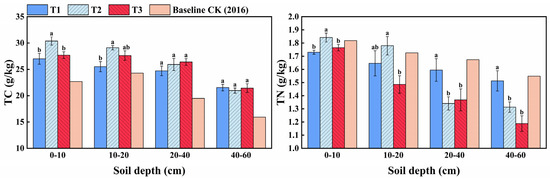
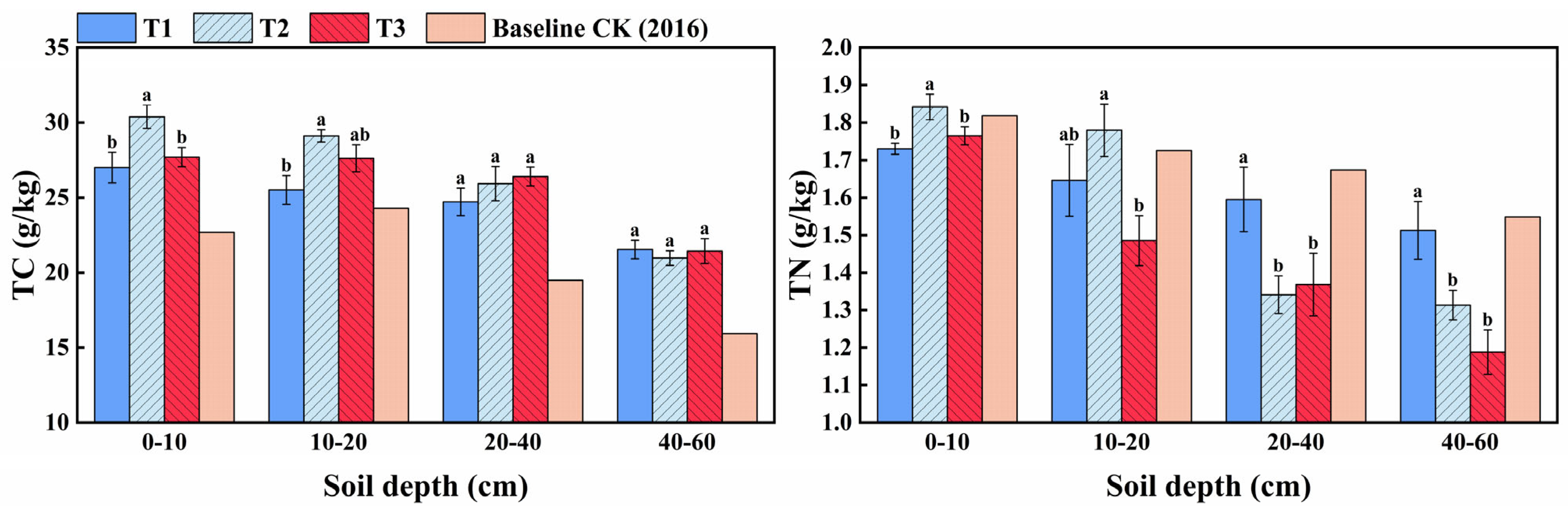
Figure 3 presents soil TC and TN measured in 2022 under the three rotational tillage treatments (T1–T3) and the baseline values recorded in 2016 (baseline CK). Across treatments, both TC and TN decreased with increasing soil depth, indicating clear surface enrichment. In the 0–10 cm layer, TC was highest under T2 (30.39 g kg−1), significantly exceeding that under T1 (27.00 g kg−1) and T3 (27.70 g kg−1) (p < 0.05). A similar pattern was observed at 10–20 cm, where TC remained highest under T2 (29.12 g kg−1), while that under T3 (27.63 g kg−1) was intermediate and not significantly different from that under either T1 (25.51 g kg−1) or T2. In the subsoil (20–60 cm), TC did not differ significantly among the three 2022 treatments (p > 0.05). T2 produced the highest TN value in the 0–10 cm layer (1.84 g kg−1), whereas in the 20–60 cm layers, T1 maintained significantly higher TN (1.60 and 1.51 g kg−1 at 20–40 and 40–60 cm, respectively) than T2 and T3 (p < 0.05). Comparisons with the 2016 baseline CK are shown for reference to the initial condition; these should be interpreted cautiously because CK is not a contemporaneous control for 2022 and interannual variability may contribute to baseline–2022 differences.
Figure 3.
TC and TN content across the 0–60 cm soil layers under different treatments. Note: TC: total carbon, TN: total nitrogen. Baseline CK (2016) was measured prior to treatment implementation and is shown for reference only (not as a contemporaneous control for the 2022 sampling). Different letters indicate significant differences among the 2022 treatments (T1–T3) at each soil depth based on a linear mixed-effects model with plot as a random effect (p < 0.05).
Overall, in 2022, T2 produced the highest surface TC (0–20 cm), while TC was similar among treatments at 20–60 cm; meanwhile, T1 resulted in better TN maintenance at 20–60 cm than T2 and T3.
3.2. Differences in the Stability and Distribution of Soil Aggregates Under Various Utilization Methods
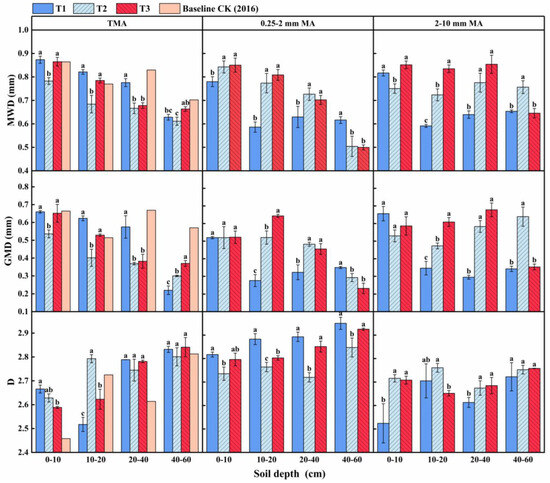
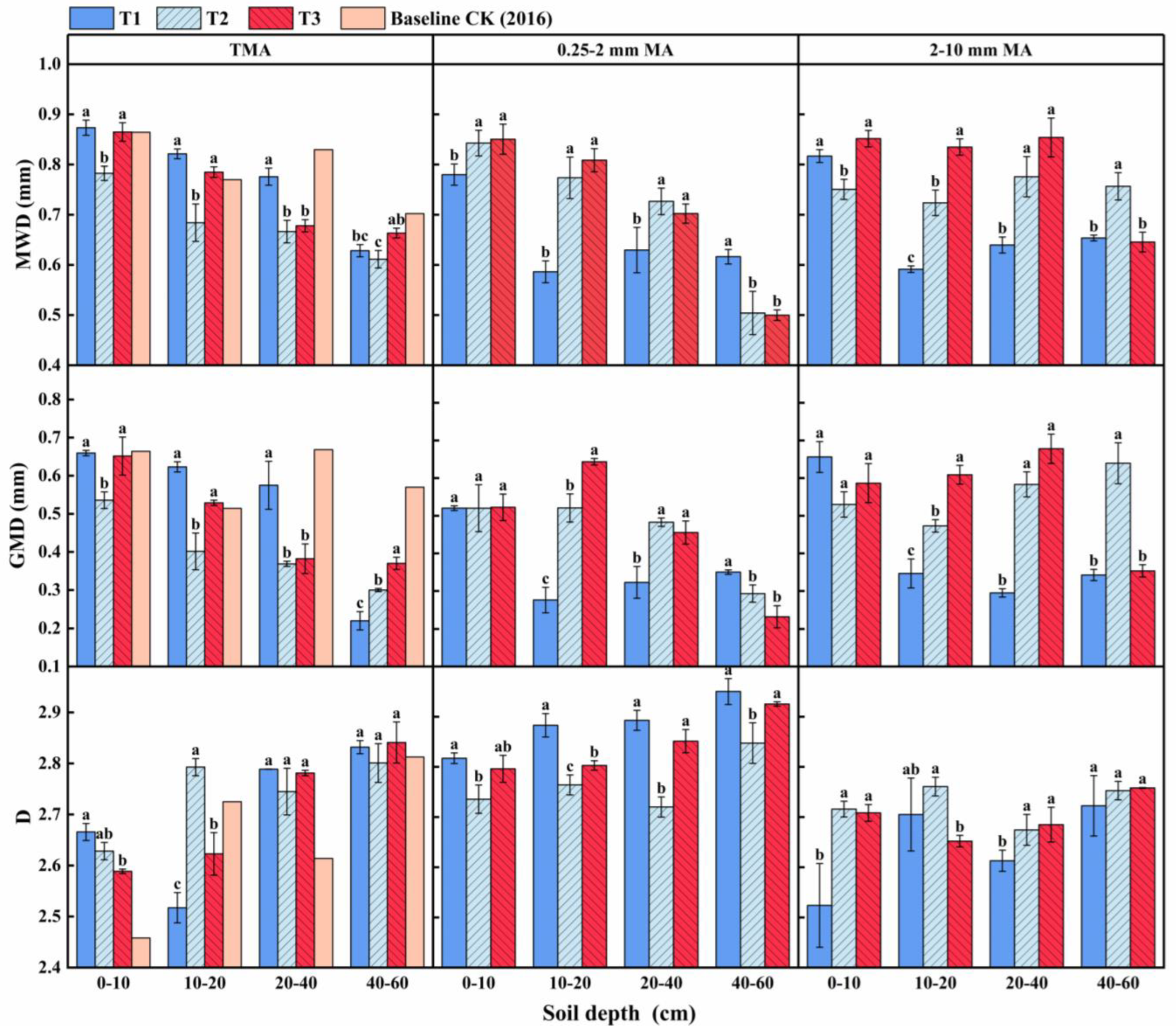
As shown in Figure 4, a higher MWD and GMD indicate greater aggregate stability, whereas a lower fractal dimension (D) indicates a more homogeneous aggregate size distribution. In TMA (baseline CK is shown for reference), stability generally declined with soil depth in 2022. In the 0–10 cm layer, T1 and T3 produced a higher MWD and GMD than T2 (p < 0.05), and the same pattern occurred at 10–20 cm (p < 0.05). At 20–40 cm, T1 resulted in higher values than T2 and T3 for both the MWD and GMD (p < 0.05), while at 40–60 cm, T3 produced a higher GMD than T1 and T2 (p < 0.05). Treatment-related differences in D in TMA were mainly confined to the upper layers: T3 and T1 produced a lower D at 0–10 cm and 10–20 cm, respectively (p < 0.05), whereas D did not differ significantly among treatments at 20–60 cm. In the 0.25–2 mm MA fraction, the MWD at 0–40 cm was higher under T2 and T3 than under T1 (p < 0.05), but at 40–60 cm, T1 produced a higher MWD and GMD than T2 and T3 (p < 0.05). Across all depths (0–60 cm), D in 0.25–2 mm MA was lowest under T2 (p < 0.05), indicating a more homogeneous size distribution. In the 2–10 mm MA fraction, effects were depth-dependent: at 0–10 cm, T1 and T3 produced a higher MWD than T2 (p < 0.05); at 10–40 cm, T3 resulted in the highest MWD and GMD, followed by those under T2, with that under T1 being the lowest (p < 0.05); and at 40–60 cm, T2 produced a higher MWD and GMD than T1 and T3 (p < 0.05). Regarding D, lower values were observed under T1 at 0–10 cm and 20–40 cm (p < 0.05), while no significant differences were detected at 40–60 cm.
Figure 4.
Stability and distribution of soil aggregates across different particle sizes. Note: MWD: mean weight diameter; GMD: geometric mean diameter; D: fractal dimension; TMA: total mechanical aggregate; 0.25–2 mm MA: 0.25–2 mm mechanical aggregate; 2–10 mm MA:2–10 mm mechanical aggregate. Different letters indicate significant differences among the 2022 treatments (T1–T3) at each soil depth based on a linear mixed-effects model with plot as a random effect (p < 0.05).
Overall, the NT–DT rotational strategies (especially T1: NT–NT–DT) tended to better maintain soil aggregate stability and related soil quality indicators than the more intensively disturbing sequence, T2 (CT–CT–DT).
3.3. Distribution of Soil Aggregate Carbon and Nitrogen Under Various Utilization Methods
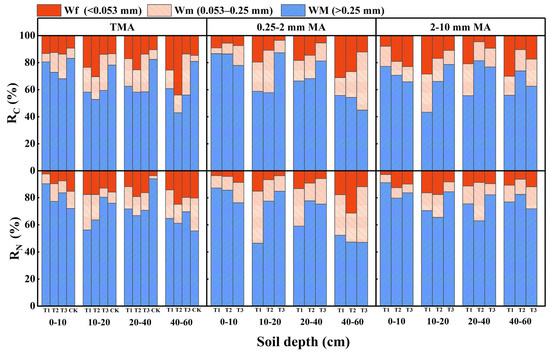
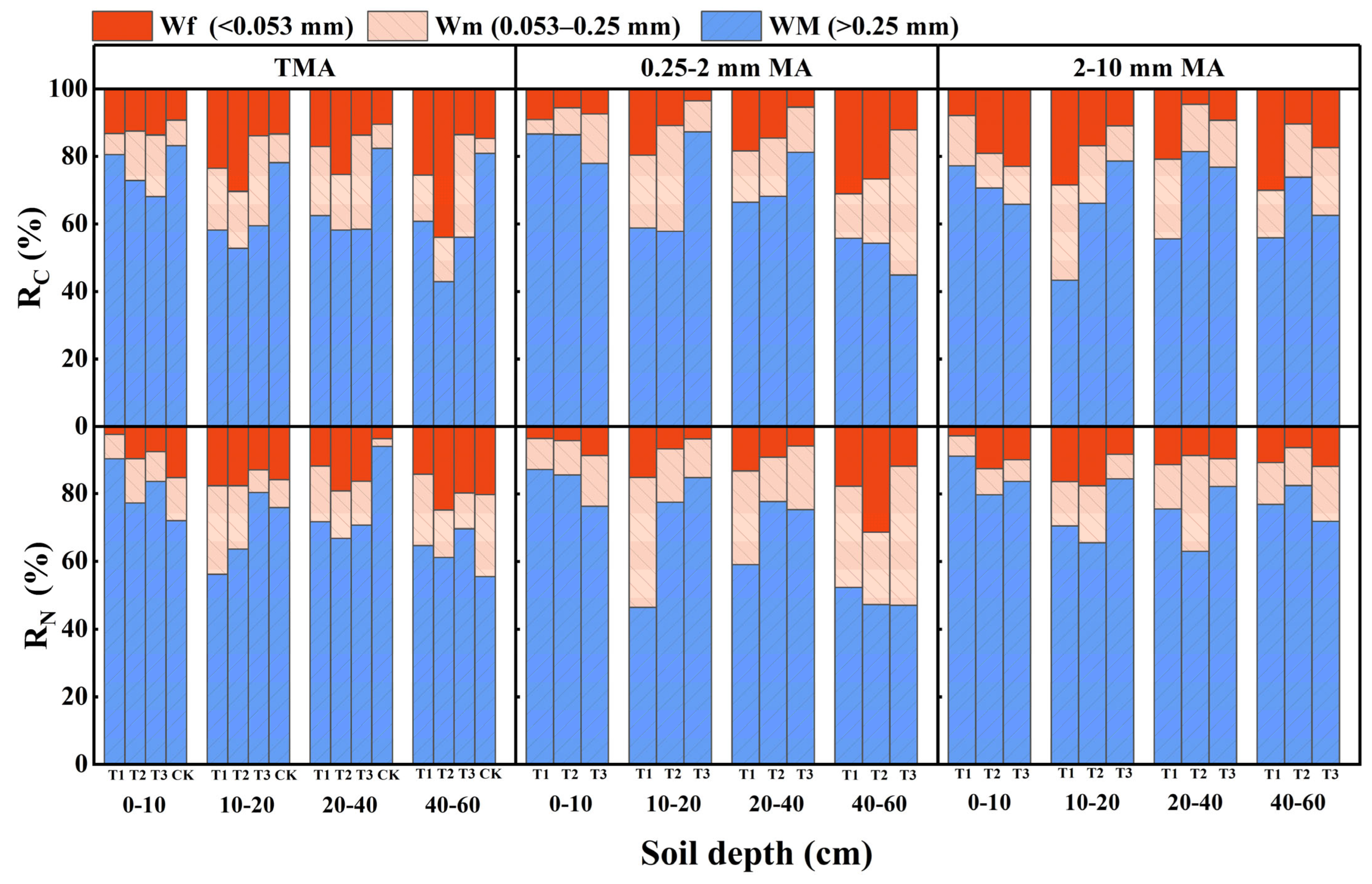
As shown in Figure 5, soil RC and RN across the 0–60 cm profile were predominantly clustered in WM (42.98–94.07%), which accounted for the largest share of aggregate-associated TC and TN across depths. RC in WM was highest in the baseline CK (78.19–83.24%), which is shown as an initial reference. With increasing depth, the relative contributions of Wm and Wf became more evident in several mechanical pools, and TC and TN partitioning shifted toward smaller water-stable fractions in some layers.
Figure 5.
RC and RN distributions across different particle sizes in the 0–60 cm soil layer. Note: RC: contribution rate (%) of aggregate-associated carbon in each fraction; RN: contribution rate (%) of aggregate-associated nitrogen in each fraction; WM: water-stable macroaggregates; Wm: water-stable microaggregates; Wf: water-stable fine silt and clay fraction.
At 0–10 cm, both RC and RN in WM were highest under T1. Within this layer, WM-RC followed the order 0.25–2 mm MA > TMA > 2–10 mm MA, whereas WM-RN showed the opposite pattern. In contrast, T2 produced the highest RN in Wm in TMA and 2–10 mm MA, with a greater share of TN allocated to the microaggregate fraction under this treatment. Under T3, RC in Wm reached the maximum value in TMA and 2–10 mm MA, while RC in Wf was highest in TMA and 0.25–2 mm MA, with a stronger redistribution of TC toward smaller water-stable fractions in the topsoil. At 10–20 cm, both RC and RN in WM were highest under T3. Compared with those in the surface layer, RC and RN in Wm and Wf increased in this layer, with a greater partitioning into smaller fractions. Under T1, RC in Wf reached the maximum value in both 0.25–2 mm MA and 2–10 mm MA, while RN in Wf and Wm was highest in TMA and 0.25–2 mm MA; moreover, RC values in Wm and Wf were similar under T1. Under T2, RN in Wm and Wf in 2–10 mm MA was the greatest, and RC and RN in Wm and Wf within 2–10 mm MA were generally comparable. At 20–40 cm, RC and RN in WM were highest under T1. In this layer, RC values in Wm and Wf were similar and reached their maxima within 2–10 mm MA, and TC allocation to smaller water-stable fractions became more prominent within the larger mechanical pool. In the 40–60 cm layer, under T1, WM-RC was highest in TMA, and both WM-RC and WM-RN reached their maxima in 0.25–2 mm MA. Meanwhile, RC in Wm in the three mechanical pools and RN in Wm in TMA and 0.25–2 mm MA were highest under T3, with stronger contributions of microaggregates to TC and TN partitioning in deeper layers under this treatment.
In overview, WM was the dominant location of RC and RN across the 0–60 cm profile, while the relative importance of Wm and Wf increased in specific layers and mechanical pools. T1 generally corresponded to higher RC and RN retention in WM (especially in the surface layer and 20–60 cm), T2 produced comparatively higher RN allocation to Wm (notably in surface TMA and 2–10 mm MA), and T3 tended to result in greater redistribution of RC (and, in some cases, RN) into Wm and/or Wf depending on the depth and mechanical aggregate pool.
3.4. Exploration of the Relationship Between Soil Carbon, Nitrogen, and Aggregate Formation Factors
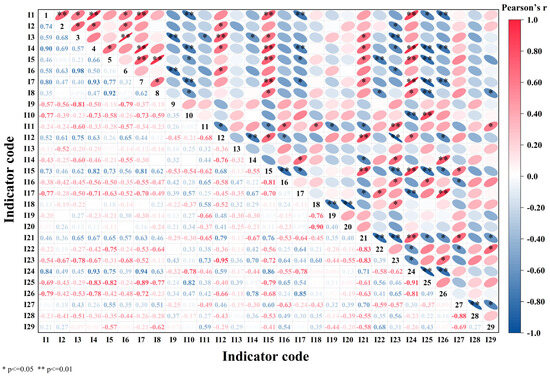
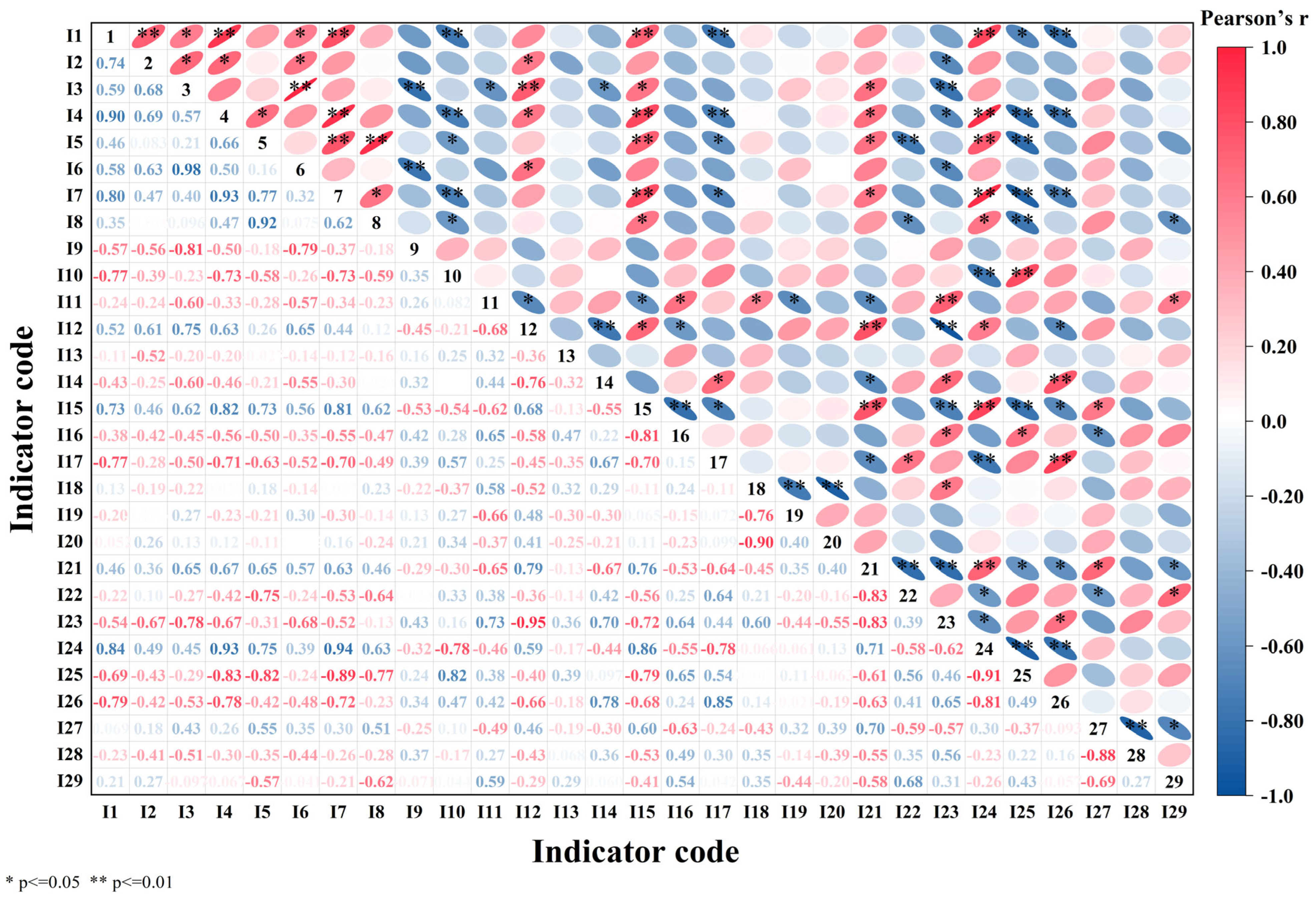
As shown in Figure 6, TC highly significantly correlated with TN (0.74); positively correlated with the MWD and GMD of TMA, 0.25–2 mm MA, and 2–10 mm MA; and negatively correlated with D. TC positively correlated with the stability index of 0.25–2 mm MA, with the highest correlation coefficient of 0.90. The analysis showed that there was a significant positive correlation between TC and carbon and nitrogen in WM, as well as a significant negative correlation between TC and carbon and nitrogen in Wm and Wf in TMA, 0.25–2 mm MA, and 2–10 mm MA. Overall, the largest correlation, up to 0.84, was found between carbon and nitrogen in aggregates of different particle sizes in 0.25–2 mm MA. TN significantly correlated with the MWD (0.68) and GMD (0.63), RC of WM (0.52), and RN of Wf (−0.79) in TMA. This indicates that TC was closely related not only to TN content but also to 0.25–2 mm aggregates in the undisturbed soil, and TN content was mainly influenced by whole-soil aggregates. TC positively correlated with carbon and nitrogen of macromasses and negatively correlated with Wm and Wf.
Figure 6.
Correlation between TC, TN, and multiple aggregate indices. Note: I1: TC; I2: TN. I3–I29 represent variables derived from three aggregate pools (TMA, 0.25–2 mm MA, and 2–10 mm MA). I3–I5: MWD of the three pools (TMA, 0.25–2 mm MA, and 2–10 mm MA); I6–I8: GMD of the three pools; I9–I11: D of the three pools; I12–I14: RC in WM of the three pools; I15–I17: Rc in Wm; I18–I20: RC in Wf; I21–I23: RN in WM; I24–I26: RN in Wm; I27–I29: RN in Wf.
In TMA and 0.25–2 mm MA, a strong positive correlation was observed between the MWD, the GMD, and D. Conversely, in 2–10 mm MA, a significant positive correlation was found only between the MWD and GMD. The MWD and GMD of TMA significantly correlated not only with carbon and nitrogen in macroaggregate and Wf but also with carbon in 0.25–2 mm MA and the fractal dimension (D) of 2–10 mm MA. In 0.25–2 mm MA, the MWD, the GMD, and D were all highly significantly correlated with nitrogen in aggregates of different particle sizes in this soil sample. Meanwhile, they highly significantly positively correlated with macroaggregate carbon and significantly negatively correlated with Wf carbon. Furthermore, a notable correlation was observed between the stability of 0.25–2 mm MA and the MWD and GMD of 2–10 mm MA, as well as the aggregated carbon content present in TMA. The stability of 2–10 mm MA significantly negatively correlated with D in 0.25–2 mm MA, Wm-RN in TMA, and Wf-RN in 0.25–2 mm MA, and it significantly positively correlated with RC and RN in Wm in 0.25–2 mm MA and Wf-RN in TMA. The stability of the three soil samples exhibited a positive correlation with RC and RN in WM, while displaying a negative correlation with RC and RN in Wm and Wf. The stability of the TMA exhibited a stronger correlation with various indicators regarding its aggregates, but it might have also been influenced by the aggregates of the 0.25–2 mm MA and 2–10 mm MA. A significant correlation was observed between the aggregated carbon content of TMA, 0.25–2 mm MA, and 2–10 mm MA soil samples and equivalent nitrogen. The correlation between RC and RN in WM was stronger than that of Wm and Wf. Meanwhile, RC and RN in Wm and Wf of TMA were also significantly correlated with those of other aggregates.
Across the dataset, higher aggregate stability (higher MWD and GMD and lower D) aligned with higher TC and TN. This pattern was particularly evident in the 0.25–2 mm MA fraction. Higher stability also aligned with greater RC and RN allocation to WM. In contrast, greater RC and RN allocation to Wm and Wf was generally associated with lower bulk-soil TC and TN and weaker aggregate stability.
4. Discussion
4.1. Influence of Tillage Methods on Aggregate Composition
This study revealed significant correlations between aggregate stability (MWD, GMD, and fractal dimension (D)) and the size of mechanical aggregates, with stability decreasing as soil depth increased. This pattern aligns with previous studies [29,30], where surface soil aggregates exhibited higher stability due to greater moisture, microbial biomass, and organic matter content. As soil depth increased, there was a gradual reduction in soil moisture, microbial biomass, and material composition, as well as a decline in the content of binders that form aggregates. These changes may have contributed to reduced aggregate stability at greater depths [31]. The relatively high aggregate stability observed at the baseline (2016) likely reflects the initial soil structural condition prior to the experimental treatments. Because this baseline is not a contemporaneous control, differences from the 2022 measurements may also be influenced by interannual variability (climate and crop growth) and thus should not be interpreted as treatment effects alone.
Under T3, two years of deep tillage with straw incorporation followed by one year of CT may reduce disturbance to roots relative to continuous intensive tillage and could favor residue decomposition and the generation of organic binding agents (e.g., microbial-derived polysaccharides and humic substances) reported to promote the production of 0.25–2 mm MA [32]. This may provide conditions conducive to the formation and persistence of 2–10 mm MA [33]. Under T1, two years of no tillage with straw mulching may buffer surface soil against raindrop impact and freeze–thaw disturbance [34] and help retain soil moisture, whereas the subsequent deep tillage year may alleviate compaction and incorporate residues into deeper layers, potentially altering residue decomposition dynamics [35]. This sequence may increase the contribution of labile organic compounds (e.g., carbohydrates and amino acids) to aggregate binding, which is consistent with enhanced formation of 2–10 mm MA reported in previous studies [36]. Furthermore, previous studies have reported that no-tillage management is associated with greater formation of 2–10 mm aggregates and slower turnover compared with more intensive disturbance regimes [37]. More frequent tillage under T2 may increase soil aeration and disrupt aggregate integrity, which could contribute to the breakdown of 2–10 mm MA. Overall, T3 tended to be associated with higher stability in the 0.25–2 mm MA fraction, whereas the 2–10 mm MA fraction showed relatively higher stability under T1 and T3 at several depth intervals. These patterns are consistent with previous reports that large aggregates are sensitive to disturbance intensity and residue inputs. Because the abundance of 2–10 mm aggregates has been linked to microbial diversity, enzyme activity, and soil fertility [38], changes in this fraction may have functional implications. MA of 0.25–2 mm can significantly improve soil aeration, permeability, cohesion, adhesion, and expansion and contraction, and their stability and distribution affect soil physical properties and plant growth [39]. Therefore, favorable physical soil properties are related not only to 2–10 mm MA but also to 0.25–2 mm MA. In addition, the stability indices of TMA showed strong associations with multiple aggregate indicators, and they were also related to the stability and distribution of the 0.25–2 mm MA and 2–10 mm MA fractions, indicating interdependence among aggregate pools. Therefore, the NT–DT rotational sequences with straw return appeared to support aggregate stability in this system; however, the specific mechanisms, particularly in deeper layers, remain inferential because root inputs, residue placement depth, and microbial activity were not directly measured.
4.2. Effect of Tillage Practices on Soil Carbon and Nitrogen Fixation
In agroecosystems, farm management practices such as tillage, fertilization, and cropping practices represent important anthropogenic factors that affect soil nutrient sequestration [40]. In this study, soil carbon and nitrogen exhibited a statistically significant correlation, in line with the research findings of Zhao et al. [41]. Soil aggregates are important carriers of plant nutrients and also the main storage sites of soil carbon and nitrogen [30]. Here, TC was proportional to carbon and nitrogen in macroaggregates and inversely proportional to those in microaggregates and fine silt and clay particles, while TN was proportional to nitrogen in macroaggregates and inversely proportional to that in microaggregates. This may have been due to the greater carbon and nitrogen content of macroaggregates, whose increase or decrease could offset the increase or decrease in carbon and nitrogen in microaggregates and fine silt and clay particles. Macroaggregates often act as dominant reservoirs of soil carbon and nitrogen and are commonly associated with enhanced physical protection of organic matter [42]. In 2022, TC levels under the three rotational tillage treatments with straw return were generally higher than the 2016 baseline, and differences among treatments suggest that disturbance regimes and residue placement may influence aggregate-associated carbon and nitrogen dynamics. Nevertheless, owing to variations in tillage depths and duration, there was a marked disparity in the soil’s carbon content within the tillage layer. A prevailing belief is that the excessive intensity and frequency of tillage practices in conventional farming methods can compromise the physical shielding layer of soil carbon and nitrogen, hasten their conversion, and thereby lead to a reduction in their content [43]. Deng et al. [44] demonstrated that the synergistic application of no tillage and deep tillage yielded a significant improvement in soil nutrient enrichment. Certain studies also indicated that the rate of straw decomposition significantly impacts the process of soil sequestration of carbon and nitrogen from straw [45]. Based on the 2022 measurements, T2 produced higher TC and TN in the tilled layer compared with the other treatments. This pattern may be related to differences in disturbance intensity and residue placement, which can influence residue decomposition and nutrient cycling. The relatively lower TC under T1 in the tilled layer may reflect differences in residue placement and decomposition dynamics across the 3-year sequence, although the degree of straw decomposition was not directly quantified. T1 was associated with better maintenance of TN across the 0–60 cm profile. This may be related to reduced disturbance in no-tillage years, which can limit aggregate disruption and favor nitrogen retention. A plausible explanation, consistent with the previous literature, is that reduced disturbance may favor biological binding processes (e.g., hyphal networks and microbial-derived organic binders from residue decomposition products) that can contribute to the formation of microaggregates and their subsequent incorporation into macroaggregates. However, nitrogen is often associated with fine organo-mineral and colloidal fractions that contribute to aggregate binding and stabilization [46]; therefore, reduced disturbance under T1 may help retain nitrogen within aggregate-associated pools. In this study, the conversion of macroaggregates was faster under T2 measures; there was more formation of microaggregates and fine silt and clay particles incorporating carbon [47]. The NT–DT rotational sequences were associated with greater carbon allocation to larger aggregate fractions (TMA, 0.25–2 mm MA, and 2–10 mm MA) across the 0–60 cm profile in 2022, suggesting that the disturbance regime may have influenced aggregate-associated carbon distribution. In general, a stronger concentration of carbon contribution (%) in a limited subset of aggregate size classes was associated with lower bulk-soil TC, suggesting that a more even distribution of carbon among aggregate fractions may have coincided with higher overall carbon levels.
The mechanistic pathways discussed above are presented as plausible hypotheses consistent with the prior literature rather than processes directly quantified in this study. We acknowledge that the baseline used in this study represents the soil condition measured in 2016 prior to treatment implementation, rather than a contemporaneous control sampled in 2022. Therefore, differences between the baseline and the 2022 measurements may reflect not only management effects but also temporal variability (e.g., interannual climate fluctuations, crop growth differences, and background carbon trends) [48]. This restricts strict causal inference because time effects and treatment effects cannot be fully separated. Accordingly, we interpret comparisons to the baseline as indicative of changes relative to the initial condition, while emphasizing treatment contrasts within 2022 for mechanistic inference. Future studies with contemporaneous control plots or annual repeated measurements would further strengthen causal attribution. In addition, mechanistic explanations for nutrient stabilization in the subsoil (20–60 cm) should be interpreted cautiously because we did not directly quantify root distribution, actual residue incorporation depth, or microbial activity across depths. Future studies integrating these measurements would strengthen subsoil mechanistic inference.
4.3. Effect of Soil Aggregates on Soil Carbon and Nitrogen Fixation
The aggregate structure plays a crucial role in the cycling of soil nutrients. Soil aggregates, serving as carriers for stabilizing and protecting soil carbon and nitrogen, exhibit varying degrees of stability and distribution that impact their capacity to store these elements [6]. Our results showed that TC and TN were positively associated with the MWD and GMD and negatively associated with D in TMA, 0.25–2 mm MA, and 2–10 mm MA. Zhang et al. [49] proposed that soil carbon and nitrogen contents are closely linked to the stability of aggregates, probably since soil aggregates are aggregated structures of mineral particles and organic matter produced by the agglomeration of colloids. According to our dataset, macroaggregates acted as dominant reservoirs of carbon and nitrogen under the studied conditions. Both TC and TN showed positive correlations with carbon and nitrogen in macroaggregates. In the surface layer, aggregate carbon mainly accumulated in the 0.25–2 mm MA and showed a highly significant positive association with aggregate stability indices, while aggregate nitrogen mainly accumulated in the 2–10 mm MA. As a conceptual interpretation consistent with the aggregate hierarchy framework [50], the observed carbon and nitrogen partitioning patterns may reflect a sequence of aggregate formation and transformation processes. Initially, fresh straw or plant residues enter the soil, and soil nitrogen may contribute to the formation of organo-mineral associations that facilitate aggregation and the production of 2–10 mm MA. Plant residues may constitute an important source of water-stable macroaggregate-associated carbon within this fraction. Subsequently, fragmentation of macroaggregates may contribute to the formation of microaggregate-associated carbon within 2–10 mm MA. During a later stage, some microaggregate-associated carbon may become further associated with fine silt and clay fractions through microbial metabolites and binding agents, leading to relatively more stable carbon in finer fractions within the 2–10 mm MA pool. Finally, changes in binding agents and organic inputs may contribute to destabilization and fragmentation of 2–10 mm MA, potentially releasing 0.25–2 mm MA that enters subsequent cycles of aggregate formation. Therefore, each stage of the process can be accompanied by early fragmentation of macroaggregates depending on soil management practices (tillage, etc.). The microaggregates that exist within macroaggregates represent their most stable components and serve as the foundation for the formation of subsequent macroaggregates [51]. Our findings provide additional evidence to support the hypothesis that the durability of the aggregates discussed in this study was directly linked to the levels of carbon and nitrogen present within larger aggregates [52]. Notably, the stage-based interpretation above, particularly for the 20–60 cm layers, remains inferential because root inputs, residue placement depth, and microbial activity were not directly measured in this study.
5. Conclusions
Soil tillage and straw return are critical management practices that significantly influence the composition and carbon–nitrogen dynamics of soil aggregates. This study demonstrated a strong positive correlation between soil aggregate stability and total carbon and nitrogen contents, both of which declined with increasing soil depth. All three tillage systems, when combined with straw incorporation, effectively mitigated excessive carbon accumulation in macroaggregates while promoting a more balanced nutrient distribution. Among the treatments, the rotational combination of no tillage and deep tillage with straw return was the most effective in maintaining the stability of total mechanical aggregates, 0.25–2 mm macroaggregates, and 2–10 mm macroaggregates. This system also facilitated the sequestration of carbon and nitrogen within larger aggregates. In contrast, the combination of conventional and deep tillage promoted the breakdown of macroaggregates and the redistribution of nutrients into finer microaggregates and silt–clay fractions, particularly in the 2–10 mm range within the tilled layer. As a result, nitrogen levels declined while carbon content increased under all three tillage regimes when applied alongside straw return. The integration of no tillage and deep tillage helped preserve nitrogen levels in the 0–60 cm soil profile while maintaining slightly elevated carbon content compared to the baseline, whereas conventional and deep tillage treatments were associated with higher carbon accumulation but reduced nitrogen retention. In conclusion, within the Loess Plateau dryland winter wheat system studied here, the NT–NT–DT sequence combined with straw return appears to be a promising and balanced strategy for improving aggregate stability and maintaining TC and TN across the 0–60 cm profile. This approach effectively enhances soil aggregate stability and promotes balanced carbon and nitrogen retention, offering practical insights for improving soil quality and supporting sustainable land management in dryland agroecosystems. However, this conclusion is context-specific and should not be extrapolated to dissimilar soils, climates, or cropping systems.
Author Contributions
S.Y.: conceptualisation, investigation, data curation, resources, methodology, writing—original draft. Z.W.: investigation, data curation, methodology, writing—original draft. J.T.: formal analysis, software, data curation, resources, methodology. J.X.: formal analysis, supervision. J.B.: formal analysis, supervision. X.Q.: formal analysis, software. M.F.: formal analysis, supervision. L.X.: supervision. X.S. supervision. M.Z.: software, supervision. G.L.: supervision, writing—review and editing. F.S.: writing—review and editing. J.Z.: supervision, writing—review and editing. C.W.: resources, supervision, writing—review and editing, validation. W.Y.: resources, supervision, writing—review and editing, validation. All authors have read and agreed to the published version of the manuscript.
Funding
The authors would like to acknowledge the Doctoral Foundation Project of the Cotton Research Institute, Shanxi Agricultural University (SBSJJ2024-03); Yuncheng City Science and Technology Project (YCKJ-2025048); Talent Introduction Research Startup Program Project of Shanxi Agricultural University (2024BQ46); Shanxi Province Incentive Funding Research Project for Doctoral Graduates Working in Shanxi (SXBYKY2024113); and Basic Research Program of Shanxi Province (202503021212179, 202403021222091, 202203021211275, 202303021212090, 20210302123411). This project was also supported by the Earmarked Fund for Modern Agro-industry Technology Research System (2023CYJSTX02-23), National Key Research and Development Program (2021YFD1901102), Key Technologies R & D Program of Shanxi Province (201903D211002), and National Natural Science Foundation of China (31871571, 31371572) to provide funding for conducting experiments.
Data Availability Statement
The datasets generated during and/or analysed during the current study are available from the corresponding author upon reasonable request.
Acknowledgments
The authors sincerely express their gratitude to the Cotton Research Institute and Agricultural College of Shanxi Agricultural University for the excellent research environment.
Conflicts of Interest
The authors declare no conflicts of interest.
Abbreviations
The following abbreviations are used in this manuscript:
| TC | Total carbon |
| TN | Total nitrogen |
| NT | No tillage |
| DT | Deep tillage |
| CT | Conventional tillage |
| CK | Control check |
| T1 | Two years of no tillage (NT) + one year of deep tillage (DT) |
| T2 | Two years of conventional tillage (CT) + one year of DT |
| T3 | Two years of DT + one year of CT |
| TMA | Total mechanical aggregate |
| MA | Mechanical aggregate |
| Wf | Water-stable fine silt and clay fraction |
| Wm | Water-stable microaggregate |
| WM | Water-stable macroaggregate |
| MWD | Mean weight diameter |
| GMD | Geometric mean diameter |
| D | Fractal dimension |
| RC | Contribution rate (%) of aggregate-associated carbon in each fraction |
| RN | Contribution rate (%) of aggregate-associated nitrogen in each fraction |
References
- Shi, Y.; Wei, W. Terracing drives Chinese Loess Plateau toward carbon neutrality: Spatiotemporal interaction between land use transitions and SOC storage. J. Environ. Manag. 2025, 385, 125760. [Google Scholar] [CrossRef] [Scilit]
- Wei, X.; Zheng, L.; Li, Y.; Zhan, X.; Li, T.; Shi, Y.; Liu, Y.; Wang, D.; Zhang, Q. Enhancing soil fertility and organic carbon stability with high-nitrogen biogas slurry: Benefits and environmental risks. J. Environ. Manag. 2025, 384, 125584. [Google Scholar] [CrossRef] [Scilit]
- Uramoto, T.; Sakoda, M.; Guo, Y.; Sakagami, N.; Komatsuzaki, M.; Nishizawa, T. No-tillage effects on the soil nitrogen-cycling prokaryotic community inhabiting soil aggregates in upland fields. Appl. Soil Ecol. 2025, 213, 106232. [Google Scholar] [CrossRef] [Scilit]
- Buthelezi, K.; Buthelezi-Dube, N. Effects of long-term (70 years) nitrogen fertilization and liming on carbon storage in water-stable aggregates of a semi-arid grassland soil. Heliyon 2022, 8, e8690. [Google Scholar] [CrossRef] [Scilit] [PubMed]
- Kraemer, F.B.; Ares, G.; Mozo, J.; Chagas, C. Topographical effects on the interplay between soil organic carbon fractions, aggregate stability and water repellency at a small watershed scale. CATENA 2025, 258, 109182. [Google Scholar] [CrossRef] [Scilit]
- Ghorbani, M.; Neugschwandtner, R.W.; Soja, G.; Konvalina, P.; Kopecký, M. Carbon Fixation and Soil Aggregation Affected by Biochar Oxidized with Hydrogen Peroxide: Considering the Efficiency of Pyrolysis Temperature. Sustainability 2023, 15, 7158. [Google Scholar] [CrossRef] [Scilit]
- Zhu, Y.; Zhang, H.; Wang, Q.; Zhu, W.; Kang, Y. Soil extracellular enzyme activity linkage with soil organic carbon under conservation tillage: A global meta-analysis. Eur. J. Agron. 2024, 155, 127135. [Google Scholar] [CrossRef] [Scilit]
- Bragazza, L.; Fontana, M.; Johannes, A.; Koestel, J.; Charles, R.; Büchi, L.; Mendoza, O.; Guillaume, T. Effects of tillage on winter wheat productivity and soil fertility: Results from 13 years of no-till in western Switzerland. Eur. J. Agron. 2025, 170, 127722. [Google Scholar] [CrossRef] [Scilit]
- Tagar, A.; Adamowski, J.; Memon, M.; Do, M.C.; Mashori, A.; Soomro, A.; Bhayo, W. Soil fragmentation and aggregate stability as affected by conventional tillage implements and relations with fractal dimensions. Soil Tillage Res. 2020, 197, 104494. [Google Scholar] [CrossRef] [Scilit]
- Oberson, A.; Jarosch, K.; Frossard, E.; Hammelehle, A.; Fliessbach, A.; Mäder, P.; Mayer, J. Higher than expected: Nitrogen flows, budgets, and use efficiencies over 35 years of organic and conventional cropping. Agric. Ecosyst. Environ. 2024, 362, 108802. [Google Scholar] [CrossRef] [Scilit]
- Vikram, K.; Chaudhary, H.; Rao, K.S. SOC and TN fluctuations determine the variations in microbial enzymatic activities under diverse land use types in the Central Himalaya, India. CATENA 2024, 240, 107958. [Google Scholar] [CrossRef] [Scilit]
- Li, J.; Chen, L.; Zhang, C.; Ma, D.; Zhou, G.; Ning, Q.; Zhang, J. Combining rotary and deep tillage increases crop yields by improving the soil physical structure and accumulating organic carbon of subsoil. Soil Tillage Res. 2024, 244, 106252. [Google Scholar] [CrossRef] [Scilit]
- Wang, Y.; Zou, L.; Lou, C.; Geng, X.; Zhang, S.; Chen, X.; Zhang, Y.; Huang, D.; Liang, A. No-tillage with straw retention influenced maize root growth morphology by changing soil physical properties and aggregate structure in Northeast China: A ten-year field experiment. Geoderma Reg. 2024, 38, e840. [Google Scholar] [CrossRef] [Scilit]
- Xiong, Z.; Gao, Z.; Lu, J.; Zhang, Y.; Li, X. Straw return combined with potassium fertilization improves potassium stocks in large-macroaggregates by increasing complex iron oxide under rice–oilseed rape rotation system. Soil Tillage Res. 2025, 248, 106404. [Google Scholar] [CrossRef] [Scilit]
- Vermeulen, S.; Bossio, D.; Lehmann, J.; Luu, P.; Paustian, K.; Webb, C.; Augé, F.; Bacudo, I.; Baedeker, T.; Havemann, T.; et al. A global agenda for collective action on soil carbon. Nat. Sustain. 2019, 2, 2–4. [Google Scholar] [CrossRef] [Scilit]
- Zhao, Y.; Wang, H.; Chen, X.; Fu, Y. New insights into the swelling of black soil aggregates. Geoderma 2023, 439, 116698. [Google Scholar] [CrossRef] [Scilit]
- Kemper, W.D. Aggregate stability and size distributions. Methods of Soil Analysis. Part I. Physical and mineralogical methods. Agro. Monoger. 1986, 9, 383–411. [Google Scholar]
- Zhou, M.; Xiao, Y.; Liu, X. Soil labile organic matter components and research progress. Soils Crops 2019, 8, 349–360. [Google Scholar]
- O’Brien, S.L.; Jastrow, J.D. Physical and chemical protection in hierarchical soil aggregates regulates soil carbon and nitrogen recovery in restored perennial grasslands. Soil Biol. Biochem. 2013, 61, 1–13. [Google Scholar] [CrossRef] [Scilit]
- Mustafa, A.; Minggang, X.; Shah, S.A.A.; Abrar, M.M.; Nan, S.; Baoren, W.; Zejiang, C.; Saeed, Q.; Naveed, M.; Mehmood, K.; et al. Soil aggregation and soil aggregate stability regulate organic carbon and nitrogen storage in a red soil of southern China. J. Environ. Manag. 2020, 270, 110894. [Google Scholar] [CrossRef] [Scilit]
- Six, J.; Paustian, K.; Elliott, E.T.; Combrink, C. Soil Structure and Organic Matter I. Distribution of Aggregate-Size Classes and Aggregate-Associated Carbon. Soil Sci. Soc. Am. J. 2000, 64, 681–689. [Google Scholar] [CrossRef] [Scilit]
- Zhou, G.; Cao, W.; Bai, J.; Xu, C.; Zeng, N.; Gao, S.; Rees, R.M.; Dou, F. Co-incorporation of rice straw and leguminous green manure can increase soil available nitrogen (N) and reduce carbon and N losses: An incubation study. Pedosphere 2020, 30, 661–670. [Google Scholar] [CrossRef] [Scilit]
- Sun, N.; Sarkar, B.; Li, S.; Tian, Y.; Sha, L.; Gao, Y.; Luo, X.; Yang, X. Biochar Addition Increased Soil Carbon Storage but Did Not Exacerbate Soil Carbon Emission in Young Subtropical Plantation Forest. Forests 2024, 15, 917. [Google Scholar] [CrossRef] [Scilit]
- Singh, D.; Mishra, A.K.; Patra, S.; Mariappan, S.; Singh, N. Near-saturated soil hydraulic conductivity and pore characteristics as influenced by conventional and conservation tillage practices in North-West Himalayan region, India. Int. Soil Water Conserv. Res. 2021, 9, 249–259. [Google Scholar] [CrossRef] [Scilit]
- Wang, X.; Sun, Y.; Liu, Y.; Li, X.; Gao, Q.; Yang, J.; Xie, W.; Yao, R. Effects of Environmentally Friendly Materials on Saline Soil Improvement and Sunflower Yields in the Hetao Irrigation Region, China. Land 2024, 13, 870. [Google Scholar] [CrossRef] [Scilit]
- Yang, S.; Wang, Y.; Wang, Z.; Yan, X.; Feng, M.; Xiao, L.; Song, X.; Zhang, M.; Li, G.; Shafiq, F.; et al. Interactive effects of conservation tillage on the aggregate stability and soil organic carbon. J. Plant Nutr. Soil Sci. 2022, 185, 505–512. [Google Scholar] [CrossRef] [Scilit]
- Mehran, M.; Huang, L.; Geng, M.; Gan, Y.; Cheng, J.; Zhu, Q.; Ahmad, I.A.; Haider, S.; Mustafa, A. Co-utilization of green manure with straw return enhances the stability of soil organic carbon by regulating iron-mediated stabilization of aggregate-associated organic carbon in paddy soil. Soil Tillage Res. 2025, 252, 106624. [Google Scholar] [CrossRef] [Scilit]
- Hei, Z.; Shao, J.; Wilschut, R.A.; Niu, Y.; Hao, S.; Zhang, H.; Kammenga, J.; Chen, Y.; Geisen, S. Soil N index enhancement by organic fertilizer application depends on aggregate size. Appl. Soil Ecol. 2025, 212, 106166. [Google Scholar] [CrossRef] [Scilit]
- Wang, T.; Xu, S.; Zhao, M.; Li, H.; Kou, D.; Fang, J.; Hu, H. Allocation of mass and stability of soil aggregate in different types of Nei Mongol grasslands. Chin. J. Plant Ecol. 2017, 41, 1168–1176. [Google Scholar]
- Yang, L.; Du, L.; Li, W.; Wang, R.; Guo, S. Divergent responses of phoD- and pqqC-harbouring bacterial communities across soil aggregates to long fertilization practices. Soil Tillage Res. 2023, 228, 105634. [Google Scholar] [CrossRef] [Scilit]
- Allison, V.; Yermakov, Z.; Miller, R.; Jastrow, J.; Matamala, R. Using landscape and depth gradients to decouple the impact of correlated environmental variables on soil microbial community composition. Soil Biol. Biochem. 2007, 39, 505–516. [Google Scholar] [CrossRef] [Scilit]
- Mickan, B.S.; Abbott, L.K.; Solaiman, Z.M.; Mathes, F.; Siddique, K.H.M.; Jenkins, S.N. Soil disturbance and water stress interact to influence arbuscular mycorrhizal fungi, rhizosphere bacteria and potential for N and C cycling in an agricultural soil. Biol. Fertil. Soils 2019, 55, 53–66. [Google Scholar] [CrossRef] [Scilit]
- Tisdall, J.M.; Oades, J.M. Organic matter and water-stable aggregates in soils. J. Soil Sci. 1982, 33, 141–163. [Google Scholar] [CrossRef] [Scilit]
- Chen, J.; Wei, Y.; Zhao, X.; Xue, J.; Xu, S.; Du, Q. Simulation of Soil Water Evaporation during Freeze–Thaw Periods under Different Straw Mulch Thickness Conditions. Water 2020, 12, 2003. [Google Scholar] [CrossRef] [Scilit]
- Adetunji, A.T.; Ncube, B.; Mulidzi, R.; Lewu, F.B. Management impact and benefit of cover crops on soil quality: A review. Soil Tillage Res. 2020, 204, 104717. [Google Scholar] [CrossRef] [Scilit]
- Liu, X.; Tan, S.; Song, X.; Wu, X.; Zhao, G.; Li, S.; Liang, G. Response of soil organic carbon content to crop rotation and its controls: A global synthesis. Agric. Ecosyst. Environ. 2022, 335, 108017. [Google Scholar] [CrossRef] [Scilit]
- Liu, W.-X.; Wei, Y.-X.; Li, R.-C.; Chen, Z.; Wang, H.-D.; Virk, A.L.; Lal, R.; Zhao, X.; Zhang, H.-L. Improving soil aggregates stability and soil organic carbon sequestration by no-till and legume-based crop rotations in the North China Plain. Sci. Total Environ. 2022, 847, 157518. [Google Scholar] [CrossRef] [Scilit]
- Bhattacharyya, R.; Rabbi, S.M.; Zhang, Y.; Young, I.M.; Jones, A.R.; Dennis, P.G.; Menzies, N.W.; Kopittke, P.M.; Dalal, R.C. Soil organic carbon is significantly associated with the pore geometry, microbial diversity and enzyme activity of the macro-aggregates under different land uses. Sci. Total Environ. 2021, 778, 146286. [Google Scholar] [CrossRef] [Scilit]
- Bai, X.; Zhai, G.; Yan, Z.; An, S.; Liu, J.; Huo, L.; Dippold, M.A.; Kuzyakov, Y. Effects of microbial groups on soil organic carbon accrual and mineralization during high- and low-quality litter decomposition. CATENA 2024, 241, 108051. [Google Scholar] [CrossRef] [Scilit]
- Ghorbani, M.; Amirahmadi, E.; Konvalina, P.; Moudrý, J.; Kopecký, M.; Hoang, T.N. Carbon Pool Dynamic and Soil Microbial Respiration Affected by Land Use Alteration: A Case Study in Humid Subtropical Area. Land 2023, 12, 459. [Google Scholar] [CrossRef] [Scilit]
- Zhao, Q.; Bai, J.; Liu, Q.; Lu, Q.; Gao, Z.; Wang, J. Spatial and Seasonal Variations of Soil Carbon and Nitrogen Content and Stock in a Tidal Salt Marsh with Tamarix chinensis, China. Wetlands 2016, 36, 145–152. [Google Scholar] [CrossRef] [Scilit]
- Zhang, X.; Wang, J.; Feng, X.; Yang, H.; Li, Y.; Yakov, K.; Liu, S.; Li, F.-M. Effects of tillage on soil organic carbon and crop yield under straw return. Agric. Ecosyst. Environ. 2023, 354, 108543. [Google Scholar] [CrossRef] [Scilit]
- Zhuo, Z.; Chen, Q.; Zhang, X.; Chen, S.; Gou, Y.; Sun, Z.; Huang, Y.; Shi, Z. Soil organic carbon storage, distribution, and influencing factors at different depths in the dryland farming regions of Northeast and North China. CATENA 2022, 210, 105934. [Google Scholar] [CrossRef] [Scilit]
- Deng, F.; Wang, H.; Xie, H.; Bao, X.; He, H.; Zhang, X.; Liang, C. Low-disturbance farming regenerates healthy deep soil toward sustainable agriculture—Evidence from long-term no-tillage with stover mulching in Mollisols. Sci. Total Environ. 2022, 825, 153929. [Google Scholar] [CrossRef] [Scilit] [PubMed]
- Zhang, X.; Ren, X.; Cai, L. Effects of Different Straw Incorporation Amounts on Soil Organic Carbon, Microbial Biomass, and Enzyme Activities in Dry-Crop Farmland. Sustainability 2024, 16, 10588. [Google Scholar] [CrossRef] [Scilit]
- Bimüller, C.; Mueller, C.W.; von Lützow, M.; Kreyling, O.; Kölbl, A.; Haug, S.; Schloter, M.; Kögel-Knabner, I. Decoupled carbon and nitrogen mineralization in soil particle size fractions of a forest topsoil. Soil Biol. Biochem. 2014, 78, 263–273. [Google Scholar] [CrossRef] [Scilit]
- Li, C.; Cao, Z.; Zhu, M.; Gao, H.; Zhang, X.; Zhu, P.; Zhang, J. Long-term effects of cropping regimes on soil organic carbon and aggregate stability in a Mollisol of Northeast China. Pedosphere 2025, in press. [Google Scholar] [CrossRef] [Scilit]
- Nguemezi, C.; Tematio, P.; Silatsa, F.B.; Yemefack, M. Spatial variation and temporal decline (1985–2017) of soil organic carbon stocks (SOCS) in relation to land use types in Tombel area, South-West Cameroon. Soil Tillage Res. 2021, 213, 105114. [Google Scholar] [CrossRef] [Scilit]
- Zhang, X.; Xin, X.; Zhu, A.; Yang, W.; Zhang, J.; Ding, S.; Mu, L.; Shao, L. Linking macroaggregation to soil microbial community and organic carbon accumulation under different tillage and residue managements. Soil Tillage Res. 2018, 178, 99–107. [Google Scholar] [CrossRef] [Scilit]
- Six, J.; Doetterl, S.; Laub, M.; Müller, C.R.; Van de Broek, M. The six rights of how and when to test for soil C saturation. SOIL 2024, 10, 275–279. [Google Scholar] [CrossRef] [Scilit]
- Zhang, X.; Shen, S.; Xue, S.; Hu, Y.; Wang, X. Long-term tillage and cropping systems affect soil organic carbon components and mineralization in aggregates in semiarid regions. Soil Tillage Res. 2023, 231, 105742. [Google Scholar] [CrossRef] [Scilit]
- Amirahmadi, E.; Ghorbani, M.; Moudrý, J. Effects of Zeolite on Aggregation, Nutrient Availability, and Growth Characteristics of Corn (Zea mays L.) in Cadmium-Contaminated Soils. Water Air Soil Pollut. 2022, 233, 436. [Google Scholar] [CrossRef] [Scilit]
Disclaimer/Publisher’s Note: The statements, opinions and data contained in all publications are solely those of the individual author(s) and contributor(s) and not of MDPI and/or the editor(s). MDPI and/or the editor(s) disclaim responsibility for any injury to people or property resulting from any ideas, methods, instructions or products referred to in the content. |
© 2026 by the authors. Licensee MDPI, Basel, Switzerland. This article is an open access article distributed under the terms and conditions of the Creative Commons Attribution (CC BY) license.