


Agroecology and Structural Performance of European Tomato Cropping Systems: A TAPE-Informed Cross-Country Analysis


Abstract
1. Introduction
2. Materials and Methods
2.1. Study Design and TAPE-Informed Analytical Lens
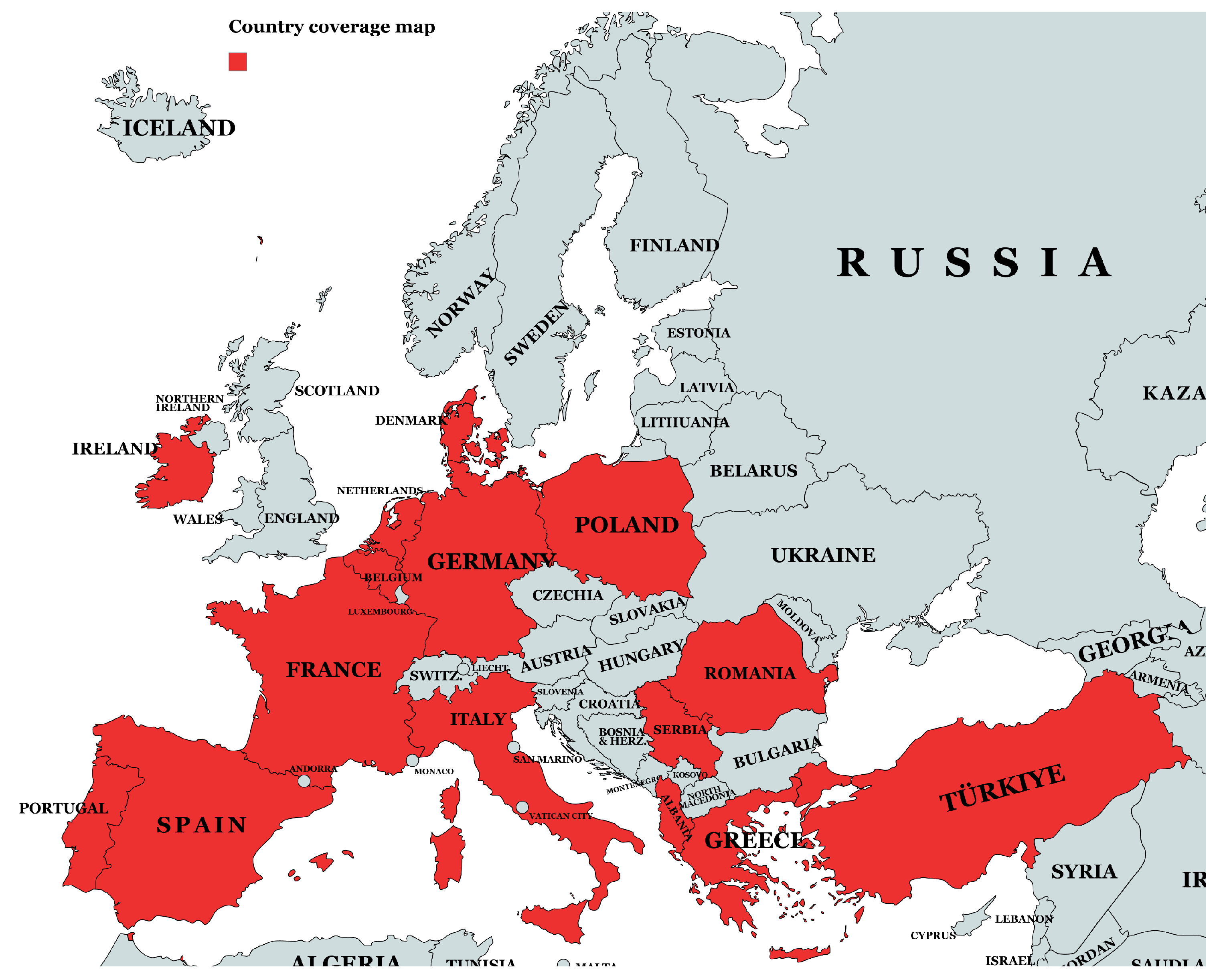
2.2. Data Sources, Country Coverage, and Variable Construction
2.3. Analytical Workflow and Alignment with Research Questions
2.4. Statistical Environment and Reporting Conventions
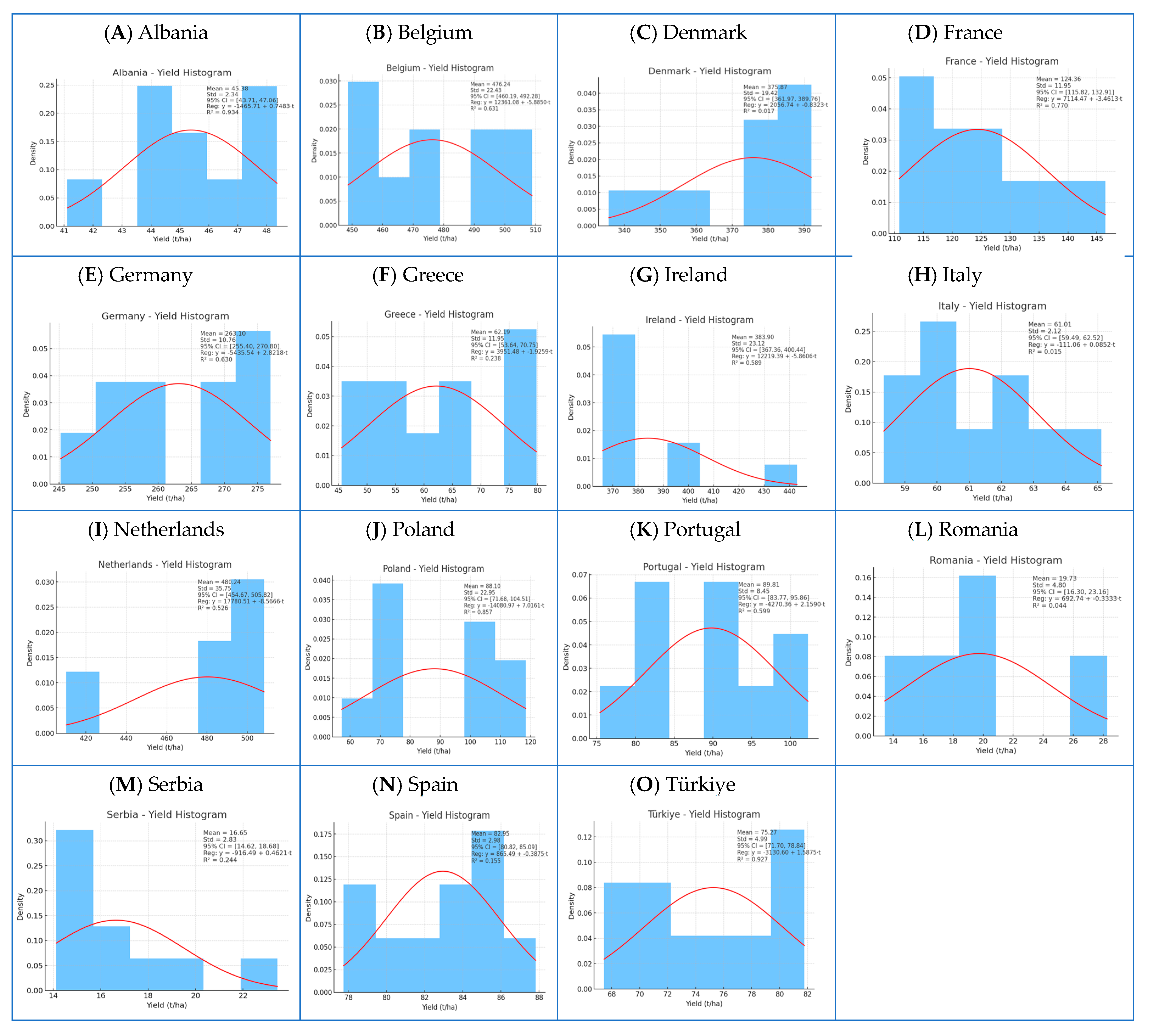
2.5. Descriptive Profiling and Yield Distribution Analysis
2.6. Yield Variability and Stability Indicators
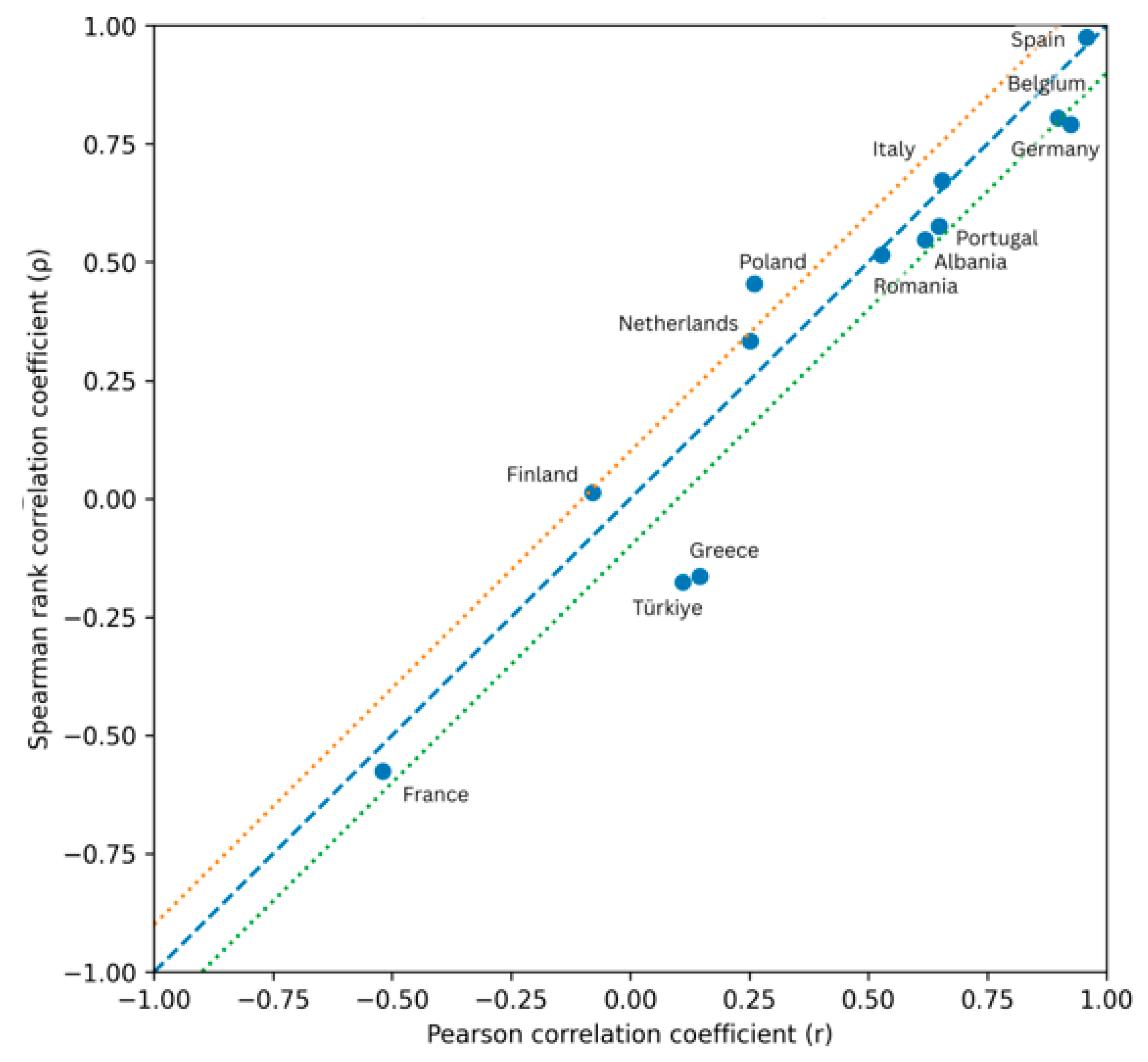
2.7. Area–Production Association (Area–Output Coupling)
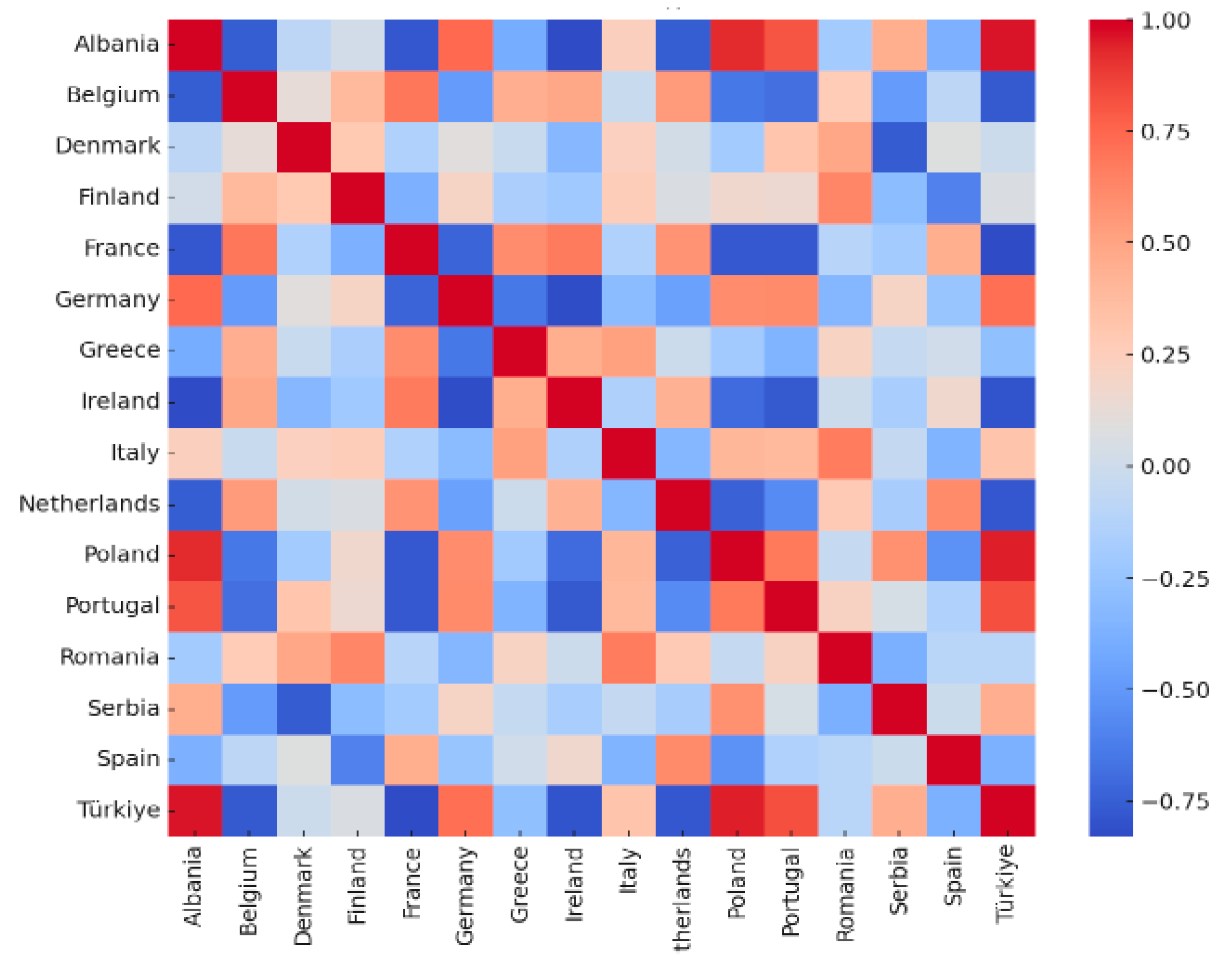
2.8. Exploratory Analysis of Yield-Related Correlations
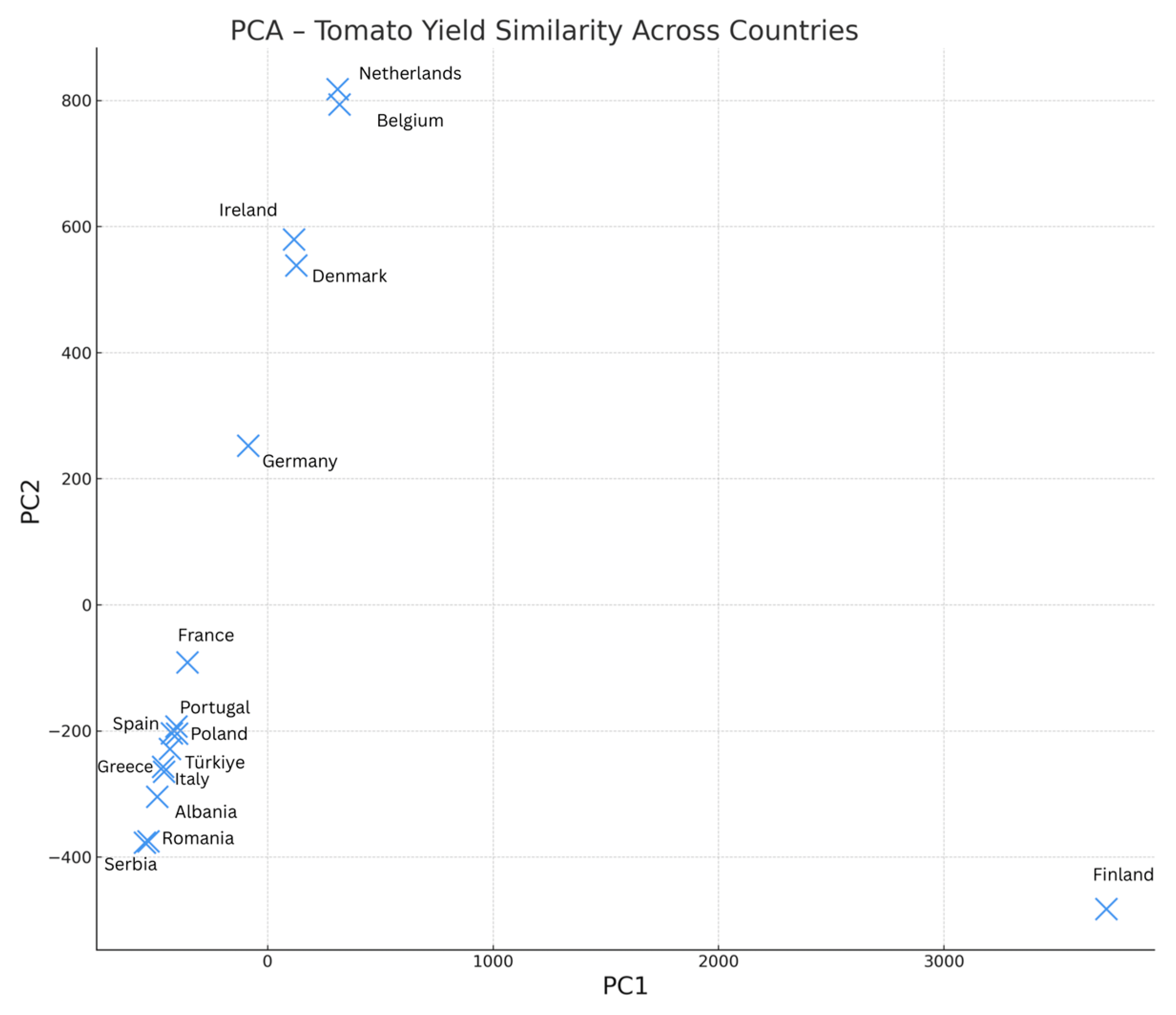
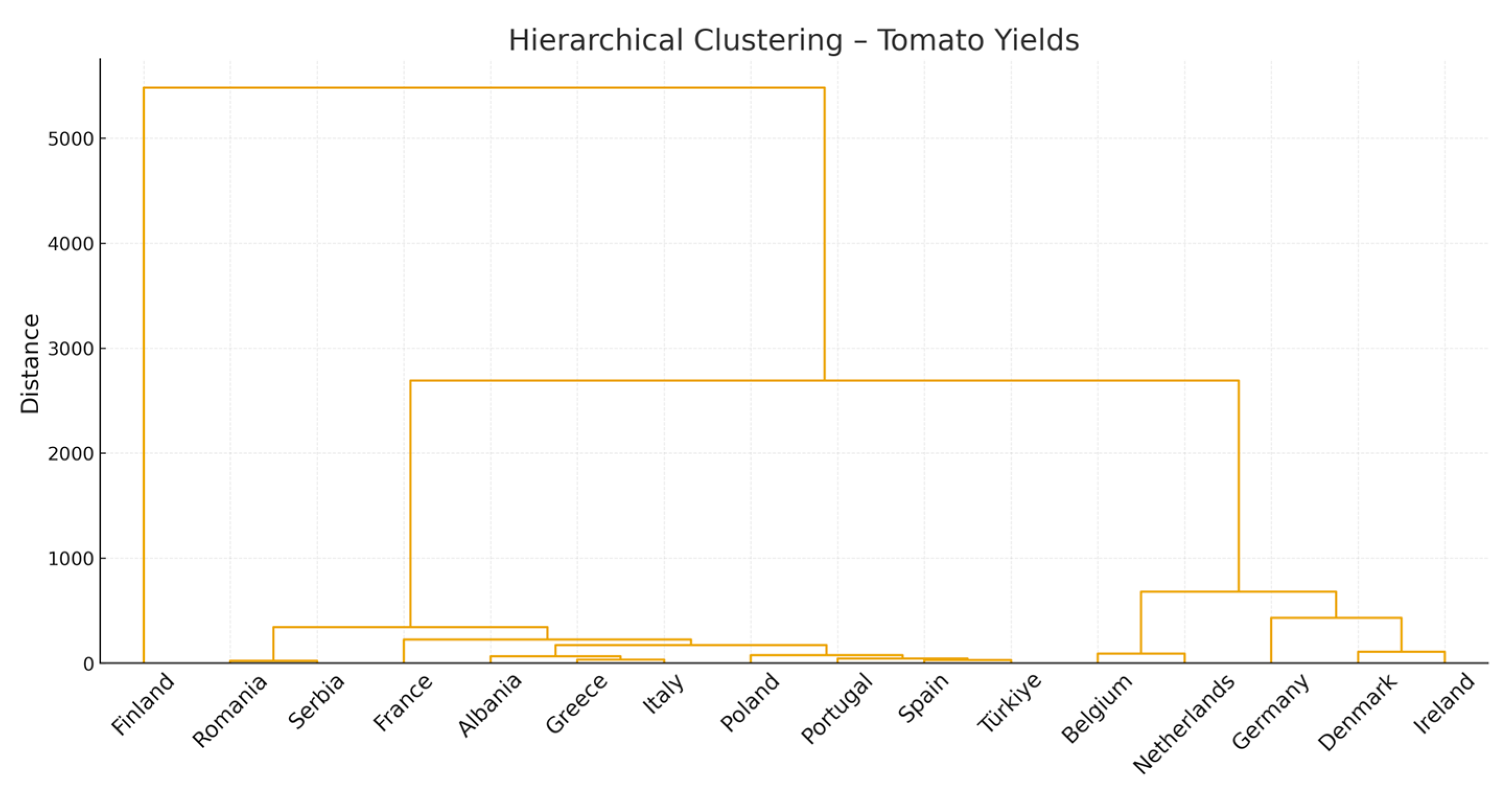
2.9. Multivariate Classification of Structural Performance Patterns
- (a)
- Kaiser–Meyer–Olkin (KMO) index evaluates the proportion of common variance among variables relative to total variance.
- (b)
- Bartlett’s test of sphericity tests the null hypothesis that the correlation matrix is an identity matrix. Dataset suitability for factor-type multivariate analysis was evaluated in accordance with standard methodological recommendations for agri-economic applications. Interpretation thresholds followed common guidelines (KMO > 0.60 indicates adequacy; p < 0.05 indicates statistical significance).
- (c)
- Cumulative explained variance was used to determine the proportion of overall yield variability captured by the first principal components. PCA results are reported through eigenvalues, component loadings, and cumulative explained variance for retained components, enabling interpretation of the latent axes and their contribution to cross-country yield differences.
3. Results
3.1. Descriptive Overview of European Tomato Production Systems (2015–2024)
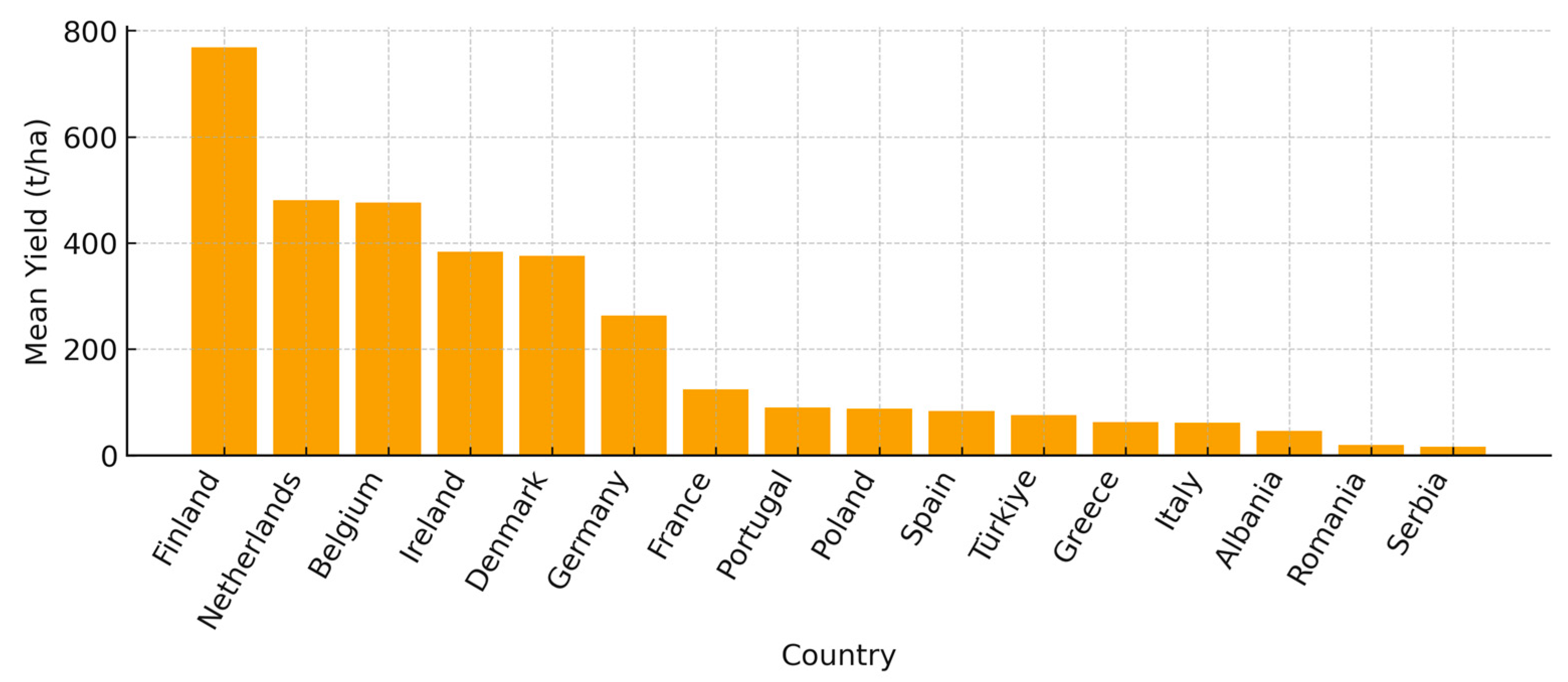
3.2. Comparative Yield Analysis (2015–2024): Mean Performance, Variability, and Area–Production Coupling
3.3. PCA and Cluster Analysis of Yield Profiles Across Countries
4. Discussion
4.1. Interpreting National Yield Patterns Through a TAPE-Informed Lens
4.2. Structural Stratification of Yield Levels and “Stability Signals”
4.3. Area–Production Coupling as a Structural Proxy (Not a Causal Indicator)
4.4. Typologies and Multivariate Groupings: Linking Performance Profiles to Transition Narratives
4.5. Interpreting Romania in the Macro Typology
4.6. Data Artefacts and Analytical Outliers
4.7. Implications for Agroecological Transition and Policy Targeting
4.8. Limitations
5. Conclusions
Supplementary Materials
Author Contributions
Funding
Institutional Review Board Statement
Data Availability Statement
Acknowledgments
Conflicts of Interest
References
- Kaymak, H.Ç.; Aksoy, A. Tomato Production and Price in the European Union. Sci. Pap. Ser. Manag. Econ. Eng. Agric. Rural. Dev. 2025, 25, 537–548. [Google Scholar]
- Hernandez, M.F.; Antonio-Ordoñez, E.; Preciado-Rangel, P.; Gallegos-Robles, M.A.; Vázquez-Vázquez, C.; Reyes-Gonzales, A.; Esparza-Rivera, J.R. Effect of Substrates Formulated with Organic Materials on Yielding, Commercial and Phytochemical Quality, and Benefit-Cost Ratio of Tomato (Solanum lycopersicum L.) Produced under Greenhouse Conditions. Not. Bot. Horti Agrobot. Cluj-Napoca 2021, 49, 11999. [Google Scholar] [CrossRef]
- Gutierrez, E.E.V. An Overview of Recent Studies of Tomato (Solanum lycopersicum spp.) from a Social, Biochemical and Genetic Perspective on Quality Parameters. Alnarp. Swed. Sver. Lantbruksuniversitet. 2018, 2018, 3. [Google Scholar]
- EUROSTAT. How Much Fruit and Vegetables Does the EU Harvest? Available online: https://ec.europa.eu/eurostat/web/products-eurostat-news/w/ddn-20250825-1 (accessed on 6 January 2026).
- Panno, S.; Davino, S.; Caruso, A.G.; Bertacca, S.; Crnogorac, A.; Mandić, A.; Noris, E.; Matić, S. A Review of the Most Common and Economically Important Diseases That Undermine the Cultivation of Tomato Crop in the Mediterranean Basin. Agronomy 2021, 11, 2188. [Google Scholar] [CrossRef]
- Albu, V.C.; Odagiu, A.C.M.; Borsai, O.; Negrușier, C.; Maxim, A. Control Methods of the Late Blight Attack (Phytophthora infestans) in Tomatoes, in the Organic Culture System. AgroLife Sci. J. 2025, 14, 9–21. [Google Scholar]
- Naika, S.; Lidth de Jeude, J.V.; de Goffau, M.; Hilmi, M.; van Dam, B. Cultivation of Tomato: Production, Processing and Marketing; Agromisa Foundation: Wageningen, The Netherlands; CTA: Wageningen, The Netherlands, 2005; Volume 17. [Google Scholar]
- Pinela, J.; Barros, L.; Carvalho, A.M.; Ferreira, I.C.F.R. Nutritional Composition and Antioxidant Activity of Four Tomato (Lycopersicon esculentum L.) Farmer’ Varieties in Northeastern Portugal Homegardens. Food Chem. Toxicol. Int. J. Publ. Br. Ind. Biol. Res. Assoc. 2012, 50, 829–834. [Google Scholar] [CrossRef]
- Jin, S.; Zhou, L. Consumer Interest in Information Provided by Food Traceability Systems in Japan. Food Qual. Prefer. 2014, 36, 144–152. [Google Scholar] [CrossRef]
- Dandage, K.; Badia-Melis, R.; Ruiz-García, L. Indian Perspective in Food Traceability: A Review. Food Control 2017, 71, 217–227. [Google Scholar] [CrossRef]
- Anastasiadis, F.; Apostolidou, I.; Michailidis, A. Food Traceability: A Consumer-Centric Supply Chain Approach on Sustainable Tomato. Foods 2021, 10, 543. [Google Scholar] [CrossRef]
- EUROSTAT. The Fruit and Vegetable Sector in the EU—A Statistical Overview. Available online: https://ec.europa.eu/eurostat/statistics-explained/index.php?title=The_fruit_and_vegetable_sector_in_the_EU_-_a_statistical_overview (accessed on 6 January 2026).
- Paris, B.; Vandorou, F.; Balafoutis, A.T.; Vaiopoulos, K.; Kyriakarakos, G.; Manolakos, D.; Papadakis, G. Energy Use in Greenhouses in the EU: A Review Recommending Energy Efficiency Measures and Renewable Energy Sources Adoption. Appl. Sci. 2022, 12, 5150. [Google Scholar] [CrossRef]
- dos Santos, T.B.; Ribas, A.F.; de Souza, S.G.H.; Budzinski, I.G.F.; Domingues, D.S. Physiological Responses to Drought, Salinity, and Heat Stress in Plants: A Review. Stresses 2022, 2, 113–135. [Google Scholar] [CrossRef]
- Sun, Y.; Duan, L.; Zhong, H.; Cai, H.; Xu, J.; Li, Z. Effects of Irrigation-Fertilization-Aeration Coupling on Yield and Quality of Greenhouse Tomatoes. Agric. Water Manag. 2024, 299, 108893. [Google Scholar] [CrossRef]
- Kumar, R.; Bhardwaj, A.; Singh, L.P.; Singh, G.; Kumar, A.; Pattnayak, K.C. Comparative Life Cycle Assessment of Environmental Impacts and Economic Feasibility of Tomato Cultivation Systems in Northern Plains of India. Sci. Rep. 2024, 14, 7084. [Google Scholar] [CrossRef]
- Li, S.; Jensen, E.S.; Liu, N.; Zhang, Y.; Dimitrova Mårtensson, L.-M. Species Interactions and Nitrogen Use during Early Intercropping of Intermediate Wheatgrass with a White Clover Service Crop. Agronomy 2021, 11, 388. [Google Scholar] [CrossRef]
- Zhu, C.; Li, R.; Wu, S.; Miao, C.; Zhang, Y.; Cui, J.; Jiang, Y.; Ding, X. Construction of a Tomato Seedling Growth Model and Economic Benefit Analysis under Different Photoperiod Strategies in Plant Factories. Hortic. Plant J. 2025; in press, corrected proof. [Google Scholar] [CrossRef]
- Pulighe, G.; Di Fonzo, A.; Gaito, M.; Giuca, S.; Lupia, F.; Bonati, G.; De Leo, S. Climate Change Impact on Yield and Income of Italian Agriculture System: A Scoping Review. Agric. Food Econ. 2024, 12, 23. [Google Scholar] [CrossRef]
- Beaulah, A.; Rajadurai, K.R.; Anitha, T.; Rajangam, J.; Maanchi, S. Postharvest Handling and Value Added Products of Tomato to Enhance the Profitability of Farmers. Plant Sci. Today 2025, 12, 1–13. [Google Scholar] [CrossRef]
- Benítez-García, I.; Davizón, Y.A.; Hernandez-Santos, C.; de la Cruz, N.; Hernandez, A.; Quiñonez-Ruiz, A.; Smith, E.D.; Sánchez-Leal, J.; Smith, N.R.; Benítez-García, I.; et al. Mathematical Modeling and Stability Analysis of Agri-Food Tomato Supply Chains via Compartmental Analysis. World 2025, 6, 129. [Google Scholar] [CrossRef]
- Bezner Kerr, R. Agroecology as a Means to Transform the Food System. Landbauforsch. J. Sustain. Org. Agric. Syst. 2020, 70, 77–82. [Google Scholar] [CrossRef]
- Bezner Kerr, R.; Postigo, J.C.; Smith, P.; Cowie, A.; Singh, P.K.; Rivera-Ferre, M.; Tirado-von der Pahlen, M.C.; Campbell, D.; Neufeldt, H. Agroecology as a Transformative Approach to Tackle Climatic, Food, and Ecosystemic Crises. Curr. Opin. Environ. Sustain. 2023, 62, 101275. [Google Scholar] [CrossRef]
- Francaviglia, R.; Almagro, M.; Vicente-Vicente, J.L. Conservation Agriculture and Soil Organic Carbon: Principles, Processes, Practices and Policy Options. Soil Syst. 2023, 7, 17. [Google Scholar] [CrossRef]
- Schreinemachers, P.; Simmons, E.B.; Wopereis, M.C.S. Tapping the Economic and Nutritional Power of Vegetables. Glob. Food Secur. 2018, 16, 36–45. [Google Scholar] [CrossRef]
- Balzan, M.V.; Bocci, G.; Moonen, A.-C. Augmenting Flower Trait Diversity in Wildflower Strips to Optimise the Conservation of Arthropod Functional Groups for Multiple Agroecosystem Services. J. Insect Conserv. 2014, 18, 713–728. [Google Scholar] [CrossRef]
- Capobianco-Uriarte, M.D.L.M.; Aparicio, J.; Pablo-Valenciano, J.D.; Casado-Belmonte, M.D.P. The European Tomato Market. An Approach by Export Competitiveness Maps. PLoS ONE 2021, 16, e0250867. [Google Scholar] [CrossRef]
- Wezel, A.; Bellon, S.; Doré, T.; Francis, C.; Vallod, D.; David, C. Agroecology as a Science, a Movement and a Practice. A Review. Agron. Sustain. Dev. 2009, 29, 503–515. [Google Scholar] [CrossRef]
- Migliorini, P.; Gkisakis, V.; Gonzalvez, V.; Raigón, M.D.; Bàrberi, P. Agroecology in Mediterranean Europe: Genesis, State and Perspectives. Sustainability 2018, 10, 2724. [Google Scholar] [CrossRef]
- Moudrý, J.; Bernas, J.; Moudrý, J.; Konvalina, P.; Ujj, A.; Manolov, I.; Stoeva, A.; Rembiałkowska, E.; Stalenga, J.; Toncea, I.; et al. Agroecology Development in Eastern Europe—Cases in Czech Republic, Bulgaria, Hungary, Poland, Romania, and Slovakia. Sustainability 2018, 10, 1311. [Google Scholar] [CrossRef]
- Zawalinska, K.; Smyrniotopoulou, A.; Balázs, K.; Böhm, M.; Chitea, M.; Florian, V.; Fratila, M.; Gradziuk, P.; Henderson, S.; Irvine, K.; et al. Advancing the Contributions of European Stakeholders in Farming Systems to Transitions to Agroecology. EuroChoices 2022, 21, 50–63. [Google Scholar] [CrossRef]
- Vroegindewey, R.; Hodbod, J.; Vroegindewey, R.; Hodbod, J. Resilience of Agricultural Value Chains in Developing Country Contexts: A Framework and Assessment Approach. Sustainability 2018, 10, 916. [Google Scholar] [CrossRef]
- FAO. 10 Elements|Agroecology Knowledge Hub|Food and Agriculture Organization of the United Nations. Available online: http://www.fao.org/agroecology/overview/overview10elements/en/ (accessed on 11 December 2025).
- HLPE-FSN (High Level Panel of Experts on Food Security and Nutrition of the Committee on World Food Security). Agroecological and Other Innovative Approaches for Sustainable Agriculture and Food Systems That Enhance Food Security and Nutrition; FAO: Rome, Italy, 2019. [Google Scholar]
- Barrios, E.; Gemmill-Herren, B.; Bicksler, A.; Siliprandi, E.; Brathwaite, R.; Moller, S.; Batello, C.; Tittonell, P. The 10 Elements of Agroecology: Enabling Transitions towards Sustainable Agriculture and Food Systems through Visual Narratives. Ecosyst. People 2020, 16, 230–247. [Google Scholar] [CrossRef]
- Ficiciyan, A.M.; Loos, J.; Tscharntke, T. Better Performance of Organic than Conventional Tomato Varieties in Single and Mixed Cropping. Agroecol. Sustain. Food Syst. 2022, 46, 491–509. [Google Scholar] [CrossRef]
- Cruz-López, V.; Granados-Echegoyen, C.A.; Pérez-Pacheco, R.; Robles, C.; Álvarez-Lopeztello, J.; Morales, I.; Bastidas-Orrego, L.M.; García-Pérez, F.; Dorantes-Jiménez, J.; Landero-Valenzuela, N. Plant Diversity as a Sustainable Strategy for Mitigating Biotic and Abiotic Stresses in Tomato Cultivation. Front. Sustain. Food Syst. 2024, 8, 1336810. [Google Scholar] [CrossRef]
- Chidawanyika, F.; Omuse, E.R.; Agutu, L.O.; Pittchar, J.O.; Nyagol, D.; Khan, Z.R. An Intensified Cereal Push-Pull System Reduces Pest Infestation and Confers Yield Advantages in High-Value Vegetables. J. Crop Health 2025, 77, 40. [Google Scholar] [CrossRef]
- Gharbi, I.; Aribi, F.; Abdelhafidh, H.; Ferchichi, N.; Lajnef, L.; Toukabri, W.; Jaouad, M. Assessment of the Agroecological Transition of Farms in Central Tunisia Using the TAPE Framework. Resources 2025, 14, 81. [Google Scholar] [CrossRef]
- Gargano, G.; Licciardo, F.; Verrascina, M.; Zanetti, B. The Agroecological Approach as a Model for Multifunctional Agriculture and Farming towards the European Green Deal 2030—Some Evidence from the Italian Experience. Sustainability 2021, 13, 2215. [Google Scholar] [CrossRef]
- Jürkenbeck, K.; Spiller, A.; Meyerding, S.G.H. Tomato Attributes and Consumer Preferences—A Consumer Segmentation Approach. Br. Food J. 2019, 122, 328–344. [Google Scholar] [CrossRef]
- Costa-Pereira, I.; Aguiar, A.A.R.M.; Delgado, F.; Costa, C.A. A Methodological Framework for Assessing the Agroecological Performance of Farms in Portugal: Integrating TAPE and ACT Approaches. Sustainability 2024, 16, 3955. [Google Scholar] [CrossRef]
- Mejri, S.; Ghinet, A.; Magnin-Robert, M.; Randoux, B.; Abuhaie, C.-M.; Tisserant, B.; Gautret, P.; Benoit, R.; Halama, P.; Reignault, P.; et al. New Plant Immunity Elicitors from a Sugar Beet Byproduct Protect Wheat against Zymoseptoria Tritici. Sci. Rep. 2023, 13, 90. [Google Scholar] [CrossRef] [PubMed]
- Gava, O.; Vanni, F.; Schwarz, G.; Guisepelli, E.; Vincent, A.; Prazan, J.; Weisshaidinger, R.; Frick, R.; Hrabalová, A.; Carolus, J.; et al. Governance Networks for Agroecology Transitions in Rural Europe. J. Rural Stud. 2025, 114, 103482. [Google Scholar] [CrossRef]
- Havadi-Nagy, K.X. Alternative Food Networks in Romania—Effective Instrument for Rural Development? J. Settl. Spat. Plan. 2021, 15–27. [Google Scholar] [CrossRef]
- Finatto, R.A.; Eduardo, M.F. Agroecological territorial system (SITA): A theoretical-methodological proposal for the construction and analysis of agroecology. Bol. Goiano Geogr. 2021, 41, 20220104901. [Google Scholar] [CrossRef]
- Merca, N.; Teodor, R.; Merca, I.; Ona, A. Agroecology: A Real Opportunity to Fight Against the Climate Challenges. Sci. Pap. Ser. Manag. Econ. Eng. Agric. Rural Dev. 2021, 21, 393–398. [Google Scholar]
- Seremesic, S.; Jovović, Z.; Jug, D.; Djikic, M.; Dolijanović, Ž.; Bavec, F.; Jordanovska, S.; Bavec, M.; Đurđević, B.; Jug, I. Agroecology in the West Balkans: Pathway of Development and Future Perspectives. Agroecol. Sustain. Food Syst. 2021, 45, 1213–1245. [Google Scholar] [CrossRef]
- Ujj, A.; Ramos-Diaz, F.; Jancsovszka, P. Potential of Including Social Farming Initiatives within Agroecological Transition in Hungarian Farms. Eur. Countrys. 2022, 14, 456–474. [Google Scholar] [CrossRef]
- Zubov, A.; Zubova, L.; Zubov, A. Assessing the Possibility of Use Waste Rock Dumps as Elements of Ecological Network to Deter Agricultural Land Degradation and Promote Biodiversity in Mining Regions. J. Ecol. Eng. 2024, 25, 152–164. [Google Scholar] [CrossRef]
- Rusch, A. Nature-Based Solutions to Increase Sustainability and Resilience of Vineyard-Dominated Landscapes. Basic Appl. Ecol. 2025, 82, 70–78. [Google Scholar] [CrossRef]
- Gătejel, A.-M.; Maiello, A. Commoning, Access, and Sovereignty: Disentangling Land–Food Relations in the Case of Peasant Livestock Farmers in Romania. Elem. Sci. Anthr. 2024, 12, 00060. [Google Scholar] [CrossRef]
- Ilie, D.M.; Berevoianu, R.L.; Giucă, A.-D. The Economic Efficiency of Tomato Cultivation and the Impact of the “De Minimis” Scheme on the Profitability and Competitiveness of Romanian Farmers. Proc. Int. Conf. Bus. Excell. 2025, 19, 1349–1361. [Google Scholar] [CrossRef]
- Roman, G.; Toader, M.; Patrikakis, C.; Manouelis, M. Current Status Regarding the Use of Digital Educational Material and Internet Tools About Organic Agriculture and Agroecology in the European Agricultural Universities. Sci. Pap. Ser. A 2010, LIII, 352–357. [Google Scholar]
- Petrescu, D.C.; Petrescu-Mag, R.M.; Burny, P.; Azadi, H. A New Wave in Romania: Organic Food. Consumers’ Motivations, Perceptions, and Habits. Agroecol. Sustain. Food Syst. 2017, 41, 46–75. [Google Scholar] [CrossRef]
- Petcu, V.; Bubueanu, C.; Casarica, A.; Săvoiu, G.; Stoica, R.; Bazdoaca, C.; Lazăr, D.A.; Iordan, H.L.; Horhocea, D. Efficacy of Trichoderma Harzianum and Bacillus Subtilis as Seed and Vegetation Application Combined with Integrated Agroecology Measures on Maize. Rom. Agric. Res. 2023, 40, 439–448. [Google Scholar] [CrossRef]
- Oprea, A.; Velicu, I.; Delibas, H.-I.; Pedro, S. “We Grow Earth”: Performing Eco-Agrarian Citizenship at the Semi-Periphery of Europe. Environ. Polit. 2024, 33, 778–798. [Google Scholar] [CrossRef]
- Brezeanu, P.M.; Brezeanu, C.; Tremurici, A.A.; Bute, A. Effects of Organic Inputs Application on Yield and Qualitative Parameters of Tomatoes and Peppers. Sci. Pap. Ser. B Hortic. 2022, LXVI, 429–437. [Google Scholar]
- EUROSTAT. Crop Production in EU Standard Humidity. Tomato. 2025. Available online: https://ec.europa.eu/eurostat/databrowser/view/apro_cpsh1__custom_17693045/bookmark/table?lang=en&bookmarkId=60fa40ea-dda7-4031-8f79-5d80237bc0c6&c=1754643083822 (accessed on 6 January 2026).

| Variable | Unit | Description | Data Source | Countries Covered |
|---|---|---|---|---|
| Cultivated area | ha | Total annual tomato cultivated area | Eurostat, FAOSTAT, national reports | 15 European countries |
| Production | tonnes | Total annual tomato production | Eurostat, FAOSTAT | 15 countries |
| Yield | t/ha or kg/m2 | Derived as P/A | Computed indicator | 15 countries |
| Agroecology-related descriptors | qualitative | Rotation, IPM, compost, organic area | National reports | Country-dependent |
| Climate indicators | °C, mm, events/year | Temperature, precipitation, extreme events | FAO, national meteorological agencies | Country-dependent |
| Technological indicators | % area, infrastructure | Irrigation %, greenhouse %, fertigation | National agricultural reports | Country-dependent |
| Objective | Description | Method Applied | Statistical Outputs |
|---|---|---|---|
| Comparative series analysis | Area and production evolution | Descriptive statistics; time-series visualization | mean, SD, CI |
| Yield distribution and variability | Distribution, variability, stability | Histograms, CV%, normality checks | CV%, histogram shape |
| Classification | Grouping countries by performance | PCA; Ward hierarchical clustering | eigenvalues, loadings, dendrogram |
| Temporal trends | Trend evolution and structural stability | Linear/polynomial regression | slope, p-value, R2 |
| Exploratory modelling of yield determinants | Associations between yield and agroecology-related, climatic, and technological proxies (macro-level) | Multiple regression (OLS), exploratory; collinearity diagnostics (VIF) | standardized coefficients, p-values, adjusted R2, VIF, residual diagnostics |
| Area–production coupling robustness | Testing linearity/monotonicity and model form | Pearson and Spearman correlations; linear vs. quadratic regression; Ramsey RESET; AIC/BIC comparison | ** r, ρ |
| Country | Mean Yield (t/ha) | Std. Dev. | CI95–Lower | CI95–Upper | Ranking |
|---|---|---|---|---|---|
| Netherlands | 480.24 | 35.75 | 454.67 | 505.81 | 1 |
| Belgium | 476.24 | 22.43 | 460.19 | 492.28 | 2 |
| Ireland | 383.90 | 23.12 | 367.36 | 400.43 | 3 |
| Denmark | 375.87 | 19.42 | 361.97 | 389.76 | 4 |
| Germany | 263.10 | 10.76 | 255.40 | 270.79 | 5 |
| France | 124.36 | 11.95 | 115.82 | 132.91 | 6 |
| Portugal | 89.81 | 8.45 | 83.77 | 95.85 | 7 |
| Poland | 88.10 | 22.95 | 71.68 | 104.51 | 8 |
| Spain | 82.95 | 2.98 | 80.81 | 85.09 | 9 |
| Türkiye | 75.27 | 4.99 | 71.69 | 78.84 | 10 |
| Greece | 62.19 | 11.95 | 53.64 | 70.74 | 11 |
| Italy | 61.01 | 2.11 | 59.49 | 62.52 | 12 |
| Albania | 45.38 | 2.34 | 43.71 | 47.06 | 13 |
| Romania | 19.73 | 4.80 | 16.30 | 23.16 | 14 |
| Serbia | 16.65 | 2.83 | 14.62 | 18.68 | 15 |
| Country | CV (%) | CDV | Coppock |
|---|---|---|---|
| Albania | 5.17 | 1.33 | 2.02 |
| Belgium | 4.71 | 2.86 | 4.90 |
| Denmark | 5.17 | 5.12 | 5.01 |
| France | 9.61 | 4.61 | 6.27 |
| Germany | 4.09 | 2.49 | 3.45 |
| Greece | 19.22 | 16.78 | 19.04 |
| Ireland | 6.02 | 3.86 | 4.08 |
| Italy | 3.47 | 3.44 | 3.76 |
| Netherlands | 7.44 | 5.12 | 6.73 |
| Poland | 26.05 | 9.85 | 13.63 |
| Portugal | 9.41 | 5.96 | 7.43 |
| Romania | 24.32 | 23.78 | 21.94 |
| Serbia | 17.03 | 14.81 | 19.37 |
| Spain | 3.60 | 3.31 | 5.58 |
| Türkiye | 6.63 | 1.79 | 2.00 |
| Typology of States | Countries | Histogram Characteristics | Production System Characteristics |
|---|---|---|---|
| Belgium, Germany, Italy, Portugal, Spain | Low dispersion; near-normal shapes; narrow confidence intervals; stable or slightly increasing trends. | High stability and predictable yields; advanced technological control; efficient irrigation; strong integration in value chains. |
| Albania, Romania, Serbia | Moderate dispersion; deviations from normality; wider confidence intervals; climate- and economy-driven variability. | Partial modernization; yields sensitive to irrigation, fertilizers and infrastructure; mixed farm structures with unequal performance. |
| Greece, Poland, Netherlands | High dispersion; long tails; outliers; clear deviations from normal distribution. | High climatic exposure; heterogeneous agricultural structures; variability linked to energy costs and input prices. |
| Ireland, Denmark | Flat histograms; almost no variability; constant yields; extremely small, cultivated areas. | Micro-production; limited economic relevance; unsuitable for robust econometric comparison. |
| Türkiye | Compact but high-value distributions; moderate variability; stable long-term trends. | Large-scale diverse production; mix of open-field and protected systems; marked regional heterogeneity not visible in aggregated data. |
| Country | Pearson (r) | Spearman (ρ) | |r − ρ| | RESET p-Value | AIC (Linear) | AIC (Quadratic) | BIC (Linear) | BIC (Quadratic) | Relationship Type |
|---|---|---|---|---|---|---|---|---|---|
| Albania | 0.619 | 0.547 | 0.072 | 0.4292 | 223.2 | 224.3 | 223.9 | 225.2 | Moderate, approximately linear |
| Belgium | 0.898 | 0.805 | 0.093 | 0.8756 | 213.9 | 215.9 | 214.6 | 216.8 | Strong, approximately linear |
| Denmark | NA | NA | NA | NA | NA | NA | NA | NA | Not applicable |
| France | −0.521 | −0.576 | 0.055 | 0.0073 | 244.9 | 243.2 | 245.5 | 244.1 | Negative, approximately linear |
| Germany | 0.925 | 0.791 | 0.134 | 0.0260 | 193.8 | 188.2 | 194.4 | 189.1 | Strong, nonlinear |
| Greece | 0.146 | −0.164 | 0.310 | 0.0675 | 266.6 | 265.9 | 267.2 | 266.8 | Weak, unstable |
| Ireland | NA | NA | NA | NA | NA | NA | NA | NA | Not applicable |
| Italy | 0.654 | 0.673 | 0.018 | 0.9174 | 276.8 | 278.1 | 277.4 | 279.0 | Moderate, linear |
| Netherlands | 0.251 | 0.333 | 0.082 | 0.8900 | 252.6 | 254.6 | 253.2 | 255.5 | Weak–moderate |
| Poland | 0.260 | 0.455 | 0.194 | 0.0001 | 256.1 | 253.7 | 256.7 | 254.6 | Nonlinear |
| Portugal | 0.649 | 0.576 | 0.073 | 0.3422 | 268.3 | 268.9 | 268.9 | 269.9 | Moderate |
| Romania | 0.529 | 0.515 | 0.013 | 0.4888 | 258.2 | 259.5 | 258.8 | 260.4 | Moderate, linear |
| Spain | 0.959 | 0.976 | 0.017 | 0.1920 | 269.1 | 271.1 | 269.7 | 272.0 | Very strong, linear |
| Türkiye | 0.110 | −0.176 | 0.286 | 0.0357 | 299.1 | 301.1 | 299.7 | 302.0 | Weak, nonlinear |
Disclaimer/Publisher’s Note: The statements, opinions and data contained in all publications are solely those of the individual author(s) and contributor(s) and not of MDPI and/or the editor(s). MDPI and/or the editor(s) disclaim responsibility for any injury to people or property resulting from any ideas, methods, instructions or products referred to in the content. |
© 2026 by the authors. Licensee MDPI, Basel, Switzerland. This article is an open access article distributed under the terms and conditions of the Creative Commons Attribution (CC BY) license.
Share and Cite
Ciceoi, R.; Cofas, E.; Nitulescu, F.-D.; Stoicea, P. Agroecology and Structural Performance of European Tomato Cropping Systems: A TAPE-Informed Cross-Country Analysis. Agriculture 2026, 16, 263. https://doi.org/10.3390/agriculture16020263
Ciceoi R, Cofas E, Nitulescu F-D, Stoicea P. Agroecology and Structural Performance of European Tomato Cropping Systems: A TAPE-Informed Cross-Country Analysis. Agriculture. 2026; 16(2):263. https://doi.org/10.3390/agriculture16020263
Chicago/Turabian StyleCiceoi, Roxana, Elena Cofas, Florin-Daniel Nitulescu, and Paula Stoicea. 2026. "Agroecology and Structural Performance of European Tomato Cropping Systems: A TAPE-Informed Cross-Country Analysis" Agriculture 16, no. 2: 263. https://doi.org/10.3390/agriculture16020263
APA StyleCiceoi, R., Cofas, E., Nitulescu, F.-D., & Stoicea, P. (2026). Agroecology and Structural Performance of European Tomato Cropping Systems: A TAPE-Informed Cross-Country Analysis. Agriculture, 16(2), 263. https://doi.org/10.3390/agriculture16020263

