Multi-Dimensional Monitoring of Agricultural Drought at the Field Scale



Abstract
1. Introduction
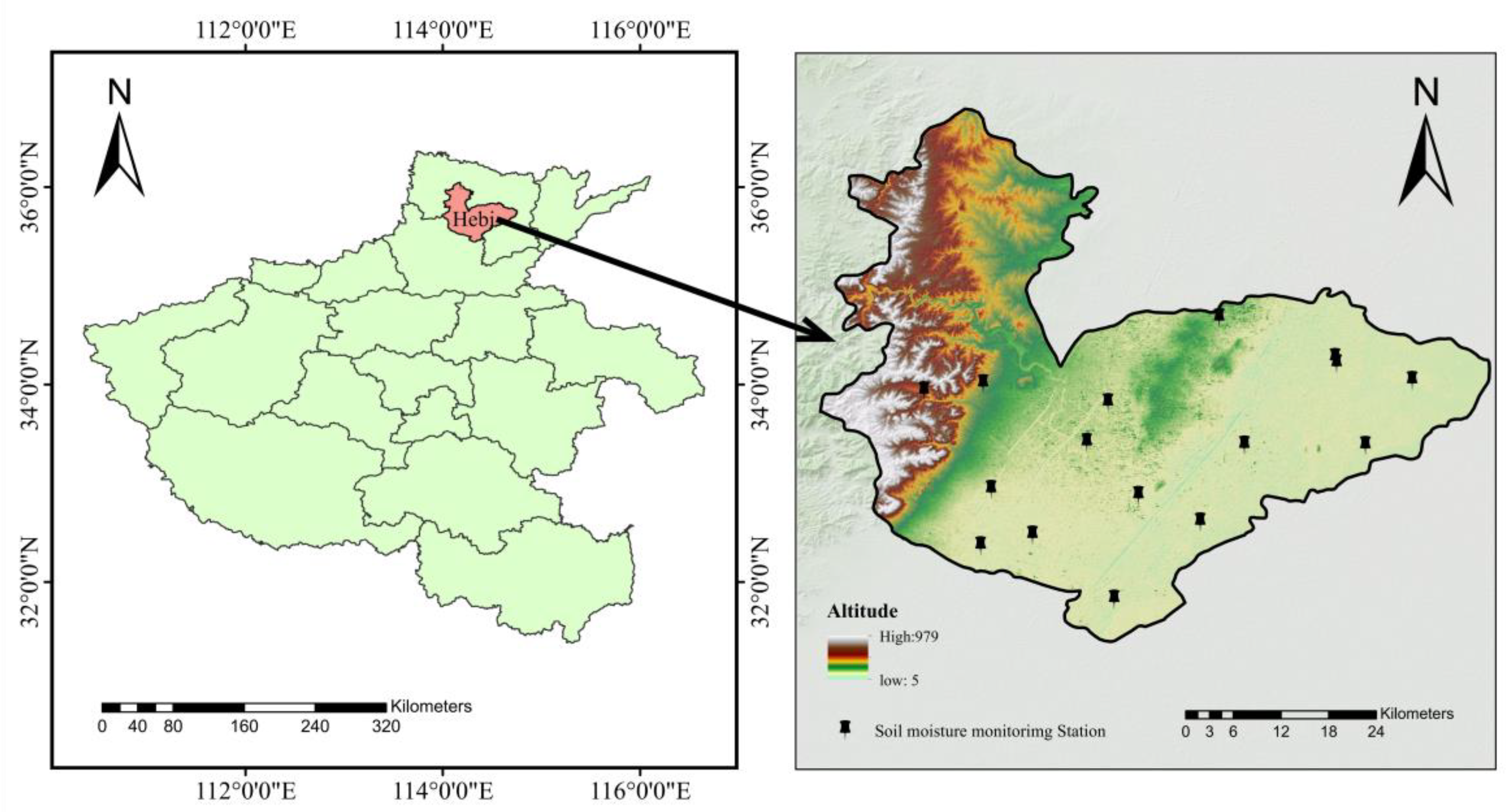
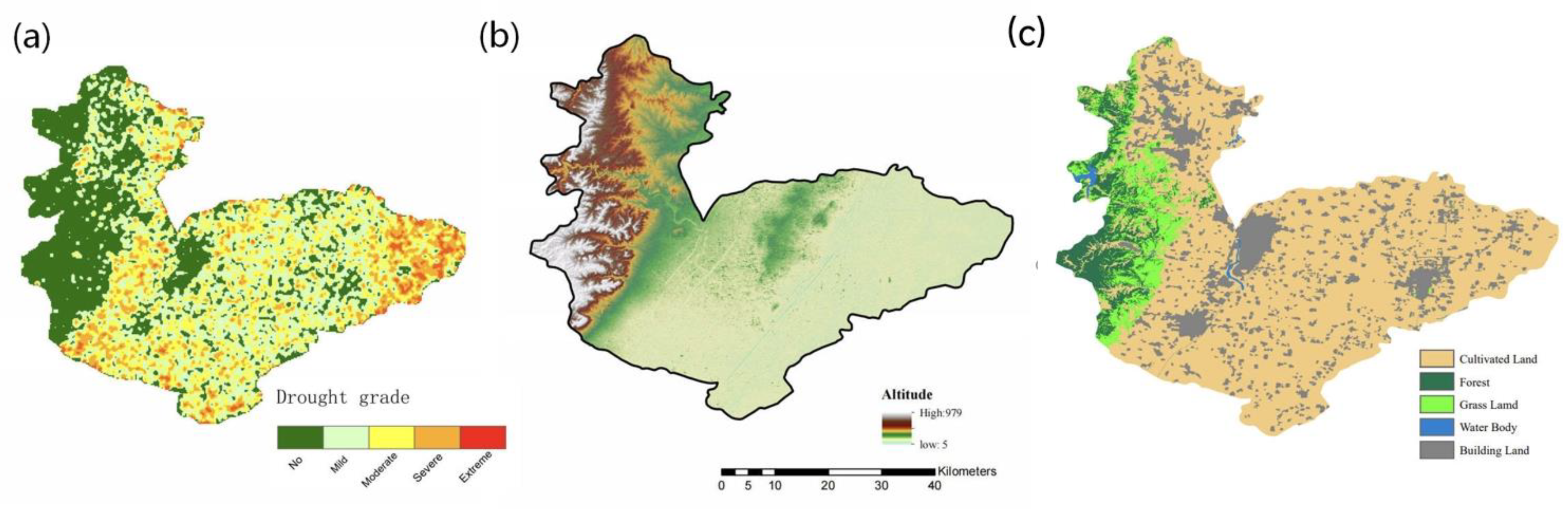
2. Study Area
3. Materials and Methods
3.1. Data Sets
3.1.1. Site Soil Moisture and Rainfall Data
3.1.2. Sentinel Satellite Series Data
3.1.3. ASTER GDEM Version 3.0 Elevation Data
3.1.4. GPM Global Precipitation Data
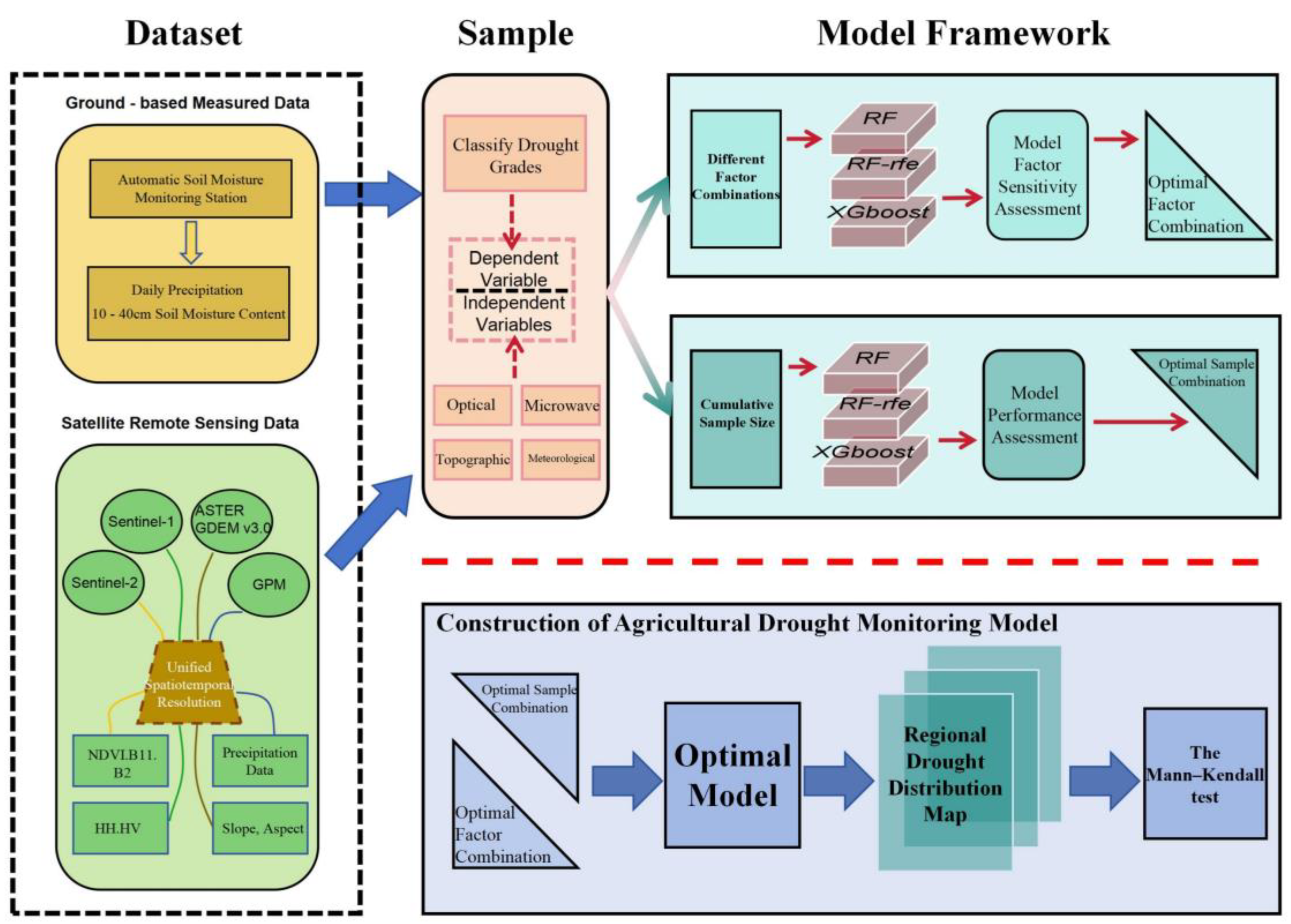
3.2. Methods
3.2.1. Machine Learning Models
3.2.2. Sample Collection and Processing
3.2.3. Model Construction
3.3. Model Accuracy Evaluation
3.3.1. Model Factor Sensitivity Assessment
3.3.2. Model Performance Evaluation
3.3.3. Timing Sequence Analysis Method
4. Results
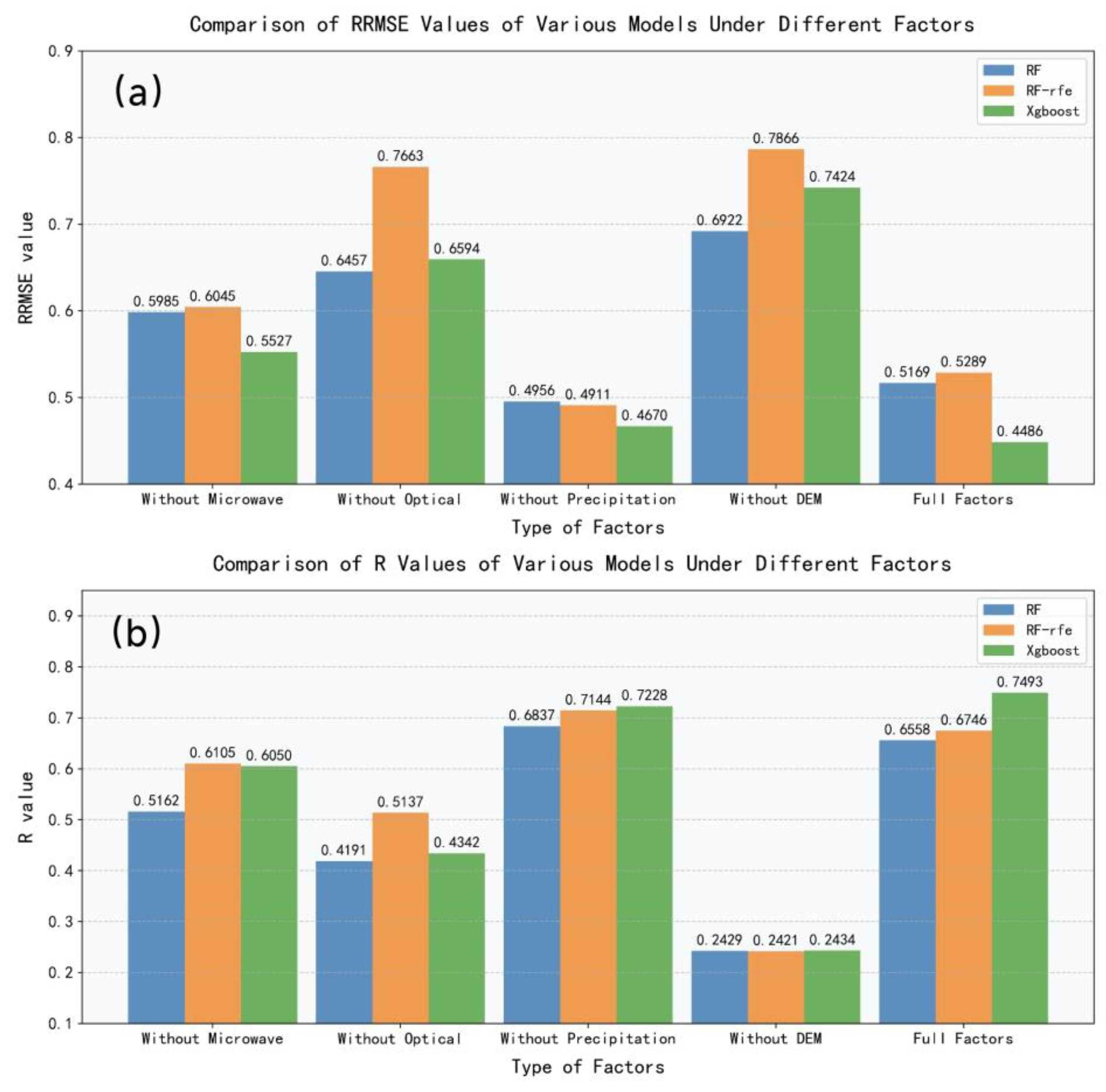
4.1. Selection of Model Sample Types
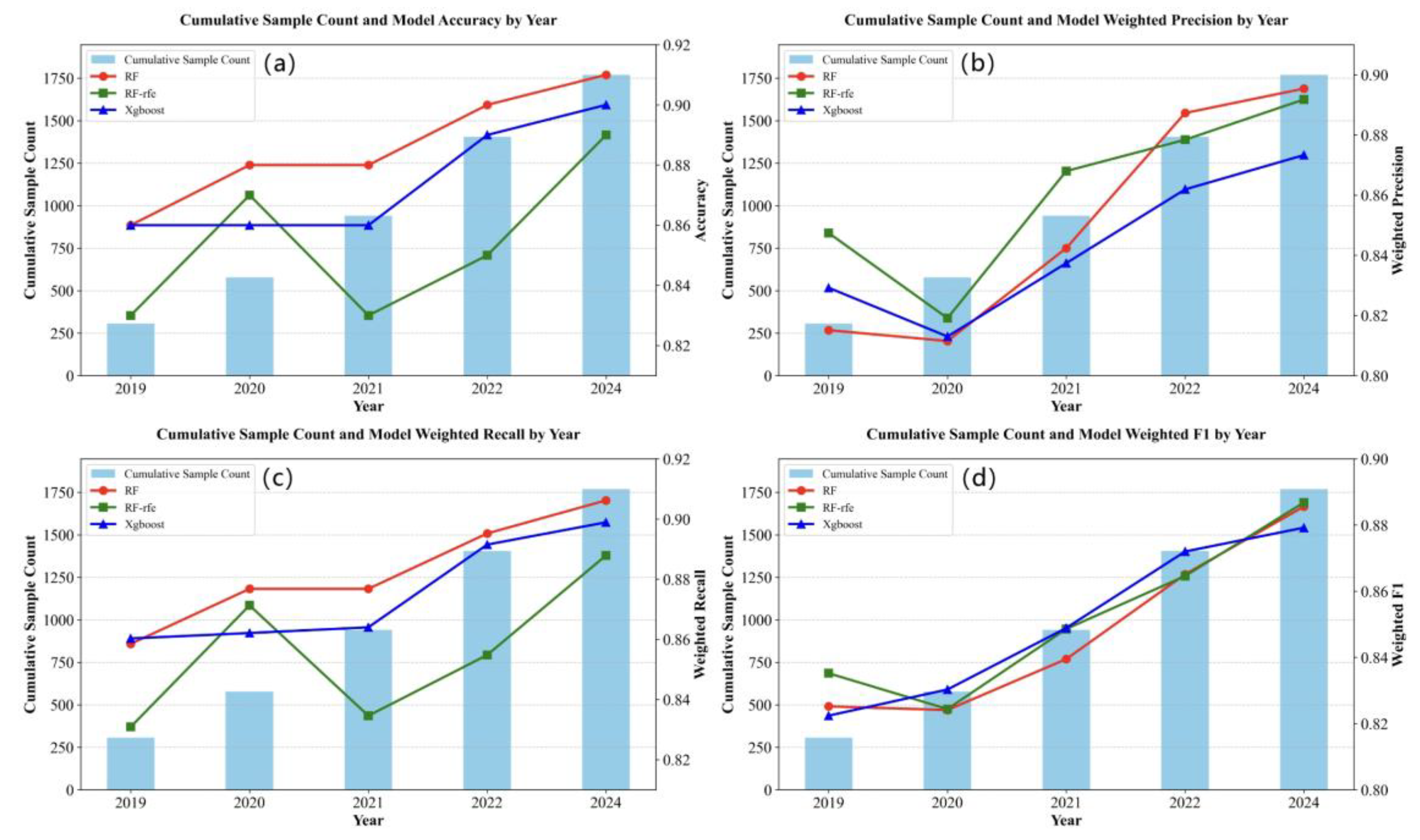
4.2. Cumulative Selection of Model Samples
4.3. Optimal Model Performance
4.4. Drought Monitoring Results
5. Discussion
6. Conclusions
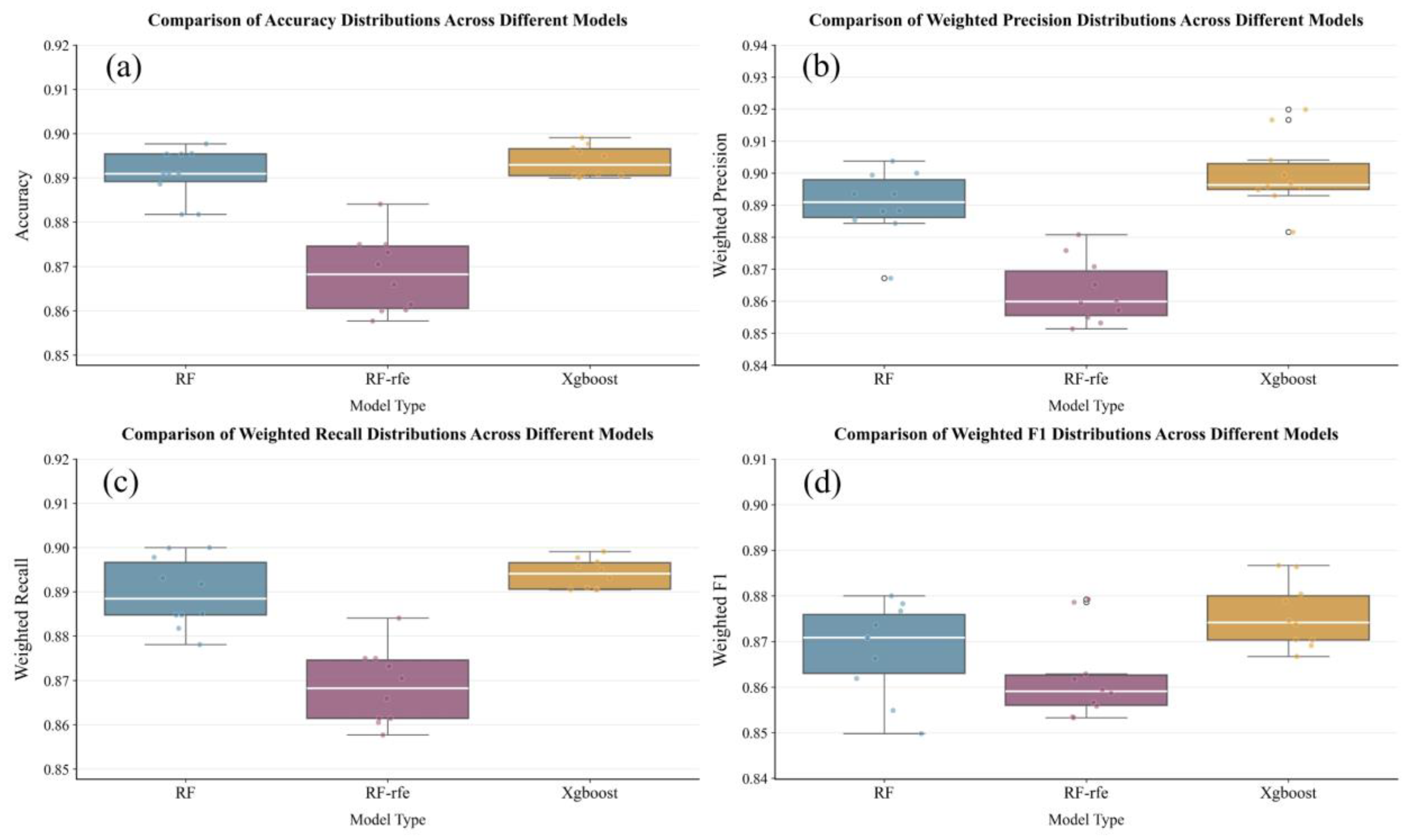
- Sentinel series remote sensing data with medium resolution performed well in the three models, and the accuracy of drought identification exceeded 86% in all cases.
- Among all input factors, Digital Elevation Model (DEM) data had the greatest influence and was a core identification factor. Removing this factor would lead to a sharp increase in the Relative Root Mean Square Error (RRMSE).
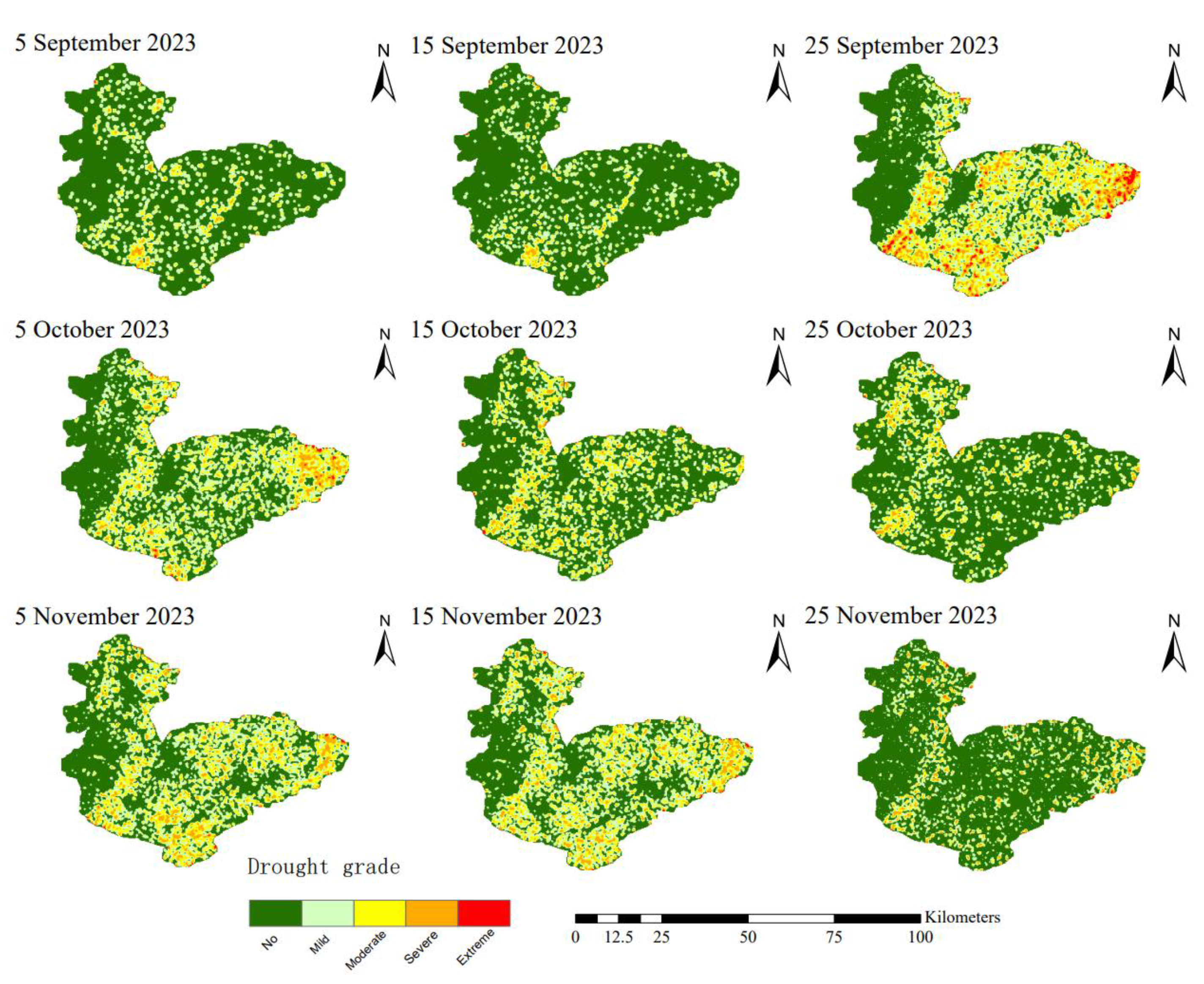
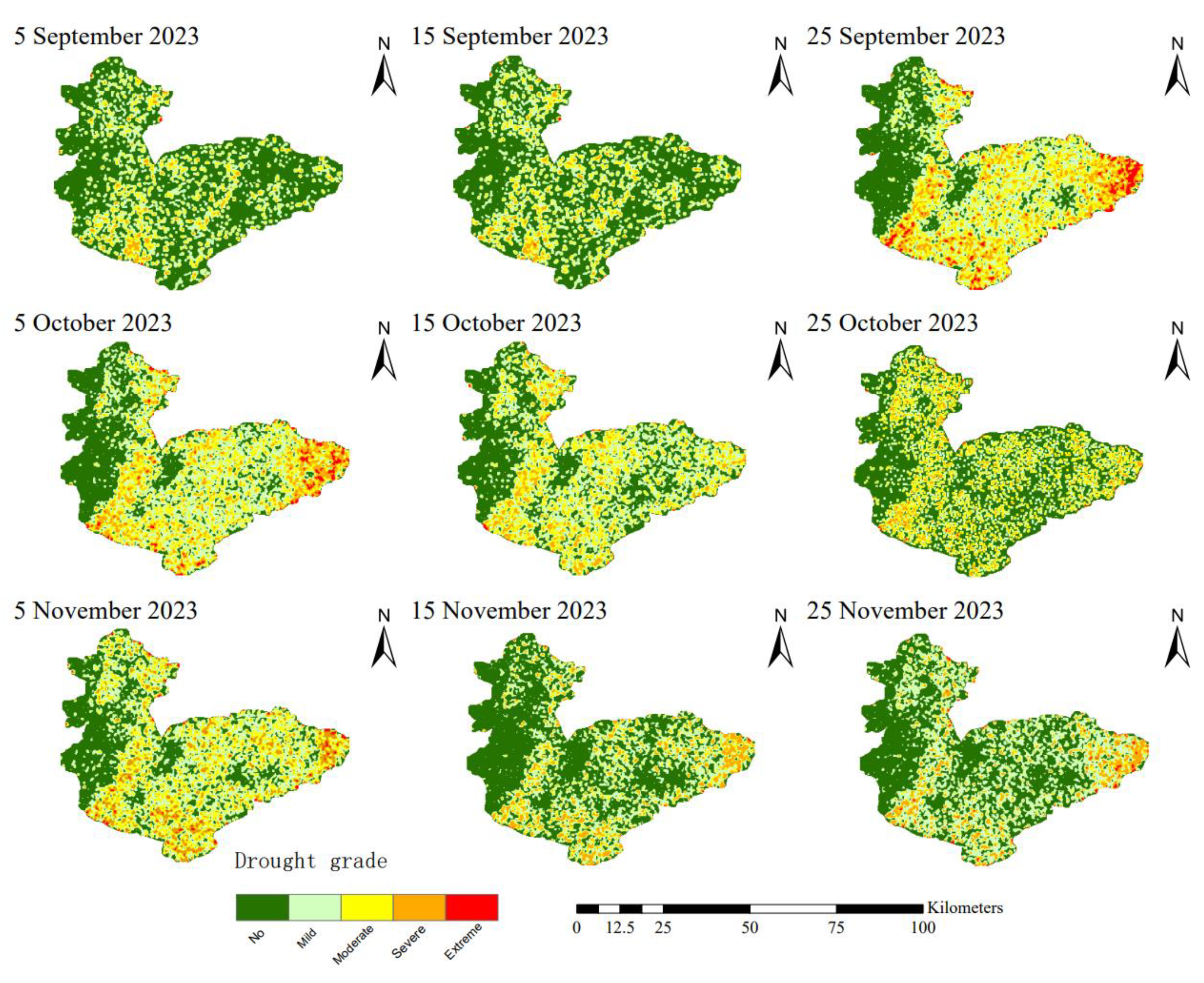
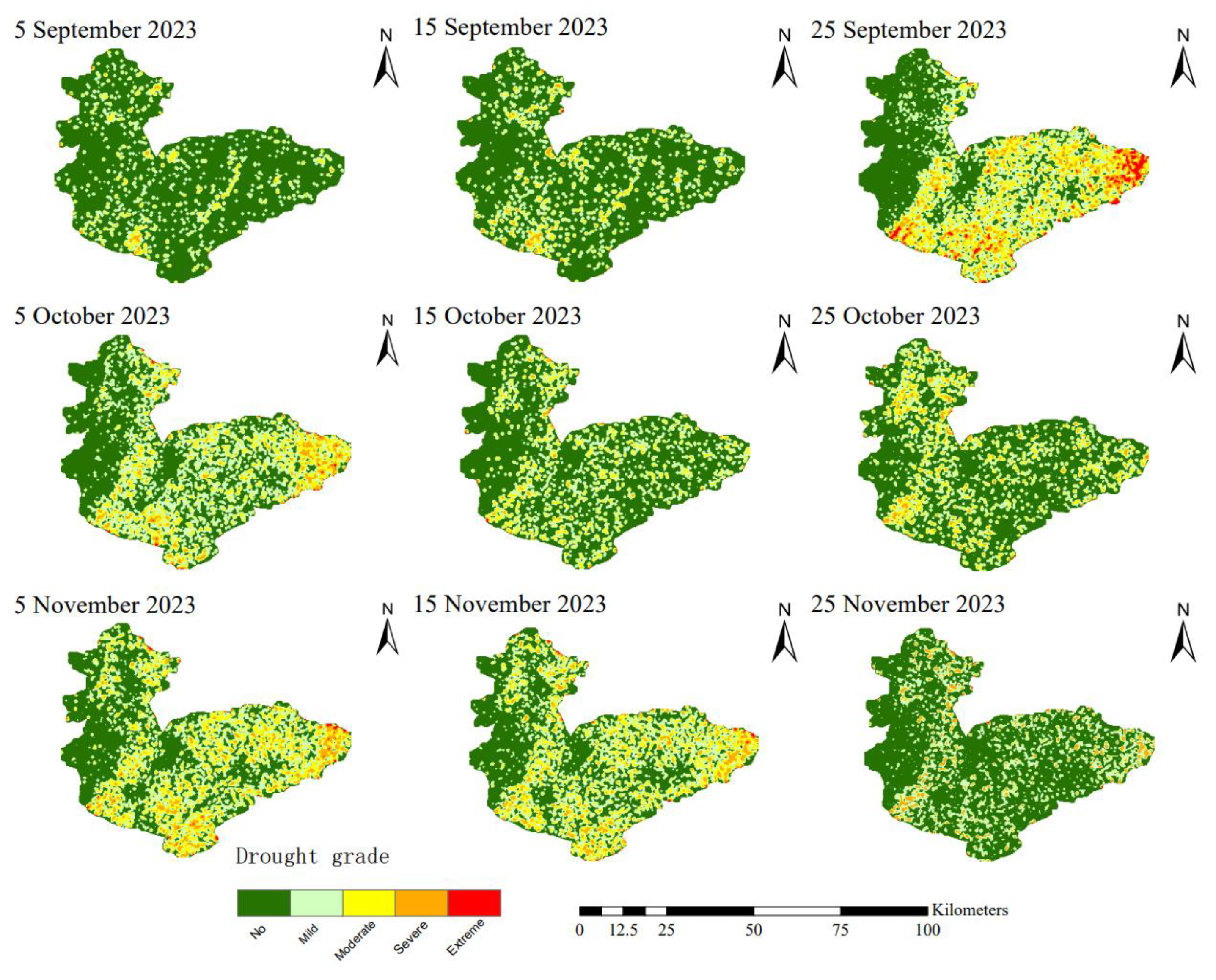
- Compared with the other two models, XGBoost was superior to the other RF-based models in terms of accuracy and stability; under the same sample conditions, RF-RFE was the most sensitive to drought responses.
- The drought monitoring model developed in this study can provide reference for irrigation scheduling in the study area by identifying drought occurrence characteristics. Surface land use types—particularly vegetation cover—influence regional water budgets and drought formation processes, potentially affecting monitoring accuracy. Future work may consider incorporating these factors into model optimization to further enhance the precision of irrigation guidance.
Author Contributions
Funding
Informed Consent Statement
Data Availability Statement
Conflicts of Interest
References
- Mishra, A.K.; Singh, V.P. A review of drought concepts. J. Hydrol. 2010, 391, 202–216. [Google Scholar] [CrossRef]
- Sánchez, N.; González-Zamora, Á.; Martínez-Fernández, J.; Piles, M.; Pablos, M. Integrated remote sensing approach to global agricultural drought monitoring. Agric. For. Meteorol. 2018, 259, 141–153. [Google Scholar] [CrossRef]
- Zhou, H.; zhi Zhao, W. Modeling soil water balance and irrigation strategies in a flood-irrigated wheat-maize rotation system. A case in dry climate, China. Agric. Water Manag. 2019, 221, 286–302. [Google Scholar] [CrossRef]
- Mathobo, R.; Marais, D.; Steyn, J.M. Calibration and validation of the SWB model for dry beans (Phaseolus vulgaris L.) at different drought stress levels. Agric. Water Manag. 2018, 202, 113–121. [Google Scholar] [CrossRef]
- Paciolla, N.; Corbari, C.; Mancini, M. Time continuous two-source energy-water balance modelling of heterogeneous crops: FEST-2-EWB. J. Hydrol. 2023, 619, 129265. [Google Scholar] [CrossRef]
- Cai, G.; Carminati, A.; Gleason, S.M.; Javaux, M.; Ahmed, M.A. Soil-plant hydraulics explain stomatal efficiency-safety tradeoff. Plant Cell Environ. 2023, 46, 3120–3127. [Google Scholar] [CrossRef] [PubMed]
- Wankmüller, F.J.; Delval, L.; Lehmann, P.; Baur, M.J.; Cecere, A.; Wolf, S.; Or, D.; Javaux, M.; Carminati, A. Global influence of soil texture on ecosystem water limitation. Nature 2024, 635, 631–638. [Google Scholar] [CrossRef]
- Wang, J.; Chang, L.; Aggarwal, S.; Abari, O.; Keshav, S. Soil moisture sensing with commodity RFID systems. In Proceedings of the 18th International Conference on Mobile Systems, Applications, and Services, Toronto, ON, Canada, 15–19 June 2020; pp. 273–285. [Google Scholar]
- Matilla, D.M.; Murciego, A.L.; Jiménez-Bravo, D.M.; Mendes, A.S.; Leithardt, V.R. Low-cost Edge Computing devices and novel user interfaces for monitoring pivot irrigation systems based on Internet of Things and LoRaWAN technologies. Biosyst. Eng. 2022, 223, 14–29. [Google Scholar] [CrossRef]
- Luo, K.; Chen, Y.; Lin, R.; Liang, C.; Zhang, Q. A Portable Agriculture Environmental Sensor with a Photovoltaic Power Supply and Dynamic Active Sleep Scheme. Electronics 2024, 13, 2606. [Google Scholar] [CrossRef]
- Cai, J.; Zhao, W.; Ding, T.; Yin, G. Generation of High-Resolution Surface Soil Moisture over Mountain Areas by Spatially Downscaling Remote Sensing Products Based on Land Surface Temperature–Vegetation Index Feature Space. J. Remote Sens. 2025, 5, 0437. [Google Scholar] [CrossRef]
- Thenkabail, P.S. Remote Sensing Handbook, Volume VI: Droughts, Disasters, Pollution, and Urban Mapping; CRC Press: Boca Raton, FL, USA, 2024. [Google Scholar]
- Ghasempour, F.; Yamaç, S.S.; Sekertekin, A.; Iban, M.C.; Kutoglu, S.H. Spatiotemporal Agricultural Drought Assessment and Mapping Its Vulnerability in a Semi-Arid Region Exhibiting Aridification Trends. Agriculture 2025, 15, 2060. [Google Scholar] [CrossRef]
- Zhu, L.; Tian, G.; Wu, H.; Ding, M.; Zhu, A.-X.; Ma, T. Regional assessment of soil moisture active passive enhanced L3 Soil Moisture Product and Its Application in Agriculture. Remote Sens. 2024, 16, 1225. [Google Scholar] [CrossRef]
- Zou, L.; Cao, S.; Sanchez-Azofeifa, A. Evaluating the utility of various drought indices to monitor meteorological drought in Tropical Dry Forests. Int. J. Biometeorol. 2020, 64, 701–711. [Google Scholar] [CrossRef] [PubMed]
- Wang, L.; Guo, N.; Yue, P.; Hu, D.; Sha, S.; Wang, X. Regulation of evapotranspiration in different precipitation zones and its application in high-temperature and drought monitoring. Remote Sens. 2022, 14, 6190. [Google Scholar] [CrossRef]
- Yang, S.; Zhang, D.; Sun, L.; Wang, Y.; Gao, Y. Assessing drought conditions in cloudy regions using reconstructed land surface temperature. J. Meteorol. Res. 2020, 34, 264–279. [Google Scholar] [CrossRef]
- Mullapudi, A.; Vibhute, A.D.; Mali, S.; Patil, C.H. A review of agricultural drought assessment with remote sensing data: Methods, issues, challenges and opportunities. Appl. Geomat. 2023, 15, 1–13. [Google Scholar] [CrossRef]
- Li, Y.; Dong, Y.; Yin, D.; Liu, D.; Wang, P.; Huang, J.; Liu, Z.; Wang, H. Evaluation of drought monitoring effect of winter wheat in Henan province of China based on multi-source data. Sustainability 2020, 12, 2801. [Google Scholar] [CrossRef]
- Prudente, V.H.R.; Martins, V.S.; Vieira, D.C.; e Silva, N.R.d.F.; Adami, M.; Sanches, I.D.A. Limitations of cloud cover for optical remote sensing of agricultural areas across South America. Remote Sens. Appl. Soc. Environ. 2020, 20, 100414. [Google Scholar] [CrossRef]
- Tian, G.; Zhu, L. Drought monitoring of winter wheat in Henan province, China based on multi-source remote sensing data. Agronomy 2024, 14, 758. [Google Scholar] [CrossRef]
- Kercheva, M.; Ganeva, D.; Dimitrov, Z.; Atanasov, A.Z.; Kuncheva, G.; Kolchakov, V.; Nikolova, P.; Dimitrov, S.; Nenov, M.; Filchev, L. Integrating Remote Sensing and Ground Data to Assess the Effects of Subsoiling on Drought Stress in Maize and Sunflower Grown on Haplic Chernozem. Agriculture 2025, 15, 1644. [Google Scholar] [CrossRef]
- Abbes, A.B.; Jarray, N.; Farah, I.R. Advances in remote sensing based soil moisture retrieval: Applications, techniques, scales and challenges for combining machine learning and physical models. Artif. Intell. Rev. 2024, 57, 224. [Google Scholar] [CrossRef]
- Wang, F.; Yu, C.; Xiong, L.; Chang, Y. How can agricultural water use efficiency be promoted in China? A spatial-temporal analysis. Resour. Conserv. Recycl. 2019, 145, 411–418. [Google Scholar] [CrossRef]
- Manago, N.; Hongo, C.; Sofue, Y.; Sigit, G.; Utoyo, B. Transplanting date estimation using sentinel-1 satellite data for paddy rice damage assessment in Indonesia. Agriculture 2020, 10, 625. [Google Scholar] [CrossRef]
- Liu, W.; Ma, S.; Feng, K.; Gong, Y.; Liang, L.; Tsubo, M. The suitability assessment of agricultural drought monitoring indices: A case study in inland river basin. Agronomy 2023, 13, 469. [Google Scholar] [CrossRef]
- Rusdi, M.; Budi, M.; Farhan, A. agricultural droughts monitoring of aceh besar regency rice production center, Aceh, Indonesia–application vegetation conditions index using Sentinel-2 image data. J. Ecol. Eng. 2023, 24, 159–171. [Google Scholar]
- Ghavamsaeidi Noghabi, S.; Yaghoobzadeh, M.; Najafi Mood, M.H. The Evaluation of Climate Change Impact on Agricultural Drought by Soil Moisture Deficit Index Using Fifth Report Models and Scenarios. Iran. J. Soil Water Res. 2020, 50, 2425–2438. [Google Scholar]
- Alahmad, T.; Neményi, M.; Nyéki, A. Soil Moisture Content Prediction Using Gradient Boosting Regressor (GBR) Model: Soil-Specific Modeling with Five Depths. Appl. Sci. 2025, 15, 5889. [Google Scholar] [CrossRef]
- Torres, R.; Snoeij, P.; Geudtner, D.; Bibby, D.; Davidson, M.; Attema, E.; Potin, P.; Rommen, B.; Floury, N.; Brown, M. GMES Sentinel-1 mission. Remote Sens. Environ. 2012, 120, 9–24. [Google Scholar] [CrossRef]
- Varghese, D.; Radulović, M.; Stojković, S.; Crnojević, V. Reviewing the potential of Sentinel-2 in assessing the drought. Remote Sens. 2021, 13, 3355. [Google Scholar] [CrossRef]
- Wu, S.-Y.; Bao, Y.-S.; Li, Y.-F.; Wu, Y. Joint retrieval of soil moisture from Sentinel-1 and Sentinel-2 remote sensing data based on neural network algorithm. Trans. Atmos. Sci. 2021, 44, 636–644. [Google Scholar]
- Son, M.-B.; Chung, J.-H.; Lee, Y.-G.; Kim, S.-J. A comparative analysis of vegetation and agricultural monitoring of Terra MODIS and Sentinel-2 NDVIs. J. Korean Soc. Agric. Eng. 2021, 63, 101–115. [Google Scholar]
- Schellenberg, K.; Jagdhuber, T.; Zehner, M.; Hese, S.; Urban, M.; Urbazaev, M.; Hartmann, H.; Schmullius, C.; Dubois, C. Potential of Sentinel-1 SAR to assess damage in drought-affected temperate deciduous broadleaf forests. Remote Sens. 2023, 15, 1004. [Google Scholar] [CrossRef]
- Kim, J.-W.; Lu, Z. Association between localized geohazards in West Texas and human activities, recognized by Sentinel-1A/B satellite radar imagery. Sci. Rep. 2018, 8, 4727. [Google Scholar] [CrossRef] [PubMed]
- Ioannidou, M.; Koukos, A.; Sitokonstantinou, V.; Papoutsis, I.; Kontoes, C. Assessing the added value of Sentinel-1 PolSAR data for crop classification. Remote Sens. 2022, 14, 5739. [Google Scholar] [CrossRef]
- Abrams, M.; Crippen, R.; Fujisada, H. ASTER global digital elevation model (GDEM) and ASTER global water body dataset (ASTWBD). Remote Sens. 2020, 12, 1156. [Google Scholar] [CrossRef]
- Huang, J.; Yang, X. Evaluation and improvement of the vertical accuracy of the global open DEM under forest environment. Geocarto Int. 2025, 40, 2453024. [Google Scholar] [CrossRef]
- Chen, R.; Xiong, X.-p.; Cheng, W.-h. Root characteristics of spring wheat under drip irrigation and their relationship with aboveground biomass and yield. Sci. Rep. 2021, 11, 4913. [Google Scholar] [CrossRef]
- Bokke, A.S.; Shoro, K.E. Impact of effective rainfall on net irrigation water requirement: The case of Ethiopia. Water Sci. 2020, 34, 155–163. [Google Scholar] [CrossRef]
- Jalilvand, E.; Abolafia-Rosenzweig, R.; Tajrishy, M.; Das, N.N. Evaluation of SMAP/Sentinel 1 high-resolution soil moisture data to detect irrigation over agricultural domain. IEEE J. Sel. Top. Appl. Earth Obs. Remote Sens. 2021, 14, 10733–10747. [Google Scholar] [CrossRef]
- Hawthorne, S.; Miniat, C.F. Topography may mitigate drought effects on vegetation along a hillslope gradient. Ecohydrology 2018, 11, e1825. [Google Scholar] [CrossRef]
- Oberski, T.; Mróz, M.; Ogilvie, J.; Arp, J.P.; Arp, P.A. Addressing potential drought resiliency through high-resolution terrain and depression mapping. Agric. Water Manag. 2021, 254, 106961. [Google Scholar] [CrossRef]
- Calder, I. Blue Revolution: Integrated Land and Water Resources Management; Routledge: Oxfordshire, UK, 2012. [Google Scholar]



| Data | Unit | Imaging Mode | Time Resolution | Spatial Resolution |
|---|---|---|---|---|
| VV | dB | IW | 6 days | 5 m × 20 m |
| VH | dB | IW | 6 days | 5 m × 20 m |
| Data | Data Definition & Source | Time Resolution | Spatial Resolution |
|---|---|---|---|
| NDVI | 5 days | 10 m | |
| B2 | Blue Band | 5 days | 10 m |
| B11 | Shortwave Infrared Band | 5 days | 10 m |
| Parameter Name | Core Functions |
|---|---|
| n_estimators | Control the number of decision trees in a random forest |
| max_depth | Maximum depth limit per decision tree |
| max_features | Maximum features for node splitting in a single decision tree |
| min_samples_split | Minimum samples required to split an internal node in a decision tree |
| min_samples_leaf | Minimum samples required for a leaf node in a decision tree |
| random_state | Random seed for random forest control |
| Parameter Name | Core Functions |
|---|---|
| n_estimators | Control number of trees to balance fitting ability and computational cost |
| learning_rate | Scale individual tree weights to adjust model convergence speed and stability |
| max_depth | Limit individual tree depth to control model complexity and prevent overfitting |
| subsample | Row sampling ratio to introduce randomness and reduce overfitting risk |
| colsample_bytree | Column sampling ratio to reduce feature redundancy impact and improve ensemble diversity |
| reg_alpha | L1 regularization to enable feature selection and weight sparsification |
| reg_lambda | L2 regularization to shrink weights and prevent excessive influence of single features |
| objective | Define loss function to adapt to classification task types (binary/multi-class) |
| random_state | Fix random processes to ensure result reproducibility |
| Parameter Name | Core Functions |
|---|---|
| estimator | Specified base model |
| n_features_to_select | Final number of features retained |
| step | Number of features removed per iteration |
| verbose | Level of detail in iteration output |
| Grade | Type | Relative Soil Moisture at Depth of 20 cm |
|---|---|---|
| 1 | No drought | 60% < RSM |
| 2 | Mild drought | 50% < RSM ≤ 60% |
| 3 | Moderate drought | 40% < RSM ≤ 50% |
| 4 | Severe drought | 30% < RSM ≤ 40% |
| 5 | Extreme drought | RSM ≤ 30% |
Disclaimer/Publisher’s Note: The statements, opinions and data contained in all publications are solely those of the individual author(s) and contributor(s) and not of MDPI and/or the editor(s). MDPI and/or the editor(s) disclaim responsibility for any injury to people or property resulting from any ideas, methods, instructions or products referred to in the content. |
© 2026 by the authors. Licensee MDPI, Basel, Switzerland. This article is an open access article distributed under the terms and conditions of the Creative Commons Attribution (CC BY) license.
Share and Cite
Wu, Y.; Zhu, L.; Ding, M.; Shi, L. Multi-Dimensional Monitoring of Agricultural Drought at the Field Scale. Agriculture 2026, 16, 227. https://doi.org/10.3390/agriculture16020227
Wu Y, Zhu L, Ding M, Shi L. Multi-Dimensional Monitoring of Agricultural Drought at the Field Scale. Agriculture. 2026; 16(2):227. https://doi.org/10.3390/agriculture16020227
Chicago/Turabian StyleWu, Yehao, Liming Zhu, Maohua Ding, and Lijie Shi. 2026. "Multi-Dimensional Monitoring of Agricultural Drought at the Field Scale" Agriculture 16, no. 2: 227. https://doi.org/10.3390/agriculture16020227
APA StyleWu, Y., Zhu, L., Ding, M., & Shi, L. (2026). Multi-Dimensional Monitoring of Agricultural Drought at the Field Scale. Agriculture, 16(2), 227. https://doi.org/10.3390/agriculture16020227