1. Introduction
Slugs, which are shell-less terrestrial gastropod molluscs, pose significant threats to agricultural and horticultural crops [
1]. They not only cause direct feeding damage to plants and increase the susceptibility to infection by opportunistic plant pathogens but also produce mucus that contaminates fruits and vegetables, thereby substantially compromising their economic value [
2]. Moreover, slugs can serve as intermediate hosts for various parasites, such as the rat lungworm
Angiostrongylus cantonensis Chen, 1935, presenting potential risks to human health [
3,
4]. Current mollusc control strategies primarily depend on chemical pesticides, including metaldehyde, niclosamide ethanolamine, and carbamate insecticides [
5]. Among these, metaldehyde-based formulations are the most widely used molluscicides. However, due to their adverse ecotoxicological effects on non-target organisms, the use of metaldehyde is anticipated to be progressively restricted or phased out [
6]. As a result, there has been growing global interest in developing environmentally sustainable alternatives for slug and mollusc management.
Hormones serve as crucial regulators of various biological processes in animals, including growth, development, reproduction, digestion, and behavioral activities. Sesquiterpenoid hormones, particularly juvenile hormones (JHs), constitute a significant group within the family of acyclic sesquiterpenoid compounds that are pivotal in the life cycles of invertebrates [
7]. The known juvenile hormones—such as JH 0, JH I, JH II, JH III, 4-methyl JH I, juvenile hormone bisepoxide (JHB3), and skipped bisepoxide—are prevalent across different orders of insects [
8]. Methyl farnesoate (MF) is an unepoxidated variant of JH III that may function similarly to a juvenile hormone in crustaceans [
9,
10]. Additionally, MF has been identified in annelids such as
Platynereis dumerilii Dumeril, 1835, and
Syllis magdolena Wesenberg-Lund, 1962; this suggests an ancient role for sesquiterpenoids in reproductive processes [
11,
12]. Enzymes responsible for regulating the synthesis of the sesquiterpenoid farnesoic acid (FA) have been detected within the genomes of jellyfish and snails [
13,
14]. However, there remains a scarcity of research focused on slug hormones.
Inspired by these findings, we propose that the sesquiterpenoid hormone pathway in slugs may represent a novel and exploitable target for the development of molluscicides. Notably, aldehyde dehydrogenase (ALDH), an enzyme responsible for the oxidation of farnesal to farnesoic acid (FA), appears to be a pivotal regulatory node within this pathway [
7,
14]. Farnesoic acid and its biosynthetic enzymes have been identified across diverse invertebrate phyla, including annelids, cnidarians, and mollusks, suggesting an evolutionarily conserved role for sesquiterpenoids in invertebrate physiology [
11,
12,
13,
14,
15,
16]. Given the success of hormonal pathway inhibitors—such as juvenile hormone analogs—in controlling insect pests [
17], targeting ALDH in slugs may offer a similarly effective strategy for selectively disrupting endogenous hormone biosynthesis in mollusks.
In this study, we integrate transcriptome sequencing, hormone profiling, gene expression analysis, and inhibitor assays to investigate the role of ALDH in FA biosynthesis in two slug species:
Philomycus bilineatus Benson, 1842 (
P. bilineatus)
and Laevicaulis alte Férussac, 1822 (
L. alte). Our findings not only establish a molecular basis for targeting the sesquiterpenoid pathway in mollusks but also indicate that inhibition of ALDH to disrupt FA production may represent a novel strategy for controlling slug populations and reducing associated public health risks [
5].
2. Materials and Methods
2.1. Animals
The slugs P. bilineatus and L. alte utilized in this study were collected from the forest park of Shanghai and farmland in Yangjiang City, Guangdong Province, China, respectively. The slugs were cultivated under controlled laboratory conditions. Both species were reared on fresh moss at a temperature of 26 ± 1 °C and 70 ± 5% humidity, with a photoperiod consisting of 12 h of light followed by 12 h of darkness. These slugs were fed fresh lettuce every 24 h. The experiment was conducted from May 2024 to October 2024 (6 months), covering the periods of severe slug damage in the East China region.
2.2. RNA Extraction
Total RNA was extracted from the heads of slugs P. bilineatus and L. alte tissue using TRIzol® Reagent according the manufacturer’s instructions (Invitrogen, Carlsbard, CA, USA) and genomic DNA was removed using DNase I (TaKara, Beijing, China). Then the integrity and purity of the total RNA quality was determined by a 2100 Bioanalyser (Agilent Technologies, Inc., Santa Clara CA, USA) and quantified using the ND-2000 (NanoDrop Thermo Scientific, Wilmington, DE, USA). Only high-quality RNA samples (OD 260/280 = 1.8~2.2, OD 260/230 ≥ 2.0, RIN ≥ 8.0, 28S/18S ≥ 1.0, >1 μg) were used to construct sequencing library.
2.3. Library Preparation and Illumina Sequencing
RNA purification, reverse transcription, library construction, and sequencing were conducted at Shanghai Majorbio Bio-pharm Biotechnology Co., Ltd. (Shanghai, China) following the manufacturer’s protocols provided by Illumina (San Diego, CA, USA). The RNA-seq transcriptome libraries for the slugs P. bilineatus and L. alte were prepared utilizing the Illumina TruSeq™ RNA Sample Preparation Kit (San Diego, CA, USA). Poly(A) mRNA was isolated from total RNA using oligo-dT-attached magnetic beads and subsequently fragmented with fragmentation buffer. These short fragments served as templates for synthesizing double-stranded cDNA using a SuperScript Double-Stranded cDNA Synthesis Kit (Invitrogen, Carlsbad, CA, USA) along with random hexamer primers from Illumina. Following synthesis, the resulting cDNA underwent end-repair, phosphorylation, and ‘A’ base addition in accordance with Illumina’s library construction protocol. The libraries were size-selected to target cDNA fragments ranging from 200 to 300 bp on a 2% Low Range Ultra Agarose gel and then subjected to PCR amplification using Phusion DNA Polymerase (New England Biolabs, Boston, MA, USA) for 15 cycles. After quantification via TBS380 analysis, two RNA-seq libraries were sequenced in a single lane on an Illumina Hiseq Xten/NovaSeq 6000 sequencer (Illumina, San Diego, CA, USA), generating paired-end reads of 2 × 150 bp.
2.4. De Novo Assemble and Gene Annotation
The raw paired-end reads were subjected to trimming and quality control using SeqPrep (
https://github.com/jstjohn/SeqPrep (accessed on 16 December 2023)) and Sickle (
https://github.com/najoshi/sickle (accessed on 16 December 2023)), employing default parameters. Subsequently, the cleaned data from the samples of
P. bilineatus and
L. alte were utilized for de novo assembly with Trinity (
http://trinityrnaseq.sourceforge.net/ (accessed on 16 December 2023)). All assembled transcripts were analyzed against the NCBI protein non-redundant (NR), COG, and KEGG databases using BLASTX version 2.14.0 to identify proteins exhibiting the highest sequence similarity with the respective transcripts, thereby retrieving their functional annotations; a typical cut-off E-value of less than 1.0 × 10
−5 was applied in this process. The BLAST2GO program (
https://www.blast2go.com/ (accessed on 9 January 2024)) was employed to obtain Gene Ontology (GO) annotations for unique assembled transcripts, facilitating descriptions of biological processes, molecular functions, and cellular components. Metabolic pathway analysis was conducted utilizing the Kyoto Encyclopedia of Genes and Genomes (KEGG;
http://www.genome.jp/kegg/ (accessed on 18 January 2024)).
2.5. Differential Expression Analysis and Functional Enrichment
To identify differentially expressed genes (DEGs) between two distinct samples, the expression levels of each transcript were determined using the transcripts per million reads (TPM) method. The RSEM tool (
http://deweylab.biostat.wisc.edu/rsem/ (accessed on 18 January 2024)) was employed to quantify gene abundances. Differential expression analysis was conducted utilizing DESeq2 with a Q value threshold of ≤0.05; DEGs exhibiting |log2FC| > 1 and a Q value ≤ 0.05 (using either DESeq2 or EdgeR)/Q value ≤ 0.001 (using DEGseq) were regarded as significantly differentially expressed genes [
18]. Furthermore, functional enrichment analyses, including Gene Ontology (GO) and Kyoto Encyclopedia of Genes and Genomes (KEGG), were performed to ascertain which DEGs were significantly enriched in GO terms and metabolic pathways at a Bonferroni-corrected
p-value threshold of ≤0.05 when compared to the entire transcriptome background. GO functional enrichment and KEGG pathway analyses were executed using Goatools (
https://github.com/tanghaibao/Goatools (accessed on 25 January 2024)) and KOBAS (
http://bioinfo.org/kobas (accessed on 25 January 2024)).
2.6. Phylogenetic Analysis and Protein Sequence Alignment of ALDH
Multiple alignments of the full-length coding sequences (CDS) of the ALDH gene were conducted using ClustalX version 1.83, with default parameters and saved in the ClustalX file format [
19]. The resulting comparison file was then input into MEGA version 11.0 to construct a phylogenetic tree utilizing the Neighbor-Joining method. Specific parameters included a p-distance model with a bootstrap value set at 1000. Genes annotated as ALDH from
P. bilineatus and
L. alte in the transcriptome were selected for further analysis. The obtained 17 sequences related to Slug ALDH genes were translated into amino acid sequences. BLAST alignment was performed on the National Center for Biotechnology Information (NCBI) platform, followed by an analysis of comprehensive DNA sequence alignment results using DNA-man software version 9 (
https://www.dnaman.net/download.html (accessed on 25 January 2024)). The data indicated that
P. bilineatus and
L. alte exhibited the highest homology with Aplysia californica and Elysia chlorotica. Sequences from these species were downloaded from NCBI, and MEGA version 11.0 was employed to construct the phylogenetic tree [
20].
2.7. Structural Divergence of ALDH Proteins and Its Potential Association with FA Biosynthesis
The amino acid sequences of ALDH proteins identified from the transcriptomes of
P. bilineatus and
L. alte were utilized for structural prediction. Protein domain annotation was conducted using the NCBI Conserved Domain Database (CDD) and InterProScan to identify conserved motifs and functional regions. For tertiary structure prediction, we employed the AlphaFold2-based ColabFold platform (
https://colab.research.google.com/github/sokrypton/ColabFold (accessed on 25 January 2024)), which generates high-confidence 3D models based on advanced deep learning algorithms.
The predicted protein structures were visualized utilizing PyMOL (Version 2.5.2, Schrödinger LLC, New York, NY, USA), and the active site residues were analyzed through comparison with homologous ALDH crystal structures obtained from the Protein Data Bank (PDB). Additionally, structural alignment and similarity scores were computed using TM-align to assess evolutionary conservation. The Surflex-Dock module implemented in the Sybyl program was used for the docking studies. The ligand-binding pocket was identified using blind docking calculations.
2.8. Sesquiterpenoid Hormones Measurement
Philomycus bilineatus and
Laevicaulis alte were washed with double-distilled water (ddH
2O) and subsequently lyophilized in a clean glass dish for 72 h. The dried samples were then placed into stainless steel grinding jars containing Restch MM400 balls (Retsch GmbH, Haan, Germany). The grinding jars were chilled in liquid nitrogen for 30 min, followed by homogenization at a frequency of 20 Hz for 0.5 min [
17]. The resulting homogenate was immediately transferred to a 10 mL glass centrifuge tube that contained 1 mL of acetonitrile, 1 mL of a 0.9% (
w/
v) sodium chloride solution, and an internal standard of 10 ng JH III-D3. This mixture was ultrasonicated for one minute prior to vortexing and extracting twice with 2 mL of hexane. The hexane phase (upper layer) was carefully removed and transferred to a new glass vial before being evaporated under nitrogen flow. The residue was reconstituted in 1 mL of acetonitrile. The quantification of JH III, MF, and FA was performed using a liquid chromatography method coupled with electrospray tandem mass spectrometry (UPLC-MS/MS), as reported by Ramirez et al. [
21]. The UPLC-MS/MS system consisted of the Waters ACQUITY UPLC I-Class (Waters Corp., Milford, MA, USA), which is coupled with the AB SCIEX TRIPLE QUADTM 5500 mass spectrometer from AB Sciex (Framingham, MA, USA). System control was managed via Analyst software version 1.6.1 (Applied Biosystems, Foster City, CA, USA). An ACQUITY UPLC
® BEH C18 column (2.1 mm × 100 mm; particle size: 1.7 μm) from Waters facilitated separation at an operating temperature of 40 °C with a sample injection volume set at 3 μL. A binary mobile phase comprised component A as methanol and component B as a solution containing 0.1% formic acid in water was utilized during the analysis process. A linear gradient program commenced at an initial composition of A at 10% over the first minute transitioning to 90% A by four minutes—this ratio being maintained until seven minutes—and finally returning back to an initial composition of A at 10% by 7.1 min which was then held until 8 min with a flow rate of 0.3 mL min
−1. The mass spectrometry (MS) determination was conducted in positive electrospray ionization mode, utilizing a scheduled multiple-reaction monitoring (MRM) program to track the two most abundant MS/MS (precursor/product) ion transitions for each analyte. The conditions of the ion source were set as follows: ion spray voltage at 5.5 kV; block source temperature at 500 °C; pressure of ion source gas 1 at 50 psi; pressure of ion source gas 2 at 50 psi; curtain gas pressure at 38 psi; and collision gas (argon) pressure maintained at 8 psi.
The identification of sesquiterpenoid hormones (JH III, MF, and FA) in the samples was confirmed by comparing the consistency of expected retention time and the quantitation and confirmation transitions with standards. The specific MRM transitions and other parameters for all tested sesquiterpenoid hormones, along with the internal standard JH III-D3, are provided in
Table S1.
2.9. Molecular Cloning and Expression Analysis of ALDH cDNAs
The cDNA was synthesized from an equal quantity of total RNA extracted from
P. bilineatus and
L. alte, utilizing the M-MuLV First Strand cDNA Synthesis Kit in a final volume of 20 μL, according to the manufacturer’s instructions (Sangon Biotech, Shanghai, China) with random primers. The nucleotide sequences of the PCR primers were designed based on transcriptome data for
P. bilineatus and
L. alte, as detailed in
Table S2. Total RNA extraction was performed using the RNAprep Pure Tissue Kit (TIANGEN, Tianjin, China), adhering to the manufacturer’s guidelines. The resulting cDNA samples were stored at −20 °C. Quantitative PCR (qPCR) reactions were conducted in a 20 μL reaction volume comprising 10 μL of 2 × SuperReal Color PreMix (TIANGEN, Tianjin, China), along with 1.0 μL each of forward and reverse primers (10 μM) and 2 μL of diluted cDNA template at a concentration of 10×. Quantification was carried out using a LightCycler 96 (Roche Applied Science, Basel, Switzerland) under the following thermal cycling conditions: an initial denaturation step at 95 °C for 15 min followed by 40 cycles consisting of denaturation at 95 °C for 10 s, annealing at 55 °C for 20 s, and extension at 72 °C for another 20 s. All q-RT-PCR assays were performed in triplicate with no-template controls included in each assay run. The relative expression levels of target genes were determined relative to β-actin expression levels; β-actin was selected as the reference gene as indicated in
Table S2.
2.10. RNA Interference
2.10.1. dsRNA Synthesis
dsRNAs were synthesized using the MEGAscript RNAi kit (Thermo Fisher Scientific, Waltham, MA, USA) in accordance with the manufacturer’s instructions. T7 promoter sequences were added to both ends of the DNA template using specific primers. The primers utilized are listed in
Table 1. The linear template DNA was prepared as previously described. The complete reaction system included: 10× T7 Reaction Buffer, NTP Solutions, T7 Enzyme Mix, Linear Template DNA, and nuclease-free water; all component concentrations were applied as recommended by the kit protocol. The reaction mixture was incubated at 37 °C for 16 h. Following incubation, DNase/RNase treatment was performed to eliminate any residual DNA and ssRNA. The concentration of dsRNA was quantified using a Nanodrop 2000 spectrophotometer (Thermo Fisher Scientific, Wilmington, DE, USA). A five-fold dilution of the dsRNA was subjected to electrophoresis on a 1.2% agarose gel to assess the quality and integrity of the constructs. The final concentration achieved was 5 μg/μL. For negative control purposes, a construct termed dsGFP—derived from a GFP sequence—was designed and synthesized following the aforementioned method.
2.10.2. RNAi Treatment In Vivo
Three groups of
P. bilineatus and
L. alte were utilized for the injection assays. Each group comprised five slugs of identical length. Injections were administered using a 100 μL Hamilton syringe, with 20 μL of dsRNA solution injected into the slugs on day 1. The animals were then assayed for FA concentration on day 3 as outlined in
Section 2.8. Control slugs underwent a similar injection procedure, receiving 20 μL of double-distilled water instead.
2.11. Assays of Related ALDH Inhibitor
2.11.1. Assays for Sesquiterpenoid Hormones Biosynthesis In Vivo
An ALDH inhibitor citral was assayed to determine whether the candidate gene could be a potential molluscicide target using the JH in vivo biosynthetic assay described previously. For the sesquiterpenoid hormones biosynthetic assay in vivo, injections of citral was carried out using a microsyringe. Control groups were similarly injected with water. The whole body was collected and measured as described above.
2.11.2. Contact Toxicity
A volume of 10 µL of the citral solutions (water containing 0.1% Tween-80 as co-solvent, concentrations ranged from 10 g/L to 1000 g/L) were carefully aspirated onto the backs of the slugs using a micropipette. The negative control group received treatment with 0.1% Tween-80 alone. Each 9 cm culture dish contained 5 slugs, and the lids were securely placed to prevent slug escape and the volatilization of citral. Three replicates were prepared for each concentration. After 24 h of exposure, mortality was assessed. Slugs were considered dead if they showed no response when touched with a thin needle. The LC
50 was calculated using nonlinear regression. The entire experiment was conducted at a constant temperature of 26 °C [
22]. To maintain moisture during the experiment, a fine mist of water was sprayed using a small spray bottle into the culture dish.
2.12. Statistical Methods
The bar chart data are displayed as mean ± standard deviation. A p-value of <0.05 was considered statistically significant. The repellence data are presented as the mean ± standard error of the mean. We assessed statistical significance using a one-way ANOVA for comparing multiple groups, with a threshold set at 95%. The data were expressed as percentages and underwent log-transformation before statistical analysis. The LC50 values were obtained through nonlinear regression. All statistical analyses were conducted using Prism software (GraphPad Prism 9.2.0).
3. Results
3.1. Transcriptome Sequencing and De Novo Assembly of P. bilineatus and L. alte
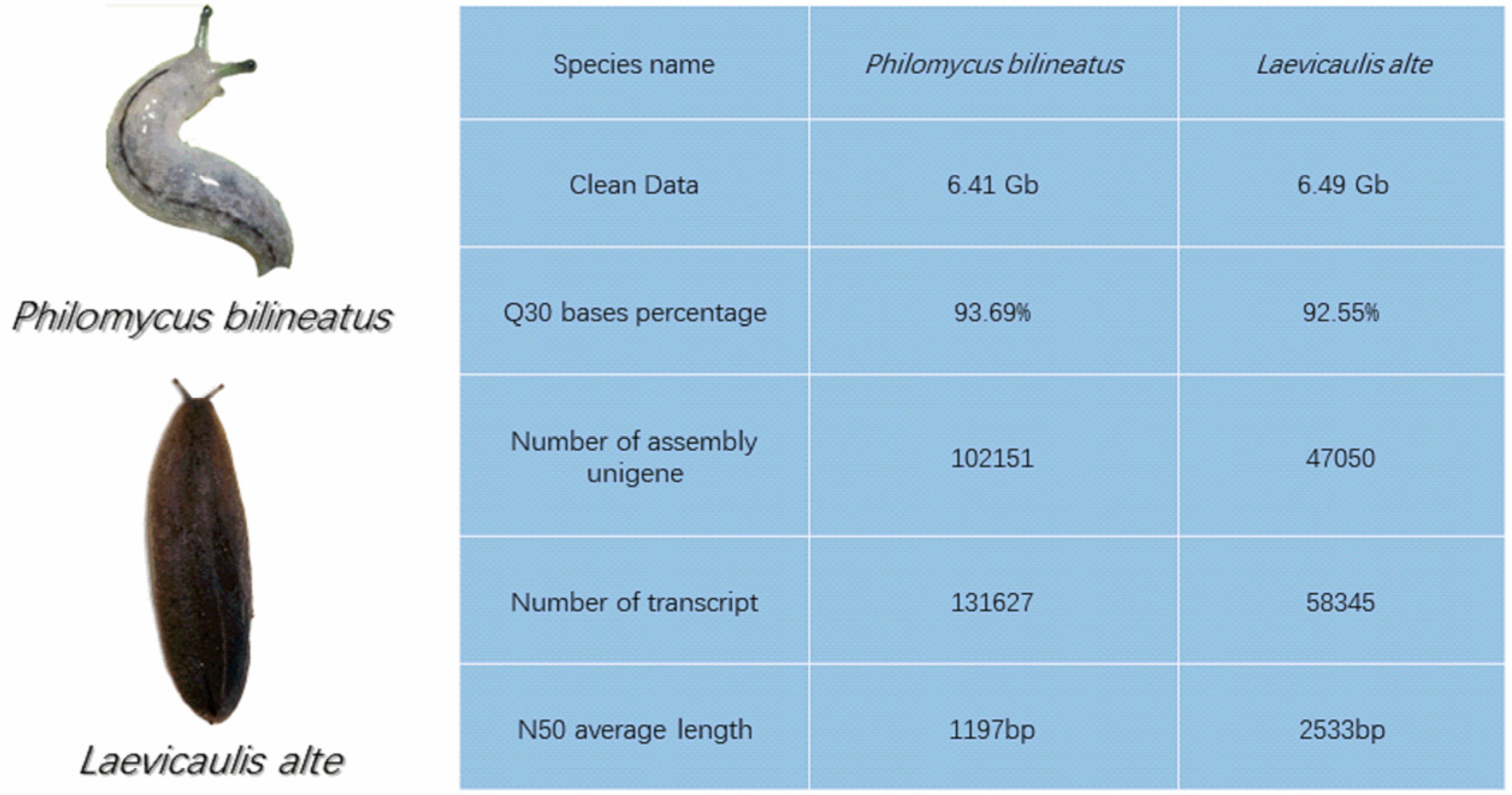
In this study, we investigate the transcriptome of brain samples obtained from
P. bilineatus and
L. alte (as summarized in
Figure 1).
A total of three complete transcriptome analysis samples for P. bilineatus yielded 19.77 Gb of clean data. The clean data for each sample exceeded 6.41 Gb, with a Q30 base percentage of 93.69% or higher. Using Trinity for de novo assembly with the clean data, optimization, and evaluation of assembly results revealed that the number of assembled unigenes was 102,151 with a total transcript count of 131,627 and an average N50 length of 1197 bp.
Similarly, three complete transcriptome analysis samples for L. alte produced 20.97 Gb of clean data; here too, each sample’s clean data surpassed 6.49 Gb, achieving a Q30 base percentage greater than 92.55%. Applying Trinity to these samples also resulted in de novo assembly using the clean data; optimization and evaluation showed that the number of assembled unigenes amounted to 47,050 with a total transcript count reaching 58,345 and an average N50 length measuring at 2533 bp.
3.2. Functional Annotation of Unigenes
The assembled transcriptome sequences were compared with data from six databases (NR, Swiss-Prot, Pfam, COG, GO, and KEGG) to obtain annotation information for each respective database. Subsequent statistical analyses were conducted on the annotations derived from these databases. The BLAST search indicated that the ratio (percentage) of unigenes showing a significant match to genes in the NR database was 28.52%, followed by 26.7% in Swiss-Prot, 16.48% in Pfam, 12.5% in KEGG, 21.56% in GO, and 17.34% in COG (
Table 2). Here, the percentage refers to the ‘Ratio’ column in
Table 1, representing the proportion of annotated unigenes relative to the total number of unigenes for each species.
The KEGG pathway databases for
P. bilineatus and
L. alte were utilized to provide valuable insights into the functional profiles of genes [
23]. Based on the KEGG annotation results for
P. bilineatus and
L. alte, a total of 18,791 unigenes (
P. bilineatus) and 13,790 unigenes (
L. alte) were categorized into five main domains: cellular processes, environmental information processing, genetic information processing, metabolism, and organismal systems. These unigenes were further classified into 32 sub-terms (
Figure S1).
3.3. Identification of Sesquiterpenoid Homolog Unigenes in P. bilineatus and L. alte
Transcriptomic analysis of
P. bilineatus and
L. alte identified gene transcripts involved in sesquiterpenoid homolog biosynthesis, revealing two shared terpenoid-related metabolic pathways: Terpenoid backbone biosynthesis (map00900) and Insect hormone biosynthesis (map00981). Both pathways were identified in the transcriptome data of
P. bilineatus and
L. alte. The terpenoid backbone biosynthesis pathway was found to be enriched with 33 genes in
P. bilineatus and 31 genes in
L. alte. Additionally, the insect hormone biosynthesis pathway contained 20 genes in
P. bilineatus and 9 genes in
L. alte (
Table S3).
Sesquiterpenoid homologs play a crucial role in regulating various physiological processes in insects, including embryogenesis, larval and adult development, metamorphosis, reproduction, diapause, migration, polymorphism, and metabolism. To date, however, there is limited knowledge regarding sesquiterpenoid homologs in gastropods.
3.4. Farnesoic Acid Biosynthesis of Slugs
Farnesyl pyrophosphate (FPP), also referred to as farnesyl diphosphate (FDP), serves as an intermediate in both the mevalonate and non-mevalonate pathways utilized by organisms for the biosynthesis of terpenes, terpenoids, and sterols [
24]. In our analysis of the transcriptome data from
P. bilineatus and
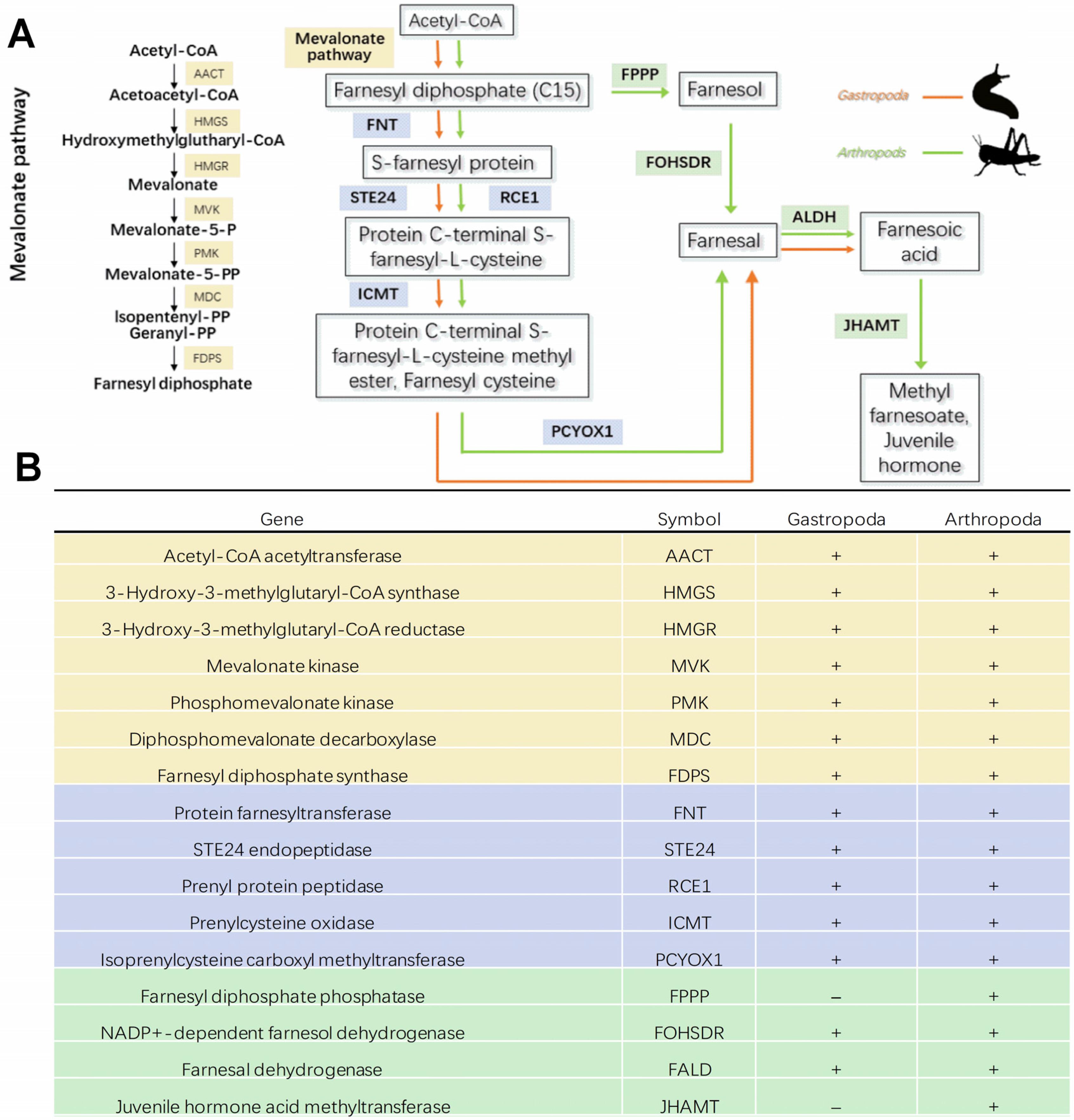
L. alte, we identified genes predicted to encode enzymes involved in FPP biosynthesis within the mevalonate pathway. Our investigation revealed that all relevant enzyme-related genes associated with FA synthesis are present in the KEGG database. Notably, both slugs exhibit an FA synthesis pathway analogous to that found in cnidarians [
13]. In contrast to arthropods, neither cnidarians nor slugs possess FPPP or FOHSDR [
7] (
Figure 2).
Aldehyde dehydrogenase serves as a crucial node in the FA synthesis pathway, primarily functioning to convert farnesal into FA. We conducted a comparative analysis of the genes exhibiting the highest expression enrichment within the ALDH node of two slug species (TRINITY_DN4587_c0_g1_i1 from PB and TRINITY_DN6575_c0_g1_i1 from LA) (
Table S3). Our findings revealed significant similarity to aldehyde dehydrogenase family 3 member A2 isoform 2, derived from
Lymnaea stagnalis Linnaeus, 1758 (GenBank: QIJ96600.1).
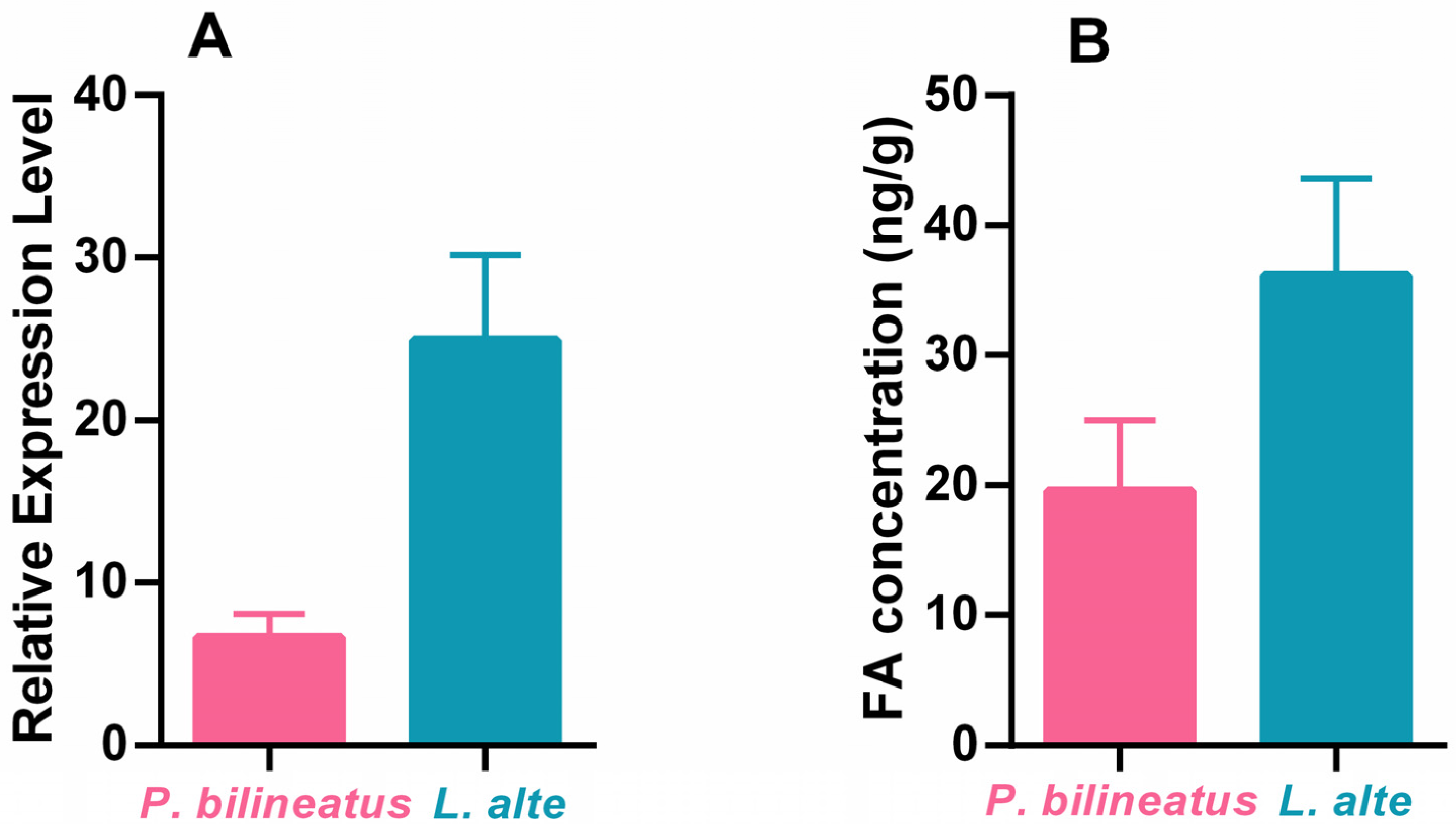
RT-qPCR was employed to assess the expression levels of these two genes. The expression levels of both genes were normalized against the expression level of β-actin. Enzymatically encoding genes exhibited elevated expression levels in
P. bilineatus and
L. alte (
Figure 3A). The sesquiterpenoid homologs were analyzed in slugs, revealing only the presence of FA. The concentrations of FA in
P. bilineatus and
L. alte were measured at 19.54 ± 5.64 ng/g and 36.12 ± 7.48 ng/g, respectively (
Figure 3B). These results clearly demonstrate that the variation in ALDH expression between slugs from different species aligns with the discrepancy in FA content observed between them. This indicates that ALDH serves as a crucial enzyme in the biosynthesis of slug sesquiterpenoid homologs, suggesting its potential as a target for molluscicide discovery.
3.5. Phylogenetic Analysis and Protein Sequence Alignment of ALDH
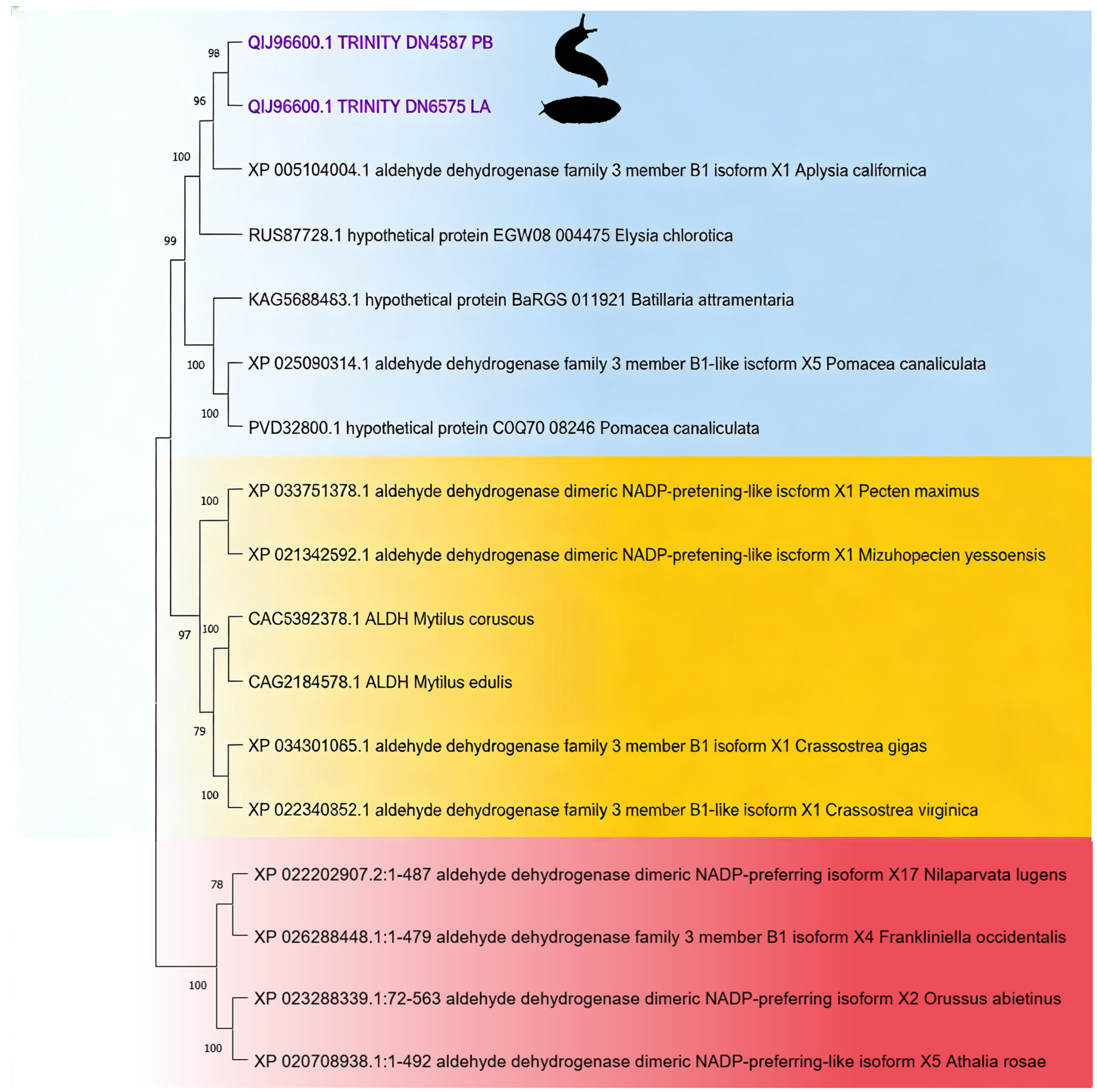
Sequence alignment analysis reveals the differences among the identified slug genes and their homologous gene sequences (
Figure 4). The results indicate that the similarity in ALDH between these two slugs is 71.51%. Furthermore, sequence alignment highlights that significant conserved sequences are present within the ALDH genes of these species (
Figure S2).
3.6. The Effect of RNAi In Vivo
The effects of ALDH gene silencing were validated through dsRNA injection.
P. bilineatus and
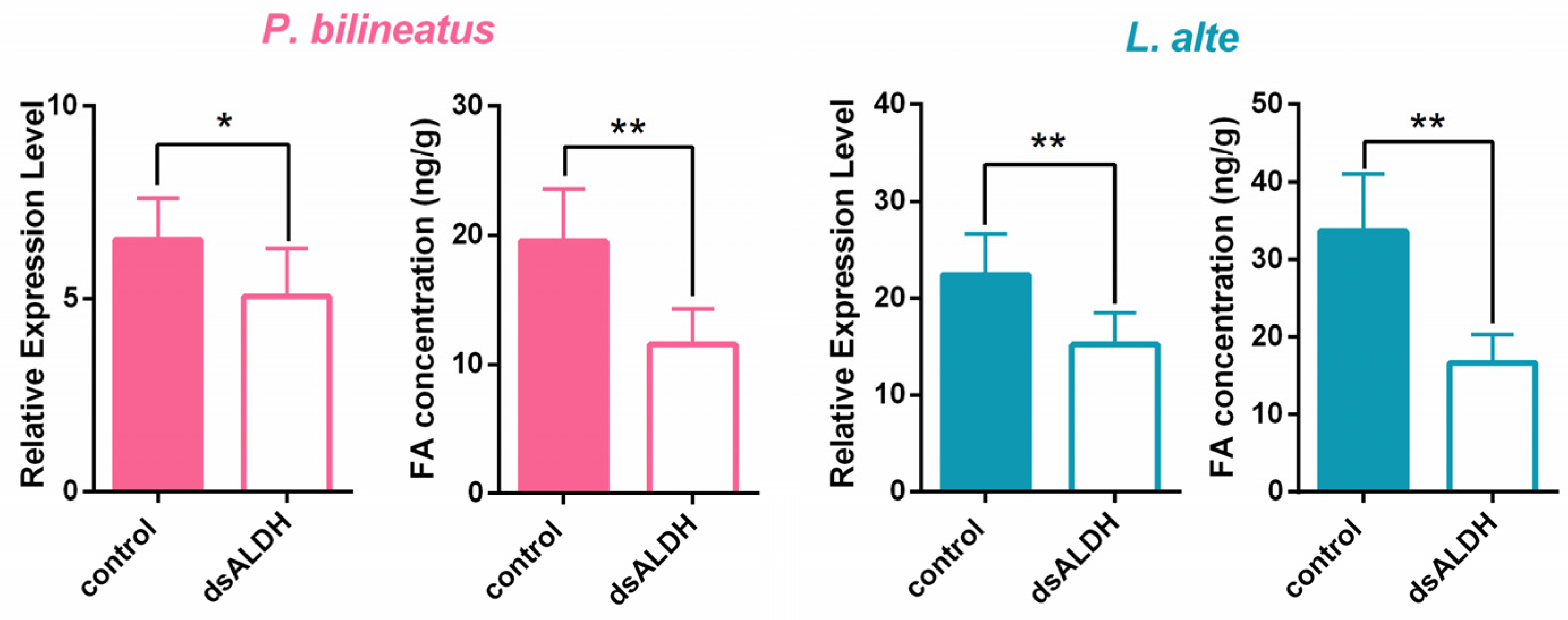
L. alte were used for the injection assays. Relative transcript levels in slugs were quantified using q-RT-PCR. A significant knockdown of 22.5% and 32.1% was observed in
P. bilineatus and
L. alte, respectively (
Figure 5). Furthermore, treatment with the dsRNAs significantly influenced fatty acid (FA) biosynthesis in slugs. The downregulation of ALDH led to a reduction of 40.9% and 50.5% in FA concentrations in
P. bilineatus and
L. alte, respectively (
Figure 5).
3.7. Structural Divergence of ALDH Proteins and Its Potential Association with FA Biosynthesis
To further elucidate the molecular basis underlying the observed differences in FA concentrations between P. bilineatus and L. alte, we conducted structural predictions and comparative analyses of the ALDH proteins identified in each species. Despite exhibiting high sequence similarity at the transcript level, significant disparities were noted in the predicted tertiary structures and domain organizations of the two ALDH homologs.
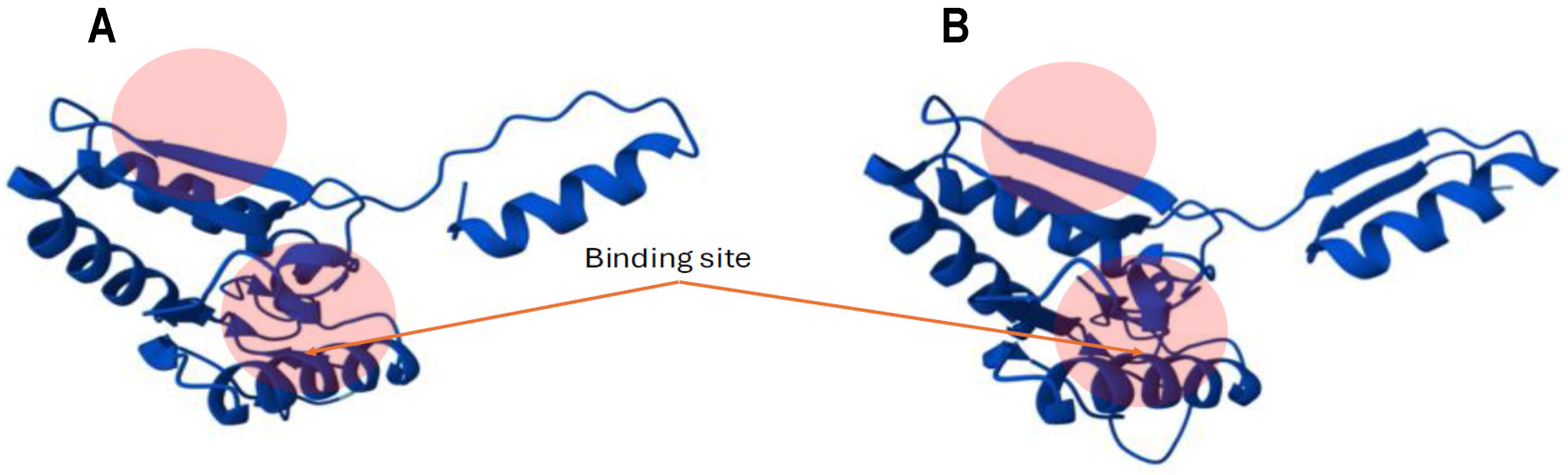
Using AlphaFold2-based modeling, we observed that the ALDH protein from
L. alte exhibited a more compact and tightly folded catalytic domain in comparison to that of
P. bilineatus, which demonstrated a looser and more flexible active site architecture (
Figure 6A,B) [
25]. Multiple sequence alignment and conserved domain analysis revealed critical amino acid substitutions within both the cofactor binding region and the substrate tunnel, potentially impacting enzyme efficiency. TM-align analysis indicated a structural similarity score (TM-score) of 0.72 between the two proteins, suggesting moderate divergence in overall fold.
These structural variations may partially elucidate the elevated expression levels and enzymatic efficiency of ALDH in
L. alte, as evidenced by the significantly increased FA content observed in this species (
Figure 3B). Notably,
L. alte also exhibits a larger body size and an accelerated growth rate under laboratory conditions, suggesting that enhanced biosynthesis of sesquiterpenoid hormones may play a role in the developmental and physiological differences between species.
The findings collectively indicate that sequence-level divergence and three-dimensional structural adaptations in ALDH may play a pivotal role in modulating FA biosynthesis across various slug species. This research thus provides valuable insights into the evolution of endogenous hormone pathways in relation to ecological and physiological traits.
3.8. The Effect of ALDH Inhibitor
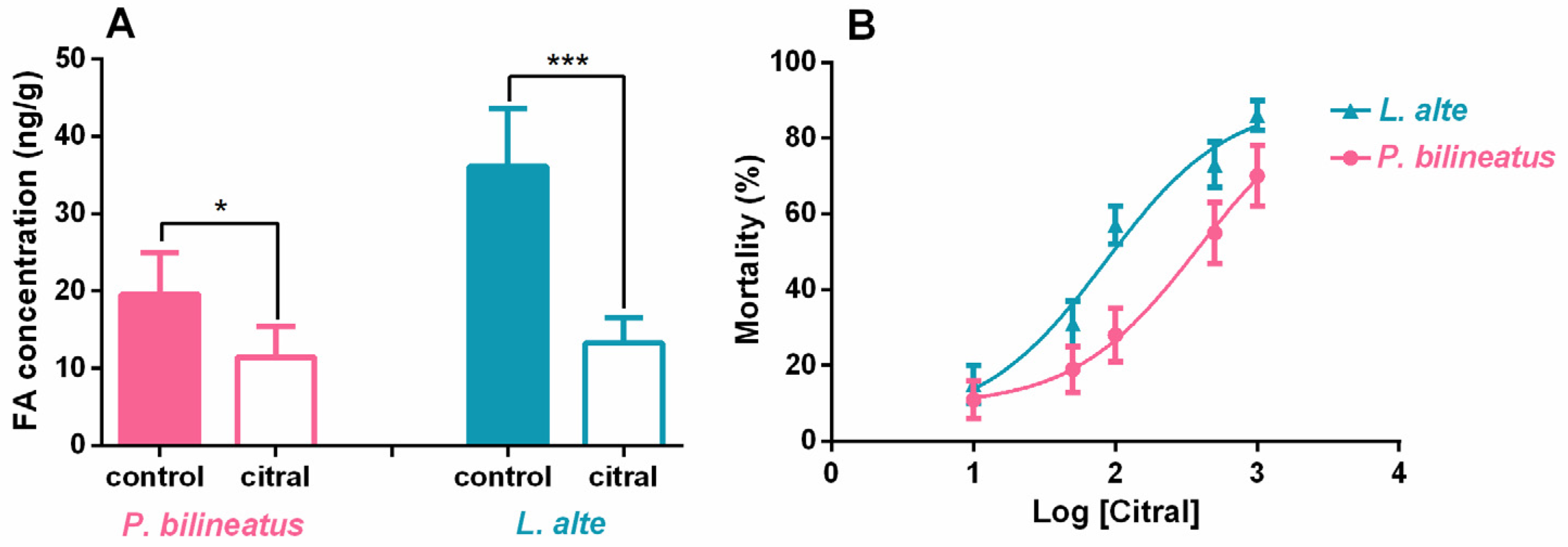
To assess the potential of aldehyde dehydrogenase (ALDH) as a novel target for molluscicides, we utilized the ALDH inhibitor citral to evaluate FA biosynthesis in vivo in
P. bilineatus and
L. alte following oral administration.
Figure 7A illustrates that citral exhibits significant inhibitory activity on FA biosynthesis in both slug species. Notably, compared to
P. bilineatus, the inhibitory effect of citral on
L. alte is more pronounced.
The aforementioned experiment demonstrated that the inhibitor exerts a significant effect on FA biosynthesis. Consequently, a contact toxicity test was conducted following topical application at various concentrations. In the contact toxicity experiment, the mortality rate of slugs exhibited an increase corresponding to higher concentrations (
Figure 7B). The lethal concentration 50 (LC
50) values were determined to be 378.2 g/L (95% CI: 262.8–544.3 g/L;
R2 = 0.9143) for
P. bilineatus and 85.2 g/L (95% CI: 69.7–104.2 g/L;
R2 = 0.9355) for
L. alte, respectively.
3.9. Structural Basis of Citral Inhibition: Targeting Conserved ALDH Domains
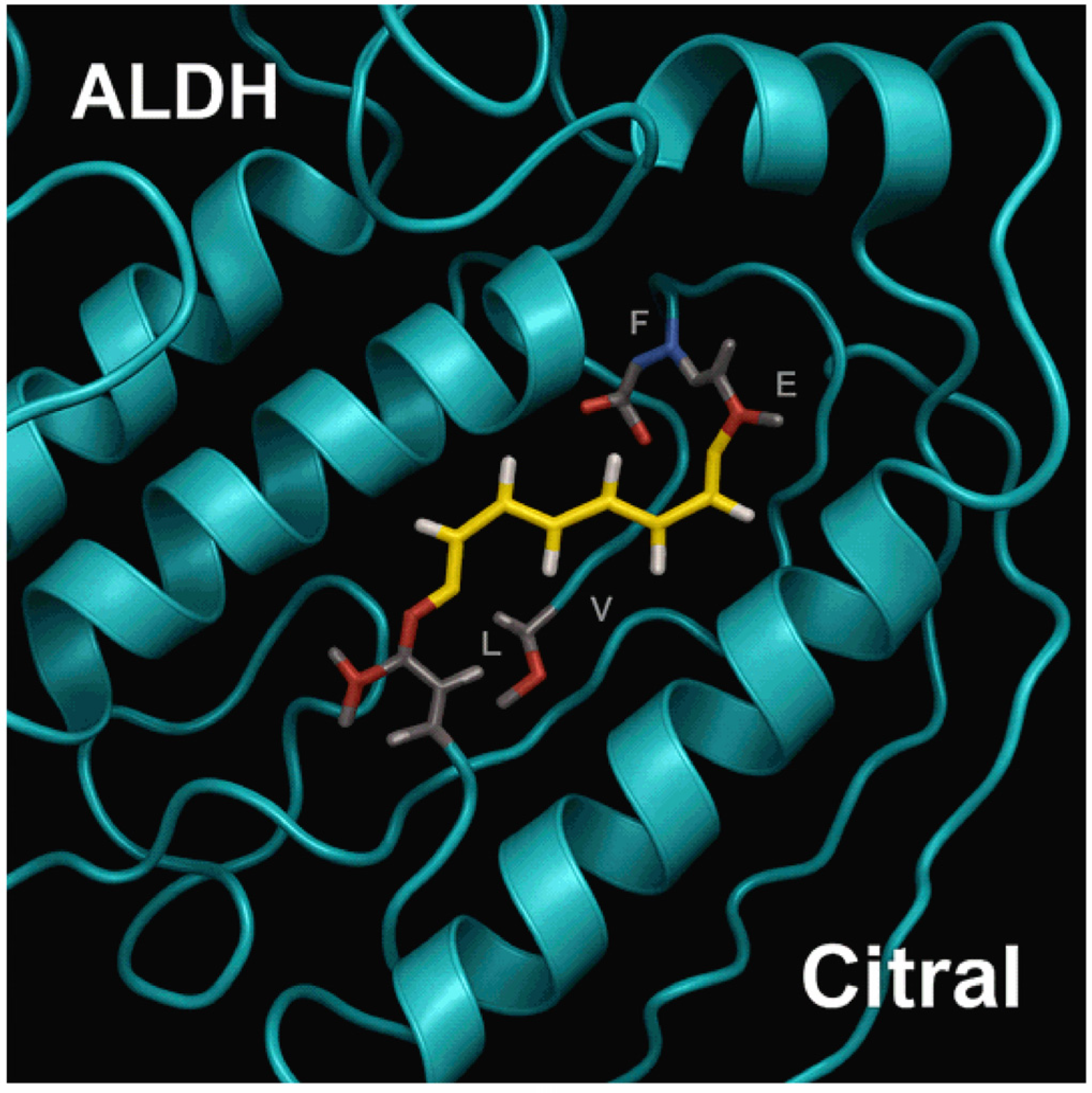
To elucidate the molecular mechanisms underlying citral-mediated inhibition of FA biosynthesis, we conducted an analysis of the conserved structural domains present in ALDH proteins across both slug species and assessed their potential interactions with citral. Our predictions regarding conserved domains indicated that both ALDH homologs possess characteristic features typical of the aldehyde dehydrogenase family, including the NAD(P)+-binding Rossmann fold and a catalytic cysteine motif (Cys-Glu pair), which are crucial for aldehyde oxidation (
Figure 8).
Molecular docking simulations indicated that citral exhibits a preferential binding affinity for the conserved substrate entry tunnel adjacent to the active site. This interaction involves hydrophobic interactions with residues such as phenylalanine (Phe), leucine (Leu), and valine (Val), which are conserved across both species. Notably, the aldehyde group of citral is predicted to occupy a position overlapping with that of the natural substrate, farnesal, thereby competitively inhibiting its access to the catalytic center.
The structural overlay analysis of ALDH and citral indicates that the binding of citral likely disrupts the spatial configuration of essential catalytic residues, which may hinder the oxidation process of farnesal to FA. Considering the high degree of sequence conservation within these catalytic domains, such interactions could represent a widespread inhibitory mechanism among gastropod ALDHs. This phenomenon could account for the consistent decrease in FA levels observed in both
P. bilineatus and
L. alte following exposure to citral (
Figure 8).
These findings indicate that citral functions as a competitive inhibitor, specifically targeting conserved catalytic motifs within slug ALDHs. This action effectively obstructs the critical dehydrogenation step in FA biosynthesis. Such a mechanism of action underscores the viability of ALDH as a structurally defined and biochemically validated target for the future development of molluscicides. E: Glutamic acid; F: Phenylalanine; L: Leucine; V: Valine. The yellow highlights the molecular framework of citral. Red represents oxygen atoms, and blue represents nitrogen atoms.
4. Discussion
In this study, we identified and functionally characterized ALDH as a crucial enzyme in the biosynthetic pathway of sesquiterpenoid hormones in two slug species,
P. bilineatus and
L. alte. Through comprehensive transcriptome analysis, farnesoic acid quantification, gene expression profiling, RNAi and protein structure prediction, we demonstrated that ALDH plays an essential role in the oxidation of farnesal to farnesoic acid—an intermediate in juvenile hormone biosynthesis in invertebrates [
7,
12]. Notably, both the expression levels of ALDH and the predicted enzyme structures showed significant interspecies differences, which correlate with variations in FA content and body size between the two species.
Structural modeling has demonstrated that the ALDH enzyme in
L. alte possesses a more compact catalytic pocket, which may enhance substrate binding and catalytic efficiency. This structural feature could explain the higher FA levels observed in
L. alte compared to
P. bilineatus, potentially indicating species-specific adaptations in hormonal regulation. Given the critical role of sesquiterpenoid hormones in regulating development and reproduction in invertebrates [
7,
8], the structural divergence of ALDH may represent a key factor underlying physiological differences among gastropod species.
Furthermore, docking analysis has revealed that citral—a naturally occurring inhibitor of ALDH—binds in proximity to conserved catalytic residues within the ALDH proteins of both species. This suggests that citral likely competes with farnesal at the substrate entry tunnel, thereby inhibiting FA biosynthesis. This molecular mechanism elucidates the observed reduction in FA levels and increased mortality in slugs exposed to citral, thereby confirming the functional importance of ALDH inhibition.
These findings support a novel strategy for slug control through the targeting of endogenous hormone biosynthesis pathways. While conventional molluscicides, such as metaldehyde and niclosamide, are effective, they have significant drawbacks, including environmental persistence and toxicity to non-target organisms [
5,
6]. In contrast, plant-derived small molecules like citral present species-selective and biodegradable alternatives. This approach is analogous to the successful application of juvenile hormone analogs (JHAs) in pest management [
8,
26]; however, it remains underexplored in mollusks, despite recent evidence revealing conserved hormonal signaling pathways in annelids and gastropods [
11,
12,
14].
The use of hormone biosynthesis inhibitors as pesticide agents aligns with broader trends in the development of precise, target-specific, and environmentally sustainable pest management strategies [
26,
27]. Botanical compounds such as citral have demonstrated considerable potential within integrated pest management, particularly when targeting conserved enzymatic domains like those present in ALDH [
28]. The high degree of structural conservation in the ALDH catalytic domain across gastropod species further underscores its promise as a broad-spectrum molecular target for the development of novel molluscicides.
Citral, a monoterpenoid natural product, finds primary application in the perfumery industry due to its citrus aroma. It is commonly employed to strengthen lemon oil, enhance food flavors, conceal smoky odors, and serve as a food preservative. Based on existing data and usage levels, a monoterpenoid citronellal does not raise concerns regarding genetic toxicity, developmental issues, or reproductive toxicity [
29]. Additionally, our previous research confirms that citral exhibit no toxicity toward several non-target species, including the silkworm (
Bombyx mori Linnaeus and
Microcystis aeruginosa Kützing), indicating its potential as an environmentally benign agent for slug control [
30]. The monoterpenoids exhibit high volatility their half-life does not exceed 48 h, as they are rapidly degraded by natural mechanisms and are considered biodegradable agents [
31]. This eco-friendly profile differentiates them from conventional pesticides. However, their limited persistence under environmental conditions and high volatility constrain their application in open-field crop agriculture. Consequently, citral is best suited for slug management within enclosed greenhouse environments.
Nevertheless, several limitations persist. The precise in vivo role of FA in slug physiology has yet to be thoroughly elucidated, and the downstream pathways modulated by sesquiterpenoid hormones have not been characterized in mollusks. Furthermore, the systemic effects of ALDH inhibition—beyond FA suppression—also warrant thorough investigation. Future studies employing CRISPR/Cas9-mediated gene editing, RNA interference, or receptor binding assays may shed light on ALDH’s functional roles in the endocrine regulation of slugs [
11,
12,
24]. Additionally, field-scale trials are essential to evaluate the efficacy, selectivity, and ecological safety of citral-based compounds under natural conditions.