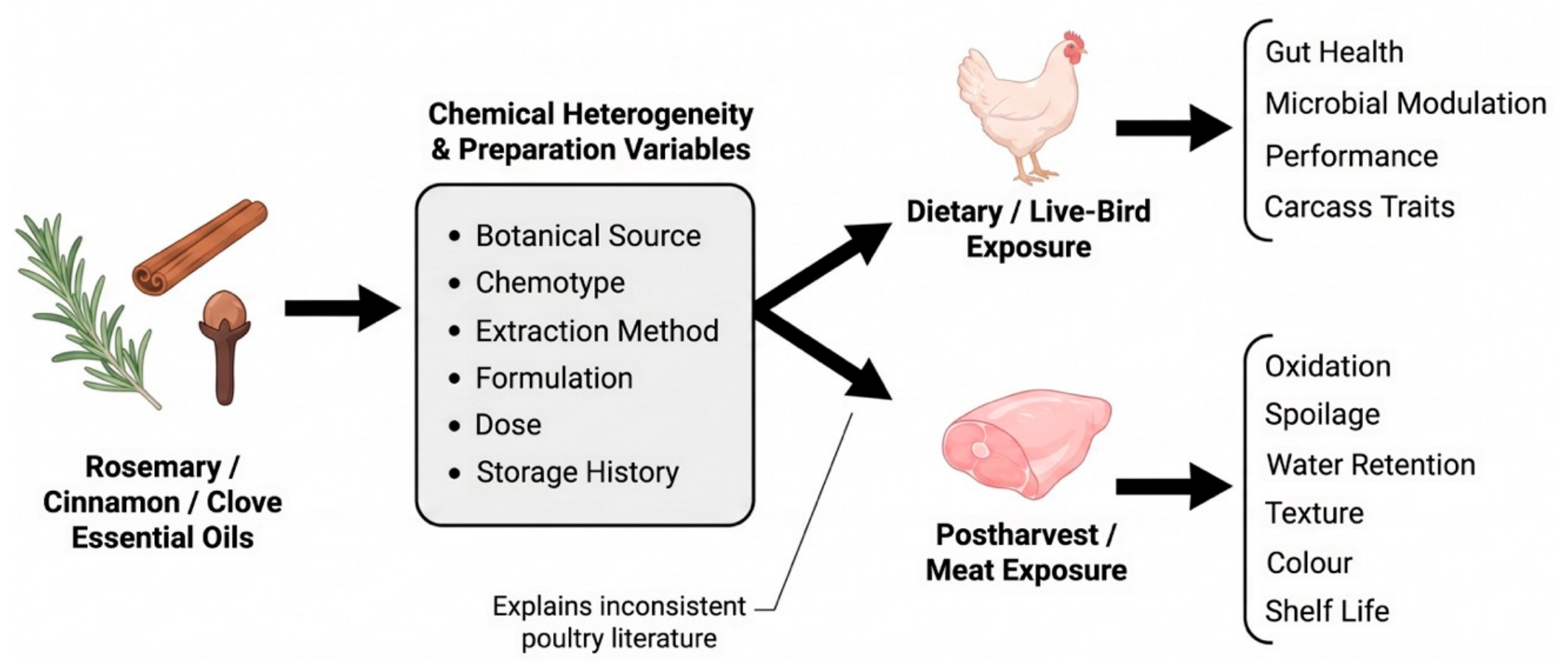
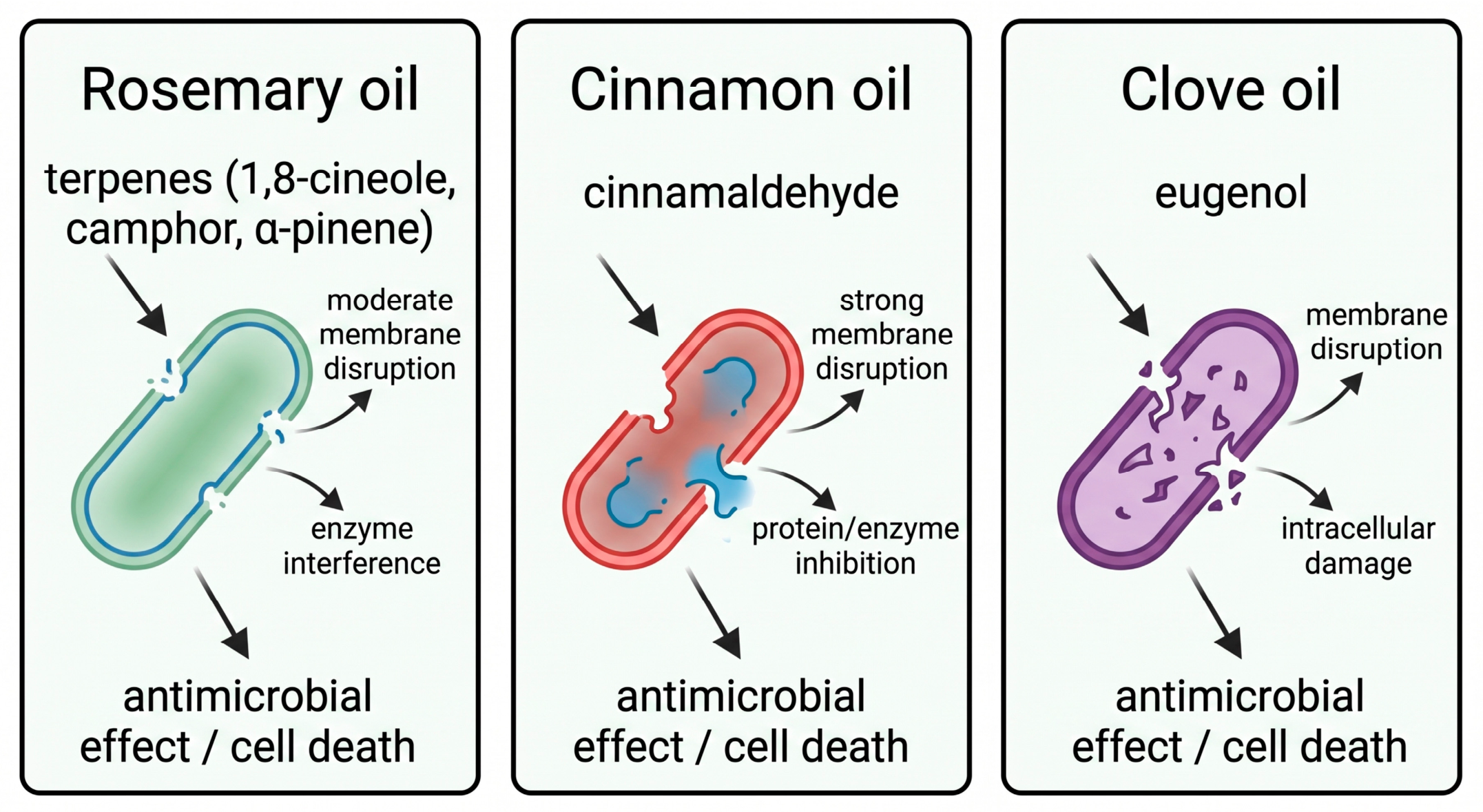
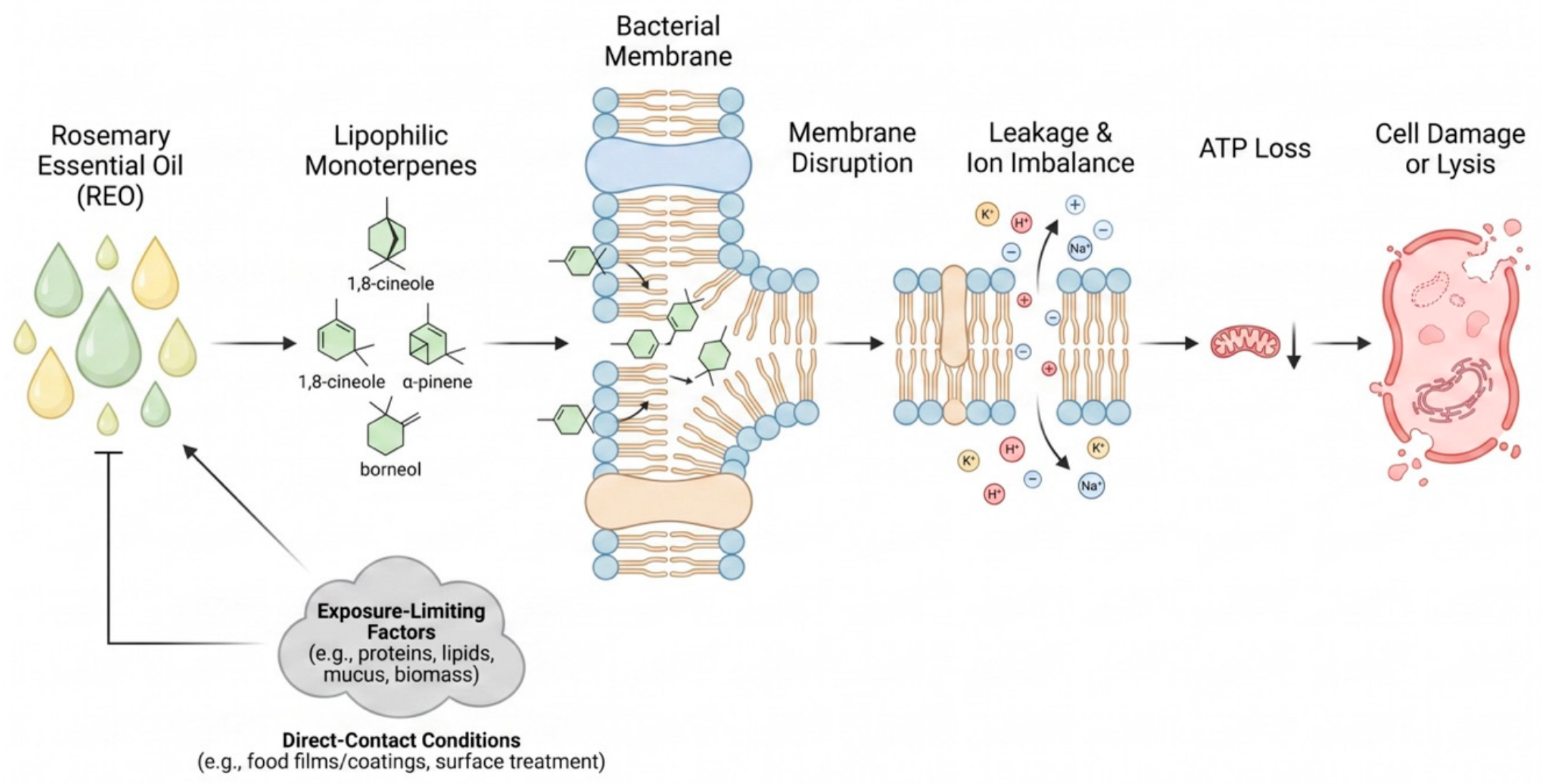
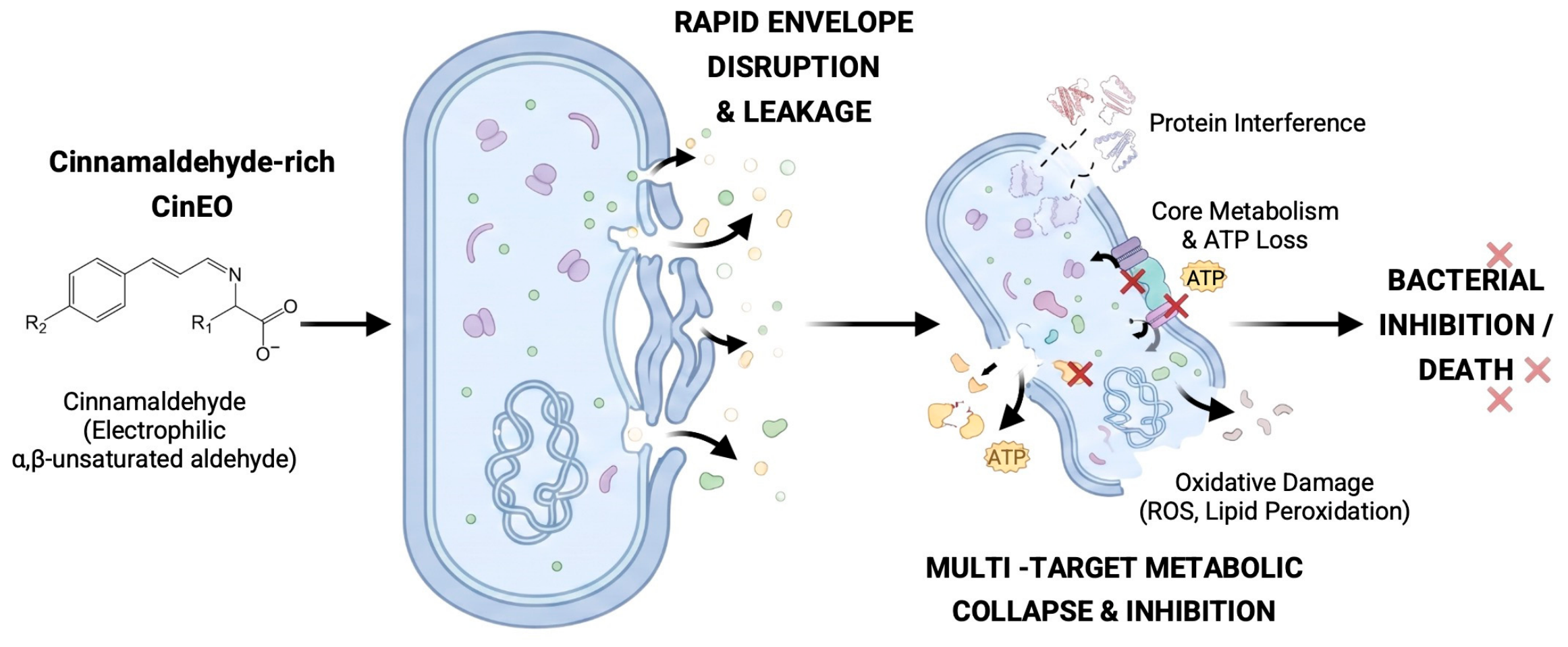
Designing Next-Generation Broiler Systems with Composition or Chemotype-Guided Essential Oils: From Intestinal Ecology to Post-Harvest Meat Preservation
 ,
,  , ,
, ,  and
and
Abstract
1. Introduction
2. Chemical Identity and Compositional Variation as the Basis of Biological Interpretation
3. Chemical Diversity of Rosemary, Cinnamon, and Clove Essential Oils
3.1. Rosemary Essential Oil (REO): Composition/Chemotype Plasticity and Monoterpene-Rich Composition
3.2. Cinnamon (CinEO): Species- and Organ-Dependent Phenylpropanoid Profiles
3.3. Clove (ClEO): Eugenol Dominance Without Chemical Uniformity
3.4. Comparative Summary and Implications
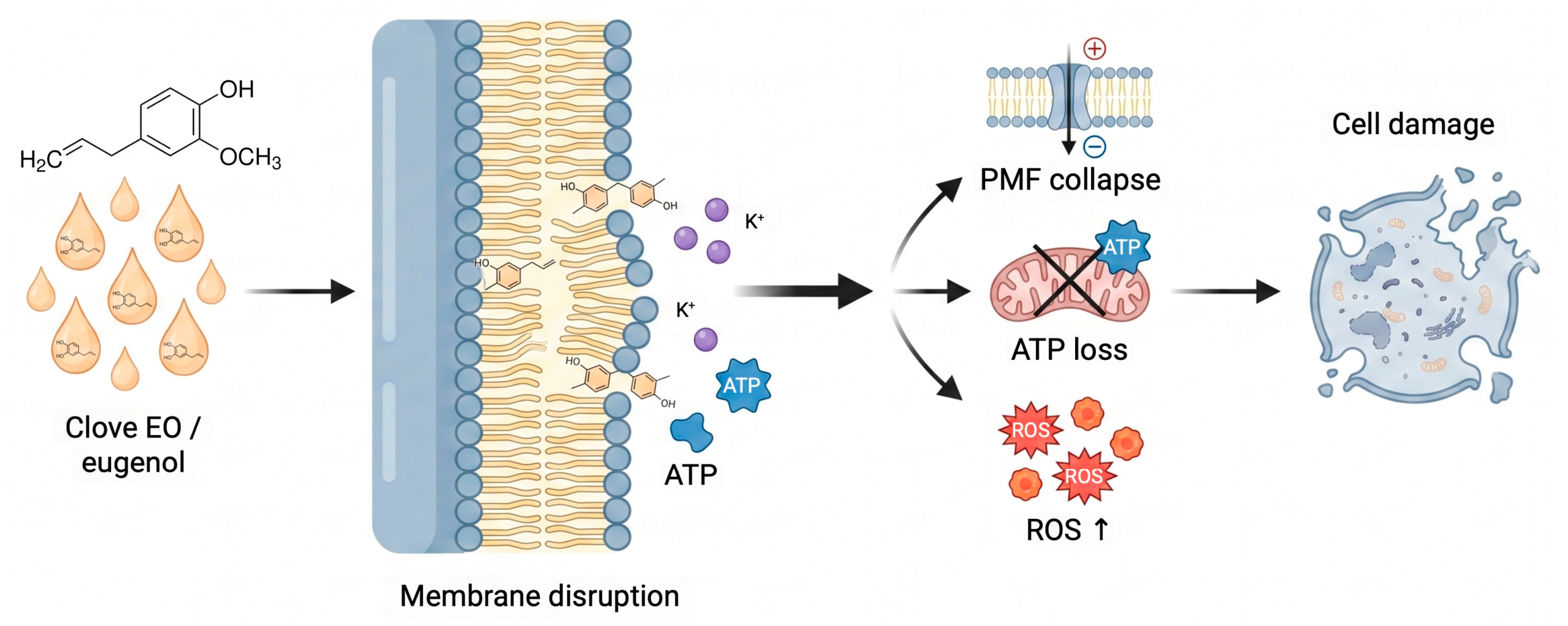
4. From Direct Microbial Injury to Ecological Modulation: Concentration and Exposure Define the Mechanism
5. Chemical Non-Equivalence and the Limits of Inferring Postmortem Meat Stability from In Vivo Antioxidant Status
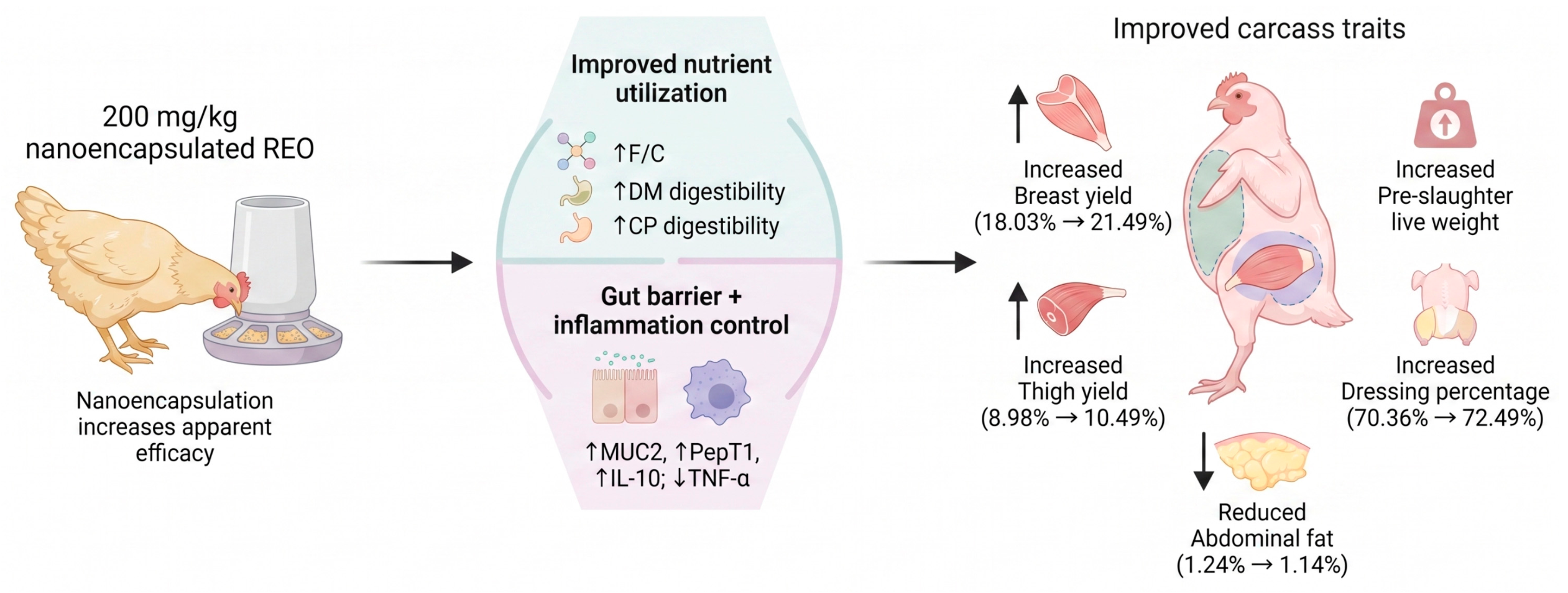
6. Carcass Composition and Yield: Dietary Route as the Primary Evidence Class
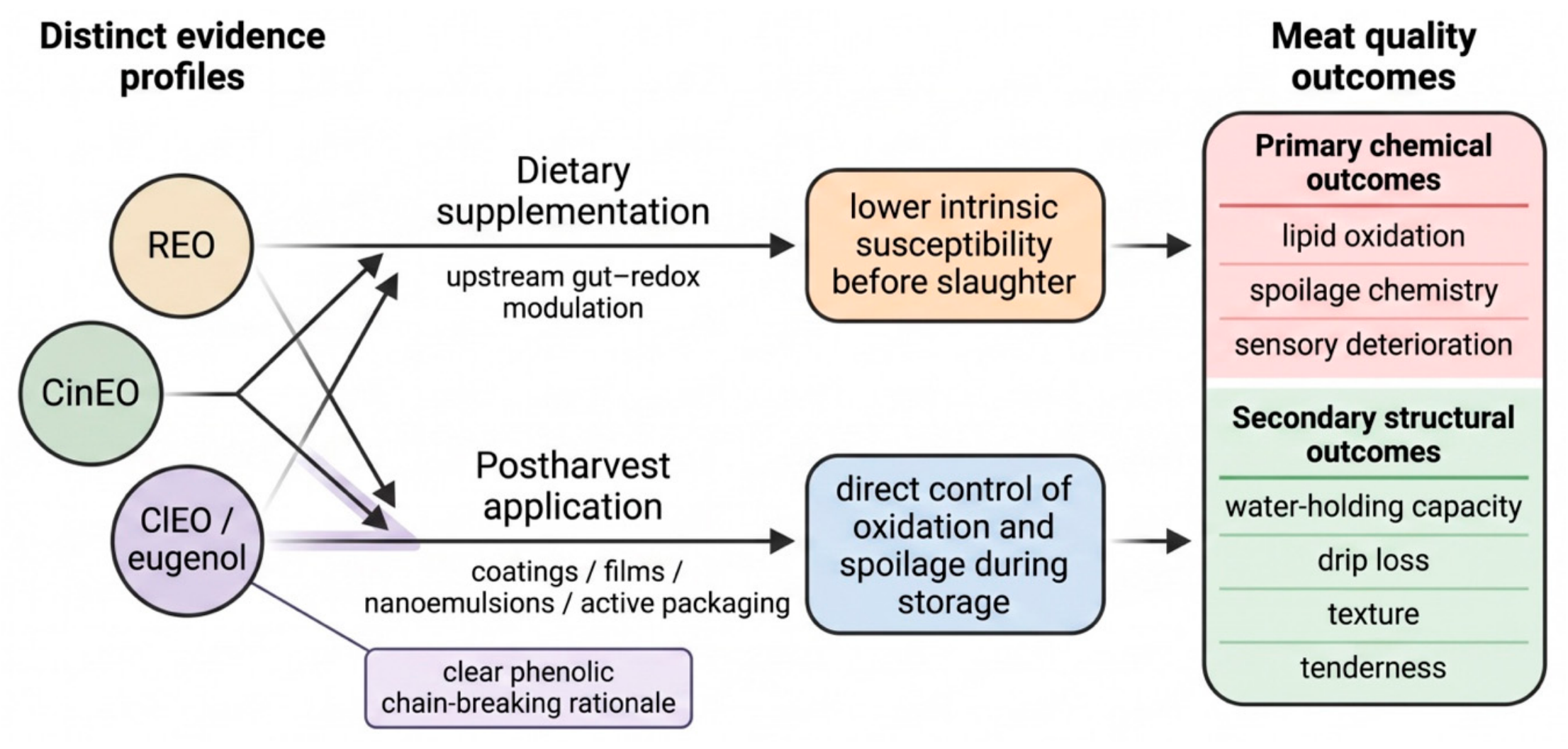
7. Lipid Oxidation and Spoilage Chemistry: Dietary and Postharvest Routes Must Be Separated
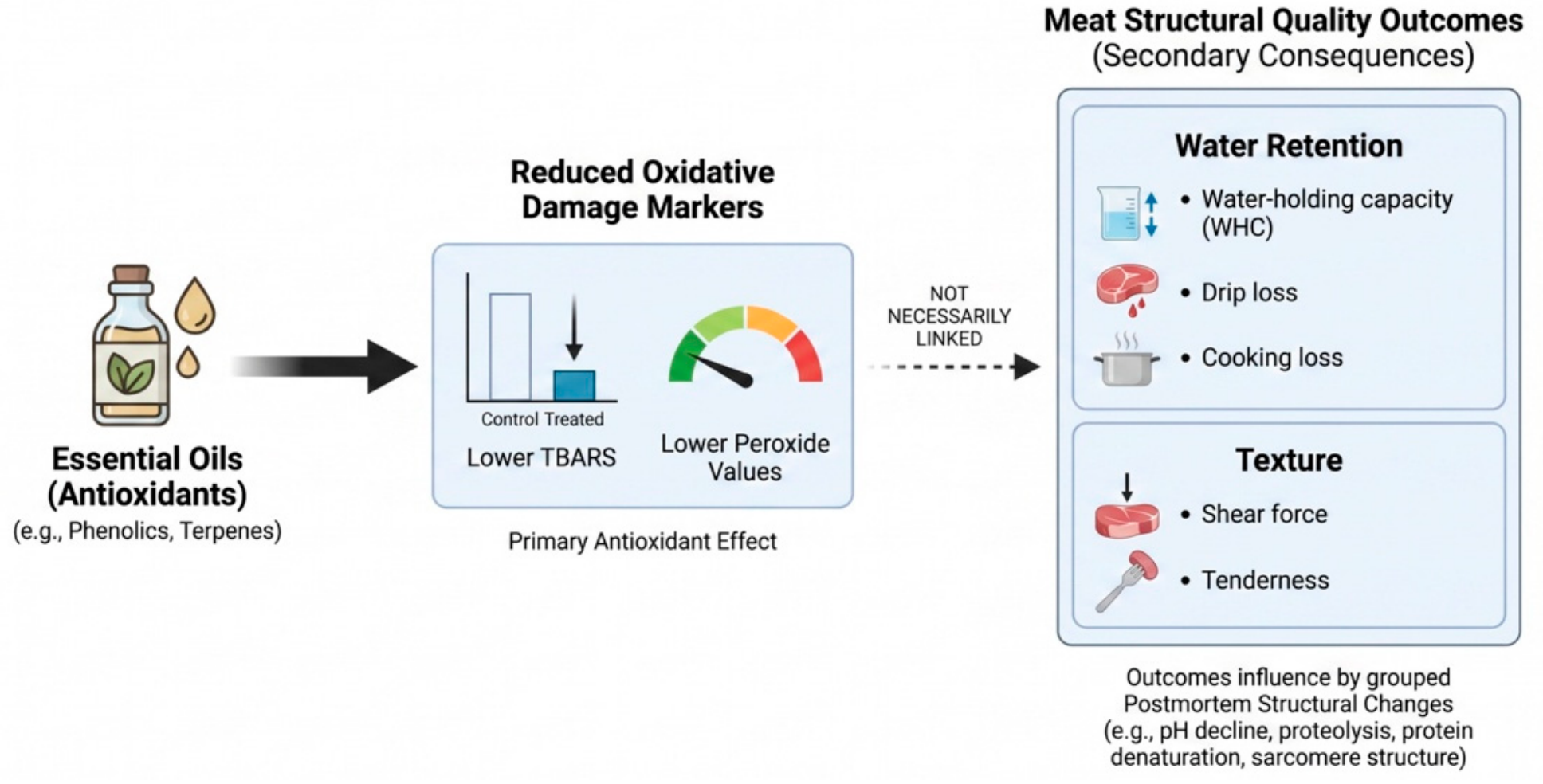
8. Water-Holding Capacity, Drip Loss, Texture, and Tenderness: Secondary Effects of Oxidative and Structural Preservation
9. Conclusions
Author Contributions
Funding
Data Availability Statement
Acknowledgments
Conflicts of Interest
Abbreviations
| EOs | Essential oils |
| REO | Rosemary essential oil |
| CinEO | Cinnamon essential oil |
| CA | cinnamaldehyde |
| ClEO | Clove essential oil |
| MDA | malondialdehyde |
| MAP | Modified atmosphere packing |
| WHC | Water-holding capacity |
References
- Jian, Z.; Zhao, R.; Zi, X.; He, S.; He, X.; Ye, Y.; Wang, K.; Ge, C.; Jia, J.; Hu, Y.; et al. Sustainable antibiotic reduction in poultry production with Pulsatilla saponins and herbal supplementation. Poult. Sci. 2026, 105, 106562. [Google Scholar] [CrossRef] [Scilit] [PubMed]
- de Sousa, D.P.; Damasceno, R.O.S.; Amorati, R.; Elshabrawy, H.A.; de Castro, R.D.; Bezerra, D.P.; Nunes, V.R.V.; Gomes, R.C.; Lima, T.C. Essential Oils: Chemistry and Pharmacological Activities. Biomolecules 2023, 13, 1144. [Google Scholar] [CrossRef] [Scilit] [PubMed]
- Ben Miri, Y. Essential oils: Chemical composition and diverse biological activities: A comprehensive review. Nat. Prod. Commun. 2025, 20, 1934578X241311790. [Google Scholar] [CrossRef] [Scilit]
- Abdelli, N.; Solà-Oriol, D.; Pérez, J.F. Phytogenic Feed Additives in Poultry: Achievements, Prospective and Challenges. Animals 2021, 11, 3471. [Google Scholar] [CrossRef] [Scilit] [PubMed]
- Brenes, A.; Roura, E. Essential oils in poultry nutrition: Main effects and modes of action. Anim. Feed. Sci. Technol. 2010, 158, 1–14. [Google Scholar] [CrossRef] [Scilit]
- Lillehoj, H.; Liu, Y.; Calsamiglia, S.; Fernandez-Miyakawa, M.E.; Chi, F.; Cravens, R.L.; Oh, S.; Gay, C.G. Phytochemicals as antibiotic alternatives to promote growth and enhance host health. Vet. Res. 2018, 49, 76. [Google Scholar] [CrossRef] [Scilit] [PubMed]
- Alqahtani, M.M.; El-Homosy, R.F.; Shamseldin, S.A.M.; Abdein, M.A.; Mohamed, S.E.; Alyamani, A.A.; Abdelmigid, H.M.; Sukar, N.A.; Mousa, A.M.M.; Al-Sobeai, S.M.; et al. Chemotypic and genetic characterization of two rosemary (Rosmarinus officinalis L.) cultivars. Genet. Resour. Crop Evol. 2025, 72, 5697–5715. [Google Scholar] [CrossRef] [Scilit]
- Sadeh, D.; Nitzan, N.; Chaimovitsh, D.; Shachter, A.; Ghanim, M.; Dudai, N. Interactive effects of genotype, seasonality and extraction method on chemical compositions and yield of essential oil from rosemary (Rosmarinus officinalis L.). Ind. Crops Prod. 2019, 138, 111419. [Google Scholar] [CrossRef] [Scilit]
- Weeratunge, H.D.; Sirimal Premakumara, G.A.; de Silva, E.D.; Prasadini Rodrigo, W.W. Comparative study on chemical characteristics of essential oils and genetic characteristics of true Cinnamon (Cinnamomum zeylanicum Blume) and three wild Cinnamon species of Sri Lanka. J. Essent. Oil Res. 2024, 36, 234–246. [Google Scholar] [CrossRef] [Scilit]
- Xavier, J.; Baia, T.G.C.; Alegria, O.V.C.; Figueiredo, P.L.B.; Carneiro, A.R.; Moreira, E.C.O.; Maia, J.G.S.; Setzer, W.N.; da Silva, J.K.R. Essential Oil Chemotypes and Genetic Variability of Cinnamomum verum Leaf Samples Commercialized and Cultivated in the Amazon. Molecules 2022, 27, 7337. [Google Scholar] [CrossRef] [Scilit] [PubMed]
- Haro-González, J.N.; Castillo-Herrera, G.A.; Martínez-Velázquez, M.; Espinosa-Andrews, H. Clove Essential Oil (Syzygium aromaticum L. Myrtaceae): Extraction, Chemical Composition, Food Applications, and Essential Bioactivity for Human Health. Molecules 2021, 26, 6387. [Google Scholar] [CrossRef] [Scilit] [PubMed]
- Liñán-Atero, R.; Aghababaei, F.; García, S.R.; Hasiri, Z.; Ziogkas, D.; Moreno, A.; Hadidi, M. Clove Essential Oil: Chemical Profile, Biological Activities, Encapsulation Strategies, and Food Applications. Antioxidants 2024, 13, 488. [Google Scholar] [CrossRef] [Scilit] [PubMed]
- da Silva, B.D.; Bernardes, P.C.; Pinheiro, P.F.; Fantuzzi, E.; Roberto, C.D. Chemical composition, extraction sources and action mechanisms of essential oils: Natural preservative and limitations of use in meat products. Meat Sci. 2021, 176, 108463. [Google Scholar] [CrossRef] [Scilit] [PubMed]
- Guo, J.; Jiang, X.; Tian, Y.; Yan, S.; Liu, J.; Xie, J.; Zhang, F.; Yao, C.; Hao, E. Therapeutic Potential of Cinnamon Oil: Chemical Composition, Pharmacological Actions, and Applications. Pharmaceuticals 2024, 17, 1700. [Google Scholar] [CrossRef] [Scilit] [PubMed]
- Amad, A.; Männer, K.; Wendler, K.; Neumann, K.; Zentek, J. Effects of a phytogenic feed additive on growth performance and ileal nutrient digestibility in broiler chickens. Poult. Sci. 2011, 90, 2811–2816. [Google Scholar] [CrossRef] [Scilit] [PubMed]
- Nychas, G.-J.E.; Skandamis, P.N.; Tassou, C.C.; Koutsoumanis, K.P. Meat spoilage during distribution. Meat Sci. 2008, 78, 77–89. [Google Scholar] [CrossRef] [Scilit] [PubMed]
- Hughes, J.; Oiseth, S.; Purslow, P.; Warner, R. A structural approach to understanding the interactions between colour, water-holding capacity and tenderness. Meat Sci. 2014, 98, 520–532. [Google Scholar] [CrossRef] [Scilit] [PubMed]
- Avila-Ramos, F.; Pro-Martínez, A.; Sosa-Montes, E.; Cuca-García, J.M.; Becerril-Pérez, C.M.; Figueroa-Velasco, J.L.; Narciso-Gaytán, C. Effects of dietary oregano essential oil and vitamin E on the lipid oxidation stability of cooked chicken breast meat. Poult. Sci. 2012, 91, 505–511. [Google Scholar] [CrossRef] [Scilit] [PubMed]
- McMillin, K.W. Where is MAP going? A review and future potential of modified atmosphere packaging for meat. Meat Sci. 2008, 80, 43–65. [Google Scholar] [CrossRef] [Scilit] [PubMed]
- Han, J.W.; Ruiz-Garcia, L.; Qian, J.P.; Yang, X.T. Food packaging: A comprehensive review and future trends. Compr. Rev. Food Sci. Food Saf. 2018, 17, 860–877. [Google Scholar] [CrossRef] [Scilit] [PubMed]
- Balta, I.; Lemon, J.; Popescu, C.A.; McCleery, D.; Iancu, T.; Pet, I.; Dumitrescu, G.; Ciochina, L.P.; Marcu, D.; Morariu, F.; et al. Artificial intelligence in next-generation smart packaging for pH and spoilage monitoring in poultry products. Appl. Food Res. 2026, 6, 101804. [Google Scholar] [CrossRef] [Scilit]
- Windisch, W.; Schedle, K.; Plitzner, C.; Kroismayr, A. Use of phytogenic products as feed additives for swine and poultry. J. Anim. Sci. 2008, 86, E140–E148. [Google Scholar] [CrossRef] [Scilit] [PubMed]
- Diaz-Sanchez, S.; D’Souza, D.; Biswas, D.; Hanning, I. Botanical alternatives to antibiotics for use in organic poultry production. Poult. Sci. 2015, 94, 1419–1430. [Google Scholar] [CrossRef] [Scilit] [PubMed]
- Kollanoor-Johny, A.; Mattson, T.; Baskaran, S.A.; Amalaradjou, M.A.; Babapoor, S.; March, B.; Valipe, S.; Darre, M.; Hoagland, T.; Schreiber, D. Reduction of Salmonella enterica serovar Enteritidis colonization in 20-day-old broiler chickens by the plant-derived compounds trans-cinnamaldehyde and eugenol. Appl. Environ. Microbiol. 2012, 78, 2981–2987. [Google Scholar] [CrossRef] [Scilit] [PubMed]
- Cerisuelo, A.; Marín, C.; Sánchez-Vizcaino, F.; Gómez, E.A.; De La Fuente, J.; Durán, R.; Fernández, C. The impact of a specific blend of essential oil components and sodium butyrate in feed on growth performance and Salmonella counts in experimentally challenged broilers. Poult. Sci. 2014, 93, 599–606. [Google Scholar] [CrossRef] [Scilit] [PubMed]
- Madkour, M.; Hosny, M.; Aboelazab, O.; Fahmy, S.; Rayan, G.; Ali, A.H.H.; Abdel Moati, Y.A.; Elolimy, A.A.; Fathi, M. Dietary encapsulated essential oils improve growth performance and regulate stress-responsive genes in heat-stressed broilers. J. Anim. Sci. 2025, 103, skaf417. [Google Scholar] [CrossRef] [Scilit] [PubMed]
- Vora, L.K.; Gholap, A.D.; Hatvate, N.T.; Naren, P.; Khan, S.; Chavda, V.P.; Balar, P.C.; Gandhi, J.; Khatri, D.K. Essential oils for clinical aromatherapy: A comprehensive review. J. Ethnopharmacol. 2024, 330, 118180. [Google Scholar] [CrossRef] [Scilit] [PubMed]
- Sadgrove, N.J.; Padilla-González, G.F.; Phumthum, M. Fundamental Chemistry of Essential Oils and Volatile Organic Compounds, Methods of Analysis and Authentication. Plants 2022, 11, 789. [Google Scholar] [CrossRef] [Scilit] [PubMed]
- Masyita, A.; Mustika Sari, R.; Dwi Astuti, A.; Yasir, B.; Rahma Rumata, N.; Emran, T.B.; Nainu, F.; Simal-Gandara, J. Terpenes and terpenoids as main bioactive compounds of essential oils, their roles in human health and potential application as natural food preservatives. Food Chem. X 2022, 13, 100217. [Google Scholar] [CrossRef] [Scilit] [PubMed]
- Pezantes-Orellana, C.; German Bermúdez, F.; Matías De la Cruz, C.; Montalvo, J.L.; Orellana-Manzano, A. Essential oils: A systematic review on revolutionizing health, nutrition, and omics for optimal well-being. Front. Med. 2024, 11, 1337785. [Google Scholar] [CrossRef] [Scilit] [PubMed]
- Puvača, N.; Tufarelli, V.; Giannenas, I. Essential Oils in Broiler Chicken Production, Immunity and Meat Quality: Review of Thymus vulgaris, Origanum vulgare, and Rosmarinus officinalis. Agriculture 2022, 12, 874. [Google Scholar] [CrossRef] [Scilit]
- Krauze, M.; Cendrowska-Pinkosz, M.; Matuseviĉius, P.; Stępniowska, A.; Jurczak, P.; Ognik, K. The effect of administration of a phytobiotic containing cinnamon oil and citric acid on the metabolism, immunity, and growth performance of broiler chickens. Animals 2021, 11, 399. [Google Scholar] [CrossRef] [Scilit] [PubMed]
- Lin, K.-H.; Yeh, S.-Y.; Lin, M.-Y.; Shih, M.-C.; Yang, K.-T.u.; Hwang, S.-Y. Major chemotypes and antioxidative activity of the leaf essential oils of Cinnamomum osmophloeum Kaneh. from a clonal orchard. Food Chem. 2007, 105, 133–139. [Google Scholar] [CrossRef] [Scilit]
- Zhang, L.; Wang, X.; Huang, S.; Huang, Y.; Shi, H.; Bai, X. Effects of dietary essential oil supplementation on growth performance, carcass yield, meat quality, and intestinal tight junctions of broilers with or without Eimeria challenge. Poult. Sci. 2023, 102, 102874. [Google Scholar] [CrossRef] [Scilit] [PubMed]
- Adil, S.; Banday, M.T.; Hussain, S.A.; Wani, M.A.; Al-Olayan, E.; Patra, A.K.; Rasool, S.; Gani, A.; Sheikh, I.U.; Khan, A.A.; et al. Impact of Nanoencapsulated Rosemary Essential Oil as a Novel Feed Additive on Growth Performance, Nutrient Utilization, Carcass Traits, Meat Quality and Gene Expression of Broiler Chicken. Foods 2024, 13, 1515. [Google Scholar] [CrossRef] [Scilit] [PubMed]
- Jayari, A.; Donsì, F.; Ferrari, G.; Maaroufi, A. Nanoencapsulation of Thyme Essential Oils: Formulation, Characterization, Storage Stability, and Biological Activity. Foods 2022, 11, 1858. [Google Scholar] [CrossRef] [Scilit] [PubMed]
- Berraaouan, D.; Essifi, K.; Addi, M.; Hano, C.; Fauconnier, M.-L.; Tahani, A. Hybrid Microcapsules for Encapsulation and Controlled Release of Rosemary Essential Oil. Polymers 2023, 15, 823. [Google Scholar] [CrossRef] [Scilit] [PubMed]
- Yao, Z.; Zhang, W.; Hu, Y.; An, Z.; Fang, Z.; Wang, J.; Zhang, Z. Preparation, characterization, oral bioavailability, and pharmacodynamic study of eugenol-porous silica solidified powder. Drug Deliv. Transl. Res. 2025, 15, 1235–1248. [Google Scholar] [CrossRef] [Scilit] [PubMed]
- Benomari, F.Z.; Sarazin, M.; Chaib, D.; Pichette, A.; Boumghar, H.; Boumghar, Y.; Djabou, N. Chemical Variability and Chemotype Concept of Essential Oils from Algerian Wild Plants. Molecules 2023, 28, 4439. [Google Scholar] [CrossRef] [Scilit] [PubMed]
- Bolouri, P.; Salami, R.; Kouhi, S.; Kordi, M.; Asgari Lajayer, B.; Hadian, J.; Astatkie, T. Applications of Essential Oils and Plant Extracts in Different Industries. Molecules 2022, 27, 8999. [Google Scholar] [CrossRef] [Scilit] [PubMed]
- Kant, R.; Kumar, A. Review on essential oil extraction from aromatic and medicinal plants: Techniques, performance and economic analysis. Sustain. Chem. Pharm. 2022, 30, 100829. [Google Scholar] [CrossRef] [Scilit]
- Mutlu, M.; Bingol, Z.; Uc, E.M.; Köksal, E.; Goren, A.C.; Alwasel, S.H.; Gulcin, İ. Comprehensive Metabolite Profiling of Cinnamon (Cinnamomum zeylanicum) Leaf Oil Using LC-HR/MS, GC/MS, and GC-FID: Determination of Antiglaucoma, Antioxidant, Anticholinergic, and Antidiabetic Profiles. Life 2023, 13, 136. [Google Scholar] [CrossRef] [Scilit] [PubMed]
- Sousa, V.I.; Parente, J.F.; Marques, J.F.; Forte, M.A.; Tavares, C.J. Microencapsulation of Essential Oils: A Review. Polymers 2022, 14, 1730. [Google Scholar] [CrossRef] [Scilit] [PubMed]
- Liu, S.; Zhao, C.; Cao, Y.; Li, Y.; Zhang, Z.; Nie, D.; Tang, W.; Li, Y. Comparison of Chemical Compositions and Antioxidant Activity of Essential Oils from Litsea Cubeba, Cinnamon, Anise, and Eucalyptus. Molecules 2023, 28, 5051. [Google Scholar] [CrossRef] [Scilit] [PubMed]
- Kallel, I.; Hadrich, B.; Gargouri, B.; Chaabane, A.; Lassoued, S.; Gdoura, R.; Bayoudh, A.; Ben Messaoud, E. Optimization of Cinnamon (Cinnamomum zeylanicum Blume) Essential Oil Extraction: Evaluation of Antioxidant and Antiproliferative Effects. Evid.-Based Complement. Altern. Med. 2019, 2019, 6498347. [Google Scholar] [CrossRef] [Scilit] [PubMed]
- Unlu, M.; Ergene, E.; Unlu, G.V.; Zeytinoglu, H.S.; Vural, N. Composition, antimicrobial activity and in vitro cytotoxicity of essential oil from Cinnamomum zeylanicum Blume (Lauraceae). Food Chem. Toxicol. Int. J. Publ. Br. Ind. Biol. Res. Assoc. 2010, 48, 3274–3280. [Google Scholar] [CrossRef] [Scilit] [PubMed]
- Tung, T.; Chua, M.T.; Wang, S.Y.; Chang, S.T. Anti-inflammation activities of essential oil and its constituents from indigenous cinnamon (Cinnamomum osmophloeum) twigs. Bioresour. Technol. 2008, 99, 3908–3913. [Google Scholar] [CrossRef] [Scilit] [PubMed]
- Rao, P.V.; Gan, S.H. Cinnamon: A multifaceted medicinal plant. Evid.-Based Complement. Altern. Med. eCAM 2014, 2014, 642942. [Google Scholar] [CrossRef] [Scilit] [PubMed]
- Alizadeh Behbahani, B.; Falah, F.; Lavi Arab, F.; Vasiee, M.; Tabatabaee Yazdi, F. Chemical Composition and Antioxidant, Antimicrobial, and Antiproliferative Activities of Cinnamomum zeylanicum Bark Essential Oil. Evid.-Based Complement. Altern. Med. eCAM 2020, 2020, 5190603. [Google Scholar] [CrossRef] [Scilit] [PubMed]
- Saleem, M.; Bhatti, H.N.; Jilani, M.I.; Hanif, M.A. Bioanalytical evaluation of Cinnamomum zeylanicum essential oil. Nat. Prod. Res. 2015, 29, 1857–1859. [Google Scholar] [PubMed]
- Gende, L.B.; Floris, I.; Fritz, R.; Eguaras, M.J. Antimicrobial activity of cinnamon (Cinnamomum zeylanicum) essential oil and its main components against Paenibacillus larvae from Argentine. Bull. Insectology 2008, 61, 1–4. [Google Scholar]
- Chen, X.; Yue, W.; Li, Z.; Jin, W.; Lin, H.; Liu, J. Cinnamaldehyde as a dietary modulator of gut microbiota and growth in broilers under low-protein feeding conditions. Sci. Rep. 2025, 15, 36725. [Google Scholar] [CrossRef] [Scilit] [PubMed]
- Hossain, M.A.; Al-Hashmi, R.A.; Weli, A.M.; Al-Riyami, Q.; Al-Sabahib, J.N. Constituents of the essential oil from different brands of Syzigium caryophyllatum L by gas chromatography-mass spec-trometry. Asian Pac. J. Trop. Biomed. 2012, 2, S1446–S1449. [Google Scholar] [CrossRef] [Scilit]
- Xie, Y.; Yang, Z.-L.; Cao, D.; Rong, F.; Ding, H.; Zhang, D. Antitermitic and antifungal activities of eugenol and its congeners from the flower buds of Syzgium aromaticum (clove). Ind. Crops Prod. 2015, 77, 780–786. [Google Scholar] [CrossRef] [Scilit]
- Selles, S.M.A.; Kouidri, M.; Belhamiti, B.T.; Ait Amrane, A. Chemical composition, in-vitro antibacterial and antioxidant activities of Syzygium aromaticum essential oil. J. Food Meas. Charact. 2020, 14, 2352–2358. [Google Scholar] [CrossRef] [Scilit]
- Uchôa Lopes, C.M.; Saturnino de Oliveira, J.R.; Holanda, V.N.; Rodrigues, A.Y.F.; Martins da Fonseca, C.S.; Galvão Rodrigues, F.F.; Camilo, C.J.; Lima, V.L.d.M.; Coutinho, H.D.M.; Kowalski, R. GC-MS analysis and hemolytic, antipyretic and antidiarrheal potential of Syzygium aromaticum (Clove) essential oil. Separations 2020, 7, 35. [Google Scholar] [CrossRef] [Scilit]
- Ahamad, J. Characterization of essential oil composition of Syzygium aromaticum Linn. (clove) by GC-MS and evaluation of its antioxidant activity. J. Angiother. 2023, 7, 1–6. [Google Scholar] [CrossRef] [Scilit]
- El-Saber Batiha, G.; Alkazmi, L.M.; Wasef, L.G.; Beshbishy, A.M.; Nadwa, E.H.; Rashwan, E.K. Syzygium aromaticum L. (Myrtaceae): Traditional uses, bioactive chemical constituents, pharmacological and toxicological activities. Biomolecules 2020, 10, 202. [Google Scholar] [CrossRef] [Scilit] [PubMed]
- Rahim, N.; Derabli, C.; Bramki, A.; Mahdjoub, S.; Rup-Jacques, S.; Barboucha, G.; Hesse, S.; Boulebd, H. Evaluating the multifaceted bioactivity of Syzygium aromaticum essential oil:the central role of eugenol. Turk. J. Biol. 2025, 49, 102–117. [Google Scholar] [CrossRef] [Scilit] [PubMed]
- Ibrahim, D.; Eldemery, F.; Metwally, A.S.; Abd-Allah, E.M.; Mohamed, D.T.; Ismail, T.A.; Hamed, T.A.; Al Sadik, G.M.; Neamat-Allah, A.N.F.; Abd El-Hamid, M.I. Dietary Eugenol Nanoemulsion Potentiated Performance of Broiler Chickens: Orchestration of Digestive Enzymes, Intestinal Barrier Functions and Cytokines Related Gene Expression with a Consequence of Attenuating the Severity of E. coli O78 Infection. Front. Vet. Sci. 2022, 9, 847580. [Google Scholar] [CrossRef] [Scilit] [PubMed]
- Zhao, X.; Zheng, S.; Wei, S.; Tian, Q.; Tao, Y.; Bo, R.; Liu, M.; Li, J. The protective effect and potential mechanisms of eugenol against Salmonella in vivo and in vitro. Poult. Sci. 2022, 101, 101801. [Google Scholar] [CrossRef] [Scilit] [PubMed]
- Mwithiga, G.; Maina, S.; Gitari, J.N.; Muturi, P.W. Rosemary (Rosmarinus officinalis L.) growth rate, oil yield and oil quality under differing soil amendments. Heliyon 2022, 8, e09277. [Google Scholar] [CrossRef] [Scilit] [PubMed]
- Ilić, Z.S.; Stanojević, L.; Milenković, L.; Šunić, L.; Milenković, A.; Stanojević, J.; Cvetković, D. Chemical Profiling of Essential Oils from Main Culinary Plants—Bay (Laurus nobilis L.) and Rosemary (Rosmarinus officinalis L.) from Montenegro. Horticulturae 2024, 10, 1249. [Google Scholar] [CrossRef] [Scilit]
- Hcini, K.; Sotomayor, J.; Jordan, M.; Bouzid, S. Chemical Composition of the Essential Oil of Rosemary (Rosmarinus officinalis L.) of Tunisian Origin. Asian J. Chem. 2013, 25, 2601–2603. [Google Scholar] [CrossRef] [Scilit]
- Micić, D.; Đurović, S.; Riabov, P.; Tomić, A.; Šovljanski, O.; Filip, S.; Tosti, T.; Dojčinović, B.; Božović, R.; Jovanović, D.; et al. Rosemary Essential Oils as a Promising Source of Bioactive Compounds: Chemical Composition, Thermal Properties, Biological Activity, and Gastronomical Perspectives. Foods 2021, 10, 2734. [Google Scholar] [CrossRef] [Scilit] [PubMed]
- Di, Y.; Cao, A.; Zhang, Y.; Li, J.; Sun, Y.; Geng, S.; Li, Y.; Zhang, L. Effects of Dietary 1,8-Cineole Supplementation on Growth Performance, Antioxidant Capacity, Immunity, and Intestine Health of Broilers. Animals 2022, 12, 2415. [Google Scholar] [CrossRef] [Scilit] [PubMed]
- Behbahani, B.A.; Noshad, M.; Falah, F. Study of chemical structure, antimicrobial, cytotoxic and mechanism of action of Syzygium aromaticum essential oil on foodborne pathogens. Slovak J. Food Sci./Potravin. 2019, 13, 875. [Google Scholar] [CrossRef] [Scilit] [PubMed]
- Zuzarte, M.R.; Salgueiro, L. Essential Oils Chemistry. In Bioactive Essential Oils and Cancer; Springer: Cham, Switzedland, 2015. [Google Scholar]
- Prakash, D.; Suri, S.; Upadhyay, G.; Singh, B.N. Total phenol, antioxidant and free radical scavenging activities of some medicinal plants. Int. J. Food Sci. Nutr. 2007, 58, 18–28. [Google Scholar] [CrossRef] [Scilit] [PubMed]
- Cheng, S.S.; Liu, J.Y.; Huang, C.G.; Hsui, Y.R.; Chen, W.J.; Chang, S.T. Insecticidal activities of leaf essential oils from Cinnamomum osmophloeum against three mosquito species. Bioresour. Technol. 2009, 100, 457–464. [Google Scholar] [CrossRef] [Scilit] [PubMed]
- Hamidpour, R.; Hamidpour, M.; Hamidpour, S.; Shahlari, M. Cinnamon from the selection of traditional applications to its novel effects on the inhibition of angiogenesis in cancer cells and prevention of Alzheimer’s disease, and a series of functions such as antioxidant, anticholesterol, antidiabetes, antibacterial, antifungal, nematicidal, acaracidal, and repellent activities. J. Tradit. Complement. Med. 2015, 5, 66–70. [Google Scholar] [CrossRef] [Scilit] [PubMed]
- Bakkali, F.; Averbeck, S.; Averbeck, D.; Idaomar, M. Biological effects of essential oils—A review. Food Chem. Toxicol. 2008, 46, 446–475. [Google Scholar] [CrossRef] [Scilit] [PubMed]
- Bakry, A.M.; Abbas, S.; Ali, B.; Majeed, H.; Abouelwafa, M.Y.; Mousa, A.; Liang, L. Microencapsulation of oils: A comprehensive review of benefits, techniques, and applications. Compr. Rev. Food Sci. Food Saf. 2016, 15, 143–182. [Google Scholar] [CrossRef] [Scilit] [PubMed]
- Al-Kassie, G.A.M. Influence of Two Plant Extracts Derived from Thyme and Cinnamon on Broiler Performance. Pak. Vetenary J. 2009, 29, 169–173. [Google Scholar]
- Mehrsorosh, H.; Gavanji, S.; Larki, B.; Mohammadi, M.; Karbasiun, A.; Bakhtari, A.; Hashemzadeh, F.; Mojiri, A. Essential oil composition and antimicrobial investigation of some Iranian herbal plants on Pectobacterium carotovorum. Glob. NEST J. 2014, 16, 240–251. [Google Scholar] [CrossRef] [Scilit]
- Akram, D.; Yaseen, G.; Razzaq, M.A.; Ali, M.; Dar, N.W.; Ilyas, S.; Ahmed, U.; Iqbal, R.; Farooq, H.; Irfan, M. Essential oils for poultry disease control: A natural antifungal strategy. Res. Med. Sci. Rev. 2025, 3, 286–297. [Google Scholar]
- Santos, P.H.; de Souza Marciano, J.; da Silva, D.J.; Camani, P.H.; Ferreira, G.; Duran, A.F.A.; de Moraes Bomediano Camillo, L.; de Freitas Bueno, R.; Rosa, D.d.S. Exploring the chemical composition and functional properties of essential oils: Insights into antioxidant, antibacterial, and anti-SARS-CoV-2 activities. S. Afr. J. Bot. 2026, 189, 478–488. [Google Scholar] [CrossRef] [Scilit]
- Pellegrini, M.; Ricci, A.; Serio, A.; Chaves-López, C.; Mazzarrino, G.; D’Amato, S.; Lo Sterzo, C.; Paparella, A. Characterization of Essential Oils Obtained from Abruzzo Autochthonous Plants: Antioxidant and Antimicrobial Activities Assessment for Food Application. Foods 2018, 7, 19. [Google Scholar] [CrossRef] [Scilit] [PubMed]
- Ben Arfa, A.; Gouja, H.; Hannachi, H.; Isoda, H.; Neffati, M.; Najjaa, H. Seasonal changes in rosemary species: A chemotaxonomic assessment of two varieties based on essential oil compounds, antioxidant and antibacterial activities. PLoS ONE 2022, 17, e0273367. [Google Scholar] [CrossRef] [Scilit] [PubMed]
- Yang, J.; Goksen, G.; Zhang, W. Rosemary essential oil: Chemical and biological properties, with emphasis on its delivery systems for food preservation. Food Control 2023, 154, 110003. [Google Scholar] [CrossRef] [Scilit]
- Shahina, Z.; Al Homsi, R.; Price, J.D.W.; Whiteway, M.; Sultana, T.; Dahms, T.E.S. Rosemary essential oil and its components 1,8-cineole and α-pinene induce ROS-dependent lethality and ROS-independent virulence inhibition in Candida albicans. PLoS ONE 2022, 17, e0277097. [Google Scholar] [CrossRef] [Scilit] [PubMed]
- Santoyo, S.; Cavero, S.; Jaime, L.; Ibañez, E.; Señoráns, F.J.; Reglero, G. Chemical composition and antimicrobial activity of Rosmarinus officinalis L. essential oil obtained via supercritical fluid extraction. J. Food Prot. 2005, 68, 790–795. [Google Scholar] [CrossRef] [Scilit] [PubMed]
- Vanin, A.B.; Orlando, T.; Piazza, S.P.; Puton, B.M.S.; Cansian, R.L.; Oliveira, D.; Paroul, N. Antimicrobial and antioxidant activities of clove essential oil and eugenyl acetate produced by enzymatic esterification. Appl. Biochem. Biotechnol. 2014, 174, 1286–1298. [Google Scholar] [CrossRef] [Scilit] [PubMed]
- Becer, E.; Altundağ, E.M.; Güran, M.; Seda Vatansever, H.; Ustürk, S.; Hanoğlu, D.Y.; Hüsnü Can Başer, K. Composition and antibacterial, anti-inflammatory, antioxidant, and anticancer activities of Rosmarinus officinalis L. essential oil. S. Afr. J. Bot. 2023, 160, 437–445. [Google Scholar] [CrossRef] [Scilit]
- Viveiros, M.M.H.; Silva, M.G.; da Costa, J.G.M.; de Oliveira, A.G.; Rubio, C.; Padovani, C.R.; Rainho, C.A.; Schellini, S.A. Anti-inflammatory effects of α-humulene and β-caryophyllene on pterygium fibroblasts. Int. J. Ophthalmol. 2022, 15, 1903–1907. [Google Scholar] [CrossRef] [Scilit] [PubMed]
- Cansian, R.; Vanin, A.; Orlando, T.; Piazza, S.; Puton, B.; Cardoso, R.; Gonçalves, I.; Honaiser, T.; Paroul, N.; Oliveira, D. Toxicity of clove essential oil and its ester eugenyl acetate against Artemia salina. Braz. J. Biol. 2016, 77, 155–161. [Google Scholar] [CrossRef] [Scilit] [PubMed]
- Cava-Roda, R.; Taboada-Rodríguez, A.; López-Gómez, A.; Martínez-Hernández, G.B.; Marín-Iniesta, F. Synergistic Antimicrobial Activities of Combinations of Vanillin and Essential Oils of Cinnamon Bark, Cinnamon Leaves, and Cloves. Foods 2021, 10, 1406. [Google Scholar] [CrossRef] [Scilit] [PubMed]
- Bajalan, I.; Rouzbahani, R.; Ghasemi Pirbalouti, A.; Maggi, F. Quali-quantitative variation of essential oil from Iranian rosemary (Rosmarinus officinalis L.) accessions according to environmental factors. J. Essent. Oil Res. 2018, 30, 16–24. [Google Scholar] [CrossRef] [Scilit]
- Benissa, Z.; Dumas, F.; Fakhfakh, N.; Zouari, S. Chemical variability and antioxidant activities of spontaneous and cultivated Rosmarinus officinalis essential oils according to the geographical origin of their exploited organs. J. Essent. Oil Res. 2024, 36, 67–78. [Google Scholar] [CrossRef] [Scilit]
- Elyemni, M.; El Ouadrhiri, F.; Lahkimi, A.; Elkamli, T.; Bouia, A.; Eloutassi, N. Chemical composition and antimicrobial activity of essential oil of wild and cultivated Rosmarinus officinalis from two Moroccan localities. J. Ecol. Eng. 2022, 23, 214–222. [Google Scholar] [CrossRef] [Scilit]
- Farhani, F.; El Aboudi, A.; Boujraf, A.; Dallahi, Y. Influence of Harvest Time and Environmental Factors on the Yield and Chemical Composition of Rosemary (Rosmarinus officinalis L.) Essential Oil in Northeast Morocco. Ecol. Eng. Environ. Technol. 2024, 25, 1–7. [Google Scholar] [CrossRef] [Scilit]
- Guelifet, K.; Kherraz, K.; Messaoudi, M.; Ferhat, M.A.; Khattabi, L.; Bendrihem, K.A.; Zahnit, W.; Addad, D.; Benmohamed, M.; Azoudj, Y.; et al. Seasonal and Extraction-Dependent Variation in the Composition and Bioactivity of Essential Oils from Wild Rosmarinus officinalis L. Molecules 2025, 30, 4258. [Google Scholar] [CrossRef] [Scilit] [PubMed]
- Lakušić, D.; Ristić, M.; Slavkovska, V.; Lakušić, B. Seasonal Variations in the Composition of the Essential Oils of Rosemary (Rosmarinus officinalis, Lamiaceae). Nat. Prod. Commun. 2013, 8, 1934578X1300800132. [Google Scholar] [CrossRef] [Scilit]
- Satyal, P.; Jones, T.H.; Lopez, E.M.; McFeeters, R.L.; Ali, N.A.A.; Mansi, I.; Al-kaf, A.G.; Setzer, W.N. Chemotypic Characterization and Biological Activity of Rosmarinus officinalis. Foods 2017, 6, 20. [Google Scholar] [CrossRef] [Scilit] [PubMed]
- Rathore, S.; Mukhia, S.; Kapoor, S.; Bhatt, V.; Kumar, R.; Kumar, R. Seasonal variability in essential oil composition and biological activity of Rosmarinus officinalis L. accessions in the western Himalaya. Sci. Rep. 2022, 12, 3305. [Google Scholar] [CrossRef] [Scilit] [PubMed]
- Sharma, Y.; Schaefer, J.; Streicher, C.; Stimson, J.; Fagan, J. Qualitative Analysis of Essential Oil from French and Italian Varieties of Rosemary (Rosmarinus officinalis L.) Grown in the Midwestern United States. Anal. Chem. Lett. 2020, 10, 104–112. [Google Scholar] [CrossRef] [Scilit]
- Hendel, N.; Sarri, D.; Sarri, M.; Napoli, E.; Palumbo Piccionello, A.; Ruberto, G. Phytochemical Analysis and Antioxidant and Antifungal Activities of Powders, Methanol Extracts, and Essential Oils from Rosmarinus officinalis L. and Thymus ciliatus Desf. Benth. Int. J. Mol. Sci. 2024, 25, 7989. [Google Scholar] [CrossRef] [Scilit] [PubMed]
- Rofouei, M.K.; Kojoori, S.M.H.; Moazeni-Pourasil, R.S. Chemical Variation in Essential Oil Composition and Rosmarinic Acid Content in Rosemary from Iran at Different Harvesting Times During One Day. Crescent J. Med. Biol. Sci. 2021, 8, 48–55. [Google Scholar]
- Sakar, E.H.; Zeroual, A.; Kasrati, A.; Gharby, S. Combined effects of domestication and extraction technique on essential oil yield, chemical profiling, and antioxidant and antimicrobial activities of rosemary (Rosmarinus officinalis L.). J. Food Biochem. 2023, 2023, 6308773. [Google Scholar] [CrossRef] [Scilit]
- Additives, E.P.o.; Feed, P.o.S.u.i.A.; Bampidis, V.; Azimonti, G.; Bastos, M.d.L.; Christensen, H.; Fašmon Durjava, M.; Kouba, M.; López-Alonso, M.; López Puente, S.; et al. Safety and efficacy of a feed additive consisting of an essential oil from Cinnamomum camphora (L.) J. Presl (camphor white oil) for use in all animal species (FEFANA asbl). EFSA J. 2022, 20, e06985. [Google Scholar] [CrossRef] [Scilit] [PubMed]
- Bai, M.; Jin, X.; Cen, Z.; Yu, K.; Yu, H.; Xiao, R.; Deng, J.; Lai, Z.; Wu, H.; Li, Y. GC–MS and FTIR spectroscopy for the identification and assessment of essential oil components of five cinnamon leaves. Braz. J. Bot. 2021, 44, 525–535. [Google Scholar] [CrossRef] [Scilit]
- Jayaprakasha, G.K.; Rao, L.J.M. Chemistry, Biogenesis, and Biological Activities of Cinnamomum zeylanicum. Crit. Rev. Food Sci. Nutr. 2011, 51, 547–562. [Google Scholar] [CrossRef] [Scilit] [PubMed]
- Sriramavaratharajan, V.; Murugan, R. Chemical Profiling of the Leaf Essential Oils of Cinnamomum Species Used as a Spice in Southern India. J. Biol. Act. Prod. Nat. 2020, 10, 317–324. [Google Scholar] [CrossRef] [Scilit]
- Wang, R.; Wang, R.; Yang, B. Extraction of essential oils from five cinnamon leaves and identification of their volatile compound compositions. Innov. Food Sci. Emerg. Technol. 2009, 10, 289–292. [Google Scholar] [CrossRef] [Scilit]
- Azad, R.; Jayaprada, N.V.T.; Ranaweera, S.A.; Ranawaka, R.A.A.K.; Jayasekara, L.; Senanayake, G.; Hirotoshi, T.; Geekiyanage, S. Diversity and morpho-chemo correlations of Cinnamon (Cinnamomum verum J. Presl) bark oil from Sri Lanka. J. Agric. Food Res. 2024, 18, 101500. [Google Scholar] [CrossRef] [Scilit]
- Chen, X.; Shang, S.; Yan, F.; Jiang, H.; Zhao, G.; Tian, S.; Chen, R.; Chen, D.; Dang, Y. Antioxidant Activities of Essential Oils and Their Major Components in Scavenging Free Radicals, Inhibiting Lipid Oxidation and Reducing Cellular Oxidative Stress. Molecules 2023, 28, 4559. [Google Scholar] [CrossRef] [Scilit] [PubMed]
- Cheng, S.-S.; Liu, J.-Y.; Hsui, Y.-R.; Chang, S.-T. Chemical polymorphism and antifungal activity of essential oils from leaves of different provenances of indigenous cinnamon (Cinnamomum osmophloeum). Bioresour. Technol. 2006, 97, 306–312. [Google Scholar] [CrossRef] [Scilit] [PubMed]
- Fu, C.; Liu, X.; Liu, Q.; Qiu, F.; Yan, J.; Zhang, Y.; Zhang, T.; Li, J. Variations in Essential Oils from the Leaves of Cinnamomum bodinieri in China. Molecules 2023, 28, 3659. [Google Scholar] [CrossRef] [Scilit] [PubMed]
- Xie, P.; Yang, Q.; Chen, J.; Tu, T.; Lian, H.; He, B.; Cai, Y. Unpredictable Chemical Diversity of Essential Oils in Cinnamomum burmanni (Lauraceae) Living Collections: Beyond Maternally Inherited Phylogenetic Relationships. Molecules 2024, 29, 1206. [Google Scholar] [CrossRef] [Scilit] [PubMed]
- Zhang, T.; Zheng, Y.; Fu, C.; Yang, H.; Liu, X.; Qiu, F.; Wang, X.; Wang, Z. Chemical Variation and Environmental Influence on Essential Oil of Cinnamomum camphora. Molecules 2023, 28, 973. [Google Scholar] [CrossRef] [Scilit] [PubMed]
- Huang, Y.; Liu, Y.; Tan, H.; Cheng, Y.; Tao, K.; Gu, D.; Cai, H.; Li, C.; Guo, K.; Wu, C. Assessing essential oil composition in Cinnamomum cassia leaves from different regions of China using GC-MS and FTIR spectroscopy. Czech J. Food Sci. 2024, 42, 141. [Google Scholar] [CrossRef] [Scilit]
- Živković, M.; Stanisavljević, I.; Gajović, N.; Pavlović, S.; Simović Marković, B.; Jovanović, I.P.; Cupara, S.; Tadić, V.; Žugić, A.; Milenković, M.T.; et al. Comprehensive Phytochemical Analysis and Evaluation of Antioxidant, Antimicrobial, Cytotoxic, and Immunomodulatory Activities of Commercial Cinnamon Bark Essential Oil (Cinnamomum zeylanicum L.). Int. J. Mol. Sci. 2025, 26, 6482. [Google Scholar] [CrossRef] [Scilit] [PubMed]
- Ali, A.; Ponnampalam, E.N.; Pushpakumara, G.; Cottrell, J.J.; Suleria, H.A.R.; Dunshea, F.R. Cinnamon: A Natural Feed Additive for Poultry Health and Production—A Review. Animals 2021, 11, 2026. [Google Scholar] [CrossRef] [Scilit] [PubMed]
- Hofmeisterová, L.; Bajer, T.; Walczak, M.; Šilha, D. Chemical Composition and Antibacterial Effect of Clove and Thyme Essential Oils on Growth Inhibition and Biofilm Formation of Arcobacter spp. and Other Bacteria. Antibiotics 2024, 13, 1232. [Google Scholar] [CrossRef] [Scilit] [PubMed]
- Bai, J.; Li, J.; Chen, Z.; Bai, X.; Yang, Z.; Wang, Z.; Yang, Y. Antibacterial activity and mechanism of clove essential oil against foodborne pathogens. LWT 2023, 173, 114249. [Google Scholar] [CrossRef] [Scilit]
- Elbestawy, M.K.M.; El-Sherbiny, G.M.; Moghannem, S.A. Antibacterial, Antibiofilm and Anti-Inflammatory Activities of Eugenol Clove Essential Oil against Resistant Helicobacter pylori. Molecules 2023, 28, 2448. [Google Scholar] [CrossRef] [Scilit] [PubMed]
- Debao, N.; Wang, Q.-Y.; Ren, E.-F.; Zeng, X.-A.; Wang, L.-H.; He, T.-F.; Wen, Q.-H.; Brennan, C.S. Multi-target antibacterial mechanism of eugenol and its combined inactivation with pulsed electric fields in a hurdle strategy on Escherichia coli. Food Control 2019, 106, 106742. [Google Scholar] [CrossRef] [Scilit]
- Bai, X.; Li, X.; Liu, X.; Xing, Z.; Su, R.; Wang, Y.; Xia, X.; Shi, C. Antibacterial Effect of Eugenol on Shigella flexneri and Its Mechanism. Foods 2022, 11, 2565. [Google Scholar] [CrossRef] [Scilit] [PubMed]
- Kim, Y.G.; Lee, J.H.; Gwon, G.; Kim, S.I.; Park, J.G.; Lee, J. Essential Oils and Eugenols Inhibit Biofilm Formation and the Virulence of Escherichia coli O157:H7. Sci. Rep. 2016, 6, 36377. [Google Scholar] [CrossRef] [Scilit] [PubMed]
- Damasceno, R.O.S.; Pinheiro, J.L.S.; Rodrigues, L.H.M.; Gomes, R.C.; Duarte, A.B.S.; Emídio, J.J.; Diniz, L.R.L.; de Sousa, D.P. Anti-Inflammatory and Antioxidant Activities of Eugenol: An Update. Pharmaceuticals 2024, 17, 1505. [Google Scholar] [CrossRef] [Scilit] [PubMed]
- Gojani, E.G.; Wang, B.; Li, D.-P.; Kovalchuk, O.; Kovalchuk, I. Anti-Inflammatory Properties of Eugenol in Lipopolysaccharide-Induced Macrophages and Its Role in Preventing β-Cell Dedifferentiation and Loss Induced by High Glucose-High Lipid Conditions. Molecules 2023, 28, 7619. [Google Scholar] [CrossRef] [Scilit] [PubMed]
- Wang, K.; Chen, D.; Yu, B.; He, J.; Mao, X.; Huang, Z.; Yan, H.; Wu, A.; Luo, Y.; Zheng, P.; et al. Eugenol Alleviates TGEV-Induced Intestinal Injury via Suppressing ROS/NLRP3/GSDMD-Dependent Pyroptosis. J. Agric. Food Chem. 2023, 71, 1477–1487. [Google Scholar] [CrossRef] [Scilit] [PubMed]
- Ugbogu, O.C.; Emmanuel, O.; Agi, G.O.; Ibe, C.; Ekweogu, C.N.; Ude, V.C.; Uche, M.E.; Nnanna, R.O.; Ugbogu, E.A. A review on the traditional uses, phytochemistry, and pharmacological activities of clove basil (Ocimum gratissimum L.). Heliyon 2021, 7, e08404. [Google Scholar] [CrossRef] [Scilit] [PubMed]
- Manzoor, A.; Asif, M.; Khalid, S.H.; Ullah Khan, I.; Asghar, S. Nanosizing of Lavender, Basil, and Clove Essential Oils into Microemulsions for Enhanced Antioxidant Potential and Antibacterial and Antibiofilm Activities. ACS Omega 2023, 8, 40600–40612. [Google Scholar] [CrossRef] [Scilit] [PubMed]
- Pandey, V.K.; Srivastava, S.; Ashish; Dash, K.K.; Singh, R.; Dar, A.H.; Singh, T.; Farooqui, A.; Shaikh, A.M.; Kovacs, B. Bioactive properties of clove (Syzygium aromaticum) essential oil nanoemulsion: A comprehensive review. Heliyon 2024, 10, e22437. [Google Scholar] [CrossRef] [Scilit] [PubMed]
- El-Abd, N.M.; Hamouda, R.A.; Abdel-Hamid, M.S. Effects of dietary clove oil on growth performance, blood biochemistry and lipid metabolism in broiler chickens fed low-energy diets. Sci. Rep. 2025, 15, 43382. [Google Scholar] [CrossRef] [Scilit] [PubMed]
- Moo, C.-L.; Osman, M.A.; Yang, S.-K.; Yap, W.-S.; Ismail, S.; Lim, S.-H.-E.; Chong, C.-M.; Lai, K.-S. Antimicrobial activity and mode of action of 1,8-cineol against carbapenemase-producing Klebsiella pneumoniae. Sci. Rep. 2021, 11, 20824. [Google Scholar] [CrossRef] [Scilit] [PubMed]
- Du, G.F.; Yin, X.F.; Yang, D.H.; He, Q.Y.; Sun, X. Proteomic Investigation of the Antibacterial Mechanism of trans-Cinnamaldehyde against Escherichia coli. J. Proteome Res. 2021, 20, 2319–2328. [Google Scholar] [CrossRef] [Scilit] [PubMed]
- Kollanoor Johny, A.; Frye, J.G.; Donoghue, A.; Donoghue, D.J.; Porwollik, S.; McClelland, M.; Venkitanarayanan, K. Gene Expression Response of Salmonella enterica Serotype Enteritidis Phage Type 8 to Subinhibitory Concentrations of the Plant-Derived Compounds Trans-Cinnamaldehyde and Eugenol. Front. Microbiol. 2017, 8, 1828. [Google Scholar] [CrossRef] [Scilit] [PubMed]
- Wagle, B.R.; Upadhyay, A.; Upadhyaya, I.; Shrestha, S.; Arsi, K.; Liyanage, R.; Venkitanarayanan, K.; Donoghue, D.J.; Donoghue, A.M. Trans-Cinnamaldehyde, Eugenol and Carvacrol Reduce Campylobacter jejuni Biofilms and Modulate Expression of Select Genes and Proteins. Front. Microbiol. 2019, 10, 1837. [Google Scholar] [CrossRef] [Scilit] [PubMed]
- Oceľová, V.; Chizzola, R.; Battelli, G.; Pisarcikova, J.; Faix, S.; Gai, F.; Placha, I. Thymol in the intestinal tract of broiler chickens after sustained administration of thyme essential oil in feed. J. Anim. Physiol. Anim. Nutr. 2019, 103, 204–209. [Google Scholar] [CrossRef] [Scilit] [PubMed]
- Ibrahim, D.; Abdelfattah-Hassan, A.; Badawi, M.; Ismail, T.A.; Bendary, M.M.; Abdelaziz, A.M.; Mosbah, R.A.; Mohamed, D.I.; Arisha, A.H.; El-Hamid, M.I.A. Thymol nanoemulsion promoted broiler chicken’s growth, gastrointestinal barrier and bacterial community and conferred protection against Salmonella Typhimurium. Sci. Rep. 2021, 11, 7742. [Google Scholar] [CrossRef] [Scilit] [PubMed]
- Kabotso, D.E.K.; Neglo, D.; Gaba, S.E.; Danyo, E.K.; Dayie, A.D.; Asantewaa, A.A.; Kotey, F.C.N.; Dayie, N. In Vitro Evaluation of Rosemary Essential Oil: GC-MS Profiling, Antibacterial Synergy, and Biofilm Inhibition. Pharmaceuticals 2024, 17, 1653. [Google Scholar] [CrossRef] [Scilit] [PubMed]
- Abd El-Hack, M.E.; El-Saadony, M.T.; Saad, A.M.; Salem, H.M.; Ashry, N.M.; Abo Ghanima, M.M.; Shukry, M.; Swelum, A.A.; Taha, A.E.; El-Tahan, A.M.; et al. Essential oils and their nanoemulsions as green alternatives to antibiotics in poultry nutrition: A comprehensive review. Poult. Sci. 2022, 101, 101584. [Google Scholar] [CrossRef] [Scilit] [PubMed]
- Angane, M.; Swift, S.; Huang, K.; Butts, C.A.; Quek, S.Y. Essential Oils and Their Major Components: An Updated Review on Antimicrobial Activities, Mechanism of Action and Their Potential Application in the Food Industry. Foods 2022, 11, 464. [Google Scholar] [CrossRef] [Scilit] [PubMed]
- Álvarez-Martínez, F.J.; Barrajón-Catalán, E.; Herranz-López, M.; Micol, V. Antibacterial plant compounds, extracts and essential oils: An updated review on their effects and putative mechanisms of action. Phytomedicine 2021, 90, 153626. [Google Scholar] [CrossRef] [Scilit] [PubMed]
- Balta, I.; Linton, M.; Pinkerton, L.; Kelly, C.; Stef, L.; Pet, I.; Stef, D.; Criste, A.; Gundogdu, O.; Corcionivoschi, N. The effect of natural antimicrobials against Campylobacter spp. and its similarities to Salmonella spp, Listeria spp., Escherichia coli, Vibrio spp., Clostridium spp. and Staphylococcus spp. Food Control 2021, 121, 107745. [Google Scholar] [CrossRef] [Scilit]
- Souza, V.G.L.; Pires, J.R.A.; Vieira, É.T.; Coelhoso, I.M.; Duarte, M.P.; Fernando, A.L. Activity of chitosan-montmorillonite bionanocomposites incorporated with rosemary essential oil: From in vitro assays to application in fresh poultry meat. Food Hydrocoll. 2019, 89, 241–252. [Google Scholar] [CrossRef] [Scilit]
- Raeisi, M.; Tabaraei, A.; Hashemi, M.; Behnampour, N. Effect of sodium alginate coating incorporated with nisin, Cinnamomum zeylanicum, and rosemary essential oils on microbial quality of chicken meat and fate of Listeria monocytogenes during refrigeration. Int. J. Food Microbiol. 2016, 238, 139–145. [Google Scholar] [CrossRef] [Scilit] [PubMed]
- Shen, S.; Zhang, T.; Yuan, Y.; Lin, S.; Xu, J.; Ye, H. Effects of cinnamaldehyde on Escherichia coli and Staphylococcus aureus membrane. Food Control 2015, 47, 196–202. [Google Scholar] [CrossRef] [Scilit]
- Zhang, Z.; Zhao, Y.; Chen, X.; Li, W.; Li, W.; Du, J.; Wang, L. Effects of Cinnamon Essential Oil on Oxidative Damage and Outer Membrane Protein Genes of Salmonella enteritidis Cells. Foods 2022, 11, 2234. [Google Scholar] [CrossRef] [Scilit] [PubMed]
- Casalino, G.; Dinardo, F.R.; D’Amico, F.; Bozzo, G.; Bove, A.; Camarda, A.; Lombardi, R.; Dimuccio, M.M.; Circella, E. Antimicrobial Efficacy of Cinnamon Essential Oil against Avian Pathogenic Escherichia coli from Poultry. Animals 2023, 13, 2639. [Google Scholar] [CrossRef] [Scilit] [PubMed]
- Friedman, M. Chemistry, antimicrobial mechanisms, and antibiotic activities of cinnamaldehyde against pathogenic bacteria in animal feeds and human foods. J. Agric. Food Chem. 2017, 65, 10406–10423. [Google Scholar] [CrossRef] [Scilit] [PubMed]
- Liu, Y.; Zhang, Y.; Zhou, Y.; Wang, T.; Deng, X.; Chu, X.; Zhou, T. Cinnamaldehyde inhibits type three secretion system in Salmonella enterica serovar Typhimurium by affecting the expression of key effector proteins. Vet. Microbiol. 2019, 239, 108463. [Google Scholar] [CrossRef] [Scilit] [PubMed]
- Zhu, Y.; Ma, Y.; Zhang, J.; Li, M.; Yan, L.; Zhao, G.; Liu, Y.; Zhang, Y. The inhibitory effects of spice essential oils and rapidly prediction on the growth of Clostridium perfringens in cooked chicken breast. Food Control 2020, 113, 106978. [Google Scholar] [CrossRef] [Scilit]
- Hermans, D.; Martel, A.; van Deun, K.; van Immerseel, F.; Heyndrickx, M.; Haesebrouck, F.; Pasmans, F. The cinnamon-oil ingredient trans-cinnamaldehyde fails to target Campylobacter jejuni strain KC 40 in the broiler chicken cecum despite marked in vitro activity. J. Food Prot. 2011, 74, 1729–1734. [Google Scholar] [CrossRef] [Scilit] [PubMed]
- Kovács, J.K.; Felső, P.; Makszin, L.; Pápai, Z.; Horváth, G.; Ábrahám, H.; Palkovics, T.; Böszörményi, A.; Emődy, L.; Schneider, G. Antimicrobial and Virulence-Modulating Effects of Clove Essential Oil on the Foodborne Pathogen Campylobacter jejuni. Appl. Environ. Microbiol. 2016, 82, 6158–6166. [Google Scholar] [CrossRef] [Scilit] [PubMed]
- Tariq, H.; Alhudhaibi, A.M.; Abdallah, E.M. Syzygium aromaticum (clove buds) as a natural antibacterial agent: A promising alternative to combat multidrug-resistant bacteria. Front. Microbiol. 2025, 16, 1674590. [Google Scholar] [CrossRef] [Scilit] [PubMed]
- Nesa, S.R.; Mizan, M.F.R.; Meghla, N.S.; Kang, I.; Ha, S.D. Exploring the effects of phenolic compounds and essential oils in poultry: A sustainable strategy to combat Salmonella biofilm infections. Poult. Sci. 2025, 104, 106056. [Google Scholar] [CrossRef] [Scilit] [PubMed]
- Chowdhury, S.; Mandal, G.P.; Patra, A.K.; Kumar, P.; Samanta, I.; Pradhan, S.; Samanta, A.K. Different essential oils in diets of broiler chickens: 2. Gut microbes and morphology, immune response, and some blood profile and antioxidant enzymes. Anim. Feed. Sci. Technol. 2018, 236, 39–47. [Google Scholar] [CrossRef] [Scilit]
- Jeyakumar, G.E.; Lawrence, R. Mechanisms of bactericidal action of Eugenol against Escherichia coli. J. Herb. Med. 2021, 26, 100406. [Google Scholar] [CrossRef] [Scilit]
- Liu, W.; Chen, G.; Dou, K.; Yi, B.; Wang, D.; Zhou, Q.; Sun, Y. Eugenol eliminates carbapenem-resistant Klebsiella pneumoniae via reactive oxygen species mechanism. Front. Microbiol. 2023, 14, 1090787. [Google Scholar] [CrossRef] [Scilit] [PubMed]
- Valarezo, E.; Ledesma-Monteros, G.; Jaramillo-Fierro, X.; Radice, M.; Meneses, M.A. Antimicrobial Activity of Clove (Syzygium aromaticum) Essential Oil in Meat and Meat Products: A Systematic Review. Antibiotics 2025, 14, 494. [Google Scholar] [CrossRef] [Scilit] [PubMed]
- Stef, L.; Corcionivoschi, N.; Julean, C.; Callaway, T.; Simiz, E.; Marcu, A.; Stef, D.S.; Pet, I.; Popescu, I.; Gradisteanu Pircalabioru, G.; et al. Integrative Feeding Strategies with Essential Oils and Probiotics to Improve Raw Meat Quality and Carcass Traits in Broiler Chickens. Agriculture 2025, 15, 2356. [Google Scholar] [CrossRef] [Scilit]
- Turek, C.; Stintzing, F.C. Impact of different storage conditions on the quality of selected essential oils. Food Res. Int. 2012, 46, 341–353. [Google Scholar] [CrossRef] [Scilit]
- Yang, C.; Diarra, M.S.; Choi, J.; Rodas-Gonzalez, A.; Lepp, D.; Liu, S.; Lu, P.; Mogire, M.; Gong, J.; Wang, Q. Effects of encapsulated cinnamaldehyde on growth performance, intestinal digestive and absorptive functions, meat quality and gut microbiota in broiler chickens. Transl. Anim. Sci. 2021, 5, txab099. [Google Scholar] [CrossRef] [Scilit] [PubMed]
- Adil, S.; Banday, M.T.; Wani, M.A.; Hussain, S.A.; Shah, S.; Sheikh, I.D.; Shafi, M.; Khan, A.A.; Kashoo, Z.A.; Pattoo, R.A.; et al. Nano-protected form of rosemary essential oil has a positive influence on blood biochemistry parameters, haematological indices, immune-antioxidant status, intestinal microbiota and histomorphology of meat-type chickens. Poult. Sci. 2024, 103, 104309. [Google Scholar] [CrossRef] [Scilit] [PubMed]
- Surai, P.F.; Kochish, I.I.; Fisinin, V.I.; Kidd, M.T. Antioxidant Defence Systems and Oxidative Stress in Poultry Biology: An Update. Antioxidants 2019, 8, 235. [Google Scholar] [CrossRef] [Scilit] [PubMed]
- Bacou, E.; Walk, C.; Rider, S.; Litta, G.; Perez-Calvo, E. Dietary Oxidative Distress: A Review of Nutritional Challenges as Models for Poultry, Swine and Fish. Antioxidants 2021, 10, 525. [Google Scholar] [CrossRef] [Scilit] [PubMed]
- Huff-Lonergan, E.; Lonergan, S.M. Mechanisms of water-holding capacity of meat: The role of postmortem biochemical and structural changes. Meat Sci. 2005, 71, 194–204. [Google Scholar] [CrossRef] [Scilit] [PubMed]
- Ali, Z.; Van Hecke, T.; Vossen, E.; Petracci, M.; Berri, C.; Kowalski, E.; De Smet, S. Susceptibility of Conventional and Organic Chicken Breast and Thigh Meat to Lipid and Protein Oxidation During Heating and In Vitro Digestion. Foods 2025, 14, 3375. [Google Scholar] [CrossRef] [Scilit] [PubMed]
- Dragoev, S.G. Lipid Peroxidation in Muscle Foods: Impact on Quality, Safety and Human Health. Foods 2024, 13, 797. [Google Scholar] [CrossRef] [Scilit] [PubMed]
- Jimoh, O.A.; Akinleye, S.B.; Simon, C.J.; Kayode, A.O.; Akande, M.O.; Ogunjobi, T.E.; Tijani, L.T.; Ayileye, K.T. Oxidative stability in meat (pectoralis major) of broiler orally supplemented with essential oils of allium sativum, Curcuma longa, Zingiber officinale, and Cinnamomum zeylanicum. Transl. Anim. Sci. 2024, 8, txae073. [Google Scholar] [CrossRef] [Scilit] [PubMed]
- Ciftci, M.; Simsek, U.G.; Yuce, A.; Yilmaz, O.; Dalkilic, B. Effects of dietary antibiotic and cinnamon oil supplementation on antioxidant enzyme activities, cholesterol levels and fatty acid compositions of serum and meat in broiler chickens. Acta Vet. Brno 2010, 79, 33–40. [Google Scholar] [CrossRef] [Scilit]
- Symeon, G.K.; Athanasiou, A.; Lykos, N.; Charismiadou, M.A.; Goliomytis, M.; Demiris, N.; Ayoutanti, A.; Simitzis, P.E.; Deligeorgis, S.G. The effects of dietary cinnamon (Cinnamomum zeylanicum) oil supplementation on broiler feeding behaviour, growth performance, carcass traits and meat quality characteristics. Ann. Anim. Sci. 2014, 14, 883–895. [Google Scholar] [CrossRef] [Scilit]
- Yesilbag, D.; Eren, M.; Agel, H.; Kovanlikaya, A.; Balci, F. Effects of dietary rosemary, rosemary volatile oil and vitamin E on broiler performance, meat quality and serum SOD activity. Br. Poult. Sci. 2011, 52, 472–482. [Google Scholar] [CrossRef] [Scilit] [PubMed]
- Gumus, R.; Gelen, S.U. Effects of dietary thyme and rosemary essential oils on performance parameters with lipid oxidation, water activity, pH, colour and microbial quality of breast and drumstick meats in broiler chickens. Arch. Anim. Breed. 2023, 66, 17–29. [Google Scholar] [CrossRef] [Scilit] [PubMed]
- Hu, N.; Ji, D.; Liu, Y.; Li, J.; Zhang, H.; Cui, B.; Fu, H.; Wang, Y.; Chen, X. Preservation of fresh chicken breast by edible sodium alginate coating containing cinnamon essential oil microcapsules. Int. J. Food Sci. Technol. 2025, 60, vvaf032. [Google Scholar] [CrossRef] [Scilit]
- Qiu, L.; Zhang, M.; Chitrakar, B.; Adhikari, B.; Yang, C. Effects of nanoemulsion-based chicken bone gelatin-chitosan coatings with cinnamon essential oil and rosemary extract on the storage quality of ready-to-eat chicken patties. Food Packag. Shelf Life 2022, 34, 100933. [Google Scholar] [CrossRef] [Scilit]
- Santos, N.C.; Almeida, R.L.J.; Silva, G.M.d.; Fonseca, M.T.S.d.; Farias, C.M.S.; Silva, V.M.d.A.; Teles, F.G.; Ribeiro, V.H.d.A.; Alves, K.d.A.; Araújo, R.H.C.R.; et al. Development and Application of Biodegradable Pectin/Carboxymethylcellulose Films with Cinnamon Essential Oil and Cold Plasma Modification for Chicken Meat Preservation. Polysaccharides 2025, 6, 64. [Google Scholar] [CrossRef] [Scilit]
- Sheerzad, S.; Khorrami, R.; Khanjari, A.; Gandomi, H.; Basti, A.A.; Khansavar, F. Improving chicken meat shelf-life: Coating with whey protein isolate, nanochitosan, bacterial nanocellulose, and cinnamon essential oil. LWT 2024, 197, 115912. [Google Scholar] [CrossRef] [Scilit]
- Nauman, K.; Jaspal, M.H.; Asghar, B.; Manzoor, A.; Akhtar, K.H.; Ali, U.; Ali, S.; Nasir, J.; Sohaib, M.; Badar, I.H. Effect of Different Packaging Atmosphere on Microbiological Shelf Life, Physicochemical Attributes, and Sensory Characteristics of Chilled Poultry Fillets. Korean J. Food Sci. Anim. Resour. 2022, 42, 153–174. [Google Scholar] [CrossRef] [Scilit] [PubMed]
- Ahmadabadi, L.R.; Hosseini, S.E.; Seyedein Ardebili, S.M.; Mousavi Khaneghah, A. Application of clove essential oil-loaded nanoemulsions in coating of chicken fillets. J. Food Meas. Charact. 2022, 16, 819–828. [Google Scholar] [CrossRef] [Scilit]
- Mathlouthi, N.; Bouzaienne, T.; Oueslati, I.; Recoquillay, F.; Hamdi, M.; Urdaci, M.; Bergaoui, R. Use of rosemary, oregano, and a commercial blend of essential oils in broiler chickens: In vitro antimicrobial activities and effects on growth performance. J. Anim. Sci. 2012, 90, 813–823. [Google Scholar] [CrossRef] [Scilit] [PubMed]
- Çetin, E.; Anar, B.; Temelli, S.; Cengiz, S.; Eren, M. Effect of dietary oregano and rosemary essential oil supplementation on growth performance and cecal microbiota of broilers. J. Hell. Vet. Med. Soc. 2022, 73, 4965–4972. [Google Scholar] [CrossRef] [Scilit]
- Gomathi, G.; Senthilkumar, S.; Natarajan, A.; Amutha, R.; Purushothaman, M.R. Effect of dietary supplementation of cinnamon oil and sodium butyrate on carcass characteristics and meat quality of broiler chicken. Vet. World 2018, 11, 959. [Google Scholar] [CrossRef] [Scilit] [PubMed]
- Saied, A.; Attia, A.; El-Kholy, M.; Reda, F.; Nagar, A.E. Effect of cinnamon oil supplementation into broiler chicken diets on growth, carcass traits, haemato-biochemical parameters, immune function, antioxidant status and caecal microbial count. J. Anim. Feed. Sci. 2022, 31, 21–33. [Google Scholar] [CrossRef] [Scilit]
- Krauze, M.; Abramowicz, K.; Ognik, K. The effect of addition of probiotic bacteria (Bacillus subtilis or Enterococcus faecium) or phytobiotic containing cinnamon oil to drinking water on the health and performance of broiler chickens. Ann. Anim. Sci. 2020, 20, 191–205. [Google Scholar] [CrossRef] [Scilit]
- Qaid, M.M.; Mansour, L.; Al-Garadi, M.A.; Alqhtani, A.H.; Al-abdullatif, A.A.; Qasem, M.A.; Murshed, M.A. Evaluation of the anticoccidial effect of traditional medicinal plants, Cinnamomum verum bark and Rumex nervosus leaves in experimentally infected broiler chickens with Eimeria tenella. Ital. J. Anim. Sci. 2022, 21, 408–421. [Google Scholar] [CrossRef] [Scilit]
- Kang, H.; Wang, Q.; Yu, H.; Guo, Q.; Weber, L.; Wu, W.; Lepp, D.; Cui, S.W.; Diarra, M.S.; Liu, H.; et al. Validating the use of a newly developed cinnamaldehyde product in commercial broiler production. Poult. Sci. 2024, 103, 103625. [Google Scholar] [CrossRef] [Scilit] [PubMed]
- Suliman, G.M.; Alowaimer, A.N.; Al-Mufarrej, S.I.; Hussein, E.O.; Fazea, E.H.; Naiel, M.A.; Alhotan, R.A.; Swelum, A.A. The effects of clove seed (Syzygium aromaticum) dietary administration on carcass characteristics, meat quality, and sensory attributes of broiler chickens. Poult. Sci. 2021, 100, 100904. [Google Scholar] [CrossRef] [Scilit] [PubMed]
- Das, J.K.; Chatterjee, N.; Nanda, P.K.; Das, A.; Nath, S.; Pal, S.; Dhar, P.; Bandyopadhyay, S.; Verma, A.K.; Sen, A.; et al. Encapsulation and Delivery of Clove Essential Oil Using Nanoemulsions: Impact on the Physicochemical, Microbial, and Sensory Properties of Chicken Meatballs. Food Biophys. 2024, 19, 701–716. [Google Scholar] [CrossRef] [Scilit]
- Rostami, H.; Seidavi, A.; Dadashbeiki, M.; Asadpour, Y.; Simões, J.; Laudadio, V.; Milis, C.; Tufarelli, V. Oxidative stability of chilled broiler breast meat as affected by dietary supplementation with rosemary (Rosmarinus officinalis L.) powder and vitamin E. Food Sci. Nutr. 2017, 5, 904–910. [Google Scholar] [CrossRef] [Scilit] [PubMed]
- Li, X.; Fu, D.; Hu, S.; Huang, J.; Wang, L.; Zhang, Y.; Liu, C.; Dong, B.; Liu, G. Non-contact preservation of chilled chicken: Extending shelf life and modulating microbial dynamics using solid spice essential oils and modified atmosphere packaging. Food Control 2026, 179, 111537. [Google Scholar] [CrossRef] [Scilit]
- Fiore, A.; Park, S.; Volpe, S.; Torrieri, E.; Masi, P. Active packaging based on PLA and chitosan-caseinate enriched rosemary essential oil coating for fresh minced chicken breast application. Food Packag. Shelf Life 2021, 29, 100708. [Google Scholar] [CrossRef] [Scilit]
- Kahraman, T.; Issa, G.; Bingol, E.B.; Kahraman, B.B.; Dumen, E. Effect of rosemary essential oil and modified-atmosphere packaging (MAP) on meat quality and survival of pathogens in poultry fillets. Braz. J. Microbiol. 2015, 46, 591–599. [Google Scholar] [CrossRef] [Scilit] [PubMed]
- Santi, F.; Lincetti, E.; Zulli, R.; Cardin, M.; Andrigo, P.; Collini, D.; Zambon, A.; Spilimbergo, S. Supercritical carbon dioxide treatment combined with rosemary essential oil to prolong the shelf-life of chicken breast meat. Chem. Eng. Trans. 2024, 110, 235–240. [Google Scholar]
- Ghasemi, B.; Varidi, M.J.; Varidi, M.; Kazemi-Taskooh, Z.; Emami, S.A. The effect of plant essential oils on physicochemical properties of chicken nuggets. J. Food Meas. Charact. 2022, 16, 772–783. [Google Scholar] [CrossRef] [Scilit]
- Abbasi, M.A.; Ghazanfari, S.; Sharifi, S.D.; Ahmadi Gavlighi, H. Effect of rosemary essential oil as nitrite substitute on quality of sausage produced using chicken fed by thymus essential oil and rapeseed oil. J. Food Sci. Technol. 2023, 60, 856–867. [Google Scholar] [CrossRef] [Scilit] [PubMed]
- Hać-Szymańczuk, E.; Cegiełka, A.; Chmiel, M.; Piwowarek, K.; Tarnowska, K. Addition of different rosemary preparations (Rosmarinus officinalis L.) to chicken meatballs improves their quality profile. Int. J. Food Sci. Technol. 2021, 56, 6236–6245. [Google Scholar] [CrossRef] [Scilit]
- Bianchin, M.; Pereira, D.; Almeida, J.d.F.; Moura, C.d.; Pinheiro, R.S.; Heldt, L.F.S.; Haminiuk, C.W.I.; Carpes, S.T. Antioxidant Properties of Lyophilized Rosemary and Sage Extracts and its Effect to Prevent Lipid Oxidation in Poultry Pátê. Molecules 2020, 25, 5160. [Google Scholar] [CrossRef] [Scilit] [PubMed]
- Mena, P.; Cirlini, M.; Tassotti, M.; Herrlinger, K.A.; Dall’Asta, C.; Del Rio, D. Phytochemical Profiling of Flavonoids, Phenolic Acids, Terpenoids, and Volatile Fraction of a Rosemary (Rosmarinus officinalis L.) Extract. Molecules 2016, 21, 1576. [Google Scholar] [CrossRef] [Scilit] [PubMed]
- Simić, P.; Ulrih, N.P. Rosemary Essential Oil as a Natural Additive in Food Industry: Recent Developments in Encapsulation Techniques. Foods 2026, 15, 893. [Google Scholar] [CrossRef] [Scilit] [PubMed]
- Doneria, R.; Dubey, M.; Gendley, M.; Chourasia, D.; Pathak, R.; Ramteke, R.; Prusty, S.; Parmar, M. Impact of dietary supplementation of cinnamon oil on the oxidative stress indices, immune response and intestinal morphology in broiler chickens. Indian J. Anim. Sci. 2022, 92, 991–994. [Google Scholar] [CrossRef] [Scilit]
- Fernández-Pan, I.; Carrión-Granda, X.; Maté, J.I. Antimicrobial efficiency of edible coatings on the preservation of chicken breast fillets. Food Control 2014, 36, 69–75. [Google Scholar] [CrossRef] [Scilit]
- Gamil, B.; Salem, A.M.; Arab, W.S.; Sabeq, I.I. Quality, shelf-life of broiler fillets dipped in clove oil compared to peroxyacetic acid and chlorine and their consequences on inoculated Salmonella enterica. Discov. Appl. Sci. 2024, 6, 440. [Google Scholar] [CrossRef] [Scilit]
- Sharma, H.; Mendiratta, S.; Agarwal, R.K.; Kumar, S.; Soni, A. Evaluation of anti-oxidant and anti-microbial activity of various essential oils in fresh chicken sausages. J. Food Sci. Technol. 2017, 54, 279–292. [Google Scholar] [CrossRef] [Scilit] [PubMed]
- Sharma, H.; Mendiratta, S.K.; Agrawal, R.K.; Gurunathan, K.; Kumar, S.; Singh, T.P. Use of various essential oils as bio preservatives and their effect on the quality of vacuum packaged fresh chicken sausages under frozen conditions. LWT-Food Sci. Technol. 2017, 81, 118–127. [Google Scholar] [CrossRef] [Scilit]
- Hosseini, M.; Jamshidi, A.; Raeisi, M.; Azizzadeh, M. Effect of sodium alginate coating containing clove (Syzygium aromaticum) and lemon verbena (Aloysia citriodora) essential oils and different packaging treatments on shelf life extension of refrigerated chicken breast. J. Food Process. Preserv. 2021, 45, e14946. [Google Scholar] [CrossRef] [Scilit]
- Sharma, H.; Mendiratta, S.; Agarwal, R.K.; Gurunathan, K. Bio-preservative effect of blends of essential oils: Natural anti-oxidant and anti-microbial agents for the shelf life enhancement of emulsion based chicken sausages. J. Food Sci. Technol. 2020, 57, 3040–3050. [Google Scholar] [CrossRef] [Scilit] [PubMed]
- Wang, W.; Zhao, D.; Xiang, Q.; Li, K.; Wang, B.; Bai, Y. Effect of cinnamon essential oil nanoemulsions on microbiological safety and quality properties of chicken breast fillets during refrigerated storage. LWT 2021, 152, 112376. [Google Scholar] [CrossRef] [Scilit]
- Port-Lougarre, Y.; Gourlaouen, C.; Vileno, B.; Giménez-Arnau, E. Antioxidant Activity and Skin Sensitization of Eugenol and Isoeugenol: Two Sides of the Same Coin? Chem. Res. Toxicol. 2023, 36, 1804–1813. [Google Scholar] [CrossRef] [Scilit] [PubMed]
- Mavalizadeh, A.; Fazlara, A.; PourMahdi, M.; Bavarsad, N. The effect of separate and combined treatments of nisin, Rosmarinus officinalis essential oil (nanoemulsion and free form) and chitosan coating on the shelf life of refrigerated chicken fillets. J. Food Meas. Charact. 2022, 16, 4497–4513. [Google Scholar] [CrossRef] [Scilit]
- Barbut, S. Measuring water holding capacity in poultry meat. Poult. Sci. 2024, 103, 103577. [Google Scholar] [CrossRef] [Scilit] [PubMed]
- Warner, R.D.; Wheeler, T.L.; Ha, M.; Li, X.; Bekhit, A.E.-D.; Morton, J.; Vaskoska, R.; Dunshea, F.R.; Liu, R.; Purslow, P.; et al. Meat tenderness: Advances in biology, biochemistry, molecular mechanisms and new technologies. Meat Sci. 2022, 185, 108657. [Google Scholar] [CrossRef] [Scilit] [PubMed]
- Ma, Y.; Wang, Y.; Wang, Z.; Chen, B.; Xie, Y.; Kong, L.; Zhou, H.; Xu, B. Mechanisms of chicken processing quality changes during the early postmortem time: The role of the changes in myofibrillar protein. Int. J. Food Sci. Technol. 2023, 58, 1775–1786. [Google Scholar] [CrossRef] [Scilit]
- Bowker, B.; Zhuang, H. Relationship between water-holding capacity and protein denaturation in broiler breast meat. Poult. Sci. 2015, 94, 1657–1664. [Google Scholar] [CrossRef] [Scilit] [PubMed]
- Liu, Y.; Li, C.; Huang, X.; Zhang, X.; Deng, P.; Jiang, G.; Dai, Q. Dietary rosemary extract modulated gut microbiota and influenced the growth, meat quality, serum biochemistry, antioxidant, and immune capacities of broilers. Front. Microbiol. 2022, 13, 1024682. [Google Scholar] [CrossRef] [Scilit] [PubMed]
- Wang, P.; Wei, Q.; Zhang, C.; Pan, H.; Li, J.; Ji, P.; Ma, Y.; Dou, T.; Wang, Y.; Li, Q.; et al. Effect of Rosemary on Growth Performance, Meat Quality, Fatty Acid Content, Intestinal Flora, and Antioxidant Capacity of Broilers. Animals 2024, 14, 2480. [Google Scholar] [CrossRef] [Scilit] [PubMed]
- Farokhzad, P.; Dastgerdi, A.A.; Nimavard, J.T. The Effect of Chitosan and Rosemary Essential Oil on the Quality Characteristics of Chicken Burgers during Storage. J. Food Process. Preserv. 2023, 2023, 8381828. [Google Scholar] [CrossRef] [Scilit]
- Sutha, M.; Selvaraj, R.; Kulkarni, V.; Chandirasekaran, V.; Edwin, S.; Malmarugan, S. Effect of rosemary essential oil on the quality characteristics of chicken nuggets. Int. J. Curr. Microbiol. Appl. Sci. 2018, 7, 4686–4693. [Google Scholar] [CrossRef] [Scilit]
- Huang, Y.; Lang, A.; Yang, S.; Shahid, M.S.; Yuan, J. The Combined Use of Cinnamaldehyde and Vitamin C Is Beneficial for Better Carcass Character and Intestinal Health of Broilers. Int. J. Mol. Sci. 2024, 25, 8396. [Google Scholar] [CrossRef] [Scilit] [PubMed]
- Mehdipour, Z.; Afsharmanesh, M.; Sami, M. Effects of dietary synbiotic and cinnamon (Cinnamomum verum) supplementation on growth performance and meat quality in Japanese quail. Livest. Sci. 2013, 154, 152–157. [Google Scholar] [CrossRef] [Scilit]
- İpçak, H.H.; Alçiçek, A. Addition of Capsicum oleoresin, Carvacrol, Cinnamaldehyde and their mixtures to the broiler diet II: Effects on meat quality. J. Anim. Sci. Technol. 2018, 60, 9. [Google Scholar] [CrossRef] [Scilit] [PubMed]
- Mullenix, G.J.; Greene, E.S.; Ramser, A.; Maynard, C.; Dridi, S. Effect of a microencapsulated phyto/phycogenic blend supplementation on growth performance, processing parameters, meat quality, and sensory profile in male broilers. Front. Vet. Sci. 2024, 11, 1382535. [Google Scholar] [CrossRef] [Scilit] [PubMed]
- Vahedipour-Dahraie, S.; Zahedi, Y.; Shakouri, M.D. Effect of eugenol and butyric acid glycerides dietary supplementation on the fillet quality of chickens. J. Appl. Poult. Res. 2024, 33, 100438. [Google Scholar] [CrossRef] [Scilit]
- Soncu, E.D. Protein oxidation and subsequent changes in chicken breast and thigh meats during long-term frozen storage. Agric. Food Sci. 2020, 29, 505–514. [Google Scholar] [CrossRef] [Scilit]
- Pinto, L.A.d.M.; Razente, R.A.; Benito, C.E.; Gubert, L.; Stefanello, L.R.; Simões, E.P.; Júnior, R.C.d.S.; Monteschio, J.d.O.; Fernandes, J.I.M. Clove essential oil (Syzygium aromaticum L.) as a natural preservative to improve the shelf-life of chicken patties with different degrees of myopathy. J. Food Process. Preserv. 2022, 46, e17037. [Google Scholar] [CrossRef] [Scilit]



| Bioactive Compound | Primary Chemical Class | Content in Cinnamon Essential Oil (%) /References/ Plant Part | Content in Cloves Essential Oil (%) /References/ Plant Part | Content in Rosemary Essential Oil (%) /References/ Plant Part | Main Biological Properties /References | Key Biological Activity in Poultry |
|---|---|---|---|---|---|---|
| trans-Cinnam-aldehyde | Phenylpropanoid | 84.25% [44]; 77.34% [45]; 68.95% [46]; 4.07% [47]/branch; 1–5% [48]/leaves; 65–80% [48]/bark; 71.5% [49]/bark | Antioxidant [44,45,47,49,50], antimicrobial [45,47,49,50,51], antifungal [49], anti-inflammatory [47], antiparasitic [51] | Growth promoter, modulation of gut microbiota [52] | ||
| Eugenol | Phenylpropanoid | 4.6% [49]/bark 2.77% [46]/ 70–95% [48]/leaves 5–10% [48]/barks | 51.51–46.53% [53]/fruits; 90.6% [54]/flower buds; 78.72% [55]/ Plant; 84.63% [56]; 59.87% [57]/buds | Antioxidant [49,50,57,58,59], antimicrobial [49,50,51,57,58,59], antifungal [49,58,59], anti-inflammatory [58,59], analgesic [58,59], antiparasitic [51,59] | Growth promoter, antioxidant and immune support, strength gut health and protection [60,61] | |
| Eugenyl acetate | Phenylpropanoid | 8.74% [55]/plant; 2.64% [53]/flower buds; 2.54% [53]/flower buds; 11.37% [56] | Antioxidant [58], antimicrobial [58], anti-inflammatory [58] | |||
| L-bornyl acetate | Monoterpenoid | 15.89% [47]/twigs | ||||
| Cinnamyl acetate | Phenylpropanoid-related compound | 4.98% [45] 1.46% [44] 7.44% [46] 42–54% [48]/fruits 41.98% [48]/flowers | Antioxidant, antimicrobial, flavoring agent | |||
| 1,8-Cineole | Monoterpenoid | 1.55% [46] 3.19% [45] | 27.15–30.26% [62] 11.30% [63]/leaves 33.08–37.75% [64]/aerial parts 17.79–23.40% [65] | Antioxidant, antimicrobial, anti-inflammatory, expectorant | Growth promoter, antioxidant, immunomodulatory and intestinal-health additive [66] | |
| Camphor | Monoterpenoid | 60% [48]/bark | 31.90% [63] Leaves 13.55–18.13% [64]/aerial parts | Antimicrobial, antioxidant, anti-inflammatory | ||
| β-Pinene | Monoterpene | 3.49–5.19% [65] | ||||
| α-Pinene | Monoterpene | 2.60% [45] 1.64% [46] 1.30% [49]/bark | 29.80–34.34% [62] 8.58–9.32% [64]/ aerial parts 23–17.76% [65] | Antioxidant [46,49,62,64,65], antimicrobial [46,49,62,64,65], anti-inflammatory [46,62,64] | ||
| β-Caryophyllene | Sesquiterpene | 6.40% [49] 6.60% [47]/twigs 9–14% [48]/fruits | 8.82% [55]/plant 23.58% [57]/buds | 3.22–0.63% [65] | Antioxidant [49,57,58,65], anti-inflammatory [47,57,58,65], antimicrobial [47,49,57,58,65], immunomodulatory [58] | |
| Caryophyllene oxide | Sesquiterpenoid | 12.98% [47]/twigs 7.20% [48]/flowers | Antioxidant [47], antimicrobial [47] | |||
| Linalool | Monoterpenoid | 7% [49]/bark 1.38% [46] | 0.85–0.84% [65] | Antioxidant [46,49,65], antimicrobial [46,49,65] | ||
| Limonene | Monoterpene | 1.20% [49]/bark 4.42% [46] | ~3% [64]/ Aerial parts 4.18–3.11% [65] | Antioxidant [49,64,65], antimicrobial [49,64,65] | ||
| Camphene | Monoterpene | 5.07–5.58% [64]/aerial parts 9.99–8.36% [65] | Antioxidant [64,65], antimicrobial [64,65] | |||
| Borneol | Monoterpenoid | 12.2% [63]/ Leaves 2.39–4.56% [65] 4.08–5.48% [64]/ Aerial parts | Antioxidant [63,64,65], antimicrobial [63,64,65], anti-inflammatory [63,64,65] | |||
| Verbenone | Monoterpenoid | 7.63–8.14% [62] 2.33–0.30% [65] | Antioxidant [62,65], antimicrobial [62,65] | |||
| Geraniol | Monoterpenoid | 4.47–5.22% [62] | Antioxidant [62], antimicrobial [62], anti-inflammatory [62] | |||
| Myrcene | Monoterpene | 10.70% [63]/leaves 2.43–0.05% [65] | Antioxidant [63,65], anti-inflammatory [63,65] | |||
| α-Terpineol | Monoterpenoid | 6.79–8.17% [64]/ aerial parts 2.30% [65] | Antioxidant [64,65], antimicrobial [64,65] | |||
| p-Cymene | Monoterpene | 1.90% [49]/bark | 2.42–3.11% [64]/aerial parts 4.51–10.91% [65] | Antioxidant [49,64,65], antimicrobial [49,64,65], anti-inflammatory [64,65] | ||
| α-Humulene | Sesquiterpene | 1.70% [49]/bark | 3.74% [57]/buds | 1.22% [65] | Antioxidant [49,57,65], anti-inflammatory [58,65], antimicrobial [49,57,65] | |
| δ-Cadinene | Sesquiterpene | 1.44% [49]/bark; 4.79% [47]/twigs | Antioxidant [47,49], antimicrobial [49] | |||
| α-Selinene | Sesquiterpene | 4.67% [57]/buds | Antioxidant [57], antimicrobial [57] | |||
| α-Terpinyl acetate | Monoterpenoid | 4.12% [57]/buds | Antioxidant [57], antimicrobial [57] | |||
| γ-Eudesmol | Sesquiterpenoid | 8.03% [47]/twigs | Antioxidant, anti-inflammatory [47] | |||
| T-Cadinol | Sesquiterpenoid | 5.49% [47]/twigs | Antioxidant [47], antimicrobial [47] | |||
| trans-β-Elemenone | Sesquiterpenoid | 4.25% [47]/twigs | Antioxidant [47] | |||
| Cadalene | Sesquiterpene-derived compound | 4.19% [47]/twigs | Antioxidant [47] | |||
| Coumarin acid | Phenylpropanoid | 1.79% [45]; 6.43% [44] | Anticoagulant [44,45], antioxidant [44,45], anti-inflammatory [44,45]; hepatotoxic at high concentrations |
Disclaimer/Publisher’s Note: The statements, opinions and data contained in all publications are solely those of the individual author(s) and contributor(s) and not of MDPI and/or the editor(s). MDPI and/or the editor(s) disclaim responsibility for any injury to people or property resulting from any ideas, methods, instructions or products referred to in the content. |
© 2026 by the authors. Licensee MDPI, Basel, Switzerland. This article is an open access article distributed under the terms and conditions of the Creative Commons Attribution (CC BY) license.
Share and Cite
Kiritescu Pere, S.G.E.; Balta, I.; Pet, I.; Corcionivoschi, N.; Stef, L. Designing Next-Generation Broiler Systems with Composition or Chemotype-Guided Essential Oils: From Intestinal Ecology to Post-Harvest Meat Preservation. Agriculture 2026, 16, 1854. https://doi.org/10.3390/agriculture16171854
Kiritescu Pere SGE, Balta I, Pet I, Corcionivoschi N, Stef L. Designing Next-Generation Broiler Systems with Composition or Chemotype-Guided Essential Oils: From Intestinal Ecology to Post-Harvest Meat Preservation. Agriculture. 2026; 16(17):1854. https://doi.org/10.3390/agriculture16171854
Chicago/Turabian StyleKiritescu Pere, Simona Georgiana Emilia, Igori Balta, Ioan Pet, Nicolae Corcionivoschi, and Lavinia Stef. 2026. "Designing Next-Generation Broiler Systems with Composition or Chemotype-Guided Essential Oils: From Intestinal Ecology to Post-Harvest Meat Preservation" Agriculture 16, no. 17: 1854. https://doi.org/10.3390/agriculture16171854
APA StyleKiritescu Pere, S. G. E., Balta, I., Pet, I., Corcionivoschi, N., & Stef, L. (2026). Designing Next-Generation Broiler Systems with Composition or Chemotype-Guided Essential Oils: From Intestinal Ecology to Post-Harvest Meat Preservation. Agriculture, 16(17), 1854. https://doi.org/10.3390/agriculture16171854