Article

Responses of Rhizosphere Soil Physicochemical Properties and Enzyme Activities to Polyethylene Microplastic Stress in Maize–Soybean Intercropping


1
College of Resources and Environment, Yunnan Agricultural University, Kunming 650201, China
2
Key Laboratory for Improving Quality and Productivity of Arable Land of Yunnan Province, College of Resources and Environment, Yunnan Agricultural University, Kunming 650201, China
3
College of Architecture and Engineering, Yunnan Agricultural University, Kunming 650201, China
4
President’s Office, Yunnan Open University, Kunming 650500, China
*
Author to whom correspondence should be addressed.
Agriculture 2026, 16(17), 1853; https://doi.org/10.3390/agriculture16171853
Submission received: 27 July 2026 / Revised: 22 August 2026 / Accepted: 25 August 2026 / Published: 27 August 2026
(This article belongs to the Special Issue Micro- and Nanoplastic Pollution in Agricultural Soils)

Abstract

Agricultural microplastics threaten soil health, yet rhizosphere microecological responses to microplastic stress in intercropping systems remain unclear. We conducted a pot experiment using two cropping systems (maize monocropping and maize–soybean intercropping) and four polyethylene microplastic (PE-MP) levels (0%, 0.1%, 0.5%, 1.0%) to investigate rhizosphere physicochemical properties and enzyme activities. Results showed a significant interaction between PE-MPs and cropping systems (p < 0.05). In MM, 0.1% PE-MPs exacerbated soil acidification (pH −4.32%) and ionic fluctuations (electrical conductivity +11.12%). At ≥0.5%, PE-MPs significantly decreased total nitrogen (TN) and total phosphorus, induced abnormal available phosphorus accumulation (up to +98.4%), and dose-dependently inhibited β-glucosidase, urease, and catalase activities. Conversely, the IM system exhibited buffering capacity, maintaining pH, electrical conductivity, and TN stability, mitigating nutrient imbalances, and preserving key enzyme functions. PLS-SEM revealed enzyme-specific associations, suggesting that cropping systems and PE-MPs drive enzyme activities primarily by regulating TN and dissolved organic carbon (DOC). Conclusively, maize–soybean intercropping can buffer microplastic-induced physicochemical degradations, indicating its potential as an agronomic measure to mitigate microplastic pollution, though field-scale validations remain necessary.

1. Introduction

Microplastics (MPs) are generally defined as plastic particles or fragments less than 5 mm in diameter [1] and have emerged as a significant stress factor in agricultural soil ecosystems [2,3,4,5]. In agricultural soils across most provinces in China, MPs are predominantly composed of polyethylene (PE) and polypropylene (PP), primarily originating from the aging and fragmentation of agricultural plastic films [6,7,8]. With the accumulation of plastic film residues and prolonged years of mulching, these films undergo severe fragmentation under long-term ultraviolet (UV) aging and mechanical tillage, resulting in the breakdown of microplastics into even smaller particles [9,10]. The accumulation of MPs exerts long-term impacts on soil structure and fertility [3,10,11]. Current studies indicate that MPs can influence nutrient availability by altering soil physicochemical properties such as pH, electrical conductivity (EC), and soil organic matter (SOM). However, these effects exhibit significant heterogeneity as they are strongly modulated by the type, morphology, and concentration of MPs, as well as prevailing soil environmental conditions. Consequently, a complex coupling relationship exists among MPs, soil physicochemical properties, microbial/enzymatic activities, and nutrient availability [12,13]. For instance, polylactic acid microplastics (PLA-MPs) can increase soil pH, whereas low-density polyethylene microplastics (LDPE-MPs) tend to decrease it [14,15]. Upon entering the soil, conventional MPs (e.g., PE, PP, and polyvinyl chloride [PVC]) can adsorb or exchange cations, anions, and dissolved salts through their surface functional groups, specific surface areas, and electrostatic interactions, thereby altering the ionic composition and EC of the soil solution. Moreover, the regulatory mechanisms of MPs on organic and inorganic nitrogen pools differ. Multiple incubation experiments have demonstrated that at moderate to high addition levels, conventional MPs such as PE consistently increase soil dissolved organic carbon (DOC) and dissolved organic nitrogen (DON), whereas their impacts on ammonium nitrogen (NH4+-N) and nitrate nitrogen (NO3-N) are relatively weak or inconsistent [16,17,18]. Furthermore, Zhou et al. [19] found that MPs can decrease soil available phosphorus (AP) through pathways such as phosphorus adsorption, pH regulation, and the alteration of enzyme activities. However, the impact of MPs on soil biological activity remains controversial: some studies indicate that PE-MPs inhibit soil urease (S-UE) activity and that polystyrene (PS) nanoplastics inhibit enzymes involved in soil carbon, nitrogen, and phosphorus cycling [20,21]; conversely, other reports suggest that PE-MPs and PVC-MPs can stimulate the activities of S-UE and soil acid phosphatase (S-ACP) [22,23]. In summary, MPs pose a potential threat to agricultural ecosystem services by altering the soil physicochemical environment and interfering with nutrient cycling. Nevertheless, most current studies on agricultural MP pollution are confined to monoculture systems and bulk soil environments, failing to adequately explore the coupling effects between the rhizosphere—a critical interface for nutrient transformation—and the “plastisphere” (the specific micro-ecological zone formed on the surface of MPs).
In Yunnan Province, maize–soybean intercropping has been widely promoted because of its high land use efficiency. Meanwhile, plastic film mulch is extensively used in the region to conserve soil moisture and increase soil temperature, and relatively high abundances of microplastics have been detected in local cultivated soils [24]. Therefore, investigating rhizosphere responses to PE-MP stress under maize–soybean intercropping has important regional relevance.
Maize (Zea mays L.) and soybean (Glycine max (L.) Merr.) intercropping is a typical cereal–legume composite cropping system. Field experiments and meta-analyses have shown that this system achieves complementary nutrient demands through the differentiation of spatial and temporal root niches, thereby enhancing the uptake and utilization efficiency of nutrients such as nitrogen (N), phosphorus (P), and potassium (K). Further studies on rhizosphere processes indicate that maize–soybean intercropping can increase the abundance of beneficial rhizosphere microflora and elevate the expression levels of functional genes related to C, N, and P cycling, which in turn enhances soil microbial activity and nutrient cycling capacity, significantly improving soil nutrient status and biological activity [25,26,27,28,29,30]. Additionally, this intercropping system can activate rhizosphere soil nutrients, improve physicochemical properties, and increase key enzyme activities and nutrient contents [31,32]. Moreover, the intercropping system may regulate the rhizosphere physicochemical microhabitat through its unique, extensive root network and abundant root exudates [33,34], providing a buffering barrier to mitigate the ecotoxicity of MPs. Although Liu et al. [35] investigated the effects of microplastics on plant physiology and bulk soil multifunctionality, their study was limited to a single intercropping system and lacked a lateral comparison with monocropping systems. Furthermore, the specific response mechanisms of the rhizosphere microenvironment under microplastic stress remain unclear, with scarcely any reports under the typical red soil conditions of Yunnan. In view of this, a two-factor pot experiment (cropping systems × PE-MP concentrations) was conducted using Yunnan red soil. This study systematically evaluated the response characteristics of rhizosphere physicochemical properties and enzyme activities to PE-MP stress under the maize–soybean intercropping system and utilized partial least squares structural equation modeling (PLS-SEM) to unveil the underlying mediating pathways. Ultimately, this research aims to provide a theoretical basis and data support for the ecological prevention and control of agricultural microplastic pollution, the maintenance of soil health, and the efficient utilization of agricultural nutrient resources.

2. Materials and Methods

2.1. Experimental Site

The experiment was conducted from May 2025 to April 2026 in a greenhouse at Yunnan Agricultural University, Kunming, Yunnan Province, China (102°44′57″ E, 25°7′44″ N, altitude approx. 1950 m). The experimental site is situated in a northern subtropical plateau monsoon climate zone. The tested soil, classified as mountain red soil, was collected from the 0–20 cm surface layer of farmland at the site with no history of plastic film mulching. The basic physicochemical properties of the soil were as follows: pH 5.35, electrical conductivity (EC) 420 μS·cm−1, soil organic matter (SOM) 44.26 g·kg−1, alkali-hydrolyzable nitrogen (AN) 99.05 mg·kg−1, available phosphorus (AP) 6.65 mg·kg−1, and available potassium (AK) 72.97 mg·kg−1.

2.2. Materials

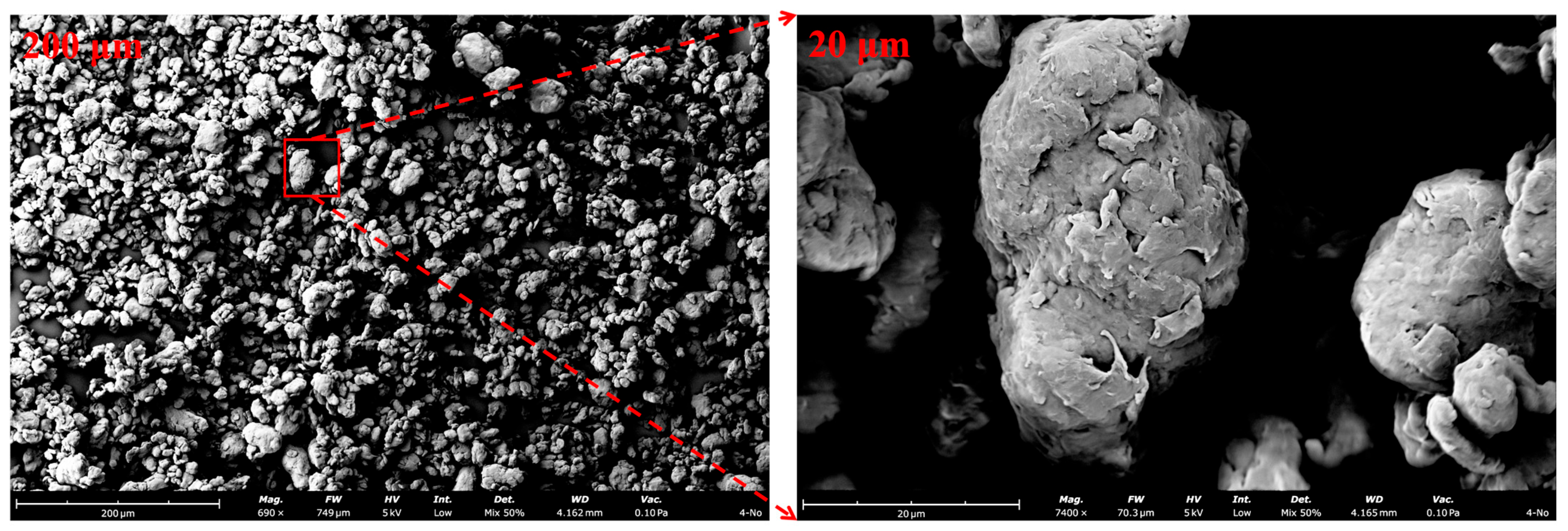
The tested crops were maize (Zea mays L., cv. Yunrui 408) and soybean (Glycine max (L.) Merr., cv. Liaoxian 21). The tested microplastics were polyethylene microplastics (PE-MPs; supplier-reported nominal particle size, approximately 25 μm) purchased from Hongguang Plastic Raw Material Business (Dongguan, China). Prior to the experiment, the PE-MPs were rinsed multiple times with deionized water to remove surface impurities and allowed to air-dry naturally. No artificial weathering or aging treatment was applied before soil amendment. Particle morphology was examined using a benchtop scanning electron microscope (SEM; Phenom XL, Thermo Fisher Scientific, Waltham, MA, USA). Before imaging, the dried PE-MPs were mounted on double-sided conductive carbon tape and sputter-coated with a 20–30 nm conductive metal film using an ion sputter coater to improve surface conductivity and minimize charging effects. Images were acquired at an accelerating voltage of 5 kV. SEM observations showed that the PE-MPs had irregular shapes and rough surfaces (Figure 1). The potting containers used for the experiment were stainless steel buckets (32.5 cm in height, 33.5 cm in top diameter, and 24.5 cm in bottom diameter).

2.3. Experimental Design

A two-factor experimental design was employed. The first factor was the cropping system, comprising two systems: maize monoculture (MM) and maize–soybean intercropping (IM). The second factor was the PE-MP exposure concentration, featuring four gradients: 0% (CK), 0.1% (low concentration), 0.5% (medium concentration), and 1.0% (high concentration) (w/w). There was a total of eight treatment combinations, with three replicates per treatment. The PE-MPs were thoroughly mixed with the tested soil according to the designated mass fractions and filled into stainless steel buckets. Each bucket was filled with 15 kg of soil and allowed to equilibrate for 14 days. After the stabilization period, seeds were sown on 30 May 2025, with four maize seeds per bucket for the MM treatment, and two maize plus two soybean seeds for the IM treatment. Seedlings were thinned 22 days later (21 June 2025), leaving two maize plants per bucket in MM, and one maize and one soybean plant in IM. During the experiment, soil moisture was strictly maintained at approximately 70% of the field capacity. Standard fertilization practices were applied: urea was used as the nitrogen fertilizer, with a 1:1 topdressing applied at the bell stage of maize (150 mg·kg−1); potassium sulfate was used as the potassium fertilizer (K2O, 100 mg·kg−1); and superphosphate was used as the phosphorus fertilizer (P2O5, 90 mg·kg−1). No pesticides were applied during the experiment, and weeds were removed periodically. Destructive sampling was conducted at the tasseling stage of maize.

2.4. Sampling and Sample Measurement

Destructive sampling was conducted on 13 August 2025, at the maize tasseling stage. Maize rhizosphere soil samples were collected using the shaking method. Briefly, loosely adhering soil was gently shaken off, and soil remaining attached to maize roots was collected as rhizosphere soil. In the MM treatment, rhizosphere soil was collected from maize roots. In the IM treatment, rhizosphere soil was also collected only from maize roots to ensure direct comparability between the two cropping systems. The fresh soil was thoroughly homogenized and divided into three subsamples. One subsample was air-dried at room temperature and passed through 1 mm and 0.25 mm sieves for the determination of soil chemical properties and nutrient contents, while the others were stored at 4 °C and −20 °C for the determination of soil enzyme activities.
Soil physicochemical properties were determined according to the methods described by Bao [36]. Bulk density (BD) was measured using the core method. Soil pH and electrical conductivity (EC) were measured with a pH meter and a conductivity meter in soil–water suspensions at ratios of 1:2.5 and 1:5, respectively. Soil organic matter (SOM) was determined using the external heating potassium dichromate oxidation method. Total nitrogen (TN) was analyzed using the Kjeldahl digestion method. Total phosphorus (TP) and total potassium (TK) were determined after NaOH fusion: TP was measured colorimetrically using the molybdenum–antimony anticolorimetric method, and TK was measured via flame photometry. Alkali-hydrolyzable nitrogen (AN) was determined using the alkali diffusion method. Nitrate nitrogen (NO3–N) and ammonium nitrogen (NH4+–N) were extracted with 2 mol·L−1 KCl and quantified using a continuous flow analyzer [31]. Available phosphorus (AP) was determined using NH4F–HCl extraction followed by the molybdenum–antimony anticolorimetric method, and available potassium (AK) was determined using 1 mol·L−1 NH4OAc extraction followed by flame photometry.
Soil acid phosphatase (S-ACP; G0304W), β-glucosidase (S-β-GC; G0312W96), urease (S-UE; G0301W96), and catalase (S-CAT; G0303W) activities were determined using commercial kits (Suzhou Grace Biotechnology Co., Ltd., Suzhou, China). Activities were quantified colorimetrically: S-ACP and S-β-GC from p-nitrophenol release (405 nm), S-UE from NH3–N release via the indophenol blue method (578 nm), and S-CAT from residual H2O2 after decomposition (510 nm). Absorbance was measured using a Varioskan LUX microplate reader (Thermo Fisher Scientific, Waltham, MA, USA), and enzyme activities were calculated according to the manufacturer’s instructions.

2.5. Data Processing and Statistical Analysis

Raw data were organized using Microsoft Excel 2019, and statistical analyses were completed in SPSS 27.0. Prior to ANOVA, data normality and variance homogeneity were confirmed using Shapiro–Wilk and Levene’s tests, respectively. Two-way ANOVA was employed to evaluate the main and interactive effects of cropping systems and PE-MP concentrations; if the interaction was significant, a one-way ANOVA combined with Duncan’s multiple range test (suitable for sensitive detection of early ecological responses in this exploratory study) was used to compare means at the α = 0.05 level, whereas independent samples t-tests were used if non-significant. Redundancy analysis (RDA) was performed using Canoco 5 to screen key environmental variables.
Partial least squares structural equation modeling (PLS-SEM) was performed via the ‘plspm’ package in R 4.5.3 to explore potential associations and mediating pathways among the PE-MP concentration gradient, cropping systems, rhizosphere physicochemical properties, and enzyme activities. Cropping systems were coded as dummy variables (0 = monocropping, 1 = intercropping), and PE-MP concentrations as continuous variables. Multicollinearity was assessed using VIF (VIF > 5 indicates severe collinearity). When severe collinearity was detected, the involved variables were excluded from the primary model to ensure robust path estimates, while a model retaining all variables was evaluated for sensitivity analysis. Path significance was tested via 5000 bootstrap resamples and bias-corrected 95% confidence intervals, and model quality was evaluated by R2. Graphs were generated using GraphPad Prism 10.1.2.

3. Results

3.1. Responses of Rhizosphere Soil Physicochemical Properties and Enzyme Activities to Cropping Systems and PE-MP Exposure Gradients

The results of the analysis of variance (ANOVA) (Table 1) showed that, among the measured soil parameters, all variables except BD responded significantly to the PE-MP concentration gradient (p < 0.05). In addition, EC, SOM, TN, TP, TK, AN, AK, NH4+-N content, as well as S-β-GC and S-CAT activities, exhibited significant responses to the cropping systems (MM and IM) (p < 0.05). Except for BD and TK, all variables were significantly affected by the interaction between the PE-MP concentration gradient and cropping systems (p < 0.05).

3.2. Effects of PE-MP Exposure Gradients on Bulk Density, pH, and Electrical Conductivity of Rhizosphere Soil in Maize–Soybean Intercropping

In Table 2, PE-MP concentration, cropping system, and their interaction did not significantly affect soil bulk density (BD). However, the interaction between PE-MP concentration and cropping system significantly decreased soil pH and EC under the PE-MP concentration gradient exposure (p < 0.05). Under the 0.1% PE-MP treatment, pH and EC in the maize monocropping (MM) system were reduced by 4.32% and increased by 11.12%, respectively, compared with the control (CK) (p < 0.05). In contrast, under the same treatment, pH in the maize–soybean intercropping (IM) system was 2.24% higher than that in MM (p < 0.05). Across all PE-MP concentration treatments, pH and EC in the IM system did not differ significantly from CK (p > 0.05).

3.3. Changes in Rhizosphere Soil Carbon Fractions Under PE-MP Exposure Gradients in Maize–Soybean Intercropping Systems

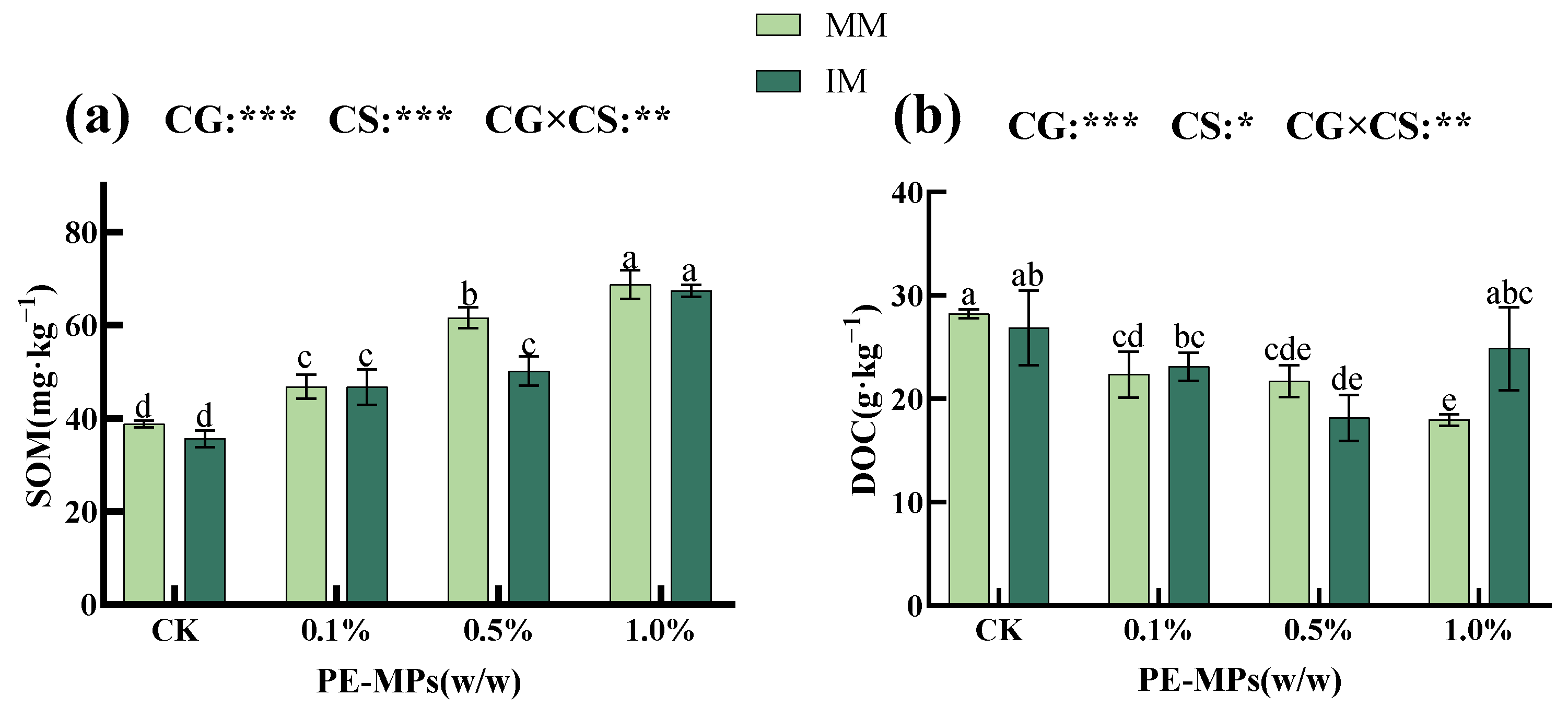
SOM content increased significantly with rising PE-MP concentrations (p < 0.05, Figure 2a). Compared with the control (CK), SOM in the MM and IM systems increased by 20.63–77.17% and 31.09–89.11%, respectively, across the PE-MP concentration treatments. At the 0.5% PE-MP level, SOM content in the IM system was 18.60% lower than that in MM (p < 0.05), whereas no significant differences between MM and IM were observed at the other concentrations.
In contrast, DOC content decreased significantly as PE-MP concentration increased (p < 0.05, Figure 2b). In the MM system, DOC was reduced by 20.73–36.33% relative to CK under all PE-MP concentration treatments (p < 0.05). In the IM system, DOC content was 14.02% and 32.38% lower than CK under the 0.1% and 0.5% PE-MP treatments, respectively (p < 0.05). However, at 1.0% PE-MPs, DOC showed an inflection point and recovered to a level not significantly different from CK, and DOC in IM was 38.40% higher than that in MM at this concentration (p < 0.05).

3.4. Changes in Rhizosphere Soil Nutrient Contents Under PE-MP Exposure Gradients in Maize–Soybean Intercropping Systems

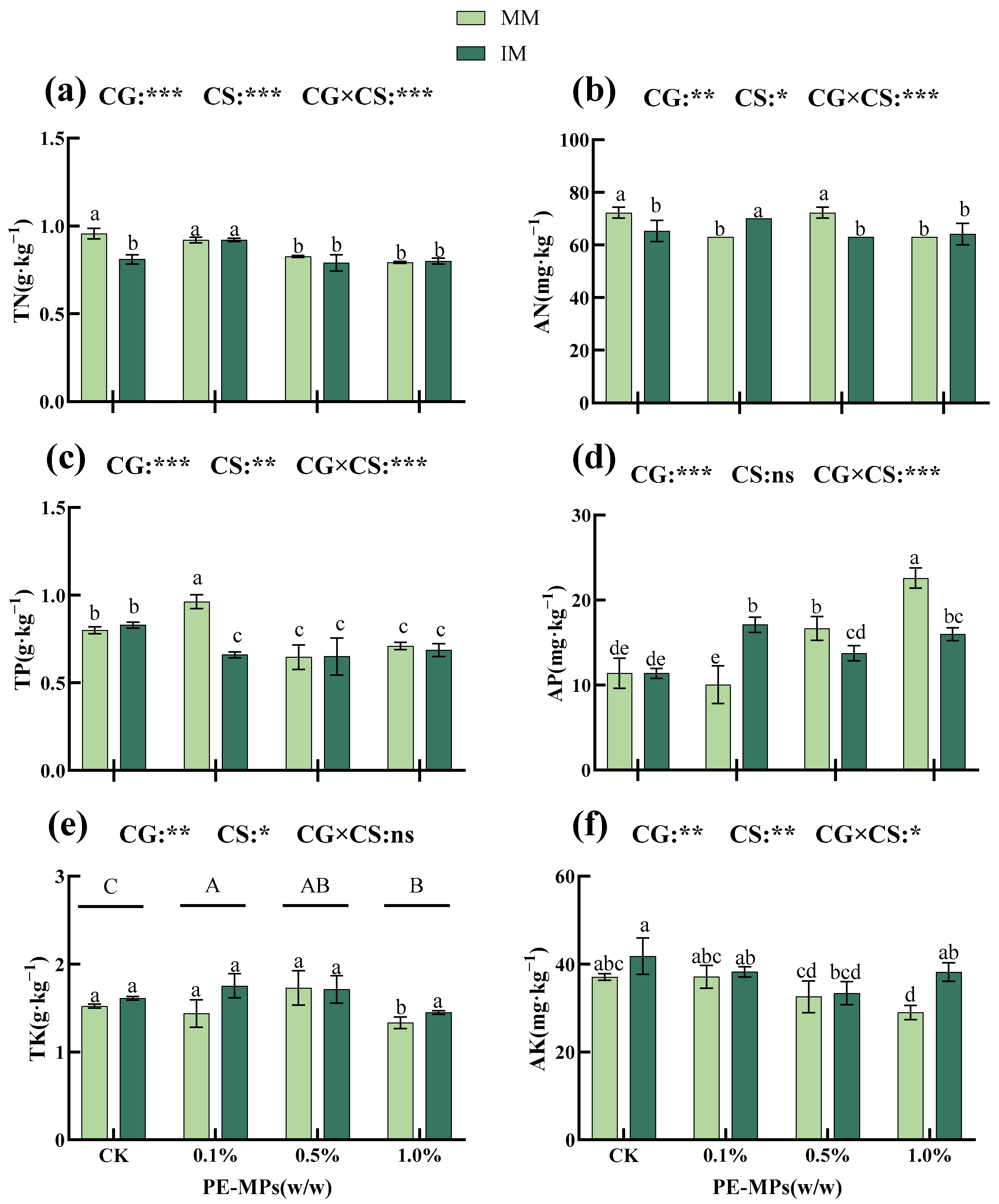
Soil TN, TP, TK, AN, and AK contents showed an overall decreasing trend under PE-MP stress (Figure 3), whereas AP content exhibited continuous accumulation with increasing PE-MP concentrations. Notably, under medium–high PE-MP levels (0.5–1.0%), the increase in AP in the IM system was significantly lower than that in MM (p < 0.05).
In the MM system, low PE-MP concentration (0.1%) led to a 20.41% increase in TP content compared with CK (p < 0.05). Under medium–high PE-MP levels (0.5–1.0%), however, TN and TP contents were 13.59–17.08% and 11.25–19.60% lower than CK, respectively (p < 0.05), while AP content sharply increased by 46.3% and 98.4% relative to CK at these concentrations (p < 0.05). In addition, TK and AK contents in MM decreased significantly only under the highest PE-MP level (1.0%), being 12.47% and 21.7% lower than CK, respectively (p < 0.05).
In the IM system, TN and TK contents did not differ significantly from CK across all PE-MP concentration gradients, indicating a relatively high stability. At the low PE-MP concentration (0.1%), AN content in IM was 7.1% higher than CK (p < 0.05). Across the 0.1–1.0% PE-MP range, TP content in IM was 17.27–21.69% lower than CK (p < 0.05), whereas AP content was 50.1%, 20.7%, and 40.3% higher than CK, respectively (p < 0.05). For AK, a 20.2% decrease relative to CK was observed under the 0.5% PE-MP treatment (p < 0.05), but AK showed a clear rebound at 1.0% compared with 0.5%; under the remaining treatments, AN and AK contents in IM did not differ significantly from CK (p > 0.05).
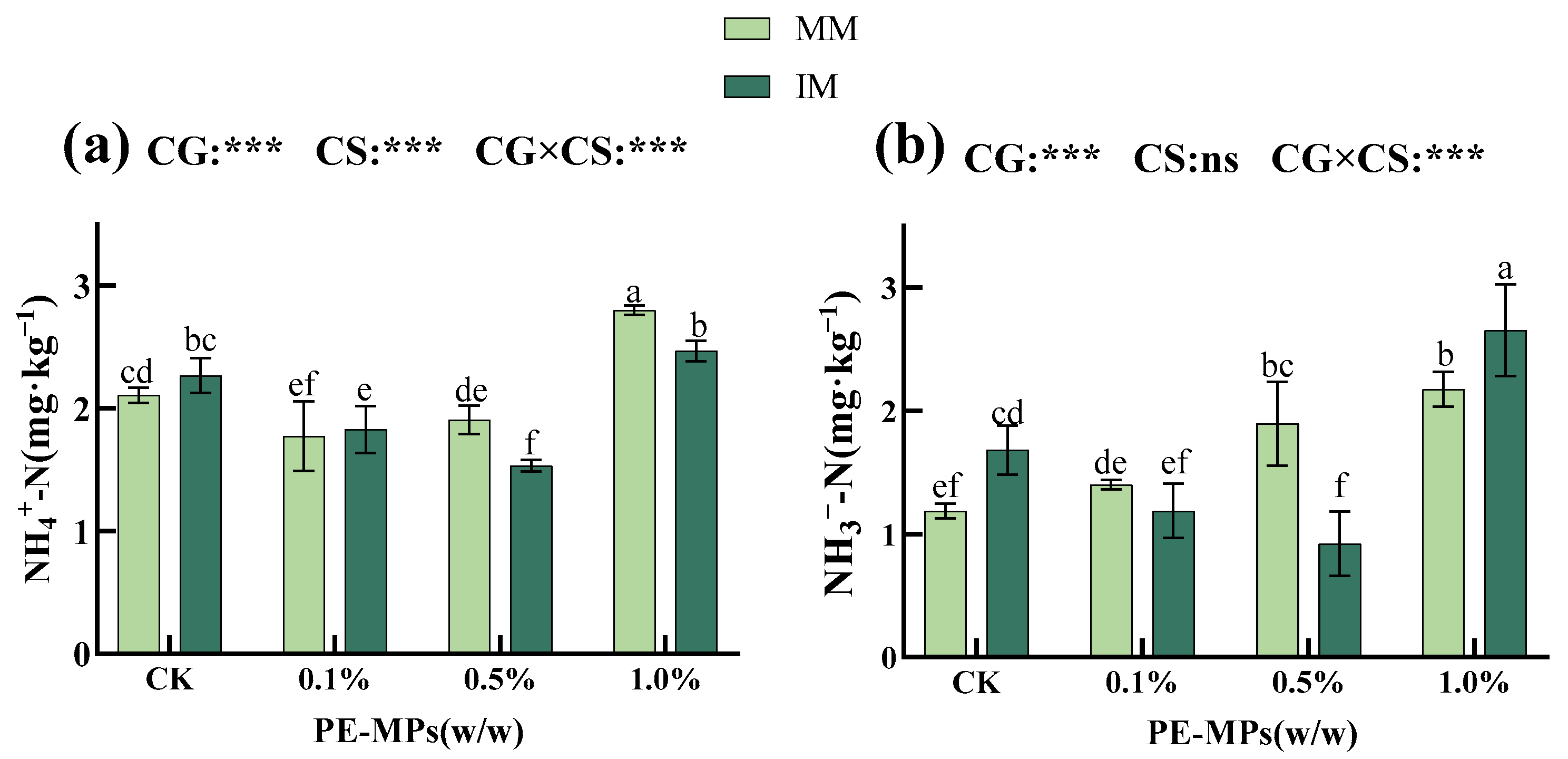
Soil NH4+-N and NO3-N responded differently to PE-MP stress depending on the cropping system (Figure 4). Overall, NH4+-N content in both MM and IM showed a decrease–increase trend with rising PE-MP concentrations, whereas the pattern of NO3-N differed between the two systems. Under low–medium PE-MP levels (0.1% and 0.5%), NH4+-N in MM was 15.83% (p < 0.05) and 9.49% lower than CK, respectively, while NO3-N increased continuously across the 0.1%, 0.5%, and 1.0% treatments, being 17.97%, 59.54% (p < 0.05), and 83.14% (p < 0.05) higher than CK, respectively. In contrast, in IM, both NH4+-N and NO3-N were 19.41–32.36% (p < 0.05) and 29.36–45.24% (p < 0.05) lower than CK, respectively, across the 0.1–0.5% range. At the high PE-MP level (1.0%), NH4+-N and NO3-N contents in both MM and IM increased relative to CK.

3.5. Changes in Rhizosphere Soil Enzyme Activities Under PE-MP Exposure Gradients in Maize–Soybean Intercropping Systems

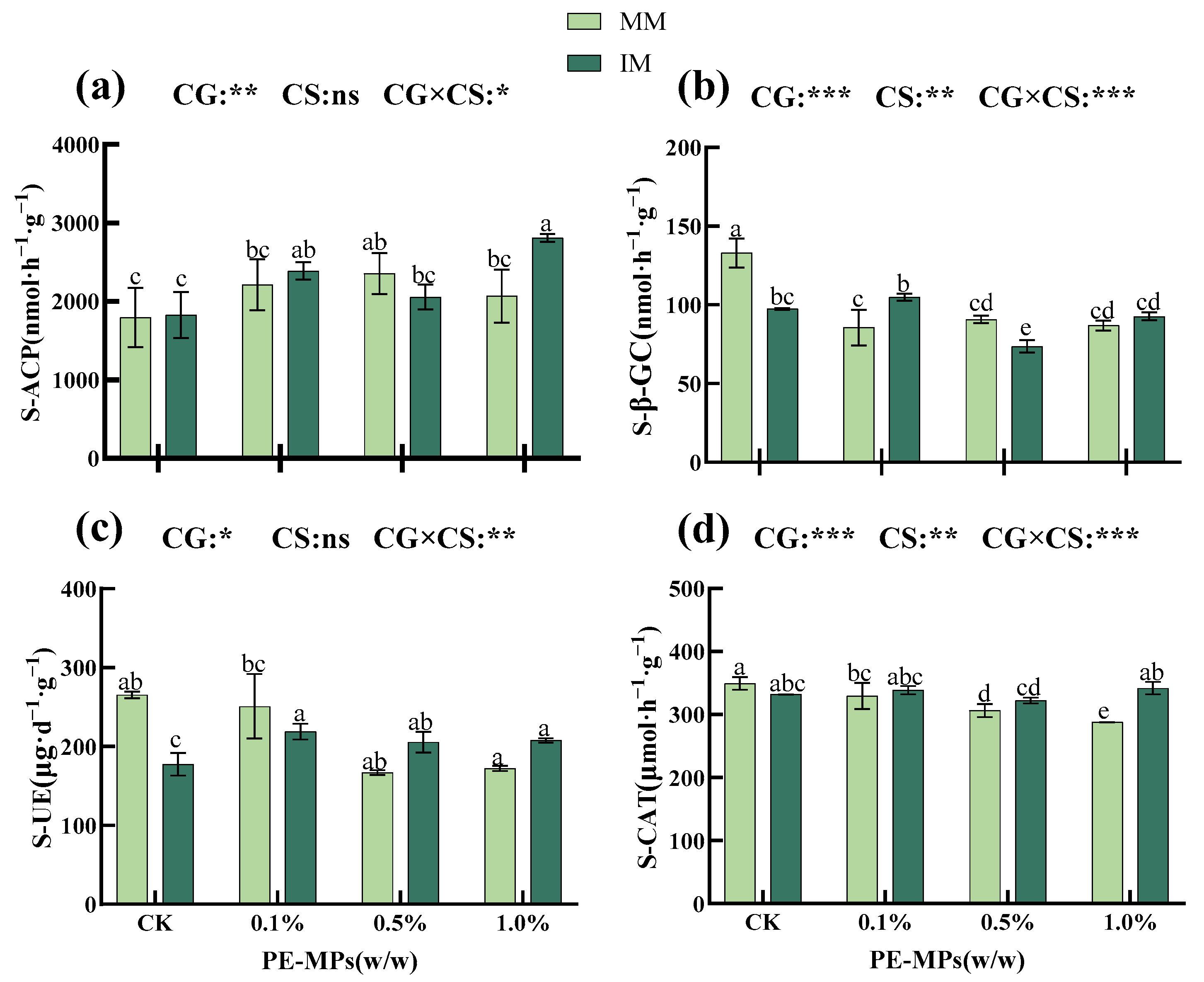
PE-MP concentration and cropping system exerted highly significant main and interactive effects on soil S-ACP, S-β-GC, and S-UE activities, indicating that PE-MP stress affected these enzyme activities differently depending on the cropping system (Table 1, Figure 5). Overall, S-ACP activity in both the MM and IM systems was stimulated to varying degrees under PE-MP stress.
In the MM system, the activities of S-β-GC (p < 0.05), S-UE, and S-CAT (p < 0.05) were all inhibited by PE-MP exposure. In the IM system, S-β-GC activity was significantly reduced by 24.47% compared with the CK only under the 0.5% PE-MP treatment (p < 0.05). Conversely, across all PE-MP concentrations, S-UE activity in the IM system significantly increased relative to the CK (p < 0.05). However, S-CAT activity remained unaffected, showing no significant differences from the CK under any PE-MP treatment (p > 0.05). Furthermore, at the 0.1% PE-MP level, both S-ACP and S-CAT activities were significantly higher in the IM system compared to the MM system (p < 0.05).

3.6. Rhizosphere Physicochemical Properties Mediate the Effects of PE-MP and Cropping Systems on Soil Enzyme Activities

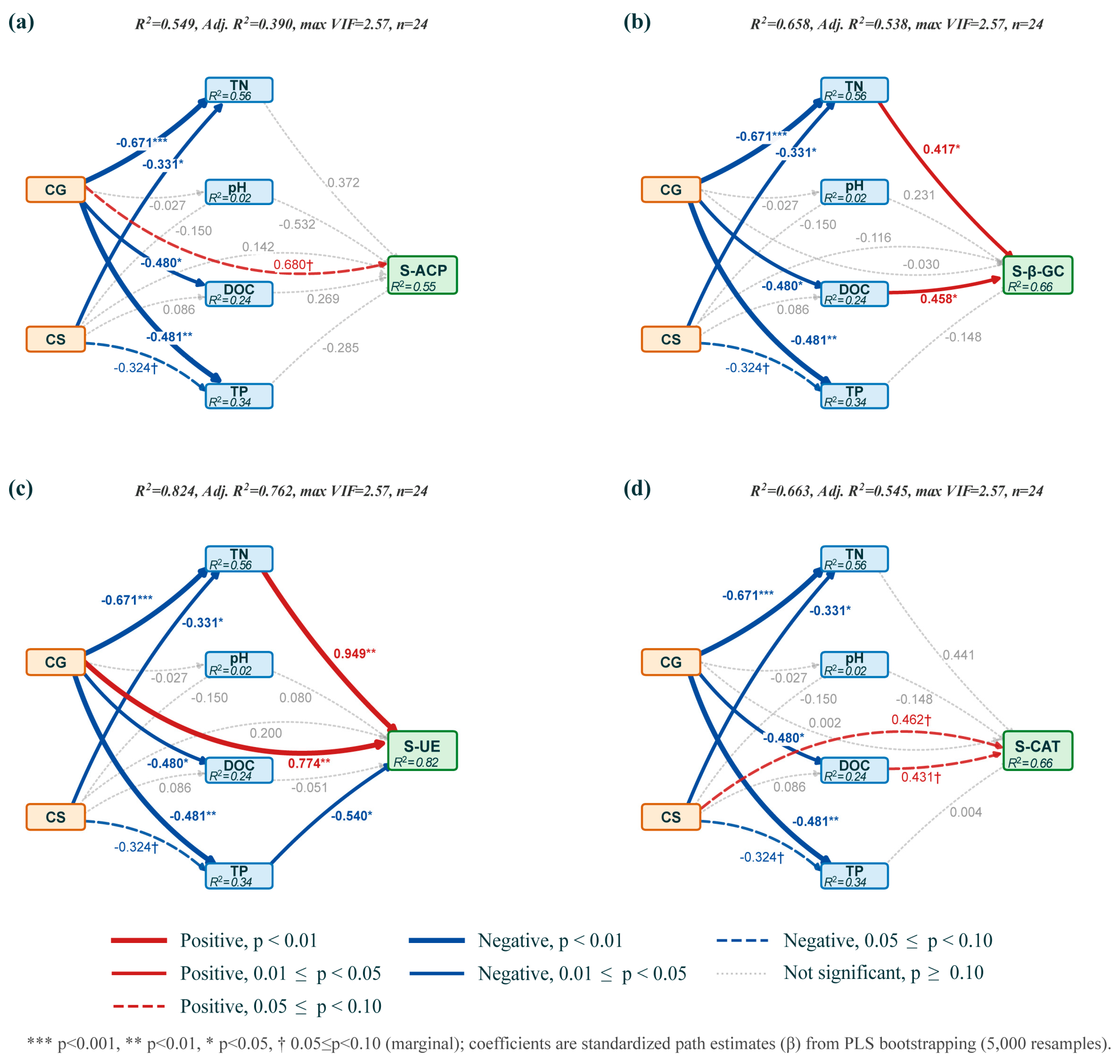
Based on the redundancy analysis (RDA) results (Table 3), the main environmental factors driving changes in soil enzyme activities were identified (p < 0.05). Among these, SOM, TN, pH, DOC, and TP were selected as key mediators in the structural equation model (SEM) to explore the potential mechanisms by which cropping systems (CS) and the PE-MP concentration gradient (CG) affect S-ACP, S-UE, S-β-GC, and S-CAT activities via rhizosphere physicochemical properties. During the construction of the PLS-SEM, extreme collinearity was detected between CG and SOM (maximum variance inflation factor [VIF] = 16.47). To obtain more robust estimates of indirect effects, a primary PLS-SEM excluding SOM was established (maximum VIF = 2.57; Figure 6), while the initial model including SOM (Figure S1) was retained as a sensitivity model to assess the dependence of the conclusions on uncertainties in SOM measurement and model specification.
The primary model (Figure 6) indicates that CG and CS were associated with soil enzyme activities through multiple proposed pathways involving rhizosphere physicochemical properties. CG significantly decreases TN, TP, and DOC (p < 0.05), while CS was negatively associated with TN (β = −0.331, p < 0.05) and showed a marginally significant negative association with TP (β = −0.324, p < 0.10). Among the mediating paths, TN serves as the core positive predictor for S-UE (β = 0.949, p < 0.01) and S-β-GC (β = 0.417, p < 0.05). Meanwhile, DOC is significantly and positively associated with S-β-GC (β = 0.458, p < 0.05) and exhibits a marginally significant positive correlation with S-CAT (β = 0.431, p < 0.10). Overall, S-UE and S-β-GC are most sensitive to changes in TN and DOC, whereas none of the measured rhizosphere physicochemical variables form a stable statistical pathway for S-ACP.

4. Discussion

4.1. Effects of Cropping Systems and PE-MP Gradient Exposure on Soil Bulk Density, pH, and Electrical Conductivity

Soil bulk density (BD), pH, and electrical conductivity (EC) are key indicators characterizing soil physical structure and the rhizosphere physicochemical environment. Microplastics (MPs) can indirectly affect soil ecological functions by altering soil physicochemical properties [3,37]. Although previous studies have shown that MPs can reduce soil BD depending on particle size and loading rate [38,39], no significant differences in BD were observed between the PE-MP treatments and the CK in this study, consistent with the findings of Liu et al. [35]. This may be attributable to the relatively low concentration (≤1.0%) and small particle size (25 μm) of the added PE-MPs, as well as the short experimental duration, which may not have caused sufficient disruption to the soil macroaggregate framework. Furthermore, BD is strongly governed by the inherent physicochemical properties of the soil and plant root dynamics [40]. The dense, interwoven root networks of maize and soybean, along with their exudate-mediated cementation, may have stabilized the soil matrix, thereby masking any slight physical disturbances induced by PE-MPs. Although maize–legume intercropping can reduce surface soil BD and increase soil porosity by enhancing root activity [41], such structural improvements generally require long-term accumulation and are regulated by soil texture, cropping configuration, root distribution, and management practices [42]. Therefore, the non-significant effect of the cropping system on BD under the short-term pot conditions of this study does not imply that maize–soybean intercropping lacks the potential to improve soil structure. Rather, such effects may require longer-term field conditions to progressively develop through sustained root inputs, aggregate formation, and changes in soil pore structure.
This study also found that PE-MP stress not only decreased pH and EC but also interacted significantly with cropping systems, leading to divergent pH and EC responses in the MM and IM systems. In the MM system, pH decreased significantly with increasing PE-MP concentration, in agreement with previous findings [43]. This may be due to the competitive adsorption of base cations by MPs and the alteration of soil aeration conditions after pore occupation, which may induce anaerobic microbial metabolism and acid production in the rhizosphere. In addition, acidic substances released from MPs and their adsorption of base cations may further reduce soil pH and EC [14,15,16,17,44]. The EC response observed here also supports this interpretation and is consistent with the findings of Qi et al. [45], who reported that PE-MPs significantly suppress soil EC; however, under low-concentration PE-MP stress (0.1%), the release or accumulation of soluble ions may temporarily increase EC [18].
In contrast, pH and EC showed no significant changes across the PE-MP gradient in the IM system. In particular, under low-to-medium PE-MP stress (0.1%~0.5%), the decline in pH was alleviated relative to the MM system. This may be related to the capacity of maize–soybean intercropping to regulate soil acidity and mitigate acidification [46,47]. Moreover, the more complex and well-developed root network, together with legume–cereal interactions in the intercropping system, may have formed a rhizosphere buffering barrier. This barrier could effectively suppress the accumulation of soluble ions induced by MPs and maintain ionic homeostasis in the rhizosphere by enhancing root interception and uptake of water-soluble ions. However, under high-concentration PE-MP stress (1.0%), the IM system still exhibited significant acidification relative to the MM system, suggesting that the mitigating effect of the intercropping rhizosphere is limited under severe microplastic exposure.

4.2. Effects of Cropping Systems and PE-MP Gradient Exposure on Soil Organic Matter and Dissolved Organic Carbon

The combination of SOM and DOC comprehensively reflects soil carbon storage, organic matter turnover, and microbial carbon supply. In this study, a significant interaction between cropping system and PE-MP concentration gradient led to a distinct divergence under PE-MP stress, characterized by the apparent accumulation of SOM and the substantial depletion of DOC. In both the MM and IM systems, the SOM content increased with rising PE-MP concentrations [48,49]. This phenomenon is primarily driven by two factors. First, MPs possess high intrinsic carbon content and can integrate into soil aggregates via biotic and abiotic binding with minerals and organic compounds, thereby elevating the SOM fraction [50,51]. Second, the conventional potassium dichromate oxidation method (the Walkley–Black method) used for SOM determination frequently results in a systematic overestimation of SOM when MPs are present [11,52]. Thus, the measured SOM in this study represents “apparent SOM,” which includes carbon from both true soil organic matter and PE-MPs.
Notably, across all PE-MP treatments, the apparent SOM content in the IM system was consistently lower than that in the MM system. Literature suggests that such a reduction may be closely associated with the positive rhizosphere priming effect [53,54], wherein living roots and their exudates strongly stimulate SOM mineralization and decomposition. Given its larger root biomass and richer root exudates, the IM system might exert a stronger priming effect than the MM system, potentially accelerating the short-term mineralization and consumption of SOM [55]. However, as the PE-MP stress increased, the gap in apparent SOM between the IM and MM systems gradually narrowed. Severe PE-MP stress significantly reduces the soil organic carbon mineralization rate [56], corroborating the overall downward trend of DOC observed in this study. Furthermore, hydrophobic functional groups on the surface of PE-MPs can adsorb and complex DOC, further reducing its availability [57]. Interestingly, under high-concentration PE-MP stress (1.0%), the DOC content in the IM system exhibited a pronounced rebound. This suggests that the extreme physical blockage and toxicity induced by high-level PE-MPs may have triggered root defense responses in the intercropped plants, thereby partially alleviating the stress on the DOC pool. Nevertheless, considering the time-dependent and non-linear impacts of microplastics on soil DOC [58,59], our short-term pot experiment with a single sampling point cannot determine if the observed DOC rebound under high PE-MP stress reflects a stable ecological shift or a temporary stress response.

4.3. Effects of Cropping Systems and PE-MP Gradient Exposure on Soil Nutrient Contents

Soil nutrient content is a crucial indicator of soil health. Microplastics (MPs) can significantly alter the retention and supply of soil nutrients by disrupting soil aggregate structure, weakening clay particle cementation, and interfering with the cycling of carbon, nitrogen, and phosphorus [60]. Previous studies have shown that MPs can reduce the contents of soil AN, AP, AK, and TN [61,62]. In this study, the MM and IM systems exhibited distinctly different nutrient response pathways and rhizosphere microecological regulatory effects under PE-MP gradient stress. In the MM system, TN continuously declined with increasing PE-MP concentration, confirming that microplastic input exacerbates soil nitrogen loss [63]. However, owing to the inherent biological nitrogen fixation advantage and interspecific nitrogen transfer mechanisms of the maize–soybean intercropping system [25,26,27,28,29], the IM system was able to maintain a relatively stable TN level under PE-MP gradient stress.
Regarding the transformation of inorganic nitrogen, which dictates immediate nitrogen supply capacity, NO3-N and NH4+-N also exhibited distinct system-specific divergence. Since MP addition typically promotes soil nitrification and inhibits denitrification, NO3-N [63,64] in the MM system accumulated significantly with rising PE-MP concentrations. In contrast, under low-to-medium PE-MP stress (0.1% and 0.5%), both NO3-N and NH4+-N in the IM system decreased significantly; however, under high PE-MP stress (1.0%), NO3-N in the IM system surpassed that in the MM system. Drawing from previous studies, this suggests that mild PE-MP stress might negatively impact nitrifying microbial processes and reduce inorganic nitrogen transformation efficiency, whereas under high-concentration stress, the ecological buffering capacity of the IM system had been breached, resulting in abnormal inorganic nitrogen accumulation. Furthermore, although previous studies indicate that intercropping can significantly increase TP content [65], no significant difference in TP was observed between the IM and MM systems under PE-MP stress in this study, and both exhibited a decreasing trend. This may be because the present experiment was conducted over a single season, meaning the long-term phosphorus accumulation advantage of the intercropping system had not yet fully manifested. Moreover, the greater crop biomass in the intercropping system likely resulted in stronger phosphorus export, where high plant phosphorus demand offset the potential positive effect of the rhizosphere microenvironment on phosphorus retention.
Under PE-MP stress, both AN and AK contents declined, whereas AP exhibited anomalous enrichment. This contradicts some studies reporting that MPs reduce AP [19]. However, combined with the decline in TP (Figure 3c) and the sharp surge in S-ACP activity (Figure 5a) observed in this study, the underlying driving mechanism may be inferred as follows: on the one hand, PE-MP stress significantly stimulated S-ACP activity, accelerating the mineralization of soil organic phosphorus [22]; on the other hand, PE-MPs may have promoted the massive desorption of insoluble inorganic phosphorus by competing for adsorption sites on mineral surfaces or by complexing phosphorus-fixing cations. Previous studies confirm that phosphorus adsorbed onto the surfaces of MPs readily desorbs when subjected to pH changes or influenced by root exudates [66]. During this process, AP accumulation in the MM system was markedly higher than that in the IM system. This may partly stem from differences in plant phosphorus uptake capacity and soil phosphorus activation between the two cropping systems. More crucially, the literature suggests that MPs can form a “plastisphere” physical barrier on the root surface and induce oxidative stress [67], which could severely restrict the phosphorus uptake vitality of the MM roots, causing a large amount of activated AP to become stranded in the soil. By contrast, the IM system, relying on its massive and three-dimensional composite root network, was able to rapidly consume the released AP, thereby effectively alleviating the abnormal retention and accumulation of AP in the rhizosphere.

4.4. Enzymatic Responses and Stoichiometric Mechanisms Driven by PLS-SEM

Soil enzymes play a crucial role in material cycling and energy flow within soil ecosystems, and changes in their activities can sensitively reflect soil health [67]. Previous studies have shown that the effects of MPs on soil enzymes vary depending on their type, concentration, and microenvironmental conditions [13]. Conventional MPs such as PE-MPs often suppress the activities of enzymes related to carbon, nitrogen, and phosphorus cycling through physical barriers, surface complexation with enzyme proteins, or microenvironmental changes that induce microbial toxicity [20,22]. In this study, the activities of S-UE, S-β-GC, and S-CAT in the MM system were primarily inhibited by PE-MPs, which is consistent with the above findings. In particular, the activity of S-CAT decreased significantly with increasing PE-MP concentration, exhibiting a typical dose-dependent inhibition pattern. This suppression likely occurred because PE-MPs disrupted soil aggregates and deteriorated the microbial microenvironment. Furthermore, MP exposure has been reported to reduce bacterial abundance, potentially further restricting enzyme activity [68,69].
However, changes in cropping systems significantly altered the unidirectional effects of microplastics on the soil biochemical microenvironment. In this study, the IM system significantly alleviated the stress of PE-MP concentration gradients on the above-mentioned soil enzymes and effectively enhanced microbial enzyme-producing capacity [70]. Under all PE-MP concentration treatments, S-UE activity in the IM system was significantly elevated, while S-CAT activity generally remained relatively stable; notably, under the 1.0% high-concentration treatment, S-CAT activity in the IM system was significantly higher than that in the MM system, indicating that maize–soybean intercropping may mitigate the impact of PE-MP exposure on certain soil enzyme activities. Combined with the primary PLS-SEM (Figure 6), we found that although PE-MP concentration reduced key rhizosphere nutrients (exhibiting negative impacts on TN, DOC, and TP), TN remained the critical positive driver for S-UE activity. Simultaneously, the cropping system exhibited a direct positive promoting effect on S-CAT, which corroborates the higher S-CAT activity observed in the IM system under 1.0% PE-MPs. This suggests that the intercropping system may effectively block or buffer the negative cascading impacts of PE-MP accumulation on microenvironmental physicochemical properties. However, this buffering cannot be simply attributed to the maintenance of TN and TP but is likely related to the specific rhizosphere microenvironment of the intercropping system. The unique root interaction mechanisms and abundant organic acids secreted by soybean roots in the maize–soybean intercropping system not only improve local rhizosphere nutrient availability but also likely act as a crucial buffer, enhancing rhizosphere enzyme production and thereby maintaining the functional stability of core enzymes such as S-UE and S-CAT under microplastic stress.
Notably, S-ACP activity in both the MM and IM systems was not inhibited; instead, it showed a clear activation response with increasing PE-MP concentration. This specific response is not only consistent with previous findings that the accumulation of polyethylene microplastics can promote S-ACP activity [22,23,66,71], but also aligns with the observed declines in pH and TP and the anomalous accumulation of AP in this study. Under acidic rhizosphere conditions, microbial communities tend to increase the secretion of extracellular S-ACP to accelerate the mineralization of organic phosphorus and compensate for the shortage of AP uptake [72]. Therefore, the surge in S-ACP can be regarded as an adaptive response of the microecosystem to phosphorus limitation. Synthesizing previous research on nutrient succession patterns with the observational results of this study, we propose the following plausible mechanism: high-concentration PE-MP exposure led to a decline in system TP and an apparent increase in SOM, resulting in a sharp rise in the C/N and C/P ratios within the microenvironment. To maintain growth, metabolism, and stoichiometric balance under conditions of relative carbon abundance and phosphorus deficiency, soil microorganisms preferentially initiated a strong P-acquisition strategy [73], secreting large amounts of ACP to acquire phosphorus.

4.5. Limitation and Future Directions

As this short-term study utilized pristine microplastics, the mechanisms of carbon pool divergence and enzymatic responses under field-realistic aged microplastic exposure require further elucidation. Future research should advance in three dimensions: (1) Experimental systems: Conduct long-term field trials to unravel the interactions between cropping systems and microplastics with varying polymer types and aging characteristics. (2) Analytical methods: Develop precise techniques to determine true soil organic matter (SOM) content, resolving the artifact of apparent SOM overestimation caused by conventional oxidation. (3) Mechanistic insights: Integrate multi-omics approaches (e.g., metagenomics and metabolomics) alongside targeted root exudate analyses to decipher the key functional microbial taxa and authentic pathways driving soil carbon dynamics and enzymatic succession.

5. Conclusions

This short-term pot simulation experiment demonstrated that, under a polyethylene microplastic (PE-MP) concentration gradient (0–1.0%), maize monocropping and maize–soybean cropping systems exerted significantly different regulatory effects on rhizosphere physicochemical properties and enzyme activities in red soil. Compared with the monocropping system, the intercropping system potentially alleviated PE-MP-induced fluctuations in soil pH and electrical conductivity (EC) under the tested experimental conditions. Under short-term PE-MP stress, soil carbon fractions exhibited marked divergence (an apparent accumulation of soil organic matter (SOM) and a substantial depletion of dissolved organic carbon (DOC)); however, the intercropping system maintained greater overall stability during this time. Owing to its complex rhizosphere microenvironment, the intercropping system mitigated PE-MP-induced nutrient loss, inorganic nitrogen and phosphorus imbalance, and changes in soil enzyme activities. Furthermore, the partial least squares structural equation modeling (PLS-SEM) results indicated that the associations among PE-MP exposure, cropping systems, rhizosphere physicochemical properties, and enzyme activities were enzyme-specific.
Overall, the complementary interactions within the maize–soybean intercropping system can buffer some of the negative effects caused by microplastic exposure, indicating its potential as an agronomic measure to mitigate microplastic pollution in agricultural soils. However, high-concentration PE-MP stress (1.0%) may still exceed the buffering capacity of this system. Importantly, as these conclusions are drawn from a controlled short-term pot experiment, longer-term and field-scale validations remain necessary to fully elucidate the persistence of these buffering effects, the underlying interaction mechanisms, and their practical significance in microplastic-polluted agroecosystems.

Supplementary Materials

The following supporting information can be downloaded at: https://www.mdpi.com/article/10.3390/agriculture16171853/s1, Figure S1: Path analysis of changes in soil enzyme activities (sensitivity PLS-SEM model including SOM). The numbers next to each path represent standardized path coefficients (β) obtained from PLS bootstrapping with 5000 resamples. The top of each panel reports the R2 and adjusted R2 for the corresponding enzyme model, while the R2 values for mediating variables are shown inside their respective boxes. The maximum variance inflation factor (VIF) across all paths is 16.47 (n = 24).

Author Contributions

Writing—original draft, D.S.; literature search, D.S., Y.Q. and Y.L.; study design, D.S., J.X. and Y.Z.; data curation, D.S. and Y.Z.; data collection, D.S., Y.L. and Z.L.; data analysis, D.S., Y.Q. and Y.L.; figures, D.S., Y.L. and Z.L.; data interpretation, D.S. and Z.L.; software, Y.Q. and Y.L.; resources and visualization, D.S.; writing—review and editing, formal analysis, and supervision, J.X. and Y.Z. All authors have read and agreed to the published version of the manuscript.

Funding

This work was supported by the National Key Research and Development Program of China (Nos. 2022YFD1901500/2022YFD1901503), and the National Natural Science Foundation of China (Nos. 32260805 and 32060718).

Data Availability Statement

The original contributions presented in the study concerning the rhizosphere soil physicochemical properties and enzyme activities in the maize–soybean cropping systems are included in the article; further inquiries can be directed to the corresponding author.

Acknowledgments

We sincerely thank the professional scientific editors and anonymous reviewers for their assistance in improving this manuscript. Their professional insights have significantly enhanced the clarity and readability of this paper.

Conflicts of Interest

The authors declare no conflicts of interest.

Abbreviations

The following abbreviations are used in this manuscript:
MPsMicroplastics
PE-MPsPolyethylene microplastics
MMMaize monoculture
IMMaize–soybean intercropping
BDSoil bulk density

References

  1. Hartmann, N.B.; Huffer, T.; Thompson, R.C.; Hassellov, M.; Verschoor, A.; Daugaard, A.E.; Rist, S.; Karlsson, T.; Brennholt, N.; Cole, M. Are We Speaking the Same Language? Recommendations for a Definition and Categorization Framework for Plastic Debris. Environ. Sci. Technol. 2019, 53, 1039–1047. [Google Scholar] [CrossRef] [Scilit] [PubMed]
  2. Thompson, R.C.; Courtene-Jones, W.; Boucher, J.; Pahl, S.; Raubenheimer, K.; Koelmans, A.A. Twenty Years of Microplastic Pollution Research—What Have We Learned? Science 2024, 386, eadl2746. [Google Scholar] [CrossRef] [Scilit] [PubMed]
  3. de Souza Machado, A.A.; Lau, C.W.; Kloas, W.; Bergmann, J.; Bachelier, J.B.; Faltin, E.; Becker, R.; Görlich, A.S.; Rillig, M.C. Microplastics Can Change Soil Properties and Affect Plant Performance. Environ. Sci. Technol. 2019, 53, 6044–6052. [Google Scholar] [CrossRef] [Scilit] [PubMed]
  4. Deng, P.; Hu, X.; Wang, R.; Dong, X.; Hu, K.; Mu, L. Spatial Risks of Microplastics in Soils and the Cascading Effects Thereof. Environ. Sci. Technol. 2025, 59, 10299–10309. [Google Scholar] [CrossRef] [Scilit] [PubMed]
  5. Dissanayake, P.D.; Kim, S.; Sarkar, B.; Oleszczuk, P.; Sang, M.K.; Haque, M.N.; Ahn, J.H.; Bank, M.S.; Ok, Y.S. Effects of Microplastics on the Terrestrial Environment: A Critical Review. Environ. Res. 2022, 209, 112734. [Google Scholar] [CrossRef] [Scilit] [PubMed]
  6. Boctor, J.; Hoyle, F.C.; Farag, M.A.; Ebaid, M.; Walsh, T.; Whiteley, A.S.; Murphy, D.V. Microplastics and Nanoplastics: Fate, Transport, and Governance from Agricultural Soil to Food Webs and Humans. Environ. Sci. Eur. 2025, 37, 68. [Google Scholar] [CrossRef] [Scilit]
  7. Garbounis, G.; Karasali, H.; Komilis, D. Origin, Occurrence and Threats of Microplastics in Agricultural Soils: A Comprehensive Review. Sustainability 2026, 18, 1524. [Google Scholar] [CrossRef] [Scilit]
  8. Ren, S.; Wang, K.; Zhang, J.; Chen, L.; Graf, M.; Florent, P.; Qi, R.; Cui, J.; Liu, X.; Qu, K. The Contribution of Plastic Film Mulch to Microplastics in Agricultural Soils Was Highly Overestimated. npj Sustain. Agric. 2026, 4, 59. [Google Scholar] [CrossRef] [Scilit]
  9. Zhang, S.; Bao, A.; Lin, X.; Jia, G.; Zhang, Q. Microplastic Accumulation in Agricultural Soils with Different Mulching Histories in Xinjiang, China. Sustainability 2023, 15, 5438. [Google Scholar] [CrossRef] [Scilit]
  10. Xu, T.; Zheng, S.; Duo, X.; Hou, Z.; Wu, J. Long-Term Plastic Mulching Exacerbates the Co-Limitation of Carbon and Phosphorus in Farmland by Altering Physicochemical Properties and Microbial Interactions. Front. Microbiol. 2025, 16, 1694370. [Google Scholar] [CrossRef] [Scilit] [PubMed]
  11. Hanif, M.; Aijaz, N.; Azam, K.; Akhtar, M.; Laftah, W.; Babur, M.; Abbood, N.; Benitez, I. Impact of Microplastics on Soil (Physical and Chemical) Properties, Soil Biological Properties/Soil Biota, and Response of Plants to It: A review. Int. J. Environ. Sci. Technol. 2024, 21, 10277–10318. [Google Scholar] [CrossRef] [Scilit]
  12. Lan, G.; Huang, X.; Li, T.; Huang, Y.; Liao, Y.; Zheng, Q.; Zhao, Q.; Yu, Y.; Lin, J. Effect of Microplastics on Carbon, Nitrogen and Phosphorus Cycle in Farmland Soil: A Meta-Analysis. Environ. Pollut. 2025, 370, 125871. [Google Scholar] [CrossRef] [Scilit] [PubMed]
  13. Guo, W.; Ye, Z.; Zhao, Y.; Lu, Q.; Shen, B.; Zhang, X.; Zhang, W.; Chen, S.-C.; Li, Y. Effects of Different Microplastic Types on Soil Physicochemical Properties, Enzyme Activities, and Bacterial Communities. Ecotoxicol. Environ. Saf. 2024, 286, 117219. [Google Scholar] [CrossRef] [Scilit] [PubMed]
  14. Shabani, A.; Ghasemi-Fasaei, R.; Zarei, M.; Abbasi, S. Combined Effects of Heavy Metals and Microplastics on Maize Grown in Acid and Alkaline Soils Inoculated with Plant Growth Promoting Rhizobacteria. PLoS ONE 2025, 20, e0338112. [Google Scholar] [CrossRef] [Scilit] [PubMed]
  15. Huang, F.; Hu, J.; Chen, L.; Wang, Z.; Sun, S.; Zhang, W.; Jiang, H.; Luo, Y.; Wang, L.; Zeng, Y. Microplastics May Increase the Environmental Risks of Cd Via Promoting Cd Uptake by Plants: A Meta-Analysis. J. Hazard. Mater. 2023, 448, 130887. [Google Scholar] [CrossRef] [Scilit] [PubMed]
  16. Sajjad, M.; Huang, Q.; Khan, S.; Khan, M.A.; Liu, Y.; Wang, J.; Lian, F.; Wang, Q.; Guo, G. Microplastics in the Soil Environment: A Critical Review. Environ. Technol. Innov. 2022, 27, 102408. [Google Scholar] [CrossRef] [Scilit]
  17. Yang, L.; Yang, W.; Li, Q.; Zhao, Z.; Zhou, H.; Wu, P. Microplastics in Agricultural Soils: Sources, Fate, and Interactions with Other Contaminants. J. Agric. Food Chem. 2025, 73, 12548–12562. [Google Scholar] [CrossRef] [Scilit] [PubMed]
  18. Palansooriya, K.N.; Sang, M.K.; El-Naggar, A.; Shi, L.; Chang, S.X.; Sung, J.; Zhang, W.; Ok, Y.S. Low-Density Polyethylene Microplastics Alter Chemical Properties and Microbial Communities in Agricultural Soil. Sci. Rep. 2023, 13, 16276. [Google Scholar] [CrossRef] [Scilit] [PubMed]
  19. Zhou, J.; Xu, H.; Xiang, Y.; Wu, J. Effects of Microplastics Pollution on Plant and Soil Phosphorus: A Meta-Analysis. J. Hazard. Mater. 2024, 461, 132705. [Google Scholar] [CrossRef] [Scilit] [PubMed]
  20. Qian, H.; Zhang, M.; Liu, G.; Lu, T.; Qu, Q.; Du, B.; Pan, X. Effects of Soil Residual Plastic Film on Soil Microbial Community Structure and Fertility. Water Air Soil Pollut. 2018, 229, 261. [Google Scholar] [CrossRef] [Scilit]
  21. Awet, T.; Kohl, Y.; Meier, F.; Straskraba, S.; Grün, A.-L.; Ruf, T.; Jost, C.; Drexel, R.; Tunc, E.; Emmerling, C. Effects of Polystyrene Nanoparticles on the Microbiota and Functional Diversity of Enzymes in Soil. Environ. Sci. Eur. 2018, 30, 11. [Google Scholar] [CrossRef] [Scilit] [PubMed]
  22. Fei, Y.; Huang, S.; Zhang, H.; Tong, Y.; Wen, D.; Xia, X.; Wang, H.; Luo, Y.; Barceló, D. Response of Soil Enzyme Activities and Bacterial Communities to the Accumulation of Microplastics in an Acid Cropped Soil. Sci. Total Environ. 2020, 707, 135634. [Google Scholar] [CrossRef] [Scilit] [PubMed]
  23. Cheng, Y.; Wang, F.; Huang, W.; Liu, Y. Response of Soil Biochemical Properties and Ecosystem Function to Microplastics Pollution. Sci. Rep. 2024, 14, 28328. [Google Scholar] [CrossRef] [Scilit] [PubMed]
  24. Huang, B.; Sun, L.; Liu, M.; Huang, H.; He, H.; Han, F.; Wang, X.; Xu, Z.; Li, B.; Pan, X. Abundance and Distribution Characteristics of Microplastic in Plateau Cultivated Land of Yunnan Province, China. Environ. Sci. Pollut. Res. 2021, 28, 1675–1688. [Google Scholar] [CrossRef] [Scilit] [PubMed]
  25. Raza, M.A.; Bin Khalid, M.H.; Zhang, X.; Feng, L.Y.; Khan, I.; Hassan, M.J.; Ahmed, M.; Ansar, M.; Chen, Y.K.; Fan, Y.F. Effect of Cropping systems on Yield, Nutrient Accumulation and Distribution in Maize and Soybean under Relay Intercropping Systems. Sci. Rep. 2019, 9, 4947. [Google Scholar] [CrossRef] [Scilit] [PubMed]
  26. Rodriguez, C.; Carlsson, G.; Englund, J.-E.; Flöhr, A.; Pelzer, E.; Jeuffroy, M.-H.; Makowski, D.; Jensen, E.S. Grain Legume-Cereal Intercropping Enhances the Use of Soil-Derived and Biologically Fixed Nitrogen in Temperate Agroecosystems. Eur. J. Agron. 2020, 118, 126077. [Google Scholar] [CrossRef] [Scilit]
  27. Zuo, Y.; Zhang, F. Effect of Peanut Mixed Cropping with Gramineous Species on Micronutrient Concentrations and Iron Chlorosis of Peanut Plants Grown in a Calcareous Soil. Plant Soil 2008, 306, 23–36. [Google Scholar] [CrossRef] [Scilit]
  28. Te, X.; Din, A.M.U.; Cui, K.; Raza, M.A.; Ali, M.F.; Xiao, J. Inter-Specific Root Interactions and Water Use Efficiency of Maize/Soybean Relay Strip Intercropping. Field Crops Res. 2023, 291, 108793. [Google Scholar] [CrossRef] [Scilit]
  29. Zhang, L.; Feng, Y.; Zhao, Z.; Cui, Z.; Baoyin, B.; Wang, H.; Li, Q.; Cui, J. Maize/Soybean Intercropping with Nitrogen Supply Levels Increases Maize Yield and Nitrogen Uptake by Influencing the Rhizosphere Bacterial Diversity of Soil. Front. Plant Sci. 2024, 15, 1437631. [Google Scholar] [CrossRef] [Scilit] [PubMed]
  30. Su, H.; Lai, H.; Gao, F.; Zhang, R.; Wu, S.; Ge, F.; Li, Y.; Yao, H. The Proliferation of Beneficial Bacteria Influences the Soil C, N, and P Cycling in the Soybean–Maize Intercropping System. Environ. Sci. Pollut. Res. 2024, 31, 25688–25705. [Google Scholar] [CrossRef] [Scilit] [PubMed]
  31. Nasar, J.; Ahmad, M.; Gitari, H.; Tang, L.; Chen, Y.; Zhou, X.-B. Maize/Soybean Intercropping Increases Nutrient Uptake, Crop Yield and Modifies Soil Physio-Chemical Characteristics and Enzymatic Activities in the Subtropical Humid Region Based in Southwest China. BMC Plant Biol. 2024, 24, 434. [Google Scholar] [CrossRef] [Scilit] [PubMed]
  32. Liao, J.; Kuang, M.; Deng, Y.; Abdo, A.I.; Wei, H.; Zhang, J.; Xiang, H. Maize and Soybean Intercropping Enhanced Soil Nutrient Availability and Crop Adaptability under Simulated Nitrogen Deposition. J. Sci. Food Agric. 2026, 106, 2154–2167. [Google Scholar] [CrossRef] [Scilit] [PubMed]
  33. Zhang, S.; Li, S.; Meng, L.; Liu, X.; Zhang, Y.; Zhao, S.; Zhao, H. Root Exudation under Maize/Soybean Intercropping System Mediates the Arbuscular Mycorrhizal Fungi Diversity and Improves the Plant Growth. Front. Plant Sci. 2024, 15, 1375194. [Google Scholar] [CrossRef] [Scilit] [PubMed]
  34. Wang, G.; Sheng, L.; Zhao, D.; Sheng, J.; Wang, X.; Liao, H. Allocation of Nitrogen and Carbon Is Regulated by Nodulation and Mycorrhizal Networks in Soybean/Maize Intercropping System. Front. Plant Sci. 2016, 7, 1901. [Google Scholar] [CrossRef] [Scilit] [PubMed]
  35. Liu, Z.; Liu, Y.; Zhou, Z.; Liu, Y.; Cai, F.; Liu, Z.; Wang, J. Polyethylene Microplastics Reduce Microbe-Driven Multifunctionality in Maize-Soybean Intercropping Ecosystem. J. Hazard. Mater. 2025, 496, 139491. [Google Scholar] [CrossRef] [Scilit] [PubMed]
  36. Faithfull, N.T. Methods in Agricultural Chemical Analysis: A Practical Handbook; CABI Publishing: Cambridge, MA, USA, 2002. [Google Scholar]
  37. Qiu, Y.; Zhou, S.; Zhang, C.; Zhou, Y.; Qin, W. Soil Microplastic Characteristics and the Effects on Soil Properties and Biota: A Systematic Review and Meta-Analysis. Environ. Pollut. 2022, 313, 120183. [Google Scholar] [CrossRef] [Scilit] [PubMed]
  38. Maqbool, A.; Soriano, M.-A.; Gómez, J.A. Macro-and Micro-Plastics Change Soil Physical Properties: A Systematic Review. Environ. Res. Lett. 2023, 18, 123002. [Google Scholar] [CrossRef] [Scilit]
  39. Lian, X.; Zhang, S.; Yang, X.; Hu, C.; Wang, X.; Wang, Z. Effect of Polyethylene Microplastics on Soil Physical Properties: The Interactive Effect of Particle Size and Content. Acta Pedol. Sin. 2026, 63, 500–509. [Google Scholar]
  40. Li, J.; Yuan, X.; Ge, L.; Li, Q.; Li, Z.; Wang, L.; Liu, Y. Rhizosphere Effects Promote Soil Aggregate Stability and Associated Organic Carbon Sequestration in Rocky Areas of Desertification. Agric. Ecosyst. Environ. 2020, 304, 107126. [Google Scholar] [CrossRef] [Scilit]
  41. Xu, Q.; Xiong, K.; Chi, Y.; Song, S. Effects of Crop and Grass Intercropping on the Soil Environment in the Karst Area. Sustainability 2021, 13, 5484. [Google Scholar] [CrossRef] [Scilit]
  42. Yang, L.; Luo, Y.; Lu, B.; Zhou, G.; Chang, D.; Gao, S.; Zhang, J.; Che, Z.; Cao, W. Long-Term Maize and Pea Intercropping Improved Subsoil Carbon Storage While Reduced Greenhouse Gas Emissions. Agric. Ecosyst. Environ. 2023, 349, 108444. [Google Scholar] [CrossRef] [Scilit]
  43. Wang, Z.; Liu, S.; Zhao, P.; Li, G.; Duan, R.; Li, C.; Fu, H. Concentration-Dependent Effects of Polyethylene Microplastics on Cadmium and Lead Bioavailability in Soil. Toxics 2025, 13, 901. [Google Scholar] [CrossRef] [Scilit] [PubMed]
  44. Seo, Y.; Lai, Y.; Chen, G.; Dearnaley, J.; Li, L.; Song, P. Size and Concentration-Dependent Effects of Polyethylene Microplastics on Soil Chemistry in a Microcosm Study. J. Hazard. Mater. 2025, 497, 139668. [Google Scholar] [CrossRef] [Scilit] [PubMed]
  45. Qi, Y.; Ossowicki, A.; Yang, X.; Lwanga, E.H.; Dini-Andreote, F.; Geissen, V.; Garbeva, P. Effects of Plastic Mulch Film Residues on Wheat Rhizosphere and Soil Properties. J. Hazard. Mater. 2020, 387, 121711. [Google Scholar] [CrossRef] [Scilit] [PubMed]
  46. Liu, P.; Shao, Y.; Wang, Z.; Tang, Y.; Wang, J. Effect of Nitrogen Reduction on Yield Stability of Sweet Maize//Soybean Intercropping System in South China. Chin. J. Eco-Agric. 2019, 27, 1332–1343. [Google Scholar]
  47. Zaeem, M.; Nadeem, M.; Pham, T.H.; Ashiq, W.; Ali, W.; Gilani, S.S.M.; Elavarthi, S.; Kavanagh, V.; Cheema, M.; Galagedara, L. The Potential of Corn-Soybean Intercropping to Improve the Soil Health Status and Biomass Production in Cool Climate Boreal Ecosystems. Sci. Rep. 2019, 9, 13148. [Google Scholar] [CrossRef] [Scilit] [PubMed]
  48. Wang, Y.; Cheng, H.; Yang, C.; Lv, Y.; Wang, Y.; Li, Y.; Zhang, H.; Liu, N. Conventional Low-Density Polyethylene Microplastic Induce Stronger Adverse Effects on Maize–Soil–Bacteria System Than Polylactic Acid Microplastic. J. Environ. Manag. 2026, 400, 128702. [Google Scholar] [CrossRef] [Scilit] [PubMed]
  49. Yu, H.; Qi, W.; Cao, X.; Hu, J.; Li, Y.; Peng, J.; Hu, C.; Qu, J. Microplastic Residues in Wetland Ecosystems: Do They Truly Threaten the Plant-Microbe-Soil System? Environ. Int. 2021, 156, 106708. [Google Scholar] [CrossRef] [Scilit] [PubMed]
  50. Zhou, J.; Wen, Y.; Marshall, M.R.; Zhao, J.; Gui, H.; Yang, Y.; Zeng, Z.; Jones, D.L.; Zang, H. Microplastics as an Emerging Threat to Plant and Soil Health in Agroecosystems. Sci. Total Environ. 2021, 787, 147444. [Google Scholar] [CrossRef] [Scilit]
  51. Chang, S.; Zhou, A.; Hua, Z.; Meng, H.; Zhu, F.; Li, S.; He, H. Microplastics Alter Soil Carbon Cycling: Effects on Carbon Storage, CO2 and CH4 Emission and Microbial Community. Camb. Prism. Plast. 2024, 2, e5. [Google Scholar] [CrossRef] [Scilit]
  52. Rillig, M.C. Microplastic Disguising as Soil Carbon Storage. Environ. Sci. Technol. 2018, 52, 6079–6080. [Google Scholar] [CrossRef] [Scilit] [PubMed]
  53. Huo, C.; Luo, Y.; Cheng, W. Rhizosphere Priming Effect: A Meta-Analysis. Soil Biol. Biochem. 2017, 111, 78–84. [Google Scholar] [CrossRef] [Scilit]
  54. Ma, D.; Cui, Y.; Liu, M.; Huang, J.; Dai, H.; Xu, X.; Tian, Y. Root-Microbe-Soil Coupling Enhances Rhizosphere Priming and Nitrogen Acquisition in Invasive Plants. J. Plant Ecol. 2026, rtag044. [Google Scholar] [CrossRef] [Scilit]
  55. Kuzyakov, Y. Priming Effects: Interactions between Living and Dead Organic Matter. Soil Biol. Biochem. 2010, 42, 1363–1371. [Google Scholar] [CrossRef] [Scilit]
  56. Chen, Z.; Wan, Q.; Zhou, P.; Li, H.; Liu, Y.; Lu, Y.; Li, B. Microplastics Can Inhibit Organic Carbon Mineralization by Influencing Soil Aggregate Distribution and Microbial Community Structure in Cultivated Soil: Evidence from a One-Year Pot Experiment. Agronomy 2024, 14, 2114. [Google Scholar] [CrossRef] [Scilit]
  57. He, G.; Lu, M.; Yang, Y.; Zhang, Q.; Liu, W.; Rillig, M.C. Impacts of Microplastics on Terrestrial Soil Carbon Dynamics. Nat. Geosci. 2026, 19, 384–389. [Google Scholar] [CrossRef] [Scilit]
  58. Liu, H.; Yang, X.; Liu, G.; Liang, C.; Xue, S.; Chen, H.; Ritsema, C.J.; Geissen, V. Response of Soil Dissolved Organic Matter to Microplastic Addition in Chinese Loess Soil. Chemosphere 2017, 185, 907–917. [Google Scholar] [CrossRef] [Scilit] [PubMed]
  59. Xiang, Y.; Rillig, M.C.; Peñuelas, J.; Sardans, J.; Liu, Y.; Yao, B.; Li, Y. Global Responses of Soil Carbon Dynamics to Microplastic Exposure: A Data Synthesis of Laboratory Studies. Environ. Sci. Technol. 2024, 58, 5821. [Google Scholar] [CrossRef] [Scilit] [PubMed]
  60. Ju, T.; Chang, L.; Liang, K.; Li, Y. Microplastics Disrupt Soil Aggregate Stability and Associated Nutrient Dynamics in Mulched Salt-Affected Agricultural Soils. Environ. Sci. Technol. 2025, 59, 16603–16616. [Google Scholar] [CrossRef] [Scilit] [PubMed]
  61. Wang, W.; Xie, Y.; Li, H.; Dong, H.; Li, B.; Guo, Y.; Wang, Y.; Guo, X.; Yin, T.; Liu, X. Responses of Lettuce (Lactuca sativa L.) Growth and Soil Properties to Conventional Non-Biodegradable and New Biodegradable Microplastics. Environ. Pollut. 2024, 341, 122897. [Google Scholar] [CrossRef] [Scilit] [PubMed]
  62. Xiang, Y.; Peñuelas, J.; Rillig, M.C.; Luo, X.; Nizzetto, L.; Akkanen, J.; Liu, Y.; Luo, Y.; Yao, B.; Li, Y. Microplastics Deplete Soil Available Nutrients: A Global Meta-Analysis with Machine Learning Reveals Critical Thresholds and Interactive Controls. Water Res. 2026, 301, 126056. [Google Scholar] [CrossRef] [Scilit] [PubMed]
  63. Huang, S.; Guo, T.; Feng, Z.; Li, B.; Cai, Y.; Ouyang, D.; Gustave, W.; Ying, C.; Zhang, H. Polyethylene and Polyvinyl Chloride Microplastics Promote Soil Nitrification and Alter the Composition of Key Nitrogen Functional Bacterial Groups. J. Hazard. Mater. 2023, 453, 131391. [Google Scholar] [CrossRef] [Scilit] [PubMed]
  64. Chen, Y.; Li, X.; Shu, Y.; Li, Z.; Yang, G.; Wang, J.; Wu, Q.; Cao, W.; Li, E.; Liu, Y. PE Microplastics Altered Microbial Resource Limitation and C/N Use Efficiency in Cotton Rhizosphere Soil. J. Hazard. Mater. 2026, 503, 141267. [Google Scholar] [CrossRef] [Scilit] [PubMed]
  65. Li, J.; Wu, B.; Zhang, D.; Cheng, X. Elevational Variation in Soil Phosphorus Pools and Controlling Factors in Alpine Areas of Southwest China. Geoderma 2023, 431, 116361. [Google Scholar] [CrossRef] [Scilit]
  66. Idbella, M.; Djebaili, R.; Idbella, A.; Abelouah, M.R.; Iacomino, G.; Pellegrini, M.; Bonanomi, G. Impact of Microplastics on Soil Microbiota and Phosphorus Dynamics—A Review. Emerg. Contam. 2026, 12, 100663. [Google Scholar] [CrossRef] [Scilit]
  67. Rillig, M.C.; Lehmann, A.; de Souza Machado, A.A.; Yang, G. Microplastic Effects on Plants. New Phytol. 2019, 223, 1066–1070. [Google Scholar] [CrossRef] [Scilit] [PubMed]
  68. Yi, M.; Zhou, S.; Zhang, L.; Ding, S. The Effects of Three Different Microplastics on Enzyme Activities and Microbial Communities in Soil. Water Environ. Res. 2021, 93, 24–32. [Google Scholar] [CrossRef] [Scilit] [PubMed]
  69. Li, Q.; Wang, X.; Zhang, J.; Guo, X.; Li, Y.; Andom, O.; Li, Z. Microplastics Alter Microbial Structure and Assembly Processes in Different Soil Types: Driving Effects of Environmental Factors. Environ. Res. 2025, 278, 121672. [Google Scholar] [CrossRef] [Scilit] [PubMed]
  70. Chen, X.; Chen, J.; Cao, J. Intercropping Increases Soil N-Targeting Enzyme Activities: A Meta-Analysis. Rhizosphere 2023, 26, 100686. [Google Scholar] [CrossRef] [Scilit]
  71. Wang, F.; Wang, X.; Song, N. Polyethylene Microplastics Increase Cadmium Uptake in Lettuce (Lactuca sativa L.) by Altering the Soil Microenvironment. Sci. Total Environ. 2021, 784, 147133. [Google Scholar] [CrossRef] [Scilit] [PubMed]
  72. Wang, C.; Kuzyakov, Y. Soil Organic Matter Priming: The pH Effects. Glob. Change Biol. 2024, 30, e17349. [Google Scholar] [CrossRef] [Scilit] [PubMed]
  73. Duan, C.; Wang, Y.; Wang, Q.; Ju, W.; Zhang, Z.; Cui, Y.; Beiyuan, J.; Fan, Q.; Wei, S.; Li, S. Microbial Metabolic Limitation of Rhizosphere under Heavy Metal Stress: Evidence from Soil Ecoenzymatic Stoichiometry. Environ. Pollut. 2022, 300, 118978. [Google Scholar] [CrossRef] [Scilit] [PubMed]
Figure 1. Scanning electron microscopy (SEM) images of the virgin polyethylene microplastics (PE-MPs) used in this study. The right panel shows an enlarged view of the region outlined in red in the left panel, highlighting the irregular particle morphology and rough surface texture.
Agriculture 16 01853 g001
Figure 2. Effects of PE-MP exposure gradients and cropping systems on rhizosphere soil carbon fractions: (a) soil organic matter (SOM); (b) dissolved organic carbon (DOC). Abbreviations: MM, maize monocropping; IM, maize–soybean intercropping. Different lowercase letters indicate significant differences among treatments (p < 0.05). CG denotes the main effect of PE-MP concentration, CS denotes the main effect of cropping system, and CG × CS denotes their interactive effect. ‘ns’ indicates no significant difference; *, **, and *** indicate significant differences at p < 0.05, p < 0.01, and p < 0.001, respectively. Error bars represent standard deviation (SD).
Agriculture 16 01853 g002
Figure 3. Effects of PE-MP exposure gradients and cropping systems on rhizosphere soil total and available nutrient contents: (a) TN; (b) TP; (c) TK; (d) AN; (e) AP; (f) AK. MM, maize monocropping; IM, maize–soybean intercropping. Different lowercase letters indicate significant differences among treatments (p < 0.05), and different uppercase letters indicate significant differences among PE-MP exposure gradients (p < 0.05). CG denotes the main effect of PE-MP concentration, CS denotes the main effect of cropping system, and CG × CS denotes their interactive effect. ‘ns’ indicates no significant difference; *, **, and *** indicate significant differences at p < 0.05, p < 0.01, and p < 0.001, respectively. Error bars represent the standard deviation (SD).
Agriculture 16 01853 g003
Figure 4. Effects of PE-MP exposure gradients and cropping systems on rhizosphere soil (a) NH4+-N and (b) NO3-N contents. Abbreviations: MM, maize monocropping; IM, maize–soybean intercropping. Different lowercase letters indicate significant differences among treatments (p < 0.05). CG denotes the main effect of PE-MP concentration, CS denotes the main effect of cropping system, and CG × CS denotes their interactive effect. ‘ns’ indicates no significant difference; *** indicate significant differences at p < 0.001, respectively. Error bars represent standard deviation (SD).
Agriculture 16 01853 g004
Figure 5. Effects of PE-MP exposure gradients and cropping systems on rhizosphere soil enzyme activities: (a) S-ACP; (b) S-β-GC; (c) S-UE; (d) S-CAT. Abbreviations: MM, maize monocropping; IM, maize–soybean intercropping. Different lowercase letters indicate significant differences among treatments (p < 0.05). CG denotes the main effect of PE-MP concentration, CS denotes the main effect of cropping system, and CG × CS denotes their interactive effect. ‘ns’ indicates no significant difference; *, **, and *** indicate significant differences at p < 0.05, p < 0.01, and p < 0.001, respectively. Error bars represent standard deviation (SD).
Agriculture 16 01853 g005
Figure 6. Path analysis of changes in soil enzyme activities (primary PLS-SEM model excluding SOM): (a) S-ACP; (b) S-β-GC; (c) S-UE; (d) S-CAT. The numbers next to each path represent standardized path coefficients (β) obtained from PLS bootstrapping with 5000 resamples. The top of each panel reports the R2 and adjusted R2 for the corresponding enzyme model, while the R2 values for mediating variables are shown inside their respective boxes. The maximum variance inflation factor (VIF) across all paths is 2.57 (n = 24).
Agriculture 16 01853 g006
Table 1. Two-way analysis of variance (ANOVA) results for cropping systems and PE-MP concentration gradients.
Soil ParametersPE-MP Concentration GradientCropping SystemsPE-MP Concentration × Cropping Systems
FpPartial η2FpPartial η2FpPartial η2
BD2.1310.1360.2860.9900.3350.0580.5880.6320.099
pH7.0830.003 **0.5701.2060.2880.0705.0010.012 *0.484
EC10.629<0.001 ***0.66622.233<0.001 ***0.5824.3270.021 *0.448
DOC11.957<0.001 ***0.6920.5150.4830.0315.5790.008 **0.511
SOM163.607<0.001 ***0.96814.9910.001 **0.4846.2070.005 **0.538
TN37.598<0.001 ***0.87620.807<0.001 ***0.56513.420<0.001 ***0.716
TP16.198<0.001 ***0.75212.5310.003 **0.43913.972<0.001 ***0.724
TK7.9090.002 **0.5976.6770.020 *0.2942.0320.1500.276
AN5.9670.006 **0.5284.9000.042 *0.23416.633<0.001 ***0.757
AP38.506<0.001 ***0.8781.3180.2680.07628.955<0.001 ***0.844
AK8.8650.001 **0.62414.3020.002 **0.4723.4760.041 *0.395
NH4+-N124.469<0.001 ***0.95941.263<0.001 ***0.72134.246<0.001 ***0.865
NO3-N29.902<0.001 ***0.8490.3130.5840.01913.343<0.001 ***0.714
S-ACP6.2890.005 **0.5412.2770.1510.1254.0550.025 *0.432
S-β-GC37.176<0.001 ***0.8758.9050.009 **0.35827.479<0.001 ***0.837
S-UE3.6970.034 *0.4090.1000.7560.0067.7770.002 **0.593
S-CAT10.840<0.001 ***0.67014.2800.002 **0.47212.989<0.001 ***0.709
Note: *, **, and *** indicate significant differences at p < 0.05, p < 0.01, and p < 0.001 levels, respectively. F is the ANOVA test statistic, p is the probability of significance, and Partial η2 is the effect size.
Table 2. Effects of different PE-MP concentrations on soil bulk density, pH, and EC under monocropping (MM) and intercropping (IM) cropping systems.
Experimental TreatmentsBulk Density (g·cm−3)pHEC (µS·cm−1)
CK (0%)MM0.920 ± 0.026 Aa5.327 ± 0.133 Aa113.000 ± 5.50 Bb
IM0.960 ± 0.026 Aa5.260 ± 0.010 Aab104.367 ± 5.876 Bcd
0.1%MM0.947 ± 0.042 Aa5.097 ± 0.006 Cc125.567 ± 5.802 Aa
IM0.933 ± 0.021 Aa5.213 ± 0.029 Cb108.733 ± 0.981 Abc
0.5%MM0.970 ± 0.053 Aa5.250 ± 0.036 Bab107.733 ± 5.515 Bbc
IM0.987 ± 0.025 Aa5.200 ± 0.017 Bb99.733 ± 3.482 Bd
1.0%MM0.967 ± 0.049 Aa5.277 ± 0.038 ABab107.267 ± 1.106 Bbcd
IM0.980 ± 0.017 Aa5.183 ± 0.006 ABbc108.067 ± 0.902 Bbc
Note: Data are presented as mean ± standard deviation (n = 3). MM and IM represent maize monocropping and maize–soybean intercropping, respectively. CK (0%), 0.1%, 0.5%, and 1.0% indicate PE-MP additions of 0%, 0.1%, 0.5%, and 1.0% (w/w), resulting in eight treatments in total. Within each cropping system, different uppercase letters indicate significant differences among PE-MP concentrations; different lowercase letters indicate significant differences among all treatment combinations across both cropping systems and PE-MP concentrations (p < 0.05).
Table 3. Redundancy analysis (RDA) of explanatory environmental variables for soil enzyme activity indices.
Explanatory VariablesVariance Explained/%F Valuep Value
SOM26.47.90.002
TN11.53.90.004
pH9.23.50.004
DOC8.43.60.004
TP8.94.50.004
TK4.32.40.058
AN3.31.90.15
NO3-N3.62.20.074
BD1.40.90.496
AP1.10.70.602
AK0.90.50.656
NH4+-N0.40.20.9
EC0.40.20.89
RDA 1:38.48%RDA 2:24.59%
Disclaimer/Publisher’s Note: The statements, opinions and data contained in all publications are solely those of the individual author(s) and contributor(s) and not of MDPI and/or the editor(s). MDPI and/or the editor(s) disclaim responsibility for any injury to people or property resulting from any ideas, methods, instructions or products referred to in the content.