1. Introduction
Hibiscus cannabinus, or kenaf, is a highly productive warm-season fiber crop that can be cultivated in diverse environments around the world [
1,
2]. Kenaf biomass is dominated by stalk tissue, which constitutes the principal source of economically useful fiber [
3]. The stalk is composed of two distinct fractions, the bast and the core; the bast accounts for approximately 35% of stalk mass and contains long, cellulose-rich fibers, whereas the core comprises the remaining 65% and consists of shorter, more lignified, wood-like fibers [
4]. Owing to these contrasting structural and compositional properties, kenaf fibers can be utilized for a wide range of products including as a source of paper pulp [
3], as biocomposites [
5], and as potting media [
6].
Despite its productivity, kenaf cultivation still faces challenges, including a distinct susceptibility to root-knot nematodes (
Meloidogyne spp.), which can significantly limit its productivity and cultivation in areas with prevalent infestations [
7]. Two closely related species to kenaf,
H. acetosella and
H. sabdariffa, have displayed resistance to root-knot nematode species [
7]. However, kenaf (
H. cannabinus) is a diploid, while the closely related species that have displayed resistance,
H. acetosella and
H. sabdariffa, are tetraploids [
8]. This creates a ploidy mismatch which has hindered hybridization efforts in the past [
9] and complicates the introgression of resistance from
H. acetosella and
H. sabdariffa due to the generation of sterile triploids when producing F
1 hybrid seeds between the species. Because crosses between parents with different ploidy levels are often hindered by abnormal endosperm development and reduced seed viability, manipulation of parental ploidy prior to hybridization has been used as a practical strategy to overcome interploid breeding barriers [
10]. Polyploidy has been shown to restore hybrid fertility in interspecific and interploidy crosses, supporting chromosome doubling as an effective approach for bridging ploidy mismatches in plant breeding programs [
10]. It has been suggested that a practical approach to enable the introgression of resistance from
H. acetosella and
H. sabdariffa into kenaf would be to generate synthetic tetraploids of kenaf through chromosome doubling so that fertile hybrids can be subsequently backcrossed into kenaf to create resistant lines with the desirable agronomic characteristics of kenaf [
7].
Synthetic chromosome doubling is commonly achieved through mitotic polyploidization, in which anti-mitotic agents such as colchicine inhibit spindle formation and chromosome segregation during cell division, thereby producing cells with doubled chromosome numbers and enabling the development of tetraploids from previously diploid plants [
10]. Chromosome doubling is an established technique for facilitating hybridization between cultivated crops and related species with differing ploidy levels [
11] and has been applied in crops such as blueberry (
Vaccinium spp.) [
12] and cotton (
Gossypium spp.) [
13]. Induced polyploidy has also been associated with agronomically important advantages over diploid counterparts, including increased biomass yield, greater persistence, faster regrowth, and improved tolerance to abiotic stresses [
14,
15,
16]. Polyploidy has also been used to increase the fertility of interspecific hybrids between otherwise cross-incompatible species, highlighting its value as a strategy for overcoming ploidy-related breeding barriers [
16]. In kenaf, recent work showed that colchicine-induced tetraploids exhibited enhanced biomass production and favorable morphological and physiological traits relative to diploids, including thicker stems, greater bark thickness, higher chlorophyll content, and improved photosynthetic performance [
17]. Building on this foundation, the present study evaluates induced polyploid kenaf for agronomic performance across diploid, triploid, and tetraploid lines and assesses its potential as foundational germplasm for future interspecific hybridization and trait introgression to overcome ploidy-associated breeding barriers. For this strategy to be useful in kenaf improvement, induced tetraploids must not only overcome the ploidy mismatch with resistant tetraploid relatives but also retain acceptable biomass production, because stalk biomass is directly tied to fiber yield and economic value in kenaf. If chromosome doubling substantially reduces biomass, the resulting bridge germplasm would be less useful for breeding despite improved cytogenetic compatibility. We hypothesized that colchicine-induced tetraploid kenaf would exhibit stable polyploid characteristics, including increased stomatal size and altered plant morphology, while maintaining stalk biomass comparable to that of diploid kenaf, supporting its potential use as bridge germplasm for interspecific breeding.
2. Materials and Methods
2.1. Polyploid Induction, Triploid Formation, and Germplasm
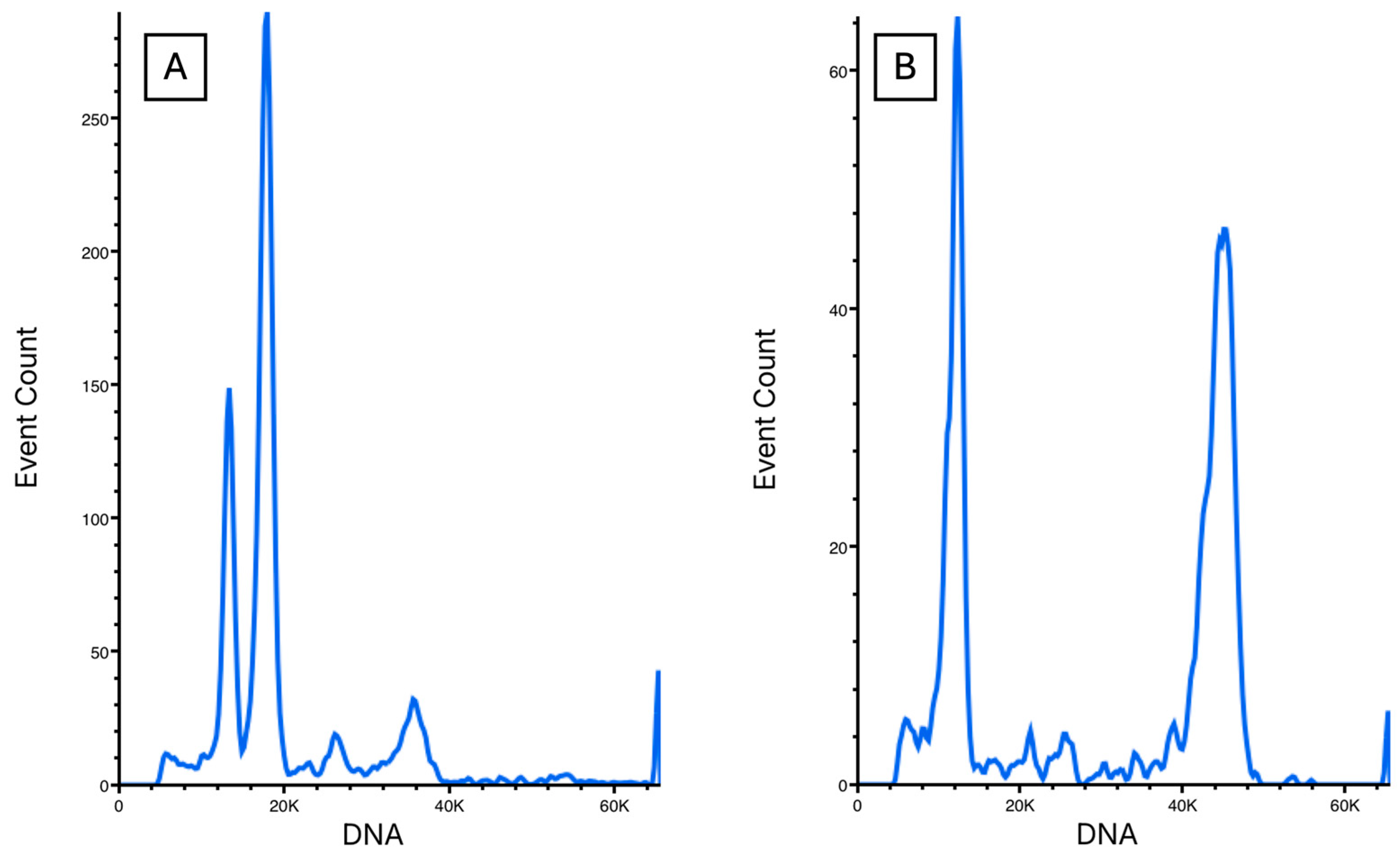
Two kenaf cultivars were used as the source germplasm for induced polyploidy in this study: ‘Whitten’ (PI 639889) and ‘H.C. 584’ (PI 323092). Seeds of both cultivars were obtained from the USDA Germplasm Resources Information Network (USDA-GRIN) and maintained as self-pollinated seed lines in pollinator-free greenhouses. Polyploids were induced by first imbibing 50 seeds of each cultivar in water for 24 h, followed by soaking the seeds in 0.075% colchicine solution (Sigma-Aldrich, St. Louis, MO, USA) for 24 h. Putative tetraploids were initially identified based on visual phenotypic characteristics and subsequently confirmed by flow cytometry using a Sysmex CyFlow ploidy analyzer (Sysmex America Inc., Lincolnshire, IL, USA). Young, fully expanded leaf tissue was collected from each plant and used for flow cytometric estimation of nuclear DNA content. Nuclear DNA content was assessed 1 month after germination using the Sysmex Cystain UV Precise P kit (Sysmex America Inc., Lincolnshire, IL, USA), which includes a two-step nuclei extraction and staining protocol. ‘Stupické polní rané’ tomato (Solanum lycopersicum L.; 1.96 pg/2C) was used as the internal standard. For each of three biological replicates, three technical replicates were analyzed. Holoploid nuclear DNA content (2C) was calculated as follows: DNA content of the standard × (mean fluorescence of the sample/mean fluorescence of the internal standard).
Triploid seeds were produced through controlled greenhouse crosses between diploid and tetraploid plants of ‘H.C. 584’. Crosses were made by emasculating flowers of the diploid parent 1 d before anthesis and pollinating them with pollen collected from the tetraploid parent using a cotton swab. Putative triploids were confirmed by flow cytometry as described above. Five kenaf genotypes were ultimately used in this study: ‘H.C. 584’ 2x, ‘H.C. 584’ 3x, ‘H.C. 584’ 4x, ‘Whitten’ 2x, and ‘Whitten’ 4x. All genotypes were propagated vegetatively from two-node cuttings taken from mature stock plants. Cuttings were placed under humidified conditions in 72-cell flats filled with Pro-Mix BX (Premier Tech Growers and Consumers Inc., Quakertown, PA, USA). After 2 weeks, cuttings with well-developed root systems were transplanted and then used in experiments.
2.2. Greenhouse Evaluation
Rooted cuttings were transplanted into 11.4 L pots filled with Pro-Mix BX (Premier Tech Growers and Consumers Inc., Quakertown, PA, USA). Plants were evaluated in a randomized complete block design with three blocks, each containing three replicates of each genotype, for a total of nine replicates per genotype. The experimental unit was an individual potted plant. Replicate plants within each genotype were produced by vegetative propagation from stock plants; thus, replicates represented independently grown clonal plants rather than genetically distinct seed-derived individuals. Plants were grown on greenhouse benches under standard conditions at 22–25 °C. Plants were grown under natural daylight conditions in the greenhouse during March and April. Irrigation was applied as needed, and each pot received 150 ppm Peters 15N–5P–15K fertilizer (JR Peters Inc., Allentown, PA, USA) at each irrigation.
The trial was conducted for 60 d during March and April. At the end of the experiment, plant height, basal stem width, leaf length, leaf width, stem fresh weight, and stem dry weight were measured. Leaf measurements were taken from three fully expanded, mature leaves per plant. Leaf length was measured from the point of petiole attachment to the leaf apex, and leaf width was measured at the widest point of the leaf blade. Plant height and leaf dimensions were measured using a stainless-steel meter stick, whereas basal stem width was measured using an electronic digital caliper (Mitutoyo America Corporation, Aurora, IL, USA). Stem fresh weight was determined by cutting each plant at the soil line, removing all leaves, and weighing the defoliated stem with lateral branches still attached. Stems were then dried in a forced-air oven at 70 °C for 2 weeks, or until constant weight was reached, after which stem dry weight was recorded.
2.3. Stomata Assessment
To measure stomatal length and width, clear nail polish impressions were obtained from the abaxial surface of one fully expanded, mature leaf from each replicate plant. Impressions were examined at 400× magnification using an AmScope B120 Series LED binocular compound microscope (AmScope, Irvine, CA, USA) and photographed with an AmScope 5MP digital eyepiece camera (AmScope, Irvine, CA, USA). For each genotype, 30 stomata were measured from the digital images using ImageJ software (version 1.54p; National Institutes of Health, Bethesda, MD, USA). Stomatal length was defined as the distance between the two ends of the guard cell pair, and stomatal width was defined as the widest point perpendicular to the length axis.
2.4. Data Analysis
Traits including plant height, stem diameter, stem fresh weight, stem dry weight, water ratio, average leaf length, and average leaf width were analyzed in R (version 4.6.1) [
18] by analysis of variance (ANOVA). Before conducting ANOVA, model assumptions of normality of residuals and homogeneity of variance were evaluated and found to be adequately met for all analyzed traits. The statistical model included genotype as the fixed treatment effect and block as a random effect. When the genotype effect was significant, means were separated using Fisher’s least significant difference (LSD) test at the 0.05 probability level with the agricolae package [
19]. Genotype means, standard errors, and coefficients of variation were obtained from the ANOVA output. Data processing was conducted using dplyr (version 1.1.4) [
20], and results were exported to Excel using openxlsx (version 4.2.8) [
21].
Stomatal length and width were analyzed separately in R by one-way ANOVA, with genotype as the treatment effect and individual stomata serving as replicate observations within genotype. When genotype effects were significant, means were separated using Fisher’s LSD test at the 0.05 probability level using the agricolae package (version 1.3-7) [
19]. Genotype means and standard errors were calculated for each stomatal trait, and output tables were exported to Excel for reporting.
4. Discussion
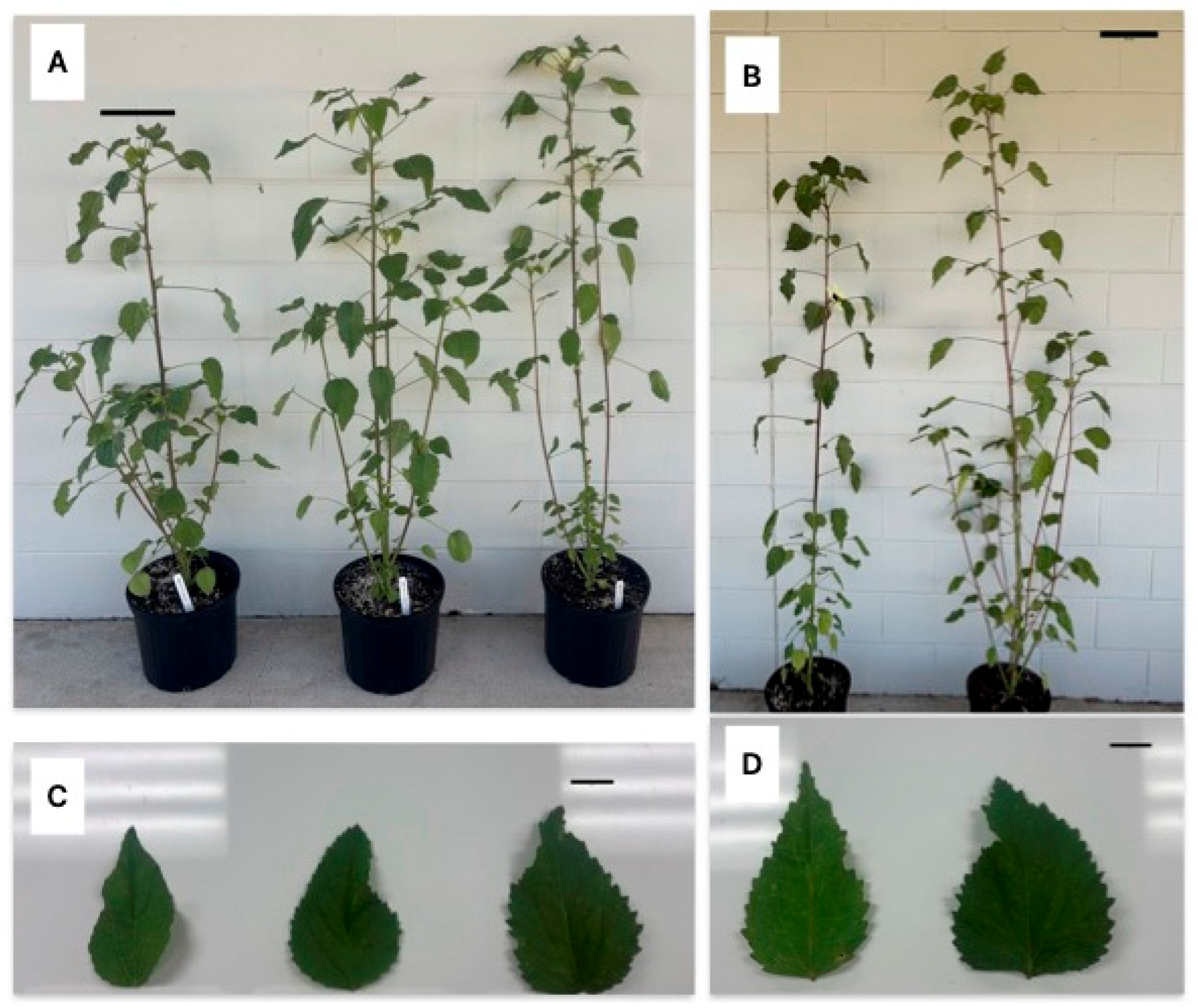
Polyploidization in kenaf produced clear changes in plant morphology and anatomy (
Figure 2), but these effects were not uniformly expressed across all measured traits. In both genotypes, there was a steady decline in plant height associated with increased ploidy level. For example, diploid ‘Whitten’ displayed an average height of 199 cm, while tetraploid ‘Whitten’ averaged 174 cm. A similar pattern was observed in ‘H.C. 584’, where the triploid was intermediate between the diploid and tetraploid plants. This consistent decline in plant height with increasing ploidy suggests that chromosome doubling in kenaf altered shoot architecture in a predictable way over the 60 d greenhouse evaluation period. Reduced height is a common consequence of induced polyploidy in some crops and has been reported already in other
Hibiscus species [
22]. This may reflect changes in cell division, internode elongation, or developmental timing following genome duplication, even when other organs increase in size [
10,
16]. In the present study, this response indicates that induced tetraploids of kenaf may exhibit a more compact growth habit than their diploid progenitors.
There was no significant difference between ploidy levels of the same genotype for stalk dry weight, which is directly correlated to the amount of usable fiber yield. This result indicates that induced tetraploid kenaf maintained stalk dry weight comparable to diploid plants during early greenhouse growth; although reduced plant height could potentially lower lodging risk [
23], its actual effects on lodging, final stalk yield, and fiber yield under field conditions remain unknown. Increased ploidy also did not significantly affect stem diameter within either genotype. In practical terms, induced tetraploidy changed plant stature more than it changed stem dry matter accumulation during early growth. This is consistent with prior reports that found no significant differences in dry biomass accumulation of diploid and tetraploid plants of the same genotype [
24]. Kenaf is cultivated primarily for stalk biomass and fiber production; with stalk tissue serving as the main source of commercially valuable bast and core fibers [
3,
4], the absence of significant differences in stalk dry weight among cytotypes is especially important. It indicates that chromosome doubling did not impose a clear biomass penalty under the greenhouse conditions used here, even though it reduced plant height. Stalk fresh weight showed a similar pattern, with numerical variation among genotypes but limited evidence that ploidy alone consistently changed stalk mass within genotypes. Water content also remained stable across all genotypes, indicating that the observed biomass patterns were not driven by major shifts in tissue moisture status.
Leaf traits showed a more definitive response to polyploidization. Leaf length was relatively stable within each genotype, indicating that the proximal to distal dimension was not strongly influenced by chromosome doubling. Leaf width, however, was increased in both tetraploids, consistent with reports in other crops, which has been attributed to cell enlargement [
25]. This combination of shorter plants and broader leaves is consistent with the general tendency of polyploids to exhibit altered organ proportions rather than uniform enlargement of all structures. Such changes align with broader reports that induced polyploidy can modify plant morphology in ways that may influence agronomic performance and stress adaptation [
14,
15]. In the present study, the response was more evident for leaf width than for stem diameter or leaf length.
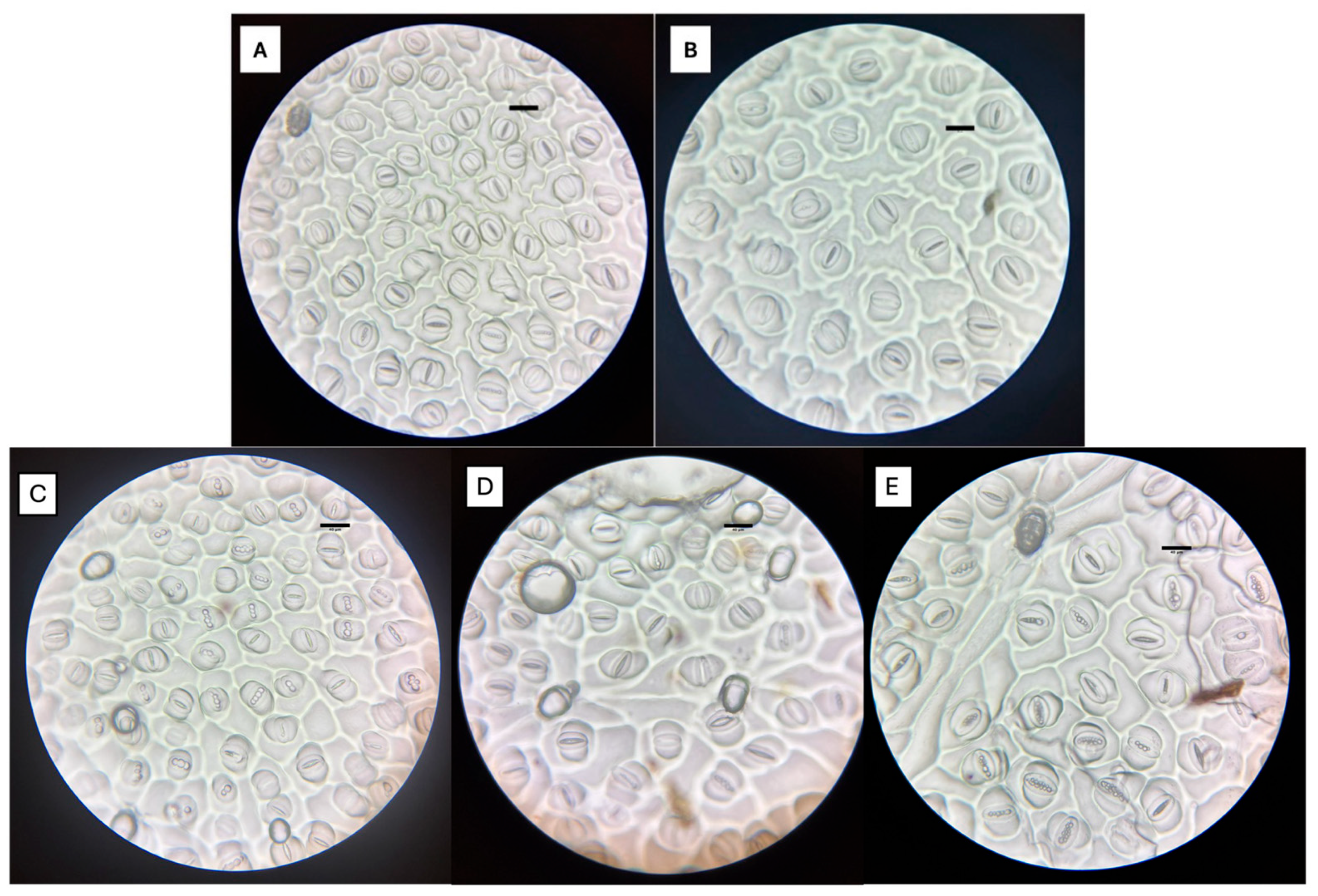
The stomatal data provided especially strong evidence that the induced polyploids expressed classic polyploid characteristics [
26]. Stomatal length and width increased substantially with ploidy, and tetraploid plants of both cultivars had the largest stomata (
Figure 3). In ‘H.C. 584’, the triploid was again intermediate, suggesting a dosage-related response across cytotypes. Enlarged stomata are among the most widely recognized consequences of polyploidization and are commonly associated with increases in cell size following genome duplication [
10,
16]. The clear separation in stomatal dimensions among ploidy levels in this study supports the flow cytometry results and confirms that chromosome doubling produced stable anatomical changes in kenaf. From a practical standpoint, stomatal size may also serve as a simple screening trait for identifying putative polyploids in kenaf before more involved cytometric confirmation. However, because gas exchange and photosynthetic traits were not measured in this study, the observed differences in stomatal dimensions should not be interpreted as direct evidence of altered physiological performance.
Taken together, tetraploidy in kenaf altered plant architecture and leaf and stomatal morphology without substantially changing stalk dry weight during the period evaluated. This outcome is relevant to the broader breeding objective of the study. The principal rationale for generating tetraploid kenaf is to create cytogenetically compatible material for crosses with tetraploid relatives such as
H. acetosella and
H. sabdariffa, which have shown resistance to root-knot nematodes [
7]. Earlier work identified ploidy mismatch as a major barrier to hybridization between kenaf and related species [
8,
9], and chromosome doubling has long been recognized as an effective strategy for overcoming such barriers in crop breeding [
10,
11]. In that context, the present findings are encouraging because induced tetraploid kenaf retained biomass traits broadly comparable to those of diploids while expressing the anatomical and morphological changes expected of stable polyploids. Synthetic tetraploids may function effectively as bridge germplasm for interspecific hybridization while preserving the agronomic features that make kenaf valuable as a fiber crop.
The present results differ somewhat from those of Chen et al. [
17], who reported enhanced biomass production, thicker stems, and favorable physiological traits in colchicine-induced tetraploid kenaf. This contrast may reflect differences in genotype, propagation method, environmental conditions, or plant age at evaluation. In the present study, plants were propagated from cuttings, grown in pots, and harvested after 60 d under greenhouse conditions, which may have emphasized early vegetative responses rather than full-season biomass potential. It is therefore possible that the effects of ploidy on biomass expression in kenaf are environment-dependent or become more pronounced later in development. Given the well-documented productivity of kenaf across diverse environments [
1,
2], field-based evaluation of these induced polyploids will be essential to determine whether the reduced height observed here translates into improved standability without compromising final stalk yield or fiber quality. In particular, multi-location field testing will be needed to assess the stability of these traits across environments and to determine the broader agronomic value of induced tetraploid kenaf.
Several limitations of the present work should be considered. Only two cultivar backgrounds were examined, and triploids were available only for ‘H.C. 584’, so genotype-by-ploidy interactions could not be fully explored across both cultivars. In addition, plants were evaluated as potted, vegetatively propagated material under greenhouse conditions for 60 d, which captures only early growth responses and does not encompass the full vegetative cycle, reproductive development, maturation, or environmental variability encountered under field production. As a result, the stalk traits measured here may not fully predict mature fiber yield, fiber quality, or lodging behavior under commercial conditions. Because the ultimate breeding objective is the introgression of nematode resistance from tetraploid relatives into kenaf, future work should assess fertility, hybrid compatibility, and backcross performance of these induced tetraploids. Although triploids were successfully generated from interploid crosses in ‘H.C. 584’, fertility of the resulting triploid and tetraploid materials was not evaluated in the present study and remains an important subject for future breeding research. It will also be important to determine whether tetraploid kenaf differs from diploid kenaf in bast/core ratio, bark development, fiber quality traits such as fiber length and strength, and final biomass yield across field environments.
Overall, the present study demonstrates that induced polyploid kenaf expresses distinct and stable phenotypic changes associated with chromosome doubling, most notably reduced plant height, broader leaves, and markedly larger stomata. At the same time, tetraploidy did not significantly reduce stalk dry weight within genotypes, suggesting that synthetic tetraploids can maintain a level of biomass production broadly comparable to that of their diploid progenitors during early growth. These results support the use of induced tetraploid kenaf as promising foundational germplasm for overcoming ploidy barriers in interspecific breeding. However, the present findings demonstrate breeding potential rather than confirmed superior agronomic performance, and further evaluation under field conditions will be necessary to determine the full utility of these materials in kenaf improvement.