Article

Effects of Dietary Alfalfa Hay Supplementation on Growth Performance, Nutrient Digestion, Serum Biochemistry and Rumen Fermentation in Angus Cattle


1
College of Animal Science, Anhui Science and Technology University, Chuzhou 233100, China
2
Anhui Modern Beef Cattle Industry College, Anhui Science and Technology University, Chuzhou 233100, China
*
Author to whom correspondence should be addressed.
These authors contributed equally to this work.
Agriculture 2026, 16(15), 1629; https://doi.org/10.3390/agriculture16151629
Submission received: 25 June 2026 / Revised: 20 July 2026 / Accepted: 28 July 2026 / Published: 30 July 2026

Abstract

Alfalfa (Medicago sativa L.) hay is a high-quality legume forage, but most previous studies have evaluated a single fixed inclusion level or alfalfa as a replacement for other forages. How growth performance, nutrient digestibility, serum biochemistry, rumen fermentation and rumen microbiota jointly respond to graded alfalfa supplementation in growing Angus cattle remains undefined. The objective of this study was to determine the effects of two fixed supplementation levels of alfalfa hay (1 and 2 kg/day) on growth performance, apparent digestibility of nutrients, serum biochemical parameters, rumen fermentation characteristics and rumen microbial community composition in growing Angus cattle. Fifteen Angus (407.4 ± 34.15 kg; 11–14 months) were randomly distributed to the three treatments: control (C; basal TMR), low alfalfa (AlfL; 1 kg/d), and high alfalfa (AlfH; 2 kg/d), and fed for 70 days with 10 days of adaptation. Intake, body weight, nutrient digestibility, serum parameters, rumen fermentation and microbiota were determined. Feed-to-gain ratio was improved (p = 0.002) with AlfH (8.04) being more efficient than C (8.93). The digestibility of DM (p = 0.013) and CP (p = 0.001) were significantly increased. The rumen pH and NH3-N tended to rise (p = 0.059 and 0.060, respectively) and acetate, propionate, and TVFA concentrations were significantly greater (p < 0.05) in the alfalfa groups. There was increase in serum total protein (p = 0.018) and serum GSH-Px activity (p < 0.001), and decrease in serum MDA (p < 0.001) in AlfH. The bacterial community structure in the rumen remained largely consistent across treatments, with Bacillota and Bacteroidota as the two dominant phyla, and only two low abundance phyla differing significantly, both higher in AlfH, Patescibacteria (p = 0.009) and Thermodesulfobacteriota (p = 0.003); the dominant phyla and genus level composition were unaffected. These findings provide new evidence that moderate supplementation with alfalfa hay can enhance nutrient utilization, rumen fermentation, and antioxidant status without adversely affecting metabolic health. From a practical perspective, supplementation with 2 kg/day of alfalfa hay may represent an effective feeding strategy for improving feed efficiency in growing Angus cattle, particularly in production systems relying on low-quality forage resources.

1. Introduction

The Angus breed is one of the most popular in the world for beef production, and is known for its high feed efficiency, fast growth rate, and high carcass quality [1]. Diet quality and forage availability are some of the most important factors affecting growth performance and metabolic homeostasis in current beef production systems [2,3]. Thus, high-quality forage supplements are critical to ensure normal rumen functioning and efficiency of production in growing beef cattle. Alfalfa is one of the most important leguminous forages for ruminant nutrition [4,5]. It is highly digestible, high in crude protein and highly palatable, especially on low roughage diets. Alfalfa is higher in rumen degradable protein and digestible fiber than most grass hays, thus increasing feed utilization efficiency by stimulating microbial activity in the rumen [6]. Past research has shown that alfalfa supplementation significantly affects nutrient digestibility, rumen fermentation, voluntary feed intake, and growth performance in beef cattle [7]. However, most studies have focused on the use of alfalfa as a complete forage replacement or supplementation at only one fixed level, and the interaction of alfalfa supplementation at various fixed levels on digestibility, rumen fermentation, serum biochemistry, and rumen microbiota in growing Angus cattle is not fully understood [8]. The production of volatile fatty acids (VFAs) is the main source of energy for ruminants and is essential for efficient rumen fermentation [9]. The efficiency of rumen fermentation is impacted by multiple factors, such as the type of forage from which the diet is made, the level of crude protein in the diet, feed particle size, and the ratio of fermentable to structural carbohydrate in the diet [10,11]. In addition to the effects on nutrient digestibility and microbial protein production, changes in ruminal pH, NH3-N concentration and production of volatile fatty acids (VFA) are strongly correlated with nutrient digestibility and microbial protein synthesis [12]. These rumen fermentation characteristics are especially important in Angus cattle, as they relate to growth performance and nutrient utilization efficiency [13]. These rumen fermentation parameters were expected to change when alfalfa was fed as a supplement to a basal diet, since it is a readily fermentable, high protein forage.
The metabolic and physiological reactions of animals to the dietary treatments are reflected in the serum biochemical parameters [14]. Blood metabolites (total protein, albumin, glucose, blood urea nitrogen, total cholesterol, and hepatic enzyme activities) are good indicators of nutritional status, protein metabolism, and overall metabolic health in beef cattle [15]. This is because a comprehensive assessment of the effects of dietary interventions on productivity and metabolic homeostasis can be done by combining assessment of growth performance, rumen fermentation, and serum biochemistry [16]. Protein and lipid metabolism indicators such as total protein, albumin and urea, together with antioxidant markers such as glutathione peroxidase and malondialdehyde, are useful for linking systemic metabolic and oxidative status to digestibility and rumen fermentation responses to dietary treatment.
The effects of alfalfa different-level hay supplementation on growth performance, nutrient digestibility, rumen fermentation, serum biochemistry, and rumen microbiota of growing Angus cattle have not been comprehensively examined under experimental conditions. The use of forage substitution and mixed forage utilization has been studied in some experiments, but few have studied different alfalfa supplementation in growing Angus cattle. Previous studies on Angus cattle nutrition have primarily focused on the effects of dietary energy and protein levels on growth performance and carcass quality [17]. However, the effects of two fixed levels of alfalfa hay supplementation on growth performance, serum biochemistry, and rumen microbiota in growing Angus cattle remain unclear. Therefore, this study was conducted to address this knowledge gap and provide practical guidance for beef cattle nutrition. Thus, this study aimed to assess production performance, apparent nutrient digestibility, serum biochemical indices, rumen fermentation parameters and rumen microbial community composition of growing Angus cattle. Based on the above, we hypothesized that feeding alfalfa hay at 1 and 2 kg/d would improve apparent nutrient digestibility, rumen fermentation efficiency, and feed utilization efficiency and growth performance without negatively impacting serum metabolic and antioxidant profiles.

2. Materials and Methods

2.1. Experiment Location and Materials

The cattle-feeding trial was conducted from October to December 2025 at “Huishan Cattle Farm” Anhui Province, China. Alfalfa in this experiment was purchased from a commercial source and fed to the animals as dried alfalfa hay. Alfalfa hay was added to the experimental diets as a supplement; the alfalfa hay was provided as an additional forage supplement and did not replace any specific ingredient of the basal TMR formulation. Consequently, all treatment groups received the same basal diet, while the AlfL and AlfH groups received an additional 1 or 2 kg/day of alfalfa hay; the supplementation level was not progressively increased during the study. all other feed ingredients were purchased from Cargill Animal Nutrition (Zhengzhou) Co., Ltd., Zhengzhou, China. Prior to the feeding trial, the chemical composition of the alfalfa hay was determined following the procedures of the AOAC. The alfalfa hay had a dry matter (DM) content of 90%, crude protein (CP) content of 18%, neutral detergent fiber (NDF) content of 35%, acid detergent fiber (ADF) content of 29%, ether extract (EE) content of 2.5%, and ash content of 9% on a dry matter basis. The values were used to describe the nutritional quality of the alfalfa hay used in this study.

2.2. Experimental Arrangement

Fifteen Angus bulls of similar age (11–14 months) and body weight (407.4 ± 34.15 kg) were randomly divided into three groups of five bulls. The experimental cattle were all group-housed in separate pens. Bulls were ranked by initial body weight before random allocation to the three treatments (five bulls/treatment), with bulls in each treatment housed together in a single pen. Body weight, average daily gain, digestibility, serum and rumen variables were measured on individual animals; dry matter intake was recorded at the pen level. Total-mixed ration (TMR) was fed to all animals (Table 1). The AlfL and AlfH groups were fed the basal TMR supplemented with 1 kg/day and 2 kg/day of alfalfa hay per animal, respectively, while the control group was fed only the basal TMR. The alfalfa hay was fed separately just before the morning feeding to make sure it was eaten first before the TMR was fed. The basal diet was designed according to the nutritional requirements for beef cattle listed in the Beef Cattle Feeding Standard (NY/T 815 [18]). Cattle were fed twice a day at 08:00 and 16:00 and provided with fresh water ad libitum during the trial. The total experimental period was 70 days with 10-day adaptation period. The barn was cleaned and disinfected on a regular basis, as is normal farm practice.

2.3. Production Performance

The IBW was measured by weighing the cattle after an overnight fast before the formal experimental phase began. The FBW was measured on day 60 of the formal experimental phase (day 70 of the total trial period). Both the starting and ending body weights were used to determine ADG. For the duration of the experiment, to determine the DMI, the measurements of the feed supplied and the remaining feed for every group were recorded every day. Feed efficiency was evaluated as the feed-to-gain ratio (F/G), which was calculated as daily dry matter intake (DMI, kg/day) divided by average daily gain (ADG, kg/day): F/G = DMI/ADG.

2.4. Apparent Nutrient Digestibility

Every day between 08:00 and 14:00, samples were collected. Five bulls were chosen from each experimental group between days 57 and 59 during the trial in order to obtain rectal feces samples. For each animal, 600 g of feces were collected daily, well-mixed and separated into two parts. One part of it was treated with 10% sulfuric acid (20 mL/100 g feces) to avoid nitrogen losses during storage; they were then kept at −20 °C until analyzed for further analysis. Samples of feed and feces were tested for dry matter (DM; method 930.15), crude protein (CP; method 2001.11), ether extract (EE; method 920.39), crude ash (Ash; method 942.05), neutral detergent fiber (NDF; method 2002.04), and acid detergent fiber (ADF; method 973.18) following the procedures of AOAC (2005) [19]. Acid-insoluble ash (AIA) in feed and feces was determined and used as an internal marker to calculate apparent nutrient digestibility. Apparent digestibility of nutrients (%) = 100 − [(a/b) × (c/d)] × 100, where a is the AIA content of the diet, b is the AIA content of the feces, c is the nutrient content of the feces, and d is the nutrient content of the diet [20].

2.5. Serum Biochemical Parameters

Blood samples were obtained from the jugular vein at 06:00 on day 60 of the trial, 2 h before the 08:00 morning feeding. The blood samples were centrifuged at 3000 rpm for 15 min to obtain serum. These blood samples were then placed in liquid nitrogen and stored at −80 °C. Serum-related parameters were determined by Wuhan Punes Biotechnology Co., Ltd. Wuhan, China.

2.6. Collection and Analysis of Rumen Fluid

On day 60 after the fast, approximately 100 mL of rumen fluid was collected from each animal. Oral stomach tube and vacuum pump were used to collect rumen fluid. To minimize saliva contamination, the initial approximate 20 mL of rumen fluid was discarded before sample collection. The fluid obtained was filtered through four layers of gauze and was split into three parts. One aliquot was used to measure the pH, immediately, with a portable pH meter (model S220-K, Mettler Toledo, Shanghai, China). The other two parts were quick frozen. The samples were then immersed in liquid nitrogen and stored at −80 °C until further analysis. NH3-N in the rumen fluid was measured using a spectrophotometer (model TU-1901, Beijing Puxi General Instrument Co., Ltd., Beijing, China) based on a colorimetric method. Volatile fatty acids (VFA) were measured using a gas chromatograph (A91Plus, Changzhou Pano Instrument Co., Ltd., Changzhou, China) following the protocol of Zhao et al. [21].

2.7. Rumen Microbiota Analysis

Fifteen rumen fluid samples (5 samples per treatment group (3 groups)) were collected, immediately frozen and sent to Wuhan Yingzi Gene Technology Co., Ltd. (Wuhan, China) for 16S rRNA gene amplicon sequencing. The microbial genomic DNA was isolated by cetyltrimethylammonium bromide (CTAB) method. Primers 341F (5′-CCTAYGGGRBGCASCAG-3′) and 806R (5′-GGACTACNNGGGTATCTAAT-3′) were used to amplify the V3-V4 hypervariable region of the bacterial 16S rRNA gene. The sequencing was done using Illumina NovaSeq 6000 sequencing platform. The raw sequencing data were processed in the QIIME2 pipeline, and alpha diversity indices were computed with the scikit-bio toolkit, including the Observed Features, Chao1, Shannon and Simpson indices. Observed Features and Chao1 were used to estimate microbial richness, whereas the Shannon and Simpson indices were used to evaluate microbial diversity and species evenness. Furthermore, species accumulation analysis was conducted to evaluate sampling sufficiency and richness of microbial community using vegan package in R software (Version 0.23.1).

2.8. Data Statistics and Analysis

All statistical procedures were carried out using SPSS 25.0. Before being subjected to various analyze, Normality of the data was checked with Shapiro–Wilk test and equality of variance was checked with Levene’s test. The assumptions were satisfied and data were analyzed using one-way ANOVA to investigate the effect of alfalfa hay supplementation. When significant difference was detected (p < 0.05), multiple range test of Duncan was used for pairwise comparison. To analyze the differences between bacterial communities, the Kruskal–Wallis test was performed and appropriate pairwise analyses were completed using Dunn’s Multiple Comparisons with the Benjamini–Hochberg correction applied to the results (p < 0.05). Significant differences in the data are represented by different superscripts (p < 0.05). Limited sample size (n = 5 per treatment), statistical power to detect moderate effect sizes was limited; non-significant trends are interpreted with appropriate caution. All results are expressed as mean ± standard error of the mean (SEM).

3. Results

3.1. Production Performance of Beef Cattle

Table 2 shows the effects of alfalfa hay supplementation on growth performance of beef cattle. There was no significant difference between dietary treatment and initial body weight (IBW) or final body weight (FBW) (p > 0.05). The average daily gain (ADG) was numerically higher in the AlfL and AlfH groups than in the control (C) group with mean values of 1.13 and 1.21 kg/d, respectively, but the differences were not significant (p = 0.057). Dry matter intake (DMI) also tended to increase as the alfalfa hay was added; however, there were no differences between treatments (p = 0.177). The feed-to-gain ratio (F/G) was significantly influenced by dietary treatment (p = 0.002). Feed-to-gain ratio (F/G) was significantly affected by dietary treatment (p = 0.002), with both alfalfa-supplemented groups showing lower F/G than the control. However, neither ADG (p = 0.057) nor DMI (p = 0.177) differed significantly among treatments, and because DMI was recorded at the pen rather than the individual level, this F/G comparison should be interpreted with caution, pending confirmation with individually recorded intake. The improved feed efficiency observed in the AlfH group is likely attributable to enhanced ruminal fermentation and greater nutrient digestibility, which increased the efficiency of feed utilization without significantly affecting dry matter intake or average daily gain.

3.2. Apparent Digestibility of Nutrients in Beef Cattle

Alfalfa hay supplementation significantly increases the apparent digestibility of dry matter (DM) and crude protein (CP) in beef cattle (p = 0.001). Both AlfL and AlfH groups showed significantly higher DM and CP digestibility than the C group. NDF and ADF digestibility tended to improve with alfalfa hay supplementation but were not statistically significant, (NDF: p = 0.098; ADF: p = 0.051). Ether extract (EE) digestibility was not affected by dietary treatment (p > 0.05). The AlfL and AlfH diets also contained higher CP and different fiber proportions relative to the control diet. The improvement in DM and CP digestibility reflects, at least in part, the change in overall diet composition rather than an isolated effect of alfalfa hay. The apparent digestibility of nutrients in beef cattle is presented in Table 3.

3.3. Serum Biochemical Parameters in Beef Cattle

The serum glutathione peroxidase (GSH-Px) activity of beef cattle in the AlfH group was significantly higher than that in the C group (p < 0.001). The concentration of serum malondialdehyde (MDA) significantly decreased with alfalfa hay supplementation, and the lowest value was in the AlfH group (p < 0.001). The AlfH group had significantly higher serum total protein (TP) concentration than the C group (p < 0.05). Alfalfa hay has higher crude protein content than the basal diet components, providing additional nitrogen for rumen microbial protein synthesis. No significant differences were found between treatments for total antioxidant capacity (T-AOC), superoxide dismutase (SOD), albumin (ALB), urea, triglycerides, total cholesterol, HDL-C, LDL-C, and NEFA (p > 0.05). the effects of alfalfa hay supplementation on serum biochemical parameters are presented in Table 4.

3.4. Rumen Fermentation Parameters in Beef Cattle

Supplementation with alfalfa hay significantly increased ruminal concentrations of acetate, propionate, and total volatile fatty acids (TVFA) (p < 0.05; Table 5). Acetate and propionate concentrations were significantly higher in the AlfH group than in the C group. TVFA concentration was significantly higher in both AlfL and AlfH groups compared with the C group. In contrast, ruminal pH (p = 0.059) and NH3-N concentration (p = 0.060) did not differ significantly among treatments and should be regarded as non-significant statistical trends rather than biologically altered outcomes. Butyrate concentration and the acetate-to-propionate ratio were not significantly affected (p > 0.05).

3.5. Changes in Rumen Microbial Functional Composition

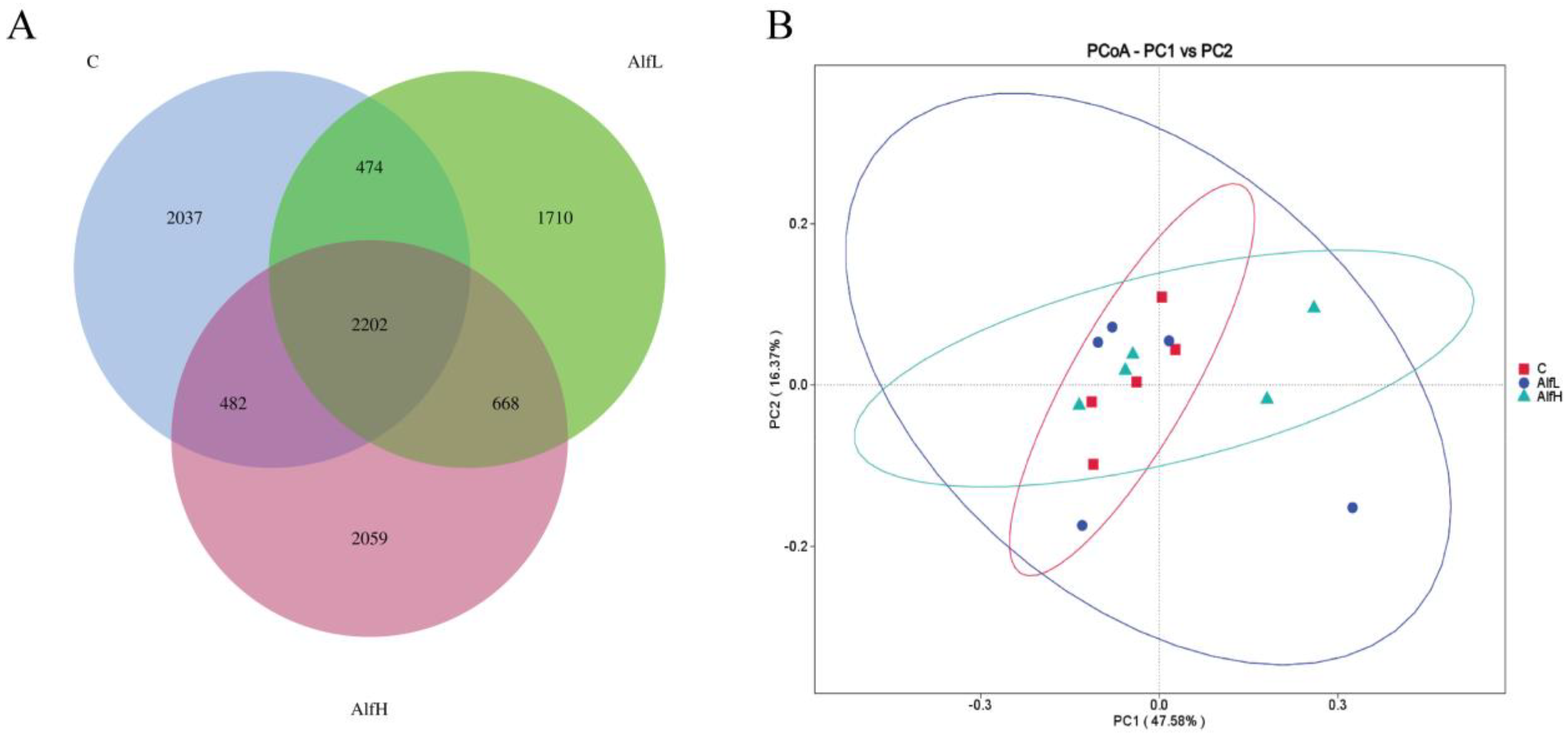
The number of OTUs common to all three groups was 2202 after a Venn comparison. The numbers of group-specific unique OTUs were 2037 (C), 1710 (AlfL), and 2059 (AlfH). The dietary treatments showed good separation in the PCoA, in which 47.58% and 16.37% of the total variation was explained by PC1 and PC2. The effects of alfalfa supplementation on the ruminal bacterial microbiota are presented in Figure 1.

3.6. Alpha Diversity Indices of Rumen Microbial Communities

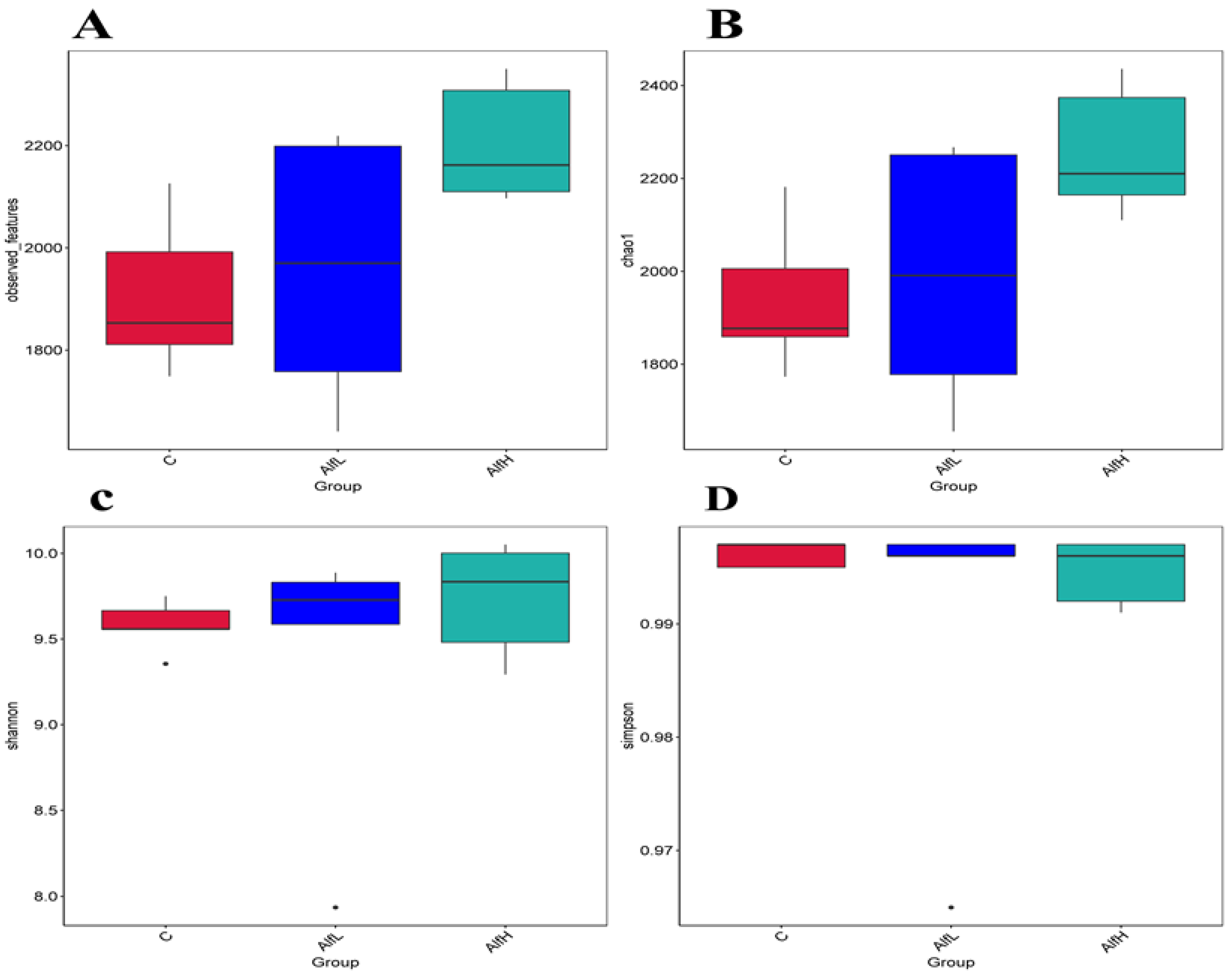
Table 6 shows the alpha diversity indices of rumen microbial communities. The number of observed features and the Chao1 richness estimator were both numerically higher with higher levels of alfalfa hay supplementation with the greatest number recorded in the AlfH group. But the differences were not statistically significant (p = 0.055 and p = 0.056, respectively). Similarly, there were no significant differences among dietary treatments for the Shannon index and the Simpson index (p > 0.05). The results showed that there was no significant difference in the alpha diversity of rumen microbial communities between beef cattle fed on two diets: basal diet and basal diet supplemented by alfalfa hay, with only a numerically, non-significantly higher richness in observed features (p = 0.055) and Chao1 (p = 0.056) in the AlfH group that should not be interpreted as a treatment effect. The alpha diversity indices of rumen microbial communities are presented in Figure 2.

3.7. Phylum and Genus Level Composition of the Rumen Microbial Community

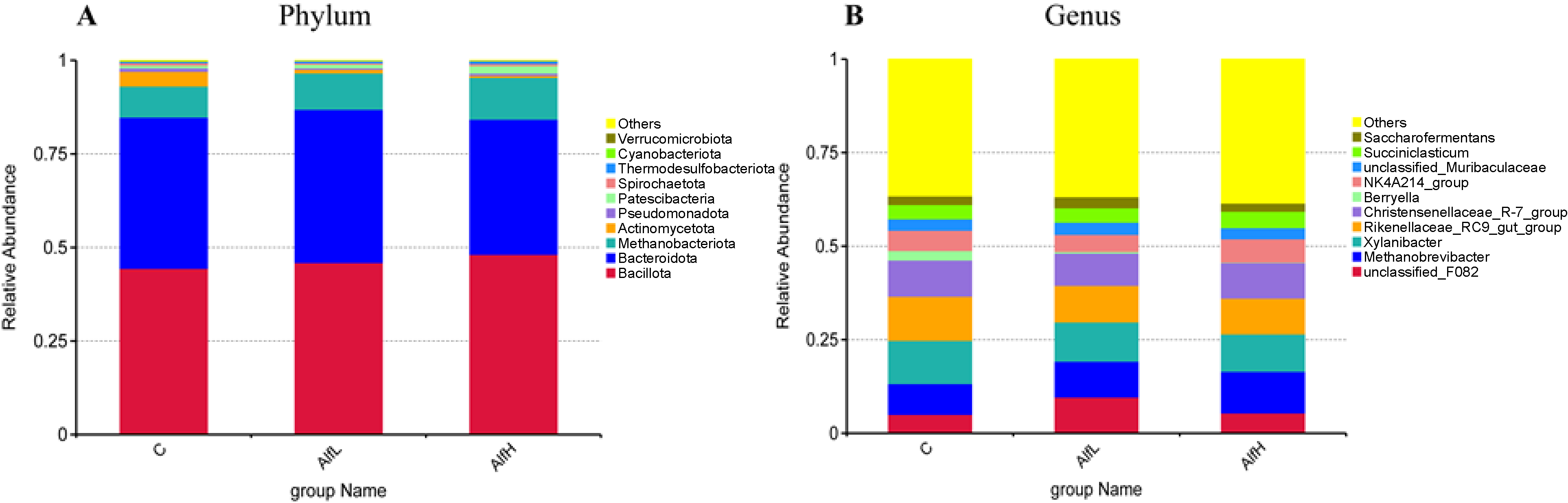
The relative abundance of rumen microbial communities at the phylum and genus levels are shown in Table 7 and Table 8, respectively. The most abundant phyla in all treatment groups were Bacillota and Bacteroidota, followed by Methanobacteriota, Actinomycetota and Pseudomonadota. There were no significant differences between the C, AlfL and AlfH groups in terms of the major phyla (p > 0.05). Alfalfa supplementation had a significant impact on the abundance of two minor phyla, however. The abundance of Patescibacteria was significantly higher in AlfH than in C and AlfL groups (p = 0.009), and the highest abundance was found in the high alfalfa supplementation group. Likewise, the abundance of Thermodesulfobacteriota was significantly higher in the AlfH group than in the C group (p = 0.003), while the AlfL group had intermediate abundances, and was not significantly different from either treatment. The abundance of Verrucomicrobiota was not significantly different between treatments (p = 0.051), although there were numerical differences between the treatments with the lowest being found in the AlfL group.
The rumen microbiome at the genus level was dominated by members of the Rikenellaceae RC9 gut group, Xylanibacter, Christensenellaceae R-7 group and Methanobrevibacter across all treatments. While there were numerical differences between groups, none of the major genera were significantly influenced by alfalfa supplementation (p > 0.05; Table 8). Overall, the results showed that high level alfalfa supplementation did not significantly change the overall composition of the core rumen microbial community at the phylum or genus level, but it did impact the relative abundance of some low abundance phyla. These results indicate that alfalfa supplementation did not substantially remodel the dominant rumen bacterial community, and that the significant phylum level differences were restricted to the two taxa of very low relative abundance (Patescibacteria, Thermodesulfobacteriota) of total reads across groups in (Table 7). The composition of the rumen microbial community at the phylum and genus levels is presented in Figure 3.

3.8. Differential Taxonomic Abundance Analysis

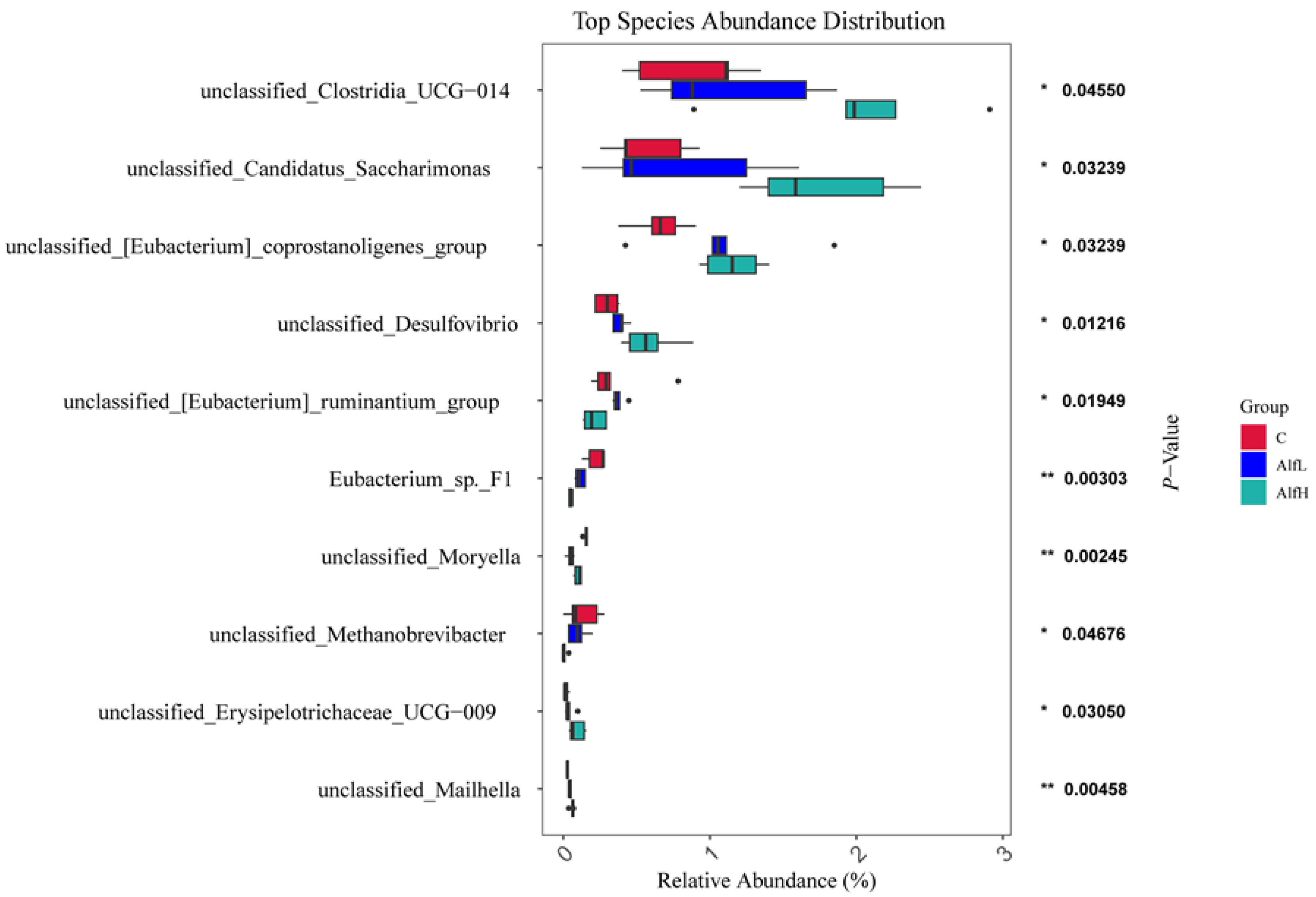
Differential abundance analysis identified significant differences between the relative abundance of the top 10 bacterial taxa in the C, AIfL and AIfH groups (p < 0.05). The most abundant taxa were unclassified_Clostridia_UCG-014 and unclassified_Candidatus_Saccharimonas, with the remaining taxa present at relatively low levels. These results suggest that the treatments had a significant effect in changing the rumen microbial composition and on the abundance of certain bacterial taxa. The relative abundance of the top 10 taxa is shown in Figure 4.

4. Discussion

4.1. The Growth Performance and Feed Efficiency

Feed-to-gain ratio was significantly lower in the alfalfa-supplemented groups, but this result should be interpreted cautiously; neither ADG nor DMI differed significantly among treatments, and DMI was recorded at the pen rather than the individual level, so the F/G comparison has an effective replication of one pen per treatment. Initial body weight, final body weight and average daily gain were not significantly different among the treatments, but the improvement in average daily gain was close to statistical significance. This numerical trend is consistent with, but does not establish, improved nutrient-utilization efficiency; because ADG did not differ significantly among treatments and microbial protein synthesis was not directly measured, optimized rumen fermentation and microbial protein synthesis are presented here as a plausible explanation rather than a demonstrated mechanism [22]. The reduction in DMI was not significant, suggesting that the increased feed efficiency was not due to increased feed intake, but rather due to better utilization of feed intake, similar to that recently reported in forage supplementation meta-analyses, which reported that forage supplementation improves feed efficiency in growing ruminants by optimizing the rumen fermentation dynamics and microbial protein synthesis [23].
The numerical improvement in average daily gain is comparable to that reported for alfalfa hay supplementation, which promotes structural growth and development in young ruminants, especially in the post-weaning period when the rumen is mature [24,25]. The improvement in feed-to-gain ratio with the increase in alfalfa hay dosage is consistent with the hypothesis that increasing the amount of fermentable feedstuffs for the rumen microbes increases the efficiency of energy utilization from the basal diet. Recent studies with Angus cattle have also shown that feed efficiency can be affected by changes in diet composition and forage quality; diets that optimize efficiency result in lower feed-to-gain ratios, but do not necessarily increase growth rates [26].

4.2. Nutrient Digestibility

Apparent digestibility of dry matter and crude protein was significantly increased by alfalfa hay supplementation, and both the low and high supplementation group had higher values than the control. The improvement in dry matter digestibility (from 71.29% to 74.09%) and crude protein digestibility (from 70.71% to 74.06%) can be attributed to several factors inherent to alfalfa’s nutritional profile. Alfalfa hay provides more protein in the rumen, as well as more readily degradable and digestible fiber than most grass hays, which stimulates microbial activity and accelerates ruminal degradation of structural carbohydrates [27]. The increased crude protein digestibility likely reflects the higher quality protein in alfalfa compared to the basal diet components such as rice straw and corn stover silage, consistent with recent studies demonstrating that alfalfa hay provides superior protein degradation characteristics and feed value compared to alternative forages [28].
The digestibility of the neutral detergent fiber and acid detergent fiber, although not statistically significant, showed a trend toward increased fiber digestibility with alfalfa supplementation. This could be attributed to the associative effect of mixed forages where the presence of high-quality legume fiber is supposed to stimulate the cellulolytic microbial population and improve the rumen environment for fiber digestion [29]. The digestibility of ether extract was not affected, suggesting that the effects of alfalfa supplementation are mainly on the carbohydrate and protein digestion pathways, and not on lipid metabolism. A comparable dose-dependent pattern, where fiber digestibility improves at moderate legume forage inclusion but plateaus at higher inclusion, has been reported in ruminant studies of graded [30,31]. Although the numerical increases in DM and CP digestibility were relatively modest, these improvements were statistically significant and biologically meaningful because even small increases in nutrient digestibility can substantially improve feed utilization efficiency and production economics during prolonged feeding periods.

4.3. Serum Biochemistry and Antioxidant Status

The marked improvement in serum total protein, glutathione peroxidase activity, and the significant reduction in malondialdehyde concentration in the high alfalfa group further supports the hypothesis of improved metabolic health and antioxidant status. The higher serum total protein (70.0 to 72.12 g/L) is indicative of improved protein nutritional status of the animals and probably increased microbial protein synthesis in the rumen as indicated by the higher crude protein digestibility and ammonia nitrogen [32]. The higher serum total protein in AlfH is consistent with improved protein nutritional status, but because microbial protein flow, nitrogen balance and plasma amino acid supply were not measured; increased microbial protein synthesis and more efficient use of dietary protein for tissue growth remain plausible, not demonstrated. The increase in serum total protein likely reflects improved dietary protein utilization and enhanced microbial protein synthesis in the rumen. Furthermore, alfalfa contains flavonoids, saponins, vitamins, carotenoids, and phenolic compounds that may stimulate antioxidant enzyme activity and reduce oxidative stress, thereby explaining the increased GSH-Px activity and reduced MDA concentration.
Selected indicators of antioxidant status were improved (higher GSH-Px activity, lower MDA), whereas T-AOC and SOD did not differ among treatments; the data therefore support a change in specific oxidative-status indicators rather than a generalized strengthening of the antioxidant defense system. Glutathione peroxidase is an important enzyme in the glutathione redox cycle that reduces lipid hydroperoxides and thus helps to prevent oxidative damage in cells. The increased activity indicates that bioactive compounds found in alfalfa, such as saponins, flavonoids, and polyphenols, may have contributed to antioxidant enzyme expression or radical-scavenging activity; however, because saponins, flavonoids and polyphenols were not quantified in the alfalfa hay or experimental diets in this study, their involvement remains speculative [33]. The recent studies have pointed out that alfalfa meal contains these active substances and that it can positively influence the growth of animals, the antioxidants, and the immune properties [34].
The malondialdehyde (MDA) level is a primary end-product of lipid peroxidation, and a 53.2% reduction in this parameter in the high alfalfa group suggests significantly lower levels of oxidative stress. This is especially relevant for beef cattle production, where oxidative stress may result in decreased immune function, growth rate, and meat quality. Favorable antioxidant changes have also been noted with 50% replacement of alfalfa hay by legume forage in dairy cows, with an increased level of glutathione peroxidase activity and a decreased level of malondialdehyde, indicating that antioxidant capacity is consistently improved in ruminants with the inclusion of legume forages [35].
This selective pattern higher GSH-Px activity and lower MDA without changes in T-AOC or SOD indicates that the effect was limited to specific oxidative-status indicators rather than confirming pathway-specific regulation or organ-level adaptation, neither of which was directly assessed in this study [36].

4.4. Rumen Fermentation Characteristics

The major observation of this study was that alfalfa supplementation led to a marked increase in acetate, propionate, and total volatile fatty acid concentrations. The total volatile fatty acids (VFAs) increased from 69.83 mmol/L (control) to 81.15 mmol/L (high alfalfa) with both acetate and propionate levels being significantly elevated. The higher VFA concentrations indicate an altered rumen fermentation profile consistent with greater substrate availability from the readily fermentable alfalfa hay; because substrate disappearance, microbial biomass and gaseous losses were not measured, this should not be interpreted as demonstrating improved fermentation efficiency [37,38].
The number of group-unique OTUs varied across treatments, but such Venn-diagram counts are sensitive to sequencing depth and rare-taxon filtering and should not, by themselves, be interpreted as evidence of a beneficial shift in the bacterial community. Ruminal pH showed only a non-significant tendency to increase; with alfalfa hay, a buffering effect favoring cellulolytic bacteria cannot be confirmed from the present data. It has been recently demonstrated that the hay diet was more likely to support high densities of fiber-degrading bacteria and to preserve stable fermentation patterns when compared with silage diets in dairy cows, which changed the structure of the microbial community toward more saccharolytic bacteria [39].
The higher crude protein digestibility was accompanied by the higher ammonia nitrogen (16.49 to 20.48 mg/100 mL) that indicates increased protein degradation and microbial nitrogen turnover. The ammonia nitrogen levels, however, were within the optimum range for microbial protein synthesis (15–30 mg/100 mL). Values remained within the range generally associated with adequate microbial protein synthesis; however, because microbial protein flow and nitrogen balance were not directly measured, and NH3-N differed only as a non-significant tendency, this should be regarded as a favorable indication rather than the proof of efficient nitrogen capture. For the acetate, propionate ratio was consistent for all treatments, suggesting that alfalfa supplementation kept fermentation patterns similar to those usually found in forage-based diets and favorable for maintaining energy supply in beef cattle [40].

4.5. The Microbial Community Composition in the Rumen

The microbial composition was minimally altered by alfalfa supplementation, primarily with low abundance taxa, but significantly increased the abundance of minor phyla, especially Patescibacteria and Thermodesulfobacteriota. It is noteworthy that abundance of Patescibacteria was significantly higher in the high alfalfa group. They are ultra-small bacteria with reduced genomes and are often found in specific metabolic niches within the rumen. The higher prevalence of these organisms may be due to increased availability of simple sugars and fermentation intermediates as a result of alfalfa degradation, changes in the redox status of the rumen favoring increased growth of these specialized organisms, and possible involvement in sulfur or nitrogen cycling which may be more significant in the presence of legume forage [41].
Thermodesulfobacteriota include sulfate-reducing taxa, but because dietary sulfur intake, sulfate-reducing activity, sulfur metabolites and hydrogen sulfide concentration were not measured in this study, any inference of enhanced ruminal sulfur metabolism remains speculative and is not directly supported by our data [42]. Minor phyla were variable while the core microbiome remained stable, suggesting that alfalfa supplementation has a fine-tuning rather than a disruptive effect on rumen ecology. This stability of the dominant taxa is consistent with a well-tolerated dietary change, although rumen health outcomes, such as acidosis risk or dysbiosis, were not directly assessed in this study, and no such benefit can be claimed from compositional data alone [43].
A positive correlation between alfalfa and observed features and Chao1 richness was observed, with both positive changes not reaching statistical significance. This indicates a tendency toward increased microbial diversity as alfalfa increased, which is generally linked to greater rumen resilience and functional redundancy. This numerical trend suggests that the 2 kg/d alfalfa supplementation level might be nearing the maximum benefit without disrupting the microbial community. Recent reviews of rumen microbiota have highlighted that minor changes in the rumen microbiota can result in functional adaptations that can enhance fermentation efficiency and nutrient utilization, whereas dominant phyla (Bacteroidetes, Firmicutes) are stable irrespective of dietary interventions [44,45].

4.6. The Findings and Practical Implications

The present findings indicate that 2 kg/d alfalfa hay supplementation was associated with improved digestibility, altered rumen fermentation, and selected favorable changes in serum protein and antioxidant status. Because interactions among these systems were not formally tested, and outcomes such as nutrient absorption, tissue integrity and immune function were not directly measured, we describe these as co-occurring responses rather than evidence of a synergistic physiological effect [46]. Optimization of fermentation includes more production of the volatile fatty acid (VFA) which provides more energy substrates for growth. Better serum protein status and antioxidant status promote metabolic health and the integrity of tissues, which boosts immune function [47]. Selective enrichment of beneficial minor phyla and maintenance of core microbiome stability is evidence of microbial adaptation.
Among the two supplementation levels tested, 2 kg/d produced the most consistent improvements, but with only two dose levels, five animals per group and no economic analysis, these results cannot establish an optimal or economically preferable supplementation rate. Because several outcomes did not differ between AlfL and AlfH, 1 kg/d may be preferable where alfalfa cost is a limiting factor, pending a formal cost benefit analysis.
The present study has several limitations: the small sample size (n = 5 per group, 15 in total); DMI was recorded at the pen level while ADG was recorded per animal, creating a mismatch in experimental unit for feed efficiency; alfalfa hay was fed as an additional supplement on top of the same basal TMR rather than substituted in at an equivalent nutrient level, so total dietary CP, energy, and fiber intake differed among groups, meaning observed effects may partly reflect greater overall nutrient intake rather than alfalfa’s specific properties; and the fecal collection period (Days 57–59) was short. These same limitations also reduced the statistical power of the microbiota analysis.
An additional limitation of the present study is that rumen motility, ruminal epithelial morphology, and enteric methane emissions were not evaluated. These parameters could provide additional mechanistic insight into the effects of alfalfa supplementation and should be investigated in future studies. Furthermore, studies involving younger calves would improve our understanding of the effects of alfalfa hay on rumen epithelial development and early microbial colonization.
Finally, although alfalfa supplementation had a pronounced effect on rumen fermentation and microbial population, methane emissions from ruminants are a major source of enteric greenhouse gas (GHG) emissions in agriculture worldwide. Methane should therefore be measured in future studies to fully describe the environmental impact of alfalfa supplementation.

5. Conclusions

Growing Angus cattle fed alfalfa hay at 2 kg/day had improved feed efficiency, apparent digestibility of dry matter and crude protein, ruminal volatile fatty acid production, serum total protein concentration and antioxidant status without compromising metabolic health. Alfalfa supplementation also altered the numbers of some bacterial phyla that are present at low levels, but did not alter the stable core rumen microbial community. These findings indicate that supplementation with 2 kg/day of alfalfa hay is a practical nutritional strategy for improving nutrient utilization and rumen function in growing Angus cattle under the conditions of the present study. Future studies should include larger sample sizes and investigate rumen epithelial development, rumen motility, and enteric methane emissions to further clarify the mechanisms underlying these beneficial effects.

Author Contributions

Methodology, H.A.K., X.L., C.C., G.X., Y.Y., M.H. and J.H.; software, C.C. and X.L.; Formal analysis, H.A.K., X.L. and J.H.; Investigation, H.A.K., X.L., C.C., G.X. and J.H.; data curation, H.A.K. and J.H.; writing—original draft preparation, H.A.K. and X.L.; writing—review and editing, H.A.K., X.L., C.C., G.X., Y.Y., M.H. and J.H.; visualization, H.A.K., X.L., C.C., G.X. and J.H.; supervision, J.H.; project administration, J.H.; funding acquisition, J.H. All authors have read and agreed to the published version of the manuscript.

Funding

The study was supported by the Joint Collaborative Project for Improved Beef Cattle Breed of Anhui Province (Grant No. 2023AH010061).

Institutional Review Board Statement

The animal research protocol was approved by the Institutional Review Board of Anhui Science and Technology University (Approval No. AK 2026005).

Data Availability Statement

The original contributions included in this study are included in the article. For further information, please contact the corresponding author.

Conflicts of Interest

The authors declare no conflicts of interest.

Abbreviations

The following abbreviations are used in this manuscript:
CControl group
AlfLlow alfalfa hay group
AlfHHigh alfalfa hay group
NDFNeutral detergent fiber
ADFAcid detergent fiber
DMDry matter
ADGAverage daily gain
CPCrude protein
IBWInitial body weight
FBWFinal body weight
DMIDry matter intake
TMRTotal max ratio
F/GFeed-to-gain ratio
GSH-PXGlutathione peroxidase
MDAMalondialdehyde
T-AOCTotal antioxidant capacity
SODSuperoxide dismutase
TPTotal protein
ALBAlbumin
TGTriglycerides
TCTotal cholesterol
HDL-CHigh density lipoprotein cholesterol
LDL-CLow-density lipoprotein cholesterol
NEFANon esterified fatty acids
OTUsOperational taxonomic units

References

  1. Abebe, B.K.; Wang, J.; Guo, J.; Wang, H.; Li, A.; Zan, L. A review of emerging technologies, nutritional practices, and management strategies to improve intramuscular fat composition in beef cattle. Anim. Biotechnol. 2024, 35, 2388704. [Google Scholar] [CrossRef] [PubMed]
  2. Winton, T.S.; Nicodemus, M.C.; Harvey, K.M. Stressors inherent to beef cattle management in the United States of America and the resulting impacts on production sustainability: A review. Ruminants 2024, 4, 227–240. [Google Scholar] [CrossRef]
  3. Kaur, H.; Kaur, G.; Gupta, T.; Mittal, D.; Ali, S.A. Integrating omics technologies for a comprehensive understanding of the microbiome and its impact on cattle production. Biology 2023, 12, 1200. [Google Scholar] [CrossRef] [PubMed]
  4. Feng, Y.; Shi, Y.; Zhao, M.; Shen, H.; Xu, L.; Luo, Y.; Liu, Y.; Xing, A.; Kang, J.; Jing, H.; et al. Yield and quality properties of alfalfa (Medicago sativa L.) and their influencing factors in China. Eur. J. Agron. 2022, 141, 126637. [Google Scholar] [CrossRef]
  5. Atumo, T.T.; Kauffman, R.; Talore, D.G.; Abera, M.; Tesfaye, T.; Tunkala, B.Z.; Zeleke, M.; Kalsa, G.K. Adaptability, forage yield and nutritional quality of alfalfa (Medicago sativa) genotypes. Sustain. Environ. 2021, 7, 1895475. [Google Scholar] [CrossRef]
  6. Zhang, X.; Liu, Y.; Kong, F.; Wang, W.; Li, S. Comparison of nutritional components, ruminal degradation characteristics and feed value from different cultivars of alfalfa hay. Animals 2023, 13, 734. [Google Scholar] [CrossRef] [PubMed]
  7. Nemati, M.; Amanlou, H.; Khorvash, M.; Mirzaei, M.; Moshiri, B.; Ghaffari, M.H. Effect of different alfalfa hay levels on growth performance, rumen fermentation, and structural growth of Holstein dairy calves1. J. Anim. Sci. 2016, 94, 1141–1148. [Google Scholar] [CrossRef]
  8. Uribe, H.; Hube, V.; Gandarillas, M.; Keim, J.P. Effect of partial or total replacement of soybean meal by ground peas in the diet on milk production responses, rumen metabolism and nitrogen excretions of dairy cows. Chil. J. Agric. Res. 2026, 86, 591–602. [Google Scholar] [CrossRef]
  9. Wang, L.; Zhang, G.; Li, Y.; Zhang, Y. Effects of high forage/concentrate diet on volatile fatty acid production and the microorganisms involved in VFA production in cow rumen. Animals 2020, 10, 223. [Google Scholar] [CrossRef] [PubMed]
  10. Owens, F.N.; Basalan, M. Ruminal fermentation. In Rumenology; Springer: Berlin/Heidelberg, Germany, 2016; pp. 63–102. [Google Scholar]
  11. Le Liboux, S.; Peyraud, J. Effect of forage particle size and feeding frequency on fermentation patterns and sites and extent of digestion in dairy cows fed mixed diets. Anim. Feed. Sci. Technol. 1999, 76, 297–319. [Google Scholar] [CrossRef]
  12. Harun, N.L.A.; Alimon, A.R.; Jahromi, M.F.; Samsudin, A.A. Effects of feeding goats with Leucaena leucocephala and Manihot esculenta leaves supplemented diets on rumen fermentation profiles, urinary purine derivatives and rumen microbial population. J. Appl. Anim. Res. 2017, 45, 409–416. [Google Scholar]
  13. Chen, H.; Wang, C.; Huasai, S.; Chen, A. Effects of dietary forage to concentrate ratio on nutrient digestibility, ruminal fermentation and rumen bacterial composition in Angus cows. Sci. Rep. 2021, 11, 17023. [Google Scholar] [CrossRef] [PubMed]
  14. Onasanya, G.O.; Oke, F.O.; Sanni, T.M.; Muhammad, A.I. Parameters influencing haematological, serum and bio-chemical references in livestock animals under different management systems. Open J. Vet. Med. 2015, 5, 181–189. [Google Scholar] [CrossRef]
  15. Ndlovu, T.; Chimonyo, M.; Okoh, A.; Muchenje, V.; Dzama, K.; Raats, J. Assessing the nutritional status of beef cattle: Current practices and future prospects. Afr. J. Biotechnol. 2007, 6, 2727–2734. [Google Scholar] [CrossRef]
  16. Trukhachev, V.I.; Buryakov, N.P.; Shapovalov, S.O.; Shvydkov, A.N.; Buryakova, M.A.; Khardik, I.V.; Fathala, M.M.; Komarova, O.E.; Aleshin, D.E. Impact of inclusion of multicomponent synbiotic Russian Holstein dairy cow’s rations on milk yield, rumen fermentation, and some blood biochemical parameters. Front. Vet. Sci. 2022, 9, 884177. [Google Scholar] [CrossRef] [PubMed]
  17. Lee, M.; Tedeschi, L.O. The impact of supplementing quebracho and chestnut tannin extracts on the growth performance in growing and finishing beef cattle: A meta-analytical assessment. J. Anim. Sci. 2026, 104, skag082. [Google Scholar] [CrossRef] [PubMed]
  18. NY/T 815-2004; Feeding Standard of Beef Cattle. People’s Republic of China Agriculture Industry Standard: Beijing, China, 2004.
  19. AOAC. AOAC Official Methods of Analysis, 18th ed.; AOAC Int.: Gaithersburg, MD, USA, 2005. [Google Scholar]
  20. Dhanoa, M.; López, S.; France, J. Linear Models for Determining Digestibility; CABI: Wallingford UK, 2008; pp. 12–46. [Google Scholar] [CrossRef]
  21. Zhao, H.; Hua, J.; Lu, W.; Yan, L.; Zhang, M.; Chen, C.; Lv, X. Effects of increasing levels of rubber seed cake on growth performance, nutrient digestion metabolism, serum biochemical parameters, and rumen microbiota of Hu sheep. BMC Vet. Res. 2025, 21, 52. [Google Scholar] [CrossRef] [PubMed]
  22. Koçer, B.; Bozkurt, M.; Ege, G.; Tüzün, A.E.; Konak, R.; Olgun, O. Effects of a meal feeding regimen and the availability of fresh alfalfa on growth performance and meat and bone quality of broiler genotypes. Br. Poult. Sci. 2018, 59, 318–329. [Google Scholar] [CrossRef] [PubMed]
  23. Xiao, J.; Tian, J.; Peng, Y.; Hu, R.; Peng, Q.; Wang, L.; Xue, B.; Wang, Z. Effects of forage feeding to calves on performance, rumen fermentation, and nutrient digestibility: A meta-analysis. J. Dairy Sci. 2025, 108, 430–447. [Google Scholar] [CrossRef] [PubMed]
  24. Rabee, A.E.; Aman, A.A.; Askar, A.R. Animal performance, rumen microbiota, and fermentation in growing camel calves fed alfalfa hay, Atriplex, or their mixture. BMC Vet. Res. 2025, 21, 670. [Google Scholar] [CrossRef] [PubMed]
  25. Mirzaei, M.; Khorvash, M.; Ghorbani, G.R.; Kazemi-Bonchenari, M.; Riasi, A.; Nabipour, A.; van den Borne, J.J.G.C. Effects of supplementation level and particle size of alfalfa hay on growth characteristics and rumen development in dairy calves. J. Anim. Physiol. Anim. Nutr. 2015, 99, 553–564. [Google Scholar]
  26. Kenny, D.A.; Fitzsimons, C.; Waters, S.M.; McGee, M. Invited review: Improving feed efficiency of beef cattle–the current state of the art and future challenges. Animal 2018, 12, 1815–1826. [Google Scholar] [CrossRef] [PubMed]
  27. Miao, X.; Bai, C.; Chen, G.; Sun, J.; Du, H.; Shen, C.; Huo, W.; Liu, Q.; Wang, C.; Chen, L.; et al. Short-Term Effects of Alfalfa Silage Versus Hay, with or Without Hydrolysable Tannins, on Production Performance, Rumen Fermentation, and Nutrient Digestibility in Mid-Lactation Dairy Cows. Microorganisms 2025, 13, 2327. [Google Scholar] [CrossRef] [PubMed]
  28. Bhandari, K.B.; Rusch, H.L.; Heuschele, D.J. Alfalfa stem cell wall digestibility: Current knowledge and future research directions. Agronomy 2023, 13, 2875. [Google Scholar] [CrossRef]
  29. Niderkorn, V.; Baumont, R. Associative effects between forages on feed intake and digestion in ruminants. Animal 2009, 3, 951–960. [Google Scholar] [CrossRef] [PubMed]
  30. Hang, L.T.T.; Hien, T.X.; Loan, L.T.T.; Giang, N.T. Effect of Alfalfa (Medicago sativa L.) supplementation on nutrient digestibility and meat quality of Grimaud ducks. Livest. Res. Rural. Dev. 2025, 37, 20250476330. [Google Scholar]
  31. Meteab, M.I.; Khorshed, M.M.; Nassar, M.S.; El-Essawy, A.M.; El-Bordeny, N.E. Digestibility, rumen fermentation, and blood metabolites of Barki rams fed Panicum maximum cv. Mombasa hay as a substitute for alfalfa hay, with or without spirulina. Trop. Anim. Health Prod. 2026, 58, 185. [Google Scholar] [CrossRef] [PubMed]
  32. Putri, E.M.; Zain, M.; Warly, L.; Hermon, H. Effects of rumen-degradable-to-undegradable protein ratio in ruminant diet on in vitro digestibility, rumen fermentation, and microbial protein synthesis. Vet. World 2021, 14, 640–648. [Google Scholar] [CrossRef] [PubMed]
  33. Wang, S.-Y.; Yang, G.-L.; Jing, Y.-Y.; He, Z.-N.; Liu, B.; Sun, L.; Zhang, Y.; Gao, F. Alfalfa quality improvement and loss reduction technology advances. Front. Anim. Sci. 2025, 6, 1550492. [Google Scholar] [CrossRef]
  34. Srisaikham, S. Technology. A comparison of nutritional values, bioactive compounds, amino acids, and antioxidant activities of alfalfa (Medicago sativa) plant and Pellet for use as beneficial material ruminant feed. Walailak J. Sci. Technol. 2021, 18, 10312. [Google Scholar] [CrossRef]
  35. Ma, J.; Fan, X.; Sun, G.; Yin, F.; Zhou, G.; Zhao, Z.; Gan, S. Replacing alfalfa hay with amaranth hay: Effects on production performance, rumen fermentation, nutrient digestibility and antioxidant ability in dairy cow. Anim. Biosci. 2024, 37, 218–227. [Google Scholar] [CrossRef] [PubMed]
  36. Wang, Q.; Hu, J.; Hu, H.; Li, Y.; Xiang, M.; Wang, D. Integrated eco-physiological, biochemical, and molecular biological analyses of selenium fortification mechanism in alfalfa. Planta 2022, 256, 114. [Google Scholar] [CrossRef] [PubMed]
  37. Xie, X.; Wang, J.K.; Liu, J.X.; Guan, L.L.; Neves, A.L.A. Temporal microbial colonization on different forages is driven by the rumen environmental conditions. Anim. Microbiome 2025, 7, 46. [Google Scholar] [CrossRef] [PubMed]
  38. Cabrita, A.R.J.; Dewhurst, R.J.; Abreu, J.M.F.; Fonseca, A.J.M. Evaluation of the effects of synchronising the availability of N and energy on rumen function and production responses of dairy cows—A review. Anim. Res. 2006, 55, 1–24. [Google Scholar] [CrossRef]
  39. Klevenhusen, F.; Petri, R.M.; Kleefisch, M.-T.; Khiaosa-Ard, R.; Metzler-Zebeli, B.U.; Zebeli, Q. Changes in fibre-adherent and fluid-associated microbial communities and fermentation profiles in the rumen of cattle fed diets differing in hay quality and concentrate amount. FEMS Microbiol. Ecol. 2017, 93, fix100. [Google Scholar]
  40. Holtzapple, M.T.; Wu, H.; Weimer, P.J.; Dalke, R.; Granda, C.B.; Mai, J.; Urgun-Demirtas, M. Microbial communities for valorizing biomass using the carboxylate platform to produce volatile fatty acids: A review. Bioresour. Technol. 2022, 344, 126253. [Google Scholar] [CrossRef] [PubMed]
  41. Silva, É.B.R.d.; Silva, J.A.R.d.; Silva, W.C.d.; Belo, T.S.; Sousa, C.E.L.; Santos, M.R.P.d.; Neves, K.A.L.; Rodrigues, T.C.G.d.C.; Camargo-Júnior, R.N.C.; Lourenço-Júnior, J.d.B. A Review of the Rumen Microbiota and the Different Molecular Techniques Used to Identify Microorganisms Found in the Rumen Fluid of Ruminants. Animals 2024, 14, 1448. [Google Scholar] [CrossRef] [PubMed]
  42. Guo, W.; Na, M.; Liu, S.; Li, K.; Du, H.; Zhang, J.; Na, R. Rumen-degradable starch improves rumen fermentation, function, and growth performance by altering bacteria and its metabolome in sheep fed alfalfa hay or silage. Animals 2024, 15, 34. [Google Scholar] [CrossRef] [PubMed]
  43. Zhao, Y.; Zhao, G. Decreasing ruminal methane production through enhancing the sulfate reduction pathway. Anim. Nutr. 2022, 9, 320–326. [Google Scholar] [CrossRef] [PubMed]
  44. Henderson, G.; Cox, F.; Ganesh, S.; Jonker, A.; Young, W.; Global Rumen Census Collaborators; Janssen, P.H. Rumen microbial community composition varies with diet and host, but a core microbiome is found across a wide geographical range. Sci. Rep. 2015, 5, 14567. [Google Scholar] [CrossRef] [PubMed]
  45. Weimer, P.J. Redundancy, resilience, and host specificity of the ruminal microbiota: Implications for engineering improved ruminal fermentations. Front. Microbiol. 2015, 6, 296. [Google Scholar] [CrossRef] [PubMed]
  46. Gao, Z.; Liu, B.; La, S.; Li, D.; Zhu, X.; Sun, H.; Ma, S.; Cui, Y.; Shi, Y. Alfalfa hay substitution for wheat straw improves beef quality via rumen microflora alteration. Heliyon 2023, 9, e20803. [Google Scholar] [CrossRef] [PubMed]
  47. Tourkochristou, E.; Triantos, C.; Mouzaki, A. The influence of nutritional factors on immunological outcomes. Front. Immunol. 2021, 12, 665968. [Google Scholar] [CrossRef] [PubMed]
Figure 1. Ruminal bacterial microbiota effects of alfalfa supplementation. (A) Venn diagram of the OTUs. (B) Principal coordinates analysis (PCoA). C: basal total-mixed ration (TMR) without alfalfa supplementation; AlfL: basal TMR with 1 kg alfalfa; AlfH: basal TMR with 2 kg. (OTUs) = Operational taxonomic units.
Agriculture 16 01629 g001
Figure 2. Analysis of the alpha diversity indices of rumen microbial communities. (A) Observed features; (B) Chao1 index; (C) Shannon index; (D) Simpson index. The black dots represent outliers.
Agriculture 16 01629 g002
Figure 3. Alfalfa supplementation effect on the composition of the rumen microbial community in beef cattle. (A) Phylum level relative abundance. (B) Genus level relative abundance. C: control group without alfalfa supplementation; AlfL: low alfalfa supplementation group receiving 1 kg alfalfa/day; AlfH: high alfalfa supplementation group receiving 2 kg alfalfa/day (n = 5 per group).
Agriculture 16 01629 g003
Figure 4. Shows the relative abundance distribution of the top 10 different abundant taxa among the C, AlfL and AIfH groups. Boxplots depict the distribution of relative abundance values for each taxon: the central line marks the medians; the boxes mark the interquartile range; and the whiskers show the dispersion of the data. Individual points are considered outliers. p values indicated on the right are the significance of the differences between groups; significance is assumed at p < 0.05. The asterisks indicate the level of statistical significance: * p < 0.05, ** p < 0.01, *** p < 0.001. The numbers following the asterisks are the exact p-values.
Agriculture 16 01629 g004
Table 1. The dietary composition and nutritional levels of the basal diet on a dry matter basis.
Ingredients (%) DMPercentage (%)
Rice straw15
Wet corn DDGS15
Peanut vine 5
Yellow corn stover silage11
Whole plant corn silage 35
Concentrate supplement19
Total100
Chemical composition, % of DM
ItemsCAlfLAlfH
NEg, Mcal/kg3.414.375.33
DM%58.66061.4
CP%10.511.612.8
EE/Crude fat4.03.93.7
Crude ash5.66.27.8
NDF48.651.453.2
ADF21.023.025.0
DM, dry matter; NEg, net energy for gain; CP, crude protein; EE, ether extract; NDF, neutral detergent fiber; ADF, acid detergent fiber. Values are all on dry matter basis. C, control group; AlfL, low alfalfa supplementation group (1 kg/d); AlfH, high alfalfa supplementation group (2 kg/d).
Table 2. Influence of alfalfa hay on the growth performance of beef cattle.
ItemsCAlfLAlfHSEMp-Value
IBW (kg)390.8418.0413.48.820.434
FBW (kg)452.9485.6485.89.080.247
ADG (kg/d)1.031.131.210.030.057
DMI (kg/d)9.29.49.720.120.177
F/G8.93 a8.31 b8.04 b0.110.002
SEM, standard error of the mean; IBW, initial body weight; FBW, final body weight; ADG, average daily gain; DMI, dry matter intake; F/G, feed-to-gain ratio; C, 0% alfalfa hay + TMR; AlfL, 1 kg/d alfalfa hay + TMR; AlfH, 2 kg/d alfalfa hay + TMR. Different lowercase letters within a row indicate significant differences (p < 0.05).
Table 3. Impact of alfalfa hay on nutrient digestibility in beef cattle.
ItemsCAlfLAlfHSEMp-Value
DM (%)71.29 b73.25 a74.09 a0.440.013
CP (%)70.71 b73.19 a74.06 a0.470.001
EE (%)74.4876.1876.490.440.132
NDF (%)60.0160.7461.910.370.098
ADF (%)43.6744.5545.930.400.051
SEM, standard error of the mean; DM, dry matter; CP, crude protein; EE, ether extract; NDF, neutral detergent fiber; ADF, acid detergent fiber; C, control group; AlfL, low alfalfa hay group; AlfH, high alfalfa hay group. Different lowercase letters within a row indicate significant differences (p < 0.05).
Table 4. Effects of alfalfa hay on serum biochemical parameters in beef cattle.
ItemsCAlfLAlfHSEMp-Value
GSH-PX (U/mL)500.29 b528.92 b563.62 a8.33˂0.001
MDA (nmol/mL)6.47 a4.47 b3.03 c0.42˂0.001
T-AOC (U/mL)0.140.20.260.030.148
SOD (U/mL)42.9430.7452.584.910.197
TP (g/L)70 b71.3 ab72.12 a0.330.018
ALB (g/L)35.1234.4235.120.160.100
UREA (mmol/L)5.525.355.020.10.100
TG (mmol/L)0.120.060.110.010.061
TC (mmol/L)2.051.732.050.130.523
HDL-C (mmol/L)0.640.460.740.080.423
LDL-C (mmol/L)0.310.220.240.020.291
NEFA (mmol/L)0.170.170.170.010.986
Note: SEM, standard error of the mean; GSH-PX, glutathione peroxidase; MDA, malondialdehyde; T-AOC, total antioxidant capacity; SOD, superoxide dismutase; TP, total protein; ALB, albumin; UREA, urea; TG, triglycerides; TC, total cholesterol; HDL-C, high-density lipoprotein cholesterol; LDL-C, low-density lipoprotein cholesterol; NEFA, non-esterified fatty acids; C, control group; AlfL, low alfalfa supplementation group; AlfH, high alfalfa supplementation group. Different lowercase letters within a row indicate significant differences (p < 0.05).
Table 5. Effects of alfalfa hay on rumen fermentation parameters in beef cattle.
ItemsCAlfLAlfHSEMp-Value
pH6.386.456.790.080.059
NH3-N (mg/100 mL)16.4919.2220.480.730.060
Acetate (mmol/L)52.48 b60.41 ab60.98 a1.540.026
Propionate (mmol/L)11.14 b12.2 ab13.33 a0.360.044
Butyrate (mmol/L)6.216.566.830.130.130
TVFA (mmol/L)69.83 b79.17 a81.15 a1.760.007
Acetate/propionate ratio4.754.954.640.160.742
SEM, standard error of the mean; TVFA, total volatile fatty acids; C, control group (0 kg alfalfa hay/d + TMR); AlfL, low alfalfa hay group (1 kg alfalfa hay/d + TMR); AlfH, high alfalfa hay group (2 kg alfalfa hay/d + TMR). Different lowercase letters within a row indicate significant differences (p < 0.05).
Table 6. Alpha diversity of rumen microbial communities in beef cattle.
ItemsCAlfLAlfHSEMp-Value
Observed features1906.21957.42205.456.460.055
Chao11939.391988.482259.0160.820.056
Shannon index9.589.399.730.130.601
Simpson index0.9960.990.9950.0020.518
Note: SEM, standard error of the mean; C, 0% alfalfa hay + TMR; AlfL, 1 kg/d alfalfa hay + TMR; AlfH, 2 kg/d alfalfa hay + TMR.
Table 7. Relative abundance of rumen microbial communities at the phylum level in beef cattle.
ItemsCAlfLAlfHSEMp-Value
Bacillota0.4436120.4593190.4813070.0140.56
Bacteroidota0.4042810.4095640.361070.0110.149
Methanobacteriota0.0831420.0970280.1119210.0110.627
Actinomycetota0.039280.009860.0051870.0080.169
Pseudomonadota0.0092090.0036890.0060840.0020.563
Patescibacteria0.007132 b0.009874 b0.020253 a0.0020.009
Spirochaetota0.0067080.0067080.005410.0010.578
Thermodesulfobacteriota0.003625 b0.005064 ab0.007214 a0.0010.003
Cyanobacteriota0.0008240.0002190.0000640.00020.246
Verrucomicrobiota0.0009060.0002870.0006060.00010.051
Others0.0012810.0010150.0008840.00010.452
C, control group; AlfL, low alfalfa group; AlfH, high alfalfa group; SEM, standard error of the mean. Within a row, different letters (lowercase) signify significant differences (p < 0.05).
Table 8. Relative abundance of rumen microbial communities at the genus level in beef cattle.
ItemsCAlfLAlfHSEMp-Value
unclassified_F0820.0499780.0961950.0539270.0130.263
Methanobrevibacter0.0823820.0958760.1110740.0110.625
Xylanibacter0.115510.1050940.1000660.0090.794
Rikenellaceae_RC9_gut_group0.1179370.0975290.0956710.0060.197
Christensenellaceae_R-7_group0.0967320.0867080.0948970.0050.759
Berryella0.0254310.0039580.0014160.0060.205
NK4A214_group0.0540770.0457160.0622660.0040.161
unclassified_Muribaculaceae0.0307140.0326860.0297760.0040.965
Succiniclasticum0.0381690.0384560.0437890.0040.824
Saccharofermentans0.0229310.0297570.0218060.0020.134
Others0.3661390.3680250.3853120.0110.753
C, control group; AlfL, low alfalfa supplementation group; AlfH, high alfalfa supplementation group; SEM, standard error of the mean.
Disclaimer/Publisher’s Note: The statements, opinions and data contained in all publications are solely those of the individual author(s) and contributor(s) and not of MDPI and/or the editor(s). MDPI and/or the editor(s) disclaim responsibility for any injury to people or property resulting from any ideas, methods, instructions or products referred to in the content.