


Abstract
Proso millet (Panicum miliaceum L.) is a drought-tolerant cereal crop with considerable potential for dry-steppe agriculture. This study evaluated grain yield performance and stability of 104 proso millet genotypes originating from 21 countries under climatic conditions in Northern Kazakhstan during 2022–2024. Field experiments were conducted under rainfed conditions using a randomized complete block design with three replications. Grain yield data were analyzed using analysis of variance (ANOVA), additive main effects and multiplicative interaction (AMMI) analysis, genotype plus genotype-by-environment (GGE) biplot analysis, and the stress tolerance index (STI). The study years differed substantially in weather conditions, ranging from severe drought in 2023 (HTC = 0.495) to excessive moisture availability in 2024 (HTC = 4.245). Mean grain yield varied from 2.58 t ha−1 in 2022 to 4.18 t ha−1 in 2024, demonstrating the high productive potential of proso millet under Northern Kazakhstan conditions. ANOVA revealed significant effects of genotype and year on grain yield. AMMI and GGE analyses were used to visualize genotype performance patterns and identify promising germplasm. Shortandinskoe 11 and K-2754 combined relatively high grain yield with stable performance, whereas K-2804, K-2724, and K-2291 demonstrated high productivity and elevated STI values. These accessions represent valuable germplasm for breeding programs aimed at improving grain yield, stability, and drought tolerance; however, further multi-location testing is required to confirm the breeding value and stability of the identified accessions under a wider range of environmental conditions.
1. Introduction
Proso millet is a drought-tolerant cereal crop widely cultivated in arid and semi-arid regions due to its low water requirement, early maturity, and ability to maintain grain production under variable climatic conditions [1,2]. Compared with major cereal crops, proso millet demonstrates greater tolerance to short-term drought and can be successfully cultivated under limited moisture availability and low-input farming systems [3]. The crop is also characterized by high nutritional value, including elevated protein content and gluten-free grain, which increases its importance for food and feed production as well as climate-resilient agriculture [4].
In Kazakhstan, proso millet is considered an important crop for dryland agriculture, particularly in regions characterized by irregular precipitation and frequent drought events. According to the Bureau of National Statistics of the Republic of Kazakhstan, proso millet is cultivated on approximately 45–80 thousand hectares annually, depending on climatic conditions and market demand. Average grain yield under rainfed conditions generally ranges from 0.8 to 1.5 t ha−1, although substantially higher productivity may be achieved under favorable environmental conditions and with improved cultivars [5,6]. The crop contributes to food and feed security due to its efficient water use and ability to produce grain under conditions where other cereals often exhibit unstable productivity. In addition, proso millet grain is valued for its nutritional properties, including relatively high protein content, essential amino acids, vitamins, and mineral compounds [7,8].
Northern Kazakhstan is characterized by a sharply continental climate with pronounced interannual variability in temperature and precipitation. Under these conditions, stable grain yield formation remains one of the major challenges for cereal breeding programs [9,10]. Therefore, the identification of high-yielding and stable genotypes is an important objective of proso millet improvement. Evaluation of genetic resources under different environmental conditions provides an opportunity to identify valuable germplasm combining high productivity and stress tolerance. Previous studies have demonstrated that genotype performance and yield stability may vary considerably among years due to climatic variability, emphasizing the importance of long-term evaluation of breeding material [11].
Multivariate statistical approaches are widely used in crop breeding studies to evaluate genotype performance and yield stability across environments. The additive main effects and multiplicative interaction (AMMI) model combines analysis of variance with principal component analysis and enables visualization of genotype performance patterns across environments [12]. The genotype plus genotype-by-environment interaction (GGE) biplot method provides a graphical interpretation of genotype performance and relative stability [13,14]. In addition, the stress tolerance index (STI) is commonly used to identify genotypes capable of maintaining relatively high grain yield under both stress and favorable conditions [15]. The combined application of these approaches improves genotype evaluation and facilitates the identification of promising breeding material for dry-steppe environments.
Despite the increasing application of stability and adaptability analyses in cereal crops, information on the performance of diverse proso millet germplasm under the dry-steppe conditions of Northern Kazakhstan remains limited. Most previous studies have focused on released cultivars or a relatively narrow set of breeding materials, whereas comprehensive evaluations of geographically diverse germplasm collections are scarce. Therefore, the identification of stable and productive accessions adapted to the climatic conditions of Northern Kazakhstan remains an important task for breeding programs.
The present study aimed to evaluate grain yield performance and stability of 104 proso millet genotypes originating from Kazakhstan and other countries during three years of field evaluation (2022–2024) in Northern Kazakhstan. An additional objective was to identify stable and high-yielding genotypes that may serve as valuable germplasm for breeding programs focused on the development of climate-resilient proso millet cultivars adapted to dry-steppe conditions.
2. Materials and Methods
2.1. Experimental Site and Climatic Conditions
The field experiments were conducted during 2022–2024 at the A. I. Baraev Scientific Production Center for Grain Farming (51°36′15″ N, 71°02′45″ E) located in the Akmola region of Northern Kazakhstan. According to the Köppen–Geiger climate classification [16], the study area belongs to the cold semi-arid climate zone (BSk), characterized by low annual precipitation, high temperature variability, and pronounced continentality.
Meteorological data, including monthly air temperature, precipitation, and relative humidity, were obtained from an on-site KAIPOS automated agrometeorological station installed at the A. I. Baraev Scientific Production Center for Grain Farming. Moisture conditions during the years were evaluated using the hydrothermal coefficient (HTC) according to Selianinov (1928) [17], calculated as:
where ΣP is the total precipitation (mm) and ΣT > 5 °C is the sum of mean daily temperatures above 5 °C accumulated during the growing period.
HTC = ΣP/(0.1 × ΣT > 5 °C)
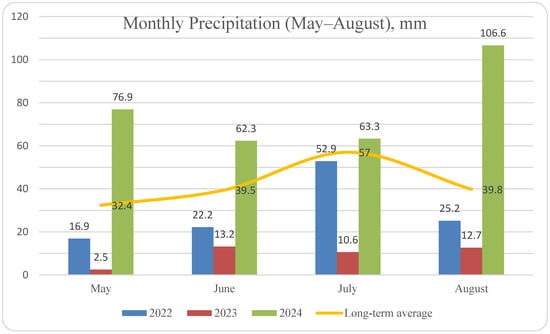
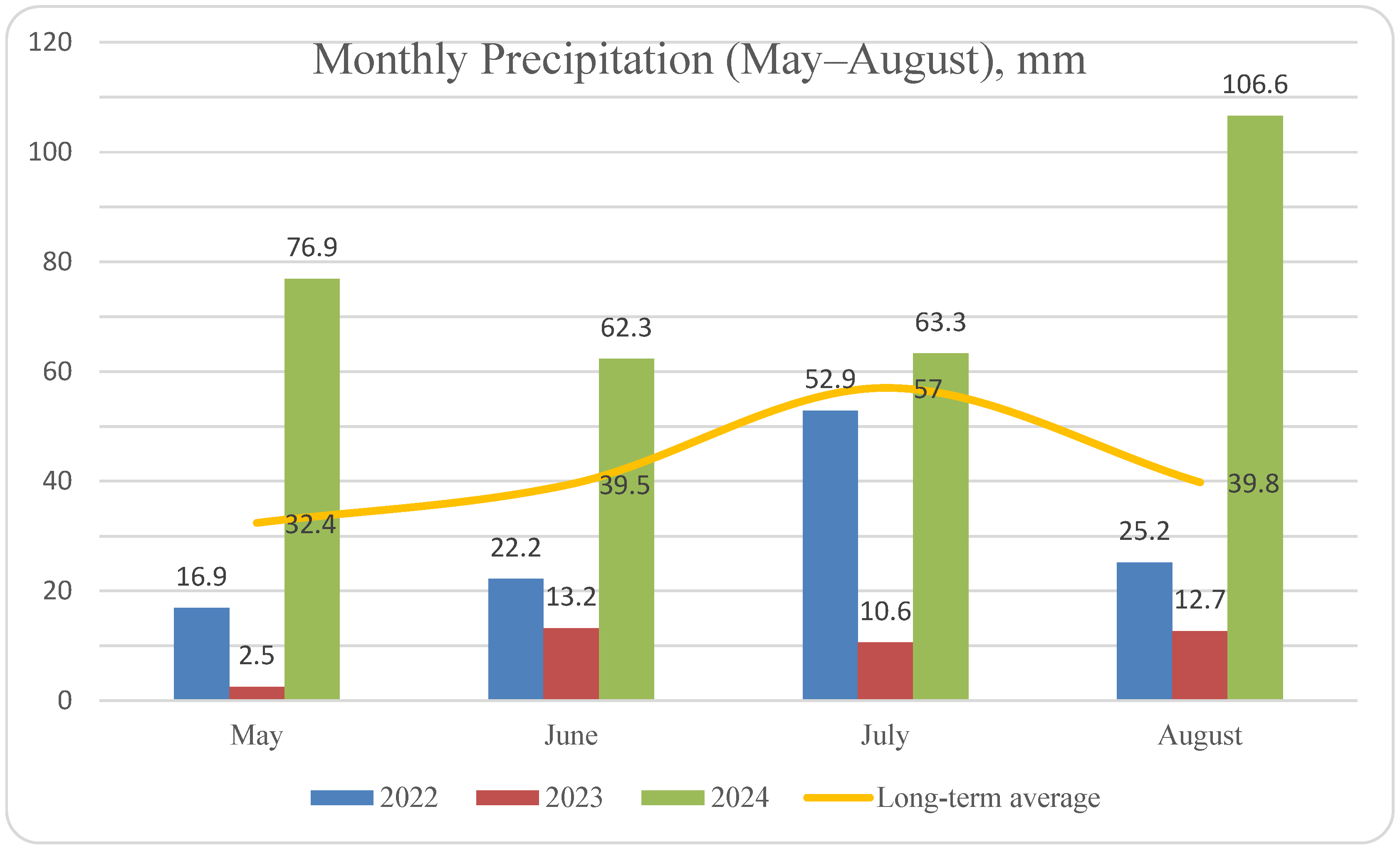
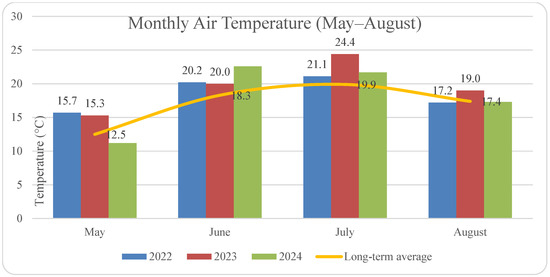
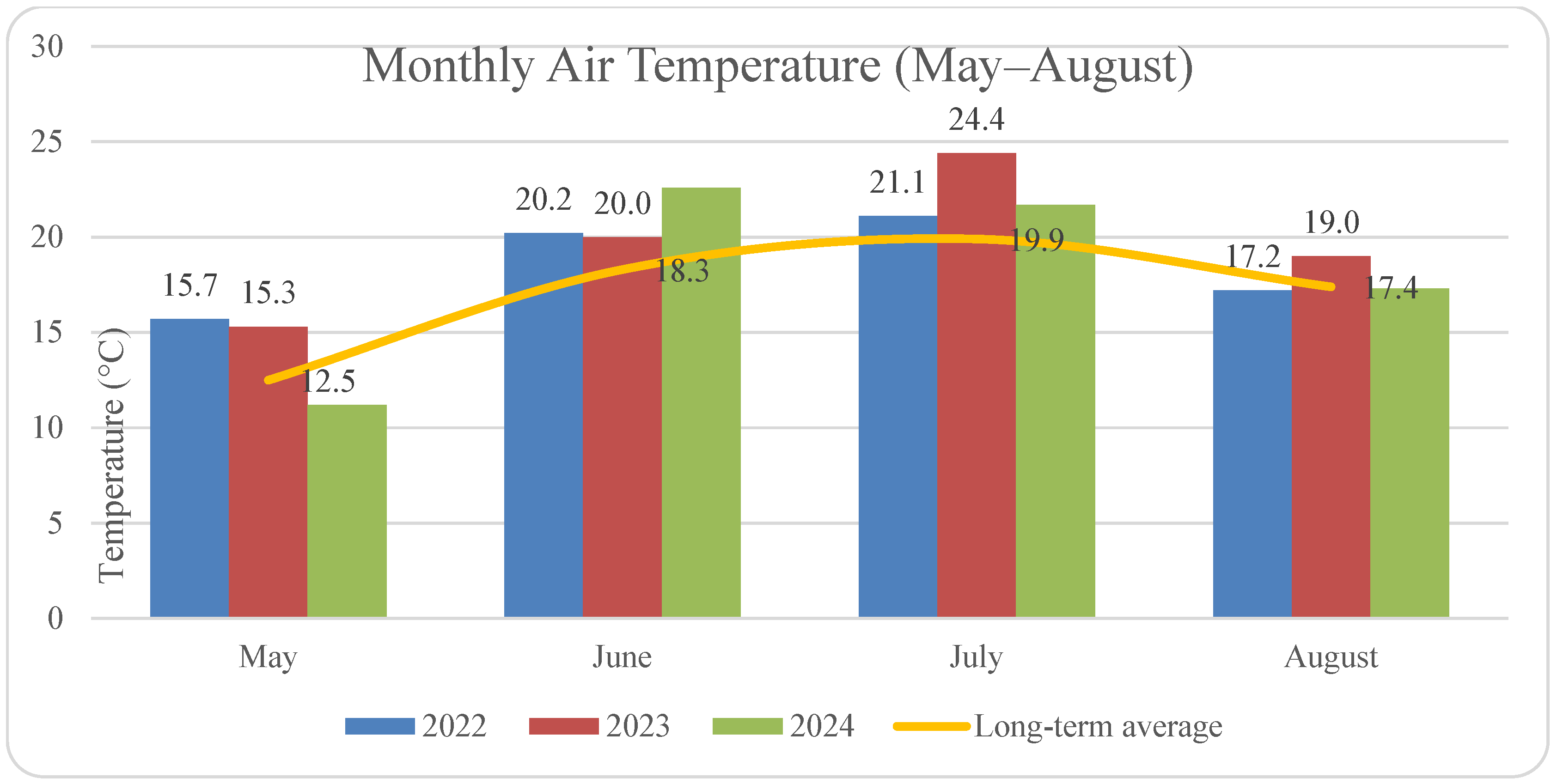
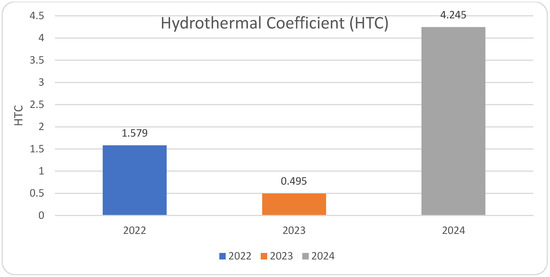
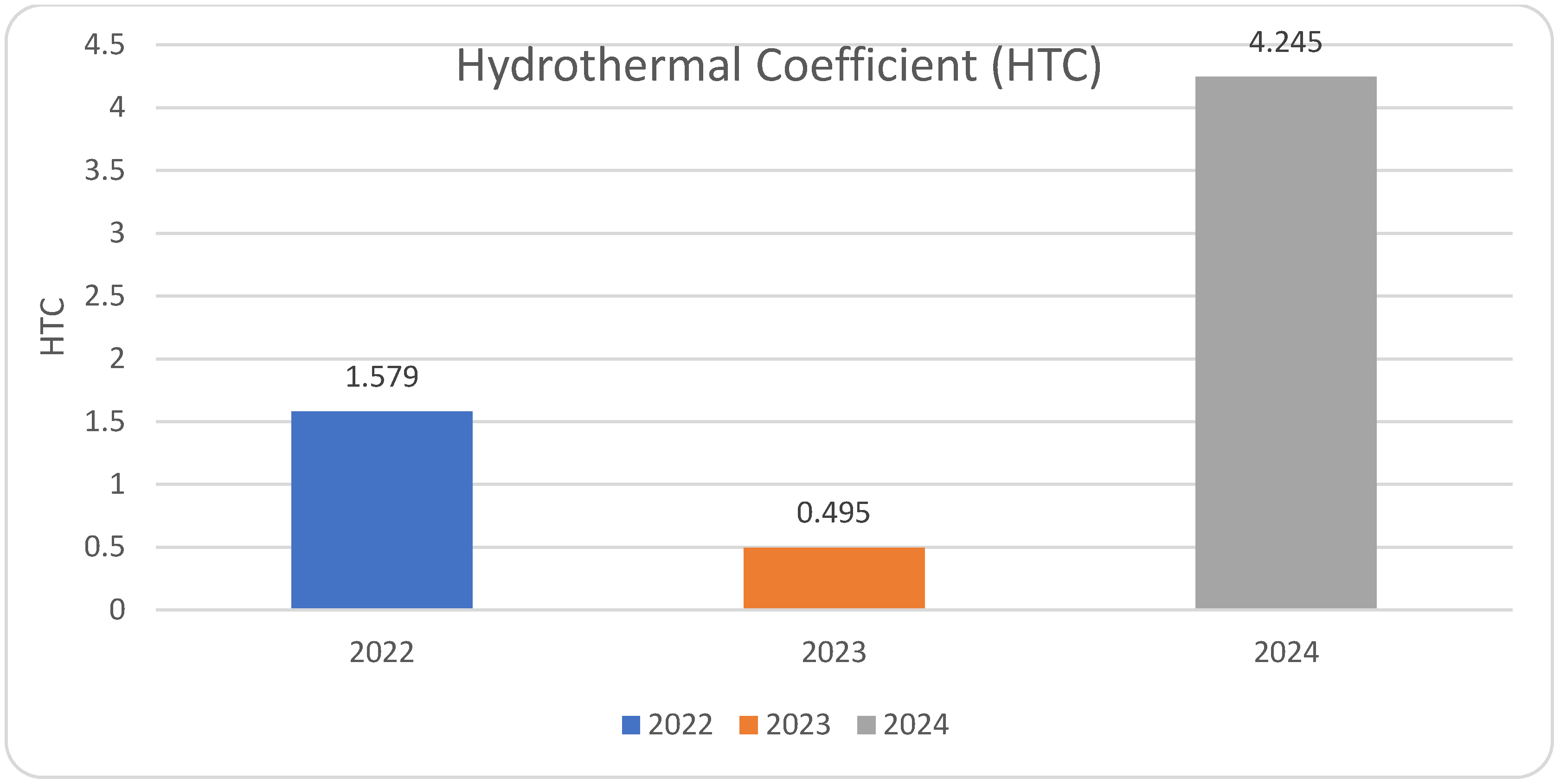
Monthly precipitation during the study period is presented in Figure 1. Air temperature dynamics are shown in Figure 2, while HTC values are presented in Figure 3. According to the hydrothermal coefficient (HTC), 2023 was characterized by drought stress (HTC = 0.495), 2022 by moderately favorable conditions (HTC = 1.579), and 2024 by excessive moisture availability (HTC = 4.245). Monthly precipitation and temperature data for each year are presented in Figure 1 and Figure 2. These contrasting climatic conditions provided an opportunity to evaluate genotype performance under different moisture regimes.
Figure 1.
Monthly precipitation during the growing seasons (May–August) in 2022–2024 compared with the long-term average.
Figure 2.
Monthly air temperature during the years (May–August) in 2022–2024 compared with the long-term average.
Figure 3.
Hydrothermal coefficient (HTC) during the growing seasons (2022–2024).
2.2. Soil Characteristics
The experimental field (Field No. 4, A. I. Baraev Scientific Production Center for Grain Farming) is located within the dry-steppe zone of Northern Kazakhstan. According to the USDA Soil Taxonomy (Soil Survey Staff, 2014) [18], the soil was classified as Haplic Chernozem, corresponding to alkaline southern chernozem in the local soil classification system. The physical and chemical properties of the soil are presented in Table 1.
Table 1.
Physical and chemical properties of the experimental soil.
Soil analyses were performed in the agrochemical laboratory of the A. I. Baraev Scientific Production Center for Grain Farming. Nitrate nitrogen (N–NO3) was determined according to GOST 26488-85 [19]. Available phosphorus and potassium were determined according to GOST 26205-91 (Machigin method) [20]. Soil pH was determined potentiometrically in a water suspension according to GOST 26423-85 [21]. Humus content was determined according to GOST 26213-21 [22], and available sulfur according to GOST 26490-85 [23].
2.3. Plant Material
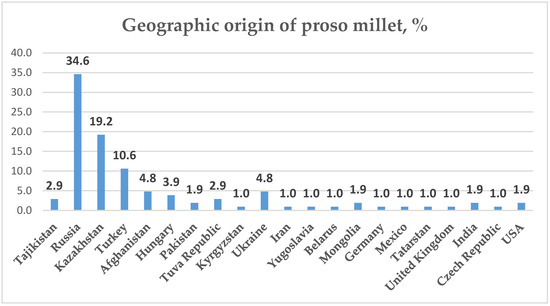
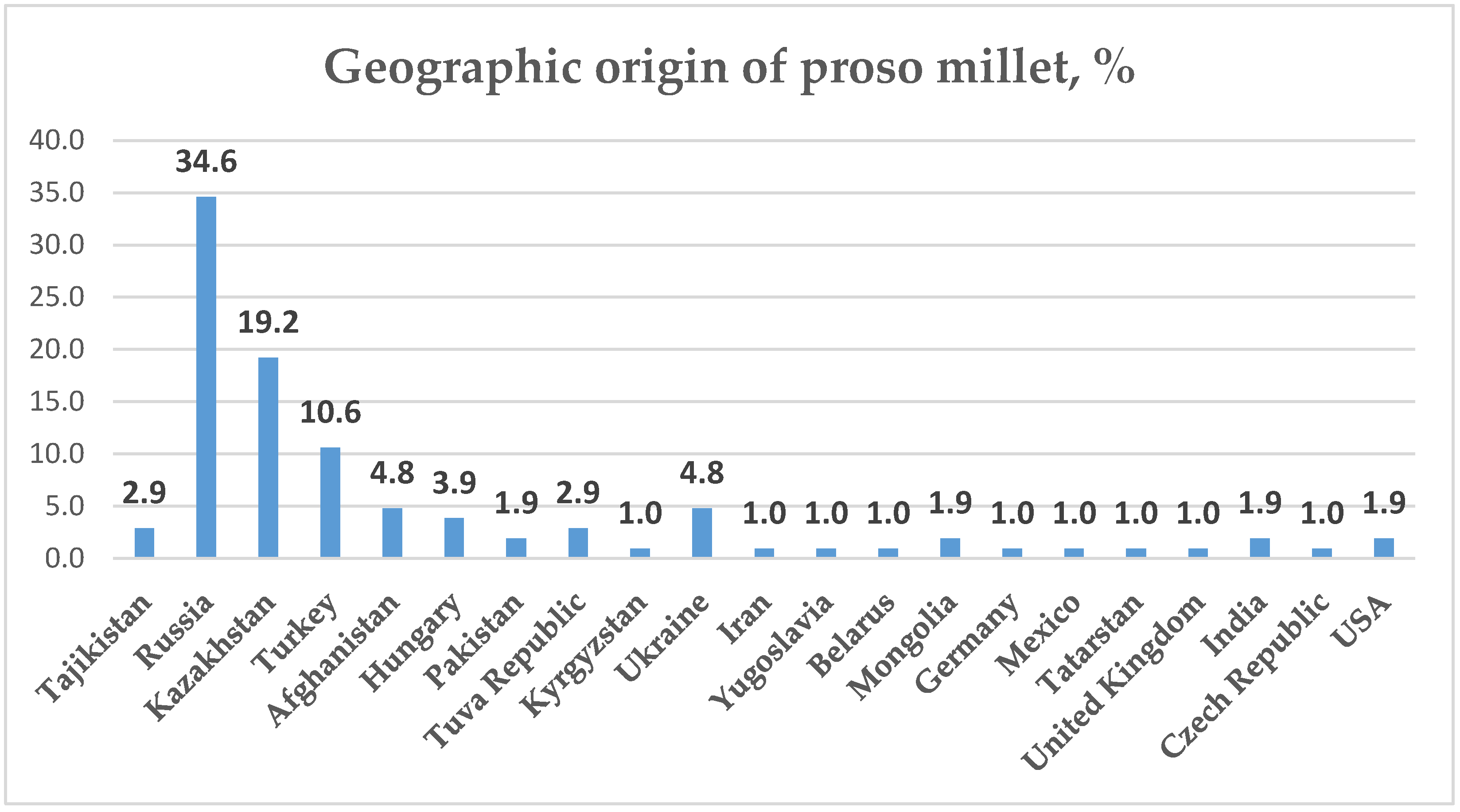
The study included 104 proso millet genotypes originating from 21 countries and regions, including Kazakhstan, Russia, Tajikistan, Turkey, Afghanistan, Ukraine, Hungary, India, Pakistan, Mongolia, Germany, the Czech Republic, the USA, and others. The evaluated material consisted of breeding lines and germplasm accessions maintained in the institute collection and representing broad ecological and genetic diversity. The collection included both locally adapted and introduced genotypes intended for the evaluation of grain yield performance, stability, and adaptability under dry-steppe conditions of Northern Kazakhstan (Figure 4).
Figure 4.
Geographic origin of proso millet accessions included in the studied collection. The complete list of the 104 proso millet accessions and their countries of origin is provided in Supplementary Table S2.
2.4. Experimental Design and Crop Management
Field experiments were conducted during 2022–2024 using a randomized complete block design (RCBD) with three replications. Each genotype was grown in plots of 2.0 m2 consisting of seven rows spaced 15 cm apart. The distance between blocks was 1 m.
Sowing was carried out on 25 May using a small-plot seeder (SSFK-7). The seeding rate was 3 million viable seeds per hectare according to regional agronomic recommendations for proso millet cultivation in Northern Kazakhstan. Field experiments were conducted under rainfed conditions without irrigation and without the application of mineral fertilizers or pesticides. Weed control was performed mechanically according to standard regional agronomic practices and applied uniformly across all plots.
Harvesting was performed between 10 and 15 September at full grain maturity using a small-plot combine harvester (Wintersteiger Classic (Wintersteiger AG, Ried im Innkreis, Austria)). Grain yield (t ha−1) was used as the primary trait for statistical analyses. Yield was determined after harvesting each plot and adjusted to a standard grain moisture content of 14%.
2.5. Statistical Analysis
Analysis of variance (ANOVA) was performed to evaluate the effects of genotype and year on grain yield. Differences were considered statistically significant at p ≤ 0.05. Since the study was conducted at a single location over three years, the environmental factor represented climatic conditions between years rather than a classical multi-environment structure. The ANOVA model used in this study was:
where Yij is the observed grain yield, μ is the overall mean, Gi is the effect of the ith genotype, Yj is the effect of the jth year, and εij is the residual error.
Yij = μ + Gi + Yj + εij
The significance of genotype and year effects was assessed using F-tests derived from the ANOVA model. Statistical significance was declared at p ≤ 0.05.
The additive main effects and multiplicative interaction (AMMI) model, as described by Gauch (2013) [12], was applied to assess genotype stability and interaction patterns across years. The AMMI model combines analysis of variance for additive effects with principal component analysis (PCA) for multiplicative interaction effects. The first interaction principal component axis (IPCA1) was used to evaluate genotype stability, where values closer to zero indicate greater stability across growing seasons.
Genotype plus genotype-by-environment interaction (GGE) biplot analysis was performed according to Yan et al. (2000) [13] and Yan and Kang (2003) [14] to visualize genotype performance and identify stable and high-yielding genotypes.
The stress tolerance index (STI) was calculated according to Fernandez (1992) [15]:
where Yp is yield under favorable conditions, Ys is yield under stress conditions, and Ȳp is the mean yield under favorable conditions. Based on hydrothermal conditions and mean grain yield, the 2024 growing season was considered favorable (Yp), whereas 2023 was considered stress-prone (Ys) due to severe drought conditions. The 2022 growing season was characterized by intermediate environmental conditions and was not directly included in the STI calculation.
STI = (Yp × Ys)/(Ȳp2)
All statistical analyses and graphical visualizations were performed using Microsoft Excel 2019 and R software version 4.5.2 (R Core Team, Vienna, Austria). AMMI and GGE biplot analyses were performed using the metan package (version 1.19.0).
3. Results
Grain yield of proso millet genotypes showed considerable variation across years (Table 2), while detailed raw data for all genotypes across environments are provided in Table S1 (Supplementary Materials).
Table 2.
Descriptive statistics of grain yield of proso millet accessions across years.
The highest mean grain yield was observed in 2024 (4.18 t ha−1), which corresponded to favorable moisture conditions during the growing season. Lower mean yields were recorded in 2022 (2.58 t ha−1) and 2023 (2.90 t ha−1). Despite severe drought conditions in 2023, the mean grain yield was slightly higher than in 2022. This may be associated with the distribution of precipitation during critical growth stages, higher temperature conditions favorable for millet development, and the drought tolerance of the evaluated germplasm.
The range of grain yield values varied substantially among years. Yield ranged from 1.12 to 3.65 t ha−1 in 2022, from 1.31 to 4.86 t ha−1 in 2023, and from 2.02 to 6.80 t ha−1 in 2024, indicating broad phenotypic diversity among the evaluated genotypes.
The coefficient of variation (CV) was highest in 2023 (27.7%), indicating greater relative variability in grain yield under drought-stress conditions. Lower CV values were observed in 2022 (19.8%) and 2024 (22.5%), reflecting reduced relative variation in grain yield among observations. According to commonly accepted criteria, all CV values remained within an acceptable range for field evaluation of grain yield, supporting the reliability of the obtained results.
Analysis of variance revealed that both genotype and year significantly affected grain yield of proso millet (Table 3). The year effect exhibited a substantially larger F value than the genotype effect, indicating that climatic differences among years had a stronger influence on grain yield than genetic differences among accessions under the dry-steppe conditions of Northern Kazakhstan. Nevertheless, genotype effects were also significant, reflecting substantial genetic diversity within the evaluated germplasm. Residual variation may be associated with microenvironmental heterogeneity under field conditions.
Table 3.
Analysis of variance for grain yield of proso millet genotypes across years.
These results indicate that both climatic conditions and genetic factors contributed to grain yield variation, although annual climatic differences had a stronger effect on yield performance.
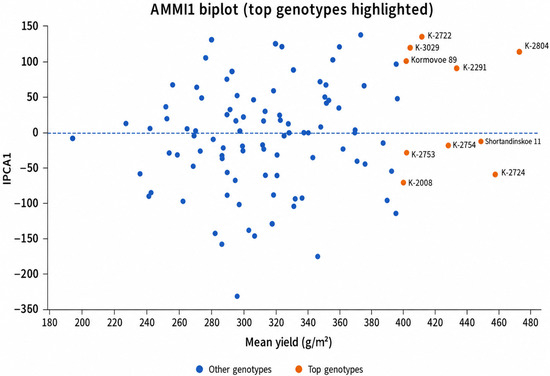
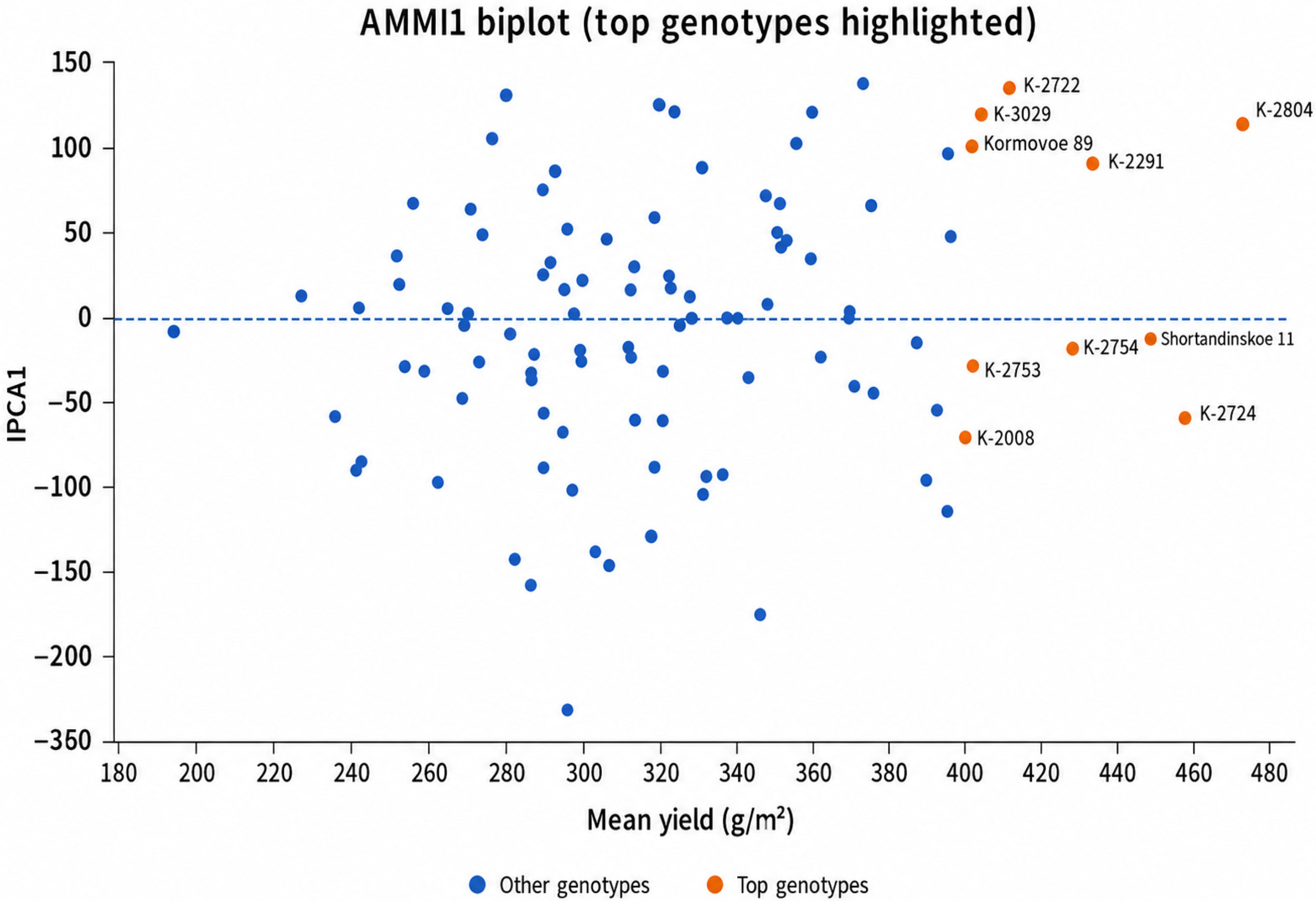
The AMMI1 biplot (Figure 5) provided a clear visualization of genotype performance and stability across environments.
Figure 5.
AMMI1 biplot illustrating mean grain yield and genotype stability (IPCA1 scores) of proso millet genotypes across years.
The AMMI biplot (Figure 5) illustrates the relationship between mean grain yield and genotype stability based on the IPCA1 axis. Genotypes located closer to the zero value of the IPCA1 axis were characterized by more stable grain yield performance, whereas genotypes positioned further from the origin exhibited greater variability.
Grain yield varied substantially among the evaluated genotypes, ranging from approximately 2.00 to 4.80 t ha−1, which reflects broad phenotypic diversity within the studied collection.
Among the evaluated accessions, Shortandinskoe 11 and K-2754 combined relatively high grain yield with low IPCA1 values, indicating a favorable combination of productivity and stability. In contrast, K-2804, K-2291, and Kormovoe 89 demonstrated high grain yield but were characterized by larger IPCA1 values, suggesting less consistent performance under variable environmental conditions.
Genotypes such as K-2008 and K-2724, which were located further from the origin along the IPCA1 axis, showed increased variability in grain yield performance despite relatively high productivity.
Overall, the AMMI analysis enabled the identification of genotypes combining relatively stable performance with high grain yield potential, which may be valuable for breeding programs aimed at improving proso millet adaptation under dry-steppe conditions of Northern Kazakhstan.
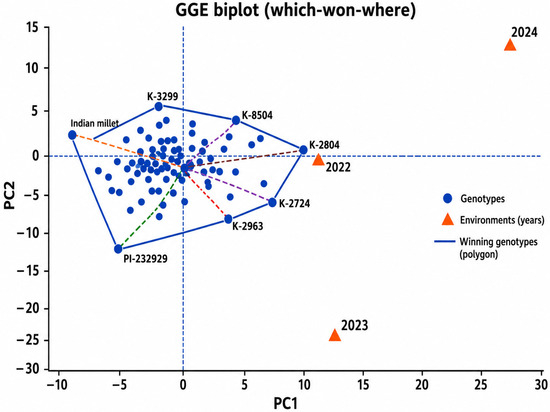
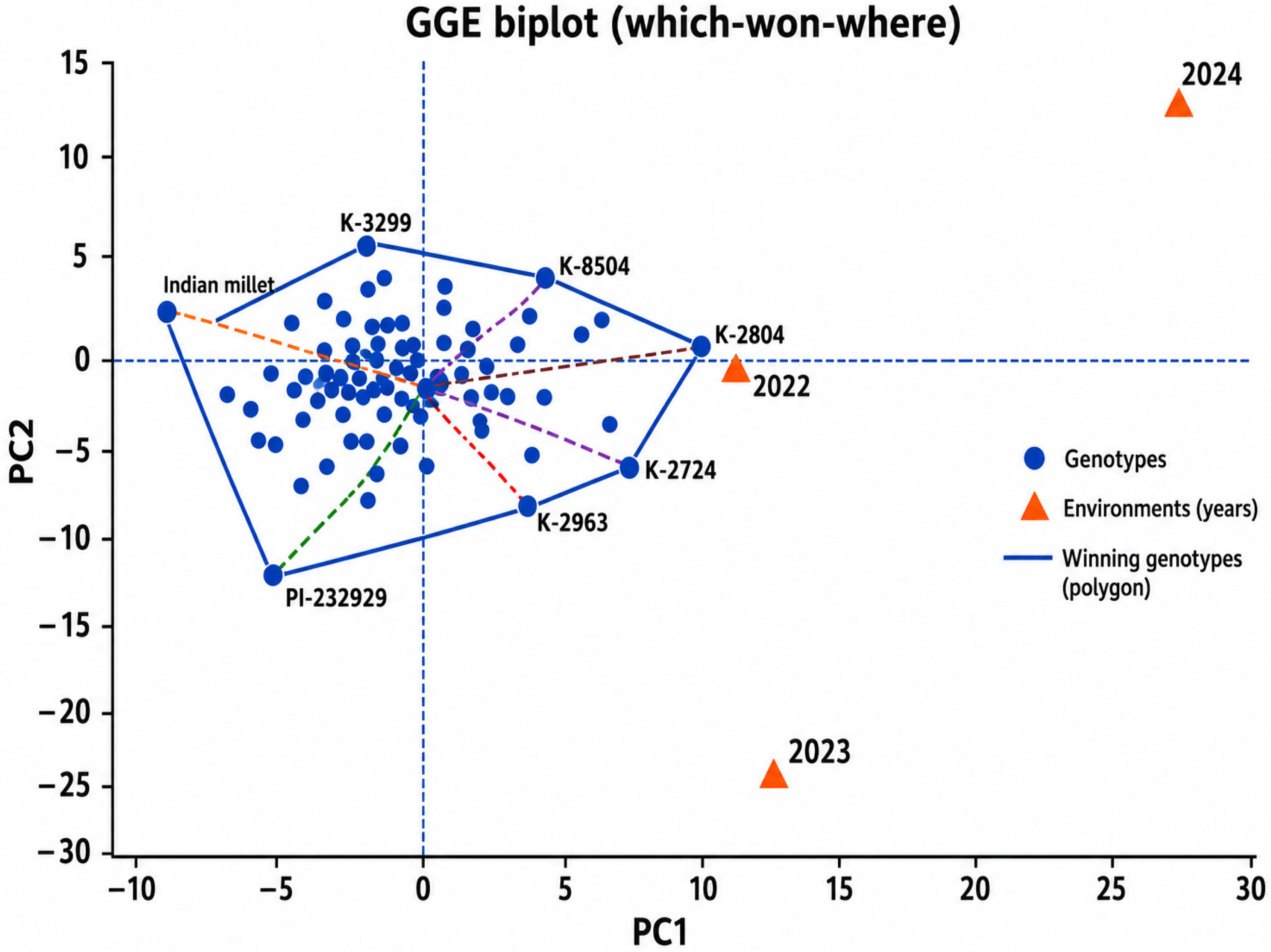
The GGE biplot (which-won-where view) revealed clear patterns of genotype performance across environments (Figure 6).
Figure 6.
GGE biplot (which-won-where view) showing genotype performance across environments.
The GGE biplot (Figure 6) was used to visualize genotype performance under contrasting climatic conditions during the study period. The polygon view separated the biplot into several sectors, reflecting differences in genotype responses under variable environmental conditions.
The studied years were clearly differentiated on the biplot. The 2023 year was positioned further from the origin and was associated with drought-stress conditions, whereas the 2024 season was located in the opposite direction and corresponded to favorable moisture conditions. The 2022 year occupied an intermediate position, reflecting moderate environmental conditions.
Several vertex genotypes, including K-2804, K-2724, K-2963, K-3299, and PI-239229, were positioned at the edges of the polygon, indicating increased responsiveness to environmental variability. In contrast, genotypes located closer to the origin demonstrated relatively more stable grain yield performance under variable climatic conditions.
The GGE biplot provided additional insight into genotype performance patterns and allowed the identification of genotypes combining high productivity with relatively stable performance under dry-steppe conditions of Northern Kazakhstan.
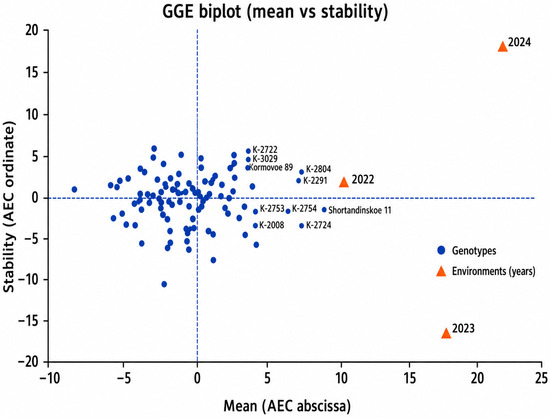
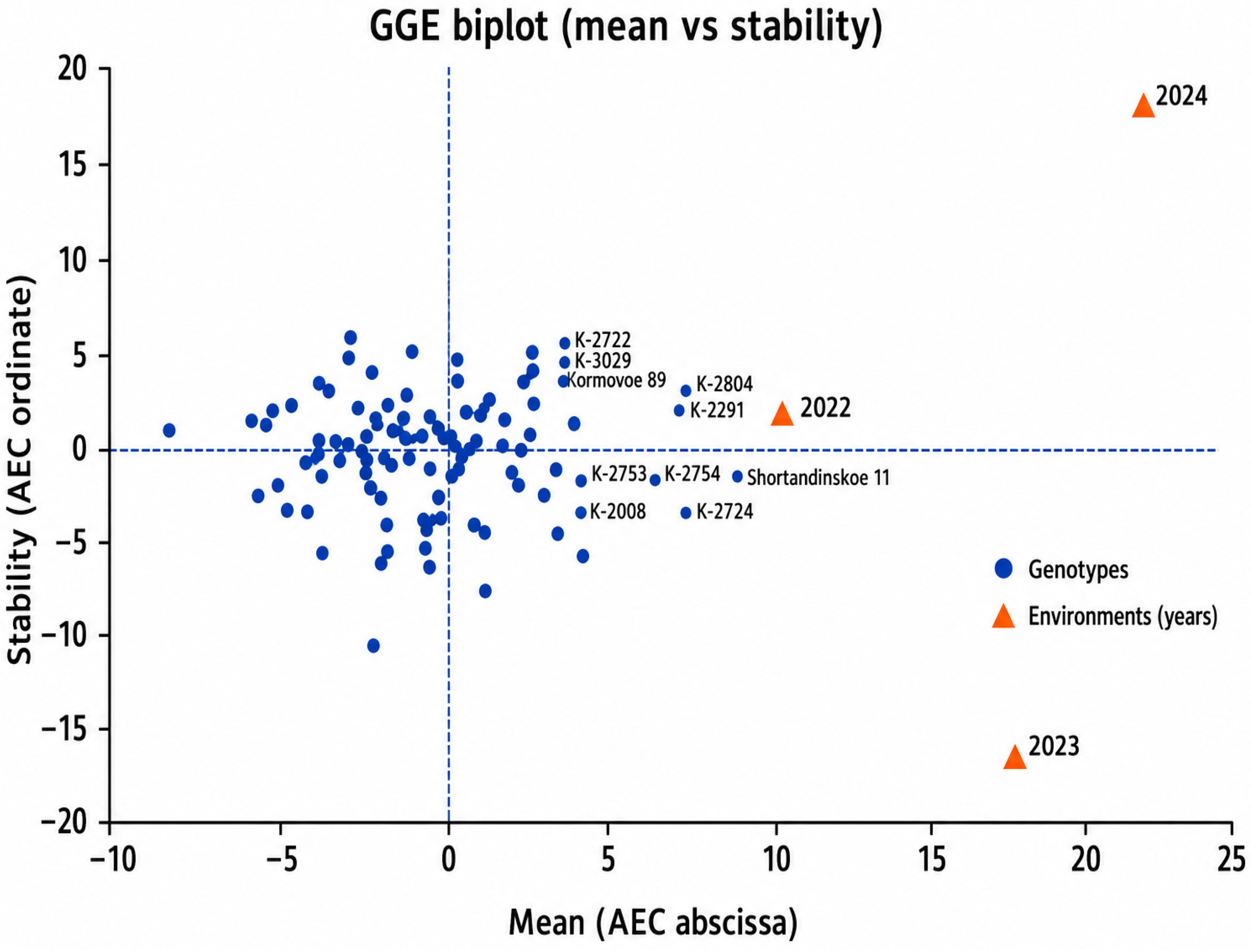
The mean vs. stability view of the GGE biplot (Figure 7) provided additional insight into genotype performance by simultaneously evaluating grain yield and stability.
Figure 7.
GGE biplot (mean vs. stability view) illustrating yield performance and stability of proso millet genotypes.
Genotypes located along the positive direction of the AEC abscissa were characterized by higher mean grain yield, whereas genotypes positioned closer to the AEC ordinate (stability axis) demonstrated relatively more stable performance under variable climatic conditions.
Among the evaluated accessions, Shortandinskoe 11 and K-2754 combined relatively high grain yield with close proximity to the stability axis, indicating a favorable balance between productivity and stability. In contrast, K-2804 and K-2291 exhibited high grain yield but were positioned further from the stability axis, suggesting greater variability in performance under contrasting moisture conditions.
Genotypes such as K-2008 and K-2724 were located further from the AEC stability axis, indicating reduced stability despite moderate-to-high grain yield levels.
Overall, the mean vs. stability view of the GGE biplot allowed the identification of promising genotypes combining relatively stable performance with high yield potential under dry-steppe conditions of Northern Kazakhstan.
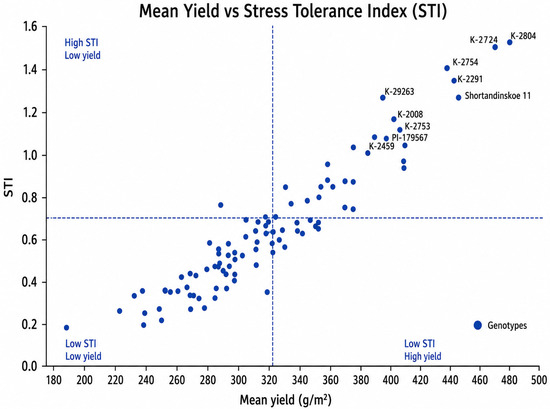
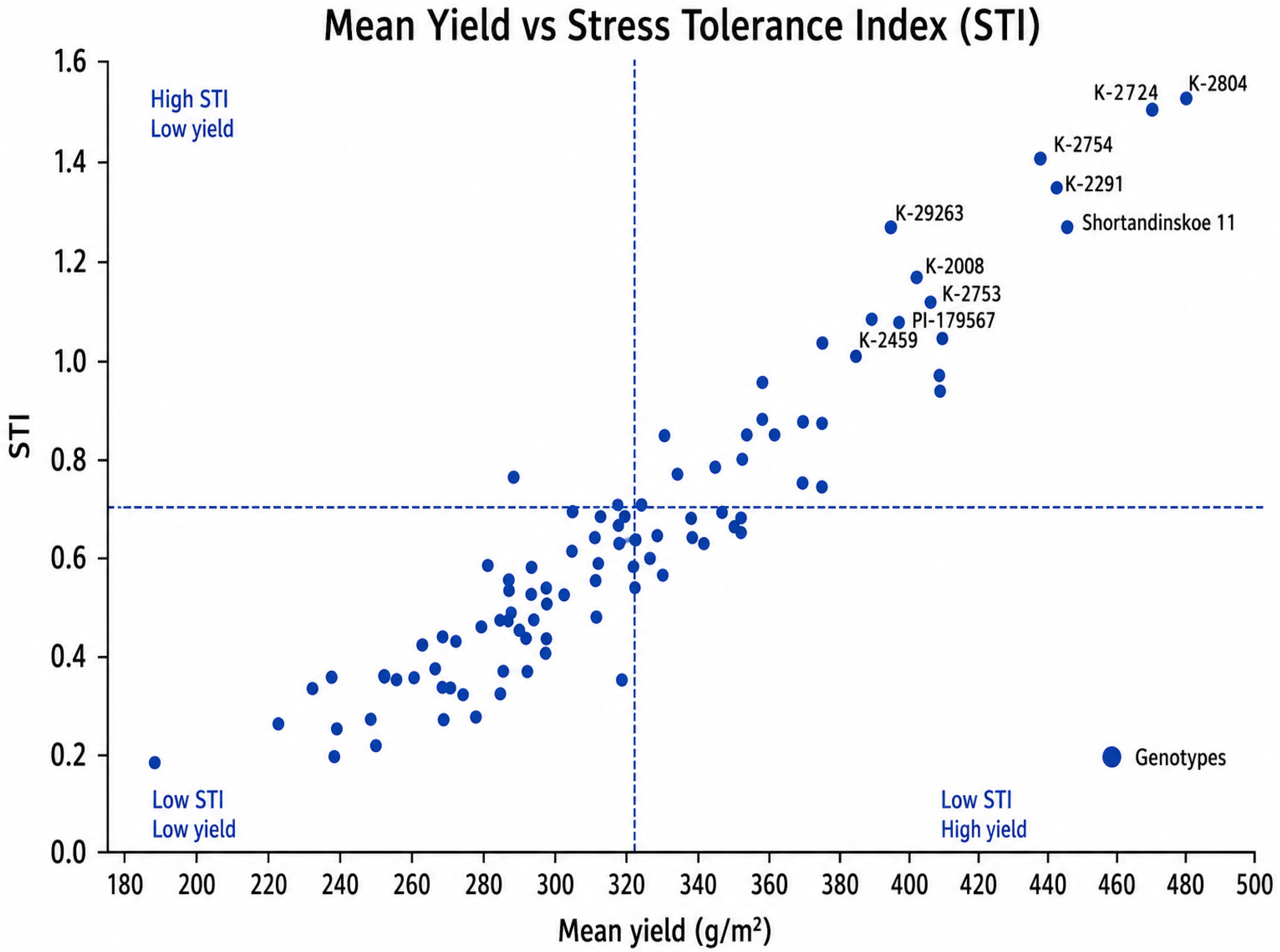
The relationship between mean grain yield and stress tolerance index (STI) is presented in Figure 8.
Figure 8.
Relationship between mean grain yield and stress tolerance index (STI) of proso millet genotypes.
A clear positive association between grain yield and STI values was observed, indicating that genotypes with higher productivity generally maintained better performance under drought-stress conditions.
Genotypes positioned in the upper-right quadrant of the biplot combined high grain yield with elevated STI values and were identified as the most promising accessions for further breeding and evaluation. In particular, K-2804, K-2724, K-2754, K-2291, and Shortandinskoe 11 demonstrated relatively high productivity under both favorable and drought-stress conditions.
In contrast, genotypes located in the lower-left quadrant were characterized by both low grain yield and low STI values, indicating weaker performance under variable moisture conditions. Genotypes distributed near the center of the biplot exhibited intermediate responses for both productivity and stress tolerance.
4. Discussion
The results of this study demonstrated that grain yield of proso millet was strongly influenced by environmental conditions, particularly moisture availability during the year. The analysis of variance indicated that annual climatic differences were an important source of grain yield variation among the evaluated genotypes. Similar findings have been reported in previous studies, where environmental factors accounted for a large proportion of yield variability under variable climatic conditions [24,25]. Environmental effects on grain yield formation have also been widely documented in millet and other cereal crops cultivated in drought-prone regions, where seasonal fluctuations in precipitation and temperature strongly influence yield stability.
Marked differences in climatic conditions among years substantially affected genotype performance. According to HTC values, 2023 was characterized by severe drought stress (HTC = 0.495), whereas 2024 was excessively wet (HTC = 4.245). Despite lower precipitation in 2023, mean grain yield exceeded that of 2022. This result may be explained by precipitation distribution during critical developmental stages, particularly grain filling, as well as by the inherent drought tolerance of proso millet. Previous studies have shown that the timing and distribution of precipitation may be more important than total seasonal rainfall for millet productivity, especially in arid and semi-arid environments. Similar responses have been reported for millet crops cultivated under drought-prone conditions, where moisture deficiency may enhance phenotypic differentiation among genotypes [20,26].
A distinctive feature of the present study was the evaluation of a large and geographically diverse collection of proso millet germplasm under the dry-steppe conditions of Northern Kazakhstan. Unlike many previous studies that focused primarily on released cultivars, the present work assessed 104 accessions originating from different countries and identified valuable source material combining high grain yield, stability, and drought tolerance. The integration of analysis of variance, additive main effects and multiplicative interaction (AMMI), genotype plus genotype-by-year interaction (GGE) biplot, and stress tolerance index (STI) analyses provided a comprehensive assessment of accession performance and facilitated the identification of promising parental material for breeding programs targeting drought-prone environments.
Mean grain yield reached 4.18 t ha−1 in 2024, substantially exceeding the average productivity levels commonly reported for proso millet under rainfed conditions in Kazakhstan (0.8–1.5 t ha−1). This difference may be attributed to the favorable combination of environmental conditions, including adequate moisture availability, cultivation on fertile chernozem soils, and the use of clean fallow as the preceding crop, which is known to improve soil moisture reserves and growing conditions in the dry-steppe zone. In addition, the evaluated accessions were grown under controlled experimental conditions following recommended agronomic practices. Therefore, the productivity levels observed in this study reflect the yield potential of genetically diverse proso millet germplasm under favorable management and environmental conditions. In commercial production systems, grain yield may be constrained by various environmental and agronomic factors, resulting in lower average productivity.
The coefficient of variation was highest in 2023, indicating greater relative variability in grain yield under drought conditions. Lower CV values observed in 2022 and 2024 reflected reduced variability in yield performance. All CV values remained within an acceptable range for field experiments, supporting the reliability of the obtained results. These findings agree with previous studies demonstrating that stress environments frequently increase phenotypic differentiation among genotypes and facilitate the identification of stress-tolerant germplasm. Such conditions are also known to improve the efficiency of selecting drought-tolerant genotypes in breeding programs [27].
Although most genotypes demonstrated relatively similar performance patterns across years, AMMI and GGE biplot analyses provided useful graphical information regarding genotype responses to climatic variability. Most accessions were clustered near the origin of the biplots, indicating relatively similar responses across years, whereas several genotypes demonstrated increased responsiveness to environmental variation.
The AMMI analysis allowed the identification of genotypes combining relatively high grain yield with stable performance. In particular, Shortandinskoe 11 and K-2754 were positioned close to the stability axis while maintaining high productivity, indicating a favorable balance between yield potential and stability. Similar observations have been reported in previous millet studies, where AMMI analysis proved effective for identifying promising breeding material and separating genotype stability from environmental responsiveness under variable climatic conditions [20,28].
The GGE biplot analysis additionally illustrated the clear separation of years according to differences in climatic conditions. The drought-affected year 2023 and the excessively wet year 2024 occupied opposite positions on the biplot, reflecting substantial environmental differences among years. However, considering the single-location nature of the study, these graphical analyses should primarily be interpreted as visualization tools for genotype performance patterns across years rather than evidence of strong crossover interaction. GGE biplot analysis has been widely applied in cereal breeding programs to visualize genotype performance patterns and evaluate yield stability across diverse environmental conditions [29].
The positive relationship observed between mean grain yield and stress tolerance index (STI) indicated that several high-yielding genotypes were also capable of maintaining relatively stable productivity under drought stress. Genotypes such as K-2804, K-2724, K-2754, K-2291, and Shortandinskoe 11 combined high grain yield with elevated STI values and therefore represent promising material for further breeding and evaluation under dry-steppe conditions. The stress tolerance index is considered one of the most informative criteria for identifying genotypes combining high productivity with drought tolerance under varying moisture conditions [15,30].
The identified genotypes combining high grain yield, stability, and elevated STI values may represent valuable material for breeding programs aimed at improving proso millet productivity under drought-prone conditions of Northern Kazakhstan.
The findings of this study are particularly relevant in the context of increasing climatic instability and the growing frequency of drought events in arid and semi-arid regions. The evaluation of proso millet germplasm across three years enabled the identification of accessions combining high grain yield, stability, and drought tolerance under the dry-steppe conditions of Northern Kazakhstan. In particular, Shortandinskoe 11, K-2754, K-2804, K-2724, and K-2291 demonstrated favorable combinations of productivity and adaptability traits. These accessions represent valuable source material for breeding programs and may be used as parental forms in hybridization aimed at developing new proso millet cultivars adapted to the environmental conditions of Northern Kazakhstan. Nevertheless, the present study was conducted at a single location over three years, which may limit the full characterization of genotype responses under broader agroecological conditions. Therefore, additional multi-location and multi-year evaluations are required to further assess the stability, adaptability, and breeding value of the selected accessions.
5. Conclusions
The present study demonstrated that environmental conditions, particularly hydrothermal variability between years, had a dominant influence on grain yield formation of proso millet under dry-steppe conditions of Northern Kazakhstan. Significant differences among genotypes confirmed the presence of substantial phenotypic diversity within the evaluated germplasm collection.
AMMI, GGE biplot, and STI analyses provided complementary information for identifying promising genotypes combining relatively high productivity and stable performance under years. Shortandinskoe 11 and K-2754 were characterized by a favorable combination of grain yield and stability, whereas K-2804, K-2724, and K-2291 demonstrated high productivity together with elevated stress tolerance index values.
The obtained results indicate that the identified accessions represent valuable source material for breeding programs aimed at improving yield stability, drought tolerance, and adaptability of proso millet in Northern Kazakhstan and other dry-steppe regions.
At the same time, the study was conducted at a single location over three years; therefore, further multi-location evaluation is necessary to better characterize genotype responses under a wider range of environmental conditions and to improve the reliability of genotype adaptability assessment.
Supplementary Materials
The following supporting information can be downloaded at https://www.mdpi.com/article/10.3390/agriculture16131372/s1. Table S1: Raw data of grain yield of proso millet genotypes across environments, Table S2: Proso millet accessions evaluated in the study and their countries of origin.
Author Contributions
Conceptualization, I.Z. and Y.D.; methodology, I.Z. and T.S.; formal analysis, I.Z.; investigation, I.Z., T.S., A.R., V.V., Y.M. and T.K.; resources, Y.D.; data curation, I.Z.; writing—original draft preparation, I.Z.; writing—review and editing, I.Z., Y.D. and V.K.; visualization, I.Z.; supervision, Y.D.; project administration, Y.D. All authors have read and agreed to the published version of the manuscript.
Funding
This research was funded by the Ministry of Agriculture of the Republic of Kazakhstan BR24892821 “Breeding, seed production of grain crops to increase potential of productivity, quality, stress resistance in various soil-climatic zones of Kazakhstan”.
Institutional Review Board Statement
Not applicable.
Data Availability Statement
The data presented in this study are available in the Supplementary Materials (Tables S1 and S2).
Acknowledgments
The authors would like to thank the A. I. Baraev Scientific Production Center for Grain Farming for providing experimental facilities and technical support.
Conflicts of Interest
The authors declare no conflicts of interest.
References
- Samineni, S.; Gummadi, S.; Thushar, S.; Khan, D.N.; Gkanogiannis, A.; Becerra Lopez-Lavalle, L.A.; Singh, R.K. Exploring Proso Millet Resilience to Abiotic Stresses: High-Yield Potential in Desert Environments of the Middle East. Agronomy 2025, 15, 165. [Google Scholar] [CrossRef] [Scilit]
- Das, S.; Khound, R.; Santra, M.; Santra, D.K. Beyond Bird Feed: Proso Millet for Human Health and Environment. Agriculture 2019, 9, 64. [Google Scholar] [CrossRef] [Scilit]
- Zhang, P.; Wang, B.; Guo, Y.; Wang, T.; Wei, Q.; Luo, Y.; Li, H.; Wu, H.; Wang, X.; Zhang, X. Identification of Drought-Resistant Response in Proso Millet (Panicum miliaceum L.) Root through Physiological and Transcriptomic Analysis. Plants 2024, 13, 1693. [Google Scholar] [CrossRef] [Scilit] [PubMed]
- Jin, S.; Xiao, C.; Lu, H.; Deng, X. Effects of extrusion temperature on structure and physicochemical properties of proso millet starch. Int. J. Biol. Macromol. 2025, 299, 140011. [Google Scholar] [CrossRef] [Scilit] [PubMed]
- Bureau of National Statistics of the Agency for Strategic Planning and Reforms of the Republic of Kazakhstan. Gross Harvest of Agricultural Crops in the Republic of Kazakhstan (2024); Bureau of National Statistics: Astana, Kazakhstan, 2025. Available online: https://stat.gov.kz/en/industries/business-statistics/stat-forrest-village-hunt-fish/publications/301885/ (accessed on 25 May 2026).
- Dyussibayeva, E.; Abylkairova, M.; Tsygankov, V.I.; Zhirnova, I.; Rysbekova, A. Evaluation of the agronomic traits and correlation analysis of phenotypes of proso millet (Panicum miliaceum L.) germplasm in Kazakhstan. Braz. J. Biol. 2024, 84, e287947. [Google Scholar] [CrossRef] [Scilit] [PubMed]
- Kalinová, J. Nutritionally Important Components of Proso Millet (Panicum miliaceum L.). Food 2007, 1, 91–100. [Google Scholar] [CrossRef] [Scilit]
- Kumar, V.; Yadav, M.; Awala, S.K.; Valombola, J.S.; Saxena, M.S.; Ahmad, F.; Saxena, S.C. Millets: A Nutritional Powerhouse for Ensuring Food Security. Planta 2024, 260, 101. [Google Scholar] [CrossRef] [Scilit] [PubMed]
- Morgounov, A.; Babkenov, A.; Dreisigacker, S.; Ben, C.; Chudinov, V.; Dolinny, Y.; Fedorenko, E.; Gentzbittel, L.; Rasheed, A.; Savin, T.; et al. Molecular markers help with breeding for agronomic traits of spring wheat in Kazakhstan and Siberia. Genes 2024, 15, 86. [Google Scholar] [CrossRef] [Scilit] [PubMed]
- Dolinny, Y.; Esimbekova, M.; Savin, T.; Rysbekova, A.; Kobernitsky, V.; Miller, Y.; Dyussibayeva, E.; Abylkairova, M.; Zeinullina, A.; Zhirnova, I. Trait-based clustering and index ranking to identify high-yielding spring wheat genotypes under the conditions of Northern Kazakhstan. Braz. J. Biol. 2025, 85, e300898. [Google Scholar] [CrossRef] [Scilit] [PubMed]
- Zhang, J.; Wang, M.; Peng, C.; Chen, H.; Cao, X. Adaptability and Stability of Proso Millet Grain Yield: A Multi-Environment Evaluation Using AMMI, GGE, and GYT Biplots. Plants 2025, 14, 2719. [Google Scholar] [CrossRef] [Scilit] [PubMed]
- Gauch, H.G. A simple protocol for AMMI analysis of yield trials. Crop Sci. 2013, 53, 1860–1869. [Google Scholar] [CrossRef] [Scilit]
- Yan, W.; Hunt, L.A.; Sheng, Q.; Szlavnics, Z. Cultivar evaluation and mega-environment investigation based on the GGE biplot. Crop Sci. 2000, 40, 597–605. [Google Scholar] [CrossRef] [Scilit]
- Yan, W.; Kang, M.S. GGE Biplot Analysis: A Graphical Tool for Breeders, Geneticists, and Agronomists; CRC Press: Boca Raton, FL, USA, 2002. [Google Scholar]
- Fernandez, G.C.J. Effective selection criteria for assessing plant stress tolerance. In Proceedings of the International Symposium on Adaptation of Vegetables and Other Food Crops in Temperature and Water Stress, Taipei, Taiwan, 13–16 August 1992; Kuo, C.G., Ed.; AVRDC: Tainan, Taiwan, 1992; pp. 257–270. [Google Scholar]
- Peel, M.C.; Finlayson, B.L.; McMahon, T.A. Updated world map of the Köppen–Geiger climate classification. Hydrol. Earth Syst. Sci. 2007, 11, 1633–1644. [Google Scholar] [CrossRef] [Scilit]
- Selianinov, G.T. About agricultural evaluation of climate. Proc. Agric. Meteorol. 1928, 20, 165–177. [Google Scholar]
- Soil Survey Staff. Keys to Soil Taxonomy, 12th ed.; USDA-NRCS: Washington, DC, USA, 2014.
- GOST 26488-85; Soils. Determination of Nitrate Nitrogen by the Ion-Selective Method. USSR State Committee for Standards: Moscow, Russia, 1985.
- GOST 26205-91; Soils. Determination of Mobile Phosphorus and Exchangeable Potassium by the Machigin Method Modified by CINAO. USSR State Committee for Standards: Moscow, Russia, 1991.
- GOST 26423-85; Soils. Methods for Determination of pH of Water Extract and Suspension. USSR State Committee for Standards: Moscow, Russia, 1985.
- GOST 26213-21; Soils. Methods for Determination of Organic Matter (Humus). Interstate Council for Standardization, Metrology and Certification: Moscow, Russia, 2021.
- GOST 26490-85; Soils. Determination of Available Sulfur. USSR State Committee for Standards: Moscow, Russia, 1985.
- Bashir, E.M.A.; Ali, A.M.; Ali, A.M.; Ismail, M.I.; Parzies, H.K.; Haussmann, B.I.G. Patterns of pearl millet genotype-by-environment interaction for yield performance and grain iron (Fe) and zinc (Zn) concentrations in Sudan. Field Crops Res. 2014, 166, 82–91. [Google Scholar] [CrossRef] [Scilit]
- Senguttuvel, P.; Vijayalakshmi, C.; Thiyagarajan, K.; Bapu, J.R.K.; Kota, S.; Padmavathi, G.; Geetha, S.; Ramanathan, S.; Robin, S. Genotype × environment interaction and stability analysis for grain yield in pearl millet [Pennisetum glaucum (L.) R. Br.] using AMMI and GGE biplot models. Electron. J. Plant Breed. 2021, 12, 1243–1253. [Google Scholar] [CrossRef] [Scilit]
- Vadez, V.; Hash, T.; Bidinger, F.R.; Kholová, J. Phenotyping pearl millet for adaptation to drought. Front. Physiol. 2012, 3, 386. [Google Scholar] [CrossRef] [Scilit] [PubMed]
- Sehgal, A.; Sita, K.; Siddique, K.H.M.; Kumar, R.; Bhogireddy, S.; Varshney, R.K.; Hanumantha Rao, B.; Nair, R.M.; Prasad, P.V.V.; Nayyar, H. Drought or/and heat-stress effects on seed filling in food crops: Impacts on functional biochemistry, seed yields, and nutritional quality. Front. Plant Sci. 2018, 9, 1705. [Google Scholar] [CrossRef] [Scilit] [PubMed]
- Asungre, P.A.; Akromah, R.; Kena, A.W.; Gangashetty, P. Genotype by environment interaction on grain yield stability and iron and zinc content in open-pollinated varieties of pearl millet in Ghana using the AMMI method. Int. J. Agron. 2021, 2021, 9656653. [Google Scholar] [CrossRef] [Scilit]
- Olivoto, T.; Lúcio, A.D.; da Silva, J.A.G.; Sari, B.G.; Diel, M.I. Mean performance and stability in multi-environment trials I: Combining features of AMMI and BLUP techniques. Agron. J. 2019, 111, 2949–2960. [Google Scholar] [CrossRef] [Scilit]
- Mitra, J. Genetics and genetic improvement of drought resistance in crop plants. Curr. Sci. 2001, 80, 758–763. [Google Scholar]

Disclaimer/Publisher’s Note: The statements, opinions and data contained in all publications are solely those of the individual author(s) and contributor(s) and not of MDPI and/or the editor(s). MDPI and/or the editor(s) disclaim responsibility for any injury to people or property resulting from any ideas, methods, instructions or products referred to in the content. |
© 2026 by the authors. Licensee MDPI, Basel, Switzerland. This article is an open access article distributed under the terms and conditions of the Creative Commons Attribution (CC BY) license.