Effects of Microbially Engineered Biochar Pellets on Net Ecosystem Carbon Balance, Greenhouse Gas Emissions, and Clubroot Disease in Organic Cabbage Cultivation

 , and
, and 
Abstract
1. Introduction
2. Materials and Methods
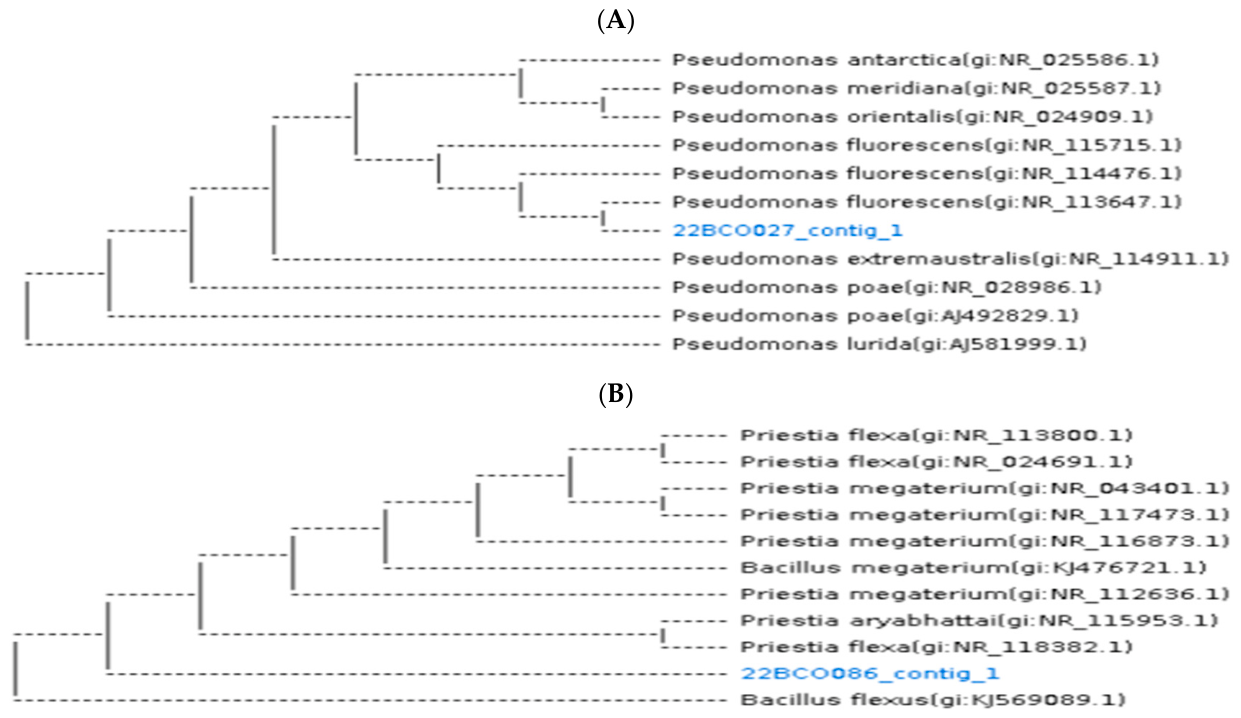
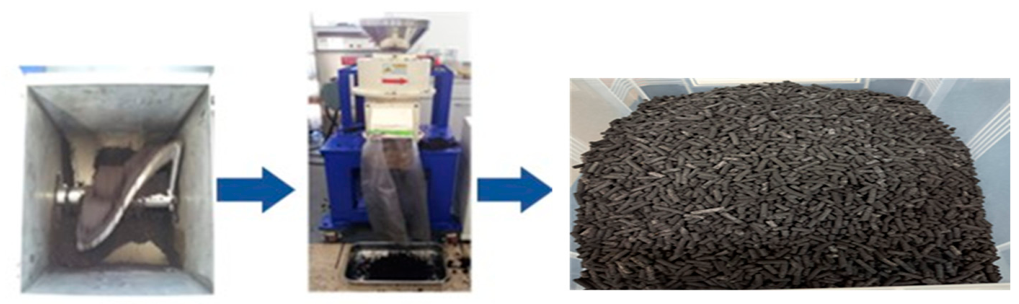
2.1. Preparation of the Acidified Biochar Pellets Inoculated with Microorganisms (ABPM)
2.2. Cabbage Cultivation and Experimental Design
2.3. Soil Physicochemical Properties and Rhizosphere Microbial Community Analysis
2.4. Carbon Budget
2.5. Global Warming Potential (GWP)
2.6. Estimation of Net Ecosystem Carbon Balance (NECB)
2.7. Clubroot Assessment
2.8. Statistical Analysis
3. Results and Discussion
3.1. Estimating Carbon Sequestration
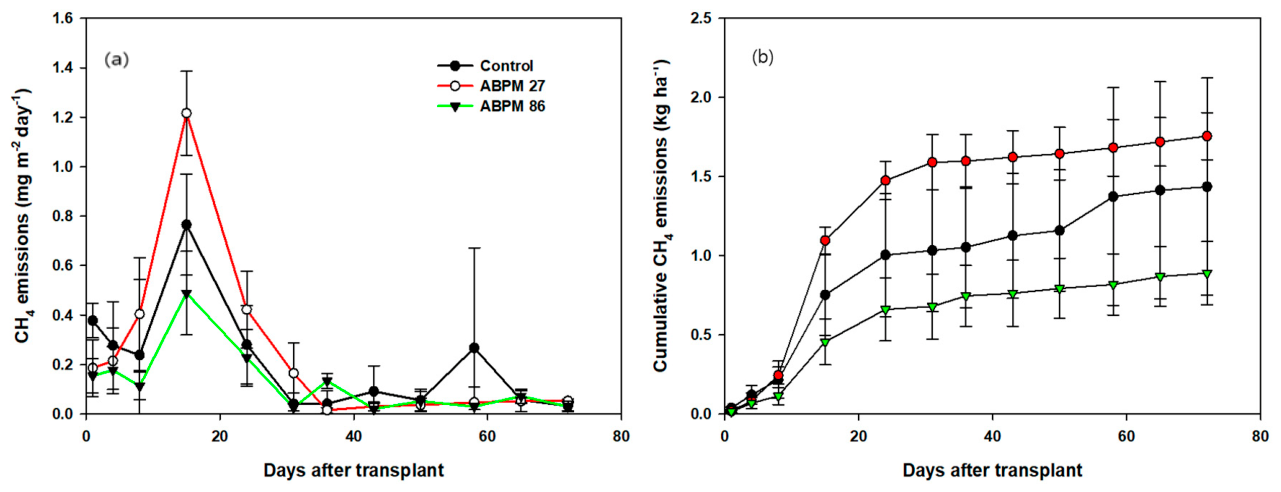
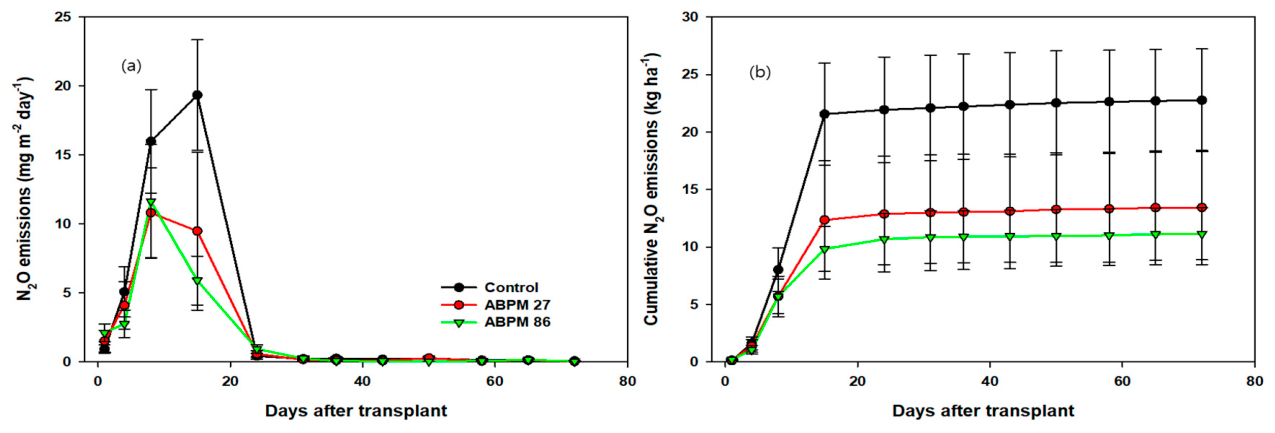
3.2. Dynamics of GHG Emissions (CH4 and N2O) Under ABPM Treatments
3.3. Global Warming Potential (GWP) and Mitigation Efficiency
3.4. Assessing Net Ecosystem Carbon Balance (NECB) and Its Role in Climate Change Mitigation
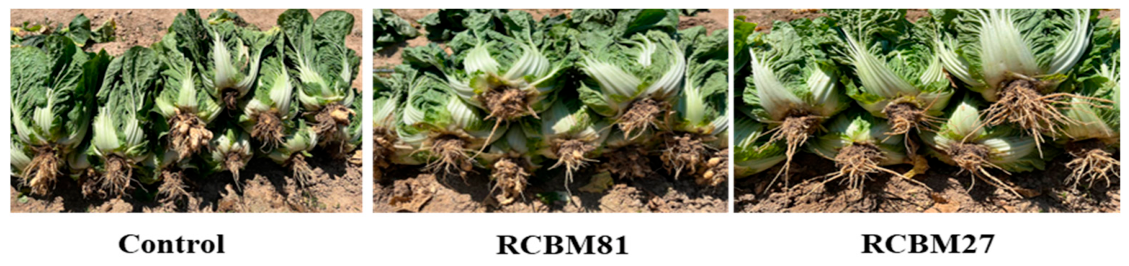
3.5. Assessing Plant Growth and Clubroot Suppression
3.6. Dynamics of Microbial Community Shifts and Succession
4. Conclusions
Supplementary Materials
Author Contributions
Funding
Data Availability Statement
Acknowledgments
Conflicts of Interest
References
- Afshar, M.; Mofatteh, S.; Zandvakili, O.R.; Youssef, N. Biochar for a Sustainable Future: Environmentally Friendly Production and Diverse Applications. Results Eng. 2024, 23, 102433. [Google Scholar] [CrossRef]
- Ali, N.; Danish, S.; Nawaz, M.F.; Dawar, K.M.; Karunarathna, S.C.; Altaf, M.M.; Khan, M.J. Biochar and Manure Co-Application Improves Soil Health and Crop Productivity in Paddy Soil Systems. BMC Plant Biol. 2025, 25, 914. [Google Scholar] [CrossRef]
- Avato, P.; Argentieri, M.P. Brassicaceae: A Rich Source of Health-Promoting Phytochemicals. Phytochem. Rev. 2015, 14, 1019–1033. [Google Scholar] [CrossRef]
- Bai, J.; Mareira, B.; Bai, Y.; Nadar, C.; Feng, Y.; Yadav, S. Assessing biochar’s impact on greenhouse gas emissions, microbial biomass, and enzyme activities in agricultural soils through meta-analysis and machine learning. Sci. Total Environ. 2025, 963, 178541. [Google Scholar] [CrossRef]
- Deng, X.; Teng, F.; Chen, M.; Du, Z.; Wang, B.; Li, R.; Wang, P. Exploring Negative Emission Potential of Biochar to Achieve Carbon Neutrality Goal in China. Nat. Commun. 2024, 15, 1085. [Google Scholar] [CrossRef] [PubMed]
- Li, Y.; Xu, X.; He, Y.; Wang, Y. Biochar Enhances Rhizosphere Microbial Diversity and Plant–Microbe Interactions: A Meta-Analysis. Sci. Total Environ. 2021, 795, 148889. [Google Scholar] [CrossRef]
- Wang, Q.; Li, X.; He, Y. Biochar Effects on Greenhouse Gas Emissions: A Meta-Analysis. Agric. Ecosyst. Environ. 2023, 350, 108966. [Google Scholar] [CrossRef]
- Ali, F.; Canctoy, R.; Galgo, S.; Rafique, M.; Sarfraz, R. Advancements in modified biochar production techniques and soil application: A critical review. Fuel 2025, 400, 135745. [Google Scholar] [CrossRef]
- Zhang, A.; Liu, Y.; Pan, G.; Hussain, Q.; Li, L.; Zheng, J.; Zhang, X. Biochar Increases Soil Carbon Pools: A Global Meta-Analysis. J. Environ. Manag. 2022, 305, 114403. [Google Scholar] [CrossRef]
- Kammann, C.I.; Schmidt, H.P. Biochar-Based Carbon Sinks: Long-Term Sequestration Potential and Its Role in Climate-Resilient Agriculture. Glob. Change Biol. Bioenergy 2024, 16, e13110. [Google Scholar] [CrossRef]
- Gross, A.; Bromm, T.; Polifka, S.; Fischer, D.; Glaser, B. Long-term biochar and soil organic carbon stability–Evidence from field experiments in Germany. Sci. Total Environ. 2024, 954, 176340. [Google Scholar] [CrossRef] [PubMed]
- Shin, J.D.; Jang, E.S.; Park, S.; Ravindran, B.; Chang, S.W. Agro-environmental impacts, carbon sequestration and profit analysis of blended biochar pellet application in the paddy soil-water system. J. Environ. Manag. 2019, 244, 92–98. [Google Scholar] [CrossRef]
- National Institute of Agricultural Sciences (NAS). Fertilizers for Crop Cultivation; Rural Development Administration: Wanju, Republic of Korea, 2010.
- Nam, J.; Shin, J.D.; Choi, J.-Y.; Park, S.-W.; Chung, J.-W.; Jeong, C. Evaluation of Major Soil Nutrients After the Application of Microbial-Inoculated Acidified Biochar Pellets Using a Sigmoid Function. Agronomy 2025, 15, 1607. [Google Scholar] [CrossRef]
- Mehlich, A. Mehlich III Soil Test Extractant: A Modification of Mehlich II Extractant. Commun. Soil Sci. Plant Anal. 1984, 15, 1409–1416. [Google Scholar] [CrossRef]
- Hutchinson, G.L.; Mosier, A.R. Improved Soil Cover Method for Field Measurement of Nitrous Oxide Fluxes. Soil Sci. Soc. Am. J. 1981, 45, 311–316. [Google Scholar] [CrossRef]
- IPCC. Climate Change 2021: The Physical Science Basis; Contribution of Working Group I to the Sixth Assessment Report of the Intergovernmental Panel on Climate Change; Cambridge University Press: Cambridge, UK, 2021. [Google Scholar] [CrossRef]
- Townsend, G.R.; Heuberger, J.W. Methods for estimating losses caused by diseases in fungicide experiments. Plant Dis. Report. 1943, 27, 340–343. [Google Scholar]
- Lu, Y.; Silveria, M.P.; Vendramini, J.; Li, Y.; Thapa, S. Biochar impacts on soil nitrogen and carbon dynamics in a Spodosol amended with biosolids and inorganic fertilizer. J. Environ. Qual. 2023, 52, 999–1010. [Google Scholar] [CrossRef]
- Xuan, T.D.; Khanh, T.D.; Chung, I.M.; Tawata, S. Advances in Mitigating Methane Emissions from Rice Cultivation: Past, present, and futher stratgies. Environ. Sci. Pollut. Res. 2025, 32, 20232–20247. [Google Scholar] [CrossRef] [PubMed]
- Ho, K.; Tang, D. Biochar Amendments for Soil Restoration: Impacts on Nutrient Dynamics and Microbial Activity. Environments 2025, 12, 425. [Google Scholar] [CrossRef]
- Liu, J.; Hu, Y.; Gu, S.; Li, X.; Ji, Z.; Qin, H.; Zhang, L.; Zhang, J.; Huanbg, H.; Yan, B.; et al. Insight into mitigation mechanisms of N2O emission by biochar during agricultural the composting. Bioresour. Technol. 2024, 406, 130970. [Google Scholar] [CrossRef]
- Mishra, J.; Singh, R.; Arora, N.K. Rhizosphere Engineering: Pseudomonas spp. as a Sustainable Tool for Future Agriculture. Front. Microbiol. 2021, 12, 742997. [Google Scholar] [CrossRef]
- Lehmann, J.; Joseph, S. Biochar for Environmental Management: Science, Technology and Implementation, 2nd ed.; Routledge: London, UK, 2015. [Google Scholar] [CrossRef]
- Xu, X.; Wu, C.; Zhang, F.; Li, H.; Chen, Y. Comprehensive Review of Plasmodiophora brassicae: Pathogenesis, pathotype diversity, and integrated control methods. Front. Microbiol. 2025, 16, 1531393. [Google Scholar] [CrossRef]
- Li, Y.; Chen, Q.; Zhang, D.; Wang, X.; Liu, H. Synergistic Effects of Biochar and Beneficial Microbes on Soil Enzyme Activity and Clubroot Suppression in Brassica rapa. Appl. Soil Ecol. 2022, 179, 104601. [Google Scholar] [CrossRef]
- Huang, L.; Zhou, Y.; Lin, W.; Chen, J.; Xu, H. Modulation of Rhizosphere Microbiome by Biochar and Bacillus spp. Enhances Disease Resistance and Soil Health in Brassica Crops. Front. Microbiol. 2024, 15, 1338421. [Google Scholar] [CrossRef]



| Biochar Pellets * | pH (1:20) | EC (dS m−1) | N | C | P2O5 | K |
|---|---|---|---|---|---|---|
| g kg−1 | mg kg−1 | |||||
| Guano | 7.45 | 6.00 | 135.2 | 163.2 | 33.2 | 0.9 |
| Rice hull biochar | 10.68 | 0.88 | 2.2 | 562.7 | 0.1 | 0.02 |
| ABPM 27 | 7.54 | 6.00 | 43.5 | 192.6 | 0.6 | 0.2 |
| ABPM 86 | 7.34 | 5.93 | 43.6 | 192.6 | 0.6 | 1.1 |
| Soil Type | pH (1:10) | EC (mS m−1) | O.M (g kg−1) | NH4-N | NO3-N | P2O5 | K |
|---|---|---|---|---|---|---|---|
| mg kg−1 | |||||||
| Silty loam | 6.7 | 0.03 | 14 | 14.3 | 45.9 | 116.1 | 12.2 |
| Treatments * | Carbon Sequestration (t ha−1) | CO2-eq (t ha−1) |
|---|---|---|
| Control | 1.34 a | 4.91 |
| ABPM 27 | 1.73 b | 6.34 |
| ABPM 86 | 1.64 b | 6.01 |
| F | 3.0 | - |
| p-values | <0.0001 | - |
| Treatments | CH4 Emissions (kg ha−1) | N2O Emissions (kg ha−1) | GWP (CO2-eq, t ha−1) |
|---|---|---|---|
| Control | 1.44 b | 22.76 b | 6.25 |
| ABPM 27 | 1.67 a | 13.43 a | 3.71 |
| ABPM 86 | 0.89 b | 11.14 a | 3.07 |
| F | 2.7 | 10.22 | - |
| p-values | <0.00002 | <0.0004 | - |
| Parameters * | Units | Equivalence Factors | Treatments | ||
|---|---|---|---|---|---|
| Control | ABPM 27 | ABPM 86 | |||
| CH4 emissions (a) | kg ha−1 | 27.3 | 1.44 | 1.67 | 0.89 |
| N2O emissions (b) | kg ha−1 | 273 | 22.76 | 13.43 | 11.14 |
| CO2-eq of GHG emissions (a + b) | t ha−1 | - | 6.25 | 3.71 | 3.07 |
| Carbon sequestration | t ha−1 | - | 1.34 | 1.73 | 1.64 |
| CO2-eq of carbon sequestration (c) | t ha−1 | 3.664 | 4.91 | 6.34 | 6.01 |
| NECB [c − (a + b)] | t ha−1 | - | −1.34 | 2.63 | 2.94 |
| Treatments | Plant Height (cm plant−1) | Head Height (cm plant−1) | Head Width (cm plant−1) | Yield (tonnes ha−1) |
|---|---|---|---|---|
| Control | 33.1 ± 1.2 | 35.8 a | 19.8 a | 71.3 b |
| ABPM 27 | 35.8 ± 0.8 | 36.1 a | 19.0 ab | 77.4 a |
| ABPM 86 | 28.9 ± 2.0 | 34.9 a | 15.8 c | 70.2 bc |
| F | - | 4.9 | 10.4 | 12.5 |
| p-values | - | <0.004 | <0.00002 | <0.001 |
| Treatments | Disease Severities (%) | Control Efficiency (%) |
|---|---|---|
| Control | 61.9 ± 24.3 | - |
| ABPM 27 | 33.3 ± 8.3 | 46.2 a |
| ABPM 86 | 52.4 ± 8.3 | 15.4 b |
| Sampling Periods | Bacillus Strains | Control | ABPM 27 | ABPM 86 | Scale Bar | |
|---|---|---|---|---|---|---|
| 3 DAT | Bacillus | >3 | ||||
| Other | 2.5 | |||||
| Bacillus_smithii | 2 | |||||
| Bacillus_subtilis | 1.5 | |||||
| 30 DAT | Bacillus | 1 | ||||
| Other | 0.5 | |||||
| Bacillus_amyloliquefaciens | 0 | |||||
| Bacillus_andreraoultii | ||||||
| Bacillus_benzoevorans | ||||||
| Bacillus_infernus | ||||||
| Bacillus_renqingensis | ||||||
| Bacillus_smithii | ||||||
| Bacillus_thuringiensis | ||||||
| Post-harvest | Bacillus | |||||
| Other | ||||||
| Bacillus_amyloliquefaciens | ||||||
| Bacillus_andreraoultii | ||||||
| Bacillus_benzoevorans | ||||||
| Bacillus_borbori | ||||||
| Bacillus_cheonanensis | ||||||
| Bacillus_infernus | ||||||
| Bacillus_marasmi | ||||||
| Bacillus_niameyensis | ||||||
| Bacillus_salipaludis | ||||||
| Bacillus_smithii | ||||||
| Bacillus_stratosphericus |
| Treatments | Pseudomonas Strains | Control | APM 27 | APM 86 | Scale Bar | |
|---|---|---|---|---|---|---|
| 3 DAT | Pseudomonas | >3.5 | ||||
| Pseudomonas_chlororaphisd | 3 | |||||
| Pseudomonas_flexibilis | 2.5 | |||||
| Pseudomonas_fragi | 2 | |||||
| Pseudomonas_oryzae | 1.5 | |||||
| Pseudomonas_putida | 1 | |||||
| Pseudomonas_tolaasii | 0.5 | |||||
| 30 DAT | Pseudomonas | 0 | ||||
| Other | ||||||
| Pseudomonas_chlororaphis | ||||||
| Pseudomonas_fluorescens | ||||||
| Pseudomonas_frederiksbergensis | ||||||
| Pseudomonas_laurylsulfativorans | ||||||
| Pseudomonas_mandelii | ||||||
| Pseudomonas_marginalis | ||||||
| Pseudomonas_migulae | ||||||
| Pseudomonas_monteilii | ||||||
| Pseudomonas_putida | ||||||
| Pseudomonas_tolaasii | ||||||
| Post-harvest | Pseudomonas | |||||
| Other | ||||||
| Pseudomonas_brassicacearum | ||||||
| Pseudomonas_chlororaphis | ||||||
| Pseudomonas_frederiksbergensis | ||||||
| Pseudomonas_laurylsulfativorans | ||||||
| Pseudomonas_marginalis | ||||||
| Pseudomonas_migulae | ||||||
| Pseudomonas_monteilii | ||||||
| Pseudomonas_oleovorans | ||||||
| Pseudomonas_putida |
Disclaimer/Publisher’s Note: The statements, opinions and data contained in all publications are solely those of the individual author(s) and contributor(s) and not of MDPI and/or the editor(s). MDPI and/or the editor(s) disclaim responsibility for any injury to people or property resulting from any ideas, methods, instructions or products referred to in the content. |
© 2026 by the authors. Licensee MDPI, Basel, Switzerland. This article is an open access article distributed under the terms and conditions of the Creative Commons Attribution (CC BY) license.
Share and Cite
Shin, J.; Nam, J.; Shim, C.; Hwang, H.; Hong, S.; Jeong, C. Effects of Microbially Engineered Biochar Pellets on Net Ecosystem Carbon Balance, Greenhouse Gas Emissions, and Clubroot Disease in Organic Cabbage Cultivation. Agriculture 2026, 16, 1344. https://doi.org/10.3390/agriculture16121344
Shin J, Nam J, Shim C, Hwang H, Hong S, Jeong C. Effects of Microbially Engineered Biochar Pellets on Net Ecosystem Carbon Balance, Greenhouse Gas Emissions, and Clubroot Disease in Organic Cabbage Cultivation. Agriculture. 2026; 16(12):1344. https://doi.org/10.3390/agriculture16121344
Chicago/Turabian StyleShin, Joungdu, Joohee Nam, Changki Shim, Hyunyoung Hwang, Seonggil Hong, and Changyoon Jeong. 2026. "Effects of Microbially Engineered Biochar Pellets on Net Ecosystem Carbon Balance, Greenhouse Gas Emissions, and Clubroot Disease in Organic Cabbage Cultivation" Agriculture 16, no. 12: 1344. https://doi.org/10.3390/agriculture16121344
APA StyleShin, J., Nam, J., Shim, C., Hwang, H., Hong, S., & Jeong, C. (2026). Effects of Microbially Engineered Biochar Pellets on Net Ecosystem Carbon Balance, Greenhouse Gas Emissions, and Clubroot Disease in Organic Cabbage Cultivation. Agriculture, 16(12), 1344. https://doi.org/10.3390/agriculture16121344